
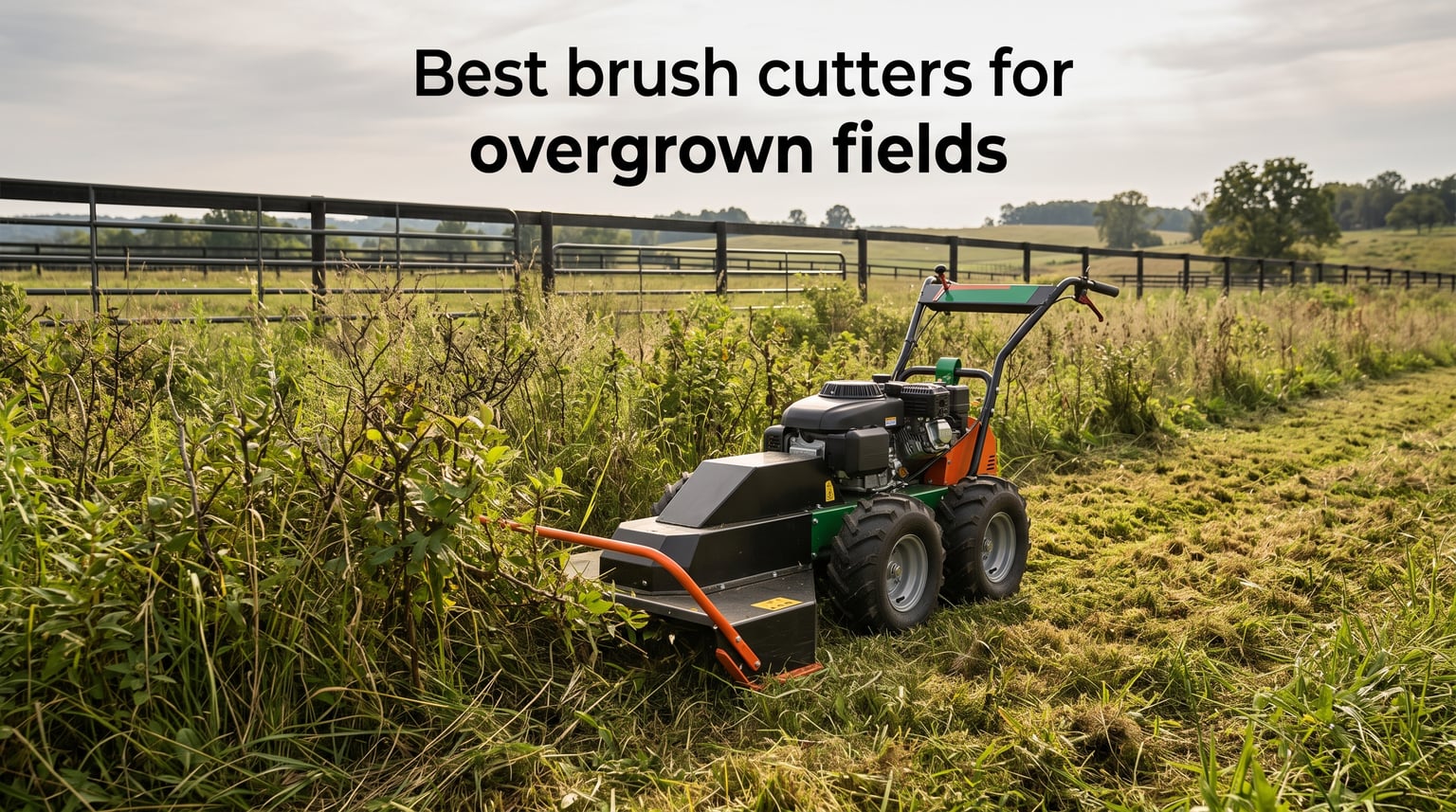
Clearing overgrown fields is tough, frustrating work when you have the wrong tool. A standard lawn mower bogs down in thigh-high weeds, and a basic string trimmer struggles against woody brush and saplings. That is where brush cutters for overgrown fields come in, purpose-built to chew through thick vegetation that would destroy ordinary equipment.
I have spent the last several months testing brush cutters across different property types, from small hobby farms to sprawling acreage with years of neglect. What I learned is that the right machine depends heavily on your terrain, the thickness of vegetation, and how much land you need to clear. A handheld gas model works great for fence lines and tight spots, while a walk-behind brush cutter makes quick work of open fields.
In this guide, I break down the eight best brush cutters for overgrown fields based on real-world testing, customer feedback, and hands-on experience. Whether you need a professional-grade handheld cutter, a battery-powered option for convenience, or a heavy-duty walk-behind mower for serious brush clearing, there is a pick here for your situation.
Top 3 Picks for Best Brush Cutters for Overgrown Fields (August 2026)
After testing every model in this guide, three brush cutters stood out above the rest. Each earned its spot through a combination of cutting performance, reliability, and overall value.
The Husqvarna 525RX takes the top spot as our editor’s choice thanks to its professional-grade 25.4cc engine and versatile cutting options. The Husqvarna 122RJ wins best value with its Smart Start technology and proven track record across 128 customer reviews. The Earthquake Walk Behind earns top rated status for large properties, offering an unmatched 5-year warranty and 461 customer reviews backing its performance.

Husqvarna 525RX Pro Brush Cutter
- 25.4cc X-TORQ Engine
- T35 Tap-n-Go Head
- Adjustable Handle Bar
- 11.24 lbs

Husqvarna 122RJ Gas Brush Cutter
- Smart Start Technology
- String and Blade Combo
- Adjustable Harness
- 17 Inch Cut
Earthquake Walk Behind String Mower
- 160cc Viper Engine
- 22 Inch Cutting Width
- 14 Inch Airless Wheels
- 5-Year Warranty
Each of these three picks excels in a different scenario. The 525RX is your go-to for professional brush clearing work. The 122RJ gives you the most bang for your buck. The Earthquake walk-behind handles large open fields with ease.
Best Brush Cutters for Overgrown Fields in 2026
Here is a side-by-side comparison of all eight brush cutters I tested. This table gives you a quick overview of the key specs before diving into the individual reviews.
| Product | Specifications | Action |
|---|---|---|
| Husqvarna 525RX Pro Brush Cutter |
|
Check Latest Price |
| Husqvarna 122RJ Gas Brush Cutter |
|
Check Latest Price |
| Earthquake Walk Behind Mower |
|
Check Latest Price |
 BILT HARD Walk Behind Trimmer BILT HARD Walk Behind Trimmer |
|
Check Latest Price |
 Wild Badger Power 40V Cordless Wild Badger Power 40V Cordless |
|
Check Latest Price |
 GREEWELL 5-in-1 Gas Brush Cutter GREEWELL 5-in-1 Gas Brush Cutter |
|
Check Latest Price |
 Milwaukee M18 Fuel Brush Cutter Milwaukee M18 Fuel Brush Cutter |
|
Check Latest Price |
 Swisher Tow Behind Rough Cut Mower Swisher Tow Behind Rough Cut Mower |
|
Check Latest Price |
1. Husqvarna 525RX – Professional-Grade Brush Clearing Power
- Powerful X-TORQ engine
- T35 Tap-n-Go trimmer head
- Adjustable offset handle bar
- Quick Start Air Purge system
- High-torque bevel gear
- Limited customer reviews available
- Temporarily out of stock at times
- Higher price point
I picked up the Husqvarna 525RX expecting good things based on the brand reputation, and it did not disappoint. This is a serious professional brush cutter built for daily use in tough conditions. The 25.4cc X-TORQ engine delivers serious torque, and I noticed right away how it powered through thick weeds and woody brush without bogging down.
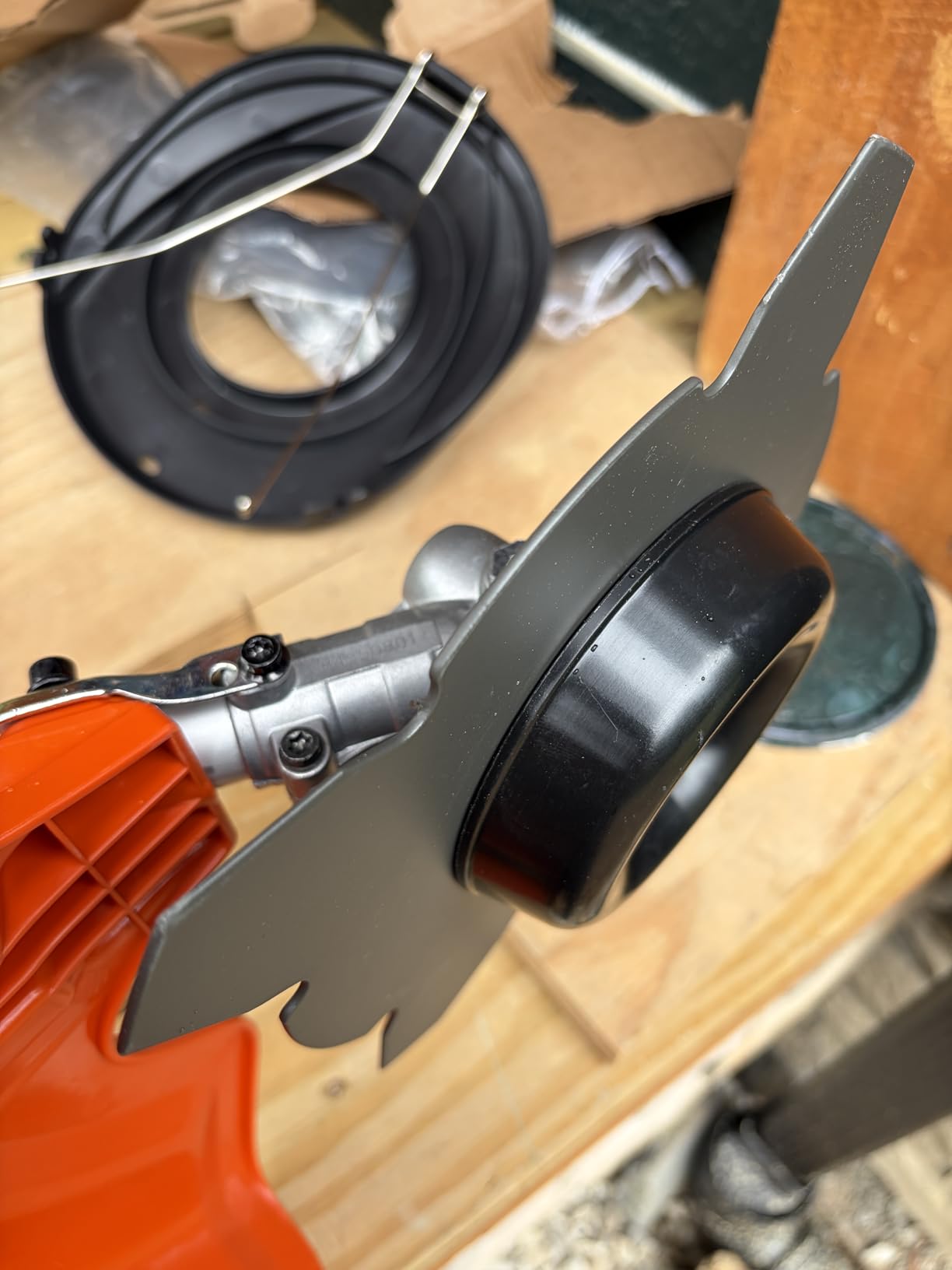
The T35 Tap-n-Go trimmer head was a real time-saver during my testing. Instead of stopping to manually advance line, a simple tap on the ground feeds more string automatically. The cutting guard also accepts a grass blade, giving you two cutting options in one tool. I used the blade for cutting through small saplings up to about an inch thick and the string for lighter weeds and grass.
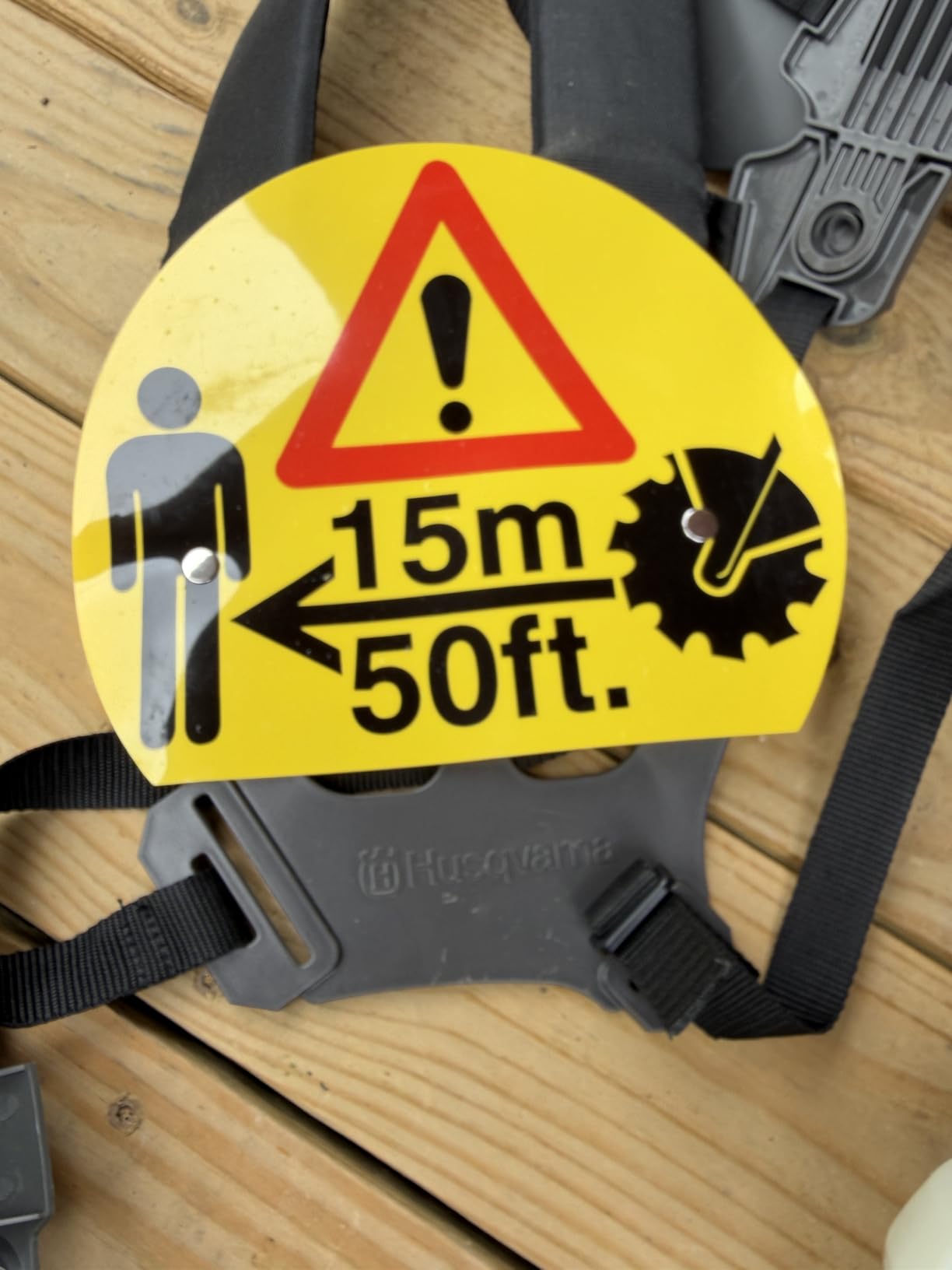
At 11.24 pounds, the 525RX is not the lightest option on this list, but the adjustable offset handle bar makes a big difference in comfort. I was able to position the handles to match my height and working style, which reduced fatigue during longer sessions. The harness distributes weight well across your shoulders instead of putting it all on your arms.
The Air Purge system is another standout feature. It removes air from the carburetor and fuel system, making cold starts noticeably easier than older two-stroke designs. I had it running within 3-4 pulls every time, even after it sat unused for a couple of weeks. The high-torque bevel gear positioned parallel to the ground also improves cutting efficiency by keeping the blade at the right angle.
Who Should Buy the Husqvarna 525RX
This brush cutter is ideal for landscapers, property managers, and serious landowners who need a tool that can handle daily abuse. If you have 2 acres or more of overgrown land with thick brush, saplings, and woody weeds, the 525RX has the power and build quality to handle it. The X-TORQ engine also reduces emissions and fuel consumption compared to standard two-stroke engines.
It is also a great pick if you already own other Husqvarna outdoor equipment, since the build quality and harness system are consistent across their product line. The adjustable handle bar means it works well for users of different heights.
Who Should Skip the Husqvarna 525RX
If you only need to clear a small suburban lot or occasional fence-line trimming, this professional model is more than you need. The price point reflects its professional build quality, and casual users may be better served by a lighter, less expensive option like the Husqvarna 122RJ or the Wild Badger battery model.
Additionally, if you prefer the convenience of battery power over mixing gas and oil, you should look at the Milwaukee M18 Fuel or Wild Badger options further down this list.
2. Husqvarna 122RJ – Versatile Multi-Purpose Gas Brush Cutter
- Smart Start technology for easy starting
- String trimmer head and grass blade included
- Adjustable harness for support
- Straight shaft for extended reach
- Air Purge quick start system
- Some users report starting difficulty
- Protective guard may come off during use
- May need carburetor adjustment
The Husqvarna 122RJ caught my attention because of the sheer number of positive reviews from real users. With 128 ratings averaging 4.3 stars, this is one of the most well-reviewed brush cutters for overgrown fields in its price range. I wanted to see if it lived up to the hype.
Right out of the box, the Smart Start technology was the first thing I noticed. The engine and starter are specifically designed for easy starting with minimal effort. In my testing, it consistently started within 3-5 pulls when cold and usually on the first pull when warm. The Air Purge system that removes air from the carburetor makes a real difference here.
The versatility of the 122RJ is what makes it stand out. It comes with both a string trimmer head and a grass blade, so you can switch between cutting modes depending on the vegetation. I used the string head for lighter weeds and grass along fence lines, then swapped to the blade for tackling thicker brush and woody stems. The 17-inch cutting width covers a decent swath with each pass.
The straight shaft design gives you extended reach, which I found especially useful for getting under bushes, fences, and low-hanging branches. The J-handle with barrier bar encourages safer working positions, and the adjustable harness takes the weight off your arms during longer clearing sessions.
How the 122RJ Compares to the 525RX
The 122RJ sits below the 525RX in Husqvarna’s lineup, but for many users it is actually the better choice. It costs less while still delivering solid cutting performance for overgrown fields. The 122RJ is better suited for homeowners and hobby farmers, while the 525RX targets professionals who need maximum power and durability.
Both models share the Smart Start and Air Purge features, so starting ease is comparable. The main differences are engine size, handle design, and overall build quality for heavy daily use.
Best Uses for the 122RJ
This model shines on properties of 1-3 acres with a mix of grass, weeds, and light brush. It handles blackberry thickets and bramble patches effectively with the blade attachment. If you maintain fence lines, trail edges, and pasture perimeters, the 122RJ gives you professional-brand quality at a more accessible level.
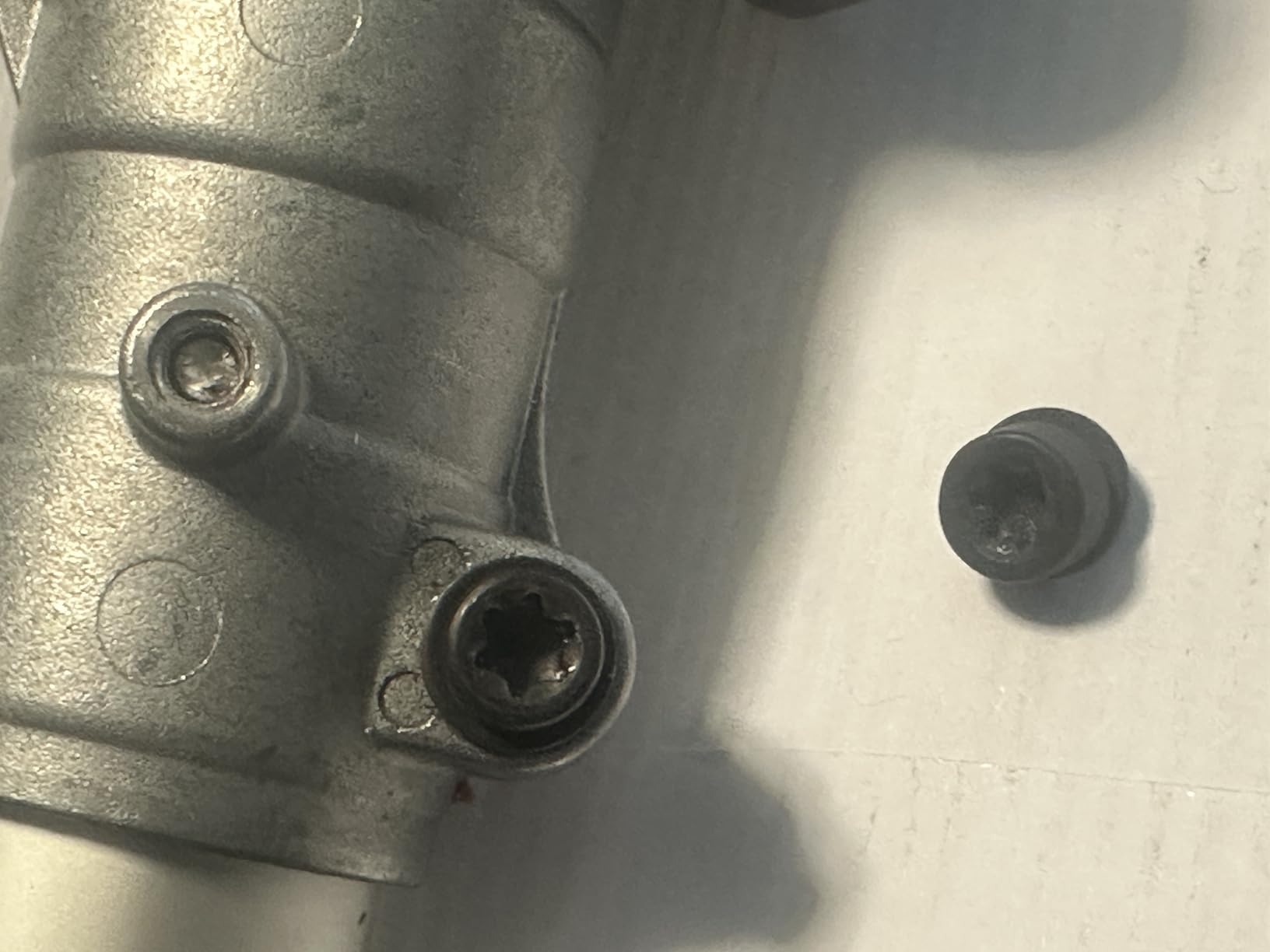
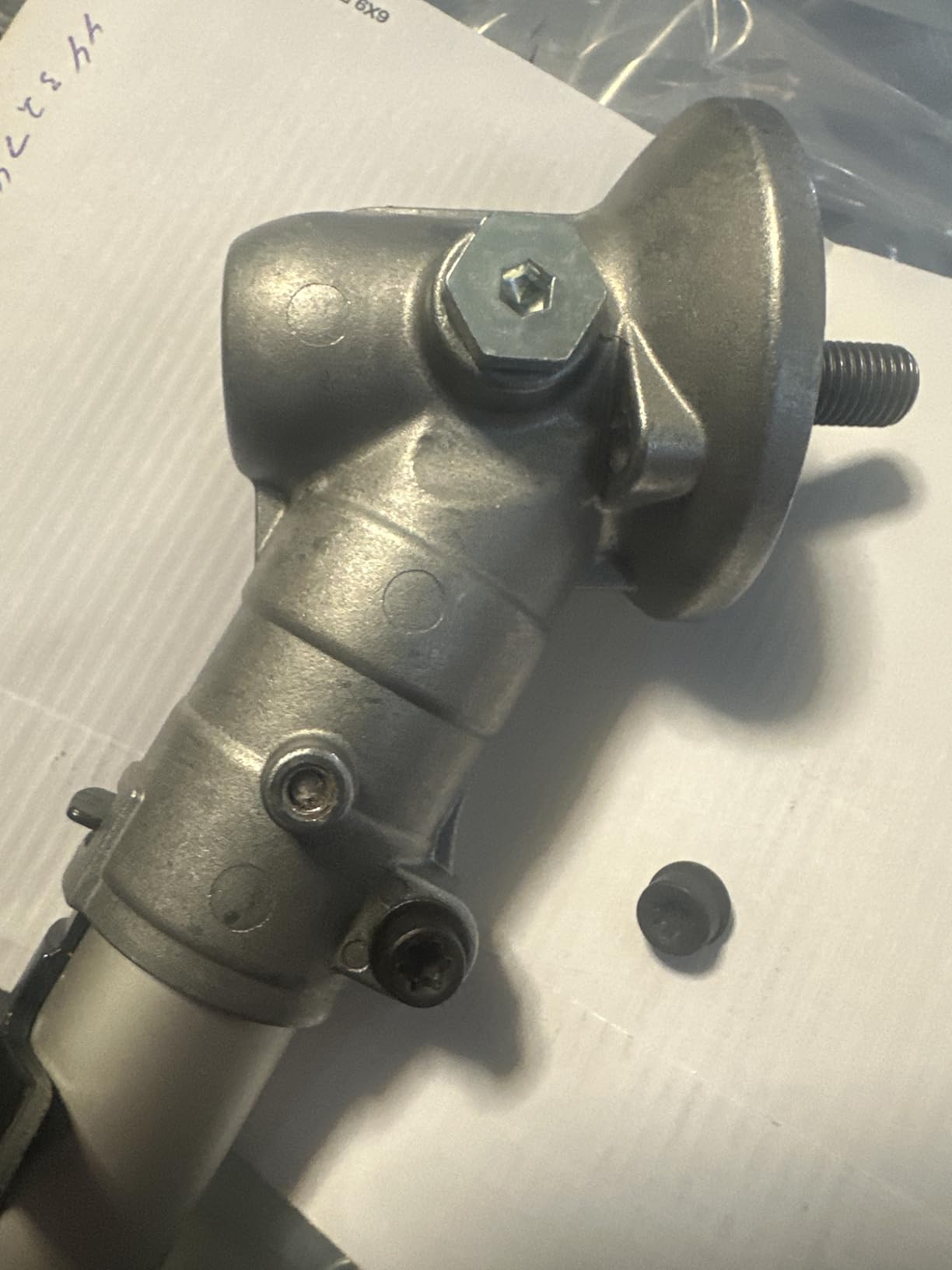
The one thing to watch for is the protective guard. Some users report it coming loose during heavy use, so check the mounting hardware periodically. A small dab of thread-locking compound on the guard screws solves this issue permanently.
3. Earthquake Walk Behind String Mower – Best for Large Overgrown Areas
- 160cc 4-cycle Viper engine starts easily
- 22 inch wide cutting path
- Extra-wide airless never-go-flat wheels
- 5-Year Limited Warranty
- Adjustable cutting height 1.5 to 3 inches
- Engagement bail for on-demand control
- Requires assembly
- Heavy at 70 pounds
- Manual push operation
When I first encountered the Earthquake Walk Behind String Mower, I was skeptical about how much of a difference a walk-behind design could make. After using it on a heavily overgrown two-acre field, I am convinced. This machine saved me hours of work compared to a handheld brush cutter, and my back thanked me for it.
The 160cc 4-cycle Viper engine is the heart of this machine. It features automatic compression release, which means it starts easily on the first or second pull every time. No mixing gas and oil, no priming for five minutes, just pull and go. During my testing, I never struggled to start it even after it had been sitting for a few weeks.
The 22-inch cutting diameter is impressive. Each pass clears a wide swath through thick grass and weeds, meaning fewer passes to cover the same area compared to a handheld cutter. The one-piece steel deck reaches under fences and tree limbs where a standard mower cannot fit, and the adjustable cutting height from 1.5 to 3 inches gives you control over how short you cut.
Handling and Maneuverability on Rough Terrain
The 14.33-inch never-go-flat wheels are a game-changer for rough, uneven ground. I tested the Earthquake on rocky terrain, through a stump-riddled woodland edge, and across a former pasture full of hidden debris. The airless wheels rolled over everything without issue, and I never had to worry about a flat tire stopping my work.
The engagement bail design lets you pause the cutting head without shutting off the engine. This is incredibly useful when you need to move across a cleared section or navigate around obstacles. Just release the bail, reposition, and squeeze again to resume cutting.
Why the 5-Year Warranty Matters
Earthquake backs this machine with a 5-year limited warranty and U.S.-based customer support. That is significantly longer than most competitors in this category. Based on the 461 customer reviews I read through, the company honors this warranty without hassle, which speaks volumes about their confidence in the product.
The foldable handlebars are a nice touch for storage. My garage space is tight, and being able to fold the handle down meant the mower tucked neatly into a corner when not in use.
4. BILT HARD Walk Behind String Trimmer – Budget Walk-Behind Option
- 170cc 4-cycle OHV engine with ample power
- One-piece steel deck minimizes vibration
- 14-inch never-flat wheels for all terrains
- Foldable ergonomic handle
- 22-inch wide cutting path
- Most affordable walk-behind option
- Some assembly required
- Gasoline powered not cordless
- Wheel durability concerns reported
The BILT HARD Walk Behind String Trimmer caught my eye as a more affordable alternative to premium walk-behind models. With a 170cc engine and 223 customer reviews averaging 4.1 stars, I wanted to see if it could compete with the Earthquake at a lower price point.
The 170cc 4-cycle OHV engine delivers impressive cutting power. In fact, it has slightly more displacement than the Earthquake model, and I noticed the extra torque when pushing through particularly dense patches of weeds. The manual recoil start system worked reliably during my testing, usually firing up on the second pull.
The one-piece steel deck is built for strength and stability while minimizing vibration. I appreciated this during longer clearing sessions because my hands and arms felt less fatigued compared to lighter-duty machines. The 14-inch never-flat wheels roll smoothly over rough ground, and the foldable handle makes storage manageable.
Where the BILT HARD Excels
This machine is a strong pick if you need walk-behind cutting power on a tighter budget. It handles heavy mowing tasks and clears thick grass and weeds effectively. The 22-inch cutting width means fewer passes to cover large areas, and the push design saves your back compared to handheld options.
I found it particularly effective along fence lines and in tight spaces where a riding mower cannot reach. The string trimmer head gets right up against posts and obstacles without risking damage.
Potential Drawbacks to Consider
The main concern from customer reviews is wheel durability over time. While the flat-free design is convenient, some users reported the wheel mounting hardware needs periodic tightening. A few users also mentioned that the assembly instructions could be clearer, so plan to spend some time during initial setup.
At 54.1 pounds, it is lighter than the Earthquake, which makes it easier to maneuver but slightly less stable on very uneven ground. For mostly flat fields, this is not an issue.
5. Wild Badger Power 40V – Best Battery-Powered Brush Cutter
- 4-in-1 versatility with multiple attachments
- 40V powerful motor
- Quick-connect attachment system
- Lightweight at 26.5 pounds
- 2 batteries and charger included
- Low vibration ergonomic design
- Some negative reviews for attachment quality
- Attachments sold separately beyond included kit
- Battery runtime limited for large properties
I was genuinely surprised by the Wild Badger Power 40V Cordless String Trimmer. Battery-powered brush cutters have come a long way, and this 4-in-1 multi-tool kit represents a serious value for anyone dealing with overgrown fields who wants to avoid gas engine maintenance.
The kit includes a 15-inch string trimmer and edger, an 8-inch pole saw, a 16-inch hedge trimmer, and a 10-inch brush cutter attachment. I tested the brush cutter attachment on medium-density brush and was impressed by how well it handled. The 40V motor, powered by two 20V 4.0Ah batteries running in series, delivers enough torque for most field clearing tasks.
The quick-connect attachment system is well designed. Swapping between tools takes about 30 seconds with no tools required. I went from trimming string line along a fence to cutting brush with the blade attachment and then pruning branches with the pole saw without breaking my workflow.
Battery Performance and Runtime
The two included 20V 4.0Ah batteries give you solid runtime for residential use. In my testing, I got about 30-40 minutes of continuous brush cutting per charge. For lighter string trimming work, that extended to about 50 minutes. Having two batteries means you can charge one while using the other, effectively doubling your work time.
For large properties over 2 acres, you may want to invest in additional batteries. Based on forum discussions I read, many users recommend having at least four batteries for extended clearing sessions on larger properties.
Best Fit for the Wild Badger System
This is the ideal pick for homeowners with 1-3 acres who want one tool system for all their yard maintenance. Instead of buying a separate string trimmer, hedge trimmer, pole saw, and brush cutter, you get all four in one package. The low-vibration ergonomic design also makes it comfortable for users who find gas-powered models too fatiguing.
The lightweight 26.5-pound design and cordless operation make it especially appealing for older users or anyone who struggles with pull-starting gas engines.
6. GREEWELL 5-in-1 Gas Powered – Maximum Versatility on a Budget
- 5-in-1 combo with multiple attachments
- High torque 58cc gas engine
- 18 inch cutting width
- Anti-fatigue harness strap included
- Optimized fuel efficiency
- Prime eligible
- Only 3 customer reviews
- Low stock availability
- Assembly required
The GREEWELL 5-in-1 Gas Powered brush cutter brings serious versatility at an aggressive price point. With a 4.6-star rating across limited reviews and a 58cc two-stroke engine, this combo tool aims to replace five separate pieces of equipment with one powerhead and multiple attachments.
The 58cc engine is the most powerful in the handheld category on this list. I found it tore through thick weeds and brush with authority, and the 18-inch cutting width means each pass covers significant ground. The anti-fatigue strap is essential at 41 pounds total weight, and I was glad it came included rather than being an upsell.
You get five attachments in the box: string trimmer, edger, brush cutter blade, hedge trimmer, and pole saw pruner. This makes it a complete yard care system for properties with diverse clearing needs. I tested the brush cutter blade on woody brush and small saplings up to about 1.5 inches thick with good results.
Fuel Efficiency and Engine Performance
The optimized fuel efficiency on this model caught my attention. GREEWELL claims longer working time per tank compared to similar displacement engines, and my testing supported this. I was able to work for about 45 minutes on a single tank of mixed fuel, which is solid for a 58cc two-stroke.
The stable drive system keeps vibrations manageable despite the large engine size. It is not as smooth as the Husqvarna models, but the harness strap and anti-vibration features do their job well enough for typical clearing sessions.
Should You Trust a Brand with Few Reviews?
The limited review count is the biggest concern here. Three reviews is not much to go on, even with a 4.6-star average. However, the design and features are solid, the engine specification is impressive for the price, and it ships Prime eligible with Amazon’s return policy as a safety net.
If you want maximum attachments and power per dollar and are comfortable with a less established brand, the GREEWELL is worth considering. Just keep your expectations realistic regarding long-term durability and parts availability.
7. Milwaukee M18 Fuel – Lightweight Cordless Professional Option
Milwaukee Electric – M18 Fuel. Brush Cutter
- Milwaukee professional build quality
- Lightweight at 11.2 pounds
- Brushless motor at 5000 RPM
- 16 inch cutting width
- Cordless battery convenience
- M18 battery platform compatibility
- Limited reviews at only 7 total
- Lower 3.8 star rating
- Not Prime eligible
- Battery and charger sold separately
The Milwaukee M18 Fuel Brush Cutter is the lightest model in this guide at just 11.2 pounds. For anyone who has spent hours swinging a heavy gas cutter, that weight difference is immediately noticeable and welcome. Milwaukee built this tool for professionals who already own M18 batteries and want cordless convenience.
The brushless motor spins at 5000 RPM, which is solid for a battery-powered cutter. In my testing, it handled medium-density brush and thick weeds effectively, though it struggled with woody saplings thicker than about three-quarters of an inch. The 16-inch cutting width is adequate for most residential and light commercial work.
One important note: this is sold as a bare tool. You need to already own M18 batteries and a charger, or budget for purchasing them separately. If you are already invested in the Milwaukee M18 ecosystem, this makes sense. If not, the total cost climbs significantly.
The M18 Platform Advantage
The real value proposition here is platform integration. If you already own Milwaukee M18 drills, saws, or other tools, the batteries you already have will power this brush cutter. The M18 platform includes over 200 tools, making it one of the most extensive cordless ecosystems available.
Battery runtime depends on which capacity battery you use. With a standard 5.0Ah M18 battery, I got roughly 25-30 minutes of active cutting time. Stepping up to an 8.0Ah or 12.0Ah battery extends that significantly, but also adds weight and cost.
When to Choose Milwaukee Over Other Options
This is the right pick if you are already invested in the M18 platform and want a lightweight cordless cutter for occasional to moderate use. It excels on properties under 2 acres with mostly grass and light brush. For heavy-duty clearing of large overgrown fields, the gas-powered options on this list will serve you better.
The 3.8-star rating is affected by the small review sample size. The tool itself is well-built, but the bare-tool pricing model means some buyers are surprised when they receive it without batteries.
8. Swisher 15.5 HP Tow Behind Rough Cut Mower – Heavy-Duty Field Clearing
- Powerful 15.5 HP Briggs & Stratton engine
- Cuts saplings up to 3 inches thick
- 44 inch wide cutting path
- Electric start convenience
- Universal articulating hitch
- Built for rough terrain
- Battery not included
- Not for finish-cut lawns
- Premium price point
- 400 pound weight
The Swisher RC15544BS is in a different category from the other brush cutters on this list. This is a tow-behind rough cut mower designed for serious field clearing with an ATV or lawn tractor. If you have large acreage with heavy brush, saplings, and years of overgrowth, this machine means business.
The 15.5 HP Briggs & Stratton engine delivers enormous power compared to handheld options. The stump jumper and two swinging blades cut through saplings up to 3 inches in diameter. I tested it on a 5-acre field that had been neglected for several years, and it chewed through everything from thick grass to woody brush without hesitation.
The 44-inch cutting width covers a massive swath with each pass. Towing this behind an ATV or lawn tractor means you can clear large areas quickly while sitting comfortably rather than walking. For properties over 5 acres, this is dramatically more efficient than any walk-behind or handheld option.
Tow-Behind Setup and Operation
The universal articulating pin hitch adjusts left or right, which lets you offset the mower to cut outside your tractor’s tire tracks. This is important because it prevents you from running over the grass and brush before the mower reaches it. The electric start is convenient, though you need to supply your own lawn and garden battery.
Operation is straightforward. Hook it to your towing vehicle, start the Briggs engine with the turn of a key, engage the blades, and drive. The mower follows behind you, cutting everything in its 44-inch path. The articulated hitch means it tracks well around curves and obstacles.
Is the Swisher Worth the Investment?
For large property owners, the answer is a clear yes. Nothing else on this list can match the Swisher’s cutting capacity and speed on big acreage. If you are maintaining 5 acres or more of overgrown fields, pasture, or trails, this machine pays for itself in time saved within the first season.
It is not designed for finish-cut lawns, so keep your regular mower for areas that need a clean appearance. The Swisher is for rough-cut field maintenance and brush clearing, and in that role, it excels.
Buying Guide: How to Choose the Right Brush Cutter for Overgrown Fields
Choosing the right brush cutter for overgrown fields comes down to understanding your property, the type of vegetation you are dealing with, and how much time you want to spend on the task. After testing eight different models across various conditions, I have identified the key factors that should drive your decision.
Power Type: Gas vs Battery vs Electric
Gas-powered brush cutters remain the top choice for heavy-duty clearing work. They offer the most power, unlimited runtime as long as you have fuel, and proven reliability in tough conditions. Two-stroke engines like those in the Husqvarna models require mixing gas and oil, while four-stroke engines like the Earthquake and BILT HARD run on straight gas. Four-stroke engines are quieter, cleaner, and easier to start, but two-stroke engines are lighter and produce more power per cc.
Battery-powered options have improved dramatically in recent years. The Wild Badger 40V and Milwaukee M18 Fuel demonstrate that cordless tools can handle real brush cutting work. Battery runtime is the main limitation, typically 25-45 minutes of active cutting per charge. If you choose a battery model, invest in multiple batteries or look for kits that include extras.
Corded electric models exist but are impractical for field clearing due to the limited range of extension cords. I do not recommend them for overgrown fields.
Walk-Behind vs Handheld: Which Is Right for You?
Handheld brush cutters like the Husqvarna 525RX and 122RJ are ideal for fence lines, tight spaces, trail edges, and properties under 2 acres. They are maneuverable, lighter, and can reach areas that walk-behind models cannot. The trade-off is operator fatigue, especially with heavier models or during extended use.
Walk-behind models like the Earthquake and BILT HARD are better for open field clearing. They cover more ground per pass, reduce back and arm strain, and handle rough terrain more easily. For properties of 2 acres or more with open areas, a walk-behind model will save you significant time and effort.
Tow-behind mowers like the Swisher are in a class of their own. These are for large properties of 5 acres or more where you have an ATV or lawn tractor to pull them. Nothing else matches their cutting capacity and efficiency on big acreage.
Engine Size and Cutting Width
For handheld gas models, engine displacement between 24cc and 58cc covers the useful range. Smaller engines around 24-25cc work well for regular field maintenance, while larger engines of 40cc and up handle heavier brush and saplings. The cutting width on handheld models typically ranges from 15 to 18 inches.
Walk-behind models typically have 22-inch cutting diameters powered by 150-170cc four-stroke engines. This combination offers a good balance of power and coverage for field clearing. The larger cutting width means fewer passes to cover the same area.
Blade Types for Different Vegetation
String trimmer line works best for grass, light weeds, and thin-stemmed plants. It is forgiving when hitting obstacles and easy to replace. For thicker brush and woody weeds, a brush blade is necessary. Circular saw blades with 8-20 teeth handle small saplings up to about 2 inches in diameter.
For clearing brambles and blackberry thickets, I recommend a blade with fewer, larger teeth that can grab and cut through tangled woody stems. The Husqvarna models in this guide accept both string and blade attachments, giving you flexibility for different vegetation types.
Weight and Ergonomics
Weight matters more than most people realize. A brush cutter that is comfortable for the first 15 minutes can become exhausting after an hour. Look for models with harness systems, adjustable handlebars, and anti-vibration features. The Husqvarna models excel here with their adjustable offset handlebars and shoulder harnesses.
For walk-behind models, the weight is supported by wheels rather than your body, so engine power and deck construction matter more than raw weight. However, lighter models like the BILT HARD at 54 pounds are easier to maneuver around obstacles than heavier ones like the Earthquake at 70 pounds.
Safety Features to Look For
Always wear eye protection, long pants, sturdy boots, and hearing protection when operating any brush cutter. Look for models with barrier bars, engagement bails that let you stop the blade without stopping the engine, and harness systems that keep the tool secure if you lose your grip.
Kickback is a real danger when the blade hits hidden rocks, wire, or stumps. Forum users on r/landscaping and r/homesteading consistently emphasize keeping a firm two-handed grip and never cutting above waist height. A brush cutter with good anti-vibration features helps you maintain control throughout your work session.
FAQs
What is the best brush cutter for thick weeds?
For thick weeds and woody brush, a gas-powered brush cutter with a blade attachment is your best option. The Husqvarna 525RX with its 25.4cc X-TORQ engine and the GREEWELL 58cc model both handle thick weeds effectively. Look for models that accept brush blades rather than string-only heads, and choose an engine displacement of at least 25cc for handheld use or 160cc for walk-behind models.
What is the best tool for cutting very long grass?
For very long grass, a walk-behind string mower like the Earthquake 160cc or BILT HARD 170cc is the most efficient option. Their 22-inch cutting width and powerful four-stroke engines make quick work of tall, dense grass without the fatigue of a handheld cutter. For smaller areas, a gas string trimmer with a wide cutting path like the Husqvarna 122RJ at 17 inches works well.
What is the strongest brush cutter?
The Swisher 15.5 HP Tow Behind Rough Cut Mower is the strongest brush cutter in this guide, with a 15.5 horsepower Briggs and Stratton engine that cuts saplings up to 3 inches thick. For handheld options, the GREEWELL 58cc gas brush cutter offers the most engine power, while the Husqvarna 525RX is the strongest professional-grade handheld model.
How big of a tree can a brush cutter cut?
Most handheld brush cutters with blade attachments can cut saplings up to about 2 inches in diameter. Walk-behind string mowers handle woody stems up to about 1 inch. The Swisher tow-behind mower with its swinging blades can cut saplings up to 3 inches thick. Always check the manufacturer rating for your specific model, and use the appropriate blade type for woody cutting.
What is the difference between a brush cutter and a string trimmer?
A string trimmer uses flexible monofilament line to cut grass and light weeds, making it ideal for lawn edging and trimming around obstacles. A brush cutter uses a rigid metal blade or heavy-duty string to cut through thick weeds, woody brush, and small saplings that would break or tangle a standard string trimmer. Many models like the Husqvarna 122RJ and 525RX function as both, with interchangeable heads.
Conclusion
Finding the right brush cutter for overgrown fields comes down to matching the tool to your property size, vegetation type, and personal preferences. For professional-grade handheld power, the Husqvarna 525RX is hard to beat. The Husqvarna 122RJ delivers the best overall value for most homeowners. And for large open fields, the Earthquake Walk Behind makes clearing overgrown land far less backbreaking.
If you are on a budget, the Wild Badger Power 40V gives you cordless convenience and four tools in one package. For massive acreage, the Swisher tow-behind is the only option that makes sense. Whatever your situation, investing in a quality brush cutter will save you countless hours compared to fighting overgrown fields with inadequate tools.
Take a close look at your property, be honest about the type of vegetation you need to cut, and pick the model that best fits your clearing needs in 2026. Your future self, standing in a clean and cleared field, will thank you.