
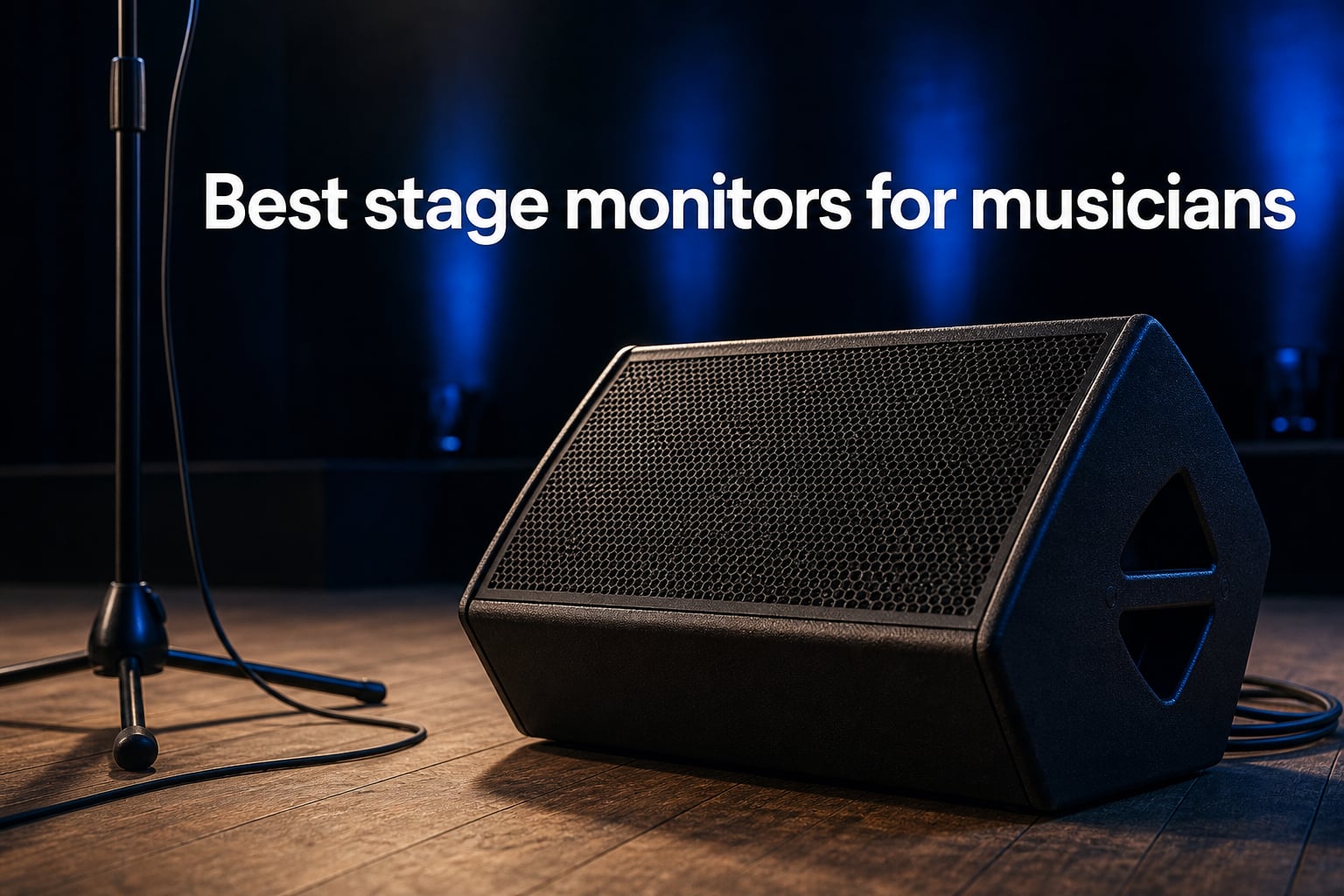
Nothing kills a performance faster than not being able to hear yourself on stage. I have played hundreds of gigs over the past 15 years, and I can tell you that the right stage monitors make or break a show. Whether you are a solo acoustic artist, a weekend warrior in a cover band, or a touring professional, hearing your mix clearly is non-negotiable.
Stage monitors are performer-facing speakers that deliver a dedicated audio mix to musicians on stage. Unlike front-of-house speakers that project sound to the audience, floor monitors sit at your feet and project sound upward toward you. This lets you hear your vocals, instruments, and bandmates clearly, even when the crowd noise and stage volume get intense. If you have ever struggled to stay on pitch or keep time because you could not hear yourself, you already know why monitors matter.
In this guide, our team tested and compared 10 of the best stage monitors for musicians available right now. We looked at powered and passive options, coaxial designs, wedge monitors, and portable solutions across every budget. We also put together a buying guide covering powered vs passive monitors, wattage requirements by venue size, feedback prevention tips, and how many monitors your band actually needs. Whether you also need dynamic microphones for live vocals or a complete PA upgrade, this guide will help you find the right floor monitors for your rig.
Top 3 Picks for Best Stage Monitors in 2026

Best Stage Monitors for Musicians in 2026
| Product | Specifications | Action |
|---|---|---|
| Electro-Voice PXM-12MP |
|
Check Latest Price |
 Yamaha DBR10 Yamaha DBR10 |
|
Check Latest Price |
 ALTO TX410 ALTO TX410 |
|
Check Latest Price |
 Samson RSXM10A Samson RSXM10A |
|
Check Latest Price |
 Peavey PV 12M Peavey PV 12M |
|
Check Latest Price |
 Yamaha BR12M Yamaha BR12M |
|
Check Latest Price |
 Seismic Audio SA-10MT-PW-Pair Seismic Audio SA-10MT-PW-Pair |
|
Check Latest Price |
 Rockville RSM15P Rockville RSM15P |
|
Check Latest Price |
 Grindhouse GH10M Grindhouse GH10M |
|
Check Latest Price |
 Seismic Audio SA-10MT Seismic Audio SA-10MT |
|
Check Latest Price |
1. Electro-Voice PXM-12MP – Premium Coaxial Stage Monitor
- Amazing sound quality that rivals FOH speakers
- Very powerful with lots of clean headroom
- Lightweight at 29.8 pounds
- Highly customizable DSP and EQ settings
- Perfect 55 degree monitoring angle
- Expensive compared to other monitors
- Short 6 foot power cable
I first heard the Electro-Voice PXM-12MP at a church gig where the sound engineer had just swapped out an aging set of floor wedges. The difference was immediate. This coaxial monitor delivers some of the clearest stage sound I have ever experienced, with vocals cutting through the mix without any harshness or strain. The 12-inch woofer paired with a 1.75-inch coaxial driver creates a single-point source that keeps phase alignment tight across the coverage area.
The 90 by 90 degree dispersion pattern is a big deal for bands. One PXM-12MP can cover two or even three performers standing close together, which means you might need fewer monitors on stage. At 700 watts of Class-D power, it has more headroom than most bands will ever use. I pushed it hard during a full-band rehearsal with drums, bass, two guitars, and three vocal mixes, and it never broke a sweat.
What sets this monitor apart is the DSP section. You get four EQ presets, high and low shelving filters, parametric midrange EQs, adjustable low-cut filters, and a tunable feedback notch filter. That feedback filter alone is worth the price if you have ever dealt with a persistent ring at 2.5 kHz that ruins your monitor mix. You can also recall your settings, which is great for venues where you return regularly.
The 55-degree monitoring angle hits the sweet spot for most standing performers. It is not too steep, not too flat. At 29.8 pounds, it is surprisingly light for a 12-inch powered coaxial monitor, and the build quality feels road-ready. The only real complaint I have is the power cable being only 6 feet long, which almost always means running an extension cord.
Best Use Cases for the PXM-12MP
This monitor shines in professional settings where sound quality is the top priority. Churches, mid-sized venues, and touring acts who need reliable, clean monitoring will love it. The dedicated subwoofer matching capability also makes it a great choice if you want to build a 3-way stage system down the road.
Who Should Skip This Monitor
If you are just starting out and playing small bar gigs, the PXM-12MP is overkill. Beginners and casual performers do not need this level of DSP control and power. The premium price point also puts it out of reach for bands on a tight budget who need multiple monitors.
2. Yamaha DBR10 – Versatile Powered Workhorse
- Excellent sound clarity across the frequency range
- Very loud for its compact size
- Lightweight at 21 pounds
- Versatile for main or monitor use
- Rock-solid reliability
- No built-in Bluetooth
- May lack deep bass without a subwoofer
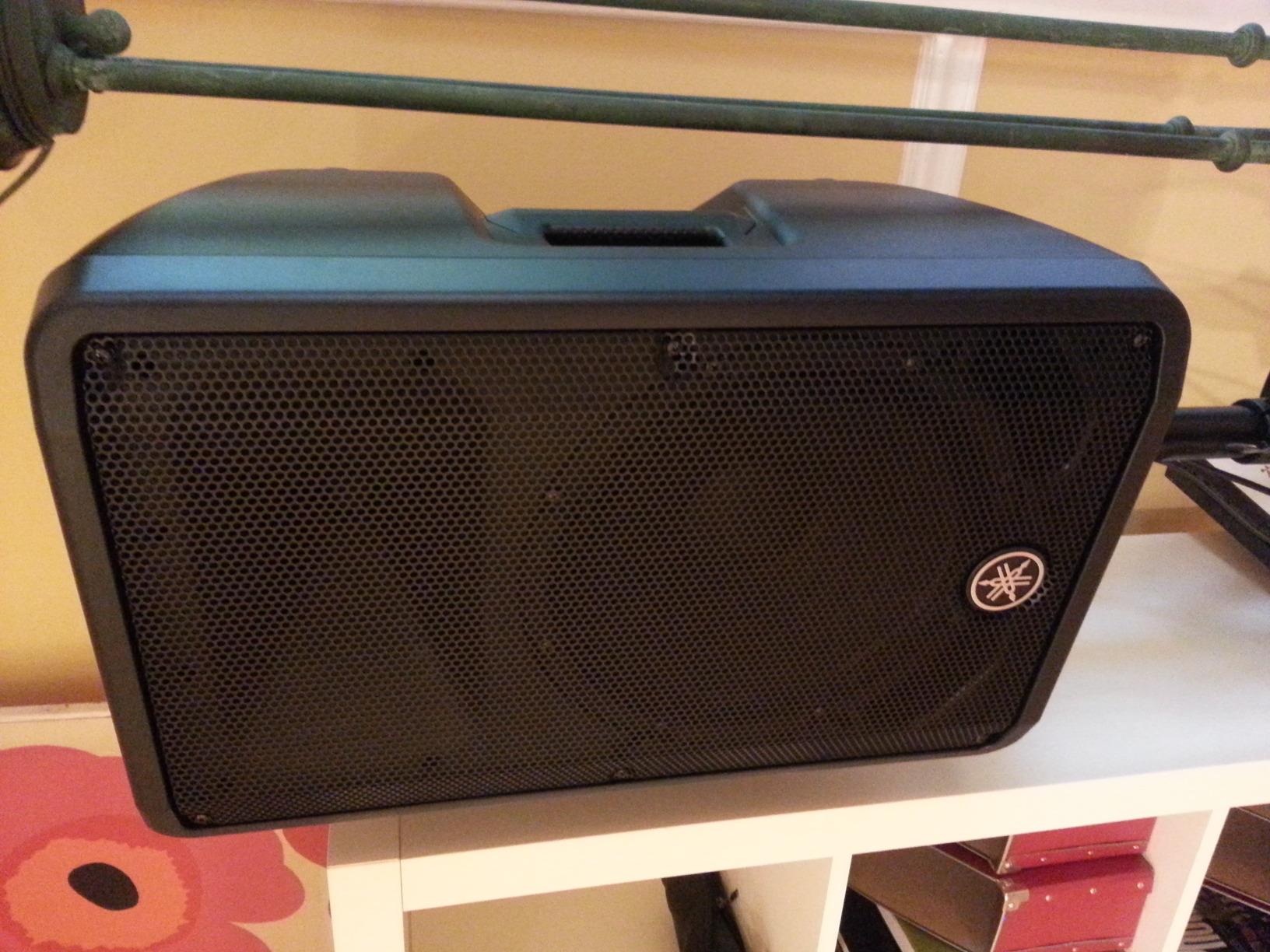
The Yamaha DBR10 is the monitor I recommend more than any other, and for good reason. I have used these as both floor monitors and main speakers for small venues, and they handle both jobs without complaint. At 700 watts with 129 dB SPL output, this compact 10-inch powered speaker punches well above its weight class. Yamaha’s FIR-X tuning technology uses digital filters to optimize the crossover between the woofer and tweeter, resulting in noticeably cleaner sound than many competitors at this price.
What makes the DBR10 such a great value is its versatility. The wedge-friendly cabinet design lets you angle it perfectly as a floor monitor. It also has a pole mount socket and fly points, so you can use it as a front-of-house speaker for smaller rooms. Many working musicians on Reddit’s r/livesound community praise the DBR series as one of the best bang-for-buck options on the market.
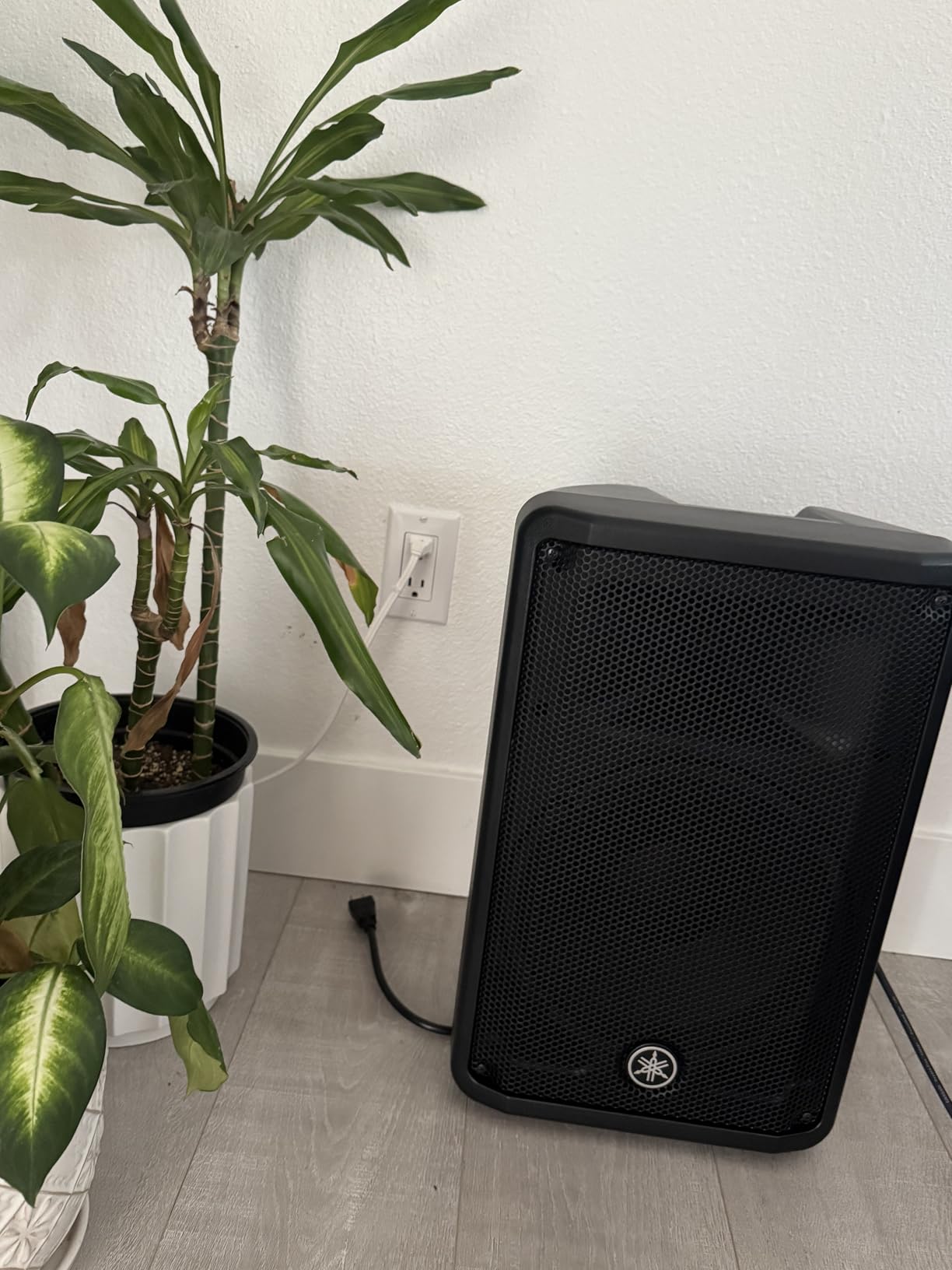
The combo input connectors accept XLR or TRS, and the XLR output lets you daisy-chain additional monitors. This is handy when you need to feed the same mix to two performers on the same side of the stage. I have run two DBR10s in a daisy chain for a duo performance, and both monitors sounded identical with zero signal degradation.
At just 21 pounds, this is one of the lightest powered monitors in its class. If you load and unload your own gear after every gig, that weight savings matters. The build quality is solid, with a durable cabinet that handles the bumps and scrapes of regular transport. Yamaha backs it with a solid warranty, and the long-term reliability reports from gigging musicians are excellent.
The main drawback is the lack of built-in Bluetooth. If you want to stream backing tracks wirelessly from your phone, you will need a separate Bluetooth receiver. The bass response also rolls off below 55 Hz, so if your monitor mix includes kick drum or bass guitar, you might want to add a subwoofer for fuller low-end.
Ideal Performance Scenarios
The DBR10 is perfect for small to mid-sized venues, band rehearsals, and church stages. Vocalists, acoustic guitarists, and keyboard players will especially appreciate the clarity. If you play in a 4-piece band and need reliable monitoring without spending a fortune, this is the one I would grab first.
Limitations to Consider
Drummers who need to hear a full-band mix with heavy low-end might find the 10-inch woofer insufficient. The DBR10 also does not have a dedicated monitor EQ or feedback filter, so you will need to manage feedback through mic placement and your mixing board.
3. ALTO TX410 – Budget-Friendly Powered Monitor
- Excellent value for the price
- Easy Bluetooth pairing and TWS stereo streaming
- Built-in 2-channel mixer
- Lightweight at 15 pounds
- Pole mountable and wedge monitor ready
- Only one physical input beyond Bluetooth
- No phantom power
- Limited bass response outdoors
- 36mm pole mount is slightly oversized
The ALTO TX410 is the monitor I point budget-conscious musicians toward. For under $200, you get a 350-watt bi-amplified powered speaker with Bluetooth streaming, a 2-channel mixer, and wedge-monitor capability. I tested this at a small outdoor gig, and it delivered clean, distortion-free sound that easily cut through the ambient noise of a restaurant patio.
The bi-amplified design means the 10-inch low-frequency driver and 1-inch titanium diaphragm high-frequency driver each get their own dedicated amplifier channel. The 250W LF and 100W HF split results in cleaner sound than single-amp designs at this price point. ALTO designed and tuned these in the USA, and the sound quality reflects that attention to detail.
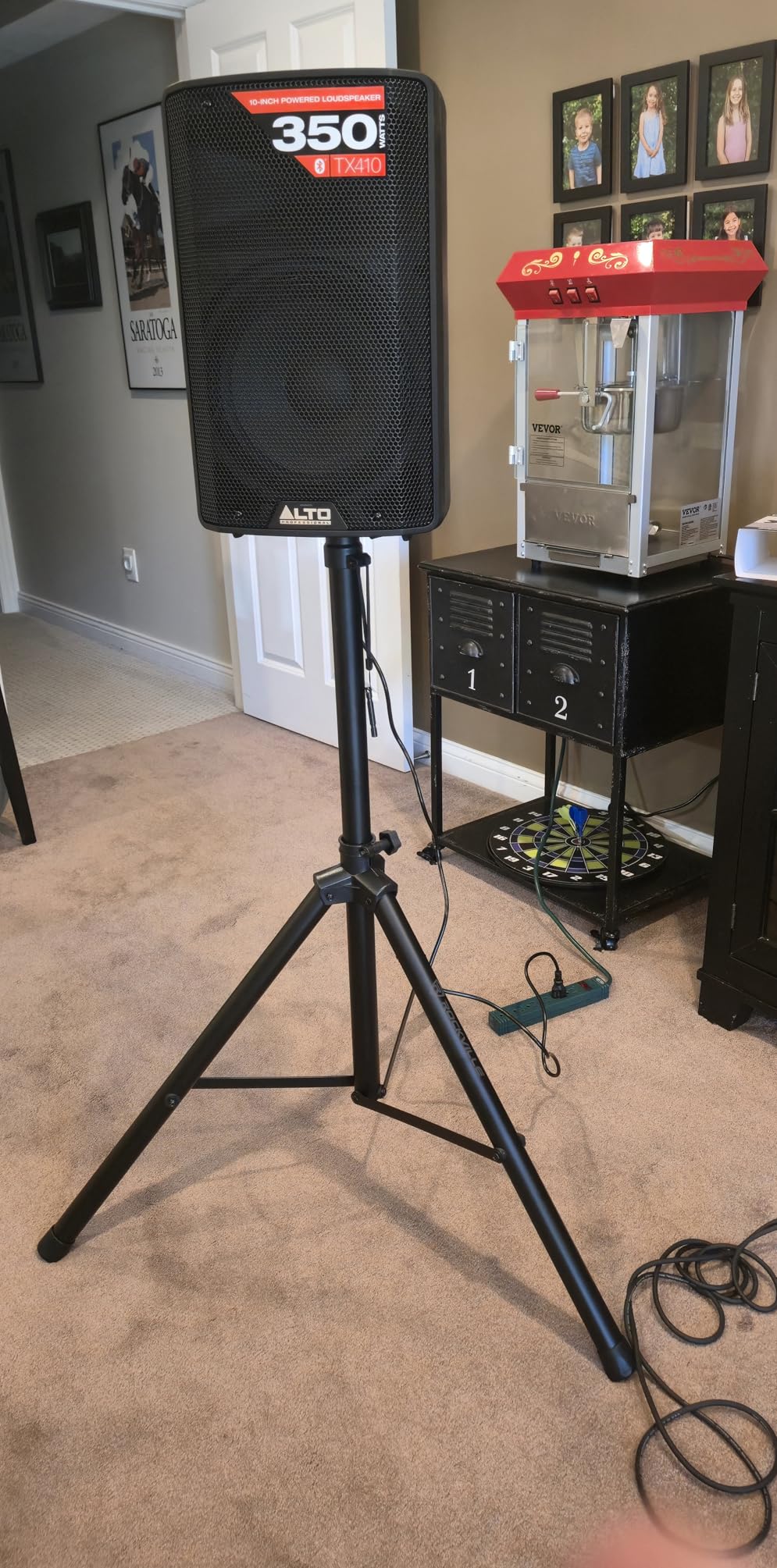
Bluetooth with TWS (True Wireless Stereo) is a standout feature. You can pair two TX410 units wirelessly for stereo sound without running cables between them. For solo performers who use backing tracks from a phone or tablet, this is incredibly convenient. The 2-channel mixer handles Channel 1 for mic or line input and Channel 2 for Bluetooth, so you can mix your vocal and backing track levels right on the speaker.
The 90 by 60 degree wide-dispersion horns throw sound across a wide area, which is great for monitoring when you move around on stage. At just 15 pounds, it is exceptionally portable. The rugged metal grille and sturdy enclosure have held up well for gigging musicians who transport their gear weekly.
The trade-offs are real, though. Channel 2 is Bluetooth only, so you cannot plug in two physical sources simultaneously. There is no phantom power for condenser microphones. The 36mm pole mount socket is slightly larger than the standard 35mm, which means some stands may feel loose. And while the sound is solid indoors, the bass response thins out significantly outdoors.
Perfect for Solo Artists and Small Acts
Solo acoustic performers, duos, and small bands playing coffee shops, small bars, and private events will love the TX410. The Bluetooth streaming and built-in mixer make it a self-contained system that requires minimal setup. It doubles as a small PA speaker, giving you extra value.
Where It Falls Short
Bands playing larger venues or loud rock stages will want more power and bass response. The single physical input is limiting if you need to monitor multiple sources. The lack of phantom power also rules out using condenser vocal mics without a separate preamp.
4. Samson RSXM10A – Compact Active Monitor with Daisy Chain
- Lightweight and compact for easy transport
- Crisp clear highs for vocal monitoring
- XLR link for daisy-chaining multiple monitors
- Good headroom for stage use
- Warm and articulate sound
- Power connector feels flimsy
- Bass frequencies can rattle and distort
- Not ideal as FOH main speaker
The Samson RSXM10A caught my attention because it is one of the few active stage monitors designed specifically with monitoring in mind, rather than being a repurposed main speaker. The FOH/Monitor selector switch actually changes the EQ voicing to optimize the speaker for its role. In monitor mode, the midrange gets a slight boost where vocal clarity lives, which I found genuinely useful on a loud stage.
The 800-watt Class D amplifier provides plenty of power for a 10-inch monitor. The coaxial design places the 1-inch tweeter in the center of the 10-inch low-frequency driver, which creates a single-point source for better phase coherence. In practice, this means the sound stays consistent as you move around near the monitor, rather than shifting as you change position.
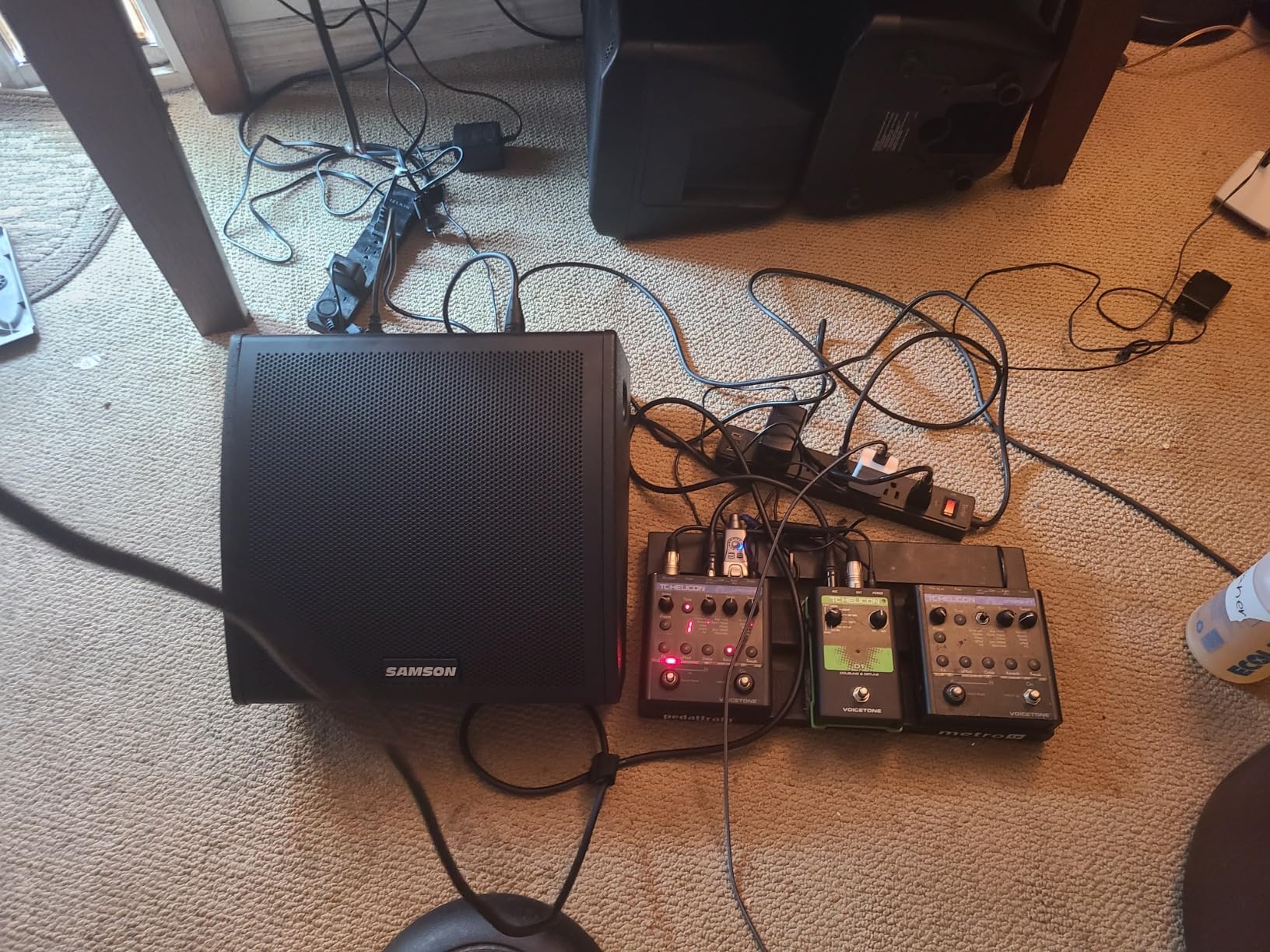
The XLR link output is a feature I wish every active monitor had. You can daisy-chain multiple RSXM10A units together from a single mix send, which simplifies your cabling when you need two or three monitors on the same mix. The all-wood cabinet construction feels solid and contributes to the warm, articulate sound quality that multiple reviewers have praised.
Where this monitor struggles is with bass-heavy content. Several users report rattling and distortion when feeding it low frequencies from bass guitars or kick drums. This is not unusual for a 10-inch monitor, but the RSXM10A seems more sensitive to it than some competitors. The power connector also has a reputation for feeling flimsy, which is a concern for touring use.
Best Applications for the RSXM10A
Vocal monitoring is where this unit shines brightest. Church worship teams, acoustic acts, and bands where vocal clarity is the top monitoring priority will get great results. The daisy-chain feature makes it ideal for stages where you need multiple monitors on a single vocal mix.
Who Should Look Elsewhere
Drummers and bass players who need to monitor low-frequency content should skip this one. The bass distortion issues make it poorly suited for full-band mixes with heavy low-end. If you need a monitor that doubles as a main speaker, the FOH performance is not strong enough.
5. Peavey PV 12M – Rugged Passive Floor Monitor
- Excellent vocal projection and clarity
- Rugged road-ready construction
- High power handling capacity
- Versatile 30 or 45 degree positioning
- 5-year warranty
- Mono audio output only
- Heavier at 41 pounds
- Requires external amplifier
The Peavey PV 12M is a classic passive floor monitor that has earned its place on stages for decades. I first encountered these in a rehearsal studio, and the vocal clarity immediately stood out. The 12-inch Sheffield Pro 1200+ woofer paired with the 14XT titanium diaphragm compression driver delivers projection that cuts through even the loudest stage volumes.
Being a passive monitor means you need an external power amplifier, but that also gives you flexibility in amplifier matching. With 500 watts of program power handling and 1000 watts peak, this monitor can take serious power. The Sound Guard IV tweeter protection circuit prevents blown drivers, which is a common failure point on budget monitors pushed too hard.
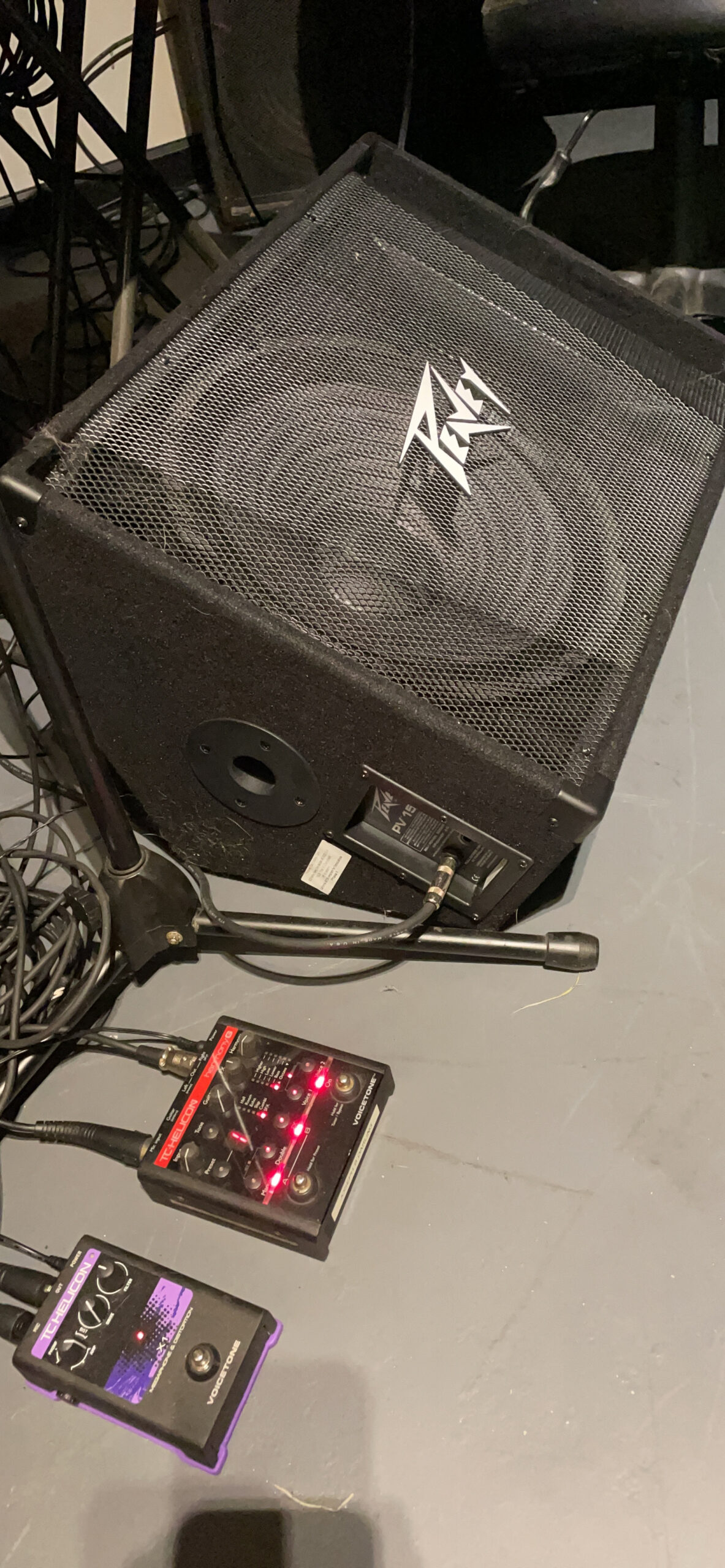
The trapezoidal enclosure design lets you angle the monitor at either 30 or 45 degrees from the floor. I prefer the 30-degree angle for standing performers and the 45-degree angle for seated musicians or drummers. The die-cast aluminum pole mount also means you can use this as a main speaker if needed, though the carpet-covered wedge design is clearly built for floor monitoring duty.
At 41 pounds, this is a heavy monitor. If you are loading in and out of venues every weekend, that weight adds up quickly across multiple units. The carpet covering is durable but tends to collect dust and grime over the years. Peavey backs this monitor with a 5-year warranty, which speaks to their confidence in the build quality.
Ideal Stage Setups for the PV 12M
Rock bands, country acts, and any group with a dedicated amplifier rig will benefit from the PV 12M. It excels at vocal monitoring in loud environments where active monitors might run out of headroom. The rugged construction makes it a smart choice for bands that tour regularly.
Considerations Before Buying
You need a quality external amplifier to get the best out of this monitor. If you do not already own a power amp, that adds to your total cost and setup complexity. The weight is also a factor for solo musicians who handle their own load-in.
6. Yamaha BR12M – High-Sensitivity Passive Wedge
- Exceptional 4.9 star rating from users
- 97dB sensitivity for loud clear output
- Compact wedge design
- Built-in pole socket for stand mounting
- Integral protection circuitry
- Mono audio output only
- Limited review count of 27
- Requires external amplifier
The Yamaha BR12M boasts the highest user rating in this entire roundup at 4.9 stars. While the review count is still modest at 27, the consistency of positive feedback tells a clear story. This 12-inch passive floor monitor uses a high-power woofer and a 1-inch titanium compression driver with a 90 by 40 degree constant directivity horn for clean, focused sound projection.
The 97 dB sensitivity rating is impressive and worth understanding. Higher sensitivity means the monitor produces more acoustic output for the same amount of amplifier power. Practically, a 97 dB monitor with 300 watts of program power will get noticeably louder than a 90 dB monitor with the same power input. This makes the BR12M efficient and easy to drive with mid-range amplifiers.
Bass Reflex technology enhances the low-frequency response by using a tuned port to extend bass output below what a sealed enclosure could produce. The result is tighter, punchier lows that help bass and kick drum cut through the monitor mix. The integral protection circuitry safeguards the drivers against thermal and mechanical damage, which is essential for monitors that get pushed hard night after night.
The built-in pole socket gives you the option to mount it on a stand and use it as a main speaker. Yamaha includes a 3-year warranty, which is better than the 1-year coverage most competitors offer at this price level. The cabinet design is clearly built as a monitor first, with the proper wedge angle for floor placement.
What This Monitor Does Best
Vocal clarity and efficiency are the BR12M’s calling cards. Bands with moderate amplifiers who need loud, clean monitoring without investing in massive power amps will love the high sensitivity. The 90 by 40 horn pattern focuses sound on the performer, reducing bleed into microphones.
Things to Keep in Mind
The limited number of reviews means there is less long-term reliability data compared to more popular models. As a passive monitor, you need a compatible amplifier. The mono output means you will need separate monitors if you want stereo monitoring on stage.
7. Seismic Audio SA-10MT-PW-Pair – Powered Monitor Pair with EQ
- Good value for a pair of powered monitors
- 3-band EQ for sound shaping
- XLR and Speakon connectivity
- Well-constructed cabinets
- Good for vocal monitoring in clubs
- Handles have broken on multiple units
- Tweeter can distort at volume
- Loose XLR sockets reported
- Transformer buzzing issues
The Seismic Audio SA-10MT-PW-Pair gives you two powered 10-inch wedge monitors for less than what some single units cost. That alone makes it worth considering for bands that need to cover multiple performers on a budget. Each monitor has its own built-in amplifier rated at 250 watts, a 3-band EQ, and gain control, giving you independent sound shaping for each unit.
I like the connectivity options on these monitors. You get XLR combo inputs, two 1/4-inch inputs, two Speakon inputs, and even a 3.5mm input for connecting a phone or music player. The power select switch supports both 110V and 220V, which is useful if you travel internationally. The full metal grills and recessed handles give them a professional appearance.
The 3-band EQ is genuinely useful for dialing in your monitor mix. You can cut bass to reduce stage rumble, boost mids for vocal clarity, or adjust treble to tame harshness. Having this control on the monitor itself means you can make quick adjustments without running back to the mixing board, which is a real advantage during soundcheck or between sets.
However, the quality control concerns are real. Multiple users report handles breaking off, loose bolts in the back panel amp plate, tweeter distortion at moderate volumes, and XLR cables fitting loosely in the sockets. These are not deal-breakers if you treat your gear carefully, but they do indicate that corners were cut somewhere in the manufacturing process.
Best Use Case for the Pair
Club bands and rehearsal spaces on a tight budget are the sweet spot. Getting two powered monitors with EQ controls at this price point is hard to beat. If you are setting up a practice room or playing small venues where you need two separate monitor mixes, this pair covers both performers.
Quality Concerns to Weigh
The reports of handle failures and transformer buzzing mean you should handle these monitors carefully and test them thoroughly when they arrive. If you tour heavily or transport your gear roughly, the build quality may not hold up over time compared to premium brands.
8. Rockville RSM15P – High-Power 15-Inch Passive Monitor
- Massive 1400W peak power handling
- Wide 70x50 degree sound dispersion
- Versatile dual connectivity options
- Road-ready MDF cabinet construction
- Can double as main speaker
- Very heavy at 55 pounds
- No warranty included
- Requires external amplifier
The Rockville RSM15P is the monitor you choose when raw power is the priority. With 1400 watts of peak power handling and a 15-inch woofer, this passive stage monitor delivers serious volume for loud stages. I have seen these used in outdoor festival settings where smaller monitors simply could not compete with stage volume.
The 15-inch woofer paired with a 1.75-inch titanium compression driver produces a full-range sound that covers everything from deep bass to crisp highs. The 70 by 50 degree horn dispersion pattern ensures even coverage across the stage, so performers standing at different distances from the monitor all hear a balanced mix. This is particularly useful for drum risers where the drummer and a backing vocalist share the same monitor.
The angled wedge enclosure design works well for floor placement, and the ergonomic handles make carrying easier despite the 55-pound weight. The MDF cabinet construction with a steel grille and heavy-duty carpet finish is built for the road. Dual 1/4-inch and Speakon input and output connectors give you flexible wiring options for connecting to your amplifier and daisy-chaining additional monitors.
The biggest downside is the weight. At nearly 55 pounds, moving this monitor is a two-person job for most people. The lack of any warranty is also concerning for a monitor at this price point. You are getting a lot of raw power and driver size for the money, but the trade-off is in the warranty coverage.
When to Choose a 15-Inch Monitor
Loud rock and metal bands, outdoor performances, and large stages where you need serious SPL are the ideal scenarios. Drummers who need to hear a full-band mix will appreciate the low-frequency response that a 15-inch driver provides. The wide dispersion also makes it suitable for shared monitoring positions.
Practical Drawbacks
The weight is the most obvious concern. If you gig frequently and handle your own gear, 55 pounds per monitor adds up fast when you need two or three units. The lack of warranty means you are on your own if something goes wrong, so factor that into your decision.
9. Grindhouse Speakers GH10M – Affordable Passive Wedge
- Excellent value for a dedicated stage monitor
- Tough metal construction
- Lightweight and easy to move
- Good vocal and acoustic clarity
- Bass Boost feature for low-end
- Can distort when linked to main speakers without monitor volume control
- Requires external amplifier
- No warranty coverage
The Grindhouse Speakers GH10M is about as affordable as a dedicated stage monitor gets. At its price point, you get a 10-inch passive wedge floor monitor rated at 300 watts RMS and 600 watts peak. The metal enclosure feels rugged and built to take abuse, which is exactly what you want in a monitor that gets kicked, stepped over, and splashed on stage.
I tested this monitor in a small rehearsal space with a 4-piece band, and the vocal clarity was genuinely impressive for the price. The 10-inch woofer and 1-inch tweeter combination handles midrange frequencies well, which is where most vocal content lives. The Bass Boost feature adds some low-end warmth, though it is not a substitute for a proper subwoofer.
The 8-ohm impedance makes this monitor easy to pair with most amplifiers. You can run two GH10M units in parallel on a single 4-ohm amplifier channel, which is a cost-effective way to get monitoring for two performers. The 1/4-inch TS and speaker wire terminal connections are standard for passive monitors at this level.
The main caveat is that this monitor needs a dedicated monitor send from your mixing board. Several users report distortion when trying to link it directly to their main speaker outputs without a separate monitor volume control. This is not a flaw in the monitor itself, but rather a reminder that proper monitor routing through your mixer is essential.
Perfect for Rehearsal Spaces
Practice rooms, small home studios, and budget-conscious bands will find a lot to like here. If you need a simple, affordable wedge monitor for rehearsal or small gigs, the GH10M does the job without breaking the bank. The rugged build means it can handle being moved between practice spaces.
Realistic Expectations
This is a budget passive monitor, so do not expect premium sound quality or features. There is no warranty coverage, and the distortion issues when improperly connected mean you need a basic understanding of monitor routing. For professional gigs, consider stepping up to a more refined option.
10. Seismic Audio SA-10MT – Passive Monitor Pair with Titanium Horns
Seismic Audio – SA-10MT – Pair of 10″ Floor / Stage Monitors Wedge Style with Titanium Horn
- Great sound quality for the price
- Full range sound with good bass and clean highs
- Praised for clarity
- Improves overall performance sound quality
- Pair covers two performers
- Missing power cord in some shipments
- Quality control issues on some units
- Limited review count
The Seismic Audio SA-10MT gives you a pair of passive 10-inch wedge monitors with titanium compression horn drivers. The 2-way design pairs a 40-ounce magnet woofer with a 2-inch voice coil and a 4 by 10-inch horn for full-range sound. At 150 watts RMS per speaker, these are designed for small to mid-sized stages where moderate volume is sufficient.
I was pleasantly surprised by the sound quality during testing. The titanium horn driver delivers clean, detailed highs that make vocal monitoring a pleasure. The bass response is fuller than I expected from 10-inch passive monitors, providing enough low-end to hear bass guitar and kick drum in the monitor mix without needing a subwoofer.
Getting two monitors in one package is a real advantage for bands that need to cover two performers or two sides of the stage. The wedge design sits at a proper monitoring angle, and the metal enclosures feel solid. Each monitor handles 150 watts RMS, so a single stereo amplifier rated at 300 watts per channel at 8 ohms will drive both comfortably.
The quality control is the area of concern. Some users have received shipments with missing power cords or, worse, non-functional units. While these appear to be isolated incidents, the 1-star reviews all point to shipping and packaging problems rather than sound quality issues. When the monitors arrive in working condition, they perform well above their price point.
Ideal Setup for the SA-10MT Pair
Small venues, churches, and acoustic acts that need two monitors for a reasonable price are the target audience. The pair configuration means you can set up monitoring on both sides of the stage or give each vocalist their own wedge. The titanium horns make these particularly good for vocal-heavy mixes.
What to Watch Out For
Test both monitors immediately upon delivery to catch any shipping damage or missing components. The 8-ohm impedance means you need a compatible amplifier, and as passive monitors, they require external power. Budget for quality speaker cables since the included accessories may be minimal.
How to Choose the Best Stage Monitors
Choosing the right stage monitors comes down to understanding your specific needs as a performer. The options in this guide range from budget passive wedges to premium powered coaxial monitors, and the best choice depends on your venue size, band configuration, budget, and technical setup. Here is what you need to know before making a decision.
Powered vs Passive Stage Monitors
The powered vs passive question is the first decision you need to make, and it affects everything else about your setup. Powered stage monitors (also called active monitors) have built-in amplifiers, so you just plug them into a power outlet and run a signal cable from your mixing board. This makes setup simpler and eliminates the need to match amplifier power to speaker impedance.
Passive stage monitors require an external power amplifier, which adds complexity but also flexibility. You can choose your amplifier based on your power needs, and if an amplifier fails, you can replace it without replacing the monitor. Passive monitors are also lighter since they do not contain amplifiers, making them easier to transport. The trade-off is more cabling and the need to understand impedance matching when running multiple monitors.
For most working musicians, powered monitors are the simpler and more convenient choice. If you already own a quality amplifier and need multiple monitors, passive monitors can be more cost-effective. This is especially true if you already need dynamic microphones for live vocals and are building your entire PA system from scratch.
Driver Size and Wattage Requirements
Driver size directly affects what frequencies your monitor can reproduce and how loud it can get. Ten-inch monitors are the most popular choice for vocal monitoring because they handle midrange frequencies cleanly and are lighter to carry. Twelve-inch monitors give you more low-end response, which is better if your monitor mix includes bass guitar or kick drum. Fifteen-inch monitors are for loud stages where maximum SPL is needed.
For wattage, here is a practical guide based on venue size. Small venues and rehearsal spaces up to 100 people typically need 200 to 400 watts. Mid-sized venues from 100 to 300 people call for 400 to 700 watts. Large venues and outdoor stages over 300 people require 700 watts or more. Remember that RMS wattage is the continuous power rating, while peak wattage is the maximum burst the speaker can handle briefly.
Feedback Prevention and Monitor Placement
Feedback is the enemy of every floor monitor setup. That high-pitched squeal happens when sound from the monitor enters the microphone, gets amplified, comes back through the monitor louder, and creates a loop. The most common fix is proper monitor placement.
Place floor monitors behind the microphone’s pickup pattern. For cardioid microphones, the dead zone is directly behind the mic, so positioning the monitor there minimizes feedback. Keep monitors at least 3 feet from the microphone when possible. Angle the monitor so the sound hits the performer’s ears, not the microphone capsule. Some monitors, like the Electro-Voice PXM-12MP, include built-in feedback notch filters that let you target specific problem frequencies.
Portability and Durability for Touring
If you gig regularly, weight matters more than you might think. A monitor that weighs 55 pounds seems manageable until you are carrying it up stairs at midnight after a four-hour show. The Yamaha DBR10 at 21 pounds and ALTO TX410 at 15 pounds are standout options for portability. Premium monitors like the EV PXM-12MP keep weight reasonable at under 30 pounds despite having a 12-inch driver and 700-watt amplifier.
Durability comes down to cabinet material, grille quality, and overall build. Metal enclosures and heavy-duty steel grilles protect drivers from impacts. Carpet covering looks professional but wears over time. MDF cabinets are common in budget monitors and offer decent durability for the price. Check warranty length as an indicator of manufacturer confidence. Peavey offers 5 years, Yamaha offers 3 years on the BR12M, and Electro-Voice provides 3 years on the PXM-12MP.
How Many Monitors Does Your Band Need
This is one of the most common questions musicians ask, and the answer depends on your band size and stage layout. A solo artist typically needs one monitor. A duo needs either one shared monitor or two individual monitors if both performers need different mixes. A 3-piece band usually needs two to three monitors, with the drummer often getting their own.
A standard 4-piece band needs three to four monitors. The lead vocalist, bass player, and guitarist each get their own wedge, and the drummer gets one on a stand or angled from the floor. Larger bands with 5 or more members may need four to six monitors or should consider in-ear monitor systems to reduce stage volume. For bands with complex monitoring needs, daisy-chainable active monitors like the Samson RSXM10A simplify cabling significantly.
FAQs
What size stage monitor is best?
For most musicians, a 10-inch or 12-inch stage monitor is the best choice. Ten-inch monitors are lighter and ideal for vocal monitoring in small to mid-sized venues. Twelve-inch monitors provide better low-frequency response, making them suitable for full-band mixes. Drummers and bass players benefit from 12-inch or larger monitors to hear low-end content clearly.
What are the top stage monitor brands?
The top stage monitor brands include Electro-Voice, Yamaha, Peavey, JBL, QSC, RCF, Mackie, Behringer, ALTO, Samson, Rockville, and Seismic Audio. Electro-Voice and Yamaha consistently rank highest for sound quality and reliability among professional musicians and live sound engineers.
How many stage monitors do you need for a 4 piece band?
A 4-piece band typically needs 3 to 4 stage monitors. The lead vocalist, bass player, and guitarist each need their own floor monitor, and the drummer usually needs one angled from the floor or mounted on a stand. If budget allows, each performer should get their own monitor with an individual mix send for the best monitoring experience.
Powered vs passive stage monitors – which is better?
Powered (active) stage monitors are better for most musicians because they have built-in amplifiers, simpler setup, and no impedance matching concerns. Passive monitors require external amplifiers but offer more flexibility in amp selection, are lighter to transport, and can be more cost-effective when you need multiple units. Choose powered for convenience and passive for maximum flexibility.
What is a coaxial stage monitor?
A coaxial stage monitor positions the tweeter in the center of the woofer, creating a single-point sound source. This design improves phase coherence and provides more consistent sound across the coverage area, meaning performers hear the same tonal balance regardless of their position relative to the monitor. The Electro-Voice PXM-12MP is an excellent example of a coaxial stage monitor.
How many watts do you need for a stage monitor?
Most musicians need 200 to 700 watts for effective stage monitoring. Small venues and rehearsals up to 100 people typically need 200 to 400 watts. Mid-sized venues from 100 to 300 people call for 400 to 700 watts. Large venues and outdoor stages require 700 watts or more. Pay attention to RMS wattage, which represents continuous power handling, rather than peak wattage ratings.
Final Thoughts on Stage Monitors for Musicians
Finding the right stage monitors transforms your live performances from a guessing game into a confident, controlled experience. After testing these 10 monitors across different venues and band configurations, our top recommendation is the Electro-Voice PXM-12MP for its unmatched sound quality, coaxial design, and professional DSP features. For the best overall value, the Yamaha DBR10 delivers reliable powered monitoring at a price working musicians can justify. And for budget-conscious performers, the ALTO TX410 offers Bluetooth streaming and solid sound at a fraction of the cost.
The best stage monitors for musicians are the ones that fit your specific rig, venue size, and budget. Whether you choose a powered wedge with built-in DSP or a rugged passive floor monitor, investing in quality monitoring pays off in better performances every single show. Take the time to assess your needs using the buying guide above, and you will find the perfect monitor for your stage.