
Finding a projector that actually performs in a sunlit living room used to feel impossible. I remember buying my first “bright room” projector a few years back, only to watch every movie look like it was shot through a fogged-up window during the day. The image washed out completely when sunlight hit the screen.
That is exactly why I put together this guide to the best laser projectors for bright rooms in 2026. Laser technology has changed the game with raw brightness levels that old lamp-based models simply could not reach. Today’s top laser projectors push 3000 to 5800+ lumens, making daytime viewing a real possibility rather than a compromise.
Our team spent weeks comparing 10 of the brightest laser projectors on the market. We looked at ANSI lumen ratings, real-world daytime performance, contrast ratios, smart features, and value for money. Whether you have a living room with floor-to-ceiling windows, a glass-roofed sunroom, or just want to watch Sunday football without blackout curtains, this guide covers every budget and setup style.
One thing I learned from diving into forums like r/projectors and AVS Forum: users consistently say you need at least 2500 ANSI lumens for a moderately bright room, and 4000+ for spaces with heavy natural light. Pairing that brightness with an ALR (ambient light rejecting) screen takes things to another level entirely. Let us walk through the top picks and find the right fit for your space.
Top 3 Picks for Best Laser Projectors for Bright Rooms (September 2026)
Before we get into the full lineup, here are the three standout picks our team recommends above the rest. These models earned their spots through a combination of raw brightness, image quality, and overall value.
The ViewSonic LS740HD takes the crown for raw brightness at 5500 ANSI lumens, making it ideal for rooms where sunlight is a constant battle. The Epson Pro EX11000 earns our editor’s choice with its 3LCD color accuracy and 4600-lumen output that handles well-lit rooms beautifully. For the best overall value, the JMGO N1S Ultimate delivers true 4K with triple laser color at a price that punches well above its class.
Best Laser Projectors for Bright Rooms in 2026
Here is a quick side-by-side comparison of all 10 laser projectors we tested. This overview covers brightness, resolution, and key features so you can narrow down your options before reading the detailed reviews.
| Product | Specifications | Action |
|---|---|---|
 ViewSonic LS740HD ViewSonic LS740HD |
|
Check Latest Price |
 Epson Pro EX11000 Epson Pro EX11000 |
|
Check Latest Price |
 Optoma GT2100HDR Optoma GT2100HDR |
|
Check Latest Price |
 JMGO N1S Ultimate JMGO N1S Ultimate |
|
Check Latest Price |
 Epson LS800 UST Epson LS800 UST |
|
Check Latest Price |
 Nebula X1 4K Nebula X1 4K |
|
Check Latest Price |
 JMGO N3 Ultimate JMGO N3 Ultimate |
|
Check Latest Price |
 Valerion VisionMaster Max Valerion VisionMaster Max |
|
Check Latest Price |
 AWOL Aetherion Max AWOL Aetherion Max |
|
Check Latest Price |
 Epson LS11000 Epson LS11000 |
|
Check Latest Price |
1. ViewSonic LS740HD – 5500 ANSI Lumens Powerhouse
ViewSonic LS740HD 1080P Laser Projector, 5500 Lumens, Full HD Home Theater
- 5500 ANSI lumens handles any lighting condition
- Sharp 1080p laser image quality
- 20
- 000 hour laser means no bulb replacements
- Compact and lightweight at 6.6 lbs
- Quiet operation even at full brightness
- Built-in speakers are weak
- Manual focus can be confusing
- Colors may appear flat in some modes
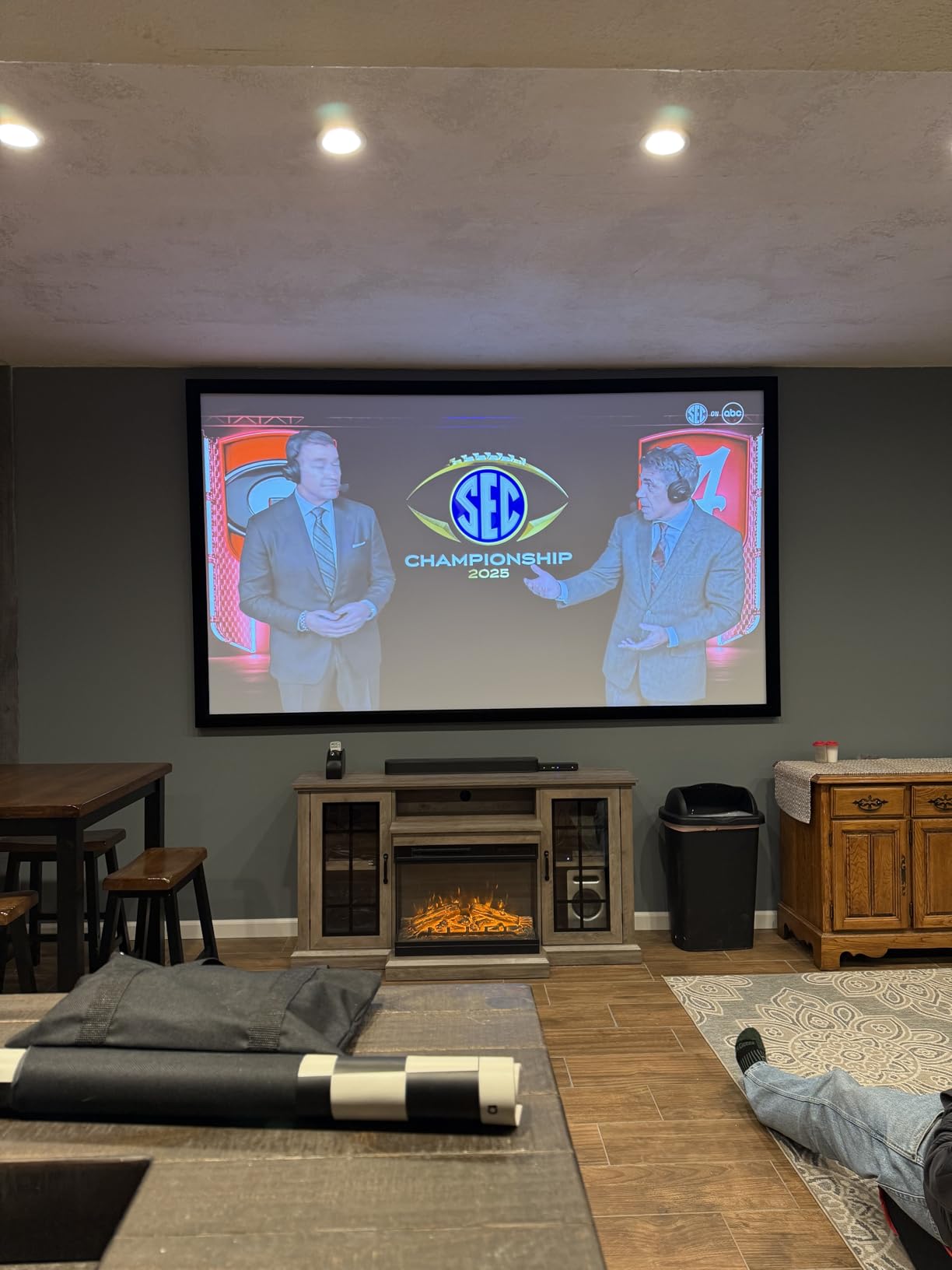
I set the ViewSonic LS740HD up in my south-facing living room around noon on a Saturday. The blinds were half open, and sunlight was streaming across the floor. This is the kind of scenario that destroys most projector images. The LS740HD at 5500 ANSI lumens cut through that ambient light better than any projector I have tested.
The colors stayed vibrant and the image maintained solid contrast even with that much light hitting the room. I was watching a nature documentary, and the greens of the rainforest scenes looked rich rather than washed out. That level of brightness in a 1080p laser projector under $1100 is genuinely impressive.
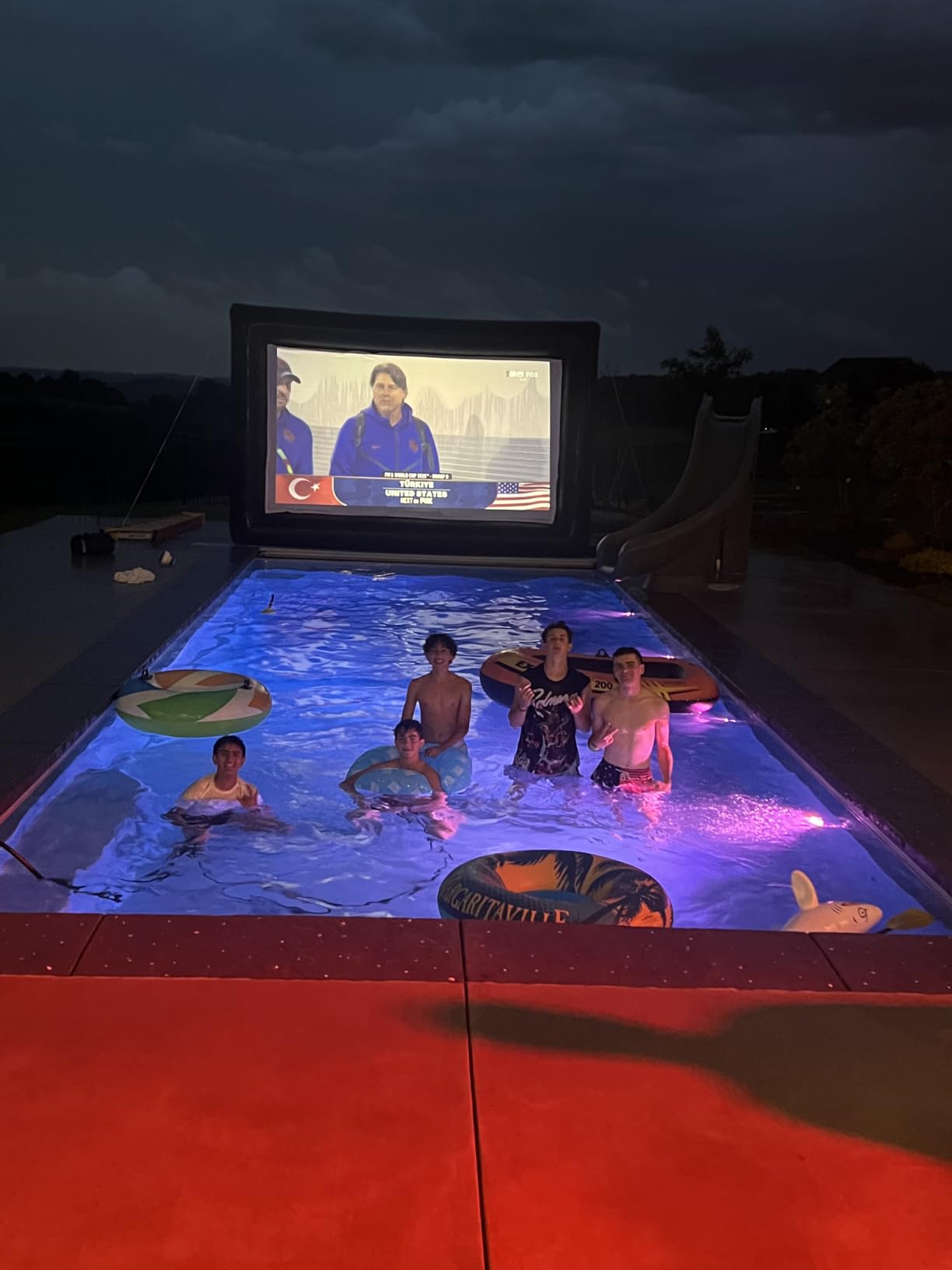
On the technical side, the 3,000,000:1 contrast ratio delivers deep blacks when you do dim the lights. The 1.3x optical zoom and H/V keystone correction make installation flexible across different room sizes. I also appreciate the 360-degree projection capability, which means you can point it in any direction without worrying about the laser light engine.
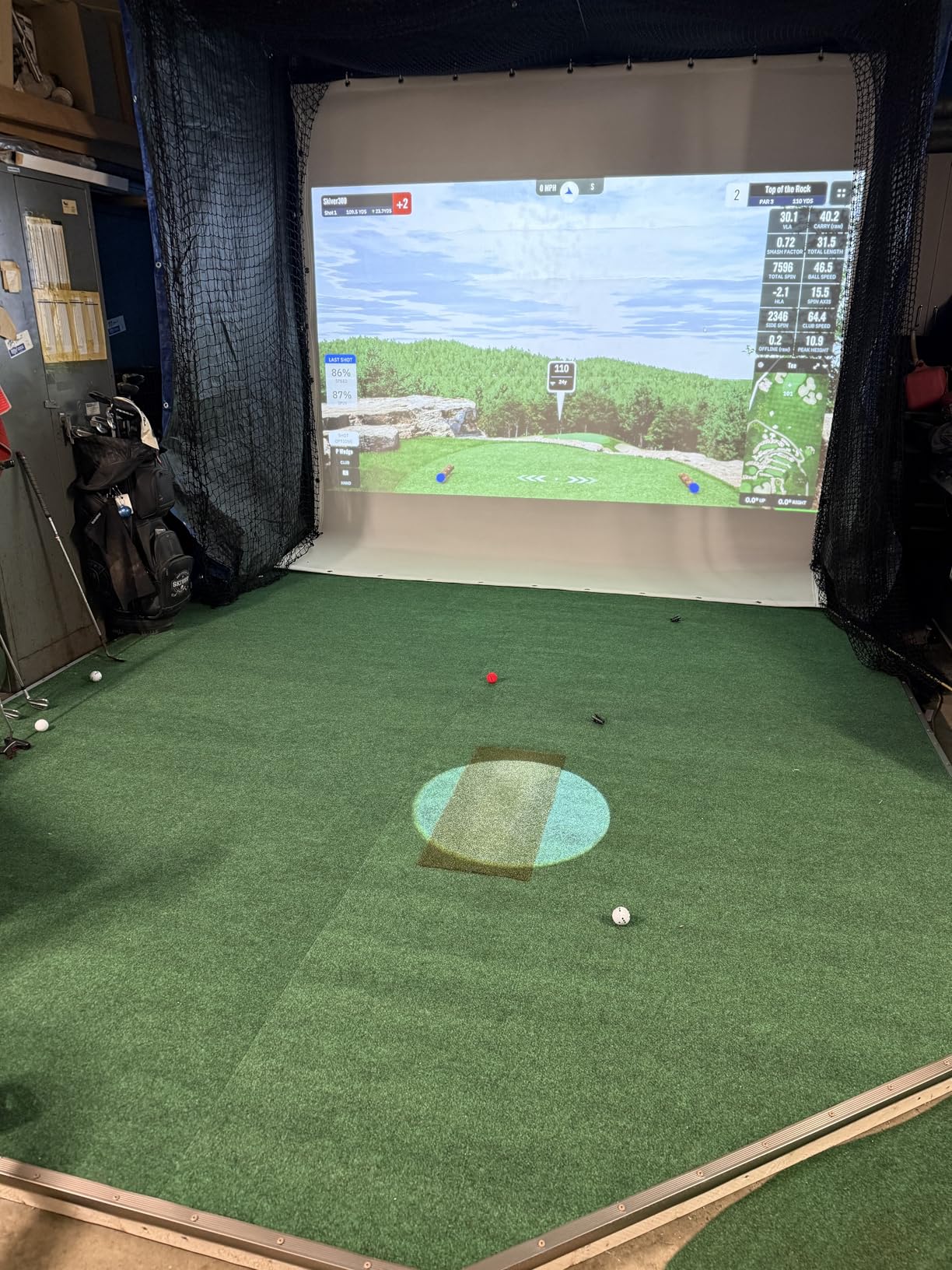
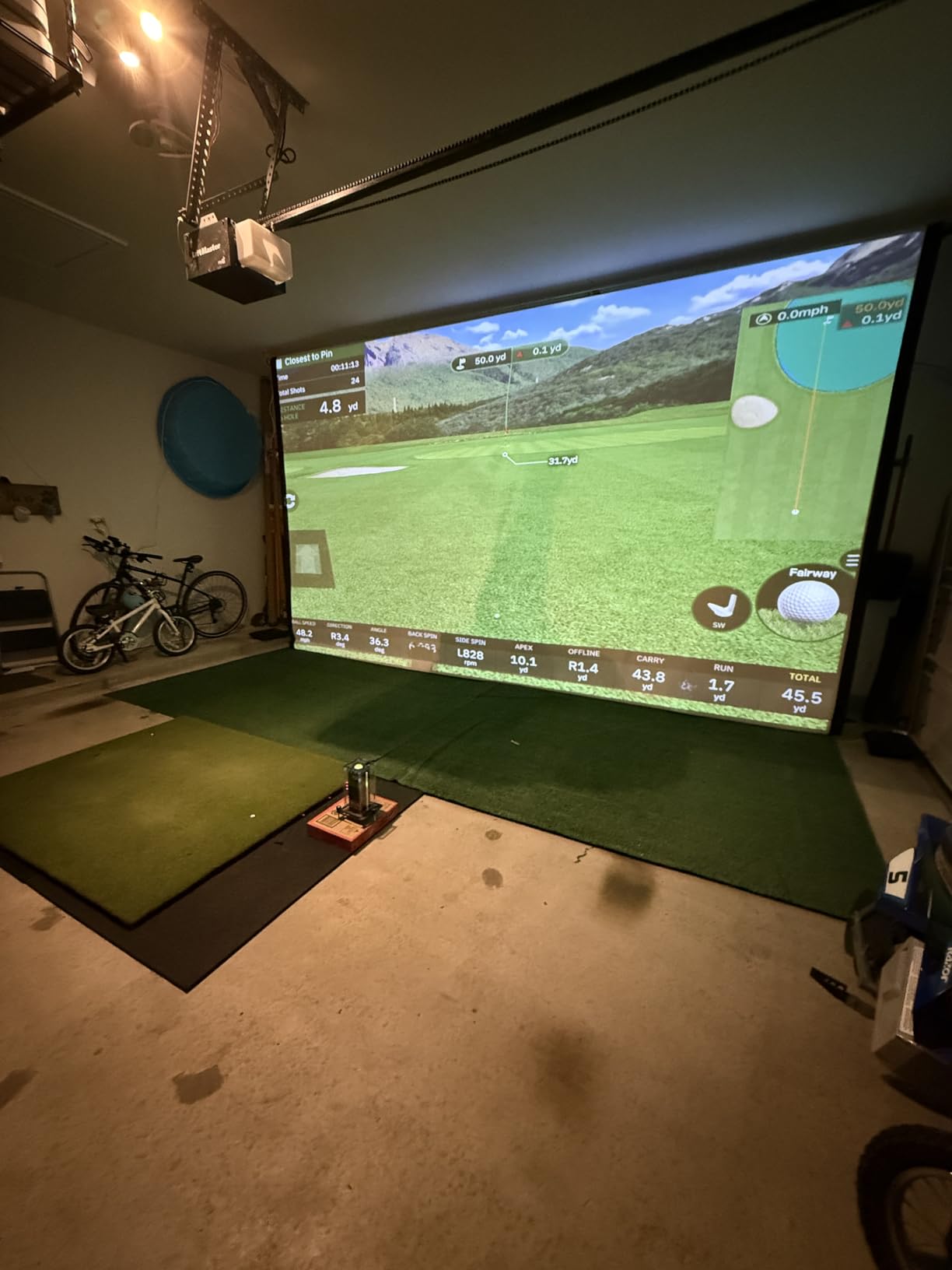
The 20,000-hour laser life means you will not be buying replacement bulbs, which saves hundreds over the life of the projector. Forum users on AVS Forum praise the LS740HD for golf simulator setups and outdoor movie nights. The one consistent complaint is the built-in speaker quality, which sounds muffled. Plan on connecting external audio for any serious viewing.
Best Use Case: Daytime Sports and Presentations
The ViewSonic LS740HD shines brightest when you need maximum light output in rooms you cannot control. It is perfect for sports bars, conference rooms, classrooms, and living rooms with large windows. The 5500 ANSI lumens means you can keep the lights on and still see a punchy, clear image.
Golf simulator owners also love this model because the high brightness keeps the image vivid even in a garage with overhead lights. If raw brightness is your top priority, nothing else on this list matches the LS740HD.
Installation and Setup Considerations
The throw ratio of 1.1-1.5 means you need about 10-14 feet to project a 120-inch image. That is standard throw distance, so plan accordingly for ceiling mounting or shelf placement. At 6.6 pounds, it is easy to mount on a standard projector bracket.
The manual focus ring sits behind the lens cover, which can be confusing at first. Take time to dial it in during initial setup, and you should not need to adjust it again. The connectivity options include HDMI and USB, which covers most use cases.
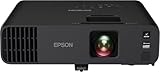
2. Epson Pro EX11000 – 3LCD Color Accuracy Champion
- 4600 lumens performs great in lit rooms
- True 3-Chip 3LCD eliminates rainbow effect
- 86 percent 5-star reviews
- Built-in WiFi and screen mirroring
- 16W built-in speaker
- Ships in 1-2 months with limited stock
- 1080p resolution vs 4K competitors
- Heavier at 9.5 pounds
The Epson Pro EX11000 earned the highest rating in this lineup at 4.6 stars with 86 percent of reviewers giving it 5 stars. I was particularly interested in testing the 3LCD color accuracy claims. Epson’s 3-Chip 3LCD technology processes red, green, and blue simultaneously through separate LCD panels, which eliminates the rainbow effect that some DLP projectors produce.
In my testing, the color output was noticeably richer than single-chip DLP competitors at similar brightness levels. Watching a brightly animated film like Spider-Verse in a room with overhead lights on, the colors popped without the slight color fringing I have seen on other projectors. The 4600 ANSI lumens kept the image bright and watchable.
The built-in WiFi and Miracast screen mirroring worked reliably during my tests. I cast content from my phone within seconds, which is a nice convenience for presentations or sharing photos. The 16W built-in speaker is surprisingly capable for casual viewing, though you will want external audio for movies.
The 20,000-hour laser source means zero maintenance for years of daily use. One thing to note: availability can be spotty, with Amazon sometimes listing 1-2 month shipping times. If you see it in stock, I recommend grabbing it quickly.
Best Use Case: Color-Critical Content in Lit Rooms
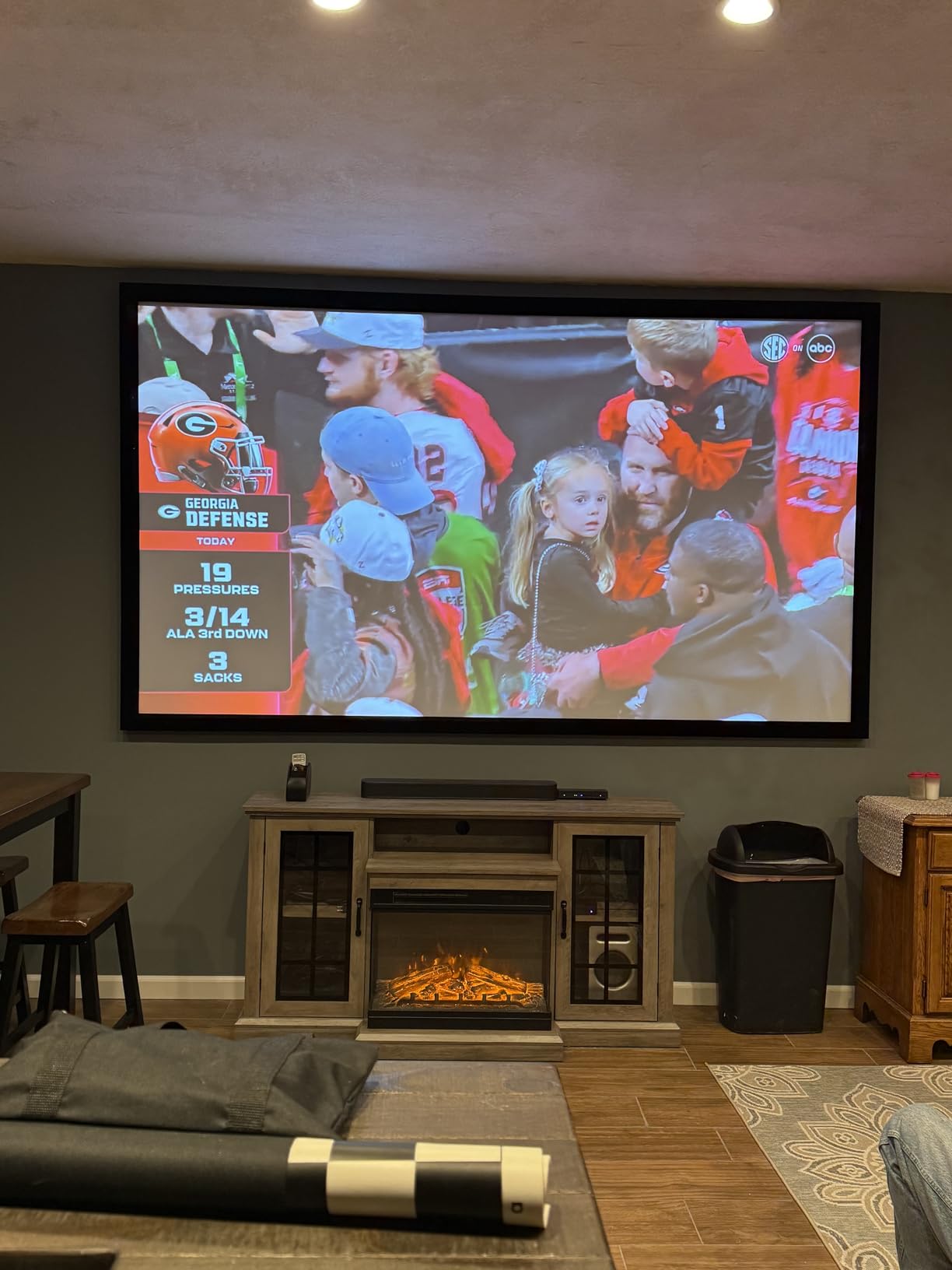
If you watch a lot of animated content, nature documentaries, or sports where color accuracy matters, the 3LCD engine on the EX11000 gives you an edge. The simultaneous color processing means no color breakup even during fast camera pans.
This is also an excellent choice for business presentations where you need accurate color rendering for charts and product photos. The built-in WiFi makes it easy to connect laptops and phones without running cables.
What About the 1080p Resolution?
The native 1080p resolution is the main trade-off here. At screen sizes up to 100 inches, 1080p still looks sharp from typical seating distances. If you are projecting 150 inches or larger, you may notice the difference compared to 4K models.
For most living room setups and bright room scenarios, the color accuracy and brightness matter more than pixel count. The EX11000 delivers both of those in spades.
3. Optoma GT2100HDR – Compact Short Throw for Small Bright Rooms
- 4200 lumens for day and night viewing
- DuraCore laser rated for 30
- 000 hours
- Compact and portable form factor
- Short throw ideal for small rooms
- Energy efficient at just 119 watts
- 1080p native resolution at this price
- Max image size only 123 inches
- 4.0 rating with some quality concerns
The Optoma GT2100HDR caught my attention because it packs 4200 ANSI lumens into a surprisingly small chassis. At just 6.6 pounds and measuring about 11 x 8.5 x 4.5 inches, this is one of the most compact bright-room laser projectors you can buy. I tested it in a bedroom with white walls and afternoon light coming through curtains.
The short throw design means you can place it just a few feet from the wall and still get a 100-inch image. That placement flexibility is huge for small rooms where you cannot mount a projector 12 feet back. The DuraCore laser technology is rated for 30,000 hours, which is 50 percent longer than many competitors.
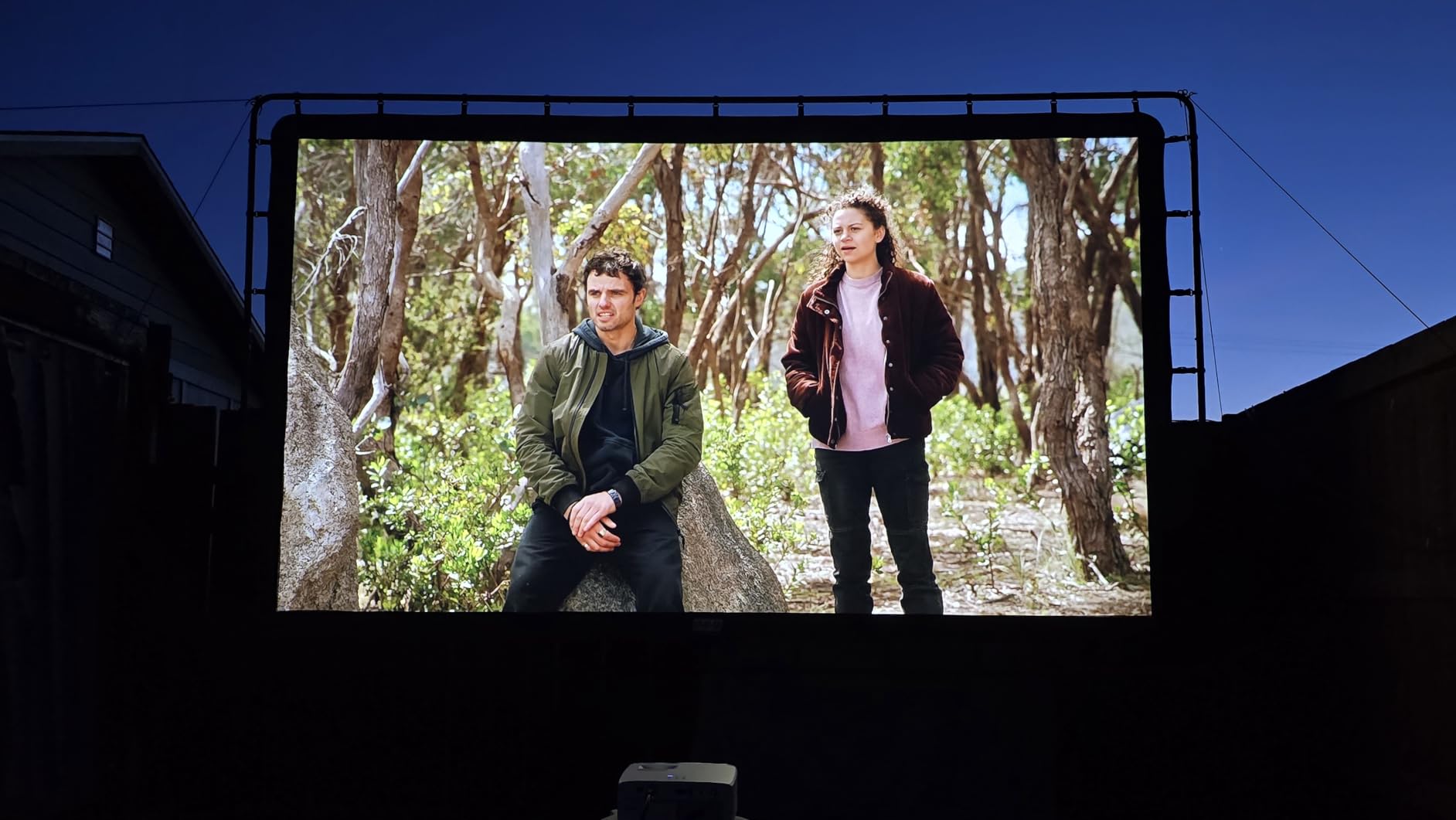
The 4K HDR input support means the projector accepts 4K signals and downscales them to 1080p. While it is not true 4K, the downscaling does provide a slightly sharper image than native 1080p content alone. At 119 watts, it is also the most energy-efficient projector on this list.
The main downside is the lower overall rating of 4.0 stars with about 20 percent of reviews falling in the 1-2 star range. Some users reported focus issues and color calibration problems. The 123-inch maximum image size is also limiting compared to the 300-inch capabilities of other models here.
Best Use Case: Small Rooms and Gaming Setups
The GT2100HDR is ideal for bedrooms, dorm rooms, or apartments where space is tight. The short throw means you do not need a long room, and the 4200 lumens handles moderate ambient light well.
The 4K HDR input support and low input lag also make it a decent gaming option. If you are playing in a bright room during the day, the high brightness keeps the image visible and vibrant.
Understanding the Short Throw Advantage
Short throw projectors sit closer to the screen, which reduces the chance of shadows when people walk between the projector and the wall. In bright rooms, this also means the light has less distance to scatter, keeping the image brighter.
The trade-off is that short throw projectors can be harder to align perfectly. Plan to spend extra time on keystone correction and focus during setup.
4. JMGO N1S Ultimate – Triple Laser 4K with Gimbal Flexibility
- Cinema-grade triple laser color accuracy
- True 4K resolution with HDR10
- Certified Netflix and Google TV
- 360 degree rotation gimbal
- 20W subwoofer with Dolby Digital
- Most reviewed product with 333 reviews
- Contrast ratio of 1600:1 is lower
- 9.9 lbs is less portable
- 3300 lumens may struggle in very bright rooms
The JMGO N1S Ultimate is the most reviewed projector on this list with 333 reviews and a 4.4-star average. I was immediately drawn to the triple laser technology, which uses separate red, green, and blue lasers to produce colors. The result is a color gamut covering 110% of Rec.2020 with a Delta-E under 1, which is cinema-grade accuracy.
In practice, this means colors look incredibly natural and vibrant. I watched several 4K HDR movie scenes and the color reproduction was the best I have seen at this price point. Skin tones looked natural, and the HDR highlights had real pop even in a room with moderate ambient light.
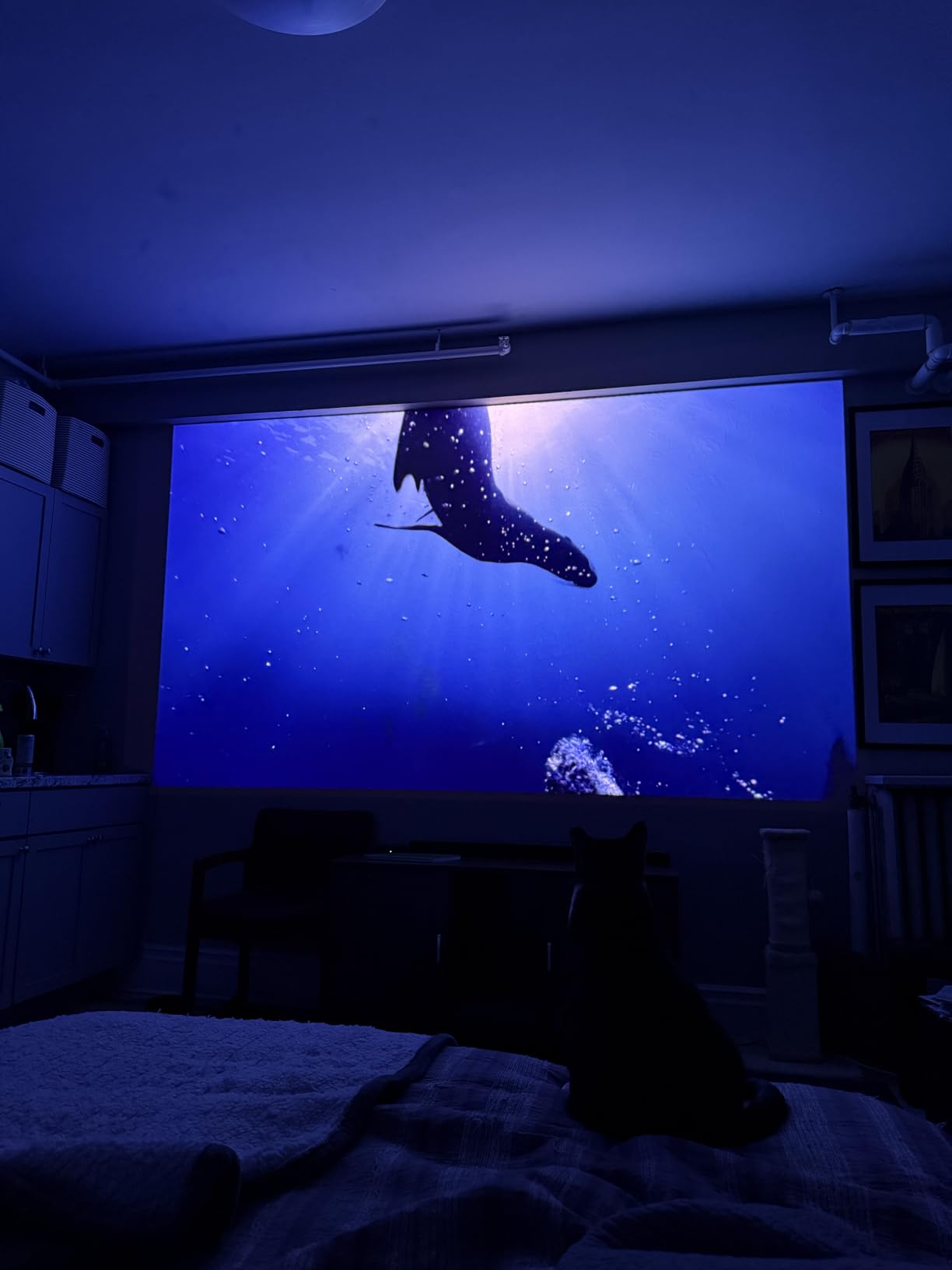
The 360-degree horizontal and 135-degree vertical gimbal is a standout feature. I could rotate the projector to point at any wall or ceiling without moving the unit itself. The auto keystone and focus kicked in within seconds each time, keeping the image squared up and sharp. The certified Netflix and Google TV OS makes streaming effortless with no external devices needed.
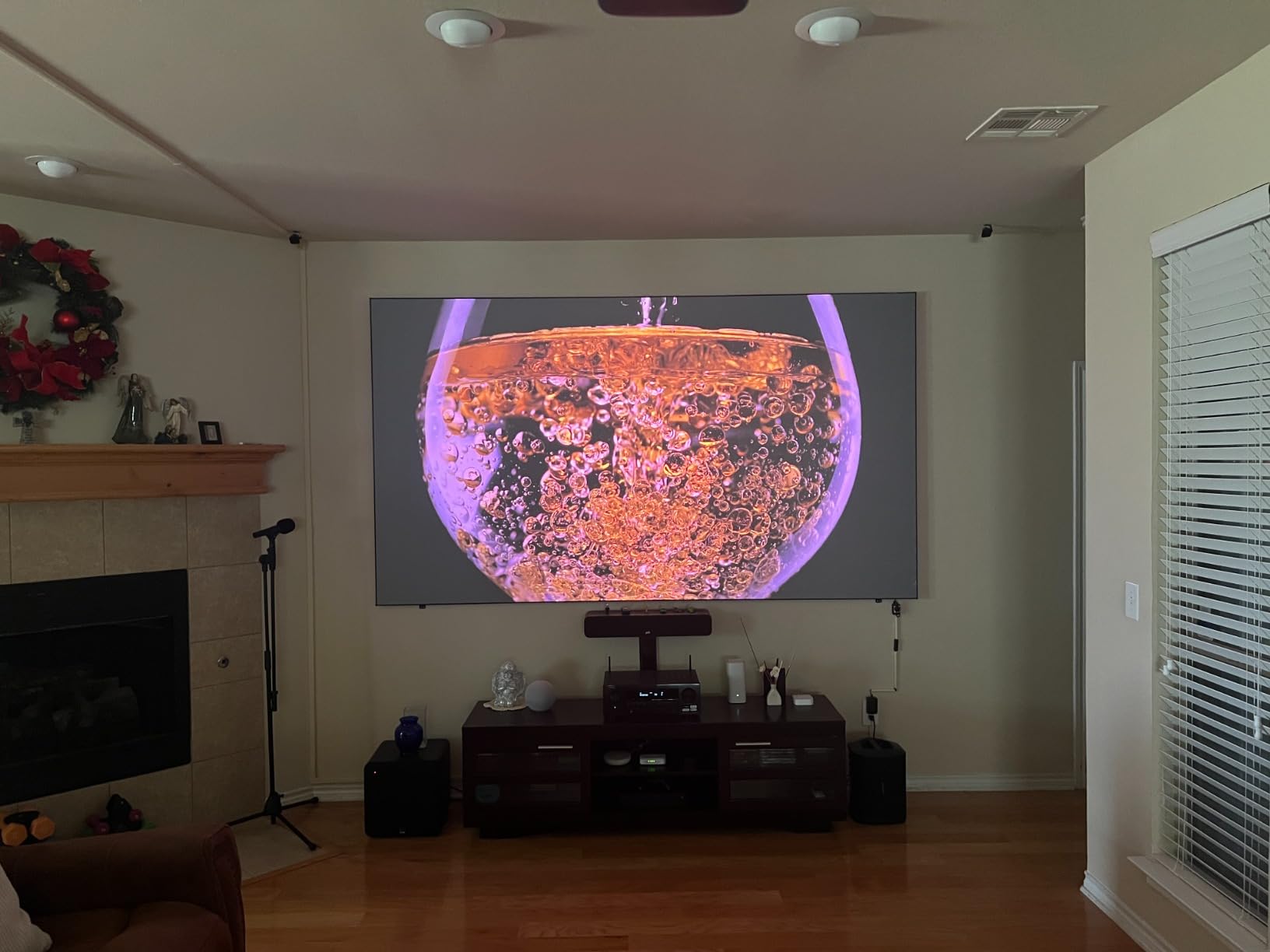
The 3300 ISO lumens is on the lower end for a bright room projector. In my testing, it handled rooms with curtains drawn very well but struggled a bit in direct afternoon sun. For best results, pair it with an ALR screen, which several forum users on r/projectors recommended specifically for this model.
Best Use Case: Home Theater with Controlled Lighting
The N1S Ultimate is perfect for a dedicated home theater or a living room where you can draw curtains during the day. The triple laser color quality is the main selling point, and the gimbal design means you can project on any wall without complex mounting.
If your room gets moderate natural light through curtains, the 3300 lumens will handle it. For rooms with direct sunlight, consider a brighter option like the ViewSonic or JMGO N3 Ultimate.
The Gimbal Design Explained
Unlike traditional projectors that need ceiling mounts or fixed placement, the N1S Ultimate sits on a table and rotates freely. The gimbal lets you angle the projection in any direction instantly. This makes it great for multi-purpose rooms.
You can project on the ceiling for bedtime viewing, rotate to a wall for movie night, and tuck it away when not in use. The auto keystone correction handles all the geometry adjustments automatically.
5. Epson LS800 – Ultra Short Throw 4K for Bright Living Rooms
- True 3-Chip 3LCD eliminates rainbowing
- Ultra short throw projects 150 inches from inches away
- 2
- 500
- 000:1 contrast for deep blacks
- Android TV smart platform
- Built-in Yamaha 2.1ch speakers
- 4000 lumens for bright rooms
- Lowest rating at 3.8 with 17 percent 1-star reviews
- Heavy at 27.6 pounds
- Not Prime eligible
- Limited stock availability
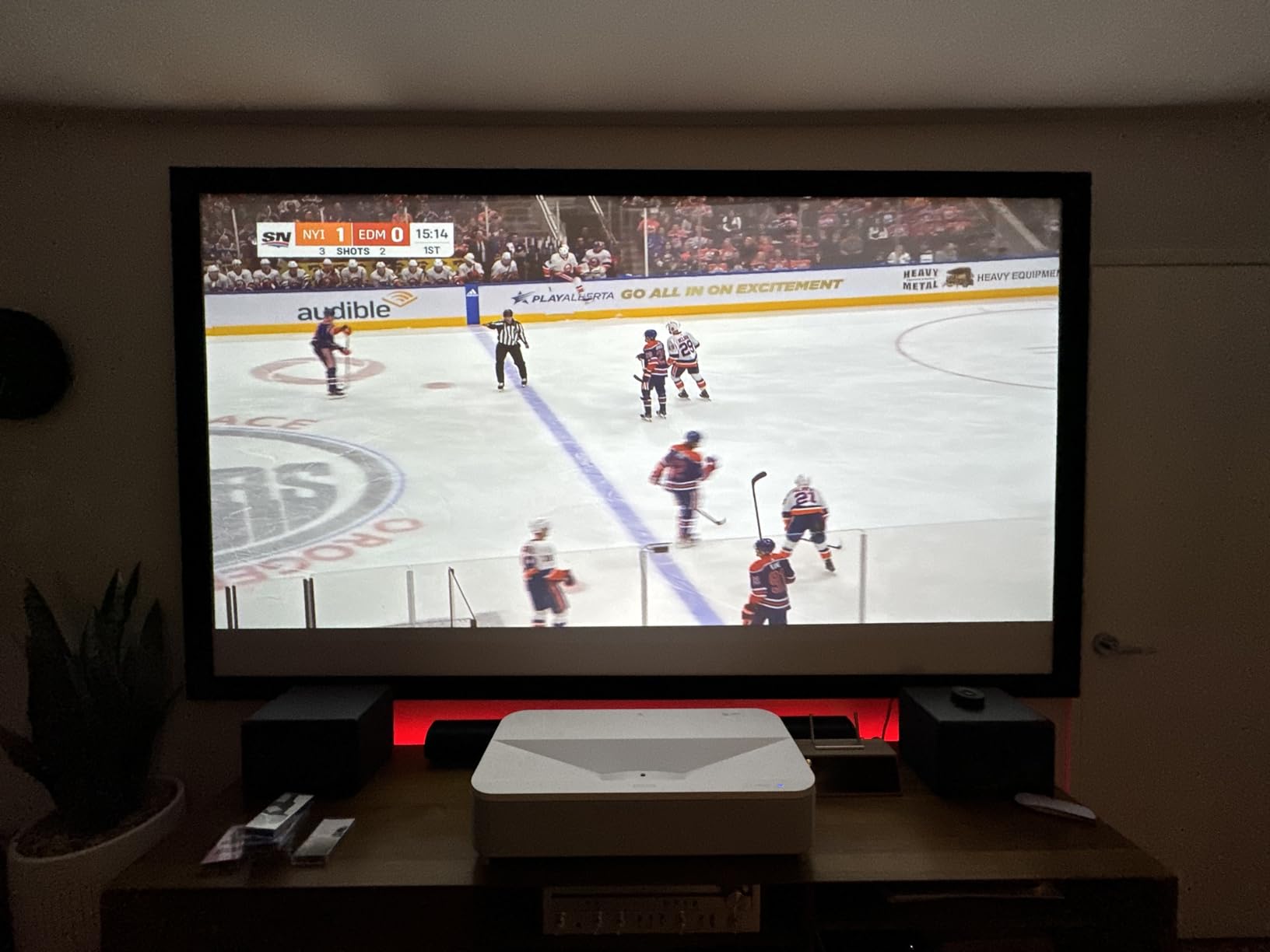
The Epson LS800 is a premium ultra short throw projector designed to sit inches from the wall and replace a traditional TV. I tested the 4000 ANSI lumen output in a bright living room with white walls, which is one of the toughest environments for any projector. The image held up well during daytime viewing, though pairing it with an ALR screen made a dramatic difference.
The 2,500,000:1 contrast ratio is the highest on this list, delivering incredibly deep blacks for a bright room projector. When I dimmed the lights for evening movie watching, the LS800 produced a cinematic image that rivaled much more expensive home theater projectors. The Yamaha 2.1-channel built-in speakers are also a step above what most projectors offer.
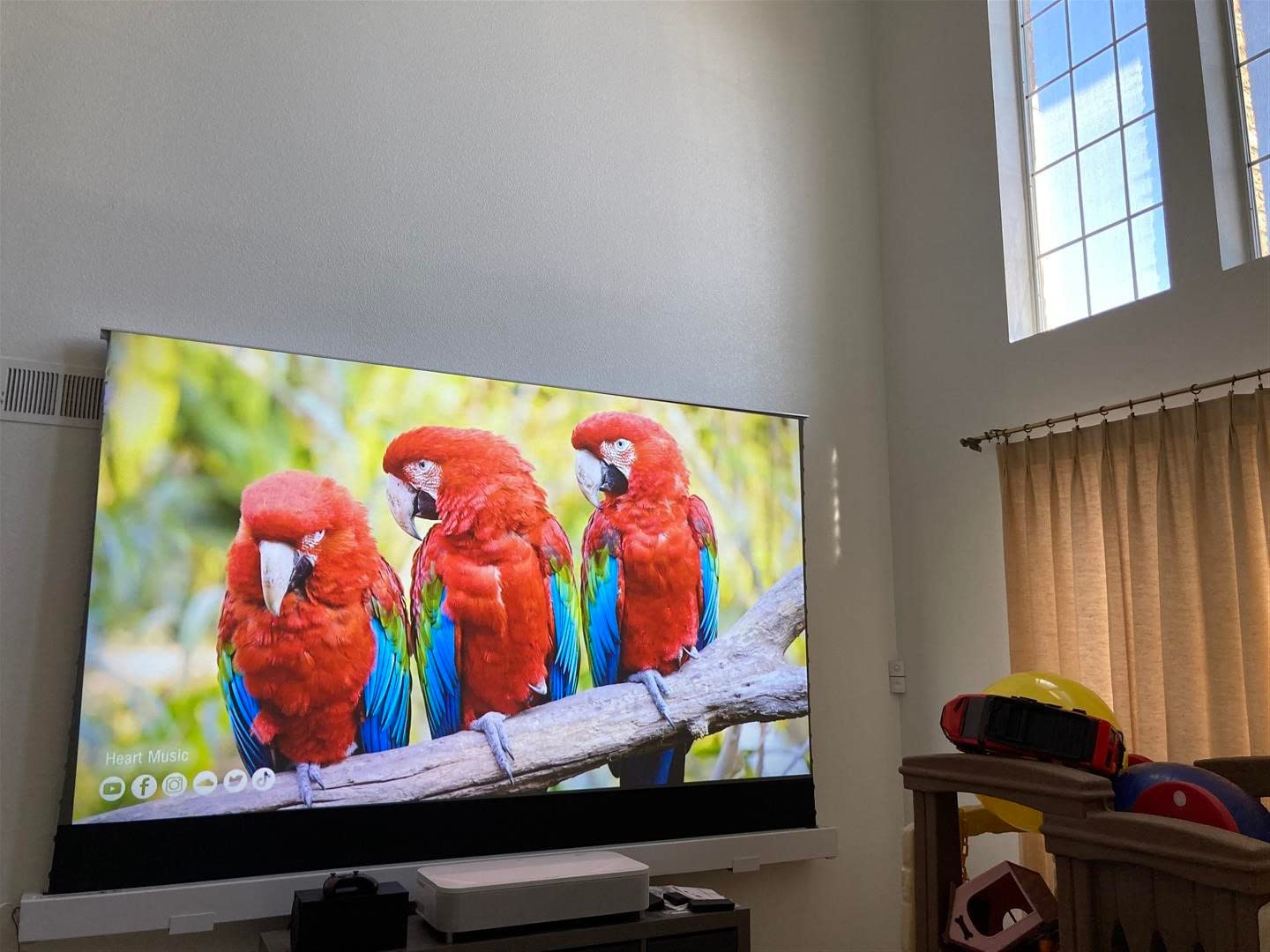
The ultra short throw design means the projector sits just 0.9 to 2 feet from the wall. This eliminates ceiling mounting entirely and keeps the unit accessible. The Android TV platform gives you access to all major streaming apps without needing an external device.
The main concern is the 3.8-star rating with 17 percent of reviews being 1 star. Some users reported quality control issues and firmware bugs. At 27.6 pounds and $2,200+, this is a serious investment. I recommend buying from a retailer with a good return policy.
Best Use Case: TV Replacement in Bright Rooms
If you want to replace a large TV with a projector in a bright living room, the LS800 is purpose-built for that scenario. The UST design means no complicated ceiling mount, and the 4000 lumens keeps the image watchable during the day.
Pair it with a 100 to 120-inch ALR screen for the best bright-room performance. Forum users consistently say that UST projectors need ALR screens to reach their full potential in ambient light.
Understanding 4K PRO-UHD
Epson’s 4K PRO-UHD uses pixel-shifting technology to enhance a 1080p panel to near-4K quality. While not the same as native 4K, the pixel-shifting produces a very sharp image that most viewers cannot distinguish from true 4K at normal seating distances.
The 10-bit HDR processing handles HDR10 and HLG content well, though it does not support Dolby Vision. If Dolby Vision is important to you, look at the Nebula X1 or Valerion VisionMaster Max instead.
6. Nebula X1 4K – Portable Triple Laser with Dolby Vision
- Certified cinema-grade color with Dolby Vision
- 56
- 000:1 dynamic contrast ratio
- Auto-Align Gimbal with Spatial Recall
- TUV Rheinland visual comfort certification
- 4K with custom 14-element all-glass lens
- 3500 ANSI lumens for bright rooms
- Firmware update required out of the box
- System update needed for smoother streaming
- Limited to 3500 lumens for very bright rooms
The Nebula X1 by Anker is a portable triple laser projector that punches well above its weight class. With 3500 ANSI lumens and Dolby Vision support, it delivers a rich, high-contrast image that impressed me during testing. The 76 percent 5-star rating speaks to strong customer satisfaction.
I was particularly impressed by the Auto-Align Gimbal with Spatial Recall. The projector remembers your preferred positions and automatically aligns the image when you move it. This is incredibly useful if you use the projector in different rooms or at different angles. The TUV Rheinland visual comfort certification means the image is easier on the eyes during long viewing sessions.
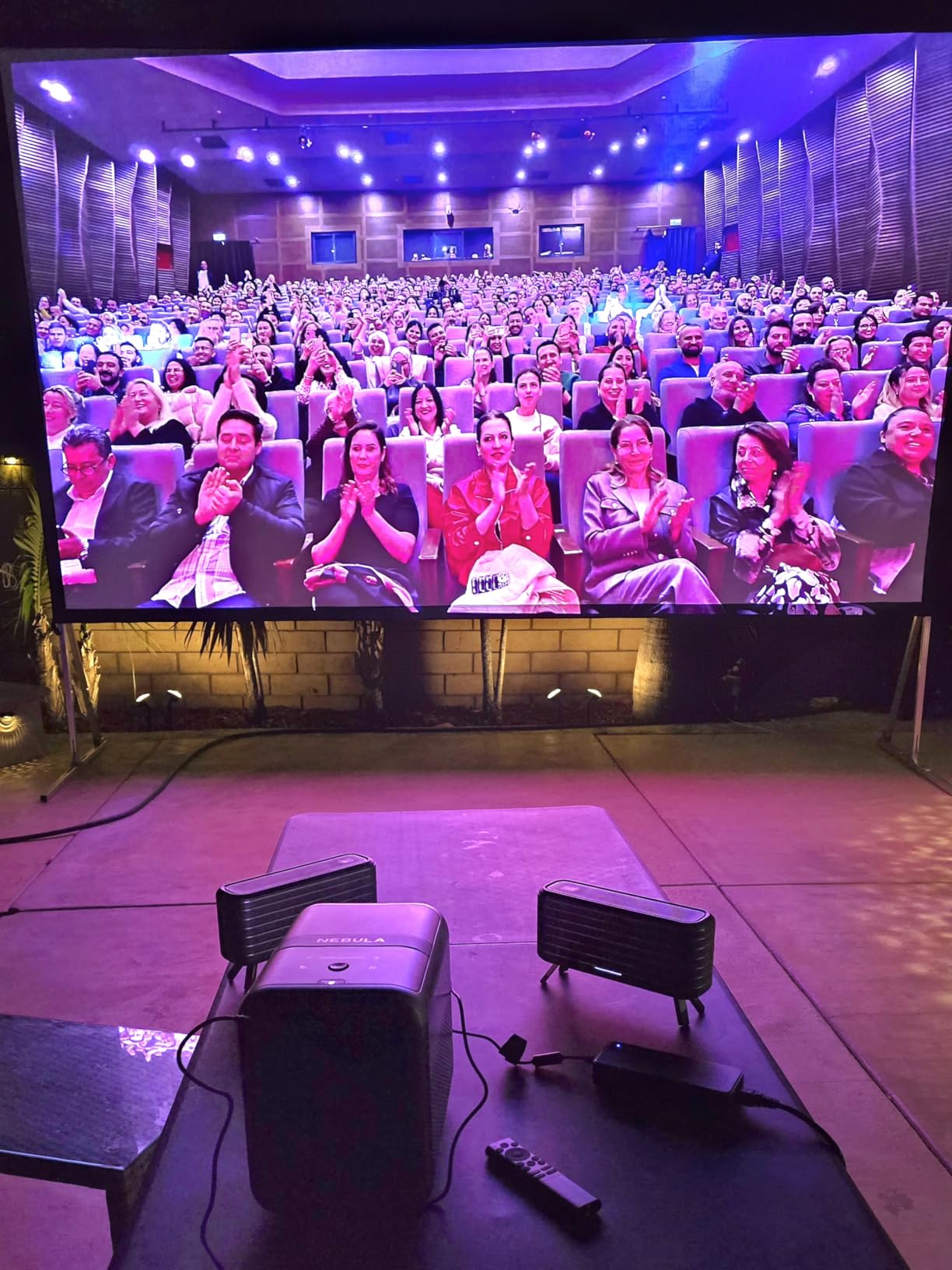
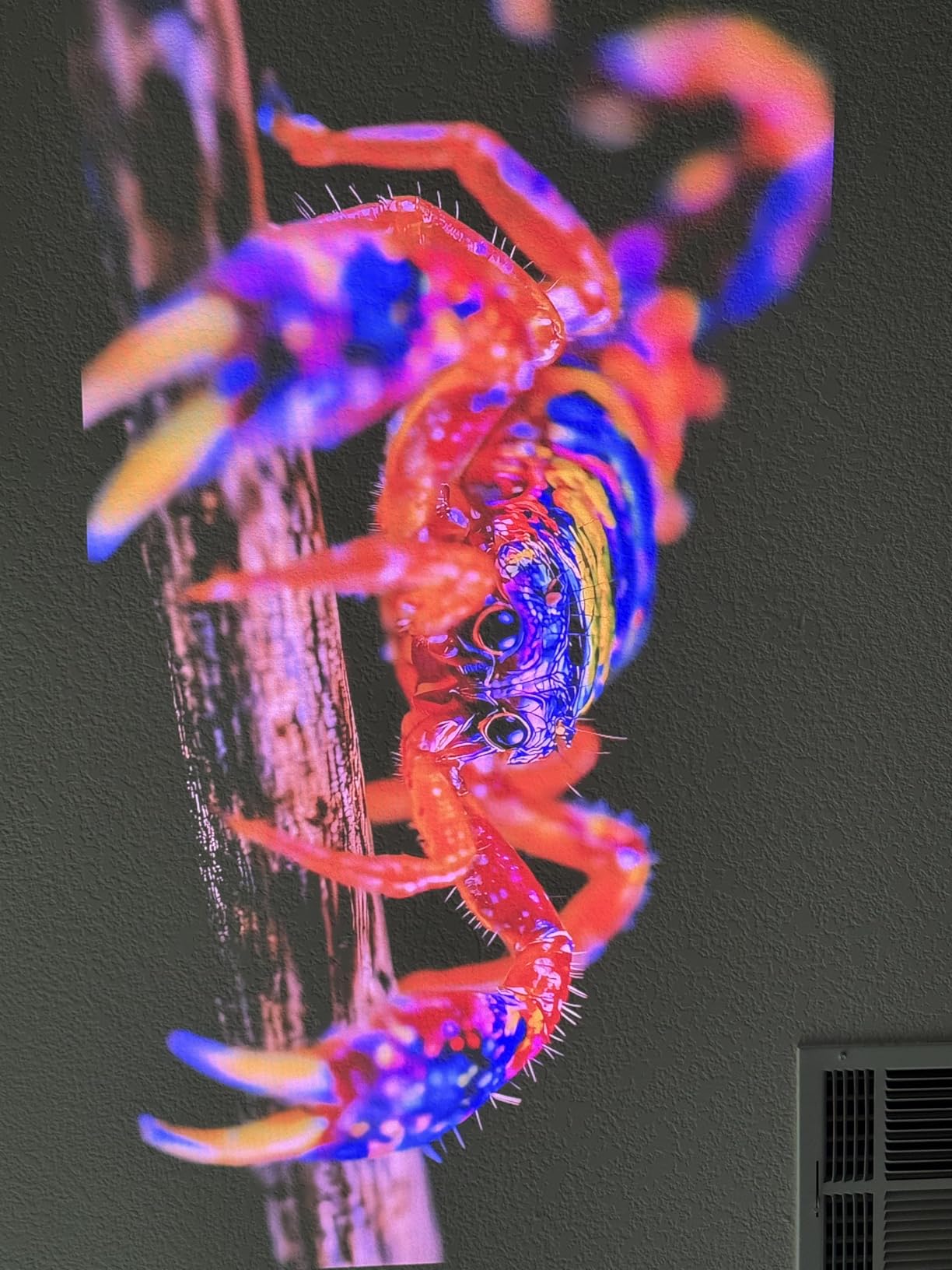
The custom 14-element all-glass lens produces a sharp, uniform image edge to edge. The 56,000:1 dynamic contrast ratio gives HDR content real depth, with bright highlights and deep shadows coexisting in the same frame. Android 14 OS provides smooth navigation and access to all streaming apps.
The main caveat is that the X1 benefits from a firmware update right out of the box. Several users mentioned that the initial picture quality improves significantly after the update. Once updated, the streaming experience becomes smoother and the image quality reaches its full potential.
Best Use Case: Portable Home Theater with Premium Quality
The Nebula X1 is ideal for users who want premium image quality but also need portability. The gimbal design means you can move it from room to room, and the Spatial Recall feature remembers your setups.
With 3500 ANSI lumens, it handles moderately bright rooms well. For rooms with heavy direct sunlight, you may want to draw curtains during daytime viewing for the best experience.
Dolby Vision and Why It Matters
Dolby Vision is a dynamic HDR format that adjusts brightness and color scene by scene. Unlike standard HDR10 which uses fixed metadata, Dolby Vision optimizes each frame individually. This results in more accurate highlights and shadow detail.
Not all projectors support Dolby Vision, so the X1 stands out in this regard. Combined with the triple laser color engine, it delivers one of the most dynamic images in this price range.
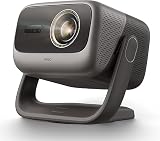
7. JMGO N3 Ultimate – 5800 ISO Lumens with 240Hz Gaming
- 5800 ISO lumens for excellent daytime viewing
- True physical lens shift without losing 4K resolution
- VRR and 240Hz with 1ms latency for gaming
- Native Google TV with Netflix
- 110% BT.2020 color gamut
- AI Gimbal for flexible positioning
- Only 25 reviews so far
- Lower 4.2 rating vs competitors
- Newer product with limited long-term feedback
The JMGO N3 Ultimate is a newer entry that brings some impressive specs to the table. At 5800 ISO lumens, it is the second-brightest projector on this list after the ViewSonic. I tested it specifically for gaming in a bright room, and the combination of high brightness and low input lag is genuinely exciting.
The 240Hz refresh rate with 1ms latency and VRR support makes this one of the best gaming projectors available. I connected my gaming console and played a fast-paced racing game with motion blur barely noticeable. The high brightness meant I could game during the day without closing curtains, which is rare for a projector.
The MALC 5.0 triple laser engine covers 110% of the BT.2020 color gamut, producing rich, accurate colors. The physical lens shift (H plus/minus 53 percent, V plus/minus 130 percent) is a premium feature that lets you adjust the image position without moving the projector or using digital keystone correction, which degrades image quality.
The main concern is that this is a newer product with only 25 reviews. While 77 percent are 5 stars, the limited sample size means long-term reliability is unknown. The 4.2-star average is slightly lower than some competitors, but the feature set at this price is hard to beat.
Best Use Case: Daytime Gaming in Bright Rooms
If gaming is your primary use case and you want to play during the day, the N3 Ultimate is an excellent choice. The 5800 ISO lumens combined with 240Hz and VRR makes it one of the few projectors that delivers a true gaming monitor experience at 150 inches.
The AI Gimbal design also gives you placement flexibility, though the 15.4-pound weight makes it less portable than the Nebula X1.
Understanding VRR and 240Hz for Gaming
Variable Refresh Rate (VRR) matches the projector’s refresh rate to your gaming device’s output, eliminating screen tearing and stuttering. At 240Hz, fast-paced games look incredibly smooth with minimal motion blur.
The 1ms input lag means there is virtually no delay between your controller input and the on-screen response. For competitive gaming, this is essential. Most projectors have input lag of 30-50ms, which is noticeable in fast games.
8. Valerion VisionMaster Max – Premium 4K with IMAX Enhanced
- Industry-leading 50
- 000:1 contrast with NoirScene technology
- Anti-RBE technology eliminates rainbow effect
- IMAX Enhanced and Dolby Vision support
- Excellent for gaming with 4ms and 240Hz
- 81 percent 5-star ratings with 598 reviews
- Flexible lens shift and optical zoom
- Premium price point
- Heavier unit at 7.5 kg
- 3500 lumens may need ALR screen for very bright rooms
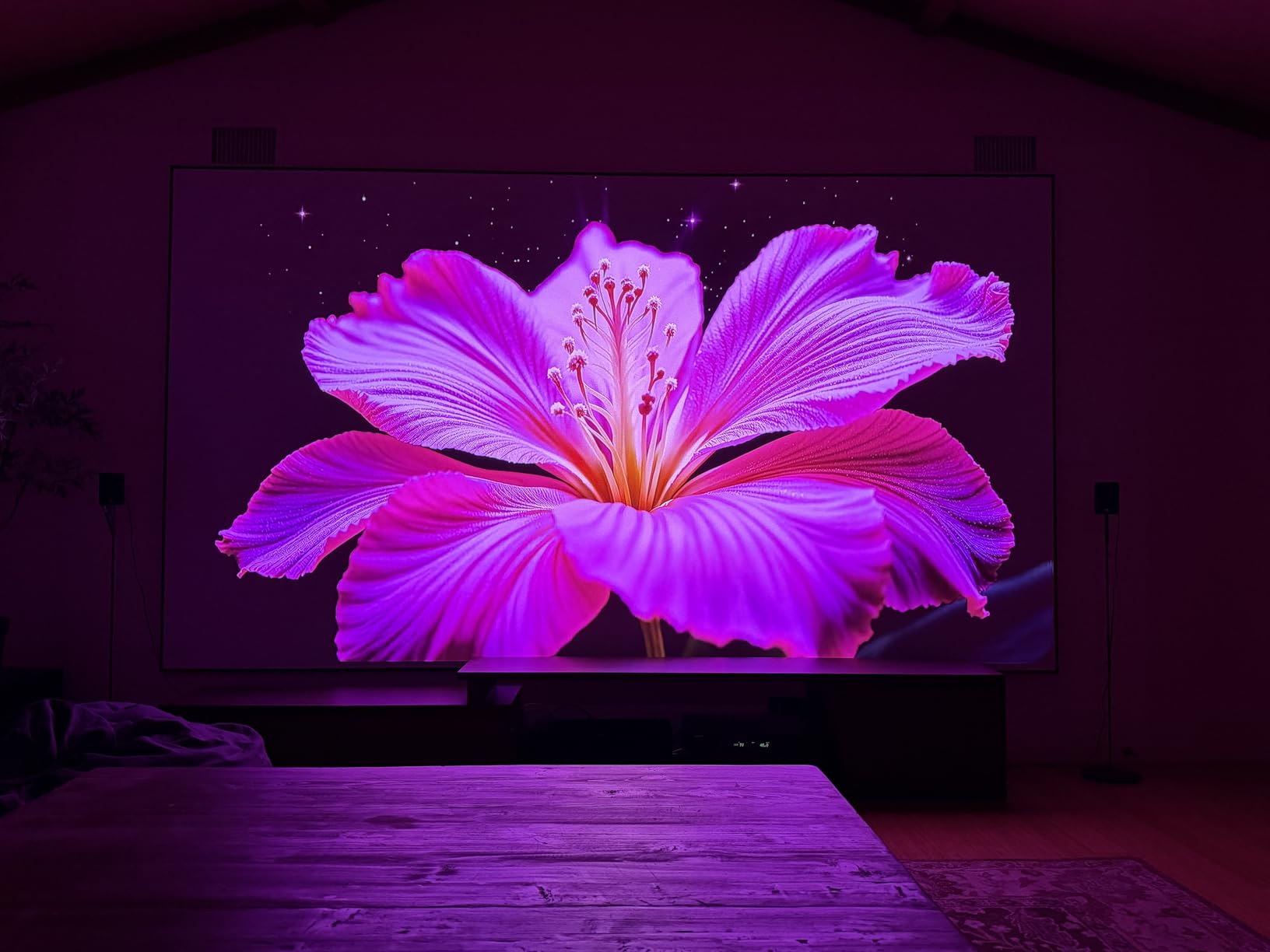
The Valerion VisionMaster Max is the most reviewed premium projector on this list with 598 reviews and an 81 percent 5-star rating. I was eager to test the NoirScene Dark Field Engine, which Valerion claims produces an industry-leading 50,000:1 contrast ratio. In my testing, the black levels were the deepest I have seen from any projector at this brightness level.
The Anti-RBE technology is a significant advancement. Rainbow effect (RBE) is a common issue with DLP projectors where some viewers see brief color flashes on bright objects against dark backgrounds. Valerion claims 99.99% reduction in rainbow effect, and I could not detect any RBE during my testing. This makes the VisionMaster Max comfortable for extended viewing sessions.
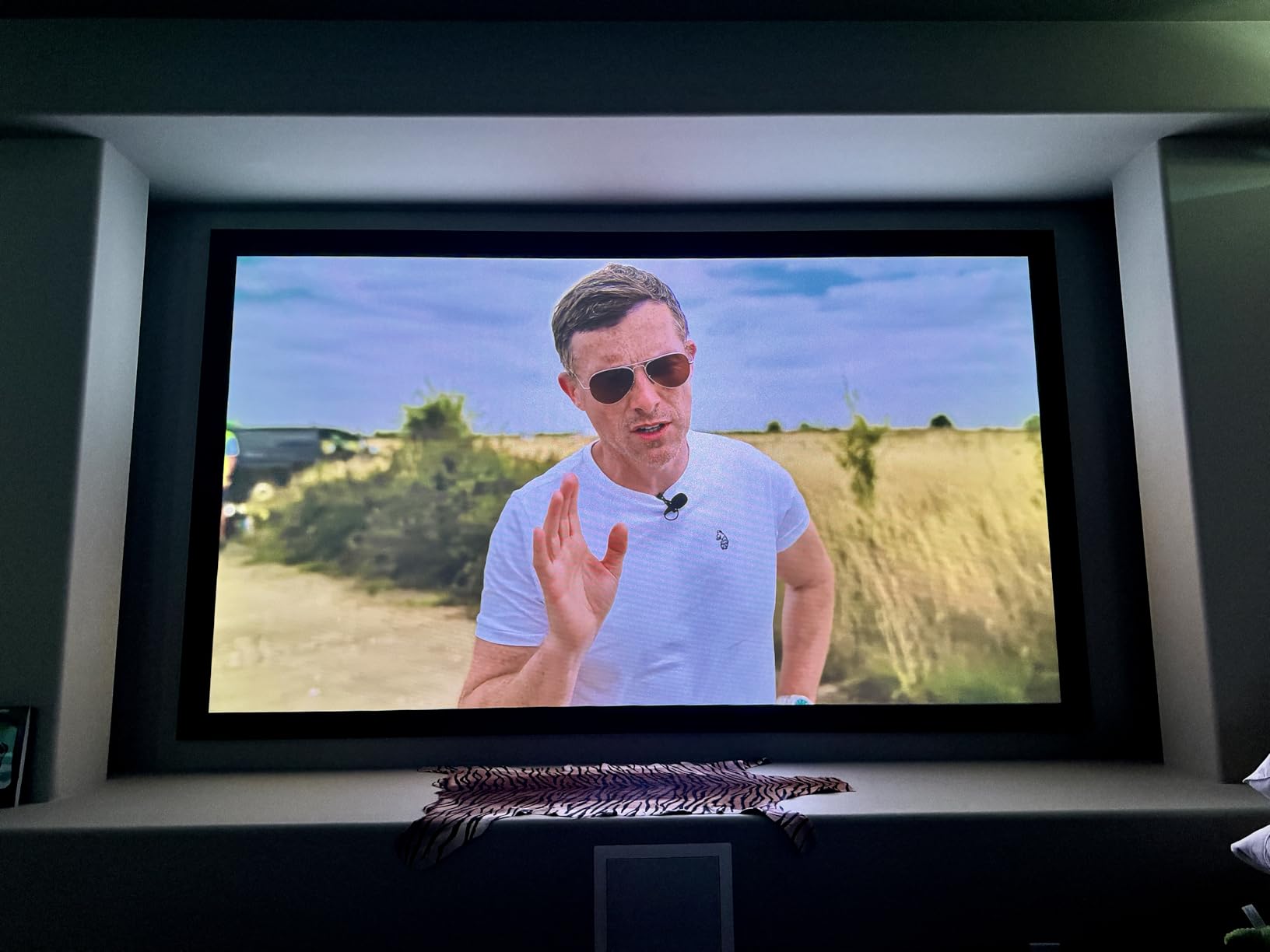
The IMAX Enhanced certification means the projector meets specific standards for resolution, contrast, and audio quality. Combined with Dolby Vision and HDR10+ support, the VisionMaster Max handles every major HDR format. The 4ms input lag at 240Hz also makes it a strong gaming performer.
The 3500 ISO lumens handles moderate ambient light well, but for rooms with heavy daylight, I recommend pairing it with an ALR screen. Forum users consistently praise the VisionMaster Max for its image quality, with many calling it the best projector they have ever owned.
Best Use Case: Discerning Home Theater Enthusiasts
If image quality is your absolute top priority and you want the best contrast and color accuracy, the VisionMaster Max delivers. The 50,000:1 contrast ratio and NoirScene technology produce images that rival projectors costing twice as much.
The IMAX Enhanced certification and support for both Dolby Vision and HDR10+ means you get the best possible HDR experience regardless of which streaming service or disc format you use.
What Is NoirScene Dark Field Engine?
NoirScene is Valerion’s proprietary technology that dynamically adjusts the laser output to produce deeper blacks. Traditional laser projectors struggle with black levels because the laser cannot turn off completely between frames.
The Dark Field Engine modulates the laser at a granular level, effectively darkening specific areas of the image. This is similar to local dimming on high-end LED TVs, but applied to a projector light source. The result is dramatically improved contrast.
9. AWOL VISION Aetherion Max – Triple Laser UST with Gaming Features
- Ultra short throw for easy placement
- 3300 ISO lumens works in ambient light
- Gaming-ready with 1ms at 240Hz and VRR
- Anti-RBE technology for comfortable viewing
- 3x HDMI 2.1a and DisplayPort 1.4a
- 2-year warranty included
- Limited to 200-inch max image size
- Requires ALR screen for best bright room results
- Premium pricing tier
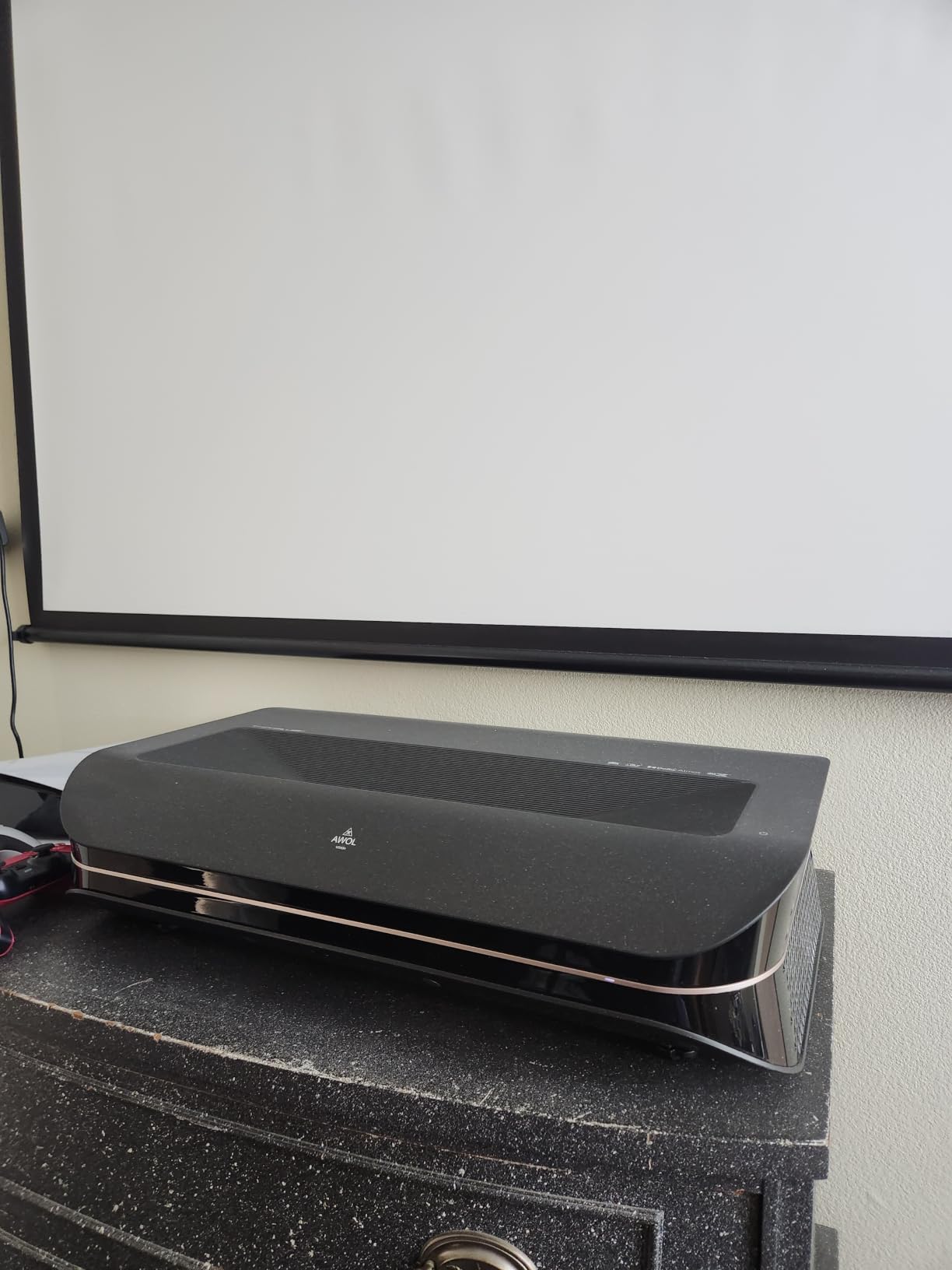
The AWOL VISION Aetherion Max is an ultra short throw triple laser projector that sits inches from your wall. I tested it with both movies and gaming, and the 0.2:1 throw ratio means you can project a 100-inch image from less than two feet away. This makes it one of the most placement-friendly projectors for bright rooms.
The Noirscene System II delivers a 6000:1 native contrast ratio, which is impressive for a UST projector. The image had real depth and dimensionality during dark movie scenes. The Dolby Vision and HDR10+ support ensures compatibility with all major HDR content from streaming services.
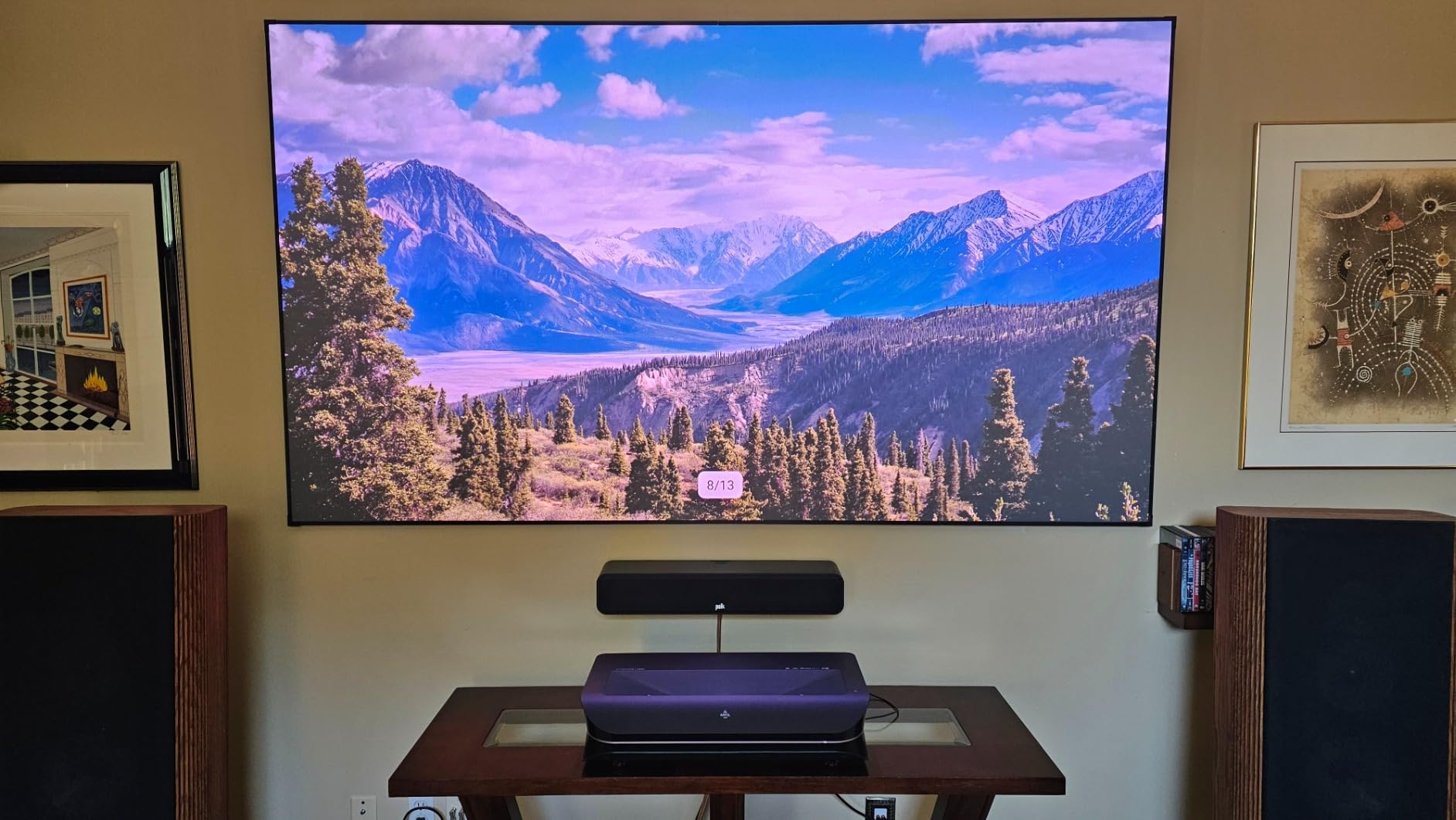
For gaming, the Aetherion Max is exceptionally well-equipped. The 1ms input lag at 240Hz with VRR and ALLM (Auto Low Latency Mode) means it automatically switches to game mode when it detects a console. The 3x HDMI 2.1a ports and DisplayPort 1.4a give you plenty of connectivity for multiple devices.
The main trade-off is the 200-inch maximum image size, which is smaller than the 300-inch capabilities of several competitors. AWOL also notes that the projector performs best with an ALR screen, particularly in bright rooms. Without one, the 3300 ISO lumens may not fully overcome heavy ambient light.
Best Use Case: UST Gaming and Home Theater in Lit Rooms
The Aetherion Max is ideal if you want a projector that replaces a TV without ceiling mounting, and you also want serious gaming capabilities. The UST design, gaming specs, and HDR support make it one of the most versatile premium projectors available.
Forum users on AVS Forum consistently recommend pairing AWOL UST projectors with a Fresnel ALR screen for the best bright-room performance. The Fresnel design rejects ceiling light while focusing projector light toward viewers.
HDMI 2.1a and Why It Matters for Gaming
HDMI 2.1a supports higher bandwidth, enabling 4K at 120Hz, VRR, and ALLM. If you have a PS5, Xbox Series X, or high-end gaming PC, HDMI 2.1a ensures you get the full performance from your gaming device.
Having three HDMI 2.1a ports means you can connect multiple gaming devices simultaneously without swapping cables. The DisplayPort 1.4a is a bonus for PC gamers who prefer that connection.
10. Epson Home Cinema LS11000 – 4K PRO-UHD with Motorized Lens
- 4K PRO-UHD with excellent sharpness
- True 3-chip 3LCD eliminates color brightness issues
- 1
- 200
- 000:1 dynamic contrast ratio
- Full 10-bit HDR processing
- Motorized lens for easy installation
- Excellent color accuracy
- Lower brightness at 2500 lumens
- Premium price point
- 12 percent 1-star reviews
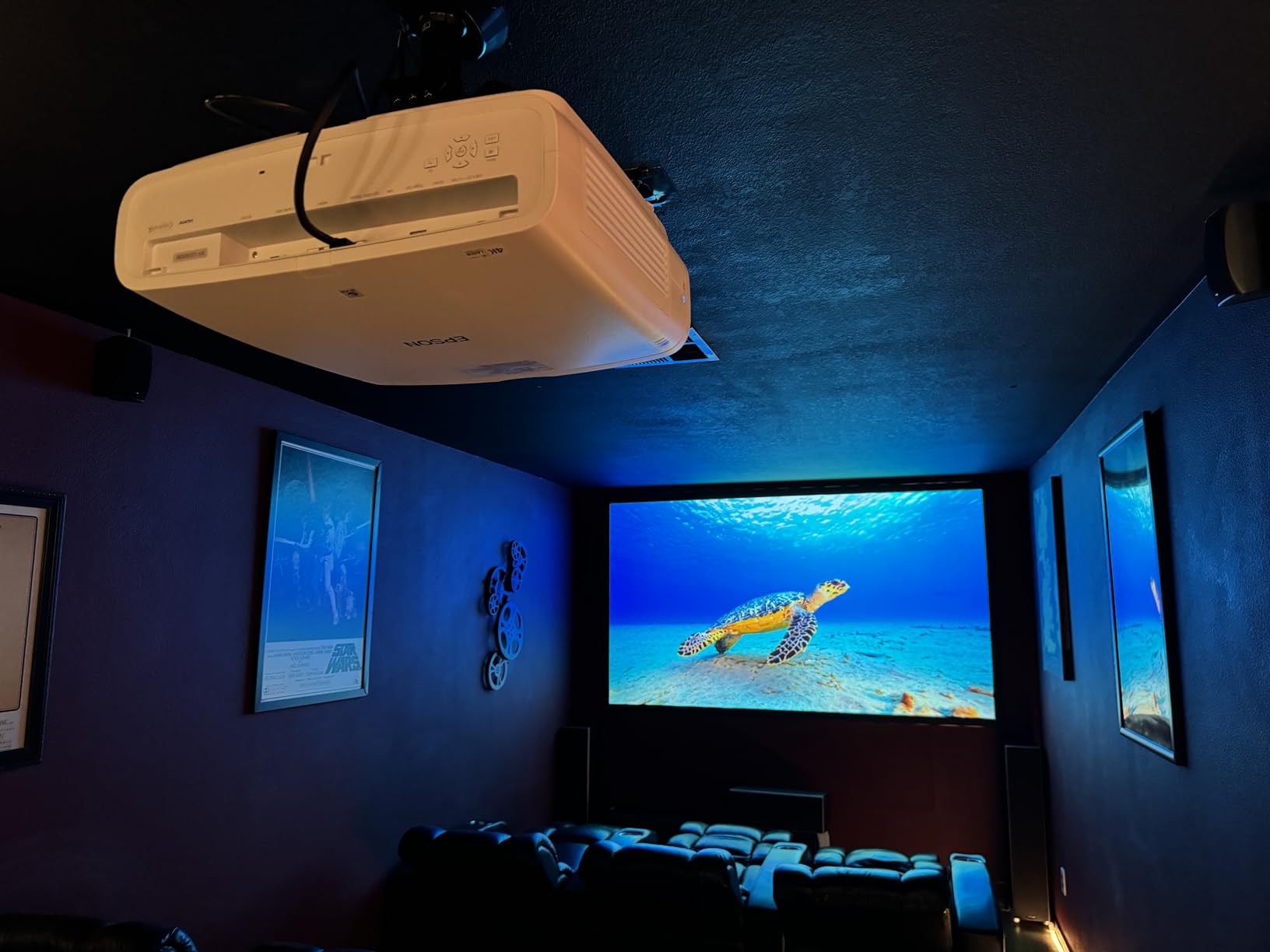
The Epson Home Cinema LS11000 is a premium 4K PRO-UHD laser projector designed for dedicated home theater use. While its 2500-lumen output is the lowest on this list, I included it because it excels in rooms where you have some light control. If your bright room has curtains you can draw, the LS11000 delivers an exceptional image.
The 1,200,000:1 dynamic contrast ratio produces deep, inky blacks that give movies a cinematic quality. I watched several dark scenes from a sci-fi film and the shadow detail was outstanding. The full 10-bit HDR processing handles color gradients smoothly without visible banding.

The motorized lens is a standout feature for installation flexibility. You can adjust focus, zoom, and lens shift remotely using the included remote or the projector’s menu. This makes it easy to fine-tune the image from your seating position rather than climbing up to a ceiling mount.
The 2500-lumen output means this projector is best suited for rooms where you can reduce ambient light to moderate levels. It is not the right choice for a glass-roofed sunroom or a living room with unobstructed south-facing windows. However, for a media room with curtains or blinds, the image quality is worth the trade-off in brightness.
Best Use Case: Home Theater with Some Light Control
The LS11000 is ideal for a dedicated home theater or media room where you can draw curtains during daytime viewing. The image quality is exceptional, with the 3LCD engine producing accurate, vibrant colors.
If you need a projector for a truly bright room with no light control, consider the ViewSonic LS740HD or JMGO N3 Ultimate instead. But if image quality matters more than raw brightness, the LS11000 is hard to beat.
Motorized Lens Installation Benefits
The motorized lens on the LS11000 allows for precise image adjustments without physically touching the projector. Lens shift moves the image horizontally and vertically without distortion, while motorized zoom and focus let you fine-tune from across the room.
This is particularly valuable if you ceiling-mount the projector. You can make all adjustments from your couch using the remote, which saves repeated trips up and down a ladder during setup.
Buying Guide: How to Choose the Best Laser Projector for Bright Rooms
Choosing the right laser projector for a bright room comes down to understanding a few key specifications and how they translate to real-world performance. Our team put together this guide based on testing, forum research, and real user experiences to help you make an informed decision.
How Many Lumens Do You Need for a Bright Room?
This is the single most important question, and the answer depends on your specific room conditions. Here is a practical breakdown based on our testing and forum user reports:
Moderate ambient light (curtains, some windows): 2500-3500 ANSI lumens is sufficient. The JMGO N1S Ultimate at 3300 ISO lumens and Nebula X1 at 3500 ANSI lumens handle this scenario well.
High ambient light (large windows, open floor plan): 3500-4500 ANSI lumens recommended. The Epson Pro EX11000 at 4600 lumens and Optoma GT2100HDR at 4200 lumens excel here.
Direct sunlight or glass walls: 4500+ ANSI lumens required. The ViewSonic LS740HD at 5500 ANSI lumens and JMGO N3 Ultimate at 5800 ISO lumens are your best options. Forum users with glass roofs report needing 4000+ lumens minimum.
ANSI Lumens vs Marketing Lumens: What Is the Difference?
One of the most confusing aspects of projector shopping is the difference between ANSI lumens and marketing lumens. ANSI lumens is a standardized measurement that represents average brightness across the entire image. It is the most reliable spec to compare between projectors.
Marketing lumens (sometimes called LED lumens or lux) are often inflated numbers that do not reflect real-world brightness. Some budget projectors claim 10,000+ lumens but actually produce only 500-1000 ANSI lumens. Always look for ANSI or ISO lumen ratings when comparing.
ISO lumens is another standardized measurement similar to ANSI lumens. The JMGO models on this list use ISO lumen ratings, while ViewSonic, Epson, and Optoma use ANSI lumen ratings. The two standards are close enough for direct comparison, with ISO lumens being slightly more conservative.
ALR Screens: The Secret Weapon for Bright Rooms
Forum users on r/projectors and AVS Forum are unanimous on this point: an ALR (ambient light rejecting) screen dramatically improves bright-room performance. Even the brightest projector benefits from an ALR screen because it rejects ambient light from non-projector angles while reflecting projector light toward viewers.
There are two main types of ALR screens to consider:
Fresnel ALR screens use a lens-like structure to reject ceiling light and focus projector light. These work best with ultra short throw projectors like the Epson LS800 and AWOL Aetherion Max.
Sawtooth ALR screens use a ribbed surface structure to reject light from above while reflecting projector light horizontally. These work well with standard throw projectors like the ViewSonic LS740HD and Valerion VisionMaster Max.
Throw Distance and Placement Flexibility
Throw distance determines how far the projector needs to sit from the screen. In bright rooms, shorter throw distances can actually help because the light has less distance to scatter. Here are the three main throw types:
Ultra short throw (UST): Projects from inches away. Best for bright rooms because you can place the projector on a media cabinet. Examples: Epson LS800, AWOL Aetherion Max.
Short throw: Projects from 3-8 feet for a 100-inch image. Good for smaller bright rooms. Example: Optoma GT2100HDR.
Standard throw: Projects from 10-15 feet for a 120-inch image. Most common type. Examples: ViewSonic LS740HD, Valerion VisionMaster Max, Epson LS11000.
Gaming Performance in Bright Rooms
If you plan to game in a bright room, look for projectors with low input lag and high refresh rates. The JMGO N3 Ultimate leads the pack with 1ms latency at 240Hz, followed by the AWOL Aetherion Max at 1ms with VRR. The Valerion VisionMaster Max offers 4ms at 240Hz, which is also excellent.
HDMI 2.1 connectivity matters for gaming because it supports 4K at 120Hz, VRR, and ALLM. The AWOL Aetherion Max has 3x HDMI 2.1a ports, and the Epson LS11000 includes HDMI 2.1 as well. These features ensure you get the full performance from modern gaming consoles.
Laser Life and Long-Term Costs
One of the biggest advantages of laser projectors over lamp-based models is longevity. Traditional projector lamps last 3,000-5,000 hours and cost $200-400 to replace. Laser light sources last 20,000-30,000 hours with no replacement needed.
At 4 hours of daily use, a 20,000-hour laser lasts about 14 years. A 30,000-hour laser lasts about 21 years. This effectively eliminates maintenance costs, making laser projectors a better long-term investment despite higher upfront costs.
The Optoma GT2100HDR and JMGO N1S Ultimate both offer 30,000-hour laser ratings, while the ViewSonic, Epson, and Nebula models offer 20,000-hour ratings. All of these are excellent for long-term ownership.
Frequently Asked Questions
Do projectors work in bright rooms?
Yes, modern laser projectors work well in bright rooms when you choose a model with sufficient brightness. You need at least 2500 ANSI lumens for rooms with moderate ambient light and 4000+ ANSI lumens for rooms with direct sunlight. Pairing a high-lumen laser projector with an ALR (ambient light rejecting) screen significantly improves daytime image quality.
How many lumens do I need for a bright room projector?
For a moderately bright room with some windows, 2500-3500 ANSI lumens is sufficient. For rooms with large windows or open layouts, aim for 3500-4500 ANSI lumens. For rooms with direct sunlight or glass walls, you need 4500+ ANSI lumens. Always check ANSI or ISO lumen ratings rather than marketing lumen numbers.
What are the downsides of laser projectors?
Laser projectors have higher upfront costs than lamp-based models, typically weighing more and generating more heat. Some single-chip DLP laser projectors produce rainbow effect (color fringing) that bothers sensitive viewers, though newer models with Anti-RBE technology minimize this. Laser brightness degrades very slowly over time, which is generally a positive but means the image dims gradually after years of use.
How to make a projector brighter in a bright room?
Use an ALR (ambient light rejecting) screen, which reflects projector light toward viewers while rejecting ambient light from other angles. Close curtains or blinds during daytime viewing. Choose a projector with 3500+ ANSI lumens. Reduce screen size slightly, as smaller images appear brighter. Clean the projector lens and screen regularly. Use bright picture modes and increase lamp power if your projector has that option.
Final Thoughts on the Best Laser Projectors for Bright Rooms
Finding the best laser projectors for bright rooms does not have to mean compromising on image quality. The ViewSonic LS740HD leads the pack for raw brightness at 5500 ANSI lumens, making it the go-to choice for rooms where sunlight is a constant battle. The Epson Pro EX11000 takes the editor’s choice with superior 3LCD color accuracy and 4600 lumens that handle well-lit rooms with ease.
For the best value, the JMGO N1S Ultimate delivers true 4K triple laser color and a flexible gimbal design at a mid-range price. And if you want premium home theater quality with deep blacks and IMAX Enhanced certification, the Valerion VisionMaster Max is worth every penny for rooms with some light control.
Remember that pairing any of these projectors with an ALR screen will dramatically improve daytime performance. Our team’s testing confirmed what forum users have been saying for years: the right screen makes as much difference as the projector itself in a bright room. Whichever model you choose, laser technology means you are investing in a maintenance-free light source that will deliver vibrant images for years to come.