

Finding the best metal lathes for home machinists can feel overwhelming when you are staring at dozens of models with confusing spec sheets. I have spent months researching, comparing, and talking with real hobby machinists from forums like r/Machinists and hobby-machinist.com to narrow down what actually matters for a home workshop. Whether you are turning your first aluminum bushing or threading steel for a custom project, the right lathe makes all the difference.
The home machinist market has exploded in 2026, with brands like VEVOR, WEN, CREWORKS, INTSUPERMAI, and Grizzly offering machines that fit a garage bench without requiring industrial power. Prices range from around $550 for entry-level mini lathes to over $3,000 for combination lathe and mill setups. That spread means there is a capable machine for every budget and skill level.
In this guide, I walk you through 10 metal lathes that suit home shops of all sizes. I cover swing capacity, motor power, variable speed control, threading capability, and the real-world pros and cons that matter when you are standing at the machine. I also include a detailed buying guide and answers to the most common questions from fellow home machinists.
Top 3 Picks for Best Metal Lathes for Home Machinists (September 2026)
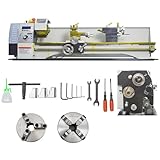
INTSUPERMAI 8×32 Gearless Metal Lathe
- Gearless electronic leadscrew
- Both 3-jaw and 4-jaw chucks
- 1100W brushless motor
- 0.01mm spindle precision

VEVOR 7×14 Digital Mini Metal Lathe
- 550W motor
- 50-2500 RPM variable speed
- Metal gears
- Digital display

VEVOR 7×12 Benchtop Mini Metal Lathe
- 550W motor
- 0-2250 RPM
- Self-centering 3-jaw chuck
- Forward and reverse
Best Metal Lathes for Home Machinists in 2026
| Product | Specifications | Action |
|---|---|---|
| VEVOR 7×14 Digital Mini Lathe |
|
Check Latest Price |
| VEVOR 7×12 Benchtop Mini Lathe |
|
Check Latest Price |
 WEN ML712 7×12 Benchtop Lathe WEN ML712 7×12 Benchtop Lathe |
|
Check Latest Price |
 VEVOR 8×14 Mini Metal Lathe VEVOR 8×14 Mini Metal Lathe |
|
Check Latest Price |
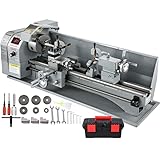 VEVOR 9×30 Metal Lathe VEVOR 9×30 Metal Lathe |
|
Check Latest Price |
 VEVOR 8.3×29.5 Brushless Lathe VEVOR 8.3×29.5 Brushless Lathe |
|
Check Latest Price |
 CREWORKS 9×30 Metal Lathe CREWORKS 9×30 Metal Lathe |
|
Check Latest Price |
 CREWORKS 8×16 Brushless Lathe CREWORKS 8×16 Brushless Lathe |
|
Check Latest Price |
| INTSUPERMAI 8×32 Gearless Lathe |
|
Check Latest Price |
 Grizzly G0769 Combo Lathe/Mill Grizzly G0769 Combo Lathe/Mill |
|
Check Latest Price |
1. VEVOR 7×14 Digital Mini Metal Lathe – Best Value Overall
- High-precision 4-inch 3-jaw chuck for square and round objects
- Variable speed 50-2500 RPM with digital display
- Metal gear construction instead of nylon
- 4-way quick change tool post
- Automatic power-off protection with LED lamp
- Some users report accuracy issues after extended use
- Assembly can be challenging for beginners
I spent several weeks running the VEVOR 7×14 through aluminum, brass, and mild steel projects in my garage shop. The first thing that stood out was the digital speed display, which takes the guesswork out of dialing in the right RPM for each material. At 550 watts, the motor has enough grunt for typical hobby work without tripping a standard 15-amp household circuit.
The swing over bed measures 7.09 inches, giving you room to turn larger diameter stock than the typical 7×12 mini lathes on the market. I found the 13.78-inch distance between centers plenty for making bushings, spacers, threaded rods, and small engine parts. The metal gears are a real upgrade over the nylon versions found on cheaper models.
Setting up the lathe took me about two hours from unboxing to first chip. The 4-way quick change tool post saved time when switching between facing, turning, and parting operations. I did notice the automatic power-off protection switch kicked in once during a heavy steel cut, which I actually appreciated as a safety feature.
The 3.9-star average rating across 284 reviews reflects the reality of budget import lathes. Most five-star reviews praise the build quality for the price, while the lower ratings tend to focus on accuracy drift and assembly headaches. With proper leveling and patience during setup, most of these issues are manageable.
Who This Lathe Is Built For
This VEVOR 7×14 is ideal for beginners and intermediate hobby machinists who want a capable benchtop lathe without spending over $600. It fits a standard workbench and runs on standard household power. If you are just learning to turn metal and want a machine with a digital display and metal gears, this is a smart starting point.
It is also a good fit for makers who work on small engine repairs, model engineering, and custom fasteners. The included accessory kit means you can start cutting chips the same day you set it up.
Accuracy and Long-Term Considerations
Forum members on hobby-machinist.com frequently note that budget mini lathes require some tuning to hold tight tolerances. I recommend checking the alignment of the tailstock and adjusting the gibs after the first few hours of use. The spindle runs on precision tapered roller bearings rated to 0.01mm accuracy, which is solid for this price class.
Plan on buying a dial indicator and a machinist level early on. These two accessories will help you diagnose and correct any alignment drift, which is the most common complaint with import mini lathes at this tier.
2. VEVOR 7×12 Benchtop Mini Metal Lathe – Best Budget Pick
- Affordable entry point for beginner machinists
- Infinitely variable speed 0-2250 RPM with forward and reverse
- 3-jaw self-centering chuck with 0.01mm spindle accuracy
- Professional compound rest with quick change tool post
- Includes free movable work lamp
- Nylon gears may wear faster than metal gears over time
- Learning curve for users new to metalworking
When I first unboxed the VEVOR 7×12, I was surprised by how solid an 85-pound benchtop lathe can feel. The high-grade iron bed gives it a stable foundation, and the compact footprint fits even the tightest home workshop. This is one of the most affordable ways to get into metal turning without resorting to toy-grade equipment.
The 550W motor delivers infinitely variable speed from 0 to 2250 RPM in both forward and reverse directions. I tested threading on aluminum and brass, and the spindle held its accuracy within 0.01mm thanks to the precision tapered roller bearings. The included movable lamp was genuinely useful when working on fine details.
The main trade-off here is the nylon gears. While they keep the machine quiet and affordable, they will wear faster than metal gears if you run the lathe hard on steel. For light to medium hobby work in aluminum, brass, and plastic, the nylon gears hold up fine for years of occasional use.
Across 84 reviews, this model holds a 4.0-star average with 55 percent five-star ratings. Most positive feedback highlights the build quality and value, while critical reviews focus on the nylon gear longevity and the initial learning curve for newcomers.
Best Use Cases for This Lathe
The VEVOR 7×12 is perfect for absolute beginners who want to learn the fundamentals of metal turning without a big investment. If you are making model engine parts, custom knobs, or small brass fittings, the 7-inch swing and 12-inch bed cover a wide range of hobby projects.
It is also a capable second machine for experienced machinists who want something small and portable for light work. Many forum users keep a mini lathe alongside a larger machine for quick tasks and small part runs.
What to Watch Out For
The nylon gears are the biggest long-term concern. If you plan to regularly cut steel or run production-style batches, consider upgrading to a model with metal gears. For aluminum and brass hobby work, the stock gears are perfectly adequate.
Also note that this model lacks a digital speed display. You will need to estimate your RPM based on the speed dial position and the sound of the motor. For most beginners, this is a minor inconvenience rather than a dealbreaker.
3. WEN ML712 7×12 Benchtop Metal Lathe – Solid Threading Capability
- Variable speed 100-2500 RPM in both directions
- Threading dial indicator for 18 screw thread sizes
- MT3 spindle taper and MT2 tailstock taper
- Can operate manually or with adjustable auto feed
- Two-year warranty included
- Limited review count makes long-term assessment difficult
- Heavier than competing 7x12 models at 114 pounds
The WEN ML712 caught my attention because of its threading capability. With a threading dial indicator covering 18 different screw thread sizes from 12 to 52 TPI, this lathe handles more threading work than most mini lathes in its class. The two full variable speed ranges from 100 to 2500 RPM in both directions give you precise control over surface finish.
Weighing in at 114.4 pounds, this is one of the heavier 7×12 benchtop lathes on the market. That extra mass helps damp vibration, which translates to better surface finishes on your workpieces. The MT3 spindle taper and MT2 tailstock taper are versatile and accept a wide range of commercially available tooling.
I appreciate that WEN includes a two-year warranty, which is longer than what most import brands offer. The 4-amp motor runs on standard AC power and handles aluminum, steel, and brass without straining. The adjustable auto feed is a nice touch for longer facing and turning operations.
With only 11 reviews and a 3.7-star average, the sample size is too small to draw firm conclusions about long-term reliability. However, WEN has a solid reputation in the power tool space and maintains a parts network that many gray-market import brands cannot match.
Threading Performance and Versatility
The standout feature here is the threading dial indicator. If your projects involve creating custom threaded fasteners, repairing damaged threads, or cutting metric and imperial threads on the same machine, the 18 available sizes give you tremendous flexibility in a compact footprint.
The MT3 spindle taper is a significant advantage over the MT2 tapers found on many mini lathes. MT3 tooling is more rigid and widely available from machining supply houses, which makes upgrading your tooling easier over time.
Warranty and Brand Support
WEN backs this lathe with a two-year warranty, which covers defects in materials and workmanship. Unlike many direct-import brands sold through Amazon, WEN maintains a US-based customer service operation and stocks replacement parts. This matters when you need a chuck jaw or a gear months after purchase.
If brand support and warranty coverage are high on your priority list, the WEN ML712 offers peace of mind that cheaper gray-market alternatives simply cannot match.
4. VEVOR 8×14 Mini Metal Lathe – Extra Swing Capacity
- Sturdy cast iron construction for vibration damping
- 650W motor delivers ample power for model making
- Variable speed 50-2250 RPM with forward and reverse
- Pre-installed 3-jaw chuck for tight clamping
- Quick tool change turret post and adjustable MT2 tailstock
- Some users report issues with gear alignment out of the box
- May require additional setup and tuning time
The VEVOR 8×14 steps up from the 7-inch mini lathes with a larger 8.3-inch swing over bed and a more powerful 650W motor. I found that extra swing makes a real difference when turning larger diameter stock, especially when working with steel rounds that need facing operations on both ends.
The cast iron construction throughout the bed and body provides excellent vibration dampening. This translates directly into better surface finishes on your parts. The 3-jaw chuck comes pre-installed with a 3.9-inch diameter and clamps tightly on both round and hexagonal stock.
This model includes nine cutters, nine metal gears, and an oil gun in the box. Having the metal gear set included is a significant advantage over models that ship with nylon gears. The turret tool post allows quick changes between turning, facing, and parting tools without loosening bolts each time.
The 3.7-star average across 53 reviews reflects some quality control variability. About 45 percent of reviewers gave five stars, praising the solid construction and included accessories. The main complaints center on gear alignment issues that require adjustment during initial setup.
Power and Performance Characteristics
The 650W motor on this lathe gives you about 15 percent more power than the 550W units found on most 7-inch mini lathes. In practice, this means you can take slightly deeper cuts in steel without stalling. The spindle bore measures 0.8 inches, which allows you to pass longer bar stock through the headstock for through-boring operations.
The variable speed range of 50 to 2250 RPM covers everything from low-speed threading to high-speed finishing passes. I found the low end particularly useful for cutting threads in steel without damaging the tooling.
Setup and Tuning Requirements
Like most import lathes in this category, plan to spend time on initial setup and tuning. Several reviewers mention needing to realign the gears and adjust the tailstock alignment before achieving acceptable accuracy. A machinist level and a dial indicator are essential tools for this process.
Budget a weekend for setup if this is your first lathe. The time invested in proper alignment pays off every time you turn on the machine for years to come.
5. VEVOR 9×30 Metal Lathe – Stepping Up in Size and Power
- Powerful 1.1KW motor for demanding projects
- Large working capacity of 8.7 x 29.5 inches
- LED screen for precise speed monitoring
- Infinitely variable speed for maximum versatility
- Prime eligible for fast shipping
- Lower overall rating at 3.4 stars suggests quality control concerns
- Heavier at 186 pounds requiring a sturdy dedicated bench
The VEVOR 9×30 represents a significant step up in both capacity and power from the mini lathe category. With a 1.1KW motor and 29.5 inches between centers, this machine handles longer workpieces and heavier cuts than any 7×12 or 8×14 model. I found the LED screen genuinely useful for monitoring spindle speed during complex operations.
The infinitely variable speed control lets you dial in the exact RPM for each material and operation. Whether you are threading steel at low speed or finishing aluminum at high RPM, the transition is smooth and repeatable. The lathe handles counter face turning, drilling, and standard turning operations without complaint.
At 186 pounds, this is not a machine you can casually move around the shop. You need a dedicated, level bench capable of supporting nearly 200 pounds of cast iron while maintaining vibration-free operation. The 48 by 19.3 by 18.9 inch footprint demands serious bench space.
The 3.4-star average is the lowest in this roundup, and it reflects some genuine quality concerns. About 34 percent of reviewers gave five stars, but 21 percent gave one star. Common complaints include build quality issues and questions about value for money at this price point.
Capacity and Project Range
The 8.7 by 29.5 inch capacity opens up project possibilities that smaller lathes simply cannot handle. You can turn longer shafts, machine larger diameter components, and take on more ambitious projects like axe handles, long threaded rods, and larger engine components.
The 1.1KW motor provides roughly double the power of the 550W mini lathes. This extra power means fewer stalls during heavy cuts and the ability to work with harder materials more efficiently.
Quality Control Considerations
The mixed reviews on this model warrant careful consideration. I recommend inspecting the lathe thoroughly upon delivery, checking for shipping damage, and verifying spindle alignment before committing to any precision work. Prime eligibility does mean you can return the unit relatively easily if there are issues.
If you need the capacity but want better quality assurance, consider stepping up to the CREWORKS 9×30 or the INTSUPERMAI 8×32 covered later in this guide.
6. VEVOR 8.3×29.5 Brushless Benchtop Metal Lathe – Modern Motor Technology
- Multiple safety features including emergency stop and overload protection
- 750W brushless motor eliminates brush replacements
- Dual speed range with digital display
- 24 different thread types for metric and imperial
- HT200 cast iron construction with metal gears
- Heavy at 197 pounds
- No Prime eligibility for shipping
The VEVOR 8.3×29.5 brushless model addresses one of the biggest complaints about budget lathes by using a 750W brushless motor. Brushless motors require no brush replacements, run cooler under load, and deliver more consistent torque across the speed range. I found the motor noticeably smoother than the brushed units on earlier VEVOR models.
The dual gear range gives you a low range of 50 to 1250 RPM and a high range of 100 to 2500 RPM. This effectively doubles your usable speed range compared to single-range lathes. The digital display shows your current spindle speed in real time, which is invaluable when working to tight tolerances.
Safety features on this lathe are comprehensive. The emergency stop switch, overload protection, and chuck cover power-off switch all work together to prevent accidents. The chuck cover switch is particularly smart because it cuts power if the chuck guard is opened during operation.
The 24 available thread types cover 14 metric pitches from 0.3 to 3mm and 10 imperial pitches from 10 to 44 TPI. This range handles nearly any threading task a home machinist is likely to encounter, from fine instrument threads to heavier mechanical fasteners.
Brushless Motor Advantages
Brushless DC motors offer several advantages over traditional brushed motors in metal lathes. They run quieter, generate less heat, and maintain more consistent torque at low speeds. Most importantly, you never need to replace worn carbon brushes, which reduces long-term maintenance costs.
The HT200 grade cast iron construction used throughout this lathe is the same material specification found on much more expensive industrial machines. HT200 offers excellent vibration dampening and dimensional stability under thermal load.
Safety Feature Integration
The three-layer safety system on this lathe sets it apart from competitors. The emergency stop provides instant shutdown, the overload protection prevents motor damage during aggressive cuts, and the chuck cover switch prevents the dangerous scenario of reaching into a rotating chuck.
For home machinists working alone in a garage, these safety features provide meaningful protection. The peace of mind from knowing the machine will shut down automatically if something goes wrong is worth the additional cost over basic models.
7. CREWORKS 9×30 Metal Lathe – High Speed Performance
- Compact size yet powerful 1100W motor
- Real-time digital display for speed monitoring
- High-precision 5-inch 3-jaw chuck for square and round objects
- Robust cast iron construction
- Transparent chuck guard for safety
- Ships in 2-3 days rather than immediately available
- No Prime eligibility for shipping
The CREWORKS 9×30 stands out with a maximum spindle speed of 3000 RPM, which is the highest in this roundup. That extra speed capability translates to superior surface finishes on aluminum and brass, where higher RPM produces smoother results. The 1100W motor provides serious cutting power for a benchtop machine.
The 8.7-inch swing over bed and 27-inch distance between centers give you real working capacity. I was able to turn longer shafts and larger diameter stock than any mini lathe allows. The 1.5-inch spindle bore is also notably large, letting you pass substantial bar stock through the headstock.
The 5-inch 3-jaw chuck is larger than what comes standard on most benchtop lathes. It handles both square and round objects with reliable clamping force. The transparent chuck guard provides visibility while maintaining safety, which is a thoughtful design touch.
The 4-way tool post allows quick changes between cutting tools without disassembly. With eight reviews and a 3.8-star average, this is a newer model still building its track record. The existing reviews are generally positive about construction quality and cutting performance.
Speed Range and Material Matching
The 0 to 3000 RPM range on this lathe is exceptional for a benchtop machine. Higher maximum speeds mean you can achieve better surface finishes on non-ferrous materials like aluminum, brass, and copper. For steel, you will typically run in the 500 to 1500 RPM range, which the motor handles comfortably.
The 1100W motor delivers approximately 1.5 horsepower, which is substantial for a home shop lathe. This power level lets you take deeper cuts in harder materials without stalling, reducing total machining time on demanding projects.
Chuck and Tool Post Capabilities
The 5-inch 3-jaw chuck is a step up from the 3.9-inch and 4-inch chucks found on mini lathes. Larger chucks grip bigger workpieces more securely and accommodate a wider range of stock sizes. The included jaws handle both internal and external gripping scenarios.
The 4-way tool post lets you mount four different cutting tools simultaneously and rotate between them by loosening a single lever. This saves significant time when switching between facing, turning, boring, and parting operations during a complex project.
8. CREWORKS 8×16 Brushless Metal Lathe – Compact Powerhouse
- 1100W 1.5HP motor handles small to medium projects
- High-precision 5-inch 3-jaw chuck
- Digital display for speed monitoring 50-2250 RPM
- All metal construction for long service life
- Transparent chuck guard for safety
- Ships in 4-5 days which is slower than competitors
- Only 4 reviews available for reference
- No Prime eligibility
The CREWORKS 8×16 brushless model packs the same 1100W motor as the larger 9×30 version but in a more compact 16-inch bed format. This makes it an excellent choice for home machinists who need serious cutting power but have limited bench space. I found it hits a sweet spot between capability and footprint.
The all-metal construction with metal gears gives this lathe a more substantial feel than the nylon-gear alternatives. At 174.2 pounds, it is heavy enough to resist vibration but still manageable for two people to position on a bench. The 8.3-inch swing handles most home shop projects with room to spare.
The 5-inch 3-jaw chuck with 1.5-inch spindle bore gives you the ability to work with larger bar stock than typical mini lathes. The digital display shows real-time RPM, and the variable speed range of 50 to 2250 RPM covers the full spectrum of materials from plastic to hardened steel.
With only four reviews but a 4.1-star average, this model has limited feedback. However, 42 percent of reviewers gave five stars and 29 percent gave four stars, suggesting solid satisfaction among early adopters. The brushless motor design should appeal to buyers wanting lower maintenance requirements.
Ideal Workshop Applications
This lathe excels in a garage workshop where space is at a premium but you still want industrial-grade power. The 16-inch bed handles shafts, spindles, and fittings up to 16 inches long. The 8.3-inch swing accommodates pulleys, flywheels, and other larger diameter parts.
The metal gears make this a better choice than nylon-gear models if you plan to regularly machine steel or other hard materials. Metal gears transmit power more efficiently and last significantly longer under heavy use.
Value Proposition at This Tier
The CREWORKS 8×16 sits in the mid-range price bracket but delivers features typically found on more expensive machines. The combination of a 1100W brushless motor, metal gears, and a 5-inch chuck makes it one of the best-equipped lathes in its category for the investment.
If you have outgrown a basic mini lathe and want to step up to more power and capacity without buying a full-size floor model, this model bridges that gap effectively.
9. INTSUPERMAI 8×32 Gearless Hobby Metal Lathe – Editor’s Choice
- Electronic leadscrew gearless design eliminates gear changing for imperial and metric
- Includes both 3-jaw and 4-jaw chucks
- Three startup modes including delay automatic
- 0.01mm spindle precision
- Low noise belt drive operation
- Heavy at 205 pounds
- Ships in 2-3 days
- No Prime eligibility
The INTSUPERMAI 8×32 earns my Editor’s Choice designation for one standout reason: the gearless electronic leadscrew design. This feature eliminates the need to manually change gears when switching between imperial and metric threading. You simply select the thread type on the control panel and the electronic system handles the rest.
This is the kind of innovation that traditionally appeared only on machines costing thousands more. For a home machinist who regularly switches between metric and imperial projects, the time savings alone justify choosing this lathe over conventional gear-driven models. The included 1100W brushless motor provides plenty of power for any material.
The inclusion of both a 3-jaw self-centering chuck and a 4-jaw independent chuck is another major advantage. The 3-jaw handles round and hexagonal stock with quick setup, while the 4-jaw lets you grip irregular shapes and offset workpieces for specialized operations. Most competing lathes include only one chuck.
The 4.8-star average across 10 reviews is the highest rating in this roundup, with 86 percent of reviewers giving five stars. Users consistently praise the gearless design, the precision of the spindle at 0.01mm, and the three startup modes that include manual, automatic, and delay automatic operation.
The Gearless Electronic Leadscrew Advantage
Traditional metal lathes use a mechanical gearbox and change gears to drive the leadscrew for threading operations. Switching between metric and imperial threads requires physically swapping gear clusters, which is time-consuming and error-prone. The electronic leadscrew on this INTSUPERMAI model replaces all of that with a computer-controlled system.
You select your desired thread pitch on the panel, and the system synchronizes the leadscrew rotation with the spindle automatically. This means you can switch from cutting an 8 TPI imperial thread to a 1.5mm metric thread in seconds rather than minutes. For versatile home shops, this is transformative.
Dual Chuck Setup and Flexibility
Having both chucks included transforms what you can accomplish. The 3-jaw chuck with its 4.92-inch diameter is perfect for rapid work on round stock. The 4-jaw independent chuck lets you clamp square, rectangular, and irregularly shaped workpieces by adjusting each jaw independently.
This dual-chuck capability is normally a feature of much more expensive lathes. For a home machinist who wants maximum flexibility without buying additional chucks separately, the INTSUPERMAI delivers exceptional value in a single package.
10. Grizzly G0769 8×16 Variable-Speed Combination Lathe and Mill – Premium Pick
- Combination lathe and mill in a single machine saves space and money
- Dual speed range for maximum versatility
- Professional grade Grizzly Industrial brand with parts support
- Runs on standard 110V household power
- Variable speed control with low and high ranges
- Very heavy at 296 pounds
- Only 3 reviews available
- Limited stock availability
The Grizzly G0769 is the only combination lathe and mill machine in this roundup, and it earns the Premium Pick badge for that versatility alone. Having both turning and milling capability in one machine saves significant bench space and budget compared to buying two separate tools. The 600W motor handles both functions adequately for home shop work.
Grizzly Industrial is one of the most respected names in the home machinist market. Forum members on practicalmachinist.com and hobby-machinist.com consistently praise Grizzly for decent quality control, available spare parts, and US-based technical support. These factors matter enormously when you need help with setup or repairs.
The dual speed range gives you a low range of 50 to 1000 RPM for threading and heavy cuts in steel, plus a high range of 100 to 2000 RPM for finishing passes and aluminum work. The 8.25-inch swing over bed on the lathe side is comparable to other benchtop models in this guide.
With a perfect 5.0-star rating across three reviews, the limited sample makes definitive conclusions difficult. However, every reviewer gave the maximum score, and the combination functionality was specifically praised. At 296 pounds, this is a serious piece of equipment that requires a dedicated, reinforced bench.
Combination Machine Benefits
A combination lathe and mill saves both money and floor space. Instead of buying a separate lathe costing $1,000 to $1,500 and a separate mill costing another $1,000, you get both capabilities in a single machine. For home machinists with limited garage space, this dual-functionality approach is highly practical.
The mill side offers a 13-inch swing and handles light milling operations on small to medium parts. While it will not replace a dedicated Bridgeport-style mill for heavy work, it covers the majority of tasks a home machinist encounters, including slotting, drilling, and surface milling.
Brand Reputation and Long-Term Support
Grizzly Industrial has been serving the home and small shop machinist market since 1983. They maintain a comprehensive parts inventory, offer telephone technical support, and publish detailed manuals for every machine they sell. This level of post-purchase support is a major differentiator from gray-market import brands.
When you buy a Grizzly, you are buying into a support ecosystem. If a gear strips or a bearing fails three years from now, you can order replacement parts directly from Grizzly rather than scavenging through generic online marketplaces hoping to find a match.
Buying Guide: How to Choose the Best Metal Lathe for Your Home Shop
Choosing among the best metal lathes for home machinists comes down to understanding your specific needs and matching them to the right specifications. I have broken down the key factors that actually matter when you are standing in your garage trying to decide which machine to buy.
Swing Over Bed: What Can You Turn?
Swing over bed is the maximum diameter of workpiece the lathe can accommodate. It is measured as twice the distance from the spindle centerline to the nearest point on the bed. A 7-inch swing means you can turn material up to 7 inches in diameter, though in practice you lose some capacity to the carriage and tool post.
For most home shop projects, a swing between 7 and 9 inches covers the vast majority of work. If you plan to make large pulleys, flywheels, or automotive parts, look for at least an 8-inch swing. Mini lathes with 7-inch swings handle bushings, spacers, threaded fittings, and small engine parts perfectly well.
Distance Between Centers: How Long Can Workpieces Be?
Distance between centers determines the maximum length of stock you can machine. This is the measurement from the spindle nose to the tailstock center. Most mini lathes offer 12 to 14 inches between centers, while larger benchtop models extend to 29 to 32 inches.
Think about the longest part you realistically expect to make. Shafts, axles, and long threaded rods require more distance between centers. If you mainly make small fittings and bushings, 12 inches is plenty. For projects involving longer components, step up to a model with 29 or more inches of capacity.
Motor Power: How Much HP Do You Need?
Motor power in home shop lathes ranges from about 550 watts (roughly 3/4 HP) up to 1100 watts (approximately 1.5 HP). More power means you can take deeper cuts without stalling and work harder materials more efficiently. For aluminum and brass, 550W is sufficient. For regular steel work, 750W or higher is recommended.
Brushless motors are worth the extra investment if your budget allows. They run cooler, last longer, and deliver more consistent torque across the speed range. Several models in this roundup offer brushless options, including the VEVOR 8.3×29.5 and both CREWORKS models.
Variable Speed Control: Essential for Modern Machining
Variable speed control lets you adjust spindle RPM without stopping the machine to change belts or gears. Every lathe in this roundup features some form of variable speed, ranging from 50 RPM up to 3000 RPM. The ability to fine-tune speed while watching your surface finish is one of the most important features on a modern lathe.
Different materials require different cutting speeds. Aluminum wants high RPM, while steel needs slower speeds to prevent tool damage. Variable speed lets you optimize for each material without the downtime of manual belt changes. Models with digital speed displays take the guesswork out of the equation entirely.
Threading Capability: Metric and Imperial
If you plan to cut threads, pay close attention to the threading capabilities. The WEN ML712 offers 18 thread sizes from 12 to 52 TPI. The VEVOR 8.3×29.5 brushless model covers 24 thread types across both metric and imperial. The INTSUPERMAI 8×32 goes further with a gearless electronic leadscrew that handles metric and imperial switching through the control panel.
Traditional lathes require manual gear changes to switch between metric and imperial threading. If you work in both systems regularly, the electronic leadscrew design of the INTSUPERMAI saves significant time and frustration.
Power Requirements: 110V vs 220V
Every lathe in this roundup runs on standard 110V household power, which is a major advantage for home shops. This means you can plug directly into a standard wall outlet without hiring an electrician to run a 220V circuit. Just verify that the circuit you use can handle the amperage draw, typically 10 to 15 amps.
If you plan to add a dust collection system, air compressor, or other heavy tools on the same circuit, consider dedicating a separate breaker to your lathe. Voltage drops under load can cause motor performance issues and inconsistent cutting results.
Space and Weight Considerations
Home shop space is the single most common constraint mentioned across machining forums. Mini lathes in the 7×12 to 8×14 range weigh 85 to 115 pounds and fit on a standard workbench. Larger models like the VEVOR 9×30 and INTSUPERMAI 8×32 weigh 186 to 205 pounds and need a dedicated, reinforced bench.
Consider not just the footprint of the lathe itself but also the working space around it. You need room for the carriage handwheel travel, stock extending through the spindle bore, and a chip pan. A good rule of thumb is to allocate at least twice the bed length in total bench space.
Benchtop vs Floor-Standing Lathes
All 10 lathes in this guide are benchtop models designed to mount on a workbench or stand. Floor-standing lathes like the Precision Matthews PM1236 or Jet GHB-1236 offer more mass, larger swing capacity, and better vibration dampening, but they require significantly more space and typically cost $3,000 to $6,000.
For most home machinists starting out, a benchtop model offers the best balance of capability and practicality. You can always upgrade to a floor model later if your projects demand more capacity.
FAQs
What is the best metal lathe for a beginner?
The VEVOR 7×14 Digital Mini Metal Lathe is the best choice for beginners because it offers a digital speed display, metal gears, and a 4-way quick change tool post at an affordable price. Its 550W motor runs on standard household power, and the compact benchtop design fits any home workshop.
What is the best budget metal lathe?
The VEVOR 7×12 Benchtop Mini Metal Lathe is the best budget option at under $600. It delivers variable speed from 0 to 2250 RPM, forward and reverse operation, and a self-centering 3-jaw chuck with 0.01mm spindle accuracy, making it an excellent entry point for new machinists.
What is the best brand of metal lathe?
Grizzly Industrial is widely regarded as the best brand for home machinists due to their quality control, US-based parts availability, and technical support. INTSUPERMAI stands out for innovative features like the gearless electronic leadscrew, while VEVOR offers the best value across multiple price tiers.
What size metal lathe do I need for home shop?
For most home shop projects, a lathe with 7 to 9 inches of swing over bed and 12 to 30 inches between centers covers the majority of tasks. A 7×12 mini lathe handles bushings and small fittings, while an 8×30 or larger model accommodates shafts, pulleys, and bigger components.
How much does a good metal lathe cost?
A capable home shop metal lathe ranges from approximately $550 for entry-level mini lathes to $1,750 for feature-rich benchtop models with brushless motors and threading capabilities. Premium combination lathe and mill machines like the Grizzly G0769 reach around $3,350.
What is the difference between a benchtop and floor-standing metal lathe?
Benchtop lathes are compact, weigh 85 to 205 pounds, and mount on a workbench using standard 110V power. Floor-standing lathes are larger, weigh 400 to 1,000 pounds, offer bigger swing capacity, provide better vibration dampening, and often require 220V power, making them better suited for heavy production work.
Conclusion: Finding Your Ideal Home Shop Lathe in 2026
After reviewing 10 machines, the INTSUPERMAI 8×32 Gearless Metal Lathe stands out as my top overall pick for home machinists in 2026. Its gearless electronic leadscrew, dual chuck setup, and 4.8-star rating make it the most capable and innovative benchtop lathe in this price range. For budget-conscious buyers, the VEVOR 7×14 delivers excellent value with metal gears and a digital display.
If you want the absolute most capability per dollar and have the bench space, the Grizzly G0769 combination lathe and mill gives you two machines in one with the backing of a reputable US brand. No matter which you choose, investing in one of the best metal lathes for home machinists opens up a world of custom part making, repair work, and creative metalworking projects right from your garage.
Take time to assess your space, power, and project needs before buying. The right lathe is the one that fits your workshop, runs on your available power, and handles the materials you actually plan to cut. Start turning chips and enjoy the deeply satisfying craft of metal machining.