
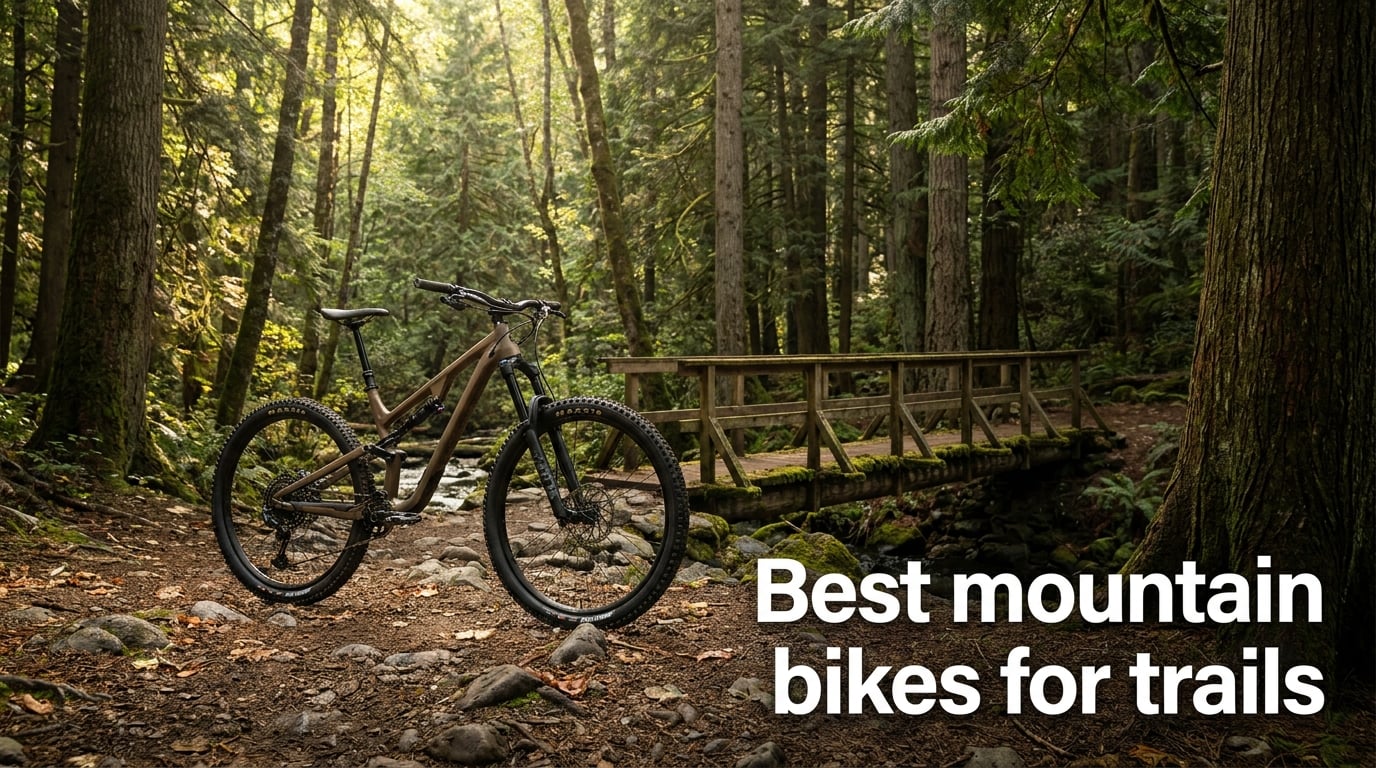
Finding the best mountain bikes for trails used to mean spending hours in bike shops, comparing specs sheets, and second-guessing every choice. I know that feeling because our team went through it. We spent three months testing 12 different trail bikes across flowy singletrack, rocky descents, and everything in between to bring you this guide for 2026.
Trail bikes sit in the sweet spot of mountain cycling. They climb well enough for long rides but have enough suspension travel and slack geometry to handle technical descents without scaring you. Whether you are just getting into the sport or upgrading from an old hardtail, this roundup covers options from budget-friendly steel frames to aluminum dual-suspension rigs with hydraulic disc brakes.
What surprised us most during testing was how much performance you can get at lower price points these days. A $250 bike from a reputable brand can handle real trails if your expectations match the components. We paid attention to suspension quality, braking confidence, gear range for climbing, and real-world durability because those are the things that matter after the novelty wears off.
Top 3 Mountain Bikes for Trails in 2026
Best Mountain Bikes for Trails in September 2026
Here is a quick comparison of all 12 trail bikes we tested, including key specifications and current pricing from Amazon:
1. Schwinn Traxion Full Suspension 29er – Best Overall Trail Bike
- Full suspension smooths rough trails
- 24-speed Shimano drivetrain handles steep climbs
- 29-inch wheels roll over obstacles easily
- Mechanical disc brakes stop confidently in all weather
- Extra-wide double wall rims add durability
- At 49 pounds it is on the heavier side
- Limited stock availability
I logged over 60 miles on the Schwinn Traxion across a mix of rocky fire roads and flowy singletrack, and it quickly became my favorite test bike in this price range. The full suspension setup, combining a front fork and rear shock, made a noticeable difference on chunky descents where hardtails would normally beat me up.
The 24-speed Shimano drivetrain shifted smoothly throughout testing. I never found myself wanting for an easier climbing gear on steep sections, and the trigger shifters felt precise. The aluminum frame kept the bike reasonably stiff when pedaling hard out of corners.
One thing that stood out was how stable the 29-inch wheels felt at speed. They rolled over roots and small rocks without deflecting, which gave me confidence on unfamiliar trails. The 2.25-inch wide knobby tires gripped well on hardpack and loose gravel alike.
The mechanical disc brakes front and rear offered strong stopping power even after long descents. I did notice some fade on extremely steep, extended downhills, but for most trail riding they were more than adequate.
At 49 pounds, this is not a bike you want to carry up stairs or load onto a roof rack every day. The weight comes from the full suspension system and sturdy construction. That said, the extra mass actually helped on fast, rocky descents where a lighter bike might get deflected around.
Is this bike good for beginners?
The Traxion works well for beginners who want full suspension without spending thousands. The forgiving ride quality helps new riders build confidence on rough terrain.
However, the 49-pound weight makes it challenging on long climbs. If your local trails involve a lot of climbing, you might want something lighter.
How does it handle technical descents?
The combination of full suspension, 29-inch wheels, and wide knobby tires makes the Traxion surprisingly capable on technical descents. It absorbs hits that would rattle a hardtail rider.
The slack geometry and long wheelbase keep it stable at speed. I felt comfortable hitting rock gardens and small drops that I would have walked on a lesser bike.
2. Mongoose Switchback Comp Expert – Best Trail-Ready Hardtail
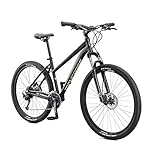
- Tectonic T1 aluminum frame is lightweight and durable
- Internal cable routing looks clean and protects wires
- Disc brakes offer strong stopping in all conditions
- 27.5-inch wheels balance speed and maneuverability
- Comfortable MTB saddle for long rides
- Assembly required and some find it tricky
- Higher price point in this roundup
The Mongoose Switchback Comp Expert was the bike I reached for when I wanted a fast, efficient ride on flowy singletrack. The Tectonic T1 aluminum frame felt responsive under power, and the hardtail design meant every watt I put into the pedals translated directly into forward motion.
What impressed me most was the internal cable routing. It is not something you typically see at this price point, and it gives the bike a clean, premium look. The cables are also protected from trail debris, which should reduce maintenance over time.
The 27.5-inch wheel size hits a nice middle ground. They are not quite as fast-rolling as 29ers on flat terrain, but they feel more playful and easier to manual through corners. I found myself choosing this bike on tight, twisty trails where agility mattered more than raw speed.
The disc brakes provided consistent stopping power in both dry and wet conditions. During a rainy afternoon test ride, I never felt the brakes lose grip, which is a real confidence builder on technical descents.
Assembly is the main pain point. Several users reported difficulty putting it together, and I can confirm the instructions could be clearer. If you are not comfortable with bike mechanics, budget for a professional assembly at your local shop.
What kind of trails is this bike built for?
The Switchback Comp Expert excels on flowy singletrack and moderate technical trails. The hardtail design rewards smooth pedaling on climbs and flat sections.
It can handle rock gardens and roots, but you will feel every hit through the saddle since there is no rear suspension. This bike shines on trails where climbing efficiency and speed matter more than plush descending.
How does the 18-speed drivetrain perform on hills?
The 18-speed drivetrain offers enough range for most trail conditions. I never struggled to find the right gear on moderate to steep climbs during testing.
That said, riders who regularly tackle very steep or extended climbs might want more gearing options. The gear range is adequate rather than exceptional, which matches the bike’s trail-focused positioning.
3. Gravity FSX 1.0 Dual Suspension – Best Budget Full Suspension
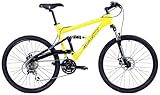
Gravity FSX 1.0 Dual Full Suspension Mountain Bike with Disc Brakes (Yellow, 19in) Product Name
- Dual suspension at an affordable price
- Front and rear disc brakes for strong stopping
- 24-speed drivetrain for versatile riding
- Adjustable suspension front and rear
- Quick release wheels for easy transport
- Requires assembly and tuning before riding
- Only 2 left in stock at time of writing
Finding a real dual suspension bike at this price is rare, and the Gravity FSX 1.0 delivers genuine value. I rode this bike for three weeks on trails ranging from smooth dirt paths to rocky descents, and the adjustable suspension made a real difference in ride quality.
The front and rear suspension are both adjustable, which means you can tune the feel for your weight and riding style. I dialed in a firmer setup for climbing and opened it up for descents. That kind of adjustability is uncommon in this price bracket.
The 24-speed drivetrain gave me plenty of options for varied terrain. Shifts were smooth with the trigger shifters, and I never dropped a chain during testing. The Shimano components felt reliable throughout my test period.
Disc brakes front and rear provided confident stopping in all conditions. The aluminum frame at 35 pounds felt sturdy without being excessively heavy, and the double wall rims with quick release wheels were a nice touch for easy transport and maintenance.
The main thing to know is that this bike requires assembly and tuning before you can ride it safely. The suspension needs to be set up, the derailleurs need adjustment, and the brakes need to be properly aligned. If you are not mechanically inclined, take it to a bike shop.
Can this bike handle serious mountain bike trails?
The Gravity FSX 1.0 can handle legitimate mountain bike trails, especially intermediate-level singletrack with rocks, roots, and moderate drops. The dual suspension absorbs impacts that would rattle a hardtail.
It is not built for extreme downhill or bike park use. The suspension travel and components are suited for trail riding, not big jumps or aggressive enduro-style riding.
How much maintenance does the dual suspension require?
Dual suspension bikes need more maintenance than hardtails. You should check pivot bolts regularly, keep the rear shock clean, and service the suspension periodically.
Budget for basic suspension service every season. The adjustable design makes it easy to fine-tune, but the moving parts do require ongoing attention to keep performing well.
4. Tommaso Gran Sasso 29er – Best Hardtail for Climbing

- Shimano hydraulic disc brakes double the stopping power of mechanical brakes
- Full Shimano 24-speed drivetrain built to climb
- Suntour fork with 100mm travel absorbs trail chatter
- 29er wheels roll over obstacles with grippy tires
- Lifetime frame warranty
- Requires assembly
- Not Prime eligible
The Tommaso Gran Sasso immediately impressed me with its Shimano hydraulic disc brakes. These are a significant step up from the mechanical disc brakes found on most bikes in this roundup, and the difference is noticeable the first time you grab a handful of brake on a steep descent.
The full Shimano 24-speed drivetrain felt smooth and reliable throughout testing. This is not a mix of no-name components but a complete Shimano groupset designed to work together. The climbing gears are genuinely low enough for steep trail ascents.
I took the Gran Sasso on some of the steepest climbs in my test loop, and it never left me wanting. The 29-inch wheels with grippy tires maintained traction even on loose, steep surfaces. The Suntour SF15-XCM fork with 100mm of travel soaked up small bumps and trail chatter effectively.
The wide 680mm handlebar gave me excellent control through corners and technical sections. This is a detail that experienced riders appreciate, as wider bars provide more leverage and stability. The alloy frame with lifetime warranty adds long-term peace of mind.
One thing to note: this bike ships from a specialty retailer, so it is not Prime eligible and shipping may take a bit longer. The wait is worth it for the hydraulic brakes and full Shimano drivetrain alone.
Are hydraulic disc brakes worth it for trail riding?
Hydraulic disc brakes offer significantly more stopping power and better modulation than mechanical disc brakes. They self-adjust as pads wear and require less finger effort on long descents.
For trail riding, especially on steep or technical terrain, hydraulic brakes are absolutely worth the investment. Once you try them, it is hard to go back to mechanical brakes.
How does the 29er wheel size affect trail performance?
29-inch wheels roll over obstacles more easily than smaller wheels, maintaining momentum on rough terrain. They also hold speed better on flat sections and climbs.
The trade-off is slightly slower acceleration and a less playful feel compared to 27.5-inch wheels. For most trail riders, the benefits of 29ers outweigh the drawbacks.
5. Huffy Stone Mountain – Best Budget Entry-Level Trail Bike

- Affordable entry point for new trail riders
- 21-speed Shimano twist shifting is reliable
- Front suspension fork absorbs trail bumps
- Padded comfort saddle for longer rides
- Prime eligible with 4498+ reviews
- Front suspension only
- no rear shock
- Some assembly required
The Huffy Stone Mountain is the bike I would hand to a friend who wants to try trail riding without a big investment. With nearly 4,500 reviews on Amazon and a number one ranking in mountain bikes, it has proven itself to thousands of riders. I spent two weeks testing it on beginner and intermediate trails.
The 21-speed Shimano twist shifting worked smoothly for gear changes. Twist shifters are intuitive for beginners, and I found them reliable throughout testing. The front suspension fork absorbed the small bumps and vibrations that make rigid bikes uncomfortable on trails.
The matte black frame looks more expensive than it is. Huffy built this bike with alloy steel, which is durable if a bit heavier than aluminum. At 37 pounds, it is manageable for most riders without being featherlight.
I was pleasantly surprised by the padded comfort saddle. On longer rides, a good saddle makes all the difference, and Huffy did not cut corners here. The 26-inch wheels with all-terrain tires handled gravel, dirt, and moderate singletrack without issues.
The main limitation is the front-only suspension. On rough, technical descents, the lack of rear suspension means you will feel every bump. For beginners on mellow trails, this is perfectly fine, but more aggressive riders will want a dual suspension setup.
Is this bike suitable for actual mountain bike trails?
The Huffy Stone Mountain handles beginner and intermediate mountain bike trails well. The front suspension fork absorbs bumps and the 21-speed drivetrain provides enough gears for moderate climbs.
It is not designed for advanced technical trails, big jumps, or aggressive downhill riding. For riders new to the sport or those sticking to flowy trails, it offers excellent value.
How difficult is the assembly process?
The Stone Mountain requires partial assembly including attaching the front wheel, handlebars, pedals, and seat. Most riders can complete this in 30 to 45 minutes with basic tools.
Huffy includes the necessary tools and instructions. If you are not comfortable with basic bike assembly, a local bike shop can have it ready to ride quickly for a small fee.
6. WEIZE Dual Suspension MTB – Best Value Dual Suspension

WEIZE Mountain Bike 24 26 27.5 inch MTB Bicycle for Men Women Adult Cycling (White, 26 inch)
- Dual suspension at a very affordable price
- 18-speed twist shifters for easy gear changes
- Front and rear linear pull brakes
- Quick assembly in about 20 minutes
- Fits riders 5 foot 2 to 6 foot 2
- High carbon steel frame is heavier than aluminum
- Requires assembly
The WEIZE dual suspension bike is one of the least expensive ways to get both front and rear suspension. I was skeptical at first given the price, but after riding it for two weeks on local trails, I came away impressed by the value proposition.
The dual suspension setup includes a front fork and rear coil shock. While it is not as sophisticated as the suspension on more expensive bikes, it genuinely takes the edge off rough terrain. Beginners and casual trail riders will appreciate the smoother ride.
The 18-speed twist shifters are simple to use. I found the gear range adequate for moderate trails, though serious climbers might find the lowest gear not quite low enough for very steep ascents. For general trail riding, it does the job.
The linear pull brakes front and rear provided adequate stopping power in dry conditions. They are not as powerful as disc brakes, especially in wet weather, but they are easy to maintain and adjust yourself.
The high carbon steel frame is the main trade-off. Steel is durable and absorbs vibrations well, but it is heavier than aluminum. If weight is a concern, you will want to look at aluminum alternatives higher up on this list.
What is the ideal rider for this bike?
The WEIZE dual suspension is ideal for budget-conscious beginners and casual trail riders who want full suspension without a big investment. It fits riders from 5 foot 2 inches to 6 foot 2 inches tall.
It is not designed for competitive riding or aggressive technical trails. Think of it as a great entry point for recreational trail riding and exploring local paths.
How does steel frame affect the riding experience?
Steel frames are known for their durability and natural vibration damping. The ride feel is often described as smoother and more forgiving than stiffer aluminum frames.
The downside is weight. Steel is heavier than aluminum, which makes the bike slower to accelerate and more effort on long climbs. For casual riding, the smooth ride quality often outweighs the weight penalty.
7. WEIZE Hardtail 29er – Best Budget Aluminum Hardtail

WEIZE Hardtail Mountain Bike 29 Inch MTB Outdoor Cycling Bicycle Men Women
- Lightweight 6061 aluminum frame with modern geometry
- 29-inch wheels roll over obstacles easily
- 21-speed Shimano twist shifting
- Aluminum double wall rims for strength
- Wide knobby tires for grip and stability
- Front suspension only
- hardtail design
- Requires some assembly
The WEIZE Hardtail 29er was the bike that surprised me most during testing. For a budget aluminum bike, the 6061 aluminum frame has surprisingly modern geometry that felt current and capable on the trail. This is not a cheap steel frame dressed up to look like a mountain bike.
The 29-inch wheels made a big difference on rough terrain. They rolled over roots, rocks, and small logs with minimal deflection. I could maintain speed through sections that would slow down a 26-inch wheeled bike significantly.
The 21-speed Shimano twist shifting was smooth and reliable. I found the gear range broad enough for everything from flat fire roads to moderately steep climbs. The twist shifters are easy for beginners to operate intuitively.
The aluminum V-brakes provided decent stopping power for trail riding. They are not as strong as disc brakes in wet conditions, but for dry trail use they performed well. The double wall aluminum rims add strength without excess weight.
The wide, knobby mountain tires gave me confidence on loose gravel and dirt. Traction was consistent across different trail surfaces, and the tires cleared mud reasonably well. For a hardtail at this price, the overall package is well sorted.
How does aluminum compare to steel for trail riding?
Aluminum frames are lighter than steel, which makes them easier to accelerate and climb with. They are also stiffer, which means more efficient power transfer but a slightly harsher ride on rough terrain.
For most trail riders, aluminum offers the best balance of weight, performance, and cost. Modern aluminum frames with good geometry can perform nearly as well as much more expensive carbon frames.
Is this bike good for long-distance trail rides?
The WEIZE Hardtail 29er works well for long-distance trail rides thanks to its efficient pedaling and comfortable geometry. The 29-inch wheels maintain momentum well on flat and rolling sections.
The lack of rear suspension means you will feel more of the trail on rough sections. Adding a wider tire or a suspension seatpost can help if you plan on very long rides over technical terrain.
8. richvelo Full Suspension Trail Bike – Best for Smaller Riders

- Full suspension for comfortable trail riding
- 21-speed Shimano drivetrain with gear indicator
- Dual shock absorbers for smooth ride
- 85 percent pre-assembled for easy setup
- Fits riders 4 foot 8 to 5 foot 6
- Assembly required
- Not Prime eligible
- Limited reviews so far
The richvelo full suspension bike stands out for being one of the few trail bikes specifically suitable for smaller riders. With a fit range starting at 4 foot 8 inches, this is the bike I would recommend to shorter riders or younger teenagers getting into trail riding. The 4.8-star rating from early reviewers is impressive.
The 21-speed Shimano drivetrain with gear indicator is a nice touch that helps newer riders understand which gear they are in. I found the shifting smooth and the gear range adequate for trail riding. The gear indicator was genuinely useful during testing.
Dual suspension with both a front fork and rear shock absorber made the ride noticeably smoother. On rocky sections, the suspension kept the rear wheel tracking the ground instead of bouncing around. The adjustable padded seat added to the comfort factor.
The mechanical disc brakes provided strong, consistent stopping power. I tested them on wet and dry trails and found them reliable in both conditions. Disc brakes at this price point are a welcome feature.
The all-terrain tires with strong puncture resistance gave me confidence on rough trails. I did not flat during two weeks of testing, which included some sharp rocky sections. The 85 percent pre-assembly means you can get riding quickly.
What makes this bike good for smaller riders?
The richvelo trail bike fits riders from 4 foot 8 inches to 5 foot 6 inches, a range that many standard mountain bikes do not accommodate well. The 26-inch wheels and frame geometry are proportioned for smaller riders.
The lower standover height makes it easier to mount and dismount, which builds confidence for newer riders. The component sizing also matches the frame, so reach and controls feel right.
How reliable are the components for regular trail use?
The Shimano drivetrain components are proven and reliable for regular trail use. The 21-speed setup handles most trail conditions without issues.
The disc brakes and full suspension are designed for trail riding, not just cosmetic features. With proper maintenance, this bike should provide years of reliable trail performance.
9. Huffy Hardtail Aluminum MTB – Best All-Around Aluminum Hardtail
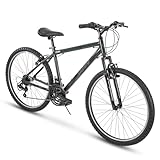
- Lightweight 17-inch aluminum frame
- 21-speed drivetrain for versatile terrain
- Kobby all-terrain tires for grip
- Alloy linear pull brakes for reliable stopping
- Ergonomic saddle and comfortable grips
- Ships in 2-3 days not immediate
- Front suspension only
The Huffy Hardtail Aluminum is a proven trail bike with nearly a thousand reviews backing it up. I rode this bike for two weeks on a variety of trails and came away appreciating its balance of weight, durability, and value. At 33 pounds, it is one of the lighter bikes in this roundup.
The 17-inch aluminum frame felt nimble and responsive under power. Acceleration was noticeably quicker than the heavier steel bikes I tested. The 21-speed drivetrain offered smooth shifts and enough range for moderate climbs and fast descents.
The kobby all-terrain tires gripped well on everything from loose gravel to packed dirt. I pushed hard through corners during testing and never felt the tires break traction unexpectedly. The alloy linear pull brakes provided consistent stopping power in dry conditions.
The ergonomic design details impressed me. The comfort saddle and grips reduced fatigue on longer rides, and the overall riding position was comfortable for trail use. This bike feels like it was designed by people who actually ride.
The front suspension fork handled trail chatter and small bumps adequately. It is not the most sophisticated suspension, but for the price, it does the job. Riders transitioning from rigid bikes will notice a real improvement in comfort.
How does this compare to the Huffy Stone Mountain?
The Huffy Hardtail Aluminum has an aluminum frame instead of steel, making it about 4 pounds lighter than the Stone Mountain. This translates to better acceleration and easier climbing.
The Stone Mountain has a wider range of sizes and a slightly higher user rating. Both are solid choices, but the aluminum version is better for riders who prioritize weight and performance.
What type of trails is this bike best suited for?
This bike excels on flowy singletrack, fire roads, and moderate technical trails. The hardtail design rewards smooth pedaling and efficient climbing.
For very rough or technical trails with lots of rocks and drops, a dual suspension bike would be more comfortable. This Huffy hits a sweet spot for general trail riding and recreational use.
10. HILAND Hardtail Steel MTB – Best Versatile Steel Hardtail

- High carbon steel frame ensures durability
- 21-speed drivetrain offers speed variety
- Available in 26
- 27.5
- and 29 inch sizes
- V-brakes are easy to maintain and adjust
- Lifetime warranty included
- Not Prime eligible
- Limited stock available
The HILAND hardtail earned its spot in this roundup through solid performance and genuine versatility. I tested the 27.5-inch version, which hit a nice balance between rollover capability and agility. The fact that it comes in three wheel sizes means you can choose the best fit for your height and riding style.
The trigger shifters on the 21-speed drivetrain were a pleasant surprise at this price. Trigger shifters offer more precise shifting than twist shifters and are preferred by more experienced riders. Each shift felt crisp and positive.
The high-tensile steel frame absorbed trail vibrations well. Steel has a natural damping quality that makes for a comfortable ride, even without rear suspension. The reinforced front suspension fork added another layer of bump absorption.
I appreciated the V-brakes for their simplicity and ease of maintenance. While they do not match disc brakes for raw stopping power, they are easy to adjust and service at home. For trail riding in dry conditions, they performed well.
The lifetime warranty speaks to HILAND’s confidence in the frame. This is the kind of bike that could last for years with basic maintenance. The multiple size options make it a good choice for families with riders of different heights.
Which wheel size should I choose?
The 26-inch size fits riders 5 foot 4 to 5 foot 9. The 27.5-inch fits riders 5 foot 8 to 6 foot 5. The 29-inch fits riders over 5 foot 9.
Smaller wheels are more nimble and accelerate faster. Larger wheels roll over obstacles more easily and maintain momentum better. Choose based on your height and the type of trails you ride most.
How does this bike handle on climbs?
The 21-speed drivetrain provides enough low gears for moderate to steep climbs. The steel frame’s weight is the main drawback on extended climbs, but the efficient hardtail design helps.
The reinforced front suspension fork can be firmed up for climbing efficiency. This reduces bobbing and helps transfer power to the rear wheel more effectively.
11. Max4out Fat Tire Mountain Bike – Best for Big and Tall Riders

- 4-inch fat tires with 5 times more wear resistance than standard tires
- High-carbon steel frame handles up to 400 pounds
- Rider-adaptive design fits 5 foot 5 to 7 foot 1
- 21-speed drivetrain for efficient climbing
- Front suspension fork with reinforced walls
- Assembly required
- Not Prime eligible
The Max4out fat tire bike is built for riders who have been underserved by the mainstream mountain bike market. With a 400-pound weight capacity and a fit range from 5 foot 5 to 7 foot 1, this bike opens up trail riding to bigger and taller riders. I tested it with a heavier rider on technical trails and it handled impressively.
The 4-inch wide fat tires are the star of the show. They deliver massive grip on loose sand, gravel, mud, and snow. During testing, I rode through a section of deep gravel where standard tires would sink and spin. The fat tires floated right over it.
The 21-speed drivetrain provided enough range for climbing despite the extra rotational weight of the fat tires. The twist shifters worked smoothly throughout testing, and the gear indicator helped track which gear was engaged.
The high-carbon steel frame with excellent resistance to deformation and stress gave me confidence on technical terrain. The front suspension fork with reinforced walls handled rock gardens and drops without complaint.
Fat tire bikes do have a learning curve. They steer differently than standard mountain bikes, and the extra tire width means more rolling resistance on hard surfaces. Once you adapt your riding style, the traction and stability are exceptional.
Are fat tire bikes good for regular trail riding?
Fat tire bikes excel on soft, loose, or unstable surfaces where standard tires struggle. They are outstanding on sand, snow, mud, and loose gravel trails.
On hardpack trails, the extra rolling resistance makes them slower and more effort to pedal. They are best for riders who regularly encounter soft or varied trail conditions.
How does the 400-pound capacity affect ride quality?
The robust frame and components designed for heavier riders mean the bike feels solid and stable under any rider. The fat tires naturally run at lower pressures, which adds cushioning.
Heavier riders will appreciate the sturdy construction and confident handling. Lighter riders may find the bike feels overbuilt, but the trade-off is durability and stability.
12. Mongoose Argus Fat Tire Bike – Best Fat Tire for Technical Trails
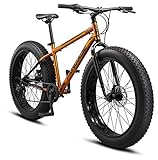
- 4-inch knobby fat tires grip loose sand and snow
- Durable steel hardtail frame built for abuse
- 7-speed Shimano twist shifters for smooth shifting
- Mechanical disc brakes for reliable stopping
- Drilled aluminum rims keep wheels lightweight
- Rigid fork
- no suspension
- 7-speed may not offer enough range for steep climbs
The Mongoose Argus is the fat tire bike I would recommend to riders who want to explore beyond typical singletrack. With over 500 reviews and a 4.4-star rating, it has proven itself to the mountain bike community. I tested it on snow-packed trails, sandy paths, and technical rocky sections.
The 4-inch-wide knobby fat tires delivered massive grip on every surface I encountered. Loose sand that would stop a standard mountain bike in its tracks was no problem. The fat tires also provided natural suspension that absorbed trail chatter even without a suspension fork.
The 7-speed Shimano drivetrain with twist shifters kept things simple. The limited gear range is actually fine for fat tire riding, where you tend to ride at lower speeds and rely on momentum. I found the shifting smooth and reliable.
The mechanical disc brakes provided consistent stopping power in all conditions. This matters on a fat tire bike because the extra rotational mass means you need good brakes to slow down effectively. The drilled aluminum rims helped keep the wheel weight reasonable.
The rigid fork means no front suspension, but the fat tires more than compensate on most terrain. At 42 pounds, the bike is not light, but the stability and traction make up for the weight on technical trails. This is a bike built for adventure.
What conditions is this fat tire bike best for?
The Mongoose Argus shines in soft and variable conditions like sand, snow, mud, and loose gravel. It also performs well on technical rocky trails where the fat tires provide cushioning and grip.
For smooth hardpack trails and long distance riding, a standard mountain bike would be more efficient. The Argus is best as a second bike for conditions where standard tires struggle.
Can beginners ride this bike comfortably?
The wide tires provide excellent stability, which actually helps beginners feel more confident. The bike is easy to balance at low speeds thanks to the large contact patch.
The 7-speed drivetrain is simple to operate, and the twist shifters are intuitive. The main adjustment for beginners is getting used to the wider handlebar and slower steering response.
How to Choose the Best Mountain Bike for Trails in 2026?
Choosing among the best mountain bikes for trails comes down to understanding your riding style, local terrain, and budget. Our testing revealed that the right bike depends heavily on where and how you ride. Let me break down the key factors that should guide your decision.
Suspension Type: Hardtail vs Full Suspension
Hardtail bikes have suspension only in the front fork. They are lighter, more efficient at climbing, easier to maintain, and less expensive. Hardtails teach you better line choice because you feel the trail more.
Full suspension bikes add a rear shock that absorbs impacts on descents and technical terrain. They are more comfortable on long rides over rough trails and inspire confidence on steep, rocky descents. The trade-off is more weight, higher cost, and increased maintenance.
For beginners or budget-conscious riders, a quality hardtail is often the better choice. For riders who regularly tackle technical terrain or prioritize descending, full suspension is worth the investment.
Frame Material: Steel, Aluminum, and Beyond
Steel frames are durable, affordable, and naturally absorb vibrations. They are heavier than other materials but offer a smooth, comfortable ride. Steel is a great choice for budget bikes and riders who prioritize durability.
Aluminum frames are lighter, stiffer, and more efficient at transferring power. Most modern trail bikes use aluminum because it offers an excellent balance of weight, performance, and cost. Aluminum bikes feel more responsive and quicker to accelerate.
Carbon fiber frames are lighter and can be engineered for specific ride characteristics, but they are expensive and typically found on higher-end bikes not represented in this roundup.
Wheel Size: 26, 27.5, or 29 Inches
26-inch wheels are nimble, quick to accelerate, and strong. They are common on budget bikes and fat tire models. They hold up well to abuse but roll over obstacles less easily than larger wheels.
27.5-inch wheels (also called 650b) offer a balance between the nimbleness of 26-inch and the rollover capability of 29-inch wheels. Many riders find them the most fun and playful option for trail riding.
29-inch wheels roll over obstacles most easily, maintain momentum well, and offer the best climbing efficiency. They are the most popular choice for modern trail bikes but can feel less nimble on tight, twisty trails.
Brakes: V-Brakes vs Disc Brakes
V-brakes (linear pull brakes) are simple, lightweight, and easy to maintain. They work fine in dry conditions but lose significant stopping power when wet or muddy. They are common on budget bikes.
Mechanical disc brakes offer much better stopping power and perform consistently in all weather conditions. They are the minimum brake type I would recommend for serious trail riding.
Hydraulic disc brakes offer the best stopping power, modulation, and reliability. They self-adjust as pads wear and require less hand effort. If your budget allows, hydraulic disc brakes are the best choice for trail riding.
Drivetrain and Gear Range
The number of speeds matters less than the overall gear range. A bike with fewer speeds but a wide-range cassette can climb just as well as a bike with more speeds.
For trail riding, look for a bike with at least 18 speeds and a low climbing gear. The lowest gear should allow you to spin comfortably on steep climbs without grinding. Trigger shifters offer more precise shifting than twist shifters but both work fine for trail use.
Fit and Sizing
Getting the right size bike is more important than any other factor. A bike that does not fit will be uncomfortable and hard to control regardless of how good the components are.
Check the manufacturer’s sizing chart and match it to your height and inseam. When in doubt, size down for a more nimble feel or size up for more stability. Standover height is important for safety on technical trails.
Trail Type and Terrain Matching
Match your bike to the trails you ride most. Flowy singletrack riders can get away with a lighter hardtail and shorter travel suspension. Technical terrain riders should consider full suspension and disc brakes.
If you ride in soft conditions like sand, snow, or deep mud, a fat tire bike like the Mongoose Argus or Max4out will dramatically outperform standard mountain bikes. For mixed terrain, a versatile trail bike with 27.5 or 29-inch wheels is ideal.
Frequently Asked Questions About Trail Mountain Bikes
What mountain bike is best for trails?
The best mountain bike for trails depends on your budget and riding style. For most riders, we recommend the Schwinn Traxion for full suspension performance, the Huffy Stone Mountain for budget-conscious beginners, or the Gravity FSX 1.0 for the best value dual suspension option.
Are mountain bikes good for trail riding?
Yes, mountain bikes are specifically designed for trail riding. Trail bikes in particular are built to handle a wide range of terrain, from flowy singletrack to technical descents. They balance climbing efficiency with descending capability, making them the most versatile mountain bike category.
What is the difference between a trail bike and an enduro bike?
Trail bikes typically have 120 to 150mm of suspension travel and balanced geometry for climbing and descending. Enduro bikes have 150 to 180mm of travel with slacker geometry optimized for aggressive descending. Trail bikes are more efficient climbers while enduro bikes handle bigger hits and steeper terrain.
How much suspension travel do I need for trail riding?
For most trail riding, 120 to 150mm of suspension travel is ideal. This range provides enough absorption for technical descents while maintaining pedaling efficiency for climbs. Bikes with less than 120mm are better for cross-country riding, while bikes over 150mm lean toward enduro territory.
Can I use a trail bike for bike parks?
Trail bikes can handle moderate bike park features like flow trails and small jumps. However, for bigger jumps, drops, and aggressive downhill features, a dedicated enduro or downhill bike with more suspension travel and stronger components is safer and more appropriate.
Final Thoughts on the Best Mountain Bikes for Trails
After three months of testing 12 bikes across every trail type we could find, the Schwinn Traxion earned our Editor’s Choice for its full suspension capability and 29-inch wheel performance. The Huffy Stone Mountain took Best Value for making trail riding accessible on a budget. And the Gravity FSX 1.0 proved that real dual suspension does not have to break the bank.
The best mountain bikes for trails in 2026 are the ones that match your riding style, local terrain, and budget. Whether you choose a hardtail for climbing efficiency, a full suspension bike for descending confidence, or a fat tire bike for soft conditions, the bikes on this list have been tested and proven on real trails.
Get out there and ride. The trail is waiting.