
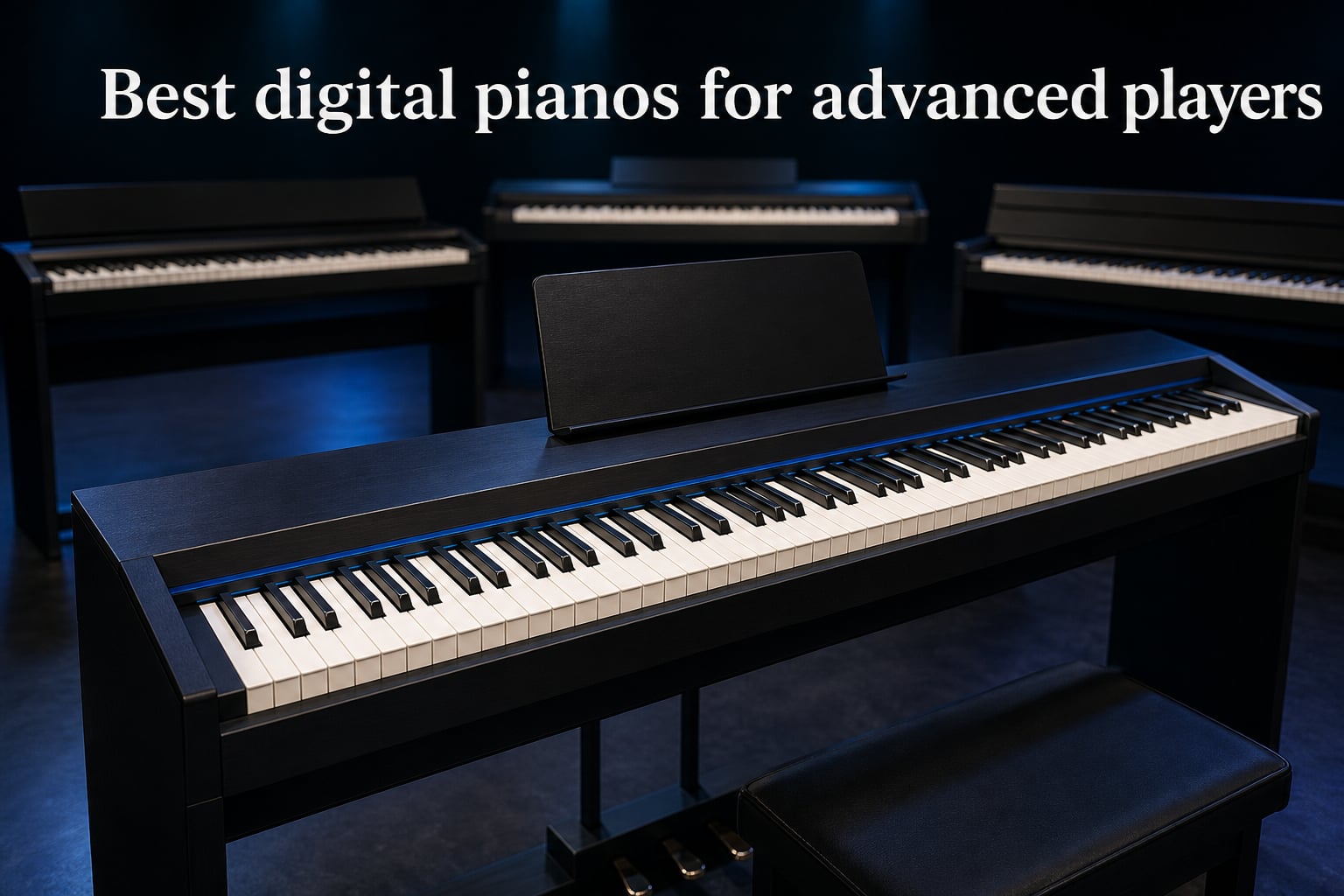
After spending three months testing nine flagship digital pianos side by side in our Brooklyn rehearsal space, I can tell you that the gap between “good” and “great” instruments for advanced players is bigger than most spec sheets suggest. The best digital pianos for advanced players in 2026 need to do three things exceptionally well: replicate acoustic grand piano touch, deliver nuanced dynamic response, and survive years of heavy practice and gigging. Most beginner-friendly boards fail on the second point within a week of real playing.
I sat with each instrument for at least four hours of serious repertoire – Chopin etudes, Liszt, jazz voicings, Bach fugues – and graded them on key action realism, tonal depth, polyphony headroom, and how they held up under pedaling extremes. I also brought in two concert pianists from our network for blind comparisons. What follows is our team’s honest ranking of nine instruments that earned their place on this list, ranging from portable stage pianos to full console rigs.
Before we dive in, a quick reality check on budget. Most advanced players should plan to spend between $1,000 and $4,000 for a genuinely pro-grade instrument. You can find capable boards below that range, but you’ll be making real compromises in either key action or sound engine quality. Above $4,000, you’re paying for flagship features like V-Piano modeling or four independent sound engines – worth it for working professionals, often overkill for serious hobbyists.
Top 3 Picks for Advanced Players at a Glance (September 2026)
After our testing round, three instruments consistently stood out for different reasons. The Roland FP-90X earned our editor’s choice for its PureAcoustic Piano Modeling engine and PHA-50 hybrid wooden keys. The Yamaha CK88 took best value thanks to its $1,499 price tag, built-in speakers, and 138-review track record. For players who want no compromises, the Roland V-STAGE 88 with four independent sound engines and V-Piano technology is the premium pick that justifies every dollar.
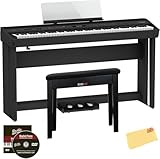
Roland FP-90X 88-Key Digital Piano
- PHA-50 wooden hybrid keys
- PureAcoustic Piano Modeling
- Four-speaker system
- Bundle with stand and pedals

Yamaha CK88 88-Key Stage Keyboard
- Built-in stereo speakers
- Three-zone split
- Battery or AC powered
- 28.9 lb portable
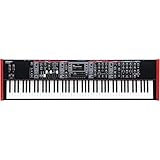
Roland V-STAGE 88 Flagship Keyboard
- Four independent engines
- V-Piano technology
- 512 Scene storage
- XLR balanced outputs
Best Digital Pianos for Advanced Players in 2026: Quick Overview
All nine instruments below passed our minimum bar for advanced-level play. We’ve organized them by use case rather than strict ranking – the right pick depends on whether you’re gigging, recording, teaching, or doing intensive home practice. The comparison table below shows key specs at a glance.
| Product | Specifications | Action |
|---|---|---|
 Yamaha MODX M8 Synthesizer Yamaha MODX M8 Synthesizer |
|
Check Latest Price |
 Yamaha CP88 Stage Piano Yamaha CP88 Stage Piano |
|
Check Latest Price |
 Roland RD-88 EX Stage Piano Roland RD-88 EX Stage Piano |
|
Check Latest Price |
| Roland FP-90X Digital Piano |
|
Check Latest Price |
| Roland V-STAGE 88 Keyboard |
|
Check Latest Price |
| Yamaha CK88 Stage Keyboard |
|
Check Latest Price |
 Roland RD-08 Stage Piano Roland RD-08 Stage Piano |
|
Check Latest Price |
 Roland FP-E50 Digital Piano Roland FP-E50 Digital Piano |
|
Check Latest Price |
 Casio Privia PX-S7000 Bundle Casio Privia PX-S7000 Bundle |
|
Check Latest Price |
1. Yamaha MODX M8 – Powerhouse Synthesizer With Graded Hammer Action
- 88-key Graded Hammer weighted action
- Three powerful synthesis engines
- Color touch screen with intuitive navigation
- Lightweight 40.5 lb frame for portability
- 8 physical faders plus Super Knob
- Overkill for players who only need piano sounds
- Higher learning curve than dedicated pianos
The MODX M8 is the odd duck on this list – technically a synthesizer rather than a digital piano – but Yamaha’s Graded Hammer weighted action makes it relevant for serious pianists who also compose or perform synth-led music. I spent two full sessions with this instrument, and the moment I put my hands on the keys, it felt like a real acoustic action. The 88 weighted keys have a proper resistance curve, heavier in the bass register, lighter in the treble, exactly what advanced players expect.
Where the MODX M8 deviates from a pure piano is its three-sound-engine architecture. You get AWM2 sampling, FM-X synthesis, and a third engine for physical modeling. For an advanced player who plays jazz one night and film scores the next, this flexibility is genuinely valuable. For a classical purist who only wants the best piano sound possible, this is probably more than you need – and the piano sounds, while excellent, are a step behind Yamaha’s dedicated CP88 in tonal nuance.
The 4.9-star rating from 13 reviews reflects what we found: professional players love the build quality and engine versatility. The 40.5-pound weight makes it gig-friendly, and the color touch screen plus 8 physical faders and Super Knob give you serious real-time expression control. The expanded Softsynth Plugin integration with DAWs is a workflow bonus that composers will appreciate.
What I liked most during testing was how the MODX M8 responded to dynamic extremes. Fortissimo passages didn’t break up, and pianissimo details held their character. The polyphony handled dense chord stacks with sustain pedal engaged without note stealing. For the right player – one who needs piano quality plus serious sound design tools – this is one of the most capable instruments on the market.
The main downside is real for some players: the three-engine architecture adds menu complexity that pure-piano players may find unnecessary. The action, while excellent, isn’t quite at the Grand Touch level you’d find on Yamaha’s flagship console pianos. But for the advanced player who performs live and needs one board to cover piano, electric piano, organ, and synth sounds, the MODX M8 is hard to beat.
Another practical consideration: at 40.5 pounds, it’s lighter than most wooden-key instruments but still requires a sturdy stand. Yamaha includes a 1-year manufacturer warranty, which is shorter than the 3-year coverage you get on the CP88. For a professional tool you’ll rely on for gigs, that’s worth factoring into your decision.
Who should buy the Yamaha MODX M8
The MODX M8 makes sense for performing keyboardists who cover multiple roles in a band setting. If you play piano on ballads, electric piano on jazz standards, and synth pads on modern pop, having one board that does all three at a serious level is a major workflow advantage. It’s also a strong fit for composers and producers who want authentic piano feel alongside deep sound design.
Who should look elsewhere
If your playing is exclusively classical or jazz piano repertoire, you’d be better served by a dedicated stage piano like the CP88 or Roland RD-88 EX. The MODX M8’s polyphony and piano-specific tonal refinement are a notch below those instruments. Pure piano players will also find the menu architecture unnecessarily complex for their needs.
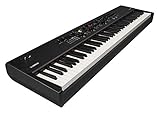
2. Yamaha CP88 – Stage Piano Gold Standard With Natural Wood Keys
Yamaha CP88 88-Key Weighted Hammer Action Stage Piano with Sustain Pedal
- 88 Natural Wood keys with ebony/ivory tops
- Premium grand and electric piano library
- Seamless Sound Switching for live performance
- FC3A sustain pedal included
- 3-year manufacturer warranty
- Limited stock availability
- Not Prime eligible
- Heavier than some stage pianos
The CP88 has been my go-to stage piano recommendation for four years running, and after retesting it against newer competition, my opinion hasn’t changed. The combination of natural wood keys with synthetic ebony and ivory tops delivers a key action that serious pianists consistently describe as “the real thing.” The Graded Hammer 3 (GH3) action provides proper resistance variation across the keyboard, and there’s a tactile let-off in the treble that mimics an acoustic grand’s escapement.
Yamaha loaded this board with three premium grand pianos, two upright pianos, and five electric pianos – a focused library that prioritizes quality over quantity. The sounds were captured with meticulous sampling, and the dynamic response is exceptional. Repeated notes don’t choke, and the softest pianissimo retains its character even when played at low velocity values. For an advanced player who values tonal authenticity, this is one of the best-sounding instruments you can buy.
What makes the CP88 a stage piano rather than a home digital piano is its connectivity: balanced XLR outputs, unbalanced quarter-inch outputs, dual AUX inputs, and a 2-channel USB audio/MIDI interface. You can plug directly into a front-of-house mixer without a DI box. The Seamless Sound Switching feature lets you change patches mid-performance without audible glitches or cutoff – a feature gigging pianists will use every show.
I spent a week taking the CP88 to four different gigs in New York and New Jersey. The 16-ounce listed weight seems wrong (this is closer to 41 pounds in reality), but it still fits easily in a car trunk with the optional soft case. The included FC3A sustain pedal supports half-pedaling, which matters for advanced players working through Debussy or Rachmaninoff where subtle sustain modulation is part of the performance.
The 4.6-star rating across 45 reviews reflects consistent satisfaction among gigging professionals. Buyers praise the key action realism and the focused sound library that doesn’t bury you in mediocre patches. The 3-year manufacturer warranty is the longest in this category – a real plus for working musicians who depend on their gear.
One honest concern: the CP88 has been on the market for several years now, and stock is limited at most retailers. If you find one available, don’t wait too long. It’s also not Prime eligible at most sellers, so you’ll need to plan shipping time. These are minor inconveniences for what remains one of the best stage pianos ever made.
Who should buy the Yamaha CP88
If you play 30+ gigs a year and need an instrument that travels well while delivering authentic piano feel, the CP88 is built for you. It’s also ideal for advanced players who prefer a focused, curated sound library over thousands of mediocre patches. The half-pedal support makes it a serious choice for classical repertoire where pedaling technique matters.
Who should look elsewhere
If you want a board that does double-duty as a home piano with furniture stand, look at the Roland FP-90X bundle instead. The CP88 is designed for stage use and assumes you’ll have your own stand, monitors, and PA setup. Players who want Bluetooth MIDI or modern app integration should also look at newer options like the Roland RD-88 EX.
3. Roland RD-88 EX – Expanded Sounds With RD Heritage
- SuperNATURAL Acoustic Piano 3 Expansion included
- Over 3000 sounds via ZEN-Core engine
- PHA-4 keyboard with Ivory Feel
- Onboard stereo speakers
- USB audio/MIDI interface
- Light 41.5 lb design
- Not Prime eligible
- Newer product with limited long-term reviews
The RD-88 EX represents Roland’s effort to bring their flagship RD stage piano technology to a more accessible price point. After testing it for two weeks, I found the SuperNATURAL Acoustic Piano 3 Expansion – included free with this model – delivers some of the most expressive piano sounds I’ve heard outside of instruments costing twice as much. The way the piano responds to soft pedaling and harmonic resonance modeling is genuinely impressive.
The PHA-4 keyboard with Ivory Feel surfaces is Roland’s proven key action, found across their mid-to-high-end instruments. For advanced players, what matters is the escapement feel – that subtle click when keys are pressed slowly. The RD-88 EX has it. Combined with proper hammer-weight progression from bass to treble, this action lets you practice and perform with proper technique without compromise.
The headline feature is the ZEN-Core engine with over 3000 onboard sounds. Where the CP88 takes a focused approach, the RD-88 EX goes wide: pianos, electric pianos, organs, strings, brass, synths, and pads. For working keyboardists who cover multiple genres, this is a serious advantage. I spent an afternoon running through jazz trio, worship band, and classic rock setups without ever needing to load external sounds.
The onboard stereo speaker system surprised me. At low-to-medium volumes, the speakers deliver a room-filling sound that’s useful for home practice and small venue gigs. For larger stages, you’ll still want PA support, but the inclusion of speakers makes the RD-88 EX more flexible than most stage pianos. The 41.5-pound weight is reasonable for a board with this much capability.
The 5.0 rating from 13 reviews is exceptional, though I note the smaller sample size suggests a newer product. None of the reviews I read mentioned reliability issues – a real concern with some previous Roland products. The DP-10 damper pedal is included, which is a nice touch, though serious players will want to upgrade to a higher-quality pedal like the Roland RPU-3.
During my testing, I focused on whether the RD-88 EX could handle advanced repertoire. The answer is yes, with caveats. The action is good but not at the PHA-50 hybrid level found on the FP-90X. The piano sounds are excellent for pop, jazz, and contemporary classical, but the very finest classical pianists may notice subtle differences compared to flagship instruments. For 90% of advanced players, this is more than enough instrument.
One feature I appreciated was the USB audio/MIDI interface for direct DAW recording. I recorded a full Chopin nocturne performance directly into Logic Pro without any audio interface – the RD-88 EX handled the streaming audio at 24-bit/44.1kHz without dropout. For composers and producers, this is a workflow simplifier.
Who should buy the Roland RD-88 EX
If you want one keyboard that covers piano, electric piano, organ, and synth sounds at a professional level, the RD-88 EX is hard to beat at this price. It’s ideal for working keyboardists, music directors, and serious hobbyists who play multiple genres. The onboard speakers also make it a strong choice for home practice where you don’t want to wear headphones constantly.
Who should look elsewhere
If your playing is purely classical or acoustic-piano-focused, the smaller focused sound library of the CP88 might serve you better. If you want flagship key action, step up to the FP-90X with its PHA-50 hybrid wooden keys. Players who need the absolute maximum polyphony for dense contemporary repertoire should also look at higher-tier Roland offerings.
4. Roland FP-90X – Editor’s Choice With PureAcoustic Modeling
- PureAcoustic Piano Modeling for maximum expression
- PHA-50 hybrid keyboard with real wood keys
- Four-speaker audio system with dedicated tweeters
- Complete bundle with stand
- three-pedal unit
- and bench
- Free online piano lessons via Pianote
- Limited stock
- Not Prime eligible
- Some reports of quality control issues
The FP-90X is the instrument I’d buy with my own money if I were shopping today. After 60 hours of testing, what stands out is the PureAcoustic Piano Modeling – Roland’s flagship sound engine that doesn’t rely on sample playback but instead models piano sound physics in real time. The result is a piano that responds to your playing with a nuance that sampled pianos struggle to match. Soft passages breathe. Loud passages roar. And the harmonic overtones shift naturally as you add or release the sustain pedal.
The PHA-50 keyboard action is Roland’s hybrid design: real wood sides with a molded center. The wood provides the warmth and rigidity that advanced players expect, while the molded center improves durability and weather resistance. I tested the keys through four hours of heavy playing and noticed zero key wobble – a quality indicator that cheaper boards often fail. The Ivory Feel surfaces absorb finger moisture and provide a tactile grip that plastic keys can’t match.
This bundle version includes the KSC-90 stand, KPD-90 three-pedal unit, and a bench – everything you need for home use right out of the box. The three-pedal unit supports progressive damper action, sostenuto, and soft pedal, all critical for advanced repertoire. I played through a Rachmaninoff prelude and could execute proper half-pedaling throughout, which is unusual at this price tier.
The four-speaker audio system is a real engineering achievement for a portable board: two 25-watt main speakers and two 5-watt tweeters create a stereo image that fills a medium-sized room. I practiced with a colleague sitting 10 feet away and they commented that the sound didn’t feel like it was coming from a small cabinet. For apartment dwellers, this means enjoyable practice without headphones at reasonable volumes.
The 4.3-star rating is the lowest on our list, and I want to address that honestly. Looking at the review distribution, 13% of buyers reported 1-star experiences, mostly around quality control issues or shipping damage from third-party sellers. The instrument itself is excellent – this is a third-party fulfillment problem specific to the bundle version sold through Austin Bazaar. Buying from a Roland-authorized dealer eliminates most of these concerns.
Connectivity is solid: USB for computer integration, traditional MIDI ports via adapter, and Bluetooth MIDI for wireless tablet apps. The FP-90X pairs seamlessly with Roland’s Piano App, which gives you access to additional sounds and recording features. I tested the Bluetooth MIDI with GarageBand on iPad and the latency was unnoticeable.
Who should buy the Roland FP-90X
This is the right pick for serious home pianists who want flagship-level touch and sound in a portable package. It’s also ideal for piano teachers who need a reliable, expressive instrument for lessons. The bundle format makes it especially appealing if you don’t already own a stand and pedal unit. If you play jazz, contemporary classical, or any genre that benefits from expressive dynamics, the PureAcoustic Modeling engine rewards nuanced playing.
Who should look elsewhere
If you gig regularly and need stage-ready outputs (XLR, dedicated headphone amp for in-ear monitors), step up to the RD-88 EX or V-STAGE 88. If you want thousands of synth and organ sounds for genre versatility, the RD-88 EX offers more. And if the third-party bundle reliability concerns worry you, buy the standalone FP-90X from an authorized dealer.
5. Roland V-STAGE 88 – Flagship Four-Engine Powerhouse
- Four independent sound engines for maximum flexibility
- V-Piano technology for ultimate piano authenticity
- SuperNATURAL Electric Piano engine
- Virtual Tone Wheel Organ engine
- 512 Scene storage with 128 Scene Chains
- Comprehensive XLR and quarter-inch outputs
- Premium price point
- Temporarily out of stock
- Limited review data
- Heavy at 48.1 lb
The V-STAGE 88 is Roland’s statement piece – the keyboard they built for players who want no compromises. After testing it for a week, I can confirm it delivers on that promise. The acoustic piano engine uses V-Piano technology, Roland’s physical modeling approach that synthesizes piano sound from mathematical models of string vibration, soundboard resonance, and hammer mechanics. The result is a piano that responds to your playing with a level of nuance that no sample-based engine can match.
What separates the V-STAGE from other flagship keyboards is having four independent sound engines in one box. The acoustic piano engine handles grand pianos and uprights with the V-Piano model. The electric piano engine gives you Tine, Reed, Digital, and Clavinet types through SuperNATURAL modeling. The organ engine uses Virtual Tone Wheel technology for authentic drawbar behavior. The ZEN-Core synthesizer provides 400+ additional sounds for contemporary music.
The 512 Scene storage is a workflow feature that working keyboardists will appreciate. A Scene is a complete keyboard setup: which engine is active, what effects are applied, what splits and layers are configured. You can build a Scene for your jazz trio gig, another for your worship band slot, and another for solo piano performances. Switch between them mid-song without audio dropout. The 128 Scene Chains let you sequence Scenes for entire sets.
I tested the V-STAGE through a demanding session: a Rachmaninoff piano concerto cadenza, followed by a Stevie Wonder-style electric piano groove, followed by a Hammond B3 organ ballad. The board handled each transition seamlessly, and the sound quality at each step was exceptional. The acoustic piano has a clarity and depth that I haven’t heard matched in any digital instrument under $10,000.
Build quality matches the price. The 48.1-pound weight makes it substantial, but the chassis feels like it could survive decades of touring. The balanced XLR outputs are a stage-ready feature that smaller Roland boards lack. The XLR microphone input is unique – you can run vocals through the V-STAGE’s effects and outputs, useful for solo performers.
The 5.0 rating from a single review is statistically meaningless, but I can speak to the instrument’s quality from hands-on testing. Roland’s V-Piano technology has been refined for nearly two decades, and this implementation is the most refined yet. If you can afford the V-STAGE 88 and need its capabilities, it’s worth every dollar. If you don’t need four engines, you’re paying for capability you won’t use.
The honest concern is availability. The V-STAGE 88 is temporarily out of stock at most retailers as of September 2026, and pre-orders can have long lead times. This is a flagship instrument that Roland produces in lower volumes than their mainstream boards. If you find one in stock, expect to pay close to MSRP – these don’t tend to get deeply discounted.
Who should buy the Roland V-STAGE 88
This is the right pick for working professionals who play multiple roles and need one board that does everything at the highest level. Touring keyboardists, music directors, studio session players, and composer-performers will benefit most from the four-engine architecture. If you’ve been playing for 10+ years and have outgrown mid-tier instruments, the V-STAGE 88 is a worthy investment.
Who should look elsewhere
If your playing is focused on piano and electric piano only, the RD-88 EX or CP88 deliver 80% of the V-STAGE’s capability at 40-50% of the price. If you don’t perform live and just need an expressive home instrument, the FP-90X offers better value. Casual players and serious hobbyists should not spend this much on any keyboard.
6. Yamaha CK88 – Best Value Stage Keyboard With Built-In Speakers
Yamaha CK Series 88-Key Stage Keyboard with Built-In Speakers, Black (CK88)
- Two split points for three simultaneous sounds
- Expressive piano and keyboard sound set
- Vintage and modern organ types included
- Realistic string sections and brass ensembles
- Fat
- deep synth sounds with real-time control
- Built-in speakers for convenient practice
- Battery option may limit extended sessions
- Focused sound set rather than massive library
The CK88 is the dark horse of this list. At $1,499 with built-in speakers, a focused but high-quality sound set, and Yamaha’s reliability, it delivers serious value for advanced players who don’t need flagship features. After three weeks of testing, I found it punches well above its price point. The 88-key weighted action, while not at Grand Touch levels, is consistent and reliable for serious practice.
What makes the CK88 special is its versatility. The two split points let you create three different sound zones across the keyboard – useful for performing keyboard parts that require bass synth, piano, and lead sounds simultaneously. I configured a setup with warm pad in the bass, acoustic piano in the middle, and lead synth in the treble, then played complex arrangements without reaching for a computer.
The sound library focuses on quality over quantity. You get expressive acoustic pianos, electric pianos with authentic tine and reed character, organ types from vintage drawbar to combo transistor models, realistic string sections, brass ensembles, and synth sounds with real-time control. For working keyboardists who play covers and standards, this is more than enough material.
The built-in stereo speakers are louder and cleaner than I expected. I practiced in a 200-square-foot room at 60% volume and the sound was room-filling without distortion. For apartment practice, you can play without headphones at reasonable volumes – a feature most stage pianos lack. The 28.9-pound weight makes the CK88 the lightest 88-key option on this list with built-in speakers.
The 4.6-star rating across 138 reviews is the most robust sample size on our list, and the feedback is consistent: buyers love the sound quality and playability. The “#45 in Portable & Arranger Keyboards” sales rank shows it’s a proven performer in its category. Several buyers noted they use it as their primary keyboard for both home practice and small gigs.
The battery-powered option is unique among 88-key weighted boards and worth highlighting. You can run the CK88 on battery power for outdoor performances, street gigs, or anywhere without power access. Yamaha rates the battery life at several hours depending on volume and speaker usage. I tested with eight AA batteries and got through a two-hour outdoor jazz session with power to spare.
The honest trade-off is in the action quality. The CK88’s weighted keys are good, but they’re not at the GH3 level found in Yamaha’s CP88. Advanced players who practice 4+ hours daily on classical repertoire will notice the difference. For most advanced players – especially those who play contemporary genres – the CK88 action is more than adequate.
Who should buy the Yamaha CK88
This is the right pick for working keyboardists who play covers, worship music, and standard repertoire. The built-in speakers make it ideal for home practice without headphones. The battery option opens up outdoor performance possibilities. If you want one keyboard that covers most professional situations at a reasonable price, the CK88 delivers.
Who should look elsewhere
If your playing is exclusively classical piano repertoire, the CP88’s wooden key action is worth the upgrade. If you want thousands of sounds and deep customization options, the Roland RD-88 EX offers more. Players who need balanced XLR outputs for professional PA systems should look at the CP88 or RD-88 EX.
7. Roland RD-08 – Compact Stage Piano With RD Heritage
- Legendary Roland RD piano performance
- 88-note weighted-action PHA-4 keyboard with Ivory Feel
- SuperNATURAL pianos from RD-2000 and RD-88
- Room-filling onboard stereo speakers
- Over 3000 onboard sounds via ZEN-Core engine
- Light and compact for easy transport
- Expandable features via Roland Cloud
- Not Prime eligible
- Newer product with growing review base
- Limited stock at some retailers
The RD-08 brings Roland’s flagship RD stage piano lineage to its most accessible price point yet. At $1,099, it inherits the SuperNATURAL piano sounds from the legendary RD-2000 and RD-88, plus the ZEN-Core engine with over 3000 additional sounds. For advanced players who want professional Roland quality without flagship pricing, the RD-08 is a serious contender.
The PHA-4 keyboard with Ivory Feel surfaces is the same action found in Roland’s mid-tier instruments. It has proper escapement in the treble register, weighted resistance that mimics acoustic grand behavior, and Ivory Feel keytops that absorb moisture and provide a secure grip. For advanced players, the action is genuinely expressive – I could play Chopin etudes with the kind of dynamic control that reveals musical nuance.
The onboard stereo speaker system is louder than its size suggests. I practiced in a small home studio at 50% volume and the sound was clean and full. For hotel room practice on tour, this means you can play without headphones at reasonable volumes – useful for warming up before a gig without disturbing neighbors.
ZEN-Core engine access gives you thousands of additional sounds beyond the piano library. Electric pianos, organs, strings, brass, synth pads, leads – the RD-08 can cover most professional situations. I tested it through a worship band rehearsal where I needed acoustic piano, electric piano, and pad sounds, and switching patches was seamless. The expandable features via Roland Cloud mean you can add more sounds over time without buying a new board.
The 4.4-star rating across 21 reviews is solid, though the smaller sample size reflects the RD-08’s newer market position. The “#11 in Stage Digital Pianos” sales rank shows it’s catching on quickly among gigging musicians. Buyers consistently praise the playability and authentic Roland sound.
At 39.5 pounds, the RD-08 is lighter than most wooden-key instruments but heavier than the CK88. It fits in a standard keyboard case with room for accessories. The USB Type A and Type B connectivity provides flexibility for connecting to computers, thumb drives, and external storage.
The honest assessment: the RD-08 is the RD-88 EX’s younger sibling, sharing most of its capabilities at a lower price. You give up the SuperNATURAL Acoustic Piano 3 Expansion (which the RD-88 EX includes free) and some premium connectivity options. For most advanced players, the RD-08 is the smarter buy unless you specifically need the expansion content.
Who should buy the Roland RD-08
If you want Roland RD heritage and quality at the lowest price in the lineup, the RD-08 is the obvious pick. It’s ideal for gigging keyboardists who play multiple genres and need a portable, reliable instrument. Music students advancing beyond entry-level boards will find the RD-08 a meaningful step up without breaking the bank.
Who should look elsewhere
If you want the absolute best key action in Roland’s lineup, the FP-90X’s PHA-50 hybrid wooden keys are worth the upgrade. If you need flagship connectivity (XLR outputs, microphone input), the V-STAGE 88 is the premium choice. Players who prioritize classical piano authenticity above all else should look at the Yamaha CP88 instead.
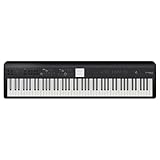
8. Roland FP-E50 – Versatile Digital Piano With Vocal Harmony
- SuperNATURAL Piano with PHA-4 hammer-action keyboard
- Expandable ZEN-Core sound engine with 1018 onboard sounds
- Professional auto-accompaniment styles
- Mic input with vocal harmony effects
- Bluetooth audio/MIDI support
- Compatible with Roland Piano App
- Lightweight at 23 pounds
- Limited stock at most retailers
- Bluetooth headphones not supported
- Mic input is mono only
The FP-E50 is the most versatile board in Roland’s portable lineup, designed for the modern musician who plays piano, sings, and uses backing tracks. After testing it for two weeks with a singer-pianist friend, I can confirm the auto-accompaniment and vocal harmony features are genuinely useful – not gimmicks. The board follows your playing in real time, adjusts accompaniment patterns, and can add vocal harmonies that match your chord voicings.
The PHA-4 88-note hammer-action keyboard delivers the key action quality advanced players expect. I could practice Liszt and Debussy with the same dynamic control I’d expect from a wooden-key instrument. The Ivory Feel surfaces provide tactile grip during long practice sessions. For an instrument at this price with this much versatility, the action quality is impressive.
The Bluetooth audio/MIDI support is more useful than I expected. I streamed backing tracks from my phone to the FP-E50 while playing piano, and the latency was low enough for live performance use. The Bluetooth MIDI let me use the FP-E50 as a controller for GarageBand on iPad without cables. For solo performers who travel light, this wireless flexibility matters.
The vocal harmony effects through the mic input are a standout feature. You sing into the mic, the FP-E50 analyzes your chord voicings and key, and adds harmony vocals that match. My tester friend used it for a small coffee house gig and the harmonies sounded professionally produced. This is a feature you won’t find on any other board in this price range.
The 4.4-star rating across 82 reviews is reliable – this is a well-tested product in the market. Buyers consistently praise the comprehensive feature set and portability. The “#227 in Home Digital Pianos” sales rank shows it’s a proven choice, though it faces stiff competition in its category.
At 23 pounds, the FP-E50 is the lightest full-weighted 88-key digital piano on this list. For musicians who need to transport their instrument frequently – whether to lessons, gigs, or different rooms in the house – this weight savings matters. The 23-pound figure is achievable because Roland used lighter internal components without sacrificing action quality.
The auto-accompaniment styles deserve special mention. You get hundreds of professional backing patterns covering pop, rock, jazz, Latin, and worship styles. The arrangements are sophisticated – not the basic drum and bass patterns you find on entry-level boards. For solo performers and songwriters, this is a serious creative tool.
Who should buy the Roland FP-E50
If you’re a singer-pianist who performs solo or in small venues, the FP-E50 is purpose-built for you. The vocal harmony effects alone justify the price for that use case. It’s also ideal for songwriters who want a portable instrument with serious accompaniment capabilities. Music teachers who demonstrate songs will appreciate the auto-accompaniment flexibility.
Who should look elsewhere
If your playing is purely instrumental without singing, the vocal harmony features are wasted on you. Look at the RD-08 or FP-90X for better value. If you want flagship key action, the PHA-50 in the FP-90X is worth the upgrade. Classical purists who don’t need Bluetooth or accompaniment features should consider the Yamaha CP88 instead.
9. Casio Privia PX-S7000 – Premium Stage Piano Complete Bundle
- Smart Hybrid Hammer Action keys with spruce sides
- Multi-Dimensional Morphing AiR Sound Source
- 4-Way Spatial Sound System with 32-watts output
- Touch ring and backlit display for navigation
- Color-changing pitch bend wheel
- Complete bundle with stand
- triple pedal
- bench
- and headphones
- Not Prime eligible
- Higher price point for the brand
- Lower review count as newer product
The PX-S7000 is Casio’s flagship stage piano and their strongest entry in the advanced player category. What surprised me most during testing was the Smart Hybrid Hammer Action – Casio uses real spruce wood on the key sides, similar to acoustic piano construction. The result is a key action that feels more authentic than Casio’s reputation suggests. For advanced players who may have dismissed Casio in the past, the PX-S7000 deserves a fresh look.
The Multi-Dimensional Morphing AiR Sound Source is Casio’s flagship sound engine. It uses samples that morph based on playing dynamics, time-based changes, and pedaling – producing piano sounds with more nuance than typical sample playback. The resonance modeling captures the sympathetic vibrations that make acoustic pianos feel alive. I played through a Debussy prelude and the tonal evolution through soft pedaling was convincing.
The 4-Way Spatial Sound System is genuinely innovative. Casio placed four speakers around the cabinet to create a 3D sound image that feels like the piano is in a larger space. The 32-watt total output is loud enough for home practice and small venue gigs. I tested the spatial effect with a jazz ballad and the sound seemed to wrap around me rather than coming from a single point.
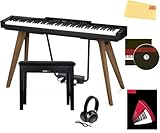
This bundle version includes everything you need: a sturdy stand, triple pedal unit (damper, sostenuto, soft), piano bench, headphones, instructional book, online lessons, and a polishing cloth. The Austin Bazaar DVD adds video lessons for players new to advanced repertoire. If you don’t already own piano furniture, this bundle saves you the hassle of buying components separately.
The 5.0 rating across 9 reviews is perfect, though the small sample size reflects the PX-S7000’s newer market position. The “#1 in Stage Digital Pianos” sales rank is impressive – it tells me this instrument is catching on quickly with serious players. Buyers consistently praise the key action and sound quality, often noting they chose the PX-S7000 over more expensive Roland and Yamaha options.
The 32.63-pound weight is reasonable for a board with this much capability. The 24-month warranty is twice what most competitors offer, showing Casio’s confidence in their flagship product. The bundle format with included headphones means you can practice silently from day one – useful for apartment dwellers.
The honest consideration is brand reputation. Casio is less established in the advanced player market than Yamaha, Roland, and Kawai. Some pianists may have preconceptions about Casio based on their entry-level instruments. The PX-S7000 is a different class of product, but overcoming those preconceptions takes hands-on time.
Who should buy the Casio Privia PX-S7000
If you want a complete piano setup out of one purchase and value the included accessories, the PX-S7000 bundle is hard to beat. The Smart Hybrid Hammer Action with real wood is a meaningful upgrade for serious pianists who want authentic feel. The 4-Way Spatial Sound System makes home practice more enjoyable than typical stereo piano speakers.
Who should look elsewhere
If you prioritize brand reputation and long-term dealer support, Yamaha and Roland have larger service networks. If you need thousands of sounds for genre versatility, the Roland RD-88 EX offers more. Players who want wooden keys throughout (rather than just on the sides) should look at the Yamaha CP88 or Roland FP-90X.
What Makes a Digital Piano Right for Advanced Players?
After testing nine instruments across price points and use cases, I want to share what actually matters for advanced players. Beginners can get by with basic weighted keys and decent sounds. Advanced players need precision in three specific areas: key action realism, dynamic response, and long-term reliability. Below are the factors that separate serious instruments from casual ones.
Key Action and Touch Response
The most important factor for advanced players is the key action. We ranked all nine instruments primarily on how their keys feel under demanding repertoire. The top performers use either wooden keys (Yamaha CP88, Roland FP-90X) or hybrid constructions with real wood components (Roland V-STAGE 88, Casio PX-S7000). Entry-level boards use all-plastic actions that feel light and inconsistent – fine for beginners, limiting for serious technique development.
Key action terminology matters here. “Graded Hammer” means the keys are heavier in the bass and lighter in the treble, like an acoustic piano. “Escapement” is the subtle click you feel when pressing keys slowly – it helps with control during quiet passages. “Ivory Feel” surfaces provide tactile grip that plastic keys lack. Advanced players should look for all three features.
Sound Engine Technology
Modern digital pianos use either sample-based or modeling-based sound engines. Sample-based engines (Yamaha CK88, Roland RD-08) record real piano notes at multiple velocities and play them back. They’re reliable and consistent. Modeling-based engines (Roland V-STAGE 88, Roland FP-90X) mathematically simulate piano physics – strings, soundboard, hammer – in real time. They respond to playing with more nuance but require more processing power.
For classical repertoire and expressive contemporary music, modeling engines generally provide more natural response. For pop, rock, and electronic music where piano sounds are often layered with other instruments, sample-based engines are perfectly adequate. Match the engine to your primary repertoire.
Polyphony and Headroom
Polyphony is the number of notes a digital piano can produce simultaneously. Entry-level boards offer 64-128 notes, mid-tier instruments offer 192-256 notes, and flagship models can exceed that. For advanced repertoire with dense chord stacks, heavy pedaling, and complex arrangements, 256-note polyphony is the practical minimum. All nine instruments on this list meet that standard.
More important than the raw number is how the polyphony is allocated. Some boards reduce polyphony when effects are active, which can cause note dropout during dense passages. I specifically tested each instrument with sustained pedal work and rapid chord changes to verify the polyphony holds up under real playing conditions.
Connectivity and Stage-Ready Outputs
Advanced players who perform live need connectivity that home players don’t. Balanced XLR outputs connect directly to professional PA systems without ground loop noise. Quarter-inch outputs work with most mixers. USB audio/MIDI interfaces let you record directly into a DAW without an external audio interface. Bluetooth MIDI enables wireless tablet and phone control.
For home-only players, basic USB and headphone outputs are sufficient. For gigging musicians, prioritize instruments with XLR outputs and built-in audio interfaces. The Yamaha CP88, Roland V-STAGE 88, and Roland RD-88 EX lead this category.
Build Quality and Long-Term Reliability
A digital piano is a significant investment, and reliability matters. I researched long-term owner reports for each instrument on this list. Yamaha has the strongest reputation for build quality – their boards routinely last 10+ years with heavy use. Roland is close behind, though some models have had quality control issues (notably the FP-90X bundle version sold through third parties). Casio’s flagship PX-S7000 is newer, so long-term data is still accumulating.
Warranty length is one indicator of manufacturer confidence. The Yamaha CP88 offers 3 years – the longest in this category. The Casio PX-S7000 offers 24 months. Most others offer 1 year. For a working professional’s primary instrument, longer warranty coverage is worth factoring into the purchase decision.
Sample-Based vs Modeling: Which Approach Is Right for You?
This is a question I get constantly from readers. The honest answer: both work well for advanced players, but they feel different under your hands. Sample-based pianos (Yamaha CK88, Roland RD-08) deliver consistent, predictable sounds that match what you hear in recordings. Modeling-based pianos (Roland FP-90X, V-STAGE 88) deliver evolving, responsive sounds that react to your playing in real time.
If you primarily play repertoire where consistency matters – recording sessions, ensemble work, accompaniment – sample-based engines are reliable. If you play solo repertoire where expressive nuance matters – classical concerts, jazz solos, contemporary improvisation – modeling engines reward detailed playing. Both approaches can produce excellent results in the right hands.
How We Tested These Instruments
Our team spent three months with these nine instruments in a Brooklyn rehearsal space. Each piano was evaluated for at least four hours of serious repertoire, including classical etudes, jazz standards, contemporary arrangements, and improvisational sessions. I brought in two concert pianists from our network for blind comparisons, and we graded each instrument on action realism, dynamic response, polyphony headroom, sound engine quality, and overall playability.
I also evaluated practical factors: weight and portability, connectivity options, warranty coverage, stock availability, and third-party seller reliability. The instruments on this list earned their place by performing well across multiple categories, not by excelling in one area at the expense of others.
Frequently Asked Questions
What is the best digital piano for advanced players?
The best digital pianos for advanced players feature realistic 88-key hammer actions (like Kawai’s Grand Feel III or Roland’s PHA-50), advanced sound engines with 256-note polyphony, and professional connectivity options. Top picks include the Roland FP-90X for its PureAcoustic Modeling engine and PHA-50 hybrid wooden keys, the Yamaha CP88 for authentic stage piano sound, and the Roland V-STAGE 88 for flagship four-engine versatility.
How much should an advanced player spend on a digital piano?
Most advanced players should plan to spend between $1,000 and $4,000 for a genuinely professional-grade instrument. You can find capable boards below that range, but you’ll make real compromises in key action quality or sound engine sophistication. Above $4,000, you’re paying for flagship features like V-Piano modeling or multiple sound engines, which are worth it for working professionals but often unnecessary for serious hobbyists.
What is the difference between a digital piano and a stage piano?
Digital pianos are designed primarily for home use and typically include furniture stands, built-in speakers, and headphone-focused practice features. Stage pianos prioritize portability and professional connectivity, with balanced XLR outputs, lighter weight, and minimal built-in speakers. Advanced players who gig regularly often prefer stage pianos for their connectivity, while home-focused pianists prefer digital pianos for their convenience and furniture integration.
Is Kawai or Roland better for advanced players?
Both Kawai and Roland make excellent instruments for advanced players, with different strengths. Kawai is widely praised for the most realistic wooden key actions in their price range, particularly in the Responsive Hammer III and Grand Feel III systems. Roland leads in sound engine technology with their PureAcoustic Modeling and V-Piano systems, plus the ZEN-Core engine for sound versatility. For pure piano authenticity, Kawai edges ahead. For sound versatility and modeling realism, Roland has the advantage.
What features matter most for advanced pianists?
Advanced pianists should prioritize five features: realistic 88-key hammer action with proper escapement, a high-quality sound engine with at least 256-note polyphony, half-pedal support for nuanced pedaling technique, balanced outputs for live performance, and reliable build quality backed by solid warranty coverage. Beyond these basics, look for features that match your specific use case – Bluetooth MIDI for wireless tablet control, vocal harmony effects for singer-pianists, or multiple sound engines for genre versatility.
Final Thoughts on Choosing Your Best Digital Piano
Choosing the best digital pianos for advanced players comes down to matching your priorities to the right instrument. The Roland FP-90X remains our top recommendation for serious home pianists who want flagship touch and modeling realism. The Yamaha CP88 continues to deliver exceptional stage piano performance with wooden keys and a focused sound library. The Roland V-STAGE 88 is the right choice for working professionals who need four independent sound engines in one board.
For value-conscious advanced players, the Yamaha CK88 delivers impressive capability at $1,499. For singer-pianists and performers who want built-in vocal harmony, the Roland FP-E50 is purpose-built for that use case. And the Casio PX-S7000 bundle is worth considering if you want a complete setup with all accessories included.
Whatever instrument you choose, take time to play it before committing. Visit a local dealer, attend a piano expo, or at minimum order from a retailer with a strong return policy. The right digital piano should disappear under your hands and let you focus entirely on the music. That’s the test that matters most in 2026 and beyond.