
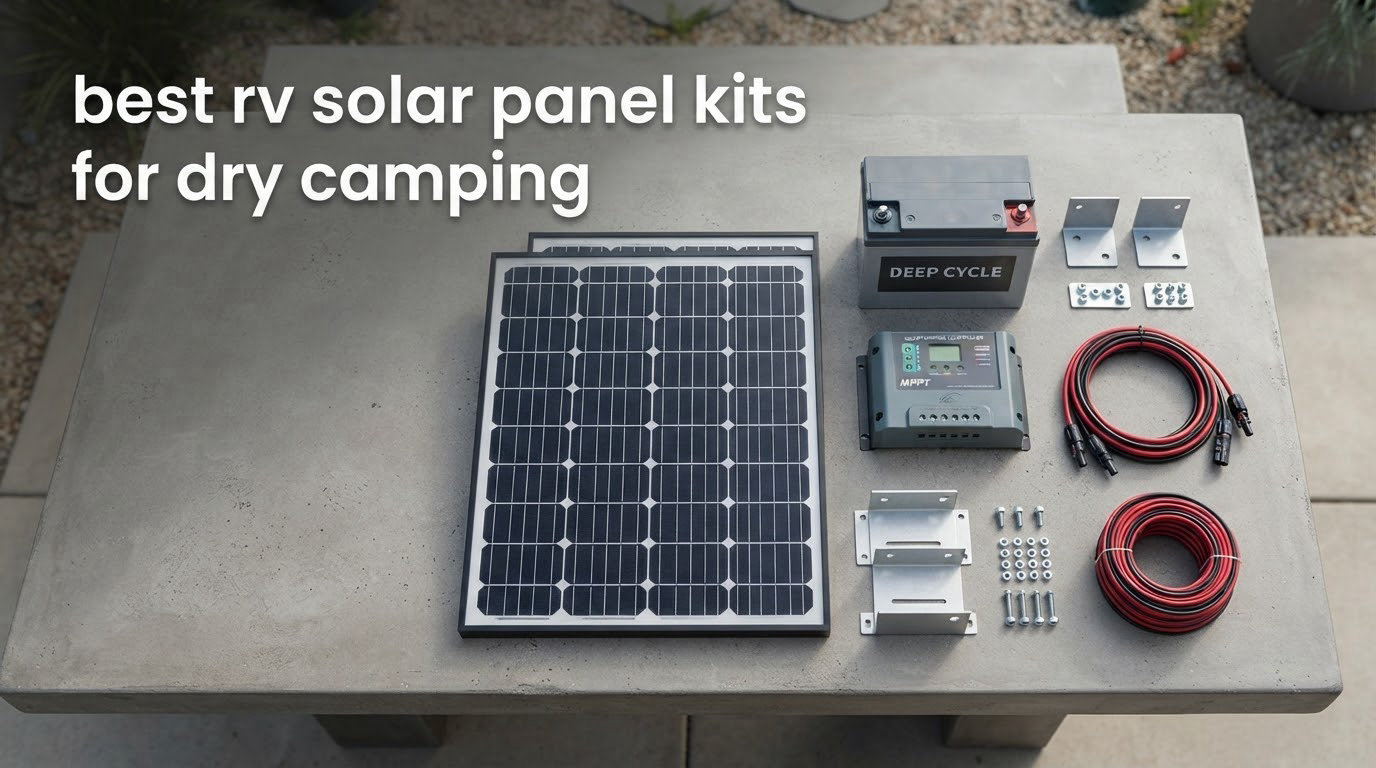
Dry camping means something specific: no hookup, no resupply stop, no campground host to top off a depleted battery tomorrow. The best RV solar panel kits for dry camping are judged less by nameplate watts and more by how they behave when the sun is brutal, the dust never stops falling, and your only recovery option is the sky. We spent weeks reading spec sheets, owner reports, and forum threads on r/RVLiving, r/SolarDIY, and iRV2 to work out which kits hold up in that kind of environment.
Desert Southwest sites deliver something coastal boondocking spots rarely do: five to six peak sun hours a day, reliably. iRV2 users have long noted that 400W of solar fills a 100 amp-hour bank quickly, but only in conditions like these. Elsewhere on this site we have covered solar panel kits for RV use in general, so this roundup goes narrower and asks how those systems behave when heat, grit, and zero recovery margin are the whole story.
Below are twelve kits, from a 100W starter bundle to a 400W array with a true MPPT controller. We looked at cell efficiency, controller type, cable length, weight, ingress rating, and the honest gap between rated watts and what a panel actually pushes into your battery at 2pm in July. No kit here wins on every axis, and the honest answer for most dry campers comes down to one tradeoff: roof autonomy versus shade-chasing portability.
Top 3 Best RV Solar Panel Kits for Dry Camping in 2026

Renogy 200W 12V Monocrystalline Kit
- 2 x 100W monocrystalline panels
- 22% cell efficiency
- 30A PWM Wanderer controller
- Expandable to 400W
- 5-year warranty
Renogy 200W N-Type RV Kit
- Flush-mount Adventurer 30A controller
- Bluetooth BT-1 monitoring
- IP67 mated connectors
- -40F to +194F range
ECO-WORTHY 200W 12V/24V Kit
- 2 x 100W panels at 21.5%
- Series or parallel wiring
- 2400Pa wind rating
- Complete mounting package
All 12 RV Solar Panel Kits Compared in 2026
| Product | Specifications | Action |
|---|---|---|
| Renogy 200W 12V Monocrystalline Kit |
|
Check Latest Price |
| Renogy 200W N-Type RV Kit |
|
Check Latest Price |
| ECO-WORTHY 200W 12V/24V Kit |
|
Check Latest Price |
 ECO-WORTHY 400W Premium Kit ECO-WORTHY 400W Premium Kit |
|
Check Latest Price |
 Go Power Overlander 200W Kit Go Power Overlander 200W Kit |
|
Check Latest Price |
 Renogy 100W Foldable Kit Renogy 100W Foldable Kit |
|
Check Latest Price |
 DOKIO 300W Foldable Kit DOKIO 300W Foldable Kit |
|
Check Latest Price |
 ACOPOWER 200W Foldable Kit ACOPOWER 200W Foldable Kit |
|
Check Latest Price |
 ECO-WORTHY 260W Flexible Kit ECO-WORTHY 260W Flexible Kit |
|
Check Latest Price |
 XINPUGUANG 200W Flexible Kit XINPUGUANG 200W Flexible Kit |
|
Check Latest Price |
 Topsolar 200W 12V Kit Topsolar 200W 12V Kit |
|
Check Latest Price |
 Voltset 100W Kit Voltset 100W Kit |
|
Check Latest Price |
1. Renogy 200W 12V Monocrystalline Kit with 30A PWM Controller
Renogy 200W 12V Monocrystalline Solar Panel Kit + 30A PWM Charge Controller
- Balanced output-to-weight rooftop array
- Everything needed in one box including brackets and cables
- Expandable to 400W with matching panels
- Long track record with 1542 reviews
- PWM controller loses efficiency in high heat
- Requires permanent roof drilling
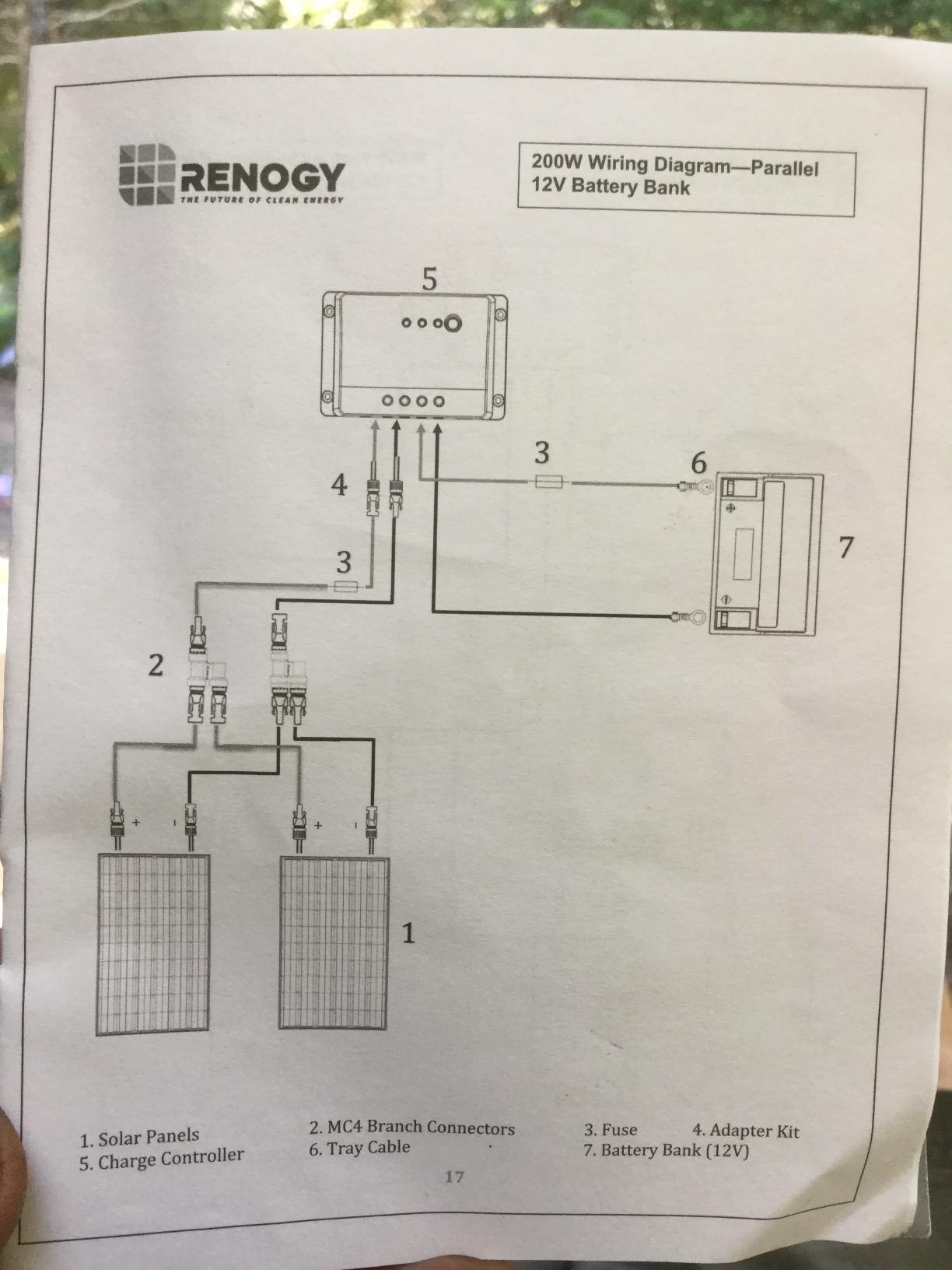
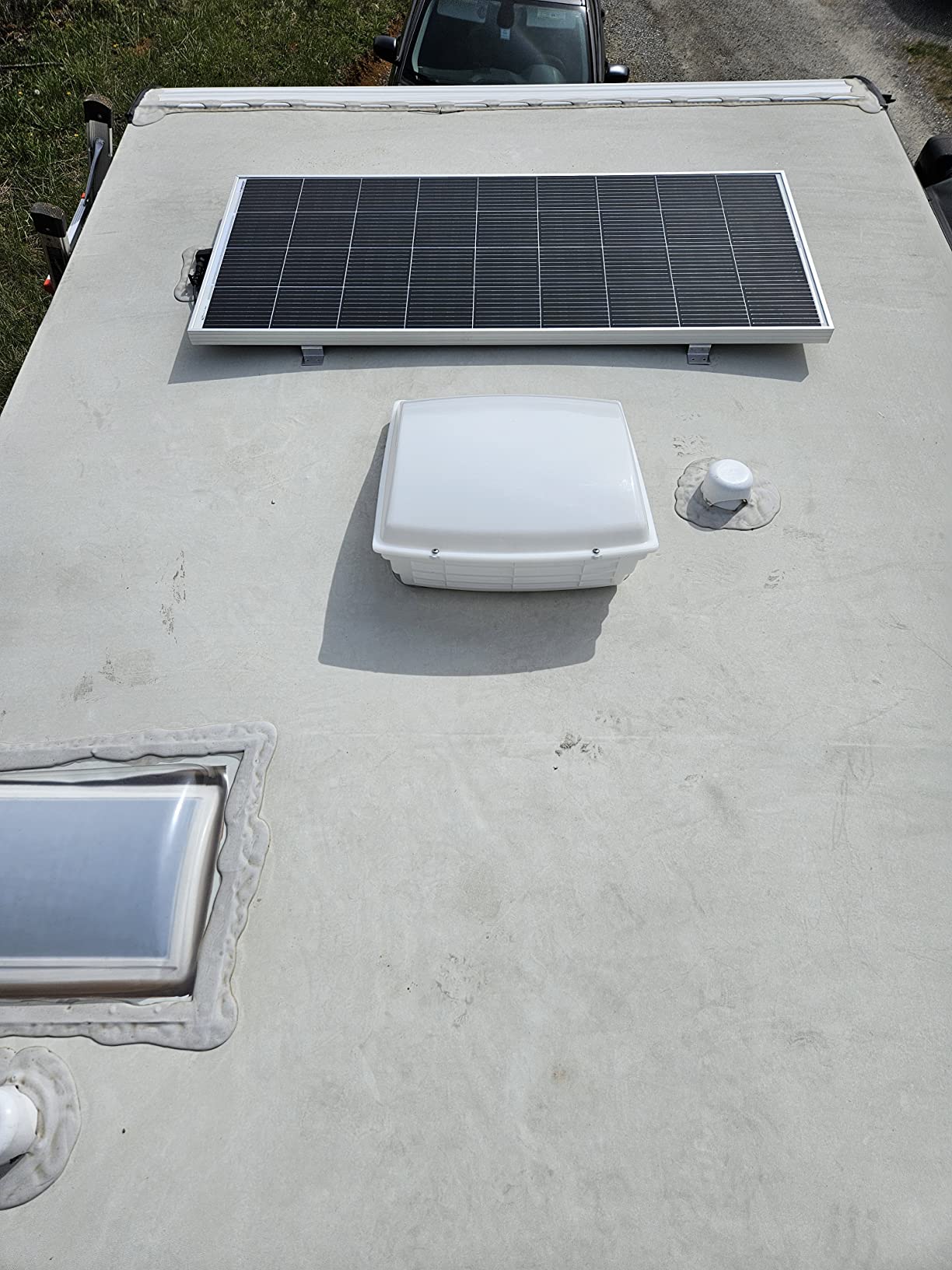
This is the kit we kept coming back to while comparing all twelve. Two rigid 100W monocrystalline panels at 22% cell efficiency sit side by side on the roof, and the 30A Wanderer controller handles the rest. The package includes cables, Z brackets, and pre-drilled mounting holes, so the only real work is finding roof space and running wire to your battery bay.
In practice the pairing is what makes it work. Roughly 1000 watt-hours per day at five hours of direct sun is more than most weekend rigs ever consume, and the Wanderer controller runs four charging stages so a deeply depleted lithium bank recovers without being pushed too hard.
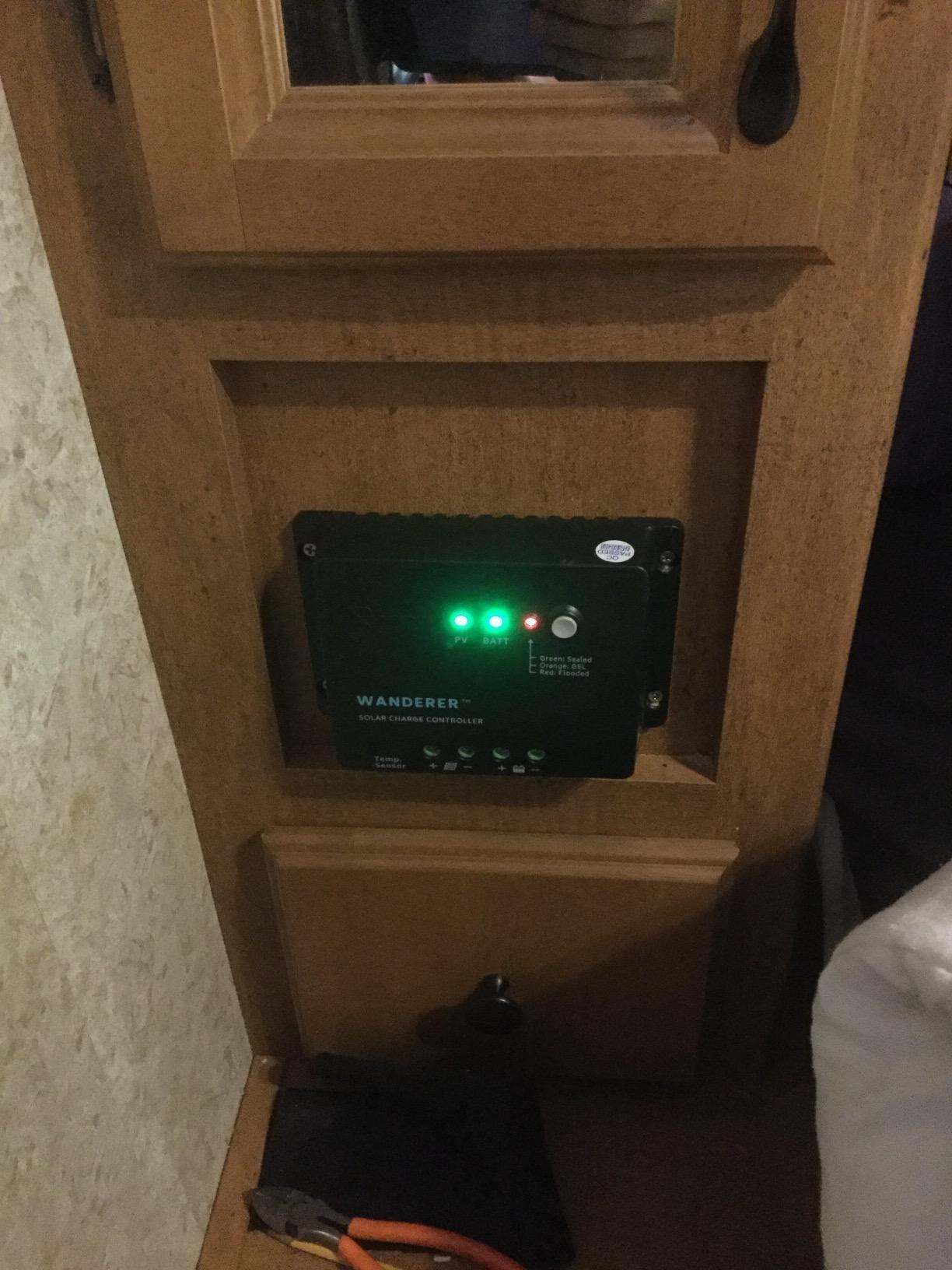
The honest limitation is the controller, not the panels. PWM regulation is simpler than MPPT, and in desert conditions where panel temperature climbs well above ambient, that gap widens. It is a modest loss on a clean array, but it is exactly why the 400W kit later in this list exists.
Buyers also want to know what happens at the roof edge. These panels are rigid aluminum-framed units, not flexible sheets, so a curved fiberglass cap will not accept them without spacers. On a flat or slightly crowned roof they mount flat and stay flat, which is the situation in most dry camping rigs.
When this kit is the right call
This is the right pick if you camp on open flats or low brush where nothing shades your roof between 9am and 4pm. Users report it carrying a 12V compressor fridge, LED lighting, and a water pump indefinitely without touching a generator. The expansion path matters too: adding two more matching panels later is the simplest upgrade in this group.
Our broader guide to 200W panels for RV boondocking covers the battery-side math if you are still working out how much amp-hour capacity you need alongside it.
When to skip it
Skip it if your roof carries a rooftop air conditioner, a large vent, or a rack that throws morning and evening shadow across the mounting zone. Shading is the failure mode that shows up in the forums, and it hits hard when there is no hookup to fall back on. Also skip it if you are not comfortable drilling and sealing the roof yourself.
If you want a clean white-glove install with a monitor in your phone, the next kit is built for that. If you want more harvest per panel in real heat, jump to the 400W MPPT package.
2. Renogy 200W 12V N-Type RV Solar Kit with Adventurer 30A Controller
Renogy 200W 12V N-Type RV Solar Panel Kit with Adventurer 30A Controller
- Purpose-built RV packaging with flush-mount controller
- Cable entry housing keeps the install tidy
- BT-1 Bluetooth module for phone monitoring
- -40F to +194F operating range
- Cost more than generic 200W kits
- Still a PWM controller despite the price
- Long 41.8 inch panels need roof planning
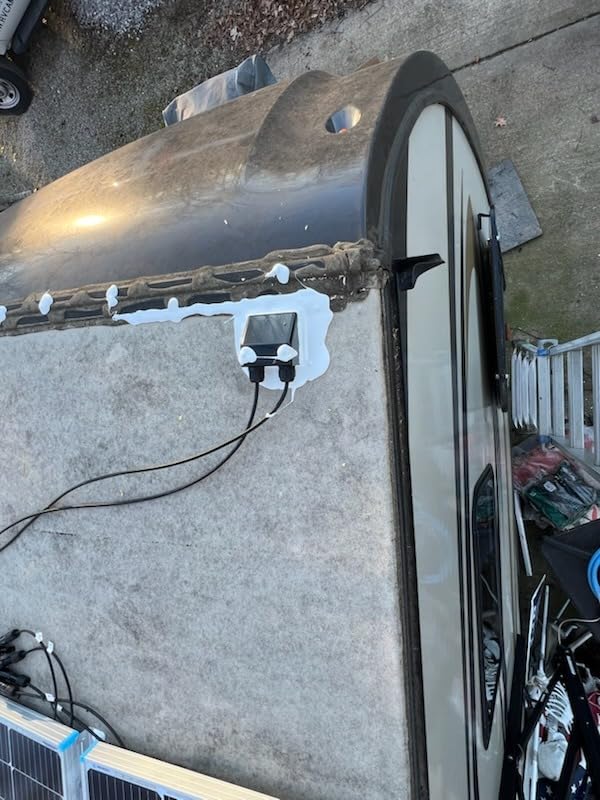
Where the first kit is a general-purpose bundle, this one was assembled for an RV wall. The Adventurer-Li controller is designed to mount flush inside the coach, and the kit includes a cable entry housing so the run from roof to battery compartment looks like an install rather than an afterthought.
Two 100W N-type monocrystalline panels produce about 800 watt-hours per day at four hours of sun, which is a realistic figure for a shaded desert pull-out with an early start and a late finish. The BT-1 Bluetooth module adds phone-based battery monitoring, and the controller supports lithium, lead-acid, and gel chemistries out of the box.
The engineering detail that matters most here is the temperature rating. The connectors are IP67 mated and the kit is rated from -40F to +194F, which covers the full swing between a frozen winter dawn and a mid-afternoon roof in the Mojave. Overlander users on iRV2 and r/Vandwellers consistently rate robustness above peak efficiency when planning multi-week trips.
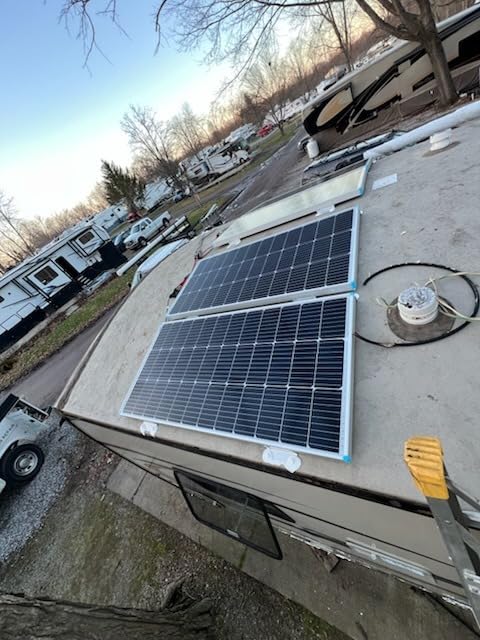
Y-branch connectors are included for parallel runs, so growing from 200W to 400W later is a wiring exercise rather than a redesign. The trade for that flexibility is money: this is the costlier of the two 200W Renogy rooftop kits, and the controller is still PWM.
Who should buy this one
Buy this if you are doing a permanent install and care how the finished wall looks. The flush controller and cable housing solve the two things that bother most RV owners about aftermarket solar: a box hanging off an interior wall and a bundle of cable draped across the ceiling.
Bluetooth monitoring is the quiet win on long trips. Being able to glance at your phone and see state of charge without walking to the compartment helps you decide when to run the generator instead of guessing at dusk.
Where it falls short
It does not raise the electrical ceiling. 200W of panels is 200W of panels, and if your aim is a microwave, a coffee maker, or a weekend of heavy use with no recovery margin, you will outrun this kit in August. Save it for efficient loads that add up slowly.
Roof space is the other constraint. At 41.8 inches by 20.9 inches per panel, this is a long footprint, and you need clear, unshaded roof length for both panels plus working room around them.
3. ECO-WORTHY 200W 12V/24V Monocrystalline Solar Panel Kit
- Complete package with brackets
- cables and connectors
- Series for 24V or parallel for 12V banks
- Rated 2400Pa wind and 5400Pa snow loads
- IP65 junction box
- PWM controller is the weak link in heat
- Not foldable so no portable option
- Heavy roof load for a small camper
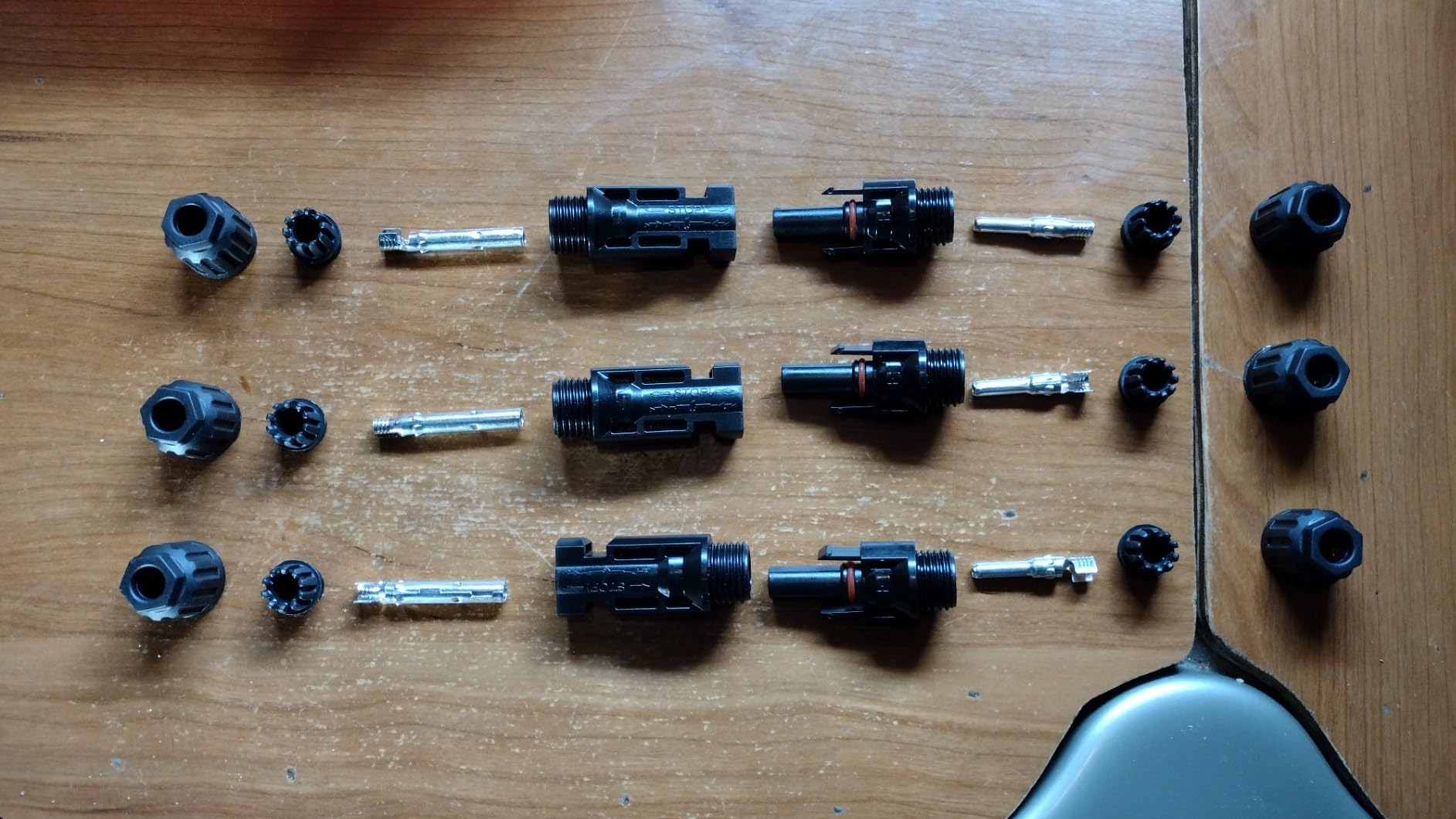
This is the value pick in the lineup, and the value is in completeness. You get two 100W monocrystalline panels, a 30A controller, two sets of Z brackets, 16.4 feet of 10 AWG cable, 2-in-1 connectors, and a tray cable. There is nothing on the shopping list left over afterward.
Daily output lands around 800 watt-hours under four hours of full sun, and the wiring flexibility is genuinely useful. Run the panels in series for a 24V bank or in parallel for a 12V bank, which means the same panels can move between two very different builds.
For desert routes, the frame rating is the detail to note. The aluminum alloy frame is rated for 2400Pa wind and 5400Pa snow loads, and the junction box is IP65 sealed. That is a combination that holds up on a roof taking sustained crosswind with grit blasting against the laminate every afternoon.
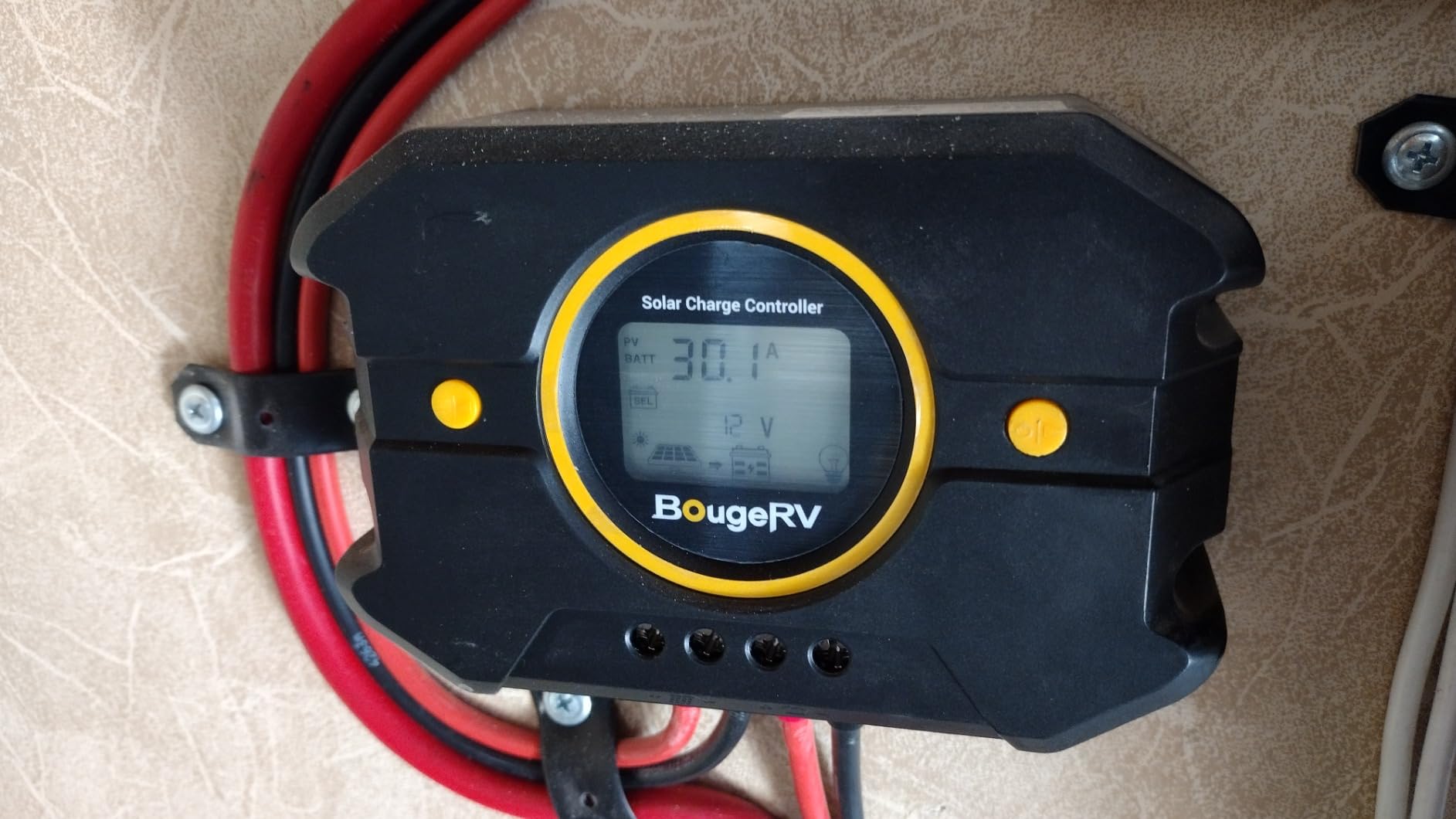
Weight is the trade at 31.6 pounds for the pair, which is fine on a Class C or a truck camper and noticeable on a small travel trailer. Owners also point out that the base kit ships a PWM controller while an MPPT version exists as a separate variant, and that upgrade is where the real efficiency lives in high heat.
Best fit for a fixed roof install
Choose this when you have a solid mounting surface and want a complete install in one purchase. It is a strong first rooftop array for someone moving up from nothing, and the included cable length is long enough to reach most battery compartments without a separate run.
For more on how these arrays compare with foldable options, our roundup of solar panels for camping setups breaks down weight and storage tradeoffs.
Reasons to choose something else
If your roof is curved, small, or permanently in shadow, rigid panels are the wrong shape. If you move camps often and want the option to take the array with you, this kit gives you no portability at all.
The PWM controller also costs you real energy when temperatures climb. Nobody should consider it a dealbreaker, but if you are chasing every usable watt through a hot season, step up to the MPPT kit instead.
4. ECO-WORTHY 400W Premium Kit with 40A MPPT Charge Controller
- Only true MPPT controller in this group
- Bluetooth 5.0 monitoring with 82 ft range
- 99% tracking efficiency
- 3.2mm glass and 35mm frames
- Heaviest and bulkiest option here
- Needs a large clear roof area
- Lowest 4.4 rating with 8% one-star reviews
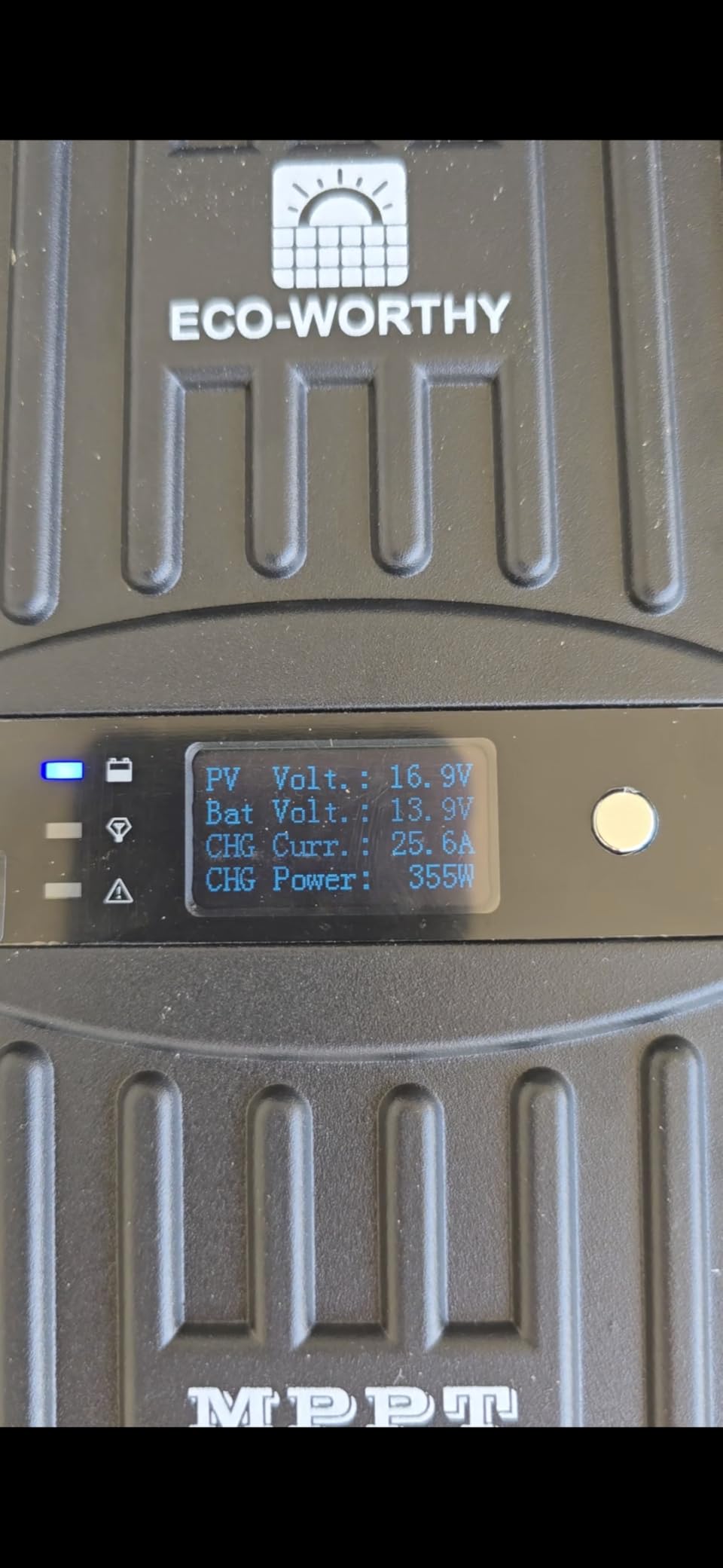
This is the only kit in our test group with a genuine maximum power point tracker. Four 100W panels at 21% efficiency feed a 40A MPPT controller rated at 99% tracking efficiency and 98% peak conversion, and the maker claims roughly 40% more efficiency than a traditional PWM controller on the same hardware.
That claim is where desert campers should pay attention. A PWM controller simply clips panel output back to battery voltage, wasting the difference, and that waste grows as panel temperature rises above the 77F standard test condition. MPPT recovers most of it, which is exactly the margin you want when there is no hookup waiting.
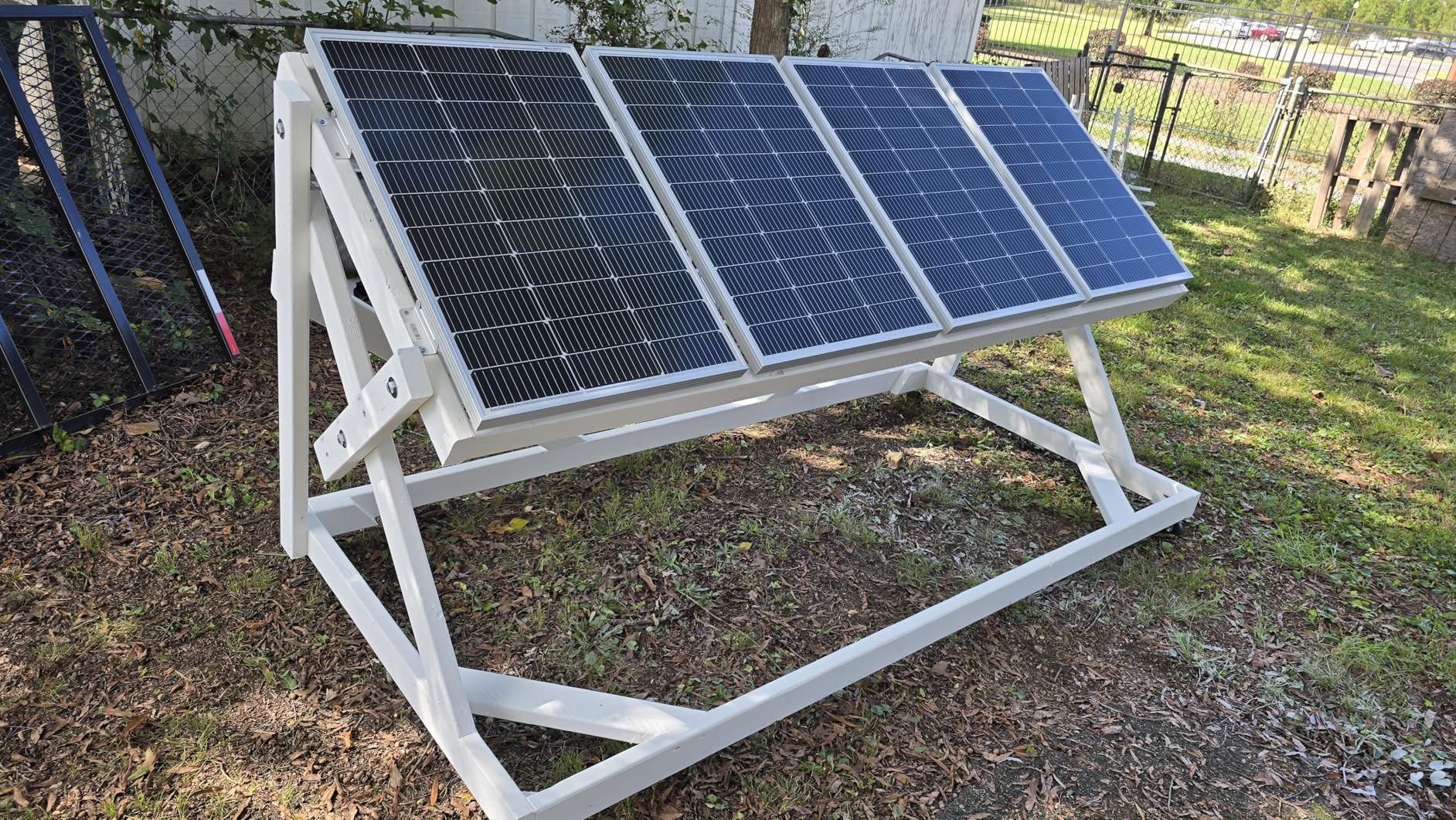
Rated output is about 1.6 kilowatt-hours per day, enough to run a compressor fridge, lighting, fans, a laptop, and small appliances on a typical multi-day stop. The BT-02 Bluetooth 5.0 module reaches roughly 82 feet, so you can read panel, battery, and load data from the cab or the camp chair.
Physical specifications lean heavy: 32.66 kilograms for the kit, 35.2 by 23 inches per panel, and 3.2mm low-iron glass in a 35mm aluminum frame. That is a lot of real estate and a lot of load for anything smaller than a Class C or a bumper pull.
Who gains the most from MPPT
Full-time dry campers and anyone running high-draw appliances on a multi-week trip gain the most. When your only energy source is the sun and your battery bank is large, the difference between 99% tracking and PWM clipping is measured in extra hours of runtime every single day.
Monitoring is a real bonus on long solo trips. Knowing the exact state of charge lets you plan a generator run or a drive day around real numbers rather than a guess.
Where the extra power is not worth it
It is overkill for a weekend trip with a 100 amp-hour bank, and it is the heaviest, bulkiest package we tested. If your load is a fridge and some lights, 200W of well-placed panels is enough and this is simply more roof to seal.
The 4.4 rating is the lowest of the Renogy and ECO-WORTHY group, with 8% one-star reviews, so expect some variability in component quality reports. Plan your mounting so that a single panel can be serviced without disturbing the others.
5. Go Power Overlander 200W Charging Kit
- Explicitly built for RV dry camping use
- Two 25 ft solar output cables included
- Bluetooth app shows charge
- voltage and current
- 25-year limited panel output warranty
- Heaviest single panel in the group at 35 lb
- 59 inch panel needs major roof length
- Bluetooth app pairing reported as unreliable
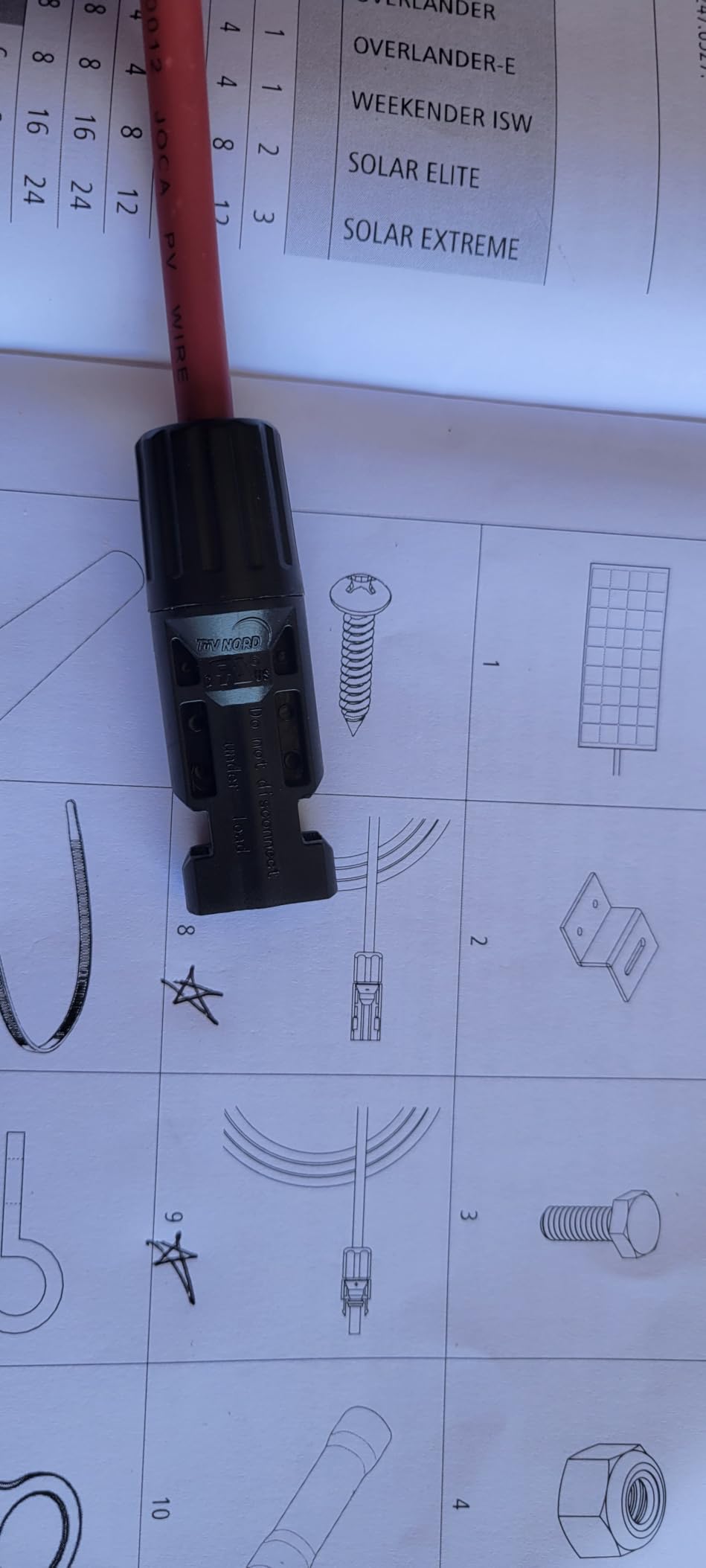
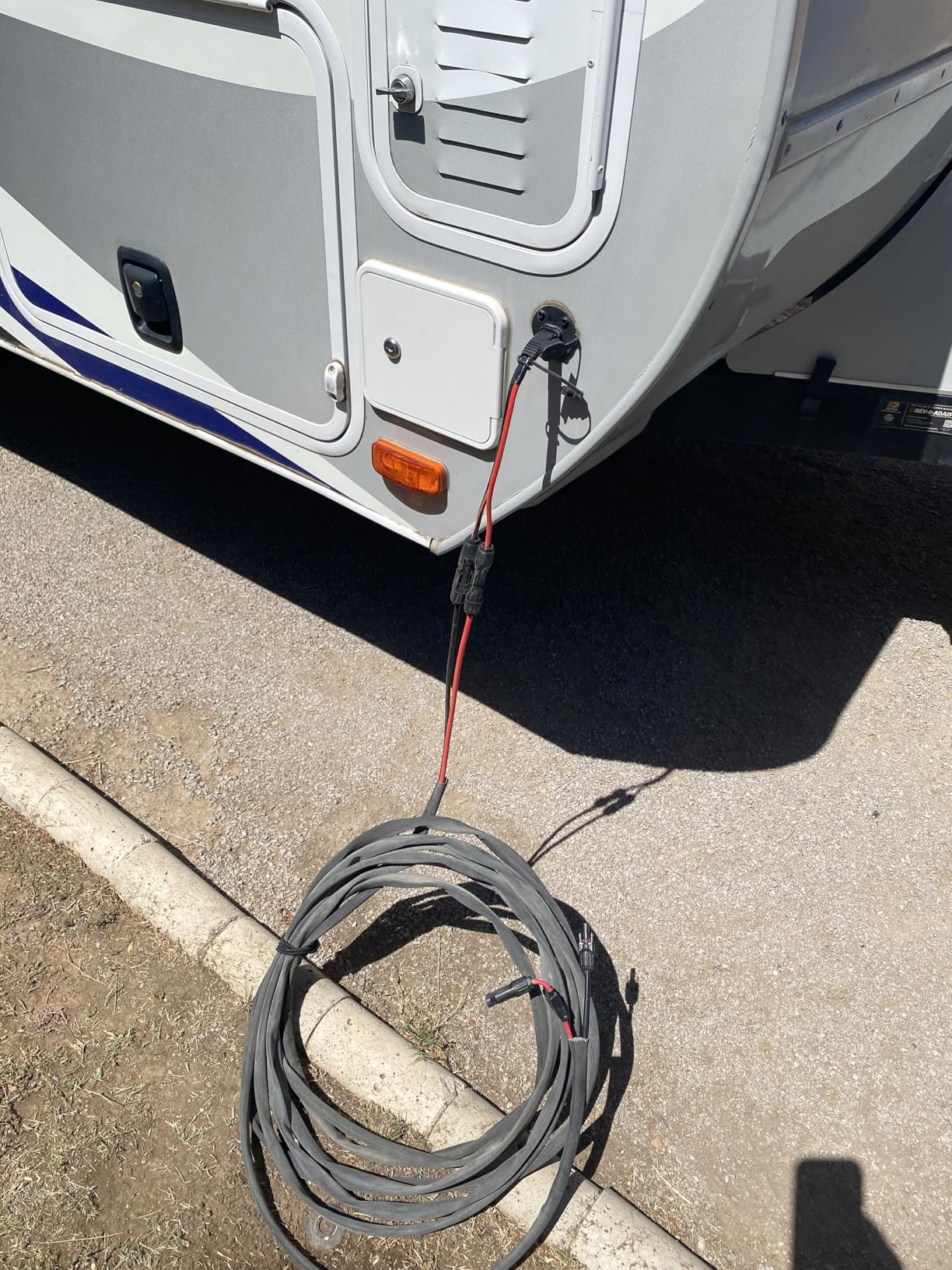
This kit is named for the use case. Go Power markets the Overlander for RV and dry camping applications, and the hardware follows that brief: two 25-foot solar output cables, male and female, long enough to run from a roof mount down into a battery bay on a tall coach without splicing.
The 30-amp single-bank Bluetooth PWM controller is expandable to 600W, so the same controller can carry a much larger array later. The panel itself produces 200 watts and about 9.6 amps of charging capability, which owners describe as near-8A delivered in real conditions.
Warranty is the quiet differentiator. The panel carries 25-year limited output power coverage, the longest in this entire group, and that matters if you intend to keep the rig for a decade rather than sell it next season. The panels are also Canadian-made, which some buyers specifically look for.
Physical demands are real: 35 pounds and 59 by 26.3 inches for a single panel. That is a substantial roof commitment, and the panel is not foldable or portable. No inverter is included, so AC appliances still need separate hardware.
Why long-term dry campers like it
The warranty length and the expandability make this a buy-and-keep choice rather than a season rental. If you camp in the desert for weeks at a stretch and want the option to scale toward 600W without changing controllers, the path is already built in.
Those 25-foot cables remove a real install cost. Most owners end up buying extra length, so having it in the box is a genuine convenience on a tall rig.
What to know before ordering
Size your roof before you fall for the brand. A 59-inch rigid panel at 35 pounds is a permanent commitment, and if your roof space is contested by vents or a rack, the whole calculation changes.
The Bluetooth app is the most-cited drawback. Owners like what it shows, charge percentage, voltage, current, and charge-over-time history, but report that pairing is buggy and often needs re-pairing. Plan to run the system fine without the app.
6. Renogy 100W Foldable N-Type Portable Solar Kit
- Controller and cables store inside the case
- Self-contained design needs no roof mounting
- Kickstand angles the panel toward the sun
- Bypass diodes reduce hotspot loss
- On a 12V bank real output is closer to 40-60W
- Heavier than a 100W portable should be
- Included cable is just under 10 feet
This is the portable kit we recommend to people who camp in rock canyons and under cottonwoods. It folds into a suitcase at 24.8 by 2 by 2.8 inches, 17.4 pounds, and the 20A PWM controller mounts inside the case so the whole system is one object instead of three.
Cell quality is a step above most of the field. N-type cells at up to 25% conversion efficiency are the highest rated here, and the low-iron tempered glass with an anti-corrosion aluminum frame and IP65 junction box is a build that suits being dragged across grit.
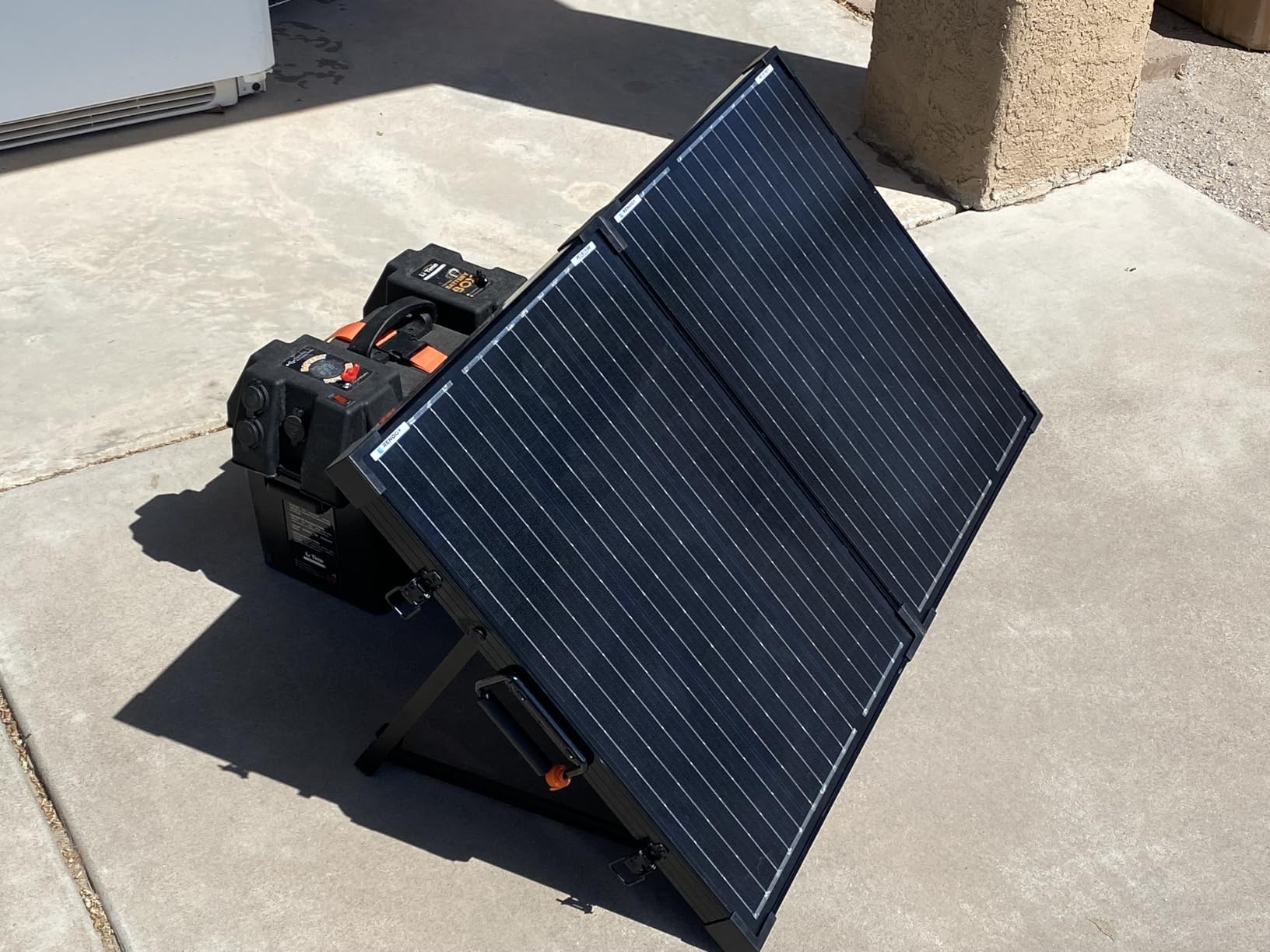
The caveat everyone reports is arithmetic, not quality. A 100W panel charging a 12V battery is current-limited to roughly 5 amps, so real-world delivery lands around 40 to 60 watts rather than the nameplate 100. Owners still report a satisfying 5.8 to 7 amps of charging on a 12V house bank in good sun.
The adjustable aluminum alloy kickstand is what makes portable work in practice. You angle the panel toward the sun, set it where shade has fallen on the roof, and move it again at four o’clock. Bypass diodes help in low light, though they do not rescue you from a hard shadow across two cells.
Best for shade-chasing campers
If your campsites have reliable morning or evening shade, portability beats everything else on this list. Nothing else in the group lets you move the array to follow the light. The self-contained case also means no roof penetrations and no permanent hardware on a rental trailer.
Users on r/GoRVing report it eliminating generator use for most loads, which for a weekend trip in mild weather is often the whole goal.
Where it falls short
Do not expect 100 watts of harvest. On a 12V bank you are looking at roughly 40 to 60 watts of real charging, which is fine for phones, lights, and a slow top-up but not for a fridge and a CPAP through a hot week.
Two smaller gripes: it is heavier than a 100W portable has any right to be, and the included cable is just under 10 feet, so budget for an extension if your battery compartment is not close to your parking spot.
7. DOKIO 300W Portable Foldable Solar Panel Kit
DOKIO 300W Portable Foldable Solar Panel Kit with Charge Controller
- Largest portable nameplate in the group
- Standalone controller can sit in shade
- Very thin and light for the wattage at 15.2 lb
- Broad adapter set fits most power stations
- 4.1 rating with 9% one-star reviews
- Many power stations cap solar input at 100-200W
- Only a 1-year manufacturer warranty
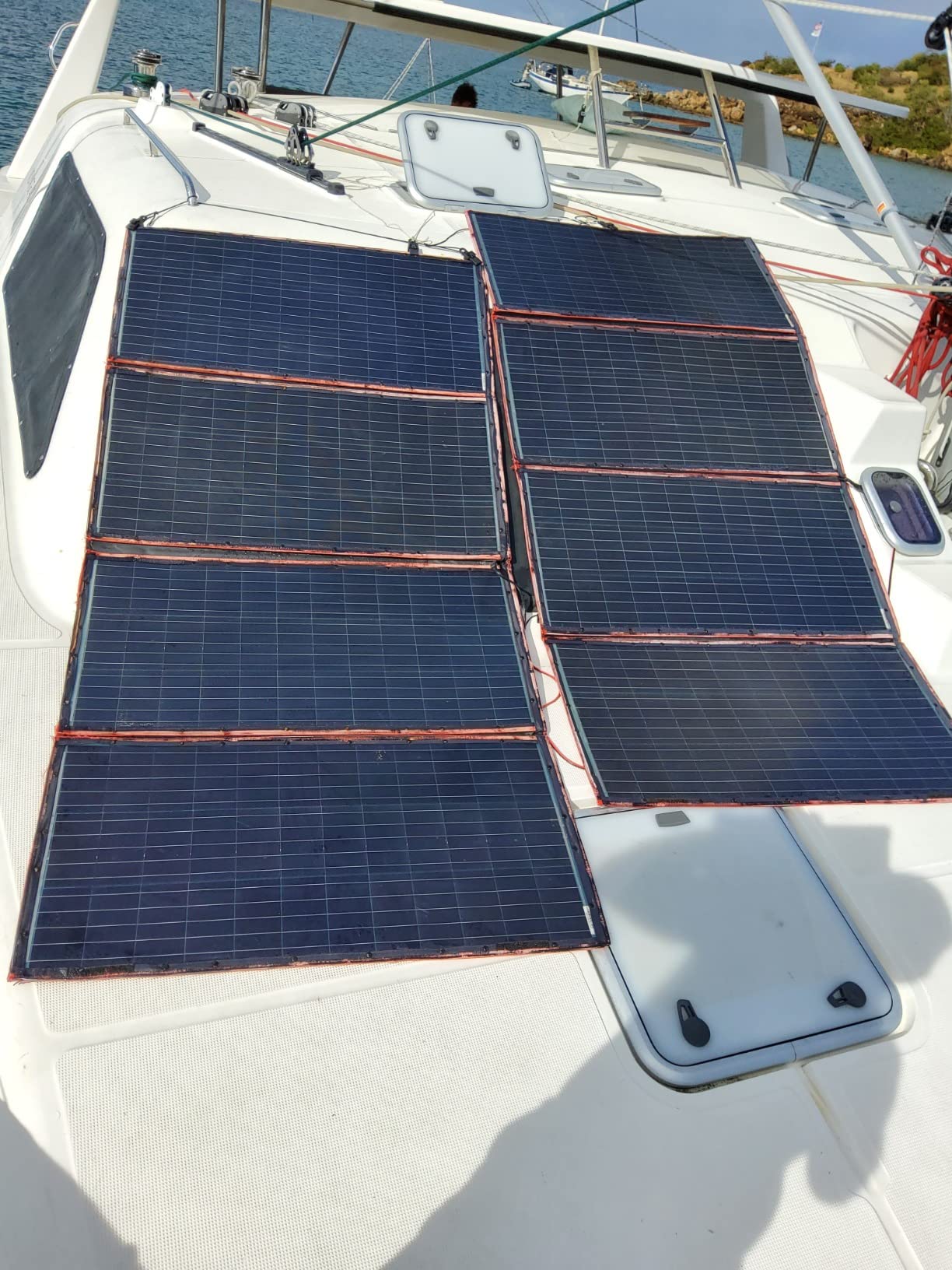
By review count this is the most field-tested kit we looked at, with 3834 ratings behind it. On paper it is also the most capable portable in the group: 300 watts of foldable monocrystalline silicon, up to 16.67 amps, folding to 19.3 by 37.4 by 1.1 inches at 15.2 pounds.
The design decision we like most is the separate controller. A 9.85-foot cable lets you keep the controller in shade with airflow while the panel sits in full sun, which is a small thing until you have parked in the desert in July and watched a box cook.
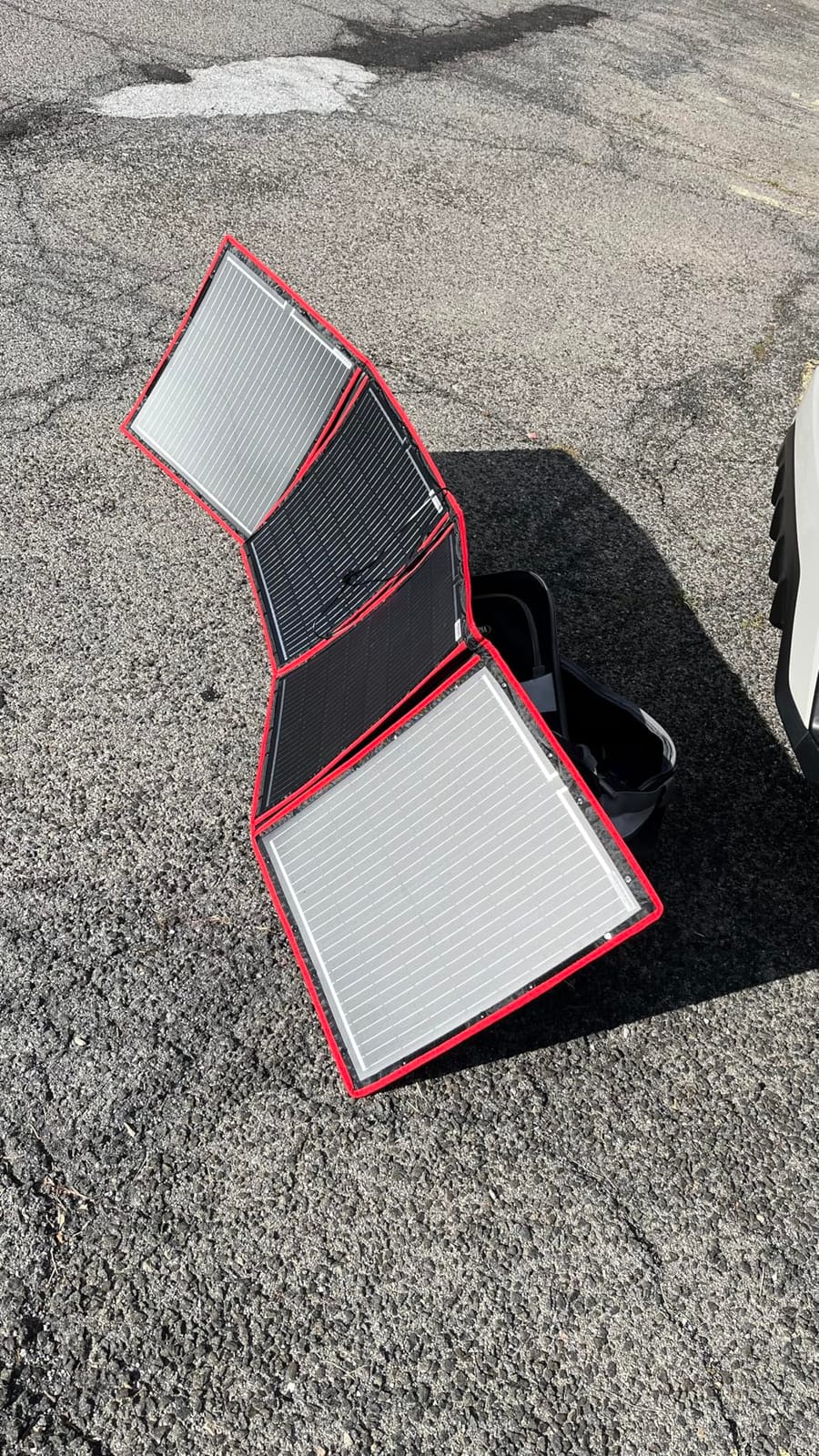
Dual USB output ports handle phones and small lights when you are connected to a 12V battery, and the adapter set covers SAE, XT60, alligator clip, and several barrel sizes. That breadth means the same panel can feed a portable power station, a battery bank, or a 12V device without an adapter hunt.
Now the honesty part. The 4.1 average comes with 9% one-star and 6% two-star reviews, and the most common complaint is that the 300W label is not reached in real conditions. Part of that is physics, part of it is a hardware ceiling many power stations impose at 100 to 200W of solar input.
When 300W portable makes sense
It makes sense when you are powering a portable power station directly and you have verified that unit accepts the full input. Stand up this panel in the morning, angle it, and let it run while you walk a ridge. The separate controller makes that a genuinely pleasant setup.
It is also the easiest large panel to carry. 15.2 pounds and 1.1 inches folded is manageable for one person over rough ground, which is not true of any 200W or larger rigid array here.
Reasons to look elsewhere
The 1-year manufacturer warranty is the shortest we saw, and that is a real consideration for anything permanently mounted. The PWM controller is also less efficient than MPPT, which matters more the bigger the array is.
If you plan to keep the fabric case in prolonged heavy sun, do not. Owners warn against it, and UV damage to a case is not a cheap fix. If warranty length and long-term durability are your priority, the Go Power Overlander carries a 25-year panel warranty for a different class of buyer.
8. ACOPOWER 200W Portable Foldable Solar Panel Kit
- Controller included in the box
- Carry handle and kickstands built in
- Good connector compatibility for 12V banks
- No roof drilling required
- Only 103 reviews so limited long-term history
- Bundled controller is PWM class
- Folded size is bulky for tight storage
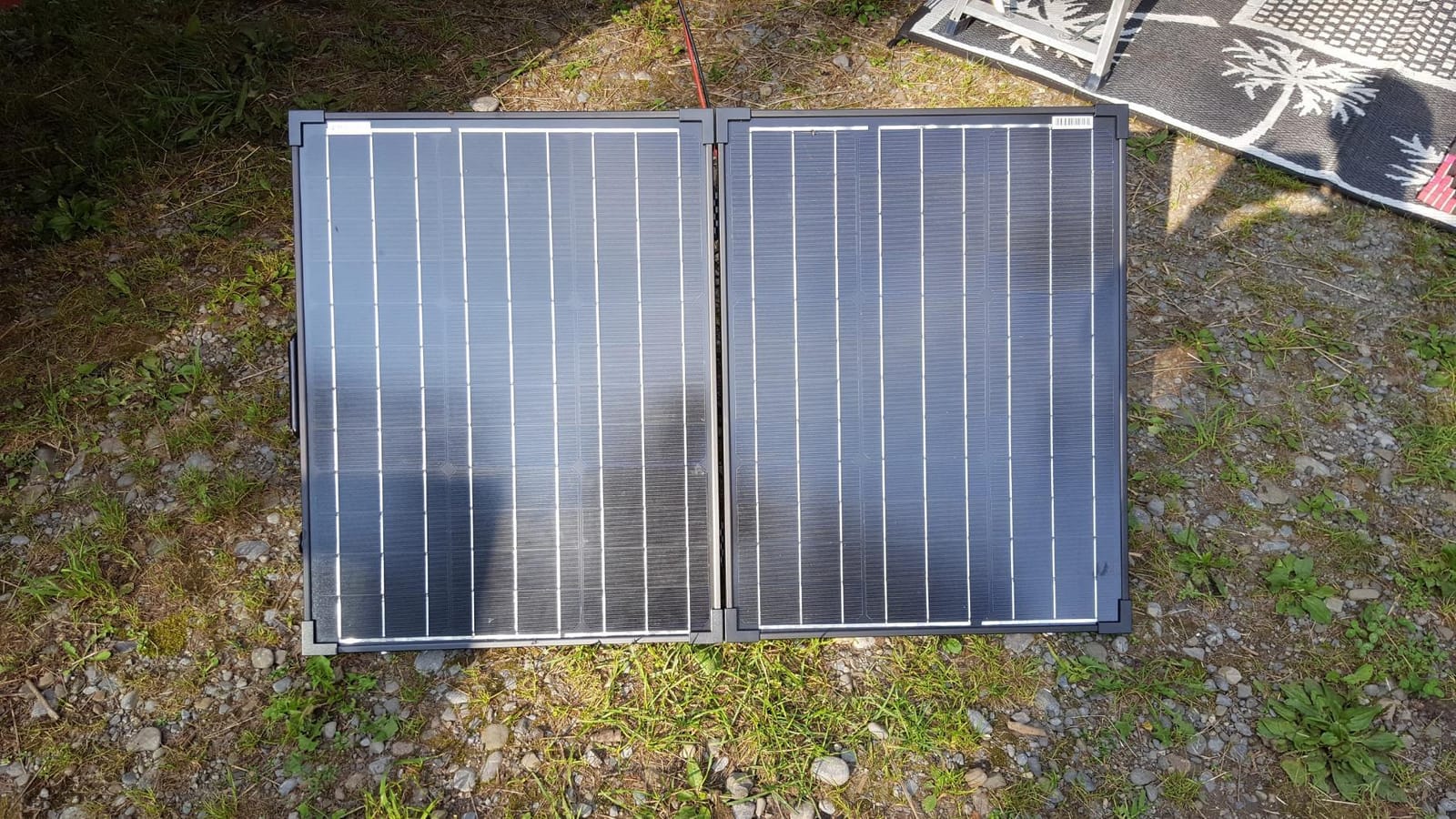
The budget entry into foldable solar, and the pitch is simplicity. A 200W monocrystalline panel folds down with a built-in carry handle, and the 20A charge controller is in the box, which is not true of many competing bundles at this level.
Output reaches up to 11.67 amps, and the adjustable kickstands hold a stable angle on uneven ground. That matters more than it sounds: most campsites are not level, and a panel leaning at the wrong angle loses more than most owners expect.
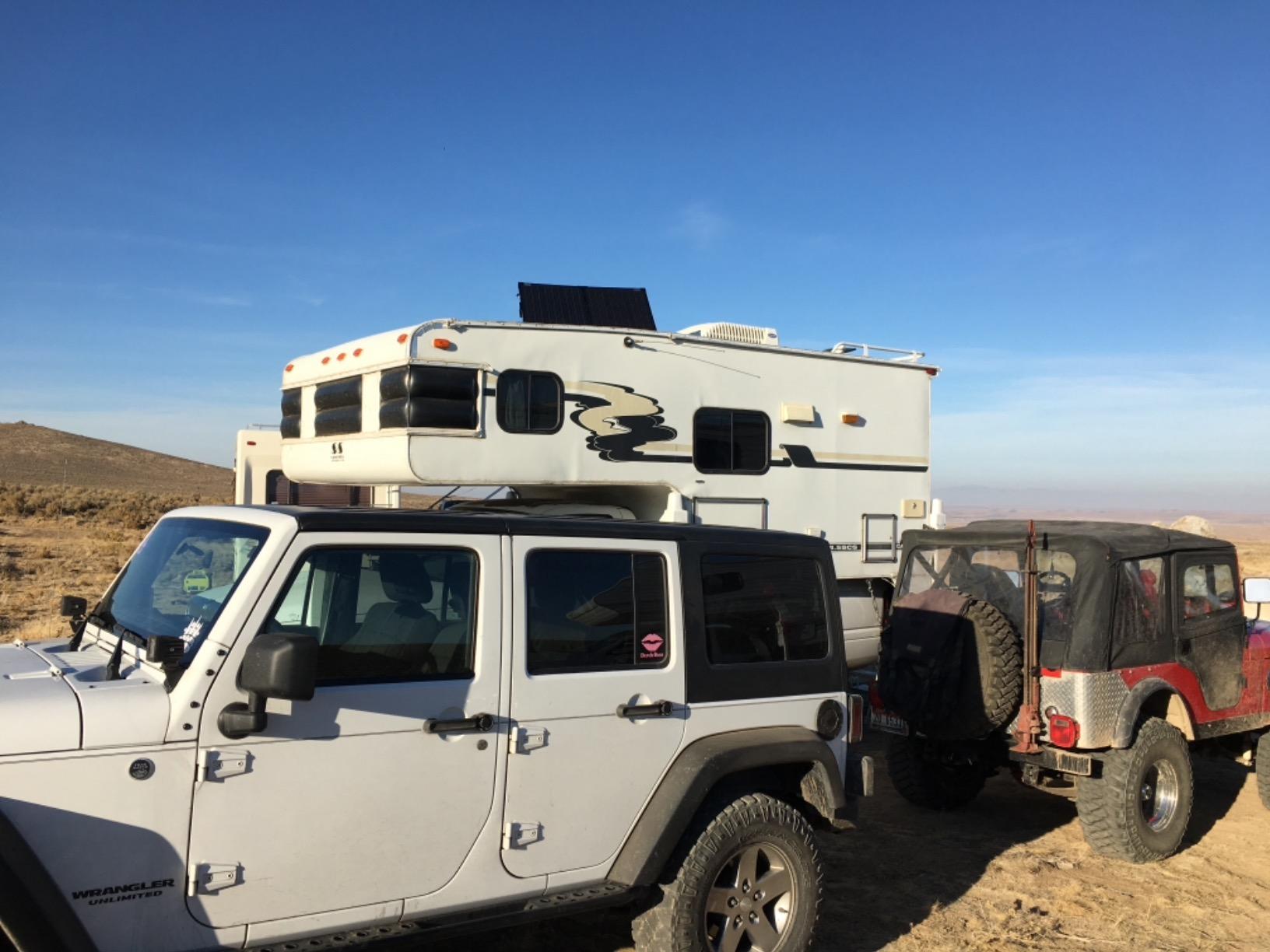
Connector coverage is broad for the price, with an Anderson connector plus universal solar connectors that cover 12V batteries, RVs, boats, and portable power stations. The controller carries the usual protection suite: overcharge, overload, short circuit, and reverse connection.
The limiting factor is evidence, not performance. With 103 reviews and a sales rank of #683 in Solar Panels, this kit has far less long-term field history than the Renogy and ECO-WORTHY bundles we ranked above it. That gap matters if you are committing to a multi-year build.
A reasonable first portable kit
Good pick for someone who wants to test whether solar works for their rig before committing to a roof installation. Nothing needs drilling, the whole package carries in one hand, and 200 watts is enough to keep phones, lights, and a small 12V fridge reasonably topped up.
The kickstands and handle also make it a good loaner or backup panel to carry alongside a fixed array.
Where it stops being enough
It is not the kit to build a full-time off-grid system around. A PWM controller on a 200W array costs you meaningful energy in high heat, and there is no expansion story described beyond the single panel.
Storage is the other issue. Folded, it is bulky for tight exterior compartments, so measure before you commit. If you want more watts in a foldable and can live with a shorter warranty, the DOKIO 300W is the bigger portable option.
9. ECO-WORTHY 260W Flexible Solar Panel Kit with 130W Panels
- Only 4.5 lb for the pair
- 130W per panel is higher than older flexible kits
- Conforms to curved and uneven surfaces
- LCD controller with dual USB outputs
- 4.3 rating with 7% one-star reviews
- Flexible polymer degrades faster under UV and heat
- PWM controller rather than MPPT
This is the answer for a van, a Class B, or any rig with a curved roof where rigid glass panels simply will not sit flat. Two flexible 130W monocrystalline panels at 22.4% efficiency weigh 4.5 pounds together and are 0.1 inches thick.
Daily output is rated up to 1040 watt-hours under four hours of full sun, which puts it in the same class as the rigid 200W kits with a fraction of the weight and none of the drilling. The polymer construction is roughly 70% lighter than equivalent glass.
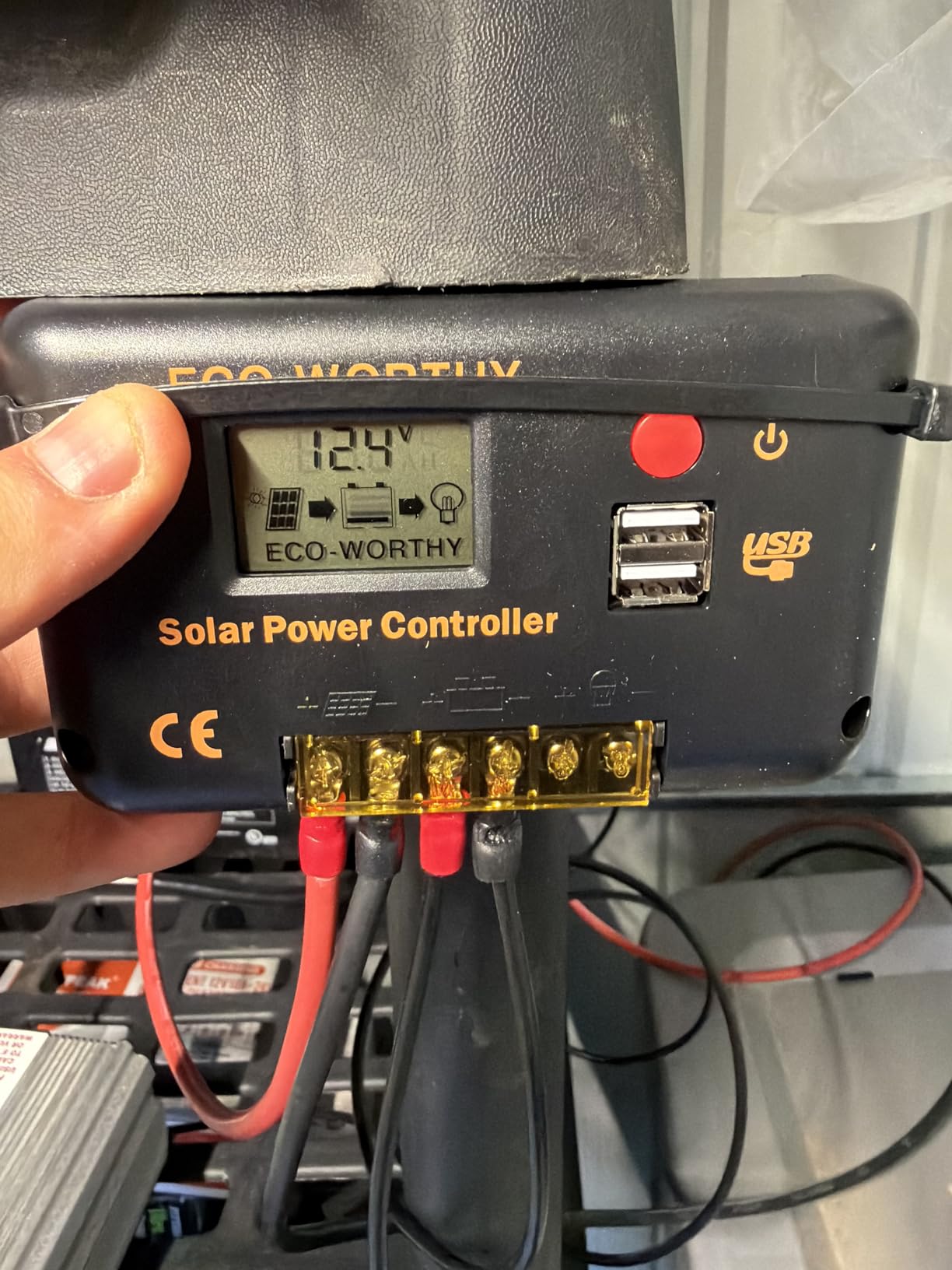
The 30A LCD controller uses 3-stage PWM management with a negative ground design, and it carries protections for short circuit, open circuit, reverse, and overload. Dual USB outputs at 5V and 2A per port handle phone charging at camp, which is a small convenience you notice more than you expect.
Compatibility covers lead-acid, gel, and LiFePO4 banks in 12V or 24V configurations. One practical note: this kit arrives in two packages, one with the panels and one with the accessory kit, so you cannot build until both show up.
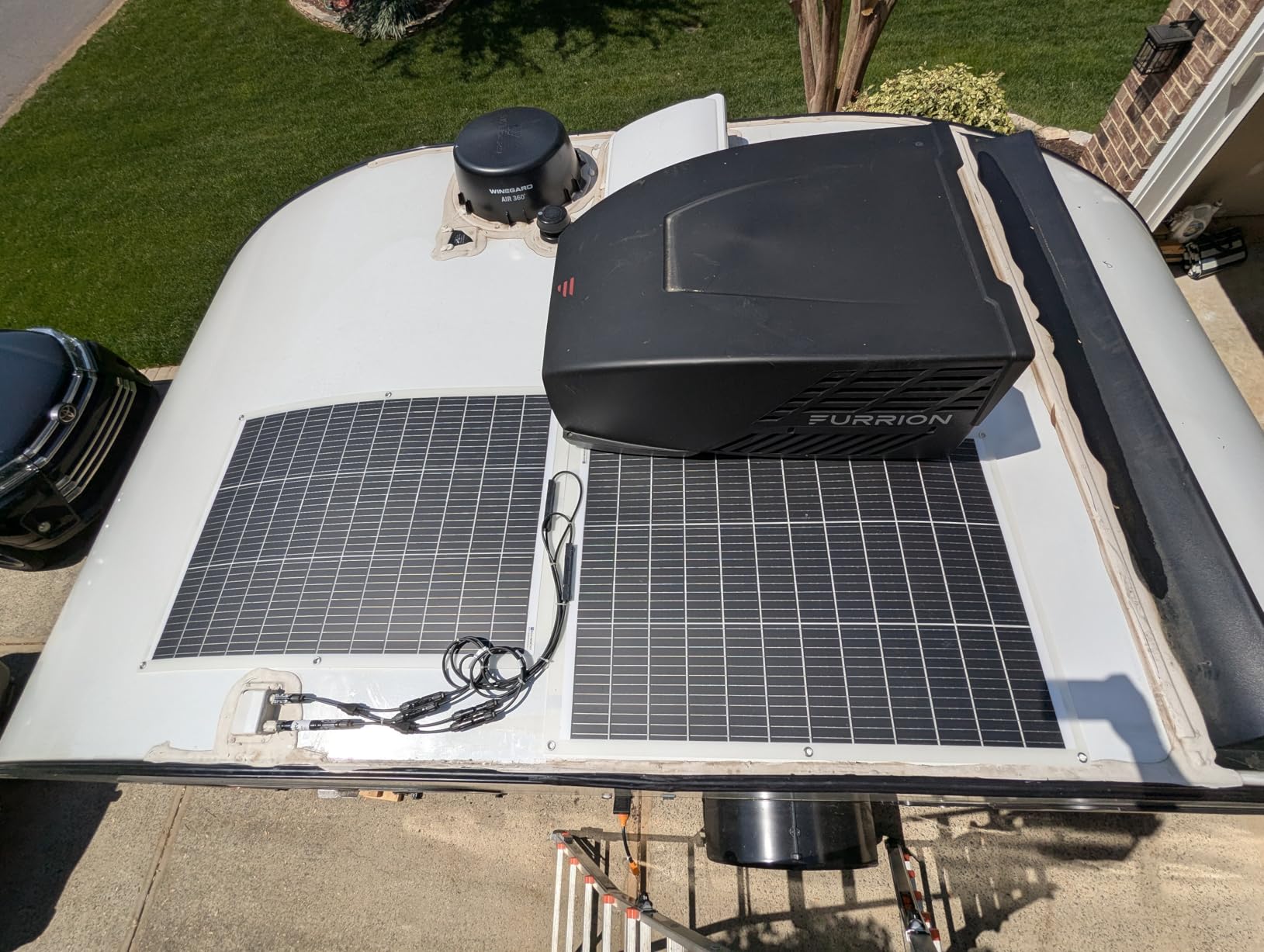
Best for curved roofs and low weight budgets
Flexible panels solve a problem rigid panels cannot: a crowned or curved roof. They conform to the surface, need no flat plane, and can be secured with adhesive or tape on a surface that will never accept drilled brackets.
At 4.5 pounds for 260 watts, this is the best weight-to-output pairing in the group. If your rig is a sprinter van with a composite roof, this is the kit to look at first.
Watch the long-term UV question
Flexible polymer panels typically degrade faster than rigid glass under prolonged UV and heat exposure, and that is exactly the desert environment we are optimizing for. If you camp in intense sun year after year, expect the output curve to soften sooner.
The 4.3 rating with 7% one-star reviews reflects mixed real-world output reports. The controller is also PWM, so you are giving up the efficiency MPPT would recover on a 260W array.
10. XINPUGUANG 200W Flexible Solar Panel Kit for RV and Van
XINPUGUANG Flexible Solar Panel 200W 12V Solar System kit for RV Boat Van
- Thinnest and lightest flexible option at 0.098 inch
- Conforms to curved RV and boat surfaces
- No drilling to a flat hard surface required
- IP67 rated for 5400Pa snow and 2400Pa wind
- Lowest rated at 4.1 with 9% one-star reviews
- Owners report output below the rated 100W per panel
- Controller buttons are awkward and it shows no panel input voltage
The XINPUGUANG panels are the thinnest thing in this roundup at 0.098 inch, and they bend up to 260 degrees. Each 100W flexible monocrystalline panel weighs 4.0 pounds, and the pair is rated at 24 to 25% conversion efficiency, which is high on paper for flexible silicon.
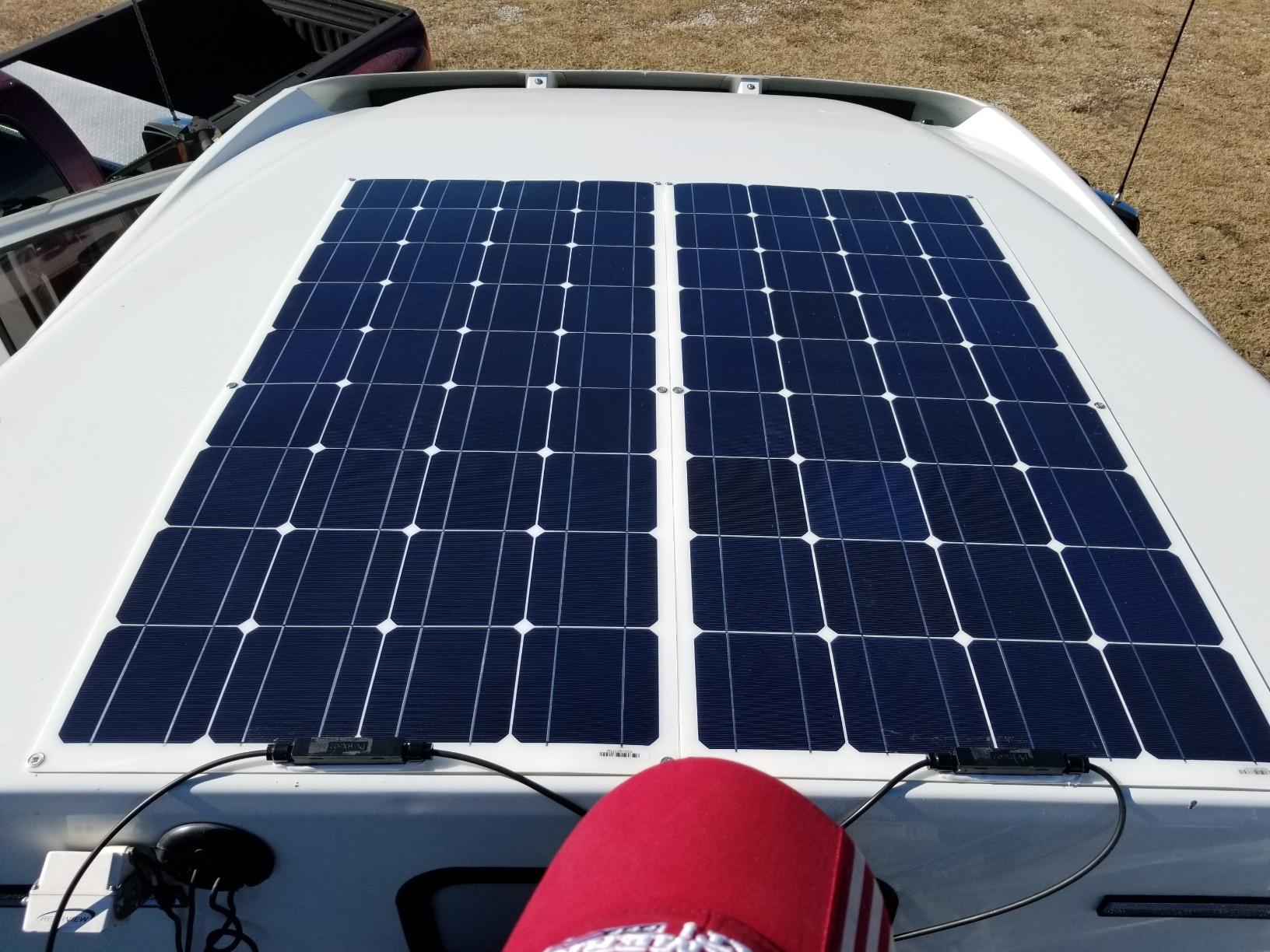
Because the panels bend, they can follow an RV roof contour or a boat hull without spacers. One owner reported mounting them with butyl tape and holding group 27 AGM batteries fully charged over a multi-day trailer trip.
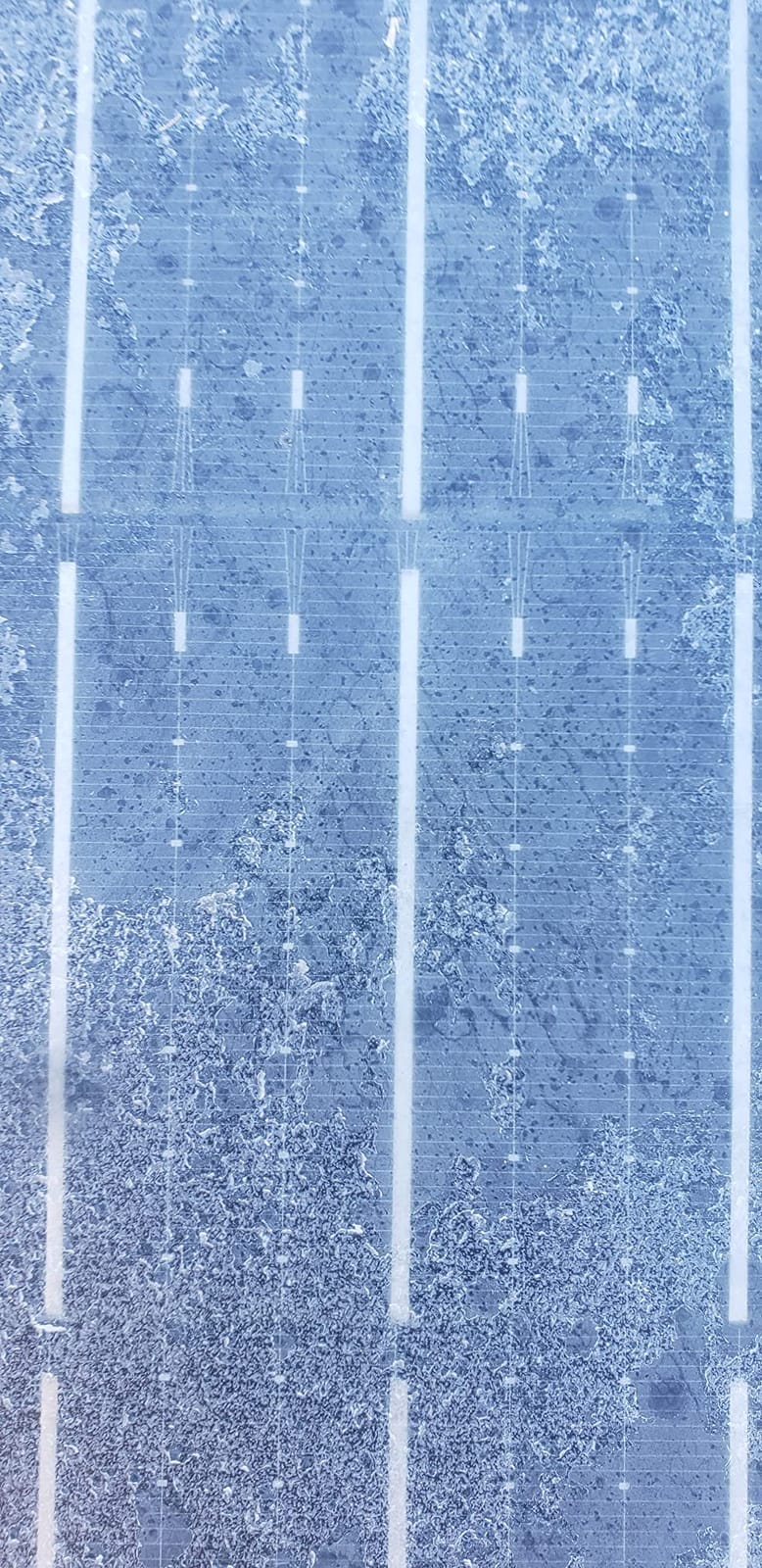
Ingress protection is IP67 with 5400Pa snow and 2400Pa wind tolerance, and the bundled 20A controller includes short circuit, open circuit, reverse, and overload protection. It works with lead-acid, gel, and LiFePO4 banks in either 12V or 24V configurations.
Be careful with the numbers, though. This is the lowest-rated kit we tested at 4.1, with 9% one-star reviews, and multiple buyers report actual output well under the rated 100W per panel. The controller interface is also the weak point: finicky buttons and no display of panel input voltage make troubleshooting harder than it should be.
Good for very light builds
Nothing else here is lighter, which makes this the natural choice for a small van, a popup, or a boat where every pound counts and the surface curves. Adhesive mounting avoids permanent roof penetrations entirely.
It also works as a supplementary array on a rig that already has a main rooftop system, adding harvest where there is soft structure rather than a flat plane.
Reasons to pass
The output complaints are consistent enough that we would not build a primary array around it. If your plan depends on covering a measured load, choose a kit whose rated wattage has held up in practice.
Adhesive mounting is fiddly and can permanently mark the roof surface, and without visible input voltage you cannot tell quickly whether a low reading is shade, a bad connection, or a weak panel. For a curved roof with more headroom, the ECO-WORTHY 260W flexible kit rates higher.
11. Topsolar 200W 12V Monocrystalline Off Grid System
Topsolar Solar Panel Kit 200W(2 * 100W) 12V Monocrystalline Off Grid System
- Complete box with brackets
- cables and connectors
- Pre-drilled backs speed up mounting
- Series or parallel for 12V or 24V
- Responsive customer support
- 4.1 rating with 11% one-star reviews
- Controller display reported going blank while charging
- Reports of declining output after a few seasons in heat
The Topsolar 200W kit is the simplest roof mount in the group. Two 100W monocrystalline panels at up to 22% efficiency come with pre-drilled backs, a 30A controller that handles either 12V or 24V banks, Z brackets, solar cables, and 2-in-1 connectors.
Daily output runs around 800 watt-hours under four hours of full sun, which covers the same core loads as the other 200W kits: fridge, lights, water pump, and electronics. The tempered glass and aluminum frame are rated for 2400Pa wind and 5400Pa snow loads.
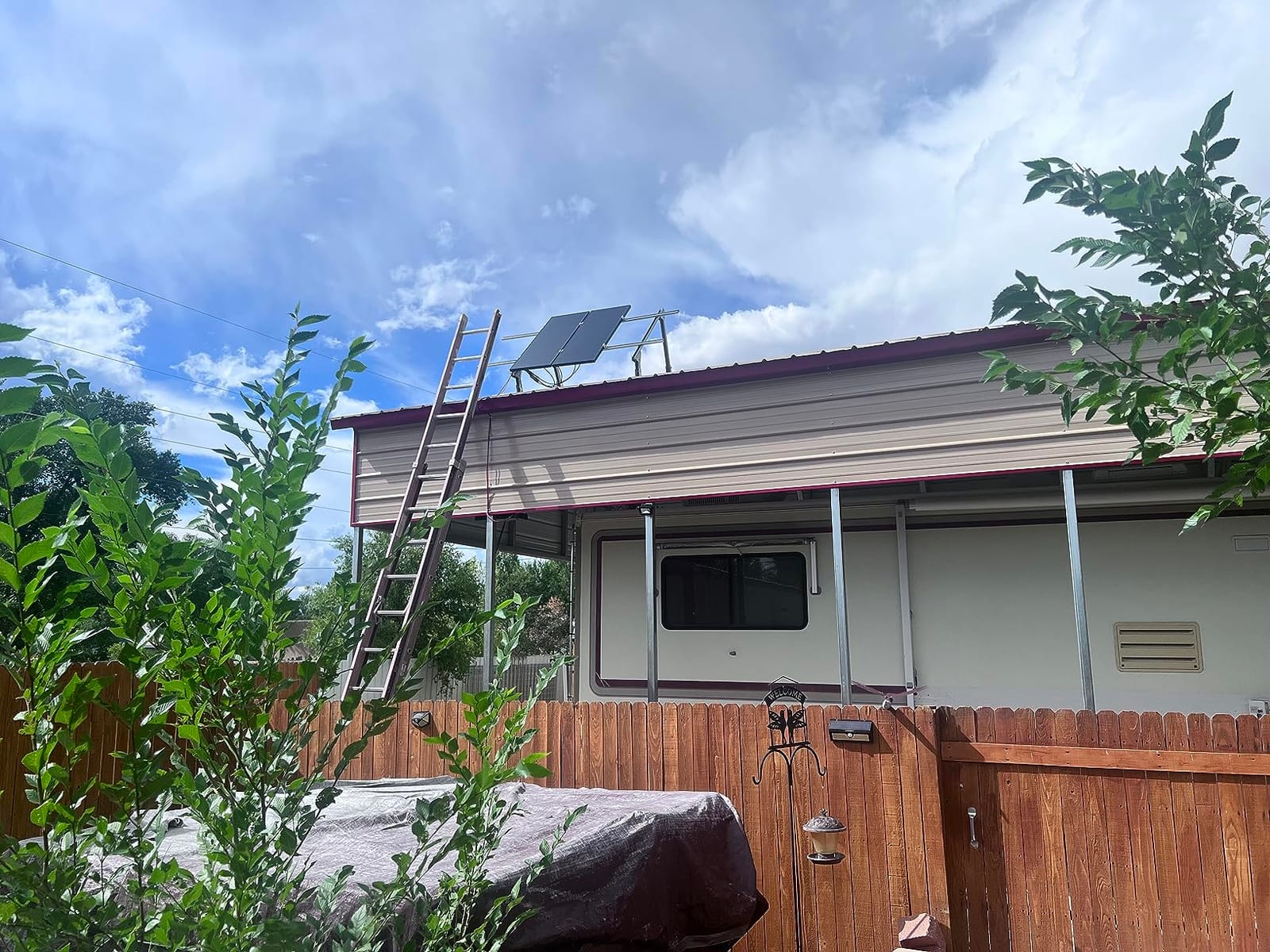
Support is a real strength here. Buyers repeatedly report a failing controller being replaced free within days, and panels that survived wind and impact events, including one bent frame still producing power.
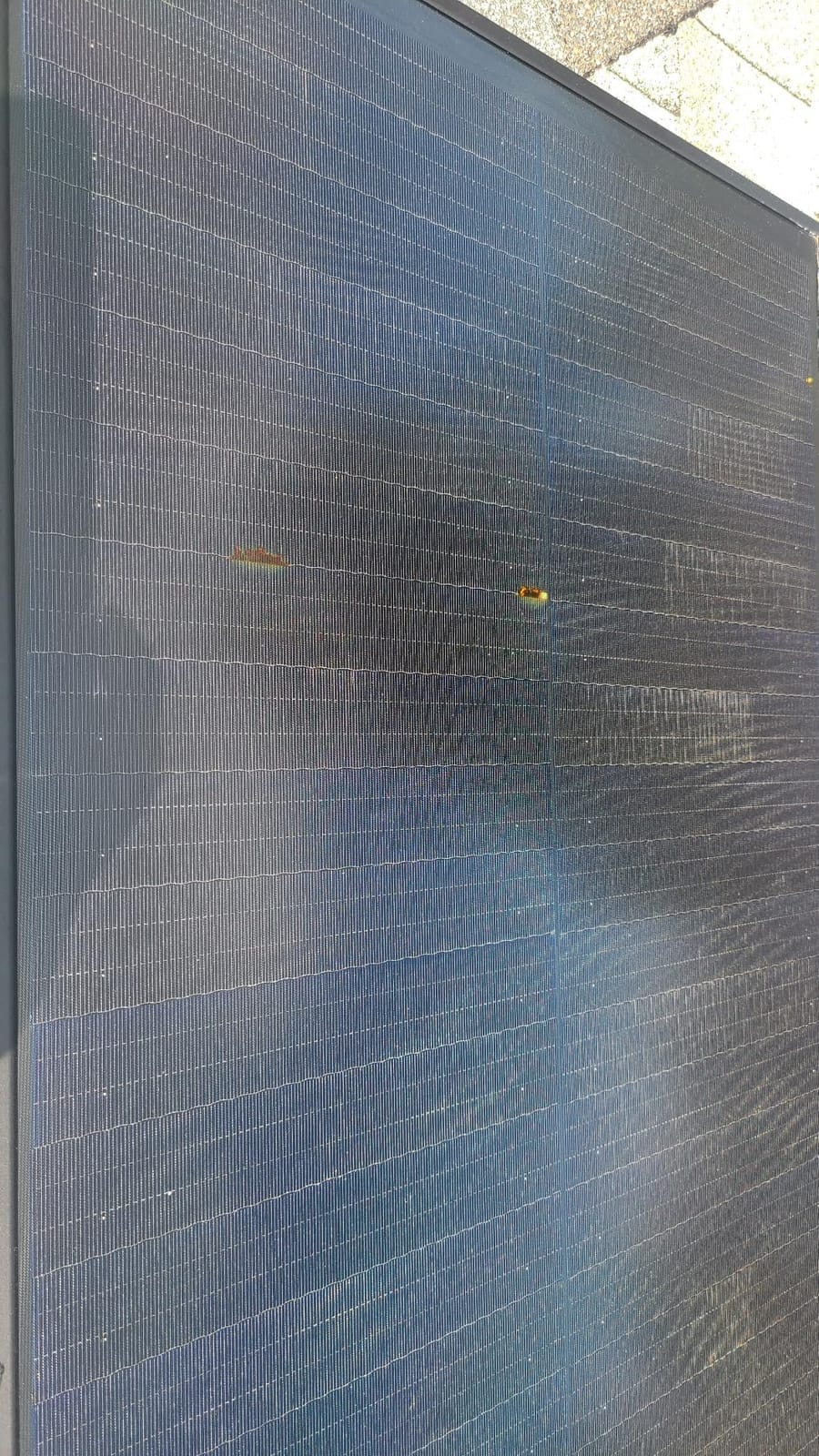
The controller is the recurring problem, though. Multiple reviews report the display going blank while charging actually continues, and one owner found the positive and negative wire colors swapped on a panel. Some buyers also report declining output and reduced component durability after two to three years of Florida heat, which is a warning worth taking seriously in the desert.
Best for a straightforward first roof array
Pre-drilled holes and included brackets make this one of the fastest rooftop installs in the group, and the series or parallel configuration means it fits either a 12V or 24V bank. For a first fixed array on a trailer, the box contents remove every decision except where to put it.
Panel quality itself draws most of the praise. The hardware around it is what pulls the rating down to 4.1.
Where durability worries creep in
The 11% one-star share is the highest in this roundup, and the complaints cluster on the controller rather than the panels. If you are comfortable replacing a controller once in the life of the rig, that is a fair trade. If you are not, spend up for the ECO-WORTHY 400W MPPT kit.
Short included cables also mean the two panels have to sit fairly close together, or you will be buying extensions separately. Measure your run before mounting.
12. Voltset 100W 12V Solar Kit with 20A Smart Charge Controller
Voltset 100W 12V Solar Panel Kit with 20A Smart Charge Controller
- Most-reviewed kit in the roundup with 2369 ratings
- USB and Type-C ports for direct device charging
- Works with LiFePO4
- AGM
- Gel and flooded banks
- IP67 frame rated up to 25 years
- 100W is modest for a fixed RV rooftop array
- PWM-class controller is less efficient than MPPT
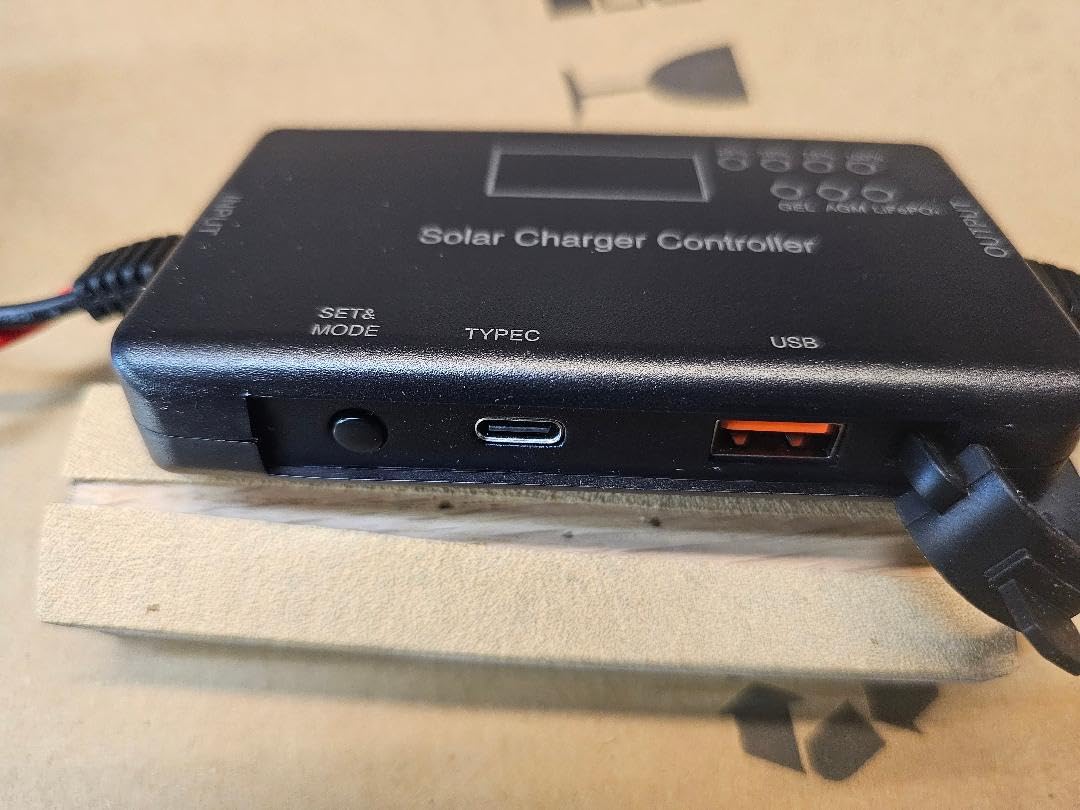
We end on the smallest kit and the one with the most reviews. The Voltset 100W package pairs a 100W monocrystalline aluminum panel with a 20A smart charge controller that has an LCD screen, LED indicators, and battery-type selection.
Those built-in USB and Type-C ports are the feature that separates it from every other 100W kit here. Plug a phone straight into the controller and charge while the panel is working, with no inverter, no battery bank, and no wiring beyond the alligator clip cable.
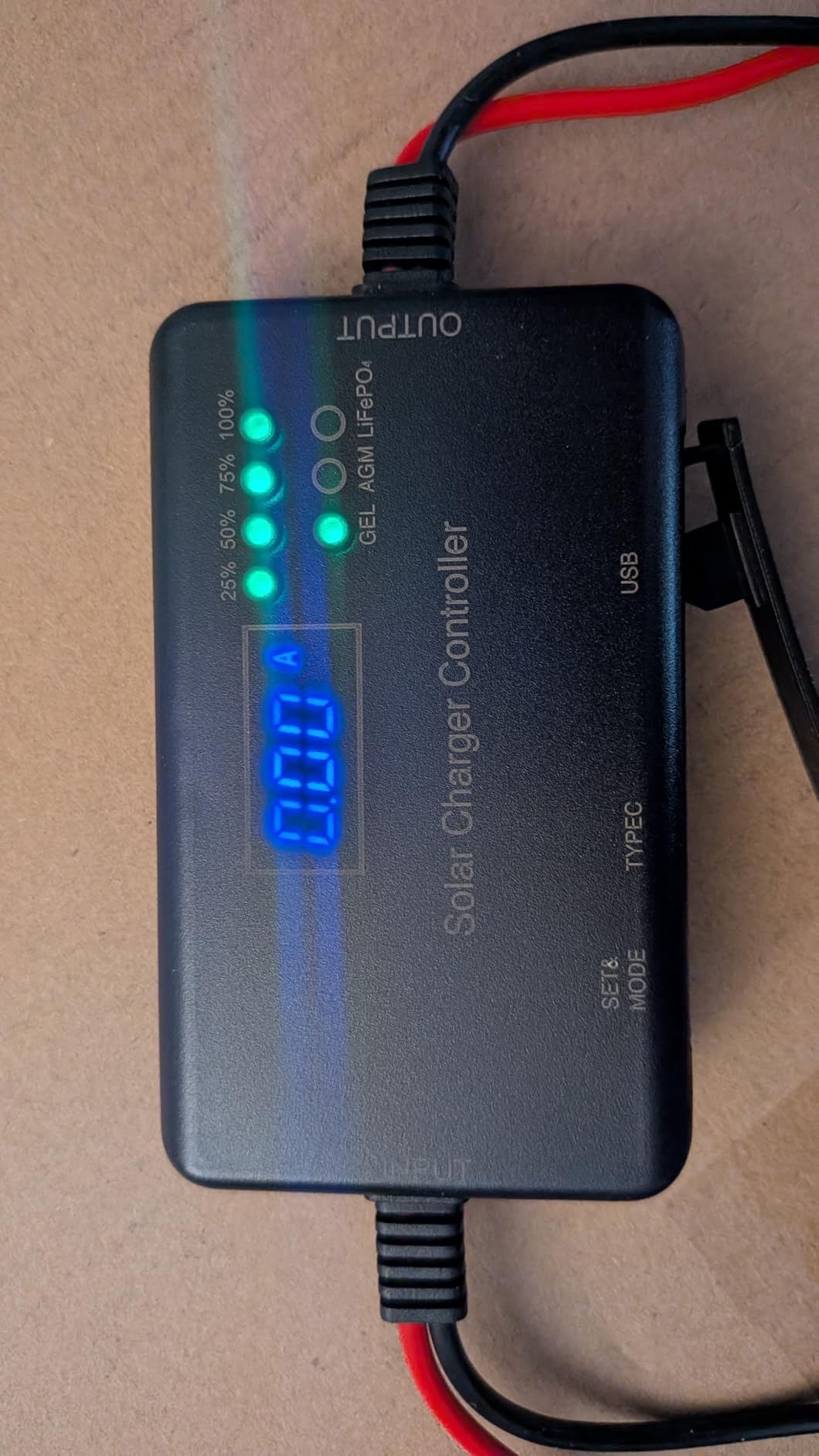
Rated output is 500+ watt-hours per day under sufficient sunlight, which is more than enough for phones, laptops, LED lights, and a slow trickle into a small battery bank. The protection suite covers overcharge, overvoltage, overcurrent, short circuit, reverse polarity, and overheating, which is unusually complete for the size.
Compatibility spans LiFePO4, AGM, gel, flooded, and lithium ion banks, and the IP67 aluminum frame is described as waterproof, rustproof, dustproof, and windproof with a lifespan rated up to 25 years. Pre-drilled holes and plug-and-play wiring mean no professional tools.
Where a 100W kit genuinely fits
A 100W panel is a legitimate answer for weekend dry camping where the load is phones, laptops, cameras, and lighting. It is also the perfect test kit, giving you a cheap way to confirm that solar is a direction you want to go before committing to a 400W roof array.
Owners consistently highlight the readable LCD status display and the fast plug-and-play hookup for RV, trailer, and boat batteries, and the 4.5 average across 2369 ratings with 80% five-star is the strongest evidence base in the group.
Where it is not enough
It will not run a 12V compressor fridge through a hot week. At roughly 500 watt-hours per day you are covering small electronics, not household loads, and a fridge alone can eat most of that.
The controller is PWM class, which is fine at this size and less relevant than it would be on a 400W array. If your roof has clear space and you want a real system, step up to one of the 200W kits and come back to this one for a portable backup.
Is 400W Enough? How to Size a Kit for Dry Camping
Yes, 400W is enough for most dry camping setups, as long as your battery bank can hold the surplus and you are not running high-draw appliances. The panel number matters less than your daily watt-hour demand divided by your peak sun hours, plus a buffer.
Start by listing everything you plan to run and estimate its hourly draw. A 12V compressor fridge cycling roughly half the time, LED lights, a water pump, phone charging, and a laptop working remotely lands most weekend rigs in the 400 to 700 watt-hour per day range. Divide that by your realistic peak sun hours and you have your array size.
Desert Southwest sites typically deliver five to six peak sun hours. Shade, dust buildup, and a hot panel all cut into that, which is why we plan on 70 to 80% of rated watts as a realistic daily harvest. A 400W array in those conditions is closer to a 280 to 320 watt equivalent over a full day.
Wattage tiers map cleanly to trip length. A 100 to 200W kit covers weekend trips with small loads. A 300 to 400W kit is the core dry camping tier, handling a 12V fridge, fans, lights, and a water pump indefinitely. A 500 to 800W array makes room for a microwave, a coffee maker, or heavier loads across multi-day stops.
Check your roof before your shopping list. A full-time RVer with a rooftop air conditioner shading the mounting area will get less from 600W of panels than a weekend rig gets from 200W of panels parked in full sun. Reddit users report reaching for 400W solar blankets as a workaround when roof panels underperform because of AC shading, and that is a real pattern rather than a one-off.
Finally, match the battery. iRV2 users commonly note that 400 watts of solar fills a 100 amp-hour lithium bank quickly in the Desert Southwest, and the same panels in a shaded coastal pull-out would not keep up. Battery capacity, not panel wattage, is what carries you through three sunless days.
Desert Rules: Heat, Dust, Sand, and Shade
Every solar panel is rated at 77F under standard test conditions. A rooftop panel in summer desert sun routinely runs 30 to 45F above ambient, and output falls by roughly 0.3 to 0.5% for every degree of temperature rise. That is a 10 to 20% haircut before you account for dust.
Winter works the other way. Cold-morning efficiency gains are real, and a panel at 40F delivers meaningfully more than its rating suggests. Set your expectations on the 2pm July figure, not the 6am January one, and you will not be disappointed in August.
Dust is the neglected variable. Grit abrasion on the laminate and around PV wire connectors is a genuine failure mode on desert routes, and a layer of fine dust can cut output noticeably. Rinse panels with plain water in the early morning or evening, never with a hose held at high pressure, and dry them before reconnecting power.
Check connectors while you are up there. A slightly loose MC4 fitting under a roof penetration is the cheapest thing to fix and the most expensive thing to ignore. Keep a spare of whatever connector type your kit uses.
Tilt matters more than most buyers expect. Angle the panel toward the sun’s midday position rather than running it flat, and re-aim it if you are parked for several days. On a portable panel the built-in kickstand does this for you, which is part of why shade-chasing setups harvest more than fixed flat arrays.
The tradeoff nobody explains clearly is autonomy versus shade-chasing. Rigid roof panels work while you drive, need no setup, and cannot be stolen from a rest stop. Portable panels follow the light, survive rental rigs, and disappear into a storage bay, but they do nothing while you are on the road and they need a clear patch of ground.
For most dry campers the honest answer is one of each: a modest fixed array for driving days and unattended hours, plus a foldable panel to chase shade when you are parked long enough to make it count. We cover that combination in more detail in our RV boondocking solar panel reviews.
MPPT vs PWM and Other Decisions That Matter in Dry Camps
MPPT controllers extract the maximum power point from the panel, recovering the voltage that a PWM controller simply clips off. Expect roughly 40% more efficiency from the same panels and controller pairing, and expect that gap to widen as panel temperature rises. In a hot climate, MPPT is worth the premium.
PWM controllers are cheaper and simpler, and at 100W on a small bank the difference barely registers. On a 400W rooftop array running through a Mojave July, the recovery adds up to real hours of runtime per day.
Inverter type is the other choice that bites. Pure sine wave output runs sensitive electronics, compressors, and medical devices cleanly. Modified sine wave output is cheaper and can cause humming, heat, or erratic behavior in CPAP machines, laptops, and some refrigerators. If you are running a CPAP in the desert, do not compromise here.
Battery chemistry decides how much buffer you carry. LiFePO4 banks give you roughly 80% of rated capacity as usable energy, hold charge through long storage, and tolerate deep discharge better than AGM. AGM needs about half its rated amp-hours in reserve, so you buy twice the capacity for the same usable energy. A generator remains a sensible backup for multi-week trips, as our camping generator picks cover.
Expandability is what stops a cheap kit from becoming an expensive mistake. Kits built on a 30A controller that scales to 400W or 600W let you add a panel next season instead of replacing the whole system. Check the controller amperage, not just the panel wattage, before you buy.
Install details matter for safety and longevity. Route cable through the supplied entry housing, keep connectors off the ground and out of standing water, leave an emergency egress path clear, and confirm any campfire or stove rules at your dry camping site. Check that your kit’s warranty language covers the heat and dust you will actually expose it to.
Frequently Asked Questions
What are the best solar panels for boondocking in an RV?
The best solar panels for boondocking are rigid monocrystalline rooftop arrays of 200W to 400W paired with an MPPT charge controller, because they harvest power while you drive and need no daily setup. For shade-prone campsites, a foldable 100W to 300W portable panel lets you chase the sun. Choose based on roof space, battery bank capacity, and the loads you actually run.
Is 400W solar enough for RV?
Yes, for most dry camping rigs. A 400W array with a 200 amp-hour LiFePO4 bank covers a 12V fridge, LED lights, fans, a water pump, and electronics for several sunless days. Expect 70 to 80% of rated output in real desert conditions, so plan on roughly 300 watts of usable harvest per peak sun hour.
Will a 200W solar panel run a 12V fridge?
Yes, usually. A 200W array produces about 800 watt-hours per day at four hours of direct sun, and a typical 12V compressor fridge draws roughly 40 to 50 amp-hours per day when cycling. Add 100 to 200 amp-hours of battery capacity so the fridge keeps running through overnight hours when the panels produce nothing.
Will a 400W solar panel run a fridge?
Yes, with room to spare. Four 100W panels rated around 1.6kWh per day will run a compressor fridge plus lighting, fans, a water pump, and phone charging with margin. Pair them with an MPPT controller, since it recovers the energy a PWM controller wastes as panel temperature climbs in desert sun.
What type of solar panel is most efficient for an RV?
Monocrystalline panels are the most efficient choice for an RV, and N-type monocrystalline cells lead at up to 25% conversion. Rigid glass panels hold efficiency longer in extreme heat than flexible polymer panels, which typically degrade faster under prolonged UV exposure. For curved roofs, flexible monocrystalline is the only practical mounting option.
How long will a 400W solar panel take to charge a 12V battery?
A 400W array with an MPPT controller delivers roughly 30 amps at midday, so a depleted 100 amp-hour 12V bank reaches full charge in about four to five hours of strong direct sun. Real desert conditions with heat, dust, and partial shading stretch that to six or more hours, and a PWM controller with four 100W panels will take longer still.
Do solar panels lose efficiency in extreme desert heat?
Yes. Panels are rated at 77F, and a rooftop panel in summer desert sun can run 30 to 45F above ambient, losing roughly 0.3 to 0.5% of output per degree of rise. Cold mornings go the other way and deliver above nameplate output, so judge your system by its 2pm July numbers rather than a winter morning reading.
How do I clean RV solar panels in the desert?
Rinse them with plain water in the early morning or evening, use a soft cloth or brush for grit, and avoid high-pressure hose spray that can damage laminate edges and seals. Dry the surface fully before reconnecting power, and check MC4 connectors for looseness while you are up there. A thin dust film can measurably cut output on its own.
Final Verdict for Dry Camping in 2026
The best RV solar panel kits for dry camping are the ones that match your roof, your battery bank, and the honesty level you can live with. For most rigs, our pick is the Renogy 200W 12V Monocrystalline Kit: a balanced rooftop array you can expand to 400W, backed by the deepest review history in this group after the entry-level Voltset.
If you want a permanent install that looks built rather than assembled, the Renogy 200W N-Type RV Kit with its flush controller, cable housing, and Bluetooth monitoring is the more refined choice. If you are chasing maximum harvest per panel in extreme heat, the ECO-WORTHY 400W kit is the only one here with a real MPPT controller. And if shade is the deciding factor at your usual campsites, the Renogy 100W foldable or the DOKIO 300W portable will follow the sun in a way no roof panel can.
Whichever way you go, budget the battery before the panels, plan on 70 to 80% of rated output, and add dust cleaning to your routine before the grit does. Dry camping has no recovery margin, and a system sized with one in mind is the difference between a comfortable week and a drive home in the dark.