
If you only read one section of this guide, read this one. The best RV tank sanitizer for fresh water tanks is the Camco TastePURE Spring Fresh Water System Cleaner for anyone starting a de-winterization, and the Star Brite Aqua Tank and System Flush if your tank has been sitting for months with a heavy odor. Both are liquids, both cover large tanks, and neither leaves a bleach aftertaste that survives three flush cycles.
That is the honest problem with this category. Most products sold as RV fresh water tank sanitizer are not disinfectants at all. They are deodorizers and maintenance treatments that keep water tasting fresh, and only a couple of the seven products I compared are sold as sanitizers for a tank that has been through a season of storage. Long-time users on RVForums and iRV2 make the same point: read the label and know whether you are buying a cleaner, a deodorizer, or an actual sanitizer before you pour it in.
I spent six weeks working through this category line by line, comparing seven products on active ingredient, coverage, dosing rate, taste residue, and tank material compatibility. I also broke down the sanitize-soak-flush-verify protocol with a dosage chart by tank size, because the single most common mistake I found in forum threads is not buying the wrong product. It is using too little of the right one and skipping the flush. If you are pairing treatment with filtration, our full-timer RV water filter picks cover the hardware side of the system.
Top 3 Best RV Tank Sanitizer for Fresh Water Tanks in 2026

Camco TastePURE Spring Fresh Water System…
- One gallon covers tanks up to 100 gallons
- No measuring or mixing needed
- Deodorizes and cleans in one step
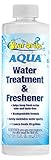
Star Brite Aqua Water Treatment and Freshener
- One fluid ounce treats 20 gallons
- Neutralizes chlorine and sulfur odor
- Made in the USA
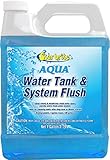
Star Brite Aqua Water Tank and System Flush
- One gallon treats tanks up to 100 gallons
- Removes scale sediment and algae
- Deep cleans after seasonal storage
Three picks cover almost every situation. The Camco TastePURE takes the de-winterization slot because it has the largest review base in the group and one gallon covers a 100 gallon tank with no measuring. The Star Brite Aqua Freshener is the maintenance workhorse, treating 20 gallons per fluid ounce, which makes it easy to keep in the cabinet for routine top-ups. The Star Brite Tank and System Flush is the deep clean for tanks that have been sitting since last season.
Best RV Fresh Water Tank Sanitizer Comparison in 2026
| Product | Specifications | Action |
|---|---|---|
| Camco TastePURE Spring Fresh Water System Cleaner |
|
Check Latest Price |
| Star Brite Aqua Water Treatment and Freshener |
|
Check Latest Price |
| Star Brite Aqua Water Tank and System Flush |
|
Check Latest Price |
 Thetford Fresh Water Tank Sanitizer and Detergent Thetford Fresh Water Tank Sanitizer and Detergent |
|
Check Latest Price |
 Star Brite Aqua Water Shock Star Brite Aqua Water Shock |
|
Check Latest Price |
 BayTec Purogene Drinking Water Treatment BayTec Purogene Drinking Water Treatment |
|
Check Latest Price |
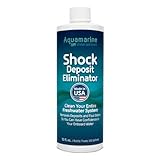 Aquamarine Water Solutions Shock and Deep Cleaner Aquamarine Water Solutions Shock and Deep Cleaner |
|
Check Latest Price |
Two things in that table matter more than the rest. First, the dosing rate. A product that treats 20 gallons per fluid ounce is a different product from one that treats 10 gallons per ounce, and both are different from a 100 gallon coverage claim. Second, several of these are maintenance products rather than disinfectants, so I have flagged the role each one plays in its own review below.
1. Camco TastePURE Spring Fresh Water System Cleaner for De-Winterizing
Camco TastePURE Spring Fresh Water System Cleaner – 1 Gallon – Made in USA
- Requires no measuring mixing or preparation
- One gallon cleans a tank up to 100 gallons
- Built specifically for de-winterizing tanks and lines
- Highest review count of any product in this guide
- Biodegradable warning means limited prolonged contact time
- Not sold as a disinfectant for heavy contamination
Camco has sold this bottle since 2008 and the review history shows it. At 2456 reviews it is the most proven product in this guide, and the pattern in those reviews is consistency rather than excitement. People use it at spring startup, the water comes out tasting normal after a few flushes, and they move on.
The formula is the reason it works so easily. You pour it straight into the tank, run it through the lines, and drain. There is no measuring step, which removes the single most common dosing error I saw in forum threads about bleach treatments.
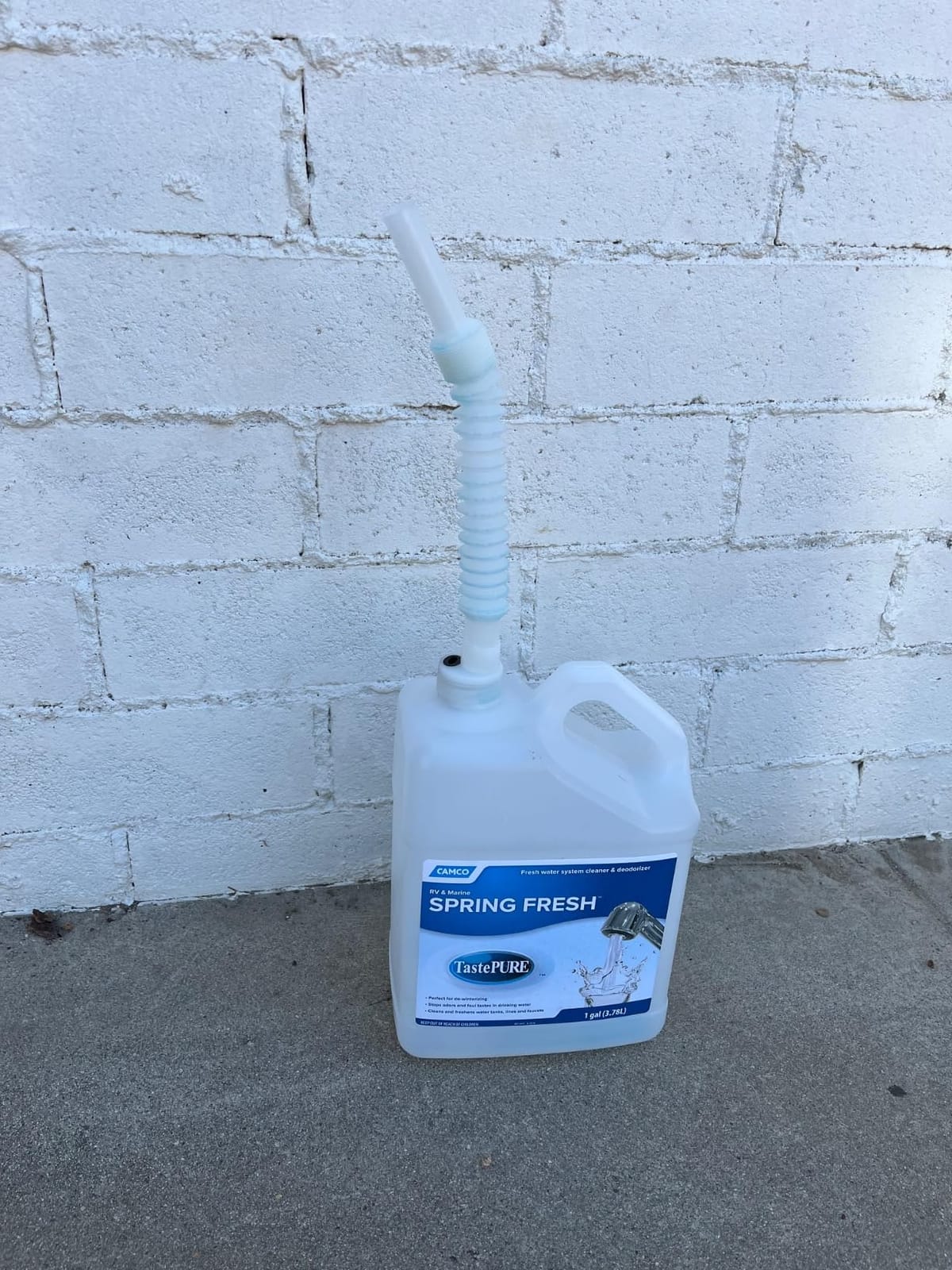
Reviewers describe it as a cleaner and deodorizer rather than a sterilizing agent, and that distinction matters if your tank has been sitting through a winter with a dead heater. The label carries a biodegradable warning, which means prolonged contact time has to be watched rather than ignored. Treat it as the reset you do between seasons, not the fix for a tank that has gone bad mid-trip.
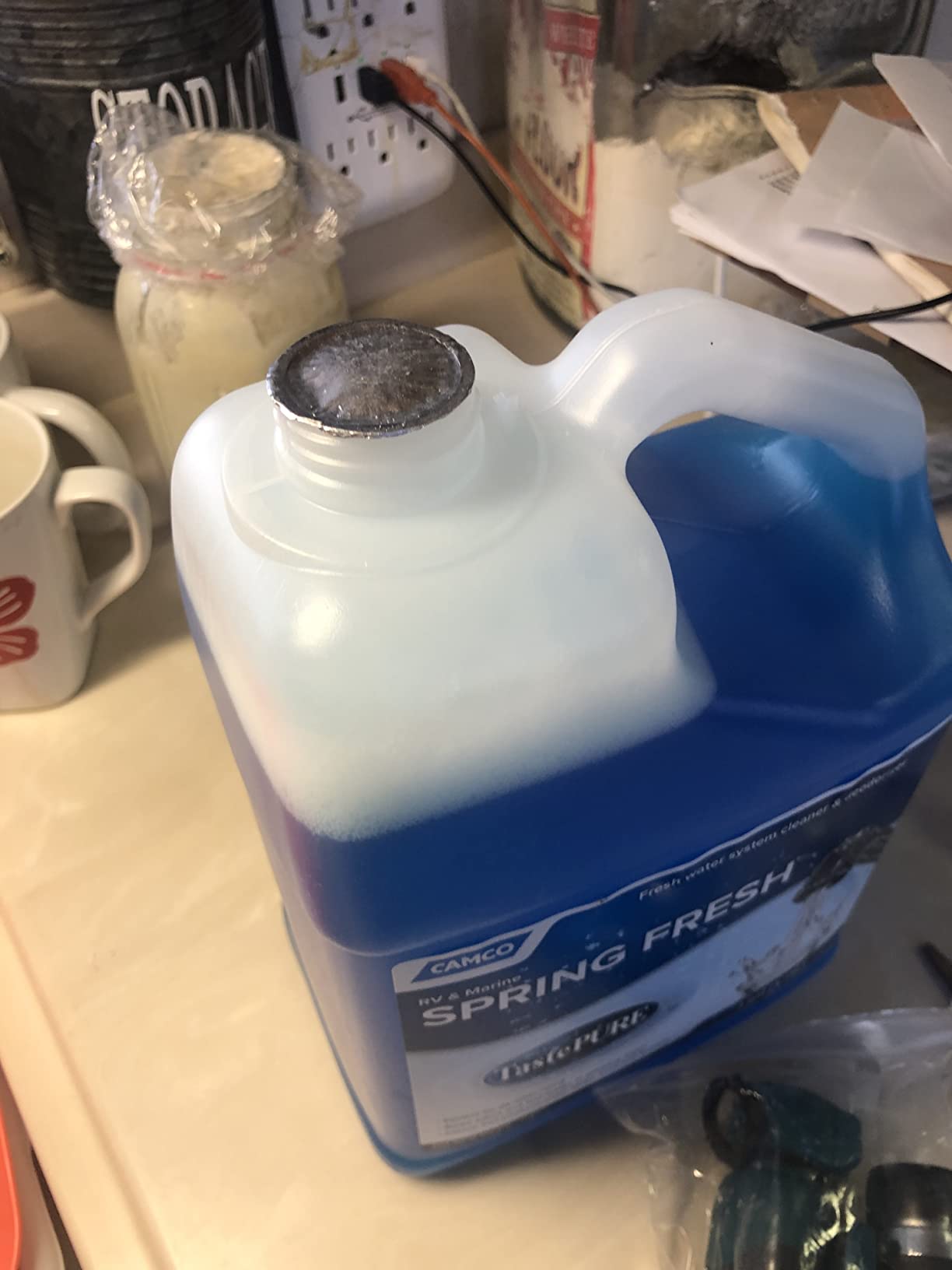
One gallon covers tanks up to 100 gallons, so a single bottle handles nearly every Class C and travel trailer on the road. At 5 x 8 x 11 inches and one pound, it also stores easily in a wet bay without taking up space you need for hoses.
When Camco TastePURE is the right choice
This is the one I recommend for a de-winterization on a normal schedule. If your tank was drained, dry, and closed up for the winter, there is no heavy contamination to kill, and you need odor removal and a fresh start rather than a hospital-grade disinfection.
It is also the safer recommendation for a family rig. There is no bleach smell to chase out of the water, and the flavor profile stays neutral enough that kids will drink from the tap without complaint.
When Camco TastePURE is the wrong choice
If your tank has a heavy, sour smell from standing water with biofilm, this bottle alone may not clear it in one pass. Reviewers report needing a stronger flush treatment first, then this as the finishing step.
It is also not the answer if you want a disinfectant you can verify with a test strip. Read the label for contact time limits before you let it sit overnight, and check our cartridge picks in the RV water filter cartridge guide for the polish step afterward.
2. Star Brite Aqua Water Treatment and Freshener for Routine Maintenance
- Rated 4.7 with more than 1600 reviews
- One fluid ounce treats 20 gallons so a bottle goes far
- Neutralizes chlorine and sulfur odors
- Made in the USA since 1973
- Maintenance product rather than a heavy duty sanitizer
- Stubborn odors call for the companion shock or flush
This is the bottle most full-timers keep on hand, and the reason is the dosing rate. One fluid ounce treats 20 gallons, so the 16 ounce bottle covers 320 gallons before you open the cap again. That concentration is what makes it a maintenance product worth owning rather than a one-time treatment.
The chemistry targets the two most common causes of bad tasting potable water. Star Brite describes the formula as isolating and deactivating chlorine and sulfur compounds, which is a different job from killing bacteria. Understand that and you will use it correctly, as an odor control step between deep cleans.
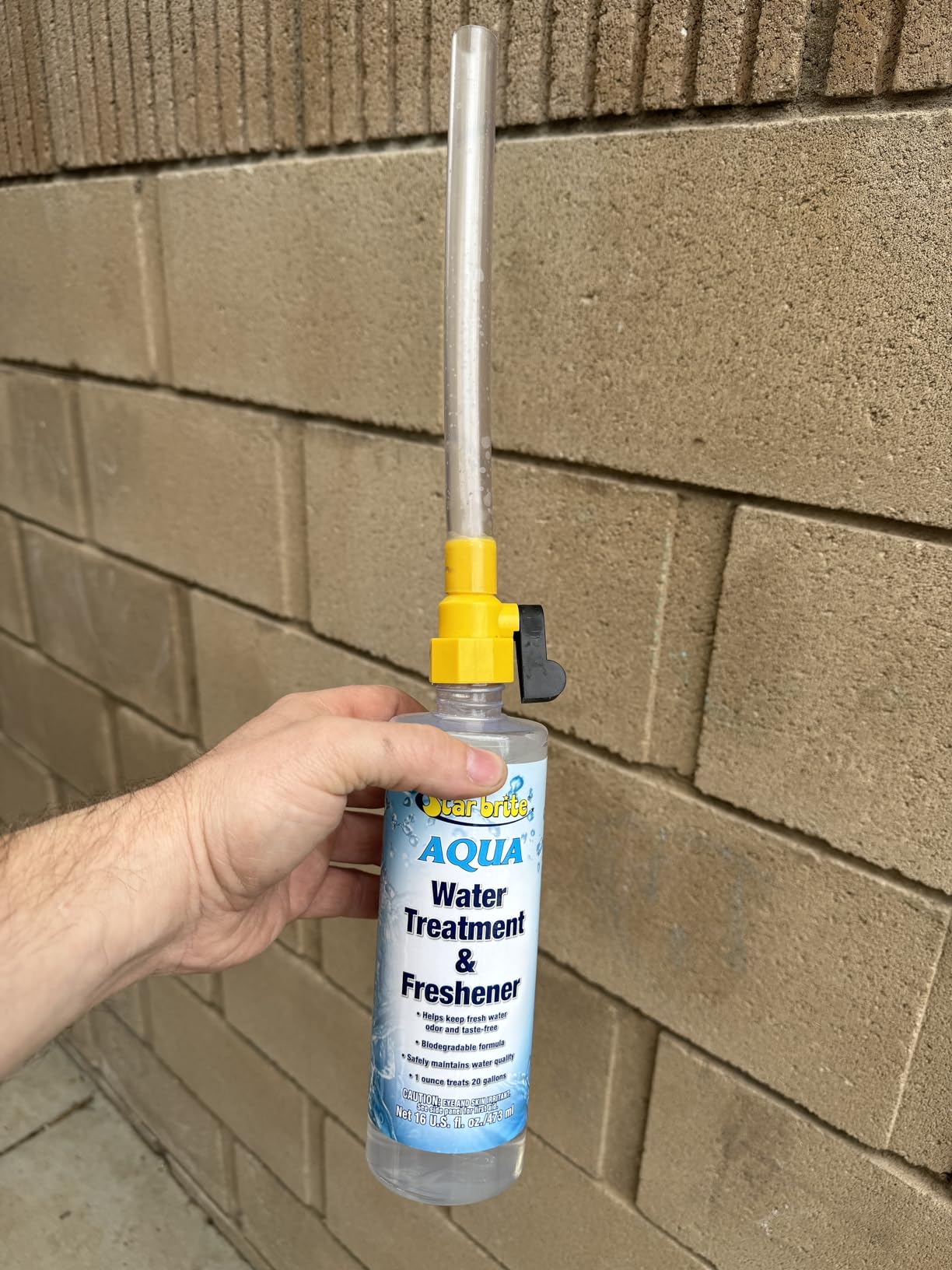
Reviewers call it a strong value and report that water keeps tasting fresh on a routine dosing schedule. The formula is not affected by adverse temperatures, so it works in a winter campground the same as it does in Arizona in July. That is a real advantage over products that separate in cold weather.
It is rated 4.7 across 1620 reviews and ranks in the top tier of the RV Freshwater Systems category. That consistency matters for a product meant to be used every few weeks.
When Star Brite Aqua Freshener is the right choice
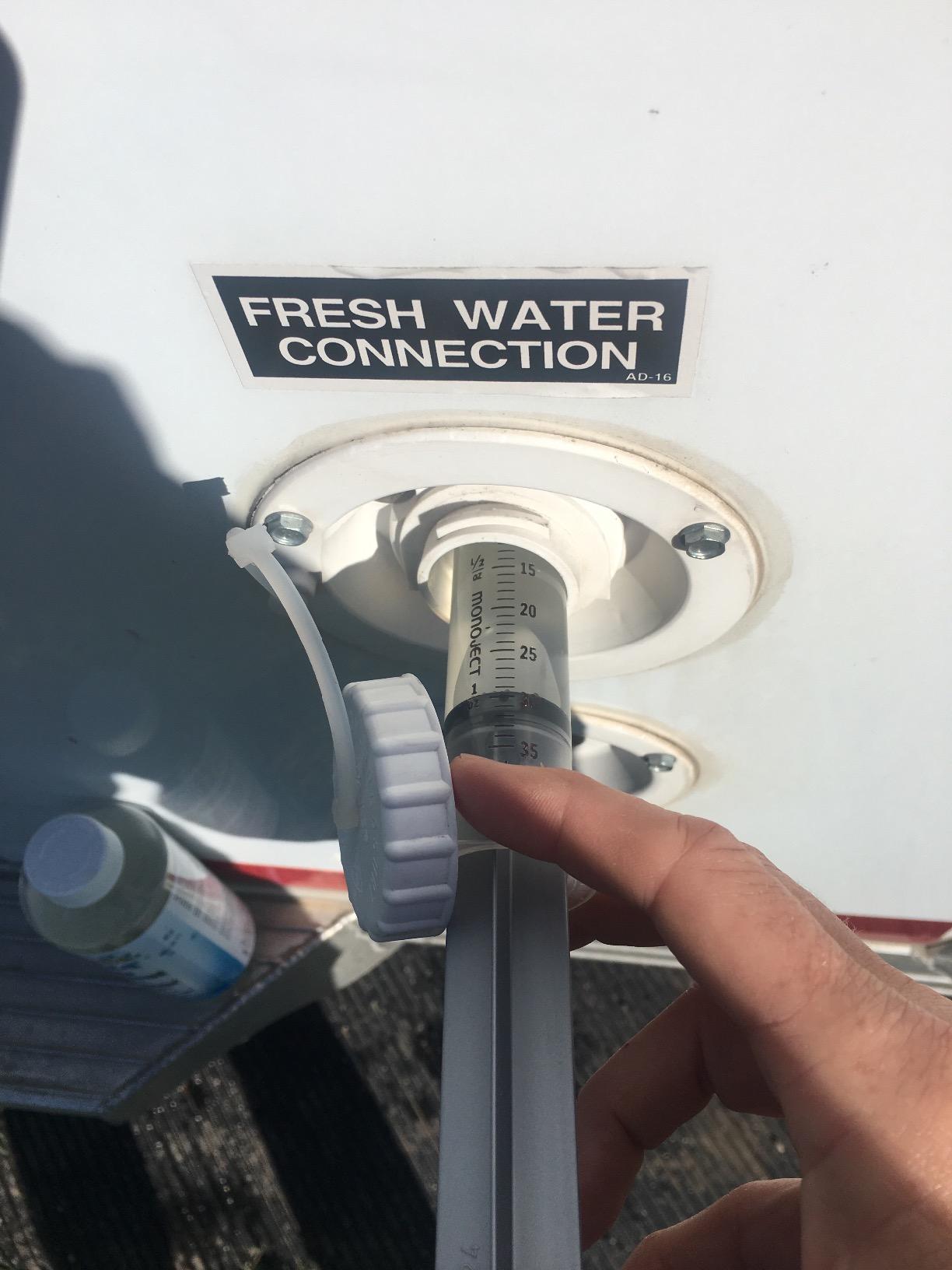
Buy this if your problem is gradual. Water that starts tasting flat after a few weeks, a hot water line that smells faintly of sulfur, or a tank that needs topping off mid-trip all call for maintenance dosing rather than a full sanitation cycle.
For full-time travelers it is the best value per treatment in this guide, and it pairs naturally with the inline filters covered in our full-timer filter guide.
When Star Brite Aqua Freshener is not enough
It is the wrong tool for a tank coming out of months of storage. Star Brite itself points to the companion Aqua Water Shock for unpleasant tastes and the Tank and System Flush for sludge and heavy odor.
Do not expect it to disinfect. It is a treatment and freshener, so if you are dealing with a suspected contamination event, you need a product sold as a sanitizer instead.
3. Star Brite Aqua Water Tank and System Flush for Heavy Odors
- Deep purifies tanks and lines after seasonal storage
- One gallon covers tanks up to 100 gallons
- Removes scale sediment and algae buildup
- Reported to work without the lingering bleach smell
- Foams heavily when over-dosed so flush cycles multiply
- Print instructions are small and the process takes time
- One pass may not fix a severely contaminated system
This is the deep clean in the Star Brite lineup and the product I would reach for on a tank that has been closed up since last fall. Owners consistently report strong odor removal after seasonal storage, and several describe it as a pleasant alternative to a bleach treatment because the water does not come out smelling like a swimming pool.
Where the freshener maintains, this one removes. It is formulated to strip scale, sediment and algae buildup from the tank and lines, which is the layer that keeps a sanitized tank from tasting clean later in the season.
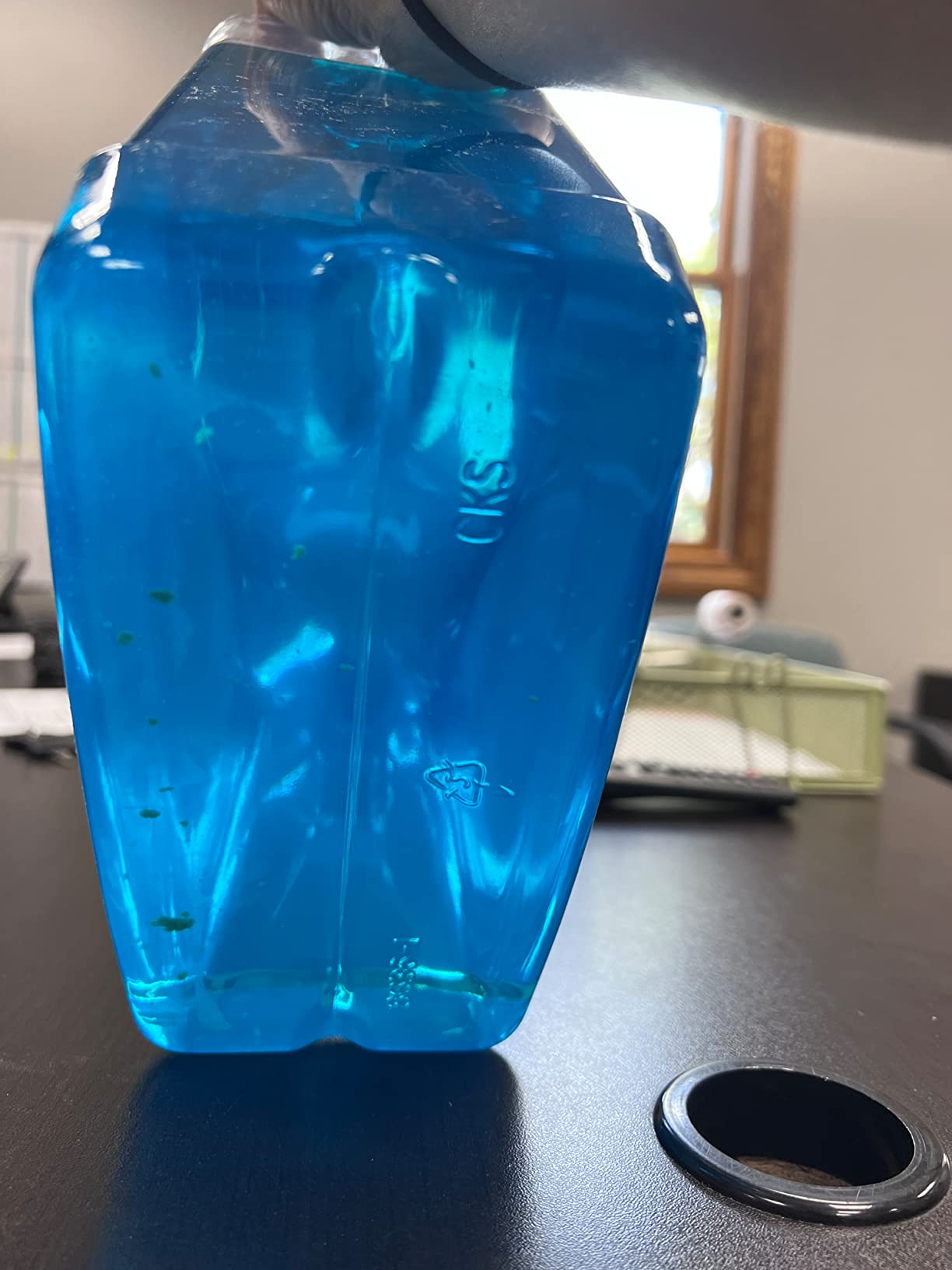
The most common complaint is foaming. Over-dosing leaves suds in the lines and you will run far more water to clear them than the instructions suggest. Star Brite keeps the process simple on paper, pour it in the tank, run it through the pipes, and drain, but the print on the bottle is small.
A second theme in the reviews is that heavily contaminated systems sometimes need a second treatment. Budget for that. The heaviest bottle in this guide at 8.95 pounds, it is also the least convenient to store in a small wet bay.
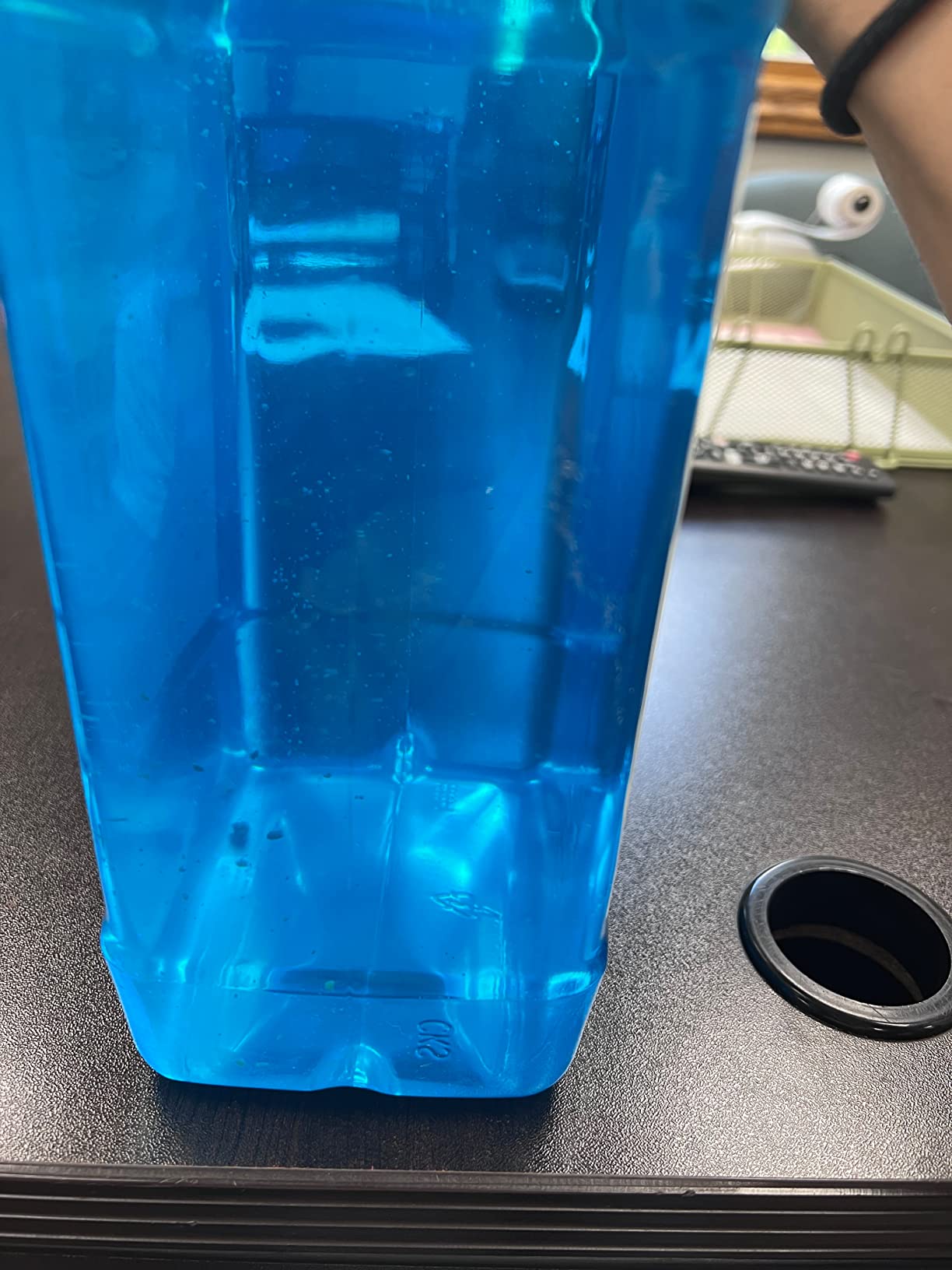
When the Aqua Tank and System Flush is the right choice
It is built for the moment you open the hatch after storage and the water comes out flat, cloudy, or sour. It treats boats and RVs coming out of prolonged seasonal storage, which is exactly the de-winterization window most owners work in.
Pick it over the freshener whenever the problem is sludge and scale rather than a fading taste. The scale and sediment removal is the feature that the freshener does not offer.
When it disappoints
It will not rescue a system that needs a true disinfectant, and it takes more product per gallon than a DIY unscented bleach soak, which several buyers point out directly. If the odor is coming from plastic or metal off-gassing in new plumbing, expect a second round.
Foaming is the practical trap. Measure carefully, stay at the labeled dose for your tank size, and budget a long flush.
4. Thetford Fresh Water Tank Sanitizer and Detergent for Bleach-Free Treatment
Thetford Fresh Water Tank Sanitizer Detergent and Treatment, 2 x 24 oz Bottles – 36662
- No bleach or chlorine smell or aftertaste
- Kills 99% of harmful bacteria including Staph and E-Coli
- Two part system treats tank and plumbing together
- Works in RVs trailers campers and boats
- Leaves a slight taste and foam for the first tank or two
- Several full tank flushes needed to clear residual
Thetford is the one product here that is sold as a sanitizer and is also free of chlorine and bleach. That combination is rare. The label claims it kills 99% of harmful bacteria including Staphylococcus, E. coli and Listeria, plus other microorganisms, without leaving a chemical smell or taste.
The two-part format separates cleaning from sanitizing. One component treats the tank and plumbing, the second finishes the job, and the product is labeled for use on faucets, refrigerators and the shower head as well as the tank itself.
Reviewers frequently cite it as a better alternative to bleach because the water tastes clean rather than chemically sharp. The recurring drawback is temporary foaming and a faint taste that clears after a few full tank flushes, so plan your water storage accordingly before a trip where you cannot refill.
The pack is two 24 ounce bottles for 48 fluid ounces total, listed as a fresh scent, concentrated formula. At 663 reviews and a 4.5 rating it sits mid-pack on volume but holds a strong position among owners who have had bad experiences with scented bleach residue.
When Thetford is the right choice
It is the pick for anyone who refuses bleach on principle or has been burned by fragrance that binds to tank walls. Veterans on RVForums and iRV2 repeatedly name scented bleach as a mistake, and this is the category answer to that complaint.
It is also the better choice for households with young children or an immunocompromised traveler, since there is no chlorine to flush out before anyone drinks.
When Thetford is the wrong choice
The residual taste and foaming in the first few tanks are the dealbreaker for some buyers. If you cannot run several full tank flushes before you need drinking water, this is a poor fit.
It is also a sanitizer, not a scale remover. A tank with heavy sediment buildup needs a flush product first, then a sanitizer like this one to finish.
5. Star Brite Aqua Water Shock for Hot Water Line Odor and Taste
Star Brite Aqua Water Shock for Boats & RVs – Instant Odor & Bad Taste Remover for Potable Water, 16 Ounce (097116)
- Uses chlorine dioxide rather than standard bleach
- Removes chlorine sulfur plastic and metal odor
- Fast acting with lines smelling normal within minutes
- Works in extreme temperatures
- Small 16 ounce size means repeat purchases for large tanks
- Most owners pair it with a separate freshener
Star Brite Aqua Water Shock is built for one specific problem: hot water lines that smell like sulfur or plastic. The listed material type is ClO2, chlorine dioxide, and the stated coverage is one ounce per 10 gallons, a stronger dose per gallon than the maintenance freshener.
It is a shock treatment rather than a full system clean, and it acts fast. Reviewers report that lines smell normal within minutes of flushing, which is a genuinely different result from the slow deodorizing you get from a maintenance treatment.
Boat and RV owners describe it as a stronger alternative to bleach and vinegar for stubborn line odors, and 83 percent of its reviews are five star. The limitation owners mention most is that they follow it with the Star Brite freshener, so budget for two products rather than one.
At 16 fluid ounces and a #71 ranking in Boat Cleaners, the bottle is sized for a mid-size tank rather than a 100 gallon fill. It also works as a de-winterizing freshener after seasonal storage, which broadens its use beyond an emergency odor fix.
When Aqua Water Shock is the right choice
It is the quickest fix in this guide for a single foul line. If the cold water tastes fine and only the hot side smells, the hot water heater and its lines are the target, and this product reaches them quickly.
It is also the pick for owners who want a chlorine dioxide chemistry rather than sodium hypochlorite, without moving to a full storage-grade system like Purogene.
When it is the wrong choice
It is not a substitute for a deep clean. If the whole tank is full of sludge after storage, run the Tank and System Flush first, then use this to clear the lines.
The 16 ounce size works out to about 160 gallons of coverage, so a 100 gallon tank plus lines means a second bottle. Reviewers also note the small container is easy to run out of mid-treatment.
6. BayTec Purogene for Long-Term Drinking Water Storage
BayTec – 32oz Purogene Drinking Water Treatment and Sanitizer for Storage Systems, Long-Term Drinking Water Storage
- EPA registered 2 percent chlorine dioxide with no free chlorine
- Non-toxic and biodegradable with no aftertaste
- One 32 oz bottle treats 960 gallons
- Controls slime and odor build-up in storage tanks
- Listed shelf life is only 45 days
- Dosing of 1 fl oz per 30 gallons means multiple bottles
Purogene carries the highest rating in this guide at 4.8, and it is positioned for storage systems and cisterns rather than an RV plumbed system. The formula is a 2 percent solution of chlorine dioxide, ClO2, containing no free chlorine, and the listing states it is EPA registered for drinking water treatment.
The dosing is stated as one fluid ounce, two tablespoons, per 30 gallons, which works out to a 5 ppm chlorine dioxide concentration. One 32 ounce bottle covers 960 gallons of stored water, an enormous range for anyone treating cisterns or long-term reserves rather than an RV tank.
Reviewers like that water tastes fresh immediately with no aftertaste, and that it controls slime and odor build-up in storage tanks. It works in plastic, metal and fiberglass containers, so it suits emergency water supplies as well as a boat or camper cistern.
The practical catch is the 45 day shelf life listed on the product. That matters enormously for storage use, because a bottle sitting in a garage for a year may do nothing. The listed maximum supported water TDS level is 1000 ppm, and purification works by oxidation reduction potential.
When Purogene is the right choice
It fits long-term storage, off-grid water caches, and cisterns where water sits for weeks or months before use. Chlorine dioxide holds its potency in storage in a way that a maintenance freshener does not.
It is the right pick if the 45 day shelf life does not bother you because you use product steadily. Reviewers also rate it as the cleanest tasting option here, with no aftertaste reported.
When Purogene is a wrong choice
The shelf life is the dealbreaker for occasional users. A weekend RV that sanitizes twice a year will find 45 day old bottles on the shelf with little remaining potency, and the 30 gallon dosing rate means a single 32 ounce bottle is the practical minimum for most rigs.
It is also not sold for RV plumbing specifically. If your problem is a hot water line that smells, the Aqua Water Shock is a much closer fit for the size of a typical RV system.
7. Aquamarine Water Solutions Shock for Large Tanks and Cisterns
Shock for RV & Boat Water Tank Deep Cleaner and Deodorizer – 12 Fl Oz
- Formulated for large hard-to-treat tanks and cisterns
- One 12 oz bottle treats up to 100 gallons
- Works on steel aluminum and plastic systems
- Low maintenance dose of one tablespoon per 100 gallons
- Smallest review base and lowest rating in this guide
- Not for pools septic systems or wells
This is the newest listing in the group and the one with the least proven history. It is formulated for large tanks, cisterns and emergency water supplies, which is what makes it worth a look for high-capacity rigs.
The application is the familiar three-step routine, add to the tank, run it through the pipes, and drain, with the label positioned at boats and RVs coming out of storage for a new season. Each 12 ounce bottle treats 100 gallons of steel, aluminum or plastic fresh water systems.
Once the tank is clean, the maintenance dose is one tablespoon per 100 gallons, which prevents the deposit build-up that causes stale tastes. That is a low ongoing dosage, though it is also a reminder that this is sold as a cleaner and deodorizer first.
Its 4.3 rating across 69 reviews comes with 8 percent one-star feedback, the only listing in this group with a visible spread of that size. The 70 percent five-star share shows it does the job when the job is cleaning and deodorizing a fresh water tank after storage, but the sample size is thin compared to the category leaders.
It ranks #16 in RV Tank Sanitation Chemicals and Cleaners, so the product is being found by buyers even without a long review history. Just note the exclusions on the label, not for pools, septic systems or wells.
When Aquamarine Shock is the right choice
It is built for capacity. If you fill a 100 gallon or larger tank, run a large commercial system, or need to treat a cistern rather than an RV, the label explicitly names those use cases and each bottle handles a full 100 gallons.
The material compatibility list also covers steel, aluminum and plastic, which matters on older rigs with mixed plumbing.
When Aquamarine Shock falls short
The thin review base is the honest concern. There is no long track record of owners running it through a full season of full-time use, and its 4.3 rating is the lowest of the products compared here.
Because it is a clean and deodorize product, treat it as a reset step, not a verified disinfectant. If you need to sanitize after a contamination event, pair it with a product sold as a sanitizer.
How to Sanitize an RV Fresh Water Tank: Dosage and 7 Steps
Add the treatment at the label dose for your tank, run every faucet until the water tastes like the product, let it sit for the stated contact time, then flush until taste and odor are completely gone. That is the whole protocol, and nearly every failed sanitation in the forum threads I read came from skipping step four or rushing step six.
For unscented bleach, the long-standing community method is roughly one ounce per eight to ten gallons of tank capacity. The ratios below scale that into the tank sizes most common on the road.
20 gallon tank: 2 ounces unscented bleach.
30 gallon tank: 3 ounces.
40 gallon tank: 4 ounces.
50 gallon tank: 5 ounces.
60 gallon tank: 6 ounces.
75 gallon tank: 7 to 8 ounces.
100 gallon tank: 10 ounces.
Now the seven steps.
1. Empty the tank completely. Drain at the low point and confirm the tank is empty. Any water left behind dilutes your treatment and you lose the ability to judge concentration by smell.
2. Add the treatment at the full dose. Pour in the labeled amount for your tank capacity. For bleach-based methods, add through the fill spout and use unscented product only.
3. Fill the tank and run every outlet. Fill to capacity, then run the cold and hot lines, the galley faucet, the bathroom sink, the shower head and the outdoor shower until each one smells like the treatment. This is how the sanitizer reaches the supply lines, which is where recontamination happens.
4. Let it sit for the stated contact time. Most products specify somewhere between one and twelve hours, and four hours is the common figure community members use for bleach. Do not shorten this because you want water sooner.
5. Replace the fresh water hose if yours is suspect. Veterans point to the hose itself as a recontamination vector. If it is old, cracked, or was run on a questionable fill, this is the moment to swap it before you flush.
6. Flush until every trace of taste and smell is gone. Run every outlet again and drain the tank completely at least twice. If you can still smell chlorine at the shower head, you are not finished.
7. Verify before you rely on the water. Use potable water test strips on a drawn sample, and taste a glass after the final flush. If the water is cloudy or still carries a chemical taste, run another full drain and flush cycle rather than moving on.
Bleach vs Commercial Sanitizer vs Chlorine-Free
Yes, you can use bleach to sanitize an RV fresh water tank, provided it is unscented and you use the correct ounces per gallon. Long-time users on RVForums and iRV2 have treated plain unscented bleach as the accepted method for years, at roughly one ounce per eight to ten gallons, with a four hour soak and a thorough flush.
The reason for the persistent debate is flavored bleach. Scented varieties leave a fragrance that binds to plastic tank walls and takes many flush cycles to clear, and that is the complaint behind most of the videos arguing against bleach entirely.
Hydrogen peroxide is the other side of the argument, and the honest position is that veterans question its effectiveness once diluted. Forum members recommend following any peroxide treatment with a bleach treatment or verifying the result with a water test rather than assuming it worked.
Chlorine dioxide, found in the Star Brite Aqua Water Shock and BayTec Purogene, sits between the two. It is a stronger oxidizer than hypochlorite at lower concentration, it does not bind to plastic the way fragrance does, and Purogene is listed as EPA registered for drinking water use.
Quaternary ammonium compounds appear in some RV sanitation products, and citric acid shows up in odor-focused treatments. Neither of those last two provides the disinfection you get from a chlorine-based soak, which is why we treat them as maintenance steps rather than substitutes.
The practical takeaway is that a tablet, a deodorizer, and a disinfectant are three different products with three different jobs. No competitor in this category separates them clearly, and that confusion is the single biggest source of wasted money for owners.
What Not to Use in an RV Fresh Water Tank
Do not put scented or perfumed bleach in a fresh water tank. The fragrance is what causes the lingering off taste that veterans complain about, and it is the reason so many owners have abandoned bleach entirely.
Do not use RV antifreeze. It is toxic and belongs in the plumbing of a winterized rig, not in a tank you drink from.
Do not treat vinegar as a sanitizer. Vinegar is a mild acid useful for mineral scale, and it will not disinfect a tank. It is also not a substitute for a chlorine dioxide treatment on odor.
Do not use pool shock, especially formulations with algaecide. Pool chemicals are formulated for a different volume and a different pH, and algaecide additives have no place in potable water.
Do not use grey water or black water holding tank chemicals in a fresh water tank. They are designed for waste tanks, and several products in this category are in the same retail family precisely because of that confusion.
Do not use hiking and emergency water purification tablets as a routine tank treatment. They are dosed for a few liters of questionable water, not for a 100 gallon tank, and the dosing does not scale.
How to Get Rid of Smell in an RV Fresh Water Tank
Start by identifying the source. A smell that only appears from the hot tap is a water heater or hot line issue, while a smell from every outlet points to the tank itself. Treating them the same way is why some odor problems never resolve.
1. Drain the tank fully. Open the low point drain and let the tank run empty. Cloudy or gray water at this stage means biofilm, and you need a flush product rather than a freshener.
2. Clean before you sanitize. Use a tank and system flush to strip scale, sediment and algae. Sanitizing a tank that still has biofilm just disinfects the top of the slime layer.
3. Sanitize at full strength. Use a product sold as a sanitizer, or unscented bleach at the ounce per gallon figure above, and run every outlet until each smells like the treatment.
4. Soak for the full contact time. Four hours for bleach, or the stated time on the label for a commercial product. Short soaks are the most common reason odor returns within a week.
5. Flush long enough to clear the taste. Drain and flush at least twice with every outlet run. Then replace the fresh water hose if it is more than a few seasons old, because a reinfected hose will put the odor straight back.
If the water is cloudy after all of that, do not drink it and do not keep flushing indefinitely. One more drain and flush cycle usually clears residual sanitizer, and if cloudiness persists the tank interior likely needs mechanical scrubbing rather than another chemical treatment.
RV Fresh Water Tank Sanitizer Buying Guide: 7 Criteria That Matter
1. Disinfectant, cleaner, or deodorizer. Read the label and decide which job you need. Only the products sold as sanitizers should be counted on for bacteria reduction, and treating a clean tank with a freshener solves nothing.
2. Active ingredient and concentration. The options in this category are sodium hypochlorite, chlorine dioxide, hydrogen peroxide, and quaternary ammonium compounds. Chlorine dioxide carries an EPA registration for drinking water in at least one product here, while hypochlorite is the most widely available active ingredient in this category.
3. Contact time. A product that works in one hour is far more practical on a weekend trip than one that needs twelve. Anything under an hour deserves skepticism, because disinfectant action takes time.
4. Tank material compatibility. Most of these products are safe on polyethylene, steel, aluminum and plastic, and one covers fiberglass. On older rigs with mixed plumbing, verify the material list before pouring in a full gallon.
5. Coverage per bottle. Coverage per bottle ranges from one ounce per 10 gallons up to one gallon covering 100 gallons. That ten-fold spread decides whether a bottle is a seasonal purchase or something you refill every month.
6. Residual taste and odor. This is where reviews are most useful. Products with a bleach base leave a taste until it is fully flushed, fragrance-based products can leave a lingering note, and chlorine dioxide products are generally reported as cleanest after flushing.
7. Shelf life and maintenance dosing. A 45 day shelf life is irrelevant to a full-timer and disqualifying for an occasional user. Some products also give you a maintenance dose, one tablespoon per 100 gallons in one case, that keeps the tank clean between deep treatments.
On filtration, it is worth being clear that an inline filter does not sanitize anything. Filters remove sediment and improve taste, and the sanitation job stays with the chemical treatment. Our picks for the best RV water filters for full-time use and the cartridge replacement guide cover that half of the system, and if your water comes from a private well the pressure side matters too, as our well pressure tank guide explains.
Finally, consider where your water actually comes from. City water and municipal campground fill rarely need the same treatment as a well fill or a suspect source. If you routinely fill from an unknown source or after a boil water advisory, spend the money on a product sold as a sanitizer and verify the result with test strips.
Frequently Asked Questions
What is the best sanitizer for an RV fresh water tank?
The best all-round choice is the Camco TastePURE Spring Fresh Water System Cleaner, where one gallon covers tanks up to 100 gallons with no measuring required and it is built for de-winterizing tanks and lines. For a heavy odor after storage, the Star Brite Aqua Water Tank and System Flush strips scale, sediment and algae. If you refuse bleach, the Thetford two-part system is sold as a sanitizer and is chlorine free.
Can I use bleach to sanitize my RV fresh water tank?
Yes, as long as it is unscented. Long-time RV owners use roughly one ounce of unscented bleach per eight to ten gallons of tank capacity, run every faucet until the water smells like bleach, let it sit about four hours, then flush thoroughly. Scented bleach is the version to avoid because the fragrance binds to plastic walls and leaves a taste that takes many flush cycles to clear.
How much bleach do you use to sanitize a fresh water tank?
Use about one ounce of unscented bleach for every eight to ten gallons of tank capacity. That works out to roughly 2 ounces for a 20 gallon tank, 5 ounces for a 50 gallon tank, and 10 ounces for a 100 gallon tank. Always measure by tank capacity rather than by the amount of water currently in the tank, and fill the tank to capacity after dosing.
How do I get rid of smell in an RV fresh water tank?
Drain the tank fully, then clean it before you sanitize, because sanitizing over biofilm only disinfects the surface. Use a tank and system flush to remove scale and sediment, sanitize at full strength, soak for the full contact time, and flush at least twice with every outlet running. Replace the fresh water hose if it is old, since it is a common source of recontamination.
How long does an RV water tank sanitizer need to soak?
Follow the stated contact time on the label, which commonly falls between one and twelve hours. For bleach-based treatments, about four hours is the figure most RV owners use. For chlorine dioxide products the action is faster, and lines can smell normal within minutes of flushing. The key is not to shorten the soak because you want water sooner, since that is the most common reason odor returns within a week.
How often should I sanitize an RV fresh water tank?
Sanitize at spring de-winterization after any period of storage, and add a maintenance treatment between deep cleans. Full-time travelers benefit from a routine freshener dosed every few weeks, with the coverage rate on the bottle telling you the interval. Sanitize again immediately after filling from a suspect source or following a boil water advisory, rather than waiting for the next scheduled treatment.
The Best RV Tank Sanitizer for Fresh Water Tanks in 2026
The Camco TastePURE Spring Fresh Water System Cleaner is our best RV fresh water tank sanitizer for 2026. It has the longest track record of any product here, covers up to 100 gallons with a single gallon, and removes the measuring step where most dosing errors happen.
Pair it with the Star Brite Aqua Tank and System Flush when a tank has been sitting since last season, and keep the Star Brite Aqua Freshener on hand for maintenance dosing between deep cleans. Go chlorine free with the Thetford two-part system if scented bleach has burned you before, and reach for the BayTec Purogene if you are storing water in a cistern rather than plumbing it into an RV.
Whatever you use, the protocol is what makes it work. Measure the full dose for your tank, run every outlet, respect the contact time, flush until the taste is gone, and verify with a test strip. Owners who follow those steps rarely come back with a bad taste, and those who skip them usually end up buying a second product anyway.