
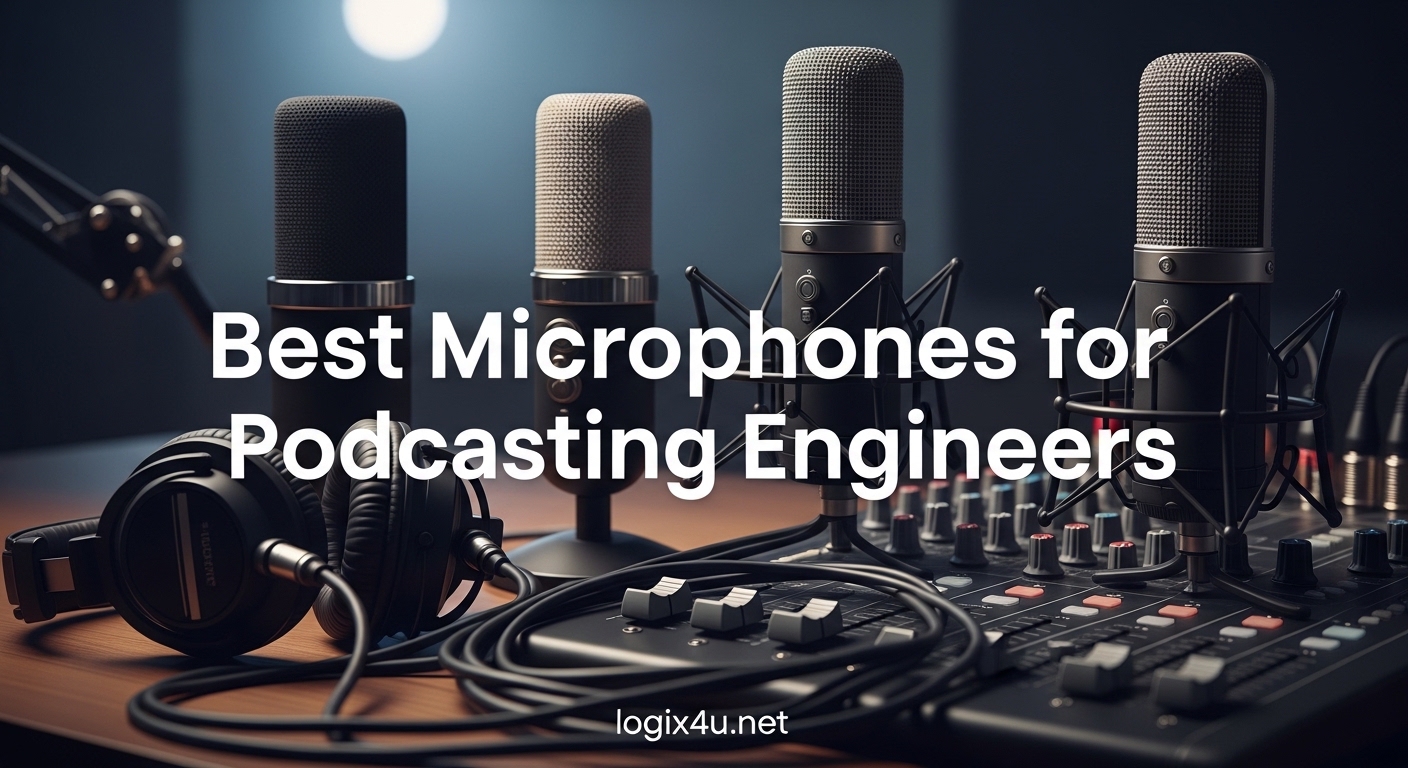
When you are engineering a podcast, every link in the signal chain matters — and it all begins with the microphone. The right podcast microphone captures clean, detailed audio that reduces your post-production workload and elevates the listener experience. For audio engineers who approach podcasting with a technical mindset, the microphone is not just a tool — it is the foundation of everything that follows in the signal path.
Choosing a microphone for podcasting is different from choosing one for music recording or live sound. Voice recording demands specific characteristics: a frequency response tuned for the human voice, a polar pattern that rejects room reflections, and a dynamic range that handles speech without distortion. For podcasting engineers who are building multi-microphone setups, compatibility with audio interfaces, mixers, and digital signal processing tools is equally critical.
In this guide, we review 15 of the best microphones for podcasting engineers, covering budget-friendly options under $50, mid-range workhorses between $80 and $179, and premium studio-grade microphones above $179. Whether you are equipping your first home studio or spec’ing out a professional broadcast facility, there is a microphone on this list that will serve your production needs.
Top 3 Picks for Best Microphones for Podcasting Engineers (September 2026)
Quick Picks: Best Microphones for Podcasting Engineers
If you need fast recommendations without reading every review, here are our top picks organized by use case:
- Best Overall for Professional Studios: Shure SM7B — the industry-standard broadcast microphone with legendary warmth and voice isolation
- Best Premium All-in-One Solution: Rode NT1 5th Gen — studio condenser with dual XLR/USB connectivity and ultra-low 4dB self-noise
- Best Mid-Range Dynamic: Shure MV7X — voice isolation technology drawing from SM7B heritage at an accessible price
- Best Value Dual-Connectivity: Samson Q2U — XLR and USB in one package with a complete accessory bundle under $100
- Best Budget Workhorse: FIFINE T669 — complete condenser kit with boom arm and shock mount under $40
- Best Feature-Rich USB: HyperX QuadCast 2 S — four polar patterns, RGB lighting, and on-board controls
- Best Podcasting-Optimized XLR: Rode PodMic — purpose-built broadcast microphone with internal shock mount and pop filter
Best Microphones for Podcasting Engineers in 2026
| Product | Specifications | Action |
|---|---|---|
 Shure SM7B Shure SM7B |
|
Check Latest Price |
 Shure MV7+ Shure MV7+ |
|
Check Latest Price |
 Rode NT1 5th Gen Rode NT1 5th Gen |
|
Check Latest Price |
 Shure MV7X Shure MV7X |
|
Check Latest Price |
 HyperX QuadCast 2 S HyperX QuadCast 2 S |
|
Check Latest Price |
 Audio-Technica AT2020 Audio-Technica AT2020 |
|
Check Latest Price |
 MAONO PD400X MAONO PD400X |
|
Check Latest Price |
 Samson Q2U Samson Q2U |
|
Check Latest Price |
 Shure SM58-LC Shure SM58-LC |
|
Check Latest Price |
 Blue Yeti Blue Yeti |
|
Check Latest Price |
 Rode PodMic Rode PodMic |
|
Check Latest Price |
 FIFINE K688 FIFINE K688 |
|
Check Latest Price |
 FIFINE AM8 FIFINE AM8 |
|
Check Latest Price |
 MAONO AU-A04 MAONO AU-A04 |
|
Check Latest Price |
 FIFINE T669 FIFINE T669 |
|
Check Latest Price |
XLR vs USB Microphones: What Podcasting Engineers Need to Know
One of the first decisions you will make when selecting a podcast microphone is choosing between XLR and USB connectivity. Each has a place in a well-designed podcast production workflow, and understanding the engineering tradeoffs will help you make the right call for your setup.
XLR microphones output an analog signal that must be digitized by an external audio interface or mixer. This two-step signal path gives you superior control over your recording chain. You can select an interface with premium preamps tailored to your microphone’s gain requirements, route signal through hardware compressors or EQs, and monitor with near-zero latency through dedicated headphone outputs. For multi-microphone podcast setups — especially those with four or more guests — XLR connectivity with a dedicated interface or mixer is the professional standard.
USB microphones integrate the analog-to-digital converter directly into the microphone housing. This simplifies the signal chain to a single USB cable from microphone to computer, reducing cost and complexity. Modern USB microphones offer surprisingly capable converters, and for solo podcasters or two-person setups, a quality USB microphone can deliver broadcast-ready results with minimal gear. The tradeoff is flexibility: you are locked into the microphone’s built-in converter and preamp quality.
Some microphones — including several on this list, such as the Shure MV7+, Rode NT1 5th Gen, and Samson Q2U — offer both USB and XLR connectivity. These dual-connectivity microphones give you the best of both worlds: use USB for quick solo recording sessions and switch to XLR when you are integrating the microphone into a larger professional setup.
Dynamic vs Condenser Microphones for Podcasting
Microphone transducer type — whether a mic is dynamic or condenser — has a profound effect on how it captures voice and how it performs in different acoustic environments. For podcasting engineers, understanding this distinction is essential to matching microphones to recording conditions.
Dynamic microphones use a simple, rugged transducer design with a diaphragm attached to a coil suspended in a magnetic field. This design is highly durable, naturally resistant to humidity, and excels at rejecting off-axis sound. Dynamic microphones are the industry standard for live sound, radio broadcast, and podcasting because they tolerate imperfect acoustic environments — they will not pick up as much room reverb and ambient noise as a condenser. The Shure SM7B and Rode PodMic are both dynamic microphones purpose-built for voice recording.
Condenser microphones use a capacitor design where the diaphragm acts as one plate of a capacitor. They require phantom power (48V) from a mixer, interface, or direct USB connection, and they are generally more sensitive with a wider frequency response and faster transient capture. Condenser microphones excel in acoustically treated studios where their greater detail and openness can be heard without the drawback of picking up room reflections. The Rode NT1 5th Gen and Audio-Technica AT2020 are condenser microphones that deliver exceptional voice clarity in the right environment.
For podcasting engineers working in home studios, untreated rooms, or multi-person interview scenarios, a dynamic microphone is usually the more practical choice. For those with dedicated, sound-treated studio spaces, a condenser microphone will reward you with greater detail and nuance in your voice recordings.
Premium Tier: Best Microphones for Podcasting Engineers ($179 and Above)
Premium microphones deliver measurably better audio performance, superior build quality, and features designed for professional production workflows. These are the microphones you spec for a dedicated studio or a professional broadcast facility.
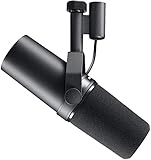
1. Shure SM7B — The Industry-Standard Broadcast Microphone
- Warm broadcast-ready sound
- Excellent voice isolation
- Built-in shock mount and pop filter
- All-metal rugged construction
- Industry-standard reliability
- Requires 60dB+ gain (Cloudlifter recommended)
- XLR only
- Heavier at 2.7 lbs
The Shure SM7B is arguably the most iconic podcast microphone in the world. Used by major radio stations, podcast studios, and broadcasters worldwide, it has earned its reputation through decades of reliable, broadcast-quality voice reproduction. Its warm, smooth frequency response — specifically tuned for vocal recording — delivers a polished sound that requires minimal EQ correction in post-production.
The SM7B is a dynamic, cardioid microphone with a frequency response of 50 Hz to 20,000 Hz. Its wide-range capsule captures the full warmth of the human voice while the cardioid polar pattern provides excellent rejection of background noise and room reflections. The built-in shock isolation mount and pop filter address two common podcasting challenges — vibration from desk surfaces and plosive consonants — without requiring additional accessories.
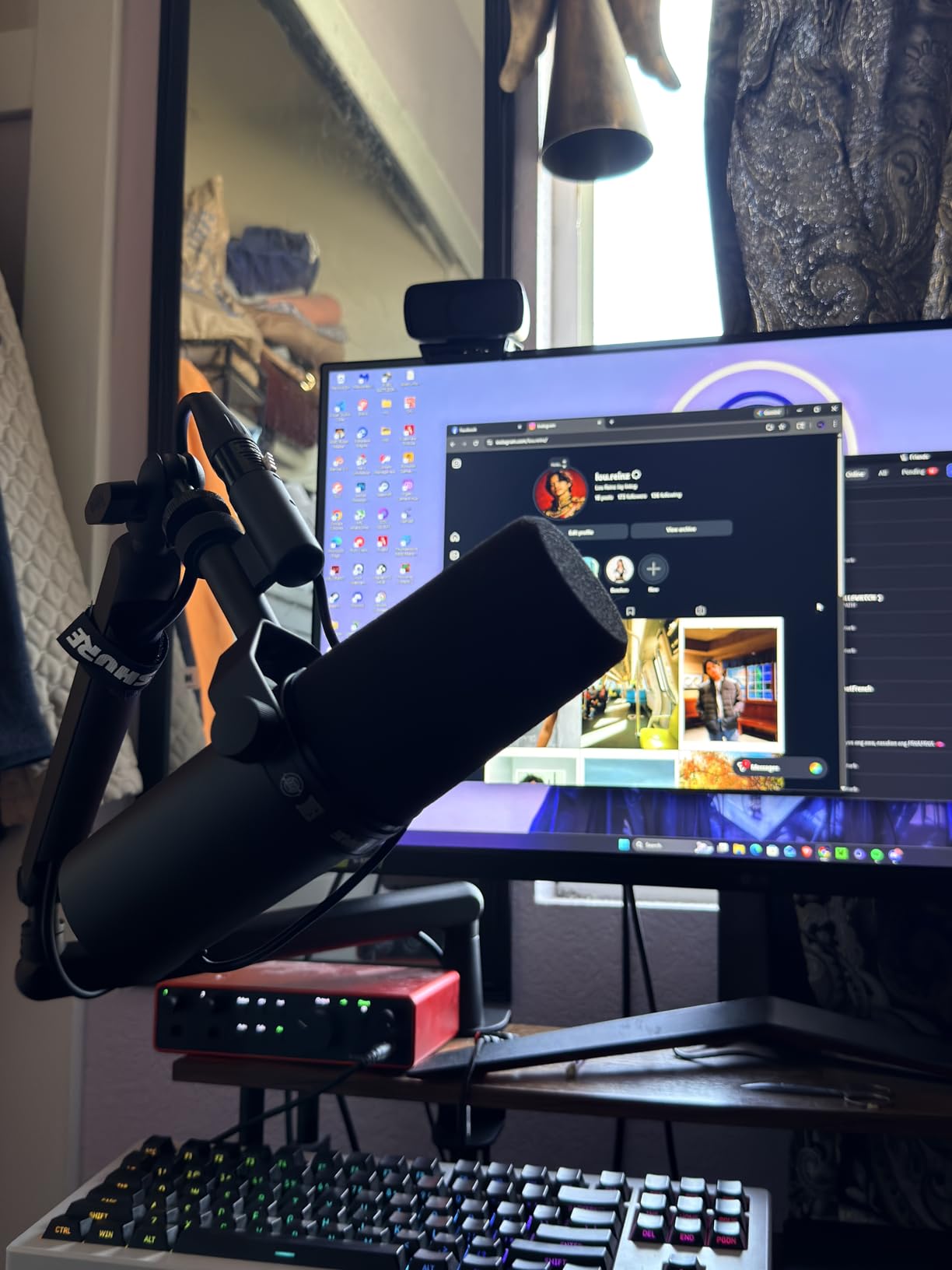
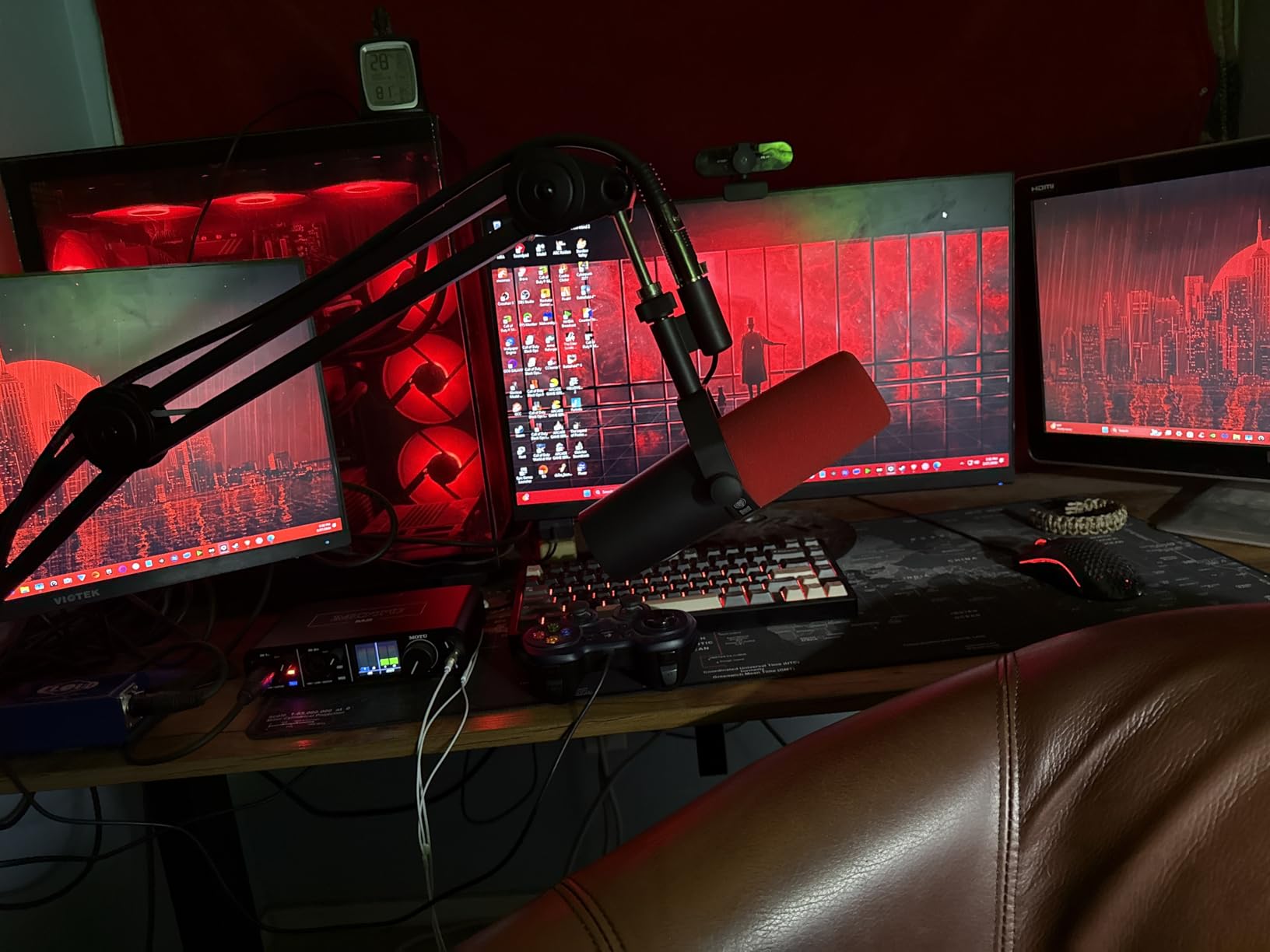
From an engineering standpoint, the SM7B has a relatively low output level and presents a 150-ohm impedance load to your preamp. Most users report needing 60 dB or more of gain to achieve nominal recording levels, which means pairing the SM7B with a quality preamp or inline preamp such as a Cloudlifter or FetHead is practically mandatory, not optional. This is not a flaw — it is the nature of a microphone designed for maximum signal quality. The upside is that the SM7B rewards good gain staging with a signal-to-noise ratio that competes with microphones costing far more.
The SM7B is a pure XLR microphone, requiring an audio interface or mixer with phantom power capability (though it does not require phantom power itself, many preamps that provide sufficient gain do). Its all-metal construction weighs 2.7 pounds, making a sturdy boom arm and microphone stand essential for a stable setup.
For whom it’s good
The Shure SM7B is ideal for professional podcast studios, broadcast facilities, and home studios where audio quality is the top priority. It excels in treated and untreated rooms alike due to its superior voice isolation. If you are building a long-term podcasting setup and budget allows, this microphone will serve you for years.
For whom it’s not ideal
The SM7B is not ideal for podcasters on a tight budget or those who need plug-and-play simplicity. It requires an audio interface with adequate gain and potentially an inline preamp, adding to the overall cost of the setup.
2. Shure MV7+ — Feature-Rich Dual-Connectivity Podcast Microphone
- Dual USB-C and XLR connectivity
- Voice Isolation Technology
- Real-time denoiser DSP
- Customizable LED touch panel
- OBS certified
- Premium price point at $287
- Heavier construction
- Software required for full customization
The Shure MV7+ is the updated evolution of the popular MV7, bringing enhanced digital signal processing, improved audio quality, and a customizable LED touch panel to the podcasting microphone market. It occupies a unique position as one of the most feature-rich dual-connectivity microphones available, making it a compelling choice for podcasting engineers who need flexibility without sacrificing quality.
The MV7+ features both USB-C and XLR outputs, allowing you to use it as a direct computer microphone today and migrate to a full XLR studio setup later. The USB path includes Shure’s MOTIV DSP suite, which provides real-time noise reduction, voice isolation, auto level mode, and a digital pop filter — features that give you a clean starting point in post-production even when recording in less-than-ideal acoustic conditions.
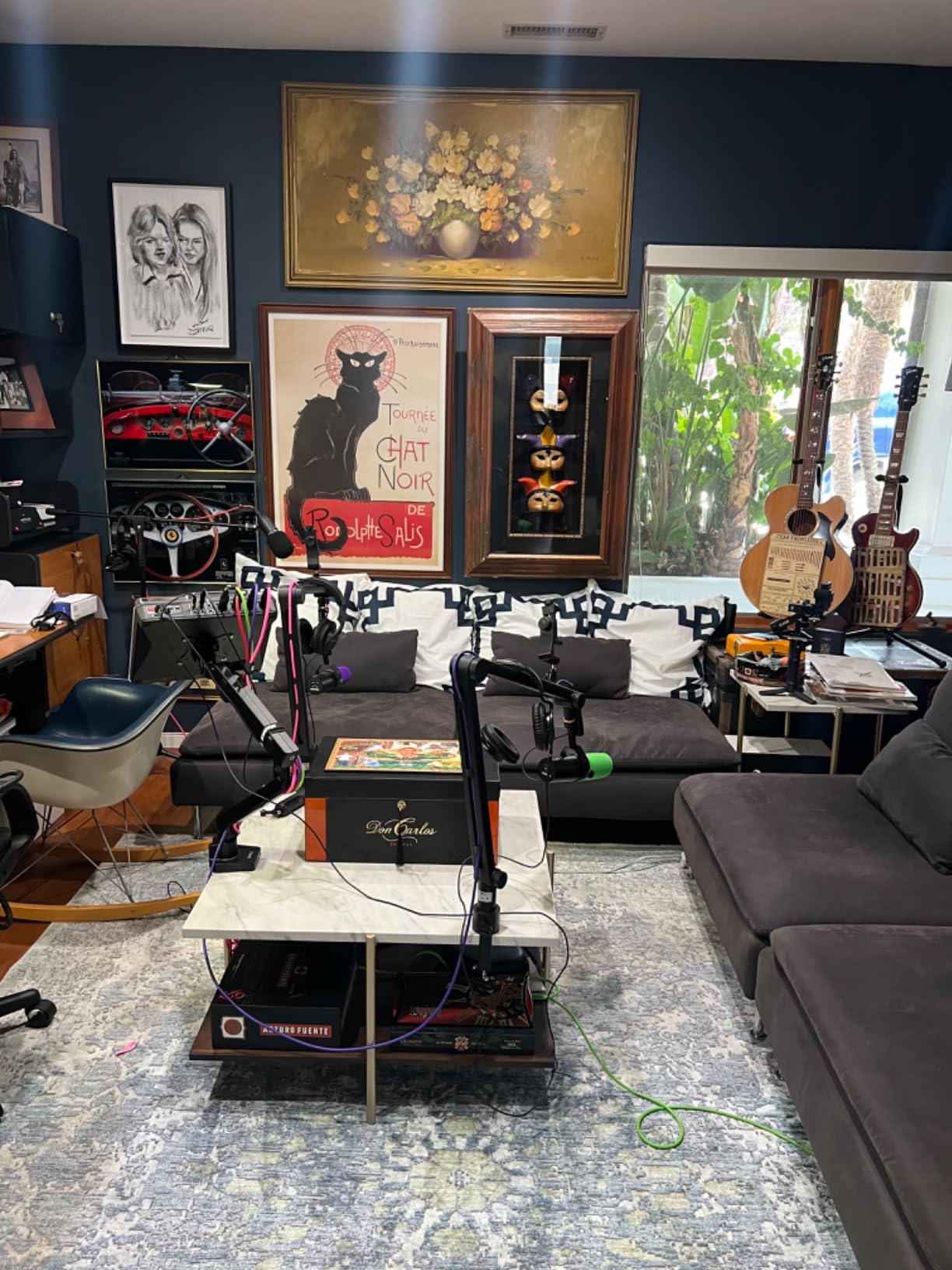
On the technical side, the MV7+ delivers a signal-to-noise ratio of 65 dB and an audible noise floor of just 20 dB. Its frequency response of 50 Hz to 16,000 Hz is optimized for voice, and the cardioid polar pattern provides the voice isolation Shure is known for. The LED touch panel on the front of the microphone serves as both a visual design element and a functional mute indicator, with 16.8 million color options for personalization.
The inclusion of OBS certification means the MV7+ has been validated for seamless integration with streaming workflows, making it a natural choice for podcasters who also produce live streaming content. The all-metal construction and premium build quality feel immediately professional, and the real-time denoiser is genuinely effective at suppressing ambient noise without degrading voice quality.
For whom it’s good
The MV7+ is ideal for podcasting engineers who need versatility and advanced DSP features. It suits solo podcasters who want USB simplicity today but may migrate to XLR later, as well as streamers who need OBS certification.
For whom it’s not ideal
The MV7+ may be overkill for podcasters who only need XLR connectivity or who already have external DSP processing. At $287, it commands a premium that budget-conscious podcasters may not want to pay.
3. Rode NT1 5th Gen — Studio Condenser with Revolutionary 32-Bit Float
- Ultra-low 4dB self-noise
- 32-bit float USB recording
- Dual XLR and USB outputs
- Includes SM6 shock mount and pop filter
- Revolution Preamp built-in
- Heavy at over 1kg with mount
- Requires 48V phantom power via XLR
- Large size may not suit compact setups
The Rode NT1 5th Gen represents a new generation of studio condenser microphones that bridges the gap between traditional analog recording and modern digital workflows. With its dual XLR and USB outputs, 32-bit float recording capability, and an astonishingly low self-noise floor of just 4 dB, the NT1 5th Gen is one of the most technically impressive microphones in this roundup.
As a large-diaphragm condenser microphone, the NT1 5th Gen captures voice with a level of detail and openness that dynamic microphones simply cannot match. Its frequency response of 20 Hz to 20,000 Hz with high-resolution sampling up to 192 kHz via USB means you are capturing every nuance of the human voice. The result is recordings that feel present and intimate — qualities that translate directly to a more engaging listening experience.
Rode’s Revolution Preamp integrated into the microphone delivers clean, low-noise gain without requiring an external preamp, though the microphone can also be connected via XLR to any standard audio interface. The 32-bit float recording via USB is a genuine breakthrough for podcasting: because 32-bit float captures a much wider dynamic range than 16-bit or 24-bit recording, you never need to worry about clipping on loud transients — the peaks are preserved even if your gain staging was imperfect.
The NT1 5th Gen includes the Rode SM6 shock mount and pop filter, providing a complete professional setup out of the box. Its aluminum body with ceramic coating is rugged and visually distinctive, though at over 1 kg with the mount attached, you will need a sturdy microphone arm to support it. The microphone requires 48V phantom power when used via XLR, and it can also run on battery power in USB mode for field recording scenarios.
For whom it’s good
The NT1 5th Gen is ideal for podcasting engineers with sound-treated studios who want maximum voice detail and clarity. The 32-bit float recording is particularly valuable for podcasters who are new to gain staging or who record in varying acoustic environments.
For whom it’s not ideal
This microphone is not ideal for untreated rooms or home studios without acoustic treatment, as its condenser sensitivity will capture room reflections and ambient noise with the same fidelity as the voice.
4. Shure MV7X — SM7B Heritage at an Accessible Price
- Voice isolation technology from SM7B
- Warm broadcast-ready sound
- All-metal durable construction
- Excellent value vs premium alternatives
- Uniform cardioid rejection
- XLR only -- requires interface
- May need preamp for optimal gain
- No built-in monitoring
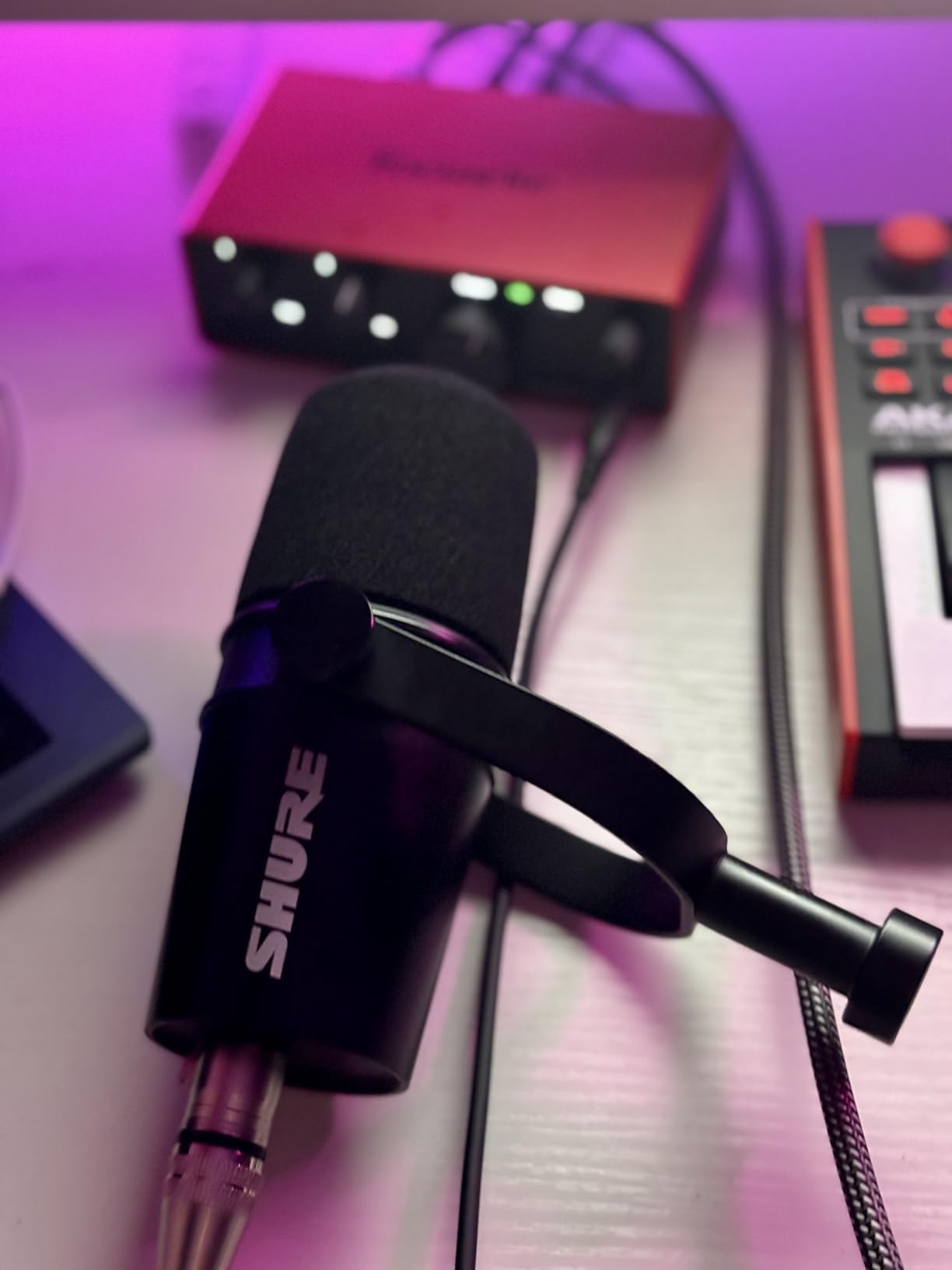
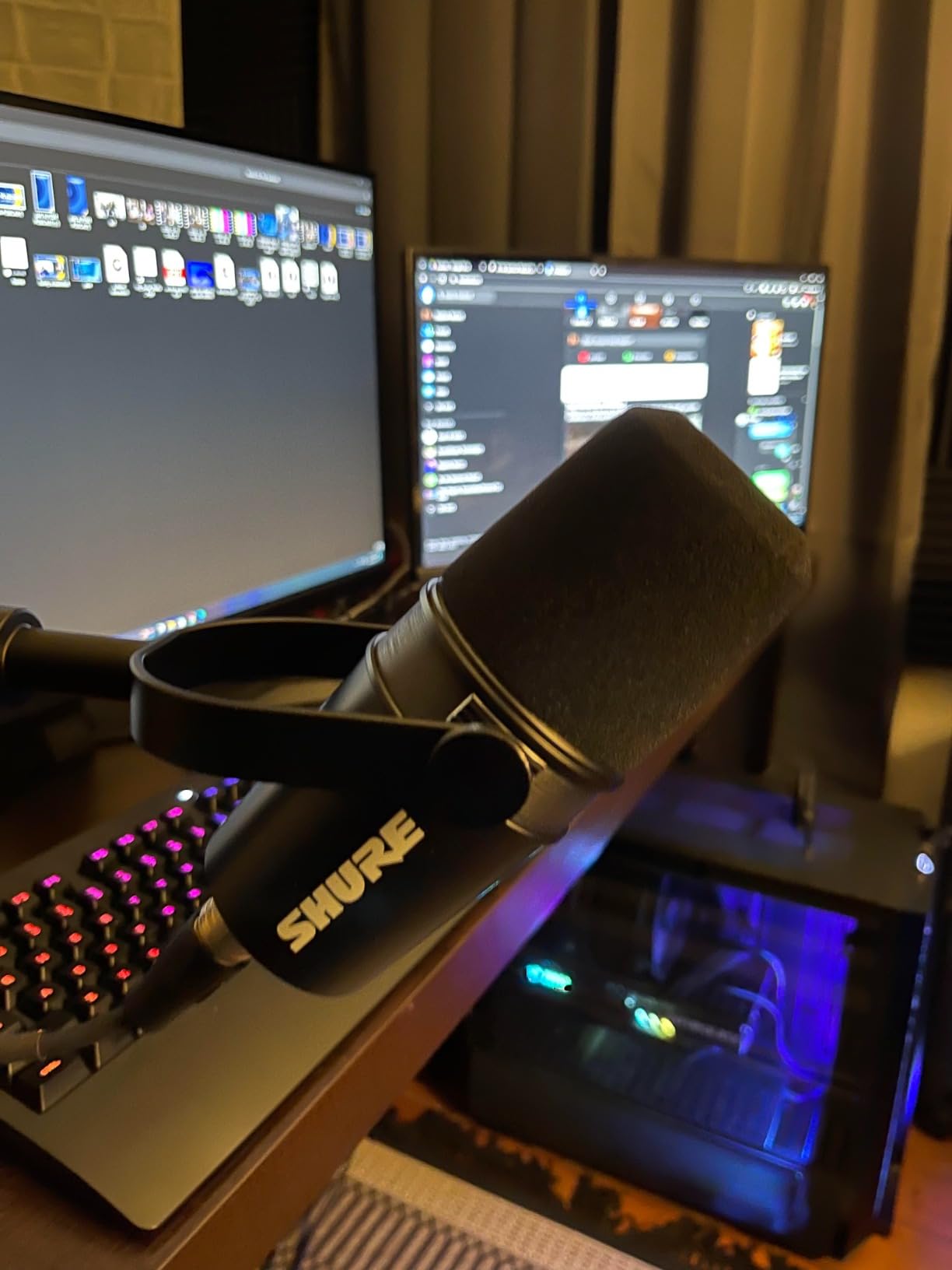
The Shure MV7X is the XLR-only sibling of the popular MV7, purpose-built for podcasting engineers who prefer a pure analog signal path without digital processing. Drawing directly from the acoustic engineering behind the legendary SM7B, the MV7X offers voice isolation technology and a warm, broadcast-ready sound at a price point that is accessible to independent podcasters.
The MV7X is a dynamic, cardioid microphone with a frequency response of 50 Hz to 16,000 Hz — narrowly tuned to the vocal range for maximum clarity and warmth. Its uniform cardioid pickup pattern focuses on the voice source directly in front of the microphone while rejecting sounds from the sides and rear, making it an excellent choice for untreated rooms, shared recording spaces, and environments with ambient noise challenges.
One of the MV7X’s strongest selling points is its voice isolation technology, which Shure developed specifically for content creation and broadcast applications. This technology works at the transducer level to separate the voice signal from unwanted background noise, reducing the burden on noise reduction processing in post-production. For podcasting engineers who record in non-ideal acoustic environments, this is a meaningful advantage.
The MV7X uses a standard XLR connection and requires an audio interface or mixer with sufficient gain. Like the SM7B, it benefits from a preamp that can deliver clean gain in the 55-60 dB range. The all-metal construction is rugged and durable, and the built-in 5/8-inch threaded yoke fits standard microphone stands and boom arms without adapters.
For whom it’s good
The MV7X is ideal for podcasting engineers who want SM7B-like quality at a lower price, or those running multi-microphone setups where outfitting every host with SM7Bs is impractical.
For whom it’s not ideal
Podcasters who need USB connectivity or who do not have an audio interface with adequate gain may find the MV7X requires too many additional purchases.
Mid-Range Tier: Best Microphones for Podcasting ($80 to $179)
The mid-range price tier offers the best balance of audio quality, build quality, and feature set for most podcasting engineers. These microphones deliver professional-grade results without requiring a separate preamp investment or a dedicated sound-treated studio space.
5. HyperX QuadCast 2 S — Feature-Packed Versatile USB Microphone
- Four selectable polar patterns
- Customizable RGB lighting
- Tap-to-mute sensor
- Integrated shock mount
- On-board controls
- Can pick up background noise in untreated rooms
- Premium price for USB-only
- Software controls lighting not audio
The HyperX QuadCast 2 S is a feature-packed USB condenser microphone that brings professional-level audio recording to content creators, streamers, and podcasters who want maximum flexibility without investing in a separate audio interface. With its four selectable polar patterns, customizable RGB lighting, and comprehensive on-board controls, the QuadCast 2 S is one of the most versatile microphones in its price class.
The QuadCast 2 S supports four polar patterns — cardioid, omnidirectional, bidirectional, and stereo — allowing a single microphone to handle solo podcasting, multi-person round-table discussions, face-to-face interviews, and ambient sound capture. This versatility is rare at any price point and makes the microphone an excellent choice for podcasting engineers who produce multiple show formats.
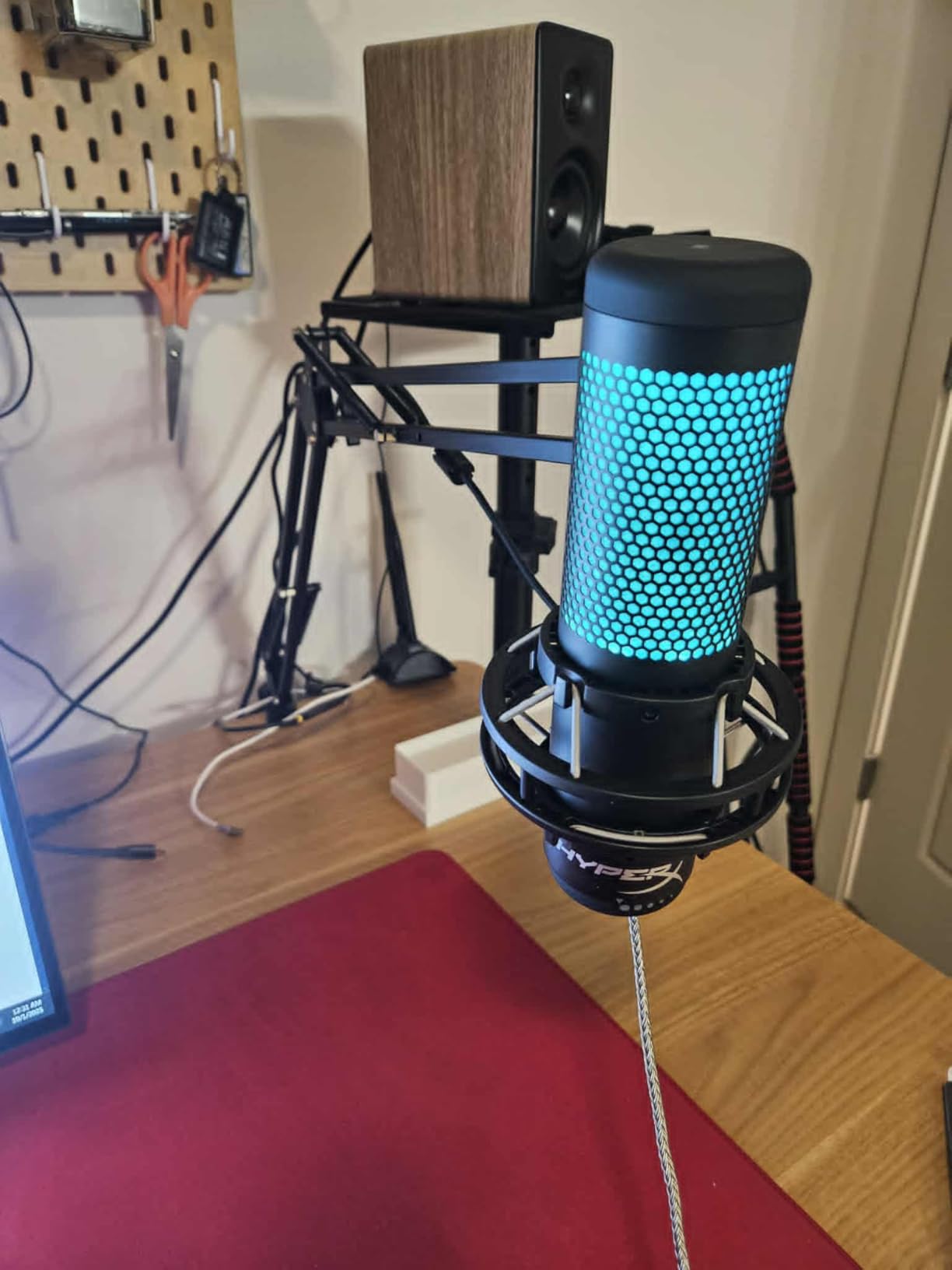
The tap-to-mute sensor on the top of the microphone provides instant, silent muting during recording sessions — a practical feature that many podcasting engineers appreciate when unexpected interruptions occur. The integrated vibration-dampening shock mount isolates the microphone from desk vibrations and mechanical noise, and the redesigned detachable shock mount uses spring-loaded pins for easy setup with both 3/8-inch and 5/8-inch threading.
On the technical side, the QuadCast 2 S delivers a frequency response of 20 Hz to 20,000 Hz with a signal-to-noise ratio of 90 dB. The microphone connects via USB Type-C and is plug-and-play with both Windows and macOS. The NGENUITY software allows customization of the RGB lighting with over 100 customizable aRGB LEDs and 16 million color options, though audio settings are primarily controlled through the on-board multifunction knob.
For whom it’s good
The QuadCast 2 S is ideal for podcasting engineers who produce multiple show formats, want RGB aesthetics, and prefer the simplicity of USB connectivity without sacrificing features.
For whom it’s not ideal
Podcasters in untreated acoustic environments may find the condenser sensitivity problematic, and those who want XLR connectivity will need to look elsewhere.
6. Audio-Technica AT2020 — Studio Condenser Benchmark
- Exceptional price-to-performance ratio
- Wide dynamic range and high SPL handling
- Extended frequency response
- Trusted brand reliability
- Durable all-metal build
- Requires 48V phantom power via XLR
- No shock mount or pop filter included
- Sensitive to room noise in untreated spaces
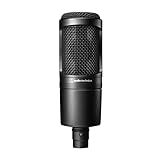
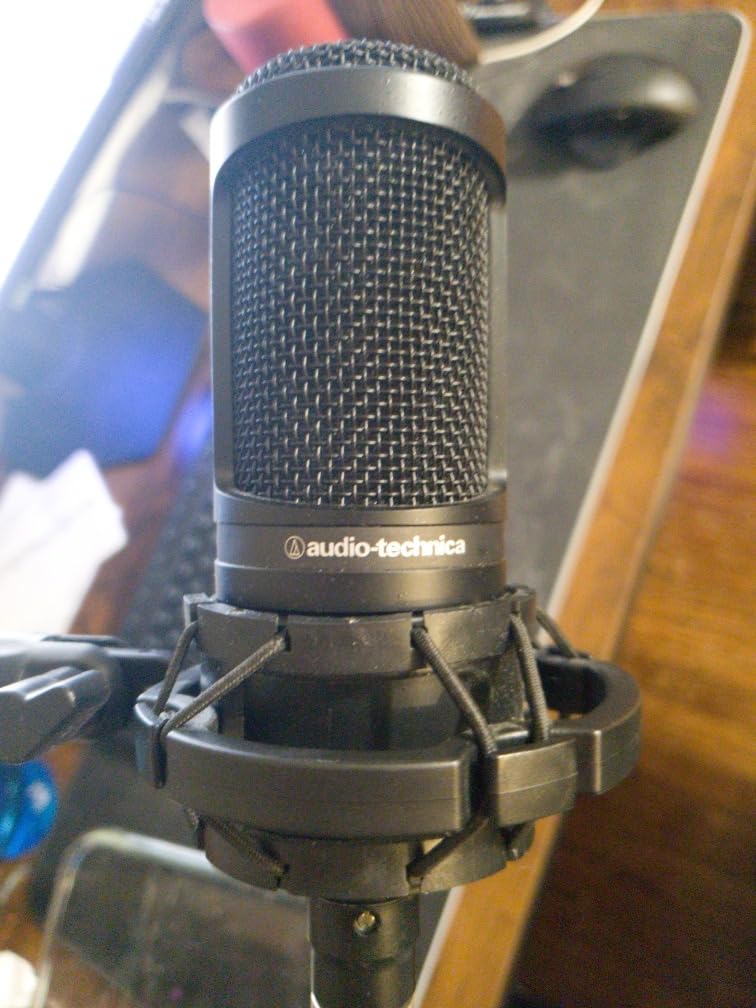
The Audio-Technica AT2020 is a studio condenser microphone that has become a benchmark for price-to-performance excellence in project studios and home recording setups worldwide. While it was originally designed for music recording, its clean, detailed sound and affordable price have made it a favorite among podcasting engineers looking for condenser microphone quality on a budget.
The AT2020 features a fixed-cardioid condenser capsule with a custom-engineered low-mass diaphragm that provides extended frequency response and superior transient response. Its wide dynamic range of 124 dB and high SPL handling of 137 dB mean the microphone can capture everything from a whisper to a shout without distortion. The cardioid polar pattern reduces pickup of sounds from the sides and rear, improving isolation of the voice source.
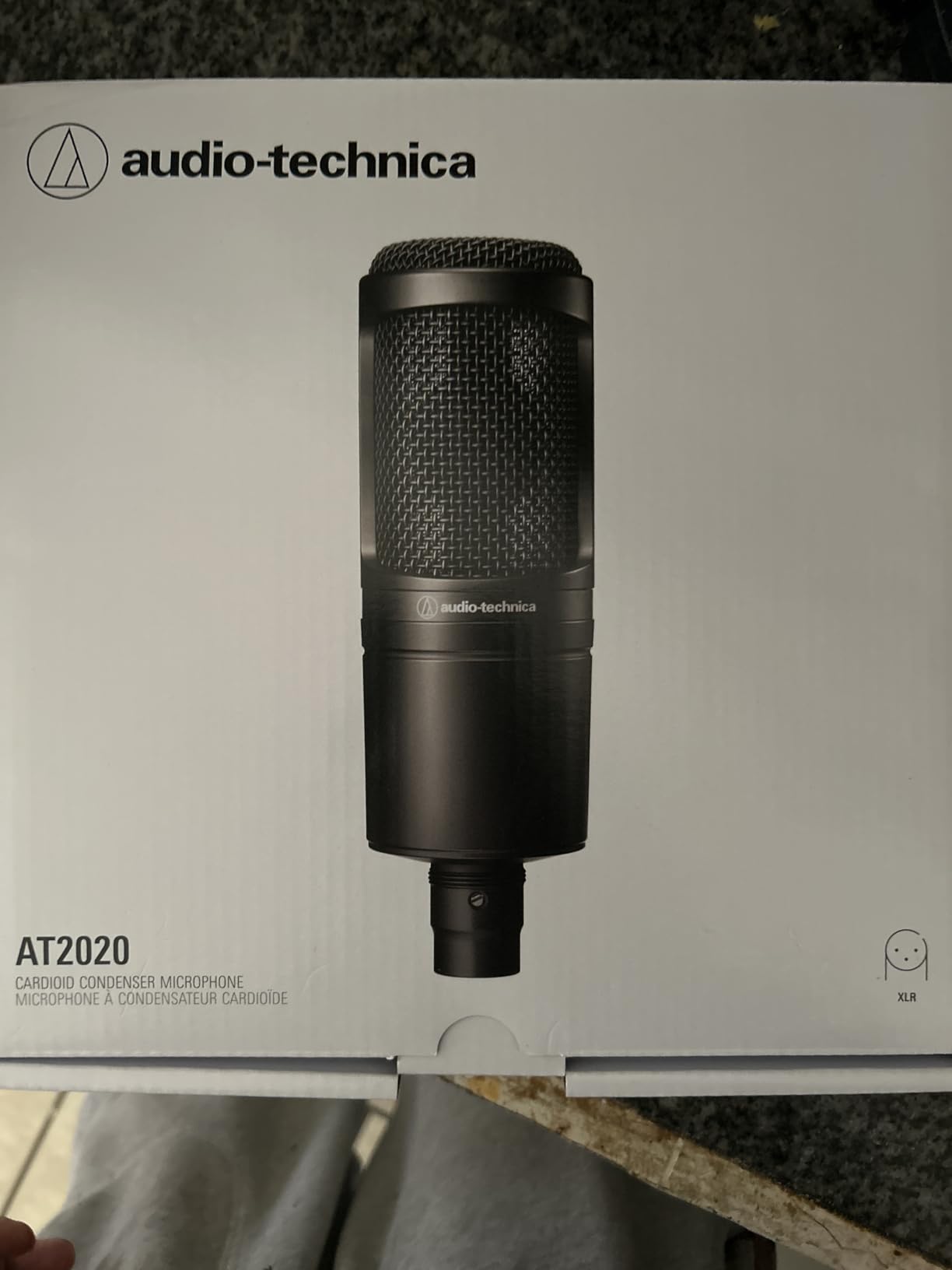
As an XLR-only microphone, the AT2020 requires 48V phantom power from an audio interface or mixer. This is standard for condenser microphones and means you will need an interface with phantom power capability — a minimal additional investment given the AT2020’s competitive price point. The microphone does not include a shock mount or pop filter, so plan to budget for those accessories separately.
The AT2020 is sensitive — its extended frequency response and condenser transducer design capture far more room information than a dynamic microphone in the same space. For podcasting engineers working in sound-treated rooms, this sensitivity is a strength. For those in untreated spaces, the AT2020 will expose every reflection and ambient noise source, which may require additional room treatment or post-processing noise reduction.
For whom it’s good
The AT2020 is ideal for podcasting engineers with treated acoustic spaces who want condenser microphone detail and clarity at an accessible price point.
For whom it’s not ideal
Podcasters in untreated rooms or those who need included accessories (shock mount, pop filter) should consider alternatives with more complete bundles.
7. MAONO PD400X — Professional Features at Under $120
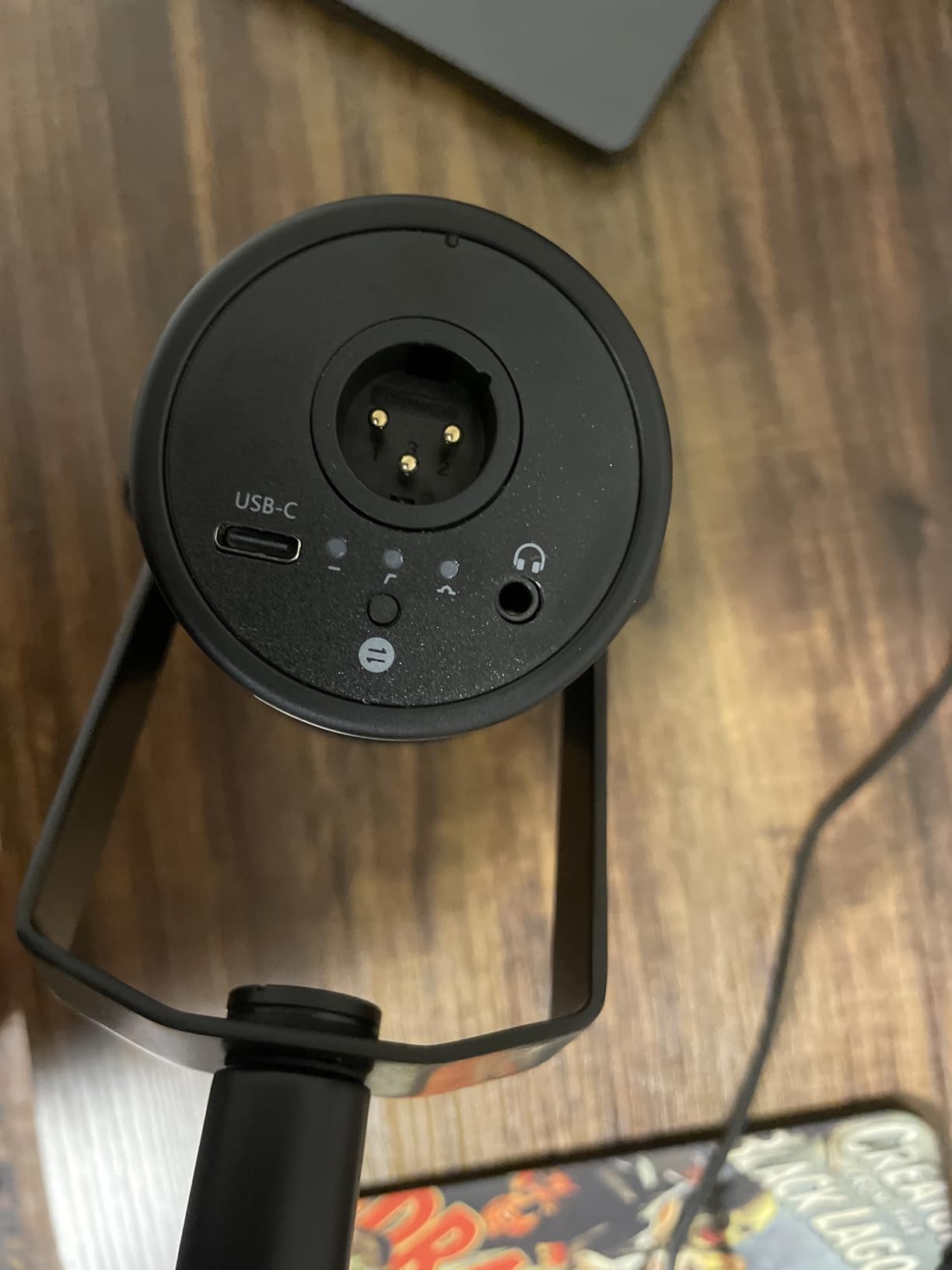
- Dual USB and XLR connectivity
- MAONO Link software with EQ presets
- 3-in-1 digital knob control
- Tap-to-mute with LED indicator
- All-metal body construction
- Stand is short and rigid
- Requires external power for XLR mode
- Newer product with limited reviews
The MAONO PD400X is a dynamic microphone that bridges the gap between consumer-grade USB microphones and professional broadcast equipment. With its dual USB and XLR connectivity, integrated software controls, and professional-grade voice isolation, the PD400X delivers an impressive feature set at a price point that undercuts many competitors.
The PD400X uses a dynamic capsule with a cardioid polar pattern optimized for voice recording. Its frequency response of 40 Hz to 16,000 Hz captures the essential range of the human voice with warmth and clarity, while the cardioid pickup pattern provides solid rejection of background noise and room reflections. The signal-to-noise ratio of 78 dB is competitive with microphones costing significantly more.
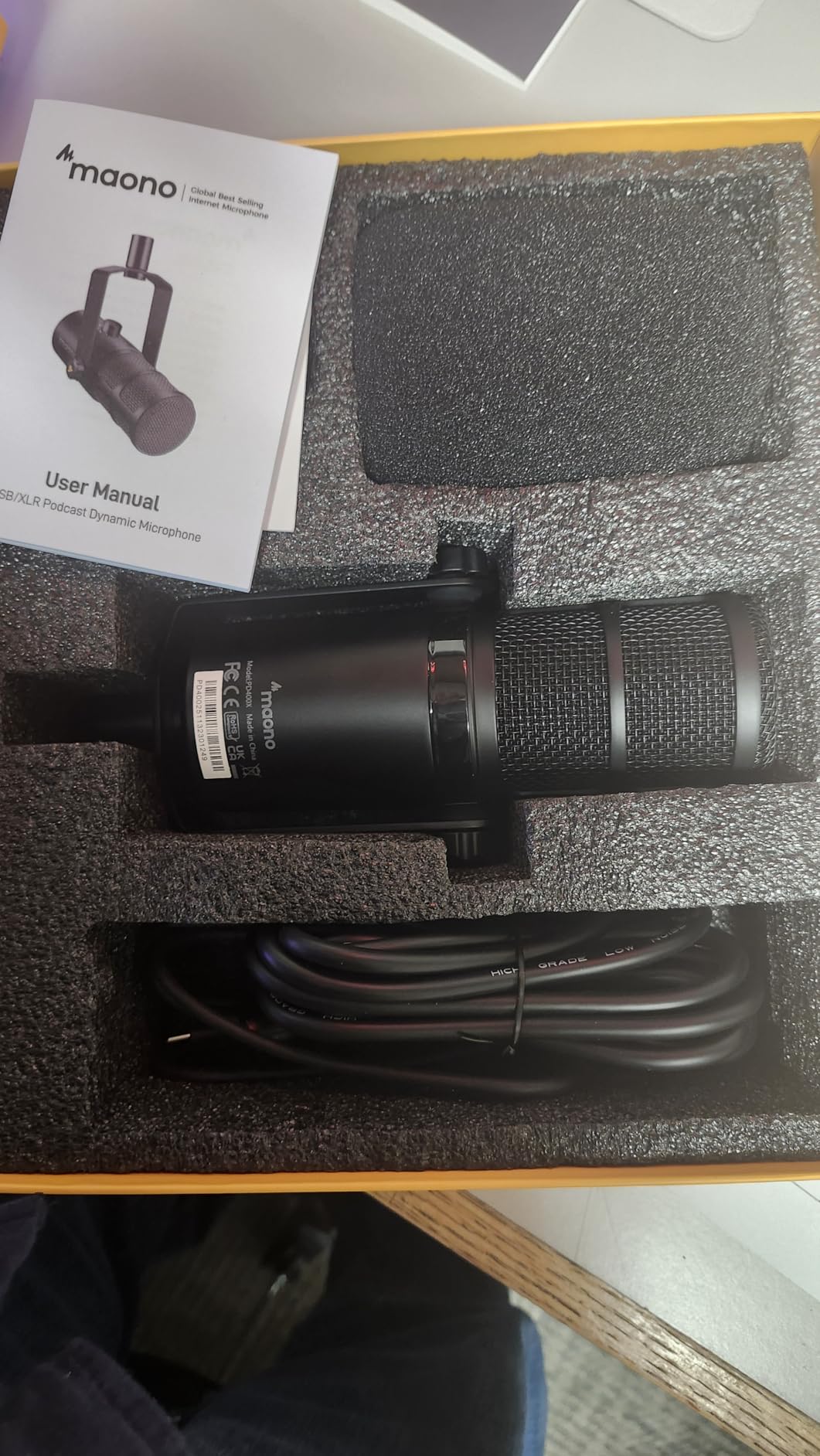
One of the PD400X’s distinguishing features is the MAONO Link application, which provides both standard and advanced control modes. Through the software, you can access EQ presets, a limiter, and a compressor — tools that give podcasting engineers direct control over their recorded signal without requiring outboard hardware or post-production processing. The 3-in-1 digital knob on the microphone body controls mic gain, headphone volume, and monitor mix, providing hands-on adjustment during recording sessions.
The tap-to-mute function with an LED indicator is a practical feature for podcasting scenarios where unexpected interruptions require quick silence. The all-metal body and heavy-duty metal stand included in the package contribute to a premium feel that belies the PD400X’s accessible price.
For whom it’s good
The PD400X is ideal for podcasting engineers who want professional features and dual connectivity at an accessible price, especially those who benefit from software-based EQ and dynamics control.
For whom it’s not ideal
Podcasters who need a tall or adjustable stand may find the included stand limiting, and those who prefer not to use software for audio control may prefer a simpler option.
8. Samson Q2U — Best Value Complete Package Under $100
- Dual USB-C and XLR connectivity
- Complete accessory bundle included
- Zero-latency headphone monitoring
- Handheld design versatility
- Grows with your setup
- Benefits from additional gain
- Desktop stand not very stable
- May need pop filter for optimal plosive control
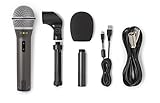
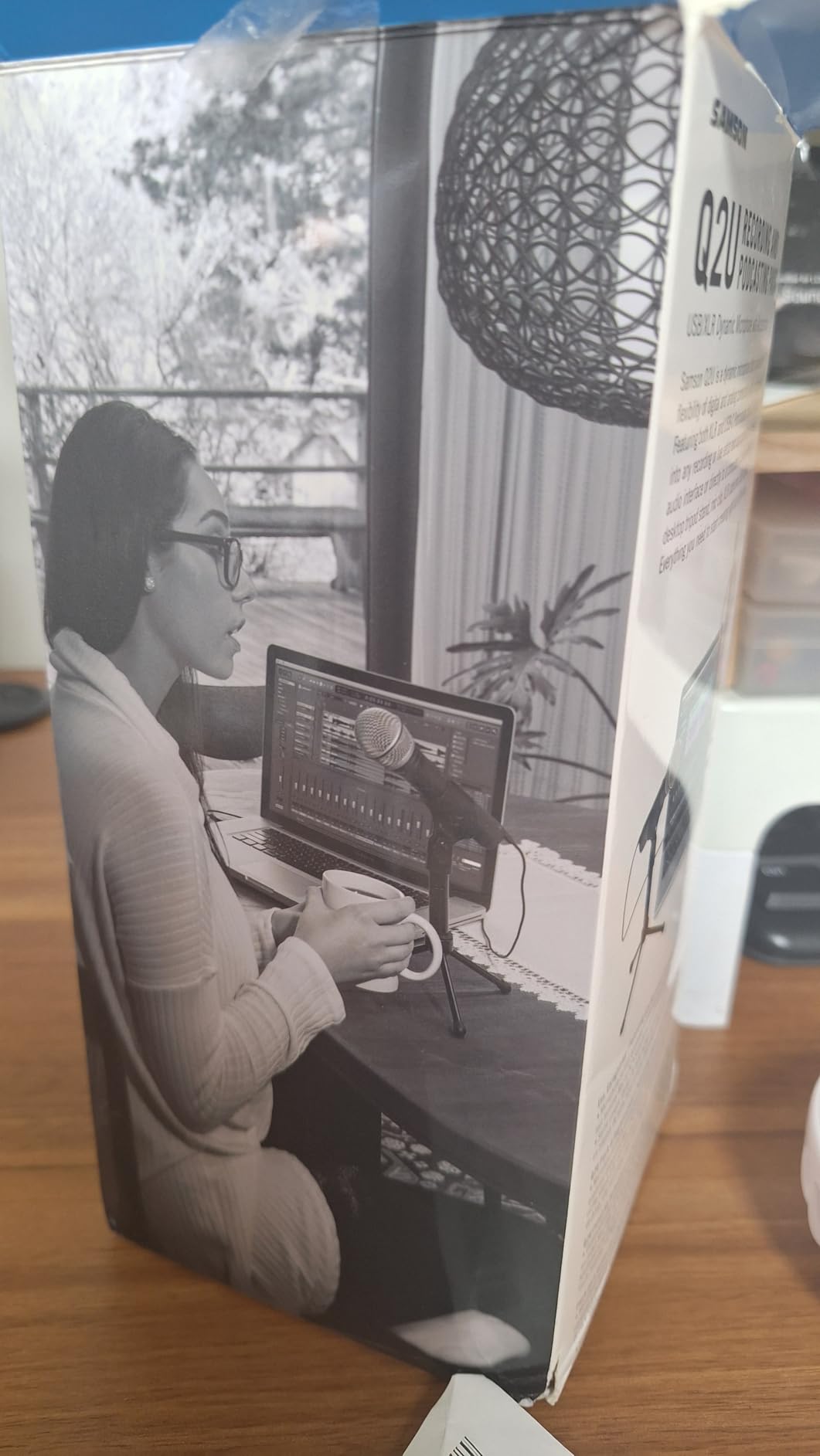
The Samson Q2U has been a perennial favorite among beginner and intermediate podcasting engineers for its remarkable versatility and included accessory bundle. The combination of XLR and USB-C connectivity, along with a comprehensive kit containing a tripod desktop stand, mic clip, windscreen, and both cables, makes the Q2U one of the most complete microphone packages available at any price.
The Q2U is a dynamic handheld microphone with a cardioid polar pattern and a frequency response of 50 Hz to 15,000 Hz. Its signal-to-noise ratio of 70 dB is adequate for voice recording, and the dynamic transducer design provides the background noise rejection that makes it suitable for untreated recording environments. The 3.5mm headphone jack enables real-time zero-latency monitoring, which is essential for podcasters who need to hear their own voice while recording.
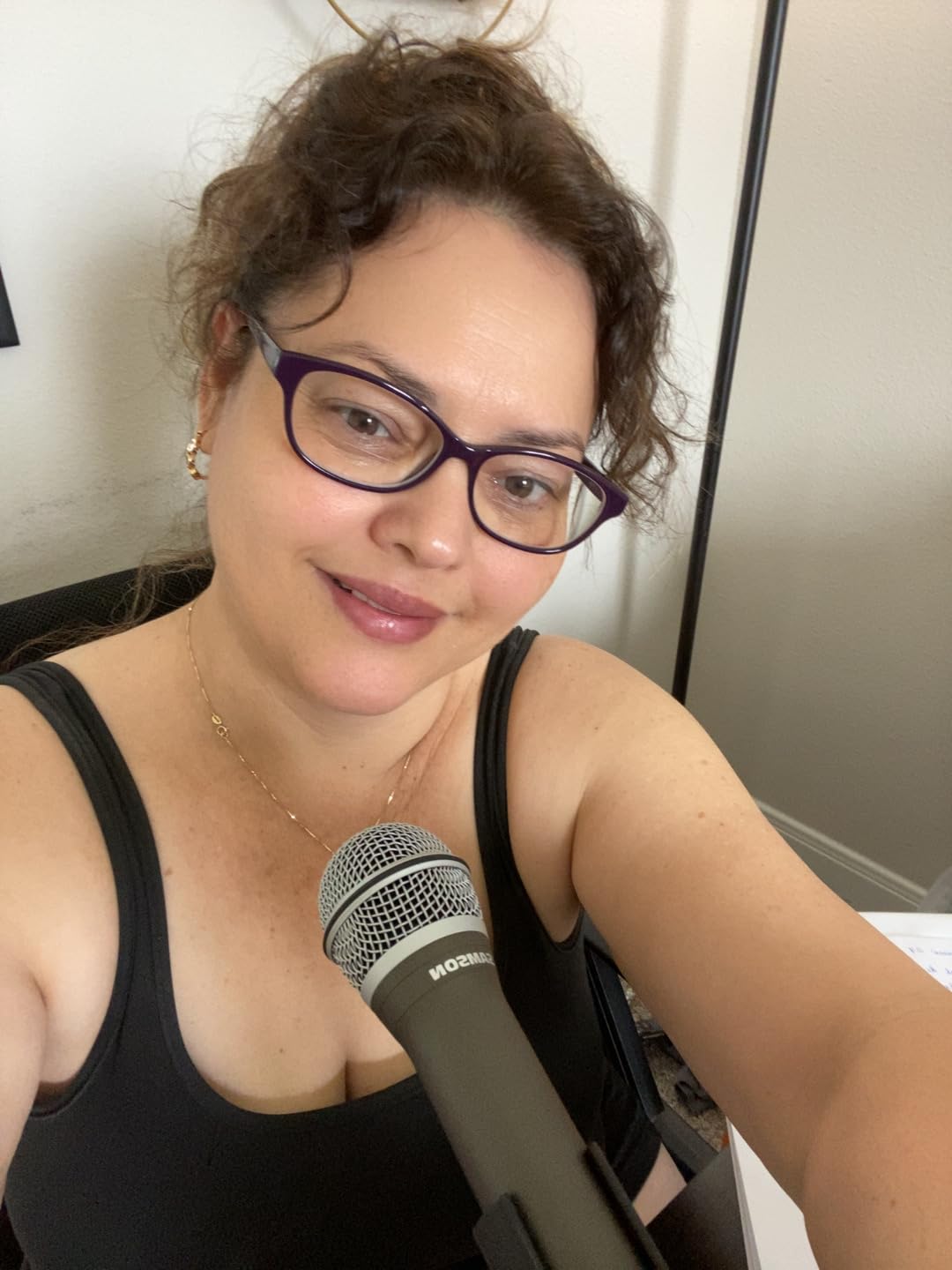
The dual XLR and USB-C connectivity is the Q2U’s standout feature. Use the USB-C connection for quick solo recording sessions where simplicity is paramount — just plug into your computer and start recording. When you are ready to integrate the Q2U into a larger multi-microphone setup or connect through a dedicated preamp for better gain quality, switch to the XLR output. This flexibility makes the Q2U an excellent first microphone that grows with your setup.
Common user feedback notes that the Q2U, like many dynamic microphones, benefits from additional gain. If your audio interface does not provide sufficient clean gain, a preamp or inline preamp can improve recording levels significantly. The tripod desktop stand is functional but not the most stable platform for extended recording sessions — upgrading to a boom arm is a worthwhile investment.
For whom it’s good
The Q2U is ideal for podcasting beginners or budget-conscious engineers who want a complete package with everything needed to start recording immediately, with the flexibility to upgrade to XLR later.
For whom it’s not ideal
Experienced podcasters who already have audio interfaces and prefer boom arms may find the included stand unnecessary, and those needing maximum audio quality may outgrow the Q2U quickly.
9. Shure SM58-LC — Legendary Workhorse for Podcasting
Shure SM58 Pro XLR Dynamic Vocal Microphone
- Legendary durability and build quality
- Warm vocal sound signature
- Excellent plosive rejection from spherical grille
- Pneumatic shock mount included
- Globally available replacement parts
- XLR only -- no USB
- Requires quality preamp with 55dB+ gain
- No XLR cable included
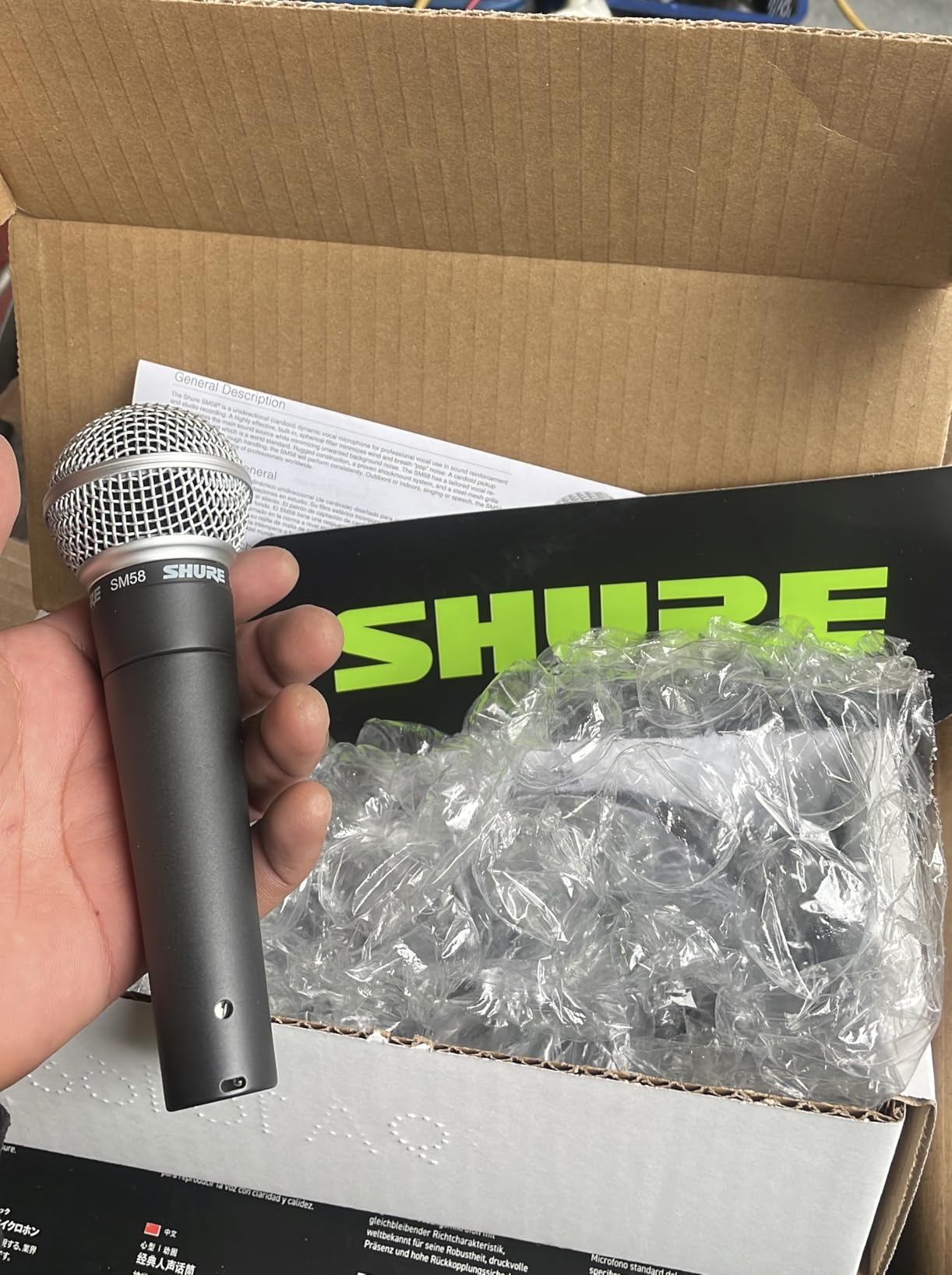
The Shure SM58-LC needs no introduction. It is one of the most widely used professional microphones in the world, trusted on stage and in studios across every genre of music and every form of broadcast. Its legendary durability, warm vocal reproduction, and reliable performance have made it a workhorse for over five decades. While it was designed for live vocal performance, the SM58-LC is an excellent budget podcasting microphone for engineers who understand its strengths and limitations.
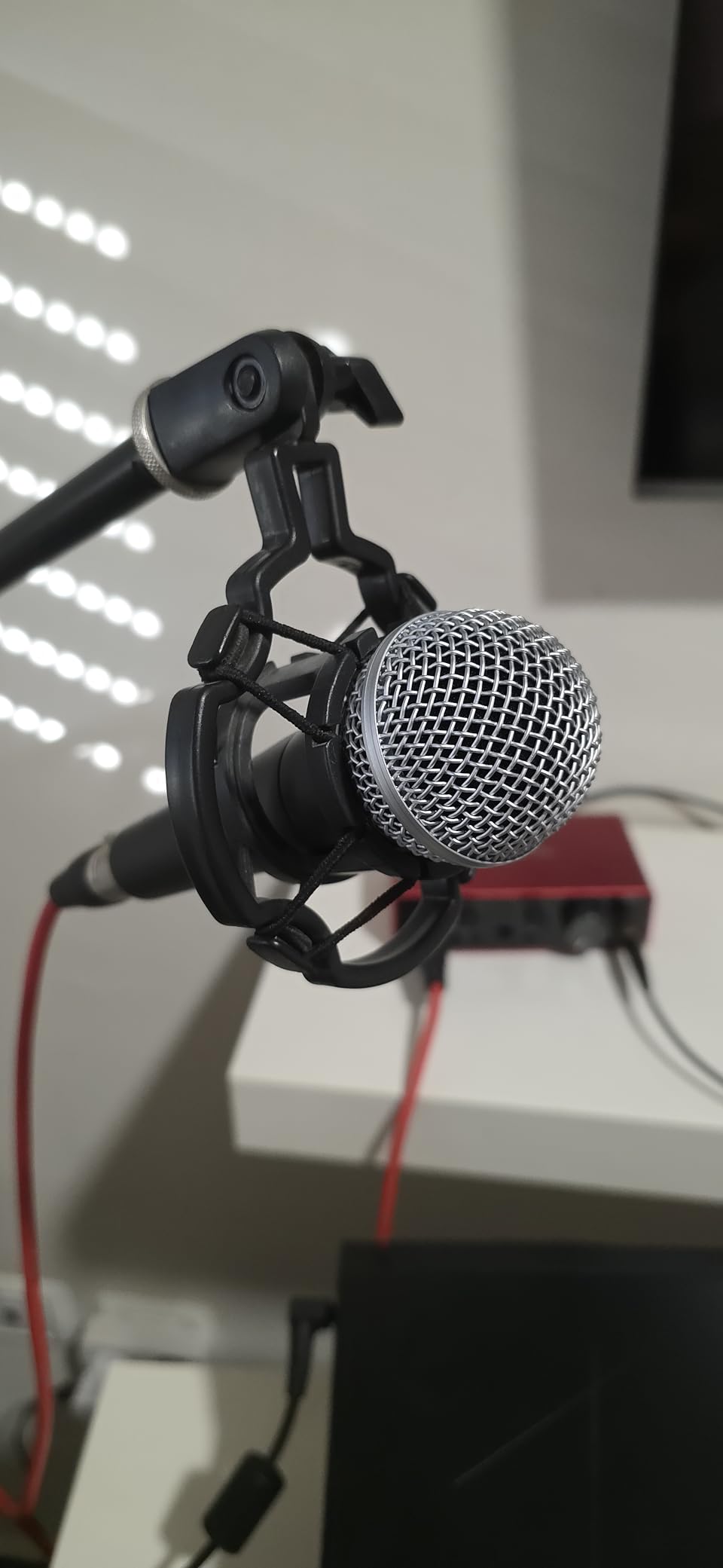
The SM58-LC is a dynamic microphone with a cardioid polar pattern and a frequency response of 50 Hz to 15,000 Hz. Its sound signature — warm and articulate in the midrange with a gentle presence peak around 4-8 kHz — is flattering for vocal recording and helps voices cut through a mix. The spherical grille with an integrated pop filter reduces plosives without requiring an external pop screen, and the pneumatic shock mount reduces vibration handling noise.
The SM58-LC is built to touring and professional use standards. Its all-metal construction, reinforced stand adapter, and rugged grille can survive the abuse of live performance without degrading. This durability translates directly to a podcasting environment, where the microphone will maintain its performance characteristics for years or even decades of regular use.
As an XLR-only microphone, the SM58-LC requires an audio interface or mixer. Like the SM7B, it benefits from additional gain — many users report needing a preamp that can deliver 55 dB or more of clean gain to achieve optimal recording levels. The SM58-LC does not come with an XLR cable, so factor that into your budget when purchasing.
For whom it’s good
The SM58-LC is ideal for podcasting engineers who prioritize reliability and durability, those on a budget who want professional-grade sound, and anyone who values a microphone with decades of proven track record.
For whom it’s not ideal
Podcasters who need USB connectivity or who do not have an audio interface with adequate gain will need to budget for additional equipment.
10. Blue Yeti — Best-Selling Multipattern USB Condenser
- Four pickup patterns for versatility
- Blue VO!CE broadcast software
- Onboard controls for gain and polar pattern
- Proven track record and community support
- Adjustable desktop stand
- Sensitive to room acoustics
- Heavy and large footprint
- Uses micro-USB not USB-C
- May need pop filter for plosive control
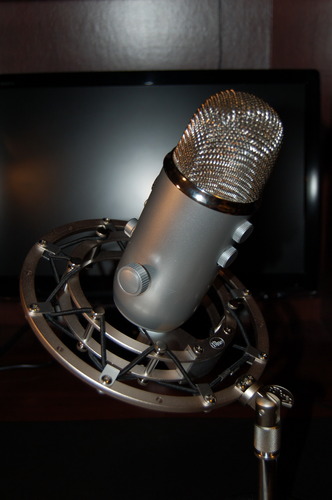
The Blue Yeti (Logitech Blue Yeti, now part of the Logitech G brand) is the number one best-selling multipurpose condenser microphone and a fixture in the podcasting, streaming, and content creation communities. Its distinctive design, four pickup patterns, and integrated software have made it the most recognizable microphone in its category.
The Blue Yeti features a custom three-capsule array that produces clear, broadcast-quality sound. Its four selectable pickup patterns — cardioid, omnidirectional, bidirectional, and stereo — make it one of the most versatile USB microphones available. For podcasting engineers who conduct solo shows, interviews, or round-table discussions, the ability to switch polar patterns on the same microphone without changing gear is a meaningful practical advantage.
The onboard controls are comprehensive: a knob for headphone volume, a pattern selection button, an instant mute button, and a mic gain control give you direct hands-on adjustment without opening software. The adjustable desktop stand allows precise positioning, though its weight and size make it less suited to compact desk setups.
Through the Blue VO!CE software, you gain access to broadcast vocal effects, enhanced modulation, and audio processing that can shape your recorded voice sound directly at the source. For podcasting engineers who want professional vocal processing without diving into a DAW, this integrated capability is a genuine time-saver.
As a condenser microphone, the Blue Yeti is sensitive to room acoustics. In treated studios, its detail and openness are impressive. In untreated rooms, every reflection and ambient noise source will be captured with equal fidelity. Proper microphone technique — speaking close to the microphone and minimizing distance — is essential to getting the best results from the Blue Yeti.
For whom it’s good
The Blue Yeti is ideal for podcasting engineers who produce multiple show formats, value the Blue VO!CE software for onboard processing, and want a proven, well-supported microphone.
For whom it’s not ideal
Podcasters in untreated rooms or those with limited desk space may find the Blue Yeti’s sensitivity and size problematic.
11. Rode PodMic — Purpose-Built Broadcast Microphone
RØDE PodMic Cardioid Dynamic Broadcast Microphone, XLR
- Purpose-built for podcasting
- Broadcast-quality rich sound
- Internal shock mount and pop filter
- Optimized for RODECaster Pro
- Exceptional value under $90
- Low output requires significant gain
- Very heavy at 937 grams
- XLR only connectivity
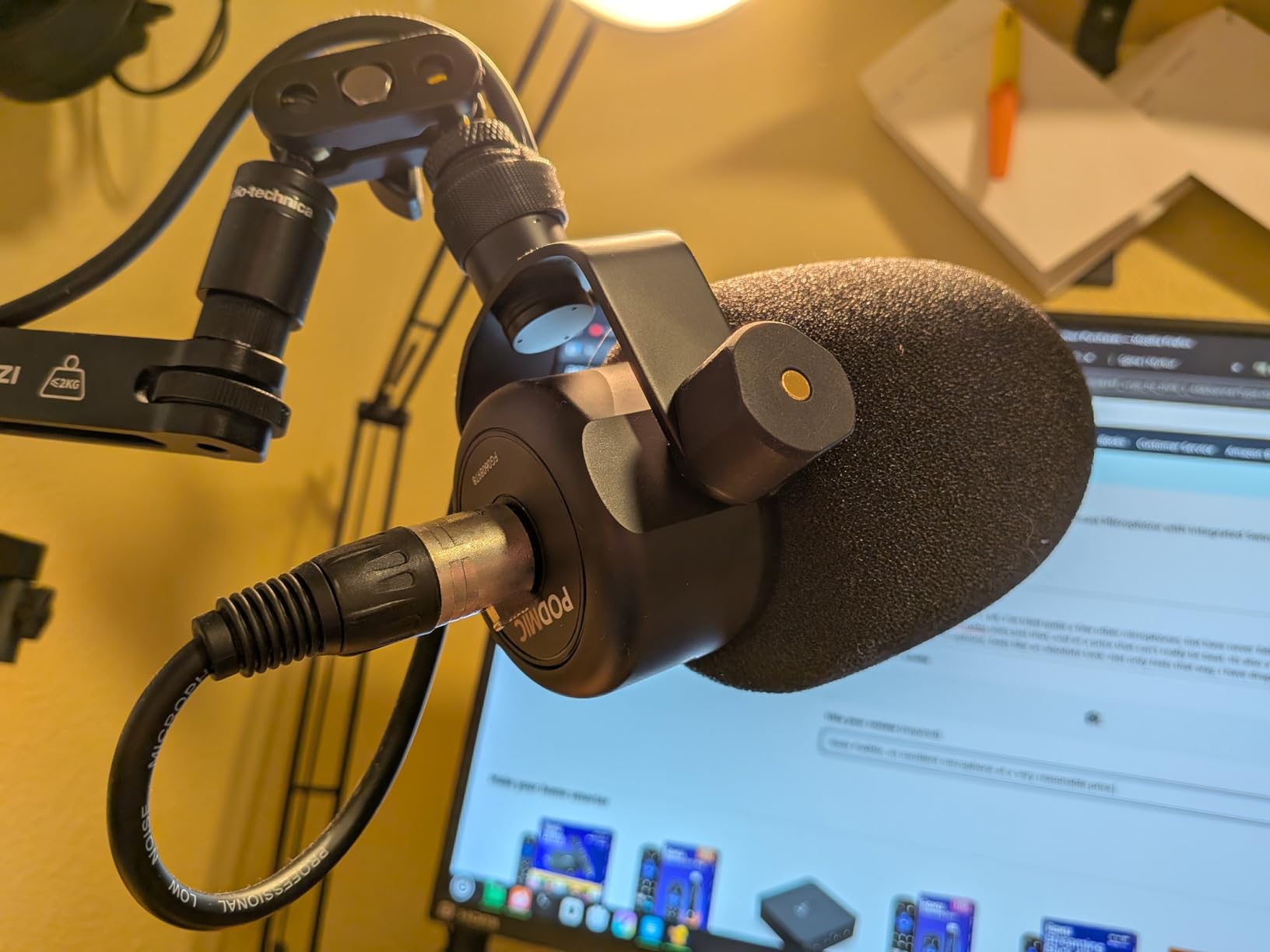
The Rode PodMic is a purpose-built broadcast dynamic microphone that was designed from the ground up for podcasting. Rode’s attention to the specific needs of voice recording engineers is evident in every aspect of the PodMic’s design — from its internal shock mounting to its integrated pop filter and its optimized frequency response for speech.
The PodMic features a broadcast-quality dynamic capsule with a rich, balanced sound that sits comfortably in a mix without requiring extensive EQ. Its frequency response of 20 Hz to 20,000 Hz captures the full range of the human voice with a warmth and presence that is immediately broadcast-ready. The internal pop filter effectively reduces plosives, and the internal shock mounting system isolates the capsule from vibrations and handling noise.
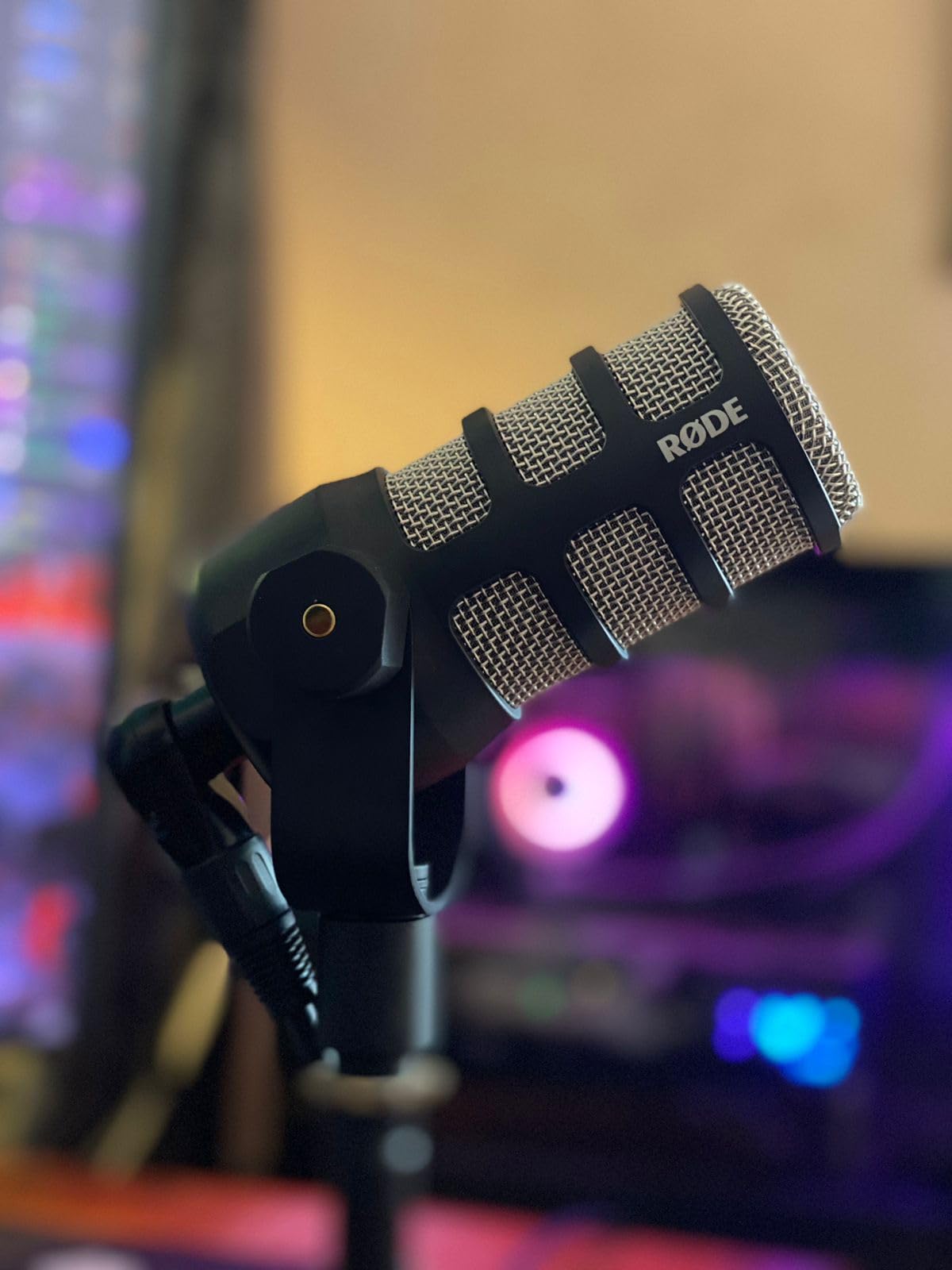
One of the PodMic’s most compelling features is its value proposition relative to more expensive broadcast microphones. It delivers broadcast-quality sound in a rugged, all-metal package at less than $90, making it one of the most cost-effective paths to professional-sounding podcast recordings. It is optimized for use with the Rode RODECaster Pro podcast production studio, where its integration is seamless, but it performs equally well with any high-quality audio interface via its standard XLR connection.
The PodMic is a low-output microphone that benefits from a preamp with significant gain. Many users pair it with a FetHead or similar inline preamp to achieve optimal recording levels, especially in quiet recording environments. This is a common characteristic of broadcast-style dynamic microphones and is not a criticism of the PodMic specifically.
Weighing 937 grams, the PodMic is a substantial microphone that requires a sturdy boom arm to support it properly. The integrated swing mount makes positioning straightforward, though some users report that securing the mount tightly on boom arms with smaller diameter rods can be challenging.
For whom it’s good
The PodMic is ideal for podcasting engineers who want broadcast-quality sound without broadcast-quality pricing, especially those using or planning to use the RODECaster Pro.
For whom it’s not ideal
Podcasters who need USB connectivity or who have limited budget for a boom arm to support its substantial weight may find the PodMic challenging.
12. FIFINE K688 — Dual-Connectivity Dynamic Under $80
- Dual USB and XLR connectivity
- Tap-to-mute with LED indicator
- On-board gain knob
- Includes windscreen and shock mount
- Real-time headphone monitoring
- Side-tone volume tied to PC audio
- Boom arm may develop tolerance play
- Short USB-C cable included
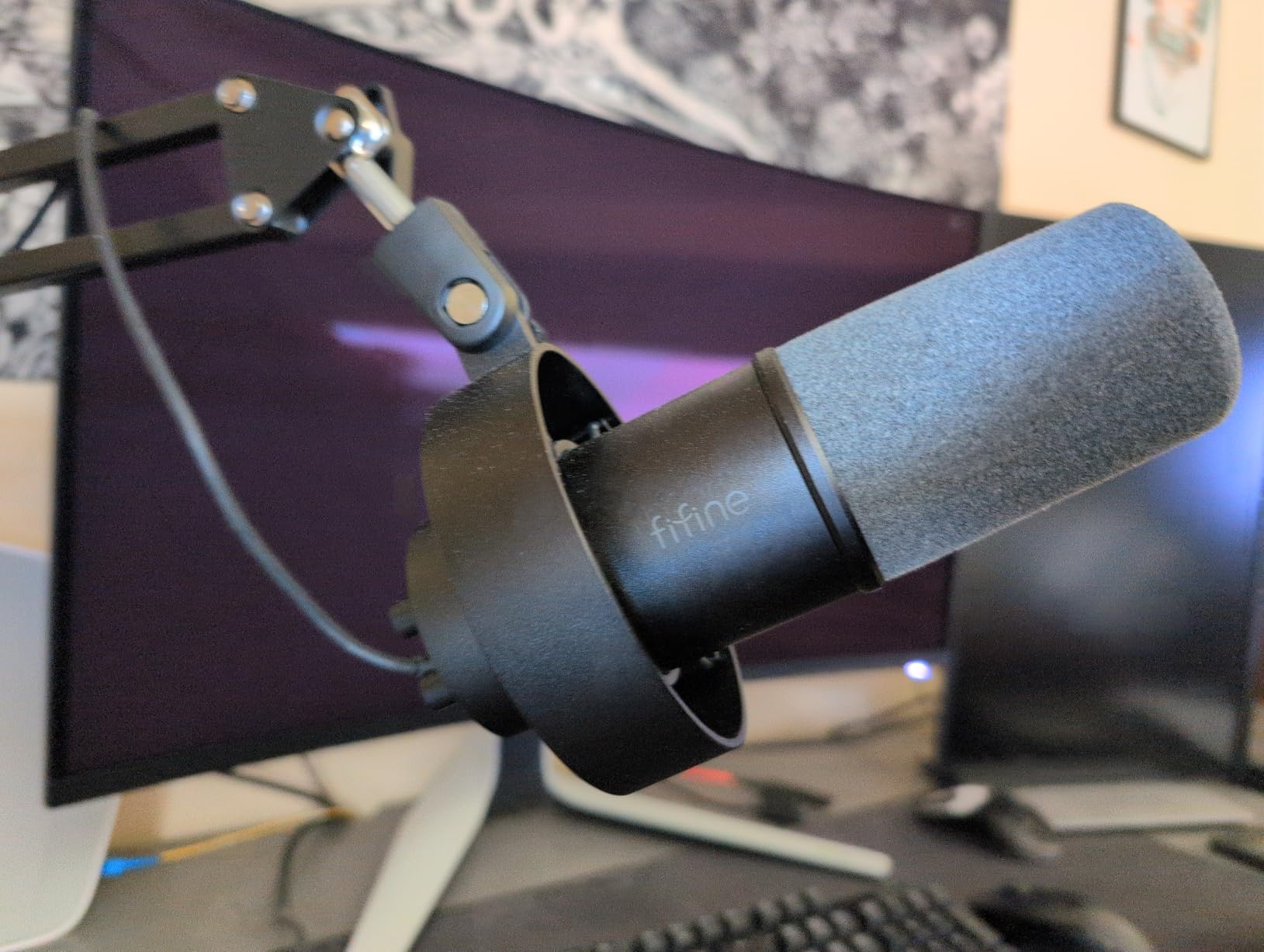
The FIFINE K688 is a dual-connectivity dynamic microphone that has quickly gained recognition among budget-conscious podcasting engineers for delivering professional-quality voice recording at an accessible price point. With its USB and XLR connectivity, tap-to-mute functionality, and included boom arm, the K688 offers a complete podcasting setup in a single package.
The K688 features a dynamic capsule with a cardioid polar pattern and a frequency response of 50 Hz to 16,000 Hz. Its signal-to-noise ratio of 80 dB is competitive with microphones in higher price brackets, and the cardioid pickup pattern provides solid background noise rejection for use in less-than-ideal acoustic environments. The dynamic transducer design is inherently forgiving of imperfect recording spaces, making the K688 a practical choice for home studio setups.
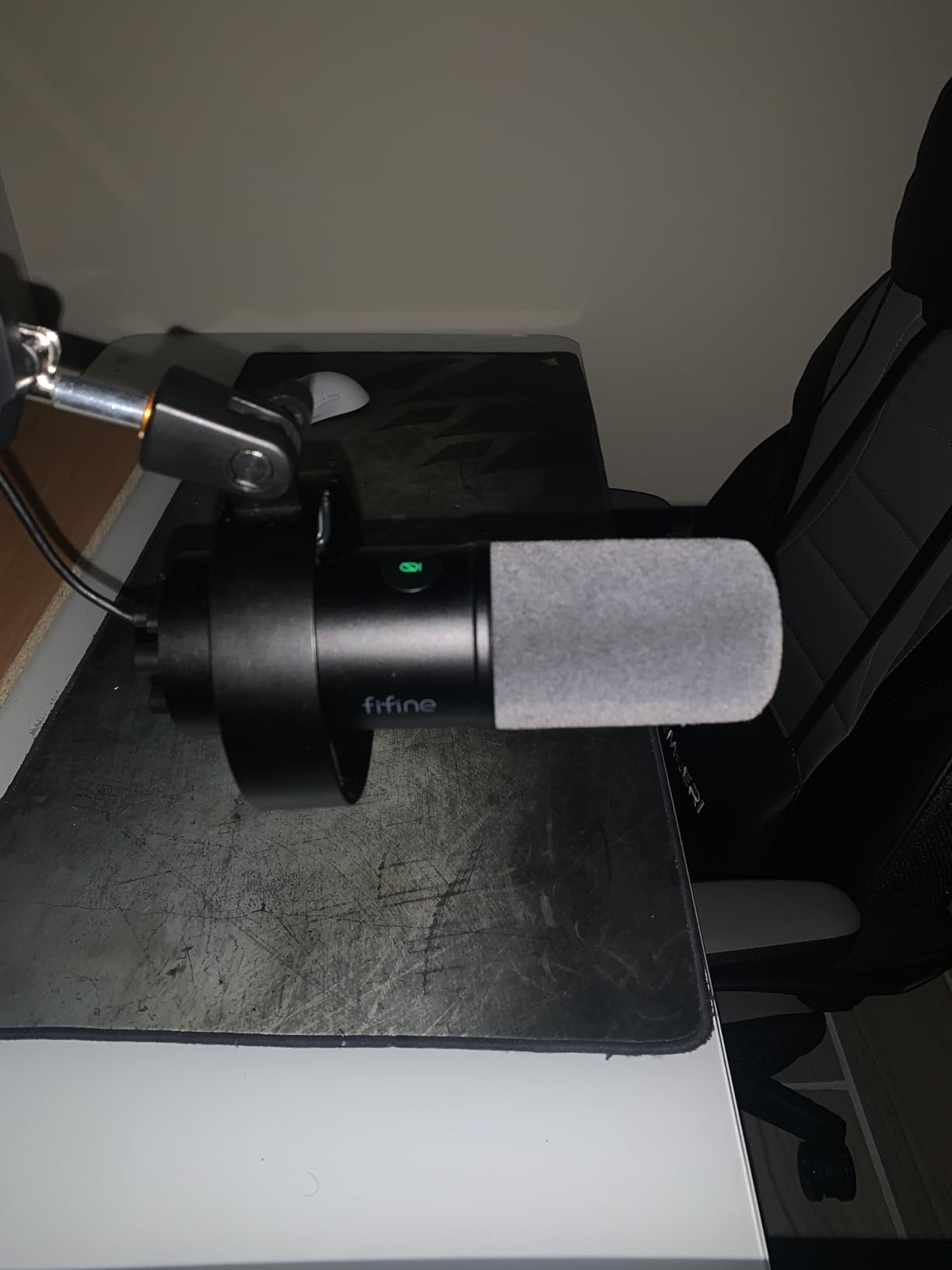
The tap-to-mute button with LED indicator is a thoughtful feature for podcasting scenarios, and the gain knob on the microphone body allows on-the-fly adjustment without opening software. The headphones jack enables real-time monitoring, and the inclusion of a windscreen and shock mount addresses two common podcasting concerns out of the box.
One minor limitation is that the side-tone monitoring volume is tied to the PC audio volume, which may require adjustment in system settings during recording sessions. Additionally, the included boom arm may develop some tolerance play over extended use, which is a common characteristic of budget microphone support systems.
For whom it’s good
The K688 is ideal for podcasting engineers on a budget who want dual connectivity and professional features without a significant financial commitment, especially for multi-microphone setups.
For whom it’s not ideal
Podcasters who need independent side-tone control or who require a boom arm with long-term precision may want to consider upgrading to a higher-quality support system.
Budget Tier: Best Microphones for Podcasting Under $50
Budget microphones have improved dramatically in recent years, and several options in this tier deliver surprisingly capable audio quality for the price. For podcasting engineers who are just starting out, need additional microphones for a growing podcast, or want a portable backup microphone for travel recording, these budget options deliver real value.
13. FIFINE AM8 — Dynamic Dual-Connectivity with RGB
- Dual XLR and USB connectivity
- Controllable RGB lighting with memory
- Tap-to-mute with LED indicator
- Headphones jack for monitoring
- All-metal construction
- RGB inactive when using XLR
- May pick up background noise
- Large size not suited to compact desks
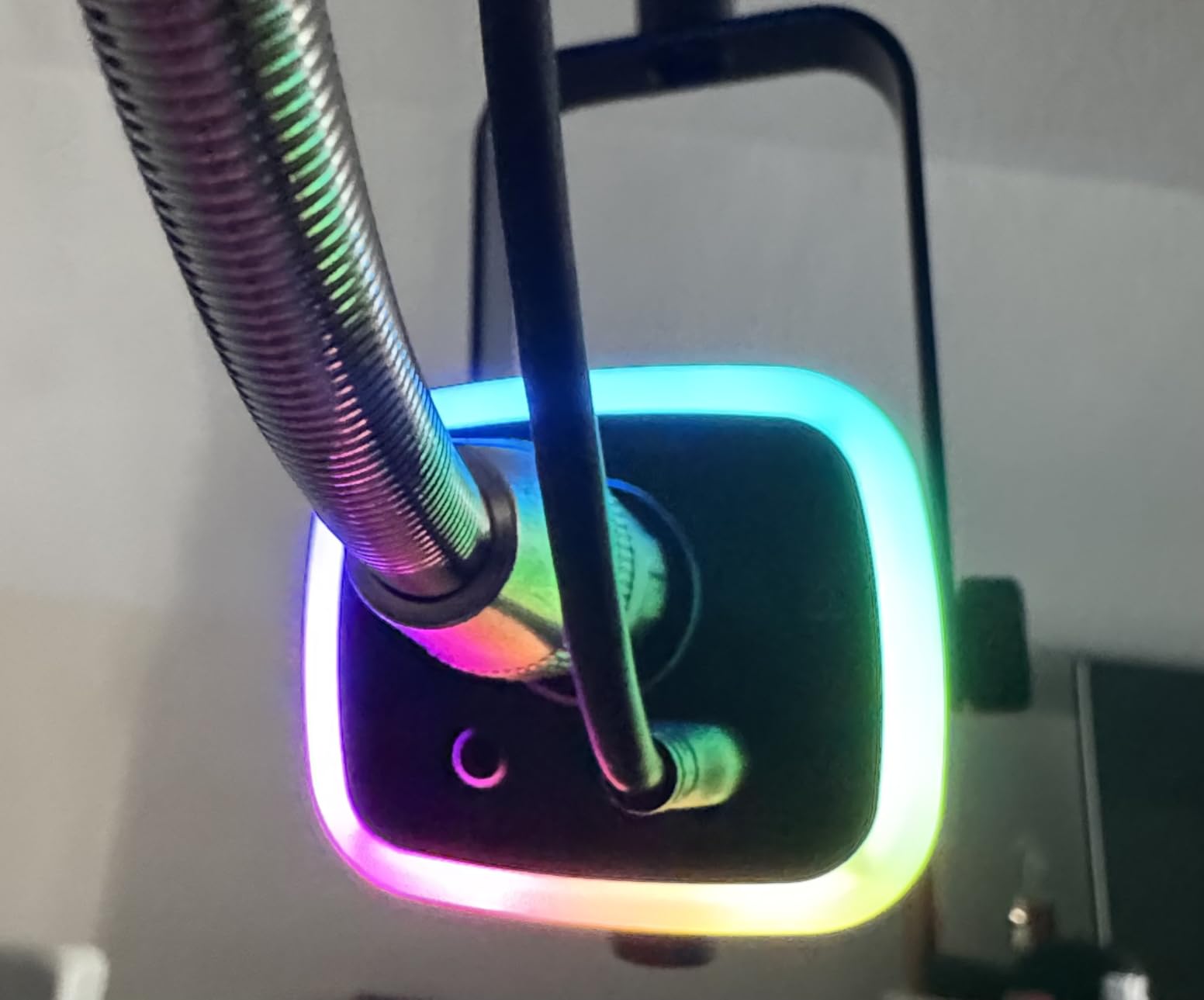
The FIFINE AM8 (AmpliGame AM8) is a dynamic microphone with XLR and USB connectivity that combines functional features with a distinctive design at one of the most accessible price points in this roundup. Its cardioid dynamic capsule, controllable RGB lighting, and tap-to-mute functionality make it a versatile entry point for podcasting engineers on a tight budget.
The AM8 features a frequency response of 50 Hz to 16,000 Hz and a signal-to-noise ratio of 80 dB, specs that are competitive with microphones costing considerably more. The dynamic capsule provides natural background noise rejection, making the AM8 more forgiving in untreated rooms than comparably priced condenser alternatives. The cardioid polar pattern focuses on the voice source while rejecting ambient sound from the sides and rear.
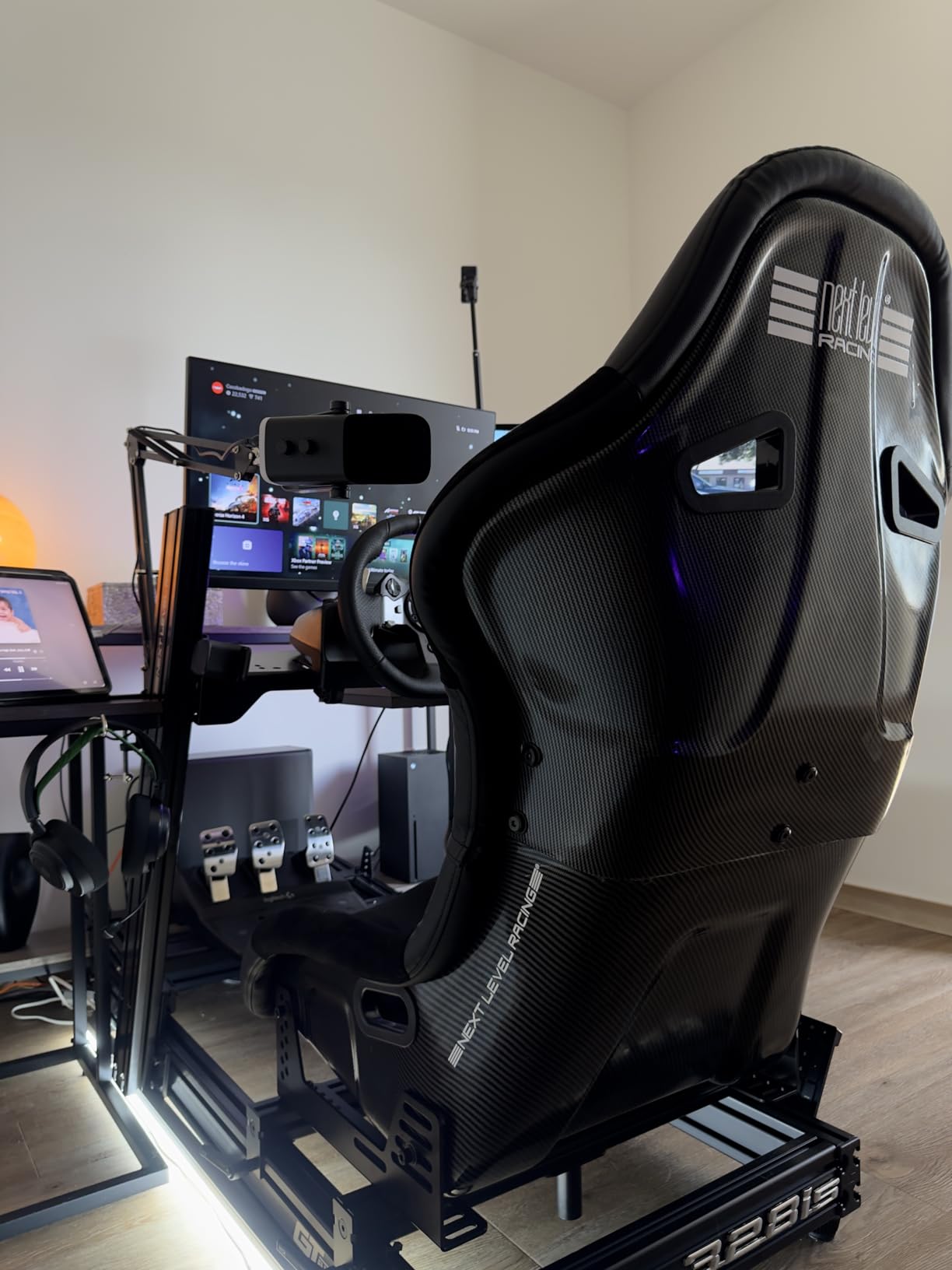
The dual XLR and USB connectivity provides the flexibility to use the AM8 as a direct computer microphone via USB or to integrate it into a larger XLR-based studio setup. The headphones jack enables real-time monitoring, and the tap-to-mute button with LED indicator is a practical feature for live recording scenarios. The controllable RGB lighting with a memory function adds a visual element that appeals to streamers and video podcast producers.
One caveat: the RGB lighting and function keys are inactive when using the XLR connection, as they rely on USB power. This is expected behavior but worth noting if you plan to use the AM8 primarily in an XLR setup. Some users also report that the AM8 picks up background noise in untreated rooms, which is a limitation of its condenser-like sensitivity in an untreated environment.
For whom it’s good
The AM8 is ideal for podcasting engineers on a budget who want dual connectivity and RGB aesthetics, or as a secondary microphone for interview guests.
For whom it’s not ideal
Podcasters planning to use XLR exclusively will lose the RGB and function features, making other options more suitable.
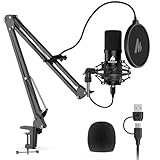
14. MAONO AU-A04 — Budget Condenser with Premium Audio Chipset
- 192kHz/24bit professional audio chipset
- Plug-and-play no drivers required
- Includes boom arm and shock mount
- 8.2-foot detachable USB cable
- Compatible with multiple platforms
- No mute button
- Requires proper positioning (logo facing speaker)
- Picks up ambient noise in untreated rooms
The MAONO AU-A04 is a USB condenser microphone that has become one of the most popular budget options for podcasting, streaming, and voice-over work. With its professional 192 kHz/24-bit audio chipset, plug-and-play simplicity, and included boom arm and shock mount, the AU-A04 delivers a complete recording setup for under $50.
The AU-A04 features a 16mm condenser transducer with a cardioid polar pattern and a frequency response of 30 Hz to 16,000 Hz. Its signal-to-noise ratio of 70 dB is respectable for a budget condenser microphone, and the extended low-frequency response means the microphone captures warmth and body in the voice that budget dynamics sometimes miss. The cardioid pickup pattern provides decent rejection of background noise when the microphone is positioned close to the sound source.
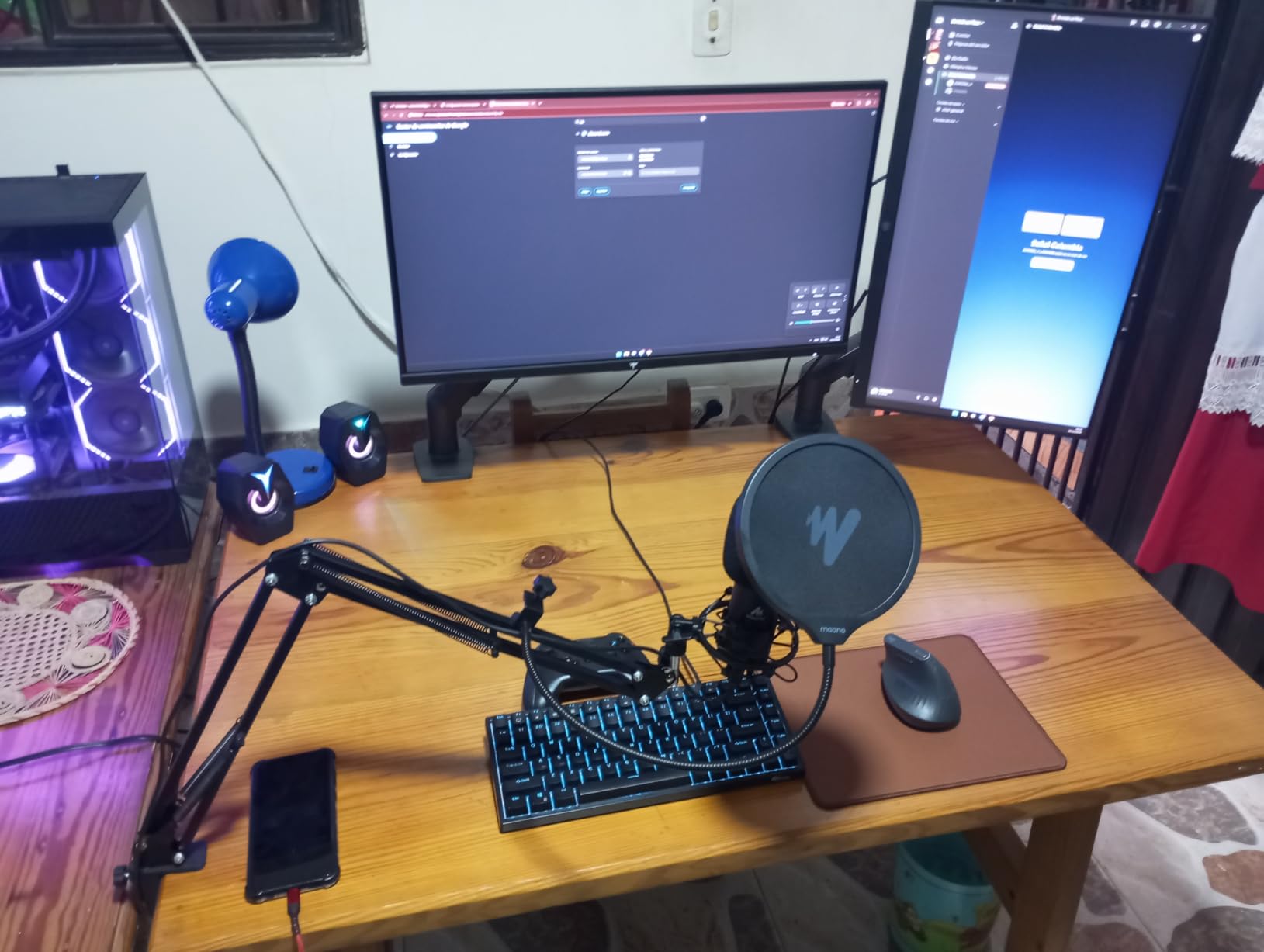
The plug-and-play USB connectivity with no drivers required makes the AU-A04 one of the easiest microphones to set up in this roundup. It is compatible with Windows, macOS, Linux, PS4, PS5, and mobile phones with a USB-C adapter, making it one of the most versatile budget options for podcasting engineers who record across multiple devices and platforms.
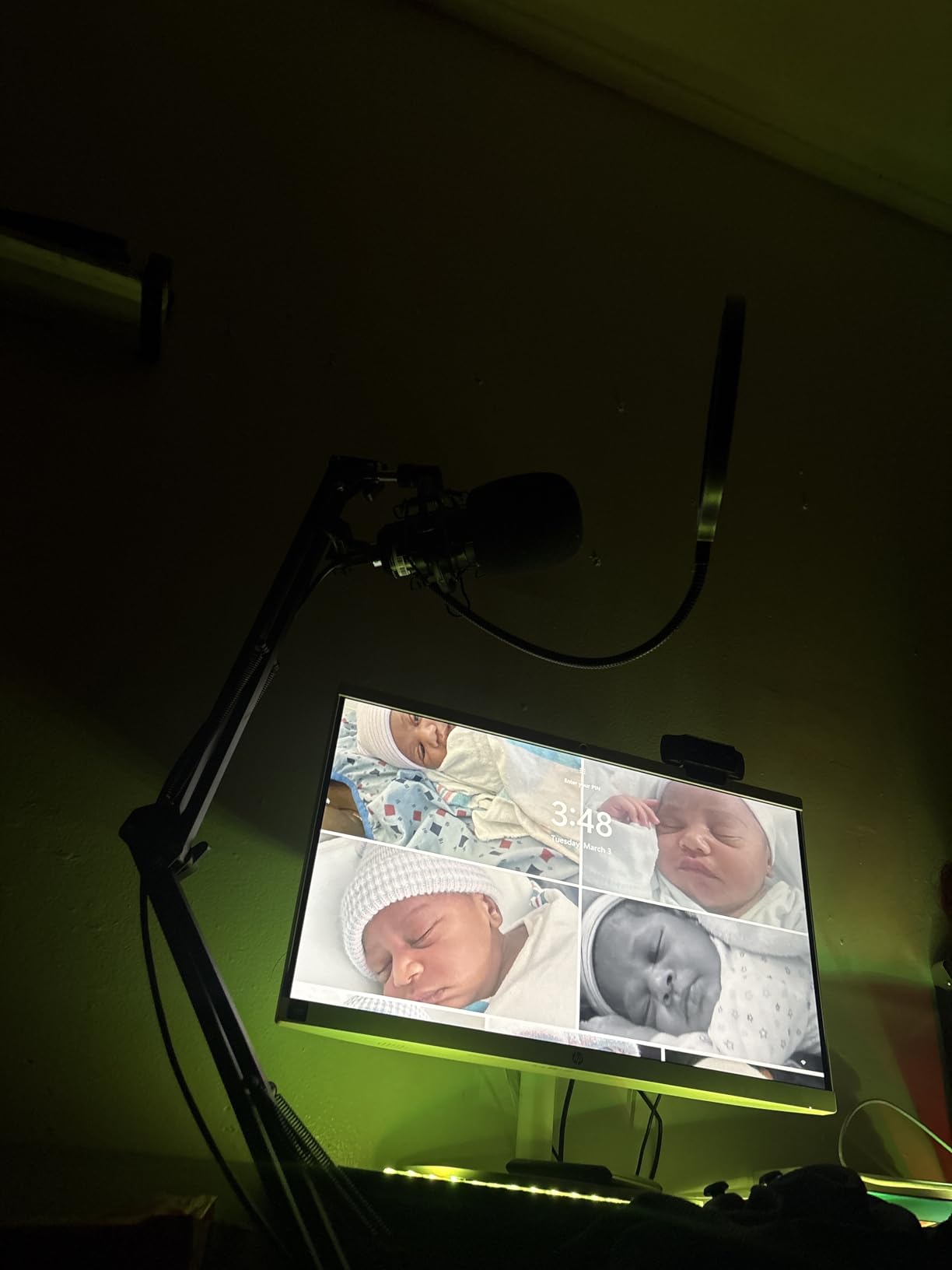
The included sturdy boom arm with shock mount and the 8.2-foot detachable USB cable are practical accessories that round out the package. Note that the AU-A04 does not include a mute button, which may be a consideration for live recording scenarios. As a directional microphone, it also requires proper positioning — the logo on the microphone should face the speaker for optimal capture.
For whom it’s good
The AU-A04 is ideal for podcasting beginners who want a complete setup with condenser quality, or experienced engineers needing a portable backup microphone for multi-platform recording.
For whom it’s not ideal
Podcasters in untreated rooms or those who need a mute button during live recording should consider dynamic alternatives in this price range.
15. FIFINE T669 — Complete Condenser Kit Under $40
- Complete accessory bundle under $40
- Adjustable boom arm with 180-degree rotation
- Double pop filter included
- All-metal microphone body and stand
- Plug-and-play USB simplicity
- Sensitive to room acoustics
- No mute button
- Stand clamp may not fit all desk shapes
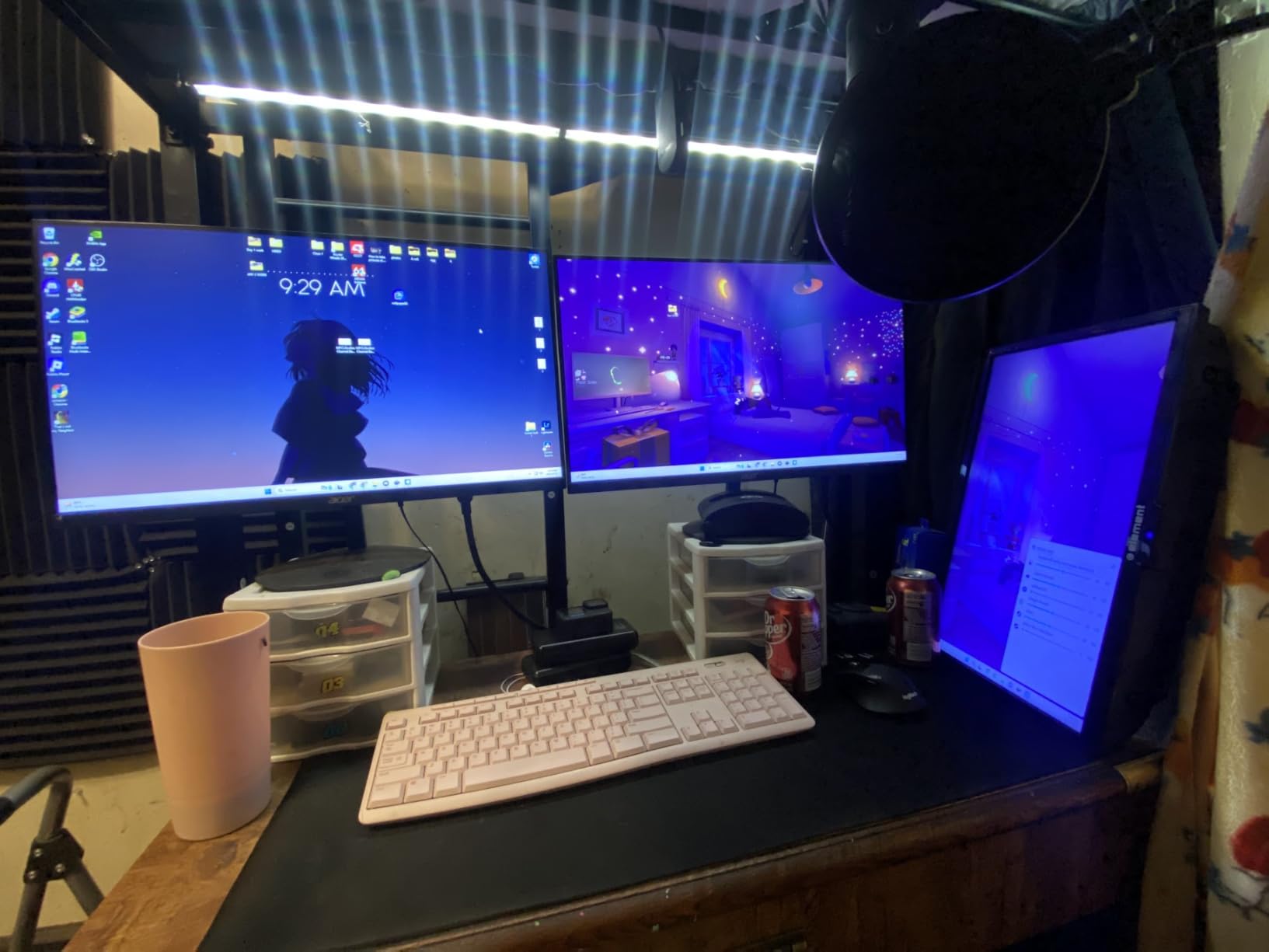
The FIFINE T669 is a complete USB condenser microphone kit that has become one of the best-selling budget podcasting microphone packages on the market. Its comprehensive accessory bundle — including an adjustable boom arm, shock mount, double pop filter, and long USB cable — makes it one of the most complete entry-level podcasting setups available at any price.
The T669 features a cardioid condenser capsule with a frequency response of 20 Hz to 20,000 Hz, capturing the full range of the human voice with decent clarity for a microphone in this price class. Its signal-to-noise ratio of 78 dB is competitive with more expensive budget microphones, and the condenser design provides a level of detail and openness that dynamic microphones in the same price range do not match.
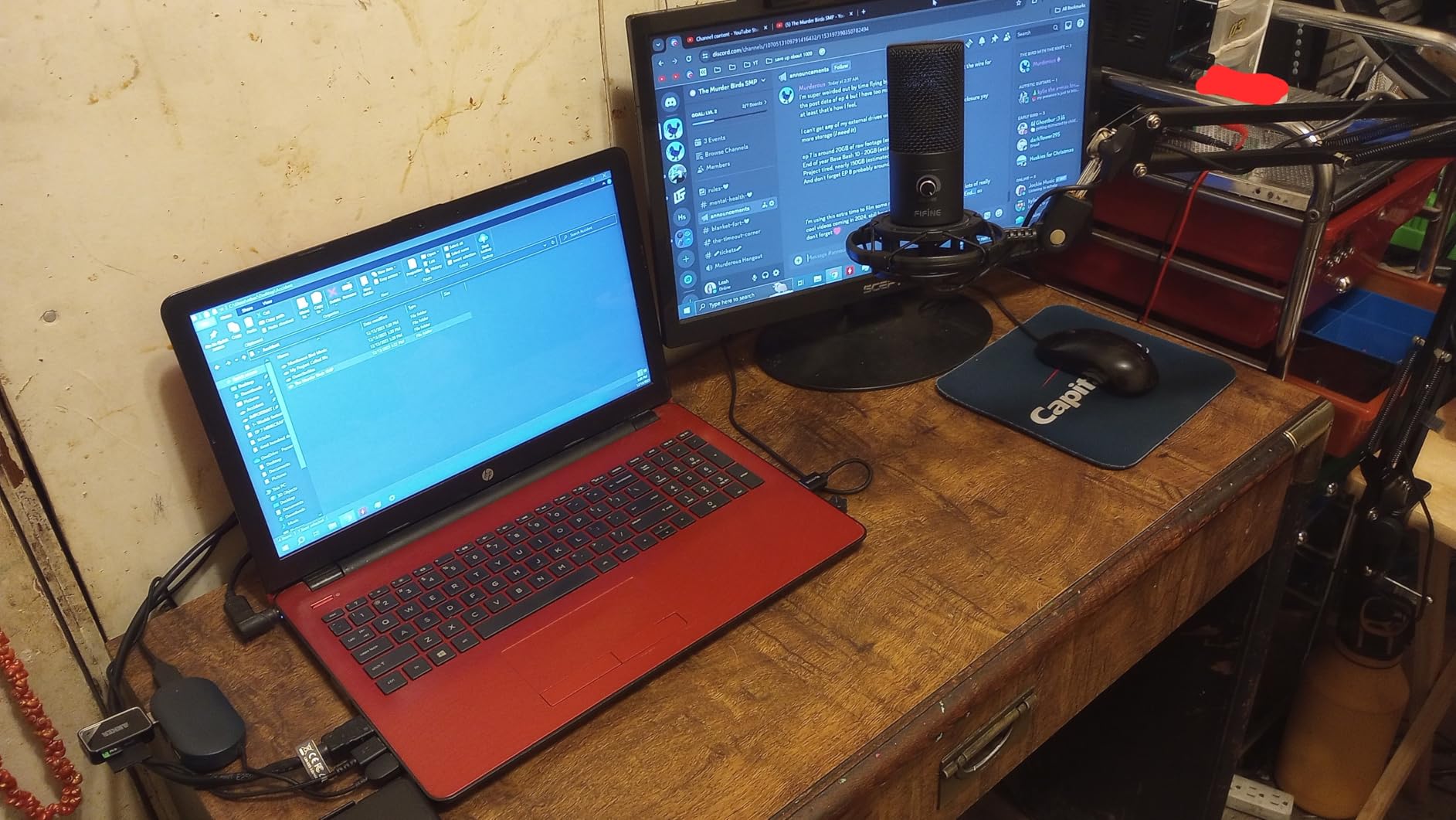
The adjustable boom arm with 180-degree rotation allows precise microphone positioning, and the double pop filter provides effective plosive control that outperforms the single-layer filters found on many budget microphones. The metal construction of both the microphone body and the stand is substantially more durable than the plastic components found in competing budget kits.
As a USB-only condenser microphone, the T669 is sensitive to ambient noise and room reflections. In treated or naturally quiet recording spaces, it performs well. In noisy environments or rooms with hard surfaces that create echo, the T669 will capture those acoustic problems with the same fidelity as the voice. Proper microphone technique — speaking at a consistent close distance — is important to getting the best results from this microphone.
For whom it’s good
The T669 is ideal for podcasting beginners who want everything needed to start recording in one box, or budget-conscious engineers who need a complete secondary setup.
For whom it’s not ideal
Podcasters in untreated rooms or those who need XLR connectivity should consider dynamic alternatives or prepare to invest in acoustic treatment.
What to Look for When Buying a Podcast Microphone: An Engineer’s Buying Guide
Selecting the right microphone for your podcast involves more than comparing prices and specifications. Here are the key technical factors that podcasting engineers should consider before making a purchase.
Gain Requirements and Your Audio Interface
Every microphone has different gain requirements, and matching your microphone to an interface or preamp that can deliver clean gain is one of the most important decisions in building your signal chain. Dynamic microphones like the Shure SM7B and Rode PodMic have low output levels and typically require 55-65 dB of gain to achieve nominal recording levels. Budget and mid-range audio interfaces often deliver 50-55 dB of gain, which may be insufficient for these microphones.
If you are investing in a low-output dynamic microphone, budget for an inline preamp such as a Cloudlifter, FetHead, or TritonAudio fetHead. These devices provide clean 20-25 dB of additional gain without adding significant noise to the signal chain. Alternatively, select an audio interface or mixer with generous gain headroom — the Focusrite Scarlett 2i2 (3rd generation) and the MOTU M2 both deliver enough clean gain for most dynamic microphones.
Polar Pattern and Off-Axis Rejection
The polar pattern of a microphone determines its directional sensitivity and its ability to reject sounds arriving from outside its primary pickup axis. For podcasting, a cardioid polar pattern is the most common and practical choice — it provides a focused pickup area in front of the microphone while rejecting sound from the sides and rear. This makes cardioid microphones ideal for untreated rooms and multi-person recording scenarios where minimizing bleed between microphones is important.
If you record in a fixed-position studio with a sound-treated room, a multi-pattern condenser microphone like the Blue Yeti or HyperX QuadCast 2 S gives you the flexibility to handle different recording format without changing microphones.
Connectivity and Your Workflow
USB microphones are ideal for solo podcasting, travel recording, and situations where simplicity is paramount. They require no additional hardware beyond a computer and deliver surprisingly capable results. XLR microphones give you complete control over every link in your signal chain, from preamp selection to digital conversion, and are the professional standard for multi-microphone podcast setups.
Dual-connectivity microphones like the Shure MV7+, Samson Q2U, and Rode NT1 5th Gen offer the best of both worlds — use USB for quick solo sessions and XLR when you are integrating into a larger professional setup. This flexibility is valuable as your podcast grows and your production requirements evolve.
Signal Chain Compatibility
For podcasting engineers who already own audio interfaces, mixers, or digital audio workstations, ensure your microphone is compatible with your existing equipment. XLR microphones require an interface or mixer with XLR inputs and (for condenser microphones) 48V phantom power. USB microphones are self-contained but may require specific drivers or software for full functionality on your operating system.
If you are using a podcast production studio like the Rode RODECaster Pro, select microphones that are optimized for integration — the Rode PodMic, for example, was designed specifically for use with the RODECaster Pro and delivers seamless performance in that environment.
Accessories: Boom Arms, Shock Mounts, and Pop Filters
A quality microphone is only as good as its support system. A boom arm allows precise positioning and keeps the microphone at a consistent distance from your mouth, which is critical for maintaining consistent recording levels. Shock mounts isolate the microphone from vibrations transmitted through the desk or stand, preventing low-frequency rumble and mechanical noise from degrading your recordings.
Pop filters are essential for controlling plosive consonants — the bursts of air that strike the microphone diaphragm and create low-frequency thumps in your recordings. Some microphones, like the Shure SM7B and Rode PodMic, have built-in pop filtering. Others, like the Audio-Technica AT2020, require an external pop filter.
Acoustic Environment Considerations
The single biggest factor affecting your recorded audio quality is your acoustic environment, not your microphone. Dynamic microphones are more forgiving of untreated rooms because they reject off-axis sound more effectively than condenser microphones. If you are recording in a space with hard surfaces, echo, or ambient noise, a dynamic microphone will deliver better results than a condenser microphone at the same price point.
Before investing in a more expensive microphone, consider investing in acoustic treatment for your recording space. Even basic foam panels, a rug, and soft furniture can dramatically reduce room reflections and improve your recordings. The best microphone in an untreated room will still produce inferior results compared to a budget microphone in a well-treated space.
Signal Chain Considerations for Podcasting Engineers
For audio engineers approaching podcasting from a technical background, understanding the complete signal chain is as important as selecting the microphone itself. The best microphone in the world will deliver mediocre results if the supporting equipment in your signal chain cannot properly capture and process its output. This section breaks down the complete signal path and the engineering decisions that affect your final recorded audio.
The Complete Podcast Signal Chain
A typical podcast recording signal chain starts at the microphone and ends at your DAW or recording software. Between those two points, several components shape your audio quality. For XLR microphones, the signal path typically includes: microphone to XLR cable, XLR cable to audio interface or mixer, interface preamp and analog-to-digital conversion, USB or other digital connection to computer, and recording software. Each stage in this chain introduces its own characteristics, noise floor, and potential for quality degradation.
Understanding where quality losses occur helps you prioritize investments. The microphone is the first and most impactful link — a poor microphone cannot be fixed by downstream processing. The preamp is the second most important stage, especially for low-output dynamic microphones that need significant gain. The analog-to-digital converter determines the ultimate resolution and fidelity of your digital recording. Budget accordingly across all stages rather than concentrating all investment in a single component.
Preamplification: The Critical Stage for Dynamic Microphones
Dynamic microphones like the Shure SM7B, Rode PodMic, and Shure MV7X have low output levels that require substantial preamplification — typically 55 to 65 dB of gain — to reach nominal recording levels. Many budget audio interfaces provide only 40 to 55 dB of gain, which sounds like a small difference but represents a massive gap in practice. The first 20-30 dB of preamp gain is typically the cleanest; additional gain beyond that often introduces noise and coloration that degrades the recording.
Inline preamps like the Cloudlifter CL-1, TritonAudio fetHead, and sE Electronics DM1 provide an additional 20-25 dB of clean gain at the microphone level, before the signal reaches your interface preamp. This two-stage gain structure — inline preamp followed by interface preamp — allows you to achieve sufficient gain with both stages operating in their optimal range. The result is significantly lower noise floor and better overall signal quality compared to driving a single preamp to its maximum gain setting.
When evaluating preamp options, pay attention to the noise specification and the amount of gain available. A preamp that adds 20 dB of gain but introduces its own significant noise floor defeats the purpose. Look for preamps with self-noise specifications at least 10 dB below the microphone’s inherent noise floor to ensure the preamp is not the limiting factor in your signal chain.
Analog-to-Digital Conversion: Why It Matters
The quality of your analog-to-digital conversion determines the ultimate resolution and fidelity of your podcast recordings. Budget USB microphones typically use lower-quality integrated ADC chips that may introduce noise, distortion, or frequency response irregularities. Professional audio interfaces dedicated to analog-to-digital conversion generally offer superior converter quality, which is one of the main reasons XLR microphones with external interfaces often sound better than USB microphones at the same price point.
Sample rate and bit depth affect your recording quality and file size. For podcasting, 44.1 kHz / 16-bit or 48 kHz / 24-bit are the standard formats. Higher sample rates like 96 kHz or 192 kHz do not provide audible benefits for voice recording and simply create larger files. The Rode NT1 5th Gen’s 32-bit float recording via USB is a notable exception — this format captures an exceptionally wide dynamic range that prevents clipping on loud transients and provides more flexibility in post-production level adjustment.
Microphone Technique for Engineers
Even the best microphone produces poor results when used incorrectly. Microphone technique is a skill that requires practice and awareness of several factors that affect recorded audio quality. Distance from the microphone dramatically affects the sound — the proximity effect causes bass frequencies to increase as you move closer, while moving too far away allows room reflections and ambient noise to dominate the recording.
The optimal distance for most cardioid podcasting microphones is 4 to 8 inches from the microphone grille. At this distance, the proximity effect is manageable, plosives are controllable with a pop filter, and the voice-to-room ratio is favorable. Invest time in finding your optimal distance and maintain it consistently throughout recording sessions. Inconsistent microphone distance causes level variations that require more editing and processing to correct.
Positioning relative to the microphone’s axis also matters. Speak across the microphone’s axis rather than directly into it to reduce plosives and sibilance. The off-axis response of most cardioid microphones is attenuated and often sounds slightly duller, which can naturally reduce harshness in the voice. Experiment with small positioning adjustments — moving 1-2 inches to the side can make a noticeable difference in the balance of harsh frequencies.
Power Supply and Grounding
Electrical ground loops and power supply noise are common sources of interference in podcast recording setups. Symptoms include hum at 60 Hz (or harmonics thereof), buzzing, and other artifacts that appear in recordings but not in live monitoring. These issues are especially common when mixing equipment from different manufacturers or when connecting multiple devices through different power circuits.
Using a dedicated power circuit for your recording equipment helps eliminate ground loop issues. Power conditioners and isolation transformers can address more stubborn problems. When using USB microphones or audio interfaces, try connecting both the microphone and the computer to the same power strip or UPS to minimize ground potential differences between devices. In cases where ground loop issues persist, ground loop isolators on audio cables can break the noise path without significantly affecting audio quality.
Frequency Response Considerations for Voice Recording
While the full audible frequency range spans 20 Hz to 20,000 Hz, voice recording concentrates most of its energy in a much narrower band. The fundamental frequencies of the human voice range from approximately 80 Hz for male voices to 400 Hz for female voices, with harmonics extending well beyond that. Understanding this helps you evaluate microphones based on their actual relevance to voice quality rather than their theoretical specifications.
Many dynamic broadcast microphones, including the Shure SM7B and Rode PodMic, have frequency responses specifically tailored for voice reproduction. They emphasize the frequency range where voice clarity and presence live (typically 2-8 kHz) while gently rolling off frequencies that can cause problems in untreated rooms (very low frequencies below 80 Hz and extreme high frequencies above 12-15 kHz). Condenser microphones with flat frequency responses capture more of the full audible spectrum, which can be an advantage in treated studios and a disadvantage in untreated rooms where room reflections and HVAC noise would be captured with equal fidelity.
Frequently Asked Questions: Best Microphones for Podcasting Engineers
What microphone do professional podcast engineers use?
Professional podcast engineers commonly use dynamic broadcast microphones such as the Shure SM7B, Rode PodMic, and Shure MV7X. These microphones are favored for their warm vocal reproduction, excellent background noise rejection, and reliable performance in both treated and untreated recording environments. In sound-treated studios, condenser microphones like the Rode NT1 5th Gen and Audio-Technica AT2020 are also popular for their superior detail and openness. The Shure SM7B in particular has been the industry standard in radio and podcasting for decades.
Is XLR or USB better for podcasting engineers?
For professional podcasting setups with multiple microphones, XLR is the better choice because it gives you complete control over your signal chain, including preamp selection, analog-to-digital conversion, and routing through hardware processors. For solo podcasters or two-person setups where simplicity is important, USB microphones deliver excellent results with minimal gear. Dual-connectivity microphones like the Shure MV7+ and Samson Q2U offer the flexibility to use whichever connection type suits your workflow.
Do podcasters need a Cloudlifter or preamp?
A Cloudlifter or similar inline preamp is recommended when using low-output dynamic microphones like the Shure SM7B, Rode PodMic, or Shure MV7X that require more gain than most audio interfaces provide on their own. If you are using USB microphones or XLR microphones with moderate output levels like the Audio-Technica AT2020, an inline preamp is generally not necessary since condenser microphones have higher output levels to begin with.
What is the best podcast microphone for a home studio with no acoustic treatment?
Dynamic microphones are the best choice for home studios without acoustic treatment because their focused cardioid pickup patterns and lower sensitivity reject room reflections and ambient noise more effectively than condenser microphones. The Shure SM7B, Rode PodMic, Shure MV7X, and Samson Q2U are all excellent choices for untreated spaces. The Rode PodMic is particularly well-suited for home studios because it was purpose-built for podcasting and includes internal shock mounting and pop filtering.
How many microphones do I need for a podcast?
A solo podcast requires one microphone. Two-person podcasts benefit from two microphones — one for each host. Round-table podcasts with four or more participants typically use one microphone per active speaker, with dynamic microphones being preferred for their off-axis rejection in multi-mic scenarios. Each microphone should connect to its own channel on your audio interface or mixer for maximum mixing flexibility.
Conclusion: Finding the Best Microphone for Your Podcast Engineering Needs
Selecting the right microphone for podcasting is a decision that shapes every recording you produce. The microphones on this list represent the best options available across a wide price range, and each delivers the quality and reliability that podcasting engineers demand. Whether you choose the broadcast-legend Shure SM7B, the versatile Rode NT1 5th Gen with its groundbreaking 32-bit float recording, or the exceptional value of the FIFINE T669 budget kit, you are investing in equipment that will serve your production for years to come.
For professional studios with treated acoustic environments, the Rode NT1 5th Gen and Audio-Technica AT2020 deliver the voice detail and clarity that condenser microphones are known for. For home studios, shared spaces, and non-ideal acoustic environments, the Shure SM7B, Rode PodMic, and Shure MV7X offer the voice isolation and noise rejection that produces clean recordings in challenging conditions.
Remember that a quality microphone is only as good as its supporting signal chain. Budget for a capable audio interface with sufficient gain, invest in a sturdy boom arm and shock mount, and treat your acoustic environment as an integral part of your recording chain. These investments compound — better source audio requires less processing in post-production, saving you time and producing better results for your listeners.
Start with the microphone that fits your current budget and workflow, and upgrade as your podcast grows. The options in this guide are all capable of producing broadcast-quality recordings when used in an appropriate environment with proper technique. Your voice, your content, and your audience deserve a microphone that captures your message with clarity and warmth.
Products listed in this article are sorted by price tier (premium, mid-range, budget) and review order within each tier. Prices and ratings are current as of publication and may vary.