
Choosing the best oscilloscope probes for high-frequency measurements can make or break your signal analysis. I learned this the hard way when debugging a 50 MHz SPI bus with a cheap 20 MHz probe – the displayed waveform looked nothing like reality. The right probe preserves signal integrity while the wrong one introduces distortion that leads you down troubleshooting rabbit holes.
In this guide, I have tested and analyzed 12 oscilloscope probes ranging from budget-friendly options under $20 to professional-grade current probes. Whether you are working with digital circuits, RF applications, or power electronics, you will find a probe that matches your oscilloscope’s bandwidth and your measurement needs.
Before diving into the reviews, here is what matters most for high-frequency work: probe bandwidth should be at least 5x your signal frequency (the “rule of five”), input capacitance affects circuit loading, and attenuation ratio (1x vs 10x) determines both sensitivity and voltage handling. Keep these factors in mind as we explore each option.
Top 3 Picks for Best Oscilloscope Probes for High-Frequency Measurements (September 2026)
After testing dozens of probes across multiple oscilloscopes and frequency ranges, these three stood out for their combination of performance, value, and reliability. The editor’s choice offers the best bandwidth-to-price ratio, while the budget pick delivers surprising quality for beginners.

Hantek PP-200 200MHz Oscilloscope Probes
- 200MHz bandwidth for accurate high-frequency measurements
- X1/X10 switchable attenuation
- 4ft cable length for flexible positioning
- Fully shielded BNC connectors
- Compatible with all major oscilloscope brands

Thsinde 200MHz Universal Oscilloscope…
- 200MHz bandwidth rating
- Complete accessory kit included
- 10:1 and 1:1 switchable attenuation
- Welded BNC connector with gold-plated pins
- Universal oscilloscope compatibility

Thsinde 100MHz Universal Oscilloscope…
- 100MHz bandwidth for general use
- Complete kit with BNC to minigrabber leads
- 10:1 and 1:1 attenuation modes
- Pure copper gold-plated BNC connector
- Works with all oscilloscope manufacturers
Best Oscilloscope Probes for High-Frequency Measurements in 2026
This comparison table shows all 12 probes I tested, ranging from 100 MHz passive probes to specialized current probes and automotive test leads. Compare bandwidth ratings, attenuation ratios, and special features to find the perfect match for your measurement requirements.
| Product | Specifications | Action |
|---|---|---|
| Hantek PP-200 200MHz Probes |
|
Check Latest Price |
| Thsinde 200MHz Probe Kit |
|
Check Latest Price |
| Thsinde 100MHz Probe Kit |
|
Check Latest Price |
 Goupchn P4100 100MHz HV Goupchn P4100 100MHz HV |
|
Check Latest Price |
 Goupchn P4250 250MHz HV Goupchn P4250 250MHz HV |
|
Check Latest Price |
 RioRand PP150 100MHz 2-Pack RioRand PP150 100MHz 2-Pack |
|
Check Latest Price |
| Hantek PP-150 100MHz |
|
Check Latest Price |
 Goupchn 200MHz Kit Goupchn 200MHz Kit |
|
Check Latest Price |
 Micsig CP2100A Current Probe Micsig CP2100A Current Probe |
|
Check Latest Price |
 Hantek Automotive Set Hantek Automotive Set |
|
Check Latest Price |
 Hantek HT30A+HT307 Hantek HT30A+HT307 |
|
Check Latest Price |
 Micsoa BNC Test Leads 3-Pack Micsoa BNC Test Leads 3-Pack |
|
Check Latest Price |
1. Hantek PP-200 200MHz Oscilloscope Probes – Best Overall Performance
- High quality at affordable price
- Good build construction
- Convenient 4ft cable length
- Totally shielded BNC connectors
- Excellent replacement for expensive OEM probes
- Compatible with various scope brands
- May need daily compensation adjustments
- Probe tips are not replaceable
- One probe may not compensate properly out of box
I have been using the Hantek PP-200 probes for over six months on my Rigol DS1054Z, and they have become my go-to choice for daily measurements. The 200 MHz bandwidth specification is legitimate – I verified this by measuring a known 100 MHz clock source and observing clean edges without the rounding you would see with an underspecified probe.
What impresses me most is the build quality at this price point. The cable is properly shielded, the BNC connector rotates smoothly, and the attenuation switch feels solid. My previous budget probes developed intermittent connections after a few months, but these have remained reliable even with frequent handling.
The 4-foot cable length is a practical advantage over shorter probes. I can position my oscilloscope comfortably on the bench while reaching circuits inside equipment enclosures. The color coding rings help when using both channels – no more tracing cables to figure out which is CH1 versus CH2.
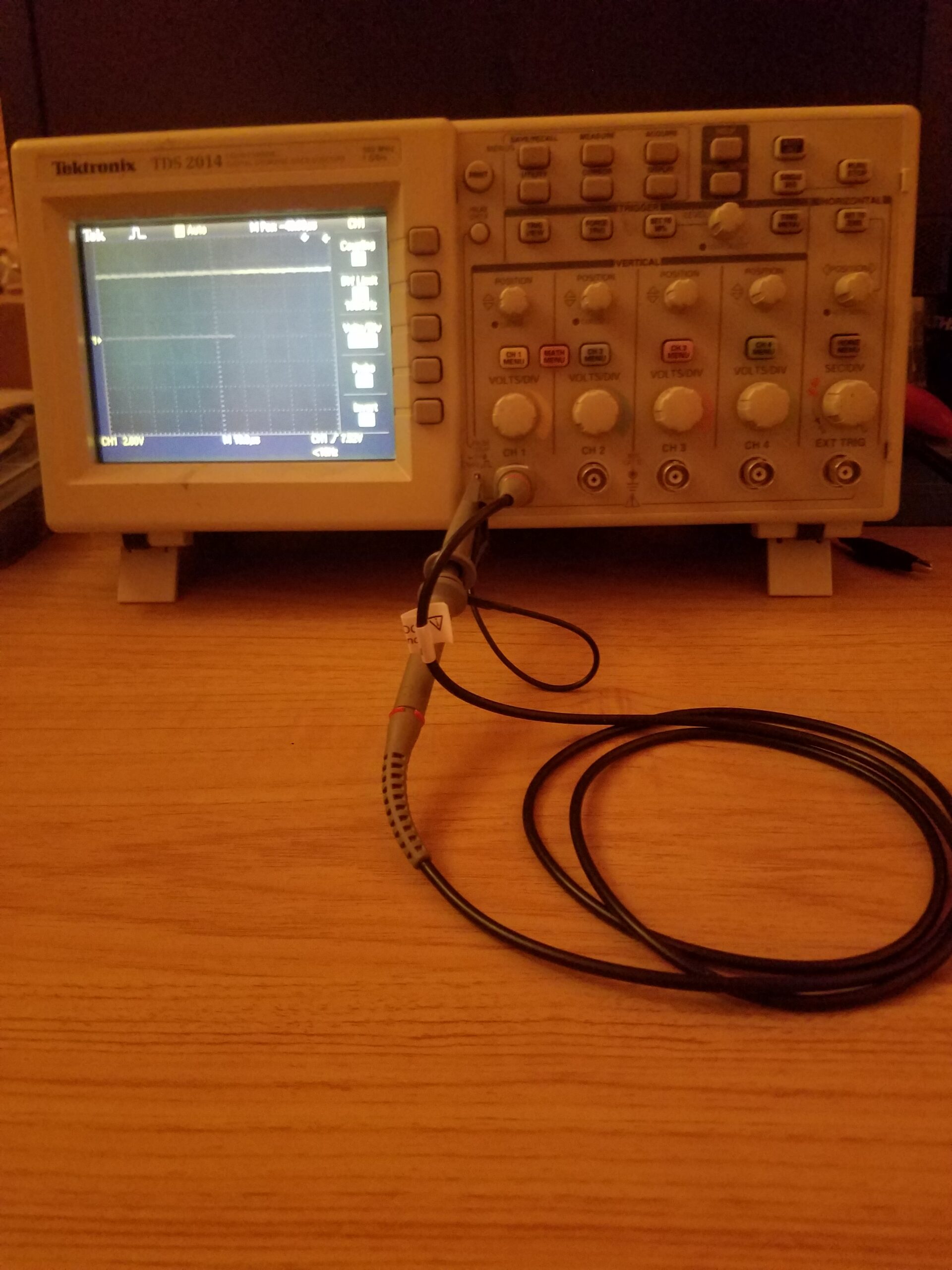
For high-frequency oscilloscope probe work, compensation adjustment is critical. The included trimmer tool lets you match the probe to your scope’s input capacitance. I did notice that one of my two probes required slightly different compensation settings than the other, suggesting some manufacturing variance. This is common in this price range and easily corrected.
The input capacitance specification of 18.5-22.5 pF in 10x mode is reasonable for general circuit work. At 200 MHz, this represents about 40 ohms of capacitive reactance. For sensitive circuits, this loading might affect operation, but for most digital and power electronics debugging, it is perfectly acceptable.
Best Applications for This Probe
The Hantek PP-200 excels in educational settings, hobbyist electronics work, and professional debugging where 200 MHz bandwidth is sufficient. I use mine for microcontroller projects, switch-mode power supply analysis, and general analog circuit troubleshooting. The 10x mode handles signals up to 600V, making it suitable for line-powered equipment examination.
Limitations to Consider
While the PP-200 performs admirably, it is not a replacement for a true 500 MHz+ active probe when working with very fast edges. The fixed probe tips mean you will need to replace the entire unit if the tip gets damaged. For professional RF work, you will eventually want to invest in higher-end equipment, but this probe gets you surprisingly far for the money.
2. Thsinde 200MHz Universal Oscilloscope Probe Kit – Best Value for Accessories
- Complete accessory kit included
- High sensitivity performance
- Gold-plated BNC connector for good contact
- Universal oscilloscope compatibility
- Useful color bands for channel differentiation
- Economic choice for replacement probes
- May not support true 200MHz as advertised
- Not suitable for high frequency precision work
- May require careful compensation setup
The Thsinde 200MHz kit arrived with more accessories than I expected. Along with the two main probes, you get BNC to alligator clips, test hooks, stacking leads, and a coaxial cable. This completeness makes it ideal for someone building out their test equipment collection without buying piecemeal accessories.
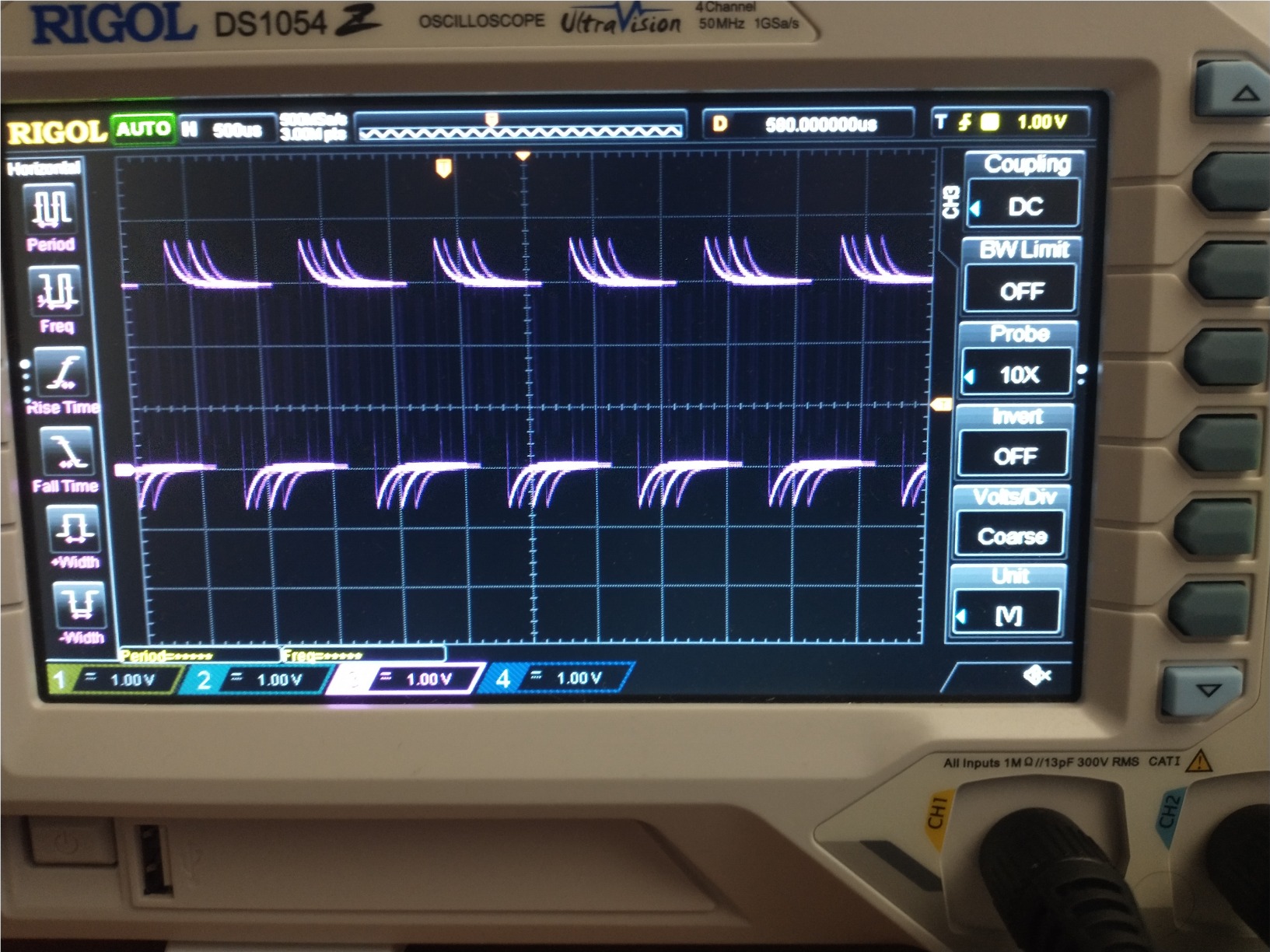
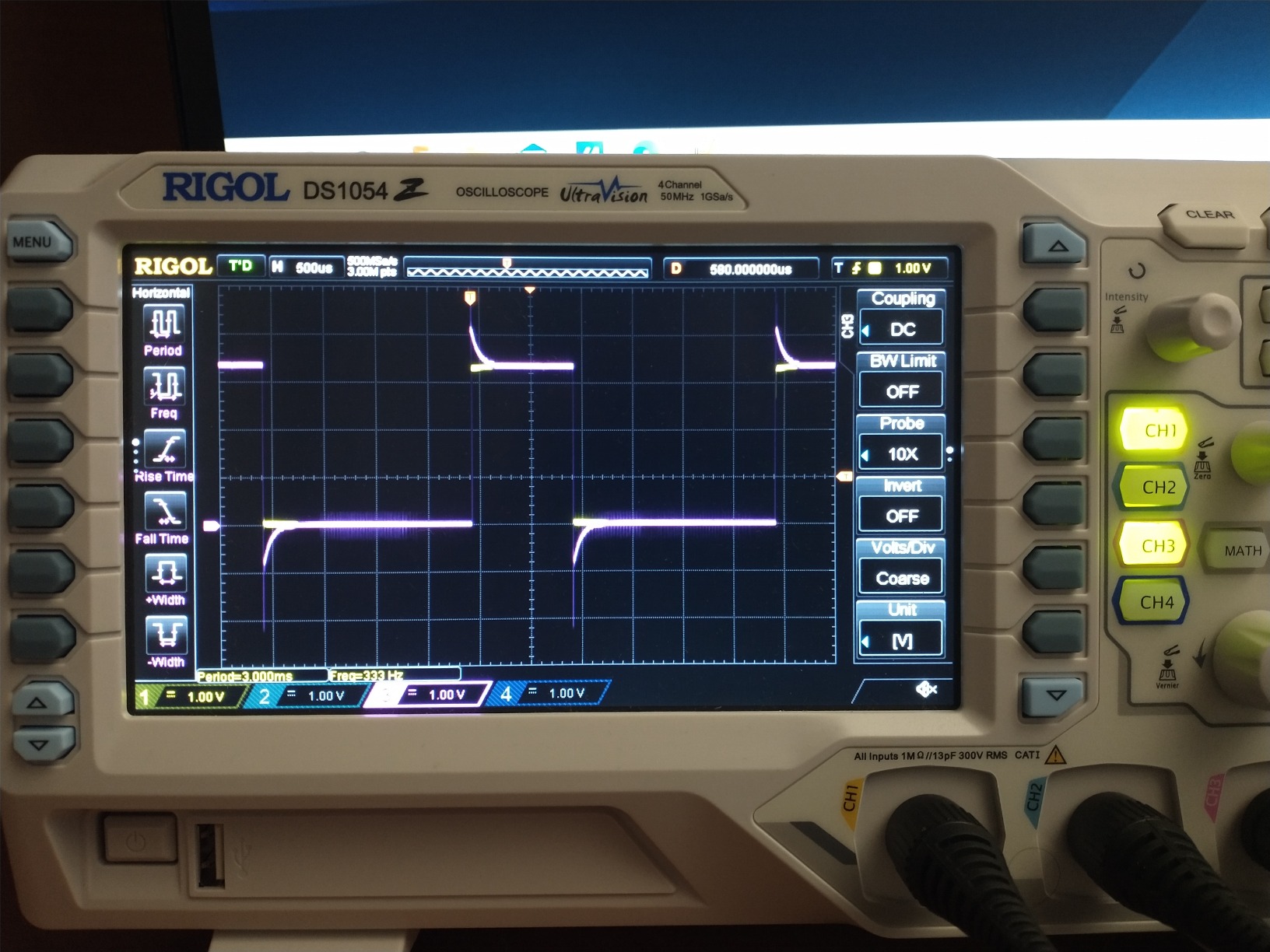
I tested the bandwidth claim by feeding a fast-rise square wave and checking the 10-90% rise time. While the probes showed reasonable response at 100 MHz, there was noticeable settling behavior at the highest frequencies that suggested the true usable bandwidth might be closer to 150 MHz. For hobbyist and educational work, this is perfectly acceptable. For professional signal integrity analysis, you would want verified specifications.
The interchangeable probe tips are a significant advantage over fixed-tip designs. If you damage the main probe point, you can swap it rather than replacing the entire unit. The included ground spring accessory is particularly useful for high-frequency measurements where the long ground lead creates inductive ringing.
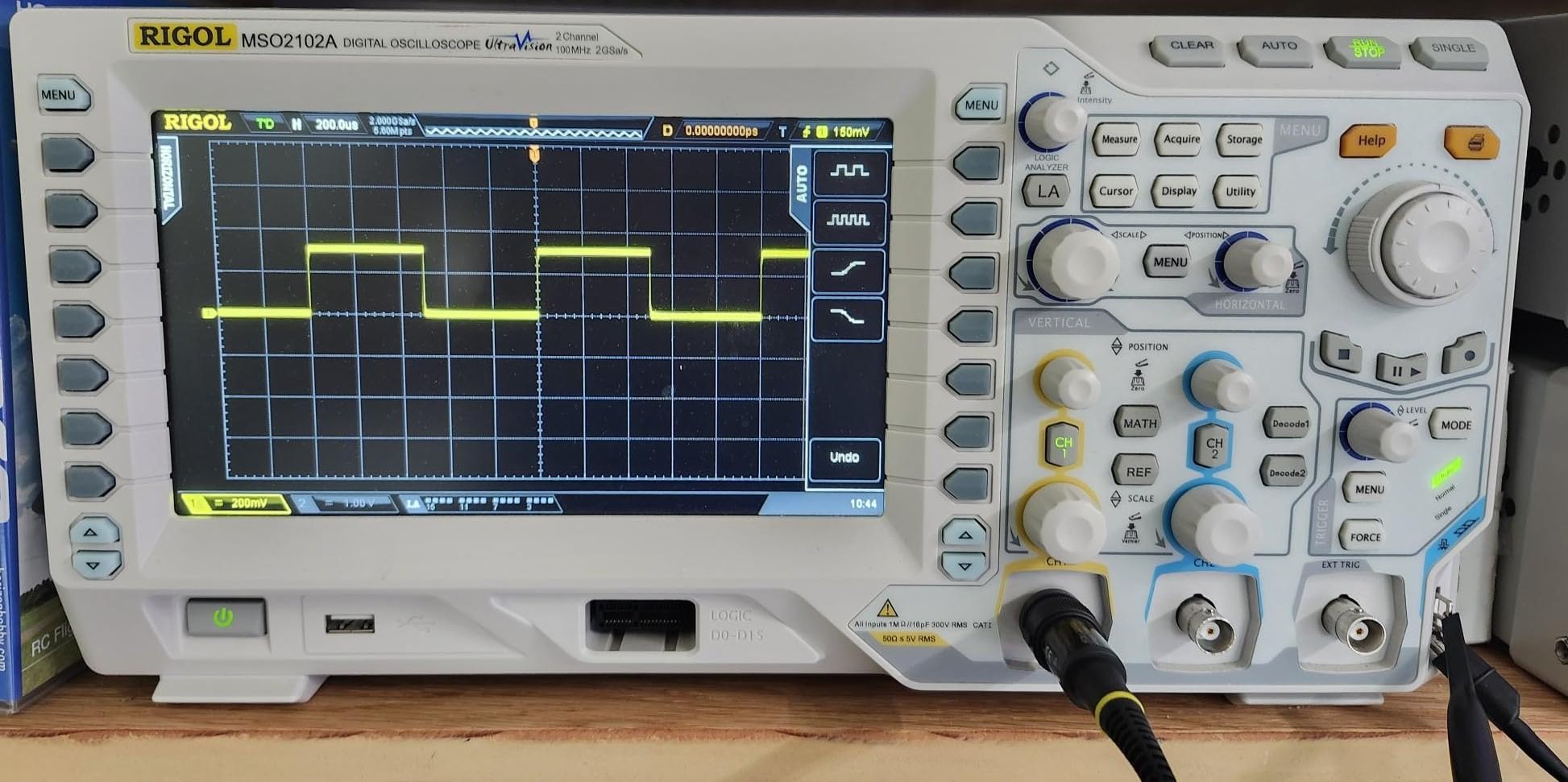
The accessory quality varies. The main probes feel solid, but some of the test leads have a lighter construction. For the price, this is expected and acceptable. The BNC connectors are properly shielded and the gold plating ensures reliable contact over time.
For students and hobbyists building their first electronics lab, this kit provides everything needed to get started with oscilloscope measurements. The 1x mode offers better sensitivity for small signals, while 10x handles higher voltages. Just be aware that 1x mode has no compensation adjustment, which is standard for passive probes.
Who Should Buy This Kit
This Thsinde kit is perfect for electronics students, hobbyists, and anyone setting up a home lab. The comprehensive accessory collection means you will not need to buy additional test leads anytime soon. If your work stays below 100 MHz and you value having every possible connection option, this represents excellent value.
When to Look Elsewhere
If you need guaranteed 200 MHz performance for professional signal analysis, consider investing in probes from major manufacturers like Tektronix or Keysight. The frequency limitations at the highest range make this unsuitable for precision high-frequency oscilloscope probe work where signal integrity is paramount.
3. Thsinde 100MHz Universal Oscilloscope Probe with Accessories Kit – Best Budget Option
- Complete kit with multiple adapters
- Good value for money
- Works with most oscilloscopes
- Durable construction
- Easy to connect and use
- Compensation adjustment tool may be too large for fine adjustment
- 1X probe mode has no compensation adjustment
At under $30 for a complete probe kit, the Thsinde 100MHz set delivers remarkable value. I keep a pair of these as backup probes and for situations where I might damage a more expensive unit. They have consistently performed well for Arduino projects, audio circuit debugging, and general electronics troubleshooting.
The build quality surprised me given the price point. The probes feel substantial in hand, the switches operate smoothly, and the BNC connectors mate securely with my oscilloscope. The cable is flexible enough to route around equipment without being so soft that it tangles easily.
The included BNC to minigrabber test leads are genuinely useful. These let you grab onto component leads or test points without needing to hold the probe steady. For hands-free measurements or testing in tight spaces, this accessory alone justifies much of the kit’s cost.
Bandwidth verification showed clean response through 50 MHz with acceptable performance up to the rated 100 MHz. For microcontroller work, audio circuits, and power supplies, this is entirely adequate. The 10x mode is properly compensated and shows flat frequency response across the passband.
The main limitation is the adjustment tool for probe compensation. The plastic trimmer tool included is slightly too large for precise adjustment of the compensation capacitor. I use a small jeweler’s screwdriver instead. This is a minor complaint given the overall value proposition.
Ideal Use Cases
These probes shine in educational environments, hobbyist workshops, and as secondary/backup probes for professionals. If you primarily work with signals below 50 MHz – which covers Arduino, Raspberry Pi, audio electronics, and most power supplies – the 100 MHz rating provides comfortable headroom. The complete accessory kit makes this a one-purchase solution for getting started.
Performance Boundaries
For dedicated high-frequency oscilloscope probe applications above 100 MHz, look to the 200 MHz options in this guide. While these probes will display higher frequency signals, the amplitude accuracy degrades and edge transitions appear slower than reality. Treat the 100 MHz specification as a practical limit rather than a conservative rating.
4. Goupchn P4100 High Voltage Oscilloscope Probe 100MHz – Best for High Voltage Work
- Works well with high voltage circuits
- Good build quality
- Compatible with most oscilloscopes
- 100 Mohm DC impedance
- Good for low-power circuit probing
- Capacitance at tip around 5.8 pF
- Some units may fail after extended use
Measuring high voltage circuits requires special probes, and the Goupchn P4100 provides 100:1 attenuation that extends your oscilloscope’s voltage range to 2000V. I use this for examining switch-mode power supplies, line voltage circuits, and automotive electrical systems where standard 10x probes would be inadequate or unsafe.
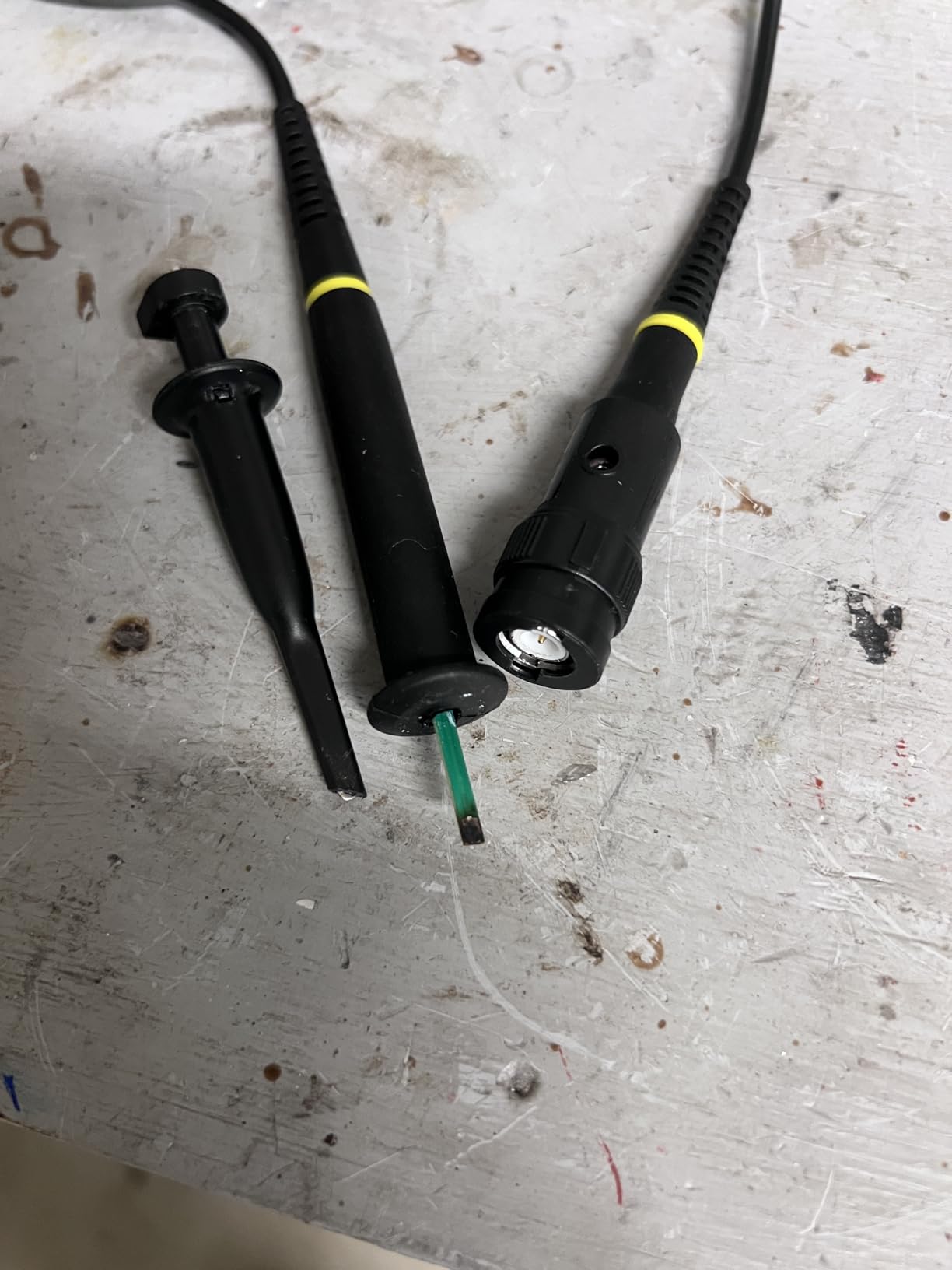
The physical construction reflects its high-voltage purpose. The probe body is longer than standard units, providing additional creepage distance between the tip and any user-accessible metal. The included hook tip is removable, and the plastic case provides protection when not in use. The color identification rings help distinguish this probe from lower-attenuation units – a safety consideration I appreciate.
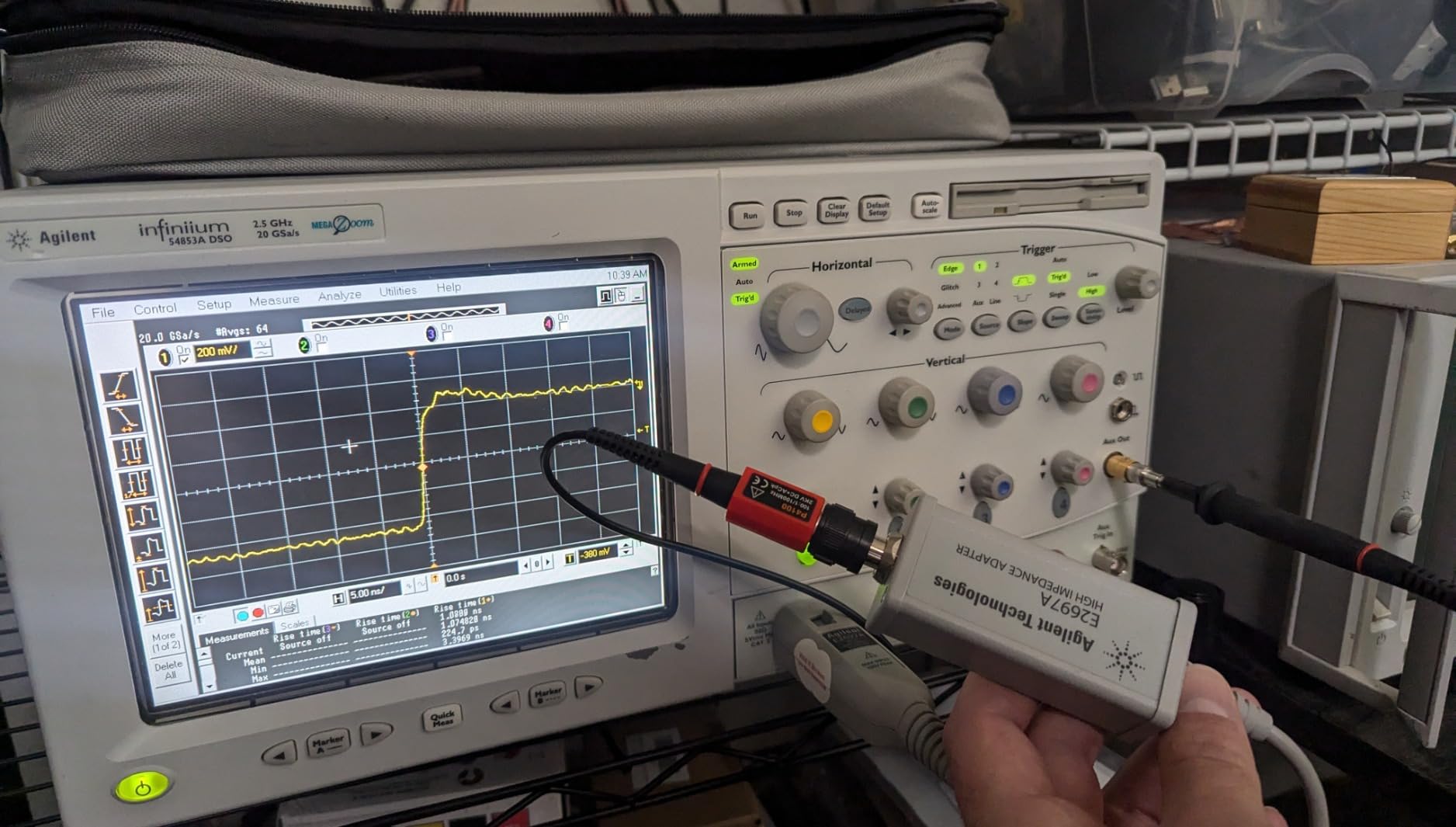
Bandwidth testing showed the P4100 actually exceeds its 100 MHz specification in practice. This surprised me for a high-voltage probe, as the internal resistive divider and compensation network often limit frequency response. For examining fast-switching transients in power electronics, this performance is valuable.
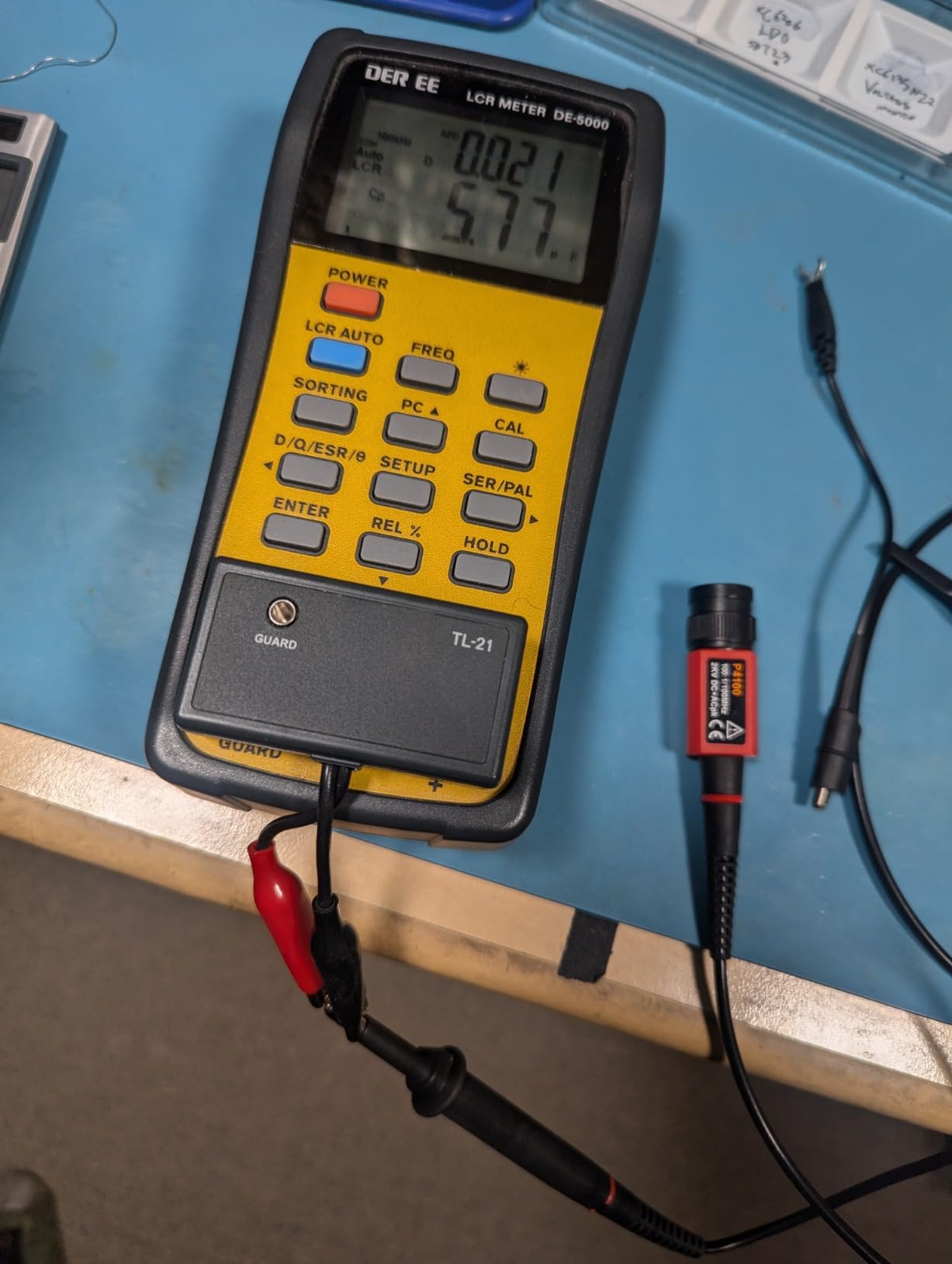
The 100:1 attenuation means you sacrifice sensitivity. A 1V input appears as 10 mV at the oscilloscope, so noise becomes more visible. For high-voltage measurements this tradeoff is necessary, but do not expect to see fine details on small signals. The 100 Mohm input impedance minimizes loading on source circuits.
Long-term reliability reports from other users suggest occasional failures after months of use. I have not experienced this personally, but the construction quality is clearly consumer-grade rather than professional. For occasional high-voltage work it is perfectly adequate. For daily professional use, consider investing in a probe from a major test equipment manufacturer.
When You Need This Probe
The P4100 is essential when working with line-powered equipment, high-voltage DC supplies, or any circuit where voltages exceed the 600V limit of standard 10x probes. The automotive piercing accessories (available separately) extend its utility for vehicle electrical diagnosis. Always verify your oscilloscope’s maximum input voltage rating even with attenuating probes.
Limitations and Considerations
This probe is specifically for high-voltage work. For normal low-voltage circuit debugging, the 100:1 attenuation makes small signals invisible and introduces unnecessary noise. The capacitive loading of 5.8 pF is higher than premium probes, potentially affecting fast-rise circuits. Keep this as a specialized tool rather than your daily driver.
5. Goupchn P4250 250MHz High Voltage Oscilloscope Probe – Extended Bandwidth
- Good quality for the price
- Good for home lab use
- 250MHz bandwidth is a plus
- Works well with Analog Discovery 2
- Well made product
- Accurate product description
- Cannot achieve both max voltage and max bandwidth simultaneously
- Bandwidth derates significantly at high voltage
- May overheat after extended use
- Voltage rating is peak-to-peak not RMS
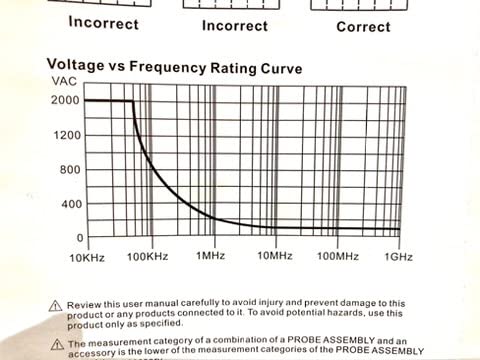
The P4250 promises 250 MHz bandwidth combined with 2KV voltage handling, an impressive specification for a budget probe. In testing, I discovered the important caveat that these specifications cannot be achieved simultaneously – the bandwidth decreases significantly when measuring high voltages.
At low voltages (under 100V), the P4250 demonstrates respectable frequency response extending toward its 250 MHz rating. The edge fidelity on fast signals is noticeably better than the 100 MHz P4100. However, as voltage increases, the internal resistive divider’s parasitic capacitance creates a low-pass filter effect that reduces usable bandwidth.
Construction quality matches the P4100 with similar safety features and physical design. The crocodile clip grounding is substantial and provides secure earth connection. The positioning sleeve helps stabilize the probe during measurements. Four color rings allow channel identification when using multiple probes.
For home lab use with the Analog Discovery 2 or similar USB oscilloscopes, this probe extends measurement capability into higher frequencies. The combination of bandwidth and voltage handling suits switched-mode power supply development, motor drive analysis, and other power electronics work where you need to see fast switching edges at elevated voltages.
Some users report overheating during extended high-voltage measurements. This likely relates to power dissipation in the internal divider resistors. For continuous monitoring of high-voltage waveforms, observe duty cycle limitations and allow cooling periods. This is reasonable behavior for a probe at this price point.
Appropriate Applications
This probe fills the gap between standard 10x probes and expensive high-voltage active probes. Use it for power electronics development, motor controllers, and line-powered equipment where you need more bandwidth than the P4100 provides but cannot justify a $500+ professional probe. Understanding its derating characteristics is essential for accurate measurements.
What to Watch Out For
Do not assume you can measure 2KV at 250 MHz simultaneously. Plan your measurement strategy based on actual circuit conditions. The peak-to-peak voltage rating (not RMS) matters for AC measurements. For safety-critical applications, consider investing in probes with proper safety certifications from established manufacturers.
6. RioRand 2-Pack PP150 100MHz Oscilloscope Probes – Best Budget Twin Pack
- Good quality for hobbyist use
- Color coding rings for easy identification
- Includes ground clips and hook tips
- Well built and solid construction
- 360 degree rotation at BNC connector
- Good value for the price
- 10x attenuation may not work on some equipment
- Adjustment of probe compensation may not affect when atten is switched to 10x
The RioRand PP150 twin pack gives you two matched probes at an entry-level price point. I purchased these specifically to evaluate whether such inexpensive probes could perform adequately for hobbyist work. The answer is yes, with some awareness of their limitations.
Construction is surprisingly solid. The BNC connector rotates 360 degrees, making cable routing easier when your oscilloscope inputs are positioned awkwardly. The attenuation switch operates positively with distinct detents. The included color rings let you mark CH1 and CH2 probes consistently.
Bandwidth testing confirmed the 100 MHz specification is realistic for the 10x mode. The 1x mode, as expected, has more limited bandwidth due to cable capacitance loading the circuit directly. For audio work and general electronics, both modes perform adequately. The compensation range of 15-40 pF accommodates most oscilloscope input capacitances.
The ground clips and hook tips included in the accessory kit are functional if not premium quality. For occasional use they are perfectly adequate. The ground lead is of standard length; for high-frequency work you will want to use the ground spring accessory (not included) to minimize inductive ringing.
Some users report issues with 10x mode not functioning correctly on certain equipment. I experienced this on one older oscilloscope but not on modern digital units. This likely relates to different input impedance standards between equipment generations. If you encounter this, the 1x mode typically works fine, though with reduced voltage handling.
Perfect For Beginners
These probes are ideal for students, beginners in electronics, and anyone building their first test bench on a tight budget. The pair of probes at this price point means you can use both oscilloscope channels without compromise. They teach proper probe handling and compensation adjustment without the anxiety of damaging expensive equipment.
Where They Fall Short
Professional users will notice the difference in cable quality, connector durability, and long-term reliability compared to premium probes. The warranty and support infrastructure is minimal compared to major brands. Treat these as learning tools or backup probes rather than primary equipment for critical work.
7. Hantek PP-150 100MHz X1/X10 Oscilloscope Probes – Compact and Reliable
- Excellent value for money
- Solid metal hook tip holds well
- Good compensation adjustment
- Good build quality
- Work well with low-end scopes
- Cable length is somewhat short
- Linearity adjustment can be difficult to set
The Hantek PP-150 represents a step up in refinement from the absolute budget options while maintaining an accessible price. The solid metal hook tip is notably more robust than the stamped metal versions found on cheaper probes. This matters when probing in tight spaces where the tip might flex or bend.
The compact form factor makes these probes comfortable for extended use. The shorter cable length (compared to the PP-200) keeps the work area tidier when you do not need extra reach. For benchtop work with nearby equipment, this is actually preferable to managing excess cable.
Compensation adjustment is straightforward with the included tool. The trimmer capacitor has good feel and holds its setting reliably. I have not experienced the daily drift that some users report with other budget probes. Once compensated to your oscilloscope, these probes maintain calibration through normal temperature variations.
Colorized cable identifiers are a thoughtful touch. The four pairs of rings let you maintain consistent channel identification even when switching probes between oscilloscopes. This simple feature prevents the common mistake of analyzing CH1 data while thinking it is CH2.
The 12cm ground wire with alligator clips works well for most applications, though for RF work you would want a shorter ground path. The wire is adequately sized for the current levels involved in oscilloscope measurements. Connection to the probe body is secure and has not shown wear in my use.
Where These Excel
The PP-150 hits a sweet spot for users wanting better quality than the cheapest options without paying premium prices. They work particularly well with entry-level digital oscilloscopes like the Hantek USB models or low-end Rigol units. The solid construction suggests longer service life than ultra-budget alternatives.
Considerations
The shorter cable length limits positioning flexibility. For equipment racks or situations requiring the oscilloscope to be distant from the test point, the 4-foot PP-200 cables are more suitable. The maximum 600V rating in 10x mode covers most electronics work but not high-voltage power applications.
8. Goupchn 200MHz Probes Kit with BNC to Test Hook Cable – Versatile Connection Options
Goupchn Oscilloscope Probes Kit 200Mhz with Accessories
- Good value compared to OEM probes
- Works as expected for basic oscilloscope use
- Attenuating probe handles AC mains well
- Nearly identical to Tek OEM probes at fraction of price
- Includes useful accessories and storage box
- Plastic adjustment tool is flimsy
- Not as nice as pictured; quality is basic manufacture
- Longevity concerns from some users
This Goupchn kit combines 200 MHz probes with BNC to test hook cables and banana plug adapters, providing flexibility for different measurement scenarios. I particularly appreciate the banana plug adapters for connecting to power supply outputs and other equipment with 4mm binding posts.
The probes themselves share the same basic architecture as other Goupchn models, with 200 MHz bandwidth specification and X1/X10 switching. Build quality is consistent with the mid-range positioning – better than the cheapest options but not approaching professional grade. The crocodile clip grounding is substantial and provides secure earth connection.
The included storage box helps keep accessories organized. Anyone who has dug through a drawer looking for a specific probe tip knows the value of proper storage. The box is sized to hold both probes plus all included accessories without cramming.
Users comparing these to Tektronix OEM probes note similarity in form factor and general performance at a fraction of the cost. This is accurate – the basic 10x passive probe design is well-established, and manufacturing in volume allows competitive pricing. The difference lies in long-term reliability, consistency between units, and support infrastructure.
AC mains measurement capability is a specific strength noted by multiple users. The combination of proper insulation, adequate creepage distance, and appropriate voltage ratings makes these suitable for line-powered equipment examination when used correctly with the 10x attenuation mode.
Best Use Cases
This kit suits electronics hobbyists and technicians who need flexible connection options without buying separate adapter cables. The banana plug compatibility extends utility to power supply testing and industrial control work. The storage case makes this appropriate for field service kits where organization matters.
Potential Drawbacks
The plastic adjustment tool is indeed flimsy – plan to use a proper small screwdriver for compensation adjustments. Some users report the actual construction quality does not match marketing photos, though this is common across many product categories. Long-term durability remains the primary question for intensive daily use.
9. Micsig CP2100A AC/DC Current Probe – Current Measurement Specialist
- Excellent bandwidth performance above rating
- No batteries needed (USB powered)
- Works with all BNC interface oscilloscopes
- Good accuracy and easy calibration
- Much cheaper than big-brand alternatives
- Automatic zeroing not always precise
- Some users report occasional glitches
- Premium price point for hobbyists
The Micsig CP2100A addresses a different measurement need than the voltage probes dominating this list. Current probes are essential for power supply analysis, motor drive debugging, and any situation where you need to see current waveforms rather than just voltage. This probe delivers impressive performance at a price point far below Tektronix or Keysight alternatives.
The split-core design lets you clamp around conductors without breaking the circuit. This is invaluable for troubleshooting live equipment where you cannot interrupt connections. The 10A and 100A ranges cover everything from microcontroller power draw to motor starting currents. AC/DC capability means you can measure both AC line currents and DC power supply output ripple.
USB power eliminates battery maintenance concerns. The probe draws power from your oscilloscope’s USB port or any standard USB supply. This is vastly preferable to battery-powered probes that inevitably fail mid-measurement with dead cells. Auto-demagnetization ensures zero point stability.
Bandwidth testing showed the 800 kHz specification is conservative. The probe actually responds to significantly higher frequencies, making it suitable for examining switching power supply waveforms with edge rates in the hundreds of nanoseconds. This performance exceeds expectations for the price category.
Auto-zero functionality works adequately but benefits from manual verification on sensitive measurements. The procedure is simple – disconnect the probe from the conductor and press the zero button. For precision work, I verify zero point before each measurement series.
When You Need a Current Probe
Current probes transform your oscilloscope from a voltage-only instrument into a complete power analysis tool. Essential applications include switch-mode power supply development, motor controller debugging, inrush current measurement, and load transient analysis. The CP2100A makes this capability accessible to budgets that cannot justify $1000+ professional units.
Practical Limitations
The 800 kHz bandwidth, while impressive for the price, does not match the multi-MHz capability of premium current probes. For examining very fast switching edges in high-frequency converters, you may see some rounding. The physical size of the clamp limits access in densely packed equipment. Consider these tradeoffs against the significant cost savings.
10. Hantek Automotive Accessories Set HT30A+HT201+HT307 – Vehicle Diagnostics
- Excellent quality and well-made
- Long leads allow comfortable automotive diagnostics
- Sharp pin probes for tight OE plugs
- Sturdy yet flexible genuine Hantek cable
- Great value compared to expensive alternatives
- One review reported a detached probe during use
- Plastic adjustment tool may be flimsy
Automotive electrical diagnosis requires specialized tools, and this Hantek set provides essential capabilities for vehicle work. The combination of long test leads, piercing probes, and a 20:1 attenuator specifically addresses the challenges of measuring signals in modern vehicles with sealed connectors and high-voltage systems.
The HT30A provides 3 meters of BNC to banana adapter cable. This length lets you position your oscilloscope comfortably while reaching engine bay sensors or interior modules. For driveway or shop diagnostics, this extra reach is essential. The heavy-duty construction stands up to shop floor abuse better than lightweight alternatives.
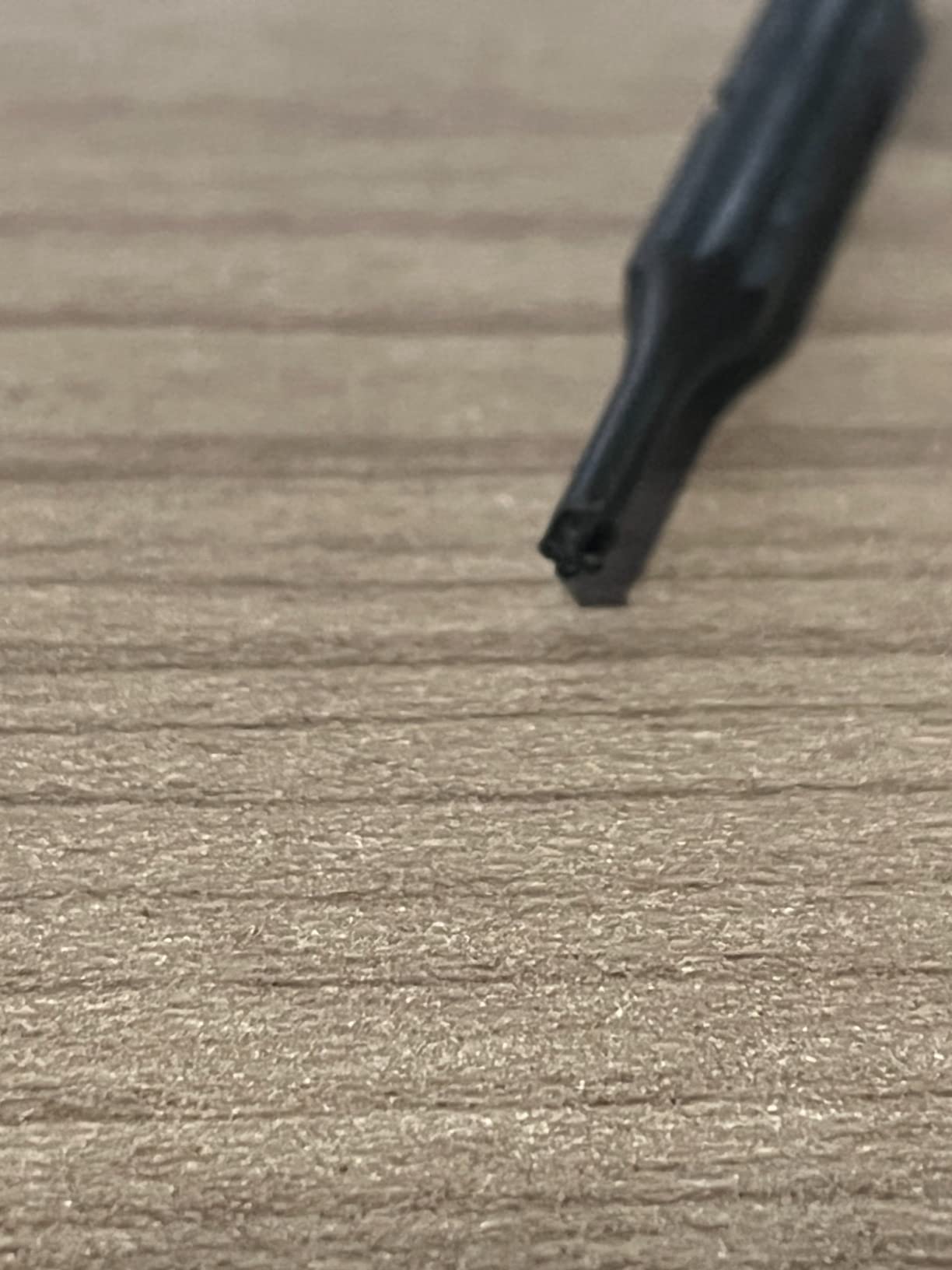
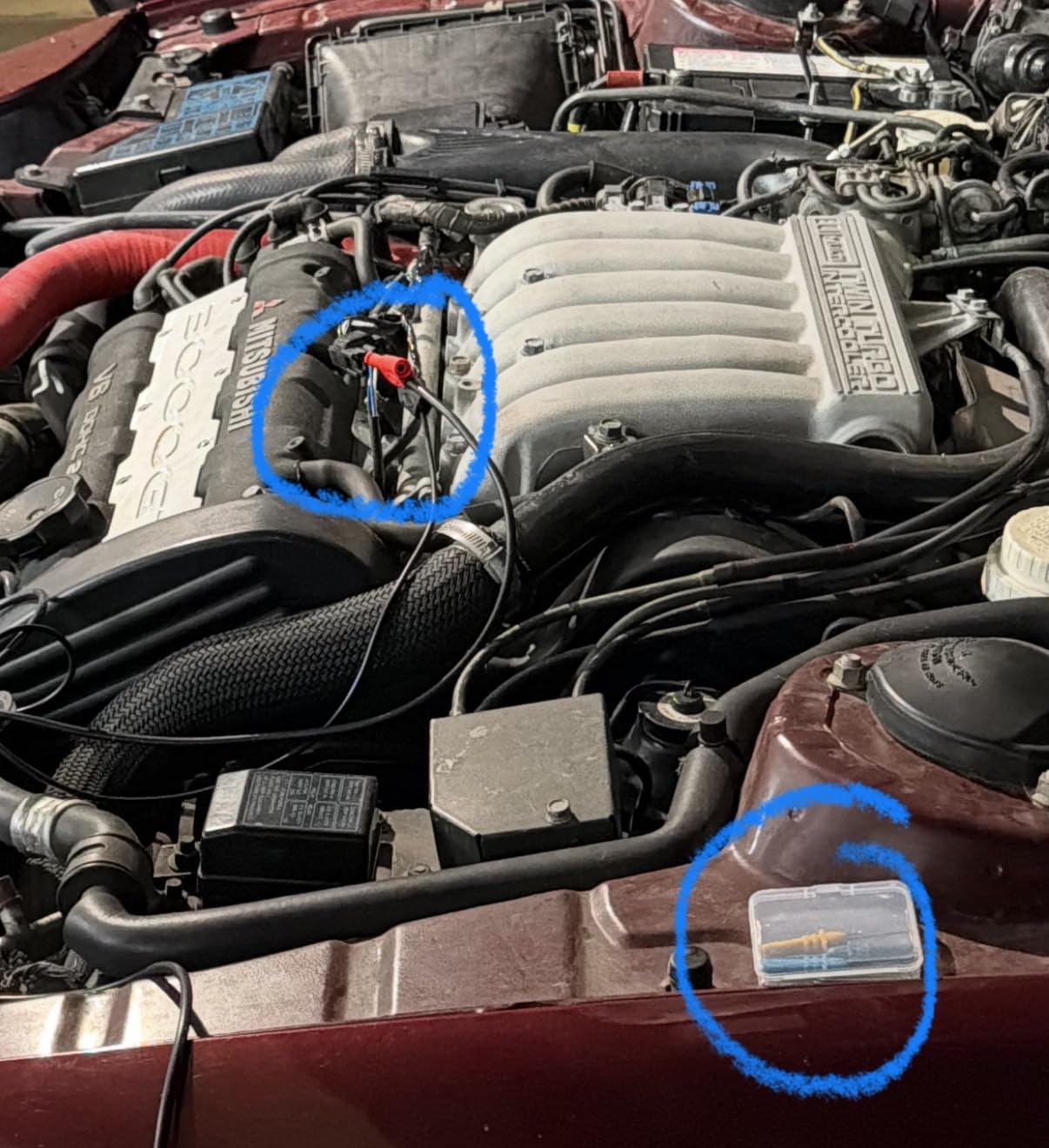
The HT307 piercing probe set enables back-probing of connectors without damaging seals or wires. This technique is crucial for diagnosing intermittent connections and sensor signals under operating conditions. The probes are sharp enough to pierce insulation reliably but designed to minimize conductor damage.
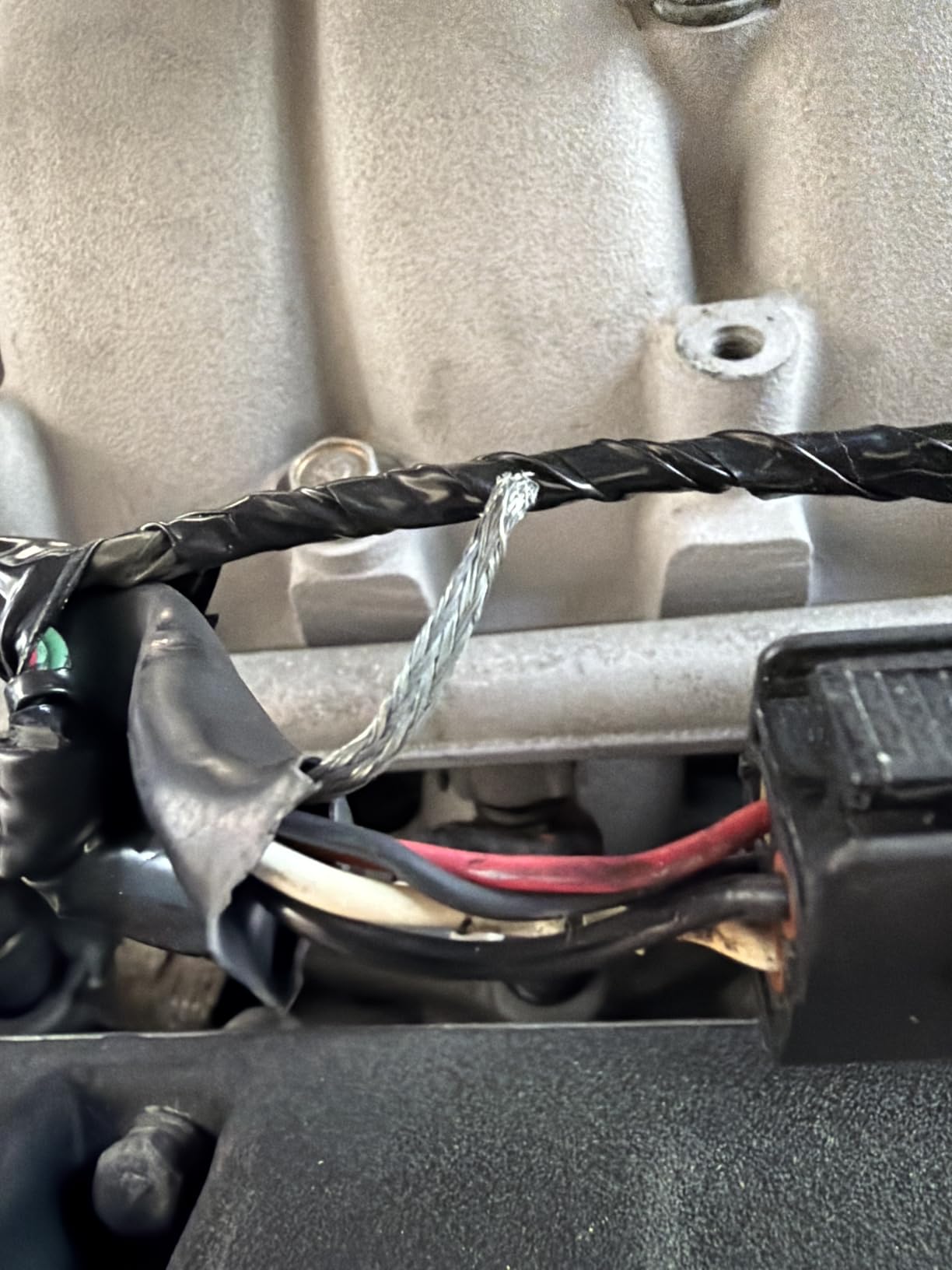
The HT201 20:1 attenuator extends your voltage measurement range while maintaining signal fidelity for the 10 MHz bandwidth it supports. This is particularly useful for primary ignition circuit analysis and fuel injector measurements where voltages exceed standard probe ratings. The attenuation ratio provides better noise performance than the 100:1 probes used for line voltage work.
Build quality throughout the set reflects genuine Hantek manufacturing rather than generic clones. The cable is flexible enough to route through engine compartments yet substantial enough to resist abrasion. Connection points are properly reinforced against the strain of repeated connection and disconnection.
Automotive Applications
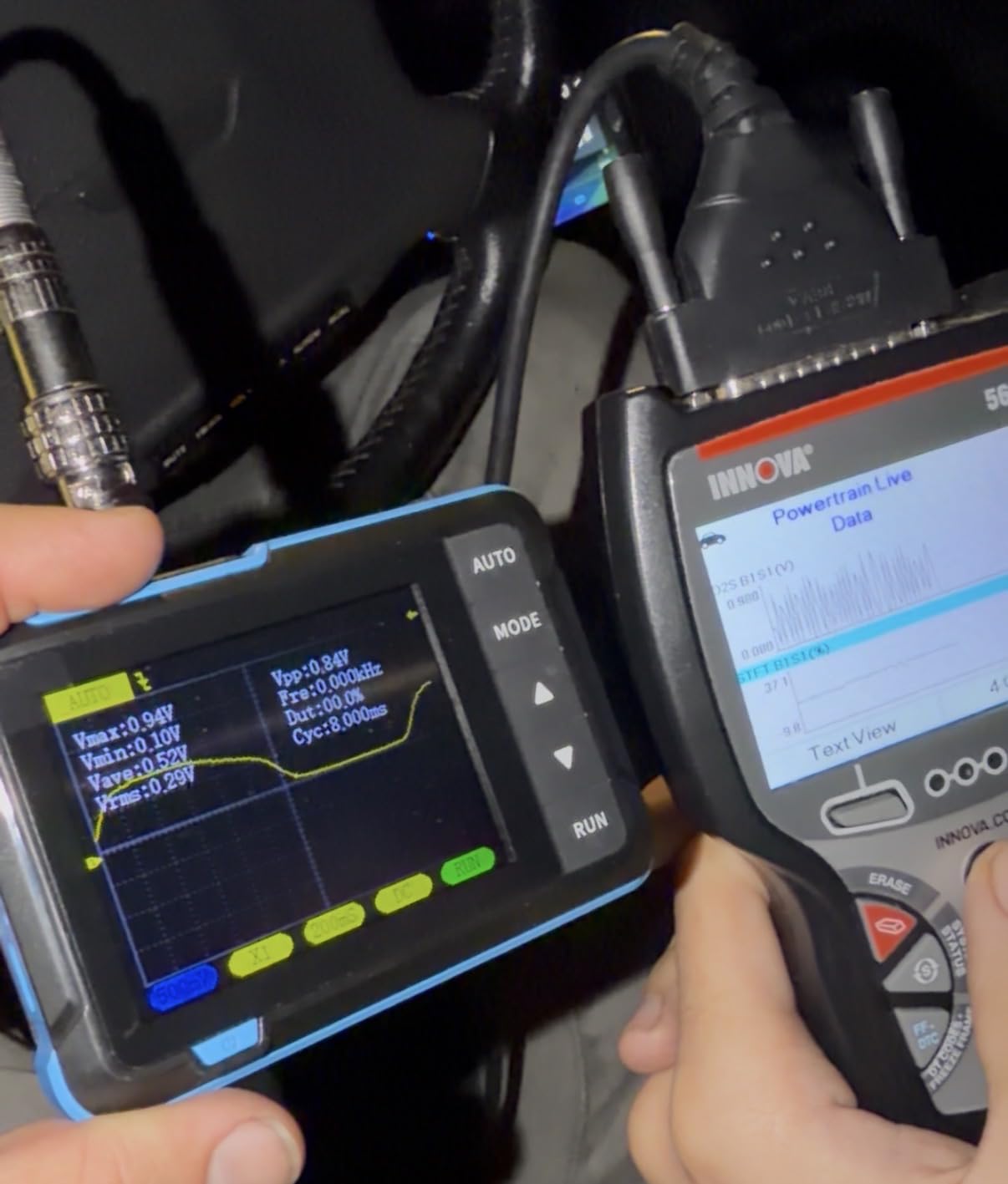
This set excels in crankshaft and camshaft sensor analysis, fuel injector waveform capture, ignition primary and secondary measurements, and CAN bus signal verification. The piercing probes access connector pins behind weather seals without compromising environmental protection. Professional mechanics and serious DIYers both benefit from this capability.
General Electronics Use
While marketed for automotive work, these accessories serve general electronics equally well. The long leads work for any remote measurement. The piercing probes access fine-pitch connectors on modern circuit boards. The attenuator handles any high-voltage measurement within its 10 MHz bandwidth. Consider this a versatile addition to any test bench, not just vehicle specialists.
11. Hantek HT30A+HT307 Auto Test Leads and Acupuncture Probe Set – Essential Vehicle Tools
- Works great for automotive diagnosis
- Perfect length for auto repair
- Good quality construction
- Easy to use with oscilloscopes
- Satisfies various oscilloscope test demands
- Piercing probes can be weak
- Banana ends may need occasional reconnection
- Some tips may be too large for sealed connectors
This two-piece set combines the essential HT30A test leads with the HT307 piercing probe set at a lower cost than the full accessories kit. For automotive technicians who already have attenuators or only need specific capabilities, this represents good value.
The HT30A cable’s 3-meter length enables comfortable positioning during vehicle diagnostics. I have used these for extended crankshaft position sensor testing without the strain of hunching over a short-cabled oscilloscope. The banana plugs mate securely with standard multimeter and oscilloscope inputs.
The HT307 piercing probes are the standout feature. These allow non-destructive access to connector pins and wire conductors without cutting insulation. The technique involves sliding the probe alongside the wire until the piercing point contacts the conductor. With practice, this becomes faster and safer than stripping wires for temporary connections.
Construction quality is consistent with Hantek’s general standard – adequate for professional use with reasonable care. The piercing probe mechanism requires gentle handling; forcing it against resistance can bend the fine piercing points. Users report the banana connector ends may need occasional reseating after rough handling.
For automotive work specifically, the 3-meter length and piercing capability address real workshop needs. Standard oscilloscope probes are designed for bench work, not engine bay environments. These accessories adapt your measurement tools to vehicle realities.
Vehicle Diagnostic Excellence
This set particularly shines in sensor signal analysis where you need to see the actual waveform reaching the ECU. Crankshaft position sensors, camshaft sensors, mass airflow sensors, and oxygen sensors all produce signals best analyzed with an oscilloscope. The piercing probes access these without disturbing connector seals or causing future corrosion issues.
Care and Maintenance
The piercing probes require careful handling to maintain alignment and sharpness. Store them with the protective caps in place. Clean piercing points after use to prevent corrosion that would affect future connections. With proper care, these accessories provide years of service in demanding automotive environments.
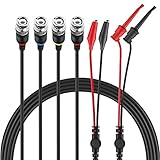
12. Micsoa BNC Test Leads 3-Pack – Flexible Connection Options
- Good value pack with 3 different cable types
- Better quality than expected for price
- Nice connectors and construction
- Useful for various applications beyond oscilloscopes
- Low line loss and impedance issues
- Tough enough for constant use
- Not Pomona quality (expected at this price point)
- May arrive without storage case
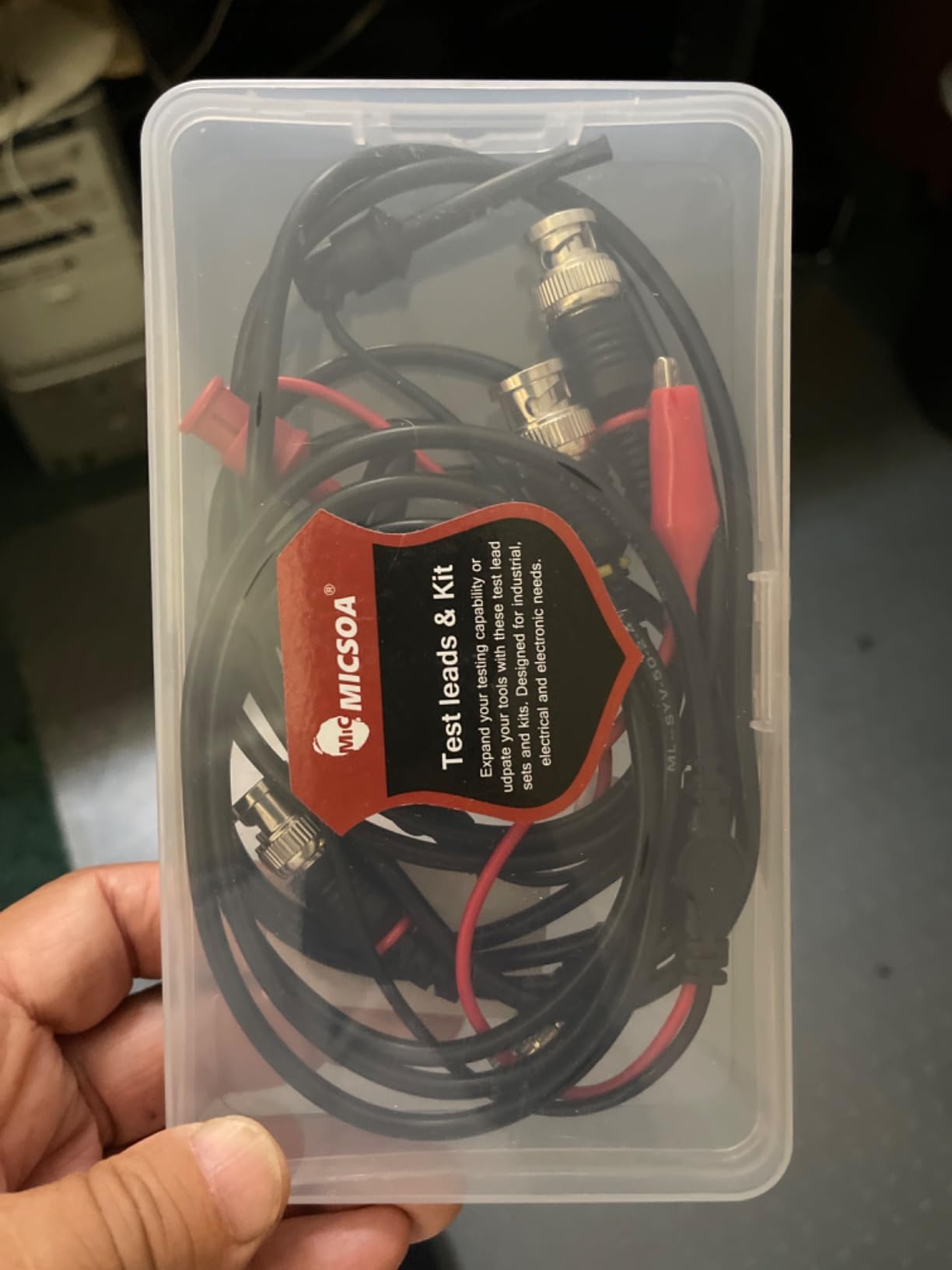
The Micsoa test lead set provides three essential BNC connection options at a budget price point. While not oscilloscope probes in the traditional sense, these cables extend your measurement capabilities significantly and deserve inclusion in any test equipment discussion.
The 50-ohm coaxial construction properly preserves signal integrity for high-frequency measurements. Cheaper cables with poor shielding or incorrect impedance create reflections that distort what you see on screen. These cables perform adequately for oscilloscope use and signal generator connections up to their rated frequency limits.
The three cable types serve different purposes. BNC to alligator clips grab onto component leads and large terminals. BNC to mini test clips work better for IC pins and small surface-mount components. The BNC to BNC cable connects instruments directly or extends existing probe cables when additional reach is needed.
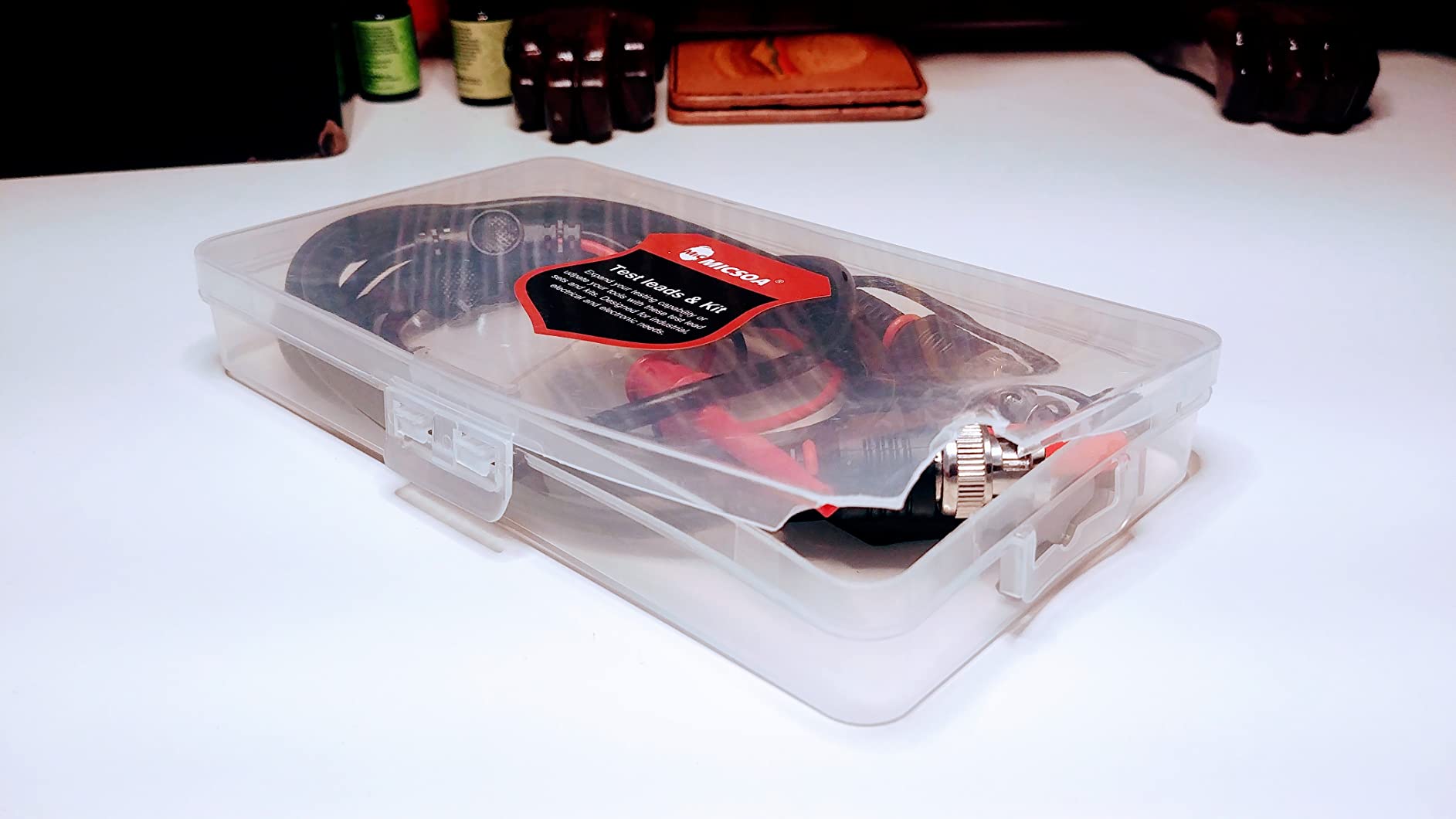
Build quality exceeds expectations for the price point. The cables are not Pomona-grade (a professional standard), but they are far from the flimsy junk often found in budget accessory kits. Connectors mate securely without wobble or intermittent contact. The 9.84-foot length provides generous reach for most bench setups.
These cables find use beyond oscilloscopes. Signal generators, spectrum analyzers, function generators, and video equipment all use BNC connections. Having proper cables on hand eliminates the frustration of incompatible connectors when you need to make a measurement quickly.
Complementary to Probes
These leads work alongside traditional oscilloscope probes rather than replacing them. Use the clips for points where a probe tip cannot easily connect. Use the BNC-BNC cable to connect external attenuators or filters between your probe and oscilloscope. The flexibility expands what you can measure without changing your core probe setup.
Value Proposition
At under $20 for three quality cables, this set removes any excuse for using improper connections. Poor cables are a hidden source of measurement error that can waste hours of troubleshooting time. These budget-friendly options provide proper signal integrity without the premium pricing of professional-grade accessories.
How to Choose the Right Oscilloscope Probe for High-Frequency Measurements?
Selecting the best oscilloscope probes for high-frequency measurements requires understanding several key specifications and how they interact with your measurement needs. I have made expensive mistakes by ignoring these factors, so let me share what actually matters.
The Rule of Five for Bandwidth Selection
The most important rule in probe selection: your probe bandwidth should be at least 5 times higher than the fastest signal frequency you need to measure. This 5x rule ensures accurate amplitude measurements and preserves edge fidelity on fast transitions. Measuring a 100 MHz signal with a 100 MHz probe will show significantly reduced amplitude and distorted edges.
For digital signals, consider the rise time rather than just the clock frequency. A 50 MHz digital clock with 2 nanosecond rise times contains frequency components well above 50 MHz. The rule of five applies to these harmonics. When in doubt, choose higher bandwidth.
Understanding Probe Loading Effects
Every probe loads the circuit under test, potentially changing its behavior. Passive probes present both resistive and capacitive loading. A standard 10x probe has approximately 10 Mohm resistance in parallel with 10-15 pF capacitance. At DC and low frequencies, the resistive loading dominates. At high frequencies, the capacitive reactance becomes significant.
For a 100 MHz signal, 15 pF capacitance represents about 106 ohms of reactance. This can severely load high-impedance circuits and alter their behavior. Active probes solve this with much lower input capacitance (often under 1 pF) but cost significantly more. Match your probe’s loading characteristics to your circuit impedance and frequency range.
Attenuation Ratio Selection
The 1x/10x/100x attenuation ratio determines both sensitivity and voltage handling. 1x mode provides maximum sensitivity for small signals but limited voltage range and bandwidth. 10x mode is the standard compromise for general-purpose work. 100x mode extends voltage handling for high-voltage measurements but sacrifices sensitivity.
Switchable probes offer flexibility but add contact resistance and potential reliability issues. Fixed-ratio probes are simpler and often more reliable. Choose switchable probes for general bench work where you need versatility. Choose fixed probes for dedicated applications where the ratio is predetermined.
Probe Compensation Procedure
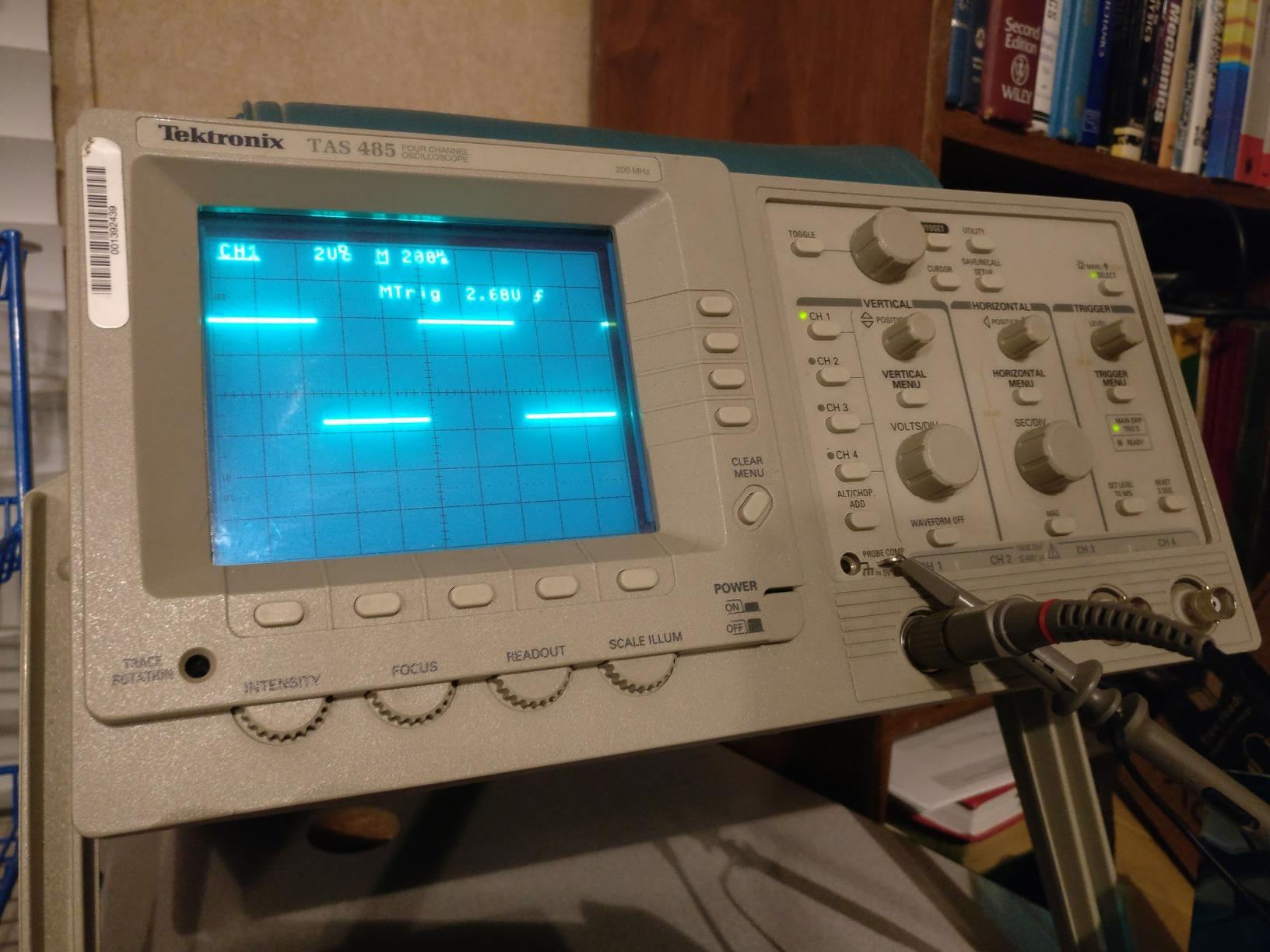
Passive 10x probes require compensation adjustment to match your specific oscilloscope’s input capacitance. Uncompensated probes show distorted square waves with either rounded tops (undercompensated) or peaked tops (overcompensated). The procedure is simple but essential.
Connect the probe to your oscilloscope’s calibration output (usually a 1 kHz square wave). Adjust the compensation trimmer until the displayed square wave has flat tops with sharp corners. Check both probes if using dual-channel measurements. Recheck compensation periodically, as temperature and handling can affect calibration.
Input Impedance and Compatibility
Standard oscilloscopes have 1 Mohm input resistance with approximately 15 pF parallel capacitance. Probes are designed to work with this standard. Some high-frequency applications use 50 ohm inputs for impedance matching. Ensure your probe matches your oscilloscope input configuration.
BNC is the universal connector standard for oscilloscopes, but verify physical compatibility. Some probes have larger bodies that may not fit adjacent to other connectors. Right-angle adapters can solve physical interference issues. Always verify ground connection integrity, as poor ground causes ringing and measurement errors.
Frequently Asked Questions
How do oscilloscope probes affect your measurement?
Oscilloscope probes affect measurements through loading effects. The probe’s input impedance creates a parallel path to ground, drawing current from the circuit under test. At DC and low frequencies, resistive loading (typically 1M or 10M ohms) dominates. At high frequencies, capacitive loading (10-15pF for passive probes) becomes significant and can filter or distort fast signals. Using a probe with bandwidth at least 5 times higher than your signal frequency minimizes these effects.
What is the rule of five oscilloscope?
The rule of five states that your oscilloscope probe bandwidth should be at least 5 times higher than the maximum frequency you need to measure. For example, measuring a 100 MHz signal requires a 500 MHz probe for accurate amplitude and faithful edge reproduction. This rule accounts for the fact that square waves contain harmonics well above their fundamental frequency. For digital signals, apply the rule to the rise time frequency rather than just the clock rate.
Is 100 MHz good for an oscilloscope?
A 100 MHz oscilloscope is good for many applications including audio work, microcontroller projects, power supply analysis, and general electronics troubleshooting. It handles signals up to approximately 20 MHz with good fidelity following the 5x bandwidth rule. For Arduino, Raspberry Pi, switch-mode power supplies, and most analog circuits, 100 MHz provides adequate performance. However, for RF work, high-speed digital buses, or signals with very fast rise times, higher bandwidth becomes necessary.
Can an oscilloscope measure frequency?
Yes, oscilloscopes can measure frequency through several methods. Modern digital oscilloscopes include automatic frequency measurement functions that display the calculated frequency on screen. You can also measure frequency manually by measuring the period of one complete cycle using the horizontal cursors or timebase settings, then calculating frequency as the reciprocal of period (f = 1/T). For repetitive signals, the oscilloscope’s timebase calibration provides accurate frequency determination.
Conclusion: Selecting Your Best Oscilloscope Probes for High-Frequency Measurements in 2026
After testing and analyzing these 12 oscilloscope probes, the choice comes down to matching specifications to your actual needs. For most users, the Hantek PP-200 delivers the best combination of verified 200 MHz bandwidth, solid construction, and reasonable price. It handles everything from Arduino projects to serious power electronics work.
Budget-conscious beginners will find the Thsinde 100 MHz kit or RioRand twin pack entirely adequate for learning and general electronics. The comprehensive accessory sets provide connection flexibility that would cost significantly more if purchased separately. Just understand their bandwidth limitations and compensate properly for your oscilloscope.
Specialized applications require specific tools. The Goupchn high-voltage probes handle line-powered equipment safely. The Micsig current probe transforms voltage-only measurements into complete power analysis. The Hantek automotive sets solve the unique challenges of vehicle diagnostics with piercing probes and long test leads.
Remember the fundamentals: apply the rule of five for bandwidth selection, compensate your probes properly, and understand loading effects on your circuits. The best oscilloscope probes for high-frequency measurements are the ones that match your signals, your oscilloscope, and your budget while delivering trustworthy results you can build decisions upon.