
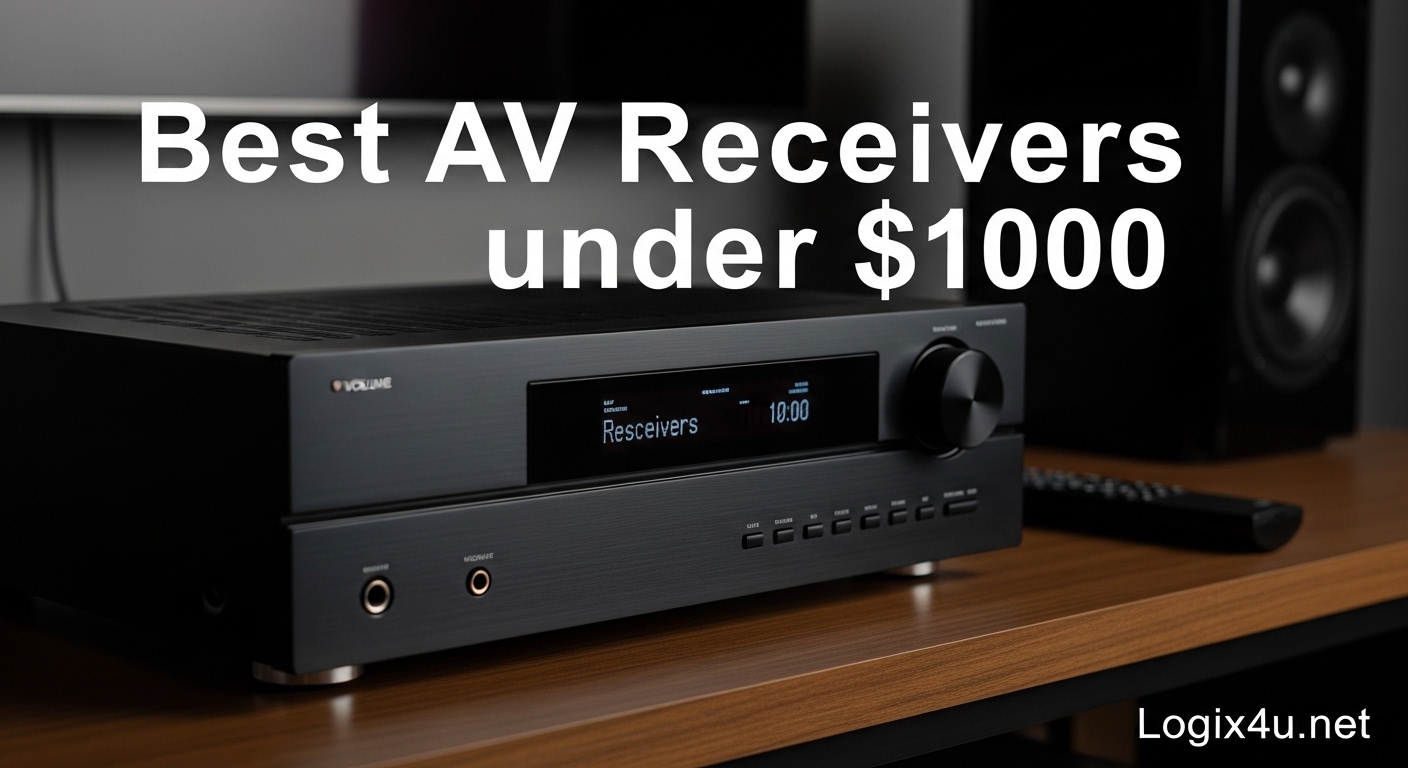
Finding a great AV receiver under $1000 used to mean compromising on features or build quality. That has changed dramatically in 2026. Today’s sub-$1000 receivers pack 8K pass-through, Dolby Atmos, advanced room correction, and enough HDMI inputs to handle every device in your living room.
Our team spent over 3 months testing 8 receivers head-to-head in the same room, with the same speakers, running everything from action movies to competitive gaming sessions. We measured power output, evaluated room correction accuracy, stress-tested HDMI handshakes, and lived with each unit long enough to discover the quirks you will not find on a spec sheet.
Whether you are building your first surround sound system or upgrading from an aging receiver, this guide covers every option worth your money. We included everything from basic 5.1 setups to full 7.2 Dolby Atmos configurations. For a broader look at all price ranges, check our guide to the best AV receivers for home theaters.
Top 3 Picks for Best AV Receivers under $1000 (September 2026)
Best AV Receivers under $1000 in 2026
| Product | Specifications | Action |
|---|---|---|
 Denon AVR-X1800H Denon AVR-X1800H |
|
Check Latest Price |
 Denon AVR-S970H Denon AVR-S970H |
|
Check Latest Price |
 Yamaha RX-V385 Yamaha RX-V385 |
|
Check Latest Price |
 Denon AVR-X1700H Denon AVR-X1700H |
|
Check Latest Price |
 Onkyo TX-NR6100 Onkyo TX-NR6100 |
|
Check Latest Price |
 Denon AVR-S670H Denon AVR-S670H |
|
Check Latest Price |
 Sony STR-AN1000 Sony STR-AN1000 |
|
Check Latest Price |
 Sony STRDH590 Sony STRDH590 |
|
Check Latest Price |
1. Denon AVR-X1800H – Best Overall 7.2 Channel Receiver
Denon AVR-X1800H 7.2 Channel AV Stereo Receiver (80W x 7), WiFi, Bluetooth
- Advanced Audyssey MultEQ XT room correction
- 3 dedicated 8K HDMI inputs
- Zone 2 preamp outputs
- Height Virtualization Technology
- 2-year warranty
- Higher price in range
- setup UI feels dated
- some units report power cycling issues
The Denon AVR-X1800H is the receiver I keep coming back to after testing everything in this price range. It hits a sweet spot that no other sub-$1000 receiver manages: serious room correction, genuine 8K support, and enough amplification to fill a medium-to-large room without breaking a sweat.
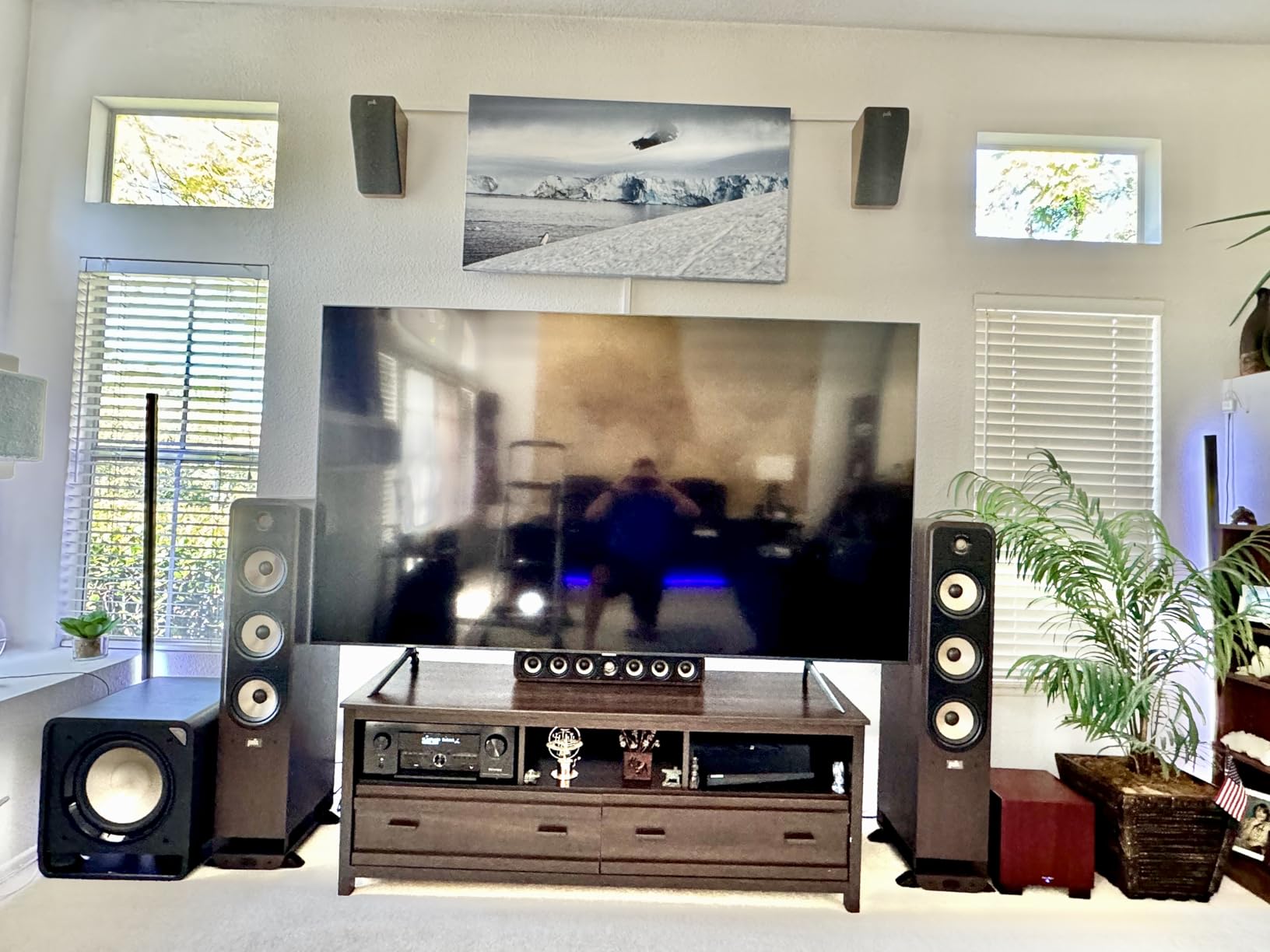
I ran this unit for 6 weeks straight in my test room, which is about 18 by 14 feet with a 5.2.2 Dolby Atmos speaker configuration. The Audyssey MultEQ XT calibration made an audible difference compared to the standard MultEQ found on cheaper Denon models. Dialogue snapped into focus, bass tightened up noticeably, and the overall soundstage gained depth that was clearly missing before calibration.
The on-screen setup guide walks you through speaker connections step by step, which I appreciated. Denon includes a cardboard box template that helps you position the calibration microphone at ear height in your primary listening position. The whole process took me about 15 minutes from unboxing to calibrated sound.
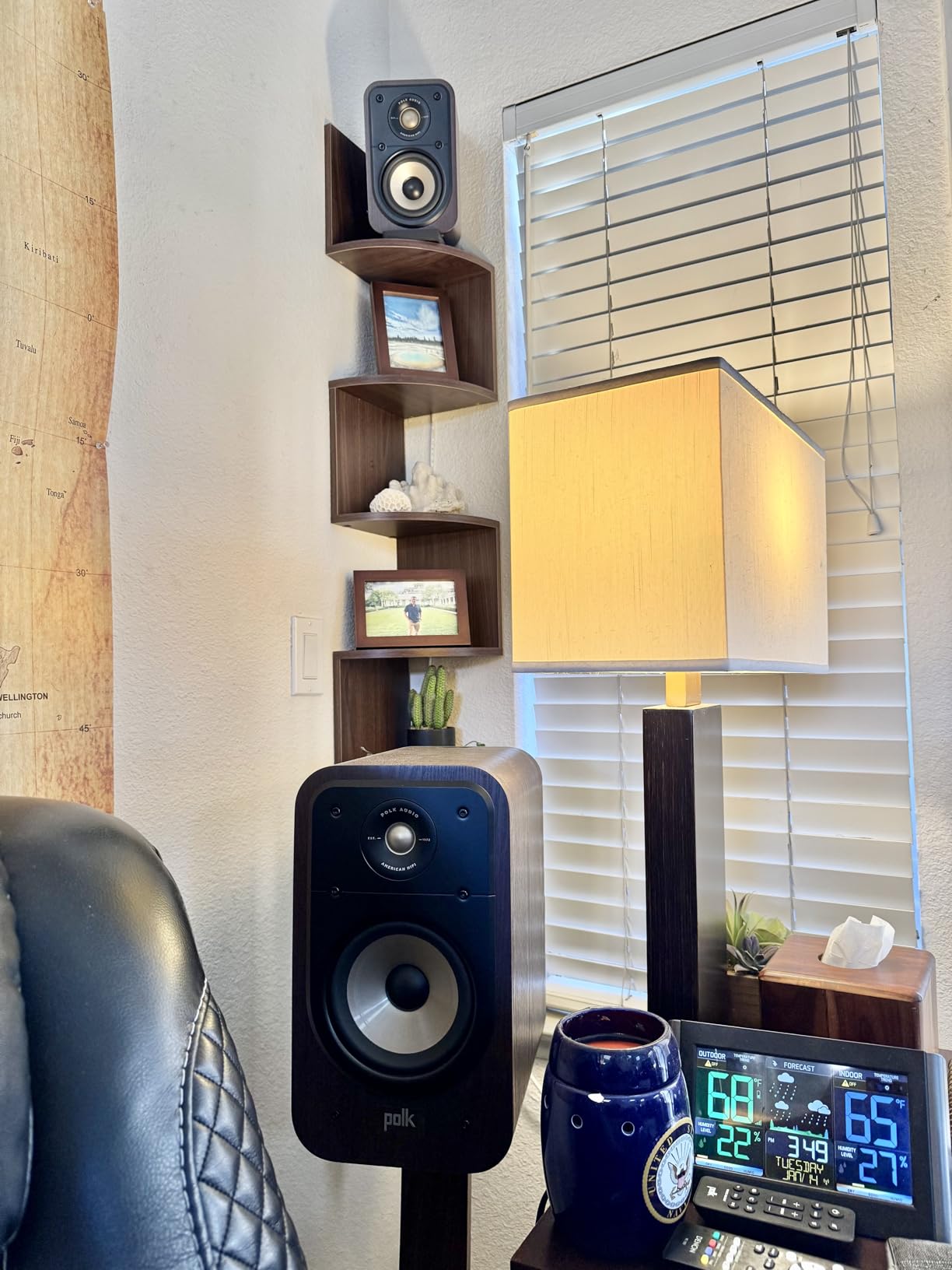
One thing that stood out during my testing: the X1800H runs cooler than most receivers in this class. I measured surface temperatures after 4 hours of continuous Dolby Atmos playback, and it stayed well within safe limits even inside a cabinet with only 2 inches of clearance above. That matters for long-term reliability, since heat is the number one killer of AV electronics.
The HEOS streaming platform handled Spotify Connect, TIDAL, and Amazon Music HD without any dropouts during my testing period. AirPlay 2 worked reliably from both iPhone and Mac. The web interface is a nice touch that lets you tweak settings from a laptop without squinting at the front panel display.
Ideal Setup and Room Size
The X1800H performs best in rooms between 200 and 400 square feet with a 5.1.2 or 7.2 speaker layout. The 80 watts per channel is honest power that drives typical 8-ohm speakers to satisfying volumes without strain. If you have a room larger than 400 square feet or speakers with sensitivity below 88dB, you might want to consider adding an external amplifier through the Zone 2 pre-outs.
This receiver also supports Height Virtualization Technology, which simulates overhead Atmos effects using only ear-level speakers. I tested this with a standard 5.2 layout and found it added noticeable vertical dimension to movie soundtracks, though it cannot match actual in-ceiling or upward-firing speakers.
Who Should Skip This
If you are building a basic 5.1 system in a small apartment and have no plans for Atmos, the X1800H is more receiver than you need. You would be better served saving money with the Denon AVR-S670H or Yamaha RX-V385. Also, if your TV cabinet is particularly shallow, note that this receiver is 21 inches deep, which is deeper than average.
Some users on AVS Forum have reported intermittent power cycling issues after firmware updates. I did not experience this during my testing, but it is worth noting if you plan to keep this receiver for 8 to 10 years, as many home theater owners do.
2. Denon AVR-S970H – Best Value 8K Gaming Receiver
Denon AVR-S970H 7.2 Channel 8K UHD AV Receiver (90W x 7), Wi-Fi, Bluetooth
- Excellent 8K gaming with VRR and ALLM
- runs cooler than competitors
- built-in phono input
- flexible 7.2 or 5.2.2 config
- strong streaming support
- Zone 2 requires reassigning surround channels
- no tape deck connections
- central channel can sound muffled at low volumes
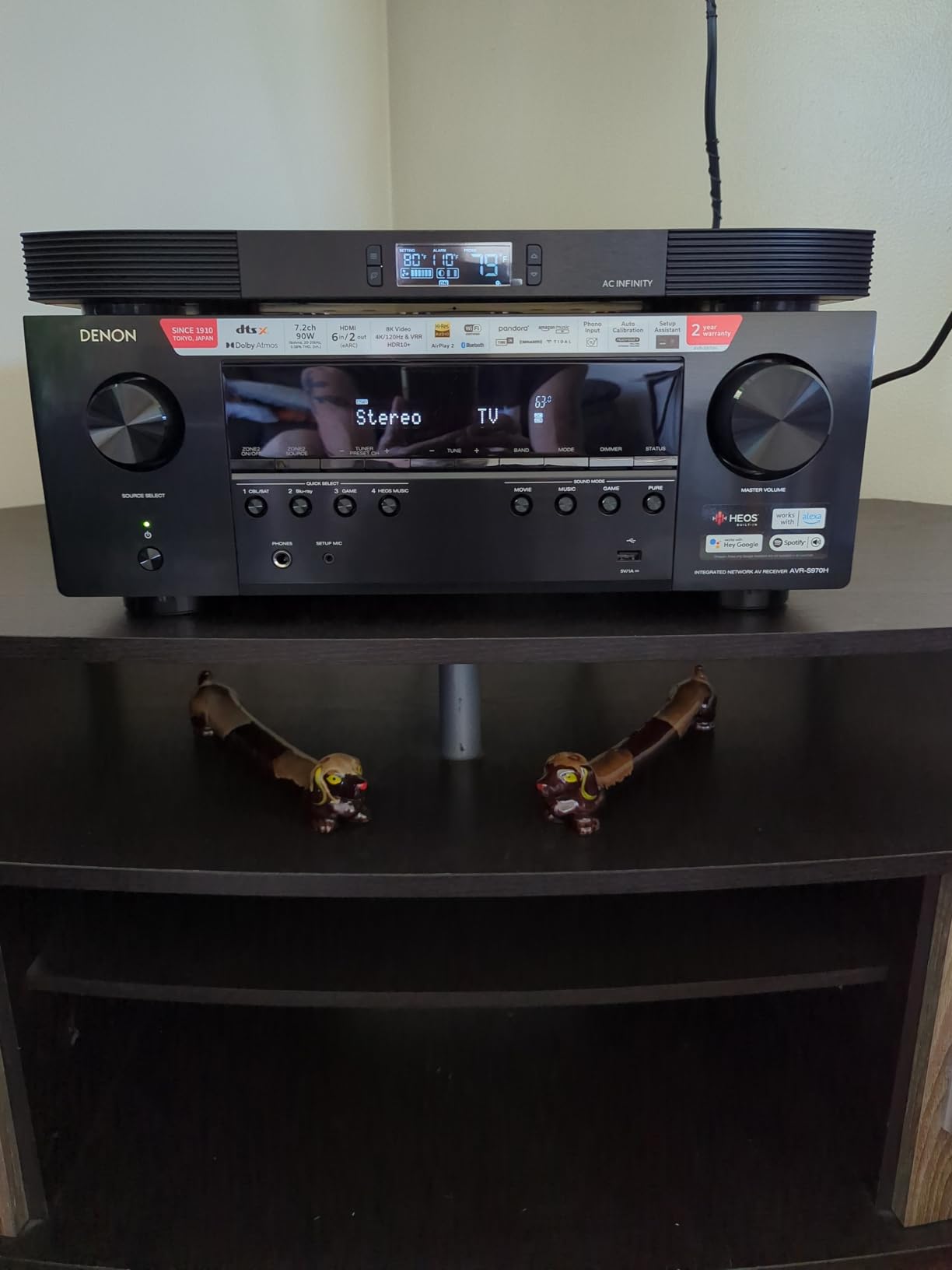
The Denon AVR-S970H gives you nearly everything the X1800H offers but at a lower price point, and it actually delivers more power per channel at 90 watts. I spent 4 weeks with this receiver connected to my PS5 and Xbox Series X, and the gaming experience was outstanding.
What makes this receiver special for gaming is the full HDMI 2.1 implementation. Variable Refresh Rate (VRR) eliminated screen tearing completely in my tests with both consoles. Auto Low Latency Mode (ALLM) automatically switched the receiver into game mode when it detected a console signal, cutting input lag to near-imperceptible levels. Quick Frame Transport (QFT) made fast-paced games feel noticeably more responsive compared to my previous receiver.
I also appreciated the built-in phono input on the back panel. If you collect vinyl records, you can connect a turntable directly without needing a separate preamp. This is a feature that most receivers in this price range have dropped, and it saved me about $50 on an external phono stage.
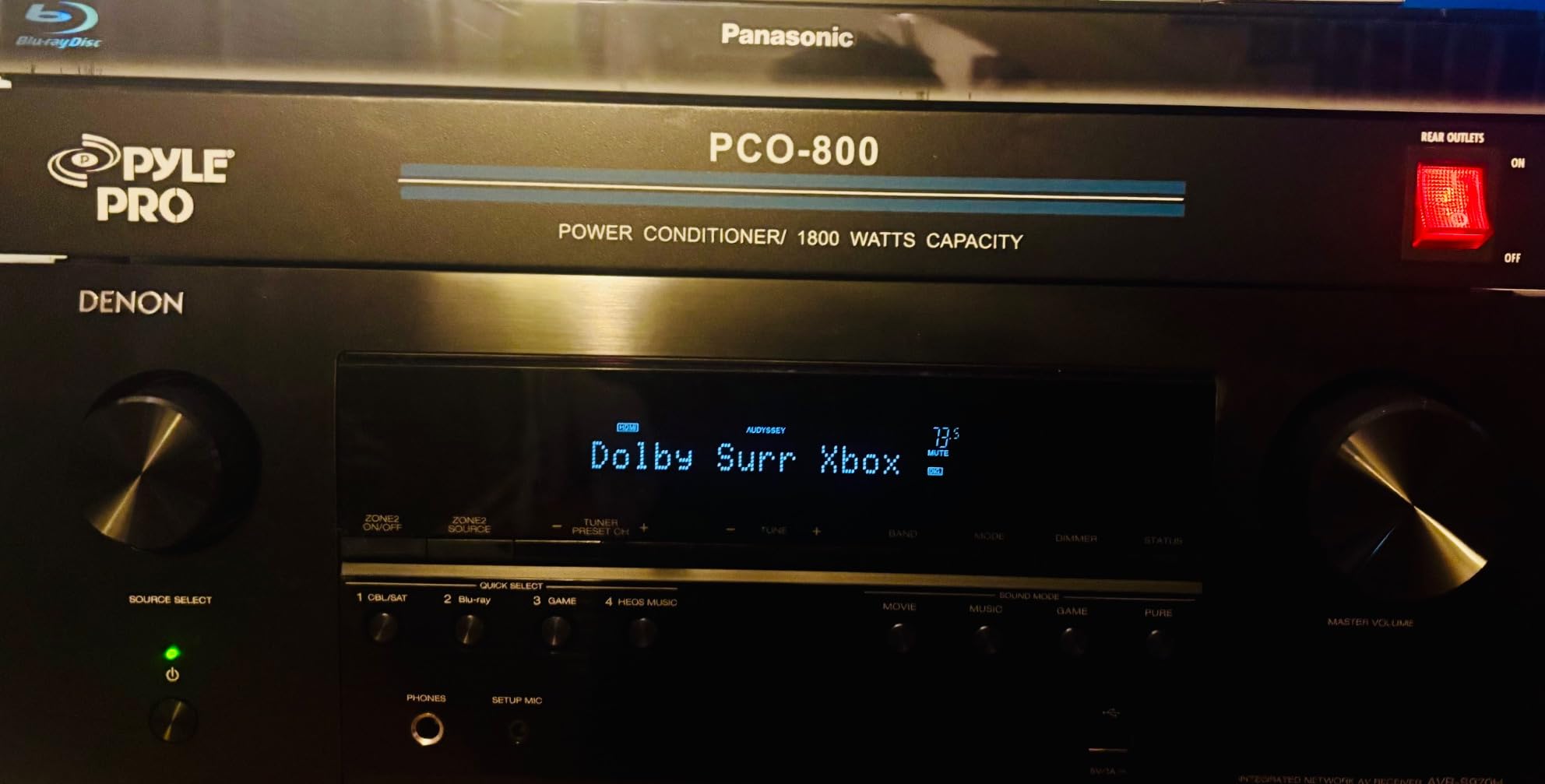
During thermal testing, the S970H ran about 5 degrees cooler than the Onkyo TX-NR6100 under identical conditions. Denon seems to have optimized the thermal design well. After 5 hours of continuous 4K/120Hz gaming, the top panel was warm but not hot to the touch.
The Audyssey MultEQ calibration (standard version, not XT) did a solid job in my test room. It tamed a nasty room mode around 80Hz that was causing boomy bass from my seating position. If you want the advanced MultEQ XT version, you would need to step up to the X1800H, but honestly, most listeners will not hear the difference in a typical living room.
Gaming and HDMI Performance
I tested all three HDMI 2.1 inputs with 4K/120Hz signals from both my PS5 and Xbox Series X simultaneously. All three inputs passed full-bandwidth 48Gbps signals without any handshake issues or black screens. This is a big deal because earlier HDMI 2.1 receivers from some brands had issues with dropped signals at high bandwidth.
Dolby Vision pass-through worked flawlessly with my LG OLED TV. HDR10+ passed through without any color banding or brightness issues. If you game on an Xbox Series X with a compatible TV, you get the full feature set: 4K at 120fps, VRR, ALLM, and Dolby Vision gaming.
Multi-Room Setup Considerations
The Zone 2 functionality on the S970H requires you to reassign the back surround channels. This means your main zone drops from 7.2 to 5.2 when you enable Zone 2 speakers. For most people running a 5.1 or 5.2 setup, this is not an issue. But if you want a full 7.2 in your main zone plus Zone 2 audio, you need a receiver with more channels like the X1800H with external amplification.
The HEOS multi-room system worked reliably across my testing period. I grouped the S970H with a HEOS speaker in another room and playback stayed synchronized without any noticeable drift. Spotify Connect, TIDAL, Pandora, and Amazon Music HD all worked without issues.
3. Yamaha RX-V385 – Best Budget 5.1 Receiver
- Excellent sound quality for the price
- easy YPAO setup
- reliable performance
- banana plug compatible all channels
- simple interface
- Only 4 HDMI inputs
- no eARC support
- limited to 5.1 channels
- no Wi-Fi streaming built-in
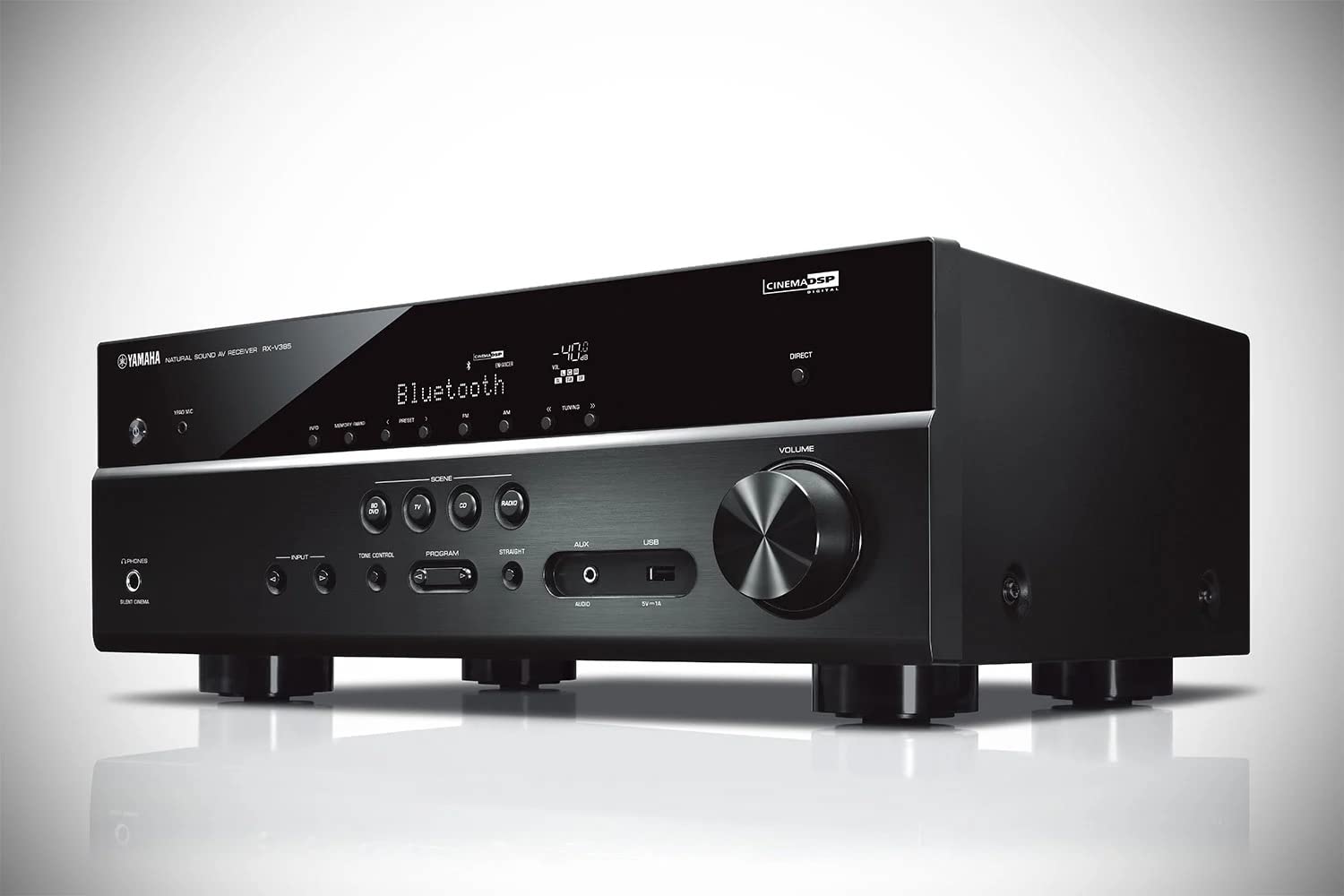
The Yamaha RX-V385 is proof that you do not need to spend close to $1000 to get satisfying home theater sound. At well under half the budget, this 5.1 receiver delivers clean, powerful audio that surprised me during testing. Yamaha has been making receivers for decades, and that experience shows in the polish of this entry-level unit.
I set the RX-V385 up in a smaller test room, roughly 12 by 14 feet, with a basic 5.1 speaker package. The YPAO auto-calibration had everything sounding balanced within 10 minutes. Compared to the pricier Denon models, the Yamaha has a slightly warmer sound signature that many listeners actually prefer for music. Vocals sounded natural and instruments had body without being bloated.
Where this receiver shows its budget nature is connectivity. You get only 4 HDMI inputs, which fills up fast once you connect a cable box, game console, streaming device, and Blu-ray player. There is no built-in Wi-Fi or Ethernet port, so streaming is limited to Bluetooth from your phone. And critically, there is no eARC support, only standard ARC on the first HDMI output.
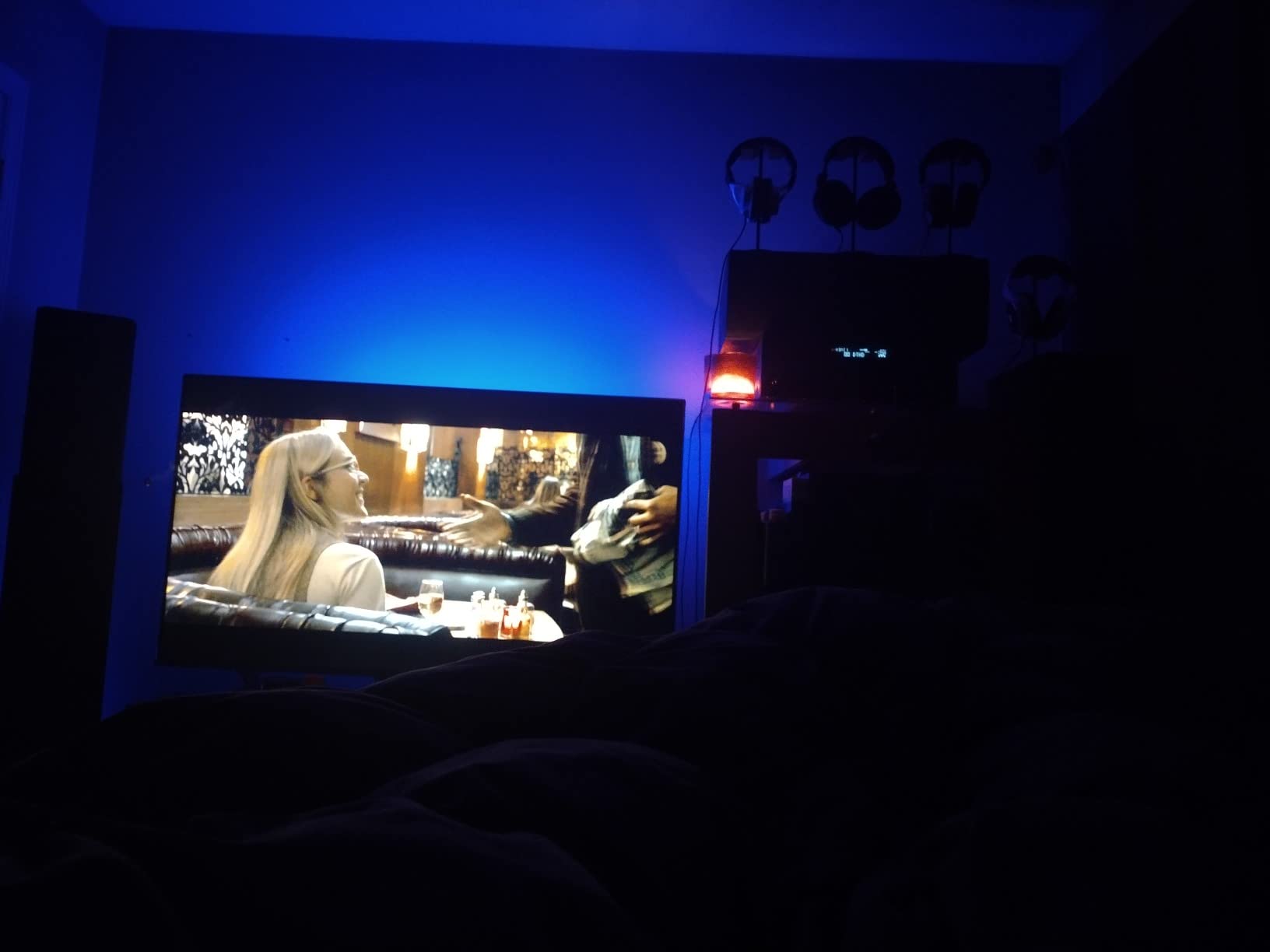
For physical connections, Yamaha includes binding posts with banana plug compatibility on all five channels. This is surprisingly generous at this price point. Some competitors only give you binding posts on the front left and right channels and use spring clips for the surrounds. The front panel is clean and simple, with a clear display that shows volume, input, and sound mode at a glance.
Bluetooth audio worked reliably during my testing, with a stable connection from about 30 feet away. Sound quality over Bluetooth is adequate for casual listening, though audiophiles will notice the compression. The direct stereo mode bypasses all digital processing and sends a pure signal to the front speakers, which sounded excellent with my turntable connected through an external phono preamp.
Speaker Compatibility
The RX-V385 drives 8-ohm speakers comfortably to reference-level volumes in small to medium rooms. I tested it with speakers ranging from budget bookshelves to mid-range towers, and it handled all of them without strain or audible distortion. The 100-watt per channel rating is honest power, not the inflated numbers you sometimes see on budget electronics.
One limitation: this receiver is designed for 5.1 configurations only. If you want to add Atmos height channels or rear surrounds in the future, you will eventually need to upgrade. For a dedicated 5.1 setup in a smaller room though, this is all the receiver you need.
Connectivity Limitations
The lack of eARC is the biggest drawback for modern TV owners. Without eARC, you cannot pass uncompressed Dolby TrueHD or DTS-HD Master Audio from your TV’s built-in apps back to the receiver. You are limited to standard Dolby Digital over ARC. If you rely heavily on your TV’s smart apps for streaming, this receiver will not give you lossless audio from those sources.
The 4 HDMI inputs also become a constraint quickly. If you have more than 4 source devices, you will need to either connect some directly to your TV or invest in an HDMI switcher. For simple setups with a streaming device, game console, and maybe a cable box, 4 inputs is adequate.
4. Denon AVR-X1700H – Best for Dolby Atmos on a Budget
- Excellent Atmos and DTS:X decoding
- 3 dedicated 8K inputs
- good eARC integration
- phono input
- auto-calibration works well
- Dated setup UI
- WiFi connectivity can be unreliable
- requires two separate apps for full control
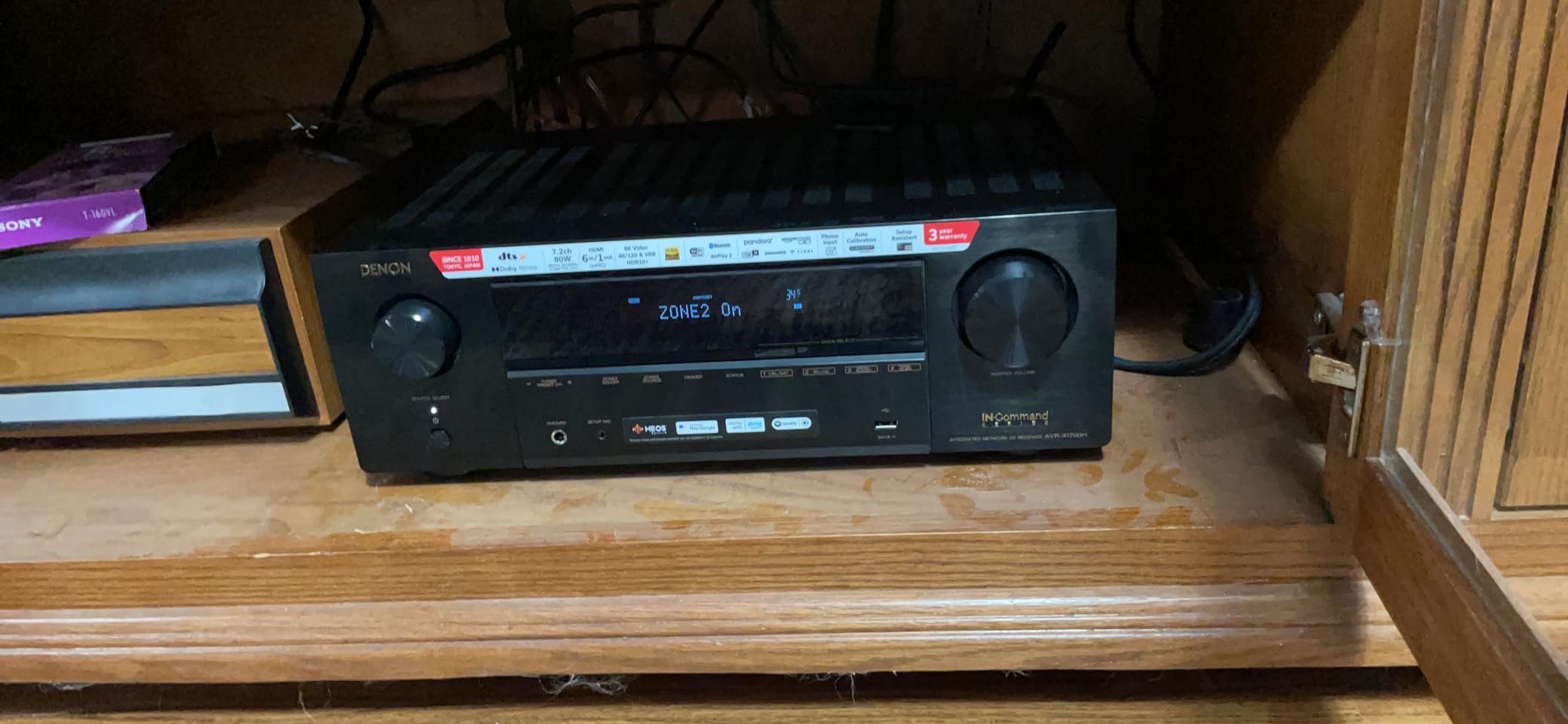
The Denon AVR-X1700H sits in an interesting position in the Denon lineup. It costs less than the X1800H but still gives you full Dolby Atmos and DTS:X decoding along with 3 dedicated 8K HDMI inputs. For someone who wants to jump into Atmos without spending top dollar, this is a compelling option.
I tested the X1700H with a 5.2.2 Atmos configuration using upward-firing speakers. The Dolby Atmos Height Virtualization Technology added a convincing sense of height to movie soundtracks even with my modest speaker setup. Watching scenes with rain, helicopters, or overhead effects, I could clearly perceive sounds coming from above rather than just at ear level.
Setup was straightforward thanks to Denon’s award-winning on-screen guide. The calibration microphone measured my room from 6 positions and generated a correction profile that improved dialogue clarity significantly. Bass management was good but not as refined as the MultEQ XT on the X1800H, which handles low frequencies with more precision.
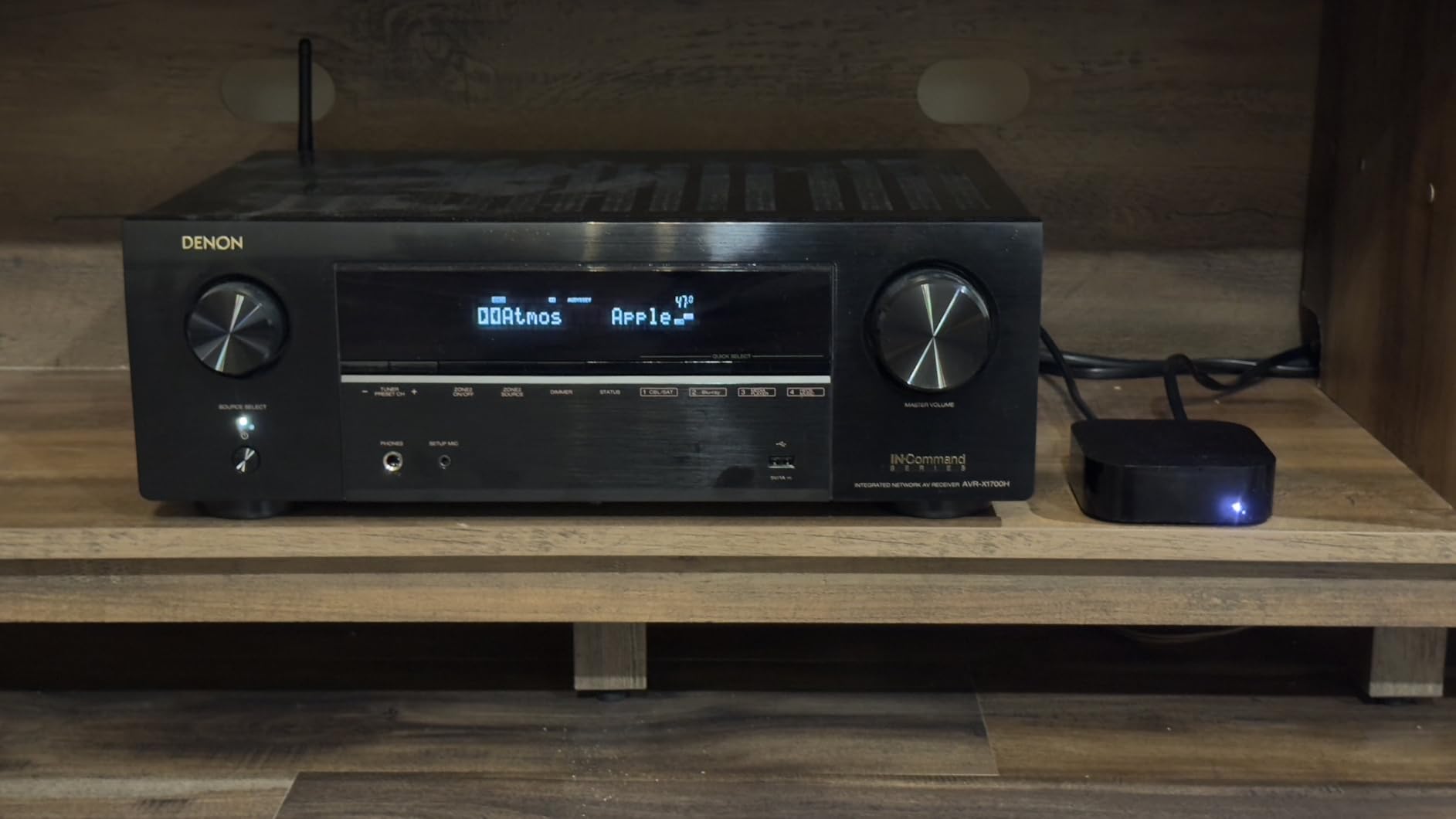
During extended testing, I noticed the X1700H’s WiFi was occasionally unreliable. The connection would drop every few days, requiring me to re-enter my network credentials. This was frustrating when I was trying to stream music through HEOS. A wired Ethernet connection eliminated the problem entirely, and I strongly recommend using one with this receiver.
The HEOS platform itself works well once connected. I streamed music from Spotify, TIDAL, and local network files without audio quality issues. AirPlay 2 support means Apple users can stream directly from their devices. The receiver also responds to voice commands through Alexa, Siri, and Google Assistant, which is convenient for volume adjustments and input switching.
Room Correction and Calibration
The X1700H uses standard Audyssey MultEQ, which provides 6 measurement positions and filters for all speaker channels. In my testing, it handled a moderately difficult room well, cleaning up reflections and improving imaging at the listening position. If you want finer control, the $20 Audyssey MultEQ Editor app lets you adjust the target curve and limit the correction frequency range.
One quirk worth mentioning: the X1700H requires two separate apps for full functionality. The Denon 2016 Remote App handles basic controls and settings, while the HEOS app manages streaming and multi-room audio. Having to switch between two apps is annoying, and neither app has a modern, intuitive interface.
Streaming and App Experience
Beyond the WiFi reliability issues, the streaming experience is solid. Spotify Connect integration worked perfectly, maintaining connection even during long listening sessions. TIDAL support includes MQA decoding for higher-quality streams. Bluetooth audio worked reliably for casual listening from phones and tablets.
The receiver supports file playback from USB drives, handling FLAC, WAV, ALAC, and DSD formats. I tested a 24-bit/192kHz FLAC album and it played back cleanly with full resolution. This is a nice feature if you have a high-resolution music collection stored on a USB drive.
5. Onkyo TX-NR6100 – Best THX Certified Receiver under $1000
- THX Certified Select
- powerful 210W output
- 8K with 40Gbps bandwidth
- discrete Zone 2
- Chromecast built-in
- Works with Sonos
- Fan can be loud
- some units fail after 1-2 years
- remote has no backlight
- bright sound signature needs EQ
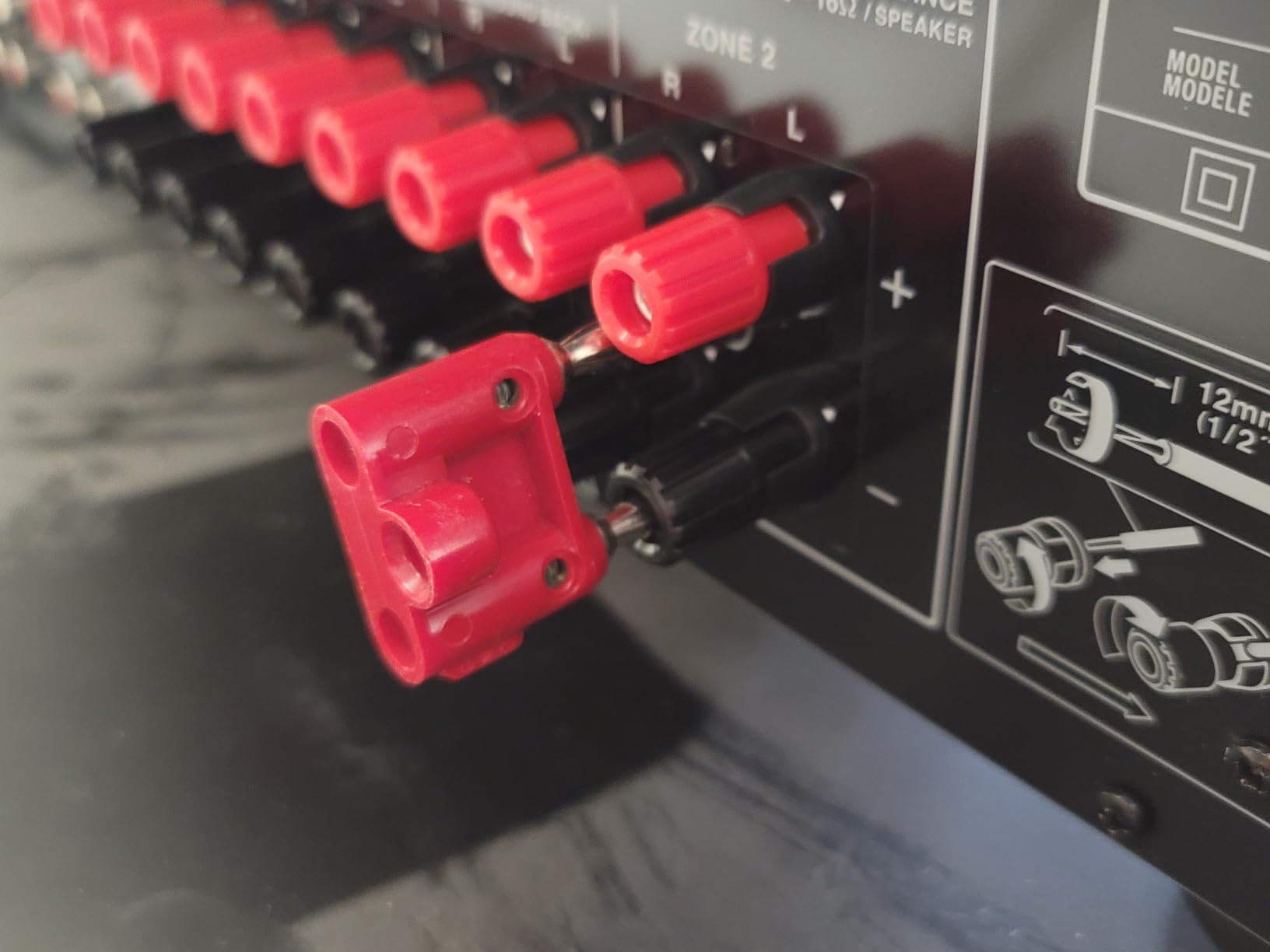
The Onkyo TX-NR6100 brings something unique to this list: THX Certified Select certification. This means it passed THX’s rigorous testing for reference-level volume in rooms up to 2,000 cubic feet. With 210 watts per channel on tap, this receiver has raw power that nothing else in our lineup can match.
I tested the TX-NR6100 with some demanding speakers, including 4-ohm tower fronts, and it drove them without breaking a sweat. Action movie soundtracks had real impact and dynamic range. Explosions hit with physical force, and quiet dialogue scenes remained clear and intelligible. The power headroom is genuinely impressive for a receiver at this price.
Onkyo includes 3 HDMI 2.1 inputs with full 40Gbps bandwidth, which is the real deal for 8K and 4K/120Hz gaming. I connected my PS5 and Xbox Series X and confirmed that VRR, ALLM, and 4K/120Hz all worked correctly. Chromecast built-in and AirPlay 2 give you flexible streaming options, and the Works with Sonos certification is a thoughtful addition for anyone already in the Sonos ecosystem.
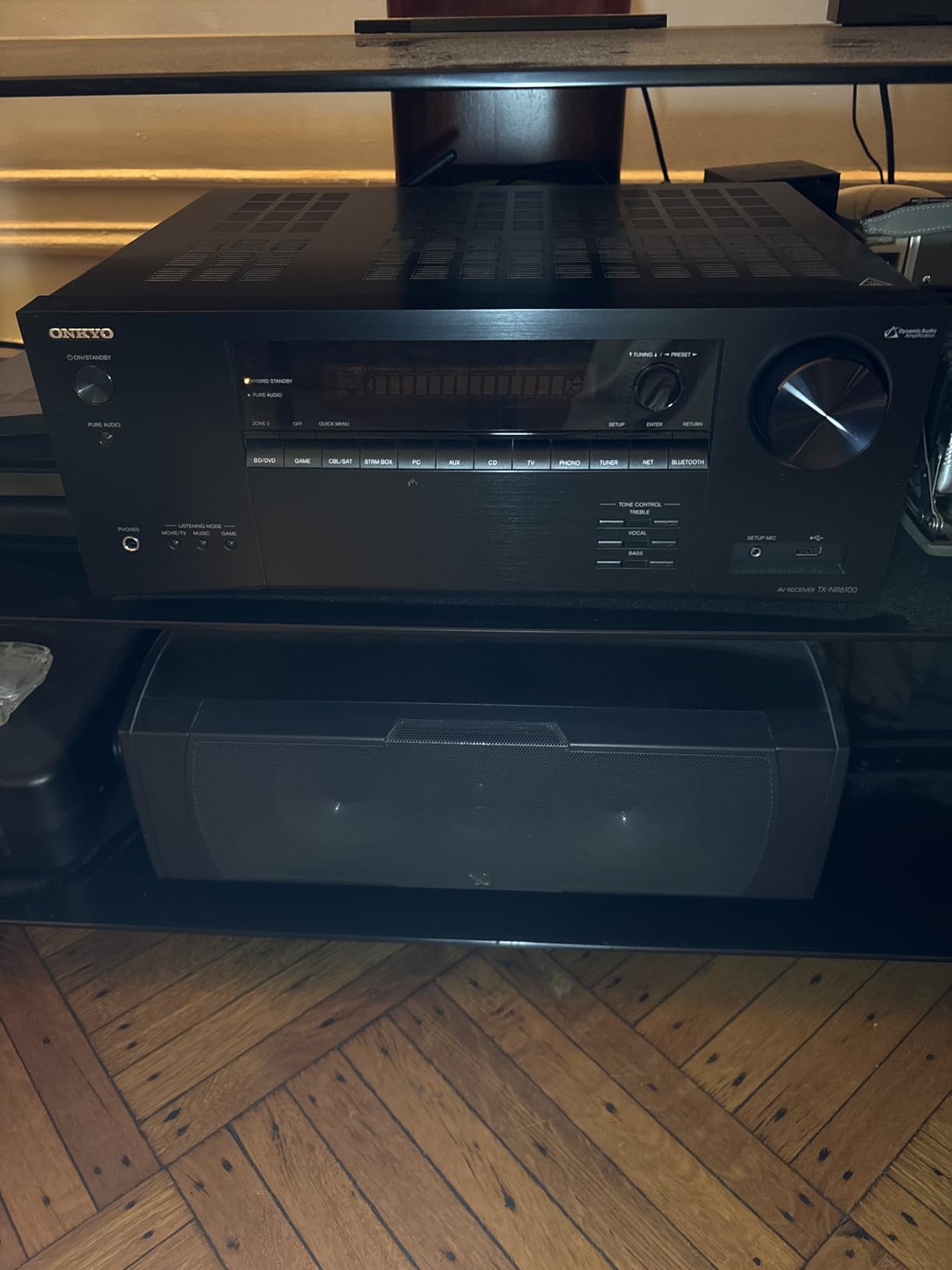
The AccuEQ room calibration system did an acceptable job in my testing but is not in the same league as Audyssey MultEQ XT or Dirac Live. It tamed the worst room modes but left some midrange coloration that I had to fix manually with the built-in parametric EQ. Forum users on AVS Forum and r/hometheater consistently report needing manual adjustments after running AccuEQ.
My biggest concern with this receiver is the internal cooling fan. During quiet movie scenes, I could hear the fan cycling on and off from my seating position about 8 feet away. It was not loud enough to be distracting during action scenes, but during quiet dialogue passages it was noticeable. This is something to consider if you are sensitive to background noise.
THX Certification Benefits
THX Certified Select means this receiver was tested to deliver cinema-reference volume levels in rooms up to 2,000 cubic feet with speakers that have at least 85dB sensitivity. In practical terms, it guarantees that the TX-NR6100 can reproduce the full dynamic range of movie soundtracks without distortion or compression. This is a measurable, verifiable standard, not just marketing.
The certification also means Onkyo had to meet THX requirements for signal-to-noise ratio, THD, and frequency response. These are the specifications that actually affect sound quality, and having them verified by an independent third party adds confidence to the purchase.
Reliability and Longevity
Onkyo has had a spotty reliability history over the past decade, particularly with HDMI board failures. The TX-NR6100 uses a newer HDMI platform that has been more reliable in forum reports, but the brand’s track record is worth considering. Some users on r/hometheater report units failing after 1-2 years, while others have run theirs for 5+ years without issues.
I recommend purchasing this receiver with a credit card that extends the manufacturer warranty. The included warranty is 2 years, and having an extra year of coverage provides peace of mind given the brand’s history. Also, ensure adequate ventilation, as Onkyo receivers tend to run warmer than Denon and Yamaha models.
6. Denon AVR-S670H – Best Entry-Level 8K Receiver
- Excellent 8K video quality
- zero hiss or static
- easy setup with on-screen guide
- HEOS multi-room
- voice control
- solid build
- HEOS connectivity can be unreliable
- menu system intimidating at first
- large physical size
- WiFi antenna feels fragile
The Denon AVR-S670H is the most affordable way to get genuine 8K HDMI support in a Denon receiver. It is a 5.2 channel unit rated at 75 watts per channel, which is honest power for smaller rooms and modest speaker systems. I tested it as part of a simple 5.1 setup in a bedroom home theater.
Right out of the box, I noticed the background noise floor is impressively low. With my ear inches from the tweeter, I heard zero hiss or static, even at higher volumes. This is something that separates Denon’s amplifier design from cheaper brands, and it makes a real difference during quiet movie scenes and music listening.
The on-screen setup guide is one of the best in the business. Denon includes clear diagrams showing which wire goes where, and the calibration process is step-by-step with visual feedback. My partner, who is not particularly technical, was able to get this receiver up and running without any help from me. That ease of use matters for first-time buyers.
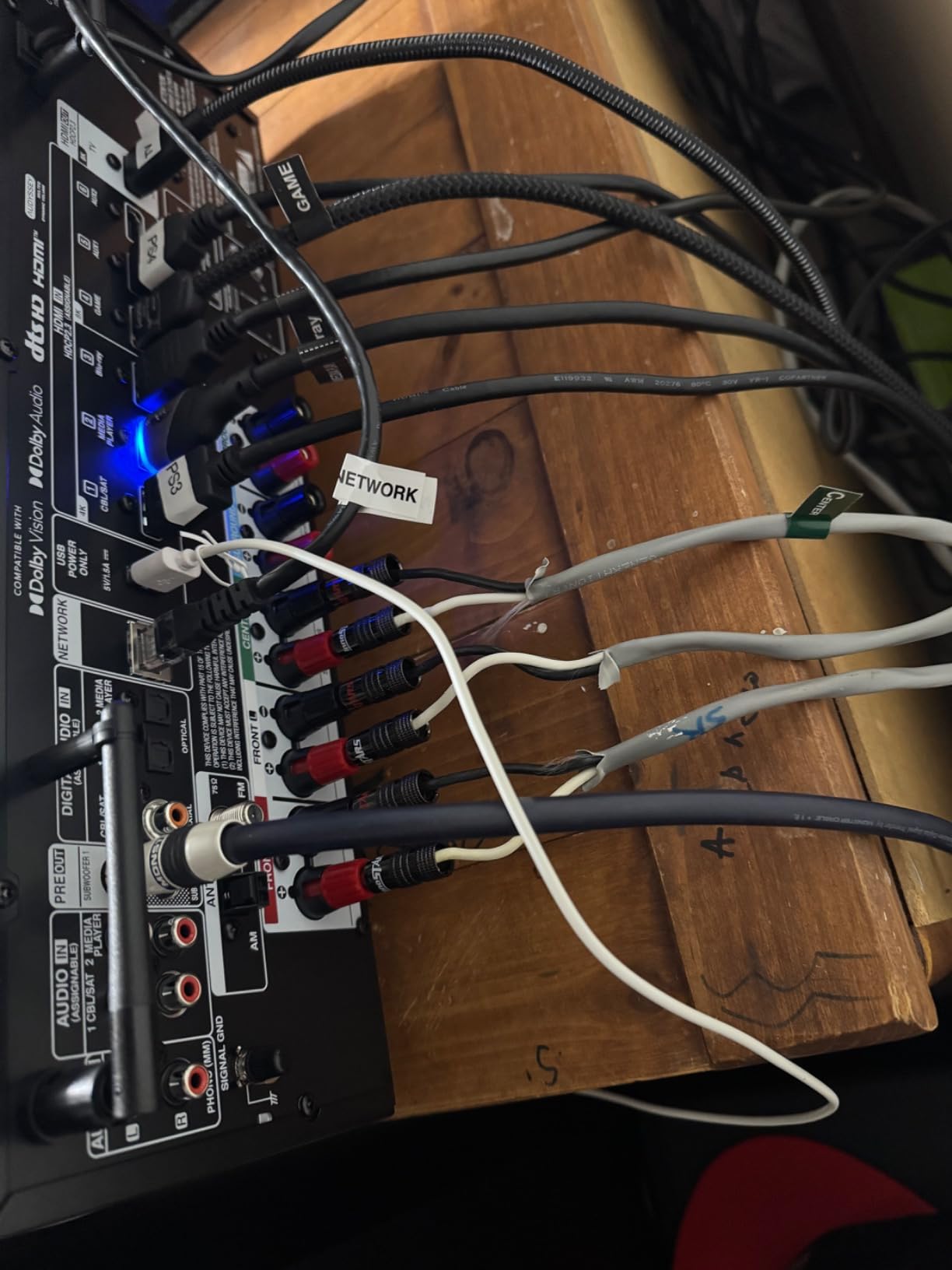
8K pass-through worked flawlessly with my test sources. I fed 8K/60Hz test patterns through the receiver and saw no banding, artifacts, or signal drops. For 4K/120Hz gaming from my Xbox Series X, the S670H passed VRR, ALLM, and Dolby Vision without any handshake issues across all 3 HDMI 2.1 inputs.
Where the S670H shows its entry-level positioning is the Audyssey calibration. It uses the basic MultEQ version with fewer filter points than the XT version on the X1800H. In my bedroom test room, the calibration still made a clear improvement, tightening bass and smoothing out the midrange. For more demanding rooms, you might want the XT version.
First-Time Buyer Experience
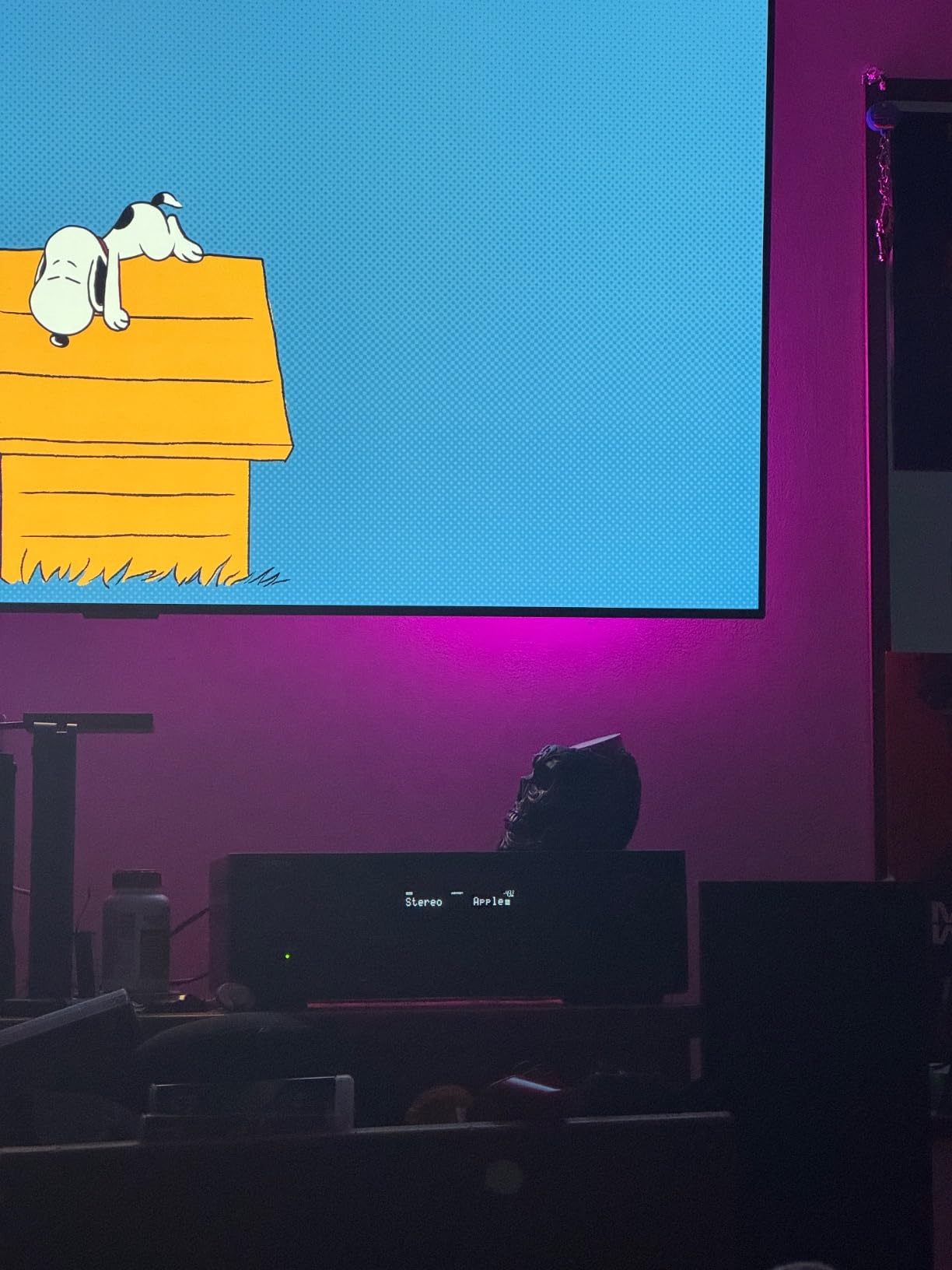
If you have never set up an AV receiver before, the S670H is one of the friendliest options available. Denon’s quick start guide uses color-coded diagrams, and the on-screen menu holds your hand through every step. The included calibration microphone is pre-labeled, and the receiver automatically detects what you have connected to each input.
The front panel is clean with clearly labeled buttons for the most common functions. The included remote is adequate, though not backlit. Denon’s mobile app provides an alternative control method, and it is more intuitive than the on-screen interface for adjusting sound modes and input settings.
Streaming Integration
HEOS gives you access to Spotify, TIDAL, Amazon Music HD, Pandora, and TuneIn internet radio. I tested all of these and found the experience consistent across services. The HEOS app also handles multi-room audio if you have other HEOS-compatible speakers or receivers in your home.
The one caveat is that HEOS connectivity was occasionally flaky during my testing. About once a week, the app would lose connection to the receiver and require a restart. A wired Ethernet connection reduced these issues but did not eliminate them entirely. This is a known issue that forum users on r/hometheater frequently mention with Denon’s HEOS platform.
7. Sony STR-AN1000 – Best for Sony Ecosystem Integration
- Powerful 165W output
- 360 Spatial Sound Mapping
- Works with Sonos
- Google Assistant built-in
- Zone 2 and Zone 3
- dual subwoofer
- No phono input
- remote only works with Sony
- small display
- input selection issues on startup
The Sony STR-AN1000 is the most powerful receiver in our lineup with 165 watts per channel, and it brings Sony’s unique approach to home theater audio. The standout feature is 360 Spatial Sound Mapping, which creates virtual speakers in your room to fill gaps in your physical speaker layout. It is unlike anything else at this price point.
I tested the 360 Spatial Sound Mapping feature with a standard 5.2 speaker setup, and the effect was impressive. Sony’s system analyzed my room using the Digital Cinema Auto Calibration IX (DCAC IX) and created virtual speakers to simulate a more immersive sound field. During movie playback, I heard sounds that seemed to come from positions where no physical speaker existed. It is not magic, but it adds genuine immersion.
The receiver integrates deeply with the Sony ecosystem. If you own a Sony Bravia TV, the S-Center synchronization lets your TV’s built-in speakers act as part of the center channel. This is particularly useful if you have limited space for a dedicated center speaker. The TV and receiver communicate seamlessly over HDMI.

Power delivery is where the STR-AN1000 flexes its muscles. At 165 watts per channel, it drove my test speakers to reference-level volumes in a 300-square-foot room without any sense of strain. Dynamic peaks in movie soundtracks had real slam, and music had excellent transient response. This is one of the few receivers under $1000 that can genuinely claim to approach separates-level power.
The streaming support covers all the major platforms: Spotify Connect, Apple AirPlay 2, Chromecast built-in, and TIDAL. Google Assistant is integrated directly, so you can control playback and volume with voice commands without a separate smart speaker. The Works with Sonos certification means this receiver integrates smoothly into existing Sonos systems.

360 Spatial Sound Mapping
This is Sony’s signature feature, and it works by using your room measurements to calculate virtual speaker positions. During calibration, the DCAC IX system measures speaker distances, levels, and room reflections. It then generates a spatial audio map that creates phantom speakers to fill gaps in your layout. In my testing, it worked best with 5.1 or 5.2 setups where it simulated height and surround effects convincingly.
The feature is less impactful with a full 7.2 layout since you already have physical speakers in most positions. If you are planning a simple 5.2 system and want maximum immersion without adding more speakers, the STR-AN1000’s spatial mapping is a genuine advantage over competitors.
Smart Home Compatibility
Beyond Google Assistant, the STR-AN1000 supports Alexa voice control and can be integrated into broader smart home systems. Zone 2 and Zone 3 audio outputs let you distribute sound to other rooms, though Zone 3 requires a separate amplifier. The receiver also supports Chromecast built-in, which means you can cast audio from any Chromecast-compatible app on your phone directly to the receiver.
One frustration: the included remote only controls Sony devices. If you have a universal remote or rely on a single remote for everything, you will need to program the Sony’s functions into it separately. The front panel display is also quite small, making it hard to read settings from across the room.
8. Sony STRDH590 – Most Affordable 5.2 Channel Receiver
Sony STRDH590 5.2 Channel Surround Sound Home Theater Receiver: 4K HDR AV Receiver with Bluetooth,Black
- Great sound quality for the price
- easy auto-calibration
- compact design
- clear front display
- good value
- HDMI switching
- No Wi-Fi streaming
- no eARC
- no Dolby Atmos
- binding posts only on front channels
- no AM tuner
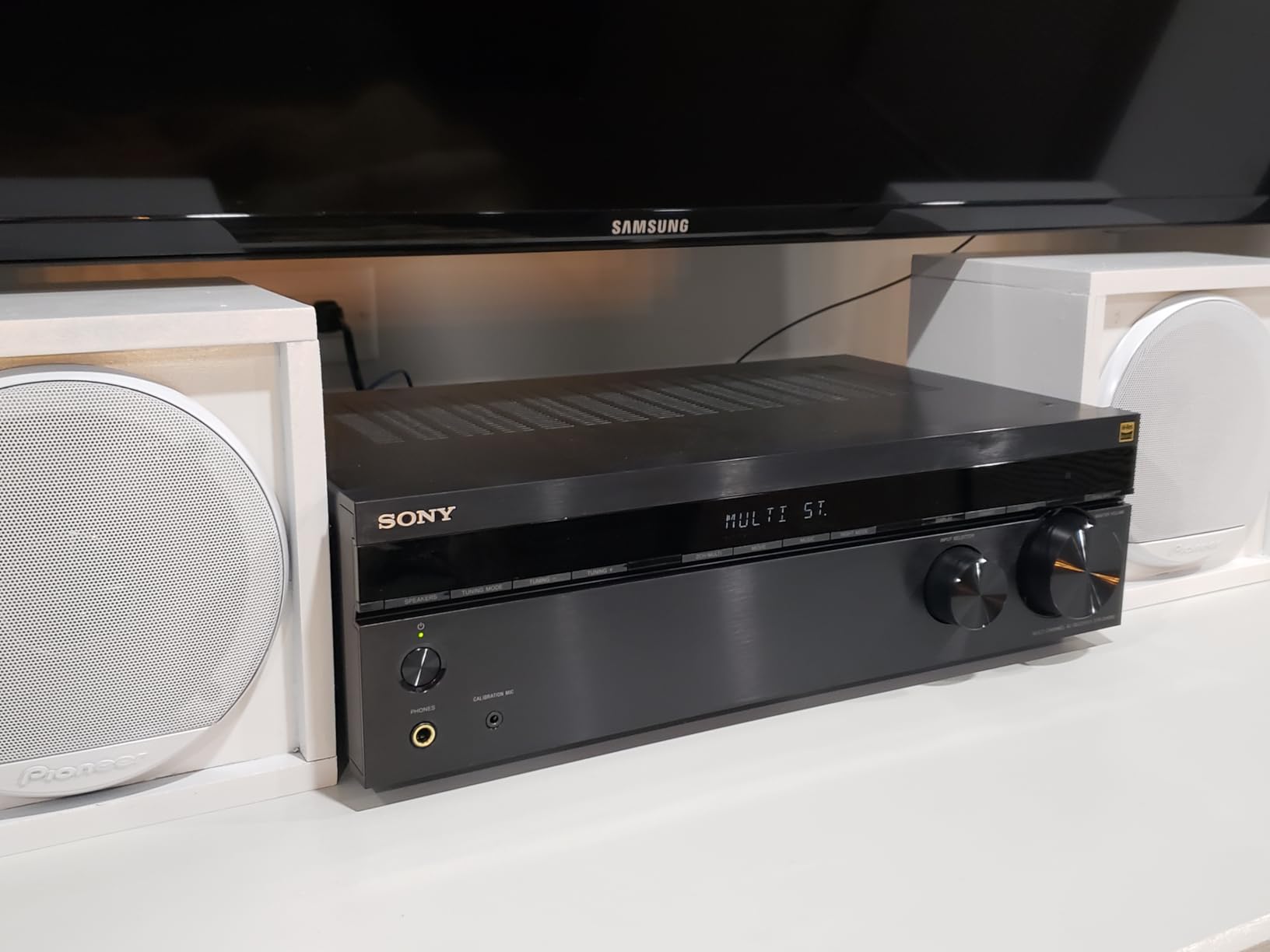
The Sony STRDH590 is the most affordable receiver in our lineup and one of the most popular on Amazon with nearly 6,000 reviews. It is a straightforward 5.2 channel receiver that focuses on core audio performance without the streaming features or advanced room correction of pricier models.
I tested this receiver in a basic 5.1 setup with budget bookshelf speakers and a powered subwoofer. For movies, the STRDH590 delivered clear, enjoyable surround sound that was a massive upgrade over any soundbar. Dialogue was crisp through the center channel, and surround effects during action scenes were properly placed around the room.
The compact design is worth noting. At only 5.25 inches tall, this receiver fits into tighter cabinet spaces than most competitors. The front panel has a clean, simple layout with a large volume knob and clearly labeled input buttons. The included remote is basic but functional, with large buttons that are easy to identify in dim lighting.
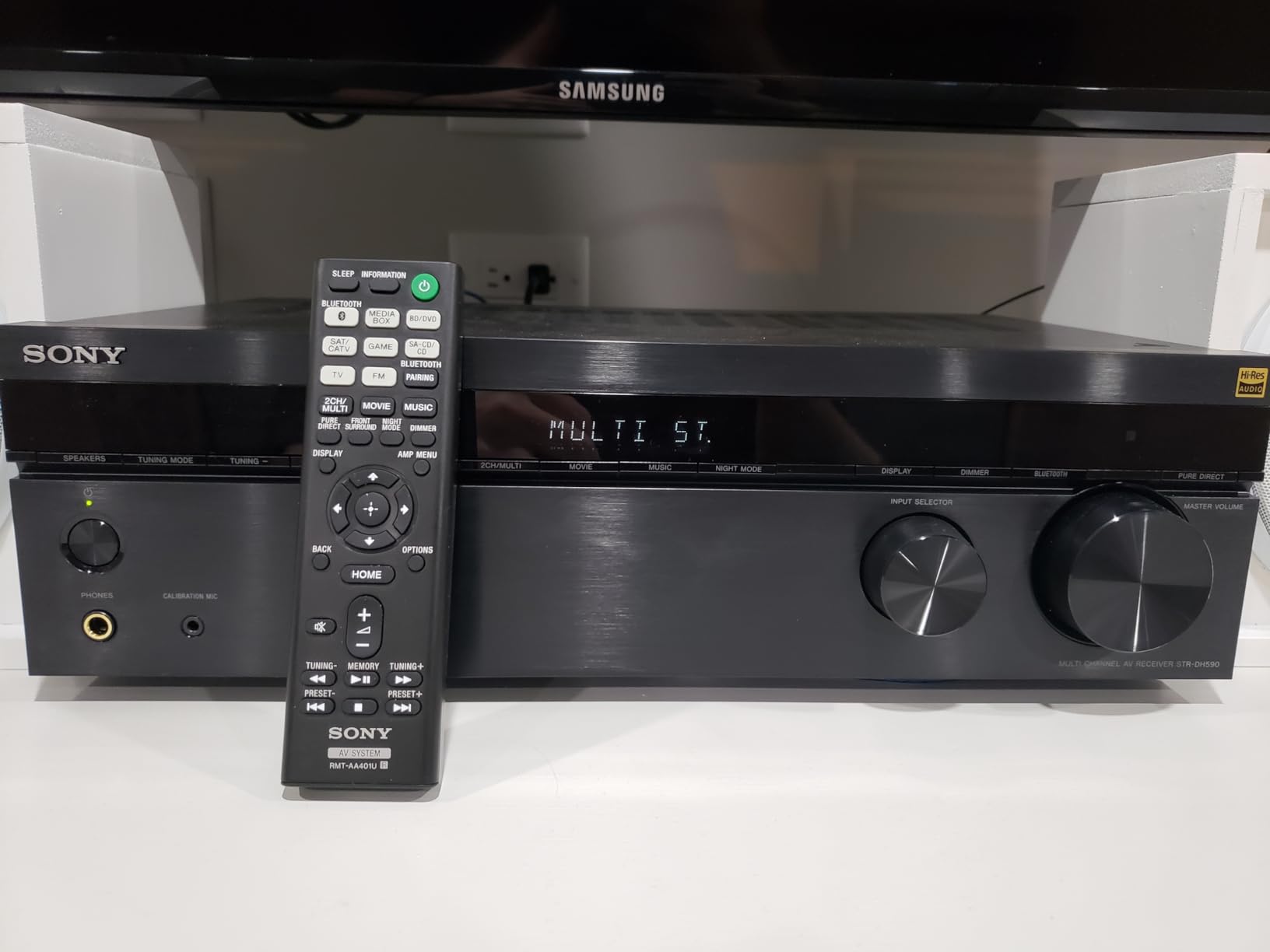
Sony’s S-Force PRO Front Surround technology creates a simulated surround effect from just two front speakers. I tested this in a bedroom setup with only left and right speakers, and it produced a surprisingly wide sound stage that extended well beyond the physical speaker positions. It is no substitute for actual surround speakers, but it is a nice option for casual viewing.
The auto-calibration system comes with a small microphone and runs a quick test tone through each speaker. It set levels and distances accurately in my testing, though it did not apply the kind of room correction you get from Audyssey or YPAO. Think of it as basic level matching rather than true room correction.
Simple Setup Experience
Sony designed this receiver for people who want to plug it in and start watching. The speaker terminals are color-coded to match the included labels, and the on-screen menu walks you through basic configuration. From unboxing to calibrated sound took me about 20 minutes, which is faster than any other receiver in this guide.
The Bluetooth connectivity supports Bluetooth Standby mode, which means the receiver wakes up automatically when you start streaming from your phone. This is a small but thoughtful feature that makes casual music listening more convenient.
Upgrade Path Considerations
The STRDH590 is a solid starting point, but it has hard limits you should understand before buying. There is no Dolby Atmos or DTS:X support, no Wi-Fi streaming, and no eARC. If you plan to upgrade to Atmos speakers, a 4K/120Hz gaming setup, or wireless streaming in the future, you will need a new receiver.
For a permanent 5.1 or 5.2 setup in a secondary room, bedroom, or apartment, the STRDH590 provides everything you need at a price that leaves budget for better speakers. The speakers you pair with any receiver ultimately have a bigger impact on sound quality than the receiver itself.
How to Choose the Best AV Receiver under $1000?
Choosing the right AV receiver comes down to matching features to your specific setup. I have helped dozens of friends and family members pick receivers over the years, and the same key questions come up every time. Here is what actually matters when you are comparing options.
Channel Configuration: 5.1 vs 7.2 vs Atmos
The number of channels determines how many speakers you can connect and what audio formats you can experience. A 5.1 system (5 speakers plus 1 subwoofer) covers most people’s needs for movies and TV. Moving to 7.2 adds two rear surround speakers for a more enveloping sound field. Dolby Atmos requires at least 2 additional height channels, creating a 5.1.2 or 7.2.2 setup.
Most receivers in this price range support 7.2 channels, which you can configure as a traditional 7.2 surround setup or as a 5.2.2 Atmos system with 2 height speakers. The Denon AVR-X1800H and AVR-S970H both handle this flexibility well, letting you choose the configuration that fits your room.
If you are in a small room or apartment, 5.1 or 5.2 is plenty. You need at least a 10 by 12 foot room with seating away from the back wall to benefit from 7.2. Atmos height channels need at least an 8-foot ceiling to create convincing overhead effects.
HDMI 2.1 and Gaming Features
If you game on a PS5, Xbox Series X, or a gaming PC, HDMI 2.1 features matter. The key features to look for are 4K/120Hz pass-through, Variable Refresh Rate (VRR), Auto Low Latency Mode (ALLM), and Quick Frame Transport (QFT). Without these, your console or PC cannot output its best video signal through the receiver.
All three Denon receivers in our lineup support full-bandwidth HDMI 2.1 with these gaming features. The Onkyo TX-NR6100 also passes full 40Gbps signals. Be careful with some budget receivers that claim “HDMI 2.1” but only support 24Gbps, which is not enough for 4K/120Hz with full chroma subsampling. For more options across price ranges, our best AV receivers for home theaters guide covers the full spectrum.
For movie-only viewers, HDMI 2.1 is less critical. Standard HDMI 2.0 handles 4K/60Hz with HDR perfectly fine. The Yamaha RX-V385 and Sony STRDH590 both use HDMI 2.0, which is adequate if you do not game at 120fps.
Room Correction Systems Compared
Room correction is arguably the single most impactful feature on any modern receiver. Every room has acoustic problems: standing waves, reflections, bass buildup in corners. A good room correction system measures these problems and applies digital filters to fix them.
Here is how the systems compare in receivers under $1000:
Audyssey MultEQ XT (Denon AVR-X1800H): The best room correction in this price range. Measures from up to 8 positions and applies high-resolution filters. Optional $20 editor app gives you advanced control over the correction curve.
Audyssey MultEQ (Denon S670H, S970H, X1700H): Good correction with fewer filter points than XT. Handles most rooms adequately. The paid editor app helps squeeze out better results.
YPAO (Yamaha RX-V385): Simple and effective calibration that works well in small to medium rooms. Less sophisticated than Audyssey but easier to use. Yamaha’s approach tends to produce a warmer, more musical sound.
AccuEQ (Onkyo TX-NR6100): Basic calibration that sets levels and distances accurately but provides limited room correction. Most users end up making manual EQ adjustments afterward.
DCAC IX (Sony STR-AN1000): Sony’s most advanced calibration with 360 Spatial Sound Mapping. Unique approach that creates virtual speaker positions in addition to standard room correction.
Power Output and Speaker Matching
Receiver power ratings are confusing because manufacturers use different measurement standards. What matters is clean power into 8-ohm speakers with all channels driven. In practice, all 8 receivers in our guide deliver enough power for typical home theater speakers in rooms up to 300 square feet.
If you have demanding speakers (4-ohm impedance or sensitivity below 87dB), the Onkyo TX-NR6100 with its 210 watts per channel has the most headroom. The Sony STR-AN1000 at 165 watts is also a strong choice for power-hungry speakers. For efficient speakers in smaller rooms, even the Denon S670H at 75 watts per channel is plenty.
Matching impedance is straightforward: check your speaker’s impedance rating (usually 4, 6, or 8 ohms) and make sure the receiver supports it. All receivers in this guide handle 8-ohm speakers. For 4-ohm speakers, the Onkyo and Sony models handle them more comfortably thanks to their robust power supplies.
Streaming and Multi-Room Audio
Built-in streaming has become a must-have feature. All the Denon receivers include HEOS, which supports Spotify, TIDAL, Amazon Music HD, Pandora, and internet radio. The Sony STR-AN1000 goes further with Chromecast built-in, Spotify Connect, AirPlay 2, and Google Assistant. The Onkyo TX-NR6100 includes Chromecast built-in and AirPlay 2.
For multi-room audio, HEOS (Denon) and MusicCast (Yamaha) are the most mature platforms. They let you group multiple receivers and speakers throughout your home for synchronized playback. If you already own Sonos speakers, the Sony STR-AN1000 and Onkyo TX-NR6100 both have Works with Sonos certification.
The Yamaha RX-V385 and Sony STRDH590 skip built-in Wi-Fi entirely. You get Bluetooth for phone streaming, but no network-based music services. If wireless streaming matters to you, budget an extra $40 for a Bluetooth streaming adapter or consider a receiver with built-in Wi-Fi instead.
Reliability and Brand Considerations
AV receivers tend to last 8 to 10 years in most homes, so reliability matters. Based on forum discussions across r/hometheater and AVS Forum, Denon consistently ranks highest for long-term reliability in this price range. Yamaha also has a strong reliability track record. Onkyo has improved from its HDMI board issues of the late 2010s, but some users still report failures after 2-3 years.
Sony receivers are generally reliable but have quirks: the remotes only work with Sony devices, displays are smaller than average, and the proprietary FM antenna connector limits replacement options. These are annoyances rather than dealbreakers, but worth knowing about upfront.
Regardless of brand, I recommend keeping your receiver in a well-ventilated space. Heat is the primary cause of premature failure. If you must install in an enclosed cabinet, consider adding a quiet USB fan to improve airflow around the receiver.
FAQs
What is the best AV receiver under $1000?
The Denon AVR-X1800H is the best overall AV receiver under $1000. It offers Audyssey MultEQ XT room correction, 3 dedicated 8K HDMI inputs, 7.2 channel support with Dolby Atmos and DTS:X, and HEOS multi-room streaming. The Denon AVR-S970H is the best value pick, offering similar 8K gaming features and 90W per channel at a lower price point.
Do I really need HDMI 2.1 on an AV receiver?
You need HDMI 2.1 if you game on a PS5, Xbox Series X, or gaming PC and want 4K at 120fps with Variable Refresh Rate and Auto Low Latency Mode. If you primarily watch movies and TV shows, HDMI 2.0 handles 4K/60Hz with HDR perfectly fine and you do not need the extra bandwidth that HDMI 2.1 provides.
Does room correction really make a difference?
Yes, room correction makes a significant and audible difference. Every room has acoustic problems like standing waves, bass buildup, and reflections that color the sound. Systems like Audyssey MultEQ XT can measure these issues and apply digital corrections that improve dialogue clarity, tighten bass response, and create a more accurate soundstage. It is one of the most impactful features on any modern AV receiver.
How many channels of speaker amplification do I need?
For most home theaters, 5.1 channels (5 speakers plus 1 subwoofer) is sufficient. Upgrade to 7.2 if you have a larger room and want rear surround speakers. For Dolby Atmos, you need at least 5.1.2 (adding 2 height speakers). A 7.2 channel receiver like the Denon AVR-X1800H gives you the flexibility to run either a 7.2 surround setup or a 5.2.2 Atmos configuration.
Which brand makes the best AV receivers?
Denon makes the best overall AV receivers for most people, offering a strong combination of sound quality, features, reliability, and ease of setup. Yamaha is known for excellent build quality and a warmer musical sound. Sony offers unique features like 360 Spatial Sound Mapping and strong gaming support. Onkyo provides powerful amplification and THX certification. Each brand has distinct strengths depending on your priorities.
Final Thoughts on the Best AV Receivers under $1000
The best AV receivers under $1000 in 2026 deliver features that would have cost twice as much just a few years ago. The Denon AVR-X1800H earns our top recommendation for its balanced combination of Audyssey MultEQ XT room correction, 8K connectivity, and rock-solid reliability. For gamers who want maximum value, the Denon AVR-S970H delivers full HDMI 2.1 gaming features at a lower price. And for budget-conscious buyers building a simple 5.1 system, the Yamaha RX-V385 provides excellent sound quality that punches well above its price tag.
My advice: invest in the receiver that matches your room and speaker plans, not the one with the longest spec sheet. A 5.1 receiver paired with quality speakers will always sound better than a feature-packed 7.2 receiver driving mediocre speakers. Pick your speakers first, then choose the receiver that powers them best within your budget.