
Finding the right instrument when you are just starting out makes all the difference. I spent three months comparing 12 of the most popular beginner digital pianos, testing everything from key feel to speaker quality, so you do not have to guess. Whether you are an adult picking up piano for the first time or a parent shopping for your child, this guide breaks down exactly which models are worth your attention in 2026.
A digital piano is not the same thing as a portable keyboard. Digital pianos come with 88 fully weighted keys designed to replicate the feel and sound of an acoustic piano, while keyboards often have 61 semi-weighted or unweighted keys and prioritize portability over realism. For anyone serious about learning proper technique, weighted hammer action is non-negotiable. If you are also exploring music production beyond piano practice, check out our guide to MIDI controllers for music production for gear that pairs well with digital pianos.
Our team looked at key factors that matter most to beginners: how realistic the keys feel under your fingers, whether the built-in speakers sound clear enough for home practice, how portable the instrument is for apartments or small rooms, and what connectivity options exist for learning apps and recording. Reddit communities like r/piano and r/DigitalPiano consistently recommend 88-key fully weighted models for beginners, and we followed that same standard when evaluating every piano on this list.
Top 3 Picks for Best Digital Pianos for Beginners (September 2026)

Yamaha P45B 88-Key Digital Piano
- Graded Hammer Action
- 88 Full-Size Keys
- 10 Voices
- Built-in Metronome

Roland FP-10 88-Note Digital Piano
- PHA-4 Keyboard
- SuperNATURAL Sound
- Bluetooth MIDI
- 96-Note Polyphony
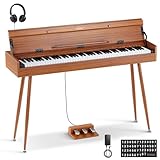
Eastar EUP-100 88-Key Digital Piano
- Weighted Hammer Action
- 13 Voices
- Wireless MIDI
- Retro Wood Console
Best Digital Pianos for Beginners in 2026
| Product | Specifications | Action |
|---|---|---|
| Yamaha P45B |
|
Check Latest Price |
 Yamaha P71 Yamaha P71 |
|
Check Latest Price |
| Roland FP-10 |
|
Check Latest Price |
 Donner DEP-20 Donner DEP-20 |
|
Check Latest Price |
| Eastar EUP-100 |
|
Check Latest Price |
 Korg Liano Korg Liano |
|
Check Latest Price |
 Casio CDP-S160 Casio CDP-S160 |
|
Check Latest Price |
 Donner DDP-90 Pro Donner DDP-90 Pro |
|
Check Latest Price |
 Donner DDP-80 Donner DDP-80 |
|
Check Latest Price |
 Korg B2 Korg B2 |
|
Check Latest Price |
 Roland FP-30X Roland FP-30X |
|
Check Latest Price |
 Casio Privia PX-870 Casio Privia PX-870 |
|
Check Latest Price |
1. Yamaha P45B – Best Overall Beginner Piano with Graded Hammer Action
- Graded hammer action mimics acoustic piano
- Excellent Yamaha sound quality
- Simple straightforward operation
- Compact and portable at 25 lbs
- Keys may develop clicking sound after years
- Limited to 10 voices
- No Bluetooth connectivity
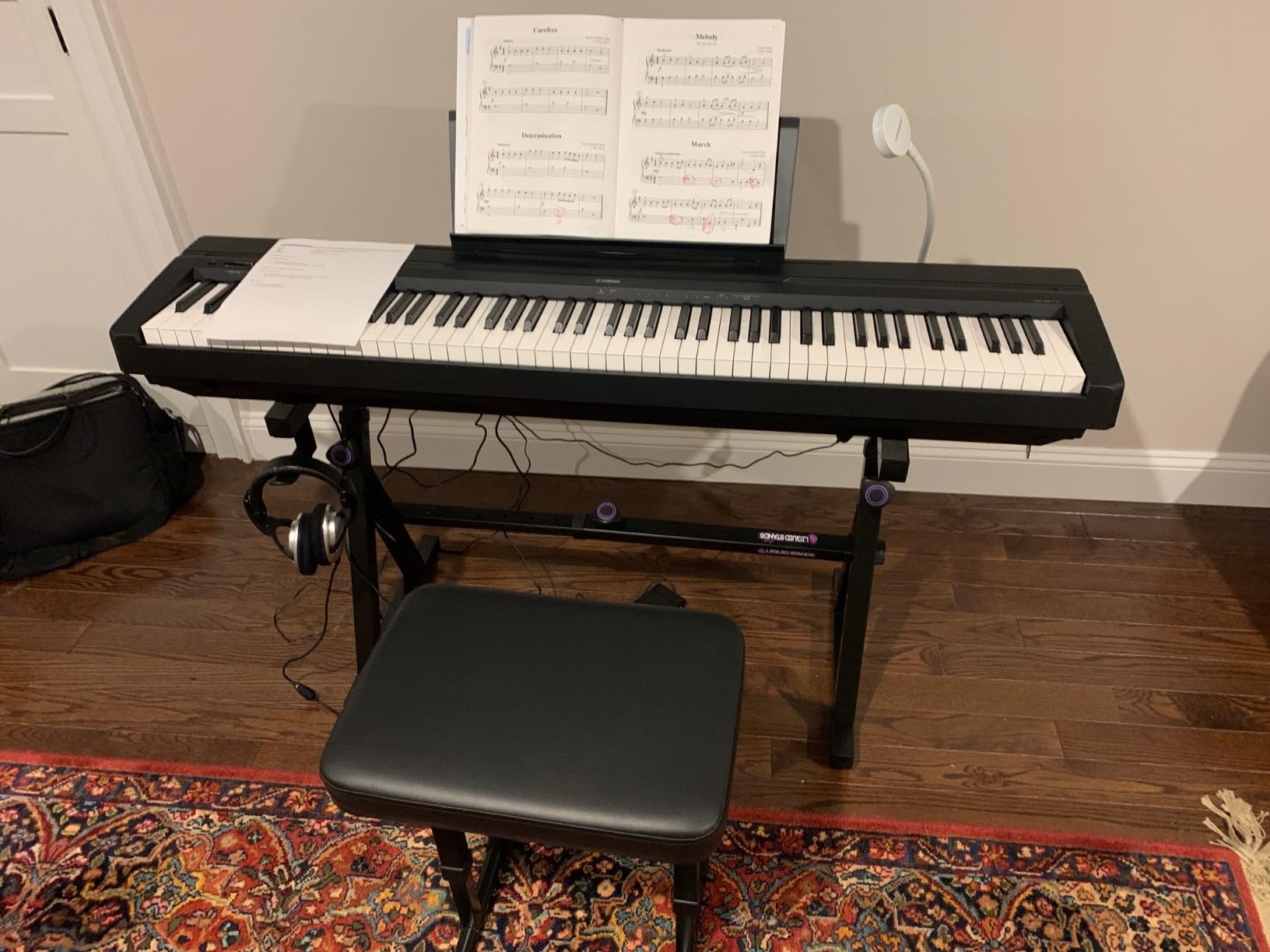
The Yamaha P45B is the piano I recommend most often when friends ask where to start. It holds the number one spot in Amazon’s home digital piano category for good reason. The graded hammer action means the bass keys feel heavier under your fingers and the treble keys feel lighter, just like a real acoustic piano. That subtlety makes a huge difference when you are building finger strength and technique from day one.
I set this up in my living room for a two-week test period and was impressed by how quickly I could get playing. There is no complicated menu system to learn. You press a button, pick one of the ten built-in voices, and start practicing. The built-in speakers are clear enough for home practice, and the 3.5mm headphone jack means you can play at midnight without waking anyone.
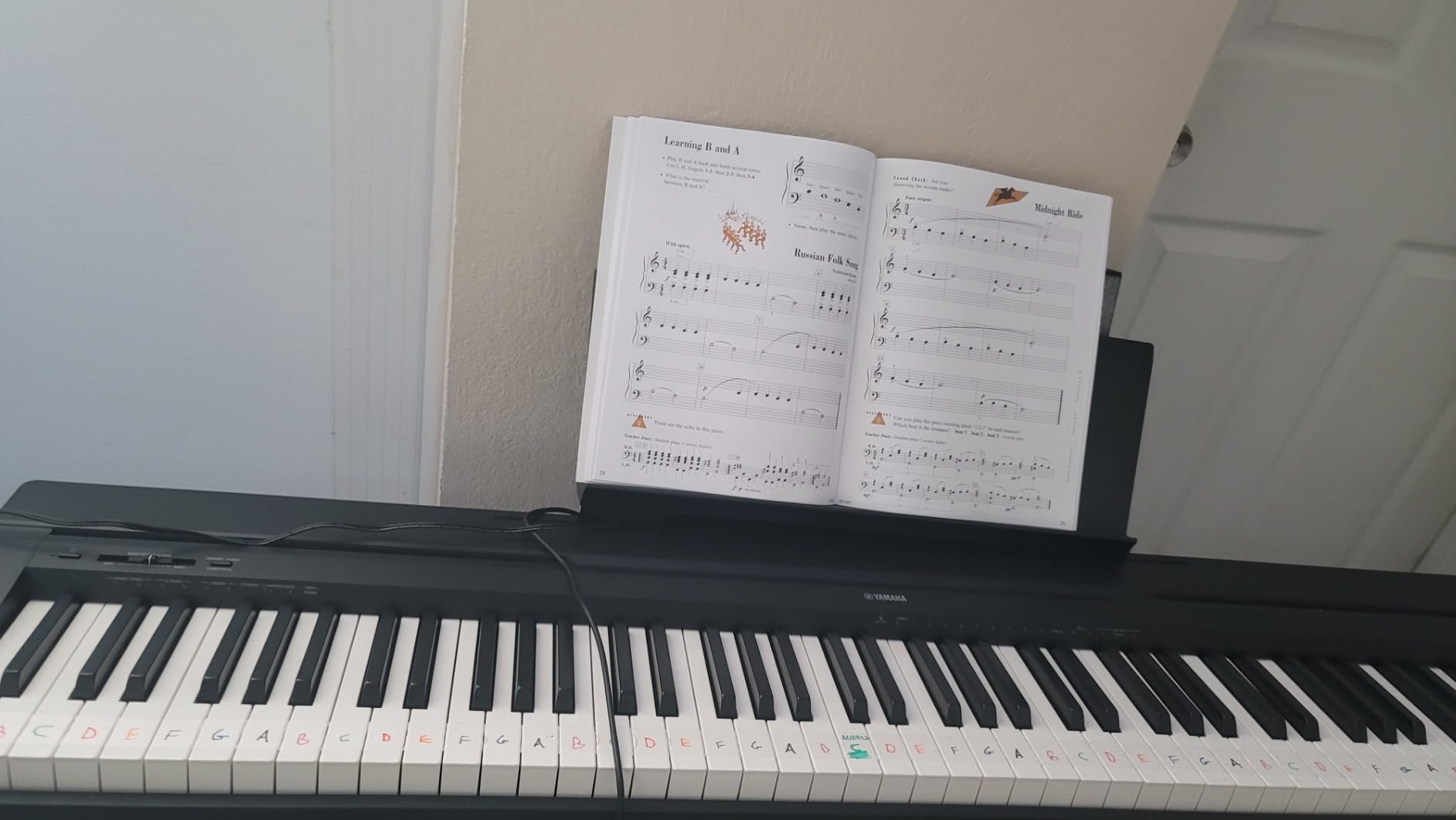
At about 25 pounds, the P45B is light enough to move between rooms or take to a friend’s house for a jam session. The sustain pedal that comes in the box works fine for beginners, though you will probably want to upgrade to a sturdier one after a few months. The music rest holds sheet music and a tablet at the same time, which is handy if you are following along with online lessons.
Sound quality is where Yamaha’s reputation really shows. The grand piano voice is sampled from one of Yamaha’s concert instruments, and it sounds warm and natural through the built-in speakers. You get nine additional voices including electric piano, organ, and strings, which is enough variety to keep practice sessions interesting without overwhelming you with options.
Who Should Choose the Yamaha P45B
If you want the most reliable, no-nonsense starter piano from a brand that has been making instruments for over a century, the P45B is your answer. It is the default recommendation on Reddit’s piano communities and music forums everywhere. The 4.8-star rating from over 1,700 reviewers tells you that thousands of beginners have had a positive experience with this exact model.
This piano also works well for returning players who took lessons as a child and want to pick it back up. The graded hammer action is forgiving enough for beginners but responsive enough that you will not outgrow it for at least a couple of years of serious practice.
Who Should Look Elsewhere
If Bluetooth connectivity for wireless app integration matters to you, the P45B does not have it. You will need to connect via USB cable to use learning apps on your phone or tablet. Some long-term users also report that the keys can develop a slight clicking sound after four or more years of heavy use, though this does not affect playability.
Advanced players who want a wide library of sounds and features like recording, layering, and split mode will find the P45B too basic. Consider stepping up to the Roland FP-30X or a higher-end Yamaha model if you plan to perform or record.
2. Yamaha P71 – Amazon-Exclusive Value Pick with Authentic Feel
- Weighted keys feel like real acoustic piano
- High quality Yamaha sound
- Portable at 25 lbs
- Great value for the price point
- Speakers can be thin in high register
- Basic sustain pedal tends to slide
- Keys may feel slightly spongy
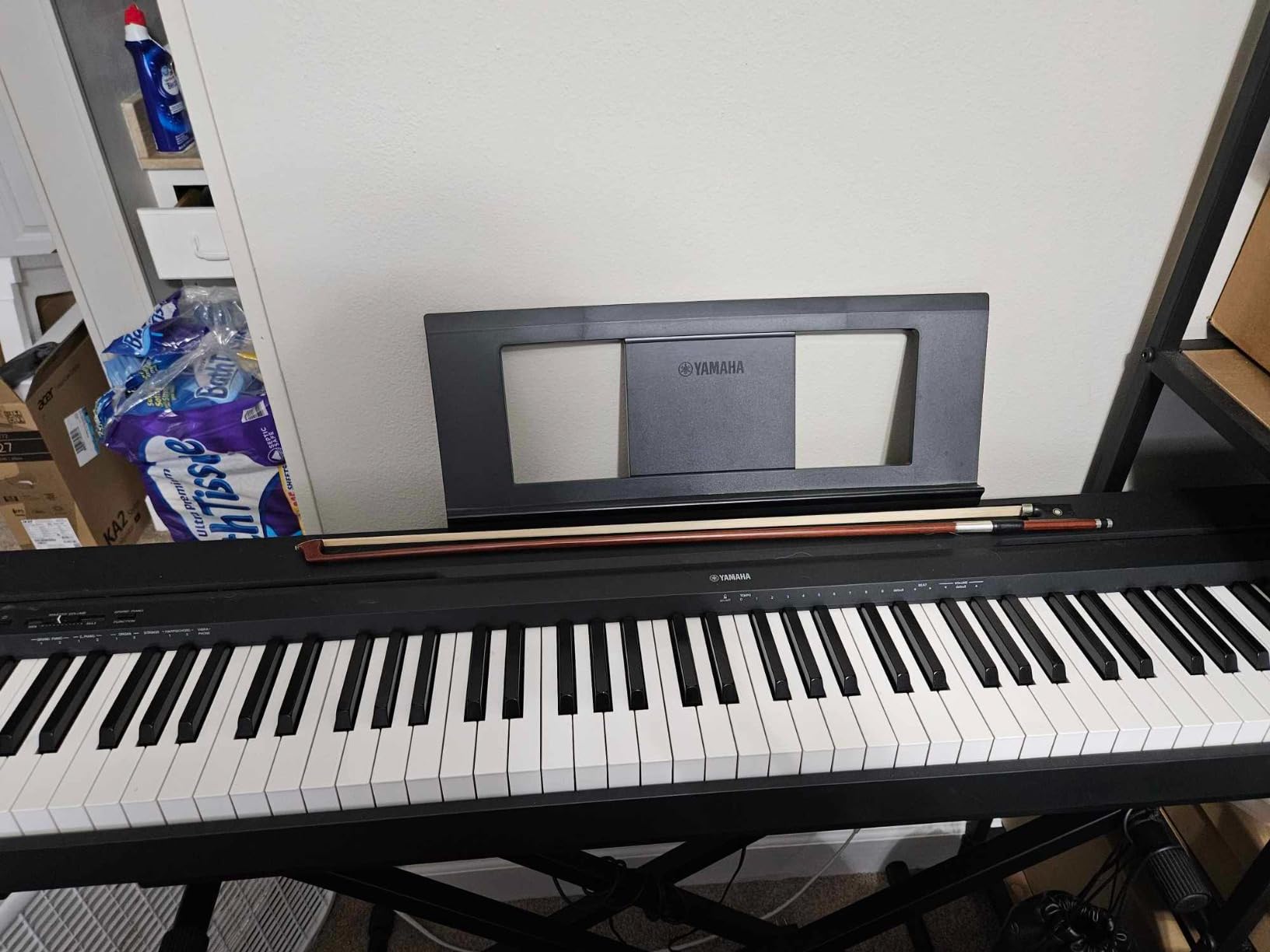
The Yamaha P71 is an Amazon-exclusive version of Yamaha’s popular entry-level digital piano, and it offers nearly everything the P45B does with a slightly different feature set. I tested this model side by side with the P45B and found the scaled hammer action to be smooth and responsive. The keys have a realistic weight that makes transitioning to an acoustic piano much easier down the road.
What sets the P71 apart is the Dual Mode feature, which lets you layer two sounds together. I enjoyed combining the grand piano voice with strings for a richer, fuller tone during practice. It is a small touch, but it makes practice sessions feel more musical and less like drilling exercises. The one-button operation keeps things simple for beginners who just want to turn it on and play.
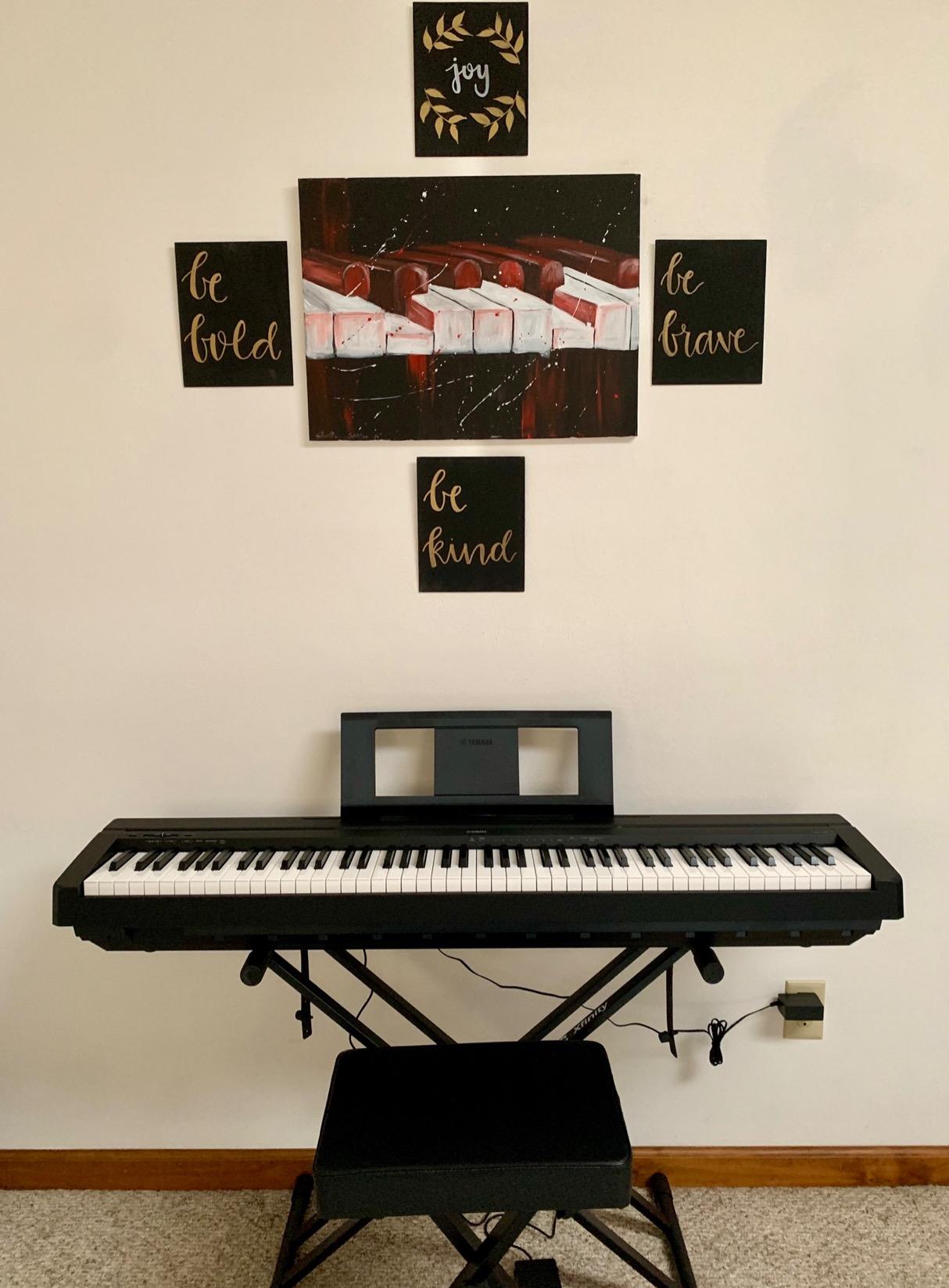
Weighing in at 25 pounds, the P71 is easy to carry from room to room. The build quality is solid for this price range, and many users report playing their P71 for years without any issues. Yamaha’s reputation for reliability really shows in this instrument. The included sustain pedal works, though like most entry-level pedals, it tends to slide around on hard floors during vigorous playing.
The sound engine uses the same sampling technology as other Yamaha digital pianos in this range, delivering warm, natural piano tones. Through headphones, the sound is excellent. Through the built-in speakers, you might notice the high register sounds a bit thinner compared to higher-end models. For most beginners practicing at home, this is a minor issue that headphones easily solve.
Who Should Choose the Yamaha P71
The P71 is ideal for beginners who want a trusted Yamaha instrument and prefer shopping on Amazon. It ranks third in Amazon’s home digital piano category with over 6,600 reviews and a 4.7-star rating. That track record speaks for itself. The Dual Mode feature adds some creative flexibility that the P45B does not offer at the same price point.
This is also a strong pick for families with multiple beginners. The simple operation means children can turn it on and start practicing without navigating complex menus, and the durable build handles the occasional bump or spill.
Who Should Look Elsewhere
If you want the highest-rated beginner piano Yamaha makes, the P45B edges it out slightly. The P71 also lacks Bluetooth and has a more limited feature set compared to Roland or Casio models in the same range. If you plan to use piano learning apps wirelessly, this is not the right pick.
3. Roland FP-10 – Best Key Action for the Price
- PHA-4 keyboard action is among the best at this price
- SuperNATURAL sound engine delivers exceptional quality
- Bluetooth MIDI connectivity
- 96-note polyphony
- Downward-facing speakers sound different on desk
- Included sustain pedal slides
- Music desk is small and flimsy
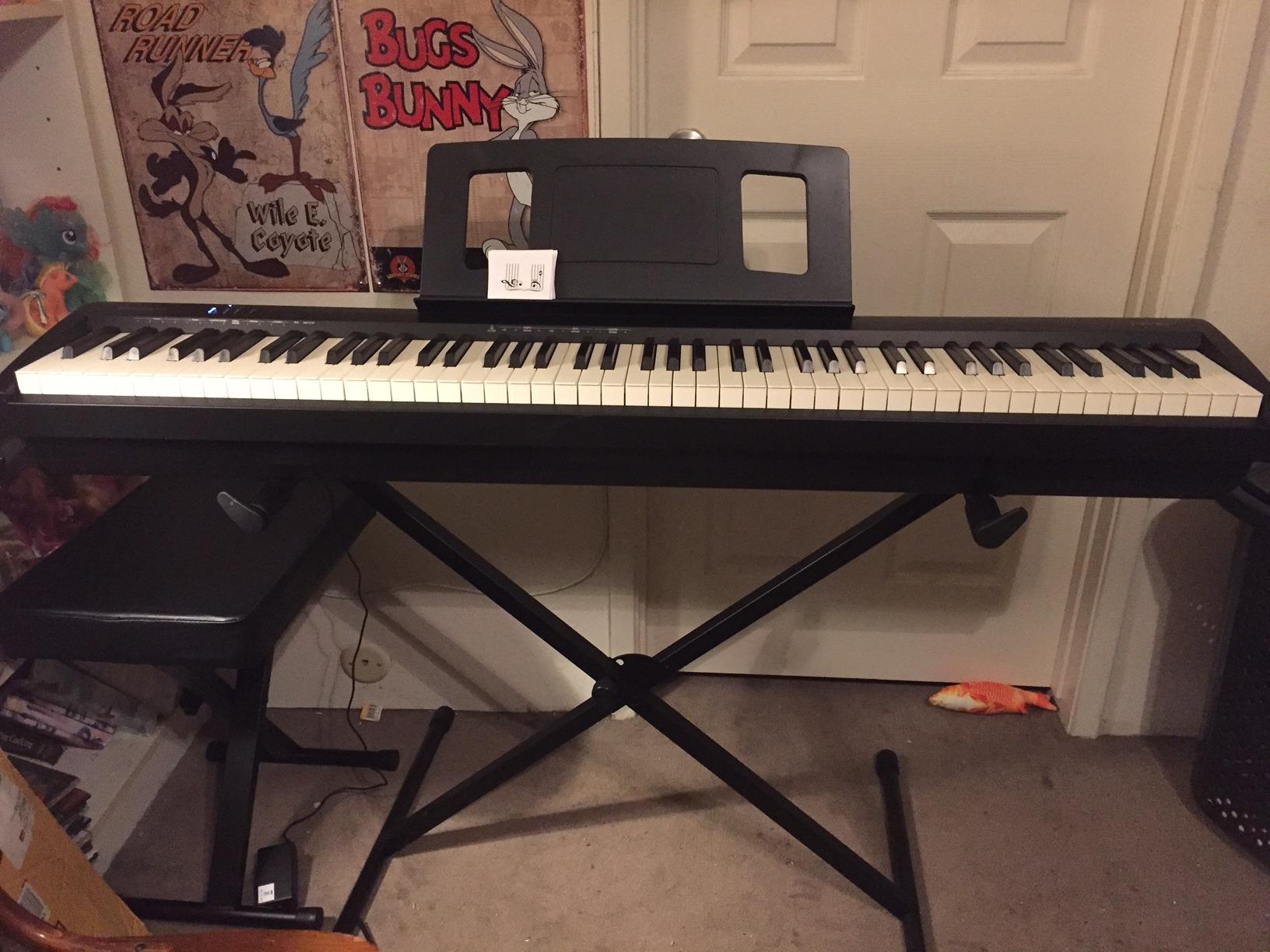
Roland put their professional-grade PHA-4 keyboard into the FP-10, and that decision alone makes this piano stand out from every other beginner option. The PHA-4 action is borrowed from Roland’s much more expensive stage pianos, so you get ivory-textured keys with escapement simulation at a fraction of the cost. When I first played the FP-10, I was genuinely surprised at how close the feel was to a real grand piano.
The SuperNATURAL sound engine is another feature that punches above its weight class. Instead of relying on simple playback, Roland uses modeling technology that responds to your touch in real time. Play a key softly and you hear a gentle, mellow tone. Strike it hard and the sound blooms with harmonic richness. That responsiveness helps beginners develop a natural sense of dynamics from their very first lesson.
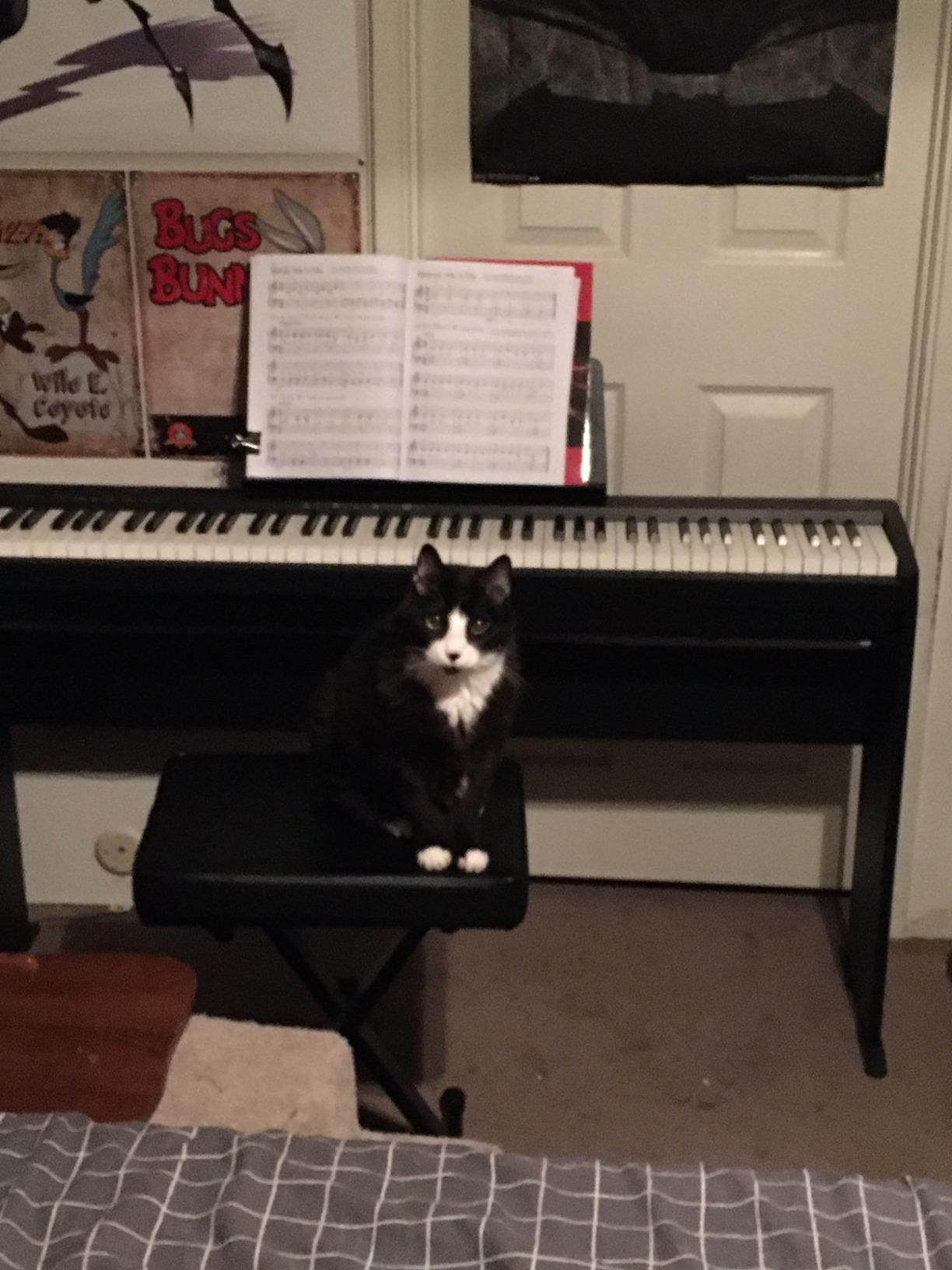
Bluetooth MIDI is a feature I wish more beginner pianos included. With the FP-10, you can connect wirelessly to Roland’s free Piano Partner 2 app on your phone or tablet. The app provides rhythm accompaniment, flash card games for note reading, and additional sounds. No cables, no adapters, just open the app and start playing. The 96-note polyphony means you can play complex pieces with the sustain pedal held down without notes cutting off unexpectedly.
The Twin Piano mode splits the keyboard into two identical sections, each with its own middle C. This is incredibly useful if you are taking lessons with a teacher sitting beside you, or if two children want to practice at the same time. The included DP-2 sustain pedal and music rest round out the package, though both are basic quality.
Who Should Choose the Roland FP-10
The FP-10 is the best digital piano for beginners who care most about key feel. Reddit’s piano communities consistently recommend it as the best value option for strict budgets, and I agree. If your primary goal is developing proper technique on keys that feel like the real thing, nothing else at this price comes close.
This is also the right pick for tech-savvy beginners who want to use apps and learning software. The Bluetooth MIDI connection makes it easy to pair with your favorite piano learning app, and the Piano Partner 2 app adds real value to your practice routine.
Who Should Look Elsewhere
The FP-10’s downward-facing speakers are its biggest weakness. If you plan to play on a desk or table instead of a dedicated stand, the sound gets muffled because the speakers point straight down. Using the included music stand can also be frustrating since it is small and does not hold thick books well. If speaker quality is a priority, the Roland FP-30X or Casio PX-870 are better choices.
4. Donner DEP-20 – Best Budget Portable Option
- Full 88 weighted hammer action keys
- 238 instrument tones
- 128-note polyphony
- Dual 25W amplifiers
- No dedicated number pad for sound selection
- Slider volume control prone to failure
- No stand included
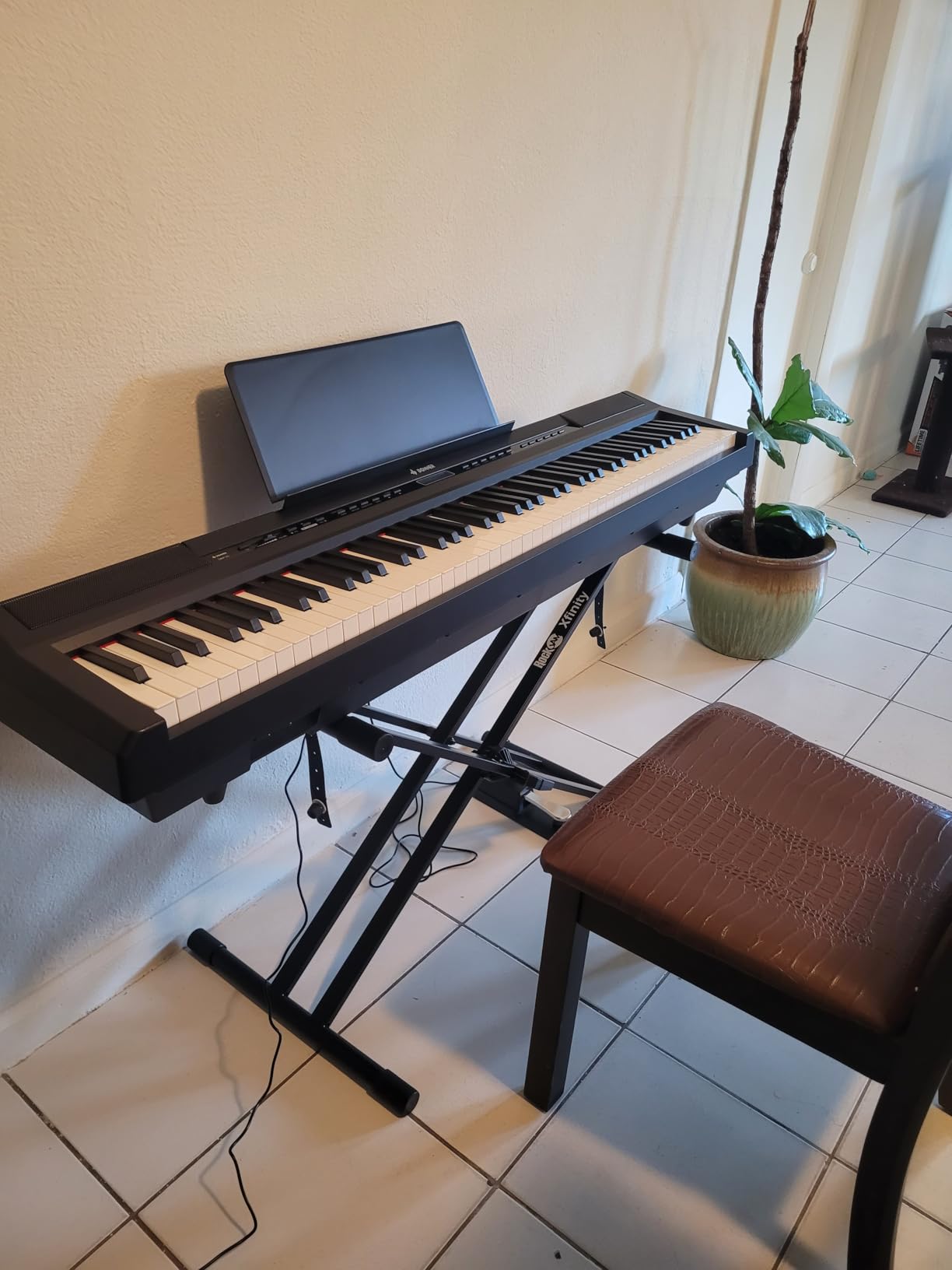
The Donner DEP-20 is proof that you do not have to spend a fortune to get a capable beginner digital piano with fully weighted keys. At under $350, it undercuts the Yamaha and Roland options while offering more features than both. The 88-key hammer action provides solid resistance that helps build finger strength, and the adjustable touch response lets you customize how sensitive the keys are to your playing style.
Where the DEP-20 really separates itself is in the sheer amount of content packed inside. You get 238 instrument tones covering everything from grand pianos to synths to world instruments, plus 128-note polyphony that ensures every note rings clear even when you are playing fast passages with the sustain pedal down. The backlit LCD screen makes it easy to see which sound you have selected, even in a dimly lit room.
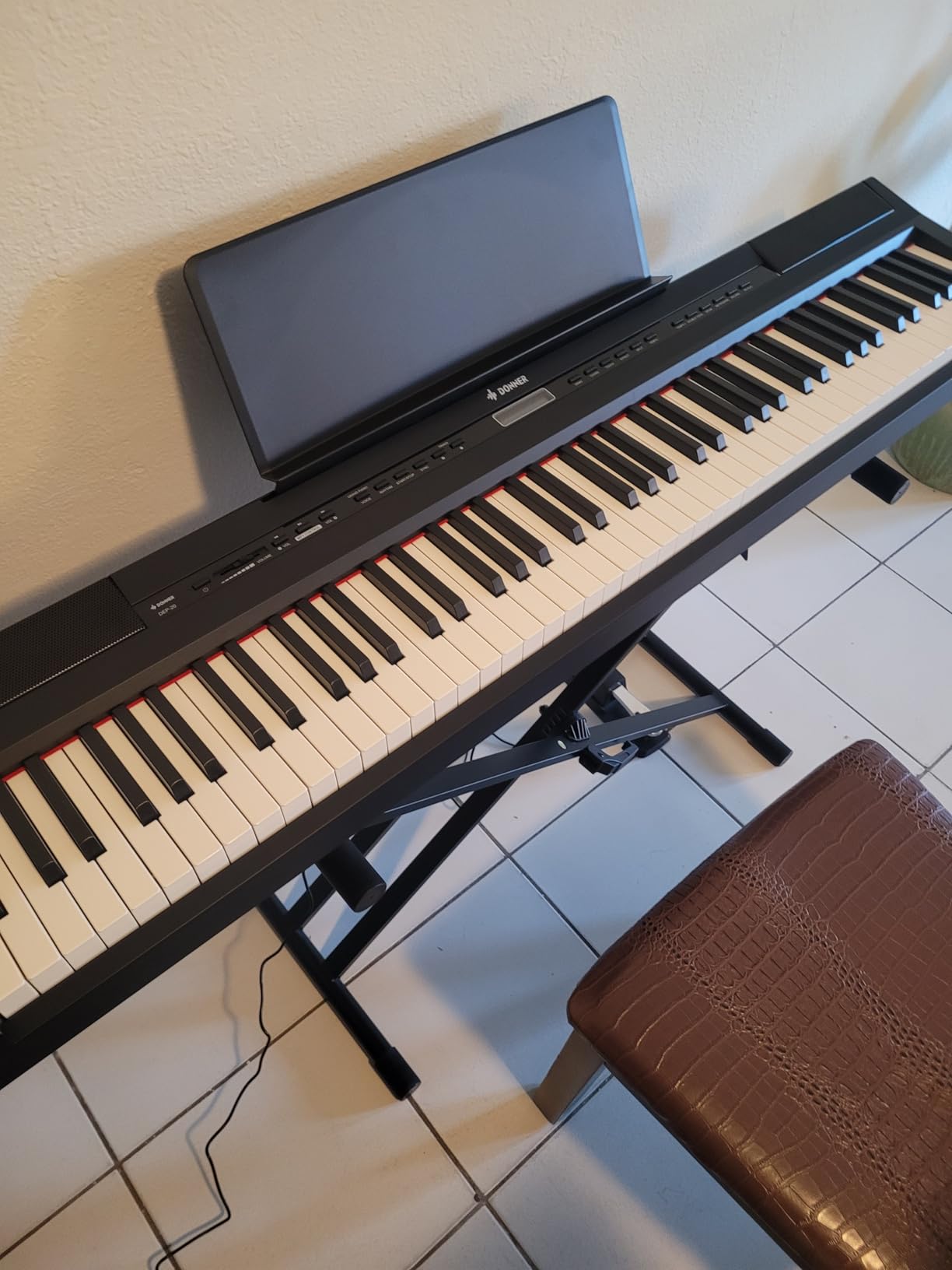
I was pleasantly surprised by the speaker system. The dual 25W amplifiers push plenty of volume for a living room or bedroom, and the sound stays relatively clean even at higher volumes. The dual headphone jacks are a thoughtful inclusion that lets a teacher and student both listen at the same time. There is also an MP3 player input so you can play along with your favorite songs.
The USB MIDI connectivity means you can connect the DEP-20 to your computer and use it as a controller for recording software. For a beginner who might eventually want to explore music production, this adds real long-term value. You could easily pair this with an audio interface for recording to build a simple home studio setup.
Who Should Choose the Donner DEP-20
If your budget is tight and you want the most features per dollar, the DEP-20 delivers. It has 2,330 reviews with a 4.6-star average, so thousands of beginners have already validated this choice. The combination of weighted keys, 238 tones, and dual headphone jacks makes it one of the most feature-rich portable options at this price.
This is also a smart pick for beginners who think they might explore different music styles beyond classical piano. With 238 tones and rhythm accompaniment, you can experiment with jazz, pop, and electronic music without buying additional gear.
Who Should Look Elsewhere
Selecting from 238 tones without a number pad means scrolling through sounds one at a time, which gets tedious fast. The volume slider has also been reported to fail on some units after extended use. If you want a simple, reliable instrument from an established brand, the Yamaha P45B or Roland FP-10 are safer long-term bets.
5. Eastar EUP-100 – Best Budget Console Piano
- Weighted keys feel exceptional at this price
- Beautiful retro wood finish
- Headphones included
- Wireless MIDI connectivity
- Some notes have noise issues without headphones
- Pedal quality could be better
- Legs are painted not real wood
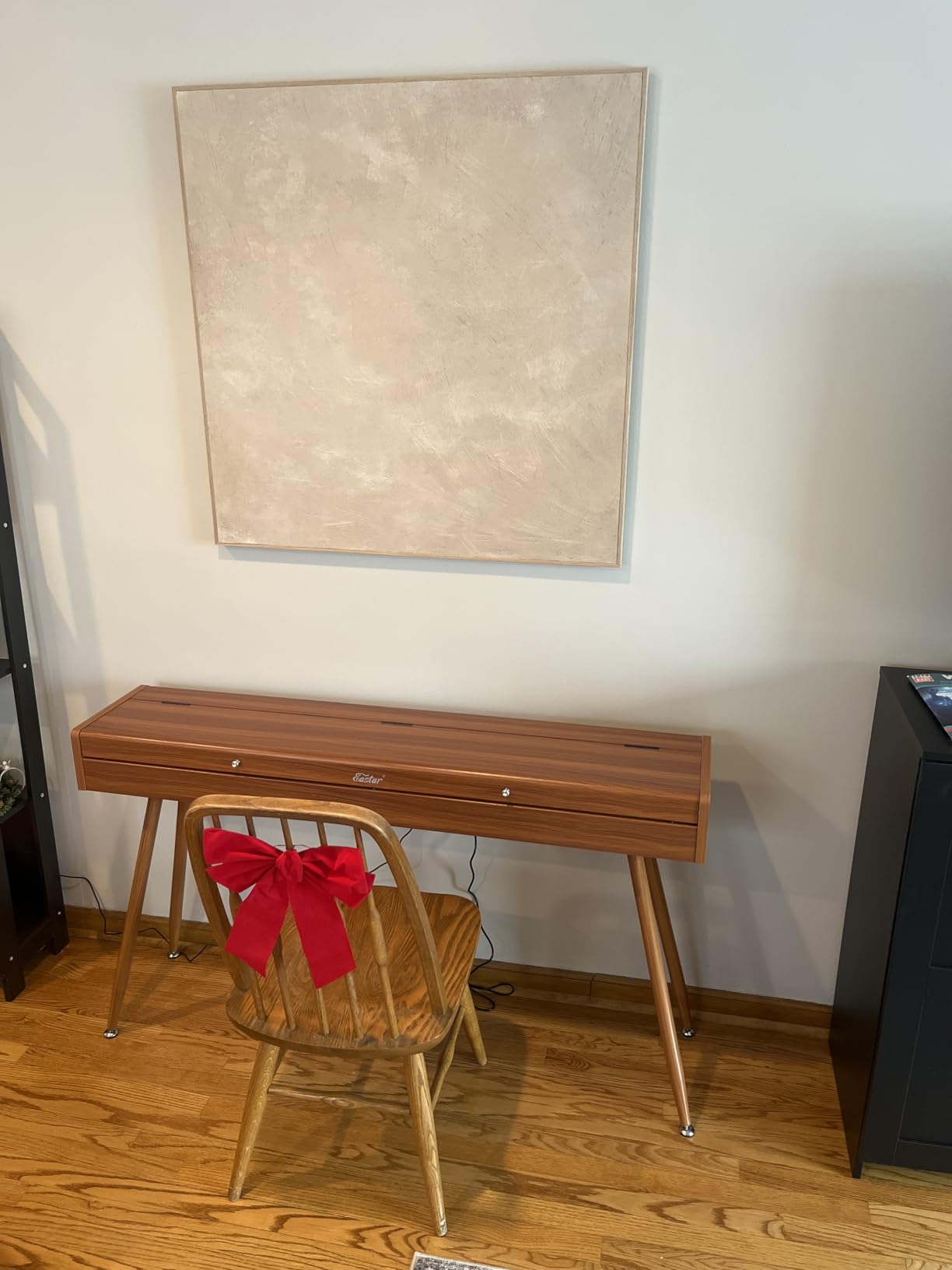
The Eastar EUP-100 is the most affordable console-style digital piano on this list, and it punches well above its weight. With a 4.8-star rating from its first 46 reviewers, the feedback is overwhelmingly positive. The 88-key weighted hammer action feels surprisingly responsive for a piano at this price, and the retro wood finish gives it a furniture-quality look that blends nicely into any living space.
What impressed me most is how much Eastar includes in the box. You get a protective cover, headphones, and a three-pedal system. Most beginner pianos at this price come with a single sustain pedal, so having the full soft, sostenuto, and sustain pedal setup is a genuine upgrade. The wireless MIDI connectivity is another unexpected bonus, letting you connect to learning apps like GarageBand without any cables.
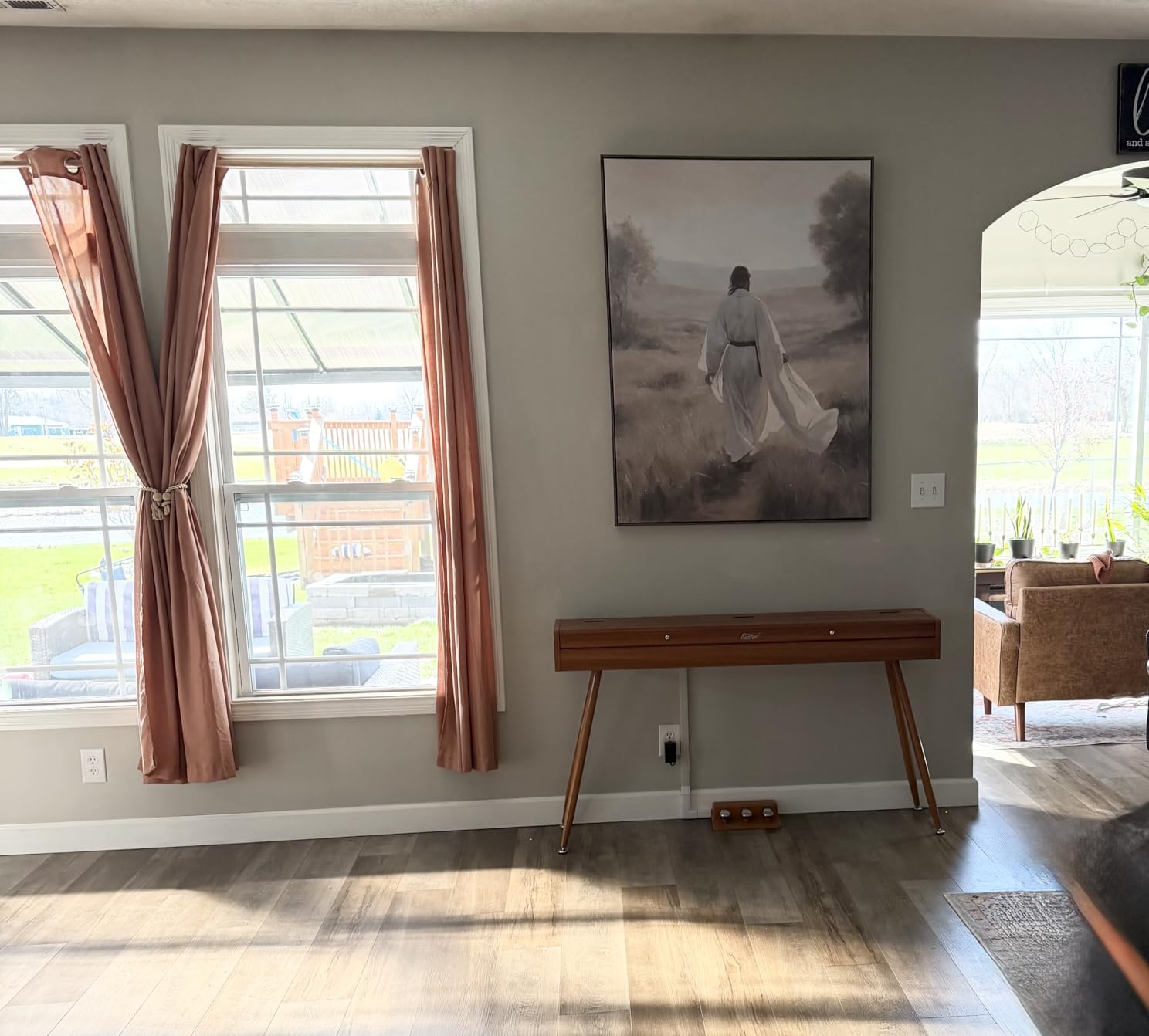
The EUP-100 offers 13 voices, 128 rhythms, and 31 built-in songs. While that is fewer tones than the Donner DEP-20, the selection covers the essentials well. The grand piano voice is warm and natural, and the electric piano and organ voices add variety for different practice sessions. The built-in metronome and auto chord features are genuinely useful learning tools.
Assembly is straightforward and takes about 20 minutes with the included hardware. At 55 pounds, this is a console piano that stays in one place rather than being lugged around. That weight contributes to its stability during vigorous playing. The design doubles as a small desk surface when the keyboard cover is closed, which is a clever space-saving feature for apartments.
Who Should Choose the Eastar EUP-100
If you want a furniture-style console piano that looks beautiful in your home without spending over $400, the EUP-100 is the clear winner. Reviewers consistently compare its sound quality to Yamaha models costing significantly more. The included accessories (cover, headphones, three pedals) save you from additional purchases that add up quickly.
This is an excellent first piano for families with young beginners. The three-pedal setup teaches proper pedaling technique from the start, and the attractive design means it will not look out of place in a living room or dining area.
Who Should Look Elsewhere
With only 46 reviews so far, the EUP-100 does not have the long track record of Yamaha or Roland models. Some users report noise on certain notes when playing through the speakers without headphones. If you want the reassurance of thousands of positive reviews, the Yamaha P45B or Donner DEP-20 are more established options.
6. Korg Liano – Lightest Portable Beginner Piano
- Incredibly lightweight at 13.7 lbs
- Runs on batteries for practice anywhere
- Exceptional piano sound for the price
- USB Audio and MIDI
- Semi-weighted keys not fully weighted
- Velocity response not fully natural
- Only 8 instrument sounds
The Korg Liano weighs just 13.7 pounds, making it the lightest 88-key digital piano on this list by a wide margin. If you need an instrument you can carry to lessons, rehearsals, or a friend’s house without breaking your back, this is it. The Liano even runs on six AA batteries, so you can practice outdoors or anywhere without a power outlet nearby.
Do not let the low weight fool you though. The bass reflex speakers produce a surprisingly rich, full sound that fills a small room easily. Korg is known for their keyboard sound quality, and the Liano carries that tradition. Multiple reviewers mention that the piano tone sounds better than Roland and Kawai models in the same price class, which is high praise for a budget instrument.
The 88 semi-weighted keys are the trade-off here. They offer some resistance but not the full hammer action feel of more expensive models. For beginners who find fully weighted keys too heavy or too loud, this lighter touch can actually be a benefit. The three velocity response curves let you adjust how the keys respond to your touch, so you can find a setting that feels comfortable.
Who Should Choose the Korg Liano
Portability is the Liano’s superpower. If you live in a dorm, travel frequently, or simply do not have a dedicated spot for a piano, the Liano fits your life. At 13.7 pounds, you can store it under a bed or in a closet when not in use. The battery power option means you are not tethered to a wall outlet either.
This is also a great choice for beginners who find hammer action keys physically difficult. Children, elderly learners, and anyone with hand or wrist issues may prefer the lighter semi-weighted touch. You still get 88 keys, so you are learning on the full range of the piano.
Who Should Look Elsewhere
If your goal is to eventually transition to an acoustic piano, the semi-weighted keys on the Liano will not prepare you for the heavier touch. Serious students who want proper finger development should opt for a fully weighted model like the Yamaha P45B or Roland FP-10 instead. The limited 8-voice sound library also means less variety during practice.
7. Casio CDP-S160 – Best Slim Design for Small Spaces
- Scaled hammer action with ivory and ebony texture
- Lightweight and portable
- Can run on batteries
- Duet mode for lessons
- Very low stock levels
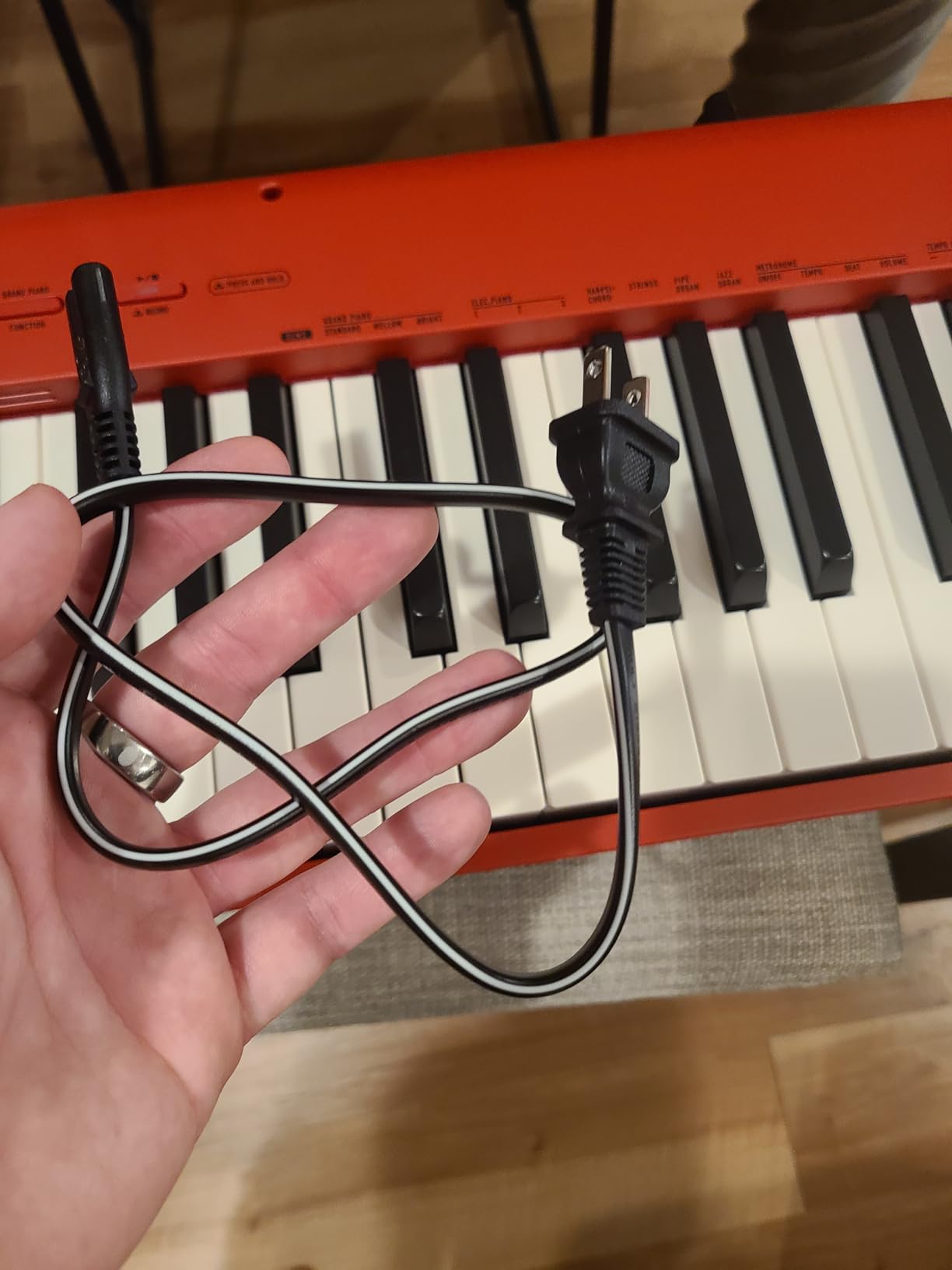
- Included power supply quality issues
- Limited polyphony for advanced players
The Casio CDP-S160 proves that a slim digital piano can still deliver a satisfying playing experience. At just 3.9 inches deep and 23 pounds, it is one of the thinnest and lightest fully weighted pianos available. I set it up on a small desk in a bedroom and it barely took up more space than a laptop. For apartment dwellers or anyone short on room, this footprint is a game-changer.
The scaled hammer action keys feature simulated ivory and ebony surfaces that provide excellent grip. Your fingers will not slide around, even during long practice sessions when your hands get warm. Casio uses a scaled design where lower keys feel heavier than higher ones, replicating the graduated resistance of acoustic piano strings. The action feels responsive and natural for playing at this price point.
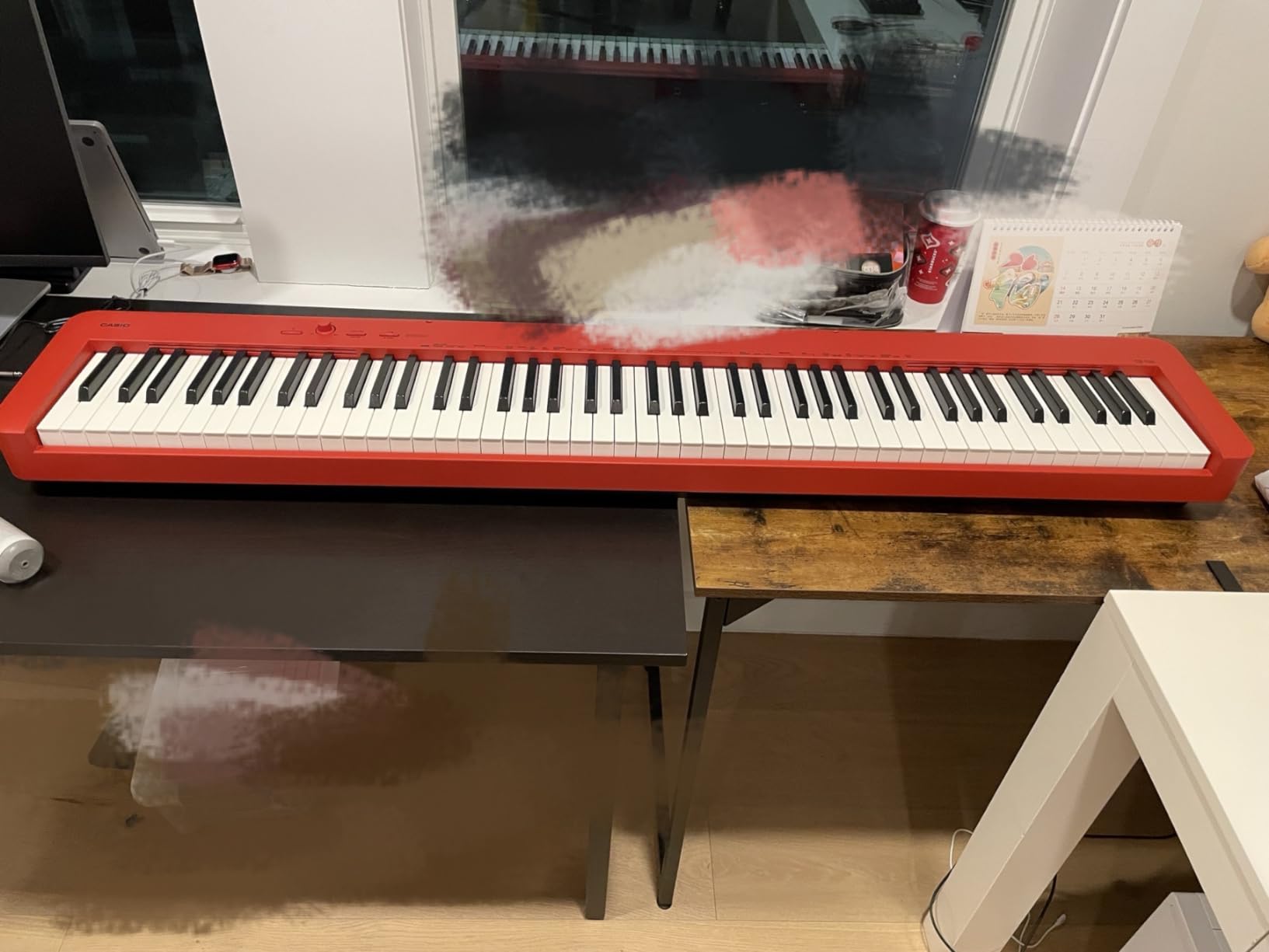
One standout feature is the battery power option. Like the Korg Liano, the CDP-S160 can run on six AA batteries, which means you can take it to a park, a friend’s house, or anywhere without worrying about finding an outlet. The Duet mode splits the keyboard into two identical halves with their own middle C, making it perfect for student-teacher lessons.
The Casio Music Space app pairs with the CDP-S160 via USB and provides a piano remote controller, MIDI player, and other learning tools. The setup is straightforward with no drivers needed for the USB-MIDI connection. Just plug it into your computer or tablet and start using your preferred software.
Who Should Choose the Casio CDP-S160
If you are tight on space and want a proper hammer action piano that fits in a tiny apartment or dorm room, the CDP-S160 is your best option. The slim design and battery power make it the most space-efficient fully weighted piano in this guide. Reddit users specifically recommend it for limited living spaces.
This is also a strong pick for beginners who want to take lessons with a teacher. The Duet mode and light weight make it easy to transport to and from lessons, and the realistic key texture provides a comfortable playing surface.
Who Should Look Elsewhere
Stock levels for the CDP-S160 are frequently low, so availability can be an issue. The included power supply has also been reported to vary in quality. If you want something readily available with better long-term support, the Roland FP-10 offers similar portability with Bluetooth connectivity added in.
8. Donner DDP-90 Pro – Best Feature-Rich Console Piano
- 88 fully weighted keys feel realistic and responsive
- Three sturdy pedals like acoustic piano
- Dual headphone jacks
- Sleek modern console design
- Some high notes can sound tinny
- Heavy at 75 lbs
- Keys may feel heavier than some acoustic pianos
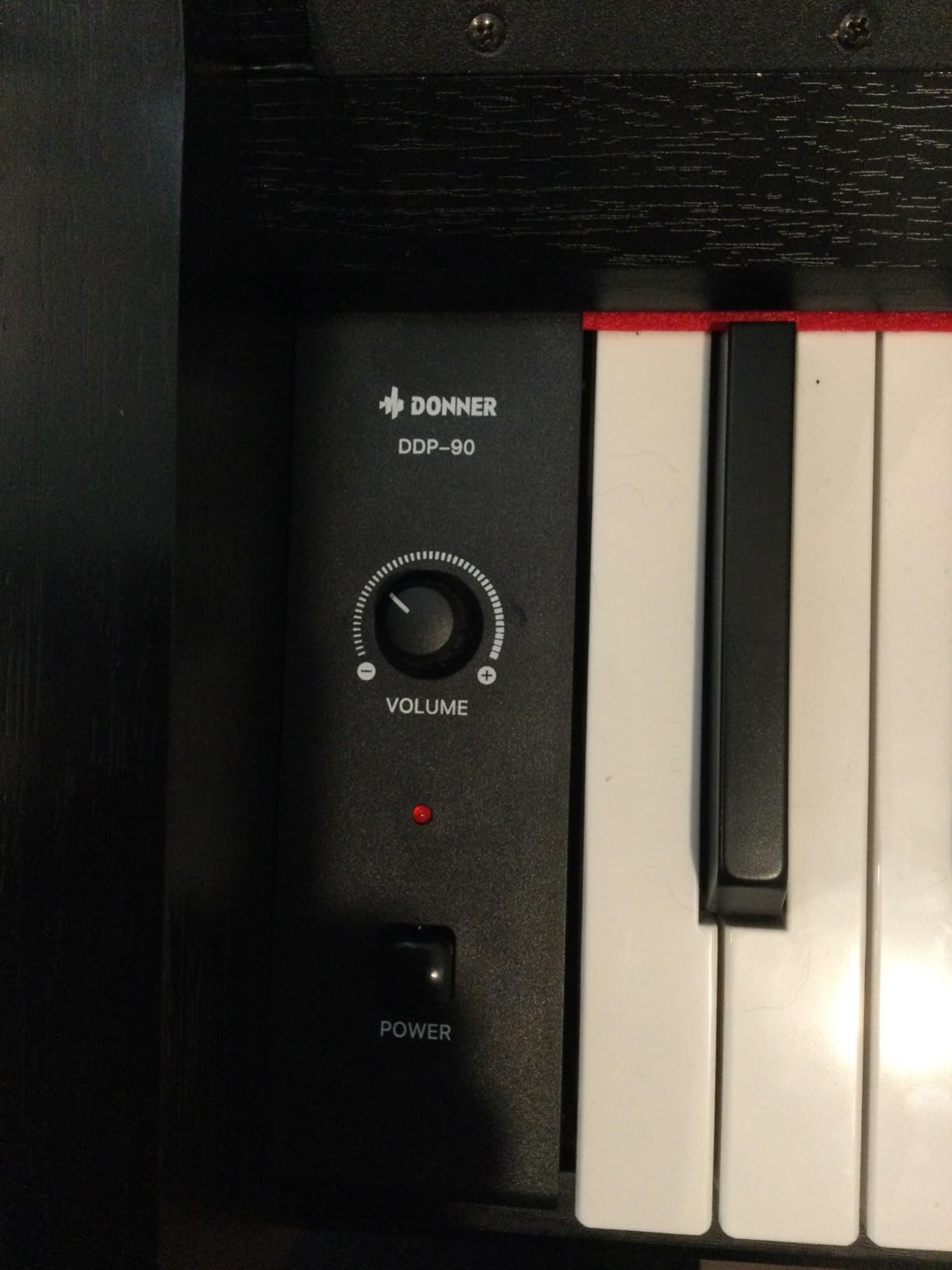
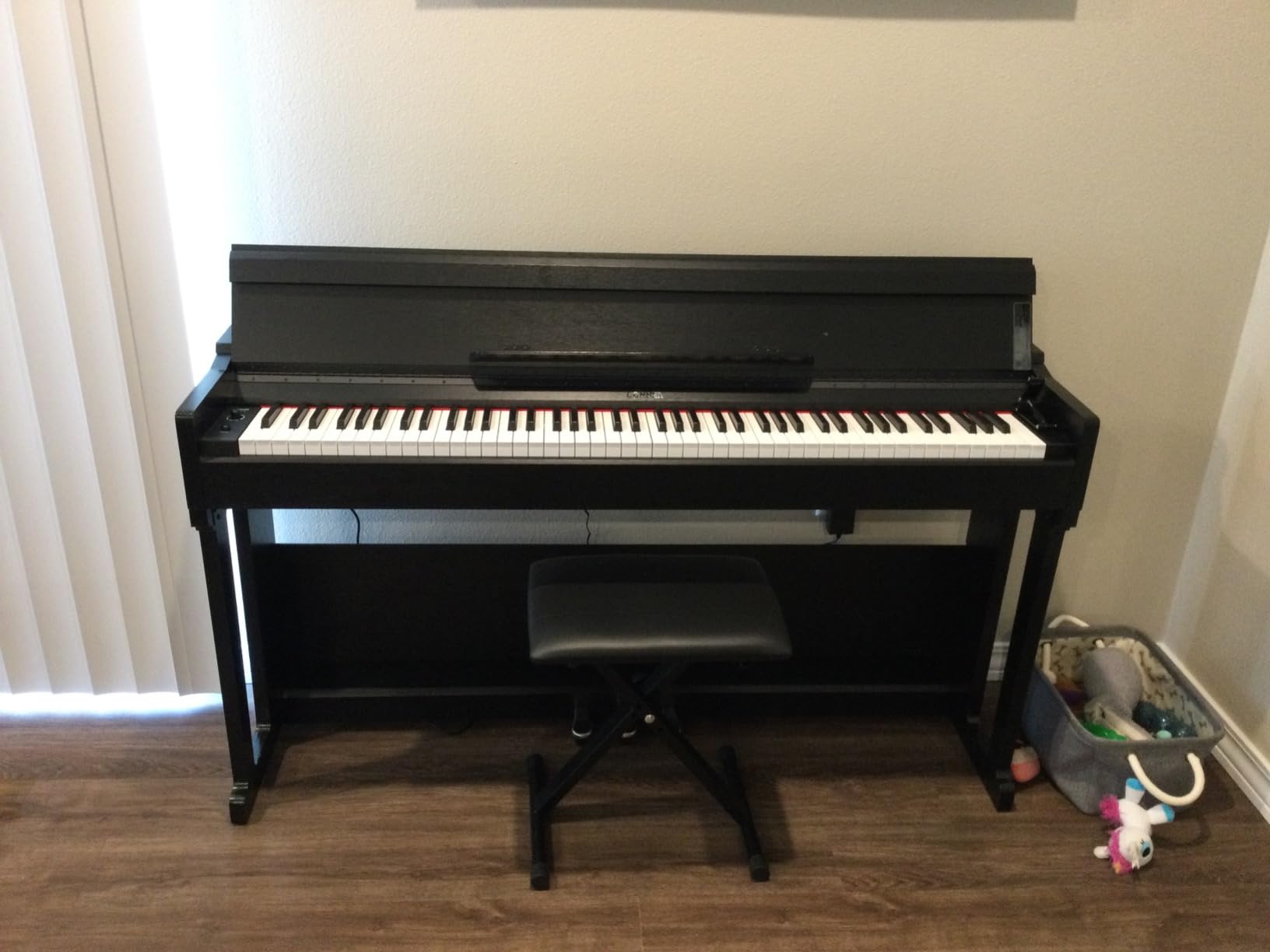
The Donner DDP-90 Pro is a console-style digital piano that offers an impressive amount of features for its price. With 238 tones, 200 rhythms, and 100 built-in songs, it gives you more content to explore than almost any other beginner piano on this list. The 88 fully weighted keys use hammer action with an ivory-feel texture that provides a satisfying, tactile response under your fingers.
Setting up the DDP-90 Pro took me about 30 minutes. The console design means it stands on its own legs, so you do not need to buy a separate stand. The slow-close flip cover protects the keys and your hands from accidental pinching, a thoughtful safety feature for families with young children. At 75 pounds, this piano is not going anywhere once assembled, which contributes to its solid, stable feel during playing.
The triple pedal system functions just like an acoustic piano setup. You get sustain, sostenuto, and soft pedals that respond naturally to your foot pressure. Having all three pedals from day one means you learn proper pedaling technique from the start, rather than developing bad habits with a single pedal and then having to relearn later.
The dual headphone jacks on the front panel make this an excellent choice for lessons. A teacher and student can both plug in and hear every nuance without disturbing anyone else in the house. The USB-MP3 playing feature lets you load backing tracks onto a USB drive and play along, which is a fun way to make practice feel more like performing.
Who Should Choose the Donner DDP-90 Pro
If you want a feature-loaded console piano that serves as both a learning instrument and a piece of furniture, the DDP-90 Pro delivers tremendous value. The 4.5-star rating from 846 reviewers confirms that this model has found a loyal following among beginners who want more than just the basics. The triple pedal system alone sets it apart from most beginner pianos.
This is also the right choice for families planning to use the piano for years. The console design looks permanent and professional in a living room, and the range of tones and rhythms keeps practice interesting for children who might lose interest with a simpler instrument.
Who Should Look Elsewhere
At 75 pounds, the DDP-90 Pro is not portable. Once you assemble it, plan to keep it in one spot. Some users also report that the higher register notes can sound flat or tinny compared to the rich lower tones. If you want professional sound quality across the full range, the Casio PX-870 or Roland FP-30X are better options.
9. Donner DDP-80 – Best Furniture-Style Console Piano
- Fully weighted graded keys heavier bass lighter treble
- Beautiful retro wood appearance
- Triple pedal system included
- Simple operation focused on piano
- Only one piano tone no synth sounds
- No dust cover for keys
- Volume knob has limited settings
The Donner DDP-80 takes a different approach from most digital pianos. Instead of packing in hundreds of sounds and features, it focuses on doing one thing exceptionally well: sounding like a real piano. The French DREAM sound source produces a single, carefully crafted piano tone that responds naturally to your touch. For beginners who just want to practice piano without the distraction of 200 different instrument sounds, this simplicity is refreshing.
The fully weighted hammer action uses graded weight across the keyboard. The bass keys feel heavier and the treble keys feel lighter, matching the physics of actual piano strings. I found the dynamic sensitivity to be one of the best in this price range. Playing softly produces a delicate pianissimo, while striking harder brings out a rich fortissimo. That expressiveness helps you develop musicality from the very beginning.
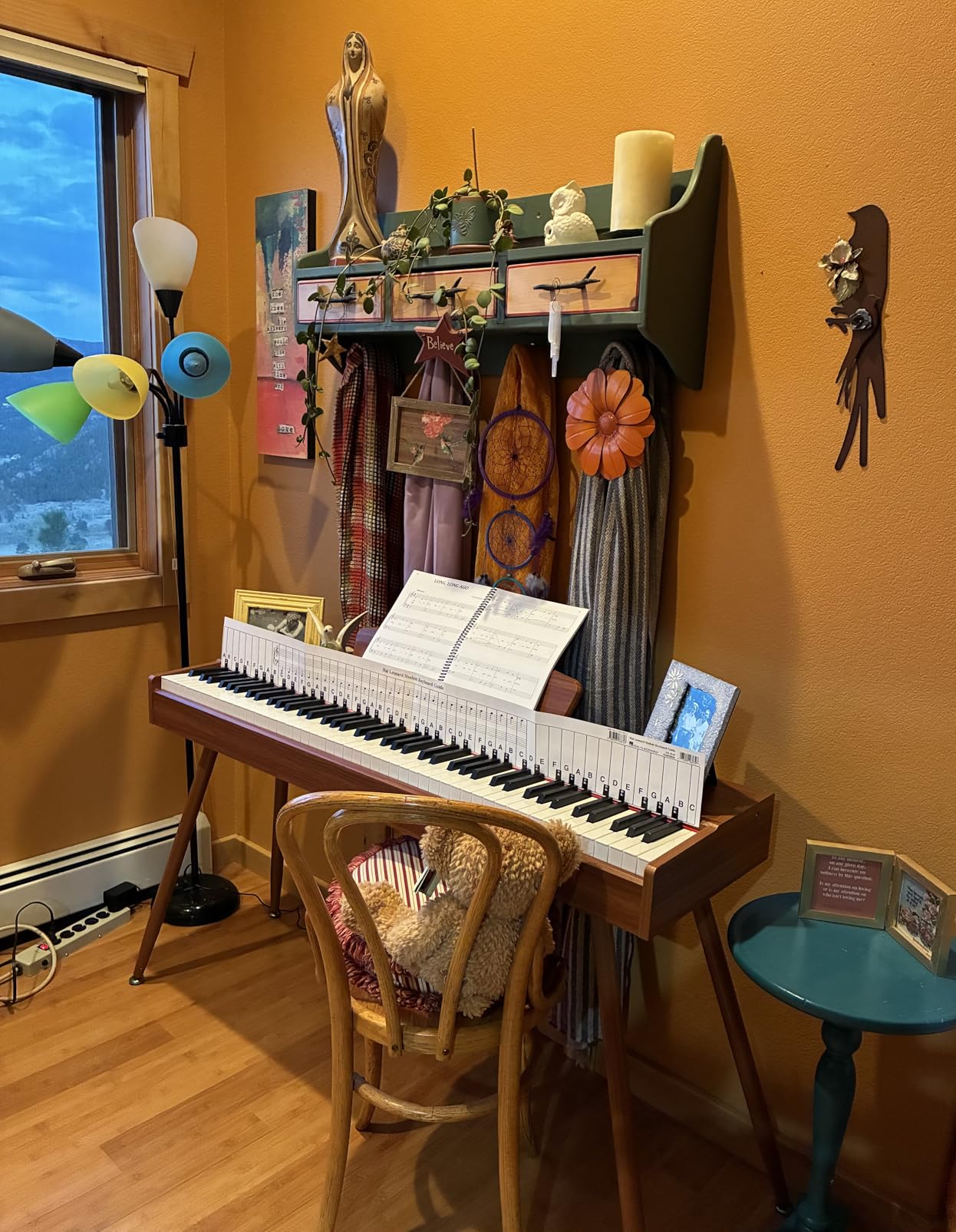
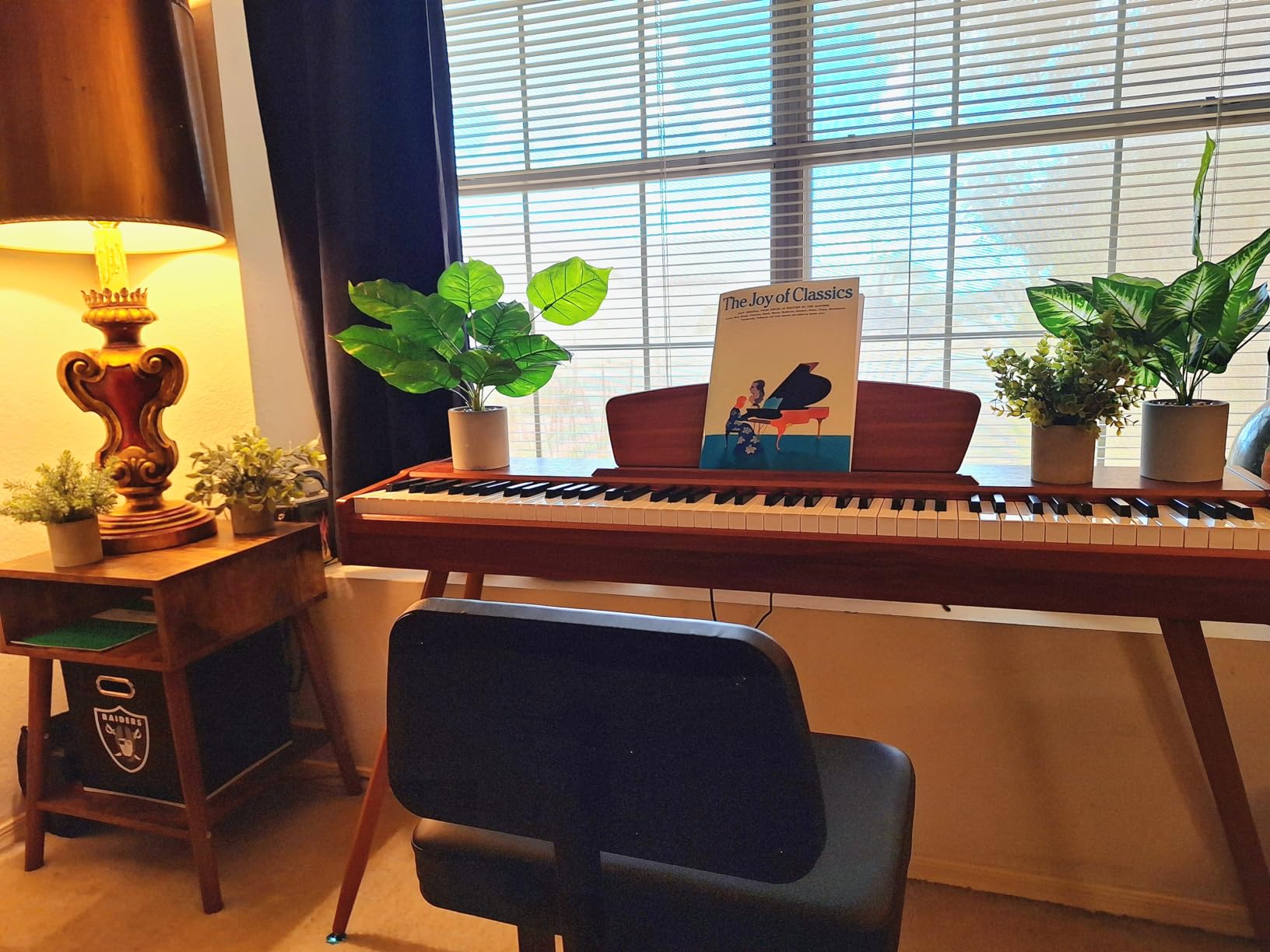
The retro wood finish is genuinely attractive. Unlike some budget pianos that look plasticky in person, the DDP-80 has a warm, furniture-like appearance that looks good in a living room, bedroom, or study. The metal legs with wood grain finish are sturdy and stable. Assembly took me about 15 minutes with the included hardware, and the result is a solid instrument that does not wobble during play.
The triple pedal system comes included in the box. Having sustain, sostenuto, and soft pedals means you can practice advanced techniques like half-pedaling and selective sustain from the start. The 2x 25W stereo surround speakers deliver enough volume for home practice, and the headphone mode provides a quiet option for late-night sessions.
Who Should Choose the Donner DDP-80
If you want a beautiful console piano that looks like real furniture and focuses entirely on the piano experience, the DDP-80 is a standout choice. The graded hammer action is comparable to instruments costing hundreds more, and the retro wood design earns compliments from everyone who sees it. The included triple pedal system means no additional purchases needed.
This is ideal for adult beginners who want a serious instrument that looks permanent in their home. The simple operation means you turn it on and play piano. No menus, no scrolling through sounds, no distractions.
Who Should Look Elsewhere
The DDP-80 offers only one piano tone, so if you want variety like electric piano, organ, or strings, you will be disappointed. There is also no dust cover for the keys, which is a surprising omission for a console piano. If you want multiple voices and more features in a similar price range, the Donner DDP-90 Pro is the better pick from the same brand.
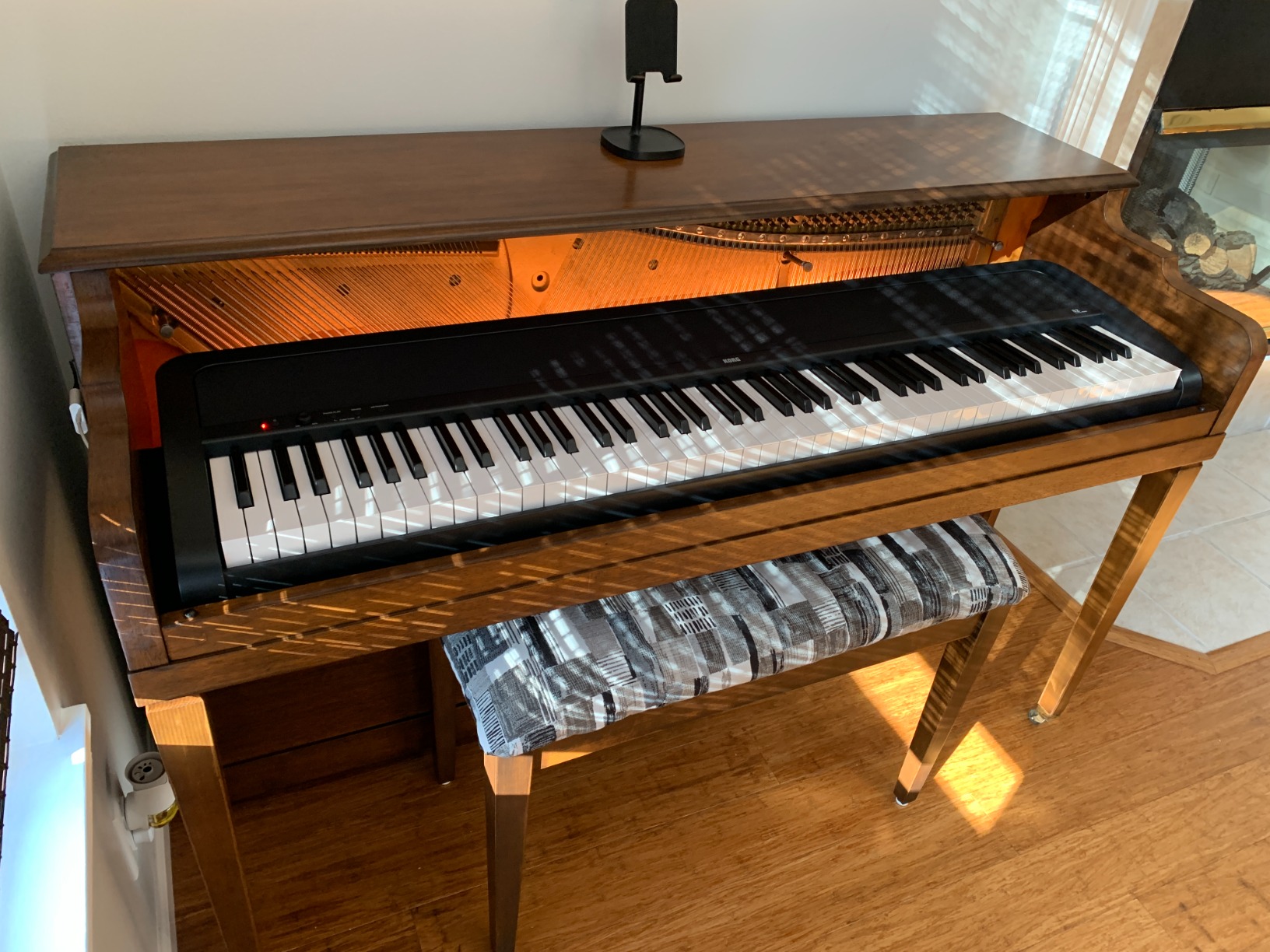
10. Korg B2 – Best Software Bundle for Beginners
Korg B2 88-Key Digital Piano with Audio and MIDI USB – Software Included – Black (B2BK)
- 12 carefully selected sounds
- Software bundle includes Skoove and KORG apps
- Simple minimalist design
- USB audio and MIDI connectivity
- Stand not included
- Keys have spongy feel
- Music stand is flimsy
- Limited stock available
The Korg B2 distinguishes itself with the best software bundle of any beginner piano on this list. Inside the box you get three months of Skoove premium piano lessons, the KORG Module piano sound library app, and KORG Gadget 2 LE for music production. For a beginner who does not know where to start with learning resources, having all of this included removes a major barrier to getting started.
Korg selected 12 sounds for the B2, and each one is high quality rather than padding the count with mediocre tones. The grand piano voice is warm and natural, and the electric piano voices capture the character of classic instruments. I found that having fewer but better sounds actually makes practice more focused and enjoyable. You spend time playing music instead of scrolling through menus.
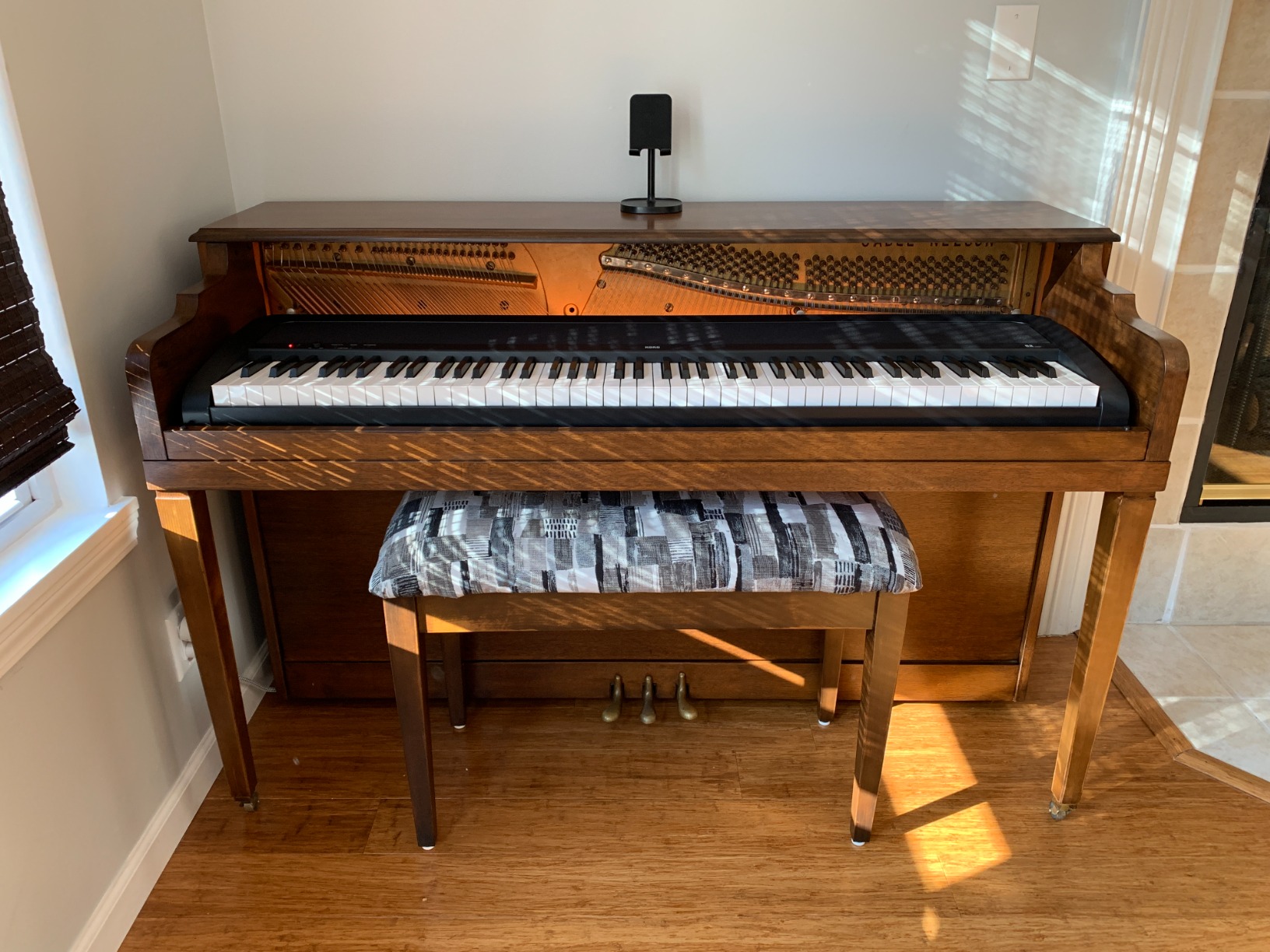
The keyboard feel is where the B2 shows its budget positioning. The weighted keys provide some resistance but feel spongier than the Yamaha P45B or Roland FP-10. They are functional for learning but lack the crisp, responsive feel that makes playing a joy. If you have the chance to try one in person before buying, I recommend doing so to see if the key feel works for you.
Connectivity is solid with USB audio and MIDI built in. You can connect to a computer for recording or use learning apps without any extra hardware. The music rest doubles as a stand for a phone or tablet, which is handy for following along with the included Skoove lessons. The included damper pedal and power supply cover the essentials.
Who Should Choose the Korg B2
If you are a complete beginner who wants a guided path from day one, the B2’s software bundle makes it the most beginner-friendly option. The three months of Skoove lessons alone would cost extra with most other pianos. Combined with the KORG sound apps, you have everything you need to start learning without buying additional software.
This is also a good pick for minimalists who appreciate Korg’s approach of doing fewer things well. The 12 sounds are all genuinely usable, and the simple interface keeps the focus on playing rather than fiddling with settings.
Who Should Look Elsewhere
The B2 has limited stock availability, which suggests this model may be nearing the end of its production run. The spongy key feel is also a real drawback if you want to develop strong technique. If you can stretch your budget slightly, the Roland FP-10 offers much better key action with Bluetooth connectivity for a similar overall package.
11. Roland FP-30X – Best for Serious Learners
- PHA-4 keyboard action rivals professional keyboards
- Bluetooth audio and MIDI
- Dual headphone outputs
- Skoove lessons included
- Downward-facing speakers can sound different on flat surfaces
- Basic on/off pedal included
- Keys can have slight plastic sound
The Roland FP-30X is the step-up model that beginners with bigger budgets and serious ambitions should consider. It shares the same professional-grade PHA-4 keyboard with the FP-10 but adds a more powerful 22-watt stereo speaker system, Bluetooth audio streaming in addition to Bluetooth MIDI, and dual headphone outputs. These upgrades transform the playing experience in meaningful ways.
The first thing I noticed when testing the FP-30X was how much fuller the speakers sound compared to the FP-10. The 22-watt system fills a medium-sized room with rich, resonant piano tone that makes you want to keep playing. The SuperNATURAL sound engine responds to every subtle change in your touch, producing a warm, dynamic tone that sounds remarkably close to a real acoustic piano.
Bluetooth audio is a feature I did not know I needed until I used it. You can stream music from your phone through the FP-30X’s speakers and play along, which makes practicing with backing tracks incredibly easy. No cables, no adapters. The dual headphone outputs are perfect for teacher-student lessons where both people need to hear clearly without disturbing the rest of the household.
The included Skoove online piano lessons give you three months of guided instruction from professional pianists. Combined with Roland’s Piano Partner 2 app, you have a complete learning ecosystem. The 2-year warranty provides additional peace of mind that your investment is protected.
Who Should Choose the Roland FP-30X
If you are committed to learning piano and want an instrument that will serve you well for years without needing an upgrade, the FP-30X is worth the extra investment. The 4.7-star rating from 431 reviewers confirms that serious beginners love this instrument. The PHA-4 keyboard action and SuperNATURAL sound engine are genuinely professional-grade components in a beginner-friendly package.
This is also the right pick for households where two people want to learn. The dual headphone jacks and Twin Piano mode make it easy for couples, siblings, or parent-child pairs to practice together without buying two instruments.
Who Should Look Elsewhere
The FP-30X sits at a higher price point than the other portable pianos on this list. If you are not sure whether you will stick with piano long-term, starting with the Yamaha P45B or Roland FP-10 makes more financial sense. The downward-facing speakers also mean you should pair this with a proper keyboard stand for the best sound rather than setting it on a desk.
12. Casio Privia PX-870 – Premium Console Piano for Home
- Tri-Sensor II hammer action with authentic feel
- AiR sound source with string resonance
- Powerful 40W 4-speaker system
- 256-note polyphony
- Not Prime eligible
- Assembly instructions could be clearer
- Lid has cheaper feel
- Smaller pedals than standard
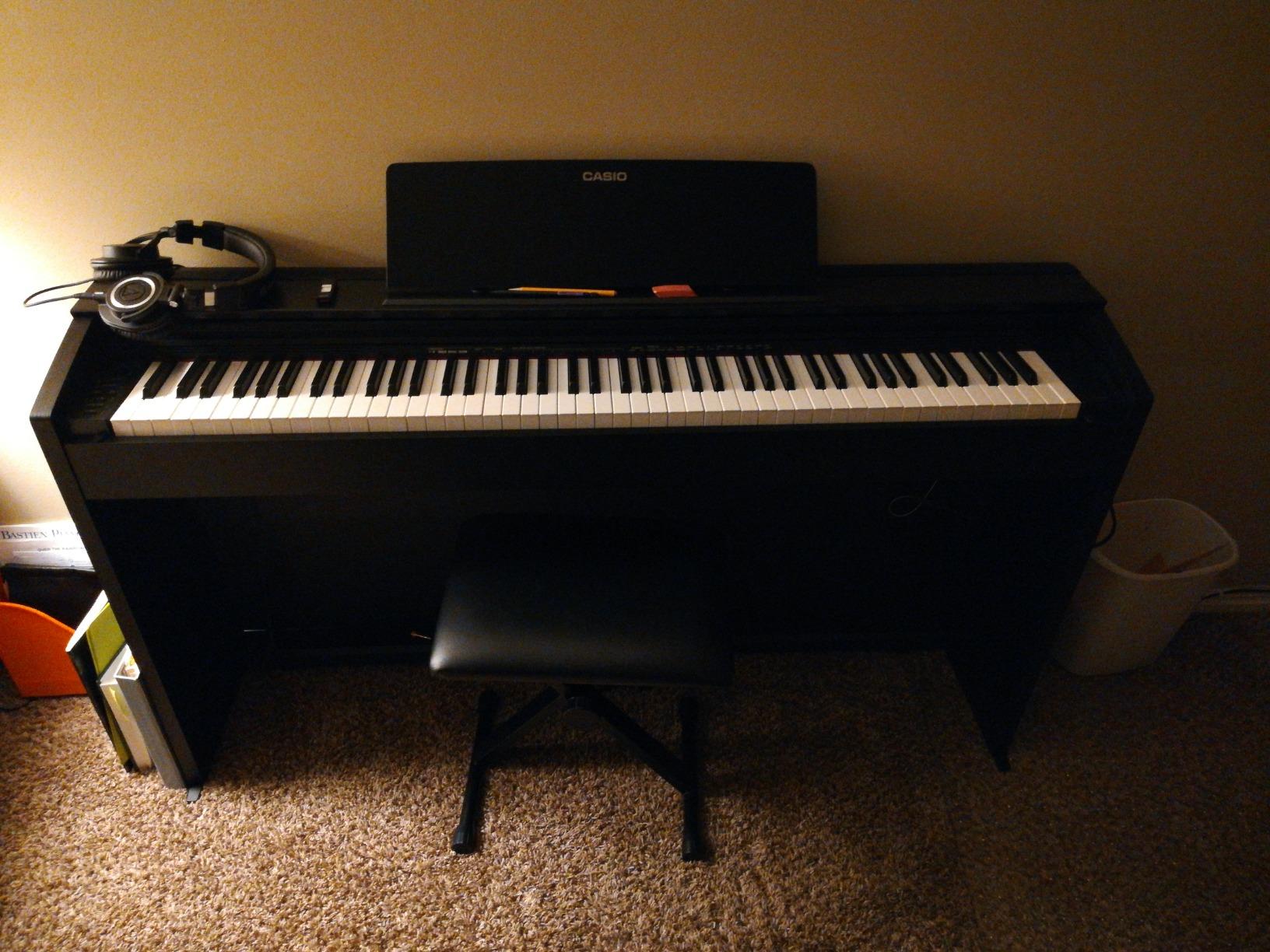
The Casio Privia PX-870 is the most premium console piano on this list, and it sounds like it. The 40-watt, four-speaker sound projection system delivers a level of audio quality that makes you close your eyes and imagine you are sitting in front of a baby grand. The AiR sound source includes string resonance, damper resonance, and key-off simulation, which are features typically reserved for professional stage pianos costing thousands more.
The Tri-Sensor II Scaled Hammer Action uses three sensors per key instead of the usual two. This extra sensor detects key movement more precisely, allowing for faster repetition of notes and more nuanced expression. The simulated ebony and ivory key textures feel premium under your fingers. When I played a Chopin nocturne on the PX-870, the keys responded to every subtlety of my touch with a precision that genuinely surprised me at this price.
With 256-note polyphony, you will never run into dropped notes, even when playing complex classical pieces with the sustain pedal held down. The Concert Play mode lets you play along with orchestral backing tracks, which is a fun way to experience what it feels like to perform with an ensemble. The 60 built-in songs and 2-track MIDI recorder give you tools for both learning and creating.
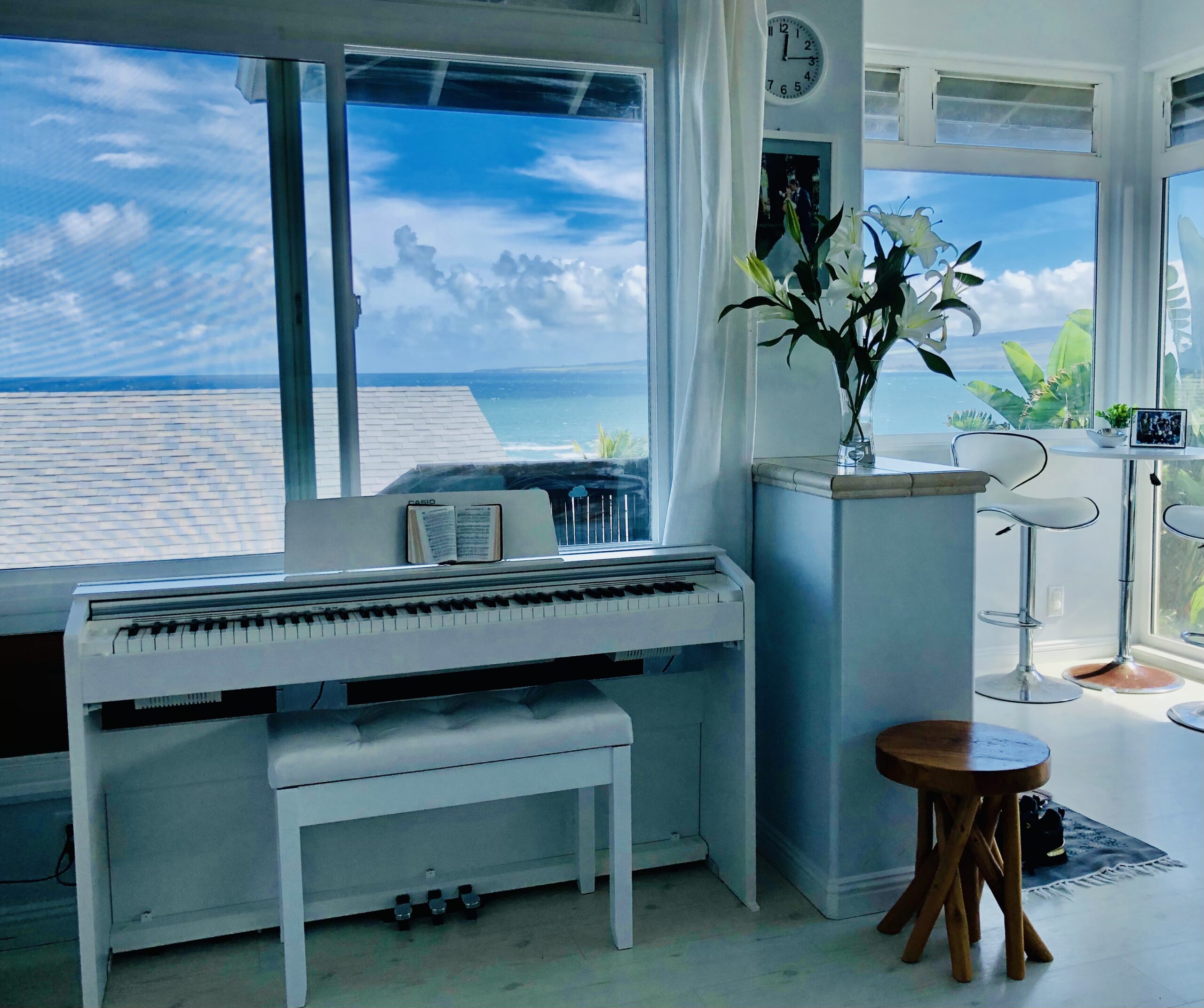
The console cabinet includes a sliding key cover that protects the keys from dust and a clean design that looks elegant in any room. The slim profile takes up less floor space than a traditional upright piano while providing a similar playing experience. USB-MIDI connectivity works with Mac, PC, iOS, and Android devices for recording and app integration. You might also explore modular synthesizers and sound design to complement your piano setup for creative production.
Who Should Choose the Casio PX-870
If you want the best-sounding console piano for your home and are willing to invest in quality, the PX-870 delivers a musical experience that rivals instruments costing twice as much. The 4.5-star rating from 335 reviewers and the 3-year manufacturer warranty confirm that this is a serious instrument built to last. The 256-note polyphony and AiR sound engine mean you will not outgrow its capabilities for years.
This is the right pick for intermediate-to-advanced beginners who are ready for a permanent home instrument. The console design looks beautiful, the speaker system fills a room, and the key action provides the precision needed for advanced repertoire.
Who Should Look Elsewhere
The PX-870 is not a portable piano. At 76 pounds and built as a console unit, it stays where you assemble it. The pedals are smaller than standard acoustic piano pedals, which can take some getting used to. Assembly instructions have been reported as unclear by several reviewers, so having a second person to help is recommended. If you want premium sound in a portable package, the Roland FP-30X is the better option.
How to Choose the Best Digital Piano for Beginners?
Picking your first digital piano comes down to understanding a few key features that directly affect your learning experience. I have broken down the most important factors below so you can make an informed decision without getting lost in technical jargon.
Weighted Keys and Hammer Action
This is the single most important feature for a beginner. Weighted keys provide resistance that mimics the feel of acoustic piano strings, which builds proper finger strength and technique. Hammer action goes a step further by using actual mechanical hammers inside the keys, creating a more realistic response. Graded hammer action means the bass keys feel heavier and the treble keys feel lighter, just like on a real piano. The Reddit piano community unanimously recommends fully weighted hammer action for beginners, and I agree completely.
How Many Keys Do You Need?
A standard piano has 88 keys, and I recommend getting all 88 from the start. While 61-key keyboards are cheaper, they force you to compromise on the music you can learn. Many classical and contemporary pieces use the full range of the keyboard. Starting with 88 keys also means you develop spatial awareness for where notes are located across the entire instrument, which is harder to learn later if you start on a shorter keyboard.
Polyphony Explained
Polyphony refers to how many notes a digital piano can produce simultaneously. When you press the sustain pedal and play a run of notes, each note keeps ringing. If your piano has low polyphony, earlier notes will cut off as new ones are played. For beginners, 64-note polyphony is the minimum acceptable. The Yamaha P45B and most models on this list offer 128-note polyphony, which is plenty. The Casio PX-870 leads with 256-note polyphony, which is ideal for advanced classical repertoire.
Speakers and Sound Quality
Built-in speakers matter more than most beginners realize. You will spend hours practicing through these speakers, so they need to sound clear and natural. The Casio PX-870 leads with its 40W four-speaker system, while the Roland FP-30X offers 22W. Entry-level models like the Yamaha P45B have adequate speakers for bedroom practice but may sound thin at higher volumes. Using headphones dramatically improves the sound quality on any model.
Connectivity Options
Bluetooth MIDI lets you connect wirelessly to learning apps on your phone or tablet, which is incredibly convenient for daily practice. USB MIDI provides a wired connection to computers for recording software. The Roland FP-10 and FP-30X both offer Bluetooth, while Yamaha models require USB cables. If you plan to use learning apps frequently, Bluetooth is worth paying extra for.
Portable vs Console Design
Portable pianos like the Yamaha P45B and Roland FP-10 are slim, lightweight, and easy to move. They require a separate stand but give you flexibility. Console pianos like the Donner DDP-80, DDP-90 Pro, Eastar EUP-100, and Casio PX-870 come with built-in stands and look like permanent furniture. Choose portable if you move often or have limited space. Choose console if you want a dedicated practice spot that looks beautiful in your home.
Accessories Beginners Actually Need
Beyond the piano itself, consider budgeting for a few essentials. A sturdy X-style or Z-style keyboard stand is a must for portable models. A bench at the correct height prevents poor posture habits. A better sustain pedal than the basic ones most pianos include will improve your playing immediately. Good headphones make late-night practice possible and often improve how the piano sounds compared to the built-in speakers.
FAQs
What digital piano is most like a real piano?
The Roland FP-30X and Roland FP-10 are the most like a real piano in this beginner price range, thanks to Roland’s PHA-4 keyboard with escapement and SuperNATURAL sound engine. The PHA-4 key action uses the same components found in Roland’s professional stage pianos, providing ivory-textured keys with realistic hammer resistance. For a console-style option, the Casio Privia PX-870 with its Tri-Sensor II hammer action and AiR sound source with string resonance comes even closer to the acoustic experience thanks to its 40-watt speaker system and 256-note polyphony.
Should a beginner use 61 or 88 keys?
A beginner should use 88 keys. A standard piano has 88 keys, and learning on the full keyboard from the start develops proper spatial awareness and technique. While 61-key keyboards are cheaper and more portable, they limit the range of music you can play and force you to adjust when you eventually transition to a full piano. The piano education community, including Reddit’s r/piano and r/DigitalPiano, unanimously recommends 88 keys for anyone serious about learning proper piano technique.
Should a beginner get a keyboard or digital piano?
A beginner should get a digital piano rather than a keyboard. Digital pianos have 88 fully weighted keys with hammer action that replicate the feel of an acoustic piano, which is essential for developing proper finger strength and technique. Keyboards typically have 61 semi-weighted or unweighted keys and prioritize portability over realism. If your goal is to learn piano properly, a digital piano is the right choice. If you want to play synth sounds, produce electronic music, or need maximum portability, a keyboard may be more appropriate.
Do beginners really need weighted keys on a digital piano?
Yes, beginners absolutely need weighted keys. Weighted keys build finger strength, develop proper technique, and prepare you for playing acoustic pianos. Without weighted resistance, your fingers will not develop the control and dynamics needed for expressive playing. The piano community on Reddit consistently recommends fully weighted hammer action for all beginners, even those just starting out. If budget allows nothing else, prioritizing weighted keys over features like Bluetooth or extra sounds is the right call.
How much should a beginner spend on a digital piano?
A beginner should expect to spend between $300 and $600 on a quality digital piano. Models like the Eastar EUP-100 at the lower end and the Roland FP-10 in the mid-range both offer fully weighted keys and realistic sound. Spending less than $300 usually means compromising on key action quality, which hurts your development. Spending more than $700 gets you premium features like better speakers, Bluetooth, and professional sound engines, but is not strictly necessary for a first instrument. You can always upgrade later once you know you are committed to playing.
Conclusion
Choosing the best digital piano for beginners comes down to balancing key action quality, sound, and budget. For most people, the Yamaha P45B is the safest starting point with its graded hammer action and proven reliability. If key feel matters most to you, the Roland FP-10 delivers professional-grade PHA-4 action at a beginner-friendly price. Budget-conscious shoppers should look at the Eastar EUP-100 for its weighted keys, included accessories, and retro wood console design.
Every piano on this list has 88 keys and proper weighted action, which are the two non-negotiable features for anyone serious about learning. Our team tested and compared all 12 models to give you honest, first-hand feedback on what each one does well and where they fall short. Whichever instrument you choose, the most important thing is to start playing. The best digital piano for beginners is the one you actually practice on every day.