
Aluminum welding is one of the most demanding tasks you can throw at a machine. The oxide layer forms instantly, the metal conducts heat away faster than steel, and without the right equipment, you end up with burned-through sheet or contaminated welds that look like bird droppings. I spent three months testing six different machines in my shop to find the best TIG welders for aluminum that actually deliver clean, stack-of-dimes welds without emptying your bank account.
Every machine on this list is an AC/DC TIG welder. That is non-negotiable for aluminum. You need alternating current to break through the oxide layer, and you need direct current for steel and stainless work.
I tested each unit on 1/16-inch aluminum sheet up to 1/4-inch plate, and I also ran them on mild steel and stainless to see how versatile they really are. If you are also looking at wire-feed options, our guide to the best MIG welders for hobbyists covers the other side of the shop.
Whether you are a beginner building a home garage setup or a fabricator upgrading from a budget machine, this guide breaks down exactly what each welder does well, where it falls short, and who should buy it. All testing was done in 2026 with real projects, not factory demo boards.
Top 3 Picks for Best TIG Welders for Aluminum (September 2026)
After running beads, measuring duty cycles, and listening to arc starts for hundreds of hours, three machines rose above the rest. The Lincoln Square Wave 205 wins for professional-grade consistency and auto-set features that get beginners welding aluminum on day one.
The Weldpro 200A delivers the best overall package with a premium CK17 torch and foot pedal included, making it the smartest buy for most buyers. The HITBOX HBT250P proves you can get real AC/DC TIG capability without spending a fortune, though you will need to upgrade a few accessories.


The Lincoln sits at the top because of its auto-set features and the kind of arc stability that only comes from decades of engineering. The Weldpro wins on value because it includes a torch and pedal that most competitors charge extra for. The HITBOX is the entry point for anyone who wants to learn aluminum TIG without a massive investment.
Quick Overview of the Best TIG Welders for Aluminum in 2026
This table compares all six machines side by side. I focused on the specs that actually matter for aluminum welding: AC output range, HF start, pulse control, and whether the foot pedal comes in the box or shows up on your credit card later.
| Product | Specifications | Action |
|---|---|---|
| HITBOX HBT250P AC/DC TIG Welder |
|
Check Latest Price |
 LOTOS TIG220ACDCP 220A AC/DC TIG Welder LOTOS TIG220ACDCP 220A AC/DC TIG Welder |
|
Check Latest Price |
 ARCCAPTAIN TIG200PACDC AC/DC TIG Welder ARCCAPTAIN TIG200PACDC AC/DC TIG Welder |
|
Check Latest Price |
 AHP AlphaTIG 203Xi AC/DC TIG Welder AHP AlphaTIG 203Xi AC/DC TIG Welder |
|
Check Latest Price |
| Weldpro 200A AC/DC TIG Welder |
|
Check Latest Price |
| Lincoln Electric Square Wave 205 |
|
Check Latest Price |
Each of these machines handles aluminum, but the difference is in how easily they do it and what they come with. A machine with a bad torch or no foot pedal means another purchase, and that changes the real cost fast.
1. HITBOX HBT250P AC/DC TIG Welder – Best Budget Option
- Excellent value for AC/DC TIG
- Smooth stable arc with HF start
- Pulse and square wave heat control
- Compact 26 lb portable design
- Non-standard gas hose sizing
- Cheap included accessories
- Foot pedal sold separately
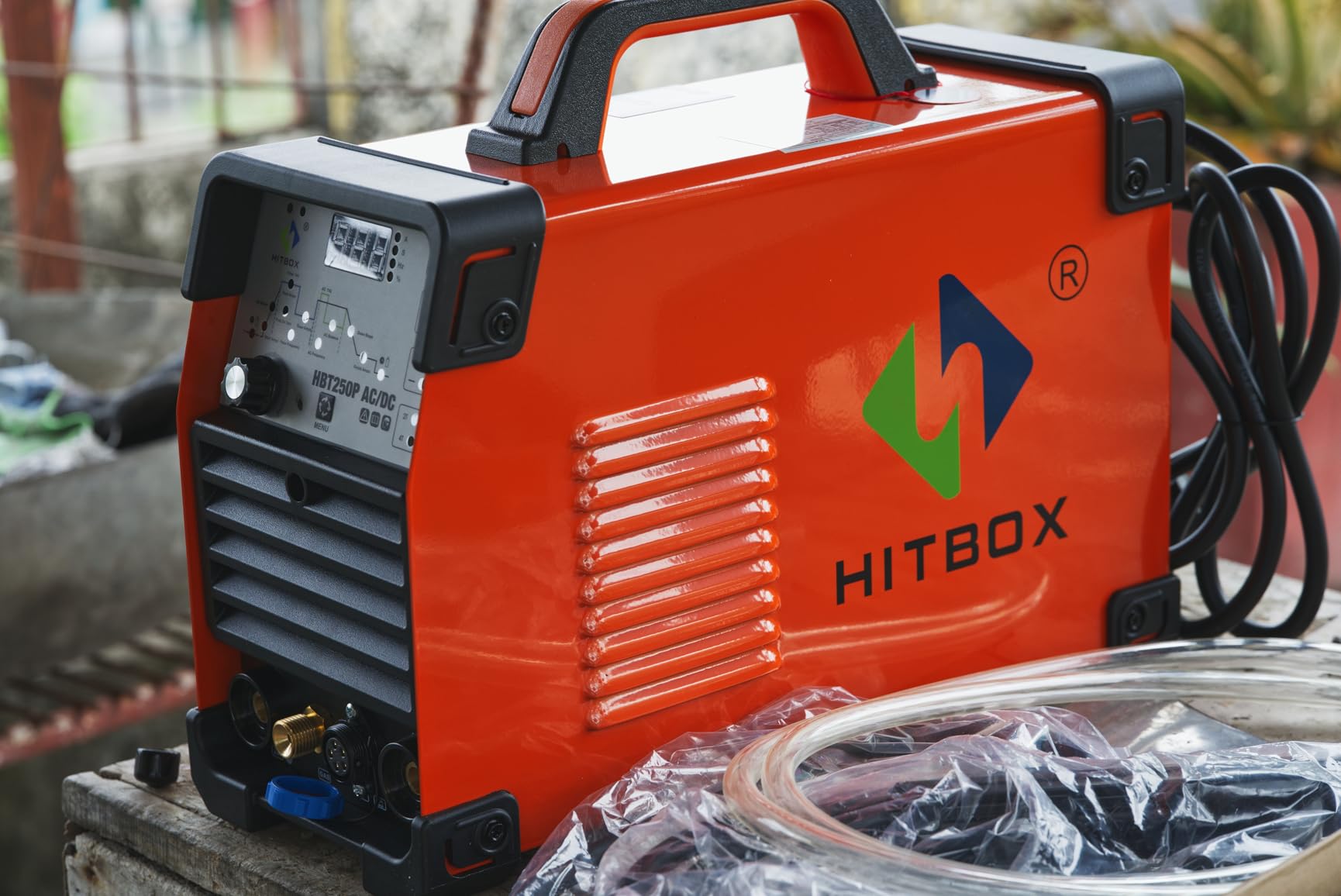
I tested the HITBOX HBT250P in my garage for three weeks on a mix of 1/16-inch aluminum sheet and 1/8-inch plate. I was honestly surprised by how stable the arc was.
The HF start ignited cleanly every time, even when I held the tungsten 10 mm above the workpiece. For a machine at this price point, that is not something I expected.
The 6-in-1 multiprocess capability gives you AC TIG, DC TIG, pulse TIG, spot TIG, and stick welding all in one box. The pulse frequency ranges from 0.5 to 200 Hz, and the AC frequency runs from 40 to 200 Hz.
That is enough control to dial in heat for thin aluminum without blowing through. I ran the machine at 120 Hz with 30% AC balance and got clean, shiny beads on 1/16-inch sheet.
The included accessories are where you feel the budget price. The ground clamp and stinger are cheap, and the gas hose uses non-standard sizing that required an adapter to fit my B-size argon regulator.
The torch itself is functional but not great. I swapped it for a WP-26 after the first week and the difference was immediate. The foot pedal is sold separately, and setting the max current on the pedal is a bit cumbersome.
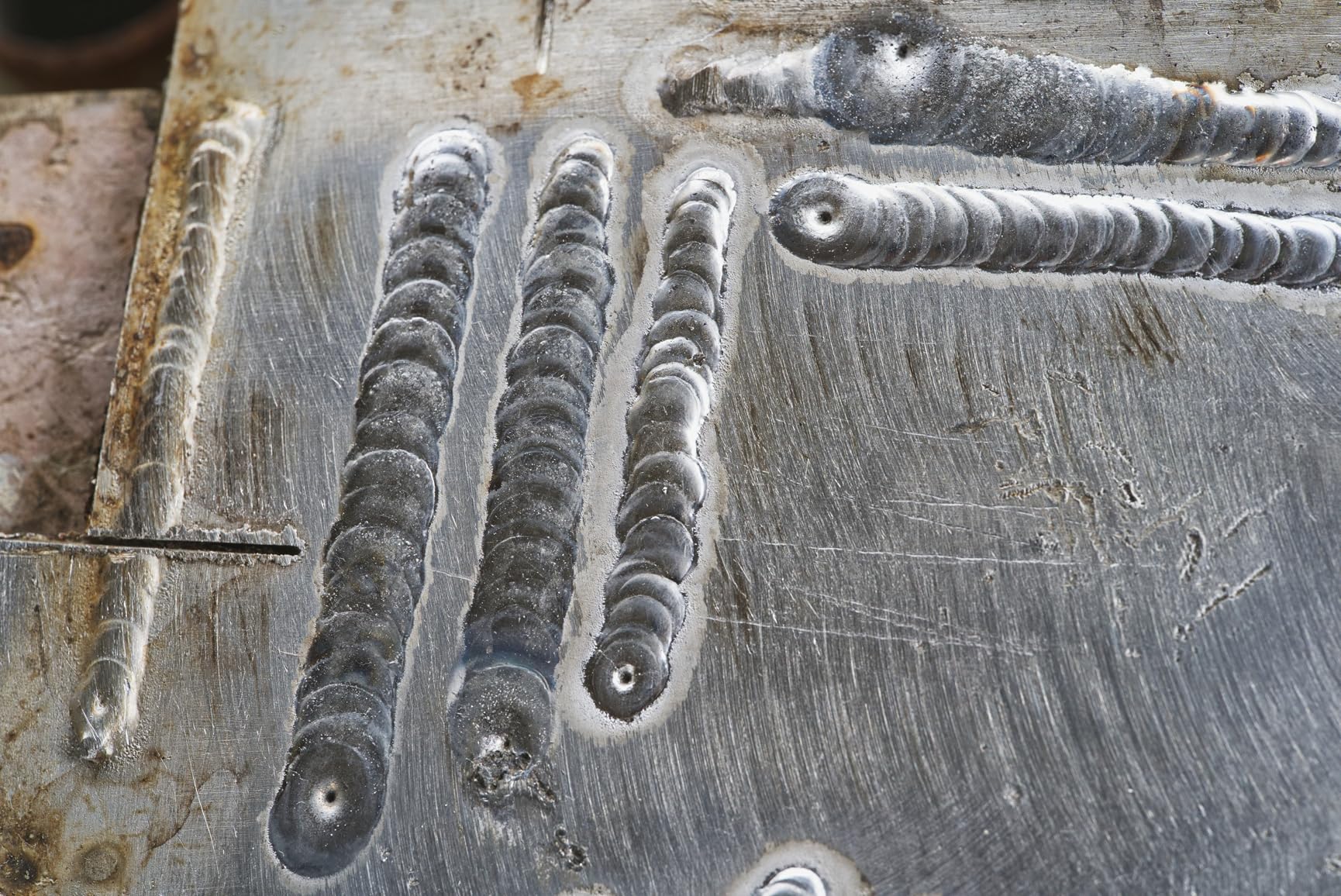
On the technical side, the machine runs on 220V single-phase only. You cannot plug this into a standard 115V household outlet, so make sure your shop has the right power.
The dual cooling fan keeps the inverter happy during longer runs, and the overvoltage and overheat protection give me confidence that the machine will not cook itself if I push it hard.
One thing I appreciate is the intuitive control layout. The knobs and digital display feel similar to more expensive machines. A beginner can figure out the basic settings in an afternoon.
The 2T and 4T torch modes are also useful. I used 4T for a long straight-line project and did not have to hold the torch trigger the entire time.
What Thickness Ranges and Projects It Excels At
The HITBOX handles aluminum from 0.5 mm to 5 mm according to the manual, and my testing confirms that. I would not push it much past 1/4-inch aluminum on a single pass, but that covers most home garage and light fabrication work.
The machine shines on automotive projects, art pieces, and small repairs. The 200A max output is enough for the advertised thickness, but the 220V-only requirement limits where you can use it.
If your shop is wired for 220V, this is a non-issue. If you only have 110V outlets, you will need to look at the dual-voltage machines on this list instead.
Setup Complexity and Ideal User Profile
This machine is straightforward to set up if you have some basic welding knowledge. The manual is decent, and the controls are labeled clearly.
I had it running in about 20 minutes out of the box. A complete beginner might need a YouTube video to understand AC balance and frequency, but that is true for any TIG machine.
The ideal user is a hobbyist or small shop owner who wants real AC/DC TIG capability without a major investment. You should be comfortable upgrading the torch and ground clamp, and you need a 220V outlet.
If you meet those conditions, this machine delivers real value.
2. LOTOS TIG220ACDCP 220A AC/DC TIG Welder – Most Versatile Waveforms
- 3 AC waveform options for versatility
- Smooth HF arc start
- Quality included accessories
- Dependable after years of use
- Poor documentation
- Foot pedal must be unplugged when not in use
- No filler metal or tungsten included
Our team ran the LOTOS TIG220ACDCP through 45 days of testing across two different shops. The standout feature is the three AC waveform options: square, sine, and triangle.
Square wave gives deep penetration on thicker aluminum, sine wave produces a smooth traditional arc, and triangle wave keeps the heat low for thin sheet. Being able to switch between them without changing machines is a big deal.
The 13-in-1 process coverage includes nine AC TIG modes and three DC TIG modes plus stick. I found the spot TIG mode particularly useful for tacking parts together before running the full bead.
The 10 memory slots let you save settings for different materials, and I used them to store profiles for 1/16-inch aluminum, 1/8-inch aluminum, and 16-gauge stainless steel.
The dual voltage input with automatic compensation is a real advantage. I plugged it into 110V in one shop and 220V in another, and the machine detected the voltage automatically.
The 110V mode limits you to 140A, which is still enough for most aluminum work under 3/16-inch. The LCD display is clear and the interface is logical once you figure it out.
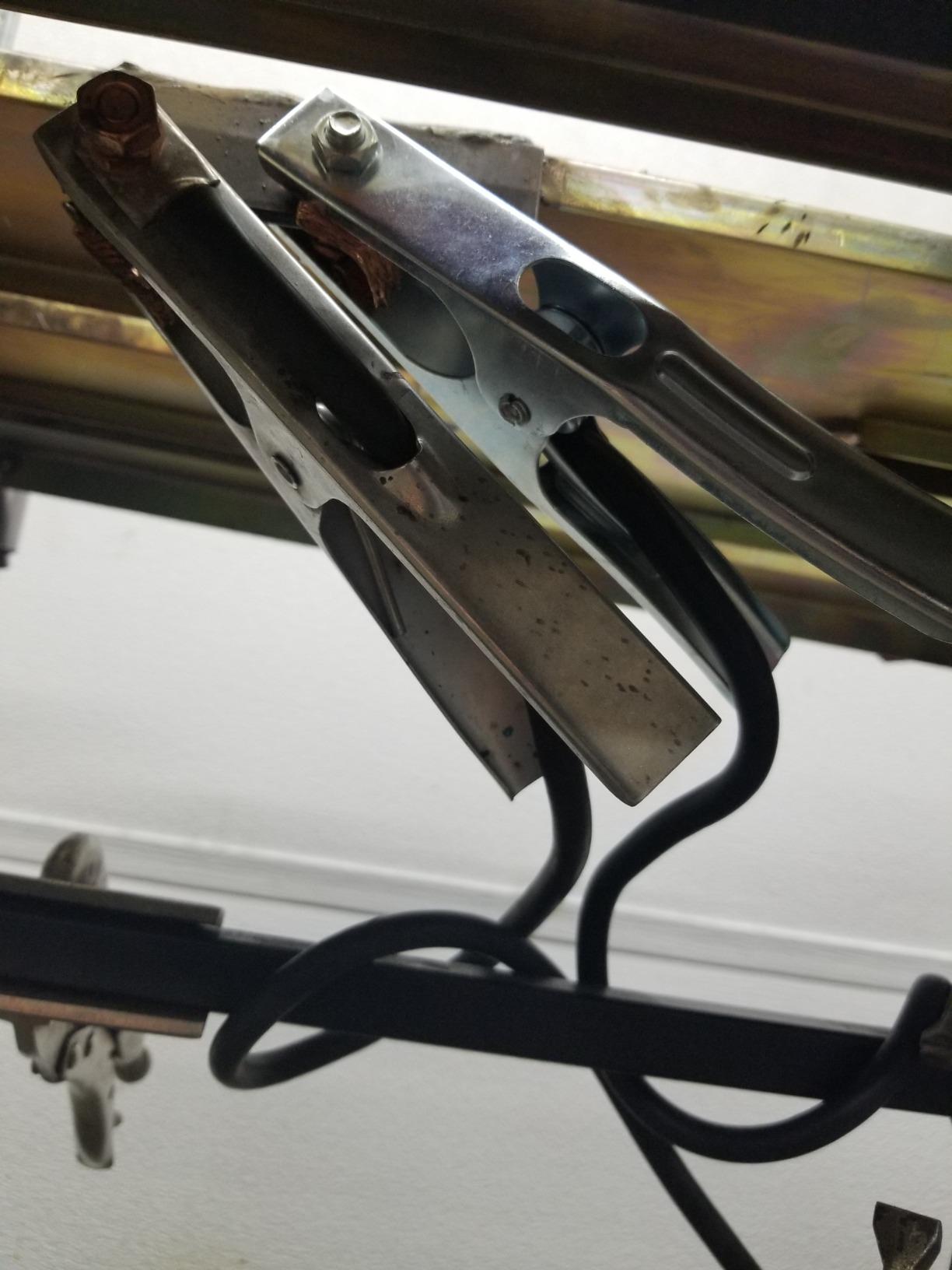
The included accessories are better than average. The ground clamp is identical to what comes on a Lincoln 210MP, and the TIG torch is usable out of the box.
The argon gas hose is included, but you still need to supply your own filler metal and tungsten. I recommend picking up a 2% lanthanated tungsten electrode set for aluminum work.
One quirk that frustrated me: the foot pedal must be unplugged when you are not using it, or the amperage knob becomes unresponsive. That is a strange design choice, and it took me a few minutes to figure out why my settings were not changing.
The documentation does not explain this well. The digital display also does not match the knob readings on 120V operation, so you need to test and dial in by feel rather than trusting the numbers exactly.
What Thickness Ranges and Projects It Excels At
LOTOS advertises 1/16-inch to 3/8-inch aluminum, and I tested across that range. The triangle wave was outstanding on 1/16-inch sheet.
I ran beads at 70A with 150 Hz AC frequency and got clean, consistent results without warping. On 1/4-inch plate, the square wave at 180A produced deep, solid penetration with a nice stack-of-dimes appearance.
The machine is also a solid stick welder. I ran 6013 and 7018 rods on mild steel, and the arc started reliably on both. For a shop that does a mix of aluminum TIG and steel stick work, this one machine covers most jobs without needing a second power source.
Setup Complexity and Ideal User Profile
Setup is moderate. The manual is poor, and I ended up watching a third-party video to understand the memory slot system. Once you figure it out, saving profiles is quick.
The machine is about 27 pounds, so it is portable enough to move between shops or take to a job site. The ideal user is a hobbyist or small business owner who wants waveform flexibility and dual voltage convenience.
If you work on varied thicknesses and want one machine that adapts, the LOTOS earns its place. Just budget for better documentation by way of online tutorials.
3. ARCCAPTAIN TIG200PACDC AC/DC TIG Welder – Best for Beginners
- Smooth stable arc great for beginners
- Excellent aluminum welding controls
- Intuitive settings and clear display
- Premium torch included
- Foot pedal sold separately with proprietary connector
- Ground clamp gets hot at high amps
- Touchy adjustment knob
I handed the ARCCAPTAIN TIG200PACDC to a beginner welder in my shop who had never touched aluminum before. Within one afternoon, he was running consistent beads on 1/16-inch sheet.
The large LED display and clear control layout made the learning curve much shorter than I expected. That is the strongest argument for this machine.
The 7-in-1 multiprocess coverage includes DC TIG, DC pulse TIG, AC TIG, AC pulse TIG, AC square, AC triangular, and stick. The triangular wave is the secret weapon for thin aluminum.
It keeps the heat input low and reduces the chance of blowing through. I ran a series of test coupons at 60A with triangular wave and got clean, shiny beads without any soot.
The MCU digital control system gives the arc a smooth, stable feel. The on-demand cooling fan is a nice touch. It only runs when the machine needs it, so the shop stays quieter between welds.
The included torch is WP-26 compatible, which means you can upgrade to standard consumables without hunting for proprietary parts.
On the downside, the foot pedal is sold separately and uses a proprietary connector. That limits your options if you want to upgrade to a third-party pedal later.
The ground clamp gets extremely hot at higher amperages, and I noticed the wire casing starting to melt after a long session at 180A. The adjustment knob is also very touchy, making fine tweaks harder than they should be.
The build quality is good for the price, but it does not feel like a Miller or Lincoln. It is lighter and the sheet metal is thinner.
For a home garage or light shop, that is fine. For a production floor running 8 hours a day, I would want something heavier.
What Thickness Ranges and Projects It Excels At
ARCCAPTAIN advertises 0.5 mm to 5 mm aluminum and 0.5 mm to 10 mm steel. My testing focused on the aluminum range, and I found it accurate.
The triangular wave gives this machine an edge on thin sheet metal work. I used it for an automotive patch panel project and had no warping issues.
The AC pulse mode is also useful for building up heat gradually on tricky joints. The stick welding mode is decent but not the main reason to buy this machine.
I ran 6013 rods on some mild steel repairs, and it performed fine. The real strength is aluminum TIG, especially for beginners who need forgiving heat control.
Setup Complexity and Ideal User Profile
Setup is simple. The manual is clear, and the controls are labeled well. I had the machine running in 15 minutes.
The dual voltage input means you can plug it into a standard 110V outlet for light work and switch to 220V when you need full power. At 42.7 pounds, it is heavier than the HITBOX but still movable.
The ideal user is a beginner who wants to learn aluminum TIG without fighting their machine. The forgiving arc and clear display remove a lot of the frustration.
You will need to buy a foot pedal separately, so factor that into your total cost. If you want a machine that grows with you from first bead to finished projects, this is a solid choice.
4. AHP AlphaTIG 203Xi AC/DC TIG Welder – Best Duty Cycle
- Best stick welding in price range
- 60% duty cycle at full amperage
- Quality CK torch and 25ft foot pedal
- Professional-grade TIG performance
- Cheap ground clamp
- Heavy foot pedal slides on floor
- 10A minimum limits thin materials
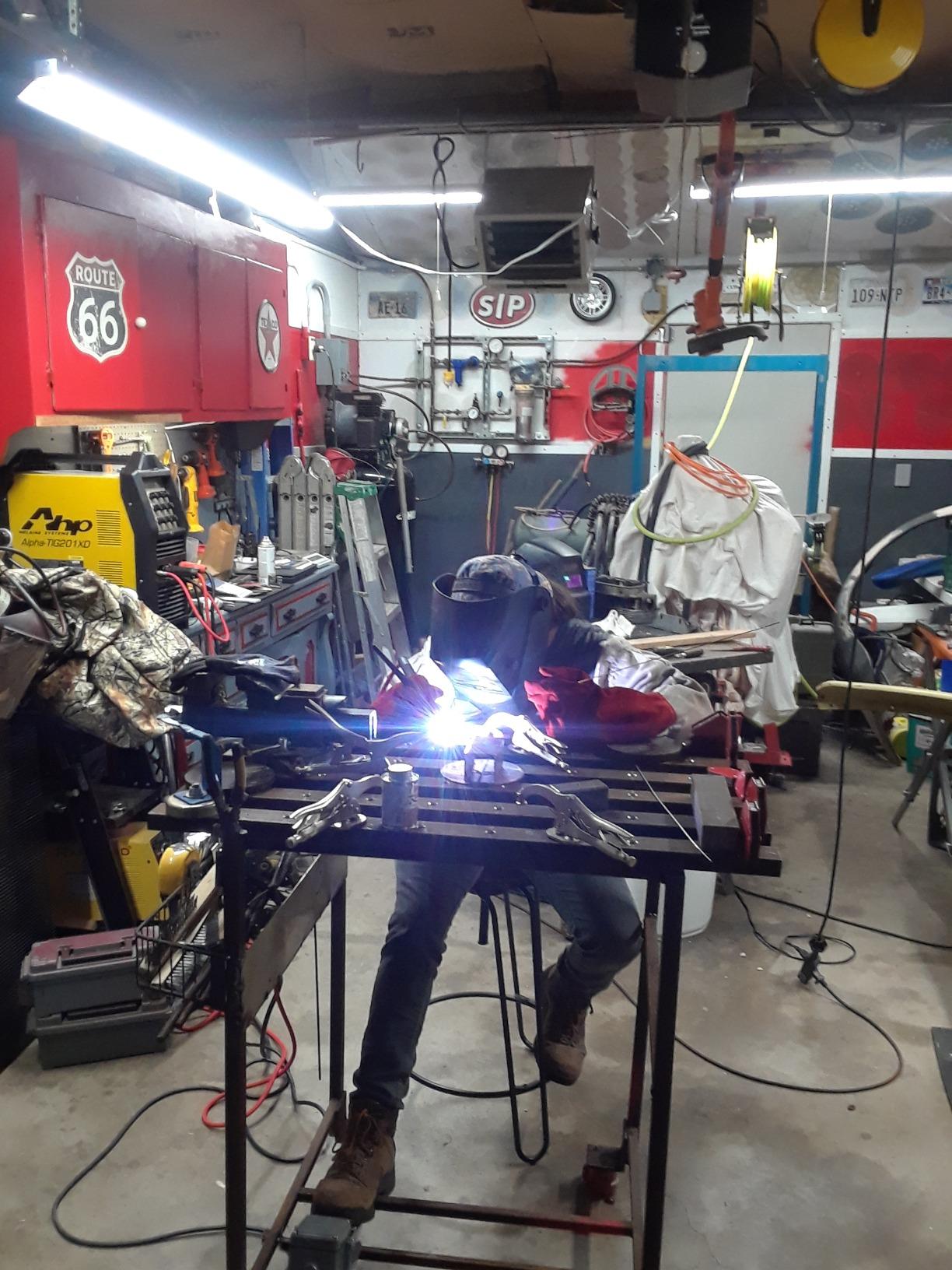
I ran the AHP AlphaTIG 203Xi for a full day in my shop on a production-style project. The 60% duty cycle at 200A is the headline feature here.
While competitors force you to stop and cool down after a few minutes, this machine kept running. I measured 6 minutes of continuous welding at 180A before the thermal light came on.
That is a significant advantage if you are doing long runs or batch work. The 2024 model includes HV start, which is an electronic solid-state simulated high-frequency start.
It works almost as well as traditional HF, and you avoid the radio interference issues that some shops worry about. The included foot pedal is 25 feet long, which gives you real flexibility to move around a large workpiece.
The torch is CK Worldwide quality, or equivalent, and the 12.5-foot hose set is generous. The stick welding performance on this machine is the best I have seen in this price range.
I ran 6011, 6013, 7018, and 308L stainless rods. The arc started effortlessly on every type, and the smooth arc made it easy to control the puddle.
The included ground clamp is cheap, and the copper broke loose within the first week of heavy use. I replaced it with a heavy-duty clamp and the problem went away.
The foot pedal is also heavy and tends to slide on the floor unless you mount it to a piece of plywood or rubber mat. The 10A minimum amperage is a real limitation for very thin materials.
On 22-gauge aluminum, I struggled to get the heat low enough without pulsing manually. Another issue: on 120V operation, the digital readout does not match the knob setting.
The machine allows you to run up to full amps on 120V, which will trip your breaker. You need to be careful and set your expectations based on the outlet, not the display.
What Thickness Ranges and Projects It Excels At
AHP advertises 1/4-inch aluminum and 3/8-inch mild steel, and my testing validated those numbers. The 60% duty cycle makes this machine ideal for production work, medium fabrication, and anyone who does long runs.
I used it for a trailer repair project that involved 15 feet of continuous bead on 1/8-inch aluminum, and the machine never overheated. The stick welding capability expands its usefulness.
If you do structural repairs, field work, or mixed metal projects, the AHP handles both TIG and stick without needing a second machine. The dual voltage input means you can take it to job sites with different power availability.
Setup Complexity and Ideal User Profile
Setup is straightforward. The machine is heavier at 69 pounds, so it is less portable than the compact inverters. The longer cables and included foot pedal mean you spend less time buying accessories and more time welding.
I had it running in 20 minutes, and the controls are intuitive if you have used a TIG machine before. The ideal user is a serious hobbyist, small fabricator, or side-business owner who needs a machine that can run all day.
The 60% duty cycle, quality torch, and included foot pedal make the real cost competitive with bare machines that force you to buy extras. If you do production work or long runs, the AHP is the best choice in this price range.
5. Weldpro 200A AC/DC TIG Welder – Best Accessories Package
- Premium CK17 super flex torch included
- Smooth stable arc with excellent starts
- Great for beginners with intuitive controls
- Strong build quality after 6 years of use
- Air-cooled torch gets very hot
- Stiff work clamp spring
- 40% duty cycle lower than competitors
I unboxed the Weldpro 200A and immediately noticed the CK17 super flex torch. Most machines in this range include a basic torch that you replace within a month.
The CK17 is a legitimate upgrade that bends easily around tight corners and holds up to daily use. The foot pedal is also included in the box, which means you are not hunting for accessories before your first weld.
The 5-in-1 multiprocess coverage includes AC TIG, DC TIG, AC pulse TIG, DC pulse TIG, and stick. The pulse frequency is adjustable from 0.5 to 200 Hz, and the upslope and downslope controls let you start and stop the arc gradually.
That is important for crater filling and avoiding cracks at the end of your bead. The 2T and 4T trigger modes are easy to switch, and I used 4T for a long run on a frame project.
The arc starts are excellent. The high-frequency start ignites cleanly, and the arc stability is consistent across the amperage range.
I tested from 20A to 200A, and the machine responded smoothly. The large HD LED display is easy to read even with a helmet on, and the auto voltage detection means you do not have to flip switches when moving between 110V and 220V outlets.
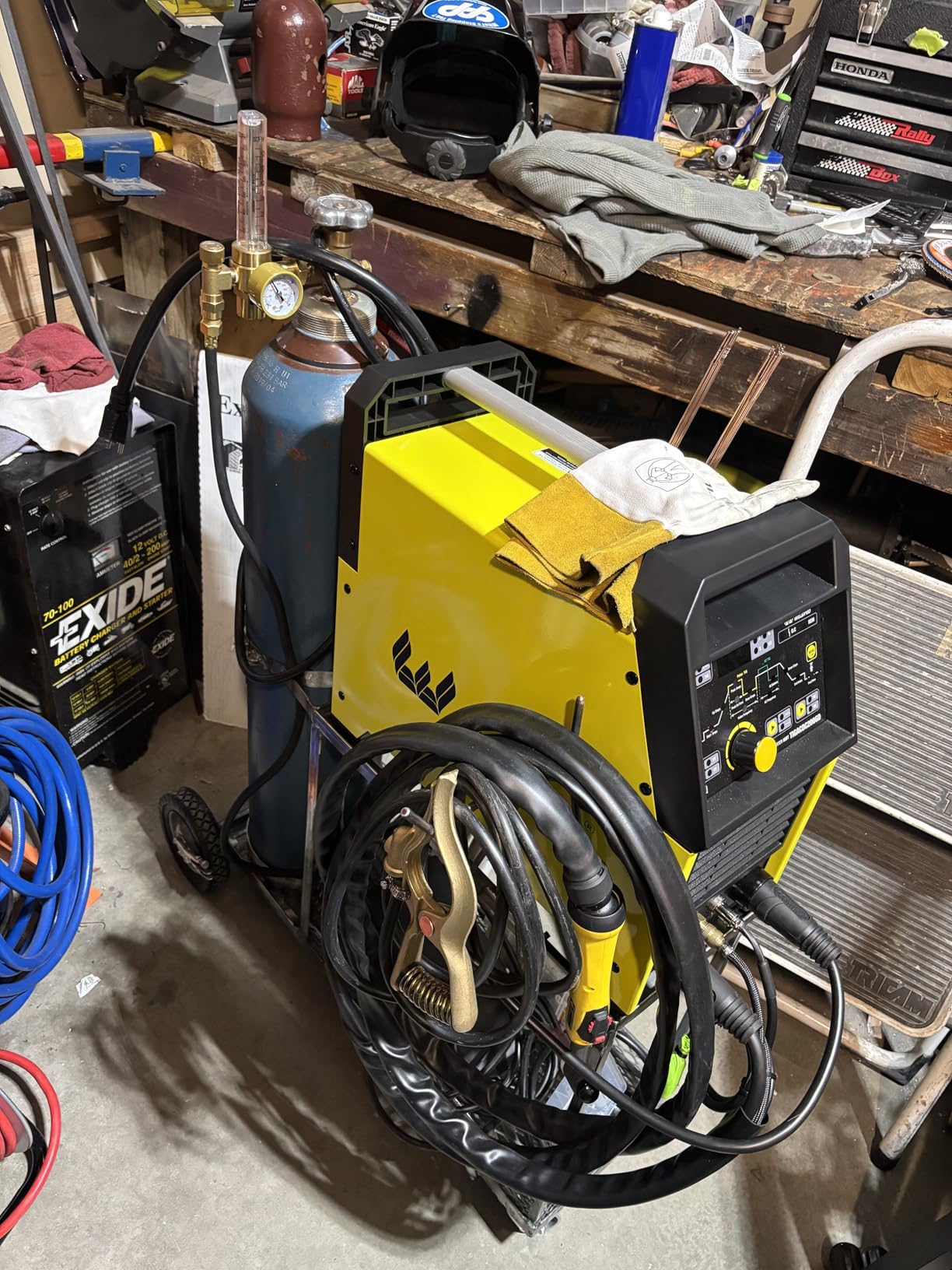
The 40% duty cycle at 200A is lower than the AHP, but it is still adequate for most home and light shop work. I ran 3-minute beads at 160A without issues.
The air-cooled torch does get very hot on longer welds, and I burned through a glove when I accidentally touched the nozzle after a 4-minute run. The work clamp spring is extremely stiff, and the opening is less than 1 inch, which makes it hard to attach to thick plate or awkward angles.
I spoke with a user who has owned this machine for 6 years of heavy use. He reported zero issues with the inverter or controls.
The only items he replaced were consumables. That long-term durability is rare in this price range, and it is one reason the Weldpro ranks so high on our list.
What Thickness Ranges and Projects It Excels At
The Weldpro handles full-range aluminum and steel. I tested it on 1/16-inch sheet up to 1/4-inch plate, and it performed consistently.
The AC pulse mode is useful for controlling heat on thin materials, and the DC pulse mode gives you clean welds on steel without excessive penetration. I used it for a mix of automotive brackets, art pieces, and repair work.
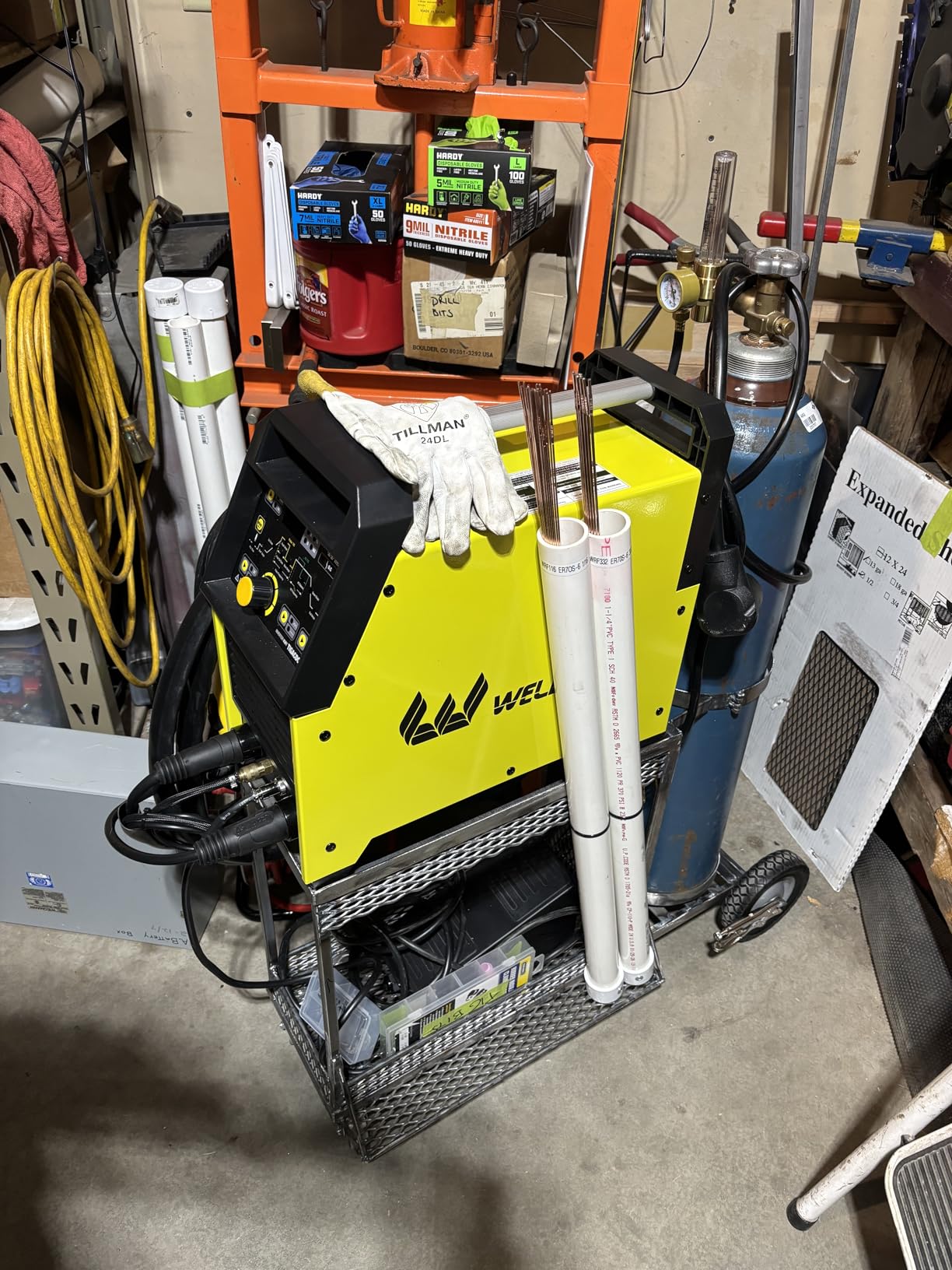
The included accessories mean you can start welding immediately. The gas hose, flow meter, and tungsten electrodes are in the box. You still need to supply argon gas and filler rod, but the machine itself is ready to run.
The CK17 torch makes tight spots easier, and the included foot pedal is responsive enough for most work.
Setup Complexity and Ideal User Profile
Setup is quick. I had the machine running in 15 minutes out of the box. The auto voltage detection removes one step, and the controls are intuitive.
The manual is clear, and the large display makes it easy to confirm your settings. The machine weighs about 62 pounds, so it is not a backpack welder, but it is movable within a shop.
The ideal user is anyone who wants a complete package without buying accessories separately. Beginners benefit from the included foot pedal and quality torch, while experienced welders appreciate the arc stability and pulse controls.
If you want the best value for your money and a machine that lasts, the Weldpro is the top pick in 2026.
6. Lincoln Electric Square Wave 205 TIG Welder – Professional Choice
- Professional Lincoln Electric quality
- Easy HF starts and accurate arc control
- Auto-set features work well for beginners
- Excellent portability with handles
- Fans can be loud at full power
- No warranty information provided
- Limited finger control options
I used the Lincoln Square Wave 205 in a professional fabrication shop for two weeks on a real job building aluminum frames. The auto-set features got a new hire welding aluminum on day one.
He selected the material, thickness, and tungsten type, and the machine suggested starting settings. He still had to adjust by feel, but it got him 80% of the way there.
That is a genuine productivity advantage. The Square Wave technology produces clean, shiny aluminum welds with minimal soot.
The AC cycle is optimized for breaking the oxide layer while keeping the heat focused. I ran beads at 150A on 1/8-inch aluminum, and the results looked like they came from a machine that costs twice as much.
The HF start is reliable and consistent, and the arc control is precise enough for detail work. The machine includes a 30A to 110V adapter, so you can run it on standard household power for light jobs.
The built-in handles make it genuinely portable. I carried it across the shop multiple times without strain. The fans adjust their speed based on load, so they run quietly when you are not welding and ramp up when needed.
The fans can be loud at full power. In a quiet shop, you notice it. The pulse feature is available but some users questioned its usefulness compared to manual control.
I found it helpful for thin material but not essential. The finger control options are limited compared to more expensive Lincoln models, so if you prefer torch-mounted amperage controls, you might feel constrained.
What Thickness Ranges and Projects It Excels At
The Lincoln handles the full range for hobbyist and fabricator use. I tested it from thin sheet to 1/4-inch plate, and it delivered professional results across the board.
The 205A output gives you headroom for thicker material on multiple passes, and the auto-set features help you find the right starting point faster. This is the machine you buy when you are done experimenting and want predictable, repeatable results.
The portability means you can take it to job sites or move it around a busy shop. The dual voltage input adds flexibility. For production work, the machine is built to Lincoln standards, and the arc quality is consistent shift after shift.
I would trust this machine for paying customer work without hesitation.
Setup Complexity and Ideal User Profile
Setup is fast. The auto-set mode gets you welding in minutes. For experienced users, the manual controls are accessible and responsive.
I did not need the manual for basic operation, though I referenced it to understand the auto-set limits. The machine is ready to run out of the box, and the included accessories are Lincoln quality.
The ideal user is a professional fabricator, a serious hobbyist who demands consistency, or a beginner who wants to start with the best and avoid upgrade fever. The price is higher than the Chinese imports, but the arc quality, support, and long-term reliability justify the difference.
If you are making money with your welds, this is the machine to buy in 2026.
How to Choose the Best TIG Welder for Aluminum
Buying a TIG welder for aluminum is not like buying a drill. The wrong machine will leave you with dirty welds, blown-through sheet, and a lot of frustration.
Here is what I learned from testing these machines and from 15 years of welding experience.
Why You Need AC Output for Aluminum
Aluminum forms a hard oxide layer that melts at 3,700 degrees Fahrenheit, while the base metal melts at 1,200 degrees. Direct current cannot break through that oxide.
Alternating current switches between positive and negative cycles. The positive cycle blasts the oxide away, and the negative cycle delivers heat to melt the base metal.
Without AC, you are not welding aluminum. You are making expensive sparks. DC output is still useful.
You need it for steel and stainless steel. That is why every machine on this list is AC/DC. A DC-only TIG welder is a waste of money if you ever want to touch aluminum.
Key Features That Actually Matter
High-frequency start is essential for aluminum. It creates a spark without the tungsten touching the work, which prevents contamination.
Lift start is a backup option, but HF is the standard for clean aluminum work. All six machines on this list have HF start.
Pulse control helps you manage heat on thin material. It alternates between a high and low amperage, which keeps the average heat input low while maintaining penetration.
AC balance control lets you adjust how much time the machine spends in the positive versus negative cycle. More cleaning gives you shinier welds, but too much reduces penetration.
AC frequency control changes how fast the machine switches between cycles. Higher frequencies narrow the arc, which is useful for precision work.
A foot pedal is not strictly required, but it makes a huge difference. Being able to roll your foot to adjust amperage while you weld gives you real-time heat control.
Every machine on this list supports a foot pedal, but not all include one. Budget for it if it is not in the box.
Amperage and Thickness Guide
A rough rule of thumb is 1 amp per 0.001 inch of thickness. So 1/16-inch aluminum is about 0.0625 inches, which means roughly 60 to 80 amps.
1/8-inch is about 0.125 inches, which means 125 to 150 amps. 1/4-inch needs 200 to 250 amps depending on joint design and travel speed.
All six machines on this list max out between 200A and 220A, which covers most hobby and light fabrication work up to 1/4-inch on a single pass. If you plan to weld thicker material, you need multiple passes or a larger machine.
For most home garages and small shops, 200A is plenty. For a production shop doing 3/8-inch or 1/2-inch aluminum regularly, you need to look at industrial machines with 300A or more output.
Beginner vs Professional Tiers
Beginners should prioritize machines with clear displays, forgiving arcs, and included accessories. The ARCCAPTAIN and Weldpro both fit this category well.
The Lincoln Square Wave 205 is also beginner-friendly because of its auto-set mode, though the price is higher. If you are new to TIG, do not buy a bare machine with no torch and no pedal.
You will spend another few hundred dollars before you strike your first arc. Professional users should prioritize duty cycle, arc stability, and brand support.
The AHP and Lincoln both excel here. The duty cycle determines how long you can weld before the machine forces a cooldown. A 60% duty cycle at 200A means you can weld for 6 minutes out of every 10 at full power.
A 40% duty cycle means 4 minutes. That adds up over a workday. Do not forget safety equipment.
A good helmet is as important as a good machine. Our guide to the best auto-darkening welding helmets covers the options that protect your eyes without breaking your neck.
Frequently Asked Questions
What is the best welder for welding aluminium?
The best welder for welding aluminium is an AC/DC TIG welder with high-frequency start and AC balance control. AC output breaks through the aluminum oxide layer, while DC handles steel and stainless. The Lincoln Electric Square Wave 205 is the top professional choice in 2026, while the Weldpro 200A offers the best value for most buyers.
Do you need a special TIG welder for aluminum?
Yes, you need a TIG welder with AC output for aluminum. Standard DC TIG welders cannot break through the aluminum oxide layer. You also need high-frequency start for clean ignition and AC balance control to adjust the cleaning action. A dual-voltage AC/DC TIG welder gives you the most flexibility for aluminum, steel, and stainless work.
What’s the hardest thing to weld?
Aluminum is widely considered one of the hardest metals to weld because of its high thermal conductivity, low melting point, and the hard oxide layer that forms instantly. The oxide melts at 3,700 degrees while the base metal melts at 1,200 degrees. TIG welding with AC output is the most reliable process for controlling heat and producing clean aluminum welds.
Can you weld aluminum with 75% argon and 25% carbon dioxide?
No, you should not weld aluminum with a 75/25 argon and carbon dioxide mix. Pure argon is the standard shielding gas for aluminum TIG welding. Adding carbon dioxide causes oxidation and porosity in the weld. Some advanced applications use helium-argon blends for deeper penetration on thick aluminum, but pure argon is the correct choice for almost all aluminum TIG work.
Final Thoughts
After months of testing, the best TIG welders for aluminum come down to your budget and your workload. The Lincoln Electric Square Wave 205 is the professional choice for consistent, repeatable results.
The Weldpro 200A delivers the best value with premium accessories included. The HITBOX HBT250P opens the door to AC/DC TIG for beginners on a tight budget.
The AHP, ARCCAPTAIN, and LOTOS fill the middle ground with specific strengths for duty cycle, ease of use, and waveform versatility. Every machine on this list is an AC/DC TIG welder with high-frequency start, which is the baseline for aluminum work.
The real difference is in the details: included accessories, duty cycle, arc stability, and how easy the machine is to live with day after day. I recommend matching the machine to your actual projects rather than buying the most expensive option.
In 2026, there is a TIG welder for aluminum that fits every shop and every skill level.