
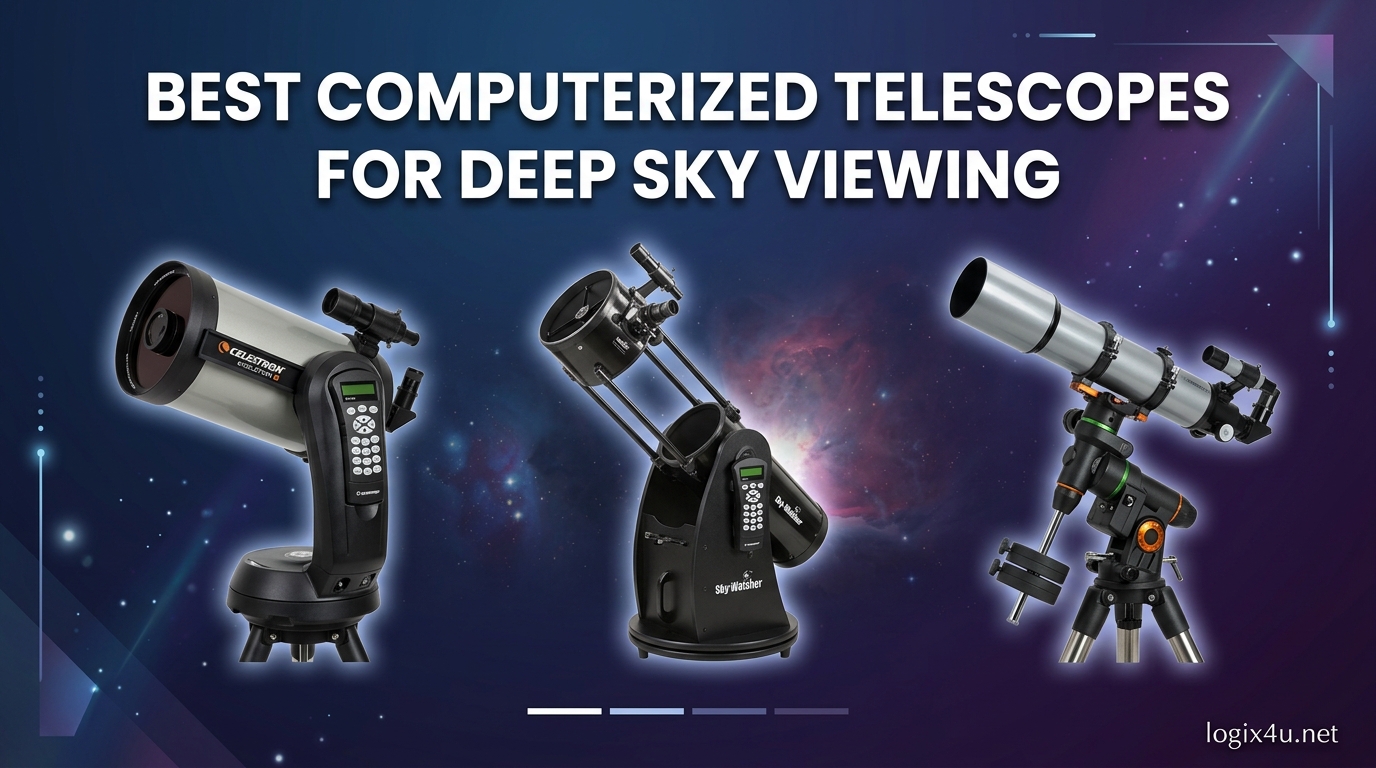
Finding faint galaxies, wispy nebulae, and distant star clusters by eye is one of the hardest parts of amateur astronomy. The best computerized telescopes deep sky observers rely on solve this problem by automating the locate-and-track process with onboard databases, motorized mounts, and increasingly smart apps. Whether you want to gaze through an eyepiece at the Orion Nebula or stack images of the Whirlpool Galaxy from your backyard, the right computerized scope turns hours of frustration into minutes of pure enjoyment.
In this guide, we cover 15 models ranging from $399 pocket-sized smart scopes to $4,299 large-aperture Schmidt-Cassegrains. Our team compared aperture, GoTo accuracy, portability, battery life, and real user reviews from Reddit and Amazon to find the strongest deep sky performers in every price bracket. If you are new to motorized scopes, you may also want to read our companion guide to computerized telescopes for beginners for foundational setup tips.
One important distinction before we begin. Traditional GoTo scopes like the Celestron NexStar series let you look through a real eyepiece. Smart telescopes like the ZWO Seestar and DWARF series are image-only devices that stack photos on your phone. Both styles can deliver stunning deep sky results, but the experience is very different. We flag this clearly in each review so you can pick the format that matches your observing style.
Top 3 Picks for Deep Sky Viewing in 2026

Celestron NexStar 8SE
- 8-inch Schmidt-Cassegrain
- 40000+ object database
- SkyAlign technology

Best Computerized Telescopes for Deep Sky Viewing in 2026
| Product | Specifications | Action |
|---|---|---|
| Celestron NexStar 8SE |
|
Check Latest Price |
 ZWO Seestar S30 ZWO Seestar S30 |
|
Check Latest Price |
| Celestron 114LCM |
|
Check Latest Price |
 DWARFLAB Dwarf 3 DWARFLAB Dwarf 3 |
|
Check Latest Price |
 DWARFLAB Dwarf Mini DWARFLAB Dwarf Mini |
|
Check Latest Price |
 Celestron NexStar 127SLT Celestron NexStar 127SLT |
|
Check Latest Price |
 ZWO Seestar S30 Pro ZWO Seestar S30 Pro |
|
Check Latest Price |
 Celestron StarSense 8 Dobsonian Celestron StarSense 8 Dobsonian |
|
Check Latest Price |
 Celestron NexStar 6SE Celestron NexStar 6SE |
|
Check Latest Price |
 Sky-Watcher 8 Collapsible Sky-Watcher 8 Collapsible |
|
Check Latest Price |
 Celestron NexStar Evolution 8 Celestron NexStar Evolution 8 |
|
Check Latest Price |
 Sky-Watcher 12 Collapsible Sky-Watcher 12 Collapsible |
|
Check Latest Price |
 Celestron Advanced VX 8 EdgeHD Celestron Advanced VX 8 EdgeHD |
|
Check Latest Price |
 Unistellar Odyssey PRO Unistellar Odyssey PRO |
|
Check Latest Price |
 Celestron CPC 1100 Celestron CPC 1100 |
|
Check Latest Price |
1. Celestron NexStar 8SE – 8-Inch Schmidt-Cassegrain GoTo Scope
- Excellent 8-inch optics with sharp planetary and deep sky views
- Automated GoTo mount finds and tracks objects accurately
- Portable SCT design fits in most cars
- SkyAlign is fast once learned
- Large accessory ecosystem for future upgrades
- No power supply included
- Red dot finderscope is low quality
- Alt-Az mount not ideal for long-exposure astrophotography
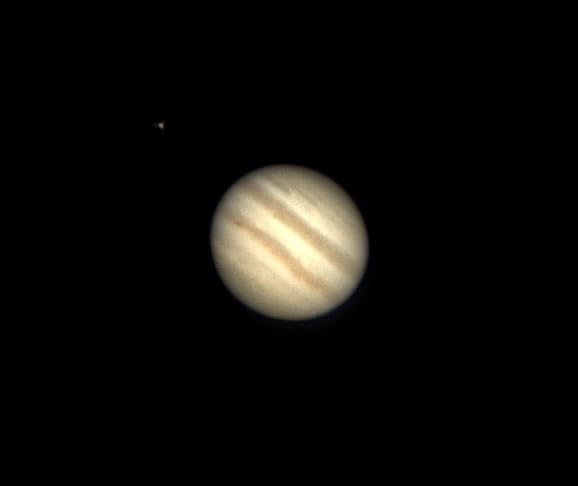
The NexStar 8SE is the telescope I recommend most often to observers who want serious deep sky reach without jumping into astrophotography. The 8-inch Schmidt-Cassegrain optic gathers enough light to show the Orion Nebula’s greenish wings, the Ring Nebula’s smoke-ring shape, and bright globular clusters like M13 resolved into thousands of pinpoint stars. With over 1,500 Amazon reviews and a 4.3 rating, it is also one of the most battle-tested computerized scopes on the market.
Setup takes about 10 minutes the first night and 3 minutes after that. The single fork arm folds down, the tripod is stainless steel, and the whole package weighs around 24 pounds. I carry mine in two trips from the car without help. SkyAlign works by centering any three bright objects in the eyepiece, and once aligned, the GoTo reliably puts targets in the field of view of a 25mm eyepiece.
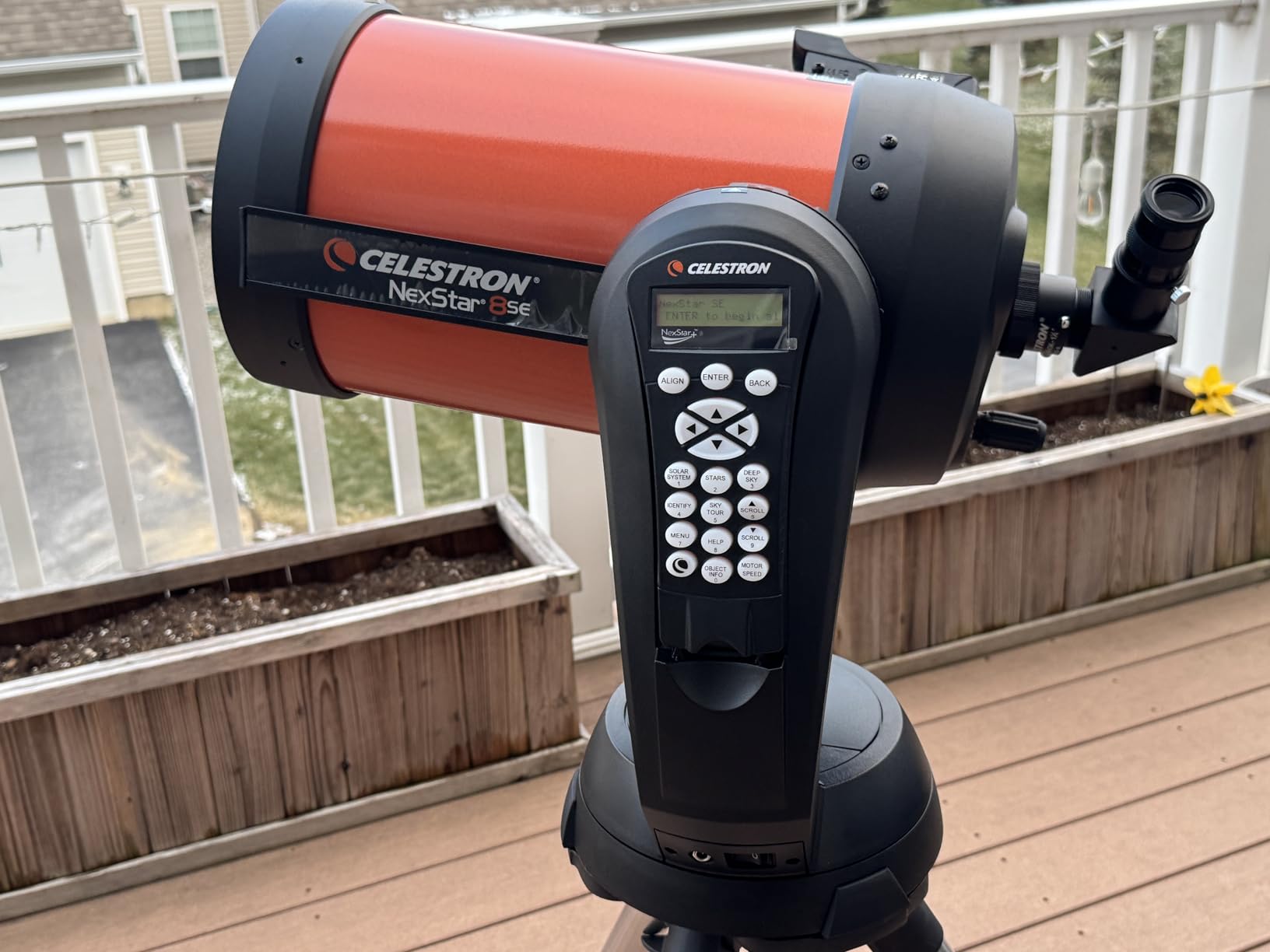
The 40,000-object database covers every Messier and Caldwell object plus thousands of NGC targets. Tracking is accurate enough for visual use across an hour or more, though the Alt-Az mount does introduce field rotation that limits long-exposure photography. For deep sky viewing through an eyepiece, this is rarely an issue.
The main frustrations echo what I see on Reddit constantly. Celestron ships no power supply, so you need to budget for a PowerTank or AC adapter. AA batteries die within an hour or two. The StarPointer red dot finder is flimsy, and the hand controller scrolls text in a way that feels dated. None of these are dealbreakers, but they are real costs to plan for.
Best For Visual Deep Sky Observers
The 8SE shines for backyard observers who want to look through an eyepiece at galaxies, nebulae, and globular clusters from a reasonably dark site. If you want the classic astronomy experience with real photons hitting your retina, this is the strongest all-around pick.
It is also a great fit for observers who plan to grow into the hobby. The SCT optical tube is compatible with StarSense AutoAlign, the SkyPortal WiFi module, focal reducers, and a huge range of Celestron accessories.
What to Know About Power and Portability
Plan to add a Celestron PowerTank or a third-party lithium power station to your order. The scope will run on eight AA batteries, but they drain quickly and you will burn through money fast. A 12V lithium pack is the standard solution.
At roughly 24 pounds total, the 8SE is portable enough for one person to carry in two trips. The optical tube detaches from the fork arm with a single knob. It fits across a back seat or in a hatchback trunk for trips to dark sky sites.
2. ZWO Seestar S30 – All-in-One Smart Telescope for Deep Sky Imaging
- Ultra-portable at just 3.6 lb
- Automatic star finding and stacking
- Beautiful deep sky images from light-polluted areas
- User-friendly app works with no astronomy knowledge
- Compact enough to fit in a backpack
- Image only - no eyepiece to look through
- 10-30 minutes per stacked image
- Not suitable for planet viewing
- Region-locked in some countries
The ZWO Seestar S30 is the smart telescope I recommend to anyone who wants deep sky results without learning to star-hop or stack manually. You place it on a table, connect the app, tap a target like the Orion Nebula or Andromeda Galaxy, and the S30 automatically finds it, tracks it, and stacks live images on your phone. Within 10 minutes you have a recognizable nebula. Within 30 minutes the image looks better than most beginners ever achieve with a traditional scope and camera.
Critically, this is an image-only device. There is no eyepiece. If the magic of astronomy for you is looking through glass with your own eye, the Seestar will not scratch that itch. But if you want to share colorful nebulae on social media, introduce kids to deep sky objects, or run imaging sessions while socializing at a star party, the S30 is hard to beat.
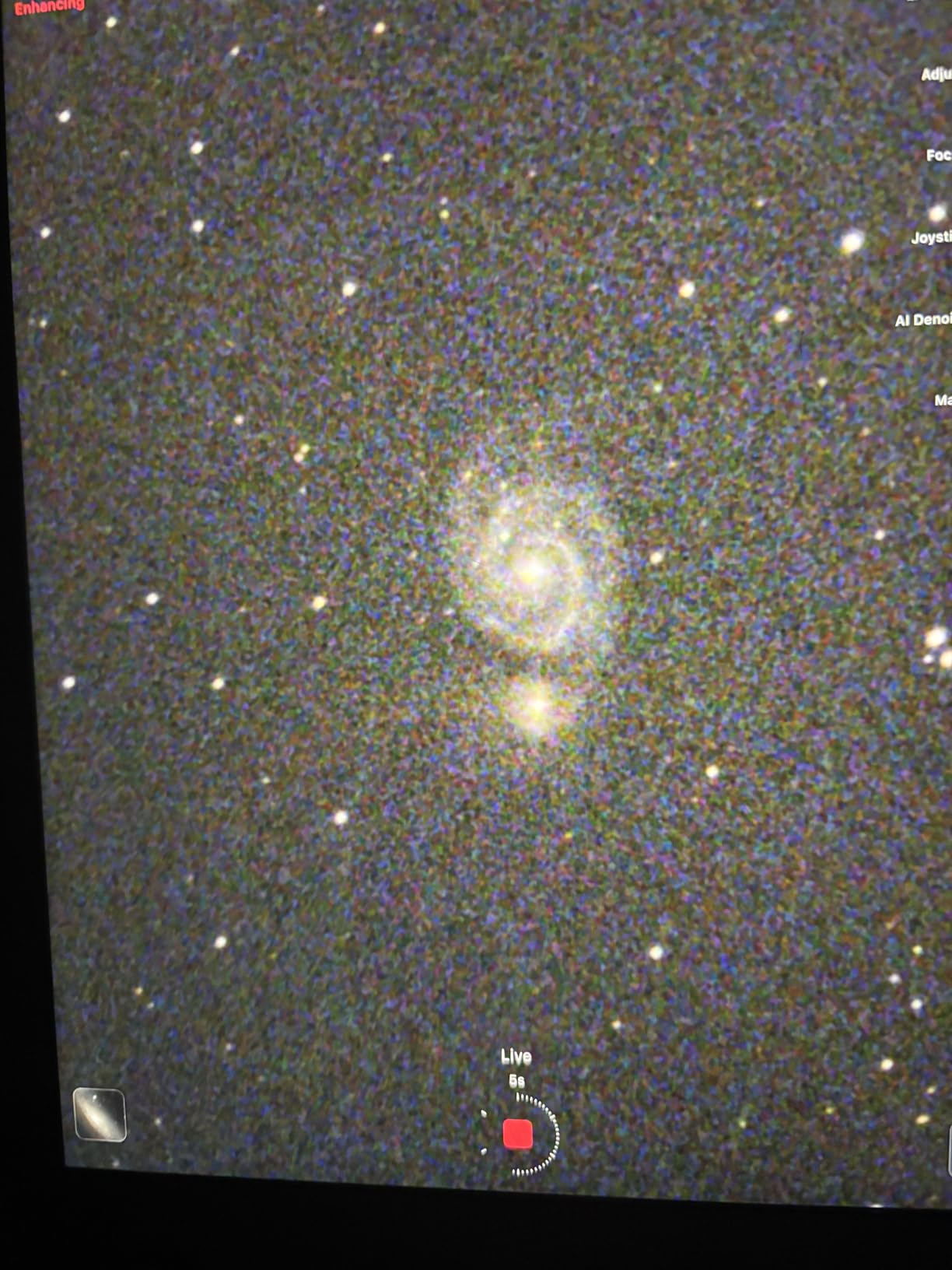
The 30mm aperture is small, but the triple-filter system includes a dual-band light pollution filter that pulls remarkable detail from suburban skies. The UV/IR cut filter handles broadband targets like galaxies and star clusters, while a dark frame filter automatically removes sensor noise. EQ mode tilts the mount for equatorial tracking, which enables longer sub-exposures.
At just 3.6 pounds and small enough to fit in a backpack, the S30 is the most portable deep sky imaging rig I have tested. Battery life runs a few hours per charge. Plan Mode lets you queue multiple targets for an overnight session, and Mosaic Mode stitches adjacent fields together for wider views.
Best For Casual Astrophotography and Travel
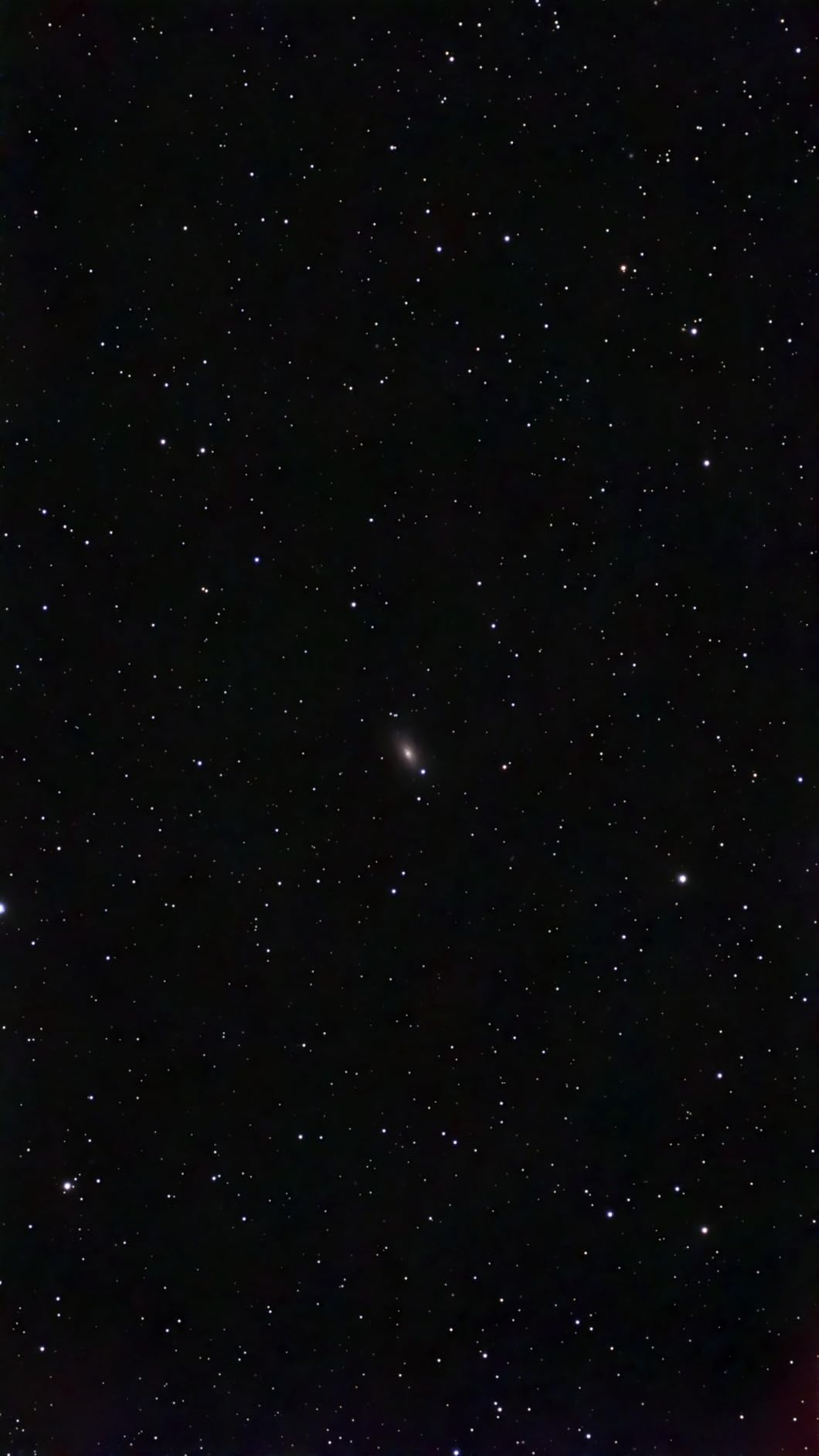
The S30 is ideal for travelers, apartment dwellellers, and casual imagers who want to dip into deep sky photography without buying a mount, camera, filters, and laptop. It is also a strong choice for kids and teens because the app does the hard work.
If you live under light-polluted suburban skies, the built-in dual-band filter is a major advantage. It blocks sky glow while passing the specific wavelengths emitted by emission nebulae.
What to Consider Before Buying
The S30 is region-locked, so check activation support for your country before ordering. Imaging sessions are slow by visual standards, with each stacked photo taking 10 to 30 minutes. Planet viewing is not this scope’s strength, so look elsewhere if Jupiter and Saturn are your main targets.
Finished photos can also look noisy straight out of the app. Most users run them through additional processing tools like PixInsight or AI denoisers for the cleanest results.
3. Celestron 114LCM – Entry-Level Computerized Newtonian
- Affordable entry to computerized GoTo
- Quick 5-minute setup
- Sky Tour suggests best targets
- Compact and light at 13.2 pounds
- Free Starry Night software included
- Bird-Jones lens design complicates collimation
- Finderscope is flimsy
- Batteries drain quickly
- Some tracking drift over time
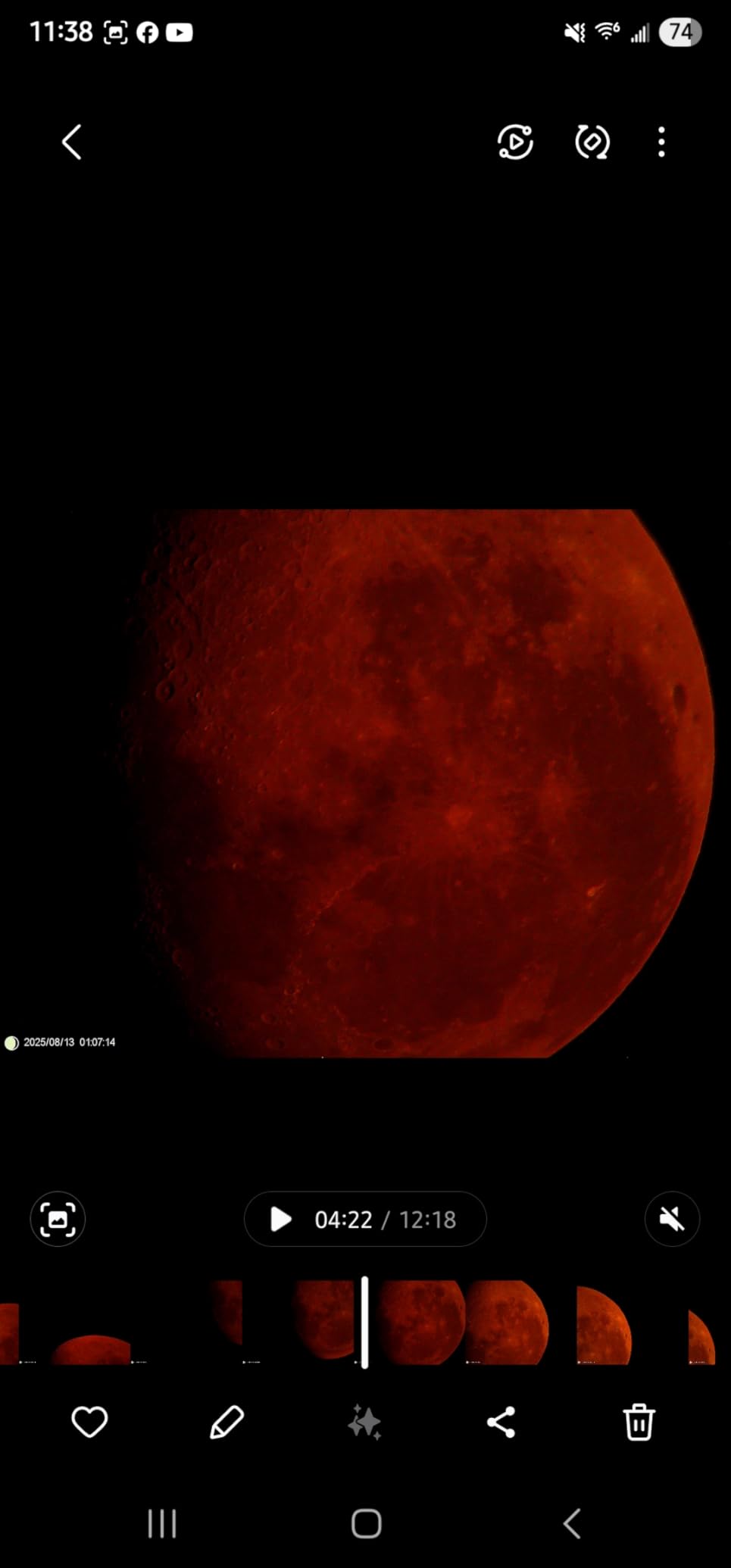
The Celestron 114LCM is the most affordable way into a true GoTo telescope that lets you look through a real eyepiece. For shoppers on a tight budget who still want the computer to find galaxies and nebulae for them, this is the entry point. The 114mm Newtonian reflector gathers enough light to show the Orion Nebula, the Ring Nebula, and the brighter Messier globular clusters as fuzzy but unmistakable targets.
Setup genuinely takes about five minutes. The tripod assembles, the optical tube drops onto the motorized altazimuth mount, and after a quick two-star alignment the GoTo system starts slewing to your chosen objects. The included 25mm and 9mm eyepieces give you 40x and 111x magnification, enough for deep sky work and lunar detail.
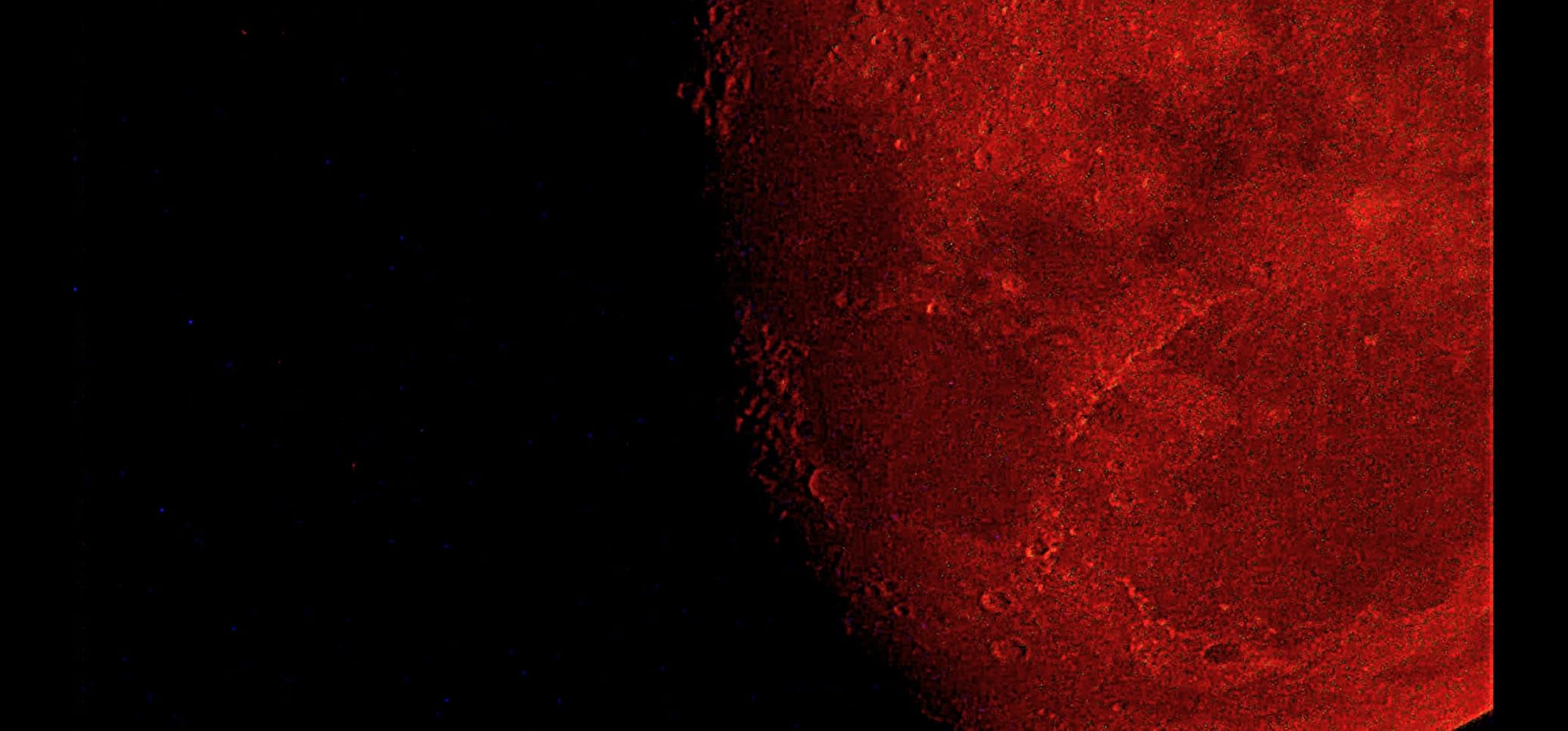
The 4,000-object database is smaller than the 40,000 found on premium Celestron models, but it still includes every Messier object, the brightest NGC targets, the planets, and the Moon. The Sky Tour feature is genuinely useful for beginners who do not know what is up on a given night. Press the button and the scope suggests the best targets currently visible.
Real limitations to plan around. The Bird-Jones mirror design is harder to collimate than a standard Newtonian, and the focuser is coarse enough to make high-magnification focusing frustrating. The included finderscope is flimsy and easily knocked out of alignment. Tracking has noticeable drift over an hour or so.
Best For Budget-Conscious Beginners
If your hard ceiling is around $400 and you want GoTo functionality with a real eyepiece, the 114LCM is your scope. It is also a reasonable choice for older kids and teens who are ready for computerized slewing but not ready to care for a $1,500 instrument.
The compact 13-pound package is genuinely portable. The whole setup fits in a closet or on a shelf between sessions.
What to Plan For Accessory-Wise
Budget for a small power tank or AC adapter, because AA batteries die within a single evening of GoTo slewing. A collimation cap or Cheshire eyepiece will help you tune the Bird-Jones mirror for sharper views. An upgraded red dot finder is a cheap quality-of-life improvement.
The 114LCM is a stepping-stone scope. Expect to use it for one to two seasons before wanting something larger. That said, it delivers exactly what it promises for the price.
4. DWARFLAB Dwarf 3 – Dual-Lens Smart Telescope With 4K Tracking
DWARFLAB Dwarf 3 Smart Telescope, App-Controlled Astrophotography Camera
- Ultra-light at just 3 lb
- Dual-lens design for astronomy and wildlife
- Excellent image quality on deep sky objects
- Schedule mode for autonomous overnight sessions
- EQ mode for longer exposures
- Not good for planets or small deep sky objects under 12 arcmin
- App can be glitchy
- High frame rejection at 60s exposure
- No customer images currently available
The DWARFLAB Dwarf 3 is the smart telescope I point to when someone wants more capability than the Seestar S30 without jumping to a traditional scope. The 35mm aperture is modestly larger, the dual-lens system adds a wide-angle camera for Milky Way shots and star trails, and the 4K auto-tracking produces sharp images. With 85 percent of Amazon reviewers giving it five stars, the Dwarf 3 has one of the highest satisfaction rates in this entire category.
Like the Seestar, the Dwarf 3 is image-only. There is no eyepiece. You control everything from the DWARFLAB app, which handles GoTo targeting, live stacking, and one-tap cloud processing. From unboxing to your first image takes roughly two minutes, which is faster than any traditional computerized scope on this list.
The dual-lens design is genuinely useful. The telephoto lens handles galaxies, nebulae, and smaller deep sky targets, while the wide-angle lens captures wide Milky Way fields, star trails, and even daytime wildlife and landscapes. This makes the Dwarf 3 a year-round camera, not just a night scope.
Battery life runs a few hours of active imaging. Schedule Mode is a standout feature that lets you queue multiple targets for an overnight autonomous session. EQ Mode tilts the scope for equatorial tracking, which enables longer individual exposures and reduces field rotation artifacts in stacked images.
Best For Traveling Astrophotographers
At just 3 pounds, the Dwarf 3 is the lightest deep sky imaging rig worth buying. It fits in a standard backpack, runs on internal battery, and works from a hotel balcony or campsite. For hikers and travelers who want to image dark skies far from home, this is the strongest pick.
It also works well as a second scope for experienced imagers who want a grab-and-go option alongside a heavier rig.
What to Know About Target Limitations
The 35mm aperture and short focal length mean small targets under about 12 arcminutes do not image well. Planets are also weak, because the magnification is too low. The Dwarf 3 is built for wide-field deep sky and Milky Way work, not high-resolution planetary imaging.
The app is solid but can occasionally glitch, and frame rejection at 60-second exposures is higher than ideal. Plan to shoot plenty of sub-exposures and stack aggressively.
5. DWARFLAB Dwarf Mini – Pocket-Sized Smart Telescope
DWARFLAB Dwarf Mini Smart Telescope – 1.85lb Portable Astronomy Telescope
- Lightest deep sky scope available at 1.85 lb
- Quick 3-minute setup
- EQ mode supports 90-second exposures
- Built-in light pollution filter
- Excellent value for astrophotography beginners
- Not suitable for planet viewing
- No case included
- WiFi setup quirks
- Steep app learning curve
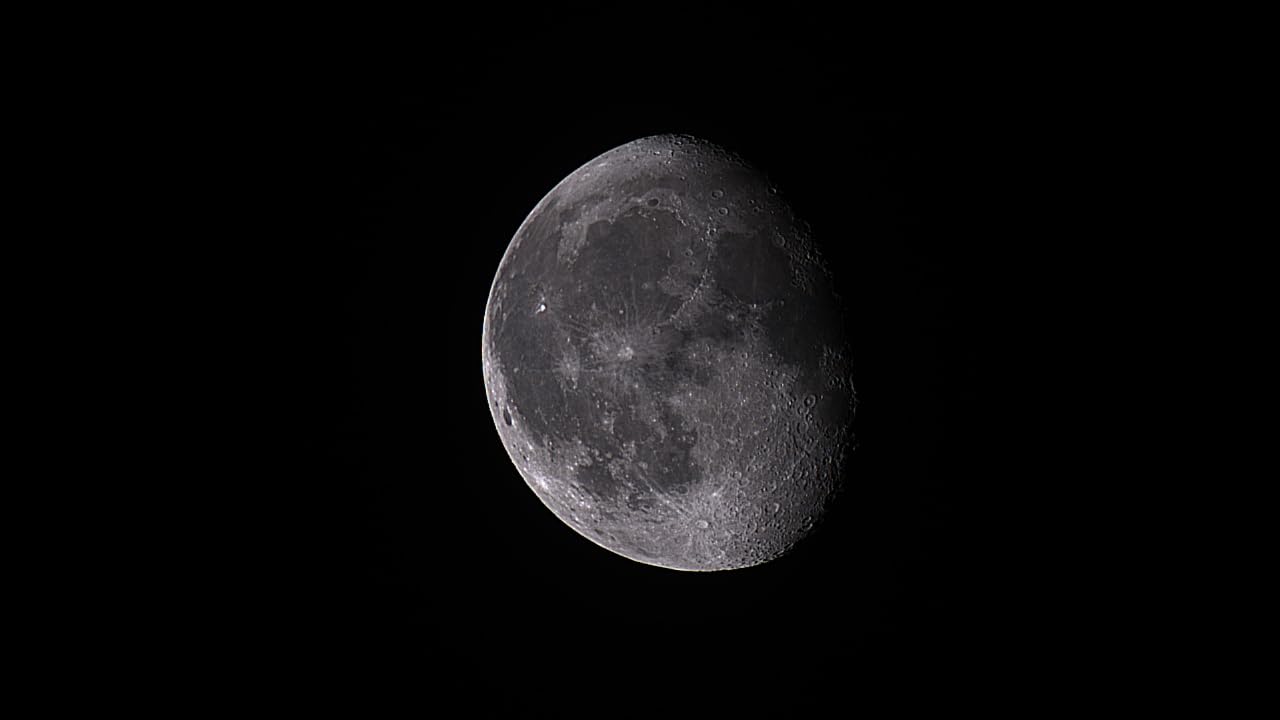
The DWARFLAB Dwarf Mini takes the smart telescope concept to its extreme. At just 1.85 pounds, it is smaller than a liter water bottle and genuinely fits in a large jacket pocket. Despite that, the Sony IMX662 sensor delivers clean, low-noise deep sky images that rival scopes twice its size. For hikers, backpackers, and anyone who images from remote dark sky sites, the Dwarf Mini is a remarkable tool.
Like its larger sibling, the Dwarf Mini is image-only. There is no eyepiece. The companion app handles GoTo targeting, tracking, stacking, and cloud-based processing. From unboxing to first image is about three minutes, and the 360-degree pivot base lets you image any part of the sky without repositioning.

The Sony IMX662 sensor is a strong choice for deep sky work. It is a 1/2.8-inch sensor with 2.9-micron pixels that handles low-light noise well. EQ Mode supports single-frame exposures up to 90 seconds, which is unusually long for a scope this small and produces noticeably cleaner stacked images.
The built-in light pollution filter means the Dwarf Mini works acceptably from suburban skies. It will not pull the same detail as a scope under true dark skies, but for emission nebulae like the Orion and Lagoon Nebulae, the filter does meaningful work.
Best For Ultralight Backpackers
If you image from mountain tops, remote campsites, or anywhere weight matters, the Dwarf Mini is the obvious pick. It pairs with a lightweight camera tripod and runs on internal battery for true grab-and-go use.
It is also a great gift telescope for travelers who would never carry a full-size rig but would happily toss a 2-pound scope in a carry-on.
What to Plan Around
No case is included, which is a real gap for a travel scope. The WiFi setup has some quirks, particularly on first pairing, and the app has a steeper learning curve than the Seestar app. Planets are off the table given the 30mm aperture and short focal length.
Budget for a small hard case and a quality travel tripod to make the most of this scope.
6. Celestron NexStar 127SLT – Maksutov-Cassegrain GoTo Scope
- Excellent high-contrast Mak-Cass optics
- Easy SkyAlign setup
- Compact and portable for a 5-inch scope
- Good for planets moon clusters and nebulae
- Includes Starry Night software
- Tripod can be wobbly
- Batteries drain quickly
- Red dot finder is basic quality
- May need extra accessories for best results
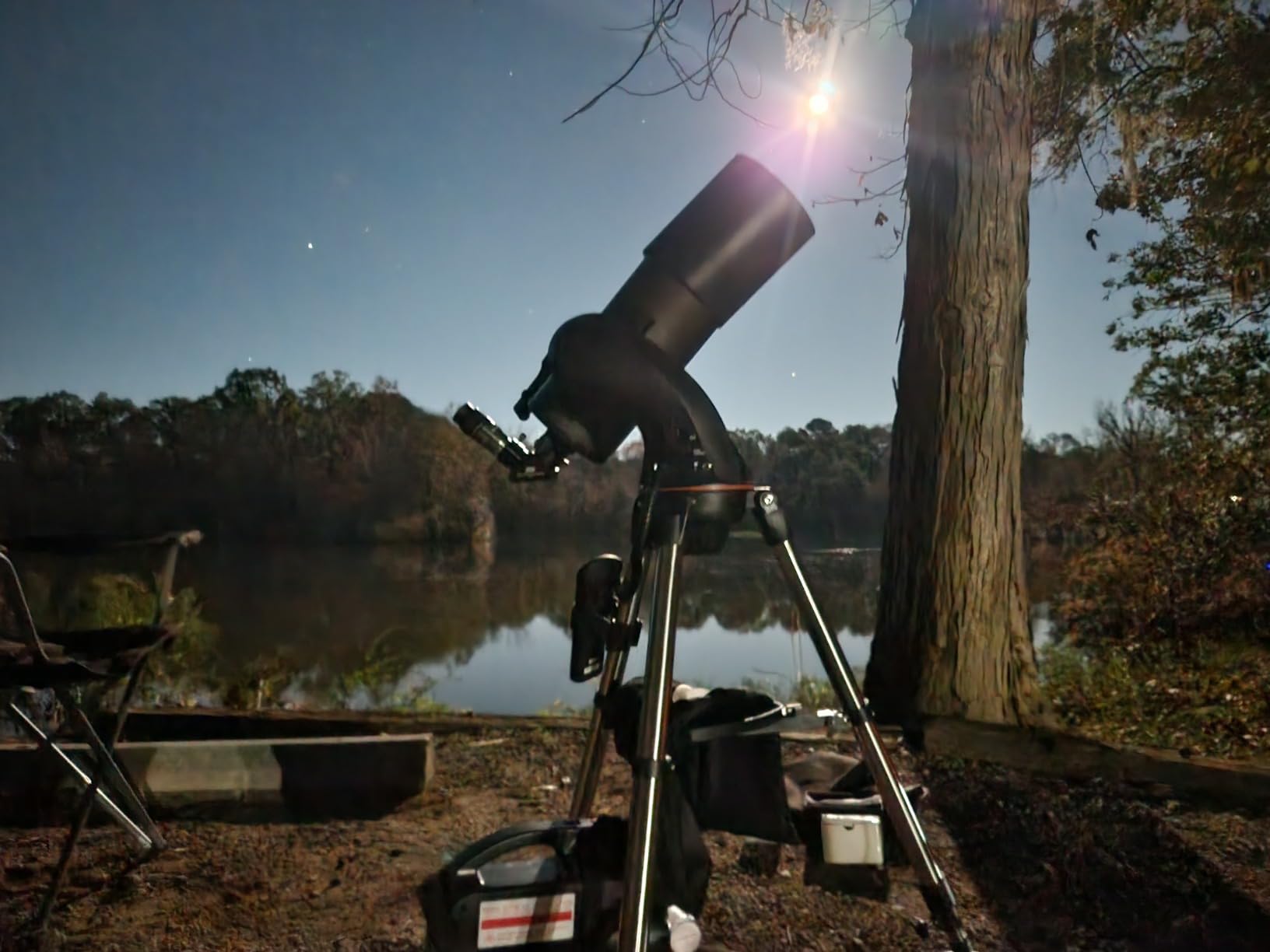
The Celestron NexStar 127SLT is the Maksutov-Cassegrain sibling in the SLT line, and it is a strong pick for observers who want high-contrast lunar and planetary views alongside solid deep sky performance. The 127mm Mak-Cass optic produces crisp, high-magnification views of Saturn’s rings, Jupiter’s cloud belts, and lunar craters, while the 40,000-object GoTo database lets you slew to fainter deep sky targets like the Ring Nebula and globular clusters.
The Maksutov design has a long focal length (1500mm) packed into a short tube, which means high magnification without a giant optical tube. The 127SLT is genuinely portable at 18 pounds total. Setup mirrors the rest of the NexStar line: assemble the tripod, attach the fork arm and optical tube, run SkyAlign with three bright stars, and start observing.
For deep sky work specifically, the 127SLT is best on bright objects. The Orion Nebula, Lagoon Nebula, Dumbbell Nebula, and the brighter globular clusters all show real structure. Faint galaxies remain challenging because the 127mm aperture simply does not gather enough light for low-surface-brightness targets.
Where the 127SLT truly shines is the combination of deep sky capability with excellent lunar and planetary performance. If you want one computerized scope that handles everything from Saturn’s Cassini Division to the Orion Nebula, the 127SLT is a strong fit.
Best For All-Around Visual Astronomy
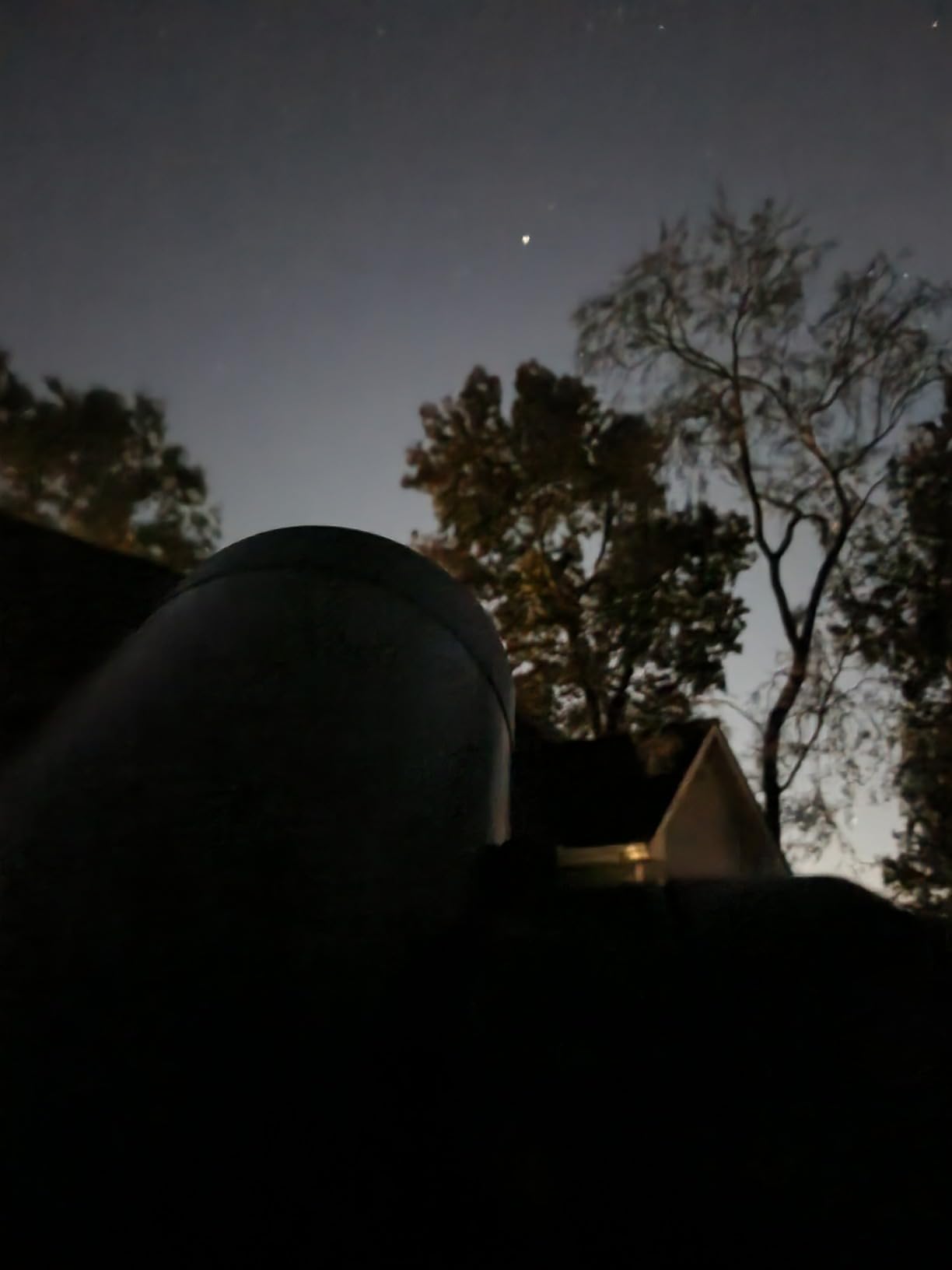
The 127SLT is ideal for observers who split their time between planets and deep sky. The long focal length and high-contrast Mak-Cass optic excel at lunar and planetary detail, while the GoTo mount handles the deep sky slewing.
It is also a good fit for suburban observers with moderate light pollution, because the high-contrast optic cuts through sky glow better than a fast reflector.
What to Know About the Tripod and Power
The included stainless steel tripod is the weakest link. At high magnification, vibrations take a few seconds to settle. Anti-vibration pads or a more solid tripod upgrade help significantly. The red dot finderscope is also basic quality and worth upgrading.
Battery drain is the standard NexStar complaint. AA batteries die quickly, so plan for a Celestron PowerTank or 12V lithium pack from day one.
7. ZWO Seestar S30 Pro – 4K Smart Telescope With Apochromatic Lens
ZWO Seestar S30 Pro Smart Telescope, App-Controlled Astrophotography
- Effortless automatic GOTO targeting and tracking
- 4K dual-camera astrophotography
- Apochromatic 4-element lens reduces chromatic aberration
- Anti-dew protection and 128GB storage
- Scheduled imaging and Milky Way mosaic mode
- Region locked in some countries
- Daytime scenery mode weaker than night mode
- Stacked images take 10-30 minutes
- Photos can be noisy without post-processing
The ZWO Seestar S30 Pro is the upgraded sibling of the standard S30, and the differences are meaningful for serious imagers. The telephoto lens is now a 4-element apochromatic design that noticeably reduces chromatic aberration on bright stars. The IMX585 sensor is a significant upgrade over the standard Seestar sensor, with larger pixels and lower noise. AI scene recognition automatically tunes settings for the target type.
Like the standard S30, this is an image-only smart scope with no eyepiece. The app handles GoTo targeting, live stacking, and one-tap processing. Setup takes under five minutes from unboxing. The 3.6-pound total weight means it travels anywhere.
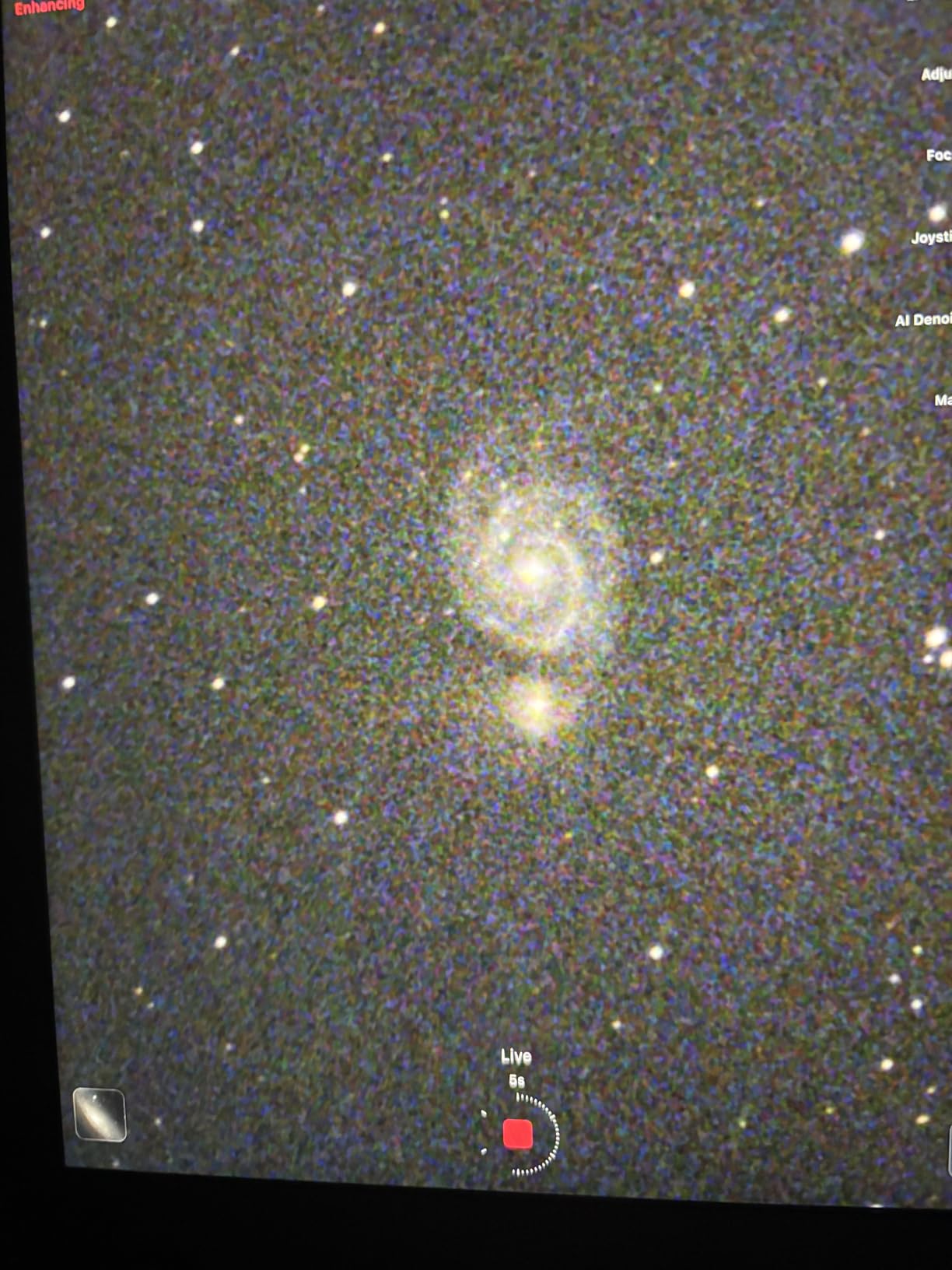
One-tap Milky Way and star trail imaging in 8K with mosaic stitching is a standout feature. The wide-angle IMX586 camera captures broad Milky Way fields, and the app stitches multiple frames into a single high-resolution image. For imagers who want both deep sky nebulae and wide Milky Way panoramas from one device, the S30 Pro covers both.
Anti-dew protection and 128GB of onboard storage mean you can run an overnight imaging session without babysitting the scope. Plan Mode lets you queue multiple targets. The dual-use design also handles daytime birdwatching and landscapes, though the results are not on par with a dedicated camera.
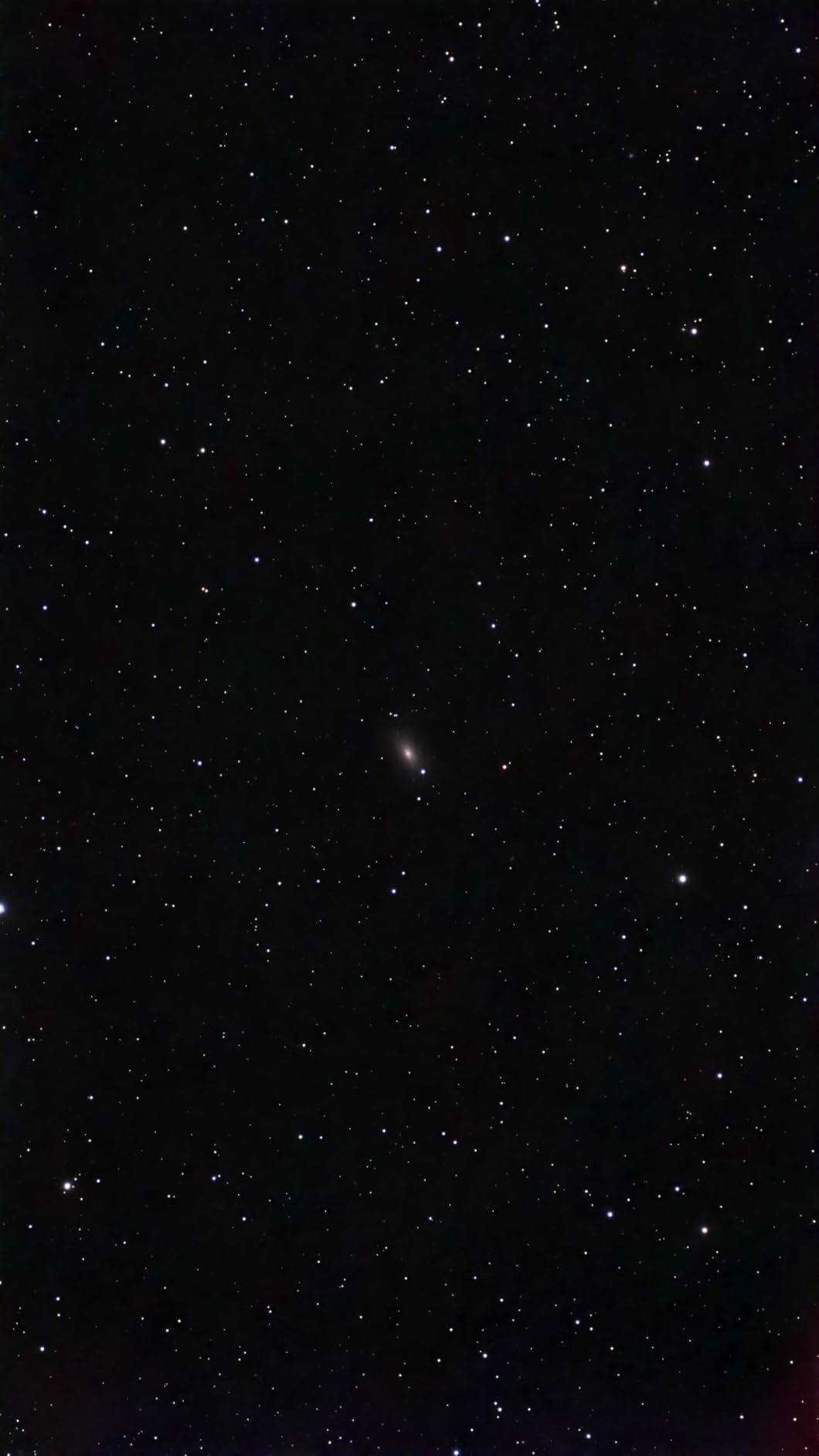
Best For Imagers Who Want Premium Smart Scope Features
The S30 Pro is the right pick if you want the smart telescope experience but with better optics, better sensors, and more advanced features than the standard S30. The APO lens and IMX585 sensor produce cleaner images on bright targets and tight star clusters.
It is also a good fit for imagers who want to capture wide Milky Way panoramas alongside deep sky nebulae from a single device.
What to Consider About Region Locking
The S30 Pro is region-locked and cannot be activated in some countries, including India. Verify activation support before ordering. The 10-to-30-minute stacking time per target is also slower than some users expect, so plan sessions accordingly.
Finished photos straight from the app can look noisy, particularly on faint targets. Most users push images through additional post-processing for the cleanest results.
8. Celestron StarSense Explorer 8-inch Dobsonian
Celestron StarSense Explorer 8″ Dobsonian Telescope with Smartphone App
- Patented StarSense sky recognition works exceptionally well
- Large 8-inch aperture for serious deep sky light grasp
- Sturdy solid Dobsonian mount
- Greater educational tool with descriptions and facts
- Smooth base movement
- PushTo does not track objects automatically
- App incompatible with some recent Android phones
- Particle board base construction
- Requires two people to carry
The Celestron StarSense Explorer 8-inch Dobsonian is the bridge between full GoTo tracking and traditional manual Dobsonians. It uses patented sky recognition technology that turns your smartphone into a celestial navigation system. You dock your phone, the app identifies the sky overhead, and it guides you with on-screen arrows to push the scope to your target. This is PushTo, not GoTo, which means you do the moving and there is no automatic tracking.
The 8-inch Newtonian aperture gathers serious light. Globular clusters resolve into thousands of stars, the Orion Nebula shows real structure, and brighter galaxies like Andromeda appear as oval smudges with brighter cores. The 1200mm focal length is well-matched to deep sky work with the included 25mm eyepiece.
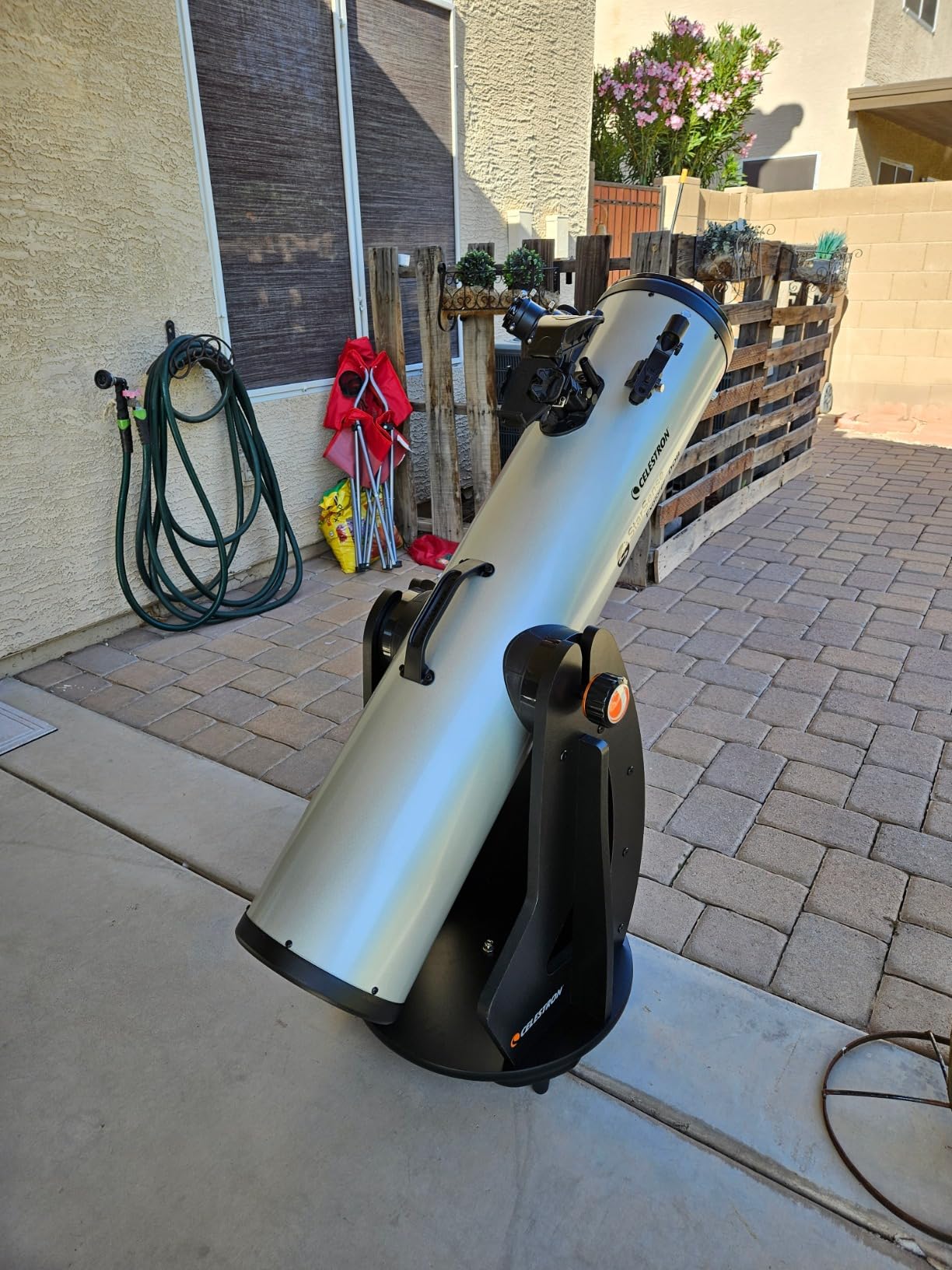
The StarSense app is genuinely impressive. Point the phone at the sky and it plate-solves the field in seconds, identifying exactly where the scope is pointed. From there, the app guides you with directional arrows to any target in its database. It also includes educational descriptions and a Tonight’s Best list based on your time and location.
The Dobsonian base is sturdy and smooth. Manual tracking at high magnification takes some practice, but the large bearings and Teflon pads make fine movements manageable. The 2-inch Crayford focuser handles both 1.25-inch and 2-inch eyepieces.
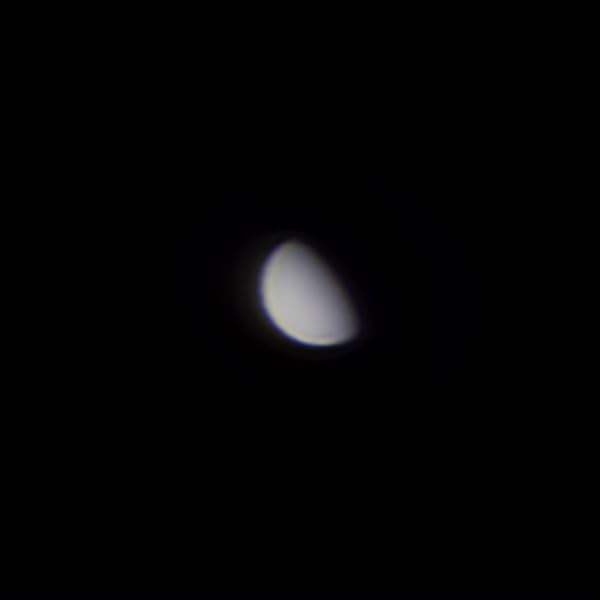
Best For Observers Who Want Aperture Without GoTo Complexity
The StarSense 8 Dob is ideal for observers who want 8 inches of aperture for serious deep sky light gathering but do not need motorized tracking. The PushTo app navigation makes finding objects easy without the cost, weight, and battery demands of a full GoTo mount.
It is also one of the best choices for educators and families, because the app teaches as it guides.
What to Know About PushTo Limitations
PushTo means the scope finds targets but does not track them. Once you center an object, you will manually nudge the scope every minute or so to keep the target in view. This is the trade-off for the lower price and larger aperture compared to a GoTo SCT.
The base is particle board at this price point, which is durable but not premium. Some Android phones have compatibility issues with the dock and camera alignment, so verify your model before ordering.
9. Celestron NexStar 6SE – Compact 6-Inch Schmidt-Cassegrain
- Excellent optics with sharp images
- Easy SkyAlign 3-star setup
- Automated GoTo mount with 40
- 000+ objects
- Portable SCT design
- Great for beginners and advanced users
- No power supply included
- AC adapter cord tangles
- Alignment drifts over a few hours
- Mount not ideal for long-exposure astrophotography
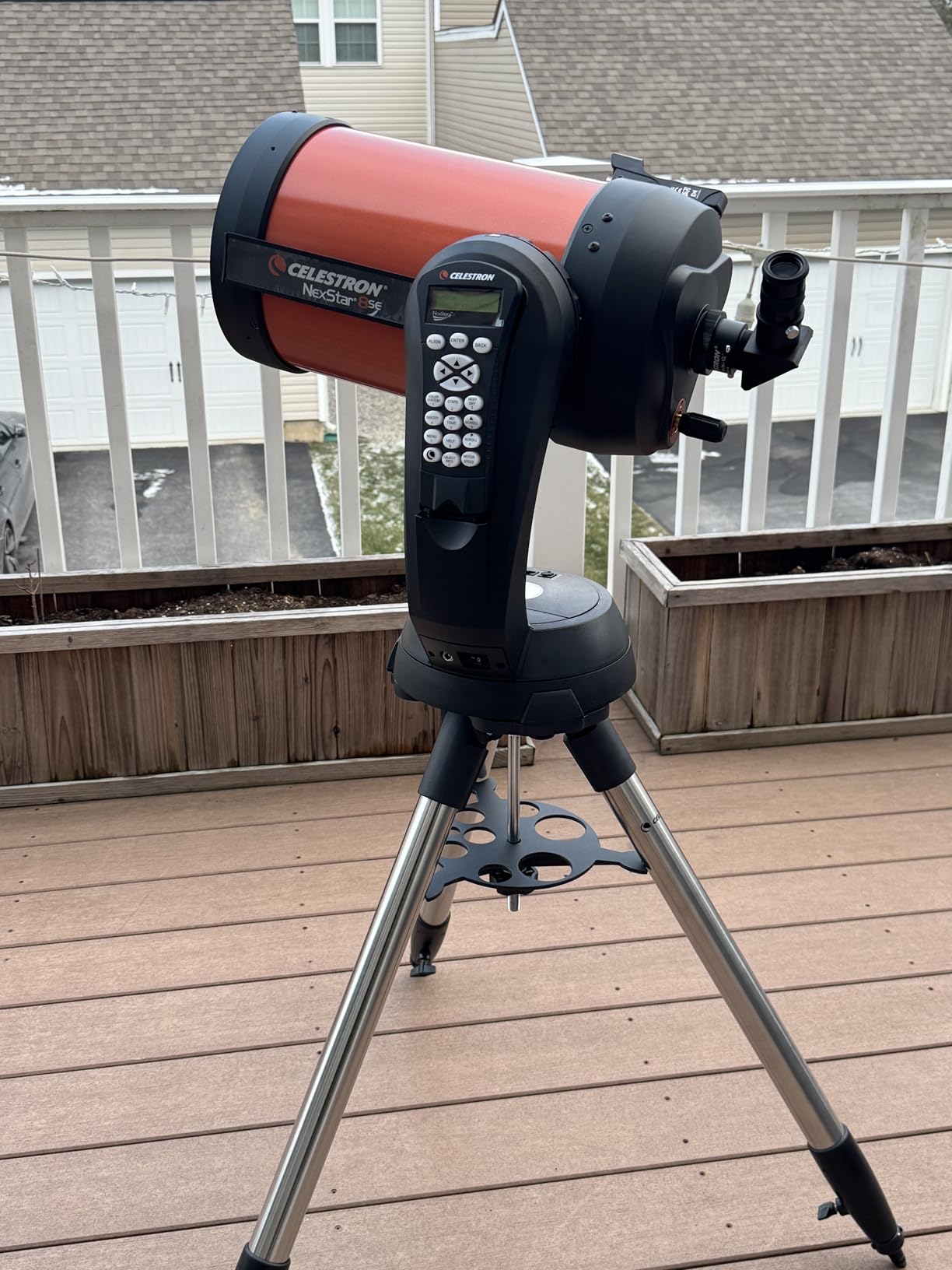
The Celestron NexStar 6SE is the little sibling of the 8SE and a strong pick for observers who want the classic SCT experience with a bit more portability and lower cost. The 6-inch Schmidt-Cassegrain optic gathers roughly 60 percent more light than a 5-inch scope, enough to show the Orion Nebula, Ring Nebula, and brighter globular clusters with real detail. With 968 Amazon reviews and a 4.4 rating, the 6SE has a long track record of satisfied users.
Setup is identical to the 8SE. Assemble the stainless steel tripod, attach the single fork arm and optical tube, run SkyAlign with three bright objects, and start slewing. The whole package weighs around 21 pounds, making it one of the more portable GoTo SCT options on the market.
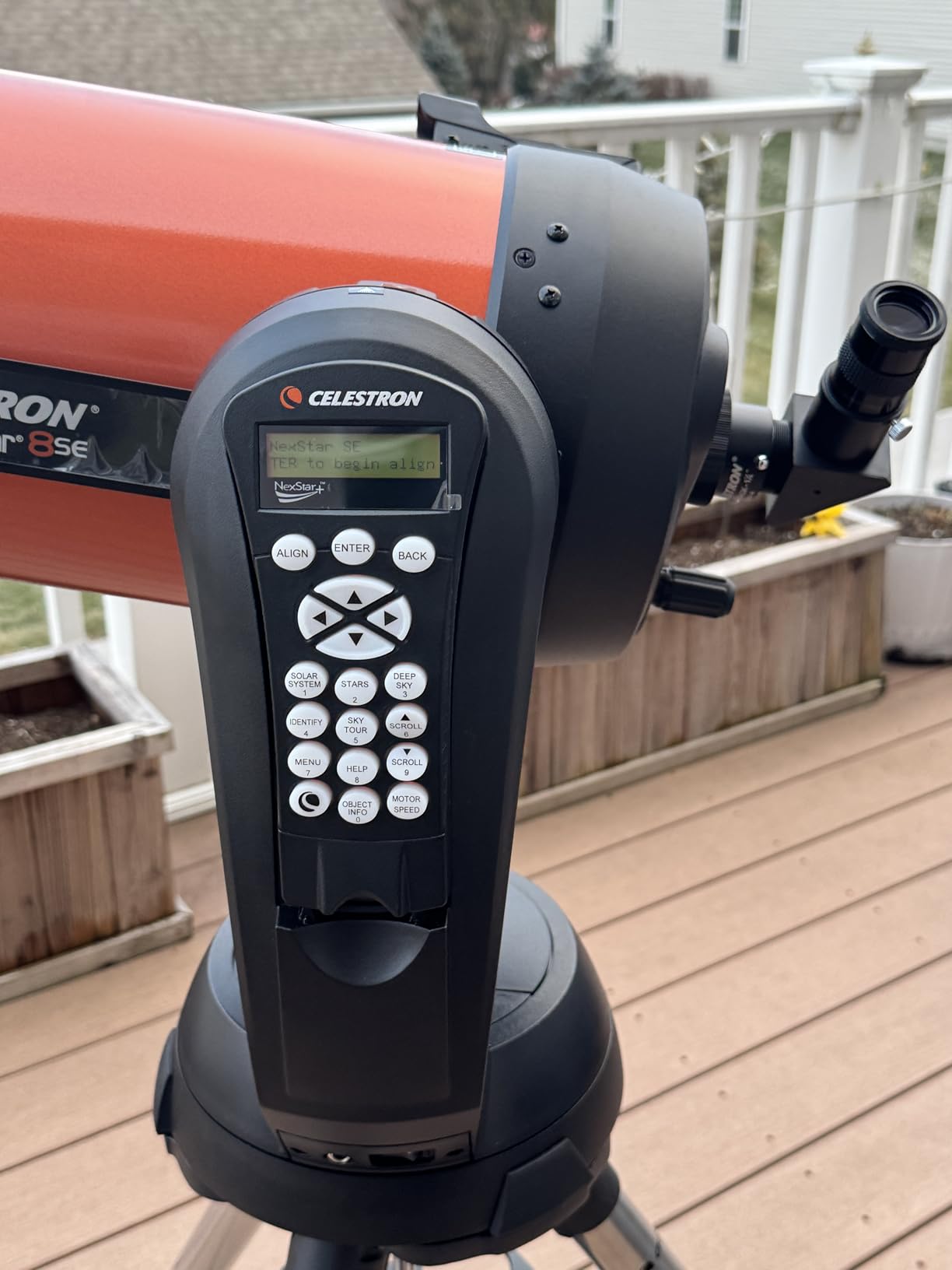
The 40,000-object database covers the full Messier and Caldwell catalogs plus thousands of NGC targets. Tracking is accurate for visual use over an hour or more. The SCT optical tube is compatible with the full range of Celestron accessories, including StarSense AutoAlign, the SkyPortal WiFi module, focal reducers, and dew shields.
The 6SE is frequently recommended on Reddit as the best balance of aperture, portability, and price for someone stepping up from a beginner scope. It is small enough to grab and go but large enough to show real deep sky structure on brighter objects.
Best For Observers Stepping Up From a Beginner Scope
The 6SE is the natural upgrade for someone who has outgrown a small reflector or refractor. The GoTo mount removes the frustration of star-hopping, while the SCT optic delivers the contrast and resolution needed for satisfying views of planets and brighter deep sky objects.
It is also a great fit for apartment and condo dwellers who need a scope that fits in a closet and assembles quickly on a small balcony.
What to Plan For Accessories
No power supply is included. Budget for a PowerTank or 12V AC adapter from day one. A dew shield is strongly recommended for SCT scopes, because the corrector plate is a notorious dew magnet in humid environments. The single included 25mm eyepiece is fine for starters but plan to add a higher-power eyepiece for planets.
Alignment can drift over a few hours. Use the Sync function on a bright star near your target to reset alignment during long sessions.
10. Sky-Watcher S11800 GoTo Collapsible Dobsonian 8-Inch
- Innovative collapsible tube fits in smaller vehicles
- Built-in WiFi for smartphone control
- 42
- 000+ object SynScan GoTo system
- 94% reflective mirrors for bright views
- Can switch between GoTo and manual tracking
- GoTo alignment issues reported by some users
- 55 lb total requires two people
- Particle board base
- 12V adapter cigarette lighter only
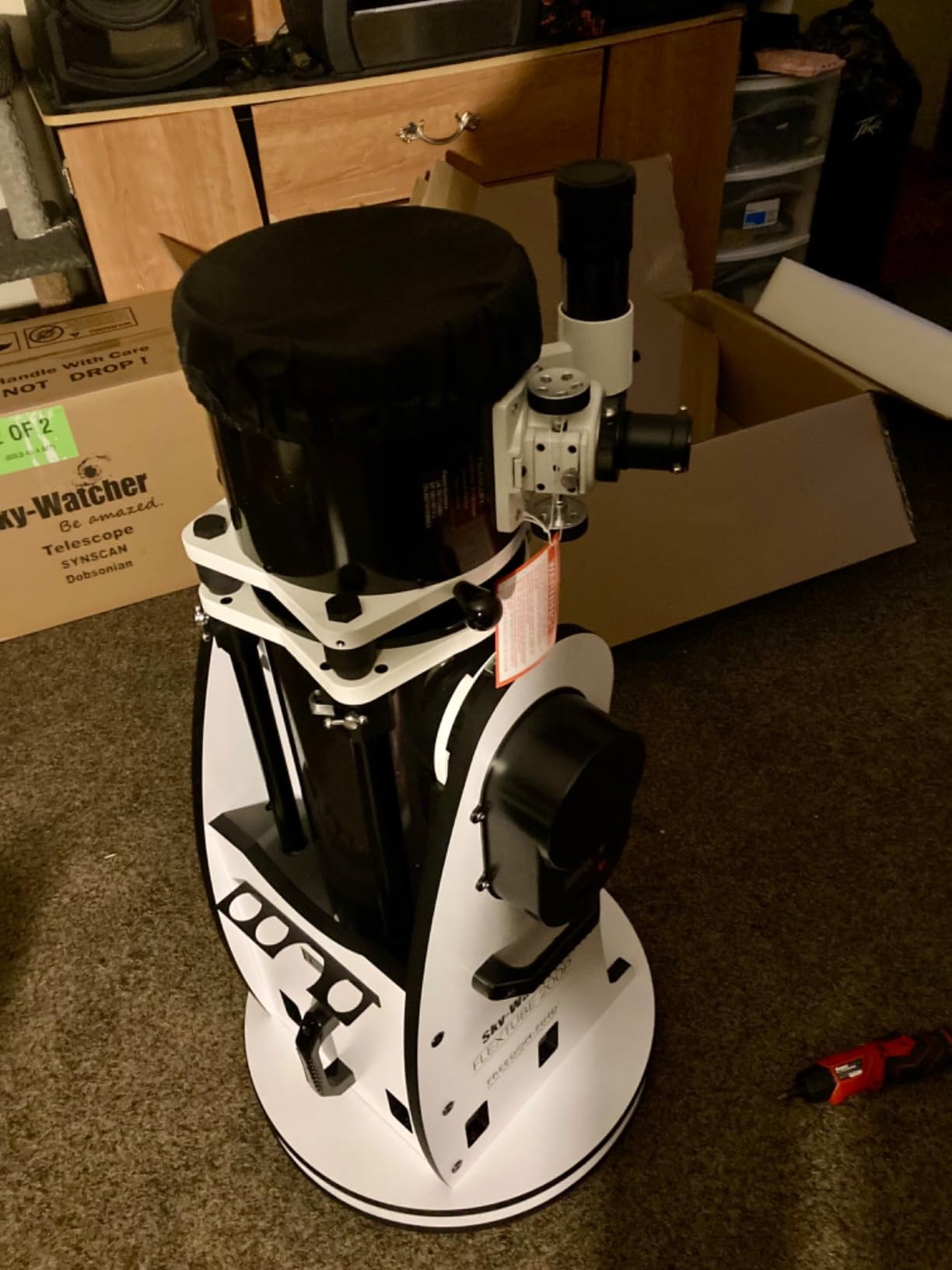
The Sky-Watcher S11800 8-inch GoTo Collapsible Dobsonian combines serious 8-inch aperture with a GoTo SynScan system and an innovative collapsible tube. The 8-inch Newtonian mirror gathers the same light as a NexStar 8SE but at a longer 1200mm focal length and with a wider true field of view. The collapsible flextube design means the optical tube compacts for transport while maintaining collimation reasonably well.
The SynScan hand controller includes a 42,000-object database, and built-in WiFi lets you control the scope from a smartphone or tablet without an extra dongle. All-metal gearing on the DC servo motors provides precise tracking once aligned. The 94-percent reflective borosilicate mirrors deliver bright, contrasty views of deep sky targets.
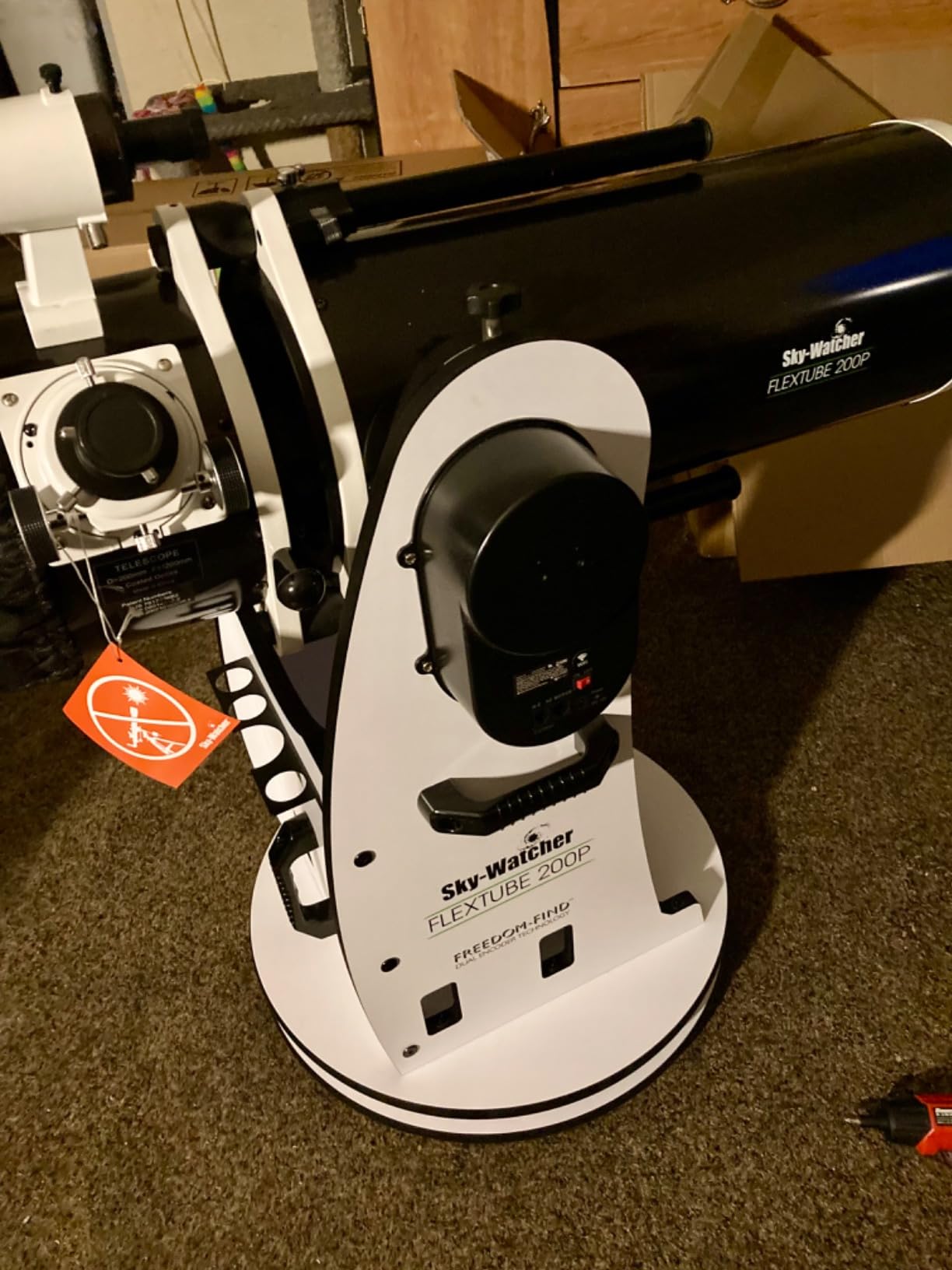
For deep sky work specifically, the 8-inch Dobsonian aperture excels. Globular clusters resolve into thousands of pinpoint stars, the Orion Nebula shows real filamentary structure, and brighter galaxies like Andromeda and the Whirlpool show mottled detail. The 2-inch Crayford focuser handles premium wide-field eyepieces for immersive views.
The 3.8 rating on Amazon reflects some quality control concerns. A meaningful share of buyers report GoTo alignment issues, with the scope consistently slewing off-target. Secondary mirror adjustment screws have arrived seized on some units. The base is particle board, and the included power adapter is cigarette lighter only.
Best For Deep Sky Observers Who Want GoTo Tracking With Large Aperture
The Sky-Watcher GoTo Collapsible Dob is the right pick if you want 8 inches of aperture with full motorized GoTo tracking, and you are willing to handle the size and weight. The collapsible tube is genuinely useful for transport in smaller vehicles.
It is also a good fit for observers who want both GoTo slewing and the option to push the scope manually, which the Sky-Watcher design allows.
What to Know About Quality Control
Order from a retailer with a strong return policy. The GoTo alignment issues reported by some users are real, and seized secondary mirror screws are a known problem. Sky-Watcher customer service is generally responsive, but resolving issues takes time.
Plan for a 12V power source with a standard outlet plug, because the included adapter is cigarette lighter only. A lithium power tank is the most practical solution for field use.
11. Celestron NexStar Evolution 8 – WiFi SCT With Built-In Battery
- Built-in 10-hour lithium battery eliminates external power
- Smartphone control via SkyPortal WiFi app
- High-performance brass worm gears for superior tracking
- Compact portable design
- USB charge port for phone
- Firmware update requires separate cable not included
- Some users report defective out-of-box units
- Tripod screws can be loose on arrival
The Celestron NexStar Evolution 8 is the premium WiFi-enabled SCT that addresses two of the biggest NexStar complaints: no battery and clunky hand controller. The Evolution 8 includes a built-in 10-hour lithium iron phosphate battery, so you set the scope down and image without running power cables. WiFi control via the SkyPortal app means you slew and track from your phone, no hand controller required.
The 8-inch Schmidt-Cassegrain optic uses the same StarBright XLT coatings as the NexStar 8SE, delivering the same deep sky reach. The high-performance brass worm gears track noticeably smoother than the standard NexStar mount, which matters for both visual stability and short-exposure astrophotography.
Setup is fast. The Evolution line features manual clutches and integrated carry handles that make assembly and transport easier than the standard NexStar fork arm. The USB charge port on the mount lets you power your phone during long sessions, a thoughtful touch for app-based control.
Best For Observers Who Want WiFi and Battery Built In
The Evolution 8 is the right pick if you want the deep sky performance of an 8-inch SCT but you are tired of managing external batteries and hand controllers. The built-in battery and WiFi control make it the most user-friendly 8-inch SCT on this list.
It is also a good fit for public outreach and star parties, where WiFi control lets multiple people view targeting info from their own phones.
What to Know About Firmware and Quality Control
The firmware update requires a separate cable that is not included, which is a frustrating omission at this price. Some users have received defective units out of the box, so buy from a retailer with a strong return policy. Tripod screws can also arrive loose and need tightening.
Aside from those concerns, the Evolution 8 is one of the most polished computerized SCT packages on the market.
12. Sky-Watcher Flextube 300 SynScan Dobsonian 12-Inch
SkyWatcher Flextube 300 SynScan Dobsonian 12-inch Collapsible Computerized GoTo Large Aperture Telescope (S11820)
- Large 12-inch aperture for serious deep sky light grasp
- Innovative collapsible tube for portability
- Built-in WiFi for smartphone control
- 94% reflective borosilicate mirrors
- Includes eyepieces and finder scope
- GoTo alignment issues reported by some users
- Some units arrived with damaged parts
- Particle board base material
- Power adapter cigarette lighter only
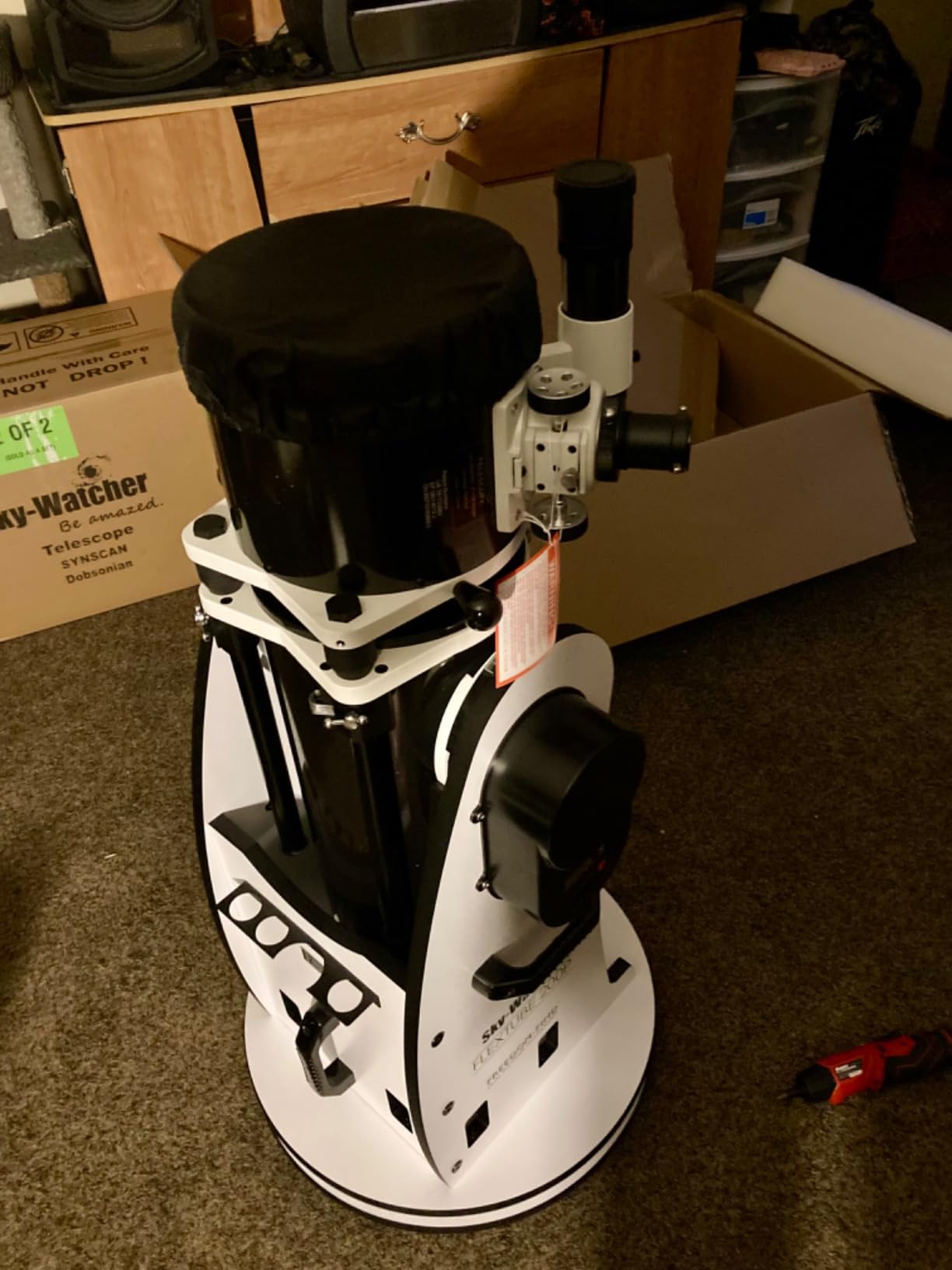
The Sky-Watcher Flextube 300 SynScan Dobsonian is the largest aperture scope on this list, and aperture is king for deep sky viewing. The 12-inch (305mm) borosilicate mirror gathers more than twice the light of an 8-inch scope, which means fainter galaxies, more detail in nebulae, and globular clusters fully resolved to their cores. If your primary goal is serious deep sky reach and you have the budget and the back to handle it, this is the scope.
The collapsible flextube design helps with transport. The optical tube compacts to roughly half its extended length, which makes it feasible to fit in an SUV or hatchback. The SynScan hand controller provides 42,000 objects, and built-in WiFi enables smartphone and tablet control without a dongle.
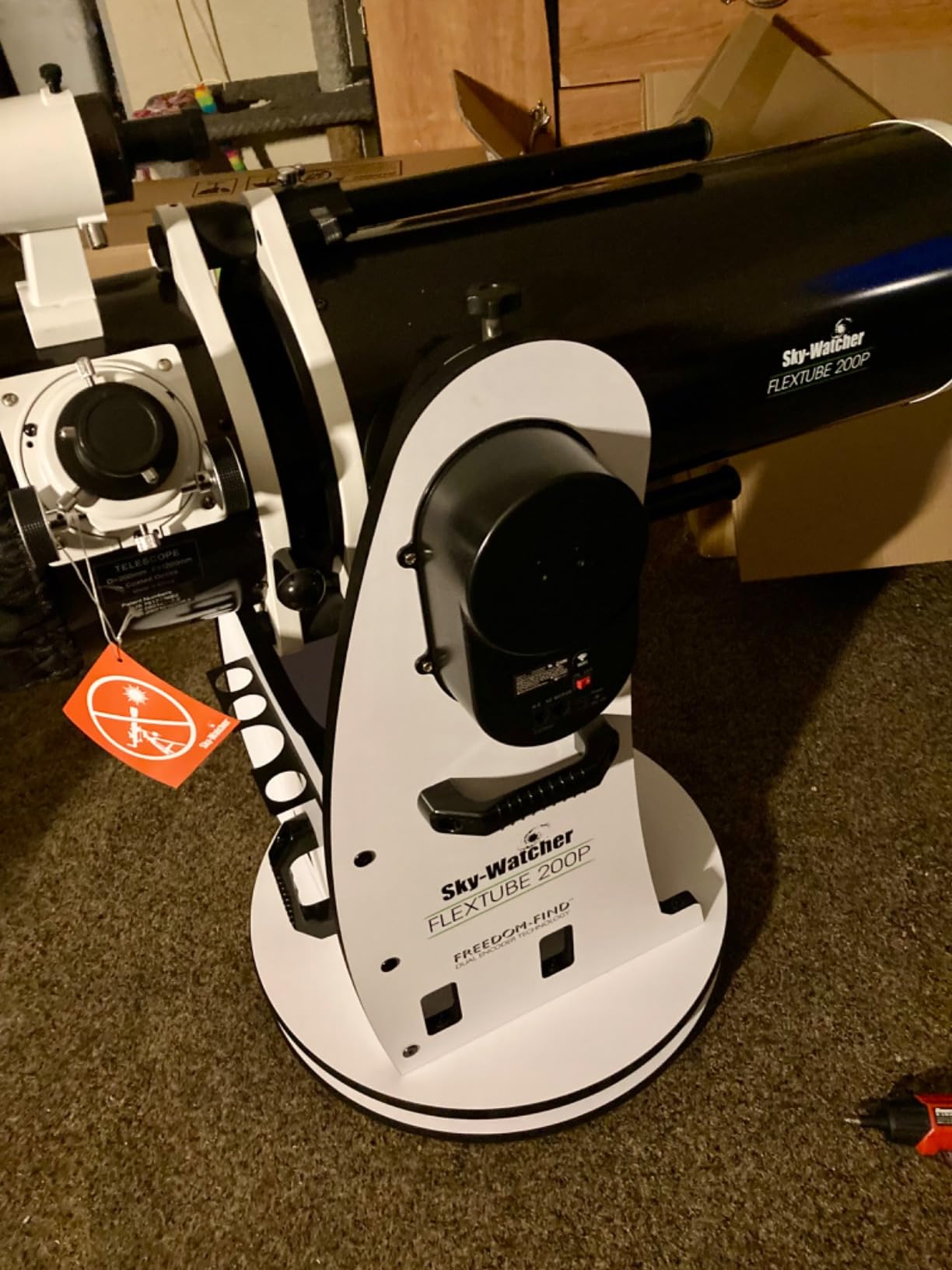
The 94-percent reflective borosilicate mirrors are noticeably brighter than standard aluminum-coated mirrors. The 2-inch Crayford-style focuser handles premium wide-field eyepieces, and the included 25mm and 10mm Plossl eyepieces are decent starter options. A 9×50 straight-through finder scope rounds out the package.
The 3.8 Amazon rating is a yellow flag. Some users report GoTo alignment failures, seized secondary mirror adjustment screws, and damaged packaging on delivery. Sky-Watcher customer service has been responsive for some buyers but inconsistent overall.
Best For Experienced Observers Who Want Maximum Aperture
The Flextube 300 is the right pick for experienced observers who want maximum deep sky reach with the convenience of GoTo tracking. If you have dark skies and want to chase faint NGC galaxies and planetary nebulae, 12 inches of aperture makes a real difference.
It is also a good fit for observers upgrading from a smaller Dobsonian who want GoTo tracking without sacrificing aperture.
What to Plan For Storage and Transport
Even collapsed, this is a large scope. Plan storage space and a vehicle that can transport it. The base is heavy and made of particle board, which is durable but not premium. Two people make moving and assembly significantly easier.
Order from a retailer with a strong return policy in case of shipping damage or quality control issues. Budget for a quality 12V power source.
13. Celestron Advanced VX 8 EdgeHD – Astroimaging Powerhouse
- EdgeHD optics produce flat field without coma
- German equatorial mount ideal for long-exposure imaging
- Compatible with Fastar Hyperstar for f/2 imaging
- Permanent PPEC for smooth tracking
- Dual saddle dovetail accommodates CG-5 and CGE
- Heavy at 84.9 pounds
- Some users received defective mounts
- Slow customer service reported
- Steep learning curve for imagers
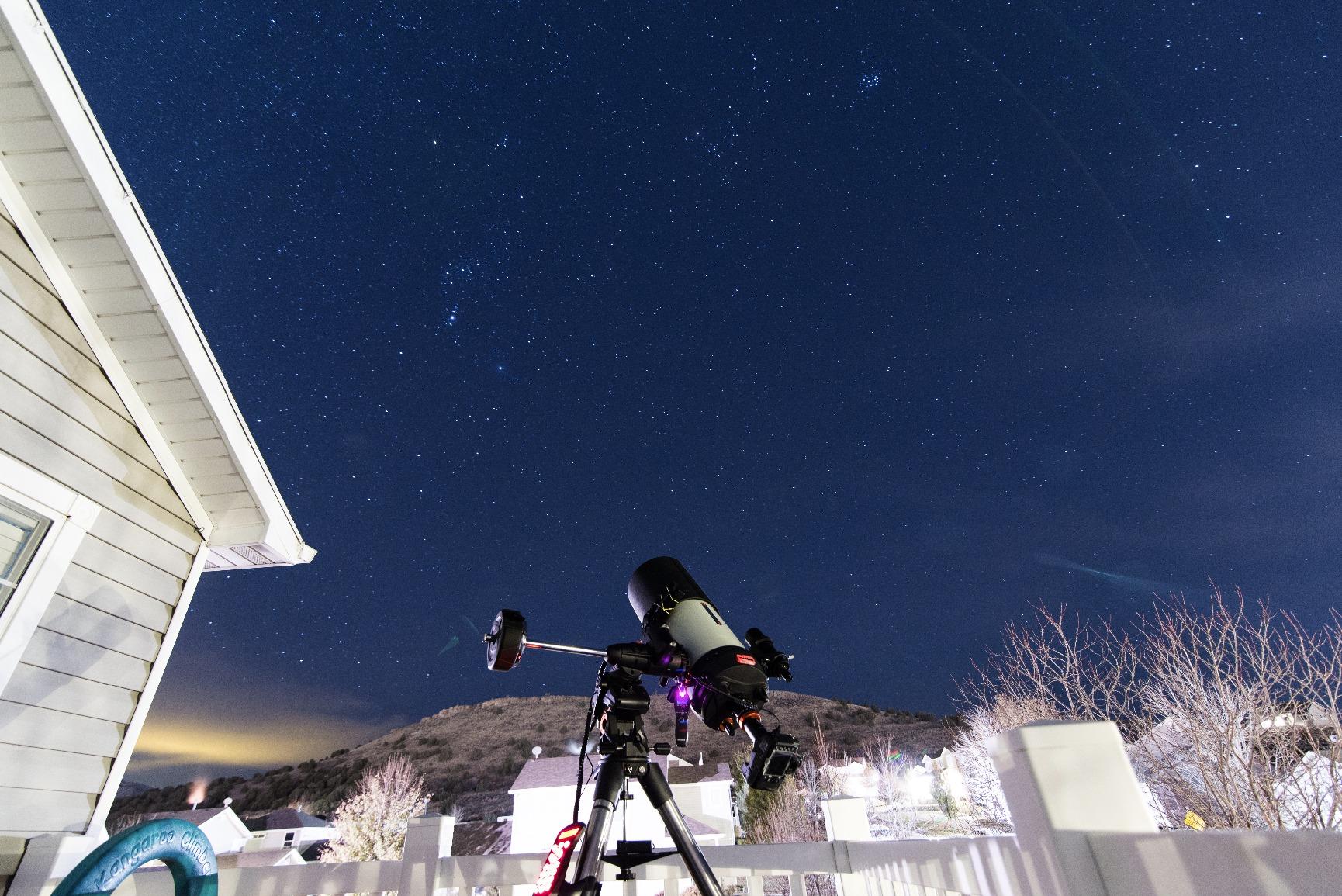
The Celestron Advanced VX 8 EdgeHD is the only German equatorial mount scope on this list, and it is built specifically for astroimaging rather than visual use. The 8-inch EdgeHD optical tube uses a corrected Schmidt-Cassegrain design that eliminates coma and field curvature across a full-frame sensor. The Advanced VX mount handles a 30-pound payload with permanently programmable periodic error correction and an autoguider port for long-exposure imaging.
This is the rig to buy if your goal is deep sky astrophotography rather than visual observing. The German equatorial mount tracks in right ascension only, eliminating field rotation. Users report achieving 120-second exposures without autoguiding, and substantially longer guided subs with a guide scope attached.
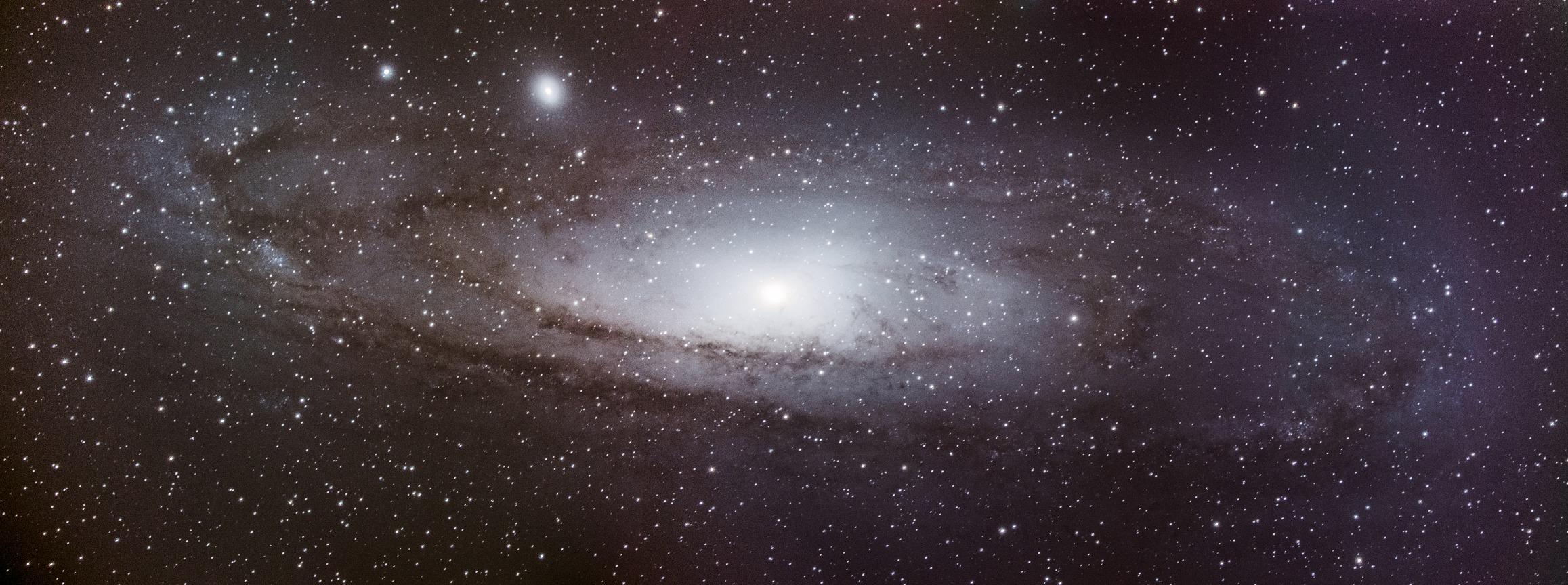
The EdgeHD optical tube is also compatible with Fastar/Hyperstar, which converts the scope to a fast f/2 imaging system for wide-field deep sky work. At f/2, you can capture faint nebulae and galaxies in a fraction of the time required at the native f/10 focal ratio.
The Advanced VX mount supports dual saddle dovetail plates that accommodate both CG-5 and CGE style tubes. All-Star Polar Alignment simplifies the polar alignment process, which is critical for clean long-exposure tracking.
Best For Dedicated Astrophotographers
The Advanced VX 8 EdgeHD is the right pick if deep sky astrophotography is your primary goal rather than visual observing. The EdgeHD optic and German equatorial mount are purpose-built for imaging, and the Fastar/Hyperstar compatibility opens wide-field possibilities.
It is also a strong fit for imagers who plan to upgrade to a larger optical tube in the future, because the 30-pound payload has room to grow.
What to Know Before Buying
The total weight of 84.9 pounds is substantial. Plan a permanent setup or a wheeled solution for moving the assembled scope. Some users have received defective mounts out of the box, so a strong return policy matters. Customer service response times have been reported as slow by some buyers.
The imaging learning curve is steep. Plan to invest time in learning polar alignment, autoguiding, and image processing. The payoff is clean, long-exposure deep sky images that visual scopes simply cannot produce.
14. Unistellar Odyssey PRO – Premium Smart Telescope With Eyepiece
- Setup in under 2 minutes with automatic alignment
- Exclusive eyepiece technology for live visual experience
- 5-hour battery life and 64GB storage
- RAW/FITS export for advanced processing
- Citizen science participation with NASA and SETI
- Lacks manual control options
- Basic app needs improvement
- Cannot be used during daytime
- No dew heater included
- Premium price point
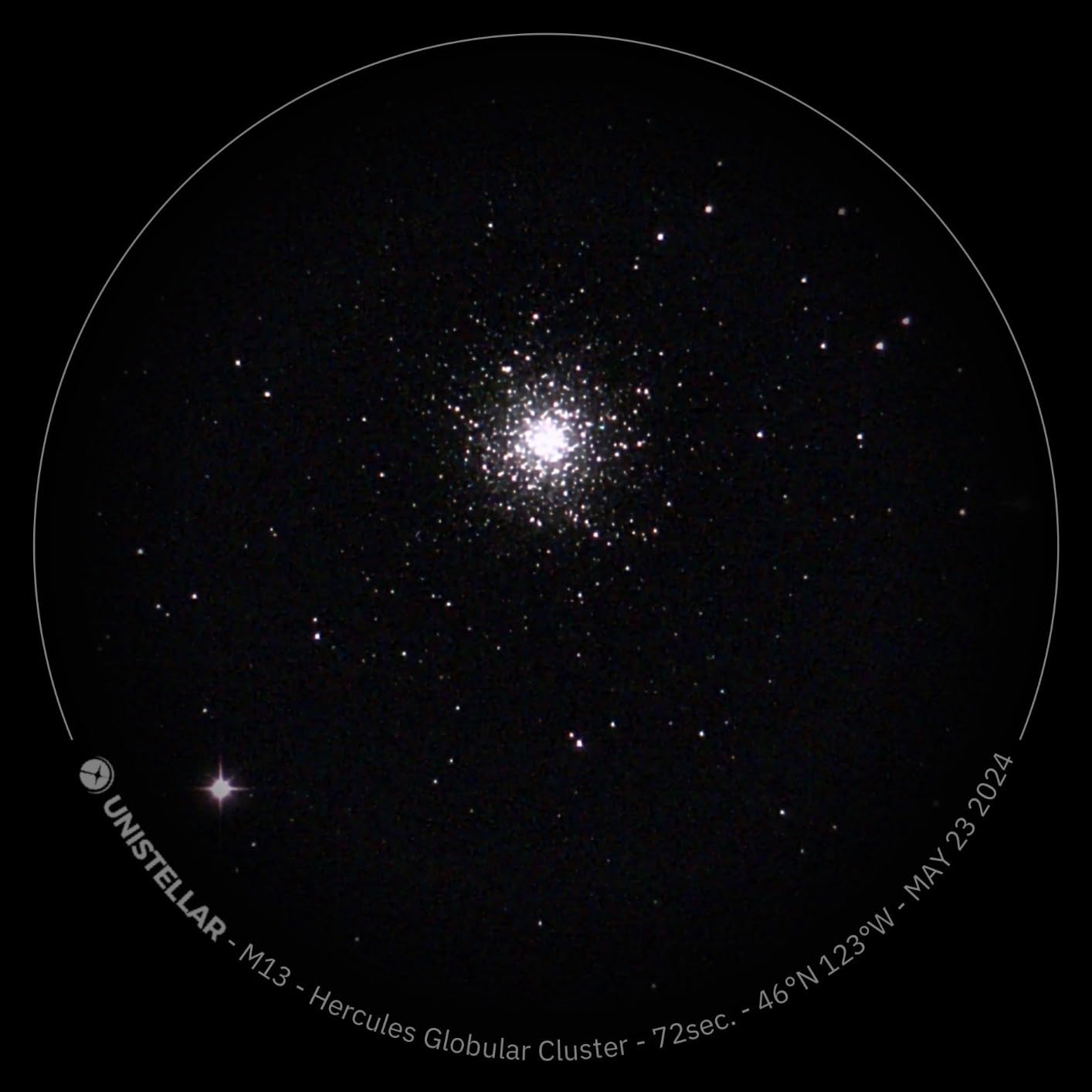
The Unistellar Odyssey PRO is a unique premium smart telescope that bridges the gap between image-only devices like the Seestar and traditional visual scopes. The exclusive eyepiece technology delivers a live visual experience enhanced by the onboard camera and Enhanced Vision stacking, so you actually look through an eyepiece while the scope stacks images in real time. This is the closest thing to looking at a processed astrophotography image with your own eye.
Setup is genuinely under two minutes. The Odyssey PRO handles alignment automatically using its onboard database of 37 million stars. Tap a target in the Unistellar app and the scope slews, tracks, and begins stacking. The 5-hour battery and 64GB of storage support full overnight sessions without external power or memory cards.
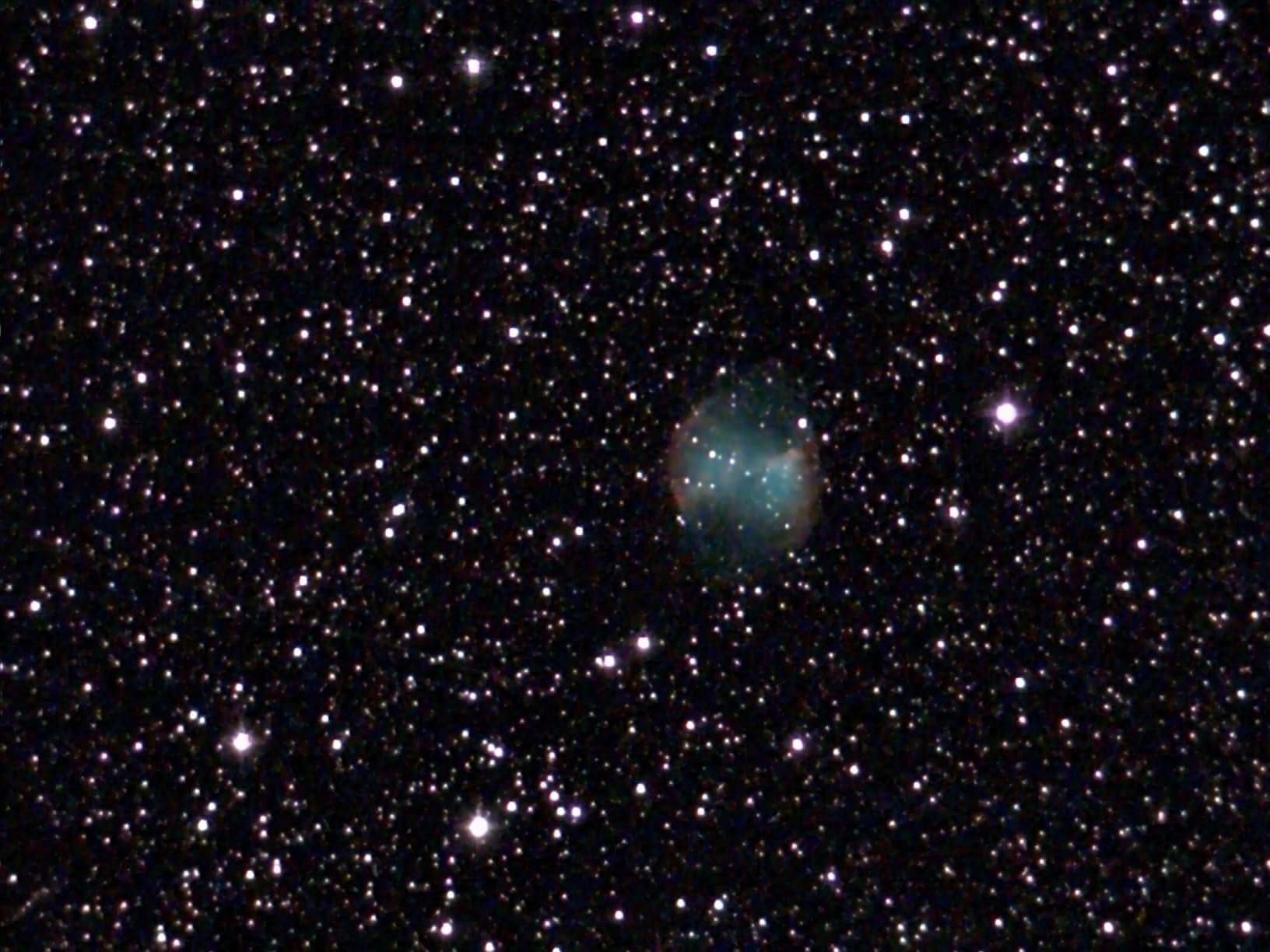
For deep sky work, the 85mm aperture is small by traditional standards, but the Enhanced Vision technology compensates by stacking light over seconds to minutes. The result is live views of nebulae and galaxies that look closer to processed images than the faint smudges visible through a comparable traditional scope.
RAW and FITS export lets you do advanced post-processing in PixInsight or similar tools, which is a meaningful feature for serious imagers. Citizen science campaigns with NASA and SETI let you contribute to real astronomical research, including exoplanet transit observations and asteroid occultations.
Best For Premium Casual Observers and Citizen Scientists
The Odyssey PRO is the right pick for buyers who want the convenience of a smart telescope but also want a live visual experience through an eyepiece. The Enhanced Vision technology delivers a unique observing experience that no other scope on this list matches.
It is also a strong fit for educators and citizen scientists who want to participate in NASA and SETI research campaigns.
What to Consider About Price and Manual Control
The Odyssey PRO is expensive, and the 85mm aperture is modest for the price. You are paying for the integrated smart experience, automatic alignment, and Enhanced Vision technology. If pure aperture-per-dollar is your priority, look at the larger Dobsonians on this list.
The scope lacks manual control options, so if the WiFi drops or the app glitches, you are stuck. The app itself needs improvement according to several users. There is also no dew heater included, which matters in humid environments.
15. Celestron CPC 1100 – 11-Inch GPS SCT On Dual Fork Arm
Celestron CPC 11″ Schmidt Dual Fork Arm Alt-Azimuth Computerized Telescope
- Fantastic 11-inch SCT optics
- GPS-enabled for automatic location and time
- Dual fork arm mount is sturdy
- Excellent for planetary and deep sky viewing
- High-quality 9x50 finderscope included
- Very heavy at 65+ pounds total
- Some units arrived with dirt inside optics
- Noisy motors at high slew rates
- No battery pack included
- Collimation can be difficult
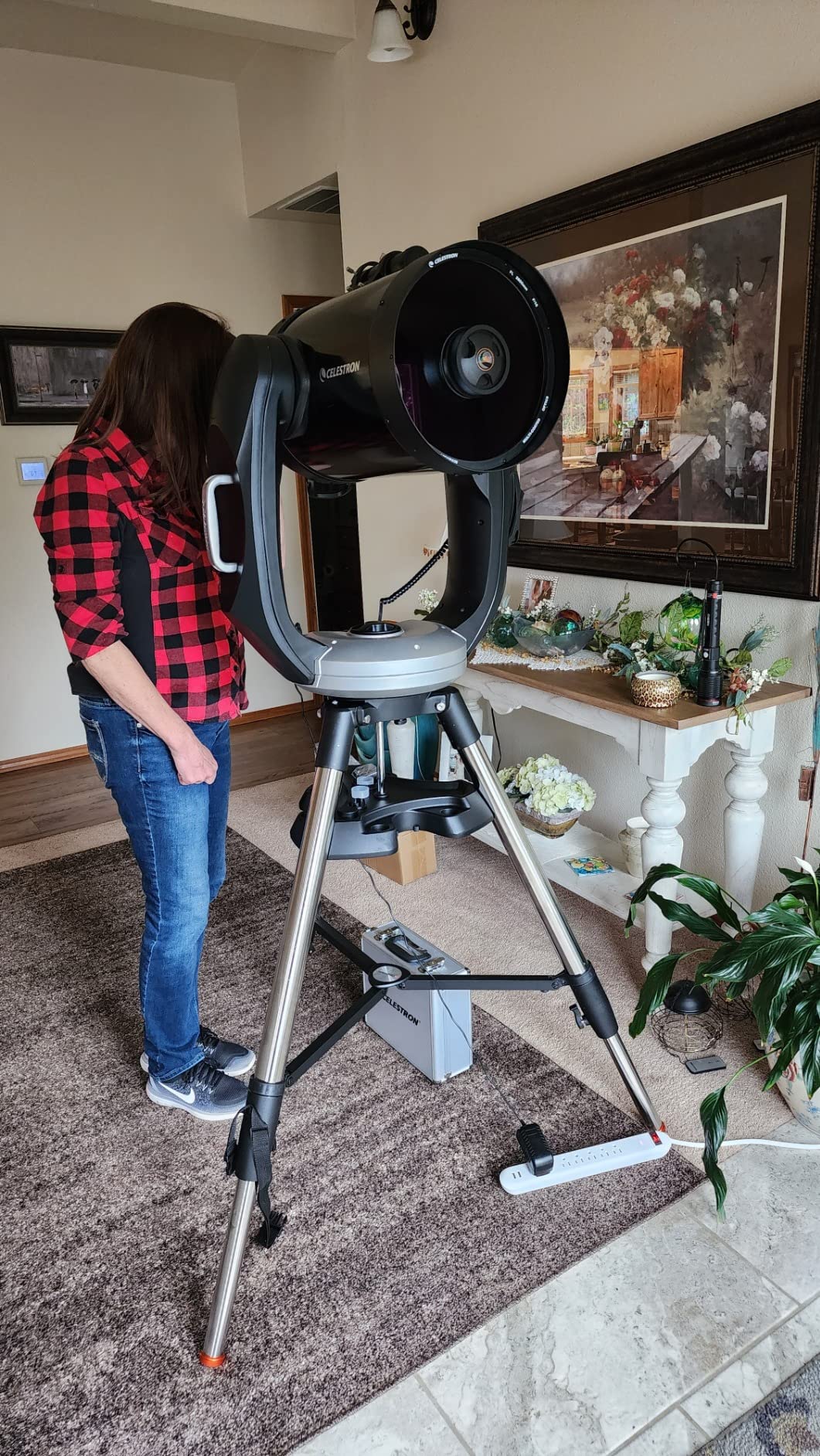
The Celestron CPC 1100 is the largest and most capable Celestron SCT on this list, and it is built for serious observers who want 11 inches of aperture on a GPS-enabled dual fork arm mount. The 11-inch Schmidt-Cassegrain optic gathers roughly 60 percent more light than the 8SE, which translates to noticeably brighter deep sky views and more resolved detail in galaxies and globular clusters.
The dual fork arm mount is more rigid than the single fork arm on the NexStar line, which means better tracking stability at high magnification. Built-in GPS automatically sets your location, date, and time, which simplifies alignment. SkyAlign works with three bright objects, and the 40,000-object database covers the full Messier, Caldwell, and NGC catalogs.
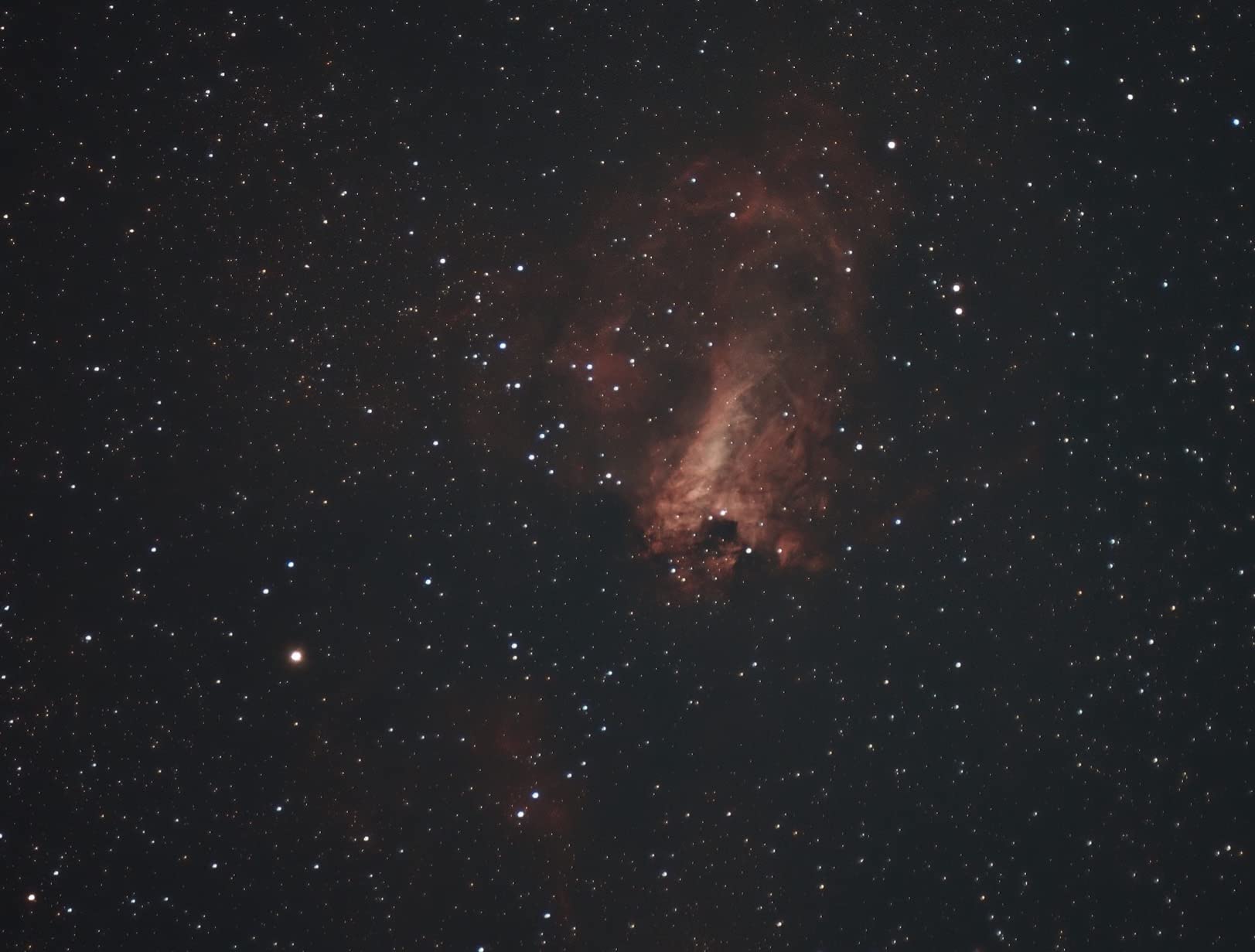
For deep sky work specifically, the CPC 1100 excels on bright objects. The Orion Nebula shows extensive filamentary structure, the Ring Nebula displays a clear central star, and globular clusters like M13 and M22 are fully resolved to their cores. Brighter galaxies like Andromeda show mottled dust lanes under dark skies.
The included 9×50 finderscope is a real upgrade over the red dot finders on smaller NexStar scopes, and the 40mm eyepiece gives a wide 70x view that frames large deep sky targets well.
Best For Established Observers Who Want Maximum SCT Aperture
The CPC 1100 is the right pick if you are an established visual observer who wants the maximum SCT aperture on a computerized mount and you can handle the weight and storage demands. The 11-inch optic delivers real deep sky performance for serious observers.
It is also a good fit for observers who regularly view from a single dark sky location and do not need to transport the scope frequently.
What to Plan For Weight and Storage
This is a heavy scope. The optical tube, fork arm, tripod, and counterweights total well over 65 pounds. Most observers keep the CPC 1100 in a permanent or semi-permanent location, often on a wheeled platform for moving in and out of a garage or observatory.
No battery pack is included, only a car adapter. Plan for a Celestron PowerTank or a larger lithium power station. The motors are noisy at high slew rates, which is normal for the CPC line but worth knowing before a quiet neighborhood session.
Buying Guide: How to Choose a Computerized Telescope for Deep Sky Viewing
Choosing the right computerized telescope for deep sky viewing comes down to a handful of core decisions. Aperture drives how faint you can see. The mount type determines whether the scope tracks for you. Power and portability decide whether the scope actually leaves your garage. This guide breaks down each factor so you can match the scope to your observing style.
Aperture and Light Gathering Power
Aperture is the single most important spec for deep sky viewing. Larger mirrors and lenses gather more light, which means fainter galaxies, more nebular detail, and brighter globular clusters. As a rough rule, every doubling of aperture gathers roughly four times the light. An 8-inch scope collects more than twice the light of a 5-inch scope.
For deep sky work from typical suburban skies, 6 inches is the practical minimum for satisfying views of brighter Messier objects. Eight inches is the sweet spot for serious deep sky observation. Twelve inches and larger will show faint NGC galaxies and planetary nebulae that smaller scopes simply cannot reach.
GoTo vs PushTo Technology
GoTo scopes use motors to slew to targets and track them automatically. You tap a target on a hand controller or app, the motors move the scope, and the scope continues tracking as the sky rotates. GoTo is the standard for computerized scopes, and it removes the need to learn star-hopping.
PushTo scopes like the Celestron StarSense Explorer Dobsonian guide you to targets with on-screen arrows but do not move or track automatically. You do the pushing, and once centered you manually nudge the scope to keep the target in view. PushTo is less expensive and lighter than GoTo, and it is a great fit for observers who want aperture without motor complexity. Just know that PushTo does not track objects, which means high-magnification viewing requires constant small adjustments.
Mount Types: Alt-Az vs Equatorial
Alt-azimuth mounts move in altitude (up and down) and azimuth (left and right). They are simple, intuitive, and standard on most consumer computerized scopes. The trade-off is field rotation, which limits long-exposure astrophotography but is rarely an issue for visual observing.
Equatorial mounts align with the celestial pole and track in right ascension only, eliminating field rotation. If deep sky astrophotography is your goal, an equatorial mount like the Celestron Advanced VX is the right choice. For purely visual use, an alt-az mount is simpler and sufficient.
Portability and Weight Considerations
The best telescope is the one you actually use. A 65-pound CPC 1100 that lives in a closet because it is too heavy to carry is worth less than a 4-pound Seestar that gets used weekly. Honestly assess your storage space, your vehicle, and whether you will observe alone or with help.
Smart telescopes like the Seestar S30 and Dwarf Mini win on portability. NexStar SCT scopes are a reasonable middle ground. Large Dobsonians and the CPC line require serious commitment to transport and setup.
Power and Battery Solutions
Most computerized scopes require external power, and battery management is a top frustration among new owners. AA batteries in NexStar scopes die within an hour or two of GoTo slewing. Plan for a Celestron PowerTank, a lithium power station like a Jackery, or a 12V motorcycle battery from day one.
The Celestron NexStar Evolution line includes a built-in 10-hour lithium battery, which is the cleanest solution. Smart telescopes like the Seestar and Dwarf series also include internal batteries rated for several hours of imaging.
Light Pollution and Filter Strategy
Light pollution is the enemy of deep sky viewing. Suburban skies wash out faint nebulae and galaxies. If you observe from light-polluted skies, look for scopes with built-in dual-band filters (like the Seestar S30 and S30 Pro) or plan to add a light pollution filter to your accessory list.
Dual-band filters pass the specific wavelengths emitted by emission nebulae while blocking broadband sky glow. They are less effective on galaxies and star clusters, which emit across all wavelengths. For broadband targets, traveling to darker skies is the only real solution.
Budget Allocation Guidance
Set aside 20 to 30 percent of your budget for accessories. A power tank, dew shield, upgraded eyepieces, and a quality finderscope are real costs on top of the scope itself. The sticker price is rarely the full cost of a usable deep sky setup.
Under $500, the Celestron 114LCM and ZWO Seestar S30 are the strongest picks. Between $500 and $1,500, the NexStar 6SE, 127SLT, and DWARFLAB Dwarf 3 cover the bases. Above $1,500, the NexStar 8SE, Evolution 8, and larger GoTo Dobs deliver serious aperture and capability.
FAQs
What is the best computerized telescope for deep sky viewing?
The Celestron NexStar 8SE is the best overall computerized telescope for deep sky viewing. Its 8-inch Schmidt-Cassegrain optic gathers enough light to show the Orion Nebula, Ring Nebula, and resolved globular clusters, while the GoTo mount with 40,000+ objects makes locating faint targets simple. For imagers on a budget, the ZWO Seestar S30 is the best value smart telescope.
Are computerized telescopes worth it for beginners?
Yes, computerized telescopes are worth it for beginners who want to find faint deep sky objects without learning star charts. GoTo scopes eliminate the frustration of star-hopping and let new observers see galaxies and nebulae on their first night. The trade-off is higher cost, the need for external power, and added complexity in setup and alignment.
What is the difference between GoTo and PushTo telescopes?
GoTo telescopes use motors to slew to targets and track them automatically. PushTo telescopes like the Celestron StarSense Explorer guide you to targets with on-screen arrows but do not move or track on their own. PushTo is less expensive and lighter, but it requires you to manually nudge the scope to keep objects in view at high magnification.
How much does a good computerized telescope cost?
A good entry-level computerized telescope costs $400 to $600 (Celestron 114LCM, ZWO Seestar S30). Mid-range GoTo scopes with 5 to 6 inches of aperture run $600 to $1,200 (NexStar 127SLT, NexStar 6SE). Premium 8-inch SCTs and large GoTo Dobs cost $1,400 to $2,500. Top-tier imaging rigs and large-aperture scopes can exceed $2,500.
Can computerized telescopes see galaxies?
Yes, computerized telescopes can see galaxies. An 8-inch GoTo scope like the NexStar 8SE shows Andromeda as an oval smudge with a brighter core, while a 12-inch GoTo Dobsonian reveals dust lanes and mottled detail in brighter galaxies. Smart telescopes like the ZWO Seestar S30 can capture stacked images of galaxies in real time, even from light-polluted skies.
Final Thoughts on the Best Computerized Telescopes Deep Sky Observers Should Consider
The best computerized telescopes deep sky observers can buy in 2026 span a wide range of prices and capabilities. For visual observers who want the classic eyepiece experience, the Celestron NexStar 8SE remains the strongest all-around pick with its 8-inch Schmidt-Cassegrain optic and proven GoTo mount. For casual imagers on a budget, the ZWO Seestar S30 delivers real deep sky results from light-polluted backyards in a 3.6-pound package.
If you want maximum aperture for serious deep sky reach, the Sky-Watcher Flextube 300 and Celestron CPC 1100 are the heavy hitters on this list. For dedicated astrophotographers, the Celestron Advanced VX 8 EdgeHD is the only German equatorial mount rig here, and it is purpose-built for long-exposure imaging. And for travelers and backpackers, the DWARFLAB Dwarf Mini at 1.85 pounds is hard to beat.
Whatever you choose, plan for power, accessories, and a clear dark sky. A modest scope under dark skies beats a premium scope trapped in a light-polluted garage every time. To safely view the Sun with your new computerized scope, check our companion guide to solar filters for telescopes. Clear skies.