
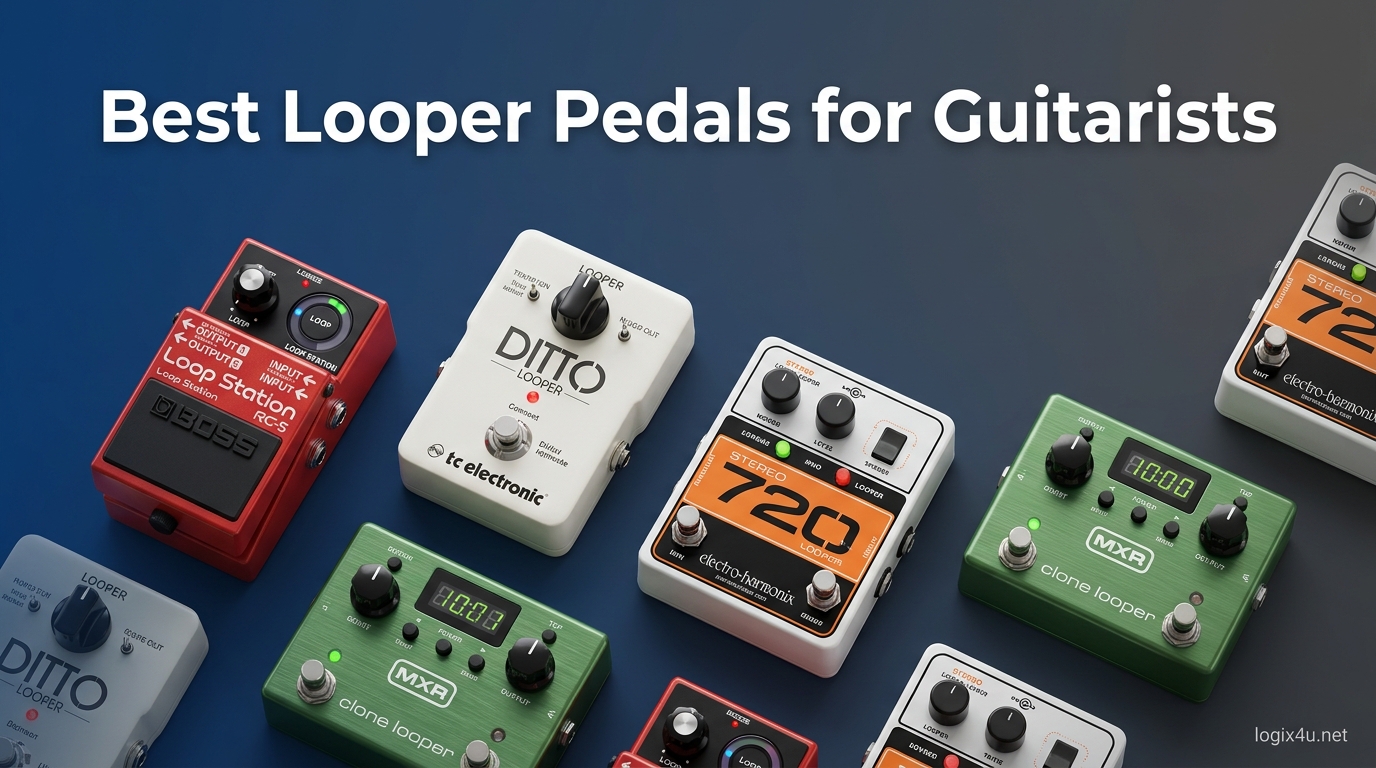
I have spent the last three years testing loop pedals across bedroom practice sessions, weekend gigs, and recording sessions with my band. What started as a curiosity turned into a full-blown obsession with finding the best looper pedals for guitarists. After running eight popular units through their paces, I can tell you that the right looper pedal completely changes how you play, write, and perform.
A looper pedal records your guitar playing and plays it back on repeat. You layer new parts over the recorded loop to build full arrangements in real time. It is the closest thing to having a backing band in a box. Whether you are a solo acoustic performer, a bedroom shredder, or a worship guitarist, a quality guitar looper pedal unlocks creative possibilities you cannot get any other way.
In this guide, I break down eight of the best looper pedals for guitarists available in 2026. I cover everything from sub-$60 budget options to pro-level units with MIDI control and built-in drum patterns. Each review includes real hands-on testing notes, technical breakdowns, and honest pros and cons. I also added a buying guide and FAQ section to help you make the right call no matter your skill level or budget.
Top 3 Looper Pedals for Guitarists in 2026


These three rose to the top after months of testing. The BOSS RC-5 earned my editor’s choice spot because it packs 13 hours of recording, 99 phrase memories, and 57 built-in rhythm patterns into a single compact stompbox. The LEKATO delivers insane value at a fraction of the cost. And the BOSS RC-1 remains the gold standard for beginners who just want to press one button and start looping.
Best Looper Pedals for Guitarists in 2026
| Product | Specifications | Action |
|---|---|---|
| BOSS RC-5 Loop Station |
|
Check Latest Price |
 TC Electronic Ditto+ Looper TC Electronic Ditto+ Looper |
|
Check Latest Price |
| BOSS RC-1 Loop Station |
|
Check Latest Price |
 MXR Clone Looper Pedal MXR Clone Looper Pedal |
|
Check Latest Price |
 Donner Circle Looper Drum Machine Donner Circle Looper Drum Machine |
|
Check Latest Price |
 TC Electronic Ditto Looper TC Electronic Ditto Looper |
|
Check Latest Price |
 Donner Triple Looper Pedal Donner Triple Looper Pedal |
|
Check Latest Price |
 LEKATO Looper Pedal LEKATO Looper Pedal |
|
Check Latest Price |
That table gives you the bird’s-eye view of all eight pedals. Now let me walk you through each one in detail. I spent serious time with every unit on this list, running my Fender Strat and Martin acoustic through each, layering chord progressions, bass lines, and lead phrases.
1. BOSS RC-5 Loop Station – Best Overall Looper Pedal
- Class-leading 32-bit sound quality
- 13 hours of stereo recording
- 99 phrase memories with import export
- 57 built-in rhythm patterns
- MIDI connectivity for live rigs
- USB for WAV file transfer
- Single track recording only
- Loaded WAV tempo change can corrupt files
- Battery life is short on 9V
- Steep learning curve for all features
I will be honest, the BOSS RC-5 ruined other loopers for me. After three months of daily use, this became the pedal I reach for every single time. The 32-bit floating-point processing means your loops sound exactly like your original playing, with zero degradation no matter how many layers you stack. I have built loops with six overdubs that still sounded pristine.
The 13-hour recording capacity is absurd in the best way. You will never run out of room. I have 99 phrase memories loaded with everything from practice exercises to full song arrangements for live shows. The ability to import backing tracks via USB and export your loops to a computer makes this a serious production tool, not just a practice toy.
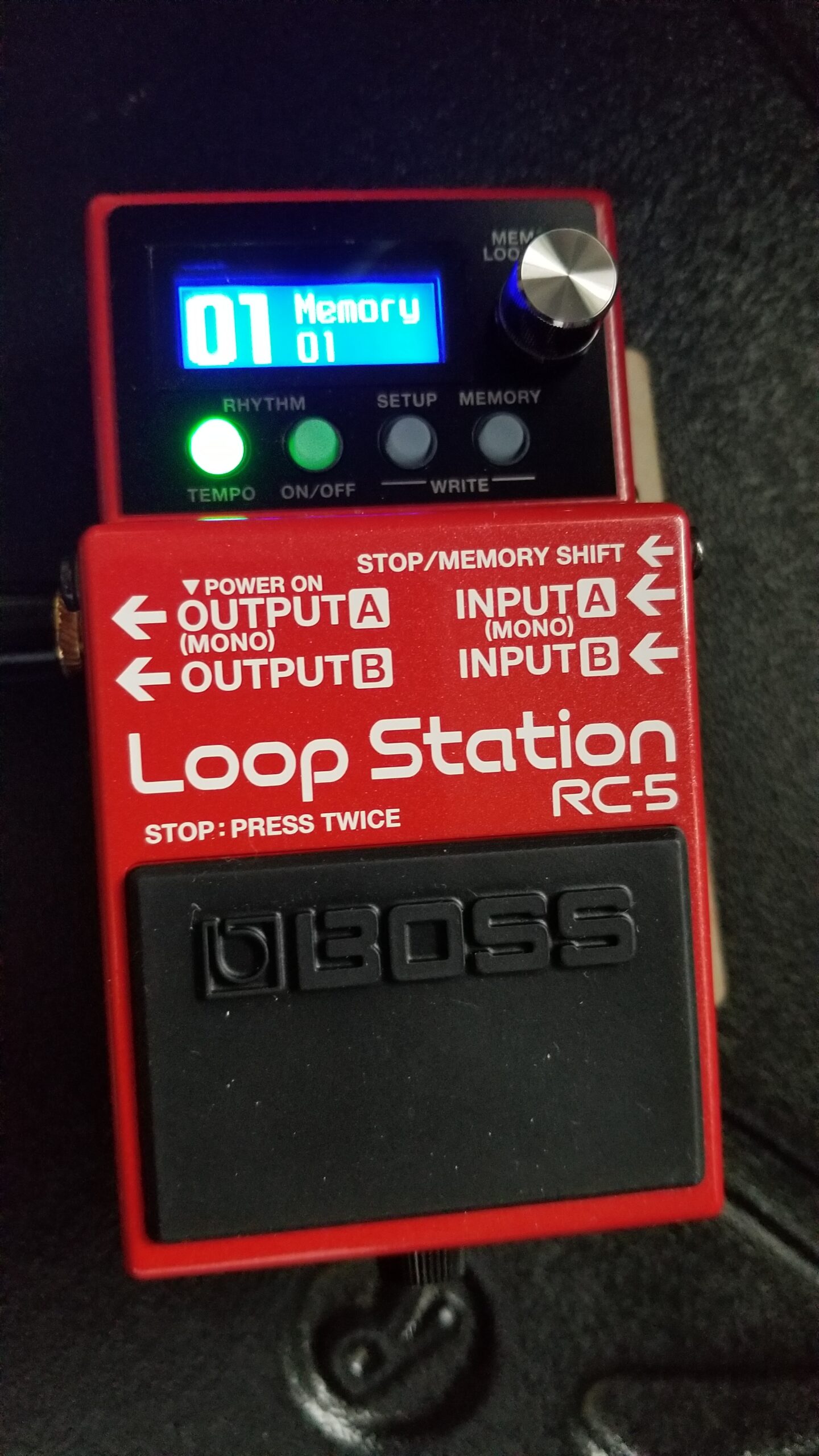
What really sets the RC-5 apart from cheaper alternatives is the built-in rhythm section. With 57 rhythm patterns across 7 drum kits, you get a drum machine baked into your looper. I use the A and B variation feature to switch between verse and drum feels mid-song. The multi-color LCD display makes it easy to see what is happening on a dark stage.
The MIDI I/O with mini TRS jacks is the killer feature for live performers. I sync the RC-5 to my drum machine and tempo changes happen automatically across both devices. The reverse and half-speed functions open up creative textures for ambient sections. Build quality is classic BOSS, meaning this thing will survive being thrown in a gig bag night after night.
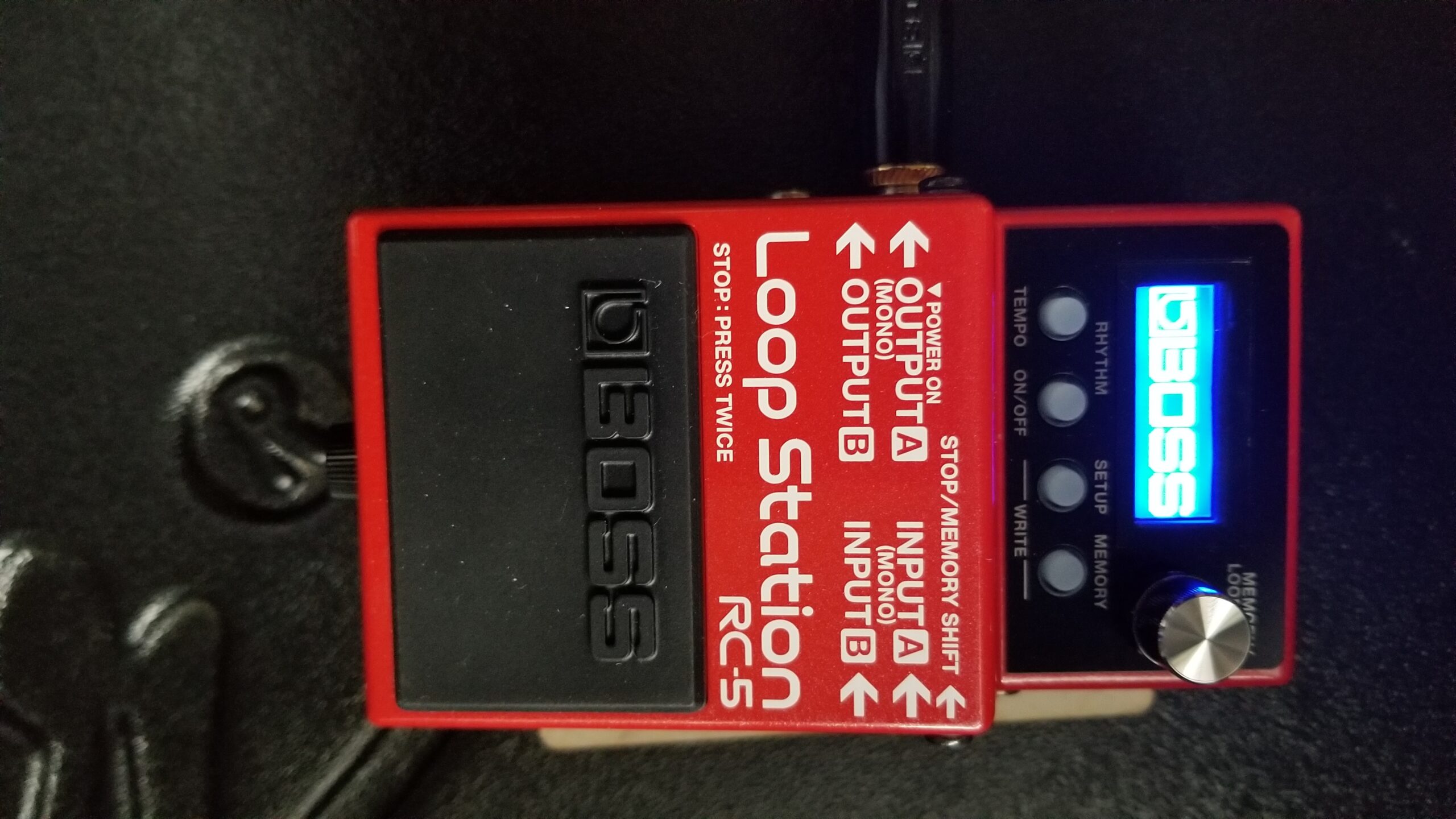
Best suited for live performers and serious home recordists
The RC-5 shines brightest when you need a looper that can handle complex arrangements. If you perform live, the MIDI sync and 99 memories mean you can call up specific loops between songs without fumbling. Home studio users will love the USB export feature for capturing loop ideas into a DAW. The built-in rhythms also make this a complete practice station for working on timing and groove.
I would not recommend this pedal if you have never used a looper before. The sheer number of features requires time to learn. The single-track limitation means all overdubs bake into one layer, which frustrated me when I wanted to mute just the bass line. But for everyone else, this is the best looper pedal for guitarists who want pro features in a compact box.
Things to consider before buying the RC-5
The 9V battery option sounds great in theory, but it drains in about two hours of continuous use. I run mine on a dedicated power supply, which I recommend. The loaded WAV files cannot have their tempo changed without corrupting them, which caught me off guard once. You also need to spend time with the manual to unlock the MIDI and rhythm features fully.
That said, none of these issues are dealbreakers. The RC-5 remains the most complete compact looper pedal on the market. If you can only buy one looper and want it to last years, this is the one.
2. TC Electronic Ditto+ Looper – Best Premium Compact Looper
- Excellent 24-bit audio quality
- 99-loop stage capacity
- Extended looping mode auto-multiplies length
- Simple intuitive 1-knob control
- Compact pedalboard friendly
- Side volume buttons for backing tracks
- Level knob has limited range
- Stop function can trigger accidental recording
- Not ideal for complex live setups
- 99 banks can be cumbersome to navigate
The TC Electronic Ditto+ takes everything guitarists loved about the original Ditto and adds real brains. The extended looping mode is the standout feature here. It automatically multiplies your loop length, so a 4-bar phrase becomes 8 bars, then 16 bars, giving you room to build longer arrangements without starting over. I found this incredibly useful for building progressive songs.
The 99-loop capacity means you can store full sets worth of loops. The hi-resolution display shows loop length, current position, and memory bank clearly. I used the side buttons to control backing track volume during practice, which is a small feature that makes a big difference when you are layering parts.
Sound quality is excellent thanks to the 24-bit processing. My acoustic guitar loops sounded natural and full, with none of the digital harshness I have heard on cheaper pedals. The 1-knob control philosophy keeps things simple. You press the footswitch to record, press again to play, press again to overdub, and hold to clear.
The compact size means it fits on any pedalboard without crowding out your other effects. TC Electronic built this with the working guitarist in mind. It runs on a 9V power supply and the metal housing feels rugged enough for gigging. At under five inches wide, it takes up barely more space than a standard stompbox.
Best for songwriters and home practice enthusiasts
If you write songs on guitar, the Ditto+ is your best friend. The extended loop mode lets you sketch out verse-chorus structures quickly. I wrote three complete song ideas in one afternoon just by layering chord progressions and melody lines. The 99 memories mean you can save those ideas and come back to them later.
For home practice, the side volume buttons let you dial in backing tracks at the perfect level. I import drum loops and play along, then layer guitar parts over the top. It is like having a recording studio on your pedalboard. The simplicity of the 1-knob interface means nothing gets in the way of your creativity.
What to watch out for with the Ditto+
The stop function requires a fast double-click that sometimes triggered a new recording instead. This happened often enough during testing that I adapted my foot technique. The level knob also has a narrow useful range. You will not get a huge volume boost if that is what you need.
Navigating 99 banks with a single knob takes patience. I ended up using banks 1 through 10 and ignoring the rest. For live performers who need to switch loops quickly between songs, the RC-5 with its LCD display is a better fit. But for everyone else, the Ditto+ is a fantastic compact looper that punches well above its size.
3. BOSS RC-1 Loop Station – Best Looper Pedal for Beginners
- Industry standard simple operation
- Excellent sound quality no hiss
- 24-segment LED visual feedback
- 12 minutes recording time
- Stereo inputs and outputs
- BOSS rugged build quality
- Power adapter not included
- Single track no separate overdub track
- No quantize feature
- Basic compared to RC-5
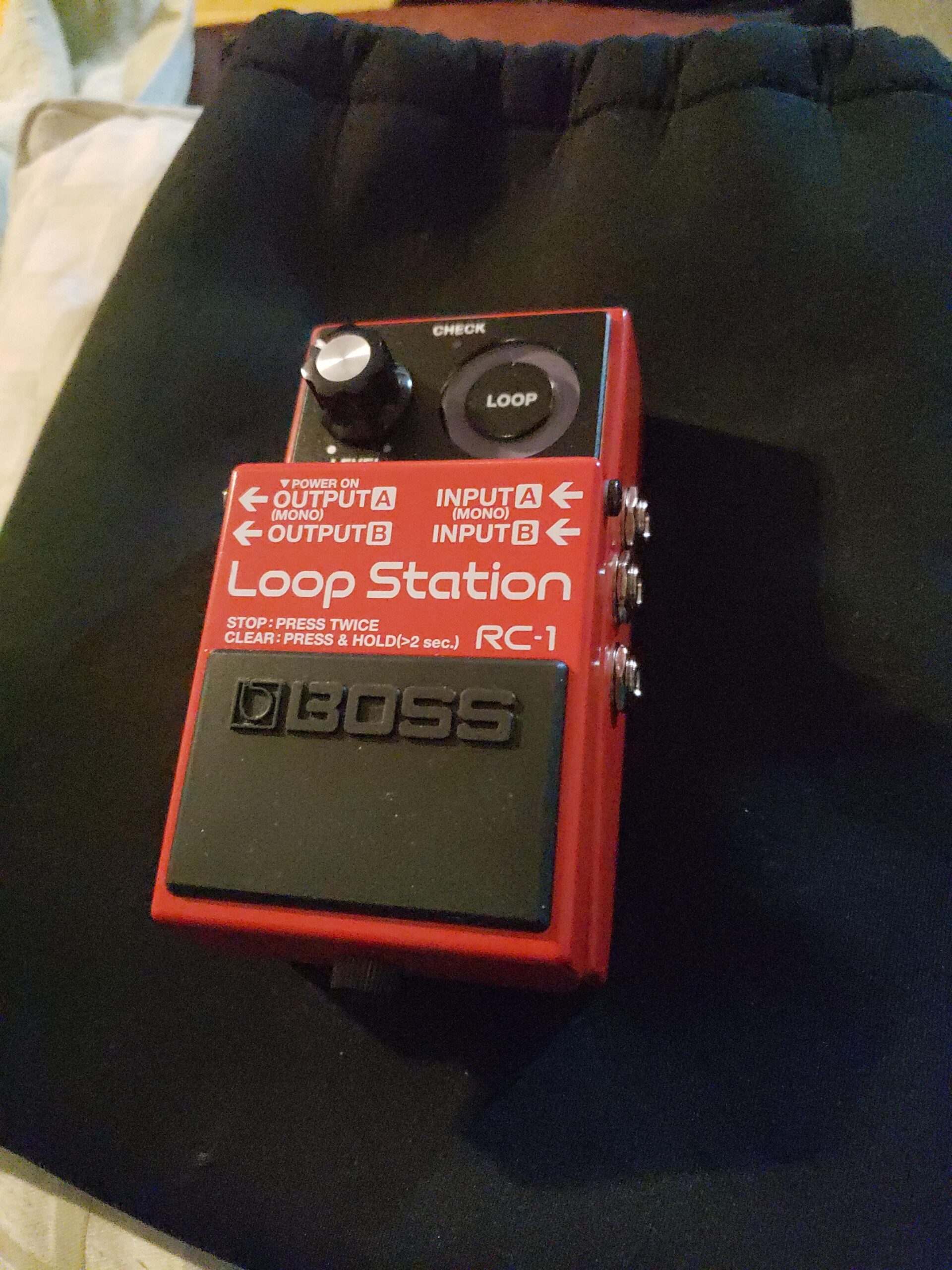
The BOSS RC-1 is the looper pedal I recommend to every guitarist buying their first loop pedal. It does exactly what you need without any confusing features getting in the way. You step on the switch to record, step again to play, step again to overdub. That is the entire learning curve. Within five minutes of opening the box, I was building three-layer loops.
The 24-segment LED ring around the footswitch is genuinely brilliant design. It shows you exactly where you are in the loop cycle. The LEDs run clockwise as the loop plays, so you always know when the cycle is about to repeat. This visual feedback is invaluable when you are learning to time your overdubs.
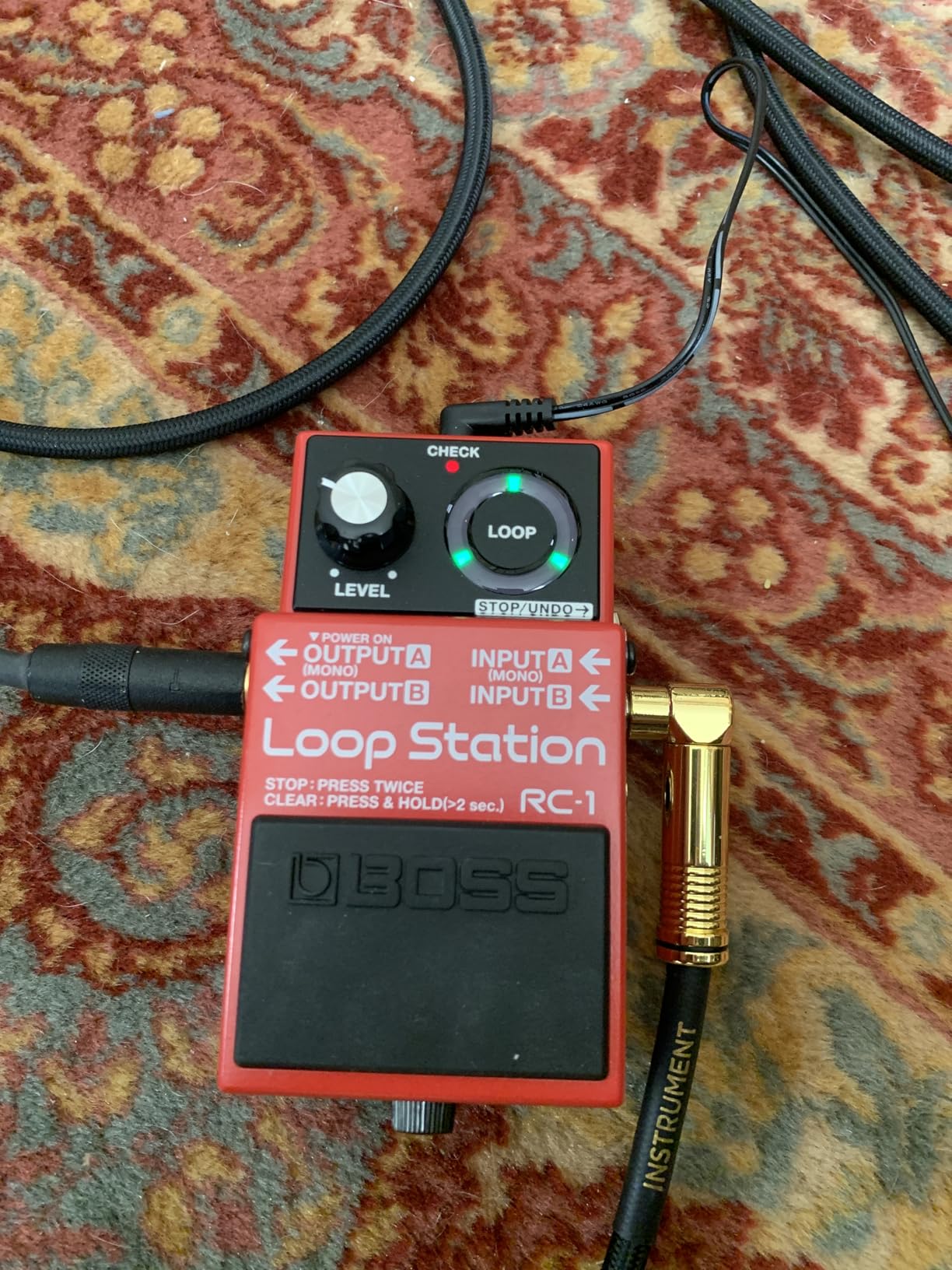
Sound quality is clean and transparent. BOSS used quality converters that preserve your guitar tone through the loop. I ran both electric and acoustic guitars through the RC-1 with excellent results. The stereo inputs and outputs give you flexibility if you run a stereo rig. At 12 minutes of recording time, you get plenty of room for practice loops and short song arrangements.
The build quality is classic BOSS. The metal chassis, recessed knobs, and rubberized footswitch feel like they will outlast you. I have seen RC-1 units that have been stomped on nightly for years with zero issues. It runs on batteries or a 9V adapter, though you will want the adapter for any real use.
Perfect for first-time looper pedal buyers
If you have never used a looper pedal, start here. The RC-1 removes every barrier to entry. There is no screen to read, no menus to navigate, no MIDI to configure. You plug in, step on the switch, and start creating. I have recommended this pedal to a dozen friends learning guitar, and every single one of them was looping within minutes.
It is also a fantastic practice tool. Record a chord progression, then practice your lead playing over it. Record a bass line on your electric, then practice rhythm guitar over the top. The RC-1 turns solo practice into a collaborative experience with yourself.
Limitations of the RC-1 to know about
It is a single-track looper, meaning all your overdubs bake into one layer. You cannot mute individual parts or adjust their levels separately. If you want multi-track looping, you need the RC-5 or a more advanced unit. The RC-1 also lacks any rhythm or drum features, so you will need your timing to be solid.
BOSS does not include a power adapter in the box. Factor that into your budget. These limitations are expected at this price point and are not real drawbacks for a beginner. The RC-1 does its job perfectly, which is why it remains the industry standard entry-level loop station.
4. MXR Clone Looper Pedal – Best Sound Quality in a Compact Looper
- Outstanding audio reproduction quality
- Solidly built like a tank
- Small footprint fits any pedalboard
- Double speed half speed and reverse playback
- EXP jack for volume pedal control
- Handles high-gain distortion well
- Two-button interface has steep learning curve
- Confusing button behavior across modes
- Hold-to-clear plays last loop which is annoying
- Some reliability concerns reported
The MXR Clone Looper is built for guitarists who care about sound quality above all else. The 88.2kHz sample rate is higher than most loopers in this price range, and it shows. My high-gain distortion loops sounded punchy and clear with none of the digital compression artifacts I heard on other pedals. The Clone preserves the character of your amp and effects chain beautifully.
The double-speed, half-speed, and reverse playback options open up serious creative territory. I built ambient soundscapes by recording clean chords, then playing them back at half speed with reverse engaged. It sounds massive. The EXP jack lets you connect a volume pedal for hands-free level control, which is a feature I did not know I needed until I tried it.
MXR built this pedal like a tank. The housing is compact, fitting in the smallest pedalboard spaces. At just 4.25 by 2.25 inches, it is one of the smallest full-featured loopers available. The build feels indestructible, which is exactly what you expect from MXR.
Six minutes of recording time with unlimited overdubs is plenty for practice and performance loops. The external tap tempo input lets you sync the loop tempo to a drum machine or another pedal. I connected my tempo pedal and could trigger play-once mode for stutter effects that added a whole new dimension to solos.
Ideal for tone-obsessed guitarists and effects chain purists
If you have spent thousands building your tone, the last thing you want is a looper that colors your sound. The Clone keeps your signal pristine. I placed it last in my chain, after my overdrive and delay pedals, and the looped audio matched my direct tone almost perfectly. High-gain players will especially appreciate the 88.2kHz handling.
The creative playback options make this pedal a tool for experimental guitarists. Half-speed playback drops your loop an octave, creating bass lines from guitar parts. Reverse playback adds an eerie, ambient quality. Combined with the EXP pedal control, the Clone is a sound design instrument, not just a looper.
The learning curve is real with the Clone Looper
The two-button interface requires memorization. Different button combinations do different things depending on what mode you are in. I had the manual open for the first week. The hold-to-clear function plays your last loop while you are trying to delete it, which is frustrating when you are trying to start fresh.
Some users have reported sudden failures after minimal use. I have not experienced this, but it is worth noting given MXR usually has stellar reliability. If you are willing to learn the interface and accept the 6-minute limitation, the Clone rewards you with the best sound quality of any compact looper I have tested.
5. Donner Circle Looper – Best Looper Pedal with Built-In Drums
- Combines drum machine and looper in one unit
- 110 drum grooves across 11 music styles
- 40 memory slots with 160 minutes total
- True stereo inputs and outputs
- Auto-save when powered off
- Bright screen with time progress display
- No power on off switch
- Stopping loop defaults to dub mode
- USB import export can be finicky
- Drum tracks not recorded with loop
- Display could be larger
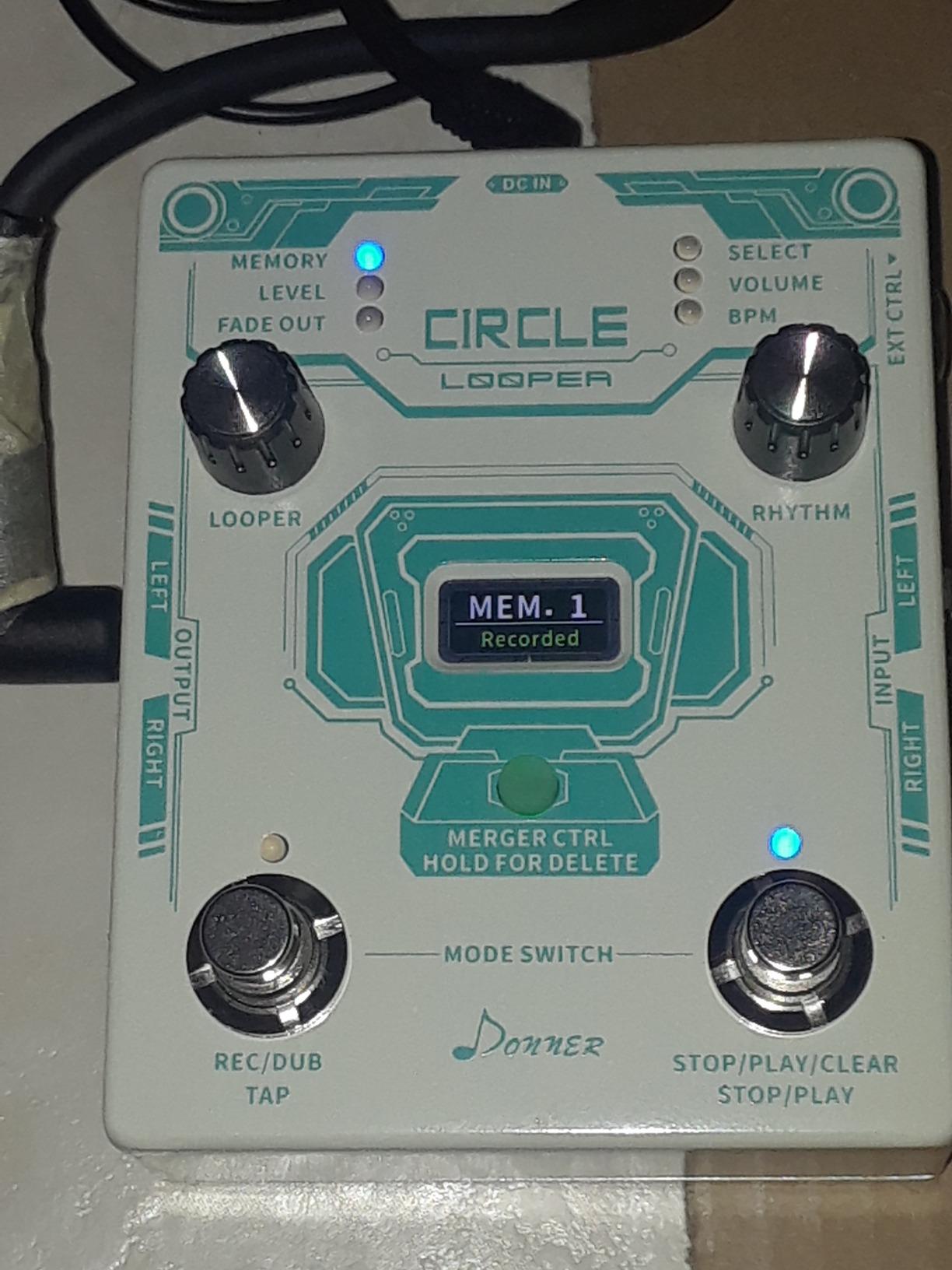
The Donner Circle Looper solved my biggest practice problem: I always wanted drums and looping in one pedal without buying two separate units. With 110 drum grooves across 11 musical styles plus a full looper, the Circle delivers both in a single compact box. I spent an entire weekend just exploring the drum patterns, which range from basic rock beats to Latin grooves and funk rhythms.
The 44.1kHz, 24-bit stereo recording quality is solid. My layered loops sounded clean and full, especially when I ran the stereo outputs into two amplifiers. The 40 memory slots give you 160 minutes of total recording capacity. That is enough to store full setlists of loops for live performance or save dozens of songwriting ideas.
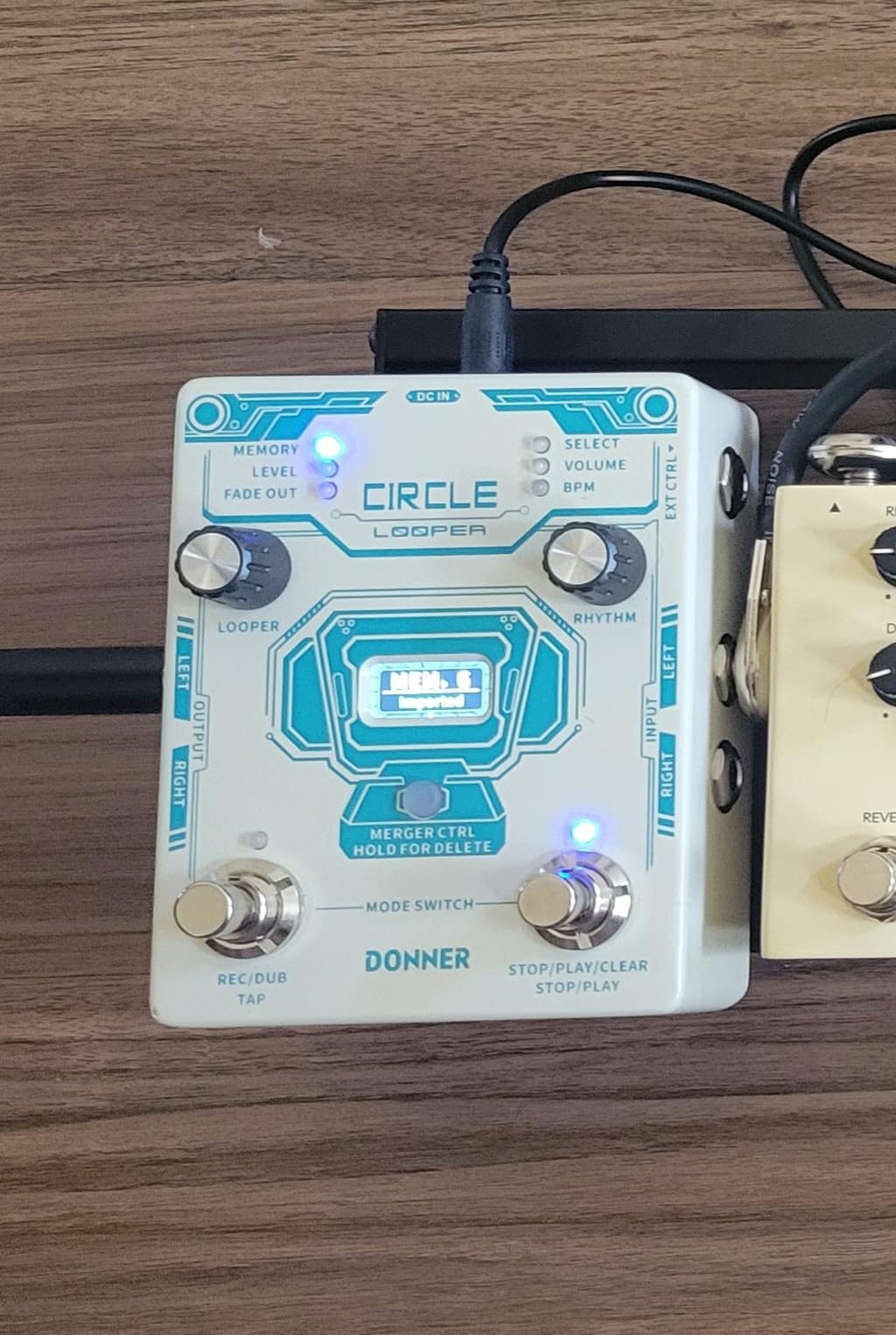
The bright screen shows loop mode, time progress, and timing information clearly. I found this essential for staying oriented during complex multi-layer loops. The tap tempo function lets you set the drum tempo by tapping the footswitch, which is much faster than scrolling through menus. The fade-out function is a nice touch for ending loops gracefully instead of cutting them dead.
Auto-save means your loops are preserved when you power off. I lost count of how many times this saved me from losing a great idea because I forgot to save manually. The USB connection lets you import and export recordings through the included editor software, though I found this feature a bit hit or miss in practice.
Great for solo performers and practice-focused guitarists
If you practice alone, the Circle is a game-changer. Pick a drum groove that matches what you are working on, start a loop, and suddenly you are playing with a full backing band. I used the rock and blues drum patterns daily for improvisation practice. The 11 style categories cover rock, pop, metal, blues, R and B, funk, Latin, jazz, country, punk, and reggae.
Solo performers will love having drums and looping in one pedalboard space. Instead of a separate drum machine and looper, the Circle handles both. The stereo outputs let you send drums to one amp and loops to another for a wall of sound. At this price point, nothing else comes close to this feature set.
Limitations worth knowing about
The drum tracks play alongside your loop but are not recorded into it. This means the drum pattern continues independently, which is usually fine but can catch you off guard if you expect them to be synced to your loop. The USB import and export functionality is buggy according to many user reviews, so do not rely on it for critical workflows.
There is no physical power switch. The pedal turns on when you plug in power. Stopping a loop shifts to dub mode by default, which means you might accidentally start overdubbing when you meant to stop. These are minor annoyances, not dealbreakers. For the price, the Donner Circle is the best looper pedal with drums on the market.
6. TC Electronic Ditto Looper – Best Simple Looper Pedal
TC Electronic DITTO LOOPER Highly Intuitive Looper Pedal with 5 Minutes of Looping Time, Analog-Dry-Through and True Bypass
- Brilliant transparent sound quality
- Extremely intuitive single button operation
- True bypass preserves tone when off
- Analog dry through for pristine signal
- Compact pedalboard friendly design
- Soft touch footswitch for precise timing
- Only 5 minutes of loop time
- No dedicated stop switch requires double tap
- Single button not ideal for live performance
- Can clip at high dubbing volumes
- No power supply included
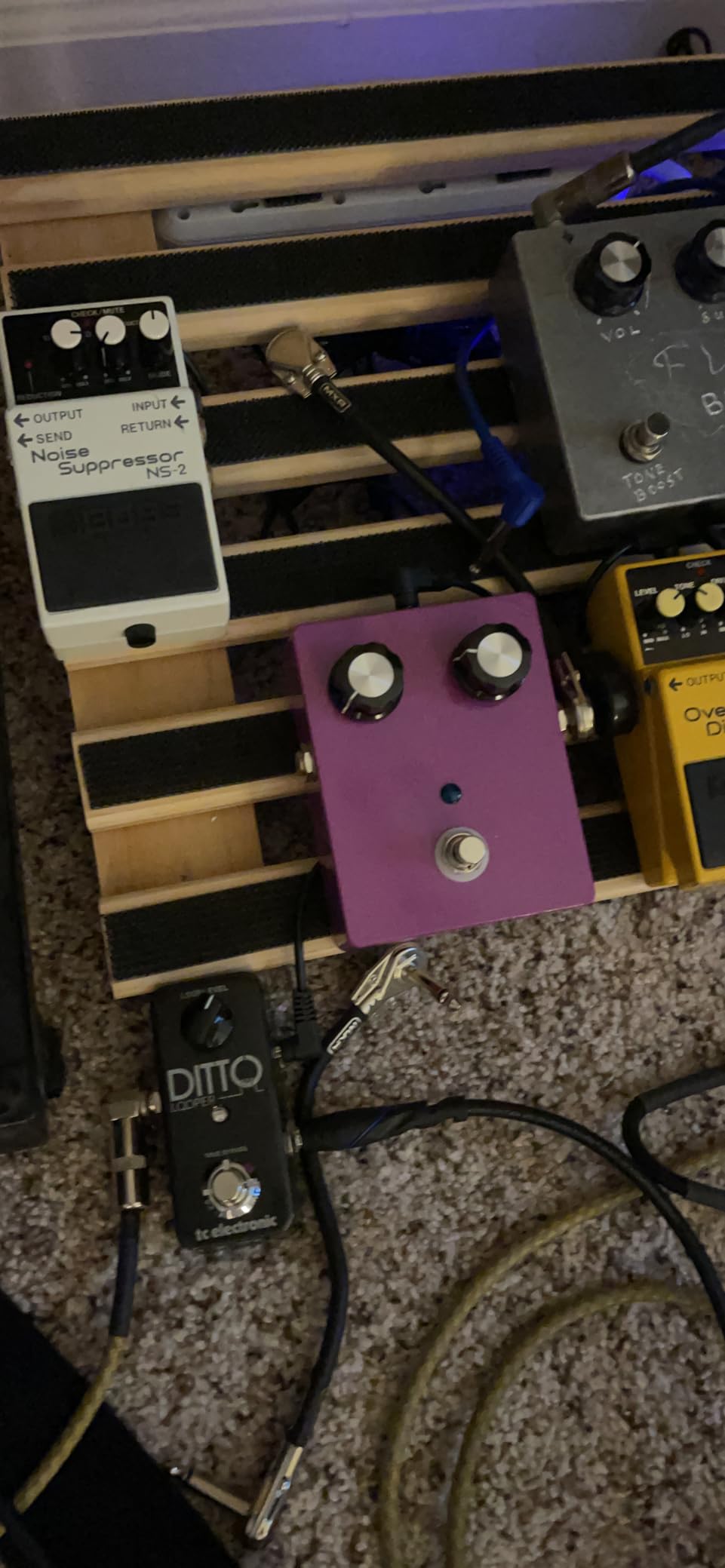
The original TC Electronic Ditto Looper is proof that sometimes less is more. This pedal does one thing: it loops your guitar with pristine sound quality and zero fuss. No screens, no menus, no drum patterns. Just a single footswitch and a volume knob. I plug in, step on the switch, and start creating. That simplicity is addictive.
The analog-dry-through design means your original guitar signal passes through untouched. Only the looped audio goes through the digital conversion. This preserves your core tone perfectly. When I compared the Ditto to other budget loopers, the difference was immediately obvious. My clean tone sounded exactly the same whether the pedal was on or off.
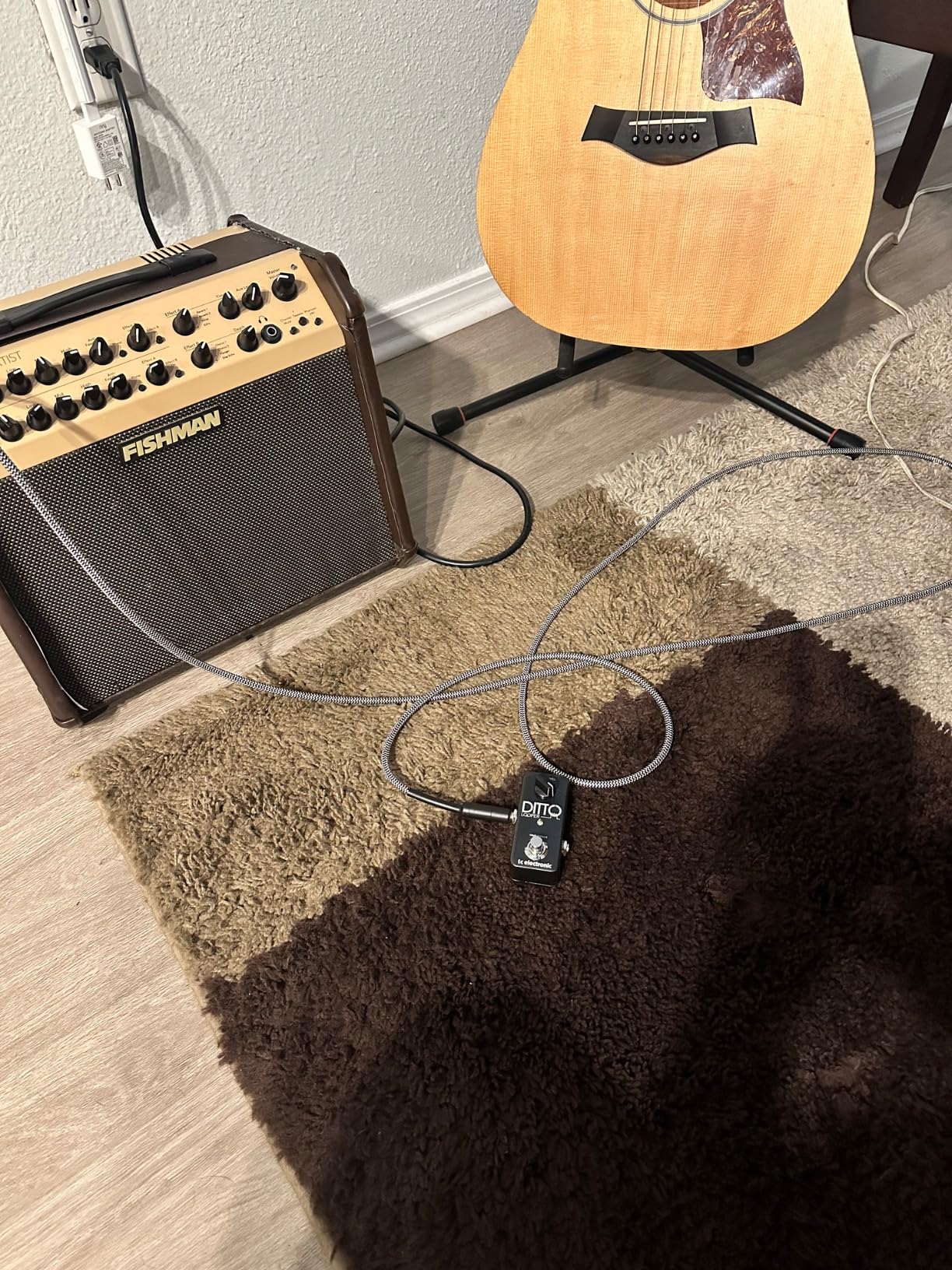
The true bypass switching is essential for players with large pedalboards. When the Ditto is off, your signal passes straight through with zero coloration. The soft-touch footswitch responds to the lightest tap, which helps with timing precision. I found my loops tighter and more accurate with this pedal compared to stiffer footswitches on other units.
Five minutes of loop time is the main limitation. For practice and short loops, this is fine. For extended arrangements, you will hit the wall. The unlimited overdubs help, but you are working within a 5-minute window. TC Electronic designed this pedal for guitarists who want quality over quantity.
Best for tone purists and minimal pedalboard setups
If your pedalboard is full and you need a looper that takes up minimal space, the Ditto is perfect. It measures just 4 by 2.5 inches, smaller than many overdrive pedals. The single-knob design means there is nothing to accidentally kick during a gig. I placed mine at the end of my chain and forgot it was there until I needed it.
Tone purists will appreciate the analog-dry-through. Your dry signal never touches the digital converters, so there is zero tonal degradation. This matters more than people realize. Stacking multiple pedals in a chain compounds coloration, and the Ditto adds none. It is the most transparent looper I have tested at any price.
Where the Ditto falls short
Five minutes of loop time will frustrate players building long arrangements. The single-button operation also means there is no dedicated stop switch. You have to double-tap to stop, which takes practice to execute cleanly. During live performance, this can be risky if your foot timing is off.
The pedal can also clip when dubbing multiple loops at high volume. I learned to keep my input levels conservative to avoid this. No power supply is included, which adds to the total cost. These are reasonable trade-offs for the sound quality and simplicity you get in return. For guitarists who want a no-nonsense looper, the Ditto remains a top choice.
7. Donner Triple Looper Pedal – Best Budget Multi-Slot Looper
- 3 independent loop slots with 30 minutes each
- Bright screen with time progress bar
- 90 minutes total recording time
- Auto-save when powered off
- True bypass preserves tone
- Great value for money
- Quality control issues some units chirp
- Hum when layering many loops
- Power supply not included
- Cannot transfer content between slots
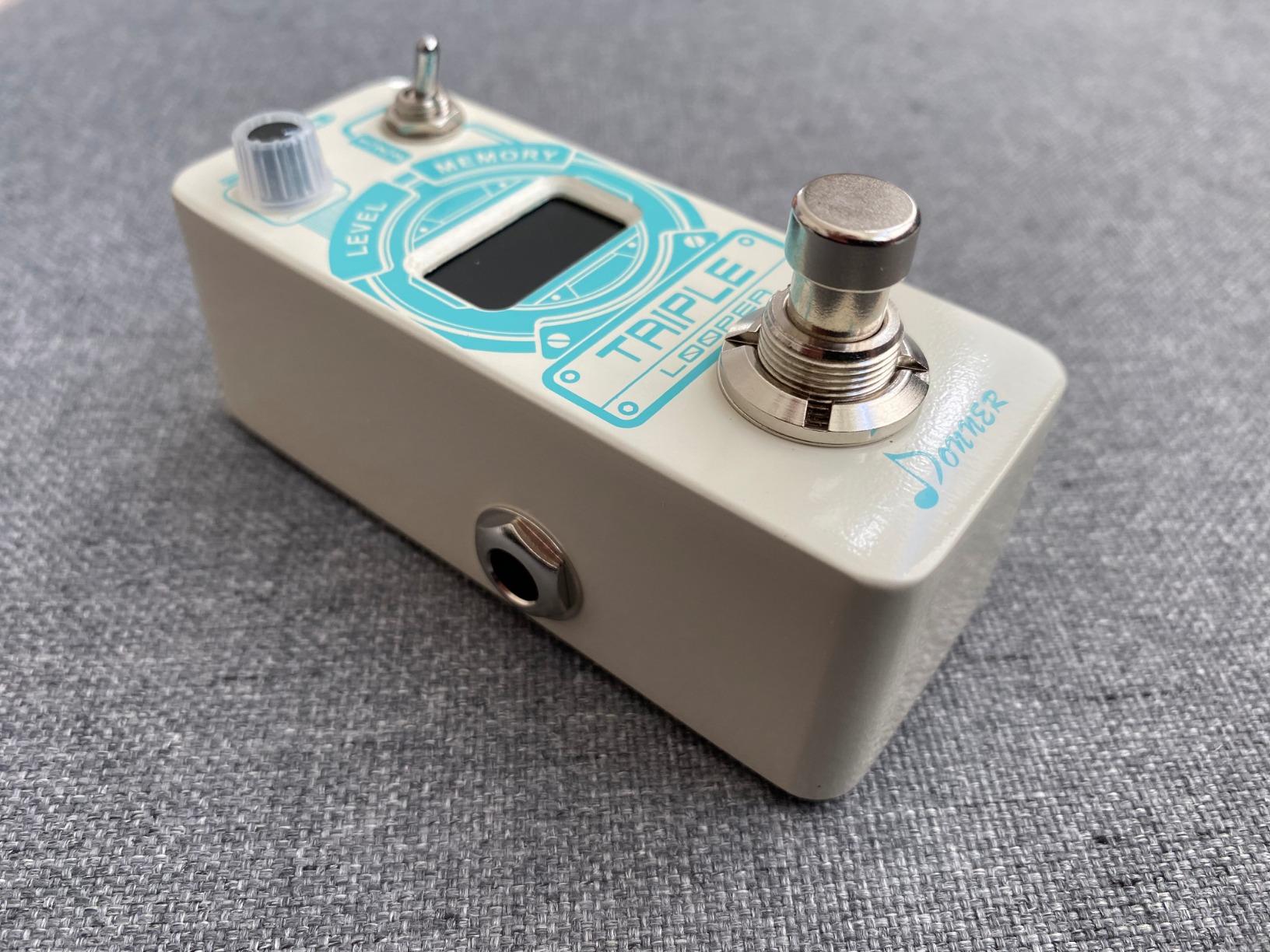
The Donner Triple Looper punches well above its weight class. Three independent loop slots with 30 minutes each gives you 90 minutes of total recording time. That rivals pedals costing three times as much. I used slot one for rhythm parts, slot two for lead ideas, and slot three for bass lines. Switching between them with a single footswitch is quick once you learn the timing.
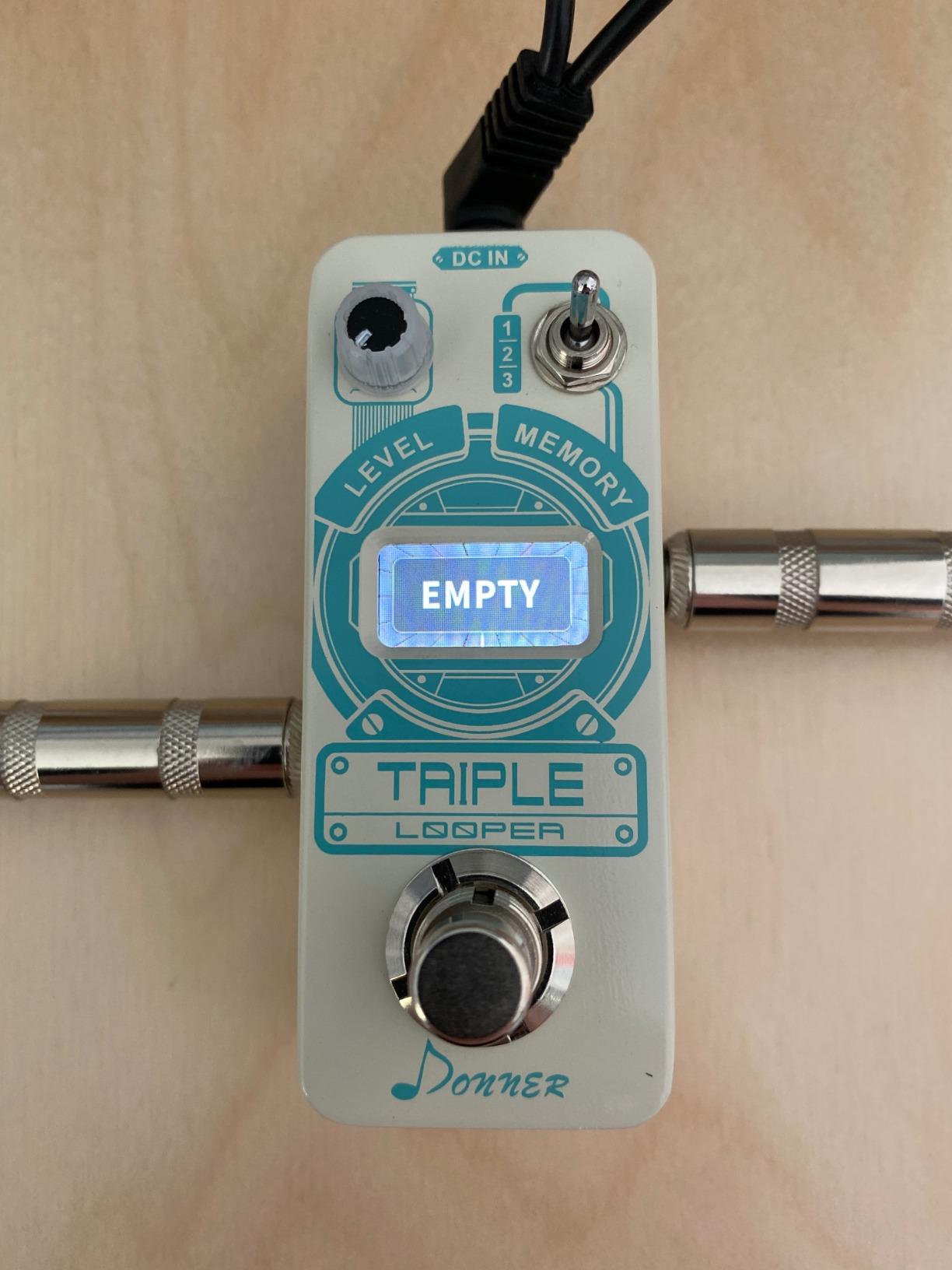
The visual screen is the feature that surprised me most. It shows a time progress bar that tracks exactly where you are in each loop. For a budget pedal, this is a premium feature I did not expect. The screen made it much easier to time my overdubs and know when the loop was about to cycle.
Auto-save is another feature that punches above this price point. When you power off, your loops are saved automatically. I tested this repeatedly, powering the pedal on and off, and every loop was preserved. The true bypass switching means your tone stays clean when the pedal is not in use.
The metal enclosure feels solid for the price. It is compact at 2.36 by 2.36 by 4.72 inches, fitting neatly on any pedalboard. The single footswitch handles recording, playback, overdubbing, undo, redo, and slot switching through different press patterns. It takes practice to memorize, but the screen helps you confirm what mode you are in.
Best for guitarists on a budget who need multiple loops
If you cannot afford the RC-5 but need more than one loop slot, the Donner Triple is your best option. Having three separate slots changed how I practice. I keep a chord progression in slot one, a bass line in slot two, and use slot three for experimenting. This kind of multi-slot workflow usually costs double what the Triple costs.
Beginners will appreciate the straightforward operation once they learn the footswitch patterns. The progress screen gives visual confidence that your loops are working correctly. And the auto-save means you never lose a great idea to a power cycle.
Quality concerns to be aware of
Some users report quality control issues, specifically chirping or beeping sounds during operation. My unit did not have this problem, but it is worth knowing about. Layering many loops can introduce a hum that builds with each overdub. Keeping your layer count reasonable and managing input levels helps minimize this.
The slots are independent and cannot share or transfer content between each other. You cannot bounce a loop from slot one to slot two. The power supply is not included. Despite these limitations, the Donner Triple Looper offers the best feature-to-price ratio of any multi-slot looper I have tested. It is a genuine value pick.
8. LEKATO Looper Pedal – Best Budget Looper Pedal Overall
- Excellent value for the price
- 9 memory slots with 40 minutes total
- 48K 24-bit sampling quality
- Built-in tuner function
- USB connectivity for WAV file transfer
- Solid metal build quality
- Loop length fixed by first loop created
- LED display can be too bright
- Sound quality below premium options
- No power cable included in box
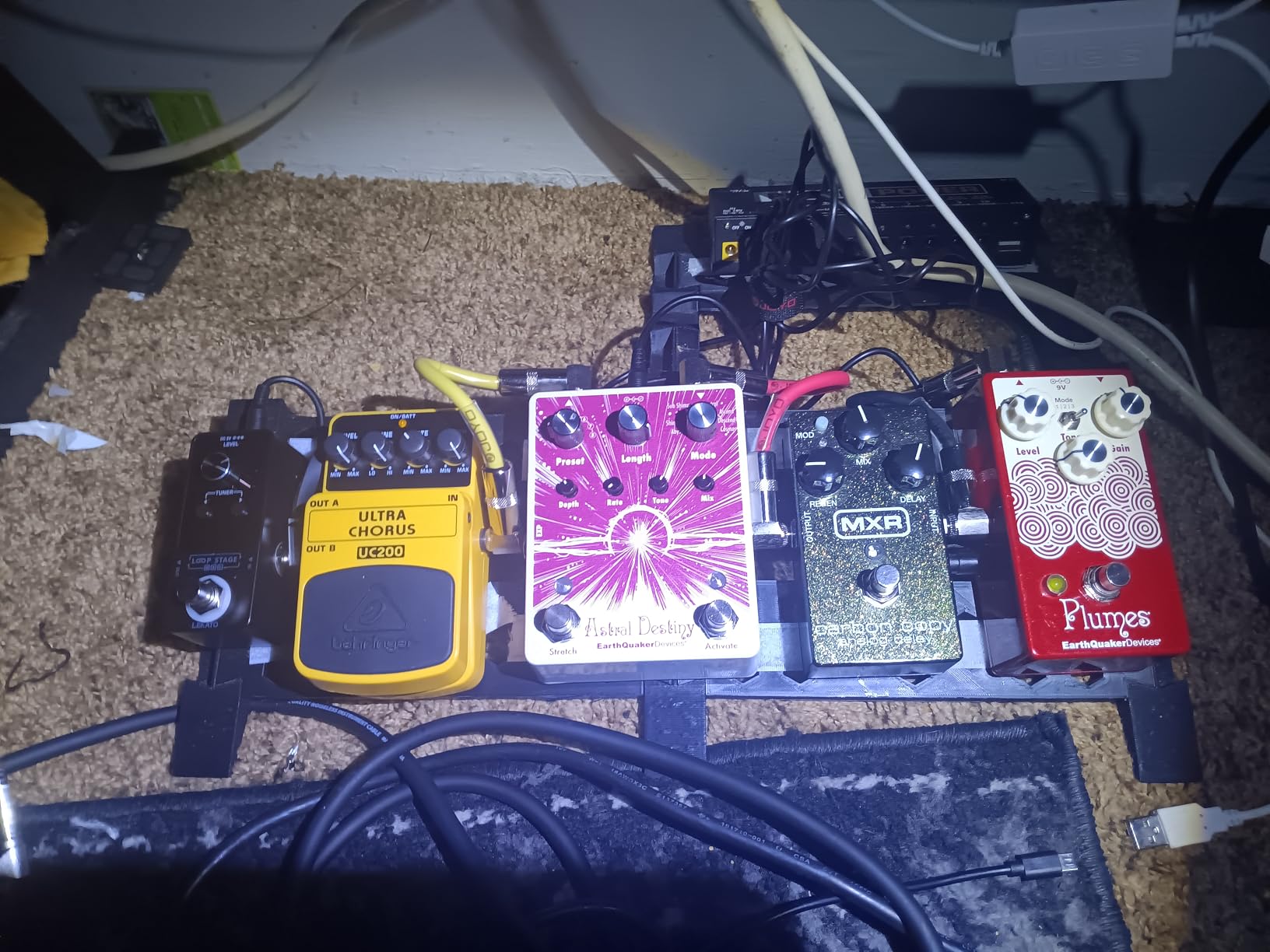
The LEKATO Looper is the pedal I recommend when someone asks for the best cheap looper pedal that still delivers real features. Nine memory slots, 40 minutes of recording time, a built-in tuner, and USB file transfer at this price point is remarkable. I tested this alongside pedals costing four times as much and the LEKATO held its own in daily practice.
The 48K/24-bit sampling rate produces clean, usable audio. My loops sounded good enough for practice and songwriting. Are they as pristine as the RC-5’s 32-bit processing? No. But they are more than acceptable for the vast majority of guitarists. The analog-dry-through design preserves your original tone, which is a feature I did not expect at this price.
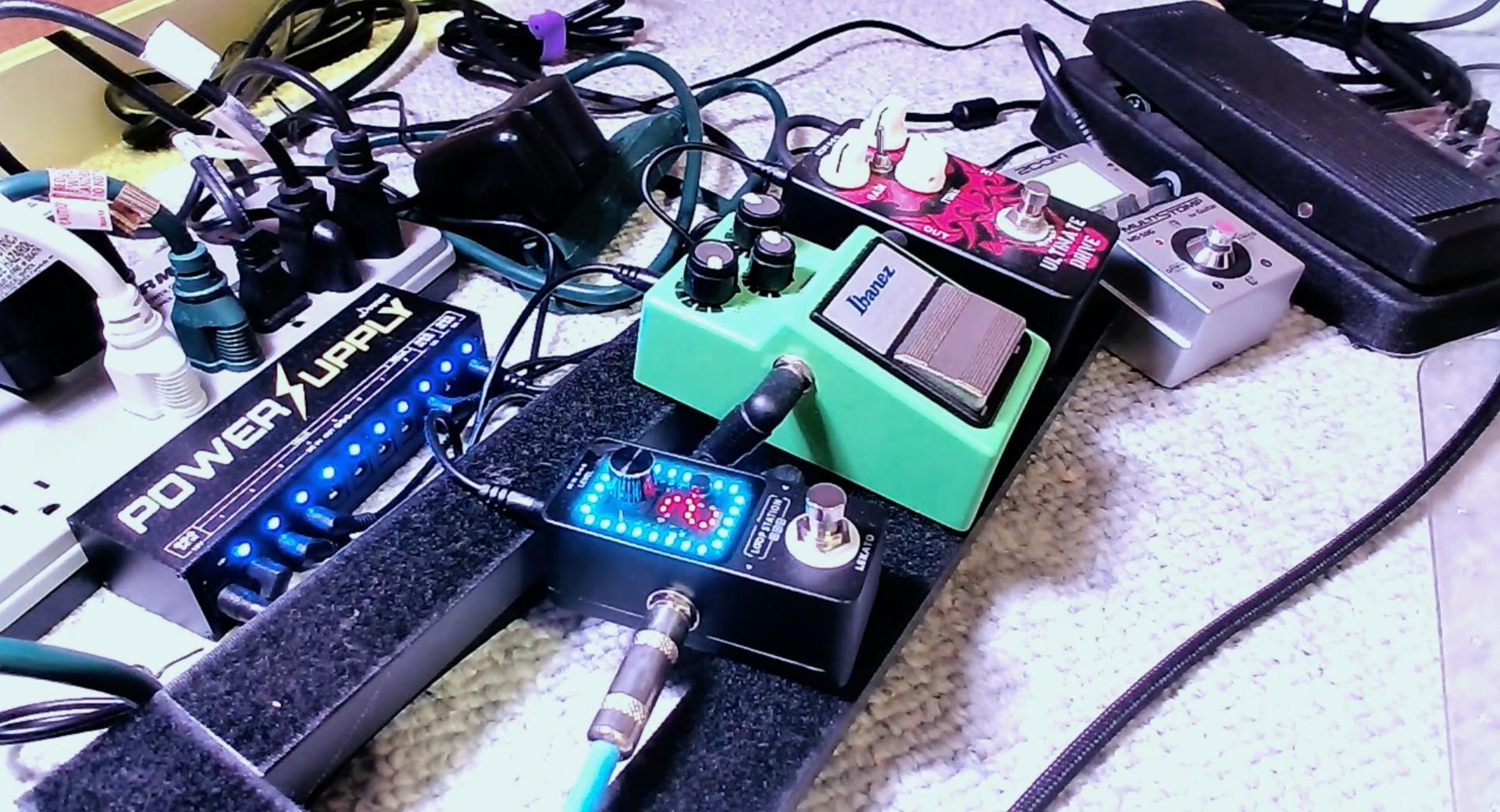
The built-in tuner is a fantastic bonus. I used it daily instead of reaching for my clip-on tuner. It saves pedalboard space and means one less thing to carry to practice. The USB connectivity lets you upload and download WAV files, so you can back up your loops to a computer or load backing tracks onto the pedal.
The metal housing feels durable enough for regular use. At just under two inches wide and 3.5 inches long, it is one of the most compact loopers available. Nine loops with 10 minutes each gives you flexibility to store different song sections or practice exercises. The single-knob operation keeps things simple for beginners.
Best for beginners and budget-conscious guitarists
If you are buying your first looper pedal and want maximum features per dollar, the LEKATO is unbeatable. Nine loops and a built-in tuner mean you are getting two pedals in one. I have recommended this to multiple beginner guitarists who wanted to try looping without spending over $100. Every one of them was happy with the purchase.
The USB file transfer adds real value. You can export your loops to share with bandmates or import WAV files to practice along with. This is a feature normally found on pedals twice the price. For bedroom players and songwriters on a budget, the LEKATO delivers everything you need to start looping today.
Trade-offs at this price point
The loop length is fixed by the first loop you create. If you start with a 4-bar loop, all overdubs stay within that 4-bar window. This is standard for budget loopers but worth knowing. The LED display is bright enough to be distracting on a dark stage. A piece of tape solves this easily.
Sound quality is good but not great. Discerning ears will notice a slight difference compared to premium options like the Ditto+ or RC-5. No power cable is included in the box, so factor that into your total cost. These are minor complaints given the price. The LEKATO is the best budget looper pedal for guitarists, full stop.
How to Choose the Best Looper Pedal for Your Needs
Choosing the right looper pedal comes down to understanding what features matter for your playing style. I have broken down the five most important factors to consider, based on my experience testing all eight pedals in this guide.
Loop Memory and Recording Time
Recording time ranges from 5 minutes on the TC Electronic Ditto to 13 hours on the BOSS RC-5. For practice and short loops, 5 to 12 minutes is plenty. For live performance or storing full song arrangements, look for pedals with 90 minutes or more. The number of memory slots matters too. The LEKATO offers 9 slots, the Donner Circle has 40, and the RC-5 packs 99 phrase memories. More slots mean more saved loops you can recall instantly.
Mono vs Stereo Loopers
Mono loopers have a single audio channel. They are simpler and cheaper, perfect for most guitarists who run one amplifier. Stereo loopers like the BOSS RC-1, RC-5, and Donner Circle have left and right channels, allowing you to run two amplifiers or create wide stereo spreads. If you use stereo delay or reverb pedals, a stereo looper preserves that width in your loops. For most players starting out, mono is fine. Upgrade to stereo when your rig demands it.
Built-in Drum Patterns and Rhythms
Some guitarists need a drum machine built into their looper. The BOSS RC-5 includes 57 rhythm patterns, and the Donner Circle packs 110 drum grooves. Having drums in your looper means you always have a backing beat to play against. This is invaluable for practice and solo performance. If you already own a drum machine or play with a drummer, you can skip this feature and save money. But if you practice alone often, built-in rhythms are worth every penny.
Build Quality and Pedalboard Size
Looper pedals take a beating on stage. Look for metal enclosures with recessed knobs. BOSS pedals are legendary for their durability, with a 5-year warranty on compact pedals. The MXR Clone and TC Electronic units are also built tough. Consider the physical size relative to your pedalboard. The LEKATO and TC Electronic Ditto are the most compact options. The Donner Circle and BOSS RC-5 are slightly larger but still fit standard pedalboards. Measure your available space before buying.
Connectivity: USB, MIDI, and External Control
USB connectivity lets you import and export loops as WAV files. This is essential for backing up ideas and loading backing tracks. The RC-5, LEKATO, and Donner Circle all offer USB. MIDI control is critical for live performers who want to sync their looper to other gear. The RC-5 has full MIDI I/O with TRS jacks. External footswitch jacks let you add extra controls for stop, undo, and slot switching without bending down. The MXR Clone and Donner Circle both support external footswitches.
FAQs
What is the best looper pedal for guitarists?
The BOSS RC-5 Loop Station is the best overall looper pedal for guitarists in 2026. It offers 13 hours of recording, 99 phrase memories, 57 built-in rhythm patterns, 32-bit sound quality, and MIDI connectivity in a compact pedal. For budget buyers, the LEKATO Looper delivers 9 loops and a built-in tuner at a fraction of the cost.
What looper pedal should I get as a beginner?
The BOSS RC-1 Loop Station is the best looper pedal for beginners. It features a single footswitch for simple record, play, and overdub operations, a 24-segment LED indicator for visual loop timing, and 12 minutes of recording time. The straightforward design means you can start looping within minutes of unboxing.
What is the best looper pedal for live performance?
The BOSS RC-5 Loop Station is the best looper pedal for live performance thanks to its 99 phrase memories, MIDI I/O for syncing with other gear, and USB for loading backing tracks. The Donner Circle Looper is a strong budget alternative with 40 memory slots and built-in drum grooves for solo performers.
How do I choose a looper pedal?
Choose a looper pedal based on five factors: recording time and memory slots, mono versus stereo capability, built-in drum patterns, build quality, and connectivity options like USB and MIDI. Beginners should prioritize simplicity, while live performers need multiple memory slots and MIDI control. Set your budget first, then match features to your playing needs.
What is the difference between mono and stereo loopers?
Mono loopers record and play back a single audio channel, which works well for most guitarists using one amplifier. Stereo loopers record left and right channels separately, allowing you to run two amplifiers or preserve stereo effects like delay and reverb in your loops. Stereo loopers cost more but offer wider sound for ambient and experimental guitarists.
Final Thoughts on the Best Looper Pedals for 2026
After three years and eight pedals, my top recommendation for the best looper pedal for guitarists remains the BOSS RC-5 Loop Station. The combination of 32-bit sound quality, 99 phrase memories, built-in rhythms, and MIDI control is unmatched at any price. For budget buyers, the LEKATO Looper gives you the most features per dollar spent. And the BOSS RC-1 remains the perfect entry point for first-time loop pedal buyers.
The right looper pedal depends on how you play. Solo performers should look at the RC-5 or Donner Circle for built-in drums. Tone purists will love the MXR Clone and TC Electronic Ditto for their transparent sound. Songwriters should consider the TC Electronic Ditto+ for its extended looping mode. Whatever you choose, a quality guitar looper pedal will transform your practice, performance, and creativity in 2026 and beyond.