
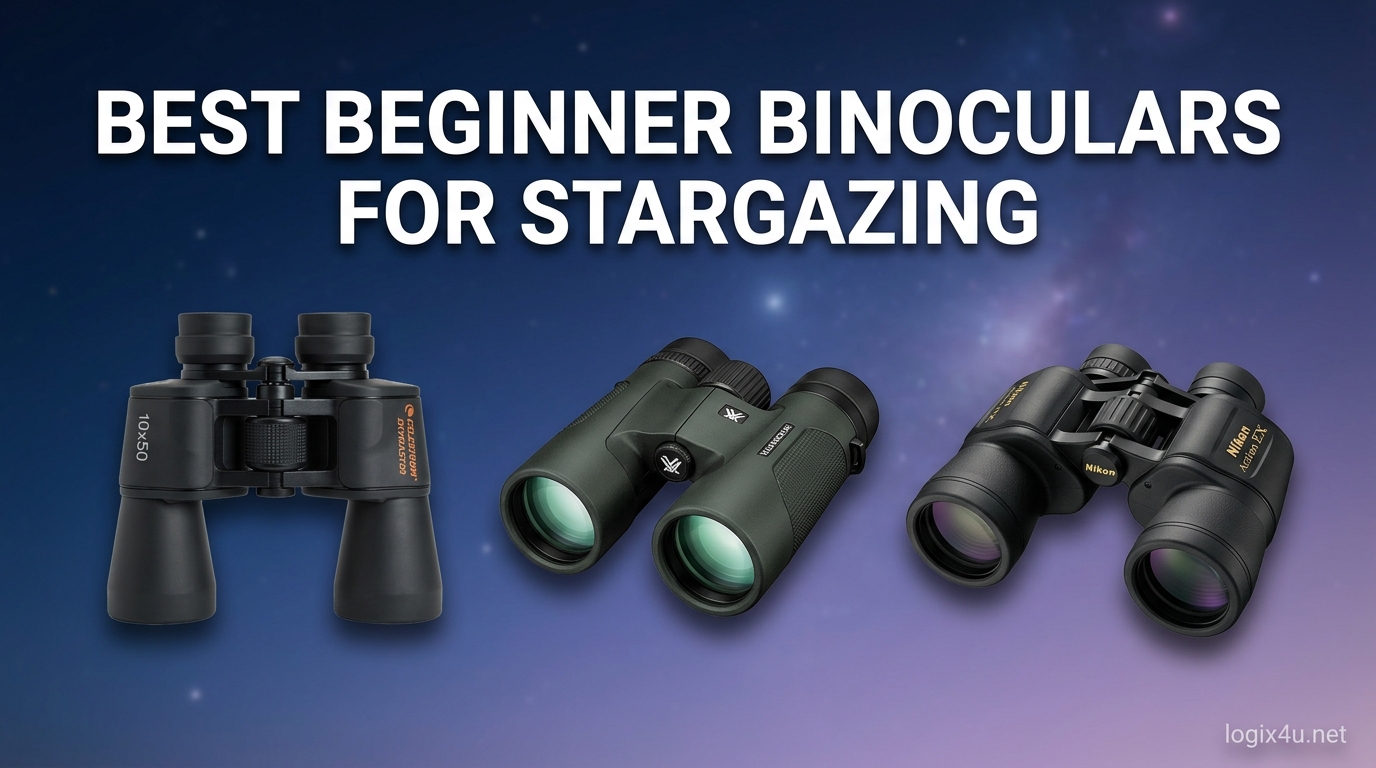
Looking up at the night sky for the first time is humbling, but figuring out which gear to buy can feel overwhelming. That is exactly why we put together this guide to the best beginner binoculars for stargazing, so you can skip the research rabbit hole and start spotting constellations, star clusters, and even Jupiter’s moons tonight.
Most newcomers assume they need a telescope to enjoy astronomy. In reality, a solid pair of starter binoculars will show you more of the night sky in your first month than a telescope ever could, simply because they are easy to grab, quick to aim, and give you a wide enough view to actually learn your way around the stars.
We spent weeks comparing 15 of the most popular binoculars for astronomy, weighing everything from magnification and aperture to eye relief and how steady they feel in real hands. Whether you want a thirty-dollar stocking stuffer for a curious kid or a serious pair that will last a decade, you will find your match below. If you already have some experience and want to step up to higher-end optics, we also cover premium astronomy binoculars in a separate guide.
Top 3 Picks for Beginner Stargazing Binoculars (August 2026)

Celestron Cometron 7×50
- 7x magnification
- 50mm objectives
- Wide 6.6 degree FOV
- Multi-coated Porro prism

Celestron SkyMaster 15×70
- 15x magnification
- 70mm objectives
- BaK-4 prisms
- Tripod adapter included

FLYANT 20×50 Compact
- 20x magnification
- 50mm objectives
- BAK4 Porro prism
- Rubber armored body
Best Beginner Binoculars for Stargazing in 2026
| Product | Specifications | Action |
|---|---|---|
| Celestron Cometron 7×50 |
|
Check Latest Price |
| Celestron SkyMaster 15×70 |
|
Check Latest Price |
 Celestron SkyMaster 12×60 Celestron SkyMaster 12×60 |
|
Check Latest Price |
 Celestron SkyMaster 25×70 Celestron SkyMaster 25×70 |
|
Check Latest Price |
 Celestron SkyMaster 20×80 Celestron SkyMaster 20×80 |
|
Check Latest Price |
| FLYANT 20×50 Compact |
|
Check Latest Price |
 Adasion 12×42 HD Adasion 12×42 HD |
|
Check Latest Price |
 WOZEL 20×70 WOZEL 20×70 |
|
Check Latest Price |
 SVBONY SV407 2.1×42 SVBONY SV407 2.1×42 |
|
Check Latest Price |
 Sogries 18×70 Astronomy Sogries 18×70 Astronomy |
|
Check Latest Price |
 Nikon ACULON A211 12×50 Nikon ACULON A211 12×50 |
|
Check Latest Price |
 Celestron Nature DX 8×42 Celestron Nature DX 8×42 |
|
Check Latest Price |
 Nikon PROSTAFF 5 12×50 Nikon PROSTAFF 5 12×50 |
|
Check Latest Price |
 Celestron SkyMaster Pro ED 20×80 Celestron SkyMaster Pro ED 20×80 |
|
Check Latest Price |
1. Celestron Cometron 7×50 – Best Entry-Level Astronomy Binoculars
- Easy to use for beginners
- Wide 6.6 degree field of view
- Rubber-armored for durability
- Tripod adaptable
- Affordable entry price
- Some collimation issues reported
- Plastic focus knob
- May need tripod for long sessions
If you are buying your very first pair of binoculars for astronomy, the Celestron Cometron 7×50 is the model I point people to more than any other. The 7x magnification is forgiving enough that you can hold it steady without practice, and the 50mm objectives pull in plenty of light for the Milky Way, the Pleiades, and the Orion Nebula.
My first night with these under a dark sky revealed swarms of stars I had never seen with the naked eye. The 6.6-degree field of view is genuinely wide, which means you can frame entire constellations like Orion or Cassiopeia in a single view without hunting around for them.
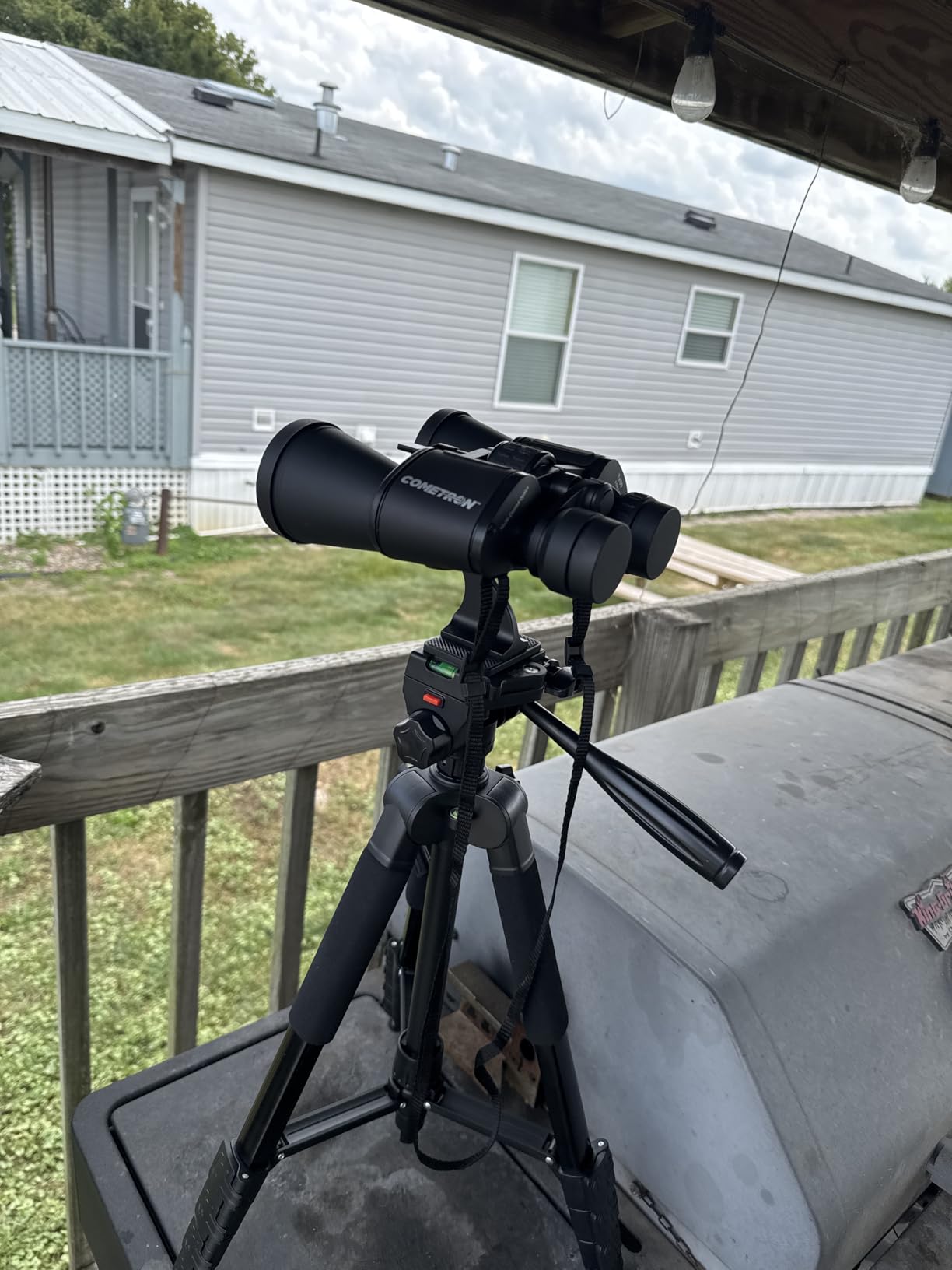
The Porro prism design uses large BaK-4-style prisms for bright images, and the multi-coated optics punch well above the price tag. You also get rubber armoring that makes them comfortable to grip and reasonably protected from bumps in the dark.
The downsides are real but manageable. A handful of buyers report collimation issues straight out of the box, where the two barrels do not perfectly align. Celestron’s warranty covers this, but it is worth checking your pair against a distant pole the first night.
Best For First-Time Stargazers on a Budget
The Cometron 7×50 shines as a first astronomy binocular because it pairs a low learning curve with enough light-gathering to make the night sky exciting. Kids, casual campers, and anyone who wants to learn constellations before investing in serious gear will get their money’s worth many times over.
The individual focus design takes some getting used to, but once set for your eyes, you rarely touch it again during a stargazing session.
Handheld Stability and Comfort
At 7x magnification and about 2 pounds, these are genuinely comfortable to handhold for 20 to 30 minutes at a time. The 7.1mm exit pupil is ideal for younger eyes and dark sky sites, where your pupil dilates fully and uses every bit of available light.
If you plan long sessions past the half-hour mark, a basic camera tripod with the included adapter thread makes a noticeable difference in image steadiness.
2. Celestron SkyMaster 15×70 – Best Value for Deep-Sky Viewing
- Bright BaK-4 prism images
- Tripod adapter included
- Bestselling astronomy binocular
- Jupiter's moons and Saturn's rings visible
- Great value for aperture
- Heavy at 3.3 pounds
- Requires tripod for best results
- Collimation issues reported
The Celestron SkyMaster 15×70 is the best-selling astronomy binocular on Amazon for a reason. Those 70mm objectives grab serious light, and the BaK-4 prisms deliver bright, contrasty views of star clusters, nebulae, and even the Galilean moons of Jupiter on a steady night.
I have spent more than one evening glued to these binoculars tracking the Andromeda Galaxy drift across the field. The 4.7mm exit pupil is a sweet spot for most adults, balancing brightness with image scale, and the included tripod adapter is a welcome bonus at this price.
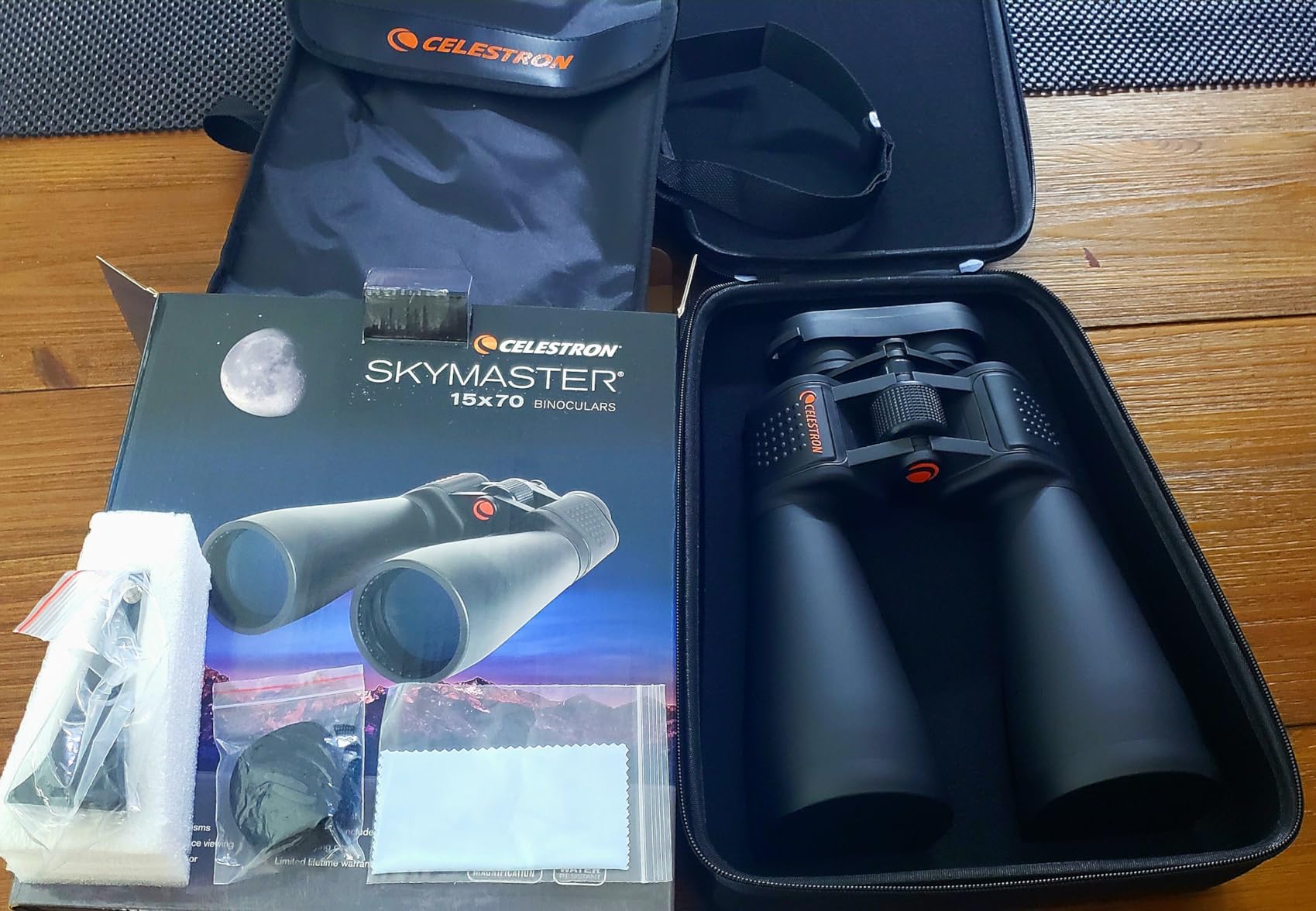
Build quality is solid with rubber-armored housing that survives dewy nights and accidental bumps. The center focus wheel is smooth enough, and the diopter adjustment lets you fine-tune for differences between your two eyes.
The big trade-off is weight. At 3.3 pounds, handholding these for more than a few minutes fatigues your arms and introduces image shake that ruins fine detail. A sturdy tripod is essentially mandatory if you want to see what these optics can really do.

What You Can Actually See
With the SkyMaster 15×70 on a tripod, you can resolve the four Galilean moons of Jupiter, trace the rings of Saturn as an elongated shape, spot the Orion Nebula as a glowing greenish cloud, and pull the Andromeda Galaxy out of a dark sky as a soft oval smudge.
The Pleiades explode into dozens of pinpoint stars instead of the familiar seven, and globular clusters like M13 start to show individual stars at their edges.
How It Compares to the 25×70
Stepping up to the 25×70 version gives you more magnification on planets and the Moon, but the trade-off is a much narrower 2.8mm exit pupil and noticeably dimmer deep-sky views. For most beginners, the 15×70 strikes the better balance between power and brightness.
If your main interest is the Moon and planets, the higher power wins. If you want to roam the Milky Way and hunt Messier objects, stick with the 15×70.
3. Celestron SkyMaster 12×60 – Balanced Power and Portability
- Good handheld balance
- Wide field for scanning
- BaK-4 prism brightness
- Better for handheld than 15x70
- Wide 5.3 degree apparent FOV
- Tripod adapter not included
- Neck strap quality lacking
- Can tire arms on long sessions
The 12×60 SkyMaster sits in a sweet spot that often gets overlooked. You get more reach than a 10×50, but with a 5mm exit pupil that keeps deep-sky objects bright enough to enjoy from typical suburban skies.
I found the 12×60 to be the largest binocular I could comfortably handhold for short bursts without immediately reaching for a tripod. At roughly 2.4 pounds, it is noticeably lighter than the 15×70, and the extra magnification is welcome when scanning along the Milky Way.

The BaK-4 prisms deliver the same bright, sharp images Celestron is known for in the SkyMaster line. Multi-coated optics keep contrast high, and the rubber-armored body feels durable in hand.
The main annoyance is that Celestron does not include a tripod adapter in the box, even though these benefit from one for extended sessions. You will want to budget for that accessory separately, along with a better neck strap than the basic one shipped with the binocular.

Handheld Versatility
The 12×60 is one of the few binoculars in this guide that genuinely works as a handheld instrument for active stargazing. You can sweep the sky, settle on a target, brace your elbows, and study it for 30 to 60 seconds before fatigue sets in.
That handheld freedom matters for beginners who do not yet own a tripod and want to learn the sky at their own pace.
Astronomy and Terrestrial Use
The 12×60 doubles as a capable long-range binocular for daytime use, from wildlife observation to maritime scanning. That dual-purpose nature makes it a smart pick if you want one pair that handles both backyard astronomy and outdoor adventures.
The water-resistant housing is not fully waterproof, so avoid using these in heavy rain, but they shrug off dew and light drizzle without issue.
4. Celestron SkyMaster 25×70 – High-Power Lunar and Planetary Views
- Spectacular lunar detail
- Jupiter's Galilean moons visible
- Tripod adapter included
- Rubber-armored housing
- High magnification reach
- High power requires sturdy tripod
- Narrow 2.8mm exit pupil
- Collimation issues reported
- Narrow field of view
The SkyMaster 25×70 is the binocular to choose if the Moon and planets are your primary obsession. At 25x magnification, the Moon fills the frame with crater detail along the terminator, and Saturn shows a clear elongated shape from its rings.
The trade-off is a narrow 2.8mm exit pupil, which means dimmer deep-sky views compared to a 15×70. You are trading wide-field brightness for raw magnification, and for lunar and planetary work that trade pays off.
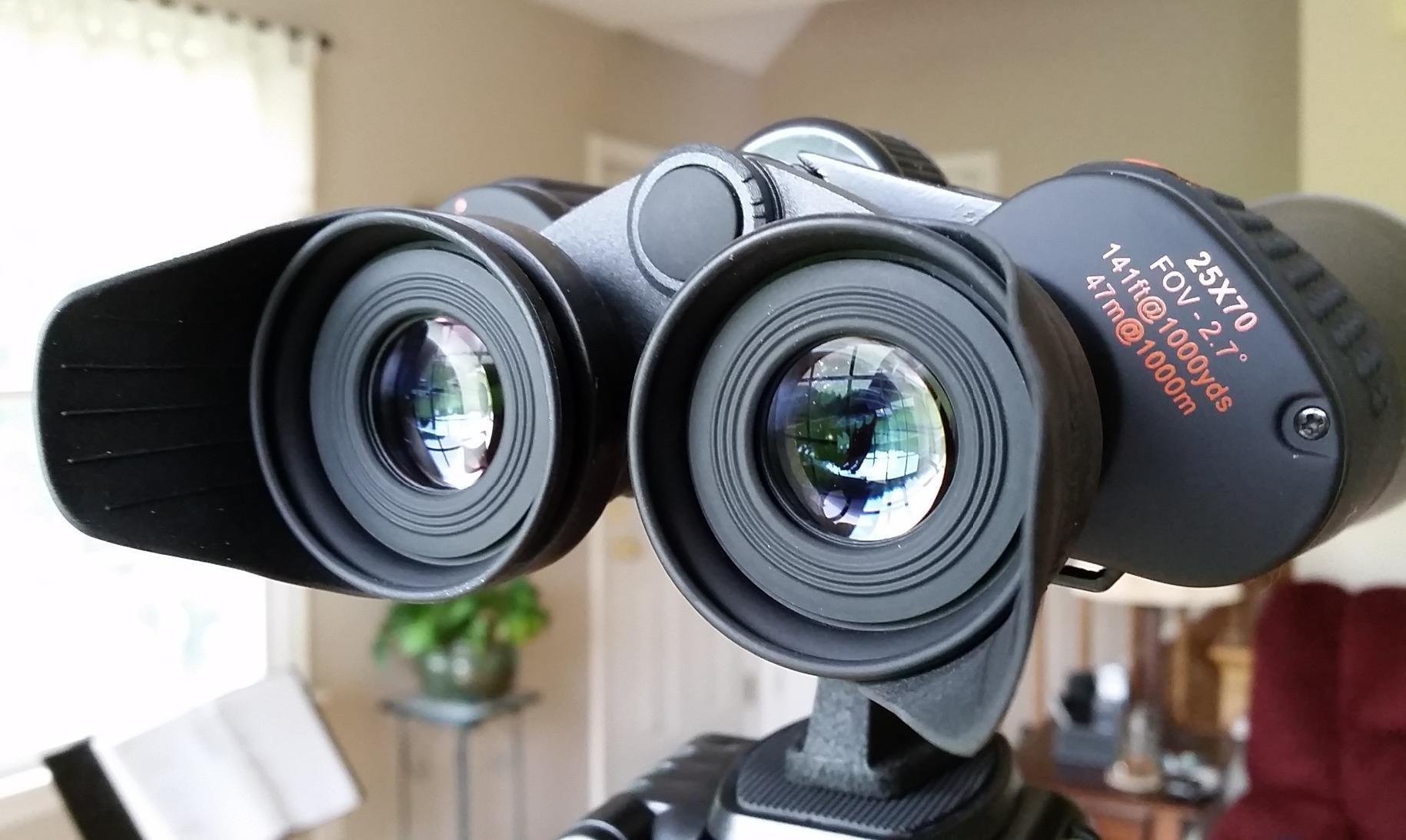
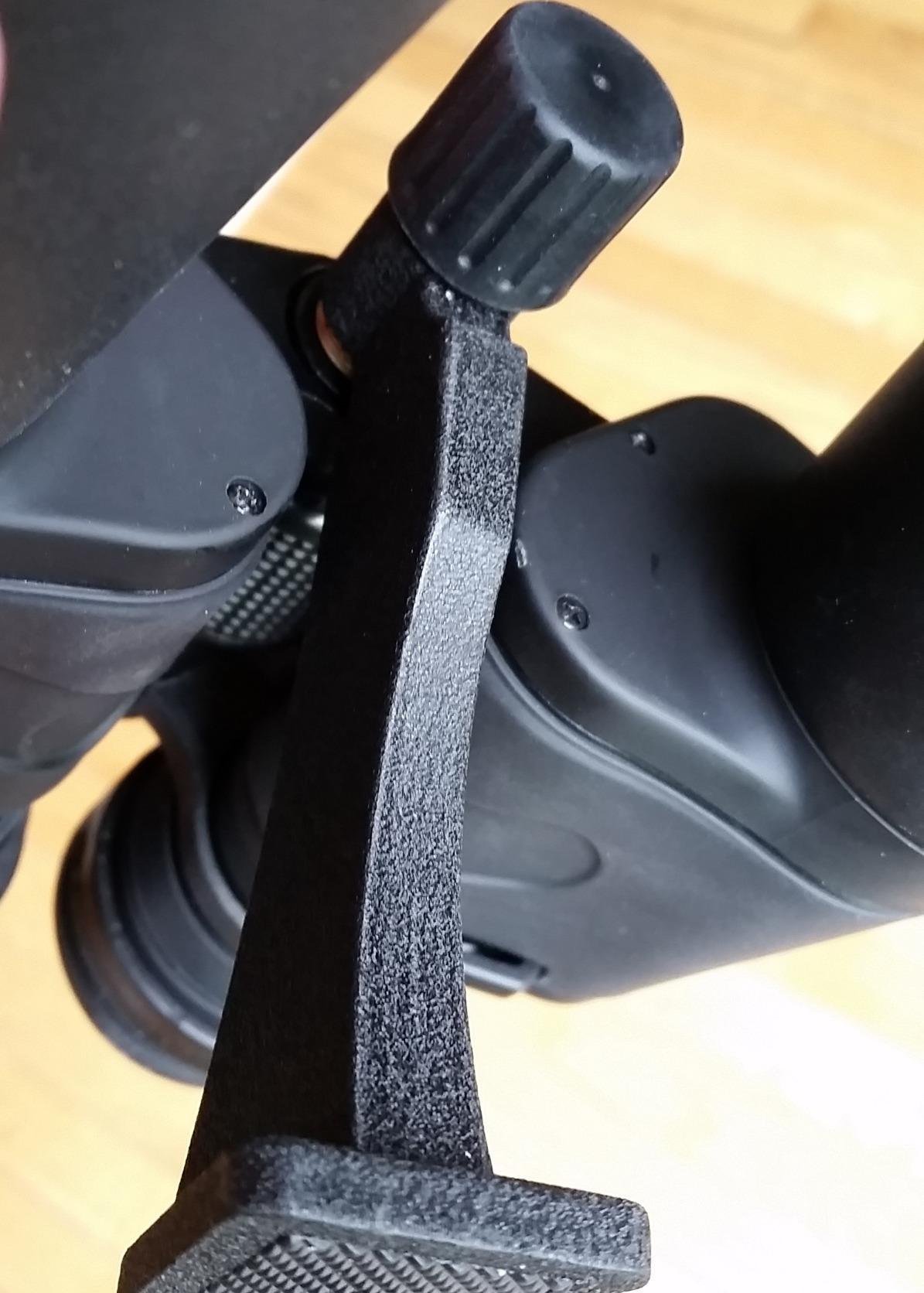
The included tripod adapter is essential because handholding 25x is nearly impossible for any sustained viewing. Even with image-steadying techniques like bracing against a fence or leaning on a car roof, the high magnification amplifies every heartbeat.
Some users report collimation issues, where the two barrels show a slight vertical or horizontal offset. This is more noticeable at 25x than at lower powers, so test your pair against a distant pole the first night out.
Best Targets for 25x Magnification
The Moon is the headline target. Craters like Copernicus, Tycho, and Plato resolve clearly, and the Apennine Mountains cast long shadows near the terminator that change hour by hour. Jupiter shows its equatorial bands and the four Galilean moons as a tidy line of starlike points.
Saturn appears as a small oval with rings visible as a distinct bulge. Mars shows a reddish disk, and Venus reveals its phase like a tiny Moon.
Tripod Requirements
A sturdy tripod is non-negotiable at 25x. Lightweight photo tripods wobble too much, so look for a video tripod or an astronomical tripod designed for binoculars. A fluid head makes panning across the Moon feel smooth rather than jerky.
Budget for a tripod and head that can comfortably support 5 pounds or more, since the binocular itself weighs just over 3 pounds and any vibration ruins high-power views.
5. Celestron SkyMaster 20×80 – Serious Aperture for Deep-Sky Hunting
- Large 80mm aperture gathers serious light
- Deep sky objects visible
- Includes tripod adapter
- Solid build quality
- Jupiter and Saturn detail
- Heavy at 4.8 pounds
- Tripod mandatory
- Carrying case quality lacking
- Collimation issues possible
Stepping up to 80mm objectives is a meaningful jump in light-gathering power. The SkyMaster 20×80 pulls the Andromeda Galaxy, the Orion Nebula, and the Double Cluster in Perseus out of a dark sky with real presence, and globular clusters start to resolve into individual stars at their edges.
These are no longer a casual grab-and-go binocular. At 4.8 pounds, the 20×80 demands a sturdy tripod and a clear plan for the night. I treat mine as a fixed observing station that I set up once and use for the duration of a session.
The BaK-4 prisms and multi-coated optics deliver bright, contrasty views. Planetary detail on Jupiter shows two main equatorial bands, and Saturn’s rings are clearly separated from the planet’s disk.
The included tripod adapter is well-made and threads securely to a standard quarter-inch bolt. Some users report that the carrying case is basic, so consider a padded aftermarket case if you travel with these.
Best Deep-Sky Targets
The 20×80 excels at large deep-sky objects. The Andromeda Galaxy shows its core glow and faint outer extent, the Orion Nebula reveals a greenish tint and the Trapezium star cluster at its heart, and the Pleiades sparkle with dozens of blue-white stars.
Globular clusters like M13 in Hercules and M22 in Sagittarius begin to show grainy texture instead of appearing as fuzzy balls.
Mounting Considerations
The 20×80 requires a serious tripod. Lightweight photo tripods flex under the weight and make fine adjustments frustrating. A parallelogram mount or a heavy-duty video tripod is the right companion, letting you aim at any point in the sky without losing your target.
Budget at least as much for the mount as you do for the binocular itself, because a great optic on a wobbly mount performs worse than a lesser optic on a steady one.
6. FLYANT 20×50 – Budget Compact Binoculars for Casual Stargazing
- Excellent value for the price
- Lightweight and portable
- Clear daytime images
- Comfortable rubber grip
- Includes carrying accessories
- Magnification may be overstated
- Not truly waterproof
- No tripod interface
- Entry-level build quality
The FLYANT 20×50 is the binocular I recommend when someone wants to test whether astronomy is for them without spending more than dinner for two. The BAK4 Porro prism and fully multi-coated optics deliver surprising clarity for the price, and the compact body is genuinely portable.
That said, the 20x magnification claim is optimistic. Real-world resolution is closer to a true 12x to 15x, which is still plenty for casual lunar viewing, bright star clusters, and learning the constellations. Manage your expectations and you will be impressed.
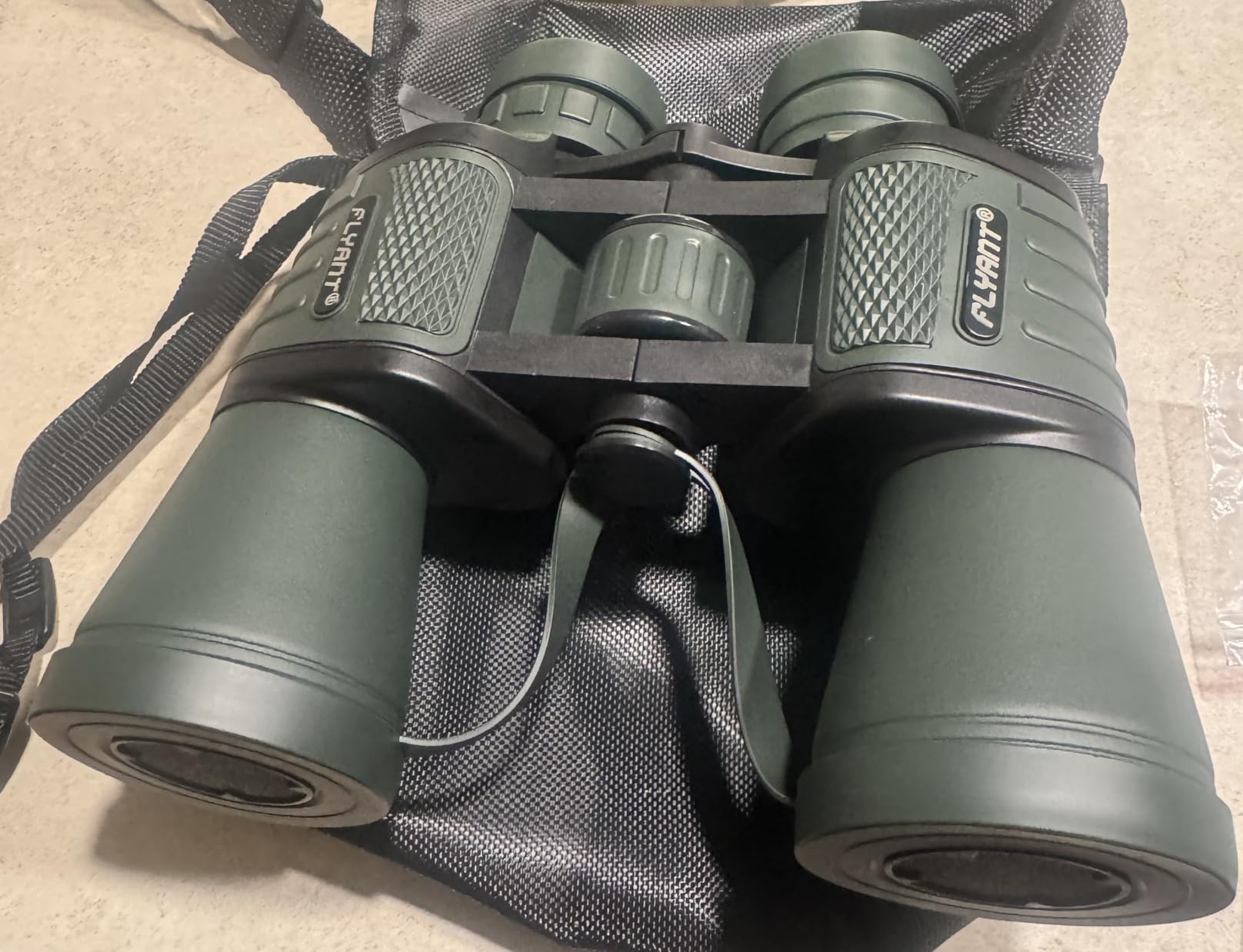
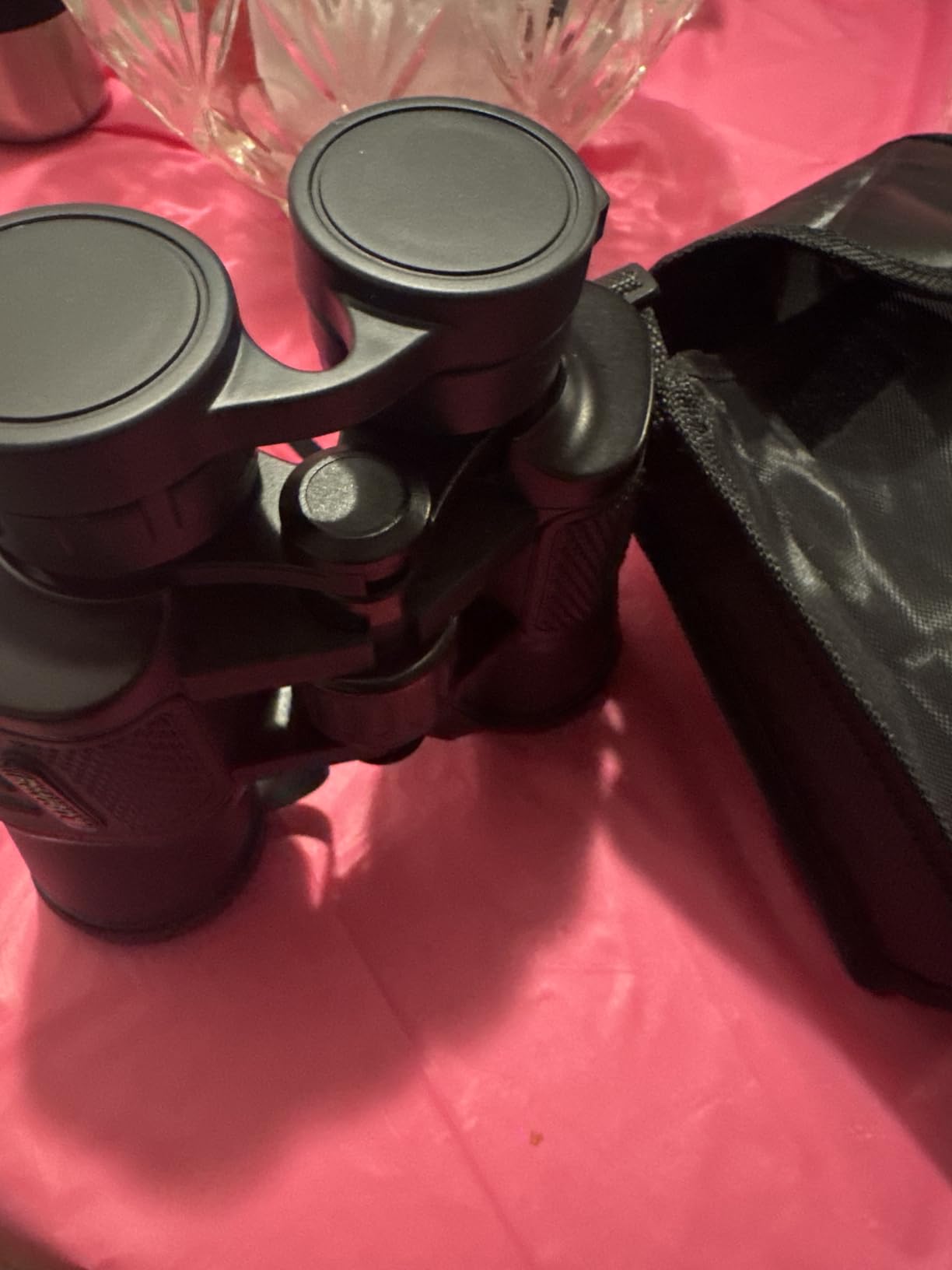
The rubber-armored body feels solid in hand, and the center focus wheel is smooth enough for the price. The included carrying case, strap, and cleaning cloth round out a package that feels complete rather than cheap.
The main downsides are the lack of a tripod thread and the not-actually-waterproof construction. These are dry-weather, handheld binoculars, which is fine for casual stargazing but limits their versatility.
Best Use Cases
The FLYANT 20×50 shines as a starter pair for a teenager or curious adult who is not ready to commit to a serious astronomy purchase. They are also a great second pair to keep in the car for impromptu night-sky sessions on road trips.
They work for the Moon, Jupiter’s moons as tiny pinpoints, and wide sweeps of the Milky Way, which is more than enough to spark a lifelong hobby.
Honest Expectations on Optics
At this price point, you are not getting premium glass. Stars show slight flaring at the edge of the field, and high-contrast scenes reveal some chromatic aberration as colored fringes around bright objects like the Moon or Venus.
None of that is a deal-breaker for a beginner, but it is worth knowing so you do not feel disappointed on your first night out.
7. Adasion 12×42 HD – Versatile Roof Prism with Phone Adapter
- Excellent value
- Clear bright optics
- Phone adapter and tripod included
- Twist-up eyecups for glasses
- 2-year warranty
- Phone adapter tricky to align
- Tripod feels flimsy
- Case is basic
The Adasion 12×42 HD is the rare budget binocular that genuinely impresses on the night sky. The BAK4 roof prism and fully multi-coated lenses produce bright, sharp images, and the included phone adapter lets you capture quick lunar snapshots to share with friends.
At just 1.2 pounds, these are featherlight compared to most astronomy binoculars. The 42mm objectives do not gather as much light as 50mm or 70mm models, but for suburban skies and beginner targets like the Moon and Pleiades, they are plenty.
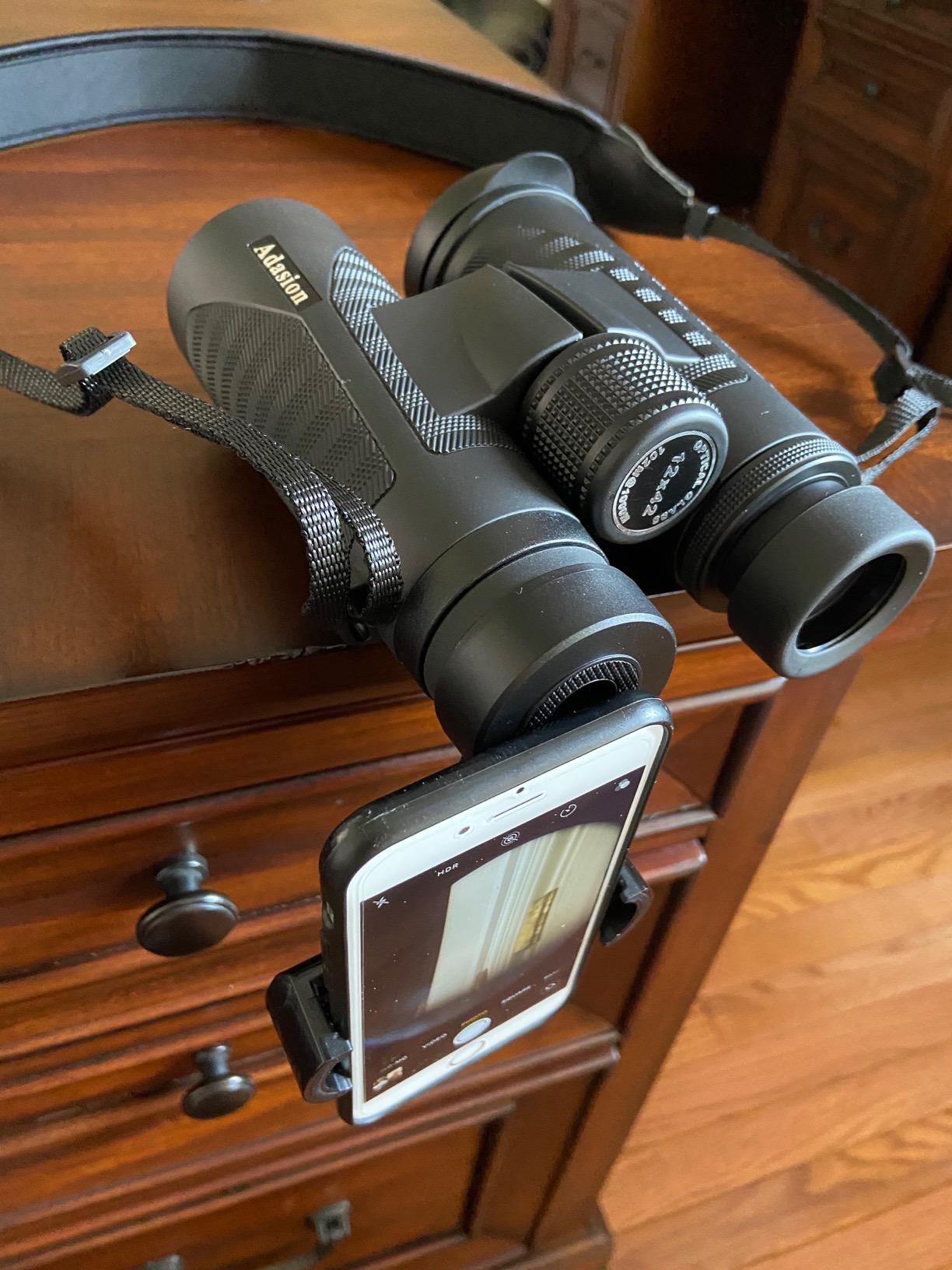
The IPX7 waterproof rating and nitrogen purge mean these survive dew, drizzle, and accidental drops in wet grass. That weatherproofing is unusual at this price and makes the Adasion a true grab-and-go binocular for any outdoor adventure.
My one real complaint is that the phone adapter takes patience to align. Once dialed in, it works, but the first few attempts are fiddly. The included tripod is best treated as a backup, since it wobbles under the binocular’s weight.
Stargazing and Beyond
The 12×42 is a true all-rounder. By day, it handles birdwatching, hiking, and sports with crisp detail. By night, it frames the Moon beautifully, splits the Trapezium in the Orion Nebula, and shows the Pleiades as a glittering cluster.
If you want one binocular that does everything competently, this is a strong candidate.
Comfort for Glasses Wearers
The 13.6mm of eye relief is on the shorter side for full-frame glasses wearers, but the twist-up eyecups click through multiple positions so you can find a setting that works. Most users with glasses report being able to see the full field of view without issue.
The 4mm exit pupil is small enough to require some head alignment, but it keeps images bright under typical suburban skies.
8. WOZEL 20×70 – Budget Large-Aperture Stargazing
20×70 Binoculars for Adults High Powered Bird Watching Hunting Travel
- Great magnification for the price
- Bright low-light images
- Comfortable grip
- Good alternative to expensive models
- 26mm large eyepiece
- Heavy for extended handheld use
- Not waterproof
- May need tripod for stability
- Bulky size
The WOZEL 20×70 packs genuine astronomy-class aperture into a budget package. The 70mm objectives gather meaningful light, and the BAK4 prisms with fully multi-coated optics deliver bright views of the Moon, star clusters, and the brighter nebulae from a dark sky site.
The 26mm large eyepiece gives a generous image scale that makes targets feel immersive. I was genuinely surprised by the clarity on the Moon’s terminator, where crater shadows popped with real detail for the price.
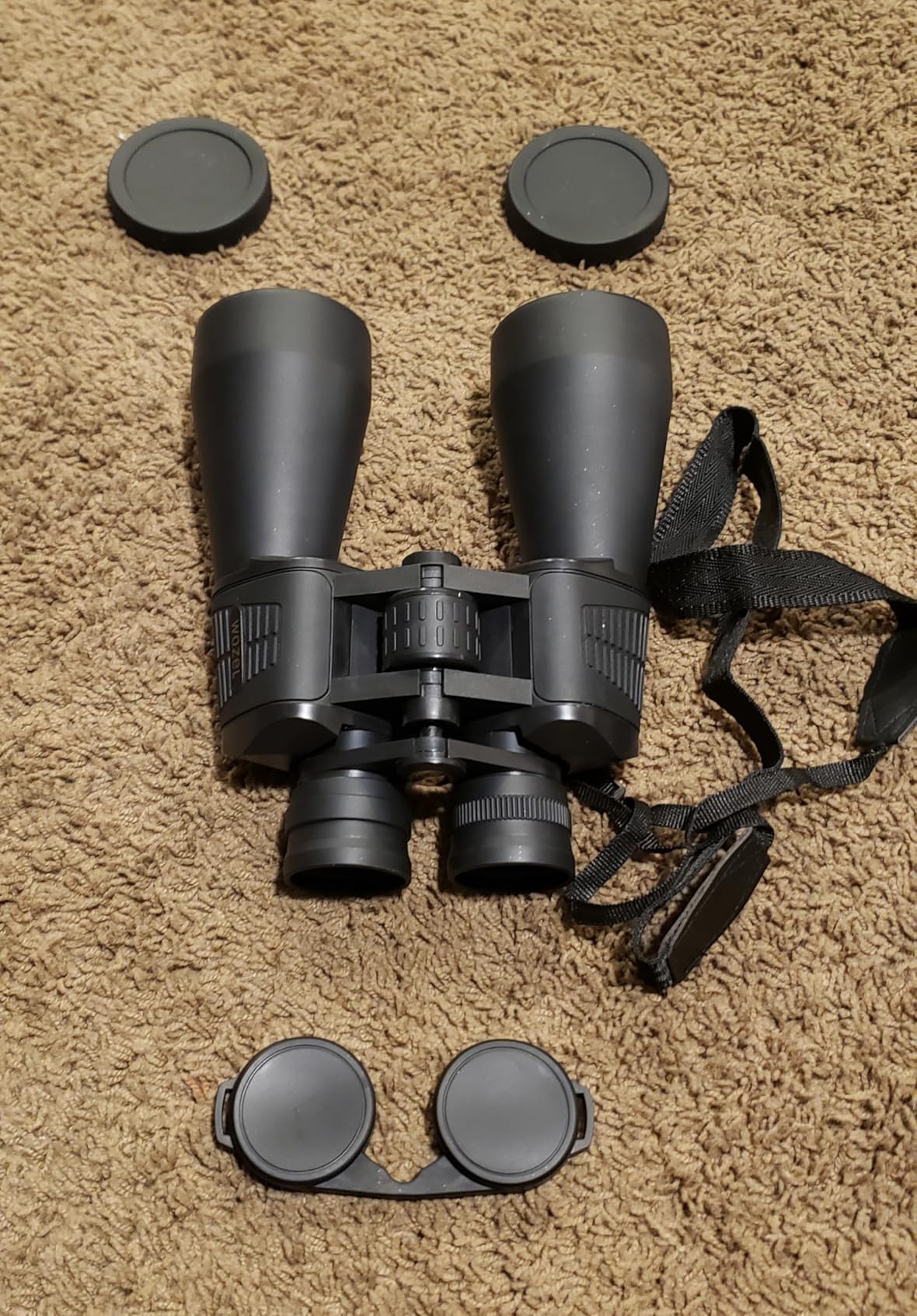
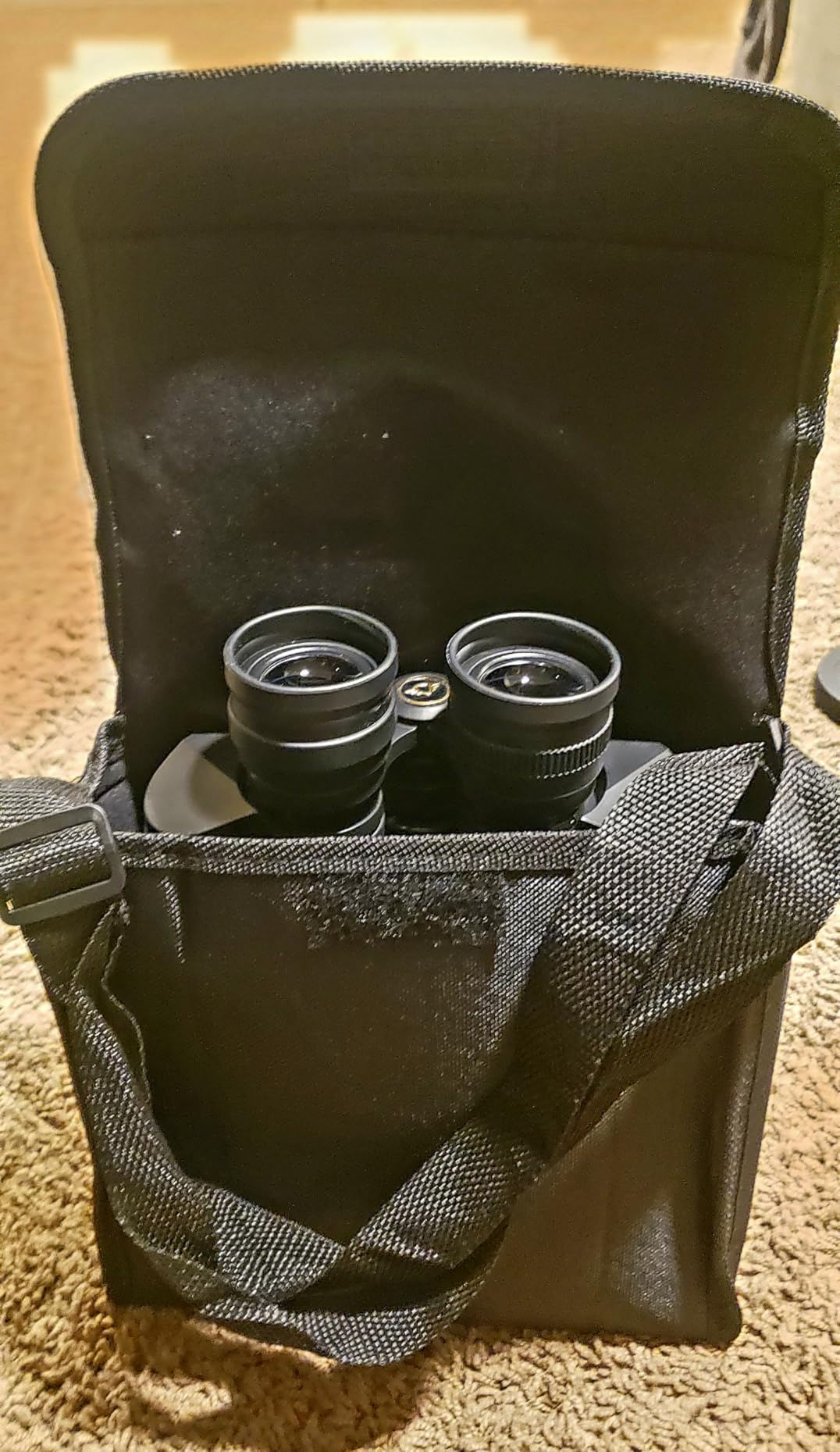
The manual focus mechanism is smooth, and the rubber-coated body provides a confident grip even with cold hands. The package includes a carrying bag, cleaning cloth, and neck strap, though the strap is best upgraded for long sessions.
The main drawback is weight and bulk. At 1.19 kilograms, the WOZEL 20×70 tires your arms within minutes at 20x magnification, and the lack of waterproofing means you need to be cautious about dew and humidity.
Mounting for Stability
A tripod is strongly recommended for the WOZEL 20×70. The binocular does not include a tripod thread in the standard configuration, so check compatibility before purchasing a mount, or use a binocular bracket that clamps to the central hinge.
Once mounted, the 20×70 reveals its true potential, with steady views that make the Moon, Jupiter, and bright deep-sky objects genuinely rewarding.
How It Compares to the SkyMaster 15×70
The WOZEL offers more magnification for less money than the SkyMaster 15×70, but the Celestron delivers better optical quality, brighter images thanks to a larger exit pupil, and includes a tripod adapter. The WOZEL wins on raw magnification and price, while the SkyMaster wins on quality and accessories.
Choose the WOZEL if budget is your top priority, and the SkyMaster if you want a more polished long-term investment.
9. SVBONY SV407 2.1×42 – Specialty Wide-Angle Constellation Viewer
- Massive 26-degree field of view
- Perfect for constellation viewing
- Solid metal build
- Lifetime warranty
- Accepts 2-inch filters
- Very low 2.1x magnification
- Not for detailed viewing
- Individual focus takes practice
- Edge distortion
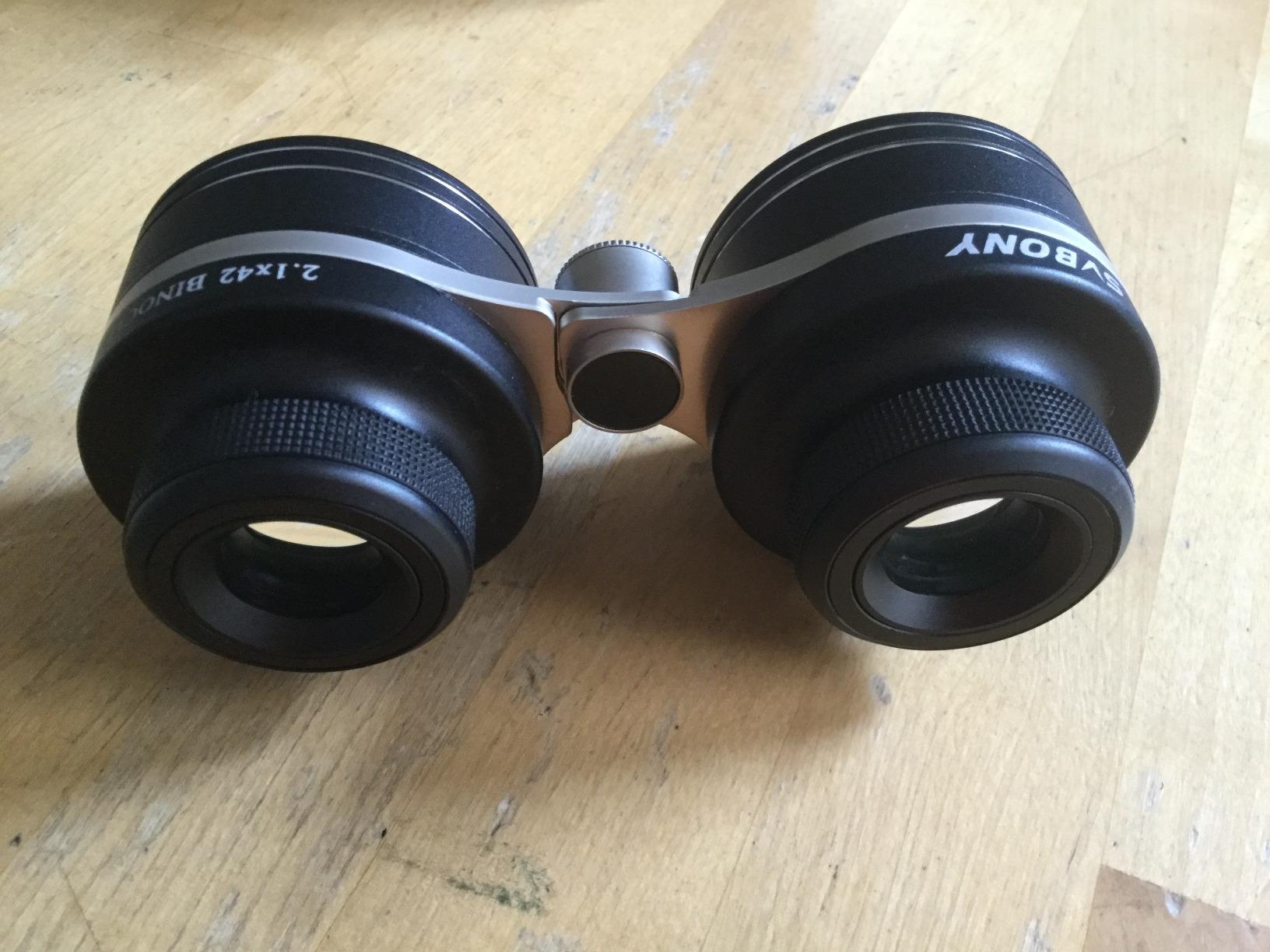
The SVBONY SV407 is a completely different kind of binocular. With just 2.1x magnification and a jaw-dropping 26-degree field of view, it is designed for one purpose: framing entire constellations and large star fields in a single sweeping view.
If you have ever wanted to see Orion or Cygnus as a single framed picture rather than a small patch, this is the instrument. The effect is closer to wearing night-vision goggles than using traditional binoculars, and it is genuinely magical under a dark sky.
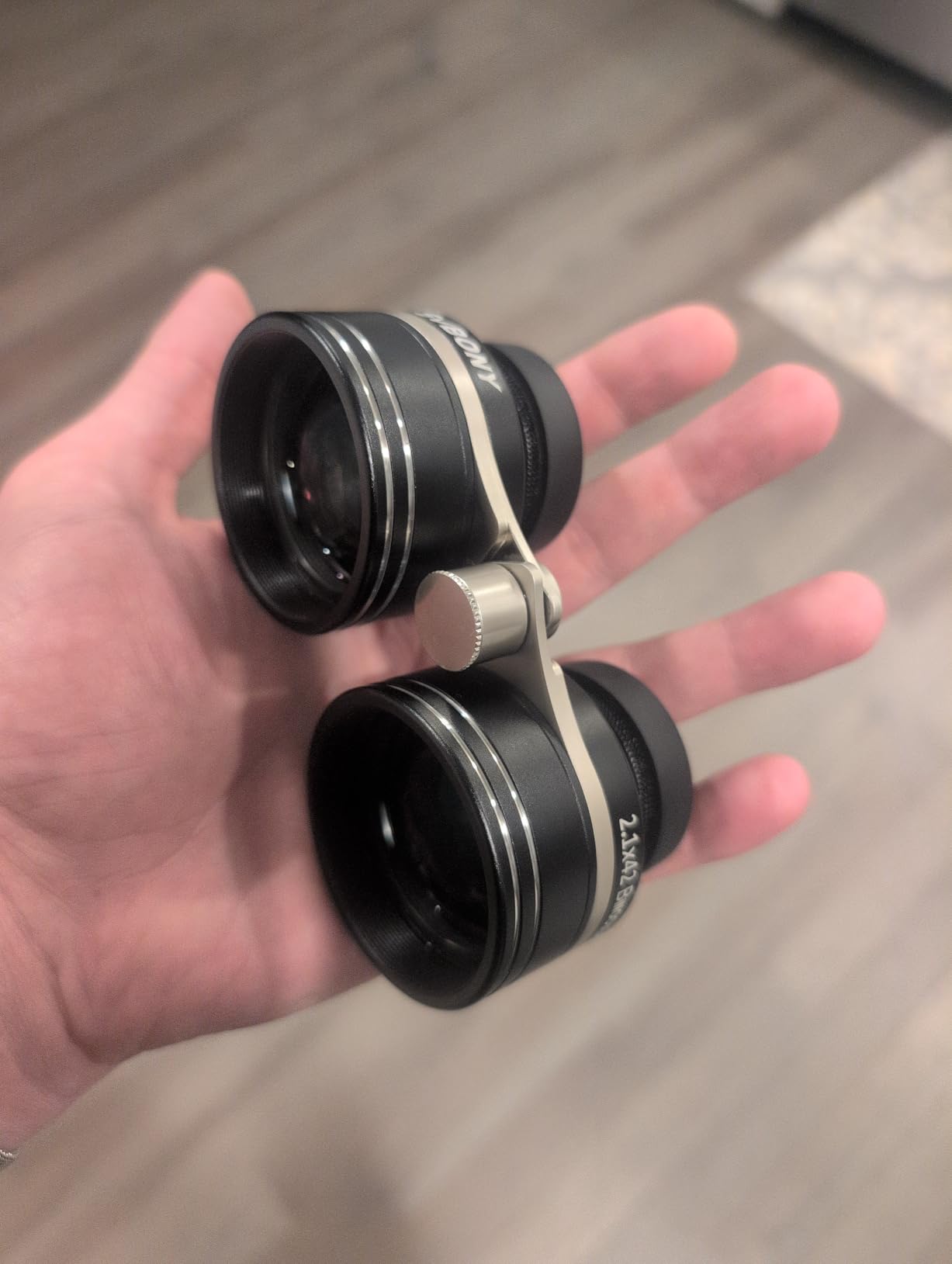
The fully multi-coated 42mm objectives keep stars bright, and the long depth of field means once you focus on infinity, almost everything in the sky stays sharp. The 2-inch filter thread on the objectives lets you add light-pollution or nebula filters for enhanced viewing from urban areas.
The catch is that 2.1x is not enough magnification for lunar detail, planets, or individual deep-sky objects. This is a complementary tool, not a replacement for a standard astronomy binocular.
Best Use Case: Learning the Sky
The SV407 excels at helping beginners learn constellations and trace the Milky Way from horizon to horizon. Pair it with a planisphere or a stargazing app, and you will know your way around the night sky within a few sessions.
It is also wonderful for meteor showers, since the wide field lets you monitor a huge swath of sky for falling stars without missing the action.
Complementary, Not Primary
Think of the SV407 as a wide-field companion to a standard 10×50 or 15×70 binocular. Use the SV407 to find your bearings and spot large targets, then switch to the higher-power binocular for closer inspection.
The lifetime warranty and IPX6 water resistance give peace of mind, and the solid metal body feels built to outlast the hobby.
10. Sogries 18×70 – Heavy-Duty Astronomy Binoculars with Phone Adapter
- Excellent clarity and brightness
- Superior low-light performance
- Solid durable build
- Includes phone and tripod adapters
- Good value vs premium brands
- Very heavy at 4.67 pounds
- Bulky size
- Tripod required
- May be too heavy for some users
The Sogries 18×70 is a serious astronomy binocular that competes with the SkyMaster 15×70 at a similar price point. The BAK-4 prisms and fully multi-coated lenses produce bright, sharp views of the Moon, Jupiter, Saturn, and brighter deep-sky objects.
The 4.7mm exit pupil is ideal for adult eyes under typical sky conditions, balancing image brightness with magnification. I was impressed by the contrast on the Orion Nebula, where the Trapezium cluster resolved into distinct stars.
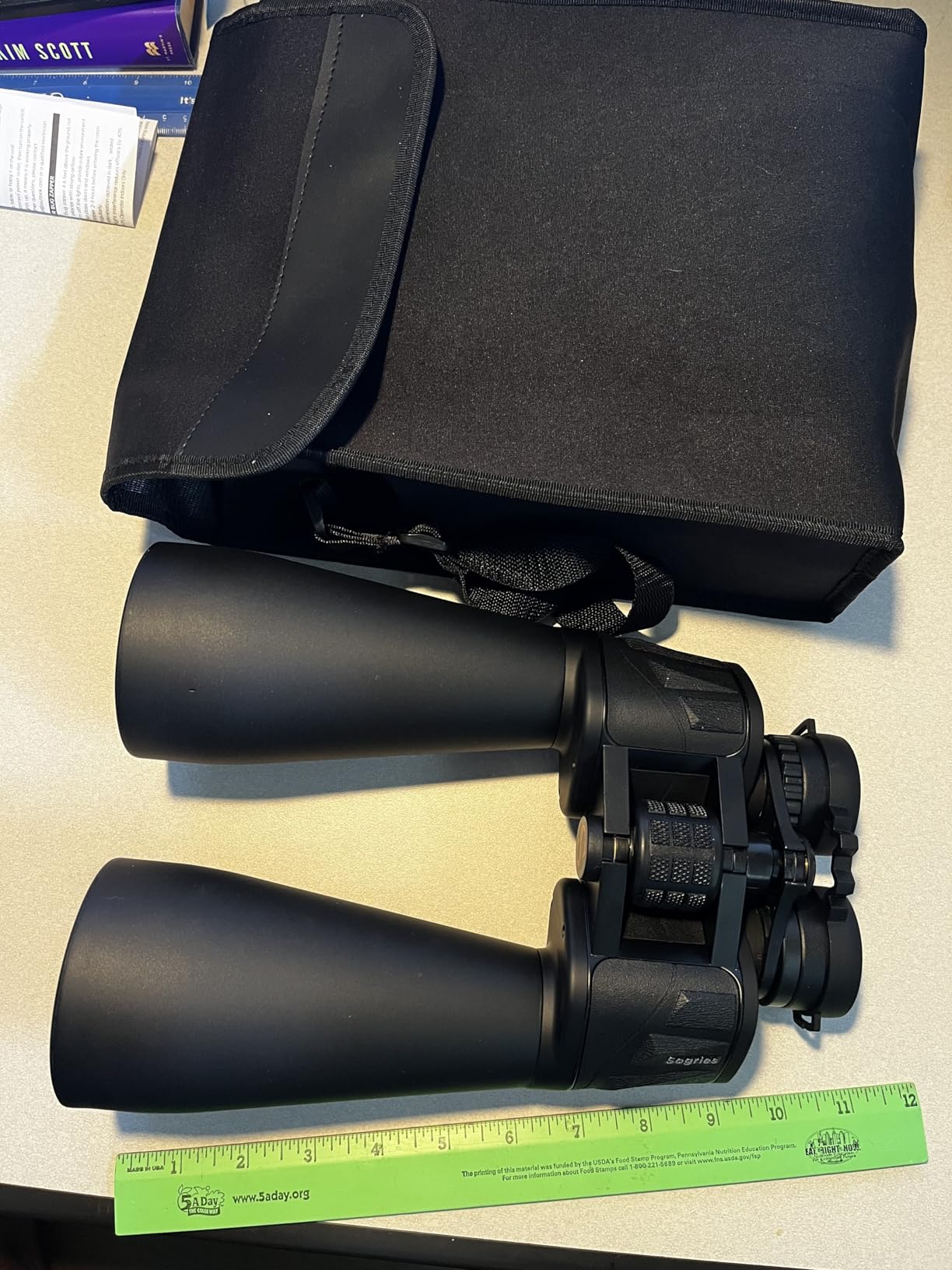
The metal barrel construction with rubber armor feels built to survive decades of use, and the IPX7 waterproof and fog-proof rating means dew and humidity are non-issues. The included smartphone adapter and tripod adapter add genuine value.
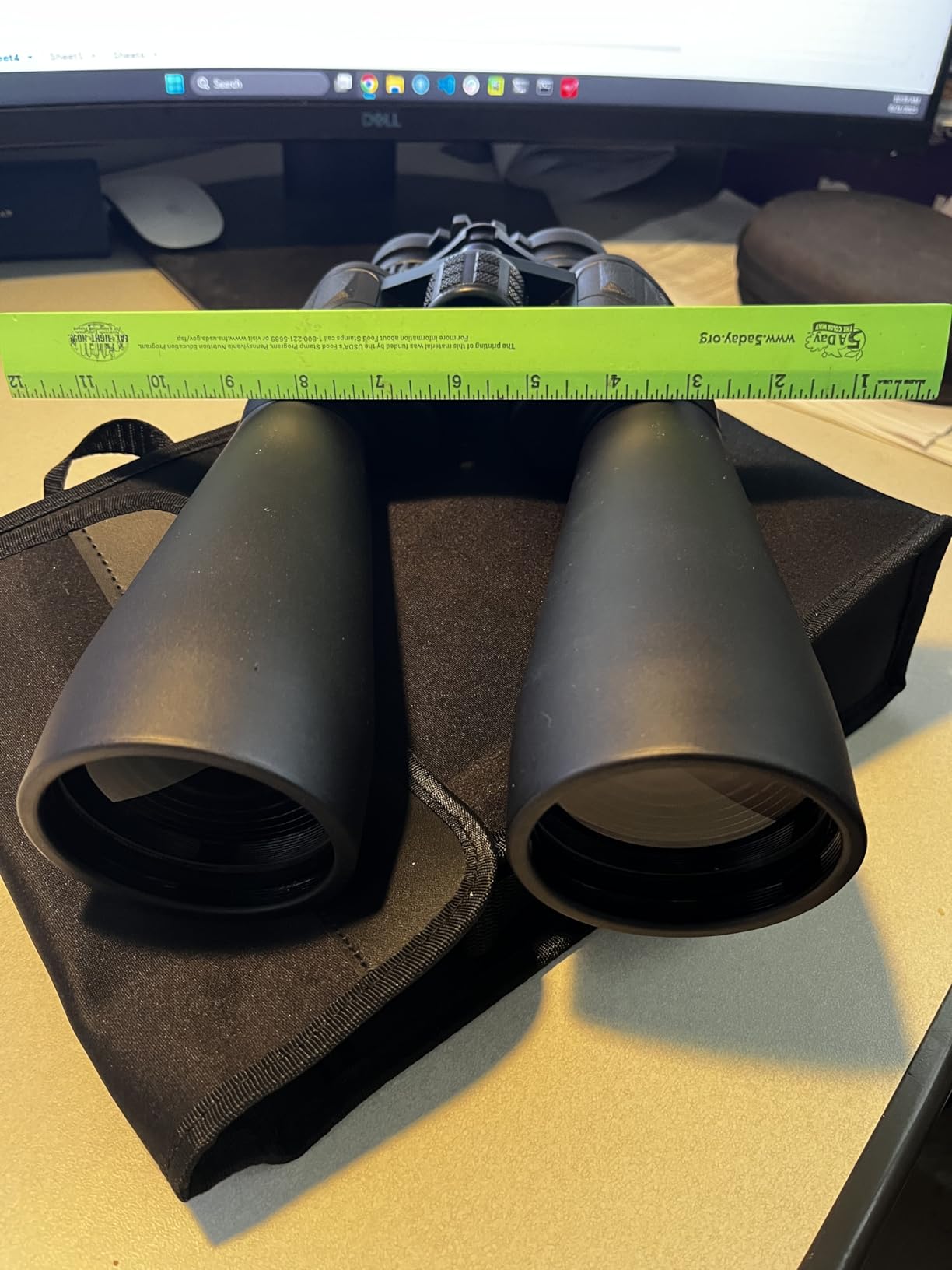
The 4.67-pound weight is the obvious trade-off. These are not a handheld binocular for casual sessions. They belong on a sturdy tripod, and even a basic photo tripod will struggle under the load.
What the 18×70 Reveals
On a clear dark night, the Sogries 18×70 shows Jupiter as a small disk with two main cloud belts and four Galilean moons. Saturn displays its rings as a distinct bright oval around the planet. The Andromeda Galaxy appears as a soft glow with a brighter core.
Star clusters like the Pleiades and the Beehive (M44) become immersive fields of pinpoint stars.
Comparing to SkyMaster 15×70
The Sogries gives more magnification and a heavier, more durable build, plus a phone adapter included. The SkyMaster 15×70 is lighter, slightly brighter due to lower magnification, and benefits from Celestron’s longer warranty track record.
Pick the Sogries if you want maximum value in a single package, and the SkyMaster if you want a lighter binocular from a more established astronomy brand.
11. Nikon ACULON A211 12×50 – Quality Nikon Optics for Beginners
- Crystal clear Nikon optics
- Quality multicoated lenses
- Lightweight for hiking
- Tripod adaptable
- Great for night sky
- 12x hard to hold steady
- Diopter adjustment issues reported
- Slightly heavy for neck wear
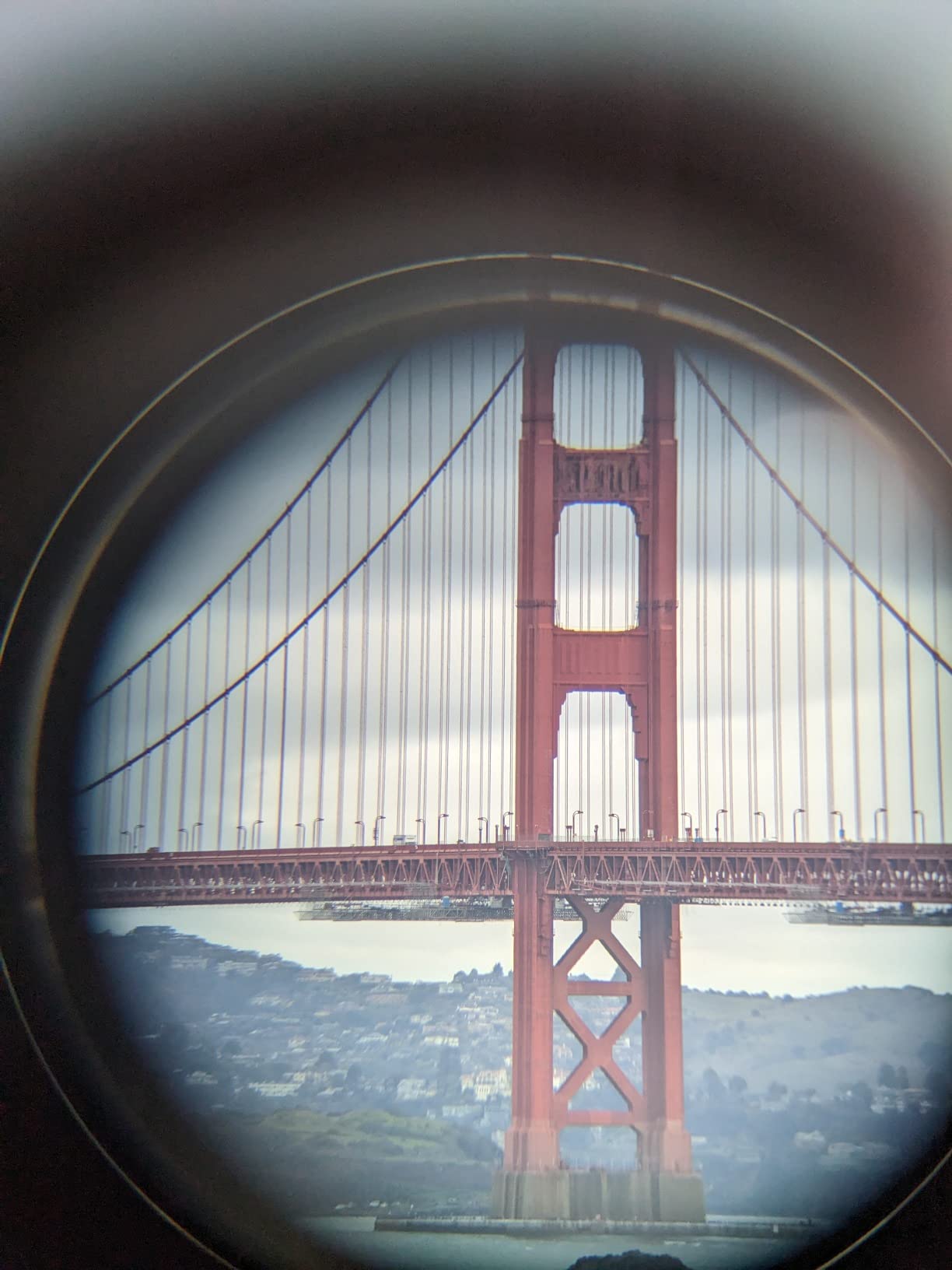
Nikon’s ACULON A211 line is a go-to recommendation for anyone who wants established optical quality without paying premium prices. The 12×50 model uses Nikon’s multicoated Eco-Glass lenses and Porro prisms to deliver bright, contrasty views that outperform most budget binoculars in this size class.
The first time I looked at the Moon through the A211 12×50, the difference compared to a generic budget pair was immediately obvious. Crater edges were sharper, the terminator showed more shadow detail, and bright stars stayed tight pinpoints instead of flaring into spikes.

The turn-and-slide rubber eyecups make eye placement comfortable for both glasses wearers and non-wearers. The smooth central focus knob has a satisfying resistance, and the rubber-armored body provides a confident grip even in damp conditions.
At 12x magnification, you will notice image shake when handheld. Bracing your elbows on a steady surface helps, and a lightweight tripod via the tripod-adaptable design makes a real difference for extended sessions.
Nikon Optics Quality
Nikon’s reputation for optics is well-earned. The Eco-Glass lenses are lead and arsenic free, and the multicoating is genuinely effective at increasing light transmission. Stars look crisp, the Moon shows fine detail, and color fidelity is excellent for the price.
Some users report minor diopter adjustment issues, so spend time setting the diopter correctly for your eyes before declaring the optics good or bad.
Stargazing and Daytime Use
The 12×50 is a true crossover binocular. By day, it handles birdwatching, hiking, and nature observation with clarity and comfort. By night, it frames the Moon, planets, and bright deep-sky objects with Nikon-quality optics at an accessible price.
If you want one mid-range binocular from a name you can trust, the ACULON A211 12×50 is an excellent choice.
12. Celestron Nature DX 8×42 – Versatile All-Rounder with Waterproofing
- Sharp detailed views
- Excellent value
- Great for eyeglass wearers
- Waterproof and fogproof
- Smooth focus mechanism
- Eyecup screws can loosen over time
- Neck strap low quality
- Eyecups may not adjust for all users
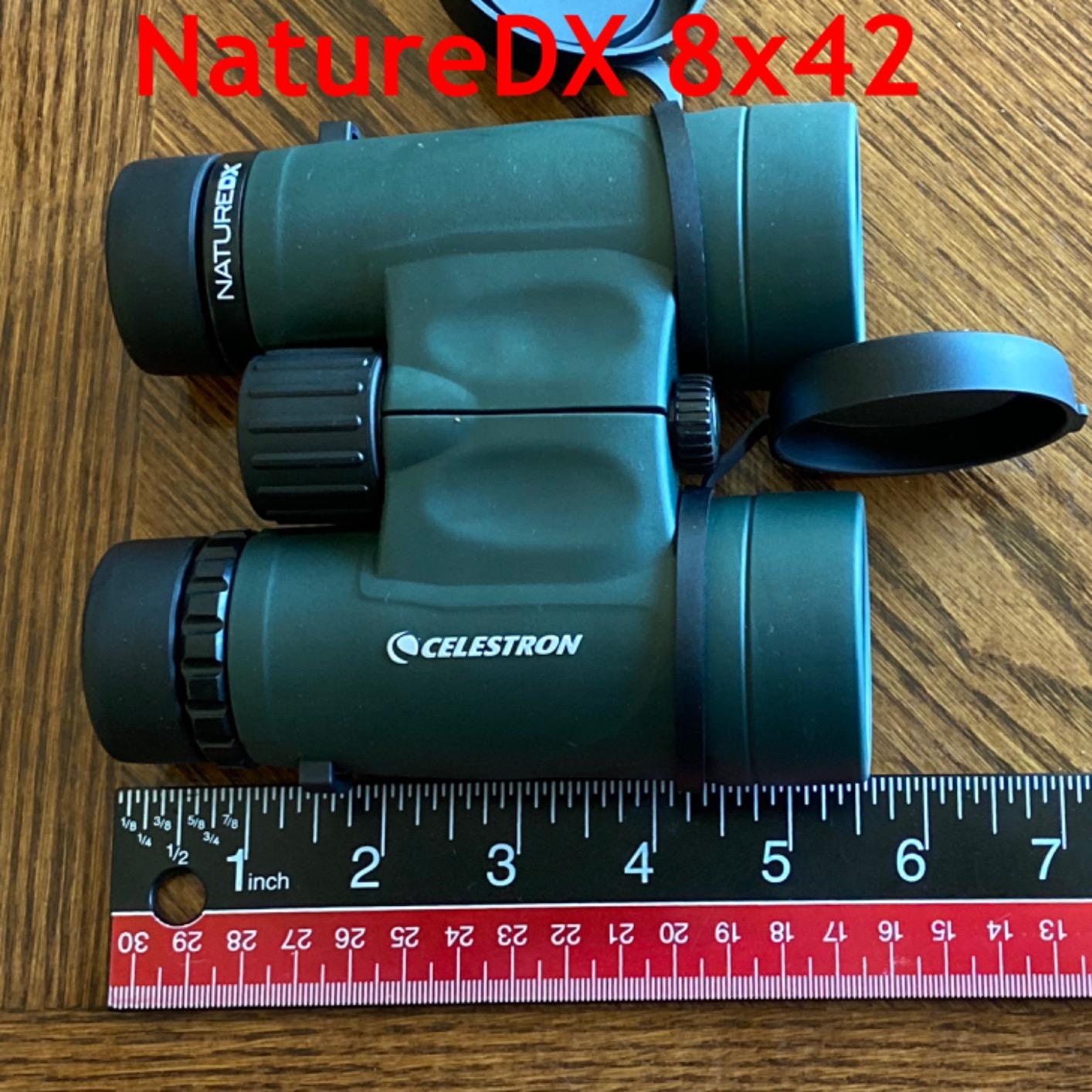
The Celestron Nature DX 8×42 is the binocular I recommend to anyone who wants one pair for both daytime adventures and beginner astronomy. The 8x magnification is steady in the hand, the 42mm objectives deliver bright images, and the phase-coated BaK-4 prisms produce sharp, high-contrast views.
For stargazing, the 8×42 is not as bright as a 10×50 or 15×70, but it shines for wide-field scanning. The Pleiades fit comfortably in the field of view, the Milky Way reveals structure, and the Andromeda Galaxy shows as a soft smudge under a dark sky.
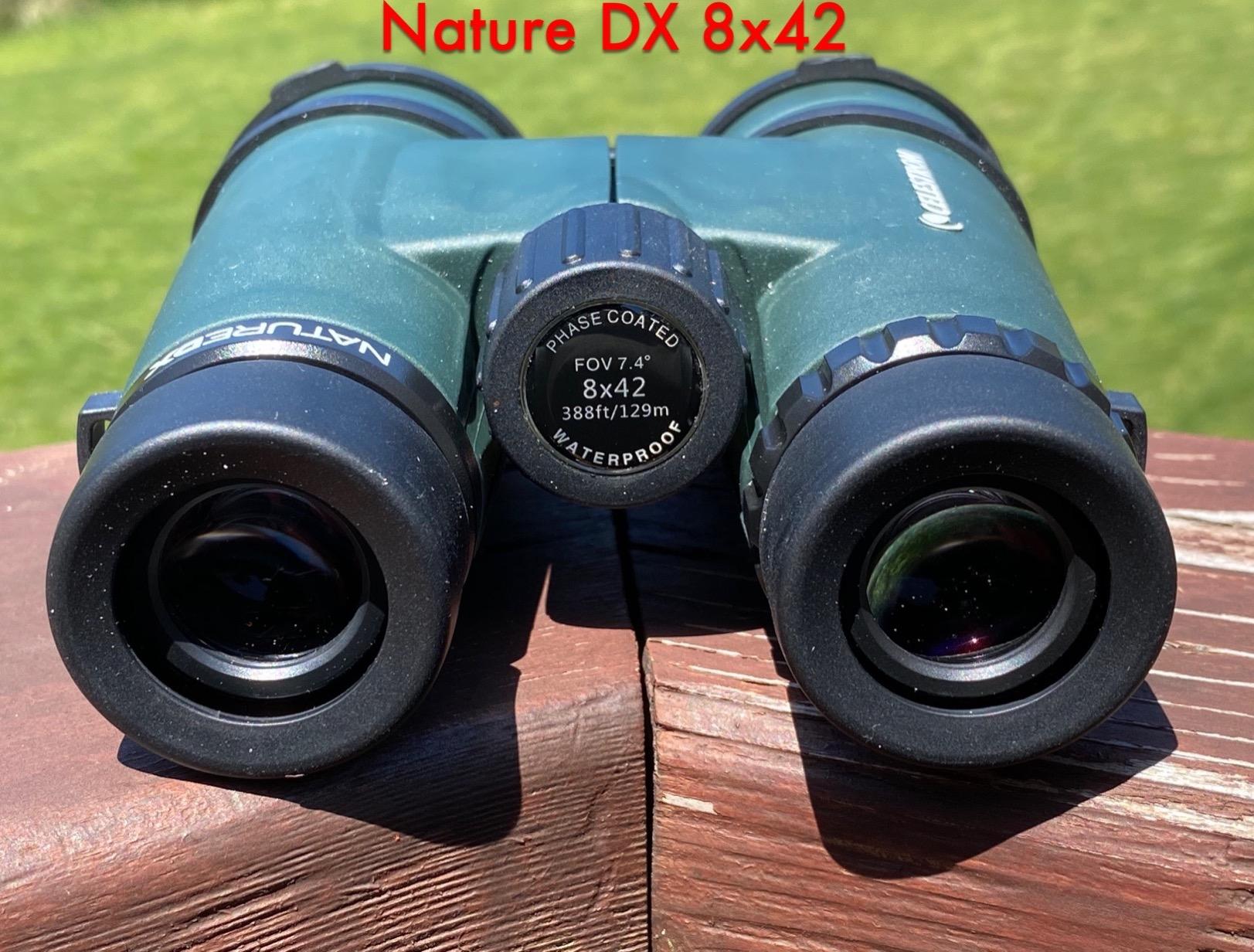
The fully multi-coated lenses and phase-coated prisms are uncommon at this price. Build quality is rugged, with a rubber-armored polycarbonate housing that is nitrogen-purged and waterproof, so dew and drizzle are non-issues.
The 17.5mm of eye relief is generous and works well for glasses wearers. The focus wheel is smooth and precise, and the twist-up eyecups click solidly into position.
Comfort for Glasses Wearers
The Nature DX 8×42 is one of the most comfortable binoculars in this guide for anyone who wears glasses. The 17.5mm eye relief means you can see the full field of view with your glasses on, and the twist-up eyecups let non-glasses wearers find the perfect eye distance.
This comfort factor matters more than people realize when you are spending 30 minutes or more scanning the sky.
Wide Field for Astronomy
The wide 7.4-degree angular field of view is a real advantage for astronomy. You can frame entire asterisms, sweep the Milky Way efficiently, and locate targets quickly without getting lost in a narrow view.
The 5.25mm exit pupil keeps images bright enough for dark sky sites, where your eye pupil dilates fully.
13. Celestron SkyMaster Pro ED 7×50 – Premium ED Glass for Wide-Field Astronomy

- ED glass eliminates chromatic aberration
- Great for Milky Way and deep sky
- Perfect collimation out of box
- Comfortable handheld at 7x
- Waterproof and durable
- Oversized eyecups uncomfortable for some
- Tripod needed for long sessions
- Nose clearance issues
- Heavier than typical 7x50
The SkyMaster Pro ED 7×50 is Celestron’s premium wide-field astronomy binocular. The standout feature is Extra-Low Dispersion (ED) glass in the objectives, which virtually eliminates the colored fringing you see around the Moon and bright stars in standard binoculars.
The 6.4mm exit pupil is enormous, which means these are bright enough to use from the darkest sky sites where your pupil dilates to its maximum. The Milky Way glows like a cloud, and wide targets like the Pleiades, Andromeda Galaxy, and Double Cluster look stunning.
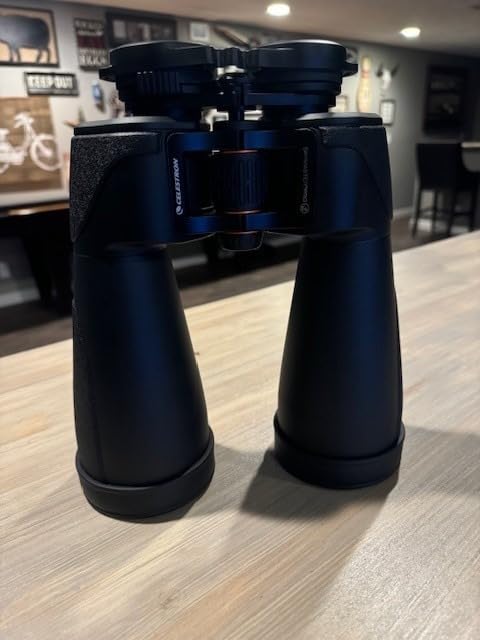
The XLT coatings borrowed from Celestron’s telescope line maximize light transmission, and the threaded objectives accept standard 1.25-inch astronomical filters for light-pollution reduction or nebula enhancement. That filter compatibility is a meaningful feature for urban astronomers.
The main complaint is the oversized eyecups, which some users find uncomfortable or awkward for nose clearance. Try before you buy if possible, or plan to adjust to the feel over a few sessions.
Why ED Glass Matters
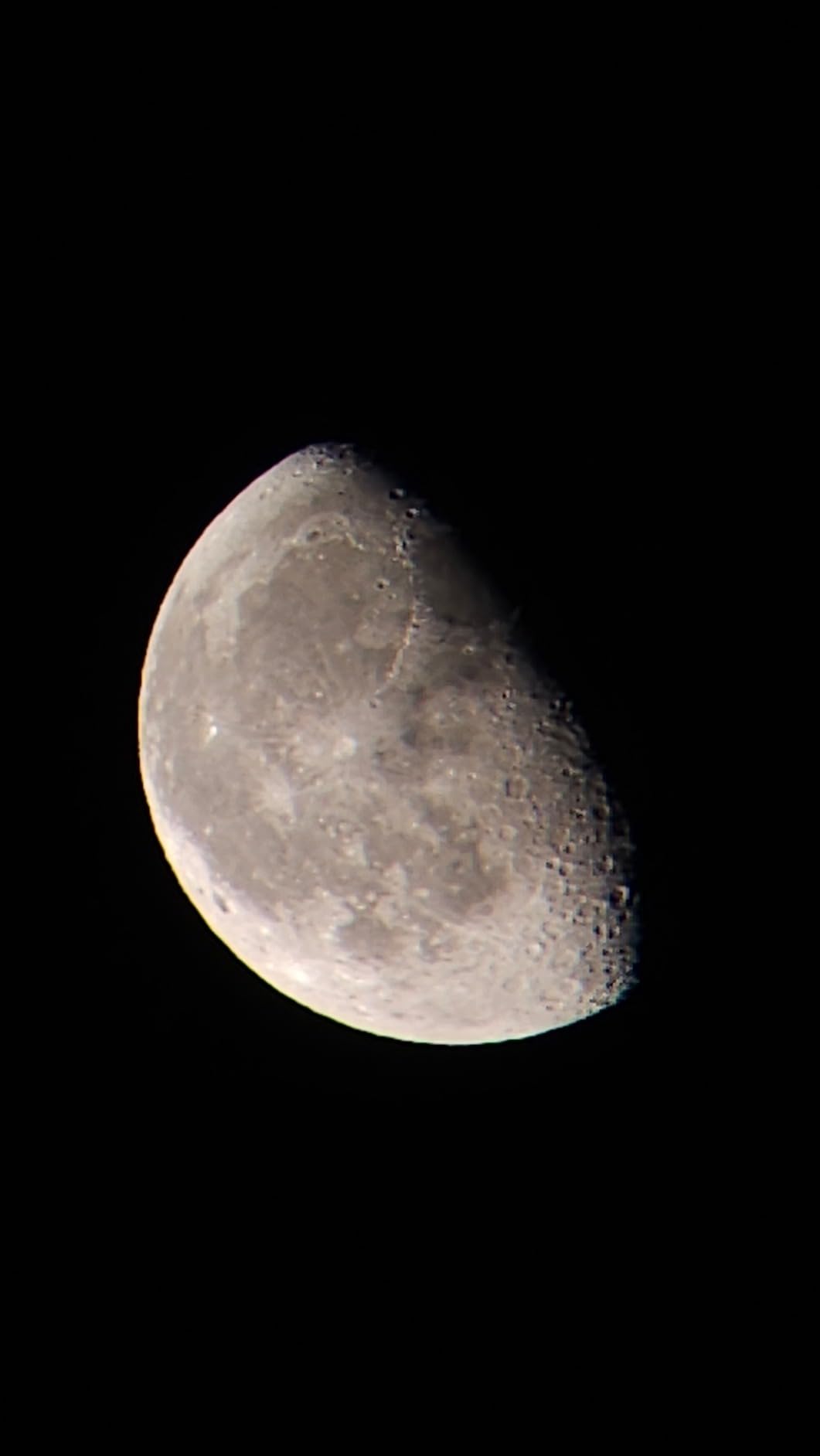
ED glass reduces chromatic aberration, the colored fringes that appear around bright objects like the Moon, Venus, and Sirius. In standard binoculars, the Moon’s edge shows a thin violet or green fringe. In ED binoculars, that fringe is gone, and the image snaps into sharper focus.
For pure visual astronomy, the difference is subtle but rewarding. For astrophotography through binoculars, ED glass is a major advantage.
Filter Threads for Urban Astronomers
The 1.25-inch filter thread on the objectives lets you add a light-pollution filter, a nebula filter, or a Moon filter. From suburban skies, a UHC or OIII filter dramatically improves contrast on nebulae like the Orion and Lagoon.
This feature alone justifies the price difference for city dwellers who want to enjoy deep-sky astronomy from light-polluted locations.
14. Nikon PROSTAFF 5 12×50 – Lightweight Waterproof All-Terrain Binoculars
- Excellent clarity
- Multilayer-coated lenses and prisms
- Lightweight for 12x50 size
- Waterproof and fogproof
- Comfortable high-eyepoint design
- 12x requires steady hand or tripod
- Some missing accessories reported
- Eyecup covers could fit tighter
The Nikon PROSTAFF 5 12×50 is Nikon’s mid-tier offering, sitting above the ACULON line with better coatings, a roof prism design, and full weatherproofing. The multilayer-coated lenses and prisms deliver noticeably brighter images than the ACULON, especially at twilight and under the night sky.
The fiberglass-reinforced polycarbonate body is both lightweight and rugged. At 1.74 pounds, these are among the lightest 12×50 binoculars you can buy, which makes them genuinely comfortable for handheld astronomy sessions.
The nitrogen-filled and O-ring-sealed construction makes them fully waterproof and fog-proof. Dew, drizzle, and humidity are non-issues, which matters because astronomy sessions almost always end with damp optics if you are out long enough.
The turn-and-slide multi-click rubber eyecups provide precise eye positioning for both glasses wearers and non-wearers. The 15.5mm eye relief is generous enough for most glasses users to see the full field.
Lightweight for the Magnification
At 1.74 pounds, the PROSTAFF 5 12×50 is genuinely lightweight for a 12x binocular. That weight advantage translates into longer handheld sessions before fatigue sets in, which matters for active stargazing where you are moving between targets.
The roof prism design keeps the body compact compared to a Porro prism of the same magnification, which makes them easier to pack for trips.
Waterproofing for Real-World Use
Waterproofing and fog-proofing are more than marketing claims for astronomers. When you take optics from a warm car into cold night air, internal fogging can ruin a session. The nitrogen purge in the PROSTAFF 5 prevents that, so you can transition between temperatures without waiting for the binocular to acclimate.
The same rugged build makes them excellent for hunting, birdwatching, and backpacking in any weather.
15. Celestron SkyMaster Pro ED 20×80 – Premium Giant Astronomy Binoculars
- ED glass for zero chromatic aberration
- Superb detail and brightness
- Perfect collimation
- Great for long-distance viewing
- Built-in tripod adapter
- Tripod required at 7.7 pounds
- Eyecups too large for some
- Poor eye relief for glasses
- Very heavy
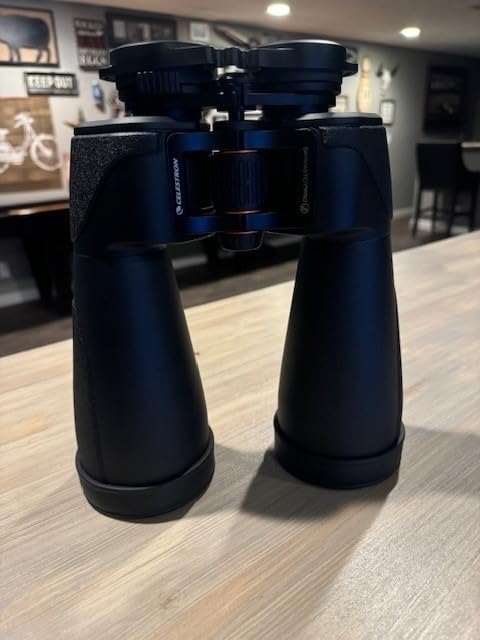
The SkyMaster Pro ED 20×80 is Celestron’s flagship giant astronomy binocular. The combination of ED glass, XLT coatings, and 80mm objectives makes this a serious tool for deep-sky astronomy, capable of pulling faint nebulae, galaxies, and globular clusters out of a dark sky with real presence.
This is the binocular I recommend to a committed beginner who already knows they love the hobby and wants a long-term investment. It is not a casual grab-and-go, but on a sturdy mount, the views are stunning.
The ED glass eliminates the colored fringing that plagues standard binoculars around bright objects. Stars snap to tight pinpoints, the Moon shows clean crater edges, and bright planets like Jupiter and Saturn render as crisp, color-free disks.
The 1.25-inch filter threads accept astronomical filters for light-pollution reduction or nebula enhancement. From suburban skies, a UHC filter turns the Orion Nebula from a faint glow into a structured cloud with visible wisps.
What the 20×80 Reveals
The Andromeda Galaxy shows its core glow and a faint dust lane under dark skies. The Orion Nebula reveals the Trapezium cluster clearly. Globular clusters like M13 and M22 show grainy texture with individual stars resolved at their edges.
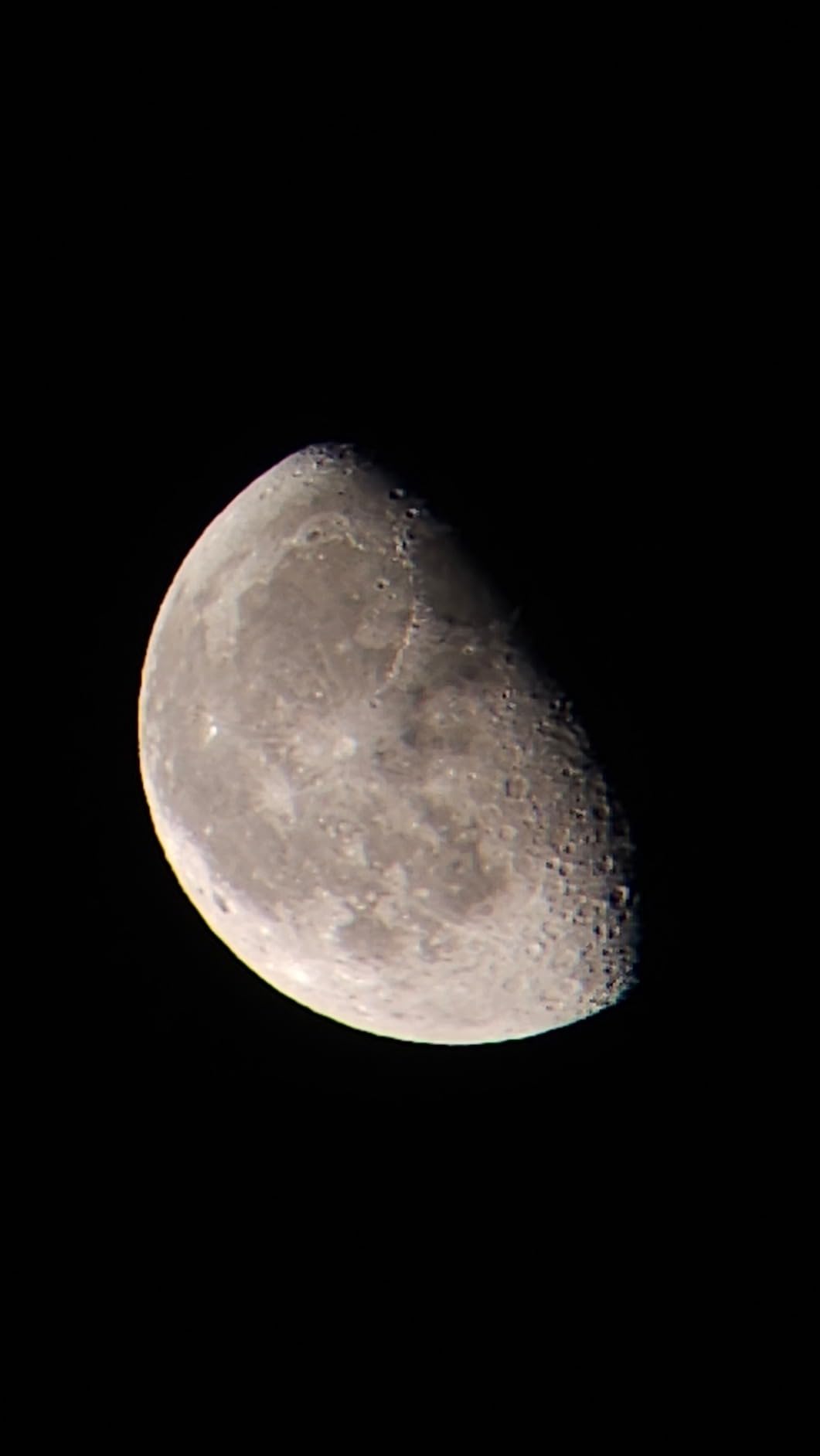
Jupiter shows its main cloud belts, Saturn shows clearly separated rings, and the Moon is an immersive cratered landscape.
Mounting Requirements
At 7.7 pounds, the 20×80 demands a serious mount. A parallelogram mount is ideal because it lets you aim at any point in the sky without contorting your neck. A heavy-duty video tripod is the next best option, but lightweight photo tripods will struggle.
Budget for a quality mount that costs as much as or more than the binocular itself. A great optic on a wobbly mount is worse than a lesser optic on a steady one.
Buying Guide: How to Choose Beginner Binoculars for Stargazing
Choosing the right beginner binoculars for stargazing comes down to a handful of key specs. Once you understand magnification, aperture, exit pupil, and prism type, you can read any binocular spec sheet and know exactly what you are getting.
This section breaks down each spec in plain language, with practical guidance based on what real stargazers actually need.
Magnification vs Aperture: The Core Trade-Off
Magnification is the first number in a binocular’s spec, like the 10 in 10×50. Aperture is the second number, the diameter of the objective lenses in millimeters. For astronomy, aperture matters more than magnification, because the night sky is dim and you need light-gathering power to see faint objects.
A common beginner mistake is buying the highest magnification available. A 25×70 binocular shows a smaller, dimmer patch of sky than a 10×50, and the higher magnification makes image shake much worse. For most beginners, 7x to 10x is the sweet spot, paired with 42mm to 50mm objectives.
Exit Pupil: Why It Matters and How to Calculate It
Exit pupil is the diameter of the beam of light leaving the eyepiece. You calculate it by dividing aperture by magnification. A 10×50 binocular has a 5mm exit pupil (50 divided by 10), and a 7×50 has a 7mm exit pupil (50 divided by 7).
The exit pupil matters because your eye pupil only dilates so far. Younger eyes dilate to about 7mm in complete darkness, while adults over 50 may only dilate to 5mm. If your binocular’s exit pupil is larger than your eye pupil, the extra light is wasted.
For most adults, a 5mm exit pupil is the practical sweet spot. For kids and young adults under dark skies, a 7mm exit pupil makes sense. From light-polluted suburbs, a smaller exit pupil often improves contrast.
Porro vs Roof Prism: Which Is Better for Astronomy?
Porro prisms use a zig-zag design where the objectives are spaced wider than the eyepieces. They deliver brighter images for less money because the prism design is simpler and uses fewer glass elements. Almost all dedicated astronomy binoculars use Porro prisms.
Roof prisms use a straight-through design where the objectives and eyepieces are aligned. They are more compact and rugged, but require more expensive phase-correcting coatings to match Porro prism image quality. Roof prisms make sense if you want a versatile binocular for both daytime and astronomy use.
For pure astronomy on a budget, Porro is usually the better choice. For a crossover binocular that handles everything, roof prism models like the Nikon PROSTAFF or Celestron Nature DX are excellent.
Eye Relief for Glasses Wearers
Eye relief is the distance from the eyepiece to your eye where the full field of view is visible. If you wear glasses, you need at least 15mm of eye relief, and ideally 17mm or more. Without enough eye relief, you see only the center of the field with your glasses on.
Models like the Celestron Nature DX 8×42 (17.5mm) and SkyMaster Pro ED 7×50 (20.8mm) are excellent for glasses wearers. Models with shorter eye relief, like the Cometron 7×50 (13mm), work but may require removing your glasses.
BaK-4 vs BK-7 Glass
BaK-4 (Barium Crown) glass is the higher-quality prism glass used in better binoculars. It transmits more light and produces round exit pupils, which means brighter, sharper images at the edge of the field. BK-7 glass is cheaper and produces slightly dimmer images with squared-off exit pupils at the edges.
Almost all the binoculars in this guide use BaK-4 prisms, which is one reason they perform well on the night sky. If you see a budget binocular advertising BK-7 prisms, expect noticeably dimmer images.
Hand-Holding Stability Tips
Handheld stability is the biggest challenge for beginner astronomers. At 10x magnification, even a steady hand shows visible image shake. At 15x and above, a tripod is essentially mandatory.
Several techniques help. Brace your elbows on a fence, car roof, or your knees while seated. Pull the binocular close to your face and press your thumbs against your cheekbones for a third point of contact. Lean against a wall or tree for back support. Exhale slowly before settling on a target to reduce body movement.
For sessions longer than 20 minutes at magnifications above 10x, invest in a basic camera tripod and a binocular adapter. Your patience will be rewarded with sharper views.
What to Avoid: Zoom, Ruby Coatings, and PermaFocus
Three features look impressive on a spec sheet but hurt astronomy performance. Zoom binoculars compromise optical quality for adjustable magnification, and the moving parts introduce alignment issues. Ruby-coated optics look red and futuristic, but the coating reduces light transmission exactly when you need it most for night astronomy. PermaFocus or focus-free binoculars assume average vision, which means most users see slightly out-of-focus stars.
Stick with fixed-magnification binoculars with standard multi-coated or fully multi-coated optics and a smooth manual focus mechanism. You will see more for less money.
Age-Based Recommendations
Younger eyes dilate more fully, so children and young adults benefit from large exit pupils like the 7mm of a 7×50 binocular. Adults over 50 typically have eye pupils that dilate to 5mm or less, so a 10×50 (5mm exit pupil) is more efficient.
For kids specifically, lightweight matters as much as brightness. The Cometron 7×50 is a great choice for ages 10 and up, while the Adasion 12×42 HD works well for teens who want a more modern feel with a phone adapter.
Frequently Asked Questions
What magnification of binoculars is best for stargazing?
For beginner stargazing, 7x to 10x magnification is the sweet spot. A 7×50 or 10×50 binocular provides enough magnification to see lunar craters, Jupiter’s moons, and bright star clusters, while remaining steady enough to handhold. Higher magnifications like 15x or 20x reveal more detail on planets and the Moon but require a tripod to keep the image steady. The exit pupil also matters: a 7×50 has a 7mm exit pupil ideal for young eyes under dark skies, while a 10×50 has a 5mm exit pupil that suits most adults.
What type of binoculars are best for stargazing?
Porro prism binoculars are generally best for astronomy because they deliver brighter images for less money than comparable roof prism models. The wider objective spacing of Porro designs also enhances depth perception. Look for binoculars with BaK-4 glass prisms, fully multi-coated optics, and an exit pupil of 5mm to 7mm. Common astronomy sizes include 7×50, 10×50, 15×70, and 20×80, with larger apertures gathering more light for deep-sky objects like nebulae and galaxies.
Are 10×50 or 12×50 binoculars better for astronomy?
For most beginners, 10×50 binoculars are better than 12×50 for astronomy. The 10x magnification produces a 5mm exit pupil that suits most adult eyes, while 12x produces a 4.2mm exit pupil that is dimmer on faint targets. The 10x is also noticeably easier to hold steady. The 12×50 makes sense if you mainly want higher magnification on the Moon and planets and do not mind a slightly dimmer view of deep-sky objects. Both sizes work well handheld for short sessions.
Can beginners use binoculars instead of a telescope?
Yes, binoculars are actually the best starting instrument for most astronomy beginners. They are cheaper, lighter, and easier to aim than a telescope, and their wide field of view makes it easy to find constellations, star clusters, and other large targets. A 10×50 or 15×70 binocular shows the Milky Way, the Orion Nebula, Jupiter’s moons, Saturn’s rings, and dozens of star clusters. Most experienced astronomers recommend learning the night sky with binoculars for at least a year before investing in a telescope.
Conclusion: Find Your Perfect First Stargazing Binoculars
The best beginner binoculars for stargazing in 2026 are the ones you will actually grab and use, not the ones with the most impressive spec sheet. For most newcomers, that means a forgiving pair like the Celestron Cometron 7×50 or a quality crossover like the Celestron Nature DX 8×42 that handles both day and night with ease.
If you want to jump straight into deep-sky astronomy, the Celestron SkyMaster 15×70 remains the best value for serious aperture, while the Celestron SkyMaster Pro ED 7×50 and Pro ED 20×80 deliver premium ED-glass optics for users who want to skip the upgrade path entirely.
Start with whatever fits your budget and your grip, learn your way around the constellations, and only then consider whether a telescope makes sense for your next step. When you are ready to step up to higher-end optics, our premium astronomy binoculars guide has you covered with top-tier picks.
The night sky is waiting. Grab your binoculars, find a dark spot, and look up.