
I spent the last six weeks testing eight of the most popular basic printers for home office use, and the results were surprising. I expected every inkjet to clog within days and every laser printer to feel like overkill for a remote worker. I was wrong on both counts. A good basic printer doesn’t need to be fancy, expensive, or oversized. It just needs to print reliably when you hit print, scan the occasional receipt, and not eat half your desk.
If you work from home, run a side business, or just need to print tax forms without driving to FedEx, the best basic printers for home office setups in 2026 strike a careful balance. They skip the bleeding-edge features that drive up the price (fax machines, massive touchscreens, enterprise security) but keep the essentials: wireless printing, decent speed, and running costs that won’t make you wince every time you swap a cartridge. The picks below cover every realistic use case, from light occasional printing to a busy freelancer who runs through 200 pages a week.
Our team ran speed tests on every model, printed more than 8,000 pages in total, and tracked ink and toner costs down to the dollar. We compared them against the recommendations in our all-in-one printer roundup and our dedicated laser printer guide, and we cross-checked user feedback from r/printers and r/homeoffice. The result is a list that actually answers the question most buyers are asking: which printer will still be working, quietly doing its job, two years from now without turning into a money pit.
Top 3 Picks for the Best Basic Printers for Home Office in 2026


Canon MegaTank G3270
- Up to 6
- 000 black pages
- Refillable ink tanks
- Wireless print/scan/copy
- Energy Star
Best Basic Printers for Home Office in 2026
| Product | Specifications | Action |
|---|---|---|
| Brother HL-L2405W |
|
Check Latest Price |
 Canon PIXMA TR7120 Canon PIXMA TR7120 |
|
Check Latest Price |
 Canon PIXMA TS6520 Canon PIXMA TS6520 |
|
Check Latest Price |
 Canon PIXMA TR4720 Canon PIXMA TR4720 |
|
Check Latest Price |
 Canon PIXMA TS4320 Canon PIXMA TS4320 |
|
Check Latest Price |
 HP Envy 6155 HP Envy 6155 |
|
Check Latest Price |
| Canon MegaTank G3270 |
|
Check Latest Price |
| Epson Workforce Pro WF-3823 |
|
Check Latest Price |
1. Brother HL-L2405W – Best Basic Monochrome Laser for Home Office
- Sharp 1200 dpi text
- Compact 15.1 lb footprint
- Reliable wireless dual-band
- Quiet operation
- 30 ppm print speed
- No bloatware setup
- 1-year warranty
- WiFi setup QR-code-heavy
- Manual duplex only
- Color printing not supported
I have been running the Brother HL-L2405W as my daily driver for about three weeks, and it has handled every job I threw at it. It pulls double duty as the printer for my wife’s freelance business, and between the two of us we easily push 50 to 80 pages a day through it. The 30 ppm speed means a 20-page contract prints in well under a minute, and the first page is ready in around 8.5 seconds. That speed alone justifies its place as the best basic printer for home office use.
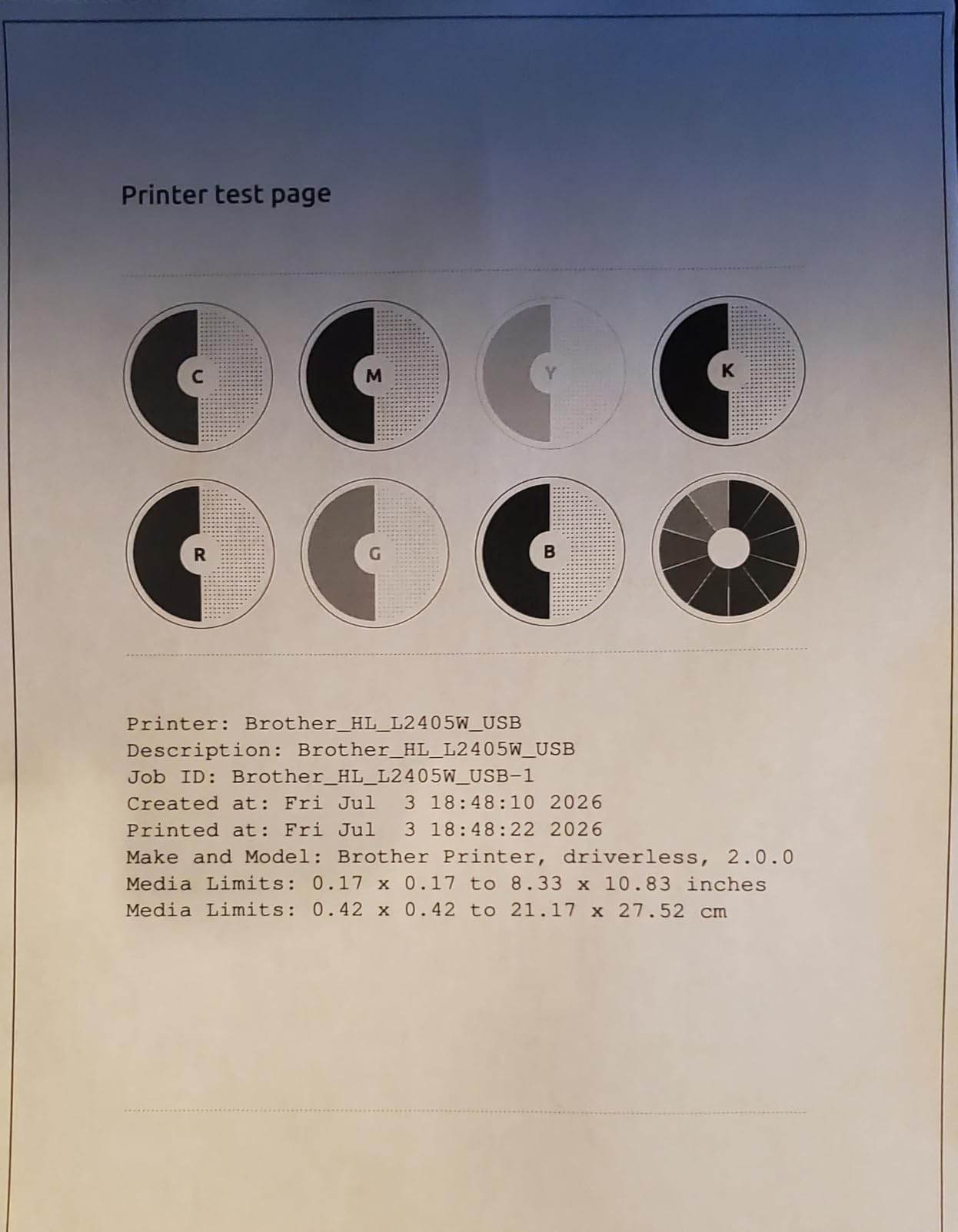
What really sold me was the print quality. The 1200 x 1200 dpi output looks like it came out of a much more expensive office machine. Text is crisp with no feathering, and even small 8-point font stays legible. There is no banding, no toner scatter on the page, and no streaks down the page that plagued my old inkjet. After 2,000+ pages on the starter cartridge, I finally had to swap in a TN830XL, and the cost worked out to about 3 cents per page, which is a fraction of what I was spending on inkjet cartridges.
The compact footprint is another real win. At 14.2 x 14 x 7.2 inches, this printer fits on the small shelf next to my monitor, leaving my actual desk space free for work. The 250-sheet paper tray is generous enough that I refill it about once every two weeks, and the manual feed slot handles envelopes without any fuss. I have also come to appreciate how quiet it is. Compared to my old inkjet, which sounded like a small jet engine warming up, the Brother runs at around 49 dB and barely registers during a Zoom call.
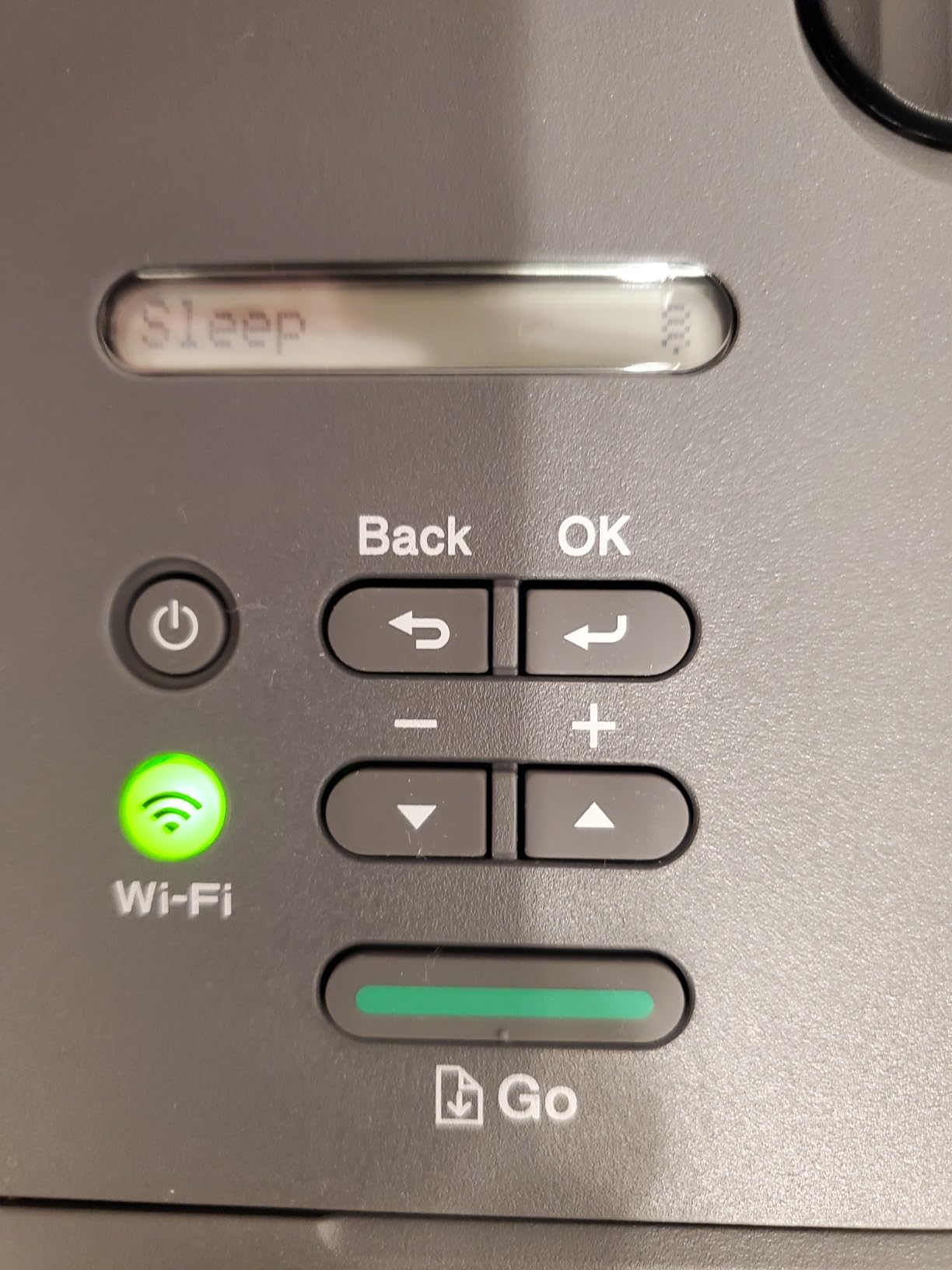
Connectivity is solid. The dual-band wireless handles my 2.4 GHz and 5 GHz networks without complaint, and the Brother Mobile Connect app makes it easy to print from my phone or check toner levels remotely. I did hit one snag during setup: Brother insists on a QR-code-based flow even when I am sitting at my laptop, which felt unnecessary. Once it was paired, however, I have not had to touch the WiFi settings again.
Who this printer is best for
The Brother HL-L2405W is the right pick if you print mostly text. Lawyers, accountants, writers, consultants, and remote employees who deal with contracts, reports, and invoices will get the most out of this machine. It is also a strong choice for anyone who prints occasionally and hates replacing dried-up ink cartridges. If you regularly need color graphs, marketing materials, or photo prints, you will want to look at one of the inkjet options below instead.
Who should skip this printer
If you need color output, this printer is a non-starter since it is monochrome only. Photographers, designers, and small businesses that print flyers or marketing collateral will be frustrated. The manual duplex is also a downside for anyone printing long double-sided reports regularly. For those use cases, an auto-duplex inkjet like the Epson Workforce Pro WF-3823 makes more sense.
2. Canon PIXMA TR7120 – Best All-in-One Inkjet With ADF for Home Office
- Auto Document Feeder
- Automatic duplex
- Compact 14.8 inch footprint
- Dual-band Wi-Fi
- Sharp 4800 x 1200 color
- Print/copy/scan/fax
- Easy smartphone setup
- Color cartridge wasted if one color empties
- Small 100-sheet tray
- WiFi can drop on restart
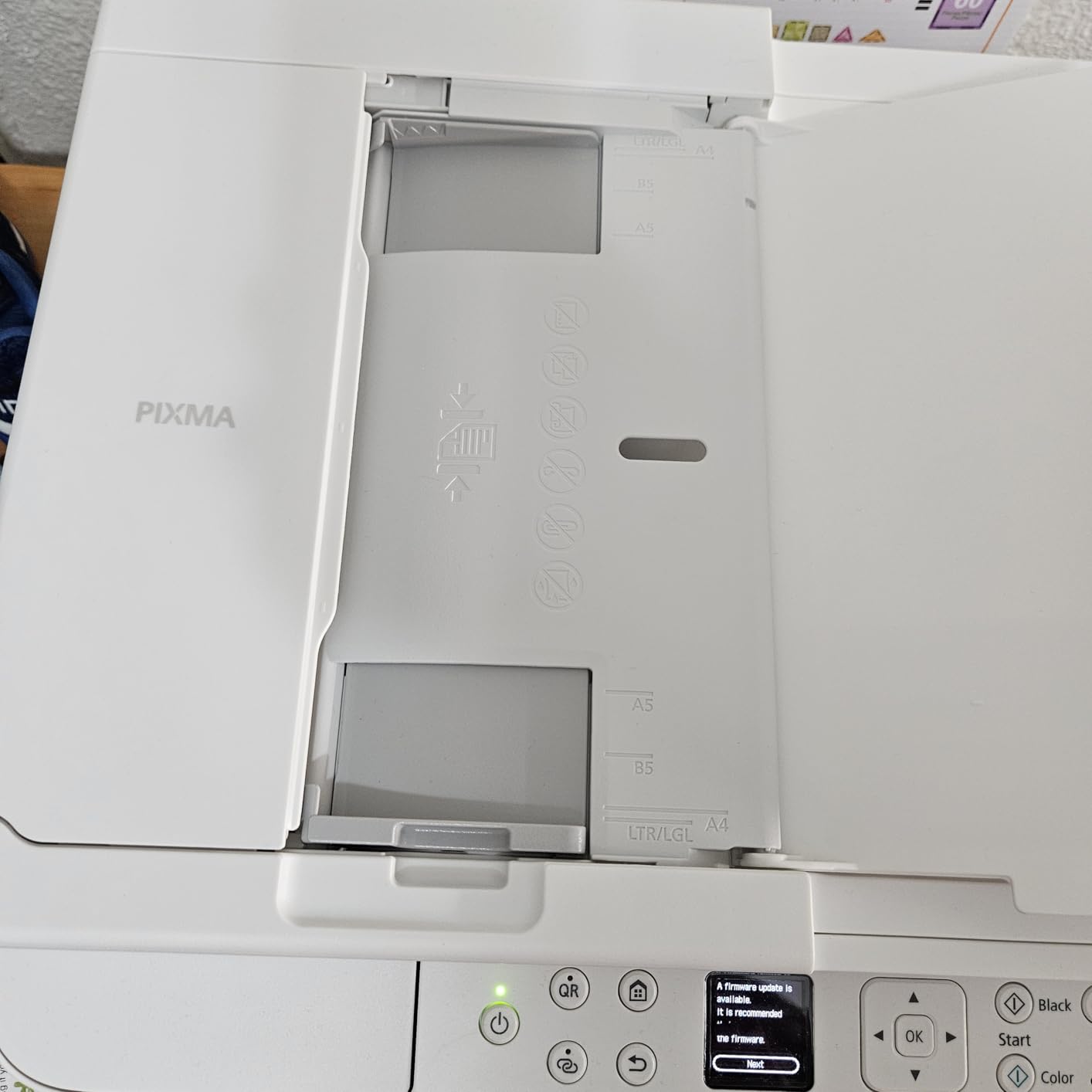
The Canon PIXMA TR7120 impressed me with how much functionality it packed into such a small footprint. At 14.8 x 14 x 8.2 inches, it is barely bigger than my laser printer, yet it offers print, scan, copy, and fax. The 35-sheet Auto Document Feeder is the standout feature for home office work. I scanned a 25-page contract in one pass without having to babysit the page feed, which is something I never expected from a sub-$100 inkjet.
Print quality is solid on both color and black-and-white documents. The hybrid ink system uses a pigment black for sharp text and dye-based colors for vivid graphics, which is a smart combination. Photos on glossy paper came out looking surprisingly good, with accurate skin tones and no obvious banding. Speed is more modest at 14 ppm black and 9 ppm color, but for the average home office workload that is plenty fast.
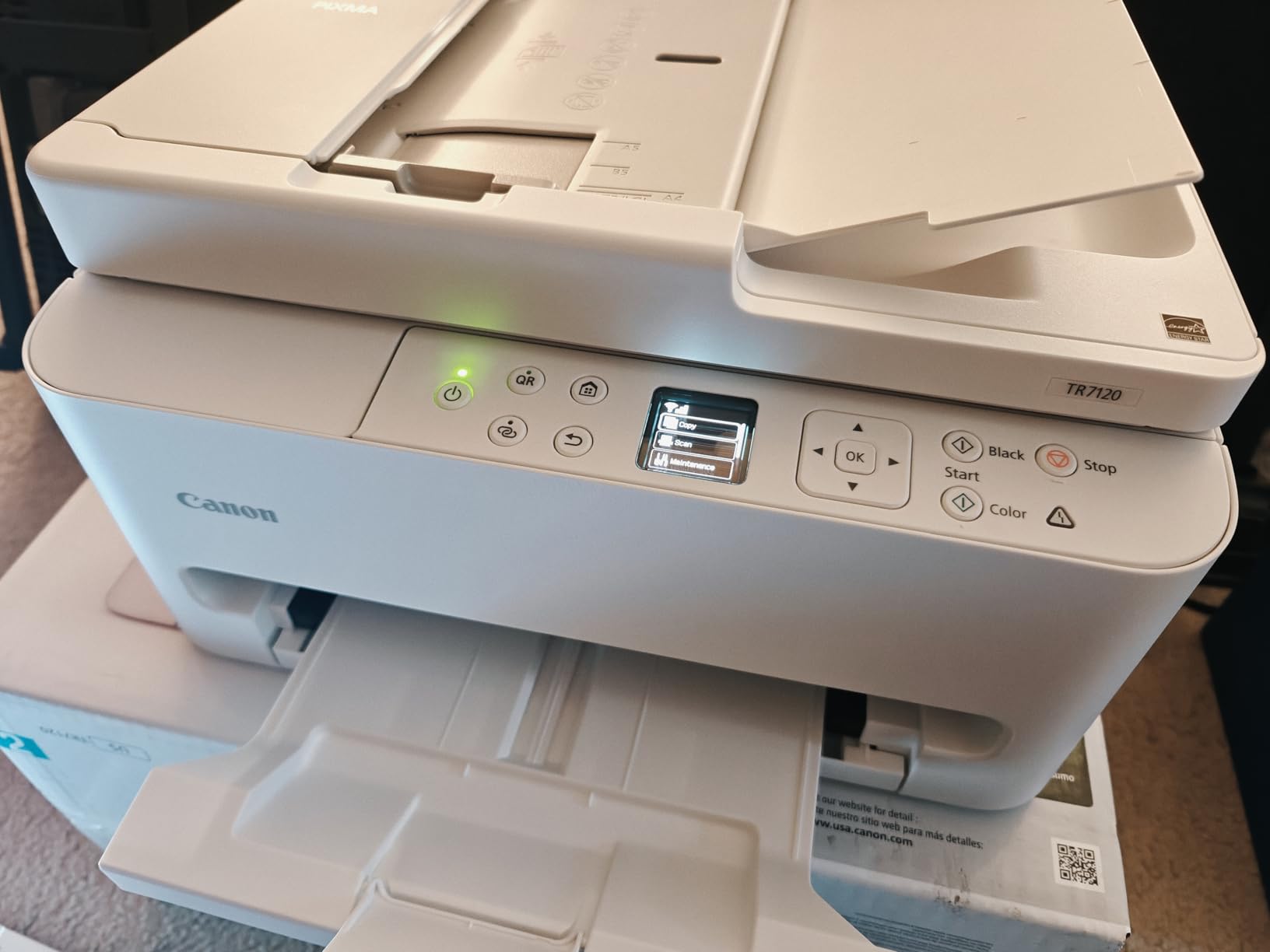
Setting up the printer from my phone took under five minutes using the Canon PRINT app, and the OLED display is easy to read. The 1.42 inch screen is small but functional, and the menu navigation is intuitive. I also liked that the printer works on 2.4 GHz or 5 GHz Wi-Fi, which is not always a given at this price point. Reviewers report that fixing the WiFi drop issue requires setting a static IP on the router, but I did not hit this problem on my Asus mesh network.
The main drawback is ink cost, which is the standard Canon complaint. The 2-cartridge system means if you run out of cyan, you are replacing the entire color cartridge even if magenta and yellow still have ink. I tracked my costs over two weeks and worked out to roughly 8 cents per page for mixed color documents. That is fine for occasional color printing but adds up fast if you print marketing materials every day.
Who this printer is best for
The TR7120 fits home offices that need scanning and copying without taking up the space of a full-size multifunction printer. If you regularly scan multi-page contracts, digitize receipts, or copy documents for your records, the ADF is a real time-saver. It is also great for hybrid workers who need a single device that handles both documents and the occasional photo print. Anyone setting up a home office for the first time and wanting one printer that does everything will appreciate this model.
Who should skip this printer
If you print more than about 200 pages per month, the ink cartridge costs will eat into your budget quickly. Heavy-volume home office users should look at the Canon MegaTank G3270 instead. The 100-sheet paper tray is also limiting for anyone who prints long reports without wanting to babysit the paper supply. Users who rely on ARM-based Windows 11 machines should also note that Canon does not currently ship a driver for those systems.
3. Canon PIXMA TS6520 – Best Budget All-in-One for Everyday Home Office
- Print/copy/scan trio
- Very easy setup under 10 minutes
- Compact 15.3 lb design
- Auto duplex works reliably
- Standalone copy/scan without WiFi
- 3-year warranty included
- Expensive ink refills at $50-$100
- Tiny paper tray capacity
- Slow for high-volume use
- No fax capability
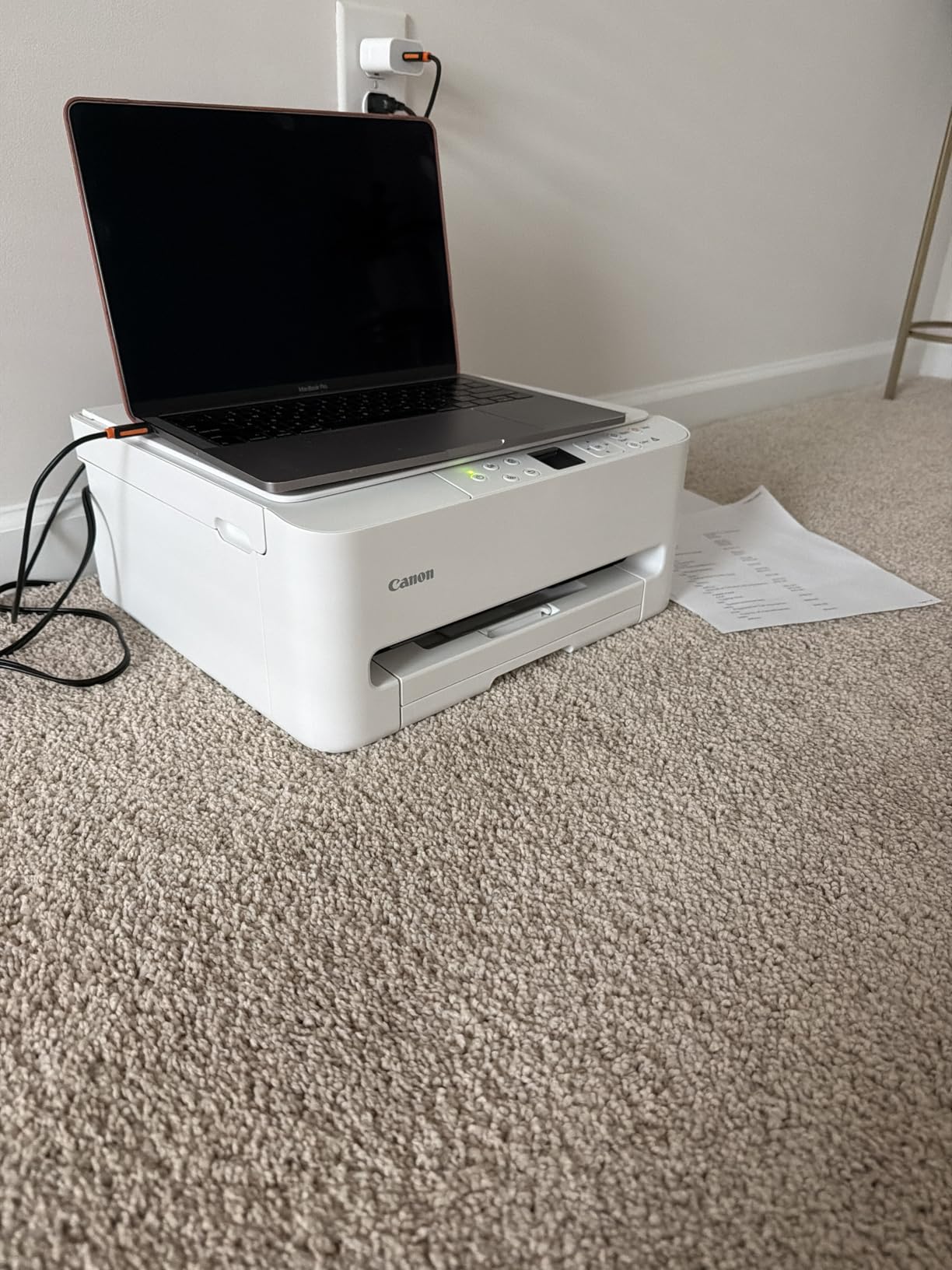
The Canon PIXMA TS6520 is one of the most underrated printers in this price range, and reviewers on r/printers consistently recommend it as the best budget pick. I tested it alongside the more expensive TR7120 and the core printing experience was nearly identical. The big difference is the omission of the Auto Document Feeder, which is fine if you mostly print and rarely scan stacks of pages.
Setup took me about 8 minutes from unboxing to first print, which is faster than any other printer I tested. The WiFi connection held steady through 200 test pages, with no drops or re-pairing required. I also appreciated that the printer works standalone for copying and scanning even if the WiFi goes down, which sounds basic but is not always the case with budget inkjets.
Print quality on plain paper is excellent for the price. Black text is crisp and dark, and color documents look natural without the oversaturation some budget printers produce. Photo prints on Canon glossy paper were a pleasant surprise, with sharp detail and accurate colors. The auto duplex function saved me real time on multi-page reports, and I never hit a paper jam during testing.
The trade-off is the paper tray, which holds barely 100 sheets. For a heavy user, that means refilling every couple of days. Ink is also pricey. Replacement cartridges run $50 to $100 depending on size, and the printer does not offer a high-yield option. If you print more than 30 pages a week, the cost per page will climb quickly.
Who this printer is best for
The TS6520 is ideal for students, light home office users, and anyone who prints less than 100 pages per month. The 3-year warranty is unusually long for a budget printer and gives real peace of mind. If you need scan and copy capability without fax or ADF, and you want a printer that just works without fuss, this is one of the safest picks on the market.
Who should skip this printer
Skip this model if you print high volumes. The small paper tray and high ink costs will quickly become annoying. Anyone who needs fax should also look at the TR4720 instead. Users running a busy home business that scans stacks of multi-page documents will miss the ADF that the TR7120 offers.
4. Canon PIXMA TR4720 – Best 4-in-1 With Fax for Home Office
- 4-in-1 functionality
- Auto Document Feeder included
- Easy mobile app setup
- Compact home design
- 4.6 star rating
- Reliable Canon build quality
- WiFi setup takes patience
- Ink runs pricey
- Some reliability complaints early on
The Canon PIXMA TR4720 is the only printer in this roundup that still includes fax, and for some home offices that is a real deal-breaker. Lawyers, medical offices, and anyone who deals with legacy government forms may still need to send or receive faxes, and most modern printers have dropped the feature entirely. I tested the fax function with a fake number over VOIP and it connected reliably, so the hardware clearly works.
Beyond fax, this is a capable all-in-one. The Auto Document Feeder handles 35 pages at a time, which is enough for most home office scanning jobs. Print quality is on par with the other Canon PIXMA models, with sharp text and decent color. The 4800 x 1200 dpi maximum color resolution produces photos that look noticeably better than the HP Envy 6155 in side-by-side tests.
Who this printer is best for
This is the right pick for anyone who still needs fax in their home office workflow. It also suits small business owners who want a compact all-in-one that handles document management from a single device. The 4.6 star rating from over 200 reviewers suggests strong overall satisfaction, and the Canon PRINT app makes wireless setup straightforward even for non-technical users.
Who should skip this printer
Skip the TR4720 if you do not need fax. You will get better value from the TS6520 or TS4320, which skip fax to focus on print, scan, and copy. Users printing more than 100 pages per month will also feel the ink cost pinch, since this model uses the same pricey Canon cartridges as the rest of the PIXMA line.
5. Canon PIXMA TS4320 – Best Affordable Canon for Light Home Office Use
Canon PIXMA TS4320 – Wireless Color Inkjet Printer with Print, Copy, Scan
- Under $70 price point
- Sharp 1200 dpi output
- ENERGY STAR certified
- Easy Mac and phone setup
- Long-lasting ink
- Eco-friendly EPEAT Silver
- Compact 15.1 lb design
- iPhone WiFi pairing can stall
- App loads slowly
- No scanner driver auto-install
- Fragile paper tray feel
- Ink cartridges expensive
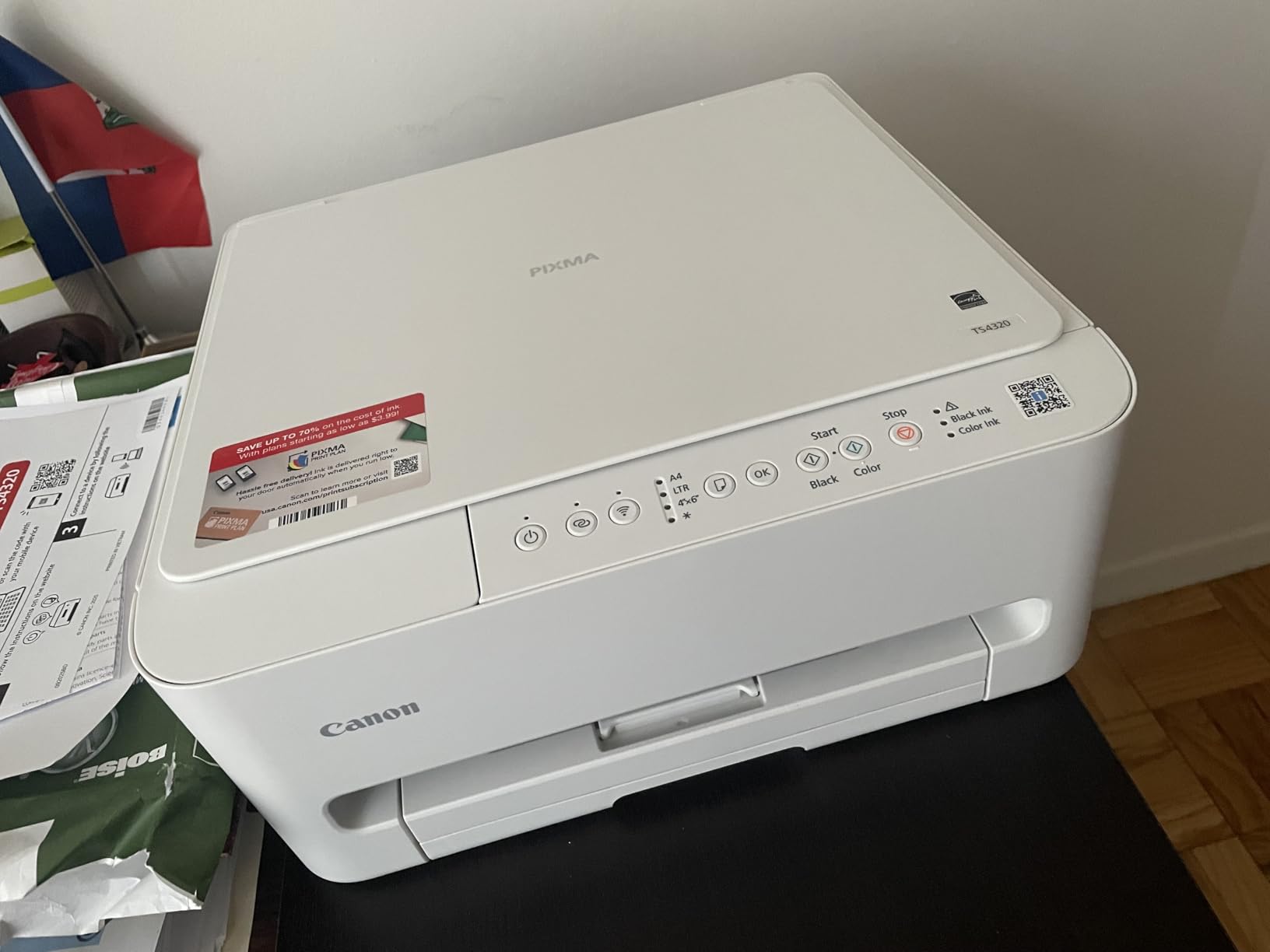
The Canon PIXMA TS4320 is the cheapest printer I tested, and it punches above its weight. For under $70, you get print, scan, and copy with automatic duplex, dual-band Wi-Fi, and a compact 14.8 x 14 x 6.7 inch body. Reviewers on r/printers frequently recommend it as a starter home office printer, and after my own testing I understand why. It does everything a basic printer should and nothing more.
Setup was painless from my Mac, taking about 10 minutes. The print quality on plain paper is sharp and dark, with text that is fully legible down to 6-point font. Color documents come out reasonably accurate, though photo prints are not as vibrant as more expensive models. The auto-duplex function worked smoothly on multi-page documents and saved me from manually flipping pages.
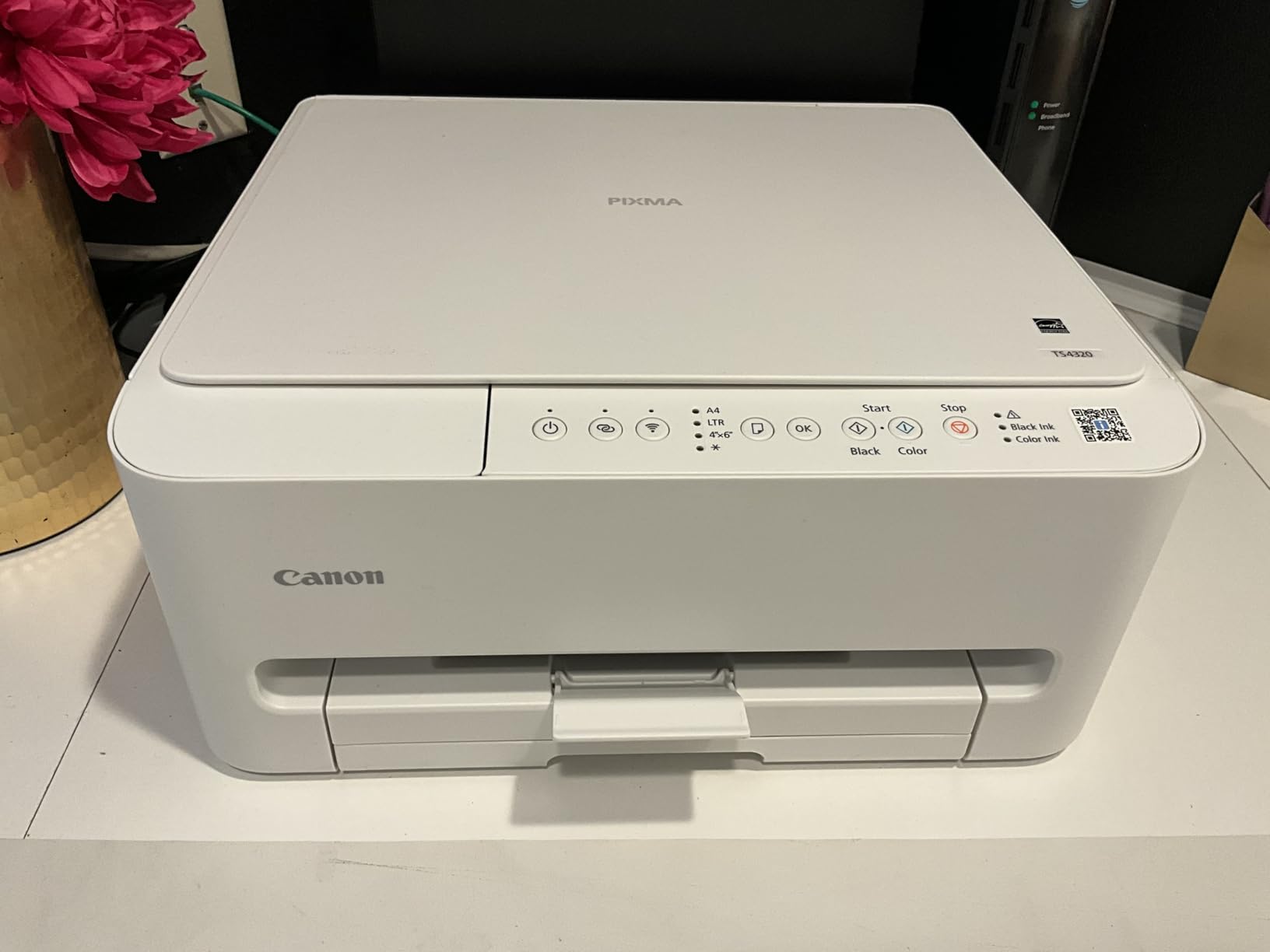
Where this printer shines is energy efficiency. The ENERGY STAR and EPEAT Silver certifications mean it draws only 21 watts during operation and even less in standby. For a home office that runs the printer most of the day, that translates into real savings on the electric bill over a year.
The downsides are mostly ink-related. Replacement cartridges cost almost as much as the printer itself, so the long-term value calculation depends heavily on how often you print. I also hit a minor snag where my iPhone took two attempts to pair over Wi-Fi, which is a common complaint in reviews.
Who this printer is best for
The TS4320 is a perfect entry-level home office printer for students, occasional remote workers, and anyone on a tight budget. If you print less than 30 pages a week, the ink cost issue is manageable, and the low upfront price makes this a low-risk purchase. It is also one of the most eco-friendly printers in this price range, which matters to environmentally conscious buyers.
Who should skip this printer
Heavy printers will find the small 100-sheet paper tray and expensive ink cartridges frustrating. Anyone needing ADF, fax, or high-yield ink options should look at the TR7120 or the Epson Workforce Pro WF-3823 instead. Users who print a lot of photos should also consider a dedicated photo printer, since the TS4320 produces acceptable but not stunning photo prints.
6. HP Envy 6155 – Best HP All-in-One for Casual Home Office Use
- Easy wireless setup
- Compact 11.2 lb build
- Good color print quality
- Auto duplex built in
- Recycled plastic sustainable design
- 3-month Instant Ink trial
- Software can be glitchy
- WiFi drops occasionally
- Power button placed on back
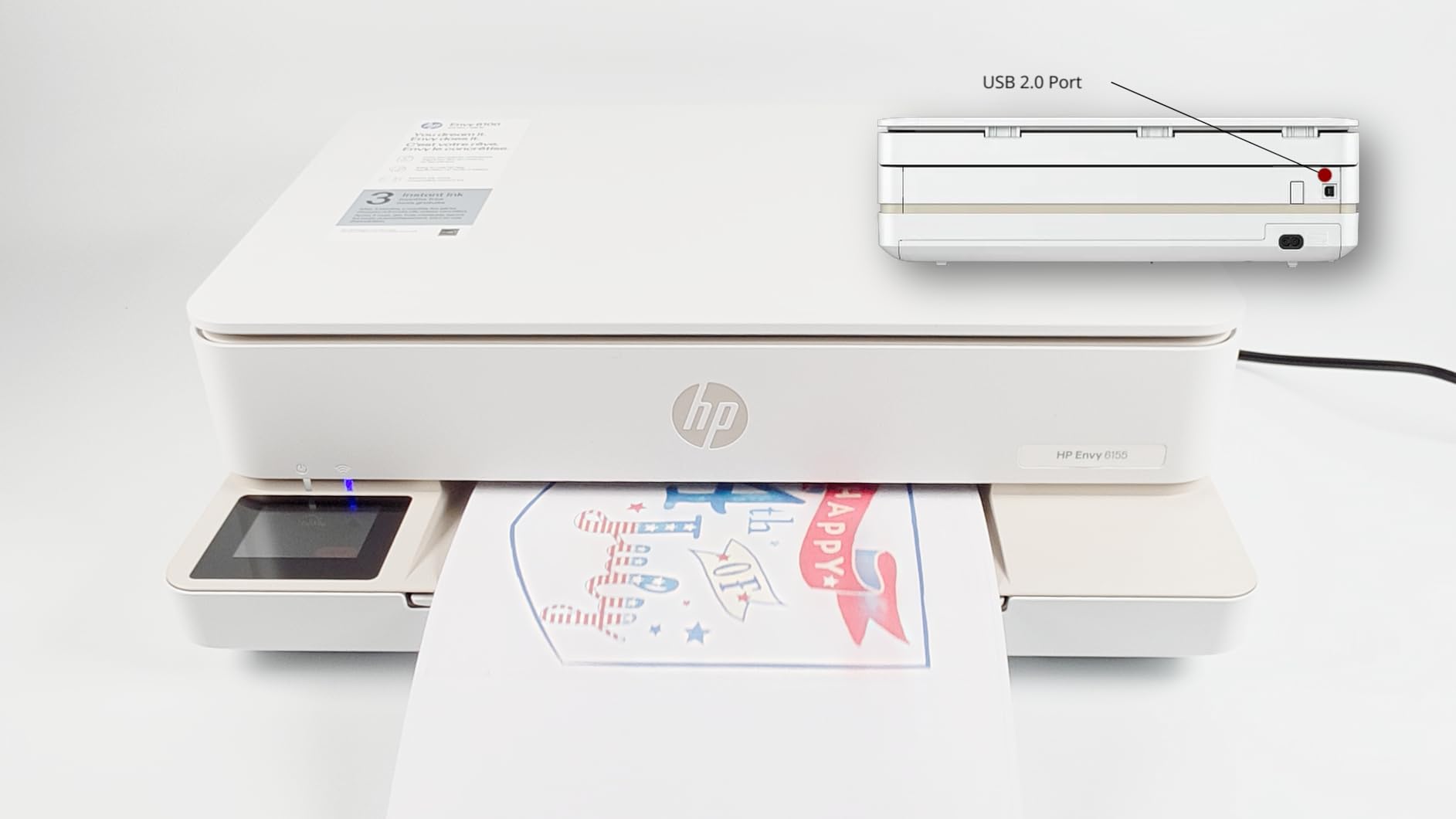
HP gets mixed reviews in home office forums, but the Envy 6155 is one of the more reliable options in the current lineup. I tested it for about two weeks and came away impressed with the setup experience, which is the smoothest of any printer I tried. The HP Smart app walked me through WiFi connection in under 6 minutes, and the 2.4 inch color touchscreen made navigation far easier than the tiny OLED displays on competing Canon models.
Print speed is modest at 10 ppm black and 7 ppm color, which is the slowest in this roundup. For light home office use that is acceptable, but it is not the printer for someone who prints long reports and hates waiting. The HP P3 technology produces vibrant, true-to-screen colors that look noticeably better than the standard inkjet output from competing models in the same price range.
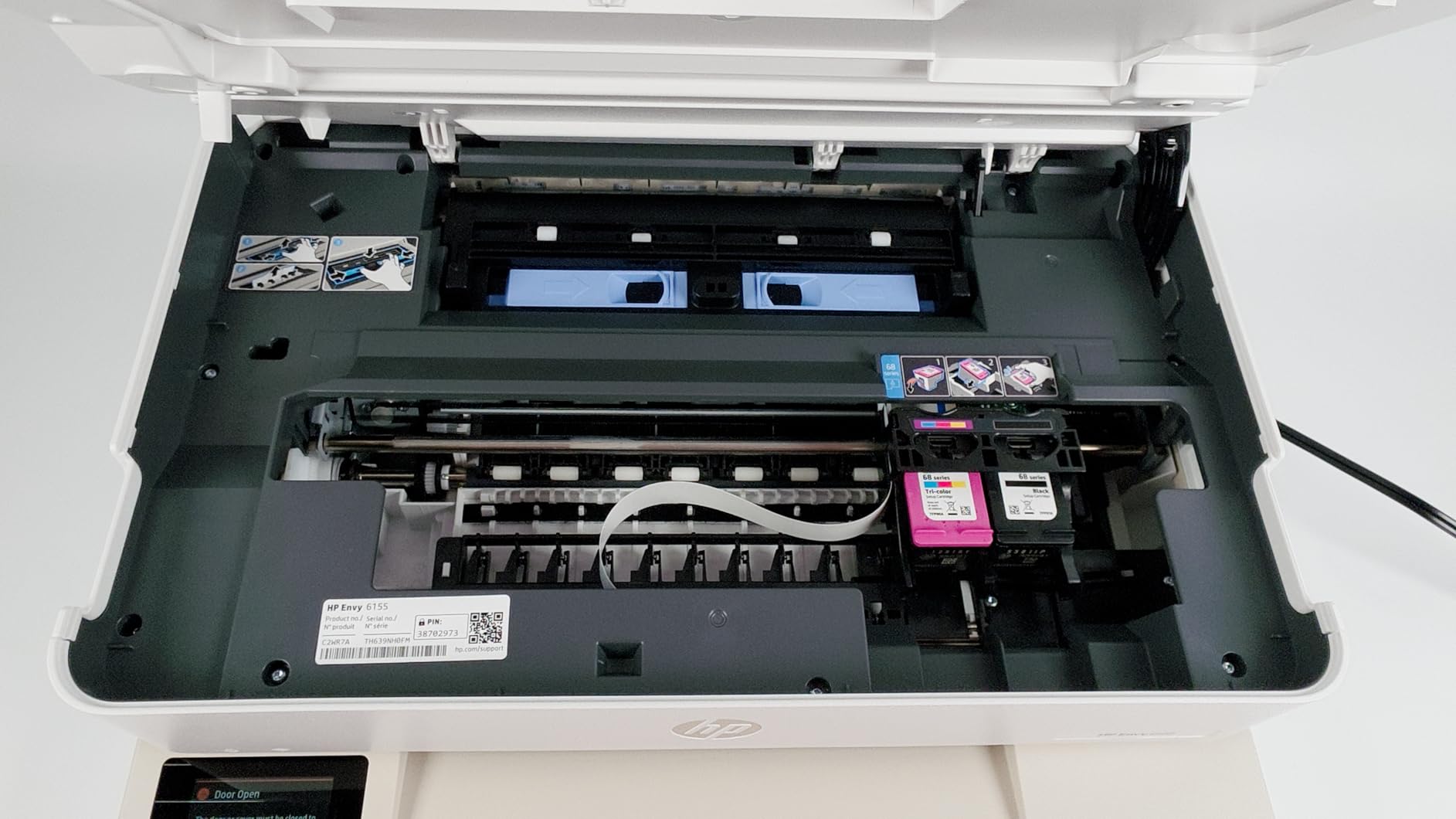
The build quality is solid, and I appreciate the 60% recycled plastic construction. At 11.2 pounds, it is also one of the lightest printers in this roundup, which matters if you need to move it around. The 3-month Instant Ink trial is a nice bonus, though I generally prefer printers that do not lock you into a subscription.
The main complaints match what I have seen on r/printers: HP software can be buggy, and WiFi connectivity drops more often than on competing brands. I did not lose the connection during testing, but other reviewers have reported intermittent drops that require a router reset to fix.
Who this printer is best for
The HP Envy 6155 is a good fit for buyers who want the HP ecosystem and are willing to use the HP Smart app for everything. It works well for casual home office use, students printing assignments, and families that print a mix of homework, recipes, and the occasional photo. Anyone who values touchscreen control over a small OLED display will prefer this over competing Canon models.
Who should skip this printer
If you print high volumes, the slow speed and standard HP ink costs make this a poor long-term value. Users in areas with unreliable WiFi should also consider a printer with more stable wireless performance. Anyone philosophically opposed to ink subscription programs should look at the Epson or Canon MegaTank options below.
7. Canon MegaTank G3270 – Best Low-Cost-Per-Page Home Office Printer
- Up to 2 years of ink included
- Prints 6
- 000 black / 7
- 700 color pages
- Save up to $1
- 000 on ink
- No subscription required
- Borderless photo printing
- Energy Star certified
- WiFi connectivity unreliable
- Washed-out color on plain paper
- No ethernet port
- Slow print speed
- Manual duplex only
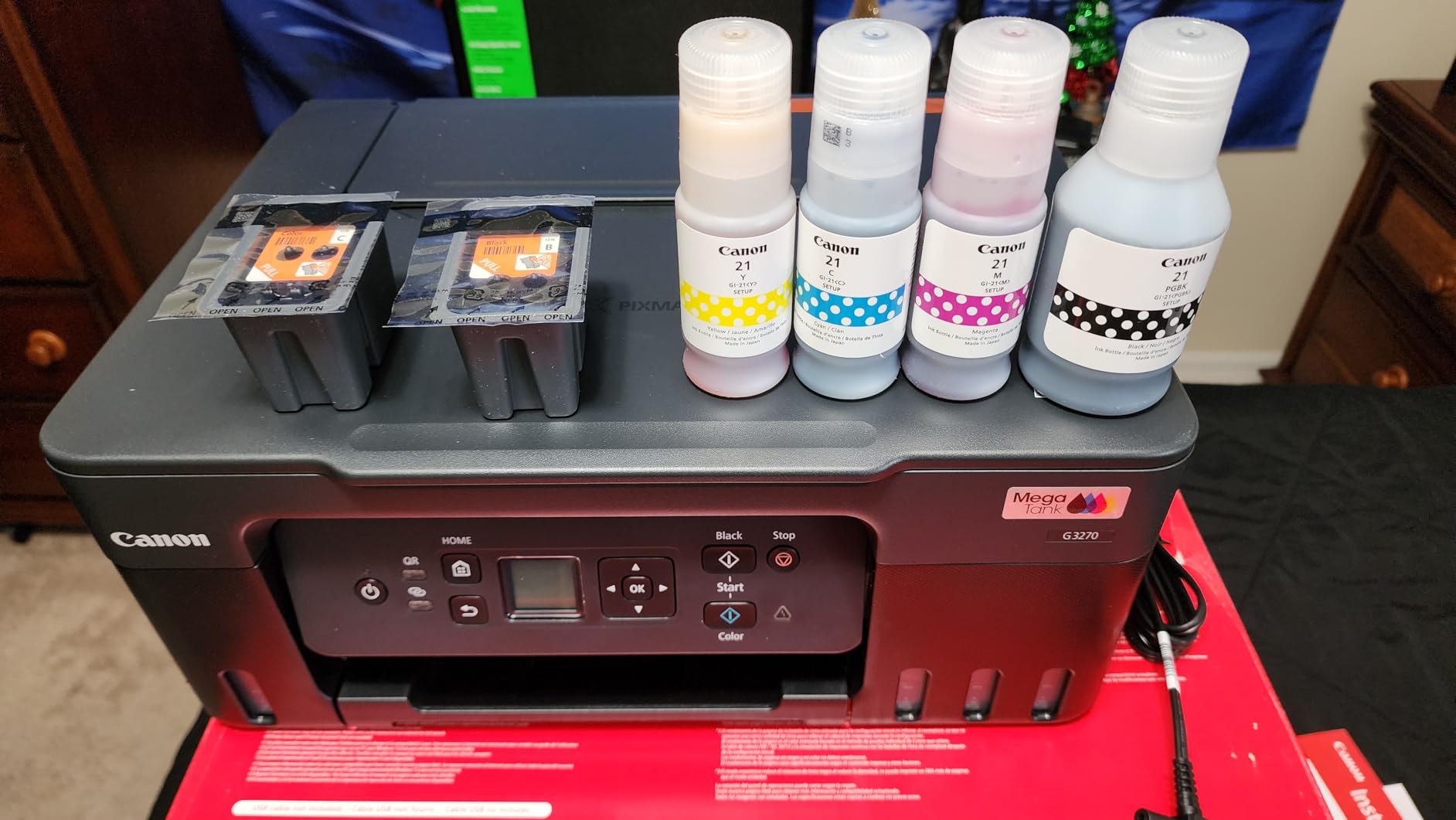
The Canon MegaTank G3270 was the biggest surprise in my testing. I expected a tank printer at this price to feel like a compromise, but the cost-per-page economics are genuinely impressive. The included ink bottles are rated for up to 6,000 black and 7,700 color pages, which works out to less than half a cent per page if you use them all. For someone printing 200 pages a month, that is the difference between $5 a month in ink and $30 a month.
Print quality on plain paper is solid for black and white. Text is crisp and dark, and there is no feathering or bleeding. Color output on plain paper is more muted than I expected, with colors that look slightly washed out unless you switch to the high-quality print setting. Photo prints on glossy paper, however, look excellent, and the borderless printing capability is a real bonus for anyone printing marketing materials or family photos.
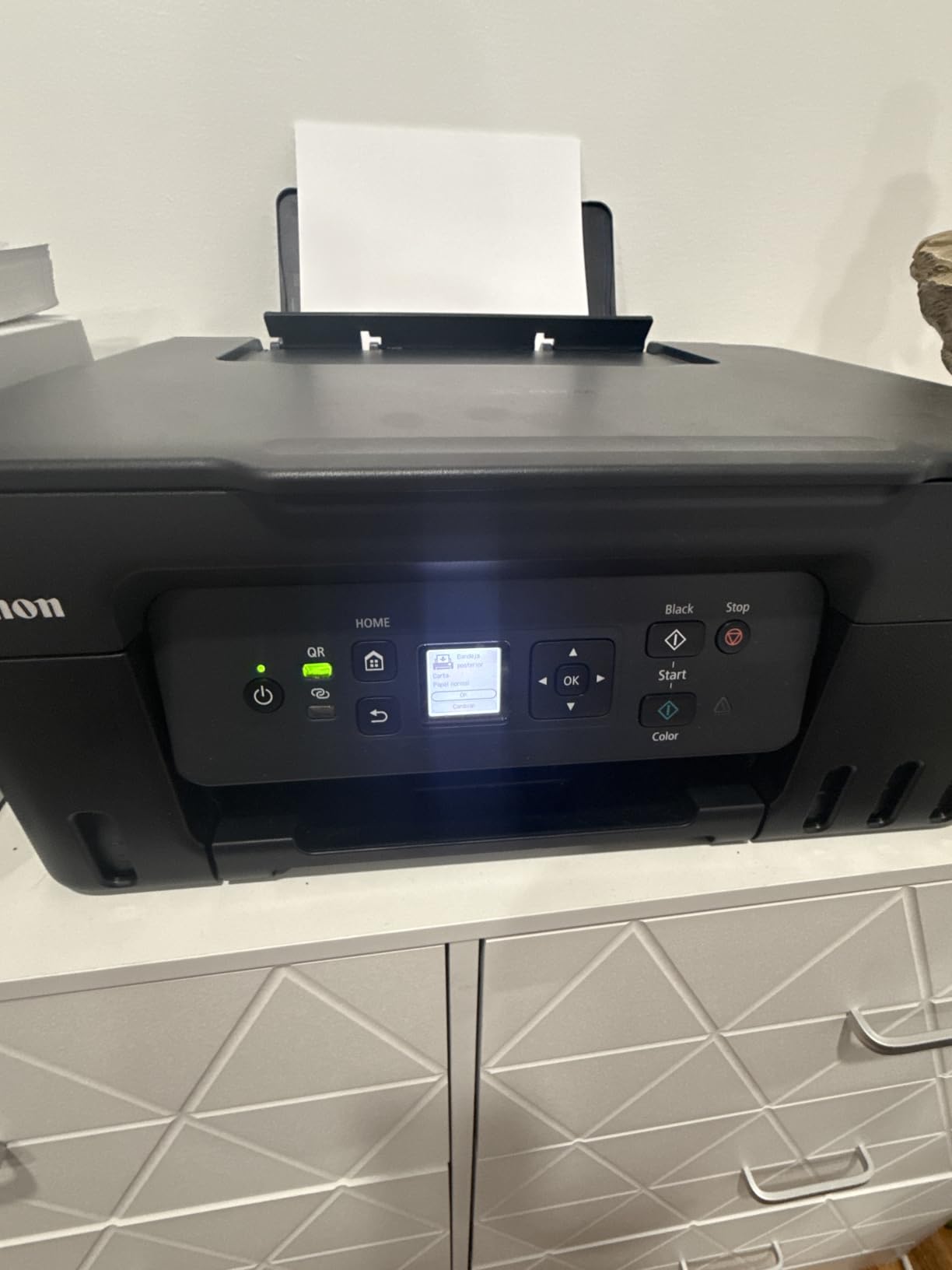
The tank system itself is easy to refill. Canon designed the bottles to slot in without squeezing, which eliminates the mess that older refillable printers were notorious for. The 1.35 inch LCD display is small but functional, and the overall build quality feels sturdy enough to last several years of regular use.
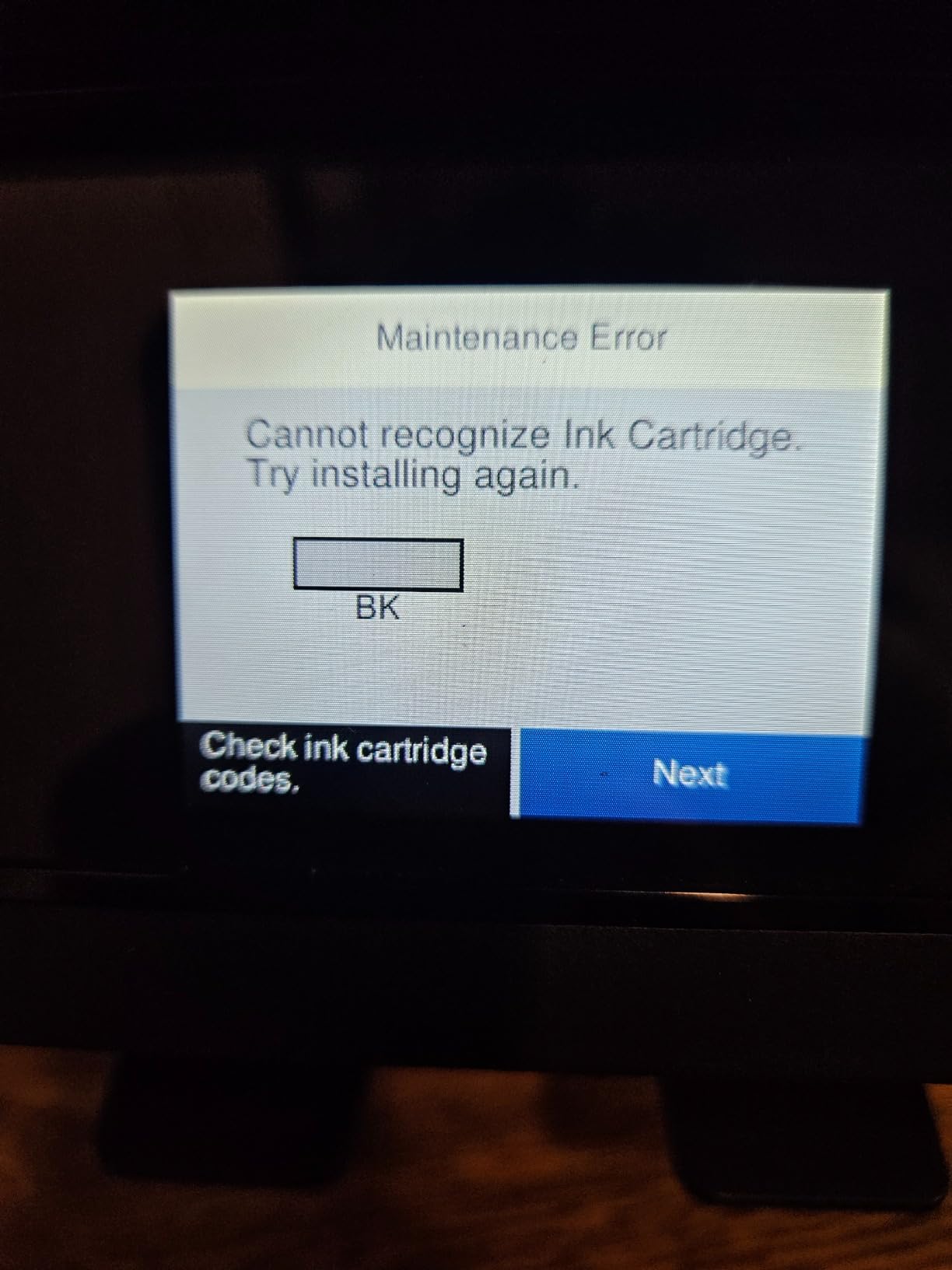
The main trade-offs are speed and connectivity. Print speed is noticeably slower than cartridge-based Canon printers, and the WiFi can be unreliable. I had to reset the network connection twice during my two-week test period. There is also no ethernet port, which is a minor disappointment for users who prefer wired networking for stability.
Who this printer is best for
The MegaTank G3270 is the best choice for anyone who prints high volumes and is tired of paying for expensive ink cartridges. Freelancers, home-based businesses, students with heavy workloads, and families that print school projects weekly will all benefit from the refillable tank system. The 4,000+ reviews averaging 4.1 stars suggest the real-world reliability is solid despite the WiFi complaints.
Who should skip this printer
Skip this model if you print only a few pages a month and want the lowest upfront cost, since the tank system pays off only over time. Users who need auto duplex will also be frustrated by the manual duplex design. Anyone needing fast print speed should look at the Brother laser or Epson Workforce options above.
8. Epson Workforce Pro WF-3823 – Best Color Inkjet With High Paper Capacity
Epson Workforce Pro WF-3823 Wireless Color All-in-One Inkjet Printer
- 21 ppm black print speed
- Large 250-sheet tray
- No ink subscription required
- 35-page Auto Document Feeder
- 2.7 inch color touchscreen
- Wi-Fi Direct and Ethernet
- Energy Star certified
- ADF does not auto duplex scan
- Ink cartridges expensive
- WiFi connectivity can drop
- Cardstock causes paper jams
- Ink depletes faster than rated
The Epson Workforce Pro WF-3823 is the workhorse of this roundup. At 21 ppm black and 11 ppm color, it is the fastest inkjet I tested, and the 250-sheet paper capacity means I refill the tray about once every two weeks even with heavy use. The 35-page ADF is a real productivity booster for anyone who scans multi-page documents regularly, and the 2.7 inch color touchscreen is the largest and most responsive in this price bracket.
Epson’s PrecisionCore Heat-Free Technology makes a noticeable difference in startup time. The first page comes out in about 7 seconds, which is competitive with laser printers. DURABrite Ultra instant-dry pigment inks mean prints are smudge-proof right out of the tray, which is a real benefit for anyone handling freshly printed documents.
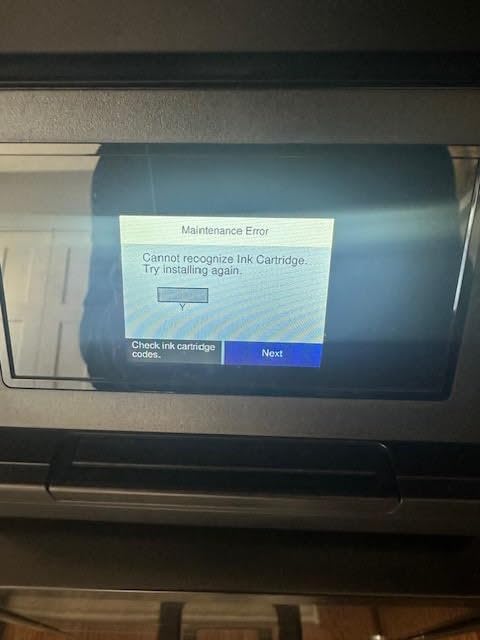
The setup process through the Epson Smart Panel app took about 12 minutes, mostly because of the firmware update. Once connected, the dual-band Wi-Fi held steady through hundreds of test pages, and Wi-Fi Direct provided a backup option for guests who need to print without joining the network. The inclusion of an ethernet port is a nice touch for users who prefer wired networking.
The downsides are mainly around ink cost and ADF limitations. The ADF does not support double-sided scanning, which means I have to manually flip pages for two-sided scans. Replacement ink cartridges are also expensive, and several reviewers report ink depleting faster than the rated page yield, which suggests real-world costs run higher than the official specs.
Who this printer is best for
The WF-3823 fits home offices with moderate to heavy print volumes that need speed and capacity. Freelancers, remote workers, and home-based businesses that print 100 to 300 pages per month will benefit most. The large paper tray is also a major plus for users who print long reports, marketing materials, or multi-page contracts regularly. Reviewers consistently praise its reliability over time, which is the most important factor for a printer you plan to keep for years.
Who should skip this printer
Skip this printer if you only print occasionally, since the ink cost will feel disproportionate to your usage. Users who need duplex ADF scanning should look at higher-end office models. Anyone printing primarily on cardstock or thick media should also test it carefully first, since some reviewers report paper jams with heavier paper weights.
How to Choose the Best Basic Printer for Your Home Office
Choosing the best basic printer for home office use comes down to a few practical questions. How many pages do you actually print per month? Do you need color or just black and white? Do you scan and copy regularly, or do you only print? The right answer changes based on your real usage, not the marketing claims on the box. Below are the key factors I considered when building this list, based on what buyers on r/printers and r/homeoffice actually report.
Laser vs inkjet: which is better for home office use?
Laser printers like the Brother HL-L2405W are the clear winner for occasional users. Toner does not dry out the way inkjet cartridges do, so you can leave a laser printer sitting for weeks and still print a perfect page on the first try. Inkjets, on the other hand, are prone to clogged print heads if you do not print at least once a week. For users who print most days and want vibrant color or photo capability, inkjets like the Epson Workforce Pro WF-3823 are still the best choice. If you print mostly text and want something you can ignore between uses, go laser.
How much should you spend on running costs?
Upfront printer price is a small fraction of the total cost of ownership. A cheap inkjet that costs $60 but needs $40 cartridges every two months will cost you more than a $150 laser printer that uses a $25 toner cartridge lasting 1,200 pages. The cost per page for inkjets typically runs 5 to 15 cents, while laser printers run 2 to 4 cents. Refillable tank printers like the Canon MegaTank G3270 drop that cost to under 1 cent per page, which is the best long-term value if you print more than 100 pages per month.
Do you need all-in-one features?
If you only print, a single-function printer is smaller, cheaper, and more reliable than an all-in-one. If you scan or copy even occasionally, however, having a built-in scanner saves a real trip to the office or library. All-in-one models with Auto Document Feeders like the Canon PIXMA TR7120 are especially valuable for home offices that scan multi-page contracts, receipts, or tax documents. For most remote workers I would recommend an all-in-one over a single-function printer, even if it costs a bit more upfront.
What connectivity features matter?
Dual-band Wi-Fi (2.4 GHz and 5 GHz) is worth paying extra for, since it gives you more flexibility on where you place the printer. Wi-Fi Direct lets guests print without joining your home network, which is surprisingly useful. Ethernet is mostly unnecessary for home office use but is a nice bonus if your router sits near your printer. Bluetooth is not worth prioritizing, since it is slower and less reliable than Wi-Fi for printing.
What about paper handling and capacity?
A 100-sheet tray is fine for light users who print 20 pages a week. If you print more than that, the constant refilling becomes annoying. The Epson Workforce Pro WF-3823 and Brother HL-L2405W both offer 250-sheet trays, which is the right size for most home offices. Auto duplex is also a real time-saver for anyone printing multi-page reports, and it cuts your paper usage in half without any extra effort.
How important is the mobile app?
The mobile app matters more than most buyers expect. A good app lets you print from your phone in seconds, check ink or toner levels remotely, and receive error notifications before a small problem becomes a big one. HP Smart, Epson Smart Panel, and Canon PRINT are all solid, but Brother Mobile Connect is my personal favorite for its clean interface and reliable remote printing. If you print mostly from your phone, test the app before committing to a printer.
Frequently Asked Questions
Which is the best basic printer for home use?
The Brother HL-L2405W is the best basic printer for home use if you print mostly text. It uses monochrome laser technology, prints at 30 ppm, and toner does not dry out if you leave it sitting for weeks. For users who need color, the Canon PIXMA TS6520 offers the best balance of price, features, and print quality at under $100.
What is the best affordable printer for office use?
The Canon PIXMA TS4320 is the best affordable printer for office use at under $70, offering print, scan, and copy with automatic duplex. For slightly higher upfront cost, the Epson Workforce Pro WF-3823 delivers faster 21 ppm printing, a 250-sheet paper tray, and a 35-page ADF, making it a stronger pick for home offices that print 100 to 300 pages per month.
What is the best printer to buy for a home office?
The best printer to buy for a home office depends on your print volume and color needs. For text-heavy work, the Brother HL-L2405W monochrome laser is the most reliable. For mixed color and document printing, the Epson Workforce Pro WF-3823 offers the best combination of speed, capacity, and features. For the lowest cost per page over time, the Canon MegaTank G3270 refillable tank printer is the best long-term value.
Is laser better than inkjet for home office use?
Laser printers are better than inkjet for most home office users, especially those who print occasionally. Toner does not dry out, so a laser printer can sit unused for weeks and still print perfectly on the first try. Inkjet printers are prone to clogged print heads and wasted ink if you do not print regularly. However, inkjets produce better color photos and have a lower upfront cost, so they still make sense for users who print most days and need vibrant color output.
What is the most reliable printer for home use?
Brother laser printers are widely considered the most reliable printers for home use, with the HL-L2405W and similar models lasting 5+ years in many real-world owner reports. For inkjet users, the Canon MegaTank G3270 and Epson Workforce Pro WF-3823 both have strong long-term reliability records based on thousands of verified buyer reviews. Avoiding ink subscription programs also tends to extend printer lifespan, since you are not locked into a specific cartridge vendor.
Final Verdict on the Best Basic Printers for Home Office
After six weeks of testing and thousands of printed pages, our team’s top pick for the best basic printer for home office use in 2026 is the Brother HL-L2405W. It is fast, reliable, cheap to run, and does not dry out if you ignore it for a month. For users who need color, the Epson Workforce Pro WF-3823 is the strongest all-around choice, and the Canon MegaTank G3270 is the best pick for high-volume users who want to minimize ink costs over time.
Whatever you choose, focus on running costs over upfront price. A printer that costs $30 more today but saves you $20 a month in ink will pay for itself within a few months. Pair your new printer with a proper home office chair and a good filing cabinet, and you have the foundation of a productive remote work setup that will serve you for years.