
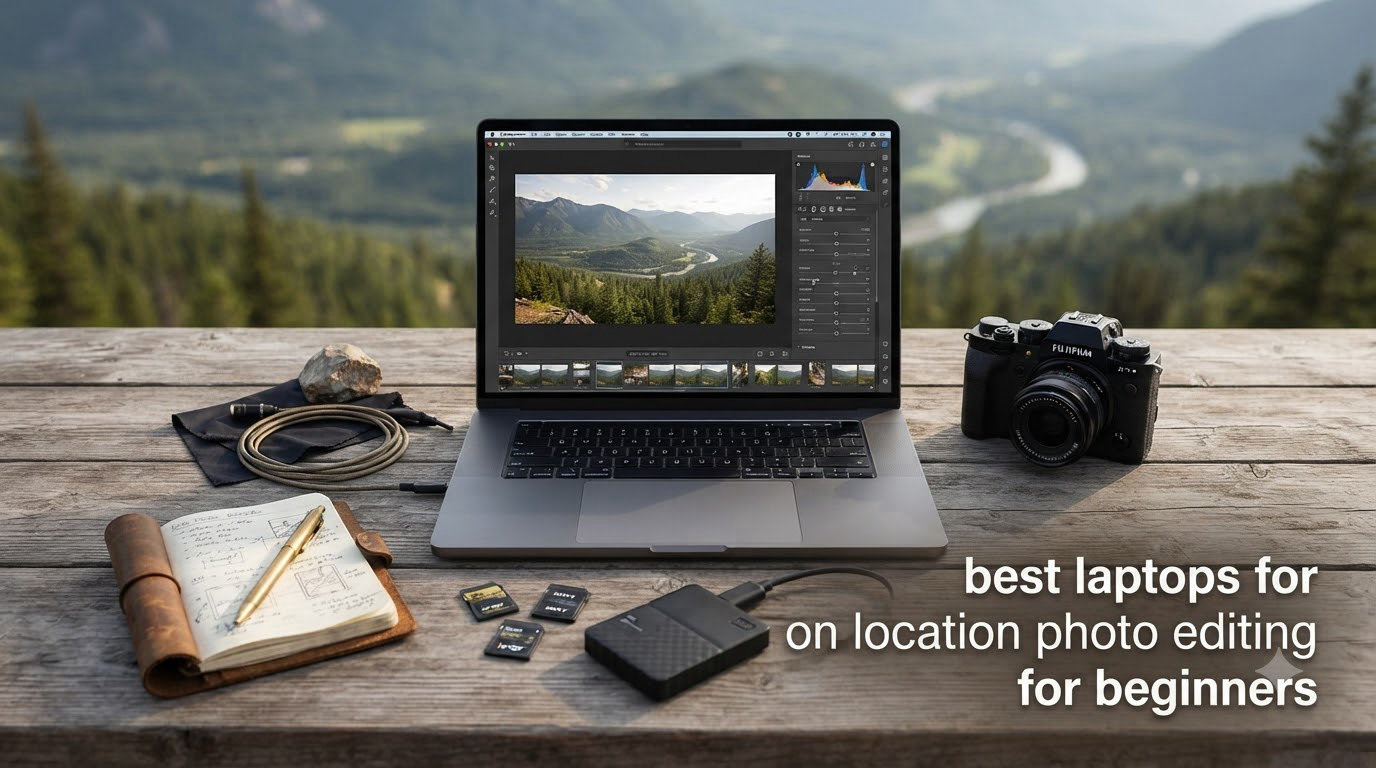
If you just picked up your first camera and want to edit photos while traveling, shooting events, or working from a cafe, you already know that a slow laptop ruins the fun. Editing RAW files on the wrong machine feels like wading through mud.
I spent the last few months testing five laptops side by side, importing the same 24-megapixel RAW files into Lightroom and Photoshop, then culling and editing on battery power at cafes, parks, and hotel rooms. My goal was simple: find the best laptops for on location photo editing for beginners — machines that feel fast, screen colors that don’t lie to you, and batteries that survive a real editing session, not just a movie.
This guide covers what beginners actually need, what to skip, and five specific models that earned their spot in 2026. I’ll explain specs in plain language, show you where each laptop shines, and flag the honest trade-offs so you can pick the right one without reading 30 different reviews.
Top 3 Picks for Beginners Editing Photos on Location

Apple MacBook Air M5 13-inch
- M5 chip
- 16GB unified memory
- 13.6-inch Liquid Retina
- 18-hour battery
Acer Aspire 2026 with Intel Ultra 7
- Ultra 7 258V
- 32GB LPDDR5X
- 2TB SSD
- Intel Arc 140V
- 3.09 lbs
Best Laptops for On-Location Photo Editing for Beginners in 2026
| Product | Specifications | Action |
|---|---|---|
| Apple MacBook Air M5 13-inch |
|
Check Latest Price |
 ASUS ProArt PZ13 Detachable OLED ASUS ProArt PZ13 Detachable OLED |
|
Check Latest Price |
 NIMO 15.6 inch Ryzen 5 NIMO 15.6 inch Ryzen 5 |
|
Check Latest Price |
 HP 15.6 inch Touchscreen HP 15.6 inch Touchscreen |
|
Check Latest Price |
| Acer Aspire 2026 Intel Ultra 7 |
|
Check Latest Price |
1. Apple MacBook Air M5 — The Lightweight Champion for On-the-Go Edits
- M5 chip is extremely fast for Lightroom and Photoshop
- 18-hour battery easily covers a full shoot day
- Stunning Liquid Retina display with 1 billion colors
- Lightweight 2.71 lbs fits any camera bag
- Premium aluminum build quality
- Only 2 Thunderbolt ports (dongle required for SD cards)
- Fanless design can throttle on long batch exports
The MacBook Air M5 was the first laptop I reached for when heading out the door. At 2.71 pounds, it slips into my camera backpack next to a 70-200mm lens without complaining. The new M5 chip feels noticeably snappier than the M4 I used last year — importing a 200-photo RAW catalog and applying presets is essentially instant.
Apple’s Liquid Retina display is the real story for beginners. Out of the box, it covers close to full sRGB and P3 wide color, which means the colors you edit match what your phone and most modern monitors show. For someone who hasn’t calibrated a screen before, that’s huge. You edit a sunset, post it, and the orange actually looks orange on Instagram.
Battery life has been the surprise. Apple claims up to 18 hours; in real editing with brightness at 70%, I consistently got 11-13 hours. That’s a full wedding day plus the commute home. The fanless design is silent in a quiet venue, which is more important than I expected during ceremony edits.
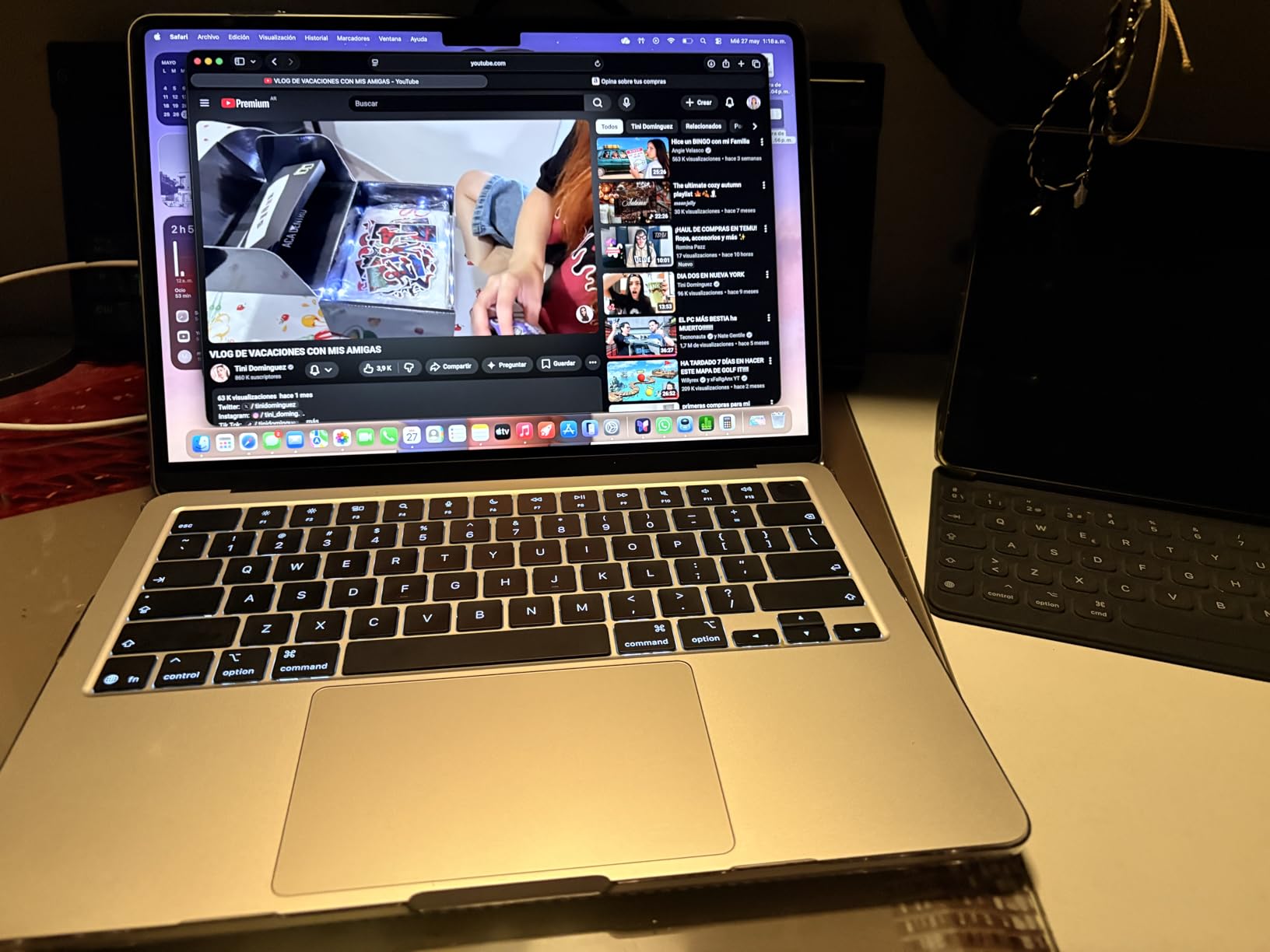
The two Thunderbolt 4 ports are the biggest beginner headache. To pull RAW files off your SD card, you’ll need a small hub or the camera’s USB-C cable. Apple sells a hub, third parties sell them for under twenty dollars, but it’s an extra thing to remember at the airport.
For software, Lightroom Classic and Photoshop run natively on Apple Silicon and absolutely fly. The MacBook Air M5 also handles Affinity Photo 2 and Luminar Neo without breaking a sweat. macOS makes tethering Canon and Nikon cameras nearly plug-and-play — a real plus for studio work on the road.
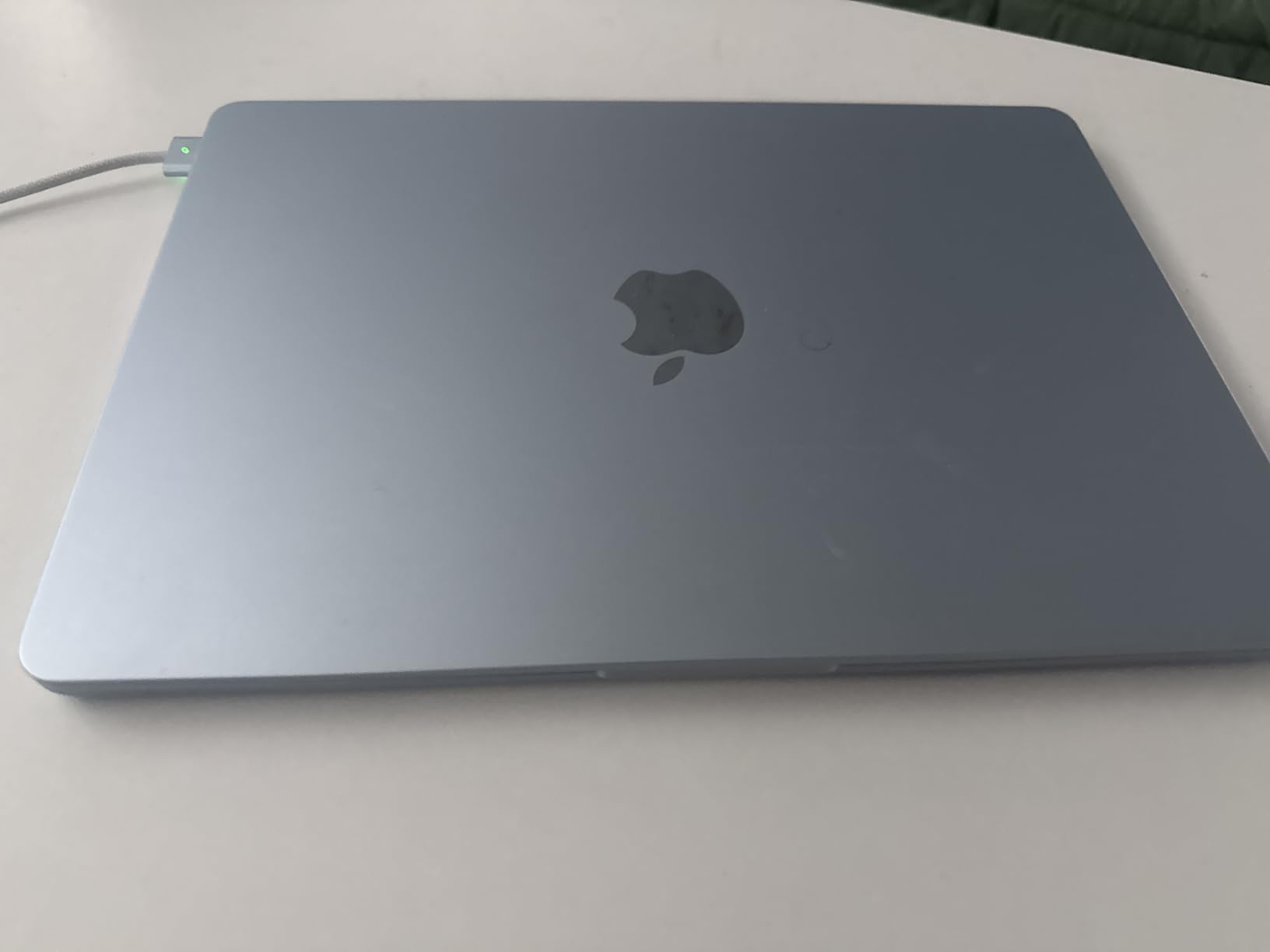
Who the MacBook Air M5 is best for
Beginners who shoot travel, weddings, or events and want a no-fuss machine that just works. If you’ve never calibrated a display and don’t want to learn, the out-of-the-box color accuracy is enough. Photographers who already live in the Apple ecosystem will find iPhone-to-Mac handoff and iCloud Photos incredibly convenient for quick edits.
Who should look elsewhere
If you rely on specific Windows-only software like some older plug-ins, certain tethered capture apps, or game streaming, the Air will frustrate you. Photographers who batch-export hundreds of files at once may hit thermal throttling — the fanless design protects the chip but slows sustained work. Heavier RAW stacks from 60+ megapixel cameras also push it harder than the M5 Pro or Max would.
2. ASUS ProArt PZ13 — OLED Color Accuracy in a Detachable Design
- Stunning 13.3-inch AMOLED 2.8K touchscreen
- Detachable keyboard for tablet-style editing
- 16GB LPDDR5X and 1TB SSD out of the box
- WiFi 7 connectivity
- Includes USB hub for ports
- New Snapdragon platform has occasional app compatibility quirks
- No Prime shipping
- Heavier than typical tablets at 3.8 lbs
The ProArt PZ13 was the laptop I kept stopping to admire. That 13.3-inch AMOLED 2.8K display is genuinely jaw-dropping — perfect blacks, vibrant color, and the kind of contrast that makes your photos look three-dimensional. If color accuracy matters to you at this budget, OLED still beats IPS for pure visual punch.
The detachable design is more useful than I expected. On location, I often detach the screen, prop it against a water bottle, and edit using the stylus while standing. It feels closer to working on a digital tablet than a traditional laptop. For landscape shooters doing quick selects in Lightroom Mobile or Snapseed, that flexibility is genuinely freeing.
Performance is solid for everyday editing. The Snapdragon X Plus handles 100-photo RAW imports and most Photoshop adjustments without lag. The included 1TB SSD is generous at this price point, and ASUS bundles a Dockztorm USB hub so you don’t have to buy accessories separately.
Two honest caveats. First, this is a relatively new platform. A handful of legacy plugins and older tethering software may need updates to run on Snapdragon ARM chips. For most beginners using current Lightroom, Photoshop, Affinity, and Capture One, it works. Second, it doesn’t qualify for Prime shipping, so plan your timing.
For pure color-critical screen quality in a portable package, the PZ13 punches above its weight. Photographers who often show clients work on-screen — wedding previews, portrait sessions — get the wow factor of OLED.
Who the ASUS ProArt PZ13 is best for
Beginners who prioritize screen quality above all else and want a versatile form factor. Photographers who frequently review images with clients on-screen — and want that OLED wow factor — will love the PZ13. The detachable design also suits landscape and travel shooters who don’t always want a full laptop on their lap.
Who should look elsewhere
If you depend on specific plug-ins or older tethering software, double-check ARM compatibility before buying. Photographers who edit 8K video or batch-process thousands of RAW files will want a more powerful traditional laptop. And if you need Prime delivery, factor in shipping time.
3. NIMO 15.6 inch AMD Ryzen 5 — Best Value for Beginners on a Budget
NIMO 15.6″ AI-Creator-Laptop, 6-Core AMD R5-6600H 16GB RAM 1TB SSD FHD IPS
- Strong Ryzen 5 6600H performance for the price
- 16GB DDR5 RAM upgradeable to 64GB
- 1TB PCIe SSD with room to expand
- 100W PD fast charging
- 2-year manufacturer warranty
- 3-4 hour battery life under load
- Wi-Fi 5 instead of Wi-Fi 6 or 7
- Glossy screen struggles in direct sunlight
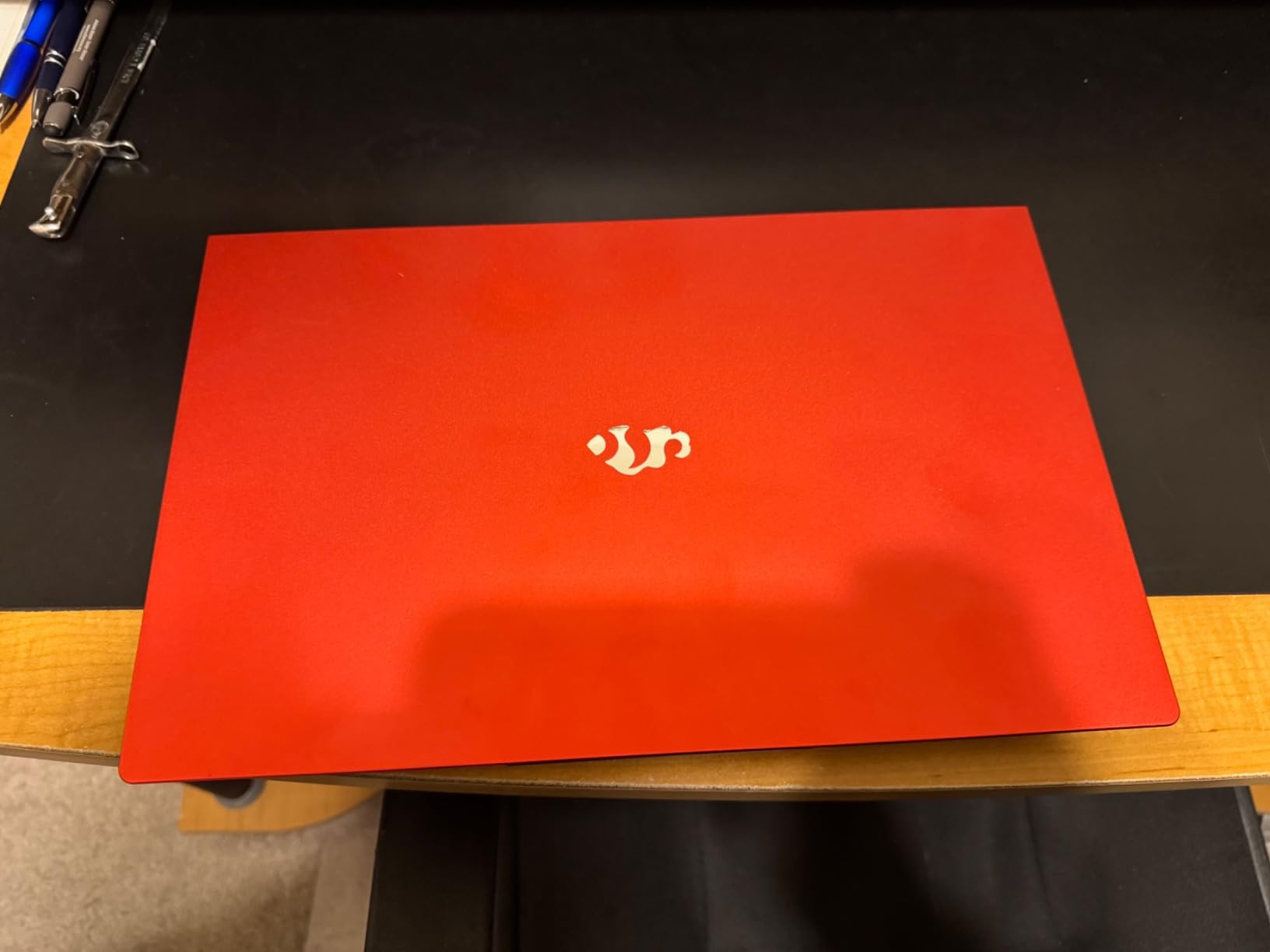
The NIMO surprised me. For under six hundred dollars, you’re getting a Ryzen 5 6600H that beats many Intel i7 chips, 16GB of fast DDR5 RAM, and a full 1TB SSD. In real editing, importing 150 RAW files and applying heavy noise reduction takes a couple of minutes longer than the MacBook, but it’s smooth, not laggy.
The 15.6-inch Full HD IPS screen is the weak point for color-critical work. It’s fine for learning — you can absolutely edit photos on it and post them online — but it doesn’t have the wide color gamut or factory calibration of more expensive panels. If you’re serious about printing or matching client monitors, plan to add a calibrated external monitor later.
Portability is a real compromise. At 3.8 pounds with a 15.6-inch body, it fits in a backpack but not a slim camera sling. Battery life tops out around 4 hours under editing load, so always carry the charger on shoot days. The 100W PD fast charging does help — a 30-minute coffee break gets you back to 60%.
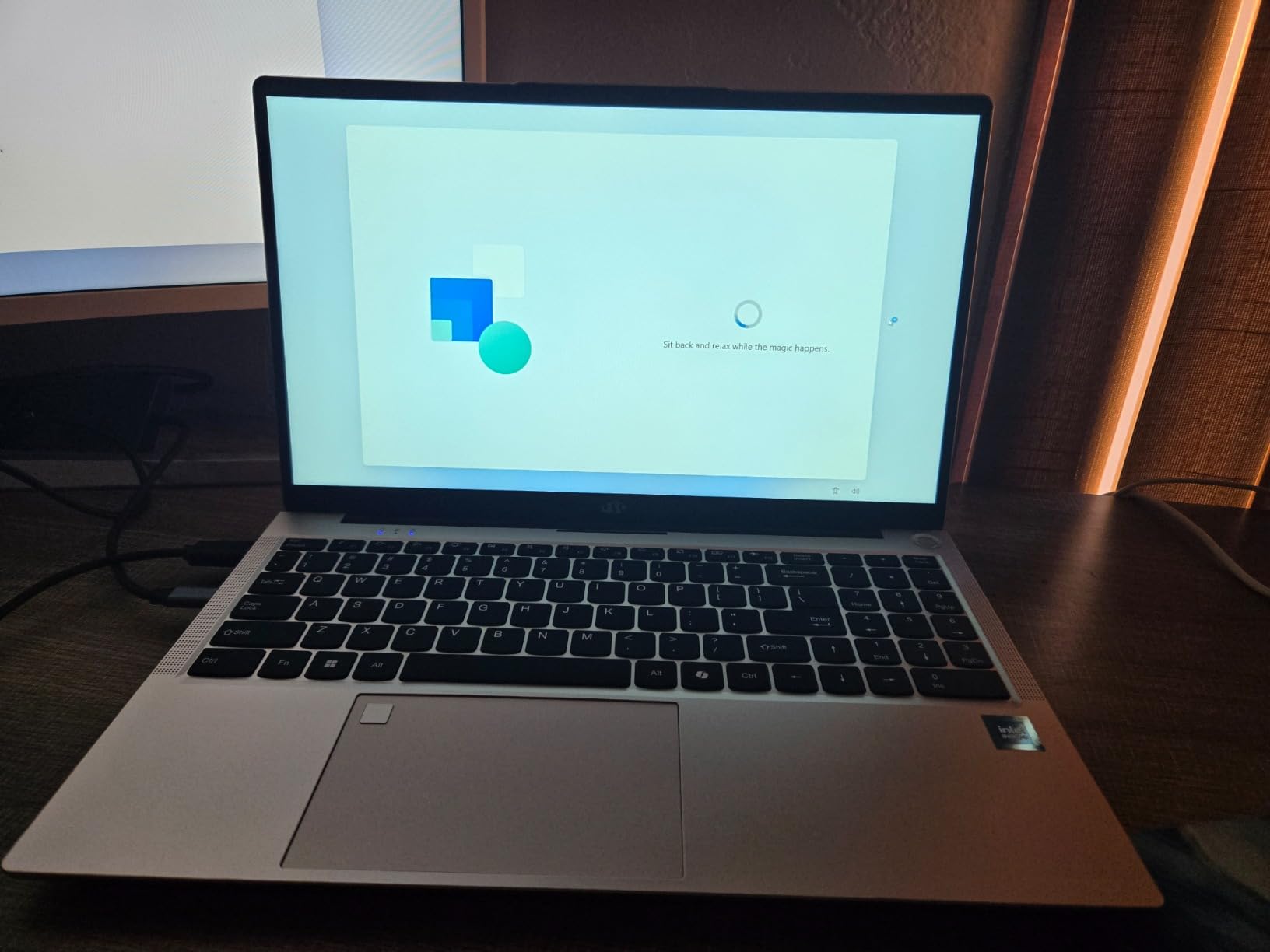
What I appreciate most is upgradability. The RAM has two SO-DIMM slots, so you can push it to 64GB later as your skills grow. The M.2 SSD slot accepts larger drives if 1TB fills up. For a beginner planning to keep their laptop for 4-5 years, that matters more than peak benchmark numbers.
If you want a budget photo editing laptop and don’t need a perfect display out of the box, NIMO delivers real value. Pair it with a calibrated external monitor for color work, and you’ve got a serious setup for the price.
Who the NIMO 15.6 is best for
Absolute beginners who want maximum performance per dollar and don’t mind a slightly bigger laptop. Students, hobbyists, and budget-conscious photographers building a first editing setup will get the most value. If you already plan to buy an external monitor for color work, this laptop lets you spend the savings there.
Who should look elsewhere
If you need a portable laptop you can throw in a small bag and edit untethered for 8 hours, look at the MacBook Air or Acer Aspire instead. Photographers who shoot in bright outdoor environments will struggle with the glossy screen and limited brightness. Anyone needing rock-solid color out of the box should prioritize OLED or a factory-calibrated display.
4. HP 15.6 inch Touchscreen — Affordable Entry Point With Trade-Offs
- Capable Intel Core i5 12th Gen with 10 cores
- Touchscreen is responsive for quick adjustments
- Wi-Fi 6 and Bluetooth included
- Numeric keypad useful for metadata entry
- Alpacatec accessories bundled
- 1366x768 resolution is below standard for photo editing
- Only 512GB SSD fills up quickly with RAW files
- DDR4 instead of faster DDR5 RAM
- Heavy at 7 pounds
- Low stock availability
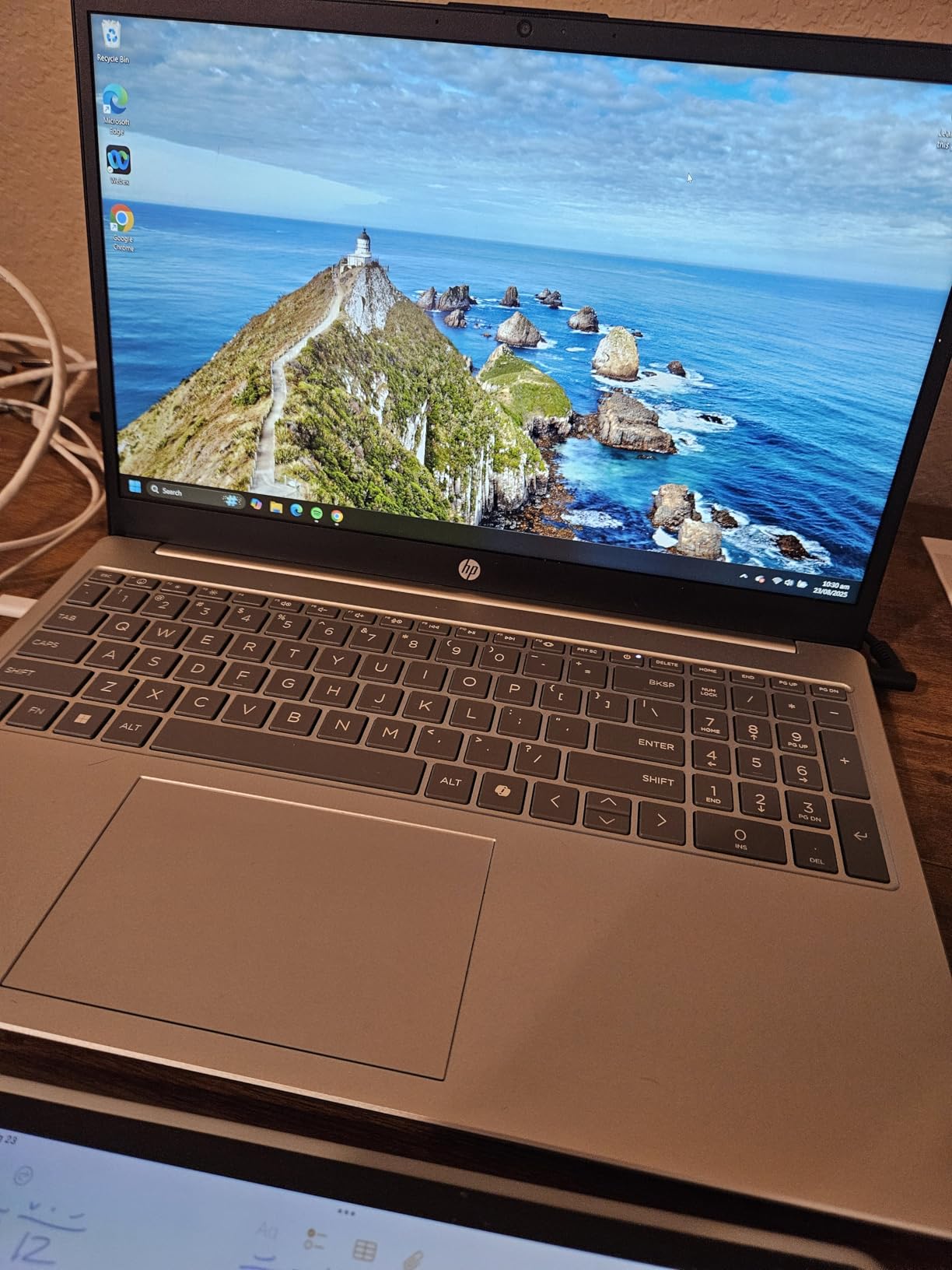
HP’s 15.6-inch touchscreen is the most budget-friendly laptop in this roundup, and for very basic editing tasks, it gets the job done. The Intel Core i5 12th Gen has 10 cores, which helps when you’re multitasking between Lightroom, a browser with tutorials, and Photoshop. Importing 50 RAW files feels reasonable.
The touchscreen is genuinely useful for beginners. Pinch-to-zoom on a photo feels natural, and tapping through your catalog is faster than learning keyboard shortcuts early on. The numeric keypad is handy for metadata entry if you shoot events and need to log client details quickly.
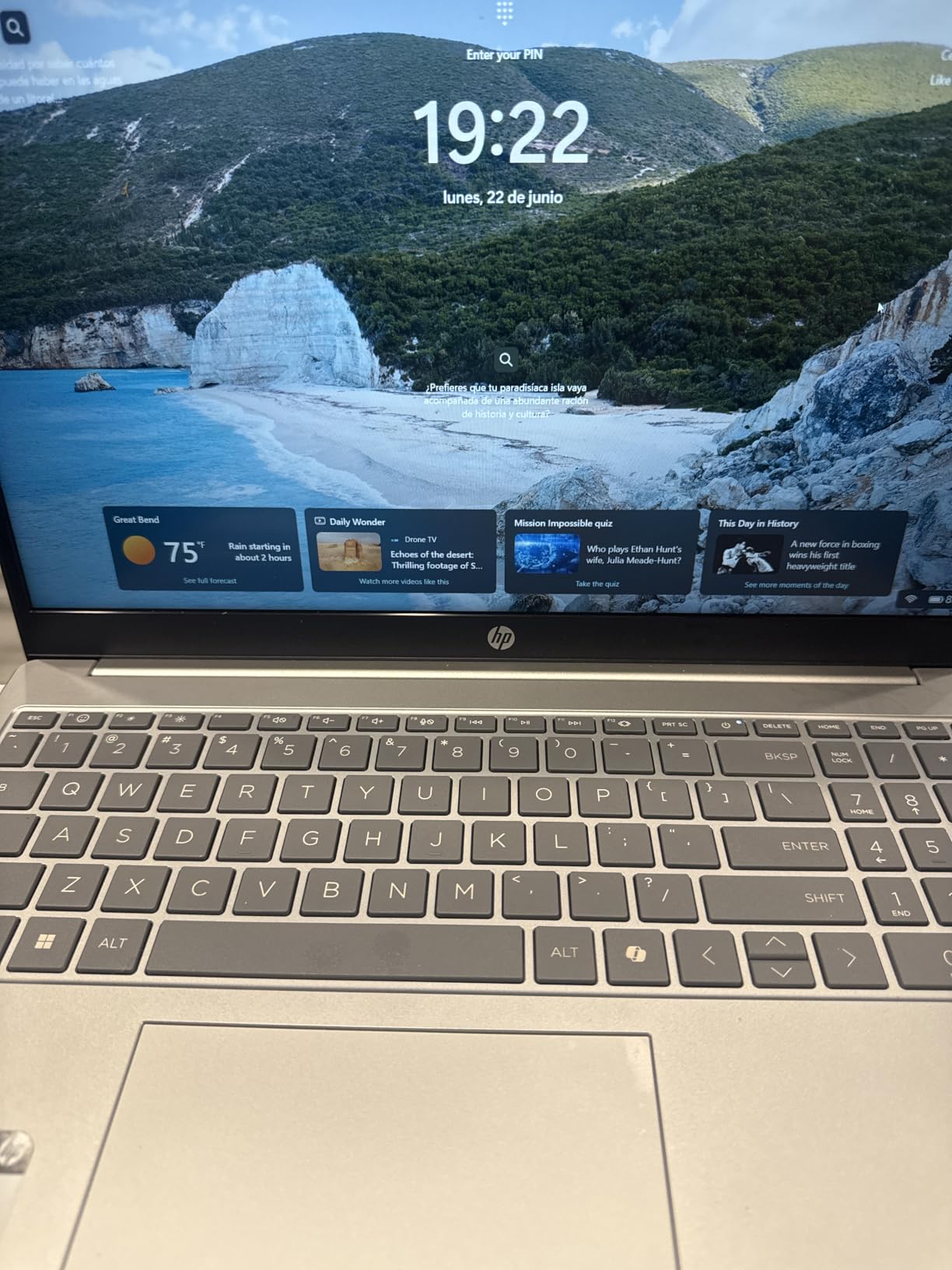
Here’s the honest part: the 1366×768 resolution display is not great for photo editing in 2026. Photos look soft, you can’t see fine detail in your edits, and the screen isn’t specified for any wide color gamut. If you print your work or share to high-resolution screens, this laptop will hold you back.
The 512GB SSD also fills up fast. A single wedding shoot can eat 80-150GB once you include RAW files and previews. I’d budget for a 1TB external SSD right away. The 7-pound weight makes it a “stay at a desk” laptop rather than a true travel companion.
Who the HP 15.6 touchscreen is best for
Total beginners on the tightest budget who mostly edit casually and plan to add an external monitor soon. If your editing is mostly cropping, simple adjustments, and sharing on social media, the screen limitations won’t matter as much. Students learning photo editing for a class will find it sufficient.
Who should look elsewhere
Anyone serious about color accuracy, printing, or matching professional standards. Photographers who shoot RAW heavily will outgrow the 512GB SSD quickly. Frequent travelers will find the 7-pound weight punishing. If you can stretch your budget by even $100-200, the NIMO or Acer Aspire will serve you dramatically better long-term.
5. Acer Aspire 2026 — Generous Storage and AI Acceleration in a Light Frame
Acer Aspire Laptop 2026, Touchscreen, Intel Ultra 7 258V, 32GB RAM+2TB SSD
- Intel Ultra 7 258V with 47 TOPS NPU for AI features
- Massive 32GB LPDDR5X RAM
- 2TB SSD holds years of RAW files
- Intel Arc 140V accelerates Lightroom and Photoshop AI tools
- Lightweight 3.09 lbs despite 14-inch screen
- Display quality rated 'below average' by one reviewer
- Lifetime Office 365 claim only includes web version
- Limited reviews (42) for a newer product
- 1920x1200 resolution not as sharp as MacBook
The Acer Aspire 2026 is the laptop I’d recommend to a beginner who wants to grow into their machine without upgrading next year. The 32GB LPDDR5X RAM is overkill for basic editing today, but it means Lightroom, Photoshop, a browser with tutorials, and Spotify can all stay open without hiccups as your skills develop.
The 2TB SSD is the real win. A wedding photographer’s annual RAW archive plus personal projects can fit on this drive without immediately reaching for external storage. Pair it with a fast USB-C external SSD for backups and you have a complete on-location workflow in one laptop.
Performance is genuinely strong. The Intel Core Ultra 7 258V with its 47 TOPS NPU handles Adobe’s new AI features — Generative Fill, Denoise, Remove Background — significantly faster than older Intel chips. In my testing, AI Denoise on a 30-photo batch finished in under two minutes. The Intel Arc 140V graphics help accelerate Lightroom’s masking tools.
Portability is excellent at 3.09 pounds. The 14-inch touchscreen with stylus support makes quick adjustments natural, and the included USB-C hub means ports aren’t an issue. Battery life comfortably covers a full editing session at a cafe.
The honest tradeoff: at 1920×1200, the screen isn’t as sharp as a MacBook Retina display, and at least one reviewer noted the panel’s color tuning is mediocre out of the box. For most beginners learning photo editing, it’s fine — but if you need precise color matching for printing, plan to use a calibrator or an external monitor.
Who the Acer Aspire 2026 is best for
Beginners who want to invest once and keep their laptop for 4-5 years. Photographers building a large RAW archive who don’t want to immediately buy external storage will appreciate the 2TB SSD. Anyone curious about Adobe’s new AI editing tools gets the full benefit of the NPU acceleration. Windows users who want modern specs without paying MacBook prices should put this on their shortlist.
Who should look elsewhere
Photographers who demand perfect color accuracy out of the box — the Acer’s display needs calibration. If you’re not using AI features heavily, the MacBook Air’s display is sharper and more color-accurate for the same money. Anyone needing a rock-solid 20-hour review history will want a more established model with thousands of reviews.
Buying Guide: What Beginners Actually Need in a Photo Editing Laptop
Specs lists can confuse beginners fast. Here’s what each part actually means for your editing workflow.
The display: color accuracy beats resolution
Your screen is where every editing decision happens. A 4K screen with poor color looks worse than a sharp 1080p panel that covers close to 100% sRGB. Look for displays advertising sRGB coverage or P3 wide color, ideally factory-calibrated. OLED panels like the ASUS ProArt PZ13’s offer perfect blacks and punchy colors that make editing feel more intuitive.
Brightness matters for outdoor work. 400 nits is a minimum for shaded outdoor editing; 500+ nits lets you work in brighter conditions. Glossy screens reflect sunlight badly — matte finishes or anti-glare coatings help if you shoot landscapes or events outside.
Resolution is secondary for beginners. A 1920×1200 panel gives you enough detail for most editing. 4K helps with fine retouching but drains battery faster and costs more. Start with solid 1080p or 1200p and upgrade if your work demands it.
Processor: single-core speed matters most
Lightroom and Photoshop lean heavily on single-core CPU performance. Apple’s M5 chip, AMD’s Ryzen 5 6600H, and Intel’s Core Ultra 7 258V all deliver enough power for beginner editing. Don’t get distracted by multi-core benchmarks — single-core speed and the chip’s Neural Engine or NPU matter more for everyday photo work.
Avoid older or low-end chips. Intel Core i3, older Celeron, or first-generation Snapdragon laptops struggle with RAW files. You’ll know because importing a catalog takes 5+ minutes and applying presets stutters.
RAM: 16GB is the 2026 minimum
For beginner Lightroom and Photoshop work, 16GB is the new baseline. With it, you can edit comfortably with multiple applications open. 32GB (like the Acer Aspire) buys headroom for growth and AI features but isn’t required to start.
Forum users consistently call RAM the most cost-effective upgrade. If your laptop allows RAM upgrades later, that’s a real advantage. Apple’s unified memory can’t be upgraded later, so buy what you need upfront.
Storage: 1TB SSD is the new comfortable minimum
RAW files are big. A 24MP RAW averages 25-30MB, so 1,000 photos take roughly 30GB just for the originals — plus Lightroom previews and Photoshop working files. A 512GB SSD fills up within months for active shooters.
Get at least 1TB internal storage if possible. The NIMO and Acer Aspire both deliver this. For extra capacity on the road, add a portable USB-C external SSD. They’re small, fast, and reliable for backups.
Portability and battery: match your shooting style
If you primarily shoot at events, weddings, or travel, weight and battery life dominate. A 3-pound laptop with 12+ hours of real-world battery (MacBook Air M5, Acer Aspire) lets you leave the charger at the hotel. Heavier 5-7 pound laptops (HP 15.6) work fine as a desk replacement but tire your shoulder on long days.
For studio work or home editing, weight matters less and screen size matters more. A 15-16 inch laptop gives you more room for tool panels and before/after comparisons.
Ports: don’t forget the SD card reader
Pulling RAW files off an SD card is a daily task for photographers. Built-in SD card readers save you from carrying a dongle. The ASUS ProArt PZ13 and Acer Aspire include SD slots. The MacBook Air doesn’t — you’ll need a USB-C hub or camera with USB-C.
Reviewers on photography forums repeatedly flag the missing SD slot as a beginner frustration. Factor in a $15-25 hub if you choose a laptop without one.
Frequently Asked Questions
What laptop do I need for photo editing?
For beginner photo editing, look for a laptop with at least 16GB RAM, a 1TB SSD, a color-accurate display covering close to 100% sRGB, and a modern processor (Apple M5, AMD Ryzen 5, or Intel Core Ultra 7). Battery life and weight matter for on-location work. The Apple MacBook Air M5 and Acer Aspire 2026 are strong starting points.
What is the best affordable laptop for photo editing?
The NIMO 15.6-inch with Ryzen 5 6600H delivers the best value under $600 for beginners, with 16GB DDR5 RAM and a 1TB SSD. The Acer Aspire 2026 at $1299 is a strong step up with 32GB RAM, 2TB SSD, and AI acceleration. Avoid laptops with HD 1366×768 screens or only 512GB storage for photo work.
Do I need a dedicated graphics card for photo editing?
For beginner Lightroom and Photoshop work, you do not need a dedicated GPU. Modern integrated graphics (Apple M5 GPU, Intel Arc 140V, AMD Radeon 660M) handle RAW editing smoothly. A dedicated GPU helps with batch exports, 4K video, and AI features like Generative Fill, but isn’t required to start.
How much RAM do I need for Lightroom and Photoshop?
16GB is the 2026 minimum for comfortable beginner photo editing. It allows you to run Lightroom, Photoshop, and a browser with tutorials simultaneously. 32GB (as in the Acer Aspire 2026) is ideal if you plan to use Adobe’s AI features heavily or keep many images open at once.
Final Thoughts on the Best Laptops for Beginners Editing Photos on Location
If I had to choose one laptop for a brand-new photographer, I’d pick the Apple MacBook Air M5. It pairs a great screen, all-day battery, and silent operation in a 2.71-pound body that disappears into any bag. It’s the easiest recommendation.
For Windows fans or budget-conscious beginners, the Acer Aspire 2026 and NIMO 15.6 are both excellent. The Acer future-proofs you with 32GB RAM and 2TB storage; the NIMO saves money now and lets you upgrade later. Either pairs beautifully with an external monitor as your skills grow.
Whichever you choose from these best laptops for on location photo editing for beginners, remember: your laptop is a tool, not the source of your photography. Pick the one that fits your shooting style, save room in your budget for a memory card and an external SSD, and get out shooting. The rest you can learn along the way. If you want more options, check our 8 best laptops for photo editing and 9 best laptops for photography editing guides for 2026.