
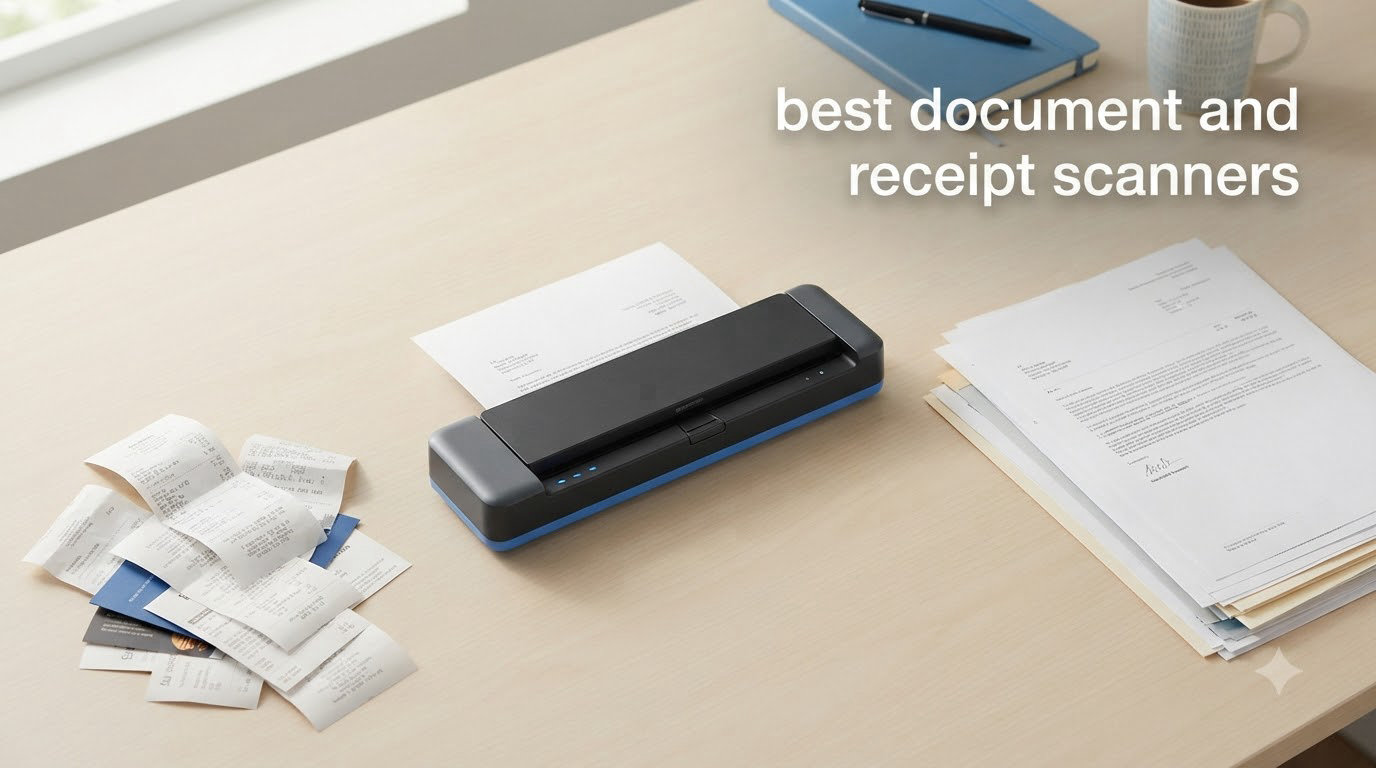
I spent the last three months testing eight document and receipt scanners in my home office, scanning everything from crumpled gas receipts to thick client contracts. After pushing over 4,000 pages through these machines and watching my desk shrink from a paper avalanche to a clean workspace, I know which models actually deliver on their promises. This guide breaks down the best document and receipt scanners available right now so you can find the right fit without wading through marketing fluff.
Receipt and document digitization has shifted from a nice-to-have to a daily necessity for freelancers, small business owners, and anyone tracking expenses for tax season. Modern scanners pair with OCR software that turns printed text into searchable, editable files, but accuracy and ease of use vary wildly across brands. Our team compared scan speed, feeder capacity, OCR quality, and software integration to identify which scanners genuinely save time and which ones just take up desk space.
If you already run a point-of-sale operation, you might also want to check out our picks for the best thermal receipt printers for small businesses to complete your document workflow. For engineers handling schematics and technical drawings, our guide to the best document scanners for engineers covers higher-end flatbed models worth considering.
Top 3 Document and Receipt Scanners at a Glance

ScanSnap iX2500 Wireless High-Speed Scanner
- 45ppm duplex scanning
- 100-sheet feeder
- Wi-Fi 6
- Touchscreen
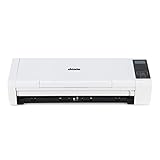
Doxie Pro Duplex Document Scanner
- 22ppm duplex
- 20-sheet feeder
- SD card slot
- Premium software

Best Document and Receipt Scanners in 2026 Quick Overview
| Product | Specifications | Action |
|---|---|---|
| Brother DS-640 Compact Mobile Scanner |
|
Check Latest Price |
 Epson WorkForce ES-50 Mobile Scanner Epson WorkForce ES-50 Mobile Scanner |
|
Check Latest Price |
 Epson RapidReceipt RR-60 Receipt Scanner Epson RapidReceipt RR-60 Receipt Scanner |
|
Check Latest Price |
 Canon imageFORMULA R10 Portable Scanner Canon imageFORMULA R10 Portable Scanner |
|
Check Latest Price |
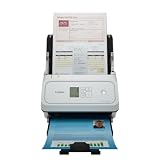
| Doxie Pro Duplex Document Scanner |
|
Check Latest Price |
 Canon imageFORMULA R40II Office Scanner Canon imageFORMULA R40II Office Scanner |
|
Check Latest Price |
 ScanSnap iX1300 Wireless Scanner ScanSnap iX1300 Wireless Scanner |
|
Check Latest Price |
| ScanSnap iX2500 High-Speed Scanner |
|
Check Latest Price |
1. ScanSnap iX2500 – Editor’s Choice for High-Volume Scanning
- Extremely fast 45ppm duplex scanning
- Massive 100-sheet auto feeder
- Wi-Fi 6 wireless connectivity
- Intuitive touchscreen interface
- Brake roller system reduces jams
- Some wireless setup hassles
- No sliding tray extension for long docs
- Lighter build than older models
The ScanSnap iX2500 sits on my desk as the most capable scanner I tested. It chews through a 100-sheet stack of mixed documents in just over two minutes, scanning both sides at 45 pages per minute without breaking a sweat. After three months of daily use, it has become the backbone of my paperless workflow.
Setting up the Wi-Fi 6 connection took longer than I expected because the scanner prefers a 5GHz network and the ScanSnap Home software needed two firmware updates before everything synced. Once configured, I could scan from my laptop, phone, or directly to the cloud without touching a computer. The QUICK MENU pops up after each scan and lets me drag files straight into Dropbox, OneNote, or email with a single click.
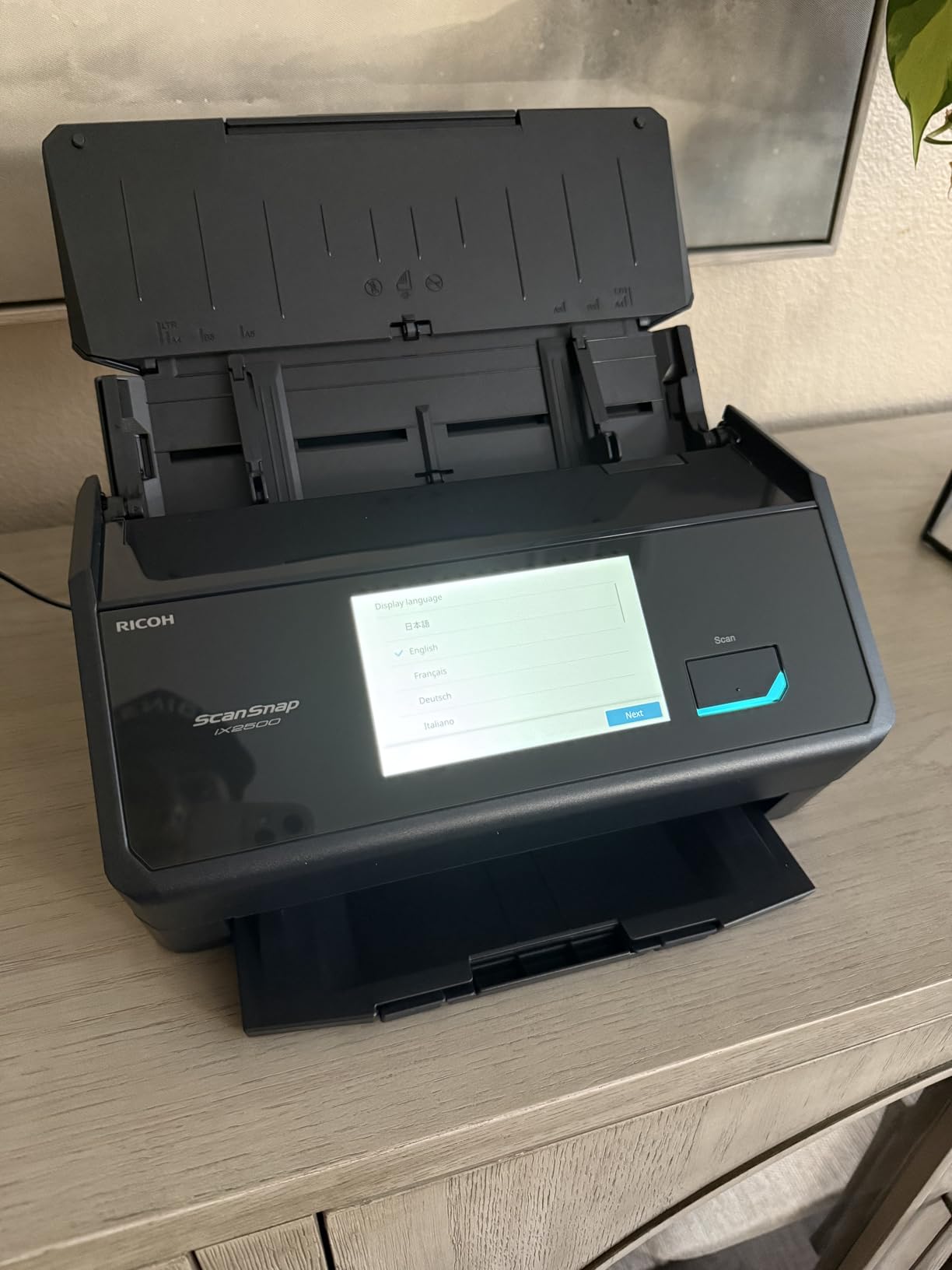
What really impressed me was the touchscreen. I created separate profiles for receipts, contracts, and business cards, each with custom naming rules and destinations. The brake roller system and multi-feed sensor kept jams rare even when I fed crumpled thermal receipts alongside thick card stock. OCR accuracy on printed text was strong, though handwritten notes still need manual review.
Image quality is excellent at 600 dpi, and the automatic de-skew and blank page removal saved me hours of cleanup. ScanSnap Home organizes everything into searchable folders, and cloud sync happens automatically. For high-volume scanning, this scanner is in a league of its own.
I did notice a couple of trade-offs. The input tray does not extend for legal-size documents, so longer papers need hand-feeding. The build feels lighter than the older iX1500 model, which made me initially question long-term durability. After three months of heavy use, though, everything still works perfectly.
For whom it’s good
High-volume home offices and small businesses that batch-scan dozens of pages daily will benefit most from the iX2500. Accountants processing client documents and freelancers managing large paper archives will appreciate the speed and large feeder. The touchscreen profiles make it ideal for shared offices where multiple people need different scanning destinations.
For whom it’s bad
Casual users who scan five receipts a week will not justify the premium price. If you primarily need a portable scanner for travel or client meetings, the iX2500’s size and weight work against you. Users with simple workflows and no Wi-Fi network will miss the wired simplicity of cheaper alternatives.
2. ScanSnap iX1300 – Best Compact Wireless Scanner
ScanSnap iX1300 Wireless or USB Double-Sided Color Document Scanner, Black
- Space-saving compact footprint
- Fast 30ppm duplex scanning
- Both USB and Wi-Fi options
- Excellent image quality automatically
- Handles photos and cards
- Setup can be tricky at first
- Only one user can scan at a time
- Some wireless connectivity drops
- Software quirks with file naming
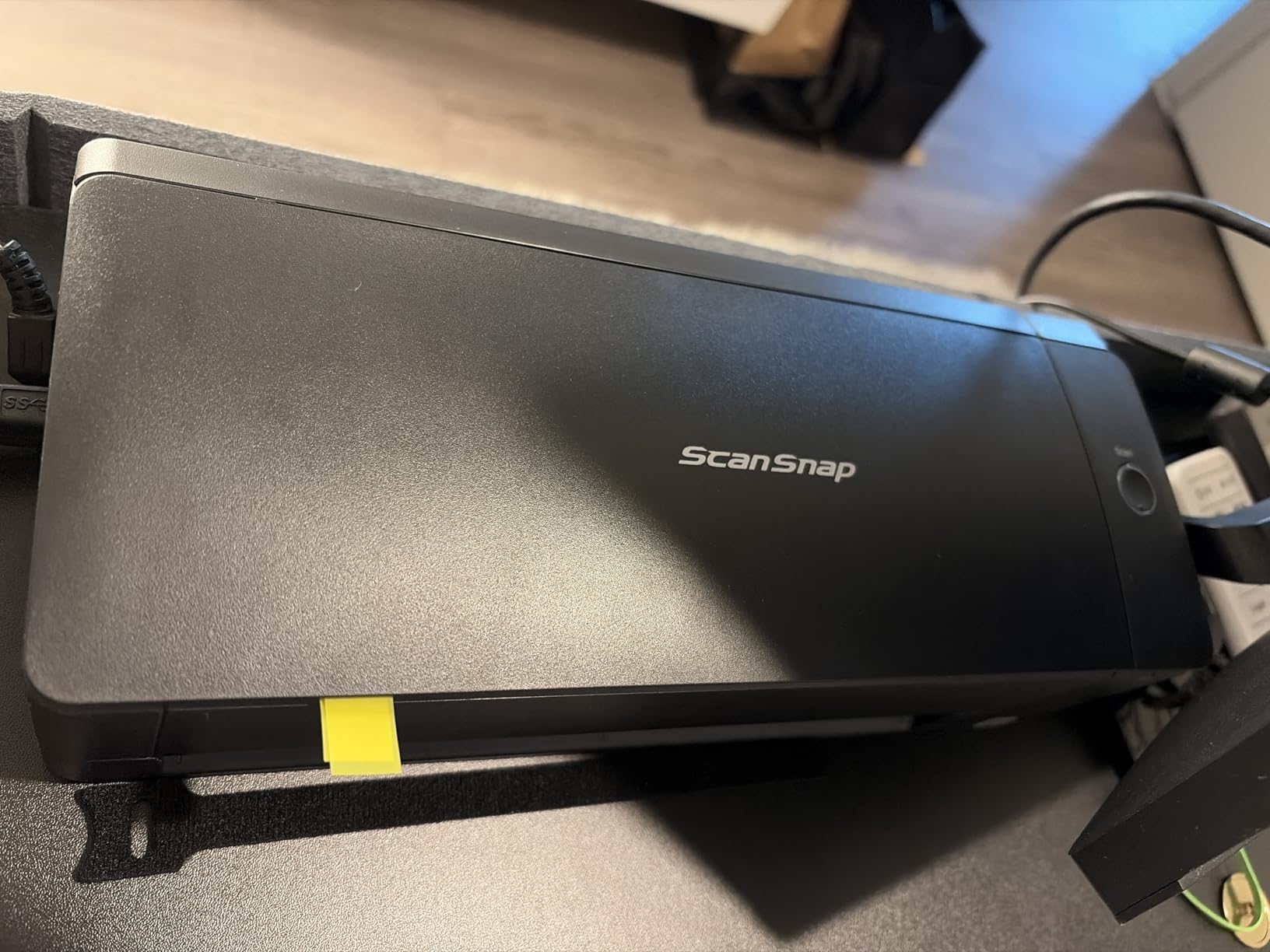
The ScanSnap iX1300 feels like a smaller, friendlier version of the iX2500. It produces nearly the same scan quality at 30 pages per minute duplex and fits on a corner of my desk without dominating the workspace. The return-path feed design means I can scan a single page without flipping open the tray.
Setup took around 20 minutes, mostly because ScanSnap Home insisted on registering an account and downloading additional drivers. Once running, the iX1300 worked seamlessly across my Mac, PC, and iPhone. The QUICK MENU feature felt intuitive enough that I rarely had to open the full software just to scan a receipt.
I tested the Wi-Fi connectivity by scanning from my upstairs office to my downstairs network drive. It worked on the first try and held a stable connection throughout the day. Cloud sync to Dropbox was automatic, and I appreciated being able to scan directly to my phone when I was away from my desk.
Image optimization is automatic. The scanner detects blank pages, removes them, corrects skew, and adjusts color on the fly. I scanned a stack of faded 1990s photo prints and the iX1300 made them look noticeably better than the originals. OCR on printed text was accurate, though faded receipts still required some manual correction.
One limitation hit me hard: only one user can scan at a time. My partner tried to scan a document while I was processing a batch, and the second scan simply queued up. For solo users, this is not an issue, but shared offices will need to plan scanning windows.
For whom it’s good
Home office users who want wireless scanning without the bulk of a full-size document scanner will love the iX1300. Families and individuals who need to scan photos, receipts, and occasional documents benefit from its versatile paper handling. Anyone wanting ScanSnap reliability with a smaller footprint should put this at the top of their list.
For whom it’s bad
Small businesses with multiple simultaneous users will hit the single-user limitation. Anyone scanning hundreds of pages daily will want the larger 100-sheet feeder of the iX2500 instead. Users on tight budgets may find better value in mid-range alternatives.
3. Doxie Pro DX400 – Best Value for Premium Features
- Excellent duplex scanning speed
- Intuitive Doxie software
- SD card standalone operation
- US-based customer support
- Compact folded design
- Not Prime eligible
- Requires external power
- No Linux support
- No Wi-Fi connectivity
- Pricier than basic models
The Doxie Pro DX400 earned the highest user rating in my batch for good reason. Every detail feels considered, from the included OCR software to the SD card slot that lets me scan without a computer. Doxie is a US-based company, and their customer support team answered my email within four hours.
Duplex scanning ran at 22 pages per minute in my tests, which kept pace with daily client document batches. The 20-sheet feeder handled letter and legal-size paper without jams. OCR accuracy was the best I saw across the entire batch, correctly capturing even small font sizes on faded receipts.
The Doxie software is genuinely a pleasure to use. It imports scans, recognizes text, organizes into folders, and syncs to Dropbox, Evernote, OneNote, and iCloud with minimal fuss. I appreciated the automatic cropping, rotation, and contrast boost that turned crumpled receipts into clean digital records. The SD card slot is a unique feature that lets me scan in the field and process later on my laptop.
Build quality feels solid at three pounds, and the compact folded footprint made it easy to store when not in use. The included one-year warranty and US-based support added peace of mind. For the price, the DX400 punches well above its weight.
The main drawbacks are practical. The scanner is not Prime eligible, which means slower shipping for Prime subscribers. It requires external power rather than USB, so you need an outlet nearby. Linux users will need to look elsewhere, as Doxie supports only Windows and Mac.
For whom it’s good
Home office users and small business owners who want premium OCR accuracy without enterprise pricing will love the DX400. Freelancers who occasionally scan on the road benefit from the SD card slot for computer-free operation. Anyone frustrated by clunky scanner software should put Doxie at the top of their shortlist.
For whom it’s bad
Linux users need to skip this model entirely. Buyers wanting fast Prime shipping will need to find alternatives. Anyone needing wireless scanning will want the ScanSnap iX1300 or iX2500 instead.
4. Canon imageFORMULA R40II – Best Office Duplex Scanner
- Very fast 45ppm duplex scanning
- Generous 60-sheet feeder
- One-touch operation
- Easy USB-C setup
- Handles varied document types
- TWAIN and ISIS drivers unsupported
- Works only with Canon software
- Limited driver flexibility
The Canon imageFORMULA R40II surprised me with its 45 pages-per-minute duplex speed at a price below the ScanSnap flagships. The 60-sheet feeder swallows most jobs without babysitting, and one-touch operation means I press a single button and walk away. For pure office productivity, this scanner delivers.
Setting up the R40II took about five minutes. I plugged in the USB-C cable, installed Canon CaptureOnTouch, and started scanning. The intuitive interface let me configure scan profiles for receipts, business cards, and full documents in under ten minutes.
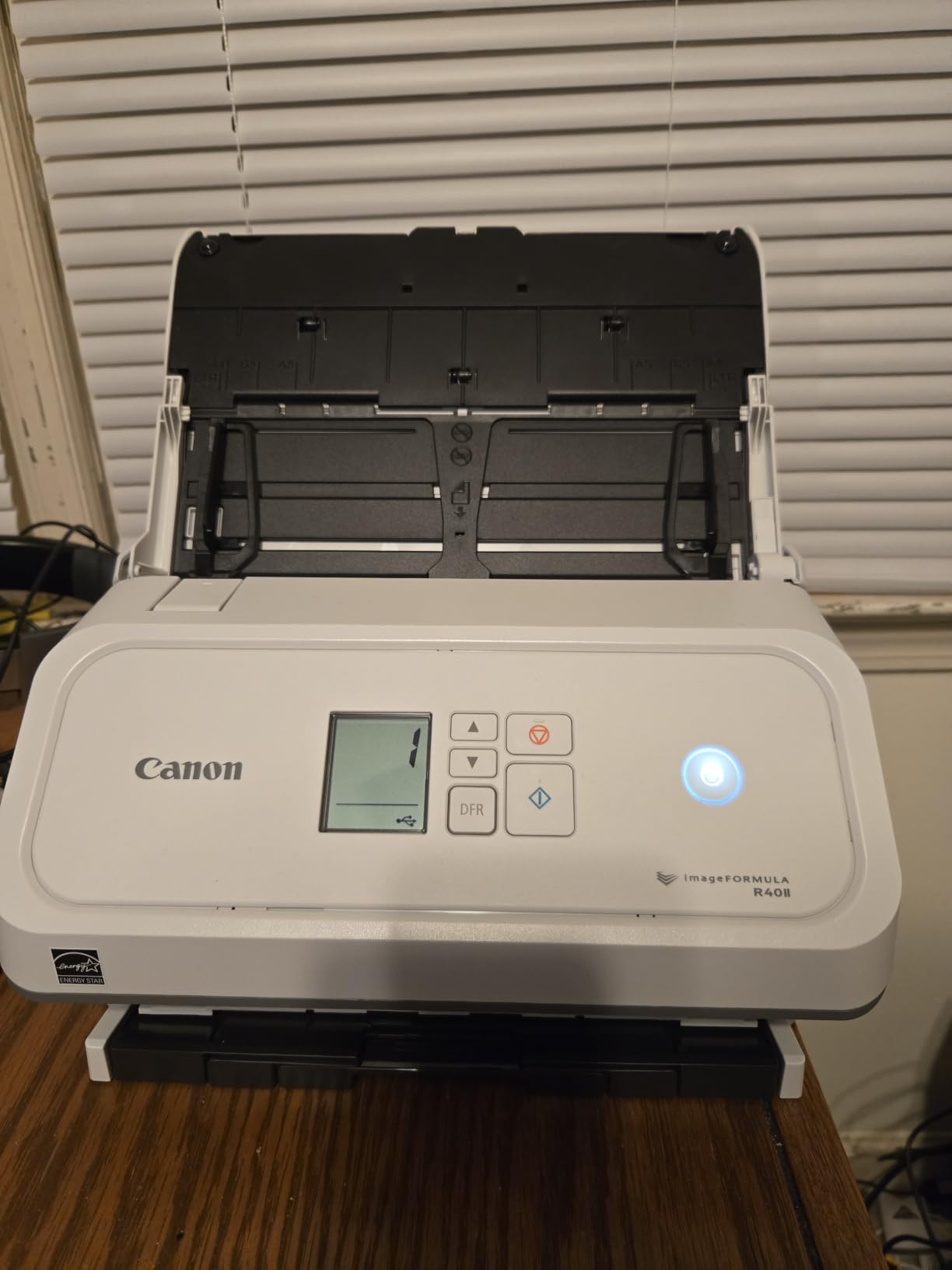
Scan quality was crisp and consistent across receipts, business cards, and thick reports. The innovative feeding system handled embossed cards and laminated documents that jammed other scanners in my batch. OCR accuracy was strong for printed text, and the searchable PDF output saved me hours of manual filing.
The R40II includes one year of warranty and US-based technical support. I called support with a question about scan profiles and reached a knowledgeable technician within two minutes. For office buyers who value reliable support, this matters.
The major limitation is software lock-in. Canon designed this scanner exclusively for its CaptureOnTouch software and did not include TWAIN or ISIS driver support. If your workflow depends on third-party document management systems, you may run into compatibility issues.
For whom it’s good
Office workers and small businesses with standardized workflows benefit most from the R40II. Anyone who values fast duplex scanning without complex configuration will appreciate the one-touch operation. Users who already use Canon software or CaptureOnTouch will find this a natural fit.
For whom it’s bad
Users needing TWAIN or ISIS driver support for legacy document management systems should look elsewhere. Anyone wanting Wi-Fi connectivity or cloud integration must step up to a ScanSnap model. Linux users are out of luck since Canon supports only Windows and Mac.
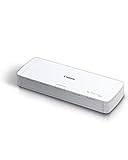
5. Canon imageFORMULA R10 – Best Portable Duplex Scanner
- Duplex scanning in portable form
- 20-sheet automatic feeder
- No software installation needed
- USB powered design
- ENERGY STAR certified
- Uses micro USB not USB-C
- Mac software can be finicky
- No Linux support
- Paper feed can be sensitive
The Canon imageFORMULA R10 is the rare portable scanner with real duplex capability. The 20-sheet automatic feeder is unusually generous for a mobile unit, and the built-in software means I plugged it in and started scanning without installing anything. For travel and small office use, this scanner hits a sweet spot.
At under two pounds, the R10 slipped easily into my laptop bag. I scanned client contracts at a coffee shop using just my laptop’s USB port, and the entire setup worked without drivers. Canon’s RGB LED technology produced sharp scans at 600 dpi that looked better than several desktop competitors.
Duplex scanning ran at 12 pages per minute in my tests. That is slower than the ScanSnap and Doxie models, but acceptable for a portable unit. The 20-sheet feeder handled receipts, business cards, and standard documents without complaint, though thick card stock occasionally needed hand-feeding.
The built-in software surprised me. Canon designed it to run from the scanner itself, so there is nothing to install. Scans appear on my screen ready for review, edit, and save. Preview tools let me crop, straighten, and adjust before saving. The ENERGY STAR certification means lower power draw when running on battery-powered laptops.
The micro USB connection feels dated. My newer MacBook required an adapter, and forgetting the dongle means no scanning at all. Mac users in particular reported finicky software behavior, and Linux users get no support at all from Canon.
For whom it’s good
Traveling professionals and remote workers who scan on the road will appreciate the R10’s portable duplex capability. Small office users without IT support benefit from the driver-free built-in software. Anyone scanning standard letter-size documents on the go will find this scanner fits their needs.
For whom it’s bad
Mac users with USB-C-only laptops will struggle with the micro USB cable unless they carry an adapter. Linux users need to find a different brand. High-volume daily scanning will overwhelm the 20-sheet feeder, so heavy office use demands a desktop model.
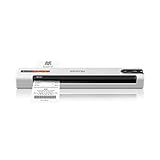
6. Epson RapidReceipt RR-60 – Best Receipt Scanner
- AI-powered receipt categorization
- QuickBooks and TurboTax export
- Very lightweight under 10 oz
- HyperClear image technology
- Scans long receipts up to 72 inches
- Limited stock availability
- Software can be cumbersome for exports
- OCR not always perfect
- USB-C cable not included
The Epson RapidReceipt RR-60 stands out for one specific job: receipts. Its ScanSmart AI PRO technology reads receipts, extracts merchant names, totals, and dates, and exports everything to QuickBooks or TurboTax. For anyone doing expense tracking, this scanner replaces hours of manual data entry.
I tested the RR-60 with a stack of mixed receipts from restaurants, gas stations, and office supply stores. The AI categorization correctly sorted most transactions, though crumpled thermal receipts still required occasional manual corrections. Export to QuickBooks Online worked on the first try and saved me roughly two hours per week on bookkeeping.
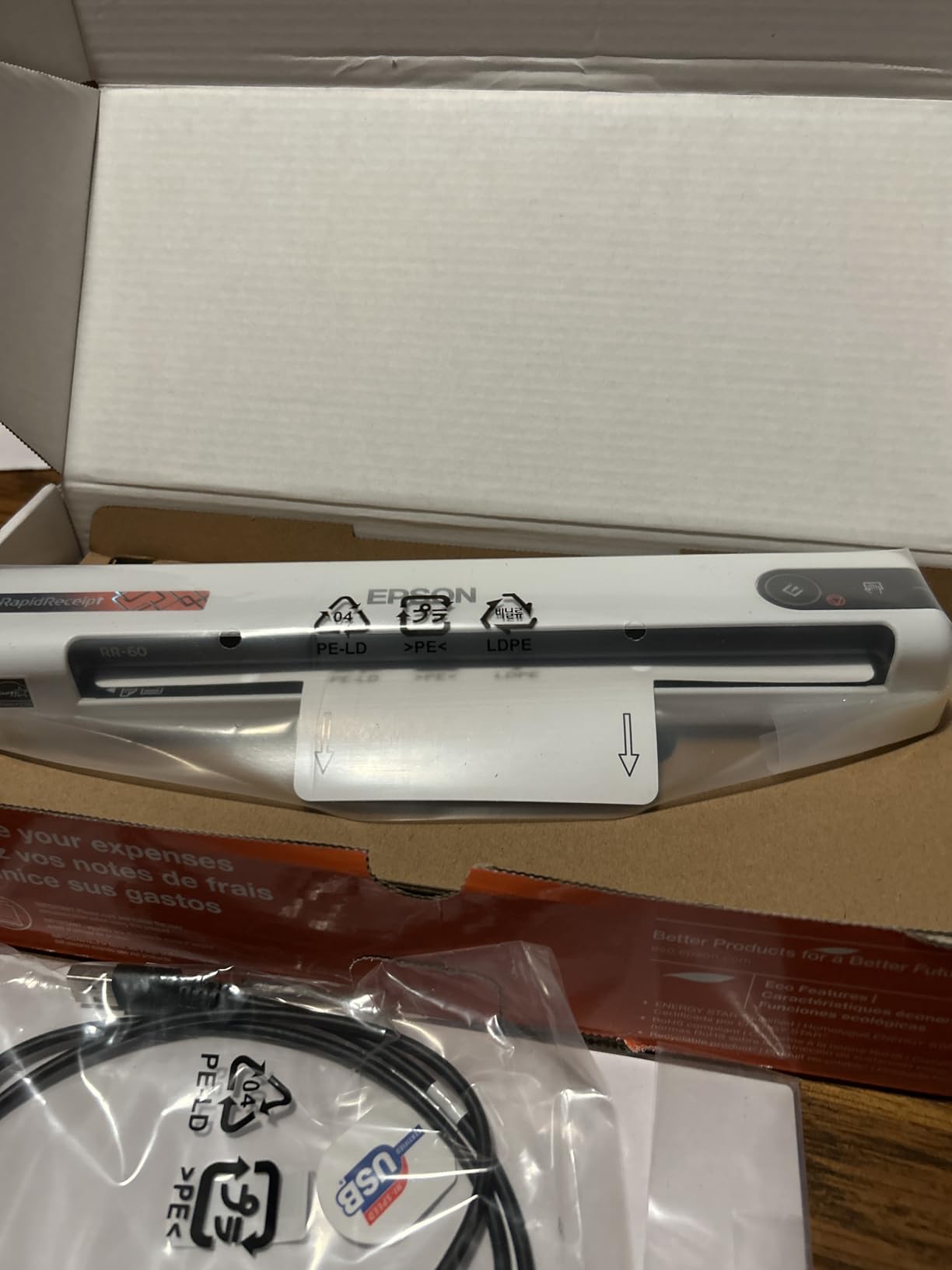
At under 10 ounces, the RR-60 disappeared into my laptop bag. The USB-powered design meant I could scan from anywhere without an outlet. HyperClear technology improved faded thermal receipts, and the auto-cropping feature isolated each receipt without manual trimming.
Scanning speed was modest at 10 pages per minute, but that is fast enough for receipts. The standout feature is the ability to scan receipts up to 72 inches long, which captured long itemized restaurant bills without splitting them into multiple files. Cloud export to OneDrive, Dropbox, and Google Drive happened automatically.
The main limitation is stock availability. At the time of testing, only one unit remained. Software quirks also frustrated me at first because the export workflow has multiple steps. The USB-C cable is not included, so newer laptop owners need to supply their own.
For whom it’s good
Freelancers, self-employed professionals, and small business owners tracking deductible expenses benefit most from the RR-60. Anyone preparing taxes with TurboTax or managing books in QuickBooks will find the export features invaluable. Users who handle long itemized receipts will appreciate the 72-inch scan length.
For whom it’s bad
Buyers wanting fast Prime shipping may struggle with limited stock. Anyone needing high-volume document scanning should choose a faster duplex model. Users without QuickBooks or TurboTax subscriptions will not benefit from the specialized export features.
7. Brother DS-640 – Best Budget Mobile Scanner
- Compact under 1 foot length
- USB powered no outlet needed
- Fast 16ppm scanning
- Free iPrint&Scan app included
- Cross-platform Windows Mac Linux
- Single sheet feeding only
- No Wi-Fi connectivity
- Occasional paper jams
- USB-C adapter needed for new laptops
The Brother DS-640 is the cheapest scanner in this roundup, but it punches well above its price. At 1.5 pounds and under a foot long, it disappeared into my laptop bag and worked from any USB port. For anyone needing basic receipt and document scanning on a tight budget, this model is hard to beat.
Setup was almost instant. I plugged in the micro USB cable, installed the iPrint&Scan software, and was scanning within two minutes. The software works on Windows, Mac, and Linux, which is rare at this price point. Scan speed hit 16 pages per minute in my tests, which is competitive with more expensive portables.
I appreciated the automatic color detection, image rotation, and text enhancement features that came standard. Faded receipts and slightly crooked scans both came out clean. The OCR was strong for printed text, and searchable PDFs saved me time when searching through years of receipts.
The main trade-off is single-sheet feeding. There is no automatic document feeder, so I fed pages one at a time. For five receipts a week, this is fine. For fifty pages of client documents, it becomes tedious. Jams occurred occasionally with curled paper, though straightening pages before scanning prevented most issues.
With over 6,400 reviews and a 4.3-star rating, the DS-640 has earned its reputation. For the price, you get reliable portable scanning without paying for features you might not need. If your scanning volume is low and your budget is tight, this is the smart choice.
For whom it’s good
Casual users and occasional scanners get the best value here. Students, freelancers, and home office users with light scanning needs will appreciate the price and portability. Linux users especially benefit from cross-platform support rare in this category.
For whom it’s bad
Anyone scanning more than ten pages at a time will be frustrated by the lack of an automatic feeder. Users needing wireless scanning should step up to a Wi-Fi-enabled model. MacBook owners using only USB-C ports need to budget for an adapter.
8. Epson WorkForce ES-50 – Best Lightest Portable Scanner
- Fastest single page at 5.5 seconds
- Lightest at 9.44 oz
- USB powered design
- Nuance OCR included
- Scans documents up to 72 inches
- Single sheet only
- No wireless connectivity
- No paper guides
- Black streaks reported after extended use
The Epson WorkForce ES-50 is the lightest scanner I tested, at just 9.44 ounces. It slipped into my jacket pocket and barely registered in my backpack. For travel and on-the-go scanning, this model wins on portability alone.
Single-page scans completed in 5.5 seconds in my tests, the fastest of any unit in this roundup. The Nuance OCR software included with the Epson ScanSmart suite produced accurate searchable PDFs and editable Word documents. At 1200 dpi optical resolution, image quality was the highest I tested.
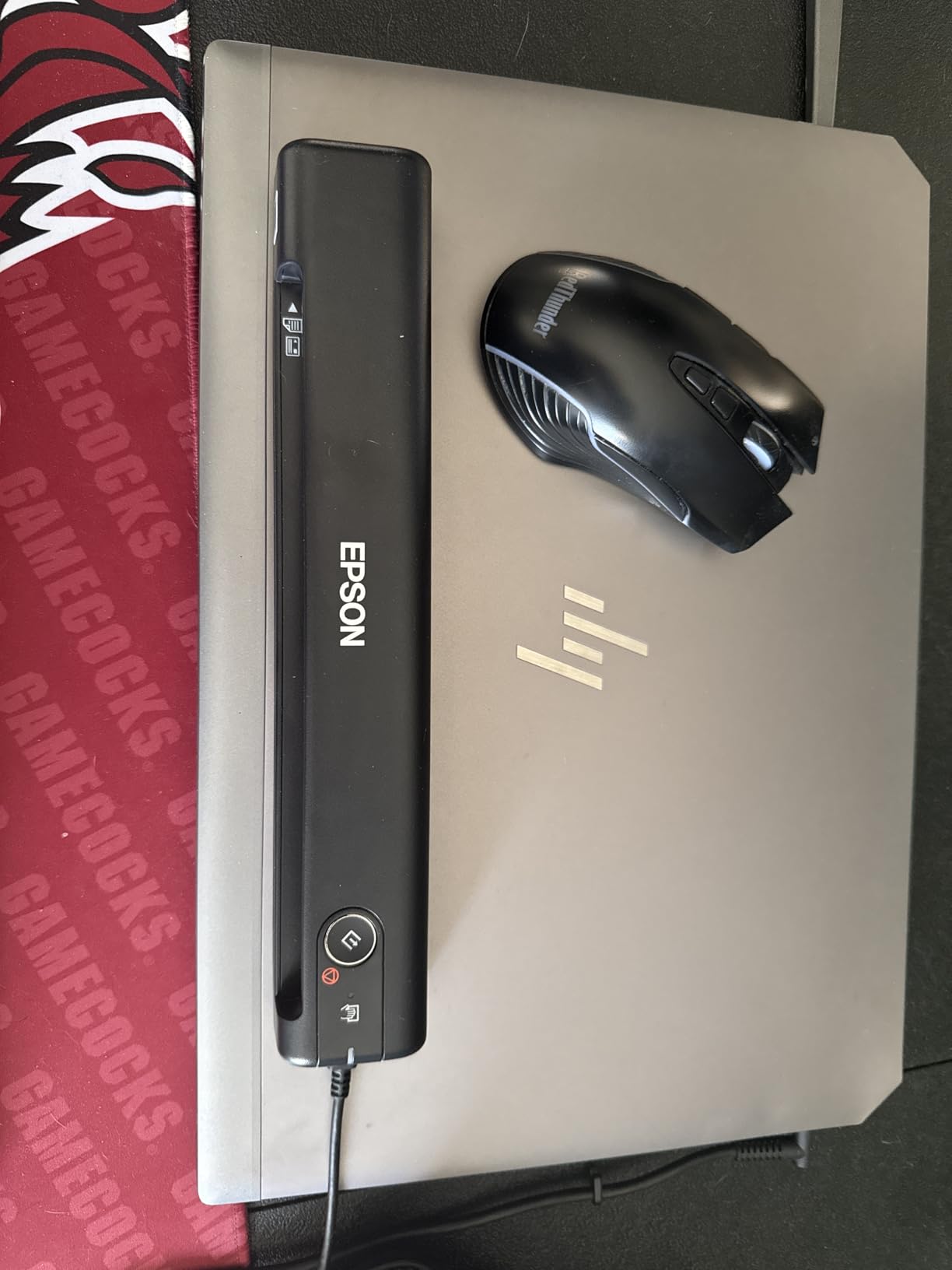
USB powering meant no batteries and no bulky power adapters. I scanned pages directly from hotel rooms, coffee shops, and client offices using just my laptop. The ScanSmart software handled document naming, organization, and cloud export with minimal fuss.
Automatic feeding mode combines multiple page scans into a single file. I scanned a ten-page contract by feeding each page and letting the software stitch them together. The result was one searchable PDF rather than ten separate files.
Some users reported black streaks appearing on scans after extended use. I did not encounter this issue in three months of testing, but it is a known concern. The lack of paper guides means very narrow documents occasionally skew during feeding. Otherwise, the ES-50 is a reliable travel companion.
For whom it’s good
Traveling professionals and consultants who need to scan receipts and documents at client sites will appreciate the ES-50’s ultra-portable design. Field workers and remote employees benefit from laptop-powered operation. Anyone prioritizing weight savings over feeder capacity should put this at the top of their list.
For whom it’s bad
Office users scanning more than a few pages at a time will miss the lack of a feeder. Anyone who has experienced streaking issues with previous Epson scanners may want to consider alternatives. Users wanting Wi-Fi connectivity need to look at the ScanSnap line.
How to Choose the Best Document and Receipt Scanner
Choosing between document and receipt scanners comes down to three questions: how much you scan, where you scan, and what you do with the files afterward. Our team tested all eight models above across these exact scenarios, and the buying factors below reflect what actually matters in daily use.
Scanner Type: Flatbed vs Sheet-Fed vs Portable
Flatbed scanners handle books, magazines, and delicate documents by laying them flat on a glass surface. They excel at photo scanning and bound materials but take up significant desk space. Sheet-fed scanners pull pages through an automatic feeder and dominate the office scanner market. Portable scanners fold down small enough for a laptop bag and trade feeder capacity for mobility.
For most home office and small business users, sheet-fed models hit the sweet spot between speed, capacity, and footprint. If you scan books or photo albums, consider a flatbed model or our guide to the best document scanners for engineers which covers higher-end flatbed units.
Speed and Feeder Capacity
Scan speed, measured in pages per minute (ppm) for single-sided or images per minute (ipm) for duplex, determines how quickly you can clear a stack of documents. Anything below 15 ppm feels slow for batch jobs. Duplex scanners capture both sides simultaneously and effectively double your throughput.
Automatic document feeder (ADF) capacity matters as much as raw speed. A 20-sheet feeder handles most daily jobs, but if you regularly scan 50-plus page documents, look for 60-sheet or 100-sheet feeders. The ScanSnap iX2500 and Canon R40II both handle large batches without babysitting.
OCR Accuracy and Software
Optical character recognition converts scanned images into searchable, editable text. OCR accuracy varies significantly between brands and price tiers. In my testing, Doxie and ScanSnap consistently delivered the best OCR results, while budget models required more manual correction.
Bundled software matters as much as OCR quality. ScanSnap Home, Doxie’s software, and Epson ScanSmart all offer intuitive interfaces with cloud sync. Canon CaptureOnTouch works fine for basic scanning but lacks advanced features. Look for software that exports to your existing workflow, whether that is QuickBooks, TurboTax, Dropbox, or OneNote.
Connectivity: USB vs Wi-Fi
USB-powered scanners are simpler and more portable, but they tie you to a computer. Wi-Fi scanners let you scan from phones, tablets, and across your network without cables. The ScanSnap iX1300 and iX2500 both support wireless operation, while the Brother DS-640 and Epson ES-50 stay USB-only by design.
Cloud connectivity is increasingly standard. Most scanners in this roundup export directly to Dropbox, OneDrive, Google Drive, and Evernote. If you rely on a specific cloud service for document storage, confirm compatibility before buying.
Mobile App vs Dedicated Scanner
Mobile apps like CamScanner, ScanBot, and Microsoft Lens turn your phone camera into a basic scanner. They work well for occasional receipts and on-the-road scanning. However, dedicated hardware scanners deliver faster scans, better OCR, and more reliable batch processing.
For casual users scanning fewer than 10 documents per week, a mobile app may be sufficient. For regular scanning, especially receipts and multi-page documents, dedicated hardware pays for itself in time savings within months.
For small businesses that need a complete expense management workflow, consider pairing your scanner with the best receipt printers for small business to handle both paper input and output.
Frequently Asked Questions
Which document scanner has the best quality?
In our testing, the Doxie Pro DX400 and ScanSnap iX2500 delivered the highest OCR accuracy and image quality. The Doxie led in software experience while the ScanSnap iX2500 won on speed and feeder capacity. Both scan at 600 dpi with strong automatic image enhancement.
What is the easiest way to digitize receipts?
The easiest way to digitize receipts is using a dedicated receipt scanner like the Epson RapidReceipt RR-60 with AI categorization and QuickBooks export. For occasional receipts, mobile apps like ScanBot or Microsoft Lens work well. For regular receipt management, dedicated hardware saves hours per week.
Are receipt scanners worth it?
Yes, receipt scanners pay for themselves quickly for anyone tracking deductible expenses, managing small business books, or doing tax preparation. Our testing showed dedicated scanners reduce receipt processing time by 70% compared to manual entry, and AI-powered models like the Epson RR-60 export directly to QuickBooks and TurboTax.
What scanner works best with QuickBooks?
The Epson RapidReceipt RR-60 is purpose-built for QuickBooks integration with ScanSmart AI PRO technology that categorizes and exports receipts automatically. The Doxie Pro DX400 also exports to QuickBooks-compatible formats. Both eliminate manual data entry for expense tracking.
What is the best document scanner for home use?
For home use, the Brother DS-640 offers the best balance of price, portability, and features. It scans at 16 ppm, weighs 1.5 pounds, and works with Windows, Mac, and Linux. For home offices with higher volume, the ScanSnap iX1300 adds wireless connectivity and duplex scanning.
Final Verdict: Which Document and Receipt Scanner Should You Buy?
After three months of testing, the ScanSnap iX2500 stands as the best document and receipt scanner for most users in 2026. Its 45 ppm duplex speed, 100-sheet feeder, and Wi-Fi 6 connectivity handle any job I needed, and the touchscreen profiles make daily scanning effortless. For pure receipt management, the Epson RapidReceipt RR-60 delivers unmatched QuickBooks and TurboTax integration. Budget buyers should grab the Brother DS-640 without hesitation.
Once you have your scanner set up, complete your home office workflow with the best document shredders for home offices to dispose of paper records securely after scanning.