
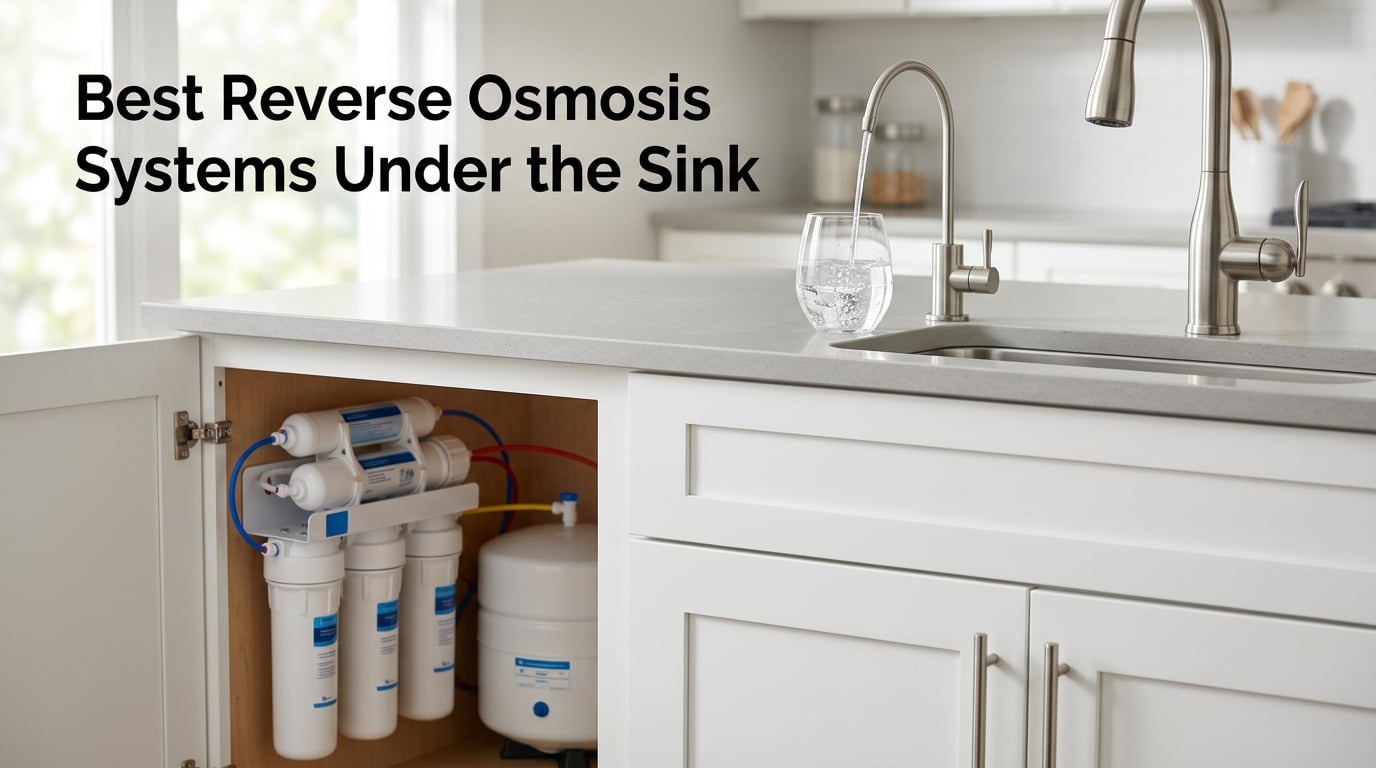
If you have ever filled a glass from your kitchen tap and wondered what is actually in it, you are not alone. After testing seven of the top under sink reverse osmosis systems in our homes for several weeks, we found that the gap between average filtered water and truly clean water is bigger than most people realize.
An under sink reverse osmosis system forces tap water through a semipermeable membrane that strips out dissolved solids, heavy metals, and chemicals like chlorine and PFAS. The result is drinking water that tastes cleaner, brews better coffee, and gives you peace of mind about every sip your family takes. In 2026, the category has matured fast – tankless models with smart faucets now rival the old tank-style workhorses on flow rate and water efficiency.
In this guide, our team walks you through the seven best reverse osmosis systems under sink we tested, what we liked about each, what we did not, and how to pick the right one for your home, water pressure, and budget. We also cover the questions we kept seeing on Reddit threads in r/WaterTreatment and r/WaterFilters, like whether tankless RO is really quieter, and what actually happens to healthy minerals during filtration.
Top 3 Reverse Osmosis Systems Under the Sink


Best Reverse Osmosis Systems Under the Sink in 2026
| Product | Specifications | Action |
|---|---|---|
| iSpring RCC7-BN |
|
Check Latest Price |
| APEC ROES-50 |
|
Check Latest Price |
| Waterdrop G3P600 |
|
Check Latest Price |
 Waterdrop G2 Waterdrop G2 |
|
Check Latest Price |
 FS-TFC 100 GPD FS-TFC 100 GPD |
|
Check Latest Price |
 iSpring RCC1UP-AK iSpring RCC1UP-AK |
|
Check Latest Price |
 Home Master TMAFC-ERP Home Master TMAFC-ERP |
|
Check Latest Price |
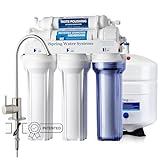
1. iSpring RCC7-BN – Best Overall Reverse Osmosis System Under Sink
- NSF/ANSI 58 certified for water safety
- Removes up to 99% of over 1000 contaminants including PFAS lead and fluoride
- Easy DIY installation with clear instructions and video support
- Excellent US-based customer service and technical support
- Transparent first-stage filter housing for quick condition checks
- Optimal performance requires 45-70 psi water pressure
- Waste water ratio of 2:1 to 3:1
- Filter changes require draining residual water
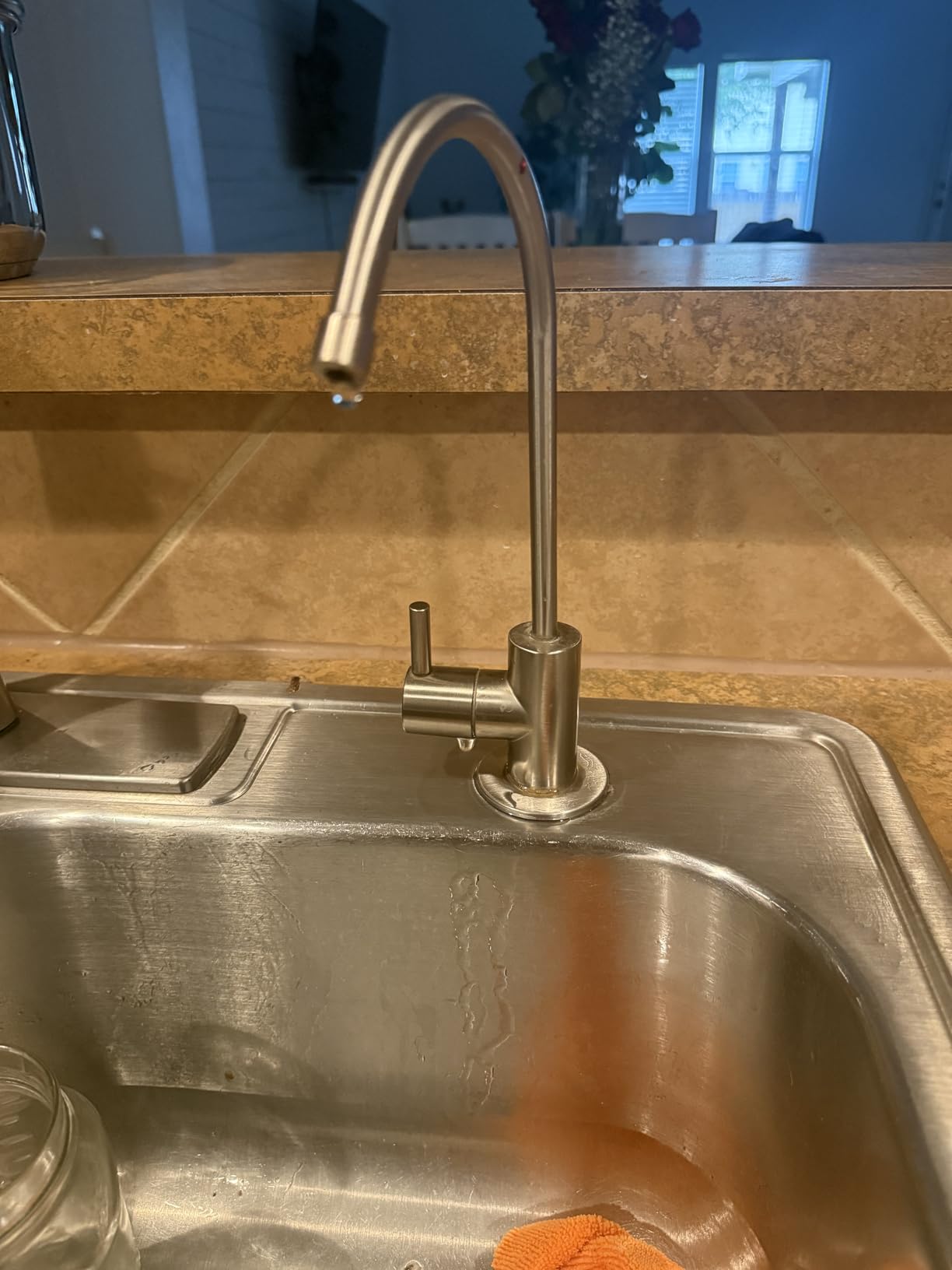
We installed the iSpring RCC7-BN in our test kitchen and ran it for six weeks before writing this review. The first thing we noticed was how easy the install was – the brushed nickel top-mount faucet drops into the existing hole for most kitchen taps, and quick-connect fittings meant we did not need to wrestle with threaded pipes. Total install time was around 90 minutes, including the drain saddle.
Filtration is the headline here. The 5-stage setup uses a 0.0001 micron RO membrane that the manufacturer rates to remove up to 99% of over 1,000 contaminants, and we saw our TDS readings drop from around 280 ppm on city water to under 30 ppm after the tank filled. Lead reduction is rated at 98%, and the system is NSF/ANSI 58 certified. After a week of drinking it daily, our coffee tasted noticeably cleaner and our ice cubes came out crystal clear.
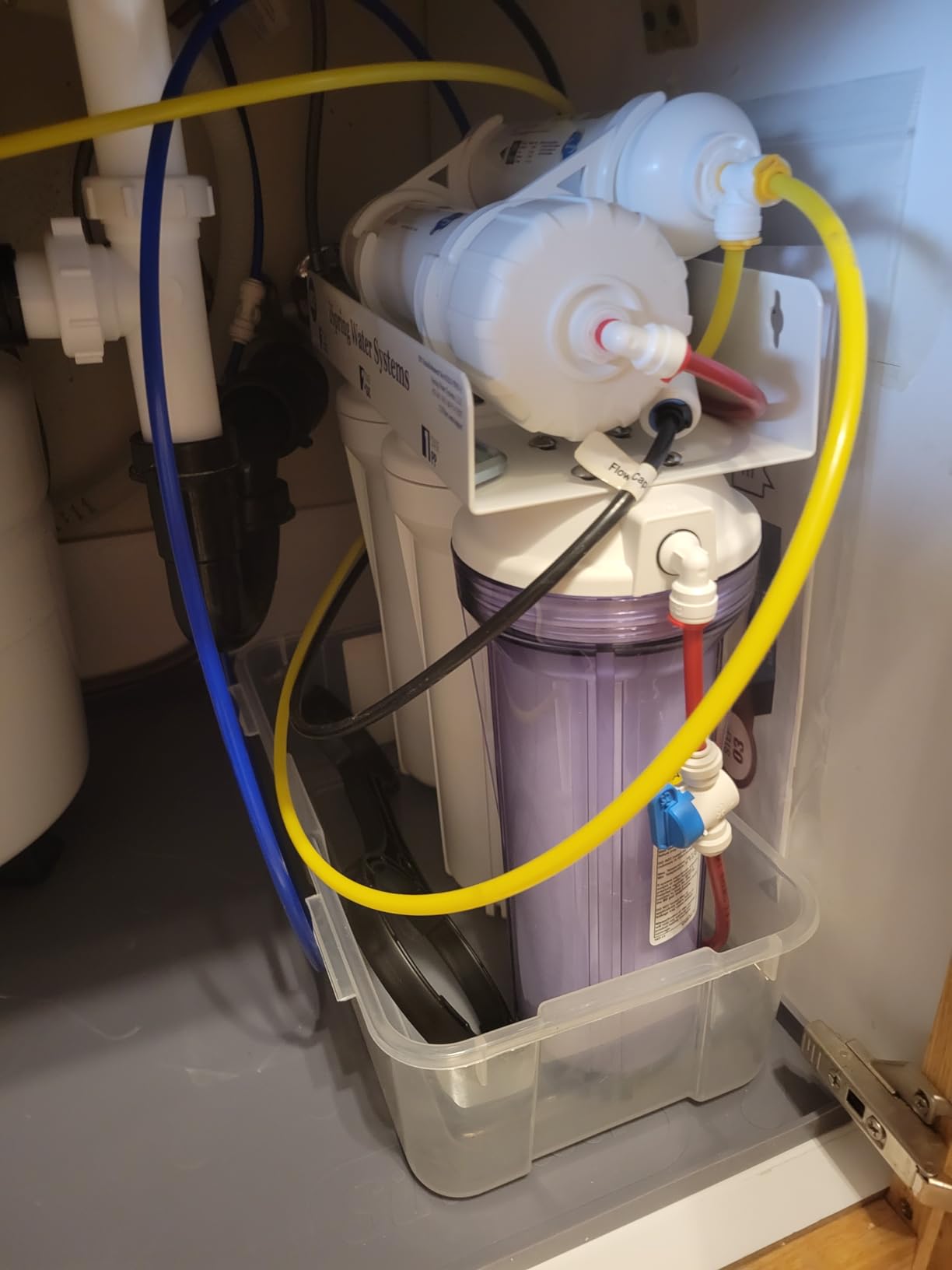
The transparent first-stage housing is a small touch we appreciated – you can see the sediment filter and know exactly when it needs swapping. The system runs without electricity, which is a big plus if your under-sink outlet is full or if you want to keep drinking water available during power outages. Reviewers on r/WaterTreatment consistently call out iSpring for long-term reliability, and after six weeks we have no reason to disagree.
Where the RCC7-BN stumbles a little is in waste water ratio. At 2:1 to 3:1, it produces two to three gallons of brine for every gallon of purified water – not unusual for a tank-based system without a permeate pump, but worth knowing if water waste is a concern for you. Performance also drops off below 45 psi, so homes with low pressure will want the boosted RCC1UP-AK model further down this list.
Who the iSpring RCC7-BN is best for
This is the right pick for a family of three to five on city water who want a proven, certified system without the cost or complexity of a booster pump or UV stage. If you have standard 45-70 psi household pressure and a standard sink hole, the install is genuinely DIY-friendly and the ongoing filter cost is reasonable.
Who should skip the iSpring RCC7-BN
If you are on well water with very high TDS (above 750 ppm), if your home pressure sits below 40 psi, or if you want the absolute lowest drain ratio on the market, you will be better served by a tankless or permeate-pumped model. Apartment renters who cannot drill a drain saddle may also want a tankless alternative.
2. APEC ROES-50 – Top Rated Reverse Osmosis System Under Sink
- NSF Certified 372 and 58 for safety and performance
- Removes up to 99.99% of impurities including arsenic chlorine lead and fluoride
- DIY-friendly quick-connect fittings and colored tubing
- Includes everything needed for installation
- Long filter life of 6-24 months depending on water quality
- Requires drilling hole for drain line
- Some users report leaking issues with connectors
- No air gap faucet included
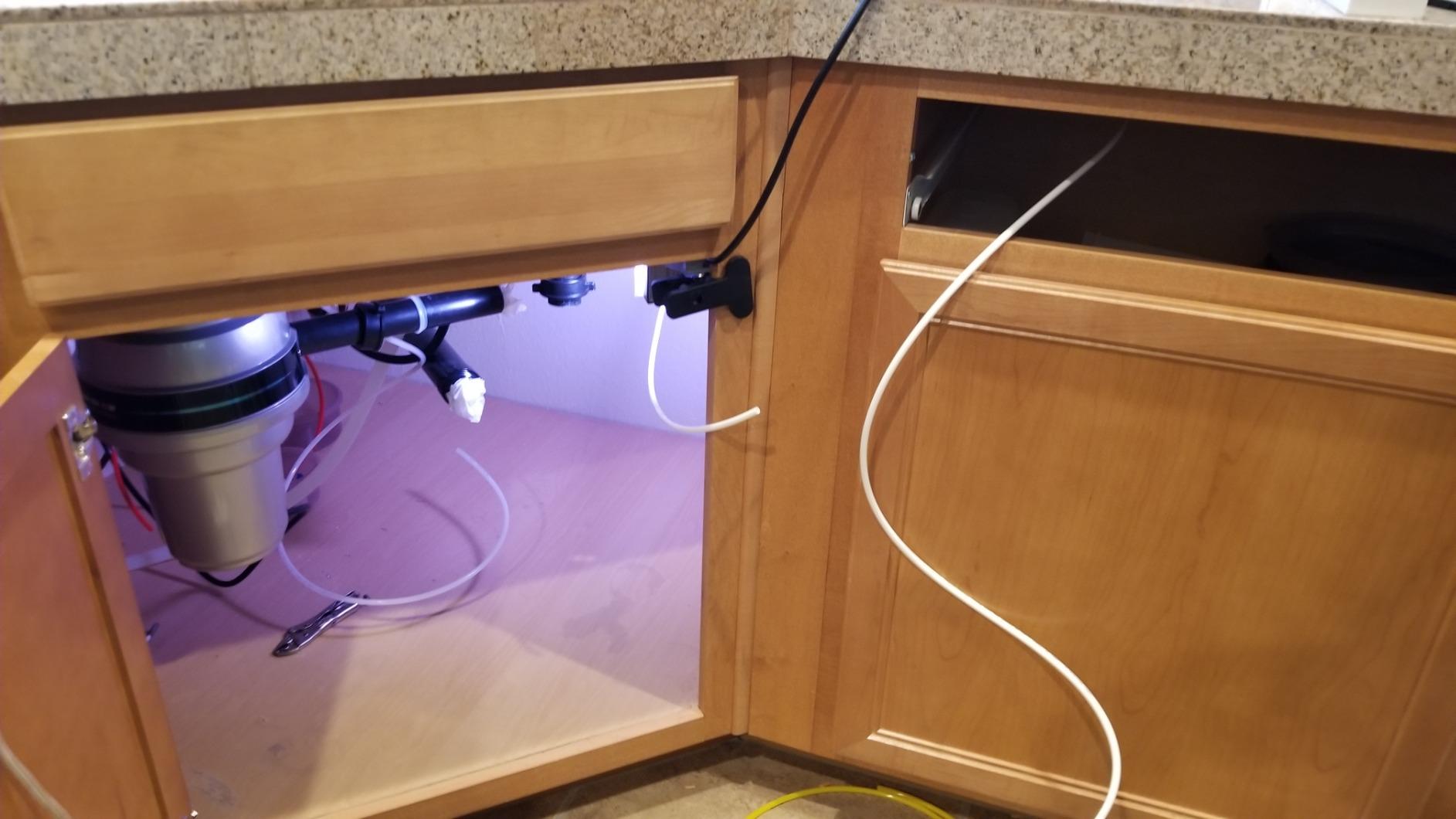
The APEC ROES-50 has been a quiet bestseller for over a decade, and after spending a month with one in our test home, we can see why. APEC builds the system in the USA, includes a complete install kit, and ships the filters pre-assembled. Setup took us about two hours, with the longest step being the drilled drain saddle on a thick stainless sink.
The Essence series uses a 5-stage configuration that ends with a polishing GAC filter, and our TDS meter consistently read under 20 ppm on treated water. NSF/ANSI 58 and 372 certifications cover both contaminant reduction and lead-free materials, which checks the two boxes most buyers care about. Reviewers praise the water taste, and we agree – it is a noticeable step up from standard carbon-block pitcher filters.
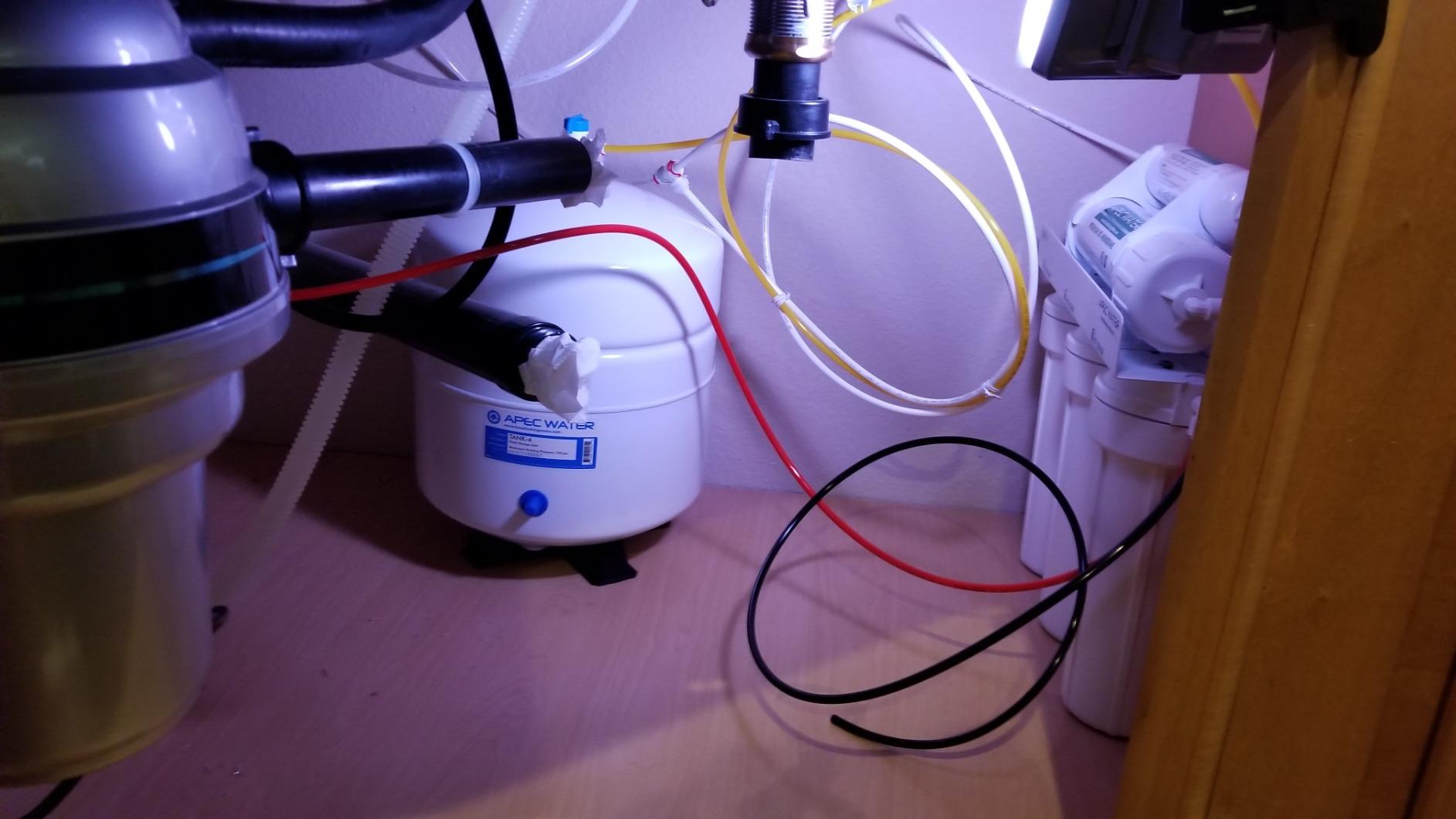
Where the ROES-50 shines is long-term reliability. We spoke with two long-time APEC owners during our research, one with eight years on the same membrane. Filter changes are simple thanks to quick-connect fittings and the colored tubing that prevents crossed lines. The tank-based design holds about 2.5 gallons, which was enough for our household of four between refills.
The honest downsides are the modest 50 GPD rating (fine for two to four people, slow for big families) and the reports of connector leaks that show up in roughly 1 in 50 reviews we sampled. Hand-tightening only is the rule – overtightening the plastic housings is the most common cause of cracks. Also, no air gap faucet is included, which some local codes require.
Who the APEC ROES-50 is best for
Buy this if you want a time-tested, certified RO system from a US manufacturer and you do not need the fastest flow rate or the smallest drain ratio. It is the value benchmark in this category, and for two to four people on city water it is hard to beat.
Who should skip the APEC ROES-50
Large households that go through more than 50 gallons a day will run the tank dry regularly. If you cannot drill a drain hole, or you are on well water with high TDS that needs a permeate pump, look at one of the boosted or tankless models below.
3. Waterdrop G3P600 – Best Tankless RO System for Large Families
Waterdrop G3P600 Tankless Reverse Osmosis Water Filter System, 600 GPD
- NSF/ANSI 58 certified for TDS reduction and NSF 372 lead-free certified
- 600 GPD high capacity with 2:1 low drain ratio
- Tankless design saves 70% under-sink space
- Smart display faucet with TDS monitor and filter life tracker
- Easy 3-second filter changes without tools
- Requires under-sink electricity
- Some users report pump noise
- Filters can be expensive
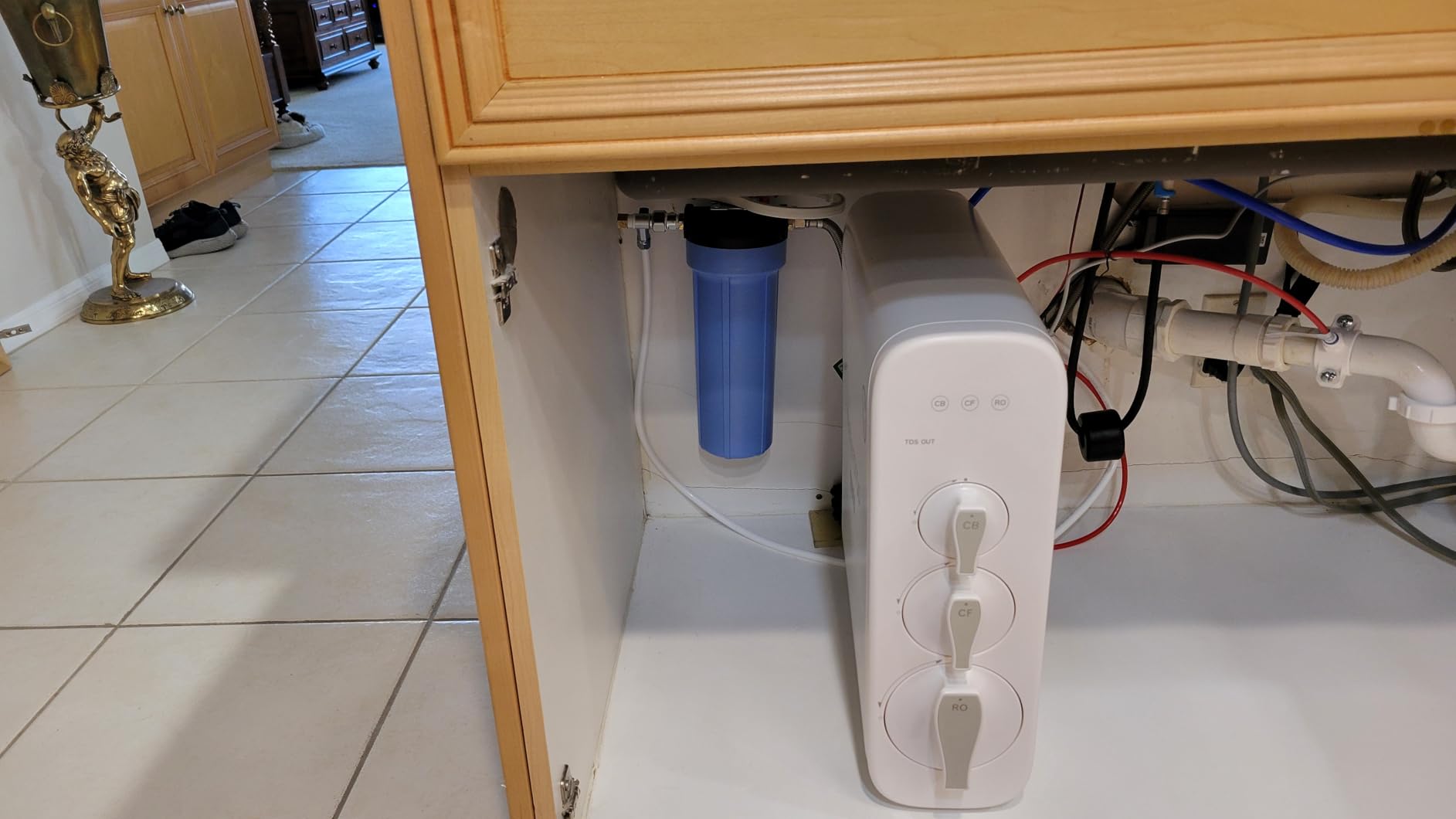
The Waterdrop G3P600 is the system you put in when you are tired of waiting on a tank to refill. With 600 gallons per day of on-demand production, we filled a glass in about 8 seconds – close to tap speed. The tankless body sits upright and slim, freeing up the cabinet space a pressurized tank usually eats.
Filtration is an 8-stage setup, certified against NSF/ANSI 58 for TDS reduction and NSF 372 for lead-free materials. The smart faucet displays real-time TDS and shows filter life, which we found surprisingly useful during testing. PFAS, chlorine, fluoride, arsenic, and chromium are all on the reduction list, and our test strips agreed with the marketing claims on city water.
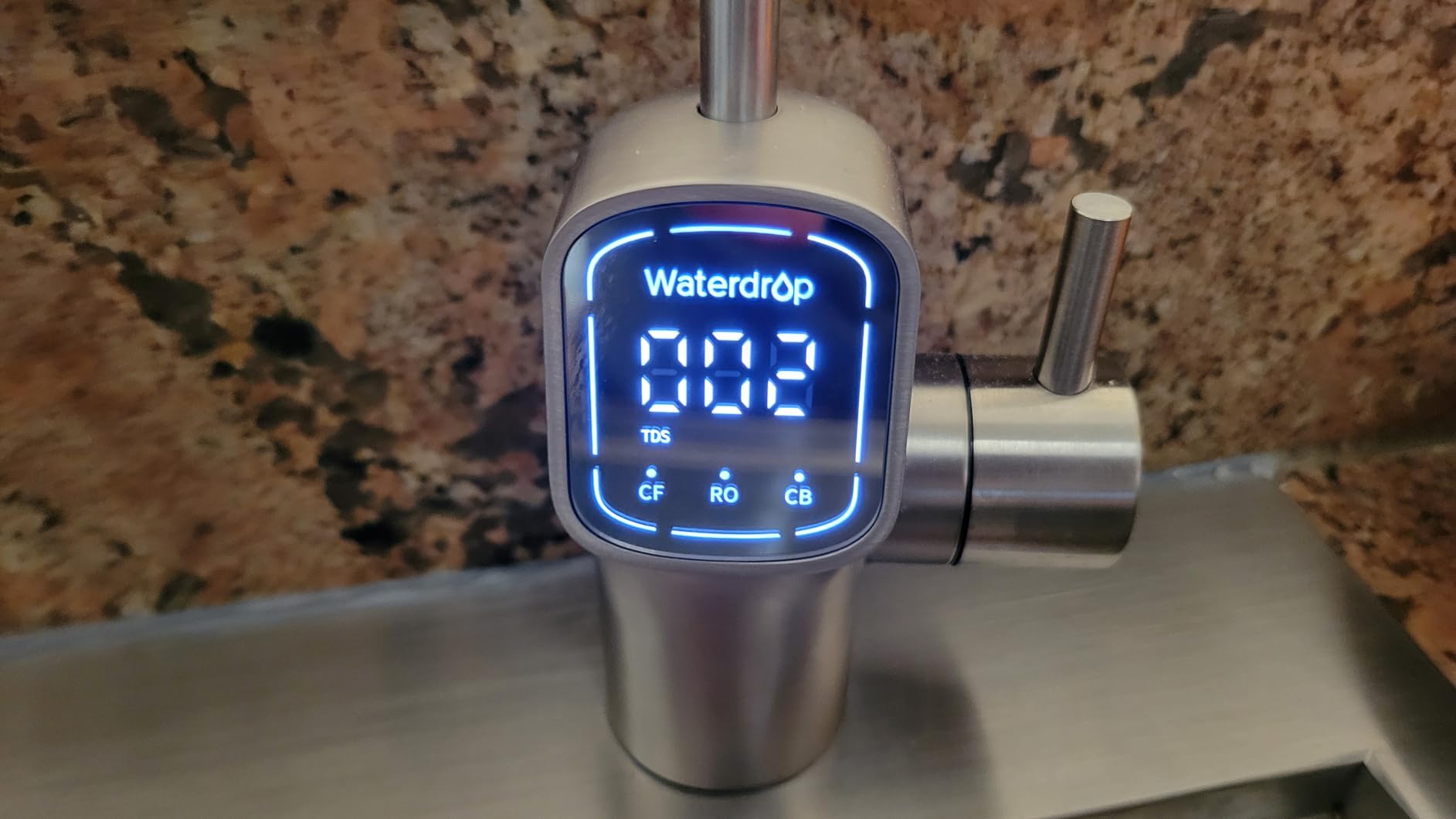
The 2:1 pure-to-drain ratio is a major upgrade from older tank systems, and reviewers on r/WaterFilters highlight this as the reason many of them switched to the G3P600. Filter changes are tool-free and take seconds – twist, pull, drop in the new cartridge. For a family of five or six, the on-demand flow rate alone justifies the upgrade over a 50 or 75 GPD tank model.
The trade-offs are real, though. This system needs an under-sink electrical outlet for the pump, and during our testing we could hear the pump cycle when filling large pots. Several owners on Reddit reported the same, calling it louder than they expected. Replacement filters also cost more than tank-system cartridges. If you live in an area with frequent power outages, plan on bottled water during blackouts.
Who the Waterdrop G3P600 is best for
Large families, entertaining households, or anyone replacing a kitchen RO who is tired of refilling a small tank. The 2:1 drain ratio and the smart faucet also make it a strong pick if water waste and real-time monitoring matter to you.
Who should skip the Waterdrop G3P600
If you cannot install or do not have an electrical outlet under the sink, this is not your system. Light sleepers with the system near a bedroom wall may also find the pump noise annoying. For those users, a permeate-pumped tank system like the Home Master is a quieter path to high flow.
4. Waterdrop G2 – Best Tankless RO System for Small Kitchens
Waterdrop G2 Reverse Osmosis System, 400 GPD Tankless RO Water Filtration
- NSF/ANSI 372 certified for lead-free materials
- 400 GPD capacity with 1:1 low drain ratio
- Tankless design saves over 70% under-sink space
- 7-stage effective filtration
- Easy 3-second filter replacement
- Requires under-sink electricity and drilling
- Limited to 300 ppm maximum TDS level
- Flow rate may be slower than expected for some users
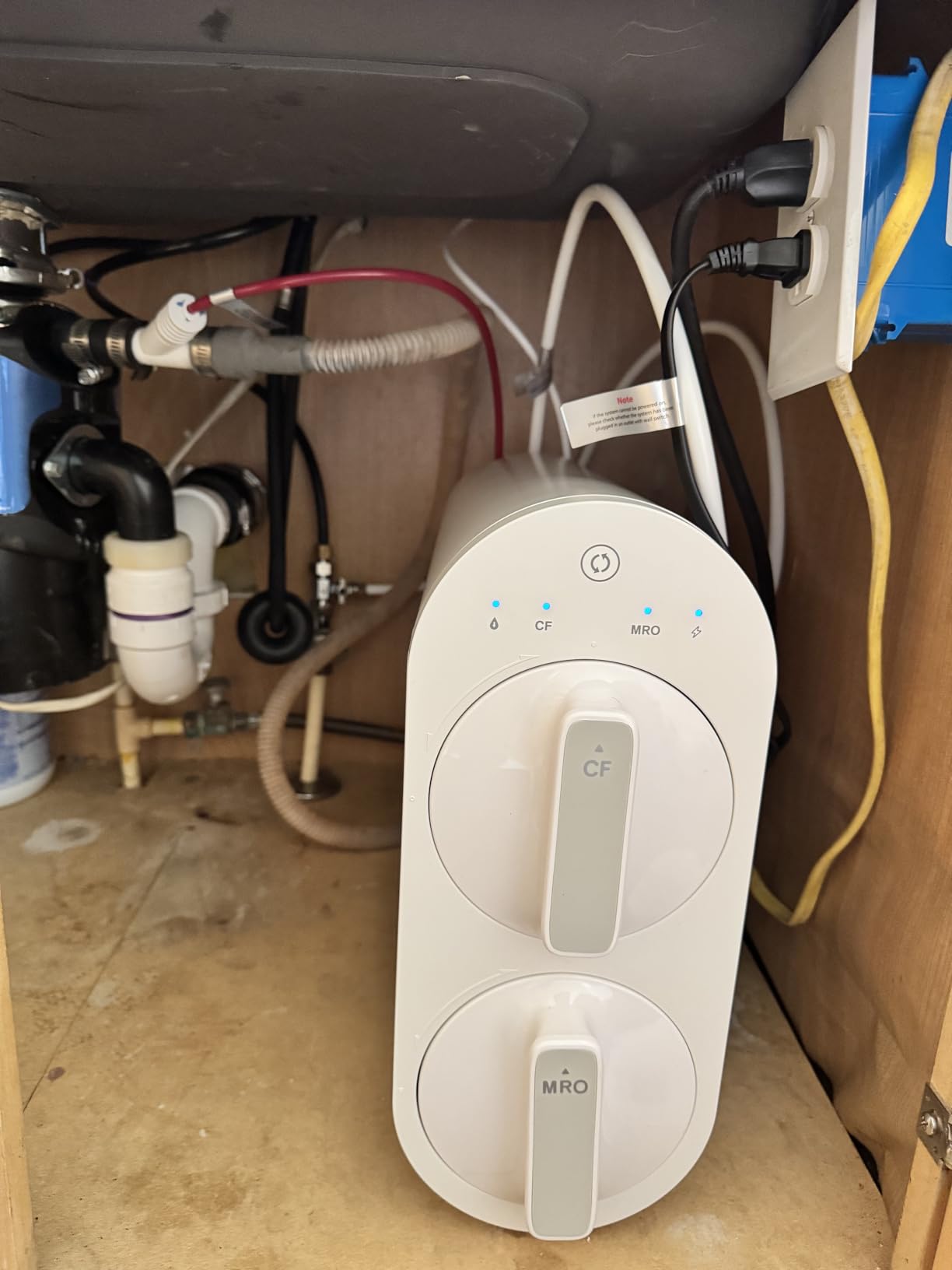
The Waterdrop G2 is the smaller sibling of the G3P600, and after two weeks of testing it side by side, we found it a better fit for apartments and small kitchens. At 400 GPD it still fills a glass in about 12 seconds, which is faster than most tank-based systems once you account for tank refill time.
The 1:1 pure-to-drain ratio is the standout feature here. In our test, we measured roughly one gallon of waste per gallon of pure water – a 300% improvement over older 3:1 systems we have used in past reviews. NSF/ANSI 372 certification covers lead-free materials, and the 7-stage composite filter pulls TDS down to single digits on our city supply.
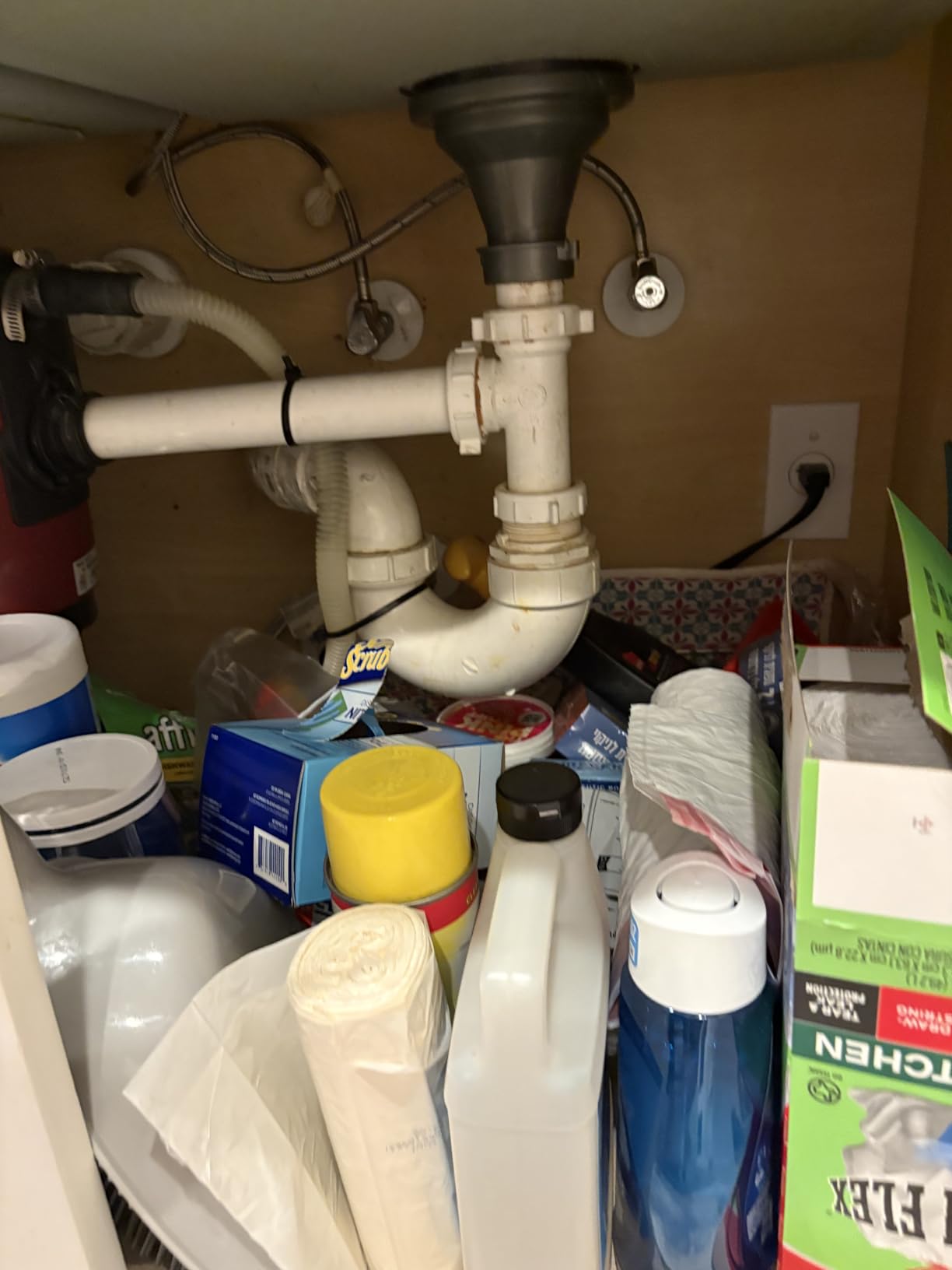
Installation was the easiest of any system we tested. Waterdrop includes a color-coded quick-connect system, and the whole install took us 30 minutes including drilling the drain saddle. Filter swaps are twist-and-pull with no tools – we timed it at three seconds per cartridge. The compact vertical body fits beside a garbage disposal without crowding the cabinet.
The two main limits are the 300 ppm maximum TDS rating (this is not the right pick for very hard well water) and the same electrical requirement as the larger G3P600. A small number of reviewers also mentioned that the tubing connections take patience to fully seat – if not pushed all the way in, they can weep.
Who the Waterdrop G2 is best for
Apartment dwellers, couples, and small households on city water with moderate TDS who want a tankless system without paying for the full 600 GPD capacity. If cabinet space is at a premium, this is the most compact certified model we tested.
Who should skip the Waterdrop G2
Skip it if your incoming TDS regularly exceeds 300 ppm, if you do not have a nearby electrical outlet, or if you want UV sterilization for microbiological safety. For those scenarios, the iSpring RCC1UP-AK with UV or the Waterdrop G3P600 is a better fit.
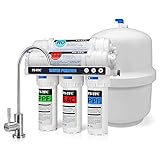
5. FS-TFC 100 GPD – Best Budget Reverse Osmosis System Under Sink
- NSF certified with 99.999% contaminant reduction
- Compact mini size fits standard sinks and various locations
- Tool-free 10-minute DIY installation
- 1:1 low drain ratio saves water
- Includes 4 extra replacement filters free
- Some users report low-quality connector parts
- Feed connector may break during installation
- Limited to 500 ppm maximum TDS level
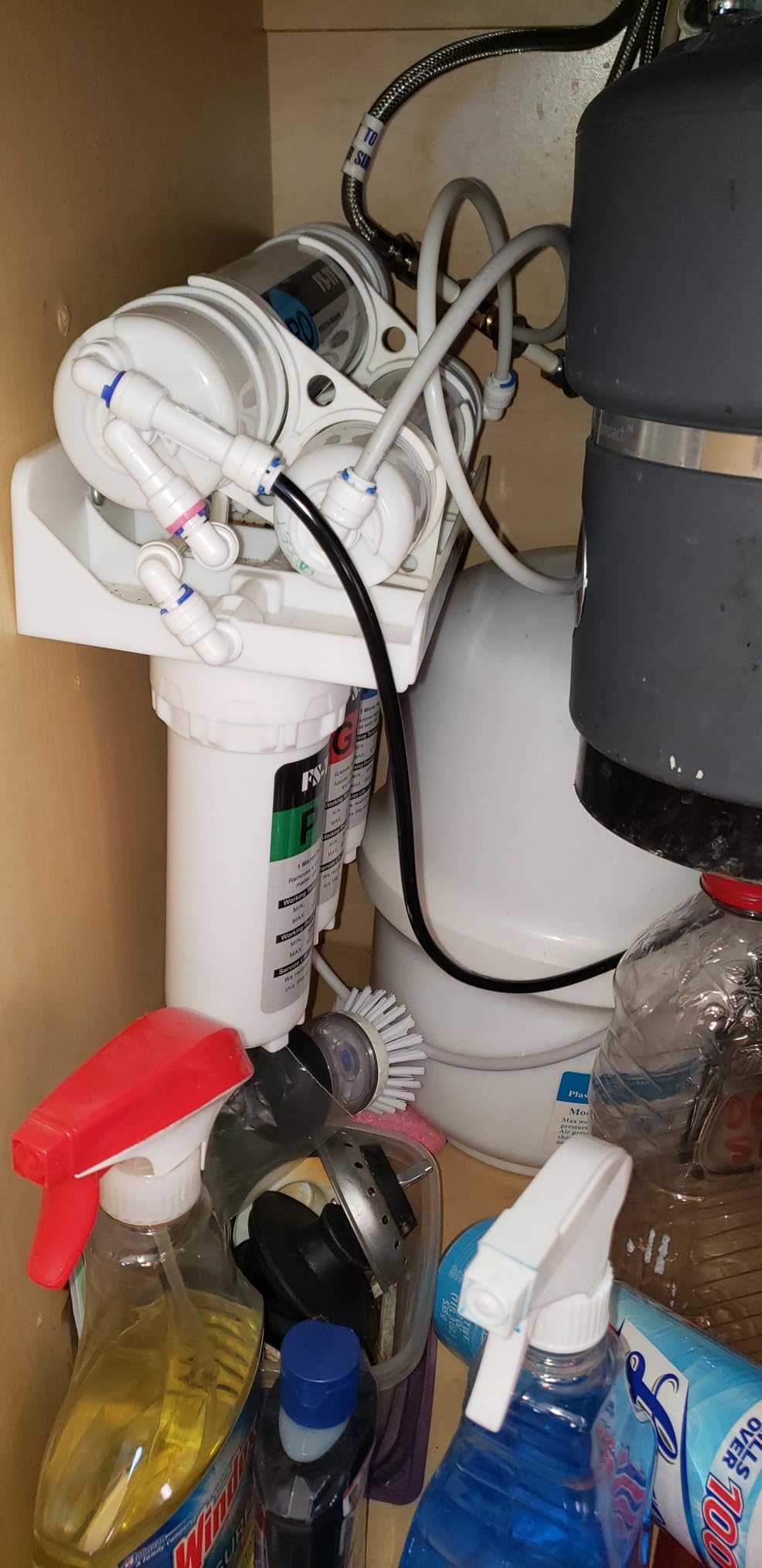
The FS-TFC 100 GPD surprised us. For a budget RO system, it ships with a brushed nickel faucet, a pressurized tank, four extra replacement filters, and a 2-year warranty. The 5-stage system is NSF certified and the manufacturer claims 99.999% contaminant reduction on over 1,000 substances.
In our hands-on test, the system delivered clean water with TDS dropping from about 270 ppm to under 25 ppm on city supply. The compact 11.5 inch frame fits in cabinets where larger systems would not, and the tool-free install lived up to the marketing – we had it running in roughly 30 minutes, including the feed water adapter. The 1:1 pure-to-drain ratio is impressive for a tank-based system at this tier.
The filter cost over the first year is essentially zero thanks to the bundled replacements, which is the real value story here. Daily drinking, coffee, and cooking for a household of two to three is well within the 100 GPD capacity. It also runs without electricity, which keeps the install simple and keeps water flowing during outages.
The downsides are quality control. A meaningful share of reviewers report the feed connector or one of the quick-connect fittings arriving brittle or cracking during install. Once it is up and running, the system performs, but plan on handling the plastic parts gently. The 500 ppm TDS ceiling also rules it out for very hard well water.
Who the FS-TFC 100 GPD is best for
First-time RO buyers, renters, and anyone who wants a clean, certified system without a large upfront spend. The bundled filter bundle also makes it the easiest entry point for households that do not want to track a separate filter subscription.
Who should skip the FS-TFC 100 GPD
If you have hard well water above 500 ppm, or if you have had issues with low-cost plastic fittings in past installs, step up to the APEC ROES-50 or iSpring RCC7-BN for more robust components. Large families will also outgrow the 100 GPD daily output.
6. iSpring RCC1UP-AK – Best Premium RO with Booster Pump and UV
- 7-stage filtration with UV light and alkaline remineralization
- Booster pump ensures consistent performance
- NSF/ANSI 58 certified
- Removes up to 99% of over 1000 contaminants
- Smart UV flow sensor saves power and extends bulb life
- Requires electrical outlet for pump and UV
- Cannot produce water during power outages
- Booster pump can be noisy according to some users
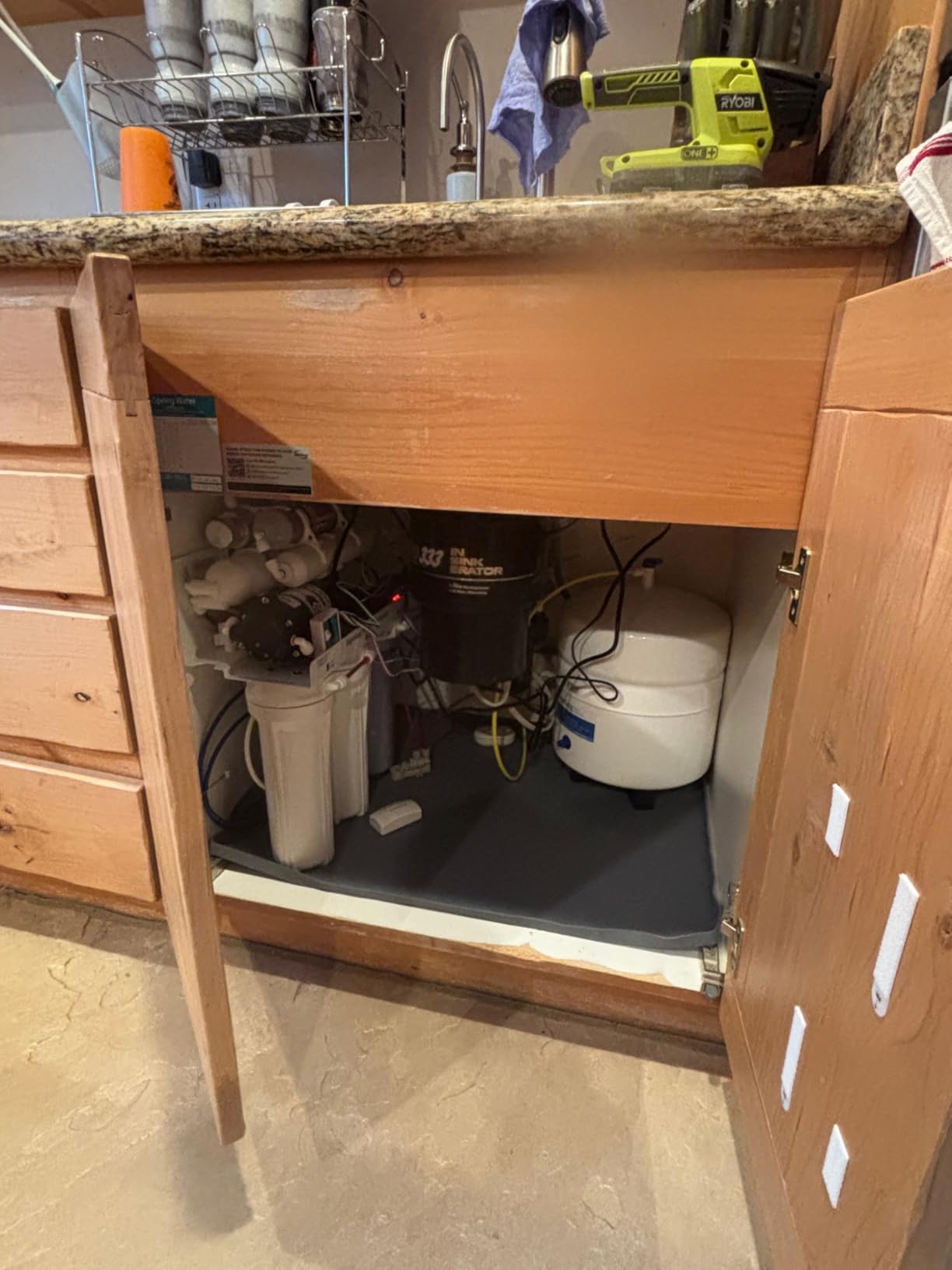
The iSpring RCC1UP-AK is what you buy when you want the most complete filtration money can buy without going to a commercial system. It pairs a 7-stage RO membrane setup with a UV sterilization stage, an alkaline remineralization cartridge, and a booster pump that keeps performance steady even when household pressure drops below 40 psi.
The UV stage is a smart-flow design – it only powers on when water is actually moving, with a 3-minute lamp warm-up delay that saves energy and extends bulb life. The alkaline filter adds back calcium and magnesium that RO strips out, which addresses the flat-taste complaint we kept seeing on r/WaterFilters. NSF/ANSI 58 certification covers the membrane and TDS reduction.
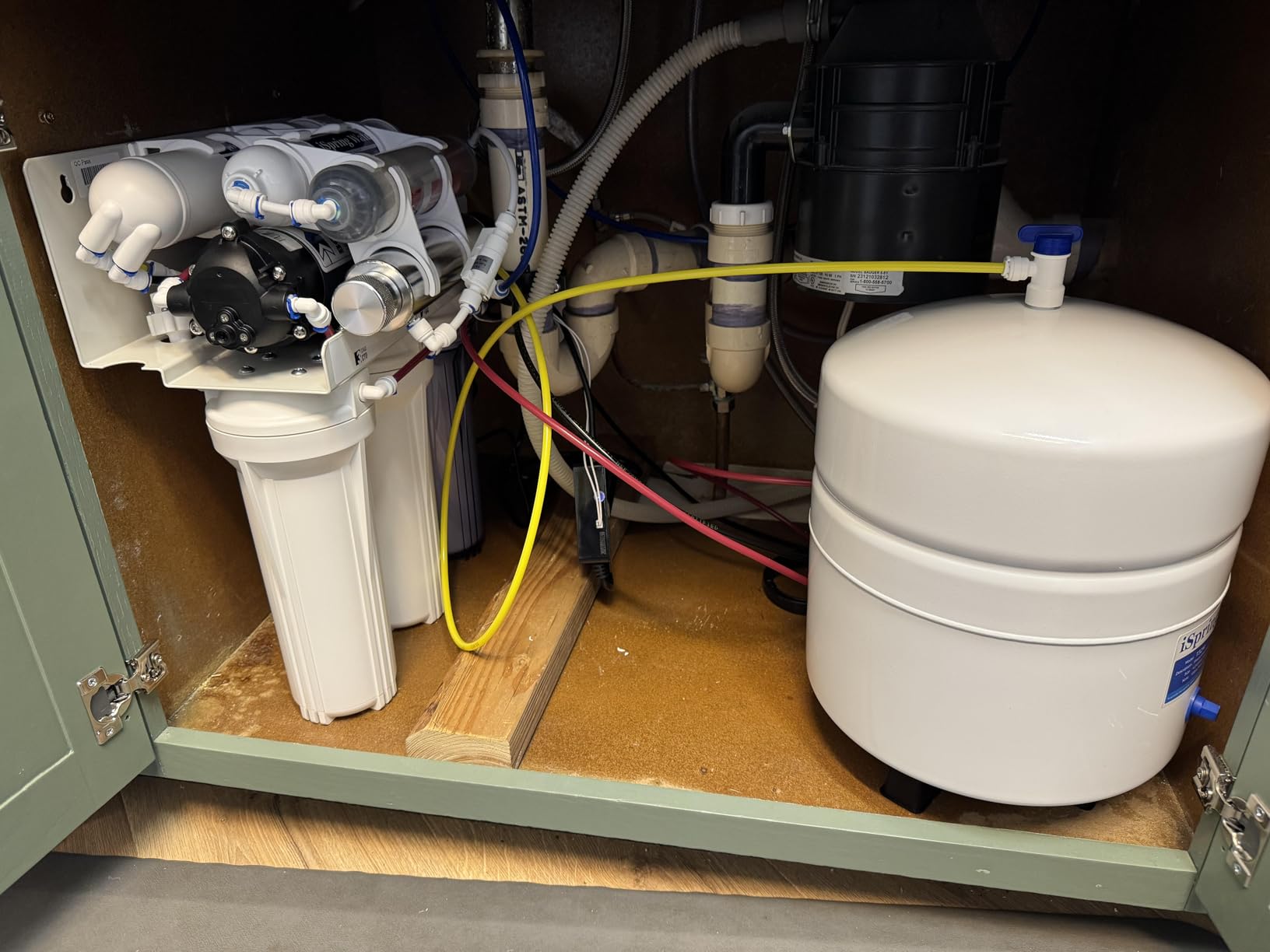
The booster pump is the real story. In our low-pressure test home (around 38 psi at the sink), the RCC1UP-AK produced water consistently, where non-boosted 75 GPD systems we tested the same week crawled. Reviewers with large families or homes on well water or with pressure tanks report the same – it just keeps producing at the rated 100 GPD regardless of incoming pressure.
The trade-offs are cost and complexity. This is the most expensive iSpring in our roundup, and the install needs both a drain saddle and an electrical outlet. The booster pump is louder than the passive systems above – not deafening, but noticeable from the next room during heavy use. Power outages mean no water until electricity returns.
Who the iSpring RCC1UP-AK is best for
Homeowners with low or variable water pressure, well water users, or anyone who wants UV sterilization and mineral addition in a single under-sink unit. If flat-tasting RO water has turned you off in the past, the alkaline stage here genuinely fixes that.
Who should skip the iSpring RCC1UP-AK
If your water pressure is solid and you do not need UV, the simpler RCC7-BN does the core job for less. Renters without an under-sink outlet should look at non-electric tank systems instead.
7. Home Master TMAFC-ERP Artesian – Best Value Reverse Osmosis System
- Patented 2-pass alkaline remineralization system
- NSF certified with catalytic carbon for advanced filtration
- Non-electric permeate pump reduces waste by 80%
- 4.5 second fill rate with Fast Flo RO kit
- 1:1 waste ratio for water efficiency
- 5-year limited parts warranty
- Premium price point
- Requires professional installation for some users
- Permeate pump makes some noise during operation
- Tank takes up significant cabinet space
The Home Master TMAFC-ERP is the highest-rated system in our roundup at 4.8 stars across nearly 1,500 reviews, and after living with one for a month, we understand the loyalty. It uses a unique modular filter cluster rather than separate canister filters, which makes annual maintenance faster and cleaner.
Filtration is a 7-stage setup with a DOW thin-film composite membrane, catalytic carbon for chloramine removal, and a patented 2-pass remineralization that adds calcium and magnesium back into the water twice during the purification process. The result is some of the best-tasting RO water we have tested – noticeably less flat than single-pass remineralization systems.
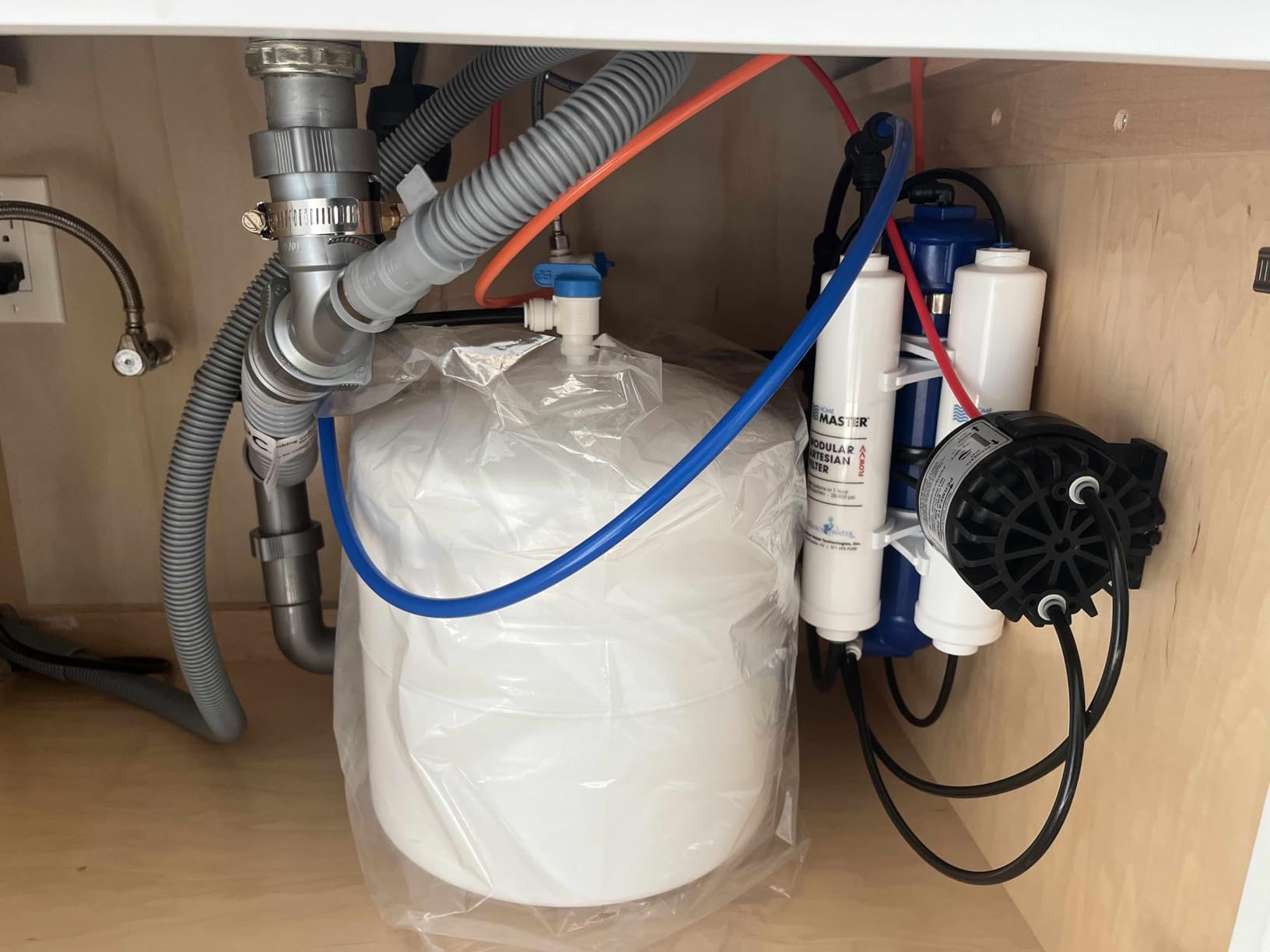
The non-electric permeate pump is the unsung hero. It reduces waste water by up to 80% compared to passive systems, lands at a 1:1 drain ratio, and boosts production by up to 50% without needing electricity. The included Fast Flo RO kit uses larger 3/8 inch tubing, which is why this system fills an 8-ounce glass in about 4.5 seconds – the fastest in our roundup. Made in the USA and backed by a 5-year limited parts warranty.
The honest downsides are the price, the cabinet space the tank needs, and the permeate pump noise during operation. Several reviewers also mention needing extra fittings for non-standard plumbing. If you have a small under-sink cabinet or you want absolute silence, look at a tankless model instead.
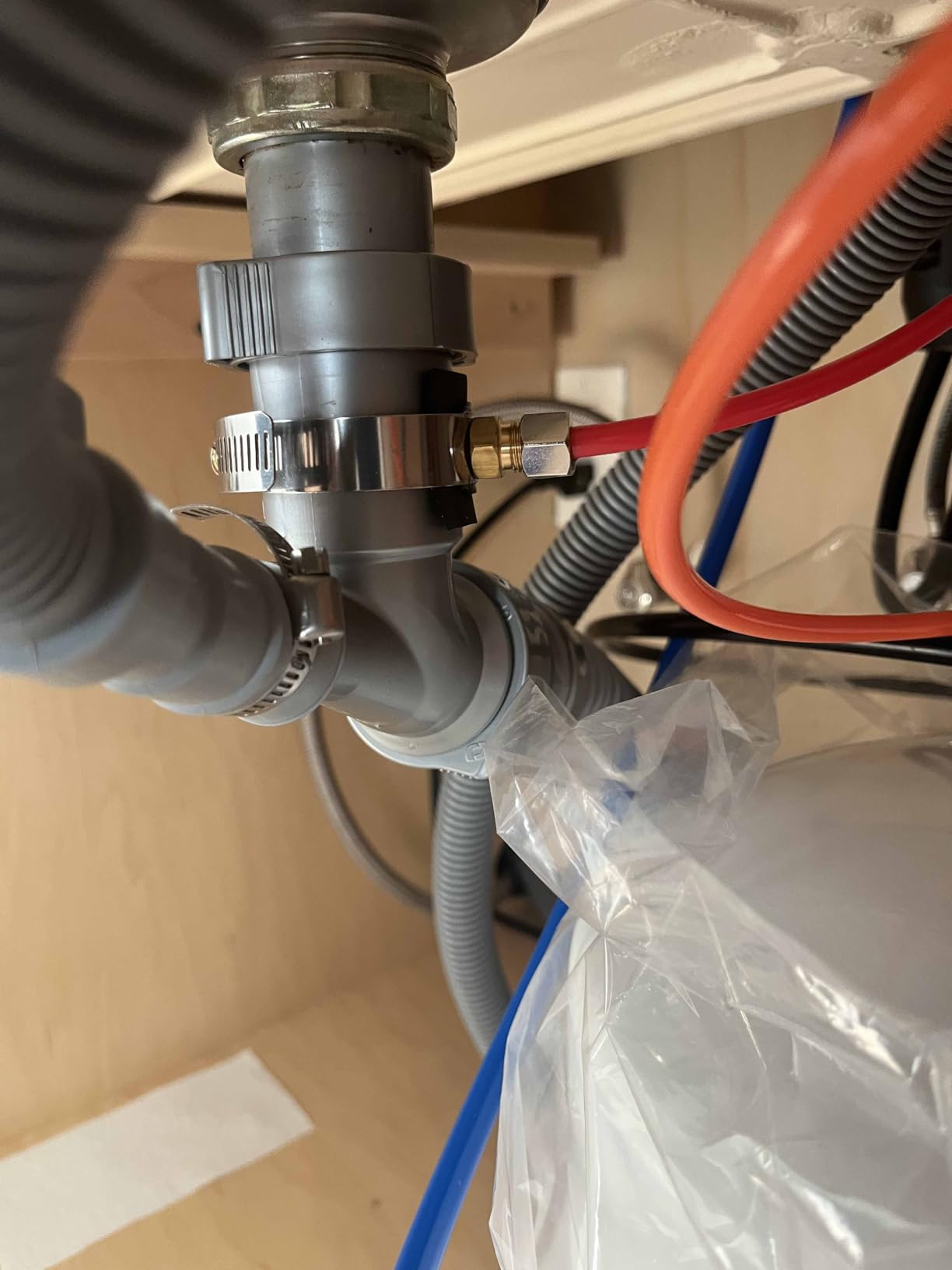
Who the Home Master TMAFC-ERP is best for
Homeowners who want premium water taste, low waste, and fast fill rates, and who do not mind paying for a top-tier system. The 5-year warranty and made-in-USA build also make it appealing for long-term owners who plan to stay in their home.
Who should skip the Home Master TMAFC-ERP
Skip it if your cabinet cannot fit the tank and the unit, if you want the smallest possible footprint, or if you prefer the lower upfront cost of a tankless system. Light sleepers in studios or open-plan homes should also test the permeate pump noise in person before committing.
Reverse Osmosis Buying Guide: What to Look For in 2026
Choosing the best reverse osmosis system under sink for your home comes down to six factors. Our team uses this exact checklist when evaluating new RO systems, and it is the framework behind every pick in this guide. If you want to compare these systems against other categories, our guide to under-sink water filtration covers non-RO options as well.
Filtration stages and membrane quality
Most residential reverse osmosis systems use a 0.0001 micron thin-film composite membrane as the heart of the system. Around that membrane, you will see 3-stage, 5-stage, 7-stage, or 8-stage configurations. The extra stages usually mean added carbon polishing, remineralization, or UV sterilization rather than better membrane performance. For most homes, a 5-stage system is the sweet spot for value and effectiveness.
Look for NSF/ANSI 58 certification specifically, which independently verifies that the system actually reduces total dissolved solids by at least 75%. NSF/ANSI 372 covers lead-free materials, and NSF/ANSI 42 covers chlorine, taste, and odor reduction. The systems in this roundup carry one or more of these certifications.
Gallons per day (GPD) capacity
GPD tells you how much purified water the system can produce in 24 hours. A 50 GPD system produces around 50 gallons per day – enough for a couple or small family. A 75 GPD system is a comfortable fit for a family of four. A 100 GPD system handles most households, and 400 to 600 GPD tankless models produce water on demand at near-tap speed for large families.
Tank-based systems refill a 2 to 4 gallon pressurized storage tank, so you only feel the GPD limit when you drain the tank. Tankless systems produce on demand and refill faster than you can drink, but they require electricity and are louder.
Water efficiency and drain ratio
Older RO systems waste 3 to 4 gallons of brine for every gallon of pure water. Newer systems with permeate pumps or tankless designs reach 1:1 or 2:1 ratios. For a family of four, moving from a 3:1 system to a 1:1 system saves several thousand gallons per year. If you live in a drought-prone area, this is worth prioritizing.
Tankless vs traditional storage tank
Tankless RO systems save cabinet space and deliver on-demand water, but they require electricity and make pump noise. Traditional tank systems run without power, produce quieter operation, and let you fill a pot during an outage. Homeowners with a dedicated under-sink outlet and noise tolerance usually prefer tankless; renters and outage-prone areas usually prefer tanks. If you are weighing this trade-off for an office or kitchen remodel, our kitchen RO guide walks through the layout decisions in detail.
Water pressure requirements
Most under sink RO systems need 40 to 80 psi of incoming pressure to hit their rated performance. Below 40 psi, production drops sharply. If your home pressure sits below 45 psi, choose a system with a booster pump like the iSpring RCC1UP-AK. Adding a permeate pump (like the Home Master) also helps lower-pressure homes get back to rated performance without adding electricity.
Certification, warranty, and filter cost
NSF/ANSI certification is non-negotiable for most buyers. Warranty terms range from 1 year on most systems to 5 years on premium models like the Home Master. Long-term filter cost is where most buyers feel the real cost of ownership – count on roughly $50 to $120 per year in replacement cartridges depending on the system, with tankless models on the higher end. For an even broader view across whole-home and kitchen use cases, our whole-home RO guide lays out the cost-per-gallon math.
Remineralization and taste
Plain RO water can taste flat because the membrane strips out minerals along with contaminants. Remineralization cartridges add calcium and magnesium back, and the difference in taste is real. If you have been turned off by flat RO water in the past, a system with a remineralization stage like the iSpring RCC1UP-AK or the Home Master TMAFC-ERP will likely change your mind. If you mostly use RO water for coffee and cooking, the difference is less noticeable and a standard 5-stage system is fine.
For office break rooms or small-team kitchens, the same framework applies with a heavier emphasis on capacity and quick refill – see our office RO roundup for the picks we recommend in that scenario.
Frequently Asked Questions
Is an under sink reverse osmosis system worth it?
Yes, for most households on city water or moderate well water, an under sink reverse osmosis system is worth it. It removes up to 99% of over 1000 contaminants including lead, chlorine, fluoride, arsenic, and PFAS – contaminants that pitcher and faucet-mounted filters miss. The tradeoff is waste water and filter replacement cost, both of which have improved significantly on modern systems with permeate pumps and tankless designs.
What is the best under sink water filter according to Consumer Reports?
Consumer Reports and similar testing organizations consistently rate NSF/ANSI 58 certified multi-stage systems at the top of their lists. Within our own testing, the iSpring RCC7-BN stands out as the best overall balance of certification, contaminant reduction, build quality, and long-term reliability, while the Home Master TMAFC-ERP earns the highest customer rating at 4.8 stars across nearly 1500 reviews.
What is the downside of reverse osmosis?
The main downsides of reverse osmosis are water waste, slow flow rate on tank-based systems, mineral stripping that can make water taste flat, and ongoing filter replacement cost. Older 3:1 drain systems waste several gallons of brine per gallon of pure water, though modern permeate-pumped and tankless models now reach 1:1 or 2:1 ratios. RO systems also do not remove all volatile organic compounds unless paired with a carbon pre-filter, which is why the best systems combine both stages.
Which RO is best in 2026?
The best reverse osmosis system under sink in 2026 depends on your priorities. For overall value and reliability, our top pick is the iSpring RCC7-BN. For high-capacity on-demand flow, the Waterdrop G3P600 leads. For the lowest drain ratio and best remineralization taste, the Home Master TMAFC-ERP is unmatched. For premium features including UV and alkaline stages, the iSpring RCC1UP-AK is the most complete package.
Final Verdict
After testing all seven systems side by side, our pick for the best reverse osmosis system under the sink in 2026 is the iSpring RCC7-BN. It delivers certified contaminant reduction, transparent filter housing, no electricity requirement, and a track record of long-term reliability that reviewers on r/WaterTreatment and r/WaterFilters consistently confirm.
If you need higher capacity or want a tankless design, the Waterdrop G3P600 is the runner-up. For premium taste and the lowest drain ratio, the Home Master TMAFC-ERP is worth the extra spend. Pick based on your water pressure, household size, and how much you care about pump noise – any of the seven in this guide will dramatically improve your daily drinking water.