
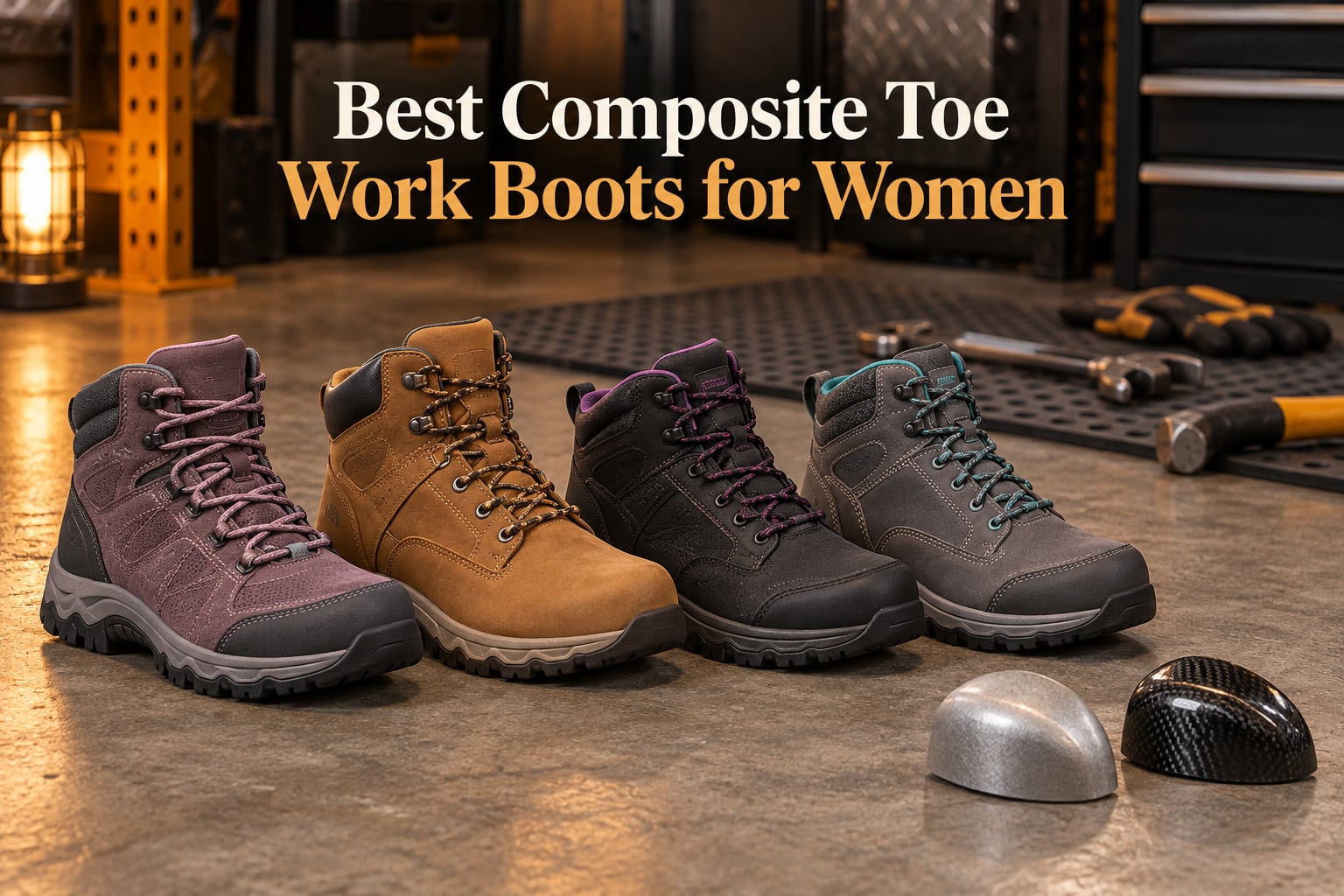
The best composite toe work boots for women are the Carhartt Women’s Rugged Flex 6-inch Comp Toe for most people, the Wolverine Piper Waterproof Composite Toe if you want certified waterproof protection at an entry-level outlay, and the Ariat Women’s Tracey Composite Toe if you have wide feet and want pull-on convenience. All three carry certified non-metallic toe protection and none of them drag on your feet the way a steel cap can.
That last point is the whole reason composite toe exists for women’s feet. A composite cap is built from carbon fiber, fiberglass, or engineered plastic rather than steel, so it is lighter, does not pull cold through the boot in winter, and stays non-metallic enough to walk through a metal detector at a secured facility or an airport checkpoint. It still has to meet the same impact and compression tests under ASTM F2413 to be sold as safety footwear, so you are not trading protection for comfort here.
We put twelve of them side by side, weighted them by the things that actually decide whether a boot survives a work week: fit, weight, cushioning, outsole traction, water handling and certification. If you spend your days on factory concrete rather than a job site, our guide to the best work boots for concrete floors is worth a look too. If your job is industrial and you need full metal coverage rather than a lighter cap, our steel toe picks cover that ground.
Everything below was last reviewed and refreshed in 2026. Prices move constantly, so use the check buttons rather than any number you remember.
Top 3 Picks: Best Composite Toe Work Boots for Women

Carhartt Rugged Flex Comp Toe
- Rugged Flex mobility tech
- 3.62 lb composite toe
- EVA midsole and PU insole

Wolverine Piper Waterproof
- Waterproof 6-inch boot
- 3 lb lightweight composite toe
- Nylon shank and removable footbed

Ariat Tracey Composite Toe
- Wide toe box
- Full grain leather upper
- 4LR footbed with EVA cushioning
All 12 Composite Toe Work Boots for Women in 2026 at a Glance
| Product | Specifications | Action |
|---|---|---|
| Carhartt Women’s Rugged Flex 6in Comp Toe Work Boot |
|
Check Latest Price |
| Wolverine Women’s Piper Waterproof Composite Toe 6in |
|
Check Latest Price |
| Ariat Women’s Tracey Composite Toe Work Boot |
|
Check Latest Price |
 ARIAT Work Women’s Anthem Waterproof Composite Toe ARIAT Work Women’s Anthem Waterproof Composite Toe |
|
Check Latest Price |
 CAT Women’s Venward Composite Toe CAT Women’s Venward Composite Toe |
|
Check Latest Price |
 Kodiak Women’s Bralorne Composite Toe Water-resistant Chelsea Kodiak Women’s Bralorne Composite Toe Water-resistant Chelsea |
|
Check Latest Price |
 KEEN Utility Women’s Cincinnati 6in Composite Toe Waterproof KEEN Utility Women’s Cincinnati 6in Composite Toe Waterproof |
|
Check Latest Price |
 KEEN Utility Women’s Vista Energy Mid Composite Int Met Guard KEEN Utility Women’s Vista Energy Mid Composite Int Met Guard |
|
Check Latest Price |
 Timberland PRO Women’s Titan EV 6in Comp Toe Waterproof Timberland PRO Women’s Titan EV 6in Comp Toe Waterproof |
|
Check Latest Price |
 ARIAT Women’s Riveter Chelsea CSA Waterproof Composite Toe ARIAT Women’s Riveter Chelsea CSA Waterproof Composite Toe |
|
Check Latest Price |
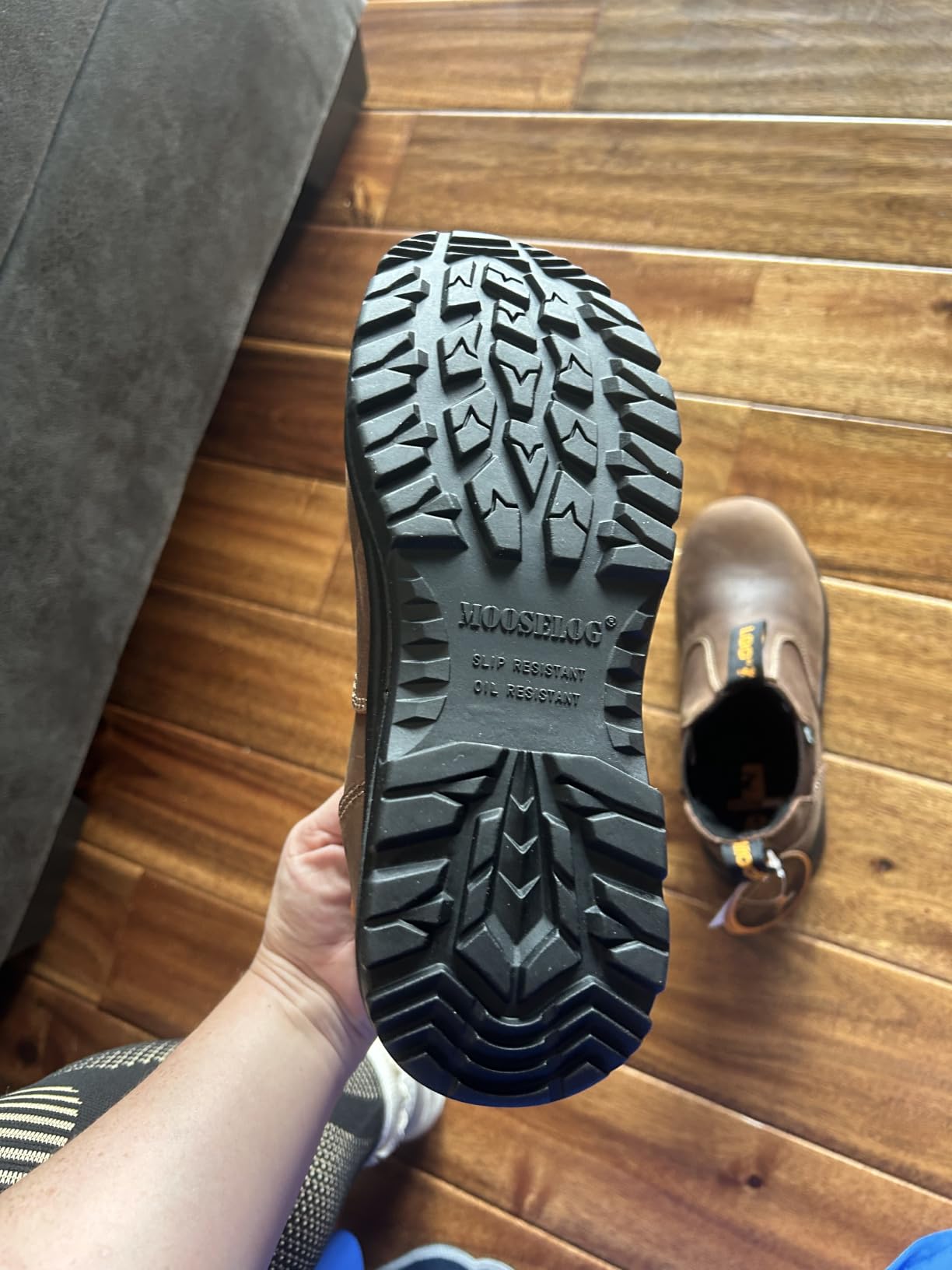
 MooseLog Women’s ASTM CSA Lightweight Comp Toe Leather Boot MooseLog Women’s ASTM CSA Lightweight Comp Toe Leather Boot |
|
Check Latest Price |
 Wolverine Women’s Revival Waterproof Composite Toe Romeo Wolverine Women’s Revival Waterproof Composite Toe Romeo |
|
Check Latest Price |
1. Carhartt Women’s Rugged Flex 6in Comp Toe Work Boot – Best Overall for Long Shifts
- Lightweight for a safety boot at 3.62 lb
- Comfortable through 8 to 12 hour shifts with little break-in
- Durable enough to hold up over multiple years
- Good ankle and arch support
- True to size for most wearers
- Not actually waterproof despite the marketing
- 6-inch height feels short in deep snow
- Can feel bulky next to low-profile composite shoes
This is the boot I put on any woman who asks me for one recommendation and nothing else. At 3.62 lb it is lighter than most steel-toe work boots on the shelf, and the Rugged Flex construction is designed to bend with the wearer rather than fight her on ladders and uneven ground.
The cushioning stack does more work than it looks like it should. An EVA midsole paired with Carhartt’s Cushion Comfort PU insoles absorbs the repeated impact of walking on concrete, and reviewers consistently report being able to finish a full shift without the forefoot ache that sends people looking for a new pair of boots after a season.
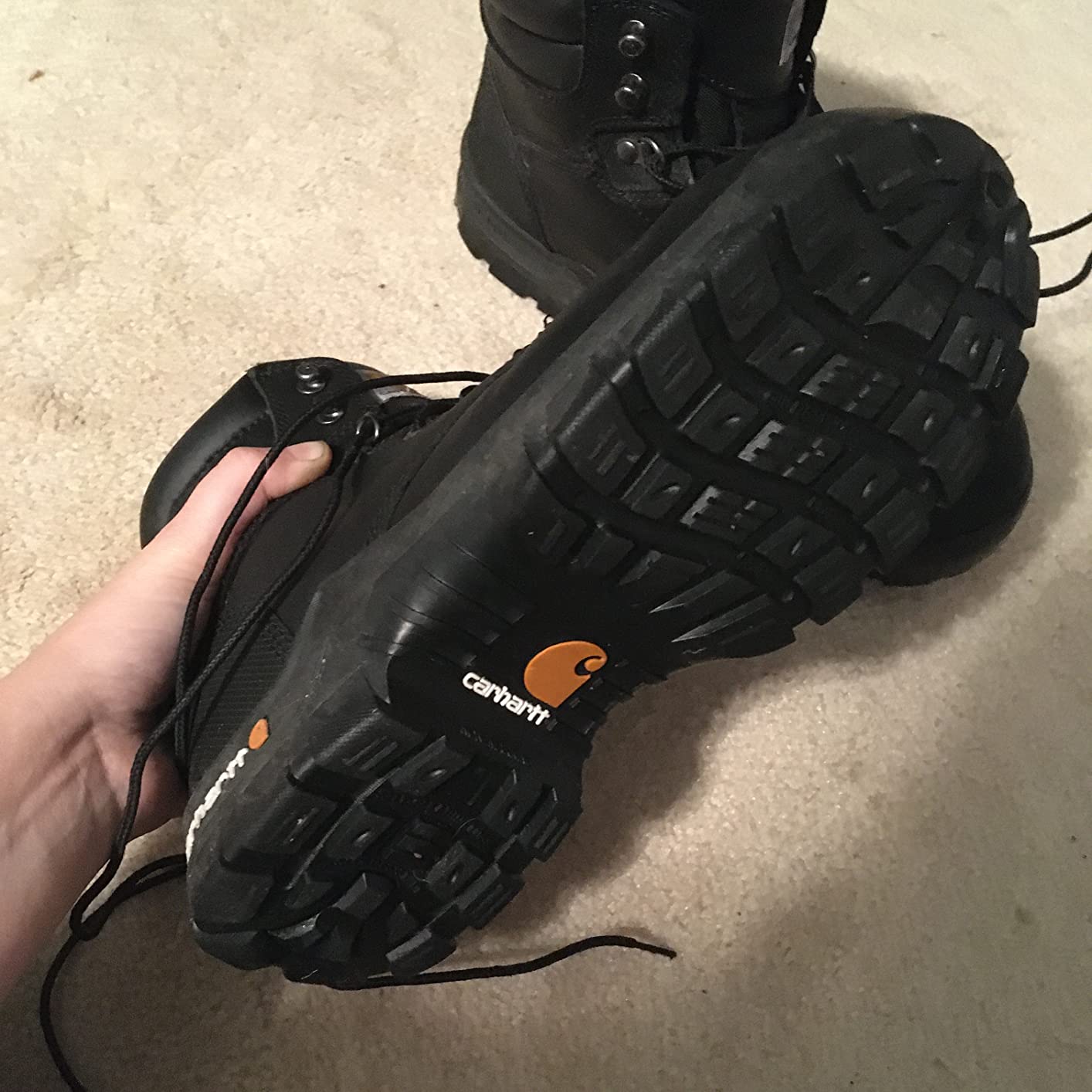
Durability is the quiet story here. Owners describe boots that have held up over multiple years of heavy work, which is a much better track record than the composite toe styles that look fine on the outside while the internal footbed disintegrates within a year.
The honest weakness is water. Despite what the product language implies, reviewers report these are not genuinely waterproof, and the FastDry lining manages moisture rather than blocking it. If you work outdoors in sustained rain or wet mud, look at the Ariat Anthem or KEEN Cincinnati instead.
Sizing note: this runs slightly large for some wearers, and the leather scuffs easily. Both are minor, and neither one affects safety performance.
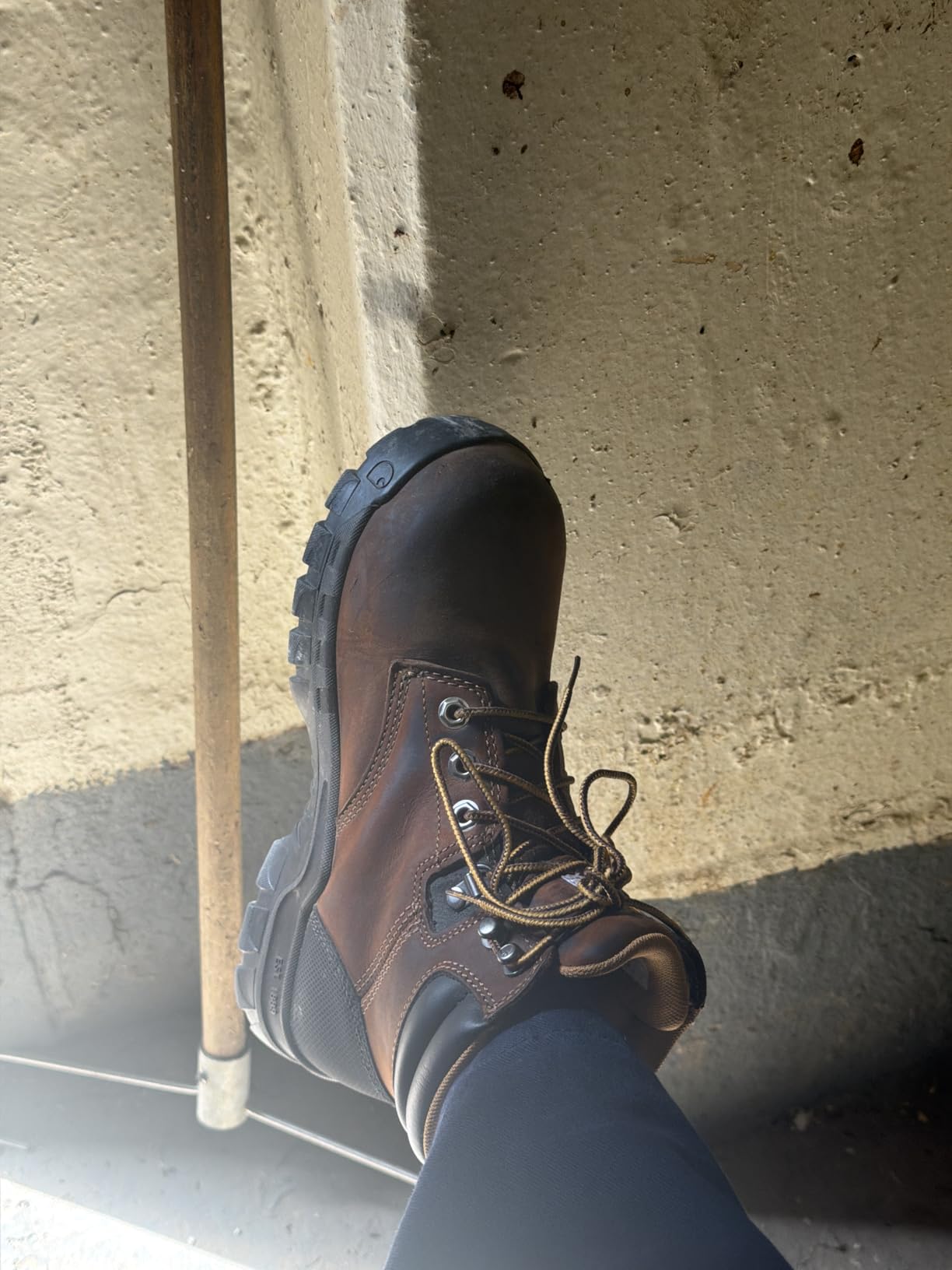
Who will like these boots most
Warehouse, fulfillment and light construction workers who want certified composite toe protection without the fatigue of a steel cap. The ankle and arch support make them a solid choice for anyone who is on their feet eight to twelve hours at a stretch.
They also work well as a first composite toe boot. There is little to no break-in period, so you can wear them through a full trial without blisters while you figure out whether the toe shape suits your foot.
Who should skip them
If you need genuinely waterproof footwear for outdoor work, these are the wrong pick, and reviewers say so directly. They are also not the lightest option here if you spend your days walking rather than standing, and the 6-inch shaft does not keep snow out.
Skip them if your workplace requires a formal uniform boot and a rugged work boot reads too casual.
2. Wolverine Women’s Piper Waterproof Composite Toe 6in Construction Boot – Best Value
- Composite toe protection at an entry-level price point
- Waterproof construction holds in wet conditions
- Nylon shank and EVA midsole add real stability
- Removable footbed is easy to replace
- Budget construction feels less refined than premium brands
- Wave mesh lining tends to wear out faster than leather
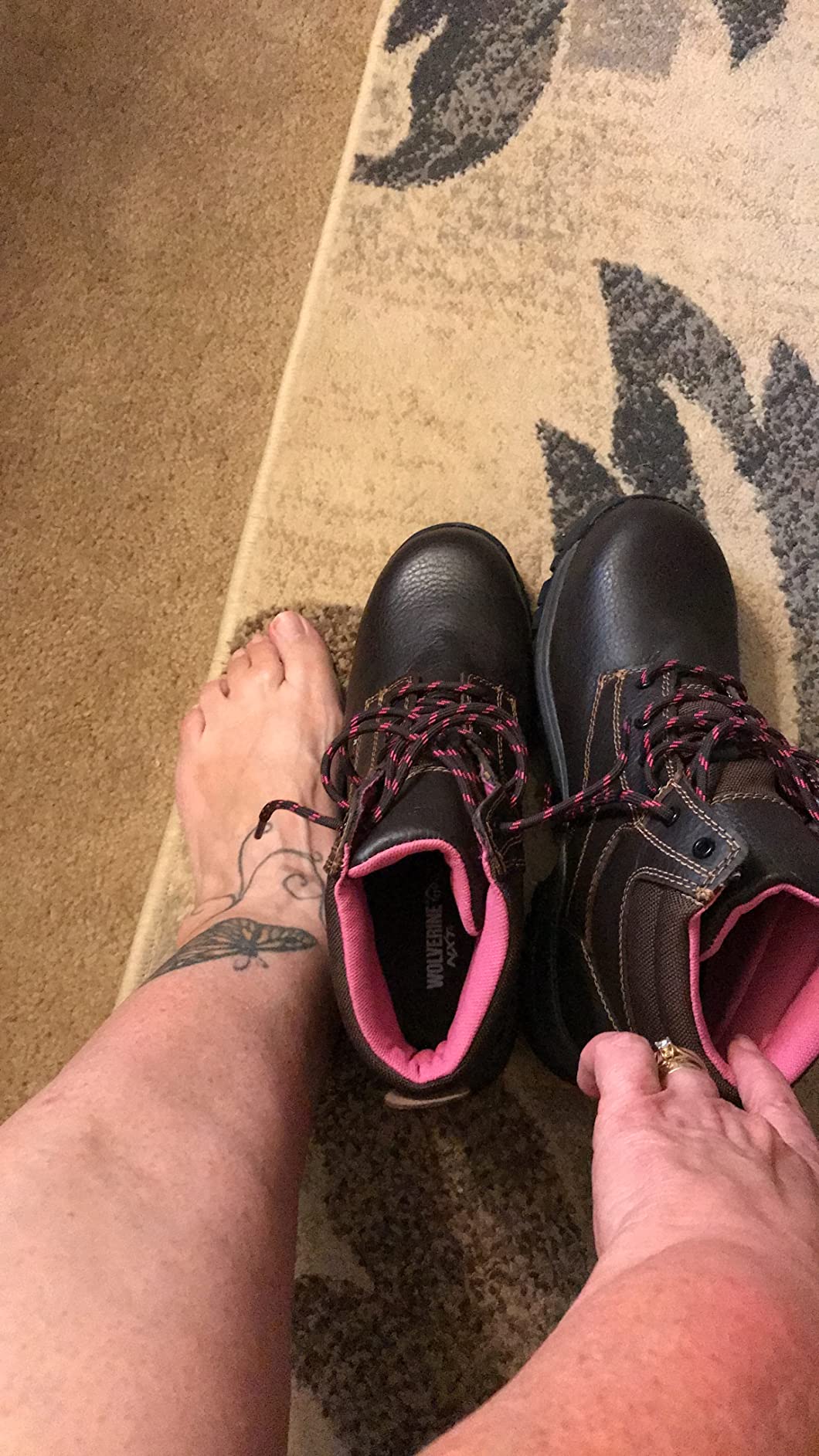
The Piper is the answer when someone asks where to start with composite toe safety and does not want to spend a lot to find out. It carries a 6-inch waterproof composite toe construction, and at 3 lb it is one of the lighter boots in this group.
Two details matter more than they look like they should on a boot at this level. The nylon shank stiffens the midfoot so the boot does not fold under you on ladders or uneven job sites, and the EVA midsole takes the edge off concrete. That is real support, not decoration.
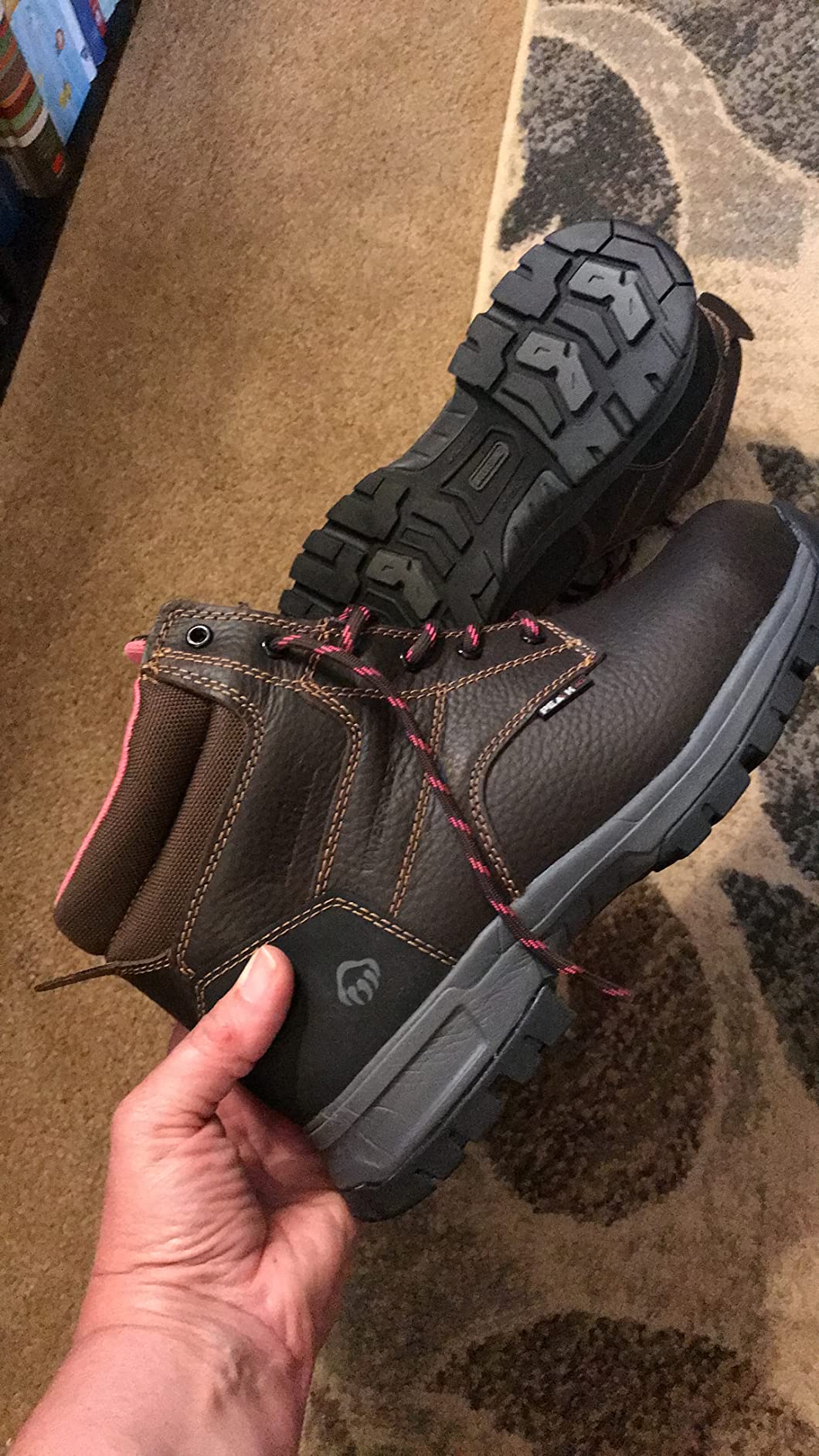
The removable footbed is the other practical win. When the supplied insole flattens out after a few months, you can drop in an orthotic or a high-quality arch support insert without replacing the whole boot, which is what plantar fasciitis sufferers usually end up doing anyway.
Ratings sit at 4.2 across 565 reviews, with roughly two thirds of buyers giving five stars. Reviewers consistently frame the trade in terms of value rather than excitement: certified composite toe protection and waterproofing at a fraction of what the premium brands charge.
What this boot is good at
This is a construction and general trades boot for anyone who needs water resistance and toe protection without a premium price tag. It suits new entrants, seasonal work, and anyone who wants one pair to cover outdoor jobsite conditions and indoor shop floors.
It is also a sensible first purchase if you are unsure whether composite toe works for your feet. The removable footbed makes it forgiving of later changes.
Where it falls short
The construction is cement attached, which is the most common failure point on budget footwear. It will not last as long as a good welted or direct-injected boot, and the wave mesh lining is the first thing to give up.
If you are standing all day on hard floors with existing foot pain, the factory footbed is not enough on its own. Plan on swapping in your own insoles from week one.
3. Ariat Women’s Tracey Composite Toe Work Boot – Best for Wide Feet
ARIAT BMVY9 Womens Tracey Composite Toe Work Boot Dusted Brown 7.5
- Wide toe box fits wide feet properly
- Lightweight for a safety toe boot
- Good tread and grip with no slipping reported
- Pull-on style with no laces to tie
- Toe protection has stopped livestock impacts
- Stiff full grain leather needs a two-week break-in
- Runs about a half size large
- Supplied footbeds are commonly replaced
The Tracey solves one of the most common complaints we hear about women’s safety footwear: a toe box that squeezes. Owners with genuinely wide feet describe this as one of the few safety boots where the forefoot has real room in it, and several reviewers mention that a standard-width boot would not have worked for them.
It is also lighter than most people expect a safety boot to be, which matters on farm, ranch and yard work where you are climbing and moving constantly. The pull-on style means no laces to tie when your hands are gloved or dirty, which is why side-zip and Chelsea designs keep showing up in recommendations from people returning to work after an ankle injury.
Under the foot, the 4LR footbed with EVA cushioning sits on a forged steel shank. That pairing is unusual in a composite toe boot, and it gives the arch real support through long days rather than just padding on the surface. A moisture-wicking sock liner handles the inside on hot days.
The fit skews large, and that is not a dealbreaker here. It is the most common sizing adjustment reviewers recommend, and it lands you where the toe box is comfortable instead of pinching at the front.
Best fit for ranch, farm and yard work
If you are outdoors on uneven ground, around livestock, or on any job where a toe cap might take a kick or a stomp, this is a well-matched boot. Reviewers mention toe protection that has genuinely absorbed impacts that would have bruised a foot in a soft shoe.
Wide feet, or anyone who has had constant trouble finding a safety boot with room in the forefoot, will find this one worth trying first. It is not a narrow last in any sense.
Before you buy, know this
The full grain leather is stiff, and the break-in runs closer to two weeks than two days. Wear it with thick socks indoors for a week before a shift and the discomfort mostly disappears. Reinforced toe areas can rub the top of your foot early on, which also settles as the leather flexes.
Plan on replacing the factory footbed. A number of owners do it in the first month, and it costs you very little to improve the boot significantly.
4. ARIAT Work Women’s Anthem Waterproof Composite Toe – Best for Cold and Wet Weather
ARIAT Women’s Anthem Waterproof Composite Toe Work Boot
- DRYShield waterproof construction keeps feet dry in mud and rain
- Composite toe is non-metallic and electrical hazard rated
- Duratread outsole passes hot contact testing at 572F
- 4LR support with a removable cushioning insole
- Wide range of half sizes and wide widths
- Stiffer build than Ariat's non-work models
- Requires a break-in before all-day comfort
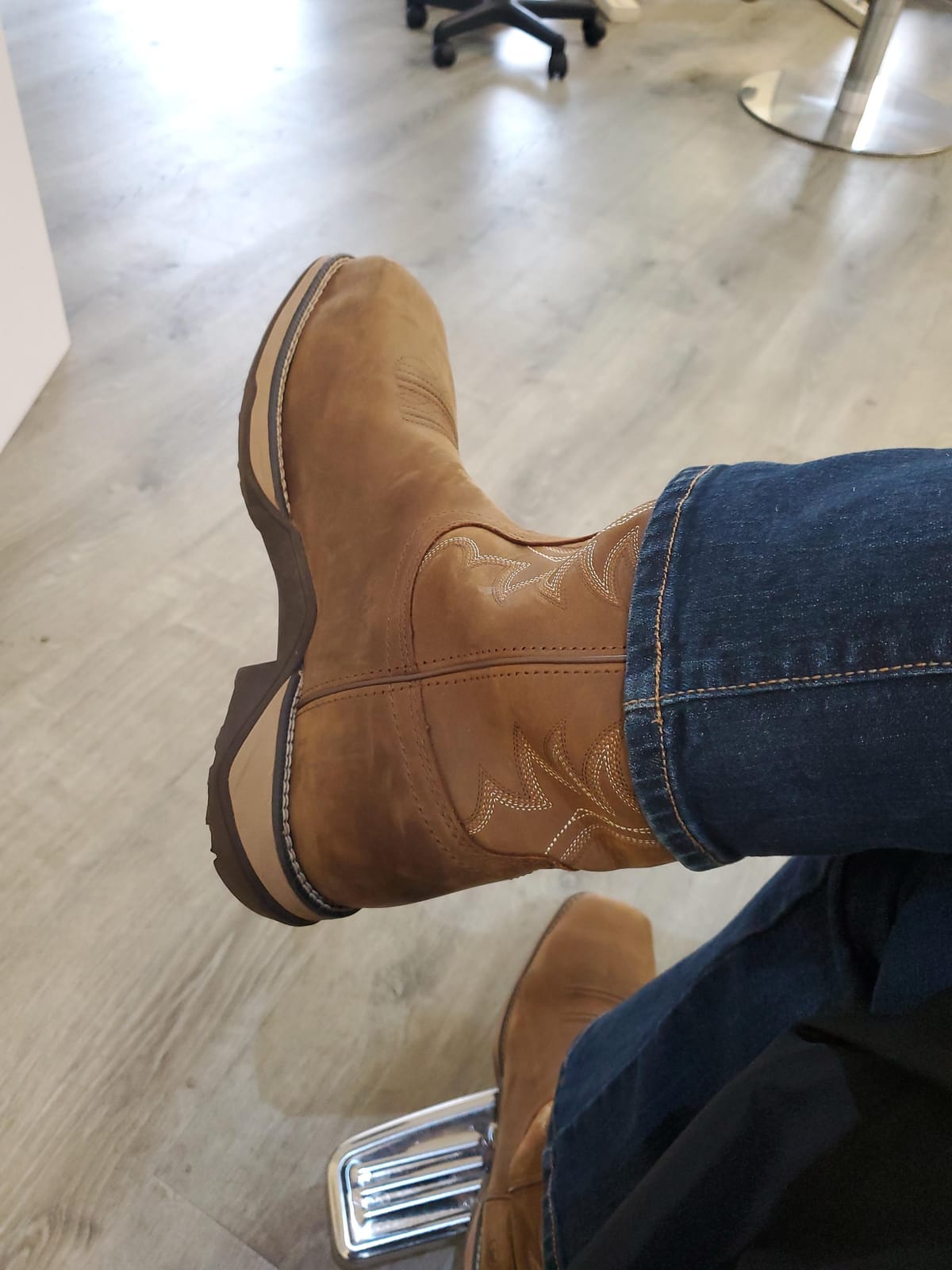
The Anthem is the most fully certified boot in this group, and for wet outdoor work it is the one I point to first. The Ariat DRYShield waterproof breathable construction pairs a waterproof full grain leather with an impermeable barrier, so rain and mud stay outside instead of soaking through a mesh lining.
Unlike many boots sold on the promise of waterproofing, this one states its standards plainly. The composite toe meets ASTM F2413 for electrical hazard resistance and safety toe performance, and the outsole meets ASTM F3445 for slip resistance. The Duratread outsole is oil- and slip-resistant and passes hot contact testing at 300C, which is 572F.
That combination is rare. Electrical hazard rating plus heat-rated traction means the same boot works for a farm, a ranch and a utility site without compromise, and the non-metallic build means it will pass through a metal detector at a secured facility.
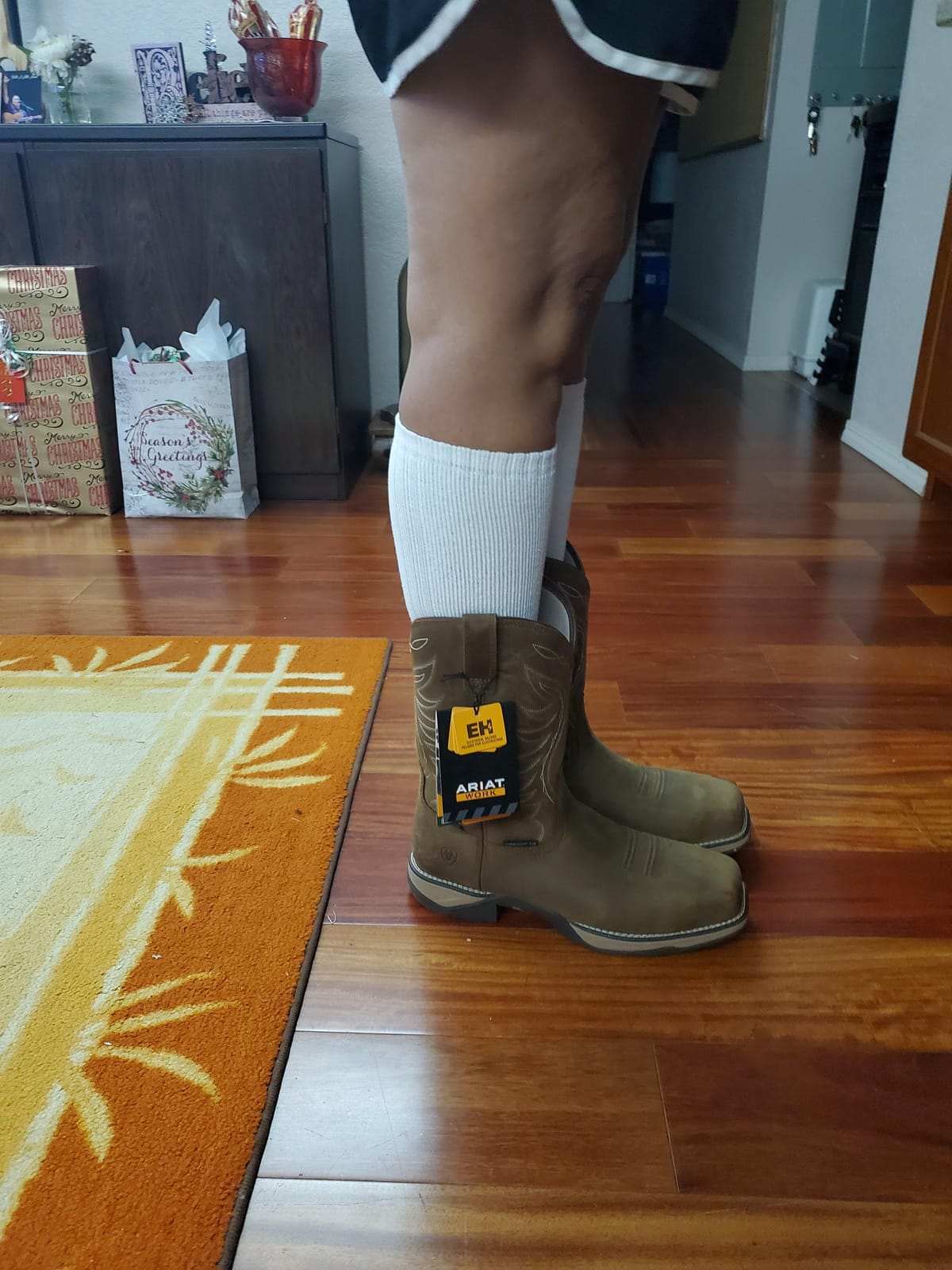
Inside, 4LR technology gives lightweight support and stability, and the removable All Day Cushioning insole adds rebound that you can swap for an orthotic if your feet need it. Ariat offers a wide range of half sizes and wide widths here, which is one of the more reliable places we found to shop if you need a size 5.5 or a 2E fit.
Sizing runs roomy, which buyers read as a positive given the width selection. The build is stiffer than Ariat’s casual boots and needs a break-in, so give it a week indoors before a full shift.
What makes it worth the step up
Waterproofing that actually keeps water out, plus the widest set of certifications in this roundup. For anyone who works outdoors where rain and mud are constant, that is worth paying more for than extra cushioning in a boot that stays dry anyway.
It is a strong choice for electricians and utility workers, for ranch and farm work, and for anyone who needs cold and wet protection without giving up the lighter feel of composite toe.
Where it is not the answer
If you are on hard indoor floors all day and water is never a factor, the waterproof membrane and stiff build are extras you are paying for and not using. A softer uninsulated work shoe is the more sensible tool for that job.
It also runs on the heavier side of composite toe boots. If fatigue from weight is your main problem, this is not the direction to go.
5. CAT Women’s Venward Composite Toe – Best Lightweight and Anti-Fatigue
Cat Footwear Women’s Venward Composite Toe Construction Shoe, Black, 8 Medium
- Lightweight enough for 12-hour shifts
- Little to no break-in required
- Stylish colorways that do not look like safety gear
- Composite toe with electrical hazard protection
- Recycled sock lining controls odor
- Sizing can run long
- Hard sole leaves the wide fit feeling narrow after 10 hours
- Toe room is limited on long shifts
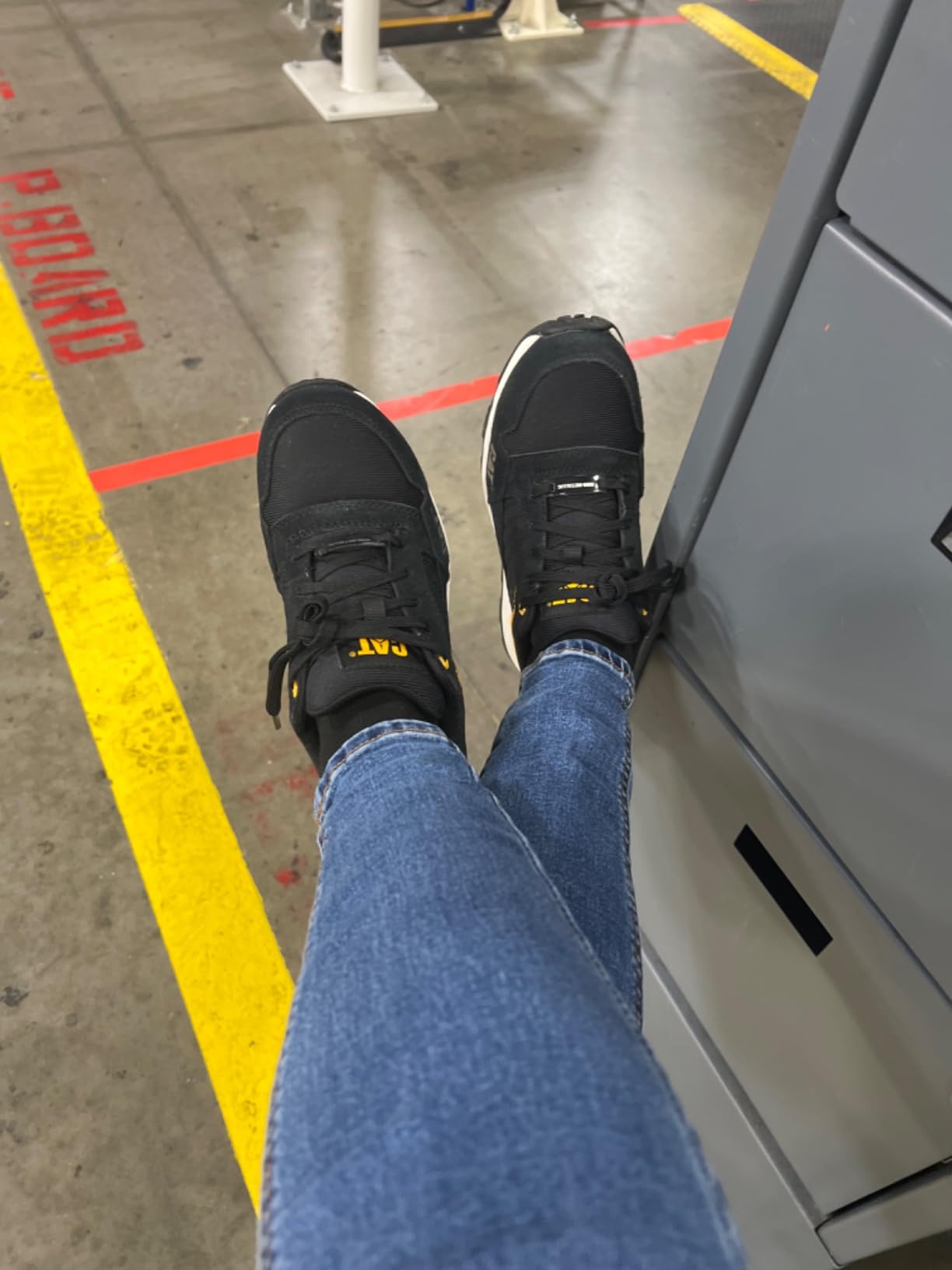
For long shifts where weight is the thing wearing you down, the Venward is the pick. Reviewers describe wearing it for 12 hours with no meaningful fatigue and needing effectively no break-in, which is unusual for a boot with a certified toe cap.
It is not a tall boot. The low profile is exactly what makes it comfortable, because there is less boot to load your foot and calf with, and that matters when you are already dealing with heel pain or plantar fasciitis. The composite safety toe meets ASTM F2413-18 for impact and compression and carries electrical hazard protection under the same standard.
The ReVive footbed is contoured rather than flat, which gives the arch a shape to sit against. Combined with a 100 percent recycled sock lining that wicks moisture and controls odor, it holds up better through a hot warehouse shift than a boot lined entirely in leather.
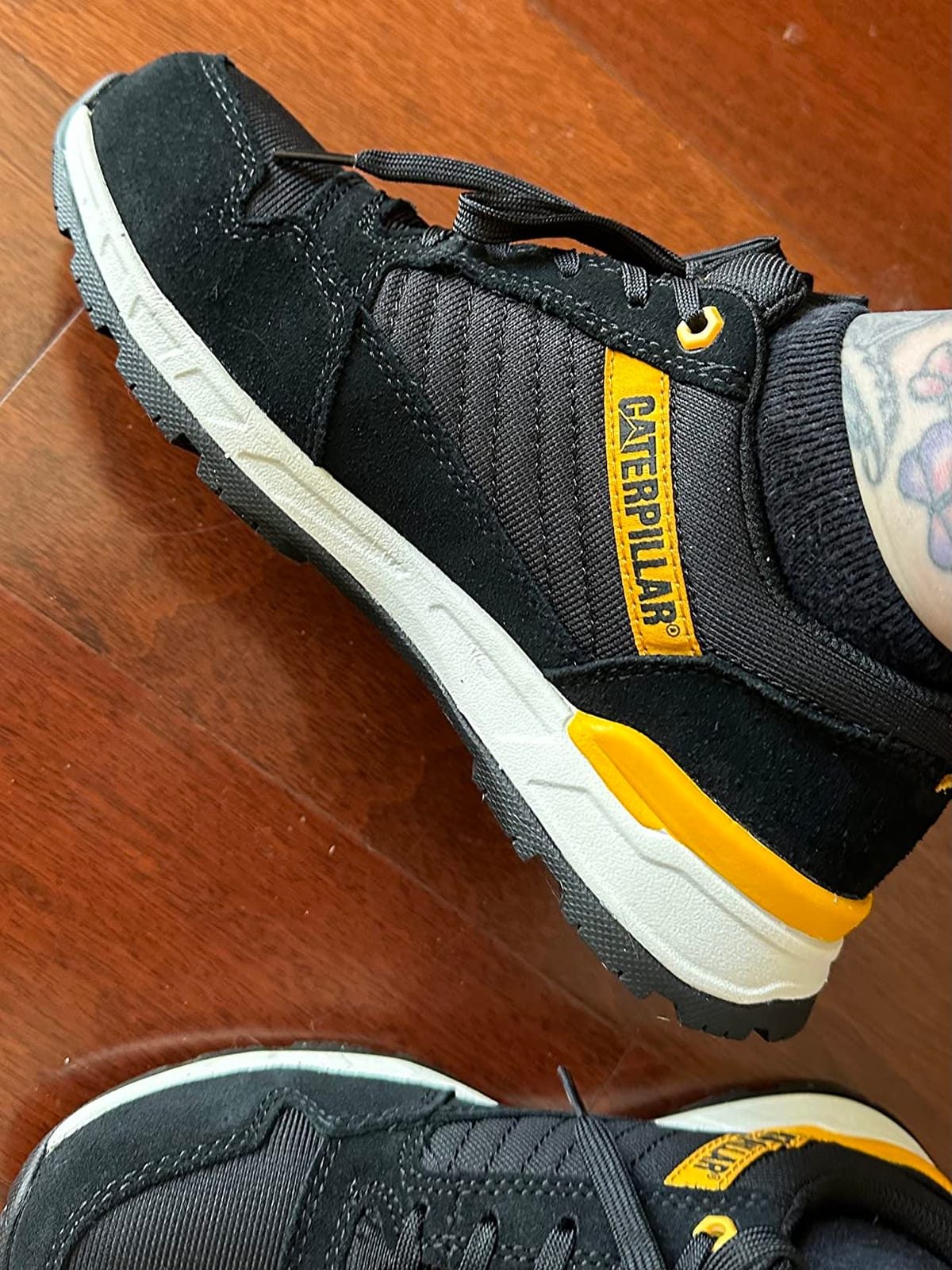
The slip-resistant rubber outsole is the other quiet strength. Traction on smooth indoor floors matters more than people expect, particularly in warehouse picking where a glazed concrete floor can be the most dangerous surface in the building.
One caveat runs through the reviews: sizing can run long, so some buyers went up a half size, and others found the toe room tight after ten hours. The outsole is hard, which is durable but not forgiving on a long day.
Made for standing, not for ankle support
Factory floor workers, warehouse staff and anyone doing 10 to 12 hour shifts on hard surfaces will get the most out of this. The lightness genuinely reduces end-of-day fatigue compared with most steel-capped alternatives.
The styling is a quiet advantage too. Several owners wear them as ordinary shoes when they are not on the clock, which is not something you can say for every work boot.
When it is the wrong choice
If your job involves ladders, unstable ground or anything where ankle support protects you from an injury rather than just a rolled ankle, the low profile gives you very little. Choose a mid or high boot instead.
Those who already have significant foot pain should also know that the hard sole does not soften over time. If your foot pain comes from the surface itself, you want cushioning more than lightness.
6. Kodiak Women’s Bralorne Composite Toe Water-resistant Chelsea – Best Chelsea for Uniform Workplaces
Kodiak Women’s Bralorne Composite Toe Water-Resistant Chelsea Work Boot, Medium Brown, 9
- Chelsea pull-on is quick on and off with no laces
- CSA and ASTM approved composite toe and plate
- Water-resistant full grain leather that patinas
- Oil- and slip-resistant non-marking outsole
- Comfortzone OrthoLite footbed cushioning
- Composite midsole feels less supportive over long hours
- Water resistance is not full waterproofing
- Some heel slippage reported
The Bralorne is the black leather Chelsea that looks like a normal boot, which is the entire point if you work somewhere with a dress code. Warehouse supervisors, security staff and hospital workers get a certified safety boot that does not announce itself as one.
On the safety side it is thorough. The composite toe and composite plate are both CSA and ASTM approved, and it carries electric shock resistance, which is a step beyond basic impact protection. The water-resistant full grain leather upper with an abrasion-resistant lining is the most premium-feeling material in this group and develops a patina as it ages.
The footbed is where the comfort comes from: a Comfortzone footbed using OrthoLite comfort foam for all-day cushioning, with Kodiak’s smell-control technology helping keep things fresh through a long day. The outsole is oil- and slip-resistant, non-marking rubber, so it will not leave black marks on a clean warehouse floor.
This is among the lowest-rated boots in the set at 4.0 stars across 215 reviews, and the feedback explains why. Thirteen percent of buyers gave one star, with heel slippage and cushioning that feels average over long hours named most often. Water resistance here is genuinely water resistance, not the waterproof membrane you get on the KEEN or Ariat models.
The composite midsole is the trade for the low weight, and some wearers feel it through the arch after a full shift. For those who need all-day support, swapping in an orthotic insert is the fix and the footbed is removable.
Where it earns its place
Uniform-required workplaces where black leather is the dress code and you still need CSA or ASTM certified toe protection. Hospital and clinical staff, security roles, and warehouse leads all fit that description.
It is also good for anyone who cannot bend easily to tie laces. The pull-on construction works with one hand, which is exactly the reason side-zip and Chelsea boots get recommended by people coming back from ankle injuries.
Where it falls down
If you need genuine waterproofing, a water-resistant upper is not the same thing and will disappoint in sustained rain. If you are on your feet ten hours a day with foot pain, this is not the boot to shortlist.
Check heel fit carefully if you have a narrow heel. The slippage complaints are specific enough to be worth trying the boot on in a store if you can.
7. KEEN Utility Women’s Cincinnati 6in Composite Toe Waterproof Work Boots – Best for Electrical Hazard
KEEN Utility Women’s Cincinnati 6″ Composite Toe Waterproof Wedge Work Boot, Belgian/Sandshell, 8 Wide US
- Keen.Dry waterproof breathable membrane liner
- Carbon fiber composite toe 15 percent lighter than steel
- Keen Luftcell air-infused midsole for weightless comfort
- Electrical hazard rated for accidental contact with live circuits
- Oil- and slip-resistant non-marking siped outsole
- Higher price point than most composite toe boots
- Bulkier profile than low-cut work shoes
- Wide fit can still pinch the toe box
The Cincinnati is the one to look at if your work puts you near live circuits. It is electrical hazard rated, which means it is tested to provide a secondary source of protection if you accidentally come into contact with an energized circuit on a dry surface. That is a specific protection that most boots in this roundup do not offer.
The toe itself is asymmetric and carbon fiber based, a non-metallic composite that KEEN rates at 15 percent lighter than steel. The asymmetry matters more than it sounds: a shaped cap leaves more room for the toes than a straight steel wall, which is one reason people find this boot less punishing than a steel-toe equivalent of the same size.
Waterproofing comes from the Keen.Dry membrane liner, which moves vapor out without letting water in. The outsole is oil- and slip-resistant, non-marking and siped, meeting ASTM F1677-96 and ASTM F2913 SATRA non-slip standards.
Underfoot, the Keen Luftcell air-infused PU midsole is the lightest thing on this list in terms of how it feels underfoot, and it pairs with a removable dual-density Polyaer PU insole with aerated pillow-top cushioning. Removable matters: it is the boot that lets you fit an orthotic without any modification.
The cost is real, and it is the main thing reviewers mention. You are paying for the certification depth and the membrane here. If you work near electricity, that is a purchase worth making. If you do not, a cheaper boot on this list does the same job for less.
Best for electricians and utility work
Anyone working around electrical panels, on utility sites or in maintenance roles where accidental contact with a live circuit is a real risk should put this near the top of their list. The EH rating is the reason to buy it, and no other spec substitutes for that.
It also suits outdoor trades where waterproofing and slip resistance matter, since both are certified here rather than claimed.
Reasons to look elsewhere
It is the most expensive boot here and the profile is bulkier than a low work shoe, so it is a poor choice for a warehouse aisle where you are constantly squatting, kneeling or moving fast.
Some wearers with wide feet still find the toe box pinched. KEEN is generally generous with width, but this model is not one of the roomiest, so check the width before committing.
8. KEEN Utility Women’s Vista Energy Mid Composite Int Met Guard Work Boots – Best for Metatarsal Protection
KEEN Utility Vista Energy Mid Int. Met Black/Raven 7.5 B (M)
- Internal metatarsal guard adds impact protection without bulk
- KEEN.ReGEN midsole returns 50 percent more energy than standard EVA
- Built on a women's specific foot form
- 100 percent non-metallic so it passes metal detectors
- Nylon shank with removable metatomical footbed
- Sport-style mid profile gives less ankle coverage than a tall boot
- Rubber upper is less breathable than leather
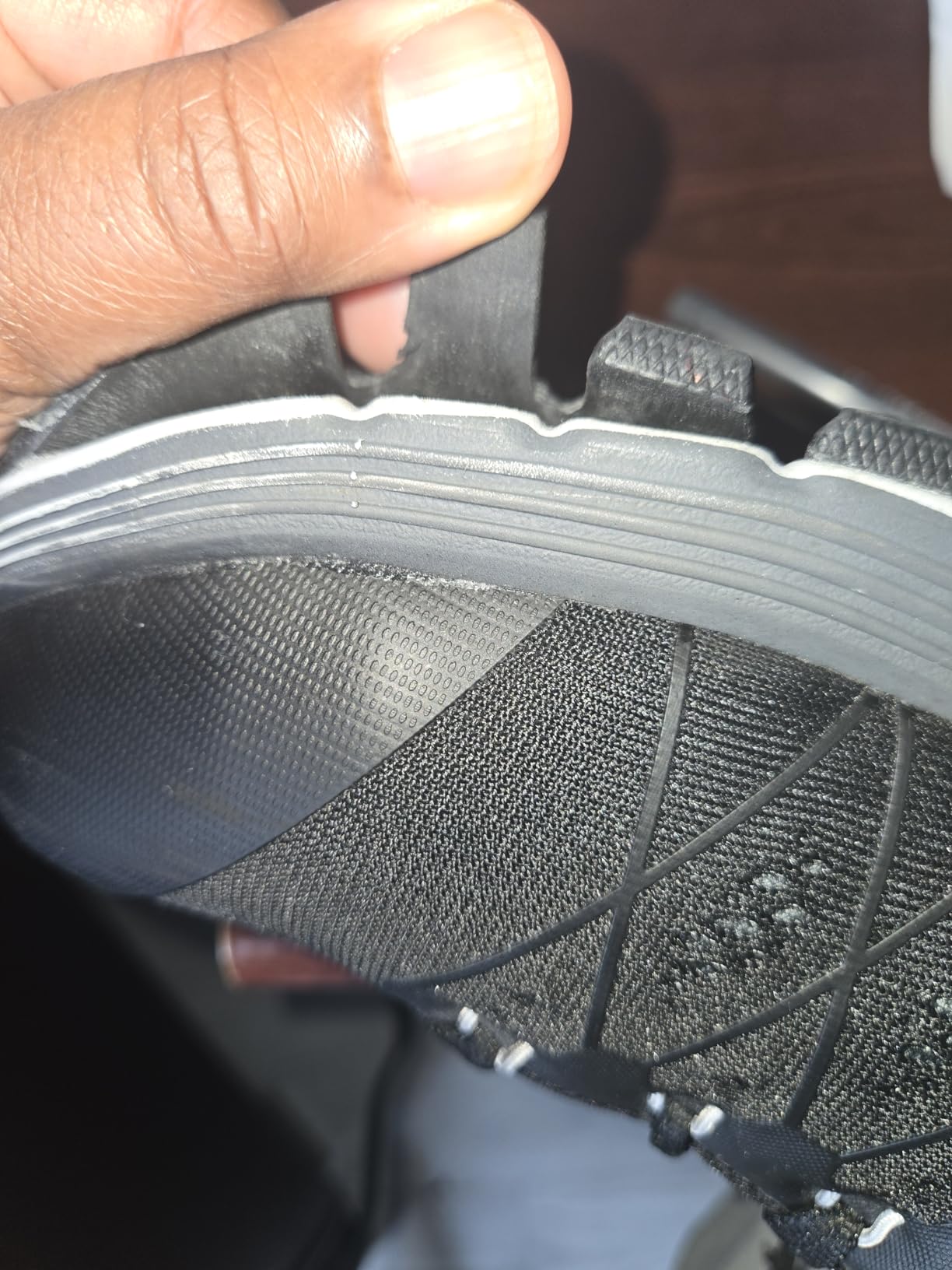
This is the only boot here with an internal metatarsal guard, and that is the feature that sets it apart for anyone working around equipment that could drop onto the top of the foot. The guard is ASTM and CSA certified, flexible and light during normal movement, and hardens on direct impact. You get crush protection across the whole instep without the bulk of an external guard.
The KEEN.ReGEN midsole is a compression-resisting foam rated to return 50 percent more energy than standard EVA. On paper that is a technical claim, but in practice it means the foot springs back instead of sinking, which is the difference between a shift that ends normally and one that ends with a sore arch.
At 2.6 lb it is among the lightest boots we covered. The build is on a women’s specific foot form that is wider than the industry norm, KonnectFit heel capture locks the heel in place, and a nylon shank handles midfoot stability.
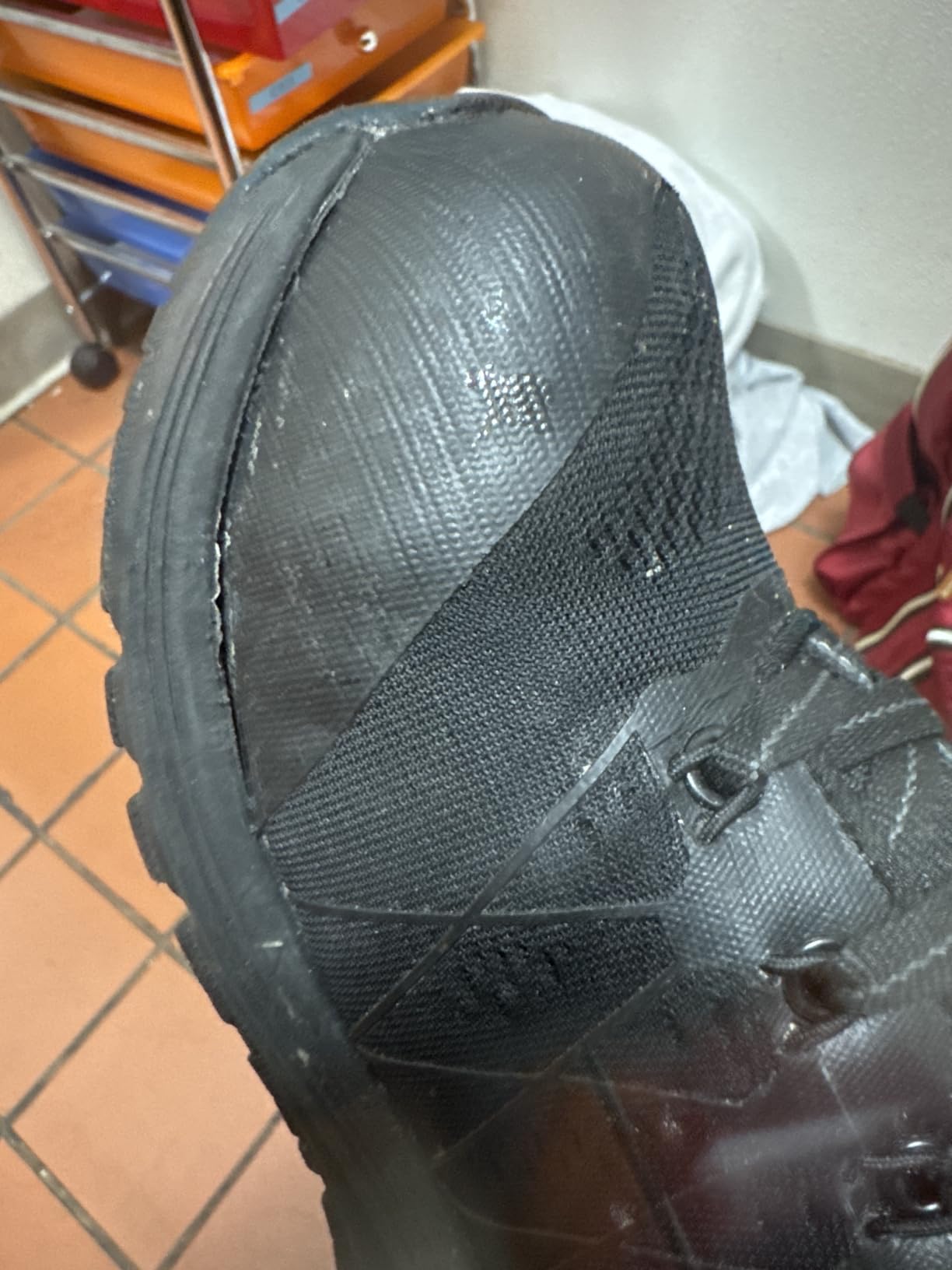
The construction is 100 percent non-metallic, which is unusually explicit from a major brand. That means these boots pass through a metal detector without setting off alarms, which matters at power generation facilities, data centers and any site with screening.
The mid profile is the trade. It looks more like a work sneaker than a traditional boot, which is a feature indoors and a limitation outdoors. The rubber upper is also less breathable than leather in warm conditions.
Who should choose the Vista Energy
Industrial and warehouse workers, machine operators and anyone exposed to crush hazards above the toe. The metatarsal guard is the reason this boot exists and there is no substitute for it in a standard work boot.
It is also the right answer for women who struggle to find safety boots built on a genuine women’s last. KEEN states it explicitly and fits true to size, which removes the single biggest headache in this category.
Where the mid profile costs you
There is meaningfully less ankle support than a 6-inch or taller boot. On ladders, on rough ground, or with a history of ankle sprains, a taller boot is the safer choice.
If you are on your feet for 12 hours in a hot environment, the rubber upper will hold more heat than a leather boot. Ventilation matters as much as cushioning in those conditions.
9. Timberland PRO Women’s Titan EV 6in Comp Toe Waterproof Boots – Best for 12-Hour Shifts
Timberland PRO Women’s TiTAN EV 6 Inch Composite Safety Toe Waterproof Industrial Work Boot, Black-2024 NEW, 8.5 M US
- Anti-Fatigue Technology and HoverSpring foam for all-day support
- Waterproof membrane holds up in rain snow and ice
- Composite toe keeps the boot lighter than steel toe models
- Wide range of half sizes including a 5.5
- Good ankle support after an Achilles injury
- Not insulated so warmth needs added insoles
- Some colorways differ noticeably from the listing photos
- Foot opening is not generous for high arches
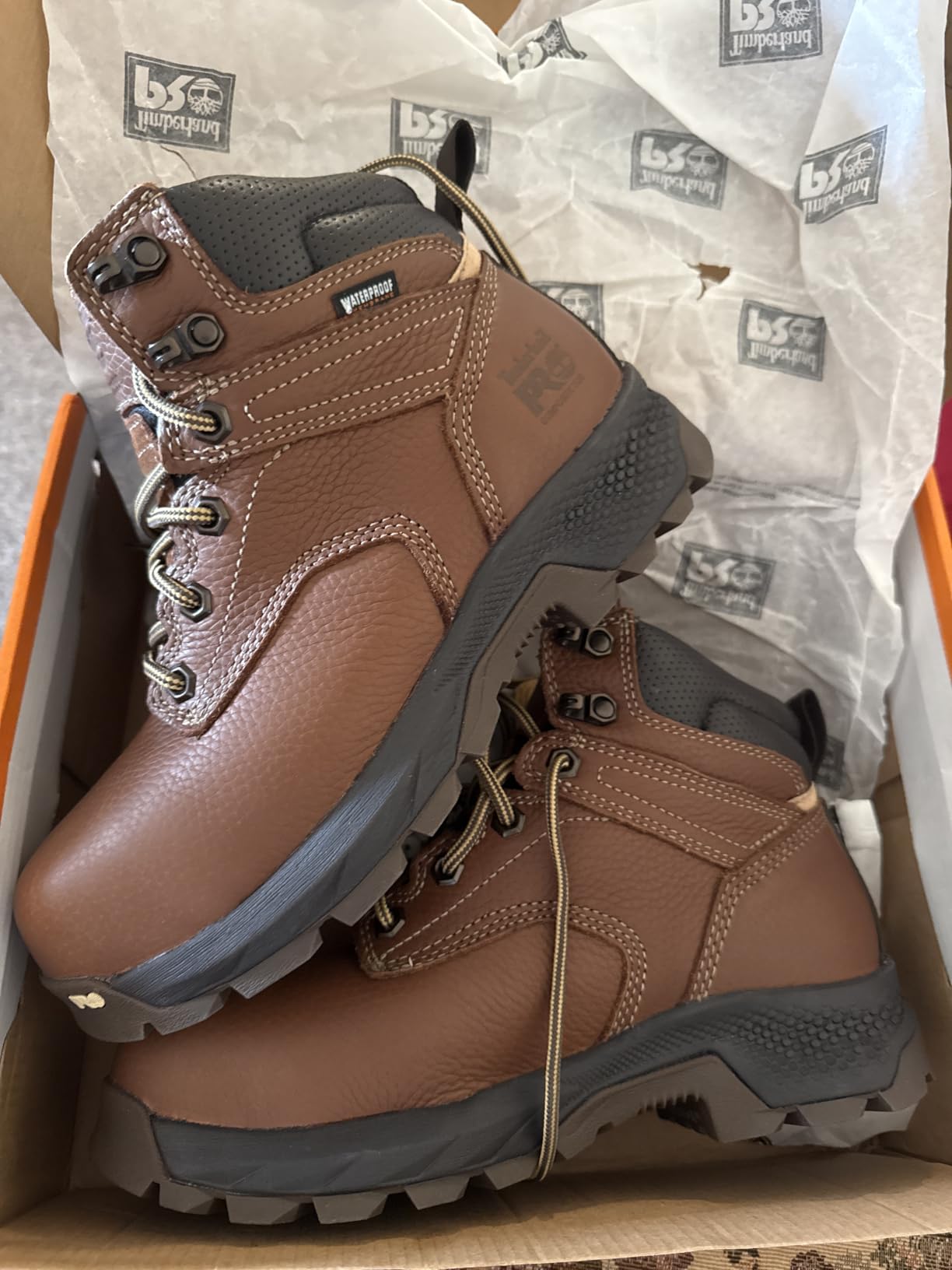
Anti-Fatigue Technology is Timberland PRO’s name for a comfort system built around shock-absorbing geometry that returns energy to the foot, paired here with the HoverSpring proprietary foam midsole. Together they are the reason this boot keeps showing up in recommendations from people working 10 to 12 hour shifts.
It is a 6-inch lace-up boot in leather with a rubber outsole, and that combination of height and closure is what makes it a serious work boot rather than a safety shoe. Reviewers specifically call out the ankle support after an Achilles injury, which is exactly the situation where a tall shaft earns its keep.
The composite safety toe is asymmetric and non-metallic, meeting ASTM F2412-18a and ASTM F2413-18 for both impact and compression. The waterproof membrane meets ASTM F1671-07, which is a tested standard rather than a marketing word.
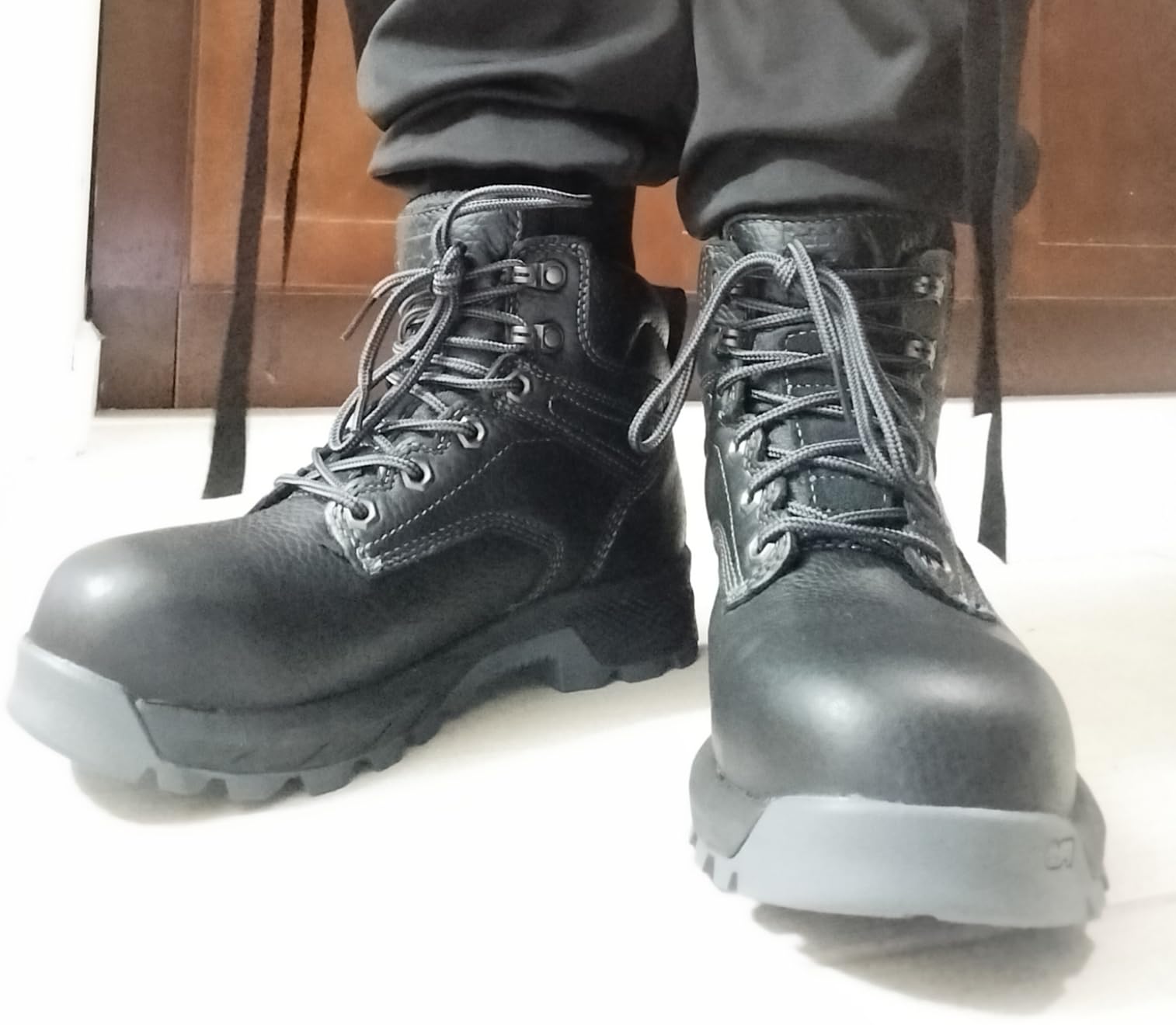
Two fit details are worth knowing before you order. Timberland PRO carries a wide range of half sizes here, including a 5.5, which is exactly the size range that is hardest to find in black leather composite toe boots. On the other hand, the foot opening is not generous for high arches, and if that describes your foot, test before committing.
This boot is not insulated. Reviewers are clear that warmth in winter requires adding insoles, so treat it as a three-season boot unless you plan to add insulation yourself.
Built for long days on varied surfaces
This is a good pick for outdoor trades, delivery and warehouse work, and for anyone who needs a true boot height with certified composite toe protection. The heat-resistant, slip- and oil-resistant Timberland PRO rubber outsole handles a range of surfaces.
If your shift is the problem rather than the weather, the HoverSpring midsole and anti-fatigue geometry are the two things doing the work. Both are named components rather than vague comfort claims.
Where it will not fit the job
Cold-weather outdoor work is the clear miss, because there is no insulation in the boot. If you are standing outside through a northern winter, you want an insulated model or a removable liner system.
People with high arches may find the opening tight. Sizing can also differ slightly from earlier production runs, so read recent reviews rather than relying on an old pair you owned.
10. ARIAT Women’s Riveter Chelsea CSA Waterproof Composite Toe Work Boot – Best for Puncture Resistance
ARIAT BMVY9 Womens Riveter Chelsea CSA Waterproof Composite Toe Work Boot Dark Brown 9
- CSA Z195-14 Grade 1 and ASTM F2413-18 EH certified
- Metal-free SWEN-FLEX puncture resistant midsole
- Chelsea pull-on is easy to get on and off
- ATS stability with All Day Cushioning insole
- Light at 1.4 lb with real protection
- Toe box runs narrow and several wearers returned them
- Front tongue panel irritates the leg above the foot
- Runs tight through the forefoot even at regular width
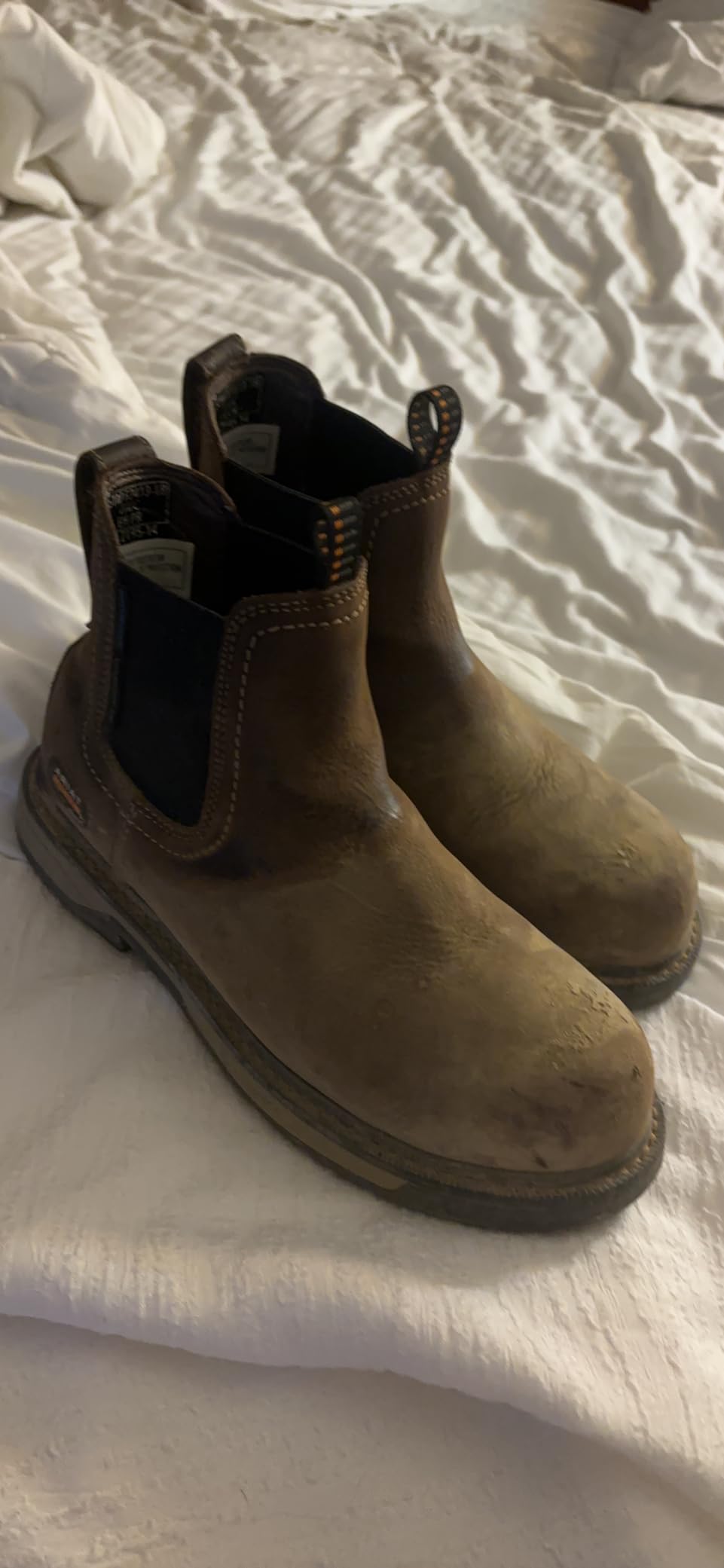
At 1.4 lb this is the lightest safety boot we covered by published weight, and it carries one of the most thorough certification sets in the roundup. The safety toe is rated ASTM F2413-18 for flame, impact, compression, puncture resistance and electrical hazard. It is also certified to CSA Standard Z195-14 with a Grade 1 toe and sole plus electrical shock resistance protection.
The puncture resistance is the distinguishing feature. The SWEN-FLEX midsole is metal-free and sits between you and the floor, which matters on job sites with rebar, broken pallets, scrap metal or nails. A composite toe protects your toes from above; this protects the whole sole from below.
One reviewer on this boot reported a 12000 lb forklift incident that the toe cap absorbed without injury, and that anecdote sits alongside a certification list that is longer than most competitors manage.
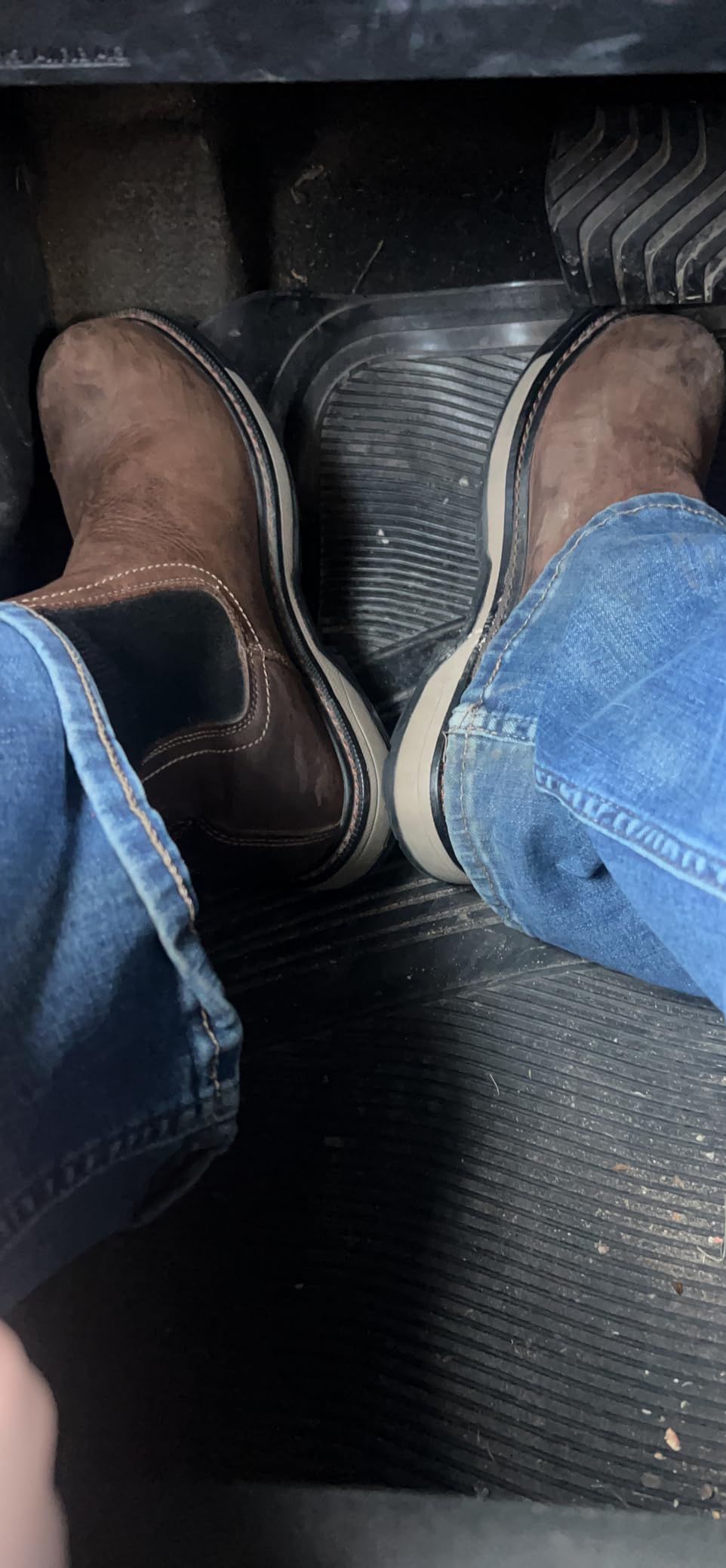
The Chelsea pull-on with ATS stability technology and an All Day Cushioning insole with rebound makes this an easy boot to work in all day. No laces, no bending down, and it goes on and off at a shift change without thinking about it.
But the toe box is the recurring problem. Reviews specifically describe a narrow forefoot, tight toes even at regular width, and several returns for that reason. If you already know you need a wide toe box, this is not the boot, and the Ariat Tracey is a better starting point.
Reasons to pick the Riveter
Construction, demolition and industrial work where the floor is the hazard. Puncture resistance is the reason to buy this over another certified Chelsea, and the CSA Grade 1 rating covers you in Canada as well as the US.
It is also worth considering if you work somewhere with metal detector screening, since a fully non-metallic toe and midsole will not trigger alarms.
Reasons to pass
Narrow toe boxes rule it out for anyone with wide feet or anyone adding a thick insole. The permanent tongue and front panel also irritate the leg above the foot, which several reviewers mention as their reason for returning the pair.
At 4.1 stars across 110 reviews it sits below the group average, and the fit complaints are the main reason. Try before committing if you can.
11. MooseLog Women’s ASTM CSA Lightweight Comp Toe Leather Work Safety Boots – Best for Metal Detectors and Airports
MooseLog Women’s Lightweight Composite Toe Leather Work Safety Boots BR85
- Composite toe and plate are certified protection without steel toe bulk
- Chelsea slip-on with no laces to tie or trip on
- Crazy horse leather is durable and conforms to the foot
- Slip oil and heat resistant outsole rated to 572F
- ASTM F2413 and CSA Z195 certified with electrical hazard protection
- Runs about a half size small so size up recommended
- Hard unpadded section at the front of the ankle rubs
- Supplied insole has minimal arch support and padding
This is the newest boot in the group, first listed earlier this year, and the smallest review base at 34 ratings. What it does well is specific: a fully metal-free build with electrical hazard protection that will not trip a metal detector at an airport or a secured facility, while still meeting ASTM F2413 and CSA Z195 standards.
The BigZone composite toe and Dyna-Flex puncture-resistant plate are both non-metallic. The whole boot is rated roughly 30 percent lighter than a steel toe boot, and reviewers consistently describe it that way in practice.
The SafeTread outsole is rated slip, oil and heat resistant up to 572F, and the crazy horse leather upper is durable, easy to clean, and molds to the foot over time. Several owners note that the styling is good enough to wear as everyday boots outside work, which is not something most safety boots manage.
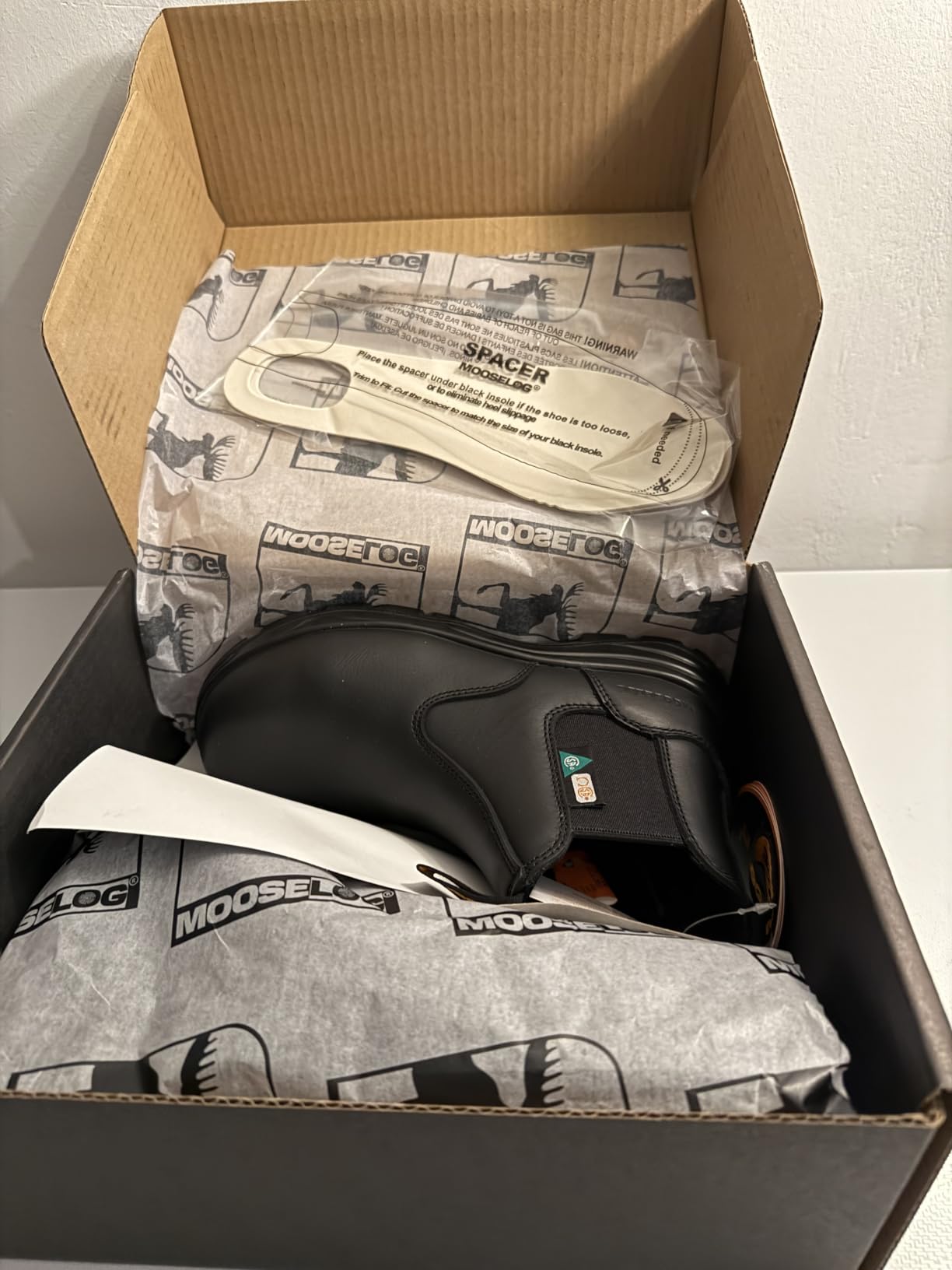
Sizing is the main thing to get right. Multiple buyers report the boots running about a half size small, and sizing up is the consistent recommendation. The variant list runs from size 6 to 10 in both black and brown, so there is room to move.
Two comfort complaints come up. The front of the ankle has a hard, unpadded section that rubs during long shifts, and the front leather panel can irritate the leg, so wear thick socks. The supplied insole has minimal arch support, and owners replace it.
Who this suits
Airport and transit staff, warehouse and distribution workers passing through screening, security roles, and anyone who needs a certified boot with zero metal in it. The Chelsea design also makes it a good option for anyone with ankle injuries who cannot tie laces.
It is a direct-injected construction designed to prevent sole separation, with a direct-attach PU midsole and removable polyurethane insoles, which is a better durability story than cement-attached budget boots.
What to know before ordering
With 34 reviews, this is the least proven boot on the list. That does not mean it is worse, but it does mean you are relying on specification rather than a long history of owners telling you how it holds up.
Size up, wear thick socks, and expect to replace the insole. Those three things cover nearly every complaint we found.
12. Wolverine Women’s Revival Waterproof Composite Toe Romeo – Best for Extended Sizing
- Waterproof full grain leather holds up in wet conditions
- Light enough to wear like dress boots all day
- Composite toe is ASTM F2413-18 F/I/C EH rated
- Removable EVA footbed takes custom insoles
- Sizes 5 to 11 including multiple wide widths
- Demanding break-in with up to three months of blisters
- Supplied EVA insole is uncomfortable and gets replaced
- Front panel can rub the shin and bruise
- Toe box runs tight for narrower feet
The Revival is the answer to the single most common complaint in this category, which is finding your size. The variant list runs from a 5 to an 11 in cashew, with wide widths available at size 5, 5.5, 6, 6.5, 7, 7.5, 8.5, 9, 9.5 and 10. Small sizes in black leather composite toe boots remain genuinely hard to find, and this fills that gap.
It is a Romeo silhouette, meaning a 6-inch lace-up boot with an ankle-height shaft, which gives more ankle support than a Chelsea or low work shoe. The premium waterproof full grain leather upper sits on a breathable waterproof membrane with a moisture-wicking mesh lining.
The composite toe is ASTM F2413-18 rated for flame, impact, compression and electrical hazard, and at least one wearer reports it passing a nuclear facility containment requirement, which tells you how seriously the certification is taken.
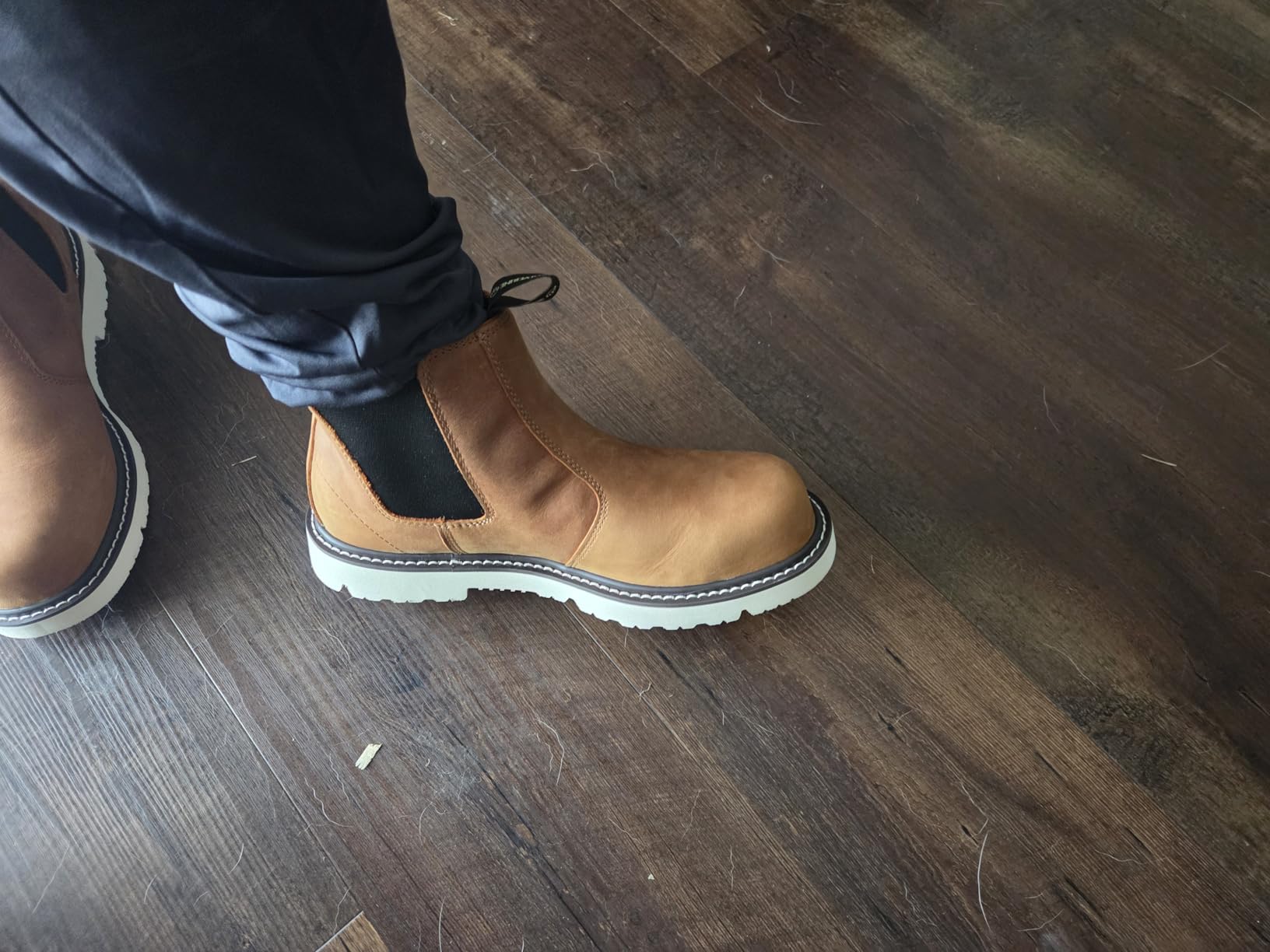
The removable full-cushioned molded EVA footbed matters more here than usual. Owners almost universally replace it, and once they do the boots become a different experience, which is why we list the removable footbed as a feature rather than a footnote.
The break-in is the catch, and it is a real one. Some buyers report up to three months of blisters. The front leather panel also rubs the shin and can bruise on long shifts. Toe room is limited for narrower feet, which limits how thick an insole you can add.
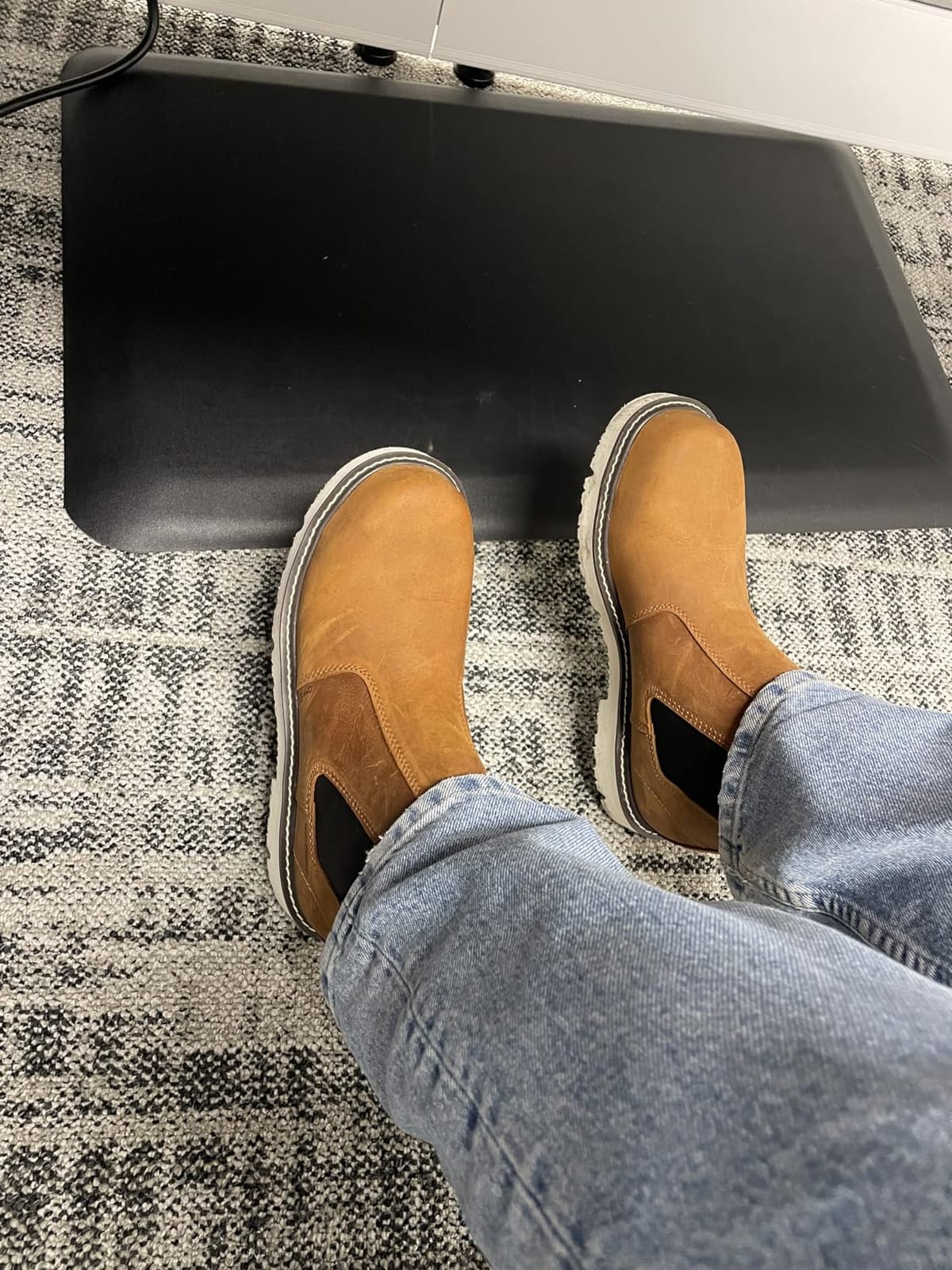
Best for anyone who cannot find their size
If you wear a size 5 or 5.5, or if you need a wide width, start here. The sizing range is wider than anything else in this roundup and the color works for workplaces where black is not required.
Several owners wear these as both office and worksite footwear, which tells you the cashew leather is not purely utilitarian. That matters if you are not allowed to change out of your boots between environments.
Honest drawbacks
The break-in is the longest of any boot on this list. If you cannot tolerate that period, the Carhartt or the CAT require almost none.
The full grain leather also marks and scratches easily. On a job site that will happen, so accept it as a working boot rather than something to keep looking new.
How We Picked the Best Composite Toe Work Boots for Women
We built this list around what decides whether a safety boot survives a work year rather than what looks good on a shelf. Every pair here carries certified composite toe protection, and we verified the certification standard named by the manufacturer for each one rather than trusting a generic claim.
Weight came next, because it is the single factor that separates composite toe from steel toe in real use. We recorded published weights where they exist and noted the absence of them where the manufacturer did not publish a figure, rather than estimating.
Fit and sizing got heavy weighting. Women consistently report that the hardest part is not safety ratings but finding their size, especially in smaller sizes and in black leather. We tracked half-size and wide-width availability for every boot, and we called out the ones with reported fit complaints instead of smoothing them over.
Finally, we looked at the cushioning and footbed system by name, because reviewers consistently tell us that comfort drives repeat purchase more than toe cap type. Anything with a removable footbed scored higher for our purposes, since that is what lets you add an orthotic later.
How to Choose Composite Toe Work Boots for Women
Start with sizing, because everything else depends on it
Most women’s work boot failures happen at the fitting, not in service. Try boots late in the day when your feet are swollen, wear the socks you actually wear to work, and walk on a hard surface rather than carpet. If a boot is only available in a narrow toe box, a different brand will serve you better than an insole from a third party.
Look for half sizes and wide widths in the listing rather than assuming. In this roundup the Ariat Anthem and Wolverine Revival both carry genuine wide width options, and the Timberland PRO Titan EV goes down to a 5.5.
Know what ASTM F2413, CSA and EH ratings mean
ASTM F2413 is the US standard for protective footwear. The I rating is impact, the C rating is compression, PR is puncture resistance and EH is electrical hazard resistance on dry surfaces. A boot with all four is rated for a lot of different working conditions.
CSA is the Canadian Standards Association equivalent, and boots carrying it are commonly required in Canada. Grade 1 means the highest level of protection. If your employer or your industry works under a specific standard, match the standard before you match the brand.
Electrical hazard rating is the one people most often buy without understanding. EH means the boot is a secondary source of protection against accidental contact with a live circuit on a dry surface. It is not the same as being fully insulated, and it does not permit live work.
Choose insulation by climate
None of the twelve boots here carries a stated gram insulation rating, so treat any number you see advertised elsewhere with care. Uninsulated composite toe boots like the CAT Venward and KEEN Vista Energy are the right choice for indoor work, warm climates and long shifts where breathability matters more than warmth.
For outdoor work in cold, wet conditions, go waterproof first and add a removable liner rather than searching for insulation. The Ariat Anthem and KEEN Cincinnati both carry tested waterproof membranes, which matters more than grams of fill when you are standing in mud.
Prioritize cushioning if you have plantar fasciitis
The most repeated concern in the forums we studied was foot pain from long hours on concrete, and the advice was consistent: cushioning and arch support matter more to most women than the toe cap rating. That is not a criticism of safety standards, it is a recognition that a boot you cannot stand in is not protective in practice.
Look for a removable footbed so you can add an orthotic later. The Wolverine Piper, KEEN Cincinnati, Timberland PRO Titan EV and Wolverine Revival all have one. A named midsole system also tells you something: HoverSpring in the Timberland PRO, KEEN.ReGEN in the Vista Energy, Keen Luftcell in the Cincinnati.
For practical winter and cold-weather footwear ideas, our snow boot picks for women cover the insulated side of things properly.
Budget for break-in and boot care
Full grain leather boots need time. The Ariat Tracey takes around two weeks and the Wolverine Revival can take months, while the Carhartt Rugged Flex and CAT Venward need almost none. Wear new boots indoors with thick socks for a week before a shift.
Clean leather with a damp cloth, condition it a few times a year, and let boots dry away from direct heat. Replace the footbed when it flattens rather than replacing the boot. Our picks for leather styles that work outside the shop are in our women’s leather boot guide.
Composite Toe vs Steel Toe: Which One Should You Buy?
Composite toe is lighter than steel toe, and that is the whole argument. A composite cap made from carbon fiber, fiberglass or engineered plastic typically weighs about half of what a steel cap adds, and the weight difference is felt most on long shifts. Steel toe also conducts cold, which people notice in winter outdoor work and people with nerve sensitivity notice year round.
On impact behavior, the two fail differently. A composite cap absorbs a hit by cracking or compressing inward, which protects the toe. A steel cap dents. Both meet the same ASTM F2413 test before they can be sold, so the certified protection level is comparable.
Composite toe is also non-metallic, which means it will pass through a metal detector. Steel will not. The KEEN Vista Energy and the MooseLog boot are both explicitly designed for screened environments, and several jobsites and all airports require it.
What steel still wins on is cost, since steel toe boots remain cheaper to manufacture, and in extremely cold conditions some steel toe models are built with better insulation. But for women’s feet specifically, composite toe is the better default choice, and the people who switch to it usually do so because a steel cap was causing foot or nerve pain they did not need to live with.
Frequently Asked Questions
Are composite toe boots as safe as steel toe boots?
Yes, provided both are certified. Composite toe work boots must pass the same ASTM F2413 impact and compression tests as steel toe boots before they can be sold as safety footwear. Composite caps absorb a hit by compressing rather than denting, weigh less than steel, and stay cooler in cold weather. Steel retains an edge on cost, but on protection level they are comparable.
What are the best composite toe work boots for women?
The Carhartt Women’s Rugged Flex 6-inch Comp Toe is our top overall pick, at 3.62 lb with an EVA midsole and PU insoles and 1475 reviews at 4.4 stars. The Wolverine Piper is the best value option and the Ariat Women’s Tracey is the best for wide feet. Each carries certified composite toe protection and each suits a different working condition.
Do composite toe work boots pass a metal detector?
Yes, because the toe cap is non-metallic, typically carbon fiber, fiberglass or engineered plastic. Boots such as the KEEN Utility Vista Energy and the MooseLog are 100 percent non-metallic, including the midsole, so they will pass screening at airports and secured facilities. Steel toe boots will not. Check that the whole boot is metal-free, not just the cap.
What are the most comfortable composite toe shoes for standing all day?
The CAT Women’s Venward Composite Toe is built for standing, weighing little enough for 12-hour shifts with a contoured ReVive footbed and a hard slip-resistant outsole. If you also need ankle coverage, the Timberland PRO Titan EV pairs Anti-Fatigue Technology with a HoverSpring foam midsole. Comfort over a long shift depends more on midsole and footbed than on the toe cap material.
What boots are best for plantar fasciitis and long shifts?
Prioritize arch support and a removable footbed over toe cap type. The Timberland PRO Titan EV, Wolverine Piper and Wolverine Revival all have removable footbeds so an orthotic can be added later, and the KEEN Utility Vista Energy uses a KEEN.ReGEN midsole rated to return 50 percent more energy than standard EVA. Any composite toe boot in this roundup meets the same safety standard, so comfort should decide.
The Bottom Line on Women’s Composite Toe Work Boots
The best composite toe work boots for women are the Carhartt Rugged Flex for anyone who wants one dependable pair, the Wolverine Piper for value, and the Ariat Tracey if wide feet are the issue that keeps sending you elsewhere. Add the Ariat Anthem for cold and wet outdoor work, the KEEN Cincinnati if you work near electricity, and the Wolverine Revival if your size is hard to find.
Every boot on this list meets the same certified impact and compression standard. What separates them is fit, weight and cushioning, and those are the three things worth getting right. Check the size and width first, buy for your actual working conditions, and give a full grain leather boot the break-in it needs.