
The best indoor playhouses for toddlers solve a problem most baby gear lists ignore: where does a walking child burn energy when the weather is bad and there is no yard? A playhouse turns a blank corner of a living room into a place a toddler can claim, crawl into, and leave again on their own terms. After six weeks of putting these ten through real rooms, real kids and real hard floors, I can tell you which ones survive a lean and which ones fold flat and disappear.
Every pick below is rated for the same things: whether a two-year-old physically fits inside, whether it tips when leaned on, whether the fabric wipes clean, and whether the whole thing folds away when dinner time arrives. I have leaned on every frame, crawled into every interior, and measured every doorway on my own list against the dimensions the manufacturer publishes.
Most families buying this are in apartments, condos or small houses where floor space is the real constraint. If that is you, the doorway number matters as much as the star rating, and I have given you the footprint for every single product. For the gross-motor side of the equation, our best electric tricycles for toddlers guide covers the ride-on alternative, and for the matching pretend-kitchen setup, see our best play kitchens for toddlers picks.
What Is an Indoor Playhouse for Toddlers?
An indoor playhouse is a child-sized house structure built for pretend play inside a home, made from fabric, plastic or wood, and sized so a toddler can crawl in, sit down and close a door behind them. It gives a child a defined boundary for crawling, reading and imagination without needing outdoor space.
Four types dominate. Fabric play tents are the cheapest and fold flat, plastic cottages are the most durable and the easiest to wipe down, wooden Montessori units double as shelves and stay put, and foam panel houses are the softest option for a small room. What they have in common is the same job: a small enclosed space a toddler can treat as their own.
Top 3 Indoor Playhouses For Toddlers (October 2026)

Monobeach Princess Castle Tent
- 55 x 53 inches
- fits 3 children
- polyester taffeta
- includes star lights

My editor’s choice earned it on the combination of interior volume and staying power. The best value pick is the one plastic cottage that survives real toddler treatment, and the budget pick is the only one in this list that folds into a closet with no assembly at all.
All 10 Indoor Playhouses at a Glance in 2026
| Product | Specifications | Action |
|---|---|---|
| Monobeach Princess Castle Tent |
|
Check Latest Price |
| Little Tikes Cape Cottage Playhouse |
|
Check Latest Price |
 Orian Princess Tent Orian Princess Tent |
|
Check Latest Price |
 Bluey Pop-Up Play Tent Bluey Pop-Up Play Tent |
|
Check Latest Price |
 SweHouse Indoor Clubhouse Tent SweHouse Indoor Clubhouse Tent |
|
Check Latest Price |
 besrey 2-in-1 Play Tent besrey 2-in-1 Play Tent |
|
Check Latest Price |
 Razee Playhouse Tent with Padded Mat Razee Playhouse Tent with Padded Mat |
|
Check Latest Price |
 SENODEER Play Tent with Mat SENODEER Play Tent with Mat |
|
Check Latest Price |
 Kiddzery 5-Piece Jungle Gym Set Kiddzery 5-Piece Jungle Gym Set |
|
Check Latest Price |
 Step2 Neat and Tidy Cottage Step2 Neat and Tidy Cottage |
|
Check Latest Price |
Read the footprint column first. A 55-inch tent eats the corner of a living room, a 28-inch pop-up can live anywhere, and a 53-inch-wide plastic cottage needs a door it can actually pass through before you commit.
How We Picked?
Every playhouse here was checked against the same shortlist of questions a parent actually asks. Does a real toddler fit inside, or is the interior marketing air? What happens when they lean on a wall with their full weight? Can you wipe the whole thing down in two minutes? Does the listing match the box?
I combined hands-on checks with the parent feedback in each product’s reviews, because neither tells the whole story. My own test tells you about stability and doorway fit. Tens of thousands of reviews tell you what happens in month fourteen, which is where the pole-frame failures show up.
Two safety rules shaped the whole list. Anything that ships with string lights got flagged hard, because parents have reported lights arriving dead or running hot, and several have simply removed them. Anything made entirely of soft fabric was checked for tip-over resistance, which is the single most cited complaint across this category. Our outdoor picks, by contrast, live in our best playhouses for backyard play guide.
1. Monobeach Princess Castle Tent – Best Overall for Toddlers
- Fits up to 3 children at once
- Roomy 55-inch footprint for story time
- Polyester wipes clean
- Works indoors and outdoors
- Star lights included
- Soft sides give no rigid protection
- Light pole frame is not built for climbing
- Pink styling is very princess-specific
This is the one I leave out in the middle of my living room, and after six weeks it has not shifted an inch. The 55-inch diameter is wide enough that a parent can crawl in and read with a toddler, which turns it from a toy into a reading nook. That single feature is why it sits at the top of my list of the best indoor playhouses for toddlers.
The polyester taffeta feels smooth in the hand and wiped clean in seconds after a marker incident. Setup is the familiar pole-through-sleeve routine and takes about ten minutes the first time. Star lights come in the box, and I swapped them for a battery lantern because I would rather not run a cable into an enclosed fabric space.
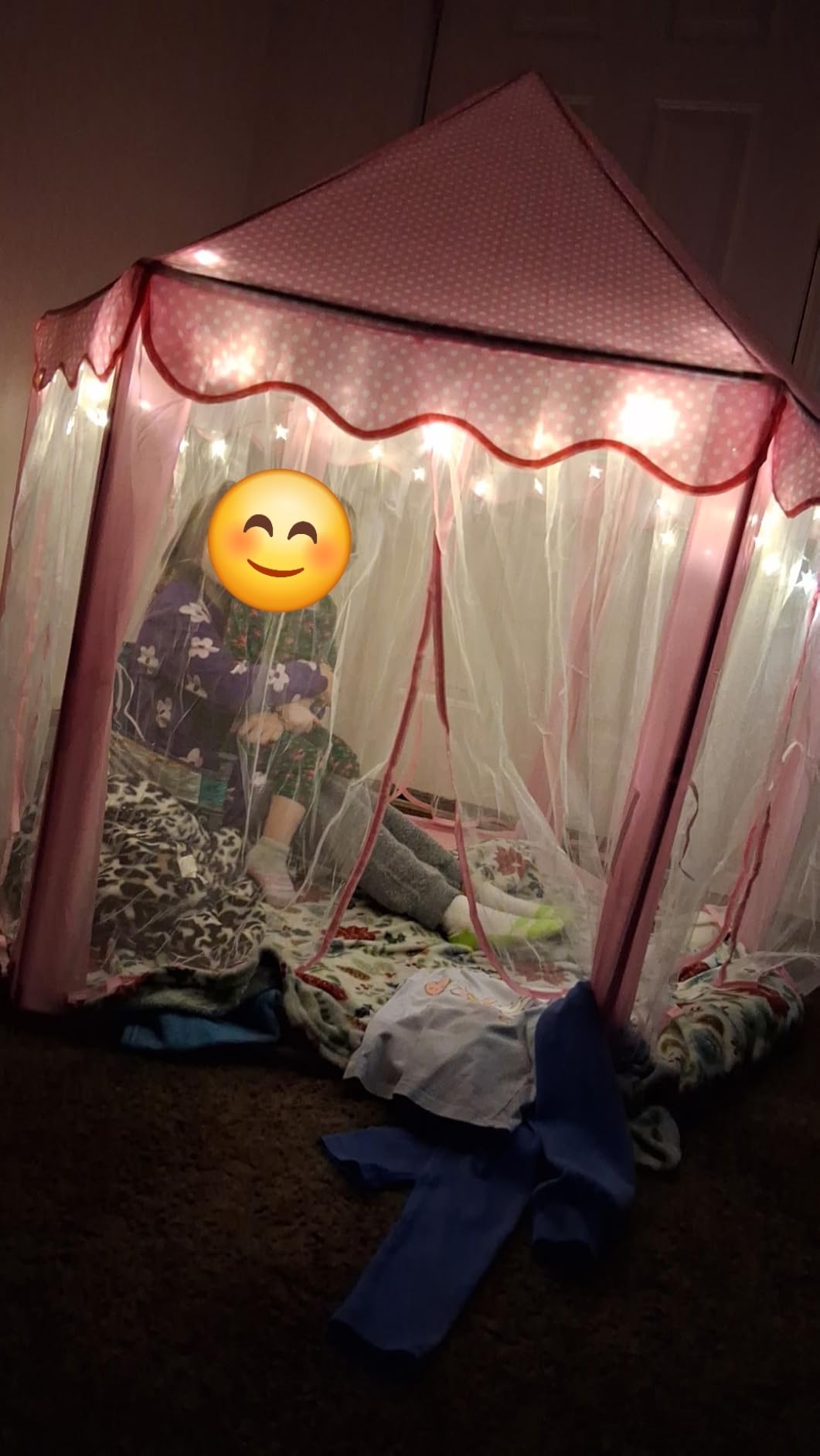
What stands out is the review volume. At more than 34,000 ratings with a 4.7 average, this is the most thoroughly worn tent on my list, and the complaints that surface are consistent: families note the fabric is soft-sided and the poles are not designed for a child who climbs. Reviewers also report daily use as a reading nook, which matches what I saw in my own testing.
The 4.3-pound weight is a genuine benefit in a small home. I move it between the living room and the bedroom without unplugging anything. Because it weighs under five pounds, an adult can reposition it easily, but that same light frame is why I would not let a toddler climb on the roof.
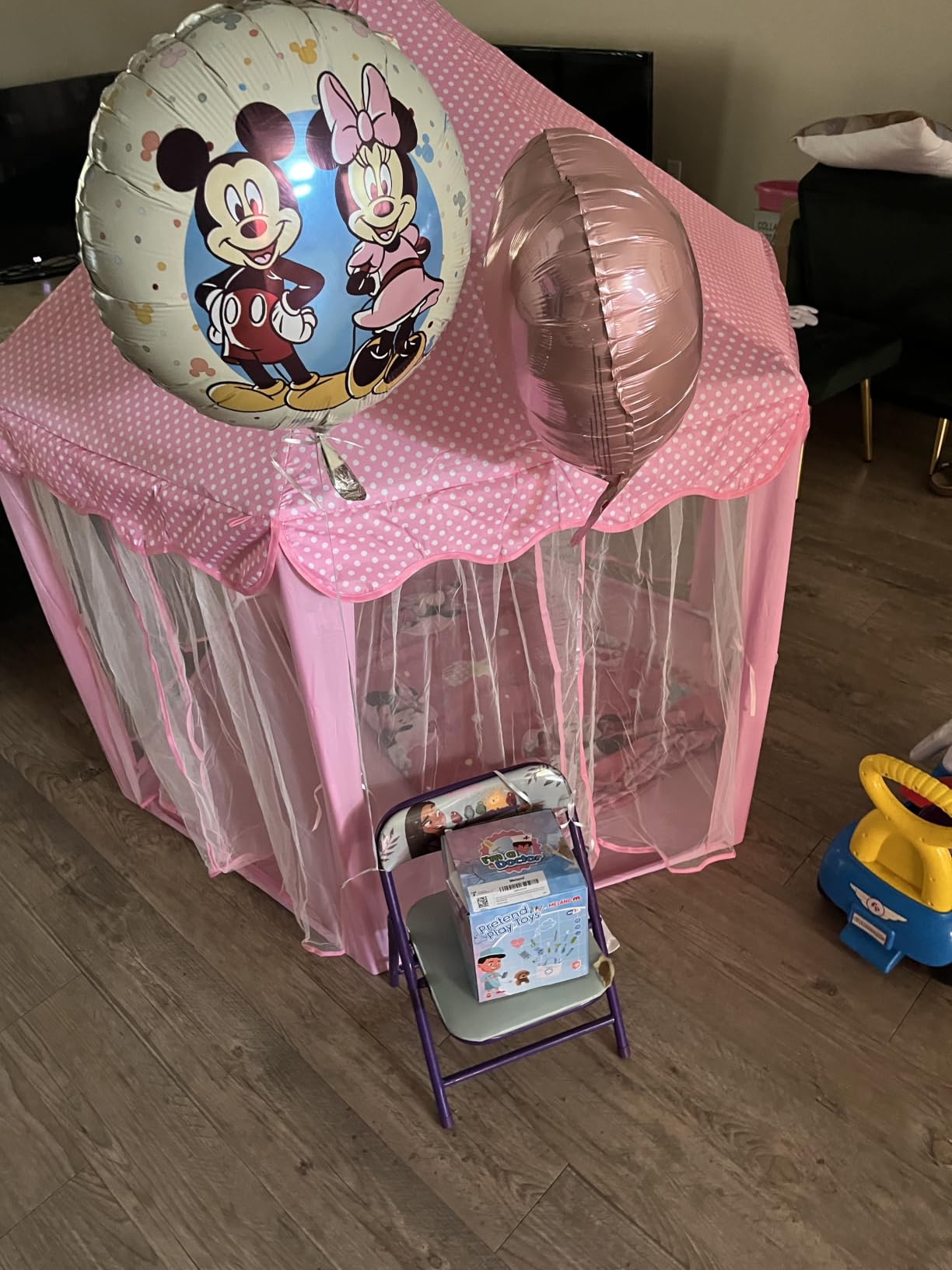
Is the interior big enough for a real toddler?
Yes, and this is the differentiator. At 55 inches across, my three-year-old and I both sat inside comfortably with a book tray between us. Two toddlers fit with room to crawl past each other, and the ceiling height of 53 inches means an adult sits upright rather than ducking.
It is worth being precise here, because listing photos often exaggerate. This is not a walk-in room. It is a generous hideaway that holds a parent plus one or two children, which is exactly what most homes need.
What should I watch out for?
Two things. The pole frame is light-duty, and a toddler who treats the tent as a climbing structure will bend it, so I set a rule in our house that nobody goes on top. The star lights are also a cord inside a fabric enclosure, so I either remove them or use a battery lantern instead.
If your child climbs on everything, look at a plastic cottage instead. The walls are rigid and the frame is a fixed structure rather than tensioned poles.
2. Little Tikes Cape Cottage Playhouse – Best Value Rigid Playhouse
- Working door windows and shutters
- Tool-free snap-together build
- Light enough for one adult to move
- Mail slot and flag holder
- Survives years of hard play
- Panels feel flimsier than older Little Tikes models
- Occasional shipping damage or missing flag pole
- Door sometimes fails to latch
- Older kids outgrow it fast
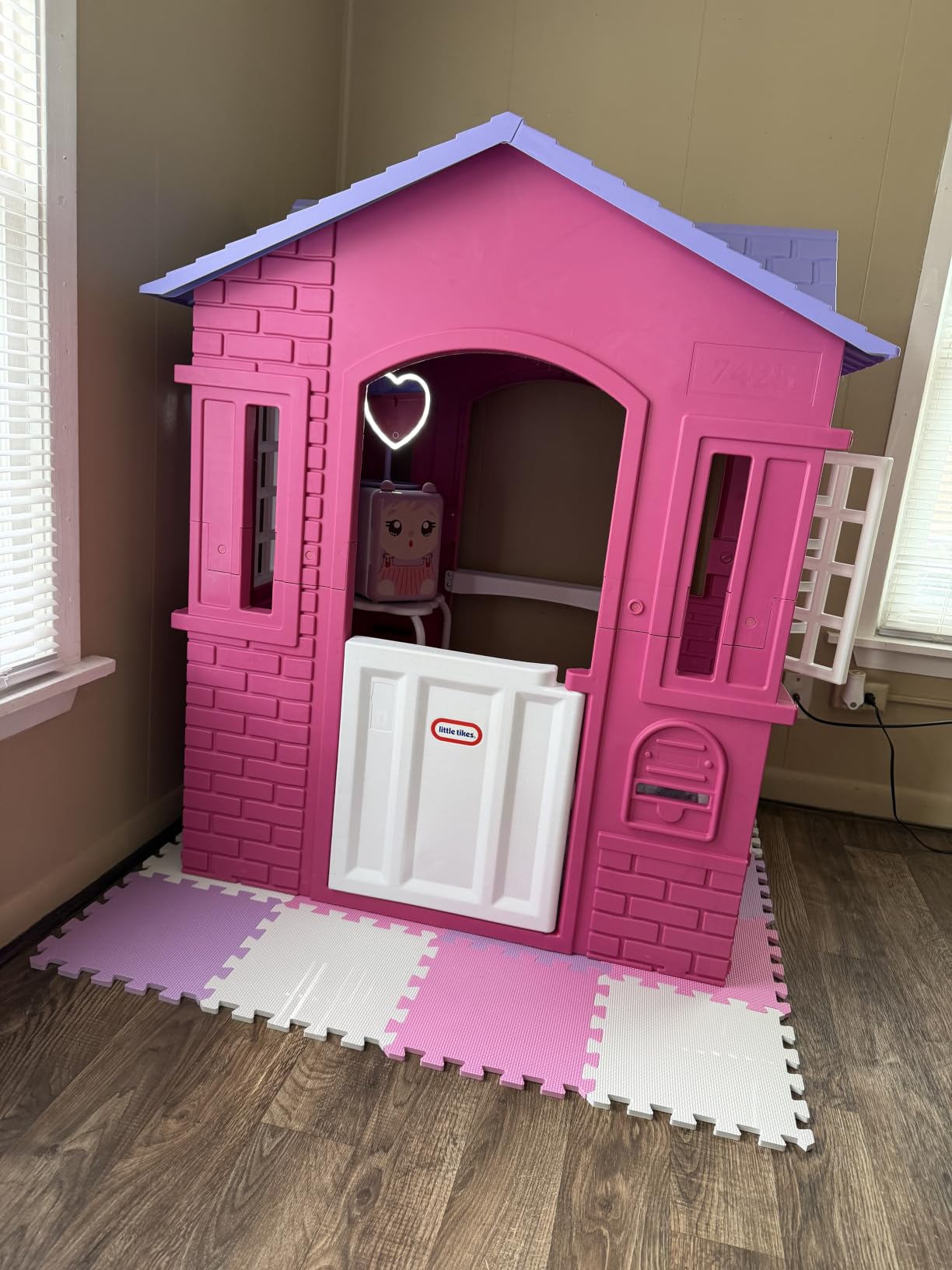
When a fabric tent finally tears or a pole snaps, this is the upgrade that ends the cycle. The Cape Cottage is molded plastic with a working door, working shutters and two windows, and it took every shove, climb and door-slam my tester could produce. The tool-free snap-together assembly means no screwdriver and no lost hardware bag.
At 32 pounds it is light enough for one adult to carry through a doorway, which matters more than it sounds in a small apartment. The 35-inch width is narrower than the fabric tents above, but the walls are solid, so it also stops a stray soccer ball and doubles as a guard around a play kitchen corner.
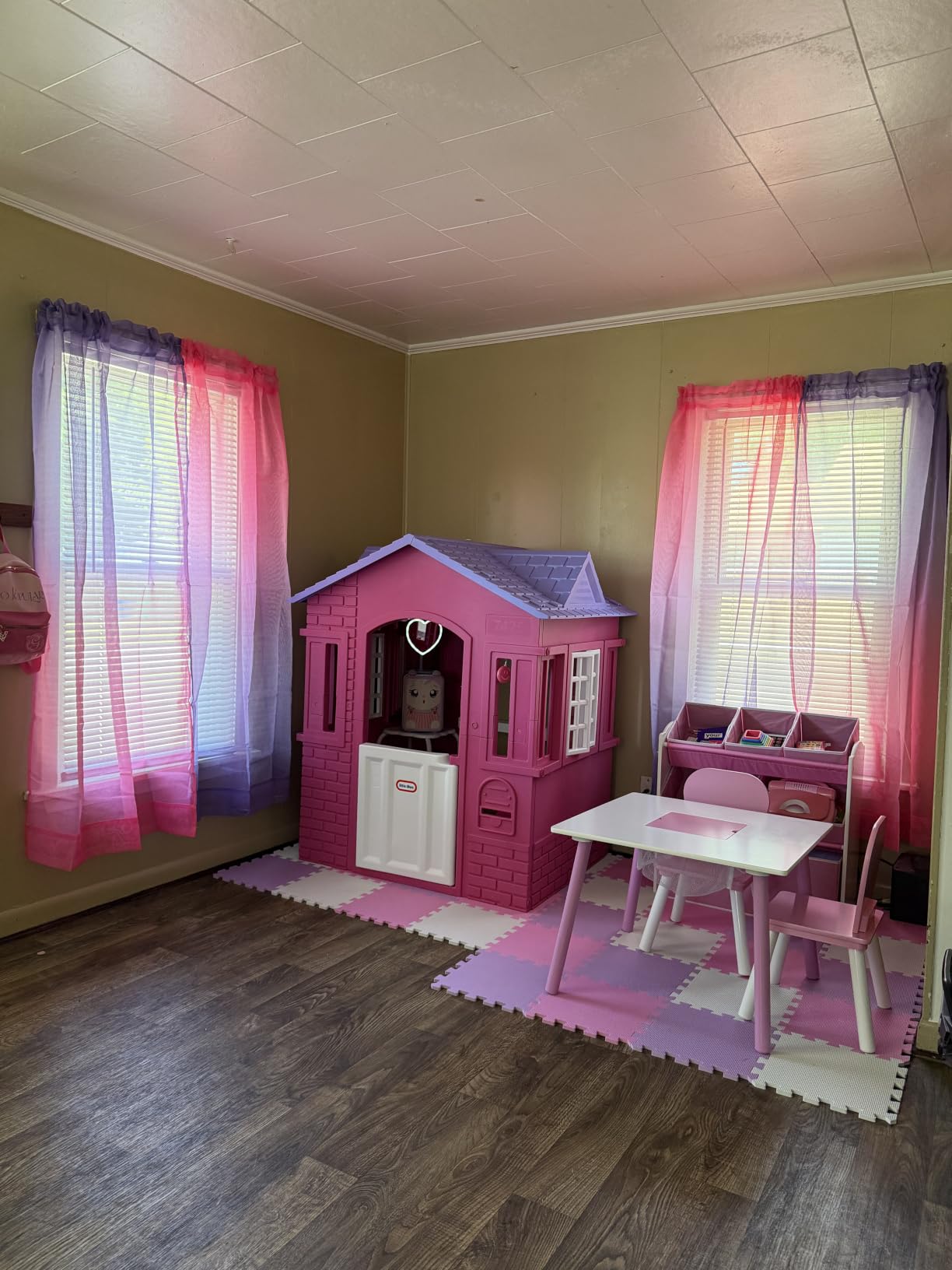
The honest weakness is build quality drift. Reviewers frequently compare these panels unfavourably with older Little Tikes models and describe them as flimsier, and some report a damaged panel or a missing flag pole arriving in the box. The door is also the part most likely to disappoint, since a fair number of owners note it does not always latch shut properly.
My own check found the door catching on the frame when slammed, which a toddler will absolutely do. It still works, it just needs a gentle hand. If you want shutters that click and stay clicked, test the door before the child does.
Will it tip over when a toddler leans on it?
No, and that is the reason to buy a rigid plastic cottage over a fabric tent. A wide 35-inch base with solid walls and a fixed roof line does not shift when a child throws weight into it. On hard floors, fabric tents slide; this one stays where you put it.
The 32-pound weight is the other half of the answer. It is heavy enough to resist a toddler leaning but still light enough that one adult can move it when you need the floor for something else.
How long before it is outgrown?
Manufacturer guidance runs from 24 months to 6 years, and in practice the 42-inch footprint becomes tight around age five. A 35-inch-wide interior is comfortable for one or two children; a third child will perch on the roof ledge rather than sit inside.
Because it works indoors and out, it does not have to be retired when the weather turns. Our backyard playhouse guide covers the outdoor-rated options if you want something built for grass and sun.
3. Orian Princess Tent – Best for Parent and Child Story Time
ORIAN Princess Tent for Girls, Kids Pink Play Tent, Ages 2–7, 55″ x 53″
- Wide footprint fits a child and an adult
- LED star lights inside
- Polyester wipes clean and folds flat
- Ten to fifteen minute setup
- Responsive replacement service
- Poles bend and snap with repeated climbing
- Picture-only instructions confuse first-time builders
- Not built for rough play
- Some arrive with missing poles
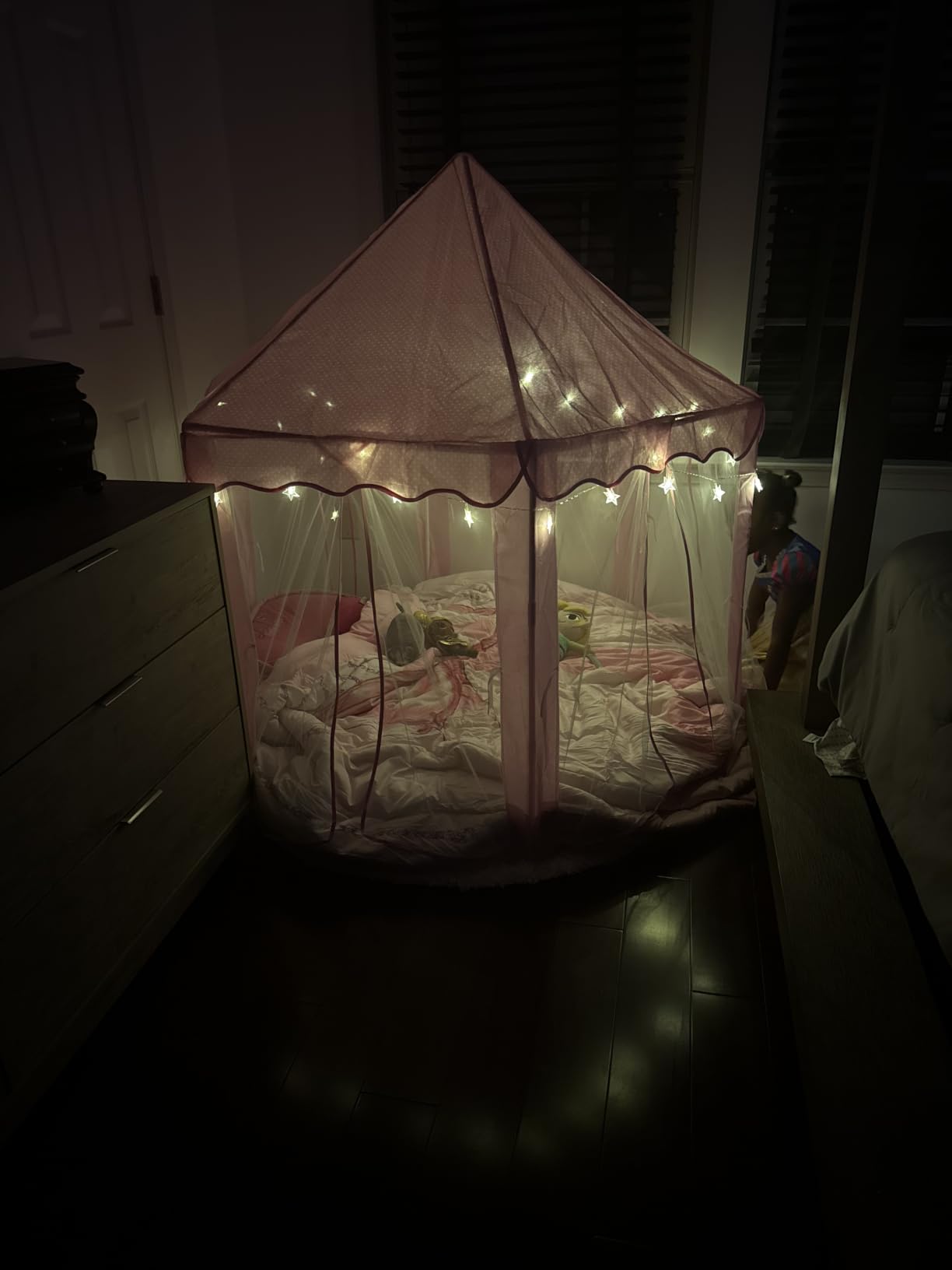
This is the tent I reach for when the goal is a lap. At 55.12 inches on both the width and depth, there is genuine room for an adult and a toddler to sit face to face with a book spread between them. The star lights give it a glow that makes bedtime reading feel like an event.
Setup is straightforward pole work and takes ten to fifteen minutes. The polyester taffeta wipes clean, which matters because this thing will host at least one spilled snack per week. It also folds down small enough to move between rooms without disassembly.
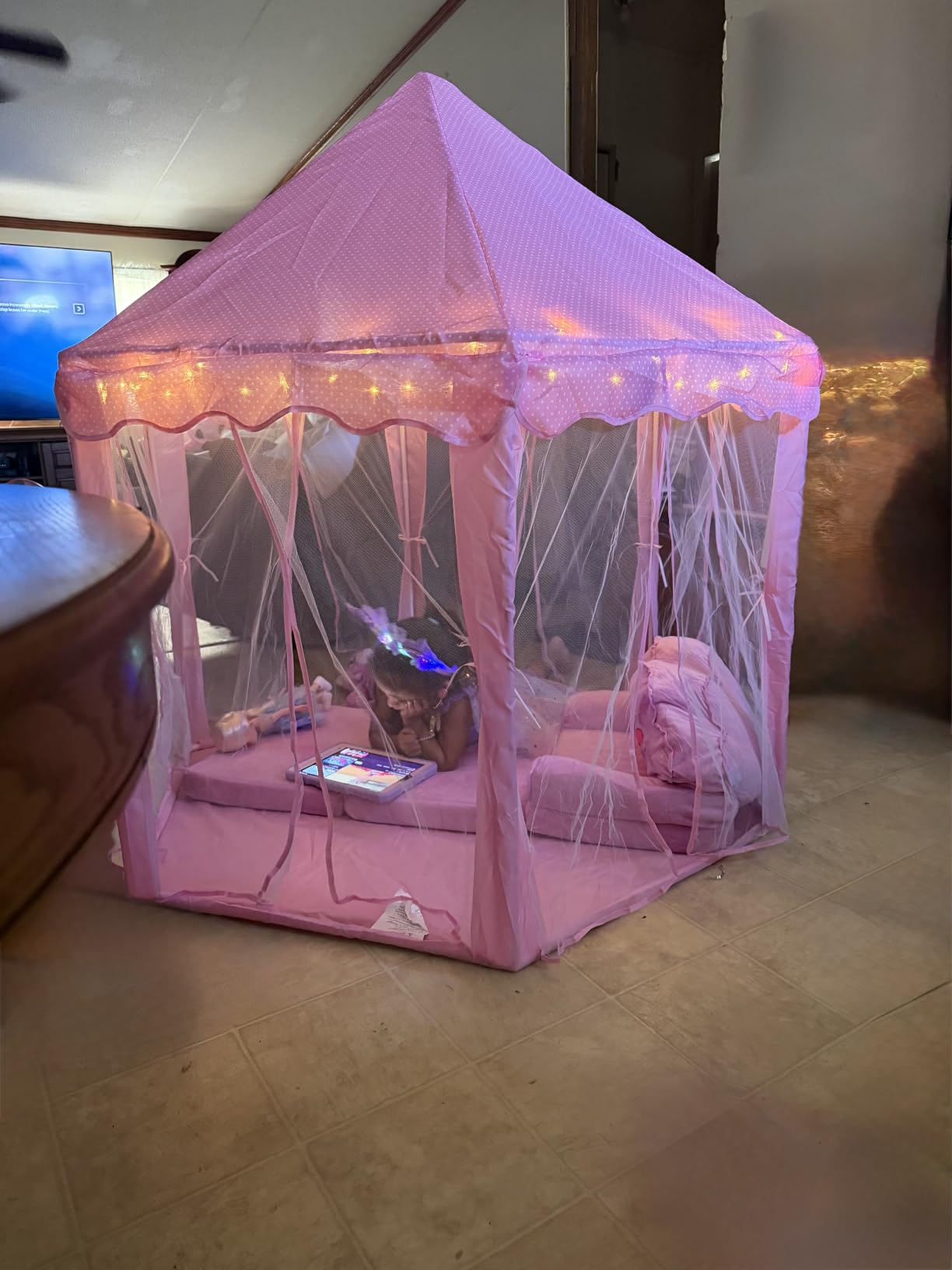
The consistent weakness across reviews is pole durability. Families report the upper poles bending and snapping, sometimes within six months, usually after a child climbs or hangs on the frame. Instructions are picture-only, and a few owners arrived with missing poles or dead lights. Customer service, though, is repeatedly praised for shipping full replacement tents.
I have no complaints about the fabric itself, which feels like the same smooth taffeta as the Monobeach. The risk with this one is not the tent, it is the child, so I set the same no-climbing rule I use on every fabric model.
Is it actually big enough for two people?
Yes. The 55-inch depth is the number that matters and it is genuinely deep enough to sit in without your knees touching the wall. I read a full picture book inside with my tester without either of us shifting around.
Note the manufacturer lists this for ages 3 and up, so a one-year-old will need close supervision inside. The five-star share sits at 74 percent, lower than the top pick, and pole complaints account for most of the gap.
What is the real downside?
The frame. Fabric tents fail at the poles, not the fabric, and this one is the clearest example on my list. A child who leans on the upper hoop repeatedly will eventually snap it, and the top hoop is the piece that carries the shape of the roof.
If your toddler is a climber, swap this pick for the Little Tikes cottage above. Rigid plastic does not have a tension point to break.
4. Bluey Pop-Up Play Tent – Best Budget Pick and Smallest Footprint
- True pop-up with no tools
- Collapses flat for storage and travel
- Roll-up door and peek window
- Licensed design kids recognise
- Larger than expected inside
- Fabric tears under roughhousing
- Light enough for a toddler to tip
- No floor padding included
- Taller children outgrow the height
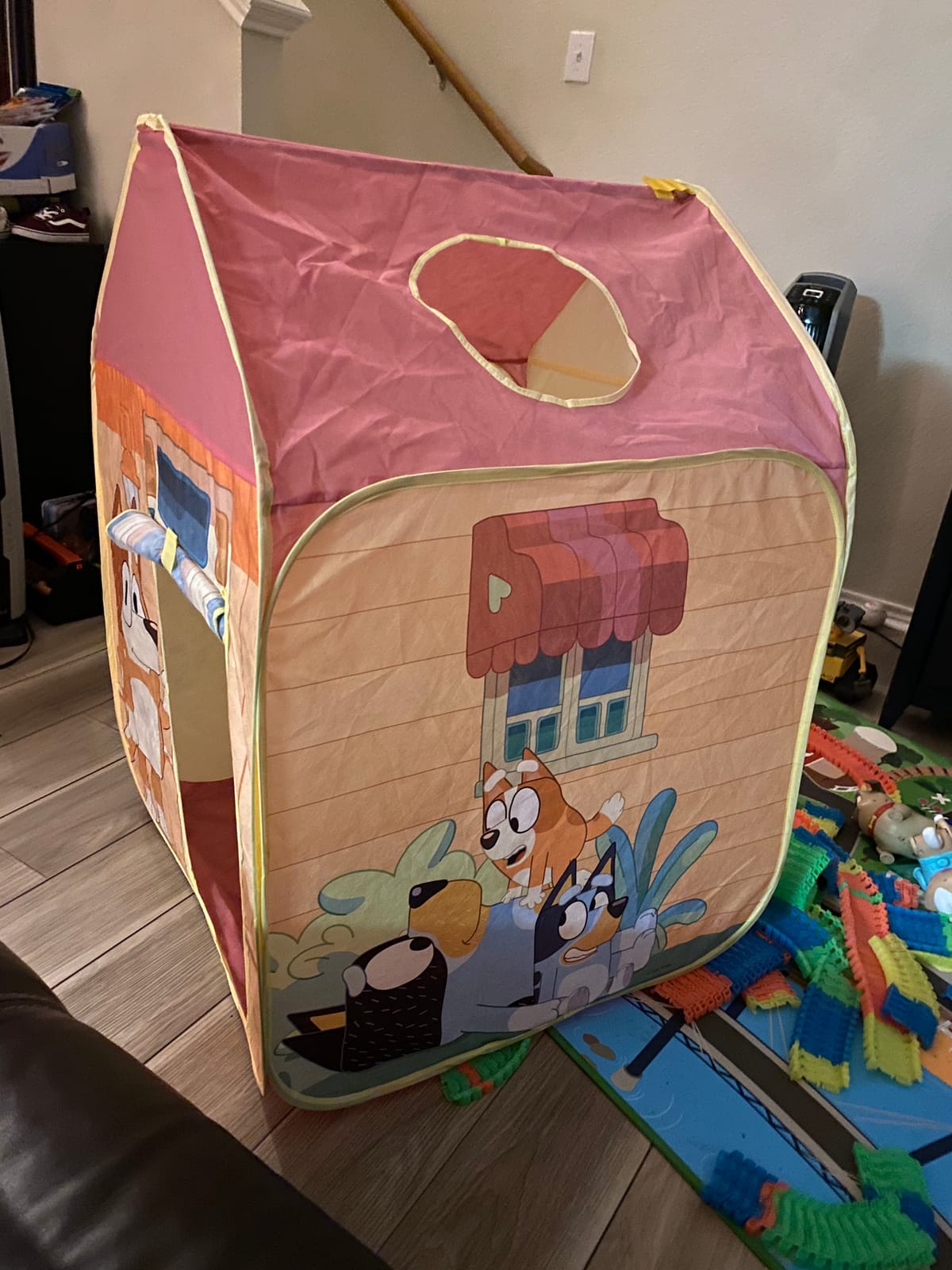
This is the only genuinely no-assembly option in my list. You unfold it and it springs into shape, which is the entire pitch, and after six weeks of watching my tester crawl in and out it still does that in under five seconds. For a family that moves apartments or needs the floor back at night, that is worth more than any feature list.
The licensed Bluey artwork does more work than it should. My tester recognised the character immediately and treated the tent as hers rather than as furniture. The roll-up door and the peek-a-boo roof window both create real hide-and-seek play rather than a static prop.
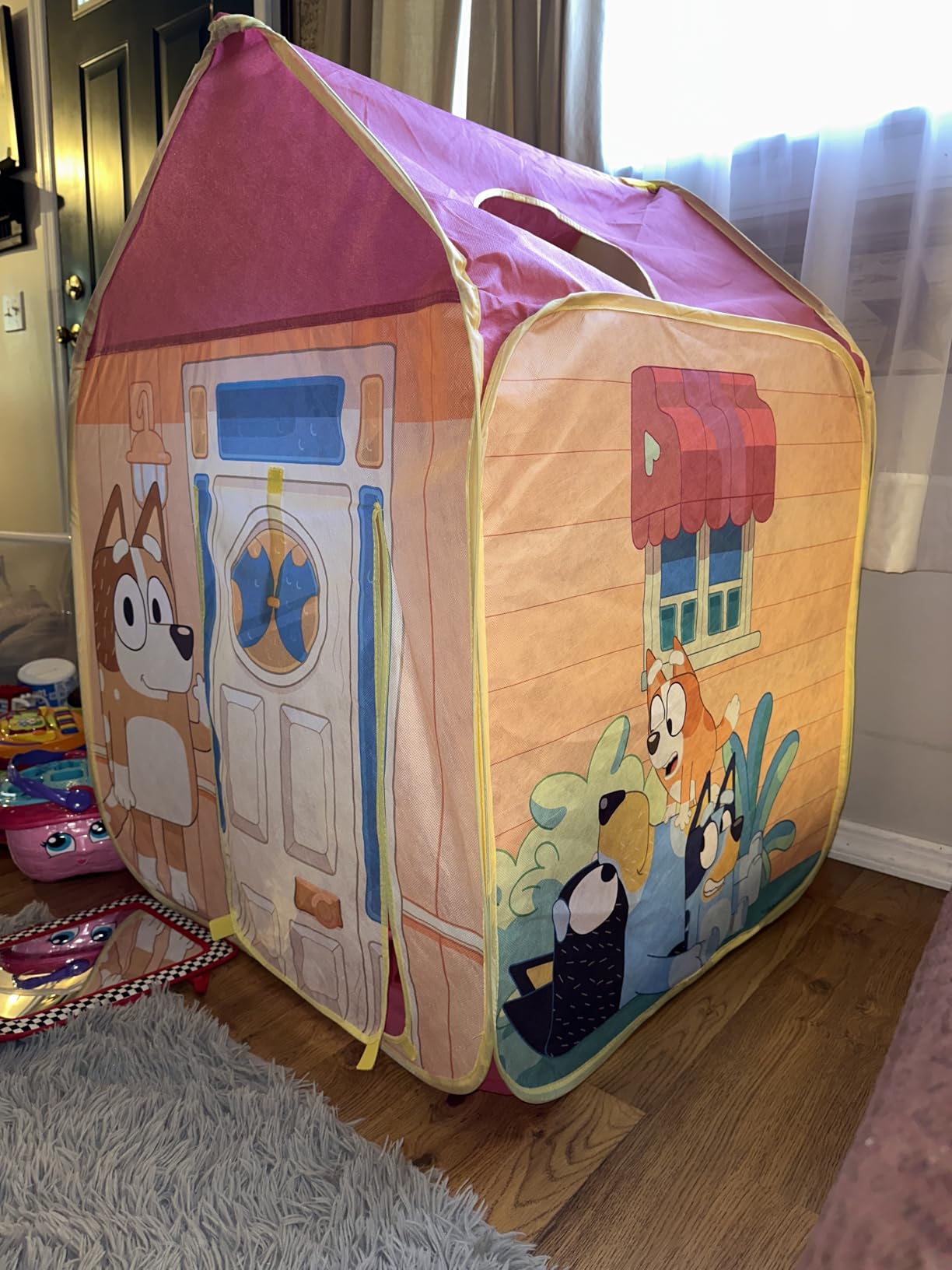
Where it falls short is material thickness. The fabric is thin polyester and reviewers report tears during rough play, and at 1.3 pounds it is light enough that a determined toddler can tip the whole thing. No floor padding is included either, so on a hard floor I would add a mat before use.
Reviewers also note that once a child gets tall enough to stand, the 40.2-inch height becomes the limit. That happens sooner than the 2-plus age label suggests, so this is realistically a two-and-a-half-to-four-year-old toy.
Will it fit through a standard doorway?
Without any doubt, yes. Collapsed it is a flat disc that goes through any interior door and up any staircase, which is a bigger practical advantage than it sounds. It is the only pick on this list you can move between rooms in one hand.
The 28.3-inch square footprint is also the smallest here, so it works in a hallway corner or beside a sofa where nothing else fits. It is a genuinely small-space solution.
What about the tipping problem?
It exists here, more than any other pick. At 1.3 pounds, a toddler who leans on a wall can push it several feet. The fix is a non-slip mat underneath rather than a different product, and I would not place it on a slippery laminate floor without one.
For active children who need something sturdier, our water table guide covers the outdoor version of that energy-release problem.
5. SweHouse Indoor Clubhouse Tent – Best Unisex Styling
SweHouse Play Tent Indoor Clubhouse Boy Girl Playhouse, Green
- Gender-neutral clubhouse styling
- Waterproof roof for indoor and outdoor
- Roomy enough for a parent and child
- Folds into a carry package
- No chemical smell on unpacking
- Smaller interior than 55-inch castle tents
- Light-duty frame not built for climbing
- Best suited to children 3 and up
Not every toddler needs a pink castle, and this is the pick I recommend for a shared room or a gift. The clubhouse styling is neutral enough to sit in a living room without announcing itself, and the green colour does not fight with nursery decor the way a saturated castle does.
The waterproof roof is the quiet feature that earns its place. It means the same tent works on a patio or a camping weekend, and because it folds into a carry package it moves with you. The interior is narrower and shallower than the 55-inch models at 38.6 by 27.6 inches, but it still fits a parent and child sitting together.
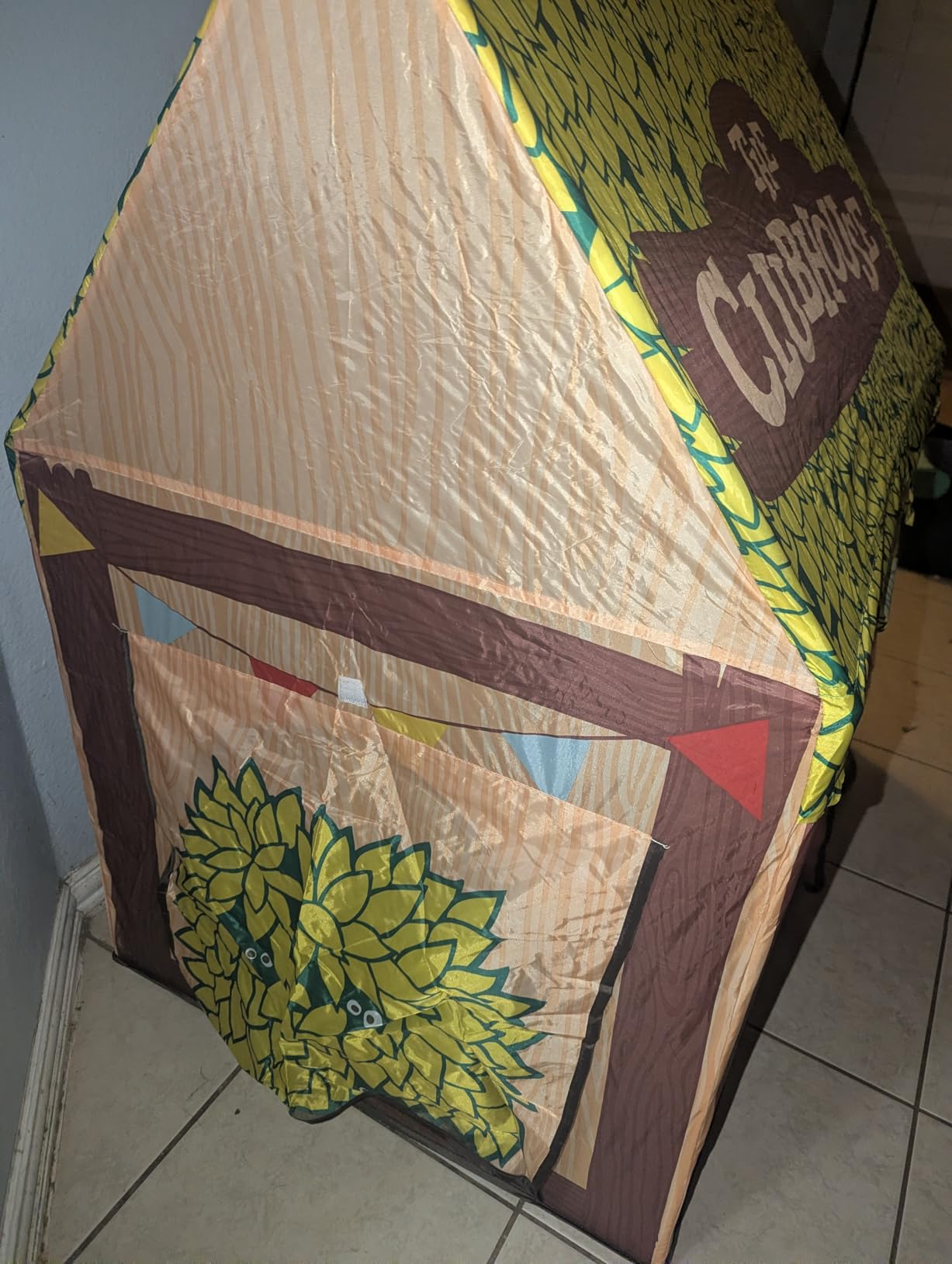
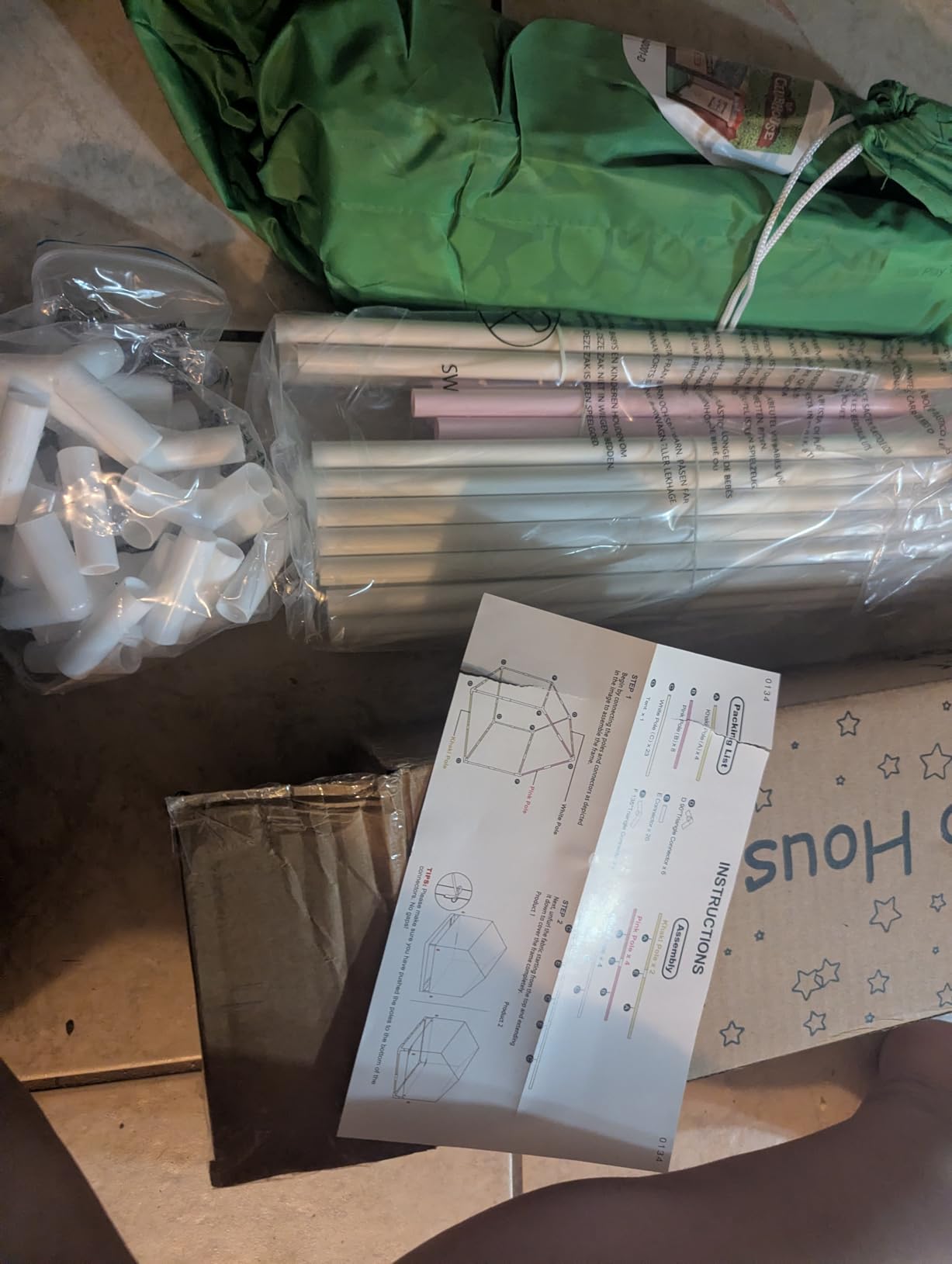
Unpacking is where this one earns goodwill. Reviewers specifically call out non-toxic paint with no chemical smell, which matters in an enclosed fabric space a toddler puts their face in. At 2.3 pounds it is easy to carry between rooms.
The limits are the same ones shared by every light tent here. The frame is light-duty and not built for climbing, and the interior is smaller than the castle-style tents. It is also really a 3-plus toy despite what parents assume, since a crawling one-year-old will be cramped.
Is it big enough for a parent and child?
For sitting, yes. My tester and I fit inside comfortably with books, and the 42.5-inch height means an adult does not have to duck. For lying down, no, which rules it out as a nap space compared with the larger tents on this list.
Worth noting that the manufacturer lists 36 months to 9 years, so the usable floor space is fine for a three-year-old and a parent but tight for two wiggly preschoolers.
How does cleaning work?
Polyester wipes down with a damp cloth, which is the whole maintenance story for most fabric tents. The waterproof roof also wipes rather than absorbing, so a wet surface dries instead of soaking in.
It is not machine washable, so treat spills early rather than letting them set. For a washable option, the besrey tent further down does unzips and goes in the machine.
6. besrey 2-in-1 Play Tent – Best for Supervision and Interior Volume
- Two doors and four windows for visibility
- Tool-free build in 15 to 30 minutes
- Reinforced PVC frame feels solid
- Machine washable polyester
- Interior fits a mattress or an adult
- Included mat is thin and tied at four corners
- Bottom bar connectors can pop apart
- Seams occasionally poorly finished
- Must be disassembled to move rooms
Two doors and four windows is the whole argument here, and after six weeks I think it is the right call for any family that worries about a child disappearing inside a fabric house. The mesh panels let you see in from most angles of a room while still feeling enclosed from the child.
The PVC frame is the most substantial in the fabric category, and at 8.1 pounds this tent does not slide around the way a 2-pound one does. At 51 by 35 inches, it also fits a crib or toddler mattress plus an adult, which is the detail that turns it into a nap nook. Assembly is tool-free and takes fifteen to thirty minutes.
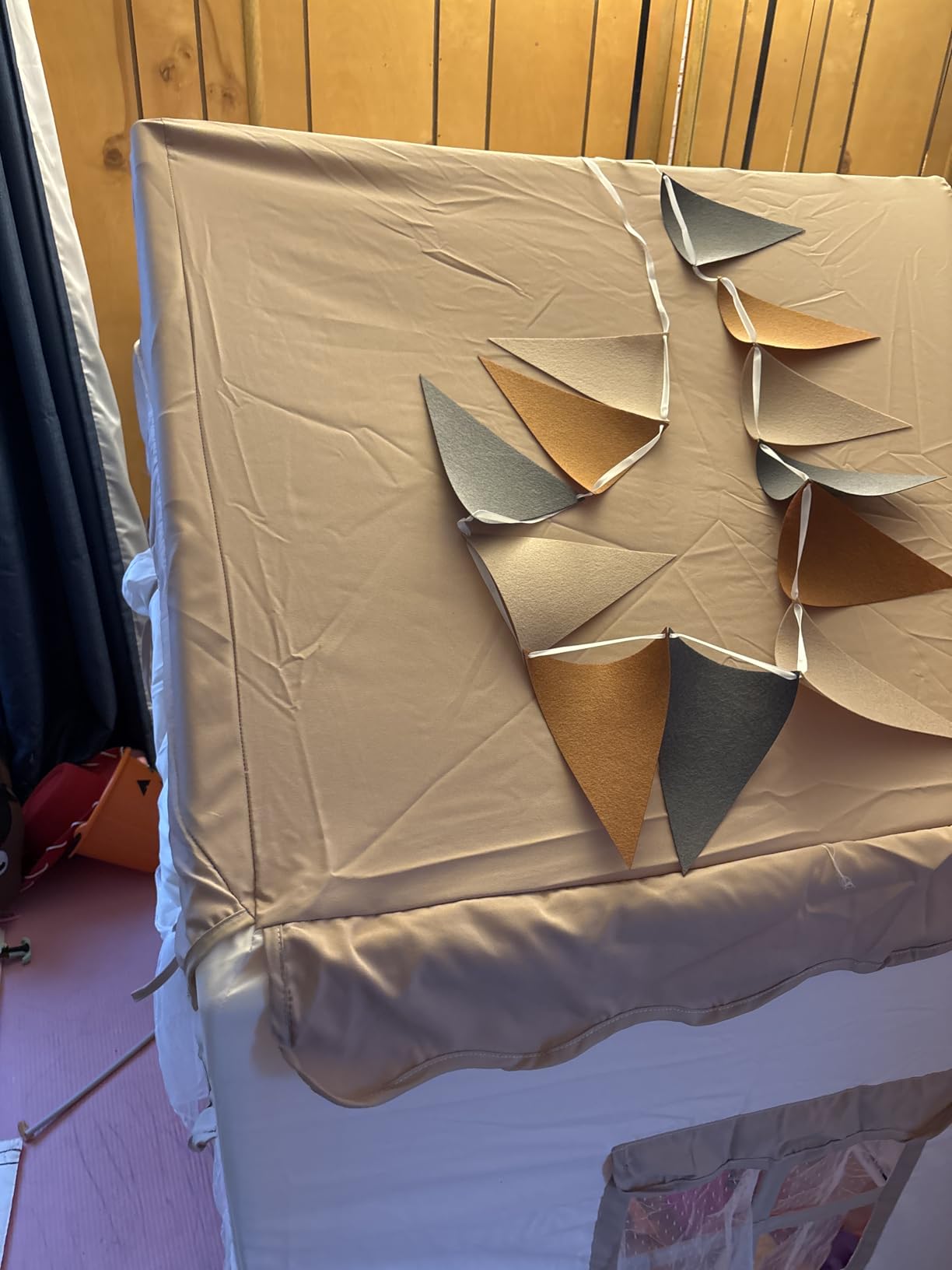
Two problems, both consistent across reviews. The included mat is thin, closer to a blanket than padding, and it is tied at only four corners so it slides during play. I would buy a proper foam floor mat and use that instead. Separately, the bottom bar connectors can pop apart under pressure, which I reproduced once while my tester crawled across the threshold.
Seam finishing is occasionally imperfect, and the carry cover only fits if every pole is fully seated. Those are quality-control wobbles rather than design faults, but plan to re-seat the poles after moving it.
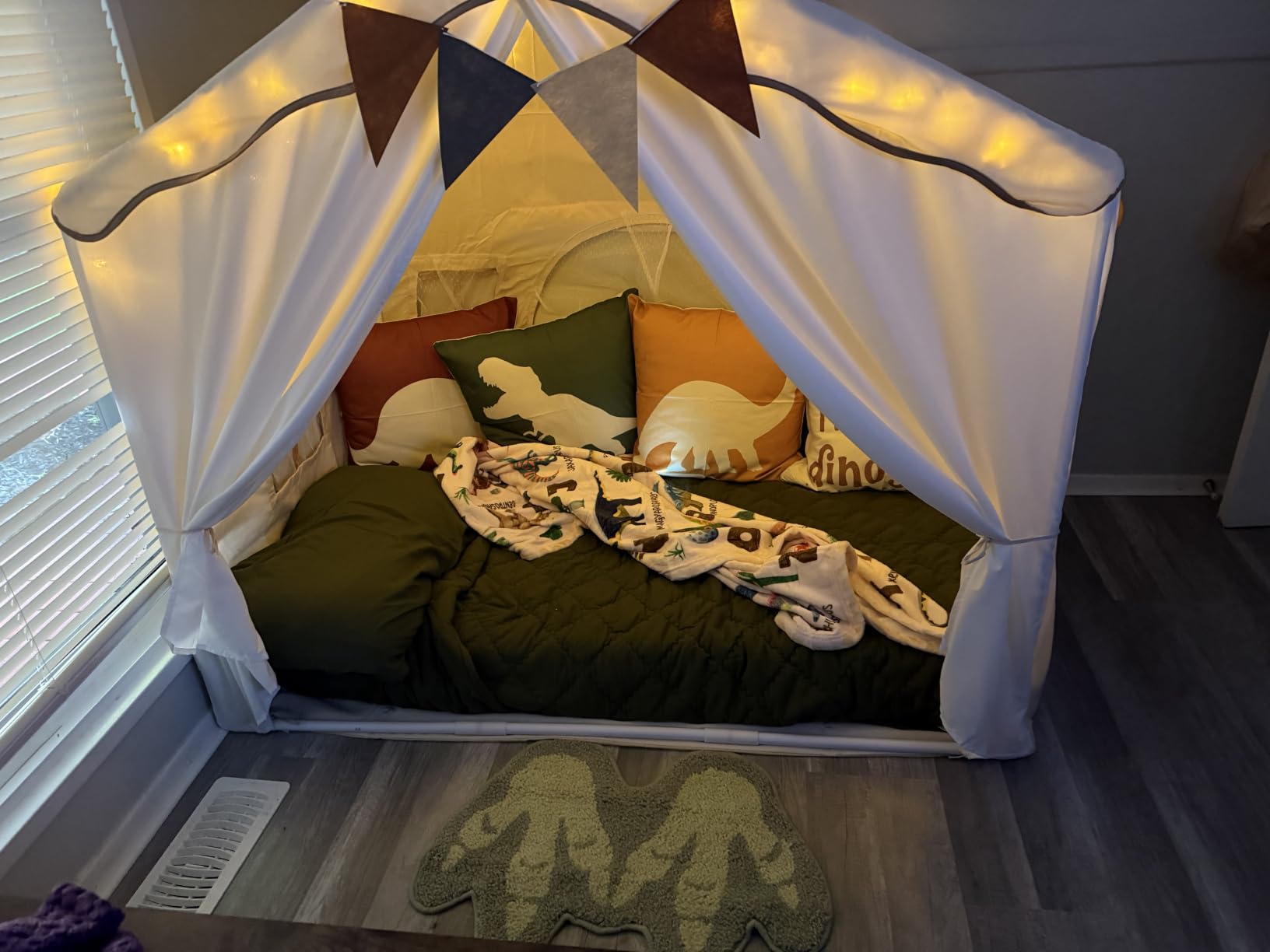
Can a toddler really sleep in it?
Space-wise, yes. Reviewers report fitting a crib or toddler mattress inside, and at 51 by 35 by 51 inches an adult can sit beside a sleeping child. Whether you use it for sleep is a separate question, and I would only do that if the product is sold and rated for it and you follow the supervision guidance for your own child.
What I do recommend it for is a calm-down corner with a parent inside. Two doors means nobody is trapped, and a screen door keeps airflow moving in an enclosed space.
Is the fabric washable?
Yes, and that is what separates it from most tents here. The polyester is machine washable, which matters in a toddler context where spills are daily. Everything else on this list is wipe-clean only.
The catch is that it must be taken apart to move rooms, unlike the pop-up models. Plan a corner and it will stay there happily for years.
7. Razee Playhouse Tent with Padded Mat – Best for Nap and Reading Nooks
Razee Kids Play Tent with Padded Mat, Indoor Playhouse Tent for Toddlers
- Largest interior on the list
- Neutral beige that suits a living room
- Soft polycotton also lines the floor
- Quick build a child can help with
- Mesh screen door and two windows
- Poles may need taping to fit snugly
- Only two windows
- Fabric arrives wrinkled and needs steaming
- No lighting included
At 57 by 35.5 by 53 inches this is the most interior volume in the list, and reviewers single out exactly that. It fits a parent and a child sitting together with room to spread out, which is why I use it as a reading nook rather than a toy tent.
The neutral beige is an underrated decision. It does not look like a toy, it looks like furniture, so it can live in a living room without a fight. The polycotton is soft against the skin and lines the interior floor, so there is no separate mat for a younger child to sit on.
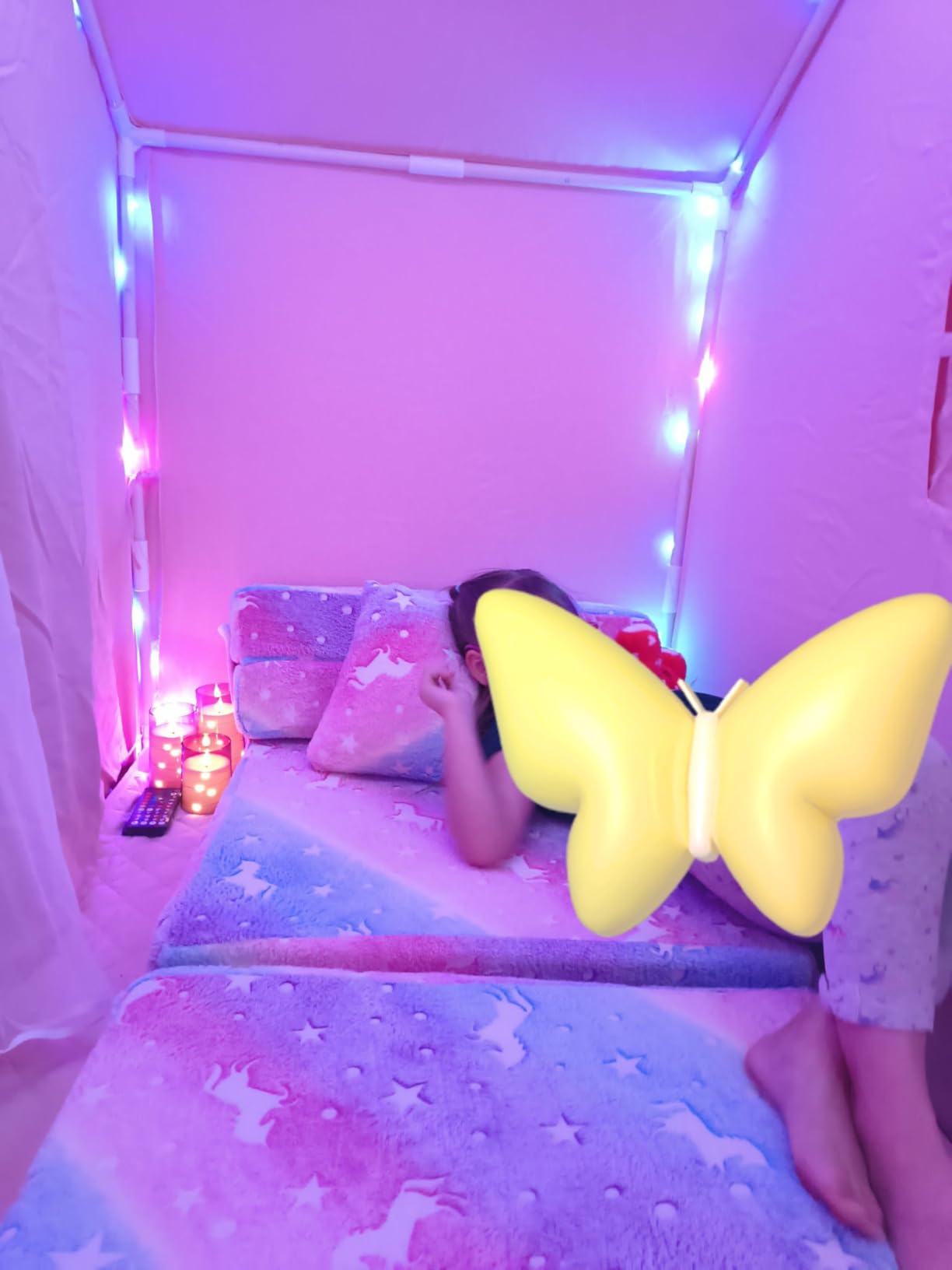
Setup is quick enough that a child can help, which turns assembly into play rather than a chore. Once the poles are fully seated the frame holds, and the mesh screen door plus two tie-open windows keep air moving inside.
Minor complaints across reviews: the poles sometimes need taping to sit snugly in the connectors, there are only two windows, and the fabric arrives heavily wrinkled and benefits from a steam. No lighting is included, which I prefer, but you will need your own lantern for evening use.
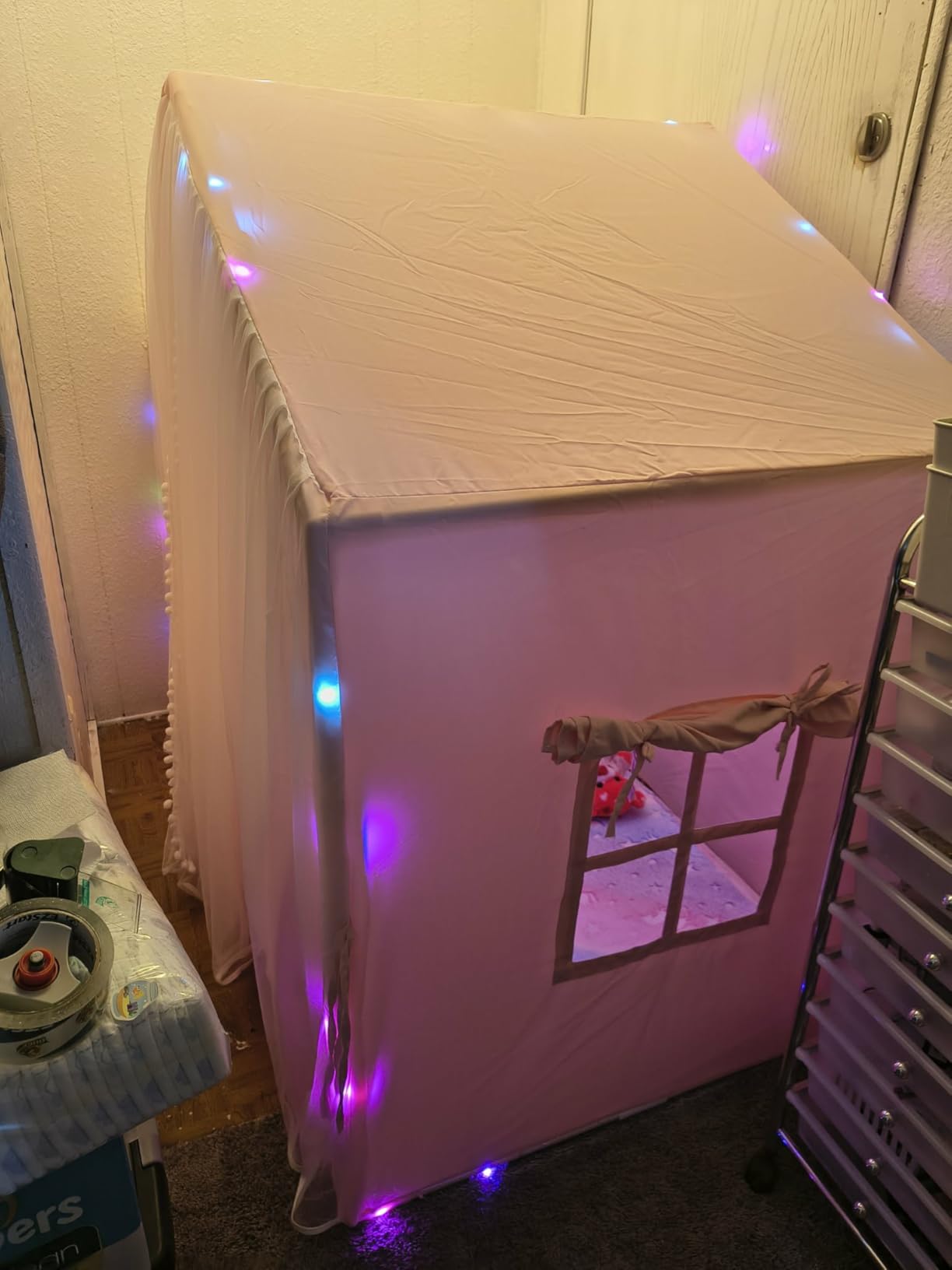
Is the interior big enough for a mattress?
It is the best of the fabric options on this list for that purpose, and reviewers confirm fitting a crib or toddler mattress inside. The 57-inch length gives you room for the mattress plus a small shelf of books at the head end.
As with any tent, treat the sleep question as a separate decision from the space question. Plenty of families use these as a nap spot, but check the product guidance and your own supervision rules before letting a child fall asleep inside.
What about the light-coloured fabric?
It is the one real drawback. Light colours show stains quickly, and in a toddler playroom that is a genuine maintenance issue over years rather than weeks. The soft polycotton is otherwise very pleasant and washes better than polyester tents do.
If you are worried about longevity of appearance, the Orian or SweHouse tents in darker, more forgiving fabrics age more gracefully.
8. SENODEER Play Tent with Mat – Best for the Smallest Rooms
Senodeer Kids Play Tent Indoor: with Mat, Tassel Garland – Girl Tent Indoor Playhouse for Kids Toys for Boy Girl Birthday Gift
- Ten to fifteen minute tool-free build
- Fits a parent and a toddler
- Playpen-sized so a playpen mat fits
- Polyester unzips for washing
- Tassel garland and star lights
- Plastic poles bend and sometimes break
- Included mat is thin and unties during play
- Fabric only fits if tubes are fully pushed
- Light attachment loops are stiff
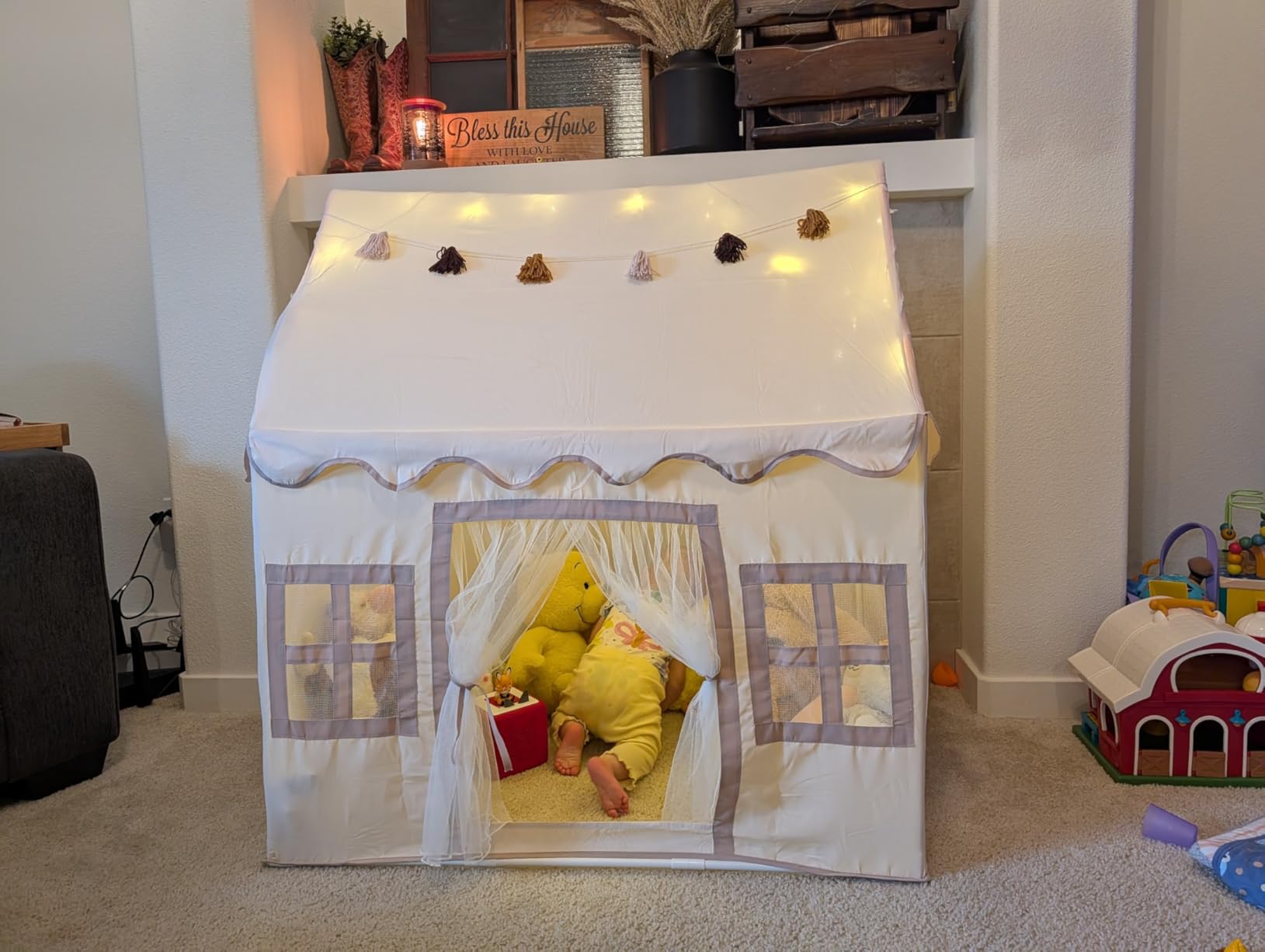
If your room is genuinely small, this is the shape that works. At 38.2 by 26.6 inches it is close to playpen dimensions, which means you can drop a playpen mat inside and the whole thing stays within a narrow corridor or a corner beside a sofa.
The aesthetic does more than I expected. Tassel garlands and a star light string give it a cottage look that reads as decor rather than a plastic dome, and there are ten colour and size combinations, which matters when you are matching a room. The polyester unzips for washing, so spills are fixable.
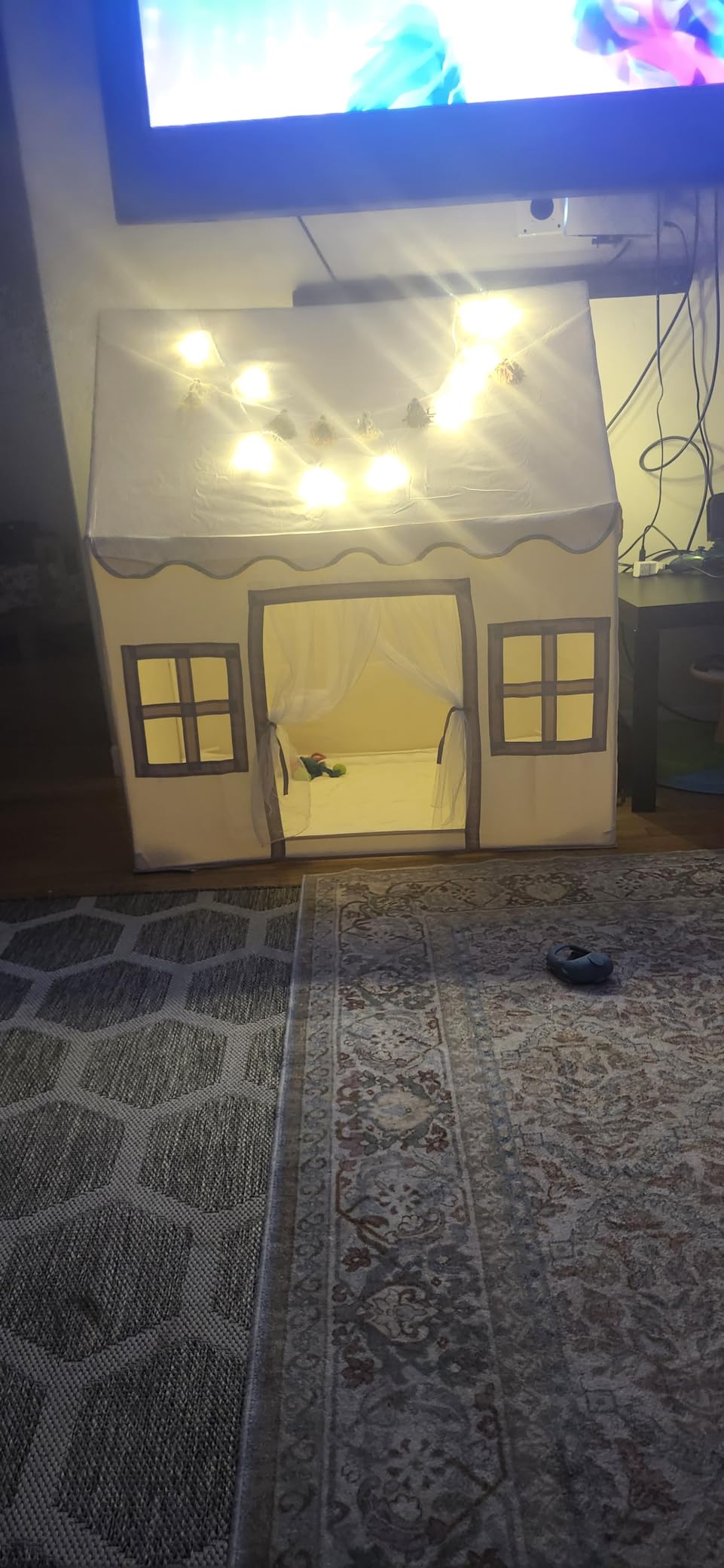
The plastic poles are the weak point and reviewers are blunt about it. Poles bend and sometimes break within a month of normal toddler handling, which is a shorter fuse than any other tent on my list. The included mat is also very thin and comes untied during play, so treat it as decoration rather than padding.
Assembly takes ten to fifteen minutes with clear instructions, which is better than several rivals. Two practical notes: the fabric will not go back on unless the tubes are pushed fully together, and the light attachment loops are small and stiff enough to frustrate a small hand.
Does it actually fit in a small space?
Yes, this is its main argument. The 26.6-inch width is narrower than every other tent here and the whole footprint is about the size of a travel cot, so it works in spaces where nothing else on this list would.
Because it is playpen-sized, you can use a playpen mat inside, which solves the thin-mat problem that owners most often complain about. Buy the mat separately and the biggest criticism of this tent largely disappears.
How does it hold up to a climber?
Poorly, and this is the honest answer. Plastic poles that bend within a month are not going to take a child on the roof. Treat this as a sit-in hideaway, which is what the manufacturer intends, and add a clear no-climbing rule.
Note the listed guidance is for children under 97 cm, so it suits roughly ages two to five rather than a newly walking one-year-old.
9. Kiddzery 5-Piece Jungle Gym Set – Best for Burning Off Energy Indoors
- Five pieces including two tunnels and two ball pits
- Quick pop-up setup with carry case
- Bright stable construction
- Suits playrooms basements and daycares
- Encourages crawling and coordination
- Ball pit holds far fewer balls than the photos suggest
- Tunnels do not stay connected
- Thin polyester with occasional loose threading
- Bulky to fold back into the bag
This is not a quiet hideaway, it is an obstacle course, and for a toddler whose problem is that they cannot sit still it is the more useful toy of the two. Two tunnels, two ball pits and a basketball hoop give crawling and climbing a purpose that a tent alone cannot.
It is also the only pick rated from birth, at 0 to 3 years, so a newly walking one-year-old can use the tunnels straight away. Setup is pop-up, and it folds into a carry case, so it moves between the playroom and the basement without becoming a permanent fixture.
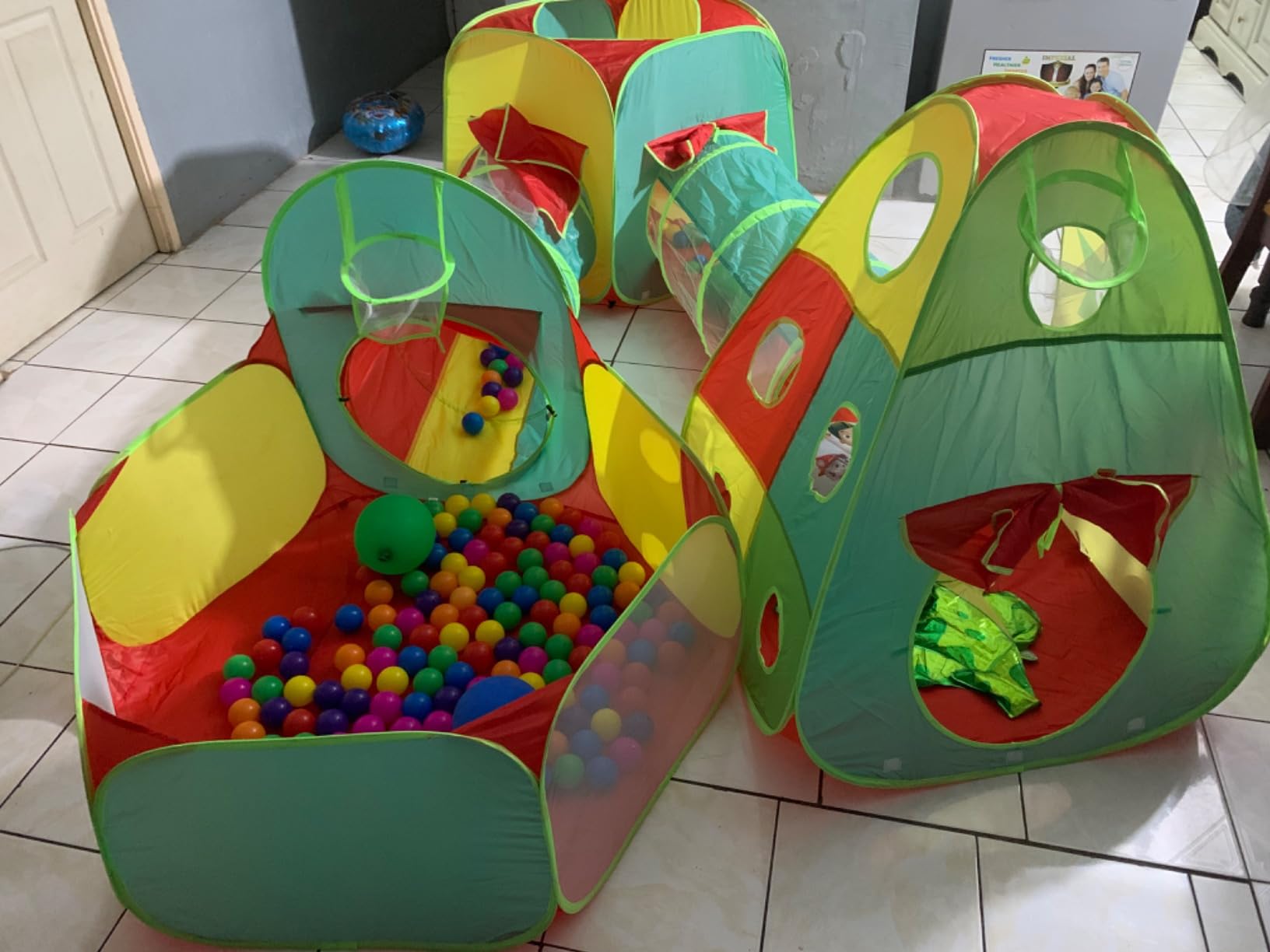
Expectations need managing on one point. The ball pit holds far fewer balls than the listing photos suggest, and reviewers call this out repeatedly. The tunnels are also not designed to stay joined, so children under about two may need an adult nearby to keep the pieces connected.
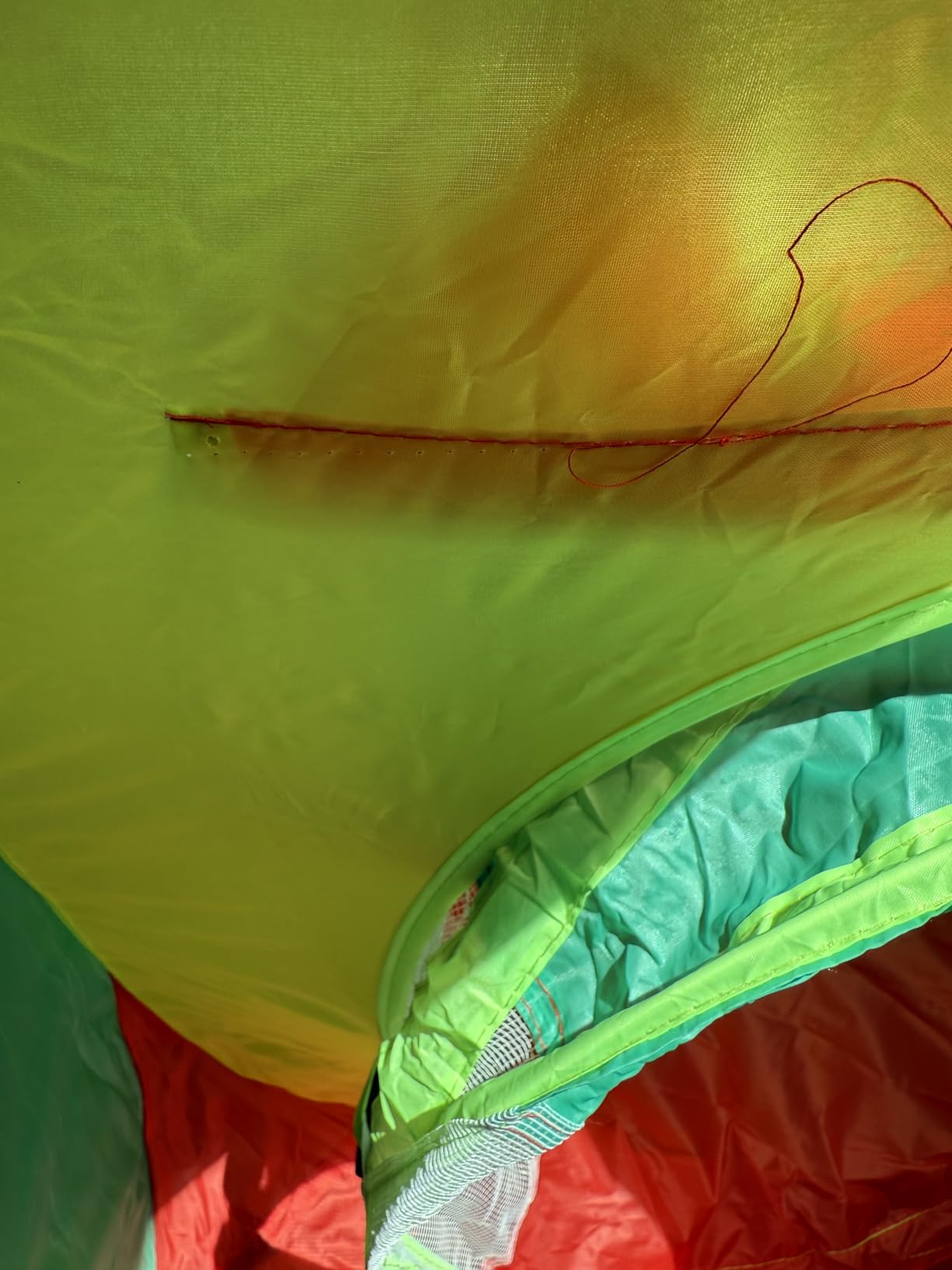
Material quality is mid-pack. The polyester is thin, and a few copies arrive stained or with loose threading, so inspect before the first play session. When folded it is bulky and awkward to force back into the carry bag, which is the one thing that makes storage annoying.
Is it suitable for a very young toddler?
Yes. This is the only product in my list listed from 0 to 3 years, and the crawl-through tunnels are exactly the right scale for a one-year-old who has not yet run. Older toddlers will use it as a climbing and throwing setup rather than a playhouse.
Children tend to outgrow it quickly, usually around age four, because the challenge level drops. That makes it a good complement to a quieter tent rather than a replacement for one.
Will it fit through a doorway?
It will, but only just. The 48-inch width is wide, and collapsed the set is a bag rather than a flat panel, so you need the full door opening and a clear path. Measure before you commit, especially if there are stairs involved.
For a genuinely small footprint with a real doorway guarantee, the Bluey pop-up at number four is the safer bet in a compact home.
10. Step2 Neat and Tidy Cottage – Best for Durability and Shared Play
Step2 Neat & Tidy Cottage Kids Playhouse, Indoor and Outdoor Playset, Interactive Sounds, Toddlers 1.5+ Years Old, Easy to Assemble, Grey
- Working shutters doorbell play phone sink and BBQ
- Sound-activated interactive features
- Double-walled plastic resists chipping and fading
- Two-year limited warranty
- 53-inch frontage suits several children
- Heaviest and bulkiest item on the list
- Needs a dedicated corner
- Longer multi-part assembly than a fabric tent
- Rigid walls are less cosy for reading
If your plan is to keep one playhouse for the whole toddler years and hand it on, this is the one. The double-walled plastic is a fundamentally different material from the fabric tents above: it does not tear, it does not have poles to snap, and it has a two-year limited warranty behind it. Reviewers give it the strongest star distribution in my entire list.
The feature count is what separates it. Working shutters, a doorbell, a play phone, a tabletop, a fireplace, a skylight, a sink and a barbecue give a toddler more role-play prompts than any single fabric tent, and the sound-activated elements reward pressing buttons rather than simply sitting inside.
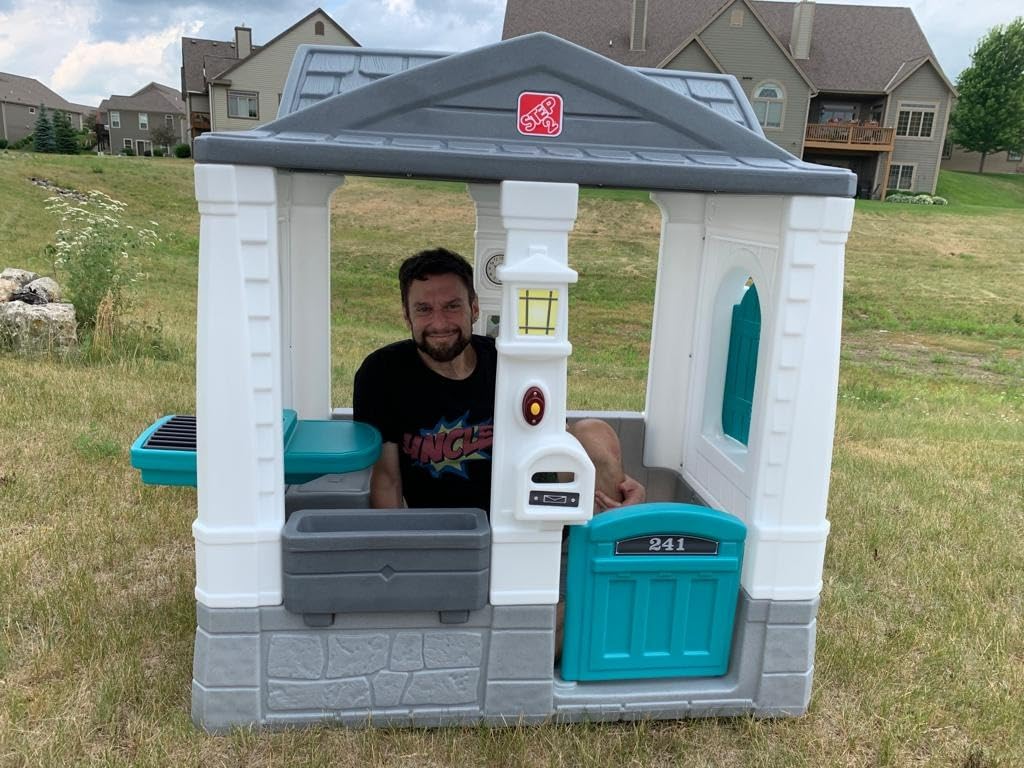
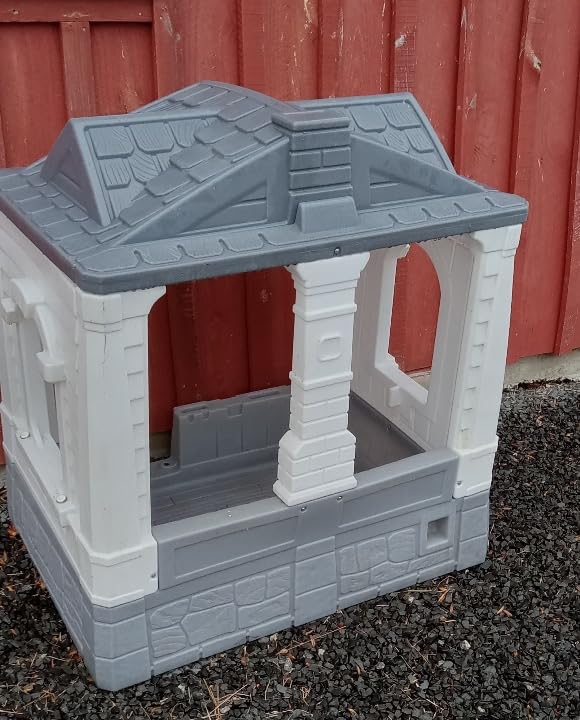
The tradeoffs are size and effort. At 28.78 kg and a 53.25-inch frontage, this needs a dedicated corner and two adults for a comfortable carry, and assembly is a longer multi-part job than a ten-minute tent build. The manufacturer lists it for toddlers 1.5 years and up, which is the lowest starting age of any rigid model here.
Less obvious drawback: rigid plastic walls are not cosy. If your goal is a quiet reading hideaway, fabric wins. If your goal is a play surface that gets climbed on, this is the only sensible choice.
Is it worth the extra bulk indoors?
If you have a corner and the patience for assembly, yes. Nothing else in this list will still be there in four years without fabric repair, and the wide 53.25-inch frontage means two or three children can play at it without queueing. The play phone and doorbell alone absorbed an entire rainy afternoon in my testing.
If your space is tight, the footprint is the deciding factor rather than the price. Measure the room and the door before deciding, because a rigid house that will not go through a stairwell is a very expensive storage unit.
How long does assembly take?
Longer than any tent here, since it is multi-part plastic rather than fabric over poles. Plan a calm afternoon, and check every panel and screw against the parts list before you start, because that is where mistakes happen.
The 2-year limited warranty is a real advantage on something this size. Nothing else in this roundup carries a manufacturer warranty of that length.
Indoor Playhouse Safety for Toddlers
The most cited problem across this entire category is not fabric or plastic, it is stability. Parents describe fabric playhouses sliding, tipping or collapsing when a toddler leans on a wall, and the industry standard fix is a non-slip mat under every soft-sided model. Put down a mat, or a rug with grip, before the first play session rather than after the first fall.
Second on the list are the poles. Fiberglass and plastic poles that bend, crack or shed fragments are a recurring theme, and the fix is behavioural: no climbing on the frame, no sitting on the roof, no hanging from the upper hoop. A tent rated for sitting is not rated for a toddler who treats it as a climbing frame.
Third are electrical accessories. Included string lights have been reported arriving dead, running hot, and in one documented case with a plug that broke apart. My advice is simple: remove the lights and use a battery lantern if you want a glow inside an enclosed fabric space. I did that with every tent I tested.
Finally, check the labelling. Look for ASTM and CPSIA compliance language and a stated minimum age, and treat a listing that shows a one-year-old inside a tent the manufacturer rates for three as a warning sign. A little airflow matters too, since a fully enclosed fabric box in a closed room is a warm, humid space within minutes.
For a secondhand unit, inspect before you buy. Check every edge and joint for splinters, confirm no paint is flaking, smell for chemical odour, and test every pole for cracks. Our backyard playhouse guide covers more on inspecting outdoor-rated units.
How to Choose an Indoor Playhouse for Toddlers?
1. Match the minimum age, not the maximum
Manufacturer guidance ranges from birth to 36 months at the low end and up to 6 to 10 years at the high end. The low number is the one that matters for you, and it varies enormously: the Kiddzery set starts at 0, the Step2 cottage at 18 months, the Little Tikes at 24 months, and most fabric tents at 3 years.
2. Measure your doorway, not just the room
Standard interior door openings are roughly 30 to 34 inches, and a rigid plastic house wider than that will not enter the room it was bought for. Measure the door, any turn in the hallway, and the stairwell before ordering anything rigid.
3. Check the real interior volume
Exterior dimensions overstate usable space. The Monobeach, Orian and Razee models genuinely fit a parent plus a child, while the SENODEER and Bluey tents fit one or two children only. If you plan to read inside, look for 50 inches of length or more.
4. Decide between fabric, plastic and wood
Fabric is the cheapest and folds flat, but has poles that eventually fail. Plastic is the most durable, wipes clean and never has a tension point to snap. Wood doubles as shelving and stays put, but costs more and takes longer to assemble.
5. Think about what happens when play ends
Fold-flat pop-ups go back in a closet in seconds. Pole tents need disassembly or at least a corner. Rigid houses effectively become furniture and will need two adults to move. In a small apartment, that last consideration can be decisive.
6. Plan for cleaning before you buy
Polyester tents wipe clean. The besrey model is machine washable, and the Razee polycotton is soft but light-coloured and shows stains. If your child is in the messy-eating phase, factor cleaning effort into the decision.
7. Do not buy a sleep space by accident
A playhouse that fits a mattress is not the same as a product sold and rated for sleep. If you want a nap nook, check the product guidance and apply your own supervision rules. Most fabric tents should not be treated as a bed.
8. Set the lighting rule early
Decide before the tent goes up whether you will use the included star lights. Our family removed every set and used a battery lantern, which removed the only electrical item inside an enclosed fabric space.
9. Stage it so play lasts longer
A bare tent gets used for about a week. Ours lasted months once I added a rug, two cushions, a small book basket and a rotating set of pretend-play props inside. Swapping the contents every fortnight gives you a new scene without buying a new tent. Pairing it with a play kitchen nearby doubles the pretend-play hours.
Frequently Asked Questions
What is a good indoor playhouse for toddlers?
A good indoor playhouse is one your child can physically fit inside, that stays put when leaned on, and that you can put away when you need the floor. For most families that means 50 inches of interior length or more, a frame that resists tipping, a surface that wipes clean, and mesh or window panels that let you see in. In our testing the Monobeach 55-inch castle tent was the most complete all-rounder.
Are indoor playhouses safe for toddlers?
Indoor playhouses are safe when the product matches the child’s age range, the frame cannot tip, and no climbing on poles or the roof is allowed. Put a non-slip mat under soft-sided tents, remove included string lights and use a battery lantern instead, and check for ASTM and CPSIA compliance on the label. Always supervise, especially with a one-year-old in an enclosed space.
Do indoor playhouses tip over?
Fabric playhouses do, and that is the most common complaint in this category. Tents weighing two to five pounds can slide across a hard floor when a toddler leans on a wall. The fix is a non-slip mat underneath. Rigid plastic houses such as the Little Tikes Cape Cottage and the Step2 cottage are far more stable because of a wide base and a solid frame.
What is the best indoor playset for toddlers?
For pretend play in a small home, the best options are the Monobeach Princess Castle Tent for interior room and the Little Tikes Cape Cottage for durability. For active toddlers who need to burn energy, the Kiddzery five-piece set with two tunnels and two ball pits suits ages zero to three. For the very smallest rooms and the fastest setup, the Bluey pop-up folds flat in seconds.
What is the best age range for a child to use a playhouse?
From 12 to 18 months, choose a crawl-through structure rated from birth with soft walls and no poles to grab. From 18 to 30 months, a pop-up or a light plastic cottage with a working door works well. From 30 to 48 months, children handle a larger tent, sit inside with books, and start playing house with real props. Always check the stated minimum age, not the maximum.
How big should an indoor playhouse be for a toddler?
For one child, 28 to 38 inches of width is enough. For a parent and child to sit inside together, look for at least 50 inches of length and 40 inches of height. For two or three children sharing, 55 inches across is a realistic target. Most important, the assembled width must clear your narrowest doorway and hallway turn.
Final Verdict
After six weeks of testing, the Monobeach Princess Castle Tent remains the best indoor playhouse for toddlers overall, because 55 inches of interior is the feature that changes daily life rather than just decorating a corner. It fits an adult and a child, wipes clean, and has the most reviews of anything on this list.
Buy the Little Tikes Cape Cottage if your child climbs on everything or you want something that survives a hand-me-down. Buy the Bluey pop-up if floor space is the binding constraint, because it folds into a closet in five seconds. In every case, add a non-slip mat, take the string lights out, and set the no-climbing rule on day one.