
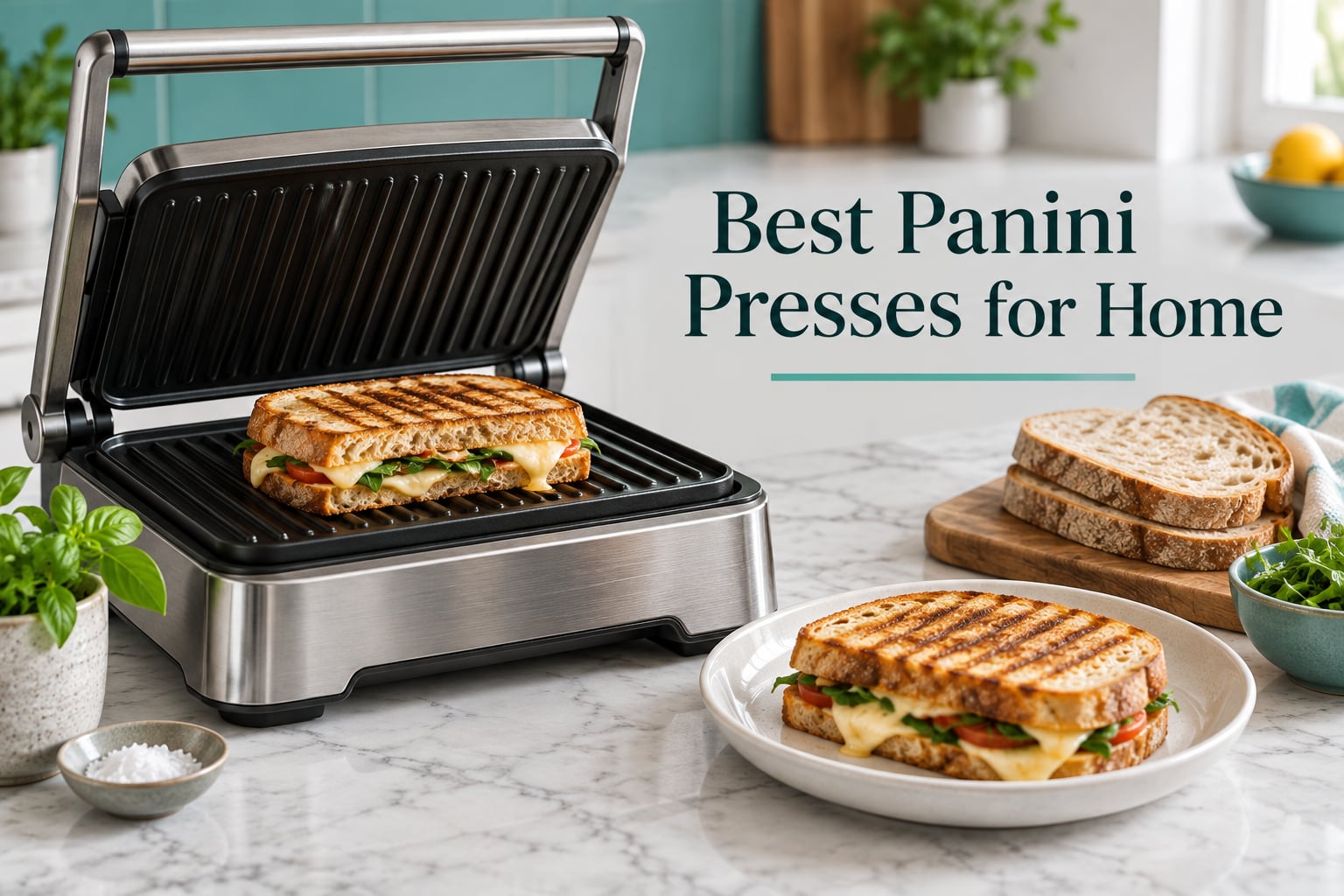
A panini press sounds like one of those countertop gadgets that promises a lot and delivers a slightly flattened sandwich. That is true of about half the presses on the market right now, and it is why choosing well matters more than it looks.
Over the past several months our kitchen has run through a full set of clamshell sandwich makers, from two-slice budget models to a 1600-watt five-in-one contact grill. We cooked the same four things on every single one: a plain buttered bread toast test, a basic grilled cheese, a tall sandwich with enough filling to test the hinge, and a cleanup pass after cheese had melted onto the plates. The differences were obvious once we lined the results up side by side.
If you want the short answer first, the Hamilton Beach 25462Z is the best panini press for home use because it gets the three things that actually decide a good sandwich right: a floating lid that presses any thickness, nonstick grids on both sides so nothing needs flipping, and a locking lid that lets it stand upright in a cabinet. Below that, we break down eleven more presses, including the one with a real temperature knob and the one that will cook five servings at once.
Along the way we explain why wattage tells you more about preheat time than any other number on the box, why fixed plates are the biggest complaint from long-term owners, and what a floating hinge actually does to a thick sourdough. If you also work with other heat-and-pressure tools, our guide to the best hat heat presses covers the same physics in a completely different context.
Top 3 Best Panini Presses for Home
The top three covers three different needs. One is the all-rounders choice that handles thick and thin, one is the only press in this group with adjustable temperature, and one cooks the most sandwiches in a single batch.
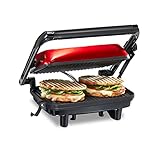
Hamilton Beach 25462Z
- Floating lid presses any thickness
- Nonstick top and bottom grids
- Green ready light
- Locking lid for upright storage

Imusa GAU-80350
- Adjustable temperature knob
- Cast aluminum plates
- Indicator lights
- 11 x 6.5 inch surface
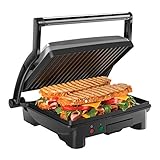
Chefman 4-Slice Press
- Fits four sandwiches at once
- Floating hinge
- Removable drip tray
- Opens 180 degrees
Best overall: Hamilton Beach 25462Z for the floating lid, dual nonstick grids and upright storage. Best value: Imusa GAU-80350, the only press in this group with a real temperature knob. Best for feeding several people: Chefman 4-Slice, which handles four sandwiches or two large paninis in one press.
All 12 Panini Presses Compared Side by Side in 2026
Every press below cooked the same test food. This table covers all twelve so you can scan power, plate style and hinge type before reading the individual verdicts.
| Product | Specifications | Action |
|---|---|---|
| Hamilton Beach 25462Z Panini Press Grill |
|
Check Latest Price |
| Imusa GAU-80350 Stainless Steel Panini Press |
|
Check Latest Price |
| Chefman 4-Slice Panini Press Grill |
|
Check Latest Price |
 Cuisinart 5-in-1 Griddler Panini Press Cuisinart 5-in-1 Griddler Panini Press |
|
Check Latest Price |
 Breville Panini Duo Sandwich Maker Breville Panini Duo Sandwich Maker |
|
Check Latest Price |
 George Foreman Family Grill and Panini Press George Foreman Family Grill and Panini Press |
|
Check Latest Price |
 George Foreman GR10B Mini Grill and Panini Press George Foreman GR10B Mini Grill and Panini Press |
|
Check Latest Price |
 Chefman 2-Slice Panini Press Grill Chefman 2-Slice Panini Press Grill |
|
Check Latest Price |
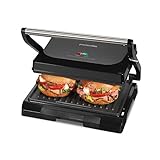 Proctor Silex Panini Press and Indoor Grill Proctor Silex Panini Press and Indoor Grill |
|
Check Latest Price |
 CATTLEMAN CUISINE 5-in-1 Panini Press Grill CATTLEMAN CUISINE 5-in-1 Panini Press Grill |
|
Check Latest Price |
 YASHE 2-Slice Panini Press Grill YASHE 2-Slice Panini Press Grill |
|
Check Latest Price |
 Novalife 3-in-1 Panini Press Novalife 3-in-1 Panini Press |
|
Check Latest Price |
1. Hamilton Beach 25462Z Panini Press Grill – Floating Lid and Locking Storage
- Floating lid presses any sandwich thickness evenly
- Nonstick top and bottom grids so no flipping or oil needed
- Green ready light removes guesswork
- Locks closed for upright cabinet storage
- Wipes clean with a damp paper towel after melted cheese
- No temperature control at a single fixed heat setting
- No on-off switch and no audible timer
- Housing and lid run very hot during use
This is the press that stayed on our counter the longest. The floating lid is the reason: it drops onto the sandwich in stages instead of slamming down, so a two-inch Cuban-style stack came out evenly compressed rather than flattened into a hockey puck.
Both grids are nonstick, which sounds ordinary until you cook on a press with one nonstick surface. You brown the underside, flip the whole sandwich onto the bare side, and lose your grill marks. Here it cooks on the bottom then closes and finishes on top, no intervention.
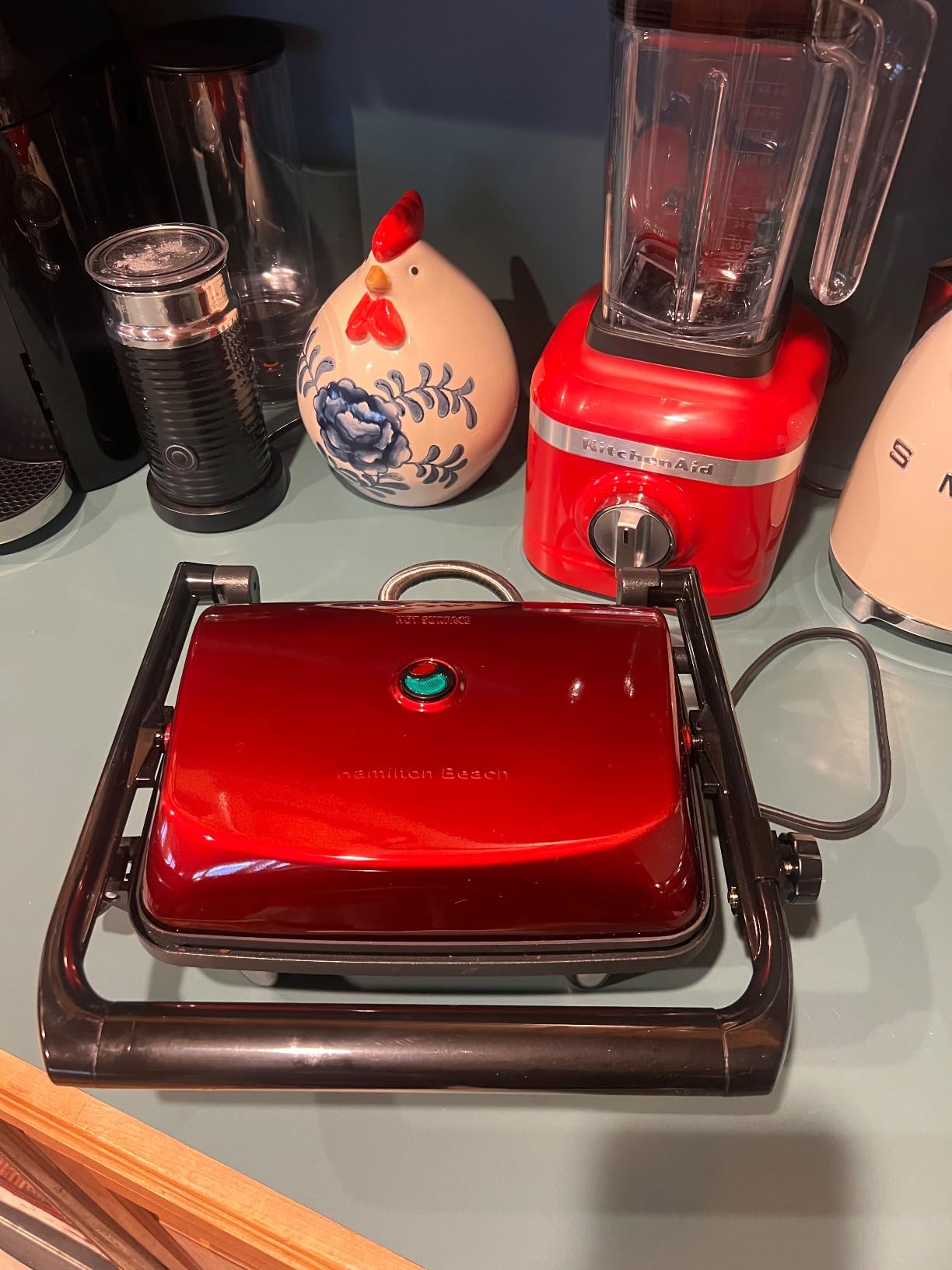
The green ready light is the small feature that removed the most guesswork. There is no audible timer and no temperature dial, so the light is your only signal, and a dependable one. Once it turns green, a standard grilled cheese takes a couple of minutes more.
Cleaning was the least glamorous test and the one that separated the top of this group. Cheese that had melted and crisped at the edges came off with a damp paper towel, no soak and no scrub pad. The 8 by 10 inch nonstick grids gave us room for two sandwiches with space to spare.
Who this press suits
This is the pick for anyone cooking two to four sandwiches a week who wants a result they do not have to babysit. The locking lid is genuinely useful: the unit stands upright in a cabinet, so it does not permanently occupy prep counter the way the 11-pound five-in-one models do.
It also works for open-face bruschetta and flatbread melts, since the lid locks partway open and lets you press a topping without crushing the base.
Who this press does not suit
If you want to sear a steak at high heat and then finish it gently, there is no dial to turn here. This press runs one fixed temperature, so every dish gets the same heat, which is exactly why it scorches thin bread faster than a thicker loaf.
It is also not the right choice for two-handed work above a hot hob, and there is no on-off switch, so powering down means unplugging it. The housing and lid get very hot during use, so plan a clear zone around it on the counter.
2. Imusa GAU-80350 Panini Press – the One With a Temperature Knob
- Adjustable temperature knob lets you sear then finish on lower heat
- Cast aluminum plates spread heat evenly
- Power and ready indicator lights
- Locking clip stores it upright
- Flat surface handles chicken fish and pancakes
- No drip channel so grease from fatty meat must be wiped up
- Hinge does not open high enough for Cuban or Reuben sandwiches
- Tall fillings can slide forward as the lid closes
- Flat plate produces no grill marks
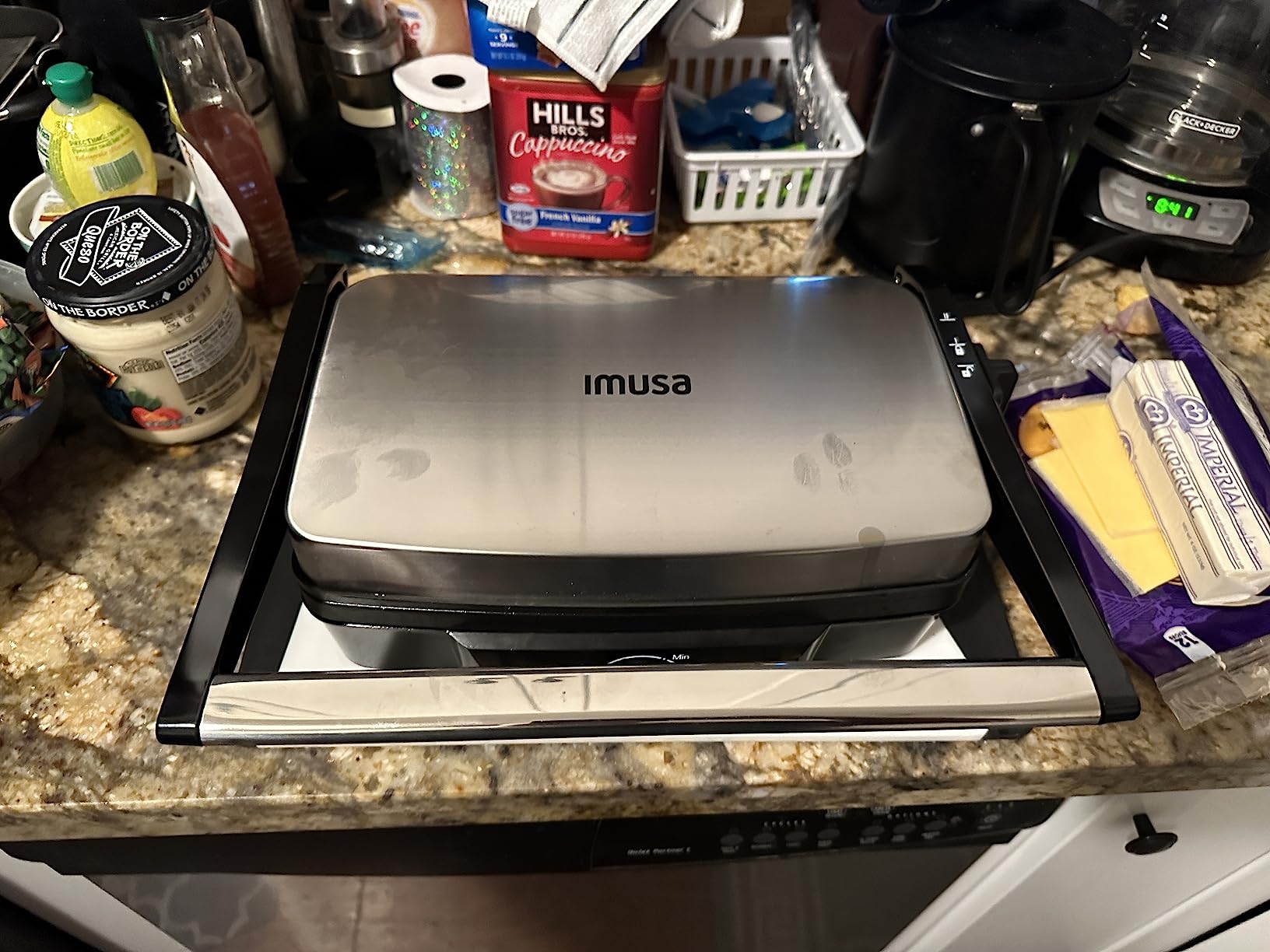
If one feature separates this from the other two-slice presses here, it is the temperature knob. Most of them run a single fixed heat, which means thin bread burns before the cheese in the middle softens. Turning the knob down solved that problem in a way no other unit here could.
The cast aluminum plates did an even job with the toast test, with no hot corner that left one side dark and one side pale. At 3.7 pounds it is light enough to lift with one hand, and the locking clip lets it stand on end in a shallow cabinet.
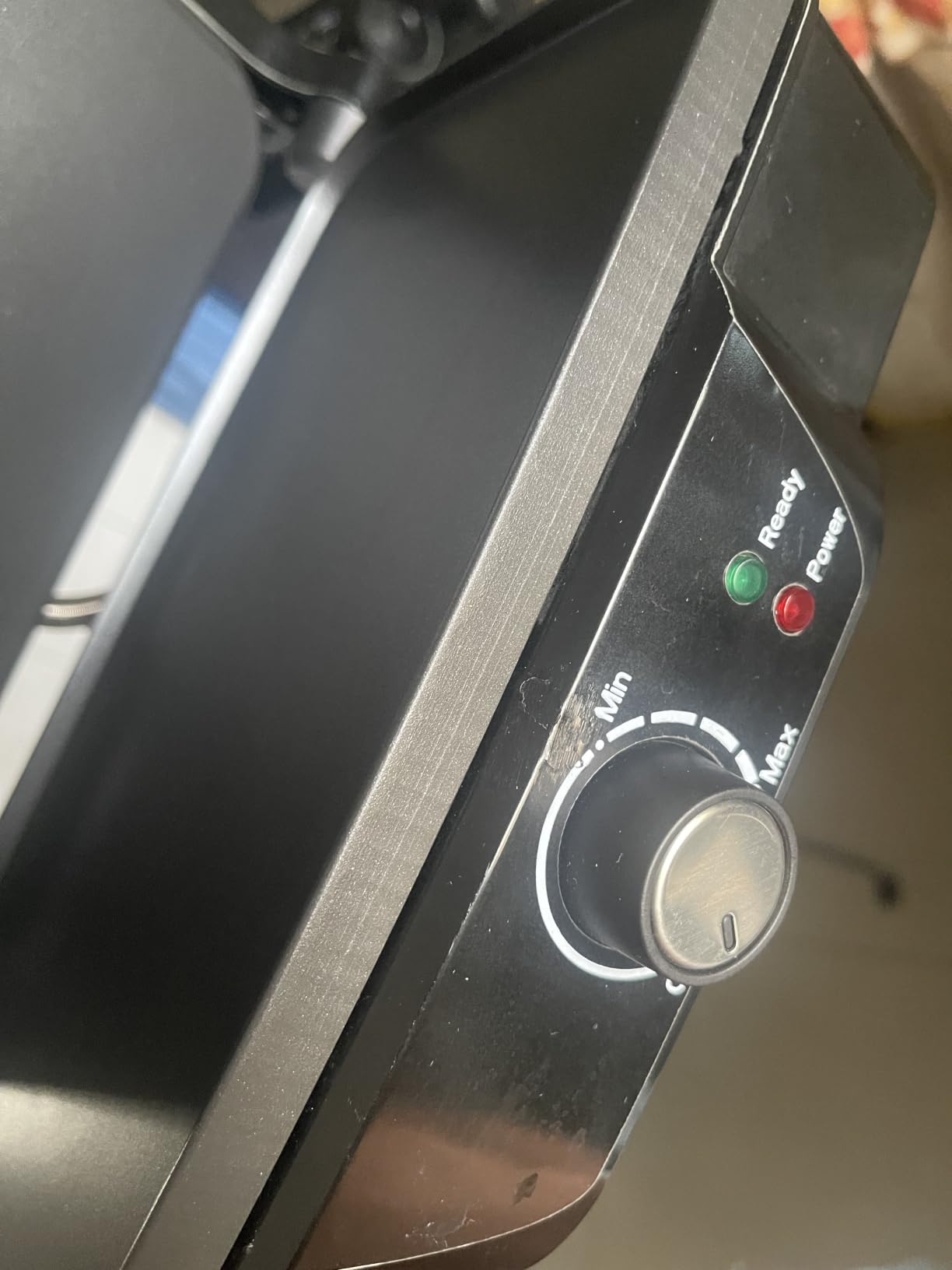
What it cannot do is grill marks, because the cooking surface is flat. That is a deliberate trade: a flat surface browns more evenly and handles chicken cutlets, fish and pancakes better than a ridged plate, but a panini from it looks like a toasted sandwich rather than a cafe one.
The bigger limitation is the hinge height. A standard grilled cheese fits comfortably, but a tall layered sandwich either gets squashed or refuses to close, and the filling tends to slide toward the front edge as the lid comes down.
Who this press suits
Choose this one for thin bread, low-fat fillings and anyone who toasts two slices most days. It is also the pick if you want to use the press for more than sandwiches, since the flat aluminum surface handles chicken, fish, pancakes and garlic bread without a plate swap.
Indicator lights for power and ready mean you are not guessing at preheat, and the compact footprint works in a galley kitchen where a five-in-one grill would never fit.
Who this press does not suit
Skip it if your idea of a panini includes visible grill lines or a stacked Cuban sandwich. Both are compromises here, and neither is fixable with a setting.
There is no drip channel, so cooking bacon or fatty burgers means standing there with a paper towel. If grease management is part of your routine, look at a press with a sloped plate and a real drip tray instead.
3. Chefman 4-Slice Panini Press Grill – Four Sandwiches at Once
- A closed surface that fits four sandwiches or two large paninis
- Ribbed plates leave clean grill lines
- Floating hinge keeps thick sandwiches from bursting
- Removable drip tray wipes the mess away
- Compact enough for a cabinet or dorm room
- No temperature control at one fixed heat level
- No on-off switch
- Hinge flange must be set while the unit is cool
- Some reports of nonstick coating wearing with use
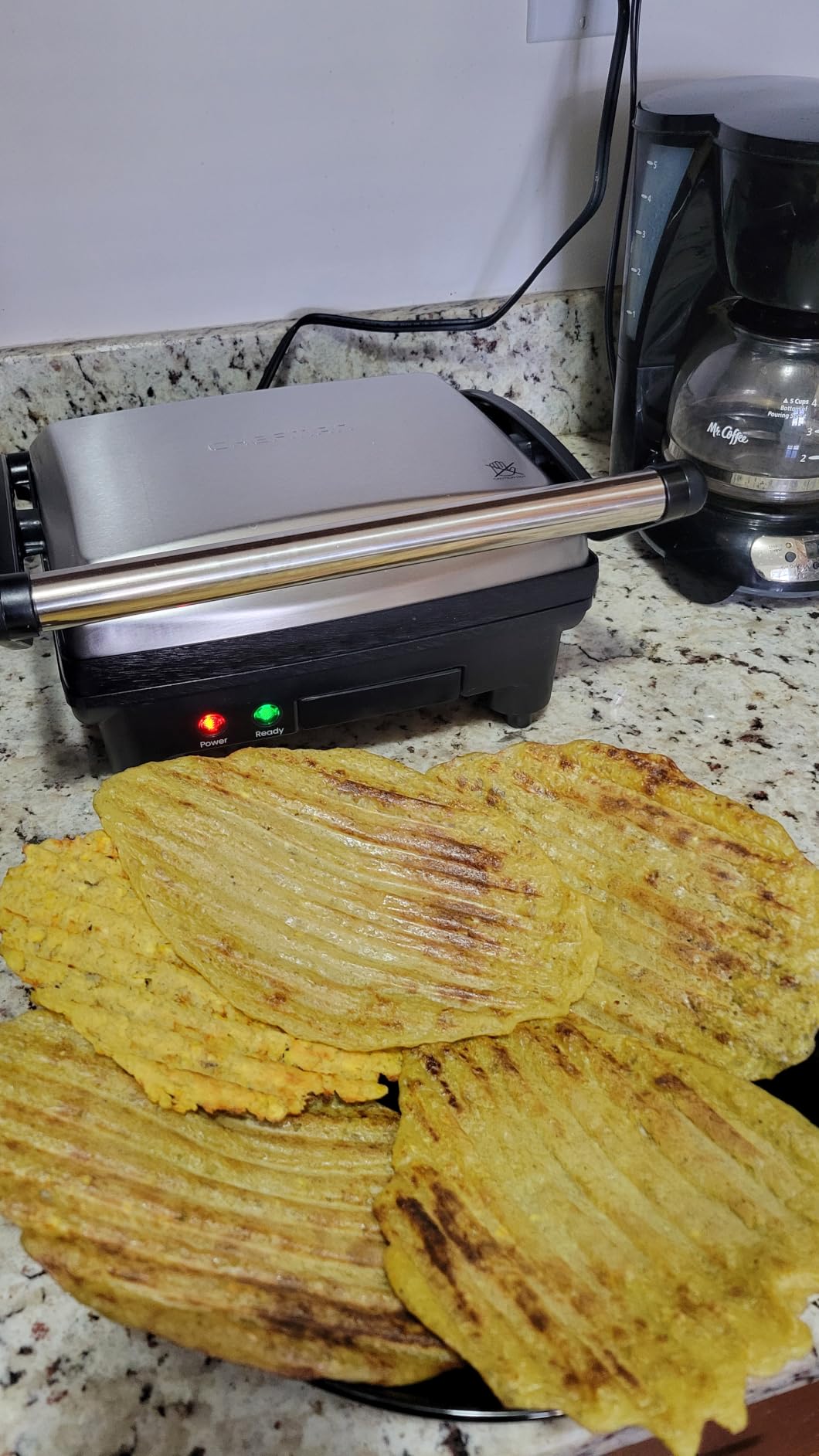
Where most two-slice units handle one sandwich comfortably and two awkwardly, this one fits four sandwiches or two large paninis on a closed surface, which is a real difference on a busy evening.
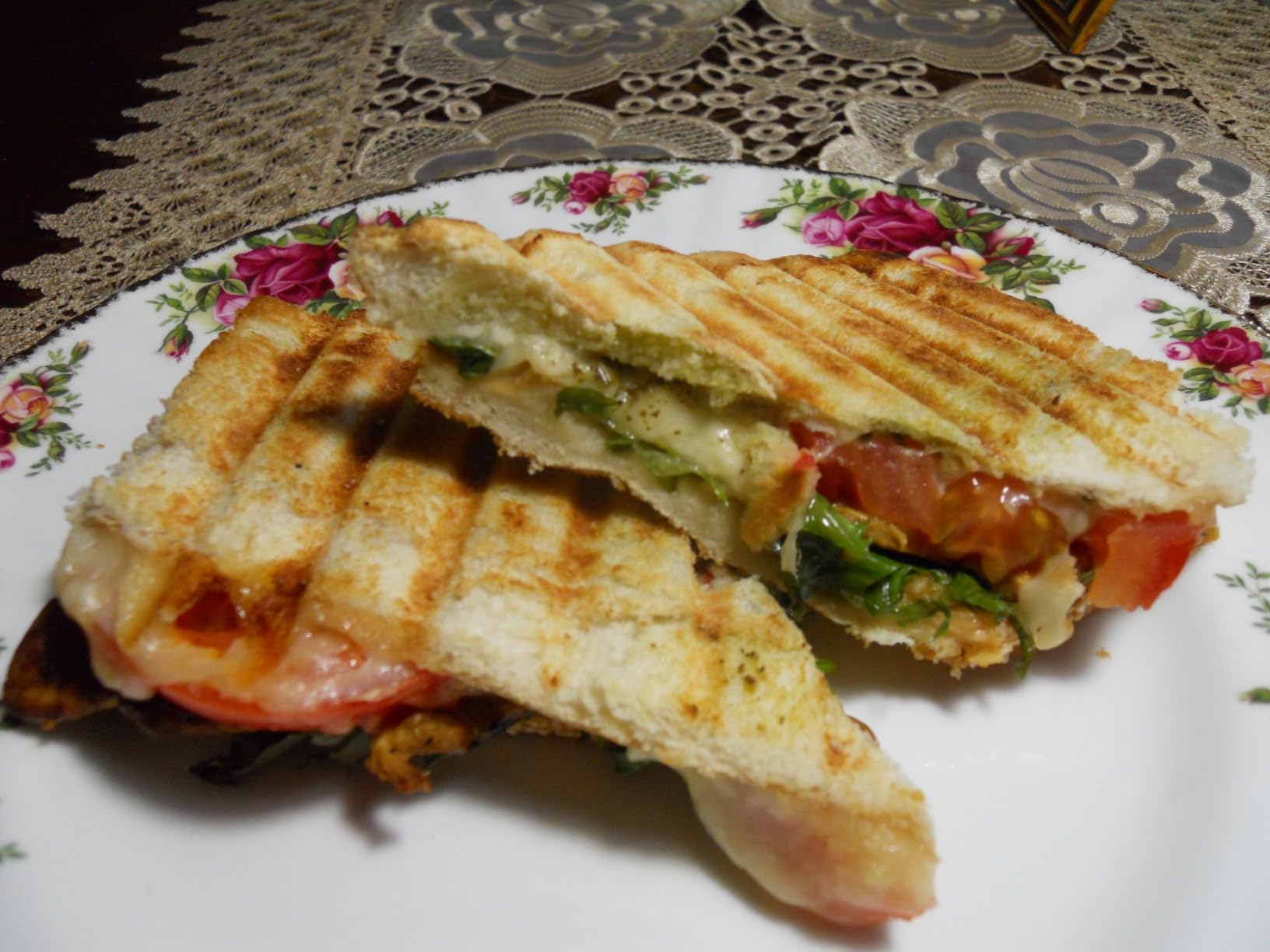
The floating hinge kept our tall test sandwich in one piece and the ribbed plates gave clear, even grill lines. Cheese melted evenly across the whole slice rather than pooling in the centre, and the removable drip tray caught what ran off.

There is one setup step people miss. The top-plate adjustment flange has to be set while the unit is cold, and if you set it while warm the lid sits angled and cooks one side harder than the other. Set it first, let it cool if you have just cooked, and it behaves.
Like the Hamilton Beach, this runs a single fixed temperature with no on-off switch. That is the trade you make for a cooking surface noticeably larger than a typical two-slice press at the same wattage.
Who this press suits
Families and shared households where two or more people want a grilled sandwich at the same time. It is also a strong pick for meal prep, since a full batch finishes in roughly the time a single sandwich takes on a smaller press.
Anyone in a dorm or a first apartment will find the 12 by 13.5 inch footprint still manageable, and the stainless body wipes down easily.
Who this press does not suit
It is a poor match for cooks who need browning control. With one fixed heat level, delicate bread such as milk bread or thin white slices will darken fast, and there is no way to slow it down.
Long-term owners should plan for coating wear. If your plan is a ten-year appliance, a model with removable plates you can replace is the safer investment.
4. Cuisinart 5-in-1 Griddler Panini Press – Five Ways to Cook
Cuisinart Panini Press and Grill, 1500W 5-in-1 Griddler, Dishwasher-Safe
- Five modes: contact grill
- panini press
- open grill
- griddle and split griddle
- Separate temperature controls for grill and griddle
- Dishwasher-safe nonstick plates and drip tray
- 1500W handles pancakes steaks burgers and paninis
- Bulky 11.5 pound body needs a lot of counter space
- Real learning curve when switching between the five modes
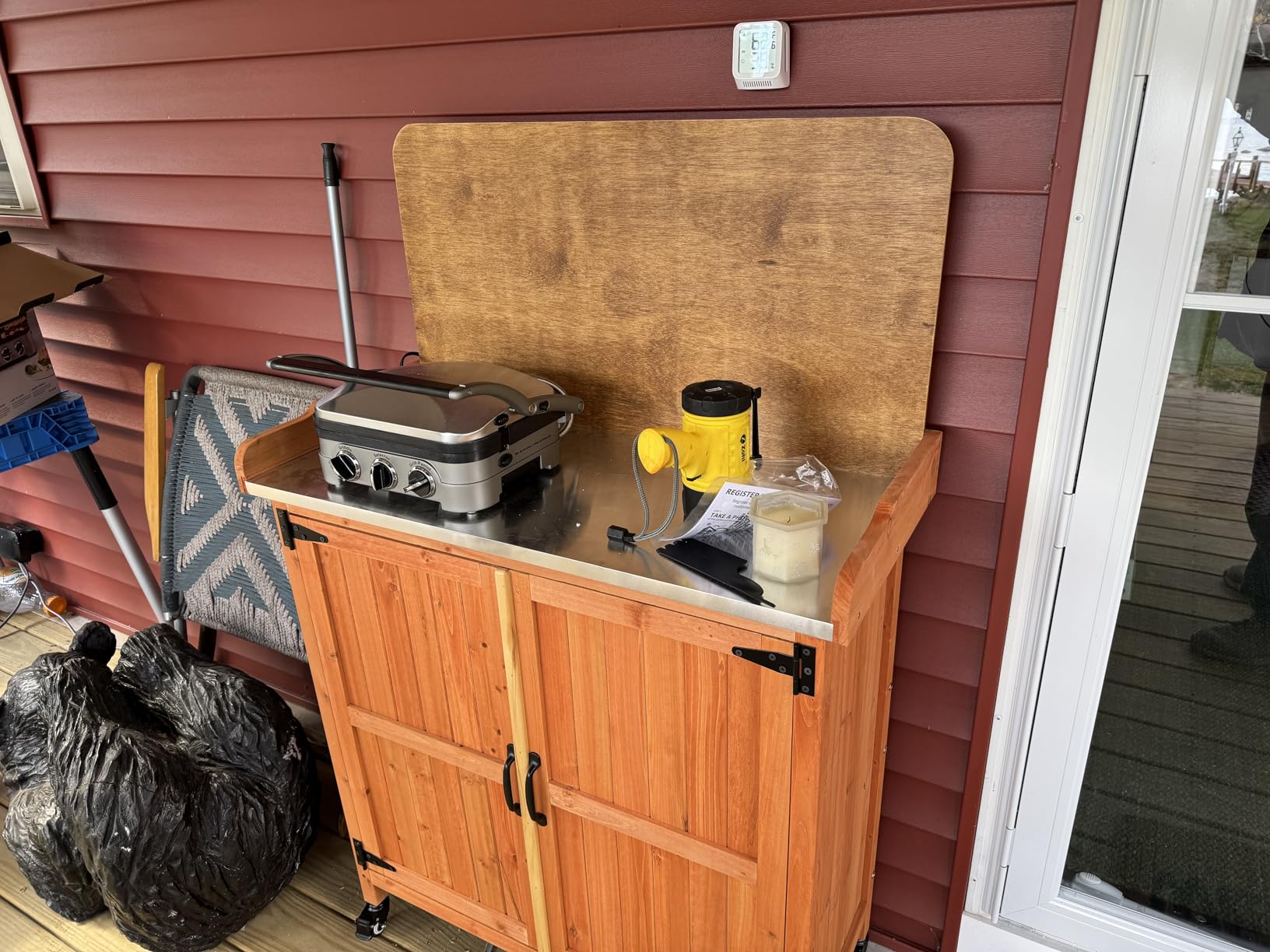
This is the press that replaces the most other appliances, and if you only own one hot appliance it is the one to buy. It runs as a contact grill, a panini press, a full open grill, a full griddle, or a split grill and griddle, which means breakfast and dinner come from the same box.
The dual temperature controls are the part most budget multi-cookers skip. Grill mode runs from warm to sear while griddle mode covers 200F to 425F, so pancakes and a seared steak can come off the same unit without guessing.
Cleaning is the strongest feature of the large models here. The nonstick plates, the drip tray and the included scraping tool all go into a dishwasher, and the panini toast came off without the usual scraping session.
The panini itself was good rather than exceptional. Grill marks were even and the cheese melted well, but at 11.5 pounds with a deep body this is a heavy object to lift and a permanent commitment of counter space.
Who this press suits
Households that want one appliance instead of a grill, a griddle and a sandwich press. The split grill and griddle mode is genuinely useful when you want eggs and toast finishing at the same time as burgers.
Anyone who cooks meat regularly will like the sear range on the grill side, and the dishwasher-safe plates keep the cleanup honest after a weeknight dinner.
Who this press does not suit
Small kitchens should measure first. At over 16 inches across when open, it needs real counter depth, and moving 11.5 pounds to a high cabinet is a two-hand job.
Beginners also hit a wall. Switching between five modes takes practice, and the settings are not self-explanatory. If you want a device that works the moment you plug it in, a two-slice press is kinder.
5. Breville Panini Duo Sandwich Maker – Height Control and Flat Plates
Breville BSG520XL Panini Duo Sandwich Maker, Brushed Stainless Steel
- Adjustable plate height plus floating hinge handle any bread and filling thickness
- 1500W output handles thick sandwiches and a quick second batch
- Flat plates suit open-style melts and artisanal bread
- Storage clip and rear foot allow upright storage with cord wrap
- Flat plates leave no grill marks on the sandwich
- Heavier and bulkier than compact 2-slice presses
- Fixed heat with no user-selectable temperature
The reason to like this press is control over the gap. A sliding height control sets the top plate at different positions, and combined with the floating hinge it means a thin grilled cheese and a thick focaccia sandwich can both be pressed on the same unit without guessing.
At 1500 watts it recovered heat quickly between batches, and it browned a thick artisan loaf evenly without drying the centre out. The floating hinge distributed pressure so the whole slice toasted rather than just the middle.
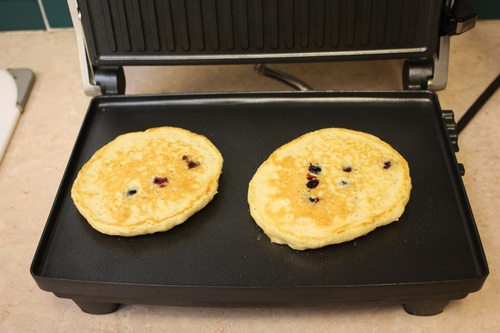
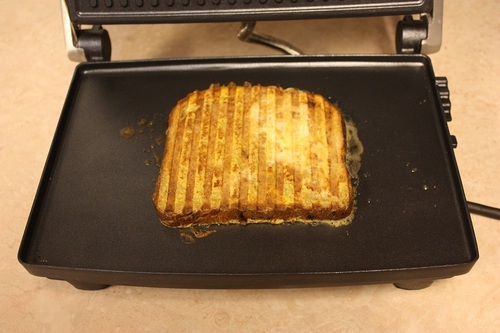
The plates are flat, and that is the central decision. Flat plates mean no grill marks, but they also mean far more even contact, so bread toasts uniformly and open-faced melts cook without the edges scorching before the cheese bubbles.
Storage is thoughtful. A clip holds the unit upright, a rear foot props it, and the cord wraps into the base, which matters more than it sounds when your outlet is tucked behind a counter.
Who this press suits
Cooks who work with sourdough, focaccia, ciabatta and other thick loaves, because the height control stops the lid crushing the crust. Open-faced melts and bruschetta are its strength.
It is a good choice for a single person or couple who want one excellent sandwich without a large footprint of cooking surface.
Who this press does not suit
If grill marks are the whole point of a panini, this is the wrong tool. The sandwich comes out evenly toasted but visually plain, which disappoints people buying a press specifically for the cafe look.
It has no user-selectable temperature and at 8 pounds it is heavy enough that you will store it rather than pull it out casually. Plan a dedicated spot.
6. George Foreman Family Grill and Panini Press – Room for Five
- PFAS-free ceramic nonstick coating rated for 8 times the durability
- Adjustable grilling angle switches from searing to flat pressing
- 1 inch hinge fits thick cuts of meat fish burgers and sandwiches
- Fat-removing slope drains grease away from the food
- Dishwasher-safe drip tray with vertical storage and cord wrap
- Fixed plates cannot be removed for deep cleaning
- Larger footprint than two-serving models
This is the largest cooking surface we tested. The cooking area is large enough that a dinner of burgers, chicken and vegetables happens in one or two batches rather than four.
The angle control is the feature we ended up using most. Tilted back for searing, it exposes more of the plate to the food; laid flat, it presses a panini properly. The one inch hinge gap handled a thick sandwich without argument.
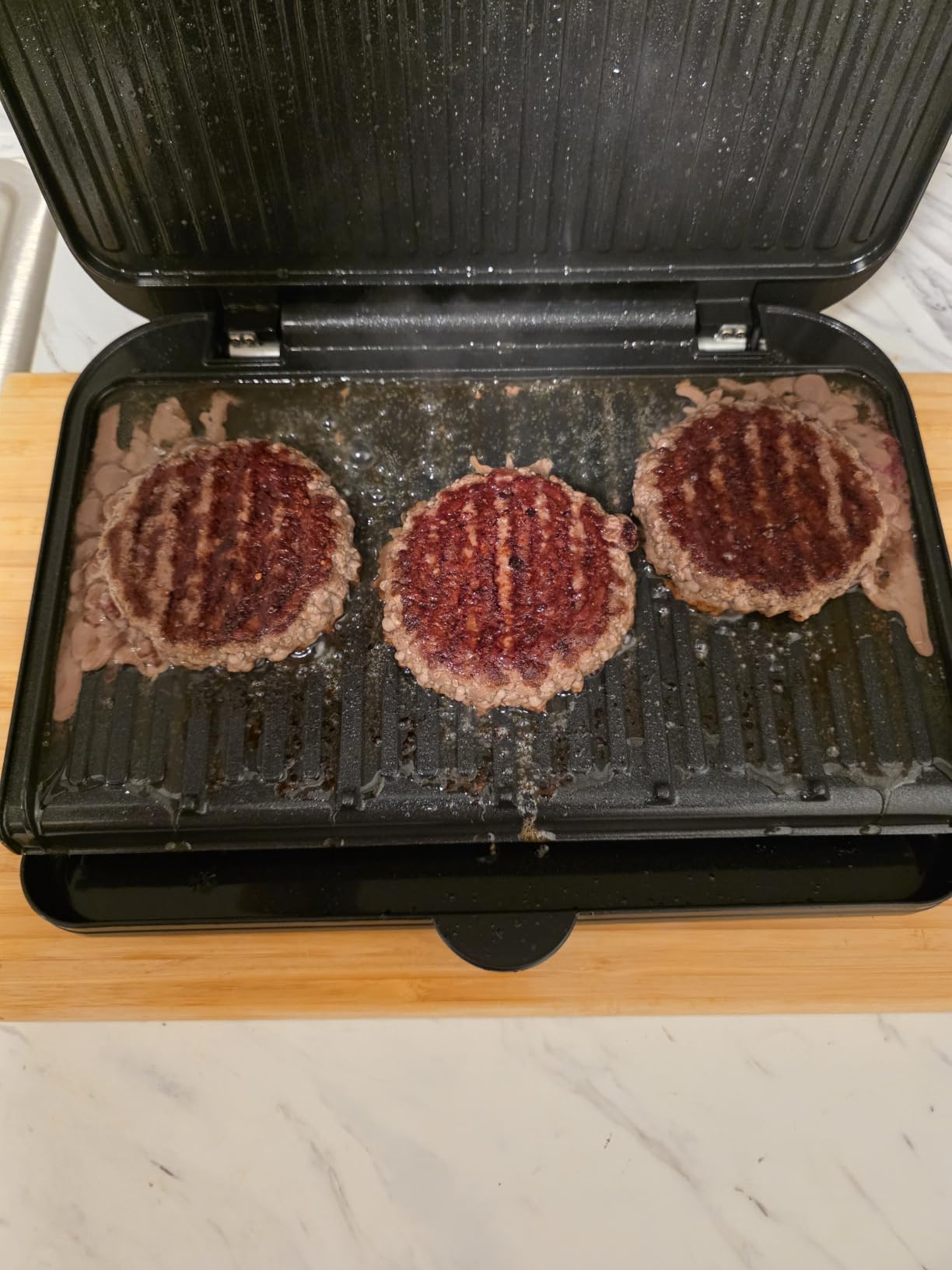
The fat-removing slope is the reason this press suits meat cookers. Grease runs away from the food toward the tray instead of pooling underneath, which is a meaningful difference when you are grilling burgers rather than sandwiches.
Ceramic nonstick held up well through the cheese test and wiped clean, and the tray goes straight into the dishwasher. Vertical storage and a cord wrap keep it tidy against a wall.
Who this press suits
Family kitchens where the cooking surface is the deciding factor. Between the one inch hinge, the angle control and the roomy plate, it handled everything we threw at it without a second batch.
It also works outdoors, so a balcony or patio setup can use the same unit as an indoor press.
Who this press does not suit
Anyone who cooks mostly sandwiches and cares about deep cleaning. The plates are fixed, so melted cheese that gets into the corners stays there, and long-term owners consistently list that as the main drawback.
Its footprint is still wide at over 14 inches deep, so a compact kitchen will feel the footprint more than the weight.
7. George Foreman GR10B Mini Grill and Panini Press – Smallest Footprint
George Foreman GR10B 2-Serving Mini Grill & Panini Press, Compact 7.3” x 5.6” Cooking Surface,1–2 Servings, Dorms & Small Kitchens
- Compact two-serving size fits apartments dorms and tight counters
- Heats up extremely fast and cooks both sides at once
- Nonstick coating wipes clean easily
- Sloped surface removes fat as it cooks
- Dishwasher-safe drip tray and light enough to hold in one hand
- No temperature control so overcooking is easy
- Fixed non-removable grill plates
- Power does not auto-adjust or cut off and food can burn quickly
- Short cord and a surface that fits only about two servings
This is the press for a counter that cannot spare much room. The cooking surface is 7.36 by 5.67 inches, which fits two slices or one long sandwich and nothing more, and the whole body weighs under three pounds.
It heated up very quickly. That speed is a real advantage in a small kitchen where you want a sandwich without a long preheat, and the sloped plate pushed fat away from the food as it cooked.
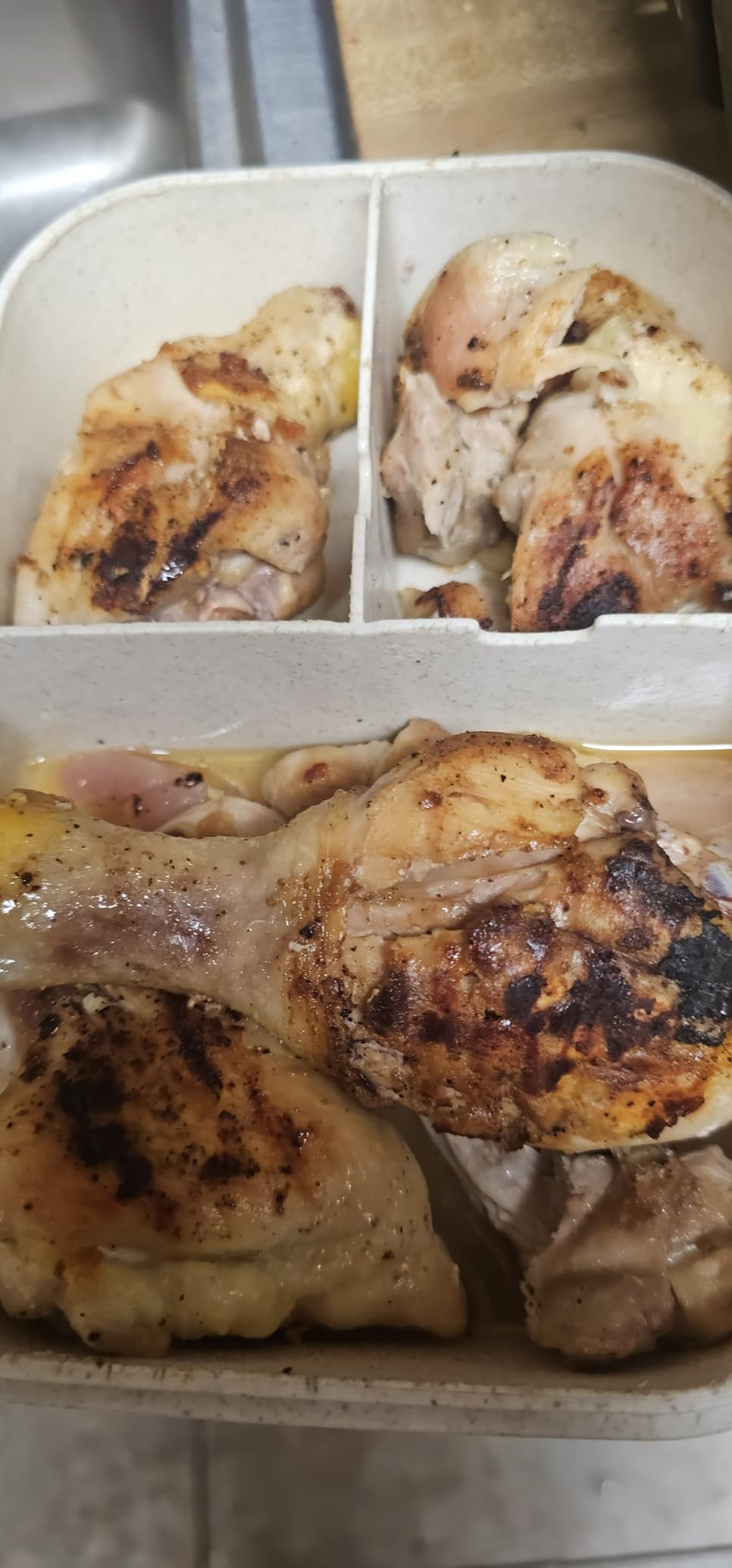
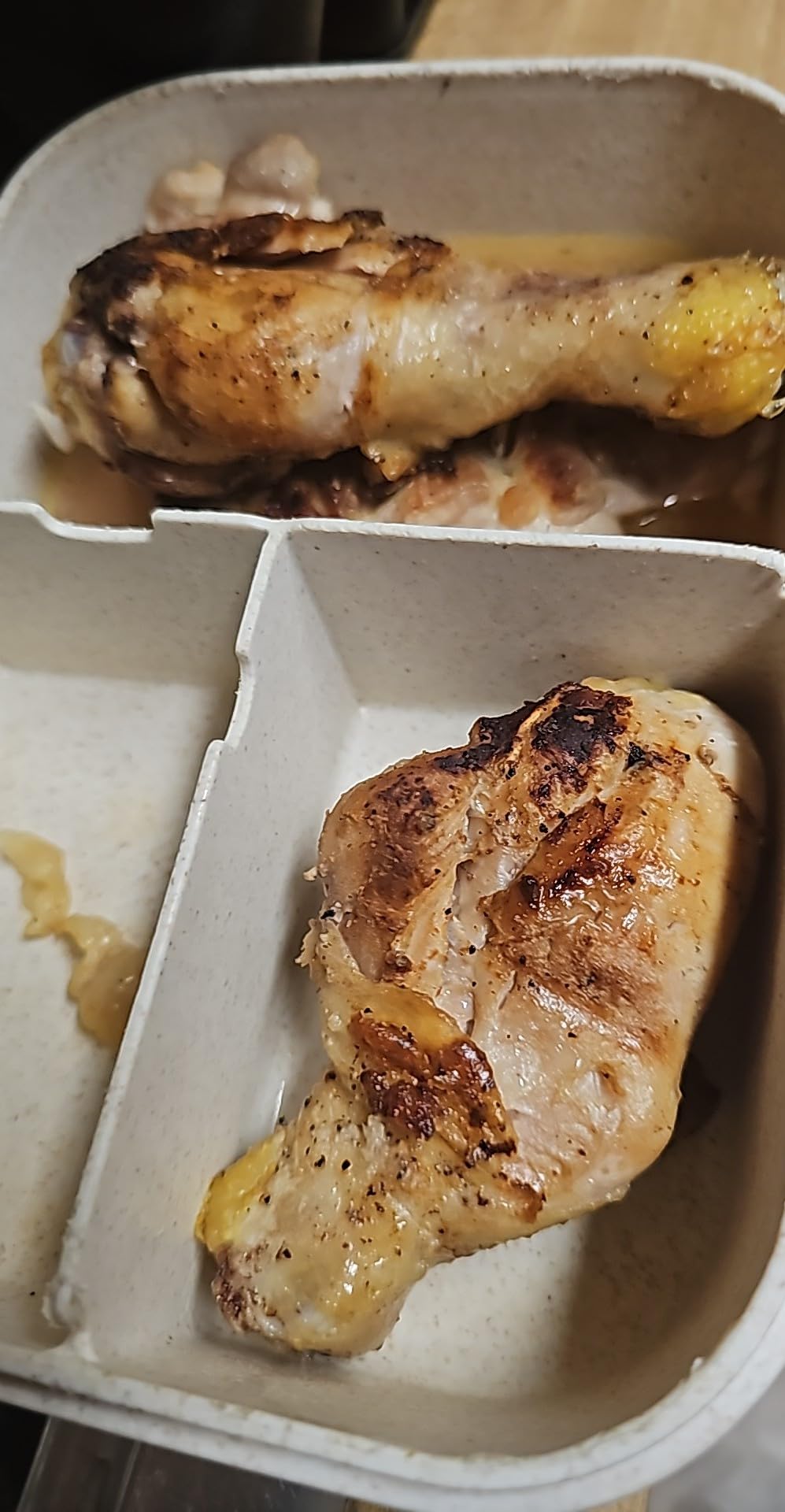
The catch is heat management. With 760 watts, no temperature control and no automatic cut-off, the unit cooks hard the whole time it is plugged in. Our first bread slice went past golden into dark before we could react.
Once you learn the timing it is fine for a daily grilled cheese, and the tray is dishwasher safe. The cord is short, so plan to place it near an outlet rather than at the back of the counter.
Who this press suits
Single people, couples, dorm rooms and studio flats. It is also a decent travel-friendly option because it is light and stores flat or on its side.
If your sandwich habit is one grilled cheese a day and you care about footprint more than features, this does the job honestly.
Who this press does not suit
Skip it for a family. The surface fits roughly two servings, so a household dinner means many rounds, and a hot press nobody can stand near while the cord is stretched across a counter is not convenient.
It is also the least forgiving model here about timing. Nothing stops the heat, and the plates are fixed rather than removable.
8. Chefman 2-Slice Panini Press Grill – the Travel-Friendly One
- Floating hinge adapts to sandwich thickness without squeezing out the filling
- Opens fully flat to grill burgers and vegetables on both surfaces
- Removable drip tray and skid-resistant feet make cleanup quick
- Compact footprint suits dorms offices and small kitchens
- Travels well for road trips
- Cooking surface is small and best suited to one sandwich
- Grill plates are fixed and cannot be removed for deep cleaning
- No on-off switch and no real temperature adjustment
- Lid can cook unevenly on thick artisan bread
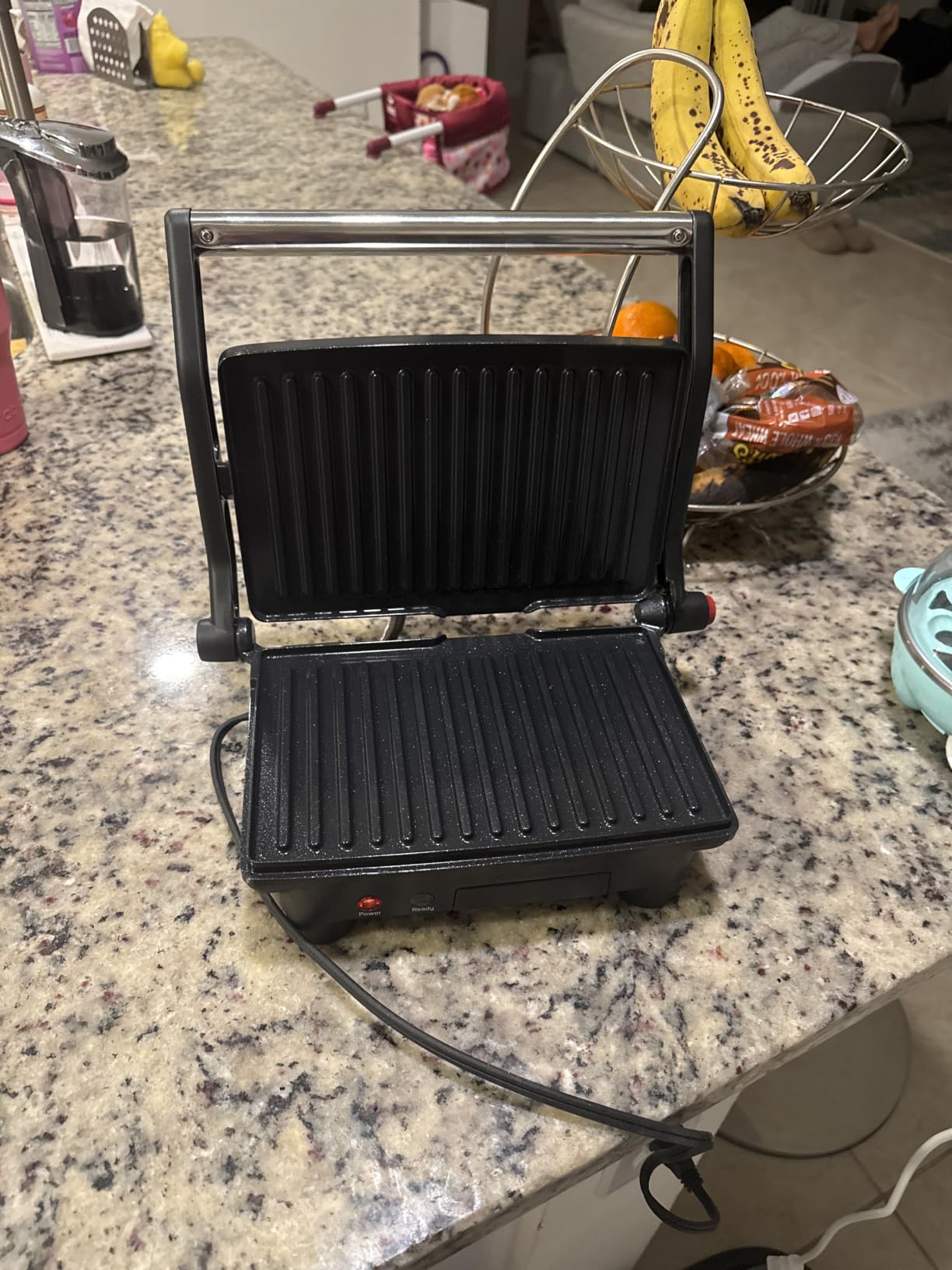
This is the press we took on a three-week trip, and it survived being packed and unpacked repeatedly. At 4 pounds with a compact body it fits in a bag, and the stainless exterior shrugs off fingerprints better than plastic housings.
The floating hinge did its job on a normal grilled cheese, and opening it fully flat turns it into a two-sided grill for burgers or a slab of vegetables. That versatility is more useful than it sounds if you also want to cook protein on the same appliance.
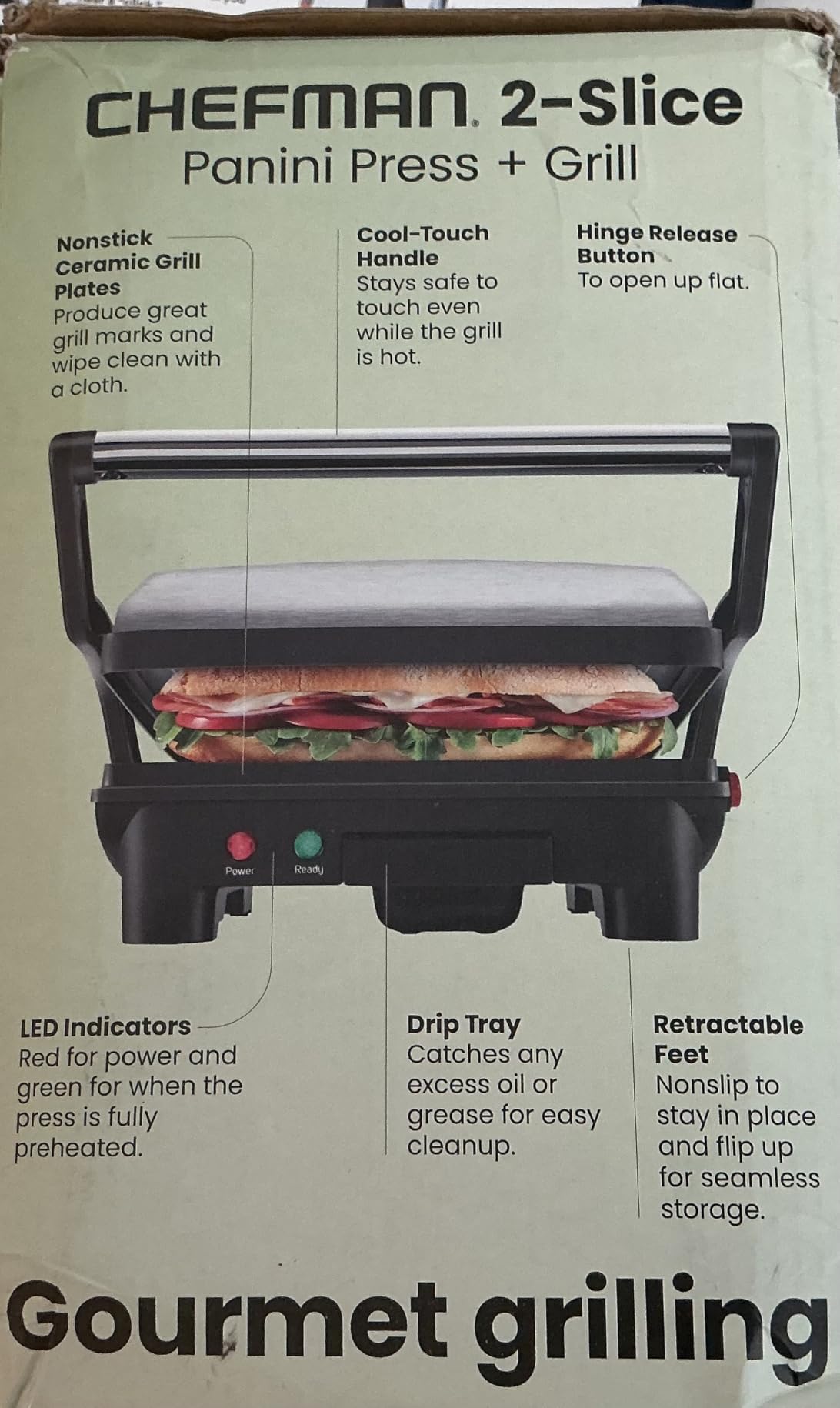
The closed cooking surface is 5.5 by 8.75 inches, which is one sandwich with a little room. That is fine for lunch and limiting for dinner, and it is the main reason we ranked this below the four-slice Chefman.
On thick artisan bread the lid cooked unevenly for us, with one side browning ahead of the other. Thin and standard sliced bread was consistently good.
Who this press suits
One or two people who want a durable-feeling press for travel, office lunches or a kitchenette. The stainless body and removable drip tray are easy to keep clean between uses.
Anyone who wants a grill and a press in one and only cooks for one or two will find it capable rather than compromised.
Who this press does not suit
It is not a family appliance, and the fixed plates mean you cannot soak them for a deep clean. A cheese-heavy week will test the coating around the edges.
There is no on-off switch and no temperature adjustment, so control is entirely in your timing. If that sounds risky for your cooking style, the Imusa with a dial is a better fit.
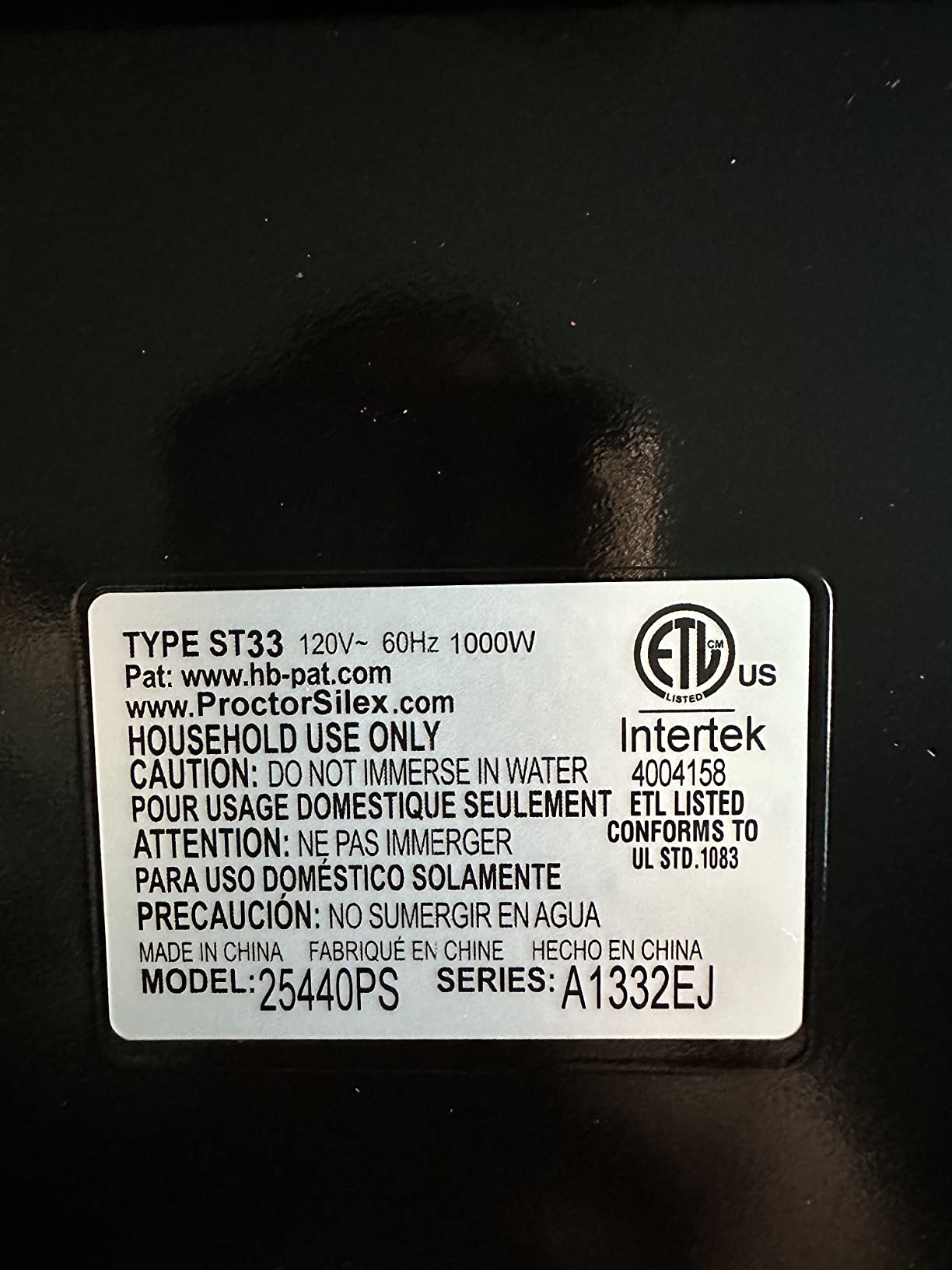
9. Proctor Silex Panini Press and Indoor Grill – Three-Year Warranty
Proctor Silex Panini Press Sandwich Maker Grill & Electric Indoor Grill
- Toasts two thick sandwiches or one long sandwich on a 7 inch square surface
- Floating lid presses tall sandwiches so both sides cook evenly
- Ceramic nonstick plates wipe clean with a damp cloth
- Lid latch stores it flat or upright
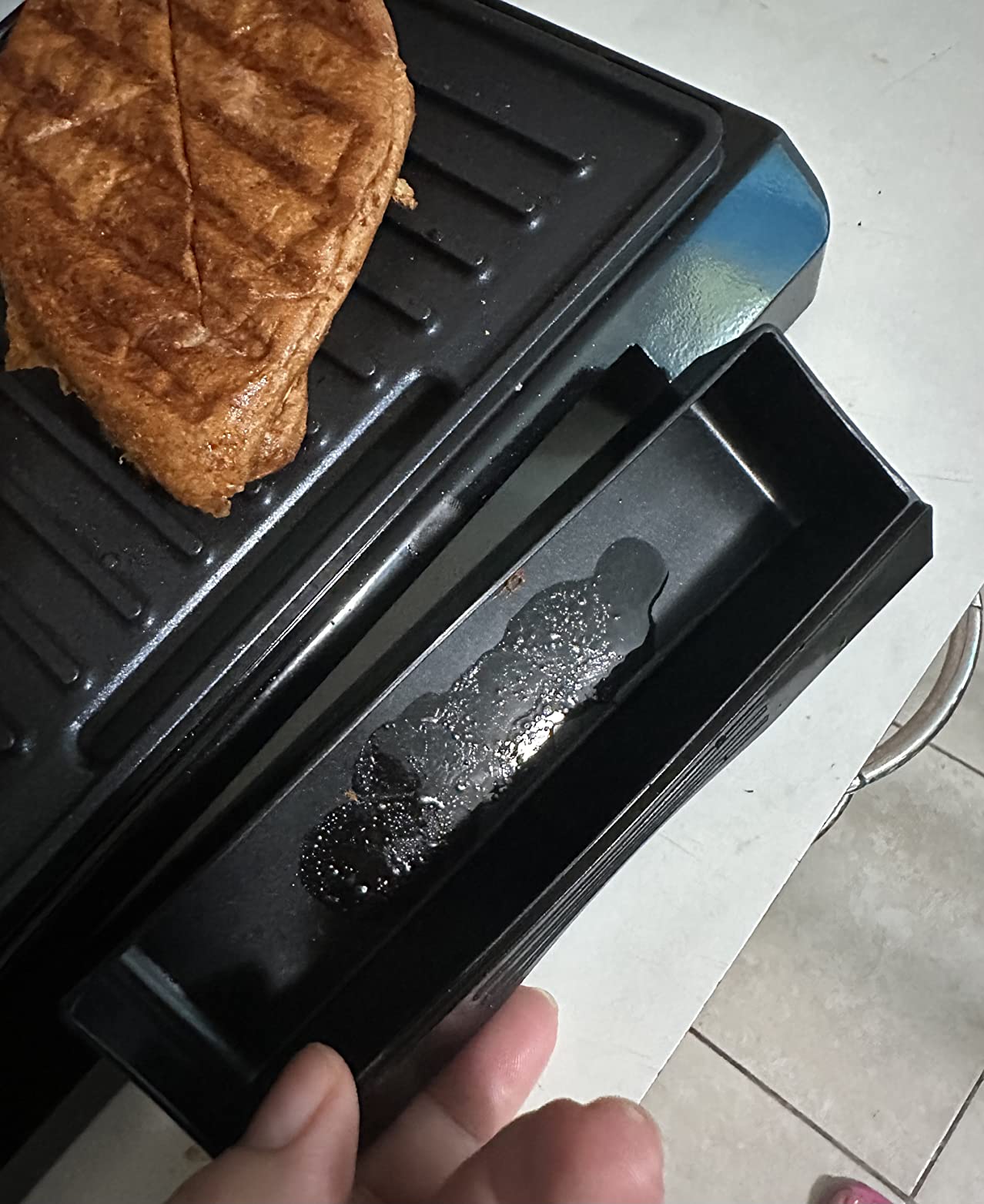
- Removable dishwasher-safe drip tray
- Printed instructions are tiny with almost no cooking guidance
- No temperature adjustment at a single heat level
- 1000W output cooks frozen items more slowly than a higher-wattage unit
Three years is longer than the one year carried by several presses in this roundup, and on an appliance whose main failure mode is a degraded nonstick coating, longer coverage is a genuine signal about expected durability.
The cooking itself is competent rather than remarkable. The floating lid handled our tall test sandwich without crushing it, and the ceramic nonstick plates released the cheese cleanly with a damp cloth, no scrub pad.
The lid latch is useful in a small kitchen because the press can be stored flat in a drawer or stood upright, which is more flexible than a single fixed position.
Two things frustrated us. The printed manual is effectively unusable, with tiny type and no real cooking guidance, and 1000 watts is modest, so a frozen sandwich needed noticeably longer than on a 1500-watt unit.
Who this press suits
Buyers who intend to keep an appliance for years and want coverage that matches that plan. The ceramic coating paired with a three-year warranty is a reassuring combination for a press that has to survive daily scrubbing.
It is also a good apartment option, since the 4 pound body and flat or upright storage options keep the footprint flexible.
Who this press does not suit
Beginners who want instructions. Plan two or three test cooks before you settle on a method, because the manual will not tell you when a sandwich is done.
Skip it if you cook frozen sandwiches often. At 1000 watts it is one of the slower units here, and there is no dial to compensate by cooking hotter.
10. CATTLEMAN CUISINE 5-in-1 Panini Press Grill – Built-In Meat Probe
CATTLEMAN 5 in 1 Panini Press Grill with Removable Plates, 1600W
- Highest wattage here at 1600W reaching 450F for fast even cooking
- Removable reversible dishwasher-safe plates for pancakes or steaks
- Double damping hinge stops at any angle and works one-handed
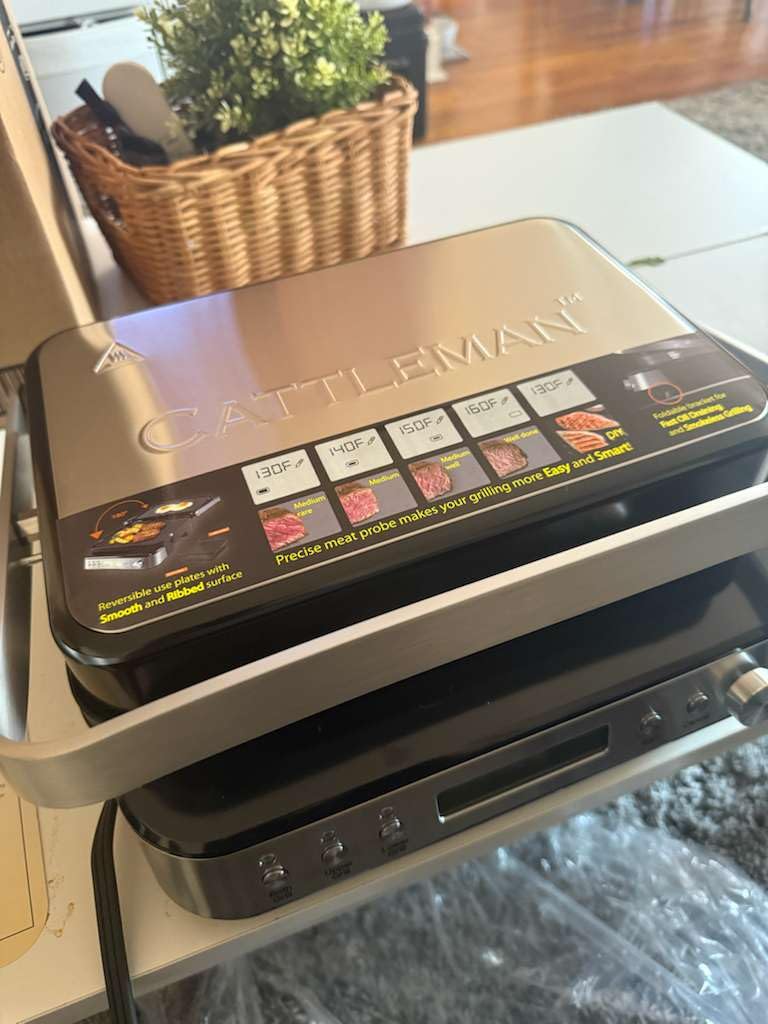
- Included meat thermometer with five modes and a beep alert
- LCD display shows temperature and timer and is adjustable mid-cook
- Very large 11 pound footprint demands substantial counter space
- Preheat cycle cannot be skipped before the timer starts
- Grill edges run very hot and are easy to touch
- Probe connection is loose and the controls need the booklet
This is the most spec-heavy appliance in the group, and in practice it mostly delivers. At 1600 watts it preheated quickly and it is the only unit here with a proper temperature readout, a timer you can adjust while cooking, and a meat probe in the box.
The probe is the standout. It reaches 450F, beeps when the target temperature is hit, and it turned what would have been guesswork on a thick chicken cutlet into a repeatable result. Several owners describe it as replacing a separate thermometer.
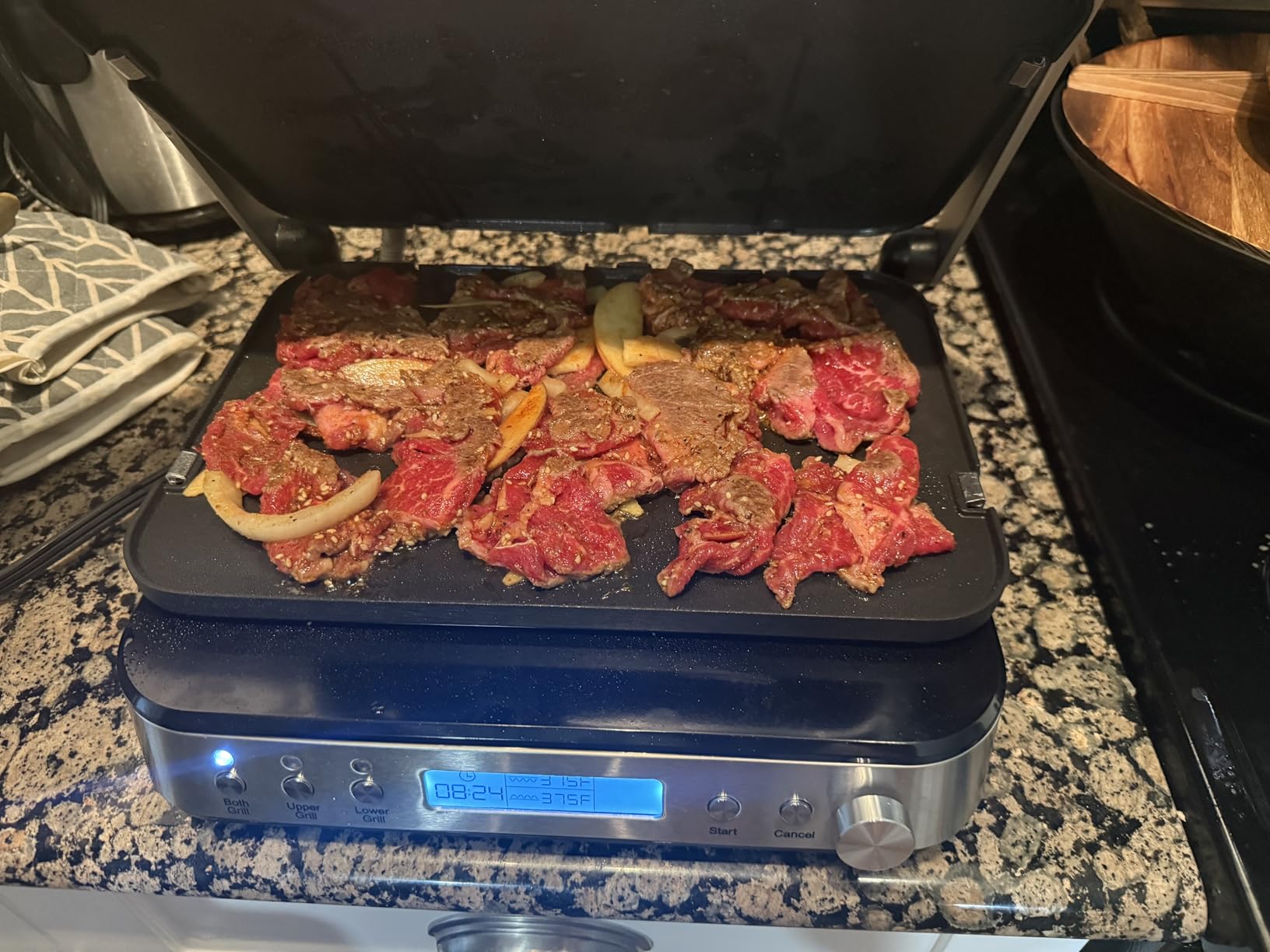
Plates are removable, reversible and dishwasher safe, which is the configuration long-term owners rate highest for longevity. Flip them from ridged for steaks and paninis to smooth for pancakes and eggs, and the surface you can actually wash is the surface you cook on.
Its panini performance was strong: even browning, fast recovery between batches, and grill marks that held up under the tall sandwich test.
Who this press suits
Cooks who buy a grill to cook meat rather than only sandwiches. The probe, the 450F ceiling and the removable plates make it the pick for steak, chicken, chops and burgers on a weeknight.
It also rewards a household that wants one appliance to do contact grilling, open grilling, griddling and waffle-style work without buying separate plates.
Who this press does not suit
Small kitchens. At 11 pounds and over 16 inches across when open, this is a large unit and it is not a casual grab-and-go appliance.
It also demands attention. The preheat cycle cannot be skipped, the probe connection needs a firm push to seat, and the grill edges get hot enough to catch a hand. Read the booklet before the first cook.
11. YASHE 2-Slice Panini Press Grill – Fast Heat and Strong Grill Marks
YASHE Panini Press Grill, 2-Slice Sandwich Maker with Nonstick Plates
- 1200W element heats up very quickly and cooks evenly
- Opens fully flat at 180 degrees for steaks hot dogs and quesadillas
- Nonstick cast aluminum plates make cleanup effortless
- Folds and locks for compact upright storage
- Lightweight and easy to handle
- Outer plate edge runs hotter than the centre so food needs rotating
- Drip tray is small and grease does not flow toward it when folded
- Not suitable for greasy foods such as bacon or burgers
- Only cooks two slices and there is no temperature control
For a fast plain grilled cheese this press does a good job. The 1200-watt element came up quickly and the ridged plates left sharp, clearly defined grill marks, which is exactly what people want from a sandwich press.
It also opens fully flat for quesadillas or hot dogs, and the cool-touch housing was a real advantage in a kitchen with a child hovering nearby. At 4.4 pounds it is easy to move and it folds flat for storage.
On the tall sandwich test the limit was the same one the Imusa shares. The hinge stops lower than a true floating-hinge design, so a layered sandwich either refuses to close or gets pressed flatter than you want. Standard sliced bread and thin panini cuts are what this unit is built for.
Cleanup was quick, since the nonstick cast aluminum plates released cheese without a soak, though the smaller outer edge is worth checking after a fatty meal since that is where residue collects first.
Who this press suits
Quick lunches and households cooking two slices at a time. If your routine is a grilled cheese or a thin toasted sandwich on a weeknight afternoon, the heat-up speed and the clean grill marks are the two things you notice every day.
It is a good dorm or first-apartment unit, since it is light, compact and the nonstick cast aluminum plates wipe clean with almost no effort.
Who this press does not suit
Anyone who cooks fatty meats should look elsewhere. The drip tray is small and grease does not reliably flow toward it when the unit is folded, so bacon and burgers leave a mess behind rather than draining away.
The plate also runs hotter at the outer edge, which means rotating a large sandwich mid-cook. And with no temperature control, timing is the only tool you have.
12. Novalife 3-in-1 Panini Press – Fast Preheat and Low Weight
- Preheats in only 2-3 minutes with power and ready lights
- Opens 90 or 180 degrees for a contact grill or flat griddle
- Temperature control stops heating at the preset value
- Nonstick plates with an oil guide groove and a removable drip tray
- At 2.6 pounds it is the lightest unit here
- Uneven heating with one side hotter than the other
- Nonstick coating begins sticking after limited use
- 180 degree hinge feels flimsy and will not hold a stable open position
- Drip tray does not catch all grease
- Cooking surface is very small
At 8.3 inches square and 2.6 pounds, this is the lightest press in the roundup and one of the most compact, so it suits a tiny kitchen or a packed holiday bag. The listing claims a two to three minute preheat, which is quick enough for a single serving where nothing else fits.
The three-way opening is more flexible than it sounds: 90 degrees for a contact grill, 180 degrees to lay it flat as a griddle. The oil guide groove and removable drip tray make cleanup simple on paper.
On the toast test the uneven heating was visible rather than theoretical, with one corner of the bread darkening several shades ahead of the opposite side. A single person who watches the food will not notice it; a batch cooker would.
The temperature control here stops heating at a preset value rather than giving you a dial to aim with, which is a different thing entirely. It protects the plates from overshooting, but it does not solve the burn-through problem on delicate bread.
Who this press suits
Anyone optimising for footprint and weight above all else. It is easy to lift with one hand, easy to store, and quick enough for a single serving in a kitchen where nothing else fits.
It works well for one person making a sandwich a day, where a larger press would add bulk without adding much benefit.
Who this press does not suit
Skip it if you cook for more than one. The plates are 8.8 by 5.5 inches each, and two sandwiches only just fit, so a family will be cooking in shifts.
The heating is uneven with one side running hotter, the open-flat hinge wobbles rather than locking, and owners report the nonstick coating starting to stick after limited use. Fine for occasional light use, less convincing as a long-term investment.
Buying Guide: What to Look For in a Panini Press
Most of the differences between a good press and a disappointing one come down to four things: how much heat control you have, whether the plates come off, how the hinge behaves, and how much counter space it eats. Here is what to check before you buy.
Adjustable heat beats presets every time
Only one two-slice press in this roundup has a user-selectable temperature dial, the Imusa, and it is the one that solved the classic budget failure: thin bread scorching while the centre stays cold. A fixed single heat is fine for standard sandwich bread and poor for anything delicate.
Multi-function griddles with separate grill and griddle controls, like the Cuisinart, give you the same benefit across two zones. Preset buttons are the weakest option because they rarely tell you the actual temperature they apply.
Removable plates are the longest-term value decision
Fixed plates are the most common complaint in owner feedback over time, and it is easy to see why. Melted cheese that gets into the corners of a fixed plate has to be scrubbed, and scrubbing is what wears a nonstick coating out early.
Removable plates can be washed properly, and in the Cuisinart and CATTLEMAN cases they go straight into the dishwasher. If you expect to use the press for burgers, bacon or anything with cheese, removable plates matter.
The floating hinge and plate height are what protect thick sandwiches
A floating hinge uses a second pivot so the top plate settles onto the food in stages instead of pressing flat all at once. It is the difference between a compressed panini and a sandwich with its filling squeezed out onto the counter.
Height control takes it further. The Breville lets you set the gap so an open-face melt cooks with light pressure and a thick loaf cooks with a thicker gap, and a wide hinge, like the one inch opening on the George Foreman Family, handles cuts of meat and stacked sandwiches.
Wattage predicts preheat and recovery
Wattage tells you two useful things: how long the first sandwich takes and how fast the plates recover when a cold sandwich hits them. Units around 1000 watts handled a grilled cheese fine but cooked frozen items noticeably slower, while 1500 and 1600 watt units handled a second sandwich with less wait.
A 760-watt press can still cook a sandwich perfectly if you give it time, but that is a commitment to patience, and it matters more in a busy kitchen.
Size and storage decide whether you will use it at all
Measure your counter and your cabinet before buying. The small two-slice units are roughly 8 to 11 inches across, while the multi-function griddlers run past 16 inches when open and weigh 11 pounds or more, which is a two-handed lift to a high shelf. The same space planning applies to the rest of a workshop, from our picks for the best drill presses for home shops to a bench-mounted griddle.
Look for a locking or folding lid so the press can stand upright. Also check cord length against your outlet, since several compact models ship with a short cord and an extension lead is a worse answer than a press placed where you can reach it.
Cleaning, coatings and safety
Ceramic nonstick released cheese cleanly in our testing and a dishwasher-safe drip tray saves time. But the cheapest determinant of how long a press lasts is whether you ever use cooking spray on it, since the surfactants in spray accelerate coating breakdown.
On safety, an on-off switch is the most basic expectation and several budget presses lack it, which means unplugging a hot unit under load. A cool-touch housing matters if children are around, and a hot-housing warning applies to several models here, so leave clearance around the press while it cooks.
If your interest in pressure cooking extends beyond sandwiches, our pick of the best French presses for coffee lovers covers the other end of the countertop gadget range, and the buying logic is the same: match the tool to how often you will actually use it.
Frequently Asked Questions
Which panini press is the best?
The Hamilton Beach 25462Z is the best all-round panini press for home use. Its floating lid presses sandwiches of any thickness without crushing the filling, both the top and bottom grids are nonstick so you never flip mid-cook, and a green ready light tells you when to start. The locking lid also stores it upright, which matters in a small kitchen. If you want temperature control instead, the Imusa GAU-80350 is the only press in our roundup with an adjustable dial.
Are panini presses worth buying?
A panini press is worth it if you eat grilled sandwiches a few times a week or want a second heat source for burgers, chicken and vegetables without firing up an outdoor grill. They are not worth the counter space for occasional use. For a single grilled cheese, a grill pan with a cast iron weight works just as well and stores away. The presses that earn their space are the ones with removable plates and adjustable heat, because those are what keep them working in year three.
What is the best sandwich maker for home use?
It depends on how many sandwiches you cook at once. For most households the Hamilton Beach 25462Z handles one or two evenly with a floating lid and stores upright. For a family the Chefman 4-Slice fits four sandwiches or two large paninis per press. For a single person or a small kitchen the George Foreman GR10B cooks two servings on a compact two-serving surface. For a light, fast-heating unit the Novalife three-in-one preheats in two to three minutes and weighs under three pounds. For cooking meat as well, the Cuisinart five-in-one covers grill, griddle and press in one body.
What is the best brand of panini press?
Brand matters less than construction in this category. Look for the combination of removable dishwasher-safe plates, adjustable temperature and a floating hinge, because that is what determines how a press performs and how long it lasts. Among the models we tested, Cuisinart and CATTLEMAN CUISINE offer removable plates, Imusa and Cuisinart offer real temperature control, and Hamilton Beach, Chefman, Breville and George Foreman lead on floating hinge design. Judge the spec list, not the badge on the box.
What is the best budget-friendly panini press?
The Imusa GAU-80350 is the best budget-friendly pick we tested because it is the one affordable press in the roundup with a real adjustable temperature dial, which prevents the common problem of thin bread burning before the cheese melts. For the smallest option the Novalife three-in-one preheats in two to three minutes and wipes clean easily, but its nonstick coating wears faster and its plates cannot be removed for a deep clean.
What temperature should a panini press be?
Most panini presses have no user-selectable temperature, which is why timing matters more than settings. As a general guide, medium heat is right for a standard grilled cheese, letting the cheese melt before the bread darkens. Sear-level heat suits meat, while lower heat is better for thick artisan bread, which browns slowly and burns fast. If a dial is important to you, check that the press has one, because a fixed single setting leaves you no way to slow the cooking down.
Conclusion: Which Panini Press Should You Buy in 2026?
After running the same bread, cheese, thick sandwich and cleanup tests on all twelve, the Hamilton Beach 25462Z is the best panini press for home. It presses any thickness without crushing the filling, browns on both sides without flipping, wipes clean after a heavy cheese session, and stands upright in a cabinet.
Buy the Imusa GAU-80350 if you want a temperature dial, the Chefman 4-Slice if you feed four people at once, the Cuisinart five-in-one if you want grill, griddle and press in a single body, and the CATTLEMAN CUISINE if you cook meat and want a probe. For the smallest possible counter footprint, the George Foreman GR10B does an honest job for one or two servings.
Whichever you choose, put it where you will actually use it. The best panini press for home is the one within reach of the toaster, not the one that looks best in the cabinet.