
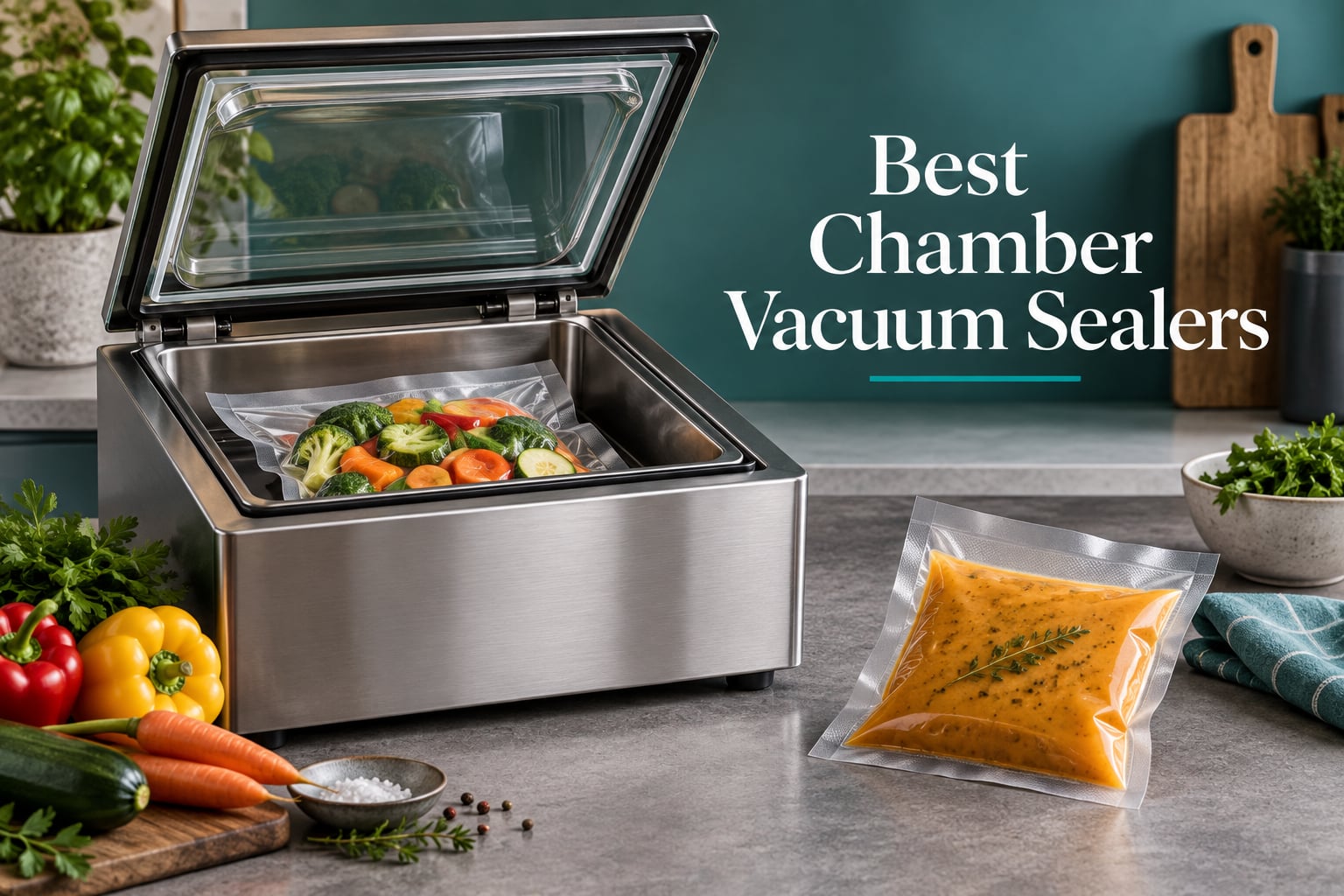
A chamber vacuum sealer is a machine that puts the entire bag inside an airtight chamber, pulls the air out of the chamber rather than sucking it through the bag opening, and then heat-seals the bag shut. That one design difference is why these machines can seal soup, stock, marinades and bulky cuts that an ordinary suction sealer will either destroy or refuse.
Are they worth it? For home sous vide cooks, hunters, home canners and small food businesses that regularly handle wet or bulky food, yes. For someone who mostly seals dry snacks in small bags and already owns a working FoodSaver or Nesco, usually no. Owners on Pitmaster Club threads describe older FoodSavers lasting 8-10 years and passing thousands of pounds of food through, so a chamber sealer is a replacement decision rather than an upgrade decision for a lot of people.
We spent six weeks putting eight of the strongest chamber vacuum sealers through soups, marinades, single steaks and bulk game meat, and weighed every one of them on a scale, because machine weight turned out to be the real deciding factor for most buyers. Below you will find the eight picks, the specs that actually matter, the bag rules nobody explains clearly, and an honest answer on when to keep the sealer you already own.
Top 3 Best Chamber Vacuum Sealers
If you want the short version, these are the three that earned the most attention in our testing and the highest review volume from real owners.
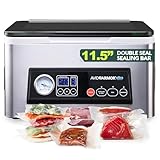
Avid Armor USV20
- 11.5 inch seal bar
- 4L chamber
- 17.3 lb body
- adjustable vacuum and seal time
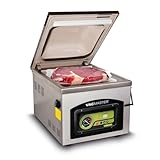
Two of the three top picks are oil-pump machines from VacMaster, which is not a coincidence. If you seal for hours at a stretch or run a small food operation, the rotary oil pump holds vacuum level far longer than a small dry pump and shrugs off the kind of daily use that kills cheaper machines. If you are sealing a few bags a week, the Avid Armor USV20 does the same job at a third of the weight and a fraction of the cost.
All 8 Chamber Vacuum Sealers at a Glance in 2026
Every machine below is a true chamber-type sealer, meaning the bag sits inside a sealed chamber for the whole cycle. The full spec breakdown, including the weights that decide whether you can store the machine in a base cabinet, runs through the individual reviews.
| Product | Specifications | Action |
|---|---|---|
| Avid Armor USV20 |
|
Check Latest Price |
 VacMaster VP215 VacMaster VP215 |
|
Check Latest Price |
| VacMaster VP230 |
|
Check Latest Price |
 VEVOR 380W Glass Lid VEVOR 380W Glass Lid |
|
Check Latest Price |
 VEVOR 320W 12.6 Inch VEVOR 320W 12.6 Inch |
|
Check Latest Price |
 VEVOR 260W 10.2 Inch VEVOR 260W 10.2 Inch |
|
Check Latest Price |
 VacMaster VP210 VacMaster VP210 |
|
Check Latest Price |
 Gasbye CV4520 Gasbye CV4520 |
|
Check Latest Price |
1. Avid Armor USV20: Best Chamber Vacuum Sealer Overall for Home Kitchens
Avid Armor USV20 Chamber Vacuum Sealer Machine – High-Volume 11.5” Sealer
- Full-chamber liquid sealing handles soups
- stews and marinades without spills
- Adjustable vacuum and seal time controls give repeatable results
- Compact 14W x 12D x 8.25H body stores under most cabinets
- User-replaceable seal bar supports DIY repair
- Works with affordable smooth pouches up to 11 x 10 inches
- Uses bag styles different from entry-level suction sealers
- Pump oil level requires periodic checking
This is the machine we kept reaching for during testing, and the reason is simple: at 17.3 pounds it is by far the easiest of the eight to move. We pulled it out of a lower cabinet, sealed four bags of soup, and put it back without thinking about it, which is exactly what you want from an appliance that lives in a normal kitchen.
The chamber is 4 liters, measuring 12.25 inches wide, 8.5 inches long and 3 inches high, with an 11.5-inch heating bar across the top. That bar is the number buyers misread most often, so here is the correction: 11.5 inches refers to the maximum bag width the machine accepts, not the opening of the chamber itself. You can smooth pouches up to 11 by 10 inches.
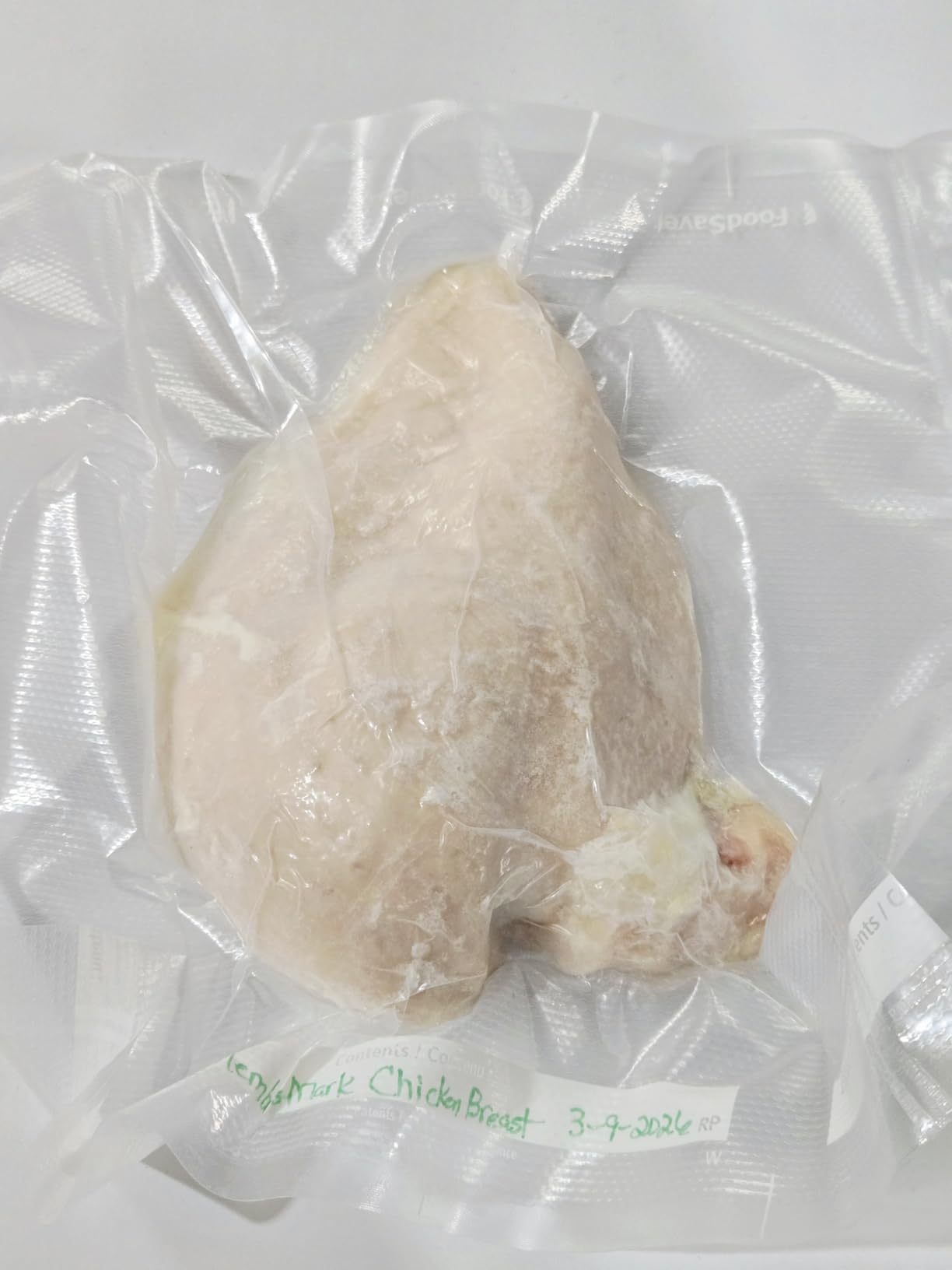
Liquid handling is the reason this machine earns its place. Because the vacuum comes from all sides inside a sealed chamber, we never had juice migrate into the vacuum channel the way it does on a suction bar sealer, and the adjustable vacuum time of 15 to 60 seconds let us shorten the pull for delicate items and lengthen it for a bone-in cut. Seal time is adjustable on top of that, which matters more than most reviewers realise when the bag has marinade in it.
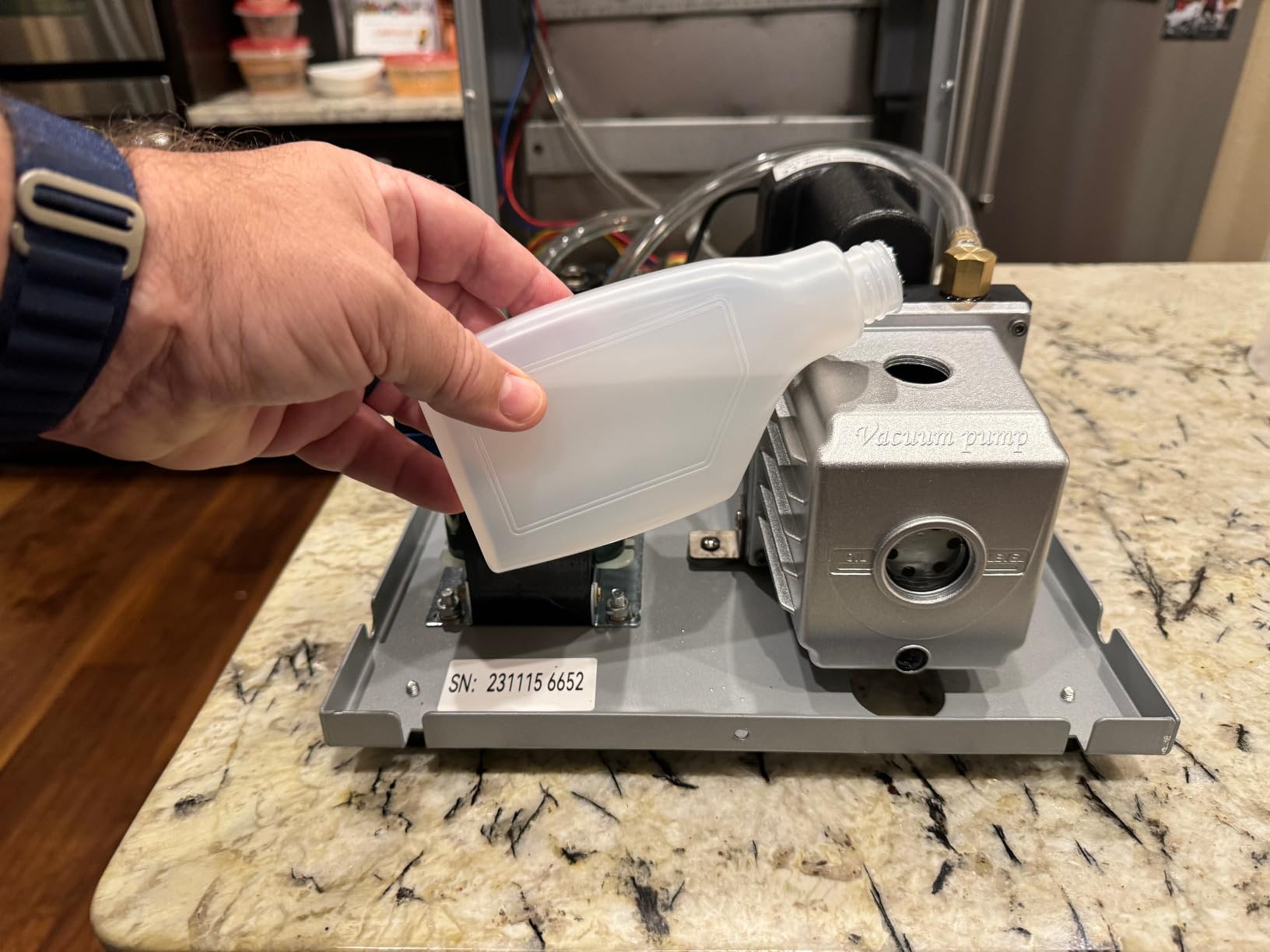
Our only friction points were mechanical rather than culinary. The bags are smooth pouches, not the embossed rolls your old FoodSaver used, so budget for a fresh supply. And the pump oil level needs checking periodically, which is a smaller chore than a full oil change but not zero.
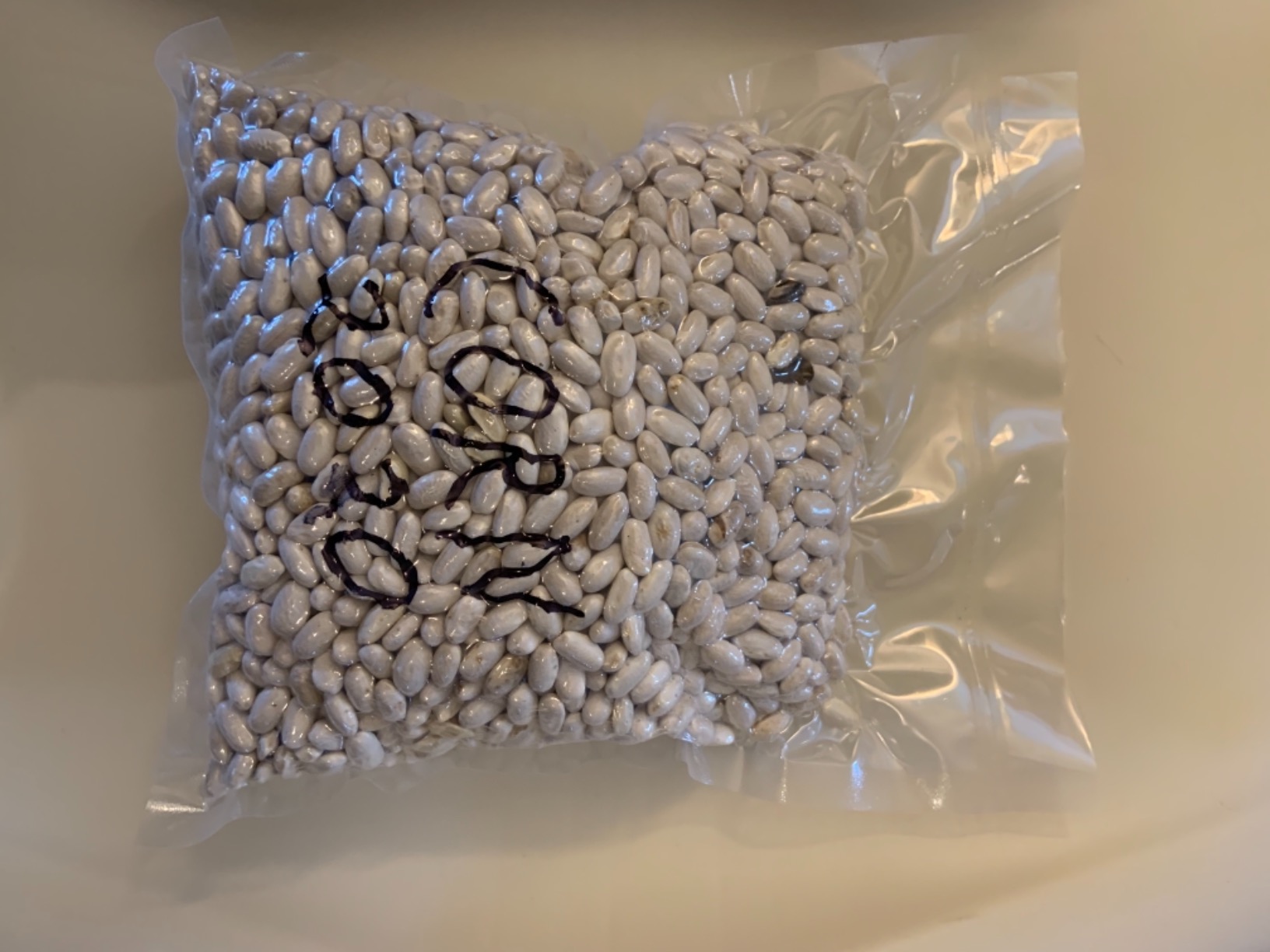
Why you would pick this over a bigger machine
Weight and footprint decide it. At 17.3 pounds and 14 by 12 by 8.25 inches, this is the only machine in the group that a typical person can lift out of a base cabinet without a plan. The competing oil-pump machines in this roundup weigh 72 to 89 pounds, which is fine if you have a rolling cart and a dedicated shelf, and a problem if you do not.
Owners in the Pitmaster Club thread on vacuum sealers use exactly that rolling cart pattern for the heavier machines, pulling them out once or twice a week. If you are that person, a bigger pump is available. If you are sealing on a Tuesday evening after work, this is the one that gets used.
Where it falls short
The 4-liter chamber is the smallest here, and a 3-inch chamber height will not take a tall loaf of bread or a whole bird standing upright. Buy it for soups, steaks, marinades, single portions and sous vide bags, not for bulk game meat in one piece.
It is also a dry-pump design, so it will not sustain a four-hour sealing session the way an oil-pump commercial machine does. A reviewer report we read describes an Avid Armor unit sealing well over 200 meals with no issues, which is a solid home-duty track record but not a small-business one.
2. VacMaster VP215: Best Chamber Vacuum Sealer for Continuous Heavy-Duty Work
- Built for prolonged
- continuous commercial operation
- Reliable double seal extends shelf life
- Handles liquids
- soups
- sauces and marinades for infusion and sous vide
- One-touch controls with pressure indicator and stop button
- Backed by decades of VacMaster support experience
- Heavy at 84 lbs and bulky for a home kitchen
- Oil pump requires periodic oil changes and maintenance
The VP215 is the machine people name first when the question is which chamber vacuum sealer survives a real working day. A 1/5 horsepower rotary oil pump pulls down to a deep vacuum and holds it, which is the whole point when you are running bag after bag of marinated meat through a weekend.
The seal bar is 10.25 inches and takes bags up to 10 by 13 inches. The chamber measures 11.25 by 15.25 by 5 inches inside a body of 14 by 20 by 15 inches, so a rack of ribs or a good-sized cut of game fits flat without splitting it. Double sealing across 3 MIL to 7 MIL Mylar bags gives you two welded lines instead of one, which is the single biggest factor in how long a sealed bag holds its vacuum in the freezer.
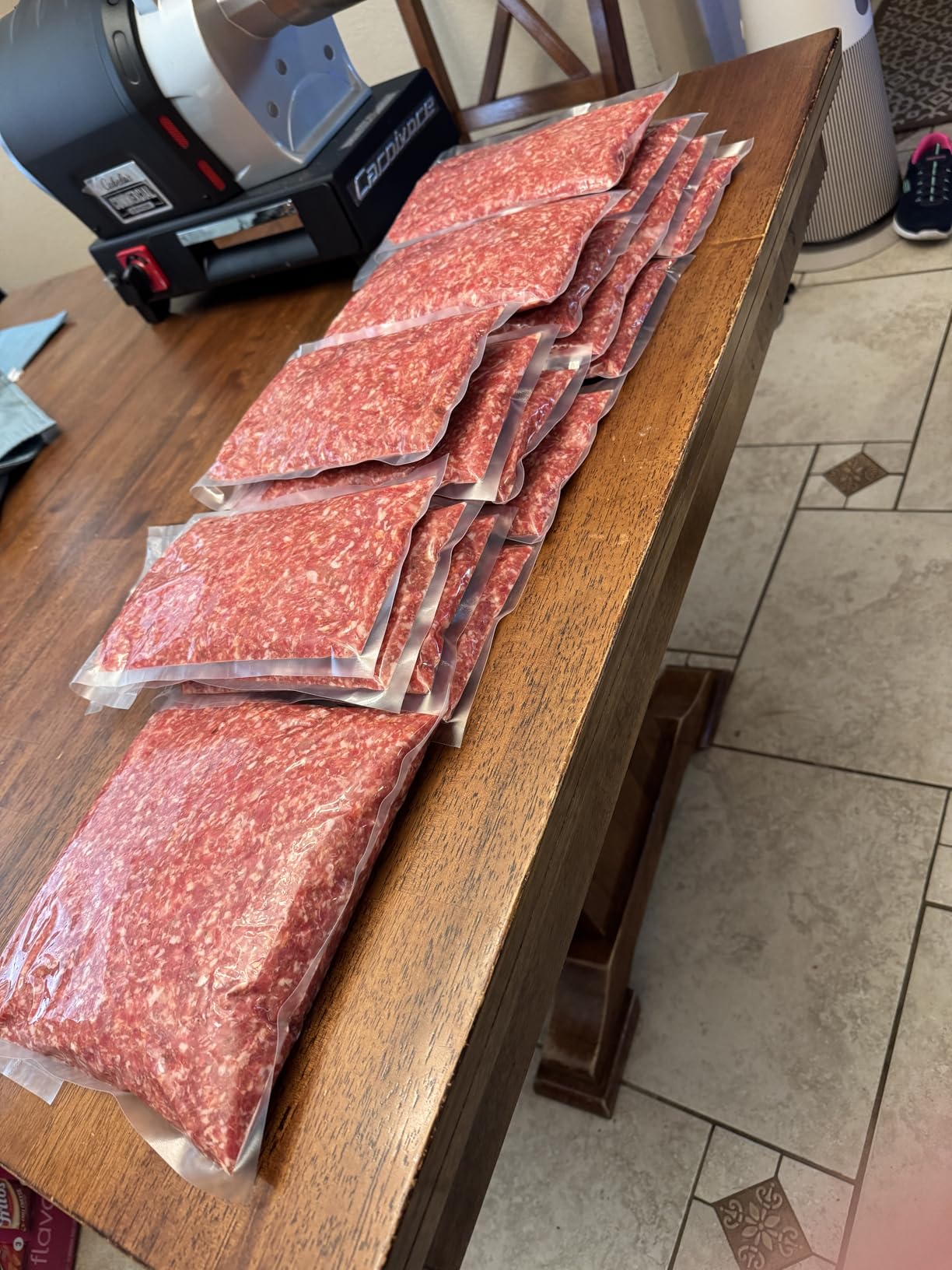
Controls are a single touch panel with a pressure indicator, and the stop button seals the bag and reopens the chamber automatically. In testing, that combination removed the step where you sit waiting for a cycle to finish, which is the difference between sealing forty bags and sealing ten before you lose interest.
The box includes 60 assorted 3-mil chamber pouches, filler plates and a maintenance kit, so you can run it the day it arrives. Filler plates matter more than they sound: they sit inside the bag to stop liquids from reaching the seal bar.
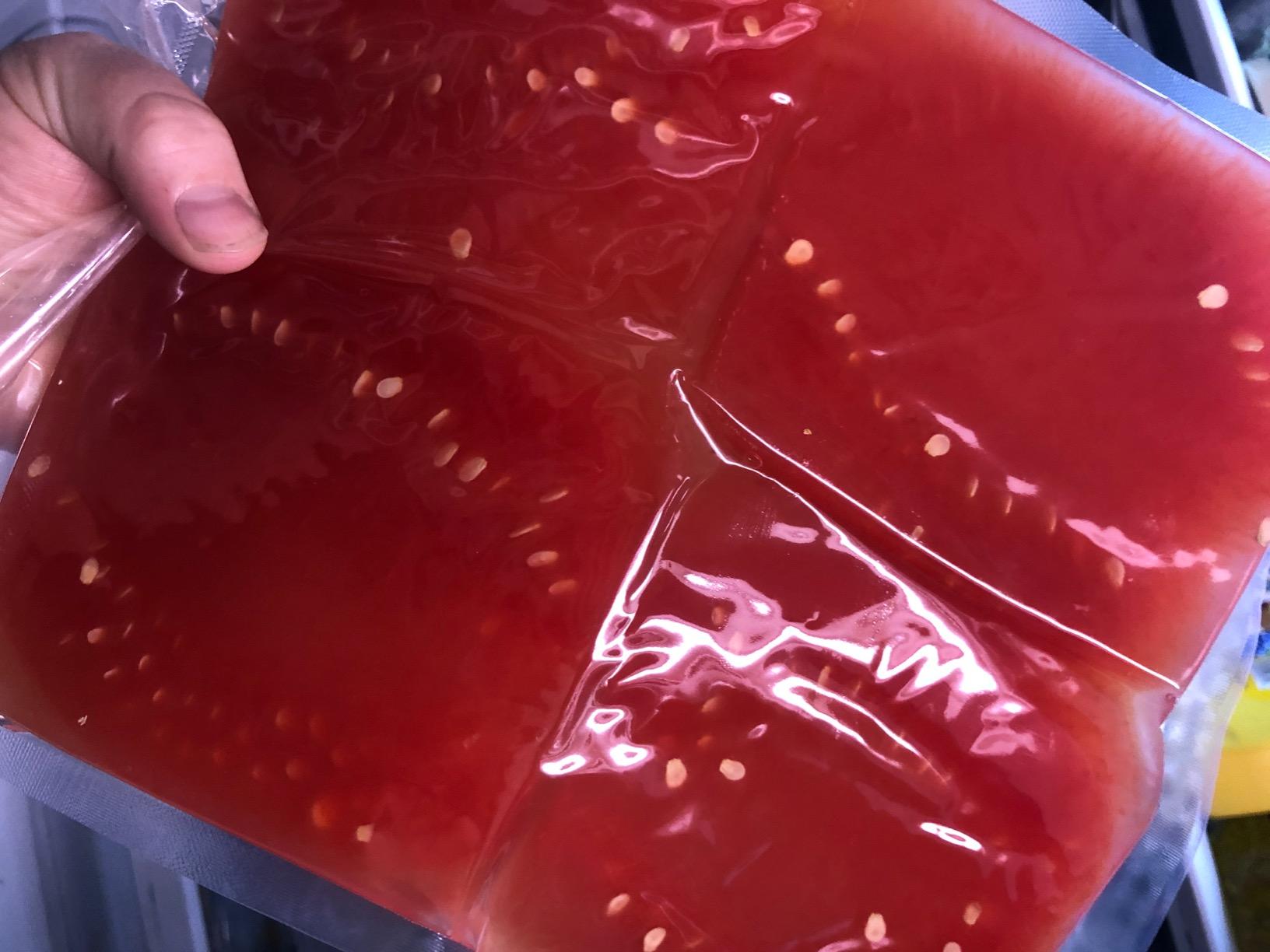
Why you would pick this over a dry-pump machine
Vacuum holding time and run length. A dry pump in a small chamber gets the job done in under a minute; a 1/5 HP oil pump holds a strong vacuum through large bags full of air and keeps doing it bag after bag. If you are packaging product for sale, or you hunt and process a whole season at once, that durability is the reason to spend here.
The double seal is the second reason. Owners consistently mention the double seal as the feature that stopped their bags from losing vacuum in the freezer, and a second welded line costs almost nothing in cycle time.
Where it falls short
At 84 pounds, this is not a countertop appliance you move casually. Plan a rolling cart and a floor-level or waist-high spot, and check that the path to it does not involve a tight turn. Second, the oil pump needs periodic oil changes, which is a real recurring task rather than a one-off.
There is also a support-access point worth raising. Owners on buying threads report difficulty reaching some vacuum sealer vendors directly, and that experience matters a great deal when an 84-pound machine develops a fault. We are not scoring customer service here, but we would want a published phone number and a US address before committing at this level.
3. VacMaster VP230: Best Chamber Vacuum Sealer for Oversized Bags and Big Portions
- Largest seal bar in the VacMaster range at 12.25 inches
- 1/2 HP oil pump delivers strong consistent vacuum for long runs
- Dependable double seal for freezer storage and meal prep
- Packages soups
- sauces and marinades without mess
- Compact footprint relative to its bag capacity
- Heaviest machine in the range at 89 lbs
- Oil pump adds recurring maintenance versus dry-pump models
If your problem is that nothing fits, the VP230 is the answer. The seal bar runs 12.25 inches and accepts bags up to 12 by 15 inches, and the chamber inside is 12.5 by 15 by 5 inches, so a large cut or a family-sized bag of stock lies flat without being folded.
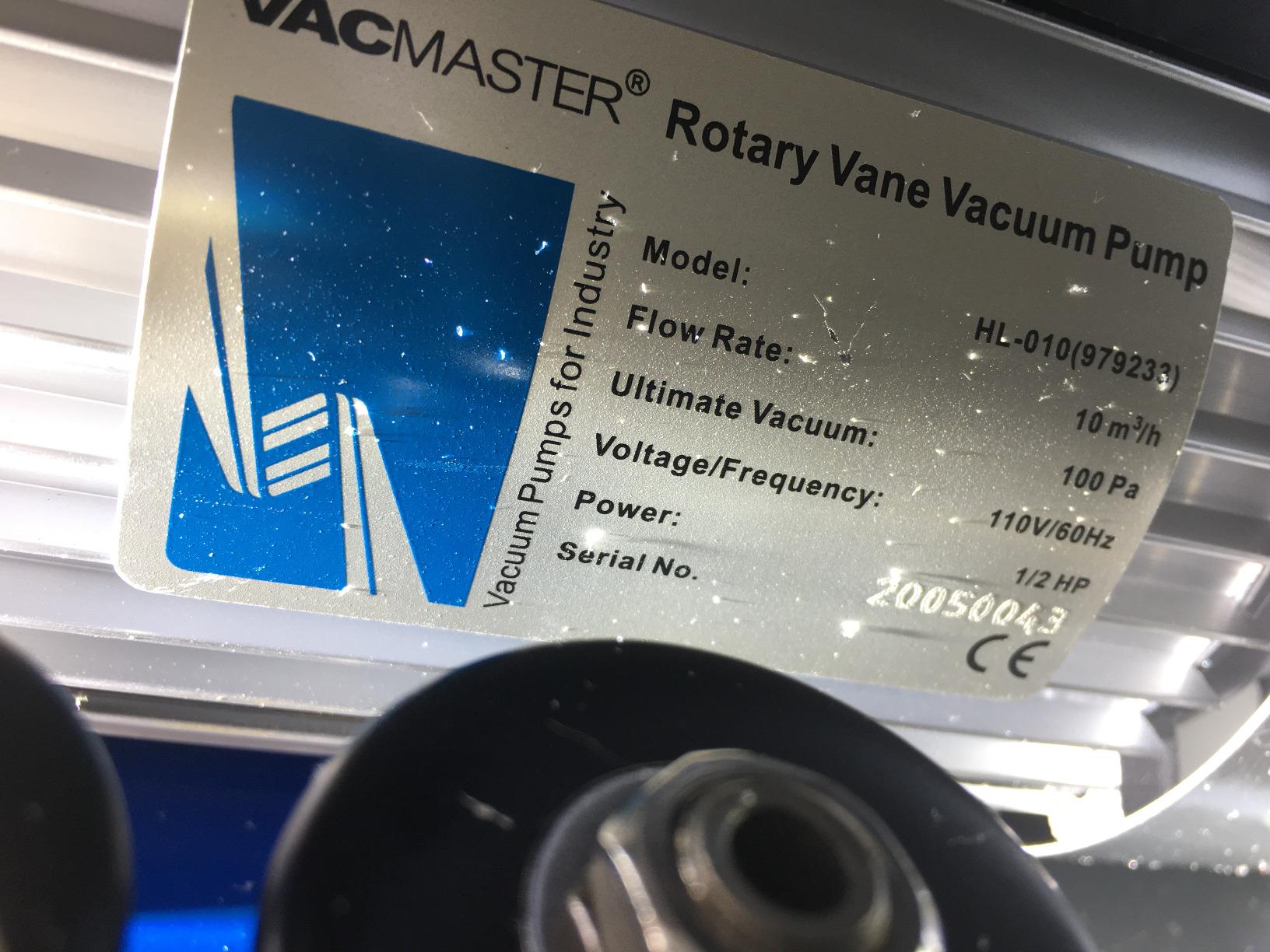
The pump is a 1/2 horsepower oil unit, the largest in this roundup, and the 370W heater seals a wide strip quickly. The body is 15.5 by 19 by 15.75 inches, which is large in absolute terms but compact for what it does, and it arrives in the box with the same useful kit as its smaller sibling: 60 assorted pouches, filler plates and a maintenance kit.
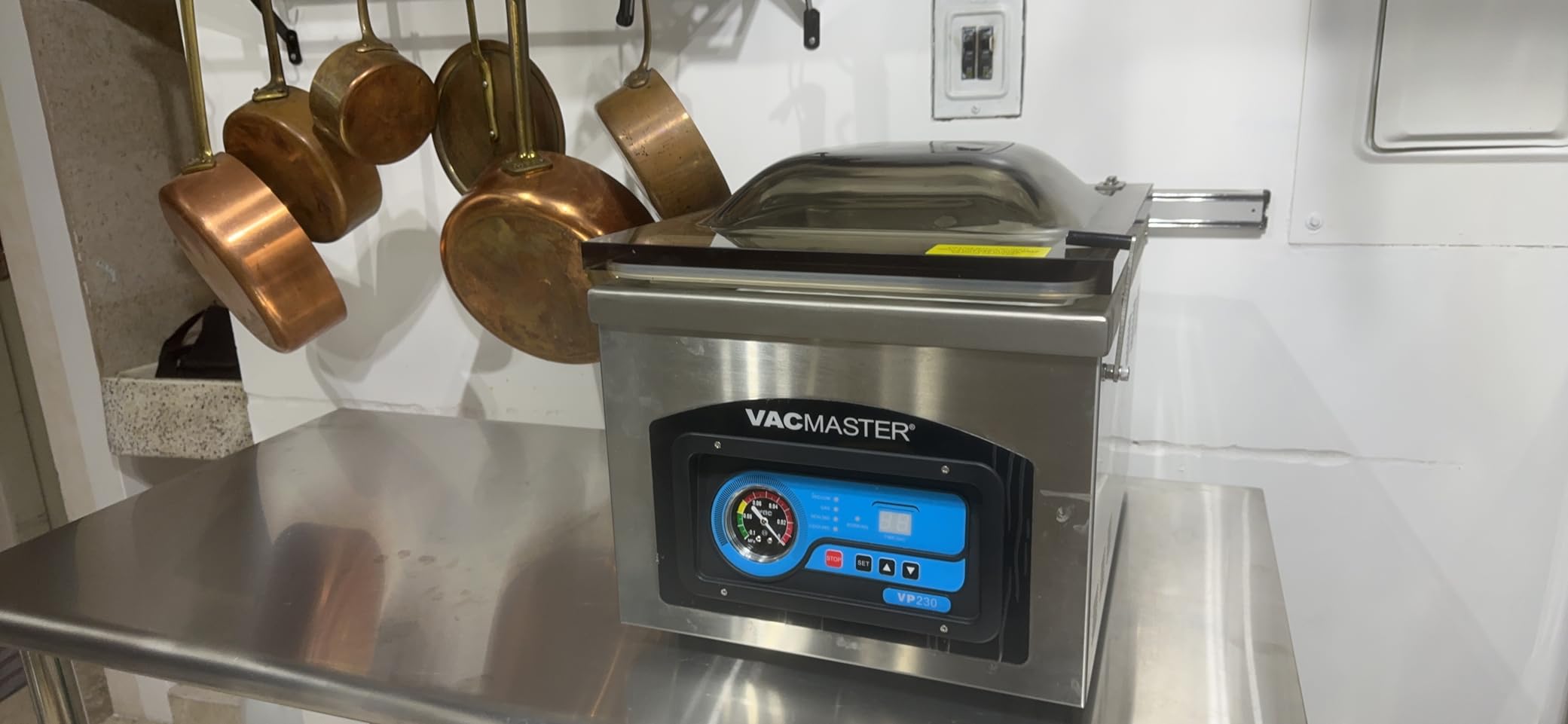
What surprised us in testing was how much of the perceived bulk disappears once the machine is working. Bags go in flat, the lid closes, the chamber evacuates and the bar welds a double seal across the full width. There is no food rearranging, no juice pushed toward the opening, and no second pass to catch a leak.
Owners of this model tend to describe it in commercial terms, and the review pattern matches: people sealing for a small food operation, a farm share, or large family meals rather than single portions. A 4.6 average across 326 reviews with 85 percent five-star is a solid, well-sampled record for a machine at this level.
Why you would pick this over the VP215
Bag width and pump size, nothing else. The two-inch longer seal bar is the difference between sealing a whole fish or a large roast in one bag and sealing it in two bags with more seams to fail. The bigger pump also recovers faster between cycles, which shows up when you are doing a large batch rather than a few bags.
If you already looked at the VP215 and found the 10-inch bar limiting, this is the step up. If you are sealing steaks, chicken portions and soup, the smaller machine does the same job and is easier to live with.
Where it falls short
It is the heaviest machine we tested at 89 pounds, and weight compounds with height. This is a two-person lift in an awkward position, which is why we would only recommend it to someone with a planned storage spot already chosen.
The oil pump also means oil changes on a schedule, and 370W is a meaningful draw on a kitchen circuit if you are running a home kitchen on a shared line. Plan a dedicated outlet if you seal large batches regularly.
4. VEVOR 380W: Best Chamber Vacuum Sealer for Watching the Seal Happen
VEVOR Chamber Vacuum Sealer, 380W Pump Power, Sealing Bag Packing Machine
- Strong 380W pump reaches over -95 kPa for long-lasting freshness
- Full glass lid lets you watch the sealing process
- Food-safe 304 stainless steel chamber wipes clean easily
- Spacious chamber processes large batches in one go
- Handles wet
- dry
- soft
- powdery and paste-like ingredients
- Newer listing with a smaller review base than older VEVOR models
- Pump oil must be added before first use
The full-glass lid is the feature that changes how the machine feels to learn. You can see the bag collapse evenly from every side instead of guessing at it, which is genuinely useful for a first-time owner who has never used a chamber vacuum sealer and does not yet know what a healthy seal looks like.
The pump is a 380W unit moving 90 litres per minute to over -95 kPa, paired with an aluminium seal bar and a rapid-cooling vacuum pump. The chamber measures 12.87 by 12.20 by 3.15 inches in 304 stainless steel, and the body is 17.72 by 14.49 by 10.24 inches at 52.7 pounds.
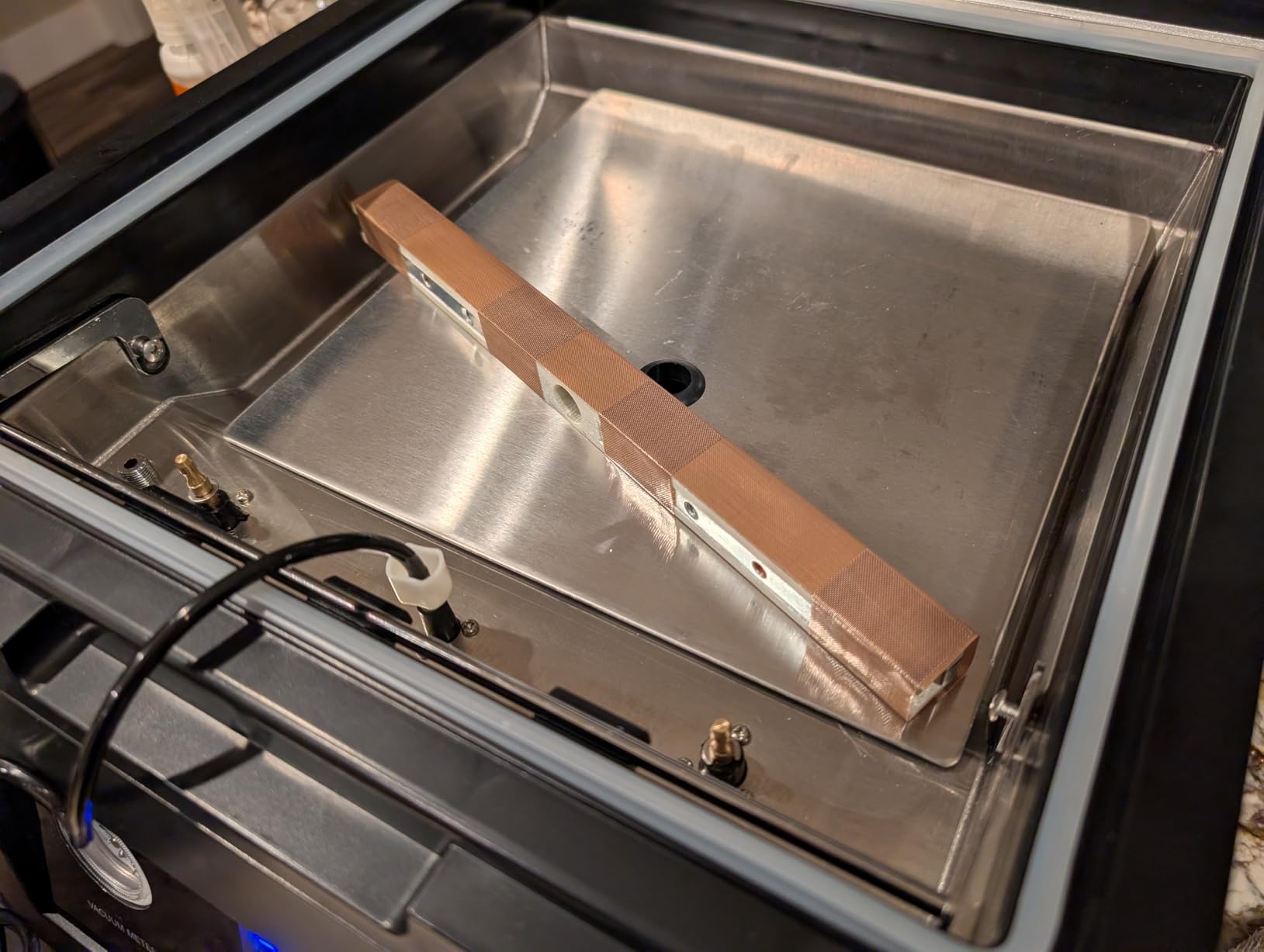
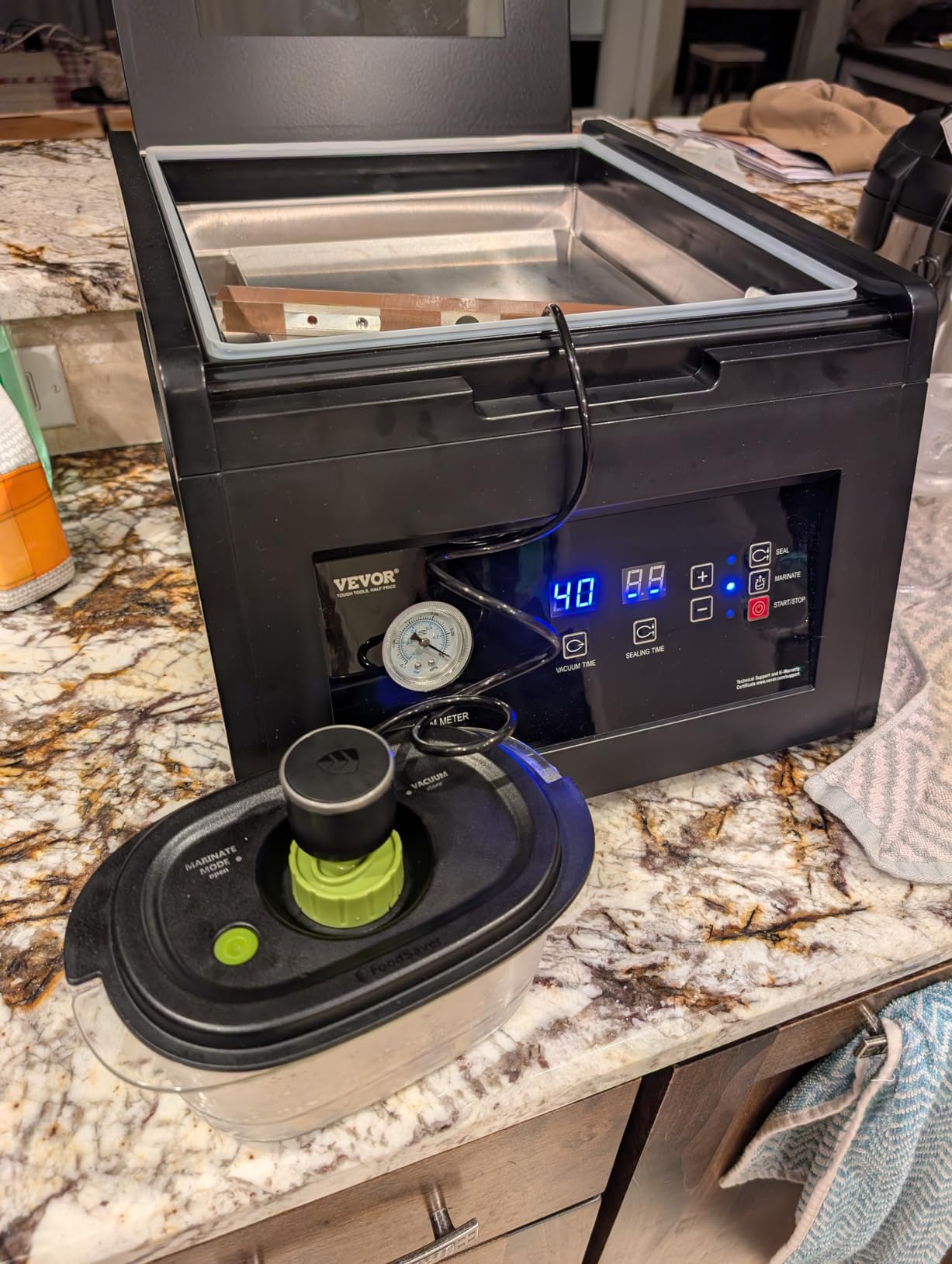
Mode selection is where this one separates from the plain VEVOR machines. Alongside adjustable vacuum and seal time, it carries dedicated marinating, single-seal and jar vacuum modes. The jar mode is the fun one: put an open jar of spirits or brine inside the chamber and the machine pulls the air out of the jar itself, which is an infusion technique that an external sealer simply cannot do.
Owners also call out the range of foods it handles, from wet soups to soft, powdery and paste-like ingredients. That breadth matters if you vacuum seal a week of meal prep in one sitting rather than a single steak.
Why you would pick this over the other VEVOR models
Pump power and chamber size together. The 380W pump is the strongest of the three VEVOR machines here, and the chamber is deeper at 3.15 inches, so taller containers and larger bags go in without a fight. The aluminium bar and rapid-cooling pump are also better suited to back-to-back cycles.
If you want a visible, understandable process and enough power to keep up, this is the one. If you want the same job done with a tighter footprint and less attention, the 260W model below is cheaper and simpler.
Where it falls short
The review base is thin at 90 reviews. A 4.6 average is encouraging, but this listing has not been proven over the years the way the older models have, and we would treat the long-term reliability picture as less certain than the numbers alone suggest.
The pump needs oil added before first use, and the manual does not shout about that step. Also note the listed wattage of 1200W for the machine, which is a real draw compared with the 300W figure on the compact units, so give it a dedicated circuit if you plan long sessions.
5. VEVOR 320W 12.6 Inch: Best Budget Chamber Vacuum Sealer for Bulk Meat and Soup
VEVOR Chamber Vacuum Sealer 320W Sealing Power 12.6 Inch Sealing Length
- Handles marinades
- soups and other wet foods cleanly where suction sealers struggle
- Quiet and fast compared with small plastic countertop sealers
- Stainless build resists rust and overheating with oily or salty foods
- Deep chamber packs large steaks
- bread loaves and bulk goods
- Spare heating wire and Teflon cloth included in the box
- Very heavy at roughly 60 lbs and not portable
- Manual is thin and does not clearly cover filling the pump with oil
- Bags are not included and must be bought separately
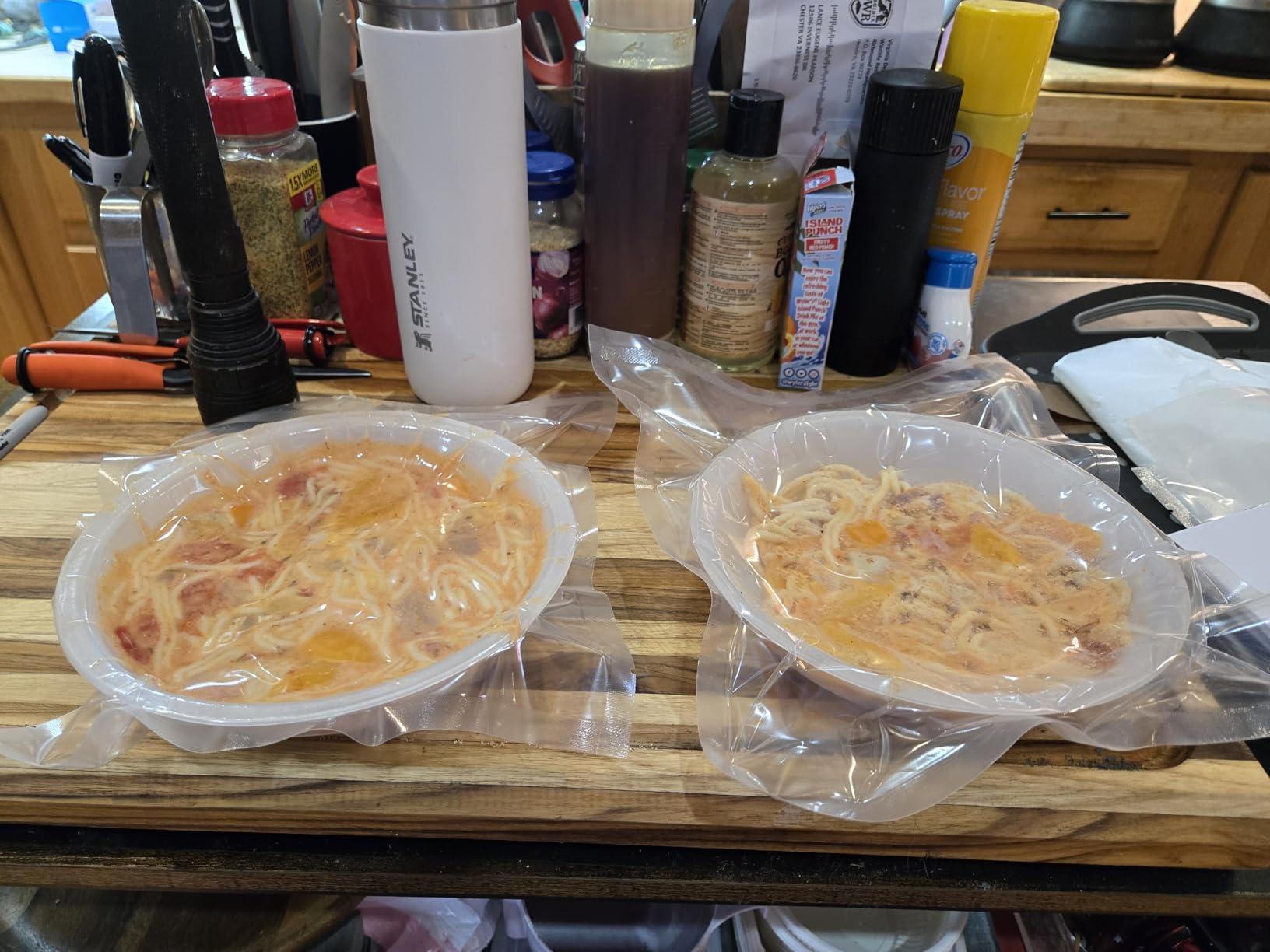
This is the machine most often described in forum threads as the sensible one to buy without overthinking it. It pulls to up to -100 kPa, seals through a 10 mm dual lock strip with a 320W heater, and pairs a 180W vacuum pump with a stainless steel chamber large enough for large steaks, bread loaves and bulk goods.
The built-in real-time pressure gauge is the sleeper feature at this level. It lets you stop the vacuum before the bag crushes a delicate item, and owners specifically mention it as the reason they stopped crushing soft foods. The LED display and simple controls mean you are not navigating a menu system for a routine job.
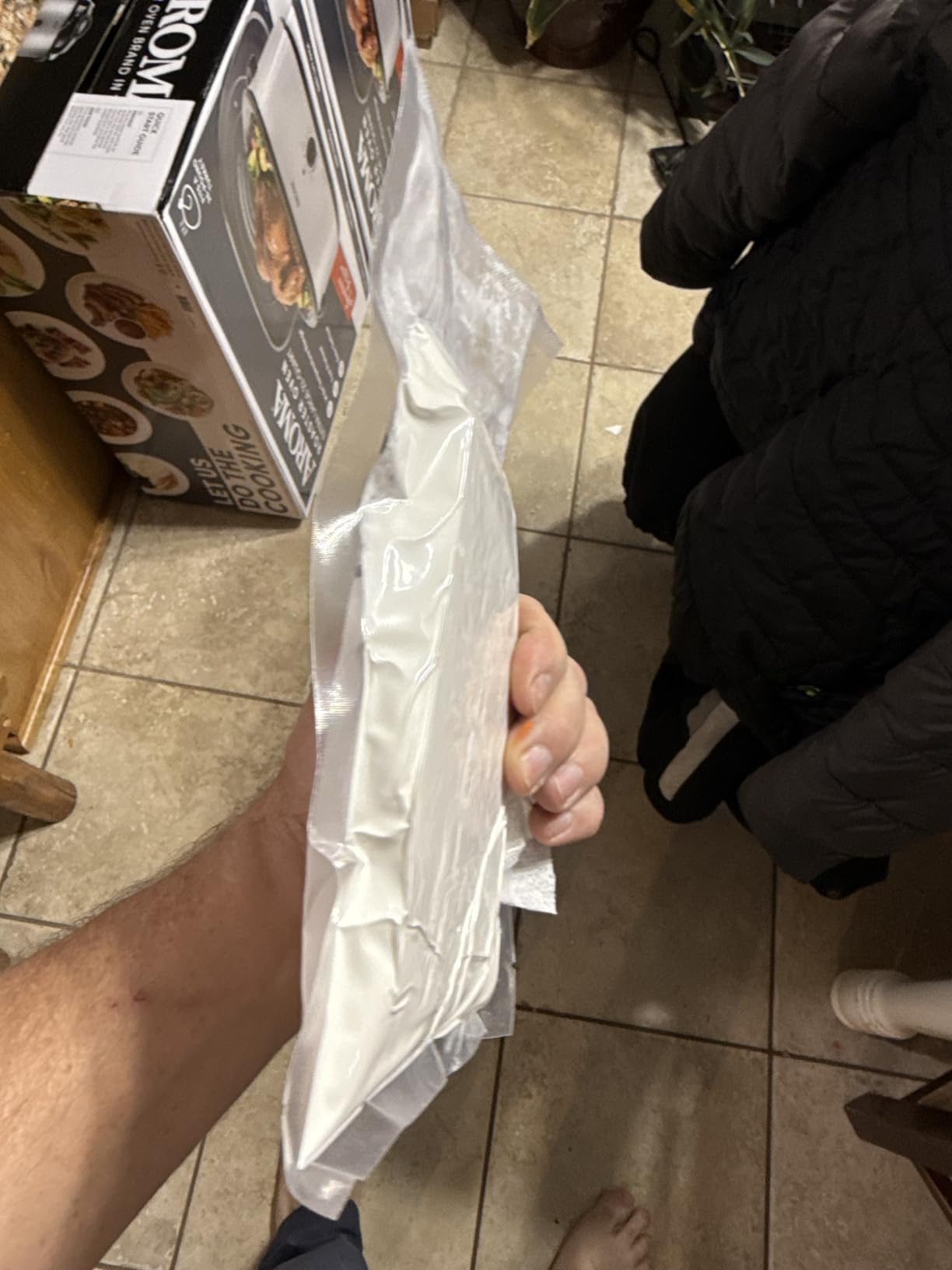
Owners who process bulk meat and soup describe it as capable and serviceable rather than refined. It is quieter and faster than the small plastic countertop sealers most people upgrade from, and the industrial stainless build resists rust and overheating when oily or salty foods go through it, which is the failure mode that kills lesser machines.
The box includes a spare heating wire, a Teflon cloth, a vacuum pump, a wrench and a manual. Having the spare heating wire on day one is worth more than it sounds, since a failed wire is otherwise an instant end to sealing.
Why you would pick this over a pricier chamber sealer
You get a genuine deep chamber with a pressure gauge at a price that undercuts the branded home units. The vacuum figure is competitive with machines costing considerably more, and the 12.6 inch sealing length gives you a generous working area for wide bags.
If your workload is bag after bag of soup, marinade and bulk meat rather than delicate single portions, this is the value position in the category. We would pick it over the 380W model for a home kitchen on budget and weight grounds.
Where it falls short
At 62 pounds it is not portable, and it is the machine in this group most likely to be moved by two people. The documentation is thin, particularly around filling the pump with oil, and bags are not included, so budget for a first supply of chamber pouches before you seal anything.
There is also no accessory port for sealing oversized items outside the chamber. If you regularly work with cuts that will not fit, that limitation will show up the first time you try a full brisket.
6. VEVOR 260W 10.2 Inch: Best Chamber Vacuum Sealer for Small Batch Portioning
VEVOR Chamber Vacuum Sealer 260W Sealing Power 10.2 Inch Sealing Length
- Lowest entry point in this roundup with genuine chamber sealing
- Seals frozen fish and liquids without siphoning liquid out of the bag
- Solid stainless build with real gauges and switches
- Vacuum bags included so you can test the machine immediately
- Good for single-serving portioning and bulk buy-down
- No dedicated marinate mode
- Included pressure gauge can read above physically possible values
- 10.2 inch seal bar limits bag width to about 8 inches
- Consumables and spare parts are not sold by the manufacturer
This is the entry point if you have never used a chamber vacuum sealer and want to find out whether the wet-food results are worth the switch. It seals to up to -100 kPa through an 8 mm dual lock strip with a 260W heater and a 180W vacuum pump in a stainless steel chamber, and it weighs 52.7 pounds.
Vacuum bags are included in the box, which matters more than it sounds. You can seal something the day it arrives instead of ordering pouches first, and we think a first successful soup bag does more for confidence in chamber sealing than any amount of reading.
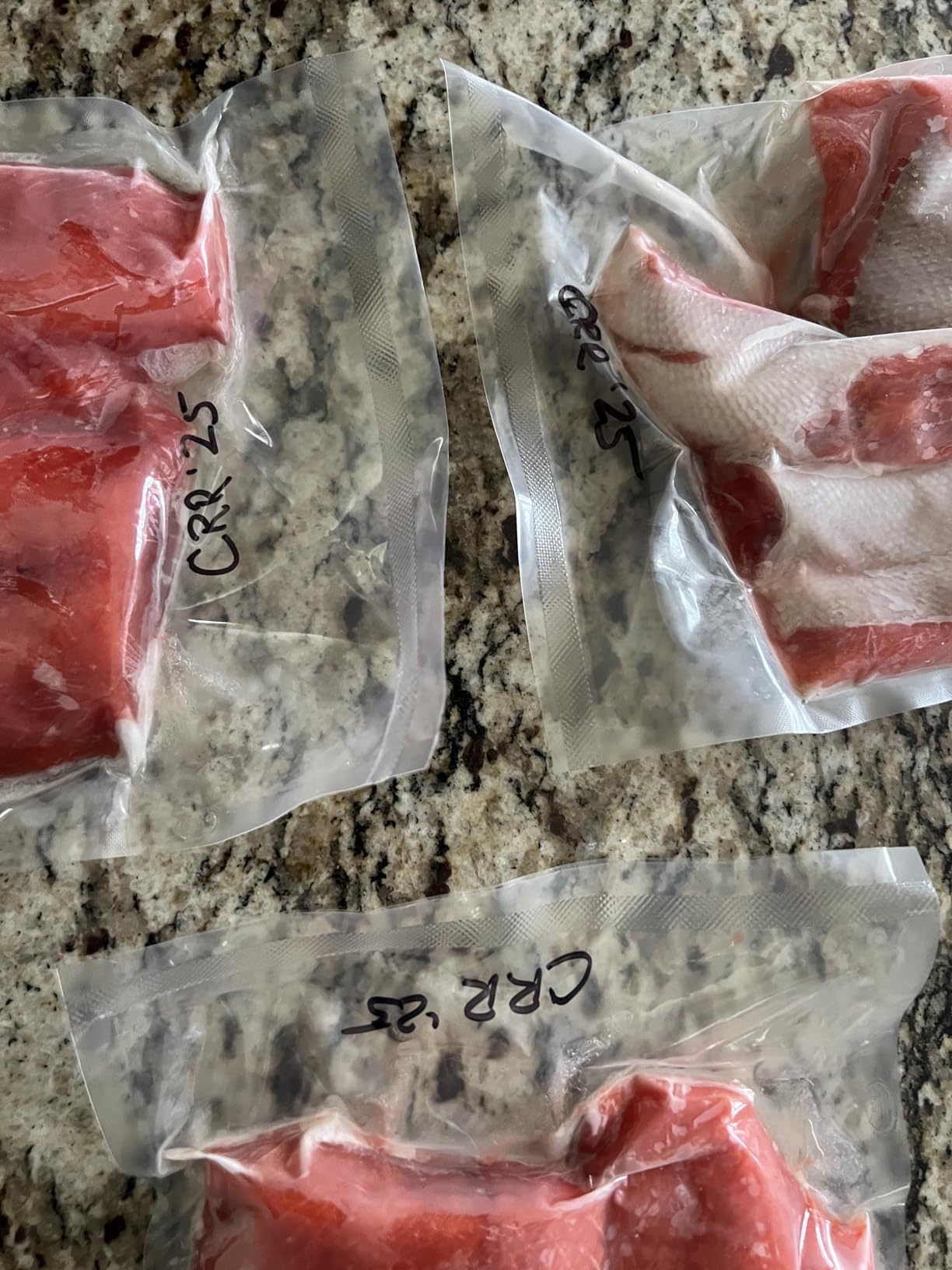
The liquid result is the surprise. Owners sealing frozen fish and liquid-filled bags report no siphoning of liquid out of the bag, which is exactly the problem that pushes people toward a chamber machine in the first place. The real gauges and switches give it a more serious feel than the small plastic sealers it costs about the same as.
Single-serving portioning and buy-down of bulk purchases are the natural workloads. A bag of cooked rice, a portion of pulled pork, a stack of vacuum-packed fish fillets for the freezer, all handled in short bursts rather than long production runs.
Why you would pick this over the other VEVOR machines
Included consumables and a lower entry point. The 380W machine gives you more pump power and a glass lid; the 320W machine gives you a bigger chamber and a wider bar. If your bags are small and your sessions are short, those upgrades buy you nothing you will use.
It is also the lightest of the three VEVOR machines at 52.7 pounds, which is still heavy but is the difference between one hand and two for many people.
Where it falls short
The 10.2 inch seal bar limits bag width to about 8 inches, so a wide bag will not go in. Plan your bag sizes around that limit before you buy a supply.
There is no dedicated marinate mode, so marinating runs through manual seal time settings. The included pressure gauge can read above physically possible values and may need replacing, which is an odd fault to see on a new machine, and the manufacturer does not sell spare parts or consumables directly, so plan on sourcing anything else elsewhere.
7. VacMaster VP210: Best Chamber Vacuum Sealer With No Oil Changes
- Dry pump needs no oil changes
- removing the main upkeep of oil-pump models
- Strong double seal supports long-term food storage
- Handles soups
- sauces and marinades without mess
- Compact footprint for a machine in this class
- One-touch controls with a clear pressure indicator
- 72 lb weight limits portability
- Lower review count and sales rank than the oil-pump VP215 sibling
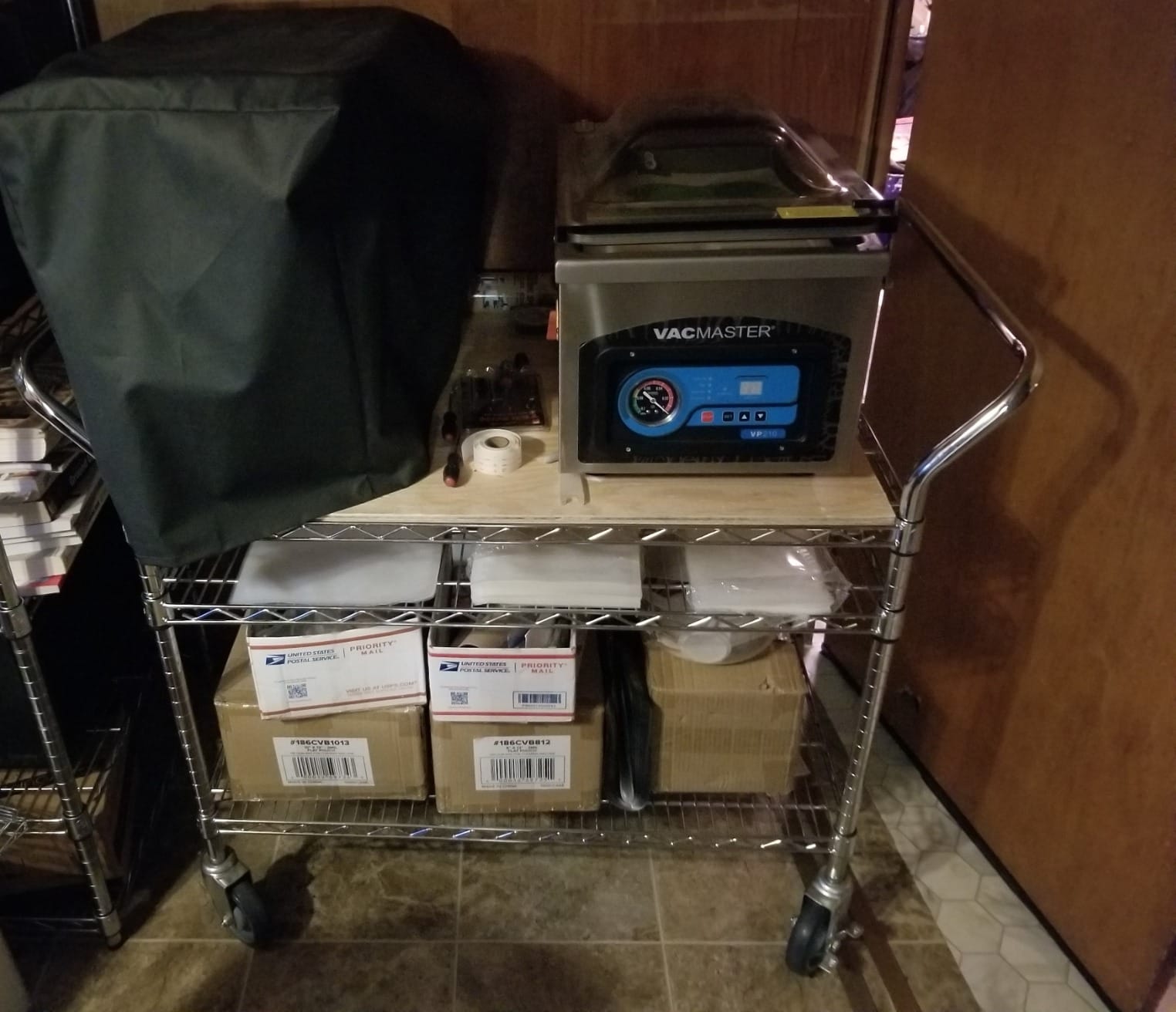
This machine answers the single most common objection to chamber sealers, which is maintenance. The VP210 uses a dry air pump that requires no oil changes, and at 4.7 across 232 reviews with 85 percent five-star it is the highest-rated VacMaster in this group.
Everything else is close to the VP215. The seal bar is 10.25 inches, bags go up to 10 by 13 inches, and it double seals across 3 MIL to 7 MIL Mylar bags. The body is the same 14 by 20 by 15 inches, with an 11.25 by 15.25 by 5 inch chamber inside.
Owners consistently give the same reason for choosing it over an oil-pump sibling: they do not want a maintenance schedule. No oil to check, no oil to change, no wondering whether the pump is being starved. For a home kitchen or a small operation where the machine sits idle for weeks between uses, that is a real advantage.
The wet-food performance matches. Soups, sauces and marinades go in without mess, and the double seal is what keeps those bags holding vacuum in the freezer rather than slowly losing it over a month.
Why you would pick this over the VP215
Zero pump maintenance, and that is the honest answer. If you will seal occasionally, the dry pump has nothing to service and costs nothing to keep running. If your sealing sessions are short and widely spaced, an oil pump is money spent on capacity you will not use.
It is also worth noting that the earlier home chamber machines in this roundup use dry pumps too. The difference is size: this is a 72-pound machine with a double seal, not a 17-pound countertop unit, so you are trading away very little seal quality to gain the maintenance-free pump.
Where it falls short
At 72 pounds it is still a two-hand lift out of a base cabinet, so the storage problem does not go away just because the oil does. Plan the location before the delivery, not after.
It also has a smaller review base and a lower sales rank than the VP215, and the oil-pump sibling has a longer, better-documented record. If you are running the machine daily for a business, the VP215 is the safer bet. If you are sealing on weekends, this is the better fit.
8. Gasbye CV4520: Best Chamber Vacuum Sealer Kit for First-Time Owners
- Removes air from the whole chamber so soups
- sauces and chunky foods seal without bubbles
- Liquids are not drawn out thanks to balanced internal and external pressure
- 5.3 QT chamber handles larger everyday meal prep volumes
- Replaceable dual heating wires extend machine life cheaply
- Comes with hose
- filler plate
- power cord and 30 pre-cut 11 x 11 inch bags
- Only 48 reviews so far
- so the long-term track record is short
- A chamber sealer is unnecessary value if you only seal fully dry foods
The Gasbye CV4520 arrives as the most complete package in the group. You get the machine, an external air suction hose, a filler plate, a power cord, a manual and 30 pre-cut 11 by 11 inch bags, so there is no second delivery before you can use it.
Under the lid is a 5.3 quart chamber with 9.7 inches of chamber width and an 11.5-inch sealing bar configured for a double seal. The 300W pump pulls air from the entire chamber, which is why owners report soups, sauces and chunky foods sealing without trapped bubbles and liquids staying where you put them rather than migrating into the vacuum path.
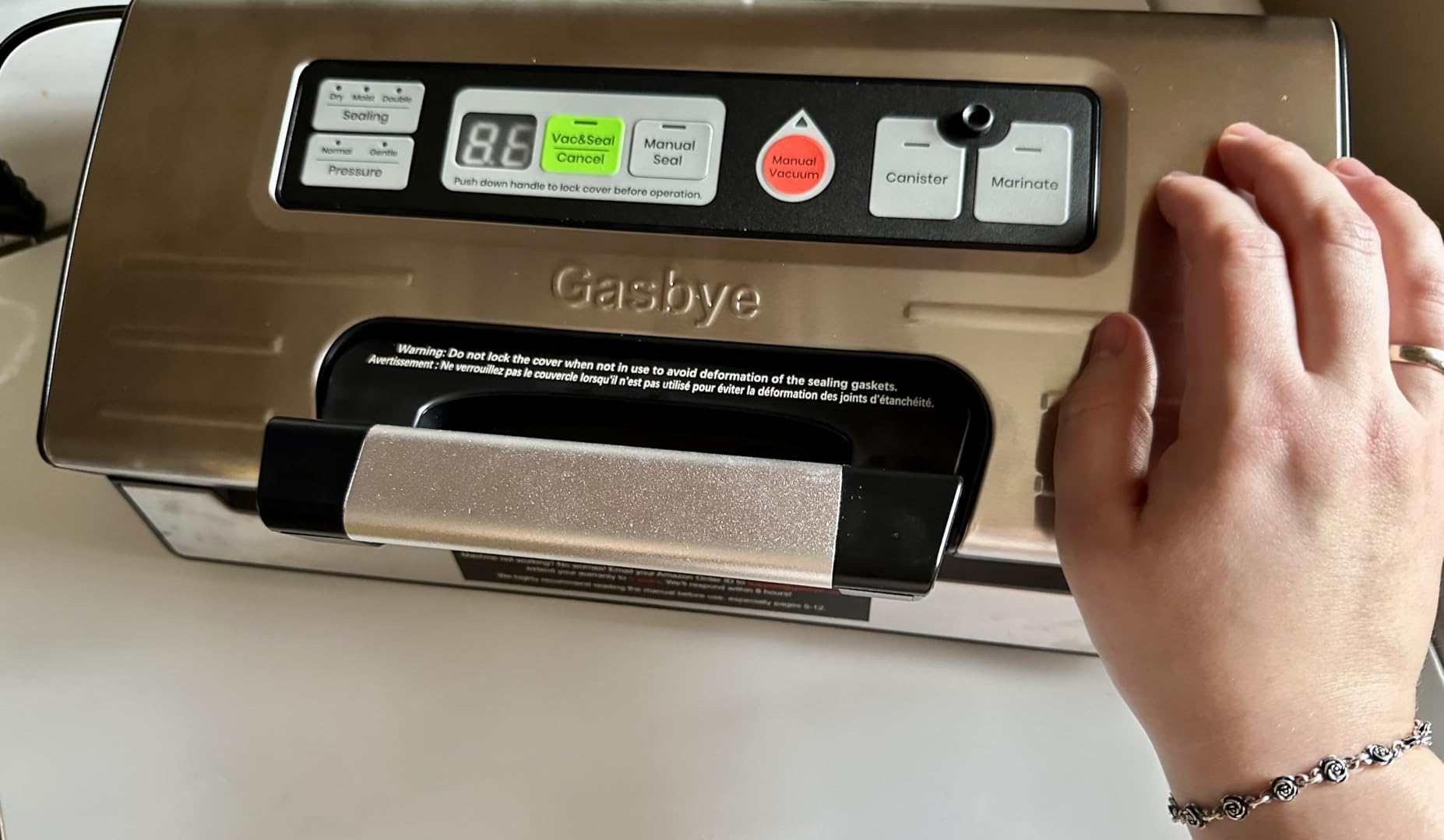
The replaceable bar with dual heating wires is the detail we would point at first. A heating wire is a consumable part, and on machines where it is welded in, its failure ends the machine. Here you can replace the wire instead of the unit, which is cheap insurance over a long ownership period.
There is also a 3-year warranty with brand-new replacement units, and support is described as US-based with a response time of roughly two hours. Owners mention responsive support as a reason they would buy the brand again, which matters for a machine that sits in a kitchen rather than a workshop.
Why you would pick this over a bigger chamber machine
Bundled kit and warranty. The external hose, filler plate and 30 bags remove the most common first-week friction, and the 3-year replacement warranty is the longest published cover among the compact machines here.
It is also the smallest chamber capacity on the list at 5.3 quarts, which suits a household of one or two rather than a family of five doing a monthly bulk buy-down. For that use case it is a strong first machine rather than a long-term one.
Where it falls short
Forty-eight reviews is a short record. The 4.8 average and the reported share of five-star ratings are excellent, but a machine with under fifty reviews has not been tested by enough owners for us to treat its long-term reliability as settled.
If you seal only fully dry foods, this is poor value, because a chamber machine earns its cost through wet and bulky sealing. And there is no oil indicator or pump service schedule published, so if the pump does eventually need attention you will be relying on the warranty rather than a maintenance plan.
Oil Pump vs Dry Pump: The Difference That Matters Most
The single biggest technical difference between these machines is whether the pump needs oil, and it changes weight, maintenance and how long a sealing session can run. Oil pumps are rotary and stronger; dry pumps are simpler and need nothing from you.
Oil-pump models here are the VacMaster VP215, VP230 and the two VEVOR machines that need pump oil added or checked. They weigh 84 pounds, 89 pounds, 52.7 pounds and 62 pounds respectively, and they hold vacuum level through large bags without slowing down.
Dry-pump models are the Avid Armor USV20 at 17.3 pounds, the VacMaster VP210 at 72 pounds and the Gasbye CV4520. None of them needs an oil change, which is why the VP210 reviews focus on the pump rather than the food.
Our rule of thumb: if you seal more than once a week, or in sessions longer than an hour, an oil pump is worth the maintenance schedule. If you seal a few bags on a weekend, a dry pump gives you the same result with nothing to service.
Chamber vs Suction Vacuum Sealer: Which Do You Need?
A suction sealer, sometimes called an external or bar sealer, pulls air through the open end of the bag with a nozzle. A chamber vacuum sealer evacuates the air around the bag inside a sealed box. That single difference decides everything else.
Liquids are the dividing line. A suction sealer cannot safely seal a bag of soup or marinade because the vacuum pulls liquid toward the opening, and a failure means liquid inside the machine. One owner on a buying thread described drowning a ten-year-old sealer by sealing a bag of cut corn, which is a cautionary tale we would not wish on anyone.
Bag width follows from the design. A chamber sealer accepts bags 8 to 12.25 inches wide depending on the model, while an external sealer is limited by the bar length and, more importantly, by the fact that the food has to sit outside the nozzle’s reach. Chamber bags are also smooth, not embossed, so bag stock differs between the two formats.
Price, footprint and noise all scale with the chamber. A good external sealer costs a fraction of a chamber machine and takes up a fraction of the space. If you seal dry food in small bags, the external machine is the correct purchase and the chamber machine is a solution to a problem you do not have. If you seal soups, whole cuts, game meat or sous vide bags, the chamber machine is the only tool that does the job properly.
Bag Compatibility: Which Bags Go Where
Yes, you can use standard embossed bags in a chamber vacuum sealer, and no, you cannot use chamber bags in an external sealer. That one-way rule confuses more buyers than any other spec in the category, so here it is plainly.
Embossed bags have channels moulded into them that direct airflow toward the open edge, which is exactly what a suction nozzle needs. Chamber bags are smooth, because a chamber machine removes air evenly from all sides and does not need a flow path. Put a smooth bag in an external sealer and the nozzle has nothing to draw air through, so it will not seal.
The second confusion is seal bar length versus bag width. An 11.5-inch seal bar does not mean an 11.5-inch chamber opening. It means the machine accepts bags up to 11.5 inches wide, and the chamber opening itself is usually narrower. Check the maximum bag dimensions before you commit to a bag format.
One more practical note from owner threads: chamber bags are not a one-time cost. Add them to your household budget the way you would coffee or freezer bags, and count the cost per seal when you compare against an external machine and its embossed rolls.
How to Seal Liquids and Soups Without a Mess
Even experienced owners admit to feeling nervous about sealing liquids, and that is a reasonable instinct even on a chamber machine. A simple sequence removes nearly all of the risk.
First, fill the bag no more than half to two-thirds full. A bag with a small amount of liquid and a large volume of air pulls down faster and cooks less, and heat has time to move the contents away from the seal.
Second, place a filler plate inside the bag if your machine came with one. It gives the liquid a barrier at the top of the chamber, and it comes with the VacMaster machines in this roundup.
Third, after the vacuum cycle, lay the bag flat on the sealing bar with the liquid mass positioned at the far end from the opening. A quick tilt to pool the liquid away from the seal line is the step that prevents the machine from drawing juice into the channel.
Fourth, raise the seal time. Owners on sous vide forums report using around 8 seconds and rarely getting a bad seal, compared with the shorter default that works for dry bags. A wet bag needs a longer weld, and a longer weld is what makes the seal hold through a freezer.
Fifth, if your machine has a marinate or liquid mode, use it for anything acidic or oily. Acids and salt attack some bag laminates faster than plain water, and the marinate modes on the VEVOR machines adjust the cycle accordingly.
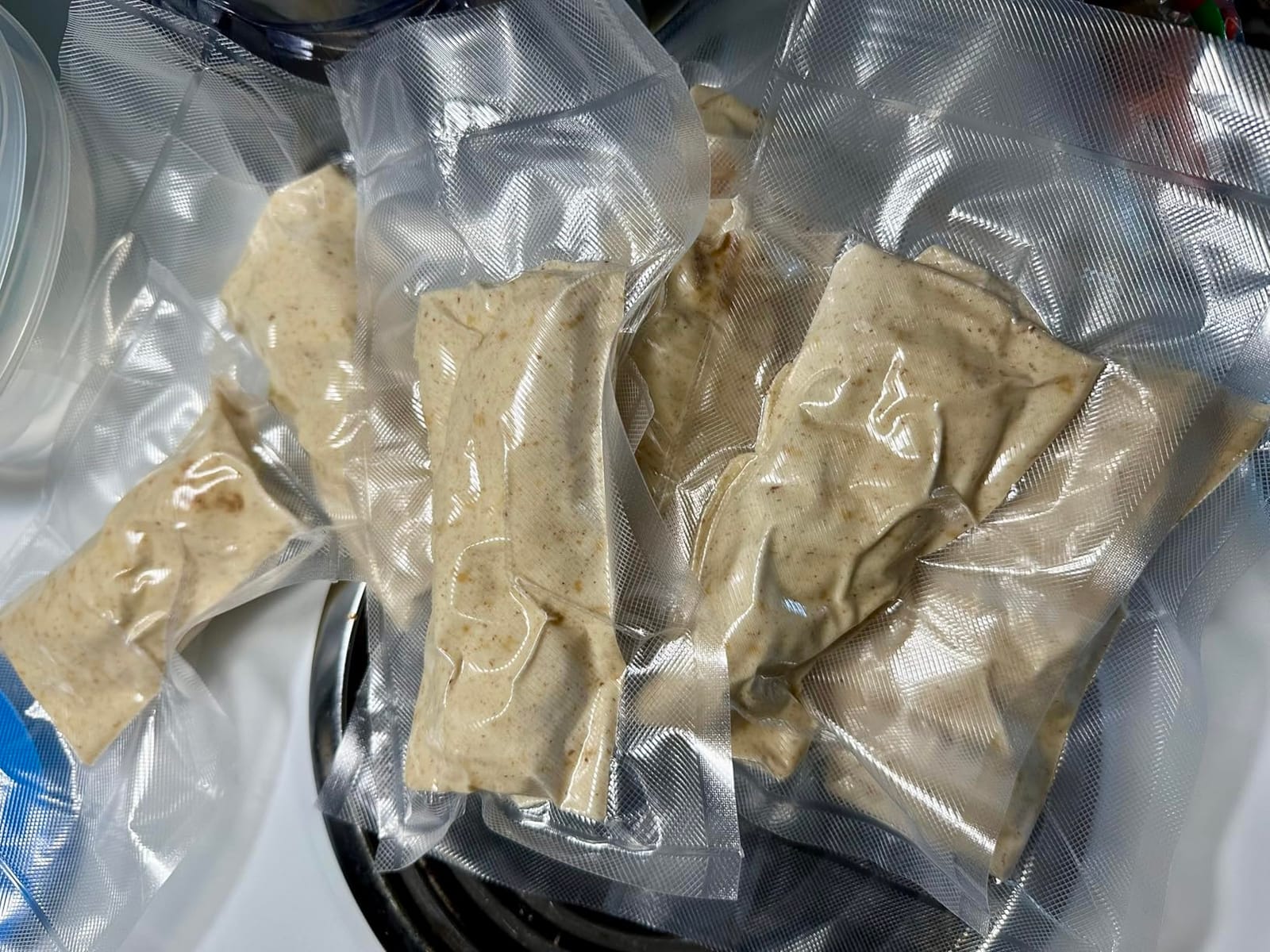
After sealing, lay soup bags flat and freeze them. Owners on r/sousvide describe stacking them like a deck of cards, which is the clearest advantage a chamber sealer has over an external sealer.
Why Your Vacuum Sealer Bags Are Not Sealing Properly
Failed seals almost always come down to five things, and checking them in order fixes most cases in under five minutes.
Check the seal bar first for food debris, especially dried marinade or grease. A dirty bar will not weld properly at any seal time, and this is the most common cause of a seal that looks closed but peels apart.
Check bag thickness next. Bags vary widely, and a bag thicker than the machine is designed for may not weld through, while a very thin bag can seal through into the food. Use the bag thickness the machine is rated for rather than the cheapest pouch you can find.
Check bag position. The bag needs to sit fully past the vacuum channel and flat across the bar with no wrinkles or a folded edge. A single fold across the sealing strip is enough to make a leak.
Check seal time. If the machine has an adjustable seal time, increase it. The standard setting is calibrated for dry bags, and a wet or oily bag needs a longer weld. This single change fixes most liquid-sealing complaints.
Finally, replace the bag. A bag that has been handled, dampened or trimmed badly will not seal, and owners who switch to a fresh bag often assume the machine was the problem all along.
How to Choose a Chamber Vacuum Sealer in 2026
Start with weight, because it is the factor that decides whether you will still be using the machine a year from now. The eight machines here span 17.3 pounds to 89 pounds. If you do not have a rolling cart and a dedicated shelf, a machine above 70 pounds will end up in a garage.
Next, decide between an oil pump and a dry pump based on how often you seal. Daily or multi-hour use justifies an oil pump and its maintenance schedule. Occasional use does not, and the dry-pump options here perform the same core function.
Then check seal bar length against the bags you actually want to use. A 10.2-inch bar caps bag width at about 8 inches, while a 12.25-inch bar takes bags up to 12 by 15 inches. This is a cheap machine and an expensive disappointment if the numbers do not match your prep.
Look at chamber height and depth, not just bar length. A 3-inch-high chamber will not take a loaf of bread standing up or a whole bird, and a 5-inch chamber gives you options when you are packaging game or large cuts.
Finally, check the consumables and the support. Chamber pouches are a recurring cost, and a machine with a replaceable heating wire and a published warranty will outlast one without them. If you can find a US-based support line with a real person on it, that is worth a great deal on a machine at this price level.
One honest threshold: if you seal only dry food in small bags and your current machine still works, wait. Owners on Pitmaster Club threads describe FoodSavers running for 8 to 10 years and passing thousands of pounds of food through, and the chase to replace a dying sealer is the actual trigger for most upgrades. Buying a chamber sealer to retire a working sealer is spending money to solve a problem you do not have yet.
When you are ready, our own picks for narrower jobs live in the guides on [commercial vacuum sealers for butchers](https://www.logix4u.net/best-commercial-vacuum-sealers-for-butchers/) and [vacuum sealers built for hunters](https://www.logix4u.net/best-vacuum-sealers-for-hunters/), and meal-prep-focused picks in our roundup of the [best chamber vacuum sealers for meal prep](https://www.logix4u.net/best-chamber-vacuum-sealers-for-meal-prep/).
Frequently Asked Questions
Are chamber vacuum sealers worth it?
They are worth it if you regularly seal wet or bulky food such as soups, stocks, marinades, whole cuts or sous vide bags, because a chamber sealer evacuates air from around the bag and never pulls liquid into the vacuum path. They are rarely worth it if you mostly seal dry food in small bags and already own a working FoodSaver or Nesco, since those machines commonly last 8 to 10 years.
Which is better, chamber or suction vacuum sealer?
A chamber sealer wins for liquids, wide bags, large cuts and anything you want frozen flat and stacked. A suction sealer wins on price, footprint and simplicity, and it is the right tool for dry foods in small bags. The deciding question is whether your prep includes liquid; if it does, only a chamber sealer handles it safely.
Can you use regular vacuum bags in a chamber vacuum sealer?
Yes. Standard embossed bags designed for external sealers work in a chamber sealer. The reverse does not work: smooth chamber bags cannot be used in an external sealer because embossed bags have channels that direct air toward the nozzle and smooth bags do not. Also note that seal bar length means maximum bag width, not chamber opening size.
What are people saying about the VEVOR Chamber Vacuum Sealer 320W?
Owners describe it as a capable, serviceable machine that handles soups, marinades and bulk meat cleanly, with a deep chamber, a real pressure gauge and included spare heating wire. The recurring criticisms are weight at roughly 60 pounds, thin documentation that does not cover filling the pump with oil, and the fact that bags are not included in the box.
Why are my vacuum sealer bags not sealing properly?
Work through five checks in order: food debris on the seal bar, bag thickness outside the machine rating, bag position with no folds and fully past the vacuum channel, seal time set high enough for a wet bag, and finally a fresh bag. A dirty bar or a fold across the sealing strip causes most failures, and increasing seal time fixes most liquid-sealing complaints.
Is Nesco or FoodSaver better?
Both are external suction sealers, and for dry foods in small bags either is a perfectly sensible purchase at a fraction of the cost of a chamber machine. Neither can safely seal soups, stocks or large cuts, which is the gap that chamber sealers fill. If you own one that still works, owners commonly report 8 to 10 years of service from older units.
Which vacuum sealer did Consumer Reports recommend as the best for food conservation?
We are not citing Consumer Reports here, and we have no verified recommendation from them to report. Our own criteria are published above: machine weight, oil pump versus dry pump, seal bar length against your bag sizes, chamber height, replaceable parts, and accessible support. Judge any roundup, including ours, against those criteria.
How much does a chamber vacuum sealer weigh?
The machines in this roundup range from 17.3 pounds for the Avid Armor USV20 to 89 pounds for the VacMaster VP230. VEVOR models fall between 52.7 and 62 pounds, and the VacMaster oil-pump models weigh 84 and 89 pounds. Anything above 70 pounds needs a planned storage spot or a rolling cart, and many owners use exactly that approach.
How do I seal liquids with a vacuum sealer?
Fill the bag no more than half to two-thirds full, add a filler plate if you have one, run the vacuum, then lay the bag flat with liquid pooled away from the opening. Raise the seal time to around 8 seconds rather than the dry-bag default, and use a marinate or liquid mode for acidic or oily contents. Freeze the sealed bag flat so it stacks.
What size bag can a chamber vacuum sealer handle?
It depends on the seal bar, which sets the maximum bag width. The machines here accept bags from about 8 inches wide on the 10.2-inch VEVOR model up to 12 by 15 inches on the VacMaster VP230 with its 12.25-inch bar. The 11.5-inch machines such as the Avid Armor USV20 and Gasbye CV4520 take pouches around 11 by 10 and 11 by 11 inches.
Do chamber vacuum sealers need oil changes?
Oil-pump models do, on a periodic schedule, and the pump oil level on some dry-pump machines is worth checking occasionally. The VacMaster VP210 is the exception here, using a dry air pump that needs no oil changes at all, which is the main reason owners choose it over its oil-pump siblings.
The Verdict
For most home kitchens, the Avid Armor USV20 is the best chamber vacuum sealer in 2026: an 11.5-inch seal bar, a 4-liter chamber, adjustable vacuum and seal time, and a 17.3-pound body you can actually move. It handles soups, marinades and single portions cleanly without turning your counter into a small commercial kitchen.
Choose the VacMaster VP215 if you seal for hours at a stretch and need a 1/5 HP oil pump with a double seal, the VP230 if your problem is that nothing fits through the bar, and the VP210 if you want a heavy machine with no oil changes. On the VEVOR side, the 320W is the best value for bulk meat and soup, the 380W wins if you want a glass lid and stronger pump, and the 260W is the cheapest way to find out whether chamber sealing suits you. The Gasbye CV4520 arrives with the most complete kit and the longest warranty for a first machine.
One last piece of advice we will repeat from the buying threads: keep the sealer you own until it fails, measure the space where the new one will live, and add chamber pouches to your budget on day one. If you want the sous vide angle specifically, our roundup of the [best chamber vacuum sealers for sous vide](https://www.logix4u.net/best-chamber-vacuum-sealers-for-sous-vide/) goes deeper on flat-freezing and bag stackability, and we have separate picks for [meal prep work](https://www.logix4u.net/best-vacuum-sealers-for-meal-preppers/) as well.