
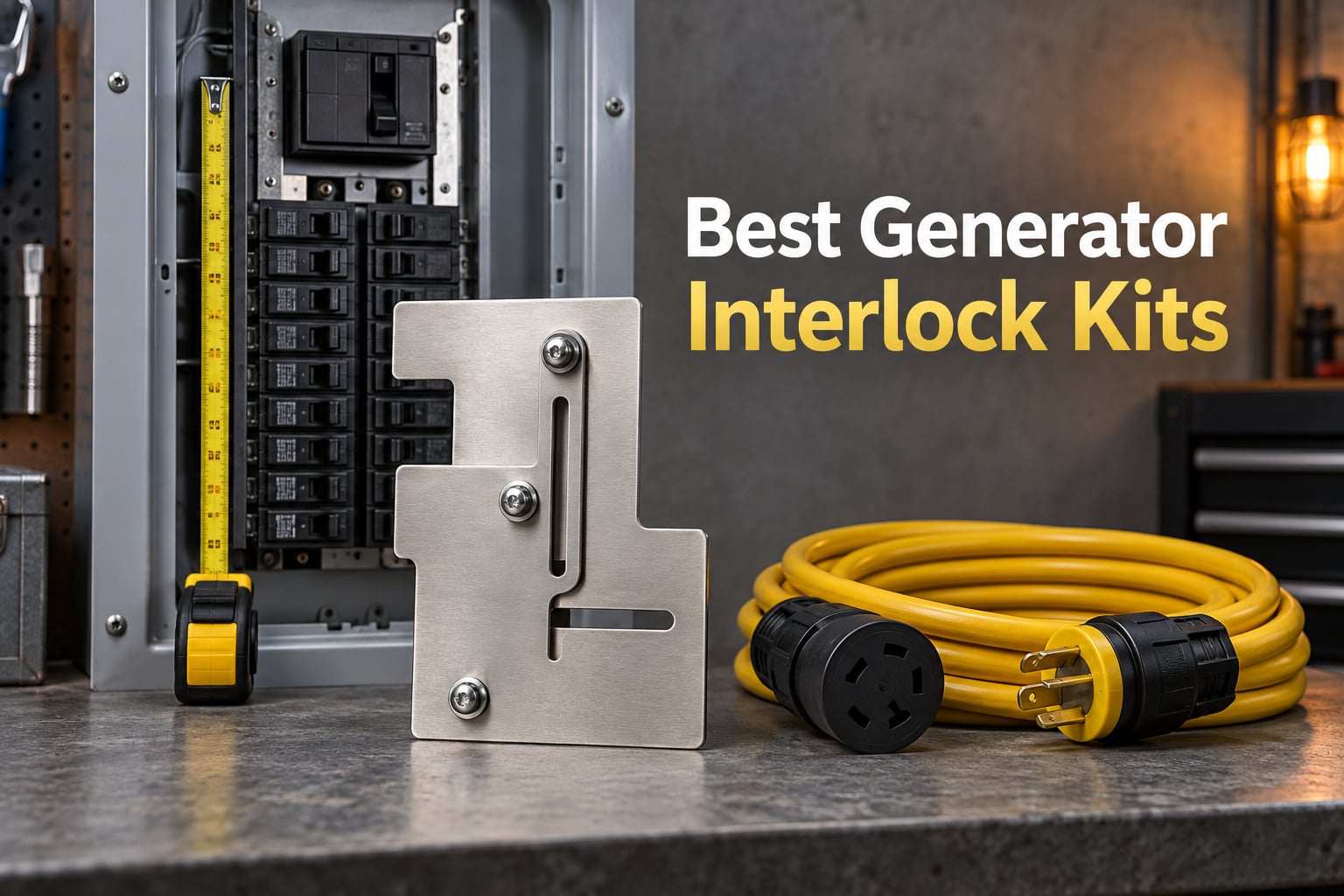
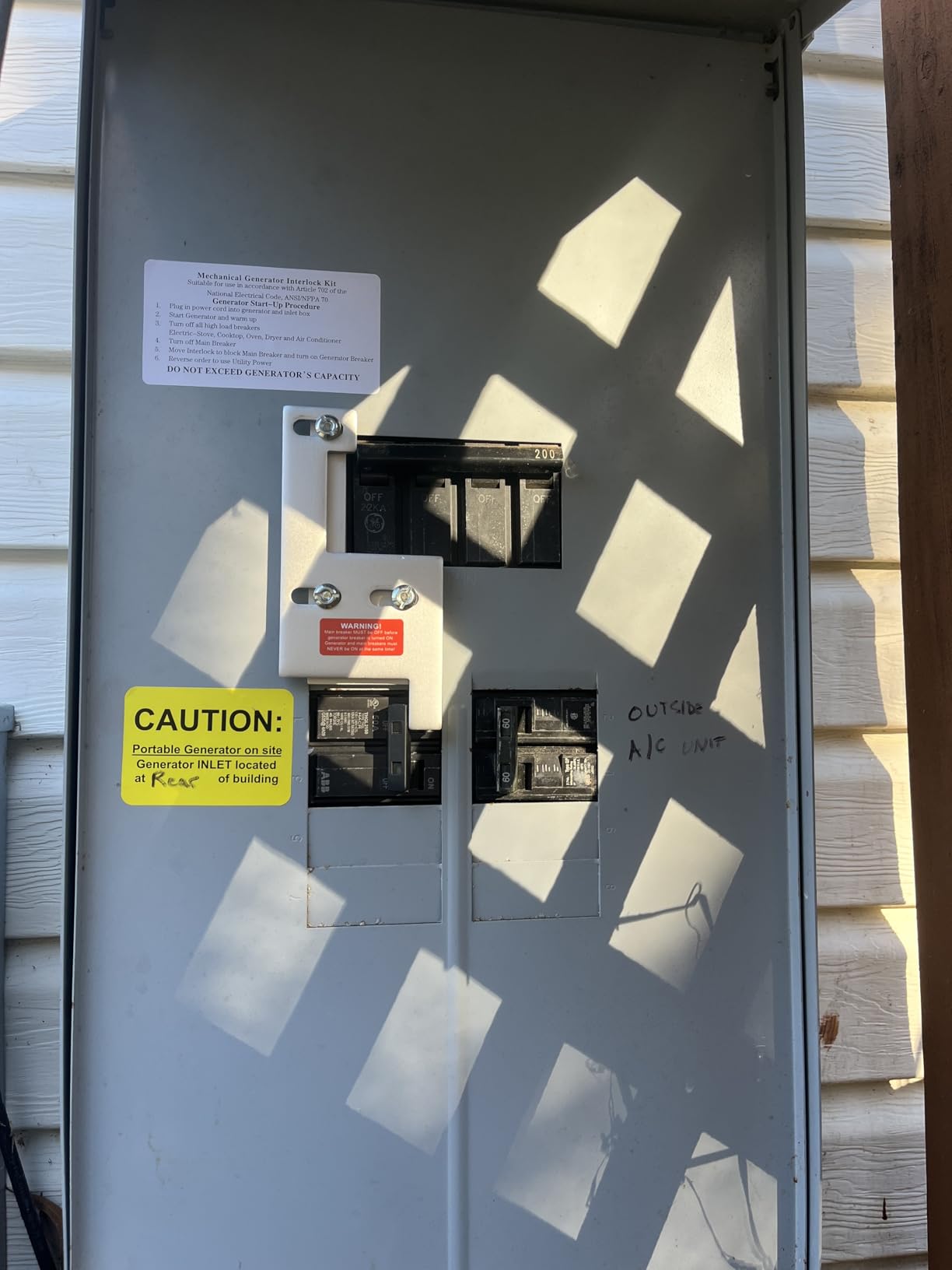
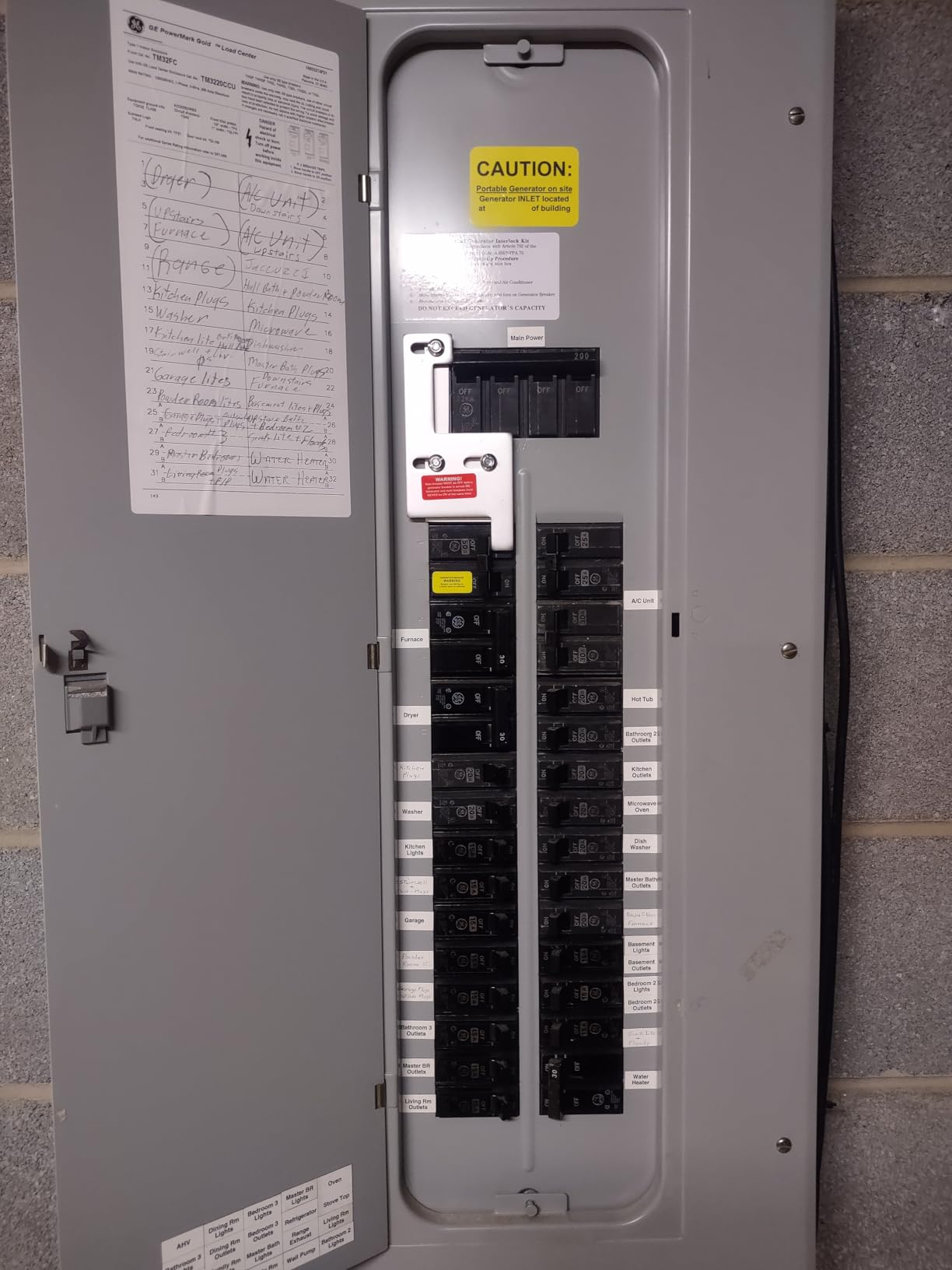
A generator interlock kit is a steel plate that mounts inside your breaker panel and physically blocks the main breaker and the generator backfeed breaker from being closed at the same time, so a portable generator can power your home without ever backfeeding the utility grid.
That single sentence is the whole safety argument. Every one of the 12 kits below does the same job: a sliding plate sits between the main handle and the generator breaker, and it can only sit in one of two positions. With the main on, the plate physically prevents the generator breaker from latching. Slide it the other way and the main must be off before the generator breaker can close. There is no way to defeat it with a jumper wire or a determined pair of hands.
Skip the interlock and you are backfeeding power onto utility lines, which is how line workers get killed. The other shortcut people ask about, a male-to-male extension cord plugged from a generator into a household outlet, is illegal in every US jurisdiction and does the same thing with a cord instead of a panel. Electricians call it a suicide cord for a reason.
We went through the full lineup of interlock kits that show up when you search for the best generator interlock kits, and the pattern was clear: almost every kit works exactly as described, and almost every complaint is a fitment complaint, not a quality complaint. Buy the right kit for your panel, verify the breaker spacing with a tape measure before you order, and the install is under an hour.
What follows is the compatibility-first breakdown: which panel brands each kit covers, what breaker spacing each one requires, what the reviews actually praise and complain about, and what else the install needs beyond the plate itself. We also cover permits, inspector acceptance, and when the honest answer is to hire a licensed electrician.
Once the plate is chosen, the rest of the hardware is quick to price. If you have not settled on a machine yet, our portable generator deal roundup covers current pricing across the models most often paired with an interlock install.
Top 3 Generator Interlock Kits

Natupal SD200A for Square D QO and Homeline
- Square D QO and Homeline 150/200A
- 1-3/8 inch spacing
- Steel plate with drill bit and labels included

EXCELFU GK-PN200 for Eaton BR and CH
- Eaton/Cutler Hammer BR and CH 150/200A
- 1-1/4 to 1-7/16 inch spacing
- Hardware and drill bit in the box

Areisal HOMCGK2C for Square D Homeline
- Indoor Homeline 150A-225A load centers
- Stainless steel with hole drilling template
- Retaining bracket and wiring diagram
All 12 Best Generator Interlock Kits at a Glance
| Product | Specifications | Action |
|---|---|---|
| Natupal SD200A Square D QO and Homeline Kit |
|
Check Latest Price |
| EXCELFU GK-PN200 Eaton BR and CH Kit |
|
Check Latest Price |
| Areisal HOMCGK2C Homeline Kit |
|
Check Latest Price |
 XMK GK-PN400 Siemens and Murray Kit XMK GK-PN400 Siemens and Murray Kit |
|
Check Latest Price |
 GenSafety BR-200 Cutler Hammer Kit GenSafety BR-200 Cutler Hammer Kit |
|
Check Latest Price |
 EXCELFU GK-PN300 GE Kit EXCELFU GK-PN300 GE Kit |
|
Check Latest Price |
 Gen Interlock SD-200SA Meter Main Kit Gen Interlock SD-200SA Meter Main Kit |
|
Check Latest Price |
 Natupal ITE-200A Multi-Brand Kit Natupal ITE-200A Multi-Brand Kit |
|
Check Latest Price |
 XMK CH Tan Breaker Interlock Kit XMK CH Tan Breaker Interlock Kit |
|
Check Latest Price |
 QYZZRS QY-200A Siemens and ITE Kit QYZZRS QY-200A Siemens and ITE Kit |
|
Check Latest Price |
 Natupal SD-200VL Vertical Main Kit Natupal SD-200VL Vertical Main Kit |
|
Check Latest Price |
 Flngr GE-200HDA Vertical Main Kit Flngr GE-200HDA Vertical Main Kit |
|
Check Latest Price |
1. Natupal SD200A Generator Interlock Kit for Square D QO and Homeline Panels
- Fits Square D QO panels with a bottom main breaker as specified
- Includes the correct 3/16 drill bit so panel drilling is not guesswork
- Clear instructions and a straightforward DIY install
- Sturdy steel construction
- Best-selling interlock kit in Circuit Breaker Panels
- Fit depends on exact breaker spacing
- Will not work on panels outside the 1-3/8 inch range
- You must confirm the kit matches your panel before ordering
Square D QO and Homeline are the panel families the SD200A was designed for, and the SD200A is a stamped steel plate for 150 and 200 amp panels where the main breaker sits at the bottom and the gap to the first branch breaker measures 1-3/8 inches.
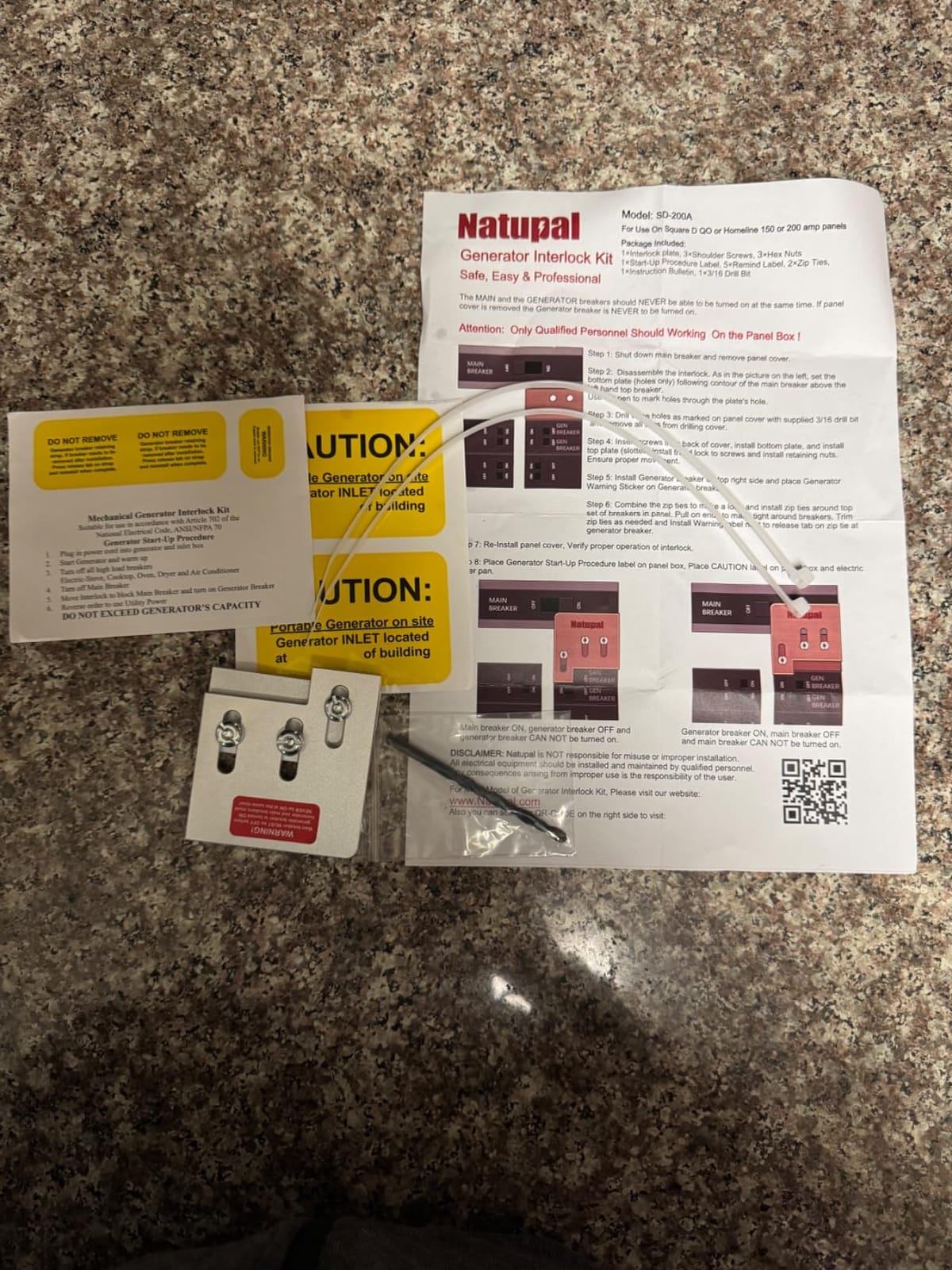
What reviewers praise most is not the plate, it is the 3/16 inch drill bit in the box. Nearly every interlock install complaint across every brand involves drilling the panel deadener in the wrong spot, and shipping the right bit removes the most common failure point. Shoulder screws, hex nuts, reminder labels, zip ties, and an instruction bulletin come with it.
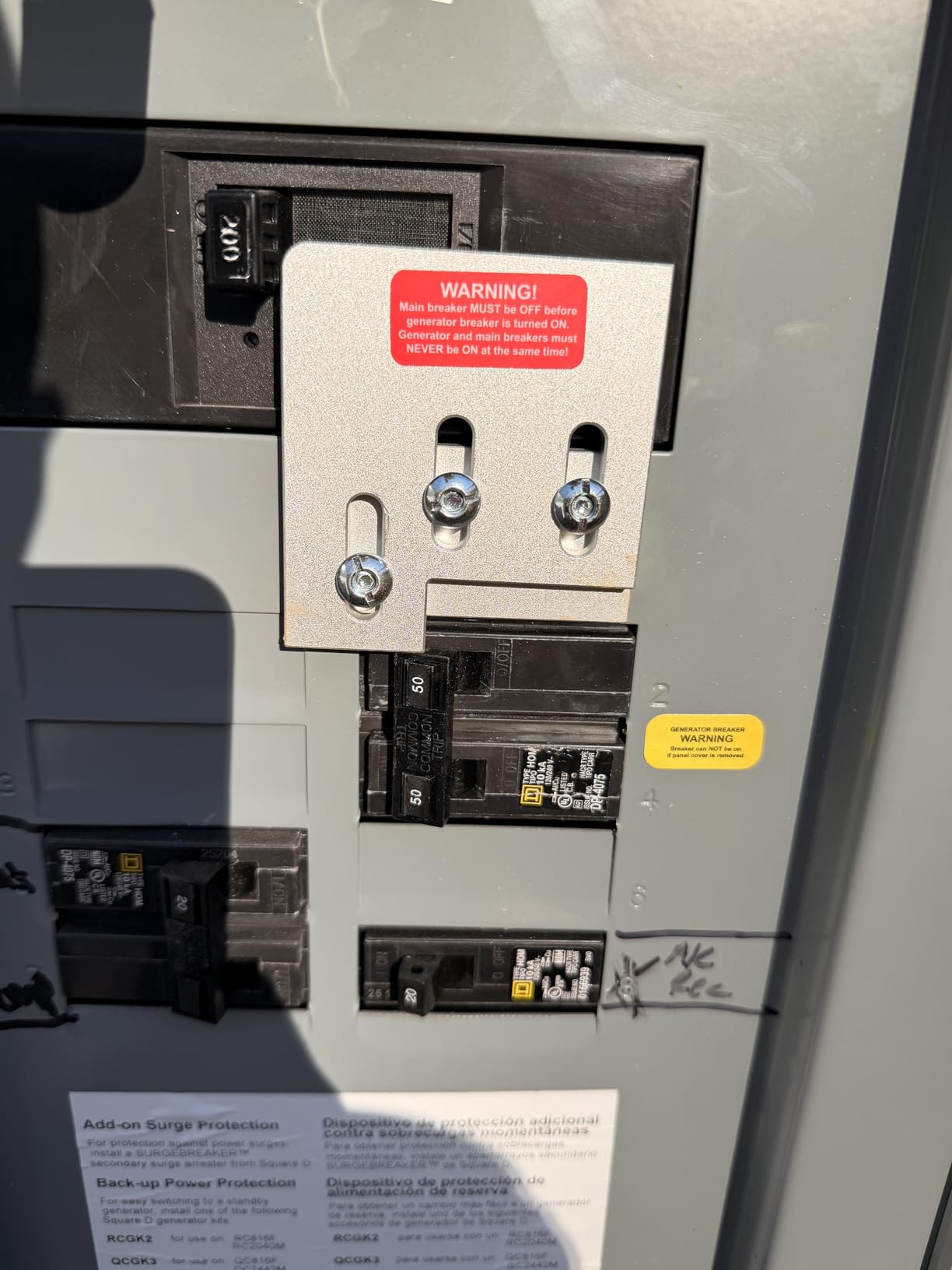
The 4.7 rating across 1769 reviews comes from a product that does its job without drama, with 83 percent five-star scores and repeated reports of the plate lining up exactly as described. Steel construction holds up to panel heat and the repeated sliding of a real storm-season cycle.
The limit is the same as the specification. A bottom main with 1-3/8 inch spacing is the whole universe this plate covers, and a meter main or a top-main panel needs a different one.
When this kit is the right call
Owners of a standard residential Square D QO or Homeline panel with a bottom main breaker, and anyone who wants the best-documented install in the category. The label pack matters more than it sounds: inspectors want the start-up procedure marked on the panel, and the reminder stickers are what stop a household member from flipping the generator breaker with the main still closed.
When it is the wrong call
Any panel other than a 1-3/8 inch bottom-main Square D. Buyers who ordered without measuring reported a plate that would not clear the breaker. It is also not the kit to reach for if your building department requires a manufacturer-branded listing, since this is a third-party plate and a demanding authority having jurisdiction can still refuse it.
2. EXCELFU GK-PN200 Generator Interlock Kit for Eaton BR and CH Panels
Generator Interlock Kit for Eaton Cutler Hammer BR SERIES 150&200amp Panels
- Contractors cite code-compliant installation and quality comparable to name-brand kits
- Includes labels
- drill bit and retaining zip ties for a complete install
- Slides smoothly once installed
- Handles a wider 1-1/4 to 1-7/16 inch spacing range than most kits
- Instructions are terse and do not explain the purpose of the supplied zip ties
- Some kits need trimming so the plate clears the breaker in the off position
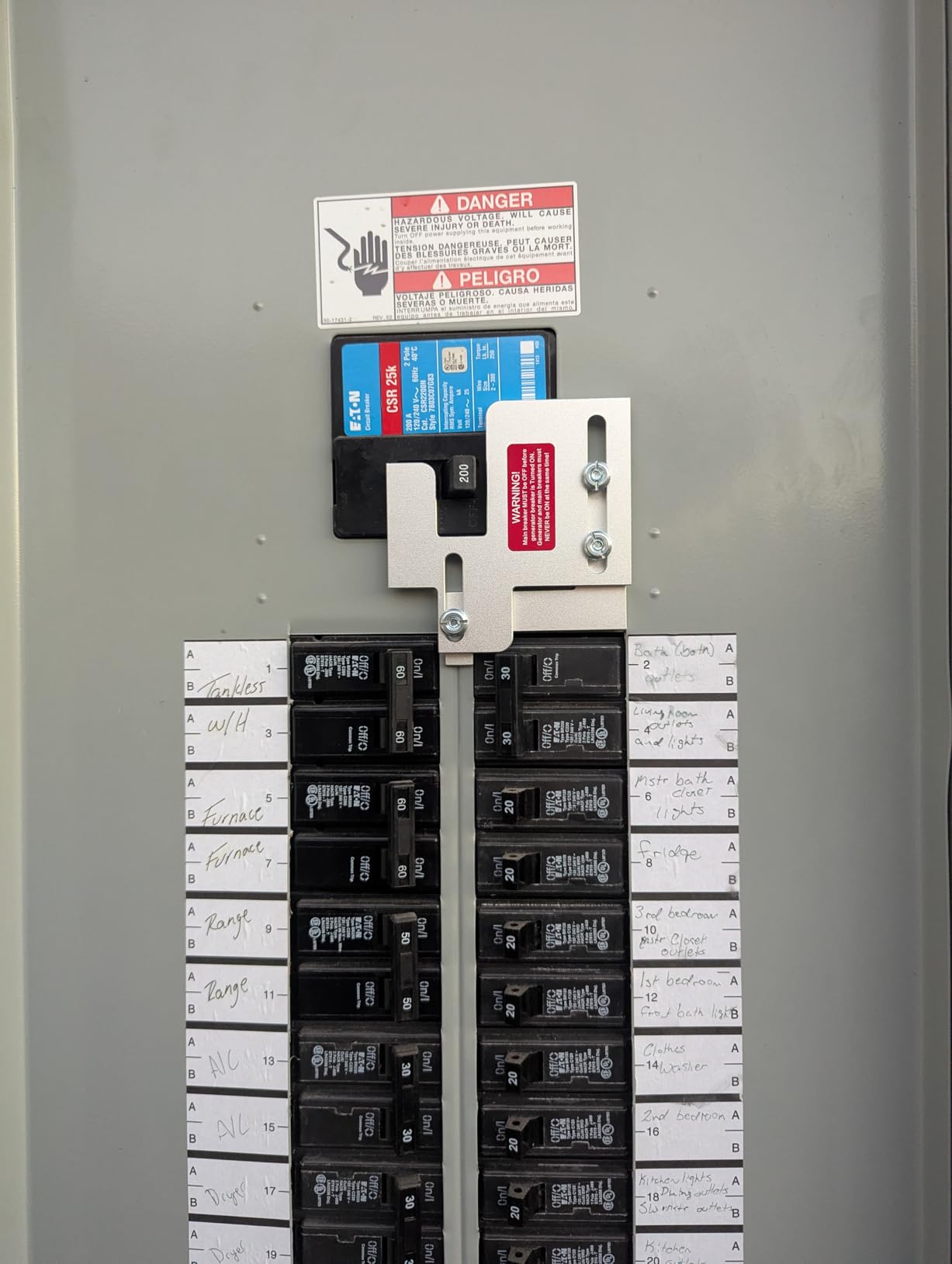
Eaton and Cutler-Hammer panels are the other major family, and this kit covers two of the widespread variants in one package: BR series and CH series with plug-in neutral, 150 and 200 amp. The 4.8 rating from 570 reviews puts it in the same tier as the category leaders, with 89 percent five-star scores.
The wider spacing tolerance is the underrated feature. Most plates in this roundup specify an exact or narrow measurement, while this one covers 1-1/4 through 1-7/16 inches, which absorbs a real slice of Eaton panel variation and improves your odds of a first-try fit.
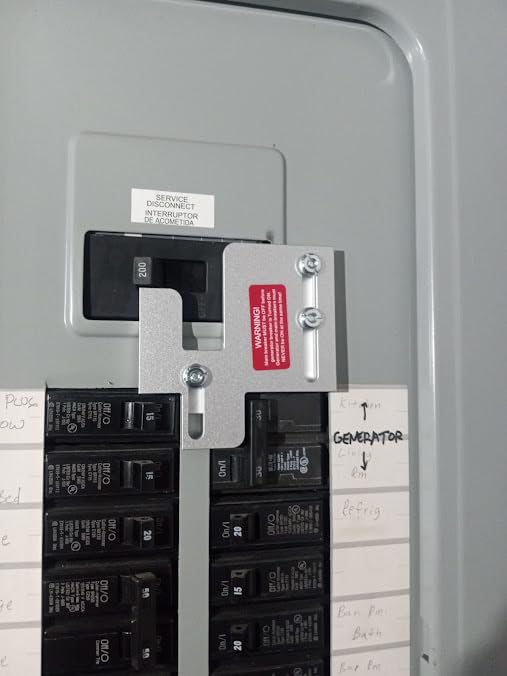
Contractors report installation quality that holds up against OEM plates, and the accessory pack is complete: interlock plate, shoulder screws, hex nuts, drill bit, labels, zip ties, and instructions. For an electrician fitting several of these, that completeness has real value.
The documentation is where it loses points. The supplied zip ties exist to mechanically secure the backfed breaker, which code requires and which first-timers consistently forget, and the instructions do not make that clear. Have your electrician point it out on the walkthrough.
Who this suits
Eaton BR panel owners who want the smoothest ordering experience, because the spacing range is forgiving and the fit reports are consistent. It is also a strong contractor pick given the rating and the complete hardware pack. Several buyers trimmed the plate slightly for full clearance in the off position, a five-minute job with a file.
Who should look elsewhere
Anyone with a CH panel that has a recessed main area and tan breakers needs the dedicated CH version covered later in this list. Those who want paperwork-grade credentials for an inspector should look past this one as well, since it is a well-regarded third-party plate rather than a listed product.
3. Areisal HOMCGK2C Interlock Kit for Square D Homeline Load Centers
- Drilling template allows precise hole placement for a snug fit
- Retaining bracket locks the generator breaker using the panel's existing bolt
- Stainless steel construction
- durable and reusable
- Performs the same job as the OEM version of the same function
- You must confirm the kit matches your panelboard frame size and breaker space
- Indoor load centers only
This kit is engineered for Square D Homeline load centers rather than QO, which matters if you own the Homeline line. It handles 150 amp through 225 amp main breaker frame sizes in indoor enclosures, covering the QOM1 and QOM2 frames.
The hardware is the best-specified package in the roundup: interlock bracket, a separate retaining bracket that uses the panel’s own bolt to lock the generator breaker, a hole drilling template, three hex nuts, three 10-32 shoulder screws, an interior mounting screw, an instruction bulletin, a wiring diagram, and two interlock translation labels.
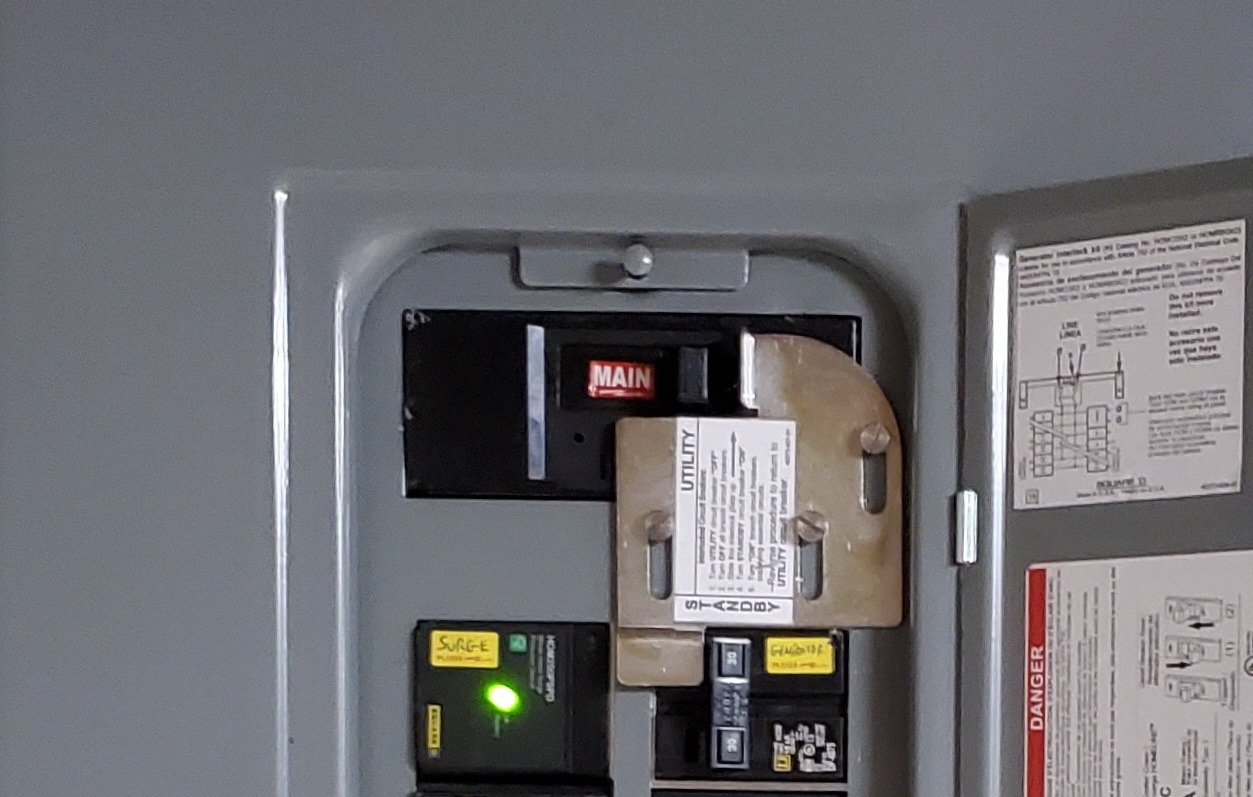
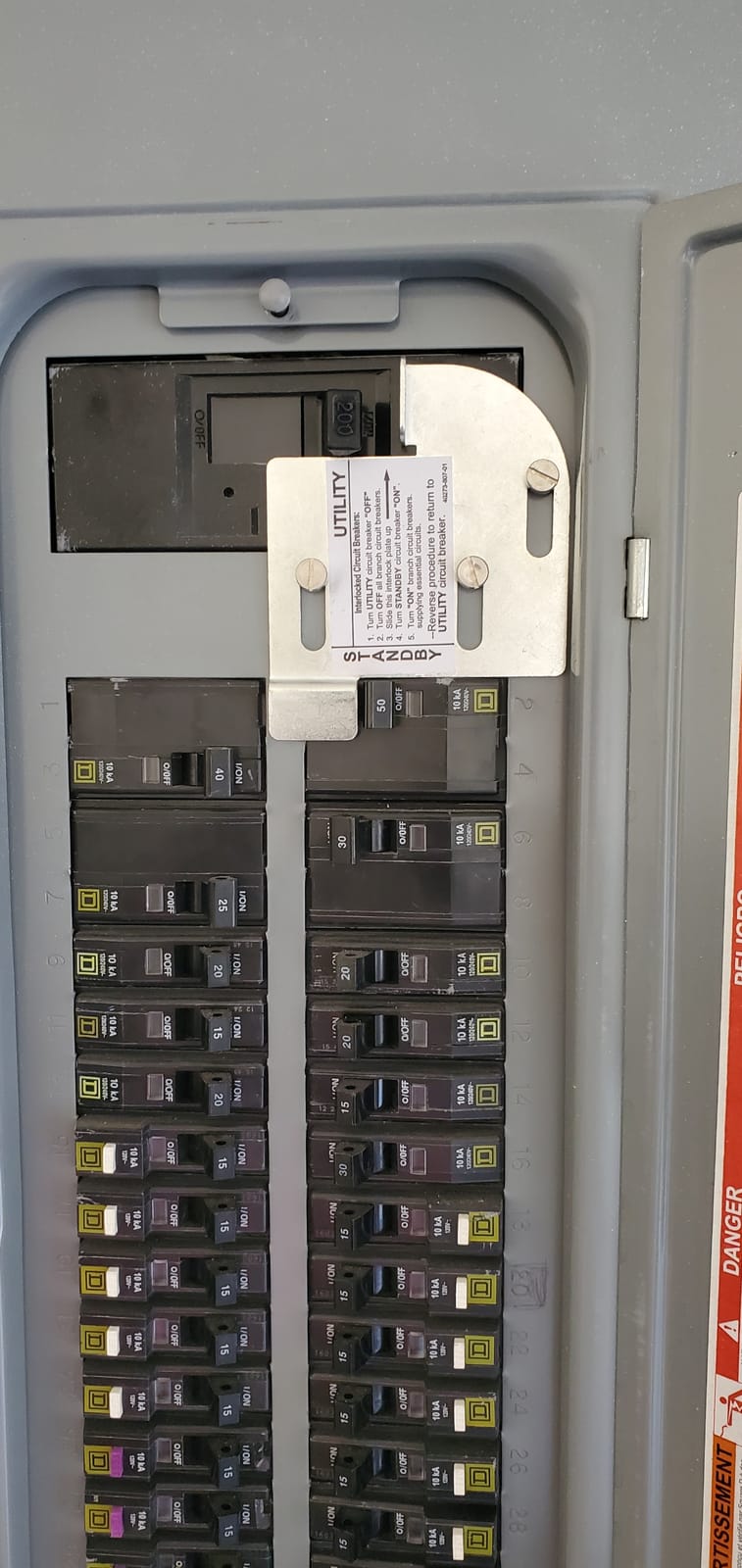
Stainless steel is a genuine upgrade over the stamped zinc-plated plates that dominate the category. It resists impact and chemicals in a damp garage or basement, and it will not warp or bind the way lighter plate can after a few seasons of thermal cycling. Buyers converting Homeline load centers report precise template drilling and a clean fit at a small fraction of the OEM cost.
Why the template and retaining bracket matter
Drilling the panel deadener is the step that ruins most interlock installs, and a paper template that registers off the existing bolt holes turns a guess into a measurement. The retaining bracket stops the generator breaker being pulled off position once the panel is live, so a kit that includes it saves a second parts run.
Where the limits are
Frame size is the whole game. A QOM1 or QOM2 frame in an indoor enclosure between 150 and 225 amp is in range, and anything outside that is not. It is also specified for indoor load centers only, so a weatherproof panel needs a different kit, and a QO panel is what the SD200A covers.
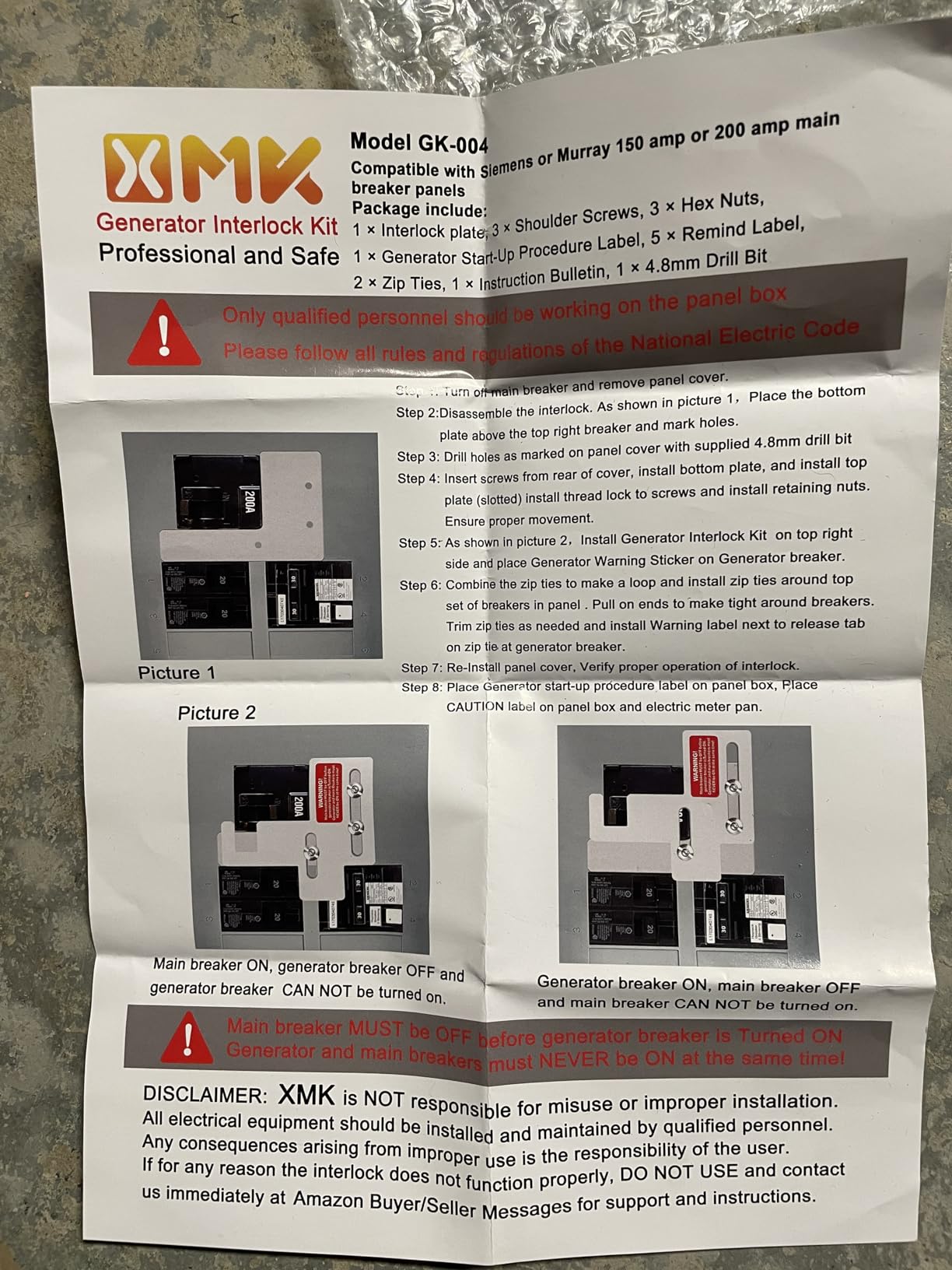
4. XMK GK-PN400 Generator Interlock Kit for Siemens and Murray Panels
Generator Interlock Kit Compatible with Siemens Murray 150 or 200 Amp Panel
- Correct 7/8 to 1-1/4 inch spacing suits standard Siemens and Murray panels
- Moves smoothly in operation and gives positive lockout of the main
- Matching drill bit and hardware included
- Fitment fails on Siemens panels whose main-to-branch spacing is outside the stated range
- Aluminum or steel construction varies by production
Siemens and Murray share breaker geometry, and this kit targets the standard spacing found in their 150 and 200 amp panels. The 7/8 to 1-1/4 inch range is the narrowest spec in this roundup, which is also why it works so cleanly when it does: there is very little slop in the mechanism.
The 4.7 rating from 294 reviews is a solid showing, and the language is consistent. Owners report clean alignment, straightforward installation, and a sliding action consistently described as smooth, with a positive lockout of the main when the plate is engaged.
The complete package ships with the interlocking plate, shoulder screws, hex nuts, a drill bit, reminder labels, zip ties, and instructions, so a partial kit and a trip to the electrical supply house is one problem you avoid.
One practical note: the plate measures 6.5 by 5.5 by 0.4 inches and weighs about 0.15 kg. Confirm your panel is a standard Siemens or Murray design and not a variant with a wider main-to-branch gap.
Why the narrow spec is a feature
A tight tolerance means the plate does not wobble and the lockout is genuinely positive, which is the mechanism’s entire purpose. Reviewers who measured first report the smoothest operation in the category, precisely because there is nothing to loosen, and it makes for an honest buying decision either way.
Where people get it wrong
The single reported failure mode is ordering without measuring, and the reviews name it as the key risk. Siemens panels exist outside this spacing range and the kit will not bridge that gap, and buyers also vary in whether they received aluminum or steel, so do not plan a specific material around the listing.
5. GenSafety BR-200 Interlock Kit for Cutler Hammer BR and CH Panels
- CNC machined anodized aluminum feels far more substantial than stamped plate kits
- Clear instructions with photos covering multiple panel styles
- Includes drill bit and thread locker
- Works on panels with a top main breaker as well as a bottom main
- Costs significantly more than stamped steel competitors
- Will not fit panels with a recessed main breaker without modification
Every other stamped plate in this roundup is pressed from sheet metal and then bent. This one is milled from solid bar, CNC machined and color anodized, and the 4.8 average across 261 reviews puts it among the top-rated products in the group despite a much higher price than the plates around it.
It weighs eight ounces, which sounds light until you compare it to the feel of a stamped competitor, and that machining translates into a positive lockout that does not rattle or loosen the way lighter stamped plate can over a season of use.
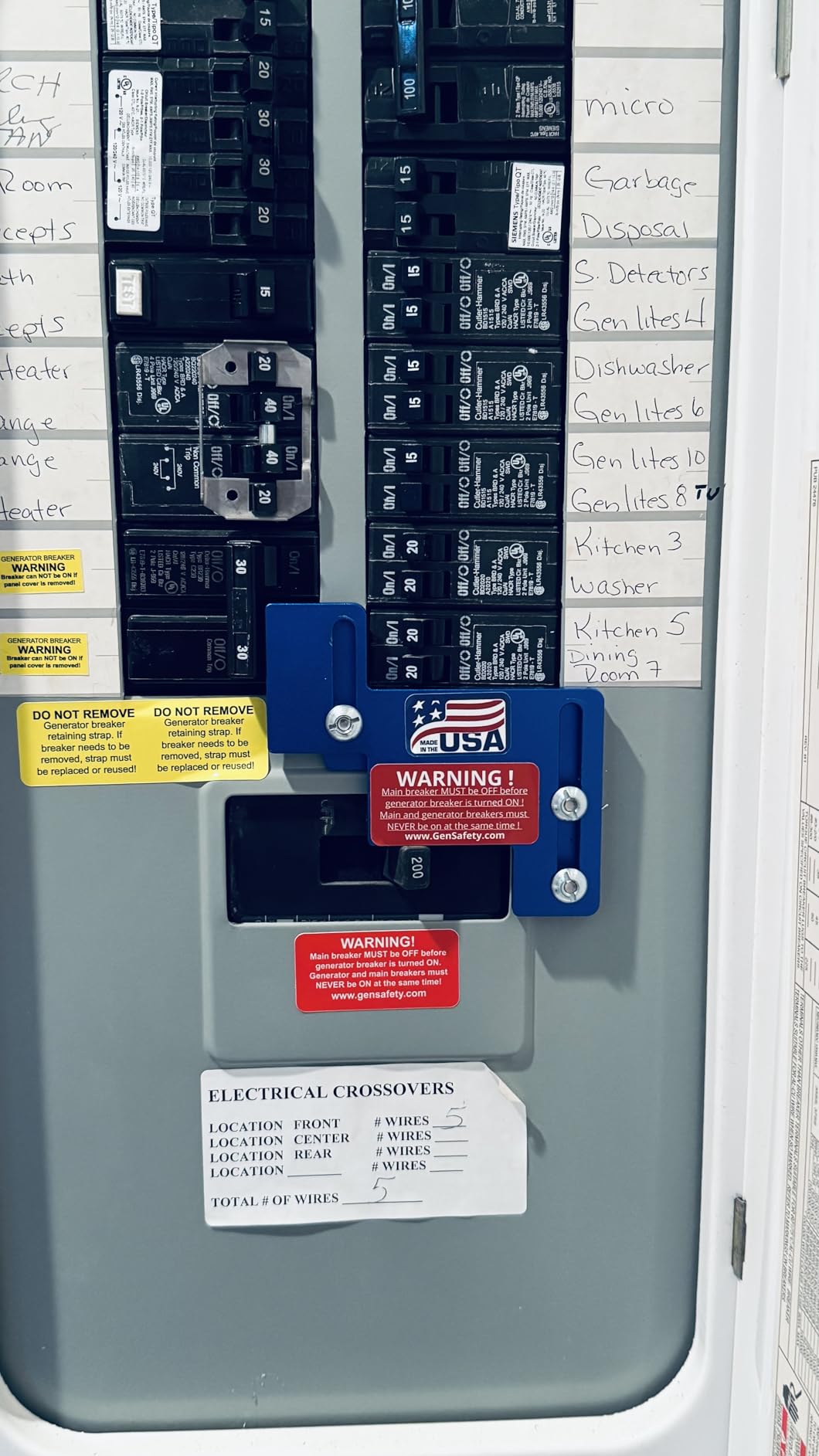
Fit is broad across the Eaton family. It handles 150 and 200 amp BR and CH panels with either a flat or a raised area around the main breaker, and it works on top-main and bottom-main configurations, which closes off a common dead end for owners of older CH panels.
The instruction set uses photos across multiple panel styles rather than leaving you to interpret line drawings, and thread locker is included, which keeps shoulder screws from loosening after months of sliding the plate. Experienced installers report finishing in under ten minutes.
Who should spend more for this one
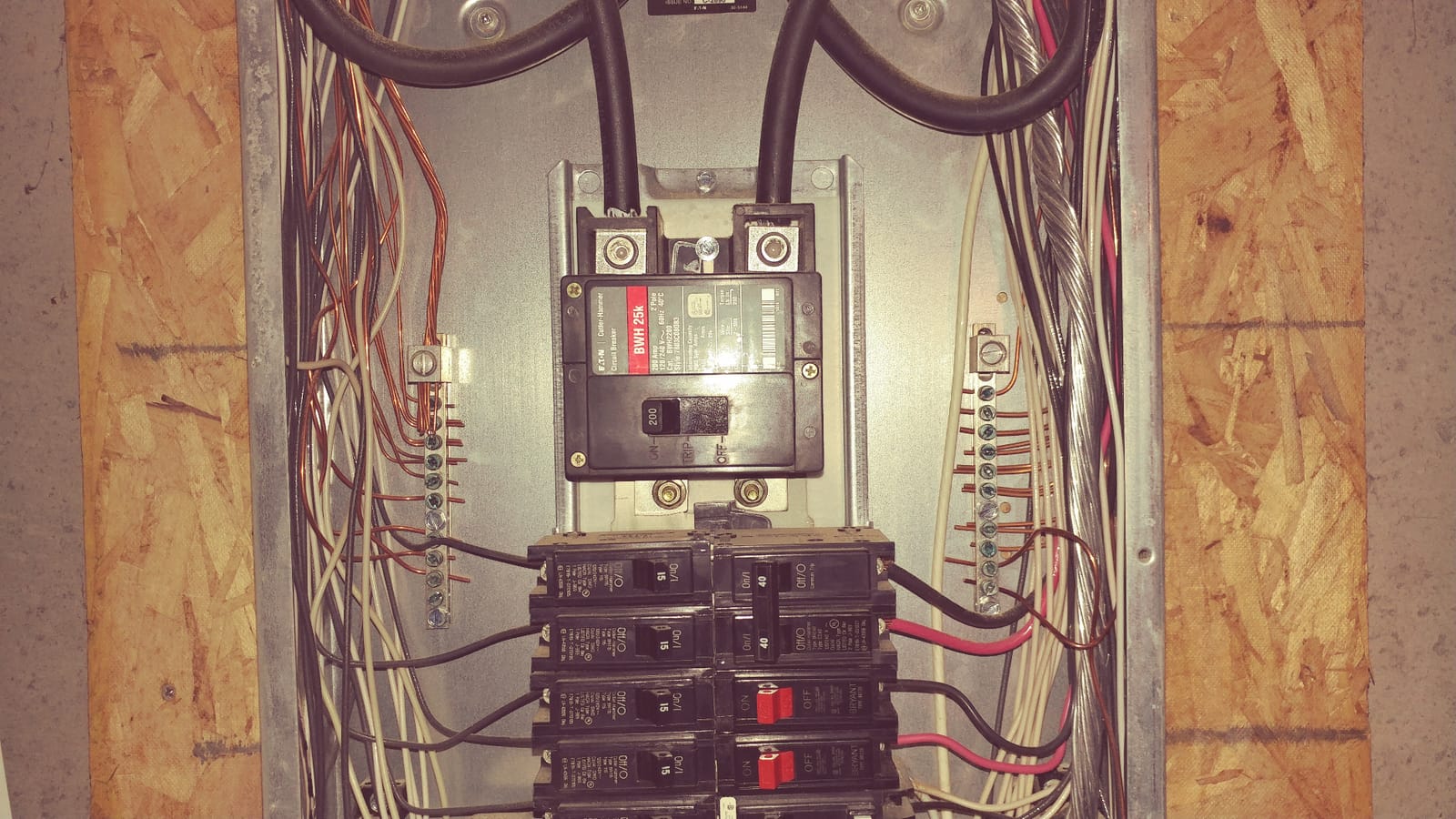
Anyone who intends to keep the panel installed for years and will operate the plate every storm season. Anodized aluminum does not corrode, does not bind, and does not need replacing, and the fit breadth across Eaton panel styles makes it the safest single-kit bet if you are unsure which CH variant you own.
Who should not
Anyone with a recessed main breaker, since this will not seat without modification and modifying an interlock plate is a good way to end up with a binding mechanism. Buyers on a tight budget get the same functional outcome from a stamped plate that works perfectly well, and multiple reviewers name price as the acknowledged trade-off.
6. EXCELFU GK-PN300 Generator Interlock Kit for GE Panels
Generator Interlock Kit Compatible with General Electric GE 150 or 200 Amp
- Thick 3mm aluminum slider gives a solid
- non-wobbling positive lockout
- Installs in roughly 15 minutes for a competent DIYer
- Clear directions and all parts fit together well
- Cheaper than a full transfer switch for the same result
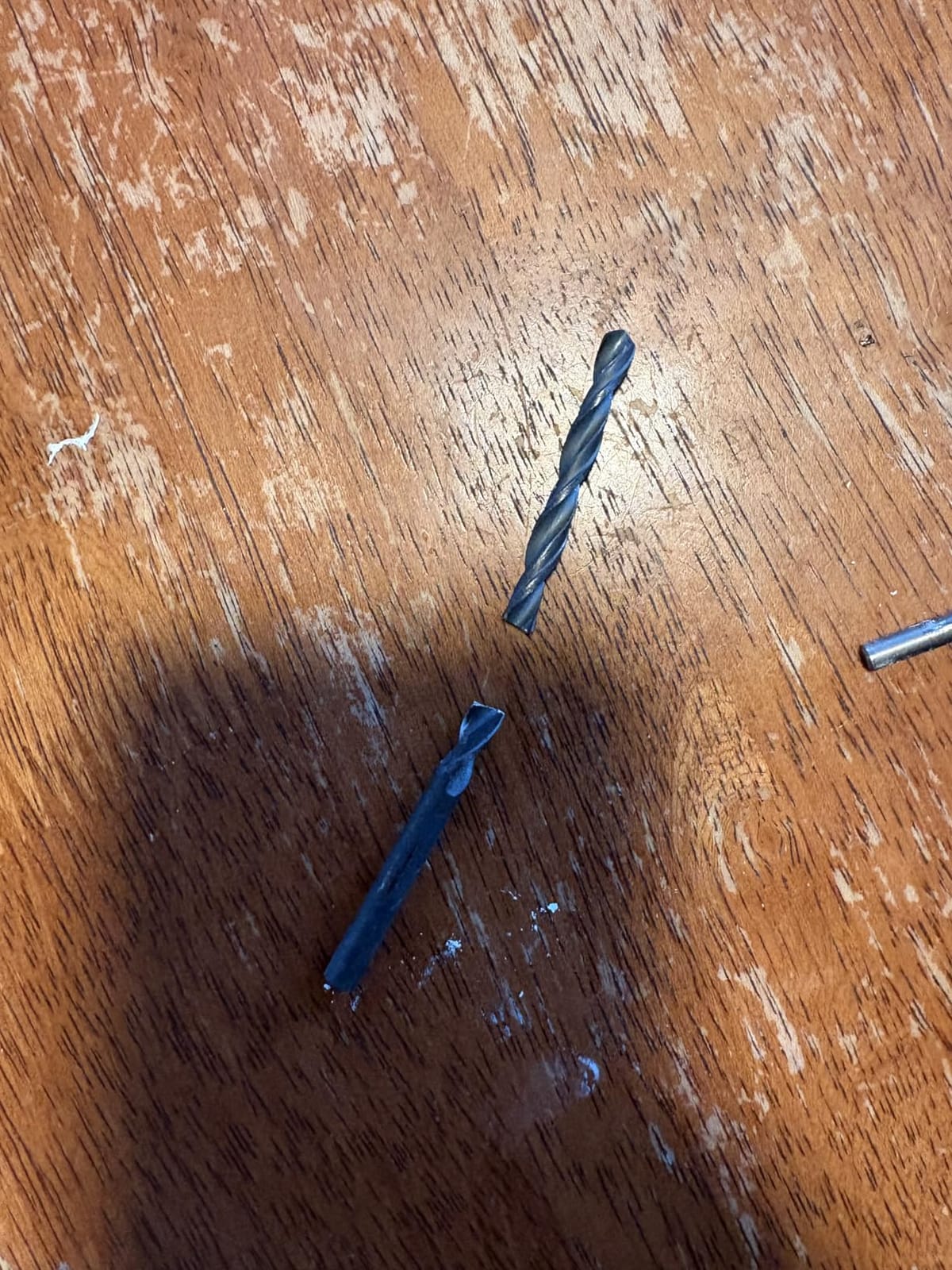
- The included drill bit arrived bent on some units
- Will not fit GE panels outside the stated 1-1/4 inch spacing
GE panels have their own geometry and their own dead ends, and this is the kit built for the common 150 and 200 amp GE load center with 1-1/4 inch spacing between the main breaker and the branch breakers. It is a single-phase design rated to 200 amp maximum.
The defining feature is slider thickness. At 3mm of aluminum, this plate does not flex or wobble in the panel, which is the complaint we saw most often against thinner plates. A non-wobbling slider is a positive lockout, and a positive lockout is the only thing standing between you and a backfeed.
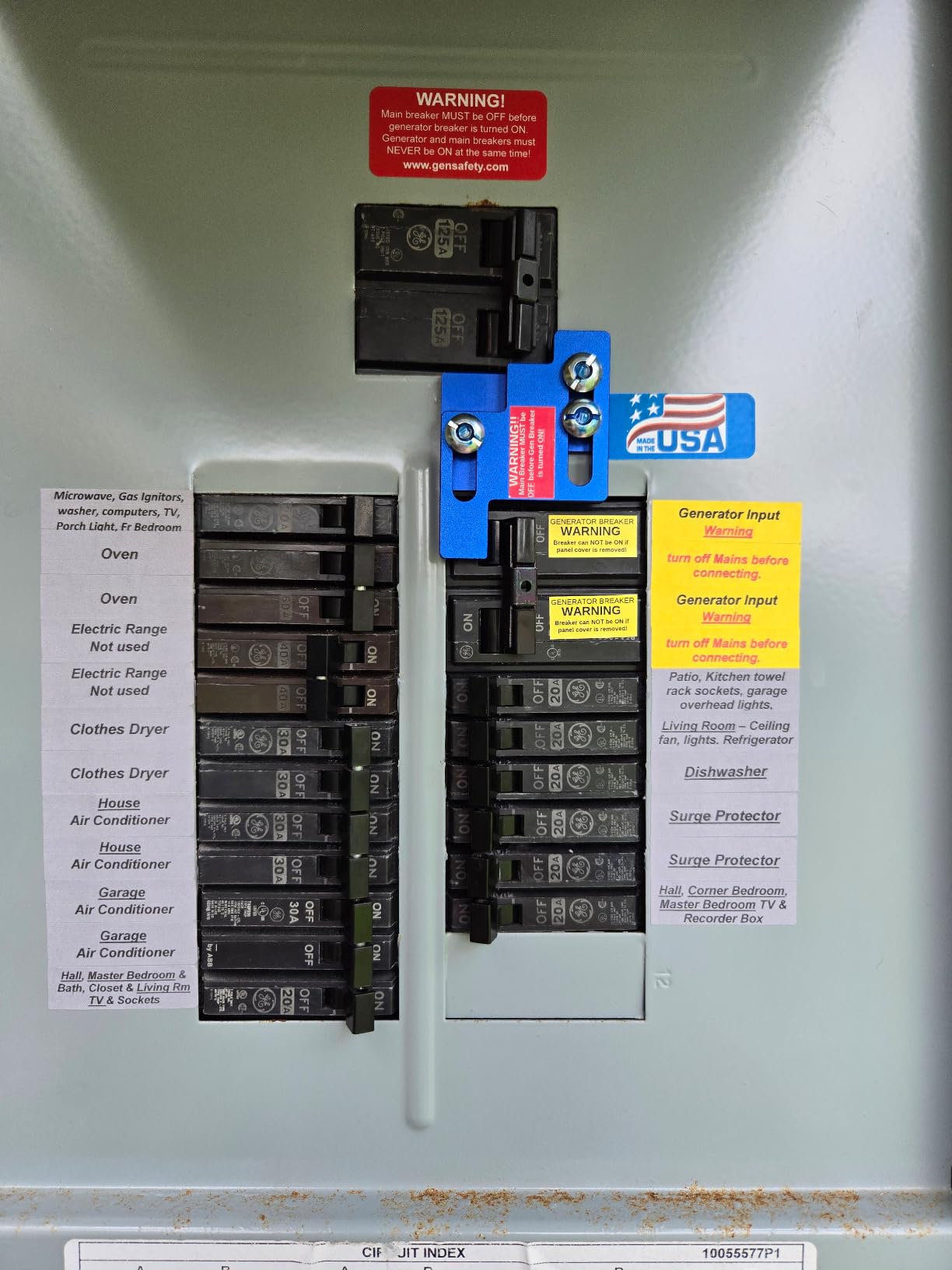
GE panel owners report spot-on fitment, sturdy construction, and install times around fifteen minutes for a competent DIYer. The box holds the interlocking plate, shoulder screws, hex nuts, a drill bit, reminder labels, zip ties, and instructions.
The 4.5 average from 255 reviews is the lowest here, and both recurring gripes explain the gap: a bent drill bit turned up on some units as a packaging quality problem rather than a design flaw, and fitment fails on any GE panel that does not match the 1-1/4 inch spec.
The 15-minute install reality
Fifteen minutes is what buyers with a tape measure and a drill report, and the difference between that and an afternoon is almost entirely preparation. The value framing in the reviews is worth repeating: this is code-compliant backfeed prevention at a fraction of the cost of a transfer switch, using the panel you already own.
Two things to check first
Test the drill bit before you commit, because a clean hole determines whether the plate seats without binding. And measure your spacing against 1-1/4 inches exactly, since GE panels vary more than buyers expect. Owners of vertical main GE panels should skip this kit for the dedicated vertical model.
7. Gen Interlock SD-200SA Kit for Square D Meter Main Panels
SD-200SA Square D Generator Interlock Kit for Homeline Meter Main 150 or 200 amp Breaker
- MET lab listed under E113887
- which matters for inspection and utility acceptance
- Complete kit with interlock
- threadlocker
- drill bit
- warning labels and zip ties
- Reported to fit panels where breakers sit tight beneath the main
- Slides smoothly and fits on correct panels
- Buyers repeatedly call the price too high for a stamped plate and hardware
- Works only with meter main panel styles
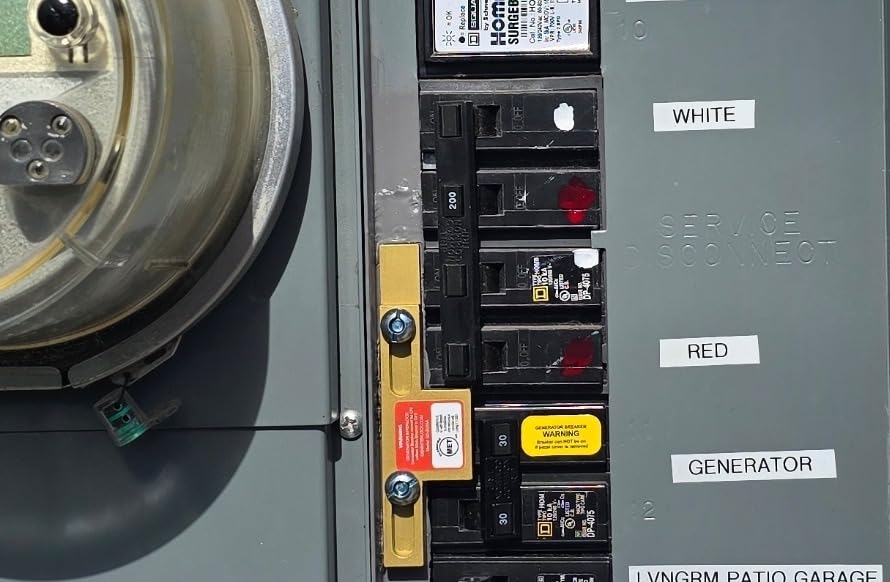
Meter main panels are where interlock shopping gets confusing, because they look like a standard Square D panel until you notice the meter socket integrated at the bottom. The SD-200SA is built specifically for that layout in 150 and 200 amp service, rated for 240 volts AC.
What separates this one from the rest is paperwork. It carries a MET lab listing under E113887, and for a homeowner whose building department insists on a listed interlock device, that single credential can be the difference between a smooth inspection and a second visit from the inspector.
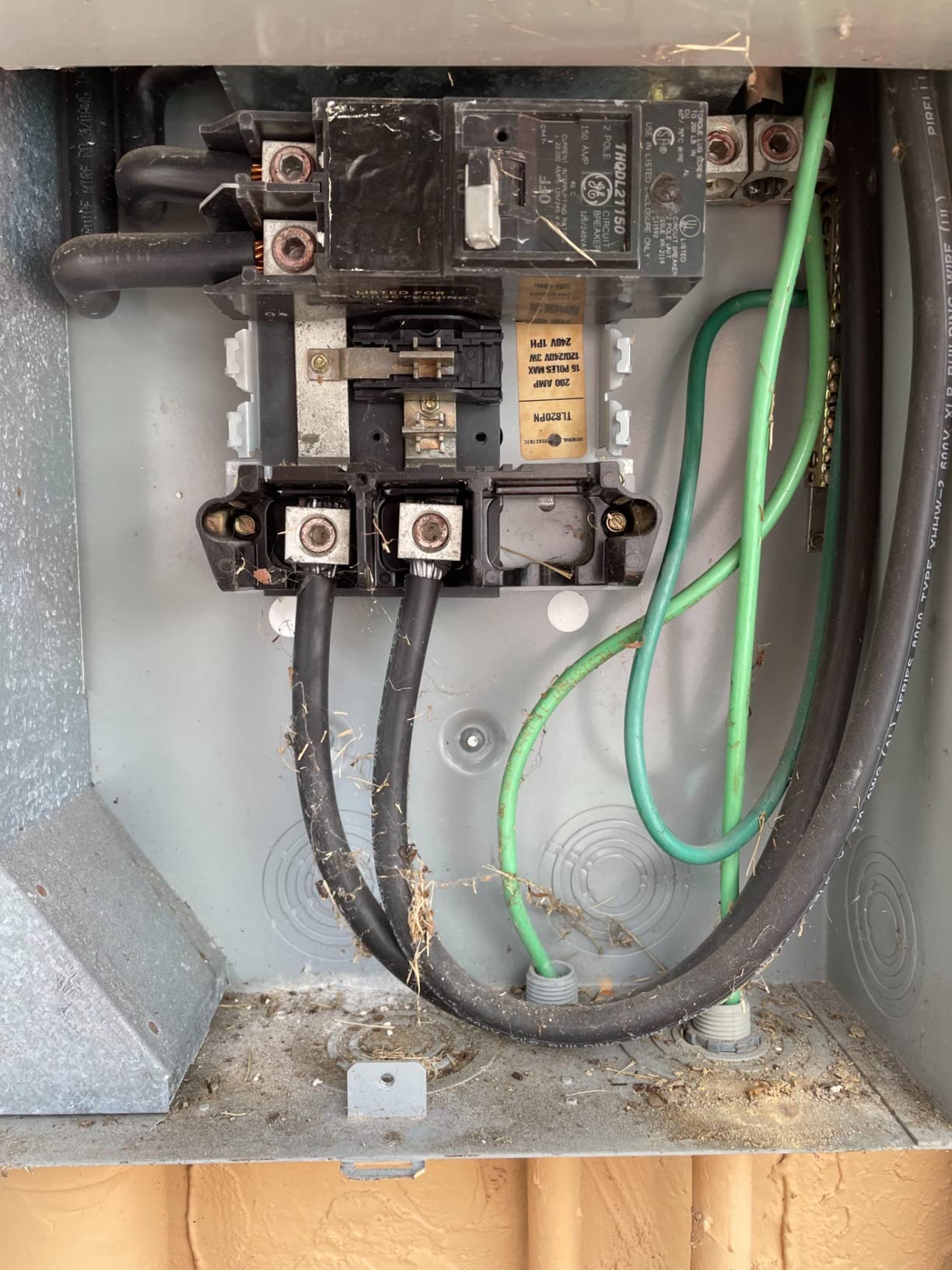
The accessory list is complete and considered: interlock plate, drill bit, labeling, threadlocker, warning labels, zip ties, and a retaining strap for the generator breaker. Reviewers confirm it installs and works, and several note it fits panels where breakers sit tight beneath the main, which is the difficult geometry in this panel family.
When the lab listing is the deciding factor
Some local authorities accept only listed or classified interlock equipment, and a third-party plate with no certification is a common reason for a failed inspection. If your building department has said that upfront, this is the kit that answers the objection, and it is the safer buy for a meter main because that geometry leaves less room for a near-miss fit.
Who should pass
Buyers consistently call the price too high for the amount of stamped metal in the box, from people who are happy with the result. If your installer is confident and your inspector is relaxed, a cheaper Square D kit does the same mechanical job, and it is also strictly a meter main product rather than an answer for a standard bottom-main panel.
8. Natupal ITE-200A Interlock Kit for ITE, Gould, Murray, Siemens and Thomas and Betts Panels
Natupal Generator Interlock Kit Compatible with ITE, Gould, Murray, Siemens, and Thomas and Betts, 150 or 200 amp panels, 1 1/4 Inch Spacing between main and generator breaker
- Widest panel-brand coverage in this group
- Can be mounted in reverse for generator breakers on the right side of the panel
- Well made and slides as intended
- Meets the code requirement for whole-house backup
- Does not fit Siemens 200 amp outdoor panels with 2-1/4 inch spacing despite the broad compatibility claim
- Buyers must measure the panel's breaker gap before ordering
This kit exists for a real problem: the long tail of panel brands. ITE, Gould, Murray, Siemens, and Thomas and Betts panels share enough geometry that one plate covers them, and for anyone whose panel is not Square D, Eaton, or GE, that is the difference between finding a solution and hitting a dead end.
It requires 1-1/4 inch spacing between the main breaker and the generator breaker, and it ships with the interlock plate, shoulder screws, hex nuts, labels, zip ties, instructions, and a 3/16 inch drill bit. The reversible mounting feature is genuinely useful: you can flip the lock so the generator breaker sits on the right side of the panel.
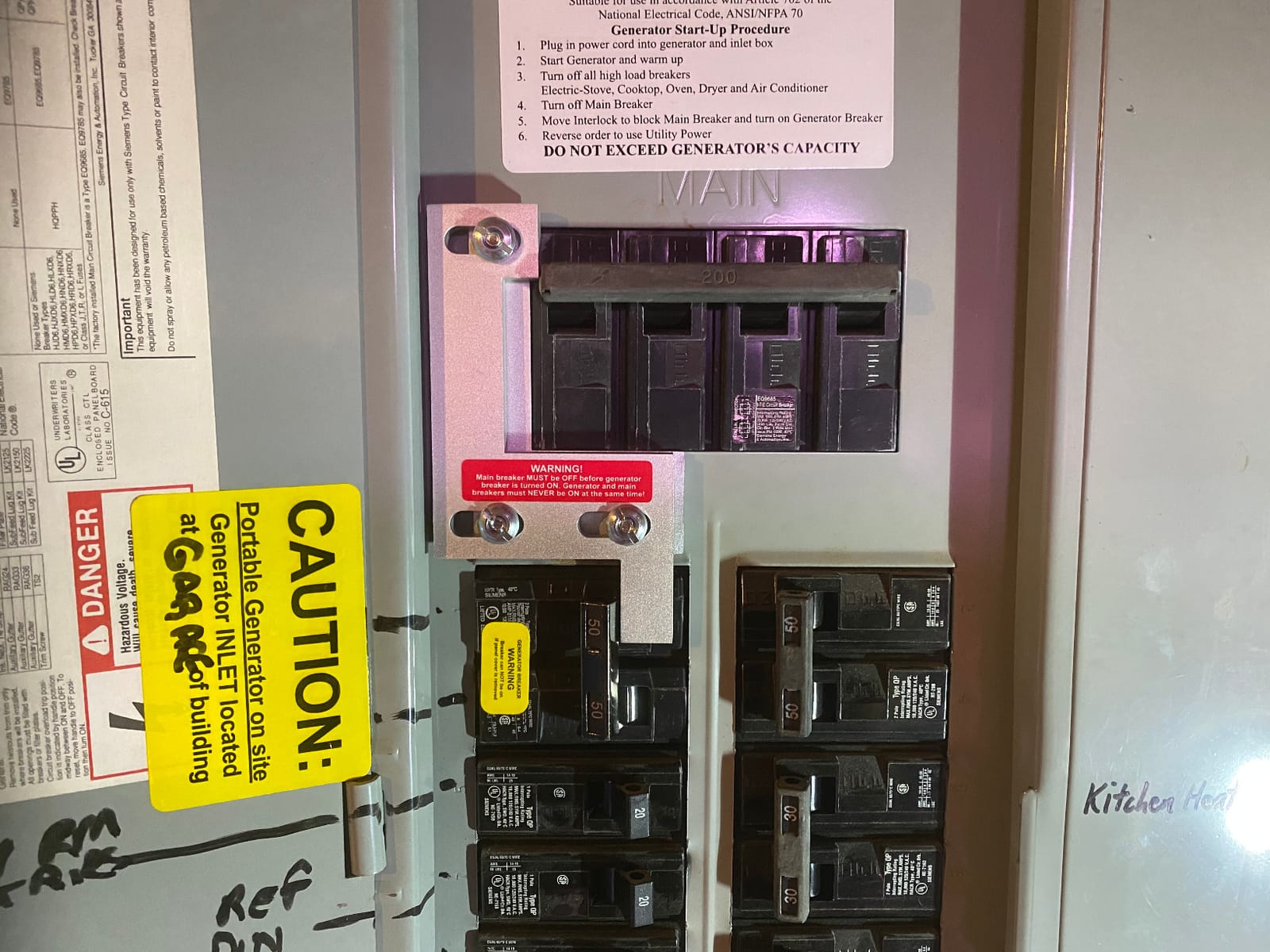
The 4.6 average from 197 reviews is solid for a kit whose main value is breadth. Users of ITE, Murray, and Siemens panels report easy installation and reliable backfeed prevention, and buyers also point out the cost reality directly: this is what you buy instead of a transfer switch when you want code-compliant whole-house backup.
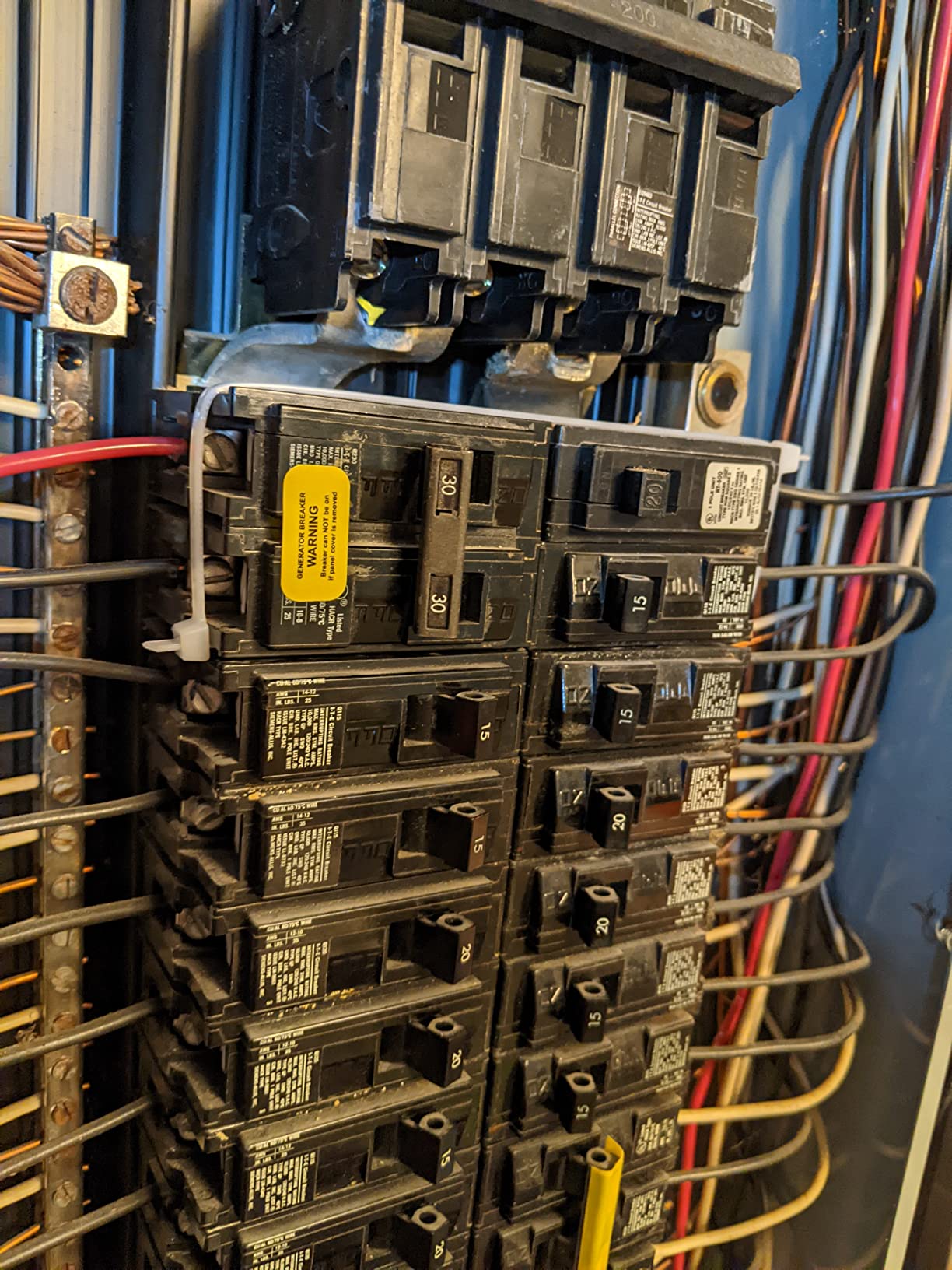
Broad claims need a tape measure
The compatibility claim covers five brands, and that breadth is also its weakness. There is a documented failure on Siemens 200 amp outdoor panels with 2-1/4 inch spacing, outside the 1-1/4 inch requirement, and buyers get caught by the marketing rather than the mechanism. Treat the brand list as a starting point and the spacing figure as the actual specification.
When breadth is the whole point
Owners of less common legacy panels will find this is often the only kit in the category that covers their equipment, and several note the build quality holds up despite that. If you have a Square D, Eaton, or GE panel, use the dedicated kit for that brand instead, since you will get a tighter fit tolerance and a plate designed for that geometry.
9. XMK CH Tan Breaker Interlock Kit for Recessed Eaton CH Panels
Generator Interlock Kit fit for Eaton Cutler Hammer CH Series 150 & 200 Amp
- Fits recessed-main CH panels with tan breakers as specified
- Installs in under 5 minutes for experienced users
- Brackets and warning labels are included
- Slides smoothly and holds the generator breaker off when the main is on
- Only fits CH panels with tan breakers and a depressed main area
- Included drill bit was reported warped and unusable by multiple buyers
- Thread locker is not included
Eaton CH panels came in two distinct layouts, and this kit is built for the one that frustrates people. It fits CH panels with TAN breakers where the main breaker area is depressed, with 1-1/2 inch spacing between the main breaker and the branch breakers and a single-handle horizontal throw.
Generic CH kits in this roundup are built around PON breakers with a flat or raised main area, which is the other layout entirely. If you order the wrong one, you find out with the plate in your hand, not in the listing.
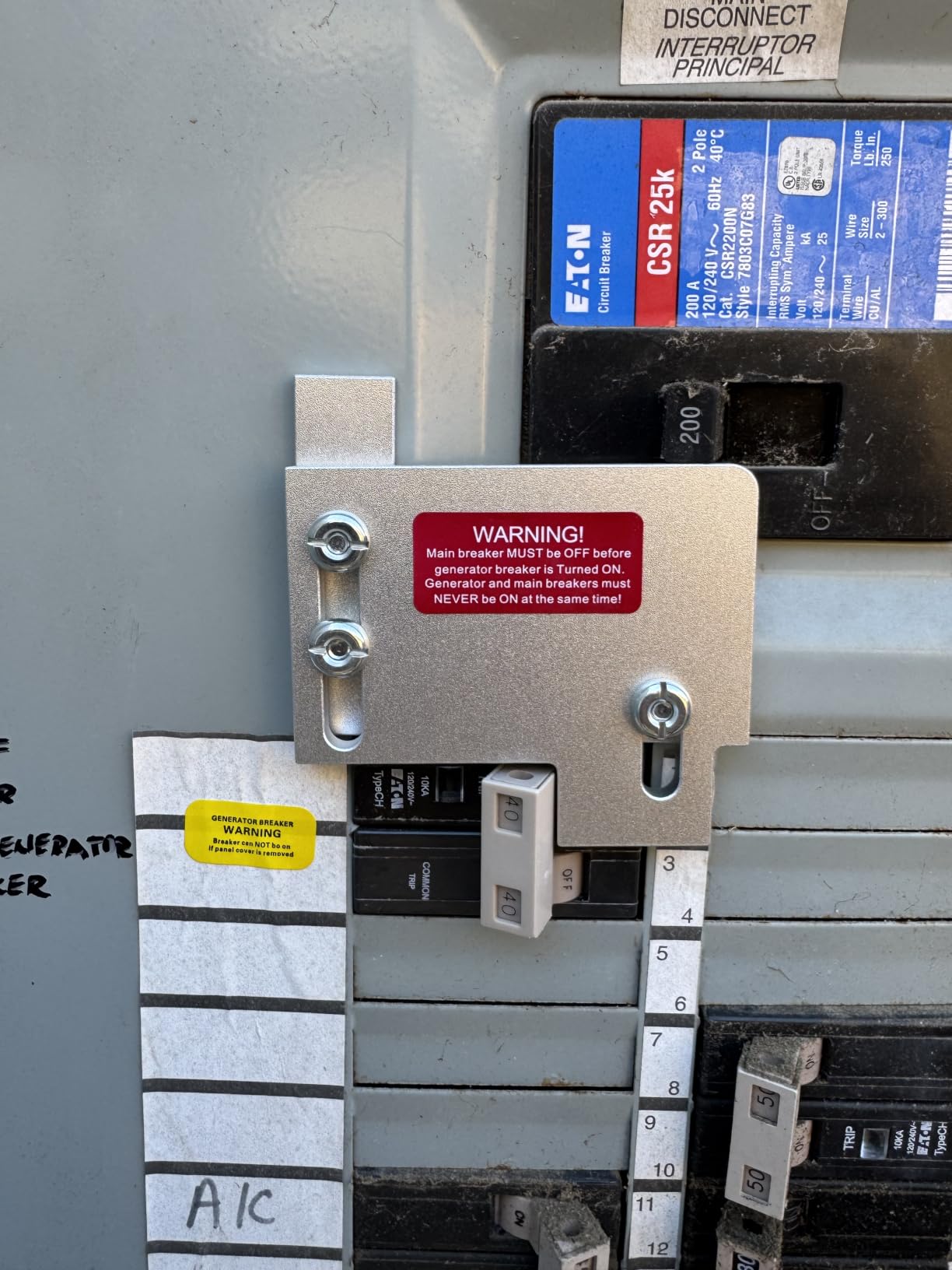
For buyers who confirm their panel style, the install is fast. Experienced users report under five minutes, brackets and warning labels are included, and the plate slides smoothly and holds the generator breaker off while the main is on.
The 4.5 average from 144 reviews is dragged down by fitment confusion and the drill bit, not by the mechanism. Several buyers received a kit that would not fit their CH 200 amp panel, and multiple reviewers reported the supplied bit arriving warped.
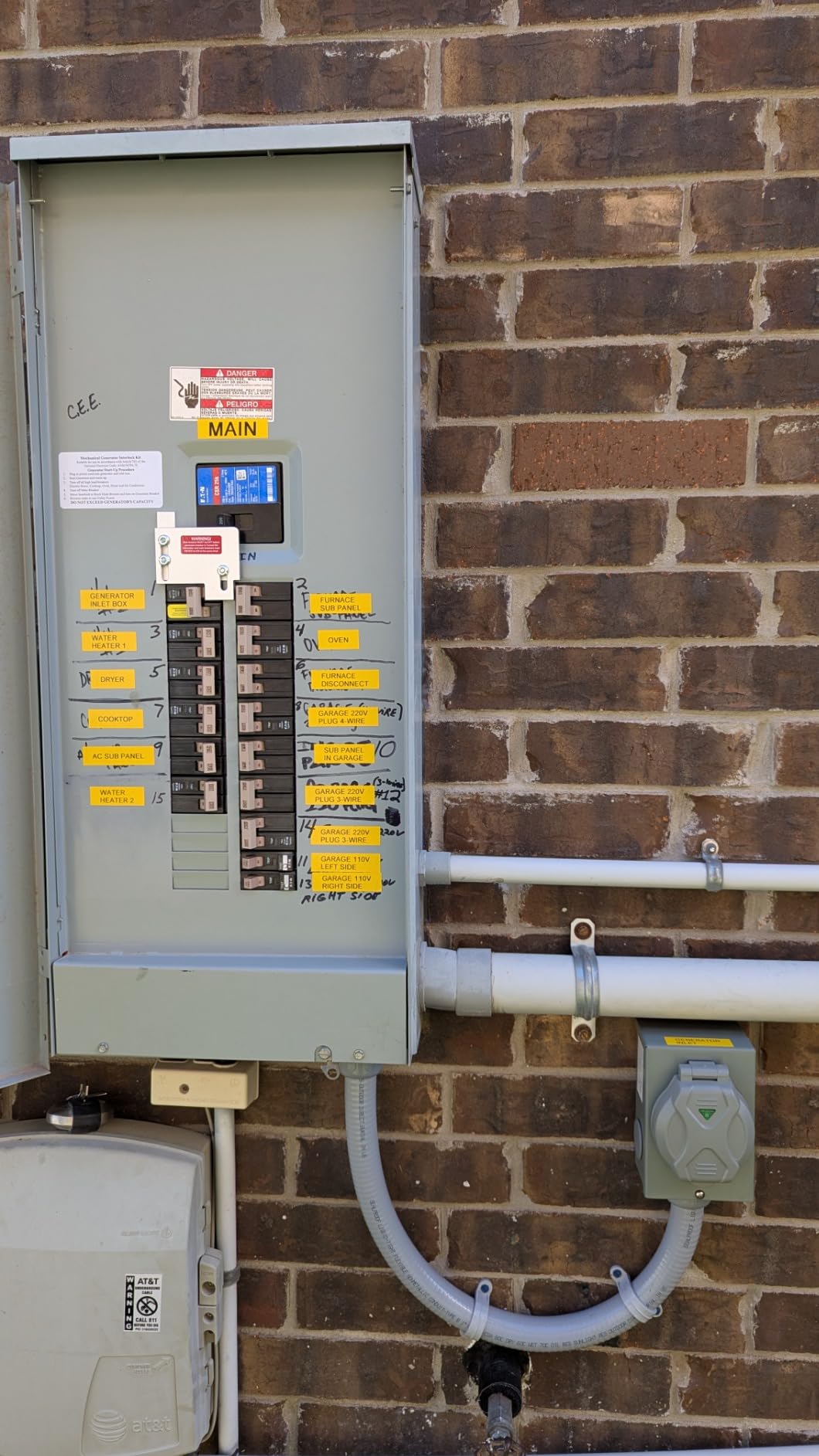
Identify TAN versus PON before you order
TAN breakers have a tan or beige face and the main breaker area is recessed below the surrounding surface; PON breakers have a different face and a flat or raised main area. This kit fits the first configuration only, and the manufacturer states the exclusion explicitly. Confirm the breaker color, the depth of the main area, and the 1-1/2 inch spacing.
Two things to bring to the install
Bring your own drill bit, because the included one drew repeated reports of warping, and a bent bit is how you get a ragged panel hole and a mechanism that binds. Bring thread locker separately, since it is not in the box and without it the shoulder screws loosen with use. Check the fit with the cover off, since panels installed slightly out of square can limit lockout travel.
10. QYZZRS QY-200A Interlock Kit for Siemens, ITE, Gould and Murray Panels
- Stainless steel plate resists corrosion in the panel enclosure
- Fits and works as specified in Siemens panels
- Clear labeling included to make the safety procedure obvious
- Quick installation
- Not compatible with Siemens 200 amp panels
- Instructions do not walk through the alignment step
- Fit is less positive on panels with a thicker back plate
This is the budget-friendly option for Siemens 150 amp panels and the ITE, Gould, and Murray families that share their geometry. It requires 1-1/4 inch spacing, and the manufacturer is explicit that it is not compatible with Siemens 200 amp panels.
That exclusion is worth respecting rather than working around. It is why this sits where it does rather than higher, and it is also a mark of an honest listing, since plenty of competitors claim universal Siemens coverage and quietly fail on the larger frame.
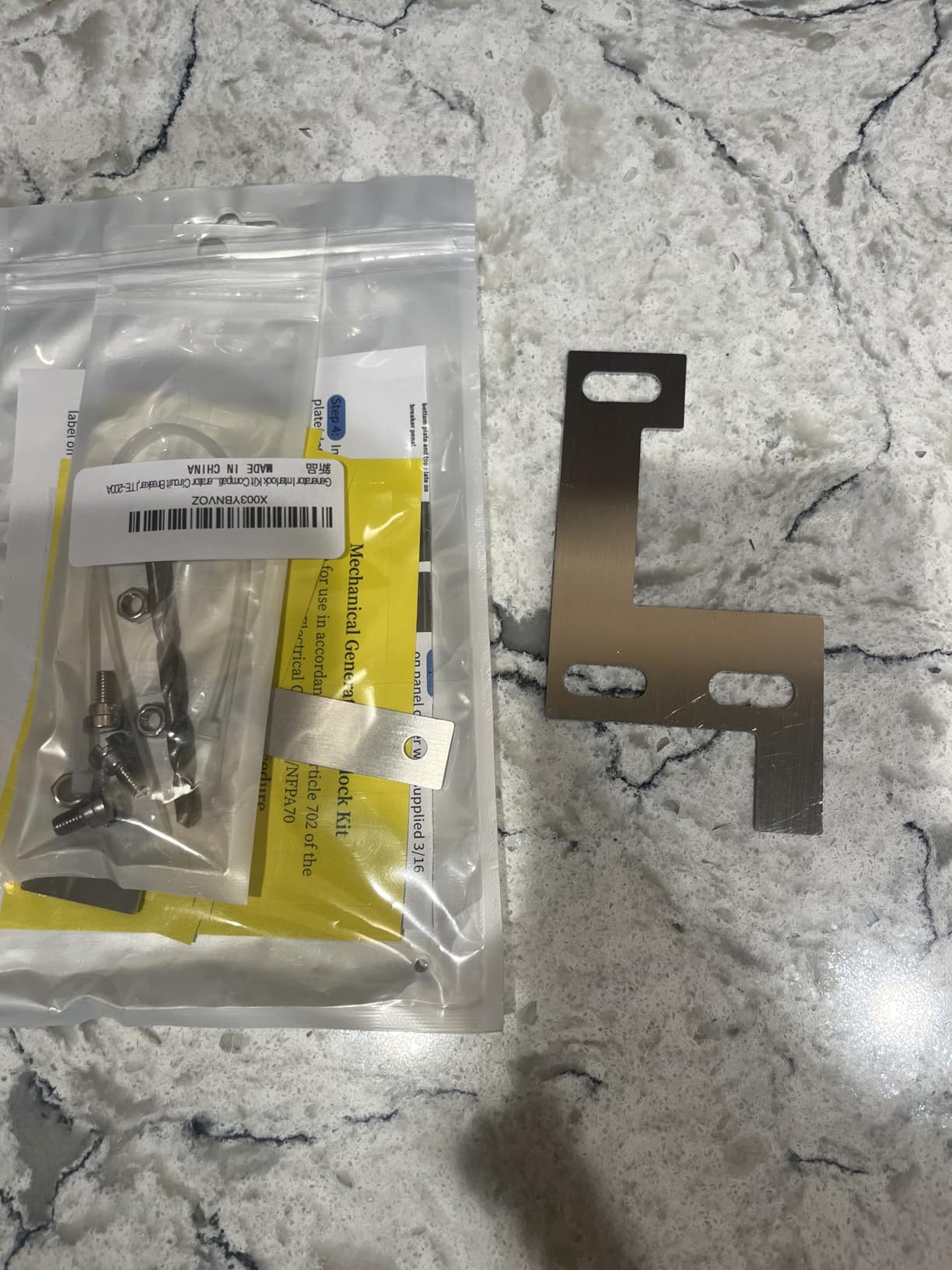
Material is the quiet strength. The plate is stainless steel, and buyers notice in a panel that can be damp and can run warm. It is a three-pole design rated to 200 amp, measures just under 4.5 inches long and about 2.4 inches wide, and ships with clear labeling that makes the start-up procedure obvious to anyone who finds the panel later.
The 4.7 average from 124 reviews is a good result for a smaller review pool, with 80 percent five-star ratings, and reviewers confirm quick installation in Siemens panels.
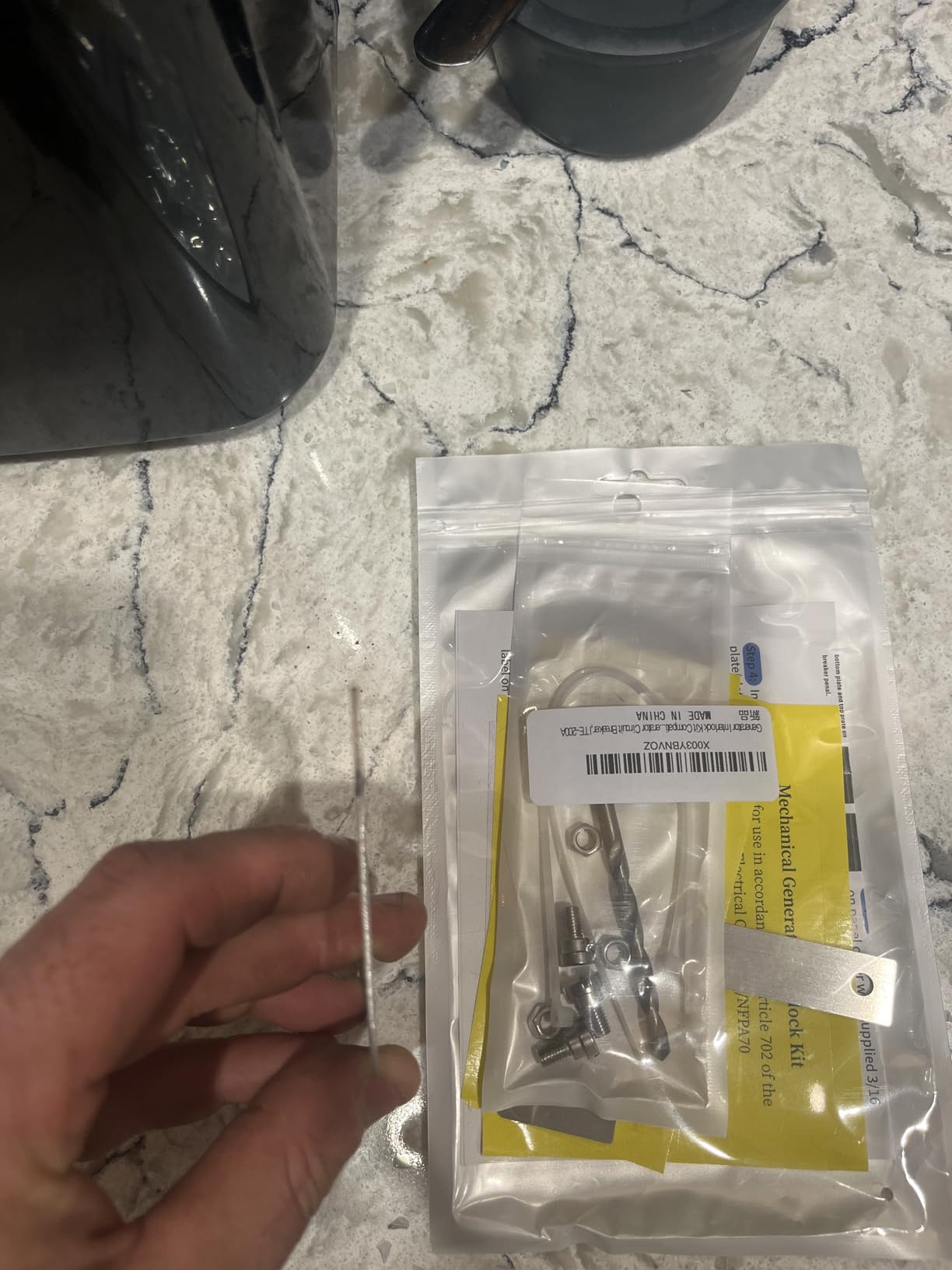
When stainless earns its place
In a damp basement, an unfinished garage, or a utility room that sweats in summer, a stainless plate resists corrosion where a plated steel part eventually pits and seizes. That is a real difference over a decade of service, and the procedure labels matter too, because the person who runs the generator during an outage has never seen the panel.
Where it falls short
The documentation is the weak point. Buyers report that the instructions do not walk through the alignment step, which decides whether the plate slides freely or binds, and on panels with a thicker back plate several users had to file the parts slightly for smooth movement. That is a minor job with hand tools, but it is a job, and not one to learn on if you are not comfortable filing inside a live panel enclosure.
11. Natupal SD-200VL Interlock Kit for Square D Vertical Main Panels
Natupal Generator Interlock Kit Compatible with Square D Vertical Main 150 or 200 amp Breaker,3 1/4 to 4 Inch Spacing Between Main and Branch Breaker
- Well machined with a close-tolerance
- very smooth sliding action
- Fits older Square D QO vertical main panels where few alternatives exist
- Instructions are thorough including thread locker guidance
- Passes inspection when installed as described
- Panels at the low end of the range often need trimming with a hacksaw or file
- Hole placement must be accurate to about 1/16 inch or the mechanism binds
- Included drill bit is of poor quality and panel burrs need flattening
Square D QO panels with a vertical main breaker are one of the most common dead ends in this entire category. The 3-1/4 to 4 inch spacing is far wider than any standard plate reaches, and most kits on the market do not address it.
This one does, and the 4.6 average from 111 reviews reflects owners describing a rare and affordable solution for hardware other products cannot cover. Machining quality comes in for praise too, with a close tolerance and very smooth sliding action, and the instructions are more thorough than most, including thread locker guidance.
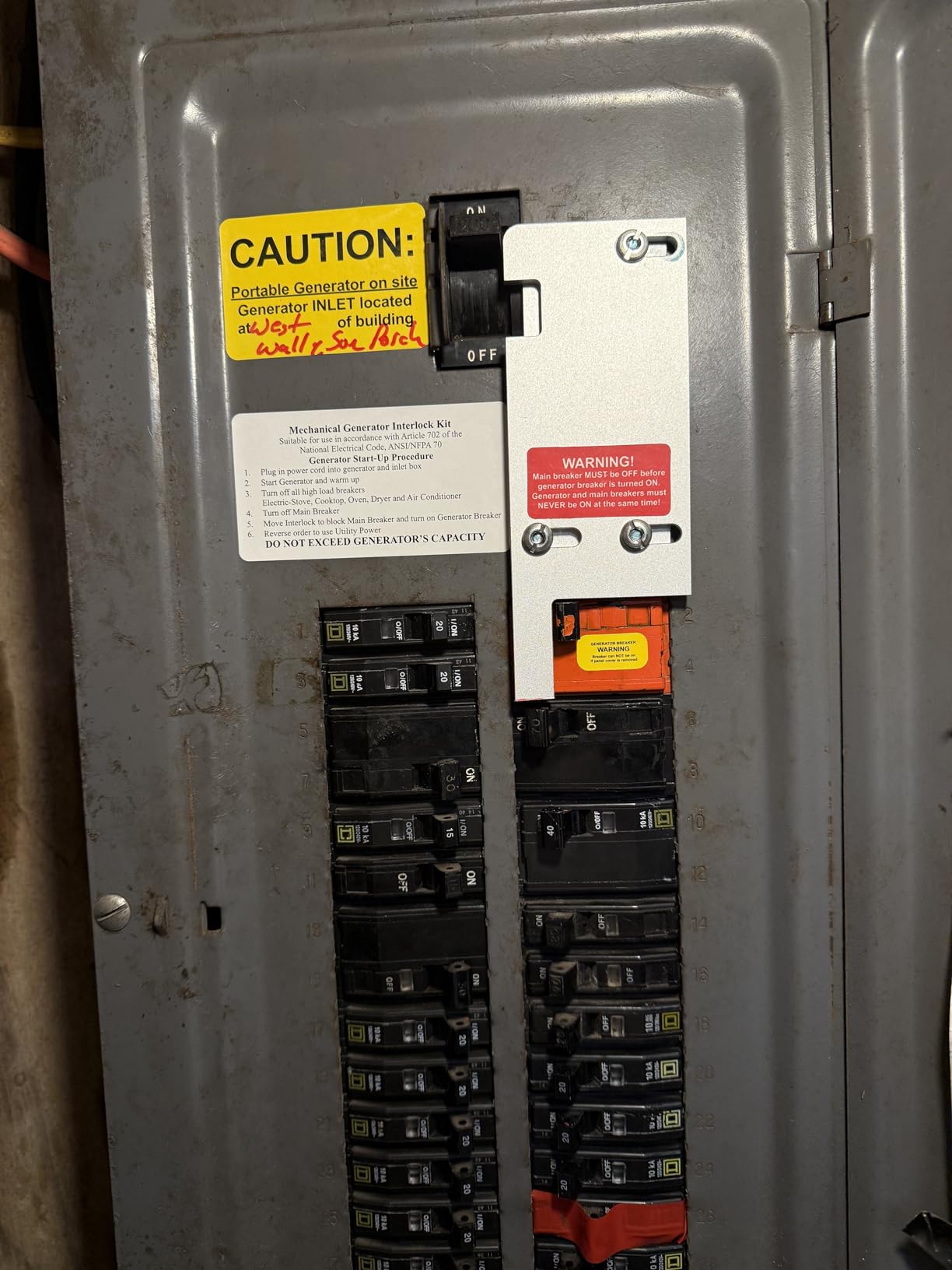
Owners report passing inspection when the kit is installed as described, which matters for a panel old enough that an inspector may want the device specified clearly. The package contains the interlock plate, shoulder screws, hex nuts, procedure and reminder labels, zip ties, instructions, and a drill bit.
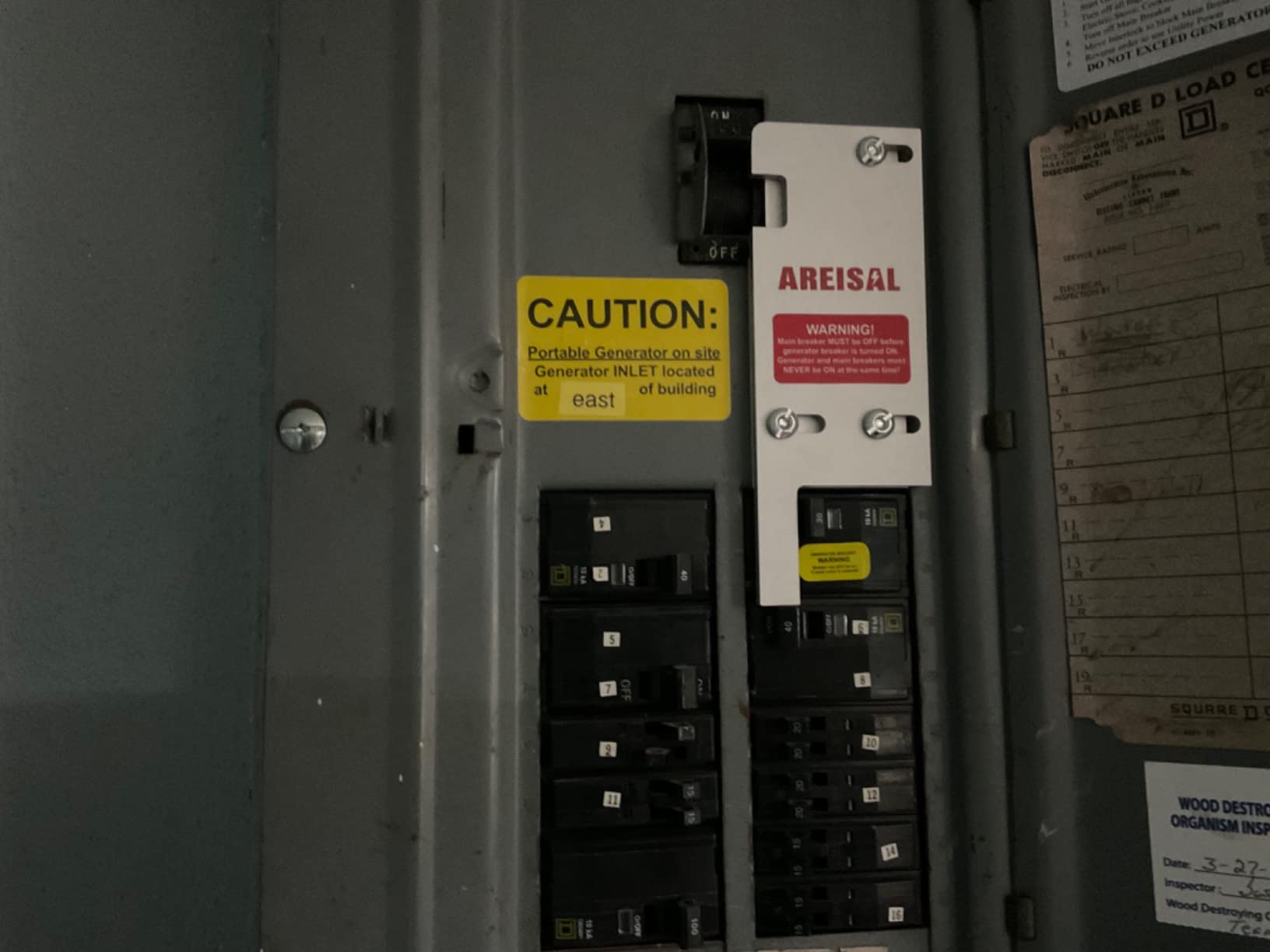
Why precision matters more here than anywhere else
A 3-1/4 inch plate over a wide gap is a long lever, and small errors show up directly as binding. Reviewers are specific: hole placement has to be accurate to about 1/16 inch, and panels sitting at the low end of the range frequently need the bottom tab trimmed with a hacksaw or a file. That trimming is normal for this kit rather than a sign of a bad part.
The two annoyances to plan around
The included drill bit is of poor quality, so bring your own, and flatten the panel cover burrs after drilling or the plate will not travel smoothly. Because fitment here is narrow and few owners install one, the measurement step is not optional.
12. Flngr GE-200HDA Interlock Kit for GE Vertical Main Panels
Generator Interlock Kit Compatible with GE General Electeric Vertical Main150 or 200 Amp Panels. 2 1/4″ Spacing Between Main and Branch Breakers,Electrical Interlock Kit
- Fills a specific gap for GE vertical main panels with 2-1/4 inch spacing
- Prevents mains and generator power from being on at the same time
- Complete kit with matching drill bit
- shoulder screws
- hex nuts
- reminder labels and fixing straps
- Customer service commits to replacement for manufacturing defects
- Fitment is limited to GE vertical main panels with exactly 2-1/4 inch spacing
- Model and spacing must be confirmed before purchase
GE vertical main panels have a 2-1/4 inch gap between the main breaker and the branch breakers, and that measurement places them in an awkward middle ground: too wide for the standard 1-1/4 inch GE kits, too narrow for the 3-1/4 inch vertical plates designed for Square D. This kit covers exactly that space.
The 4.8 average from 108 reviews matches the top rating in the group, with 88 percent five-star scores and no one-star reviews at all. Buyers confirm it handles the 2-1/4 inch spacing correctly and stops backfeed as intended.
The accessory list is genuinely complete: one interlocking panel, one matching drill bit, three shoulder screws, three hex nuts, five reminder labels, two fixing straps, and installation and use instructions. The fixing straps are the retaining hardware for the generator breaker, so you are not improvising the hold-down.
That combination of a complete box, a matching drill bit, and customer service that commits to replacement for manufacturing defects is why this small-brand kit holds such a strong rating despite its lower review count.
Why narrow specs are not a weakness
Every kit in this roundup that fits a panel well is narrow on purpose, because the mechanism has to reach two specific breaker handles at a specific distance. For a GE vertical main panel this is the specific answer: measure the gap, confirm it reads 2-1/4 inches, and you have as close to a certainty as this category offers.
Who should choose a different one
If your GE panel has a standard horizontal main with 1-1/4 inch spacing, use the dedicated GE kit earlier in this list, which comes with a thicker aluminum slider. Note also that this is an exact spec rather than a range, so a panel measuring 2 inches or 2-1/2 inches is not covered.
How to Identify Your Breaker Panel Before You Buy
Nearly every negative review in this roundup traces back to one number: the gap between the main breaker and the nearest branch breaker. Get that measurement and 90 percent of the compatibility risk disappears. Here is the process we would use.
Step 1: Read the breaker logo, not the panel label
Flip open the deadener and look at the breaker handles themselves. Square D breakers have a distinctive wide face, Eaton BR breakers carry visible Eaton and BR markings, GE PowerMark breakers show the GE logo, and Siemens and Murray panels use their own branding. The logo on the breakers is more reliable than the sticker on the panel door, which is often faded or swapped.
Step 2: Check whether the main breaker is top or bottom
This single fact eliminates or confirms half the catalog. A bottom main breaker in a Square D QO or Homeline panel points to the 1-3/8 inch kits. A top main breaker points to entirely different geometry. A pull-out or humpback style main means there may be no kit at all, and that is the dead end we will address below.
Step 3: Measure the spacing with a tape measure
Measure from the inner edge of the main breaker handle to the inner edge of the first branch breaker handle, with the panel dead. Record the number exactly and compare it against the kit listing. For example, a Square D QO bottom-main panel usually reads about 1-3/8 inches, an Eaton BR panel reads 1-1/4 to 1-7/16 inches, and a GE vertical main panel reads 2-1/4 inches.
Step 4: Confirm the frame and enclosure
Check the amperage printed on the main breaker and whether the load center is indoor or outdoor. The HOMCGK2C, for example, covers indoor Homeline 150 to 225 amp enclosures only, and ignoring that detail is how a correct-looking kit ends up being the wrong one.
What to do when no kit exists
Humpback and pull-out main breakers have few or no interlock kits, and this is a genuine dead end rather than a search problem. Older Federal Pacific designs, some older ITE panels, and legacy bus-bar main panels all fall into this group.
Your options there are a subpanel-fed interlock, a manual transfer switch, or replacing the panel entirely. All three are jobs for a licensed electrician, and the panel replacement is often the cleaner answer on a panel old enough to have no interlock option.
30 Amp vs 50 Amp and How to Load-Manage a Limited Interlock
Most of the kits in this roundup are mechanical devices, not amperage devices. The plate stops the main and the generator breaker from being on together, but the size of the backfeed breaker you install is what determines how much of your house the generator can actually run.
Match the breaker to your generator’s outlet, not the other way around
A generator with an L14-30R outlet is a 30 amp machine and needs a 30 amp two-pole backfeed breaker. A generator with a 14-50 plug or a twist-lock connector is a 50 amp machine and needs a 50 amp two-pole breaker. Mismatching these is one of the most common install errors, and it is also the one that determines your ceiling on load.
A 30 amp connection at 240 volts gives you about 7200 watts. That is enough for a refrigerator, a well pump, internet, lighting, and a television. It is not enough for central air, an electric water heater, and a clothes dryer at the same time.
What you turn off and what you keep on
Interlock users describe the same load discipline pattern in every forum thread: heat and air conditioning circuits stay off almost entirely, and the big loads take turns. Your refrigerator, internet equipment, and a few lamps stay on continuously. The well pump runs when it needs to, the dryer runs when you have the headroom for it, and the oven and the dishwasher are scheduled rather than spontaneous.
The mistake is running the full household and watching the generator sag. Wattage math governs here, not the breaker panel, and the interlock gives you no protection against overloading the generator itself. Plan the load list before the storm rather than during it.
One inverter-generator warning
If you own an inverter generator, confirm it has a 120/240V output before designing the whole setup around it. Pure inverter models without a 240V outlet cannot run a two-pole backfeed breaker at all, which makes the entire interlock approach moot.
What Else the Install Needs Beyond the Kit
The plate is the part everyone researches, and it is a small fraction of the job. A complete interlock installation needs five additional components, and buying guides routinely leave them out until the panel is already open.
The backfeed breaker and its hold-down
You need a two-pole breaker sized to your generator, and you need mechanical securing hardware for it. The retaining clip, retaining strap, or hold-down bracket is required so the breaker cannot be pulled off position once the panel is energized, and first-timers forget it routinely. Kits that include a retaining bracket or fixing straps, like the HOMCGK2C and the GE-200HDA, save you a second parts run.
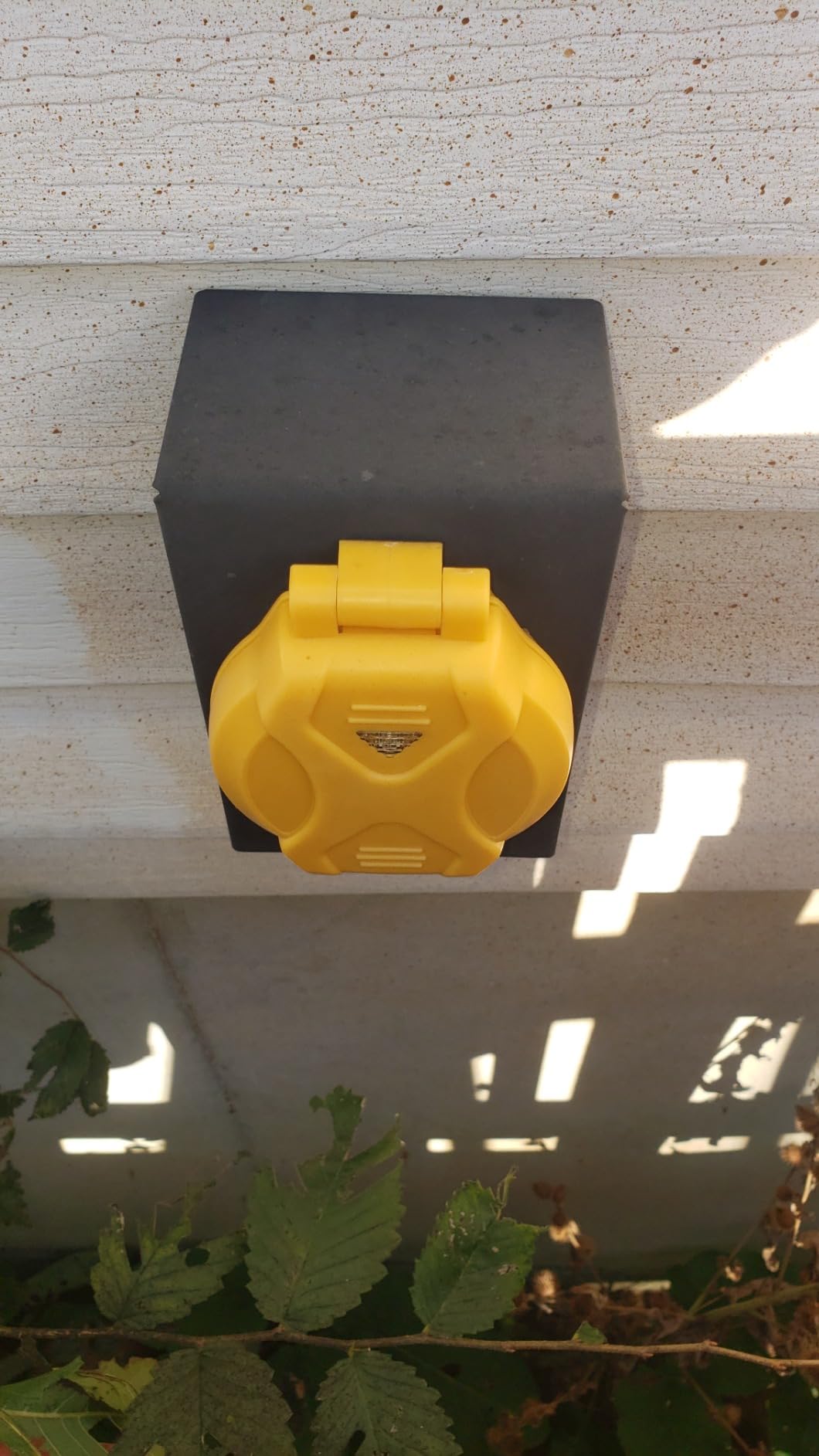
A power inlet box
The inlet is the exterior receptacle your generator cord plugs into, typically a weatherproof flip-lid enclosure mounted near the panel. Choose a pre-drilled model matched to your connector type so the conduit entry lines up without field drilling the box, and mount it within sight of the panel so you can see the indicator lights when you are about to throw the breaker.
The right cord
A 30 amp generator needs 10 AWG four-wire cord with an L14-30P and L14-30R configuration. A 50 amp generator needs 6 AWG or 8 AWG conductors with the matching 14-50 or twist-lock connectors. The cord is part of the generator’s safety envelope, and using one that is too light is how a normal overload turns into a fire.
The procedure labels
Any reputable kit includes startup and reminder labels, and they are not decoration. The labels are what tell whoever starts the generator during an outage that the main must be off before the generator breaker goes on, and inspectors look for them.
Thread locker and a quality drill bit
Two small consumables that multiple kits either omit or supply badly. Shoulder screws need thread locker to stay tight through years of cycling, and several kits in this roundup drew reviews for warped or poor quality drill bits. Bring your own bit and your own thread locker.
Interlock Kit vs Manual Transfer Switch
Interlocks win on cost and lose on convenience, and the honest comparison is narrower than most roundups make it sound.
What the interlock gives you
It uses the panel you already own, so there is no second enclosure, no second set of breakers, and no wall space. It reaches every circuit in the house, which means you are not limited to a curated list of backup circuits. And it costs a small fraction of a transfer switch, which is why it is the enthusiast choice among homeowners who already own a portable generator.
Once a properly aligned interlock is installed, electricians report that it functions flawlessly and gives clients real peace of mind. The mechanism is not the weak link.
What the transfer switch gives you
A manual transfer switch lets you select which circuits the generator feeds, and that selection happens at the switch instead of at the main breaker. It is a safer interface for a household member who is not going to read a label, because turning the main off is not a step they have to remember. It is also the more widely accepted device in jurisdictions that do not look favorably on third-party interlocks.
Where the interlock is weaker
The trade is a daily procedure instead of an occasional one. Every time you start the generator, the main breaker must be off before the generator breaker closes. Get that sequence wrong and the interlock simply will not close, which is the whole design working as intended, but it does mean someone has to perform the steps.
For most homeowners with a portable generator, the cost difference decides it. If you are wiring critical loads like a medical baseline circuit, a well pump, and a home office, weigh the transfer switch premium more carefully before defaulting to the cheaper path.
Permits, Inspections, and When Not to DIY
This is where the roundup stops being a shopping list and starts being a safety conversation.
What UL and ETL listing actually means
A laboratory listing means an independent lab evaluated the device, the materials, and the manufacturing process, and the device is marked with the lab’s mark and a file number. A bare compatibility claim on a marketplace listing means a seller wrote some words on a page. Electricians consistently treat the first as evidence and distrust the second, and for a device that sits between your house and the grid, the distinction is not academic.
In this roundup, the credential most worth noting is the MET lab listing on the Gen Interlock SD-200SA, identified as E113887. That single number is what satisfies a building department that requires listed equipment. Most of the other plates here are third-party devices that work correctly and are widely accepted, but they do not carry that paperwork.
Why some jurisdictions reject aftermarket kits
Your authority having jurisdiction, the local building department or inspector, sets the rules. Some counties and cities accept only the panel manufacturer’s own kit, and the reasoning is liability: if the plate is designed for the same company that built the panel, the manufacturer stands behind the combination.
Call before you buy. Two minutes on the phone with the building department asking whether they accept a third-party interlock kit for your panel brand will save you a failed inspection and a second kit. If they say OEM only, buy the manufacturer’s part number, and accept that it costs more.
Skip the 3D-printed kits
Printed interlock plates circulate in hobby forums, and they are a genuine hazard. There is no listing, no material certification, no test record, and no inspector is likely to sign off on one. For a device whose only job is to be the last barrier between your generator and the utility grid, treat an unlisted print the same way you would treat a jumper wire.
When to call an electrician
Hire a licensed electrician when the main breaker is a pull-out or humpback type, when your panel is older than the wiring inside it, when the panel has no available interlock kit, when you are adding a subpanel feed, or when your building department requires a permit and inspection. Most of those jobs are also ones where a permit is legally required, and doing them without one is a problem at resale.
On a standard residential panel with a listed kit and a permit, a competent DIYer can finish in an afternoon. The line between those two jobs is the panel type, and the measurement you take in step three above is what tells you which side of it you are on.
Frequently Asked Questions
What is a generator interlock kit?
A generator interlock kit is a steel plate that mounts inside your breaker panel and physically prevents the main breaker and the generator backfeed breaker from being closed at the same time. With the main on, the plate blocks the generator breaker; slide it the other way and the main must be off first. It lets a portable generator power your home without backfeeding the utility grid.
Are generator interlock kits safe?
Yes, when the correct kit is fitted to a compatible panel and installed with a proper backfeed breaker and retaining clip. The plate cannot be bypassed with a jumper, and it makes backfeeding mechanically impossible. Kits with no laboratory listing, including 3D-printed plates, carry real risk and will usually be rejected by an inspector.
Do generator interlock kits meet code and are they legal?
Interlock kits are legal and widely accepted when installed on a compatible panel with a permit and inspection. A listed two-pole breaker interlock kit from the breaker manufacturer is the most easily approved option. Some building departments require the panel manufacturer’s own kit and will reject aftermarket plates, so confirm with your local authority having jurisdiction before buying.
What size breaker do I need for a generator interlock kit?
Match the breaker to your generator’s output connector. An L14-30R outlet means a 30 amp two-pole backfeed breaker, which gives roughly 7200 watts at 240 volts. A 14-50 plug or twist-lock connector means a 50 amp two-pole breaker. A mechanical retaining clip or hold-down for the backfeed breaker is also required.
Can I install a generator interlock kit myself?
On a standard residential panel with a compatible kit, a permit, and a matching two-pole breaker, a competent DIYer can complete the work in an afternoon. Hire a licensed electrician for pull-out or humpback main breakers, older Federal Pacific or ITE panels with no available kit, subpanel feeds, or any job where your building department requires a permit and inspection.
What else does a generator interlock kit installation need?
Beyond the interlock plate you need a two-pole backfeed breaker sized to your generator, mechanical retaining clips or a hold-down bracket for that breaker, an exterior power inlet box matched to your connector type, a correctly gauged generator cord, procedure and reminder labels, thread locker for the shoulder screws, and a quality drill bit.
The Bottom Line by Panel Type
If you have a standard Square D QO or Homeline panel with a bottom main breaker and 1-3/8 inch spacing, the Natupal SD200A is the best generator interlock kit you can buy. It has the deepest review pool in the category, the complete hardware package, and the included drill bit that removes the most common install mistake.
Eaton BR and CH owners should start with the EXCELFU GK-PN200 for its forgiving spacing range, or the GenSafety BR-200 if you want machined aluminum and the broadest fit across top-main and bottom-main configurations. GE panel owners with a standard horizontal main want the EXCELFU GK-PN300; GE vertical main panels at 2-1/4 inches need the Flngr GE-200HDA.
Siemens and Murray buyers have two solid paths depending on their frame size, ITE, Gould, and Thomas and Betts owners have the Natupal ITE-200A covering five brands at once, and older Square D vertical main panels have the Natupal SD-200VL where almost nothing else fits. Meter main panels are the case where the MET listed Gen Interlock SD-200SA is worth the premium, because the listing settles inspector questions before they start.
Whatever you choose, measure the breaker spacing before you order, confirm your building department accepts a third-party kit, and never use a male-to-male extension cord to backfeed a receptacle. Once the plate is in, the remaining hardware is an inlet box, a correctly gauged cord, and a two-pole breaker sized to your generator.