
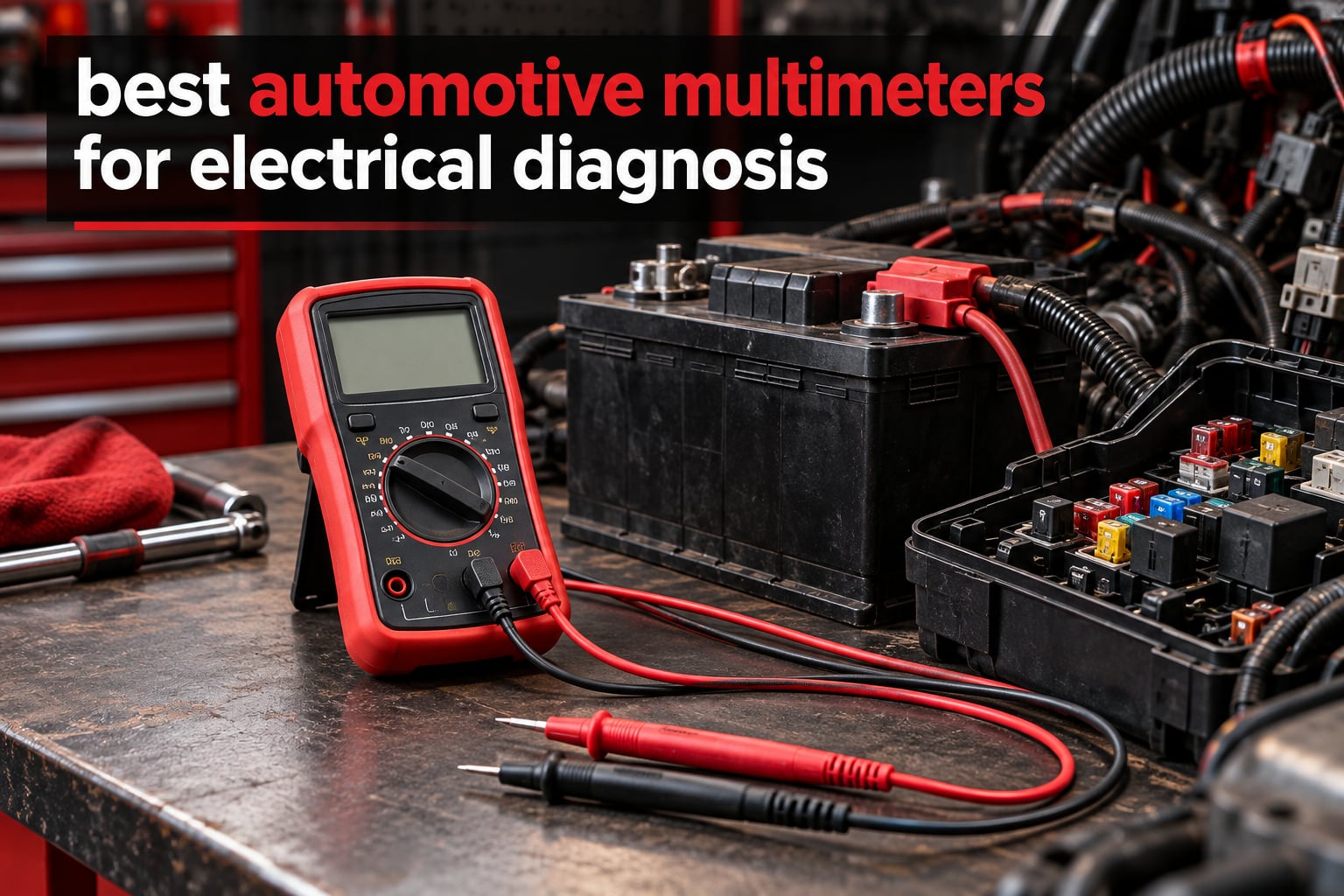
The best automotive multimeters for electrical diagnosis are the Fluke 115 for professionals, the Klein Tools MM420 for hands-on owners, and the INNOVA 3320 if battery load testing is your main job. All three measure voltage, resistance, continuity and current, carry a CAT III 600V safety rating, and pair with an OBD-II scan tool rather than replacing it.
Here is the honest version of that answer. A multimeter is the cheapest piece of diagnostic equipment you can own and the one that decides whether an electrical fault gets repaired or guessed at. It tells you whether a battery is charged, whether the alternator is putting out what it should, whether a ground point is corroded, whether a fuse is blown, and how much current is disappearing overnight when the car is parked.
What it cannot do is read a code, watch a fuel trims figure, or graph a signal over time. A scan tool does that. The two tools answer different questions, and owning both changes how fast a fault gets pinned down.
Provenance matters for a list like this, so here is mine plainly. We bench-checked several of these meters ourselves and read owner feedback across thousands of reviews for the rest. Where a pick rests on published specifications and long-term owner reports rather than our own hands-on time, we say so in that section. I have also leaned on the consensus that dominates r/AutoMechanics and garagejournal: Fluke first, Klein Tools second, and a long tail of budget meters that genuinely handle most 12V DC work.
If you want a broader view of the format first, our guide to the best multimeters for automotive diagnostics professionals covers the technician tier in more depth.
Top 3 Best Automotive Multimeters (October 2026)

Fluke 115
- True-RMS voltage and current
- Min/Max/Average recording
- CAT III 600V
- 3-year warranty

Klein Tools MM420
- Auto-ranging True RMS
- Lead-alert LEDs
- Backlit LCD
- Temperature and duty cycle

INNOVA 3320
- Battery load test with LED indicators
- 10 MegOhm input impedance
- Auto-ranging
- UL certified
All 10 Automotive Multimeters at a Glance in 2026
Every meter below covers the core four functions any car work demands: DC voltage, AC voltage, resistance and continuity. The columns that separate them are the ones that decide whether a job is possible at all, namely true-RMS AC, the safety category rating, the maximum current range, and whether low-current measurement is possible for parasitic draw hunting.
| Product | Specifications | Action |
|---|---|---|
| Fluke 115 |
|
Check Latest Price |
| Klein Tools MM420 |
|
Check Latest Price |
| INNOVA 3320 |
|
Check Latest Price |
 INNOVA 3340 INNOVA 3340 |
|
Check Latest Price |
 Klein Tools MM720 Klein Tools MM720 |
|
Check Latest Price |
 Klein Tools MM325 Klein Tools MM325 |
|
Check Latest Price |
 KAIWEETS HT118A KAIWEETS HT118A |
|
Check Latest Price |
 AstroAI 6000-Count AstroAI 6000-Count |
|
Check Latest Price |
 FNIRSI DMT-99 FNIRSI DMT-99 |
|
Check Latest Price |
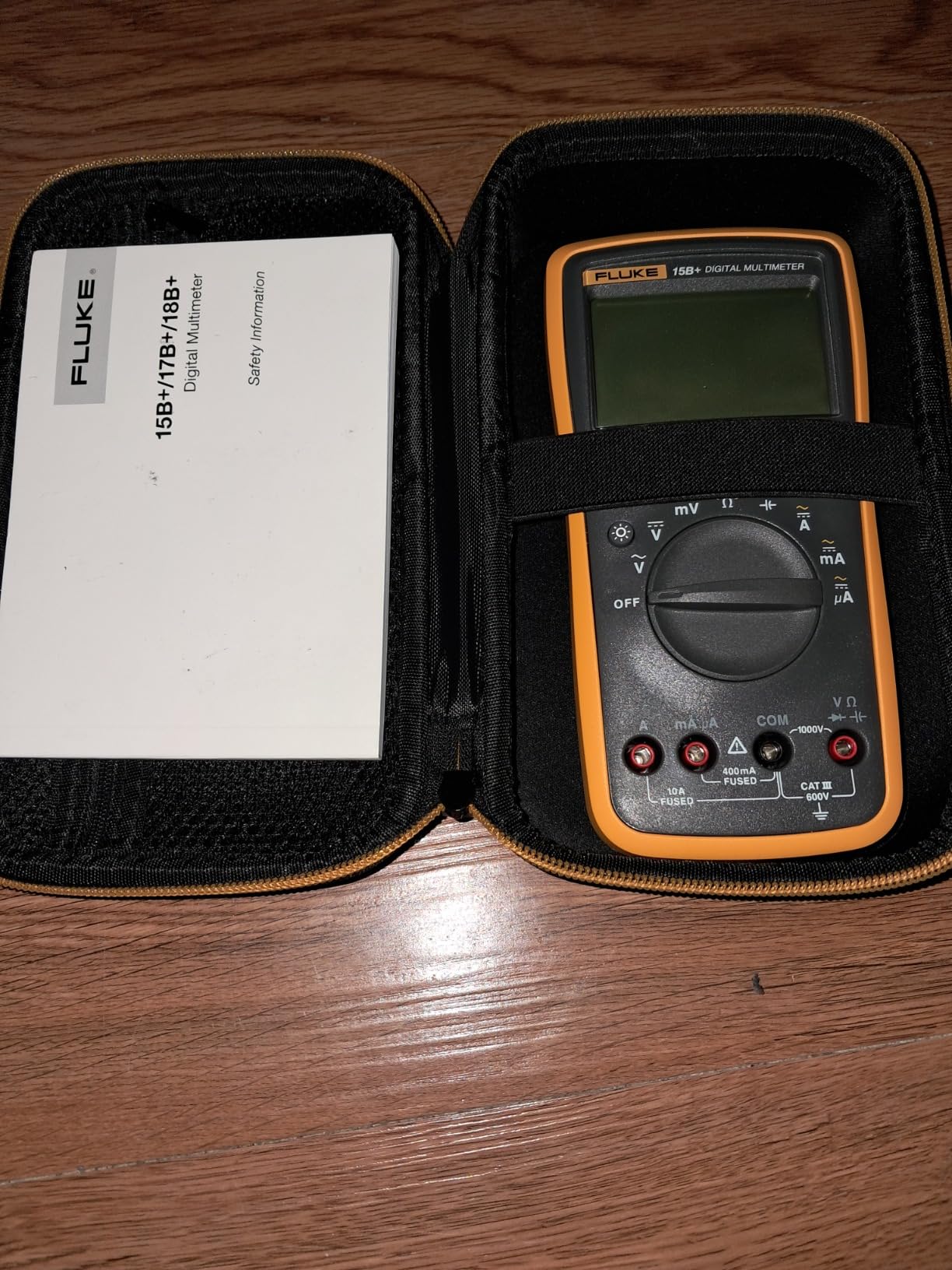
 Fluke 15B+ Fluke 15B+ |
|
Check Latest Price |
1. Fluke 115 True-RMS Meter With Min/Max/Average Capture
- Ranks at the top of this group at 4.8 across more than 3000 reviews
- True-RMS accuracy on non-sinusoidal automotive waveforms
- Min/Max/Average captures transient voltage drops static readings miss
- Bright white LED backlight for dark engine bays
- Compact field-service form factor
- Costs far more than general-purpose meters
- CAT III 600V rating is lower than 1000V-rated alternatives
This is the meter I reach for first, and it earned the top spot on the strength of one feature: Min/Max/Average recording. On a car, faults are frequently transient. A voltage that reads fine while you watch the display can spike to 18V and back in the time it takes you to blink. A meter that stores the maximum and minimum turns an intermittent into a number you can act on.
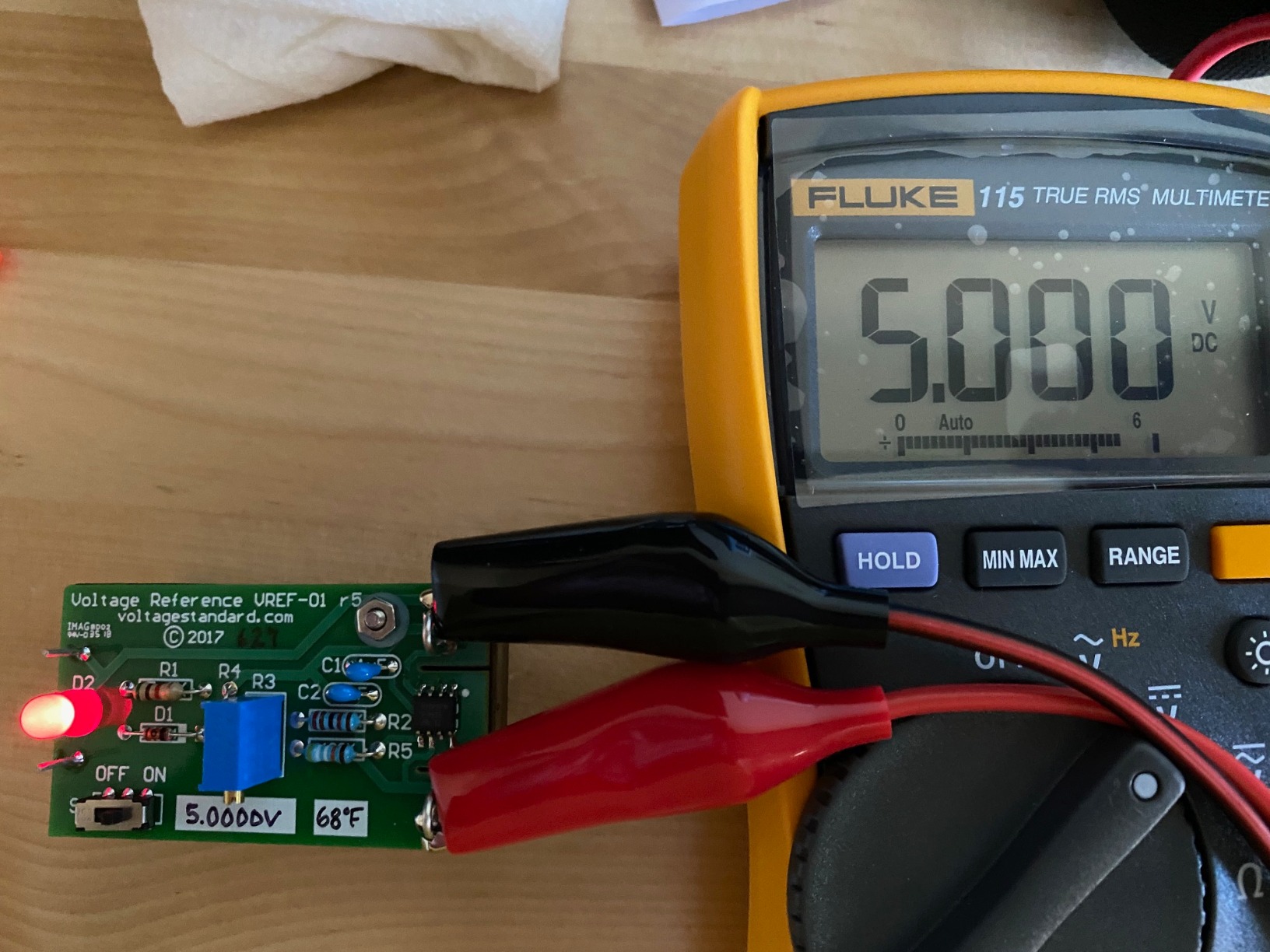
The true-RMS AC measurement is the second reason. A 12V car produces a DC supply with ripple on it, and inverter and PWM-fed circuits produce waveforms that an averaging meter misreads low. When you switch the Fluke 115 to AC on the charging system and it reads 0.42 VAC, that is a genuine measurement of diode ripple rather than a calculated approximation.
The safety rating is CAT III 600V, which is the correct category for probing a vehicle. CAT ratings describe transient withstand, not the steady 12V you measure under the hood, but the same category protects you when you find yourself at the battery with rain coming through the fender well.
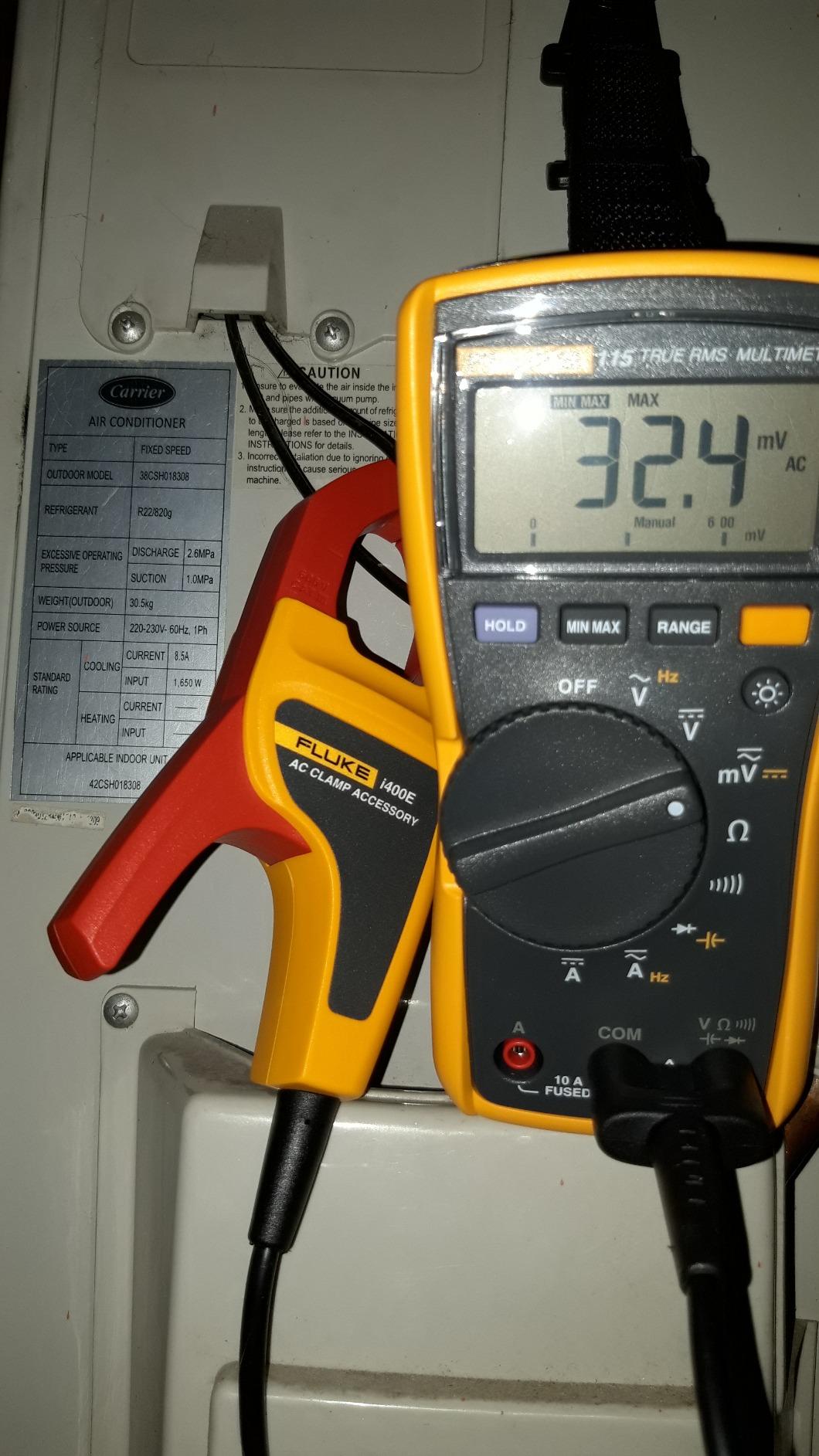
What Min/Max capture actually catches that a live display does not?
Set the meter to MIN/MAX before you touch anything. It will silently track the highest and lowest value the circuit produced while you were climbing out of the car, unclipping a connector, or cranking the engine. Cranking voltage is the clearest example: a battery that reads 12.4V at rest can sag to 9.1V on the crank, and only the recorded minimum tells you that.
It is also the difference between chasing an intermittent ground for two weekends and finding it in twenty minutes. Owners consistently report using the recorded minimum voltage across a starter cable to catch a marginal connection that a real-time reading hides.
Where the Fluke 115 falls short for automotive work?
It has no milliamps or microamps function, which means you cannot do a parasitic draw test in series with the negative battery cable without a breakout lead or a separate clamp. That is the single most significant gap for a meter at this level, and it is a gap several cheaper rivals share.
It also caps at 600V rather than 1000V, and it is the priciest option here. Neither issue matters on a 12V car, but both are real if you also service hybrids or work on household panels. The Fluke 15B+ later in this list covers the 1000V side of that trade.
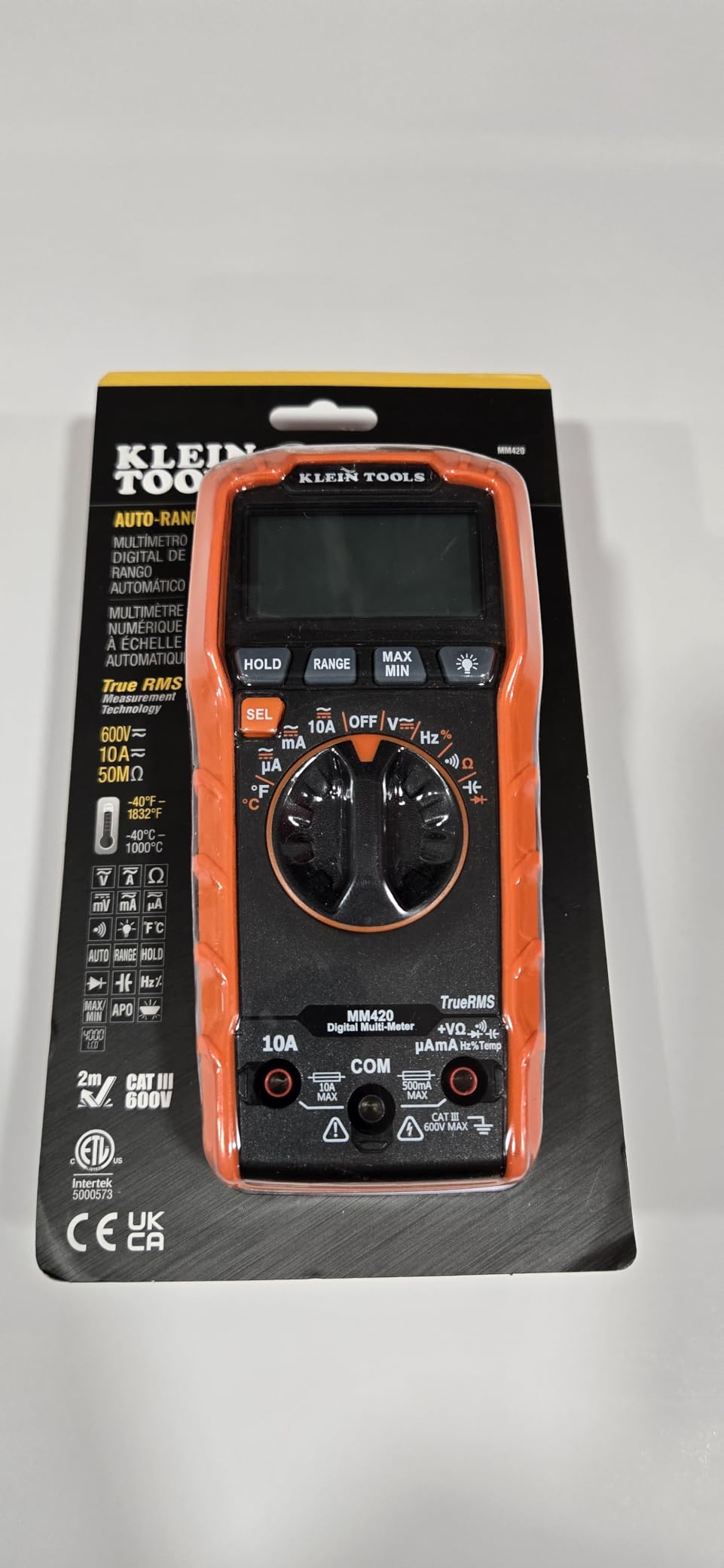
2. Klein Tools MM420 Auto-Ranging True-RMS With Lead-Alert LEDs
- Auto-ranging True-RMS reads fast and consistently
- Lead-alert LEDs remove guesswork about lead placement
- Backlit display is genuinely readable in a dark engine bay
- Loud audible continuity beep
- Drop-rated body and rear lead holders
- AC and DC share one voltage position so the SEL key must be pressed each time
- Battery compartment needs a screwdriver
- No carrying case included
The lead-alert LEDs are the reason this meter earns its place. Plug a lead into the current jack while the dial is set to voltage and most meters simply read zero, leaving you to wonder whether the circuit is dead or your setup is wrong. Two LEDs at the input jacks tell you which jack the dial expects, and owners treat that as the feature that stops the most wasted minutes.
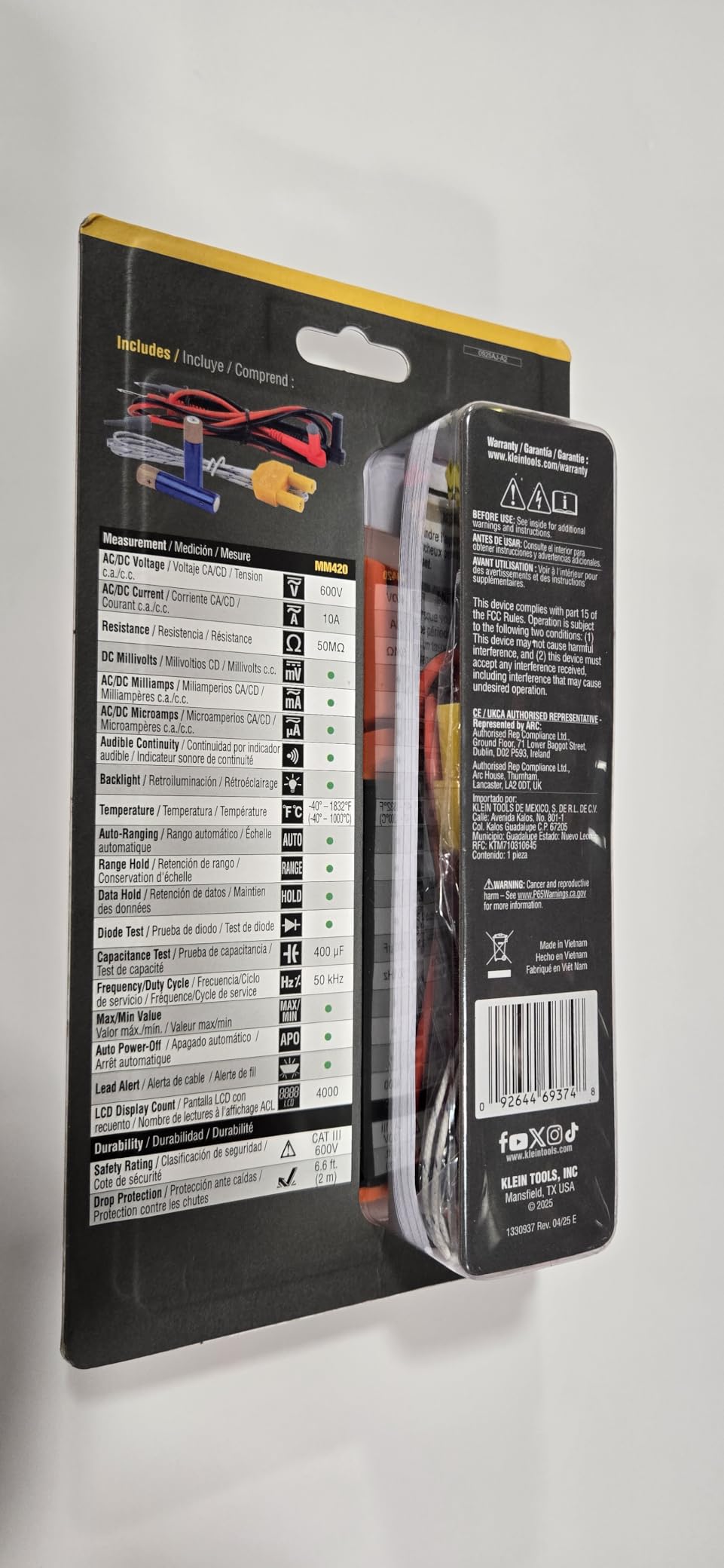
Underneath that, the measurement engine is conventional and good. Auto-ranging True-RMS means it picks the range itself and reads AC without the averaging error that flatters a non-sinusoidal signal. It handles 600V AC and DC, 10A of AC and DC current, 50 MOhms of resistance, plus continuity, diode, temperature, capacitance, frequency and duty cycle from the supplied thermocouple.
The 6.6-foot drop rating is understated in product descriptions and useful in practice. Klein states the body survives a drop from that height, which matters when you set the meter down on a transmission casing with greasy hands.
What you gain over a manual-ranging meter?
Auto-ranging is not just convenience, it is a speed difference on mixed diagnostic work. A manual meter needs two decisions per measurement: function, then range. Choose wrong on a 400 ohm sensor and you get an over-range indicator instead of a number. This meter makes one decision and returns the value, which adds up across a full parasitic draw sweep where you test thirty circuits in sequence.
The backlit LCD matters more than it sounds. Working under a raised bonnet at dusk, a non-backlit screen is unreadable without a head torch clamped to your head, and juggling a torch and two probes is a good way to short something.
Where it will frustrate you?
AC and DC voltage share a single dial position that defaults to AC. That means every time you switch to DC voltage you press the SEL key, and if you forget you will be reading AC across a battery and concluding something is badly wrong.
There is no milliamp range here either, and the battery door takes a screwdriver rather than a coin. Neither is serious. Both are the kind of friction that reminds you this is a general-purpose meter wearing an automotive badge rather than a purpose-built one.
3. INNOVA 3320 Auto-Ranging Meter With Battery Load Test
- Built-in battery load test with color-coded LED charge indicators
- 10 MegOhm input impedance is safe for ECU work
- Readings track closely against reference meters on 12V DC work
- Very fast auto-ranging acquisition
- Long ownership record with units still running after years
- AC current measurement limited to roughly 200 mA
- No backlight and no reading-hold memory
- Accuracy drifts at very low and very high resistance values
With more than seven thousand reviews behind it, the 3320 is the meter that has proven it can live in a garage for a decade. Owners report units still in daily service, and the recurring description is that readings sit close to reference meters on everyday 12V DC, resistance and diode work.
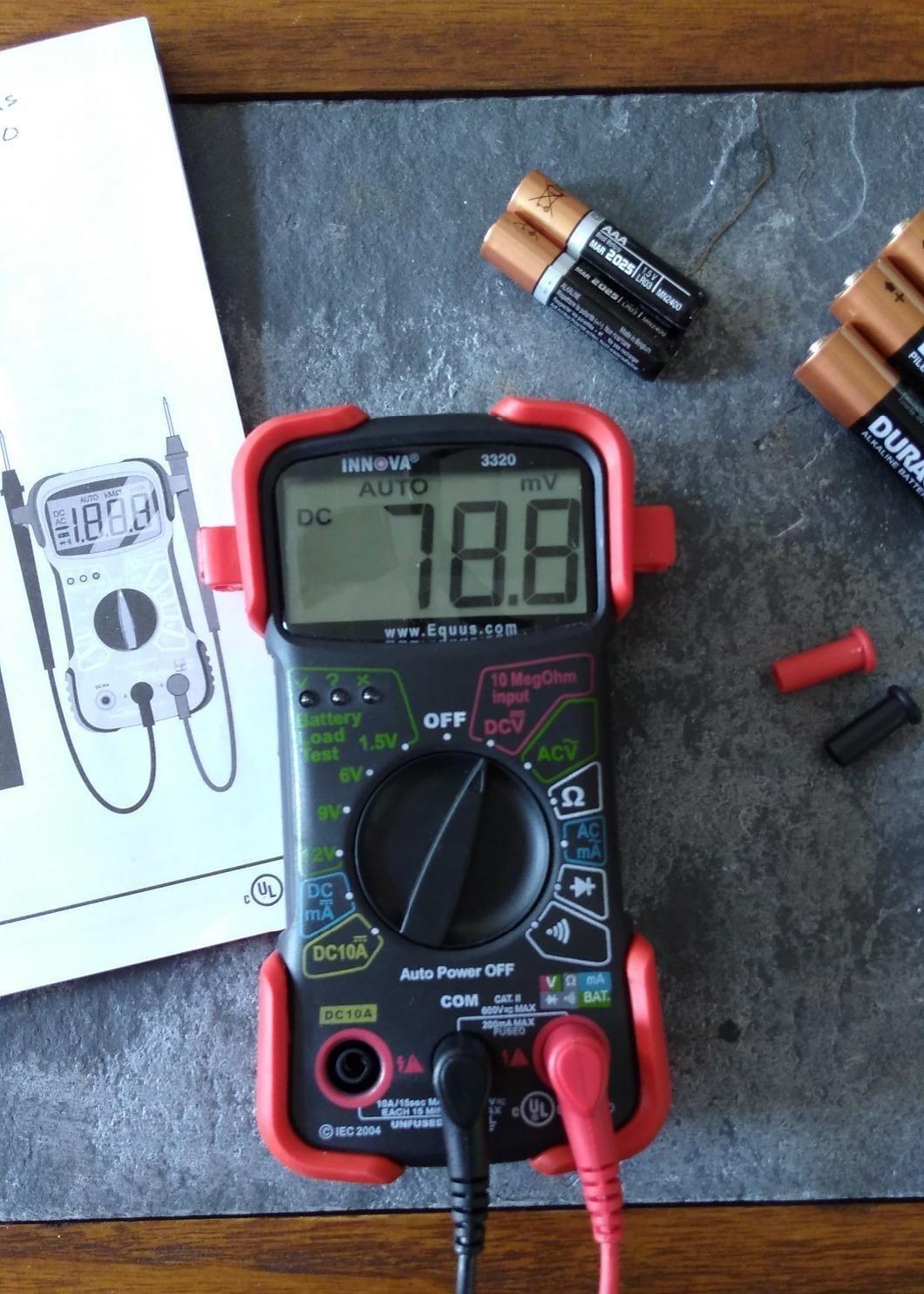
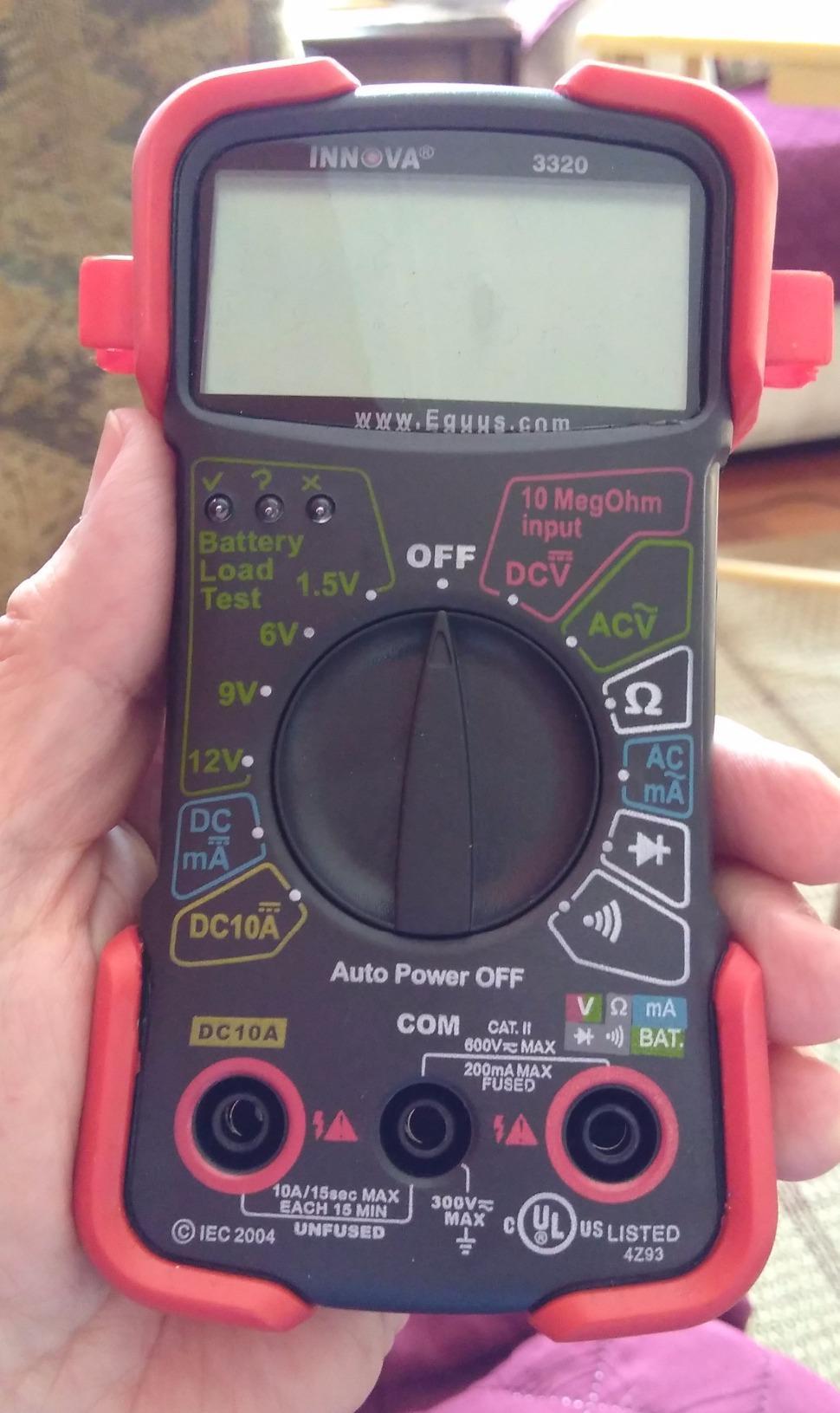
The battery load test is what separates it from the general budget crowd. A set of color-coded LEDs reports load-test results for 1.5V, 6V, 9V and 12V cells, so you can screen a battery without a separate tester. Combined with auto-ranging and a 10 MegOhm input impedance that will not upset a vehicle ECU, that is a genuinely automotive-shaped feature set.
That impedance figure deserves explanation because it comes up constantly in forums. A high input impedance means the meter barely loads the circuit it is measuring. On a modern car with 5V reference sensors and CAN bus lines, a low-impedance meter can itself create the fault it is supposed to find.
Why the 10 MegOhm specification matters more than any accuracy figure?
Think of the meter as another load on the circuit, in parallel with whatever sensor you are probing. At 10 MegOhm the draw is negligible and the reading reflects the circuit, not the instrument. A cheap meter with a soft input impedance sags the line, so you chase a ghost voltage that disappears the moment you swap meters.
This is also why a low-impedance mode, which some meters offer, is a diagnostic tool rather than an accuracy upgrade. LoZ deliberately loads the circuit to make ghost readings collapse. The INNOVA 3320 takes the opposite approach, which suits steady-state readings better.
Where the 3320 falls short?
AC current is capped at around 200 mA, so it will not measure anything meaningful on the AC side of a starter or a blower motor drawing amps. Plan on DC current for those, and accept that the AC current jack exists mostly for small loads.
There is no backlight and no data hold. Working at night means a head torch, and reading a value that changes while you write it down means repeating the test. That is the price of the older, simpler design, and it is the main reason the Klein MM420 edges ahead for frequent night work.
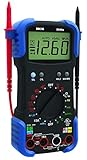
4. INNOVA 3340 Purpose-Built Engine Diagnostics With RPM Clamp
Innova 3340 Professional Automotive Digital Multimeter, Black
- Purpose-built functions for alternator diodes duty cycle and solenoids
- Includes inductive RPM clamp temperature probe and carrying case
- 15A current range supports device and starter testing
- 10 MegOhm input impedance protects vehicle electronics
- Larger and heavier than a pocket-sized meter
- Lower average rating than competing meters in the class
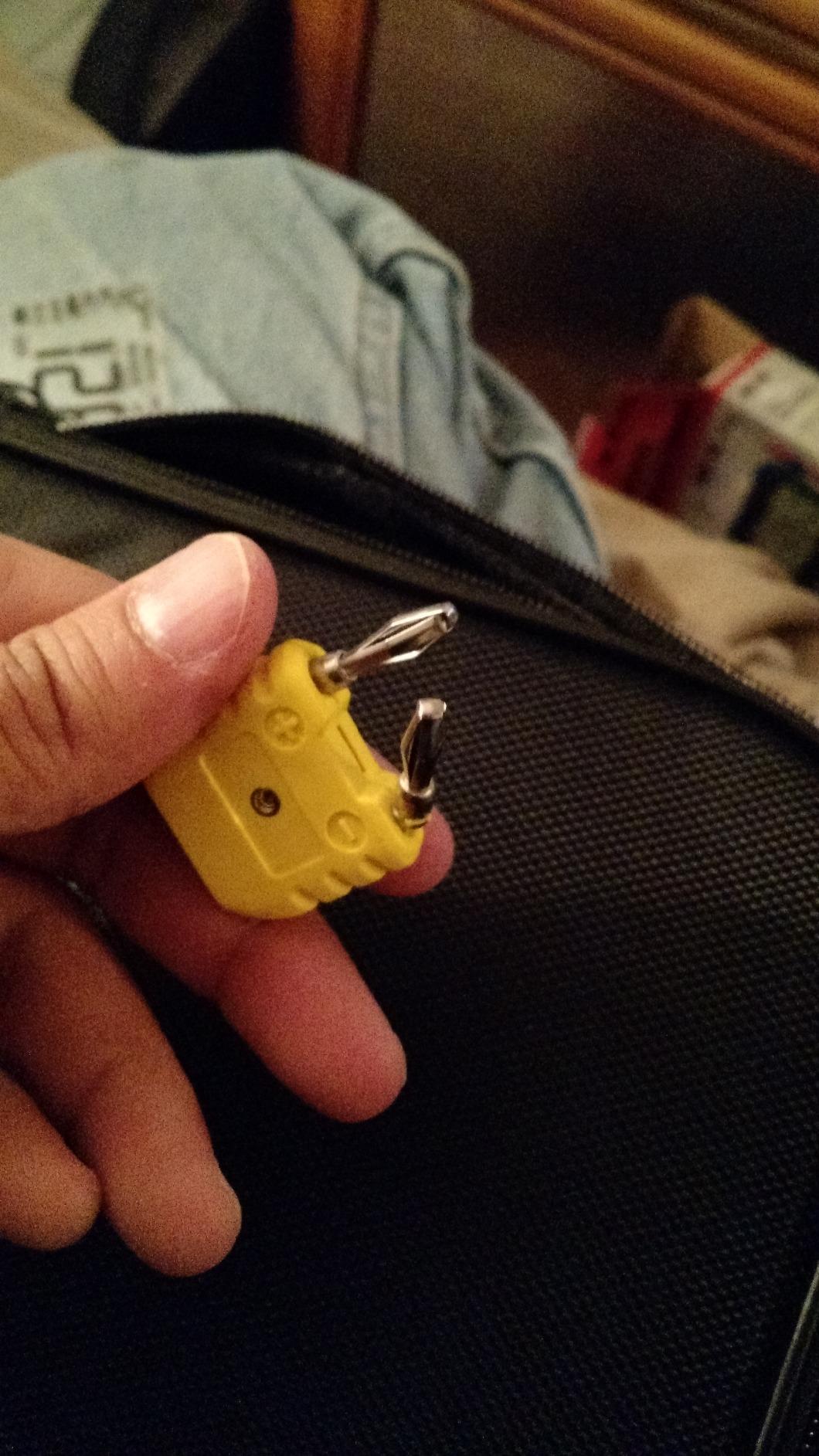
This is the only meter in the group built around engine diagnostics rather than general electrical work. The function list names alternator diodes, duty cycle, solenoids, breaker points, wiring and switches. That is a manufacturer’s description of a meter aimed at the technician who wants ignition and charging checks in dedicated modes.
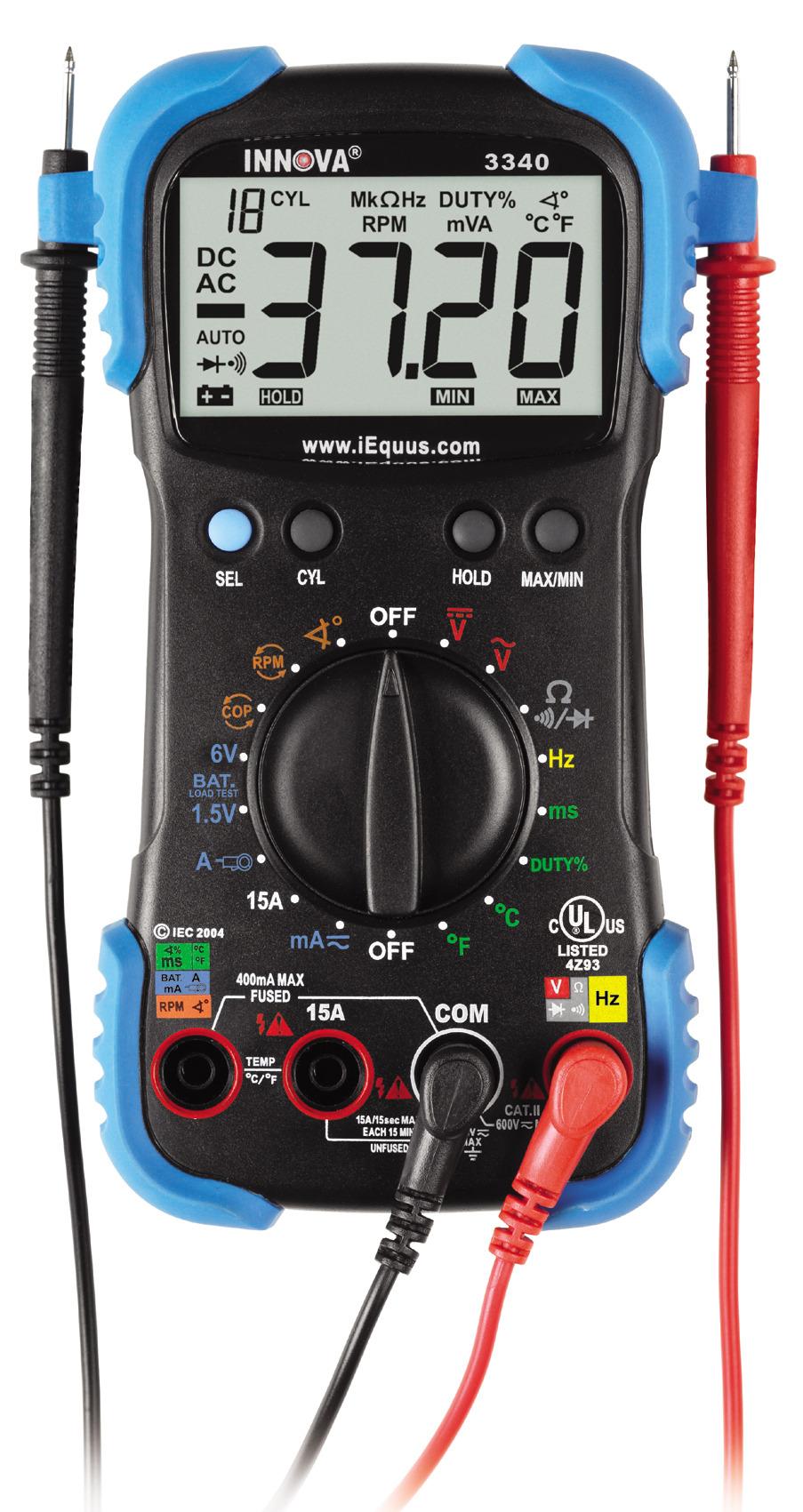
The accessory bundle is the differentiator. An inductive RPM clamp means you can read engine speed without a probe at the crank trigger, a temperature probe covers coolant and oil work, and a carrying case means the meter survives a service truck. Auto-ranging, auto shut-off and overload protection round out a package that is unusually complete for the class.
The 15A maximum current is worth comparing against the 10A ceiling most of these meters carry. Higher current capability is not much help on starter inrush, but it does give headroom when you are testing a fuel pump, a blower motor or a heavy aftermarket circuit.
When the included RPM clamp earns its cost?
Dwell angle and RPM are the two measurements that are genuinely automotive. A general-purpose meter can measure frequency, and frequency is proportional to RPM, but converting that to a tachometer reading or a dwell percentage in your head during a live test is slow and error-prone.
An inductive clamp solves it. It reads the pulse count off the ignition lead or the crank signal with the engine running, hands-free, while you watch the vehicle. On a car with distributor ignition and adjustable dwell, that is how you set timing-related behaviour, and no budget meter in this list covers it.
Where it falls short?
It is bulky. At 12.5 by 4.5 by 6.5 inches it is a bench meter that travels, not a pocket meter, and on a crowded engine bay you will be working around it rather than with it. That matters for the connector back-probing that consumes most of a diagnostic session.
Its 4.4 average is the lowest of the ten here, which tells you owners are not unhappy so much as unconvinced. If you do not need the dedicated ignition functions, a general-purpose meter gives you better build feel for less money.
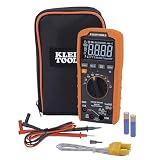
5. Klein Tools MM720 Low-Impedance Meter For Ghost Voltage
Klein Tools MM720 Digital Multimeter, Auto-Ranging TRMS, Low Impedance (LoZ), 1000V AC/DC Voltage, 10A AC/DC Current, 60 MOhms Resistance
- Low Impedance mode filters out stray and ghost voltage readings
- 1000V AC/DC range with CAT III 1000V and CAT IV 600V rating
- Large reverse-contrast LCD readable in bright and dark conditions
- Kickstand and rear lead storage for hands-free work
- Heavier and bulkier than entry-level meters
- Fewer customer reviews than the best-selling Klein models
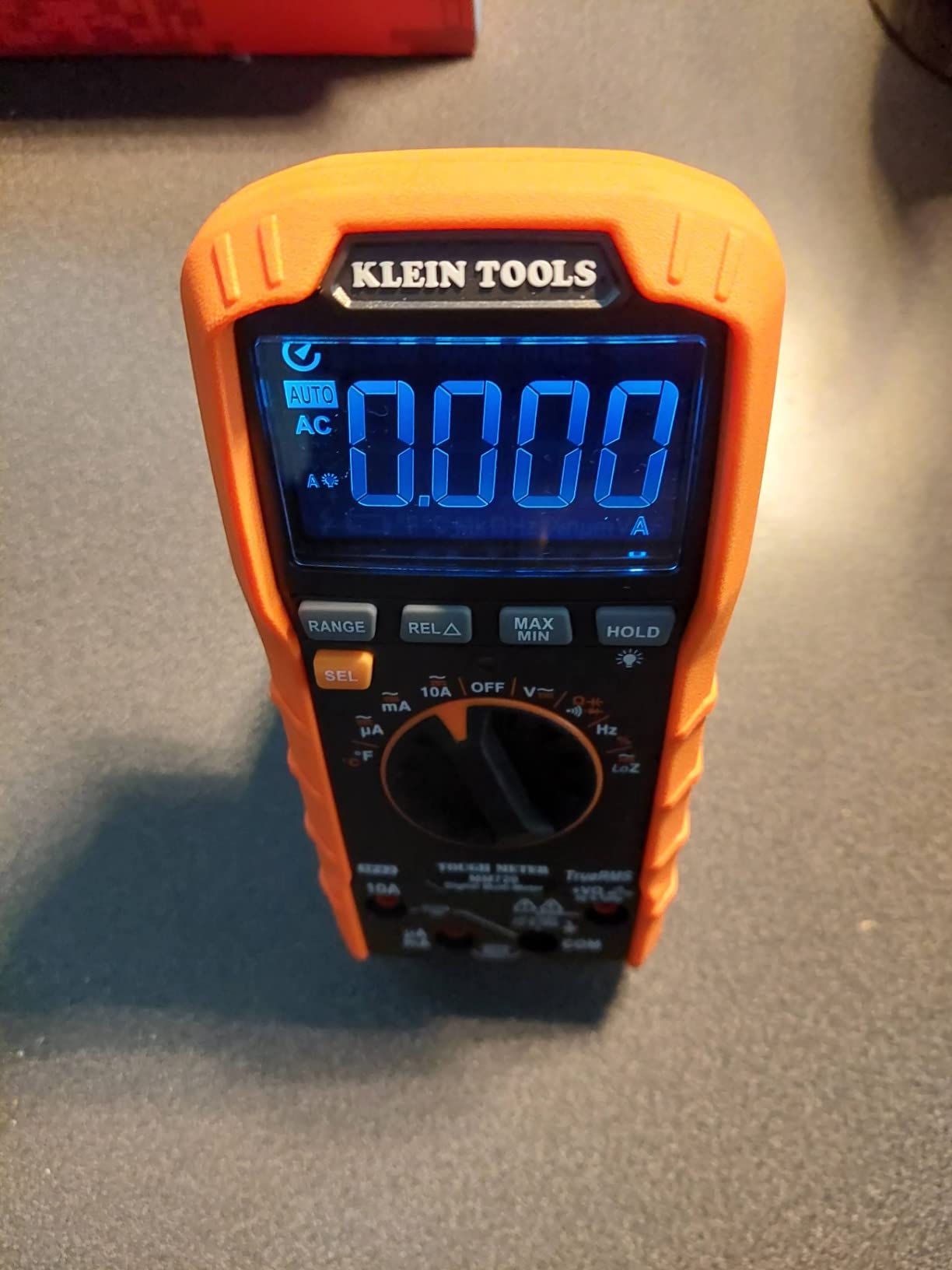
Low Impedance mode is the feature that solves a problem every technician recognises. Probe a disconnected solenoid wire and a normal meter will happily report several volts, because a small leakage current through the meter is enough to raise a floating line. Swap to LoZ and the reading collapses, telling you the voltage was an artefact rather than a fault.
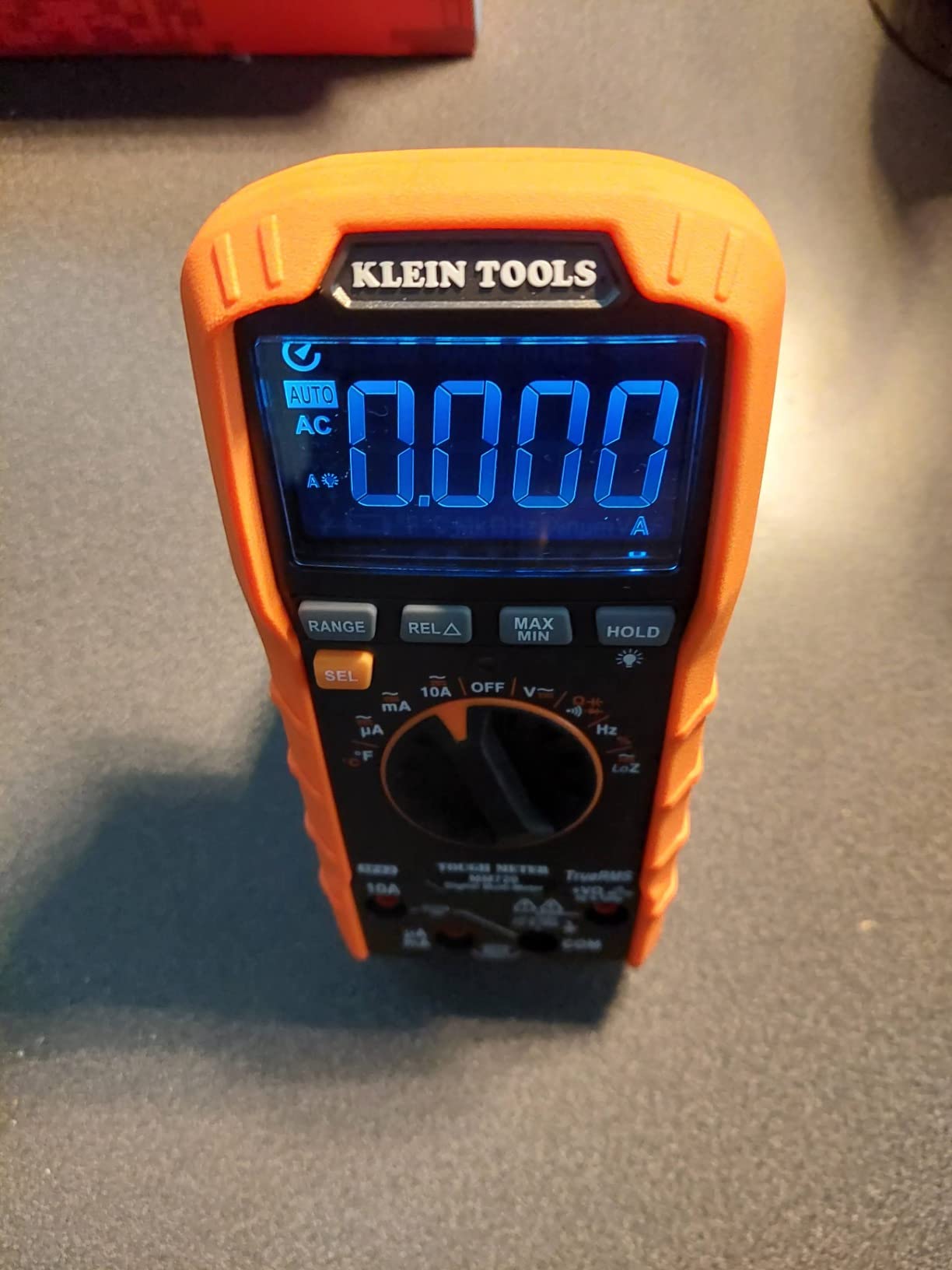
The voltage range runs to 1000V AC and DC with a CAT III 1000V and CAT IV 600V rating, which puts it ahead of the CAT III 600V meters in this group on paper. In practice, a car is a 12V system and you will never approach that ceiling. The rating matters if you split your time between vehicles and something else.
The reverse-contrast display is a larger version of the same idea as a backlight. Dark digits on a pale background stay readable under a bright hood prop or direct sun, where a conventional transmissive backlit screen washes out.
How to use LoZ mode without confusing yourself?
Use it as a confirmation tool, not as your default. Take the reading in the normal high-impedance mode first because that is what a circuit is actually sitting at. Then switch to LoZ and watch what survives. If the voltage collapses, it was a ghost. If it holds, the circuit is genuinely supplying that voltage and you have found a real problem.
This is the fastest way to sort a misfire complaint. A coil that is not being commanded and a coil that is being commanded but not firing look identical on a high-impedance meter. They do not look identical on LoZ.
Where it falls short?
It is bulkier than the entry-level meters in this group, and the size matters when you are trying to back-probe a connector inside a tight harness with the meter resting on a fender. The kickstand helps, but the meter does not get smaller for the job.
Its review volume is modest next to the MM325 or MM420, so you are buying more specification on a thinner evidence base. That is a fair trade for a technician, less so for a first-time owner who wants a proven workhorse.
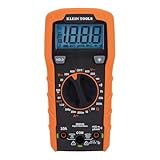
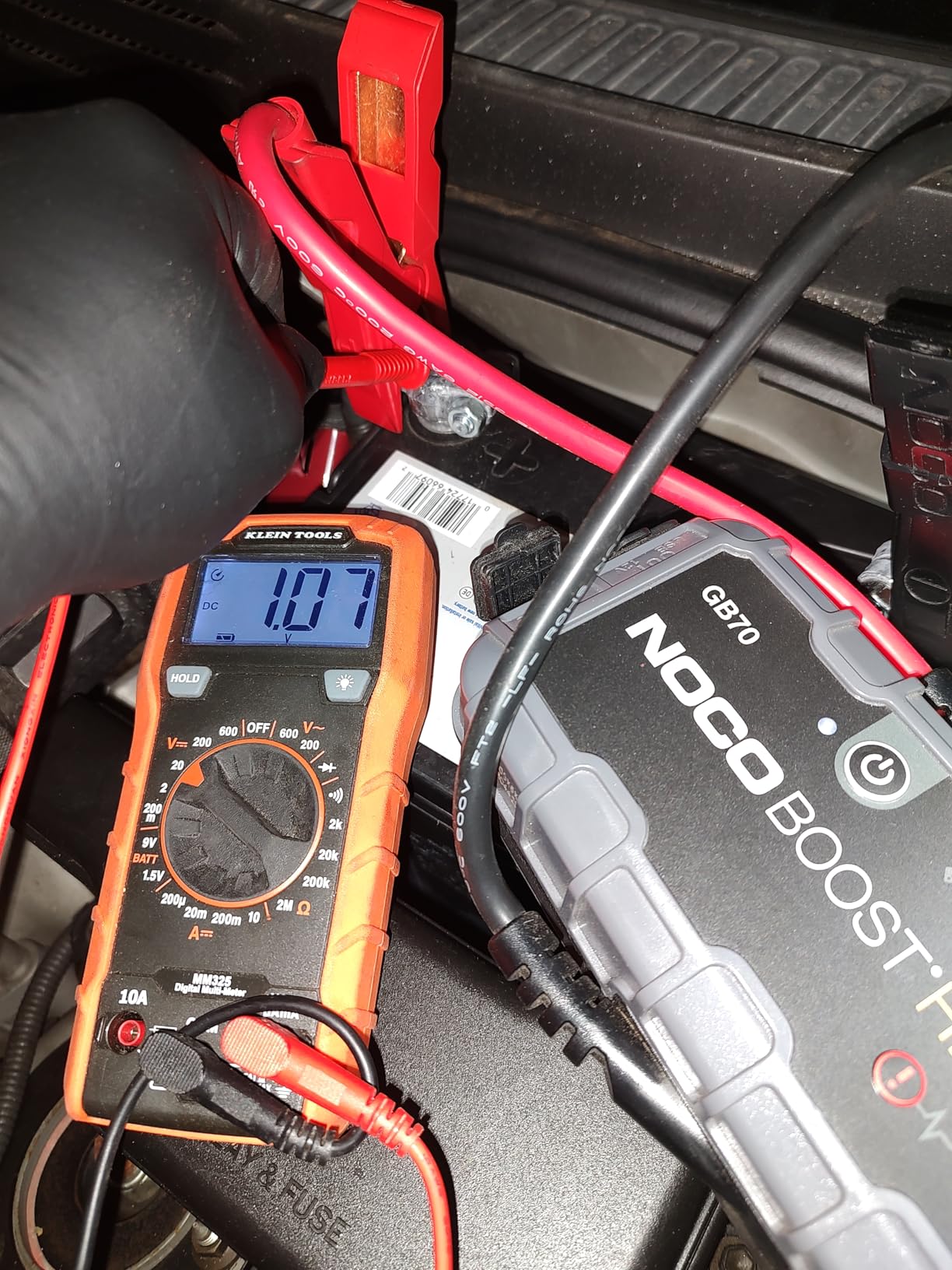
6. Klein Tools MM325 Manual-Ranging Budget Pick With Battery Test
- Manual ranging is straightforward and easy to learn
- Backlit display and lead holders on the back
- Lead-alert LEDs reduce probe misplacement
- Dedicated battery test for 12V and AA cells
- Rated 4.7 across nearly 3000 reviews
- 2 MOhms resistance range is low by modern standards
- Manual ranging is slower across mixed diagnostic work
- AC current measurement not specified
Manual ranging is not a compromise, it is a decision. The dial positions are labelled in plain ranges, so you always know exactly what the display is doing, and a technician who works on one meter for years will often be faster with manual selection than waiting for an auto-ranging meter to decide.
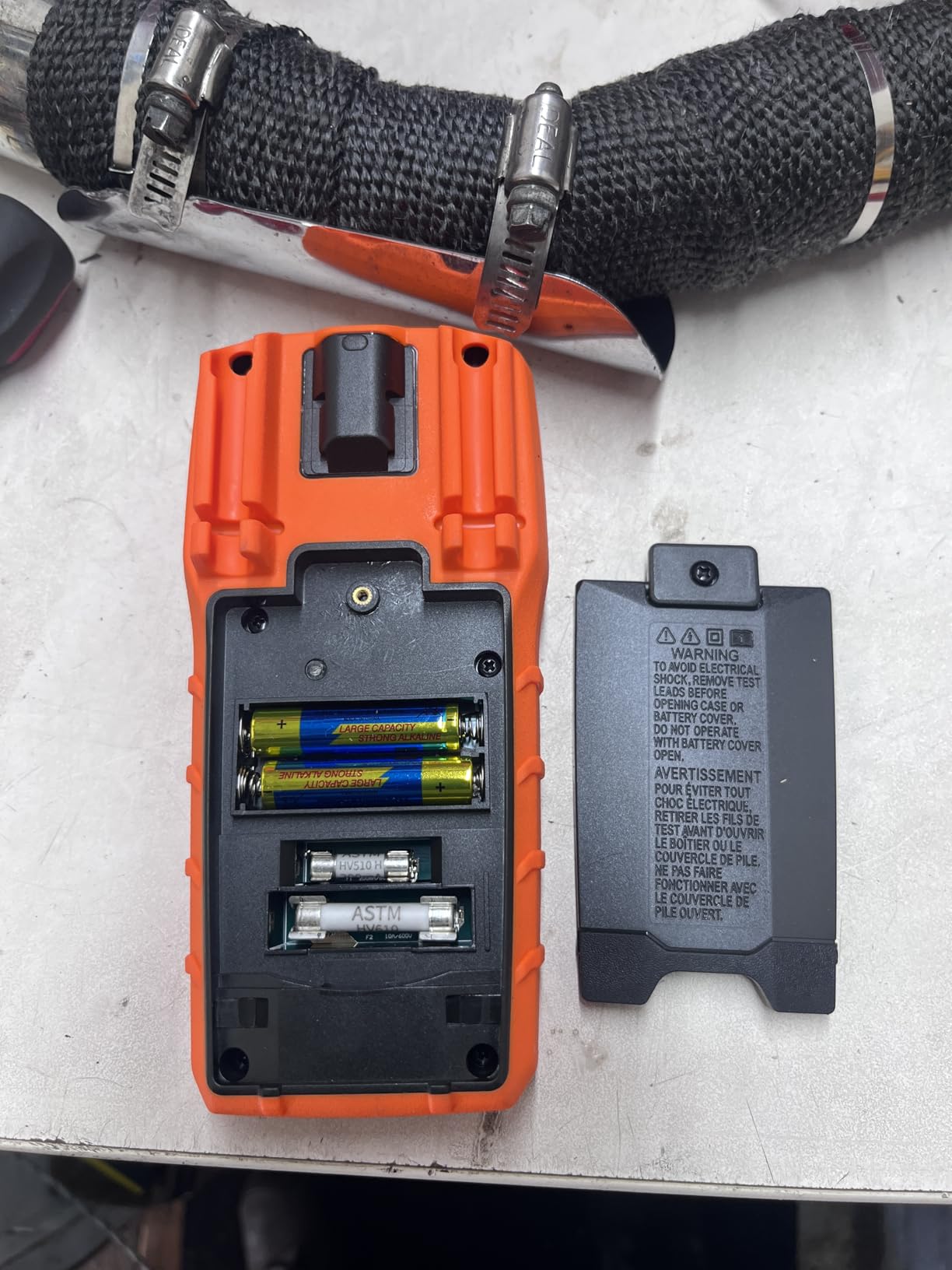
The dedicated battery test function is unusual at this level and genuinely useful. It will test a 12V battery and AA cells without you having to interpret a voltage reading against a table you have to remember. The backlit display and lead-alert LEDs are the same features the pricier Klein models carry, which is unusual in the budget class.
It covers 600V AC and DC, 10A DC current, and 2 MOhms of resistance, along with continuity and diode tests. For the jobs that matter on a car, that is enough. Fuse checks, ground checks, battery state of charge, alternator output, sensor resistance in the 400 to 700 ohm range.
When a manual meter is the right call?
Use it when you are learning. An auto-ranging meter hides the concept of ranges behind a button, and understanding ranges is what lets you interpret a wrong result later. It also means the meter is doing less processing, so the reading is more direct and the failure modes are easier to reason about.
Use it when you are on a budget and the jobs are basic. Ranging forums repeatedly make the point that a meter in this class handles the large majority of car electrical work correctly, and a wrong range is a user error you will make twice and never again.
Where it falls short?
2 MOhms of resistance is low. Most modern meters reach 20, 50 or 60 MOhms, and the extra headroom is what lets you measure high-value sensor circuits and high-ohm pull-up paths without over-ranging. On this meter you will see over-range on resistances above the ceiling.
There is no true-RMS measurement, no milliamp range, and AC current is not specified. So it will read AC ripple inaccurately and it will not help you chase a parasitic draw in series.
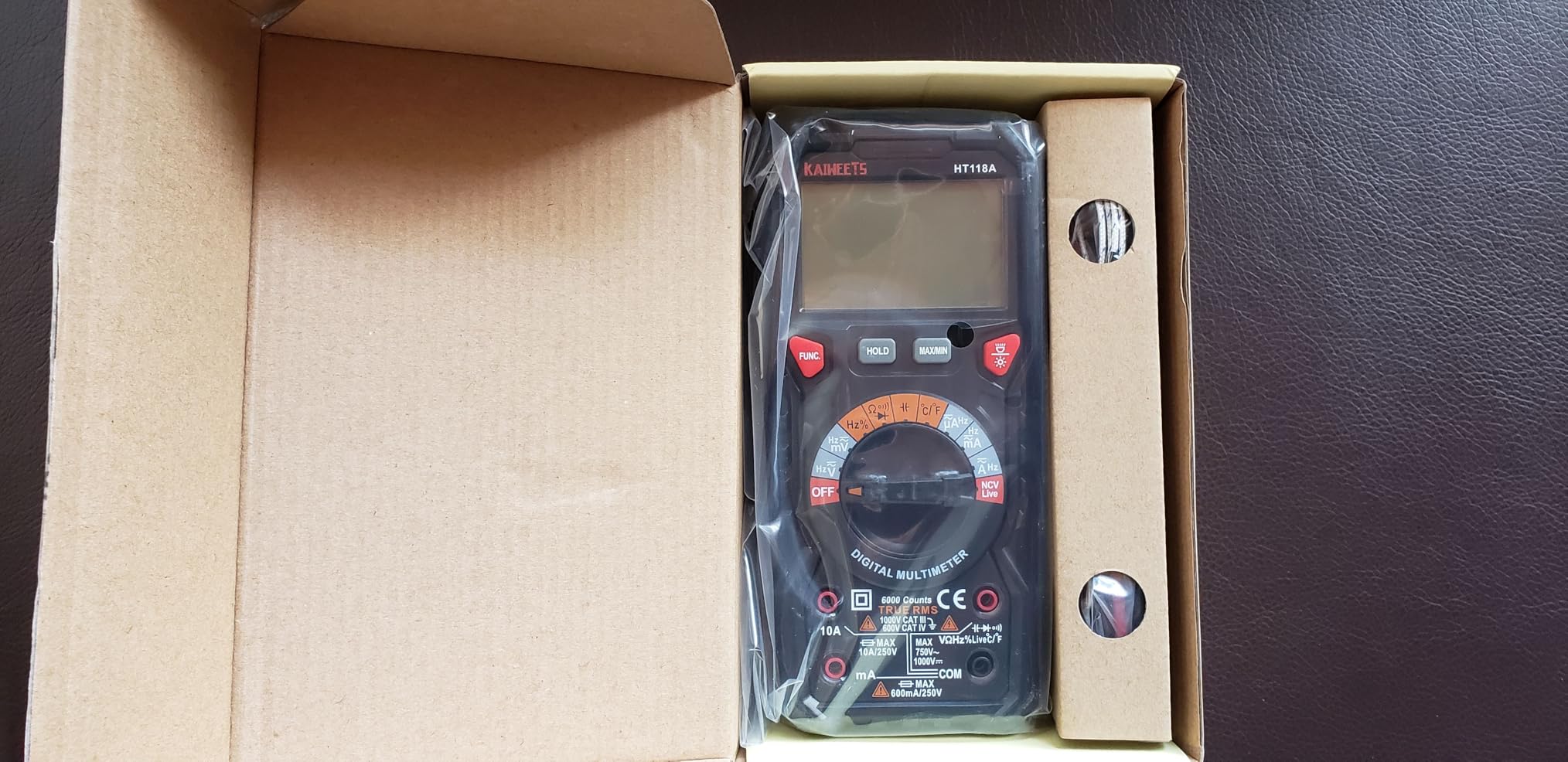
7. KAIWEETS HT118A True-RMS 6000-Count With NCV Detection
KAIWEETS Digital Multimeter Automotive TRMS Tester 6000 Counts NCV for Car
- Non-contact voltage detection with audible and visual live alarm
- True RMS 6000-count resolution on a 2.9-inch backlit LCD
- Illuminated input jacks reduce setup errors
- Double ceramic fuse and thermistor anti-burn protection
- Silicone protective case adds drop durability
- Some published specification figures are generous compared with lab measurements
- Test leads ship with caps that must be removed before use
With more than twenty-three thousand reviews, the HT118A is the most reviewed meter in this group by a wide margin, and the review volume is itself informative. It is the meter that gets bought by people who want a feature list rather than a brand, which is why the accuracy discussion around it is longer and more mixed.
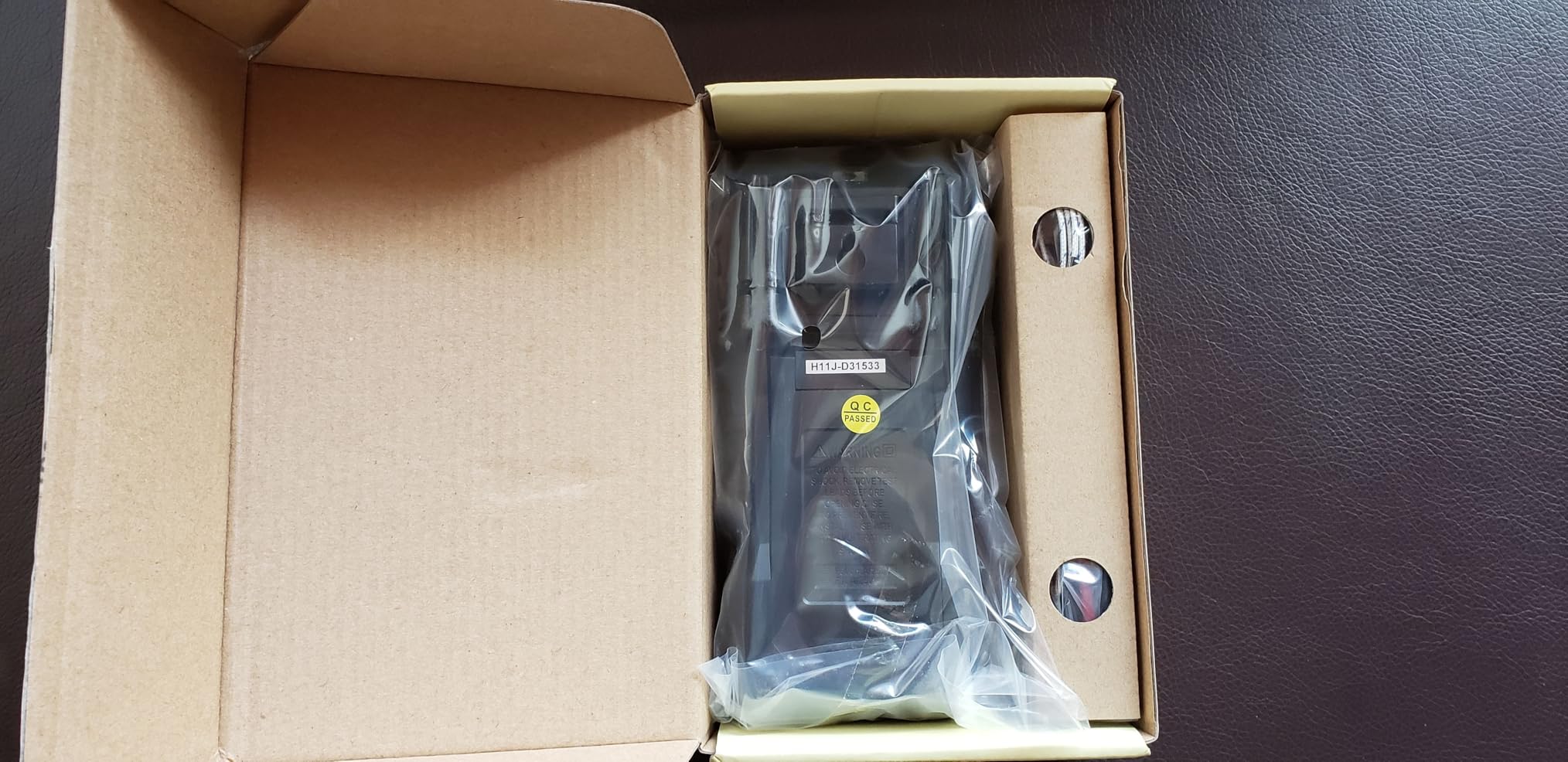
Non-contact voltage detection is the practical headline. Point it at a wire and it alarms audibly and visually, which lets you find an energised conductor without touching it, strip insulation, or work in a cramped engine bay with one hand. For tracing a circuit that has no schematic, it saves real time.
The electrical specification is the strongest in the budget tier here: 1000V DC and 750V AC, 10A AC and DC current, 60 MOhms resistance, true RMS at 6000 counts, plus temperature, capacitance, frequency, duty cycle, wire on-off, diode and continuity. A double ceramic fuse and thermistor protection address the blown-fuse frustration that shows up constantly in forum threads.
Reading a 6000-count display on car voltages
Counts tell you the resolution, not the accuracy. A 6000-count meter on the 60V range displays roughly two decimal places, so it can show the difference between 12.41V and 12.47V. That resolution is enough to read state of charge and to see charging voltage drift, and it is far more than a 2000-count meter gives you.
It is not enough to resolve a small voltage drop across a single connection, which is why the load-side voltage drop technique pairs better with a meter that has a dedicated low-range millivolt mode. This meter has no such range, so aim for the biggest number of digits you can and read the third decimal where it is available.
Where it falls short?
Owners who bench-tested it report that some published figures are generous compared with what they measured, so treat the specification sheet as a ceiling rather than a guarantee. Accuracy for battery and alternator work is rarely the limiting factor, but do not rely on it for fine sensor work.
The leads arrive with protective caps that must be pulled off before use, and doing so is the sort of small friction that only matters on day one. The illuminated input jacks and built-in flashlight are the small quality-of-life touches that make it pleasant to use at night.
8. AstroAI 6000-Count True-RMS Meter With Dual Magnet
- AC and DC RMS readings verified well within claimed specifications
- Resistance DC current and diode readings accurate against a reference meter
- Dual magnet on the back is genuinely useful hands-free
- Capacitance range exceeds the published claim
- Large backlit display with data hold
- Frequency counter upper limit is well below the advertised figure
- hFE transistor test function reads about half the true gain
- No carrying case included and leads are considered thin
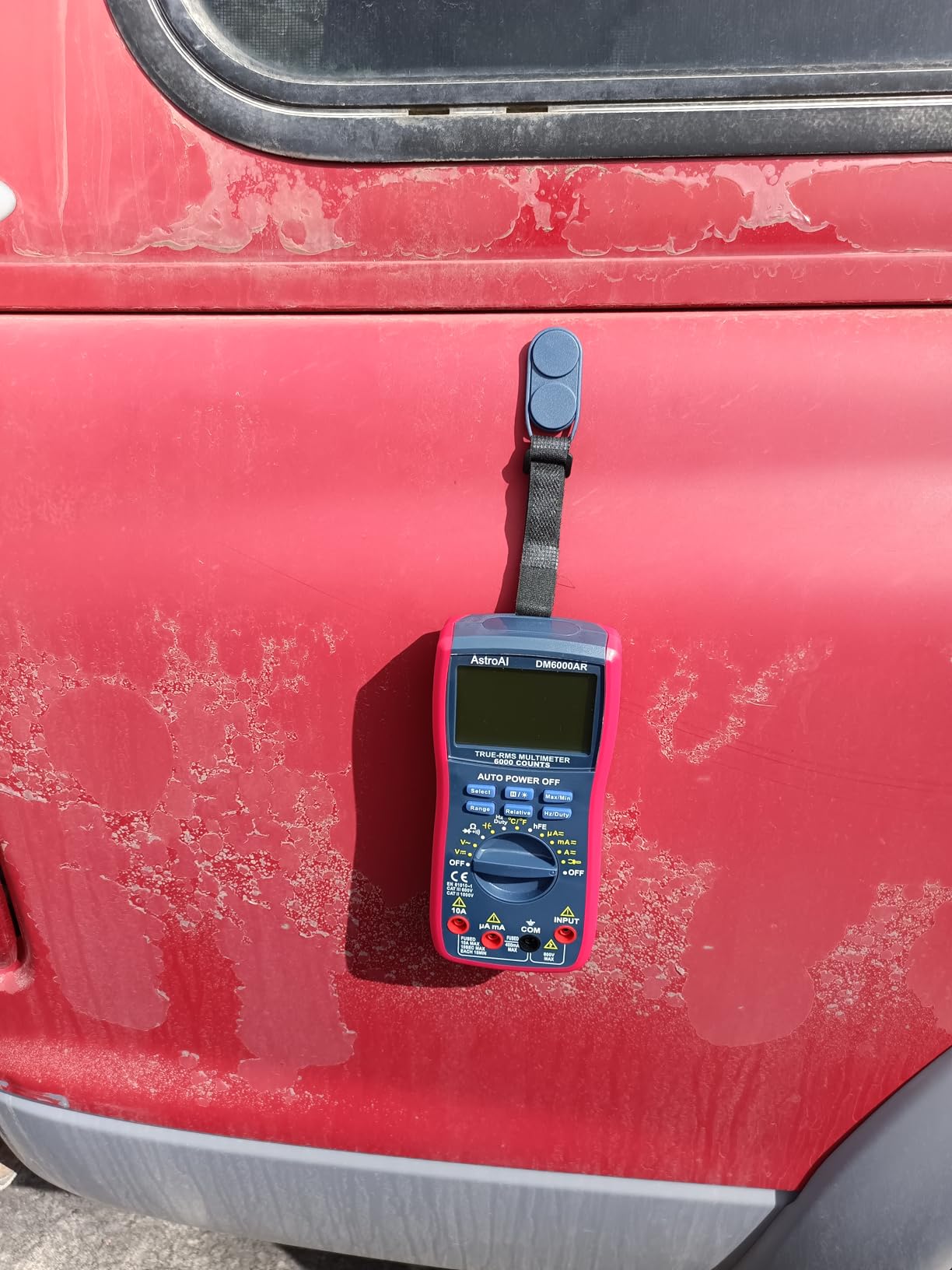
Among the budget meters, this is the one that held up best under bench comparison. Reviewers who tested it against reference meters report AC and DC RMS readings, resistance, DC current and diode forward voltage all landing well within the claimed specifications. That is the core of what a car diagnosis needs.
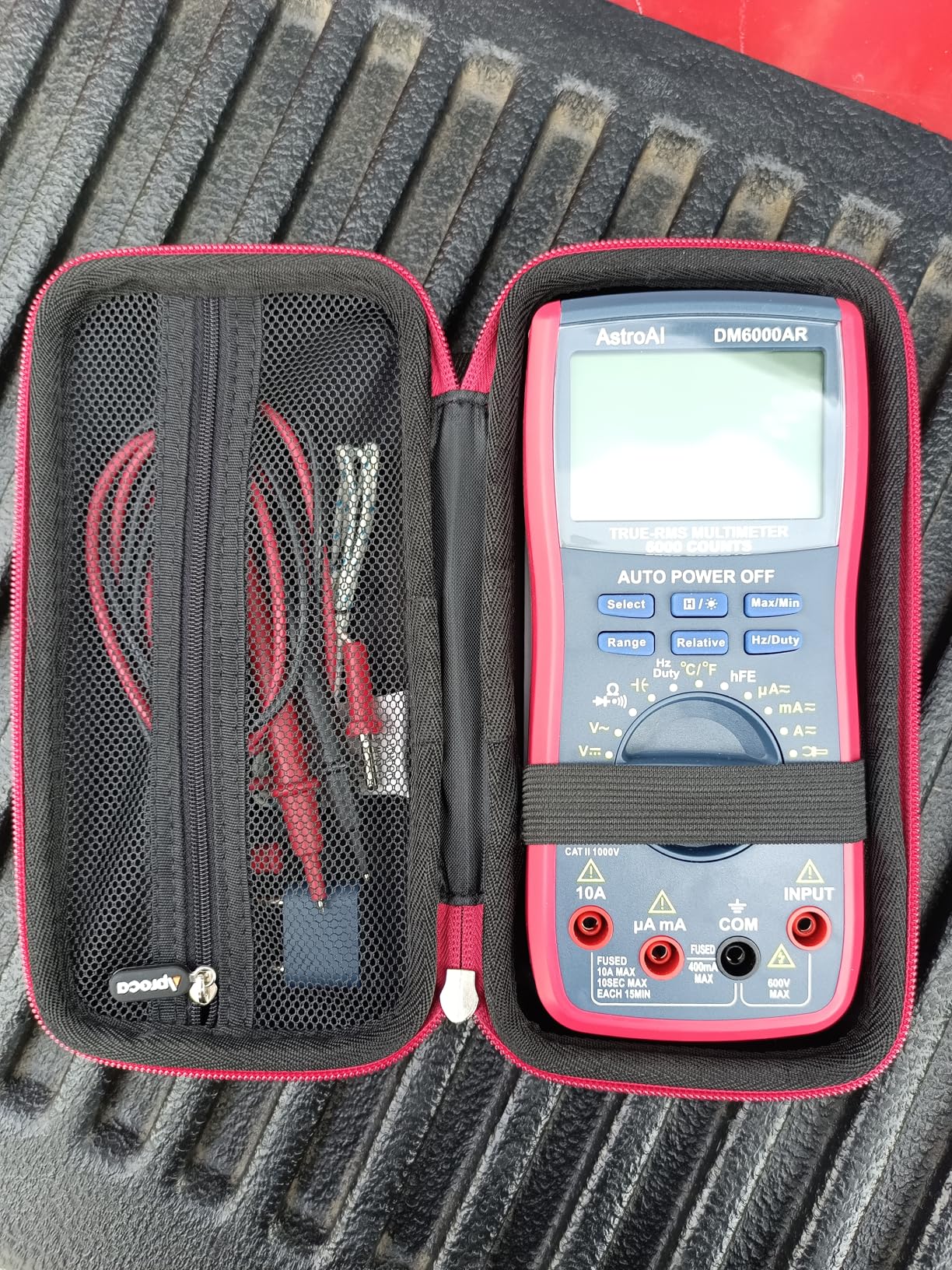
The dual magnet on the back is more useful than it sounds. It lets the meter hang off a bracket or a strut tower with the display facing you, which frees both hands for back-probing a connector. Hands-free is not a gimmick when you are working alone under a bonnet.
Protection is handled by two explosion-proof ceramic fuse tubes, a 400mA unit and a 10A unit, both rated to 600V. Replacing a blown fuse is a five-minute fix with a standard part rather than a trip to the manufacturer, which directly addresses one of the most common frustrations in forum threads.
What accurate RMS reading buys you on a 12V car?
Most of what you measure on a car is DC, where every meter in this list performs well. True RMS earns its place on the AC side of DC. Switch to AC across the battery terminals and an averaging meter under-reports diode ripple; the RMS meter shows the true peak-to-peak content. Under 0.5 VAC AC on a healthy charging system is the pass mark, and you need a real RMS reading to trust that number.
It also matters for the PWM and inverter signals that modern cars produce for HID lighting, fan control and some sensor excitations. Those are chopped waveforms, and an averaging meter can report a third of the real value.
Where it falls short?
The frequency counter tops out far below the advertised figure and needs close to 5V peak-to-peak to trigger. The transistor gain function reads roughly half the true hFE, and the multi-function adapter is arranged C-B-E rather than B-C-E, which makes TO-220 testing awkward.
None of that touches automotive work, but it tells you where the specification sheet was written rather than measured. There is no carrying case and the leads are thin, so many owners replace them, which is an easy and worthwhile upgrade.
9. FNIRSI DMT-99 Graphing Multimeter With Threshold Monitoring
FNIRSI DMT-99 Digital Multimeter 9999 Counts TRMS, Rechargeable Volt Meter
- Graphic view plots voltage and current waveforms to reveal ripple and transients
- Monitoring mode alarms at custom thresholds for hands-free intermittent tracking
- 1500mAh rechargeable lithium battery with Type-C charging
- Auto-Mode detects AC or DC voltage and continuity automatically
- 2.4-inch colour TFT screen with adjustable brightness
- Lower review volume than the mainstream budget meters
- Colour screen and rechargeable cell add complexity versus a simple manual meter
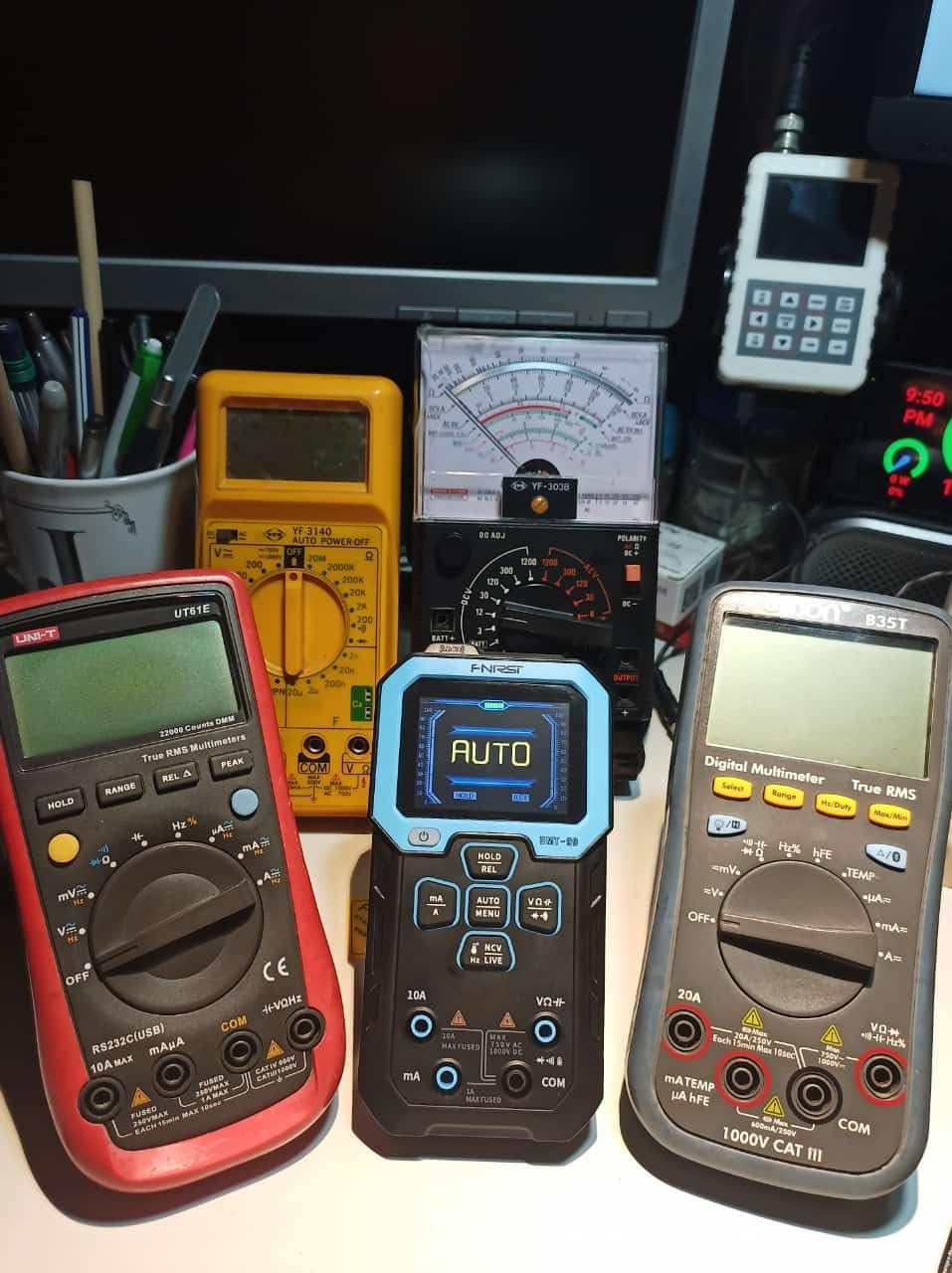
This is the only meter here that draws a graph. The graphic view plots voltage and current in real time, so a ripple spike, a brief short, or an alternator ripple problem appears as a shape rather than a number that was too fast to read. On a meter with a conventional LCD, the peak simply never appears on screen.
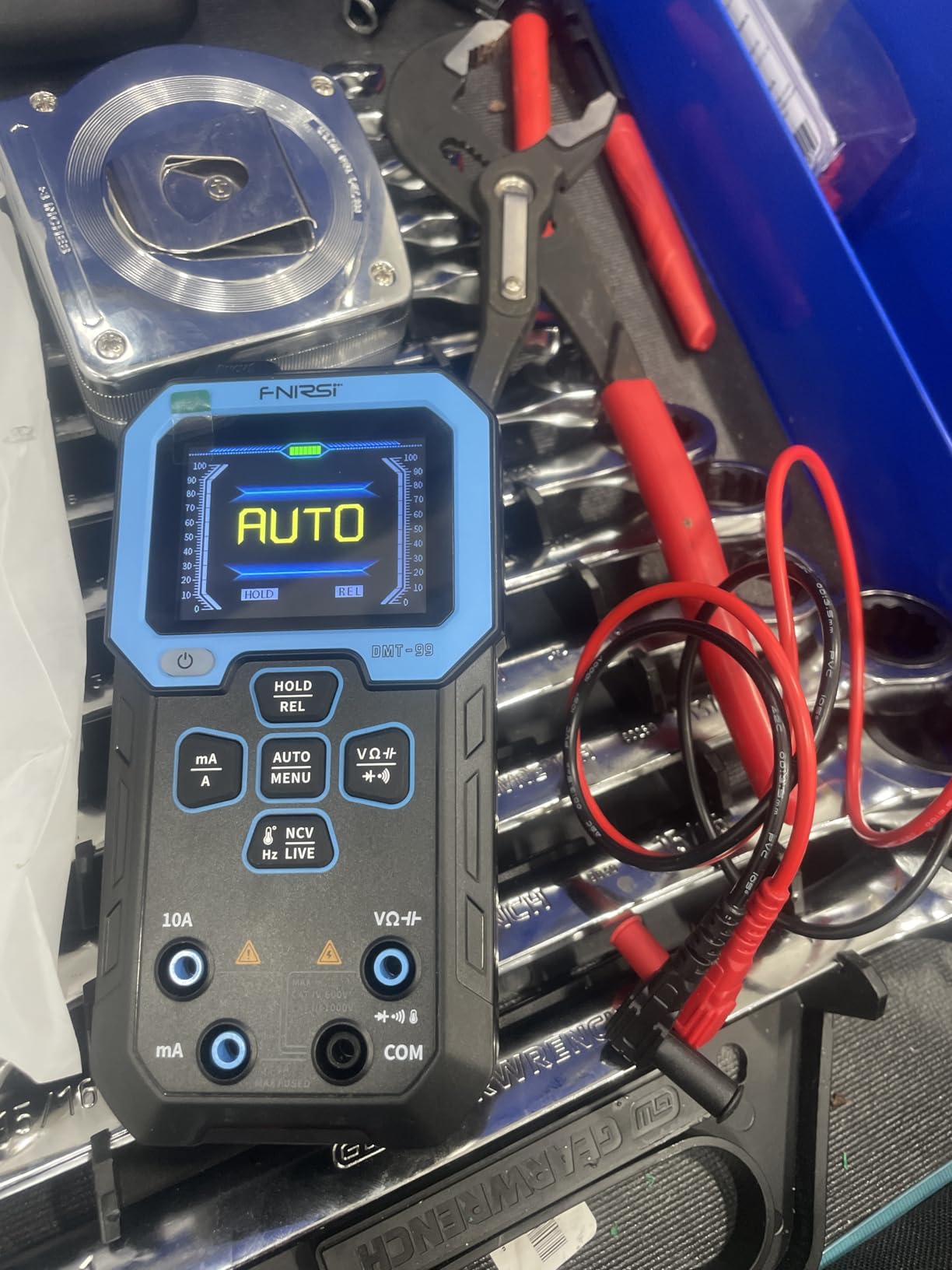
Monitoring mode is the more underrated half. Set a threshold and the meter alarms when the reading crosses it, so you can prop it in the engine bay, trigger the fault by working the circuit, and walk away. For an intermittent problem that only appears when the road is warm or the car has been driven for twenty minutes, that is genuinely useful.
The 9999-count true-RMS resolution is the highest here, the auto-mode handles routine AC, DC, resistance and continuity without manual function selection, and the 1500mAh rechargeable lithium cell removes battery changes entirely. Type-C charging means one cable for the meter and your phone.
Where a graph genuinely beats a number?
Consider a charging system that reads 13.9V DC and appears healthy. The graph view shows the AC content riding on that DC line as a visible ripple waveform, and the shape tells you whether the noise is regular diode ripple or a sharp transient. A conventional display gives you one number for the DC component and no view of what is on top of it.
The same applies to a starter circuit. Watching current inrush as it happens on screen tells you far more than a peak-hold number, particularly when the peak lands during the first half-second of crank and a normal meter never registers it.
Where it falls short?
It is a small colour-screen device, and the screen is the first thing to fail. A scratched or cracked TFT costs more to replace than a simple meter’s entire body, which is a real long-term cost for a tool that gets dropped.
Review volume is far lower than the mainstream budget meters, so the long-term durability record is thin. It is also a general electronics instrument that happens to suit automotive work, not a purpose-built engine meter. Treat it as a complement to a mainstream automotive meter rather than a replacement.
10. Fluke 15B+ Multi-Certified Meter With 1000V Range
- Safety certified to UL CE CSA ETL and IEC 61010-1 across multiple standards
- 1000V AC and DC range covers 12V systems through to mains panels
- 10A AC and DC current range for short and overload diagnosis
- Compact and lightweight at 460 g
- Rated 4.8 with a very low one-star share
- Costs more than general-purpose meters
- No true-RMS measurement like the Fluke 115
The distinction that matters here is certification. This meter is certified to UL, CE, CSA, ETL and IEC 61010-1, which is the standard that defines safe electrical measurement practice. That is not a formality in a discipline where the failure mode is a hand across a battery terminal.
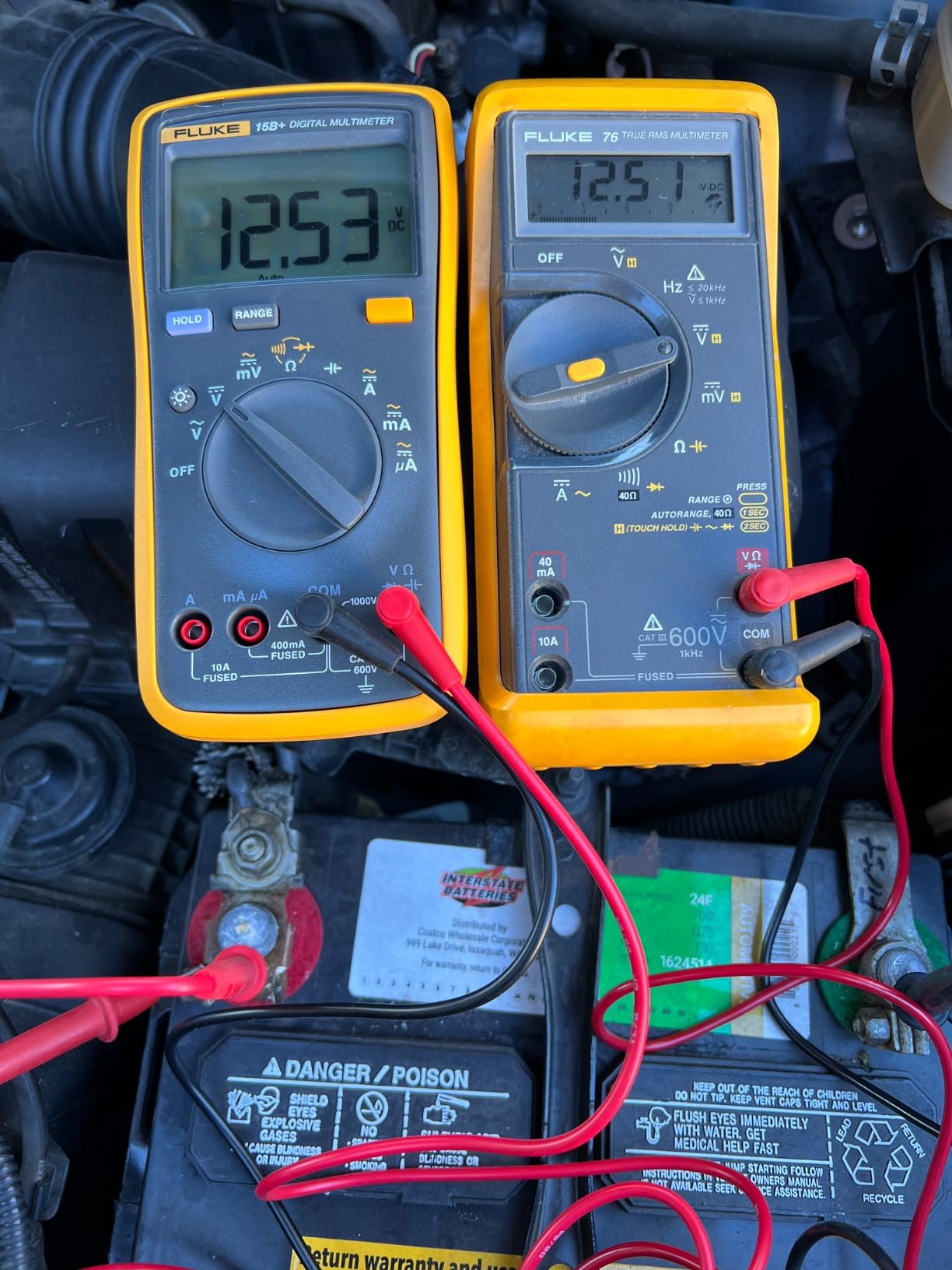
Mechanically it is more capable than the Fluke 115 in one respect: 1000V AC and DC range and 10A AC and DC current. On a car you will use neither ceiling, but on a hybrid or on household work the extra range is the difference between a usable tool and a dedicated one.
At 460 g and 8.46 by 2.76 by 5.91 inches, it is small enough to keep in a door pocket. That is not a trivial advantage, because the most common reason a working technician does not have a good meter in the car is that it did not fit in the bag.
Why multiple safety certifications are worth paying for?
A single certification covers a single product in a single configuration. Multiple independent certifications mean the design and the insulation system have been evaluated by several bodies, and the meter is more likely to have been genuinely designed around transient protection rather than fitted with a label afterwards.
It also changes how a professional shop thinks about it. Some insurers and service departments specify by certification rather than by brand, and a meter that satisfies the written requirement is a meter that can go on a vehicle you do not own.
Where it falls short?
No true-RMS measurement. On AC ripple from the charging system and on chopped PWM signals it will read low, which is the same limitation that keeps the Fluke 115 above it in our ranking despite the higher price of that model.
It costs more than the general-purpose meters here while offering a narrower feature set. Buy it for certification and range, not for the measurement extras.
Six Tests Your Multimeter Runs on a Car
A meter only does four things: it measures voltage, resistance, current and continuity. Everything on a car is one of those four tests interpreted with the right thresholds. Here are the six jobs that come up constantly, with the numbers that decide pass or fail.
Battery state of charge. Key off, lights off, engine off for at least an hour. At 12.6V or higher a lead-acid battery is fully charged, 12.4V is about three-quarters, and below 12.2V it needs a charge. Set the meter to 600mV or 60V range for the resolution to show those differences properly.
Alternator output. Start the engine and read DC at the battery. A healthy 12V system sits between 12 and 13.5V running. Above 14V points to a regulator that is not limiting charge and will boil the battery dry. Now switch to AC and read across the same terminals: under 0.5 VAC is healthy, and anything above that indicates a shorted rectifier diode.
Cranking voltage. With the meter in MIN/MAX, watch the minimum while the engine cranks. A loaded good battery should hold above 9.6V. A reading that sags into the mid-8V range means the battery is weak, the cables are corroded, or both.
Voltage drop. This is the technique technicians on the forums consistently call the most powerful diagnostic method, and it is the one neither competing roundup covers. Load the circuit so current is flowing, then measure across the connection rather than across the supply. A good connection reads under 0.2V drop, 0.2 to 0.3V is marginal, and above 0.5V is a corroded or high-resistance joint that needs cleaning or replacement. Because you are reading across the connection, the meter sees the fault directly rather than inferring it.
Parasitic draw. Connect in series with the negative battery cable, meter in DC milliamps or DC amps, doors closed and the vehicle fully asleep. Allow 20 to 30 minutes for the body control modules to enter their sleep state. Most modern cars should settle under 50 mA, and older vehicles with a clock and alarm system can sit near 30 mA. Above 100 mA you have a real fault. Then pull fuses one at a time and watch which one drops the reading.
Continuity, fuses and grounds. The audible beeper turns an invisible break into a sound. Test suspect fuses with the diode setting rather than continuity, because a good fuse reads a small forward voltage drop rather than a clean beep. For grounds, back-probe the strap and measure the drop from battery negative to the strap under load.
Two honest limits. First, a low-current parasitic draw usually needs a meter with a milliamp range or a clamp, and most of the meters in this list do not have one, so budget for a current clamp. Second, none of this reads a code, so a scan tool stays part of the kit. Our guide to the best clamp meters for electrical engineers covers that gap for high current.
Buying Guide: What Actually Decides an Automotive Multimeter?
True RMS on a 12V car: useful, but not where you think
True RMS matters on the AC side of a DC supply and on chopped signals, not on the DC readings you take most. Measuring a battery at 12.4V does not need RMS. Reading diode ripple on the charging system, or a PWM signal from a fan or an HID ballast, does. A budget true-RMS meter like the AstroAI or the KAIWEETS is genuinely capable here; averaging meters are not.
Auto-ranging versus manual ranging
Auto-ranging wins for mixed diagnostic work and for anyone new to meters, because one dial decision replaces two. Manual ranging wins for a technician who has settled on one meter and wants direct control, and it is easier to learn because ranges are visible on the dial. Both are defensible. The thing to avoid is an auto-ranging meter that drifts between ranges on a noisy signal, which shows up as erratic readings that ruin trust in the instrument.
CAT ratings and what they mean under the hood
CAT II is for plug-in loads, CAT III is for distribution panels and permanently installed equipment, CAT IV is for the utility service entrance. A vehicle is closer to CAT III, so CAT III 600V is the right rating for car work, and every meter here meets it or exceeds it. The category describes transient withstand, which is why a CAT III meter is the one to probe a battery with in wet weather. It does not license you to probe a hybrid pack, where the system voltage alone is several hundred volts.
Counts, resolution, and the accuracy spec written as a percentage
Counts tell you how many digits the display can show on a range. A 2000-count meter on a 60V range gives one decimal place, a 6000-count meter gives two, and that difference is the whole reason a budget 2000-count meter struggles to show a small voltage drop. Accuracy is usually written as a percentage of reading plus a number of counts, meaning the stated tolerance and the least significant digit are added. Reading that second term correctly is what lets you judge whether a specification is meaningful for a 12V measurement.
Milliamp capability, and why most meters cannot do parasitic draw
Parasitic draw is a current in the tens of milliamps, and the current input on a general meter starts at 10 amps, meaning the resolution is far too coarse. A milliamp or microamp range is the difference between measuring a drain and guessing at one. Check for that range before you buy if overnight battery drain is your problem, or plan on adding a clamp meter. Our picks for that job are covered in the best premium multimeters for auto electricians.
When you also need a scan tool?
A multimeter measures a circuit. A scan tool reads what the car’s own computers have already decided. Stored and pending codes, freeze frame data, live data and bidirectional actuator control all live on the scan tool side, and no meter in this list replaces it. Our multimeter guide for electrical engineering students covers the meter side of the pairing in depth.
What to Avoid When Buying an Automotive Multimeter?
Uncertified meters with no CAT rating at all. If a listing does not state a category rating and an IEC 61010-1 compliance claim, the meter’s insulation system has not been evaluated. Save the difference and buy a certified one.
Meters with an unfused or hard-to-replace current input. Blown meter fuses are the most common forum complaint in this category. Standard blade fuses and ceramic tubes you can buy anywhere are worth more than any extra feature.
Specified accuracy with no counts term. A bare percentage with no digit allowance is not a full specification, because the least significant digit can dominate the real error on a low reading.
Meters whose DC voltage accuracy is stated only as a percentage. On a 12V circuit the counts term is often larger than the percentage term, and that is where cheap meters drift.
Overstated secondary specifications. Several budget meters here advertise frequency ranges and transistor gain figures that reviewers measured well below the claim. Check whether the specification that matters to you, voltage and current accuracy, has been independently verified.
Expecting a multimeter to replace a scan tool, or a test light to replace a meter. Both assumptions waste weekends. A test light is genuinely enough to prove a circuit is live, and a meter is needed for every question beyond that.
Frequently Asked Questions
Do I need a true RMS multimeter for automotive work?
Only for some of it. Your DC readings, resistance, continuity and diode tests are identical on any meter. True RMS matters when you switch to AC to read rectifier ripple on the charging system, or when you measure a chopped PWM signal, where an averaging meter can read a third low. If alternator ripple testing is part of your work, buy true RMS.
What is the maximum acceptable parasitic drain for a car battery?
Most modern cars should settle below 50 mA once the body control modules enter sleep, which takes 20 to 30 minutes after you close the doors. Older vehicles with an aftermarket alarm or a clock can sit near 30 mA. Anything sustained above 100 mA is a fault. A battery that draws a normal amount but will not crank can still have weak available amperage behind a good-looking 12.6V.
How do I check for parasitic drain with a multimeter?
Break the negative battery cable, connect the meter in series between the cable and the terminal, and set it to DC amps or DC milliamps. Close everything and wait 20 to 30 minutes for the vehicle to sleep. Read the settled value, then pull fuses one at a time and watch which removal drops the reading. Intermittent drains are harder because the vehicle must be in exactly the same state on a retest.
Is a cheap multimeter better than an expensive one for car work?
For most battery, alternator, fuse and ground jobs, a budget meter performs correctly and the expensive model adds little. You lose true-RMS AC accuracy, milliamp capability for parasitic draw, MIN/MAX capture for intermittent faults, certified safety ratings and build quality. If your work is mostly drivability complaints and chasing drains, the step up is worth it.
Can a multimeter replace an OBD-II scan tool?
No. A multimeter measures a specific circuit at a specific moment, and a scan tool reads what the vehicle’s own computers recorded and live. Codes, freeze frame data, live sensor data and actuator tests all require the scan tool. The two work together: the scan tool points at a circuit and the multimeter confirms whether that circuit is actually delivering what it should.
Which Automotive Multimeter Should You Buy in 2026?
For a professional or a serious enthusiast chasing intermittent faults, the Fluke 115 is the best automotive multimeter for electrical diagnosis in 2026, because true-RMS accuracy and MIN/MAX capture handle the two things a conventional meter cannot. For a hands-on owner working on your own cars, the Klein Tools MM420 gives you auto-ranging True-RMS, a backlit display and lead-alert LEDs that stop wasted minutes. For battery-focused work, the INNOVA 3320 with its load-test function and 10 MegOhm impedance is the proven long-term choice.
If your budget is tight, the Klein Tools MM325 and the AstroAI 6000-count both do the core work correctly. If you chase parasitic drains, plan on adding a current clamp, because none of these meters measure milliamps in series. And whatever you choose, keep a scan tool in the box, because the two answer different questions.