
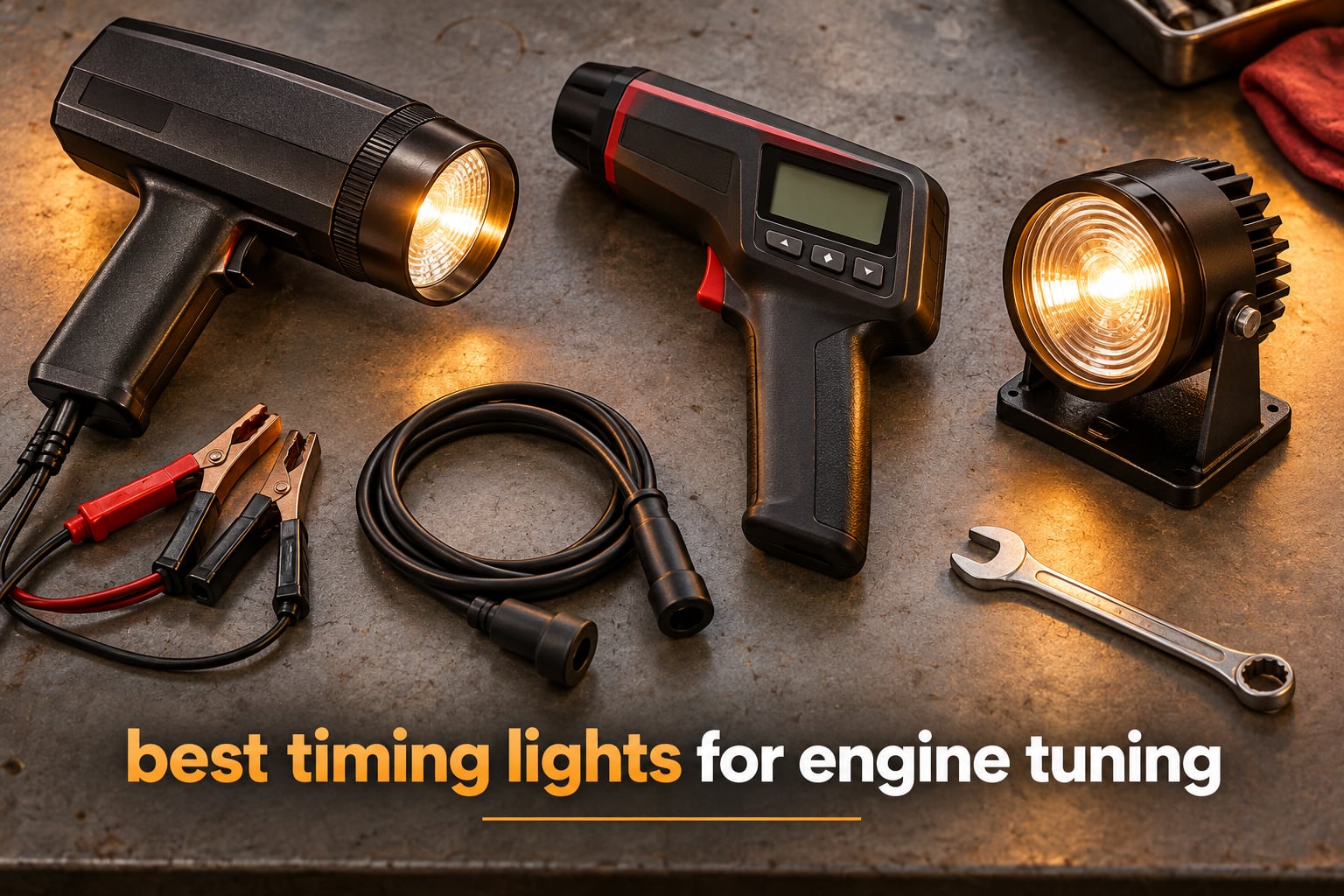
An advance timing light is a stroboscopic tool that flashes a bright xenon pulse in perfect sync with your engine’s spark, freezing the timing mark on the harmonic balancer so you can read the exact angle in degrees BTDC. If you tune engines, carburetors, distributors or advance curves, this is the one instrument that tells you where ignition timing actually sits. This roundup covers the best timing lights for engine tuning available now, from self-powered D-cell units for batteryless bikes to digital guns with tachometers and adjustable advance barrels.
We spent weeks reading owner reviews, spec sheets and the practitioner threads where this tool gets debated, then narrowed the field to ten picks that do their stated job honestly. The list spans a plain inductive light under a basic entry-level budget, a mid-range digital gun with an RPM readout, and professional strobes built for high-output aftermarket ignition systems.
One thing surprised us. Most buyers debate brightness first, but the recurring failure in the field is different: a light that flashes beautifully at idle and quits at 3000 RPM, or a dial-back barrel that reports a number three to twelve degrees away from the truth. Both problems are discussed below, because they change which light you should actually buy. If you are also planning the surrounding work, our guides to engine stands for rebuilds and parts washers for engine cleaning cover the bench side of a full teardown.
Top 3 Best Timing Lights For Engine Tuning (October 2026)
Three picks come out ahead once you account for review volume, build quality and how the tool behaves above idle. The Innova 5568 Pro is the most complete instrument in the group, the Innova 3568 is the cleaner all-rounder for shop work, and the OBDMONSTER 12V unit is the honest budget answer for occasional and vintage use.

Innova 5568 Pro Digital
- Digital tach with advance dwell and voltage
- 1-degree dial-back advance control
- Inductive pickup with 6-foot detachable leads
- Storage case included
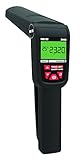
Innova 3568 Digital
- Direct-reading advance scale 0-90 degrees
- Tachometer 249 to 9990 RPM
- Split-screen LCD
- Rotating barrel
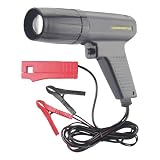
OBDMONSTER 12V Inductive
- 12V inductive pick-up
- Pistol-grip housing
- Polarized red and black clips
- Reads flywheel or pulley scales
All 10 Picks at a Glance
The table below sorts the whole field by what each light is designed to do, so you can narrow the list before reading the reviews. Power source and ignition compatibility matter more than any other spec here.
| Product | Specifications | Action |
|---|---|---|
| Innova 5568 Pro Digital |
|
Check Latest Price |
| Innova 3568 Digital |
|
Check Latest Price |
| OBDMONSTER 12V Inductive |
|
Check Latest Price |
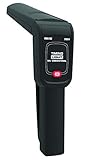 Innova 3551 Inductive Innova 3551 Inductive |
|
Check Latest Price |
 KZYEE KT60 Digital KZYEE KT60 Digital |
|
Check Latest Price |
 Performance Tool W80578 Performance Tool W80578 |
|
Check Latest Price |
 ESI 130 Self-Powered ESI 130 Self-Powered |
|
Check Latest Price |
 ROADGIVE 12V Timing Light ROADGIVE 12V Timing Light |
|
Check Latest Price |
 THIKPO TK95 Digital THIKPO TK95 Digital |
|
Check Latest Price |
 MSD 8992 Timing Pro MSD 8992 Timing Pro |
|
Check Latest Price |
Timing Light Types Explained
An inductive light clamps onto the number one spark plug lead and senses the voltage spike, flashing each time the plug fires. It is the standard, cheapest and most widely compatible type. A self-powered light adds a small battery so nothing has to connect to the vehicle’s electrical system, which is the only workable option on magnetos and batteryless bikes. A dial-back light lets you dial in a known number of degrees of advance on the barrel, so the reading shows where the mark sits relative to full advance. A digital light adds a tachometer, and often dwell and voltage readouts, on top of the same strobe.
The practical decision is simpler than it looks. If the vehicle has a battery and a distributor, an inductive light with clips covers almost everything. If the engine has a single timing mark instead of a graduated scale, you need a dial-back or digital light with adjustable advance, because a plain light cannot tell you where full advance sits. If the engine has no battery or runs on a magneto, you need self-powered. If you run a high-output aftermarket ignition, brightness and pick-up stability at revs matter more than any display.
One category is worth calling out. On distributorless and coil-on-plug engines there is nothing for you to adjust: the ECU owns the timing curve. A light is still useful there for verification, but the advance barrel and dial-back features do nothing for you, and several picks in this roundup simply do not work on those systems.
1. Innova 5568 Pro Digital Timing Light – The Complete Shop Instrument
- Four-in-one display covering tachometer advance dwell and voltage
- Inductive pickup reads steadily out of the box
- 1-degree-at-a-time advance control makes setting total timing simple
- Flash can be switched off so timing marks stay readable
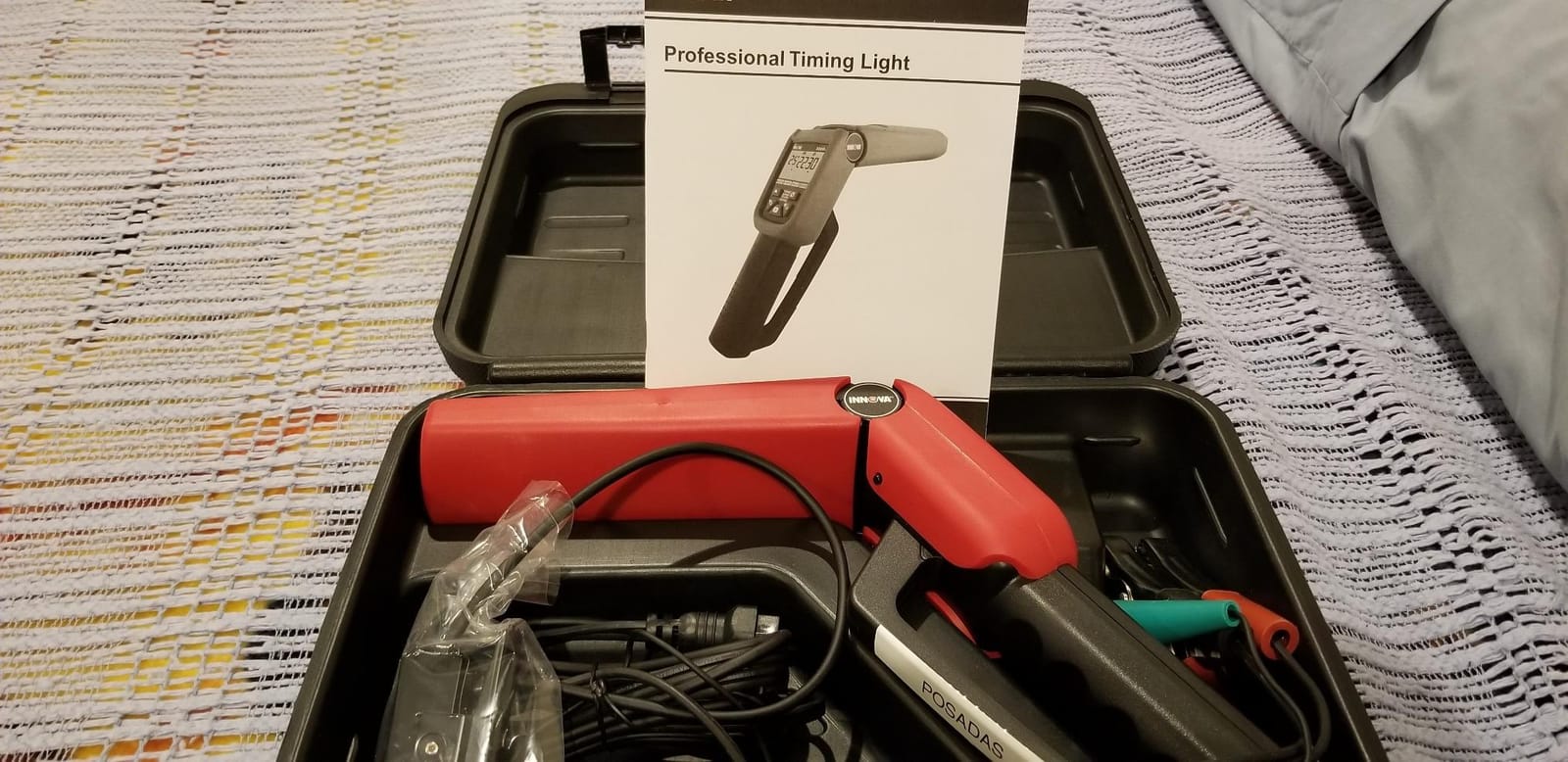
- Molded plastic storage case included
- Printed quick-start guide is thin and a full manual must be downloaded
- A directional arrow on the inductive pickup is easy to misread
- A recurring minority of units report no RPM or strobe output out of the box
- Authoritative technical support is hard to reach by phone
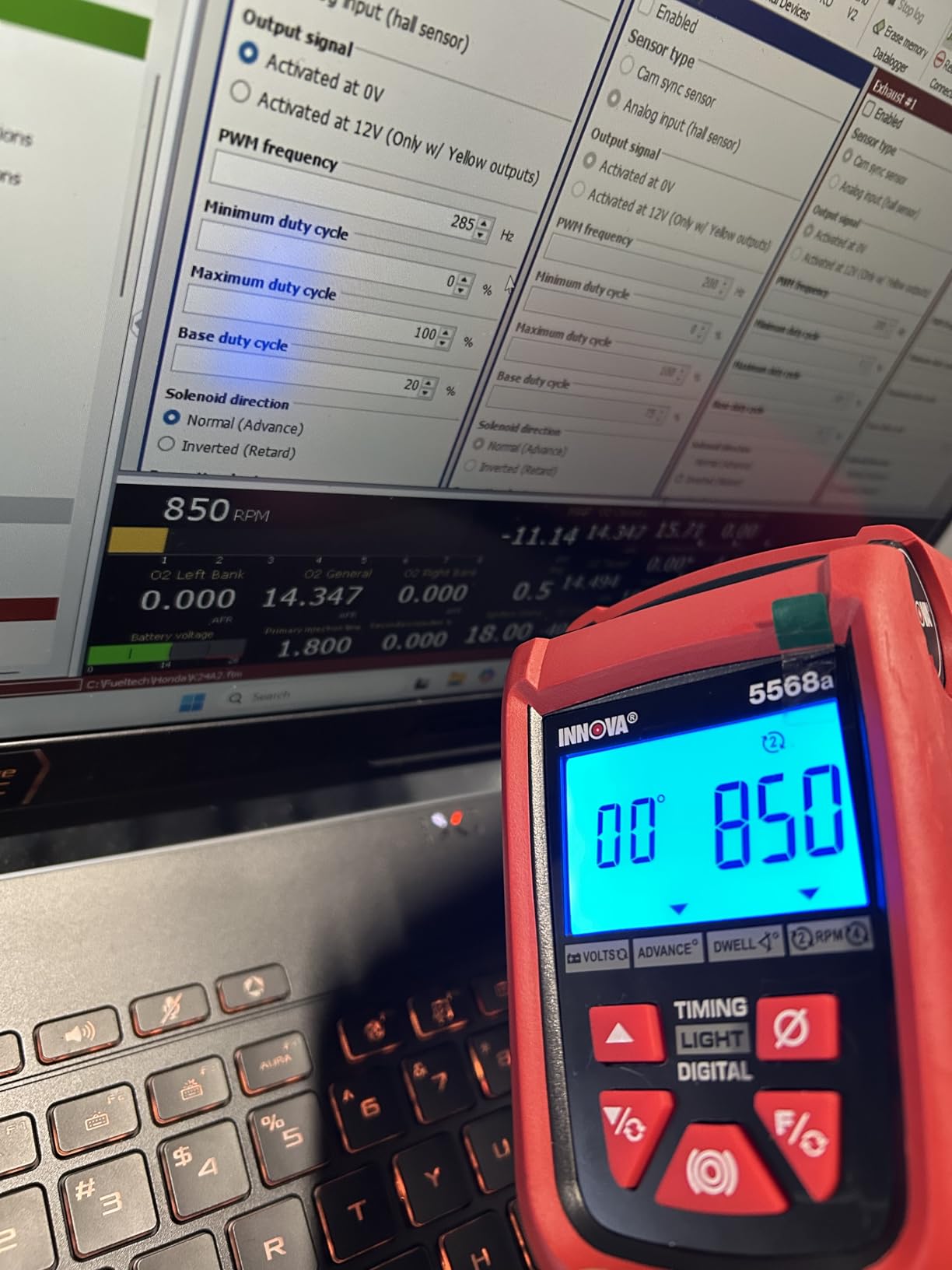
This is the unit we kept reaching for. Four functions share one display: tachometer, advance, dwell and system voltage. That combination means a single tool can set base timing on a points ignition, confirm the mechanical advance curve, and show you whether the charging system is dragging the reading around. You do not need a second instrument on the fender.
Owners upgrading from cheaper Innova dial-back models describe a large jump in accuracy and build quality once they move up to this one. The advance control moves in single-degree steps, so you can watch the mark drift forward or back rather than guessing at a coarse barrel setting. Long-term owners report decade-plus service from these units, which is why it sits at the top of this list.
The skip circuitry is rated to 9990 RPM, so the pickup is not the weak link when you pull engine revs on a dyno or during a drag pass. Leads detach at both ends, which matters more than it sounds when the stock leads are too short to reach an onboard battery in a truck.
Two things to know before you buy. The pickup clamp has a directional arrow, and mounting it backwards produces no flash at all, which is the single most common support question on this tool. There is also a small but persistent stream of reviews reporting units with no output from the first use across several production runs, so keep the packaging and check it on a live engine before the box goes in the bin.
What you get that cheaper lights do not?
Dwell and voltage alongside the tachometer is the real differentiator. Dwell tells you whether the points or the electronic pickup is being held open too long, which is a classic cause of a timing reading that will not sit still. Voltage tells you whether a weak battery or a bad ground is skewing everything you are reading.
The 1-degree advance control is the other upgrade. On an engine with a single timing mark, this is the only way to read total timing without degreeding the balancer or marking your own scale.
Where it falls short?
The documentation is genuinely weak for a tool at this level. The printed sheet is thin and the full manual lives on the manufacturer’s site, so budget a few minutes of setup before you are under a raised vehicle with the engine running.
It is also the most expensive unit in this roundup, and the extra spend buys measurement features rather than brightness. If you only want a reliable strobe for setting base timing on a carbureted engine, the Innova 3551 does the core job for far less and has nothing that can fail electronically.
2. Innova 3568 Digital Timing Light – Best All-Rounder for Shop Work
- Split-screen LCD shows tachometer and advance together
- Rotating barrel makes awkward timing marks easy to aim at
- Works with conventional electronic and computer-controlled ignitions
- Reported accurate when checked against a professional timing lamp
- Long leads reach an onboard or remote battery
- No storage case is included which several buyers request
- Digital RPM readout has no averaging so a rough idle is hard to read
- A minority of owners report units that stopped strobing after a few uses
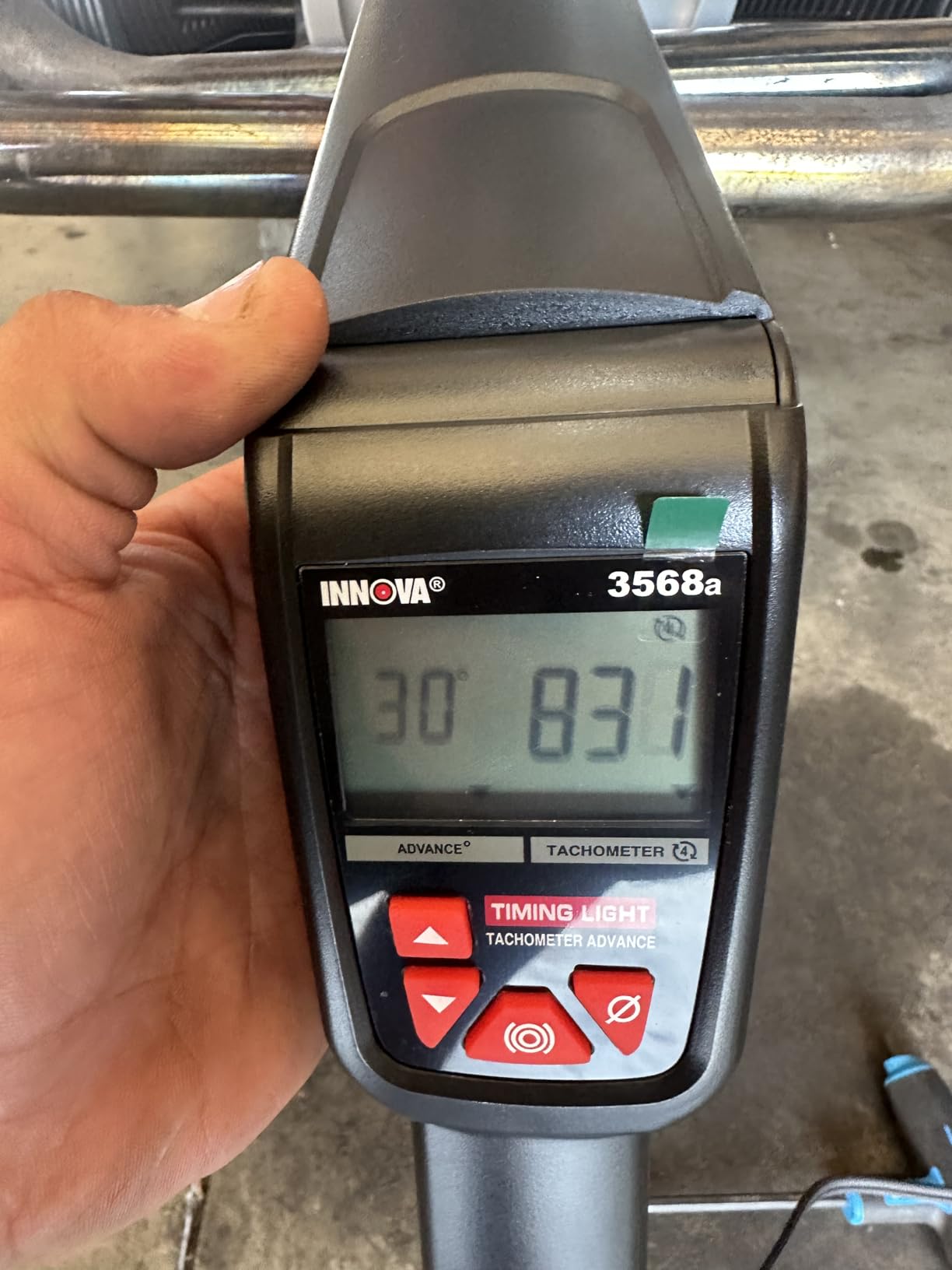
The 3568 is the most frequently recommended all-rounder in the category, and it earns that. The split-screen display puts tachometer and advance on screen at the same time, so you can watch total timing climb with revs instead of chasing a frozen number. The direct-reading advance scale adjusts from 0 to 90 degrees.
It works across conventional, electronic and computer-controlled ignition systems, domestic and import, which makes it a safer single-tool choice in a mixed shop. The rotating slim barrel is a small detail that pays off constantly: it lets you aim the flash at a timing mark recessed deep in a V-belt valley without contorting your wrist.
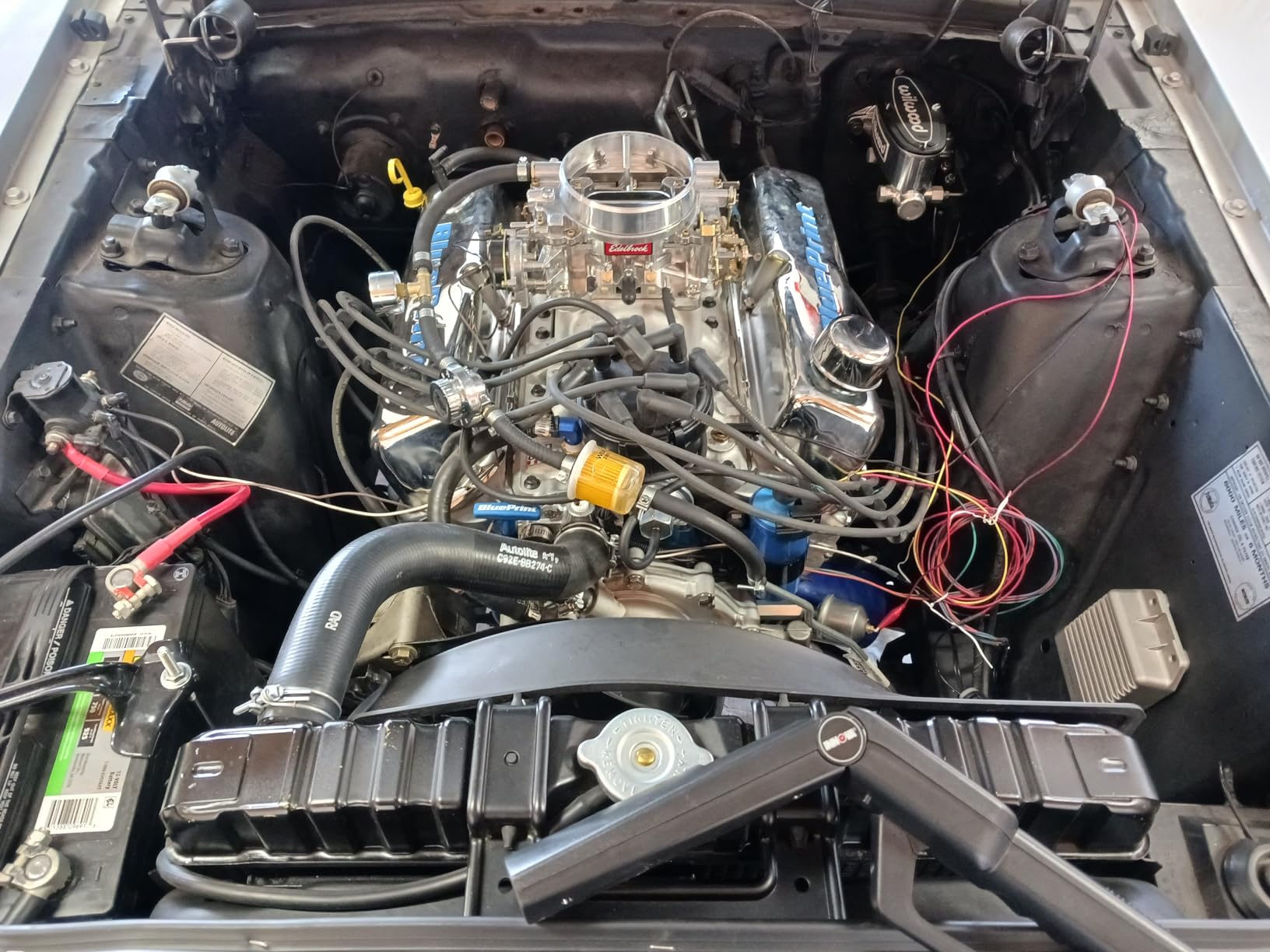
Owners use it for more than timing. Several report dialing in idle mixture and idle speed with the same unit, since the tachometer is good enough to set idle by ear against a real number. Accuracy is generally trusted when the reading is compared against a shop lamp.
The tachometer range starts at 249 RPM and runs to 9990 RPM with skip circuitry, so it holds up on engines that idle low or rev high. That range is one of the reasons professionals reach for this design over a plain inductive gun.
Why shop mechanics keep buying it?
Two things. The split-screen means you never have to choose between knowing the RPM and knowing the angle, and a rough idling engine is exactly the situation where you most want both. The long leads reach a remote or onboard battery without an extension, which removes a step from every single job.
It is also simply the safest buy for a mixed fleet. If you do not know what ignition system is in the next vehicle that rolls in the door, the broad compatibility claim here is genuinely useful.
What you trade away?
There is no carrying case, and that is the improvement owners ask for most often. The tool weighs 1.9 pounds and is bulky, so it lives in a drawer and picks up grime if there is nowhere to put it.
The RPM readout has no averaging function, so a lumpy idle produces a number that is technically correct and practically unreadable. If you work on a built engine with aggressive cam profiles or a sticking advance mechanism, keep a separate tachometer in mind.
3. OBDMONSTER 12V Inductive Timing Light – The Most Versatile for Occasional Work
- Very low cost for a functional light suited to occasional and vintage work
- Bright enough xenon flash to read timing marks in daylight
- Compact and light so it stores for years between uses
- Sliding clamp-on inductive pick-up fits without removing plug leads
- Strobe is inconsistent at low idle RPM and steadies only as revs rise
- Directional arrow is hard to see and a backwards clamp means no flash
- Thin build quality at the seams and some housing deformation on hot plug wires
- Not as steady as a professional workshop lamp in side-by-side use
This is the most reviewed product in the roundup, and reviewers frame it almost entirely as good value for occasional, hobby and vintage work. That framing is accurate. For setting base timing on a carbureted engine and checking a distributor advance curve, it does the job without any of the electronics that fail in premium digital units.
The xenon tube is bright enough for daylight, which is more than can be said for several lights in the same bracket. The pistol-grip housing has a positive-feeling button and the whole tool is compact enough to live in a drawer for years and still be there when you need it.
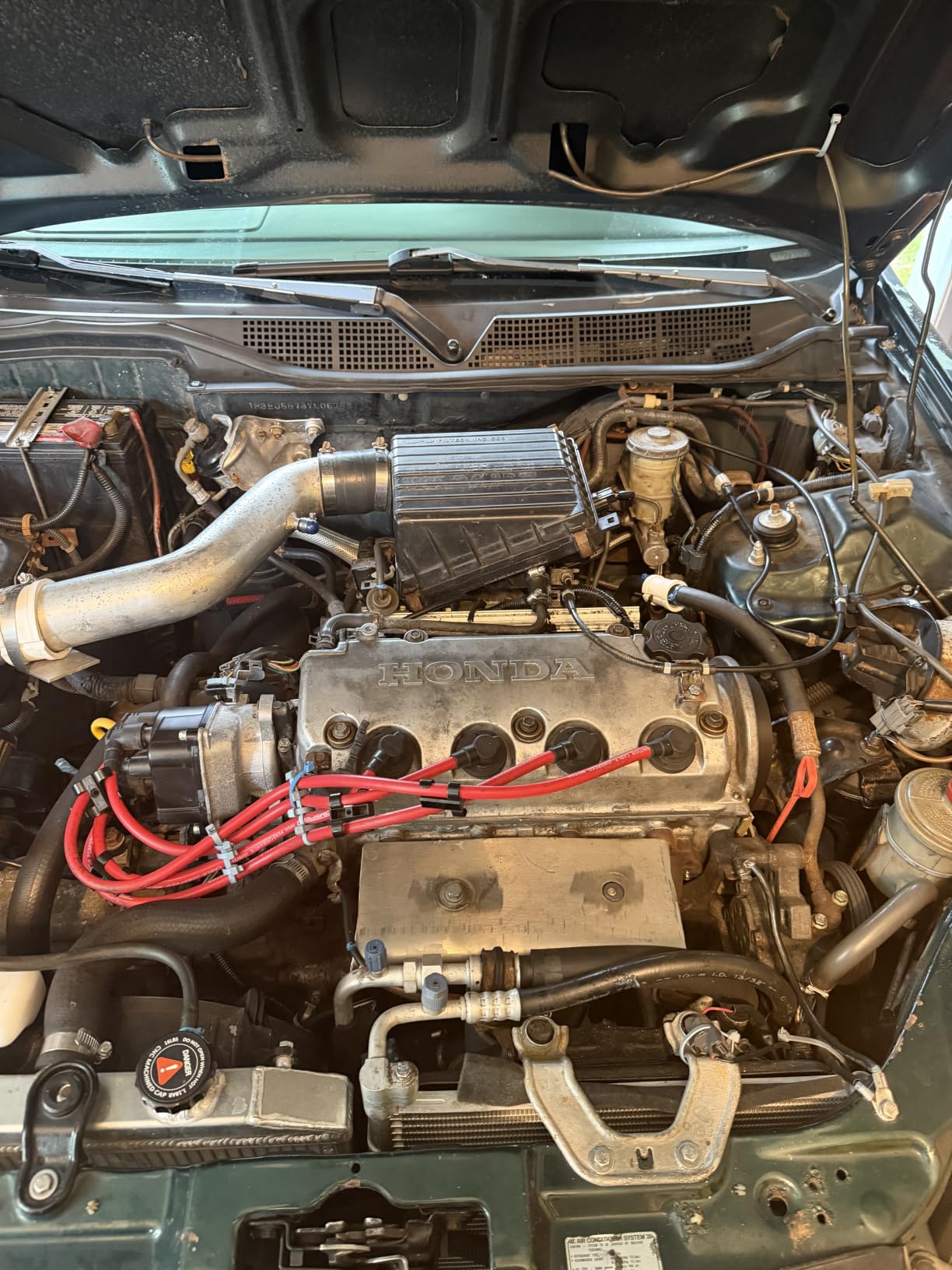
It covers cars, motorcycles, marine engines and both two-stroke and four-stroke gasoline engines on 12V systems. The sliding clamp-on inductive pick-up connects without pulling off plug leads, and the advance function reads a timing scale on the flywheel or belt pulley.
Two practical tips from the most useful reviews. Mark the timing pointer with a paint pen before you start, and confirm the clamp arrow points toward the spark plug. A large share of the harsh one-star reviews trace back to clamp orientation rather than a defective unit.
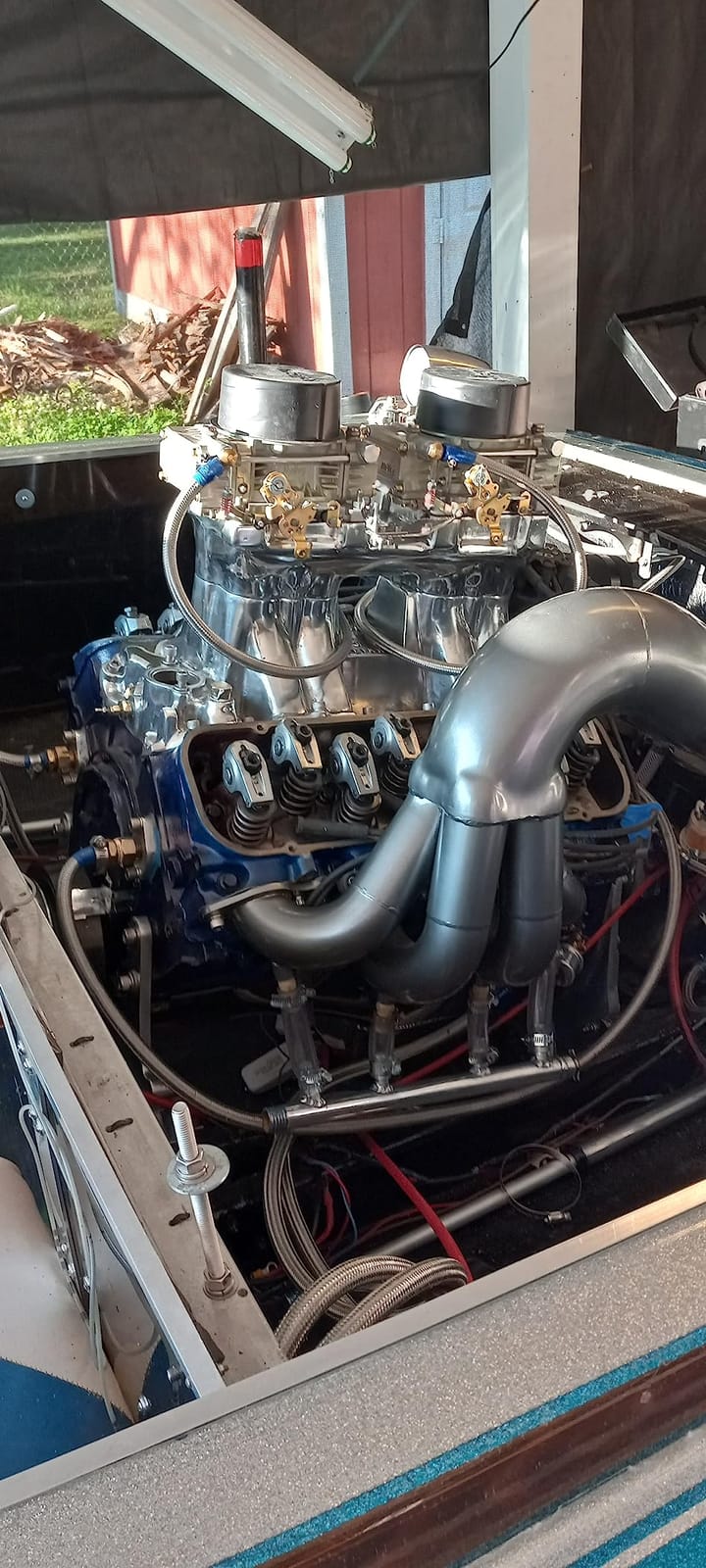
Where it earns its place?
Vintage work and first-time rebuilds. If you are setting a distributor once or twice a year, the money is better spent on a compressor, a breaker bar or a parts washer than on an instrument that measures dwell.
It is also a useful backup. A cheap strobe in the toolbox means you are never stuck when the good light is on the bench or the battery is dead.
Where it will frustrate you?
Idle-speed inconsistency is the legitimate recurring weakness. The strobe steadies as revs rise, which sounds like a small complaint until you are trying to set a low-idle carbureted engine and the mark is jumping around.
Build quality is thin at the seams, and a few owners report the housing deforming when clamped against a hot plug wire. Do not treat it as a diagnostic instrument or rely on it to find intermittent no-spark faults on a modern vehicle.
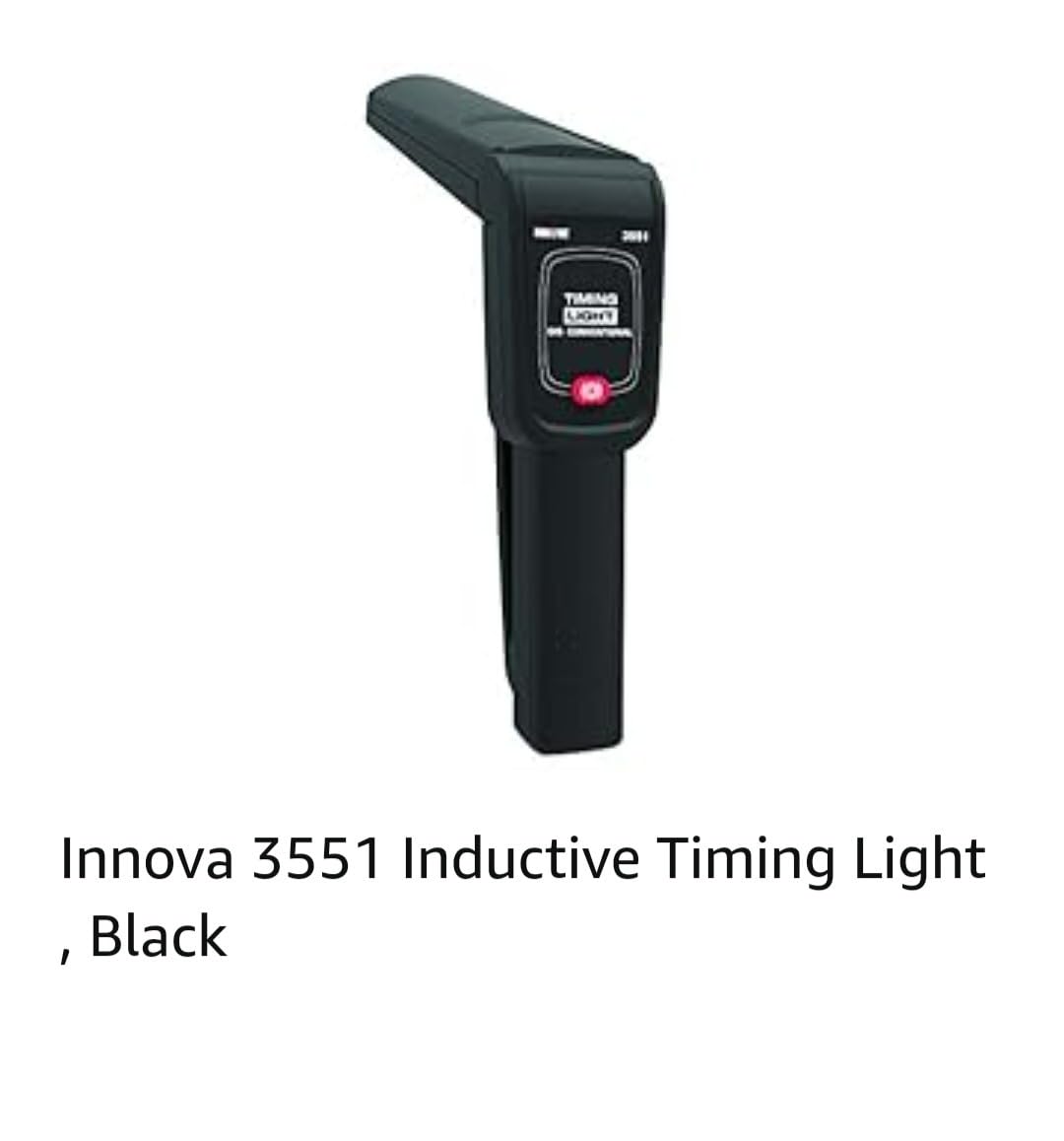
4. Innova 3551 Inductive Timing Light – Simple and Dependable
- No batteries and no display that can fail
- Single button with a latching on/off switch for hands-free use
- Swiveling barrel reaches timing marks in tight engine bays
- Removable cord untangles easily
- Checks base timing plus electronic advance and retard
- Bulky and long so it is awkward to store on a crowded shelf
- Thin slip-on plastic clamp boots detach and go missing
- Some owners find the strobe dim in direct sunlight on larger balancers
- Limited hinge or fold angle compared with other designs
Buyers treat the 3551 as the sensible entry-level inductive light: one job, done consistently, with no electronics to fail. There is a single button and a latching on/off switch, so the light keeps flashing while both your hands are on the engine. That detail matters more than any spec on the sheet when you are working alone under a raised vehicle or in a boat.
It checks timing, diagnoses a no-spark condition, and checks electronic advance and retard across DIS, conventional, electronic and computer-controlled systems, domestic and import. Skip circuitry is rated to 9990 RPM. For most people setting base timing on an older engine, that is the entire requirement list met.
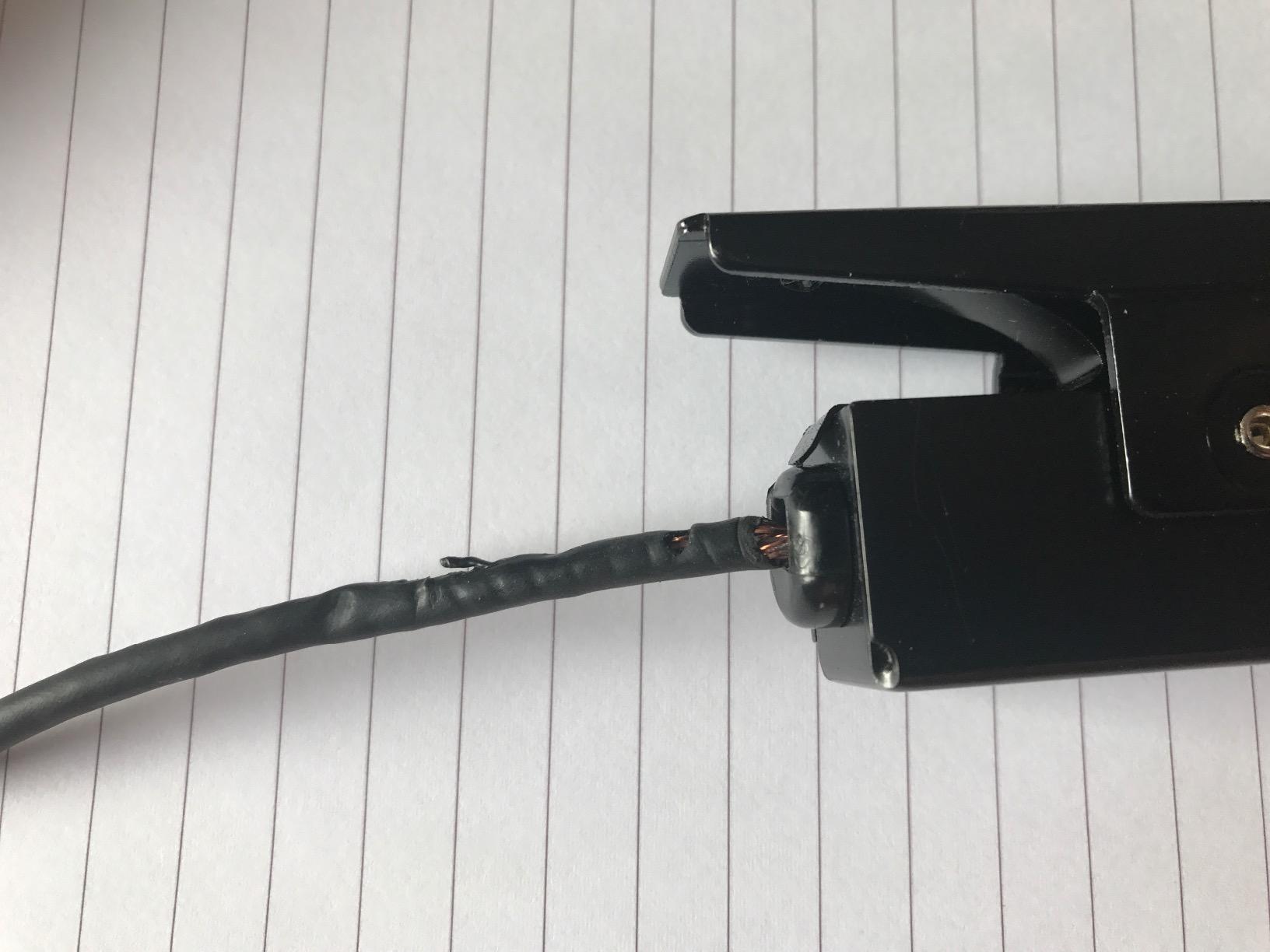
The swiveling barrel reaches timing marks recessed in tight engine bays, and the removable cord untangles easily so storage is less annoying than the shape suggests. Owners working on boats and small engines specifically call out how quickly it goes on and off.
Reported accuracy holds up in bright sun for smaller engines, which is a wider margin than most of the budget units in this list manage. It is the light most often recommended when someone wants an honest tool without paying for a display they will never use.
What makes it last?
There is nothing in here to degrade except the clamp. No battery compartment to corrode, no LCD to backlight itself to death, no firmware to be incompatible with an ignition system. A strobe with a switch either flashes or it does not.
That predictability is why long-term owners of the simpler inductive designs keep them in service for years while their digital counterparts get replaced.
What you give up?
No RPM, no dwell, no voltage and no adjustable advance. If your engine has a single timing mark, this light cannot tell you where full advance sits, and you will need to degreed the balancer or mark your own scale to read total timing.
The clamp boots are the weakest part, thin slip-on plastic that detaches and goes missing. Buy a spare pair rather than discover it during a job, and keep an eye on strobe brightness in direct sun on large balancers.
5. KZYEE KT60 Digital Timing Light – Digital Readout at a Mid-Range Price
KZYEE KT60 Digital Timing Light with Tachometer & 0-90° Advance
- Tachometer and 0-90 degree advance dial in one unit
- Simple easy-to-read display with uncomplicated controls
- Handles routine timing checks and tune-ups well
- Seller support rated responsive with replacements or refunds when a unit fails
- Strobe is dim and hard to read in daylight or outdoors
- Inductive pickup signal is intermittent on some vehicles so the mark vanishes between flashes
- Not usable on most coil-on-plug systems which limits newer cars
- Strobing failed entirely on an older big-block V8 in one documented case
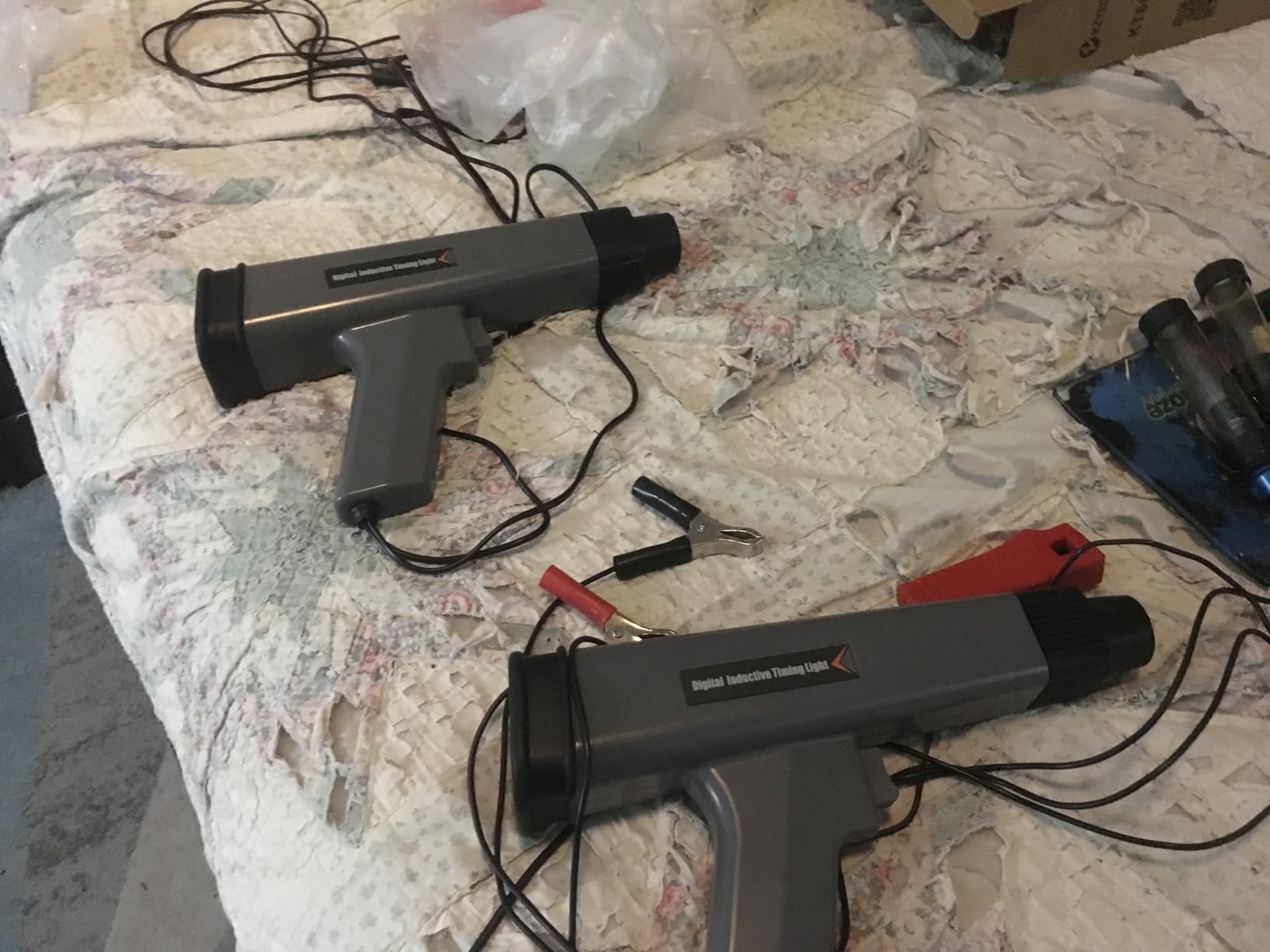
The KT60 packs a digital tachometer, an adjustable 0 to 90 degree advance control and a strobe into one housing at a mid-range price. For a first digital timing light, that combination covers the most common enthusiast jobs: set base timing, watch the advance come in with revs, and do it without a second gauge on the fender.
Controls are deliberately uncomplicated and the display is easy to read at a glance, which is the main reason satisfaction is broad. The directional inductive clamp captures the signal from the number one plug wire, and reverse-polarity plus overload protection reduce the risk of a flattened battery or a damaged unit.
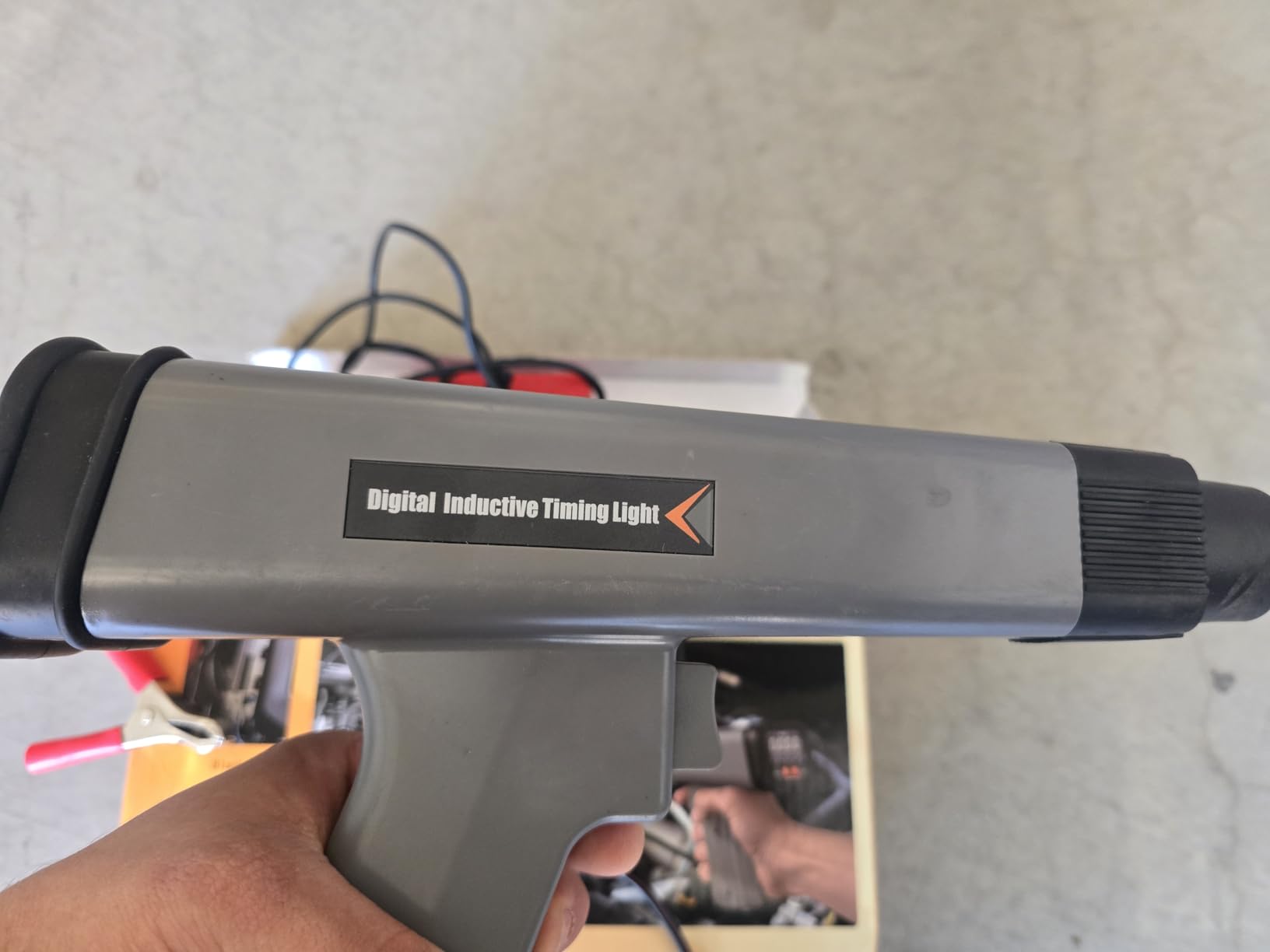
Compatibility is explicitly limited to distributor-equipped two-stroke and four-stroke gasoline engines: cars, motorcycles, marine engines, tractors and classic vehicles. It is not a universal modern-shop choice, and it is not intended for diesel, hybrid or electric vehicles or most coil-on-plug ignitions.
Customer service is a genuine strength here. Owners who received units that failed report responsive support offering replacements or refunds, which is worth more than a marginally brighter tube on a tool this new to the category.
Who should buy it?
Someone moving up from a plain inductive light who wants an RPM readout and an advance barrel but does not need dwell or voltage. The adjustment range matches the more expensive Innova digital units, and the feature set covers distributor cars and motorcycles well.
It also works as a second tool. Many shops keep one of these for quick routine checks and reserve the better instrument for full advance verification.
Who should look elsewhere?
Brightness is the structural weakness. Owners describe the strobe as dim in daylight and outdoors, so plan to work in a garage or under shade. On a big engine outdoors at a track, this is the wrong tool.
Pickup reliability is the other issue. Some vehicles produce an intermittent signal so the mark disappears between flashes, and one documented case had no strobe at all on a big-block V8. If your engine is a tough pickup, choose a light with a more substantial clamp.
6. Performance Tool W80578 Self-Powered Timing Light – Best for 6V and Remote-Battery Work
Performance Tool W80578 Self-Powered Timing Light, Black
- No battery leads to clip
- so hidden or rear-mounted batteries stop being a problem
- Works on both 6V and 12V systems including old flatheads
- Single-cable setup keeps the engine bay clear and reaches marks from underneath
- Bright LED strobe is usable in daylight on most engines
- Strobe is not bright enough in direct sunlight on larger balancers
- The work light function is weak and largely useless
- Two D-cell batteries must be bought separately and are easy to forget
- Top-mounted switch is fiddly and a minority of units will not strobe
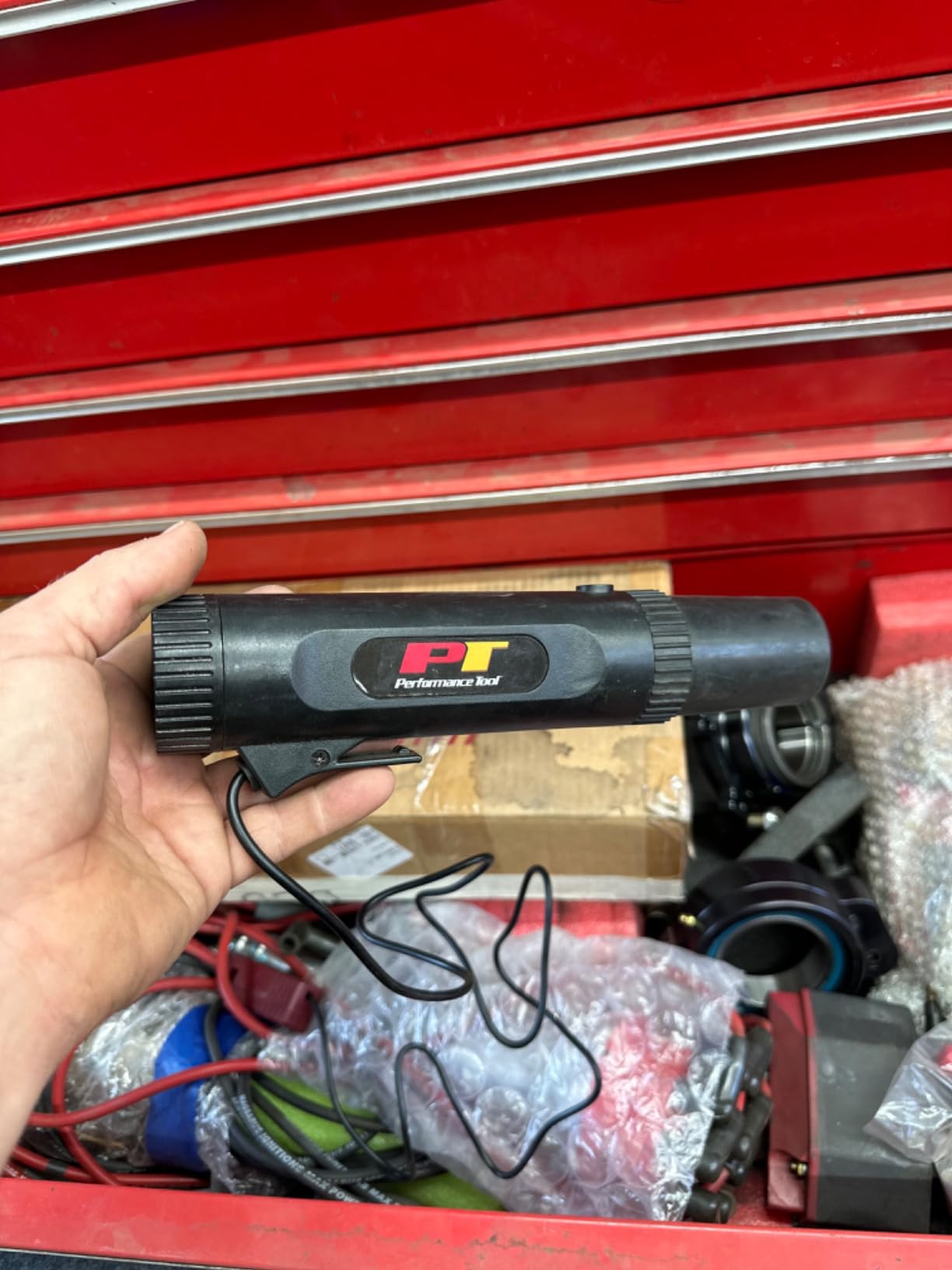
The self-powered format is the whole point of this tool, and owners justify the purchase on that basis alone. Vintage engines, race cars and vehicles with relocated or rear-mounted batteries are exactly the cases where battery leads are a nuisance, and this light simply removes them. The single-cable setup also means you can read a mark from underneath the car without a lead snaking back to a battery.
It works across all gas engines plus outdoor power equipment, motorcycles, snowmobiles, mowers and tractors, and the detachable inductive pick-up is explicitly designed to work with magnetos. A vehicle with no battery at all is still a vehicle you can time.
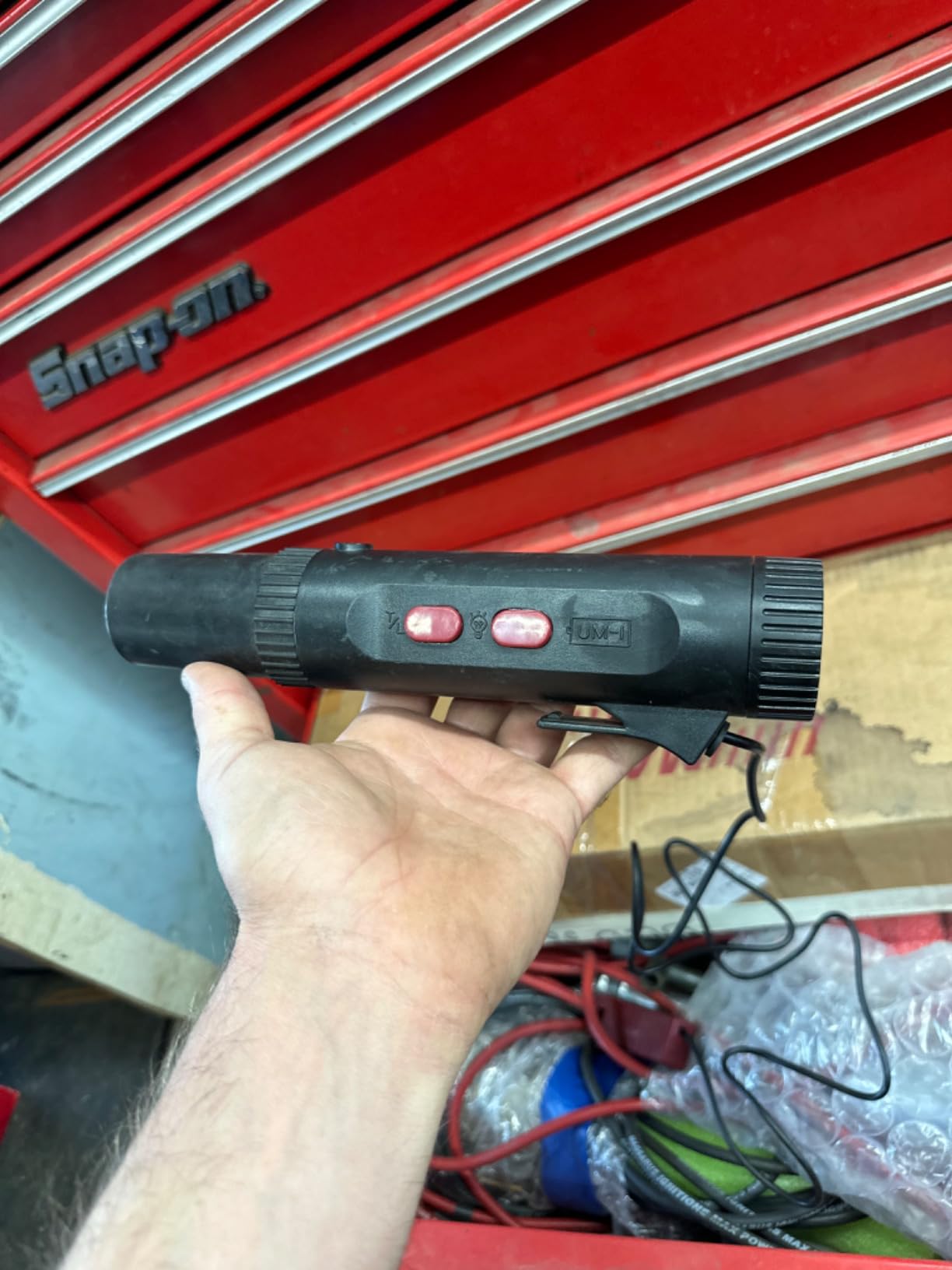
Timing performance is generally rated as good, with one caveat that several buyers simply accept: bright sunlight defeats the strobe on larger balancers, so they work in a garage or at a track. Inside a shaded bay the LED flash reads a mark clearly.
Reviewers report the self-powered format working on both 6V and 12V cars, including old flatheads, which is where this design pulls well ahead of clip-powered budget lights that assume a modern electrical system.
Why self-powered earns its place?
It solves a physical problem no clever electronics can. A car with the battery in the trunk, under a seat or in a custom relocated bay may have no convenient positive terminal near the engine bay, and every clip-powered light becomes a puzzle of extension leads.
It is also the format that reaches magnetos and batteryless machines, where there is no electrical system to clip into at all.
What to plan around?
Batteries are not included, and that is the most common practical complaint. Two D cells are a trivial cost but an easy thing to forget on the morning you need the tool.
Brightness in full sun, the weak work light and a fiddly top switch are the other gripes. If you tune outdoors in daylight, a self-powered light will not be your only instrument.
7. ESI 130 Self-Powered Timing Light – Best for High-RPM Accuracy
- Highest average rating in the roundup with owners calling it the best they have used
- Flashes reliably at full-advance speeds where cheaper xenon guns quit
- Self-powered so it works on 6V 12V and 24V systems with no leads
- Sheet-metal clamp assembly is far more rugged than plastic clips
- Made in the USA and noticeably better finished than imported equivalents
- Flash is not bright enough for open outdoor use in full daylight
- Some reading jitter on engines with old frayed plug wire strands in the clamp zone
- No carrying case included
This is the enthusiast and restorer pick, and the reason is a single spec that no other light here matches: accuracy to at least 14000 RPM. The dominant theme in owner reviews is that it keeps flashing at the engine speed where timing actually matters, while cheaper xenon guns fail above idle. That failure mode is the whole ballgame when you are checking full advance at 3000 RPM and above.
Being self-powered, it works equally well on 6V, 12V and 24V systems with no battery leads, and the sheet-metal inductive clamp assembly is far more rugged than the plastic clips on most competitors. It is made in Chicago and owners consistently notice the difference in finish.
The leads are heat-sleeved and rated to 1200F, which matters when you are clamping onto a plug wire next to an exhaust manifold on a big-block. Standard lead length is 4 feet, and the LED technology delivers a bright flash at all speeds rather than a strong flash at low revs and nothing above.
Because it is D-cell powered, there is no need to connect it to the car battery, and batteries commonly arrive installed, so it works straight out of the box on a first-time setup.
What the high-RPM rating buys you?
Full advance is only meaningful at speed. On a distributor engine, the vacuum and centrifugal mechanisms move the mark a long way from idle, and if your light stops flashing or starts skipping at that point, you cannot verify the curve at all.
Owners comparing cheaper xenon lights against this one report that those units would only flash intermittently or not at all around 3000 RPM. That is precisely the range where you need the reading.
What to plan around?
Daylight brightness is the one recurring limitation. It is a bright flash, but owners doing open-air work report it is not bright enough in full sun. Plan garage or shaded conditions.
Also expect some reading jitter if the clamp sits over old, frayed plug wire strands, and note there is no carrying case. Neither issue affects accuracy on a sound electrical system.
8. ROADGIVE 12V Engine Timing Light – Best for Small Engines and Marine Work
ROADGIVE 12V Engine Timing Light Strobe Lamp Inductive Petrol Ignition Timing Light Automotive Tool with Spark Plug Tester for Car Motorcycle Marine Lawnmower
- Very low entry price for a working 12V inductive timing light
- Strong xenon flash that reads the timing mark clearly in normal conditions
- Pistol-grip housing with a comfortable positive-feeling button
- Sliding inductive clips with clear red and black polarity marking
- Covers cars motorcycles boats lawnmowers and both two and four stroke engines
- Doubles as a spark plug tester but is not a substitute for a full ignition diagnostic tool
- Lightweight ABS shell feels basic and offers no advance or tachometer readout
- Listing copy is loose and inconsistent on units of measurement
This is a strobe tool, not a measuring instrument, and that is a fair trade at this end of the range. The blue-white xenon tube produces a strong flash, the sensor cable runs up to 4.5 feet, and the stated engine range covers 200 to 10000 R/min. For reading a timing mark on a boat engine, a mower or a small motorcycle, that is enough.
The ergonomic pistol handle has a button with positive feedback, and the sliding sensor clips are clearly marked red for positive and black for negative. Brightness is the headline feature in the reviews and it holds up in normal conditions rather than only in a dark bay.
What it does well?
It is built for breadth. Cars, motorcycles, boats, lawnmowers and all two-stroke or four-stroke gasoline engines on 12V systems are covered by one tool, which is the case a shared family or small marine shop actually faces.
The impact-resistant ABS shell and high-brightness lamp do the job of making the timing mark visible through a spinning pulley, which is the entire job description of a stroboscopic light.
What it does not do?
There is no advance readout and no tachometer, so it cannot tell you where full advance sits on a single-mark balancer. If you need a number, this is the wrong category entirely.
It also includes a basic spark plug tester function, which is a useful sanity check for a no-spark complaint but not a substitute for a proper ignition diagnostic. The shell feels basic, and the loose listing copy is a hint at how lightly specified this product is.
9. THIKPO TK95 Digital Timing Light – Best Switchable 2-Stroke and 4-Stroke
THIKPO Digital Automotive Timing Light Gun with Tachometer & 0-90° Advance
- Packs tachometer 0-90 degree advance and strobe into one mid-price unit
- Linear xenon flash tube stays legible in daylight
- Switchable 2-stroke and 4-stroke modes broaden engine coverage
- Polarity and overload protection reduce risk of a damaged unit or dead battery
- Housing is drop tested which is unusual at this price
- Newer listing with a small review base so long-term reliability is not established
- Inductive clamp only works on the number one plug wire and is easily mounted backwards
- Must be kept clear of the exhaust manifold in tight engine bays
The TK95 is a recent addition to the category and its specification sheet reads like the established Innova-style digital guns at a noticeably lower price. It covers a 0 to 90 degree advance display with adjustment, a tachometer from 249 to 9990 RPM, and a bright linear xenon flash tube that is explicitly sold for daylight calibration.
The switchable two-stroke and four-stroke modes are the feature that separates it from most rivals. If your rotation covers a mix of motorcycles, marine engines and cars, having a mode for the 2-stroke firing event is a real convenience rather than a checkbox.
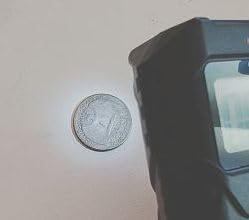
It suits 10-16V ignition systems: DIS, traditional, electronic and computer-controlled, domestic and imported. Polarity recognition, overload protection and a drop-tested housing are all unusual inclusions at this level, and the 1-year warranty with 30-day replacement partly offsets the short field history.
Two operating notes from the manufacturer. The clamp attaches to the number one plug wire with the arrow pointing toward the plug, and the sensor must be kept away from the exhaust manifold, which is awkward in a tight engine bay.
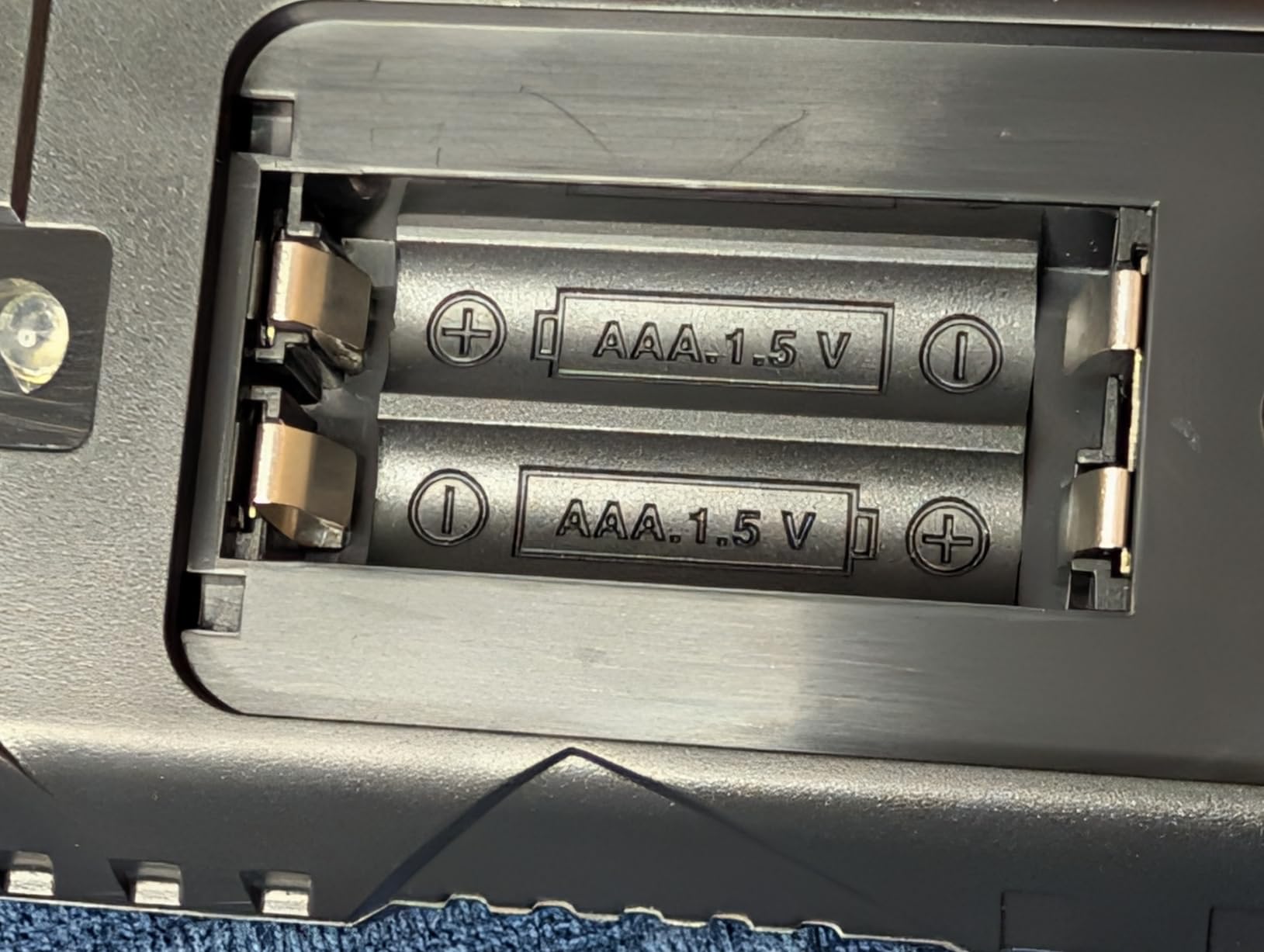
What makes it interesting?
The linear xenon tube is the differentiator here. Most budget units use a bulb whose brightness falls away as revs rise, which is exactly when you need it most. A linear tube spread across the housing stays readable in daylight, which is the most common complaint about mid-price lights.
Combined with a 9990 RPM tachometer range and switchable stroke modes, it covers the widest box of engines in this roundup at a mid-range price.
What to watch?
The review base is small and concentrated among early buyers, so long-term reliability is genuinely unknown. Treat it as a tool with a warranty rather than a proven shop instrument, and check it thoroughly before committing to a tuning job.
The clamp works only on the number one plug wire and is easy to install backwards, which produces no flash. Mark the arrow before first use.
10. MSD 8992 Timing Pro Timing Light – Best for MSD and Aftermarket Ignitions
- Stable bright flash from a linear xenon tube visible in daylight
- Reliably reads MSD multi-spark and other high-output aftermarket ignitions
- Secure pick-up clamp and detachable leads that stay put at high RPM
- Compact body a technician can hold and aim easily
- No advance or tachometer display
- it is a straight strobe not a timing analyser
- Switch is on the gun body rather than a trigger which several owners dislike
- Not self-powered so it needs a 12V source
- Molded case is an open cavity with no foam insert
This is the specialist pick, not a value pick, and the reason is narrow but important: owners buy it because almost nothing else in its class reads MSD multi-spark and other high-output aftermarket electronic ignitions. Several report it working on motors where both Snap-on and Matco dial-back lights gave up entirely.
One owner reports two auto shops failing to set timing on an engine with an MSD box, then getting it dialled in with this light in about fifteen minutes. That is the whole use case. The flash is stable and bright, and the pick-up stays locked on as revs climb, which is where cheaper inductive clamps lose the signal.
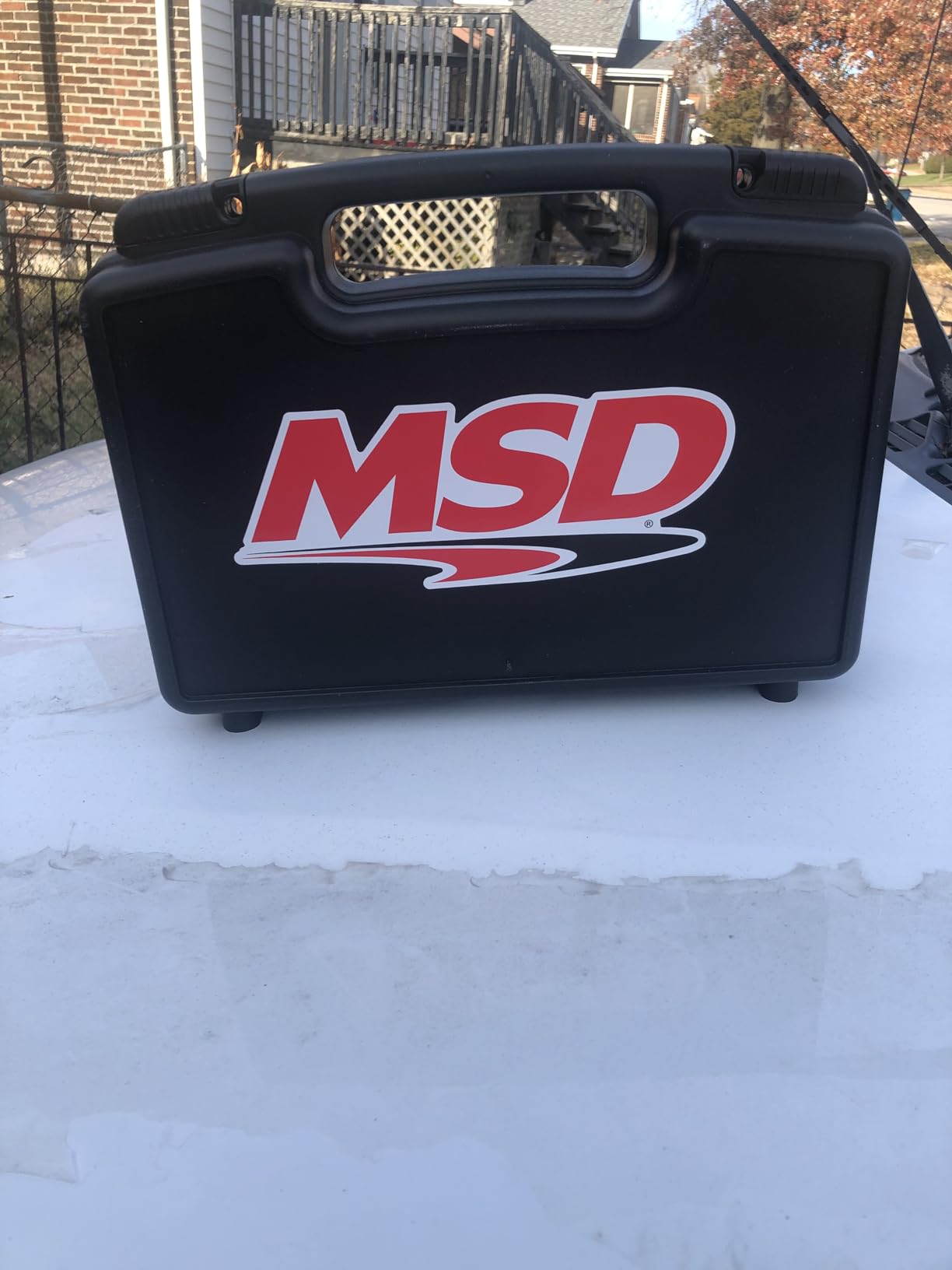
It is essentially a plain Matco-style strobe without the dial-back feature. That is not a criticism so much as a description: the tool does one thing, does it very well, and includes a no-retard-as-RPM-increases design. Detachable leads and a compact 1.9 pound body make it easy to carry to a track or a race car.
Owners repeatedly note the bright, stable flash from the linear xenon tube as the standout quality, along with the fact that it does not lose the reading when the engine is on the rev limiter.
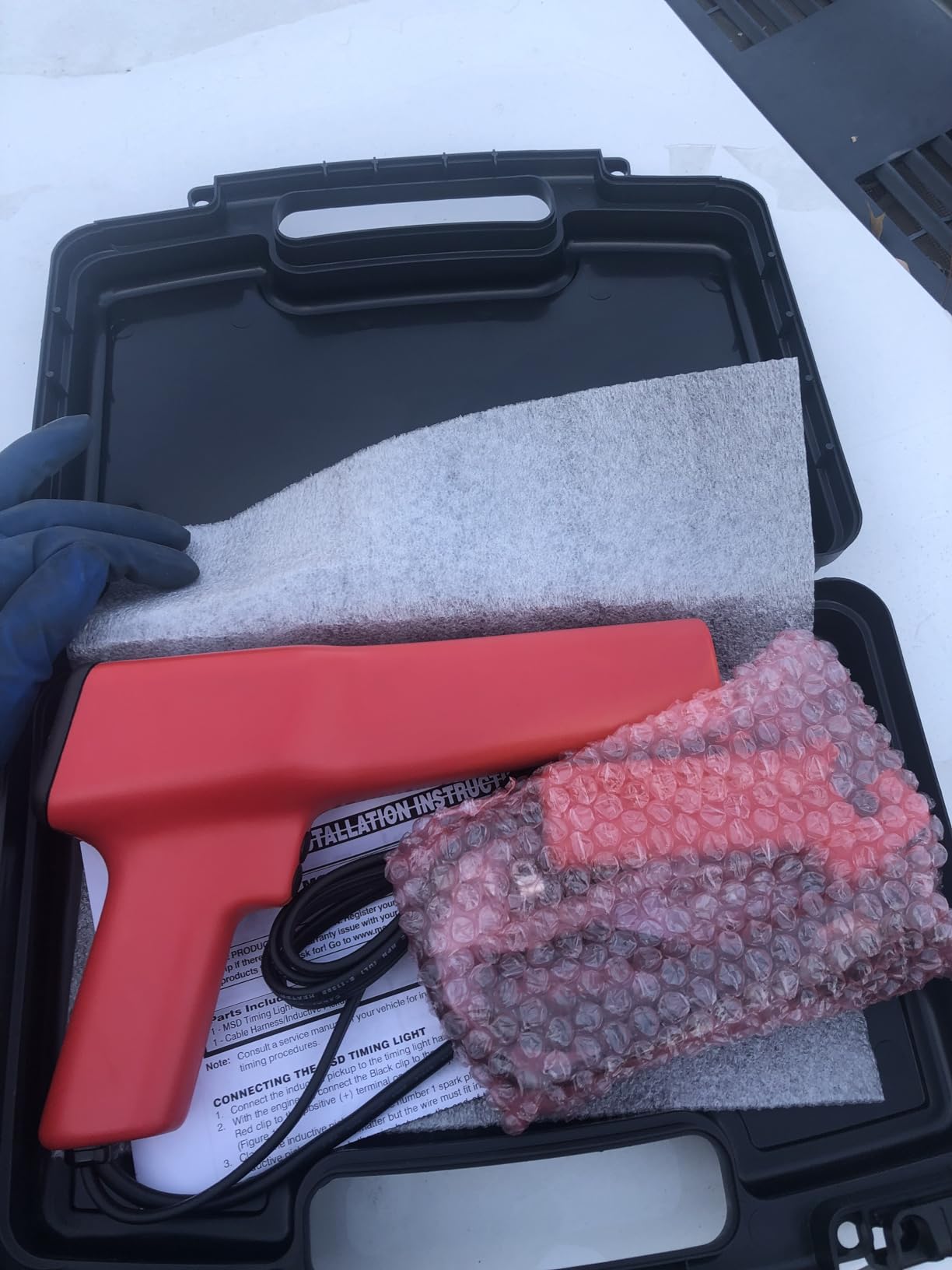
When you actually need this?
If you run a multiple-spark or capacitive discharge ignition, this is the safest purchase in the roundup regardless of price. Inductive pick-ups are known to miss flashes on those systems and on GM HEI ignitions, so the reading misleads you without warning.
It is also a sensible second light for anyone with a race car, since it stays steady where a lighter tool may not.
What you pay for the privilege?
There is no advance display and no tachometer. It is a straight strobe, so you need a separate instrument if you want to know what RPM you are at while reading the mark.
It is also not self-powered, which partly defeats the purpose on a car with a remote battery, and the body-mounted switch is less convenient than a trigger. The near-universal reservation among owners is simply price for a very short feature list.
Why Dial-Back Lights Sometimes Read Wrong?
A dial-back light is not a precision instrument. Experienced tuners treat any timing light as a comparison tool rather than an absolute-answer machine. Practitioners on performance forums describe dial-back units reading anywhere from three to twelve degrees away from the truth depending on the make, and going unstable above roughly 3000 RPM when paired with an MSD control box and 8mm MSD plug wires. One user watched a reading jump from 30 degrees BTDC to 10 degrees ATDC on the same pull.
Cheap unbranded dial-back units are the least trustworthy of all, with users measuring four to five degrees of error from mid to high RPM and discarding the tool. Different lights also disagree with each other on the same motor, which is why the standard cross-check is to borrow several and compare before trusting any number.
There is a mechanical reason as well as an electrical one. The advance barrel simulates ignition advance by rotating the timing scale, so any error in where the barrel thinks the TDC reference sits becomes a permanent offset in every reading. On an engine with a degreed harmonic balancer that has drifted, or on plug wires with frayed strands inside the clamp zone, that offset grows.
Reliability is the other complaint. Dial-back barrels are mechanical, and one owner’s MSD dial-back lasted about a year with a handful of uses. A strobe with no advance mechanism has nothing to wear out.
Our advice is simple. Use a dial-back light as a comparison instrument for setting and for checking whether advance changes as revs rise, and confirm total timing with a second method before you commit to a tune.
How to Set Base Timing with an Advance Light?
Base timing is the starting point before the advance mechanisms take over, and setting it correctly saves you chasing a curve that was never wrong. The sequence below assumes a distributor engine with a graduated timing scale on the harmonic balancer.
Warm the engine to operating temperature and park it on level ground. Timing specs are given hot, and a cold reading will be misleading.
Connect the inductive pick-up to the number one spark plug lead with the arrow pointing toward the plug, then clip the power leads to the battery or use a self-powered light.
Disconnect the vacuum advance hose and plug it back into the distributor without a vacuum source. This isolates the initial timing from the vacuum curve.
Set the light’s advance barrel to zero, or select base timing mode on a digital unit, so the reading reflects initial timing alone.
Hold the light aimed at the timing mark, bring the idle down to the specified RPM, and loosen the distributor clamp just enough to rotate the housing.
Slowly rotate the distributor until the timing mark on the balancer lines up with the pointer on the light.
Lock the distributor clamp, recheck the reading, then mark the balancer and the distributor housing so the position can be repeated later.
Reconnect the vacuum advance hose and recheck timing. A few degrees of change under vacuum is the advance working correctly.
Raise the revs progressively and watch the mark. The number should move smoothly with RPM if centrifugal advance is healthy, and hold steady at high revs once the curve is complete.
On an engine with only one timing mark, step six does not work. You either degreed the balancer to a full scale, mark your own reference points, or use a light with an adjustable advance barrel to count out the degrees from TDC.
Buying Guide: The Criteria That Decide Your Purchase
Buy for how the engine is built, not for the specification sheet. Four criteria decide almost every purchase in this roundup, and brightness is a fifth that matters more than buyers expect.
Power source: clips or self-powered
A 12V inductive light with battery clips is the default and works on anything with a battery. A self-powered light removes the leads entirely, which is the deciding factor on cars with hidden, relocated or rear-mounted batteries, and it is the only format that works on magnetos and batteryless machines. The Performance Tool W80578 and the ESI 130 both take two D cells, and neither includes them.
Dial-back accuracy: treat the number as a comparison
An adjustable advance barrel is genuinely useful on a single-mark balancer, where it is the only way to read total timing. It is also the least reliable feature on any light. Expect three to twelve degrees of error, instability above about 3000 RPM with an MSD or CD box, and wear over time. Use it to compare, then confirm.
High-RPM stability: where the real answer lives?
Most cheap xenon guns flash well at idle and become intermittent or stop entirely around 3000 RPM, which is exactly the range where full advance is meaningful. The ESI 130 is rated accurate to at least 14000 RPM, and the MSD 8992 is built for high-output ignitions that confuse lighter pick-ups. If you tune on a dyno, on a drag strip or at a track, this matters more than any display.
A National Dragster instrument test compared several lights and found that all were reasonably accurate at idle, but accuracy degraded as RPM rose, with only MSD and a Sears Craftsman model holding accuracy across the full range. That finding is worth more than any spec sheet when you are chasing a full-advance tune.
Ignition-system compatibility
Inductive pick-ups can miss flashes on GM HEI ignitions and on MSD multiple-spark systems, so they misread without warning. The MSD 8992 exists because of this. Several picks in this roundup are explicitly limited to distributor-equipped engines and simply do not work on most coil-on-plug systems, and a few are documented as unusable with CD or magneto systems.
On distributorless and coil-on-plug engines the ECU owns the curve, so there is nothing to adjust. A light is a verification tool there, and the expensive advance features do nothing for you.
Brightness: the most repeated requirement
Daylight readability comes up more than any other user demand, and it is where the budget units give ground. Xenon tubes and linear xenon tubes hold up better than small bulbs as revs rise, and self-powered LED units are often the weakest outdoors. If your engine is timed outside, work in shade or buy the brighter strobe.
Also budget for the boring things. A latching on/off switch matters more than you expect when both hands are on the engine, a case stops the tool ending up covered in grime, and a detachable lead solves a storage problem you will otherwise fight every time.
One last cross-check worth doing: if you regularly time the same engine, compare two lights before you trust either one. A timing gun or ECU logging will disagree with a strobe by a few degrees and that is normal. For the surrounding shop work, our engine cranes for garages and engine hoists for home mechanics guides cover pulling an engine far more safely than one person ever should.
Frequently Asked Questions
What is the best engine timing light for my car?
For most carbureted and distributor-equipped cars, the Innova 5568 Pro is the strongest all-round choice because it combines a tachometer, advance, dwell and voltage display with a 1-degree dial-back control. If you only set base timing, the Innova 3551 inductive light does that job with nothing to fail. Choose the MSD 8992 specifically if you run a multiple-spark or capacitive discharge ignition.
What is the difference between an inductive timing light and a digital timing light?
An inductive timing light clamps onto the number one spark plug lead, senses the spark voltage and flashes a strobe with no display and no measurement. A digital timing light uses the same inductive pick-up and strobe but adds a screen showing RPM, and usually an adjustable advance scale, plus dwell and voltage on some models. The digital type tells you numbers; the inductive type just freezes the mark.
Do timing lights show RPM?
Only the digital models do. The Innova 5568 Pro, Innova 3568, KZYEE KT60 and THIKPO TK95 all include a tachometer, with ranges from roughly 249 RPM up to 9990 RPM. Plain inductive strobes such as the Innova 3551, the OBDMONSTER and the ROADGIVE unit have no readout at all, so you need a separate tachometer to know what revs you are reading at.
What is the best timing light for MSD ignition?
The MSD 8992 Timing Pro is the safest choice, because its pick-up stays locked on and the flash stays steady on high-output aftermarket systems that make lighter inductive clamps miss flashes entirely. Owners report it working on engines where Snap-on and Matco dial-back lights failed. If your MSD application is a road engine rather than a race build, the Innova 5568 Pro also performs well with a control box.
How accurate is a dial-back timing light?
Good enough to compare, not accurate enough to trust absolutely. Owners on performance forums report dial-back units reading three to twelve degrees off depending on the make, with several degrees of error from mid to high RPM, and instability above about 3000 RPM with an MSD control box and 8mm plug wires. A dial-back barrel also wears mechanically over time. Verify total timing with a second method before committing to a tune.
How do I tell if my engine timing is too advanced?
Symptoms of excessive advance include light backfire on decel or on the overrun, a harsh or droning idle, detonation that feels like a rattle under load, rising cylinder temperature and a loss of power rather than a gain. On a light with an advance readout you can also watch the total angle at idle against the spec for your cam and compression ratio. Remember that initial timing and total timing are different numbers on most engines.
Can I time an engine without a timing light?
You can, but not precisely. Most builders set initial timing by ear for a rough idle, then confirm with a light, and that is a real workflow rather than folklore. A timing gun or ECU logging gives you numbers, and either is a legitimate cross-check, but a strobe remains the only way to see the mark and the engine running at the same instant. On a coil-on-plug engine the ECU sets the timing regardless.
Are the cheapest timing lights any good?
For setting base timing on an older engine, yes. The OBDMONSTER 12V inductive unit and the ROADGIVE light both use bright xenon tubes and read a mark clearly, and either is a sensible first purchase. The limits are consistent: strobe consistency at low idle, brightness in direct sunlight, and thin housing quality. If your engine is older or the work is a one-off, they are good value. If you tune regularly, spend more.
Conclusion
The Innova 5568 Pro is the best timing light for engine tuning overall, because tachometer, advance, dwell and voltage in one housing cover everything a tuner actually does with the tool. The Innova 3568 is the cleaner shop all-rounder, the ESI 130 is the choice when accuracy above 3000 RPM matters, the OBDMONSTER covers occasional and vintage work, and the MSD 8992 is the answer when a multiple-spark or CD box is involved.
Whichever you choose, verify it against a second method before you commit to a tune, and check it on a live engine before the packaging goes in the bin. That single habit catches the small minority of units that arrive dead and saves a wasted Saturday.