
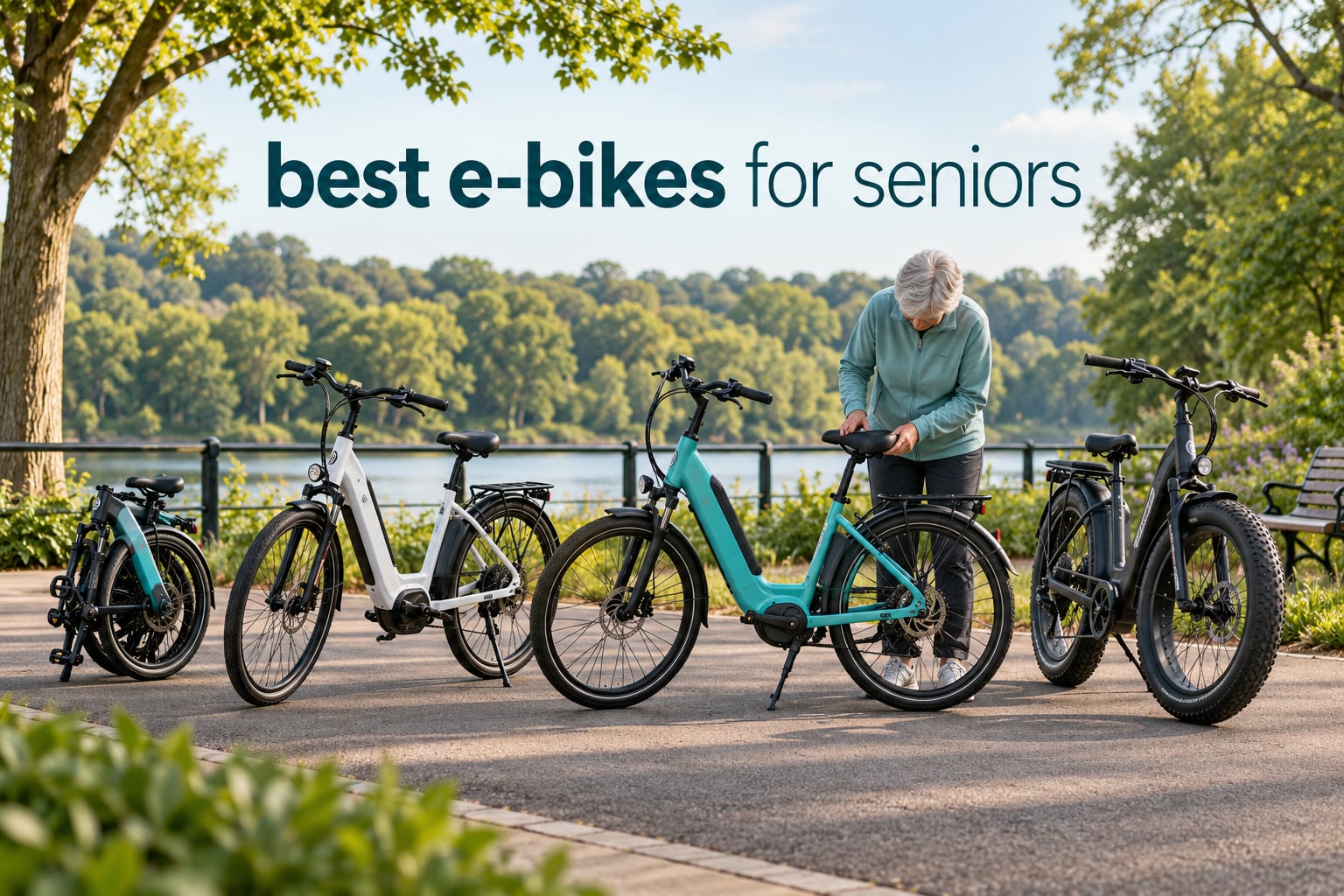
Shopping for the best e-bikes for seniors is not the same job as shopping for a fast e-bike. A rider in their seventies is usually weighing three things a performance buyer never thinks about: can I get my leg over this frame, can I actually lift this thing into a car, and do the brakes work with hands that have lost strength. Get those three right and the rest is comfort. Get them wrong and the bike collects dust in a garage.
We compared 12 step-through and low-step e-bikes on exactly those criteria, plus range honesty, motor behavior, and where you would take it for repairs. Weights, battery sizes, brake types and certifications come from the manufacturer specifications and from what owners report after months of riding, not from the marketing headline. The published range figures are de-rated here, because a number printed on a listing is almost always measured on the lowest assist level with a light rider on flat ground.
Two things came up again and again. First, weight is the single biggest factor people underestimate, and a bike that needs a second person to lift is not a realistic purchase no matter how good the ride is. Second, the support channel matters more than the spec sheet: a bike you can walk into a shop for matters a great deal when you are not going to become your own mechanic. If you also want to compare a bike against a stationary option, our picks for the best comfort bikes for seniors cover the indoor side of that decision, and our guide to the best recumbent exercise bikes for seniors goes deeper on what is available indoors.
Top 3 Picks for Best E-Bikes for Seniors

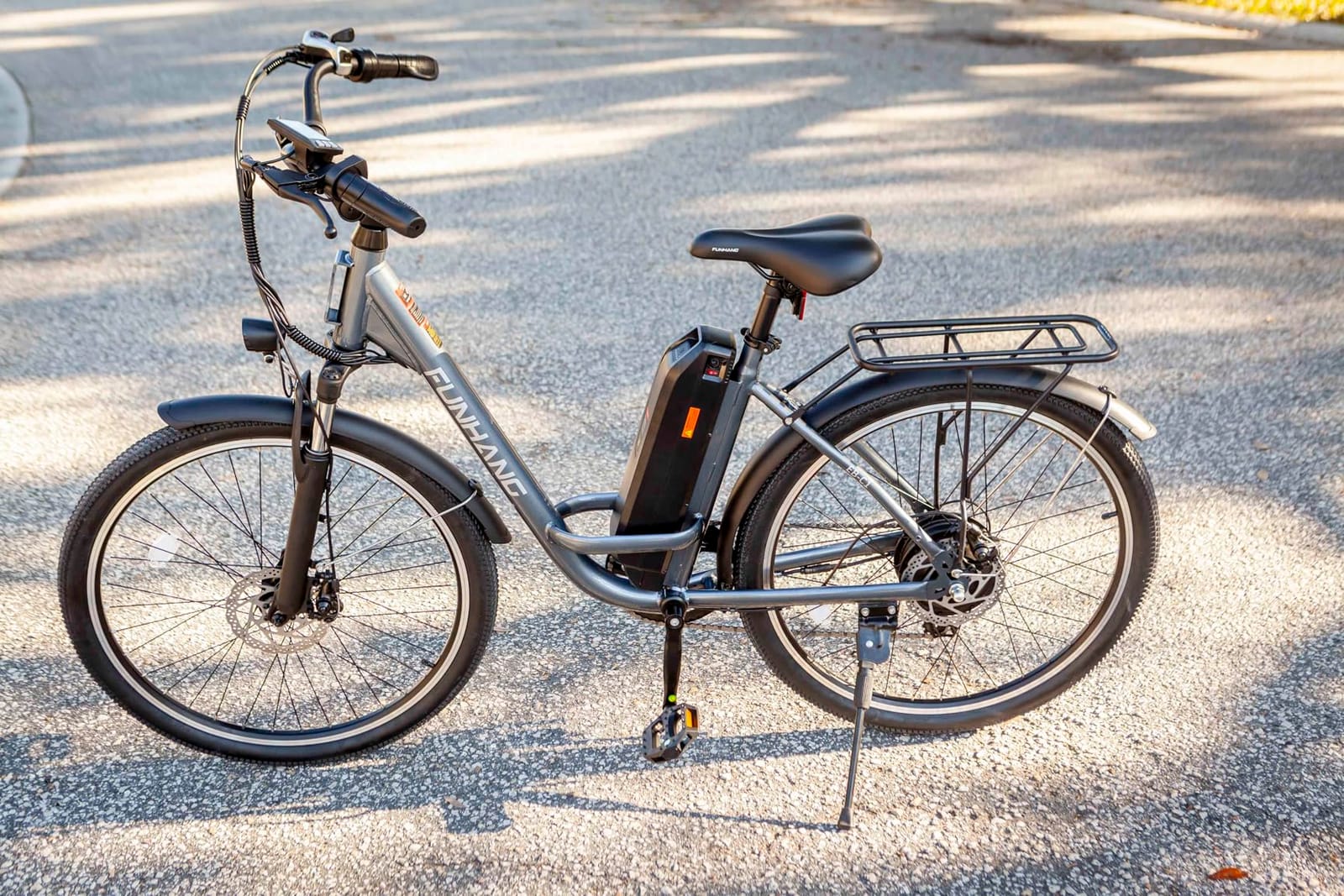
Funhang EB-C2 Step-Through
- Step-through frame
- adjustable stem and seat
- removable 374.4Wh battery
- UL 2849 certified
Heybike Cityscape 2.0
- Upright cruiser geometry
- removable 468Wh battery
- rear rack included
- throttle and pedal assist
Gotrax Dolphin
- 49 pounds with battery out
- aluminum frame
- replaceable standard wheels
- 6 km/h boost mode
Our number one pick is the Funhang EB-C2 because it clears every senior filter at once: a true step-through frame, a removable battery that comes off in seconds, full fenders and a rack for errands, and a documented one-year parts and technical service warranty. The Heybike Cityscape 2.0 is the one to buy if comfort and included accessories matter more than weight, and it has the largest owner base of the group. The Gotrax Dolphin is the only bike here under 50 pounds with standard replaceable wheels, which makes it the practical choice for anyone who has to carry it or service it themselves.
All 12 E-Bikes at a Glance
| Product | Specifications | Action |
|---|---|---|
| Funhang EB-C2 Step-Through |
|
Check Latest Price |
| Heybike Cityscape 2.0 |
|
Check Latest Price |
| Gotrax Dolphin |
|
Check Latest Price |
 Vivi M026TGB Folding Vivi M026TGB Folding |
|
Check Latest Price |
 Vivi MT26GUL Low-Step Vivi MT26GUL Low-Step |
|
Check Latest Price |
 Loeook EB-C2 Step-Through Loeook EB-C2 Step-Through |
|
Check Latest Price |
 Loeook EB-C1 City Cruiser Loeook EB-C1 City Cruiser |
|
Check Latest Price |
 ESKUTE Cityrun Fat-Tire ESKUTE Cityrun Fat-Tire |
|
Check Latest Price |
 ANCHEER 500Wh Commuter ANCHEER 500Wh Commuter |
|
Check Latest Price |
 Funhang EB-C1 City Cruiser Funhang EB-C1 City Cruiser |
|
Check Latest Price |
 Qlife Cityone Qlife Cityone |
|
Check Latest Price |
 MOONCOOL 700W Peak Cruiser MOONCOOL 700W Peak Cruiser |
|
Check Latest Price |
1. Funhang EB-C2 Step-Through Commuter: The All-Round Pick
- Step-through frame is genuinely easy to mount
- Removable battery charges away from the bike
- Rack and full fenders included for errands
- Five assist levels and five working modes
- 62 lb is not a solo lift
- Mechanical brakes squeal early on
- Stock saddle and thin tires usually replaced
This is the bike we keep coming back to, because it does the ordinary senior things well and skips the gimmicks. The step-through opening is low and wide, and owners repeatedly describe mounting as the part of the bike they had stopped believing was possible. The adjustable stem and adjustable seat mean one frame covers a wide spread of rider heights without a swap.
The 48V 374.4Wh battery is removable and IPX5 rated, which means it comes inside on a wet evening and charges at a kitchen counter rather than in the garage. Owners report 800 to 2,000 miles of commuting on the same pack, and the rear rack plus full fenders make it a genuine errand bike rather than a trail toy.
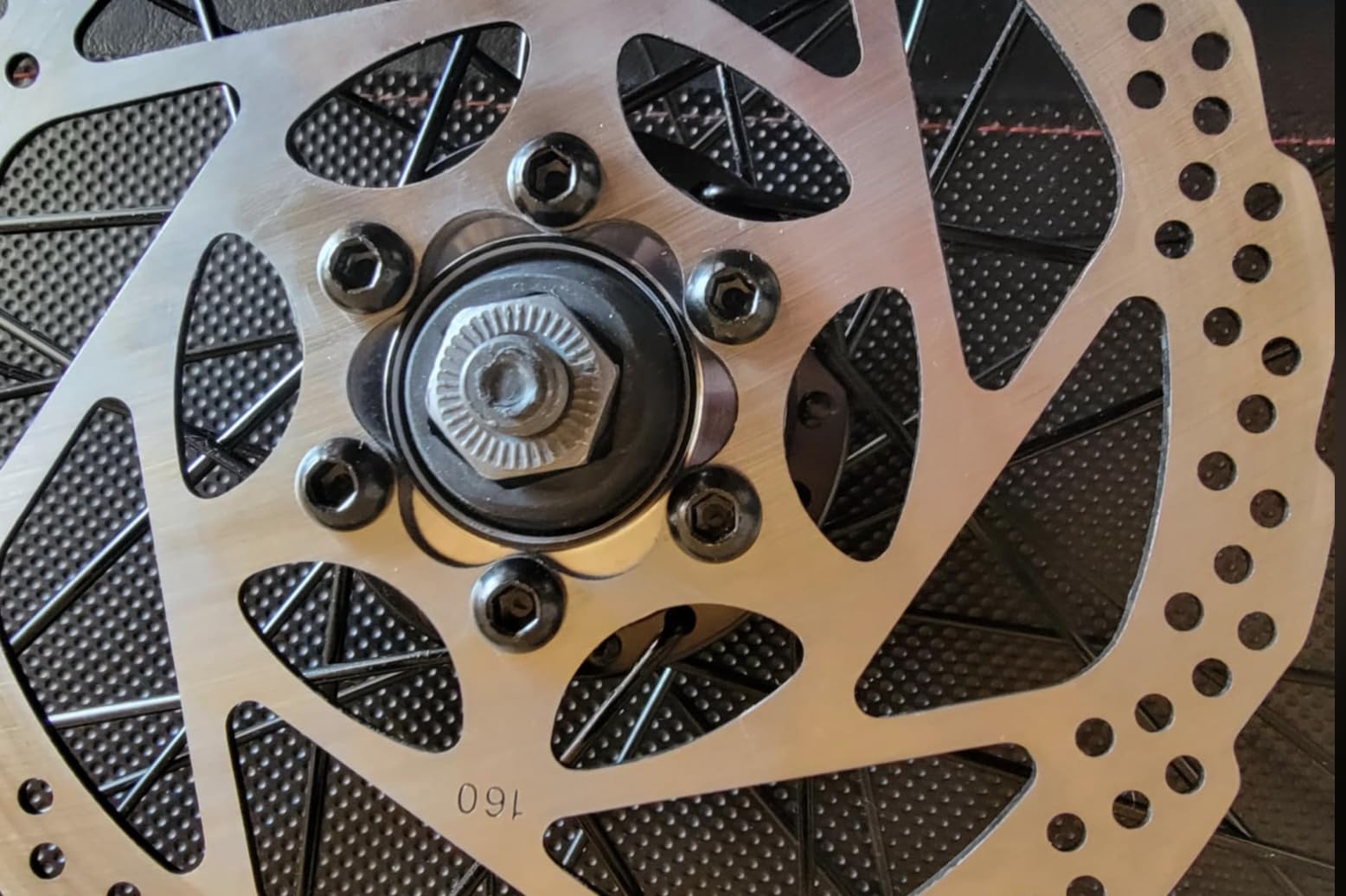
Spec-wise it is a 1000W peak brushless motor on a 7-speed drivetrain, with a front suspension fork, dual disc brakes, an LCD screen and a headlight. The battery carries both UL 2271 and UL 2849 certification, which is the safety filter we would not compromise on for an older rider, and the one-year warranty covers parts and technical service.
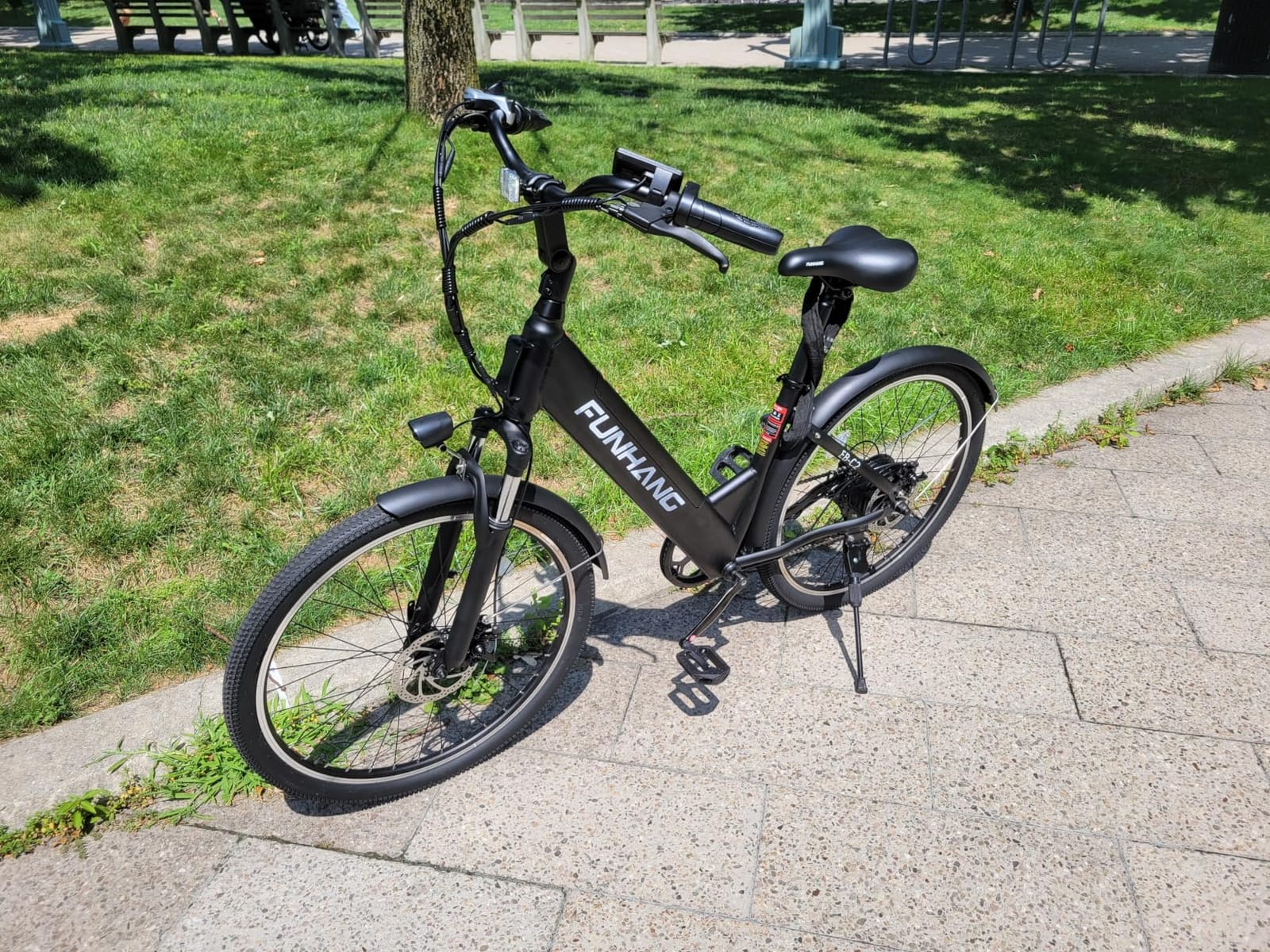
The first two months are the rough patch. Owners report squealing mechanical brakes and loose front forks that need adjusting, and the saddle and thin tires are commonly swapped in the first season. Budget an afternoon with a basic tool set, or a shop visit, before the bike settles into a routine.
What to check on a test ride
Ask the shop to let you lift the frame with the battery removed, then roll the bike at walking speed on assist level 1 to confirm the motor ramps in smoothly rather than lurching. Pull each brake lever hard from a normal riding grip and check it does not bottom out against the bar.
Where it falls short
The carbon steel frame is the honest drawback: an aluminum bike at the same specification is several pounds lighter, and several pounds decides a solo lift versus a two-person lift at 62 pounds. There is no fold either, so small-apartment storage means finding a wall to lean it against.
2. Heybike Cityscape 2.0: Best Value With the Most Accessories
- Upright cruiser geometry
- Removable UL-certified battery
- Color LCD display is bright and readable
- Rack
- lights and horn all included
- Weight is not published and the frame is bulky
- Seat is widely criticized
- Brakes squeal and feel soft at speed
With 662 owner reviews on file, this is the most thoroughly reported bike in the roundup, and the pattern in those reviews is remarkably consistent. People buy it as a first e-bike after decades away from cycling, and they rate the geometry, the battery life and the fact that the rack is included rather than sold separately.
Assist range is quoted at up to 50 miles, and the removable 468Wh IPX6 battery is one of the larger packs here. The 7-speed drivetrain, front suspension and 26 by 1.95 inch tires sit between the cheap commuter tier and the comfort tier, and the full lighting set plus horn means it is ready to ride in low light from day one.
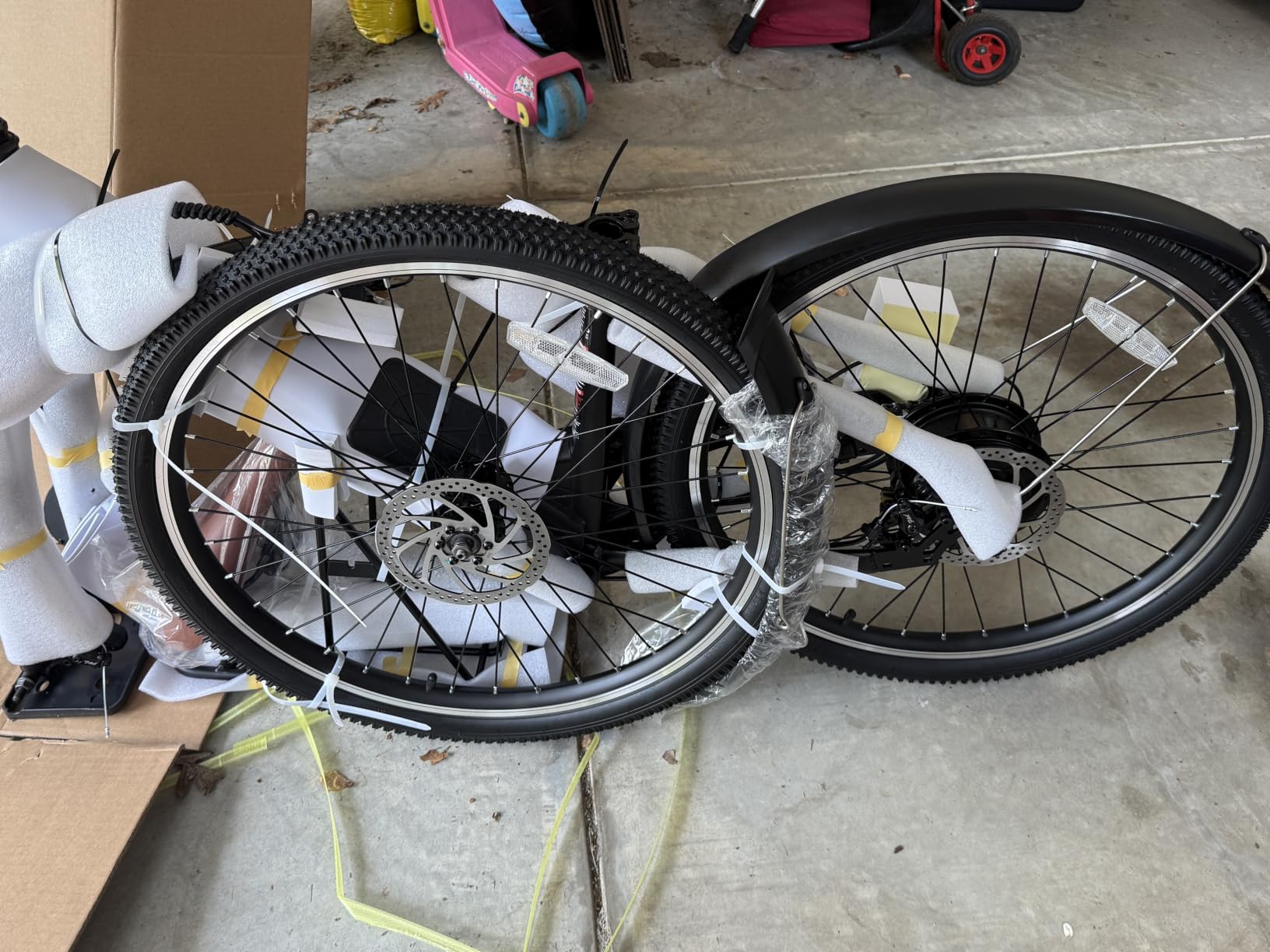
Both pedal assist and a throttle are fitted, and the thumb throttle is preferred by riders who do not want to manage a twist grip. That matters more than it sounds: a grip-twist throttle requires hand dexterity and strength that some older riders have already lost.
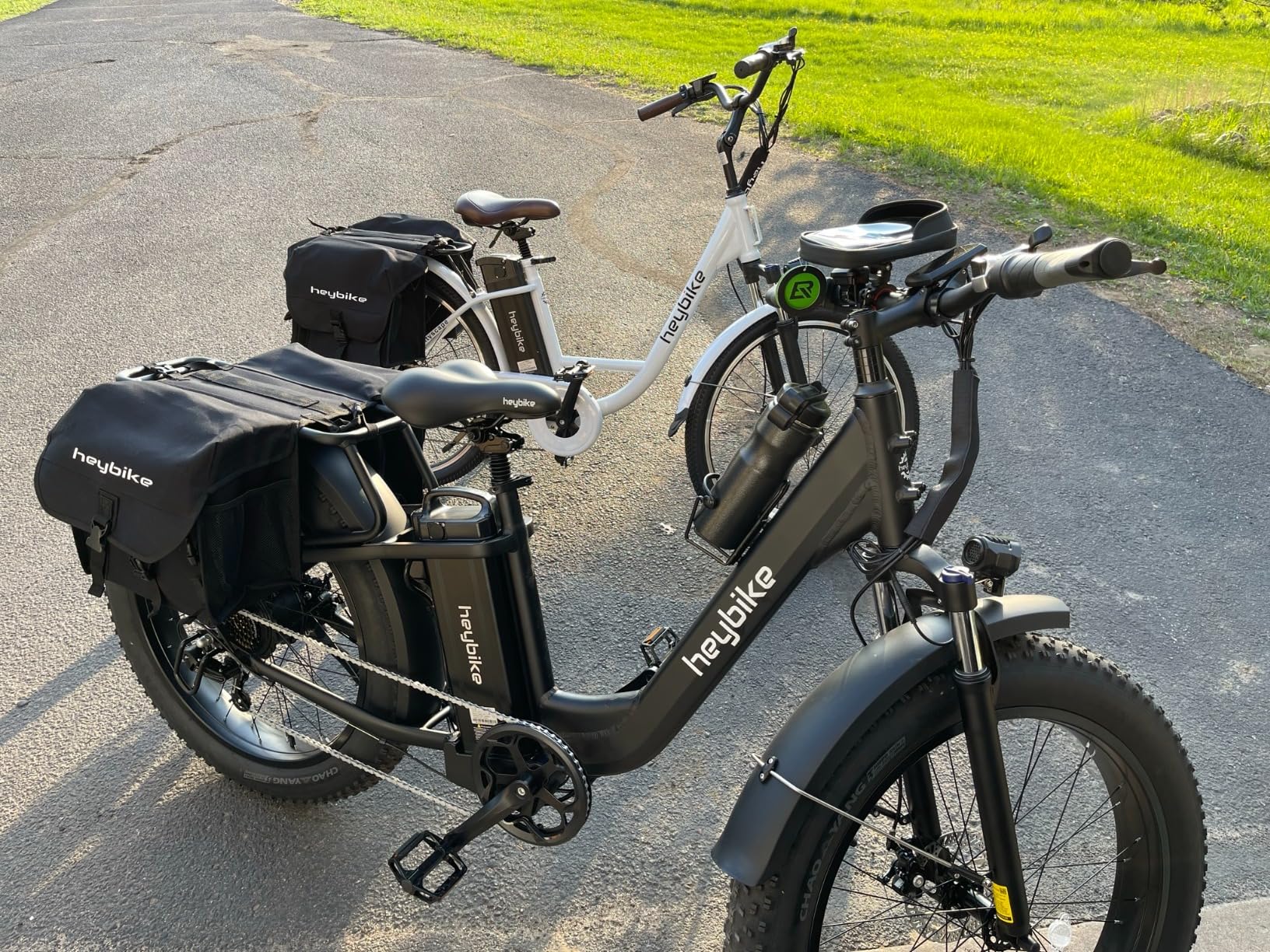
The manufacturer does not publish a weight, which is the one real gap in this bike’s paperwork, and reviewers consistently describe the frame as large and heavy to load into a vehicle. That is a serious problem if you plan to put it in a car, and it is the reason this bike is second in our ranking rather than first.
Comfort over long errands
The swept-back cruiser bars hold your wrists neutral and take weight off shoulders and lower back, which is what a rider with joint pain needs over a long shopping run. Ride it on assist level 2 for an hour rather than a five-minute spin, and expect to replace the broad faux-leather saddle.
Where it falls short
Brake noise and soft stopping at higher speeds come up repeatedly, and the LCD menus are fiddly enough that a few riders cannot read the display in direct sun. Because the weight is not published, treat this as a two-person lift until you measure it yourself.
3. Gotrax Dolphin: Best for Lightweight Handling
Gotrax Dolphin 26″ Step -Thru Electric Bike for Adults, Max 30 Mile & 20Mph
- Lightest frame in the roundup at 49 lb
- Aluminum frame is easy to handle
- Standard replaceable bike wheels
- Boost mode helps with push-start wobble
- Pedaling without assist is hard on steep hills
- Disc brakes needed adjusting out of the box
- Support is offshore email only
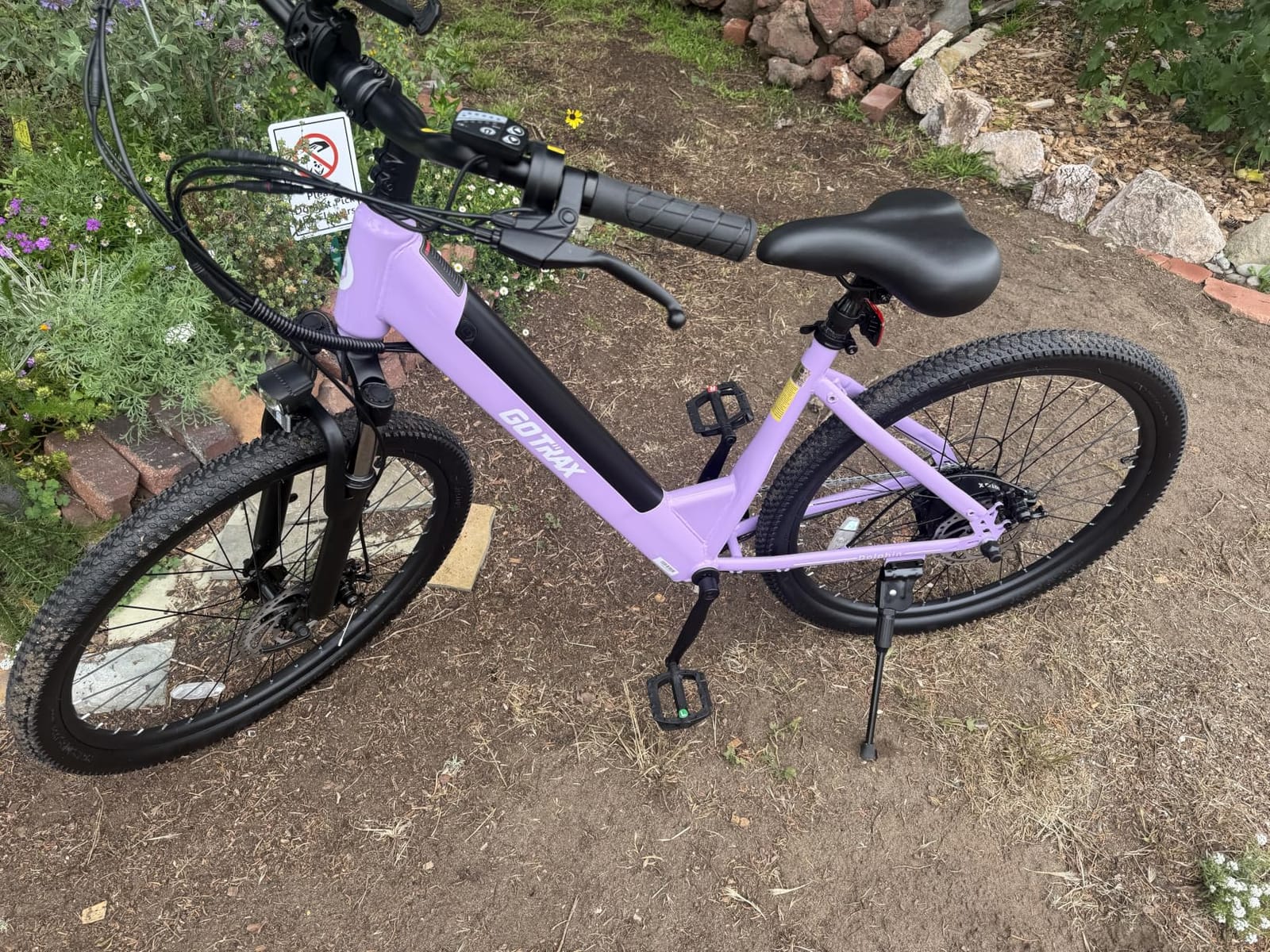
The Gotrax Dolphin answers the question we hear most from older riders: can I manage this bike on my own. At 49 pounds, it is the only bike in this roundup under 50, and the aluminum frame is the reason. Long-term owners report the pack holding full capacity past a year and the bike staying reliable beyond 1,000 miles.
It is a genuine step-through with a height-adjustable seat and ergonomic bars, Shimano 7-speed shifting, dual disc brakes, front shock absorbers and five assist levels. The 280.8Wh battery is the smallest here, quoted at up to 30 miles of assist, which is honest for a bike this light.
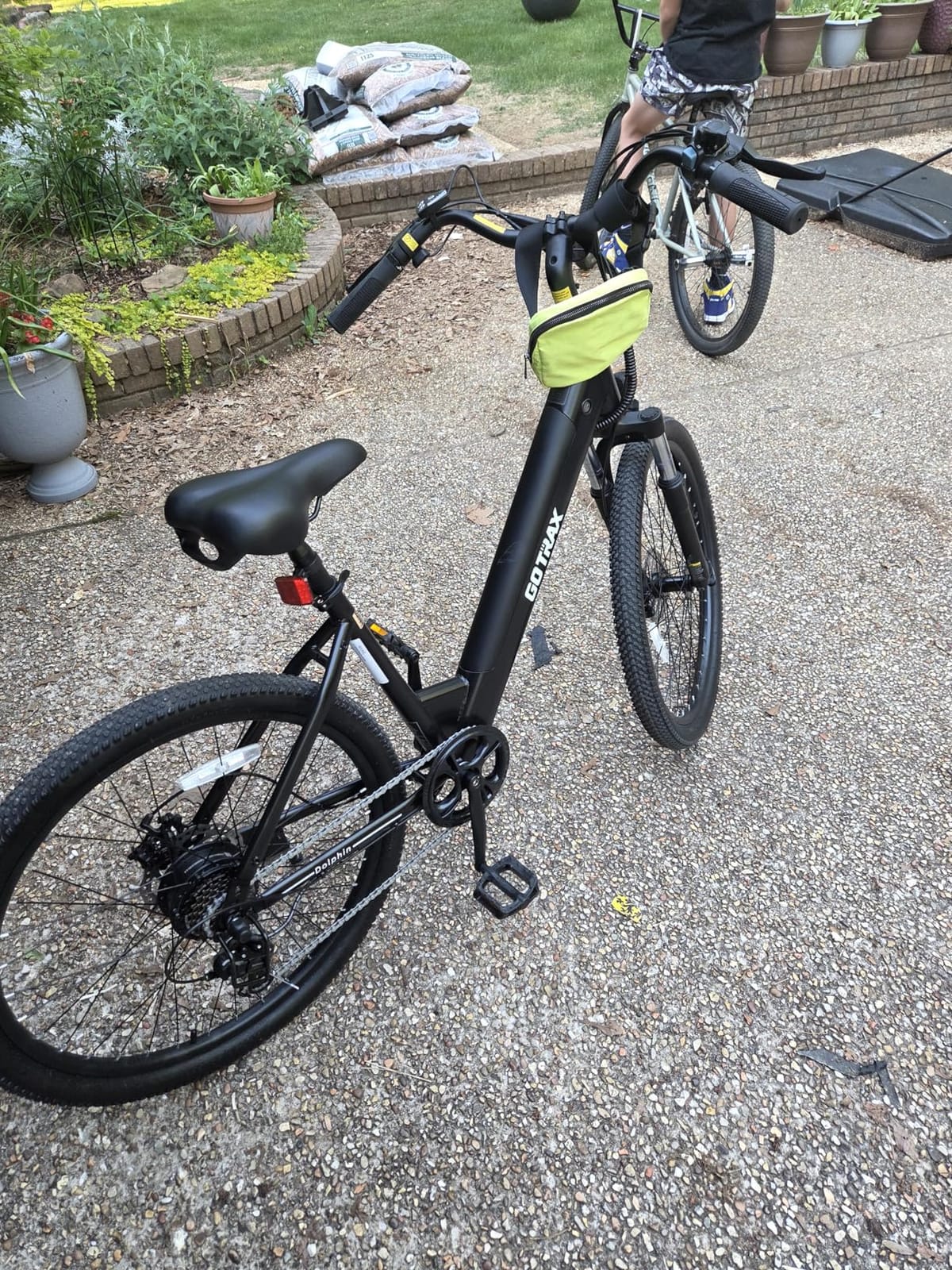
Two details make this the pick for riders with balance or mounting wobble. The 6 km/h boost mode pushes the bike along with almost no pedaling, so you can get it started from a standstill without stabbing at a throttle. And the wheels are standard replaceable bike wheels, which a local shop called a real advantage when something needs truing.
There is no integrated speedometer, so a phone or tablet mount is the practical way to track speed. If you want a simple screen for route planning and ride tracking, our picks for the best tablets for seniors cover the setup. Either way, it is a small cost for a bike your mechanic can actually work on.
Who this suits
This is the bike for a rider under five foot two, or for anyone who has to carry the bike up steps, into a boot, or onto a rail. A 49-pound frame is liftable by most adults over sixty, which no other bike in this list can promise.
Where it falls short
Without motor assist the bike is heavy on hills, and reviewers flag that pedaling power alone is inadequate on steep gradients above roughly 150 pounds of rider weight. The brakes needed adjusting out of the box and support runs through slow offshore email, so budget for a local shop doing routine work.
4. Vivi M026TGB Folding E-Bike: Best for Small Spaces
- Folds quickly for trunk and closet storage
- Removable battery charges on or off the bike
- Front and rear shocks smooth out rough roads
- Three riding modes with LCD display
- Folding frame adds weight for its class
- Range and speed are entry-level
- Weight is not published
Storage is the whole reason to buy this one, and if you live in a flat with a stairwell, a small garage, or you travel by car regularly, the fold is worth the compromise. Riders who need to get the bike into a vehicle without help report that the fold does the job as advertised.
It is a 26-inch folder, which is a sensible size: larger than the 16 and 20 inch folders that jolt out of potholes badly, smaller than a full cruiser when folded. The aluminum folding frame is described by owners as sturdier than the carbon steel folders in the same price band, and the hinges are the part to inspect closely on arrival.
The 500W brushless motor covers commuting and light trail riding, with 44 to 50 miles quoted in pedal-assist mode and 22 to 25 miles on throttle. Front and rear shock absorbers take the edge off broken pavement, and there are three working modes.
It arrives 85 percent assembled with a one-year warranty, which is helpful for anyone who cannot wrestle with a full build. Plan to spend time tightening the folding hinge and the stem bolts before the first ride, because a loose hinge on a folding bike is a safety problem, not an annoyance.
Folding convenience, in practice
The fold is a real convenience for car transport and hallway storage, and the removable battery means you are not folding a dead weight. Measure the folded size against your car boot and your closet before you buy, because listings rarely include the pedals or the folded handlebar.
Where it falls short
The hinge and extra bracing add weight over a standard-frame bike of the same class, and that weight is not published, so expect a heavier bike than the number suggests. Range and speed are entry-level, and the mechanical front and rear disc brakes are adequate rather than reassuring.
5. Vivi MT26GUL Low-Step Cruiser: Best for a Wide Fit Range
- Arc low-step frame is easy to mount
- Fit range covers very short and tall riders
- Cruise control holds a speed without pedaling
- One reviewer with a knee replacement rides again
- Heavy to pedal without assist
- Tires and tubes are commonly replaced
- Unusual tire size is hard to source locally
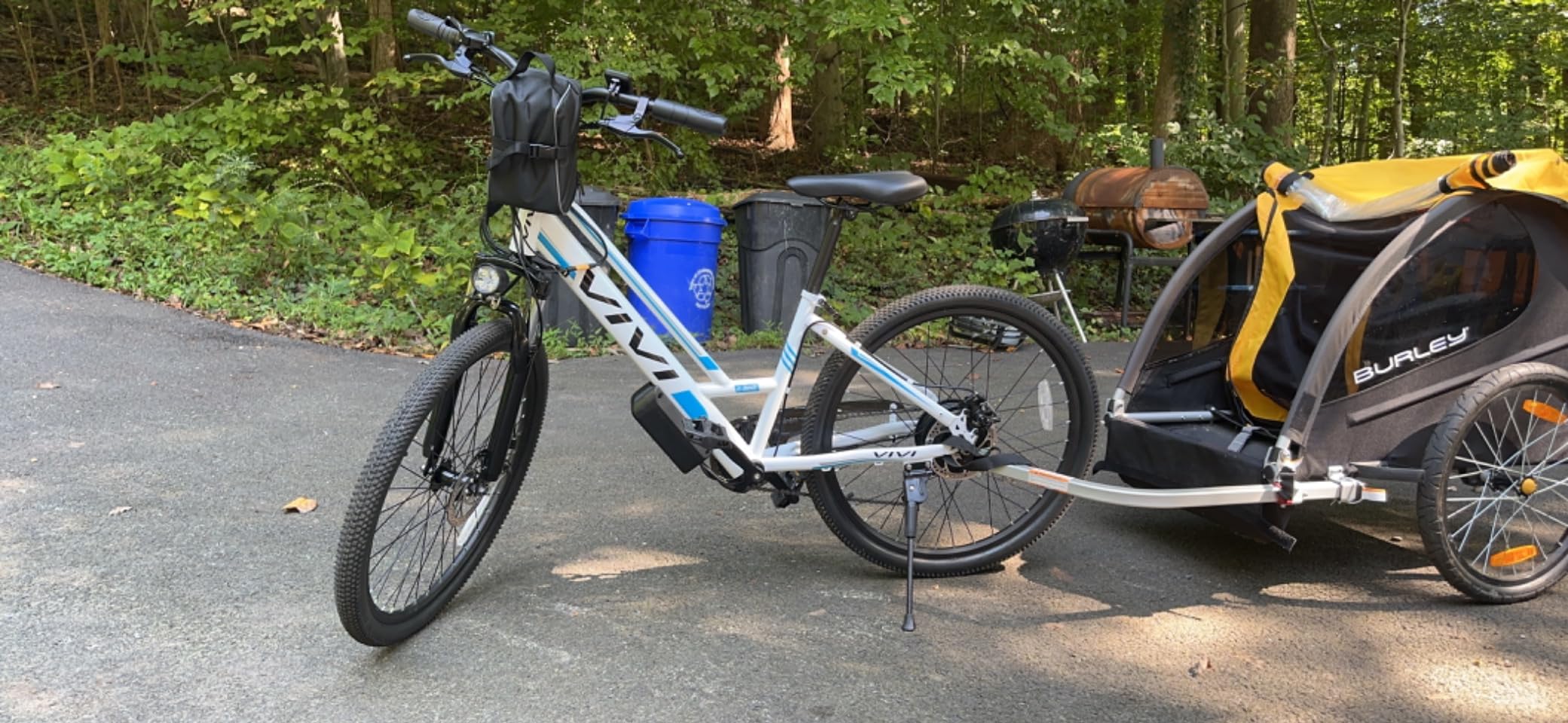
The defining number on this bike is the fit range: from 4 foot 8 inches to 6 foot 2 inches, which is the widest published span of anything in this roundup. For a household with two riders of very different heights, or for an adult who has shrunk or grown since last measured, that removes the most common reason a good bike gets returned.
The arc low-step frame has a curved down tube that opens up the step-over area, and both the handlebar and the seat adjust easily. The 500W brushless motor and a 288Wh removable battery give a quoted 25 to 31 miles electric and 44 to 50 miles on pedal assist, with cruise control plus e-bike, assisted, normal and booster modes.
One owner with a knee replacement reports riding again with their spouse, which is the outcome this whole category exists to deliver. Dual disc brakes and a suspension fork handle the stopping and the bumps.
Fit advice across the height range
Seat height and bar reach are the two things to check, and both are adjustable here. With your heel on the pedal at the bottom of the stroke your leg should be comfortably straight, which leaves a small bend at the top and keeps knee pain away. Riders under five foot two should check the reach as well, because a short rider on a long frame ends up leaning forward and loading the wrists.
Where it falls short
At 55 pounds it is heavy, and several owners find it hard to pedal without assist. The tires that come with it are criticized, and the 3 by 20 tube size is described as hard to source locally, which means a puncture in a rural area could end your ride.
6. Loeook EB-C2 Step-Through: Best for Errand Running
- Removable battery hides inside the frame
- Pedal assist takes the strain out of hills
- Rear rack and full fenders included
- Assist levels match effort to how you feel
- Mechanical brakes are weak and often swapped
- 63.7 lb is a two-person lift
- Stock seat and thin tires are usually replaced
This is the bike to look at if your e-bike is a shopping cart, not a Sunday ride. The rear rack, full fenders and 55 N.m of motor torque are aimed squarely at loaded errands, and the removable internal battery keeps the frame looking like an ordinary bicycle, which matters if it lives in a shared hallway or a car park.
Range is quoted at 25 to 30 miles on throttle and 40 to 50 on pedal assist, from a 374.4Wh UL 2849 certified pack. The motor delivers 1000W peak, and the assist levels let you set how much work you want to do on a given day, which long-term owners describe as the feature that keeps them riding when they are not feeling strong.
One 68-year-old owner reports a six-mile ride taking their heart rate to 122, which is exactly the low-impact exercise case for an e-bike in the first place.
The brakes are the weak point, and owners are candid about it: the mechanical discs are described as weak and are often replaced with hydraulics. That is a real change to the feel and the stopping power, and it is a worthwhile upgrade on a bike meant to carry shopping.
Setting up for errands
Check the rack rating before you load it, and use panniers rather than a top bag. On a bike with this much torque, keeping weight low and close to the frame matters more than the total, and the full fenders make wet-weather shopping runs practical.
Where it falls short
At 63.7 pounds this is a two-person lift, and buyers should expect to swap the saddle and the thin tires early. Owners also report frame paint defects and spot-weld cracking on some units, plus bar and wheel bolts loosening in the first weeks, and they expect to do their own maintenance.
7. Loeook EB-C1 City Cruiser: Best for Riders Who Want Full Assist
- Booster mode pushes the bike along at 4.2 mph
- Throttle plus five assist levels for minimal pedaling
- Stem adjusts 30 degrees for fit
- Rear rack takes panniers for errands
- 75 lb is the heaviest bike here
- Very hard to pedal with a flat battery
- No rear suspension
- Gauge can show bars after the pack is dead
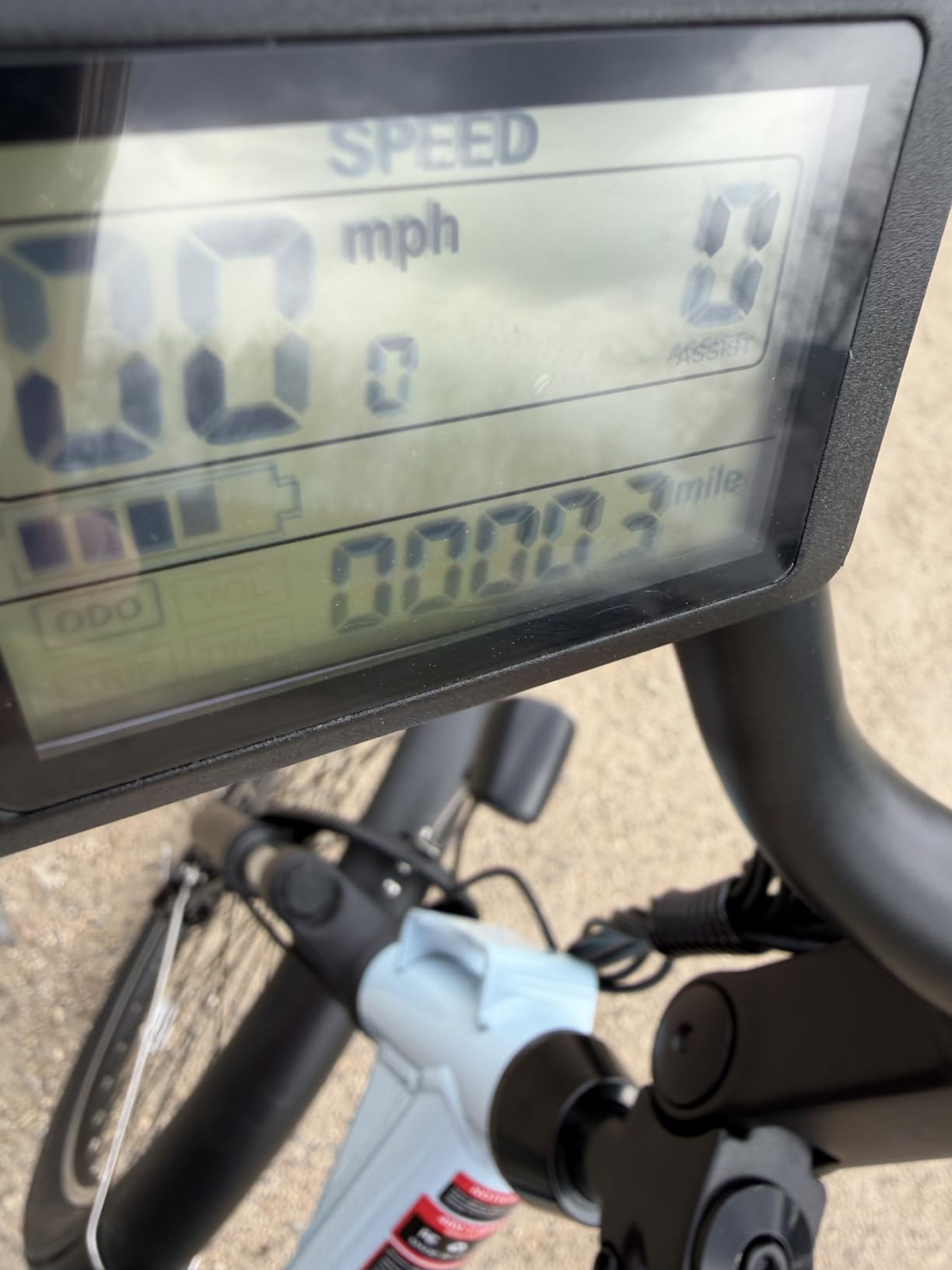
This is the bike for a rider who wants to ride rather than pedal. It carries a throttle, a booster mode that pushes the bike at 4.2 mph with almost no effort, cruise control and five assist levels, so on flat ground you can cover real distance with minimal physical effort. One 65-year-old owner reports handling gentle hills using roughly one battery bar over four miles.
The 30-degree adjustable stem is unusually generous and makes fit easy to dial in, and the rear rack takes panniers. The 374.4Wh battery is removable and IPX5 rated, with a four to five hour charge and a quoted 25 to 30 miles on electric or 40 to 50 on assist.
For a rider with limited knee strength, the combination of throttle and booster means you can start, stop and ride on a bad day without needing to push through resistance.
What full assist actually means
Full assist means the motor covers the work and your legs are passengers, which is genuinely useful after hip or knee surgery or during a flare. Practice the throttle in an empty area at walking pace before you ride anywhere busy, because a throttle that engages unexpectedly at speed is the most common way new riders get hurt.
Where it falls short
At 75 pounds this is the heaviest bike in the roundup, and one older rider reports she cannot load it onto a bus bike rack alone. It is also very hard to pedal with a depleted battery, there is no rear suspension, and the display gauge can read bars remaining after the pack is effectively dead.
8. ESKUTE Cityrun Fat-Tire Step-Through: Best for Rugged Comfort
- Under-mounted battery improves weight distribution
- Full front and rear suspension
- Very wide tires give a planted
- stable ride
- Large central display and NFC card unlock
- Substantial size and weight for limited strength
- 32 mph capability needs caution
- Alloy steel frame rather than aluminum
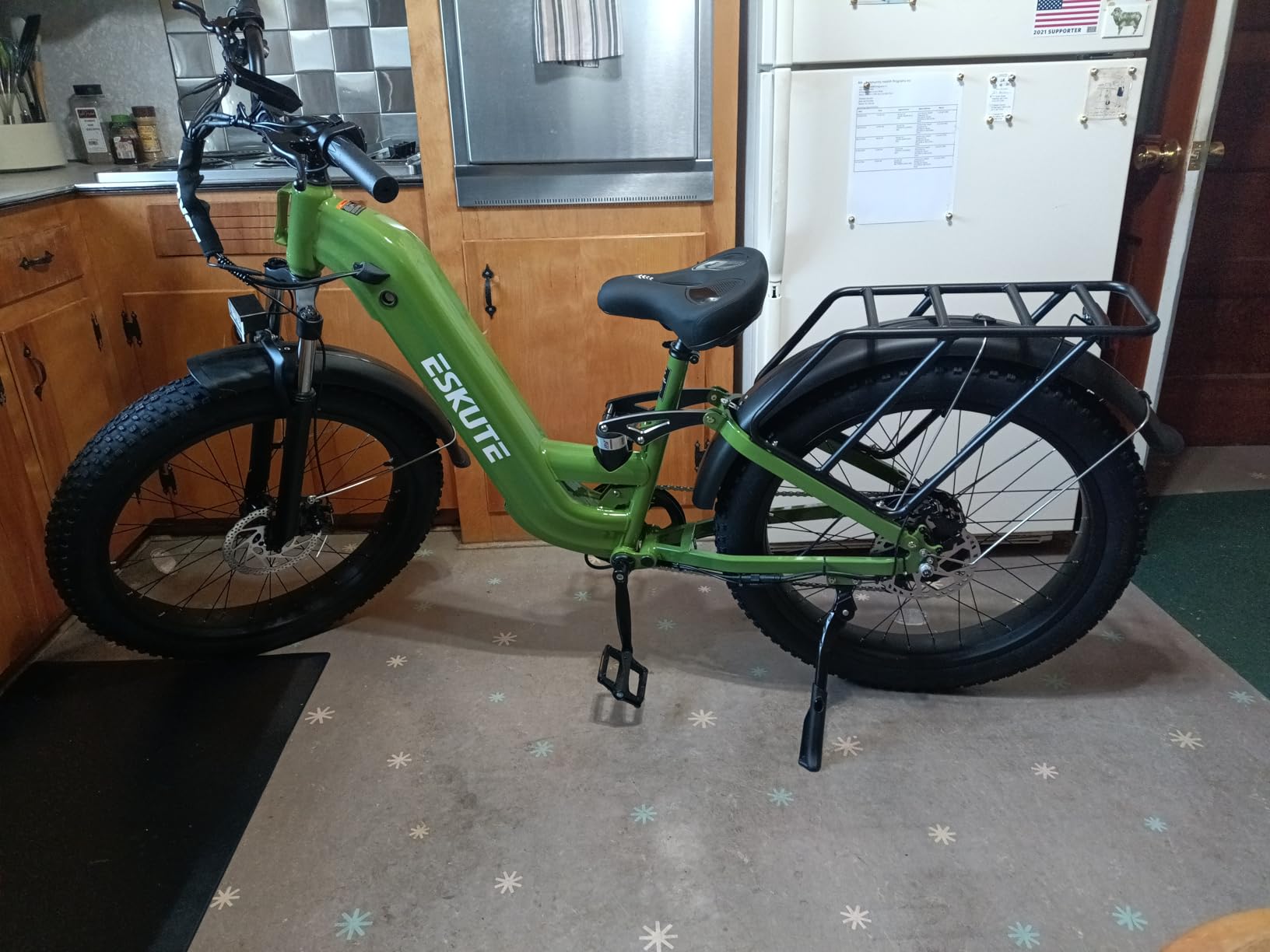
This bike has the highest average rating in the group, and the reason owners give is stability. Putting the 998.4Wh battery low and under the frame rather than up on a rack drops the center of gravity, and combined with 26 by 4.0 inch fat tires and full front and rear suspension, the result is a bike that feels planted on broken pavement, gravel paths and park trails.
Range is quoted at up to 86 miles on assist level 1, from a removable under-mounted pack. The 1800W peak motor is powerful, and the 8-speed drivetrain and dual disc brakes handle the extra mass. A large central display keeps speed, battery and mode visible without squinting, and NFC card unlocking removes the key from the equation.
For a rider who is nervous on gravel or grass paths, a wide tire is the single most confidence-building feature you can buy. It does not make you faster, it makes the bike feel like it will not slip away.

Comfort over rough ground
Full suspension plus 4-inch tires is the combination that takes the sting out of a bad path, which matters if your local greenway has gravel sections. Sit on it for twenty minutes rather than five, because the seating position is more substantial than a light cruiser and only a long sit tells you whether that suits you.
Where it falls short
Substantial size and weight make this less manageable for riders with limited strength, and the manufacturer does not publish a weight, so treat it as a two-person lift until proven otherwise. The frame is alloy steel rather than aluminum, and the minimum rider height is listed at 5 foot 4 inches.
9. ANCHEER 500Wh Commuter: Best for Long-Range Errands
- Battery hidden under the rear rack looks standard
- Cruise control and LCD display included
- Assist level acts as a daily effort dial
- One rider near 70 reports 650+ miles
- 66 lb is heavy for lifting
- Only 7 gears makes higher assist levels spin the cranks
- Assembly is long and involved
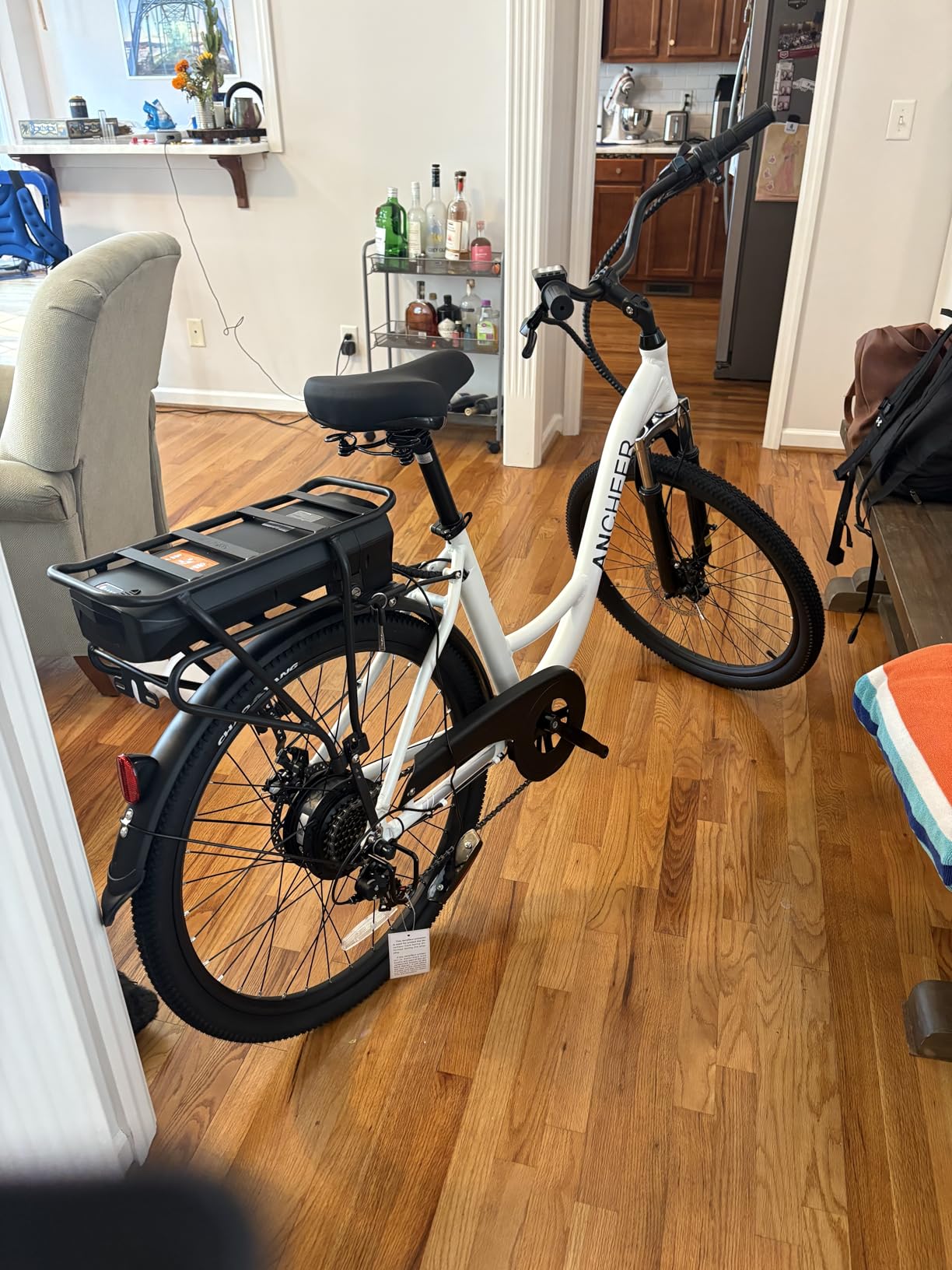
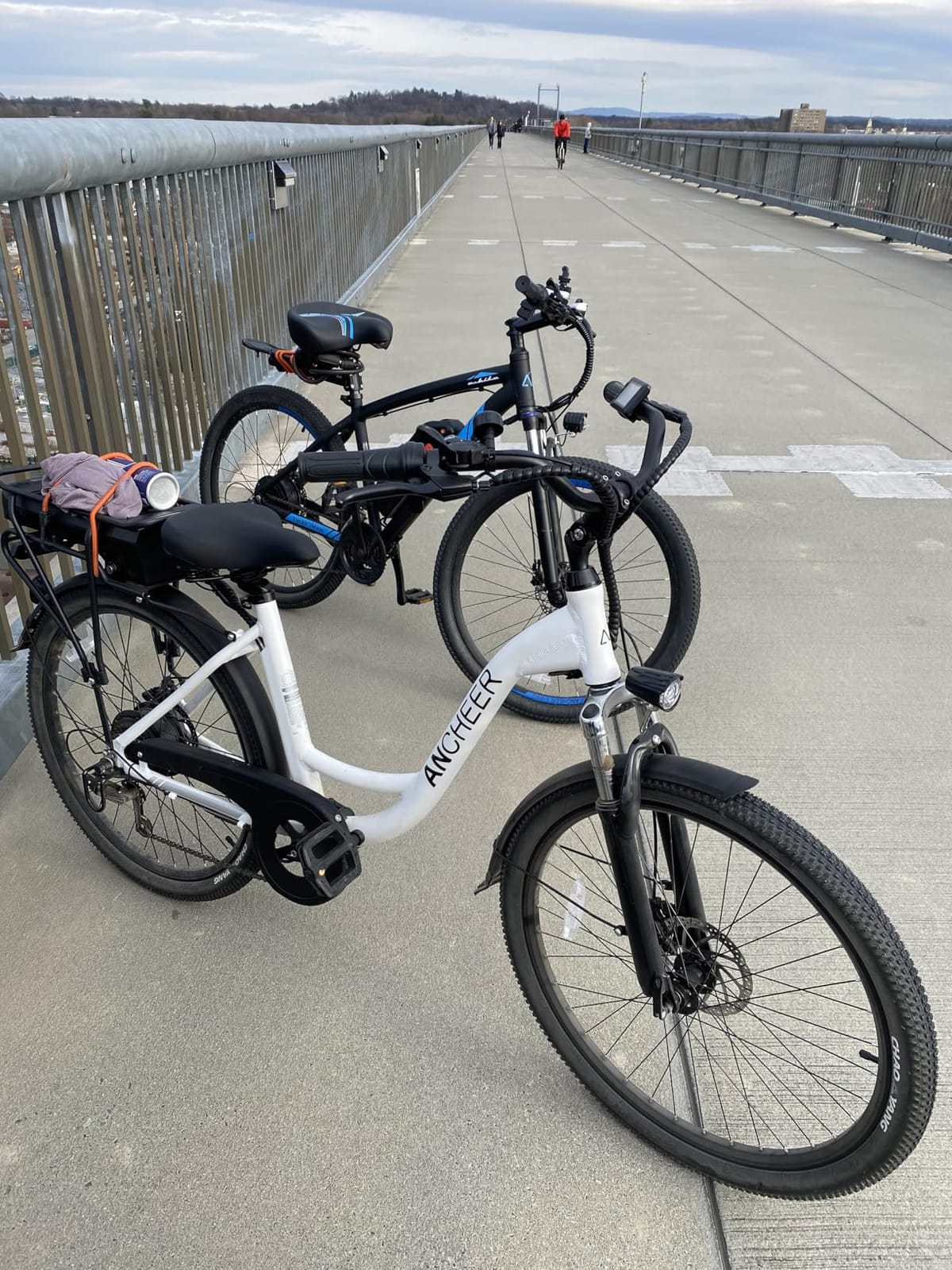
The 499Wh battery is one of the larger packs in this roundup, quoted at up to 60 miles per charge, and it hides under the rear rack so the bike still looks conventional. For a rider who does not want to ask where the charger is before every outing, that range means most people ride once a week and charge once a week.
What owners like most is the assist level treated as a dial. A rider near 70 with health issues reports 650-plus miles on the bike and describes matching the assist level to how they feel that day, which is the healthiest way to use a pedal-assist bike: full assist on a bad day, no assist on a good one.
Cruise control, an LCD display, a rear light, a front suspension fork, dual disc brakes and UL 2849 certification round out a well-equipped package. A bike shop was able to tune the gears and brakes without difficulty, which says something about how conventional the parts are.
Using the assist as an effort dial
Start every ride on assist level 1 or 2 and go higher only when you want the motor to carry you. Cruise control is worth learning on a quiet road, because it takes the effort out of a longer return leg at exactly the point where riders tend to give up.
Where it falls short
At 66 pounds it is a heavy lift, and only 7 gears means anything above assist level 2 requires very fast pedaling to keep up with the motor. Assembly is longer and more involved than comparable models, the forks cannot be locked out, and some bikes arrived with a non-functioning light harness.
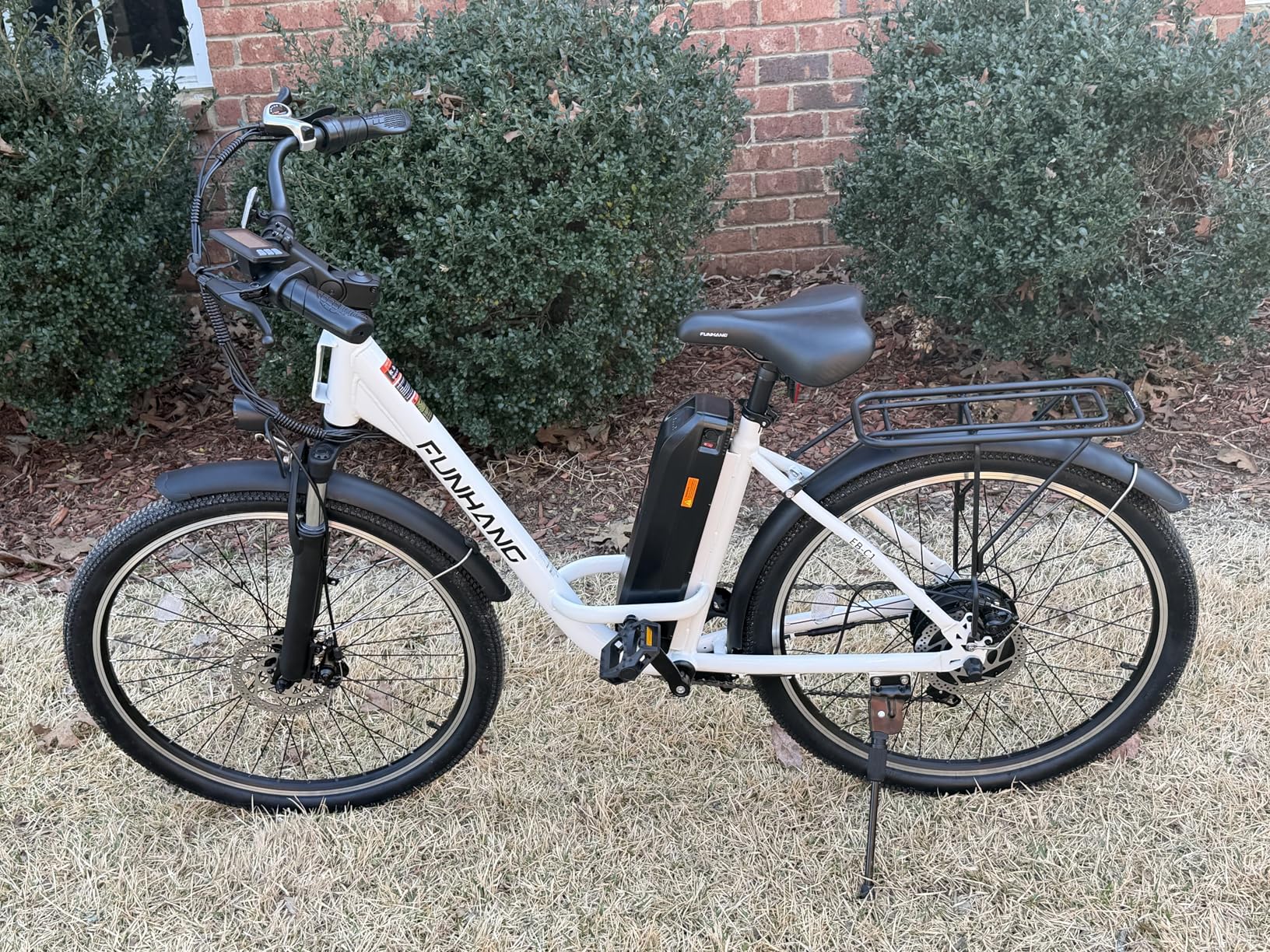
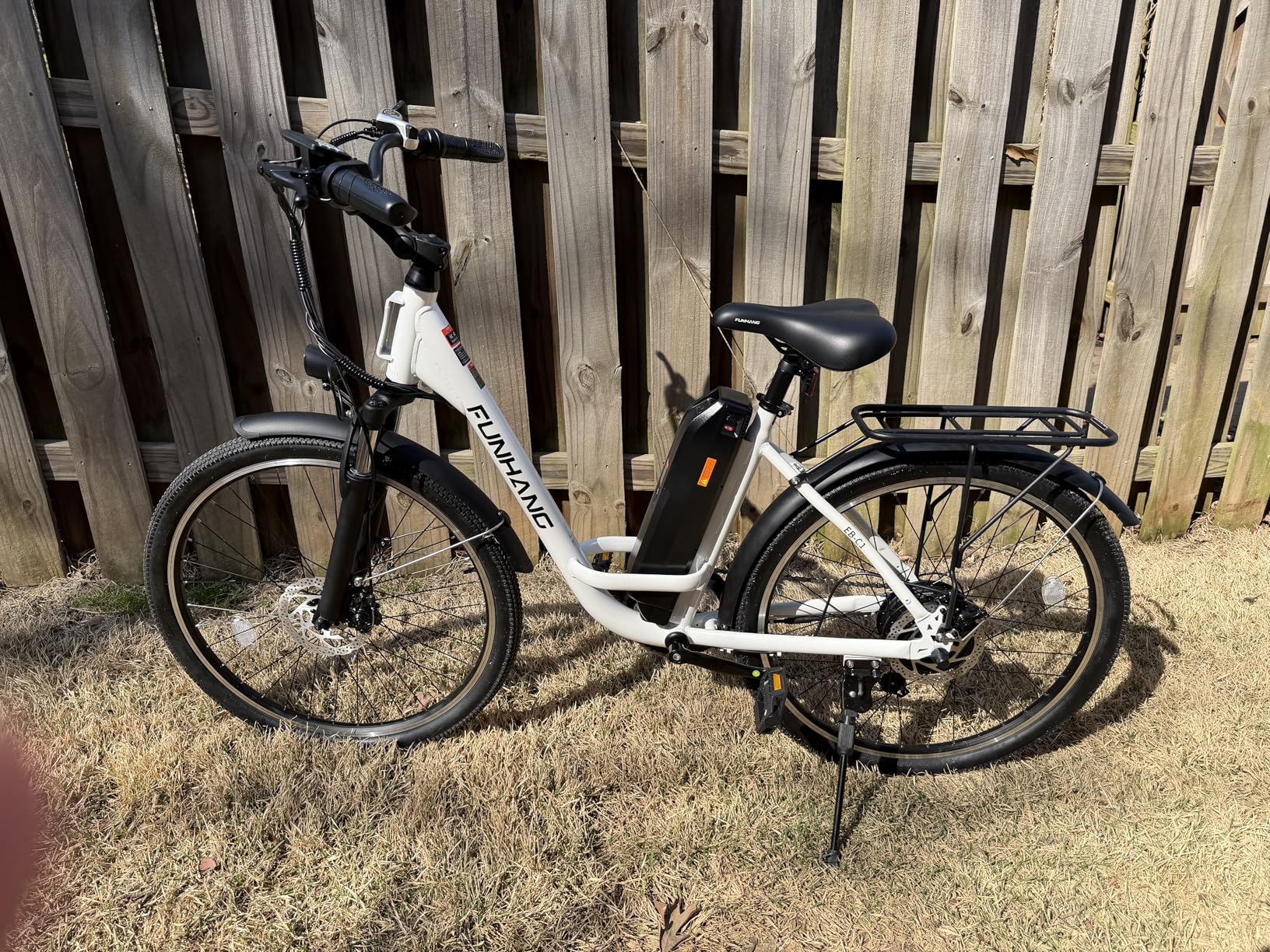
10. Funhang EB-C1 City Cruiser: Best for Warranty Support
- Step-through makes mounting effortless
- Adjustable bar and seat fit different heights
- Removable IPX5 battery charges anywhere
- Rack and fenders for groceries and wet weather
- Some riders still have to swing a leg over
- Carbon steel frame is heavier than aluminum
- 61.5 lb is not a solo lift
Support is the reason this one sits where it does. The warranty runs 365 days with an advertised 24-hour online response, and both UL 2271 and UL 2849 certification are stated for the battery and the whole bike. For a buyer who does not intend to become a mechanic, a published support commitment is worth more than a longer spec list.
Otherwise it is a straightforward step-through cruiser: a 1000W peak motor rated at 500W with 55 N.m of torque and a 20 mph top speed, a removable 374.4Wh IPX5 battery, 7 speeds, front suspension, a rear rack, full fenders, a headlight and an LCD display. Owners describe it as handling hills without breaking a sweat.
The removable battery is IPX5 rated, so charging indoors in winter is not a problem, and the rack and fenders make it usable for groceries and wet weather rather than dry-weather-only recreation.
Reading a step-through label honestly
Owners note that even a step-through frame can still require some riders to swing a leg over, depending on saddle height and hip flexibility. Set the saddle to the correct height first, then look at the gap: a saddle set too low to make the gap look generous trades knee comfort for mounting confidence by mistake.
Where it falls short
The carbon steel frame is what makes it 61.5 pounds, and there is no fold and no rear suspension, so rough gravel paths transmit more than you might want. That is a fair trade for the support package on paved streets and smooth greenways.
11. Qlife Cityone: Best for Independent Safety Certification
Qlife Cityone Electric Bike for Adults, 1000W Peak Motor, 25MPH Ebike
- Battery tested to UL 2271 by an independent lab
- Whole electrical system certified to UL 2849
- Step-through fits riders from about 5 ft 1 in
- Battery locks into the frame rather than sliding on
- A rear brake failed on at least one unit
- Delivered range fell short of the advertised figure
- Assembly directions are difficult for first-timers
This is the bike to shortlist if battery safety is your primary worry, and it is the only one here whose certification is independently verified rather than self-declared. The 48V pack was tested to ANSI/CAN/UL/ULC 2271:2018 by TUV Rheinland, and the complete electrical system is certified to ANSI/CAN/UL 2849:2022A by the same lab. That is a named third party, which is meaningfully stronger than a certification claim with no laboratory attached.
The step-through frame suits riders from about 5 foot 1 inch, and one repeat owner bought a second Cityone specifically because the frame fitted both a 5 foot 7 inch spouse and a much shorter child. The battery locks into the frame rather than sliding onto a rail, so it will not fall out over a bump.
Controls are straightforward, and the thumb-push throttle is preferred by riders over a grip-twist control, which again matters for reduced hand strength.
What independent certification tells you
UL 2271 covers the battery and charger, and UL 2849 covers the whole electrical system including the motor and controller. Independent testing means a named third party has physically tested samples, and it is the filter we would rank highest for an older rider. Check the front and rear brakes during the test ride, before you sign anything.
Where it falls short
One buyer received a bike with a non-functioning rear brake from day one and reported a difficult return process, and another saw delivered range fall well short of the advertised figure. With 92 reviews on file the long-term record is thin, and the 26-inch city tires are not suited to loose sand.
12. MOONCOOL 700W Peak Cruiser: Best for Heavier and Shorter Riders
MOONCOOL Electric Bike for Adults, 700W Peak Power Cruiser Electric Bikes
- Highest capacity in the roundup at 350 lb
- 24 inch wheel suits riders near 5 ft 2 in
- Color LCD shows speed
- battery
- mileage and mode
- Walk assist mode plus five assist levels
- Owner manual is incomplete
- Handlebars loosened repeatedly on one unit
- Assembly is demanding
Two numbers make this the most accommodating bike here. The frame supports up to 350 pounds, comfortably the highest capacity in the roundup, and a 24-inch wheel option suits riders around 5 foot 2 inches, which is the shorter end of what these bikes are built for. A 5 foot 2 inch owner calls the sizing perfect, and that is the single most common fit problem older riders have.
At 58 pounds it is also the second-lightest frame here, on a 6061 aluminum chassis with a 36V 10.4Ah removable battery quoted at up to 45 miles, a 350W rear hub motor with 700W peak, front suspension, 7 speeds and disc brakes. A cadence sensor delivers assist smoothly, and there is a walk-assist mode for pushing the bike at parking speed.
The warranty is the best on the list: one year for parts and two years for the battery, and the electrical system is SGS-tested to ANSI/CAN/UL 2849.
Capacity is the feature that matters most
If you weigh more, check the total: your weight plus your cargo plus the bike, because a bike at its limit will feel heavy and handle poorly. A 350-pound rating gives real headroom for a rear rack of shopping.
For shorter riders, ask for the 24-inch variant specifically rather than assuming the 26-inch will work. The smaller wheel lowers the saddle height, which is the difference between flat-footed pedalling and an awkward reach.
Where it falls short
The owner manual is incomplete, leaving display settings and light controls undocumented, and assembly is described as demanding even for mechanically inclined owners. Check every fastener with a wrench after the first week and inspect the valves, because isolated handlebar loosening and a valve leak both appear in reviews.
E-Bikes to Stay Away From
Buyers in their sixties and seventies consistently name the same handful of deal-breakers, and forums document the specific failure modes rather than vague dissatisfaction. Here is what to walk away from, in the order we would check it.
Any bike over 60 pounds that has to be lifted into a vehicle or up steps. This is the most-repeated complaint in every senior e-bike discussion. If the bike lives where it lives and is never carried, the weight matters far less.
Mid-step frames labelled as low-step or step-through. Some manufacturers describe a mid-step frame as a step-through in the listing. Check the actual frame shape, because the difference decides whether you can put a foot down flat or have to swing a leg over the rear wheel.
No stated battery certification. If the listing does not mention UL 2271 or UL 2849, you have no evidence the pack or the electrical system has been tested. For an older rider this is a reasonable reason to move on.
Ultra-budget private-label bikes with no service channel. Owners report controller failures within the first month, wheels that need truing repeatedly, and batteries that are not replaceable through any official route. Expect to become the mechanic.
Small-wheel folders for rough pavement. 16 and 20-inch wheels drop into potholes faster and transmit every edge to your hands and lower back. They are cheaper for a reason.
Twist-gear complexity for a rider who will never change gear. If a bike has more gears than you will ever use, the simplicity of a single-speed is a feature, not a compromise.
Bikes with no published warranty. Every bike in this roundup states a warranty period. A listing that omits it is telling you something.
How to Choose an E-Bike for Senior Needs
Once you know what to avoid, the decision comes down to six questions. Ask them in this order, because each one narrows the field for the next.
Step-Through vs. Mid-Step vs. Trike
A step-through frame has no top tube between the seat and the handlebars, so you can put a foot on the ground at a stop and step through rather than swing a leg over. For riders with hip or knee limitations, that is the single most useful feature on an e-bike. A mid-step frame drops the tube partway but still asks you to clear it, and several brands describe mid-step frames as step-through in the listing, so check the shape yourself.
A trike removes the balance question entirely. Three wheels cannot tip over, which is genuinely reassuring after a wobble on a two-wheeler. The trade-off is width: a trike is harder to ride down a narrow path and wider to store. None of the twelve bikes here is a trike, so if balance is your main concern, test one in person before settling for a two-wheeler.
If you cannot ride a two-wheeler at all, a seated alternative is worth a look before you buy anything. Our picks for the best recumbent bikes for seniors cover the laid-back riding position, and the indoor recumbent exercise bikes above cover the no-weather option.
Weight: can you actually lift it?
Set a hard ceiling based on your situation, not on the spec sheet. Under 50 pounds means most adults can lift it alone. Up to 60 pounds is manageable for a fit adult with a technique. Above 60 pounds and you are planning on a second person, a ramp or a bike rack.
Ask for the weight with the battery removed, because that is the number that determines whether you can carry the bike at all. Every removable-battery design in this roundup sheds roughly 8 to 12 pounds, and that is the difference between a solo lift and a two-person lift in most cases.
Motor type and how the assist feels
A rear hub motor is the cheapest and heaviest option, but it is simple and cheap to service. A mid-drive motor sits at the cranks, costs more, but delivers power where the pedals are, which makes hills feel easier and uses battery more efficiently. Most of the bikes here are hub-drive, a fair trade at this budget level. A cadence sensor delivers power in response to pedal rotation and feels predictable; a torque sensor reads how hard you are pushing and feels natural.
Battery range and charging
Range figures are measured at the lowest assist with a light rider on the flat, so a realistic number is roughly half the advertised maximum, and cold weather takes more off it again. For a 170-pound rider on assist level 2, plan on 40 to 50 percent of the quoted figure for a short errand day.
Battery size in watt-hours is the honest comparison between bikes. A 280Wh pack and a 500Wh pack are not the same bike twice, and a bike that needs charging after every ride becomes a bike that stays in the garage. Removable is better than built-in, because you can charge it indoors and carry it separately.
Brakes and hand strength
Hydraulic disc brakes require the least hand squeeze of any common e-bike brake, because the pressure is multiplied through the fluid. Mechanical disc brakes need noticeably more force and need periodic adjustment. Drum brakes are easy to service but heavy and uncommon on e-bikes. If your grip strength is limited, hydraulic is the priority over almost every other spec.
Test it rather than reading it. On the test ride, brake firmly from a normal hand position and check that the lever does not reach the handlebar. If it does, there is not enough stopping power for your hand, whatever the label says.
E-bike Class 1, 2 and 3, and where you can ride
Class 1 e-bikes assist up to 20 mph and are allowed on bike paths and trails where e-bikes are permitted. Class 2 e-bikes also assist up to 20 mph but include a throttle, and these are the ones restricted from some bike paths. Class 3 e-bikes assist up to 28 mph and are generally limited to roads and bike lanes, never trails.
Check your local rules, because they vary by state, county and city. For senior riders on paved greenways, a Class 1 or Class 2 bike is the simplest choice, since path access is the least restricted. Several of the bikes here are marketed as 20 mph or 25 mph models, so verify the class before you ride a path.
Comfort features that matter after an hour
Swept-back cruiser bars take load off your wrists, shoulders and lower back. A wide, well-padded saddle matters more than any spec, and most owners here replace the saddle that came with the bike. Wider tires, around 2.0 inches and up, take the edge off broken pavement, and a suspension fork or seatpost smooths out the rest.
For a rider under five foot two, look for a smaller wheel size or a wide fit range, and check the reach to the handlebars, not just the seat height. Riders over six foot should confirm the frame does not feel cramped when seated upright.
Throttle vs. pedal assist, and where support comes from
Pedal assist only, where the motor responds to pedaling, is the most natural experience and the best for keeping some exercise in the ride. A throttle lets you ride without pedaling, which is valuable after joint surgery or on a bad day.
On support, be honest with yourself about which you are. Buyers repeatedly say local service and warranty are worth the premium, because a factory-direct bike makes you the support technician. If a nearby shop stocks the brand, that is a real advantage. If you are comfortable doing your own adjustments, direct-to-consumer support works, but only if you will actually do them.
Finally, talk to your doctor or a physical therapist before you start, particularly if you are recovering from hip or knee surgery or have a balance condition. E-bike riding is low-impact and genuinely good for arthritic joints, but a fit assessment is cheap insurance.
Frequently Asked Questions
What is the best e-bike for people over 70?
The best e-bike for riders over 70 is a step-through or low-step model with a frame you can mount without swinging a leg, a weight you can lift with the battery removed, and brakes that need little hand strength. Among the twelve we compared, the Funhang EB-C2 step-through is the best all-round pick, the Gotrax Dolphin at 49 pounds is the best for anyone who must lift the bike, and the MOONCOOL cruiser suits shorter riders and heavier bodies.
What type of electric bike is best for seniors?
A step-through e-bike with pedal assist, hydraulic or good mechanical disc brakes, upright swept-back handlebars and a removable battery is the most senior-friendly type. Add a walk-assist or boost mode at low speed so you can start from a standstill without wobbling, and a throttle if you have limited knee strength. A trike is the alternative when balance is the main concern.
What ebikes to stay away from?
Walk away from any e-bike over 60 pounds that has to be lifted into a vehicle or up steps, from mid-step frames advertised as step-through, from listings with no UL 2271 or UL 2849 battery certification, and from ultra-budget private-label bikes with no service channel. Small-wheel folders and bikes with complex gearing for riders who will never shift gears are also poor fits.
Does Medicare pay for electric bikes for seniors?
Medicare does not cover e-bikes or electric tricycles. Original Medicare has no durable medical equipment benefit that includes them, and Medicare Advantage plans generally follow the same exclusions. Some states, counties, aging agencies or disability programs offer grants or loan programs for adaptive cycling equipment, so check with your local area agency on aging rather than assuming you must pay full price.
What are the best bikes for seniors with balance problems?
The safest answer is an electric tricycle, because three wheels cannot tip over. Among two-wheelers, look for a low step-through frame, a walk-assist or boost mode that holds the bike at walking speed while you get on, and wide tires for stability. The ESKUTE fat-tire step-through and the Gotrax Dolphin with its 6 km/h boost mode are the most confidence-oriented two-wheelers in our roundup.
How heavy should an e-bike be for a senior?
Under 50 pounds is the practical target if you need to lift the bike yourself, since that is the weight most adults over sixty can manage. Up to 60 pounds is manageable for a fit rider, and above 60 pounds you should assume a two-person lift. Always ask for the weight with the battery removed, which is 8 to 12 pounds lighter on every removable-battery model we reviewed.
Conclusion
For most riders, the best e-bikes for seniors in 2026 come down to three honest questions: can you step through the frame, can you lift the bike with the battery off, and do the brakes work with your hands. The Funhang EB-C2 answers all three and is our editor’s choice for its rack, fenders, removable UL-certified battery and published support commitment. Pick the Gotrax Dolphin if lifting is your binding constraint, the MOONCOOL cruiser if you are shorter or heavier, and the Vivi folder if storage rather than transport is the problem. Test ride before you buy, bring your transport plan with you, and ask your doctor or physical therapist whether riding is right for your joints this year.