
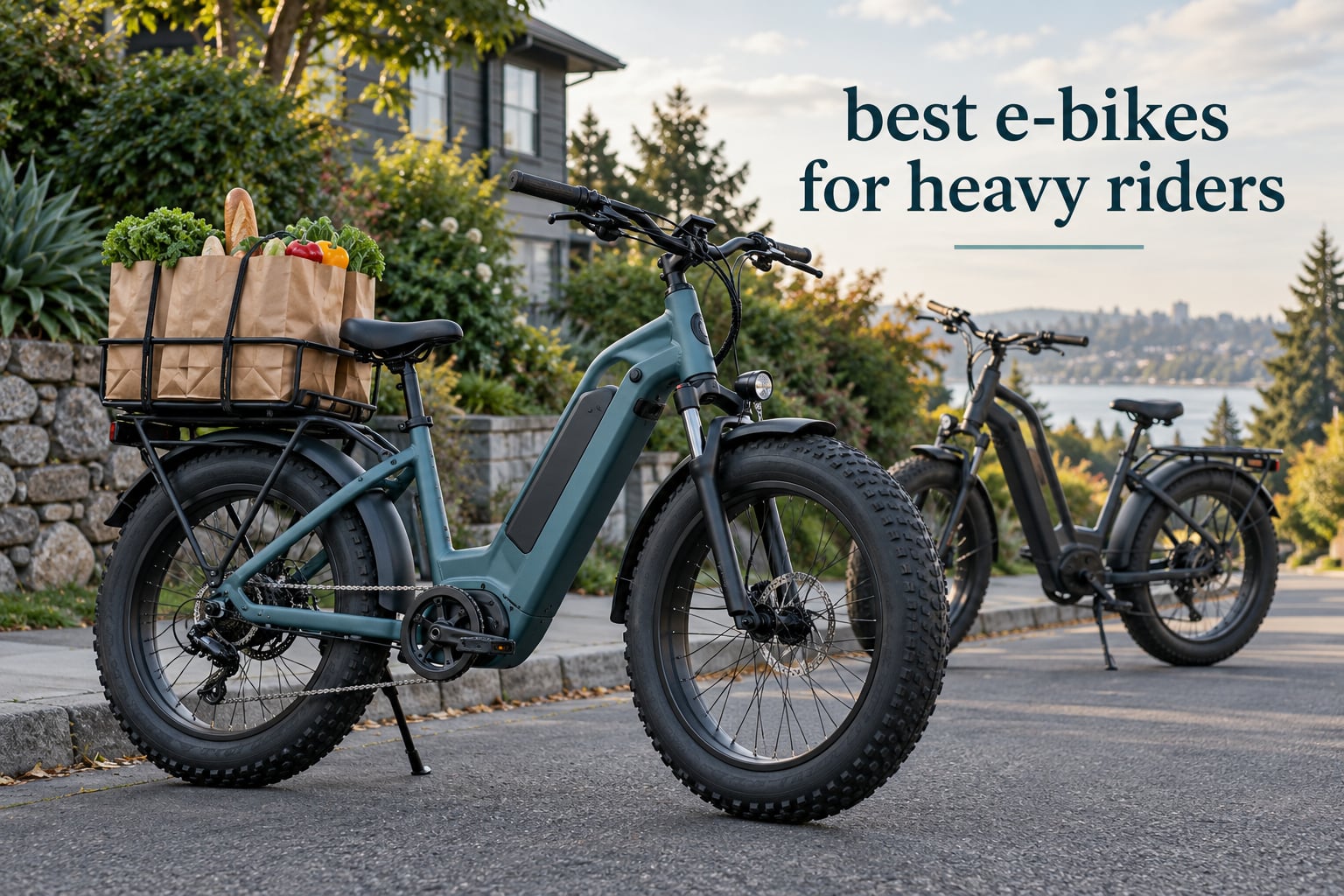
Most e-bikes stop at 300 lbs of payload capacity, which is where a lot of riders hit a wall they did not expect. If you weigh 300 lbs or more, the difference between a bike rated for you and one rated 100 lbs under you shows up in the spokes, the rims, the brakes and the motor within a few months of riding. This guide covers the best e-bikes for heavy riders that we could verify, with the published payload number, motor output, brakes and real rider feedback for each one.
We spent weeks reading spec sheets and owner reviews across ten bikes that publish a load rating, then sorted them by who they actually suit. Three of the ten publish no rider weight at all, and we treat that as a buying risk rather than filling the gap with an estimate. Where a rating exists, it is quoted exactly as the manufacturer states it.
Two hard numbers frame everything below. The first is the four-part test: a reinforced frame and rims, a high-torque motor, hydraulic disc brakes, and wide tires. The second is the sizing rule — buy a bike rated at least 10 to 15 percent above your own weight, because payload includes your gear, a backpack, groceries and any passenger.
One more practical note before the picks. If you plan to load one into a car rather than ride it to work, our comparison of the best e-bike hitch racks for heavy bikes covers the racks built for machines this size.
Top 3 E-Bikes for Heavy Riders in 2026
The three bikes below cover the three situations heavy riders ask about most: a well-rounded bike for the 300-349 lb band, a bike rated hard enough for riders past 400 lbs, and the steepest-climbing option in the group.
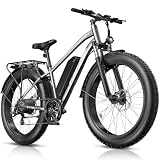
Funhang EB-S1
- 330 lbs payload
- UL 2271 and UL 2849 certified
- 60 lb rear rack
- 26 inch by 4.0 tires

TST R004
- 450 lbs maximum load
- 66 lb bike weight
- 65 mile pedal assist range
- front and rear suspension
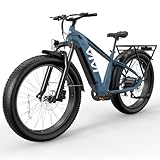
Vivi ACE01
- 330 lbs payload
- 90 Nm torque sensor assist
- dual hydraulic brakes
- 21700 cell battery
Best E-Bikes for Heavy Riders in 2026 Quick Comparison
Every bike listed below publishes the payload figure shown here, and three publish none at all. Motor output is stated as the manufacturer does, which means peak and rated wattage appear side by side more often than you would see on a car dealer page.
| Product | Specifications | Action |
|---|---|---|
| Funhang EB-S1 |
|
Check Latest Price |
| TST R004 |
|
Check Latest Price |
| Vivi ACE01 |
|
Check Latest Price |
 Jasion EB5 Ultra Jasion EB5 Ultra |
|
Check Latest Price |
 DTTZH F6 DTTZH F6 |
|
Check Latest Price |
 DEEPOWER 2000W Fat Bike DEEPOWER 2000W Fat Bike |
|
Check Latest Price |
 EOEOTWO E01 EOEOTWO E01 |
|
Check Latest Price |
 ESKUTE V300 ESKUTE V300 |
|
Check Latest Price |
 Vivi F26FUL Vivi F26FUL |
|
Check Latest Price |
 INVANTI EB16 INVANTI EB16 |
|
Check Latest Price |
1. Funhang EB-S1: The Best E-Bike for Heavy Riders Overall
- 4.5 star rating across 228 reviews
- UL 2271 battery and UL 2849 bike recognition
- Rear rack rated to 60 lbs for shopping and delivery
- UL certified electricals
- Two lighting packages including a taillight with turn signal
- Heavy at 70 lbs and hard to move alone
- Standard saddle is uncomfortable on long rides
- Top gear too tall to pedal for exercise in assist level 1
The Funhang EB-S1 is rated for 330 lbs, and it earns the top spot here on strength rather than headline wattage. It pairs a 500W rated motor with 66.6 Nm of torque, which sounds modest next to the 2500W peak figures elsewhere in this list.
Torque is the number that matters when you are the load. The EB-S1 also carries the deepest owner review pool of the bikes at the top of this list, plus UL 2271 battery and UL 2849 whole-bike recognition, which almost nobody in this price band bothers to publish.
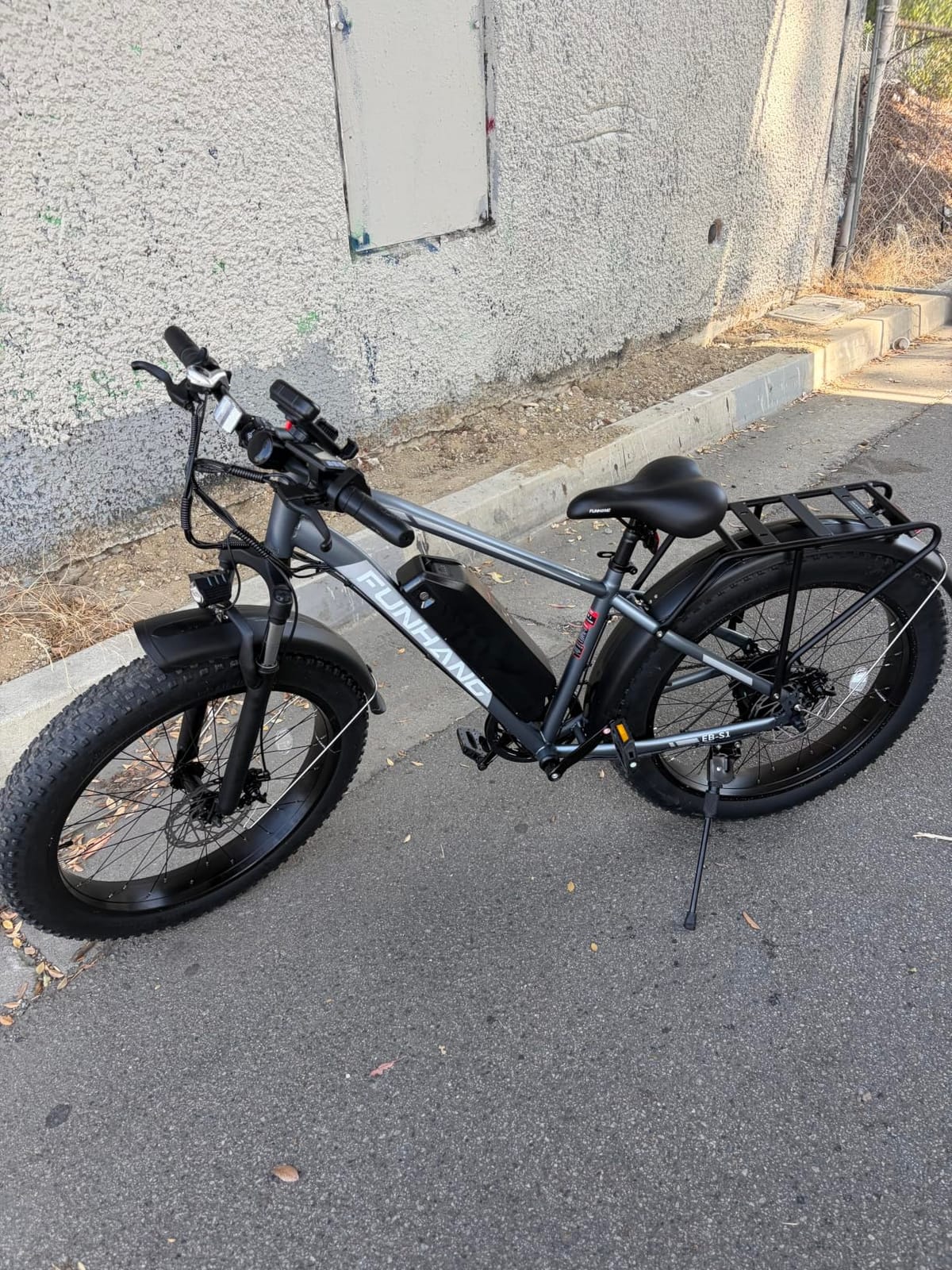
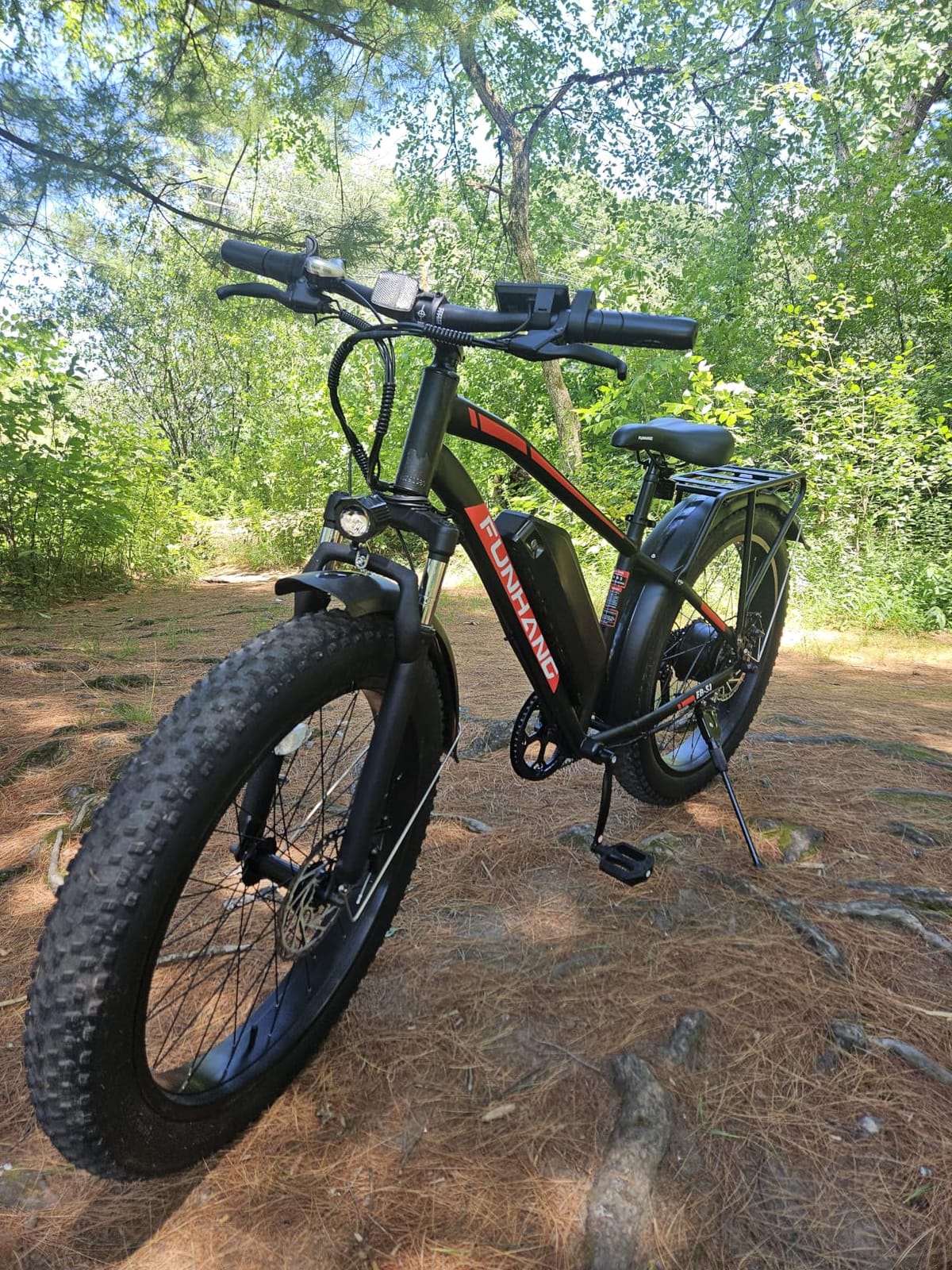
The frame is high carbon steel, the wheels are 26 inch by 4.0 inch anti-skid fat tires, and suspension is front only. The removable 48V 13Ah battery is IPX5 waterproof with BMS protection, charging on or off the bike in roughly 6.5 hours.
Range is quoted at 30 to 35 miles on pure electric and 55 to 60 miles on pedal assist. Owners report smooth, reliable assistance, assembly in about half an hour, and easy handling of pavement, grass, sand and snow.
Why a 330 lb rating works at 300 lbs and above
A 330 lb rating leaves you 30 lbs of headroom at 300 lbs, which covers a backpack and a grocery run. It also covers a 330 lb rider riding alone with nothing on the rack, and nothing more.
The 60 lb rear rack rating is unusual in this group. Owners using it for shopping and delivery report it takes the load without complaint, and the taillight with turn signal makes it a practical car-replacement for short errands.
Where the EB-S1 falls short for heavier riders
At 70 lbs the bike is heavy to maneuver alone, and riders above 330 lbs need to look elsewhere on capacity alone. There is no rear suspension, so a loaded ride over broken pavement is noisier than it needs to be.
Two smaller notes: the stock saddle draws complaints about comfort on longer rides, and the tallest gear is geared so high that assist level 1 will not give you a proper workout. Both are easy fixes with a saddle swap and correct gear selection.
2. TST R004: Rated for 450 lbs, the Heaviest Duty Bike Here
TST Electric Bike for Adults, 48V 15/25 Ah Battery, 2000W Peak Motor, 28MPH
- Only bike in this group rated to 450 lbs
- Deepest owner feedback of any pick at 388 reviews
- 65 mile pedal assist range and 40 mile throttle range
- 20 inch by 4 inch puncture-resistant tires
- 90 percent pre-assembled
- Mechanical disc brakes need adjusting before first ride
- Iron frame is heavier than aluminum rivals
- Shortest warranty in the group at 180 days
- Lowest rating of the ten at 4.2
The TST R004 carries a published maximum load of 450 lbs, the highest rating of any bike in this roundup. If you are 400 lbs or above, this is the shortlist. It ships as the R004 with a 750W rated motor, 2000W peak output and a 48V 15Ah removable battery.
That 450 lb figure is stated as a maximum load rating rather than a rider-only limit, which makes it the most useful number on this list for anyone planning to carry cargo or a child seat.
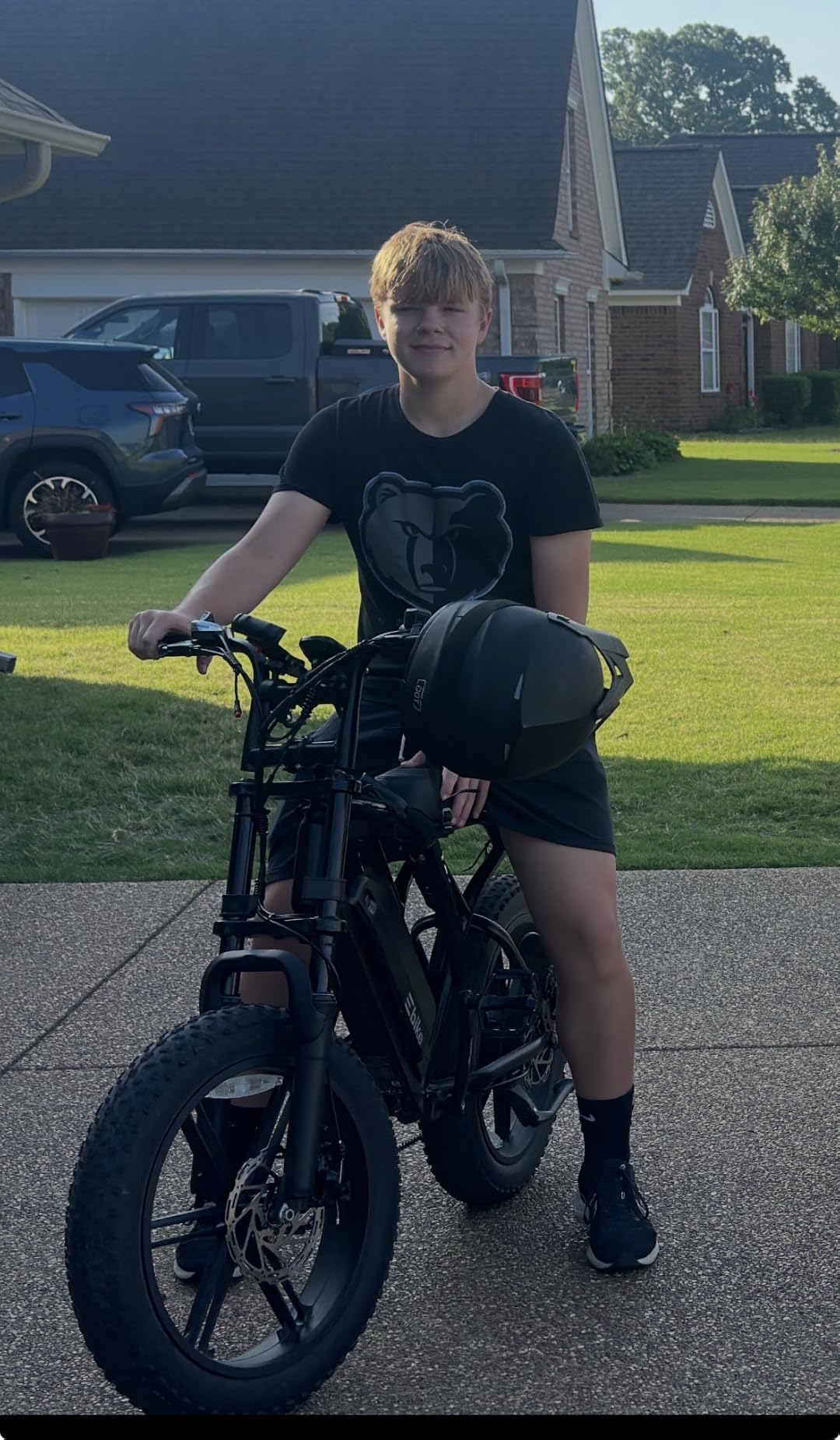
Range is quoted at up to 65 miles in pedal assist and up to 40 miles on throttle, from a 720Wh pack that recharges in 6 to 7 hours. The 20 inch by 4 inch puncture-resistant tires and the front and rear suspension handle gravel and rough ground well.
Owners consistently praise the capacity, the range for the money and the ride comfort. One recurring note is that the mechanical disc brakes need adjusting before the first ride, so plan for that during setup.
Why 450 lbs of rating changes the conversation
A 450 lb rating means a 400 lb rider has 50 lbs of headroom, which is where cargo, a child seat or a trailer tongue weight starts to eat. Riders in the 350-399 lb band get even more room and will not be near the structural ceiling in ordinary riding.
The bike itself weighs 66 lbs and the manufacturer publishes that figure, which is rarer than it should be. If you need a rack for that, we covered the best hitch bike racks for e-bikes.
Where the R004 falls short
Brakes are mechanical rather than hydraulic. On a bike that weighs 66 lbs empty and can carry 450 lbs, hydraulic discs are the better tool, and this is the one place we would spend extra.
The frame is iron rather than aluminum, which adds weight, and the warranty runs 180 days, roughly half what the others here offer. The 4.2 rating is the lowest of the ten and reflects those gaps rather than a poor bike.
3. Vivi ACE01: Best for Heavy Riders Who Climb Hills
Vivi ACE01 Electric Bike for Adults, Multi Terrain 26 x 4.0 Fat Tire 20 MPH
- Torque sensor delivers smooth proportional assist with no jerky starts
- Dual hydraulic brakes on a heavy aluminum bike
- Reviewers report 300+ lb riders holding over 20 mph on 30 degree grades
- 21700 cell battery with a reported 60 mile ride on assist level 1
- Adjustable seat fits riders from 5 foot 3 to 6 foot 5
- Stock saddle uncomfortable on long rides
- Handlebar oversteer takes getting used to
- Throttle placement awkward in tight turns
- Real range falls short of the claim at high assist
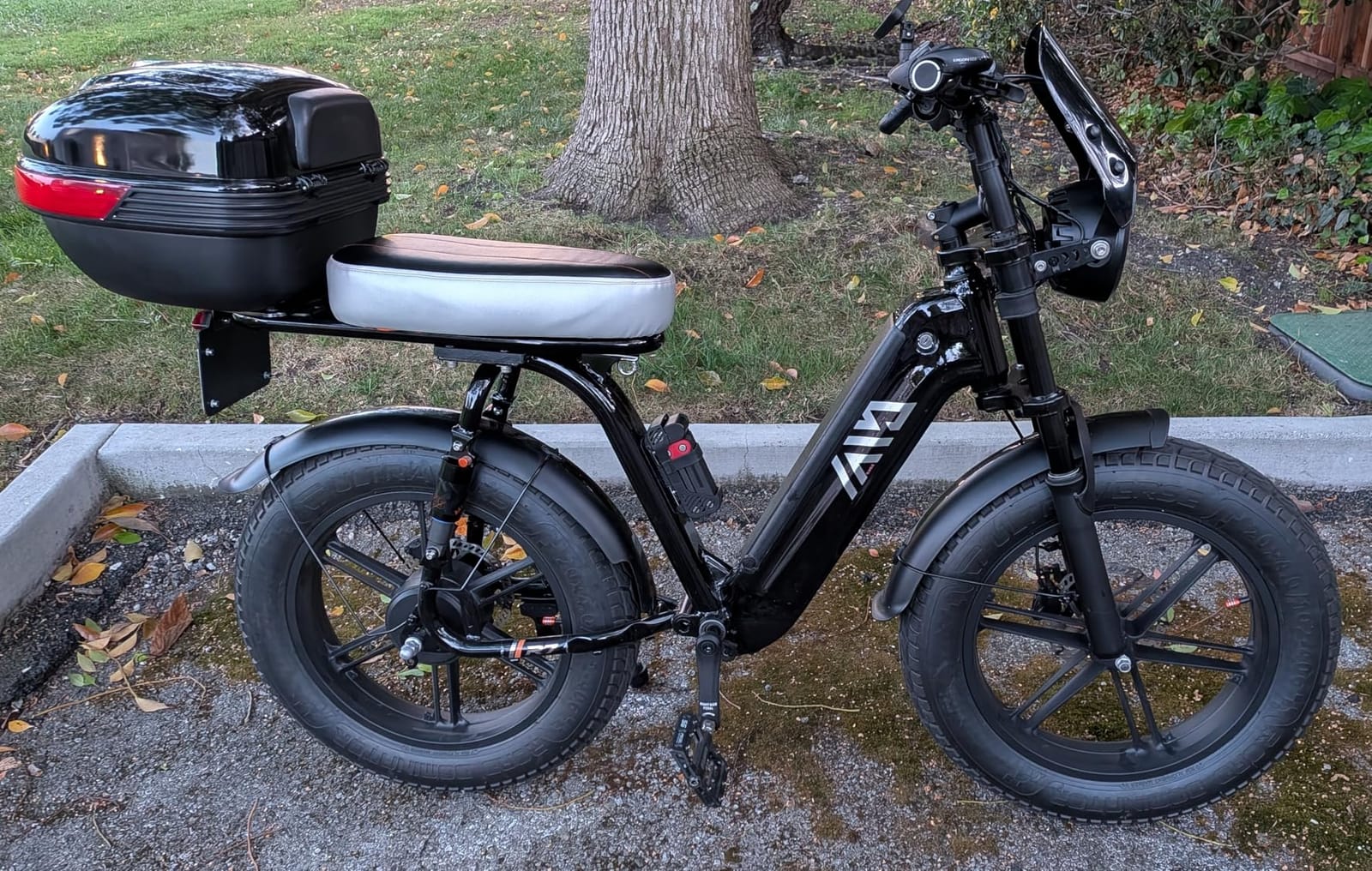
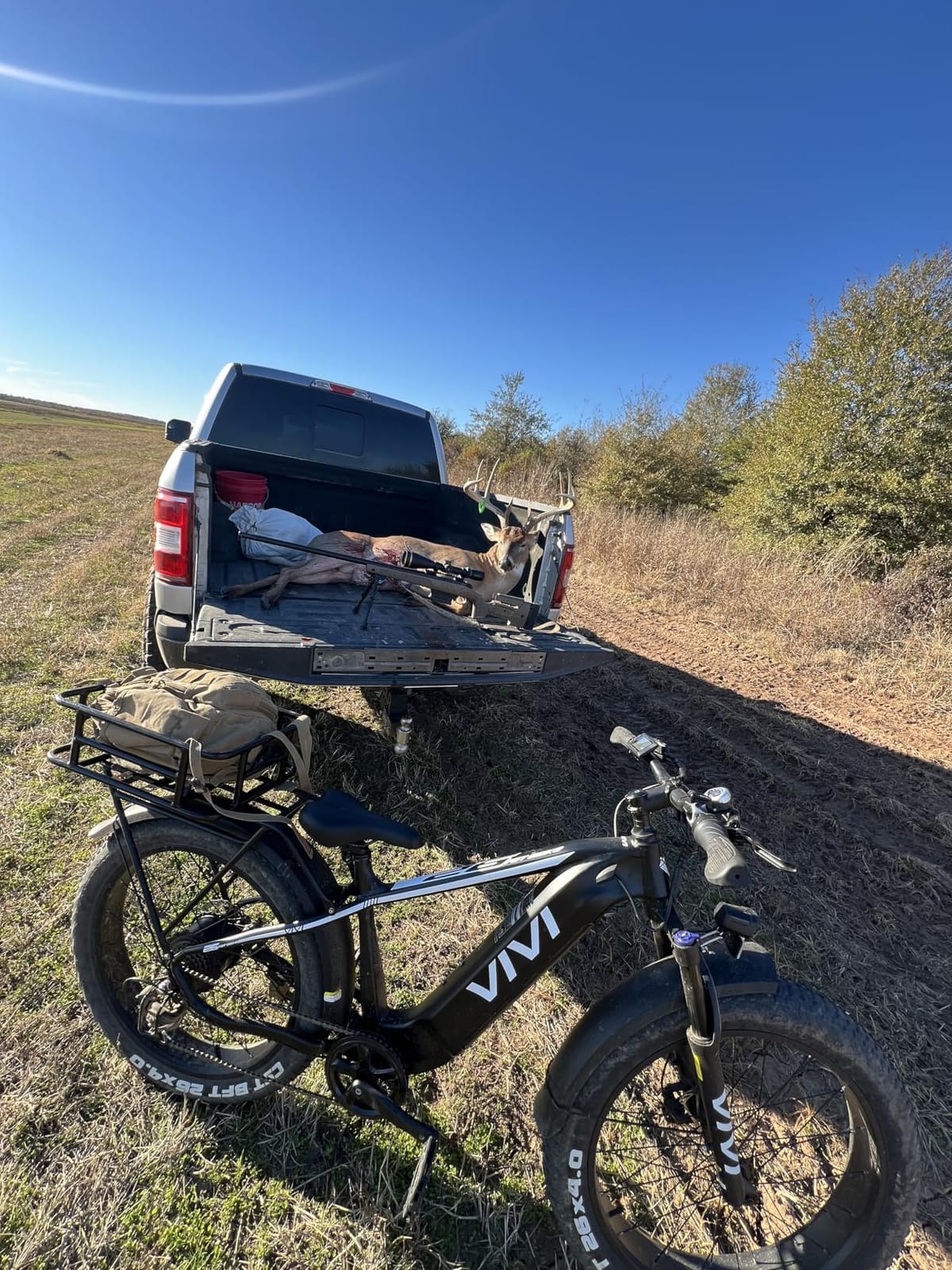
The Vivi ACE01 is rated for 330 lbs and is the pick for heavy riders whose route has real climbs. It makes 90 Nm from a 750W rated motor that peaks at 1500W, and the difference is the torque sensor.
Most bikes here use a cadence sensor, which delivers power in pulses based on pedal speed. A torque sensor reads how hard you push and meters assist proportionally, which is what makes starts smooth when you are carrying real weight.
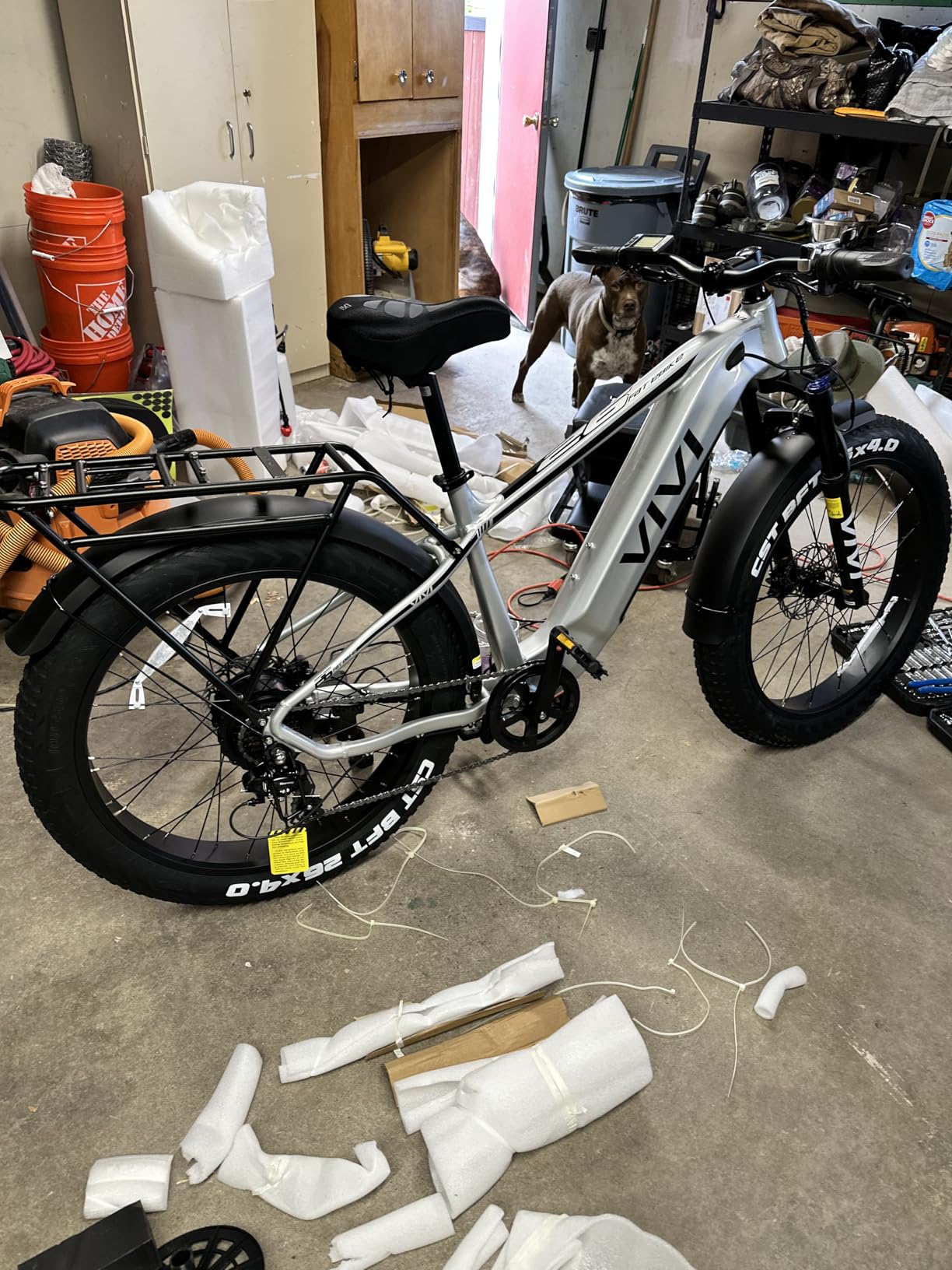
The frame is aluminum alloy rather than steel, which is why a 72 lb bike feels manageable. Brakes are dual hydraulic discs, the battery is a removable 48V 15Ah pack built from 21700 cells, and charging takes 4 to 6 hours.
Owners report that a rider above 300 lbs reached over 20 mph and powered up 30 degree hills on this bike, and one long-term owner logged 60 miles on assist level 1. The bike is UL 2849 and UL 2271 certified and arrives 85 percent assembled.
Why torque beats peak wattage under load
Peak wattage is the headline number and it describes the motor at its limit for a few seconds. Torque in Nm describes the force available at the wheel, and it is what decides whether you can start on a grade with 60 lbs of groceries.
At 90 Nm, the ACE01 matches the highest published torque figure of the ten bikes here, alongside the ESKUTE V300. The Jasion EB5 Ultra publishes more raw peak power at 2500W, but its torque figure is 75 Nm.
Where the ACE01 falls short
Real range drops noticeably when you ride at high assist or lean on the throttle, well below the 40 to 60 mile claim. Plan on the lower half of that range if you are at the top of the weight band.
Two handling notes from owners: the handlebars have notable oversteer that takes a few rides to learn, and the throttle sits awkwardly on the right grip for tight singletrack turns. The stock saddle is also widely replaced.
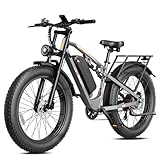
4. Jasion EB5 Ultra: Most Power for Off-Road and Loose Ground
- Highest peak output in the group at 2500W
- 1040Wh removable battery with up to 70 mile claimed range
- Reinforced front fork plus 160mm mid-mounted rear shock
- Rear rack and full fenders included
- Assembly completed in under 20 minutes
- Heavy and hard to load for transport
- Braking feel described as only fair by one reviewer
- Large frame and tall seat position suit taller riders
- Occasional left brake sensor error cutting motor power
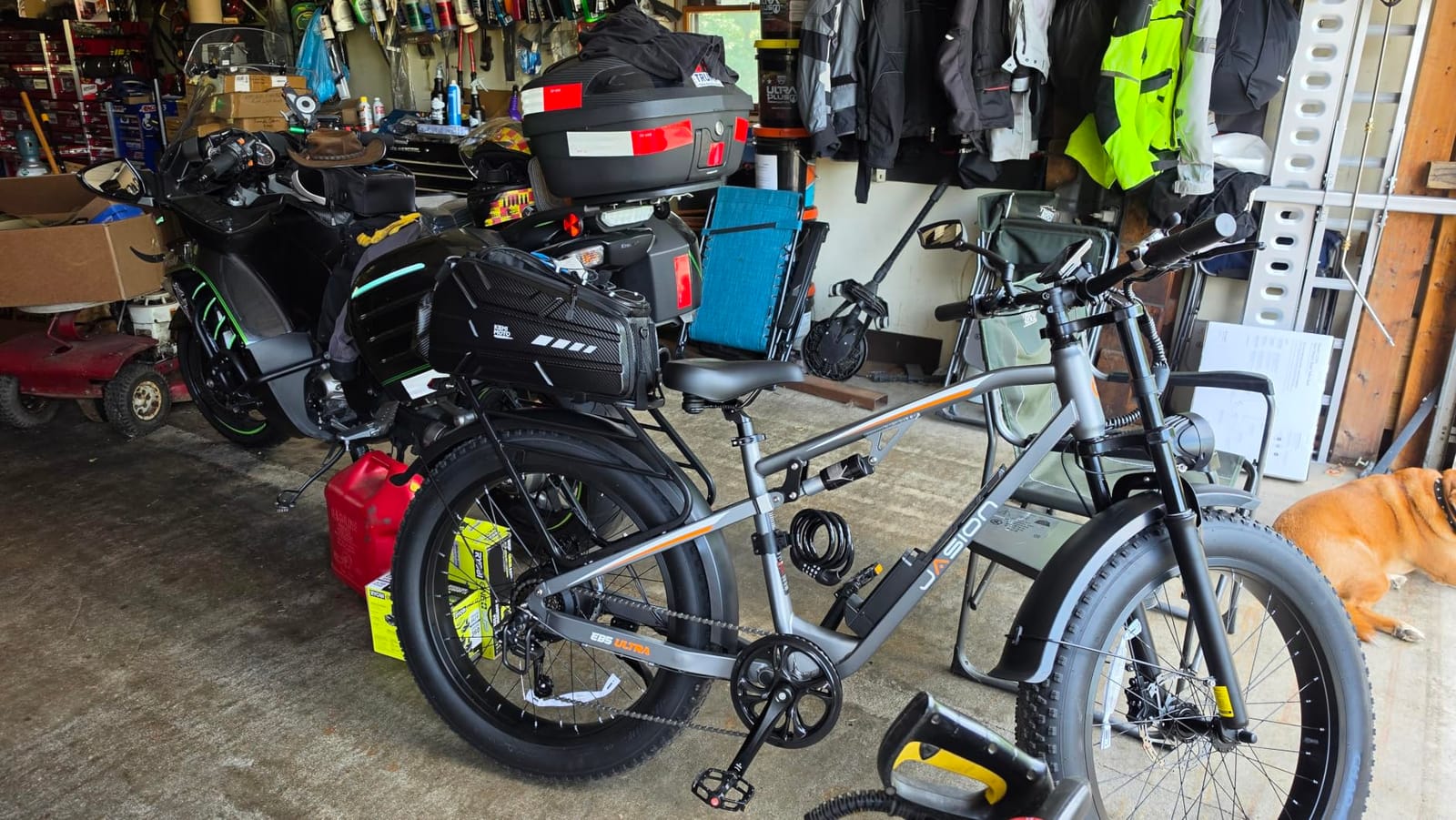
The Jasion EB5 Ultra is rated for 330 lbs and carries the largest motor headline here at 2500W peak with at least 75 Nm of torque. It is the pick for riders who spend time on sand, snow and gravel rather than commuting on pavement.
The 26 inch wheels are larger than the 20 inch bikes lower in this list, which rolls better on pavement and handles obstacles more calmly when loaded. Tires are 26 inch by 4 inch fat tires.
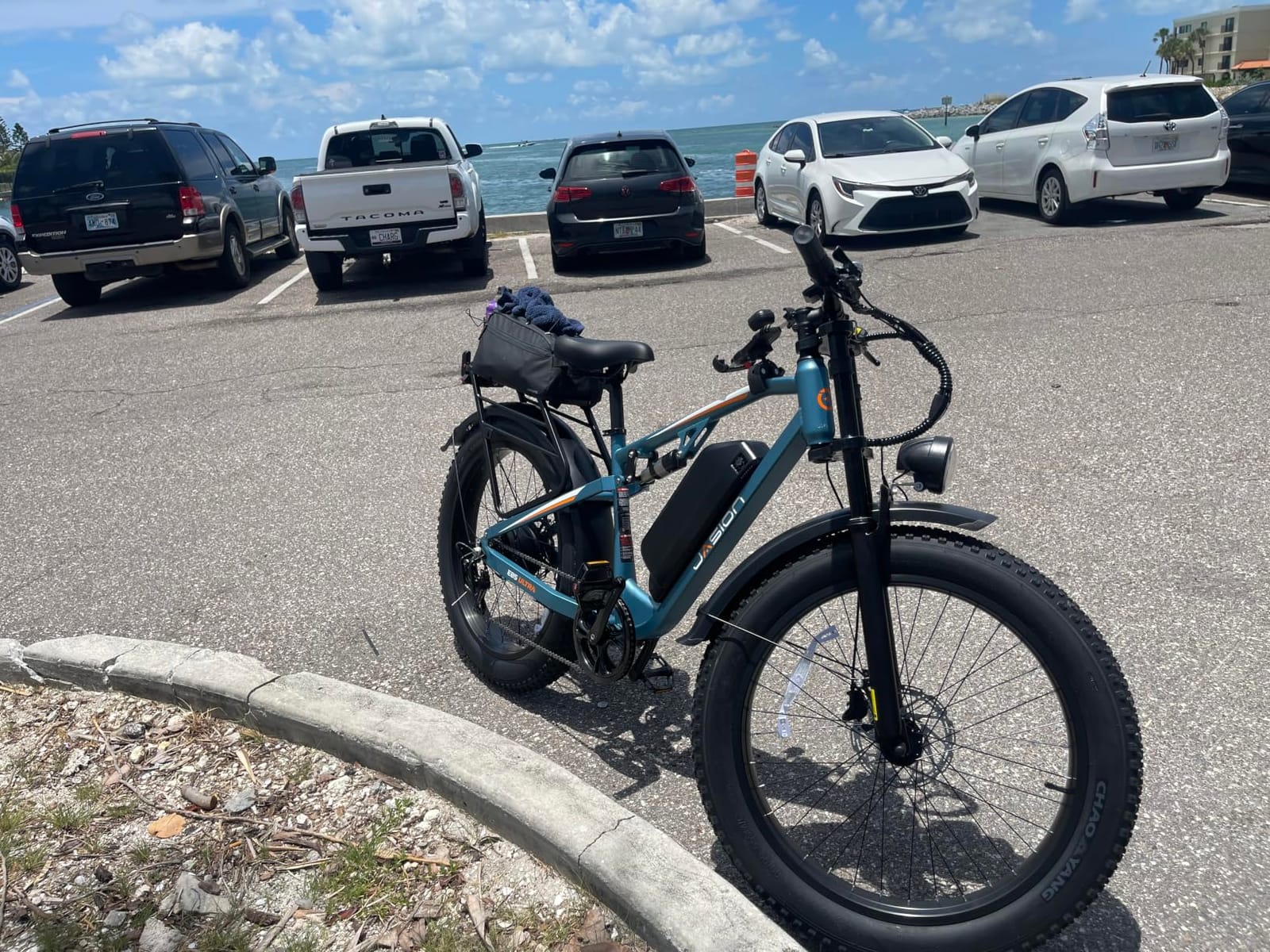
The battery is the standout spec: a removable 52V 20Ah pack rated at 1040Wh with a claimed range of up to 70 miles. That is the largest capacity in this roundup by a wide margin, and 52V rather than 48V helps under load.
Owners praise the power and acceleration on steep climbs, and one rider logged 28 miles on 40 percent of a charge. Support response drew praise too, including a replacement controller after a fault.
Why 52V and 1040Wh matter at 300 lbs
Battery capacity in watt-hours is the honest way to compare range, and 1040Wh is more than any other bike here publishes. At higher rider weight the motor draws more current for the same assist level, so a bigger pack is what keeps your range from collapsing.
The reinforced front fork and 160mm mid-mounted rear shock are also worth noting. A suspension that bottoms out under load loses control on rough ground, and the longer rear shock has more travel before that happens.
Where the EB5 Ultra falls short
The frame is carbon steel and the bike is heavy enough that reviewers call it hard to load for transport. If you need to carry it up stairs, this is not the one.
One reviewer described the braking power as only fair, which matters on a heavy bike, and others report an occasional brake sensor error on one side that cuts motor power. The tall frame and seat position also rule it out for shorter riders, and the stock horn is awkwardly placed.
5. DTTZH F6: Best Value Full-Suspension Pick
- Full suspension with a hydraulic front shock and a rear shock
- UL 2849 certified electric system
- Long seat can comfortably carry a second rider
- NFC card and password unlock deter theft
- About 20 minutes to assemble for most owners
- Roughly 305 lbs weight limit is the tightest in the group
- One motor arrived dead and needed paid installation
- Kickstand failed early
- Oversized box can be refused by some return centers
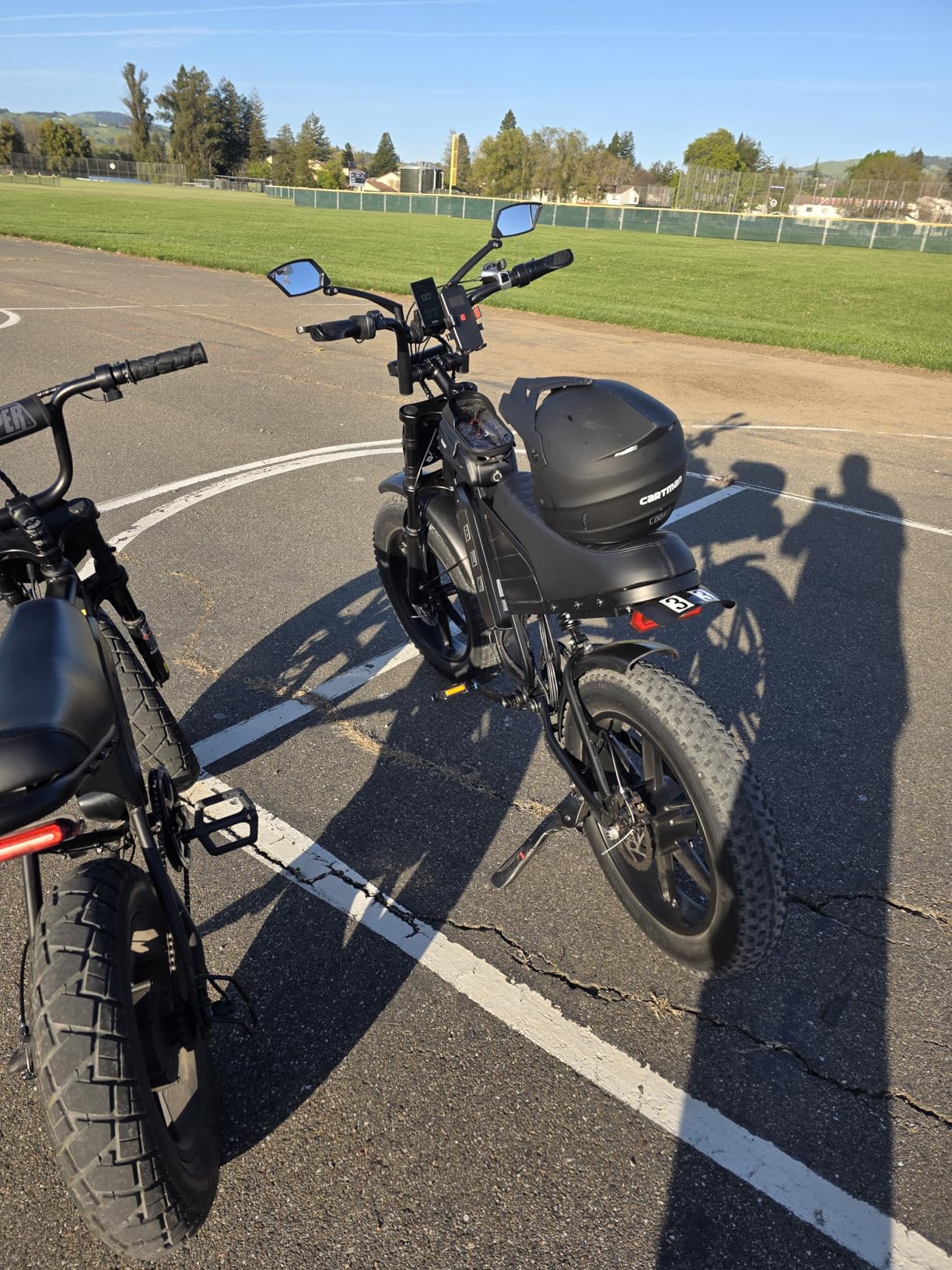
The DTTZH F6 has a weight limit quoted by owners at around 305 lbs, which makes it the tightest capacity in this roundup. Buy it at 250 to 275 lbs and it is a strong value bike; buy it at 320 lbs and you are outside what it is built for.
What you get for that is full suspension, with a hydraulic front shock and a rear shock. Among the bikes here priced at the lower end, that combination is unusual.
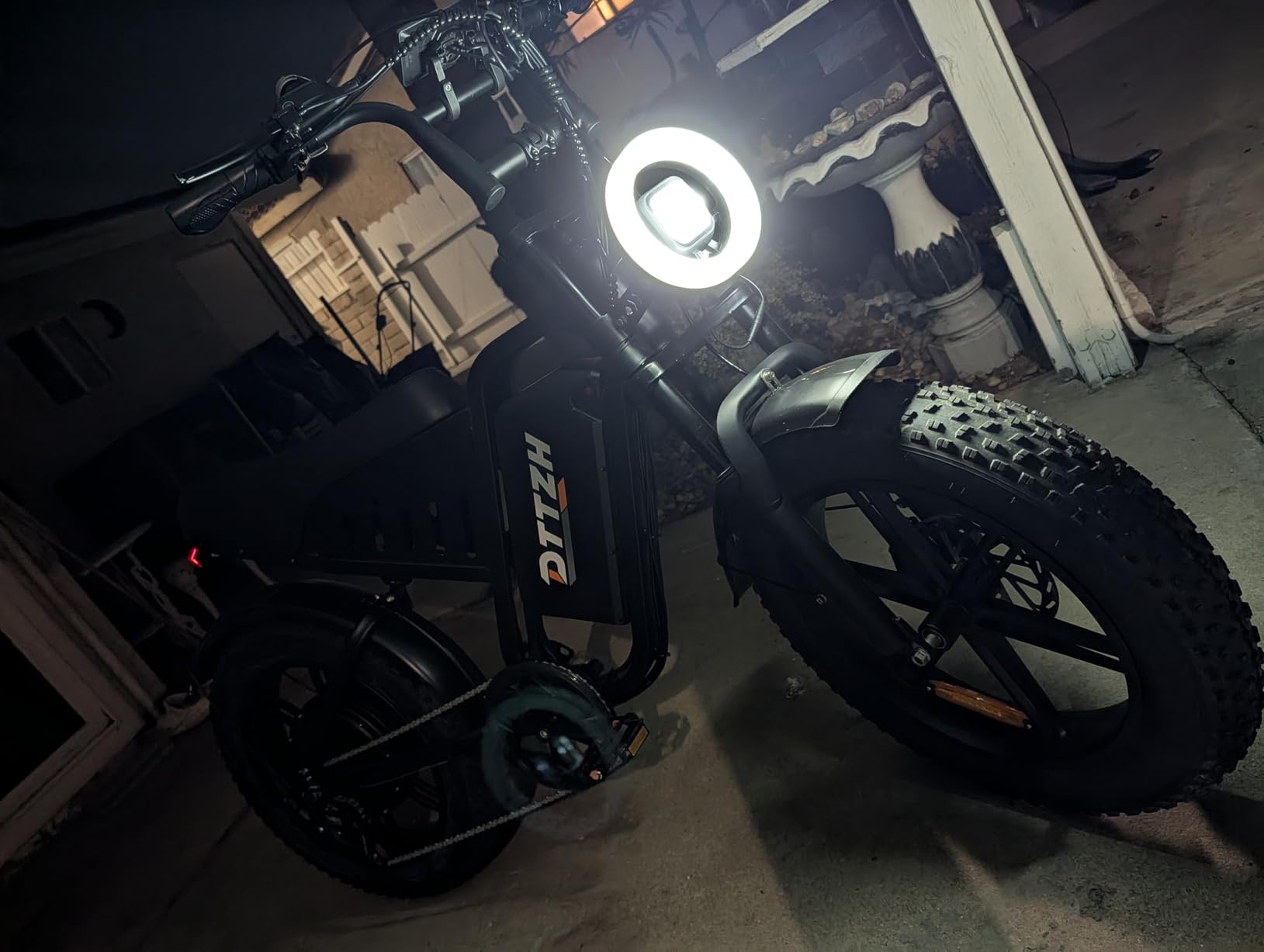
The motor peaks at 1500W from a 750W rated unit in an alloy heat-dissipating casing. The 48V 15.6Ah removable battery recharges in 5 to 7 hours on a 3A charger, and range is quoted at 22 miles on throttle and 60 miles on pedal assist.
Wheels are 20 inch by 4 inch one-piece integrated units, which means fewer places for a flat to happen. NFC card or four-digit password unlock, a 4 inch color LCD and three riding modes round out the package, and the bike is UL 2849 certified.
Why full suspension is worth more than extra wattage here
For a rider under 275 lbs who rides rough pavement or light gravel, suspension comfort beats raw power every time. The 160mm shock on the Jasion is better, but this bike delivers some of that benefit at a fraction of the cost.
The long seat is the quiet advantage. Owners mention it can comfortably carry a passenger, which makes it one of the few bikes here with a credible two-up story at a lower weight.
Where the F6 falls short
The roughly 305 lb limit is the headline problem. Riders above that need the TST R004 or a bike rated explicitly for them, and we would not stretch this one.
One owner received a dead motor that needed paid local installation, and another had a kickstand fail early. The frame also reads tall even though the listed rider height range is generous, and the oversized box can be refused by some return centers, which complicates sending it back.
6. DEEPOWER 2000W Fat Bike: Best for Long Pedal-Assist Rides
- Up to 100 mile claimed pedal-assist range from a 48V 20Ah pack
- Dual suspension front and rear
- Stated ability to climb 30 degree slopes
- Dual disc brakes built for heat dissipation
- Arrives 90 percent assembled
- No published maximum rider weight rating
- Heavy high carbon steel frame
- 28 mph top speed feels twitchy for new riders
- Wide tires add rolling resistance on pavement
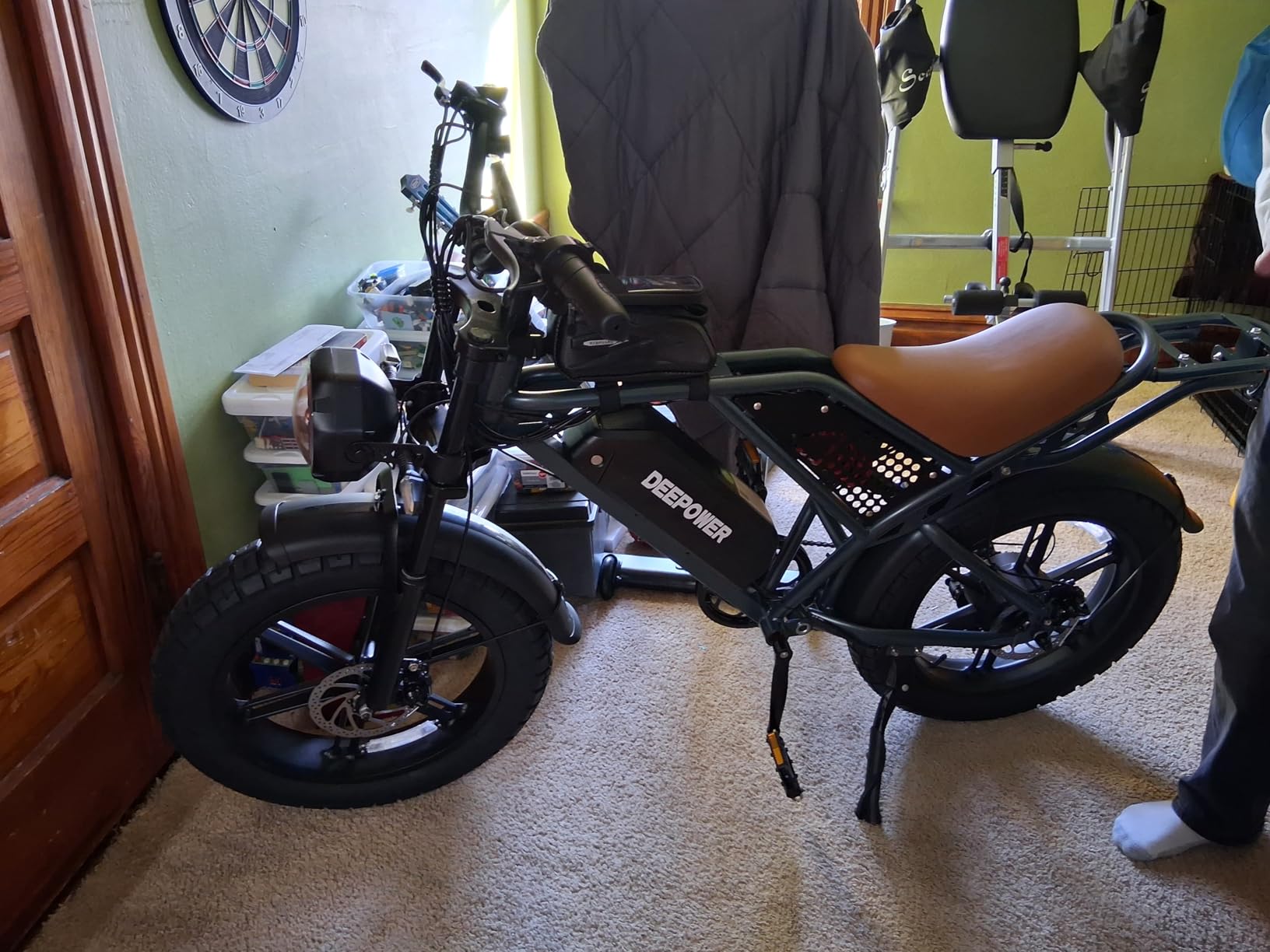
The DEEPOWER publishes no maximum rider weight rating, and that absence is the first thing to weigh before anything else on this bike. It is a dual-suspension 2000W peak fat bike with a 48V 20Ah removable battery, and the rest of the specification is strong.
Range is quoted at up to 70 miles on electric alone and up to 100 miles on pedal assist, which is the highest figure in this roundup. The manufacturer also states a 30 degree slope capability and a 28 mph top speed.
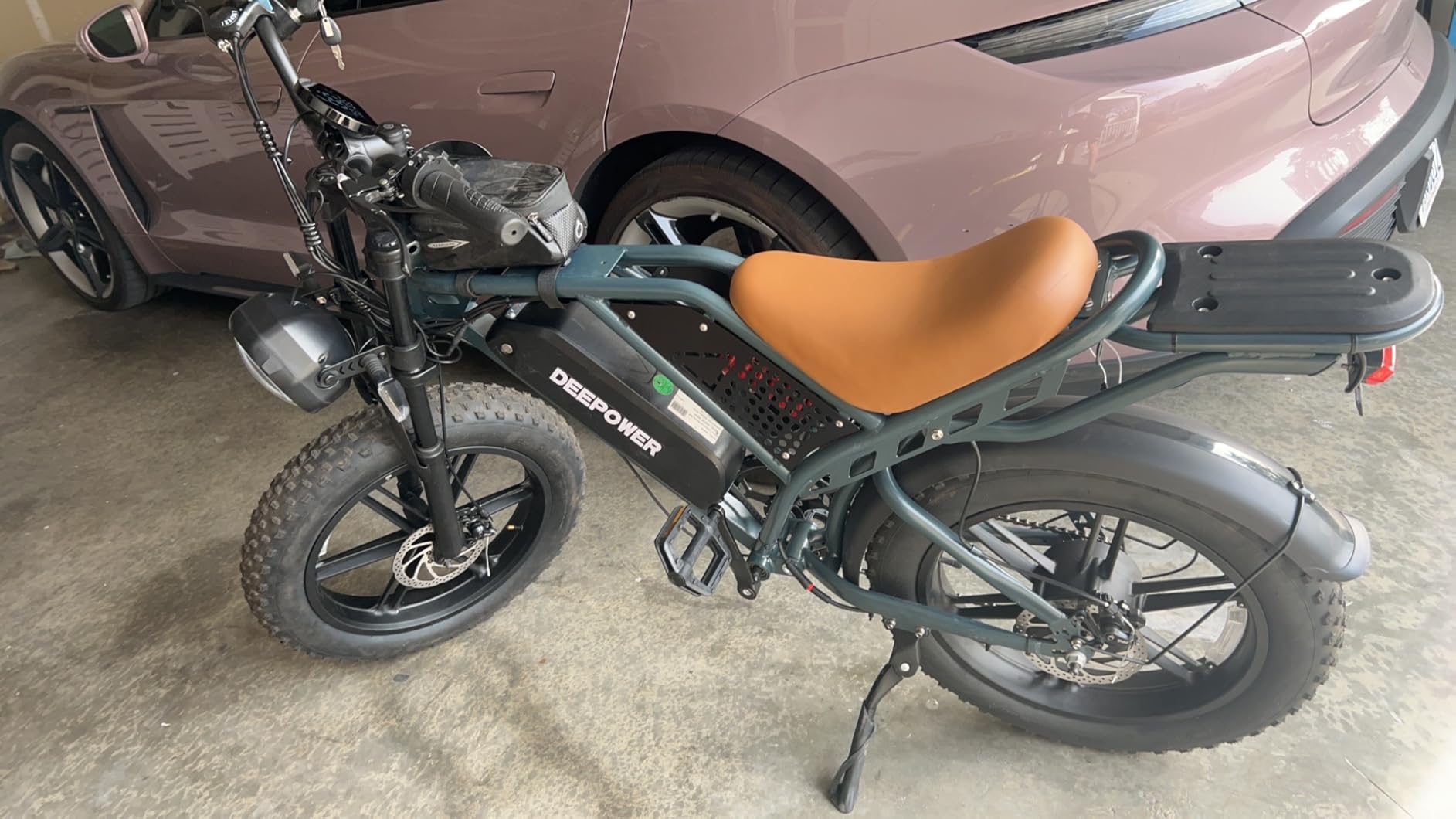
Brakes are dual discs with improved heat dissipation, which matters more than usual on a heavy bike because the heat load climbs with total weight. The drivetrain is a 7-speed professional unit, and the frame is high carbon steel.
Owners single out the torque and hill-climbing ability, plus the comfort from dual suspension over rough ground. The package weighs 43 kg, so plan your transport accordingly.
Why a missing payload rating should worry you
A published payload number is a structural promise from the manufacturer. When it is absent, nobody has confirmed what the frame, rims, spokes and motor will tolerate at your weight, and warranty claims get harder to enforce.
We would only pick this bike if you are comfortably inside the 300 lb band and the seller confirms the rating in writing. Riders above that should move to the TST R004, which publishes 450 lbs.
Where the DEEPOWER falls short
Beyond the missing rating, the steel frame is heavy and the 28 mph top speed is twitchy for anyone new to e-bikes. Riders report the wide 20 inch by 4 inch tires add rolling resistance on pavement, which quietly cuts into the headline range.
The 30 mph-class speed also puts it outside what many Class 2 and Class 3 definitions allow on bike paths and trails. Check your local rules before you ride it in traffic.
7. EOEOTWO E01: Best for Groceries, Errands and Deliveries
EOEOTWO Electric Bike for Adults, 26″ Fat Tire Ebikes, 48V 15Ah
- 330 lbs published load capacity on an aluminum frame
- Heavy-duty rear rack plus fenders included
- Dual disc brakes
- Five riding modes including throttle
- walk assist and cruise
- Two sets of keys lock the bike and the battery
- Front suspension only with no rear shock
- Stock tires are cheap rubber that many owners replace
- One report of battery and charger failure within three uses
- After-sales response criticized over the return window
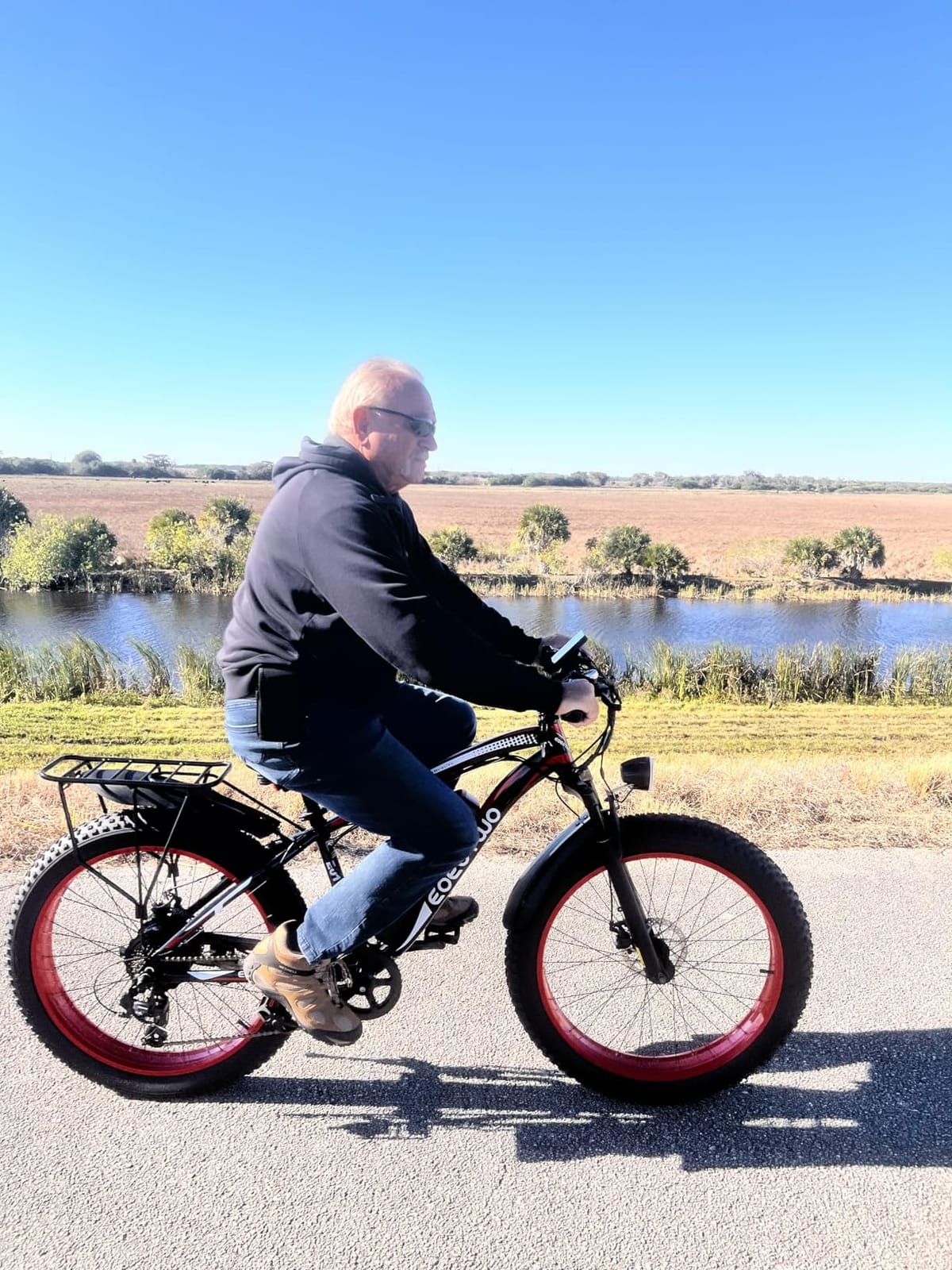
The EOEOTWO E01 publishes a 330 lbs load capacity, and the aluminum frame plus heavy-duty rear rack is the combination that makes it a genuine utility bike rather than a trail bike with a rack bolted on.
Aluminum is the material to look for at this weight. It is lighter than the high carbon steel frames on several bikes here, and the bike is listed at 33 kg.
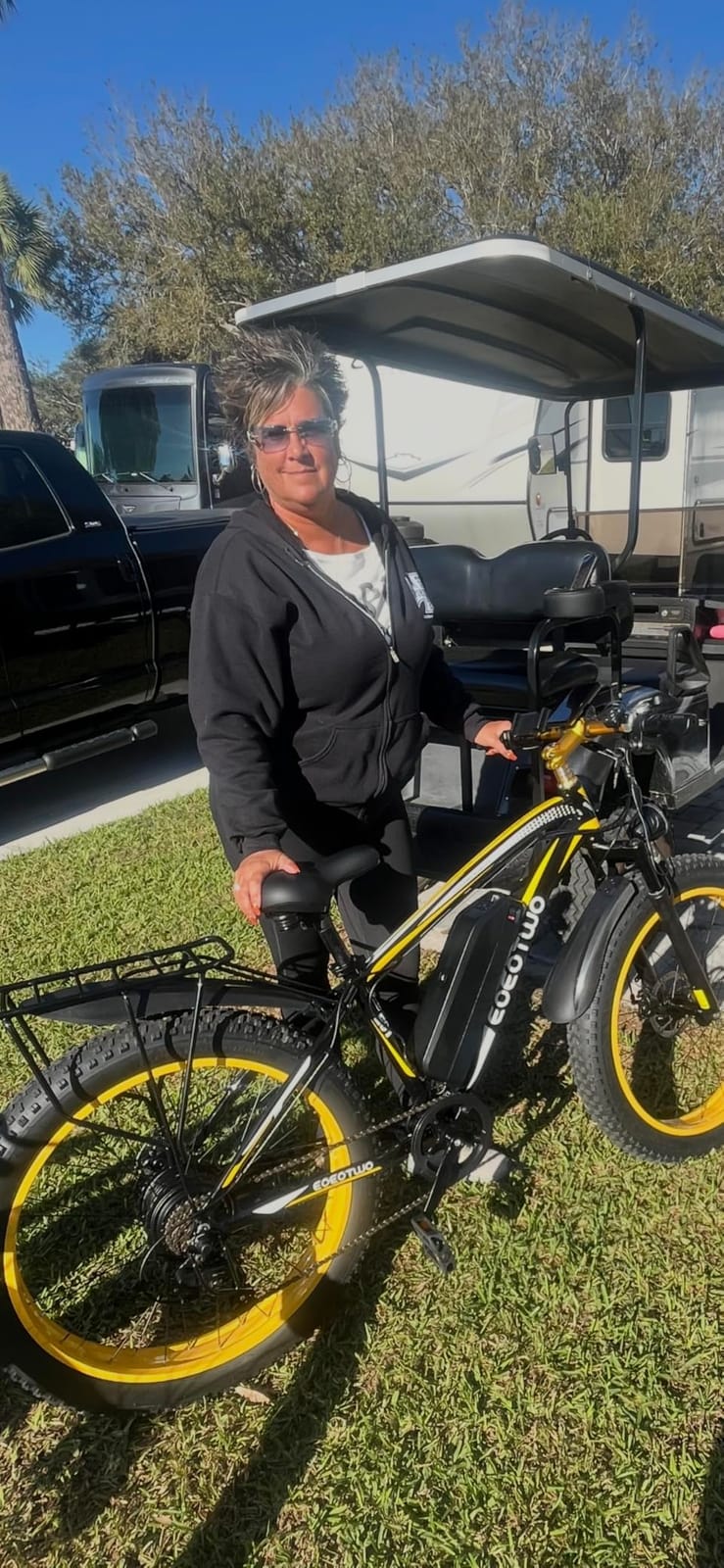
Power comes from a 1500W peak motor with 500W rated output. The removable lockable 48V 15Ah battery is quoted at up to 60 miles on pedal assist, and five riding modes cover throttle, five levels of pedal assist, walk assist, cruise and manual pedaling.
Tires are 26 inch by 4 inch with front suspension and dual disc brakes. Fenders, an LED headlight, an LCD display and two sets of keys are included, and the bike is UL 2849 certified by SGS with a one-year warranty.
Why rack rating matters more than motor size
For errands, the rear rack is the part you actually load. A bike rated for 330 lbs total with a properly built rack absorbs grocery weight without the handling changes that come from hanging bags off the handlebars.
Owners report speeds of 32 to 36 mph on flat ground in electric-only mode, including one at 220 lbs, and good performance in soft sand. For the 300-349 lb band doing deliveries or shopping, this is the bike we would pick.
Where the E01 falls short
There is no rear shock. Fenders and rear suspension are the two places this bike saves weight, and both are felt on rough roads with a full rack.
The stock tires are inexpensive rubber and owners swap them early, one rider reported a battery and charger failure within three uses, and customer service response over the return window drew criticism. Budget for tires and treat the electrics as the weak point.
8. ESKUTE V300: Best for Snow, Sand and Steep Grades
- 90 Nm torque with a published 35 degree climbing capability
- Large 48V 20.8Ah battery quoted up to 85 miles
- Five riding modes including boost and cruise
- Fat tires plus full suspension for loose surfaces
- NFC unlock and full-color LCD display
- Hydraulic braking only on the rear wheel
- High carbon steel frame adds weight
- 30+ mph unlocked top speed exceeds many local limits
- Short 20 inch wheelbase feels less stable for taller riders
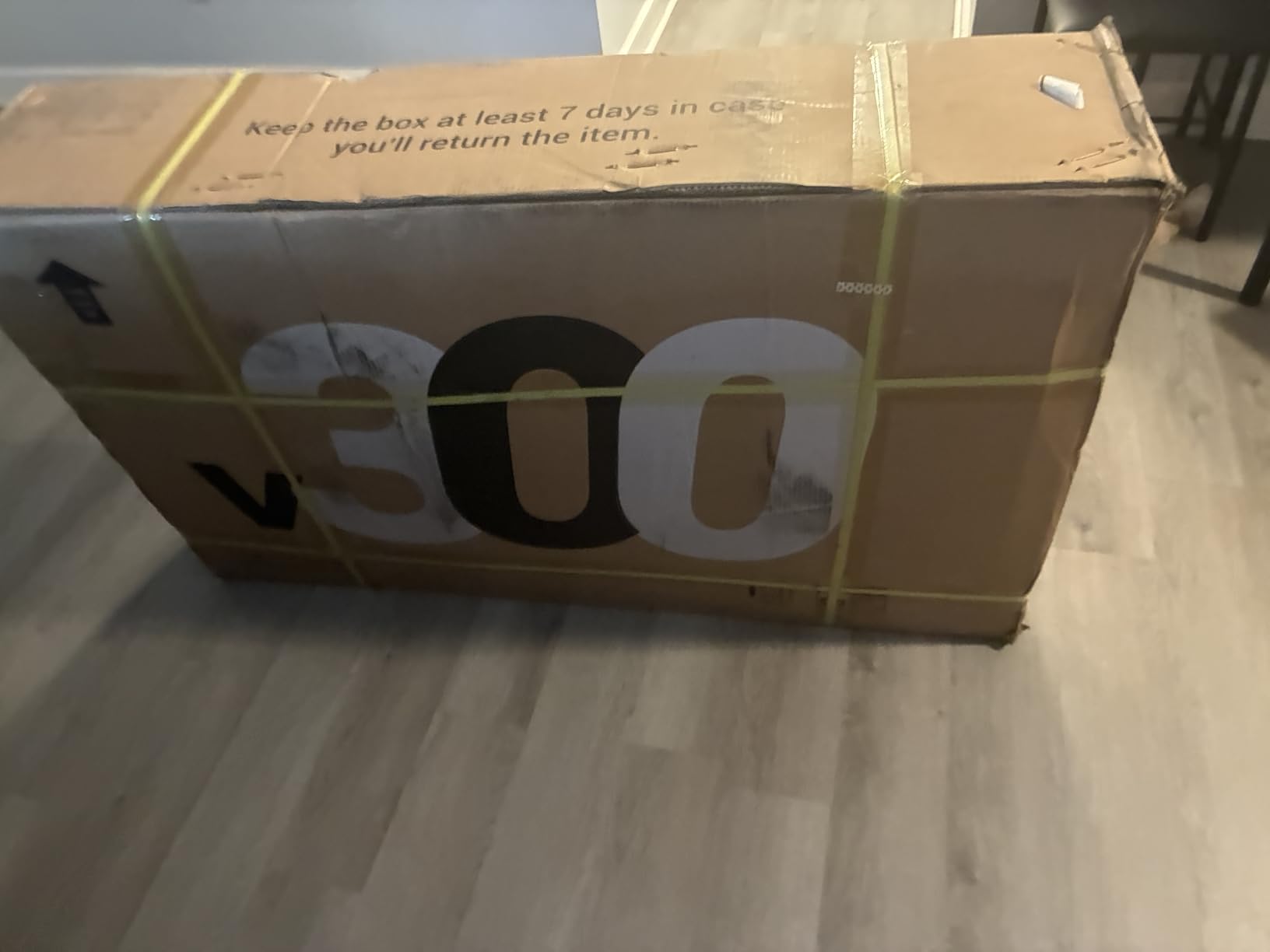
The ESKUTE V300 makes 90 Nm of torque from a 1500W peak motor and states a 35 degree climbing capability. No rider weight rating is published, which puts it in the same category as the DEEPOWER above.
What sets it apart is traction. The 20 inch by 4.0 inch fat tires run alongside full suspension, and that is the combination that keeps a heavy bike tracking on snow, sand and mud.
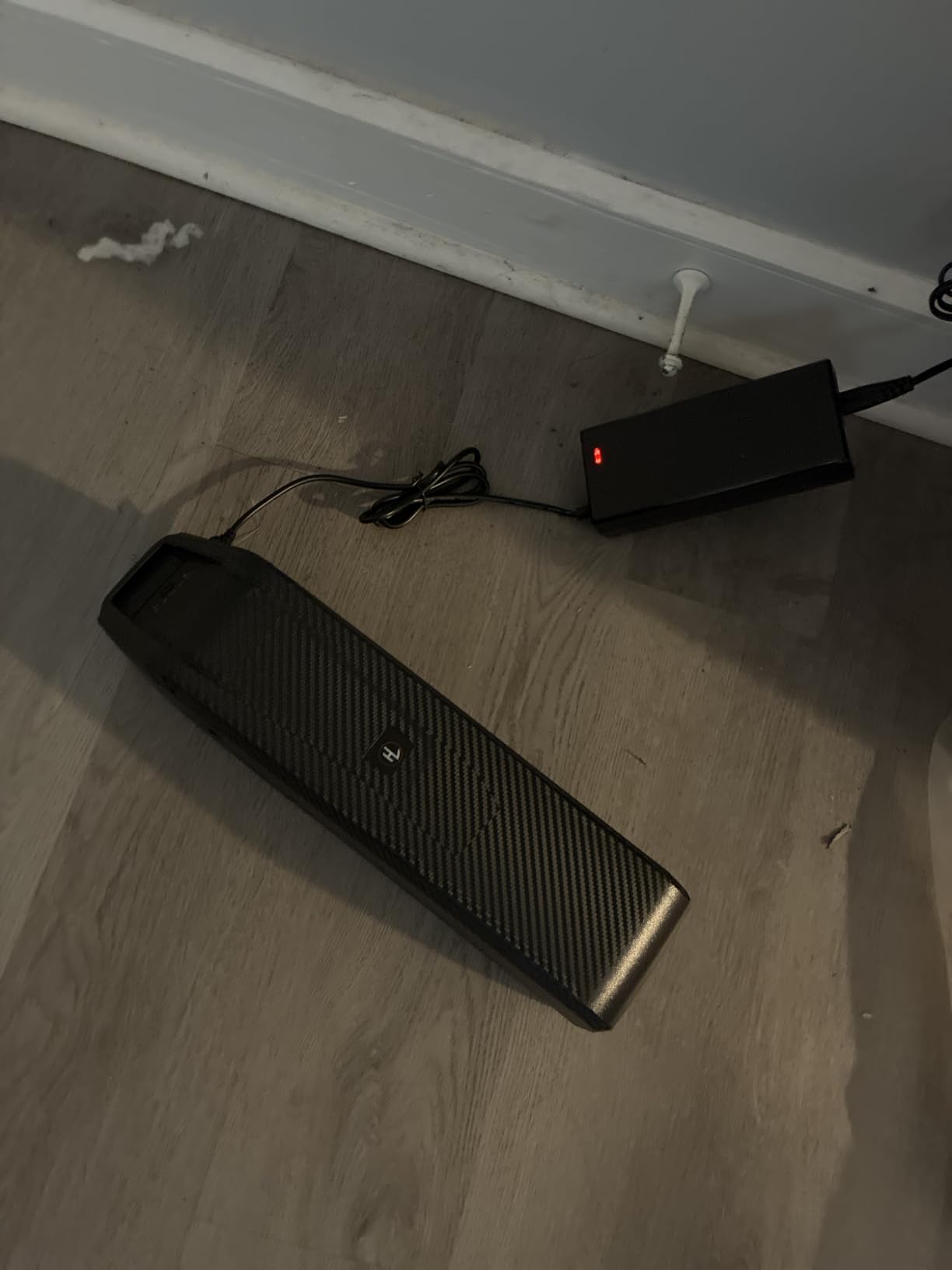
The 48V 20.8Ah battery is one of the larger packs in this roundup, quoted at up to 85 miles, with overcharge protection and the option to charge on the bike or remove it.
Five riding modes are offered: pure electric, pedal assist, manual, boost and cruise. The drivetrain is a 7-speed transmission, the display is a center-mounted full-color LCD, and NFC unlock handles security.
Why tires matter more than range in snow and sand
On loose surfaces the contact patch and suspension do the work, and a bike that spins its rear wheel uphill loses time no matter how many amp-hours it carries. Wide tires also run at lower pressure, which is what stops a heavy bike from pinching its tubes.
Check tire pressure every few weeks at your weight. Under-inflation is the single cheapest way to accelerate spoke and tire failure on a loaded bike.
Where the V300 falls short
Only the rear wheel gets a hydraulic brake on this bike, which is a genuine weakness for a machine capable of 35 degree climbs. The steel frame is heavy, and the short 20 inch wheelbase is reported as less stable for taller riders.
The unlocked top speed of 30 mph or more exceeds what many Class 2 and Class 3 definitions permit on public paths and trails, so confirm the legal position before riding it where it matters.
9. Vivi F26FUL: Best for Daily Commuting on Reliable Parts
Vivi F26FUL All Terrain Electric e Bike for Adult, 26″ x 4.0” Fat Tire
- Aluminum alloy frame that resists corrosion
- 864Wh removable and lockable battery
- Shimano 7-speed transmission shifts reliably
- 26 inch by 4.0 inch all-terrain tires
- UL 2849 certified electricals and a 90 LUX headlight
- Mechanical disc brakes are weaker than hydraulic rivals
- Modest 500W rated motor for steep climbs
- Front suspension only
- No published rider weight rating
- Warranty wording around registration is confusing
The Vivi F26FUL has no published rider weight rating, so treat it as a bike for the band below the 330 lb group rather than a heavy-duty pick. The build quality underneath is the reason we include it.
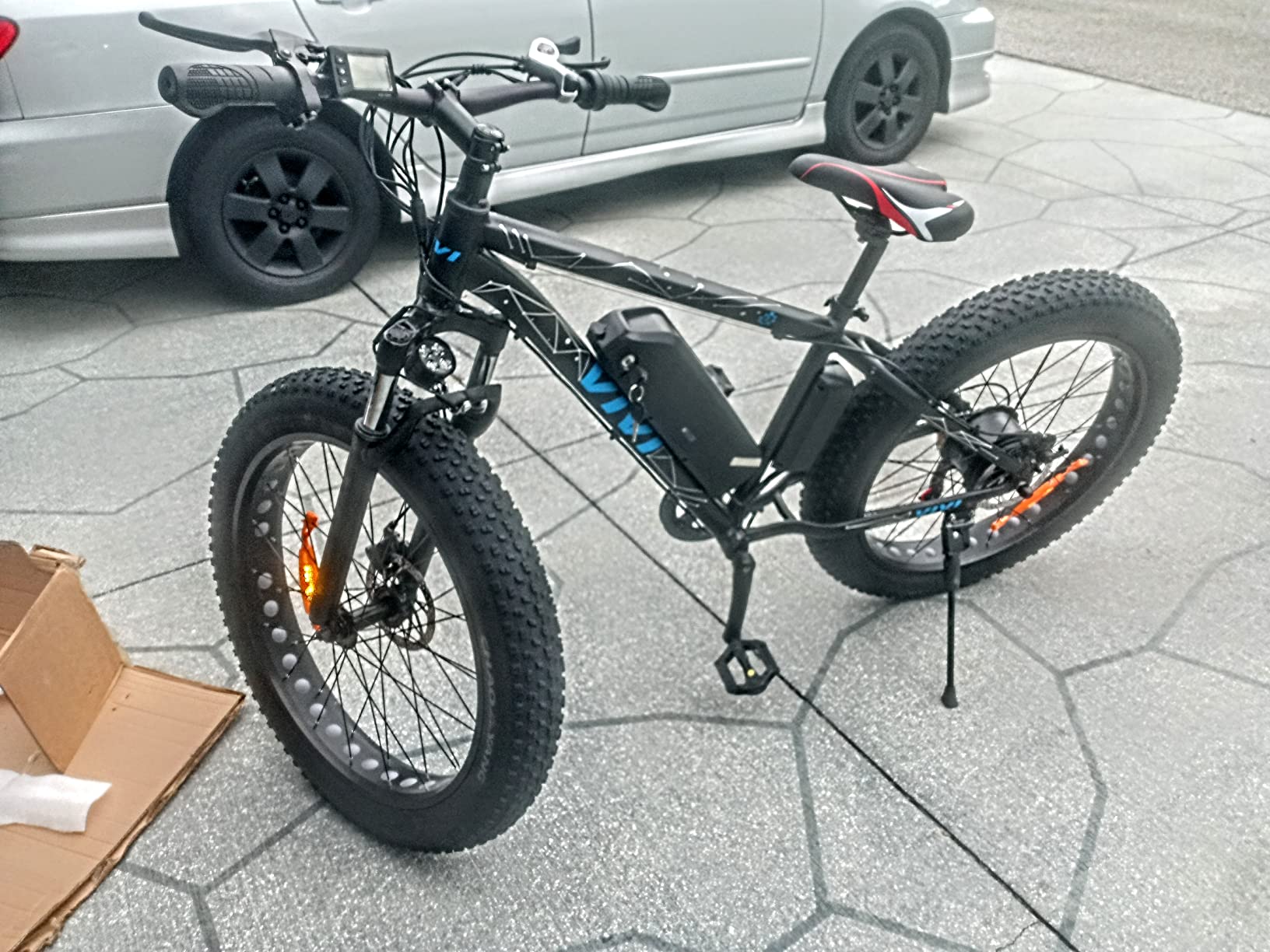
It has an aluminum alloy frame with a front suspension fork, and the motor is a 500W rated unit peaking at 749W with a 20 mph top speed. That is a commuting pace rather than a trail pace.
The 864Wh removable and lockable battery is the largest single pack on this list outside the Jasion, and the Shimano 7-speed transmission is the only Shimano drivetrain among these ten. That matters for long-term serviceability.
Tires are 26 inch by 4.0 inch all-terrain, lighting is a 90 LUX headlight plus an integrated brake light, and the electrical system is UL 2849 certified. The bike arrives 85 percent assembled with a one-year warranty and ongoing technical support.
Why a lockable battery changes commuter security
For a bike left outside a shop or at work, a removable battery that locks is worth more than any tracker. It removes the most attractive target on the whole machine, and it lets you charge indoors overnight.
Shimano drivetrain parts are also far easier to source than the proprietary systems on several bikes here, which lowers the cost of a chain, cassette or derailleur over five years of daily use.
Where the F26FUL falls short
Mechanical disc brakes are the biggest gap. On a loaded commuter stopping from 20 mph, the shorter lever reach and harder modulation of a mechanical caliper is noticeable next to hydraulics.
The 500W rated motor is modest for steep grades with weight on the rack, and suspension is front only. Add a hydraulic brake upgrade early if your route has long descents.
10. INVANTI EB16: Best Full Suspension for a Heavier Rider Under 300 lbs
- One of only two bikes here with both front and rear suspension
- IP54 waterproof removable battery with BMS protection
- Quoted 75 mile pedal assist range
- UL 2849 SGS certified with a 365-day warranty
- Reflective rear lights with turn indication
- Mechanical disc brakes rather than hydraulic
- 750W motor is modest for heavier riders on steep grades
- 20 inch wheels are smaller than the 26 inch options
- Range and speed fall off at higher rider weights
- No published rider weight rating
The INVANTI EB16 publishes no rider weight rating, so it belongs to the group of bikes on this list you would buy below the 300 lb band. Its distinguishing feature is suspension: front and rear, which few bikes at this level offer.
The motor is a 750W brushless unit reaching 20 mph with a stated 35 degree slope capability. The battery is a removable 48V 15.6Ah pack with IP54 water protection and a BMS.
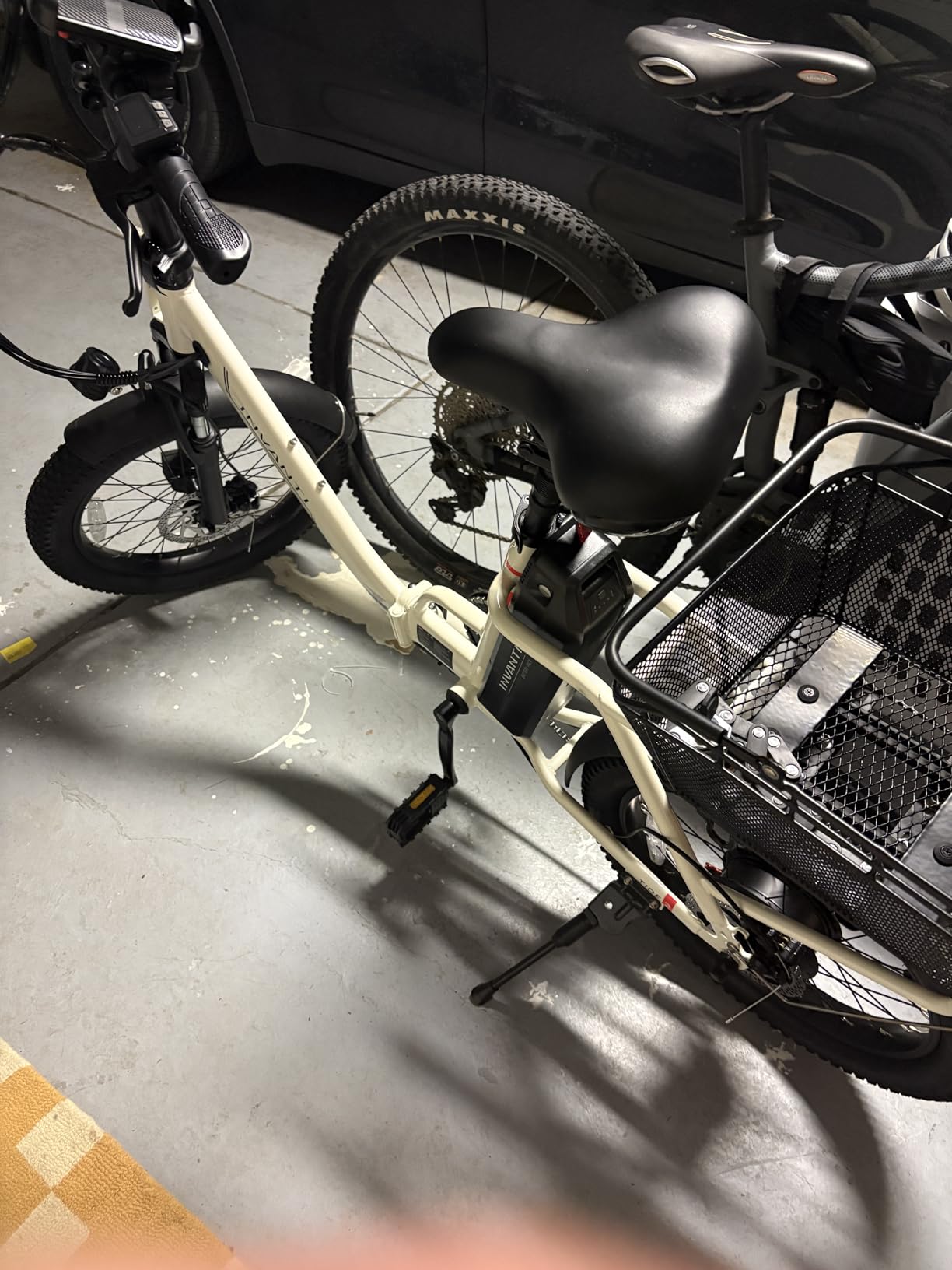
Range is quoted at 40 miles on throttle and 75 miles on pedal assist, from a 499.2Wh pack. Tires are 20 inch by 4.0 inch anti-skid, and the bike comes with a bright front light plus reflective rear lights with turn indication.
It is UL 2849 certified by SGS, arrives 90 percent assembled, and carries a 365-day component warranty, which is the longest stated warranty among the bikes here.
Why a rear shock matters once you are loaded
Front-only suspension wastes rear traction on every bump. With weight on the rack, the unloaded rear wheel skips and the drivetrain loses bite, which is exactly the moment a heavy rider needs grip.
A bike with a working rear shock keeps both wheels loaded through sand and washboard gravel. Riders who come from a front-only bike describe the difference as the single biggest comfort upgrade they made.
Where the EB16 falls short
The brakes are mechanical discs, and the 750W motor is the second-smallest here. Owners note that actual speed and range drop noticeably at higher rider weights, which is the honest limitation of a smaller pack.
The 20 inch wheels also feel smaller than the 26 inch options in this roundup, particularly for taller riders, and 499.2Wh is the smallest battery here. Above roughly 280 lbs, look at the TST R004 instead.
What Actually Breaks When You Exceed the Weight Limit
An overloaded e-bike does not usually fail in one dramatic event. It fails progressively, and the first components to go are the cheapest and least structural ones. Riders on heavy-rider threads describe the same pattern, with spoke breakage and recurring tire issues coming up repeatedly.
Exceeding the rating also removes your protection. Manufacturers build these limits around the fatigue life of the weakest components, so a frame or rim loaded past its rating is out of warranty by definition.
Spokes are the first casualty. They carry the highest concentrated load on the wheel and lose tension fastest under repeated heavy loads.
Rims and nipples deform once spokes go slack, which is when the wheel starts dish and wobble.
Tires and tubes sit closer to the rim than most riders expect, so an overloaded rim pinches the tube. Under-inflation makes this worse.
Drivetrain and cassette wear faster under higher shift loads, and chains skip under torque.
Brake rotors and calipers fade as the heat load climbs with total weight.
Motor and controller come last, but running a motor at high current in an over-loaded state shortens its life.
Nobody here tests these limits on purpose. The advice from experienced riders on forums is consistent anyway: stay 10 to 15 percent under the published rating and check spoke tension and tire pressure every few hundred miles.
How to Choose an E-Bike for Heavy Riders
Start with the number most buyers skip. Payload capacity usually means rider plus cargo plus anything on the rack, while a max rider weight means the rider alone. Two bikes can publish the same figure and mean completely different things, and only one of them will still be true when you carry groceries.
Add your body weight to your realistic cargo, then buy a bike rated at least 10 to 15 percent above that total. Under 300 lbs, most of the bikes here will suit you. Above that, the list of options shrinks fast.
Work out which weight bracket you are in
Under 300 lbs: the Funhang EB-S1, the Vivi ACE01, the EOEOTWO E01 and the Jasion EB5 Ultra all publish 330 lbs, which leaves real headroom.
300 to 349 lbs: the same four bikes fit you, but you have almost no spare capacity. Keep the rack light if you are near the ceiling, and prefer the Vivi ACE01 if your route has hills.
350 to 399 lbs and 400 to 449 lbs: the TST R004 at 450 lbs is the only published option in this roundup. Ask the seller for the rating in writing before you commit.
450 lbs and above: none of these ten is the right answer. At that weight you need a dedicated heavy-duty cargo or tandem platform built around a longtail frame and a mid-drive system, not a fat-tire e-bike.
Read the four specs that matter most
Torque over watts. Nm of torque decides whether you can start on a grade with 60 lbs of cargo. Anything under about 65 Nm will feel strained at 300 lbs and above, and the two bikes here at 90 Nm are noticeably calmer.
Hydraulic discs over mechanical. Mechanical calipers work but need adjustment, and they fade sooner as heat climbs with total weight. Five of the ten bikes here run mechanical brakes, and it shows in the reviews.
Frame material. Aluminum keeps a heavy bike manageable and resists corrosion; steel is tougher but heavier. Only three bikes here publish a bike weight, and those that do land between 66 and 72 lbs before you remove the battery.
Battery in watt-hours. Range claims are easier to compare as Wh. 720Wh to 1040Wh covers most heavy-rider needs, and voltage of 52V holds up better under load than 48V.
Know what is riding with you
Users consistently rate cadence sensing as a must at higher rider weights, and a torque sensor is better still. Torque-sensing is why the Vivi ACE01 starts smoothly instead of lurching, which matters most in traffic.
Also plan for tires and pressure. Wide fat tires run at lower pressure, and holding the correct pressure at your weight is the cheapest protection you can give the rims and spokes. Check it monthly.
Check the class rules before you buy
In the US, a Class 2 e-bike is pedal assist up to 20 mph with a throttle that cuts off at that speed, and a Class 3 goes up to 28 mph. Bikes above 750W or those capable of speeds beyond 28 mph generally fall outside those definitions, and many states treat those as mopeds requiring registration.
Several bikes here top out between 28 and 36 mph unlocked, which puts them outside what many bike paths and trails allow. In the EU the familiar 250W continuous rating and 25 mph cap apply. Check your local rules before you ride in traffic rather than after.
If you are still weighing a scooter instead, our guide to heavy duty mobility scooters for large riders covers the seated option, which suits riders who cannot hold a saddle position for long.
Frequently Asked Questions
What is the best e-bike for overweight people?
The Funhang EB-S1 is our pick, rated to 330 lbs with UL 2271 battery and UL 2849 bike certification, a 60 lb rear rack and 26 inch by 4 inch fat tires. Riders above 400 lbs should look at the TST R004, the only bike here published to 450 lbs. The right answer for any weight is the one rated at least 10 to 15 percent above your body weight plus your normal cargo.
Can a 300 lb person ride an e-bike?
Yes, with the right bike. Most factory e-bikes are published to about 300 lbs, and riders at exactly that weight sit at the ceiling with no room for cargo. Riders discussing heavy-duty bikes on r/ebikes repeatedly raise this ceiling as the reason factory platforms stop at 300 lbs. Buy rated at 330 lbs or above and you have real headroom for a backpack, groceries or a child seat.
Can a 400 pound person ride an e-bike?
Yes, but only on a bike rated for you. In this roundup the TST R004 at a 450 lb maximum load is the only option published for that weight. A 400 lb rider also needs wide tires, dual suspension and hydraulic or well-adjusted mechanical brakes, because the stopping distance and heat load at that weight are far higher. Never ride a bike rated 330 lbs at 400 lbs.
What happens if I exceed my e-bike weight limit?
Spokes break first, then rims dish and warp as spoke tension drops. Tires and tubes get pinched as overloaded rims flex, and the drivetrain, brake rotors and motor all wear faster under higher current and torque. Exceeding the rating also puts the bike outside its warranty, because the limit is built around the fatigue life of the weakest parts. Stay 10 to 15 percent under the published rating.
How much range does an e-bike lose when ridden heavy?
A lot, and advertised figures assume a much lighter test rider. Claimed ranges on these bikes are typically measured at assist level 1 by someone near 170 to 180 lbs, so a rider at 300 lbs pulling the same assist level will draw far more current. Owners on the Vivi ACE01 report full 60 mile claims on low assist but well below the claim on high assist or throttle, so plan on the lower half of any published figure.
Do I need a license for a 750W e-bike?
In most US states a 750W bike with pedal assist up to 20 mph and a throttle that cuts off at that speed is a Class 2 e-bike and needs no license or registration. Once a bike exceeds 750W, or can run faster than 28 mph, it falls outside that definition and many states treat it as a moped that requires registration, insurance and a helmet. Riders on r/ebikes raise this more than almost any other purchase question.
Final Verdict: Which E-Bike Fits Your Weight
For most heavy riders, the Funhang EB-S1 is the best e-bike for heavy riders on this list. It is rated to 330 lbs, it carries both UL certifications, it has the deepest feedback of the top-rated bikes here, and its 60 lb rack makes it work as a daily errand bike rather than a toy.
If your route has hills, take the Vivi ACE01 instead. The torque sensor and 90 Nm are the difference between a bike you ride confidently on a grade and one you walk up.
Above 400 lbs, the choice is made for you. The TST R004 at 450 lbs is the only bike in this roundup published for that weight, and its weaknesses are mechanical brakes and a short warranty rather than anything structural.
Whatever you pick, buy rated at least 10 to 15 percent above your weight, expect half the advertised range, and check your tire pressure every few weeks. Those three habits keep a heavy-duty e-bike running long after the components that were undersized have been replaced.