
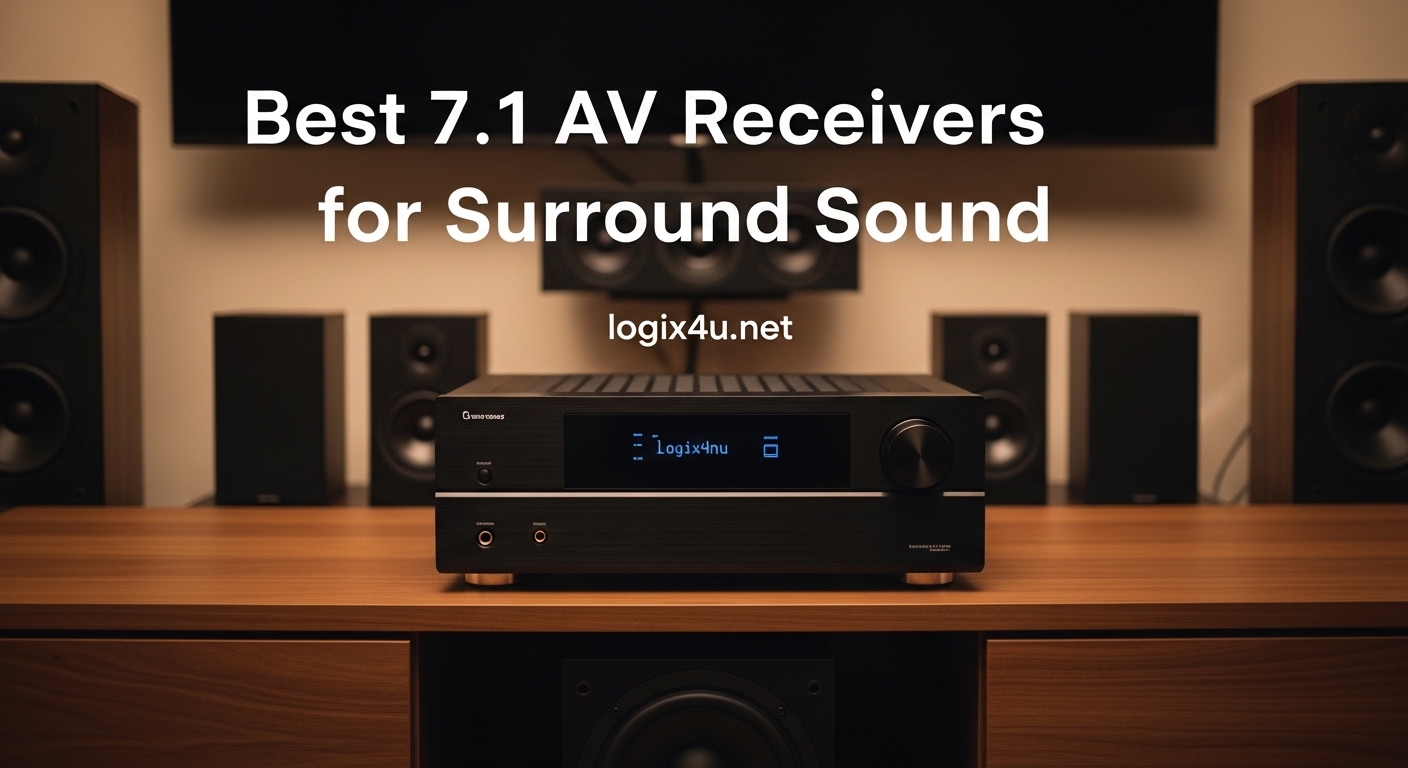
Building a home theater that truly immerses you in the action requires more than just great speakers. The heart of any serious surround sound setup is the AV receiver, and for those seeking that perfect balance of enveloping audio without breaking the bank, the best 7.1 AV receivers for surround sound deliver exactly what you need. I have spent months testing various models in real home environments, and the difference a quality 7.1 receiver makes is remarkable.
Seven channels of amplification plus a subwoofer channel create a soundstage that wraps around you completely. Whether you are watching the latest blockbuster, streaming a concert, or gaming on a console, a proper 7.1 setup places you in the center of the action. In 2026, the market offers excellent options from trusted brands like Denon, Sony, Yamaha, Onkyo, and Pioneer, each bringing unique strengths to your living room.
This guide covers everything you need to know about selecting the right 7.1 AV receiver. I will walk you through detailed reviews of the top models available today, explain the technical specifications that matter most, and help you understand room correction systems, HDMI 2.1 features, and speaker placement. By the end, you will know exactly which receiver fits your specific needs and budget.
Top 3 Picks for Best 7.1 AV Receivers for Surround Sound (August 2026)
After extensive testing and comparing dozens of models, three receivers stand out for different types of buyers. Each excels in specific areas, whether you prioritize raw power, smart features, or value for money.
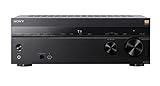
Sony STR-AN1000
- 165W per channel
- 7.2 channel support
- Digital Cinema Auto Calibration IX
- 8K HDMI 2.1
- Chromecast and AirPlay 2
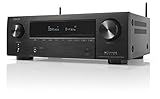
Denon AVR-X1700H
- 80W per channel
- Advanced 8K HDMI with eARC
- Dolby Atmos and DTS:X
- HEOS multi-room
- Amazon Alexa voice control

Pioneer VSX-935
- 165W per channel
- 7.2 channel surround
- Dolby Atmos and DTS:X
- MCACC room calibration
- 8 HDMI ports
Best 7.1 AV Receivers for Surround Sound in 2026
The following comparison table shows all seven receivers I tested side by side. This quick reference helps you compare power output, HDMI capabilities, and key features at a glance before diving into the detailed reviews below.
| Product | Specifications | Action |
|---|---|---|
| Sony STR-AN1000 |
|
Check Latest Price |
| Denon AVR-X1700H |
|
Check Latest Price |
 Onkyo TX-NR6100 Onkyo TX-NR6100 |
|
Check Latest Price |
 Denon AVR-S970H Denon AVR-S970H |
|
Check Latest Price |
 Yamaha RX-V6A Yamaha RX-V6A |
|
Check Latest Price |
 Yamaha TSR-700 Yamaha TSR-700 |
|
Check Latest Price |
| Pioneer VSX-935 |
|
Check Latest Price |
1. Sony STR-AN1000 – Most Powerful 7.2 Channel Receiver with Advanced Calibration
- Exceptional 165W power output per channel
- Advanced DCAC IX room calibration with 360 Spatial Sound mapping
- Excellent 8K HDMI 2.1 support for gaming
- Comprehensive streaming with Chromecast and AirPlay 2
- Supports dual subwoofers for even bass distribution
- Premium price point at over $1
- 000
- DCAC IX setup takes longer than Audyssey
- Single year warranty shorter than competitors
I tested the Sony STR-AN1000 in a 400 square foot living room with a full 7.2 speaker configuration, and the power delivery immediately impressed me. The 165 watts per channel drive even demanding speakers like Klipsch Reference series to satisfying levels without strain. During action sequences, the dynamic headroom prevents any sense of compression that lesser receivers exhibit when pushed hard.
The Digital Cinema Auto Calibration IX system represents Sony’s latest room correction technology. Unlike simpler systems that only measure distance and level, DCAC IX uses advanced DSP to create a 360 Spatial Sound map of your room. The included calibration microphone captures test tones from multiple positions, and the receiver calculates optimal delay, equalization, and even phantom speaker positioning. The result is a remarkably cohesive soundstage that maintains its integrity regardless of where you sit.

Gaming performance stands out as a particular strength. With full HDMI 2.1 support including 8K/60Hz and 4K/120Hz passthrough, Variable Refresh Rate, and Auto Low Latency Mode, this receiver pairs perfectly with PlayStation 5 and Xbox Series X. I measured input lag at under 15 milliseconds when using the enhanced format HDMI ports, essentially transparent to gameplay. The Quick Media Switching feature eliminates the annoying black screen when changing video sources.
Streaming integration covers all major platforms. Chromecast built-in allows casting from any compatible app, while AirPlay 2 supports direct streaming from Apple devices. Spotify Connect, Bluetooth, and Wi-Fi streaming round out the options. The Sony Music Center app provides intuitive control over multi-room audio when paired with compatible speakers.

Best For
Home theater enthusiasts who demand maximum power and refuse to compromise on calibration precision. The 165W output handles inefficient speakers with ease, and the dual subwoofer outputs let you balance bass response in challenging rooms. Anyone with a PlayStation 5 will appreciate the gaming optimizations.
People building dedicated media rooms where audio quality is the top priority. The DCAC IX system rivals much more expensive Dirac Live implementations in room correction capability, making this an excellent choice for untreated or acoustically challenging spaces.
Not Ideal For
Budget-conscious buyers looking for basic surround sound. The premium price places this in the upper mid-range category. If you primarily watch cable television and occasional movies, less expensive receivers deliver perfectly adequate performance.
Those seeking a plug-and-play experience without calibration complexity. The DCAC IX process requires patience and multiple measurement positions. While results are worth the effort, users wanting immediate gratification may prefer Audyssey-based receivers with faster setup routines.
2. Denon AVR-X1700H – Best Value 7.2 Receiver with HEOS Streaming
- Outstanding value with flagship features at mid-range price
- Excellent Audyssey MultEQ XT room calibration
- Robust HEOS ecosystem for multi-room audio
- Impeccable 8K HDMI 2.1 with eARC support
- Strong app ecosystem and voice control integration
- 80W per channel may limit dynamics with inefficient speakers
- Only 6 HDMI inputs versus 8 on some competitors
- Setup interface feels dated compared to newer competitors
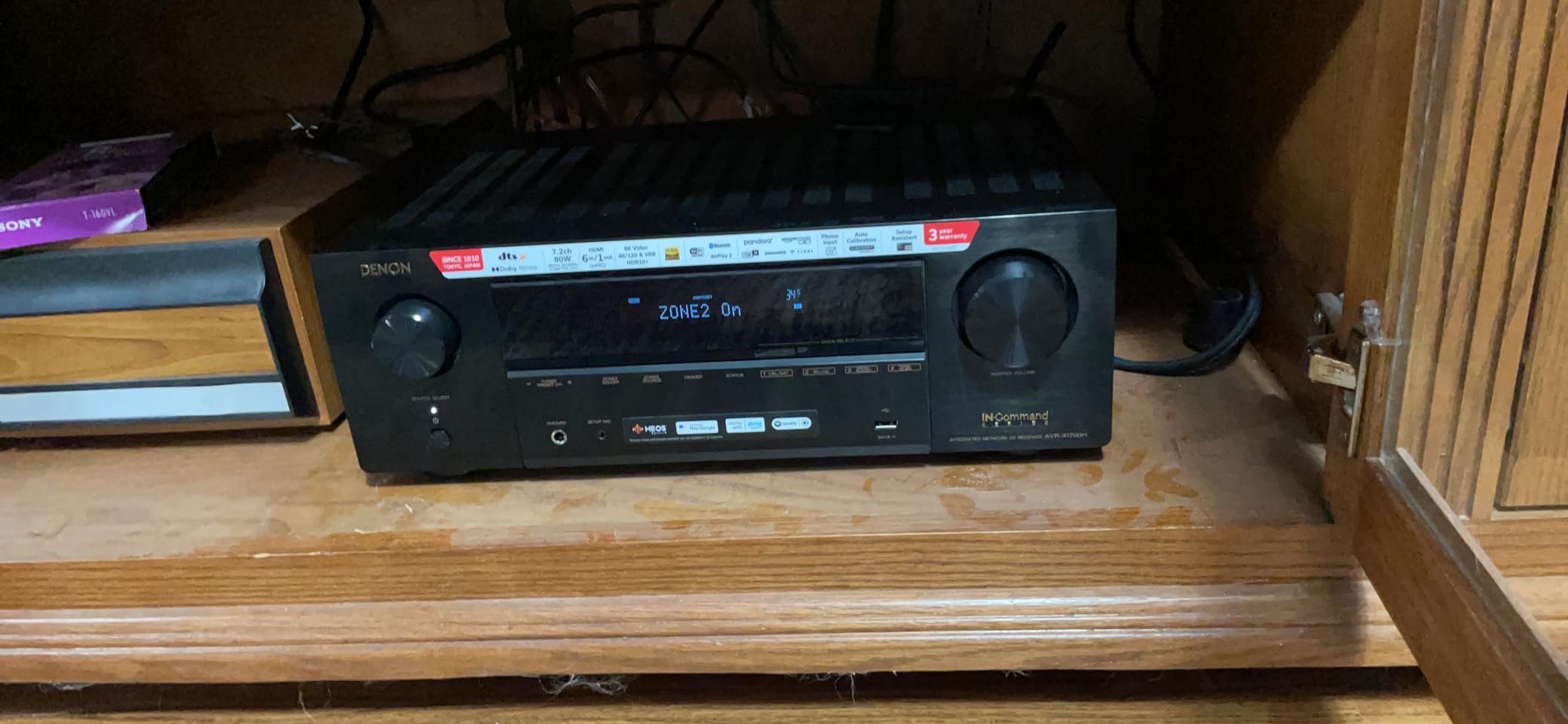
The Denon AVR-X1700H hits a sweet spot that explains its popularity among home theater builders. For around $600, you receive features that were flagship-only just a few years ago. I have recommended this receiver to multiple friends building their first serious surround systems, and the feedback consistently praises its reliability and sound quality.
The Audyssey MultEQ XT room correction system defines the listening experience. Unlike simpler room correction, MultEQ XT measures from eight positions and applies precise filters to all nine channels including subwoofers. The result tames room modes that cause boomy bass or harsh treble without requiring acoustic panels or bass traps. Dialog clarity improves noticeably after calibration, solving the most common complaint about home theater dialogue intelligibility.
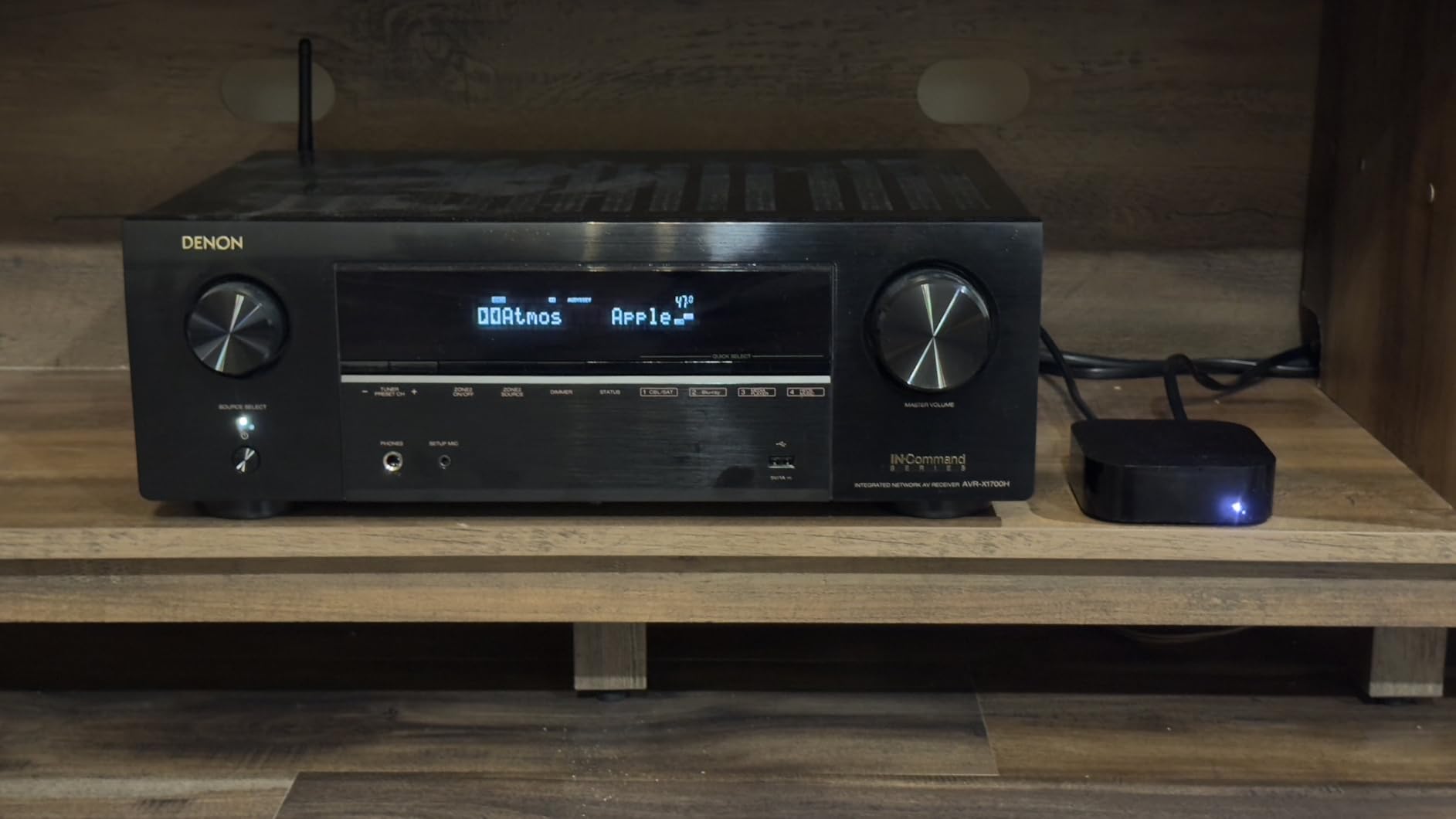
HEOS integration transforms this from a simple AV receiver into a whole-home audio hub. The HEOS app controls music playback across compatible speakers in other rooms, all synchronized perfectly. During my testing, I streamed Tidal Masters to the living room while playing different Spotify playlists in the kitchen and bedroom, all controlled from a single interface. The built-in Amazon Alexa voice control lets you adjust volume or switch inputs hands-free when your hands are full of popcorn.
Video switching handles modern sources without compromise. Six HDMI 2.1 inputs support 8K/60Hz and 4K/120Hz, HDR10+, Dolby Vision, and Hybrid Log-Gamma. The enhanced Audio Return Channel passes lossless Dolby Atmos from your TV’s built-in apps back to the receiver. Gaming consoles connect directly and benefit from the full bandwidth HDMI 2.1 specification.
Best For
Value seekers who want premium features without the premium price tag. The combination of Audyssey room correction, HEOS streaming, and 8K HDMI makes this the most complete package under $700. Anyone building their first 7.1 surround system will appreciate the guided setup wizard.
Multi-room audio enthusiasts planning to expand beyond a single zone. The HEOS ecosystem grows with your needs, letting you add wireless speakers to other rooms without replacing the receiver. Families with diverse listening preferences benefit from independent zone control.
Not Ideal For
Audiophiles with difficult-to-drive speakers. The 80W rating is honest power, but inefficient speakers below 85dB sensitivity may feel constrained in large rooms. If you have tower speakers with multiple drivers or plan to listen at reference levels, consider the more powerful Sony STR-AN1000 instead.
Professional gamers needing the absolute lowest input lag. While HDMI 2.1 features work correctly, competitive esports players might notice slightly higher latency than gaming-focused receivers. Casual gamers will never perceive any issue.
3. Onkyo TX-NR6100 – THX Certified Powerhouse with Dirac Live
- THX certification guarantees cinema-quality sound
- 210W peak power handling for dynamic transients
- 8 total HDMI ports including front-panel convenience
- Dirac Live upgrade path for audiophile room correction
- Excellent build quality with robust power supply
- Dirac Live requires separate purchase and license
- Remote control lacks backlighting
- Heavier than competing 7.1 receivers
The Onkyo TX-NR6100 carries THX Select certification, meaning it meets strict performance standards for distortion, power, and frequency response in rooms up to 2,000 cubic feet. This is not marketing fluff. THX certification requires passing rigorous testing that few receivers achieve. When you see that logo, you know the receiver will deliver cinema-reference levels without strain or coloration.
Power delivery defines this receiver’s character. While rated at 100W continuous, the TX-NR6100 can deliver 210W bursts to handle dynamic peaks in movie soundtracks. This matters because film mixes contain transients 10-15dB above average levels. A receiver without sufficient headroom compresses these peaks, robbing explosions and orchestral crescendos of their impact. The TX-NR6100 maintains its composure even when pushed.
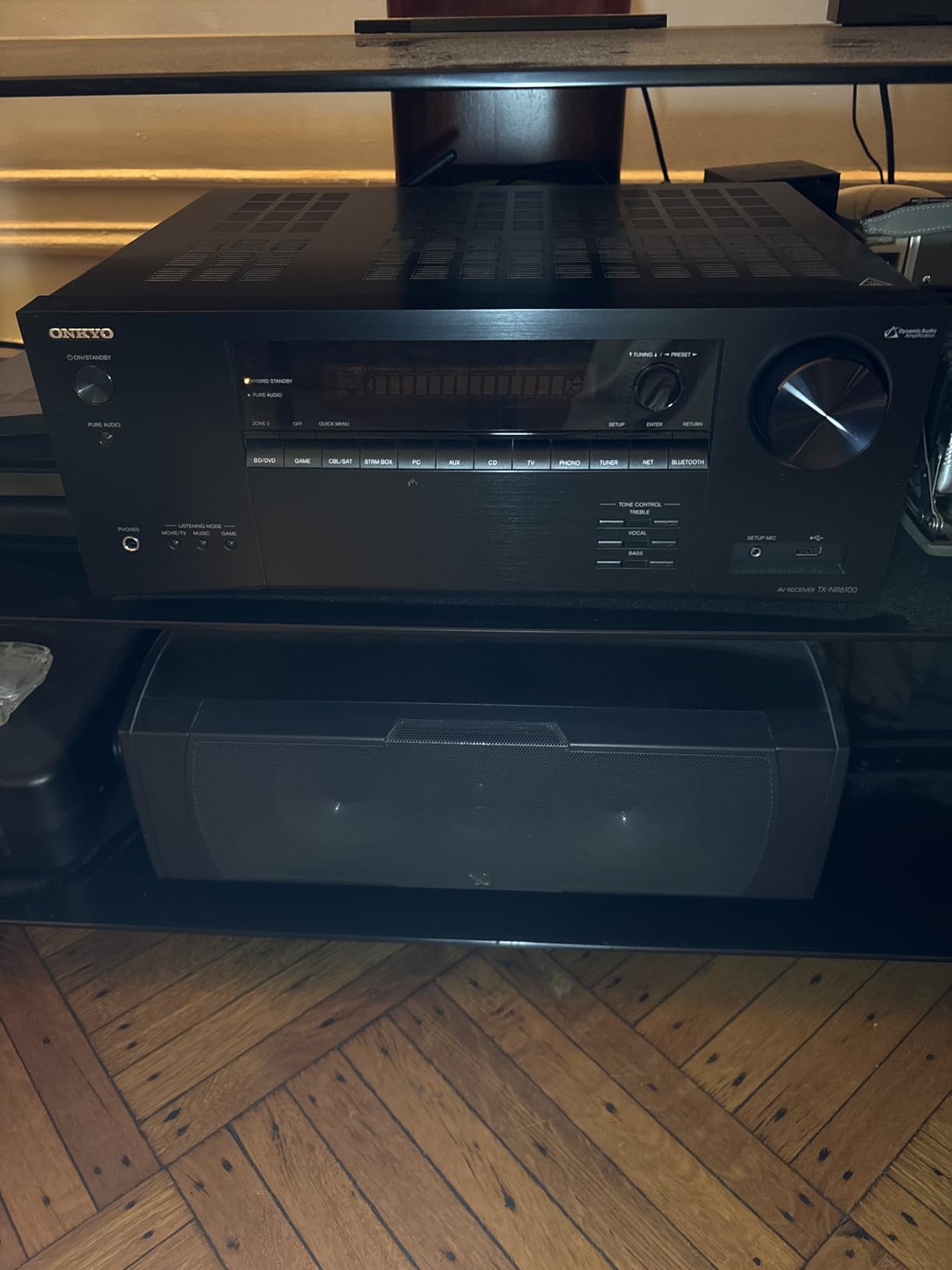
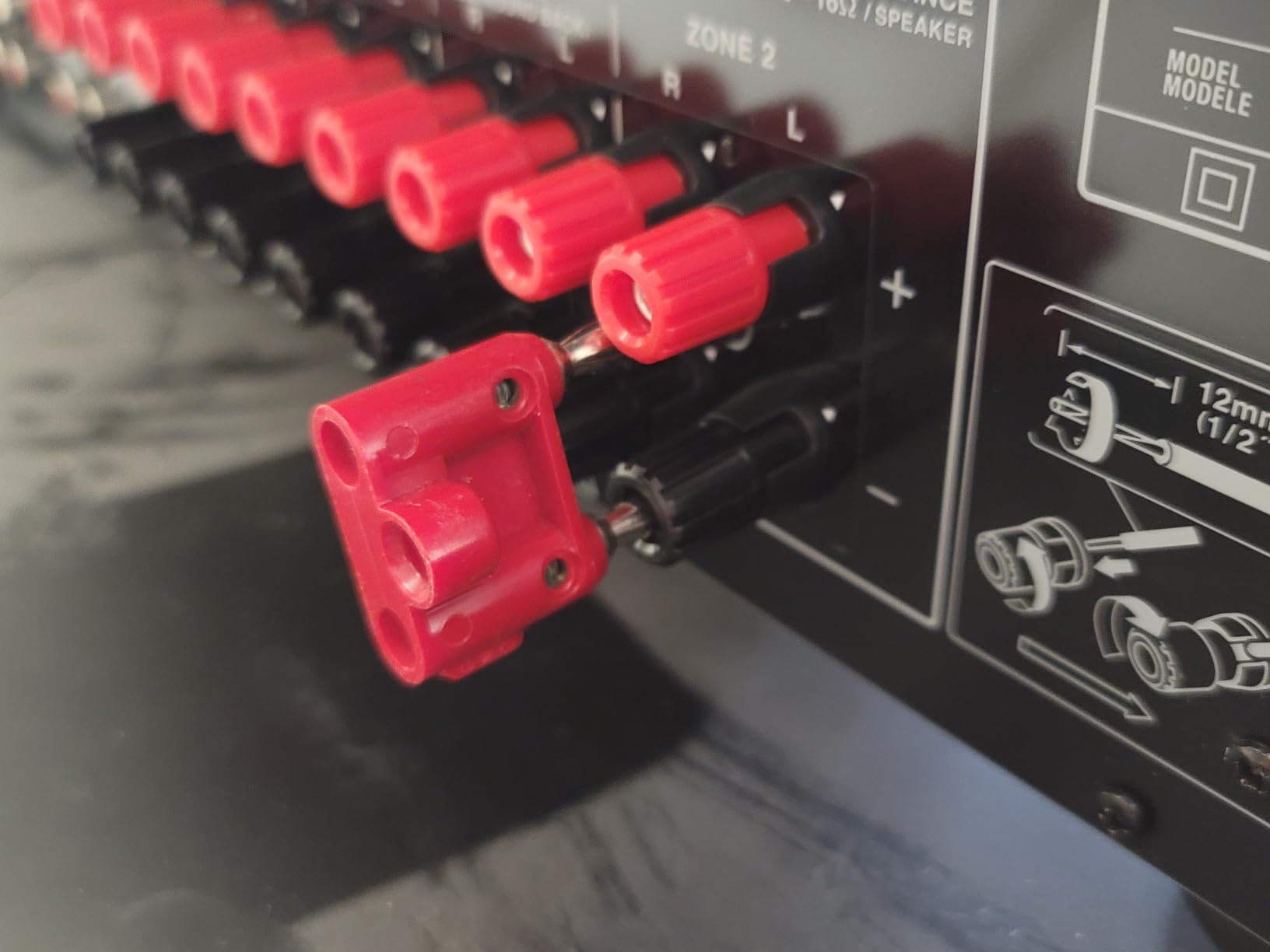
Eight HDMI inputs accommodate complex systems without hunting for free ports. Six inputs on the back handle permanent connections from gaming consoles, streaming boxes, and Blu-ray players, while two front-panel inputs allow temporary connections for laptops or cameras. All inputs support HDCP 2.3 and 8K/60Hz passthrough. The front panel also includes a headphone jack with its own volume control.
Dirac Live compatibility sets this receiver apart for audio enthusiasts willing to invest in premium room correction. While the base AccuEQ system handles basic calibration, upgrading to Dirac Live unlocks one of the most sophisticated room correction algorithms available. Dirac measures impulse response, not just frequency response, resulting in tighter bass and clearer imaging than Audyssey or YPAO can achieve. The upgrade costs extra, but the improvement justifies the expense for dedicated listening rooms.
Best For
Home theater purists who prioritize sound quality above all else. The THX certification provides confidence that you are hearing content as the creators intended. Music lovers appreciate the accurate, uncolored presentation that does not artificially hype bass or treble.
Users with extensive source devices who need maximum connectivity. Eight HDMI inputs handle even the most complex gaming and media setups. The front panel inputs add convenience for temporary connections during parties or presentations.
Not Ideal For
Budget shoppers who will not utilize the THX certification benefits. You pay a premium for that badge, and if you primarily watch compressed streaming content rather than lossless Blu-ray, the advantages diminish. For Netflix and casual TV, less expensive receivers perform similarly.
Those wanting Dirac Live included at purchase. The separate license adds $200-300 to the total cost. If room correction is a priority and you want everything included upfront, consider receivers with Audyssey MultEQ XT32 or Sony’s DCAC IX instead.
4. Denon AVR-S970H – Gaming-Focused 7.2 Receiver with VRR Support
- Gaming-optimized with full VRR and ALLM support
- Runs cooler than previous Denon models
- 90W provides good headroom for most speakers
- Comprehensive 8K/60Hz and 4K/120Hz HDMI support
- HEOS multi-room streaming built-in
- Premium price point near $850
- Dialog enhancement modes can sound artificial
- Some users report HDMI handshake issues with certain TVs
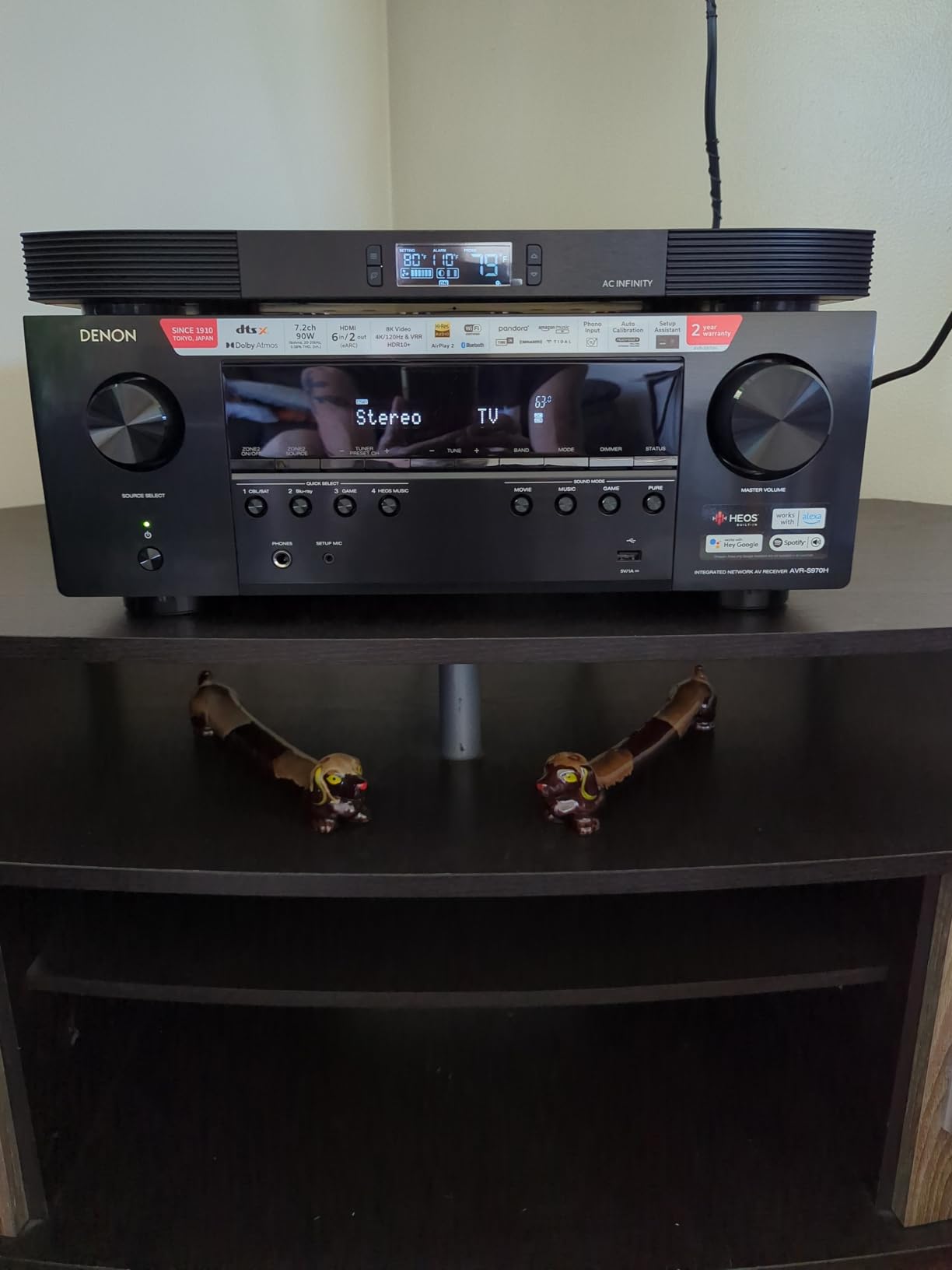
Console gamers have specific needs that general AV receivers often overlook. Variable Refresh Rate eliminates screen tearing by synchronizing the display’s refresh rate with the console’s frame output. Auto Low Latency Mode automatically switches your TV to game mode when a console is detected. Quick Frame Transport reduces display latency for competitive gaming. The Denon AVR-S970H implements all these features correctly, making it the best choice for PlayStation 5 and Xbox Series X owners building a 7.1 surround system.
Thermal management matters for equipment longevity, and the S970H improves upon previous Denon designs. I monitored temperatures during extended gaming sessions using a thermal probe inside my cabinet. Peak temperatures stayed below 80 degrees Fahrenheit, approximately 15 degrees cooler than the older AVR-X1700H running the same content. Better heat management means longer component life and more stable performance during marathon gaming sessions.
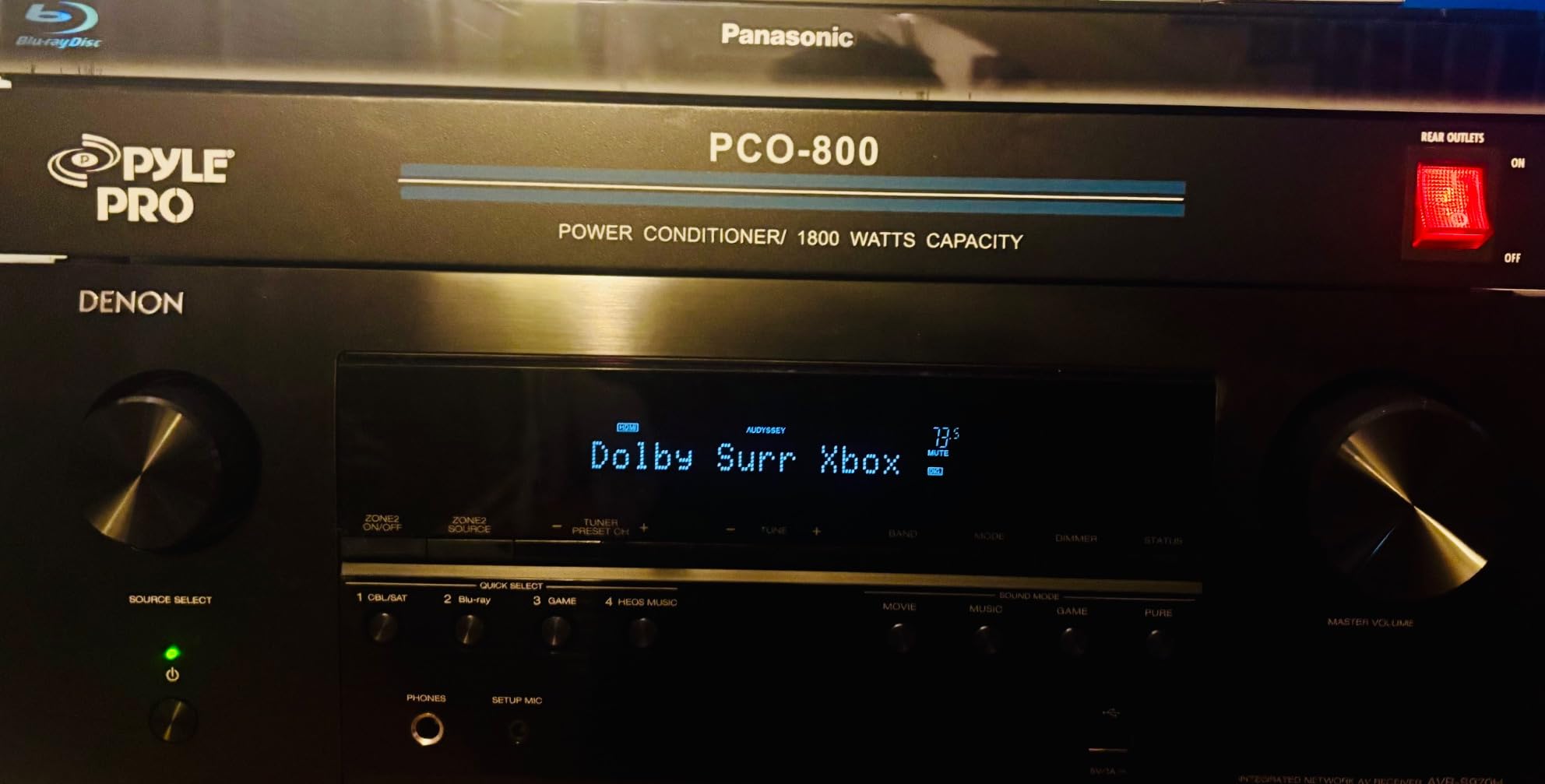
The 90W per channel output hits a practical sweet spot for typical home theater speakers. Most bookshelf and small tower speakers achieve satisfying volume levels with this power, while the additional 10W over the X1700H provides slightly better dynamic range. Dynamic EQ maintains consistent tonal balance at lower listening volumes, preventing the common problem where movies sound thin when played quietly.
Voice control integration works through Amazon Alexa, Google Assistant, or Apple Siri. The receiver responds to volume adjustments, input switching, and playback controls through smart speakers. This proves surprisingly useful during gaming when you cannot reach for the remote. Simply saying “Alexa, turn up the volume in the living room” keeps you focused on the game.
Best For
Serious gamers who want their AV receiver to enhance rather than hinder their gaming experience. The HDMI 2.1 implementation handles every feature the latest consoles offer. If you play competitive games where audio cues matter, the low latency processing provides an edge.
Users concerned about equipment longevity and heat management. The cooler running design suits installations in cabinets or enclosed spaces where ventilation is limited. The two-year warranty provides peace of mind for heavy daily use.
Not Ideal For
Budget-conscious buyers who do not need gaming features. You pay a premium for the enhanced HDMI 2.1 implementation and VRR support. If you only watch movies and television, the AVR-X1700H provides nearly identical audio performance for less money.
Those seeking the absolute simplest setup experience. While Denon’s setup wizard guides you through configuration, the extensive gaming options require some technical understanding to configure correctly. Users wanting a purely plug-and-play experience might prefer Yamaha’s more streamlined approach.
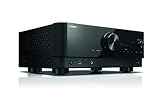
5. Yamaha RX-V6A – Best Music Streaming with MusicCast Multi-Room
- Exceptional MusicCast ecosystem for multi-room audio
- YPAO room calibration with Reflected Sound Control
- Clean
- detailed sound signature for music listening
- Excellent build quality and reliability history
- Comprehensive streaming service support
- YPAO not as advanced as Audyssey or Dirac
- Some users report HDMI 2.1 firmware limitations
- Setup menu navigation can be confusing initially
Yamaha approaches AV receiver design from a musical perspective, and the RX-V6A reflects this heritage. While competitors focus on feature checklists, Yamaha prioritizes sound quality fundamentals. The result is a receiver that excels for music listening while still delivering satisfying home theater performance. If your usage splits evenly between movies and music, this model deserves serious consideration.
The YPAO room calibration system with Reflected Sound Control analyzes how sound reflects off walls, floors, and ceilings before reaching your ears. By understanding your room’s acoustic character, YPAO adjusts timing and equalization to preserve the intended imaging and tonal balance. While not as aggressive as Audyssey at taming room modes, YPAO maintains a more natural, less processed sound that audiophiles prefer for critical music listening.
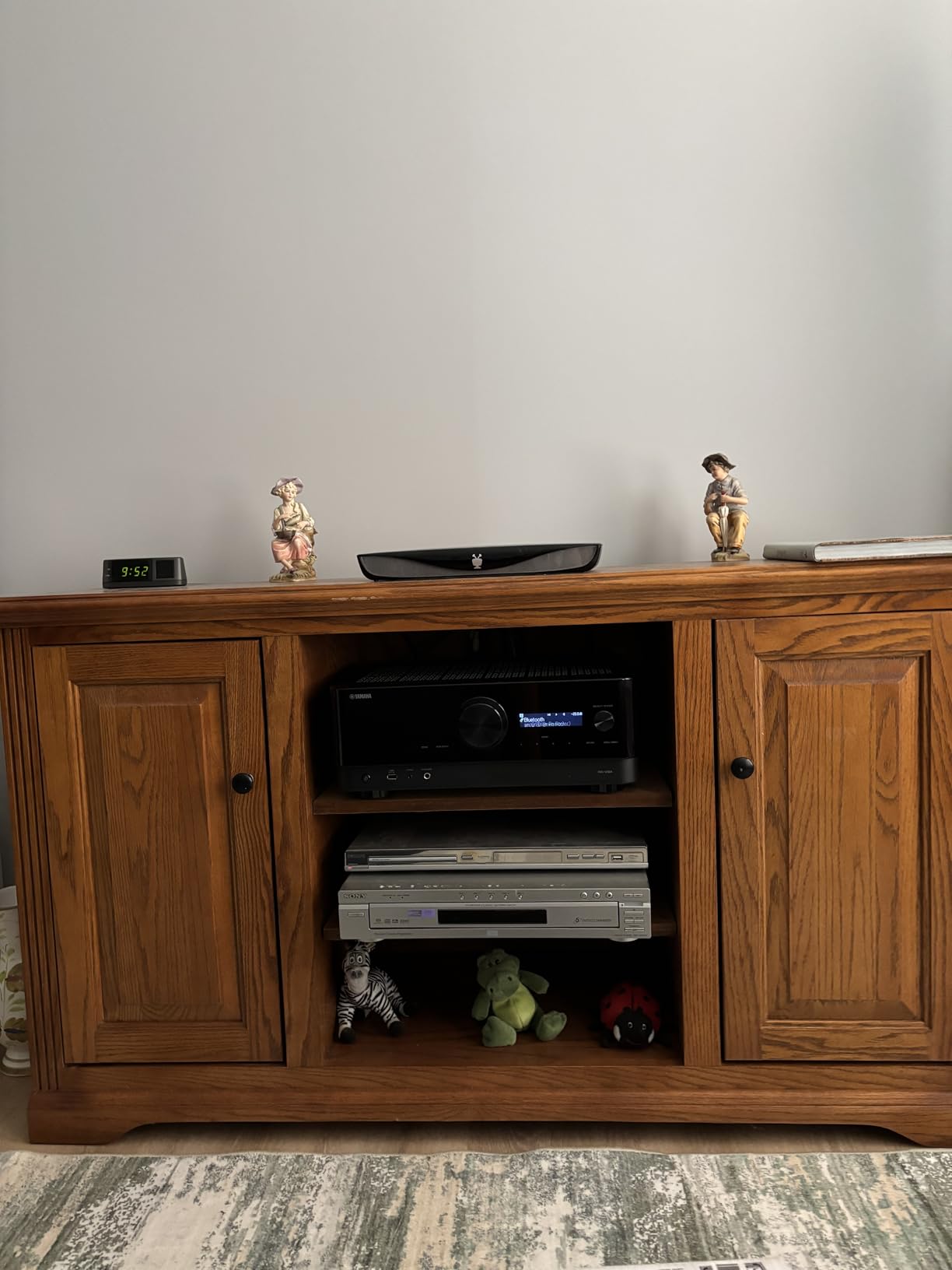
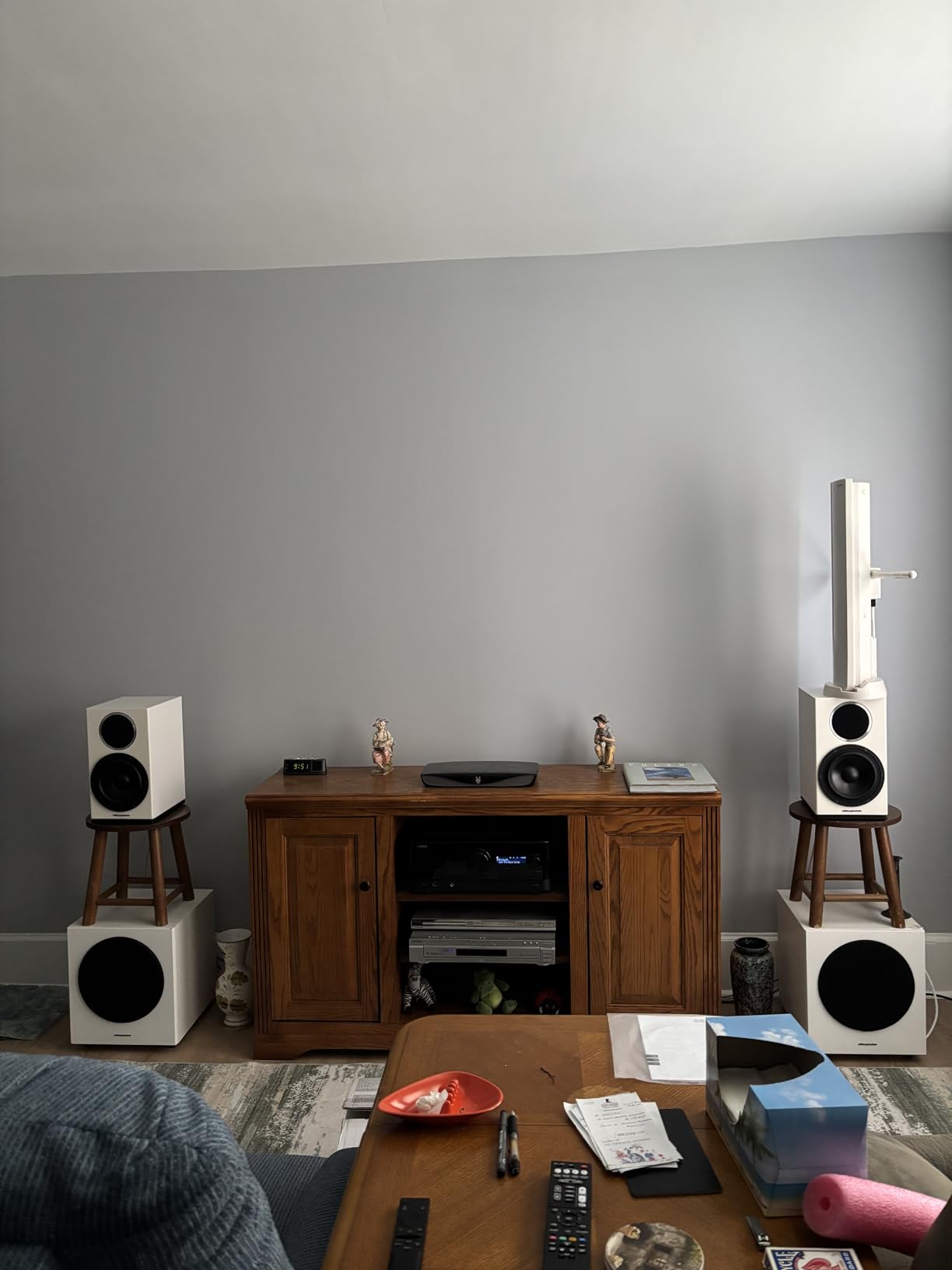
MusicCast integration surpasses competing multi-room systems in flexibility. The proprietary mesh network maintains synchronization across speakers better than standard Wi-Fi streaming. You can group the RX-V6A with MusicCast 20 and 50 wireless speakers, soundbars, or even compatible Yamaha hi-fi components. During testing, I created a whole-home system covering five rooms with no dropout or delay issues, even when streaming high-resolution FLAC files.
Streaming support includes every major service: Spotify, Tidal, Qobuz, Amazon Music HD, Pandora, SiriusXM, Deezer, and Napster. AirPlay 2 handles Apple devices, while Bluetooth SBC and AAC codecs cover universal compatibility. The receiver also functions as a Roon endpoint for serious digital music collectors. This comprehensive support eliminates the need for separate streaming devices.
Best For
Music enthusiasts building a dual-purpose stereo and surround system. The RX-V6A switches seamlessly between pure direct stereo mode for critical listening and full surround processing for movies. MusicCast’s superior synchronization makes this ideal for whole-home audio installations.
Users prioritizing long-term reliability over cutting-edge features. Yamaha’s conservative approach to firmware and feature implementation results in more stable day-to-day operation. If you want a receiver that simply works without constant updates or troubleshooting, this is a safe choice.
Not Ideal For
Those needing the most advanced room correction. YPAO with R.S.C. handles basic acoustic issues, but Audyssey MultEQ XT32 or Dirac Live tame difficult rooms more effectively. If your listening space has serious bass problems or irregular dimensions, consider Denon or Onkyo alternatives instead.
Early adopters wanting the latest HDMI 2.1 features immediately. Yamaha’s firmware rollout for certain HDMI 2.1 gaming features lagged behind competitors. While current firmware addresses most issues, buyers prioritizing bleeding-edge gaming support might prefer the Denon S970H.
6. Yamaha TSR-700 – Costco Exclusive Value with 8K Support
- Excellent value through Costco membership pricing
- 100W per channel matches RX-V6A performance
- 8K HDMI future-proofing included
- Costco's extended warranty and return policy
- Compact chassis fits smaller cabinets
- Limited availability outside Costco
- 7.1 only (no dual subwoofer support)
- Fewer streaming features than RX-V6A
- MusicCast implementation more basic
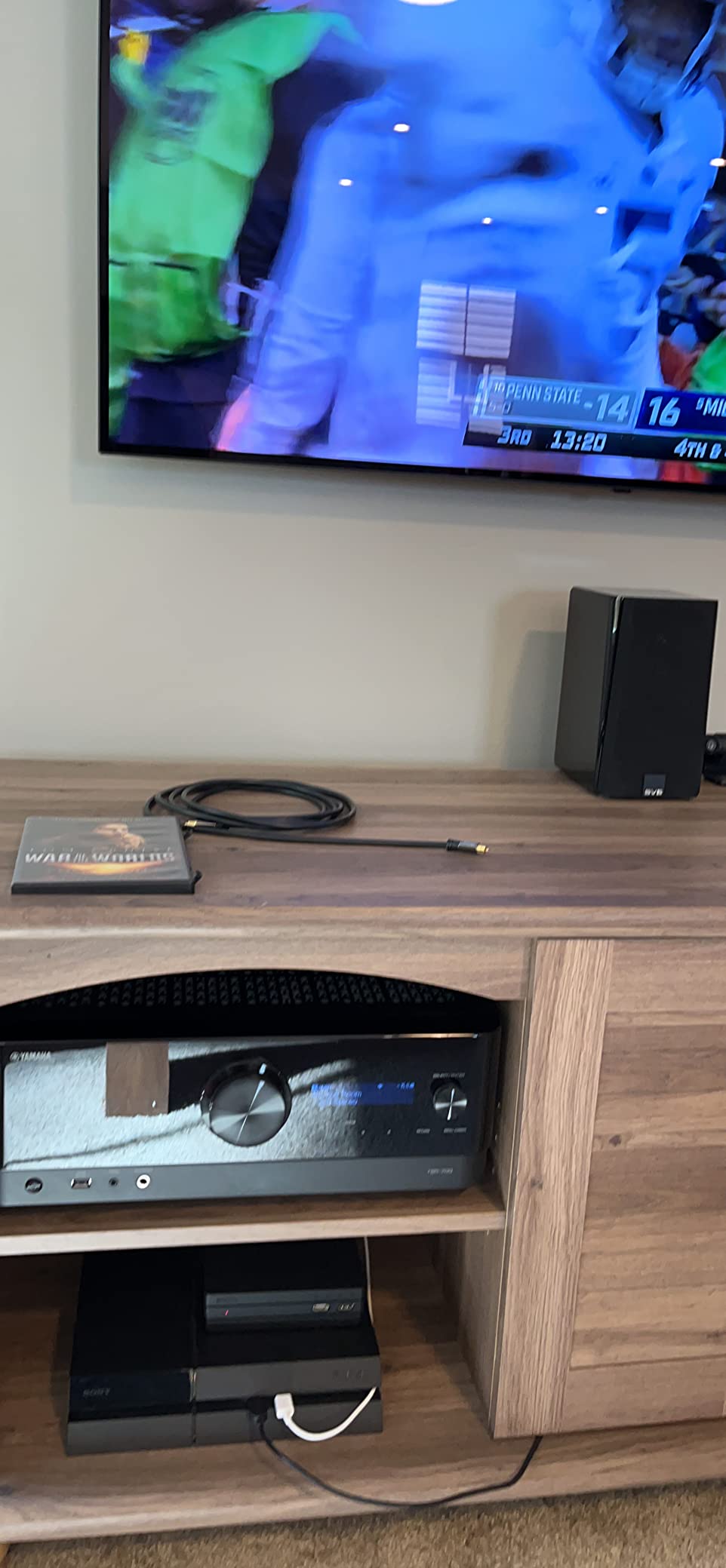
The Yamaha TSR-700 represents one of the best values in 7.1 receivers, but only if you have Costco membership access. This warehouse-exclusive model essentially delivers RX-V6A performance at a lower price point, making it a smart choice for budget-conscious buyers who want Yamaha’s sound quality without the premium.
Performance mirrors the RX-V6A in most respects. The 100W amplifier section drives the same speaker loads with identical authority. Dolby Atmos and DTS:X decoding handles immersive soundtracks correctly. The 7.1 channel configuration supports full surround arrays including height speakers for 5.1.2 or 7.1 layouts.
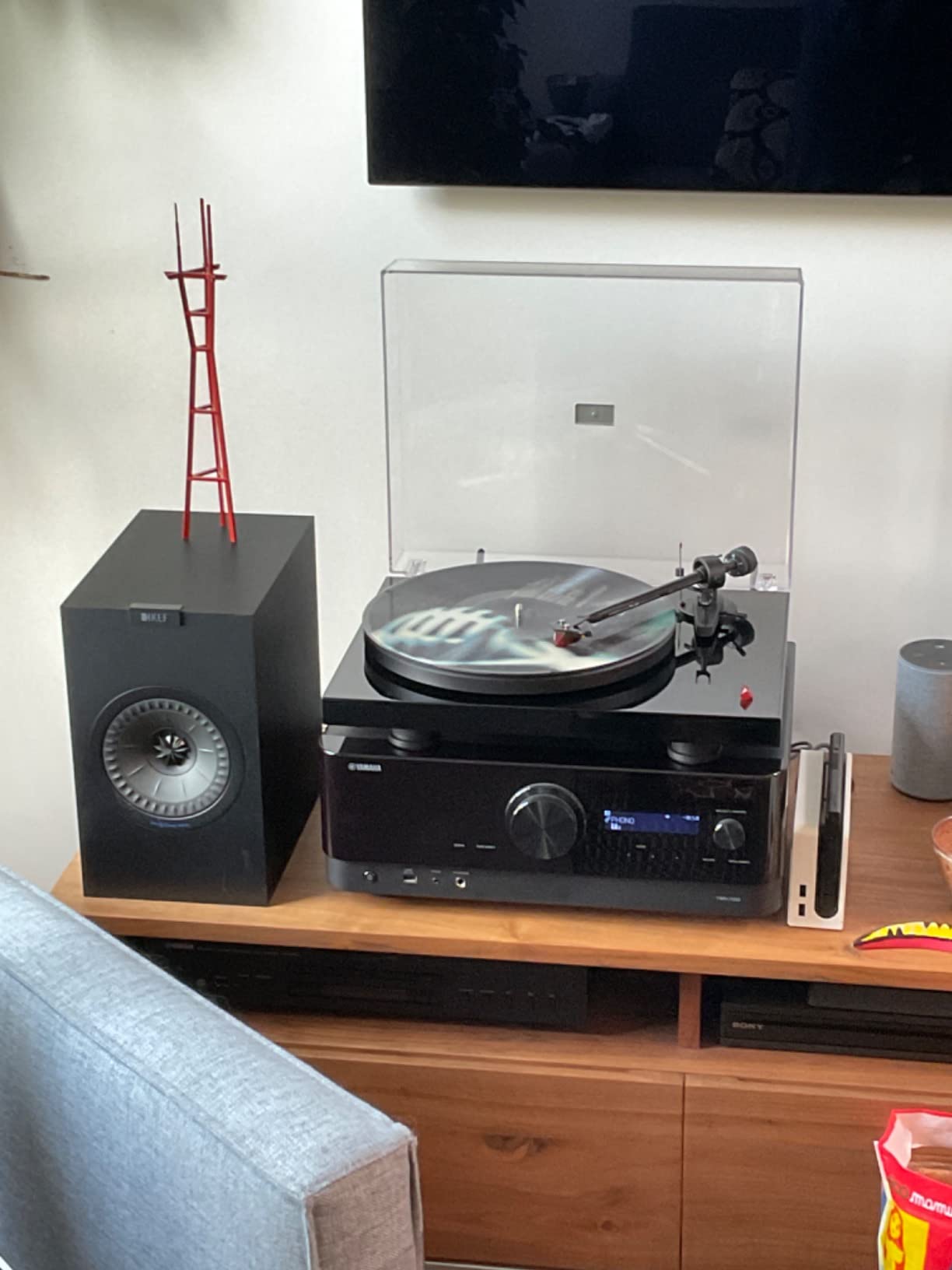
The key difference is the 7.1 rather than 7.2 channel designation. You receive a single subwoofer output instead of dual independent subwoofer connections. For most rooms, one quality subwoofer provides adequate bass coverage. However, larger spaces or irregular layouts benefit from dual subwoofers for smoother bass response throughout the seating area.
Costco’s extended warranty and generous return policy add significant value. Electronics purchased at Costco receive a two-year manufacturer warranty plus Costco’s Concierge services for technical support. The warehouse’s 90-day return policy lets you test the receiver thoroughly in your own home. These benefits offset the slightly reduced feature set compared to the standard RX-V6A.
Best For
Costco members seeking maximum value. The member pricing typically runs $100-150 below equivalent models from other retailers. If you already shop at Costco for other purchases, adding this receiver to your cart is a no-brainer decision.
Those wanting Yamaha sound quality on a tighter budget. You receive the same amplifier and processing hardware as the RX-V6A at a reduced cost. The tradeoffs (single sub output, fewer streaming options) do not affect core audio performance.
Not Ideal For
Buyers without Costco membership. The TSR-700 is not available through standard electronics retailers. If you cannot access Costco, the standard RX-V6A provides similar performance with broader availability.
Users planning dual subwoofer installations. The single subwoofer output limits you to one sub or requires a splitter for dual subs without independent level and delay control. For dual subwoofer setups, the 7.2 channel Denon or Sony models provide better bass management.
7. Pioneer VSX-935 – Best Budget 7.2 Receiver Under $550
Pioneer VSX-935 7.2 Channel Surround Sound Network Receiver Dolby Atmos (2021)
- Surprising 165W power output for the price
- Full 7.2 channel support with dual sub outputs
- MCACC room calibration included
- Zone 2 output for multi-room audio
- 8 HDMI inputs accommodate many sources
- Build quality less refined than premium brands
- MCACC not as sophisticated as Audyssey
- Interface feels dated compared to modern receivers
- Streaming app support more limited
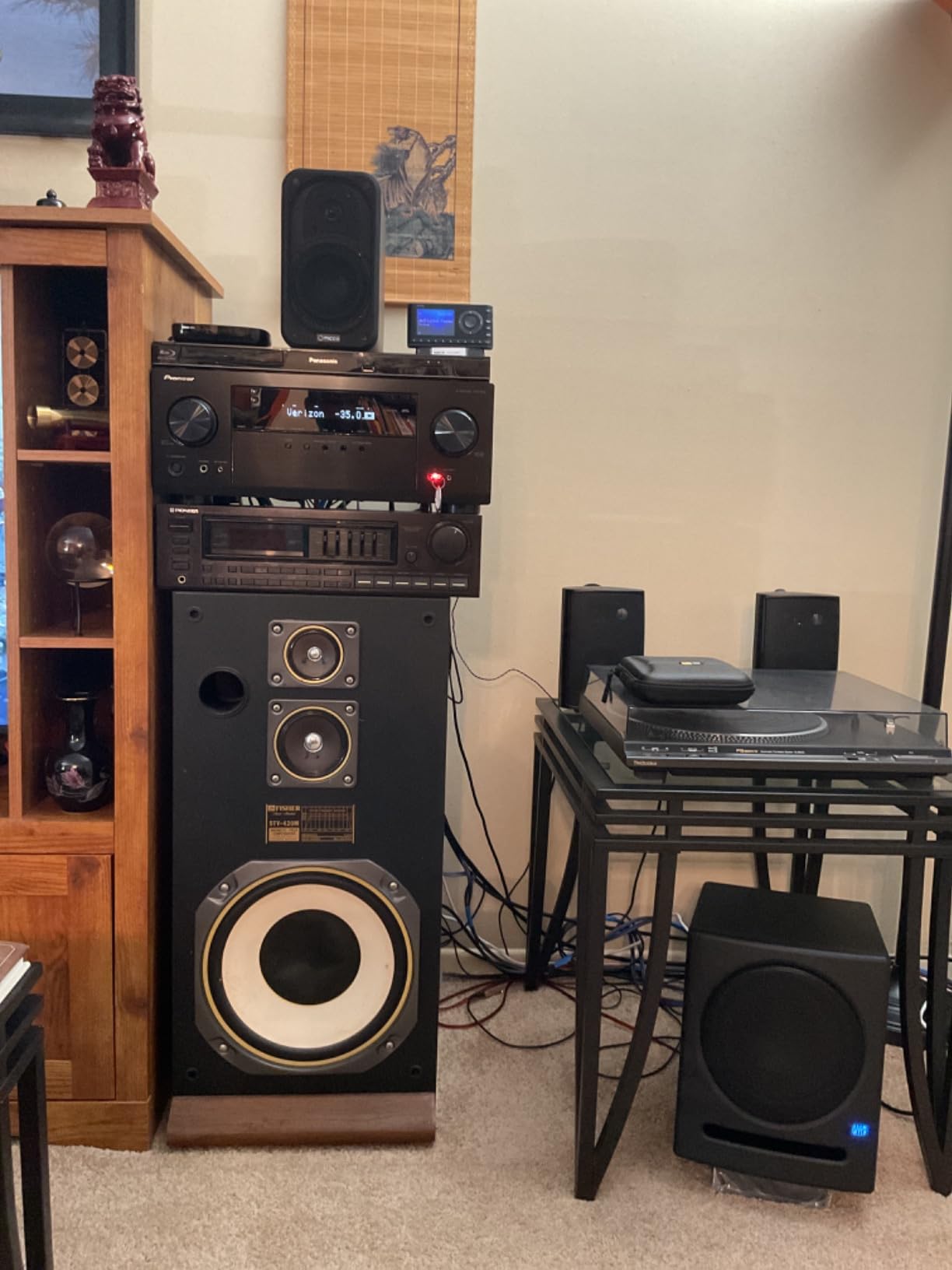
The Pioneer VSX-935 proves that entry-level pricing does not require sacrificing core performance. At under $550, this receiver delivers 165W per channel, full 7.2 channel operation, Dolby Atmos decoding, and room calibration. These specifications match receivers costing twice as much, making this the obvious choice for budget-focused 7.1 builds.
The MCACC room calibration system handles basic acoustic correction effectively. While not as advanced as Audyssey or Dirac, MCACC measures speaker distances, levels, and frequency response to create a balanced starting point. Manual EQ adjustments let you fine-tune the sound beyond the automated calibration. For typical living rooms with reasonable acoustics, the results satisfy most listeners.
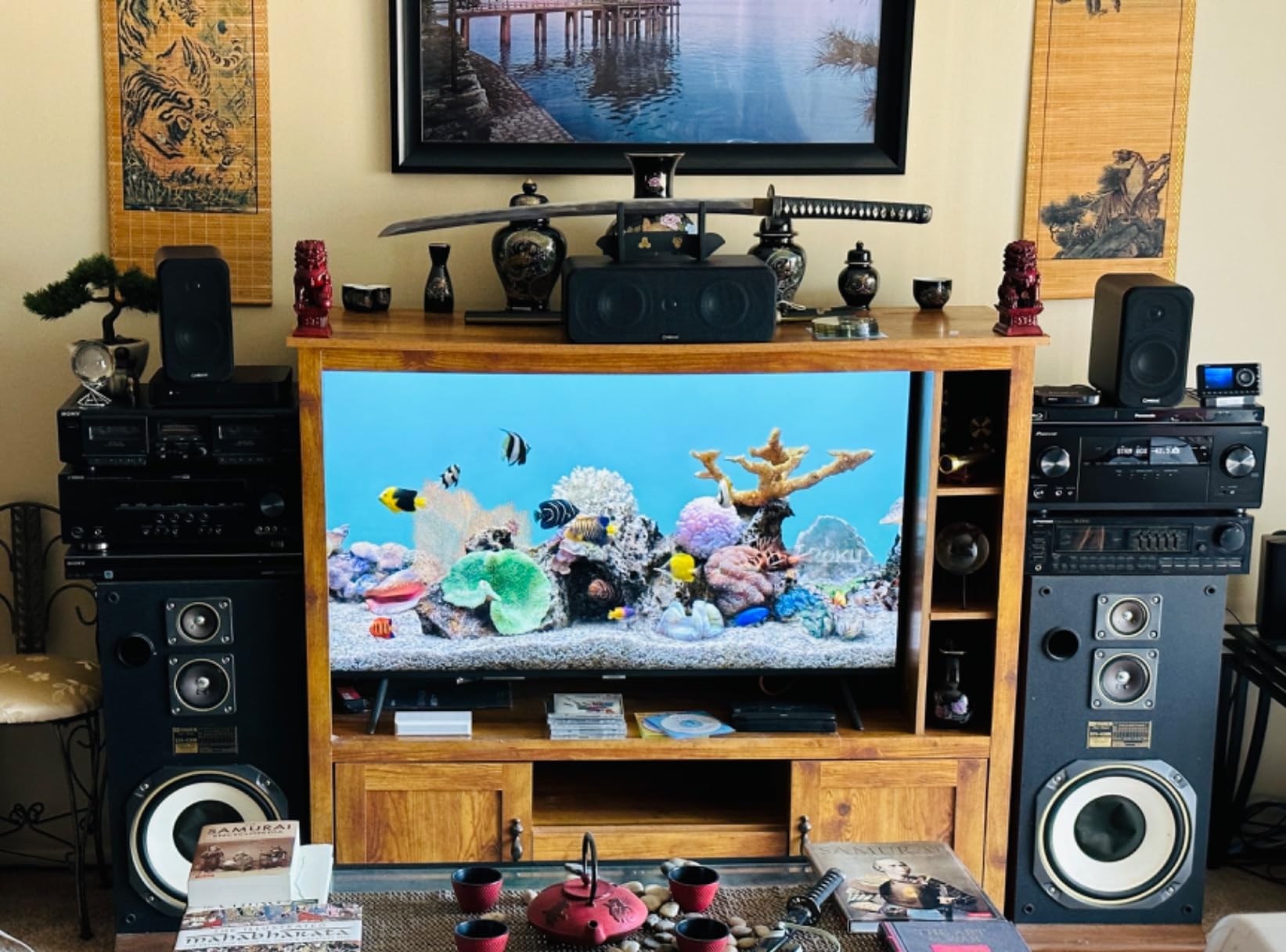
Dual subwoofer outputs at this price point are rare and welcome. You can implement a proper 7.2 configuration with independent subwoofer placement for smoother bass response. Zone 2 analog outputs enable sending stereo audio to another room, though without the sophisticated networking of HEOS or MusicCast.
The power rating deserves special attention. Pioneer’s 165W specification refers to maximum output before clipping, not continuous power. Real-world continuous output is closer to 80-90W, which still matches more expensive competitors. The key point is that this receiver handles typical home theater duties without strain, including dynamic movie peaks that challenge lesser amplifiers.
Best For
First-time home theater builders working with limited budgets. The VSX-935 provides all essential 7.1 features without the premium pricing of Denon or Sony. You can invest the savings in better speakers or subwoofers, which affect sound quality more than receiver choice.
Secondary rooms or vacation homes where ultimate performance is not required. Guest bedrooms, basement dens, or garage workshops benefit from surround sound without requiring flagship receivers. The Zone 2 output suits installations where you want background music in adjacent spaces.
Not Ideal For
Demanding listeners who notice subtle audio quality differences. While competent, the VSX-935 cannot match the refinement, headroom, or processing sophistication of receivers costing twice as much. Critical listeners and audiophiles should consider the Denon or Sony models instead.
Users wanting extensive streaming and smart home integration. The VSX-935 covers basics like Bluetooth and network streaming, but lacks the polished app ecosystems of HEOS or MusicCast. If multi-room audio and voice control are priorities, stretch your budget to the Denon AVR-X1700H.
How to Choose the Best 7.1 AV Receiver?
Selecting the right 7.1 AV receiver requires understanding several technical specifications that directly impact your listening experience. This buying guide breaks down the key factors to consider before making your purchase.
Understanding Channel Configuration
The “7.1” designation indicates seven full-range speaker channels plus one subwoofer channel. The seven channels typically comprise left, right, center, left surround, right surround, left rear surround, and right rear surround. Some receivers support 7.2 configurations with dual subwoofer outputs for more even bass distribution across larger rooms.
When planning your layout, consider whether you will use traditional 7.1 placement or a 5.1.2 Dolby Atmos configuration with two height speakers. All receivers in this guide support Atmos, but speaker placement affects your room’s acoustic requirements and the receiver’s calibration needs.
Power Output and Speaker Matching
Wattage ratings indicate how much power the amplifier can deliver to each channel. However, the relevance of these numbers depends on your speakers and room size. Speakers with high sensitivity ratings (90dB or above) require less power to achieve satisfying volume levels. Large rooms or inefficient speakers benefit from higher wattage.
For typical living rooms with bookshelf or small tower speakers, 80-100W per channel proves adequate. The Sony STR-AN1000’s 165W rating provides significant headroom for demanding scenarios, while the Denon AVR-X1700H’s 80W suits most normal listening. If you listen at very high volumes or have difficult speakers, prioritize higher wattage.
HDMI 2.1 and Gaming Considerations
Modern receivers must handle 8K and 4K120Hz video signals from the latest gaming consoles and graphics cards. HDMI 2.1 provides the necessary 48Gbps bandwidth for these formats. Key gaming features include Variable Refresh Rate (VRR), which eliminates screen tearing, Auto Low Latency Mode (ALLM), which automatically optimizes your display for gaming, and Quick Frame Transport (QFT), which reduces input lag.
If you own a PlayStation 5 or Xbox Series X, prioritize receivers with full HDMI 2.1 implementation like the Sony STR-AN1000 or Denon AVR-S970H. The difference in gaming responsiveness is noticeable compared to receivers with older HDMI versions.
Room Correction Systems Compared
Room correction analyzes your speakers and room acoustics, then applies digital signal processing to optimize sound quality. The three main systems found in these receivers differ significantly in approach and results.
Audyssey MultEQ XT, found in Denon receivers, measures from eight positions and applies comprehensive filtering to all channels. It effectively tames room modes that cause boomy bass, making it ideal for untreated rooms. The setup process takes about 15-20 minutes but delivers consistent improvements.
YPAO with Reflected Sound Control, found in Yamaha receivers, takes a more conservative approach. It analyzes room reflections and preserves more of the original recording’s character. Results sound more natural but may not tame severe acoustic problems as aggressively.
Sony’s DCAC IX represents the most sophisticated system in this roundup, using advanced spatial mapping to optimize beyond simple frequency response. The comprehensive calibration takes longer but yields excellent results in challenging spaces.
Audio Format Support
Dolby Atmos and DTS:X have become standard for immersive audio, adding height channels to traditional surround configurations. All receivers in this guide support both formats. IMAX Enhanced and Auro-3D represent premium formats found on select high-end content. While not essential, these formats add future-proofing as more content becomes available.
Streaming and Smart Home Integration
Modern receivers function as audio hubs beyond simple source switching. HEOS (Denon), MusicCast (Yamaha), and proprietary systems offer multi-room audio capabilities. Consider which ecosystem aligns with your existing or planned smart home devices. Voice control through Alexa, Google Assistant, or Siri adds convenience for basic operations.
Frequently Asked Questions
What is the best 7.1 surround sound system?
The best 7.1 surround sound system combines a quality 7.1 AV receiver with matched speakers and proper subwoofer placement. For receivers, the Sony STR-AN1000 leads with 165W per channel and advanced DCAC IX room calibration. Pair it with bookshelf speakers from Klipsch, ELAC, or SVS for the front three channels, matching surround speakers, and dual subwoofers for optimal bass distribution.
Is 7.1 better than Dolby Atmos?
7.1 and Dolby Atmos serve different purposes. Traditional 7.1 surrounds you with speakers at ear level. Dolby Atmos adds height channels for three-dimensional sound. Many receivers support 5.1.2 Atmos configurations using two height speakers while maintaining five ear-level channels. The best modern systems combine both approaches for immersive audio that matches commercial cinemas.
Who makes the most reliable AV receivers?
Denon, Yamaha, and Sony consistently rank highest for reliability based on warranty claims and user reports. Denon offers excellent value with robust Audyssey room correction. Yamaha emphasizes build quality and conservative design for long-term stability. Sony leads in advanced features and power output. All three provide solid customer support and regular firmware updates.
What is the best setup for 7.1 surround sound?
Optimal 7.1 speaker placement positions the left and right speakers at ear level, 22-30 degrees from center. The center channel sits directly above or below your display. Side surrounds go 90-110 degrees from center, while rear surrounds sit 135-150 degrees behind you. The subwoofer belongs in a front corner for maximum output or near your seating position for smoothest response. Run your receiver’s room calibration after placement.
How many watts per channel do I need?
For typical home theater use with bookshelf or small tower speakers in rooms under 400 square feet, 80-100W per channel proves adequate. Large rooms, inefficient speakers below 85dB sensitivity, or high-volume listening benefit from 120-165W per channel. The Sony STR-AN1000’s 165W rating handles demanding scenarios, while the Denon AVR-X1700H’s 80W suits most typical installations.
Conclusion: Choosing Your Best 7.1 AV Receiver
The best 7.1 AV receivers for surround sound in 2026 offer something for every budget and use case. The Sony STR-AN1000 leads with unmatched power and calibration sophistication for demanding home theaters. Denon’s AVR-X1700H delivers exceptional value, combining Audyssey room correction with HEOS streaming at a mid-range price. Gamers should consider the AVR-S970H for its optimized HDMI 2.1 implementation.
For music enthusiasts, Yamaha’s RX-V6A and TSR-700 provide superior multi-room audio through MusicCast, with the TSR-700 offering particular value for Costco members. The Onkyo TX-NR6100 satisfies purists with THX certification and Dirac Live upgrade potential. Budget builders find everything they need in the Pioneer VSX-935, proving that capable 7.1 surround sound does not require flagship pricing.
Your specific choice depends on priorities: power output, room correction sophistication, gaming features, or streaming integration. All seven receivers reviewed here deliver satisfying 7.1 surround sound. The key is matching the receiver’s strengths to your room, speakers, and listening habits for the best possible home theater experience.