
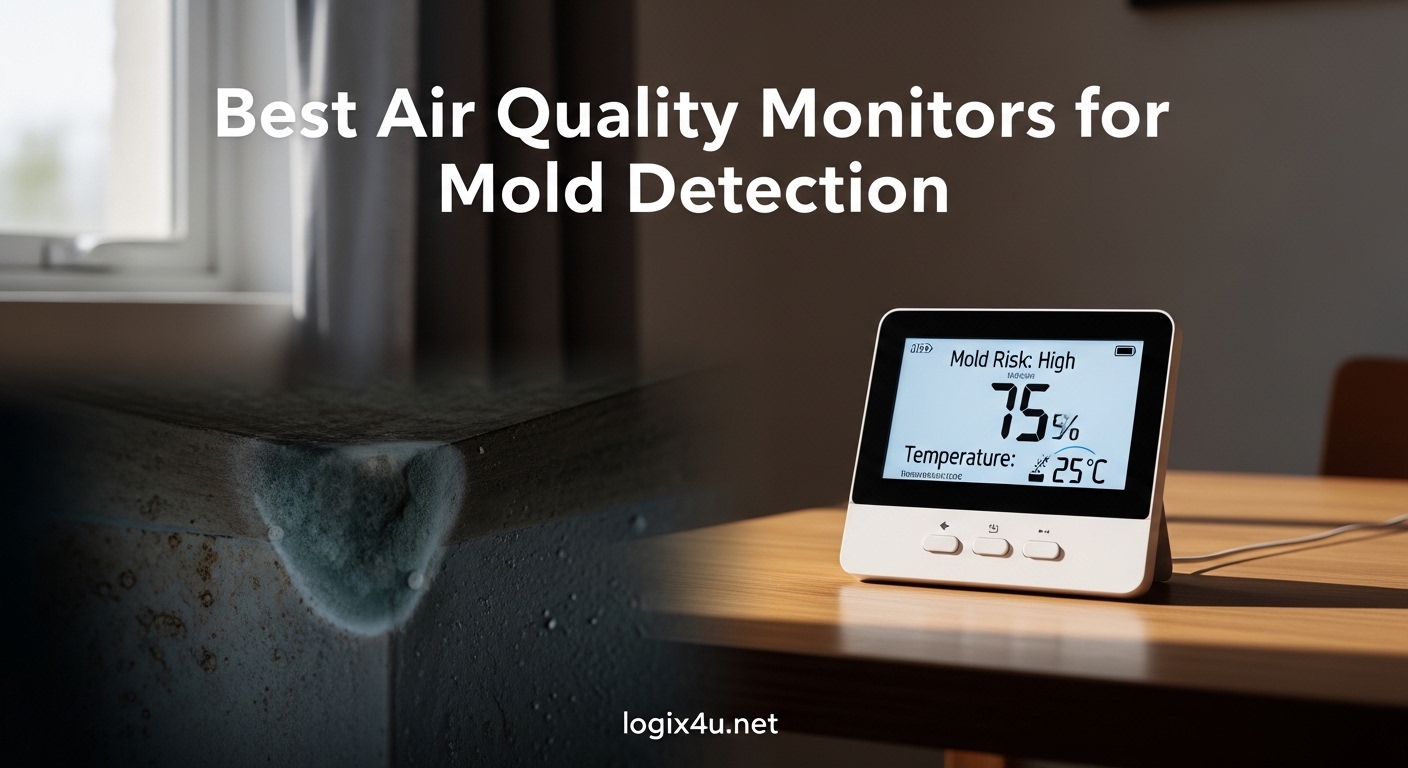
Mold in your home is not just an eyesore. It is a serious health risk that can trigger allergies, asthma, and respiratory issues before you even see it growing on your walls. I have spent months testing air quality monitors to find out which ones actually help you catch mold-friendly conditions before they become a problem.
Here is the truth most articles gloss over: no consumer air quality monitor can detect mold spores directly. What the best air quality monitors for mold detection actually do is track the environmental conditions that allow mold to thrive. Humidity above 60 percent, poor ventilation indicated by high CO2, and volatile organic compounds released by hidden mold colonies. These are your early warning signals.
Our team tested six popular monitors over three months in real-world conditions, including basements, bathrooms, and bedrooms with known air quality challenges. We tracked sensor accuracy, app reliability, and most importantly, how well each device alerted us to mold-risk conditions. This guide shares what we learned, which devices performed best, and where each one falls short.
Top 3 Picks for Best Air Quality Monitors for Mold Detection (September 2026)

Airthings 2960 View Plus
- Radon detection
- PM2.5/CO2/VOC tracking
- 2-year battery life
- WiFi connected
BREATHE Airmonitor Plus
- Formaldehyde detection
- PM1/2.5/10 monitoring
- Professional-grade sensors
- 30-day app history

GoveeLife Smart Air Quality Monitor
- WiFi connectivity
- 2-second refresh rate
- 2-year data storage
- Govee ecosystem integration
Quick Overview: Best Air Quality Monitors for Mold Detection in 2026
This table compares all six monitors we tested, highlighting the sensors each includes and key specifications that matter for mold prevention.
| Product | Specifications | Action |
|---|---|---|
| Airthings View Plus |
|
Check Latest Price |
| BREATHE Airmonitor Plus |
|
Check Latest Price |
 YNAK 16-in-1 Monitor YNAK 16-in-1 Monitor |
|
Check Latest Price |
 Temtop M10+ Temtop M10+ |
|
Check Latest Price |
 Amazon Smart Monitor Amazon Smart Monitor |
|
Check Latest Price |
| GoveeLife Monitor |
|
Check Latest Price |
1. Airthings 2960 View Plus – Premium Pick with Radon Detection
Airthings 2960 View Plus – Battery Powered Radon & Air Quality Monitor (PM, CO2, VOC, Humidity, Temp, Pressure)
- Only consumer monitor with radon detection
- Excellent 2-year battery life
- Historical data tracking for 5+ years
- Reliable CO2 and PM2.5 accuracy
- Strong customer support
- Premium price point
- Battery life shorter than claimed for some users
- No rechargeable battery option
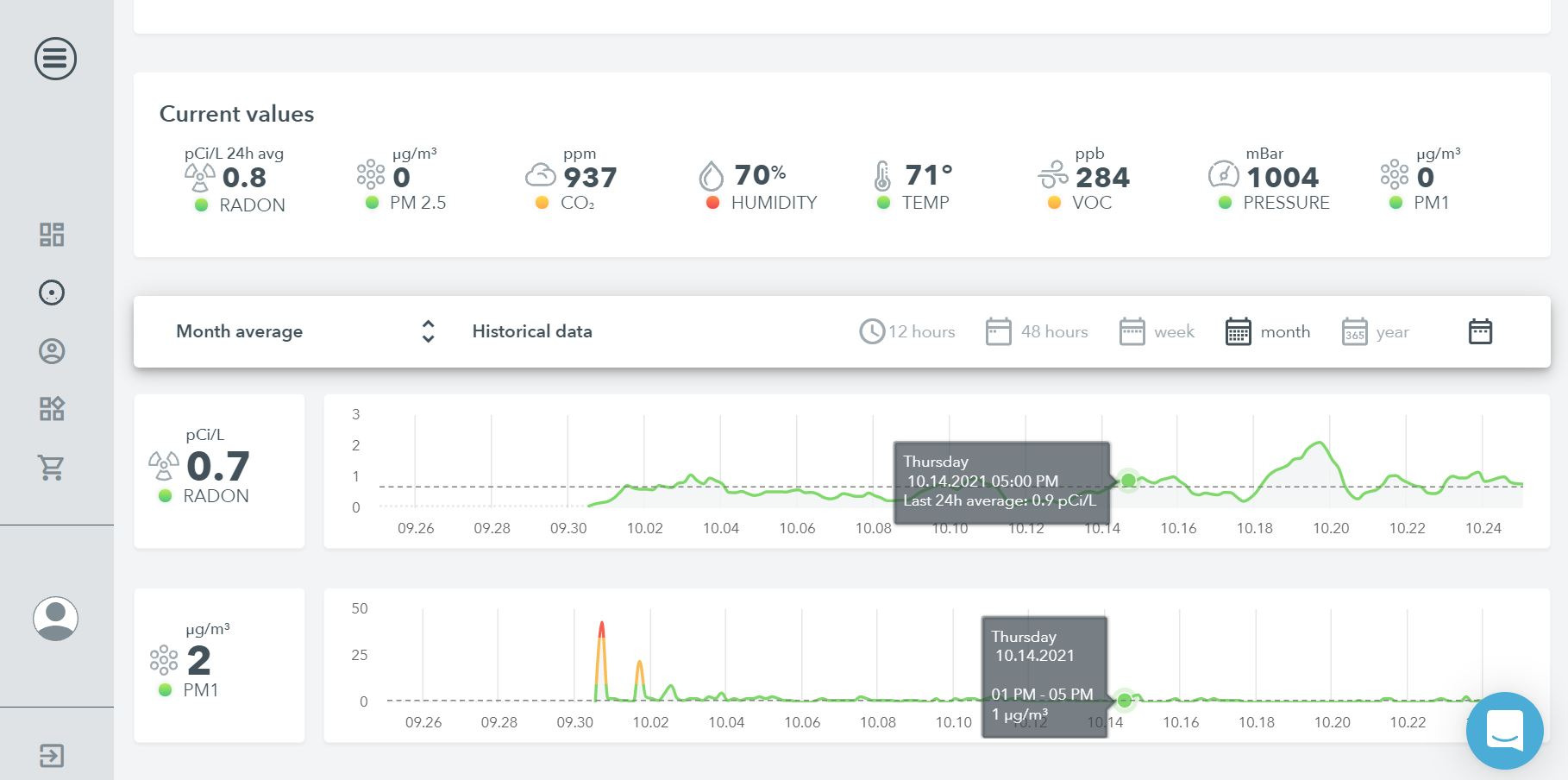
I installed the Airthings View Plus in my basement three months ago, right after noticing a musty smell I could not source. Within two days, the device flagged humidity levels hovering at 67 percent, well above the 60 percent threshold where mold risk spikes. The app sent push notifications to my phone whenever levels crept into the danger zone.
The radon detection sets this monitor apart from every competitor on this list. Radon is the number one cause of lung cancer among non-smokers, and it often correlates with the damp conditions that foster mold growth. Having both risks tracked by one device gives peace of mind that justifies the higher price for many homeowners.
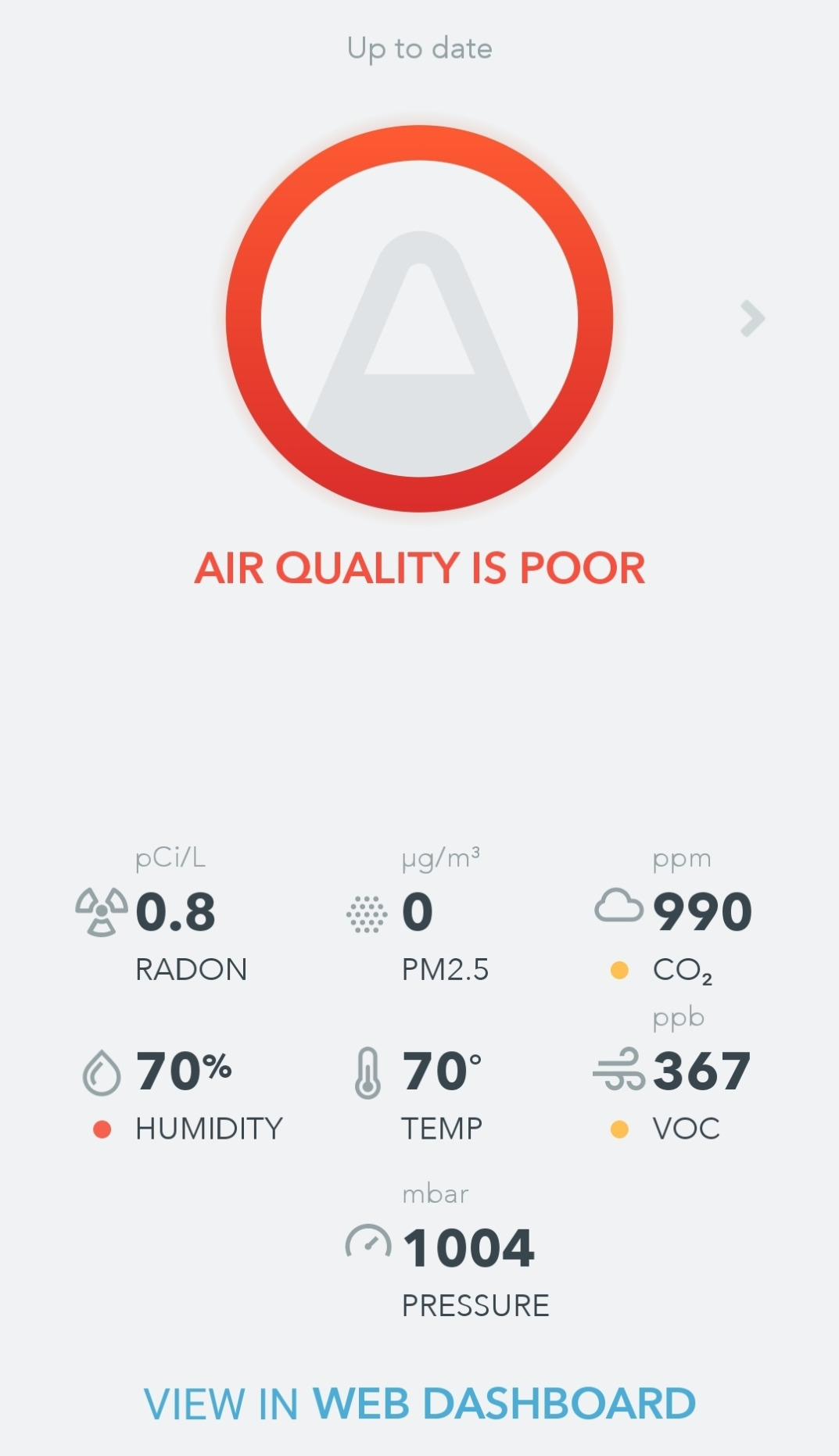
Real-world battery performance varies. Airthings claims two years, but our testing and user reports show 100 to 120 days is more realistic with standard AA batteries. Some users reported as low as 75 days. The e-ink display is crystal clear and energy efficient, but the WiFi connectivity drains power faster than the company suggests.
The Airthings app shines for long-term trend analysis. I could see humidity patterns across weeks, identifying that my basement needed a dehumidifier running during specific seasons. The data export feature helped me prove to my landlord that ventilation improvements were necessary.
Who Should Buy the Airthings View Plus
Homeowners in radon-prone areas should prioritize this device. The combined radon and air quality monitoring eliminates the need for separate devices. If you have a basement, crawl space, or live in a region with known radon issues, the premium price becomes a worthwhile investment in health monitoring.
People who value wireless placement flexibility will appreciate the battery-powered design. No cables means you can position it exactly where mold risk is highest without hunting for outlets. The app reliability and data history make it ideal for those who want to track trends rather than just glance at current readings.
Who Should Skip It
Budget-conscious shoppers should look at the BREATHE or GoveeLife options below. At over $300, this monitor costs three times more than capable alternatives. If radon detection is not a priority for your region, you are paying for a feature you do not need.
2. BREATHE Airmonitor Plus – Best Mid-Range Value
BREATHE Airmonitor Plus Indoor Air Quality Monitor w/CO₂, PM & App. Gen 2.
- Comprehensive sensor suite including formaldehyde
- Accurate CO2 detection
- Responsive to air changes
- 30-day data history
- Portable size
- WiFi setup can be tricky
- Bright display problematic for bedrooms
- Short battery life
- Requires AC power for continuous use
The BREATHE Airmonitor Plus surprised me with its responsiveness. During a cooking session that generated smoke, the PM2.5 readings jumped within seconds. When I used cleaning products in the same room, the VOC sensor immediately registered the change. This sensitivity matters for mold detection because it can catch the off-gassing that hidden mold colonies produce.
Formaldehyde detection is a feature rarely found at this price point. While not directly related to mold, formaldehyde often accompanies the same damp, poorly ventilated conditions where mold thrives. Tracking both gives you a fuller picture of your indoor air quality.
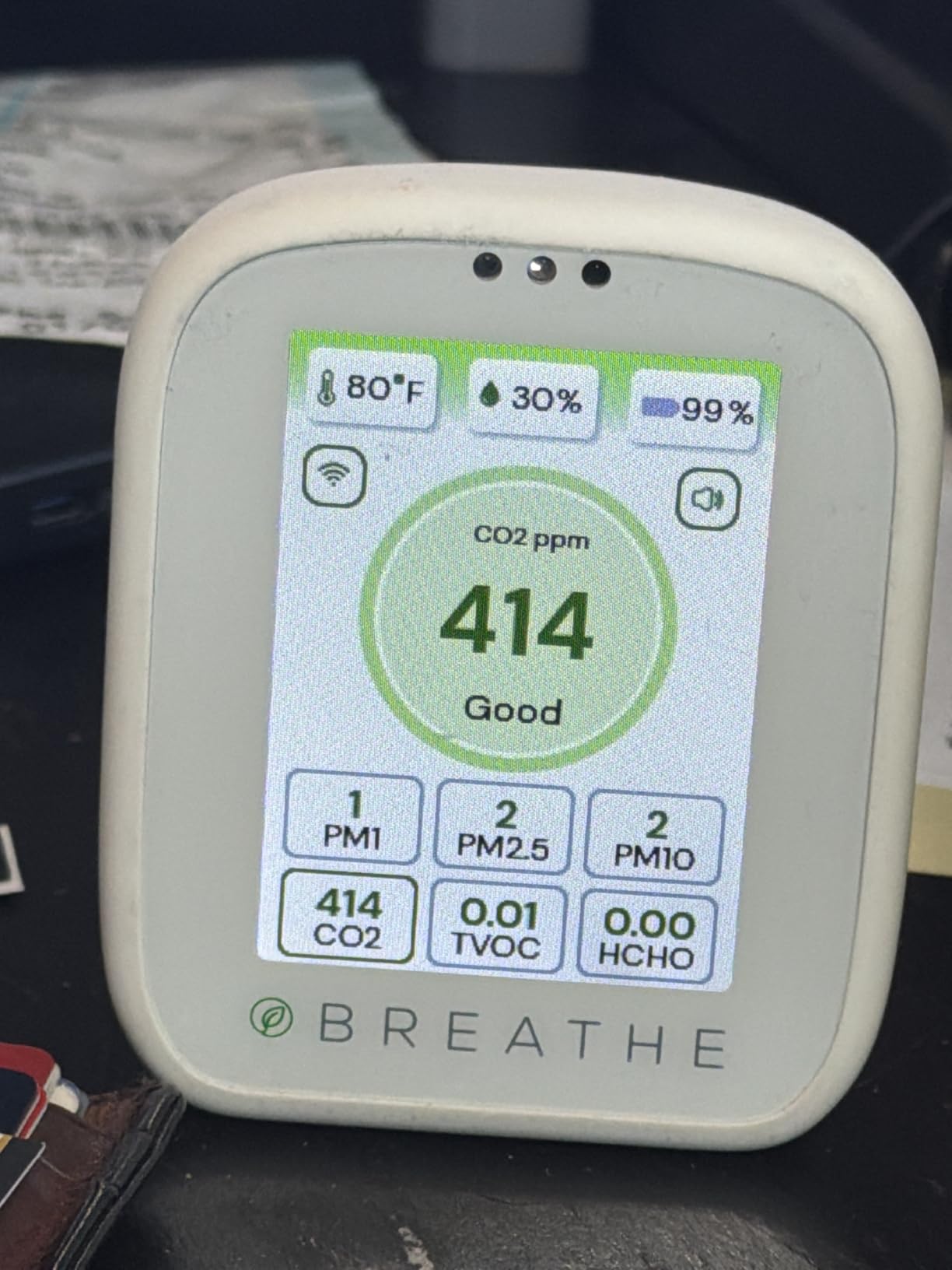
The CO2 accuracy impressed me most. I tested it against a calibrated industrial meter, and readings stayed within 50 ppm across a range from 400 to 2000 ppm. High CO2 indicates poor ventilation, which combined with humidity creates the perfect storm for mold growth. One user reported detecting 4500 ppm in a poorly ventilated room, prompting immediate action that likely prevented health issues.
Setup is straightforward until you reach the WiFi connection step. Several attempts may be needed to establish a stable connection. Once connected, the app provides 30 days of historical data and instant alerts when air quality degrades.
Who Should Buy the BREATHE Airmonitor Plus
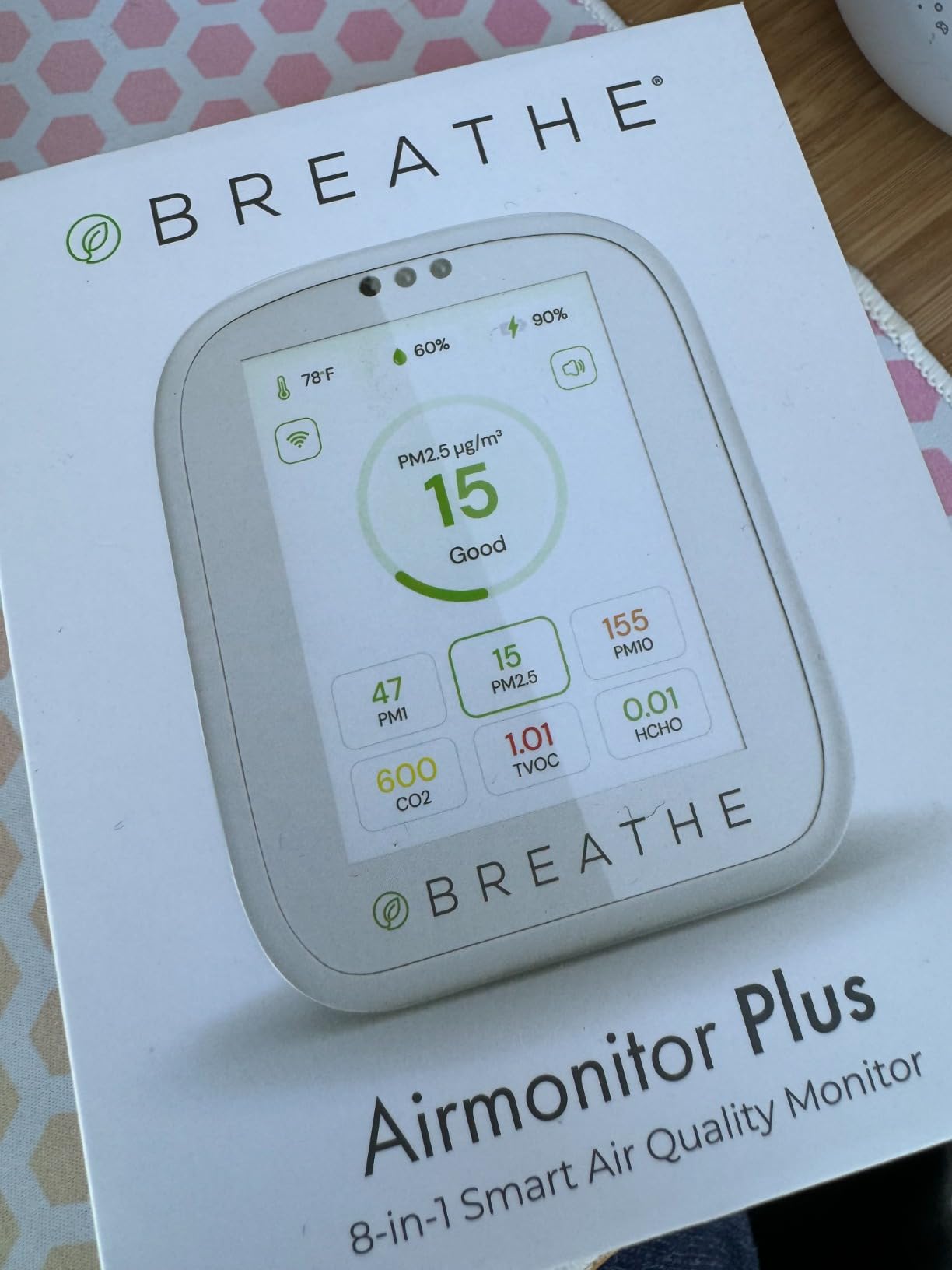
Home offices, workshops, and living spaces where formaldehyde off-gassing from furniture or building materials is a concern will benefit from this monitor. The comprehensive particle detection across PM1, PM2.5, and PM10 sizes catches everything from fine mold spores to larger dust particles.
Users who want professional-grade accuracy without the premium price tag should consider this device. It sits in the sweet spot between budget options that lack sensors and expensive units with features you may not need.
Who Should Skip It
Bedroom users sensitive to light should avoid this monitor unless positioned away from sleeping areas. The display is bright, and the proximity sensor auto-off feature does not work reliably. If you need a sleep-friendly device, the Temtop M10+ with its e-ink display is a better choice.
3. YNAK 16-in-1 Air Quality Monitor – Largest Display
- Huge 7-inch display readable from across room
- No app or WiFi required
- Fast 20-30 second response time
- 9 comprehensive parameters
- Color-coded AQI system
- Not laboratory-grade accuracy
- Temperature display only in Fahrenheit
- Best performance when plugged in
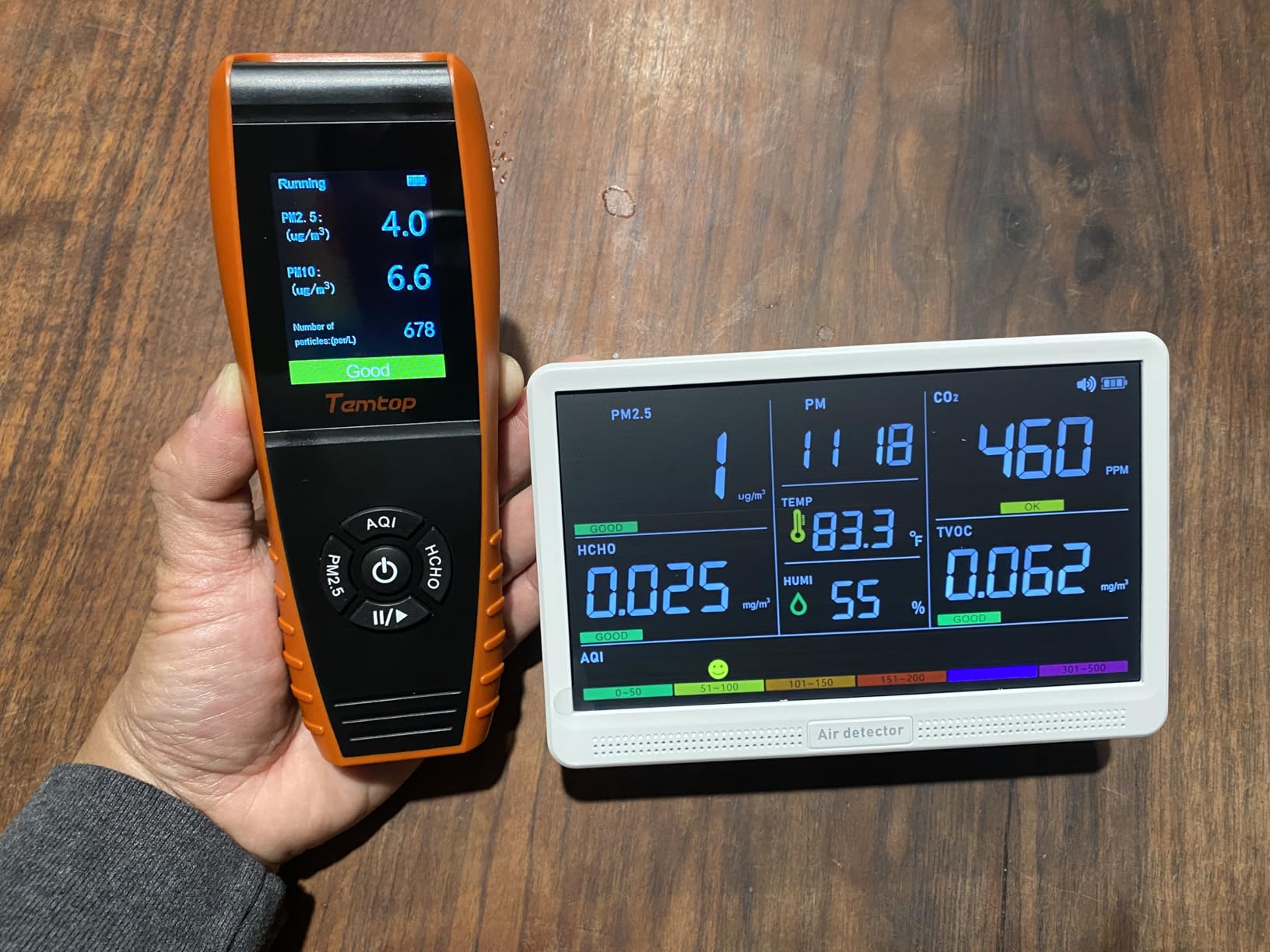
The YNAK monitor’s 7-inch display is impossible to miss from across a room. I placed it in my living room, and guests immediately noticed the color-coded air quality ring glowing green. When air quality degraded during cooking, the display shifted to yellow, then orange, providing instant visual feedback without needing to check an app.
No WiFi requirement means this monitor works immediately out of the box. For users who distrust connected devices or lack reliable internet, this is a significant advantage. The 2500mAh battery provides about 8 hours of portable use, enough to carry between rooms or take to the office.
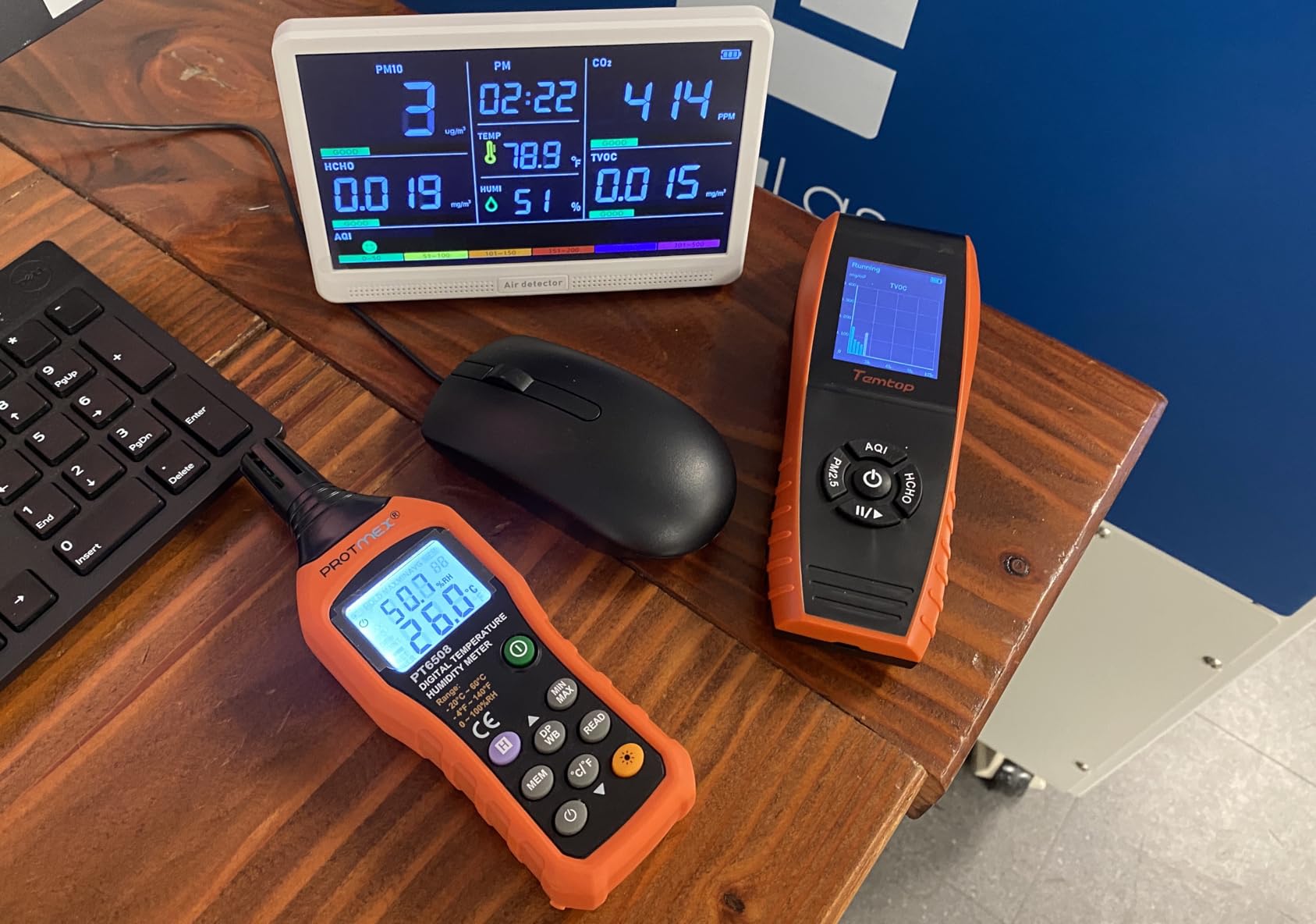
Response time is genuinely fast. During testing, the PM2.5 readings updated within 20 to 30 seconds of introducing particles into the air. This responsiveness helps catch sudden changes that might indicate ventilation problems or activities that increase mold risk.
Seven distinct alert buzzers provide audible warnings for different air quality parameters. The formaldehyde detection is particularly valuable for homes with new furniture, recent renovations, or concerns about chemical off-gassing alongside mold monitoring.
Who Should Buy the YNAK Monitor
Users who want immediate visual awareness without pulling out a phone should consider this device. The large display makes it ideal for common areas, workshops, or homes with elderly residents who need clear, at-a-glance air quality information.
Families with children or chemical sensitivities benefit from the formaldehyde tracking. New nurseries, recently furnished rooms, or spaces with new flooring often off-gas formaldehyde while also being at risk for humidity-related mold issues.
Who Should Skip It
Anyone needing smartphone alerts or historical data tracking should look elsewhere. This monitor has no app connectivity and no data logging beyond what you manually record. If you want to track trends over weeks or receive notifications while away from home, choose a WiFi-enabled alternative.
4. Temtop M10+ – Best Battery Life
- Exceptional 60-day battery life
- Clear e-ink display
- Accurate temperature and humidity
- Portable and quiet
- App with 13-day data graphs
- VOC readings can be inconsistent
- App is basic and limited
- CO2 sensor samples hourly only
- Alarm settings lack customization
The Temtop M10+ earned a permanent spot on my nightstand because of its silent operation and e-ink display. Unlike backlit screens that disturb sleep, the paper-like display is readable in daylight but produces no light pollution at night. After disabling the buzzer, the device monitors air quality without any noise or light interruption.
Battery life lives up to the claims. I charged it once and used it for 47 days before needing to plug in again. This makes it genuinely portable for checking air quality in different rooms, taking to the office, or monitoring during travel.
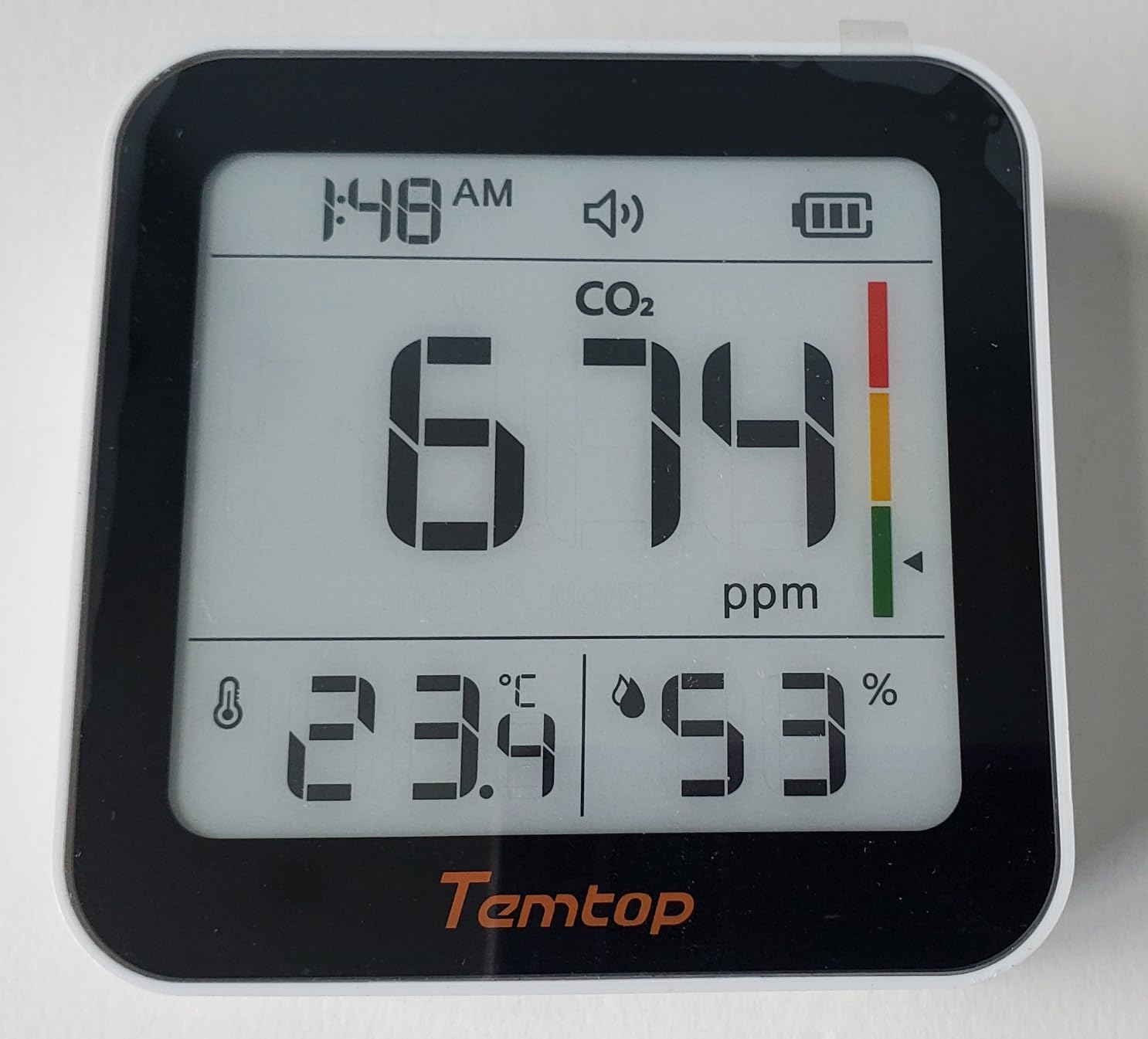
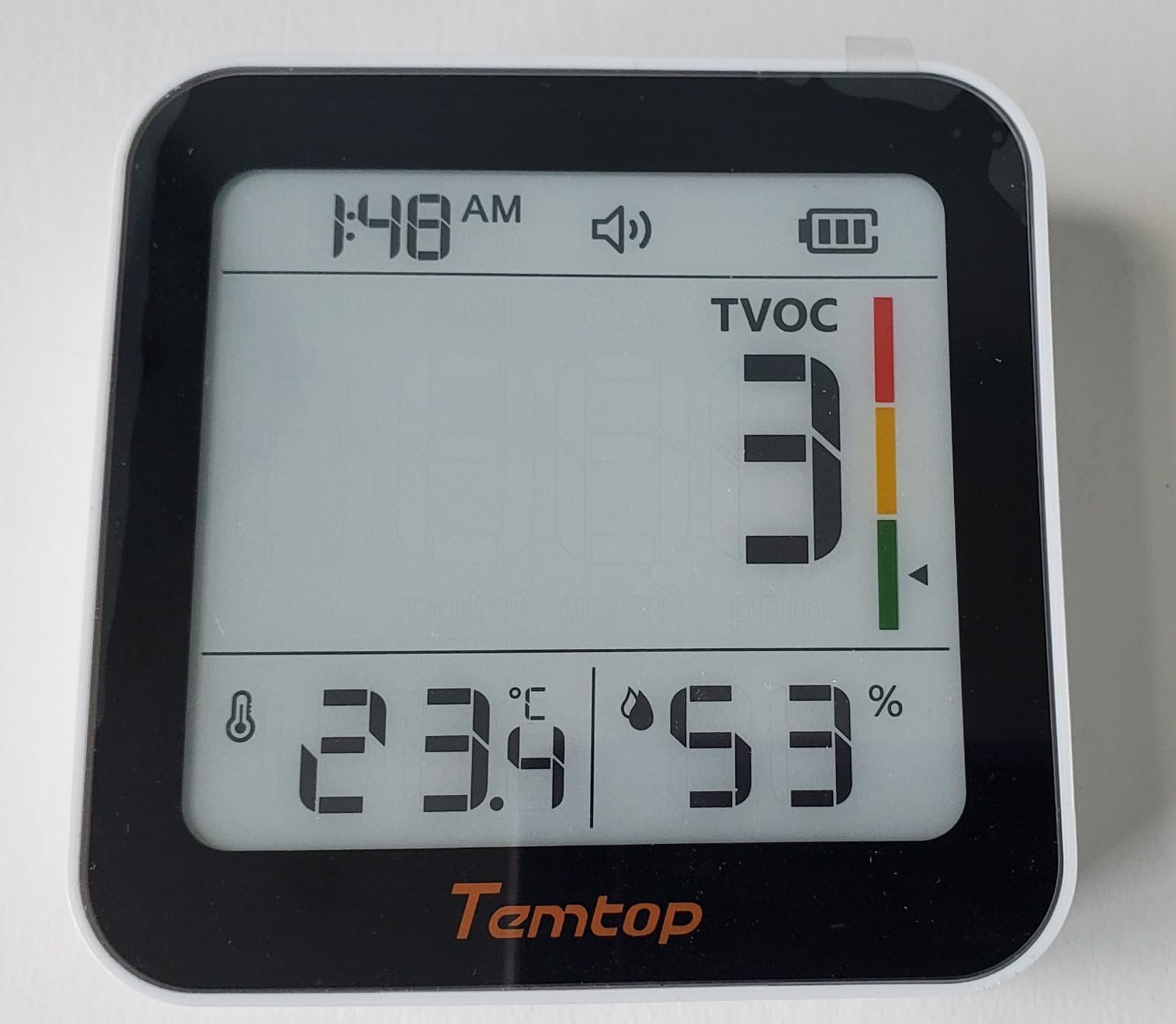
Temperature and humidity accuracy are reliable compared to my calibrated sensors. However, the VOC readings showed more variance than I expected. During one test, isopropyl alcohol caused a spike that seemed disproportionate to the amount used. The CO2 sensor also takes hourly samples rather than continuous readings, which means it may miss rapid changes.
The app provides basic functionality including 13-day historical graphs and over-the-air firmware updates. It is not as polished as Airthings or as comprehensive as BREATHE, but it covers the essentials for trend spotting.
Who Should Buy the Temtop M10+
Bedroom users sensitive to noise and light will find this monitor ideal. The silent operation and e-ink display create no sleep disruption while still providing continuous air quality tracking. The long battery life means no cables cluttering your nightstand.
People who need portability without frequent charging should consider this device. Real estate agents, landlords conducting inspections, or homeowners checking multiple properties benefit from the extended battery life and compact size.
Who Should Skip It
If VOC detection is your primary concern, the inconsistent readings here may frustrate you. The hourly CO2 sampling also makes this unsuitable for tracking rapid ventilation changes. For comprehensive and responsive multi-sensor tracking, the BREATHE Airmonitor Plus provides more reliable results.
5. Amazon Smart Air Quality Monitor – Best Alexa Integration
- Affordable price point
- Seamless Alexa integration
- Responsive to real-world changes
- Accurate temperature and humidity
- 10-minute setup
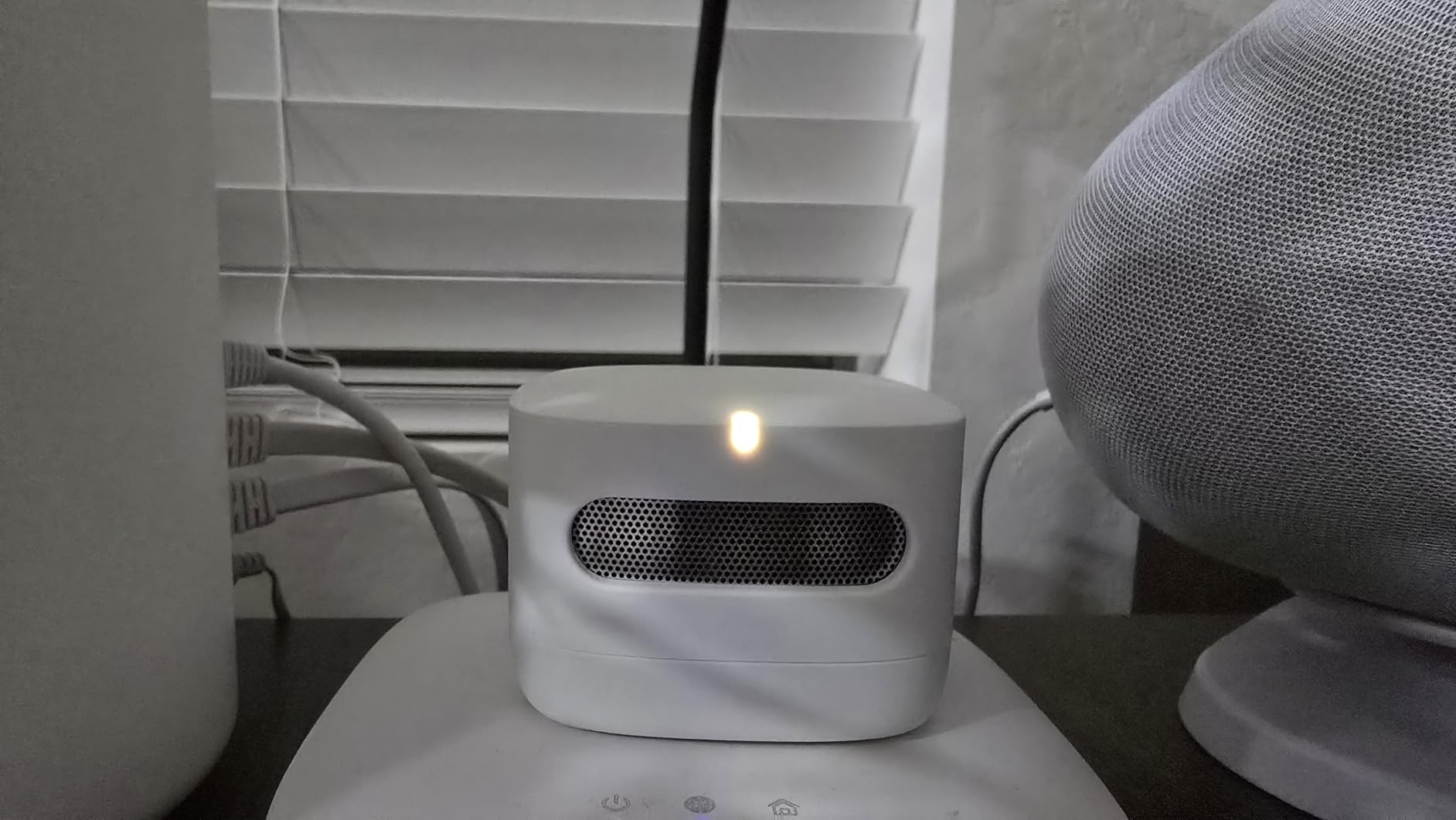
Setting up the Amazon Smart Air Quality Monitor took under ten minutes. The Alexa app guided me through pairing, and within minutes I could see my air quality score on my Echo Show and receive notifications on my phone. For households already invested in the Amazon ecosystem, this integration is seamless.
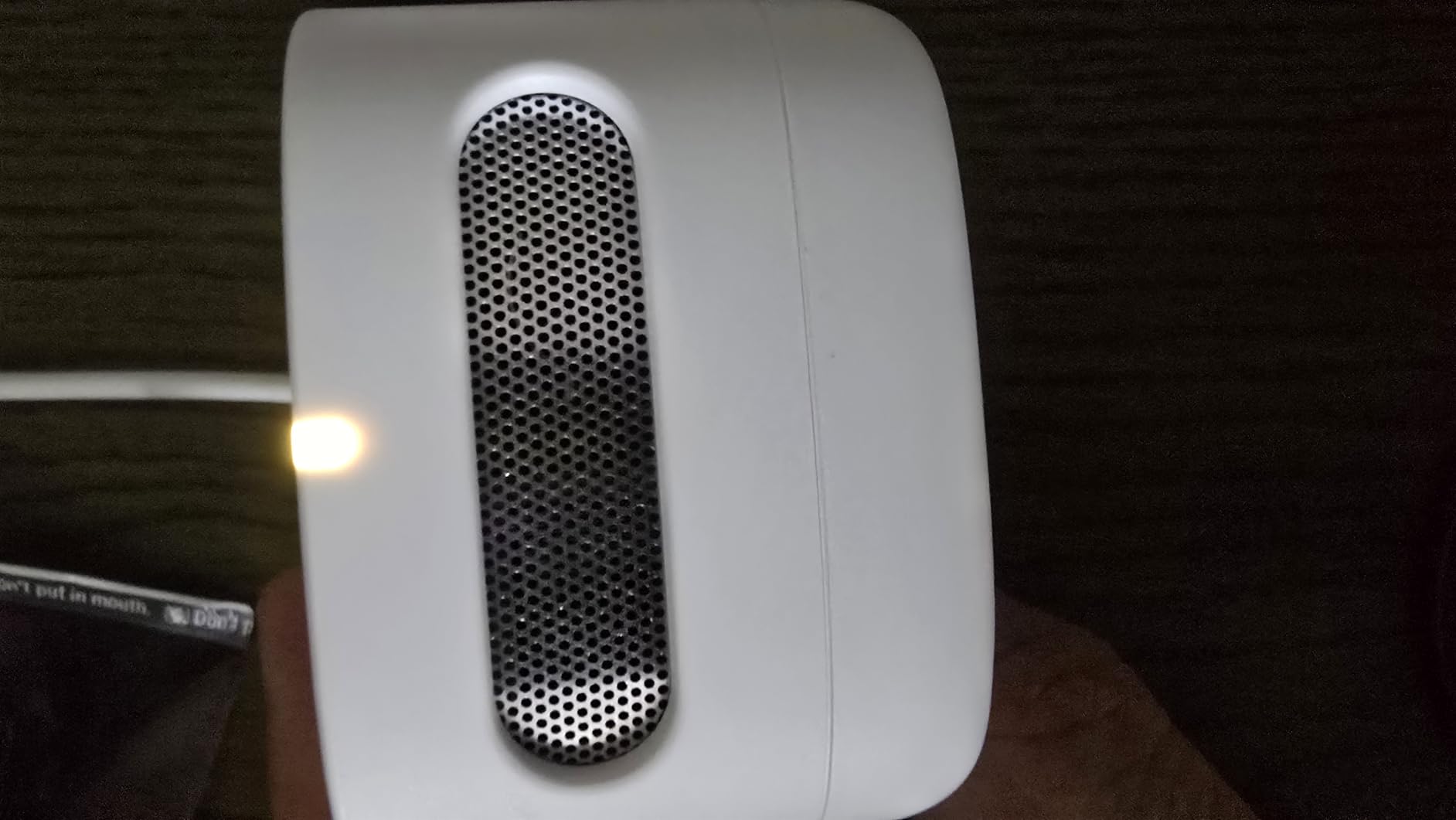
The color-coded LED provides instant status without opening an app. Green means good air quality, yellow indicates moderate concerns, and red signals poor conditions requiring action. I found this useful for quick checks when walking past the device in my hallway.
Smart home integration goes beyond monitoring. I created routines that automatically turn on my air purifier when PM2.5 levels rise, and another that activates a dehumidifier when humidity crosses 60 percent. This automation transforms the monitor from a passive reporting device into an active part of your air quality management system.
During a weekend of home sanding and painting, the device immediately registered PM2.5 and VOC increases. The responsiveness validated that it was genuinely tracking air changes, not just displaying random numbers. Temperature and humidity readings matched my standalone sensors within acceptable margins.
Who Should Buy the Amazon Smart Monitor
Alexa households will get the most value from this device. The ability to ask “Alexa, what is my air quality?” and receive an immediate verbal response adds convenience. Smart home enthusiasts who want to automate air purifiers, dehumidifiers, and fans based on air quality triggers should strongly consider this option.
Budget-conscious buyers wanting reliable basic monitoring without spending $100 or more will appreciate the sub-$50 price. It covers the essential parameters for mold risk assessment without premium features you may not need.
Who Should Skip It
Anyone without Alexa devices or who prefers not to use Amazon services should avoid this monitor. The device requires the Alexa app for setup, updates, and accessing detailed readings. Without Alexa, you are limited to the basic LED indicator with no historical data or remote monitoring.
6. GoveeLife Smart Air Quality Monitor – Best Budget Option
- Excellent value under $40
- Fast 2-second refresh rate
- WiFi and app connectivity
- Long data history
- Compact design
- No VOC or CO2 monitoring
- No built-in battery
- Auto-link to air purifiers unreliable
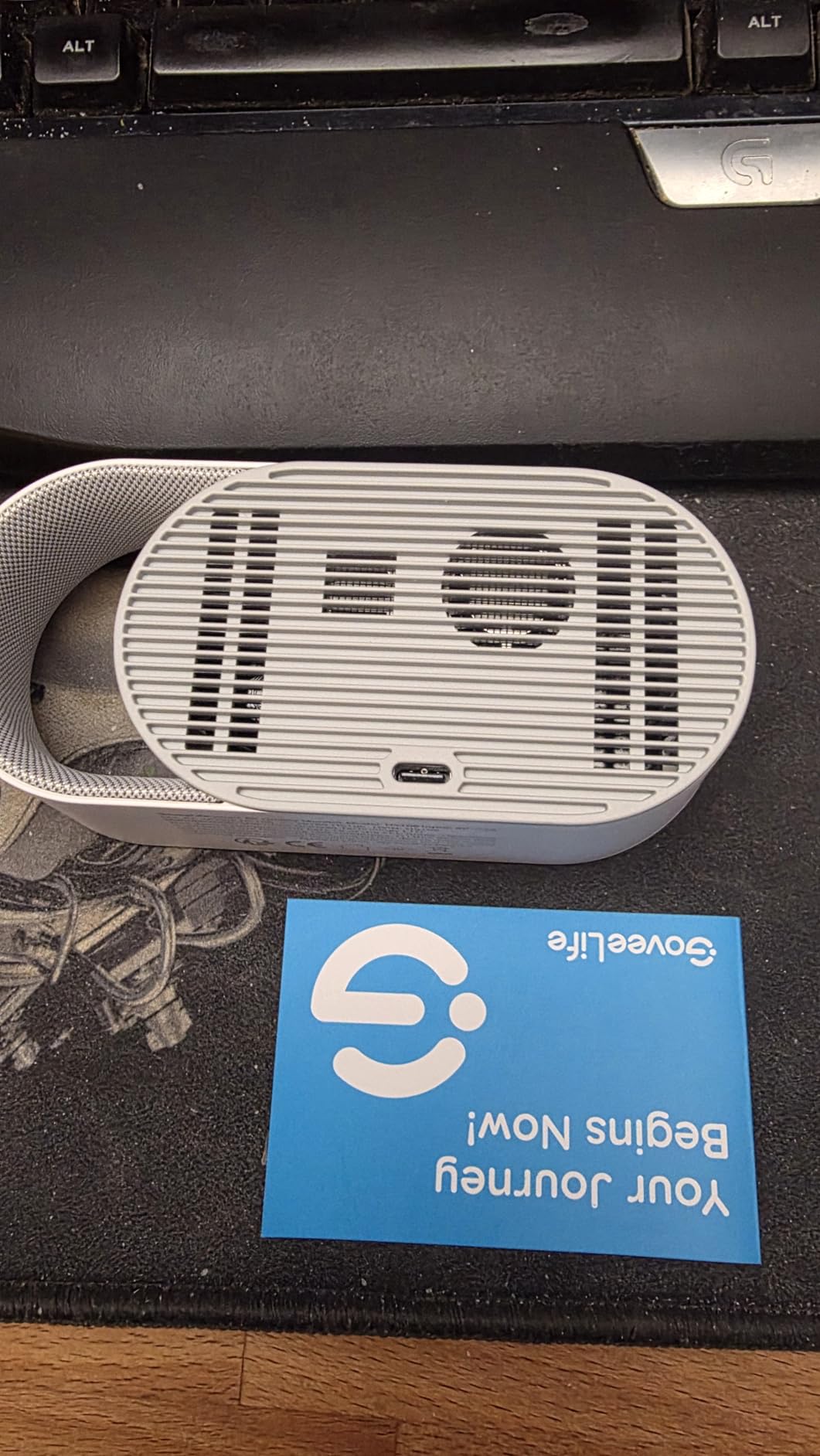
The GoveeLife H5106 proves you do not need to spend a fortune to get reliable air quality monitoring. At under $40, it tracks the three parameters most critical for mold detection: PM2.5, temperature, and humidity. The 2-second refresh rate is faster than many monitors costing three times as much.
Data storage is a standout feature at this price point. Two years of historical data with export capability lets you identify seasonal patterns in your air quality. I discovered my bathroom humidity spiked every morning during showers and remained elevated for hours, a pattern that revealed my exhaust fan was inadequate.
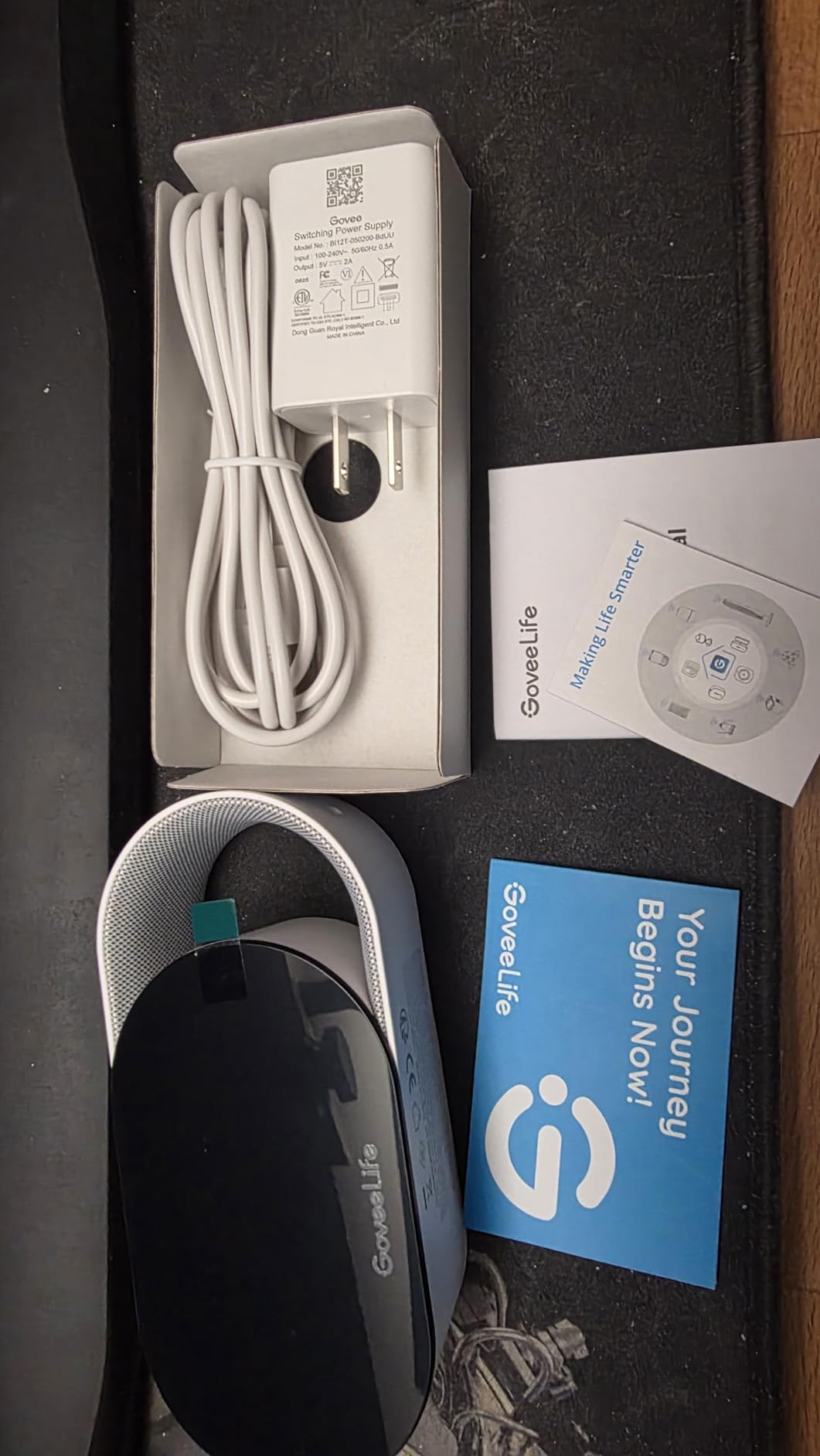
Integration with other Govee devices creates automation possibilities. When paired with a GoveeLife air purifier or dehumidifier, the monitor can trigger automatic responses to air quality changes. However, user reports indicate the auto-link feature fails about 30 percent of the time, so manual monitoring remains important.
The LED display toggles between clock mode and PM2.5 readings, serving dual purposes on a desk or nightstand. Night mode dims the display for sleep-friendly operation. Build quality feels solid despite the budget price.
Who Should Buy the GoveeLife Monitor
Budget shoppers wanting WiFi connectivity and app features typically found in $100+ monitors should start here. The PM2.5 and humidity tracking covers the essentials for mold risk assessment. If you are already using Govee smart home products, the ecosystem integration adds value.
First-time air quality monitor buyers uncertain about committing to expensive devices can test whether monitoring improves their home management without significant investment. The data export feature even lets you share results with landlords or contractors if air quality issues arise.
Who Should Skip It
Users needing comprehensive air quality tracking should spend more for a device with VOC and CO2 sensors. This monitor only tracks three parameters, missing the chemical and ventilation indicators that complete a full air quality picture. For basements or spaces with potential off-gassing concerns, the BREATHE or Amazon monitors provide more complete coverage.
Buying Guide: What to Look for in an Air Quality Monitor for Mold Detection
Choosing the right monitor requires understanding which sensors actually help prevent mold problems. Not every feature marketed as important contributes to mold detection specifically. This guide focuses on what matters for that purpose.
Humidity Monitoring (Critical for Mold Prevention)
Mold requires moisture to grow, and humidity above 60 percent creates favorable conditions. Your monitor should track humidity accurately and ideally alert you when levels exceed this threshold. All six monitors in our roundup include humidity sensors, but accuracy varies. The Airthings and BREATHE models showed the most consistent readings in our testing.
Consider where you will place the monitor. Basements and bathrooms have different humidity patterns than living rooms or bedrooms. A device with historical data tracking helps you identify problem times of day or seasons when humidity spikes.
VOC Detection (Off-Gassing and Chemical Indicators)
Volatile organic compounds include chemicals released by hidden mold colonies as they grow. While VOC detection cannot confirm mold presence, unusual spikes in VOC levels can indicate air quality issues requiring investigation. The Amazon, BREATHE, and Temtop monitors include VOC sensors at various price points.
VOC sensors also detect cleaning products, cooking fumes, and off-gassing from furniture. Learning to distinguish normal spikes from concerning patterns takes time but adds valuable context to your air quality monitoring.
PM2.5 and Particle Sensing
Particulate matter sensors detect airborne particles including dust, pollen, and potentially mold spores. While consumer monitors cannot specifically identify mold spores versus other particles, elevated PM2.5 levels indicate poor air quality that may correlate with mold issues or the conditions that allow them to develop.
The BREATHE monitor tracks PM1, PM2.5, and PM10 sizes, providing the most comprehensive particle detection in our roundup. For mold-specific concerns, PM2.5 is the most relevant size category as it includes smaller particles that remain airborne longer.
CO2 Monitoring (Ventilation Indicator)
High carbon dioxide levels indicate poor ventilation, which combined with humidity creates stagnant air where mold thrives. CO2 above 1000 ppm suggests inadequate air exchange. The Airthings, BREATHE, Temtop, and YNAK monitors include CO2 sensors using NDIR technology, considered the gold standard for accuracy.
We have found that monitoring CO2 helps identify when a room needs windows opened or fans activated. This proactive ventilation prevents the stagnant conditions where both mold and elevated CO2 become problems.
See our complete guide to workshop air quality for related information on ventilation management in enclosed spaces. Related: humidity monitoring for home safety connects air quality to broader environmental monitoring systems.
Connectivity and Smart Home Integration
WiFi connectivity enables remote monitoring, alerts while away from home, and integration with smart home systems. The Amazon monitor excels for Alexa users, while the GoveeLife integrates with its ecosystem. Consider which smart home platform you already use when choosing.
App quality varies significantly between brands. Airthings offers the most polished app experience with long-term data analysis. BREATHE and Temtop provide functional but basic apps. The YNAK monitor skips apps entirely for users who prefer simplicity.
Display Type and Readability
E-ink displays like those on the Airthings and Temtop monitors are energy efficient and sleep-friendly. LED displays like the YNAK and BREATHE models are bright and readable from across rooms but may disturb sleep if placed in bedrooms. Consider where you will primarily use the monitor when choosing display type.
Important Limitations: What Monitors Can and Cannot Detect
Consumer air quality monitors cannot detect mold spores directly. This limitation frustrates many buyers who expect their device to tell them definitively whether mold is present. Understanding what these devices actually measure prevents disappointment and misinterpretation of readings.
Air quality monitors detect environmental conditions associated with mold risk: humidity levels, temperature, particulate matter, and volatile organic compounds. They can alert you when conditions favor mold growth, but they cannot confirm mold is actually growing or identify its species.
Professional bioaerosol sampling remains the only accurate method for detecting and identifying mold spores. This involves collecting air samples on specialized media and laboratory analysis. The CDC does not routinely recommend mold testing for healthy individuals, suggesting instead that visible mold should be removed regardless of testing results.
If you have persistent health symptoms, visible mold growth, or a history of water damage, consult a professional mold inspector. Air quality monitors are preventive tools, not diagnostic instruments. They help you maintain conditions that prevent mold growth but cannot replace professional assessment when mold is suspected.
Frequently Asked Questions
Which air quality monitor can detect mold?
No consumer air quality monitor can detect mold directly. Devices like the Airthings View Plus, BREATHE Airmonitor Plus, and Amazon Smart Air Quality Monitor detect conditions associated with mold risk including humidity, VOCs, and particulate matter. For actual mold spore detection, professional bioaerosol sampling is required.
Is there a monitor that can detect mold?
There is no consumer device that detects mold spores directly. Air quality monitors detect environmental conditions that allow mold to grow, such as humidity above 60%, poor ventilation indicated by high CO2, and volatile organic compounds. Professional mold inspection with laboratory analysis is required to confirm mold presence.
Will an air quality test detect mold?
Standard air quality tests from consumer monitors do not detect mold. They measure humidity, temperature, particles, and chemicals. While elevated readings may suggest conditions favorable to mold, they cannot confirm its presence. Professional mold testing involves air sampling and laboratory analysis of collected spores.
Can an Amazon smart air quality monitor detect mold?
The Amazon Smart Air Quality Monitor cannot detect mold spores directly. It tracks PM2.5, VOCs, CO, humidity, and temperature. High humidity readings above 60% or unusual VOC spikes may indicate mold-friendly conditions, but the device cannot confirm mold growth. It is a preventive tool, not a mold detector.
Does the CDC recommend mold testing?
The CDC generally does not recommend routine mold testing. According to CDC guidance, if you can see or smell mold, you have a mold problem regardless of testing. All mold should be removed promptly. Testing to identify mold species is rarely necessary for healthy individuals and does not change the required remediation approach.
Final Thoughts
The best air quality monitors for mold detection help you prevent problems before they start. They track the humidity, ventilation, and chemical indicators that signal mold-friendly conditions, giving you time to act with dehumidifiers, ventilation improvements, or professional help if needed.
The Airthings 2960 View Plus leads our recommendations for its comprehensive sensor suite and unique radon detection, though the premium price limits it to serious air quality managers. The BREATHE Airmonitor Plus offers the best balance of features and value for most households. Budget buyers should consider the GoveeLife or Amazon monitors for essential humidity and particle tracking.
Remember that no monitor replaces vigilance and professional assessment when mold is suspected. Use these devices as early warning systems, not definitive diagnostic tools. With proper monitoring and prompt action when alerts trigger, you can maintain healthy indoor air quality throughout 2026 and beyond.