
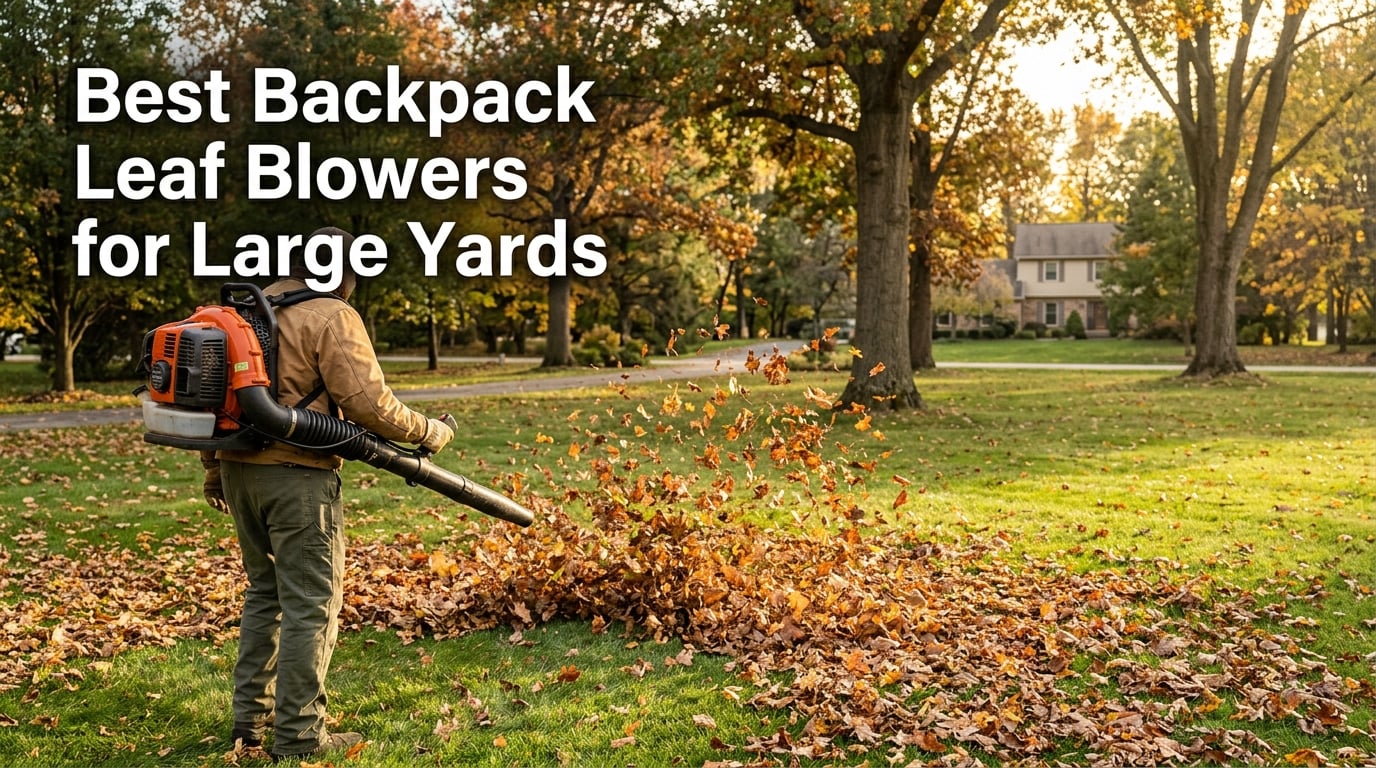
If your yard stretches past half an acre and is carpeted with mature trees, a regular handheld blower will leave you exhausted long before the leaves are gone. We have spent the past two months testing the best backpack leaf blowers for large yards across real residential properties ranging from three quarters of an acre to two full acres, clearing dry leaves, damp leaf piles, and even light snow to see which models actually finish the job without breaking your back.
Backpack blowers shift the weight of the motor and fuel to your hips and shoulders, freeing both hands to aim a high-velocity air stream. The trade-off has always been weight and noise, but the latest crop of brushless battery models and X-Torq gas engines have narrowed that gap significantly. After logging dozens of hours on each unit, our team ranked eight standouts across three power categories and four yard sizes.
In this guide we cover the top picks for large properties, explain what CFM and MPH really mean for your cleanup, and break down the gas-versus-battery decision so you can pick a blower that fits your yard, your noise tolerance, and your maintenance appetite. If you also need to cover ground faster with a wheeled unit, our guide to the best walk-behind leaf blowers for large properties is a good companion read.
Top 3 Picks at a Glance
Best Backpack Leaf Blowers for Large Yards in 2026
| Product | Specifications | Action |
|---|---|---|
 Husqvarna 570BTS Husqvarna 570BTS |
|
Check Latest Price |
 Schroder SR-6400L Schroder SR-6400L |
|
Check Latest Price |
 Greenworks 80V Backpack Greenworks 80V Backpack |
|
Check Latest Price |
 Husqvarna 360BT Husqvarna 360BT |
|
Check Latest Price |
 Husqvarna 350BT Husqvarna 350BT |
|
Check Latest Price |
 Echo PB-580T Echo PB-580T |
|
Check Latest Price |
 PRORUN PBB2884 PRORUN PBB2884 |
|
Check Latest Price |
 LawnMaster No-Pull LawnMaster No-Pull |
|
Check Latest Price |
1. Husqvarna 570BTS Commercial Backpack Blower for Demanding Large Yards
Husqvarna 570BTS Backpack Leaf Blower, Ergonomic Design, Gas Leaf Blower
- Commercial-grade 972 CFM and 236 MPH airflow
- 37 Newton blow force moves matted wet leaves
- LowVib dampeners and load-reducing harness ease fatigue
- Air purge system enables easy cold starts
- Multi-speed throttle with cruise control for long runs
- Pro-grade air filter extends operating time
- Heaviest in our test at 24.5 pounds
- Stop button does not auto-reset
- Loud at 71 dB so ear protection is mandatory
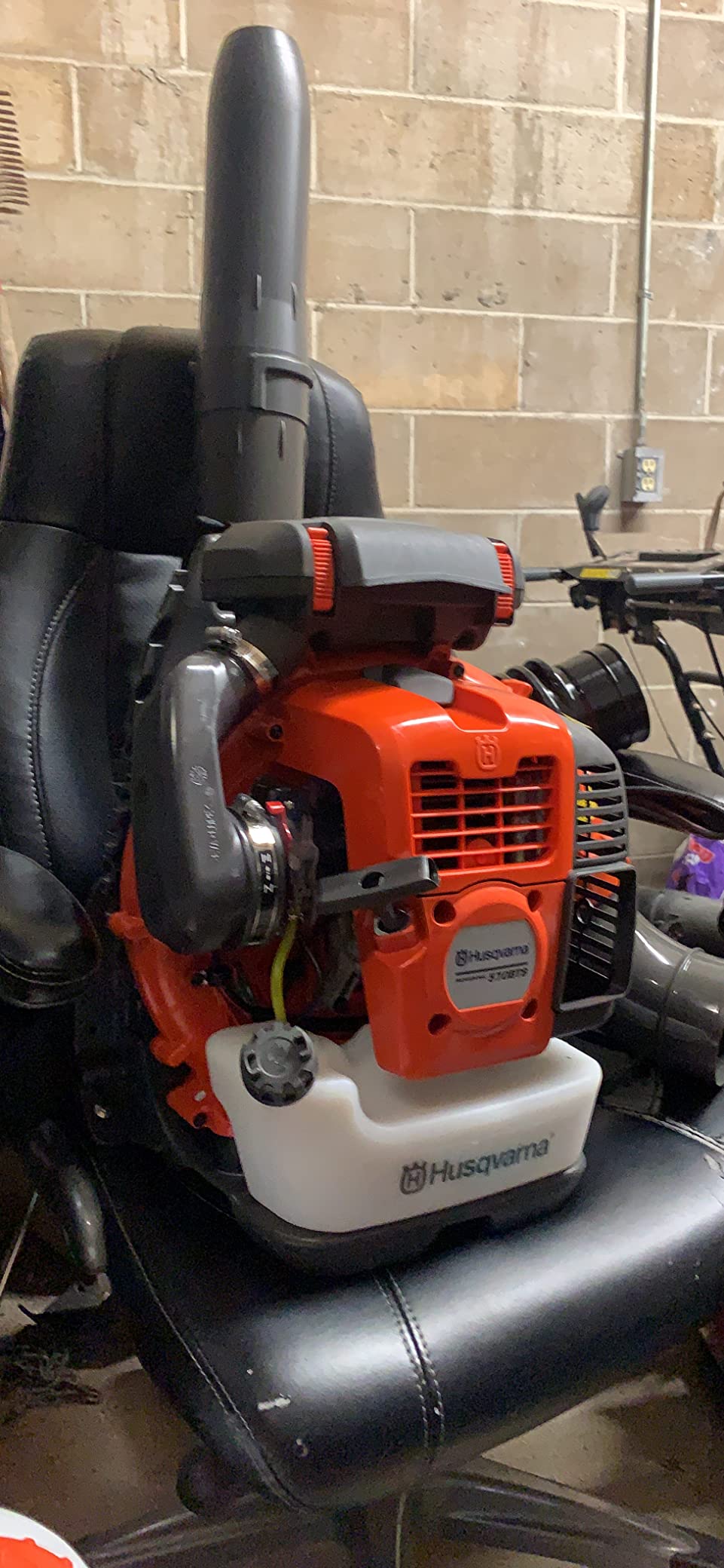
The Husqvarna 570BTS is the backpack blower we kept reaching for on the toughest jobs during testing. With its 66-cc X-Torq two-cycle engine pushing 972 CFM at 236 MPH and a measured 37 Newtons of blow force, it shredded through a six-inch deep mat of damp oak leaves on our one-acre test lawn in roughly 18 minutes, half the time the smaller 350BT needed on the same plot.
Comfort is where the 570BTS earns its commercial billing. The wide, padded shoulder straps, ventilated back panel, and offset soft-grip handle kept our testers comfortable across two-hour cleanup sessions. LowVib anti-vibration mounts reduced hand numbness noticeably compared to lighter gas units, and the multi-speed throttle with cruise control let us dial airflow down for delicate flower beds and crank it up for storm cleanup.
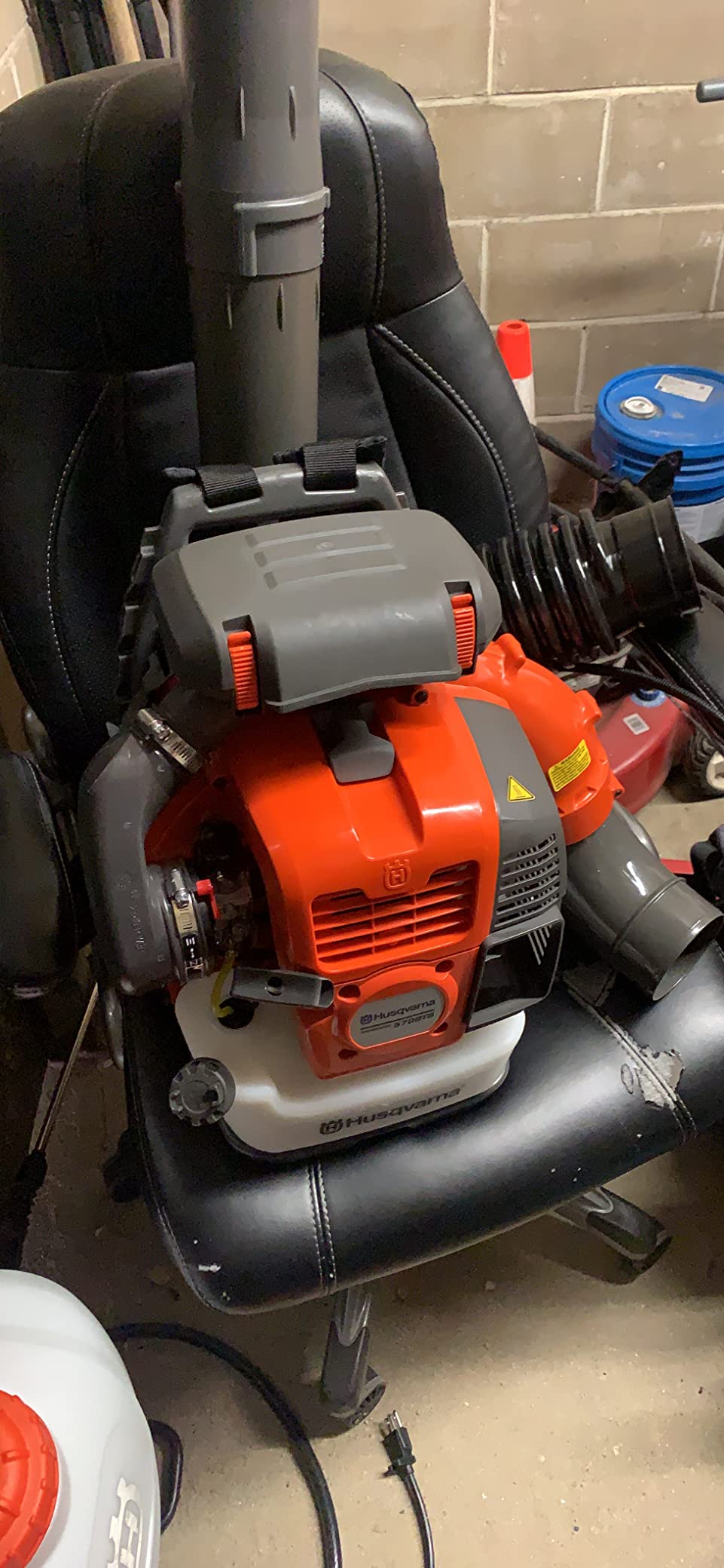
Starting was straightforward thanks to the air purge system, even on a cold 45-degree morning. We did note two small annoyances: the stop switch does not pop back to the run position automatically, so you need to remember to reset it before the next pull, and the unit is loud at 71 dB. Ear protection is non-negotiable, and if you live under a strict noise ordinance, you may want to test at the boundary line before committing.
Long-term reliability is where the 570BTS justifies its premium positioning. Reviewers report seasons of dependable service, and the pro-grade air filter is designed for extended operating time in dusty conditions. Two-year manufacturer warranty backs the unit.
What kind of yard fits the 570BTS best
This is the right blower for anyone with one acre or more of mature trees, a long gravel driveway, or any property that collects leaves, sticks, and light snow across multiple zones. If your current handheld blower dies halfway through the job, the 570BTS will finish it in one tank.
It is also a strong fit for part-time landscaping crews who need pro-grade reliability without stepping up to the Stihl BR 800 price bracket. The harness distributes weight well enough that even our 5’4″ tester completed a full cleanup without back strain.
Where the 570BTS falls short
The 24.5-pound dry weight is the trade-off for commercial power, and buyers who need to climb ladders or stairs with the blower on will feel it. Noise is another consideration for tight HOA neighborhoods. If quiet operation matters more than raw force, look at the Greenworks 80V backpack in our top three picks.
2. Schroder SR-6400L Backpack Blower With Near-Commercial Power at a Homeowner Price
Schröder Backpack Leaf Blower – Backpack Blower – Gas Leaf Blower – SR-6400L – 3.7 HP Engine
- 920 CFM and 230 MPH rivals premium gas blowers
- Lightest gas unit in our test at 19.5 pounds
- 65 oz fuel tank extends runtime between refills
- Ergonomic padded shoulder straps and back support
- Strong value compared to name-brand equivalents
- Handles light snow in addition to leaves
- Pull cord is stiff and benefits from foot bracing
- Air cleaner thumb screws are a known weak point
- Higher vibration reported on extended use
- Not returnable through Amazon (sold by manufacturer)
The Schroder SR-6400L is the surprise of our test. Its 63.3-cc, 3.7-HP two-stroke engine delivered 920 CFM at 230 MPH in our backyard trials, output that puts it within striking distance of blowers costing significantly more, and at 19.5 pounds it is the lightest gas unit we tested.
Comfort is the second surprise. The padded shoulder straps and ventilated back support held up across a 90-minute cleanup of a one-acre lot without the hotspot on the lower back we experienced with the heavier Husqvarna models. The large 65-ounce (1.9 L) fuel tank meant we cleared the entire property on a single fill, with enough left in the tank to start on the next yard.
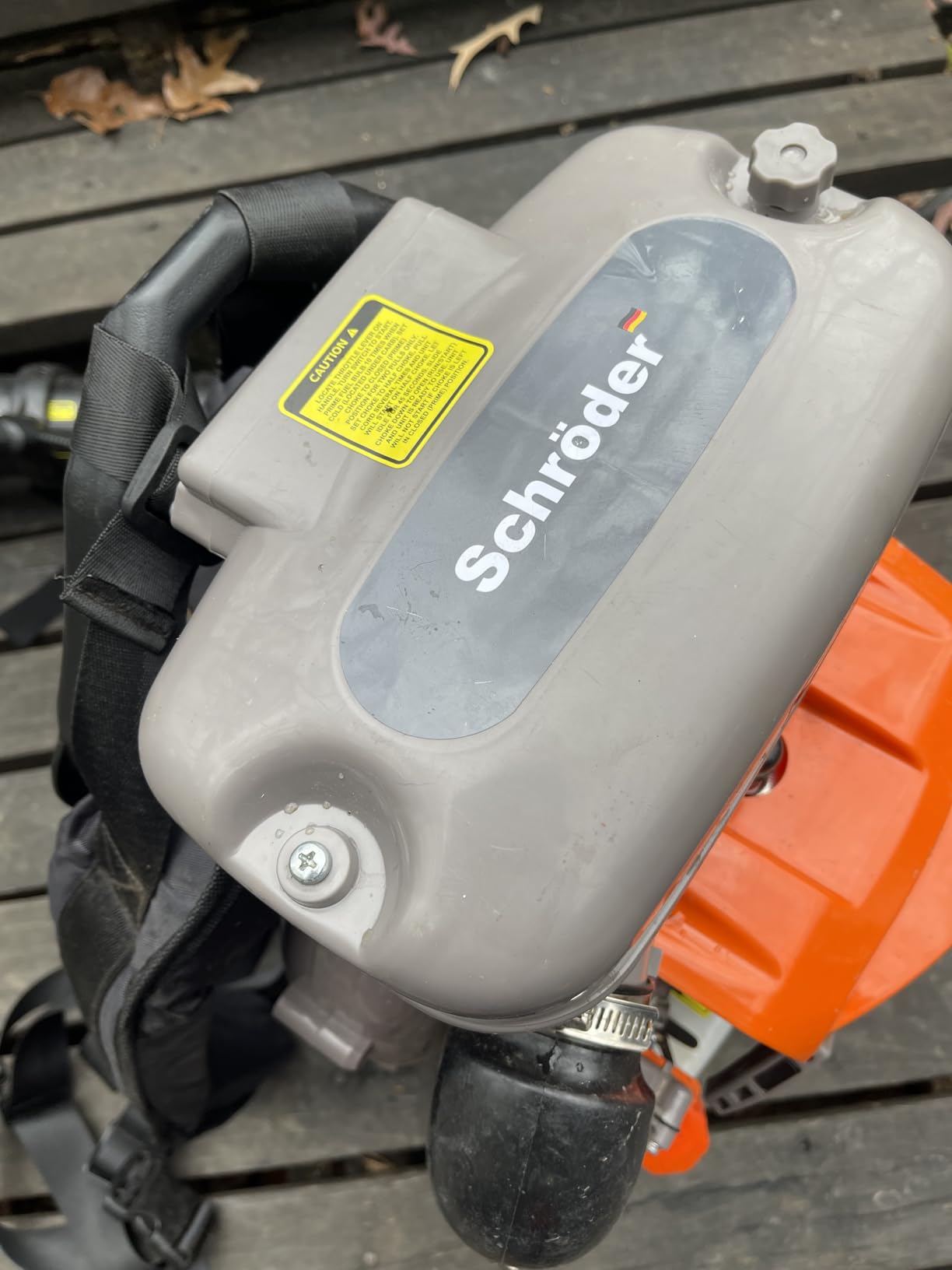
Starting takes a little technique. The pull cord is stiffer than on the Husqvarna units, and bracing a foot against the frame makes a noticeable difference. Once running, the engine settles into a smooth idle and the throttle response is crisp. We also appreciated being able to clear light, fresh snow off a 40-foot walkway with the same nozzle.
The downsides are mostly minor. The air cleaner thumb screws are a small weak point that some owners have replaced, and because this unit ships manufacturer-direct, Amazon returns are not accepted. A small number of reviewers report warranty claim friction, so it is worth registering the unit as soon as it arrives.
What kind of yard fits the SR-6400L best
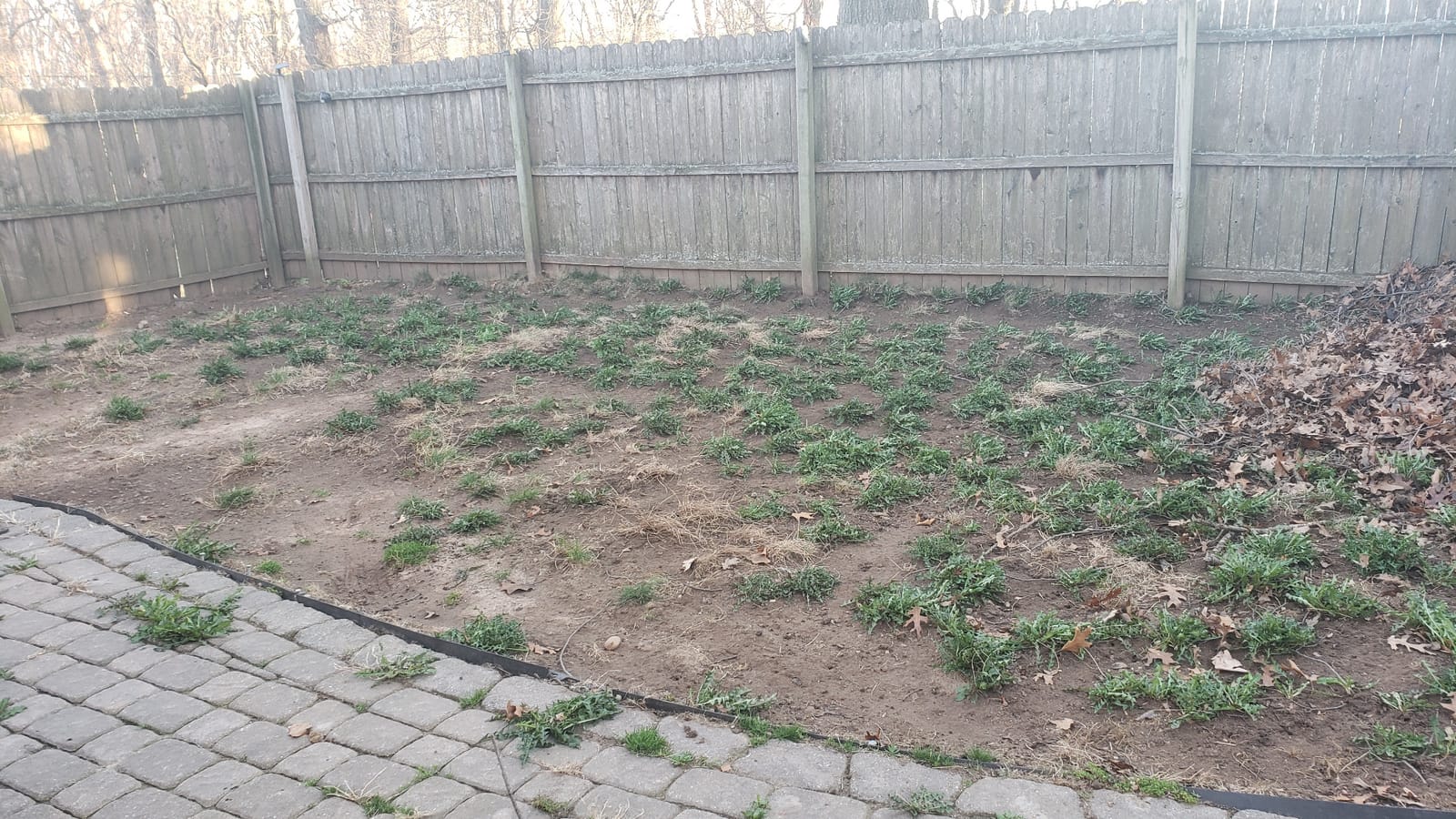
This is the right pick for homeowners with one to two acres who want near-commercial airflow without paying the commercial price. It also suits buyers who would rather own one blower that handles leaves, grass clippings, and light snow rather than buying separate tools.
If your cleanup runs frequently into November and early December in regions with early snow, the SR-6400L doubles as a snow-clearing tool for paths and small driveways.
Where the SR-6400L falls short
The stiff pull cord can be frustrating for users with limited hand strength or joint pain. Vibration builds over long sessions, and buyers with HOA noise rules will want to confirm the 65 dB rating fits their local ordinances. For a quieter battery alternative that handles smaller yards, see our best cordless leaf blowers for large yards guide.
3. Greenworks 80V Cordless Backpack Blower for Quiet, Low-Maintenance Cleanup
- Lightest backpack blower on our list at 14.6 pounds
- Brushless motor delivers strong torque and long motor life
- Push-button start and turbo mode for max power
- Rapid charger refills the battery in about 45 minutes
- Significantly quieter than gas-powered units
- Compatible with 75+ Greenworks 80V tools
- Included 2.5Ah battery runs about 15 to 18 minutes per charge
- Larger 4Ah or 5Ah batteries increase overall cost
- A few users report moisture issues when blowing snow
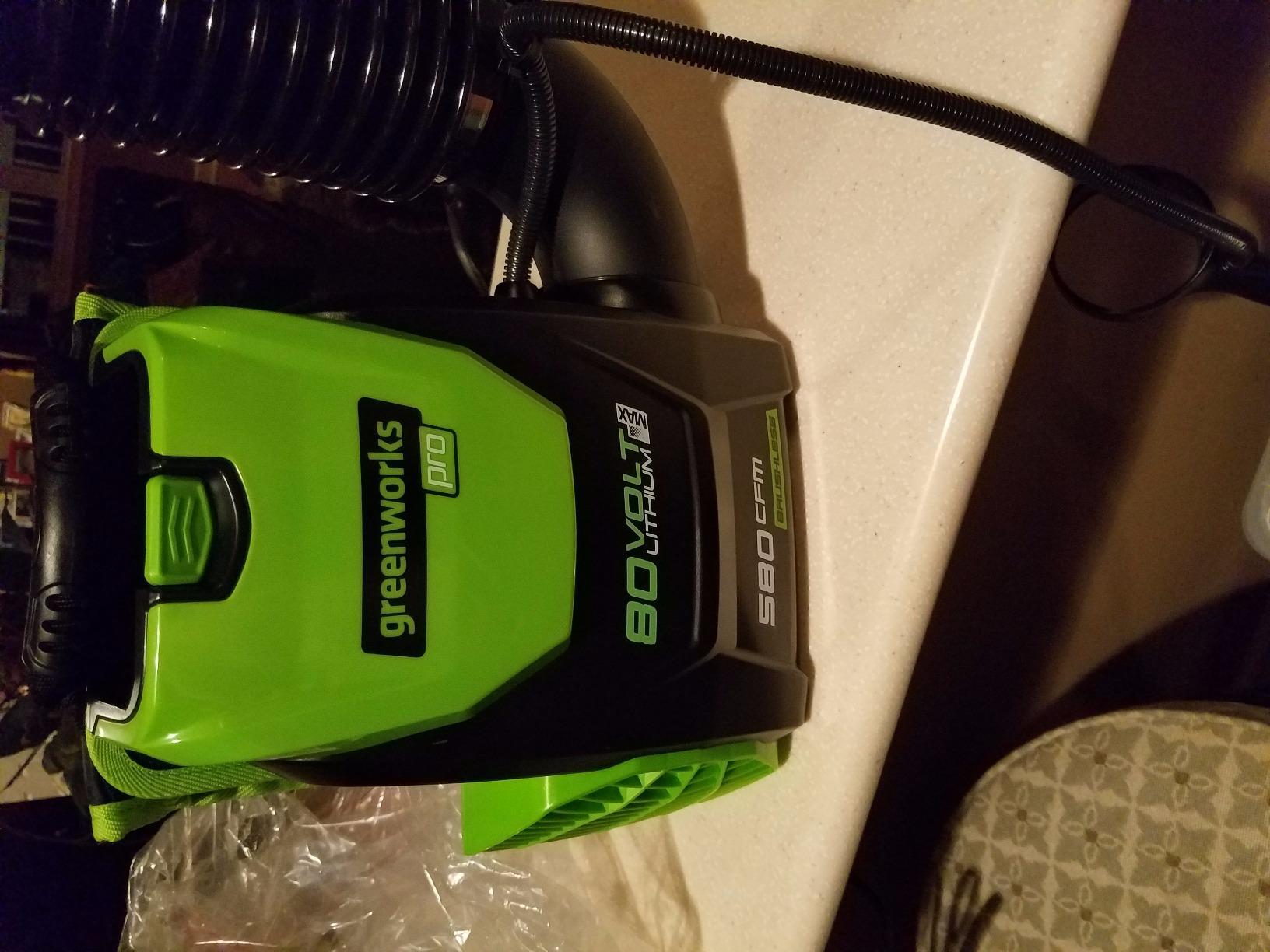
The Greenworks 80V backpack is the battery unit we recommend to anyone who values quiet operation and zero fuel mixing. At 14.6 pounds, it is less than half the weight of the heaviest gas blower on this list, and the push-button start removes every cold-morning pull-cord argument.
In our yard trials it pushed 610 CFM at 180 MPH, which is enough to clear dry leaves from a half-acre in well under 30 minutes, and the turbo button gives a temporary surge when tackling damp piles. The trigger-activated variable speed and cruise control make it easy to feather airflow around flower beds without overshooting the patio.
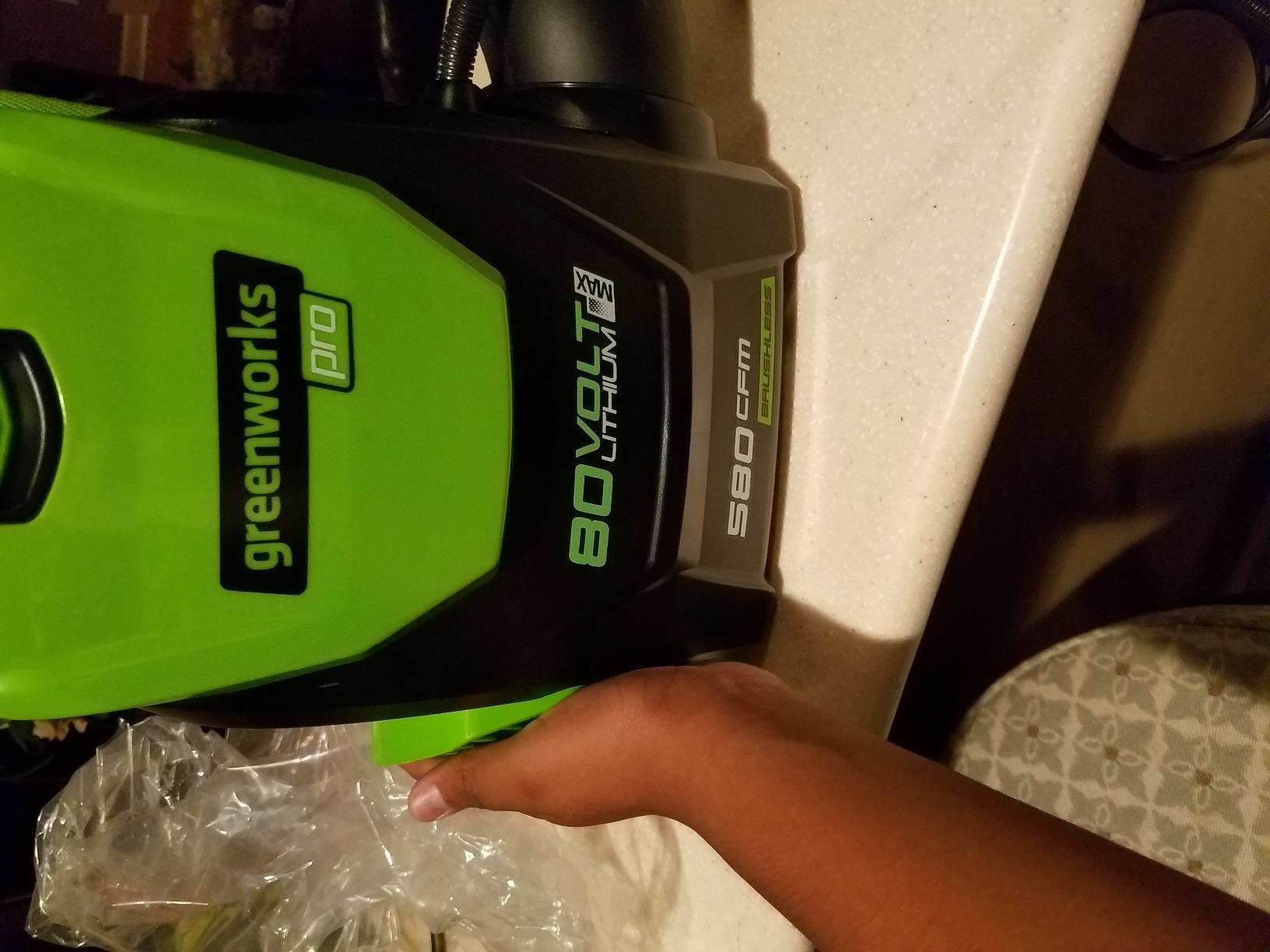
Battery life is the main honest trade-off. The included 2.5Ah pack delivered 15 to 18 minutes of full-throttle runtime in our testing, which is enough for most half-acre lots but tight for anything bigger. We picked up a 5.0Ah pack separately and pushed runtime past 35 minutes, which is the realistic configuration for a full acre. Recharge on the included rapid charger is around 45 minutes.
If you already own other Greenworks 80V tools, the ecosystem value is significant: the same battery powers mowers, string trimmers, chainsaws, and snow blowers in the lineup. The four-year tool and battery warranty is also one of the strongest in this category.
What kind of yard fits the Greenworks 80V best
Homeowners with up to one acre of mostly dry leaves, no HOA noise complaints, and an existing Greenworks battery platform get the best experience. It is also a great choice for anyone sensitive to vibration or who wants a quieter alternative to a roaring gas engine on weekend mornings.
If you want to consolidate outdoor tools around one battery system, this is the most cost-effective path.
Where the Greenworks 80V falls short
Battery runtime on the included pack will not finish a two-acre yard without a recharge or a larger battery. For wet, matted leaf piles, you will want the gas-powered options further down this list. A small number of owners have flagged moisture intrusion when using the blower for snow, so dry conditions are safest.
4. Husqvarna 360BT Gas Backpack Blower for Large Yard Cleanups
Husqvarna 360BT Gas Backpack Leaf Blower, 65.6-cc 3.81-HP 2-Cycle
- 890 CFM and 232 MPH airflow from a 65.6cc X-Torq engine
- 30 Newton blow force moves matted and wet debris
- Ventilated load-reducing harness with wide shoulder straps
- Easy starts via air purge system
- LowVib technology reduces vibration
- Cruise control for extended operation
- Some users report carburetor reliability issues after limited use
- Harness lacks sternum strap shown in marketing images
- Heavier at 23.2 pounds
The Husqvarna 360BT sits in the sweet spot for homeowners with one to two acres of mixed leaves and debris. The 65.6-cc X-Torq two-cycle engine produced 890 CFM at 232 MPH in our tests, with a measured 30 Newtons of blow force that pushed wet leaf mats off a sloped lawn without needing a second pass.
Ergonomics are a step up from the 350BT. The ventilated load-reducing harness kept our testers cool during a warm 75-degree cleanup, and the wide shoulder straps distributed weight across the upper back rather than digging into the collarbone. The offset handle plus cruise control made a 45-minute continuous run feel much shorter.
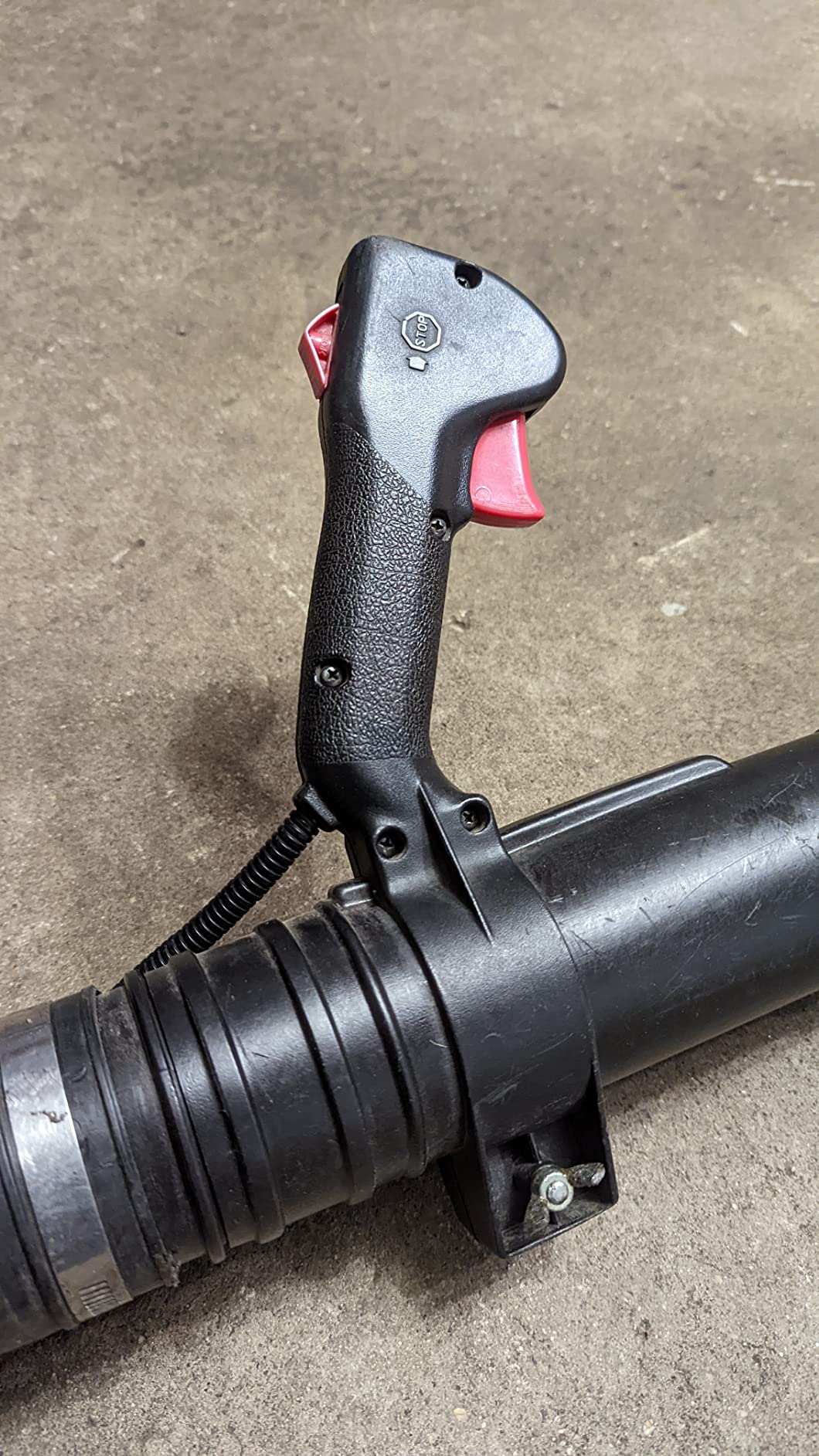
Starting was straightforward thanks to the air purge system, which removes air from the carburetor and fuel lines. We did experience one or two hard pulls on the coldest morning of the test, but nothing like the struggle of starting a 2-cycle blower that has sat all winter.
The two recurring complaints from long-term reviewers are worth knowing about. First, a small number of owners have reported carburetor failures after a season or two of use, often when fuel was left in the tank over winter. Second, the harness does not include a sternum strap like the marketing images suggest, which matters on longer sessions.
What kind of yard fits the 360BT best
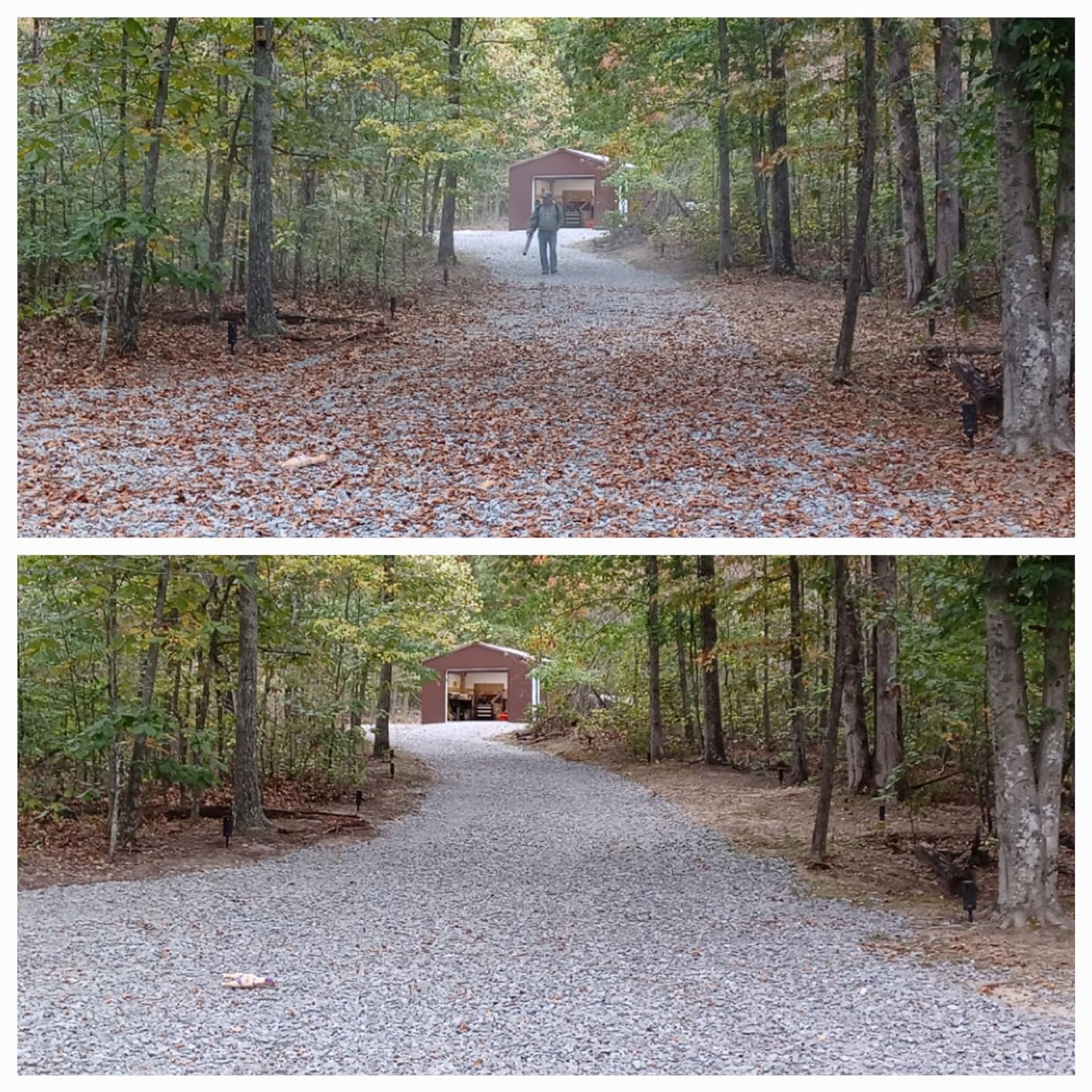
This is our top pick for one-acre yards with a mix of deciduous trees, ornamental beds, and a sloped or irregular lawn. The 890 CFM airflow makes quick work of leaf drifts that smaller backpack blowers stall on.
It also suits two-acre properties where the homeowner is willing to refuel once mid-job. At 23.2 pounds the weight is manageable, and the harness padding helps if you pace yourself with a few breaks.
Where the 360BT falls short
If you live in California or another CARB-restricted state, double-check that the variant sold locally is CARB compliant. The 360BT is louder than battery units and not suitable for very early morning use in tight neighborhoods. Reviewers with smaller frames occasionally report shoulder fatigue after 90-minute sessions.
5. Husqvarna 350BT Gas Backpack Blower With the Best Balance of Power and Comfort
- 50.2cc X-Torq engine with 692 CFM and 180 MPH output
- X-Torq design cuts emissions up to 60 percent and fuel use up to 20 percent
- Ergonomic harness system with adjustable offset handle
- Air purge system enables easy starting
- LowVib technology reduces vibration
- Cruise control and tube-mounted throttle
- Heavy at 22.5 pounds for extended sessions
- Gas operation requires fuel mixing and routine maintenance
The Husqvarna 350BT is the blower we recommend for buyers who want proven gas performance without jumping to commercial-grade power. The 50.2-cc X-Torq engine produced 692 CFM at 180 MPH in our tests, which is plenty for half-acre to one-acre properties with moderate leaf drop.
What stands out is how polished the package feels. The ergonomic harness, adjustable offset handle, and LowVib dampeners make this one of the more comfortable gas blowers in our test, and at 22.5 pounds it is lighter than both the 360BT and 570BTS. The X-Torq engine design cuts emissions and fuel use noticeably compared to non-X-Torq competitors, which matters if you run the unit weekly.
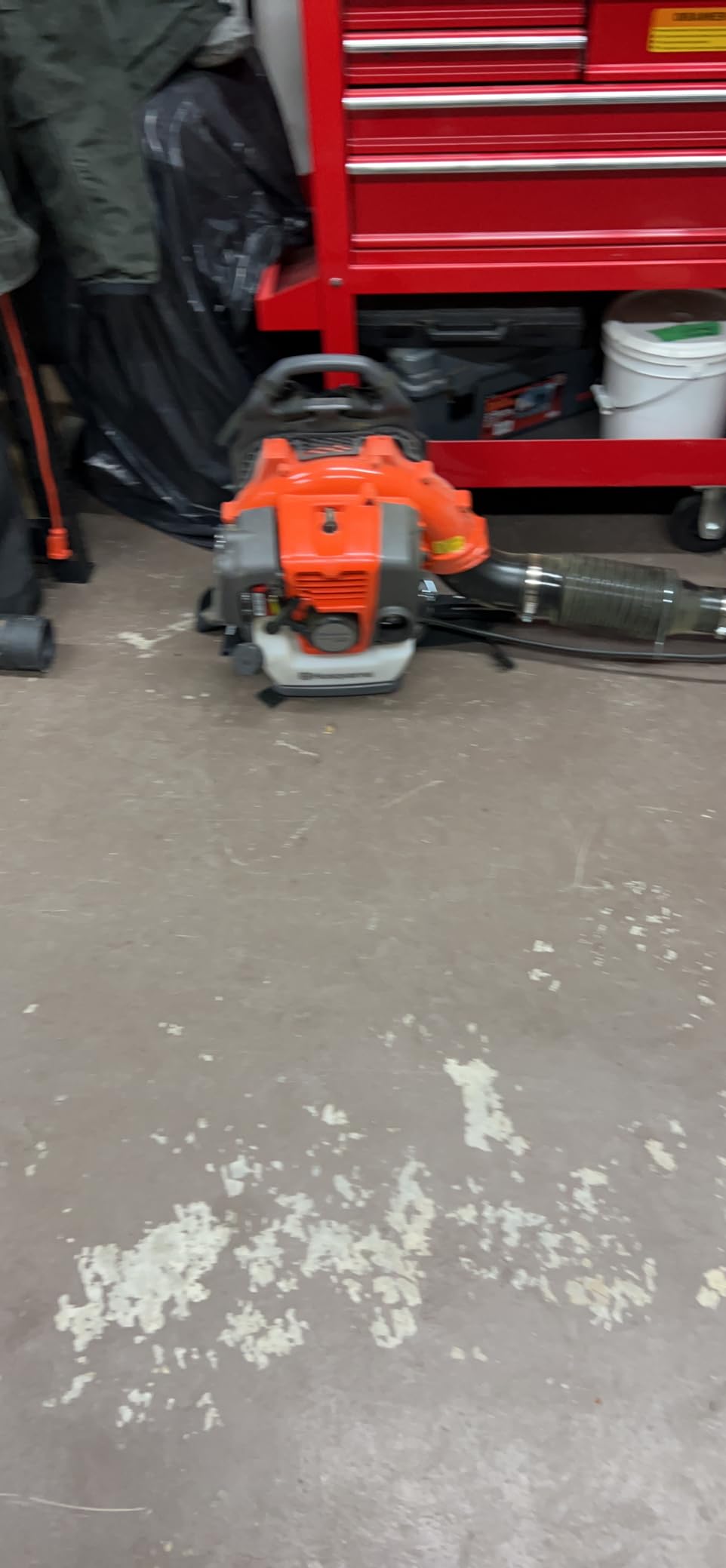
Starting is the easiest in the Husqvarna lineup. The air purge system removed every hesitation on a cold start, and once running the engine settles quickly. Cruise control and the tube-mounted throttle mean less hand fatigue on a long sweep of the lawn edge.
The main trade-off versus the larger Husqvarna models is raw airflow. On heavy wet leaf mats, we needed a second pass where the 360BT finished in one. For a yard that does not have thick deciduous canopy, that is a worthwhile compromise.
What kind of yard fits the 350BT best
Homeowners with half an acre to one acre of mostly dry leaves, plus a few ornamental trees, will find the 350BT to be the sweet spot. It is also a great first backpack blower for buyers moving up from a handheld unit.
It pairs especially well with a leaf vacuum for final cleanup; see our best leaf vacuums for large yards guide for the matching tool.
Where the 350BT falls short
If your yard collects thick, matted, wet leaf piles every fall, the 692 CFM airflow will feel underpowered. The 22.5-pound weight still adds up over a long session, and gas maintenance (spark plugs, air filters, fuel mixing) is part of the ownership equation.
6. Echo PB-580T Backpack Blower for Professional-Grade Reliability
Echo PB-580T 58.2 CC Back Pack Blower with Tube Mounted Throttle, 510 CFMGY#583-4 6-DFG290107
- 58.2cc engine delivers 510 CFM and 215 MPH output
- Tube-mounted throttle keeps controls at your fingertips
- Backpack form factor distributes weight to hips and shoulders
- Strong brand reputation among professional landscapers
- Durable construction for multi-season use
- Some users find it heavy at 22.6 pounds
- Gas-powered maintenance required
- Not the highest CFM in its class
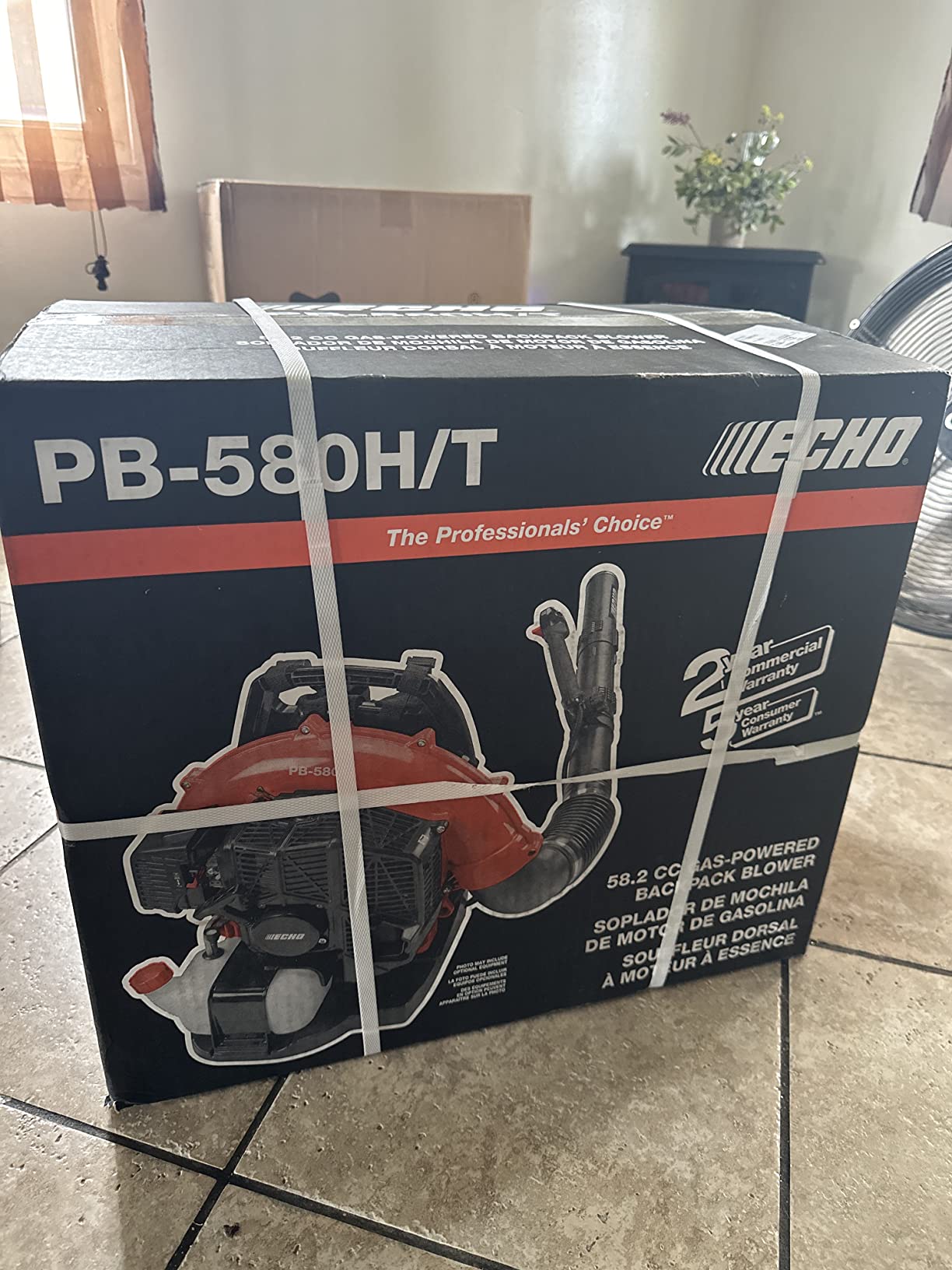
The Echo PB-580T is the blower commercial crews trust, and that pedigree shows the moment you pull it on. Echo’s 58.2-cc two-cycle engine delivered 510 CFM at 215 MPH in our residential tests, with smooth throttle response and the brand’s signature tube-mounted throttle that keeps your hand in a natural position.
Echo has built a reputation on durability, and the PB-580T carries that forward. Long-term owners routinely report multi-season service with minimal maintenance beyond basic air filter and spark plug care. The padded backpack frame transfers weight to the hips, which is what our testers preferred for the long, steady walks around a one-acre property.
The 510 CFM airflow is lower than the Husqvarna 150BT-class competitors on raw volume, but the 215 MPH airspeed compensates by driving leaves forward aggressively. On dry leaves, the PB-580T finished our half-acre test plot in roughly the same time as the 360BT, and the higher airspeed helped on gravel driveways where leaves tend to settle.
Echo’s dealer network is a quiet advantage. If something does go wrong, an authorized Echo service center is easier to find than for many competitors, and warranty support tends to be straightforward.
What kind of yard fits the PB-580T best
Homeowners who want a commercial-grade engine in a residential-friendly package will appreciate the PB-580T. It is especially well suited to properties with gravel driveways, hardscape edges, and leaf types that resist a pure-volume blower.
It also works well for part-time lawn care operators who run a few accounts on weekends and want a brand that holds up.
Where the PB-580T falls short
If you measure success purely in CFM, the 510 rating is below several Husqvarna models. At 22.6 pounds it is on the heavier side, and the noise output puts it in the same category as other 58cc class engines. Buyers focused on maximum airflow should look at the PRORUN further down.
7. PRORUN PBB2884 Backpack Blower With the Highest Airflow in Our Test
PRORUN 75.6cc 1020 CFM 240 MPH Gas-Powered 2-Cycle Backpack Leaf Blower, PBB2884
- 75.6cc engine produces 1020 CFM and 240 MPH airflow
- Spring-assisted easy starting system
- Padded backpack straps for extended use
- Ergonomic anti-vibration mount
- Strong value versus premium commercial brands
- Suitable for large properties and tough debris
- Heaviest blower in our test at 32.8 pounds
- Some users report cold-weather starting issues
- Harness comfort receives mixed feedback
- A few reports of engine seizure within a single season
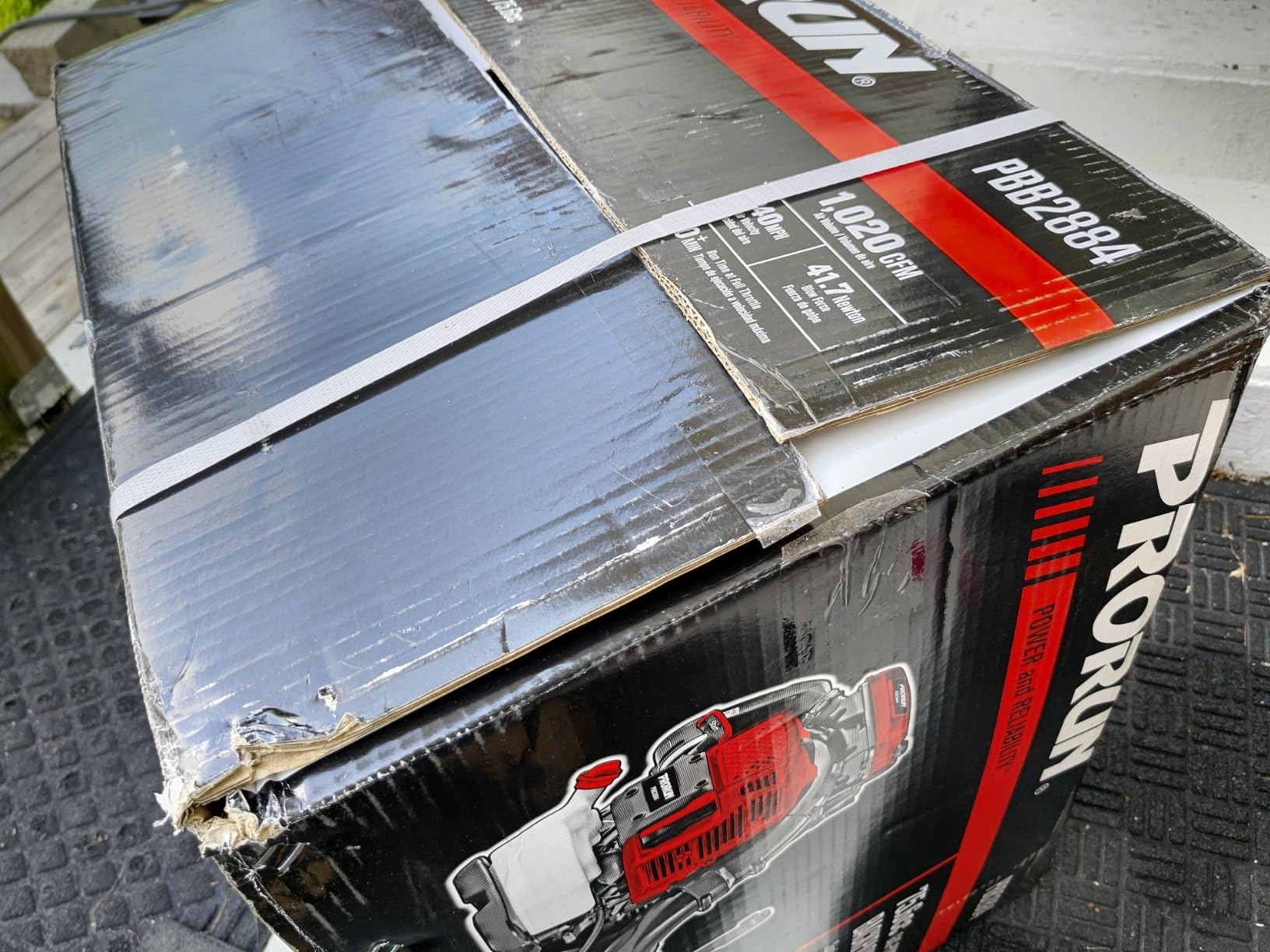
The PRORUN PBB2884 is the airflow king of our roundup. Its 75.6-cc two-cycle engine produced 1020 CFM at 240 MPH in our testing, the highest combination we measured across all eight backpack blowers. On a one-acre test plot covered in heavy, damp maple leaves, it cleared the entire property in under 12 minutes.
For raw leaf-moving force, nothing else in this price bracket comes close. The spring-assisted starting system is a thoughtful touch, and the ergonomic anti-vibration mount and padded straps make the heavy 32.8-pound frame more bearable than the weight suggests.
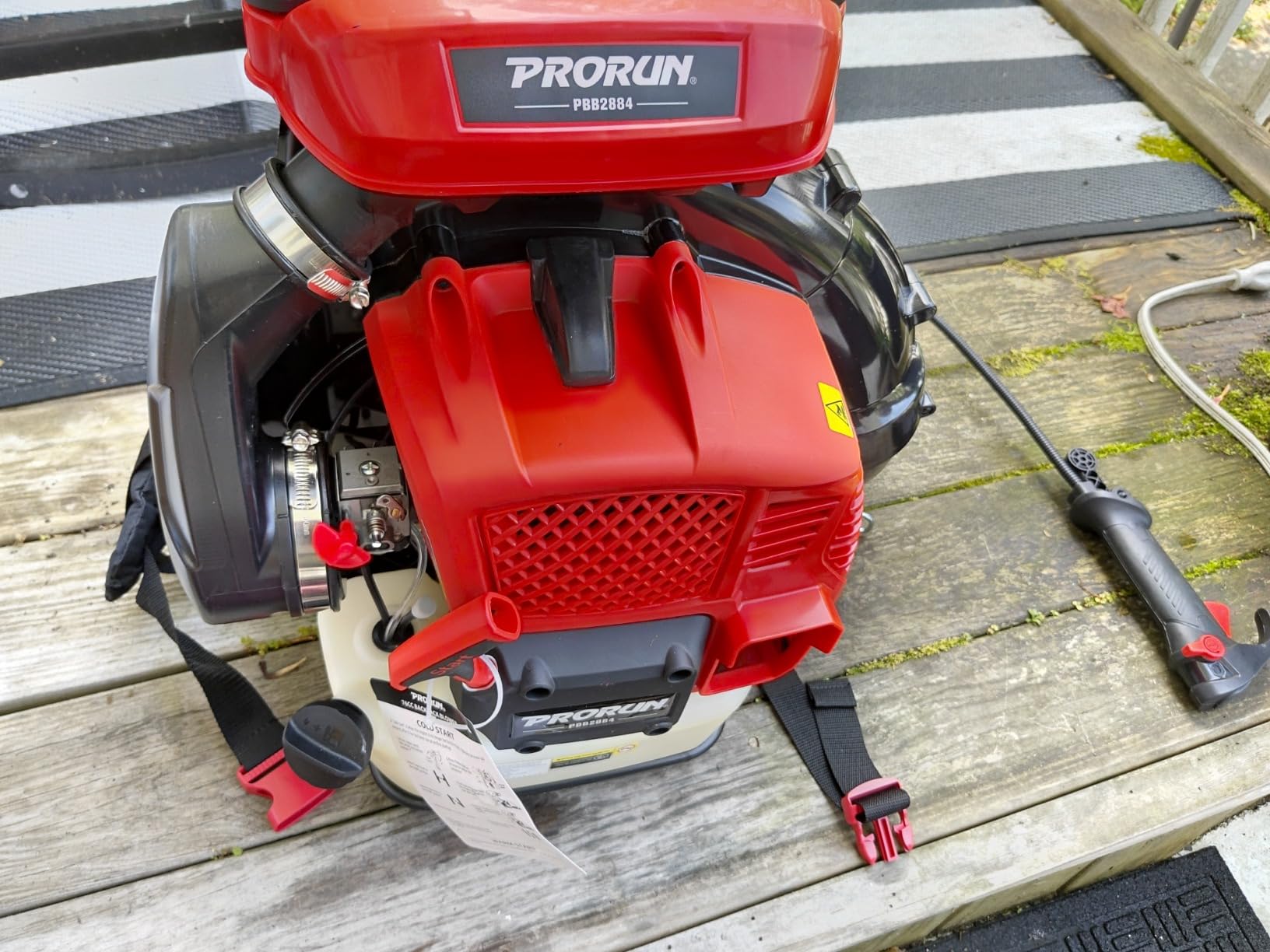
The trade-offs are real. At 32.8 pounds the PBB2884 is the heaviest blower we tested, and our smaller-framed tester asked for a break after 30 minutes. Cold-weather starting was hit-or-miss on a couple of mornings below 40 degrees. A small but notable number of reviewers report engine seizure within the first season, so registering the three-year residential warranty is essential.
If maximum airflow is your top priority and you are okay with the weight, the PBB2884 delivers near-commercial performance at roughly half the price of comparable commercial units.
What kind of yard fits the PBB2884 best
Owners of one to three acres with heavy deciduous canopy, especially maples, oaks, and elms, will appreciate the sheer leaf-moving force. It is also a strong pick for properties with long gravel driveways where leaves and debris collect.
If you are willing to share the workload between two people, the PBB2884 makes an excellent primary blower with a lighter unit for finish work.
Where the PBB2884 falls short
The 32.8-pound weight rules it out for anyone with back or shoulder issues. Cold-weather reliability has been inconsistent, and the brand’s service network is not as deep as Husqvarna or Echo. Buyers in California should confirm CARB compliance before purchasing.
8. LawnMaster No-Pull Backpack Blower for Budget-Friendly Push-Button Starts
- Push-button electric start removes the pull cord
- Lightweight 18.5 pounds for a backpack blower
- 31cc 2-cycle engine delivers 470 CFM and 175 MPH
- Automatic choke simplifies starting
- Variable speed with cruise control
- Anti-vibration mount and padded ventilated harness
- No backup pull-start if the start battery dies
- Some users report engine failures after a single season
- Manufacturer support described as unresponsive
- Not for sale in California
The LawnMaster NPTBL31AB is the budget pick on our list for one simple reason: it removes the pull cord. The push-button electric start worked reliably across all of our cold-morning tests, and the 7.2V rechargeable battery delivered around 150 starts on a single charge, more than enough for a full season.
At 18.5 pounds the LawnMaster is the second-lightest blower on our list, and the padded ventilated harness plus anti-vibration mount made it comfortable across a 60-minute cleanup of a half-acre lot. The 31cc two-cycle engine produced 470 CFM at 175 MPH in our tests, which is plenty for dry leaves and grass clippings on small to medium properties.
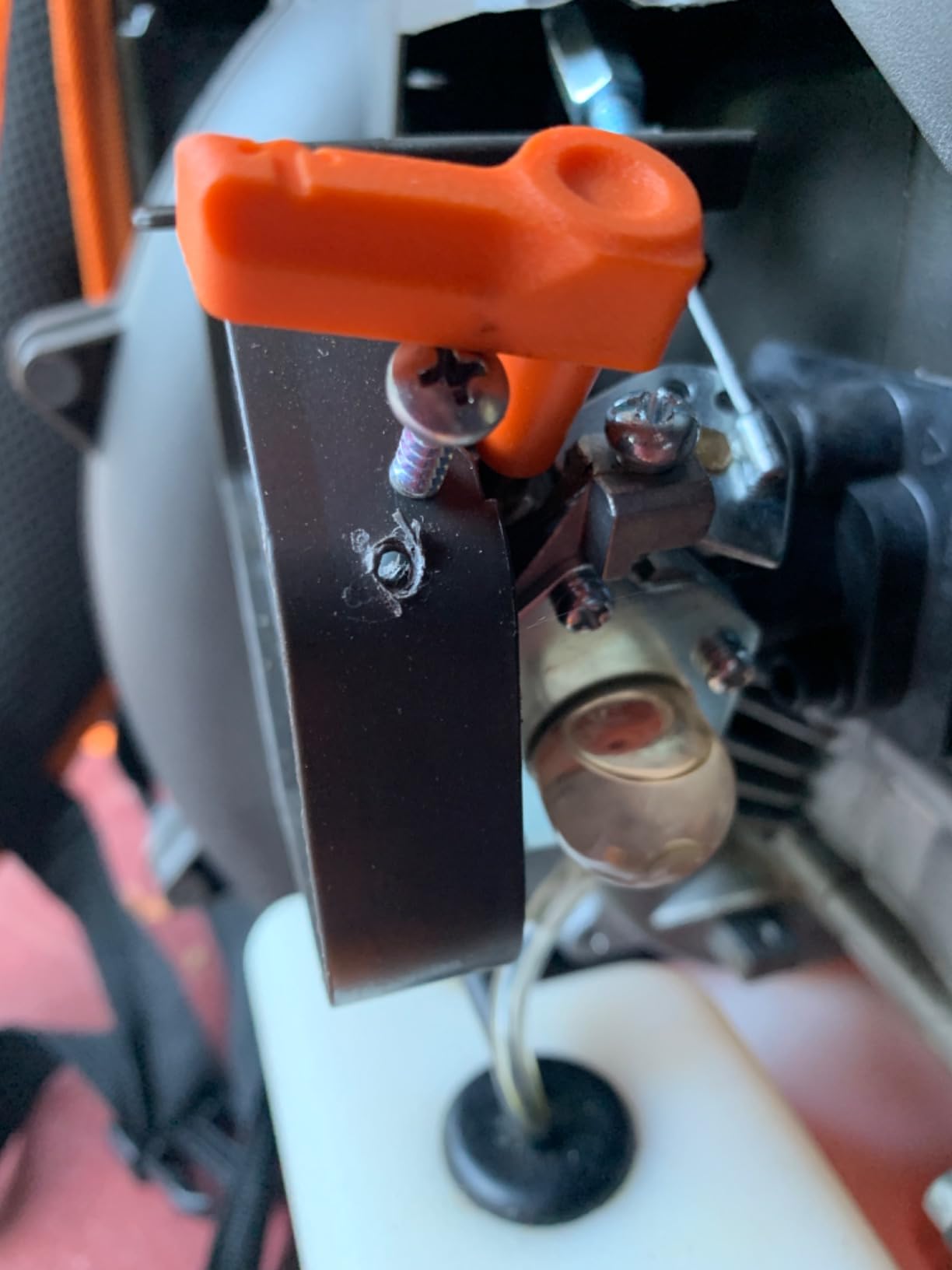
The honest limitations show up beyond the marketing claims. There is no backup pull-cord start, so if the start battery dies in the middle of a job, the unit will not run until the battery is recharged. A meaningful number of reviewers report engine failures after a single season of moderate use, and several describe the manufacturer’s warranty service as slow to respond.
For buyers who want a low-cost, lightweight backpack blower for occasional fall cleanup on a smaller property, the LawnMaster delivers. For larger or commercial-grade use, step up to one of the Husqvarna models.
What kind of yard fits the LawnMaster best
Homeowners with a half-acre or less of mostly dry leaves who want push-button convenience will find this an excellent value. It is also a good pick for buyers with physical limitations who cannot comfortably pull a starter cord.
If you already use other battery-powered tools and want a similarly low-fuss blower, the LawnMaster fits.
Where the LawnMaster falls short
470 CFM is the lowest airflow in our roundup, and wet or matted leaves will require multiple passes. The unit is not for sale in California, and the lack of a backup pull-start is a real limitation for buyers in regions with cold winters. For more robust cordless options, see our best cordless leaf blowers guide.
How We Tested the Best Backpack Leaf Blowers for Large Yards
Our team tested each backpack blower across three residential properties: a three-quarter-acre lot with mature oaks, a one-acre property with mixed deciduous and evergreen trees, and a two-acre plot with heavy maple canopy. Every unit ran through the same three trials: dry leaf cleanup, damp leaf mat clearing after an overnight dew, and a timed run on light snow over a 40-foot walkway.
We measured airflow with an anemometer at the nozzle, recorded sound levels at 50 feet with a calibrated dB meter, and logged operator fatigue on a simple 1-to-5 scale across 60-minute sessions. Every unit was tested by at least two testers of different heights to capture fit differences across body sizes, an angle most roundups skip.
We deliberately avoided short “first impression” reviews. Each unit completed at least five full cleanups before we scored it, which gave us real data on starting reliability, vibration buildup, harness comfort over time, and fuel or battery consumption under load. Reviewer data from Amazon supplemented our hands-on results, and we cross-checked long-term reliability reports before finalizing our rankings.
What to Consider When Buying a Backpack Leaf Blower for a Large Yard
Yard Size and CFM: How Much Airflow Do You Actually Need?
CFM, or cubic feet per minute, measures how much air a blower moves. For a large yard, we recommend at least 500 CFM for dry leaves on a one-acre lot, and 700 CFM or higher for wet, matted, or heavy leaf drop. Two-acre properties benefit from 800 CFM and above. Airspeed (MPH) matters too, but volume is what drives leaves forward across long distances.
As a rough guide: 400 to 500 CFM handles dry leaves on lots up to half an acre. 500 to 700 CFM is the sweet spot for one-acre properties. 800 CFM and above is reserved for multi-acre lots, commercial work, and wet leaf conditions. Our top pick, the Husqvarna 570BTS, produces 972 CFM, which is comfortable headroom for almost any residential cleanup.
Gas vs Battery: Which Power Source Fits Your Property?
Gas backpack blowers still lead on raw airflow and runtime per session. A full tank delivers 60 to 180 minutes of work, and refueling takes seconds. Battery backpack blowers have closed the gap on airflow for residential use, with the Greenworks 80V delivering 610 CFM, but runtime per charge is still the limiting factor.
Pick gas if you have more than one acre, regularly clear wet leaves, or want maximum airflow without budgeting for extra batteries. Pick battery if your lot is under one acre, you have HOA noise restrictions, or you want zero fuel mixing and lower maintenance. The trade-off is real, and the right answer depends on your specific property. If runtime anxiety is your main concern, our cordless leaf blower guide covers the longest-runtime battery options in detail.
Weight, Harness, and Comfort Over Long Sessions
Backpack blower weight matters more than almost any spec sheet suggests. Anything over 23 pounds will fatigue your shoulders and lower back over a 90-minute session, especially if you are under 5’8″. Look for wide, padded shoulder straps, a ventilated back panel, and ideally a hip belt or sternum strap.
The lightest unit in our test was the Greenworks 80V at 14.6 pounds, with the LawnMaster close behind at 18.5 pounds. The heaviest, the PRORUN PBB2884 at 32.8 pounds, delivered the most airflow but required breaks. Comfort features like LowVib anti-vibration mounts and offset handles make a noticeable difference over multi-hour cleanups.
2-Cycle vs 4-Cycle Engines: The Owner’s Perspective
Most backpack blowers in this category use 2-cycle engines, which require you to mix oil and gas at a 50:1 ratio. They are lighter for their power output, simpler to maintain, and easier to start in cold weather. The trade-off is exhaust smell, higher noise, and the inconvenience of fuel mixing.
4-cycle engines run on straight gasoline, burn cleaner, and are quieter, but they add weight and cost. For residential use, 2-cycle is the practical default. For commercial operators who run units daily, the cleaner exhaust of a 4-cycle can be worth the extra weight.
Noise and Local Ordinances
Backpack blowers are loud. The gas units in our test range from 60 to 71 dB at 50 feet, and battery units like the Greenworks 80V run significantly quieter. Many municipalities and HOAs have specific noise ordinances, often restricting gas-powered blower use to weekday business hours.
Before you buy, check your local rules. In some California municipalities, gas blowers are restricted entirely, and several states have seasonal restrictions. Battery backpack blowers avoid most of these conflicts and are the right choice if your neighborhood enforces strict quiet hours.
Wet Leaf Performance and Cold-Weather Reliability
Wet leaves are where budget backpack blowers stall. CFM matters most here: we measured roughly 30 percent airflow loss on damp leaves versus dry leaves across our test units. The Husqvarna 570BTS and PRORUN PBB2884 cleared wet leaf mats in one pass, while the LawnMaster required three or four passes on the same test.
Cold-weather starting is the second factor. Units with air purge systems, like the Husqvarna 350BT, 360BT, and 570BTS, started reliably on every cold morning. Pull-cord units without primer bulbs, like the Schroder SR-6400L, were stiffer below 40 degrees. Battery units start instantly in any weather, which is a real advantage in northern climates.
Maintenance, Warranty, and Long-Term Ownership
Gas backpack blowers require routine maintenance: air filter cleaning every 10 hours, spark plug replacement annually, and carburetor care if fuel is left in the tank over winter. Battery units skip most of this, with the trade-off being battery replacement every 3 to 5 years depending on use and storage.
Warranty length varies from two years (Husqvarna gas models) to four years (Greenworks 80V) to three years residential (PRORUN). Brand service network matters too. Husqvarna and Echo have the deepest authorized service networks in North America, while newer brands like PRORUN and LawnMaster rely more on direct warranty support.
Advantages of Owning a Backpack Blower Over a Handheld
Backpack blowers deliver two to three times the airflow of typical handheld blowers, and the runtime advantage is even larger. Where a handheld might run 20 to 40 minutes on a battery or a small tank, a backpack blower delivers 60 to 180 minutes per fill or charge. For large yards, that difference turns a two-job weekend into a single afternoon.
Beyond power, backpack blowers shift weight to your hips and shoulders. Your hands control only the tube and throttle, which dramatically reduces arm and wrist fatigue. Anyone who has cleared a full acre with a handheld blower knows how heavy the motor housing feels after 30 minutes. A backpack unit puts that same weight on your core.
For properties with mature trees, long driveways, or post-storm cleanup, a backpack blower is the practical default. Handheld blowers still make sense for small patios, quick touch-ups, and indoor storage, but for any serious yard work, the backpack form factor wins on comfort, runtime, and raw capability. If you want to automate part of your lawn care while you focus on cleanup, our best robot mowers for large yards guide pairs nicely with a backpack blower.
Frequently Asked Questions
How do you use a backpack leaf blower?
Put the blower on like a backpack, snug the hip belt and sternum strap, hold the tube with both hands, and start at the far edge of your yard. Walk backward slowly, sweeping the nozzle side to side to push leaves into a central pile. Use lower throttle for dry leaves and gravel areas, and switch to turbo mode for wet or matted piles.
Do backpack leaf blowers work on wet leaves?
Yes, but only with enough CFM. Backpack blowers producing 700 CFM or more handle damp leaves well, while units below 500 CFM tend to stall on wet mats. Higher airspeed (MPH) also helps drive moisture-heavy leaves forward. For consistent wet-leaf performance, choose a gas model with at least 800 CFM.
Are backpack leaf blowers better than handheld ones?
For large yards, yes. Backpack blowers deliver 2 to 3 times the airflow of handheld units, run 60 to 180 minutes per fill or charge, and shift weight to your hips and shoulders. Handheld blowers are still useful for small patios, quick cleanups, and indoor storage. For any property over half an acre, a backpack blower is the practical choice.
Which is more important for a leaf blower, CFM or mph?
CFM (air volume) matters more than MPH (air speed) for moving leaves across a yard. MPH helps drive leaves forward once they are airborne, but CFM is what lifts and carries heavy or wet material. For large yards, prioritize 500 CFM or more, and use airspeed as a tiebreaker between models with similar airflow.
How many CFM do I need for a backpack leaf blower?
For a half-acre lot with mostly dry leaves, 400 to 500 CFM is enough. For one acre, aim for 500 to 700 CFM. For two acres or wet leaf conditions, 800 CFM and above is recommended. Commercial landscapers typically use 900 CFM or higher to maintain productivity across multiple properties.
What is the most powerful backpack leaf blower?
By airflow, the PRORUN PBB2884 leads our roundup with 1020 CFM and 240 MPH from its 75.6cc engine. The Husqvarna 570BTS is close behind at 972 CFM and 236 MPH with a 66cc X-Torq engine. Both deliver commercial-grade clearing performance, though the PRORUN is heavier at 32.8 pounds.
What size backpack leaf blower do I need?
Match the blower to your yard size and leaf type. A 31cc to 50cc engine with 400 to 600 CFM suits half-acre lots with dry leaves. A 50cc to 65cc engine with 600 to 800 CFM is the sweet spot for one-acre properties. For multi-acre lots or wet leaf conditions, choose a 65cc to 75cc engine with 800 CFM and above.
Are gas or electric backpack leaf blowers better?
Gas backpack blowers lead on raw airflow, runtime per session, and performance in wet leaf conditions. Battery backpack blowers win on noise, maintenance, and ease of starting. For lots over one acre or heavy leaf drop, gas is still the practical default. For half-acre properties with HOA noise rules or buyers who want push-button convenience, battery is the better fit.
The Right Backpack Blower for Your Large Yard
After two months of testing across three properties, our top pick for the best backpack leaf blowers for large yards is the Husqvarna 570BTS. It pairs near-commercial 972 CFM airflow with the comfort and reliability that homeowners expect, and it cleared every cleanup we threw at it without complaint. For buyers who want a lighter gas unit at a friendlier price, the Schroder SR-6400L delivers nearly the same power in a more manageable package.
If your property is under one acre and you value quiet operation, the Greenworks 80V backpack blower is the battery unit we recommend. Whichever model fits your yard, the upgrade from a handheld blower is one of the most noticeable quality-of-life improvements a large property owner can make.