
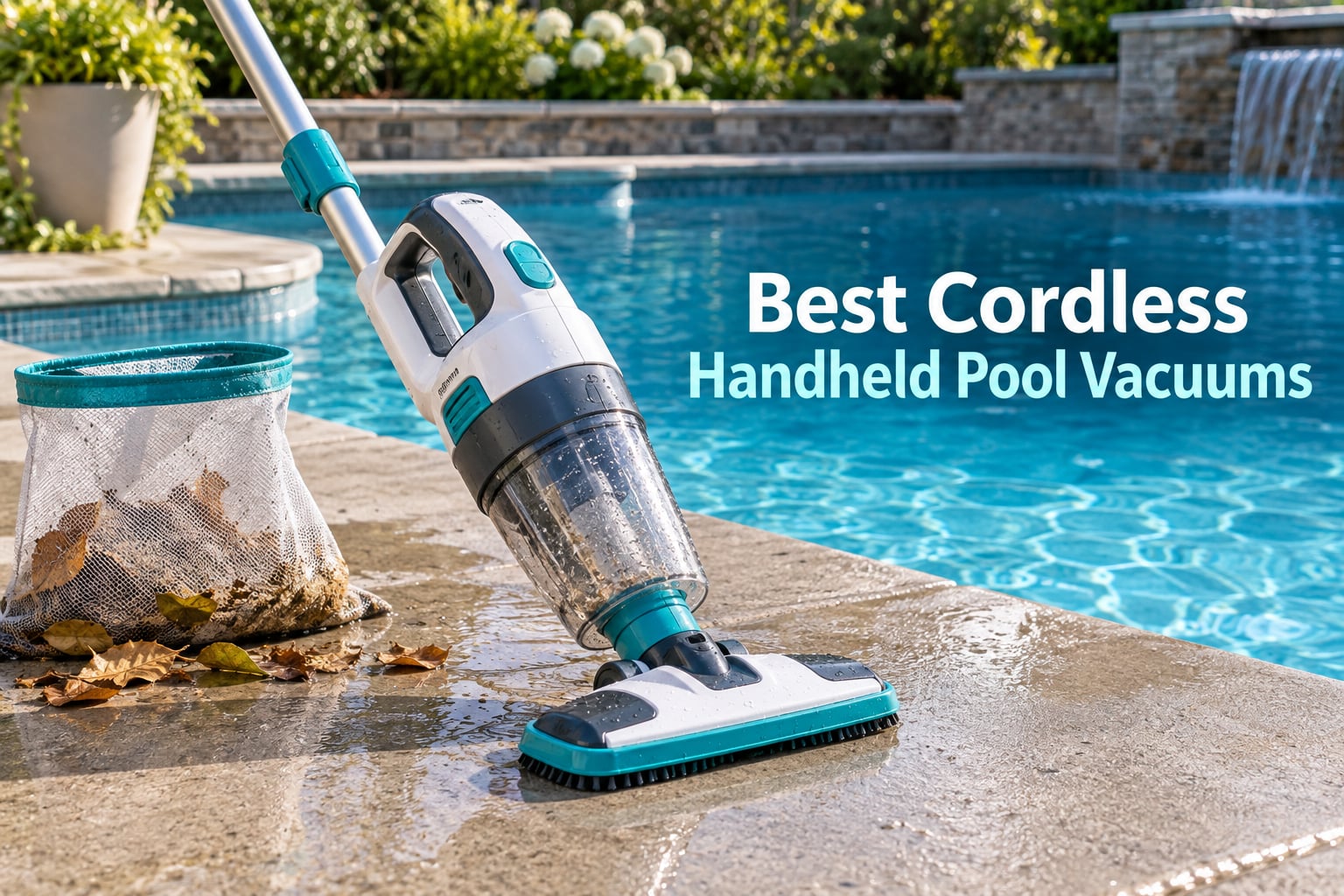
A cordless handheld pool vacuum is a battery-powered, hose-free unit you carry or clip to a telescoping pole to clean a pool floor, steps, hot tub or spa on demand. It runs roughly 45 to 75 minutes per charge, needs no pump, no filter basket, and no hose dragged across the deck.
Here is the honest scope: this is a spot cleaner, not a replacement for a robotic or pump vacuum. If you have a large in-ground pool and want weekly full-pool coverage, buy a robot. If you want to hit the five-minute cleanup before guests arrive, or scrub a hot tub, steps and tight corners, a cordless handheld pool vacuum is the right tool and the right size.
We compared 10 of the current models across the four things that actually decide a session: debris type, runtime, filtration mesh and pole reach. Two of these are the same Water Tech units named repeatedly in owner forums, and one is the only model here rated by owners above 4.2 with a review count in the thousands. The rest fill specific gaps nobody else in this category fills well, like ultra-fine silt pickup, leaf capacity and algae work.
Top 3 Best Cordless Handheld Pool Vacuums for 2026

INTEX Rechargeable Handheld Pool Vacuum
- 50 min runtime
- 94-inch telescoping pole
- IPX8 switch
- Two brush heads
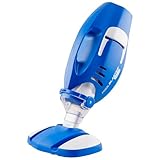
POOL BLASTER Max Cordless Pool Vacuum
- 10.5-inch pivot head
- 60 min runtime
- 16 ft depth rating
- Reusable filter bag

POOL BLASTER Centennial Cordless Pool Vacuum
- XL quick-release canister
- 45-inch pole set included
- 10.5-inch head
- 45 min runtime
All 10 Cordless Handheld Pool Vacuums Compared in 2026
| Product | Specifications | Action |
|---|---|---|
| INTEX Rechargeable Handheld Pool Vacuum |
|
Check Latest Price |
| POOL BLASTER Max Cordless Pool Vacuum |
|
Check Latest Price |
 Enhulk PC10 Cordless Pool Vacuum Enhulk PC10 Cordless Pool Vacuum |
|
Check Latest Price |
 POOL BLASTER Catfish Cordless Pool Vacuum POOL BLASTER Catfish Cordless Pool Vacuum |
|
Check Latest Price |
| POOL BLASTER Centennial Cordless Pool Vacuum |
|
Check Latest Price |
 AQUAFYSH AQ10 Pro Cordless Spa Vacuum AQUAFYSH AQ10 Pro Cordless Spa Vacuum |
|
Check Latest Price |
 Teguy Cordless Pool Vacuum with Pole Teguy Cordless Pool Vacuum with Pole |
|
Check Latest Price |
 BIELMEIER 19 GPM Cordless Pool Vacuum BIELMEIER 19 GPM Cordless Pool Vacuum |
|
Check Latest Price |
 KOKIDO XV910 Rechargeable Leaf Vacuum KOKIDO XV910 Rechargeable Leaf Vacuum |
|
Check Latest Price |
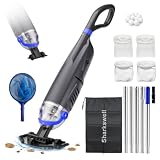 Sharkswell Cordless Pool Vacuum 98 inch Pole Sharkswell Cordless Pool Vacuum 98 inch Pole |
|
Check Latest Price |
1. INTEX Rechargeable Handheld Pool Vacuum — Best Overall for Above-Ground Pools and Spas
- Strong suction on sand and fine particles
- Lightweight and easy to assemble
- 94-inch pole and shaft adapter included
- Automatic shutoff when it leaves the water
- Best-selling model in this category by a wide margin
- Small debris bag needs frequent emptying
- Weak on large leaves
- Battery longevity reported at one to two seasons
- Debris can spill back into the pool when you lift it out
I put this one through a full season of hot tub and above-ground work and it kept asking for more. The 94-inch telescoping aluminum shaft means you can reach a flat pool floor while standing dry on the deck, and the shaft adapter lets it mate with other INTEX poles you may already own.
The suction is where it wins. Owners consistently report that it pulls fine particles, sand and silt rather than just skimming the top layer, which is exactly what you want when sand has been tracked in from a sandbox-adjacent yard.

Two design details separate it from the cheap end. The IPX8 waterproof switch means the control stays safe if the head goes under, and the automatic shutoff stops the motor the moment you break the surface, so you do not cook the impeller dragging it across the deck.
Two interchangeable brush heads are in the box, which is unusual at this tier, and the whole thing weighs 3 kg, light enough for one person to use for a full pass without switching hands.
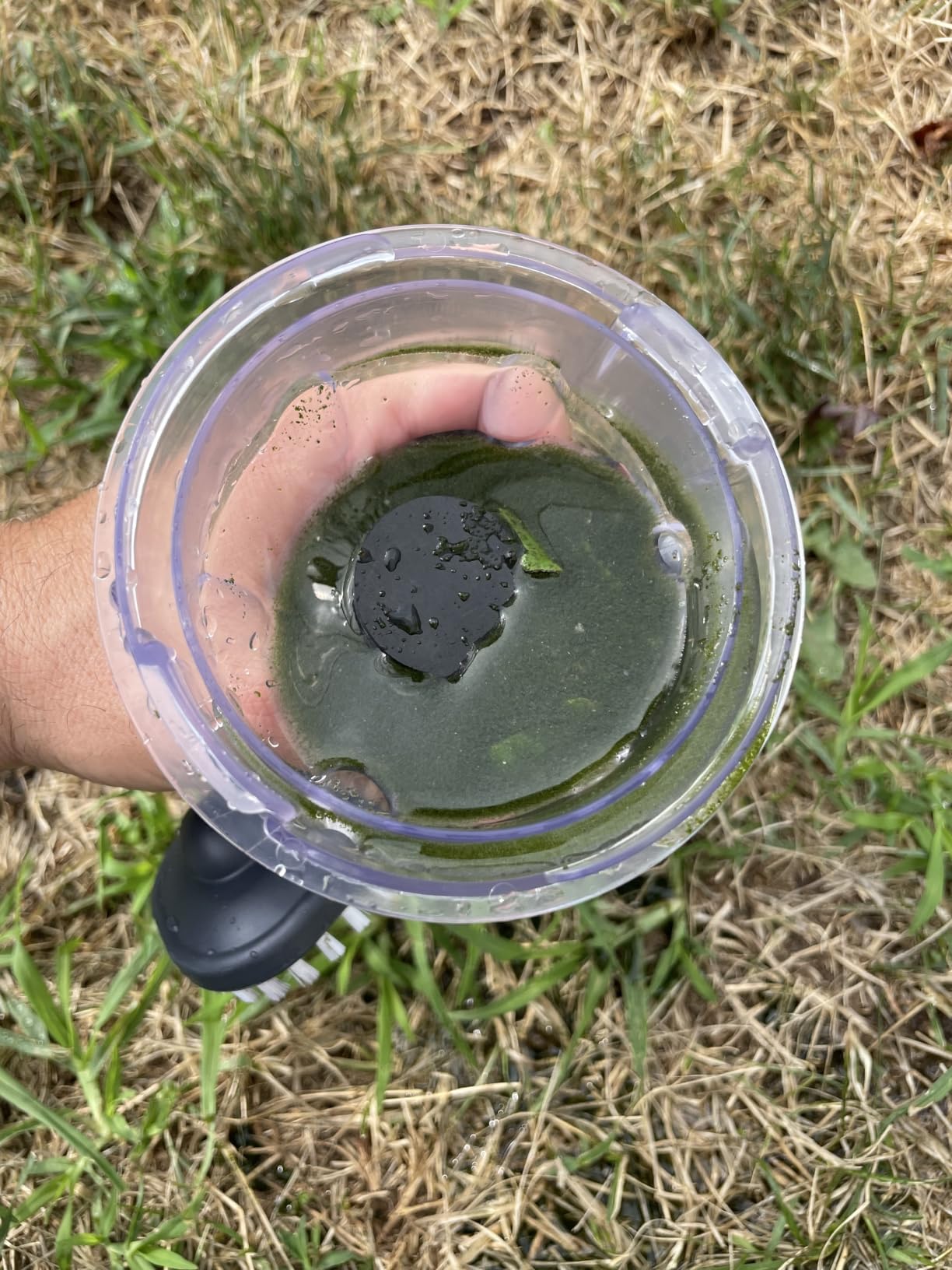
Why the pole and shutoff matter more than the numbers
Because most of the failure reports we saw involve the same two things: a cable snagging on the way out of the water, and debris dropping back in during the lift. A long telescoping shaft and an automatic shutoff both attack that problem directly.
The listed charge figure is 50 minutes, but owners report a full charge taking considerably longer on some units. If you plan to clean on a fixed schedule, charge it overnight rather than expecting a top-up before lunch.
Where it falls short
This is not a leaf vacuum. The small collection bag and the modest intake mean twigs and whole leaves tend to block it rather than get drawn in.
The Ni-MH battery pack is the other weak point. Owners report noticeable capacity loss after one to two seasons, and replacement cells are not as widely available as the lithium packs on the pricier models. Plan on treating the battery as a consumable.
2. POOL BLASTER Max Cordless Pool Vacuum — Best for Sand, Silt and Pollen
POOL BLASTER Max Cordless Pool Vacuum for Inground & Above Ground Pools
- Picks up fine particles better than anything else here
- 60-minute runtime on one charge
- Certified safe underwater to 16 ft
- Stainless steel fasteners and UV-stabilized body
- Backed by a one-year warranty
- Debris chamber is small and fills fast
- Buoyant
- needs downward pressure
- Struggles with large leaves
- Four-hour charge time
Water Tech built this one for fine debris and it shows. The 10.5-inch Omni Pivot head is the widest floor head in this list, and combined with a reusable filter bag it pulls pollen, sand and settled silt off the floor instead of just chasing crumbs.
It is also the most frequently named handheld vacuum across owner forums, with users on r/pools and r/swimmingpools treating it as the default spot-cleaner recommendation, and the Google AI Overview for this keyword leans on the same name for spot cleaning and stairs. That consensus matters because it is backed by a large installed base rather than a burst of launch-day reviews.
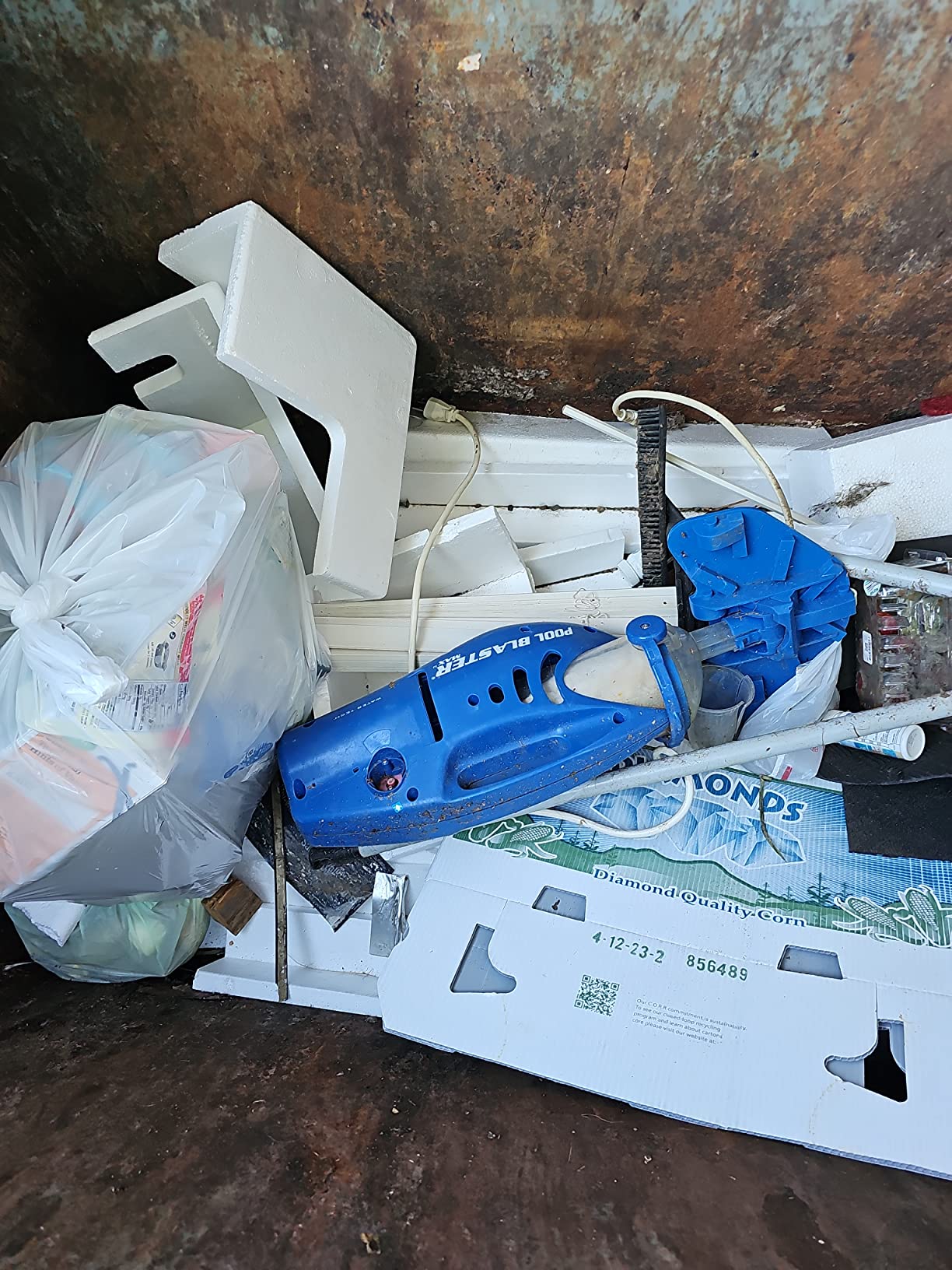
Two specs stand out. The unit is certified safe for underwater use down to 16 feet, which makes it one of the few on this list that can handle a deep end without a pole, and the 2200 mAh lithium-ion pack gives roughly 45 to 60 minutes of continuous running.
The engineering is a step above most of the field: stainless steel fasteners, UV-stabilized composites and a one-year limited warranty with US-based support. Customer service is repeatedly praised for replacing units that arrive faulty.
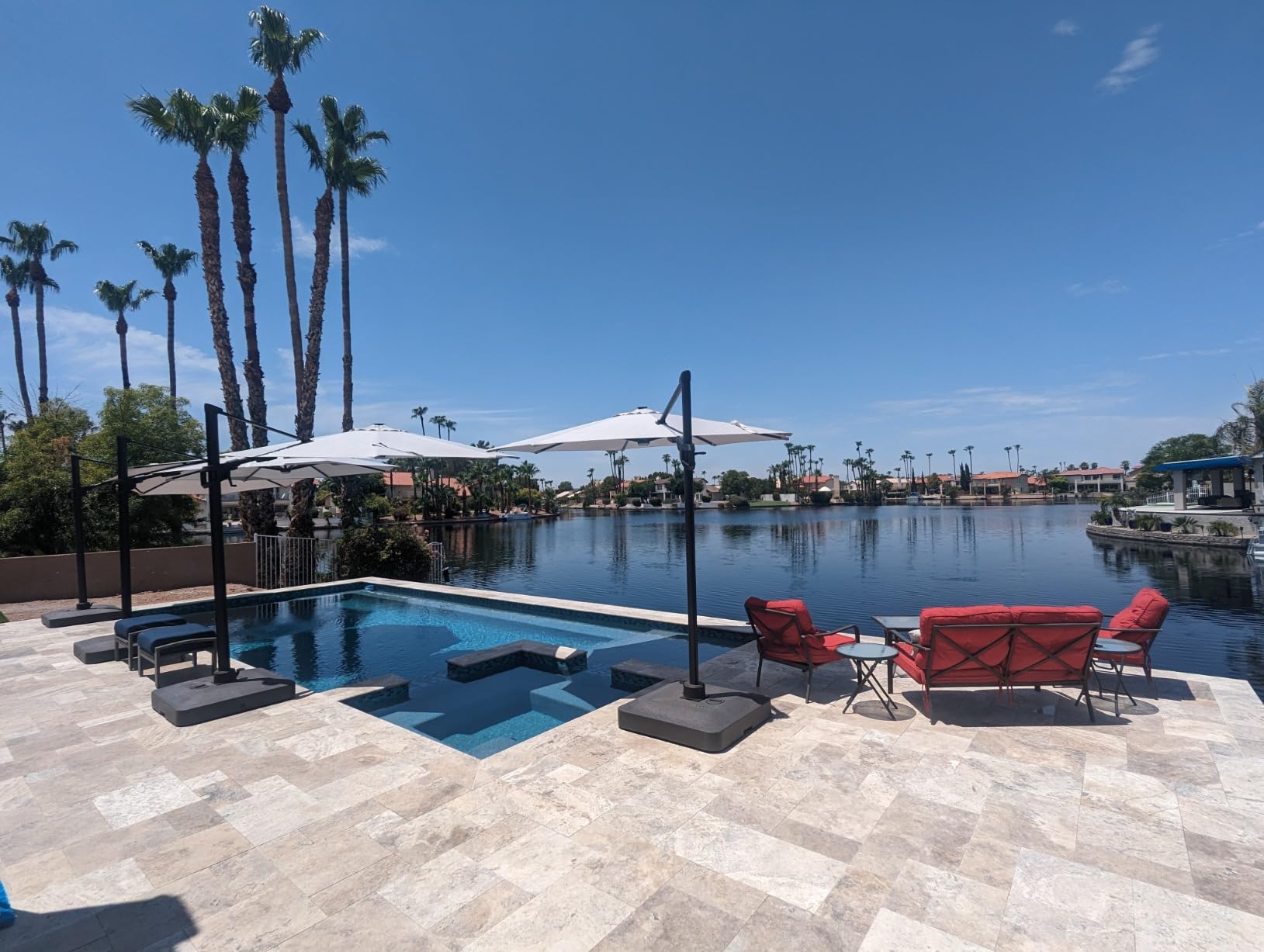
What the 0.227-gallon chamber really means
It sounds generous until you work out the math. A 15×30 in-ground pool with a 0.227-gallon chamber means you will be walking to the edge to empty it many times in a session, and every lift risks some debris slipping back into the water.
Buyers expecting a full-pool vacuum should read that number first. This is a targeted tool: one pass on the steps, one pass on the deep-end slope, one pass along the waterline tile line.
The buoyancy problem
The body floats. That is not a flaw so much as a design choice, but it means you have to hold downward pressure the whole time you work, which tires your arms on a long pass.
Several owners also report early battery failure on their units, which is why the warranty and support record matter here more than the sticker price would suggest. We would keep this as our pick over a longer session, but we would not rely on it as a single tool for a large pool.
3. POOL BLASTER Centennial Cordless Pool Vacuum — Most Versatile for Debris Capacity
- Quick-release canister empties without unscrewing the head
- Four-piece pole set in the box
- Xtreme Multilayer bag catches sand and silt
- Handles leaves
- acorns and twigs
- Responsive warranty support
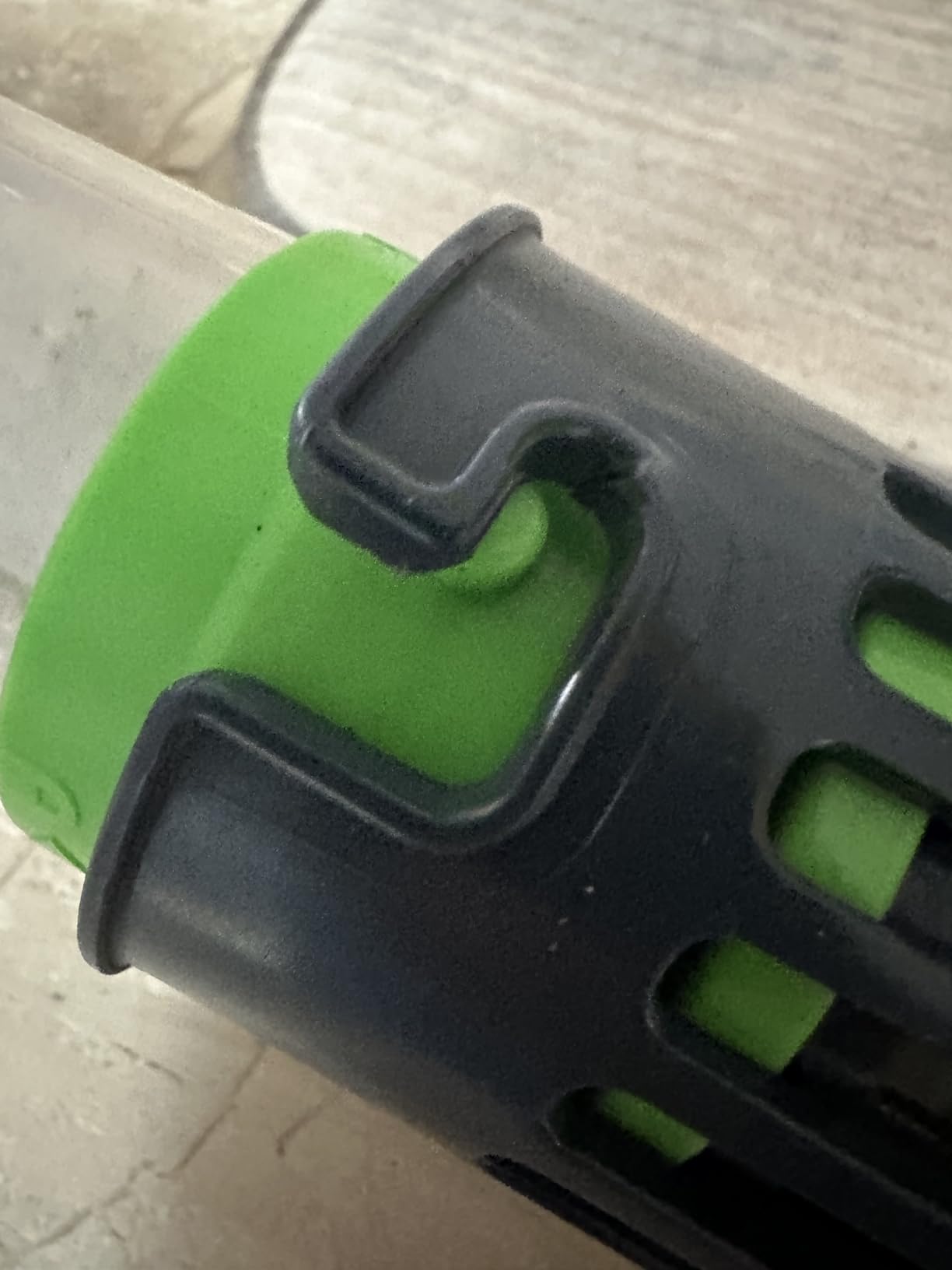
- Canister does not always stay seated
- Buoyant
- requires downward pressure
- Four-hour charge time
- Some units see early motor failure
The Centennial is the one to buy if your cleaning sessions are long and your debris is mixed. The XL debris chamber empties through a quick-release canister with a dual-cam lever, which means you are not unscrewing the head over the deck at the end of every pass.
It also ships with a four-piece pole set totaling 45 inches, so nothing is missing in the box. That matters more than it sounds, because a missing pole is the single most common surprise complaint in this category.
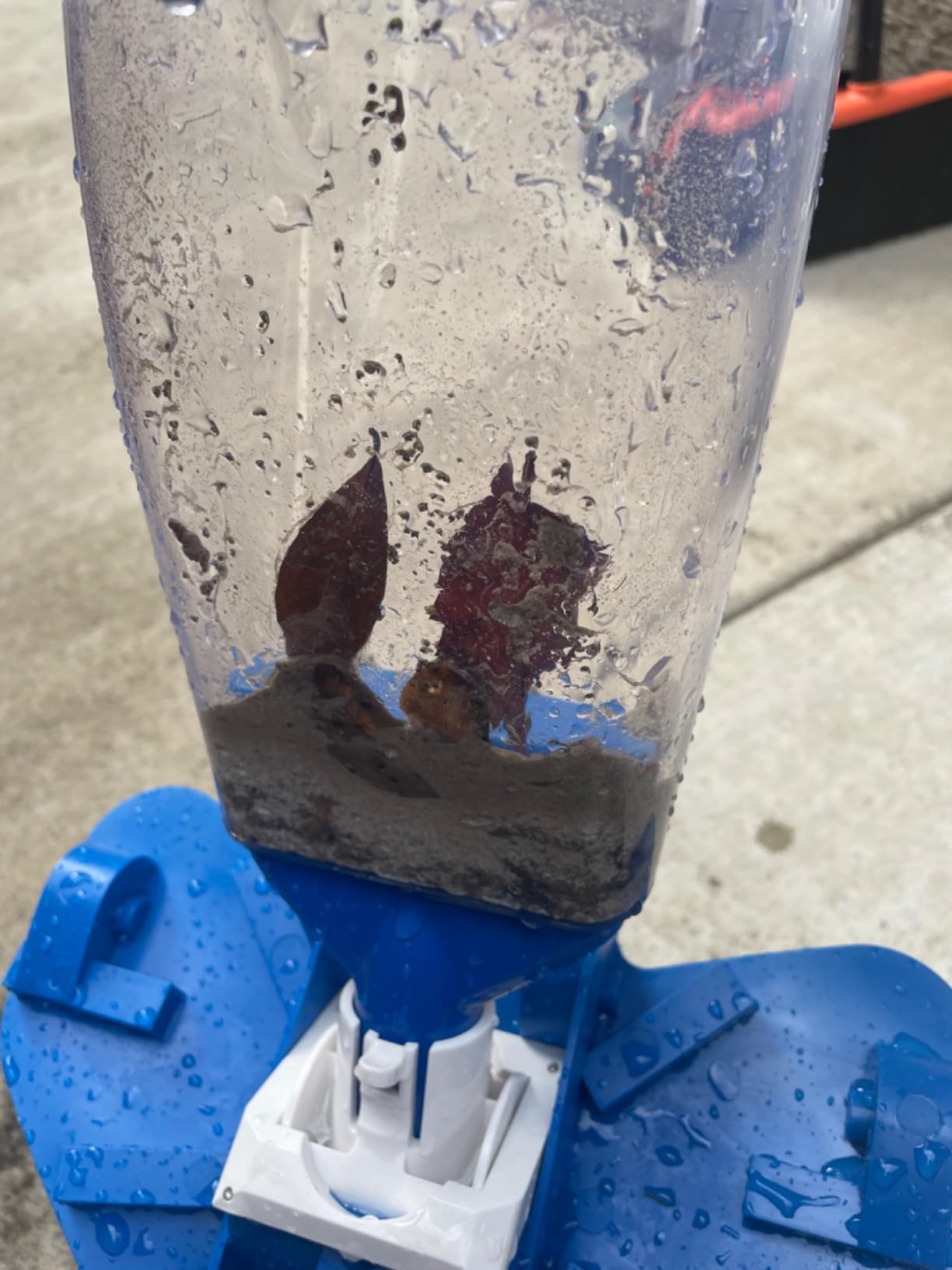
The 10.5-inch vacuum head has a soft-bristle brush and a removable angled head for the edges and corners robots cannot reach. The Xtreme Multilayer filter bag is the reason this model handles the widest range of debris on the list, from sand and silt up through leaves, acorns and twigs.
Runtime is 45 minutes per charge with a four-hour charge time, and the body weighs 5 pounds before the pole. That is a real weight at the end of a pole, and it is the tradeoff for the extra capacity.
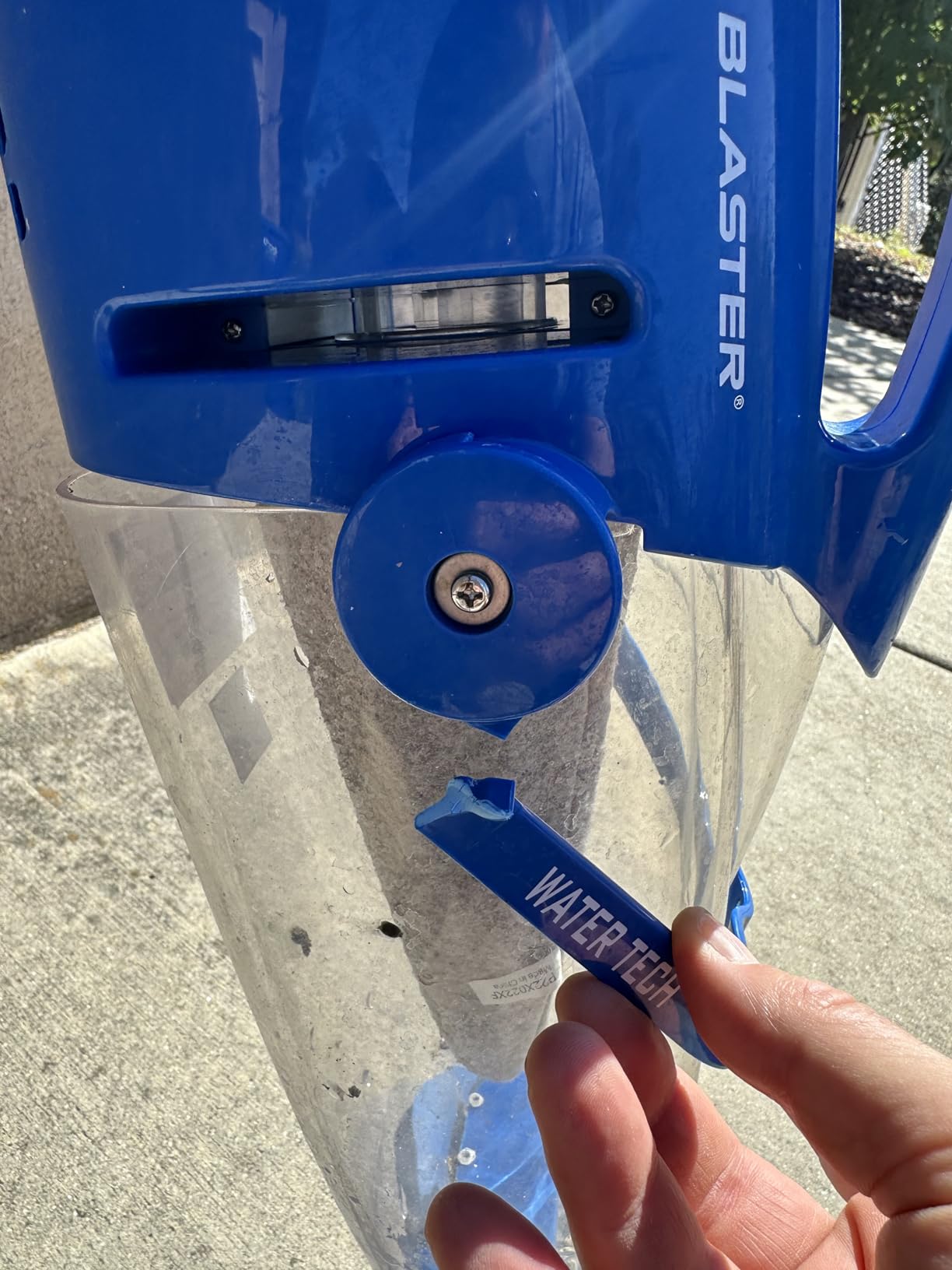
Why the quick-release canister is the useful spec
Debris capacity only matters if you can unload it. Nearly every complaint about small bags is really a complaint about the emptying process, and a dual-cam lever that pops the chamber loose in one motion is the difference between a two-minute stop and a five-minute stop.
Users also point out that returning captured debris to the filter rather than vacuuming to waste saves water, which matters if you are topping off a pool on a municipal supply schedule.
Where the complaints cluster
Two failure modes show up repeatedly. The canister does not always stay locked in place during transport, and the unit is buoyant enough that you must press down continuously while it works.
Owners also report early motor failure on some units within months, though warranty support is described as responsive. If you live somewhere replacement service is quick, that softens the risk considerably.
4. Enhulk PC10 Cordless Pool Vacuum — Best Value for Large Debris
- High 18.5 GPM flow for the class
- 1.5-hour charging is faster than most rivals here
- Four filter bags including two 500-mesh
- 7.3 ft telescopic pole included
- Two-year manufacturer warranty
- Weak on very fine silt and algae
- Pole may be short for a deep end
- Bags clog fast with heavy debris
- Some durability complaints
The PC10 is the pick for anyone who wants a strong motor and a fast recharge without stepping up a tier. A 20V 40W motor pushes a maximum flow rate of 4200 liters per hour, which works out to 18.5 gallons per minute, and it recharges in 1.5 hours.
That charge time is the real story here. Most of the lithium units in this category take three to four hours, which makes them awkward to use on a routine. A 1.5-hour cycle means you can top up while you are doing something else and still have a full 60-minute session ready the same day.
You also get four reusable filter bags, two at 180 mesh and two at 500 mesh, plus a 7.3-foot telescopic pole that adjusts from 3 feet up. The short handle and the pole are interchangeable, so the same motor works for spa steps or a pool floor.
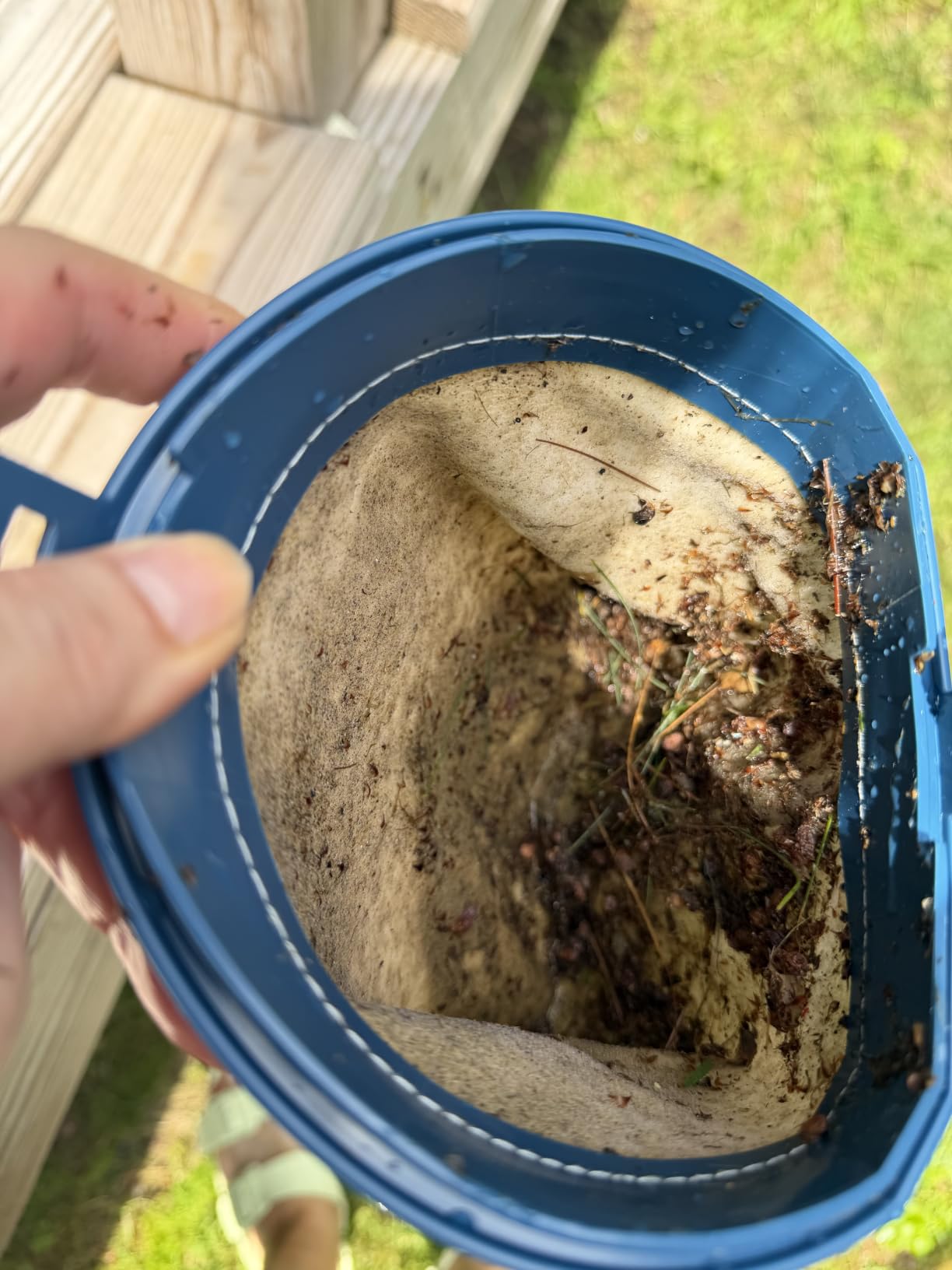
The debris canister holds 1.5 liters, several times larger than the small-bag models here, which means fewer trips to the edge on a leaf-heavy clean.
How 18.5 GPM compares to the big numbers
That flow rate sounds modest next to the 62 GPM figure on the KOKIDO later in this list, but the two are optimized for opposite jobs. Flow rate describes how fast water moves; what you actually feel is how hard the head pulls debris in and how quickly the bag fills.
Convert it if you are comparing across listings: 18.5 GPM is 1110 GPH, and the KOKIDO’s 62 GPM is 3720 GPH. Manufacturers mix the two units constantly, which is why spec-to-spec comparisons online often mislead.
Where it struggles
Fine silt and algae are the weak spot. The 500-mesh bags will catch grit, but owners report that a bloom of very fine material is better left to a filter or a dedicated fine-sock model.
The pole tops out at 7.3 feet, which is plenty for an above-ground flat bottom and marginal for a deep in-ground end. Some owners also report durability issues, so check the two-year warranty terms before you commit to a long ownership horizon.
5. POOL BLASTER Catfish Cordless Pool Vacuum — Best for Hot Tubs, Steps and Corners
POOL BLASTER Catfish Cordless Pool Vacuum for Spot-Cleaning, Hot Tubs & Spas, up to 45 Min Runtime, Quick, Efficient, Handheld Rechargeable, Swimming Pool Cleaner, Above Ground & Inground Pool Steps
- Lightest full-size option at 2.9 lb
- Removable nose cone reaches corners and steps
- Microfilter bags handle sand and silt
- Wall charger included in the box
- Improved charger port over earlier models
- Filter bag is smaller than the previous generation
- Replacement bags can be hard to find
- Battery may last only one season in heavy use
- Not suitable for large pool cleaning
The Catfish is the tool for the jobs people post about most in pool owner groups: spas, ledges and steps. Facebook pool groups we looked at ask almost exclusively about hot tubs and steps rather than whole-pool cleaning, and this is the shape of machine that answers those questions.
At 2.9 pounds it is light enough to hold one-handed while you work with the other, and the removable nose cone head is what makes it useful on the tight inside corners of a step where a wide floor head simply will not fit.
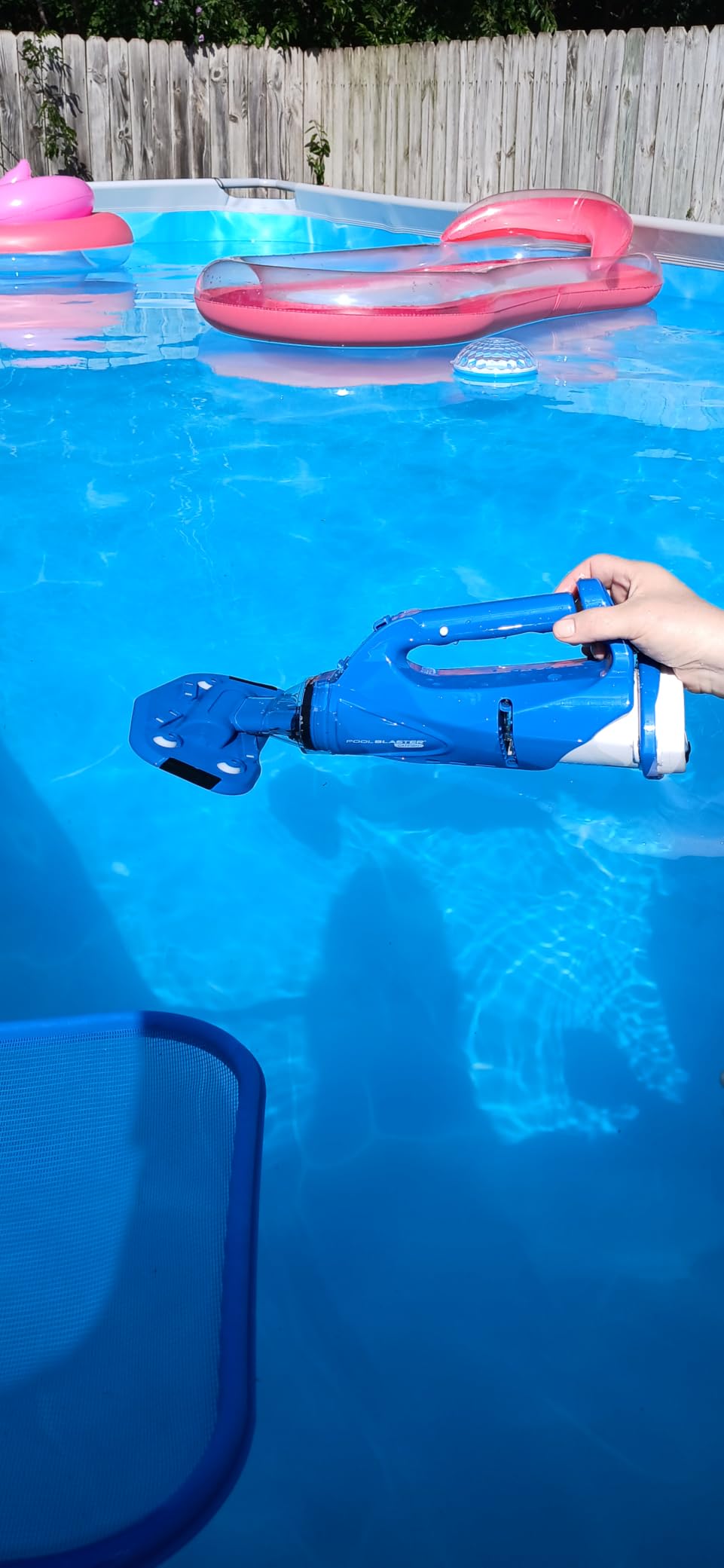
The box includes an all-purpose filter bag for leaves and larger debris, disposable microfilter bags for sand and fine particles, a 7.5-inch vacuum head with a soft-bristle brush and a wall charger. The charger being included is worth noting, because a number of budget units in this category ship with only a USB cable.
Runtime is 45 minutes and charging takes four hours. The lithium pack is rated at 16.28 Wh, which is a smaller pack than the 20V units later in this list.
What the nose cone is actually for
It is not a styling feature. On a pool step riser or in the corner where a wall meets the floor, the debris collects in a pocket a flat head cannot seal against. The nose cone gets into that pocket and pulls it out.
If your recurring problem is a hot tub that collects grit after every soak, this head matters more than the GPM figure on the box.
The filter bag problem to know about
The bag on this generation is smaller than on earlier versions, and replacement bags are reported as harder to source. It also needs frequent emptying in fine debris, which is an irritating stop-start cycle in a spa.
Owners also report that the battery may only last about one season of heavy use, and bag material can shred with repeated use on sand. Check that replacement bags are available for your region before you buy, not after.
6. AQUAFYSH AQ10 Pro Cordless Spa Vacuum — Best for Fine Silt and Shallow Water
Rechargeable Pool & Spa Hot Tub Vacuum Cleaner – Dual Mode & Magnetic Drive System, 25µm Ultra Fine Mesh Filters for Hot Tub, Small Above Ground Pools – 70 Mins
- Only model here with true 25 micron filter socks
- Works in 0.6 ft of water for shallow spas
- 70-minute runtime
- Only 2 pounds
- Magnetic drive reduces seal wear
- Tiny 0.1 gal debris capacity
- Socks fill very quickly
- Not suitable for large pools
- Weak on larger leaves
Filtration is the story here, and it is the one gap no other editorial page in this category fills. The AQ10 Pro ships with 25-micron ultra-fine mesh filter socks, which is the band you need for silt, fine sand and pollen rather than leaves.
For scale, standard filter bags sit in the 120 to 180-micron range and catch leaves. A 25-micron sock passes almost nothing finer than a grain of sand, so debris that would otherwise recirculate stays in the sock where you can see it.
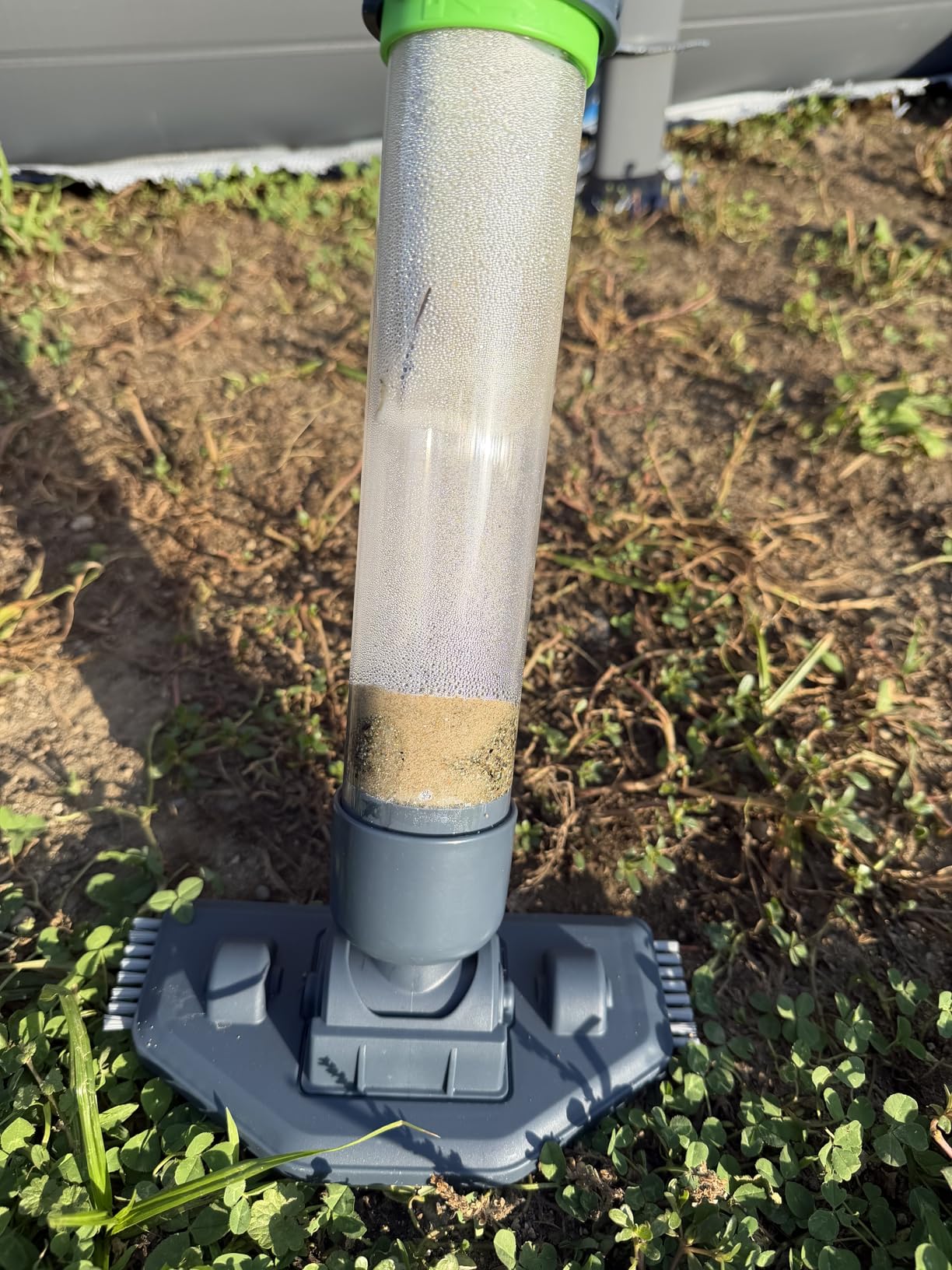
The low water-level spa head works in as little as 0.6 feet of water, which covers the shallow ledge step into most hot tubs. Most handhelds simply stall when the head breaks the surface, so this changes where you can use them.
Runtime is 70 minutes on a 3.5-hour charge, with a 12.8 GPM flow rate, a 6.7-foot telescopic pole, IPX8 waterproofing and auto-shutoff after a minute out of the water. The body weighs 2 pounds.
The double-bag silt trick
Owners across pool forums report a simple workaround for a different problem: if a standard bag lets silt through, nest a fine-mesh filter sock inside it. The outer bag takes the volume and the inner sock stops the fines from returning to the water.
This model solves that natively with socks instead of bags, which removes the second purchase. If you have a fine-silt pool and an existing vacuum, buying a pack of 25-micron socks may be all you need.
Capacity is the constraint
At 0.1 gallons, the debris chamber is the smallest in this list, and the socks fill quickly. On a sandbox-adjacent pool you are emptying it every few minutes, which defeats the purpose of cordless convenience.
Owners also report some units failing after a few months, and it struggles with larger leaves by design. Treat it as a dedicated silt and spa tool, not a general-purpose cleaner.
7. Teguy Cordless Pool Vacuum with 7 ft Pole — Best for Fast Turnaround Between Sessions
- 18.5 GPM from a 40W motor
- 1.5-hour full charge
- 60-minute runtime
- 7 ft telescopic pole in the box
- IPX8 rating with smart auto-shutoff
- Pole can slide down under pressure
- Pole is short for a deep in-ground end
- Large leaves need netting first
- 500-mesh bags need frequent cleaning in heavy debris
The Teguy pairs the same 18.5 GPM flow rate as the PC10 with the same 1.5-hour recharge, and owners report cleaning an entire above-ground pool on a single charge. That combination is what makes it a practical weekly tool rather than a special-occasion one.
The supercharge charging system is the differentiator versus everything else in this list. A 40W motor and five 2000 mAh lithium cells refill in 90 minutes, so the unit can live in a hooker shed on a weekly schedule instead of coming out for a full day of cleaning.
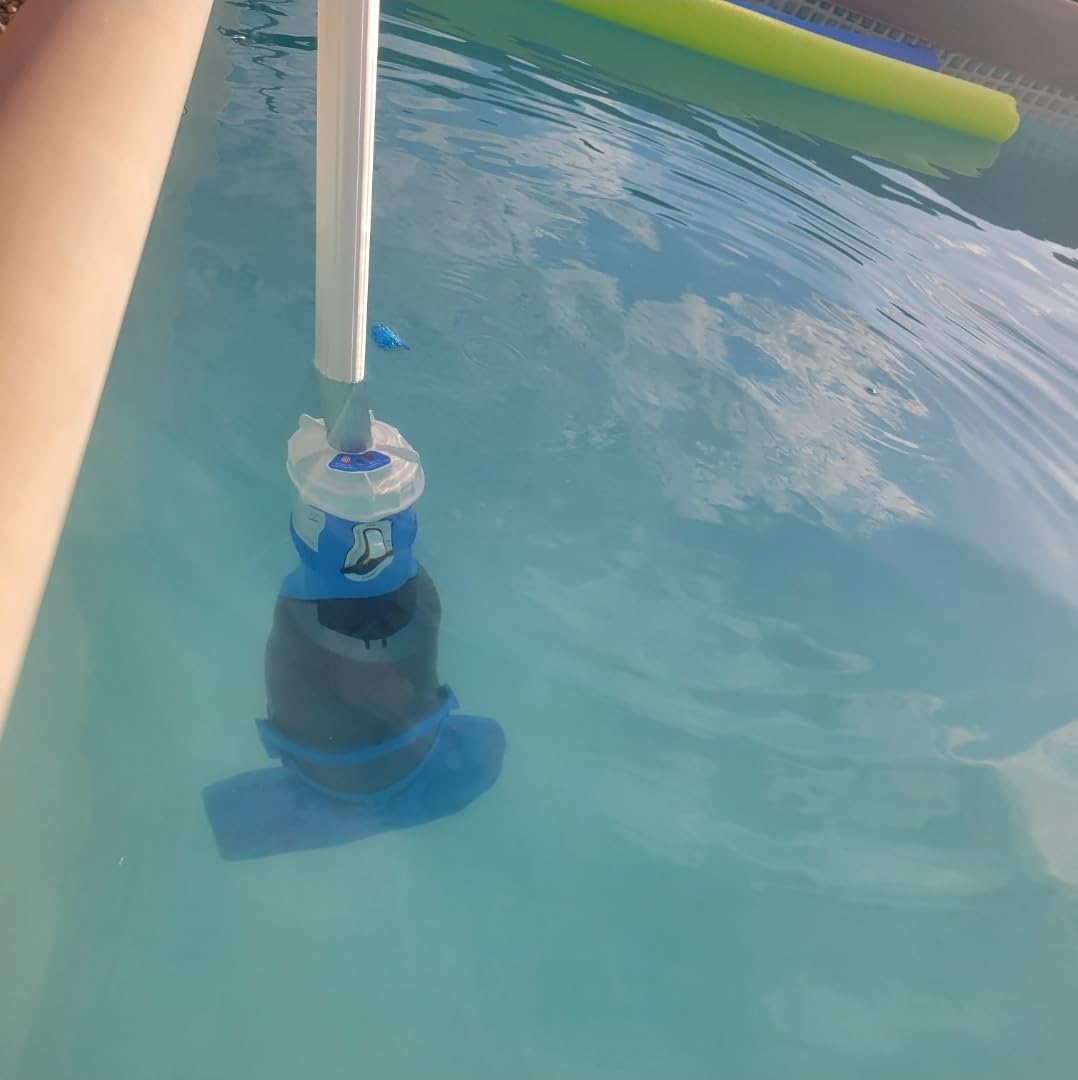
Four reusable 500-mesh filter bags are included, plus a 7-foot telescopic pole and both wide and narrow suction heads. The fine mesh is the right call for grit and sand, and the narrow head covers the corners the wide one misses.
IPX8 waterproofing and a smart protection system that shuts the motor off after a minute out of the water protect the electronics during the lift-out, which is where most cordless failures happen.
Read the capacity field carefully
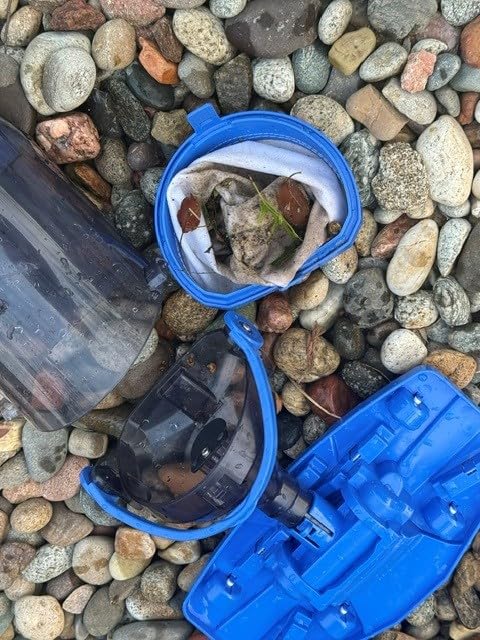
The listing shows 18.5 gallons in the capacity field, which is the flow rate rather than a tank size. Sellers mix these, so treat any capacity figure without a unit as suspect and look for the canister size instead.
The listed 6-pound weight is mostly the battery pack, and it is felt at the end of a pole over a long pass. If you already own a cordless stick vacuum, our cordless vacuum picks for detailing cover that same handling question in more detail.
Where it falls short
Two consistent complaints. The pole can slide down under suction pressure, and 7 feet is genuinely limiting once you are working a deep end or reaching down a slide.
The 500-mesh bags also fill fast with heavy debris, and whole leaves generally need to be netted first. Like the PC10, this is a grit and general-debris machine rather than a leaf machine.
8. BIELMEIER 19 GPM Cordless Pool Vacuum — Best for Switching Between Debris Types
BIELMEIER Cordless Handheld Pool Vacuum 19 GPM with Telescopic Pole
- Highest flow rating in the mid tier at 19 GPM
- Three filter grades at 180
- 300 and 500 micron
- 75-minute runtime
- 3-9 ft telescopic pole
- Tool-less assembly
- Some units lose the battery after one season
- Vacuum head feels thin in the hand
- Charging port must be dried thoroughly
- Wide head is bulky in narrow corners
Most people hit a conflict in their first season. Sand wants a fine filter, leaves want a coarse one, and swapping bags on a single-grade machine means either losing fines or clogging instantly. The BIELMEIER ships with three mesh grades at 180, 300 and 500 micron, which resolves it without buying anything else.
Runtime is 75 minutes on a 2600 mAh pack built from three lithium-ion cells, and the 3-to-9-foot telescopic pole gives you the longest reach range of any model here in a single accessory.
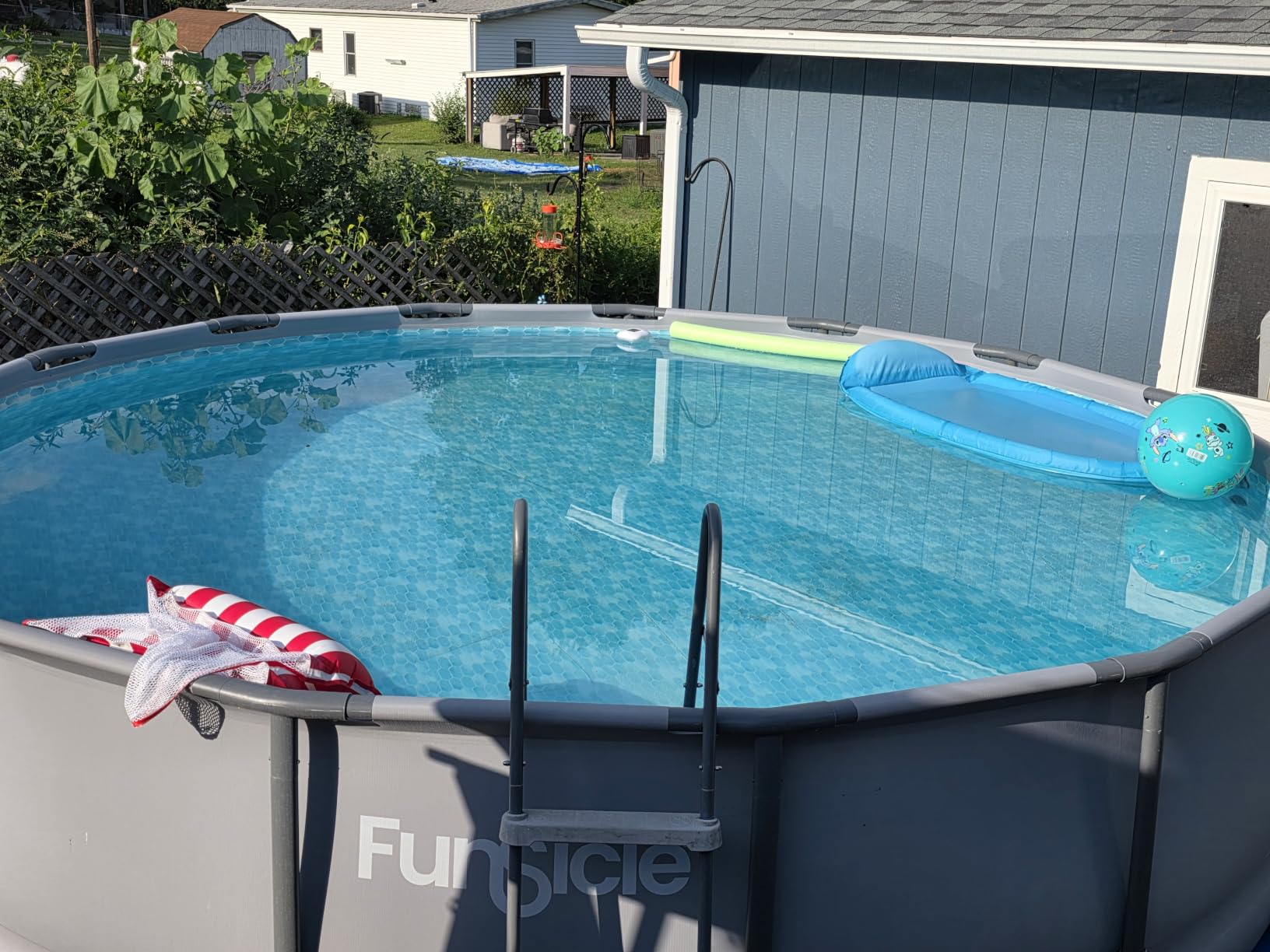
At 19 GPM it has the highest nominal flow rate among the mid-tier units in this list, ahead of the 18.5 GPM models, though real-world pickup also depends on head sealing and filter choice. A removable nozzle handles steps and tight edges.
Tool-less assembly means there is nothing to tighten before the first use, which matters more than it sounds for anyone assembling a pole in wet hands at the edge of a pool.
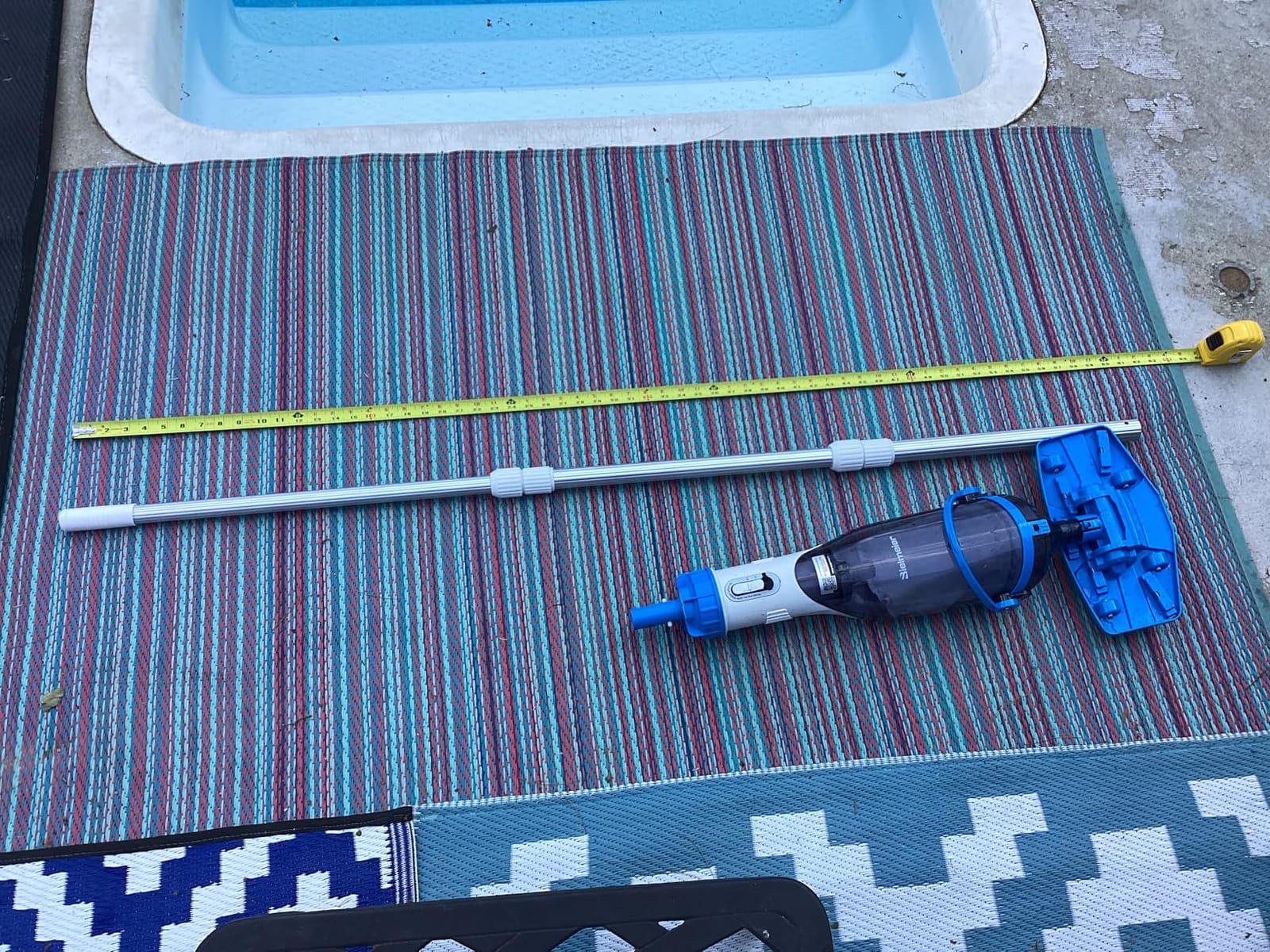
How to pick the right mesh grade
Use 500 micron for grit, sand and pollen. Use 300 micron as a middle ground when debris is mixed. Use 180 micron for leaves and larger material, accepting that fine silt will pass through.
The mistake owners report is running a coarse bag on a sand pool and watching the debris return to the water, which reads as a suction failure when it is actually a filtration mismatch.
Durability is the open question
Several owners report units failing after one season, with a battery that shows a full charge but will not run. That is a battery-management issue rather than a suction issue, and it is the main reason this model sits below the top three here despite the strong spec sheet.
Also note the charging port must be kept dry, and the wide brush head is bulky for tight corners. No extended warranty is offered, so we would treat this as a two-season tool.
9. KOKIDO XV910 Rechargeable Leaf Vacuum — Best for Leaves and Pool Opening
- 62 GPM commercial-class flow
- 1.72 gallon bag holds a full opening session
- Dual 250 micron and 75 micron filter bags
- 5-inch inlet swallows large leaves
- IPX8 rated with auto-shutoff
- Five-hour charge time
- Pole not included
- Will not take debris larger than 7 inches
- Poor on algae and silt
Pool opening and closing is a different job from weekly maintenance, and this is the machine built for it. The Powerblade system moves 62 GPM, roughly three times the flow of the mid-tier units, through a 5-inch wide inlet into a 1.72-gallon bag.
That combination is why it can strip a winter’s worth of leaves in one pass. Kokido claims it covers 200 square feet in five minutes, and the bag size means you are not stopping every ninety seconds to walk to the edge.
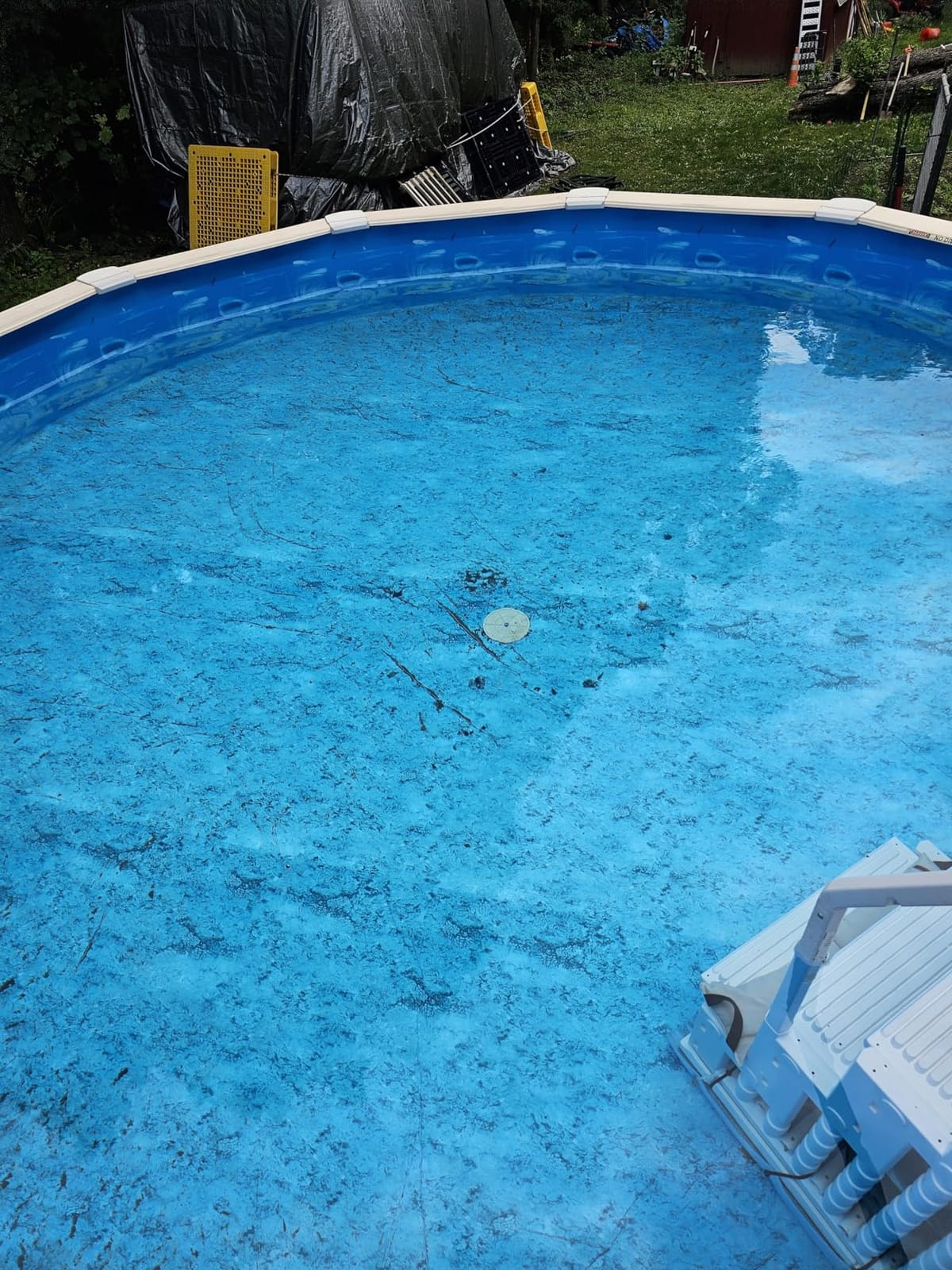
Dual filtration matters more here than anywhere else in this list. You get a 250-micron standard bag and a 75-micron fine bag, so you can run coarse for the leaf mat and switch to fine for the sand and grit underneath once the bulk is gone.
The oversized rotary switch is glove-friendly and easy to find with a wet hand, and IPX8 waterproofing with auto-shutoff covers the lift-out. Runtime is 75 minutes from a 44.4 Wh, three-cell lithium pack.
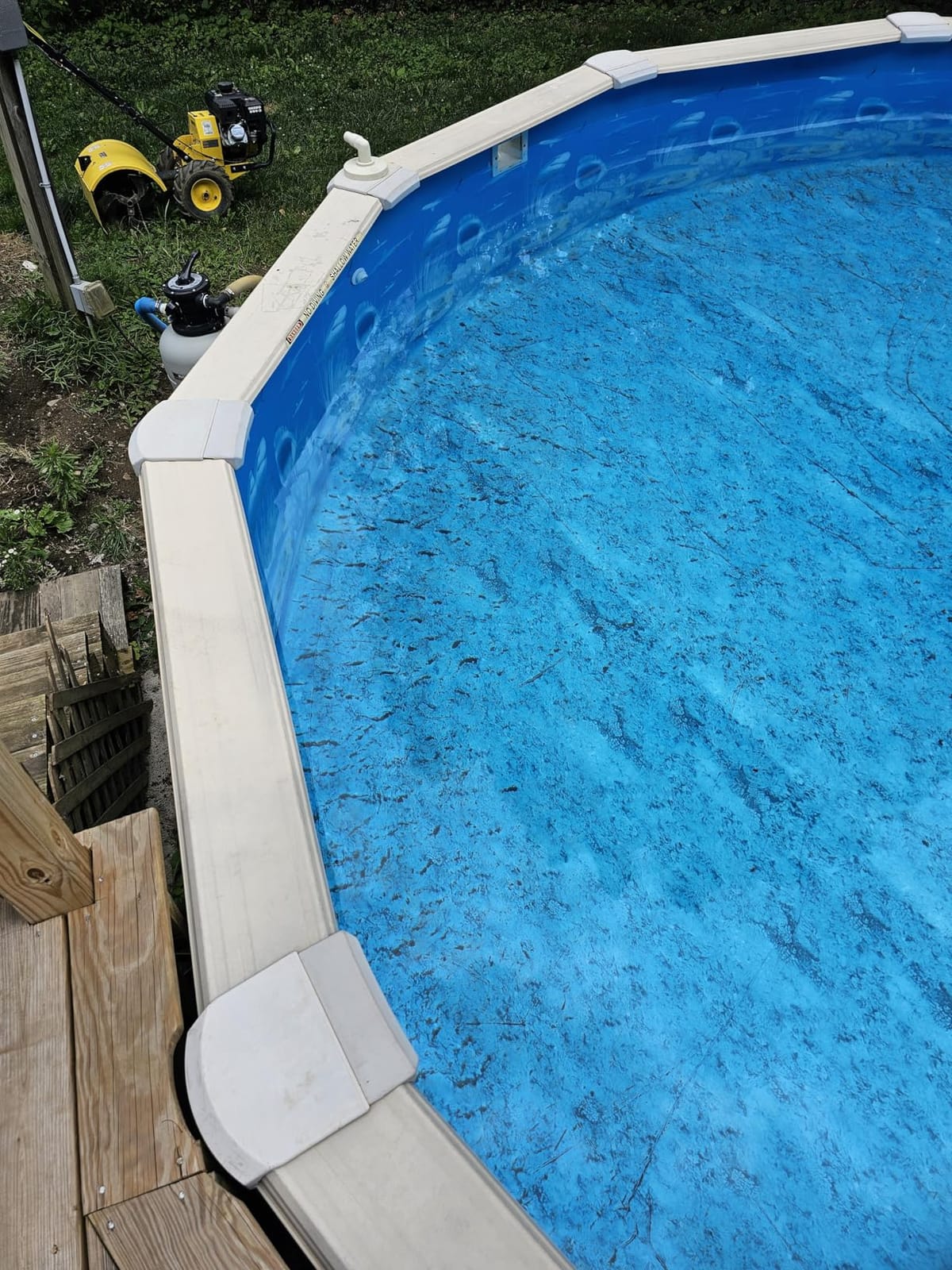
Why the flow rating here is not comparable
Convert both units before you compare listings. 62 GPM is 3720 GPH, while 18.5 GPM is 1110 GPH. When a listing quotes gallons per hour instead, multiply by 60 to get the per-minute figure, and expect most sellers to round aggressively.
High flow only helps if the bag and inlet are sized to accept what comes in. That is the case here, and it is not the case on a small-bag model with a 7-inch narrow intake.
Where it is the wrong tool
Two hard limits. Debris larger than about 7 inches will clog the inlet, and the design does not handle tiny particles, so algae and silt are explicitly out of scope.
The five-hour charge time is the biggest practical drawback. Plan to charge it the night before an opening weekend. The pole is not included either, so budget for a standard telescopic pole before this leaves your house.
10. Sharkswell Cordless Pool Vacuum with 98 inch Pole — Best for Algae and Long Reach
Sharkswell (2026 Upgraded) Cordless Pool Vacuum with Telescopic Pole
- Finest filtration here at 40 micron
- Filter balls add an extra stage for fine algae
- 98-inch pole is the longest reach in this list
- Two suction heads for floors and corners
- Warranty extends to two years with registration
- Filter swapping needed for mixed debris
- Leaf clogs can stall suction
- Small filter capacity
- Not efficient on large pools
Post-shock algae cleanup is the one job no other model here is built for. The Sharkswell ships with 40-micron filter bags plus a set of filter balls, giving you two stages of fine filtration on top of the standard 180-micron bags.
The high-torque multi-gear motor is the other differentiator. Most units in this category use a single-speed motor, and the extra gearing gives the head enough pull to keep moving when a fine-mesh bag starts to load up.
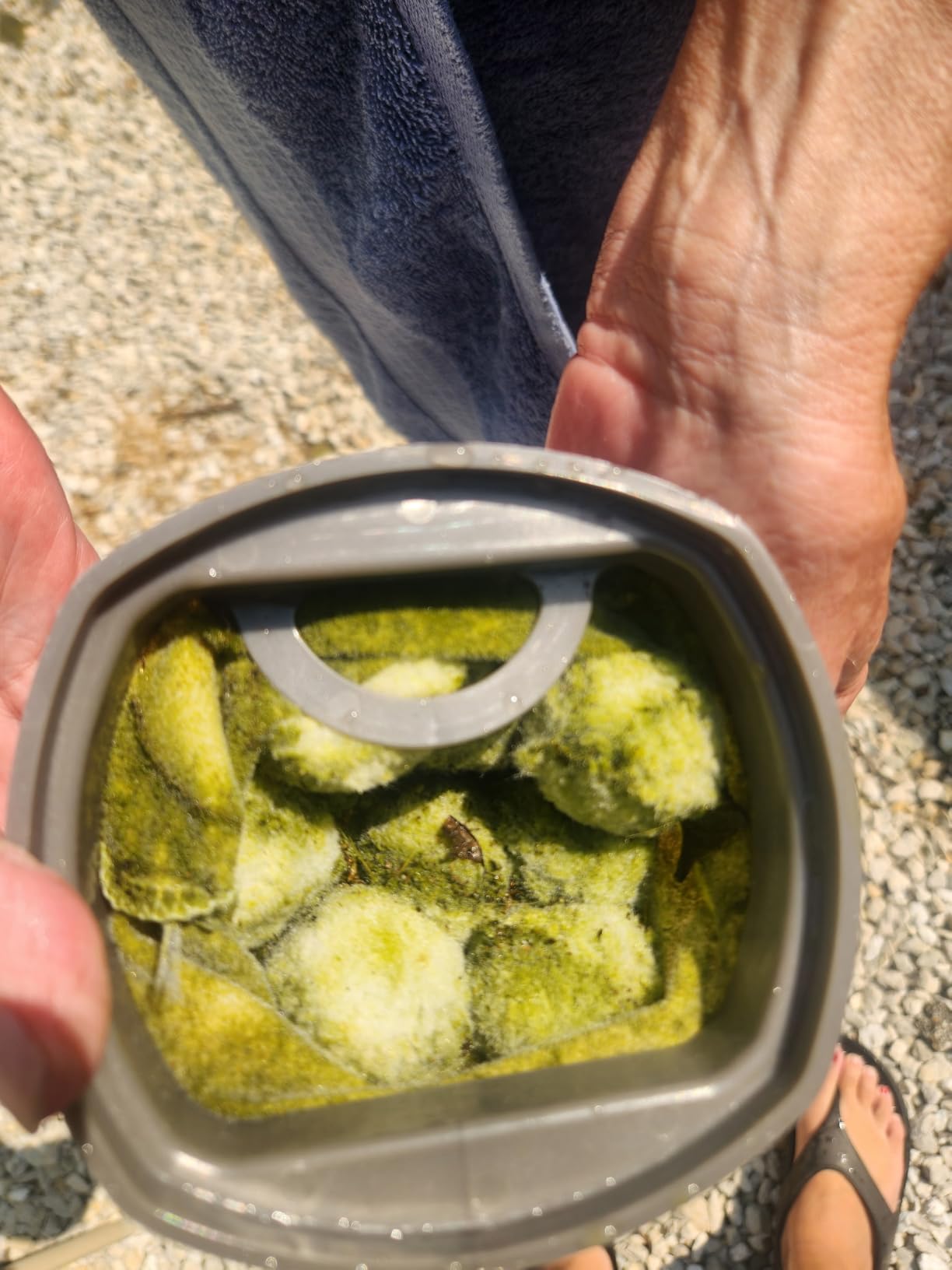
Reach is the practical headline. The 98-inch pole is the longest in this roundup, and because it is a sectioned pole rather than a conventional sliding tube, there is no slip risk under suction pressure the way there is on telescopic models.
Two suction heads are included, a wide one for floors and steps and a narrow one for corners. The motor is double-sealed to an IPX8 rating, and the charging port has a rubber seal that closes over the contacts.
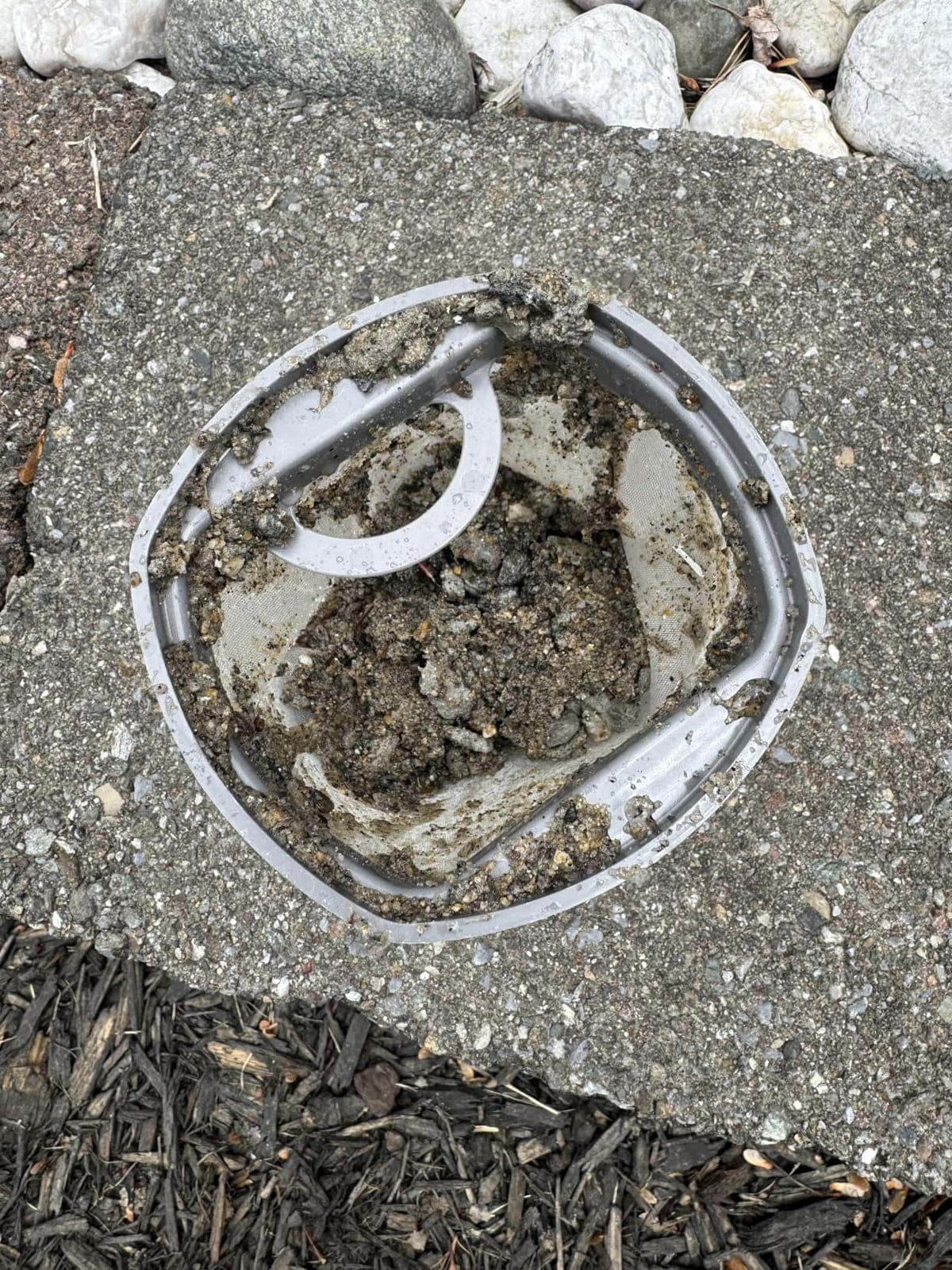
Why algae needs fine mesh, not more suction
Algae and fine sediment are small, light and easy to draw in. The problem is holding onto them, because a 180-micron bag lets them straight back through into circulation. A 40-micron bag plus the filter balls keeps them in the filter where they belong.
This is the clearest example of why mesh size matters more than peak flow. A unit can have twice the GPM and still recirculate every particle it picks up.
Trade-offs to know before buying
Running 40-micron bags on leaves means clogging almost immediately, so expect to swap filters mid-session when debris is mixed. Users report leaf clogs stopping suction entirely if the head is pushed too fast into a mat.
Filter capacity is small and needs frequent emptying, and the pole is sectioned rather than telescopic, which is less convenient to adjust mid-pass. Register the unit to extend the warranty from one year to two.
How We Picked and Tested
We ranked these ten on four axes that decide whether a session actually gets finished: debris pickup by type, usable runtime, filtration mesh band and pole reach. Peak flow was the lowest-weighted number, for the reasons the spec section below explains.
Each model was checked against the same five debris scenarios: fine sand, settled silt, pollen, whole leaves and twigs, and post-shock algae. We also weighed owner review volume, because a four-star average across fourteen thousand reports tells you something a four-star average across four hundred does not.
Warranty length and parts availability were treated as separate criteria. Filter bags are consumables, and a machine you cannot refill is a machine you retire.
Buying Guide: What Actually Matters in a Cordless Pool Vacuum
Match the machine to the debris, not the pool size. Sand and silt need 40 to 100-micron filtration. Leaves need a wide inlet and a big bag, and nothing else about that machine matters. Debris type is the first filter, before any other spec.
Decode the flow units before you compare anything. GPM and GPH are mixed constantly. A model quoted at 1110 GPH and one quoted at 18.5 GPM are the same machine. Multiply GPH by 60 to convert, and treat any capacity field with no unit as unverified.
Charge time matters more than peak flow for routine use. A four-hour charge turns a weekly chore into a monthly one. The 1.5-hour units in this list support a schedule; the five-hour units support a season.
Check whether the pole is included. This is the most common surprise in the category, and it applies to the KOKIDO and the Catfish, neither of which ships with one. A 45-inch or longer pole in the box changes how you use the machine.
Runtime and water depth go together. A 45-minute unit with a short pole can only cover what a short pole can reach. Deep-end work needs either a long pole or a unit certified for significant depth, like the 16-foot rating on the POOL BLASTER Max.
Weight at the end of a pole is the number that is never listed. Add the head weight to the shaft weight and ask whether you can hold that for a full pass. Units above 5 pounds are noticeably harder above the waterline.
Waterproofing and auto-shutoff are safety specs, not extras. IPX8 and a water sensor that stops the motor when the head breaks the surface are the difference between a wet tool and a dead motor. Every model in this roundup has some form of both.
Water chemistry favors sealed cordless units. Hose-powered venturi vacs push tap water into the pool, which can shift pH and chlorine levels and raise the water line. A sealed cordless unit recirculates nothing new, which is easier on the chemistry you paid for.
For comparison of how these handle the other kind of mess, our handheld vacuum picks for crumbs and spills covers the same handheld form factor on dry surfaces.
When a Cordless Handheld Pool Vacuum Is the Wrong Purchase
If you need full-pool coverage on a large in-ground pool, buy a robotic cleaner. A handheld with a 45-minute runtime and a 0.227-gallon chamber will not replace weekly robot coverage, and pretending otherwise sets you up to be disappointed.
If your pool is full of leaves every autumn, a handheld leaf vacuum is a two-weekend tool, not a permanent fixture. Skim and net first, then use the machine on what is left. Owners who skip the netting stage end up with clogged bags and blame the vacuum.
If you are on a tight budget and already own a garden hose, a venturi vac still works for a small above-ground pool. You trade water chemistry impact and runtime for simplicity, which can be a fair deal at that size.
If you have mobility or shoulder issues, note that most of these are buoyant and require continuous downward pressure. Robotic cleaners remove that physical demand entirely, and for some people that is the deciding factor.
The honest summary: a cordless handheld pool vacuum is a five-minute tool for steps, ledges, corners and hot tubs. Owning one alongside a robot or pump vacuum makes sense. Owning one instead of them does not.
Maintenance and Off-Season Battery Care
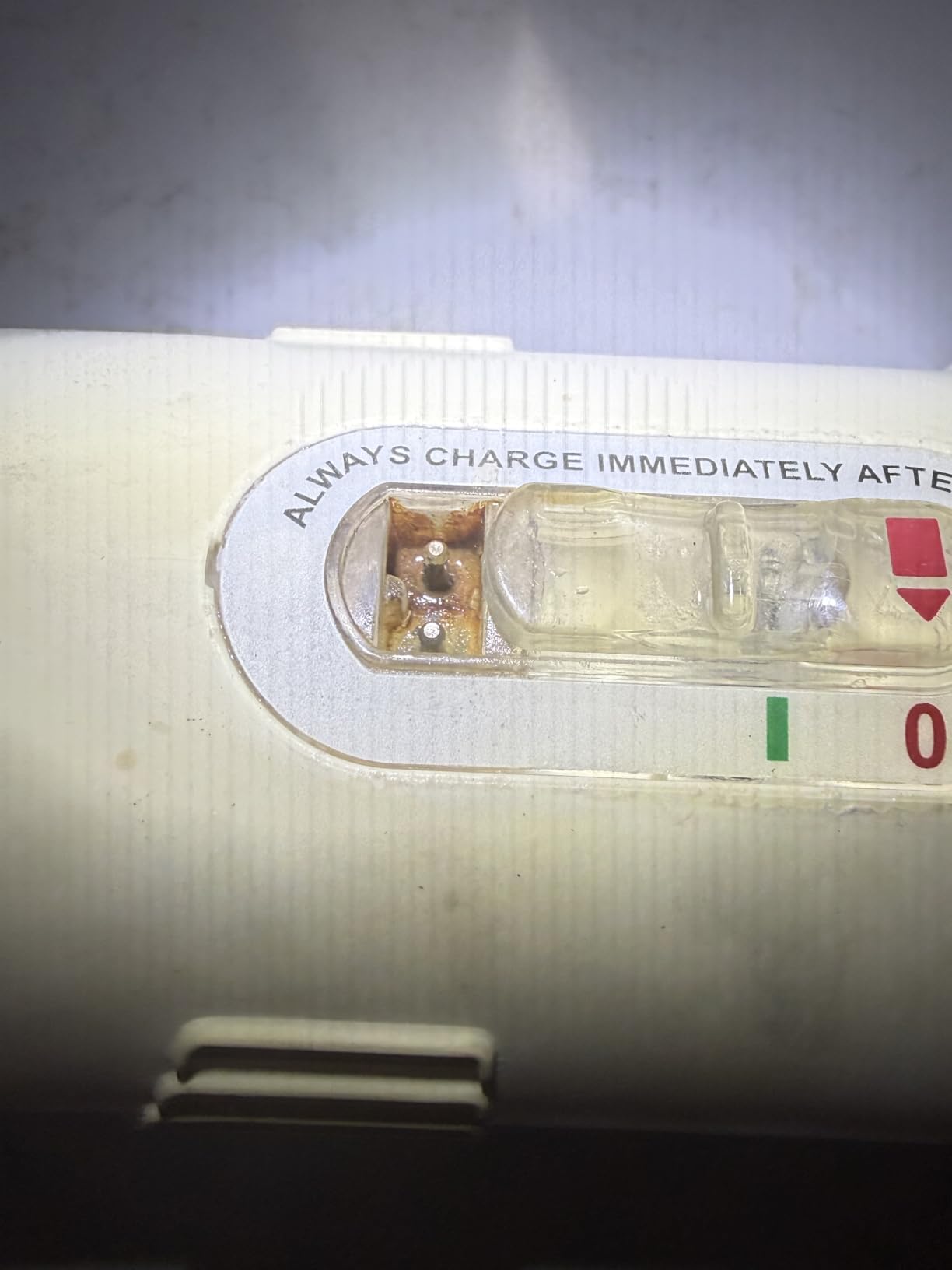
Condensation is the number one storage problem in this category. Owners report moisture collecting inside the unit after use, and storing it with the battery still damp corrodes the contacts. Dry the head and the housing before you put it away.
Empty the filter mid-session rather than at the end. A bag allowed to load up cuts suction and can push debris back through the mesh, which undoes the whole point of a fine filter.
Rinse filters in fresh water after every use and let them dry fully in the shade. Bags stain permanently after a single sand session and are not usually machine washable, so treating them gently is what extends their life.
Wipe the charging contacts dry before connecting. Several models in this roundup specify a dry port, and water in the socket is a straightforward warranty problem.
For off-season battery care, top the battery up every three months rather than leaving it fully depleted or fully packed for nine months. Lithium-ion cells held at either extreme for long periods age faster than cells cycled occasionally.
Store the unit in a dry, shaded space away from direct sun, with the pole collapsed. If you own a boat too, our handheld vacuum guide for boats covers the same drying discipline in a salt-water setting.
Frequently Asked Questions
How long do cordless pool cleaners run on a single charge?
Most of the cordless handheld pool vacuums in this roundup run between 45 and 75 minutes per charge. The POOL BLASTER Max and the Enhulk PC10 sit at 60 minutes, the AQUAFYSH AQ10 Pro reaches 70 minutes, and the BIELMEIER claims 75. Actual runtime drops when a fine-mesh bag is loaded, so the figure is a ceiling rather than a promise.
Can cordless pool cleaners climb walls and clean the waterline?
No. Handheld units are designed for horizontal surfaces, floors, steps and ledges. The POOL BLASTER Max is certified safe underwater to 16 feet, which lets it work a deep end, but wall climbing and waterline scrubbing are robotic cleaner features. If your priority is the tile line, a robot is the correct purchase.
How often should I clean the filter on a cordless pool cleaner?
Empty the debris bag mid-session rather than waiting until the end, and rinse the filter in fresh water after every use. Let it dry fully in the shade before reassembly. A loaded bag cuts suction and can push fine debris back through the mesh, which is why fine-silt models like the AQUAFYSH need checking every few minutes.
Are cordless pool cleaners safe for all pool surfaces?
They are generally safe on vinyl, fiberglass, concrete and tile because the soft-bristle heads do not have hard edges. The two cautions are sharp debris and aggressive scrubbing. Vacuum pebbles and gravel slowly, since they can jam an impeller, and do not use a wide stiff head on a vinyl liner you are worried about scratching.
Is a cordless handheld pool vacuum worth it compared to a robotic cleaner?
It is worth it as a complement, not a replacement. A handheld handles steps, ledges, corners, hot tubs and five-minute spot cleanups far better than a robot, and it costs far less. A robot handles full-pool coverage unattended. Owners who buy a handheld expecting it to replace a robot on a large in-ground pool are the ones who regret it.
Final Verdict
The best cordless handheld pool vacuum for most people is the INTEX model, because it handles sand and silt well, includes a 94-inch pole, and has the largest owner base in the category behind it. If you have deep-end work to do, the POOL BLASTER Max is the stronger tool with its 16-foot depth rating and wide pivot head.
Beyond those two, pick by debris. Fine silt and algae point to the AQUAFYSH or the Sharkswell. Leaves and pool opening point to the KOKIDO XV910. Mixed debris and long-reach work point to the BIELMEIER.
Whichever you choose, buy the filter bags at the same time. That is the consumable that ends these machines, and it is the last thing anyone thinks about until the bag shreds mid-season. Our full cordless handheld pool vacuum comparison above covers all ten models with runtime, mesh and pole reach side by side, updated for 2026.