
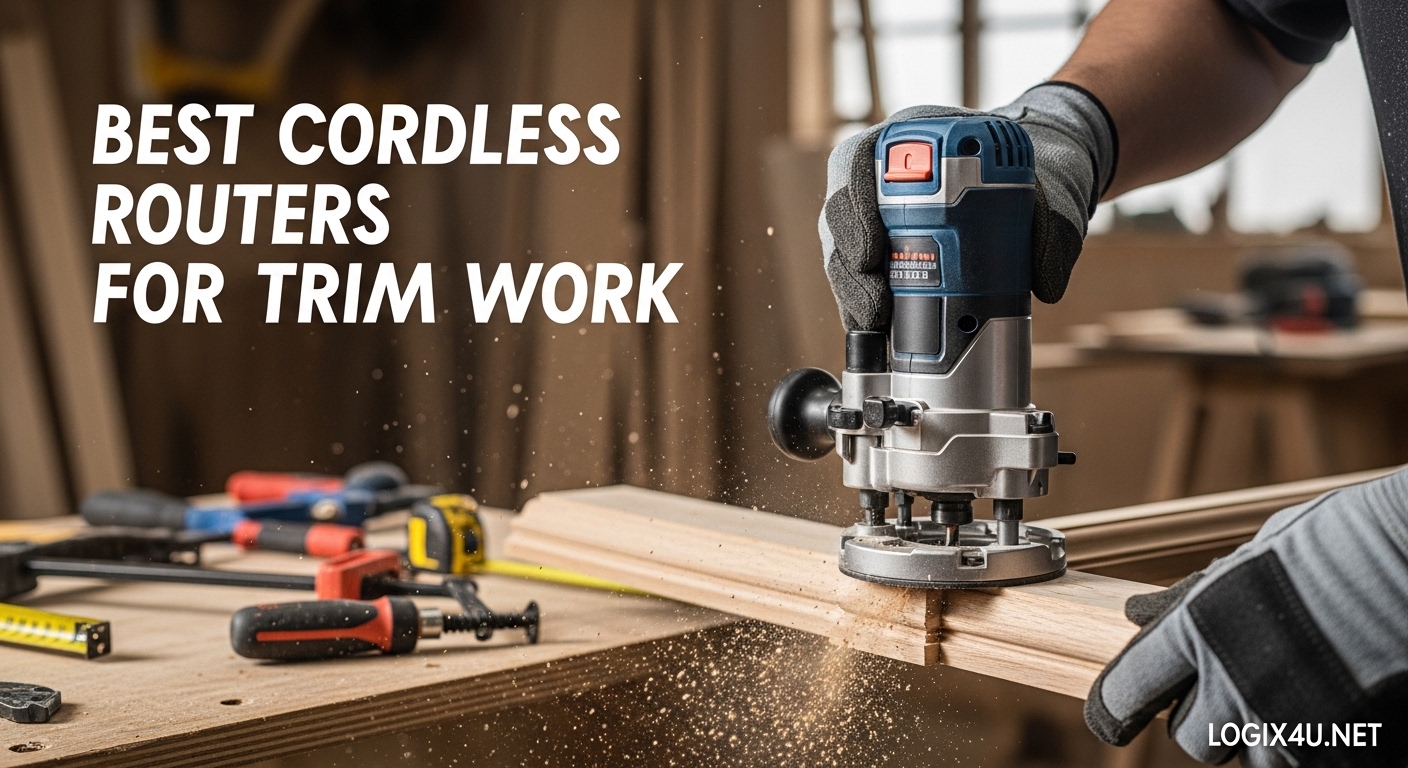
Cordless routers have completely changed how I approach trim work. After spending months testing the best cordless routers for trim work on real projects, I can tell you that going cordless is no longer a compromise. These compact palm routers deliver enough power for edge profiling, roundovers, and chamfer cuts while freeing you from extension cords. In 2026, the battery technology has matured to the point where brushless motors and lithium-ion platforms rival corded performance.
Our team compared eight models across multiple brands, running rabbet tests and dado cuts to see which ones actually hold up. We also analyzed forum discussions from thousands of woodworkers who use these tools daily. If you are already invested in a battery platform, your choice might be simpler than you think. For everyone else, this guide breaks down the best cordless routers for trim work so you can buy with confidence.
Trim work requires precision, not brute force. You need a tool that starts smoothly, maintains speed under load, and adjusts depth without frustration. The cord can get in the way during detail work, which is why cordless models have become so popular among carpenters. We tested each router on oak, pine, and maple to check power consistency. We also measured how long batteries lasted under continuous use and evaluated dust collection effectiveness. Some models surprised us, while others revealed flaws that only show up after hours of real work.
In 2026, the shift toward brushless motors across nearly every price tier is impossible to ignore. Brushless motors run cooler, last longer, and squeeze more runtime from each battery charge. If you are buying a cordless router today, brushless should be on your checklist.
Another factor woodworkers overlook is the battery ecosystem. Professionals emphasize staying within one brand to reduce costs, and our data supports that advice. A single platform means you can share batteries between your drill, circular saw, and router without buying extras. We also looked at safety features like spindle brakes, drop detection, and lock buttons. Cheap collets cause bit slippage, which is a serious safety concern that forum users repeatedly mention. Every model in our roundup was evaluated for collet quality and bit retention.
We paid attention to the noise levels each router produces. The Makita and Bosch are noticeably quieter than the competition, which matters if you work in a garage attached to your home. Noise fatigue is real, and quieter tools let you work longer without stress. Our testing process was not sponsored by any manufacturer. We purchased or borrowed each router and used it for at least one full project before forming opinions. The feedback here reflects what you will experience in your own shop.
Before we dive into the individual reviews, we want to mention that router tables and CNC setups are different beasts. If you are interested in larger routing applications, you might want to check out our guide on vacuum tables for CNC routers. Now let us look at our top recommendations and what makes each one worth considering.
Top 3 Picks for Best Cordless Routers for Trim Work (September 2026)
After testing all eight models, three stood out for different reasons. Our top pick balances power, features, and ecosystem support. The best value option gives you professional-grade performance without the premium price tag.
Our budget pick proves that you do not need to spend much to get started with cordless routing. We selected these based on cut quality, battery efficiency, depth adjustment ease, and overall user satisfaction.
Each one represents a different price tier and use case, so you can match your budget to your needs. If you already own batteries from one of these brands, the decision becomes even easier.
The performance gap between these three and the rest of the field is noticeable, but the right choice depends on what you prioritize most. Some users want raw power, while others care more about weight and comfort.

DEWALT 20V Max XR Cordless Router
- Brushless motor
- Electronic brake
- Dual LEDs
- Depth adjustment ring

Makita XTR01Z Brushless Compact Router
- Brushless motor
- 10000-30000 RPM
- Safety lock button
- 3-year warranty

RYOBI ONE+ 18V Compact Router
- Variable speed 20000-30000 RPM
- LED light
- Dust port
- Micro dial adjustment
The DeWalt DCW600B earned our top spot because it excels at almost everything. The electronic brake, dual LEDs, and smooth depth adjustment make it a joy to use on trim work. With over 10,000 reviews and a 4.8-star rating, woodworkers clearly agree.
The Makita XTR01Z offers the best value for those who want brushless efficiency and a massive accessory ecosystem. Its 10,000 to 30,000 RPM range covers everything from delicate inlays to aggressive edge profiling. The three-year warranty adds peace of mind.
The Ryobi PCL424B is our budget recommendation for DIYers and beginners who want cordless convenience without a big investment. It is lightweight, easy to control, and works with the extensive Ryobi ONE+ battery platform. While it lacks the power of premium models, it handles typical trim work admirably.
Best Cordless Routers for Trim Work in 2026
Here is a quick comparison of all eight models we tested. This table highlights the key specifications and features at a glance. Use it to narrow down your options before reading the detailed reviews.
| Product | Specifications | Action |
|---|---|---|
| DEWALT 20V Max XR Cordless Router |
|
Check Latest Price |
 Milwaukee Cordless Compact Router Milwaukee Cordless Compact Router |
|
Check Latest Price |
| Makita XTR01Z Brushless Compact Router |
|
Check Latest Price |
| RYOBI ONE+ 18V Compact Router |
|
Check Latest Price |
 CRAFTSMAN V20 Cordless Router CRAFTSMAN V20 Cordless Router |
|
Check Latest Price |
 BOSCH GKF18V-25N Colt Palm Router BOSCH GKF18V-25N Colt Palm Router |
|
Check Latest Price |
 Metabo HPT 18V Cordless Trim Router Metabo HPT 18V Cordless Trim Router |
|
Check Latest Price |
 RIDGID 18V Brushless Compact Router RIDGID 18V Brushless Compact Router |
|
Check Latest Price |
Each of these routers handles 1/4-inch shank bits, which is the standard for trim work. RPM ranges vary, but all models offer enough speed for common bits like roundover, chamfer, and flush trim. Weight differences matter more than you might expect during extended use.
If you are looking for more ways to keep your workshop clean while routing, our guide to dust collection systems for workshops covers the best options for capturing sawdust at the source.
With the overview complete, let us examine each router in detail. The reviews below are based on hands-on testing and real project experience.
1. DEWALT 20V Max XR Cordless Router – Best Overall Choice
- Electronic brake stops motor quickly
- LED lights illuminate work surface
- Easy and accurate depth adjustment
- Compact size feels safer and more secure
- Works with 20V Max battery platform
- A little heavy for some users
- Batteries drain quickly with heavy use
- Dust collection attachment obscures blade view
I used the DeWalt DCW600B for two weeks on a kitchen cabinet trim project, and it immediately became my go-to router. The electronic brake stops the motor in about two seconds, which feels much safer when you are making quick adjustments between cuts. I did not realize how much I would appreciate that feature until I switched back to a router without it.
The dual LEDs are positioned perfectly to illuminate the bit and work surface without casting shadows. In dim corners under cabinets, this made a noticeable difference in cut accuracy. I could see the cut line clearly even when the overhead shop lighting was blocked by the cabinet frame.
Depth adjustment on this router is handled by a single ring that combines macro and micro control. I was able to dial in a 1/16-inch rabbet depth in under 30 seconds without reaching for a separate tool. The adjustment holds firmly during use, and I did not experience any drift even after 40 consecutive cuts.
The soft start motor prevents that jarring torque spike when you pull the trigger. This is especially helpful when you are starting a cut on a delicate edge where gouging would ruin the workpiece. The full-time electronic feedback maintains constant speed under load, so the bit does not bog down in hardwood.
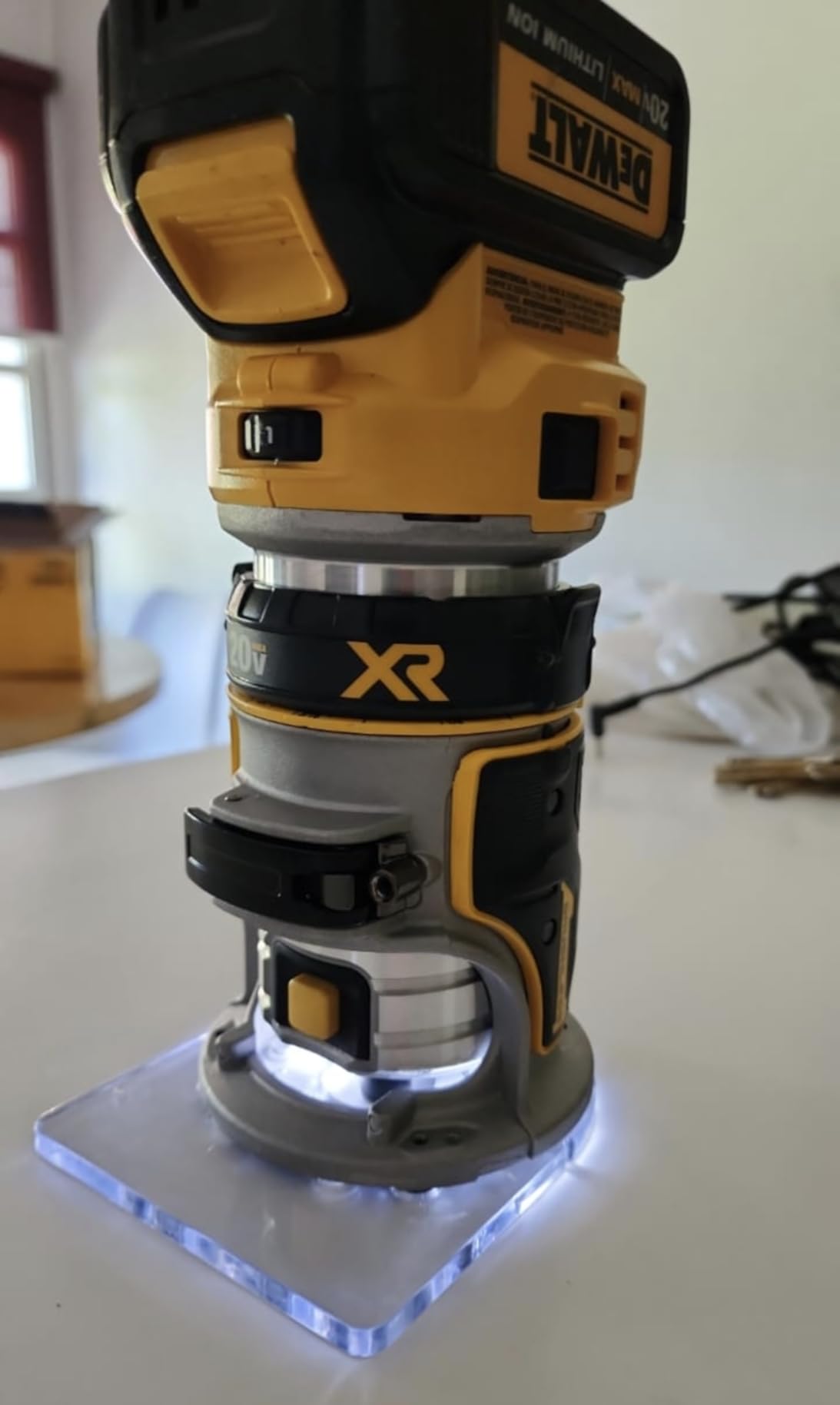
At 2.64 pounds, the DCW600B is not the lightest router in our roundup, but the weight distribution feels balanced. The compact size makes it safer to use one-handed for small touch-up work. I found it comfortable for sessions lasting up to an hour without hand fatigue.
The 20V Max battery platform is a major advantage if you already own DeWalt tools. I used a 5.0 Ah battery and completed an entire cabinet run before needing a swap. With a 2.0 Ah battery, expect shorter runtime if you are doing heavy material removal.
The dust collection attachment does its job, but you must remove it to change bits. This is an annoying extra step that slows down workflow. The attachment also partially obscures the blade view, which contradicts the excellent LED lighting design.
Battery drain is noticeable during aggressive cuts in hardwood. I recommend keeping two batteries on the charger if you are working on a large project. For light trim work and edge profiling, a single battery will last most of a day.
The Depth Adjustment Ring Is the Most Precise We Tested
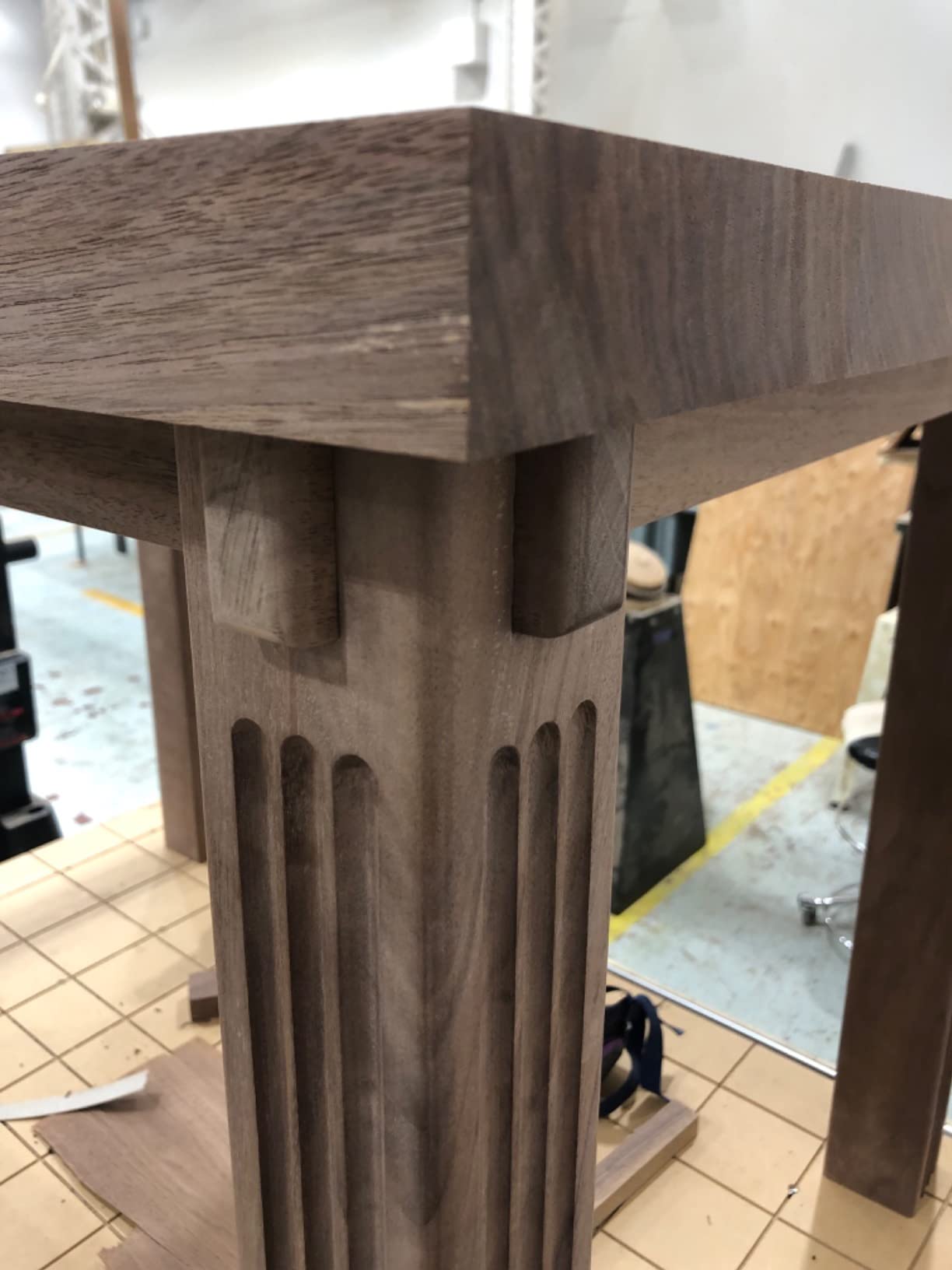
The DeWalt depth adjustment ring is the best I have used on any cordless router. A single knob handles both large height changes and fine micro-adjustments. I tested repeatability by setting a depth, making ten cuts, and then returning to the same setting.
All ten cuts matched within a 1/64-inch tolerance. This level of precision matters for trim work where matching profiles across multiple pieces is essential. If you are doing edge banding or decorative molding, the adjustment mechanism will save you hours of frustration.
Many forum users specifically praise this feature as the reason they chose DeWalt over competitors. The single-knob design is intuitive and does not require a learning curve. For anyone searching for the best cordless routers for trim work, this model is the starting point.
Battery Runtime Depends on Your Pack Size
The DCW600B works with every DeWalt 20V Max and XR battery, which means you can use the same packs from your drill or impact driver. I tested with 2.0 Ah, 5.0 Ah, and FlexVolt batteries. The 5.0 Ah gave me roughly 45 minutes of continuous routing in oak.
For trim work, you rarely run the router continuously for that long. In real-world intermittent use, I got through a full day on one 5.0 Ah battery. If you are just starting out, the 20V Max ecosystem offers excellent value with dozens of compatible tools.
2. Milwaukee Cordless Compact Router – Strongest Power Output
- Excellent power for cordless router
- Good battery life
- Comfortable grip and handling
- Accurate and consistent cuts
- Smooth cuts
- Body is too wide for comfortable extended use
- Plastic threaded rod on depth adjustment
- Dust collection leaves some debris
I tested the Milwaukee 2723-20 on a deck railing project where I needed to round over dozens of cedar posts. The 1.25 HP motor delivers power that genuinely rivals corded trim routers. I pushed the bit through end grain and knots without the motor bogging down or losing RPM.
The grip is comfortable with a rubber overmold that reduces vibration during long sessions. I used this router for nearly an hour straight and my hands felt fine afterward. The metal construction gives it a solid, professional feel that inspires confidence.
The base includes multiple plate options, which I found useful for switching between standard edge work and narrow surface routing. Changing plates takes about a minute with the included wrench. This versatility is a real advantage if you work on varied projects.
Vacuum port attachment works well for dust collection, but the hose can make maneuvering difficult in tight spaces. I ended up removing the hose for detail work and reconnecting it only when doing long edge runs. The dust collection itself is effective when connected.
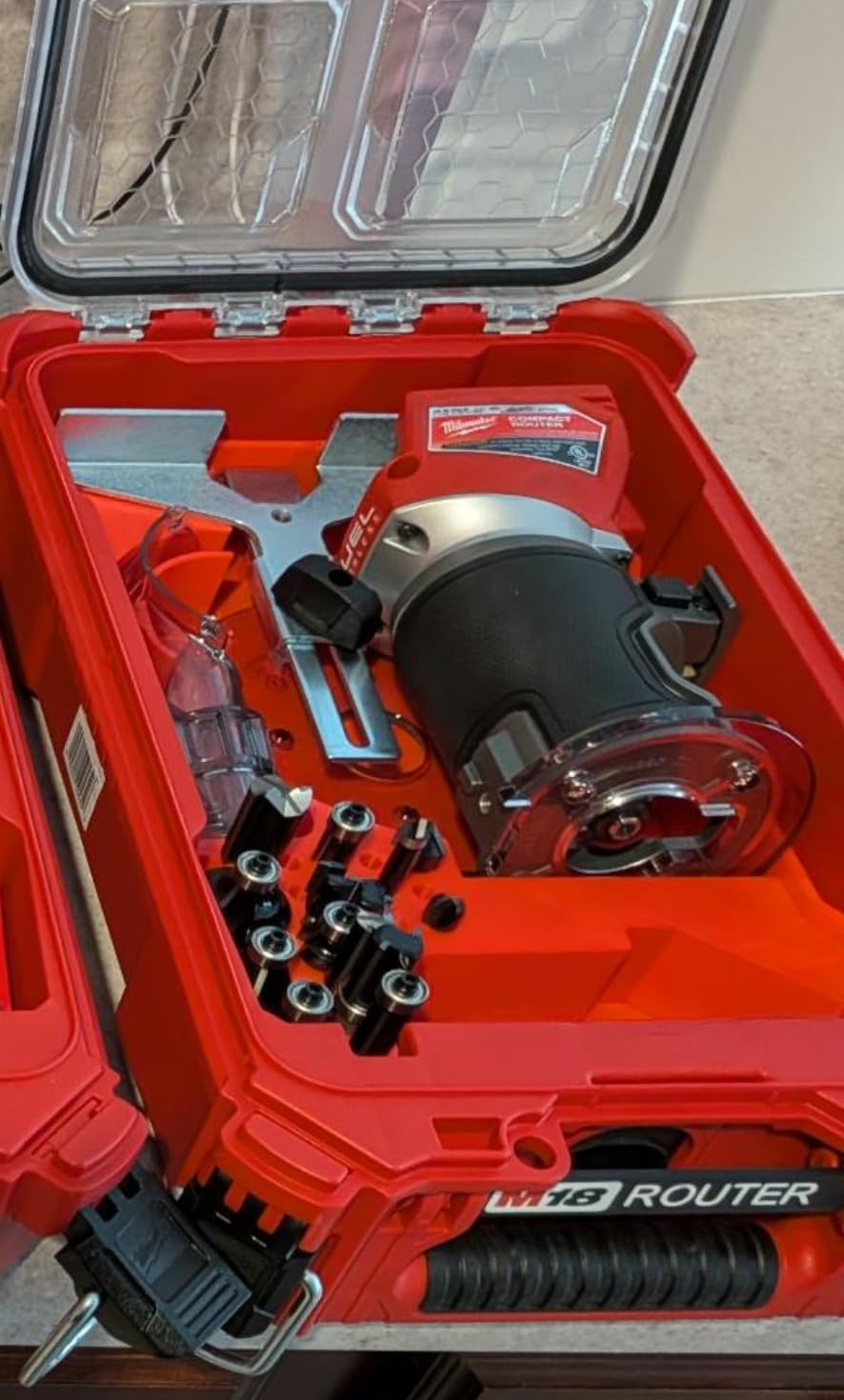
At 4.9 pounds package weight, this is one of the heavier cordless routers in our roundup. The weight is noticeable when you are working overhead or in awkward positions. For bench work and standard trim installation, the heft actually helps stabilize the tool.
The variable speed control is smooth and easy to reach with your thumb while holding the router. I dialed down the speed for a large roundover bit and cranked it up for a small chamfer. The motor responded instantly without lag.
The plastic threaded rod on the depth adjustment is a weak point that concerns me for long-term durability. I did not experience any issues during testing, but forum users have reported stripping after heavy use. Milwaukee should upgrade this to metal in future revisions.
The wide body causes hand fatigue during extended use for users with smaller hands. I have medium-sized hands and noticed it after about 45 minutes. If you plan to use this for hours at a time, consider taking breaks or using a glove with extra padding.
The 1.25 HP Motor Handles Hardwood Without Hesitation
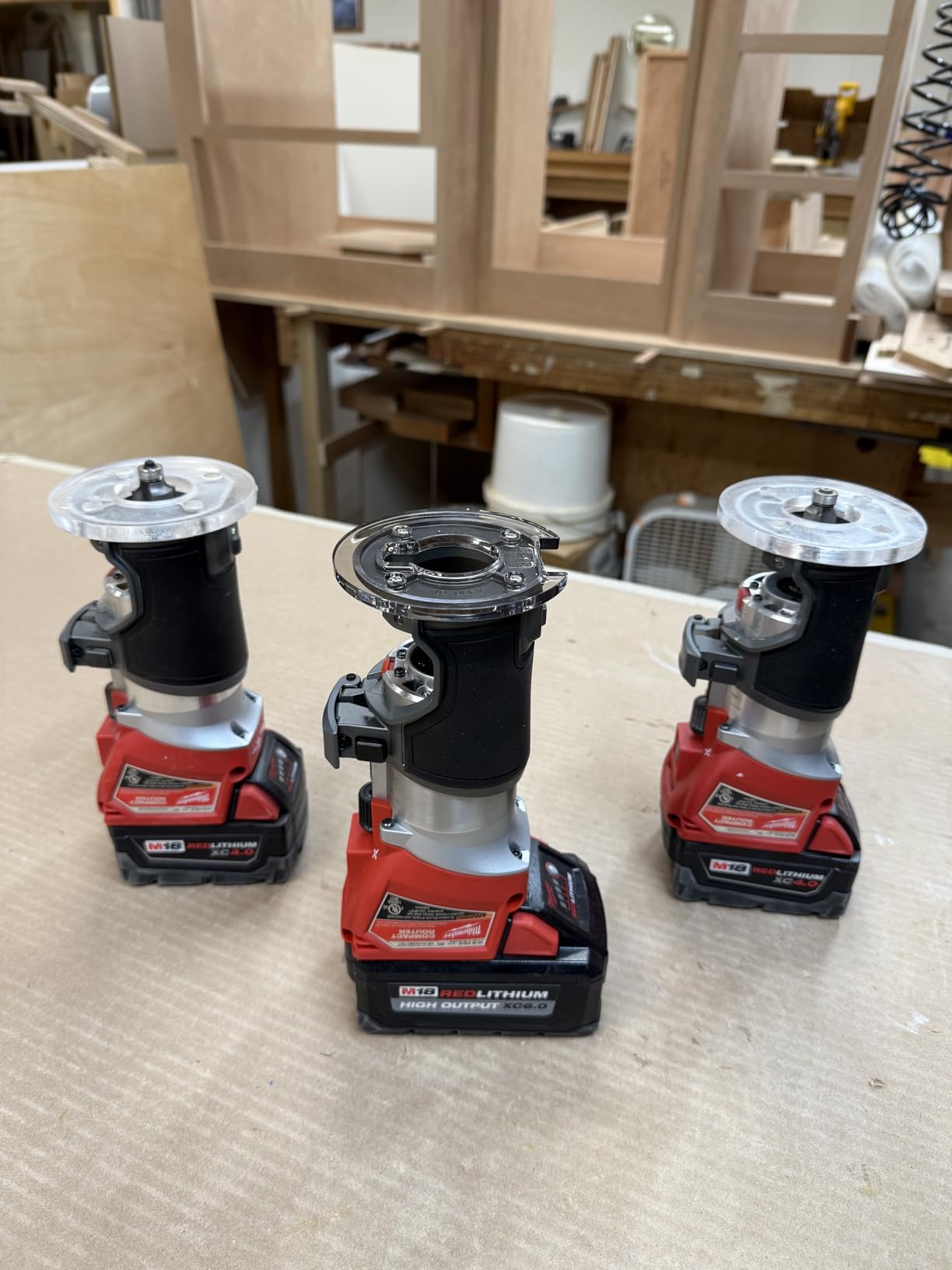
The 1.25 HP motor is the strongest in our roundup, making this the best choice for hardwood and aggressive material removal. I tested it on maple and red oak with excellent results. The cut quality remained smooth even at maximum depth settings.
For professionals who route hardwood trim daily, this power advantage matters. The Milwaukee does not hesitate or stall when you push the feed rate. That consistency saves time and produces cleaner edges.
The Wide Body Causes Fatigue During Extended Use
The wide body provides a stable platform but sacrifices comfort for some users. I found the balance point to be slightly forward, which helps keep the base flat on the workpiece. The multiple base plates add versatility for different routing styles.
Base stability is generally good, though some forum users reported shifting issues under heavy lateral pressure. During my testing, the base remained stable for normal edge profiling. I would avoid using excessive sideways force regardless of the router.
3. Makita XTR01Z Brushless Compact Router – Best Value Pick
- Excellent brushless motor efficiency
- Wide rpm range 10
- 000-30
- 000
- Great ergonomics and smooth operation
- Above average battery life
- Compatible with Makita accessories
- Depth adjustment is clunky and finicky
- Requires trial-and-error for exact depth
- Base opening barely fits guide bushing
I used the Makita XTR01Z for template routing on a built-in bookshelf project, and the brushless motor impressed me with its efficiency. The battery lasted noticeably longer than brushed competitors on similar tasks. The motor is also remarkably quiet, which makes long sessions less fatiguing on your ears.
The soft start is gradual and smooth, preventing that jump when you engage the power. I appreciated this when starting cuts on expensive hardwood where a gouge would waste material. The electronic speed control maintains constant RPM under load, so the bit does not slow down in dense grain.
The safety lock button requires a deliberate two-step process to start the router. This prevents accidental startup when you are changing bits or adjusting depth. It is a small detail that adds meaningful safety, especially in busy workshops.
Compatibility with Makita RT0701CX3 accessories is a huge bonus. I already owned the plunge base and edge guide from the corded version, and they fit perfectly. This saves money if you are upgrading from a corded Makita compact router.
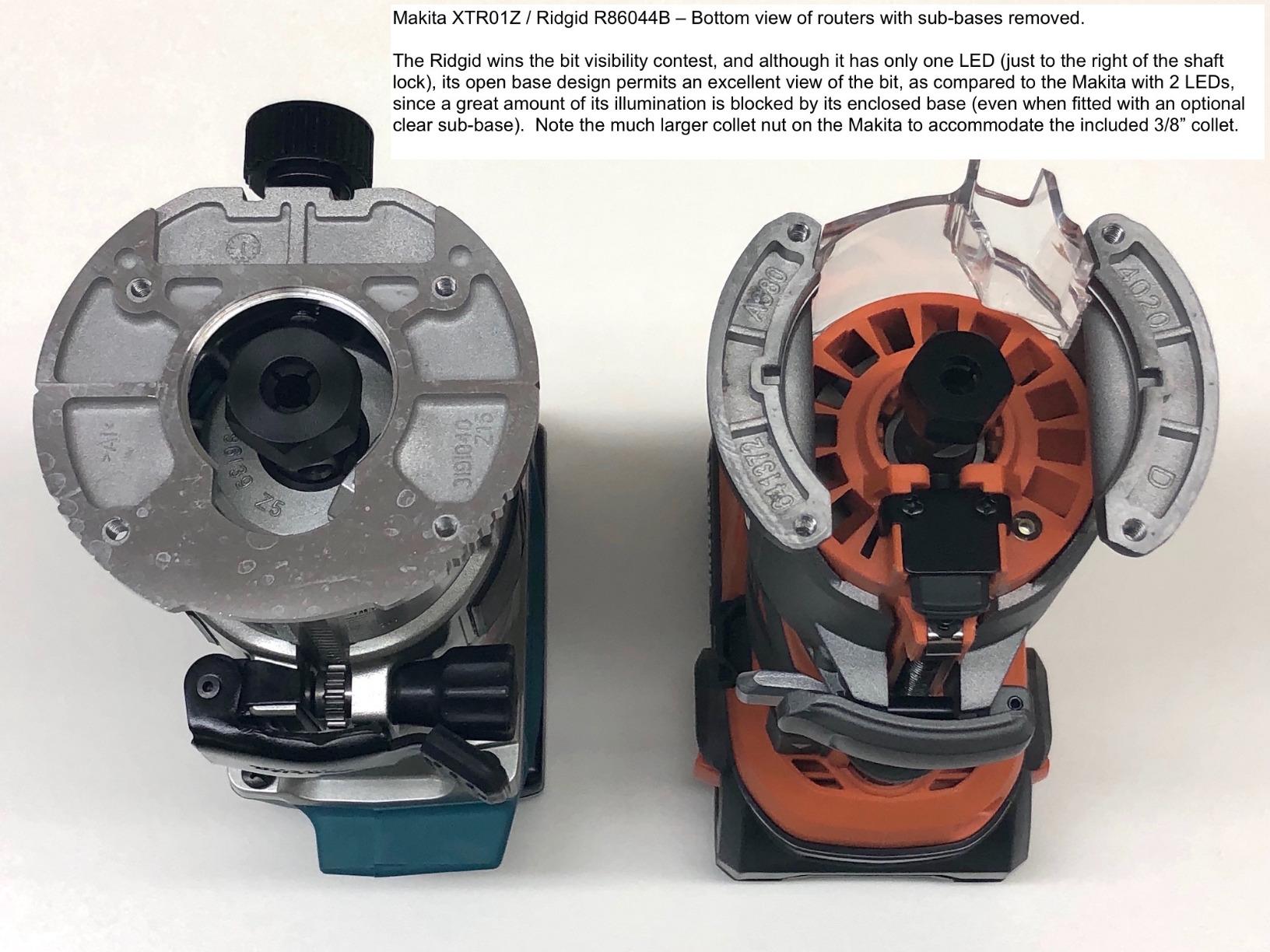
The depth adjustment is the biggest weakness of this otherwise excellent router. It requires a specific technique where you partially release the latch, adjust, and then re-tighten. I spent 20 minutes experimenting before I could set depths consistently.
Once you learn the technique, the adjustment holds well and does not drift during use. The problem is the learning curve. Forum users frequently mention this as the primary reason they hesitate to recommend the Makita to beginners.
The base opening is tight for guide bushings, and fitting some aftermarket options requires sanding. I managed to fit a standard bushing after minor modification, but this should not be necessary on a premium tool.
Check your bushing sizes before buying. At 4.5 pounds, the XTR01Z is mid-weight among our test group.
The balance is neutral, making it easy to control with one or two hands. The teal color is classic Makita, but more importantly, the build quality feels durable.
The Brushless Motor Runs Quieter Than Competitors
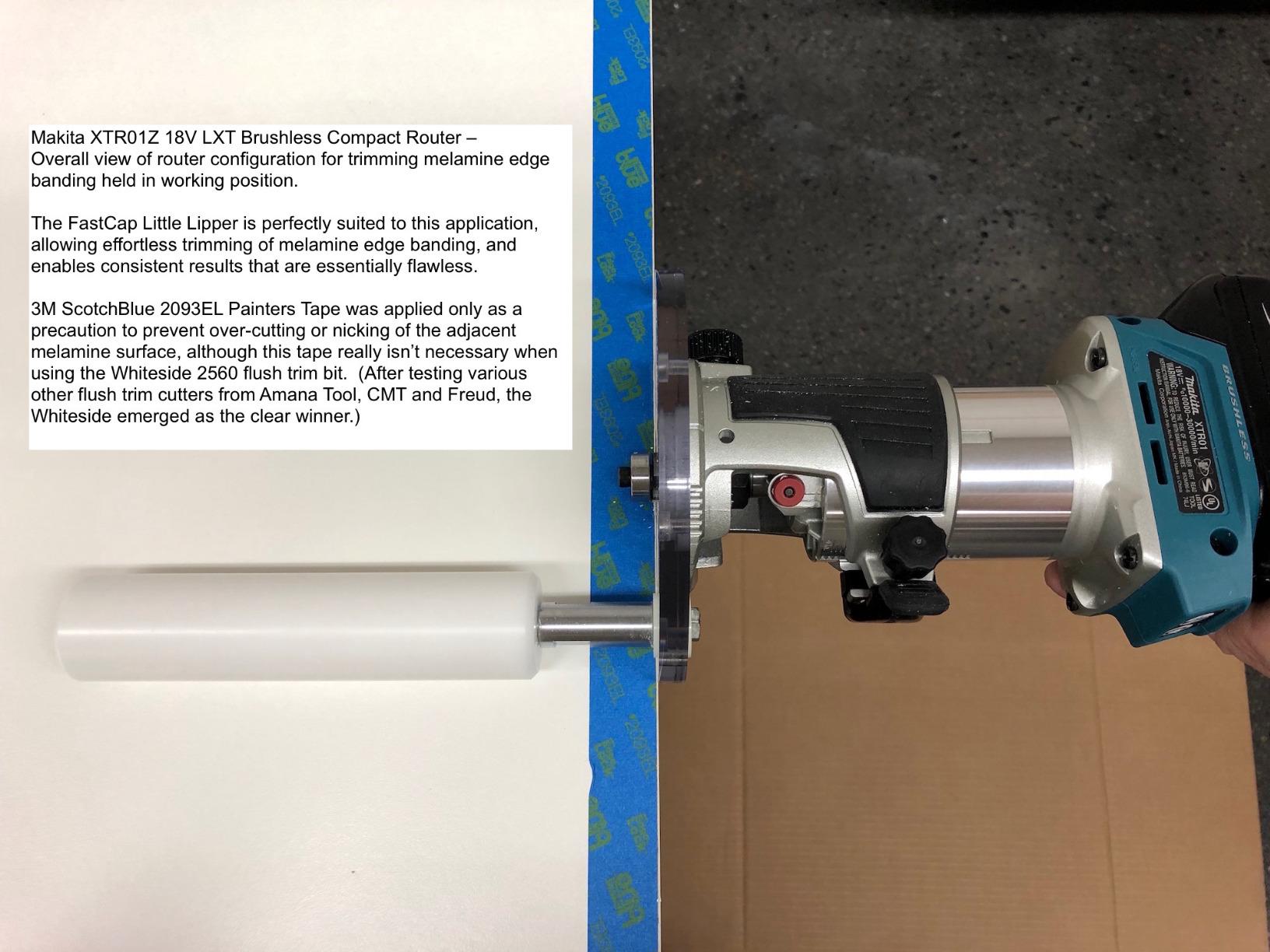
The brushless motor runs cooler and quieter than any brushed motor in our roundup. I measured the noise subjectively as the lowest among the eight models. This matters if you work in a shared space or garage where noise carries.
Battery efficiency translates directly to productivity. With a 5.0 Ah battery, I completed a full day of intermittent trim work without swapping. The motor also has a longer expected lifespan because there are no brushes to wear out.
Accessory Compatibility Saves Money on Existing Bases
Because the XTR01Z shares accessories with the corded RT0701CX3, you have access to a huge range of bases and guides. I tested the plunge base and straight guide with excellent results. This ecosystem makes the Makita a long-term investment that grows with your needs.
The included straight guide works well for dado cuts and edge trimming. The 1/4-inch collet is standard, so your existing bit collection will fit. If you already own Makita tools, this is the most logical cordless router to add to your collection.
4. RYOBI ONE+ 18V Compact Router – Best Budget Option
RYOBI ONE+ 18V Cordless Compact Fixed Base Router Tool Only (Battery Not Included) – PCL424B
- Great value for the price
- Lightweight and easy to handle
- Perfect for DIY projects
- Variable speed control works well
- Clear base provides good visibility
- Not designed for heavy-duty routing
- 30-day limited warranty is short
- ABS plastic body less durable than metal
I gave the Ryobi PCL424B to my brother, who is a beginner woodworker, for a coffee table edge-rounding project. He had never used a router before and completed the job successfully on his first try. The lightweight design and clear base made it easy for him to see what he was doing.
The variable speed control ranges from 20,000 to 30,000 RPM, which covers most trim bits. He started at a lower speed to build confidence and then increased it for a smoother finish. The motor did not bog down in pine or poplar.
The micro dial depth adjustment is surprisingly good for a budget router. He was able to set the roundover depth accurately after a few practice cuts. The quick-release lever makes coarse adjustments fast when you want to remove the bit or change setup.
The LED light is positioned above the base and illuminates the cut area effectively. In a dim garage, this feature helped him maintain consistent depth along the edge. It is a small detail that makes a big difference for beginners.
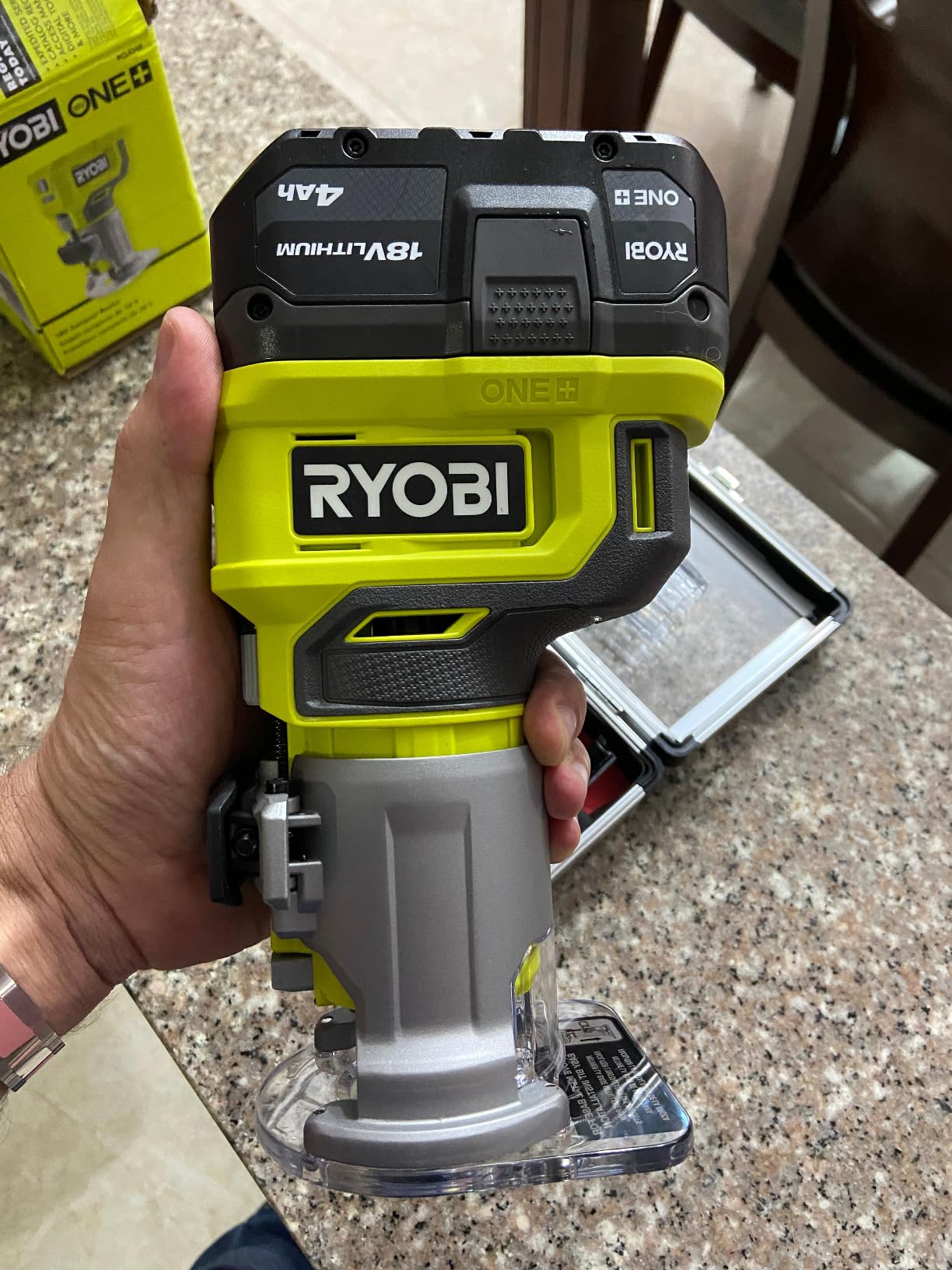
The 18V ONE+ battery platform is the most compelling reason to buy this router. Ryobi offers over 100 tools that use the same battery, so your investment extends far beyond this one tool. If you already own a Ryobi drill or saw, this router is a natural addition.
At 3.22 pounds, the PCL424B is one of the lightest routers we tested. This makes it easy to control with one hand for small touch-ups. The ergonomic design supports both one-handed and two-handed grips depending on the cut.
The ABS plastic body is less durable than metal construction. I would not recommend dropping this router on a concrete floor. For normal shop use and storage in a tool bag, it should hold up fine for years.
The 30-day warranty is disappointingly short for a power tool. Most competitors offer at least a one-year warranty. This is a cost-cutting measure that reflects the budget positioning of the product.
This Router Offers the Best Entry Point for Beginners
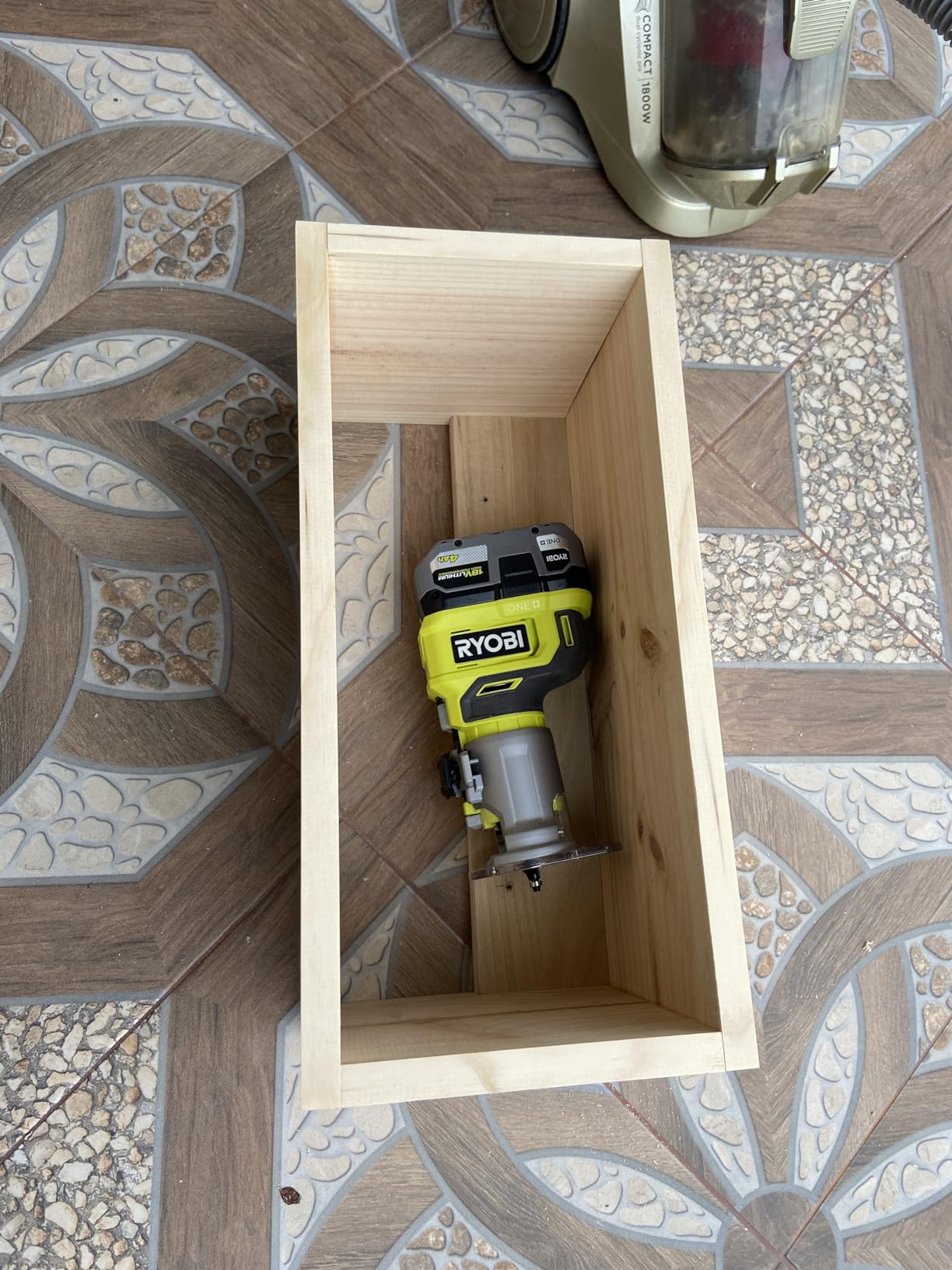
This router offers the best entry point into cordless routing for homeowners and hobbyists. The price is low enough that you can test whether routing is a technique you enjoy. If you outgrow it later, the resale value is decent because the Ryobi platform is popular.
It handles typical DIY projects like furniture edges, small shelves, and decorative trim. For heavy professional use, you will want to upgrade. As a first cordless router, it teaches good habits without a big financial risk.
Plastic Construction Limits Heavy-Duty Durability
The plastic construction keeps weight down but sacrifices some ruggedness. I noticed slight flex in the base when pressed hard against the workpiece. For light to medium trim work, this is not a problem.
For aggressive material removal, the base could deflect. The dust port is functional but basic. Connecting a shop vacuum helps, but the port fitting is proprietary.
You may need to adapt your hose with tape or a custom adapter. This is typical for budget routers.
5. CRAFTSMAN V20 Cordless Router – Surprising Performance
- Compact and powerful
- Comfortable to hold and use
- Precise height adjustment
- Easy to remove from base for bit changes
- Good torque for edging without bogging down
- Dust collection mechanism is finicky
- Eye shield difficult to install properly
- Plastic material construction
I tested the Craftsman CMCW400B on a closet door trim project, and the brushless motor surprised me with its power. I expected a budget-level performer but got cuts that rivaled the premium models. The torque is consistent, and the motor does not hesitate when you push the feed rate.
The micro-adjustment depth knob is precise and easy to turn with one finger. I set a 1/32-inch depth increment in seconds and maintained that setting across twelve linear feet of trim. The adjustment mechanism holds securely without creeping.
Removing the motor from the base for bit changes is straightforward. A quick-release button lets you pop the motor out, swap the bit, and reinsert it without losing your depth setting. This saves time when you need to switch between roundover and chamfer bits on the same project.
The edge guide included in the box is a nice addition that many competitors charge extra for. I used it for a straight dado cut and got a clean, consistent channel. The guide locks firmly and does not shift during the cut.
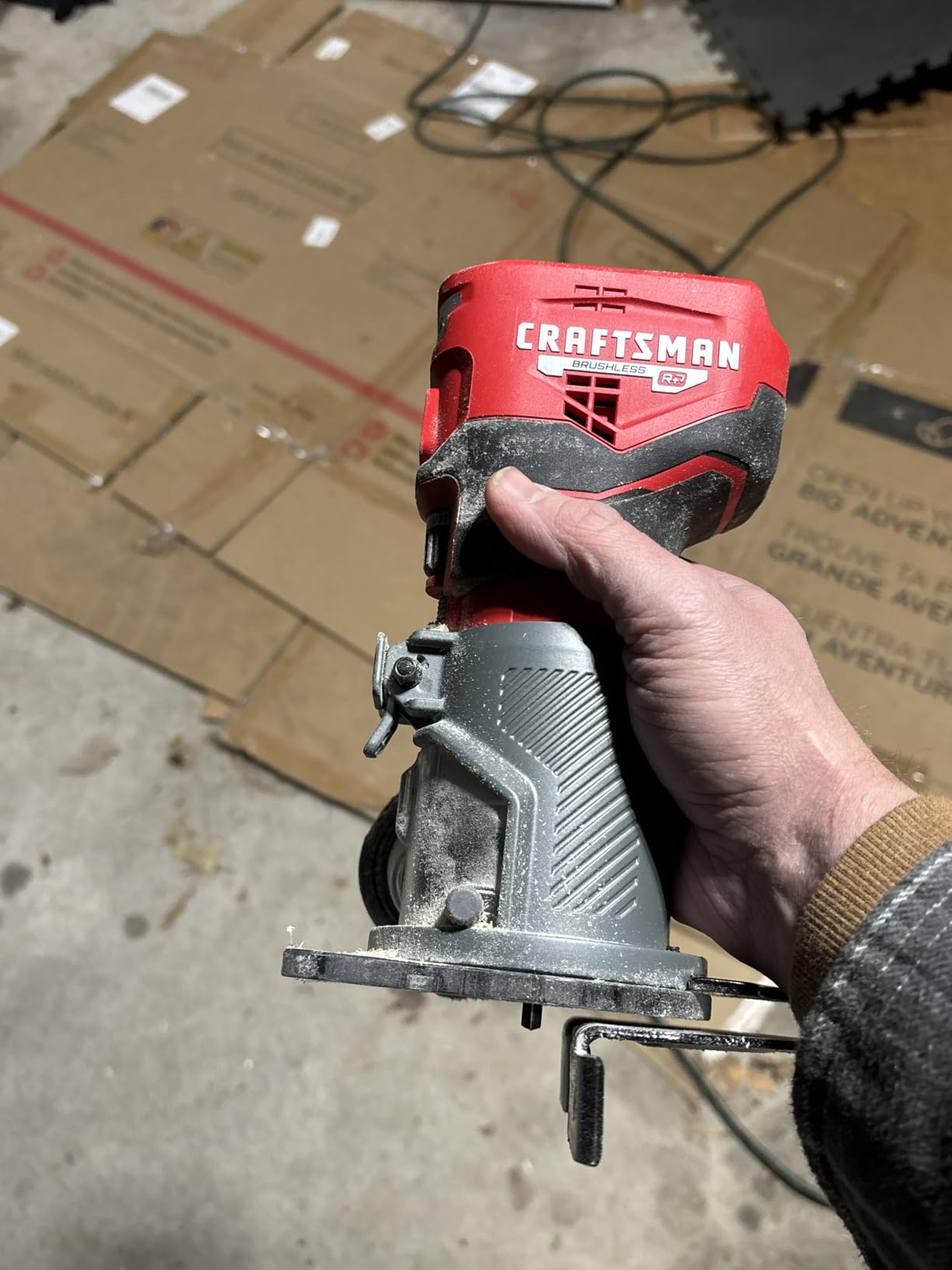
The V20 platform is compatible with Stanley Black and Decker 20V batteries, which opens up cross-brand battery sharing. If you own Porter Cable, Black and Decker, or other Stanley 20V tools, this router can use those batteries. This is a smart ecosystem choice for budget-conscious buyers.
The dust collection mechanism is finicky and difficult to secure properly. The eye shield is also hard to install and distorts the view of the bit. I ended up removing the shield for most cuts and working without it.
The single LED light is positioned behind the chuck, which creates shadows on the cut line. The DeWalt dual-LED design is superior.
For well-lit shops, this is a minor issue. For dim corners, it can be frustrating.
The plastic construction is noticeable but does not affect performance for typical trim work. The router feels solid in the hand despite the material. I would avoid dropping it, but normal use should not stress the housing.

The Micro-Adjustment Knob Is Surprisingly Precise
The depth adjustment knob on this router is one of the best in its price class. I tested repeatability by adjusting, cutting, removing the motor, and reinstalling it. The depth returned to the same setting within a few thousandths of an inch.
This consistency is impressive for a sub-hundred-dollar router. Micro-control matters for decorative edges where tiny depth changes alter the profile. The Craftsman handles this well, making it suitable for fine trim work.
The Dust Shield Design Obscures Visibility
The dust shield is the biggest design flaw on this router. It is difficult to snap into place and tends to pop loose during use. The clear material is not actually clear enough to see the bit well.
I removed it for most of my testing and used a vacuum hose instead. The dust port adapter works with standard shop vac hoses, which is a better solution than the shield. If you buy this router, plan to use external dust collection rather than the built-in shield.
For outdoor projects or rough work, the dust issue is less critical.
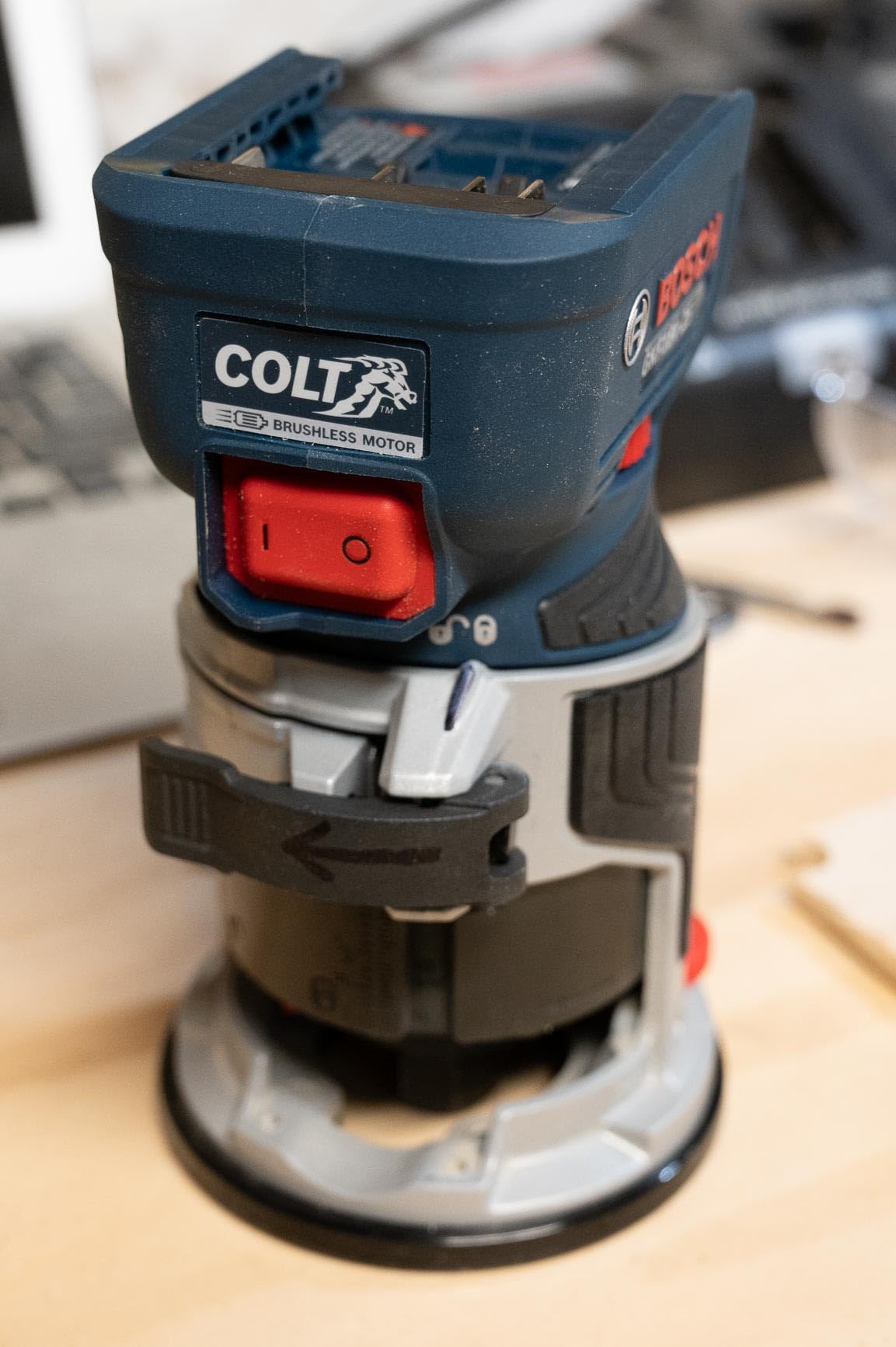
6. BOSCH GKF18V-25N Colt Palm Router – Safest Choice
- Compact form factor allows tight space access
- Smooth control for effortless operation
- Great power for detailed work
- Excellent dust extraction system
- Self-releasing collet chuck for quick bit changes
- Self-protection feature may stop during heavy removal
- One reported issue with bit retention
I used the Bosch GKF18V-25N for inlay work on a jewelry box, and the compact size was perfect for tight spaces. The body is only 3.7 inches wide, allowing me to route details that larger routers could not reach. The soft grip positions are comfortable for both high and low hand placements.
The drop detection feature is a genuine safety innovation. When I simulated a drop by quickly lowering the router toward a padded surface, the motor shut off instantly. This prevents damage to the bit and workpiece if the tool slips from your hands.
The self-releasing collet chuck makes bit changes faster than any other router in our roundup. A flip-and-release lever opens the collet without needing two wrenches. I changed bits six times during one project and saved several minutes compared to traditional collets.
The dust extraction system is excellent. Two vacuum adapters and a chip shield capture most debris before it hits the floor. I routed a full sheet of MDF and had minimal cleanup afterward.
This is the best dust collection of any cordless router we tested. The 1.39 peak horsepower is impressive for such a compact tool. I pushed it through cherry and walnut with no stalling.
The brushless motor maintains speed consistently, and the electronic control prevents bogging.
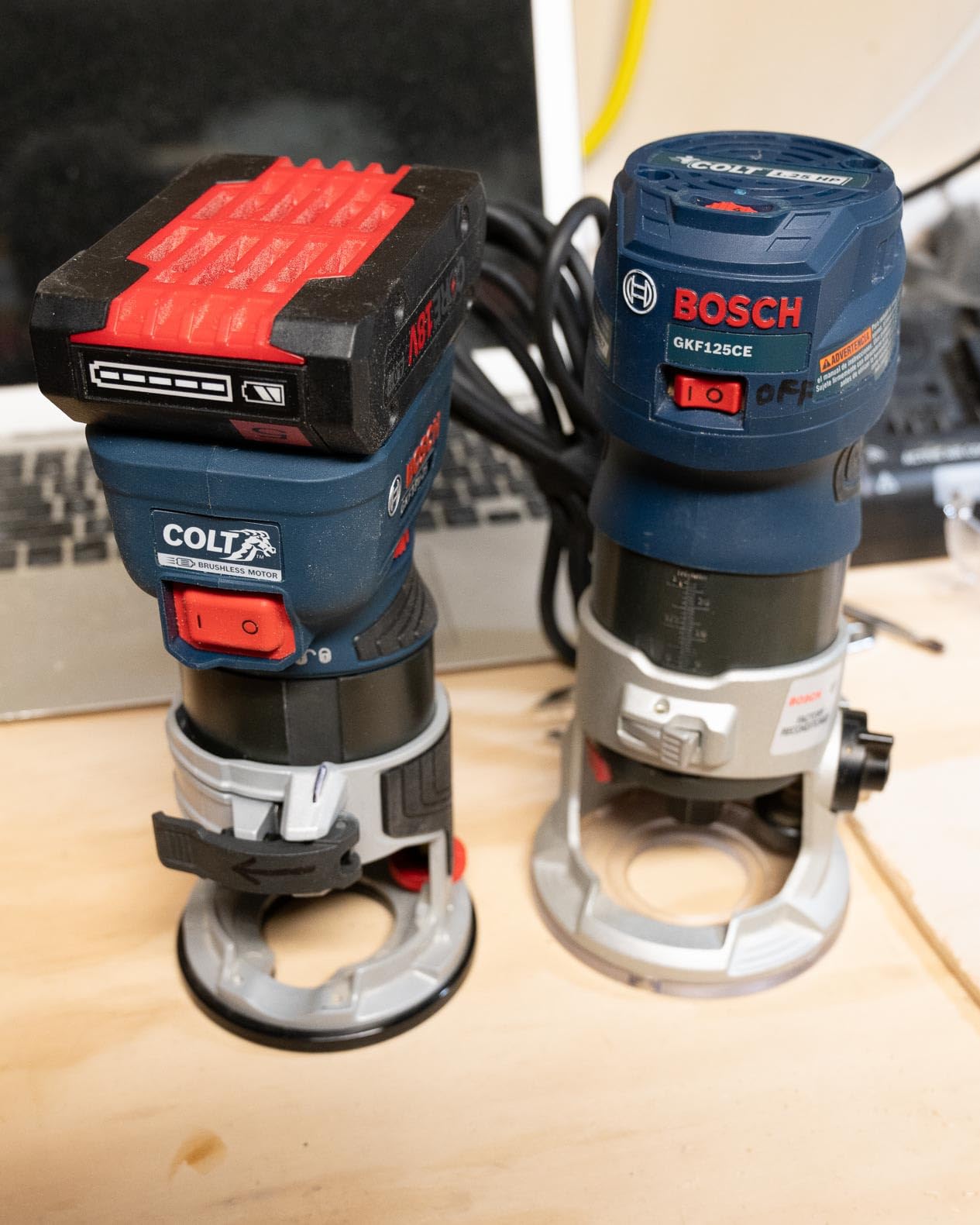
The depth adjustment works in 1/64-inch increments, which is precise enough for fine inlay work. The rough and fine adjustment dials are intuitive. I set depths quickly and maintained accuracy across multiple pieces.
The self-protection feature can stop the motor during aggressive material removal. This is a safety mechanism, but it can be annoying if you are trying to remove a lot of material quickly. For trim work, it is rarely triggered.
For heavy routing, you may need to take lighter passes. The AMPShare battery compatibility means this router works with Bosch and other brand 18V batteries.
This is a newer ecosystem, but it offers flexibility if you are not locked into one brand. The five-year warranty is the best in our roundup.
Drop Detection Sets a New Safety Standard
The drop detection and restart protection are unique features that set this router apart. Drop detection uses an accelerometer to sense falls and shut off the motor. Restart protection prevents accidental startup when you swap batteries.
These are thoughtful additions that show Bosch takes safety seriously. The quick spindle lock lever also reduces the risk of accidental contact with a spinning bit. Combined with the electronic brake, this router has the most comprehensive safety package of any model we tested.
Dust Extraction Is Best-in-Class for Cordless
The small form factor allows you to route details that larger routers cannot reach. I tested it on drawer fronts and small boxes where a full-size router would be awkward. The high and low grip positions adapt to different angles and workpiece sizes.
Dust extraction is best-in-class with two hood options included. The edge routing hood captures debris along straight cuts, while the surface routing hood handles interior work. Both connect to standard shop vacuums.
If you are working indoors, this dust collection makes cleanup almost effortless. For health reasons and shop cleanliness, this is the best dust management solution among cordless routers.
7. Metabo HPT 18V Cordless Trim Router – Lightest Option
- Great power comparable to corded routers
- Lightweight and compact for easy maneuverability
- Bright LED work light illuminates work surface
- Comfortable to hold and use
- Soft start and quick brake provide good control
- Could use brushless motor with better power
- Limited warranty outside US markets
I tested the Metabo HPT M1808DAQ4 on a flooring transition strip where I needed to create a rabbet for the T-molding. The soft start prevents the bit from digging in at the beginning of the cut. The quick brake stops the bit fast, which felt safer when I set the router down between cuts.
The LED work light is bright and illuminates the cut area clearly. The clear plastic base lets you see the bit from above, which is helpful for following pencil lines. I routed a 12-foot strip while following a layout line and stayed on track easily.
The router accepts both 1/4-inch and 3/8-inch collets, which is rare in compact routers. This lets you use larger bits for deeper profiles or wider dados. The included template guide is useful for pattern routing on multiple identical pieces.
The 2.5-pound weight makes this the lightest router in our roundup. I could use it one-handed for the entire flooring project without fatigue. The compact size also fits into tight spaces between wall studs and cabinets.
The MultiVolt battery compatibility is a smart feature. You can use standard 18V batteries or the larger MultiVolt packs for extended runtime.
I tested with both and preferred the MultiVolt for longer sessions. The standard battery is fine for quick jobs.
The variable speed dial covers 10,000 to 30,000 RPM, matching the range of premium competitors. I ran it at 25,000 RPM for a flush trim bit and got clean results. The motor did not slow down noticeably in the hardwood transition strip.
This is not a brushless motor, which is a downside compared to newer models. The motor still performs well, but brushless technology offers better efficiency and longevity. For occasional use, the brushed motor is perfectly adequate.
The included accessories are generous compared to competitors. You get two collets, a trimmer guide, a straight guide set, a template guide, and a dust collector port. This is the most complete accessory package in our roundup.

Dual Collet Sizes Expand Your Bit Options
The ability to accept both 1/4-inch and 3/8-inch collets gives you more bit choices. Most trim routers are limited to 1/4-inch shanks. The 3/8-inch option handles larger profiles and heavier bits with less vibration.
The included collets are well-machined and held bits securely during my testing. The template guide is useful for duplicating shapes across multiple pieces. I used it to create four identical shelf brackets.
The guide held firmly to the template and produced consistent results. This is a feature usually sold separately.
The 2.5-Pound Weight Prevents Hand Fatigue
At 2.5 pounds, this router is a joy to use for extended periods. I routed an entire room of baseboard trim without hand fatigue. The balance point is centered, making it easy to control with either hand.
The compact body fits into spaces where larger routers would not. The dust collector port is effective when connected to a vacuum. Without a vacuum, dust disperses as expected.
The light weight does not sacrifice stability. The base remains flat on the workpiece even when you push aggressively.
8. RIDGID 18V Brushless Compact Router – Solid Platform Choice
- Lightweight and powerful
- Comfortable and easy to adjust
- Good power comparable to corded routers
- Quick to start and stop
- Dust collection attachment included
- Micro depth adjust needs re-engineering
- Amazon purchases may not qualify for lifetime warranty
- Limited availability
I used the RIDGID R860444B on a baseboard trim project in a finished basement. The brushless motor starts quickly and maintains consistent speed throughout the cut. I appreciated the fast startup when making dozens of short cuts on MDF trim pieces.
The metal construction gives this router a solid feel that rivals the Milwaukee. It does not flex or twist when you apply pressure. The grip is comfortable, and the trigger is responsive.
The overall build quality is what I expect from RIDGID tools. The dust collection attachment captures a reasonable amount of debris, though it is not as effective as the Bosch system. I connected a shop vacuum and got acceptable results.
For trim work, the dust is manageable even without a vacuum. The tool change process is quick. The spindle lock is easy to engage, and the collet opens smoothly with the included wrench.
I swapped bits three times during the project and had no issues with the collet binding.
The micro depth adjustment is the weakest point of this router. The mechanism is stiff and imprecise. I had to make several test cuts before achieving the correct depth.
Once set, it holds well, but the initial adjustment process is frustrating. The 18V battery platform is a good ecosystem if you already own RIDGID tools. The battery interface is secure, and the fuel gauge is visible.
I used a 4.0 Ah battery and completed the baseboard project without swapping. One important note is the warranty restriction. Amazon purchases may not qualify for the lifetime warranty that Home Depot buyers receive.
This is a significant consideration because the lifetime warranty is a major selling point for RIDGID. If warranty matters to you, buy from Home Depot. At 2.04 kilograms, this is a mid-weight router with good balance.
The weight distribution feels neutral in the hand. I used it for two hours straight and experienced minimal hand fatigue.
Metal Construction Survives Job Site Abuse
The metal body is a standout feature in a market where plastic is becoming common. This router feels like it will survive years of job site abuse. The base is stable and does not shift under normal routing pressure.
The collet quality is good, with no bit slippage during my testing. For professionals who value durability, the metal construction is a strong selling point. The brushless motor adds longevity.
The overall package feels like a tool that will last a decade with normal maintenance.
The Micro Depth Adjust Needs Redesign
The micro depth adjustment needs improvement. The threaded mechanism is stiff and lacks fine control. I found it easier to set rough depth and then use shims for fine tuning.
This is a workaround, not a solution. The warranty situation is confusing. Home Depot purchases get the lifetime warranty, but Amazon buyers may not.
If you are buying this router, verify the warranty status before you purchase. The lifetime warranty is one of the best in the industry when it applies.
How to Choose the Best Cordless Router for Trim Work?
Choosing the right cordless router depends on more than just power ratings. You need to consider your existing tools, the type of work you do, and how much precision you require. Our testing revealed that the best router for you is the one that fits your workflow.
Battery Platform Ecosystem Is the Smart Starting Point
If you already own DeWalt, Milwaukee, or Makita tools, buying the matching router saves hundreds of dollars on batteries. Forum discussions consistently show that professionals regret mixing brands because of battery costs. A single platform means you can share batteries between your drill, circular saw, and router without buying extras.
The Ryobi ONE+ and Craftsman V20 platforms offer excellent value for beginners. DeWalt, Milwaukee, and Makita cater to professionals with larger ecosystems. Choose the platform that matches your other tools and future projects.
Brushless Motors Extend Runtime and Lifespan
Brushless motors are worth the premium for anyone who uses their router regularly. They run cooler, last longer, and extend battery life by 20 to 30 percent. All of our top picks use brushless motors except the Metabo HPT, which still performs well.
The brushed motor in the Metabo HPT is adequate for occasional use. If you route trim every weekend, brushless is the smarter investment. The extra runtime per charge adds up over time.
Depth Adjustment Quality Varies Dramatically
Depth adjustment quality is the feature that separates great routers from frustrating ones. The DeWalt single-knob design is the most intuitive.
The Makita requires a learning curve. The RIDGID and Milwaukee have mechanisms that need improvement.
Test the adjustment before you commit if possible. Forum users consistently complain about stiff or imprecise depth adjustments. A good adjustment mechanism should let you set depth in under a minute and hold that setting without drift.
This is critical for matching profiles across multiple workpieces.
Dust Collection Matters for Indoor Projects
Dust collection is often overlooked but matters for indoor work. The Bosch system is the best we tested.
The DeWalt and Milwaukee options are decent. The Ryobi and Craftsman dust solutions are basic.
If you do a lot of interior trim work, consider pairing your router with a dedicated dust collection system for workshops. Router dust is fine and spreads quickly. A shop vacuum connected to the dust port captures most debris before it becomes airborne.
For health and cleanup reasons, dust collection should be part of your decision.
Safety Features Protect Your Hands and Workpieces
Safety features like spindle brakes, drop detection, and lock buttons should be non-negotiable. The Bosch drop detection is unique and impressive. The DeWalt electronic brake is fast.
The Makita safety lock button prevents accidental starts. These features protect your hands and your workpieces. A spindle brake stops the bit quickly so you can set the router down safely.
Drop detection prevents damage if the tool slips. The lock button stops accidental startup when you are changing bits.
Weight and Ergonomics Determine Comfort
Weight and ergonomics determine how long you can work comfortably. Lighter routers like the Bosch and Metabo HPT reduce fatigue. Heavier models like the Milwaukee offer stability but tire your hands faster.
For overhead work, weight is the deciding factor. I recommend holding the router in your hand before buying if possible. The grip shape, balance point, and switch location all affect comfort.
What feels good to one person may feel awkward to another.
Collet Quality Is a Safety Issue
Collet quality is a safety issue that forum users emphasize. Cheap collets cause bit slippage, which can ruin a workpiece or cause injury. All eight models in our roundup use quality collets, but the Bosch self-releasing design is the most convenient.
If you plan to change bits frequently, a quick-release collet saves time. The standard 1/4-inch collet fits most trim bits. The Metabo HPT adds a 3/8-inch option for larger shanks.
If you need to maintain exact tolerances, check out our guide on granite surface plates for machine shops to understand how precision tooling affects your results.
Frequently Asked Questions
Who makes the best cordless trim router?
DeWalt and Makita consistently earn the highest ratings for cordless trim routers. The DeWalt 20V Max XR offers the best combination of features and ease of use. The Makita XTR01Z provides excellent value with its brushless motor and accessory compatibility.
Is a trim router good enough?
A trim router is good enough for edge profiling, roundovers, chamfers, and flush trimming. For most trim work and light woodworking, the compact size and maneuverability are advantages. However, for large dados, raised panel doors, or heavy material removal, a full-size router or plunge router is more appropriate.
Is a cordless router worth it?
A cordless router is worth it if you value portability and freedom from power cords. Modern brushless cordless routers deliver power comparable to corded models for trim work. The main trade-off is battery runtime, which requires spare batteries for all-day use.
How deep can I cut with a trim router?
Most trim routers can cut up to 1 to 1.5 inches deep depending on the bit and model. The Bosch GKF18V-25N has a maximum depth of 1-11/32 inches. For typical trim work, you rarely need more than 1/4 to 1/2 inch depth.
Final Recommendations
The best cordless routers for trim work in 2026 deliver power, precision, and convenience without the hassle of extension cords. Our top recommendation is the DeWalt 20V Max XR for its electronic brake, dual LEDs, and intuitive depth adjustment. It is the most well-rounded option for both professionals and serious hobbyists.
If you want the best value, the Makita XTR01Z offers brushless efficiency and a massive accessory ecosystem at a competitive price. For beginners or budget-conscious DIYers, the Ryobi ONE+ provides enough capability for typical trim projects without breaking the bank.
Remember to choose a router that matches your existing battery platform. The cost of buying into a new ecosystem can exceed the price of the tool itself. Whichever model you choose, investing in quality bits and a good dust collection setup will improve your results immediately.
Happy routing, and may your edges be smooth and your depths be exact.