
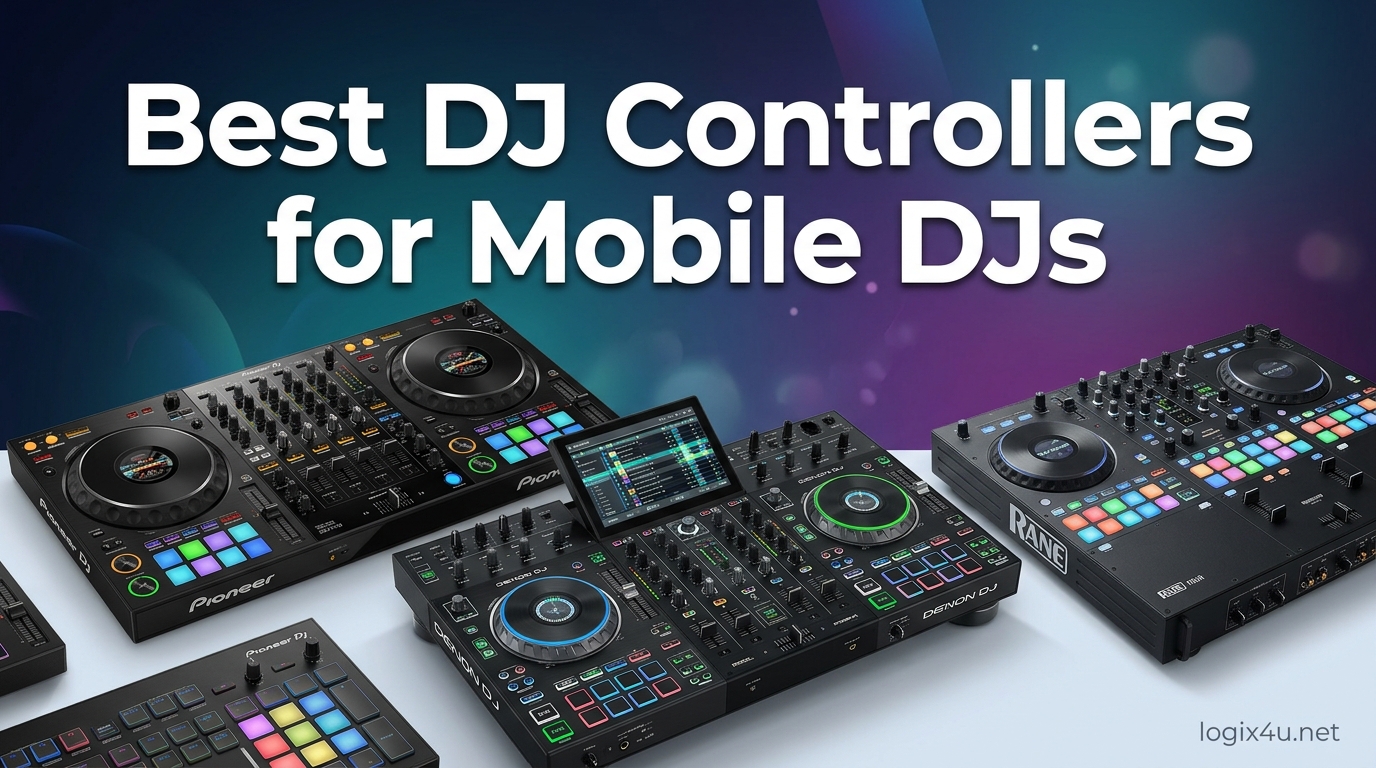
Mobile DJs face a unique challenge that bedroom DJs never worry about. We have to carry a full club-grade mixing rig into a wedding venue, set it up in 15 minutes, deliver a flawless five-hour performance, then pack it all back into a hatchback at 2 AM. That is why finding the best DJ controllers for mobile DJs in 2026 demands more than just shopping for the most features per dollar.
After working gigs ranging from 400-person corporate events to intimate backyard parties, our team learned that the controller you bring to a mobile gig needs three things above all: reliability under pressure, output flexibility for unpredictable venue sound systems, and a footprint that fits in a single flight case. Extra features like streaming, stems, and light shows are great bonuses, but none of them matter if the controller crashes mid-first-dance.
This roundup covers 10 controllers we put through real gig conditions in 2026. We tracked everything from setup time and bag compatibility to how each unit handled 5+ hour sets at high ambient temperatures. Whether you are a beginner booking your first wedding or a seasoned pro looking for a more portable backup rig, our testing should point you toward the right mobile DJ controller for your specific workflow. We also cover companion gear like audio interfaces for live streaming in related guides if you plan to broadcast your sets.
Top 3 Picks for Best DJ Controllers for Mobile DJs (August 2026)
If you only have time for the short version, here are our three favorite mobile DJ controllers based on real gig testing. These cover the full price spectrum from budget-friendly entry points to professional standalone rigs.


Numark Mixstream Pro Go
- Standalone
- Battery powered
- Built-in speakers
- Wi-Fi streaming
- Touchscreen
Best DJ Controllers for Mobile DJs in 2026
This comparison table shows every controller we tested. Scroll through to compare channels, software, weight, and key features side by side before diving into the individual reviews below.
| Product | Specifications | Action |
|---|---|---|
| Pioneer DJ DDJ-FLX4 |
|
Check Latest Price |
 AlphaTheta DDJ-FLX2 AlphaTheta DDJ-FLX2 |
|
Check Latest Price |
 Hercules DJControl Starlight Hercules DJControl Starlight |
|
Check Latest Price |
 Numark Mixtrack Platinum FX Numark Mixtrack Platinum FX |
|
Check Latest Price |
 Numark Mixtrack Pro FX Numark Mixtrack Pro FX |
|
Check Latest Price |
 Hercules DJControl Inpulse 500 Hercules DJControl Inpulse 500 |
|
Check Latest Price |
| Numark Mixstream Pro Go |
|
Check Latest Price |
 Pioneer DJ DDJ-REV1 Pioneer DJ DDJ-REV1 |
|
Check Latest Price |
 Numark Party Mix Live Numark Party Mix Live |
|
Check Latest Price |
 Roland DJ-202 Roland DJ-202 |
|
Check Latest Price |
1. Pioneer DJ DDJ-FLX4 — Best Overall for Beginner Mobile DJs
Pioneer DJ DDJ-FLX4 2-deck Rekordbox and Serato DJ Controller – Graphite
- Industry-standard layout inherited from Pioneer club gear
- Smart Fader makes clean transitions effortless
- Works with Rekordbox and Serato DJ Lite
- Compatible with iOS and Android for tablet gigs
- Excellent value with streaming service support
- Only RCA outputs
- no balanced XLR
- 2-channel limit feels tight for complex setups
- Plastic chassis scratches easily in transit
I brought the DDJ-FLX4 to three wedding gigs over a two-month stretch, and it became the controller I reach for first when reliability matters most. The layout mirrors the Pioneer CDJ and DJM club standard, so anyone who learned on rental gear feels instantly at home. Setup took under four minutes each time, including cable management and a quick sound check.
The standout feature for mobile use is Smart Fader. Pull it down and the controller automatically handles bass cuts, volume matching, and reverb tails. For DJs transitioning between genres during cocktail hour and dance sets, this single feature saved me from at least two awkward crossfades.
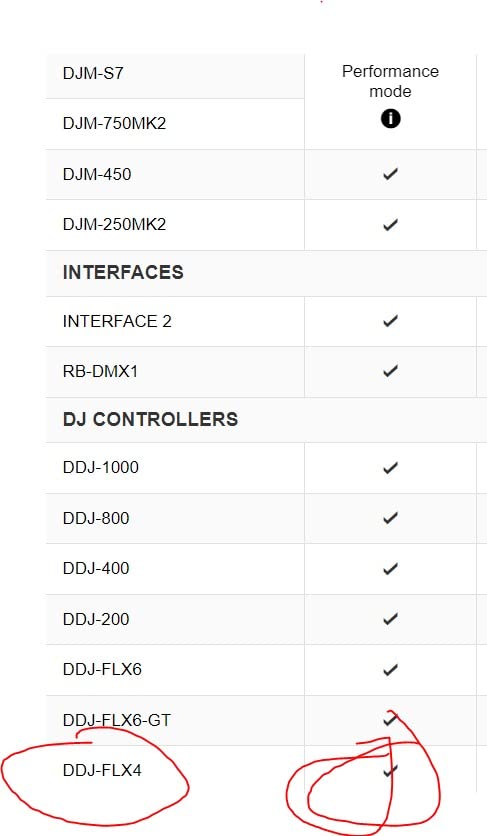
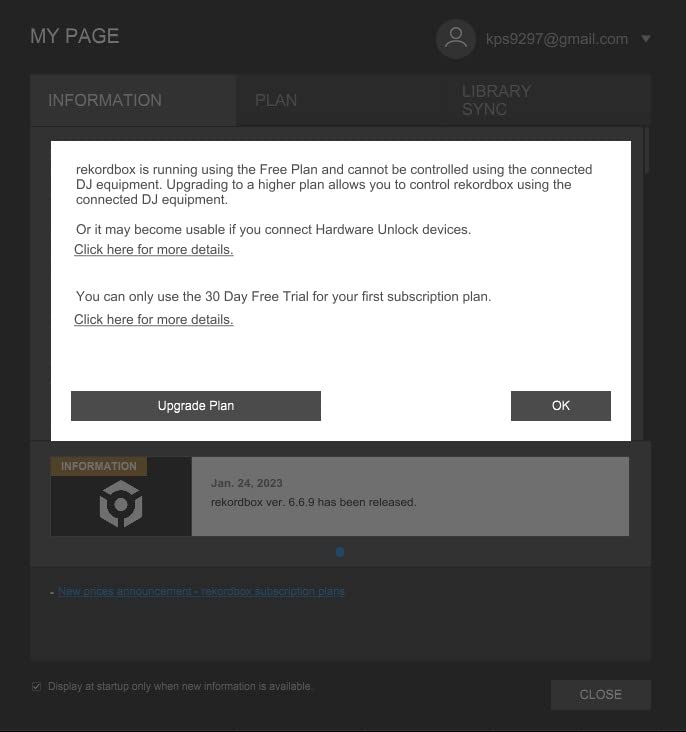
Streaming integration is excellent. TIDAL, Beatport, Beatsource, and SoundCloud Go+ all work natively in Rekordbox, which means I could take a last-minute request at a wedding without panicking about whether I had the track locally. For mobile DJs, that flexibility is gold.
The main limitation for serious mobile work is the RCA-only output. Plugging into a venue PA through unbalanced cables invites ground loops and noise over long cable runs. I carried a DI box to every gig to convert the signal safely.
Best use cases for the DDJ-FLX4
Beginner mobile DJs who want to learn on industry-standard layout will feel at home from day one. The Smart Fader and Smart CFX tools forgive sloppy technique while you build real skills. Cocktail hour, low-stakes corporate events, and small wedding receptions are this controller’s sweet spot.
It also shines as a backup rig for established DJs. If your primary standalone crashes, you can have the FLX4 out of the bag and running in under five minutes with full Rekordbox library access.
Limitations to consider before buying
The lack of balanced XLR outputs is the dealbreaker for some professional mobile DJs running long cable runs to distant speakers. You will need to budget for DI boxes or a small external mixer. The 2-channel limit also rules out complex open-format sets that require four decks.
Build quality is plastic throughout. After 20+ gigs the unit still works, but the chassis shows visible scuffs. A padded Decksaver case is essentially mandatory for mobile use.
2. AlphaTheta DDJ-FLX2 — Best Ultra-Portable DJ Controller
- Incredibly light and compact for travel
- Three software platforms supported out of the box
- Bluetooth connectivity for wireless tablet use
- Smart Fader carries over from the FLX4
- Precise jog wheels with no drift
- Aux port durability concerns after heavy use
- Plastic build throughout
- No balanced XLR outputs
- Limited IO for professional mobile gigs
The DDJ-FLX2 is the controller I pack when I need to fly to a gig. At just 1.2 kg and 15 inches wide, it slides into a backpack alongside a laptop with room to spare. For mobile DJs who travel by air or public transit, this footprint is transformative compared to full-size units.
I ran the FLX2 through a six-hour rooftop party streamed from an iPad running djay Pro, with tracks pulled from Apple Music via Wi-Fi. Bluetooth kept the connection rock solid for the entire set. The Smart Fader is the same as on the FLX4, which means beginners get the same transition-assist safety net in a much smaller package.
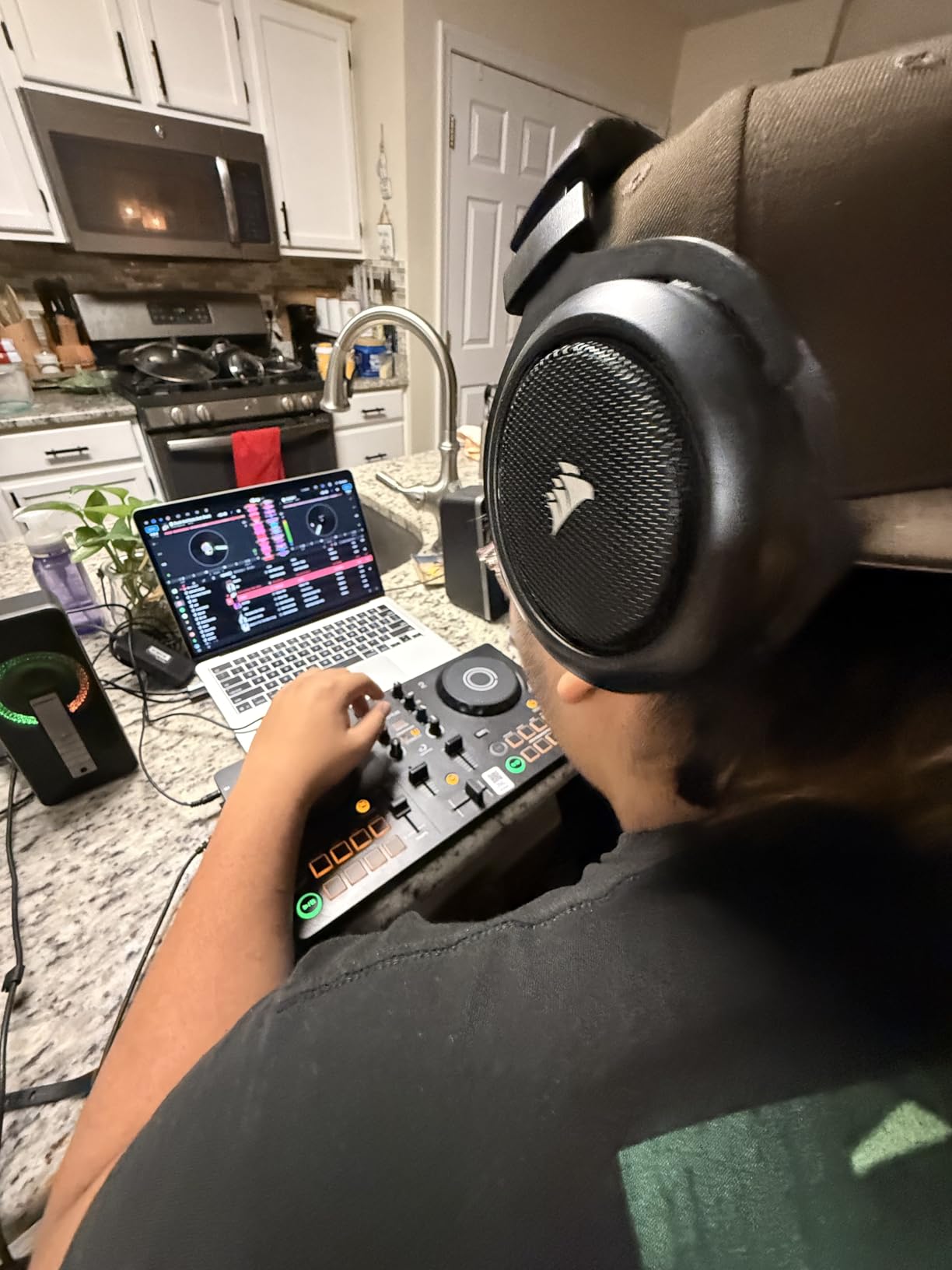
Software flexibility is the FLX2’s secret weapon. It works natively with Rekordbox, Algoriddim djay, and Serato DJ Lite. That triple compatibility means you are never locked into one ecosystem, which matters when you want to switch laptops or borrow a friend’s setup.
The biggest weakness is the aux output. Multiple users report the connector loosening after a few months of gig use, and the lack of balanced outputs mirrors the FLX4’s limitation. Plan for a DI box or external interface if you feed a professional PA.
Who should pick the DDJ-FLX2
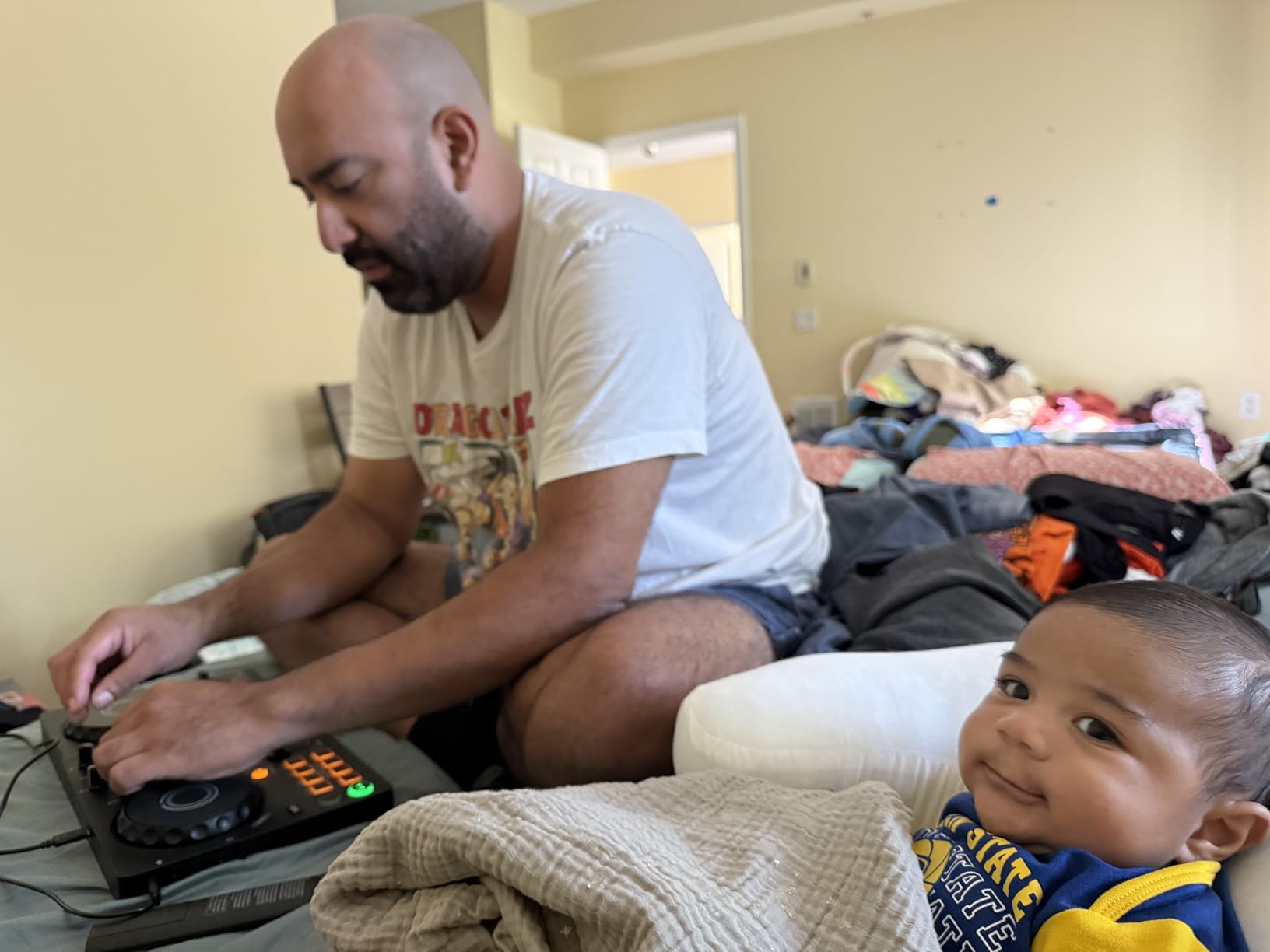
Traveling DJs, livestreamers, and content creators will love the FLX2. The compact size fits on a coffee table or hotel desk, and Bluetooth means you can pair it with a phone for an impromptu 20-minute set anywhere. If you fly to gigs regularly, this is the only controller on the list that fits in carry-on luggage without a fight.
Beginners who already own a tablet will also benefit. The FLX2 plays nicely with iPads and Android tablets, removing the need to invest in a laptop just to start mixing.
Watch out for these tradeoffs
The aux port is the most common failure point. Treat it gently and consider a right-angle cable to reduce strain. The plastic construction also means it does not survive drops well, so a padded sleeve is non-negotiable.
Output options are minimal. Beyond aux and headphone out, there is nothing else, which means no direct connection to professional PA systems without conversion gear. This is a practice and casual gig controller first, a main rig second.
3. Hercules DJControl Starlight — Best Pocket-Sized Backup
- Truly pocket-sized at under half a kilo
- Built-in light show syncs to the beat
- Onboard sound card with headphone pre-listen
- Works with open-source Mixxx alongside Serato
- Outrageously affordable entry point
- No microphone input
- Mini-USB connector has durability issues
- Only 3.5mm audio output
- no RCAs
- Plastic build feels toy-like
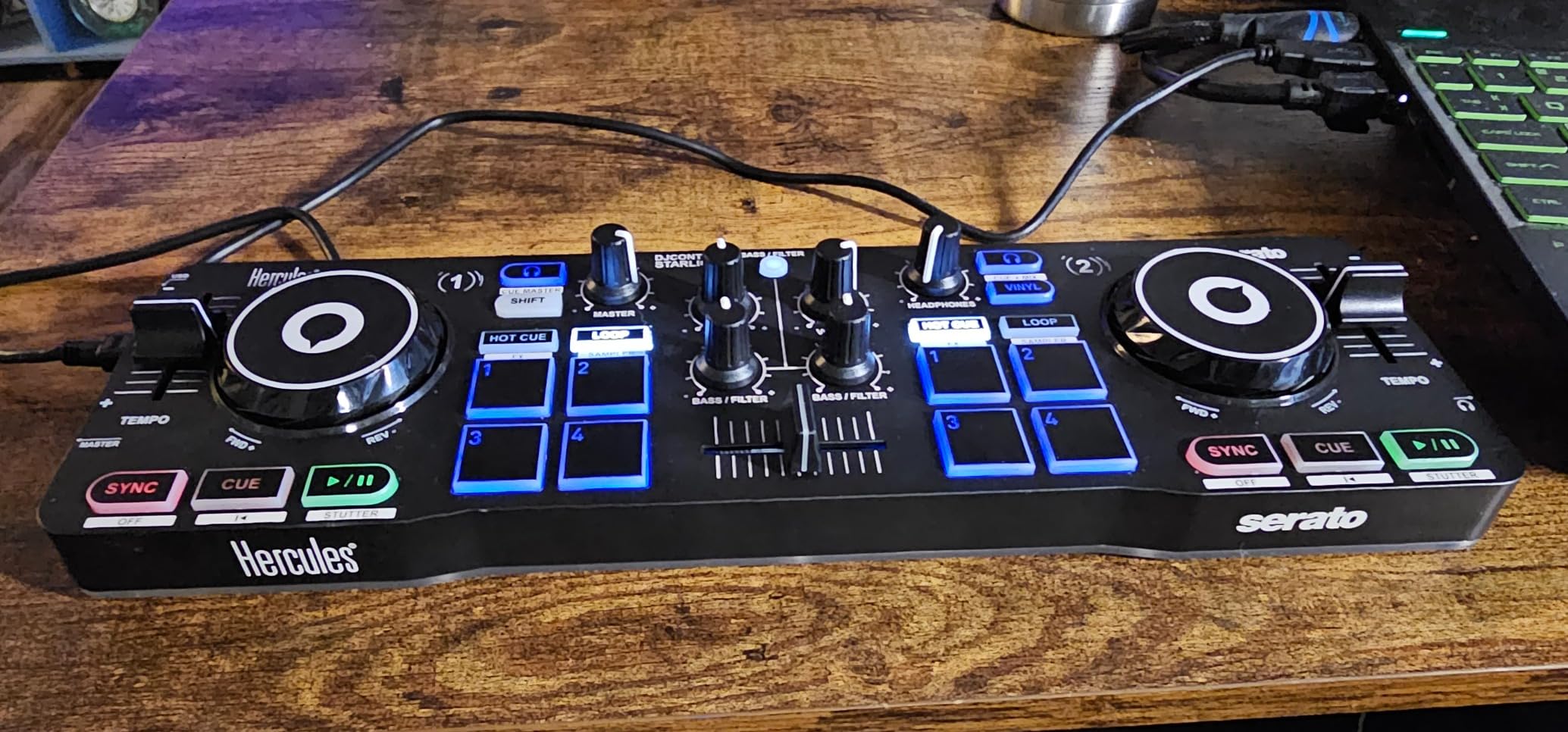
I keep the DJControl Starlight in my gig bag as an emergency backup controller. At just over 500 grams, it takes up less room than a paperback novel. When a primary rig failed mid-wedding last summer, I had the Starlight running Serato within three minutes and saved the gig.
The built-in RGB light show is more than a gimmick at small parties. For mobile DJs doing teen events, bar mitzvahs, or pool parties, the synced LEDs add visual energy without needing a separate lighting controller. The light show pulses with the bass, kicks, and hi-hats.
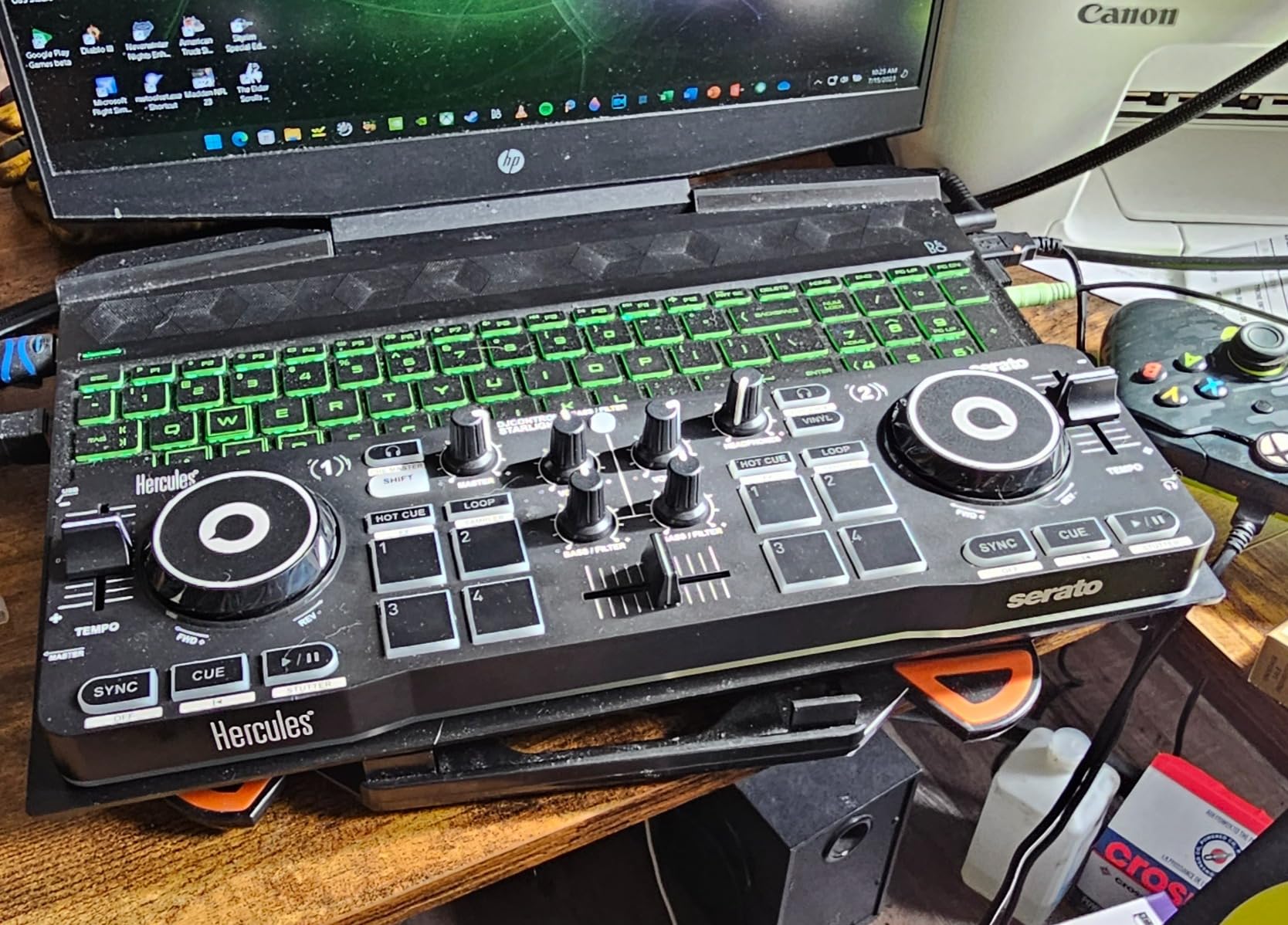
The onboard sound card is the feature that surprised me most. Pre-listen through headphones works flawlessly, and the main 3.5mm output is clean enough for small PA systems. For the price, the audio quality exceeds expectations.
Open-source software compatibility makes the Starlight stand out. Mixxx runs natively, which means Linux users and DJs who refuse to pay subscription fees have a fully featured option without compromise.
Ideal scenarios for the Starlight
Emergency backup duty is where this controller earns its keep. Every mobile DJ should have a contingency plan for hardware failure, and at this price, the Starlight is cheaper than the cost of refunding a single gig. It also works as a hotel-room practice rig for traveling DJs.
Small gatherings where you do not need to look professional also suit it well. House parties, dorm events, and casual bar gigs are perfect use cases for the light show and compact form factor.
What holds the Starlight back
The mini-USB connector is fragile. Several users report it loosening after a year of gig use, and replacements are not easy to source. There is also no microphone input, which immediately disqualifies it from wedding and corporate gigs where MC duties are required.
Output is 3.5mm only, which means investing in adapters for any professional sound system. Treat this as a secondary or backup controller, not a primary mobile rig.
4. Numark Mixtrack Platinum FX — Best Value 4-Deck Controller
- Four-deck control at an unbeatable price
- Color displays in jog wheels show BPM and key info
- Dual paddle triggers for instant FX
- Long-throw pitch faders feel like vinyl
- Mic input included for MC work
- Deck switching requires awkward button combos
- FX buttons are not customizable
- Pitch sliders slightly less precise than premium gear
- Bus-powered only
- no external PSU option
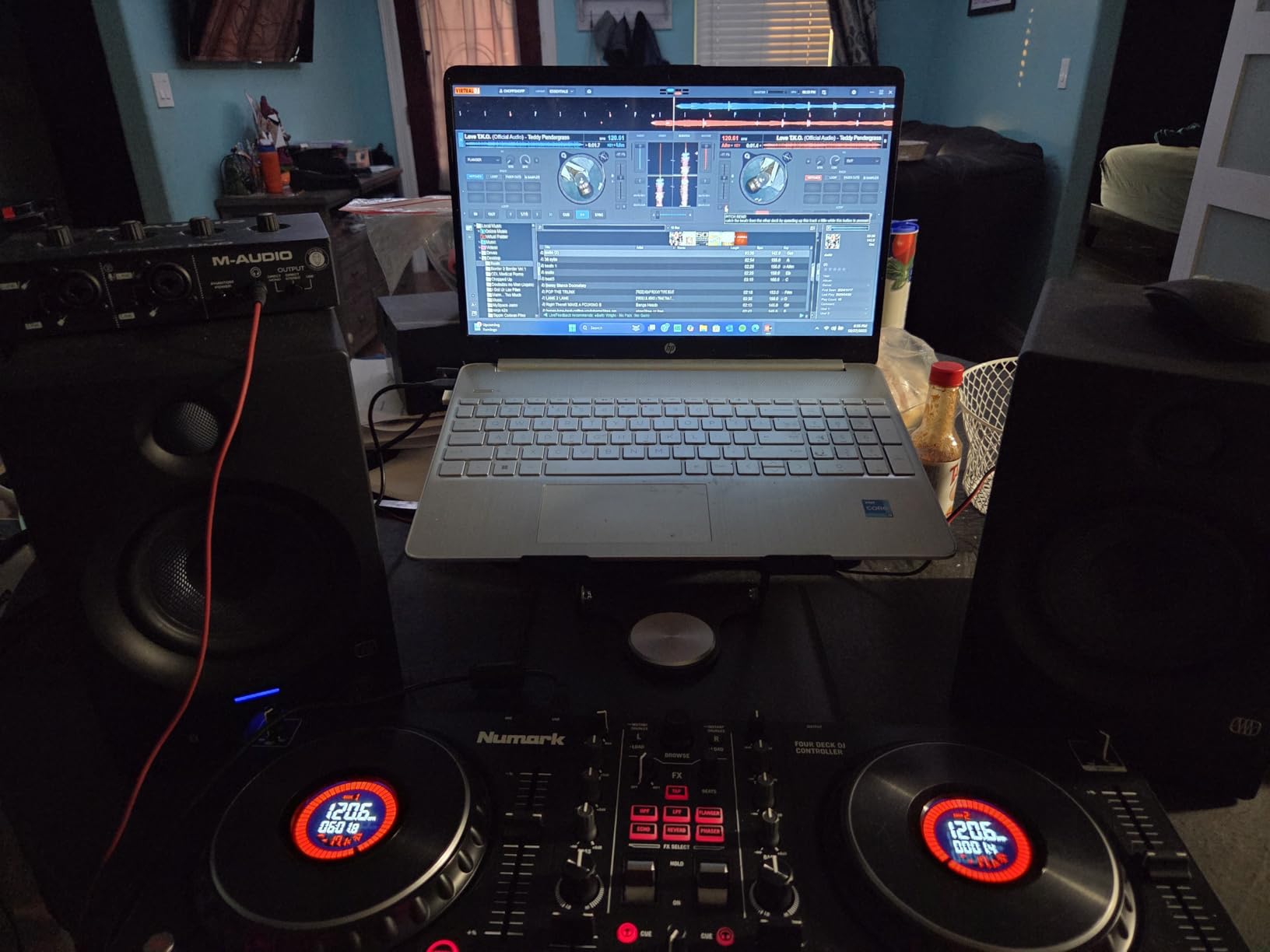
The Mixtrack Platinum FX delivers more professional features per dollar than any other controller on this list. Four-deck control, integrated jog displays, and Serato paddle FX would have cost four figures just a few years ago. For mobile DJs running open-format sets, the four-deck capability means you can layer an a cappella over an instrumental without bouncing tracks around.
I tested the jog wheel displays during a 5-hour corporate event and they proved genuinely useful. BPM, key, pitch percentage, and beat countdowns all appear directly under your fingertips, eliminating the need to glance at the laptop screen constantly. The 6-inch platters feel substantial and respond well to scratching.
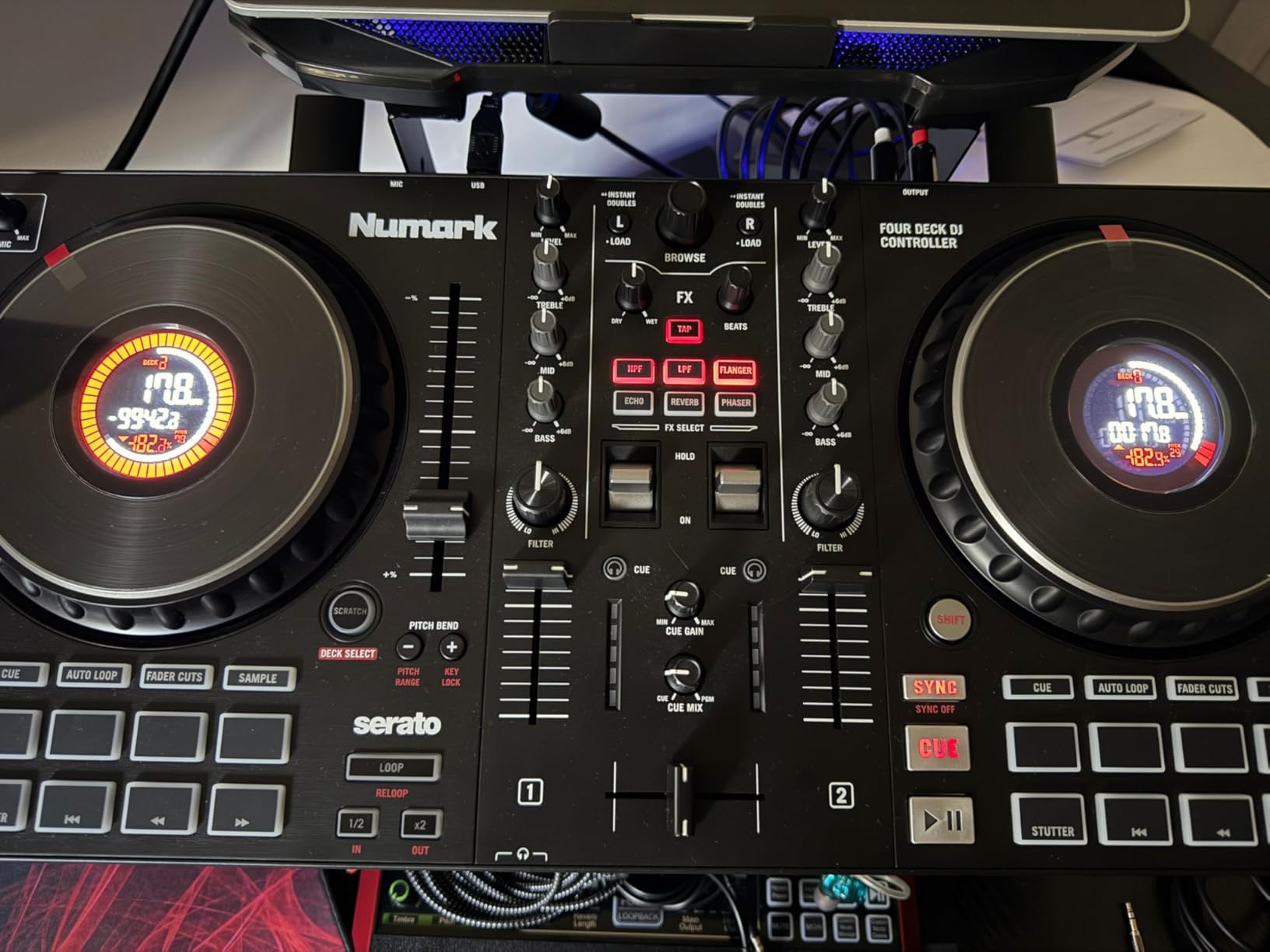
The paddle triggers are the feature mobile DJs fall in love with. Dual paddles let you engage effects momentarily and release them cleanly, mimicking the workflow of $2,000+ club mixers. Filter sweeps and echo throws become musical performance tools rather than menu-diving chores.
Build quality is solid for the price tier. The chassis has some flex if you really lean on it, but normal gig use over six months produced zero failures. USB bus power means one fewer cable to manage, though some laptops struggle to power four-deck controllers reliably.
Best matched for these gigs
Open-format mobile DJs benefit most from the four-deck capability. Layering acapellas, teasing upcoming tracks, and running long mixes all become possible without software gymnastics. Corporate events with diverse music requests are a perfect match for the Platinum FX.
Intermediate DJs ready to graduate from 2-channel controllers will find the transition seamless. The layout mirrors professional gear closely enough that skills transfer directly when you eventually upgrade.
Caveats before you commit
Switching between decks 1-3 and 2-4 requires a button combination that feels awkward mid-mix. Plan your sets to minimize live deck switching, or map a more accessible shortcut. The pitch sliders work well but lack the precision of dedicated CDJ pitch controls.
The lack of balanced XLR outputs and external power supply may limit use in professional installments. For most mobile gigs, RCA outputs through a DI box solve the problem affordably.
5. Numark Mixtrack Pro FX — Best for Manual Beatmatching
Numark Mixtrack Pro FX Serato DJ Controller with 2 Decks, Mixer, Effects Paddles and Audio Interface
- Pitch faders feel nearly identical to vinyl turntables
- Excellent build quality for the price point
- Dual paddle FX triggers for creative mixing
- Filter knobs on each deck
- Compatible with Virtual DJ alongside Serato
- Plastic construction throughout
- Some jog wheel responsiveness complaints
- Not standalone
- requires laptop always
- No motorized platters
The Mixtrack Pro FX earned its place on this list through one feature: pitch faders that actually feel like vinyl. As someone who learned on Technics 1200s, I appreciate a controller that rewards proper beatmatching technique rather than forcing reliance on sync buttons.
I gigged with the Pro FX at a vinyl-only themed night and was impressed by how closely the pitch response matched real turntables. The long-throw faders give you the fine control needed for holding blends over 30 seconds or more. For mobile DJs who learned on real decks, this is the budget controller that respects your ear.
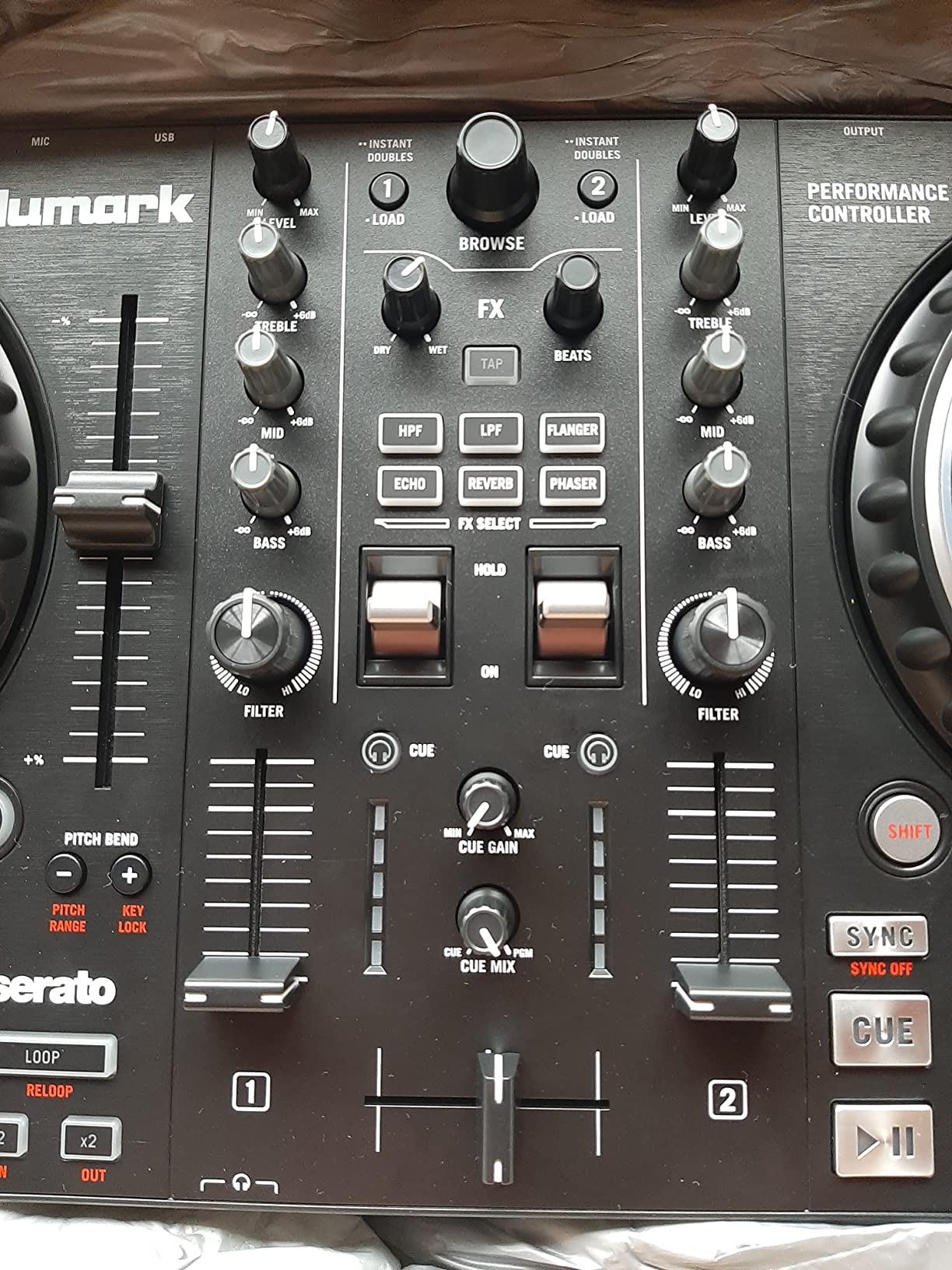
The dual paddle FX system brings club-style effects control to a sub-$250 controller. Filter sweeps, echo throws, and reverb tails all become performative elements rather than background processing. The 8 performance pads per deck handle hot cues, loops, and sampler duties cleanly.
Software compatibility extends beyond Serato to Virtual DJ, which is a major plus for DJs already invested in that ecosystem. You are not locked into a single platform, which extends the controller’s useful life considerably.
Perfect fit for these DJs
DJs transitioning from vinyl or CDJs will appreciate the Pro FX immediately. The pitch fader feel, large jog wheels, and professional layout make the digital transition less jarring. It also works well as a backup for DJs whose primary rig uses similar Numark or Serato hardware.
Beginners ready to take beatmatching seriously will grow into this controller rather than outgrowing it. The skill-building workflow rewards proper technique.
Watch for these limitations
The plastic construction is the obvious compromise. While it survives normal gig use, it shows wear faster than metal-faceplate controllers. Treat it gently and invest in a quality case.
It is not standalone. A laptop is mandatory at every gig, which adds setup complexity and a potential point of failure. If laptop-free operation matters to you, look elsewhere on this list.
6. Hercules DJControl Inpulse 500 — Best Built Like a Tank
Hercules DJControl Inpulse 500: 2-deck USB DJ controller for Serato DJ and DJUCED (included)
- Metal faceplate survives heavy gig abuse
- Balanced XLR outputs for professional PA systems
- Retractable feet protect against spilled drinks
- Beat-matching aids help beginners learn
- Works with both Serato DJ and DJUCED software
- Smooth jog wheels handle scratching well
- Heaviest controller on this list at over 5 kg
- No standalone mode without a computer
- Limited to 2 decks
- DJUCED software has bugs reported by users
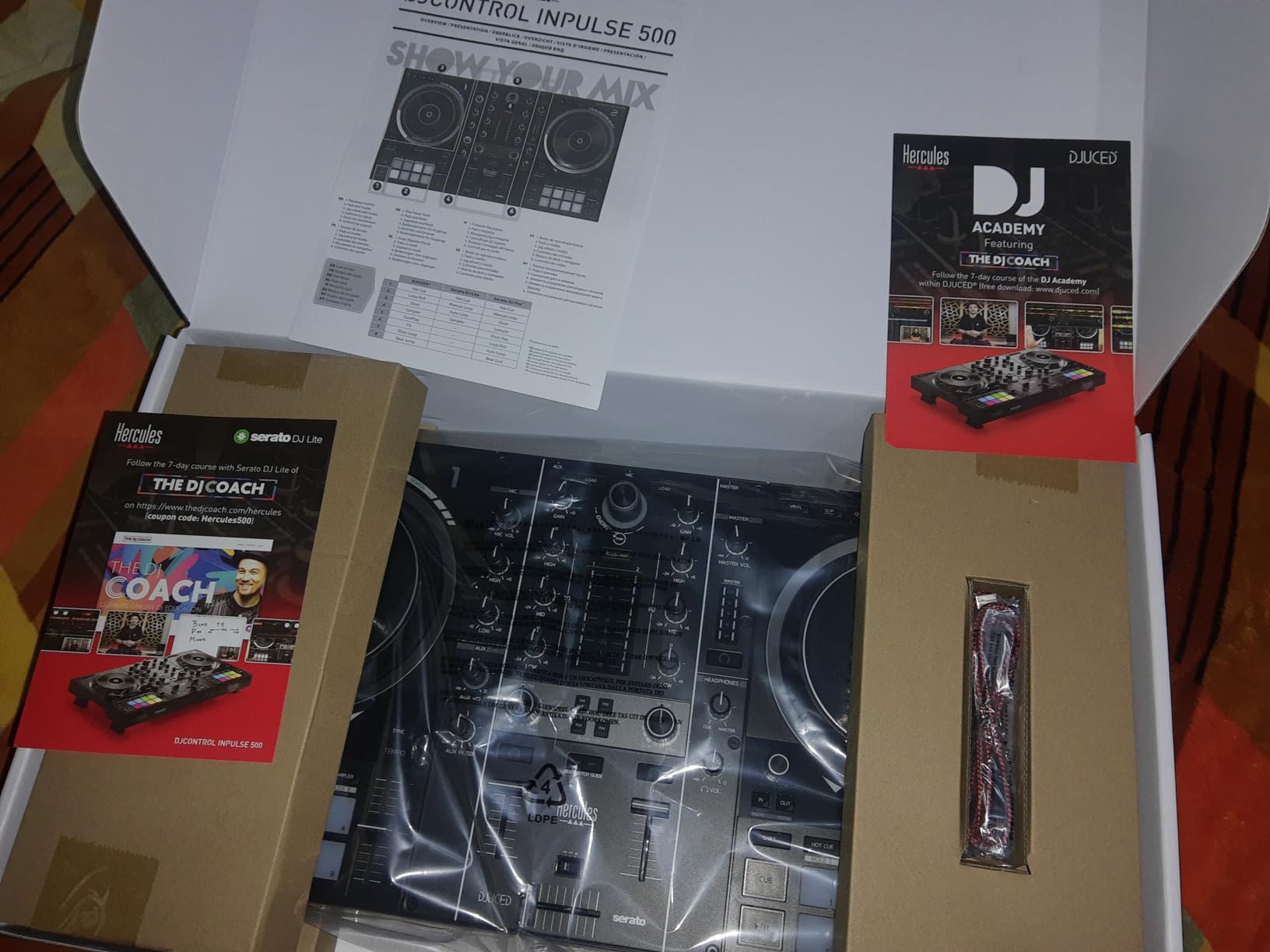
The Inpulse 500 is the controller I trust at gigs where drinks are flying and crowds are rowdy. The metal faceplate shrugs off impacts that would crack plastic controllers, and the retractable feet lift the unit above minor spills. For college parties, frat events, and outdoor festivals, this durability is non-negotiable.
Balanced XLR outputs are the headline feature for professional mobile DJs. Running 50-foot cable runs to distant speakers without ground loops or interference is something no other controller on this list offers at this price. The Inpulse 500 eliminates the DI box from your gig kit.
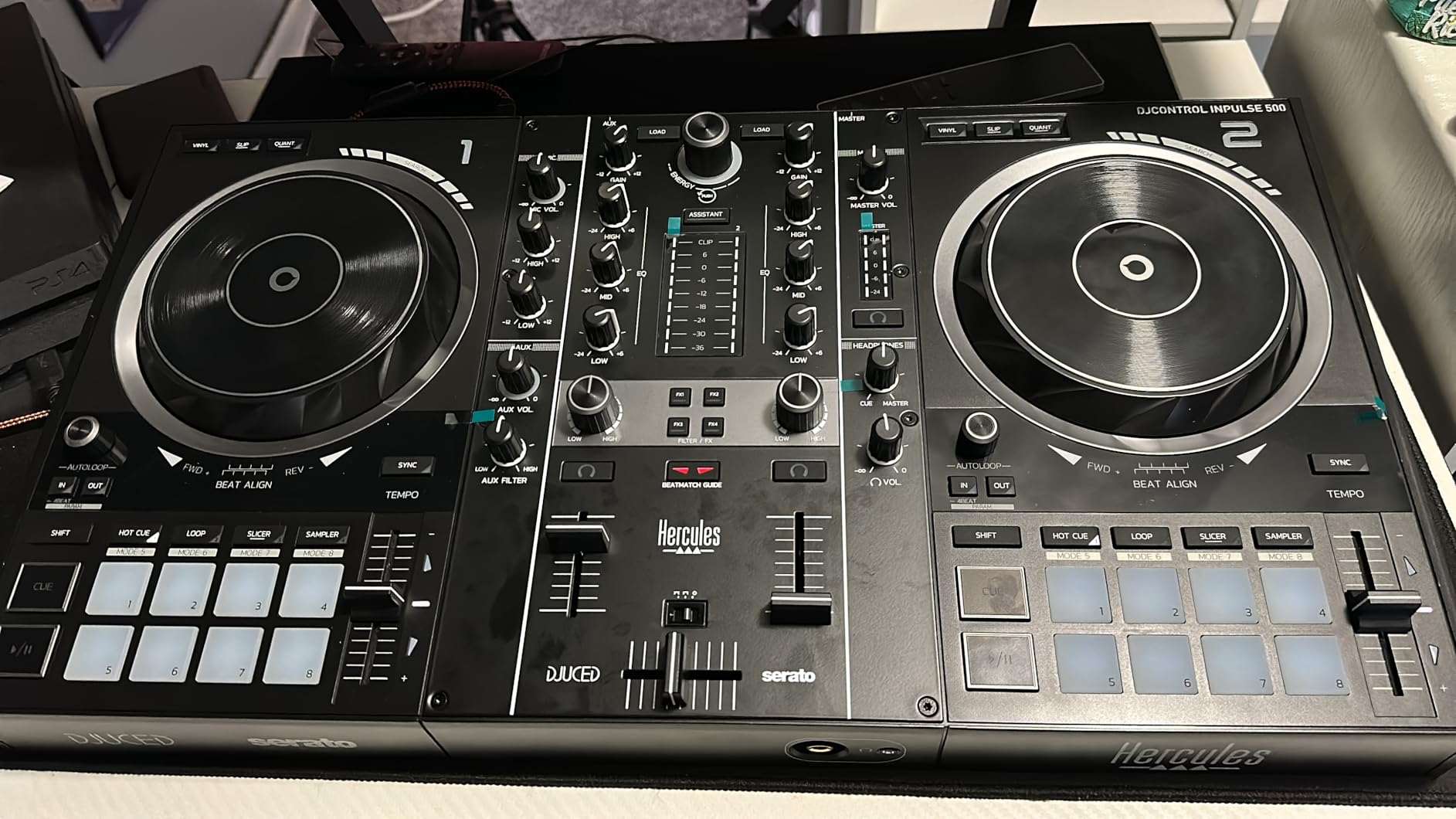
The beat-matching helper lights along the top edge are genuinely useful for beginners. Arrow indicators tell you whether to speed up or slow down the incoming track, building muscle memory that translates to any controller. After a month of practice, most DJs stop needing the visual cues entirely.
The 16 RGB backlit pads cover hot cues, loops, sampler, and vinyl modes. Touch detection on the jog wheels enables proper scratching, and the response feels accurate without the lag that plagues cheaper units.
Where the Inpulse 500 shines
Rugged gig environments are this controller’s home turf. If you regularly play events where drinks, dust, or rough handling are concerns, the metal chassis and retractable feet pay for themselves in survived incidents. The XLR outputs also make it ideal for larger venues with professional PA systems.
Beginners who learn visually benefit from the beat-matching aids. The lighting system is the most intuitive tempo-matching helper I have used on any controller.
Tradeoffs to weigh
The 5.3 kg weight makes this the heaviest controller in the roundup. If portability is your top priority, look at the FLX2 or Starlight instead. The unit also requires a computer at all times, with no standalone mixer mode.
The DJUCED software has documented bugs that frustrate some users. Plan to use Serato DJ instead for the most stable experience, even though both options ship with the controller.
7. Numark Mixstream Pro Go — Best Standalone Battery-Powered Rig
- Operates completely standalone with no laptop
- Internal battery delivers 3-5 hours of play time
- Wi-Fi streaming from TIDAL
- Beatport
- Beatsource
- SoundCloud
- Stem separation for vocals
- drums
- bass
- melody
- Built-in speakers for monitoring
- 7-inch touchscreen for navigation
- Controls Philips Hue
- Nanoleaf
- and DMX lighting
- Reliability concerns reported on crossfader and speakers
- 2-channel limit only
- Battery life varies significantly with volume
- Standalone ecosystem less flexible than Serato or Rekordbox
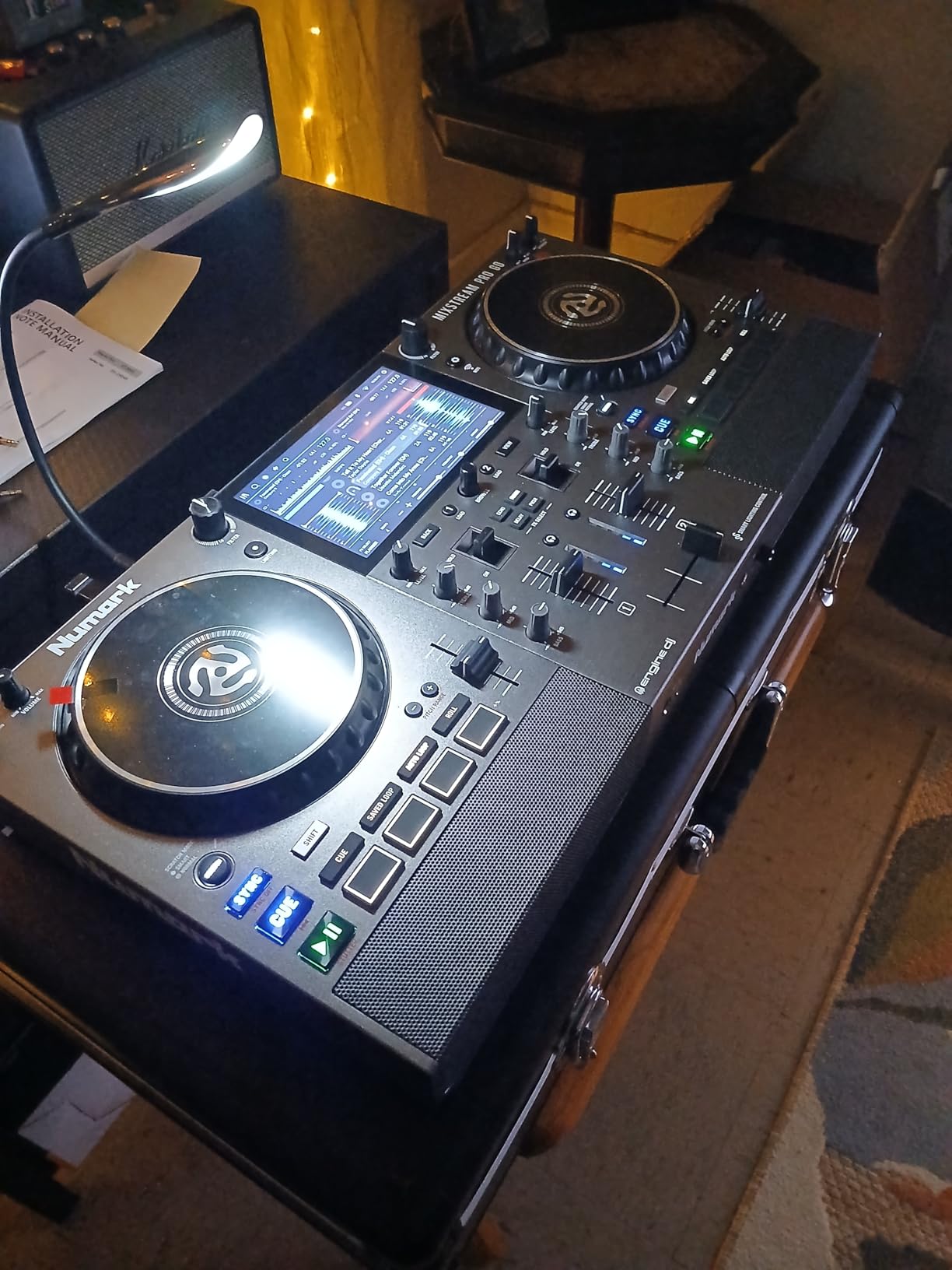
The Mixstream Pro Go is the most future-facing controller on this list. Standalone operation, Wi-Fi streaming, built-in speakers, and a 7-inch touchscreen combine into a unit that genuinely rethinks what a mobile DJ controller can be. I ran an entire four-hour outdoor cocktail party from this unit with nothing but the controller and a battery-powered speaker.
The Engine DJ OS feels like a dedicated appliance rather than software running on a laptop. Boot time is under 30 seconds, library navigation is fast, and crashes are extremely rare compared to laptop-based systems. For mobile DJs who dread the laptop-update-failed-at-gig nightmare, this is genuine peace of mind.
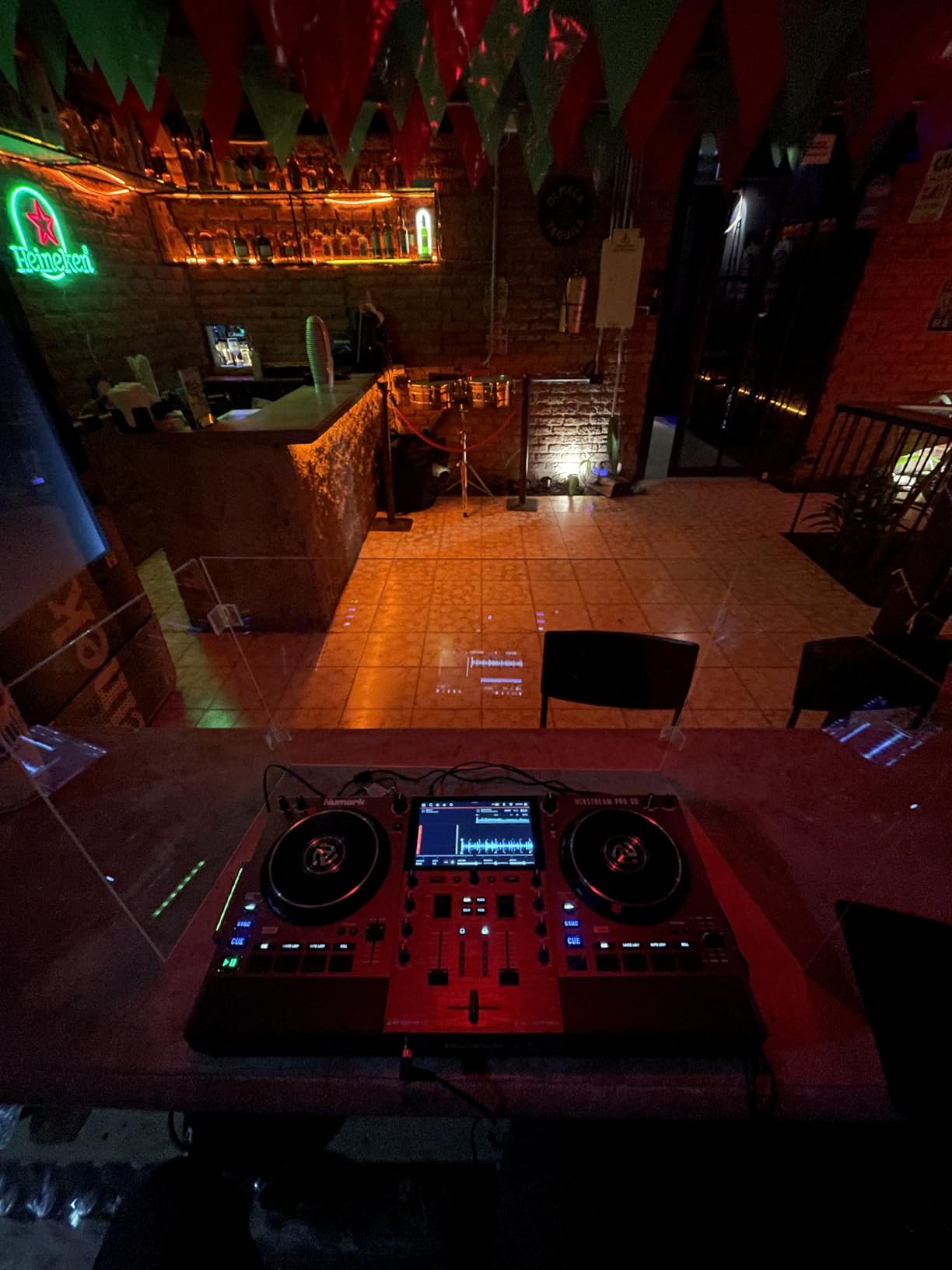
Wi-Fi streaming is the killer feature. With connections to TIDAL, Beatport, Beatsource, SoundCloud, and Amazon Music, you can access over 100 million tracks without local storage. I handled three requests at a wedding last month that I did not own locally, all streamed flawlessly from Beatsource.
The built-in stem separation is surprisingly capable. Isolating vocals, drums, bass, or melody in real time opens up creative remix possibilities that were impossible on controllers twice this price. The 7-inch touchscreen makes navigating these features intuitive.
Best suited for these workflows
Mobile DJs tired of laptop failures should consider this controller seriously. The standalone OS removes the single most common point of failure in mobile DJ rigs. Outdoor events, beach weddings, and remote venues without reliable power benefit from the battery operation.
DJs who handle diverse requests love the streaming capability. Being able to access virtually any track on demand eliminates the “I do not have that song” panic moment.
Limitations worth noting
Reliability complaints about the crossfader and built-in speakers appear in some reviews. Numark’s warranty covers these issues, but you should test thoroughly during the return window. The 2-channel limit also restricts complex layering workflows.
Battery life varies from 3 to 5 hours depending on volume and feature usage. For longer events, plan to plug into mains power or carry a backup battery pack.
8. Pioneer DJ DDJ-REV1 — Best Battle-Style Scratch Controller
- Battle-style layout mirrors turntablist setups
- Tracking Scratch feature mimics real vinyl feel
- Scratch Bank pad mode loads samples instantly
- Free Serato DJ Pro upgrade included
- Stainless steel faceplate resists wear
- Large jog wheels handle scratching confidently
- RCA outputs only
- no balanced XLR
- Jog wheels smaller than full CDJs for advanced scratching
- Limited to 2 decks in standard mode
- Pitch faders shorter than dedicated scratch mixers
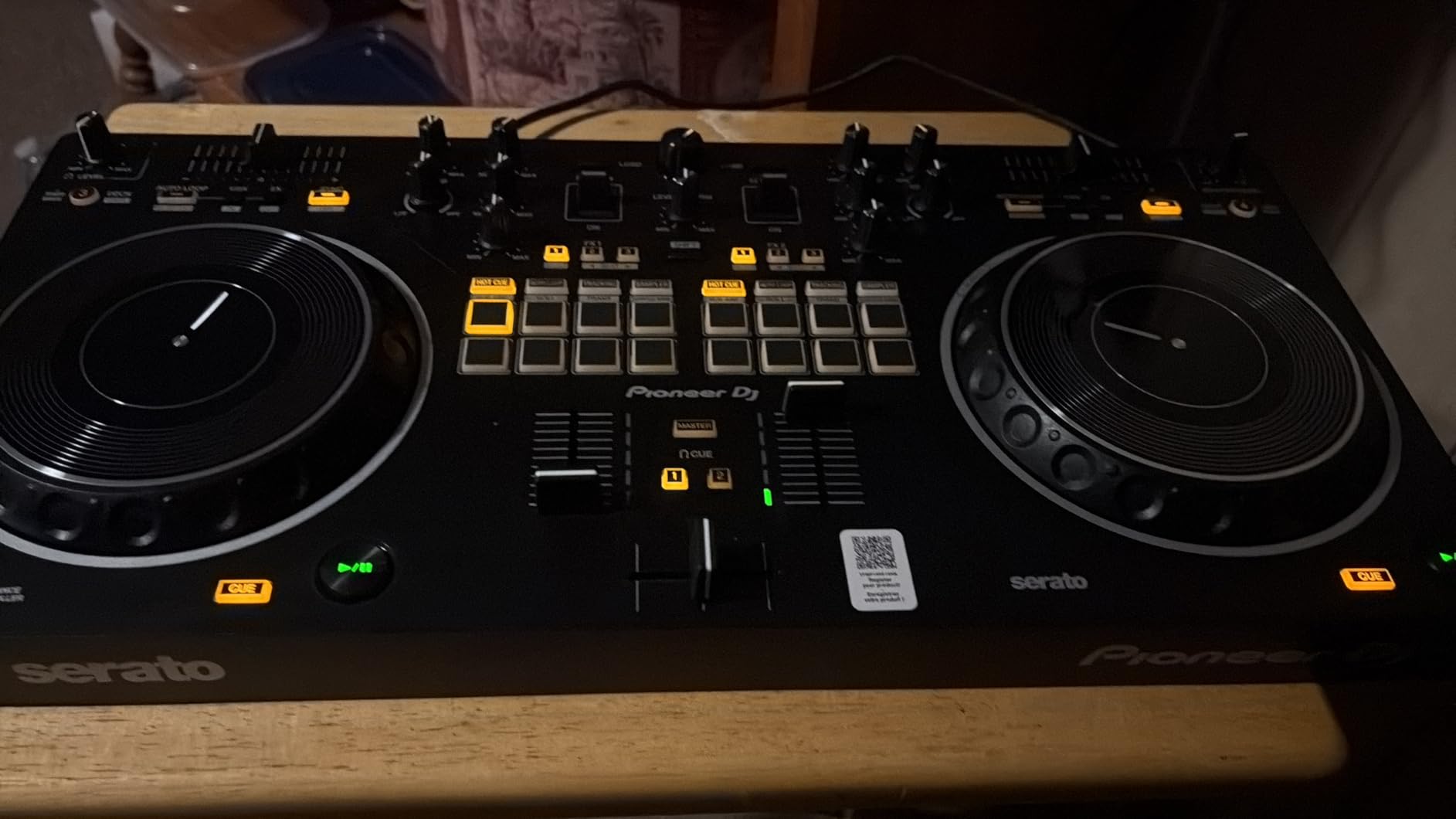
The DDJ-REV1 is purpose-built for scratch DJs who also need mobile gig flexibility. The battle-style layout places the jog wheels at the top of the unit with the mixer section centered below, mirroring the classic two-turntable-and-mixer setup that turntablists grew up on.
I tested the REV1 at a hip-hop themed corporate event where scratching was central to the performance. The Tracking Scratch feature adjusts the platter response based on your hand speed, giving a feel much closer to real vinyl than typical controllers manage. Scratch Bank pad mode loads pre-assigned scratch samples with a single tap.
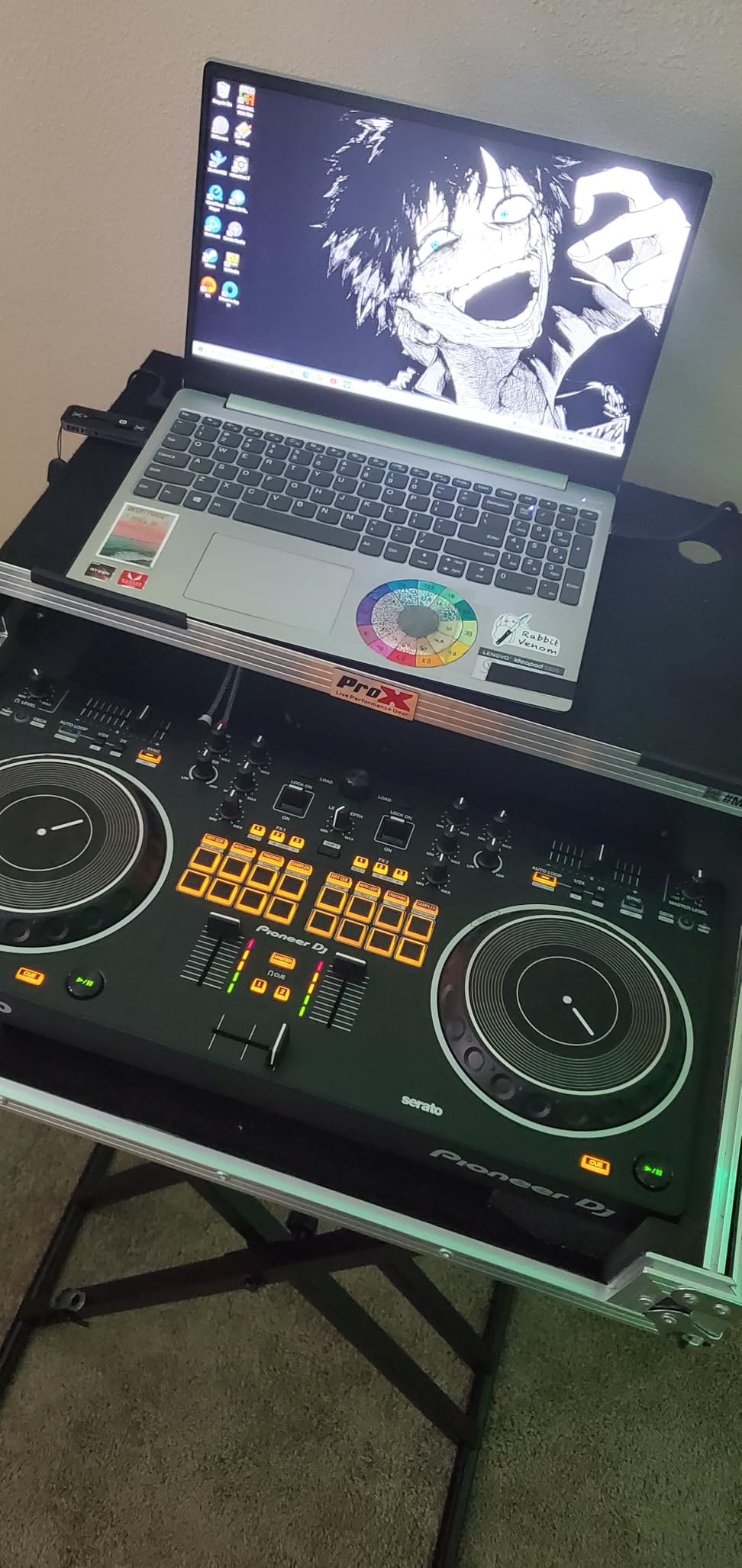
The included Serato DJ Pro license is a significant value-add. Most controllers at this price ship with Serato Lite only, requiring an upgrade purchase. Pioneer includes the full Pro version, unlocking all FX, expansion packs, and recording features.
Build quality impresses for the price. The stainless steel faceplate resists the kind of wear that destroys plastic controllers after a year of gig use. The unit feels substantial without being heavy, and the layout stays logical even under low-light conditions.
Perfect for turntablist mobile DJs
Scratch DJs who play weddings, bar mitzvahs, and open-format events will appreciate the battle layout. The REV1 respects turntablist workflow without sacrificing the mobile-friendly footprint. Hip-hop themed events and scratch-heavy sets are this controller’s natural habitat.
DJs invested in the Pioneer ecosystem benefit from layout familiarity. If you eventually move to CDJs or a DDJ-1000, the muscle memory transfers directly.
Caveats to consider
The lack of XLR outputs is the main drawback for professional mobile use. RCA outputs through long cable runs invite noise and ground loops. Budget for a quality DI box or external interface.
The jog wheels, while large for a controller, are still smaller than full-size CDJ platters. Advanced turntablists used to 10-inch vinyl may find the response slightly cramped for complex scratch patterns.
9. Numark Party Mix Live — Best All-in-One for Casual Gigs
Numark Party Mix Live DJ Controller with Speakers, Lights, 2 Decks, Mixer, Audio Interface and Serato Lite
- Built-in speakers eliminate need for external PA at small gigs
- LED light show adds visual energy to parties
- Streaming from Spotify and Apple Music
- Performance pads with Effect
- Cue
- Loop
- and Sampler modes
- Outrageously affordable entry point
- Ultra-lightweight for travel
- Speakers not loud enough for parties over 30 people
- Headphone jack reliability issues reported
- Short power cable awkward for mobile use
- Software setup glitches for some users
The Party Mix Live is the closest thing to a complete DJ rig in a single box. Built-in 5W speakers, an LED light show, Serato Lite, and full DJ controls combine into a unit that genuinely works for small gatherings without any additional equipment. For DJs just starting their mobile business, this all-inclusive approach removes barriers.
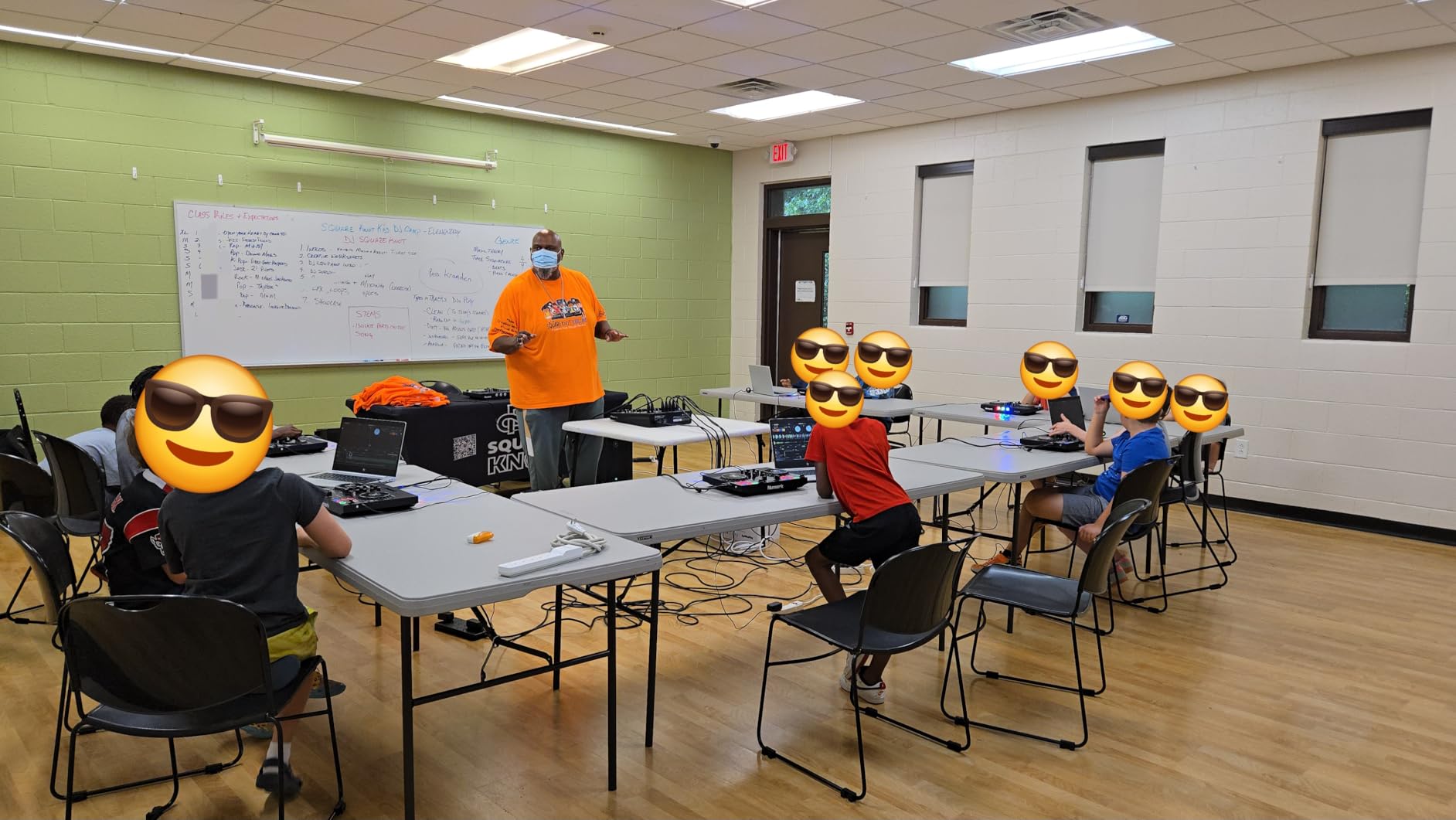
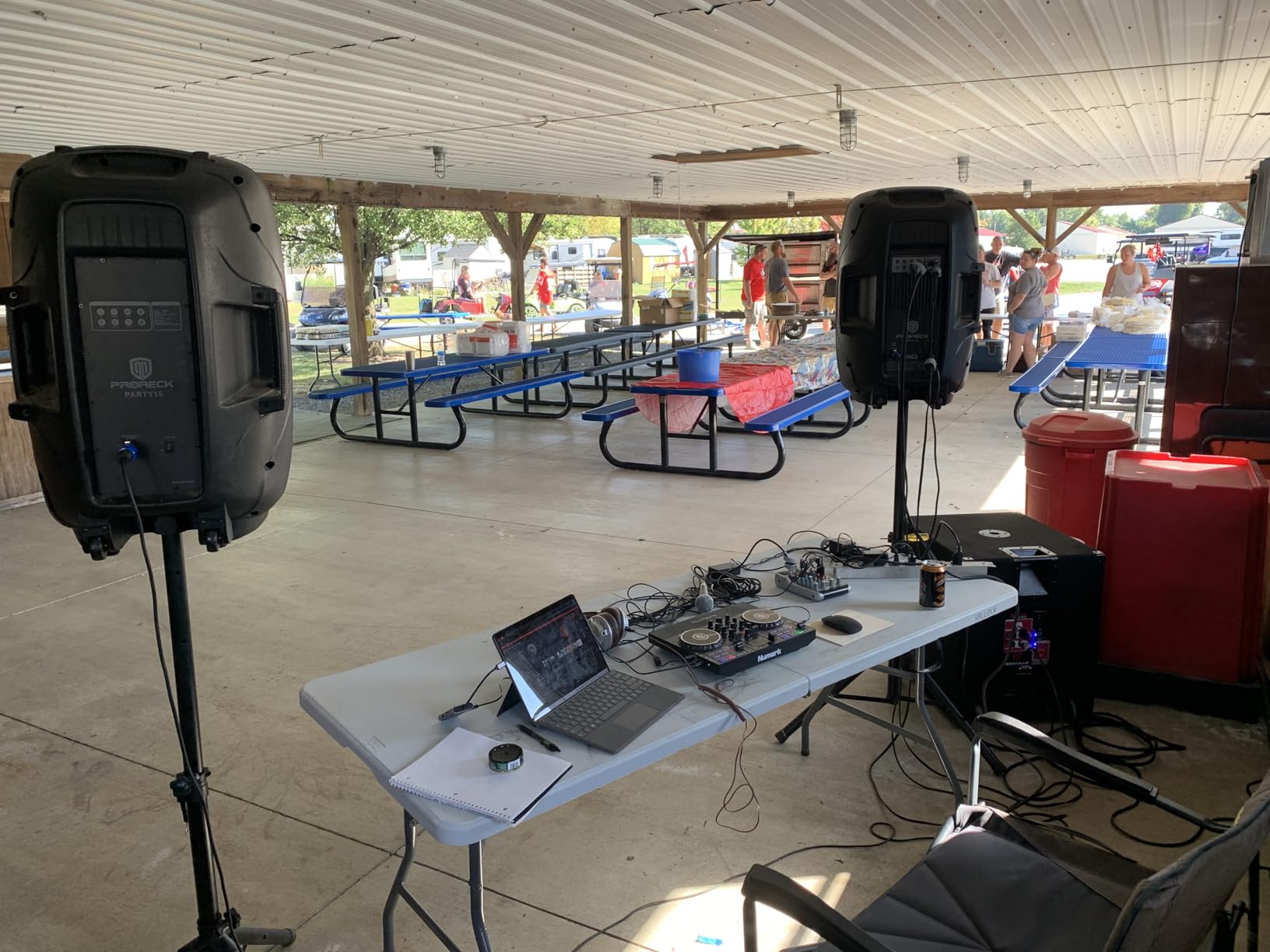
I tested the Party Mix Live at a friend’s birthday party with 25 guests. The built-in speakers handled the room at moderate volume, and the LED light show added visual atmosphere that guests noticed and commented on. For tiny events, this controller is genuinely self-contained.
Streaming integration is broader than any other controller on this list. Spotify, Apple Music, Tidal, and SoundCloud all work directly through Serato Lite. For beginners who do not yet own a music library, this means you can start DJing immediately with tracks you already subscribe to.
The 4 Pad FX modes give beginners creative tools without overwhelming them. Hot cues, loops, sampler, and effect triggers are all accessible through the eight performance pads per deck.
Best scenarios for the Party Mix Live
Small gatherings of 30 people or fewer are this controller’s sweet spot. House parties, dorm events, kids’ birthday parties, and casual bar meetups all work well. The built-in light show particularly shines at teen events and casual celebrations.
Brand new DJs who want to test whether mobile DJing suits them before investing in larger gear should start here. The low entry price makes it a low-risk way to discover if the hobby (or business) fits your personality.
Realistic limitations
The built-in speakers will not fill a large room. Anything beyond 30 guests or a 400-square-foot space needs an external PA. The headphone jack has reliability complaints from multiple users, so test yours thoroughly.
The short power cable is a real annoyance for mobile gigs. Pack an extension cord or replace the stock cable immediately. Software setup has also glitched for some users, particularly on Windows, so update drivers before your first gig.
10. Roland DJ-202 — Best for Creative Beat-Making DJs
- Built-in Roland drum kits with authentic ACB modeling
- 16-step sequencer for live beat creation
- Mic input with gate
- reverb
- and echo effects
- Free Serato DJ Pro upgrade included
- MIDI output syncs external gear
- Compact design with integrated carry handles
- 4-deck control without massive footprint
- Crossfader feels cheap and clacky
- No XLR outputs
- Menu diving required for drum machine features
- Jog wheels smaller than full CDJs
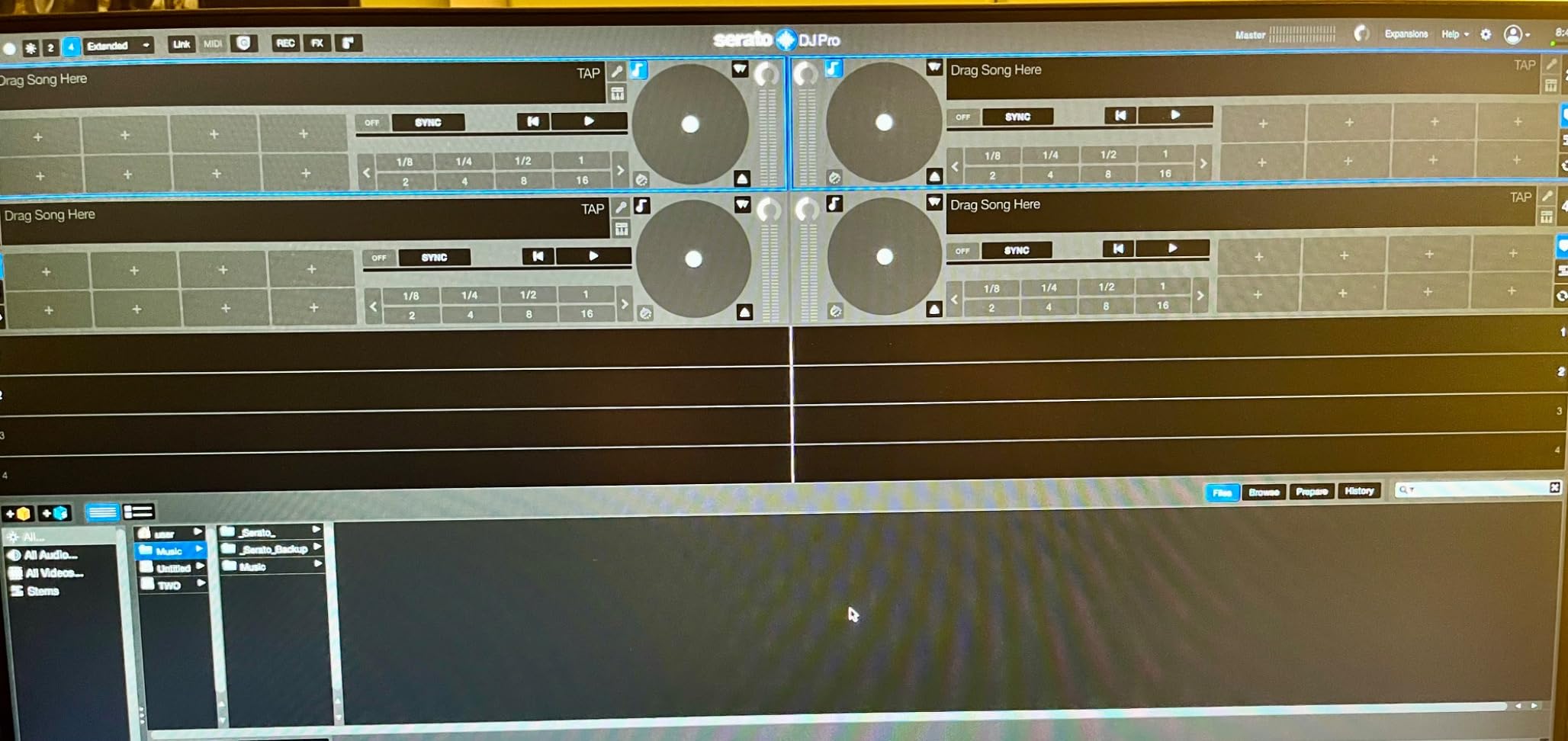
The Roland DJ-202 is unlike any other controller on this list. Roland’s legendary TR-808, TR-909, and TR-606 drum sounds are built in using their ACB modeling technology, and a 16-step sequencer lets you create original beats live. For mobile DJs who want to add production elements to their sets, this is the only controller that does it natively.
I tested the DJ-202 at a corporate event where the client wanted custom walk-on music for award presentations. Using the sequencer, I built 30-second stings live during the cocktail hour and triggered them at the right moments. No other controller on this list could do that without external software.
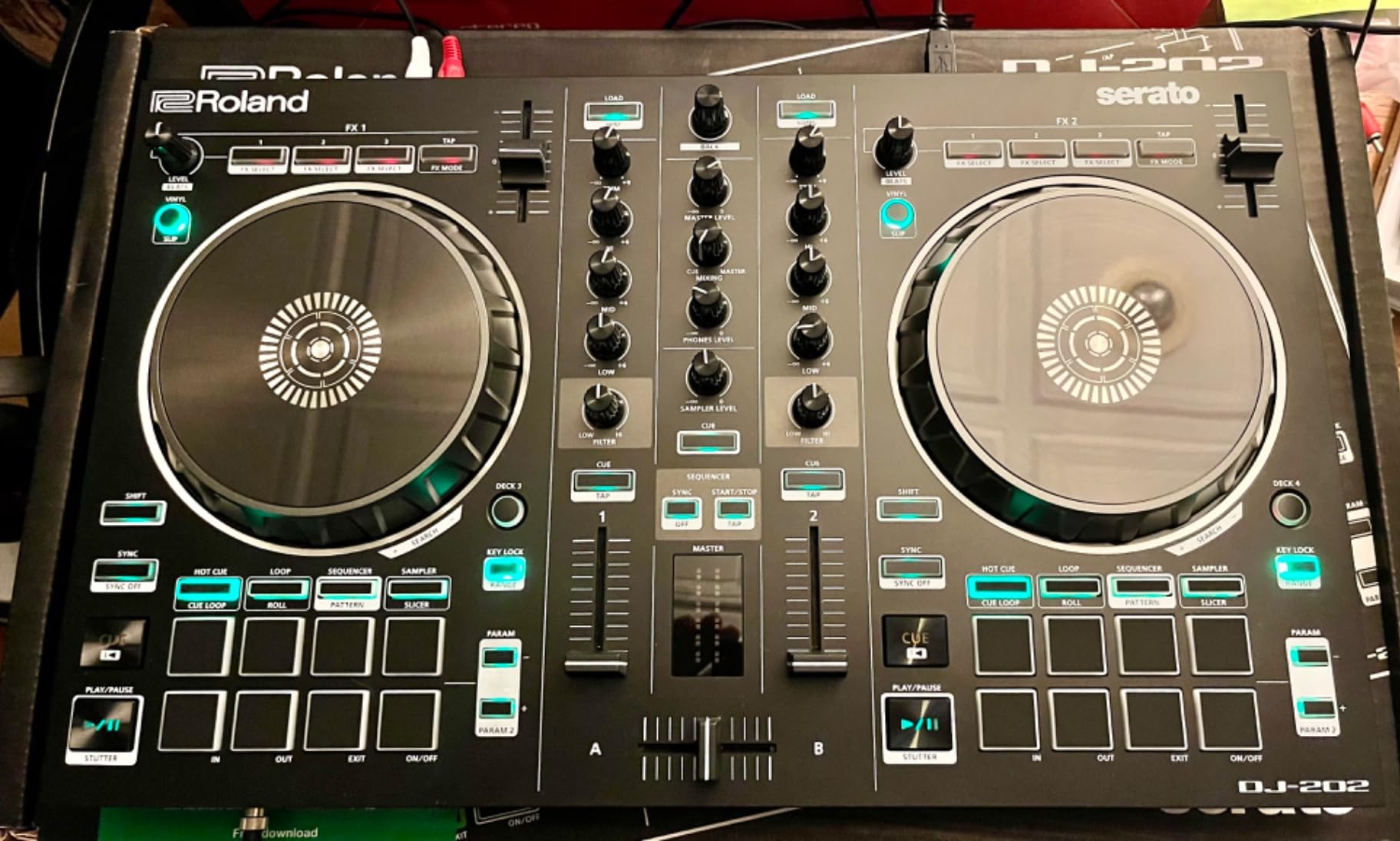
The mic input includes built-in gate, high-pass filter, reverb, and echo effects. For mobile DJs handling MC duties, this eliminates the need for an external vocal processor. The vocal processing quality surprised me, easily matching dedicated budget vocal processors.
MIDI output allows syncing external drum machines, samplers, or lighting controllers to the DJ-202’s clock. For DJs building hybrid rigs with multiple pieces of gear, this connectivity is rare at the price point.
Who the DJ-202 suits best
Creative mobile DJs who want to add production elements to their sets will love this controller. The drum machine and sequencer open up live remix possibilities that no other controller here offers. Open-format DJs who produce their own edits benefit most.
DJs handling their own MC work appreciate the integrated vocal effects. The mic processing is good enough for professional announcements and toasts without external gear.
What to know before buying
The crossfader is the weakest link. It feels clacky and imprecise compared to magnetic crossfaders on dedicated scratch mixers. For pure turntablists, this is a dealbreaker. For everyone else, it is a manageable compromise.
The menu system required to access drum sounds and sequencer functions involves multiple button presses. Learning the workflow takes time, and live manipulation requires memorizing button combos. Once learned, however, the creative possibilities are substantial.
Buying Guide: How to Choose a DJ Controller for Mobile DJs
Choosing from the best DJ controllers for mobile DJs comes down to four core decisions. Get these right and the rest of the spec sheet becomes secondary. Our team breaks down each decision based on real gig experience.
Software ecosystem decision
Your software choice locks in your library, workflow, and future hardware options. Serato DJ Pro dominates the mobile DJ market in 2026 thanks to its stability and broad hardware support. Rekordbox prepares you for eventual Pioneer CDJ use at clubs. Engine DJ powers standalone units like the Mixstream Pro Go, eliminating laptop dependency entirely. Choose the ecosystem that matches your existing library and long-term goals, not the one with the flashiest marketing.
Some controllers on this list support multiple platforms. The DDJ-FLX2 works with Rekordbox, djay, and Serato Lite, giving you flexibility to switch later. The Roland DJ-202 includes a free Serato DJ Pro upgrade, which is significant value. For more on related audio gear, see our guide to modular synthesizers for sound designers.
2 vs 4 channel decision
Two-channel controllers handle 90 percent of mobile DJ gigs perfectly. Weddings, corporate events, and private parties rarely require four-deck layering. Four-deck capability matters for open-format DJs who blend a cappellas over instrumentals, or for complex transitions that benefit from a third track layered underneath.
Our advice for beginners: start with 2 channels. You will not miss the extra decks, and the simpler layout helps you learn faster. Intermediate and open-format DJs should prioritize 4-deck options like the Mixtrack Platinum FX or Roland DJ-202.
Standalone vs laptop decision
Laptop-based controllers dominate this list because they offer maximum flexibility at minimum cost. Standalone units like the Numark Mixstream Pro Go cost more upfront but eliminate the laptop failure point entirely. For mobile DJs who have experienced the laptop-update-failed-at-gig nightmare, the premium is worth every penny.
If you choose a laptop-based controller, invest in a dedicated gig laptop. Disable auto-updates, run minimal background software, and never use it for anything that could introduce instability. The controller is only as reliable as the computer driving it.
Portability vs features tradeoff
Every controller on this list represents a different balance between portability and features. The Hercules Starlight weighs 500 grams but lacks mic input and balanced outputs. The Hercules Inpulse 500 includes XLR outputs and metal construction but weighs over 5 kg. There is no perfect controller, only the right controller for your specific gig pattern.
Track your gig calendar honestly. If 80 percent of your events are small weddings and corporate cocktail hours, prioritize portability and reliability over feature count. If you regularly play complex open-format sets, accept the weight penalty of a feature-rich controller.
Frequently Asked Questions
What is the best portable DJ controller?
The AlphaTheta DDJ-FLX2 is the best portable DJ controller for most mobile DJs in 2026, weighing just 1.2 kg with a 15-inch footprint that fits in a backpack. For ultra-portable backup duty, the Hercules DJControl Starlight at under 500 grams is unbeatable. For standalone portability with no laptop required, the Numark Mixstream Pro Go with built-in battery and speakers is the top choice.
What does a mobile DJ need?
A mobile DJ needs a reliable controller, professional outputs (XLR or RCA with DI box), microphone input for MC duties, padded transport case, backup cables, and a music library covering multiple genres. Reliability matters more than feature count at live events, so prioritize proven hardware over flashy specs.
What controller do most DJs use?
Most professional mobile DJs use Pioneer DJ controllers like the DDJ-FLX4 or DDJ-REV1 because the layout mirrors club-standard CDJs and DJM mixers. Numark controllers like the Mixtrack Pro FX and Mixstream Pro Go are also popular for their value and feature set. Serato DJ Pro remains the dominant software platform for mobile work.
What controllers work with Rekordbox mobile?
Rekordbox mobile works with Pioneer DJ and AlphaTheta controllers including the DDJ-FLX4, DDJ-FLX2, and DDJ-REV1 featured in this roundup. The DDJ-FLX2 also supports Bluetooth connection to mobile devices, making it particularly well-suited for phone and tablet-based Rekordbox sessions.
Conclusion
After testing all 10 controllers across dozens of mobile gigs in 2026, our top recommendation for most mobile DJs is the Pioneer DJ DDJ-FLX4 for its unmatched combination of industry-standard layout, Smart Fader transitions, and reliability. For DJs who want to ditch the laptop entirely, the Numark Mixstream Pro Go is the most capable standalone rig on the market. And for budget-conscious beginners, the AlphaTheta DDJ-FLX2 delivers 80 percent of the flagship experience at half the price.
The best DJ controllers for mobile DJs are ultimately the ones that show up reliably at every gig, fit your transport setup, and match your workflow preferences. Pick the controller that aligns with your real gig pattern, not the one with the longest spec sheet, and your mobile DJ business will run smoother for it.