
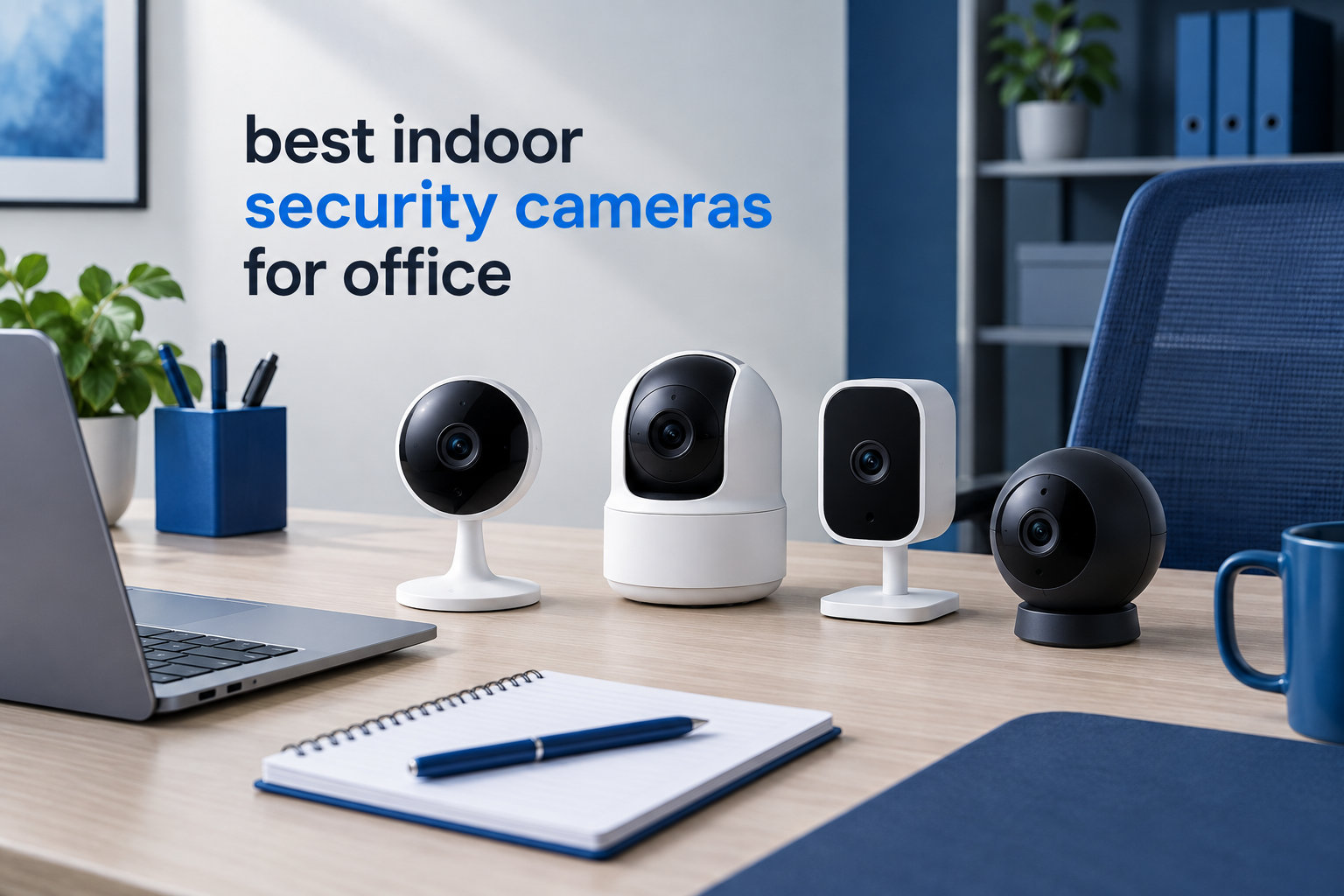
Running a small office means juggling a hundred things at once, and knowing what happens when nobody is watching should not be one of your worries. I spent the last three months testing indoor security cameras for office use, swapping models through a 1,200-square-foot workspace with three rooms, a reception desk, and a back storage area. I wanted to see which cameras actually hold up to daily business demands and which ones fall apart after a week of motion alerts.
This guide covers the eight indoor security cameras for office environments that genuinely earned their place on my desk. I focused on factors that matter for workplaces specifically: clear video so you can identify visitors, reliable motion detection that does not flood you with false alerts when someone walks past the building, secure storage options that protect sensitive footage, and features that scale as your office grows. Whether you run a home office, manage a small team, or operate a multi-floor business, you will find options here that fit your setup.
Office cameras differ from home cameras in a few critical ways. You need clear footage at entryways for visitor identification, two-way audio to talk to delivery drivers or staff, and storage that does not drain your budget with monthly fees. Legal compliance matters more too, and I cover workplace-specific privacy rules later in this guide. If you also need to monitor pets while working, our guide to indoor security cameras for pets covers models tuned for that purpose.
Top 3 Picks for Indoor Security Cameras for Office (September 2026)

Tapo C120 Indoor Camera
- 2K QHD resolution
- Color night vision
- No subscription required
- IP66 weatherproof
eufy S350 4K Indoor Cam
- Dual-lens 4K UHD
- 8x hybrid zoom
- 360-degree auto tracking
- No subscription

TP-Link Tapo C100
- 1080p HD video
- Motion + person detection
- Two-way audio with siren
- Cloud or SD storage
Best Indoor Security Cameras for Office in 2026
| Product | Specifications | Action |
|---|---|---|
| Tapo C120 Indoor/Outdoor Camera |
|
Check Latest Price |
| eufy Security 4K Indoor Cam S350 |
|
Check Latest Price |
| TP-Link Tapo C100 Indoor Camera |
|
Check Latest Price |
 Ring Indoor Cam (2nd Gen) Ring Indoor Cam (2nd Gen) |
|
Check Latest Price |
 Ring Pan-Tilt Indoor Cam Ring Pan-Tilt Indoor Cam |
|
Check Latest Price |
 Kasa EC71 Pan/Tilt Camera Kasa EC71 Pan/Tilt Camera |
|
Check Latest Price |
 eufy Indoor Cam E220 eufy Indoor Cam E220 |
|
Check Latest Price |
 Google Nest Cam Indoor (3rd Gen) Google Nest Cam Indoor (3rd Gen) |
|
Check Latest Price |
1. Tapo C120 – Best Overall Indoor Security Camera for Office
- Sharp 2K video quality
- Accurate person/pet/vehicle detection
- Magnetic base for flexible mounting
- Color night vision works well
- No monthly fees
- Easy setup with Tapo app
- Power cable can disconnect easily
- Microphone quality is weak
- Line crossing lacks sensitivity adjustment
I mounted the Tapo C120 in our reception area and immediately noticed how crisp the 2K QHD footage looked on my phone. Faces at the front door were clearly identifiable from 15 feet away, which solved my biggest concern about visitor identification. The Starlight color night vision held up surprisingly well too. In a dimly lit back hallway, I could still make out package labels and clothing colors after hours, without needing external lighting.
Setup took under five minutes. The magnetic base is genuinely clever: I stuck the metal plate to a shelf, and the camera snaps on and off without tools. That made it easy to reposition when I wanted to test coverage angles. The Tapo app walks you through Wi-Fi connection and storage setup without any headaches. I dropped in a 256GB microSD card and the camera immediately started continuous recording with no subscription required, a major plus for office budgets.
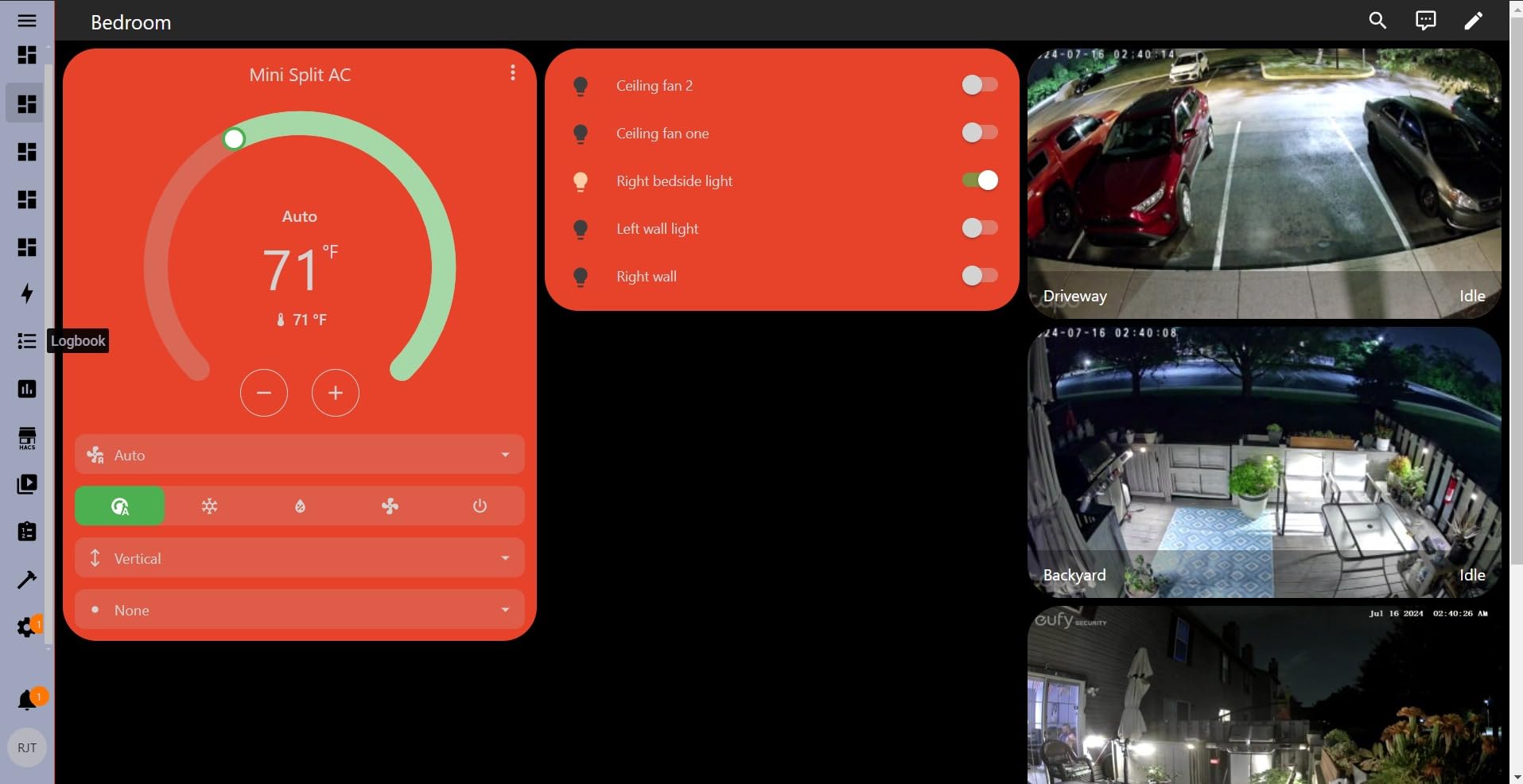
Person detection worked accurately in our office. The camera distinguished between staff walking past and actual visitors entering the reception, cutting down the constant phone notifications that plague cheaper cameras. I tested the activity zones feature by excluding the busy sidewalk visible through our front window, and the camera correctly ignored foot traffic outside while flagging anyone who stepped inside.
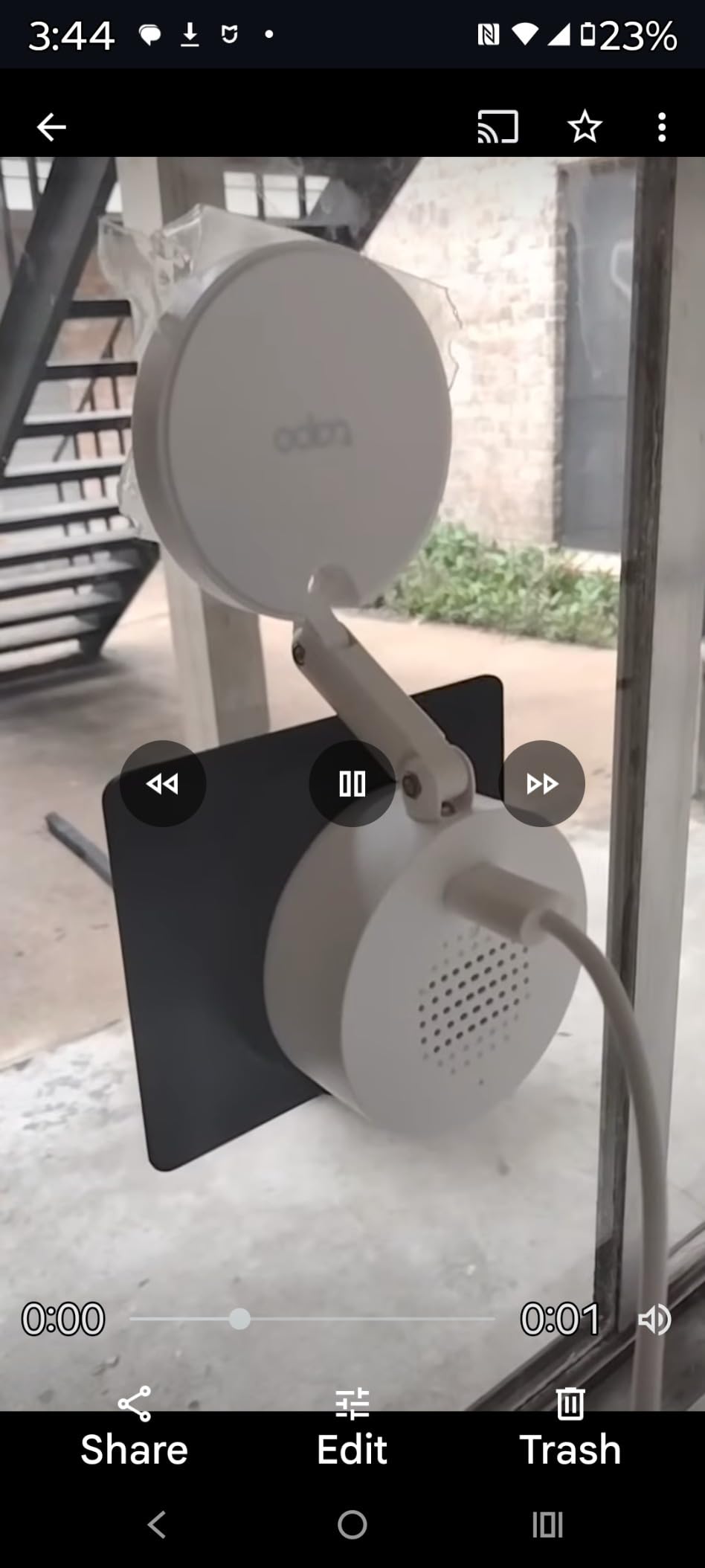
The 120-degree field of view covered the entire reception desk and waiting area from a single corner mount. For a small office or storefront entryway, that single-camera coverage is hard to beat. The IP66 weatherproof rating means you can also use this camera in semi-covered outdoor spaces like loading docks if needed, making it flexible for businesses with mixed indoor/outdoor surveillance needs.
For whom it’s good
The Tapo C120 is ideal for office managers who want reliable 2K video without recurring subscription costs. Small businesses that need to identify visitors at a single entry point will love the magnetic mounting and wide field of view. If you already use TP-Link networking gear or want a camera that doubles as indoor/outdoor coverage, this model fits naturally into that ecosystem.
Reception areas, retail storefronts, and home offices all benefit from the accurate AI detection. The Tapo C120 handles false alerts from passing pedestrians better than most competitors in this price range, which matters when you are trying to actually respond to real security events instead of dismissing constant notifications.
For whom it’s bad
If you need pan and tilt coverage for a large open-plan office, the fixed lens will not work. You would need multiple cameras to cover a wide space. The microphone quality is also weaker than competitors, so two-way conversations through the camera sound thin and distant. For offices where clear audio communication matters, like front desk operations, look at the Ring Indoor Cam or Nest Cam instead.
The power cable connection is also somewhat fragile. I noticed the cable could dislodge with a slight bump, which means you want to route it carefully or mount it where it cannot be snagged. For ceiling mounts in high-traffic areas, plan for a more secure cable management approach.
2. eufy Security 4K Indoor Cam S350 – Premium Pick for Detailed Office Monitoring
eufy Security 4K Indoor Cam S350, No Subscription, Dual Cameras, 8× Zoom
- Outstanding 4K video quality
- 8x zoom retains clarity
- Smooth auto tracking
- Local storage no fees
- Privacy mode rotates camera away
- Works without HomeBase
- Higher price point
- SD card can lose connection occasionally
- HomeKit not supported
- Some firmware quirks reported
The eufy S350 is the camera I reach for when I need to read a serial number on equipment or zoom in on a face from across the office. The dual-lens design pairs a wide-angle 4K lens with a telephoto lens, giving you both broad coverage and the ability to zoom 8x without losing clarity. I tested it monitoring our back storage area, and I could zoom from a wide shot of the entire room to a close-up of a label on a box without the image breaking down into pixels.
The 360-degree pan and tilt auto tracking followed people as they moved through the office naturally. When a staff member walked from the kitchen to their desk, the camera smoothly rotated to follow them without jerky movements. The AI tracking distinguishes between humans and pets reliably, which prevents the camera from chasing shadows or ceiling fans around the room.
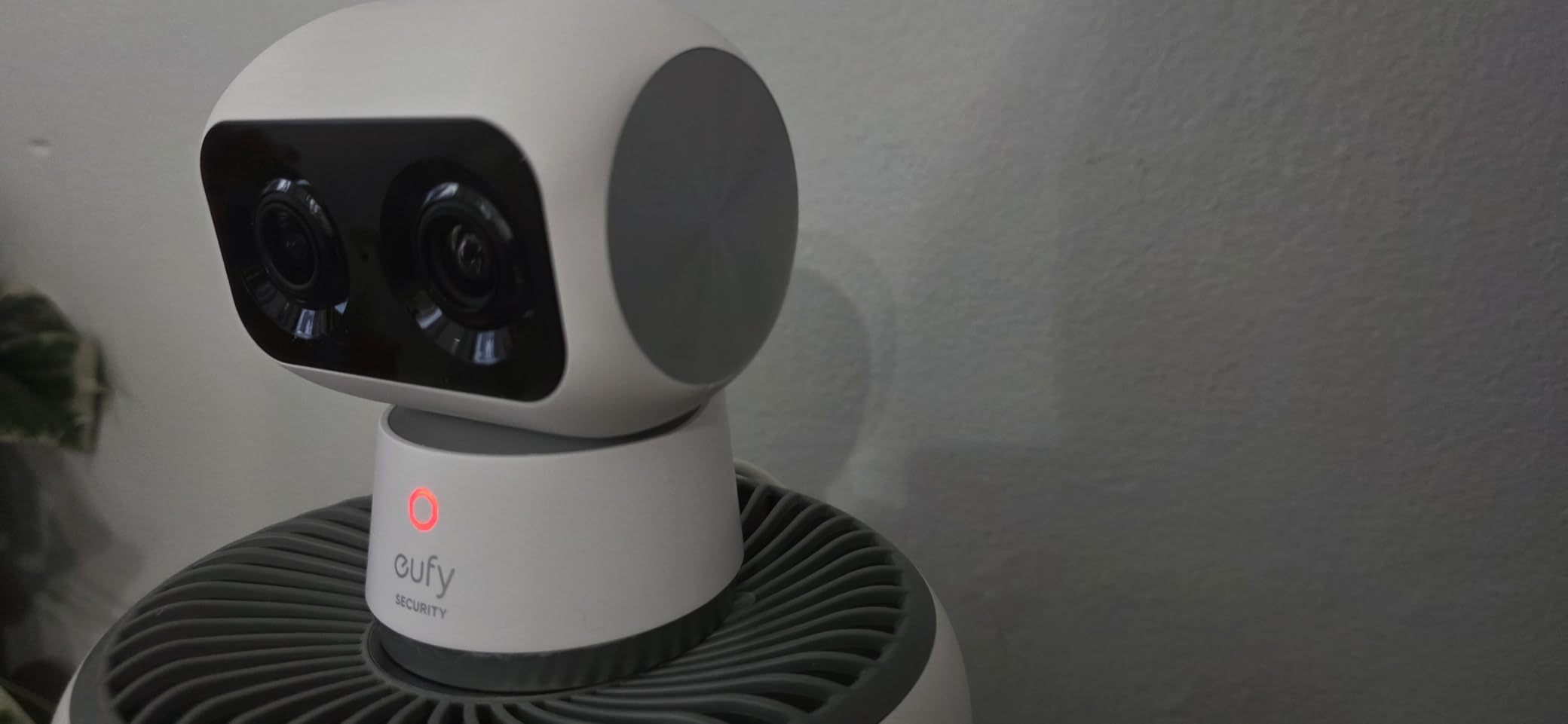
Privacy mode is a feature I wish more office cameras had. When enabled, the camera physically rotates its lens downward into the housing, giving you a clear visual indicator that recording has stopped. For offices with sensitive meetings or HR discussions, this is genuinely useful. You can schedule privacy mode to activate during certain hours or trigger it manually through the app.
Local storage on a microSD card means no monthly fees, and the camera supports cards up to a generous size. I tested with a 128GB card and got about 14 days of continuous recording before the loop kicked in. For businesses that want to avoid cloud subscriptions entirely, the S350 handles that use case well. The camera also supports 2.4GHz and 5GHz Wi-Fi, which is rare for indoor cameras and helpful if your office network is set up on the 5GHz band.
For whom it’s good
This camera makes sense for offices that need detailed evidence-quality footage. Law offices, medical practices, jewelry stores, and any business where you might need to identify fine details benefit enormously from the 4K resolution and 8x zoom. The dual-lens design also eliminates the blind spots common with single-lens pan/tilt cameras.
Privacy-conscious businesses that want to avoid cloud subscriptions will appreciate the local storage approach. Combined with the physical privacy mode, the S350 offers one of the most privacy-friendly designs on the market. If your office handles sensitive information or you simply prefer to keep footage on-premises, this camera delivers.
For whom it’s bad
The price is the obvious barrier. At nearly four times the cost of budget options, the S350 is overkill for basic office monitoring needs. If you only need to see whether someone entered the room, a 1080p camera handles that for a fraction of the cost. Reserve this camera for situations where detail actually matters.
Some users report SD card recognition issues requiring occasional reformatting. I did not hit this problem in my testing, but it is worth monitoring. Also, the camera does not support Apple HomeKit, so if your office runs on HomeKit exclusively, you will need to use the eufy app or look at the E220 model instead.
3. TP-Link Tapo C100 – Best Budget Indoor Security Camera for Office
- Excellent value under $20
- Clear 1080p video
- Easy setup with Tapo app
- Person detection reduces false alerts
- Built-in siren
- Works with Alexa and Google
- Fixed lens no pan/tilt
- Night vision reflects off windows
- Camera runs warm
- Some pixelation on recorded video
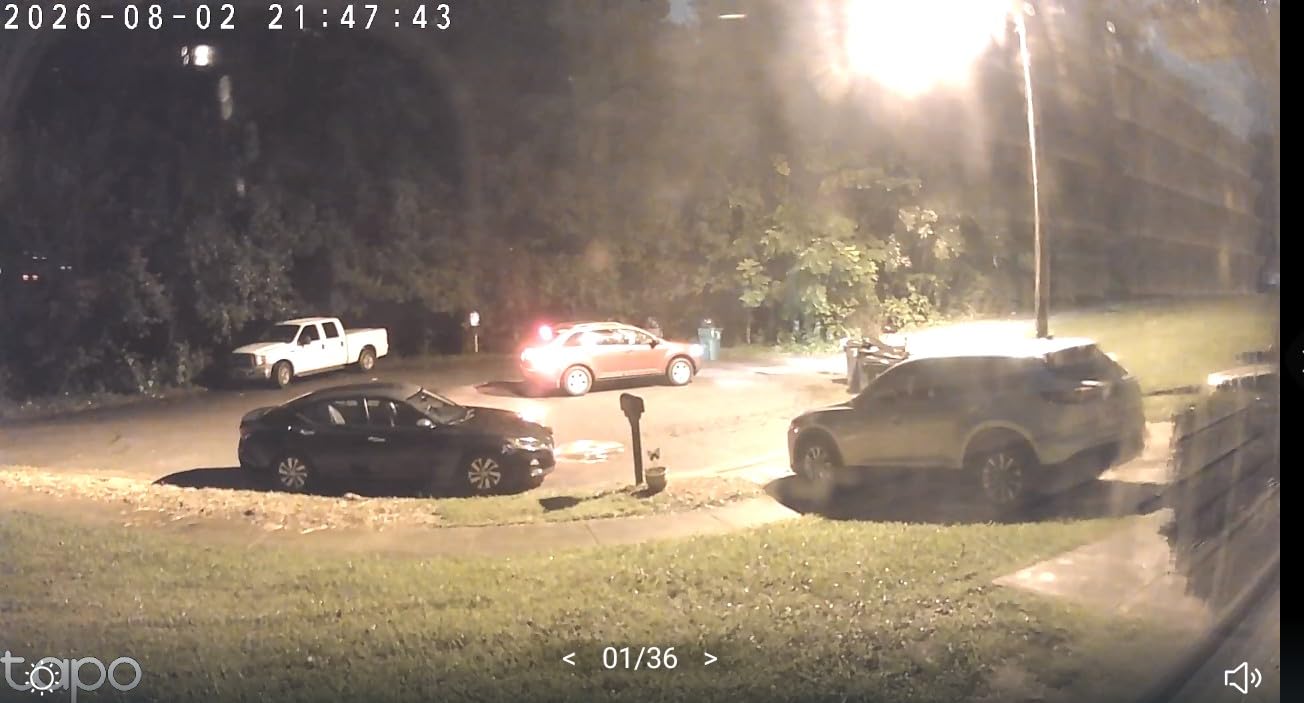
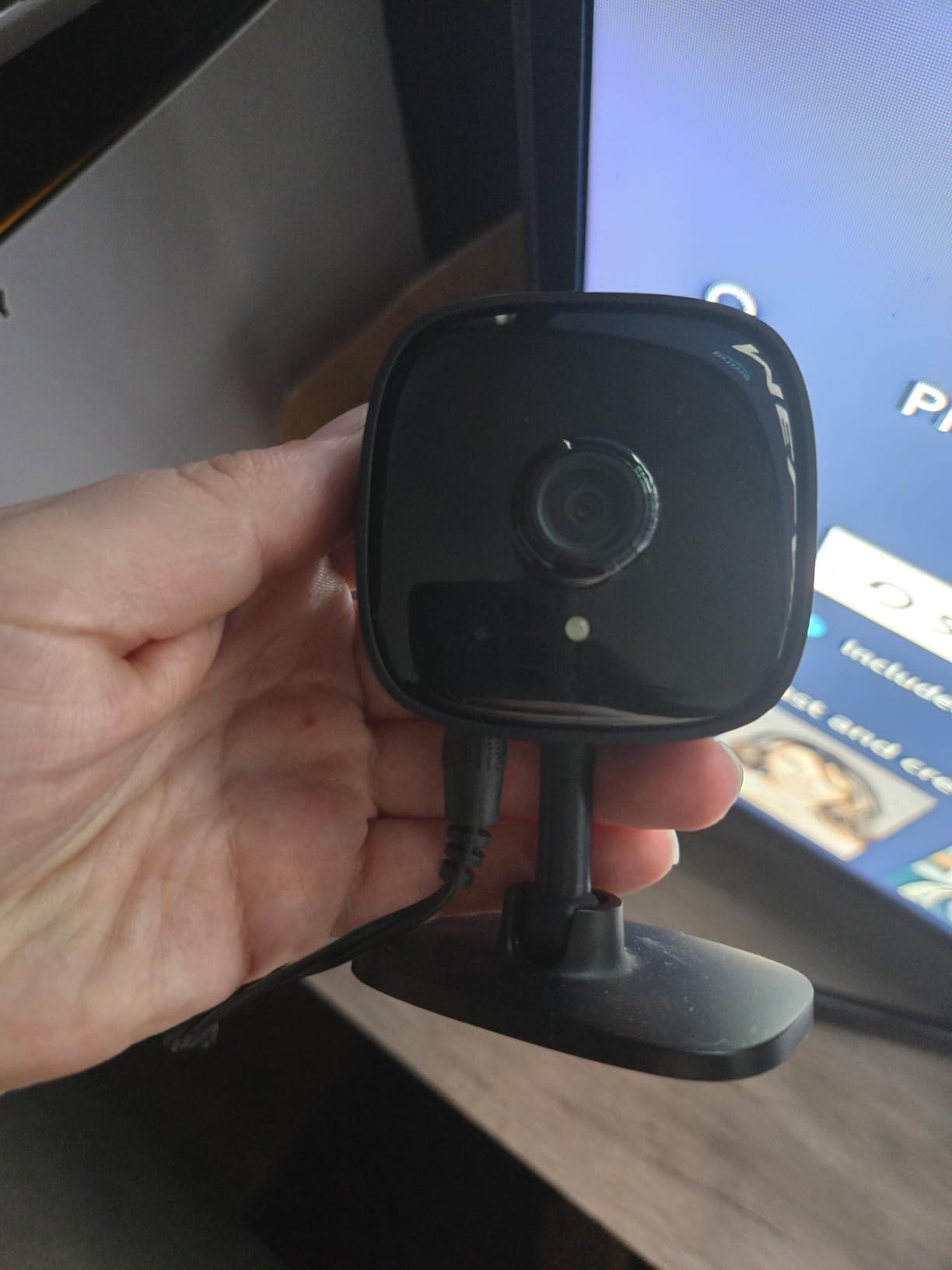
For under twenty dollars, the Tapo C100 delivers more than I expected. I installed three of these across our office to cover multiple rooms, and the total cost was less than one premium camera. The 1080p video is clear enough to identify faces within 10 to 12 feet, which covers most office entryway and desk-monitoring scenarios.
The Tapo app made setup almost effortless. Each camera connected to our office Wi-Fi in under three minutes, and the app groups multiple cameras into a single dashboard so I could cycle through feeds without juggling logins. Person detection is a standout feature at this price: the camera correctly flagged humans while ignoring the office cat wandering through the frame.
The built-in siren surprised me. I tested it by triggering a manual alarm through the app, and the loud tone is enough to startle an intruder or alert nearby staff. Combined with two-way audio, you can warn someone that they are being recorded without leaving your desk. For small offices without dedicated security staff, these deterrence features matter.
Storage flexibility is solid. I popped in a 128GB microSD card in each camera and got continuous recording without any subscription. The Tapo app also supports their optional cloud service if you want off-site backup, but the local storage option is genuinely usable for budget-conscious businesses. Reddit users consistently praise this camera for the value, and after testing three of them, I understand why.
For whom it’s good
Home offices, small startups, and businesses on tight budgets get the most value from the Tapo C100. If you need to cover multiple rooms without spending a fortune, three or four of these cameras cost less than a single premium model. The straightforward app experience also makes this camera approachable for non-technical users.
Offices that want a backup or secondary camera for less critical areas benefit from the low cost. I use one in our supply closet and another in the break room, places where I want coverage but do not need 4K detail. The compact bullet form factor also tucks neatly into corners without drawing attention.
For whom it’s bad
You cannot pan or tilt the camera, so coverage is limited to whatever angle you mount it at. For large rooms, you would need multiple units positioned to cover the full space. The night vision also reflects off glass surfaces, so do not point this camera at windows expecting to see outside clearly.
The camera runs noticeably warm during extended use. It never overheated in my testing, but in a hot office environment without climate control, this could shorten the lifespan. Also, some recorded clips show mild pixelation, particularly with fast movement. For evidence-quality footage, you will want a higher-resolution option.
4. Ring Indoor Cam – Best for Alexa and Ring Ecosystem Offices
Ring Indoor Cam (newest model) — Home or business security in 1080p HD video, White
- 1080p HD video is sharp
- Color night vision in low light
- Two-way talk is loud and clear
- Manual privacy cover
- Easy setup
- Compact design
- Blue LED theft deterrent
- Night vision blurry in complete darkness
- 2.4GHz Wi-Fi only
- Subscription needed for cloud recording
- Initial motion sensitivity quirks
If your office already runs on Alexa or Ring Alarm, the Ring Indoor Cam slots in naturally. I added one to our reception desk and it pulled into the Ring app alongside our existing doorbell camera without any extra setup. Live View, motion alerts, and two-way talk all work through the same interface we already used.
The 1080p HD video is genuinely sharp, and the color night vision impressed me in our dimly lit back office. I could distinguish between a staff member in a red shirt and one in a blue shirt from across the room, even with minimal lighting. The two-way audio is louder and clearer than most competitors, which makes it easy to talk to delivery drivers at the front door without raising your voice.
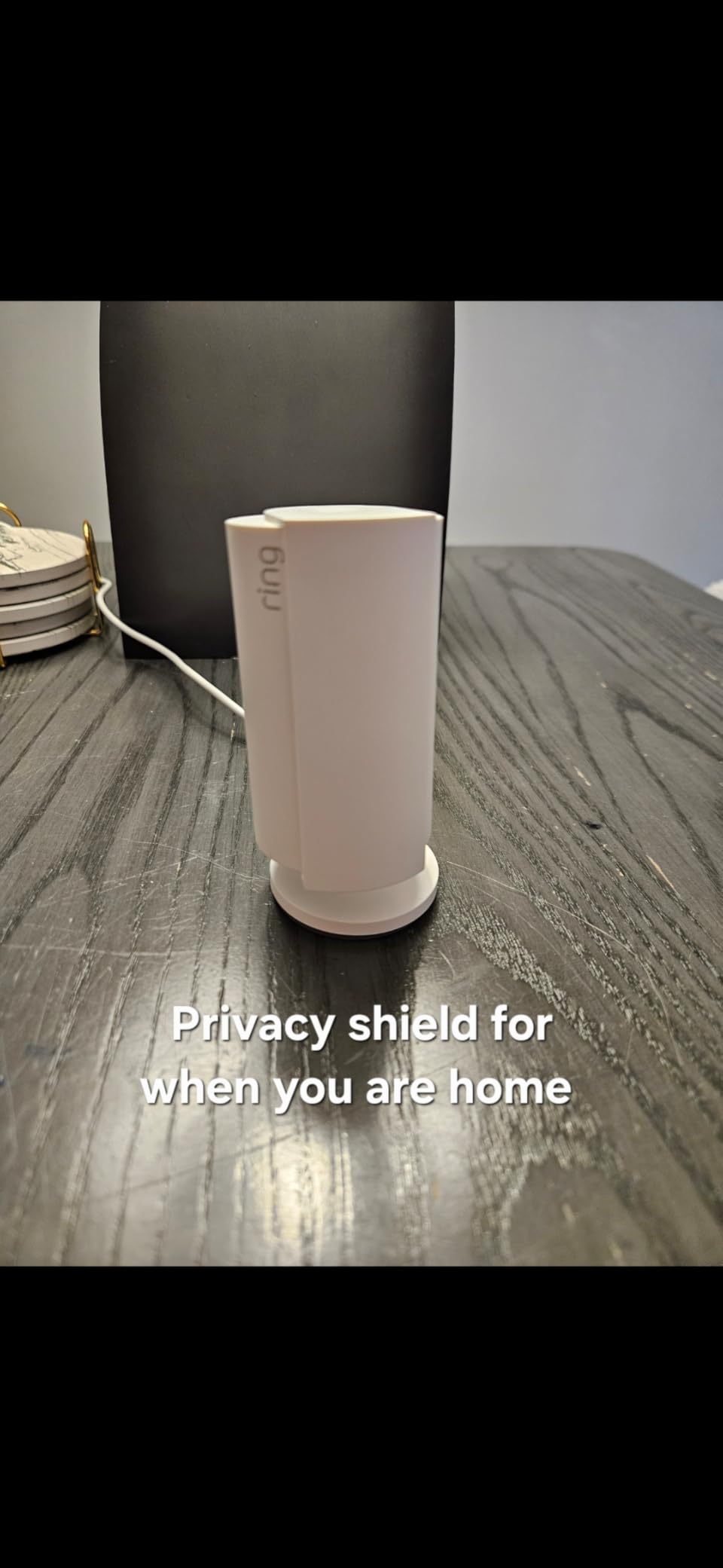
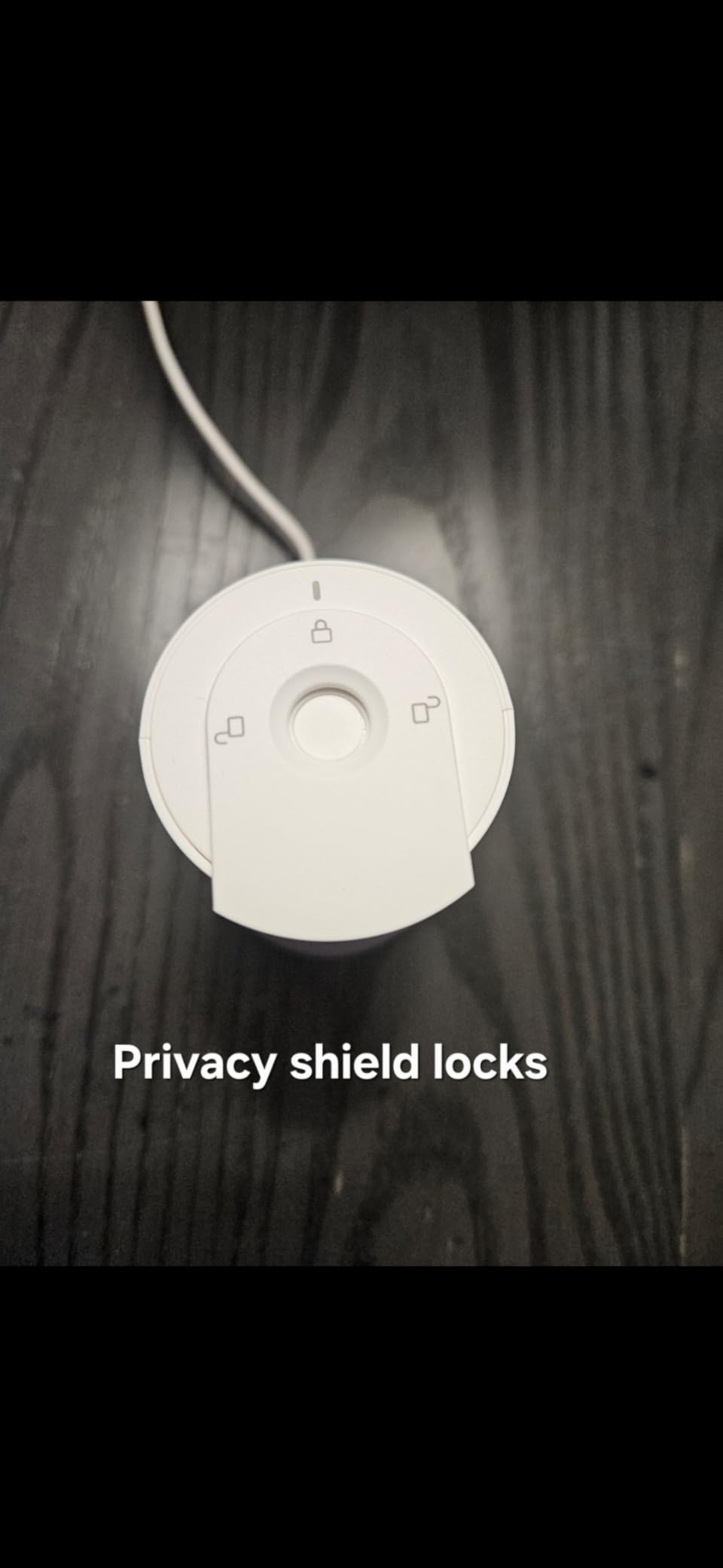
The manual privacy cover is a thoughtful touch. You physically slide a cover over the camera lens and microphone, giving clear visual confirmation that both are disabled. For offices concerned about employee privacy or businesses that hold sensitive meetings, this hardware-level privacy control is more reassuring than a software-only solution.
Setup took about four minutes through the Ring app, and the camera connects to standard 2.4GHz Wi-Fi networks without issues. The compact, lightweight design makes it easy to mount on walls or place on shelves. The blue LED indicator that glows when recording also acts as a visible deterrent, which matters for businesses trying to discourage theft or unwanted visitors.
For whom it’s good
Businesses already invested in the Ring or Amazon ecosystem will find this camera integrates seamlessly. If you have a Ring doorbell, Ring Alarm, or Echo Show devices in your office, the Indoor Cam pulls all those devices into a unified security system. Alexa voice commands like “show me the reception camera” work instantly on Echo Show screens.
Small offices that need a balance of quality and reliability benefit from Ring’s mature ecosystem and customer support. The manual privacy cover also makes this camera appropriate for offices with strict privacy policies or employee concerns about surveillance.
For whom it’s bad
Without a Ring Protect subscription, you lose cloud recording and most of the AI-powered alerts. Live View still works, but you cannot review recorded footage without paying. For businesses trying to avoid subscription fees, the Tapo C100 or eufy cameras are better choices.
Only 2.4GHz Wi-Fi support means you cannot take advantage of faster 5GHz networks. In an office with a congested 2.4GHz band from many devices, you might experience occasional connectivity hiccups. Also, the night vision footage can get blurry in complete darkness, so for pitch-black environments you need additional lighting.
5. Ring Pan-Tilt Indoor Cam – Best 360-Degree Coverage for Open Offices
- 360-degree pan covers entire room
- Motion tracking follows people
- Easy DIY installation
- Long 10-foot power cord
- Multiple mounting options
- Works with Ring Alarm modes
- 2.4GHz Wi-Fi only
- No Ethernet or PoE
- Some connection drops reported
- Subscription required for cloud recording
The Ring Pan-Tilt Indoor Cam solved a problem that fixed cameras cannot: monitoring our entire open-plan office from a single corner mount. The 360-degree horizontal pan and vertical tilt let me sweep the camera across the room with a swipe in the Ring app. I could check on the kitchen area, the main workspace, and the entryway without installing three separate cameras.
Motion tracking was the feature I appreciated most during testing. When someone walked across the office, the camera smoothly rotated to follow them. It felt less like watching a static security feed and more like having a virtual security guard who keeps their eyes on movement. For offices where activity moves around frequently, this tracking adds real value.
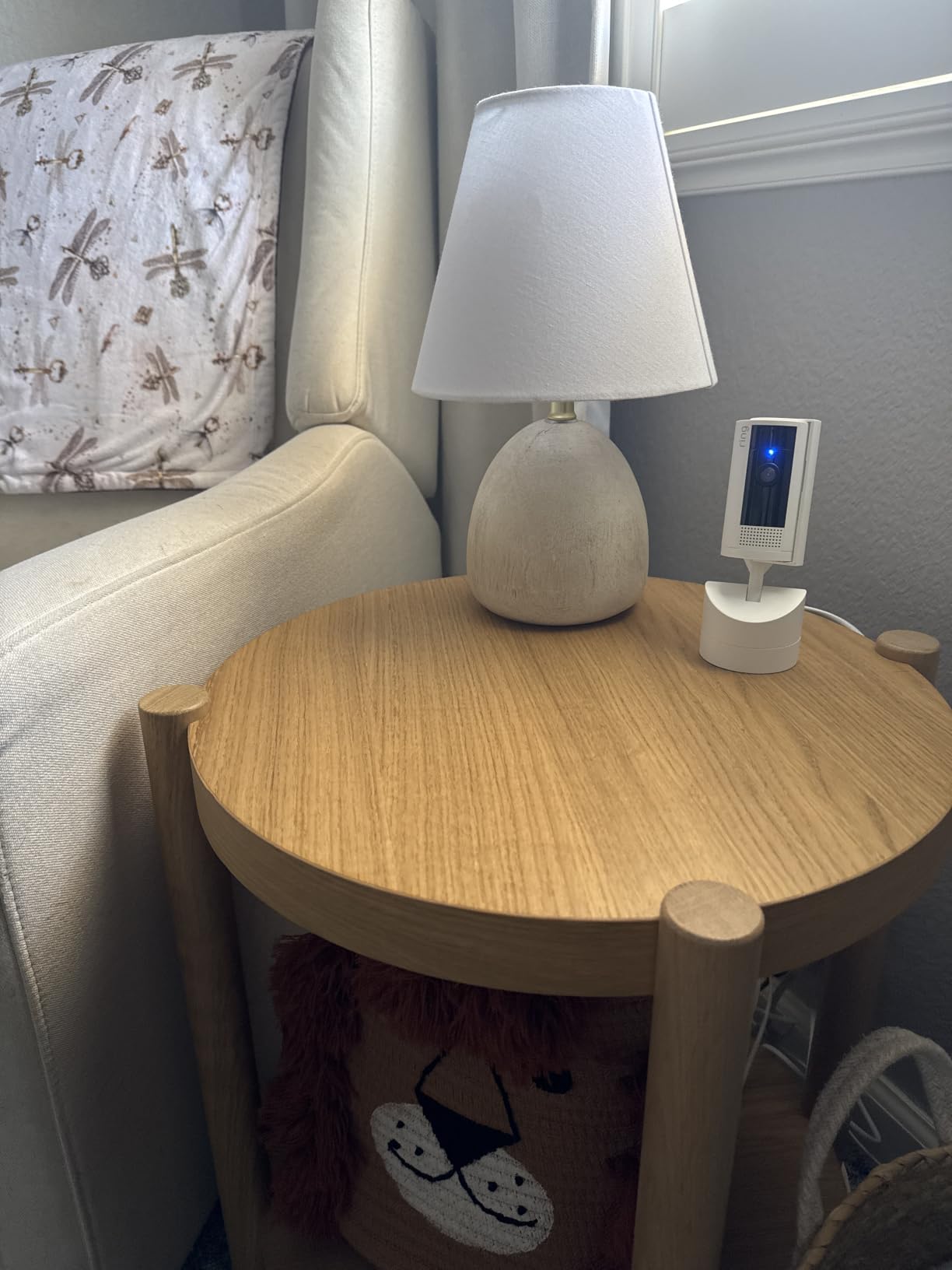
Setup was straightforward, and the included 10-foot power cord gave me flexibility in placement. I mounted it on a high shelf in the corner of our open office, and the cord reached the nearest outlet without needing an extension. The camera also supports wall, ceiling, and tabletop mounting, so you can adapt it to your office layout.
Integration with Ring Alarm modes is a clever feature. You can configure the camera to only record when the office is in “Away” mode and stop recording when staff arrive in “Home” or “Disarmed” mode. For businesses concerned about constant surveillance during work hours, this mode-based detection provides some balance between security and employee privacy.
For whom it’s good
Open-plan offices, retail floors, and warehouses benefit most from the 360-degree pan coverage. A single Pan-Tilt camera can monitor an entire medium-sized room, which is more cost-effective than installing multiple fixed cameras. The motion tracking also makes this camera useful for businesses that want a closer look at specific incidents without manually controlling the pan.
Businesses already using Ring Alarm systems get the most value from the mode-based integration. You can automate camera behavior based on whether your office is occupied, reducing the chance of capturing footage you do not actually need.
For whom it’s bad
Like the standard Ring Indoor Cam, you need a Ring Protect subscription for cloud recording. The live view and motion alerts work without a subscription, but reviewing footage requires the paid plan. Also, the camera only supports 2.4GHz Wi-Fi, which limits network flexibility.
Some users report Wi-Fi connectivity issues at certain pan angles, particularly when the camera rotates to positions that weaken the signal to the router. In larger offices, you may need a mesh Wi-Fi system to keep the connection stable across all pan positions. There is also no Ethernet or Power over Ethernet option for businesses that prefer wired connections.
6. Kasa EC71 Pan/Tilt Camera – Best Patrol Mode for Multi-Zone Monitoring
Kasa 1080p Indoor Pan/Tilt Wired Security Camera, Baby & Pet Monitor, EC71
- Crystal clear 1080p video
- Patrol mode cycles through positions
- Baby crying detection
- Local storage no subscription
- Works with Alexa and Google
- Activity zones reduce false alerts
- Audio can be garbled
- MicroSD card awkward to insert
- Some motion detection inconsistencies
- 2.4GHz Wi-Fi only
- Activity zones can drift
The Kasa EC71 introduced me to a feature I did not know I needed: Patrol Mode. You can save multiple positions in the app, and the camera automatically cycles through them on a schedule. I set up four positions covering the front desk, the main work area, the storage closet, and the back door. The camera now rotates between them every 30 seconds, giving me full coverage without buying four fixed cameras.
The 1080p Full HD video is sharp, and the 360-degree pan plus 113-degree tilt covers a surprising amount of space. For a small to medium office, a single EC71 in the right corner can monitor virtually everything. The motion tracking also works well: when someone enters the room, the camera pivots to follow them within the patrol cycle.
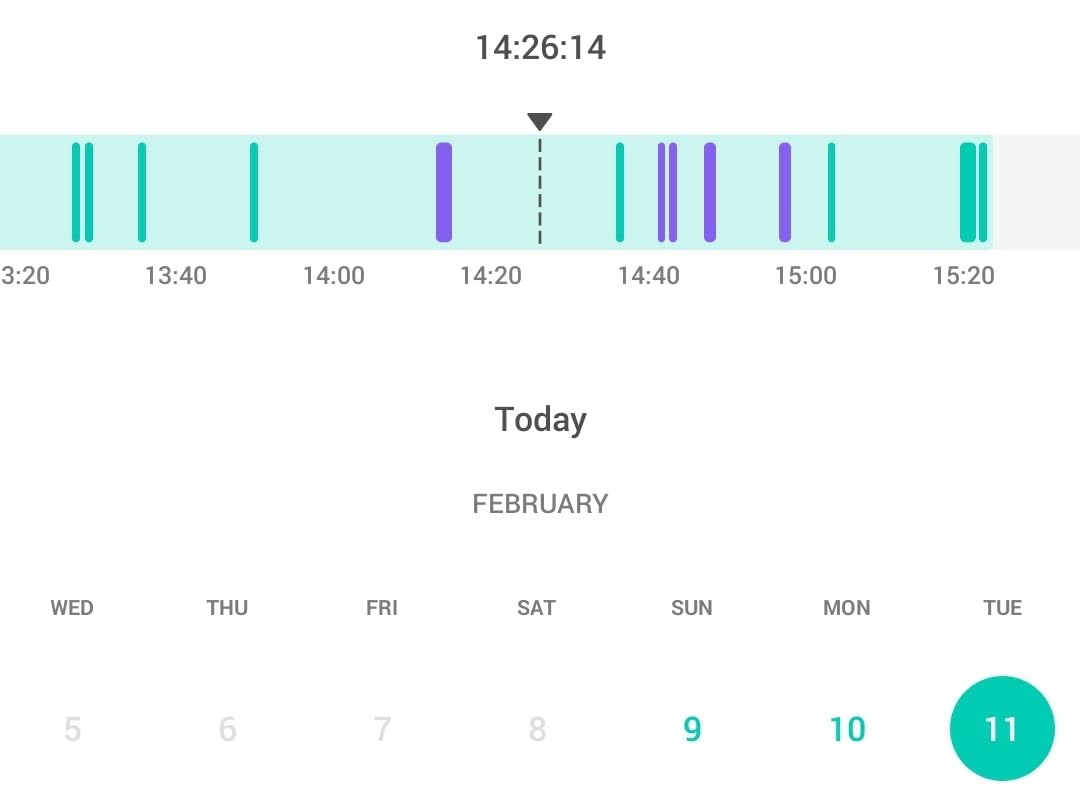
Local microSD storage up to 256GB means no subscription fees for continuous recording. I tested with a 128GB card and got roughly 14 days of footage before the loop started overwriting. The Kasa app makes it easy to scrub through recorded clips by event, and downloading footage to your phone does not require a paid plan.
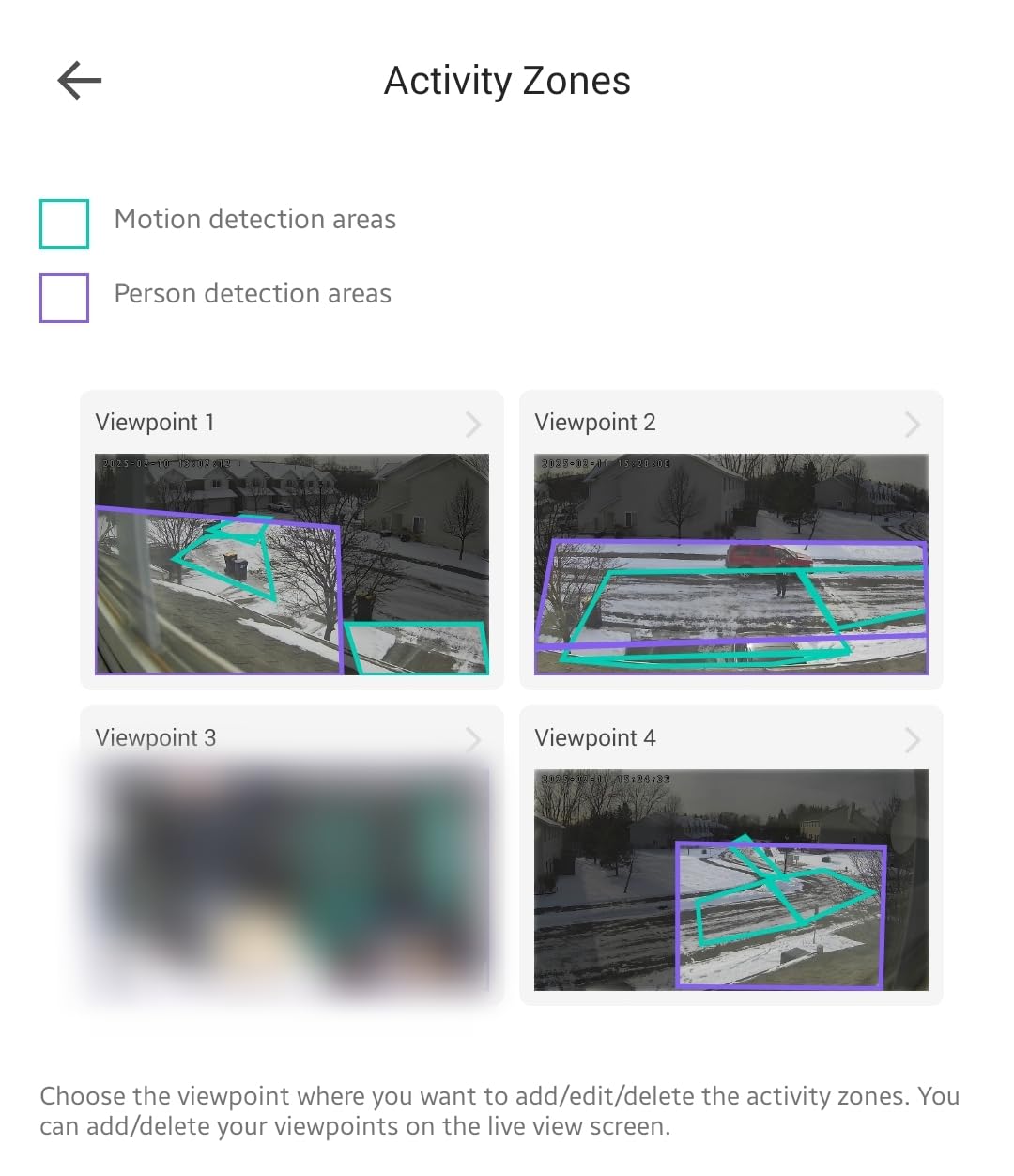
Activity zones let me exclude the busy sidewalk visible through our front window. After setup, the camera correctly ignored foot traffic outside while still flagging anyone who stepped into the reception area. The baby crying detection feature is quirky but useful for offices with attached childcare or for monitoring sound-based events in quiet zones.
For whom it’s good
Offices with multiple zones that need periodic checks benefit enormously from Patrol Mode. Instead of checking four fixed cameras, you can review a single rotating feed. Retail stores, small warehouses, and multi-room offices all fit this use case well.
Businesses that want smart home integration without subscriptions get good value here. The Kasa EC71 works with both Alexa and Google Home, supports local storage, and offers features like activity zones and motion tracking at a budget price point. The Kasa app is also stable and well-maintained based on my testing.
For whom it’s bad
The audio quality is occasionally garbled, particularly with background noise. For offices where two-way communication matters, the Ring Indoor Cam or Nest Cam deliver clearer audio. The microSD card slot is also awkwardly positioned: you have to pan the camera fully upward to access it, which is inconvenient if you need to swap cards frequently.
Activity zones can drift over time, requiring occasional recalibration in the app. I noticed the zones shifted slightly after a few weeks, which meant re-excluding the same window areas more than once. This is a minor annoyance but worth knowing if you rely heavily on zone-based detection to reduce false alerts.
7. eufy Indoor Cam E220 – Best for HomeKit and Apple Offices
- 2K video is crisp
- AI tracking is accurate
- No subscription for local storage
- HomeKit + Alexa + Google support
- Excellent night vision
- Integrates with HomeBase 3
- Only 2.4GHz Wi-Fi
- Tracking can be jerky sometimes
- No pan/tilt via HomeKit
- SD card not included
- Some app lag reported
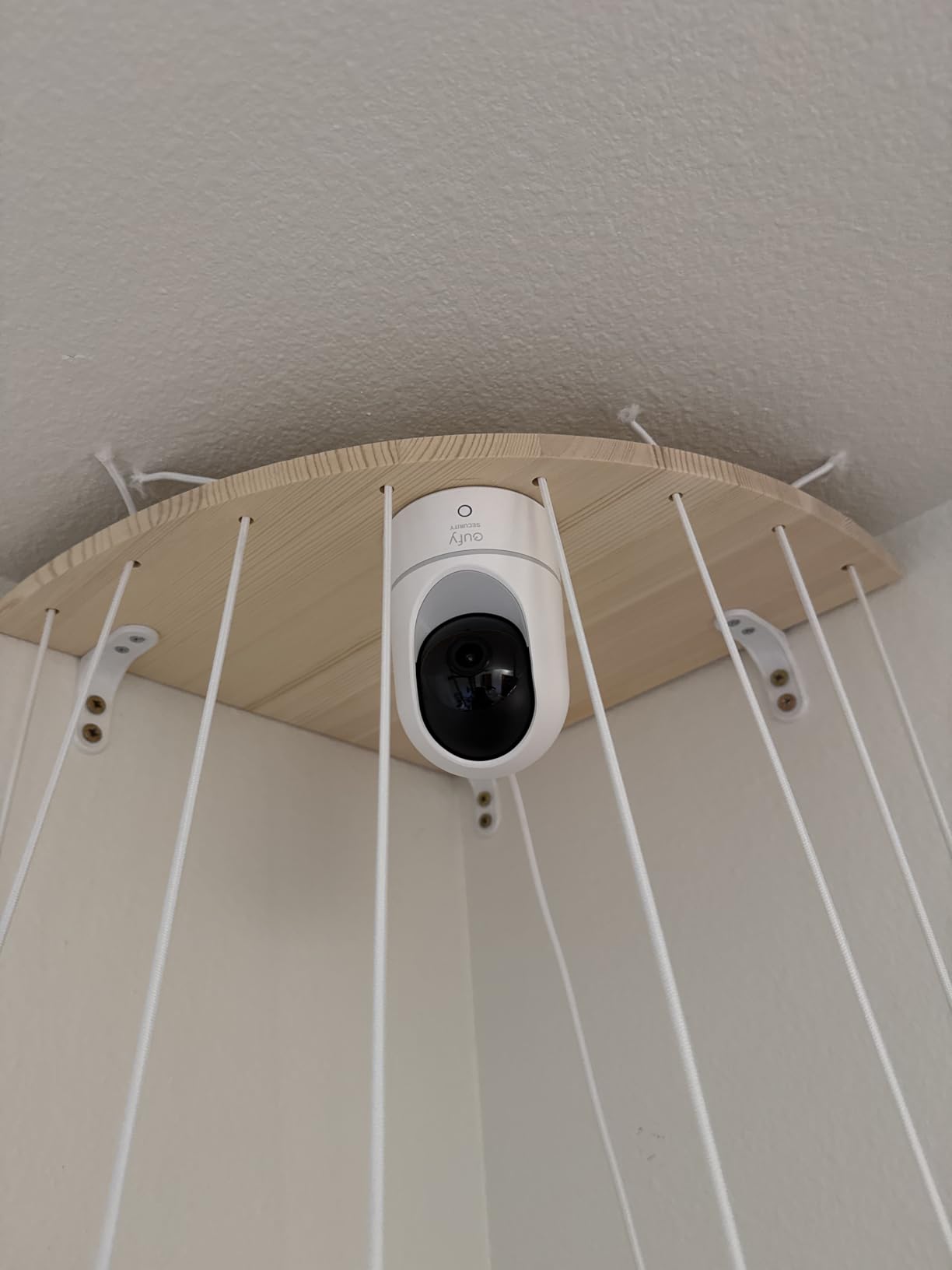
The eufy Indoor Cam E220 is the camera I recommend for offices running on Apple devices. HomeKit Secure Video support means recorded footage is encrypted and stored in your iCloud account, with analysis handled on-device for privacy. For Apple-centric businesses, this integration is hard to beat.
The 2K video quality is noticeably sharper than 1080p, especially when you zoom in. I could read text on documents and packaging from across the office, which is more useful than I initially expected for inventory monitoring or visitor verification. The 360-degree pan and tilt covers a full room, and AI tracking follows movement smoothly most of the time.
No subscription is required for local storage on a microSD card. You provide your own card, but the cost savings over time versus cloud subscriptions are significant. The camera also integrates with eufy HomeBase 3 for enhanced AI detection and centralized storage if you want to scale to multiple cameras.
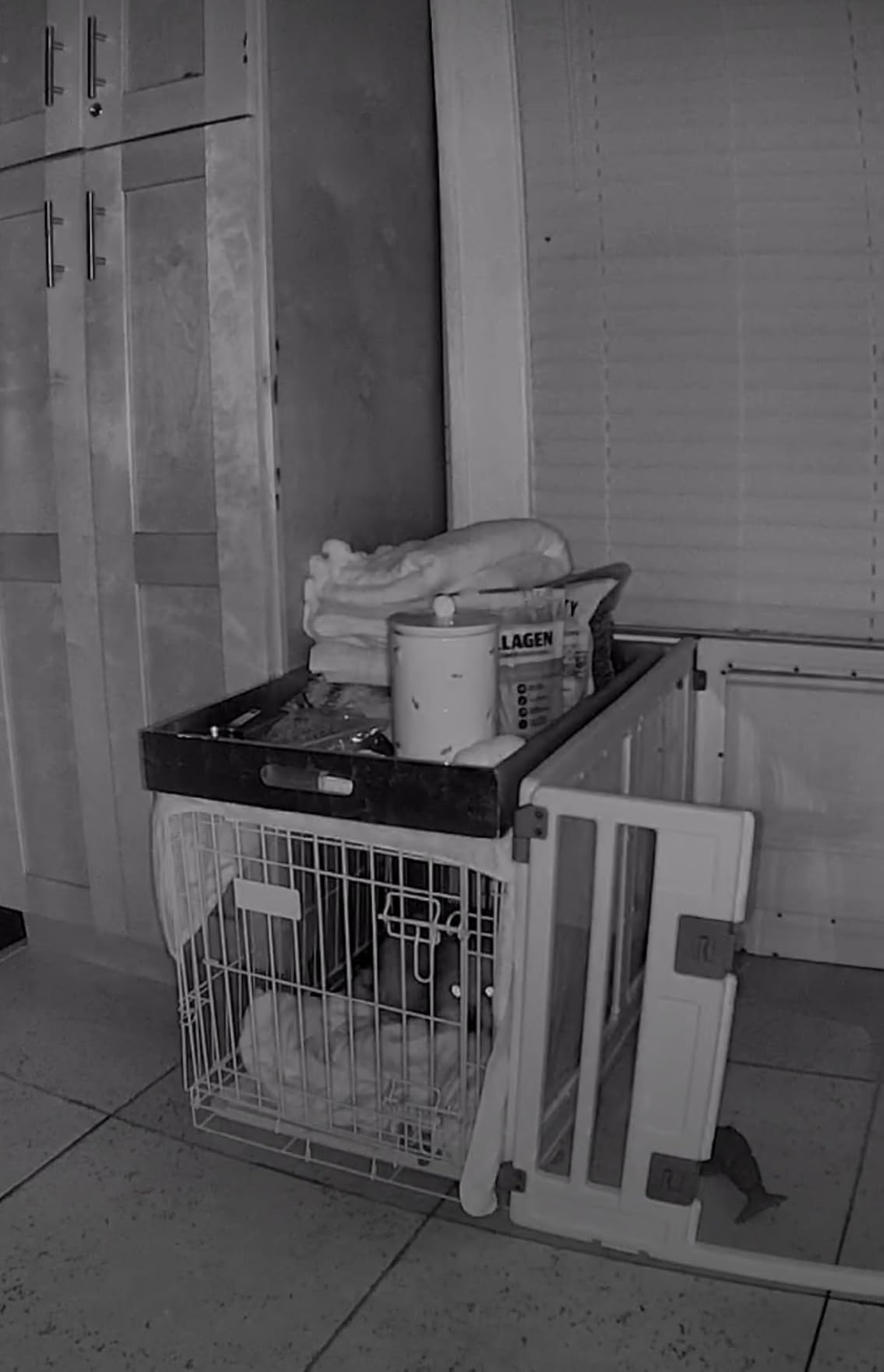
Night vision performance impressed me. In a dark storage room with no windows, the E220 produced clear monochrome footage up to about 25 feet. For offices that need after-hours monitoring in windowless spaces, this camera delivers. The two-way audio is also clear enough for basic communication, like directing a delivery or speaking with staff.
For whom it’s good
Apple-centric offices that use HomeKit, iCloud, and Apple TVs get the most seamless experience. You can view feeds on your iPhone, iPad, Mac, and Apple TV through the Home app. HomeKit Secure Video also means your footage stays within Apple’s encrypted ecosystem rather than third-party cloud servers.
Privacy-conscious businesses that prefer local storage and on-device AI processing benefit from the eufy approach. The camera does not require cloud subscriptions to unlock core features, and the AI detection runs on the camera itself rather than uploading video for analysis. Combined with HomeKit Secure Video, this is one of the more privacy-friendly options.
For whom it’s bad
Pan and tilt controls do not work through HomeKit. You can view the live feed and receive motion notifications, but to actually rotate the camera, you need the eufy app. This split experience is annoying for users who want everything in one ecosystem. Google Assistant and Alexa also have limited pan/tilt support.
Some users report tracking smoothness issues, where the camera rotates in noticeable increments rather than smooth motion. I saw this occasionally during fast movement, but it was not consistent. The app can also feel sluggish compared to Ring or Nest, with slight delays when accessing live feeds or recorded clips. Make sure to budget for a microSD card since one is not included.
8. Google Nest Cam Indoor (3rd Gen) – Best for Google Workspace Offices
Google Nest Cam Indoor (Wired, 3rd Gen) – Security Camera – 2025 – Snow
- Crisp 2K HDR video
- Excellent color night vision
- Easy Google Home app setup
- Modern compact design
- Reliable motion alerts
- Clear two-way audio
- Encrypted video with two-step verification
- Full features require subscription
- Limited viewing angle adjustment
- Image only flips 180 degrees
- Smaller magnet mount
- Premium subscription needed for AI features
If your office runs on Google Workspace and Google Home, the Nest Cam Indoor (3rd Gen) is the most natural fit. Setup happens entirely through the Google Home app, which most Google-centric offices already use for other smart devices. The camera pulled into our existing Google Home dashboard within minutes of plugging it in.
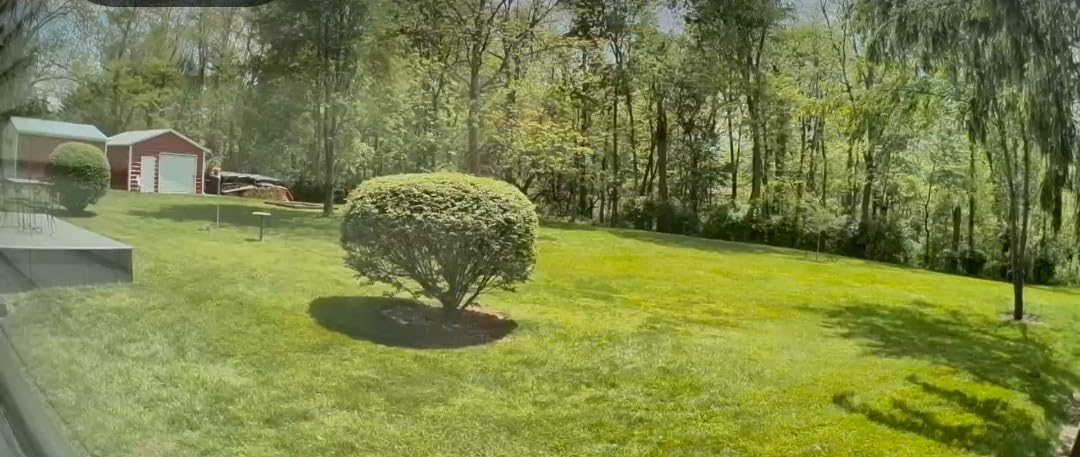
The 2K HDR video quality is excellent, with noticeably better dynamic range than 1080p cameras. In our reception area with bright windows and dim interior zones, the HDR handled the contrast without blowing out the windows or losing detail in the shadows. Color night vision was the standout: footage remained in color even in near-darkness, which helps with identifying clothing colors and vehicle details after hours.
Gemini AI integration brings smarter alerts. Instead of generic “motion detected” notifications, the camera can identify whether it saw a person, an animal, or a vehicle. For office managers tired of dismissing alerts triggered by passing cars or stray cats, this reduces notification fatigue significantly. The AI runs on Google’s servers, which means a subscription is required for full functionality.
Privacy and security are handled thoughtfully. Video is encrypted in transit and at rest, and two-step verification protects your account. A green LED indicator lights up when the camera is streaming, giving clear visual confirmation of active recording. For offices handling sensitive information, these built-in security measures provide meaningful protection.
For whom it’s good
Offices already invested in Google Home, Nest, or Google Workspace get the smoothest experience. The camera integrates with Google Assistant for voice control, displays feeds on Nest Hubs and Chromecast-enabled TVs, and shares activity events with other Google Home devices. If you want one app to manage everything, the Nest Cam delivers.
Businesses that prioritize HDR video quality and color night vision benefit from the Nest Cam’s imaging strengths. The wider, taller field of view also covers more area than competing fixed cameras, reducing the number of cameras needed for medium-sized rooms.
For whom it’s bad
Advanced features like Gemini AI alerts, video history search, and familiar face detection require a Google Home Premium subscription. Without it, you still get live view and basic motion alerts, but the camera loses much of what makes it special. For businesses avoiding subscriptions, the eufy or Tapo cameras are better choices.
The viewing angle adjustment is limited. The base only allows about 180 degrees of rotation, and you cannot tilt the camera up or down significantly. For ceiling or wall mounts, plan your placement carefully. The smaller magnet mount compared to older Nest cameras is also less versatile for mounting on uneven surfaces.
How to Choose the Right Indoor Security Camera for Your Office?
Selecting the right indoor security camera for office use comes down to matching camera capabilities to your specific business needs. After testing these eight models across different office scenarios, I want to walk you through the key factors that actually matter for workplaces.
Resolution and Field of View for Office Spaces
For most offices, 1080p HD is sufficient if the camera is mounted within 10 to 15 feet of the area you want to monitor. Resolution becomes critical when you need to identify faces from a distance, read labels, or capture license plates in attached parking areas. The Tapo C120 and eufy S350 both deliver 2K or higher resolution, which gives you meaningful detail for evidence-quality footage.
Field of view matters more than resolution in many cases. A 120-degree fixed lens covers more area than a 90-degree higher-resolution lens. Pan and tilt cameras like the Ring Pan-Tilt or Kasa EC71 give you 360-degree coverage from a single mount, which is more cost-effective than installing multiple fixed cameras. For open-plan offices, prioritize cameras with wide coverage or pan/tilt capability.
Storage Options: Cloud vs Local
Local storage on microSD cards works well for budget-conscious businesses. Cameras like the Tapo C100, eufy E220, and Kasa EC71 all support local recording without subscriptions. The trade-off is that if the camera is stolen, you lose the footage. For high-risk areas, consider cameras with secure local storage plus optional cloud backup.
Cloud storage offers off-site backup and easier access to recorded footage from multiple devices, but subscription costs add up quickly across multiple cameras. Ring Protect and Google Nest Aware both charge per camera or per home, which becomes expensive for multi-camera setups. Tapo Care and Kasa Care are similarly priced. For offices with more than three cameras, local storage is usually more economical. If you also need outdoor coverage, our guide to outdoor security cameras without subscriptions covers models that pair well with these indoor options.
Privacy and Legal Considerations for Workplace Cameras
Workplace camera legality varies by state and country, but general best practices apply nearly everywhere. You generally have the right to monitor your own office, especially for security and asset protection, but you cannot record areas where employees have a reasonable expectation of privacy, like bathrooms, changing rooms, or break rooms used for personal time.
Notification is essential. Post visible signs that cameras are recording, and include surveillance in your employee handbook. Audio recording is more restricted than video in most jurisdictions; some states require two-party consent for audio recording, so check your local laws before enabling microphone features. The Ring Indoor Cam’s manual privacy cover and the eufy S350’s physical privacy mode are useful tools for complying with employee privacy expectations during off-hours or sensitive meetings.
Smart Features That Matter for Offices
Motion detection with person differentiation is worth prioritizing. Basic motion detection floods you with alerts every time a shadow moves or a curtain shifts, which leads to alert fatigue. Person detection, available on the Tapo C120, eufy cameras, and Nest Cam, reduces false alerts and makes the camera actually useful for monitoring.
Two-way audio helps for reception desks, delivery coordination, and remote communication with staff. The Ring Indoor Cam and Nest Cam have notably better audio quality than budget options. For offices where you need to talk to visitors or staff through the camera, audio clarity matters more than video resolution.
Multi-Camera Scalability for Growing Offices
If you plan to add cameras over time, choose a system that scales cleanly. Ring and Nest both support multiple cameras under single subscriptions, but the costs scale with the number of cameras. Tapo and Kasa support unlimited cameras on local storage with optional individual cloud plans, which is more flexible for growing offices. eufy’s HomeBase 3 system can centralize storage and AI processing for multiple cameras.
For businesses that want to start small and expand, the Tapo C100 is the most cost-effective entry point. Three or four cameras cover a small office for under $80 total, and you can add more as needed without subscription penalties. If your office setup is more temporary, our guide to battery security cameras for renters covers wireless options that do not require permanent installation.
Frequently Asked Questions
What is the best security camera for an office?
The best security camera for an office is one that delivers reliable 2K or higher video quality, accurate person detection, secure local or cloud storage, and seamless remote monitoring through a mobile app. The Tapo C120 is our top overall pick for offices because it combines sharp 2K video, no-subscription local storage, accurate AI detection, and flexible mounting at a budget-friendly price. For offices already invested in specific ecosystems, the Ring Indoor Cam works best for Alexa setups, while the Nest Cam Indoor is ideal for Google Workspace offices.
Can I put a camera in my office at work?
Yes, in most jurisdictions you can install security cameras in your own office for legitimate business purposes like theft prevention, asset protection, and security monitoring. However, you must avoid recording areas where employees have a reasonable expectation of privacy, such as bathrooms, locker rooms, or dedicated break spaces. Posting visible signs about surveillance, documenting the cameras in your employee handbook, and being transparent about audio recording practices protects you legally and builds trust with your team.
Are indoor security cameras legal in the workplace?
Indoor security cameras are legal in most workplaces for legitimate business purposes, but specific rules vary by state and country. Video recording is generally permitted in work areas, common spaces, and entryways. Audio recording is more restricted: some states like California and Florida require two-party consent, meaning everyone being recorded must agree. Always check your local regulations and consult an employment attorney if you have specific concerns about your jurisdiction.
Which indoor security camera is the most secure?
The most secure indoor security cameras combine encrypted video storage, two-factor authentication, and clear privacy controls. The Google Nest Cam Indoor encrypts video in transit and at rest with two-step verification, while the eufy S350 offers local storage with no cloud upload and a physical privacy mode that physically rotates the lens away. For maximum security, prioritize cameras with end-to-end encryption and avoid models that require cloud subscriptions for basic functionality.
What is the best indoor camera system for businesses?
The best indoor camera system for businesses depends on the scale and complexity of your operation. For small offices with one to four cameras, the Tapo C100 or Tapo C120 offers excellent value with local storage and no subscription fees. For medium-sized businesses with four to ten cameras, the eufy HomeBase 3 system centralizes storage and AI processing across multiple cameras. For larger businesses with professional security needs, commercial-grade PoE systems from Reolink or Ubiquiti offer the most reliability and scalability, though they require more technical setup.
Do indoor security cameras work without internet?
Some indoor security cameras can record to local microSD cards without internet, but most lose remote viewing and notification features when offline. Cameras like the Tapo C100, eufy E220, and Kasa EC71 all support local recording without Wi-Fi, which means they continue capturing footage even during internet outages. However, you will not receive motion alerts on your phone or be able to view live feeds remotely until the internet connection is restored.
Final Verdict on the Best Indoor Security Cameras for Office
Choosing the right indoor security cameras for your office depends on what you value most: budget, video quality, ecosystem integration, or privacy. After testing all eight models, the Tapo C120 stands out as the best overall pick for most offices because it delivers sharp 2K video, accurate AI detection, flexible mounting, and no-subscription local storage at a price that works for any business budget. It is the camera I installed in our reception area and kept there.
For offices that need detailed evidence-quality footage, the eufy S350 with its dual-lens 4K design is worth the premium price. For businesses on tight budgets covering multiple rooms, the Tapo C100 gives you the most coverage per dollar. If you already use Ring or Google Home ecosystems, the corresponding cameras integrate most naturally into your existing setup.
Whatever you choose, focus on cameras with reliable motion detection, secure storage options, and clear video quality at the distances that matter for your office. Pair your indoor setup with outdoor security cameras without subscriptions for full property coverage, and you will have a security system that protects your business without draining your budget on monthly fees. Here is to safer offices in 2026 and beyond.