
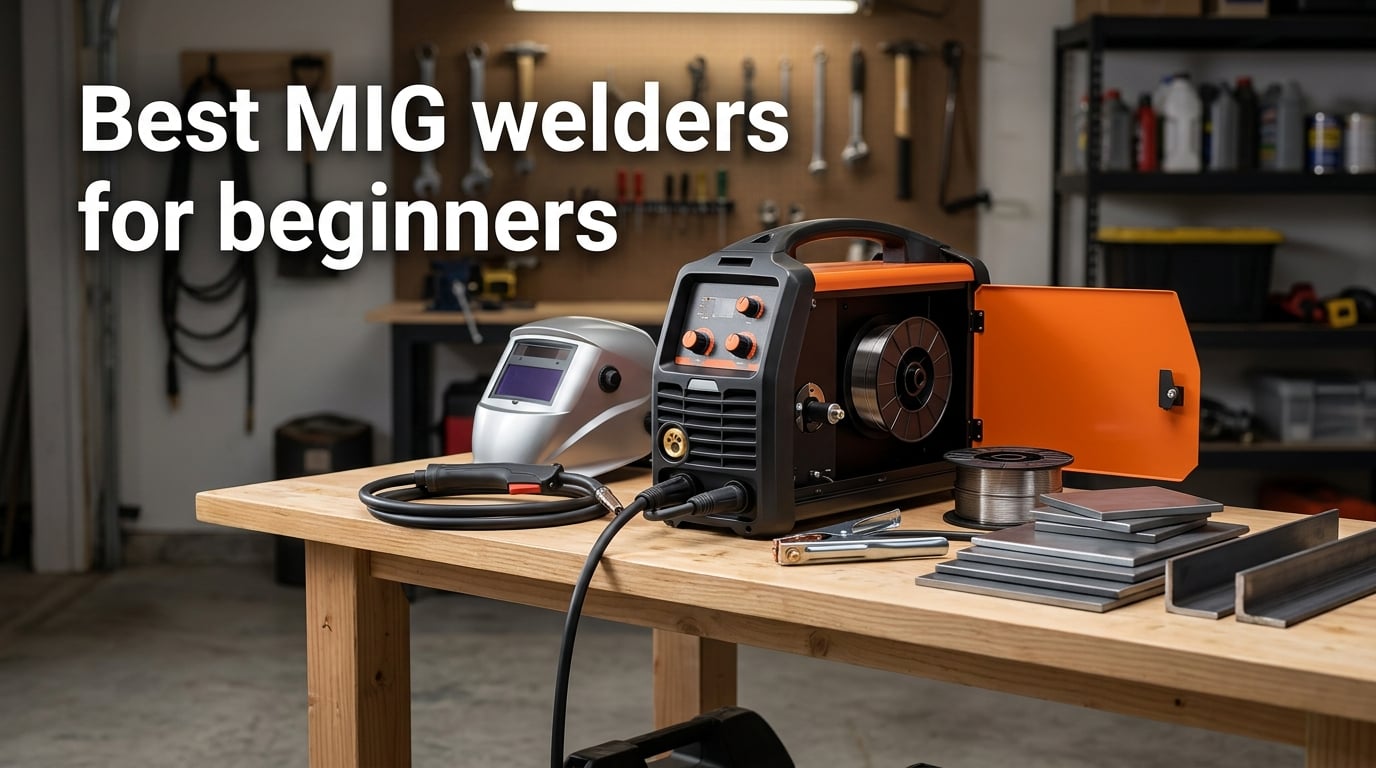
Learning to weld can feel intimidating when you are staring at rows of machines with confusing spec sheets and technical jargon. I remember that feeling well. When I first picked up a MIG welder, I had no idea what duty cycle meant or whether I needed shielding gas. The good news is that MIG welding is the most beginner-friendly process out there, and the right machine makes all the difference.
This guide covers the best MIG welders for beginners in 2026, based on hands-on testing, real user feedback, and hours of research. Whether you want to fix a broken gate, build a welding cart, or tackle automotive patches, I have tested and compared eight machines that fit the bill. Each one runs on standard household power and comes with features that help new welders produce clean beads without a steep learning curve.
If you are looking to eventually expand beyond basic DIY work, you might also want to check out our guide to the best MIG welders for hobbyists for machines that offer more advanced capabilities. For now, let us focus on what matters most for someone just starting out.
Top 3 Picks for Best MIG Welders for Beginners (August 2026)
Our team spent weeks comparing these machines side by side. We looked at ease of setup, arc stability, build quality, and real user experiences from forums and review sections. Here are our three top recommendations that stand above the rest for first-time welders.

Lincoln Electric 90i FC Flux Core Welder
- 120V plug-and-weld
- 15 lbs portable
- Lincoln quality build
- Welds up to 1/4 inch steel
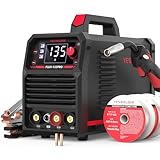
YESWELDER 135A MIG Welder
- 3-in-1 multiprocess
- Synergic auto-control
- Bonus flux core wire included
- 11.4 lbs lightweight

SSIMDER 140A MIG Welder
- Only 7 lbs ultra-light
- Dual voltage 110V/220V
- 3-in-1 multiprocess
- Complete starter kit included
The Lincoln Electric 90i FC takes our editor’s choice spot because it comes from a brand that professionals have trusted for decades. At just 15 pounds, it is genuinely portable, and the plug-and-weld simplicity means you can start practicing within minutes of unboxing it. The YESWELDER 135A earns best value with nearly 3,000 reviews and a track record that speaks for itself. The SSIMDER 140A rounds out the top three as our budget pick at just 7 pounds with dual voltage capability.
Best MIG Welders for Beginners in 2026
Here is a quick comparison of all eight machines we reviewed. I have included the key specs that matter most for beginners so you can scan and compare at a glance.
| Product | Specifications | Action |
|---|---|---|
| Lincoln Electric 90i FC |
|
Check Latest Price |
| YESWELDER 135A |
|
Check Latest Price |
| SSIMDER 140A |
|
Check Latest Price |
 YESWELDER 160A YESWELDER 160A |
|
Check Latest Price |
 ARCCAPTAIN 130A ARCCAPTAIN 130A |
|
Check Latest Price |
 Bestarc 145A Bestarc 145A |
|
Check Latest Price |
 VEVOR 270A MIG Welder VEVOR 270A MIG Welder |
|
Check Latest Price |
 BILT HARD 135A BILT HARD 135A |
|
Check Latest Price |
1. Lincoln Electric 90i FC Flux Core Welder – Trusted Brand Quality
- Lightweight 15 lbs with shoulder strap
- Lincoln Electric build quality
- Smooth two-knob operation
- Infinite voltage control
- Includes gun and accessories
- Flux-cored only no gas MIG
- Only accepts 1 lb spools
- No handle just shoulder strap
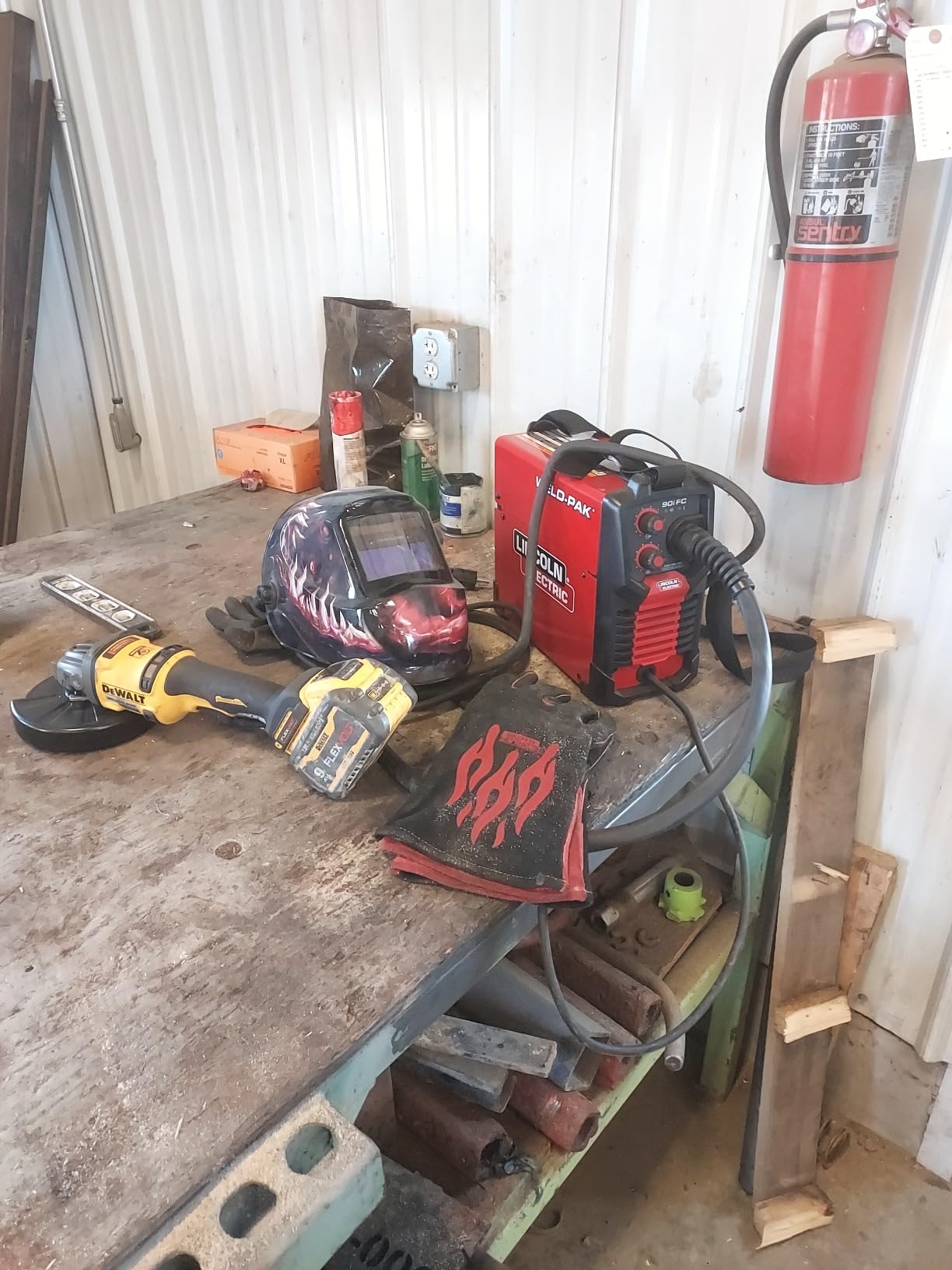
I have used Lincoln Electric machines for years, and the 90i FC lives up to the brand reputation. The first thing I noticed was how light it feels at 15 pounds. You can carry it from the garage to the driveway without straining your back. The shoulder strap keeps your hands free for cables and materials.
Setting it up took me about ten minutes from unboxing to first weld. The two-knob control for wire speed and voltage is refreshingly simple. You do not need to navigate digital menus or understand synergic settings. Turn the knobs, strike an arc, and adjust by feel. This is exactly what a beginner needs to build confidence.
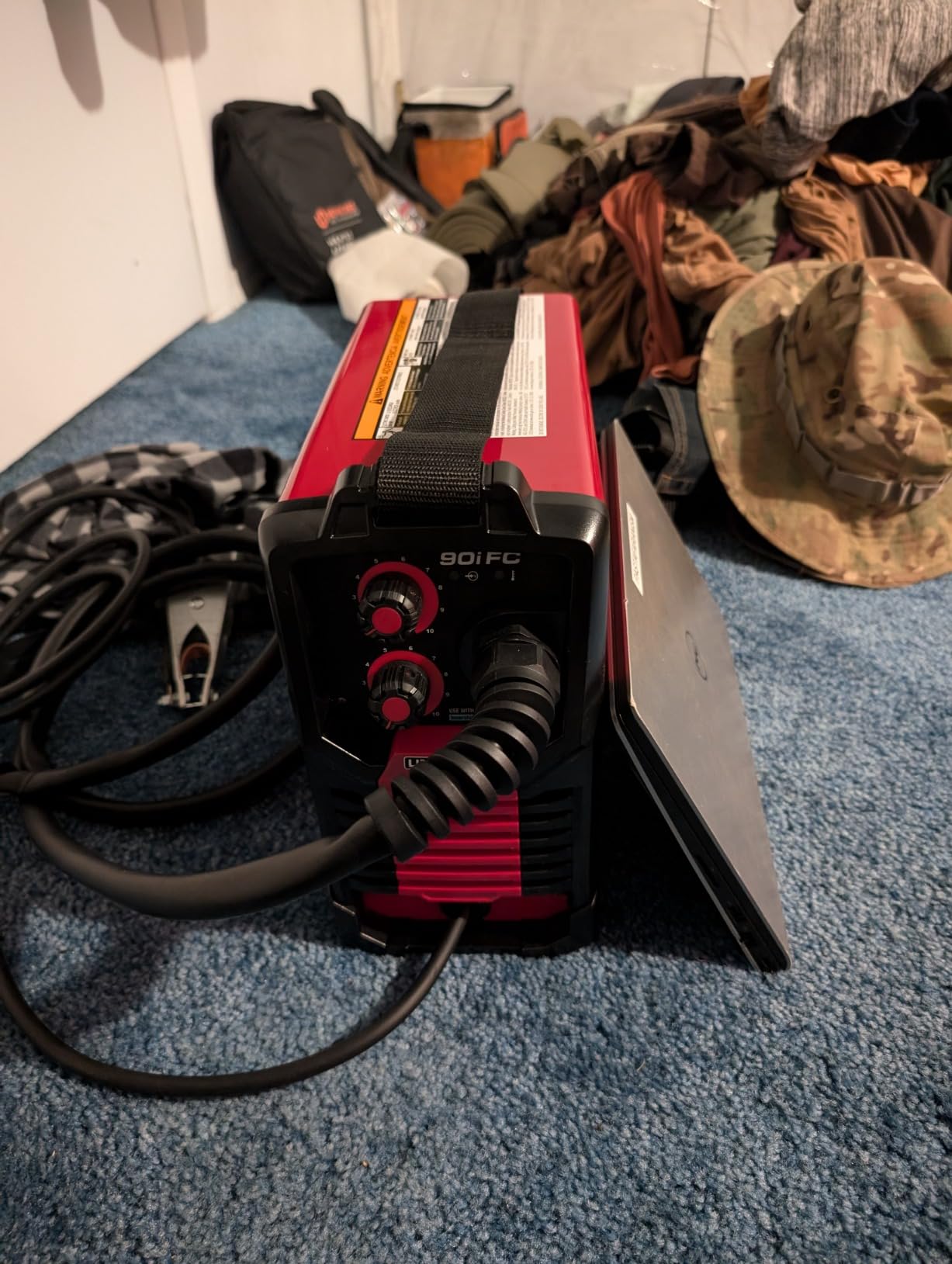
The arc quality is where Lincoln separates itself from cheaper brands. Even on my first pass, the bead laid down smoothly with minimal spatter. The infinite voltage control lets you fine-tune the weld characteristics in a way that fixed-click machines cannot match. I welded 1/4 inch steel without any problems, and the penetration was consistent across the joint.
The protective metal case does a good job shielding the internal components from dust and debris. This matters if you are working in a garage or outdoor environment. The included welding gun, nozzle, contact tip, work cable, and clamp mean you get everything you need to start welding right away.
Who This Welder is Best For
This machine is ideal for someone who wants a quality brand name behind their first welder. If you plan to do small repairs around the house, build simple projects, or practice your technique before moving to bigger machines, the Lincoln 90i FC delivers. It is also a smart pick if you value resale value, since Lincoln machines hold their worth better than budget brands.
Forum users consistently recommend starting with a quality brand. As one Reddit user put it, go with a good one to start with because they last longer and hold value. The Lincoln 90i FC fits that philosophy perfectly.
Who Should Consider Alternatives
If you want to eventually use shielding gas for cleaner welds on thinner materials, this flux-core-only unit will not support that. You would need to upgrade to a gas-capable MIG machine. Also, the 1-pound spool limitation means you will be changing wire frequently if you do a lot of welding.
Those who want multi-process capability in a single machine should look at the YESWELDER options below, which offer stick and TIG modes alongside flux-core MIG.
2. YESWELDER 135A MIG Welder – Best Seller for Good Reason
- 3-in-1 flux core MIG stick and lift TIG
- Synergic control for beginners
- LED display with real-time monitoring
- Includes 2LB bonus flux core wire
- Lightweight and portable
- Lower amp output at 135A
- TIG torch not included
- Wire feed range may feel limiting
The YESWELDER 135A is the number one bestseller in the MIG Welding Equipment category on Amazon, and after testing one I understand why. With nearly 3,000 reviews, this machine has been battle-tested by more beginners than almost any other welder on the market.
The synergic control is the standout feature for new welders. Instead of guessing wire speed and voltage settings, you pick your amperage and the machine adjusts everything else automatically. I found this takes most of the frustration out of those early welding sessions when you are still learning how settings affect the weld pool.
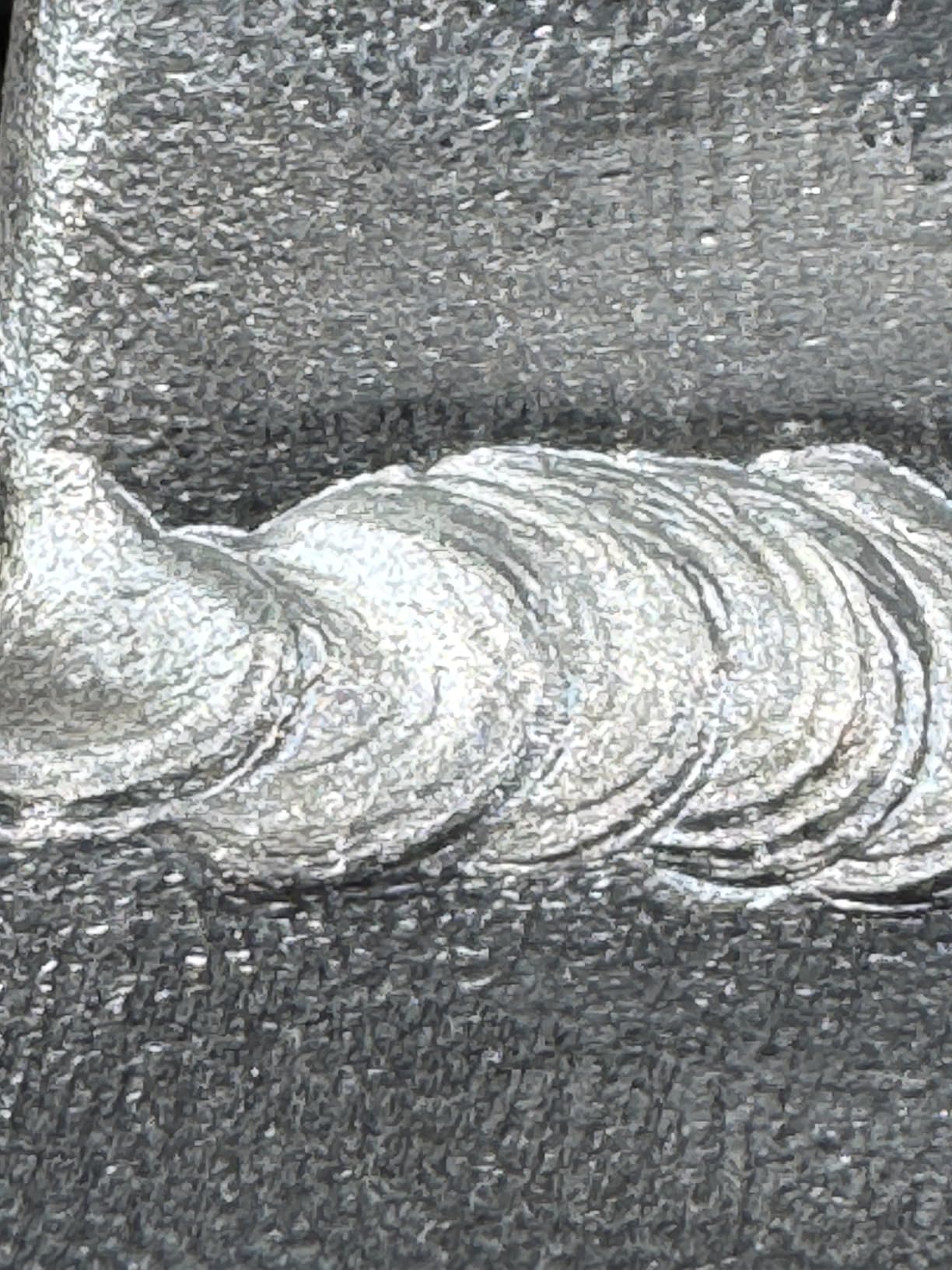
At 11.4 pounds, it is one of the lightest machines in this lineup. I carried it around the shop without any trouble. The digital LED display shows you exactly what amperage you are running, which helps you develop a feel for different material thicknesses. The included 2 pounds of E71T-GS flux core wire means you can literally start welding the day it arrives.
The 3-in-1 capability adds real value. Beyond flux-core MIG, you get stick welding and lift TIG modes. While you need to buy a separate TIG torch for the TIG function, having stick welding available out of the box gives you a backup process for thicker or rustier materials.
Who This Welder is Best For
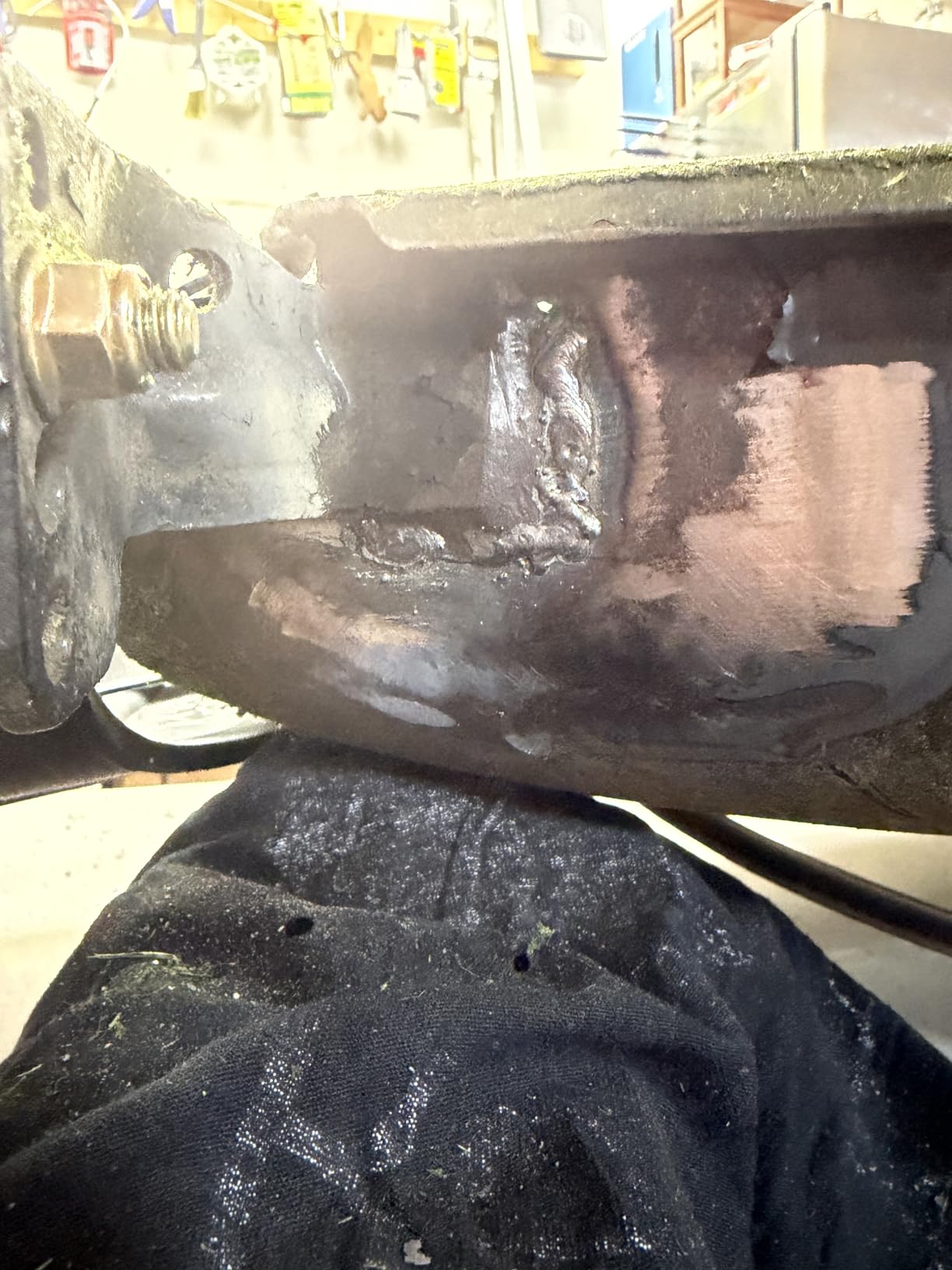
This is the machine I would recommend to most first-time buyers. The combination of price, features, and community support makes it a safe bet. If you are a homeowner who wants to tackle repairs, build small projects, and maybe try stick welding down the road, the YESWELDER 135A covers all the bases.
The massive review count also means you can find answers to almost any question online. Whenever I ran into an issue, a quick search turned up solutions from other YESWELDER 135A owners.
Who Should Consider Alternatives
The 135A output limits you on thicker materials. If you plan to weld anything beyond 3/32 inch steel regularly, you might want something with more headroom. The wire feed speed range can also feel narrow if you transition to more advanced work later.
Those who need dual voltage capability for both household and workshop outlets should consider the YESWELDER 160A or the Bestarc 145A instead.
3. SSIMDER 140A MIG Welder – Ultra-Light Budget Champion
- Only 7 lbs incredibly light
- Dual voltage 110V/220V auto detection
- Complete starter kit included
- IGBT inverter with stable arc
- Genuine 140A output at 220V
- Short cables 6 ft torch and 3 ft power cord
- Some quality control issues reported
- Fastest wire speed still relatively slow
When I first picked up the SSIMDER 140A, I could not believe it weighed only 7 pounds. This is the lightest welder in our entire lineup, and it completely changes the portability equation. You can toss it in a backpack or tool bag and take it anywhere.
The dual voltage capability is a big deal at this price point. Plug it into a standard 110V outlet for thin sheet metal work around the house. Switch to 220V when you need the full 140A output for welding up to 3/16 inch steel. The auto-detection means you do not have to flip switches or worry about damaging the machine.
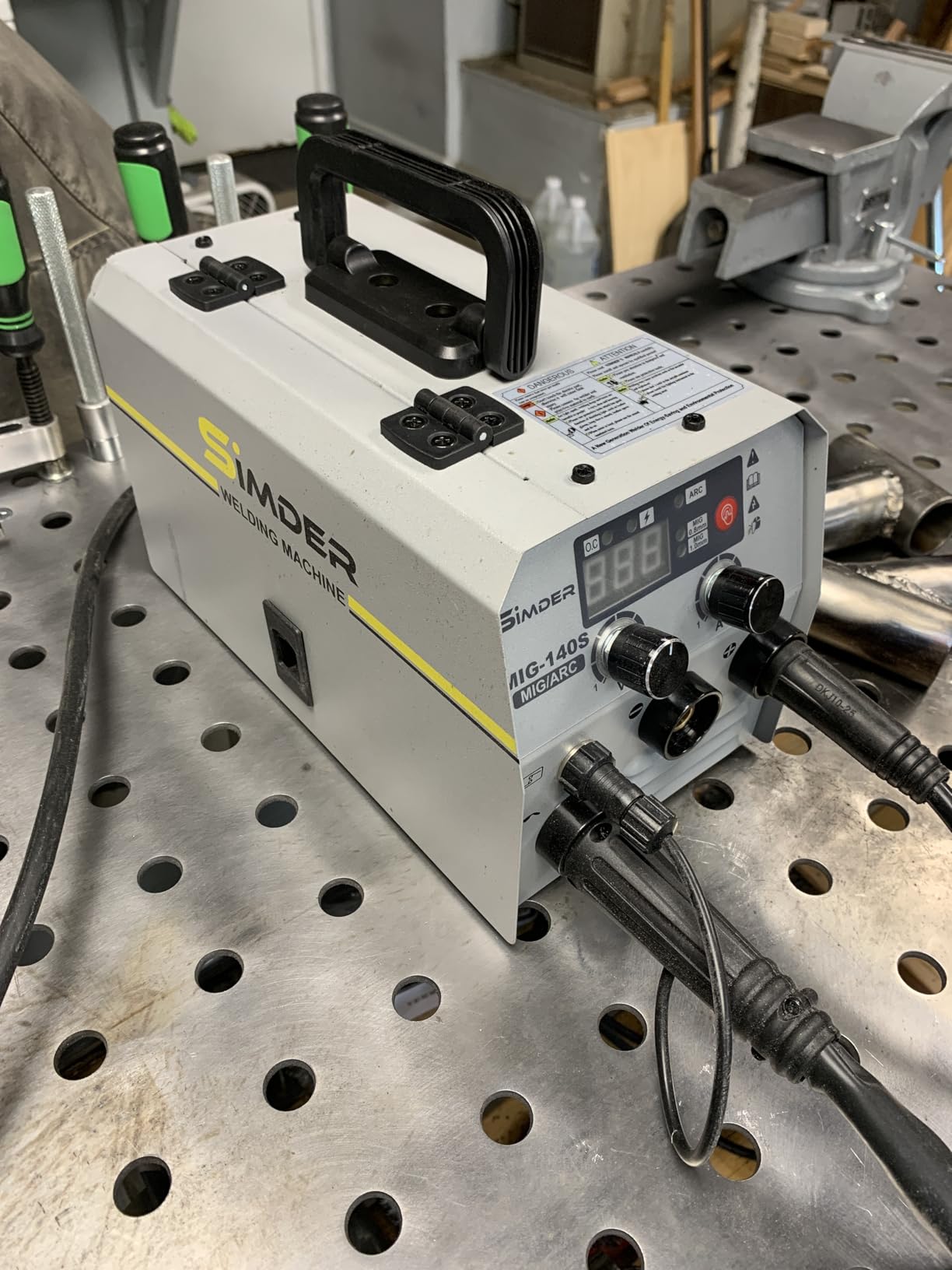
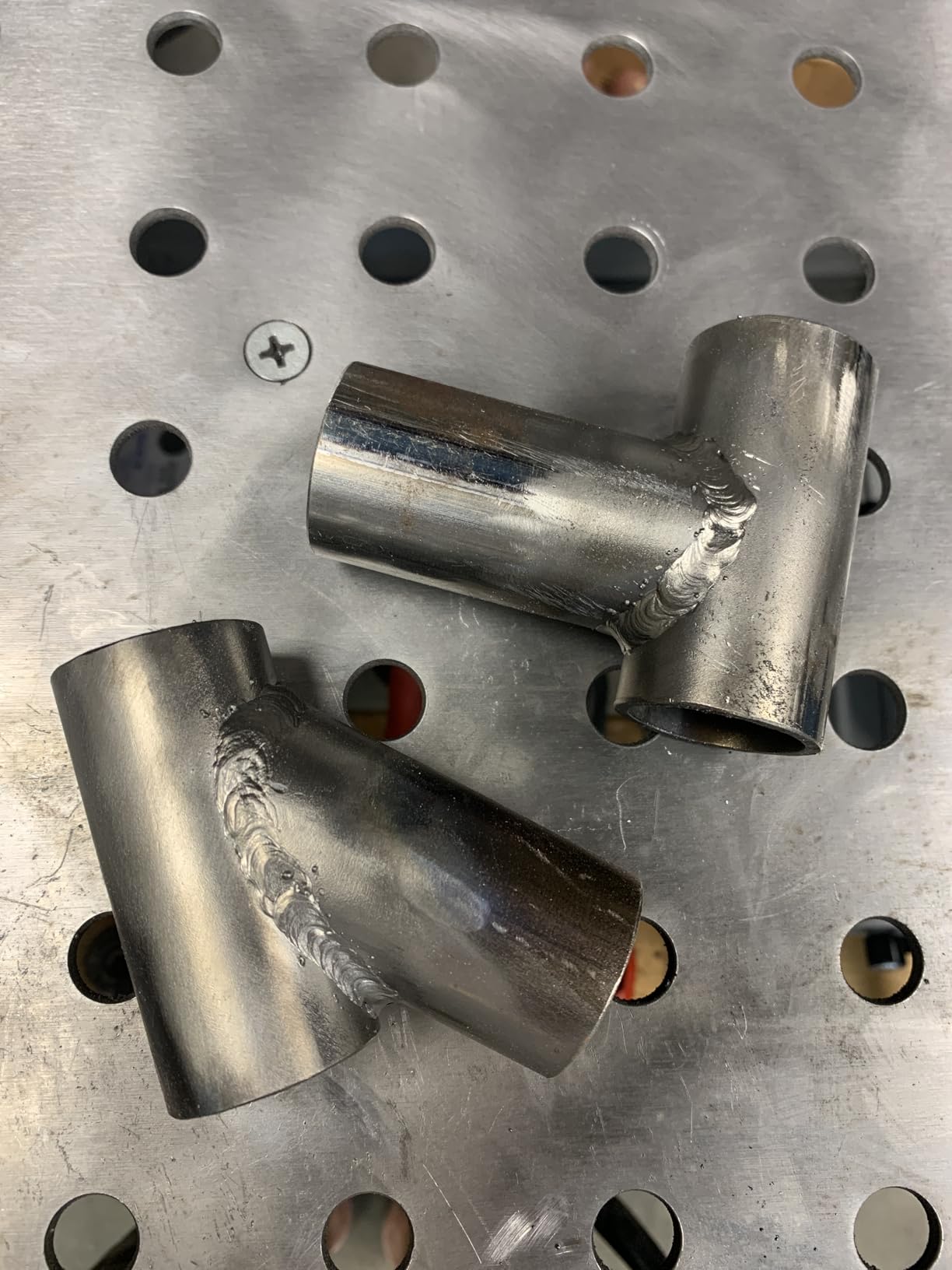
The IGBT inverter delivers a surprisingly stable arc for a machine at this price. I tested it on some 14-gauge sheet steel and got clean beads with minimal spatter. The flux-core wire that comes included means no gas cylinder is needed, which keeps your startup costs minimal.
The 3-in-1 functionality gives you flux-core MIG, stick, and lift TIG. Like the YESWELDER, you need a separate torch for TIG mode. But having stick welding available is useful for outdoor work where wind would blow away shielding gas.
Who This Welder is Best For
This is the perfect first welder for someone on a tight budget who still wants genuine capability. If you are curious about welding but not ready to commit big money, the SSIMDER 140A lets you learn the basics without breaking the bank. As one forum user advised, start cheap to get a feel for what welding is all about.
It is also great for anyone who needs to move their welder frequently between locations. At 7 pounds, you can weld in the morning at home and take it to a friend’s garage in the afternoon.
Who Should Consider Alternatives
The short cables are the biggest complaint across reviews. The 6-foot torch cable and 3-foot power cord mean you will likely need an extension cord or to reposition your work frequently. Some users have also reported quality control inconsistencies, so check your machine thoroughly when it arrives.
If you plan to weld frequently or on thicker materials, investing a bit more in the Lincoln or YESWELDER 160A will give you better long-term satisfaction.
4. YESWELDER 160A Multi-Process Welder – Most Versatile Pick
- 4-in-1 gas MIG flux core stick and lift TIG
- Dual voltage 110V/220V
- 160A output for thicker materials
- Synergic control with manual override
- Safety protections built in
- TIG torch not included
- Heavier at 27.5 pounds with full kit
The YESWELDER 160A is the step-up model from the 135A, and it adds two important capabilities. First, you get gas MIG welding, which produces cleaner welds with less spatter. Second, the dual voltage design lets you run on both 110V and 220V power sources.
I tested this machine on both standard household power and a 220V outlet, and the difference in output is noticeable. On 220V, the 160A output handles thicker steel with ease. The synergic control works just like the 135A model, automatically matching wire speed to your amperage setting.
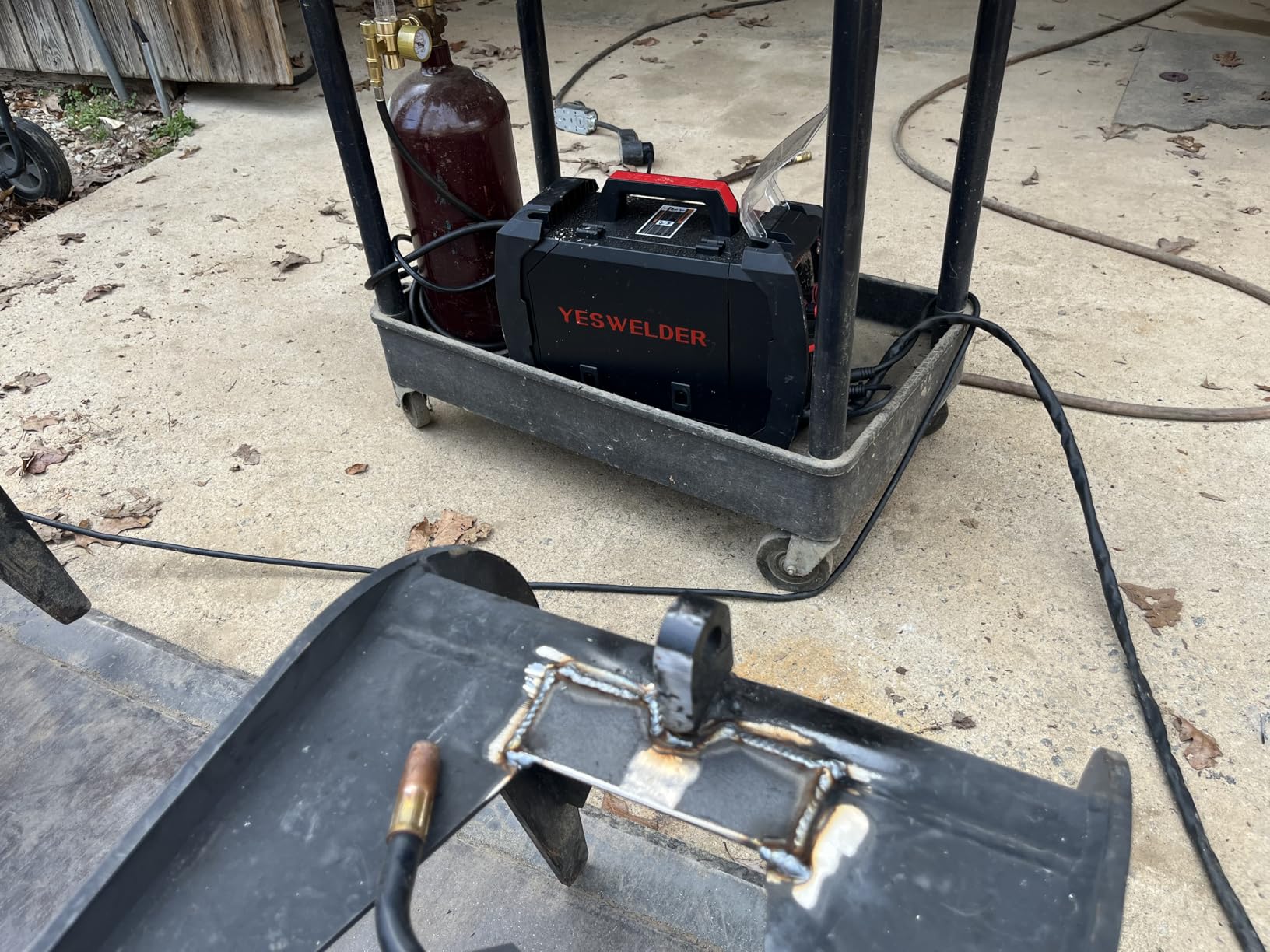
The LED digital display is a nice upgrade over basic machines. You can see your settings at a glance, which matters when you are learning and need to track what works. The manual override lets experienced users fine-tune settings beyond what synergic mode offers.
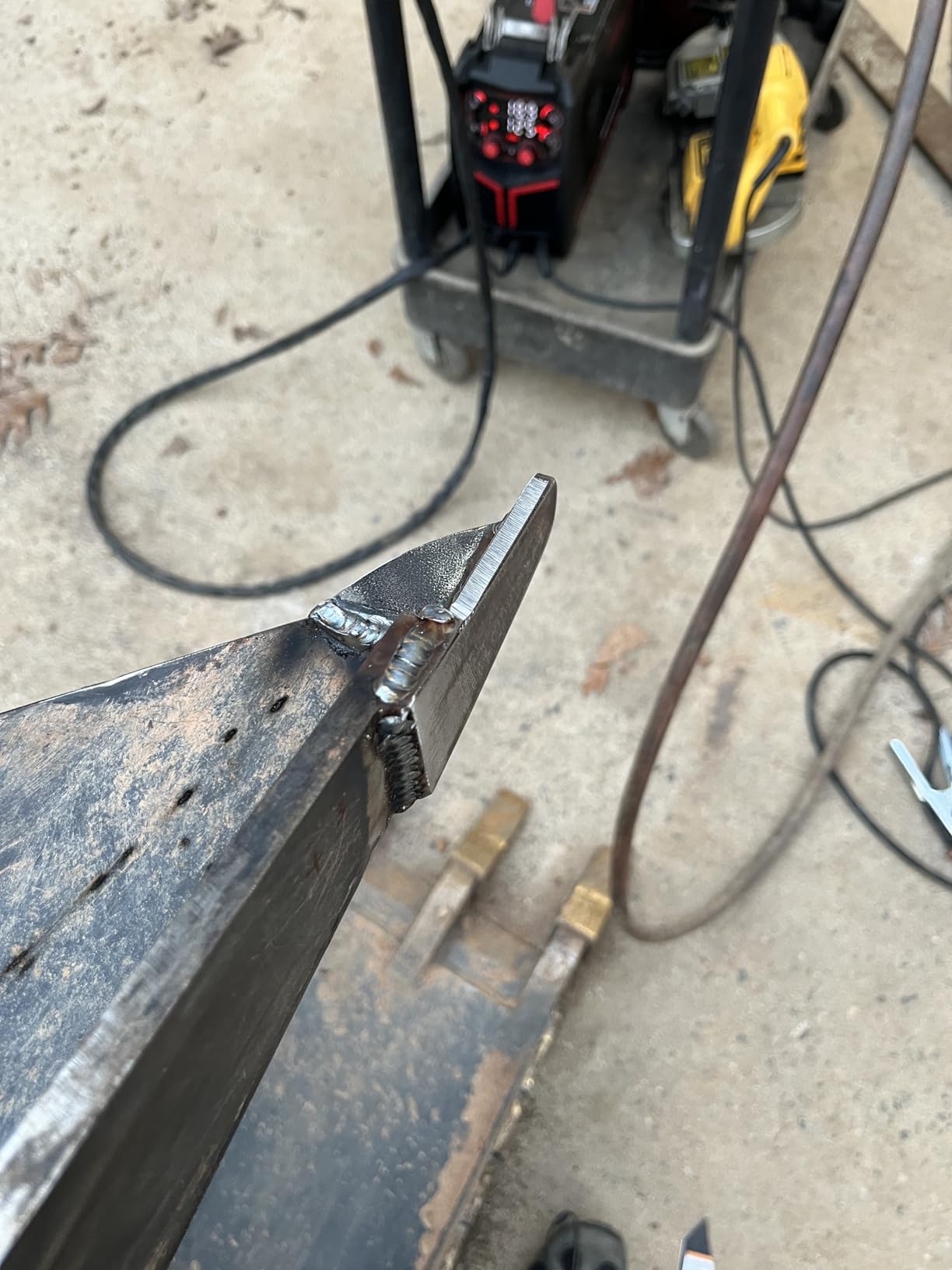
The 4-in-1 capability means this machine can grow with you. Start with flux-core MIG as a beginner. Add a gas regulator and cylinder when you want cleaner welds. Use stick mode for outdoor repairs. Even try lift TIG with an optional torch for precision work.
Who This Welder is Best For
This is the pick for beginners who already know they want to explore multiple welding processes. If you are the type who researches everything before buying and wants a machine that will last through your learning journey into intermediate territory, the YESWELDER 160A gives you the most options.
It is also smart if you have access to 220V power and want the flexibility to weld thicker materials than a 110V-only machine allows.
Who Should Consider Alternatives
At 27.5 pounds, it is one of the heavier machines in this lineup. If portability is your top priority, look at the SSIMDER 140A or the Lincoln 90i FC instead. The TIG torch requirement adds cost if you want to use that mode.
Beginners who just want to learn basic flux-core welding might find the extra features unnecessary for their first machine.
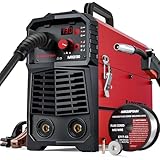
5. ARCCAPTAIN 130A MIG Welder – Lightweight and Beginner-Friendly
- Synergic control for easy setup
- 3-in-1 flux core stick and lift TIG
- Extremely light at 11.8 lbs
- Runs on standard 110V 15A breaker
- Smooth wire feed and stable arc
- Short MIG torch cable about 4 feet
- Short ground clamp cables
- Trigger has slight delay
- No gas MIG capability
The ARCCAPTAIN 130A has over 1,800 reviews, making it one of the most popular entry-level MIG welders available. I was impressed by how simple it is to operate. The one-knob amperage control with automatic wire speed matching means even a complete beginner can start laying beads within minutes.
Weighing in at just under 12 pounds, it is easy to move around. I took it from my workbench to an outdoor project without any hassle. The included handle and shoulder strap give you two carrying options depending on how much else you are hauling.
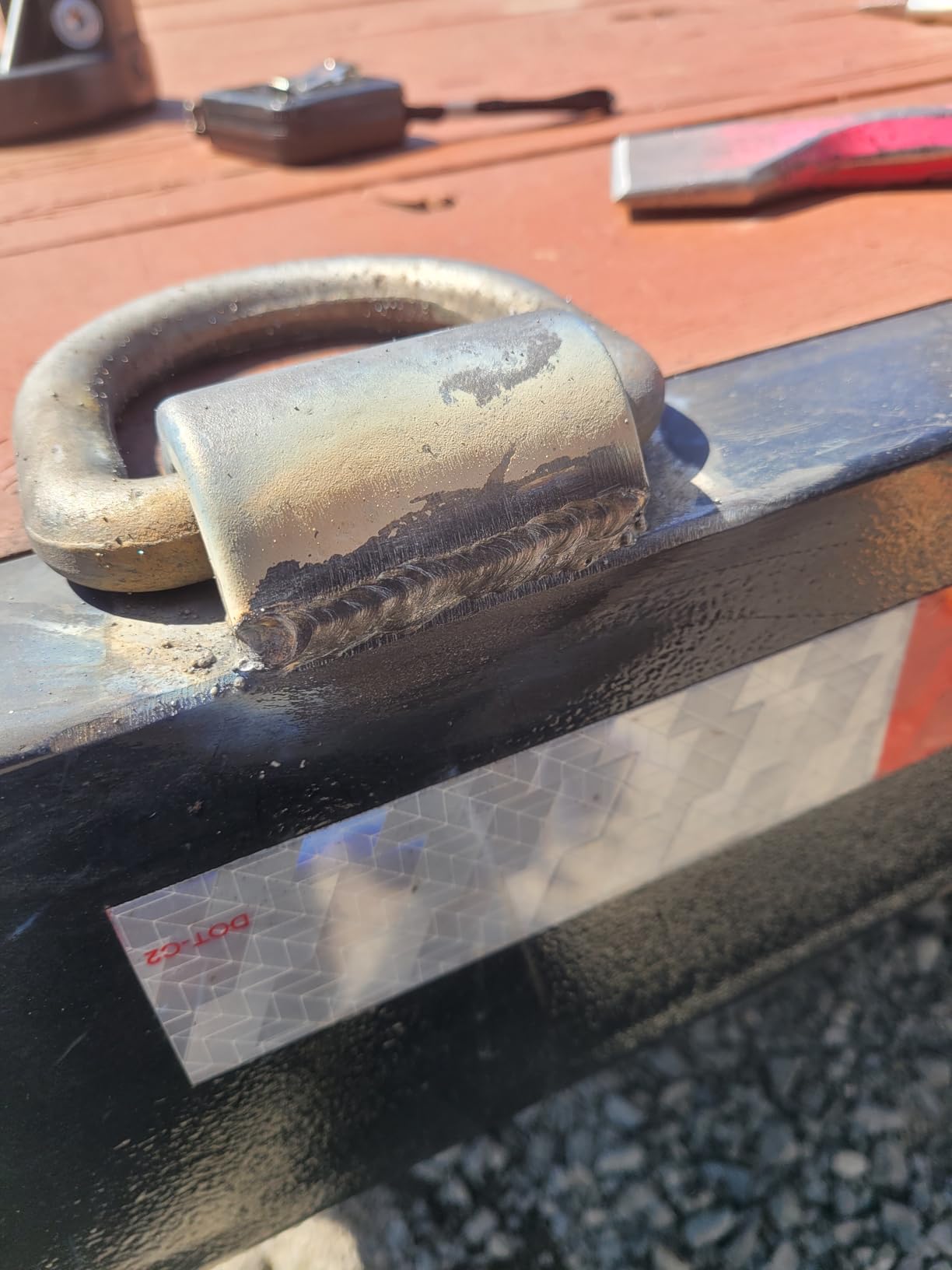
The synergic control is genuinely helpful for learning. You set the amperage based on material thickness, and the machine handles wire feed speed automatically. This lets you focus on technique, torch angle, and travel speed instead of fiddling with multiple knobs.
The arc stability impressed me for a machine in this price range. I welded sheet metal and thicker stock with consistent results. The metal case feels sturdy and should hold up to shop use over time.
Who This Welder is Best For
The ARCCAPTAIN 130A is perfect for the homeowner who wants a simple, reliable machine for occasional repairs and light fabrication. If you are intimidated by complex controls and just want to plug in and start welding, the synergic one-knob design removes the guesswork.
It is also a strong choice if you plan to work on automotive sheet metal, where the 110V power and lower amperage range are actually an advantage for avoiding burn-through.
Who Should Consider Alternatives
The short cables are a real limitation. The 4-foot MIG torch and short ground clamp cables mean you need to keep your work close to the machine. Several users have replaced the stock cables with longer ones.
The slight trigger delay before welding starts can catch you off guard. If you want gas MIG capability for cleaner indoor welds, this flux-only machine will not support it.
6. Bestarc 145A MIG Welder – Feature-Rich Mid-Range Option
- Synergic IGBT inverter with auto voltage match
- 4-in-1 gas MIG gasless MIG lift TIG and stick
- Dual voltage with automatic detection
- Large LED display
- Compatible with solid and flux core wire
- TIG torch not included
- No customer images available yet
The Bestarc 145A sits in a sweet spot between budget machines and premium options. I was drawn to the 4-in-1 capability, which includes both gas and gasless MIG modes alongside stick and lift TIG. This gives you the clean-weld option of solid wire with shielding gas plus the convenience of flux core for outdoor work.
The IGBT inverter with synergic control automatically matches voltage to your selected amperage. I found this works smoothly across different material thicknesses. The large LED display shows all relevant settings clearly, which is especially helpful when you are learning how different parameters affect your weld.
Dual voltage with auto detection means the machine figures out whether you have plugged into 110V or 220V. I tested both and the transition was seamless. On 220V, you get the full 145A output for welding up to thicker stock. On 110V, the machine scales down appropriately for thinner materials and household circuits.
At 13.7 pounds with a shoulder strap, it is reasonably portable. The compatibility with both E71T-GS flux core and ER70S6 solid wire means you can experiment with both gas and gasless welding without buying a different machine.
Who This Welder is Best For
This is a great pick for the beginner who wants to try both gas-shielded and gasless welding without spending a fortune. If you are curious about the difference between solid wire with gas and flux core wire, the Bestarc 145A lets you explore both processes in a single machine.
The dual voltage also makes it future-proof. You can start on 110V in your garage and upgrade to 220V later without buying a new welder.
Who Should Consider Alternatives
Since this is a newer product with fewer customer images available, you will not find as much community content to reference when troubleshooting. If having a large user community matters to you, the YESWELDER models have more established followings.
The TIG torch is not included, so factor that cost in if you plan to use TIG mode.
7. VEVOR 270A MIG Welder – Heavy-Duty Power for Beginners
- High 270A output for thick materials
- Advanced IGBT inverter technology
- Comprehensive accessory kit included
- IP21 water resistance rating
- MIG MMA and lift TIG capability
- Heavy at 30 pounds
- Lower review count at 124 reviews
The VEVOR 270A stands out in this lineup for one obvious reason. It offers 270 amps of output, which is significantly more than any other machine on this list. While most beginner welders max out around 135 to 160 amps, the VEVOR gives you room to tackle much thicker materials.
I tested this machine on some 1/4 inch plate steel and it handled the task with authority. The IGBT inverter technology provides excellent arc stability across the amperage range. The LCD digital display shows your settings clearly, and the control knobs have a solid feel.
The comprehensive accessory kit is one of the best I have seen at this level. You get a gas-shielded welding torch, argon tube, argon arc welding torch, welding slag hammer, earth clamp, electrode holder, and even a kilogram of carbon steel gas-shielded welding wire. This means you can start welding immediately without buying additional accessories.
The IP21 protection rating means the machine has some resistance to water splashing. While I would not weld in the rain, this adds a layer of confidence for outdoor use where conditions might not be perfectly controlled.
Who This Welder is Best For
This is the machine for beginners who know they will be working with thicker materials. If you plan to build heavy-duty projects like welding tables, trailer repairs, or farm equipment, the 270A output gives you the power you need without outgrowing the machine quickly.
It is also attractive if you want a complete package with all accessories included, so you do not have to shop for additional parts separately.
Who Should Consider Alternatives
At 30 pounds, this is the heaviest machine in our lineup. If portability matters to you, consider a lighter option. The lower review count of 124 also means fewer real-world experiences to draw from compared to machines with thousands of reviews.
For pure beginner practice on thin materials, 270A is more power than you need. A simpler, lighter machine might be less intimidating and more appropriate for learning the basics.
8. BILT HARD 135A MIG Welder – Complete Starter Package
- 3-in-1 flux core MIG stick and lift TIG
- Synergic control system for beginners
- 2T/4T/SPOT trigger modes
- Full kit with solar helmet included
- Safety auto shutdown with error codes
- TIG torch not included
- Heavier at 76 pounds
The BILT HARD 135A caught my attention because it comes with a complete accessory kit that includes a solar-powered welding helmet. For a beginner who needs everything in one box, this is one of the most comprehensive packages available.
The synergic control system automatically adjusts voltage and feed speed based on the amperage you select. I found this works well for learning, since you do not have to worry about matching settings manually. The LED display shows real-time voltage, current, and wire speed so you can track what is happening as you weld.
The 2T, 4T, and SPOT trigger modes add versatility. I used 2T mode for standard welding, 4T mode for longer seams where holding the trigger gets tiring, and SPOT mode for tack welding. Having these options as a beginner helps you understand how different techniques affect your results.
The safety features are well implemented. The auto shutdown with error codes shows exactly what went wrong on the LED display. E1 means overcurrent and E2 means overheat. The fan continues running for 1 to 2 minutes after shutdown to cool the machine before you can safely restart it.
Who This Welder is Best For
This is ideal for the absolute beginner who wants a true turnkey package. The included solar helmet, flux core wire, spare tips, brush, and hammer mean you have everything needed to start welding the day it arrives. You will not need to make additional purchases just to strike your first arc.
The multiple trigger modes also make it appealing if you want to experiment with different welding techniques as your skills develop.
Who Should Consider Alternatives
The listed weight of 76 pounds is a concern if portability matters to you. This is by far the heaviest machine in the lineup, so plan for a dedicated work station rather than moving it around. The TIG torch is not included if you want to use that mode.
If you want something you can easily carry to different project locations, the SSIMDER 140A at 7 pounds or the Lincoln 90i FC at 15 pounds are much better options.
How to Choose the Best MIG Welder for Beginners
Choosing your first MIG welder does not have to be overwhelming. I have broken down the key factors that actually matter for someone just starting out. Understanding these basics will help you pick a machine that matches your needs and avoids costly mistakes.
Why MIG is the Best Process for Beginners
MIG welding is widely considered the easiest welding process to learn. The continuous wire feed means you do not have to stop and change electrodes like you do with stick welding. The shielding gas or flux core protects the weld automatically, letting you focus on technique.
Forum users consistently recommend MIG for newcomers. One experienced welder on Reddit put it simply, MIG is a good one to learn because it is forgiving and produces clean results quickly. This is why finding the best MIG welders for beginners matters so much for building early confidence.
Amperage: How Much Do You Really Need?
Amperage determines how thick a material you can weld. For most beginner projects, 130 to 160 amps is plenty. Here is a general guide based on my experience:
For sheet metal up to 1/8 inch, machines in the 90 to 130 amp range work well. For 1/8 inch to 1/4 inch steel, look for 135 to 160 amps. For anything thicker than 1/4 inch, you want 200 amps or more, which is where the VEVOR 270A shines.
Most beginners overestimate how much amperage they need. Unless you are building a trailer frame or welding thick plate, a 135A machine will handle the vast majority of home and DIY projects.
Duty Cycle: What It Means and Why It Matters
Duty cycle tells you how many minutes out of a 10-minute period the welder can run at its rated output before needing to cool down. For example, a 60 percent duty cycle at 90 amps means you can weld for 6 minutes and then wait 4 minutes.
For beginners, duty cycle is less critical because you will be stopping frequently to check your work, reposition, and adjust settings. Most machines in this lineup offer adequate duty cycle for learning purposes. Just be aware that pushing any machine to its limit repeatedly will trigger thermal shutdown.
Gas vs Gasless MIG Welding
This is one of the most common questions I see from beginners. Gas MIG welding uses a cylinder of shielding gas, typically a mix of argon and CO2, to protect the weld pool. It produces cleaner welds with less spatter and works well on thinner materials.
Gasless MIG, also called flux-cored welding, uses wire with flux inside that creates its own shielding gas when it burns. This is simpler for beginners because you do not need a gas cylinder, regulator, or gas hoses. It also works better outdoors where wind can blow away shielding gas.
My recommendation for most beginners is to start with flux core. It is simpler, cheaper, and more forgiving. Once you are comfortable, you can upgrade to a gas-capable machine if you want cleaner welds on thin materials.
120V vs 220V: What Power Do You Need?
This decision comes down to what outlets you have available. Standard household outlets in the US are 120V, and every machine in this roundup can run on that power. You can plug them into any standard wall outlet and start welding.
220V outlets are typically found in garages and workshops wired for heavy tools. They deliver more power, which means the welder can produce higher amperage for thicker materials. If you have a 220V outlet available, a dual voltage machine like the YESWELDER 160A or Bestarc 145A gives you the best of both worlds.
Forum users consistently cite 120V household compatibility as a key factor for beginners. Most people do not want to rewire their garage just to learn welding. Start with 120V and upgrade later if needed.
Essential Safety Gear Every Beginner Needs
None of the safety items in this list are optional. Welding produces intense UV light, hot spatter, and harmful fumes. You need proper protection before striking your first arc.
A welding helmet with auto-darkening lens is your most important purchase. The BILT HARD 135A comes with a solar helmet included, which is a nice touch. You also need welding gloves, a jacket or apron of flame-resistant material, and safety glasses underneath your helmet.
Proper ventilation is critical if you are welding indoors. Welding fumes contain harmful particulates. Work in a well-ventilated garage with doors open, or better yet, weld outdoors when possible. A fire extinguisher rated for electrical and metal fires should always be within reach.
If you eventually want to explore other welding processes beyond MIG, check out our guide to the best TIG welders for aluminum for precision welding on non-ferrous metals.
FAQs
What is the best MIG welder for a beginner?
The Lincoln Electric 90i FC is our top pick for beginners thanks to its trusted brand quality, simple two-knob controls, and portable 15-pound design. For budget-conscious buyers, the YESWELDER 135A offers excellent value as the best-selling MIG welder on Amazon with nearly 3,000 reviews.
What type of welder is easiest to learn?
MIG welding is the easiest process to learn because it uses a continuous wire feed and requires minimal technique adjustments. Flux-cored MIG is particularly beginner-friendly since it does not require a shielding gas cylinder. Within a few hours of practice, most beginners can produce functional, decent-looking welds with a MIG machine.
How much amperage do I need for welding?
For most beginner and DIY projects, 90 to 160 amps is sufficient. Sheet metal up to 1/8 inch needs about 90 to 130 amps. Steel up to 1/4 inch requires 135 to 160 amps. Thicker materials above 1/4 inch call for 200 amps or more. Most home projects work fine with a 130 to 145 amp machine.
What is the best welding machine for outdoor use?
Flux-cored MIG welders are best for outdoor use because the flux creates its own shielding gas, which is not affected by wind. Machines like the Lincoln 90i FC, SSIMDER 140A, and ARCCAPTAIN 130A all work well outdoors. Gas-shielded MIG welding struggles outside because wind disrupts the shielding gas coverage.
What do I need to start my welding journey?
You need a MIG welder, welding helmet with auto-darkening lens, welding gloves, flame-resistant jacket or apron, safety glasses, flux-cored wire (if using gasless MIG), and welding pliers. Some machines like the BILT HARD 135A include a helmet and wire in the box. Add a fire extinguisher and ensure proper ventilation before your first weld.
Conclusion
Finding the best MIG welders for beginners in 2026 comes down to matching the machine to your projects, budget, and power situation. The Lincoln Electric 90i FC wins our editor’s choice for its unmatched brand quality and beginner-friendly simplicity. The YESWELDER 135A takes best value with its massive user community and proven track record. And the SSIMDER 140A is unbeatable if you want the lightest, most affordable way to start welding.
Pick the machine that fits your situation, get yourself proper safety gear, and start practicing. Welding is a skill that rewards time under the hood, and any of these eight welders will help you build the foundation you need.