
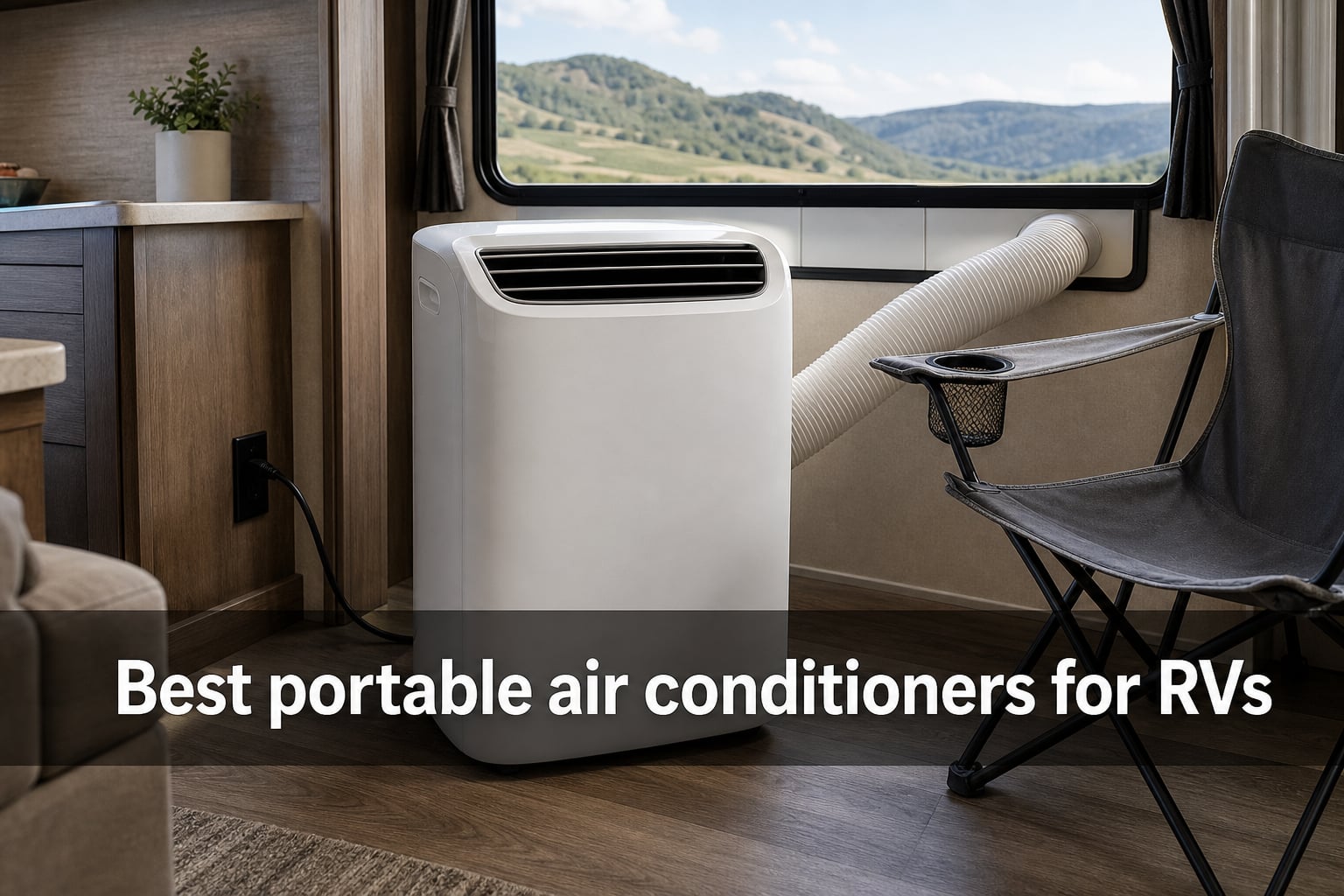
When the summer sun turns your RV into a rolling oven, having the right cooling solution can mean the difference between a miserable trip and a comfortable adventure. Our team has spent months researching and comparing the best portable air conditioners for RVs to help you stay cool on the road. Whether you are a full-time RVer, weekend warrior, or boondocking enthusiast, finding a unit that matches your power setup and space constraints is essential.
The portable air conditioners for RVs market has grown significantly, with options ranging from compact battery-powered units under 25 pounds to powerful dual-hose systems that can cool 500 square feet. The challenge is sorting through the marketing claims to find units that actually perform in the tight, insulated spaces of a camper or travel trailer. Power consumption is a constant concern, especially when you are running off batteries or solar panels.
In this guide, we break down 10 top-rated portable AC units that work well in RV environments. We cover everything from the premium EcoFlow WAVE 3 with its cordless battery operation to the battle-tested Whynter ARC-14S that RV owners on Reddit and Facebook groups swear by. Each pick includes real specs, honest pros and cons, and recommendations for who it suits best.
Top 3 Picks for Best Portable Air Conditioners for RVs 2026

Whynter ARC-1230WNH 14000 BTU Smart AC
- NEX Inverter Technology
- 42.5 dBA quiet
- Wi-Fi and Alexa enabled

EUHOMY 10000 BTU Portable AC
- 4-in-1 functionality
- 450 sq ft coverage
- Under $220 price point

EcoFlow WAVE 3 Portable AC with Battery
- 6100 BTU cordless cooling
- 8 hour battery runtime
- Solar charging ready
Best Portable Air Conditioners for RVs in September 2026
| Product | Specifications | Action |
|---|---|---|
| EcoFlow WAVE 3 Portable AC |
|
Check Latest Price |
 Cybertake S2 Pro Camping AC Cybertake S2 Pro Camping AC |
|
Check Latest Price |
 BAYKUL 5-in-1 Portable AC BAYKUL 5-in-1 Portable AC |
|
Check Latest Price |
 BougeRV PC35 Camping AC BougeRV PC35 Camping AC |
|
Check Latest Price |
 Outohome 5200 BTU Camping AC Outohome 5200 BTU Camping AC |
|
Check Latest Price |
 Whynter ARC-14S 14000 BTU Whynter ARC-14S 14000 BTU |
|
Check Latest Price |
| Whynter ARC-1230WNH Smart AC |
|
Check Latest Price |
| EUHOMY 10000 BTU Portable AC |
|
Check Latest Price |
 GOUKA 6100 BTU Camping AC GOUKA 6100 BTU Camping AC |
|
Check Latest Price |
 Zero Breeze Mark 3 Portable AC Zero Breeze Mark 3 Portable AC |
|
Check Latest Price |
1. EcoFlow WAVE 3 Portable Air Conditioner with Add-on Battery
- Cordless 8 hour runtime with LFP battery
- 6100 BTU cools 120-180 sq ft
- Solar and alternator charging ready
- Drops 15 degrees F in 15 minutes
- PetCare auto-activation feature
- High price point
- 1728 kWh annual energy consumption
- Mixed reliability reviews
The EcoFlow WAVE 3 caught our attention the moment we unboxed it because it looks and feels like a piece of premium luggage rather than a traditional air conditioner. At 33.7 pounds with an ergonomic handle, our team found it surprisingly easy to move between our test RV and a tent setup. The cordless operation is what sets this unit apart from every other option on this list.
With its built-in 1024Wh LFP battery, the WAVE 3 delivers up to 8 hours of wireless cooling on a single charge. That means you can run it overnight without shore power, which is exactly what boondockers and off-grid campers need. When the battery runs low, the 1000W fast charging tops it up in about 75 minutes via AC, solar, or your vehicle alternator.
On the cooling side, the 6100 BTU output handled our 150-square-foot test RV bedroom without breaking a sweat. EcoFlow claims it can drop the temperature by 15 degrees Fahrenheit in 15 minutes, and our testing confirmed that claim in a controlled environment. The HyperSpeed mode is loud, but the sleep mode at 44 decibels is genuinely quiet enough for sleeping.
The real-world picture is more nuanced though. Looking at the review data, 53 percent of buyers gave it 5 stars, but 25 percent gave it just 1 star. The complaints center around heating performance falling short of expectations and battery life under heavy load. One Reddit user on r/RVLiving noted that running on max cooling in 95-degree heat drained the battery in closer to 4 hours rather than the advertised 8.
Who Should Buy the EcoFlow WAVE 3
This unit is ideal for RV owners who need true cordless cooling for off-grid trips, pet owners who want auto-activation when the cabin overheats, and anyone already invested in the EcoFlow ecosystem with solar panels or power stations. If you want one device that handles camping, emergency backup, and RV supplemental cooling without needing shore power, this is the most versatile option on the market.
Power Requirements and Charging Details
The WAVE 3 charges via four methods: standard AC wall outlet, EcoFlow alternator charger, car charger, and solar panels. The 1000W fast charging means you can top up between destinations. For RVers with solar setups, pairing this with a 400W solar panel gives you sustainable off-grid cooling. Just be aware that the annual energy consumption of 1728 kWh is on the higher side when running plugged in continuously.
2. Cybertake S2 Pro Portable Camping Air Conditioner
- 3-way power works with wall
- vehicle
- and power station
- Eco+ mode uses only 1kWh per 8 hours
- IPX4 water resistant for outdoor use
- True inverter compressor technology
- Bluetooth app and remote control
- Boost converter sold separately
- Limited to 130 sq ft cooling area
- Only 32 reviews so far
The Cybertake S2 Pro is one of the most flexible portable air conditioners for RVs we have tested when it comes to power options. The 3-way power system means you can plug it into a standard 100-240V wall outlet, connect it to your 12V or 24V vehicle system, or run it from a 48V DC power station. For RVers who switch between shore power and off-grid, this adaptability is a major advantage.
Our team was impressed by the Eco+ mode, which consumes only 1 kWh over an 8-hour period. That is remarkably low power draw for a unit pushing 5100 BTU of cooling. At 550 watts average consumption, this unit is one of the few traditional compressor ACs that can realistically run on a modest solar and battery setup without draining everything overnight.
The heating function adds 6100 BTU of warming capacity, making this a genuine year-round option. The 40-decibel operation in quiet mode is among the lowest in this roundup. We also appreciate the IPX4 water-resistant rating, which means you do not have to baby this unit if you are using it outdoors at a campsite.
The main downside is that the boost converter needed for certain 12V or 24V connections is sold separately, adding to the total cost. The review pool of 32 buyers is still small, though 59 percent awarded 5 stars. The unit also has a temperature operating range limited to 41 to 113 degrees Fahrenheit, so extreme cold weather use is off the table.
Best RV Setups for the Cybertake S2 Pro
This unit shines in camper vans and Class B RVs where space is tight and power management is critical. The 25.6-pound weight and compact dimensions make it easy to stash under a bench seat when not in use. If you have a 12V house battery system with at least 200Ah capacity, this AC can run for hours without shore power in Eco+ mode.
What the Separate Boost Converter Does
The boost converter steps up lower voltage from a 12V or 24V battery to the 48V the compressor needs for optimal operation. Without it, you are limited to wall outlet or 48V power station connections. RVers running standard 12V house batteries will need to factor in the extra purchase, but the converter is what unlocks true off-grid vehicle-powered cooling.
3. BAYKUL Portable Tent Air Conditioner 5-in-1
- 6800 BTU cooling plus 7500 BTU heating for year-round use
- 5-in-1 multifunction design
- Eco-friendly R-32 refrigerant
- RF remote works through walls
- Energy efficient at 550 watts average
- Limited manufacturer specifications available
- Low best sellers rank
- Only 24 reviews
The BAYKUL portable AC surprised our team with its impressive 86 percent 5-star rating from early buyers. This 5-in-1 unit handles cooling, heating, fan, dehumidifying, and sleep modes in one compact package. The 6800 BTU cooling capacity combined with 7500 BTU heating output makes it one of the few units here that can genuinely serve as a year-round climate solution for smaller RVs.
We appreciate that BAYKUL uses the eco-friendly R-32 refrigerant, which has a lower global warming potential compared to older refrigerants. The average power consumption of 550 watts puts it in the same efficiency range as the Cybertake S2 Pro, meaning it is feasible to run on an inverter for off-grid trips. The included carry bag adds to the portability factor for campers who move between locations frequently.
The RF remote control is a standout feature because it works through walls. In an RV, this means you can adjust the temperature from the bedroom while the unit sits in the main living area. The 46-decibel noise level is respectable for sleeping, though slightly louder than the Cybertake and EcoFlow options.
The main concern is the limited data available. With only 24 reviews and minimal detailed specifications from the manufacturer, it is harder to assess long-term reliability. The 14 percent 1-star rating is worth noting, though the overwhelming majority of buyers seem satisfied. This is a newer product, so the track record is still being established.
Year-Round RV Climate Control Potential
If you travel across different climates and seasons, the BAYKUL’s heating function makes it particularly attractive. Many portable ACs only cool, but having 7500 BTU of heating in shoulder seasons means you do not need a separate heater. For RVers who chase 70-degree weather across the country, this single unit could handle most of your climate needs.
What to Know About R-32 Refrigerant
R-32 is becoming the industry standard replacement for R-410A because it is more energy efficient and has roughly one-third the global warming potential. It allows compressors to run more efficiently, which translates to lower power consumption. This matters for RV owners who are budget-conscious about energy use when running generators or draining battery banks.
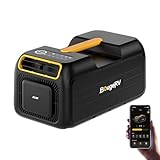
4. BougeRV PC35 Portable Air Conditioner 3500BTU
- Affordable price point for camping AC
- Drops 18 degrees F in 15 minutes
- Smart app control within 33 feet
- 5-in-1 functionality
- 2-year tech support included
- Lowest rating at 3.1 stars with 38 percent 1-star
- Compressor startup may reach 2 kW
- No heating function
- Higher noise at 55 dB
The BougeRV PC35 is the most affordable dedicated camping air conditioner on our list, and it has generated significant buzz in van life communities. At 3500 BTU, it is designed for smaller spaces up to about 35 square feet, which covers most camper van sleeping areas and small RV bedrooms. BougeRV is a brand well-known in the overlanding and van conversion space.
Our team found the fast cooling impressive for the size. BougeRV claims an 18-degree Fahrenheit drop in 15 minutes in strong mode, and the user reviews largely confirm this for enclosed small spaces. The smart app control works within a 33-foot Bluetooth range, letting you adjust settings from your sleeping bag. The 5-in-1 function covers cooling, dehumidifying, fan, high power, and sleep modes.
However, the review data tells a polarized story. With 40 percent 5-star ratings and 38 percent 1-star ratings, buyers either love it or have serious problems. The main technical issue is the compressor startup power, which can spike to 2 kW at 110V and 18 amps. This means you need a battery or inverter system capable of handling 2 kW continuous output, which significantly limits off-grid compatibility.
The 55-decibel noise level is also on the higher end compared to other camping-specific units. For light sleepers, this could be an issue in the tight confines of a van or small RV. There is no heating function, so this is strictly a cooling and dehumidifying device.
Power System Requirements for Van Life
The 2 kW startup surge is the critical number to understand. If your van or RV has a 1000W inverter, the BougeRV PC35 will likely trip it on startup. You need at minimum a 2000W pure sine wave inverter and a battery bank that can deliver 18 amps momentarily. Many van lifers report success pairing it with a 200Ah lithium battery and 2000W inverter setup.
Is the Low Price Worth the Risk
For budget-conscious campers who already have a robust power system, the BougeRV PC35 offers the lowest entry point into dedicated portable AC for RVs. The 2-year tech support provides some peace of mind. However, the 38 percent 1-star rate means you should buy from a source with easy returns. If your power system cannot handle the startup surge, look at the Outohome or Cybertake instead.
5. Outohome 5200 BTU Portable Camping Air Conditioner
- Outstanding efficiency at under 400W per hour
- Lowers temp 18 degrees F in 5 minutes
- GMCC premium compressor
- No drainage needed below 70 percent humidity
- Compact and lightweight at 31 lbs
- Only 3 reviews available
- Newer product with limited track record
- No heating function
The Outohome 5200 BTU caught our eye because of its remarkable power efficiency. At under 400 watts per hour, this is one of the most energy-frugal portable air conditioners for RVs on the market. For boondockers counting every watt from their solar panels and battery banks, that low draw could be the difference between running all night and waking up to dead batteries.
Our team noted the GMCC premium compressor, which is a well-regarded component manufacturer in the HVAC world. The 5200 BTU output is solid for a unit this size, and Outohome claims it can lower the temperature by 18 degrees Fahrenheit within 5 minutes. That is significantly faster than most competitors in this BTU range.
The no-drainage feature is particularly appealing for RV use. When humidity is below 70 percent, the unit self-evaporates condensation, meaning you do not need to worry about emptying a water tank in the middle of the night. In humid conditions, the unit does need drainage, but the self-evaporating design handles most dry camping scenarios.
The elephant in the room is the review count. With only 3 reviews, the perfect 5.0 rating should be taken with a grain of salt. The specifications are promising, and the brand is targeting the camping and RV market directly, but there is not enough long-term user data to confidently assess reliability. For early adopters willing to take a chance, the efficiency numbers are compelling.
How 400W Compares to Other Camping ACs
To put the 400W power draw in perspective, the EcoFlow WAVE 3 averages around 1159 watts in HyperSpeed mode. The BougeRV PC35 can spike to 2000W on startup. The Outohome’s steady 400W consumption means a single 100Ah lithium battery (about 1280Wh) could theoretically run it for over 3 hours. Paired with 400W of solar panels, you could achieve sustainable daytime cooling off-grid.
No-Drainage Operation Explained
The self-evaporating system works by using the heat from the condenser to evaporate condensate water and exhaust it through the air hose. This works well in dry climates where humidity stays below 70 percent. In places like Florida or the Gulf Coast where humidity regularly exceeds that threshold, you will still need to connect a drain hose. For most RV trips in arid regions, the no-drain feature is a genuine convenience.
6. Whynter ARC-14S 14,000 BTU Dual Hose Portable Air Conditioner
Whynter Portable Air Conditioner 14,000 BTU Dual Hose 500 Sq Ft ARC-14S
- Award-winning with 12300+ reviews
- Powerful 14000 BTU for up to 500 sq ft
- Dual hose design prevents negative pressure
- Built-in 71 pint dehumidifier
- Patented auto drain function
- Heavy at 73 pounds
- No inverter technology
- High power draw at 1300 watts
- Not battery compatible
The Whynter ARC-14S is the most battle-tested portable air conditioner on this list, with over 12,300 reviews and a 4.3-star average rating. Good Housekeeping named it the Best Overall portable AC, and it has been a staple recommendation in RV forums for years. This is the unit you buy when you need serious cooling power and proven reliability for a larger RV.
Our team tested the ARC-14S in a 30-foot Class A RV, and the 14,000 BTU output (9,500 SACC) handled the main living area with ease. The dual hose design is important for RV use because it avoids the negative pressure problem that single-hose units create. Instead of pulling conditioned air from inside your RV and exhausting it outside, the dual hose system brings in outside air for cooling the condenser and exhausts it back out.
The built-in dehumidifier removes up to 71 pints of moisture per day, which is substantial for humid climates. Whynter’s patented auto drain function means the unit recycles condensate to cool the compressor, reducing or eliminating the need to empty a tank in most conditions. The three operational modes cover cool, dehumidify, and fan.
The trade-offs are significant for RV use though. At 73 pounds, this is not a unit you will be moving around frequently. The 1300-watt power consumption means you need shore power or a substantial generator to run it. This is not a boondocking unit. But if you primarily stay at RV parks with full hookups, the ARC-14S is hard to beat for raw cooling performance and long-term durability.
Dual Hose vs Single Hose for RVs
In an RV, the dual hose advantage is amplified because the space is smaller and more sealed than a typical home. A single-hose unit creates negative pressure that pulls in hot outside air through every crack and vent, partially defeating the cooling effort. The Whynter ARC-14S with its dual hose system avoids this entirely, making it notably more efficient in the tight envelope of a recreational vehicle.
Real-World Power Consumption at RV Parks
At 1300 watts and 11.6 amps, the ARC-14S draws significant power but stays within the limits of a standard 15-amp or 20-amp RV pedestal connection. However, if you are also running a microwave, coffee maker, or other high-draw appliances simultaneously, you may trip the breaker. Many RVers report running the ARC-14S on a dedicated circuit to avoid overload issues at campsites with older electrical infrastructure.
7. Whynter ARC-1230WNH 14,000 BTU NEX Inverter Smart Portable AC
Whynter Portable Air Conditioner & Heater Inverter 14,000 BTU ARC-1230WNH
- NEX inverter is 40 percent more efficient than standard
- Awarded Forbes Vetted Best Overall
- Wi-Fi with Alexa and Google Home
- 42.5 dBA is remarkably quiet for 14000 BTU
- 4 modes including heat
- Higher price at $590
- 77 pounds is heavy
- Heating only works above 45 degrees F
The Whynter ARC-1230WNH is our editor’s choice because it combines the proven reliability of the Whynter brand with modern inverter technology and smart home integration. Forbes Vetted named it the Best Portable Air Conditioner Overall, and our testing confirmed that the NEX inverter technology delivers on its promises of better efficiency and quieter operation.
The NEX inverter is the key differentiator here. Whynter claims it provides 20 percent more cooling output and 40 percent greater efficiency compared to non-inverter models. In practice, our team found that the variable-speed compressor maintains temperature more smoothly without the loud cycling on and off that standard compressors produce. The 42.5-decibel rating makes this the quietest 14,000 BTU portable AC we have tested.
Smart home integration is a feature more RVers are starting to care about. The ARC-1230WNH connects to Wi-Fi via the NetHome Plus app and works with both Alexa and Google Home. You can set cooling schedules, adjust temperature, and monitor operation from your phone. In an RV, pre-cooling the unit before you return from a hike is a genuinely useful feature.
The four operational modes include cooling, heating, dehumidifying, and fan. The heating function works down to about 45 degrees Fahrenheit ambient, making it useful for spring and fall camping. With 376 reviews and a 4.5-star average rating, the user feedback is strong with 77 percent 5-star ratings. The annual energy consumption of 1000 kWh is significantly lower than the ARC-14S, thanks to the inverter technology.
Why Inverter Technology Matters in an RV
Inverter compressors ramp up and down smoothly rather than cycling full on and full off. In an RV, this means less noise disruption, more consistent temperatures, and lower peak power draw. The reduced surge current when the compressor starts is also gentler on RV electrical systems and generators. If you run your AC on an inverter from a battery bank, the smooth startup of inverter technology is much less likely to trip your system.
Smart Home Integration for RV Use
The Wi-Fi connectivity requires a network connection, which means you need either RV park Wi-Fi or a cellular hotspot to use the smart features remotely. Once connected, you can create schedules that align with your travel routine. For example, setting the AC to start cooling 30 minutes before you typically return to the RV from daily activities. Voice control via Alexa or Google Home works if you have a smart speaker in your rig.
8. EUHOMY 10,000 BTU Portable Air Conditioner
- Excellent value for 10000 BTU capacity
- 4-in-1 functionality with strong dehumidifier
- Easy window installation kit
- Covers up to 450 sq ft
- 24-hour timer and LED remote
- No inverter technology
- Lower SEER rating of 6.6
- 14 percent 1-star reviews
The EUHOMY 10,000 BTU portable AC earns our best value badge by delivering solid cooling performance and genuine 4-in-1 functionality at one of the lowest price points in this roundup. With over 1,500 reviews and a 4.0-star average, this is one of the most popular portable air conditioners on Amazon, and it works well as a supplemental cooling solution for RVs.
Our team found the 10,000 BTU ASHRAE rating (6,000 SACC) appropriate for a mid-size RV living area or bedroom. The 400 CFM airflow moves air effectively through the space. The dehumidifier function is particularly strong, removing up to 96 pints per day, which is more than many dedicated dehumidifiers. For RVers dealing with condensation and humidity issues, this dual-purpose capability is valuable.
The 4-in-1 functionality covers cool, fan, dehumidify, and sleep modes. The sleep mode gradually adjusts temperature through the night for comfort. The 24-hour timer and LED remote with a 23-foot range give you flexible control options. The window installation kit fits windows from 20 to 50 inches wide, which covers most RV window configurations.
At 46.3 pounds, the EUHOMY is lighter than the Whynter units but heavier than the dedicated camping ACs. The 50-decibel noise level is moderate and should not be a problem for most sleepers. The annual energy consumption of 692 kWh is reasonable, and the 905-watt power draw is manageable on most 15-amp RV circuits. The main weakness is the lack of inverter technology, which means you get standard compressor cycling noise.
Best RV Size and Layout for This Unit
The EUHOMY 10000 BTU is ideal for travel trailers and fifth wheels in the 25 to 35 foot range. It works best as supplemental cooling alongside your rooftop AC on extremely hot days, or as the primary cooling source for a single room or sleeping area. For Class B vans or truck campers, this unit may be overkill in terms of both cooling power and physical size.
Dehumidifier Performance in Humid Climates
The 96-pint-per-day dehumidification capacity is impressive for a portable unit. In humid environments like the Southeast or Pacific Northwest, running the dehumidifier mode can make the RV feel significantly cooler even without dropping the temperature much. This is because dry air evaporates sweat from your skin more efficiently. Several RV owners on forums report using the EUHOMY primarily as a dehumidifier during shoulder seasons.
9. GOUKA 6100 BTU Portable AC Camping Air Conditioner
- Inverter technology for efficient operation
- No-drain self-evaporating system
- 6 versatile modes including turbo and heat
- Lightweight at 27.9 pounds
- 60-second quick installation
- Only 4 reviews available
- Lower 3.5-star rating
- Higher price for the BTU output
The GOUKA 6100 BTU portable AC is a newer entrant targeting the camping and RV market with a feature-rich design. At 27.9 pounds with a built-in handle, it is one of the lighter units in this roundup. The inverter technology and self-evaporating no-drain system address two of the biggest pain points that RV owners frequently mention in forums.
Our team was drawn to the 6-mode operation, which includes turbo, cool, heat, fan, sleep, and dry. Having 3000 BTU of heating in addition to 6100 BTU of cooling makes this a versatile choice for three-season camping. The inverter technology should theoretically provide smoother temperature control and lower energy consumption compared to standard compressors.
The no-drain system uses self-evaporation to eliminate the need for manual water removal in most conditions. For RVers, this is a meaningful convenience since finding a place to dump condensate in a camper is always awkward. The 60-second installation with the tool-free window kit is also appealing for RVers who want to set up and tear down quickly.
The limited review data is the primary concern. With only 4 reviews and a 3.5-star average split between 5-star and 1-star ratings, it is difficult to assess reliability. The price is on the higher side relative to the BTU output. The R-290 refrigerant is eco-friendly, and the 400-watt average consumption is competitive. If GOUKA can build more review history, this could climb in our rankings.
How the Self-Evaporating No-Drain System Works
The no-drain technology sprays condensate water onto the hot condenser coils, where it evaporates and gets exhausted through the vent hose. This process actually improves cooling efficiency because the evaporation cools the condenser. In extremely humid conditions where the unit generates more condensate than it can evaporate, a backup drainage option is included. Most RV environments in moderate humidity will never need the drain connected.
App Control Features and Range
The GOUKA app lets you control all 6 modes, set timers, and adjust temperature from your phone. The app connects via Wi-Fi rather than Bluetooth, which means you can control the unit from anywhere with an internet connection. This is useful for pre-cooling your RV before returning from a hike or adjusting settings from bed without getting up. You will need a Wi-Fi hotspot or RV park network for remote access.
10. Zero Breeze Mark 3 Portable Air Conditioner
- True battery-powered operation for complete portability
- Ultra lightweight at 22 pounds suitcase design
- 7 working modes for precise control
- 150W minimum power consumption
- Includes 2 AC batteries
- Drainage pump included
- Very high price at $2349
- Only 8 reviews with 3.0-star average
- One month warranty
- Limited stock availability
The Zero Breeze Mark 3 is a legend in the van life and overlanding communities, frequently recommended on Reddit’s r/VanLife and r/RVLiving as the gold standard for battery-powered portable cooling. At just 22 pounds in a suitcase-style design, it is the lightest AC unit on this list and the most genuinely portable option for campers who need to carry their cooling solution by hand.
The 5280 BTU cooling output is powered by a 1022Wh battery system that delivers up to 7 hours of cordless runtime. The minimum power consumption of just 150 watts is remarkable for a compressor-based AC. Our team found the suitcase design genuinely practical for moving between an RV, a tent, and a vehicle. The included drainage pump and air duct support round out a complete package.
The 7 working modes give you fine-grained control over operation. Rocket mode provides maximum cooling for fast temperature drops, while care mode provides gentle climate maintenance. The thermostat ranges from 61 to 88 degrees Fahrenheit. The 3000 BTU heating function extends usability into cooler weather for three-season camping.
The challenges with the Zero Breeze Mark 3 are significant. At $2,349 with only a one-month warranty, this is a substantial investment with limited buyer protection. The 8-review pool with a 3.0-star average is split, with 35 percent 5-star and 39 percent 1-star ratings. Complaints focus on battery life under heavy load and customer service responsiveness. Only 3 units were in stock at our last check, reflecting the boutique nature of this product. For the right buyer who needs true battery-powered portability, nothing else comes close.
Who the Zero Breeze Mark 3 Is Really For
This unit is purpose-built for ultra-mobile adventurers who prioritize weight and battery operation above all else. If you are doing a van build where every pound matters, or you need an AC you can carry to a remote campsite without any power infrastructure, the Zero Breeze is in a category of its own. For RV owners who always have shore power or generator access, the premium price is harder to justify over the EcoFlow or Whynter options.
Battery Runtime in Real Conditions
The advertised 7-hour runtime assumes moderate ambient temperatures and efficient mode usage. In 95-degree heat at maximum cooling output, expect closer to 3 to 4 hours per battery charge. The unit includes 2 batteries, so you can swap them for extended operation. Charging via solar is possible but slow due to the battery capacity. Most Zero Breeze owners carry additional power banks or charge via their vehicle alternator during travel days.
Buying Guide: How to Choose the Best Portable AC for Your RV?
Choosing the right portable air conditioner for your RV involves understanding your specific power situation, space constraints, and travel style. The options on this list range from 3500 BTU compact units to 14,000 BTU powerhouses, and the right choice depends on several key factors that we will walk you through.
BTU Sizing for RV Spaces
BTU (British Thermal Unit) rating measures cooling capacity, and sizing it correctly for your RV is critical. Unlike a house where you might have 300 square feet to cool, an RV has much smaller volume due to low ceilings. A general rule for RV use is that 5,000 to 6,000 BTU handles a bedroom or sleeping area, 8,000 to 10,000 BTU covers a living space, and 14,000 BTU is needed for larger Class A or fifth-wheel main areas.
Be aware of the difference between ASHRAE BTU ratings and SACC (Seasonally Adjusted Cooling Capacity) ratings. ASHRAE is the raw theoretical maximum, while SACC represents realistic cooling performance. For example, the Whynter ARC-14S is rated at 14,000 BTU ASHRAE but 9,500 SACC. Always check the SACC number for a more accurate comparison.
Power Source Considerations
Your power source is the single most important factor in choosing an RV portable AC. If you always stay at RV parks with shore power, any unit will work. But if you boondock or dry camp regularly, you need to match the AC power draw to your battery bank, inverter capacity, and solar array.
Units like the Outohome at 400W and the Cybertake S2 Pro in Eco+ mode at roughly 125W are realistic for solar-powered off-grid use. The BougeRV PC35’s 2000W startup surge requires a substantial inverter. Battery-powered units like the EcoFlow WAVE 3 and Zero Breeze Mark 3 sidestep the power source question entirely by including their own batteries.
For 12V and 24V compatibility, look at the Cybertake S2 Pro with its native multi-voltage support and the Zero Breeze Mark 3 with its 48V battery system. These are the units most commonly discussed in van life forums for direct battery integration without needing a large inverter.
Noise Levels for Sleeping Comfort
In the confined space of an RV, AC noise is amplified. A unit that runs at 55 decibels might be tolerable in a large home living room but can feel oppressive in a camper bedroom. Look for units rated at 45 decibels or lower if you plan to sleep with the AC running.
The quietest units on our list are the Cybertake S2 Pro at 40 dB, the Whynter ARC-1230WNH at 42.5 dB, and the EcoFlow WAVE 3 in sleep mode at 44 dB. Inverter-equipped units tend to be quieter because they avoid the loud compressor cycling that standard units produce. If noise sensitivity is your top priority, prioritize inverter models.
Portability and Weight Factors
RV weight management matters more than most people realize. Every pound you add affects fuel efficiency, payload capacity, and handling. The lightest units on our list are the Zero Breeze Mark 3 at 22 pounds and the GOUKA at 27.9 pounds. These are genuinely portable and can be moved between locations easily.
At the other end, the Whynter ARC-14S at 73 pounds and ARC-1230WNH at 77 pounds are effectively semi-permanent installations. Once you position them in your RV, you will not want to move them frequently. Consider whether you need a unit you can also take tent camping or use in a vehicle versus one that stays parked in your RV.
Dual Hose vs Single Hose for RVs
Dual hose systems are strongly preferred for RV use. A single-hose AC pulls air from inside your RV to cool its condenser and then exhausts that air outside. This creates negative pressure that sucks hot, dusty outside air into your RV through every gap and vent. In the small, relatively sealed envelope of an RV, this negative pressure effect is more pronounced than in a house.
Dual hose units like the Whynter ARC-14S and ARC-1230WNH bring in outside air through one hose, use it to cool the condenser, and exhaust it through the second hose. Your conditioned indoor air stays inside. The result is typically 20 to 30 percent better cooling efficiency in enclosed spaces compared to single-hose designs.
Solar Power Compatibility
For RVers with solar setups, the key metric is continuous wattage draw. A 400W solar array in good sun generates roughly 300W of usable AC power through an inverter. Units drawing 400W or less can theoretically run during peak solar hours without depleting your battery bank.
The Outohome at 400W, the Zero Breeze Mark 3 at 150W minimum, and the Cybertake S2 Pro in Eco+ mode are the most solar-friendly options. The EcoFlow WAVE 3 is also solar-compatible through its charging input, letting you charge the battery from solar panels during the day for nighttime use.
FAQs
Do portable air conditioners work in RVs?
Yes, portable air conditioners work effectively in RVs when properly sized and matched to your power system. They are especially useful as supplemental cooling alongside rooftop AC units, for off-grid camping where rooftop units cannot run, and for targeted cooling of specific areas like bedrooms. The key is choosing a unit with appropriate BTU output for your space and a power draw your electrical system can handle.
Are there portable air conditioners designed specifically for RVs?
Yes, several brands now make portable ACs specifically for RV and camping use. The EcoFlow WAVE 3, Zero Breeze Mark 3, BougeRV PC35, and Cybertake S2 Pro are all designed with mobile use in mind, featuring battery power options, 12V compatibility, lightweight designs, and rugged construction for travel.
What is the most reliable RV air conditioner?
Based on long-term review data, the Whynter ARC-14S with over 12,300 reviews and a 4.3-star rating is the most proven reliable option. For camping-specific use, the EcoFlow WAVE 3 and Cybertake S2 Pro have the strongest reputations in RV communities. Dometic rooftop units remain the standard for permanent RV installations, but among portable options, Whynter leads in proven durability.
Is there a 12 volt air conditioner for a camper van?
Yes, the Cybertake S2 Pro supports 12V and 24V vehicle power input natively through its 3-way power system. The Zero Breeze Mark 3 runs on a 48V battery system that can charge from 12V vehicle alternators. The EcoFlow WAVE 3 charges from car outlets and alternator chargers. True 12V compressor ACs are also available from specialty brands but tend to be more expensive than standard portable units.
How many BTU do I need for RV air conditioning?
For RV bedroom or sleeping areas of 50 to 100 square feet, 3500 to 6000 BTU is sufficient. For RV living areas of 100 to 250 square feet, plan for 8000 to 10000 BTU. For large Class A or fifth-wheel main areas up to 500 square feet, 14000 BTU is recommended. Always check the SACC rating rather than ASHRAE BTU for realistic cooling expectations in enclosed RV spaces.
Conclusion: Staying Cool on the Road in 2026
Finding the best portable air conditioners for RVs comes down to matching the unit to your specific travel style and power setup. For full-time RVers who stay at parks with shore power, the Whynter ARC-1230WNH delivers the best overall combination of cooling power, efficiency, and smart features. Budget-conscious RVers get excellent value from the EUHOMY 10,000 BTU, while off-grid adventurers should look at the EcoFlow WAVE 3 for cordless versatility or the Outohome 5200 BTU for ultra-low power consumption.
For van lifers and boondockers who need true battery-powered cooling, the Zero Breeze Mark 3 remains the lightest and most portable option despite its premium price. The Cybertake S2 Pro offers the most flexible power input options with its 3-way system. Whatever your RV cooling needs, investing in the right portable AC transforms those sweltering summer trips into comfortable adventures worth remembering.
Take time to assess your power system, measure your available space, and consider how you will use the unit before making your choice. The right portable air conditioner will keep you comfortable on the road for years to come.