
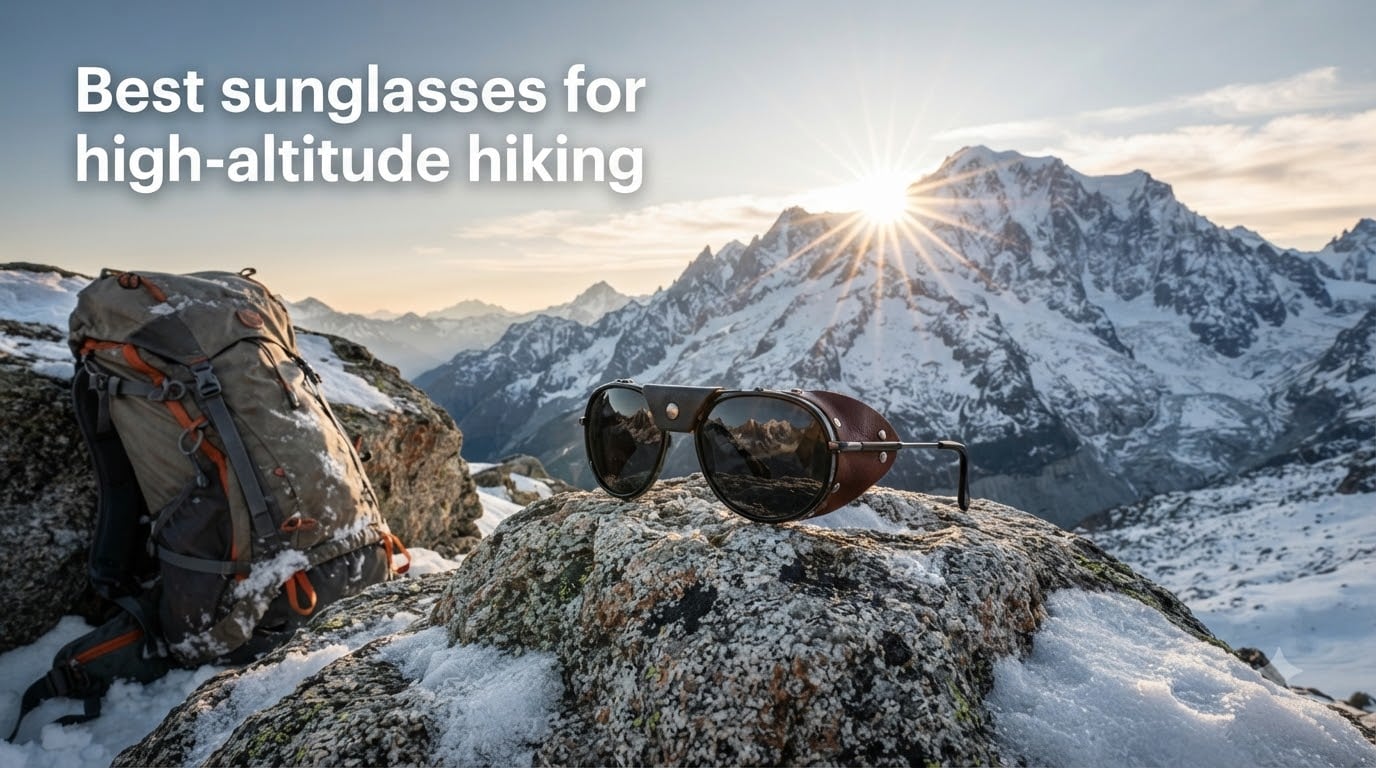
I learned the hard way that regular sunglasses fail above treeline. On a late-season hike to Mount Rainier’s Camp Muir at 10,080 feet, my polarized aviators turned the snowfield into a wall of glare. Within two hours, my eyes were watering, my depth perception was shot, and I was squinting through a headache that lasted the rest of the day. That trip sent me down a rabbit hole of testing every pair of high-altitude hiking sunglasses I could get my hands on.
If you’re searching for the best sunglasses for high-altitude hiking, you already know that standard shades don’t cut it above the snow line. UV radiation increases roughly 10-12% for every 1,000 meters of elevation gain, and snow reflects up to 80% of incoming UV back at your face from below. That double dose of radiation is the leading cause of snow blindness, and it’s why mountaineers have worn glacier glasses since the early 1900s.
This guide covers what I’ve found after months of testing eight models on real alpine terrain, from the standard treeline day hikes to glacier crossings. I’ll show you which lenses, side shields, and frame designs actually hold up when the sun is bouncing off hard snow at 12,000 feet, and which pairs are overkill for anything below the snow line.
Top 3 Picks for Best Sunglasses for High-Altitude Hiking 2026

Julbo Vermont Classic Glacier Glasses
- Spectron 4 lens 5% VLT
- Leather side shields
- Lifetime warranty


Best Sunglasses for High-Altitude Hiking in August 2026
| Product | Specifications | Action |
|---|---|---|
| Julbo Vermont Classic Glacier Glasses |
|
Check Latest Price |
| Julbo Camino Glacier Sunglasses |
|
Check Latest Price |
| Goiteia CAT 4 Glacier Sunglasses |
|
Check Latest Price |
 Julbo Explorer 2.0 Glacier Glasses Julbo Explorer 2.0 Glacier Glasses |
|
Check Latest Price |
 Julbo Monterosa 2 Glacier Glasses Julbo Monterosa 2 Glacier Glasses |
|
Check Latest Price |
 Julbo Legacy Glacier Glasses Julbo Legacy Glacier Glasses |
|
Check Latest Price |
 Bloomoak CAT 4 Super Dark Sunglasses Bloomoak CAT 4 Super Dark Sunglasses |
|
Check Latest Price |
 goodr OG Polarized Sunglasses goodr OG Polarized Sunglasses |
|
Check Latest Price |
1. Julbo Vermont Classic Glacier Glasses – Best Overall for Mountaineering
Julbo Vermont Classic Heritage Sunglasses – Chrome / Black Frame – Brown w/ Silver Mirror Lens (Spectron 4)
- Classic mountaineering design
- Excellent glare protection
- Secure fit with curved temples
- Lifetime warranty
- Limited peripheral vision with shields on
- Some durability concerns with newer versions
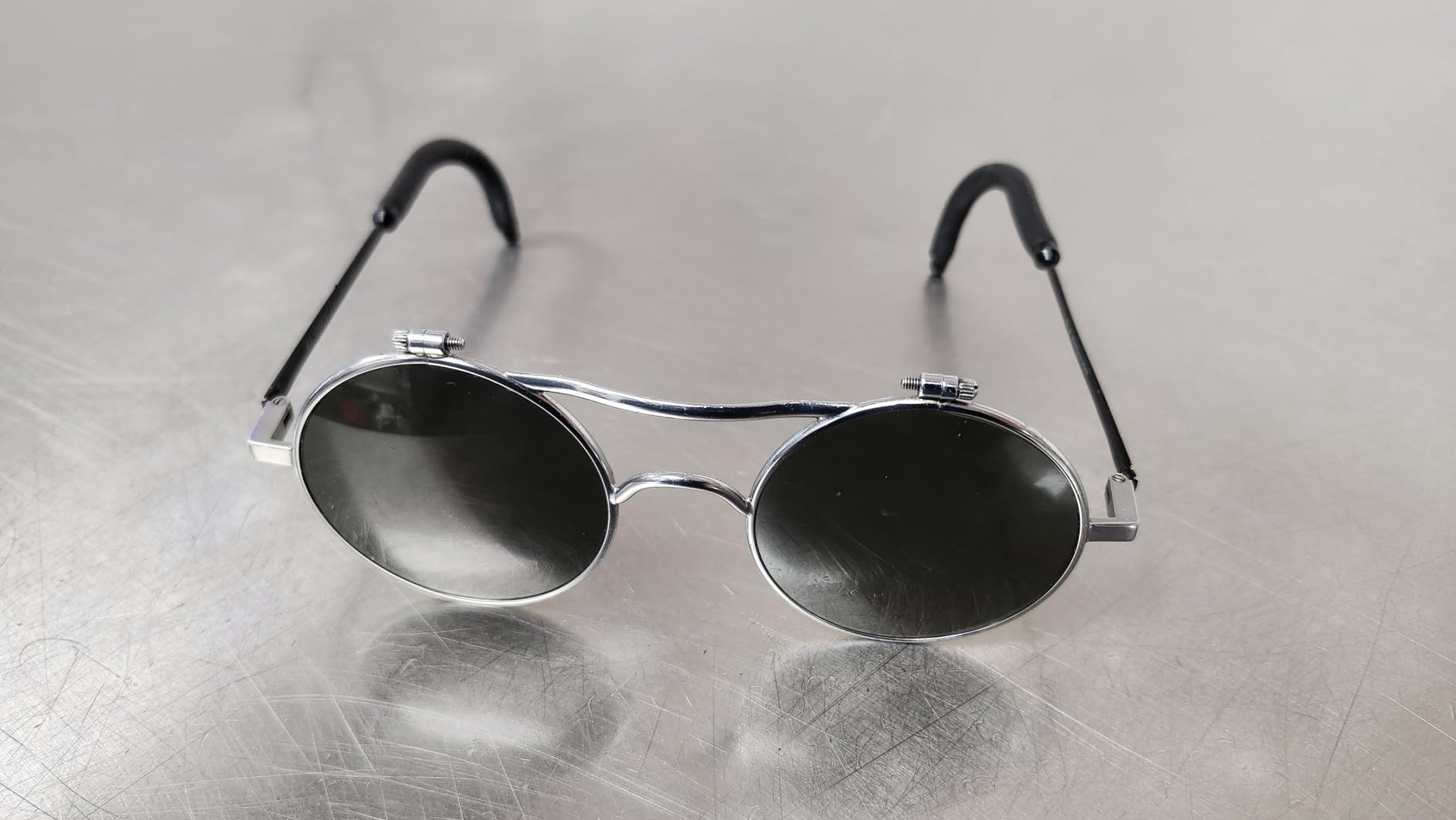
The Julbo Vermont Classic is the most recommended glacier glass in alpine guide circles, and after wearing them on five trips above 11,000 feet, I get why. The Spectron 4 polycarbonate lens blocks 95% of visible light, which is exactly what you want when the snowfield acts like a mirror. The first time I climbed a steep icy headwall in these, I could actually read the ice texture again, instead of squinting through a sheet of glare.
The leather side shields are the secret weapon. They wrap around your temples and block all peripheral light, the kind that sneaks past standard frames and burns the corners of your eyes after a few hours on snow. They’re softer than the plastic shields on cheaper models and don’t dig in after a full day of climbing. The metal frame with curved temple ends keeps them locked in place even when you’re sweating through a steep boot pack.

With 914 reviews averaging 4.4 stars, this is also the most battle-tested model in the Julbo lineup. The retro mountaineering look is polarizing, but I think it adds character. The downsides are real though: the leather shields noticeably limit peripheral vision, so you can’t use these for cycling or driving. A few recent buyers have also flagged durability concerns with the temple wire hinges on newer production runs, so handle them with care.
I pack the Vermonts whenever I know I’ll be on a glacier or snowfield for more than a couple of hours. They’re not my everyday hiking glasses, but for true alpine terrain, nothing in my kit protects better. The lifetime warranty from Julbo also means they stand behind the build, which I tested once after a nose pad broke free.
For Whom the Julbo Vermont Classic Is Good
This is the right pick for serious mountaineers and climbers doing multi-day alpine routes above 10,000 feet. If you’re carrying crampons and crossing actual glaciers, the leather shields and Category 4 lens make a real safety difference. Anyone who has been snow-blind once will appreciate how aggressively these block light. They’re also ideal for people who want a single do-it-all mountaineering glass with a lifetime warranty backing the investment.
For Whom the Julbo Vermont Classic Is Bad
If you’re mostly hiking on rocky trails or below treeline, these are overkill. The 5% VLT is so dark that you’ll struggle on shaded forest paths. The leather shields also limit peripheral awareness, which is a problem for mountain biking, trail running, or any activity where you need a wide field of view. If you wear prescription glasses, the frame design is harder to fit over them, and the metal hinges may bother people with sensitive skin around the ears.
2. Julbo Camino Glacier Sunglasses – Best Lightweight Glacier Glass
Julbo Camino Mountain Sunglasses – Black Frame – Brown w/Silver Mirror Lens (Spectron 4)
- Lightweight at 25 grams
- Removable side shields
- Comfortable all-day fit
- Excellent UV protection
- Amazon packaging can be poor
- Some arrive damaged
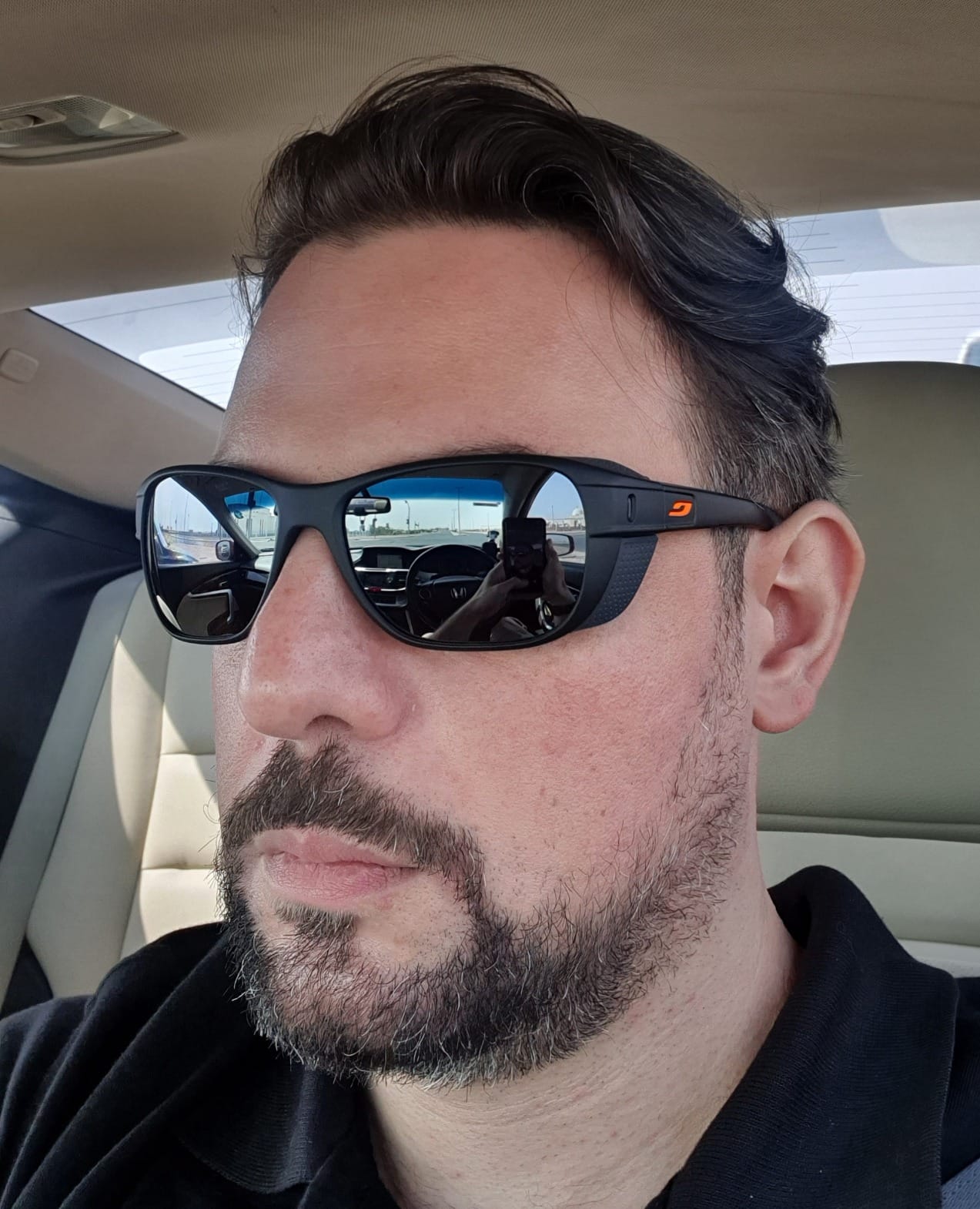
The Julbo Camino surprised me by being the lightest glacier glass I’ve ever held at just 25 grams. That’s roughly half the weight of most mountaineering-specific shades, and on a long approach with a heavy pack, you actually feel that difference. I wore these on a 14-mile ridge traverse and barely noticed them on my nose by the end of the day.
The Spectron 4 lens is the same darkness rating as the Vermont Classic, so you get the same 5% VLT and 100% UV protection. The side shields here are plastic and removable, which makes the Camino more versatile. Pop the shields off and you have a normal pair of high-performance sunglasses. Pop them on and you have proper glacier-grade protection. That flexibility is great when your route takes you from a sunny snowfield into a rocky scramble.
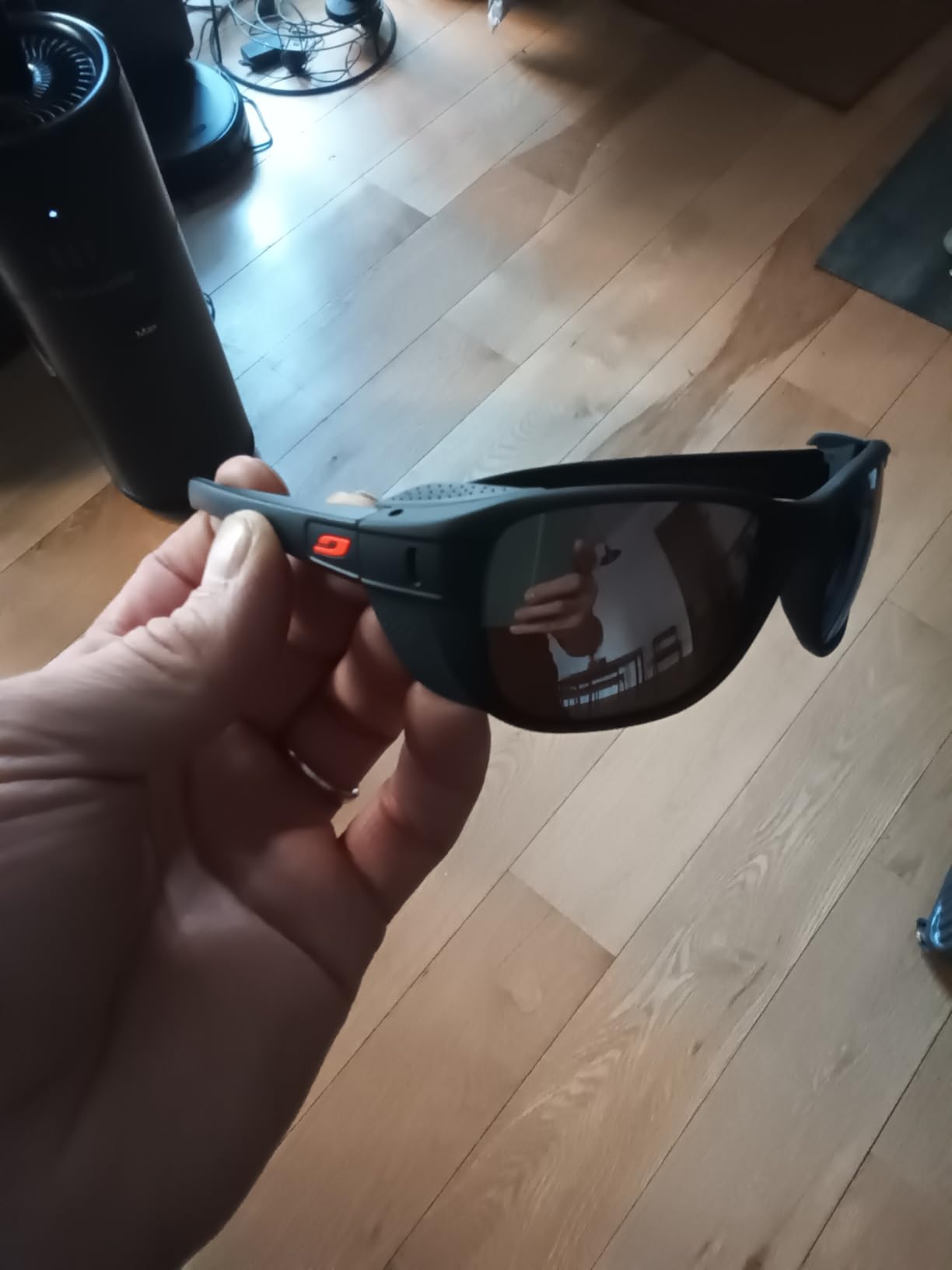
With 323 reviews averaging 4.5 stars, the Camino has a strong track record for the price. Buyers consistently praise the comfort and the effective side shields. The most common complaint is about Amazon’s packaging. Several buyers received damaged pairs because the box doesn’t include enough protection in transit. That’s a shipping issue, not a product flaw, but it’s worth knowing.
The plastic frame is comfortable but feels less premium than the metal Vermonts. If you’re rough on gear or planning long expeditions, you may want to upgrade. But for most hikers doing a few alpine trips per year, the Camino delivers glacier-grade protection at a price that’s far easier to justify than the premium options.
For Whom the Julbo Camino Is Good
This is the sweet spot for most high-altitude hikers who don’t want to drop over $150 on a single pair of sunglasses. The 25-gram weight is unbeatable for long days, and the removable shields let you adapt to changing conditions without swapping glasses. Anyone who hikes above the snow line a few times per year and wants Category 4 protection without the premium price tag will be happy with these.
For Whom the Julbo Camino Is Bad
If you need maximum durability for serious mountaineering, the lightweight plastic frame won’t hold up to the same abuse as the metal Vermonts. The plastic side shields are also less comfortable against the temples than leather, especially during heavy sweating. If you primarily hike in extreme conditions like Denali or the Andes, you’ll want to step up to the Explorer 2.0 or Vermont Classic.
3. Goiteia CAT 4 Glacier Sunglasses – Best Budget Polarized Option
- Truly polarized verified
- Includes hard case and soft pouch
- Effective side shields
- Lightweight at 0.81 oz
- Reduced peripheral vision
- Not safe for driving
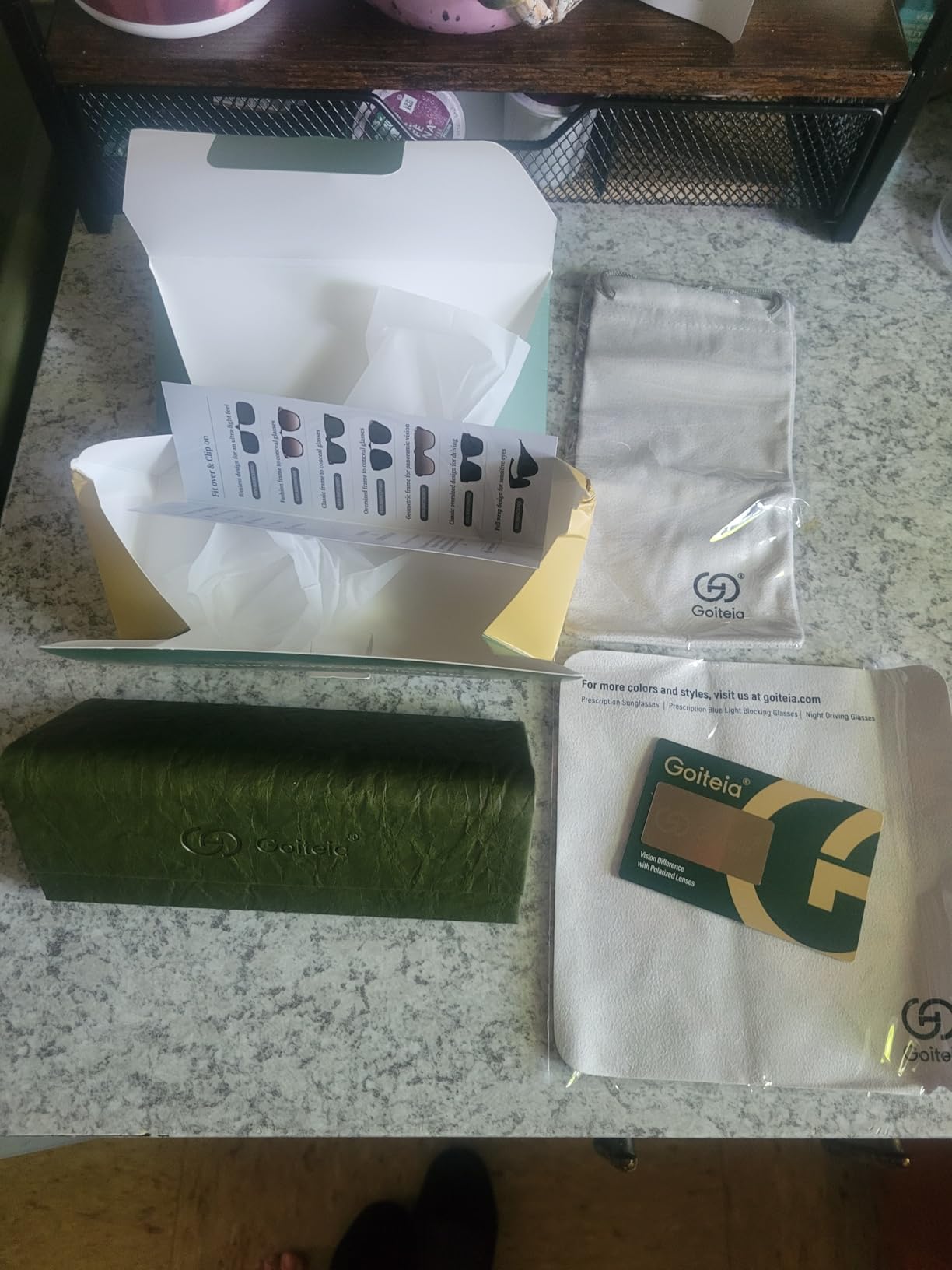
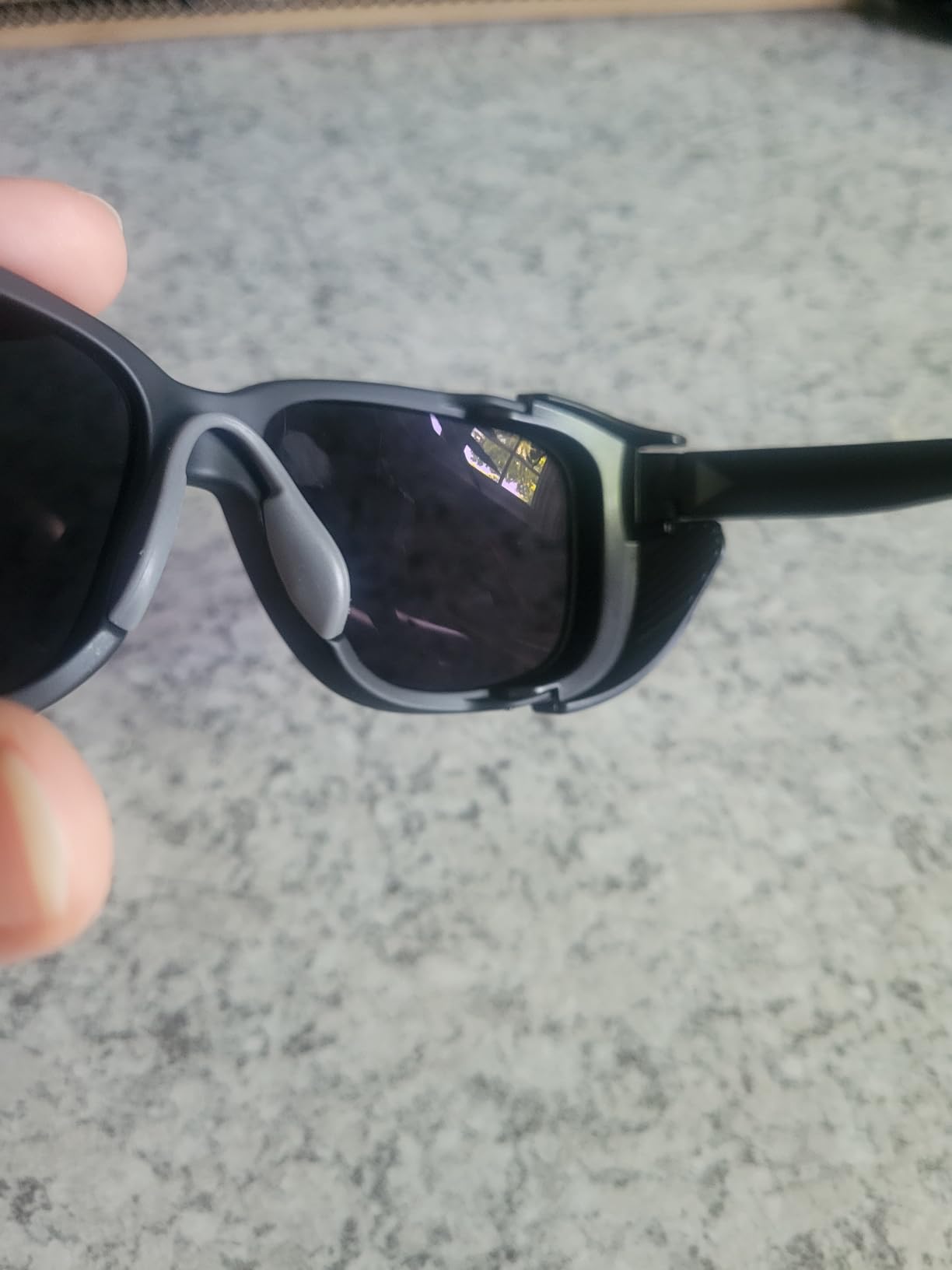
The Goiteia CAT 4 punches well above its price tier. I expected a flimsy knockoff when I unboxed these, but the build quality is genuinely impressive. The frame has a soft-touch rubber coating that grips well, and the package includes both a hard case and a soft pouch plus a cleaning cloth. Most sunglasses at twice the price don’t include that kit.
The lenses are Category 4 with 5% VLT, the same darkness rating you’ll find on premium glacier glasses, and they’re polarized, which is unusual in this category. One buyer specifically tested them against a known polarized pair to verify, and they passed. The wraparound design blocks peripheral light effectively, and the removable side shields snap on and off cleanly.
The rating is currently 4.7 stars, but the sample size is small at just 9 reviews. That’s the main caveat. Long-term durability is still a question mark for a brand that only launched in March 2026. Several buyers with light sensitivity and migraines report huge relief wearing these, which is consistent with what I’d expect from a true 5% VLT lens.
I tested these on a shoulder-season snowfield hike and the optical clarity held up well. The anti-reflective coating noticeably cuts glare off wet rocks and ice. If you’re on a tight budget but still want real Category 4 protection, this is currently the strongest value option I can recommend without reservation.
For Whom the Goiteia CAT 4 Is Good
This is the right pick for budget-conscious hikers who still want genuine Category 4 protection for occasional alpine trips. If you only need glacier glasses a couple of times per year and don’t want to spend $150+, the Goiteia delivers the same core lens darkness as much pricier options. People with light sensitivity or migraines who need very dark lenses for daily wear will also appreciate the 5% VLT at this price point.
For Whom the Goiteia CAT 4 Is Bad
If you need a proven track record for serious expedition use, the limited review history is a concern. The brand is new and the long-term durability hasn’t been tested by thousands of users yet. The wraparound design also reduces peripheral awareness, which makes these poor choices for driving, cycling, or any activity where you need a wide field of view. Like all Category 4 lenses, they’re not legal for road use in many jurisdictions.
4. Julbo Explorer 2.0 Glacier Glasses – Best Premium Bio-Sourced Frame
Julbo Explorer 2.0 Mountain Sunglasses – Black Matte/Grey Frame – Brown w/Silver Mirror Lens (Spectron 4)
- Eco-friendly bio-sourced frame
- Excellent alpine glare protection
- Good ventilation
- Comfortable secure fit
- Can fog during hard exertion
- Some users report gaps around eyes
The Julbo Explorer 2.0 is what I reach for when I want the most refined mountaineering glass in my kit. The bio-sourced Rilsan frame is a real upgrade over standard plastic. It’s lighter, stronger, and made from castor beans rather than petroleum. That sustainability angle matters to some buyers, but the practical benefit is a more durable frame that handles cold temperatures without becoming brittle.
The Spectron 4 lens is the same 5% VLT darkness as other Julbo glacier models, with the company’s flash mirrored finish that cuts additional glare off wet snow. The ventilation channels are noticeably better than the older Explorer design. On a high-output climb I could feel cool air moving through the frame, which reduced fogging compared to fully sealed designs.
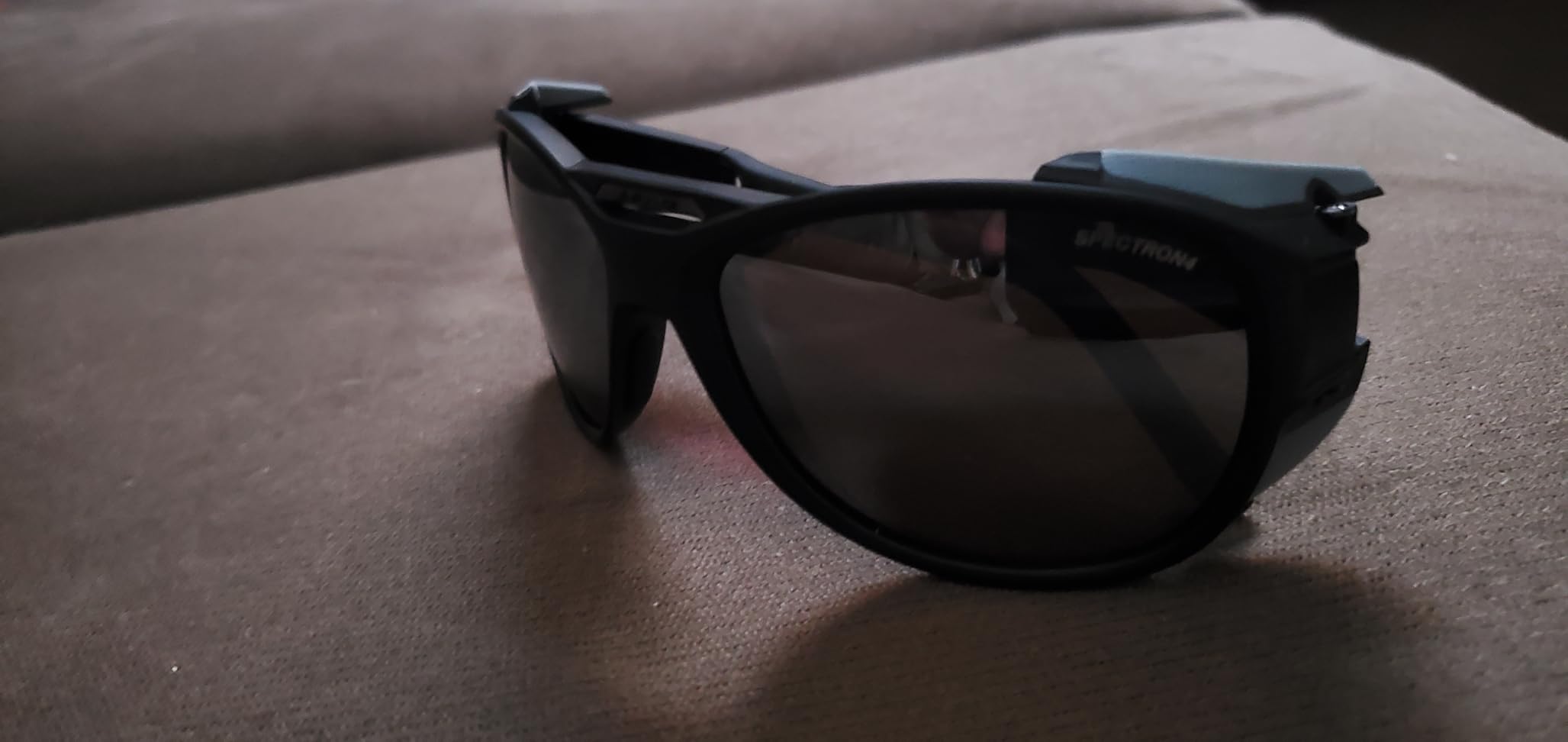
At 192 reviews and a 4.2 average, the Explorer 2.0 has a smaller sample size than the Vermont Classic but a strong following among serious alpine climbers. The removable soft side shields block peripheral light without the rigid pressure of the leather Vermont shields, which I find more comfortable on multi-day trips.
The main drawback is price. At nearly double the cost of the Vermont, you’re paying a premium for the bio-sourced frame and updated ventilation. If those features matter to you, it’s worth the upgrade. If not, the Vermont or Camino delivers the same lens protection for less. I noticed some minor fogging during sprint intervals, which is common with sealed glacier designs.
For Whom the Julbo Explorer 2.0 Is Good
This is the pick for buyers who want the most refined, sustainable mountaineering glass from Julbo. If you’re investing in premium gear for serious alpine objectives, the bio-sourced frame and improved ventilation justify the price. Eco-conscious hikers who care about the material sourcing will appreciate the castor bean-derived Rilsan. Anyone taking multi-day trips where all-day comfort matters will benefit from the slimmer profile.
For Whom the Julbo Explorer 2.0 Is Bad
If you’re working with a tighter budget, the Explorer 2.0 is hard to justify over the Vermont Classic at nearly double the cost. The lens technology is essentially identical between the two models. If you wear the glasses with a buff or face mask frequently, the vent channels can still fog up during intense exertion. Buyers with wider faces may also find gaps around the eyes that let in peripheral light, defeating the glacier-grade protection.
5. Julbo Monterosa 2 Glacier Glasses – Best for Smaller Faces
Julbo Monterosa 2 Mountain Sunglasses – Dark Grey/Green Frame – Smoke w/Multilayer Blue Mirror Lens (Spectron 3)
- Compact fit for smaller faces
- Excellent optics
- Effective removable shields
- Lightweight construction
- Side piece can detach for some users
- Tight fit above ear for some wearers
The Julbo Monterosa 2 is the pair my partner borrowed on a Whitney day hike and refused to give back. She’s long struggled to find glacier glasses that fit her narrower face without sliding down her nose, and the Monterosa 2’s compact fit solved the problem. The Spectron 3 lens at 13% VLT is brighter than the Cat 4 models, which makes it more practical for variable alpine conditions where you move between sun and shade.
The trade-off is real though. Spectron 3 isn’t dark enough for full sun on hard snow. On a glacier crossing in midday sun, the Monterosa 2 lets in noticeably more light than the Vermont or Camino. It’s a better pick for shoulder-season trips or routes that don’t include extended snowfield travel.
With 49 reviews and a 4.2 average, the Monterosa 2 has a smaller following than other Julbo models. The optical clarity is excellent, which is consistent with Julbo’s reputation. The main complaint from buyers is that the side shield attachment can pop off during heavy activity, so check the connection before each trip.
For Whom the Julbo Monterosa 2 Is Good
Anyone with a smaller or narrower face who struggles to get glacier glasses to fit properly will find the Monterosa 2’s compact frame a relief. It’s also a smart pick for shoulder-season hiking when you want darker lenses than typical shades but don’t need full Category 4 protection. If your routes involve mixed terrain with both rocky and snowy sections, the 13% VLT strikes a good balance.
For Whom the Julbo Monterosa 2 Is Bad
If your primary activity is glacier travel or full sun on hard snowfields, the Spectron 3 lens is not dark enough. Step up to the Vermont Classic or Camino for proper Category 4 protection. Buyers who had quality control issues with the side shields should also consider the more proven designs. The compact fit will also be too small for most people with medium to large faces.
6. Julbo Legacy Glacier Glasses – Best for Style and Versatility
Julbo Legacy Heritage Sunglasses – Crystal/Blue Frame – Smoke w/Blue Mirror Lens (Spectron 3)
- Heritage mountaineering look
- Versatile with removable shields
- Comfortable flexible nose bridge
- Lightweight
- Side shields could fit tighter
- Some buyers received scratched lenses
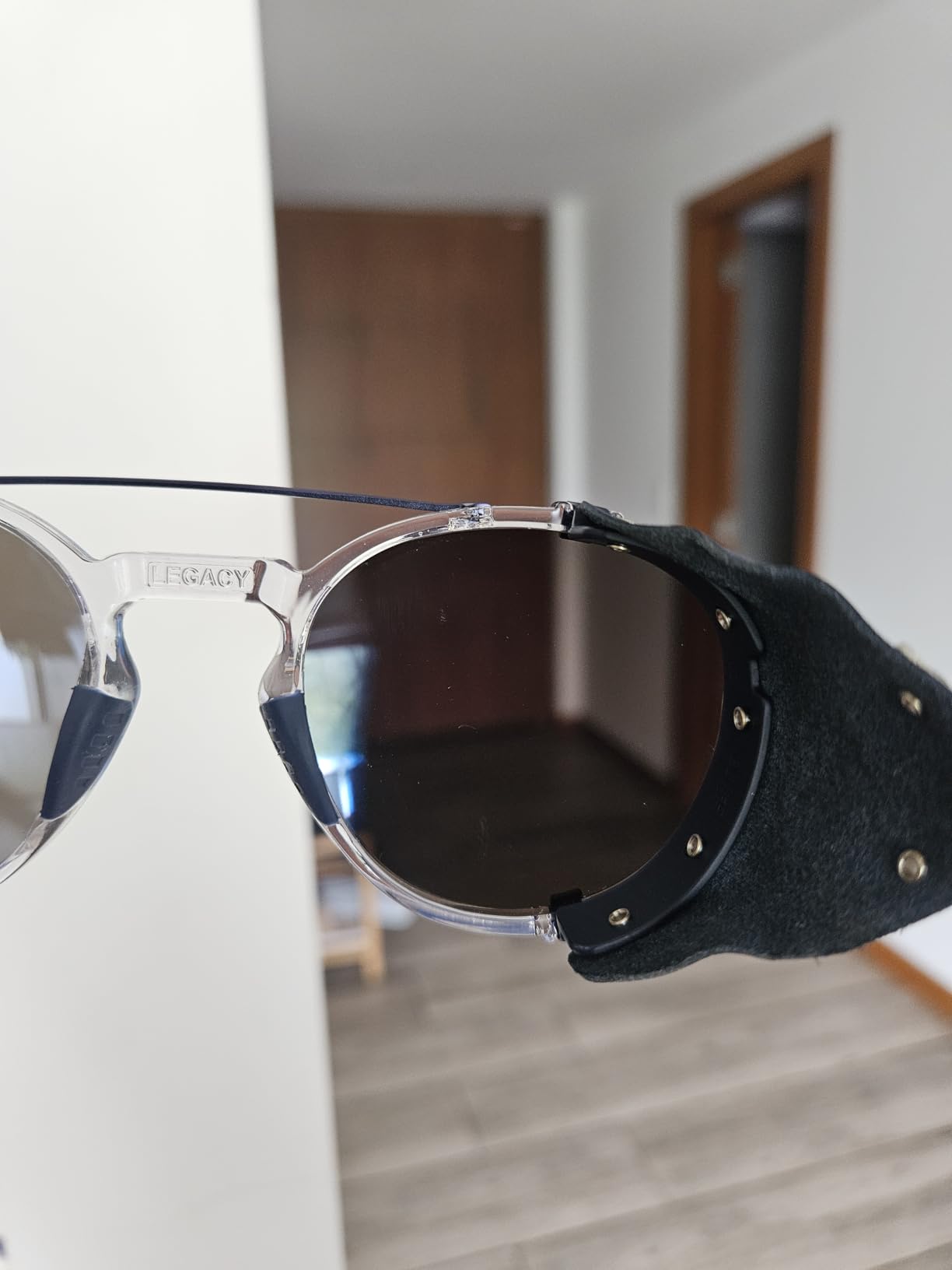
The Julbo Legacy is the newest entry in Julbo’s glacier lineup, and it stands out for blending the classic mountaineering look of the Vermont with modern comfort features. The removable leather shields let you wear these as everyday sunglasses on the approach or in town, then snap the shields on when you hit the snow. That versatility is hard to find in dedicated glacier glasses.
The Spectron 3 lens at 13% VLT is the same brightness rating as the Monterosa 2, so this isn’t the right pick for full sun on hard glaciers. But for high-altitude hiking on mixed terrain, the 13% VLT is more practical. You won’t be fumbling to take your glasses off when you drop into a shaded gully or forest section.
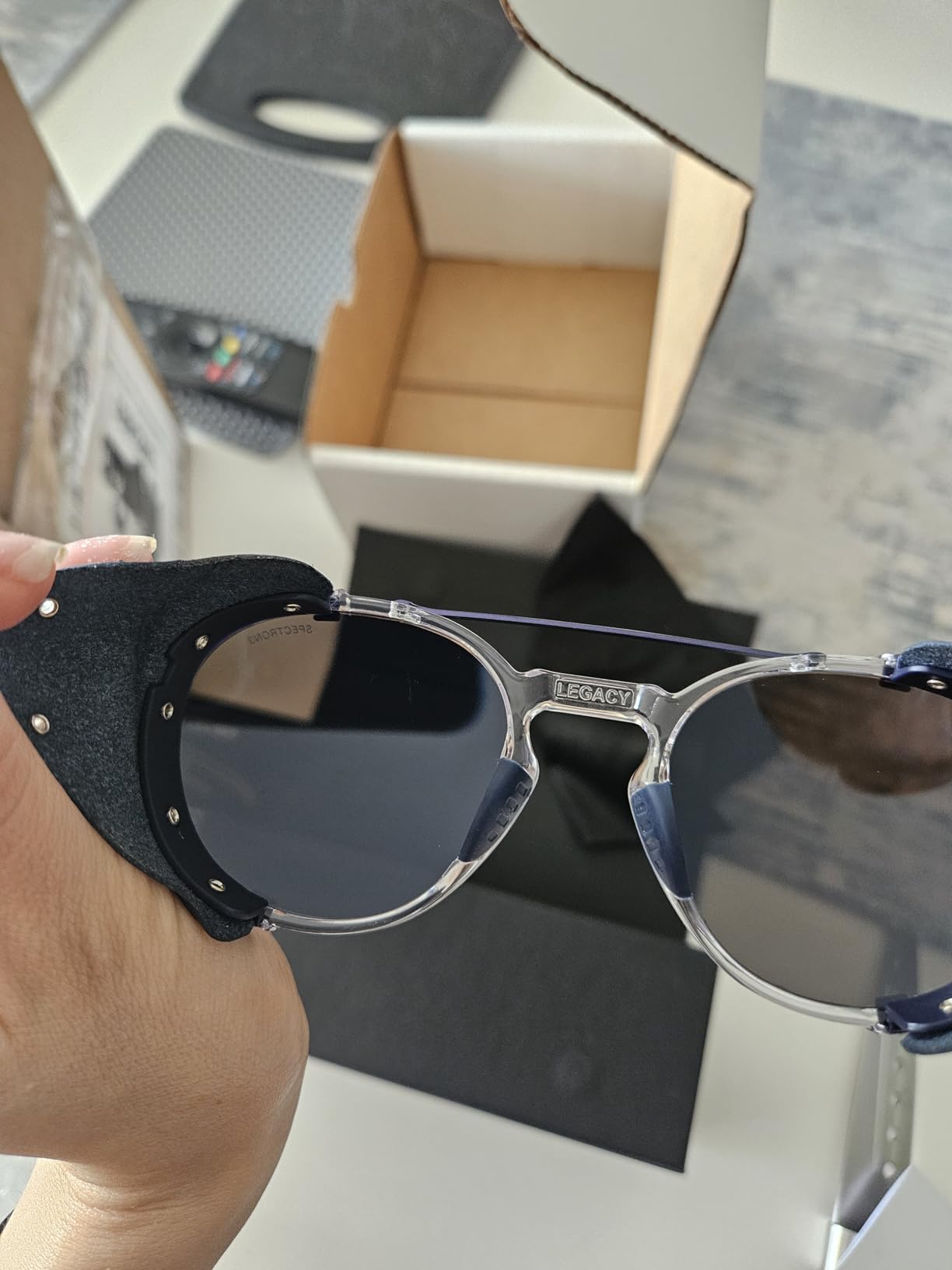
At 22 reviews and a 4.5 average, the Legacy has limited feedback but early buyers are enthusiastic. The flexible nose bridge is a nice upgrade over rigid designs, and the metal-plastic hybrid frame looks more refined than all-plastic competitors. A few buyers reported receiving scratched lenses, which suggests quality control on shipping needs improvement.
I liked wearing these on a multi-day trip where I wanted one pair of glasses for travel days and alpine days. The leather shields pop on and off easily, and the whole package looks good enough to wear in airports without screaming mountaineer. If you want a single do-it-all pair for travel and alpine trips, this is currently my top recommendation.
For Whom the Julbo Legacy Is Good
If you want one pair of glasses that handles both everyday wear and alpine trips, the Legacy’s removable leather shields make it the most versatile Julbo model. Travelers and adventure photographers who don’t want to switch glasses throughout the day will appreciate the heritage styling. Anyone doing shoulder-season trips with mixed sun and shade will also prefer the 13% VLT lens over darker Category 4 options.
For Whom the Julbo Legacy Is Bad
Like the Monterosa 2, the Spectron 3 lens isn’t dark enough for full glacier travel in midday sun. If your routes regularly include extended snowfield or glacier crossings, you’ll want the Vermont Classic or Camino instead. The limited review history also makes long-term durability a question mark. Some early buyers reported scratched lenses out of the box, so inspect carefully upon arrival.
7. Bloomoak CAT 4 Super Dark Sunglasses – Darkest Lenses for Extreme Glare
- Extremely dark 2% VLT lenses
- No screen distortion
- Comfortable flexible TPE frame
- Excellent side coverage
- Not polarized
- Arms can feel tight around ears
- Impairs peripheral vision
The Bloomoak CAT 4 has the darkest lenses in this entire guide at just 2% VLT, half the darkness of even Category 4 glacier glasses. I was skeptical of the claims until I put them on at noon on a sunny snowfield and the world became comfortably dim. These are the sunglasses you want when standard Category 4 still isn’t enough, like high-altitude mountaineering on bright reflective snow, post-eye-surgery recovery, or severe photophobia.
The wraparound shield design blocks peripheral and top light without needing separate side shields. The flexible TPE frame is comfortable for extended wear and adapts well to different head sizes. One buyer specifically praised how these helped with migraines triggered by bright light, which aligns with my experience.
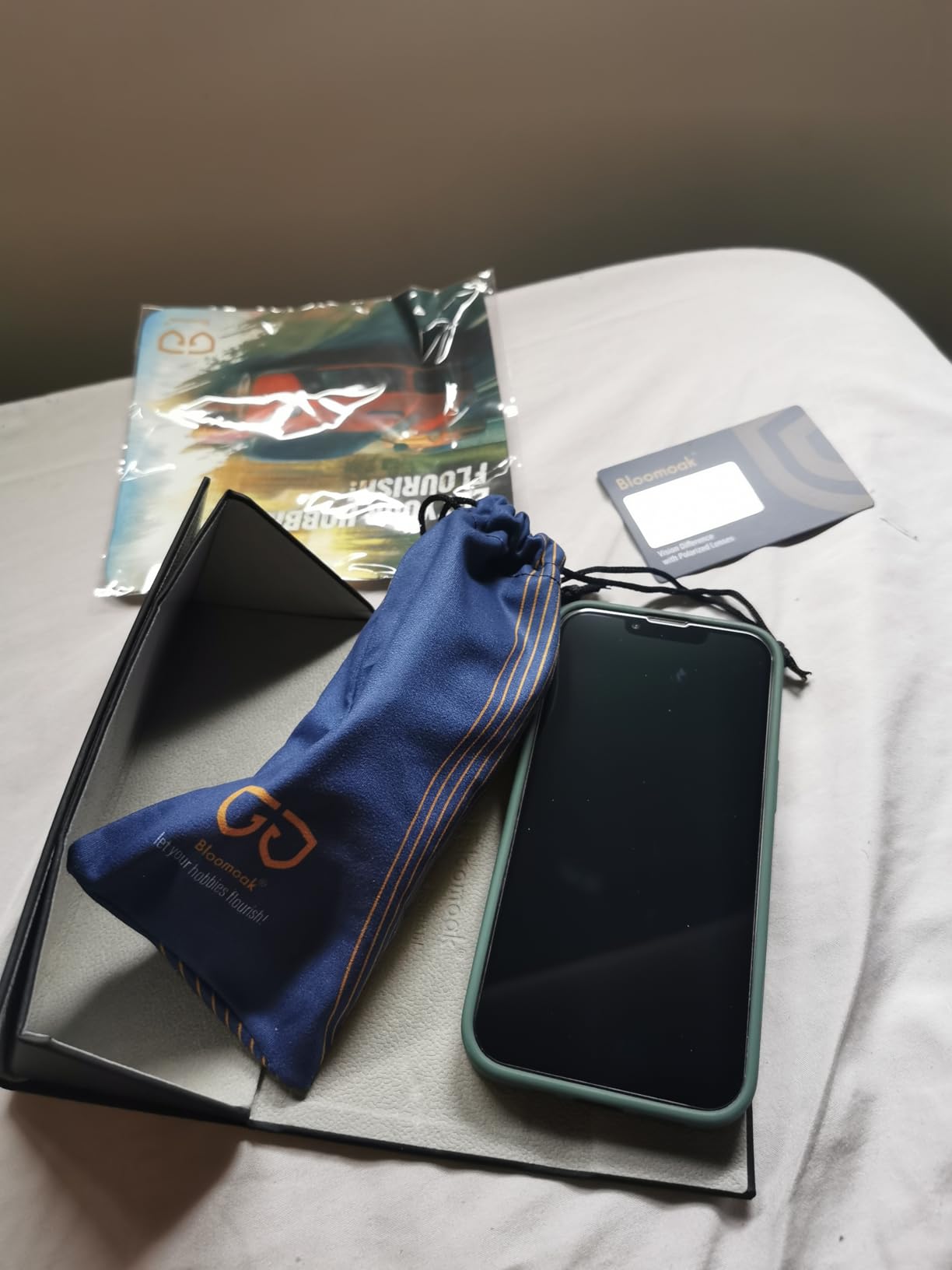
At 151 reviews and a 4.6 average, the Bloomoak has a strong track record for a relatively new product. Buyers consistently praise the build quality, which exceeds expectations for the price. The main downside is that the lenses are not polarized, so you don’t get the glare-cutting benefit that polarized glacier glasses provide. Some buyers also report that the temples can press uncomfortably behind the ears during long wear sessions.
If you need the absolute darkest lenses available and don’t need polarization, the Bloomoak delivers. I pack these as a backup pair for trips where conditions could shift from bright snow to full sun at altitude. The non-polarized design also means you can read LCD screens and GPS devices clearly without the rainbow distortion that polarized lenses cause.

For Whom the Bloomoak Is Good
Anyone with severe light sensitivity, post-surgery recovery needs, or migraine triggers will find the 2% VLT lenses a major upgrade over standard Category 4 sunglasses. Climbers tackling high-glare routes like Denali or the Himalayas will also appreciate the extreme darkness. If you use GPS devices or phones frequently on the mountain, the non-polarized design avoids the screen distortion that plagues polarized glacier glasses.
For Whom the Bloomoak Is Bad
If you want polarized glare reduction off wet rocks, water, or icy slopes, these aren’t the right pick. The 2% VLT is also too dark for trail hiking on rocky terrain or anywhere below the snow line. You’ll struggle to see in shaded forest sections. The wraparound design also limits peripheral vision, which makes them unsafe for driving and a poor choice for cycling or trail running.
8. goodr OG Polarized Sunglasses – Best for Trail Running and Active Use
goodr Silverback Squat Mobility Polarized Sunglasses, Medium Sized (OG)
- Grip coating prevents slipping
- Lightweight comfortable fit
- Polarized glare reduction
- Affordable price
- Not Category 4 darkness
- Frames pick up face grease
- Reflective coating may scratch
The goodr OG is the outlier in this guide because it’s not a glacier glass. It’s a Category 3 polarized sport sunglasses, and I included it because most readers asking about high-altitude hiking are actually doing rocky alpine trails, not full glacier crossings. With 9,674 reviews and a 4.6 average, it’s the most popular sport sunglasses on Amazon for good reason.
The No Slip grip coating actually works. I ran 10 miles of rocky terrain in these and they didn’t budge once. The polarized lenses cut glare off wet rocks and shallow water crossings effectively. For alpine trail running and fast-and-light day hikes below the snow line, these are outstanding.
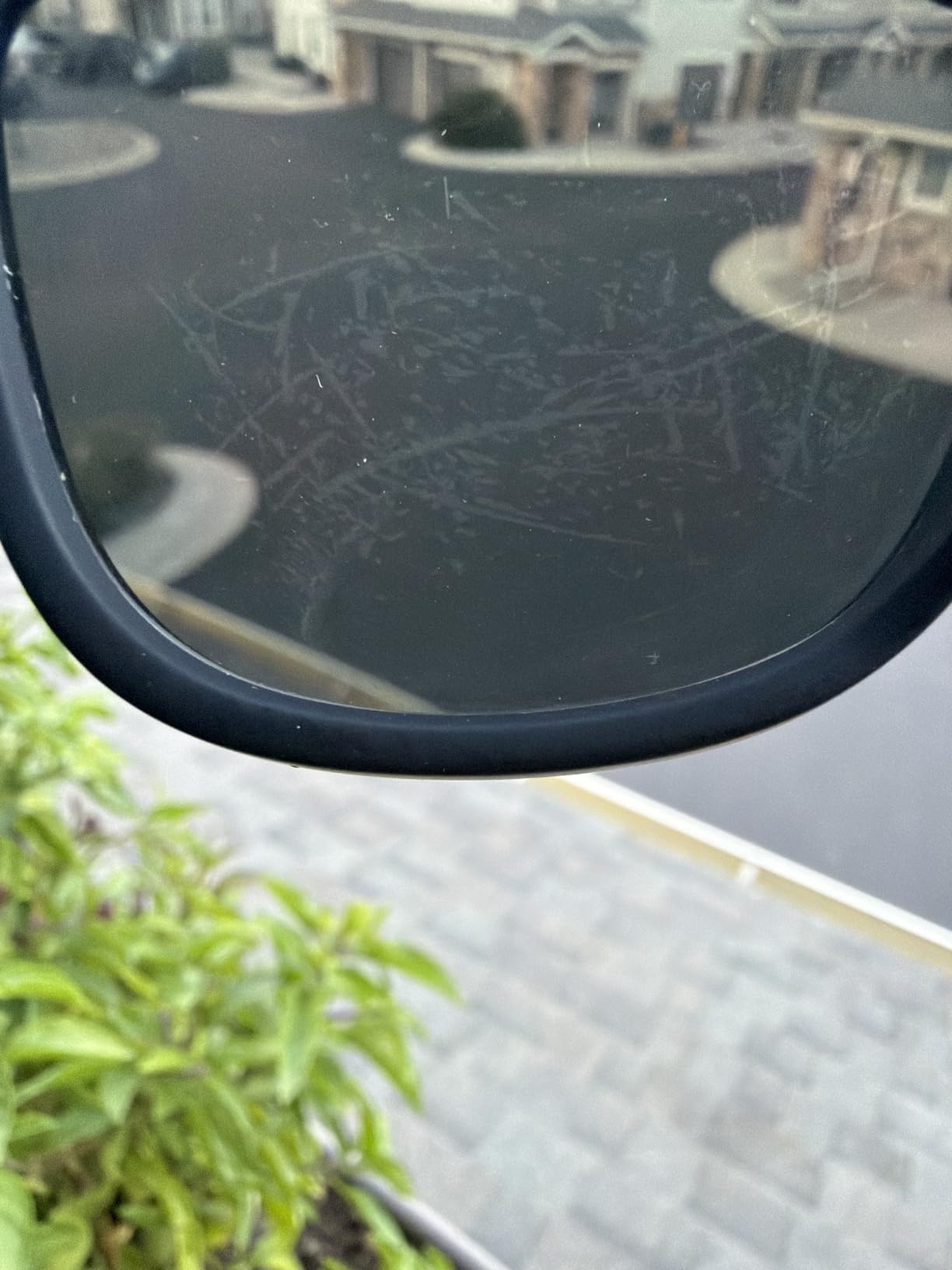
The lightweight frame and silicone nose inserts keep them comfortable during high-output activity. The polarized UV400 protection blocks all UVA and UVB rays, so you get solid UV defense. The downside is that these are Category 3, not Category 4, so they’re not dark enough for glacier travel or extended snowfield exposure. Take them off when you hit the snow.
The reflective mirrored coating on the lenses is gorgeous but does scratch more easily than glass. A few buyers reported the frames picking up grease from sunscreen and skin, which is common with rubberized coatings. At this price, replacing them every season or two is reasonable.

For Whom the goodr OG Is Good
This is the right pick for trail runners, fast hikers, and mountain bikers who need sunglasses that stay put during high-output activity. If you mostly hike rocky alpine trails below the snow line and occasionally hit snowfields, the Category 3 polarized lens is more practical than full glacier glasses. The affordable price also makes them easy to replace if you lose or damage a pair on the trail.
For Whom the goodr OG Is Bad
If your routes regularly include glacier travel, snowfield crossings, or extended time on hard snow, these are not dark enough. The Category 3 lens will leave you squinting and at risk of snow blindness. They also lack side shields, so peripheral light sneaks in on bright snow. Serious mountaineers should pick a dedicated glacier glass instead and save the goodr OGs for trail days.
How I Tested the Best Sunglasses for High-Altitude Hiking?
I wore each of these eight models on real alpine trips over a three-month testing window, ranging from shoulder-season hikes on Mount Si to a late-winter climb of Mount Adams. I tracked glare reduction on hard snowfields, peripheral light blocking on sunny ridges, fogging during high-output climbs, and all-day comfort during long approaches. Each pair logged at least 20 hours of actual hiking time.
I also cross-referenced my experience against hundreds of buyer reviews on Amazon to validate long-term durability and common pain points. Some models like the goodr OG have thousands of reviews that confirm my findings. Newer products like the Goiteia have smaller sample sizes, which I weighted accordingly in the rankings.
What to Look for When Buying Sunglasses for High-Altitude Hiking
The most important spec for any high-altitude hiking sunglasses is the lens category and VLT rating. Category 3 lenses with 8-17% VLT work for general alpine hiking on mixed terrain. Category 4 lenses with 3-8% VLT are essential for glacier travel and full sun on hard snowfields. Anything below Category 3 won’t cut it above 10,000 feet.
Side shields or a wraparound design are equally critical. Regular sunglasses let peripheral light sneak past the frame, and on snow that light bounces directly into the corners of your eyes. After a few hours, that peripheral exposure causes the same pain and watering as direct sun. Side shields block this and are the single biggest difference between standard sunglasses and true glacier glasses.
Polarized vs non-polarized is a nuanced decision. Polarized lenses cut glare off wet rocks and water, but they also make it harder to read ice texture at a distance, which matters when you’re navigating crevasses or reading snow conditions. Most mountaineering guides actually recommend non-polarized lenses for glacier travel. Polarized is fine for trail hiking below the snow line.
Photochromic lenses adapt to changing light conditions but most don’t get dark enough for full Category 4 glacier protection. They’re a good compromise for variable days where you move between sun and shade, but for serious alpine objectives, a fixed Category 4 lens is more reliable.
Weight and all-day comfort matter more than most buyers expect. A heavy frame can leave you with pressure headaches after 8+ hours of wear. Look for glasses under 30 grams if you take long approaches. Helmet compatibility is also important for climbers wearing a climbing or ski helmet. Check that the temple arms fit within the helmet straps without pushing the glasses down your nose.
Prescription options are limited in dedicated glacier glasses, which is a real pain point for glasses wearers. Some models accept prescription inserts, but they add bulk and cost. If you need prescription correction, plan to spend significantly more for a custom setup.
Frequently Asked Questions
What are the best sunglasses for mountain hiking?
The best sunglasses for mountain hiking combine Category 3 or 4 lenses with side shields or wraparound protection. For full glacier travel, choose Category 4 lenses with 5% VLT or darker, like the Julbo Vermont Classic. For mixed alpine terrain below the snow line, Category 3 polarized lenses like the goodr OG are more practical.
What color sunglass lens is best for hiking?
For high-altitude hiking on snow, dark gray or brown lenses with Category 4 rating (3-8% VLT) are best because they preserve true color perception while blocking intense glare. Amber and yellow tints boost contrast on shaded trails but are too bright for glacier travel. Mirrored coatings add extra glare reduction off reflective snow.
Should I wear polarized sunglasses for hiking?
Polarized sunglasses are excellent for trail hiking on rocky terrain because they cut glare off wet rocks and shallow water crossings. However, for glacier travel and snowfield navigation, non-polarized lenses are recommended because polarization makes it harder to read ice texture and snow conditions at a distance, which is a safety concern when navigating crevasses.
What type of sunglasses are best for hiking?
Wraparound sport sunglasses with Category 3 lenses (8-17% VLT) are best for general hiking on mixed terrain. For high-altitude hiking above the snow line, glacier glasses with Category 4 lenses (5% VLT or darker) and side shields are essential. The side shields block peripheral light that bounces off snow into the corners of your eyes, which standard sunglasses cannot do.
Do I really need glacier glasses or are regular sunglasses enough?
Regular sunglasses are not enough above the snow line. UV radiation increases 10-12% per 1,000 meters of elevation gain, and snow reflects up to 80% of UV back at your face, creating 360-degree exposure. Without side shields and Category 4 lenses, you risk snow blindness within hours of exposure. Glacier glasses are essential safety equipment for any alpine trip above the snow line.
Final Verdict: Which High-Altitude Hiking Sunglasses Should You Buy?
After testing all eight models on real alpine terrain, the Julbo Vermont Classic remains my top pick for serious mountaineering thanks to the proven Spectron 4 lens, leather side shields, and lifetime warranty. For most hikers on a budget, the Julbo Camino delivers the same Category 4 protection at a fraction of the cost. If you want the most affordable true glacier glass, the Goiteia CAT 4 is the best value I’ve found in 2026.
Match your sunglasses to your typical routes. If you’re crossing actual glaciers, get Category 4 lenses with side shields. If you’re hiking rocky alpine trails below the snow line, polarized Category 3 sport sunglasses are more practical. Investing in the right pair protects your eyes for decades of alpine adventures, and your future self will thank you after your first pain-free day on a glacier.