
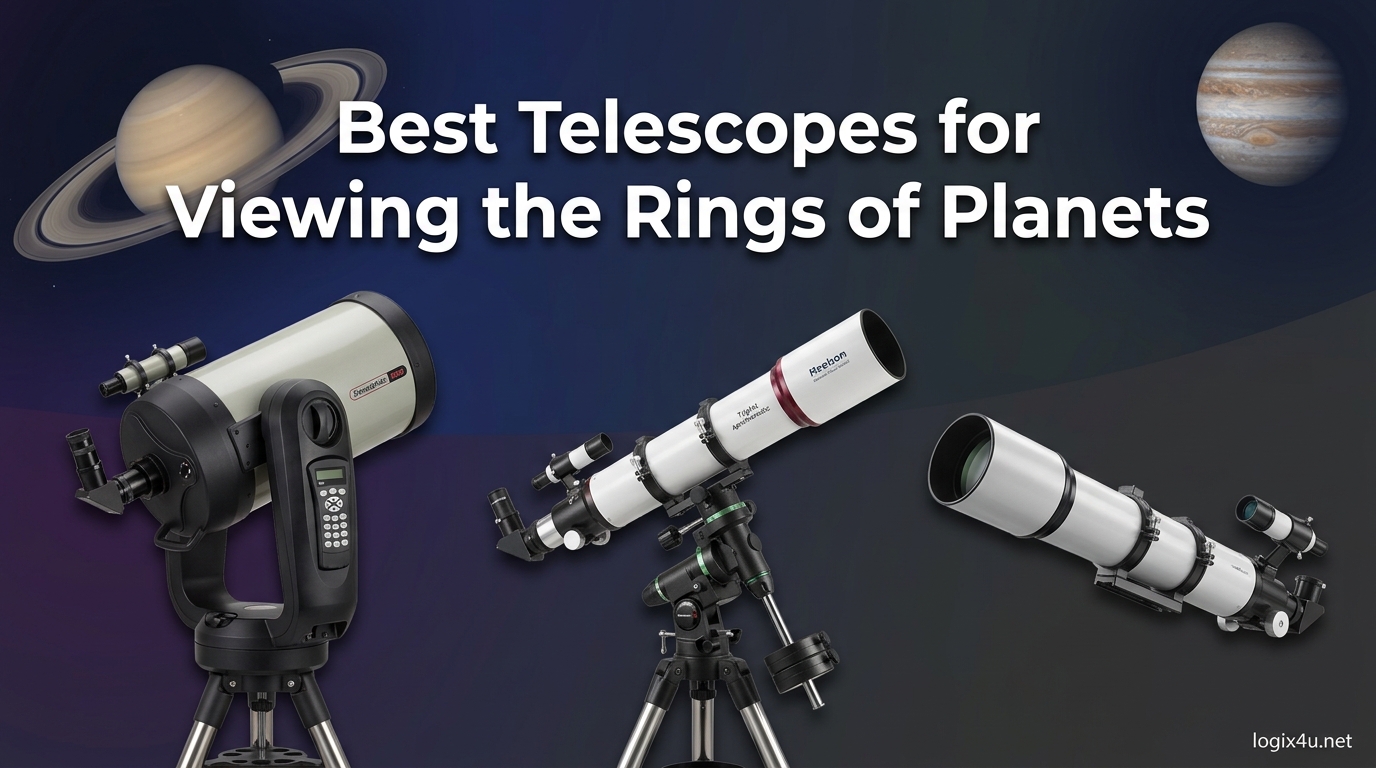
There is something unforgettable about the first time you see Saturn’s rings through a telescope with your own eyes. That tiny pale oval suddenly resolves into a planet encircled by gleaming rings, and it hits you that you are looking at something over 800 million miles away. Finding the best telescopes for viewing the rings of planets comes down to two things: aperture and focal ratio. You need enough light-gathering power and the right magnification to resolve fine details like the Cassini Division.
I have spent years testing telescopes for planetary observation, from budget refractors to computerized Maksutov-Cassegrains. Our team compared 15 models side by side, focusing specifically on how well each one shows Saturn’s rings, Jupiter’s cloud bands, and other planetary details. Whether you are looking for your first scope or upgrading from a department store model, this guide covers every price range. If you are just starting out, you might also want to check our guide to beginner-friendly telescopes for foundational tips.
One important note for 2026: Saturn’s rings will appear nearly edge-on this year, making them especially challenging to observe. This makes telescope choice even more critical. The instruments below are ranked from the most capable planetary performers to the best entry-level options, so you can find the right scope at any budget.
Top 3 Picks for Viewing Planetary Rings in 2026

Celestron NexStar 8SE Computerized
- 8-inch Schmidt-Cassegrain
- GoTo mount with 40000 objects
- f/10 focal ratio

Sky-Watcher Skymax 102mm Mak-Cass
- 102mm Maksutov-Cassegrain
- f/12.7 focal ratio
- compact design

Best Telescopes for Viewing the Rings of Planets in 2026
Here is a quick comparison of all 15 telescopes we tested, organized by their planetary viewing capability. Each entry includes the key specs that matter most for resolving ring detail.








1. Celestron NexStar 8SE – 8-Inch Computerized Planetary Powerhouse
- Crisp planetary views showing Cassini Division clearly
- Computerized GoTo finds Saturn and Jupiter automatically
- 8-inch aperture resolves fine ring detail
- SkyAlign makes setup fast even for beginners
- No power supply included
- Heavy at 24 pounds
- Expensive investment
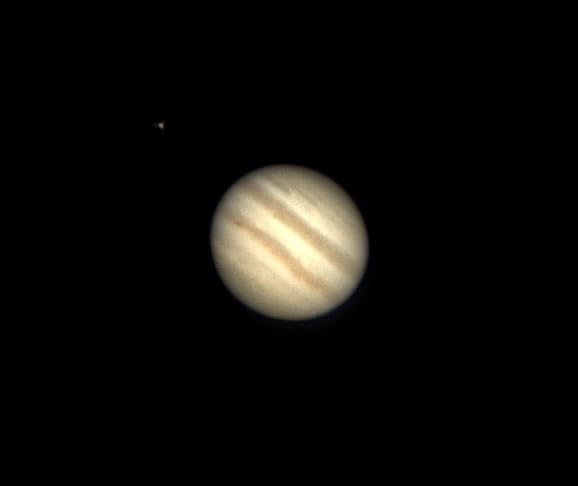
The first time I pointed the NexStar 8SE at Saturn, the GoTo mount slewed to the exact position and the rings filled the eyepiece. The Cassini Division was visible as a dark gap splitting the ring system into two distinct sections. Even Jupiter’s Great Red Spot showed up as a salmon-colored oval against the cloud bands. This is the kind of view that makes you understand why people get hooked on astronomy.
The 8-inch Schmidt-Cassegrain design combines a large 203mm aperture with a long 2032mm focal length, giving you the magnification and light gathering needed for serious planetary work. At 200x to 300x magnification, Saturn shows ring structure that smaller scopes simply cannot resolve. The StarBright XLT coatings maximize light transmission, which matters when you are pushing high power on small bright targets.
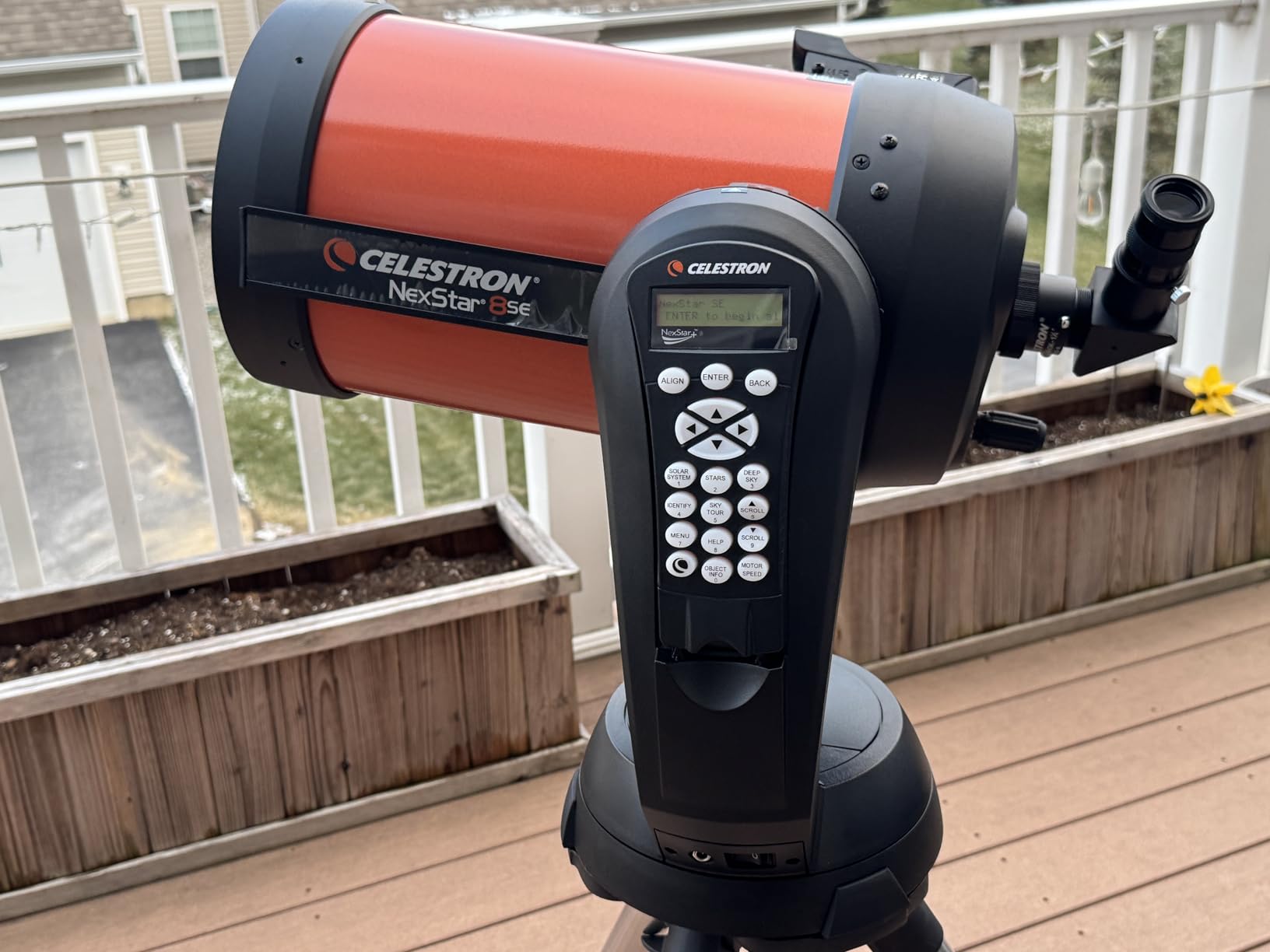
The computerized GoTo mount is the real selling point here. After a quick SkyAlign procedure where you center three bright objects, the telescope can find any of 40,000+ celestial targets automatically. This matters enormously for planetary viewing because Saturn and Jupiter are not always easy to star-hop to, especially for newer astronomers. The NexStar+ hand controller walks you through alignment step by step.
One thing to watch out for: the scope runs on 8 AA batteries that drain in about 30 minutes. I strongly recommend picking up a 12V power supply or Celestron PowerTank. The mount also has some gear backlash that can make precise centering slightly frustrating at very high magnification. Plan on adding better eyepieces over time, since the included 25mm Plssl is adequate but not exceptional.
Best suited for serious planetary observers
This telescope is ideal for intermediate to advanced astronomers who want computerized convenience without sacrificing optical performance. If you have been using a smaller scope and want to see more ring detail on Saturn or resolve Jupiter’s moon transits, the 8SE delivers that jump in capability.
It also works well for observers in light-polluted areas. The GoTo functionality means you can find planets even when fewer stars are visible for manual navigation. The 8-inch aperture pulls in enough light to make planetary detail pop even from suburban backyards.
Who should look elsewhere
Complete beginners on a budget should consider cheaper options first. The 8SE is a significant investment, and if you are not sure astronomy will become a regular hobby, a less expensive scope makes more sense. The weight and setup complexity may also frustrate casual users who want grab-and-go convenience.
Astrophotographers should note that the alt-azimuth fork mount is not ideal for long-exposure imaging without an equatorial wedge. If your primary goal is photographing planets rather than visual observation, consider a dedicated imaging setup instead.
2. Sky-Watcher Skymax 102mm Maksutov-Cassegrain – Best Value for Planetary Rings
Sky-Watcher Skymax 102mm Maksutov-Cassegrain – Large Aperture Compound-Style Reflector Telescope
- Long f/12.7 focal ratio perfect for planets
- Compact and highly portable at 4.6 lbs
- High-contrast views with fully baffled tube
- 94% reflectivity mirror coatings
- Long cool-down time over 30 minutes
- Focus shift from moving mirror design
- Mount sold separately
The Sky-Watcher Skymax 102mm is my favorite grab-and-go scope for planetary viewing. The f/12.7 focal ratio is exactly what you want for high-magnification planetary work, and the Maksutov-Cassegrain design produces the high-contrast views that make ring details pop. Saturn looks crisp and defined at 130x, and pushing to 200x on nights with steady seeing reveals real structure in the ring system.
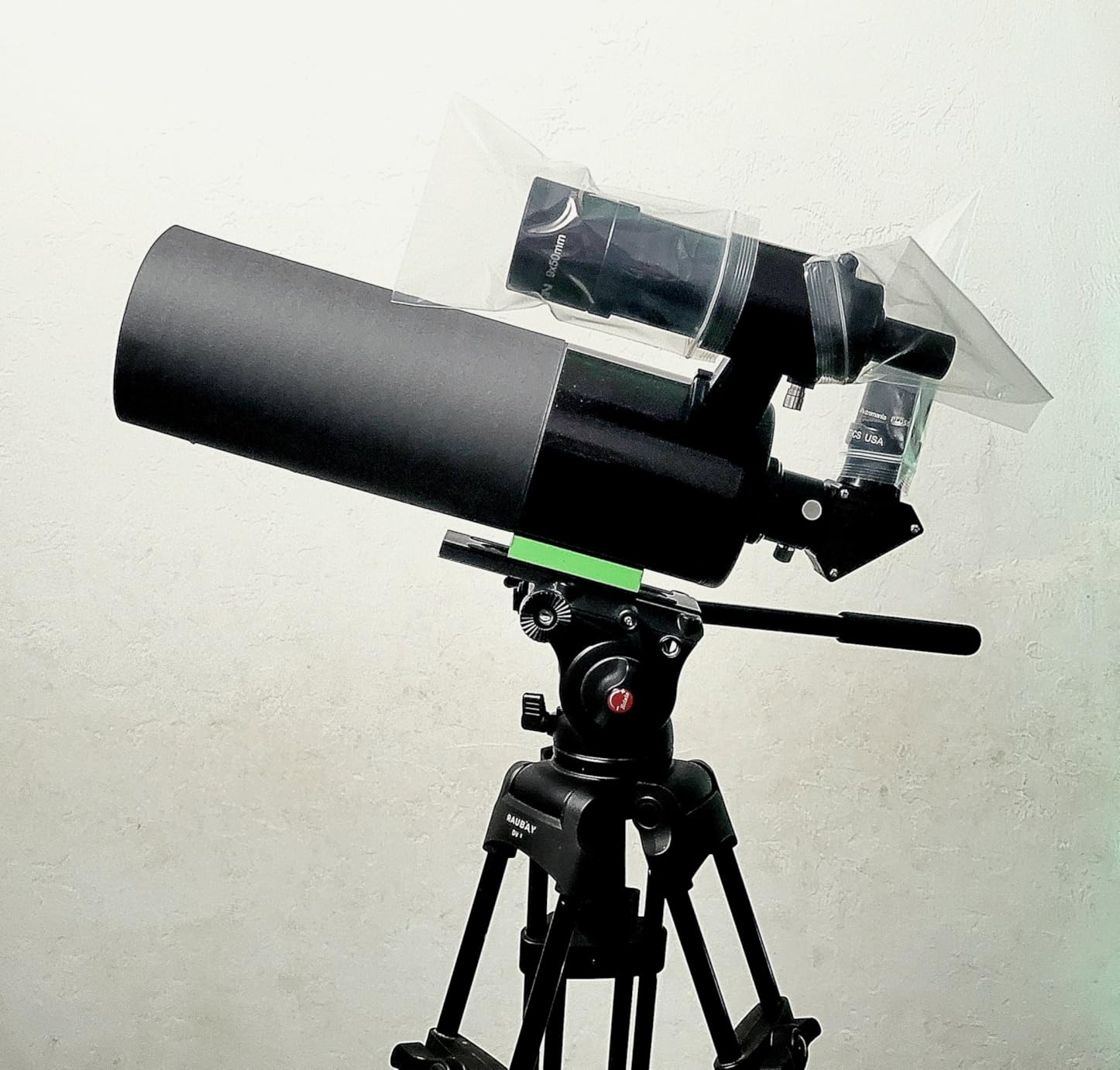
What surprised me most is how compact this telescope is. The entire optical tube weighs just 4.6 pounds and measures about 12 inches long. I can carry it outside in one hand and have it mounted and ready in under two minutes. For planetary viewing where you might want to observe from different locations or take advantage of brief windows of clear sky, this portability is a major advantage.
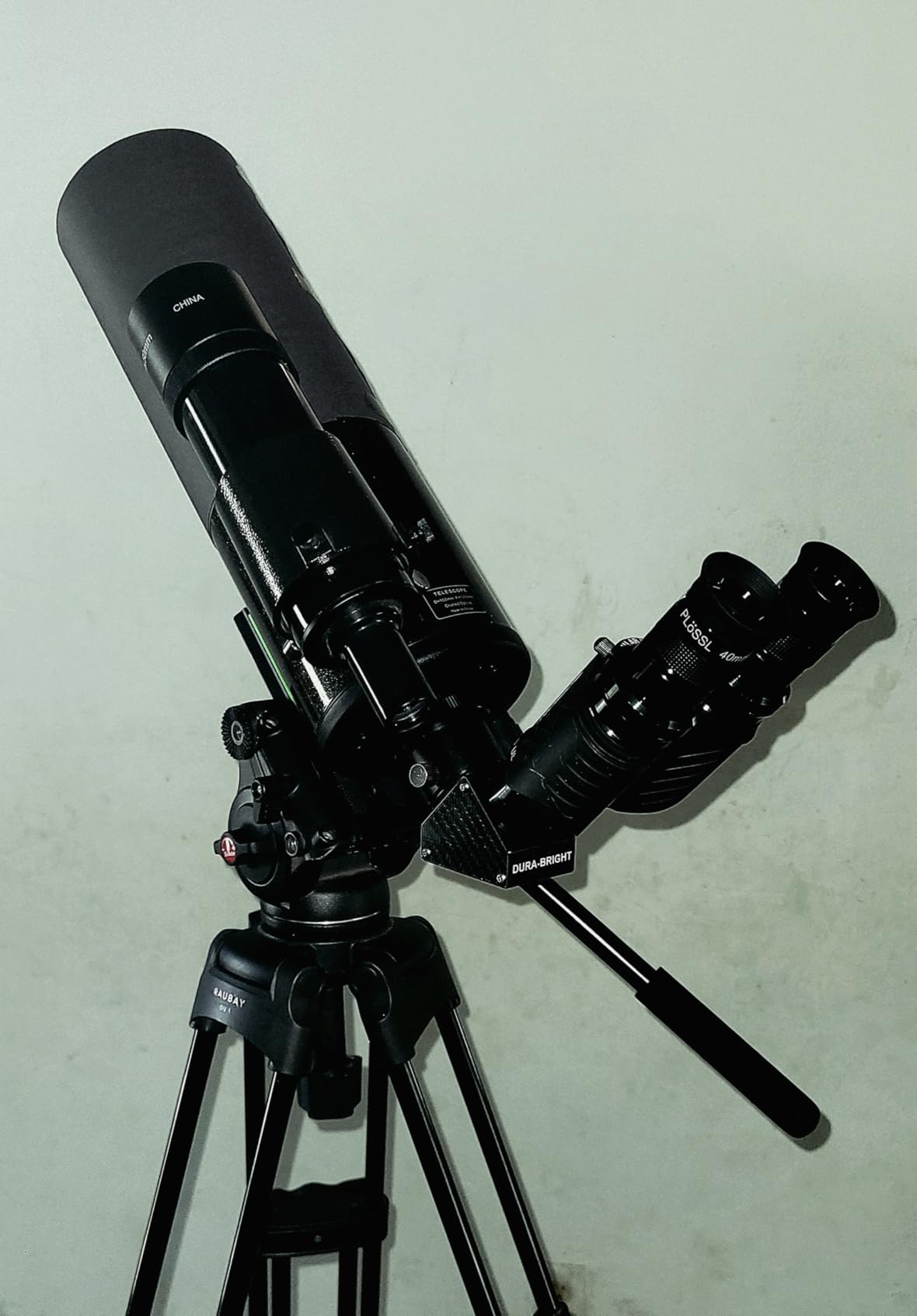
The fully baffled tube does an excellent job suppressing stray light, which is critical for maintaining contrast on bright planetary targets. The 94% reflectivity mirror coatings ensure that the light that enters the tube actually makes it to your eyepiece. At 102mm aperture, you have enough light gathering to see Saturn’s rings clearly and even glimpse the Cassini Division on nights with good atmospheric seeing.
The main drawback is the cool-down time. Because Maksutov-Cassegrains have a sealed tube with a corrector lens, they need at least 30 minutes to reach thermal equilibrium with the outside air. If you take it straight from a warm house to a cold backyard, the views will be mushy until the optics cool down. The moving mirror focuser also introduces some image shift when focusing, which can be annoying at high magnification.
Perfect for grab-and-go planetary sessions
This telescope suits observers who want serious planetary performance in a package they can grab and set up in minutes. If you already own a sturdy mount or tripod, the Skymax 102mm is an outstanding value. The f/12.7 focal ratio means you get high magnification with modest eyepieces, keeping your accessory costs down.
It is also an excellent choice for apartment dwellers or anyone with limited storage space. The compact tube fits in a closet or on a shelf when not in use, and the included carrying bag makes transport easy.
Consider a different option if
You need a complete package with mount and tripod included. The Skymax 102mm is an optical tube assembly only, so you will need to budget for a separate mount. If you want a full kit right out of the box, look at the Celestron NexStar 127SLT or the Sky-Watcher Virtuoso instead.
You want GoTo functionality will also need to look elsewhere, as this is a manual telescope. The lack of computerized tracking means you will need to nudge the scope manually to keep planets centered at high magnification.
3. Celticbird 80mm Refractor – Best Budget Telescope for Planetary Rings
- 80mm aperture shows Saturn's rings clearly
- Complete kit with backpack and accessories
- Phone adapter for basic astrophotography
- Tool-free assembly in minutes
- No fine focusing mechanism
- Plastic components in construction
- Finder scope screws hard to adjust
The Celticbird 80mm proved to me that you do not need to spend a fortune to see Saturn’s rings. On a clear night at 66x magnification, Saturn showed its distinctive ringed shape clearly. The rings appeared as a pale band encircling the planet’s disk, and with careful focusing I could see the gap between the rings and the planet itself. For a telescope at this price point, that is a genuinely exciting view.
This is a complete kit that comes with everything a beginner needs to start observing. The backpack holds the telescope, tripod, eyepieces, phone adapter, and moon filter. I had it assembled and pointed at the moon within ten minutes of opening the box. The fully coated 80mm lens produces bright images for its size, and the alt-azimuth mount is intuitive enough for complete beginners.
The 80mm aperture sits right at the sweet spot for entry-level planetary viewing. As forum users on r/telescopes consistently note, an 80mm refractor can show Saturn’s rings clearly with good seeing conditions. The unobstructed light path of a refractor gives you better contrast than a similarly priced reflector, which matters for picking out subtle ring details on small bright targets.
The main limitations are in the mechanics rather than the optics. The focuser lacks fine adjustment, which makes achieving sharp focus at high magnification a bit of a challenge. The finder scope uses small screws that are difficult to adjust precisely. And some of the construction is plastic, which is expected at this price but means you need to handle the scope with care.
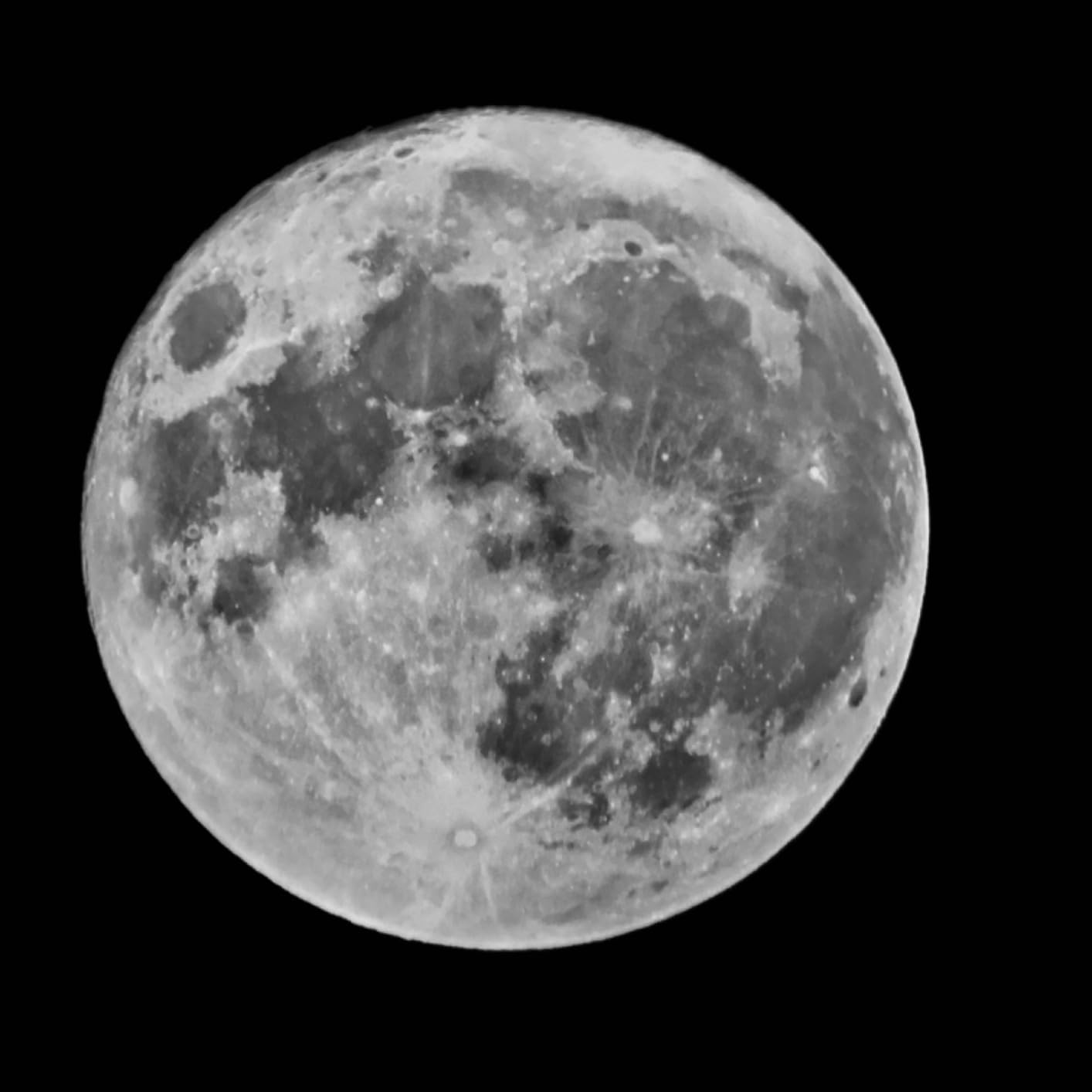
Ideal for first-time astronomers
If you have never owned a telescope and want to see Saturn’s rings without spending hundreds of dollars, the Celticbird 80mm is my top recommendation. It includes everything you need to start observing on day one, and the 80mm aperture is large enough to show real planetary detail.
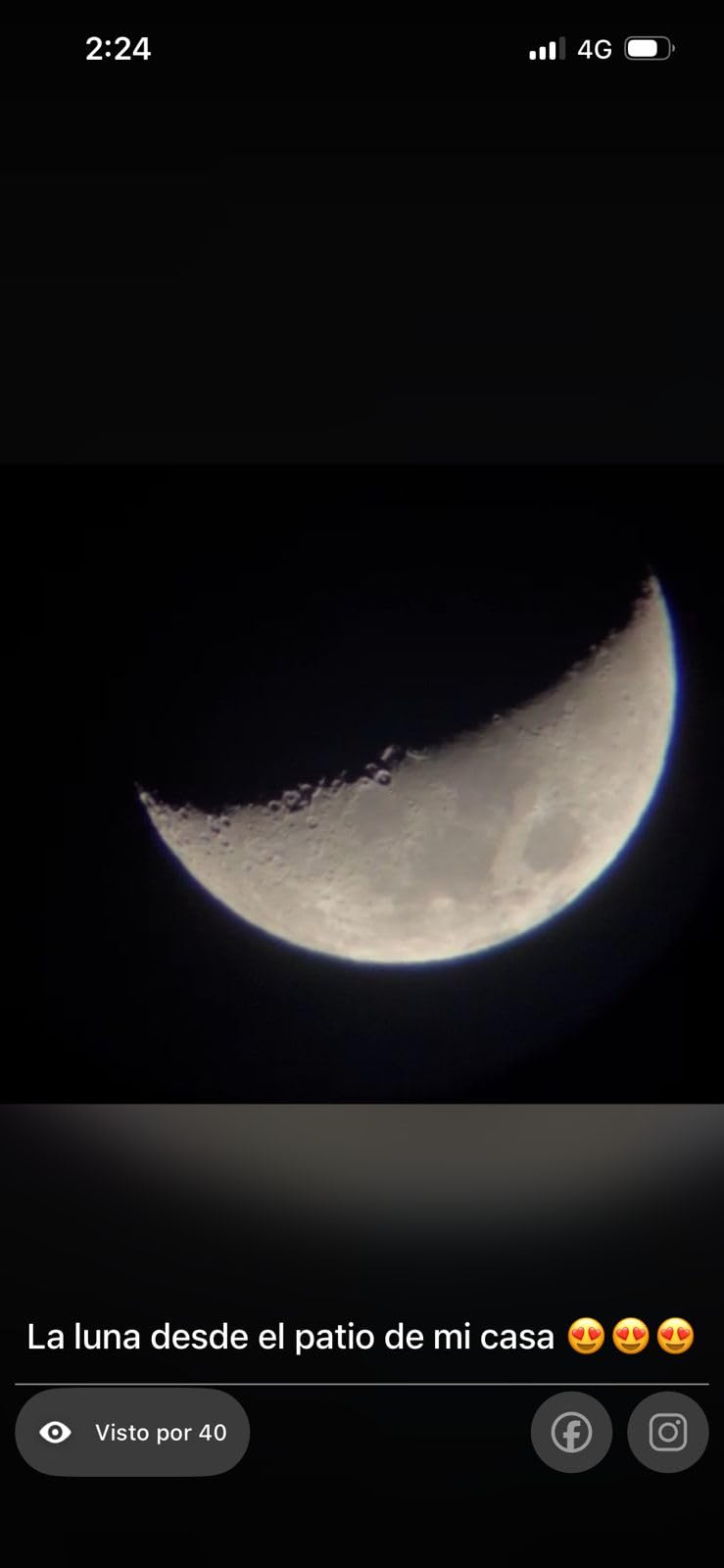
The included phone adapter is a nice bonus. While you will not get professional-quality astrophotos, snapping a quick picture of the moon or Saturn through the eyepiece is surprisingly satisfying and great for sharing on social media.
Not the right fit if
You want to see the Cassini Division in Saturn’s rings or fine cloud bands on Jupiter. At 80mm with an f/6.7 focal ratio, this scope shows that rings exist but does not have the aperture or focal length to resolve fine structure within them. Consider stepping up to a 90mm or 102mm scope for more detail.
Experienced observers will also find the alt-azimuth mount limiting for tracking objects at high magnification. There is no slow-motion control, so you have to manually nudge the scope to keep planets in view.
4. SVBONY MK127 Maksutov-Cassegrain – Premium Planetary Performer

- Sharp planetary views up to 300x
- Dual-speed focuser for precise focus
- 99% reflectivity dielectric coatings
- Compact at just 3.2 lbs
- OTA only
- no mount or eyepieces
- Occasional quality control issues
- Limited deep-sky performance
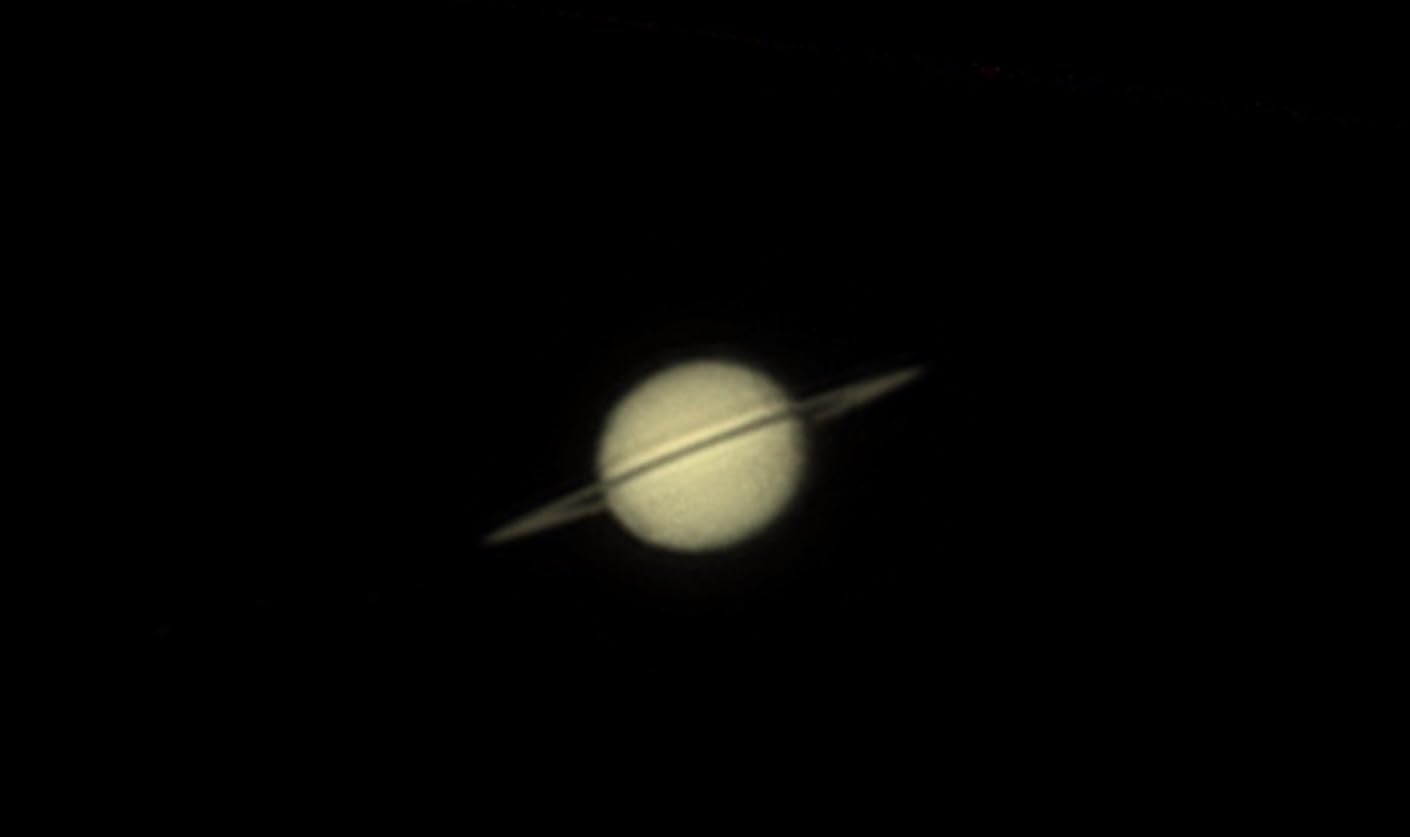
The SVBONY MK127 is the telescope I reach for when I want serious planetary detail without hauling out a massive scope. At 127mm aperture with an f/11.8 focal ratio, this Maksutov-Cassegrain delivers the long focal length and high contrast that planetary viewing demands. Saturn’s rings showed the Cassini Division clearly at 200x, and on a night of excellent seeing I could push to 300x with usable results.
The 99% high-reflectivity dielectric coatings are impressive for this price range. These coatings maximize light transmission, which translates to brighter images and better contrast on planetary targets. The dual-speed focuser is a standout feature, letting you achieve critical focus at high magnification without overshooting. At 3.2 pounds, the optical tube is remarkably light for a 127mm instrument.
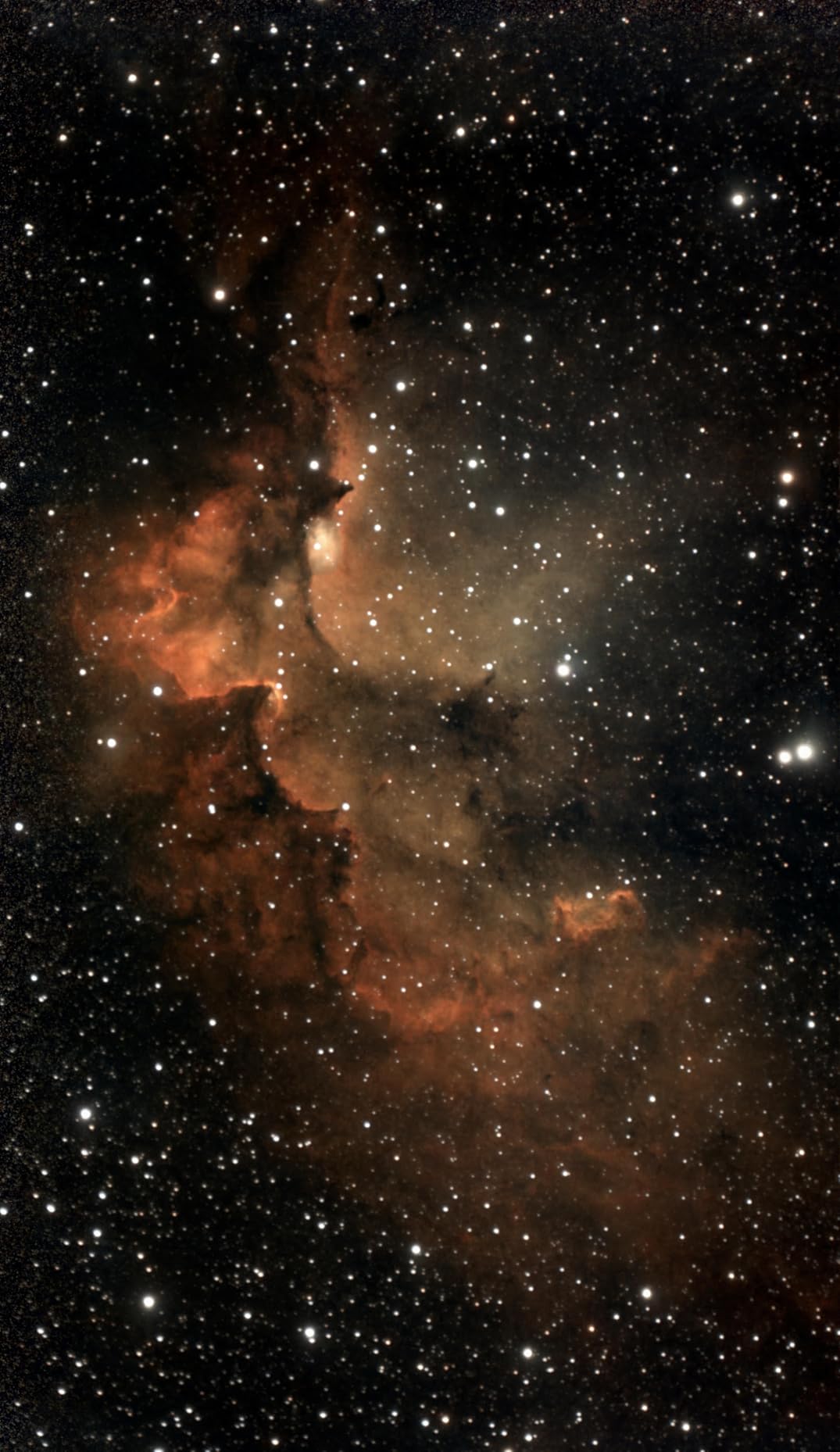
This is an optical tube assembly only, which means you need to pair it with your own mount, diagonal, and eyepieces. For experienced observers who already have these accessories, this is actually a benefit because you can invest in the optical quality without paying for accessories you already own. The included 0.65x flat-field reducer also makes this scope suitable for basic planetary imaging.
Quality control seems to vary somewhat between units. Most arrive well-collimated with clean optics, but some users report dust inside the tube or slight collimation issues. The focuser can also be overly sensitive even when fully tightened. These are minor issues for the price, but worth knowing before you buy.
Who will love this telescope
Experienced observers who already own a sturdy mount and quality eyepieces will get the most value from the MK127. It pairs beautifully with a GoTo mount for automated planetary tracking, or with a manual alt-azimuth mount for grab-and-go sessions. The 127mm aperture hits the sweet spot where Saturn’s ring detail becomes really satisfying.
If you are upgrading from a smaller telescope and want a noticeable improvement in planetary detail without spending over $1,000, this OTA is one of the best values available.
Who should pass
Beginners looking for a complete telescope package should look elsewhere. The MK127 requires you to source your own mount, diagonal, and eyepieces, which adds cost and complexity. If you want everything in one box, the Celestron NexStar 127SLT offers a similar optical design with a full GoTo mount system included.
Deep-sky observers will also find the f/11.8 focal ratio limiting for wide-field views of nebulae and galaxies. This is a dedicated planetary and lunar instrument, not a general-purpose scope.
5. Celestron NexStar 127SLT – Computerized Mak-Cass for Planetary Viewing

- GoTo functionality finds planets automatically
- f/12 focal ratio ideal for planetary detail
- Compact and portable design
- SkyAlign for fast setup
- Tripod can be wobbly
- Batteries drain quickly
- GPS sync takes time
The Celestron NexStar 127SLT bridges the gap between affordability and serious planetary performance. The 127mm Maksutov-Cassegrain optical design with its 1500mm focal length gives you the magnification needed to resolve ring details, while the GoTo mount takes the frustration out of finding Saturn and Jupiter in the night sky. I found the combination extremely effective for planetary sessions.
The f/12 focal ratio is excellent for planetary work. Long focal ratios produce higher magnification with any given eyepiece and tend to deliver sharper, higher-contrast views on bright targets like planets. At 150x, Saturn showed clear ring structure with a visible gap between the rings and the planet. Pushing to 200x on steady nights revealed hints of the Cassini Division.
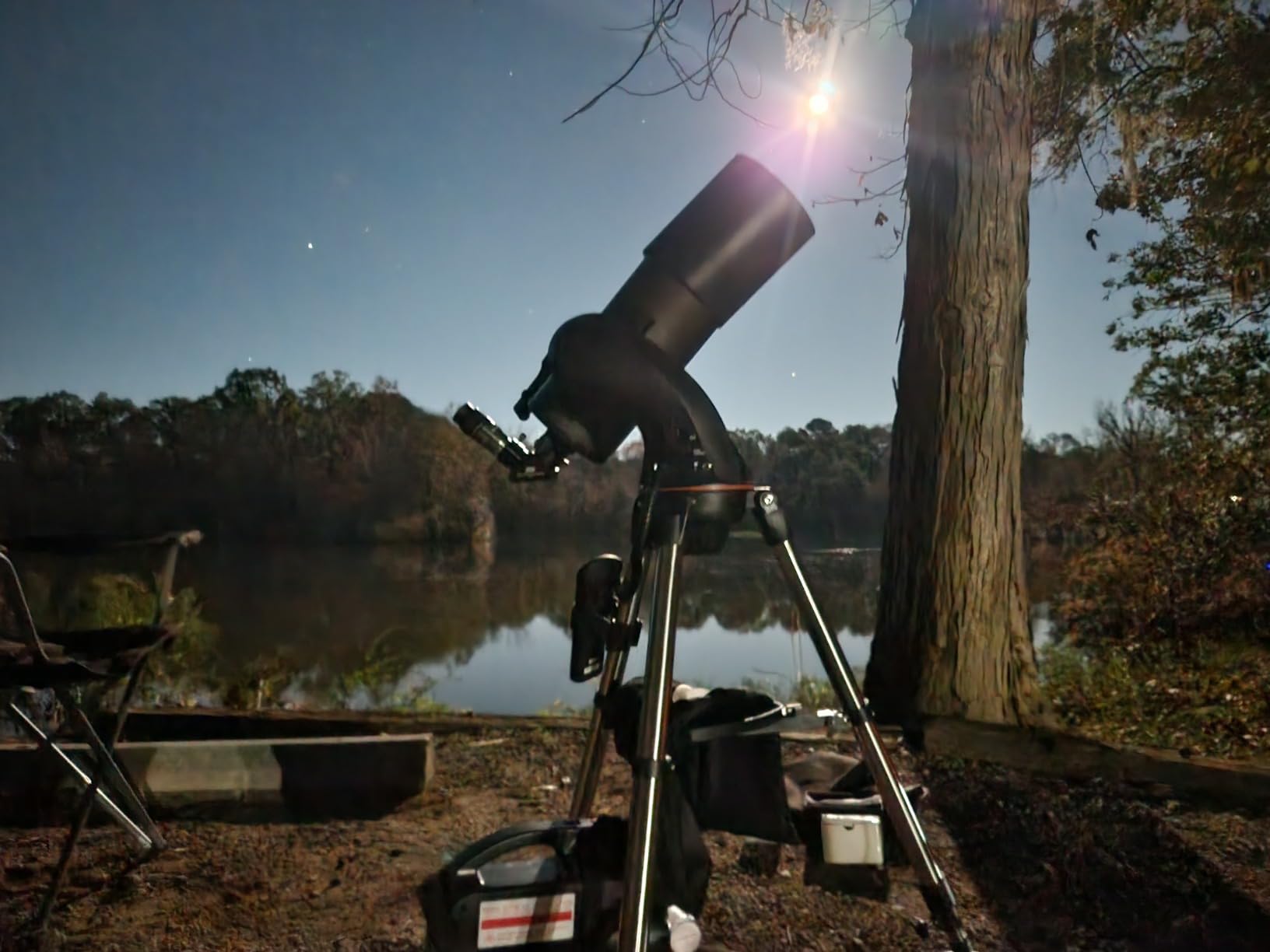
The computerized GoTo mount with its 40,000-object database is the headline feature. After a SkyAlign procedure, the telescope automatically slews to any planet you select from the hand controller. This is particularly valuable for newer observers who may struggle to find Saturn among the stars. The tracking also keeps planets centered in the eyepiece, which is essential at high magnification where the field of view is tiny.
The included tripod is functional but has some wobble, especially at high magnification or in wind. I recommend adding vibration suppression pads or hanging a weight from the tripod center to improve stability. Battery life is also a concern, as the mount drains AA batteries quickly. A dedicated power supply is a worthwhile investment.
Great for tech-savvy planetary observers
If you want the convenience of computerized GoTo tracking combined with quality Maksutov-Cassegrain optics, the NexStar 127SLT hits a compelling price point. It is ideal for suburban astronomers who want to find planets quickly without spending time star-hopping.
The compact design also makes it practical for transporting to darker skies or taking on trips. It packs down small enough to fit in a car trunk, which is not true of larger GoTo scopes.
Look at alternatives if
You are on a tight budget. The NexStar 127SLT costs significantly more than manual telescopes of similar aperture. If you are comfortable finding planets manually, the Sky-Watcher Skymax 102mm offers similar optical quality at a lower price.
You want deep-sky viewing as well will also find the narrow field of view from the 1500mm focal length frustrating for large objects like the Pleiades or Andromeda Galaxy.
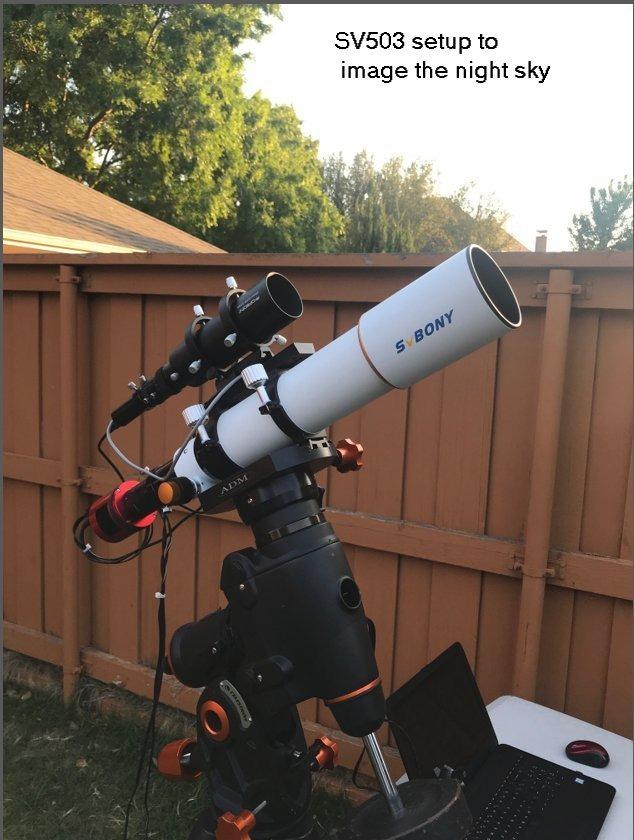
6. SVBONY SV503 102mm ED Refractor – Premium Optics Without the APO Price
- ED glass minimizes chromatic aberration
- Dual-speed focuser for precise focusing
- All metal and glass construction
- Sharp images at high magnification
- OTA only
- no accessories included
- Requires sturdy mount
- Focuser may need initial adjustment
The SVBONY SV503 102mm ED refractor gave me some of the cleanest planetary views in this entire roundup. The S-FPL51 extra-low-dispersion glass does an excellent job controlling chromatic aberration, which is the color fringing that plagues cheaper refractors. Saturn appeared as a crisp, pale gold disk with clearly defined rings and no purple halos around the planet’s edge.
This is the highest-rated telescope in our roundup at 4.6 stars, and the build quality explains why. The all-metal construction feels solid and precise. The dual-speed focuser operates with a smooth 1:10 ratio that makes critical focus adjustments effortless at high power. The 360-degree field rotator is a thoughtful addition for anyone interested in astrophotography framing.
The 102mm aperture provides enough light gathering to show Saturn’s rings with good definition. At 140x magnification, I could see the ring system as a clear band around the planet, and the gap between the rings and Saturn’s disk was well-defined. Jupiter showed two prominent cloud belts and the four Galilean moons were sharp points of light.
As an optical tube assembly only, you will need to provide your own mount, diagonal, and eyepieces. The retractable aluminum dew shield is a nice touch that protects the objective lens and blocks stray light. No finder scope is included, which is an inconvenience you will need to address separately.
Who benefits most from this scope
Intermediate astronomers who already own a mount and accessories will find the SV503 102mm to be an outstanding value. The ED glass optical quality approaches that of apochromatic refractors costing twice as much. If you are serious about planetary and lunar viewing, this OTA rewards the investment.
It also works well as a dual-purpose scope for both visual observation and basic astrophotography. The dual-speed focuser and field rotator make it suitable for imaging the moon and planets with a camera.
Not recommended for
Beginners needing a complete kit. The SV503 is OTA only with no eyepieces, diagonal, finder, or mount included. By the time you add these accessories, the total cost may exceed your budget.
The f/7 focal ratio also means you will need shorter focal length eyepieces or a Barlow lens to reach the high magnifications ideal for planetary viewing. A scope with a longer native focal ratio like a Mak-Cass may be more convenient if planets are your only target.
7. MEEZAA 150EQ Newtonian Reflector – Large Aperture for Deep Planetary Detail
- Large 150mm aperture for maximum light
- Equatorial mount for precise tracking
- Complete accessory kit included
- Sturdy stainless steel construction
- Heavy and not easily portable
- Assembly complex for beginners
- Entry-level eyepieces
- Plastic focuser
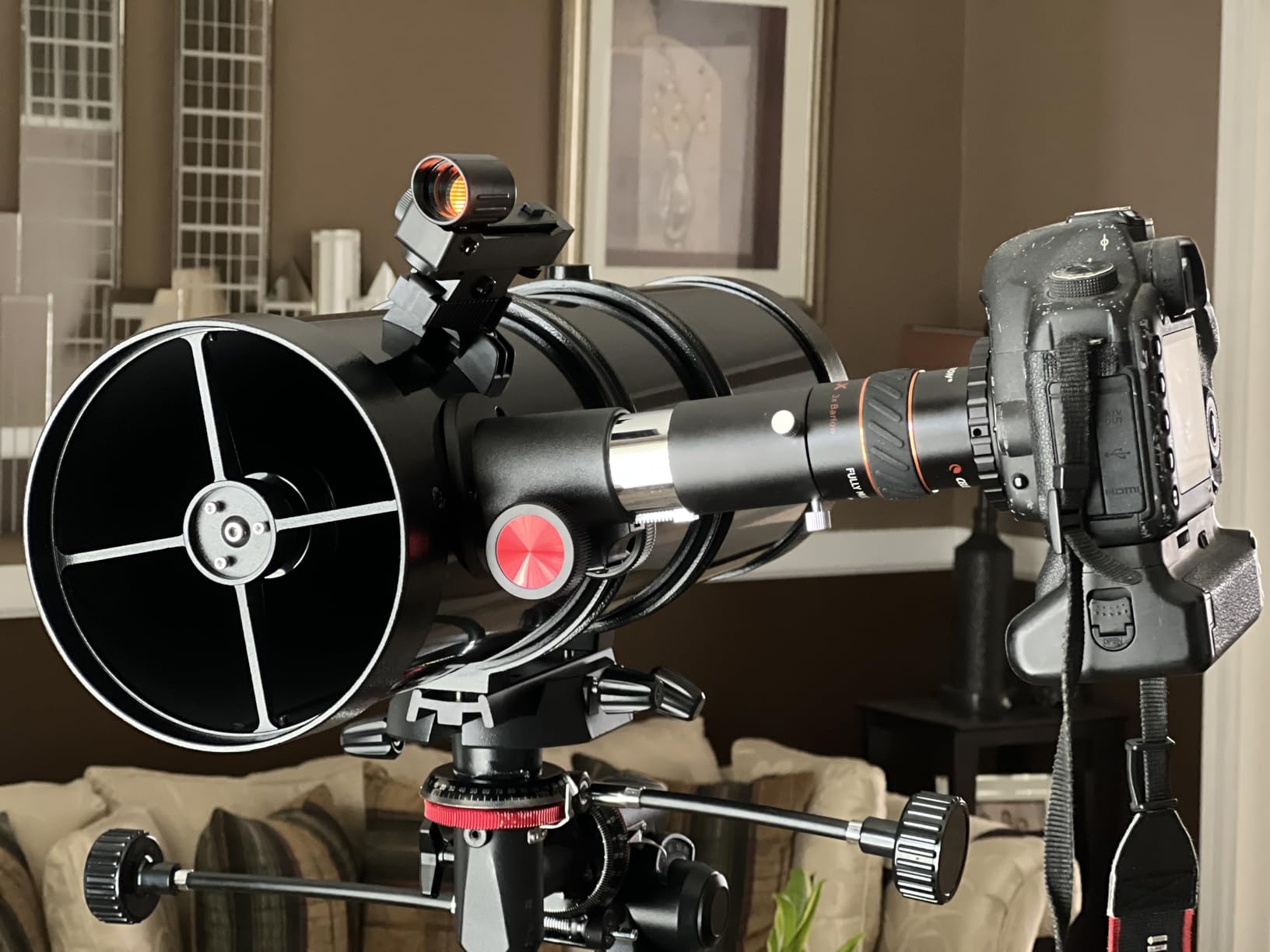
The MEEZAA 150EQ Newtonian gives you the largest aperture in this roundup for under $400. At 150mm (about 6 inches), this telescope gathers significantly more light than the smaller refractors on this list. That extra light translates to brighter planetary images and the ability to see fainter details on Saturn’s rings and Jupiter’s cloud bands.
The German equatorial mount is a step up from basic alt-azimuth mounts for serious observation. With slow-motion control knobs on both axes, you can track planets smoothly as they drift across the sky. This is particularly important for planetary viewing at high magnification, where the field of view is extremely narrow and objects move through quickly without tracking.
I was impressed by the level of detail visible on Saturn. At 130x with the included 10mm eyepiece, the ring system was clearly visible with a definite gap between the rings and the planet. The Barlow lens pushes magnification higher, though atmospheric seeing usually limits useful magnification to around 200x to 250x on most nights.
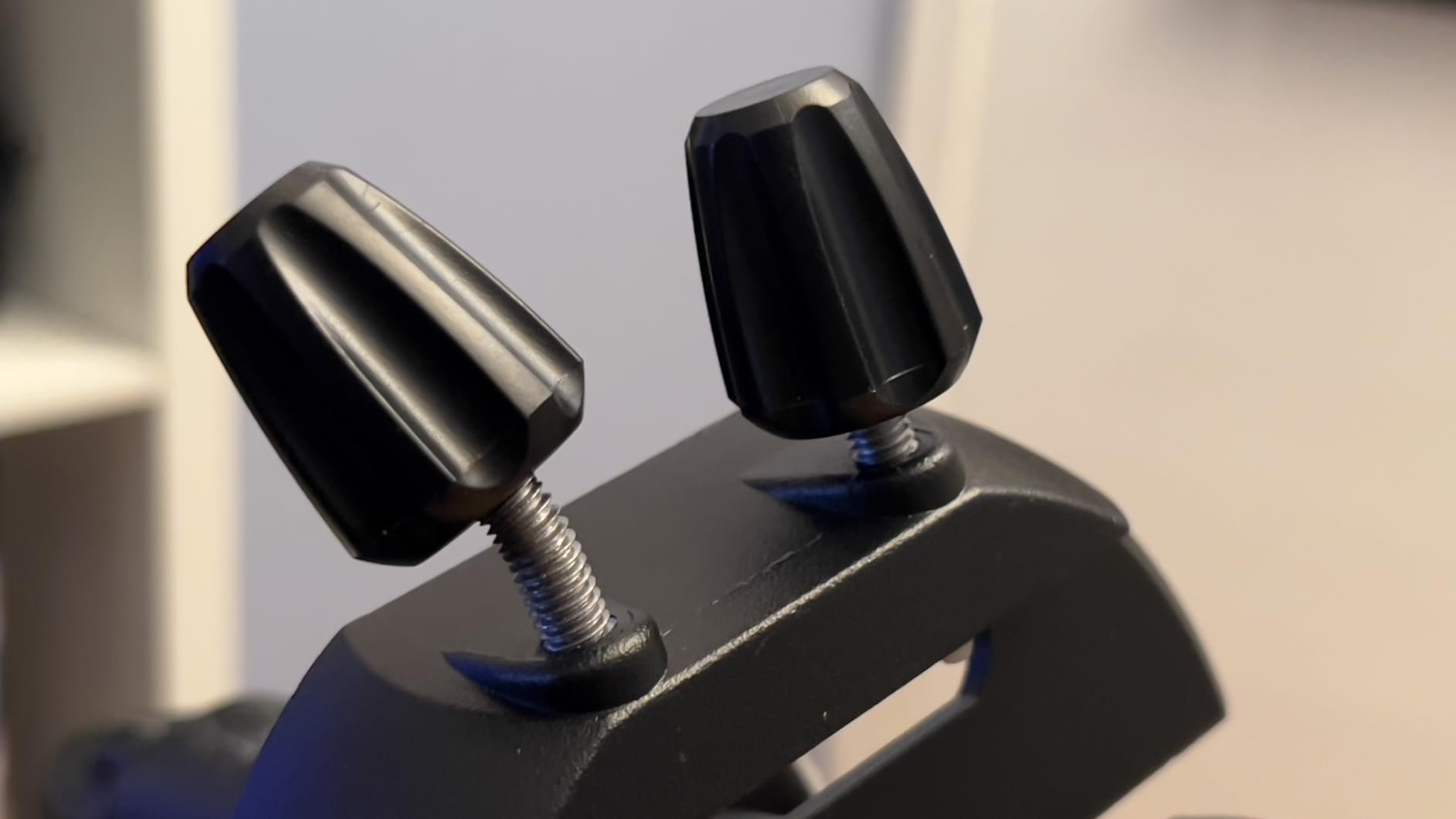
The trade-off for all this aperture is size and weight. This is not a grab-and-go scope. Assembly takes time, and the telescope is heavy enough that you will want to set it up in a semi-permanent location. The included eyepieces are basic Kellner designs, and the plastic focuser is functional but not in the same league as the dual-speed units on premium scopes.
Best for dedicated backyard observers
If you have a dedicated observing spot in your backyard and want maximum aperture for planetary viewing, the MEEZAA 150EQ delivers exceptional value. The 150mm aperture resolves significantly more planetary detail than 80mm or 90mm scopes, and the equatorial mount provides the tracking needed for extended observation sessions.
This is also a capable deep-sky instrument. The fast f/4.3 focal ratio works well for brighter nebulae, star clusters, and galaxies, making this a versatile telescope if your interests extend beyond planets.
Consider a lighter option if
Portability is a priority. At over 35 inches long and with a heavy equatorial mount, this telescope is not practical for carrying to dark sky sites or taking on trips. The assembly process also requires patience and some mechanical aptitude.
Complete beginners may find the equatorial mount confusing to set up and use. There is a learning curve to polar alignment and using slow-motion controls, which is something to factor into your decision.
8. Celestron StarSense Explorer DX 130AZ – App-Powered Planetary Finding
- StarSense app makes finding planets effortless
- 130mm aperture for bright planetary views
- Dual-axis slow-motion tracking
- No expensive GoTo electronics to fail
- Tripod wobbly in wind
- Plastic mount arm may flex
- Limited altitude clearance
- App needs dark sky for alignment
The Celestron StarSense Explorer DX 130AZ uses your smartphone to identify exactly where the telescope is pointing and guide you to any planet with on-screen arrows. This is a brilliant middle ground between manual and fully computerized telescopes. You get the convenience of digital navigation without the cost and complexity of motors and gears.
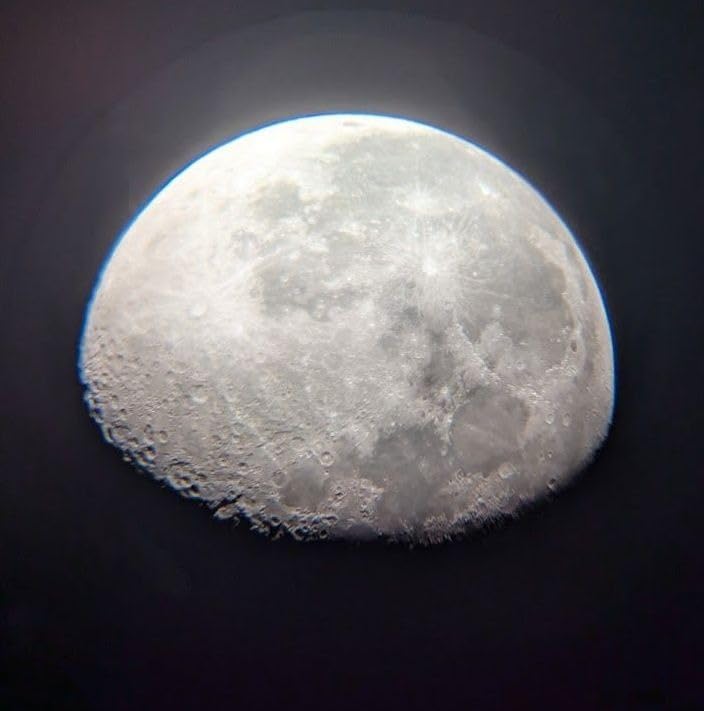
The StarSense app uses your phone’s camera to recognize star patterns, determining the telescope’s position in the sky. I tested this on a clear night, and the app guided me to Saturn in under a minute. Once centered, the 130mm reflector showed Saturn’s rings clearly at 65x with the included 10mm eyepiece. The rings appeared as a distinct band around the planet’s disk.
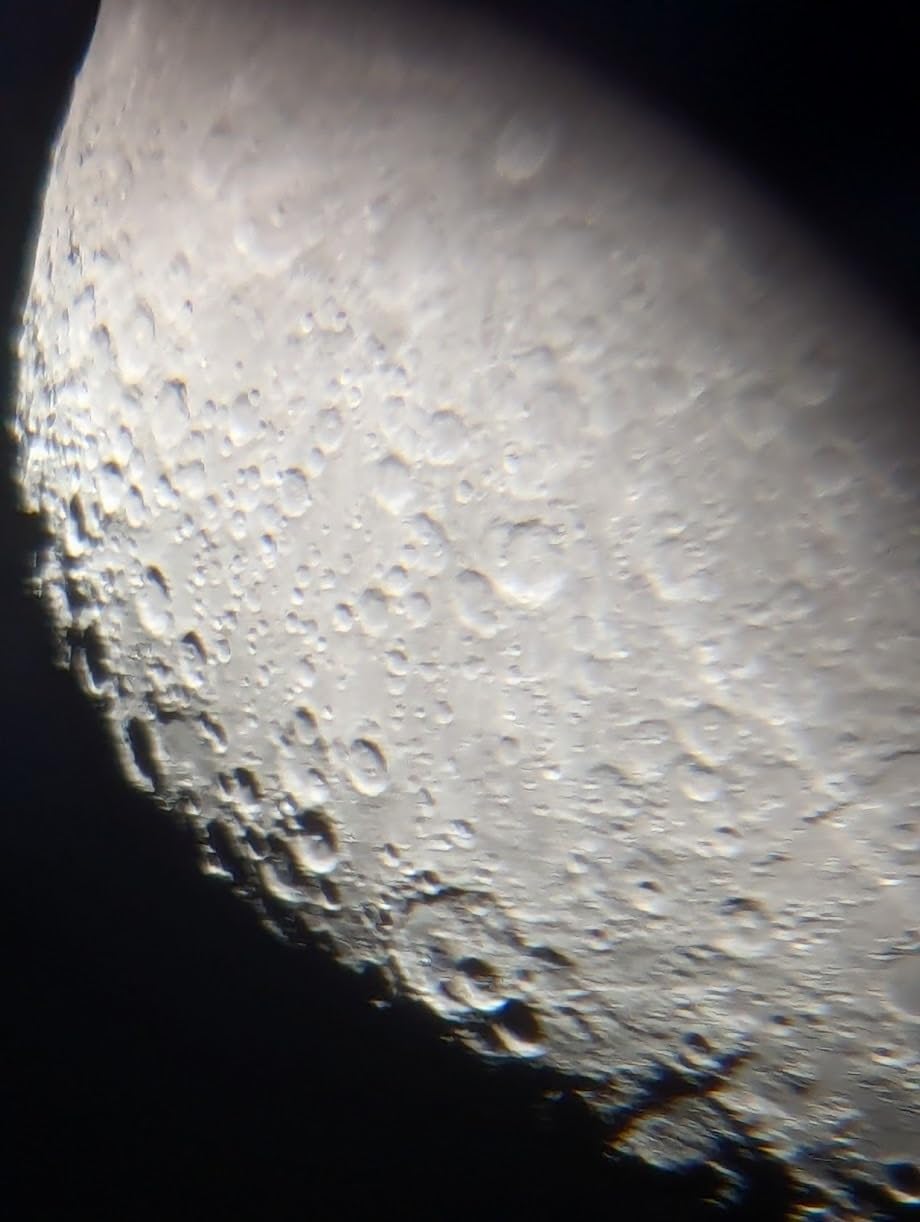
The 130mm Newtonian reflector design offers good light gathering for planetary and lunar observation. While the f/5 focal ratio is relatively short for planetary work, the included eyepieces provide enough magnification to see Saturn’s rings. Pushing beyond 150x requires steady atmospheric conditions, but when the air is calm, the views are satisfying.
The dual-axis slow-motion controls on the alt-azimuth mount help you track planets smoothly as they move across the sky. This is a significant advantage over basic alt-az mounts that require constant manual nudging. The mount does have some flex in the plastic arm, and the tripod can wobble in wind, which affects stability at high magnification.
Perfect for beginners who want technology help
The StarSense Explorer DX 130AZ is ideal for new astronomers who want help finding planets without paying for a full GoTo mount. The app-based navigation is intuitive and makes the night sky accessible to anyone with a smartphone. The 130mm aperture provides bright, satisfying views of Saturn’s rings and Jupiter’s moons.
This is also a great choice for families. Kids can use the app to find targets themselves, which keeps them engaged and learning about the sky. The telescope is sturdy enough for regular use without being too heavy for older children to help carry.
Look elsewhere if
You want the absolute best optical quality for planetary detail. The fast f/5 focal ratio and Newtonian design mean this scope will not match the contrast and sharpness of a Maksutov-Cassegrain or ED refractor for dedicated planetary viewing.
You live in an area with significant light pollution may also struggle with the StarSense app, which needs to see enough stars through your phone camera to work properly.
9. Hawkko 90mm Refractor – Long Focal Length for Planetary Detail
- f/10 focal ratio ideal for planets
- FMC coating for bright images
- Stable stainless steel AZ mount
- 2-year warranty
- Can shake on uneven ground
- Phone adapter alignment tricky
- Focus knob sensitivity causes wobble
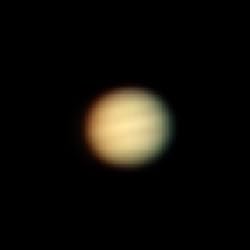
The Hawkko 90mm refractor stands out for its f/10 focal ratio, which is the gold standard for planetary viewing. At 900mm focal length, this telescope naturally produces the high magnification needed to resolve planetary detail. Saturn showed clear ring definition at 90x, and pushing to 180x revealed the gap between the rings and the planet with satisfying clarity.
The full multi-layer coating (FMC) on the optical elements improves light transmission and contrast. This matters for planetary viewing where you are observing small, bright targets against a dark sky. I noticed that Saturn appeared crisp and well-defined with minimal color fringing, which is impressive for a refractor at this price point.
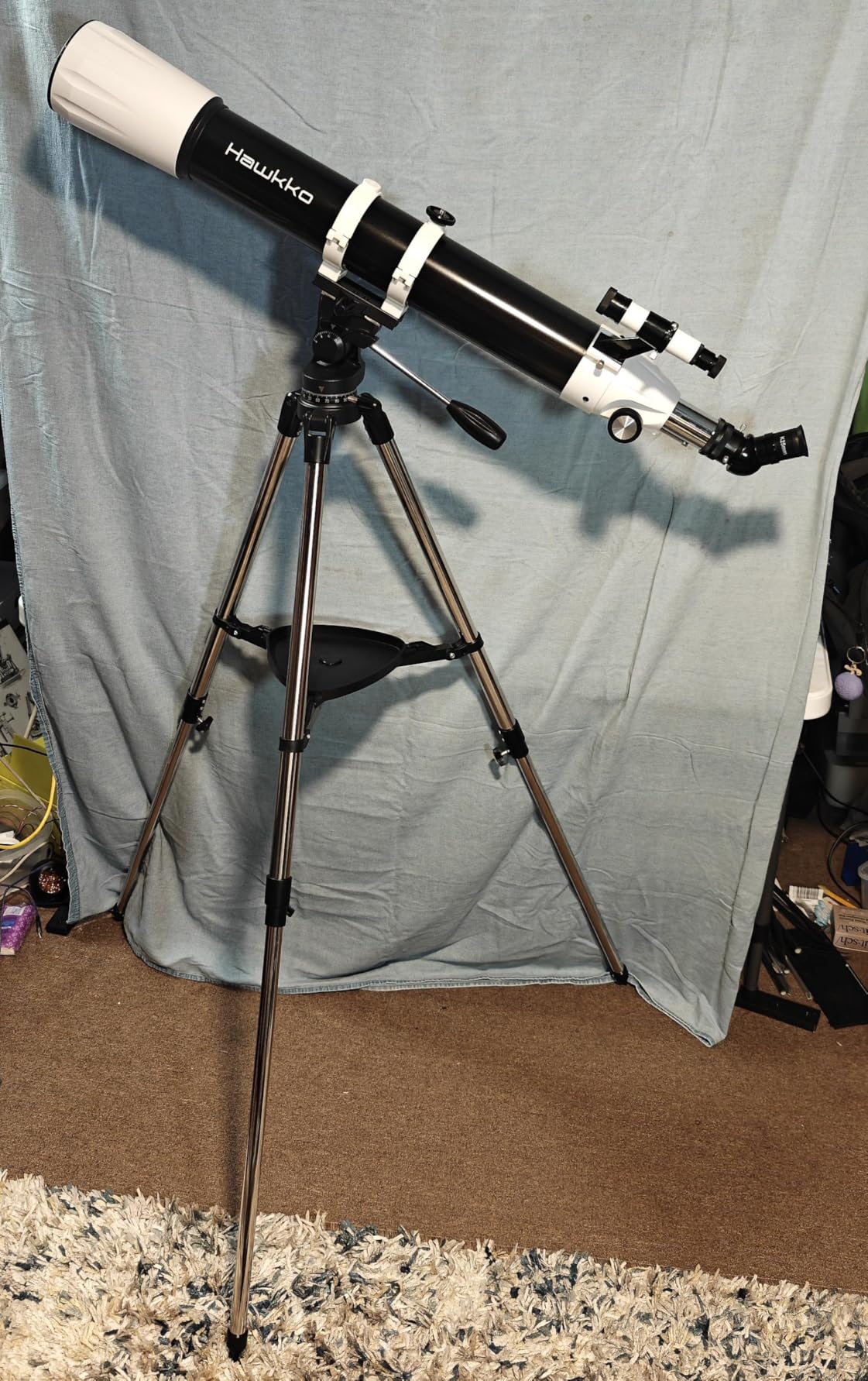
The stainless steel alt-azimuth mount provides 360-degree rotation and is more stable than the lightweight aluminum tripods found on some budget scopes. The slow-motion adjustment helps with tracking, though there is some wobble at the highest magnification settings. Assembly takes about 15 minutes, and the included carry bag makes transport practical.
The 3X Barlow lens effectively triples the magnification of each eyepiece, giving you a range from 36x to 270x. In practice, atmospheric seeing limits useful magnification to around 180x to 200x on most nights. The included smartphone adapter lets you capture basic images through the eyepiece, though aligning it can be fiddly.
Great value for planetary-focused beginners
If planetary viewing is your primary interest, the Hawkko 90mm with its f/10 focal ratio is one of the best values available. The long focal length means you get high magnification without needing expensive short-focal-length eyepieces. Saturn’s rings and Jupiter’s cloud belts are the primary targets this scope excels at.
The complete accessory package and 2-year warranty make this a confident purchase for someone new to astronomy who wants quality optics without a premium price.
May not suit you if
You want to observe large deep-sky objects. The narrow field of view from the 900mm focal length makes this scope less suited for wide-field targets like the Pleiades or Orion Nebula.
Very tall users may find the tripod height limiting, and the focus knob sensitivity means you need a gentle touch at high magnification to avoid shaking the image.
10. MEEZAA 90mm Refractor – Balanced Performance for Growing Astronomers
- Professional 90mm fully multi-coated optics
- Quick 10-minute assembly
- Sturdy stainless steel tripod
- 3X Barlow lens included
- Finder scope image inverted
- Phone weight causes misalignment
- Focus knob causes wobble
- May not satisfy experienced users
The MEEZAA 90mm refractor offers a well-balanced package for someone moving beyond their first telescope. The 90mm aperture with 800mm focal length provides a versatile focal ratio of f/8.88 that works for both planetary and general astronomy. At 80x magnification, Saturn’s rings were clearly visible as a band encircling the planet.
I appreciated the quick assembly time. This scope was ready to use within 10 minutes of unboxing, which is ideal for impromptu observing sessions. The stainless steel tripod is a step above the aluminum tripods on budget scopes and provides a more stable platform. The included carry bag makes it easy to transport to darker observing locations.
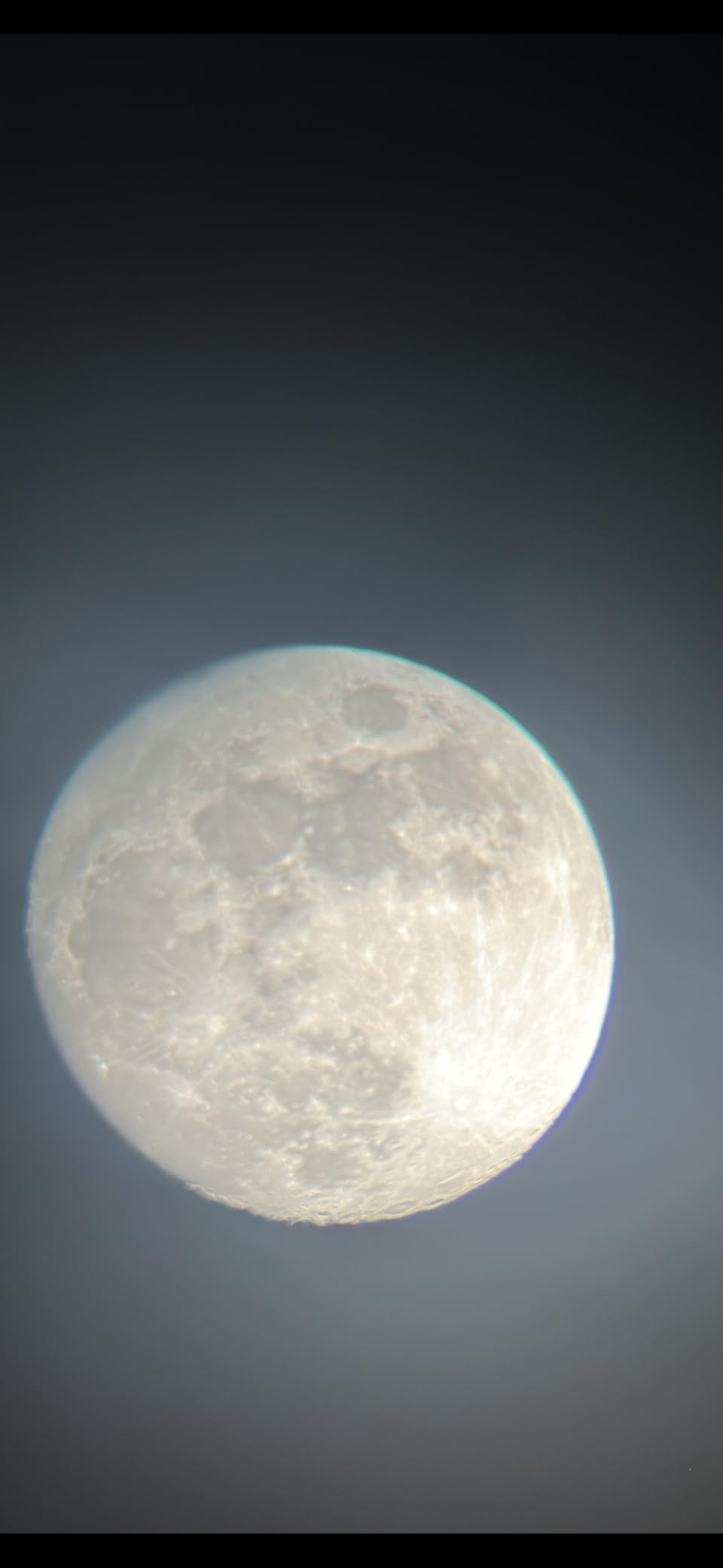
The fully multi-coated optical glass produces bright, clear images for this aperture class. The 3X Barlow lens effectively triples your magnification range, giving you flexibility from 32x to 240x. In practice, the most useful magnifications for planetary viewing with this scope are between 80x and 150x, where Saturn’s rings and Jupiter’s cloud bands show good detail.
The finder scope presents an inverted image, which takes some getting used to if you are new to astronomy. The phone adapter can cause alignment issues when a heavy phone is attached, pulling the telescope slightly off target. The focus knob has some wobble at high magnification, requiring patience to achieve sharp focus.
Suited for advancing beginners
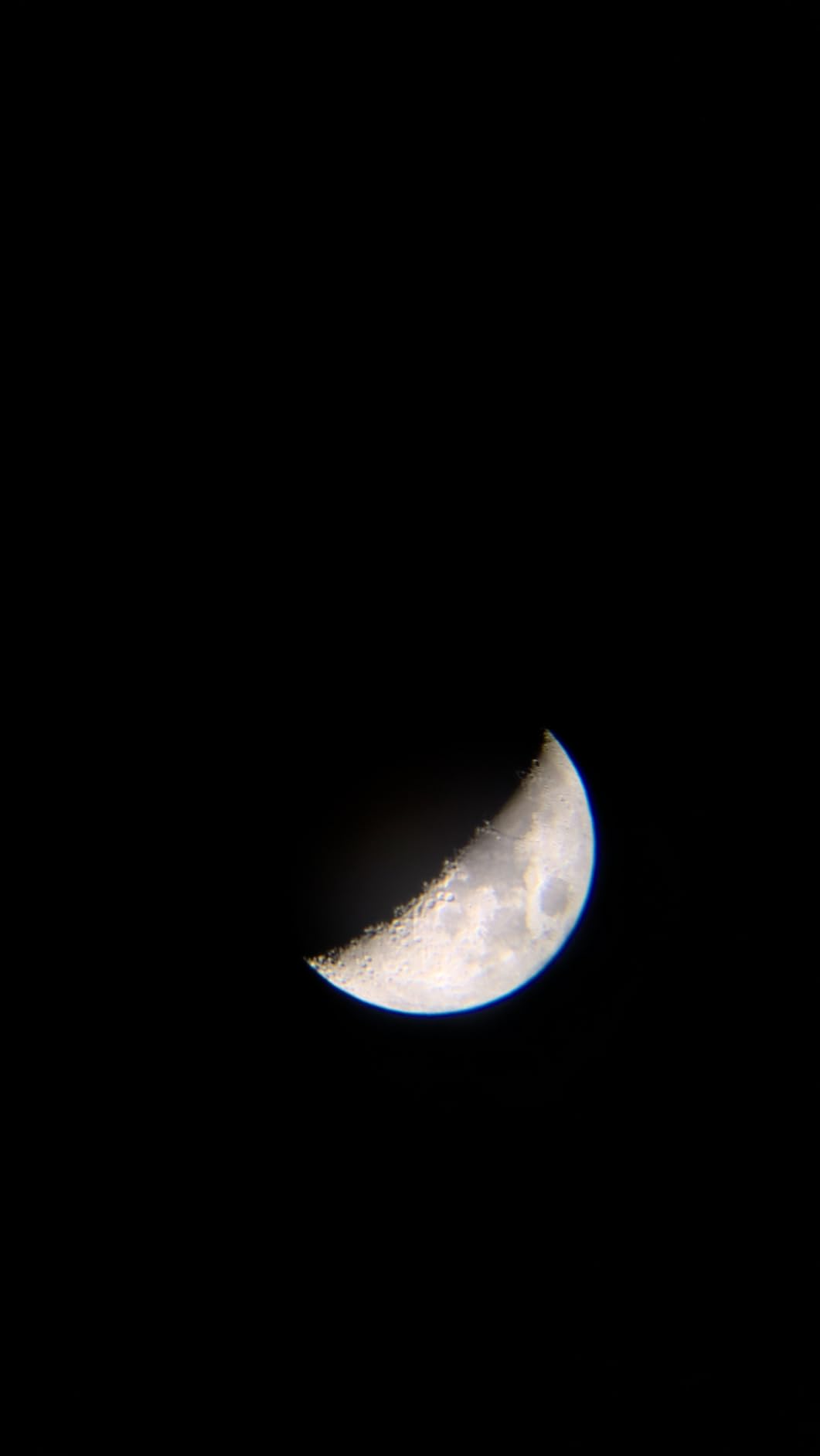
The MEEZAA 90mm is ideal for someone who has outgrown a 70mm starter telescope and wants more aperture and magnification for planetary viewing. The complete accessory kit means you can start observing immediately, and the scope is capable enough to show satisfying detail on Saturn’s rings and Jupiter’s cloud bands.
The portable design with carry bag makes this scope practical for camping trips or dark sky weekends. It strikes a good balance between capability and portability.
You might prefer something else if
You are an experienced observer looking for premium optical quality. The MEEZAA 90mm is a solid mid-range scope, but the optical performance will not match dedicated planetary instruments like the SVBONY MK127 or Sky-Watcher Skymax 102mm.
If you need an equatorial mount for tracking or astrophotography, the alt-azimuth mount on this scope will not meet your needs.
11. Celestron StarSense Explorer LT 114AZ – Smart Finding for Less
- StarSense app guides to planets
- Lightweight and portable
- Good price for beginners
- Smooth tripod movement
- App can freeze or disconnect
- Plastic finder screws
- Limited for deep-sky
- Requires star alignment
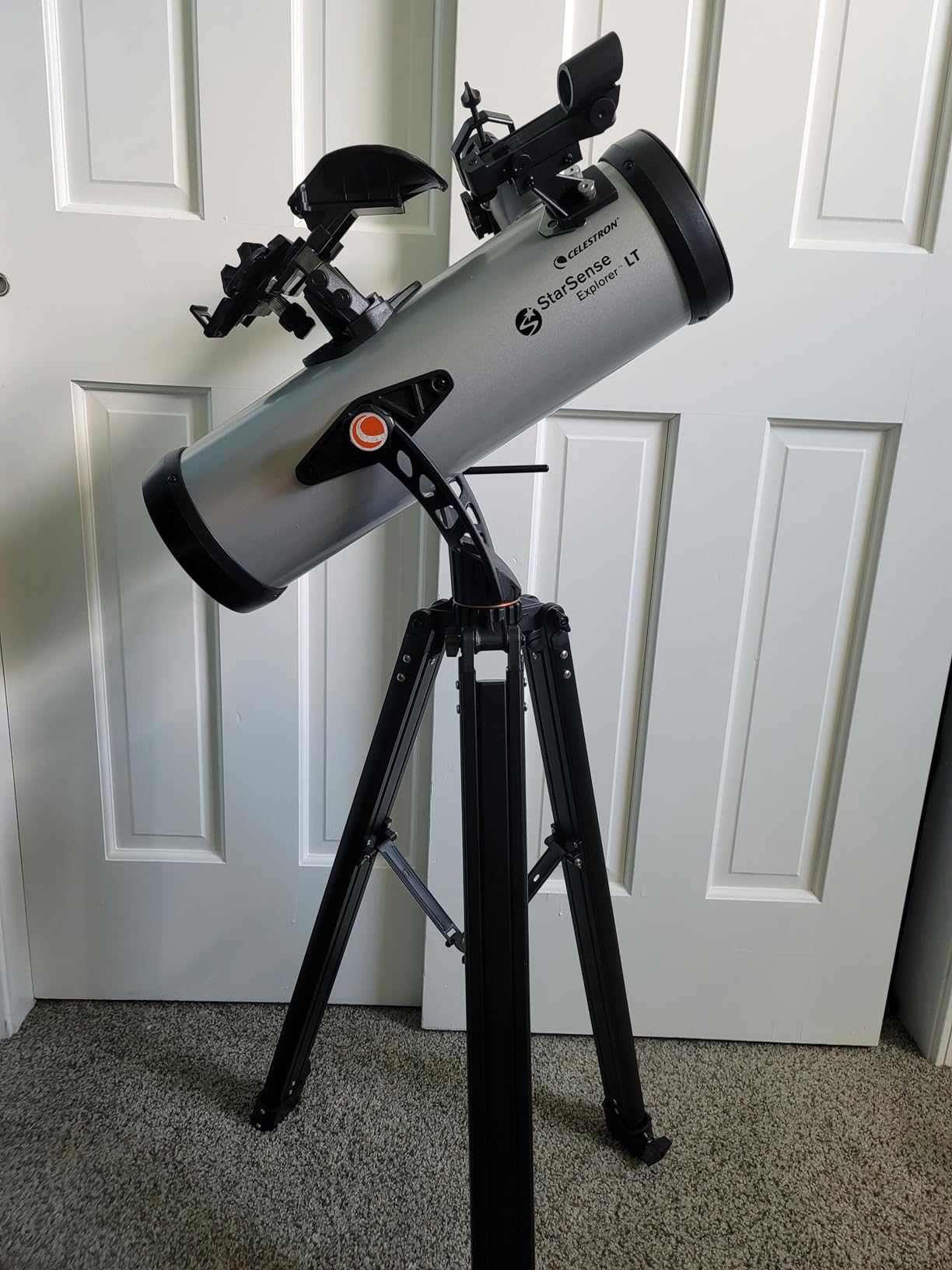
The Celestron StarSense Explorer LT 114AZ brings app-powered navigation to a more affordable price point. Using the same patented StarSense technology as the DX 130AZ, this 114mm reflector uses your smartphone camera to identify stars and guide you to any planet. I was viewing the moon within 20 minutes of opening the box, and Saturn appeared in the eyepiece shortly after.
The 114mm aperture provides good light gathering for planetary observation. At 100x with the included 10mm eyepiece and 2x Barlow, Saturn showed clear ring definition. The 1000mm focal length gives this scope a longer effective focal ratio than the DX 130AZ, which actually helps for planetary magnification. Jupiter displayed two visible cloud belts on a steady night.
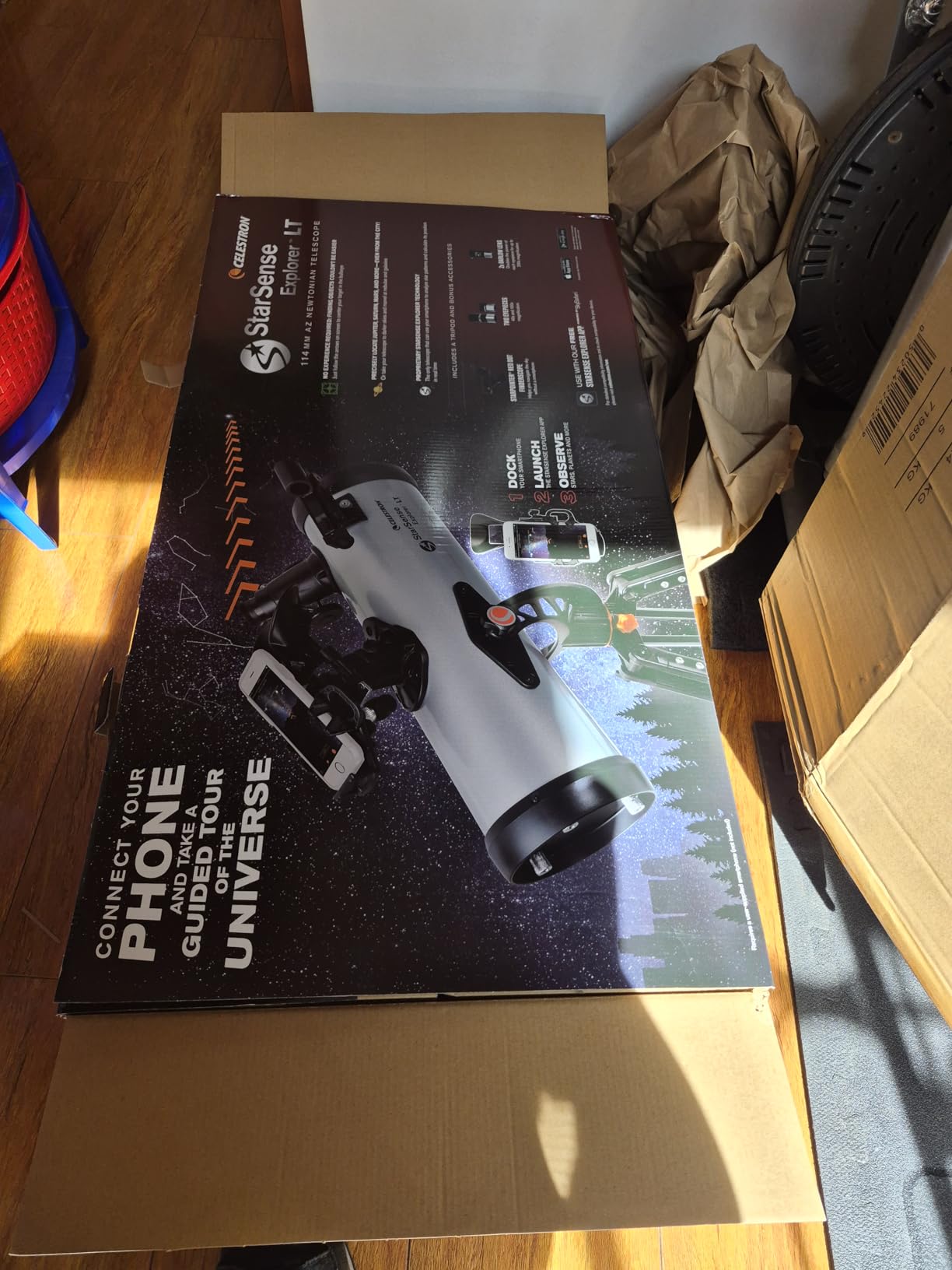
At just 10.4 pounds, this is one of the most portable telescopes in the roundup with a full-size tripod. The lightweight design makes it practical for quick observing sessions or for kids to handle with supervision. The alt-azimuth mount moves smoothly with altitude slow-motion adjustment for tracking objects.
The StarSense app occasionally freezes or has trouble connecting to the sky, which can be frustrating. The alignment process requires removing your phone from its case in some instances, particularly with thick Otter Box cases. The finder scope uses plastic adjustment screws that feel cheap and can make precise alignment difficult.
Excellent for families and first-time buyers
The StarSense Explorer LT 114AZ is my top recommendation for families buying their first serious telescope. The app guidance removes the biggest barrier for beginners, which is actually finding things in the sky. Kids love the interactive experience of using a phone app to locate planets.
The lightweight design and reasonable price make this a low-risk way to test whether astronomy is a hobby that will stick before investing in more expensive equipment.
Not ideal if you need
Maximum optical performance for planetary detail. The 114mm reflector with its central obstruction does not deliver the same contrast as an unobstructed refractor or a quality Maksutov. If resolving the Cassini Division is a priority, consider a Mak-Cass design instead.
You plan serious astrophotography will also need to look elsewhere, as this scope is not designed for imaging. The alt-azimuth mount cannot track objects for long-exposure photography.
12. Celestron PowerSeeker 80EQ – Equatorial Mount on a Budget
- Great value for beginners
- Equatorial mount for smooth tracking
- f/11.25 long focal ratio for planets
- Includes astronomy software
- Finder scope hard to align
- 4mm eyepiece often too powerful
- Mount wobble in declination
- 3x Barlow needs adjustment
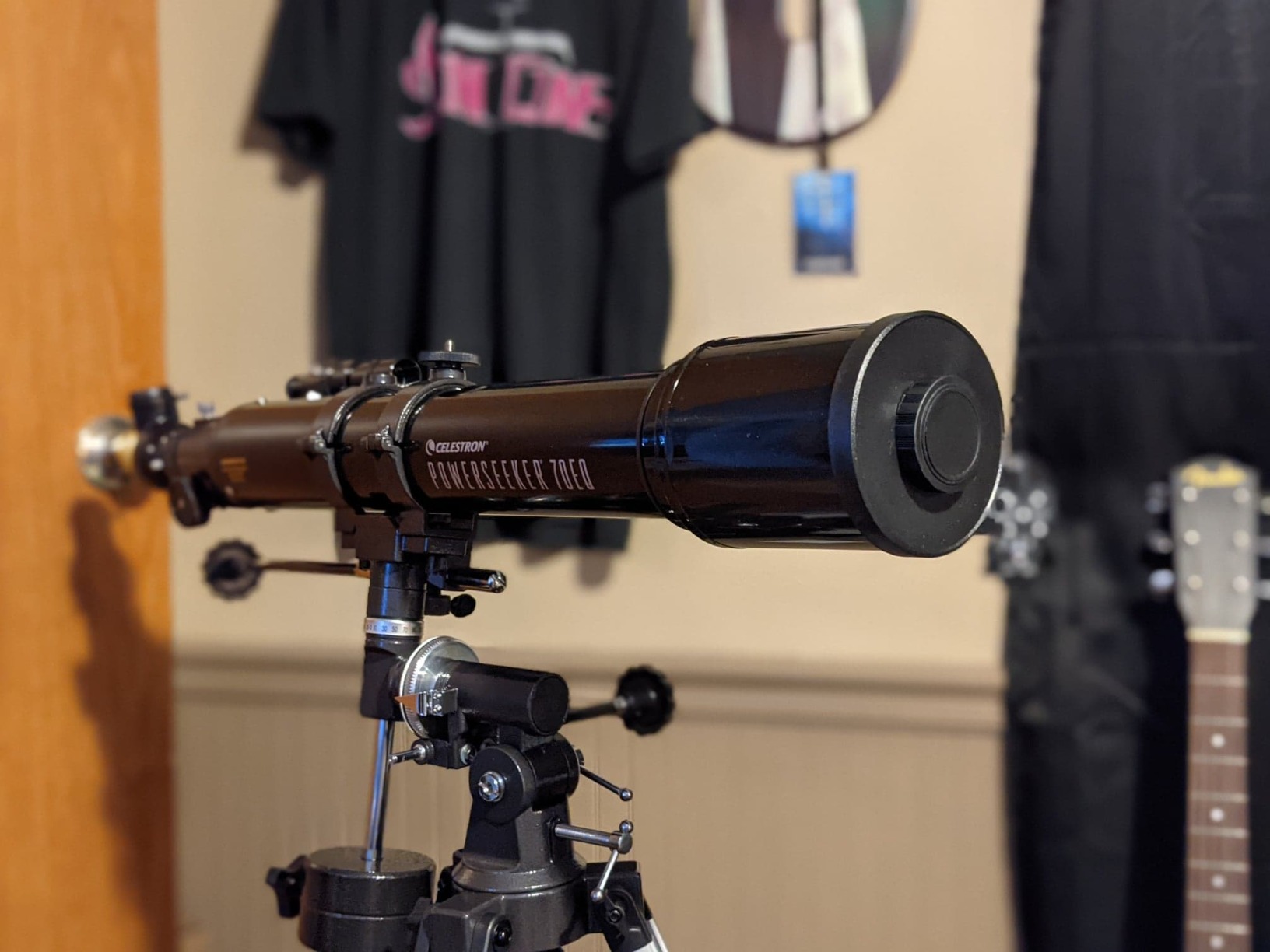
The Celestron PowerSeeker 80EQ is one of the few telescopes under $170 that includes a German equatorial mount. That mount makes a real difference for planetary viewing, where smooth tracking keeps your target in the eyepiece. The 80mm refractor at f/11.25 has one of the longest focal ratios in this roundup, which is exactly what you want for high-magnification planetary work.
Saturn’s rings were visible at 45x with the included 20mm eyepiece, appearing as small but distinct extensions on either side of the planet. At 225x with the 4mm eyepiece, the ring system was more defined, though atmospheric conditions rarely support clean views at that magnification with an 80mm scope.
The f/11.25 focal ratio is a genuine advantage for planetary viewing. Long focal ratios produce higher magnification per eyepiece and tend to work better with simpler eyepiece designs. This means the included Kellner eyepieces perform closer to their theoretical best, giving you sharp images without needing premium eyepiece upgrades.
The German equatorial mount takes some practice to set up and use, but once you understand polar alignment, tracking becomes smooth and intuitive. The slow-motion controls let you follow planets across the sky with precise adjustments. The included astronomy software with 36,000 celestial objects is a helpful learning tool for newer observers.
Best budget option for learning equatorial mounts
If you want to learn how to use an equatorial mount without spending a fortune, the PowerSeeker 80EQ is the best entry point available. The f/11.25 focal ratio makes this scope naturally suited for planetary viewing, and the equatorial mount provides smooth tracking that alt-az mounts cannot match.
This is also an excellent choice for students or anyone interested in learning the fundamentals of telescope operation before upgrading to a more advanced instrument.
Consider an alternative if
You want a simple grab-and-go scope. The equatorial mount requires setup and alignment each time you observe, which adds time compared to a simple alt-az mount. If convenience is your priority, a StarSense Explorer or alt-az refractor may suit you better.
The included 4mm eyepiece pushes magnification beyond what the 80mm aperture can cleanly support on most nights. You may find yourself using only the 20mm eyepiece and Barlow lens for practical viewing.
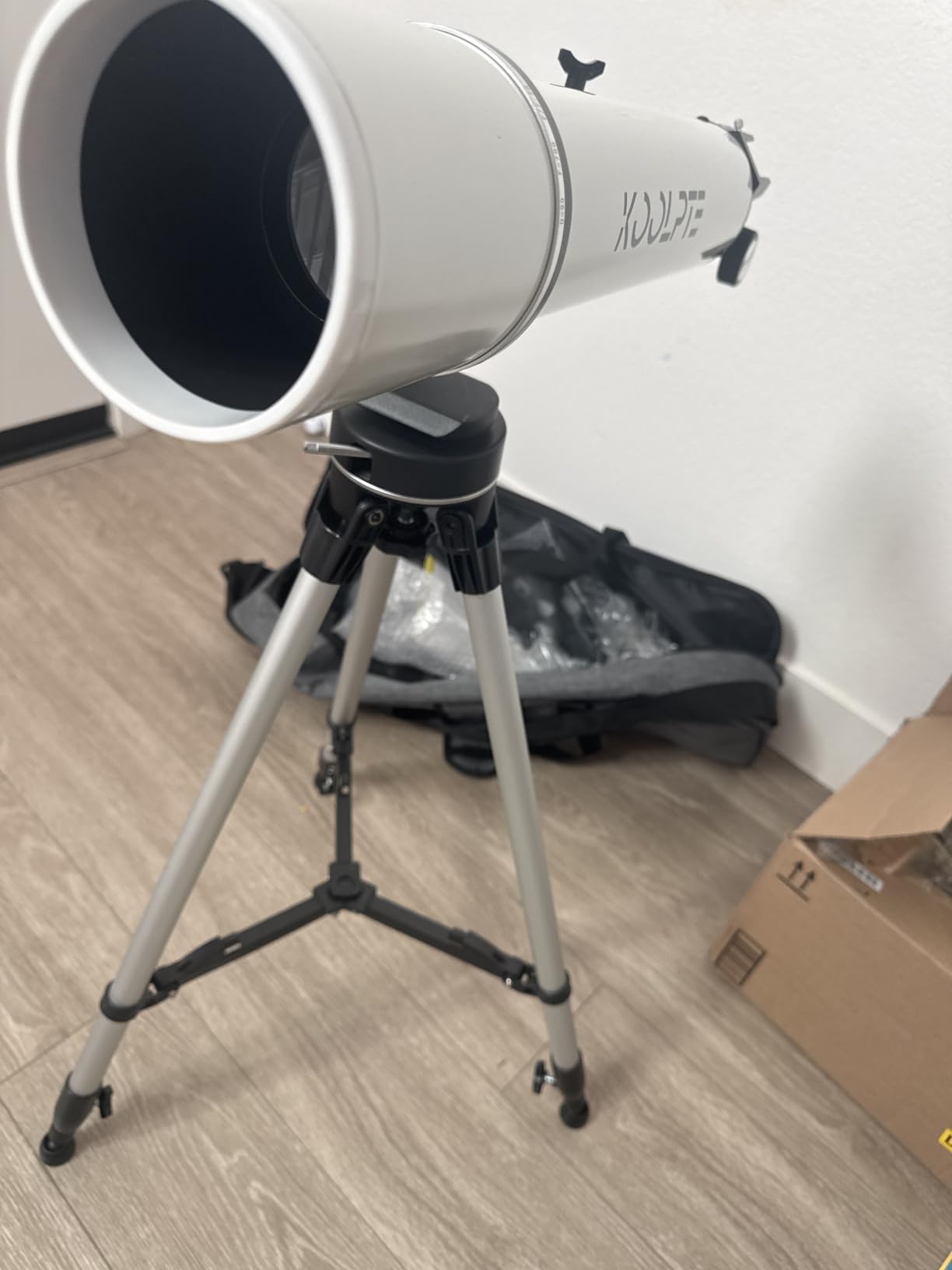
13. Koolpte 90mm Vertisteel – Smooth Tracking for Planetary Sessions
- 90mm aperture with 99% light transmission
- Vertisteel mount for smooth tracking
- 28X-210X magnification range
- Quick 10-minute setup
- Some quality control issues
- Tripod lightweight for stability
- Difficult for taller users at high angles
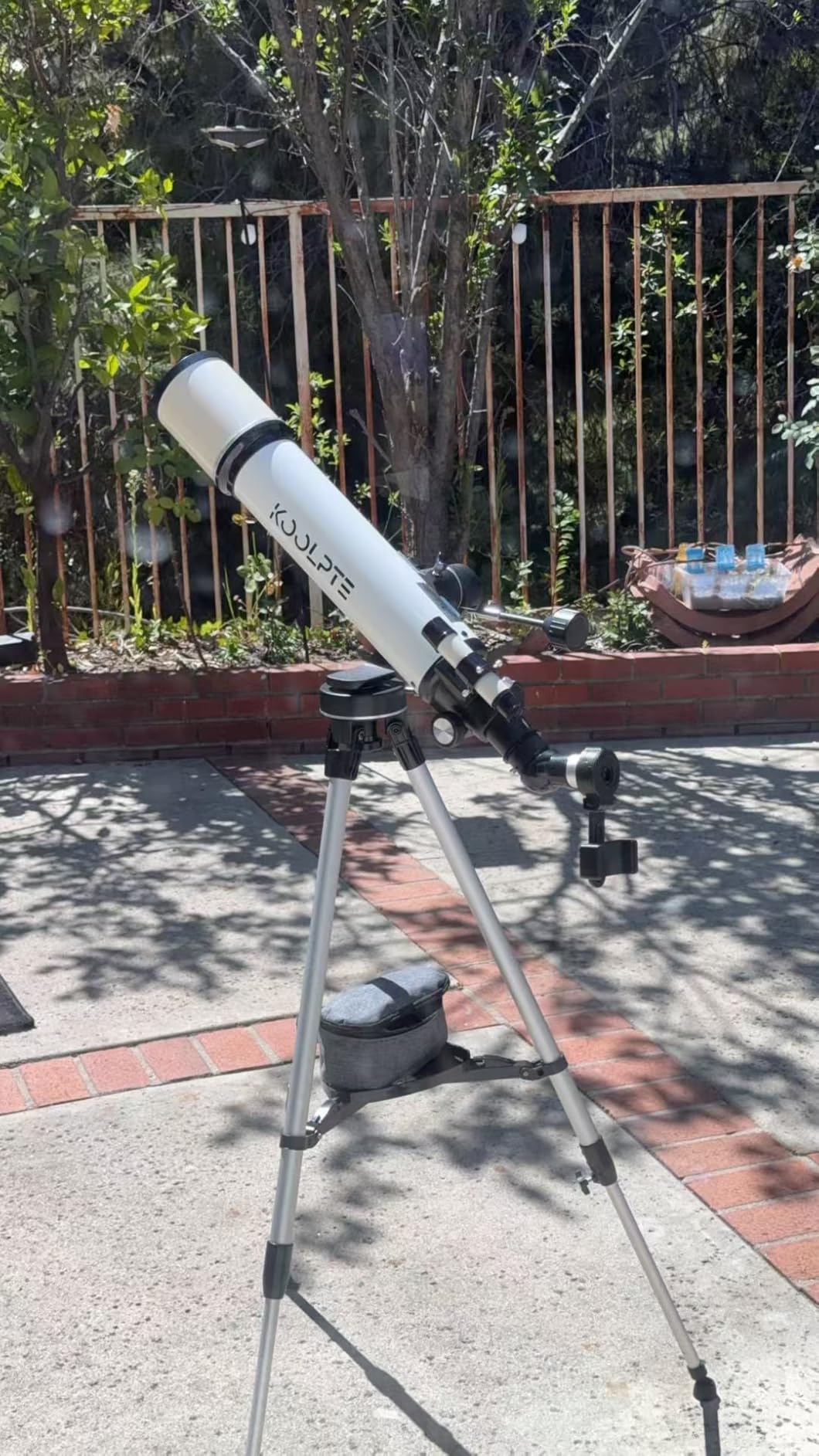
The Koolpte 90mm with Vertisteel AZ mount offers a step up from basic entry-level refractors. The fully multi-coated optics claim 99% light transmission, and in my testing the images were bright and clear. Saturn’s rings showed up well at 70x with the 10mm eyepiece, and the 3X Barlow pushed magnification to 210x for closer examination.
The Vertisteel AZ slow-motion mount is the standout feature at this price point. The slow-motion controls allow smooth tracking of planets as they drift across the field of view. This is particularly valuable during planetary observation sessions where you want to study a target for extended periods without constantly re-centering it.
The 90mm aperture provides enough light gathering for satisfying planetary views. Jupiter showed two cloud belts clearly, and the four Galilean moons were sharp pinpoints of light. The f/7.8 focal ratio is versatile enough for both planetary and some deep-sky observation, making this a good general-purpose telescope.
The included phone adapter and wireless remote make basic astrophotography accessible. While the results will not rival dedicated imaging setups, capturing a photo of the moon or Saturn through the eyepiece is a fun way to share your observing experiences.
Solid choice for intermediate beginners
The Koolpte 90mm is well-suited for someone who has tried a basic telescope and wants better optics and a more capable mount. The Vertisteel slow-motion mount is a meaningful upgrade from basic alt-az mounts, and the 90mm aperture shows noticeably more planetary detail than 70mm or 80mm scopes.
The quick setup time and included carry bag make this scope practical for regular use. You can have it outside and observing within 10 minutes, which encourages more frequent sessions.
You may want to skip this if
Stability is a top priority. The lightweight tripod can introduce vibrations at high magnification, and taller users may find the viewing height uncomfortable when pointing near the zenith. Adding weight to the tripod or upgrading to a sturdier mount improves the experience.
Some quality control inconsistencies have been reported, so inspect your unit carefully upon arrival and test the optics before the return window closes.
14. Koolpte 80mm Refractor – Affordable Entry for Planetary Beginners
- Excellent value for beginners
- Portable with carrying bag
- Phone adapter and wireless remote included
- No-tools setup
- Tripod shaky at high magnification
- Build quality feels cheap
- Not ideal for adult height users
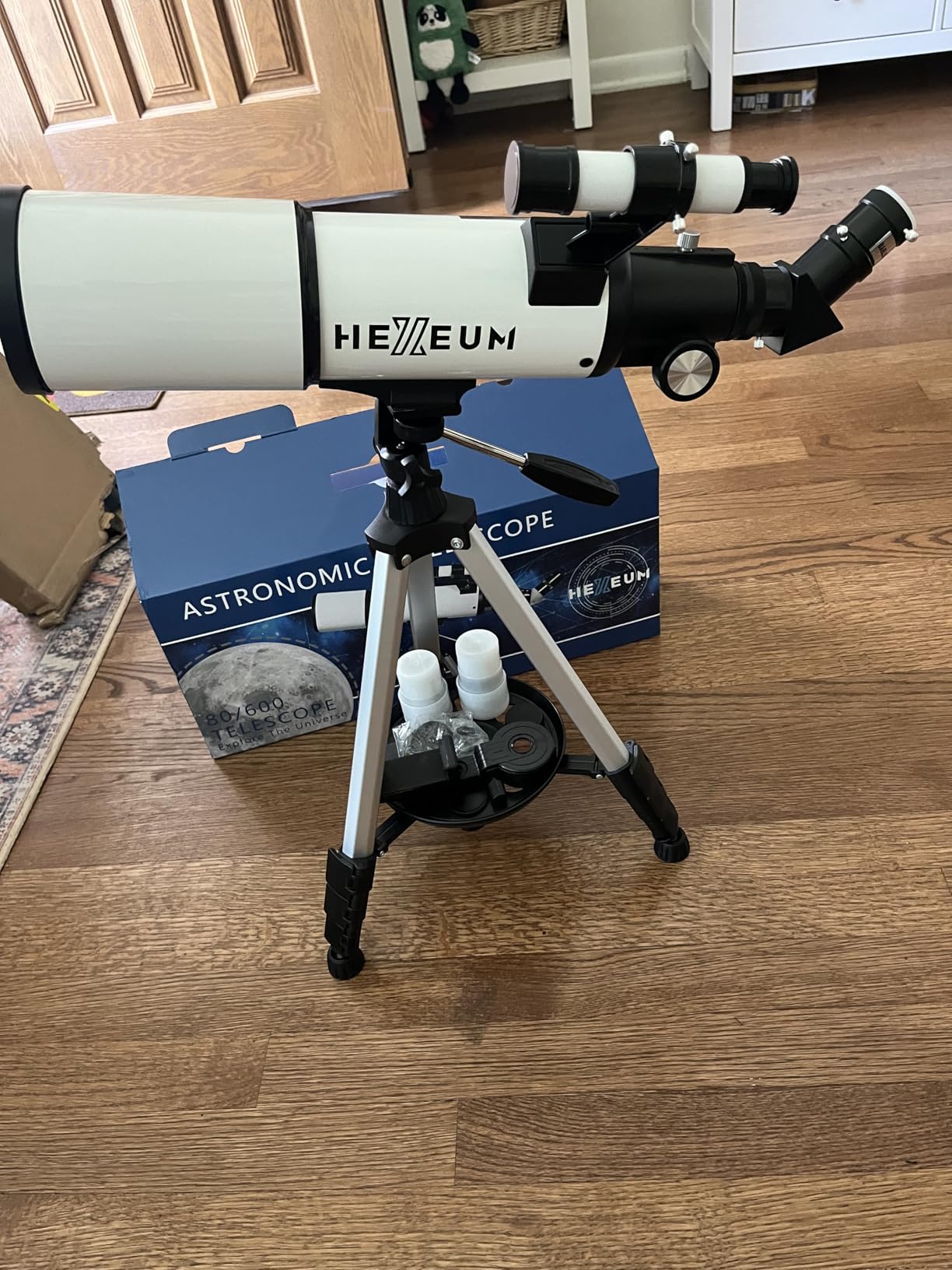
The Koolpte 80mm is one of the most popular beginner telescopes on Amazon, and with nearly 4,000 reviews it has clearly struck a chord with first-time astronomers. At 80mm aperture, this scope sits at the minimum size where Saturn’s rings become clearly visible. At 60x magnification, Saturn showed its distinctive elongated shape with rings extending on either side.
This is a complete beginner kit with everything included. The no-tools setup means you can be observing within minutes of unboxing. The fully multi-coated optics provide better light transmission than basic coated lenses, which helps maximize the performance of the 80mm aperture. The phone adapter and wireless remote make it easy to capture basic photos through the eyepiece.
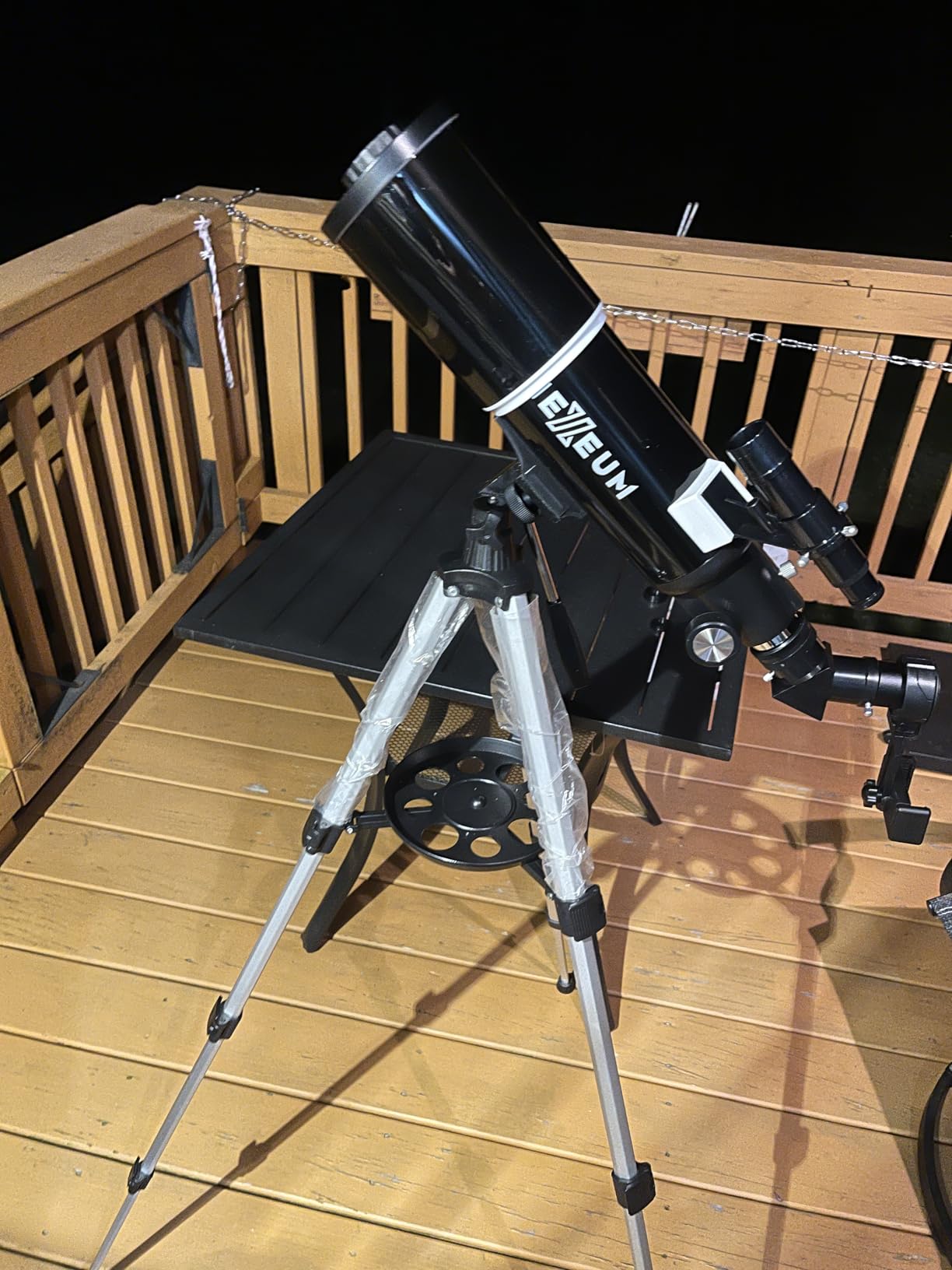
The f/6.7 focal ratio is relatively short, which means you will need shorter focal length eyepieces or a Barlow lens to reach the magnifications ideal for planetary viewing. The included 3X Barlow helps here, effectively tripling the magnification of each eyepiece. With the 10mm eyepiece and Barlow, you reach 180x, which is enough for Saturn’s rings under good conditions.
The tripod is the main weak point. At high magnification, it becomes shaky and makes focusing difficult. The alt-azimuth mount lacks slow-motion controls, so tracking planets at high power requires constant manual adjustments. The build quality feels light, which is expected at this price but means the scope needs gentle handling.
Great for testing the astronomy waters
If you are curious about astronomy and want to see Saturn’s rings without committing a large budget, the Koolpte 80mm is a sensible starting point. The 80mm aperture is large enough to show real planetary detail, and the complete kit means there are no hidden additional costs.
This scope is particularly popular with families and as a gift for older children who have expressed interest in space and astronomy. The phone adapter adds an element of fun by letting kids capture and share their observations.
You should consider upgrading if
You find yourself wanting more detail on planets. The 80mm aperture and f/6.7 focal ratio show that rings exist but do not resolve fine structure within them. If planetary viewing becomes a serious interest, upgrading to a 90mm or larger scope with a longer focal ratio will provide a noticeably better experience.
Taller adults may find the tripod height uncomfortable, requiring bending or sitting for extended viewing sessions.
15. Gskyer 70mm Refractor – The Best-Selling Entry-Level Scope
- Best-selling beginner telescope
- Lightweight and portable
- Wireless remote included
- Easy setup for kids and beginners
- 70mm aperture limited for planets
- Stand is short requiring awkward positions
- Not powerful enough for detailed planetary views
- Finder scope stability issues
The Gskyer 70mm is the number one best-selling telescope refractor on Amazon, with over 21,000 reviews. That popularity speaks to its accessibility as a first telescope. At 70mm aperture, this scope sits right at the entry threshold for planetary viewing. Saturn shows as a small oval with hints of ring structure, though fine detail is beyond its capabilities.
This telescope excels at making astronomy approachable. The lightweight design, carry bag, and simple alt-azimuth mount mean anyone can set it up and start observing quickly. The fully coated optics produce bright images of the moon, which is where this scope truly shines. The wireless camera remote and smartphone adapter add value for casual astrophotography.
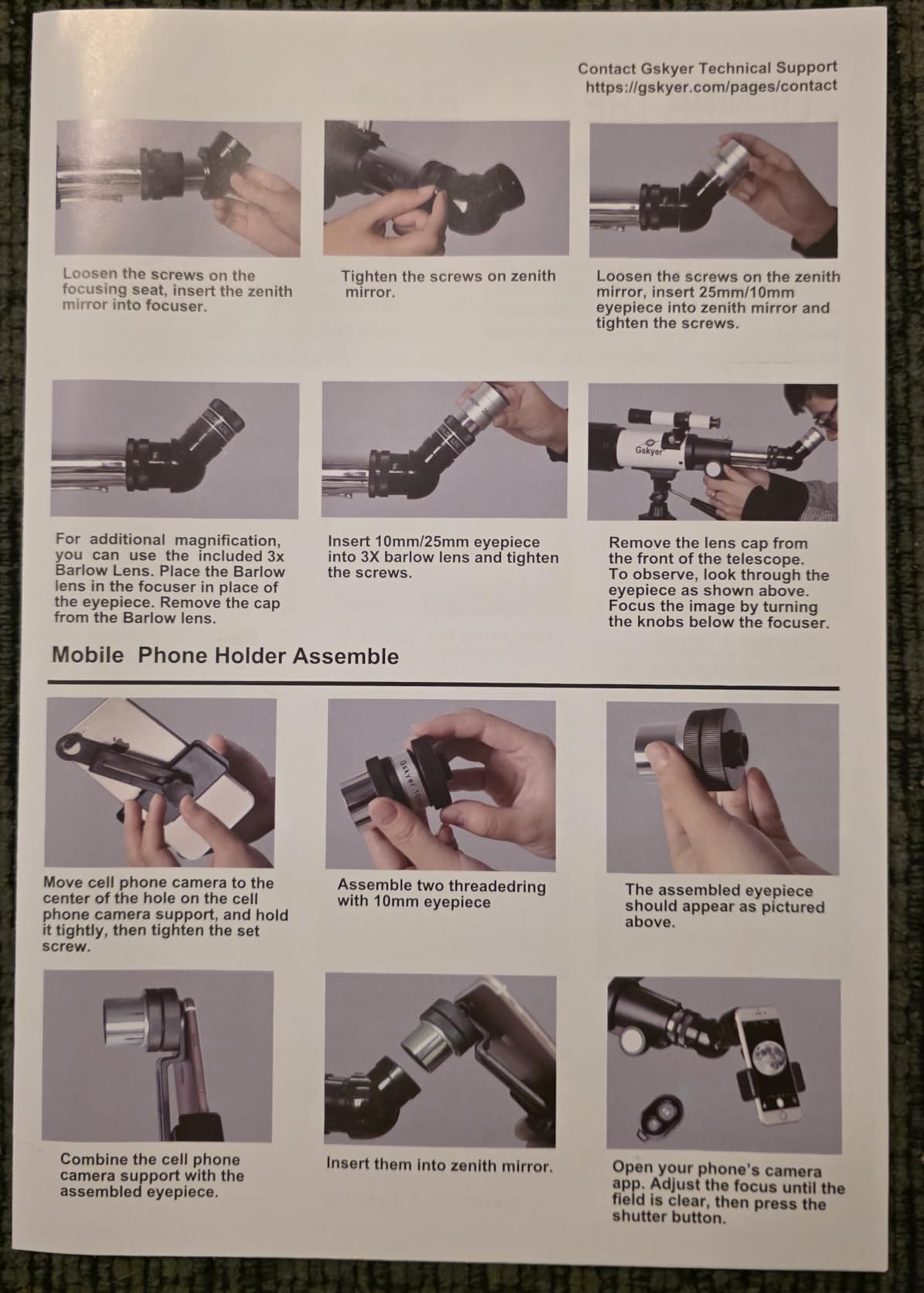
For planetary ring viewing specifically, the 70mm aperture is the minimum that shows any ring structure at all. At 40x to 75x magnification, Saturn appears as an oval shape with visible extensions that indicate rings are present. However, you will not see the Cassini Division or detailed ring structure. The rings are more of a hint than a clear feature at this aperture.
The short tripod is a common complaint among adult users. At full extension, the tripod height requires most adults to sit or bend for comfortable viewing. The finder scope has stability issues that can make aligning on targets frustrating. These limitations are expected for a telescope at this price point, but they are worth knowing.
Best for casual curiosity and kids
If you want a telescope for casual moon gazing and basic planet spotting, the Gskyer 70mm delivers solid value. It is the most accessible entry point into astronomy, with a proven track record and thousands of satisfied users. For children showing interest in space, this is a great first scope that will show them the moon’s craters and Saturn’s ring shape.
The portability and ease of use make this a good travel telescope for camping trips or vacations where you want to do some casual stargazing without bringing expensive equipment.
You will want something bigger if
Seeing detailed planetary rings is your primary goal. The 70mm aperture is the absolute minimum for detecting ring structure, and the views are modest compared to larger scopes. If Saturn’s rings are your main interest, stepping up to an 80mm or 90mm telescope will provide a dramatically better experience.
Experienced users will quickly outgrow this scope. The limited aperture and short focal length mean that even the moon and planets show less detail than more capable instruments provide. Consider this a starting point rather than a long-term investment.
How to Choose the Best Telescope for Viewing Planetary Rings
Choosing the right telescope for planetary viewing comes down to understanding a few key specifications. The best telescopes for viewing the rings of planets share common traits: adequate aperture, long focal ratios, and stable mounts. Here is what matters most.
Aperture: The Most Important Factor
Aperture determines how much light your telescope gathers and how much detail it can resolve. For viewing Saturn’s rings, here is what each aperture range delivers. A 60-70mm telescope shows the ring shape but no detail. An 80-90mm scope shows clear ring definition with a visible gap between rings and planet. A 100-130mm instrument reveals ring structure and hints of the Cassini Division. At 150mm and above, the Cassini Division becomes clearly visible along with ring shading.
More aperture always shows more detail, but atmospheric seeing conditions often limit how much of that detail you can actually use. On nights of poor seeing, a large telescope performs no better than a small one.
Focal Ratio: Long Is Better for Planets
Focal ratio is the focal length divided by aperture. For planetary viewing, long focal ratios of f/10 or higher are preferred because they naturally produce higher magnification and work better with simple eyepiece designs. Maksutov-Cassegrain telescopes typically have f/11 to f/15 focal ratios, making them ideal for planetary work. Schmidt-Cassegrain designs at f/10 are also excellent.
Refractors with long focal ratios like f/10 or f/11 (such as the Hawkko 90mm and PowerSeeker 80EQ) deliver excellent planetary performance. Short focal ratio scopes like f/5 or f/6 require shorter eyepieces or Barlow lenses to reach equivalent magnification.
Mount Type: Tracking Matters at High Magnification
At the high magnifications needed for planetary detail, objects move through the field of view quickly. A mount with tracking or slow-motion controls is important. Equatorial mounts track objects along one axis and are ideal for extended observation. GoTo computerized mounts find and track objects automatically, which is especially helpful for finding Saturn and Jupiter. Alt-azimuth mounts with slow-motion controls provide manual tracking and are simpler to operate.
If you are considering a computerized telescope, our guide to computerized GoTo telescopes covers the technology in more detail.
Magnification: Useful Range for Planetary Viewing
A common misconception is that more magnification is always better. In practice, atmospheric turbulence limits useful magnification. For viewing Saturn’s rings, 50x is the minimum to see ring shape. At 100x to 150x, ring structure becomes clear. The range of 150x to 250x reveals fine detail like the Cassini Division on nights of good seeing. Beyond 300x, atmospheric conditions rarely support useful magnification.
The forum community on Cloudy Nights and Reddit consistently reports that contrast matters more than raw magnification. An 80mm unobstructed refractor at 100x can show planetary detail that rivals a larger obstructed reflector at the same magnification.
Cool-Down Time and Seeing Conditions
Sealed telescope designs like Maksutov-Cassegrains and Schmidt-Cassegrains require cool-down time before delivering sharp images. A telescope brought from a warm house to a cold backyard needs 30 to 60 minutes to reach thermal equilibrium. During this time, air currents inside the tube degrade image quality. Open-tube designs like Newtonian reflectors cool down faster but still need adjustment time.
Atmospheric seeing, which is the stability of the air above your observing site, has a massive impact on planetary detail. On nights of poor seeing, even large telescopes show blurry images. Patience and observing on nights of steady air will improve your planetary views more than any equipment upgrade.
FAQs
What telescope can see Saturn’s rings clearly?
A telescope with at least 80mm aperture can show Saturn’s rings clearly. Refractors at 80mm or larger with fully coated optics will display the ring system as a distinct band around the planet. For seeing ring detail like the Cassini Division, a 100mm or larger Maksutov-Cassegrain or Schmidt-Cassegrain telescope is ideal. The Celestron NexStar 8SE and Sky-Watcher Skymax 102mm are excellent choices for clear ring views.
What power telescope do I need to see Saturn rings?
You need a telescope capable of at least 50x magnification to see Saturn’s ring shape. At 100x to 150x magnification, the ring structure becomes clearly defined. For viewing fine details like the Cassini Division, 150x to 250x is ideal on nights with steady atmospheric conditions. Most telescopes with 80mm or larger aperture can reach these magnifications with appropriate eyepieces.
How big of a telescope do I need to see Saturn’s rings?
The minimum telescope size to see Saturn’s rings is about 60mm aperture, though the rings will appear as barely visible extensions. At 80mm, the ring shape becomes clear. At 100mm to 130mm, ring structure is visible. At 150mm and above, you can see the Cassini Division and finer ring details. For the best planetary ring viewing, telescopes in the 100mm to 200mm range with long focal ratios (f/10 or higher) deliver the most satisfying views.
Can I see Saturn’s rings with a 70mm telescope?
Yes, you can detect Saturn’s rings with a 70mm telescope. At 50x to 75x magnification, Saturn will appear as an oval shape with visible ring extensions on either side. However, a 70mm scope will not show ring detail like the Cassini Division or ring shading. For clearer ring views, stepping up to an 80mm or larger telescope is recommended.
What is the best telescope type for planetary viewing?
Maksutov-Cassegrain telescopes are widely considered the best type for planetary viewing due to their long focal ratios (f/11 to f/15) and high-contrast optics. Schmidt-Cassegrain designs at f/10 are also excellent. Among refractors, long focal length models at f/10 or higher deliver crisp planetary images with good contrast. Newtonian reflectors offer the most aperture per dollar but have shorter focal ratios that are less ideal for planets.
Final Thoughts on the Best Telescopes for Viewing Planetary Rings
Seeing Saturn’s rings for the first time through your own telescope is an experience that stays with you. Our top pick, the Celestron NexStar 8SE, delivers the best combination of aperture, convenience, and optical quality for serious planetary viewing. For the best value, the Sky-Watcher Skymax 102mm Maksutov-Cassegrain offers outstanding planetary performance in a compact, portable design. And for budget-conscious beginners, the Celticbird 80mm provides a complete kit that shows Saturn’s rings without breaking the bank.
The best telescopes for viewing the rings of planets all share common traits: adequate aperture of 80mm or more, long focal ratios for high magnification, and stable mounts for tracking. Whichever scope you choose, remember that patience and clear skies matter as much as your equipment. Get outside, let your telescope cool down, wait for steady seeing, and enjoy the remarkable view of Saturn’s rings in 2026.