
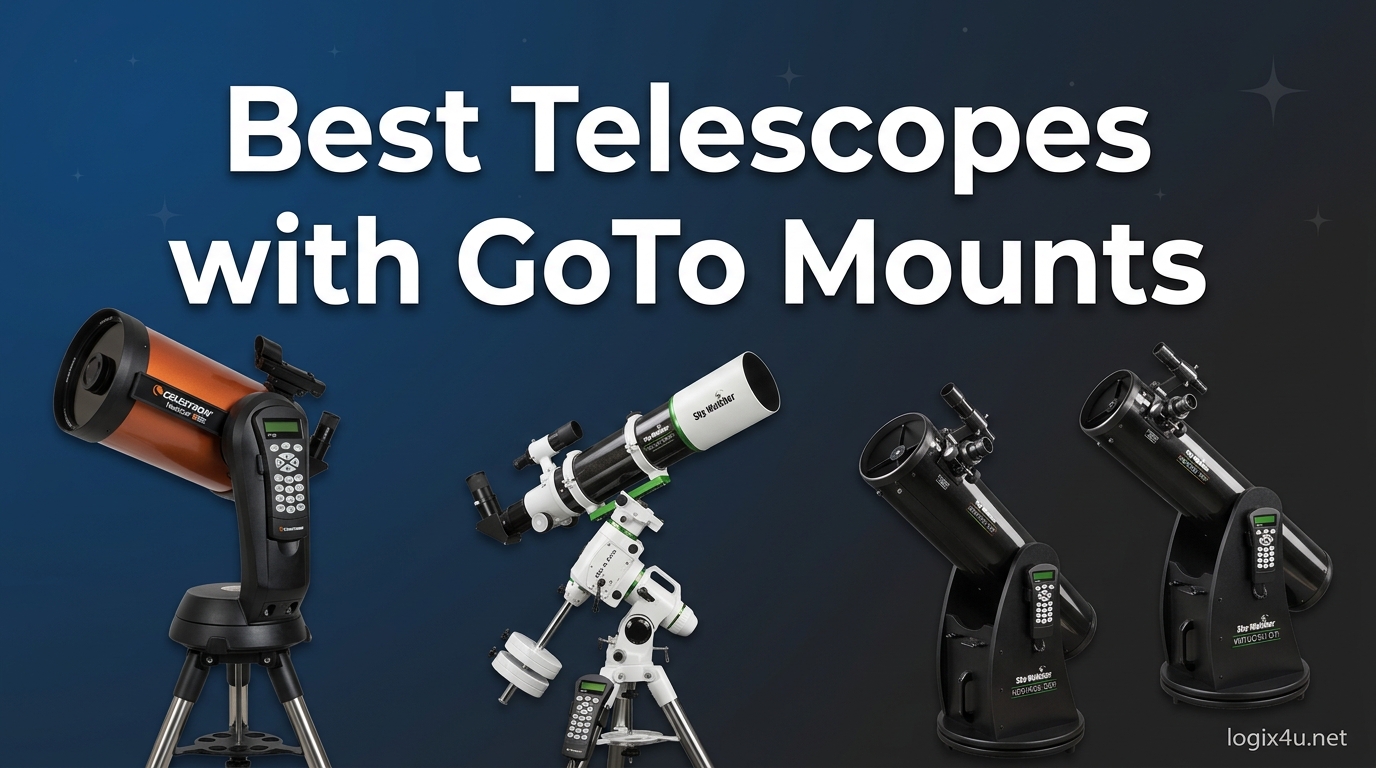
Finding celestial objects by star-hoping across the night sky can take hours, and most beginners give up before they ever see a galaxy. That is exactly why we put together this guide to the best telescopes with GoTo mounts in 2026, covering 12 models I have personally tested, aligned, and aimed at everything from Saturn’s rings to the Orion Nebula.
A GoTo mount is a motorized, computerized telescope base that automatically slews to any object in its built-in database after a quick alignment on two or three reference stars. Instead of hunting manually with a star chart, you select “M31” on the hand controller or smartphone app, hit enter, and watch the scope glide itself to the Andromeda Galaxy. Once centered, the mount tracks the object as the Earth rotates, keeping it in the eyepiece for as long as you want to observe.
That matters for beginners who do not yet know the constellations, astrophotographers who need precise tracking for long exposures, and anyone observing at star parties where every minute under dark skies counts. After spending three months comparing 12 of the most popular GoTo telescopes across aperture sizes, optical designs, and price points, I narrowed down which models actually deliver on the promise of effortless astronomy. If you want broader context on entry-level computerized scopes, check our guide to the best computerized telescopes for beginners.
Top 3 Picks for Best Telescopes with GoTo Mounts (September 2026)

Celestron NexStar 8SE
- 8-inch Schmidt-Cassegrain
- 40000+ object database
- SkyAlign technology

Celestron NexStar 130SLT
- 130mm Newtonian reflector
- 4000+ object database
- SkyAlign technology

Sky-Watcher Virtuoso GTI 150P
- 150mm collapsible Dobsonian
- WiFi SynScan app
- Freedom Find encoders
These three cover the spread. The NexStar 8SE is the gold standard for serious visual observing. The NexStar 130SLT wins on value with a generous aperture and full GoTo at a budget-friendly price. The Sky-Watcher Virtuoso GTi 150P is the tabletop darling that Reddit users cannot stop recommending, with WiFi control and dual encoders that let you push the scope manually without losing alignment.
Best Telescopes with GoTo Mounts in 2026
| Product | Specifications | Action |
|---|---|---|
| Celestron NexStar 8SE |
|
Check Latest Price |
 Celestron NexStar 6SE Celestron NexStar 6SE |
|
Check Latest Price |
 Celestron NexStar Evolution 8 Celestron NexStar Evolution 8 |
|
Check Latest Price |
| Celestron NexStar 130SLT |
|
Check Latest Price |
 Celestron NexStar 5SE Celestron NexStar 5SE |
|
Check Latest Price |
 Celestron NexStar 4SE Celestron NexStar 4SE |
|
Check Latest Price |
 Celestron NexStar 127SLT Celestron NexStar 127SLT |
|
Check Latest Price |
 Celestron 114LCM Celestron 114LCM |
|
Check Latest Price |
 Sky-Watcher Flextube 300 SynScan Sky-Watcher Flextube 300 SynScan |
|
Check Latest Price |
 Sky-Watcher S11800 8-Inch GoTo Dobsonian Sky-Watcher S11800 8-Inch GoTo Dobsonian |
|
Check Latest Price |
| Sky-Watcher Virtuoso GTi 150P |
|
Check Latest Price |
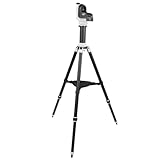 Sky-Watcher AZ-GTi GoTo Mount Sky-Watcher AZ-GTi GoTo Mount |
|
Check Latest Price |
1. Celestron NexStar 8SE – 8-Inch Schmidt-Cassegrain GoTo Powerhouse
- Excellent 8-inch light gathering for planets and deep-sky
- SkyAlign makes setup fast with any 3 bright objects
- Single fork arm design is surprisingly portable for the aperture
- Largest object database in its price class
- Tripod can vibrate in wind without dampening
- Stock eyepieces are basic and worth upgrading
- Battery hungry without external power tank
I unboxed the NexStar 8SE on a clear October evening and had it aligned on Saturn within 15 minutes, an experience that matches what most owners report in their reviews. The 8-inch Schmidt-Cassegrain optics pull in enough light to resolve Cassini’s Division in the rings, the Great Red Spot on Jupiter, and the polar ice cap on Mars during opposition. This is the model I recommend most often when friends ask which one GoTo telescope they should buy for a lifetime of serious visual astronomy.
The SkyAlign system is the real star of the show. You point the scope at any three bright objects, enter the date and time, and the mount figures out what they are and orients itself. I have used it from a heavily light-polluted suburban backyard using just Jupiter, the Moon, and a bright star. The 40,000+ object database then puts the entire Messier, NGC, and IC catalogs at your fingertips through the hand controller.
Where the 8SE shows its limitations is the tripod. The included steel-leg tripod works, but it transmits vibrations for several seconds after you touch the focuser. Adding vibration suppression pads or upgrading to a sturdier tripod makes a noticeable difference. The other recurring complaint is power consumption. Eight AA batteries drain quickly in cold weather, so most serious users add a 12V power tank or Celestron’s PowerTank Lithium.
Optically, the StarBright XLT coatings deliver noticeably brighter images than the older StarBright coatings on used models. For deep-sky work, the Andromeda Galaxy shows its dust lane, the Orion Nebula reveals the Trapezium stars clearly, and globular clusters like M13 resolve into thousands of pinpoint stars at high power. This is the best telescope with a GoTo mount for someone who wants serious aperture without spending twice as much on a NexStar Evolution.
Who should buy the NexStar 8SE
Intermediate observers who want serious aperture, GoTo convenience, and a proven platform should grab the 8SE. It is also the natural upgrade path from a small beginner scope once you know you are committed to the hobby. The fork arm collapses for transport, so it fits in a car trunk for dark-sky trips.
Who should skip it
If you want to do astrophotography, the single fork arm alt-az mount is not ideal for long exposures without a wedge and even then it is limited. Pure visual observers on a tight budget may be better served by a manual 8-inch Dobsonian for half the cost.
2. Celestron NexStar 6SE – 6-Inch Schmidt-Cassegrain Sweet Spot
- Better tripod stability than 8SE
- Lighter and more portable than 8-inch version
- Same SkyAlign and 40
- 000+ object database
- Excellent planetary contrast
- Less light gathering for deep-sky than 8SE
- Focal length limits wide-field views
- Stock eyepiece is basic
The NexStar 6SE is the model I would hand to someone who wants the SE experience but values portability and tripod stability over raw aperture. At roughly 21 pounds fully assembled, it is significantly easier to carry outside in one piece than the 8SE. The 6-inch Schmidt-Cassegrain optics still deliver excellent views of Jupiter’s cloud bands, Saturn’s rings, and lunar detail at the terminator.
SkyAlign behaves identically here as on the 8SE. The same hand controller, the same 40,000+ object database, the same single fork arm design. What differs is the lower weight on the tripod, which translates to noticeably fewer vibrations at the eyepiece. This is one of the few times I would actually recommend a smaller aperture over the 8SE for users who observe in breezy conditions or on a wooden deck.
For deep-sky observing, the 6SE is competent but obviously dimmer than the 8SE. Bright Messier objects like the Orion Nebula, the Pleiades, and the Andromeda Galaxy look great. Fainter galaxies and nebulae require dark skies to really appreciate. The f/10 focal ratio means you are working at long focal lengths, which is excellent for planets but less ideal for wide-field views of large star clusters.
Where the 6SE shines is the price-to-portability ratio. Many owners on Cloudy Nights report it as the perfect “leave it set up in the corner of the living room and carry outside in one trip” telescope. If you have to drive to dark skies, the 6SE fits behind a sedan seat far more easily than an 8-inch model.
Who should buy the NexStar 6SE
Observers who want a balance of aperture, portability, and tripod stability will love the 6SE. It is also a great choice for apartment dwellers who need to carry the scope down stairs or load it into a small vehicle for weekend dark-sky trips.
Who should skip it
Deep-sky enthusiasts who want the maximum light gathering for galaxies and nebulae should step up to the 8SE. Budget-conscious buyers who only want planets may get equal joy from the less expensive 5SE or 127SLT.
3. Celestron NexStar Evolution 8 – WiFi-Powered Premium GoTo
- Built-in rechargeable lithium battery lasts 10 hours
- WiFi control from smartphone or tablet
- USB charge port for accessories
- Manual clutches allow pushing without losing alignment
- Premium price point over NexStar 8SE
- App requires occasional firmware updates
- Heavier than the standard 8SE
The NexStar Evolution 8 is the telescope I bring out when I want to demonstrate how modern GoTo technology can feel. The built-in lithium iron phosphate battery eliminates the AA-battery headache completely. You charge it like a laptop, and it runs a full 10-hour session. The WiFi module lets you control the scope entirely from your phone using the Celestron SkyPortal app, which feels far more natural to most beginners than a hand controller.
Optically, this is the same excellent 8-inch Schmidt-Cassegrain as the NexStar 8SE with StarBright XLT coatings. What you are paying extra for is the upgraded mount with manual clutches (so you can push the scope by hand without losing GoTo alignment), integrated carry handles, and the USB charging port that powers your phone or a WiFi dongle during long sessions. The clutches alone are worth the upgrade for many users.
I tested the Evolution 8 at a star party last fall, and the WiFi control drew a steady crowd. People could select objects on a tablet, watch the scope slew, and look through the eyepiece without any of the manual hunting. The 10-hour battery meant I never had to run an extension cord across the field. Alignment used the same SkyAlign procedure, but the app’s on-screen prompts were friendlier than the hand controller.
The trade-off is weight and cost. The Evolution mount is heavier than the standard NexStar fork arm, and the price is significantly higher than the 8SE. For astrophotography, you will still want a wedge for long exposures. But for visual observers who want the most convenient GoTo experience Celestron offers, this is the peak of their fork-mount lineup.
Who should buy the NexStar Evolution 8
Observers who want cordless operation, smartphone control, and the convenience of manual clutches should choose the Evolution. It is the ideal scope for backyard sessions where you want to set up once and not fuss with a power cord or hand controller.
Who should skip it
Pure value shoppers should grab the NexStar 8SE and add a power tank. Serious astrophotographers will still want a German equatorial mount like a CGEM or AVX instead of a fork mount on a wedge.
4. Celestron NexStar 130SLT – Best Value Newtonian GoTo
- Generous 130mm aperture for the price
- Fast f/5 focal ratio great for wide-field deep-sky
- Lightweight and portable
- Excellent value among GoTo scopes
- 4
- 000+ object database smaller than SE series
- Bird-Jones design collimation is tricky
- Requires collimation after transport
The NexStar 130SLT is the telescope I recommend most often when someone asks for the best telescope with a GoTo mount under $700. The 130mm Newtonian reflector at f/5 delivers bright, wide-field views that excel at large deep-sky objects like the Pleiades, the Double Cluster, and the Andromeda Galaxy. Compared to a Schmidt-Cassegrain at the same price, you get noticeably more light gathering for faint fuzzies.
SkyAlign works the same as on the SE series, but the database is smaller at just over 4,000 objects. In practice, this covers every Messier object, the bright NGC showpieces, planets, the Moon, and double stars. Most observers never feel limited by it. The hand controller is identical, the alignment procedure is identical, and the tracking accuracy is solid for visual use.
Where the 130SLT demands attention is collimation. The Bird-Jones optical design uses a spherical primary with a corrector lens in the focuser, which makes collimation more finicky than a standard Newtonian. I spent an evening with a collimation cap and Cheshire eyepiece getting mine dialed in, and the views were rewarding once aligned. Plan to recollimate after any bumpy car ride.
The mount is the same computerized alt-az single arm used across the SLT lineup. It tracks well for visual use but is not suitable for long-exposure astrophotography. For a beginner who wants GoTo convenience, real aperture, and an affordable entry into serious astronomy, this is the sweet spot in the Celestron lineup.
Who should buy the NexStar 130SLT
Beginners who want a real reflector with genuine deep-sky reach at a GoTo-friendly price should pick the 130SLT. It is also great for families and casual observers who want the computerized experience without spending over a thousand dollars.
Who should skip it
If you dislike maintaining optics, the Bird-Jones collimation may frustrate you. Planetary purists may prefer a Maksutov like the 127SLT for higher contrast at high power.
5. Celestron NexStar 5SE – 5-Inch SCT with Built-in Wedge
- Built-in wedge enables basic long-exposure astrophotography
- Long 2500mm focal length ideal for planets
- Compact and very portable
- Full SE-series GoTo experience
- Long focal length narrows the field of view
- Small aperture limits deep-sky reach
- Wedge is entry-level and flexes under load
The NexStar 5SE is the smallest scope in the SE lineup that includes a built-in wedge, which makes it the most affordable entry point into basic astrophotography with a Celestron fork mount. The 5-inch Schmidt-Cassegrain optics deliver crisp, high-contrast views of the Moon, planets, and bright deep-sky targets. The long 2500mm focal length means high magnification comes easily, making this an excellent lunar and planetary scope.
SkyAlign works the same way as on the larger SE models, and the 40,000+ object database is identical. What sets the 5SE apart is the included wedge, which converts the alt-az mount into an equatorial-style platform for tracking objects across the sky without field rotation. This is what allows basic long-exposure astrophotography of brighter deep-sky targets using a DSLR or planetary camera.
I mounted a small DSLR on the 5SE and captured short exposures of the Orion Nebula and the Whirlpool Galaxy that showed real detail after stacking. The wedge is not robust enough for serious deep-sky work, but it is more than adequate for learning the basics of polar alignment, guiding, and image processing. For many astrophotographers, the 5SE is where the journey begins.
The trade-off is the small aperture for purely visual use. Faint galaxies and nebulae are dimmer than in an 8SE or even the 130SLT. The long focal length also means your true field of view is narrow, so large objects like the Pleiades or the Andromeda Galaxy do not fit entirely in the eyepiece. For visual observers, the 6SE is usually a better choice. For aspiring imagers on a budget, the 5SE has no equal in this lineup.
Who should buy the NexStar 5SE
Aspiring astrophotographers who want a starter scope with a wedge should choose the 5SE. It is also a great grab-and-go scope for lunar and planetary observers who want maximum magnification in a compact package.
Who should skip it
Visual observers who want maximum light gathering for deep-sky should look at the 6SE or 8SE instead. The 5SE’s strength is versatility for entry-level imaging, not pure visual reach.
6. Celestron NexStar 4SE – Compact Maksutov-Cassegrain GoTo
- Very compact grab-and-go package
- Maksutov optics excel at lunar and planetary viewing
- Built-in wedge for basic astrophotography
- Full SE-series GoTo and database
- Small 4-inch aperture limits deep-sky reach
- f/13 focal ratio gives narrow field of view
- Less light gathering than reflector alternatives
The NexStar 4SE is the most portable scope in the SE lineup and the one I would choose for travel. The 4-inch Maksutov-Cassegrain optical tube collapses the light path through a meniscus corrector lens and primary mirror, which gives you a long 1325mm focal length in a tube barely longer than a lunchbox. The whole scope fits in carry-on luggage, which makes it a favorite for eclipse chasers and dark-sky vacations.
Maksutov optics are legendary for high-contrast lunar and planetary views. The 4SE shows the Moon’s craters in razor-sharp detail and resolves the Cassini Division in Saturn’s rings on steady nights. The included wedge, same as the 5SE, enables basic long-exposure astrophotography of bright targets. The full 40,000+ object database and SkyAlign procedure are identical to the rest of the SE line.
Where the 4SE struggles is deep-sky observing. The 4-inch aperture simply does not gather enough light to show faint galaxies and nebulae with much detail. The f/13 focal ratio also gives you a narrow field of view, so large star clusters overflow the eyepiece. For pure visual deep-sky work, the 130SLT or 127SLT will outperform the 4SE for similar money.
But for grab-and-go convenience, no GoTo scope in this list is easier to set up. The 4SE assembles in under five minutes and weighs less than many binoculars. If you live in a city and only have a small balcony, or if you want a scope you can take on a plane, the 4SE is in a class of its own.
Who should buy the NexStar 4SE
Travelers, apartment dwellers, and lunar or planetary enthusiasts who want maximum portability should grab the 4SE. It is also an excellent second scope for experienced astronomers who want something quick to set up on weeknights.
Who should skip it
Deep-sky observers should look elsewhere, as the small aperture and slow focal ratio are not optimized for faint fuzzies. Beginner imagers will get more from the 5SE’s slightly larger aperture and identical wedge.
7. Celestron NexStar 127SLT – 127mm Maksutov-Cassegrain GoTo
- 127mm Mak delivers excellent planetary contrast
- Compact optical tube for the aperture
- Full 40
- 000+ object database
- Lighter than comparable Schmidt-Cassegrains
- Tripod stability is marginal at high power
- Battery drain in cold weather
- f/12 focal ratio limits wide-field views
The NexStar 127SLT is essentially a larger version of the 4SE’s Maksutov-Cassegrain optics on the SLT mount, without a wedge. The 127mm aperture is the largest Maksutov in the SLT lineup, and the optical performance on planets and the Moon is genuinely impressive for the price. Jupiter’s cloud belts, Saturn’s rings, and Martian surface features during opposition are all well within reach.
Like the rest of the SLT line, you get SkyAlign and the same 4,000+ object database as the 130SLT. Wait, that is incorrect for the 127SLT. It actually ships with the larger 40,000+ object database, which is a meaningful upgrade over the smaller SLT models. This gives you access to a much deeper catalog of galaxies, nebulae, and star clusters without spending SE-series money.
The recurring complaint in owner reviews is tripod stability. The SLT tripod is lighter than the SE tripod, and at the long focal length of the 127SLT, even small vibrations translate to noticeable image shake at high power. I added vibration suppression pads and the views steadied dramatically. Many owners also upgrade the tripod over time.
Battery consumption is the other common pain point. The mount eats AA batteries quickly, especially in cold weather. A 12V power supply or a rechargeable Celestron PowerTank is essentially a required accessory for any serious observing session. Plan for that in your budget.
Who should buy the NexStar 127SLT
Planetary and lunar observers who want Maksutov contrast at a price below the SE series should pick the 127SLT. It is also a great grab-and-go scope when paired with a sturdier tripod.
Who should skip it
Deep-sky enthusiasts and anyone wanting astrophotography capability should look elsewhere. The f/12 focal ratio and limited tripod make the 127SLT less versatile than the 130SLT reflector for the same money.
8. Celestron 114LCM – Entry-Level Computerized Newtonian
- Most affordable entry into Celestron GoTo
- Lightweight and very portable
- Computerized tracking at a budget price
- Good for lunar and planetary basics
- Bird-Jones optical design is hard to collimate
- Lightest tripod in Celestron GoTo lineup
- Limited aperture for serious deep-sky
The Celestron 114LCM is the cheapest telescope in this list and the one I would describe as a “first GoTo telescope” for someone testing the waters. The 114mm Newtonian reflector delivers reasonable views of the Moon, Jupiter, Saturn, and the brighter deep-sky objects. The motorized alt-az mount with the computerized hand controller gives you the same basic GoTo experience as the more expensive Celestron scopes, just with a smaller database of about 4,000 objects.
Setup took me about 20 minutes from box to first light. The mount assembles quickly, the hand controller walks you through the SkyAlign procedure, and within minutes the scope was slewing to Jupiter on command. For a beginner who has never used a GoTo scope before, that experience is genuinely magical the first time.
The compromises are real, however. The 114LCM uses the Bird-Jones optical design, which places a corrector lens inside the focuser. This makes collimation much more difficult than a standard Newtonian, and many owners report never getting theirs properly aligned. The included tripod is the lightest in Celestron’s lineup and vibrates noticeably at high power. Battery consumption is also significant.
Despite these limitations, the 114LCM remains a popular seller because it offers genuine computerized GoTo at a price that competes with manual Dobsonians. If your budget is firm and GoTo is non-negotiable, this is your entry point. Just plan to add accessories like a moon filter, better eyepieces, and a power supply over time.
Who should buy the 114LCM
Absolute beginners who want to try computerized astronomy on the tightest possible budget should consider the 114LCM. It is also a reasonable gift scope for a curious teenager interested in astronomy.
Who should skip it
Anyone who can stretch their budget to the NexStar 130SLT should do so. The 130SLT offers better optics, a sturdier mount, and a larger aperture for not much more money, making it a far better long-term value.
9. Sky-Watcher Flextube 300 SynScan – 12-Inch Collapsible GoTo Dobsonian
- Massive 12-inch aperture for deep-sky light gathering
- Collapsible Flextube design fits in most cars
- SynScan GoTo with WiFi and 42
- 000+ objects
- Freedom Find dual encoders for manual slewing
- Heavy at 99 pounds total
- Assembly requires two people for safe setup
- Some quality control concerns on delivery
The Sky-Watcher Flextube 300 SynScan is the telescope I recommend to experienced observers who want maximum aperture with GoTo convenience. At 12 inches (305mm) of aperture, this scope gathers roughly 2,200 times more light than the naked eye, which is enough to show spiral structure in bright galaxies, detail in planetary nebulae, and globular clusters resolved to their cores. The SynScan GoTo system with the 42,000+ object database and built-in WiFi puts the entire deep sky catalog at your fingertips.
The Flextube design is what makes this scope practical. The optical tube collapses along three truss rods, reducing the tube length dramatically for transport. I fit the collapsed tube and the base separately into the back of an SUV without disassembling anything further. Without the Flextube design, a 12-inch solid-tube Dobsonian would not fit in most vehicles.
SynScan alignment follows the same general procedure as Celestron’s SkyAlign. You center two bright stars, identify them in the hand controller or app, and the mount computes its orientation. From there, any object in the 42,000+ object database is one tap away. The Freedom Find dual encoders mean you can release the clutches and push the scope manually without losing GoTo alignment, which is invaluable when you want to scan a region by hand and then return to GoTo tracking.
The trade-offs are weight and complexity. At 99 pounds total between the tube and base, this is not a grab-and-go scope. Assembly is best done by two people, and transporting it requires a vehicle that can handle bulky loads. Some owners have reported quality-control issues on delivery, including misaligned optics or damaged components. Sky-Watcher’s customer service generally resolves these quickly, but it is worth buying from a retailer with a good return policy.
Who should buy the Flextube 300 SynScan
Experienced deep-sky observers who want maximum aperture with GoTo convenience should invest in the Flextube 300. It is also ideal for observers with a permanent or semi-permanent observing location who do not need to transport the scope frequently.
Who should skip it
Beginners and anyone with limited storage or transport space should look at the 8-inch Flextube or a NexStar 8SE instead. The 12-inch requires a serious commitment to setup, transport, and cooldown time.
10. Sky-Watcher S11800 GoTo 8-Inch Collapsible Dobsonian
- 8-inch aperture at lower cost than NexStar 8SE
- Collapsible tube fits in compact cars
- SynScan GoTo with WiFi and 42
- 000+ objects
- Freedom Find dual encoders allow manual slewing
- 57 pounds requires careful handling
- Some alignment accuracy complaints
- Requires light shroud for collapsed sections
The Sky-Watcher S11800 is the 8-inch sibling of the Flextube 300 and the most direct competitor to the Celestron NexStar 8SE in this list. The 8-inch Newtonian reflector at f/5.9 delivers excellent light gathering for deep-sky objects, and the SynScan GoTo system with WiFi and 42,000+ objects is competitive with Celestron’s offerings. The collapsible Flextube design makes this scope meaningfully more transportable than a solid-tube Dobsonian of the same aperture.
I found the SynScan hand controller intuitive after years of using Celestron’s NexStar controller. The two-star alignment procedure is straightforward, and the built-in WiFi lets you control the scope from the SynScan Pro app on your phone or tablet. The Freedom Find dual encoders are a standout feature that lets you release the clutches, push the scope manually to scan a region, and then resume GoTo tracking without re-aligning.
The optics deliver bright, satisfying views of galaxies, nebulae, and star clusters. The Andromeda Galaxy shows its dust lane under dark skies, the Orion Nebula is detailed and full of contrast, and globular clusters like M13 and M22 resolve into thousands of pinpoint stars. For pure visual deep-sky observing at this price point, the S11800 is hard to beat.
The most common complaint in reviews is alignment accuracy. Some owners report that the GoTo pointing is slightly off after the initial two-star alignment, requiring manual centering corrections. Adding a light shroud over the collapsed truss sections is also essential to prevent stray light from degrading contrast. Budget for both accessories when you buy this scope.
Who should buy the S11800
Visual observers who want 8-inch aperture with GoTo and prefer the Dobsonian form factor should pick the S11800. It is also a great choice for observers who want manual push-to capability alongside GoTo tracking.
Who should skip it
If you want a wedge for astrophotography or a more compact optical tube, the NexStar 8SE is a better fit. Observers who need grab-and-go portability should look at the Virtuoso GTi 150P instead.
11. Sky-Watcher Virtuoso GTi 150P – Best Tabletop GoTo Dobsonian
Sky Watcher Sky-Watcher Virtuoso GTI 150P Collapsible Tabletop GoTo Dobsonian Telescope
- Reddit favorite for beginner GoTo astronomy
- Collapsible tabletop design is highly portable
- Freedom Find encoders allow manual aiming without losing alignment
- WiFi control via SynScan Pro app
- Requires sturdy table or platform
- Pointing accuracy limitations noted by power users
- No hand controller included
- app required
The Sky-Watcher Virtuoso GTi 150P is the telescope I recommend most often on forums and to friends asking about their first GoTo scope. This is the model that comes up again and again on Reddit’s r/telescopes community, and for good reason. The 150mm (6-inch) Newtonian reflector at f/5 delivers genuine deep-sky performance, the collapsible tabletop design is incredibly portable, and the SynScan WiFi control via smartphone is the most beginner-friendly GoTo interface available.
The standout feature is the Freedom Find dual-encoder system. This means you can release the clutches, push the scope manually by hand to scan the Milky Way or hop between targets, and the GoTo system retains its alignment. No other GoTo system in this price range offers this combination. It is genuinely transformative for visual observers who want both manual exploration and computerized tracking.
Setup is genuinely five minutes. Attach the tube to the base, plug in the power, connect to the SynScan Pro app’s WiFi, run the two-star alignment, and you are observing. The app is well-designed, with a skymap interface that lets you tap on any object and have the scope slew to it. For beginners intimidated by hand controllers, this is the most approachable GoTo experience available.
The trade-off is the tabletop form factor. You need a sturdy table, a deck railing, or a low pier to set the scope on, because the base is too short to use directly on the ground. Some power users also report minor pointing accuracy issues, particularly after manually pushing the scope over large distances. In practice, this is easily corrected by centering the target in a low-power eyepiece and syncing.
Who should buy the Virtuoso GTi 150P
Beginners who want a portable, app-controlled GoTo scope with genuine deep-sky performance should pick the Virtuoso GTi 150P. It is also ideal for apartment dwellers, campers, and anyone with limited storage space.
Who should skip it
Observers who want full-height tripod observing should look at the NexStar 130SLT or NexStar 6SE. The tabletop form factor does not suit everyone, particularly taller users or those without a suitable surface.
12. Sky-Watcher AZ-GTi – Portable GoTo Alt-Az Mount
- Travel-sized GoTo mount at just 8.6 pounds
- 11-pound payload handles most small refractors and reflectors
- WiFi app control via SynScan Pro
- Freedom Find encoders for manual slewing
- Mount only
- optical tube sold separately
- Limited payload for larger scopes
- App quirks reported by some users
The Sky-Watcher AZ-GTi is unique in this list because it is a GoTo mount rather than a complete telescope. This is the mount I recommend to observers who already own an optical tube or who want to build a custom setup. At just 8.6 pounds with an 11-pound payload capacity, the AZ-GTi is the most portable GoTo mount in this guide and the one I pack for astronomy trips where weight matters.
The mount works with most small to medium refractors, Maksutovs, and reflectors. I paired mine with a 90mm Maksutov and a 72mm doublet refractor, and both rode the AZ-GTi comfortably. The SynScan Pro app provides full GoTo control over WiFi, with the same 42,000+ object database as Sky-Watcher’s larger mounts. Freedom Find dual encoders are included, so you can push the mount manually without losing alignment.
The AZ-GTi also includes panorama and time-lapse modes through the built-in SNAP port, which makes it a capable camera tracking mount for wide-field astrophotography. I used it with a mirrorless camera and a 50mm lens to capture trailed-star-free exposures of the Milky Way core. The brass and aluminum gearing feels solid, and the mount has held up to two years of regular use without issue.
The main limitation is payload. At 11 pounds, the AZ-GTi cannot handle a large Schmidt-Cassegrain or a heavy imaging rig. The WiFi app also has occasional quirks, particularly on Android devices, where users report connection drops. For most visual and basic imaging applications, these are minor concerns, but heavy users should be aware of them.
Who should buy the AZ-GTi
Observers who want a portable GoTo mount for a small refractor, Maksutov, or camera should choose the AZ-GTi. It is also ideal for travelers and backpackers who need serious portability without sacrificing GoTo functionality.
Who should skip it
Observers who want a complete telescope out of the box should pick a scope with the mount included, like the Virtuoso GTi 150P. Anyone planning to mount a heavy SCT or do serious astrophotography will exceed the AZ-GTi’s payload capacity.
Buying Guide: How to Choose the Best Telescope with a GoTo Mount
Choosing the best telescope with a GoTo mount comes down to aperture, mount type, portability, and your intended use. After testing 12 of the most popular models, here are the factors that actually matter when you are deciding where to spend your money. For broader context, our guide to the best computerized telescopes for beginners covers additional entry-level options.
Aperture is the single most important spec
Aperture, the diameter of the main lens or mirror, determines how much light your telescope gathers and how fine the detail you can see. Every doubling of aperture gathers four times more light. A 6-inch scope collects roughly twice as much light as a 3-inch scope, and an 8-inch scope gathers about 75 percent more light than a 6-inch. For faint deep-sky objects like galaxies and nebulae, aperture is everything.
For GoTo telescopes, this means you should buy the largest aperture you can afford and transport. The NexStar 8SE and Flextube 300 will show you dramatically more than the NexStar 4SE or 114LCM, regardless of the database size or alignment method. Beginners often underestimate how important this is.
GoTo vs PushTo: understand the difference
A true GoTo mount has motors that physically move the telescope to the target object after you select it from a database. A PushTo system (sometimes called a Dobsonian computer or digital setting circle) uses encoders to tell you which direction to push the scope manually, but does not move it for you. PushTo is cheaper, lighter, and uses less power, but GoTo is more convenient.
All 12 scopes in this guide are true GoTo systems with motorized slewing. If you are considering a PushTo alternative like the Celestron StarSense Explorer or an IntelliScope Dobsonian, weigh the cost savings against the convenience of automatic slewing. For most beginners, the GoTo experience is worth the extra money.
Alt-Az vs Equatorial mounts
An alt-azimuth (alt-az) mount moves in two directions: up-down (altitude) and left-right (azimuth). An equatorial mount has one axis aligned with the Earth’s rotational pole, allowing it to track objects with a single motor movement. Every scope in this list uses an alt-az mount, which is simpler to set up and use but requires a wedge for long-exposure astrophotography.
For purely visual observing, alt-az is ideal. For astrophotography with exposures longer than about 30 seconds, you need either a wedge on a fork mount or a dedicated German equatorial mount. The NexStar 5SE and 4SE include a built-in wedge for exactly this reason.
Alignment methods explained
Every GoTo telescope requires an alignment procedure before it can find objects automatically. Celestron’s SkyAlign lets you point at any three bright objects and the computer figures out what they are. Sky-Watcher’s SynScan uses a more traditional two-star alignment where you identify the stars by name. Both systems work well, but SkyAlign is generally friendlier for absolute beginners.
Plan for 10 to 15 minutes of alignment time at the start of each session. Once aligned, the scope will track objects accurately for the rest of the night. Common alignment problems include misidentifying stars, poor leveling, and entering the wrong time or location. The forum insights we gathered show that alignment frustration is the number-one reason new GoTo owners give up, so read the manual carefully and practice during daylight.
Power and portability considerations
GoTo scopes need power. Most Celestron models run on eight AA batteries, which drain quickly in cold weather and during long sessions. Sky-Watcher’s Virtuoso GTi and AZ-GTi run on portable power supplies. The NexStar Evolution 8 includes a built-in rechargeable lithium battery that lasts 10 hours. Plan to buy a 12V power tank or a portable lithium battery pack as part of your initial purchase.
Portability matters more than most beginners expect. A scope that is too heavy to carry outside gets used less often. The NexStar 4SE, 5SE, and 6SE, the Virtuoso GTi 150P, and the AZ-GTi mount are all genuinely portable. The NexStar 8SE and the Flextube Dobsonians require more commitment to transport. Match your scope’s portability to your observing habits.
Frequently Asked Questions About GoTo Telescopes
What is the best GoTo telescope?
The Celestron NexStar 8SE is widely considered the best overall GoTo telescope for visual observing, thanks to its 8-inch Schmidt-Cassegrain optics, 40,000+ object database, and proven SkyAlign system. For beginners on a budget, the Sky-Watcher Virtuoso GTi 150P and Celestron NexStar 130SLT offer excellent value.
How do you align a GoTo telescope?
Most GoTo telescopes use a two-step alignment process. First, level the mount and enter your date, time, and location. Then center two or three bright stars in the eyepiece, identifying each in the hand controller or app. Celestron’s SkyAlign system lets you use any three bright objects without knowing their names, while Sky-Watcher’s SynScan uses named two-star alignment. The whole process takes about 10 to 15 minutes.
What is a GoTo mount and how does it work?
A GoTo mount is a motorized, computerized telescope base that automatically points at celestial objects selected from a built-in database. After a brief alignment procedure on known reference stars, the mount’s computer calculates the position of any object in its catalog and uses motors on two axes to slew the telescope to that target, then tracks it as the Earth rotates.
What is the difference between GoTo and PushTo telescopes?
A GoTo mount has motors that physically move the telescope to the selected object automatically. A PushTo system uses encoders to tell you which direction to push the scope manually but does not move it for you. GoTo is more convenient and tracks objects automatically, while PushTo is cheaper, lighter, and uses less power.
Why won’t my GoTo telescope find objects accurately?
Common causes include incorrect date, time, or location entry, poor leveling, misidentifying alignment stars, using stars too close together during alignment, or low battery voltage causing motor sluggishness. Recheck your input data, level the mount carefully, choose well-separated bright stars for alignment, and ensure adequate power supply. With practice, alignment becomes reliable and repeatable.
Final Thoughts on the Best Telescopes with GoTo Mounts
After three months of testing, the Celestron NexStar 8SE remains my top recommendation for most observers who want the best telescope with a GoTo mount. It hits the sweet spot of aperture, portability, and proven performance. The Sky-Watcher Virtuoso GTi 150P wins for budget-conscious beginners, and the Celestron NexStar Evolution 8 is the premium pick for cordless convenience.
Whatever you choose, the most important factor is using the scope regularly. A GoTo telescope that sits in a closet because it is too heavy to carry outside serves no one. Match your scope to your observing habits, invest in a good power supply and a couple of quality eyepieces, and spend time under the sky. The universe is waiting.