
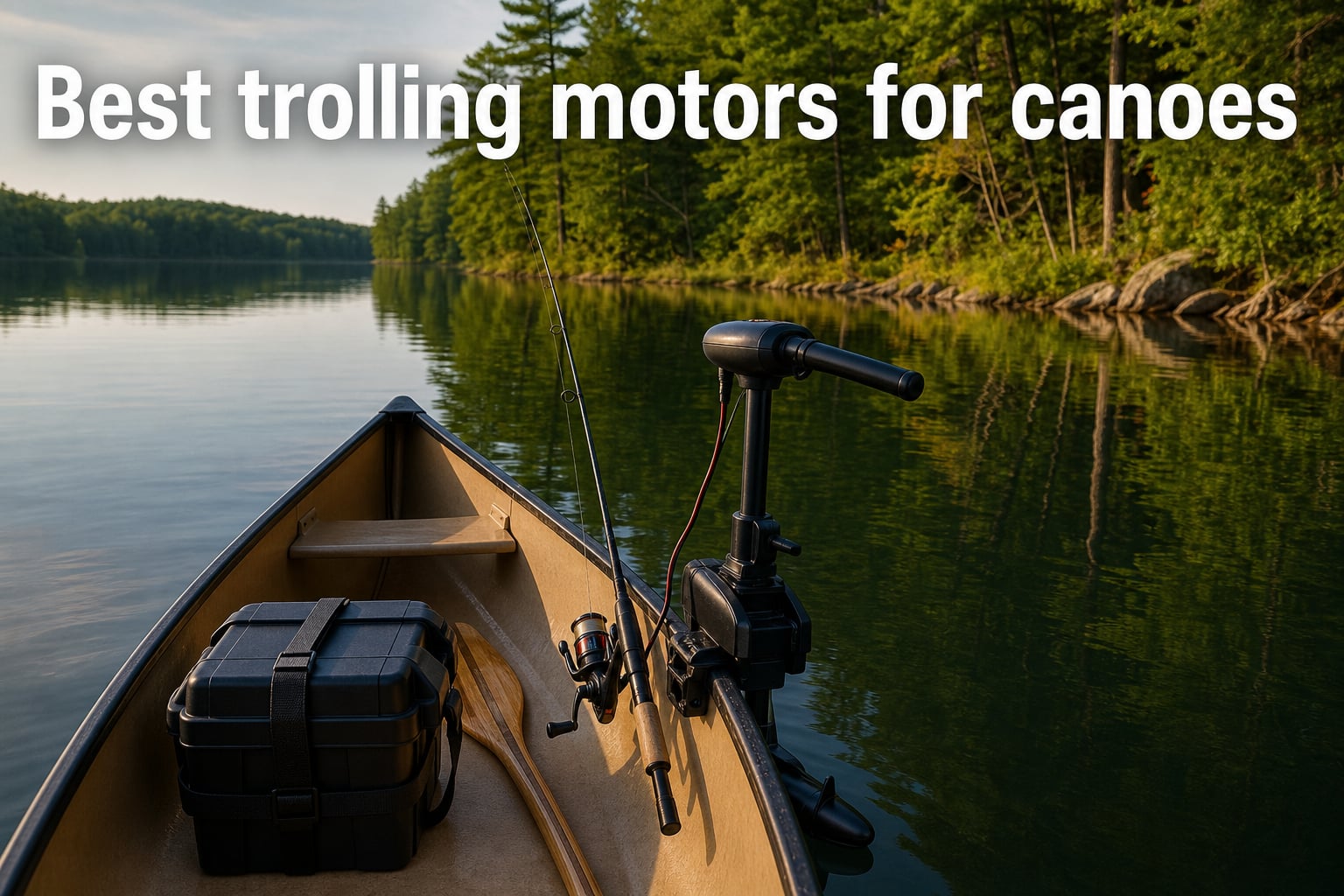
A canoe becomes much easier to position for fishing, hunting, and long lake crossings when a quiet electric motor takes over the steady work. The best trolling motors for canoes are usually 12V transom models in the 30 to 55 lb thrust range, with the final choice shaped by canoe length, passenger load, wind, and the mount you can fit safely.
I approached this list as a canoe setup problem rather than a generic small-boat list. A narrow hull reacts sharply when a motor and battery sit at the stern, so shaft length, motor weight, cable reach, and a solid canoe trolling motor mount matter just as much as headline thrust.
Every model below was checked against the supplied product specifications, listed features, ratings, and review summaries. I also kept the recurring paddler concerns in view: front-end lift in a two-person canoe, a prop that reaches shallow water, battery weight, and whether a motorized canoe needs registration where you paddle.
Top 3 Picks Answer the Most Common Canoe Needs 2026
For a typical solo or lightly loaded canoe, the Newport NV-Series balances 36 lb thrust, a transom mount, and an 18.5 lb listed motor weight. The Newport Kayak Series brings a 24-inch shaft and long battery leads for a compact stern setup, while the Minn Kota Endura C2 is the straightforward 30 lb freshwater choice.
Best Trolling Motors for Canoes in September 2026
The comparison below includes every motor in this guide. Treat it as a way to narrow the field, then read the canoe-fit notes for the shaft, mount style, and control method that suit your hull.
| Product | Specifications | Action |
|---|---|---|
 Newport NV-Series 36 lb Newport NV-Series 36 lb |
|
Check Latest Price |
 Newport Kayak Series 36 lb Newport Kayak Series 36 lb |
|
Check Latest Price |
 Minn Kota Endura C2 30 Minn Kota Endura C2 30 |
|
Check Latest Price |
 Minn Kota Edge 45 Minn Kota Edge 45 |
|
Check Latest Price |
 Minn Kota Kayak Terrova 55 Minn Kota Kayak Terrova 55 |
|
Check Latest Price |
 Newport X-Series 55 lb Newport X-Series 55 lb |
|
Check Latest Price |
 Newport L-Series 62 lb Newport L-Series 62 lb |
|
Check Latest Price |
 Minn Kota Endura Max 55 Minn Kota Endura Max 55 |
|
Check Latest Price |
 INTEX 68631E INTEX 68631E |
|
Check Latest Price |
 AQUOS Haswing 65 lb AQUOS Haswing 65 lb |
|
Check Latest Price |
 VEVOR 55 lb VEVOR 55 lb |
|
Check Latest Price |
 AQUOS Haswing CaymanT 55 lb AQUOS Haswing CaymanT 55 lb |
|
Check Latest Price |
1. Newport NV-Series 36 lb is the balanced all-around canoe motor
- 36 lb canoe-friendly thrust
- Saltwater-ready construction
- LED battery indicator
- 2 year limited warranty
- Not for larger boats
The Newport NV-Series is my clearest starting point for a conventional fishing canoe because it combines 36 lb thrust with a 12V transom mount. Its 4.6 rating is based on 6.9k+ reviews in the supplied data, giving it a much broader feedback base than most motors here.
The listed 18.5 lb motor weight is manageable, but it still belongs in a balanced system. Put the battery forward of the stern seat when cable length permits, then make a short test run before committing to a full day on the water.
Five forward and three reverse speeds give a canoe useful low-speed control around shorelines and fishing spots. The LED battery indicator is helpful because a battery gauge is easier to read before the canoe begins to feel stern-heavy.
The 36 lb output fits solo and light two-person canoes
Thirty-six pounds sits inside the commonly recommended 30-55 lb canoe range. It is a sensible middle ground when a 30 lb motor may struggle in wind but 55 lb feels unnecessary for your usual load.
The transom clamp needs a purpose-built canoe bracket
A canoe usually has no flat factory transom, so use a properly braced side or stern mount rated for the motor. Check that the prop clears the hull and can be raised in shallow water before launching.
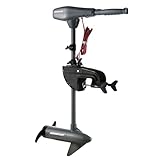
2. Newport Kayak Series 36 lb is the short-shaft choice for compact sterns
- 24 inch shaft
- Long battery cables
- Saltwater-rated hardware
- Telescoping handle
- Listed as not Prime eligible
This Newport Kayak Series model has a 24-inch fiberglass shaft, a detail that makes it worth a close look for a low freeboard canoe. A shorter shaft can reduce the awkward reach and excess depth that a tall stern-mounted unit may create.
Its 5 foot 6 inch battery cables offer more freedom to shift a 12V battery toward the center of the canoe. That is important because paddlers repeatedly report that putting motor and battery together at the stern can make the bow ride high.
The motor has eight speeds, a six-inch telescoping handle, and corrosion-resistant hardware rated for saltwater use. Those are useful practical features for a compact transom mount canoe motor, though mounting geometry still decides whether it is the right fit.
The 24-inch shaft suits low canoe gunwales
Measure from the clamp surface to the waterline while the canoe is loaded. The shaft should keep the prop submerged without sitting so low that it becomes the first thing to contact a shallow bottom.
The long cables support better trim
Longer leads can let you move the battery forward without adding an extension. Secure the battery in a tray or box so it cannot slide while turning or entering the canoe.
3. Minn Kota Endura C2 30 is the simple freshwater motor for light loads
Minn Kota Endura C2 Transom-Mount Electric Trolling Motor – 30 Lb. Thrust, 30 In. Shaft, Freshwater
- Telescoping tiller
- Secure lever lock bracket
- Power Prop
- Composite shaft
- 30 lb may be underpowered in wind
The Minn Kota Endura C2 30 is the modest-thrust option for a solo canoe, calm water, and basic freshwater trips. Its 30-inch shaft, 10-position lever lock bracket, push-to-test battery meter, and 4.6 rating make its purpose easy to understand.
I would not choose 30 lb thrust for a heavily loaded 16-foot canoe or regular headwinds. For a paddler who wants quiet assistance rather than a high-output electric canoe motor, the lower-thrust approach can keep the setup simpler.
The Power Prop is designed for heavy vegetation, and the motor provides five forward and three reverse speeds. The composite shaft is another sensible detail for a motor that may be raised and lowered often at a canoe landing.
The 30 lb rating works best in protected water
Match this motor to a solo hull or a lightly loaded tandem canoe on ponds and sheltered lakes. Add more thrust when wind, current, two adults, gear, or a longer boat are part of the regular plan.
The bracket offers useful adjustment points
The 10-position bracket helps set motor depth and angle once the mount is installed. Recheck clamp tension after the first few minutes of operation because a canoe mount can settle under load.
4. Minn Kota Edge 45 gives a converted canoe foot-pedal control
- Hands-free foot pedal
- Directional indicator
- Latch and door bracket
- Power Prop
- Bow-mount installation is specialized
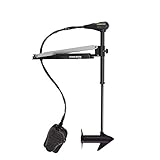
The Minn Kota Edge 45 is different from the usual stern-tiller formula because it is a bow-mount motor with a heel-toe cable-steer foot pedal. That can make fishing control more direct, but a canoe needs a secure custom bow platform before this choice makes sense.
The 36-inch shaft and 45 lb thrust offer more reserve than the basic 30 lb class. A built-in directional indicator helps the operator see where the motor is pointed when attention is on a casting line rather than the bow.
The latch and door bracket is intended for secure hold and removal, while the Power Prop targets vegetation. This is a specialized motorized canoe setup, not the easy clamp-on solution most first-time canoe owners expect.
The bow platform must carry steering loads
A foot-controlled bow motor puts side loads into the mounting area as it turns. Use a platform designed for the canoe and motor, with backing and attachment points that do not crush or split the hull.
The foot pedal needs clear, dry floor space
Plan where the pedal will sit before carrying gear aboard. A canoe floor is narrow, so cables, tackle, and a battery should not interfere with pedal movement or emergency exits.
5. Minn Kota Kayak Terrova 55 is the GPS-focused canoe option
Minn Kota Kayak Terrova Bow-Mount Electric Trolling Motor with GPS – 55 Lb. Thrust, 36 in. Shaft, Freshwater
- GPS Spot-Lock
- Auto Park
- Digital Maximizer
- Composite shaft warranty
- Needs a specialized bow mount
- Smaller review base
The Kayak Terrova 55 brings advanced GPS navigation and Spot-Lock to a canoe-capable bow-mount concept. For an angler who wants to hold position without constantly correcting with a paddle, that control system is the reason to consider it.
The supplied specifications list a 36-inch shaft, Easy Stow/Deploy with Auto Park, a micro remote with lanyard, and One-Boat Network compatibility. Its 4.6 rating comes from 44 reviews, so I would weigh that smaller review base alongside the feature set.
Digital Maximizer is listed as extending battery life up to five times, and the composite shaft has a lifetime warranty. Even with these features, a canoe needs enough bow structure, deck space, and battery capacity to make the system practical.
The remote helps when a canoe has limited seating room
A lanyard remote reduces the need to reach toward the motor while seated. Keep the remote secured and practice stow, deploy, and steering in open water before using GPS positioning near obstacles.
The GPS features fit anglers who hold one spot
Spot-Lock is most relevant for repeated casting along a point, structure, or wind-exposed shoreline. It is less compelling if your canoe trips are mostly quiet cruising or short transportation runs.
6. Newport X-Series 55 lb supplies reserve thrust for a loaded canoe
- 55 lb thrust
- Quiet eight-speed control
- Adjustable mount settings
- Saltwater-ready hardware
- Battery not included
- Longer shaft needs checking
The Newport X-Series steps up to 55 lb thrust for a two-person canoe, more gear, or water where wind makes lower thrust frustrating. It remains a 12V transom motor and lists a 36-inch shaft, telescoping tiller, adjustable mount angle, and LED battery indicator.
This is still not a reason to overload a narrow hull. More thrust helps with control, but the 23 lb listed motor weight plus a battery needs deliberate placement and a mount that does not flex.
Five forward speeds and three reverse speeds provide familiar manual control, while corrosion-resistant hardware supports saltwater use. The supplied data also lists a two-year limited warranty and USA-based support.
The 55 lb rating helps a heavier tandem load
Choose this class when two paddlers, fishing gear, or regular wind are part of the trip. Start at low power because a canoe’s speed and handling do not improve in a straight line with more throttle.
The 36-inch shaft should be measured against your mount
A side mount that sits above the gunwale changes effective shaft depth. Measure with people and battery aboard so the prop stays submerged without being hard to lift at a beach or ramp.
7. Newport L-Series 62 lb is the high-thrust choice that demands balance
- Strong 62 lb output
- 10 LED meter
- Three-blade prop
- Two year warranty
- Battery not included
- Requires 60 amp circuit breaker
The Newport L-Series is a 62 lb transom motor with a 40-inch shaft and a listed 23 lb motor weight. It sits above the usual 30-55 lb canoe guidance, making it a niche option for a larger, heavily loaded canoe rather than the default recommendation.
Its three-blade prop, low-end torque, eight speeds, 10 LED battery meter, and adjustable mount settings are meaningful features. The product details also specify a 60 amp manual-reset circuit breaker, so this is a setup that needs the right electrical components.
Stainless steel, magnesium, and zinc hardware are listed for freshwater and saltwater service. The benefit of power should be weighed against the long shaft and stern load on a narrow hull.
The 62 lb output is not necessary for most canoes
Most solo and lightly loaded tandems do not need this much thrust. Consider it only after confirming your canoe capacity, mount rating, passenger arrangement, and the conditions that caused a lower-thrust motor to fall short.
The electrical protection belongs in the build plan
Install the specified circuit breaker and follow the motor instructions for wire routing and connections. Keep connections dry and protected from gear movement, and do not run a loose battery cable across the canoe floor.
8. Minn Kota Endura Max 55 focuses on longer 12V runtime
Minn Kota Endura Max Transom-Mount Electric Trolling Motor – 55 Lb. Thrust, 42 In. Shaft, Freshwater
- Digital Maximizer
- Power Prop
- Battery meter
- Composite shaft
- 42 inch shaft is long
- Freshwater focus
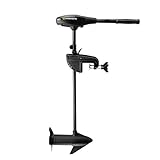
The Endura Max 55 pairs 55 lb thrust with Minn Kota’s Digital Maximizer technology, which the supplied material says can extend runtime up to five times. That makes it interesting for a canoe angler who values long, low-speed positioning over short bursts of high power.
The six-inch telescoping tiller, 10-position lever lock bracket, Power Prop, push-to-test battery meter, and composite shaft make this a feature-rich transom option. Its 42-inch shaft is the key caution for a canoe because it may be more length than a low mount needs.
The product is primarily described as freshwater, despite an inconsistent recommended-use field in the data. I would treat it as a freshwater selection unless the manufacturer’s current instructions for your exact model say otherwise.
The runtime feature matters most at low trolling speeds
Runtime is affected by throttle setting, battery capacity, canoe load, wind, and current. Digital efficiency cannot replace a battery sized for your actual route, so test your setup close to shore first.
The 42-inch shaft requires a clearance check
Raise and lower the motor with the canoe fully loaded. If the shaft or prop is difficult to clear in shallow water, a shorter-shaft motor may be the better physical match.
9. INTEX 68631E is the weed-escape motor with important trade-offs
- Weed escape mode
- Auto power modulation
- Battery indicators
- Multi-position tiller
- No manufacturer warranty
- Plastic construction
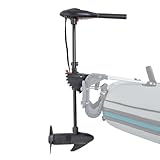
The INTEX 68631E is a 12V transom motor with five forward and three reverse speeds, a battery meter, dry-operation and overload indicators, plus a weed-escape function. Those features speak directly to slow, weedy-water use where clearing a prop can interrupt a fishing day.
Its listed motor weight is 17.04 lb, which is relatively manageable for lifting on and off a canoe mount. The product data does not state a thrust figure, so I would not buy it as a direct substitute for a known 30, 36, or 55 lb motor without confirming performance needs.
The multi-position tiller extends six inches and tilts into eight positions. The clear drawbacks are a plastic construction listing and no manufacturer warranty listed in the supplied information.
The weed-escape mode targets vegetation-prone routes
This feature is relevant when hydrilla, grass, or floating weeds repeatedly catch the prop. It does not remove the need to lift the motor and inspect the prop safely after a strike or heavy wrap.
The missing thrust figure limits canoe matching
Thrust is the basic comparison number for a canoe motor. Confirm the manufacturer’s current thrust specification and compare it with your normal load before deciding this motor has enough reserve.
10. AQUOS Haswing 65 lb offers brushless power at a lower motor weight
- Brushless motor
- Stepless controls
- Lightweight listing
- Saltwater and freshwater use
- Short shaft details conflict
- Smaller review base
This AQUOS Haswing model combines a stated 65 lb thrust with brushless technology, stepless forward and reverse speed control, and a notably light 14.55 lb listed weight. High thrust with a lighter motor body can appeal to canoe owners who need carrying convenience as well as power.
There is a specification conflict worth flagging: the title says a 35.5-inch shaft, while the product details list 24.6 inches actual. I would confirm the current shaft measurement with the seller or manufacturer before buying for a particular canoe mount.
The motor is rated for saltwater and freshwater use, has three LED battery levels, a quick-lock trim-height system, and a two-year warranty. Its 4.2 rating is based on 142 reviews in the supplied data.
The brushless control favors gradual canoe movement
Stepless speed control can make small directional and position adjustments feel less abrupt than fixed speed steps. That is useful around fishing cover, though safe trim and paddle-ready balance still come first.
The shaft measurement needs confirmation before installation
Do not assume the nameplate shaft number is the usable submerged length. Compare the confirmed dimension with the loaded waterline measurement from your actual mount location.
11. VEVOR 55 lb is the manual 30-inch-shaft alternative
- 55 lb thrust
- Adjustable telescopic handle
- Waterproof motor head
- Saltwater capable
- Manual control only
- Smaller review base
The VEVOR 55 lb motor presents a conventional 12V transom package with a 30-inch shaft, five forward and three reverse speeds, a three-blade propeller, and a sealed waterproof aluminum motor head. That 30-inch length may fit some canoe mounts more naturally than the longer shafts in the 55 lb group.
The telescopic handle adjusts from 6.3 to 10.6 inches, so the seated operator can set a more comfortable reach. The supplied data calls it suitable for freshwater and saltwater, but it remains a manual motor with no GPS features.
Its 4.2 rating is from 35 reviews, a smaller sample than the established Newport and Minn Kota entries. I would prioritize a careful mount inspection and initial low-speed test over relying on the rating alone.
The 30-inch shaft can simplify low-mount placement
A shorter shaft can be easier to stow and less exposed in shallows when the clamp surface is low. It still must keep the prop fully submerged during turns and when a passenger shifts position.
The manual tiller suits hands-on canoe control
This is for paddlers comfortable steering from the stern while managing a tiller. If hands-free positioning is the goal, the foot-pedal and remote-control models deserve more attention.
12. AQUOS Haswing CaymanT 55 lb gives a remote-control transom option
AQUOS Haswing Transom Trolling Motor 12V 55lbs 26in with Wireless Remote
- Wireless remote
- 26 inch shaft
- USB rechargeable remote
- Two year warranty
- No GPS
- Smaller review base
The AQUOS Haswing CaymanT pairs 55 lb thrust with a 26-inch cast-aluminum shaft and a 2.4G wireless remote. For a canoe where reaching back to a tiller is uncomfortable or disrupts fishing, that remote is its defining difference.
The product data lists a remote range up to 164 feet, one-way stepless speed control, an 0-85 degree tilt range, and three LED battery levels. The remote is USB rechargeable, while the motor has a two-year warranty and accessories have a shorter three-month warranty.
It has a 4.0 rating across 58 reviews in the supplied data, so this is a feature-led choice rather than a high-volume-review pick. It does not include GPS functionality, which keeps it distinct from the Terrova approach.
The remote helps a canoe operator stay seated and centered
Remote control can reduce reaching and twisting from the stern seat. Store it on the lanyard and have a paddle immediately available, since electronics should never be the only plan for controlling a canoe.
The 26-inch shaft favors a low transom or side mount
Its short shaft may suit a low mounting surface, but that depends on the hull and load. Check prop immersion with the battery, passengers, and normal gear in their real positions.
The Buying Guide
For most canoes, 30 to 55 lb of thrust is the useful starting range. Choose about 30 lb for a solo canoe on sheltered water, 36 to 45 lb when you want more authority in breeze or with a light passenger, and 55 lb when a tandem canoe carries regular gear or sees more wind.
Higher thrust does not make a canoe a fast planing boat. It gives more control against wind and current, but it also adds motor weight, electrical demand, and a stronger reason to check the mount and trim.
A transom or side mount is usually the practical canoe answer
Most canoes need an add-on mount because their stern is not a motor transom. A side mount can keep the motor close to the stern and accessible from a seat, while a stern bracket may be tidier if the hull design supports it.
Bow mounts can provide strong fishing control but need a dedicated platform and clear space for the pedal or stow mechanism. Never clamp a motor to a thin gunwale without a bracket designed to spread the load.
A 12V battery belongs near the center, not automatically at the stern
A LiFePO4 battery canoe setup can reduce carried battery weight compared with some alternatives, but capacity and battery-management compatibility still matter. One reported paddler experience found a 12V 50Ah LFP battery ran a 24 lb thrust motor for four to five hours on low; treat that as a real-world example, not a promise for every motor or route.
Place the secured battery as far forward as cable length safely allows, then test trim with both occupants aboard. If the bow rides high, move portable gear forward before assuming the motor is the problem.
Speed and runtime depend on conditions more than a single rating
Throttle, battery capacity, passenger weight, gear, wind, current, hull shape, and weeds all change how a canoe travels and how long the battery lasts. Run a conservative first trip on familiar water, note the battery reading at intervals, and leave a margin for the return.
A shorter shaft helps with shallow water only if the prop remains submerged. Before launching, tilt and raise the motor through its full range and confirm it will not hit the canoe or bind against the mount.
Saltwater use needs compatible hardware and rinsing
Choose a saltwater-rated motor when paddling brackish or saltwater areas, then rinse external surfaces and prop areas with fresh water after use. Newport models marked saltwater-ready, the AQUOS entries, VEVOR, and the INTEX motor list freshwater and saltwater suitability in the supplied data.
For freshwater-only trips, a freshwater motor can be the more direct fit. Follow the product instructions rather than relying on a general label when water conditions are unusual.
Registration rules require a local check before launch
Registration requirements for a motorized canoe vary by state and sometimes by water body. Check the current rules from your state boating agency before using an electric motor, and carry any required registration, safety equipment, and identification.
This check matters even if the motor is quiet and low-powered. A trolling motor changes the canoe’s legal classification in many places.
FAQs
What size trolling motor is good for a canoe?
A 30 to 55 lb thrust 12V trolling motor suits most canoes. Choose about 30 lb for solo use on sheltered water, 36 to 45 lb for more wind control, and 55 lb for a loaded tandem canoe or frequent wind. Confirm that the mount, shaft length, and battery placement match the loaded hull.
Can I use a trolling motor on a canoe?
Yes, provided you install a mount made for the canoe, keep the prop clear of the hull, secure the battery, and maintain safe weight distribution. Check state and local registration rules before launch because adding an electric motor may change the canoe’s legal status.
How fast will a canoe go with a trolling motor?
A canoe’s speed with a trolling motor depends on thrust, throttle setting, battery condition, hull shape, passenger weight, wind, current, and weeds. Trolling motors are designed for quiet, controlled movement and positioning, not high-speed travel. Test the fully loaded canoe in calm water and keep battery reserve for the return.
Who makes the most reliable trolling motor?
Minn Kota and Newport have the strongest review-volume signals among the products in this guide. The Newport NV-Series has a 4.6 rating from 6.9k+ reviews, while the Minn Kota Endura C2 has a 4.6 rating from 586 reviews. Choose the model whose thrust, shaft, mount, and water rating fit your canoe.
Conclusion
For most people comparing the best trolling motors for canoes in 2026, the Newport NV-Series 36 lb is the balanced first choice, the Newport Kayak Series is compelling for low mounts, and the Minn Kota Endura C2 suits calm freshwater trips. Move up to 55 lb only when your canoe load and conditions justify it.
Measure the loaded canoe, choose a rated mount, secure the battery near the center, and confirm local rules before the first launch. Those four steps matter more than any single feature on the box.