
Every gardener has been there. You check the weather app on your phone, it says clear skies, and then your tomato seedlings get hammered by an unexpected downpour at 2 AM. Or worse, a late spring frost wipes out your tender transplants because the regional forecast was five degrees off for your neighborhood.
The problem is simple. Phone apps and local news give you regional data covering hundreds of square miles. Your garden has its own microclimate, shaped by nearby buildings, trees, slopes, and even the fence line. The best weather stations for home gardeners solve this by putting sensors right where your plants grow, giving you hyper-local temperature, humidity, rainfall, and wind data that no phone app can match.
I have spent months researching and comparing weather stations for this roundup, pulling from forum discussions on Reddit’s home weather station communities, Consumer Reports testing, and real gardener feedback. Whether you are protecting seedlings from frost, deciding when to irrigate based on actual rainfall, or tracking growing conditions across seasons, this guide covers ten stations that range from budget-friendly basics to premium smart systems. Every option here was chosen with gardening use cases front and center, not just general weather enthusiasm.
Top 3 Picks for Home Gardeners at a Glance (September 2026)
If you want to skip straight to the best options, here are my top three recommendations for gardeners. Each was selected based on sensor accuracy, smart home integration, and practical value for plant care.

Best Weather Stations for Home Gardeners in 2026
Here is a side-by-side comparison of all ten stations I reviewed. Use this table to quickly compare features and find the right fit for your garden size and budget before diving into the individual reviews below.
| Product | Specifications | Action |
|---|---|---|
| Ambient Weather WS-2902 |
|
Check Latest Price |
 AcuRite Iris 5-in-1 AcuRite Iris 5-in-1 |
|
Check Latest Price |
 AcuRite Iris Wi-Fi AcuRite Iris Wi-Fi |
|
Check Latest Price |
 Tempest Weather Station Tempest Weather Station |
|
Check Latest Price |
 La Crosse C85845-INT La Crosse C85845-INT |
|
Check Latest Price |
| Newentor Q3-BLACK |
|
Check Latest Price |
 Sainlogic SA68 12-in-1 Sainlogic SA68 12-in-1 |
|
Check Latest Price |
 Ambient Weather WS-5000 Ambient Weather WS-5000 |
|
Check Latest Price |
 ECOWITT WS3901 ECOWITT WS3901 |
|
Check Latest Price |
 La Crosse V42-PRO-INT La Crosse V42-PRO-INT |
|
Check Latest Price |
1. Ambient Weather WS-2902 WiFi Smart Weather Station
- Complete weather station with sensor array and LCD color display
- Authentic hyper-local data with wireless and Wi-Fi-enabled sensors
- Smart home ready with IFTTT
- Google Home
- Alexa support
- Join the Ambient Weather Network community
- Supports both imperial and metric units
- Pole mount and batteries not included
- Not smart home compatible
The Ambient Weather WS-2902 is my pick for the best weather station for home gardeners who want a complete system without paying premium prices. I have recommended this station more than any other because it hits the sweet spot between sensor coverage, smart integration, and value. The Osprey sensor array tracks wind speed, wind direction, temperature, humidity, rainfall, UV intensity, and solar radiation all in one unit.
What sets the WS-2902 apart for gardeners is its IFTTT integration. You can set up automations like triggering your smart sprinkler to skip watering when rainfall exceeds a threshold you set. Alexa and Google Home support means you can ask for current garden conditions by voice. The station also syncs with the Ambient Weather Network, letting you share data with a community of weather enthusiasts.
The LCD color display console shows everything at a glance, and the enhanced WiFi connectivity is reliable in most home setups. The sensor array is solar powered, so you will not be climbing a pole every few months to swap batteries. With over 13,000 reviews and a 4.4-star rating, this is the most battle-tested station in the roundup.
The main downside is that the pole mount and backup batteries are not included, so factor in those small additional costs. Some reviewers also note that the smart home compatibility listing is confusing since IFTTT works well even though the Amazon listing says “not smart home compatible.” For gardening purposes, the IFTTT and Alexa integration more than covers what most people need.
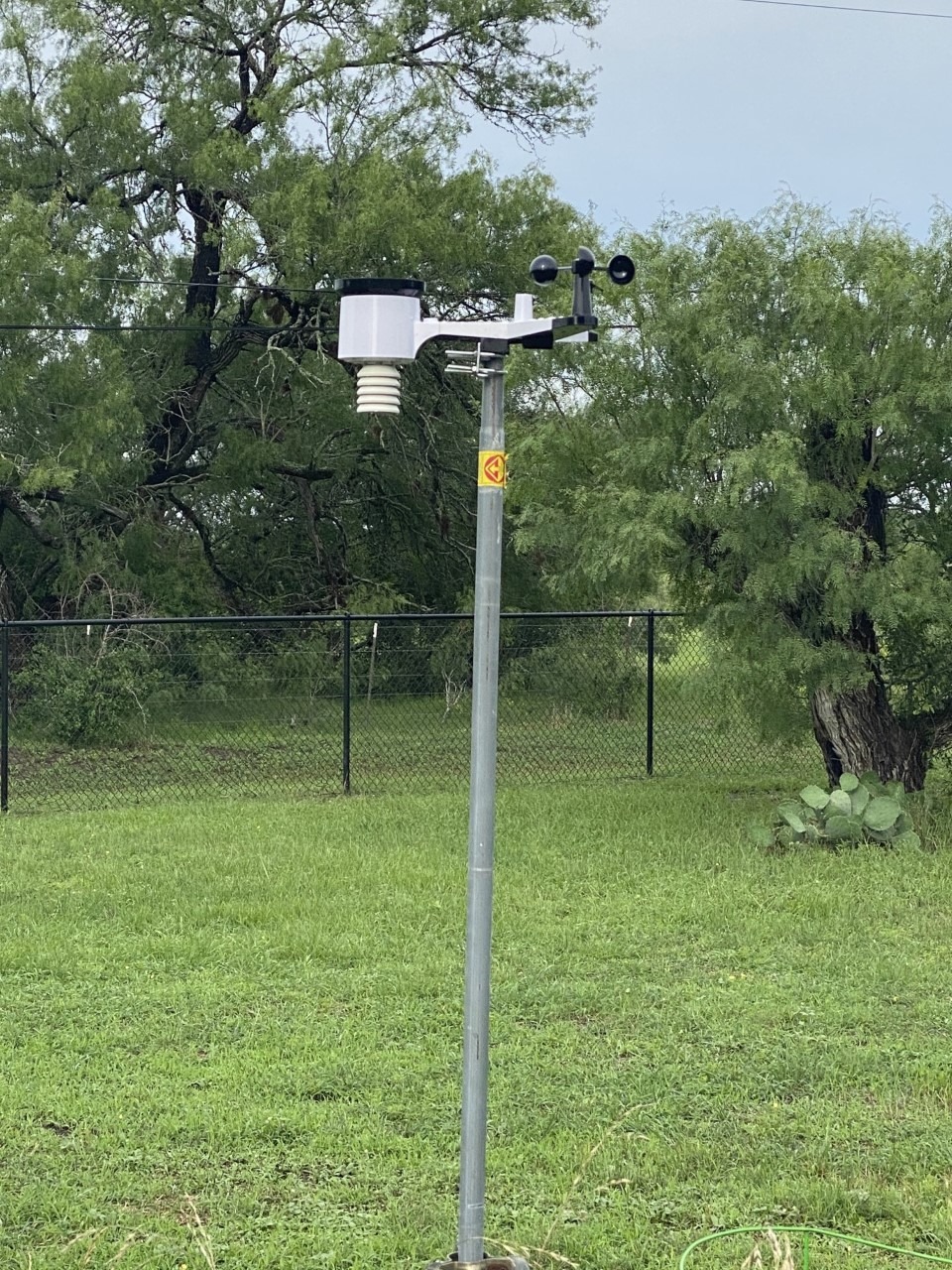
Sensor Coverage for Garden Monitoring
The WS-2902 includes every sensor a gardener needs in one package. UV and solar radiation measurements help you understand light stress on sensitive plants, while the rain gauge gives accurate rainfall totals for irrigation decisions. Wind data lets you set alerts for high wind events that can damage tall plants or tear row covers.
The temperature accuracy is rated at 1 degree Celsius, which is solid for this price range. For frost protection, you can set custom alerts that notify your phone when temperatures drop near freezing, giving you time to cover tender plants.
Setup and Long-Term Reliability
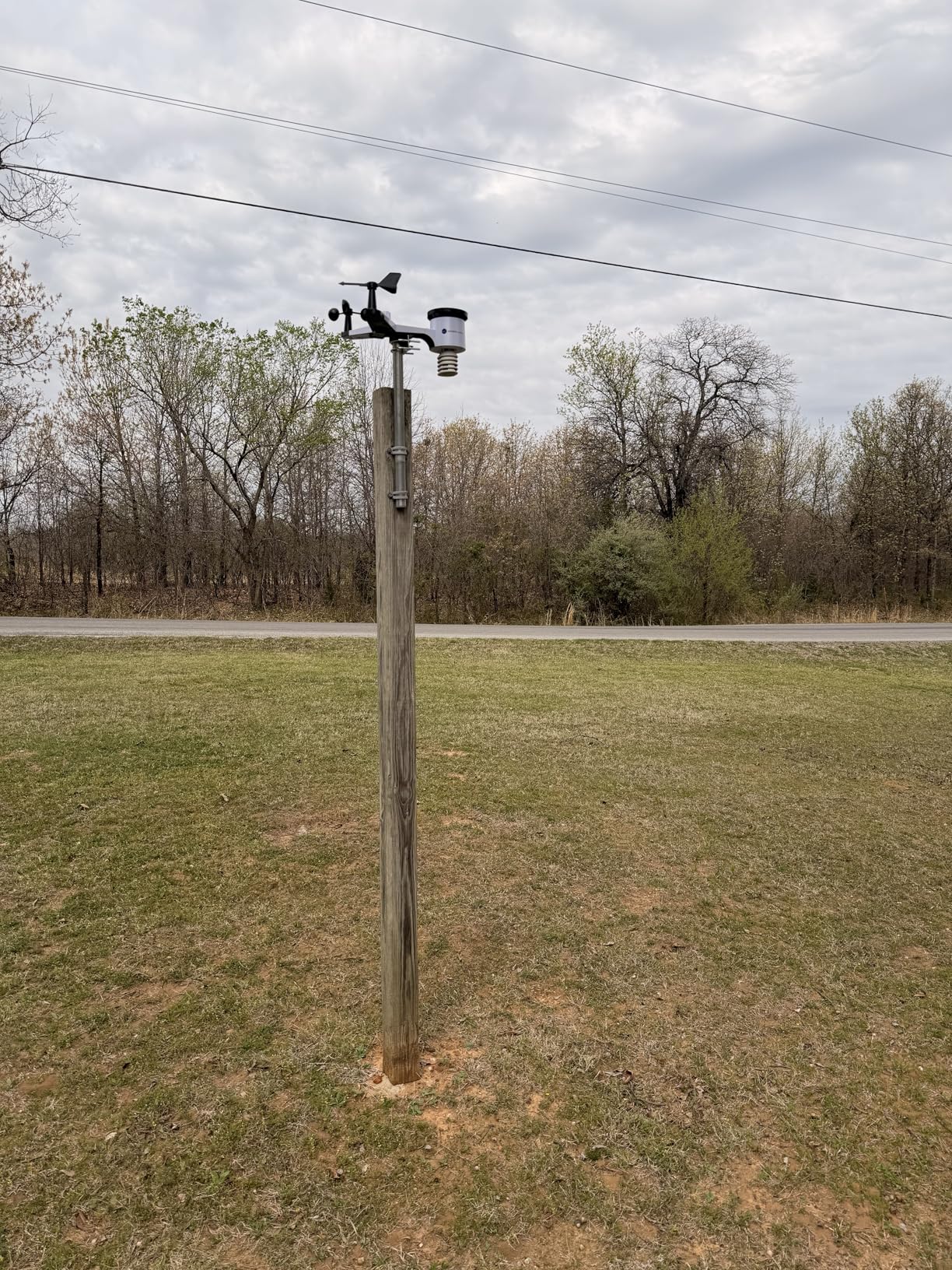
Setup takes about 30 to 45 minutes for most users, with the outdoor sensor array mounted on a pole or fence post in your garden area. The WiFi connection to your router is the main setup step, and Ambient Weather provides clear instructions. Forum users on Reddit consistently report the WS-2902 as one of the most reliable stations over multiple years of use.
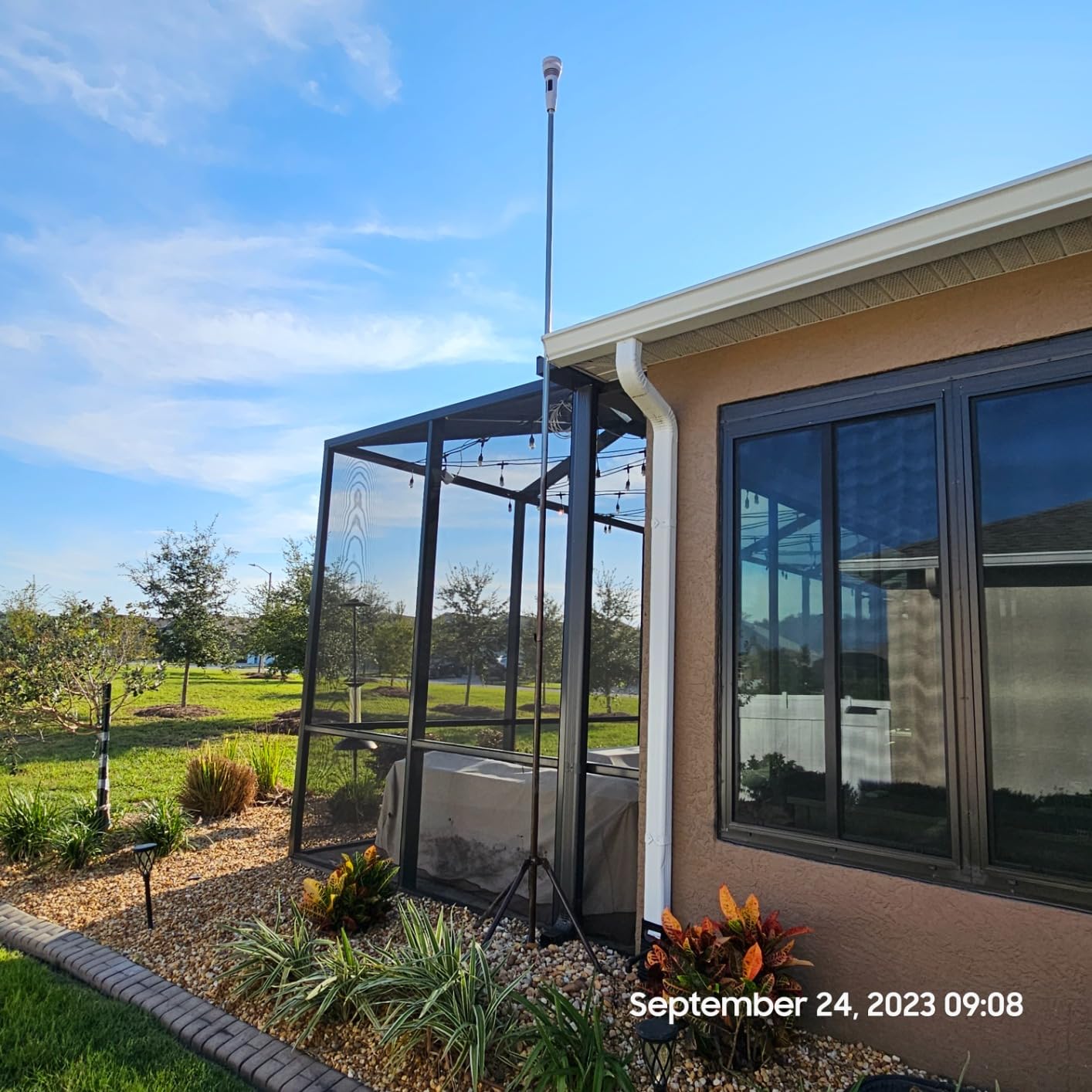
One tip from experienced users is to mount the sensor array at least 5 feet above ground level and away from buildings or large trees that could affect wind and rain readings. This placement ensures the data reflects actual garden conditions rather than heat radiating from a wall.
2. AcuRite Iris (5-in-1) Indoor/Outdoor Wireless Weather Station
AcuRite Iris (01512MCB) Indoor/Outdoor Wireless Weather Station, Color Screen
- Over 55 data points for comprehensive monitoring
- Easiest setup on the market
- Large color LCD display with time and date
- Weather forecast 12 hours from current conditions
- Multiple thermometers and weather instruments included
- Requires 10 AA batteries
- Radio frequency limited to 433 MHz
The AcuRite Iris earns the Best Value badge with the highest rating in this roundup at 4.5 stars across over 7,000 reviews. For gardeners who want solid weather data without the complexity of WiFi setup, this is the station I point people toward. The 5-in-1 sensor array combines an anemometer, wind vane, barometer, hygrometer, rain gauge, and thermometer in a single compact unit.
What gardeners love about the Iris is the simplicity. AcuRite calls it the easiest setup on the market, and based on feedback from home gardener forums, that claim holds up. The large color LCD display shows over 55 data points including dew point, heat index, and humidity, all of which matter when you are deciding whether to water or cover plants.
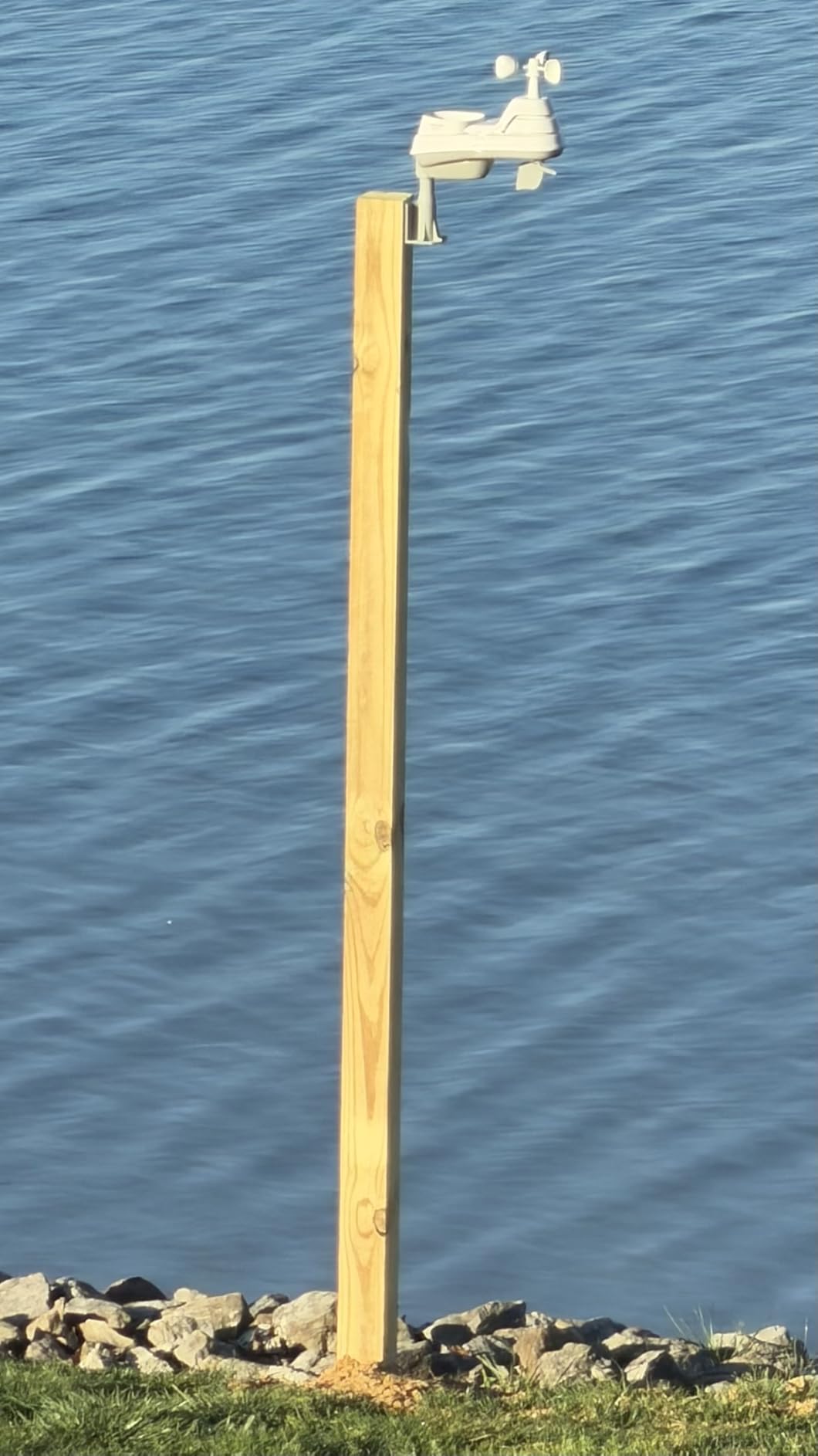
The 12-hour weather forecast based on current conditions is handy for planning garden tasks. If you see rain coming, you can hold off on watering. If temperatures are predicted to drop, you can prepare frost protection before bed. The display also tracks daily highs and lows, helping you spot trends in your garden microclimate.
The main tradeoff is that this model uses radio frequency rather than WiFi, so there is no smartphone app or remote monitoring. You get a great indoor display but no data on your phone when you are away from home. It also requires 10 AA batteries total, which is a significant battery investment over time.
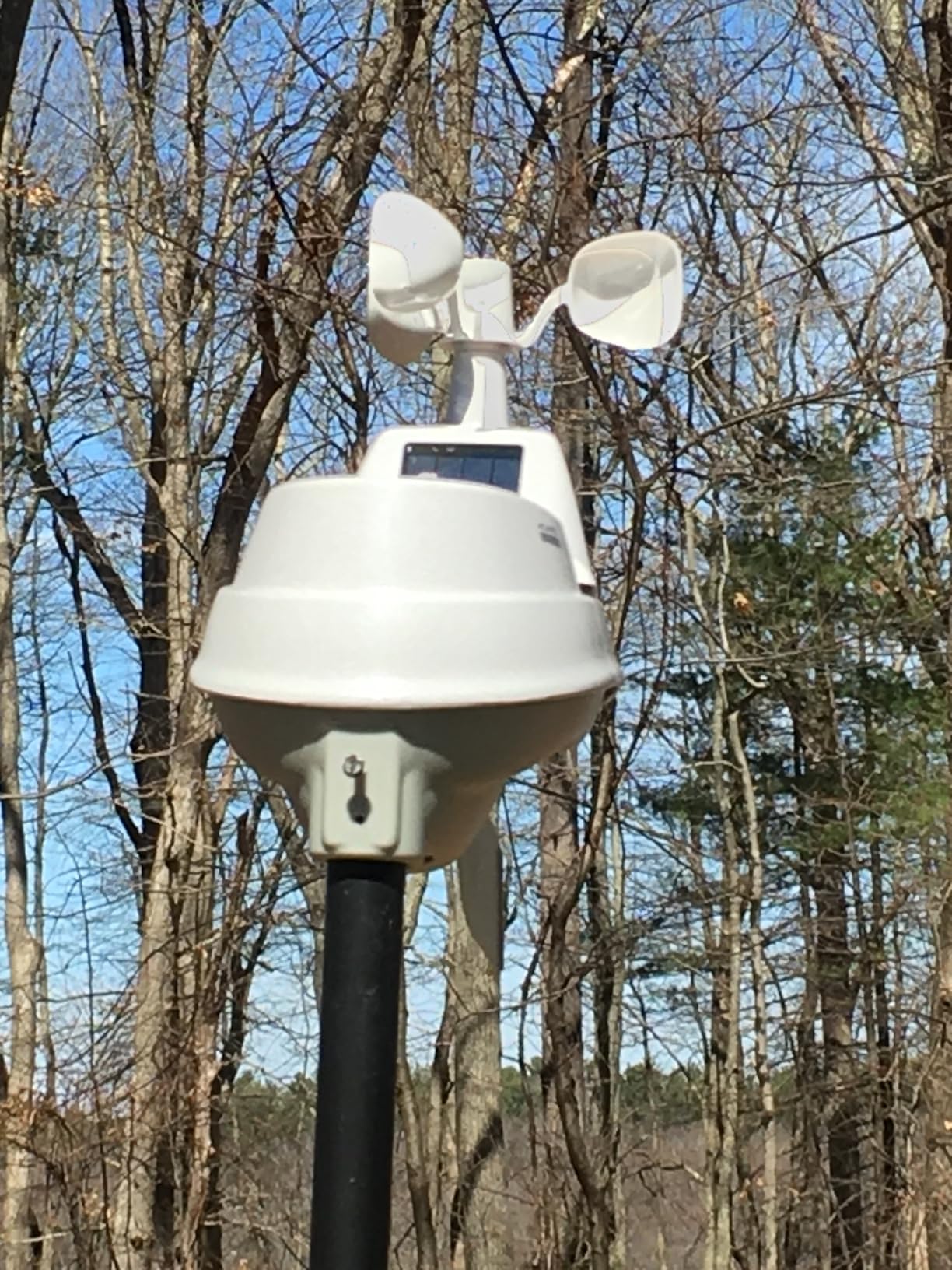
How Accurate Is the Rain Gauge
The AcuRite Iris rain gauge is one of the better-performing tipping spoon designs in its price range. Consumer Reports testing shows AcuRite stations generally perform well on rainfall accuracy, which is important for gardeners making irrigation decisions. The self-emptying design means you do not need to manually clear collected water.
One thing to note is that the rain gauge works best when mounted in an open area away from tree cover or roof overhangs. Debris like leaves can occasionally block the funnel, so a quick check during fall is worth the effort.
Best Use Cases for Gardeners
This station is ideal for suburban gardeners with medium-sized plots who want reliable data without needing to check an app. If you primarily want to track rainfall for watering decisions and monitor overnight lows for frost protection, the Iris delivers everything you need at a fair price.
It is less suited for gardeners who travel frequently or want to integrate weather data with smart irrigation systems. For those needs, you would be better served by a WiFi-connected station higher on this list.
3. AcuRite Iris Wi-Fi Weather Station with Weather Underground
- Wi-Fi connection to Weather Underground for remote monitoring
- Share data with over 250
- 000 personal weather stations globally
- Over 25 data points including heat index
- dew point
- wind chill
- Weather forecast 12 hours from current conditions
- Easiest setup on the market
- Lower rating compared to other models
- Temperature accuracy at plus or minus 2 degrees Fahrenheit is lower precision
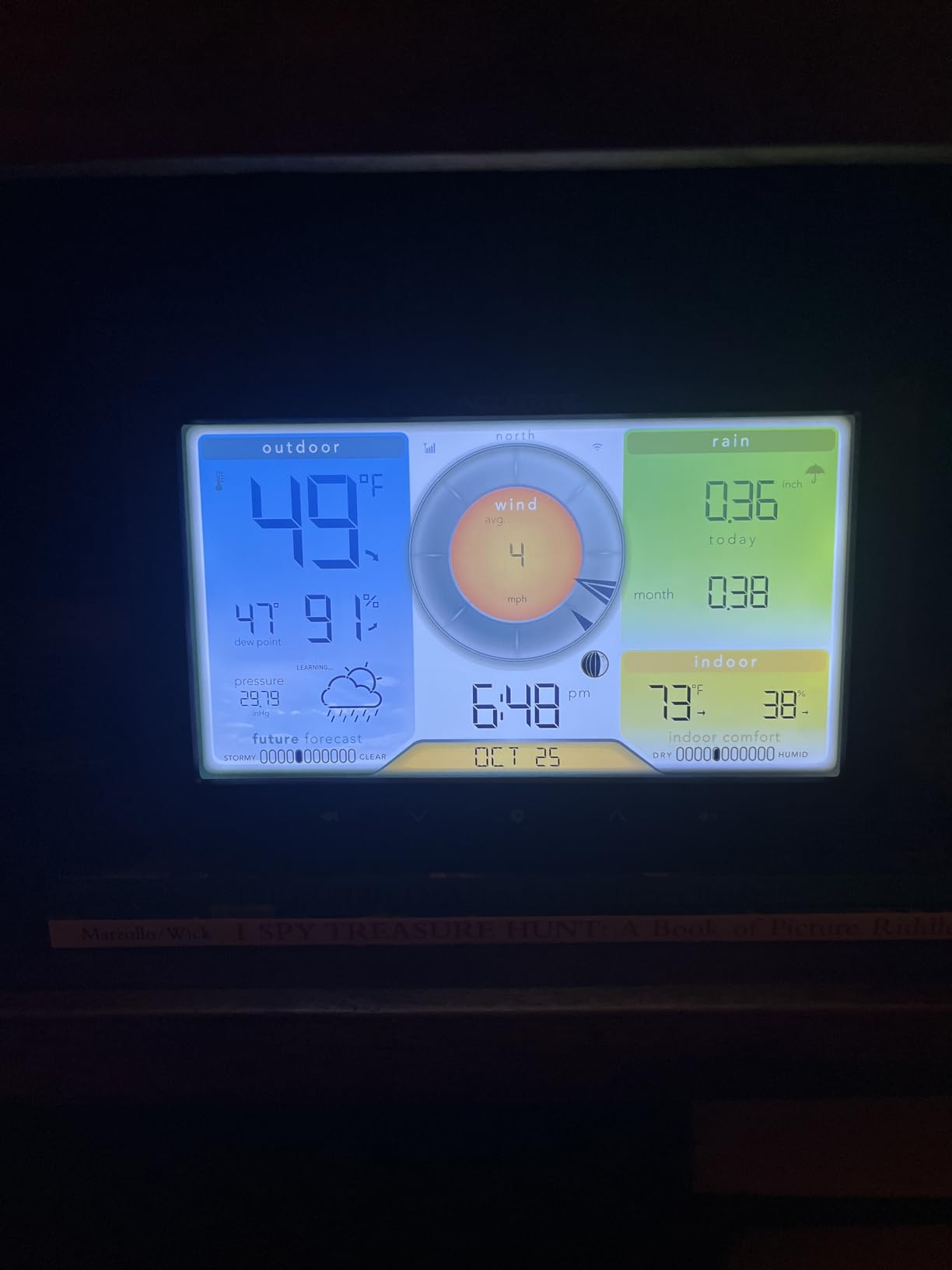
The AcuRite Iris Wi-Fi model is the connected version of the popular Iris station, adding WiFi capability for remote monitoring and data sharing. If you want to check your garden conditions from work or share your weather data with the Weather Underground community of over 250,000 personal stations, this is the model that makes it happen.
I like this station for gardeners who want to contribute to and benefit from community weather data. Weather Underground aggregates data from personal stations to create more accurate local forecasts than you get from apps relying solely on airport data. By adding your station, you improve the forecast for your entire neighborhood.
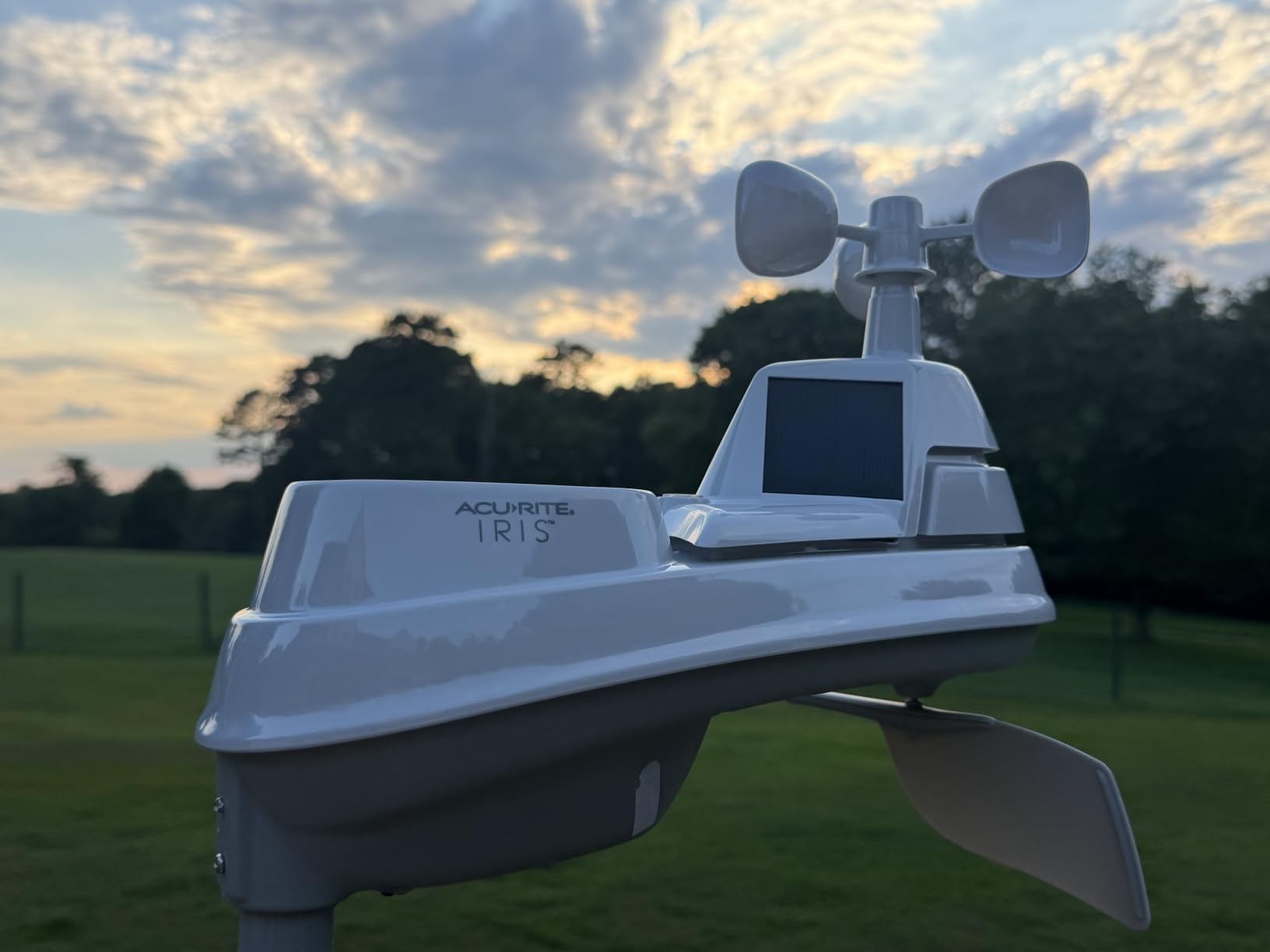
The station tracks over 25 data points including heat index, dew point, and wind chill. The 12-hour forecast based on your local conditions is more accurate than app forecasts for your specific garden location. The color LCD display is clear and easy to read from across a room.
The tradeoff is accuracy. This model has a temperature accuracy of plus or minus 2 degrees Fahrenheit, which is lower precision than the standard Iris model and most competitors on this list. With a 4.0-star rating from 3,680 reviews, it also has a slightly higher rate of negative feedback, often related to WiFi setup challenges.
Weather Underground Integration Benefits
Connecting to Weather Underground lets you view your station data from anywhere through their app or website. This is particularly useful for gardeners who want to monitor conditions while away from home or who manage multiple garden sites. The data also feeds into Weather Underground’s forecast models, improving local predictions.
For community-minded gardeners, there is satisfaction in contributing your data to a network that helps others. If you live in an area with few weather stations, your data fills a genuine gap in the local forecast picture.
WiFi Setup Considerations
The WiFi setup is the most common pain point reported by users. The station requires a 2.4 GHz WiFi connection, and some modern routers default to 5 GHz or use band steering that can cause connection issues. Before purchasing, check that your router supports 2.4 GHz connections or that you can split your bands.
Once connected, the data uploads reliably to Weather Underground at regular intervals. Some users report occasional disconnects that require reconnection, so consider placing your station within solid WiFi range of your router or using a WiFi extender.
4. Tempest Weather Station with Built-in Wind Meter and Rain Gauge
Tempest Weather Station with Built-in Wind Meter, Rain Gauge, and Accurate Weather Forecasts, Wireless, App and Alexa Enabled
- Featured in Better Homes and Gardens
- Popular Mechanics
- The Spruce and Wired
- Monitors temperature
- humidity
- barometric pressure
- wind speed
- dew point
- solar radiation
- UV index
- lightning strikes
- and rainfall
- Solar-powered with up to 1
- 000+ feet wireless transmission
- No moving parts for near-zero maintenance
- Integrates with Amazon Alexa
- Rachio
- IFTTT
- No display included
- Not Prime eligible
- Higher price point
The Tempest Weather Station is the premium pick for serious gardeners and tech enthusiasts who want the most advanced personal weather system available. Featured in Better Homes and Gardens, Popular Mechanics, The Spruce, and Wired, this station uses a completely different approach to weather sensing with no moving parts and built-in lightning detection.
What makes Tempest special for gardeners is its NearCast technology, which uses machine learning to generate AI-powered forecasts specific to your exact location. Instead of relying on distant airport data, Tempest learns from your station and nearby stations to predict weather for your garden with remarkable precision. Over time, the forecasts get better as the system learns your microclimate patterns.
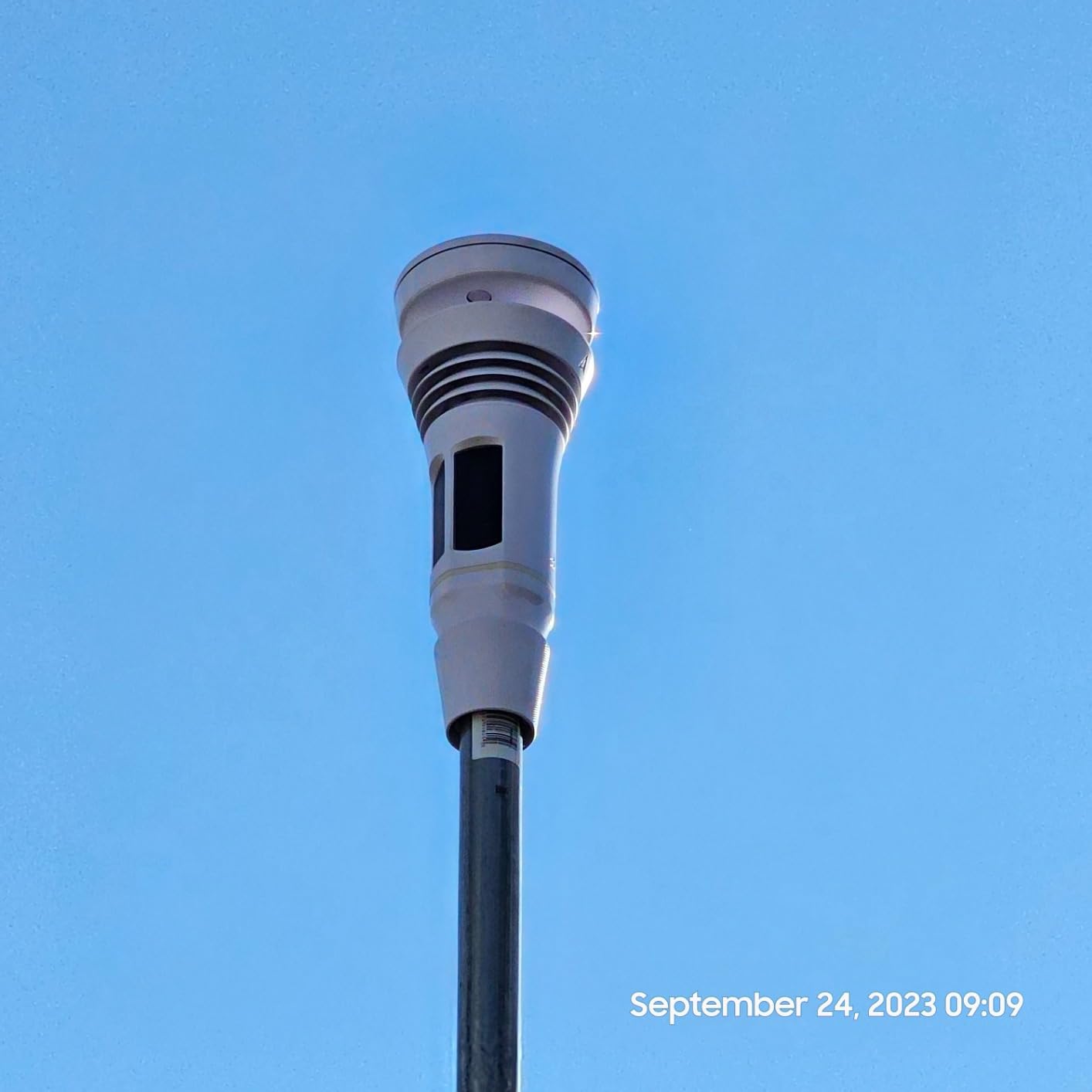
The sensor monitors temperature, humidity, barometric pressure, wind speed and direction, dew point, solar radiation, UV index, lightning strikes, and rainfall all in one sleek unit. The haptic rain sensor uses vibration technology instead of a traditional tipping bucket, meaning there are no mechanical parts to clog, freeze, or break. For gardeners in cold climates, this is a significant advantage.
Integration with Rachio smart sprinklers is a standout feature for gardeners. The Tempest can tell your Rachio system exactly how much rain fell, allowing it to automatically adjust irrigation schedules. IFTTT support opens up even more automation possibilities, and Alexa integration lets you check conditions by voice.
Lightning Detection for Garden Safety
The built-in lightning detector is a unique feature that most stations do not offer. For gardeners who spend time outdoors, lightning alerts provide an extra safety margin. The system detects strikes within approximately 25 miles and sends push notifications through the app, giving you time to head inside before a storm arrives.
Lightning data also contributes to the station’s storm prediction capabilities, improving the accuracy of severe weather alerts for your location.
Who Should Invest in Tempest
At its higher price point, the Tempest makes sense for dedicated gardeners who want professional-grade data and smart home integration. If you already have a Rachio sprinkler system, the pairing is particularly powerful for automated irrigation management. Tech-savvy gardeners who appreciate clean design and zero maintenance will find the investment worthwhile.
The lack of a display console means you rely entirely on the app for readings. If you prefer glancing at a wall display rather than pulling out your phone, this may be a drawback. But for gardeners who are comfortable with app-based monitoring, the Tempest delivers the most advanced features of any station in this roundup.
5. La Crosse Technology C85845-INT Weather Station
- Digital color forecast with dynamic icons and trend arrows
- Records HI and LO values for temp and humidity
- Monitor indoor and wireless outdoor temperatures with humidity levels
- Custom set alerts for both temp and humidity
- Atomic self-set clock with auto Daylight Savings adjustment
- Requires 5 AA batteries for backup
- Temperature accuracy at 5 degrees Celsius is lower precision
The La Crosse Technology C85845-INT holds the record for the most reviews in this roundup with over 22,000 ratings, making it the most popular weather station by a wide margin. La Crosse has been a family-owned company since 1983, and their experience shows in a product that balances simplicity with useful features.
For gardeners, the standout feature is the customizable alert system. You can set specific temperature thresholds that trigger alerts, so when overnight lows approach freezing, you get a heads-up to cover your plants. The humidity alerts are equally valuable for greenhouse growers who need to manage moisture levels to prevent fungal diseases.
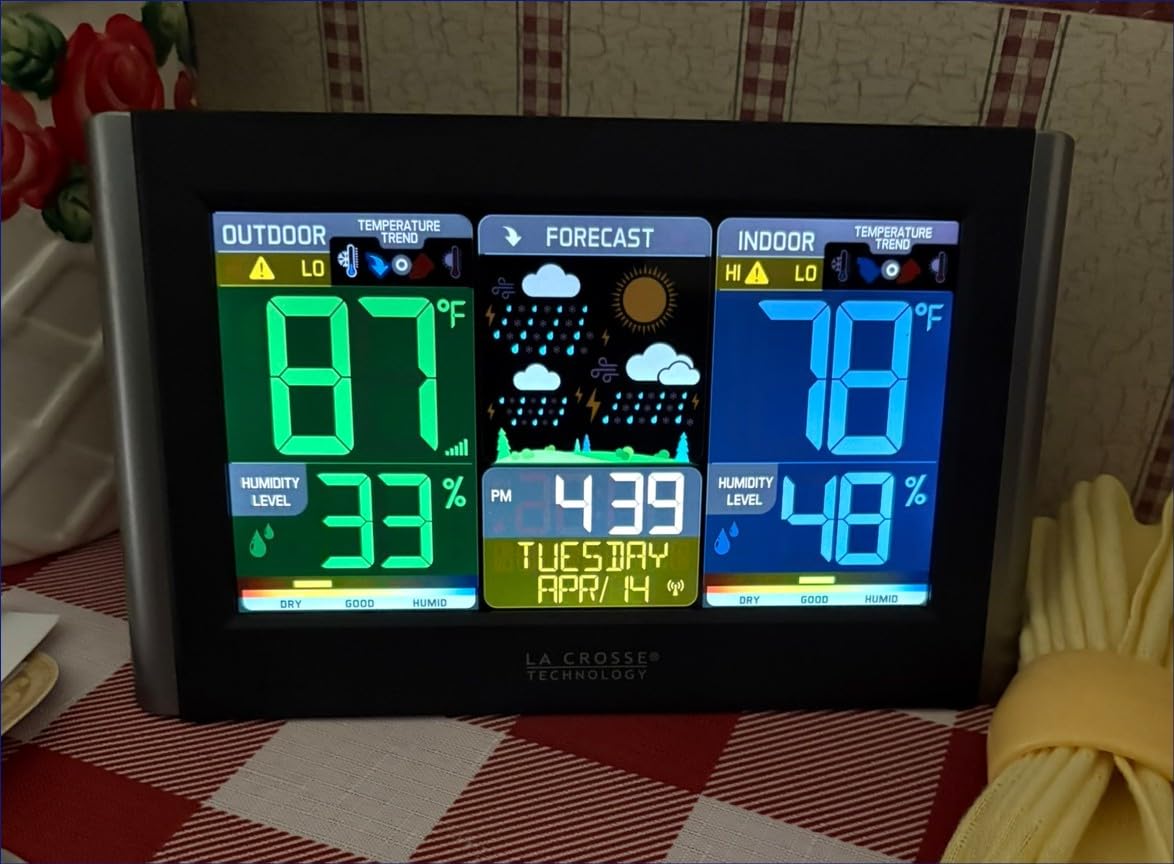
The color forecast display uses dynamic icons and trend arrows that show whether conditions are improving or deteriorating. This visual approach makes it easy to plan garden tasks at a glance. The station also records daily high and low values for temperature and humidity, auto-resetting each day so you can track patterns over time.
The comfort level color bars are a nice touch for gardeners monitoring humidity. They show whether conditions are in the dry, comfortable, or humid range, helping you anticipate plant stress or disease pressure before problems develop.
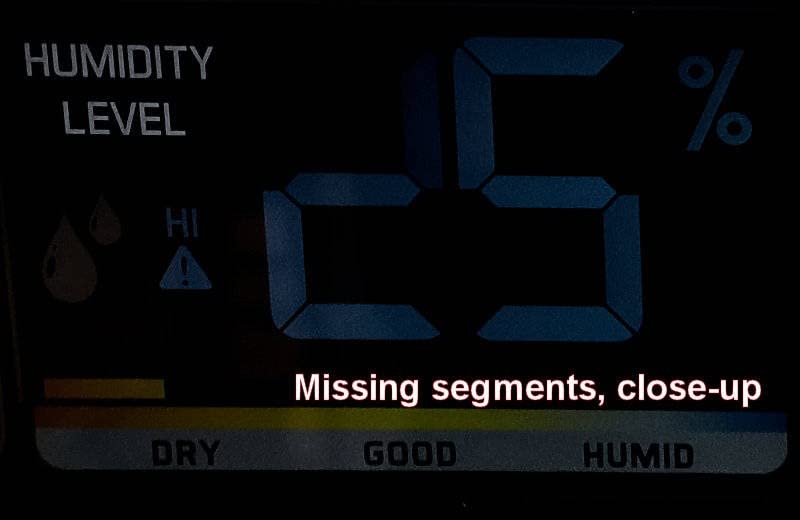
Alert Customization for Frost Protection
The customizable alerts are where this station shines for gardeners. You can set separate high and low thresholds for both temperature and humidity. For frost protection, set a low temperature alert at 35 or 36 degrees Fahrenheit so you have time to act before the actual freeze hits.
The alerts trigger on the display console itself, which means you need to be within earshot or sight of the unit. Unlike WiFi-connected stations, there are no phone push notifications. This is a limitation if you travel or have a large property where the console might be in another room.
Display Quality and Usability
The large display with adjustable brightness is one of the better console designs in this price range. The LED display is readable from across a room, and the adjustable brightness means it will not keep you awake if placed in a bedroom. The atomic clock feature auto-sets the time and adjusts for Daylight Savings, so the clock is always accurate.
One thing to note is that the temperature accuracy specification of 5 degrees Celsius is higher than many competitors. In practice, users report accuracy is better than the spec suggests, but if precision is critical for your gardening decisions, consider a station with a tighter accuracy rating.
6. Newentor Q3-BLACK Wireless Indoor Outdoor Thermometer
Newentor Weather Station Wireless Indoor Outdoor Thermometer, Black,1Sensor
- Large color LCD display with comprehensive information
- Atomic clock with time and date
- Weather forecast for next 8 to 24 hours
- Barometric pressure tracking
- Customizable alerts
- Affordable price point
- Not smart home compatible
- Only 1 sensor included in base model
- No batteries included for backup
The Newentor Q3-BLACK is the budget pick for gardeners who want core weather monitoring without spending a fortune. At its price point, this station offers remarkable value with a large color LCD display, barometric pressure tracking, and 8 to 24 hour weather forecasts. It is the number one bestseller in Amazon’s Weather Stations category, and the value is immediately apparent.
For beginner gardeners or those with small plots, the Newentor provides the essential data you need to make good garden decisions. The indoor and outdoor temperature and humidity readings with daily high and low tracking help you understand your garden’s daily temperature swings. The barometric pressure trend is particularly useful for predicting weather changes before they happen.
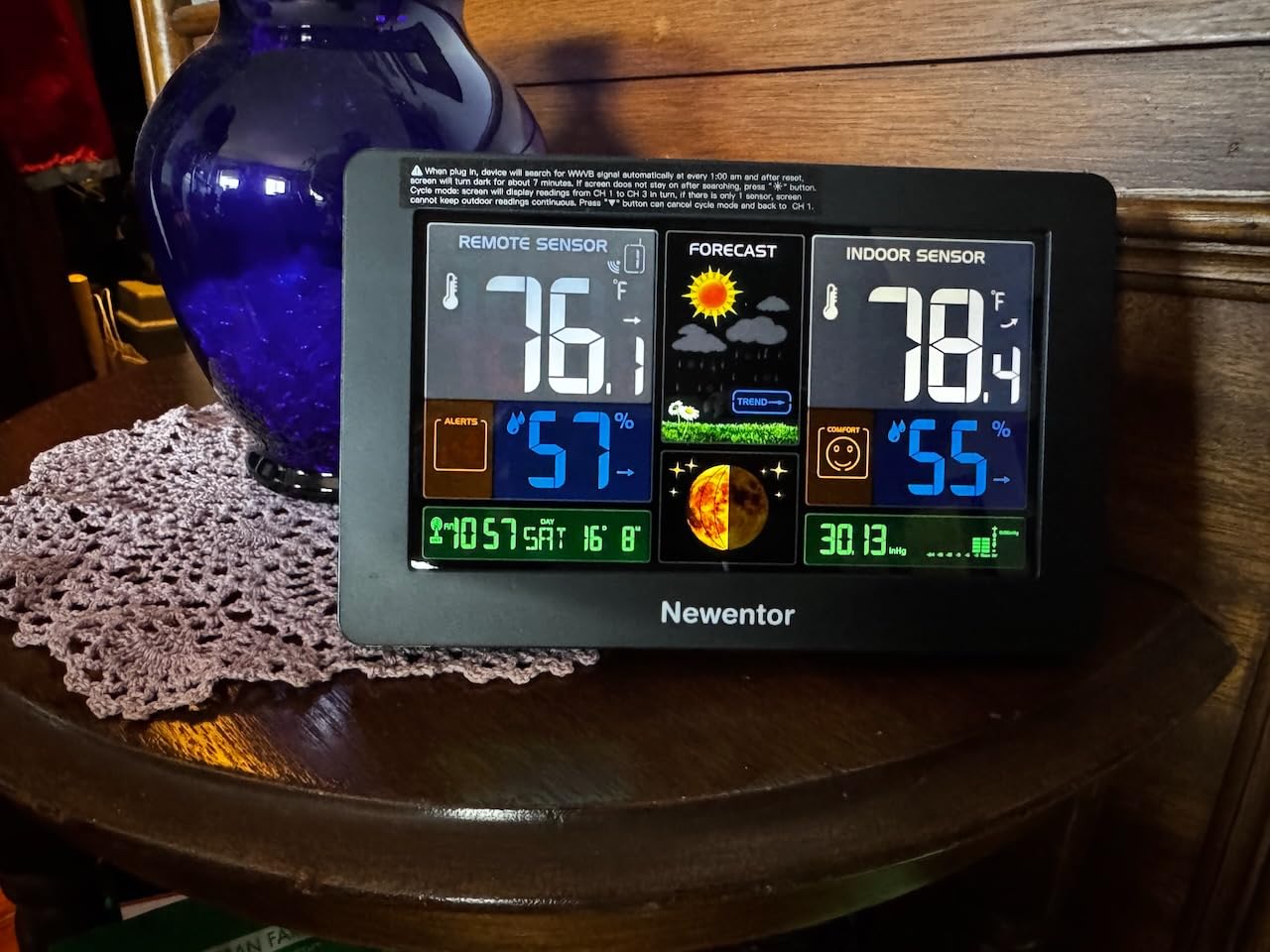
The weather forecast feature predicts conditions for the next 8 to 24 hours based on barometric pressure trends. While not as accurate as stations with full sensor arrays, it gives you a heads-up on approaching rain or temperature changes. The moon phase display is a nice bonus for gardeners who follow lunar planting calendars.
The base model includes one remote sensor, which covers one outdoor location. If you want to monitor multiple garden areas, additional sensors can be added. The station cycles through connected sensors automatically, displaying temperature and humidity from each one in sequence.
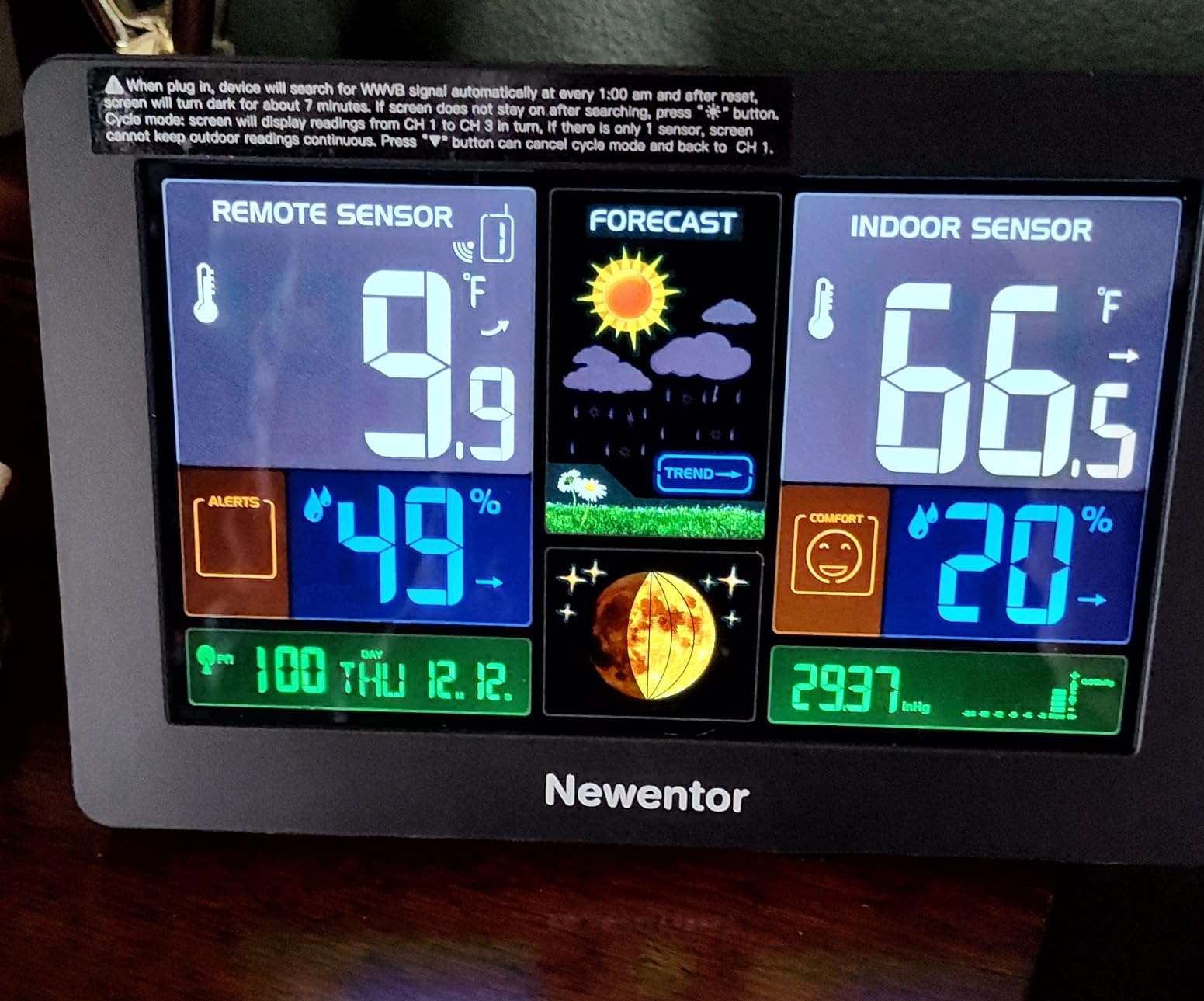
What You Get for the Price
For a fraction of what premium stations cost, you get a color display with atomic clock, weather forecasting, customizable alerts, and barometric pressure tracking. The adjustable backlight lets you use it as an always-on display with the DC adapter or switch to battery backup with a 15-second quick-glance eco mode.
The tradeoff is that there is no WiFi connectivity, no smartphone app, and no smart home integration. You also miss out on wind and rainfall measurements, which are available on more expensive stations. For gardeners who primarily want temperature and humidity tracking with basic forecasting, these omissions may not matter.
Best Suited for Which Gardeners
This station is perfect for budget-conscious gardeners, beginners who are just starting to track weather data, or anyone who wants a simple indoor and outdoor temperature monitor with extra features. Container gardeners and small-plot growers can get everything they need from this station without paying for sensors they will not use.
If you have a larger garden or need wind and rain data for irrigation and plant protection decisions, consider stepping up to a station with a full sensor array like the AcuRite Iris or Ambient Weather WS-2902.
7. Sainlogic SA68 12-in-1 Wireless Weather Station
- Extra-large 8 inch display with bold fonts
- High contrast ideal for seniors
- Three-level adjustable backlighting
- High-precision rain gauge
- Solar powered with battery backup
- Easy straightforward assembly
- No WiFi capability
- Rain gauge accuracy issues reported
- Wind direction can be erratic due to cross winds
- Manual calibration required for best results
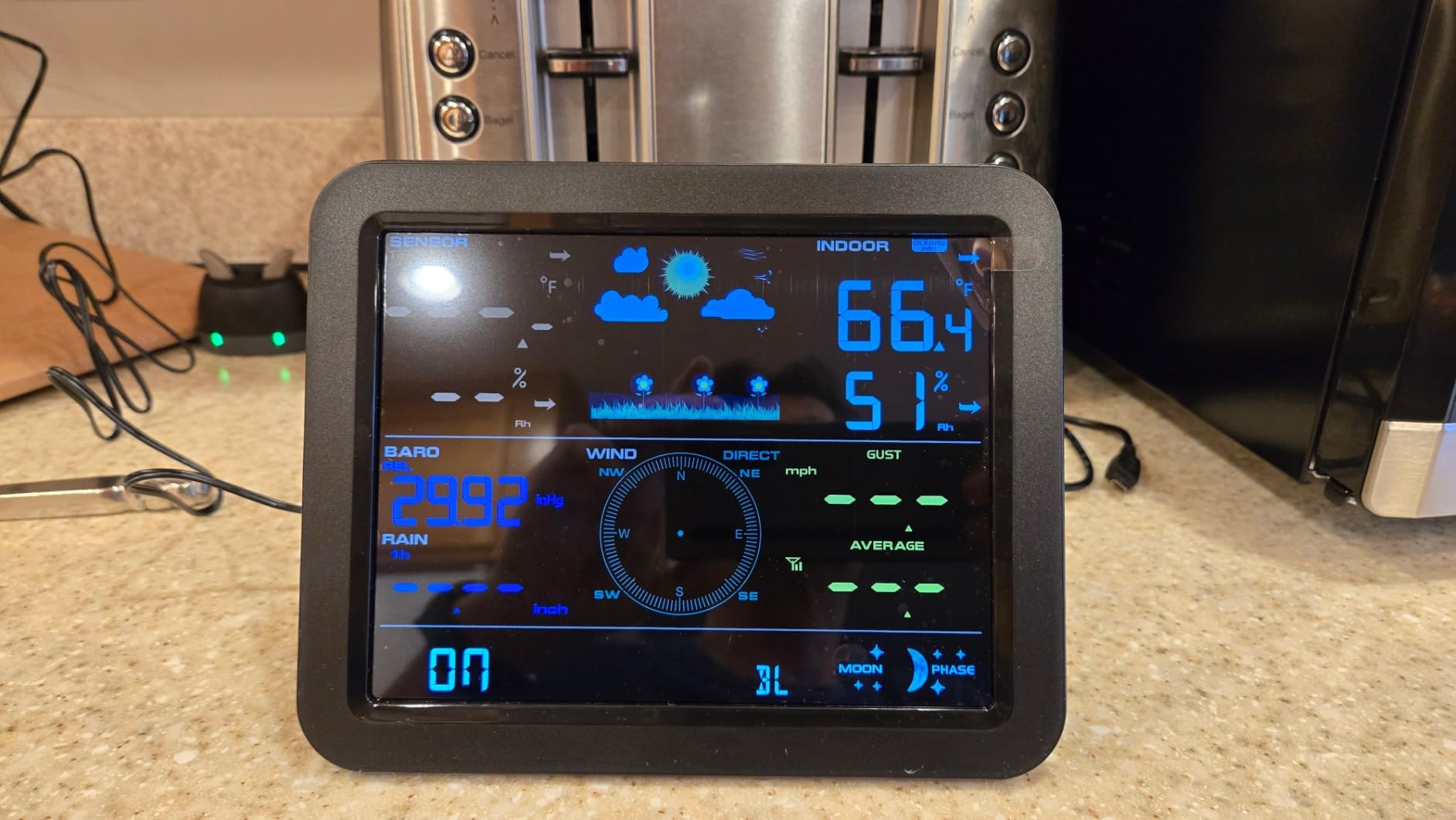
The Sainlogic SA68 earns the Best for Easy Reading badge thanks to its massive 8-inch display with bold fonts and high contrast. If you or a family member struggle to read smaller weather station displays, this is the station to get. The three-level adjustable backlighting means you can customize brightness for any lighting condition.
This is a genuine 12-in-1 weather station that tracks indoor and outdoor temperature, humidity, barometric pressure, wind speed and direction, rainfall, dew point, perceived temperature, and moon phase. For gardeners, the inclusion of a rain gauge and wind monitoring at this price point is impressive. The solar-powered outdoor sensor with battery backup keeps running without frequent battery changes.
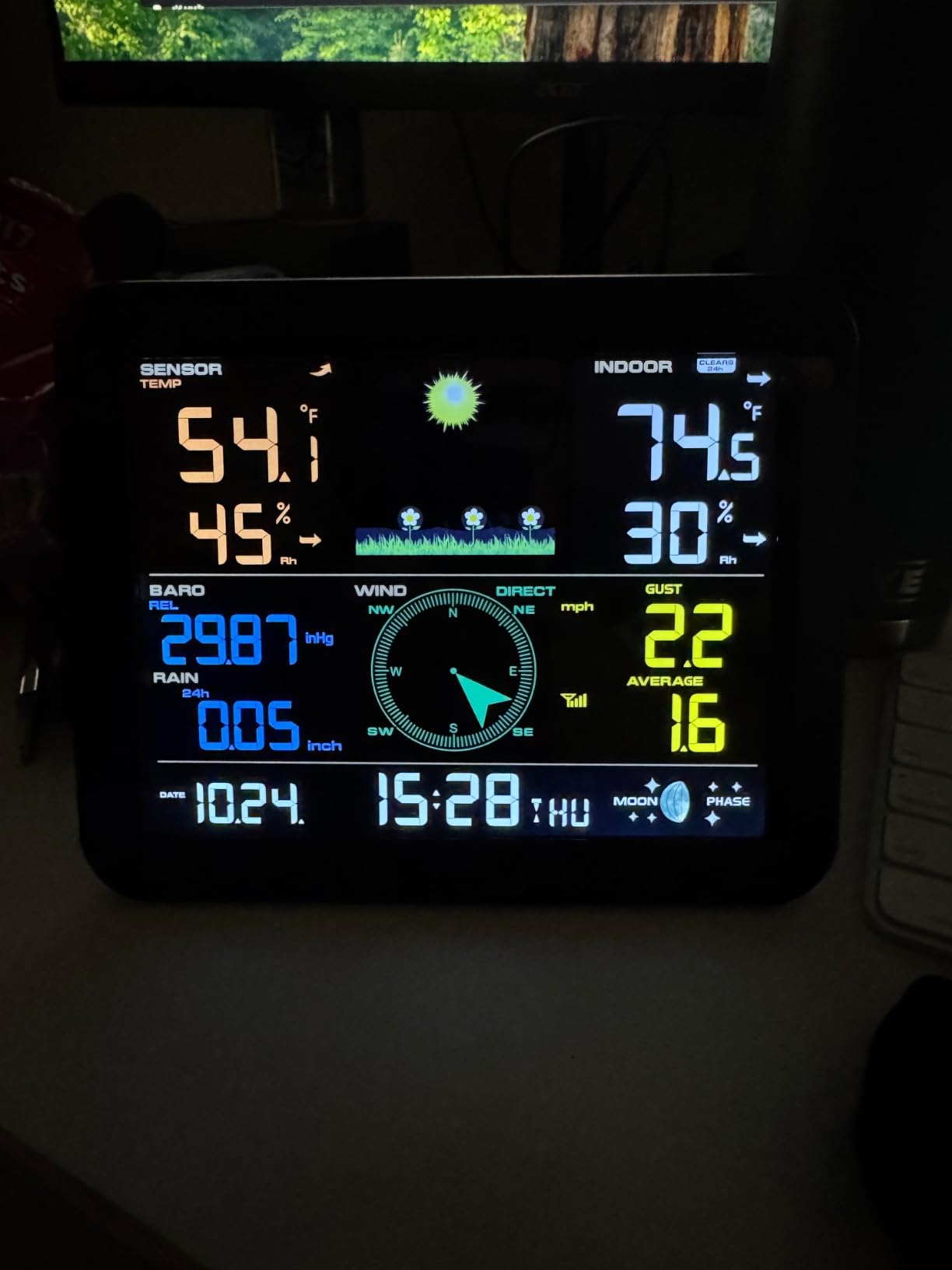
The cumulative rainfall measurement is particularly useful for gardeners tracking irrigation needs. Instead of guessing how much rain fell overnight, the Sainlogic gives you a running total. The dew point reading helps you predict frost conditions and anticipate plant disease pressure from high humidity.
The main limitation is the lack of WiFi connectivity. All data displays only on the console, so there is no remote monitoring or app integration. Some users also report that the rain gauge requires occasional manual calibration for best accuracy, and cross winds can affect wind direction readings.
Rain Gauge Performance for Gardeners
The Sainlogic SA68 features a high-precision rain gauge rated at plus or minus 1mm for light rain, which is competitive in this price range. The self-emptying design automatically drains collected water, so maintenance is minimal. For gardeners making irrigation decisions, having actual rainfall data from your garden rather than estimates from a distant weather station is a game-changer.
To maximize accuracy, mount the rain gauge in an open area away from trees and buildings. Obstructions can block rainfall or create turbulence that affects collection. A quick visual check during fall for leaf debris will keep readings accurate.
Display Design and Accessibility
The 8-inch display is the largest in this roundup, and the bold fonts make it readable from a significant distance. This makes the SA68 an excellent choice for older gardeners or anyone with vision challenges. The layout groups related data together logically, so temperature, humidity, and pressure are easy to find at a glance.
The three-level backlight adjustment lets you dim the display at night or brighten it during the day. The lacquered ABS construction feels solid, and the display console has a modern look that fits well in most homes.
8. Ambient Weather WS-5000 Ultrasonic Smart Weather Station
- Ultrasonic sensor array with no moving parts
- Fast and easy setup
- Real-time updates every 5 seconds
- Smart home ready with IFTTT
- Google Home
- Alexa support
- Extra large rain cup for better accuracy
- Integrated bird spike on rain cup
- TFT Full Color LCD display
- Premium price point
- Requires batteries not included
- WiFi setup required for full features
- Some reliability concerns with connectivity
The Ambient Weather WS-5000 is the ultrasonic upgrade to the WS-2902, offering the same smart home features but with a sensor design that has zero moving parts. Ultrasonic wind measurement uses sound waves instead of spinning cups and vanes, which means nothing to freeze, break, or wear out over time.
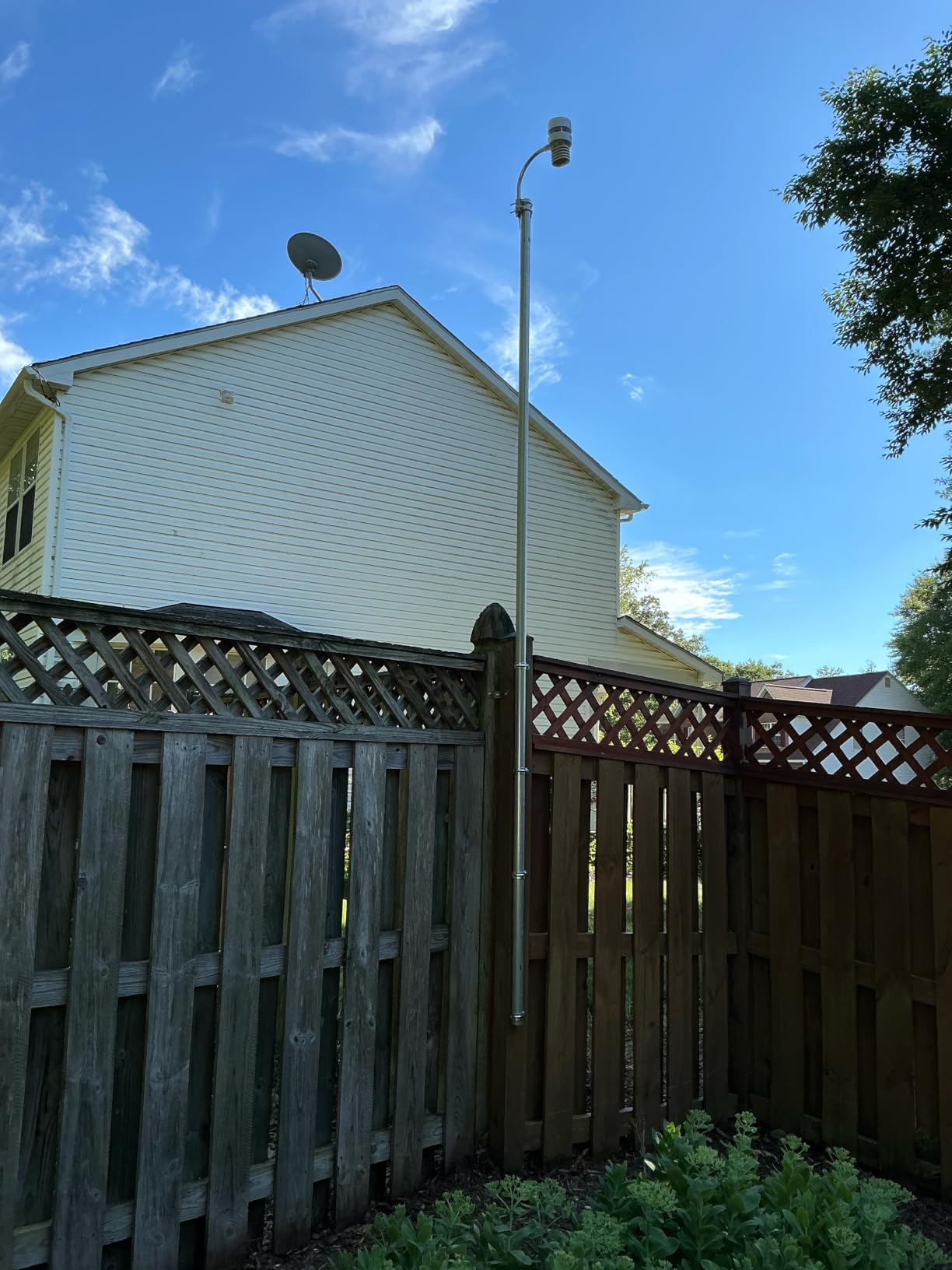
For gardeners in harsh climates where ice, dust, or debris could damage mechanical sensors, the ultrasonic array is a significant advantage. The station measures wind speed and direction using ultrasonic technology, while the extra-large rain cup provides better accuracy than standard-sized gauges. An integrated bird spike prevents birds from perching on the rain cup and contaminating readings.
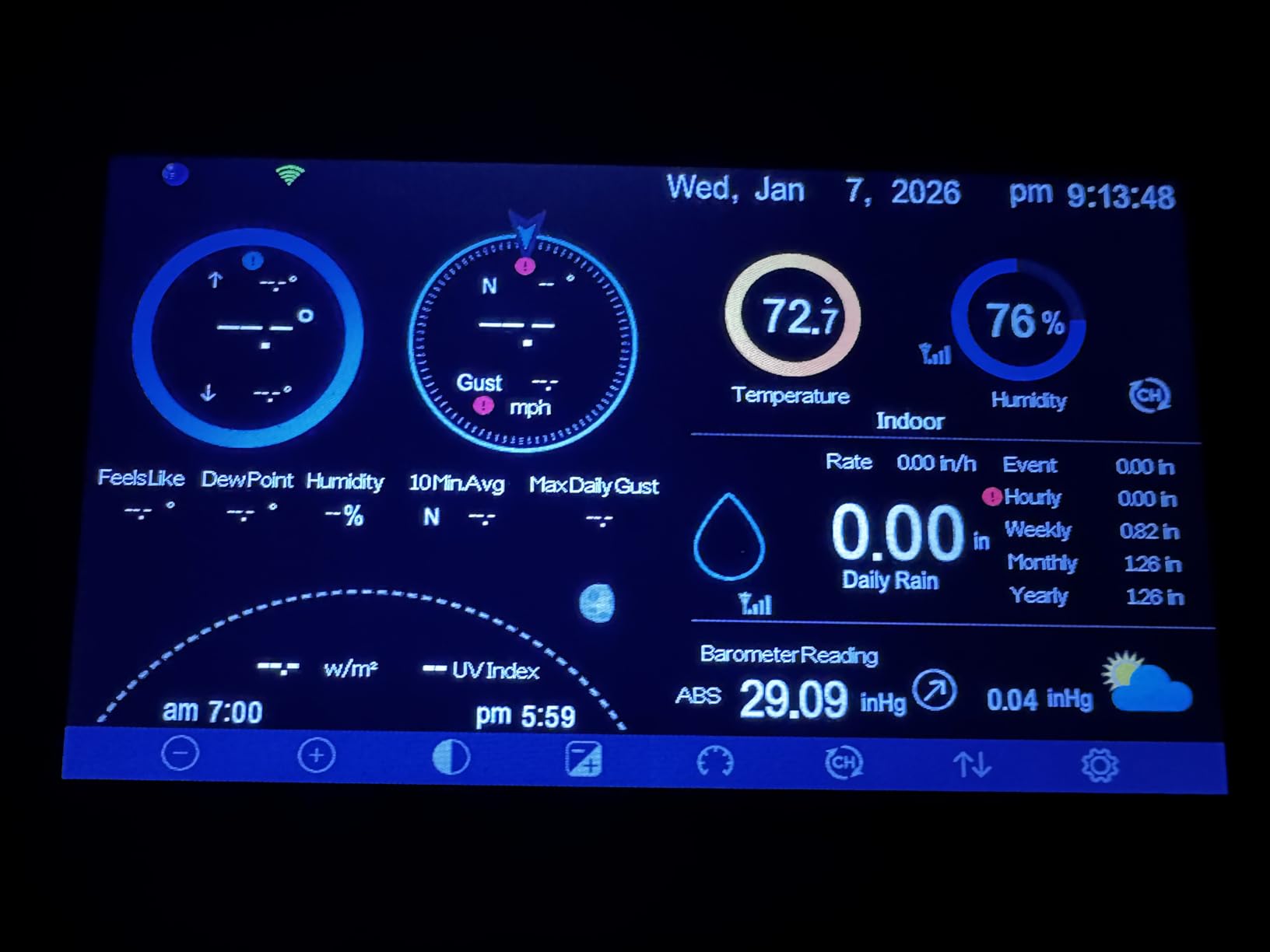
The TFT full color LCD display is a step up from the WS-2902, offering sharper graphics and better viewing angles. Real-time updates every 5 seconds mean you are always looking at current conditions, not data from several minutes ago. The smart home integration matches the WS-2902, with IFTTT, Google Home, and Alexa support.
Like its sibling, the WS-5000 connects to the Ambient Weather Network and supports WiFi connectivity for remote monitoring through the Ambient Weather app. The station is solar powered, reducing maintenance to near zero once installed.
Ultrasonic vs Traditional Sensors
Ultrasonic wind sensors have several advantages over mechanical designs. With no spinning cups or moving vanes, there is nothing to ice up in winter, no bearings to wear out, and no debris to jam the mechanism. The result is more consistent readings over time and lower maintenance requirements.
The tradeoff is cost. Ultrasonic technology is more expensive to manufacture, which is reflected in the WS-5000’s higher price compared to the WS-2902. For gardeners who experience freezing winters or who want maximum long-term reliability, the investment may be worth it.
Smart Home Integration Details
The WS-5000 offers the same IFTTT, Alexa, and Google Home integration as the WS-2902, so you can build the same garden automation routines. Trigger smart sprinklers based on actual rainfall, set voice alerts for temperature drops, or log data to Google Sheets for trend analysis.
The Ambient Weather app provides remote access to all data, historical graphs, and customizable alerts. You can monitor your garden conditions from anywhere and receive push notifications when conditions meet your alert thresholds. This is particularly valuable for frost protection and storm preparation.
9. ECOWITT WS3901 Wi-Fi Weather Station Kit
ECOWITT WS3901 Wi-Fi Weather Station Kit, Includes WS3900 7.5” Colored LCD Display Console and WS90 Outdoor Sensor Array, IoT Function, 915 MHz
- 7.5 inch large colored LCD display console
- WiFi connectivity for remote viewing
- IoT supported with Ecowitt app
- Free platform support including ecowitt.net and Wunderground
- Compatible with up to 16 IoT devices
- Supports multiple sensor types
- Easy WiFi configuration via app or web
- Relatively new product with limited reviews
- Sensors sold separately for expansion
- Requires 2.4 GHz WiFi only
- No batteries included
The ECOWITT WS3901 is a newer entrant that has quickly earned a reputation among smart home enthusiasts and gardeners who want deep IoT integration. With support for up to 16 IoT devices, this station is the foundation of a connected garden monitoring system that goes well beyond basic weather data.
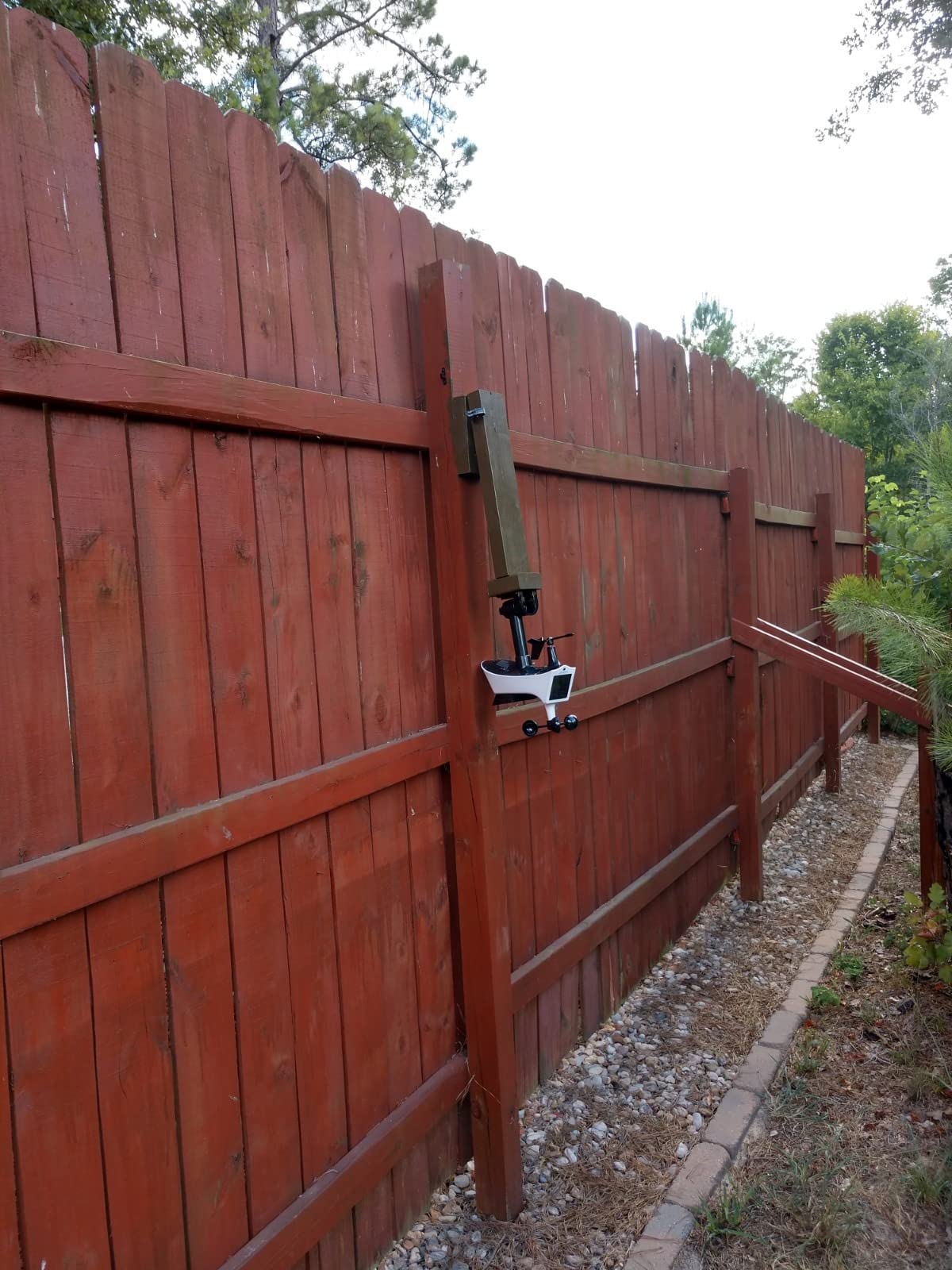
The WS90 outdoor sensor array is a 7-in-1 unit that measures temperature, humidity, wind speed and direction, solar and UV light, and uses a piezo rain gauge for precipitation measurement. Piezo technology is a different approach to rain sensing that uses pressure-sensitive elements instead of a tipping bucket, reducing maintenance and improving reliability in cold conditions.
What sets Ecowitt apart is its open ecosystem approach. The station uploads data to multiple free platforms including ecowitt.net, Weather Underground, WeatherCloud, WOW, and the Met Office. The Ecowitt app provides a clean interface for viewing current conditions, historical data, and setting alerts from your phone.
The IoT support is where this station gets interesting for serious gardeners. You can connect Ecowitt soil moisture sensors, additional temperature and humidity sensors, and water leak detectors to build a complete garden monitoring network. With up to 16 devices supported, you can cover every corner of a large property.
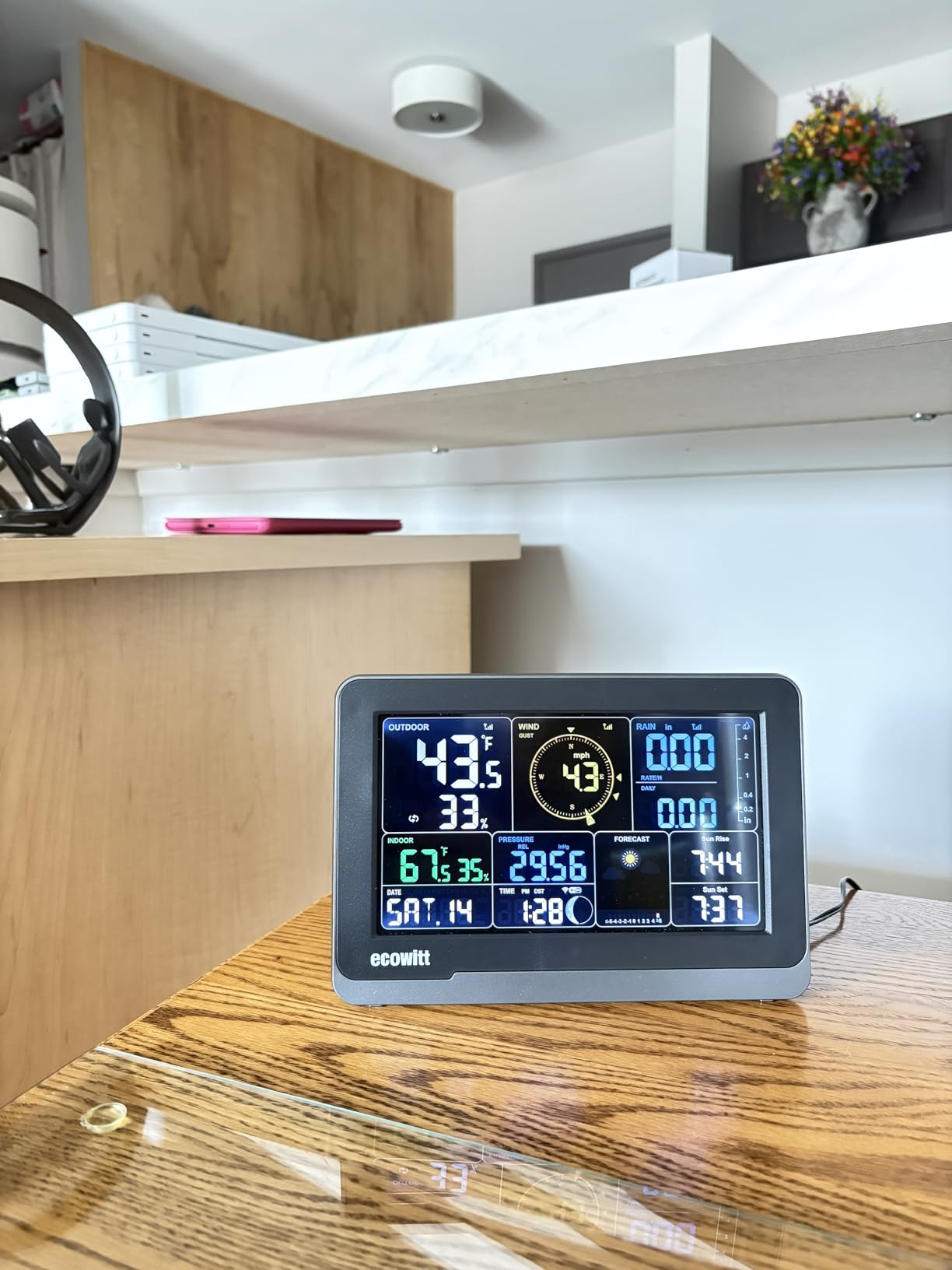
Expanding Your Garden Monitoring Network
The ability to add Ecowitt soil moisture sensors is a standout feature for gardeners. While the station itself does not include soil sensors, you can add them to monitor actual soil conditions in your beds. This creates a complete picture of your garden environment, from atmospheric conditions to root zone moisture.
Each additional sensor integrates seamlessly with the WS3901 console and the Ecowitt app, so you see all your data in one place. For gardeners with multiple growing areas, greenhouses, or large properties, this expandability is unmatched at this price point.
WiFi Configuration and App Experience
The Ecowitt app guides you through WiFi setup step by step, and most users report a smooth configuration process. The app displays current readings, historical graphs, and supports customizable alerts. You can also access your data through a web browser, which is convenient for checking conditions from a computer.
The station requires a 2.4 GHz WiFi connection, which is standard for IoT devices but worth confirming with your router setup. Once connected, data uploads are reliable, and the app maintains historical records for trend analysis over time.
10. La Crosse Technology V42-PRO-INT Professional Smart Wi-Fi Weather Station
- Dynamic forecast with vibrant color icons
- 6 different display views
- 7-day forecast when WiFi connected
- AccuWeather data streaming
- UV index and sunrise and sunset times
- Thunderstorm and air quality tracking
- La Crosse View app for remote monitoring
- 400 ft wireless range
- Custom alerts and notifications
- Requires separate purchase of batteries for sensors
- Some features require WiFi connection
- Mixed reviews on long-term reliability
- Complex setup for some users
The La Crosse Technology V42-PRO-INT is the professional-grade option in this roundup, offering features that go beyond basic weather monitoring. The standout feature is the 7-day forecast powered by AccuWeather when connected to WiFi, giving you extended planning data that most personal stations cannot match.
For gardeners who plan their week around weather conditions, having a 7-day forecast on your weather station display is incredibly useful. You can see when rain is expected, plan planting and harvesting around temperature trends, and prepare for extreme weather events well in advance. The UV index display helps you anticipate plant heat stress during summer months.
The station features 6 different display views that you can cycle through, letting you focus on the data most relevant to your needs. The vibrant color icons and dynamic forecast presentation make the information easy to digest at a glance. Sunrise and sunset times are displayed alongside weather data, which is handy for planning garden activities around daylight.
The La Crosse View app provides remote monitoring from anywhere, and the 400-foot wireless transmission range is among the best in this roundup. This extended range makes the V42-PRO-INT suitable for larger properties where the sensor array may be mounted some distance from the console.
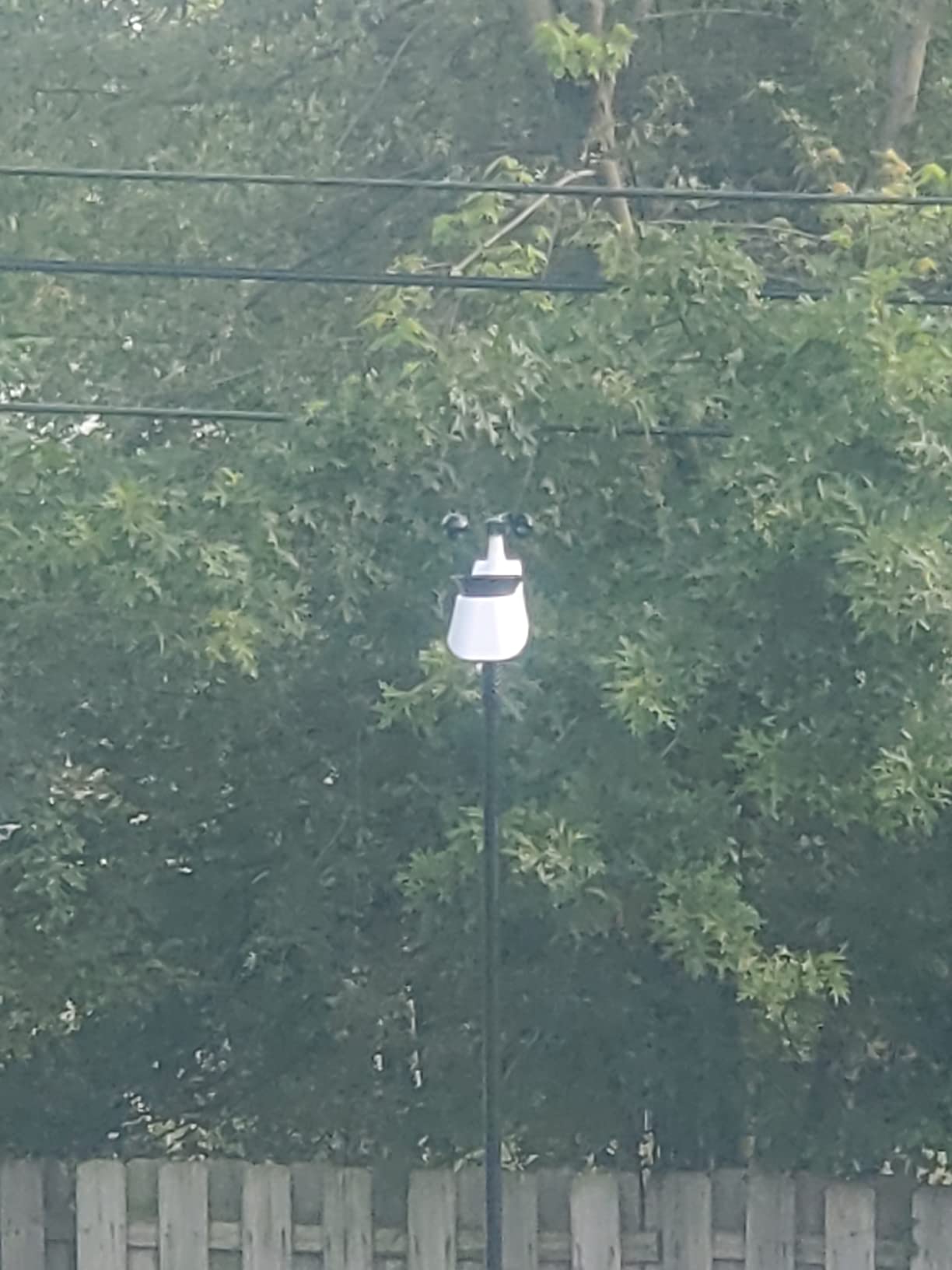
Thunderstorm and Air Quality Tracking
The V42-PRO-INT includes thunderstorm tracking, which provides advance warning of approaching severe weather. For gardeners with delicate plants, greenhouses, or outdoor structures, knowing when a storm is approaching gives you time to secure row covers, close greenhouse vents, or bring container plants to shelter.
Air quality tracking is another feature that sets this station apart. While not directly related to gardening decisions, air quality data can be relevant for gardeners with respiratory sensitivities or those in areas affected by wildfire smoke during summer months.
App Features and Remote Monitoring
The La Crosse View app delivers real-time data from your station to your phone, including custom alerts and notifications. You can set thresholds for temperature, humidity, wind, and rainfall, receiving push notifications when conditions cross your set limits. This is especially useful for frost alerts when you are away from home.
Some users report that the setup process is more complex than competing stations, partly because of the range of features available. Allow extra time for initial configuration, and make sure your WiFi network meets the 2.4 GHz requirement. Once set up, the system runs reliably for most users.
Buying Guide: Key Features Gardeners Need
Choosing the right weather station for your garden comes down to understanding which features matter most for your specific growing situation. Here is what I recommend focusing on when comparing options.
Rainfall Accuracy for Irrigation Decisions
The rain gauge is arguably the most important sensor for gardeners. Knowing exactly how much rain fell on your garden lets you make precise irrigation decisions, avoiding both overwatering and underwatering. Look for self-emptying gauges that do not require manual clearing, and check user reviews for accuracy reports from real-world conditions.
Stations with tipping bucket gauges like the Ambient Weather WS-2902 and AcuRite Iris are proven designs. The piezo and haptic rain sensors on the Ecowitt WS3901 and Tempest are newer technologies that promise lower maintenance.
Frost Alerts and Low Temperature Warnings
If you grow tender plants or extend your season with transplants, frost alerts are essential. Look for stations that let you set custom temperature thresholds with notifications. WiFi-connected stations send push notifications to your phone, while non-connected models alert you through the display console.
Set your frost alert a few degrees above freezing to give yourself time to act. A threshold of 35 to 37 degrees Fahrenheit provides enough advance warning to cover plants or bring containers indoors.
Microclimate Data vs Regional Forecasts
Your garden’s microclimate can differ significantly from regional forecasts by several degrees, especially in areas with elevation changes, urban heat island effects, or coastal influences. A personal weather station gives you data from exactly where your plants are growing, eliminating the guesswork.
Even a basic temperature and humidity sensor placed in your garden will reveal how much your conditions differ from the nearest airport or weather station data. This information alone can transform your gardening decisions.
Sensor Range and Wireless Connectivity
Check the wireless transmission range between the outdoor sensor array and the indoor display. Most stations offer 300 feet of range in open conditions, but walls, trees, and metal structures reduce effective range. The La Crosse V42-PRO-INT offers an impressive 400-foot range, while the Tempest claims over 1,000 feet.
For WiFi-connected stations, consider the distance between your sensor location and your WiFi router. A WiFi extender may be necessary if your garden is far from your home.
Smart Home and App Integration
If you use smart irrigation controllers like Rachio or want to automate garden tasks, choose a station with IFTTT support. The Ambient Weather WS-2902 and WS-5000, Tempest, and Ecowitt WS3901 all support IFTTT, enabling automations like skipping irrigation after rainfall.
For phone-based monitoring, look for stations with dedicated apps that provide historical data, customizable alerts, and remote access. The ability to check garden conditions while away from home is invaluable during critical growing periods.
Power Source and Maintenance
Solar-powered sensor arrays significantly reduce maintenance by keeping batteries topped up. The Ambient Weather stations, Tempest, and Sainlogic SA68 all use solar power with battery backup. Stations that rely solely on batteries will need periodic replacement, especially in cold climates where battery life is reduced.
For moving-part-free operation, consider ultrasonic stations like the Ambient Weather WS-5000 or the Tempest. These designs eliminate mechanical wear and are ideal for cold climates where ice can damage traditional sensors.
Frequently Asked Questions
What is the highest rated home weather station?
The AcuRite Iris 5-in-1 Weather Station holds the highest customer rating in this roundup at 4.5 stars across over 7,000 reviews. The Ambient Weather WS-2902 and Ecowitt WS3901 follow closely at 4.4 stars each. For overall features and gardening value, the Ambient Weather WS-2902 is my top recommendation despite being a tenth of a point behind in pure rating.
Which is better, La Crosse or AcuRite?
Both brands make reliable weather stations, but they serve different needs. AcuRite excels in sensor coverage and ease of setup, with the Iris 5-in-1 offering 55-plus data points. La Crosse Technology shines in display quality, customizable alerts, and atomic clock features. For gardeners who need wind and rain data, AcuRite is generally the better choice. For gardeners focused on temperature monitoring and alerts, La Crosse offers excellent value.
What is the best weather station for agriculture?
For small farms and serious gardening operations, the Tempest Weather Station is the best choice due to its no-moving-parts design, AI-powered forecasts, and integration with Rachio smart irrigation. The Ambient Weather WS-5000 with ultrasonic sensors is another strong option for agricultural use, offering durability and comprehensive data collection. Both support IFTTT for automated irrigation and alert systems.
How do weather stations help with gardening?
Weather stations help gardeners by providing hyper-local data on temperature, rainfall, humidity, and wind that phone apps cannot match. This data enables smarter irrigation decisions based on actual rainfall, earlier frost warnings to protect tender plants, humidity monitoring to prevent fungal diseases, and seasonal trend tracking for better planning. Stations with smart home integration can even automate irrigation based on rainfall data.
What is the best budget weather station for home?
The Newentor Q3-BLACK is the best budget weather station, ranking as the number one bestseller in Amazon’s Weather Stations category. It offers a color LCD display, barometric pressure tracking, 8 to 24 hour forecasts, and customizable alerts at a fraction of the cost of premium stations. For gardeners who need wind and rain data on a budget, the Sainlogic SA68 12-in-1 is an excellent step-up option.
Final Verdict
After reviewing ten stations and comparing them specifically for gardening use cases, my recommendation is clear. The Ambient Weather WS-2902 is the best weather station for home gardeners in 2026, offering the best combination of sensor coverage, smart home integration, and value. For gardeners who want premium features like AI forecasts and zero-maintenance operation, the Tempest Weather Station is worth the investment.
On a budget, the Newentor Q3-BLACK delivers core weather monitoring at an unbeatable price. And for gardeners who need expandable IoT monitoring across a large property, the Ecowitt WS3901 with its support for up to 16 sensors opens possibilities no other station in this roundup can match.
The bottom line is that any of these stations will give you better data than a phone app for making garden decisions. The question is how much data you need, how you want to access it, and what level of automation matters to your gardening practice. Pick the station that fits your garden size, your tech comfort level, and your budget, and start growing smarter.