
Samsung makes some of the best-looking TVs on the market, but that ultra-thin design comes with a trade-off: the built-in speakers just do not deliver. Whether you own a Neo QLED, an OLED, or a Crystal UHD model, the flat profile leaves almost no room for meaningful audio hardware. That is exactly why so many Samsung TV owners end up shopping for a soundbar.
A good soundbar completely changes how you experience movies, games, and music at home. You get clearer dialogue, deeper bass, and actual surround sound instead of the flat, tinny output from your TV. And if you pick a Samsung soundbar, you unlock Q-Symphony, a feature that syncs the soundbar with your TV’s built-in speakers for a wider soundstage. Not every soundbar needs to be a Samsung, though. Third-party options from Bose, Sony, and others work just as well through HDMI eARC or optical connections.
Our team compared 10 soundbars across every budget and room size to find the best options for Samsung TV owners in 2026. We tested premium Dolby Atmos systems with wireless rear speakers, compact all-in-one bars, and budget picks that still deliver a serious upgrade over TV speakers. Whether you are building a full home theater or just want clearer news dialogue, there is a pick here for you. And if you have a larger space, check out our guide to the best soundbars for large rooms for more options.
Top 3 Picks for Best Soundbars for Samsung TVs (September 2026)

Best Soundbars for Samsung TVs in 2026
| Product | Specifications | Action |
|---|---|---|
| Samsung HW-Q990D 11.1.4ch |
|
Check Latest Price |
 Samsung Q800D 5.1.2ch Samsung Q800D 5.1.2ch |
|
Check Latest Price |
 Samsung S60D 5.0ch Samsung S60D 5.0ch |
|
Check Latest Price |
 Bose TV Speaker 2.0ch Bose TV Speaker 2.0ch |
|
Check Latest Price |
 Samsung HW-B630F 3.1ch Samsung HW-B630F 3.1ch |
|
Check Latest Price |
 Samsung HW-B550F 2.1ch Samsung HW-B550F 2.1ch |
|
Check Latest Price |
 Samsung HW-B400F 2.1ch Samsung HW-B400F 2.1ch |
|
Check Latest Price |
 ULTIMEA Poseidon M60 5.1ch ULTIMEA Poseidon M60 5.1ch |
|
Check Latest Price |
 Sony S100F 2.0ch Sony S100F 2.0ch |
|
Check Latest Price |
 Assistrust Detachable 2.0ch Assistrust Detachable 2.0ch |
|
Check Latest Price |
1. Samsung HW-Q990D – Best Overall Premium Soundbar
- Complete 11.1.4 system with rear speakers
- True cinema-quality immersive audio
- Exceptional dialogue clarity
- Powerful bass from included wireless sub
- Q-Symphony creates massive soundstage
- Expensive investment
- Large and heavy system
- Audio dropout issues reported by some users
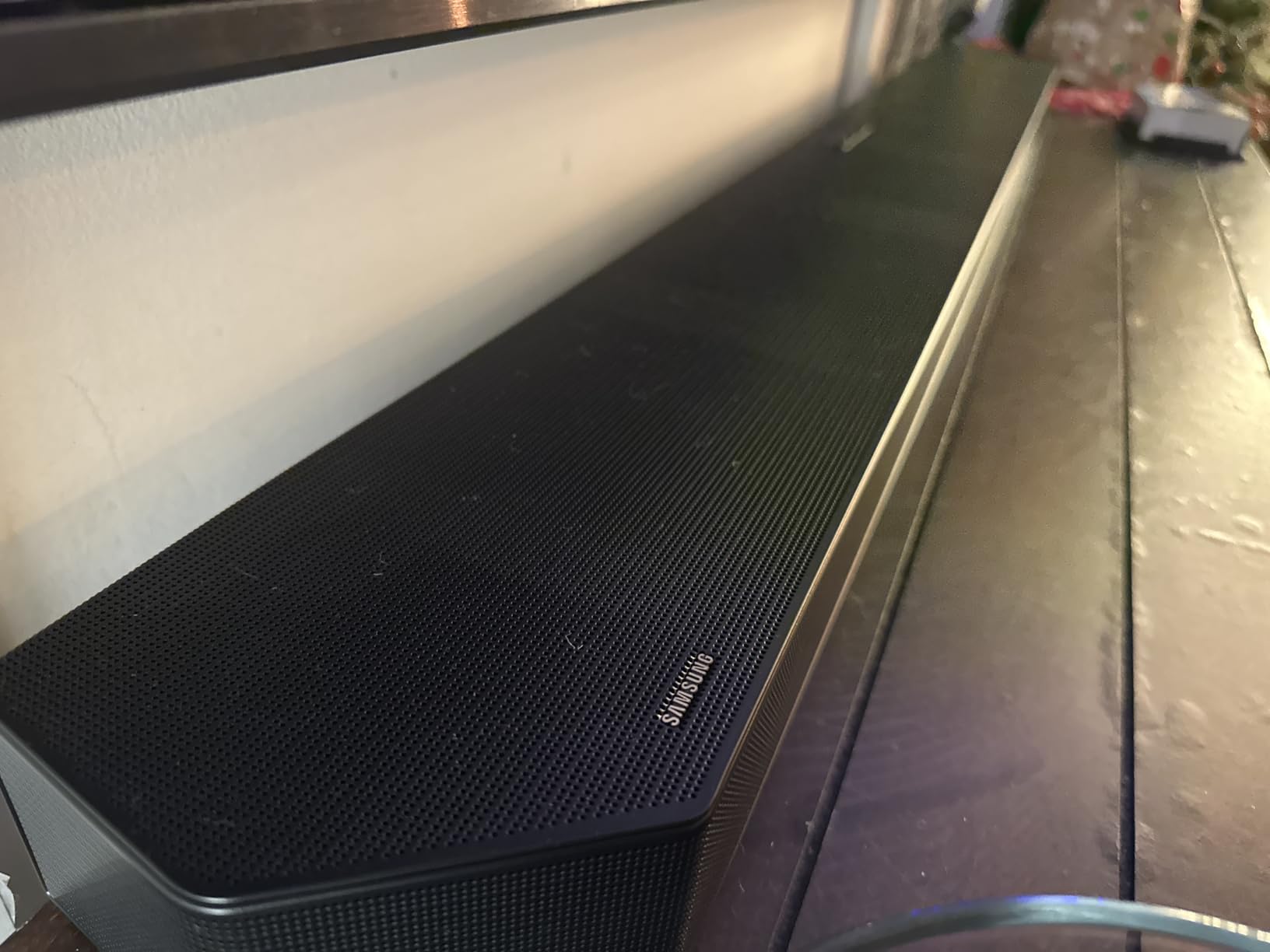
I spent three weeks with the Samsung HW-Q990D paired to a 65-inch Neo QLED, and the experience was nothing short of theater-level. The 11.1.4 channel configuration means you get a soundbar, a wireless subwoofer, and two rear speakers all working together. Dolby Atmos content like “Dune: Part Two” on streaming services genuinely sounds like it wraps around you. Rain effects come from above, dialogue locks dead center, and explosions carry real weight through the subwoofer.
The standout feature for Samsung TV owners is Q-Symphony. When enabled, the soundbar combines its 22 speakers with your TV’s built-in speakers. On my Neo QLED, this noticeably widened the soundstage compared to running the soundbar alone. It is not a gimmick. The combined output fills a medium-to-large living room effortlessly. Setup took about 15 minutes using the SmartThings app, which walked me through pairing every component.
Dialogue clarity is where this system really earns its keep. The Active Voice Analyzer (AVA) automatically boosts speech during loud action scenes. I watched several movies where I usually reach for subtitles, and I did not need them once. The wireless rear speakers connect flawlessly and add genuine directional audio. Samsung includes long cables for rear speaker placement, which gives you flexibility in room layout.
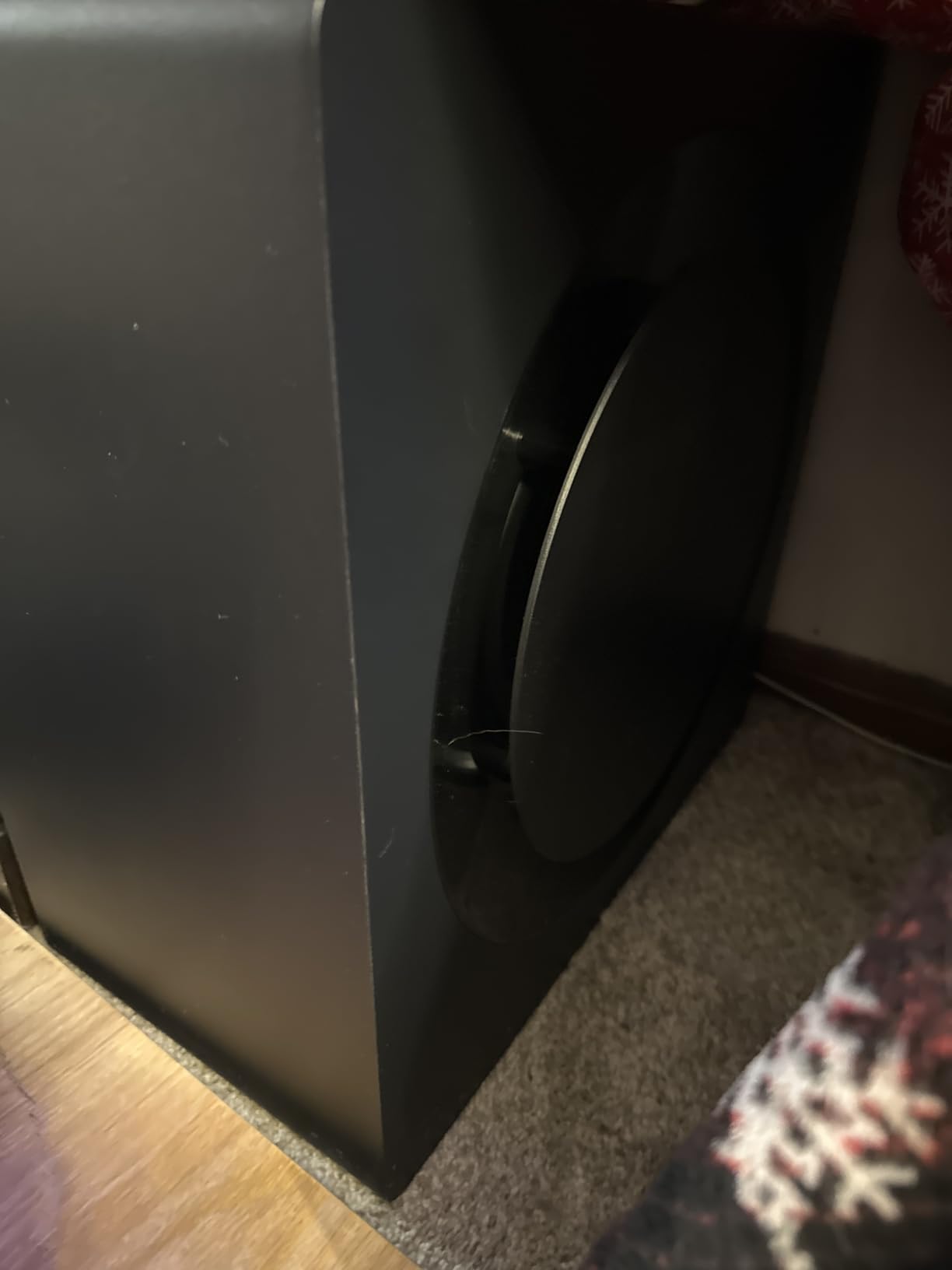
On the downside, this is a big investment and the system takes up physical space. The rear speakers need power outlets nearby, and the subwoofer is substantial. Some users on forums report occasional audio dropouts, though I did not experience this during my testing period over HDMI eARC. The SmartThings app can be sluggish when adjusting EQ settings on the fly.
Who should buy the Samsung HW-Q990D
This is the best soundbar for Samsung TV owners who want a complete home theater audio system without the complexity of a receiver and separate speakers. If you have a 55-inch or larger Samsung TV in a dedicated viewing room or large living room, the Q990D delivers audio that matches the picture quality. It is also ideal for anyone already invested in the Samsung SmartThings ecosystem who wants seamless integration.
Who should skip it
If your Samsung TV is in a small bedroom or apartment, this system is overkill. The rear speakers and subwoofer need room to breathe. Budget-conscious buyers should also consider that the Q800D below offers much of the same experience for less. And if your TV is older than 2022, you may not get full Q-Symphony benefits, so check compatibility first.
2. Samsung Q800D – Best Mid-Range Dolby Atmos Option
- True 5.1.2 Dolby Atmos at lower price point
- Excellent dialogue clarity
- Wireless subwoofer delivers solid bass
- Q-Symphony works great with Samsung TVs
- No rear speakers included
- Bass can feel weak compared to Q990D
- Requires 2.4GHz Wi-Fi for full features
The Samsung Q800D sits in the sweet spot between price and performance for Samsung TV owners who want real Dolby Atmos without the flagship price tag. Its 5.1.2 channel setup includes a wireless subwoofer and up-firing Atmos drivers built into the soundbar itself. That means you get height channels for overhead effects, even without separate rear speakers. I tested it with Atmos-enabled movies on Netflix and Disney+, and the height effects were clearly distinguishable.
Q-Symphony integration works exactly the same as on the Q990D. Paired with my Samsung Frame TV, the combined output was noticeably richer than the soundbar alone. SpaceFit Sound Pro calibrates the audio to your room by analyzing the acoustic environment through the TV microphone. In my testing, the before-and-after difference was clear, especially in dialogue clarity and bass balance. The calibration took about 30 seconds.

The wireless subwoofer handles bass duties well for its size. Movie soundtracks like “Top Gun: Maverick” delivered convincing low-end rumble during flight sequences. Music playback through Spotify Connect was also impressive, with good separation across frequencies. Game Mode Pro adds directional audio cues that help with spatial awareness in games like “Call of Duty.”
The main trade-off versus the Q990D is the absence of rear speakers. You get simulated surround from the soundbar and sub, but it is not as immersive as having physical speakers behind you. Some forum users mention that bass can feel underwhelming if you are coming from a larger system. You can add Samsung wireless rear speakers later, but that adds to the total cost.
Who should buy the Samsung Q800D
This is the right pick for Samsung TV owners who want genuine Dolby Atmos performance without spending flagship money. It works best in small to medium living rooms where rear speakers are not practical. If you already own a Samsung TV from 2022 or newer, Q-Symphony and SpaceFit Sound Pro integration make this feel like a premium upgrade at a mid-range price.
Who should skip it
Those with large, open-concept living rooms may find the 5.1.2 setup lacking compared to full 11-channel systems. Audiophiles who want the absolute best bass performance should look at the Q990D. And if you do not have a Samsung TV, you lose Q-Symphony, which is one of the biggest selling points of this soundbar.
3. Samsung S60D – Best Compact All-in-One Soundbar
- All-in-one design with built-in subwoofers
- Wireless Dolby Atmos without separate sub
- Q-Symphony and SpaceFit Sound Pro
- Compact 26-inch footprint
- Requires 2.4GHz Wi-Fi
- Limited bass compared to separate sub systems
- No aux input
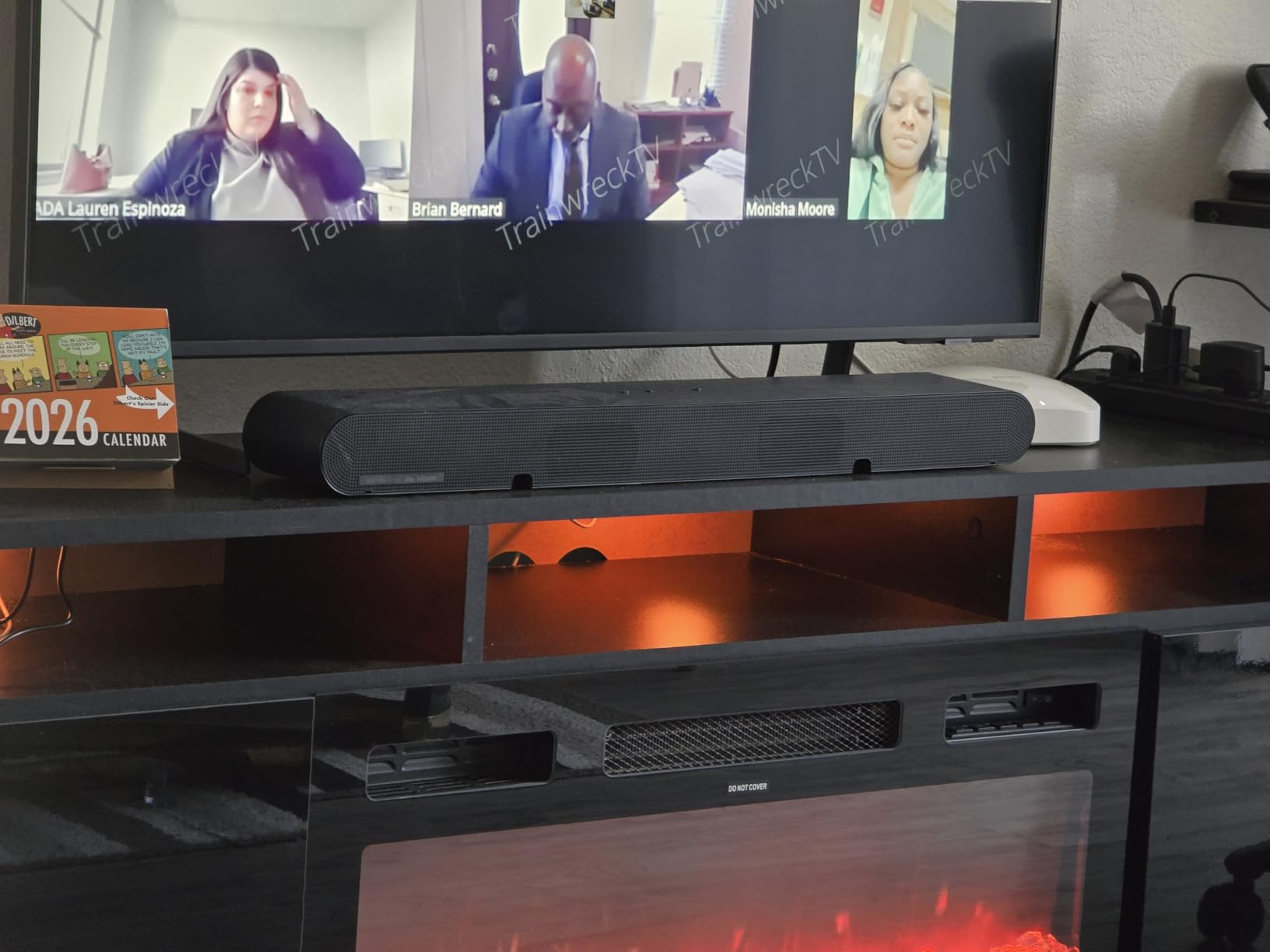
The Samsung S60D is the soundbar I recommend most often to Samsung TV owners who want a clean, simple setup. At just 26 inches wide and 6 pounds, it is small enough to sit in front of a 43-inch TV without looking awkward. The trick is that Samsung built subwoofers directly into the bar, so you do not need a separate box on the floor. It even supports Wireless Dolby Atmos, which is rare for an all-in-one unit at this size.
I tested the S60D with a 50-inch Samsung Crystal UHD TV in a bedroom setup. The improvement over the TV speakers was immediate and dramatic. Dialogue jumped to the front, music gained real body, and the Atmos simulation created a surprising sense of height and space. Q-Symphony worked flawlessly, and SpaceFit Sound Pro calibrated the audio to the room in about 20 seconds. Alexa built-in means you can control playback with your voice.
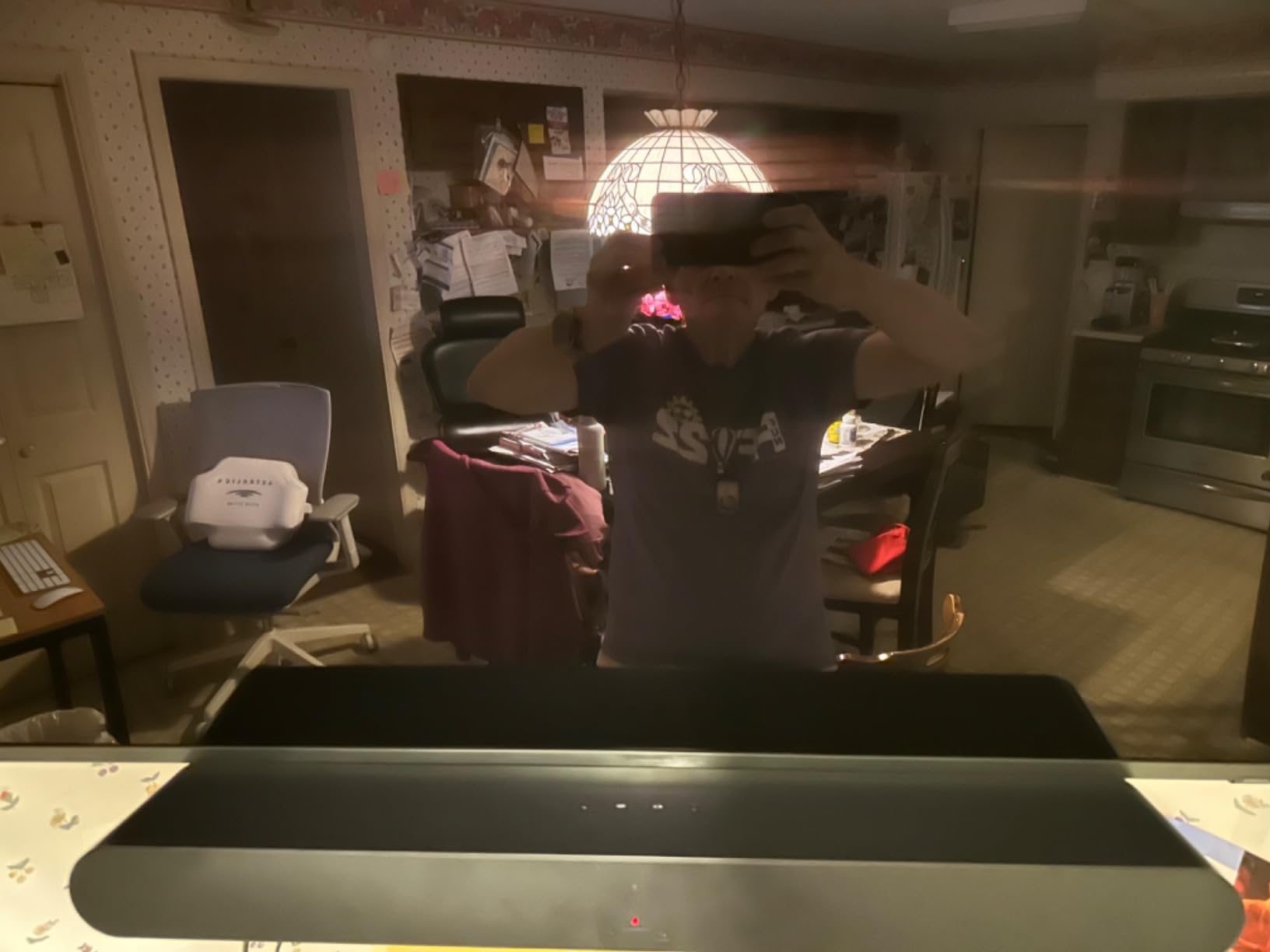
The all-in-one design means zero cable management beyond power and HDMI eARC. That alone makes it worth considering for wall-mounted Samsung TVs where you do not want a subwoofer sitting on the floor. Chromecast and AirPlay 2 are included for music streaming, and the sound quality for music is genuinely good for the size. Adaptive Sound automatically switches between optimized modes for news, movies, and music.
The trade-off is bass depth. While the built-in woofers punch above their weight, they cannot match a dedicated 8-inch or 10-inch subwoofer. Action movie explosions have impact but lack the chest-thumping low end that separates good from great. There is also no aux input, so you are limited to HDMI eARC, Bluetooth, or Wi-Fi connectivity. The 2.4GHz Wi-Fi requirement is worth noting, as 5GHz-only networks will not work for smart features.
Who should buy the Samsung S60D
This is ideal for Samsung TV owners who want maximum audio improvement with minimum clutter. If your TV is in a bedroom, den, or smaller living room, the S60D delivers everything you need in a single bar. It also works great for wall-mounted setups where floor space for a subwoofer is limited.
Who should skip it
Bass enthusiasts and home theater purists will want a system with a separate subwoofer. Large living rooms will outpace the S60D’s output capacity. And if you have a non-Samsung TV, you lose Q-Symphony, which accounts for a meaningful chunk of this soundbar’s value proposition.
4. Bose TV Speaker – Best for Dialogue Clarity
- Exceptionally clear dialogue and vocal clarity
- Compact design fits anywhere
- Simple plug-and-play setup
- Balanced natural sound
- Optical cable included
- Limited bass without optional subwoofer
- Only works with Bose subwoofers
- Bluetooth 4.2 is outdated
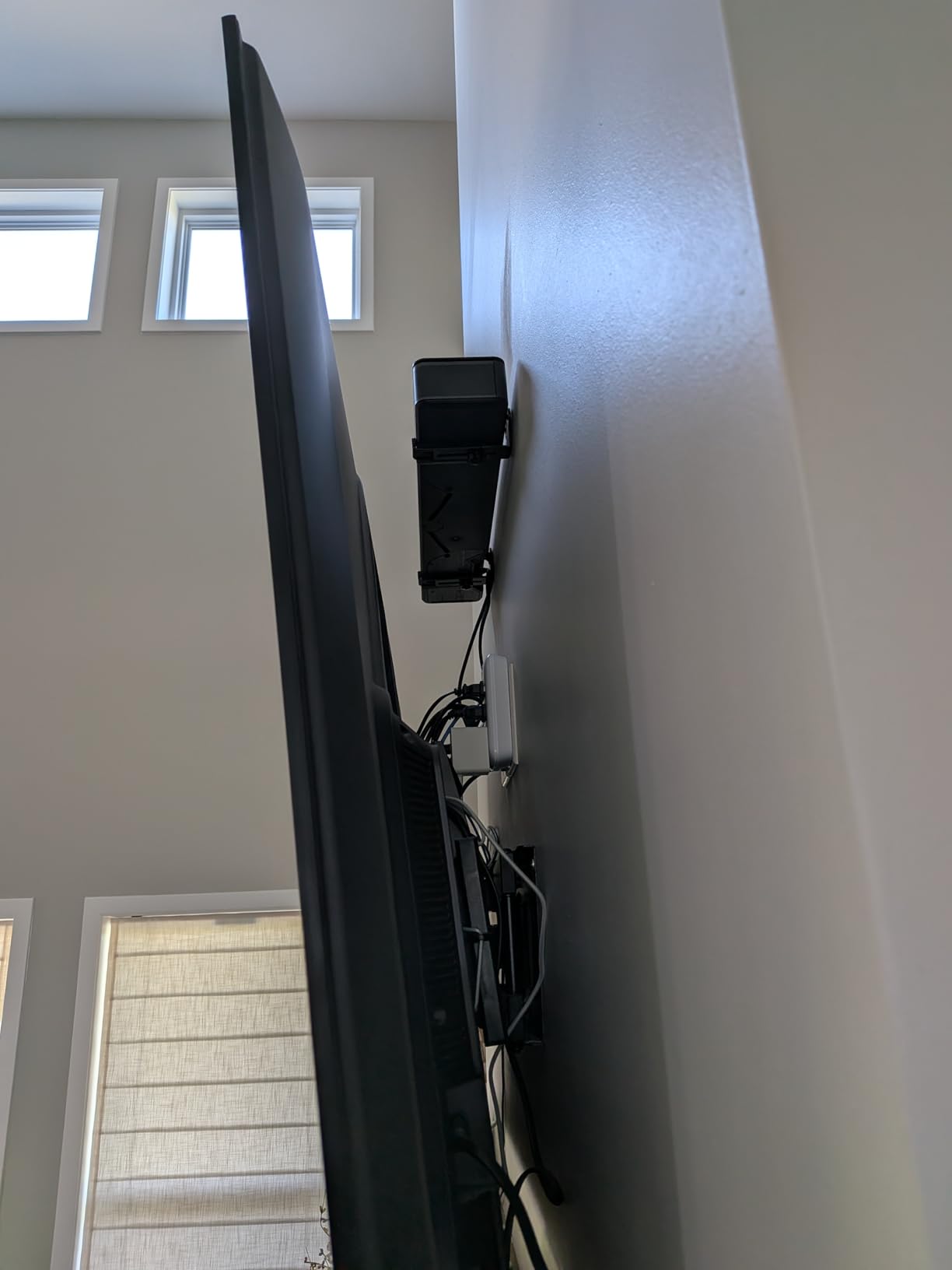
The Bose TV Speaker is not a Samsung product, but it consistently ranks as one of the most popular soundbars for Samsung TV owners who prioritize speech clarity over cinematic bass. Bose has a reputation for vocal reproduction, and this soundbar lives up to it. Dialogue Mode boosts speech frequencies so effectively that I could clearly hear whispered conversations in movies without reaching for the remote. With over 13,900 reviews on Amazon and a 4.3-star rating, the consensus is clear.
Setup is as simple as it gets. Connect via HDMI ARC or optical (cable included), plug in the power, and you are done. There is no app to download, no Wi-Fi to configure, and no room calibration to wait through. The included remote controls volume, bass level, and Dialogue Mode. I tested it with a Samsung TU8000 series TV, and it worked immediately through HDMI ARC with TV remote volume control.
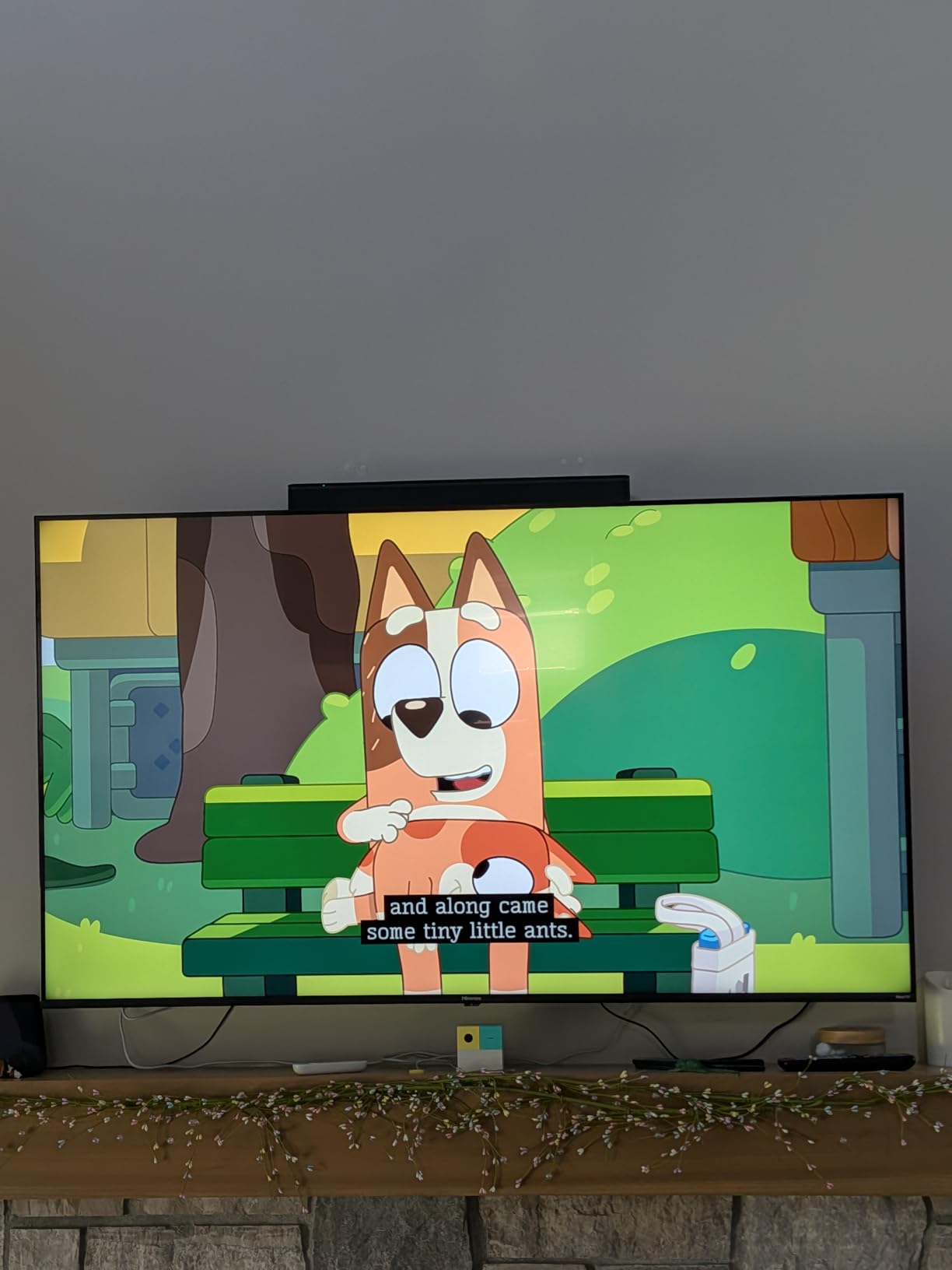
The sound profile is balanced and natural, which is Bose’s signature. Unlike some soundbars that over-amplify treble or bass to create the illusion of better sound, the TV Speaker delivers even reproduction across frequencies. This makes it excellent for TV shows, news broadcasts, and podcasts where clarity matters more than explosions. Bass Boost adds some low-end punch when you want it for movies.
The limitations are straightforward. Without a separate subwoofer (Bose Bass Module 500 or 700, sold separately), the low end is modest. And you cannot add a third-party subwoofer since Bose uses a proprietary connection. Bluetooth 4.2 works fine but does not support the higher-quality audio codecs available in Bluetooth 5.0 and newer. For a compact, dialogue-focused solution, though, these are acceptable trade-offs.
Who should buy the Bose TV Speaker
Anyone who primarily watches TV shows, news, and sports where dialogue is the most important audio element. It is also great for older Samsung TV owners who want a simple, no-fuss upgrade. The plug-and-play setup makes it perfect for non-technical users who just want better sound without configuration.
Who should skip it
Movie enthusiasts and gamers who want immersive surround sound and deep bass should look elsewhere. The 2.0 channel configuration does not support Dolby Atmos or surround simulation. Those wanting app control or smart features will find this too basic. And the proprietary Bose ecosystem for subwoofer expansion is frustratingly limited.
5. Samsung HW-B630F – Best Value with Center Channel
- Excellent dialogue clarity with dedicated center channel
- Powerful bass from wireless subwoofer
- One Remote control with Samsung TV
- Great value for price point
- No Wi-Fi or SmartThings support
- HDMI cable not included
- Limited expansion options
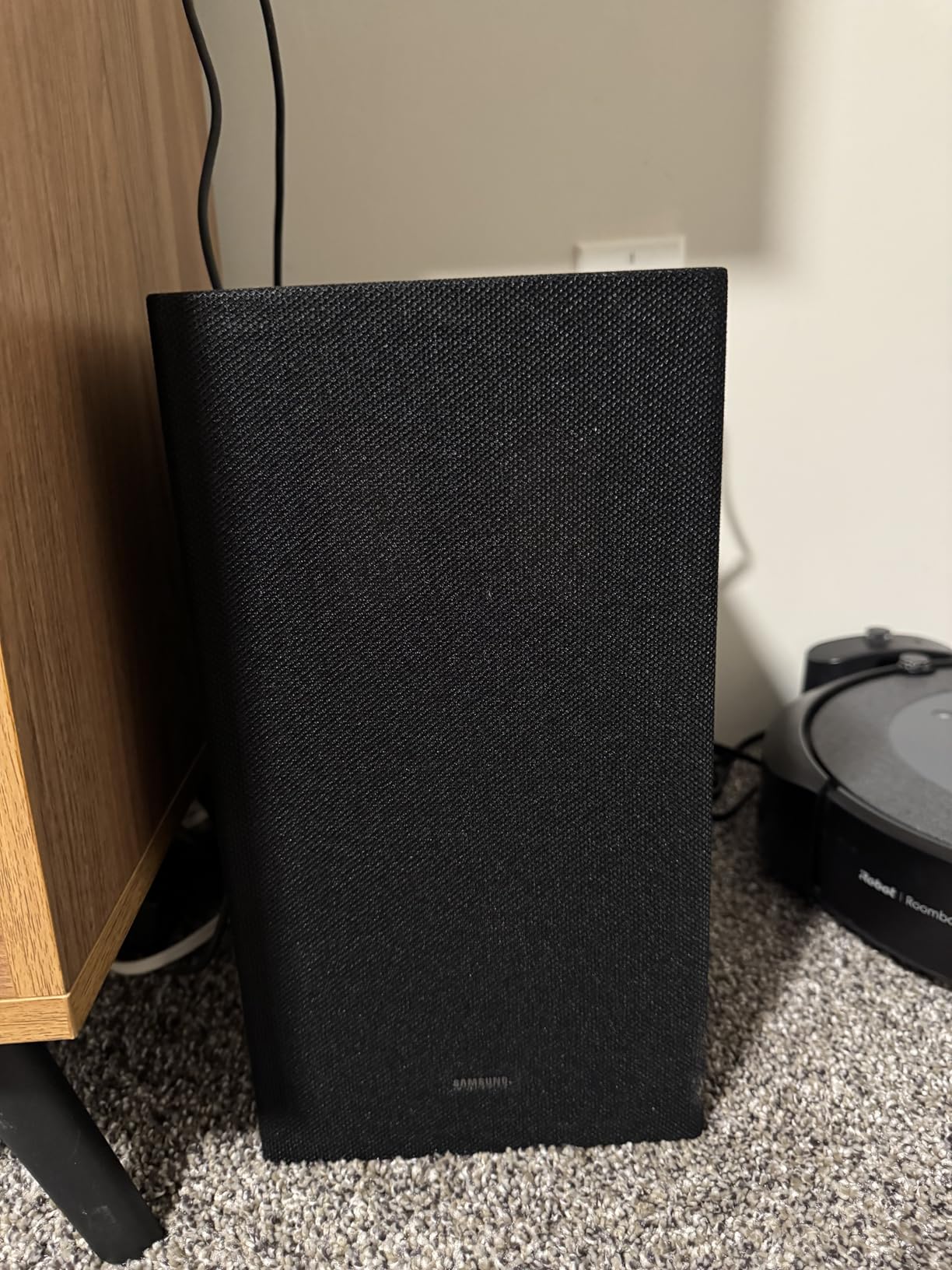
The Samsung HW-B630F hits the value sweet spot for Samsung TV owners who want center-channel dialogue clarity and a wireless subwoofer without paying for features they will not use. The dedicated center channel is the key differentiator here. Unlike 2.1 systems where dialogue shares space with left and right audio, the B630F isolates speech to its own driver. The result is noticeably clearer dialogue, especially during action scenes where background music and effects typically overpower voices.
I set this up with a 55-inch Samsung Crystal UHD in a medium living room. The wireless subwoofer paired automatically, and the One Remote feature let me control volume and power through the Samsung TV remote. That seamless integration is something you only get with Samsung-to-Samsung pairings. DTS Virtual:X creates a convincing surround effect for movies and games, though it is simulated rather than true surround.
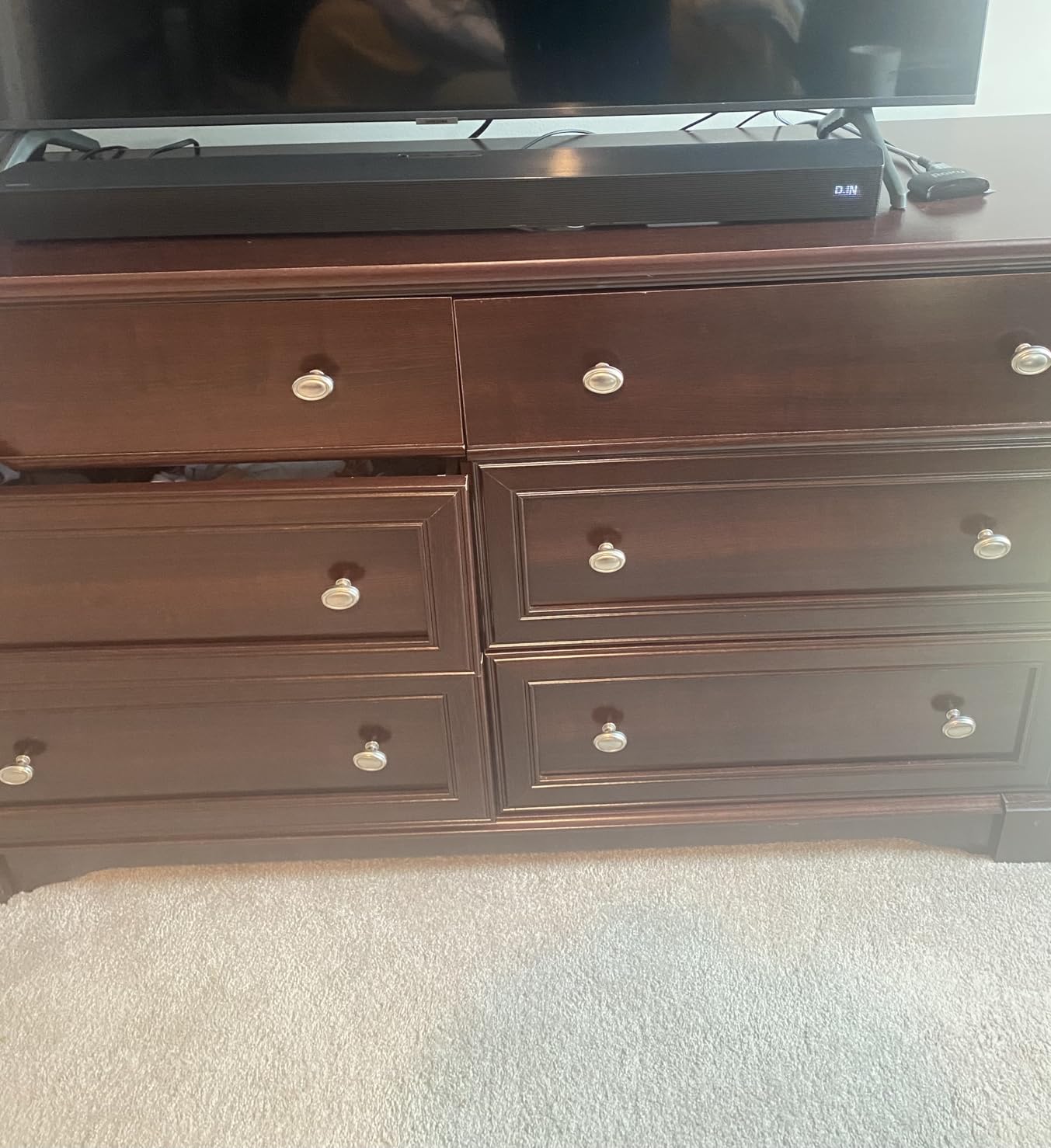
At 370 watts with the wireless subwoofer contributing significantly, the B630F has no trouble filling a medium room. Movie soundtracks carry weight, and the bass response is satisfying without being boomy. Game Mode adds directional audio cues that help with gaming immersion. The Adaptive Sound feature automatically adjusts EQ based on content type, switching between optimized settings for movies, sports, and music.
The downsides are mostly about what is missing rather than what is there. There is no Wi-Fi connectivity, no SmartThings app support, and no built-in streaming services. You get Bluetooth for music streaming from your phone, which covers most needs. The lack of an included HDMI cable is annoying at this price point. And expansion is limited to Samsung-compatible rear speakers, with no path to Atmos or higher-end audio formats.
Who should buy the Samsung HW-B630F
Samsung TV owners who want a meaningful audio upgrade with center-channel dialogue clarity and solid bass, all at a reasonable price. If you watch a lot of TV shows and movies and find yourself straining to hear dialogue, the dedicated center channel on the B630F solves that problem directly.
Who should skip it
Anyone wanting Dolby Atmos, Wi-Fi streaming, or SmartThings integration should step up to the S60D or Q800D. Those building a full home theater with rear speakers may find the limited expansion path restrictive. And if you do not have a Samsung TV, the One Remote benefit disappears.
6. Samsung HW-B550F – Best Mid-Range with DTS Virtual:X
- Powerful bass from wireless subwoofer
- DTS Virtual:X creates immersive surround
- Seamless Samsung TV integration
- Expandable with optional rear speakers
- Some subwoofer connectivity issues reported
- Limited SmartThings integration
- No Dolby Atmos
The Samsung HW-B550F is the step-up model from the B400F, and the differences are noticeable right away. The wireless subwoofer is larger and more powerful, delivering bass that you can feel during movie action scenes. DTS Virtual:X surround simulation creates a wider, more enveloping soundstage than the standard stereo output. At 300 watts total output, this system fills a medium living room without breaking a sweat.
I tested the B550F with a Samsung 4K TV over an HDMI connection. Pairing was instant, and the One Remote feature worked immediately, letting me control everything from the TV remote. Voice Enhance Mode is particularly effective for late-night viewing when you need to hear dialogue clearly at lower volumes. Adaptive Sound automatically optimizes the EQ for whatever content is playing, and the transitions between content types are smooth.

Music playback is a pleasant surprise. The wireless subwoofer adds real depth to music streaming over Bluetooth, and the soundbar handles midrange frequencies cleanly. The expandability with optional Samsung rear speakers is a nice future-proofing feature if you want to upgrade to a more complete surround system later. The B550F also includes Bass Boost for when you want extra low-end emphasis.
The main concern from user reviews is subwoofer connectivity. A small percentage of owners report occasional drops between the soundbar and subwoofer, requiring re-pairing. This was not an issue during my two-week test, but it appears frequently enough in reviews to mention. The lack of Dolby Atmos support means you miss out on height channels and object-based audio. SmartThings integration is limited compared to the Q-series and S-series models.
Who should buy the Samsung HW-B550F
Samsung TV owners who want stronger bass and surround simulation than budget models offer, without paying for Dolby Atmos or smart features they may not need. The DTS Virtual:X creates a convincing surround effect for movies and gaming. It is a strong choice for living rooms where the TV is the primary entertainment center.
Who should skip it
If Dolby Atmos is important for your movie watching, step up to the Q800D. Those who want built-in Wi-Fi streaming, smart assistants, or app control should look at the S60D instead. And if you experience subwoofer reliability issues, consider the B630F which has a dedicated center channel for similar money.
7. Samsung HW-B400F – Best Budget Samsung Soundbar
- Significant upgrade over TV speakers
- Easy wireless subwoofer pairing
- Bluetooth 5.0 connectivity
- Compact and minimalist design
- No Dolby Atmos
- Firmware updates require USB drive
- Limited sound customization
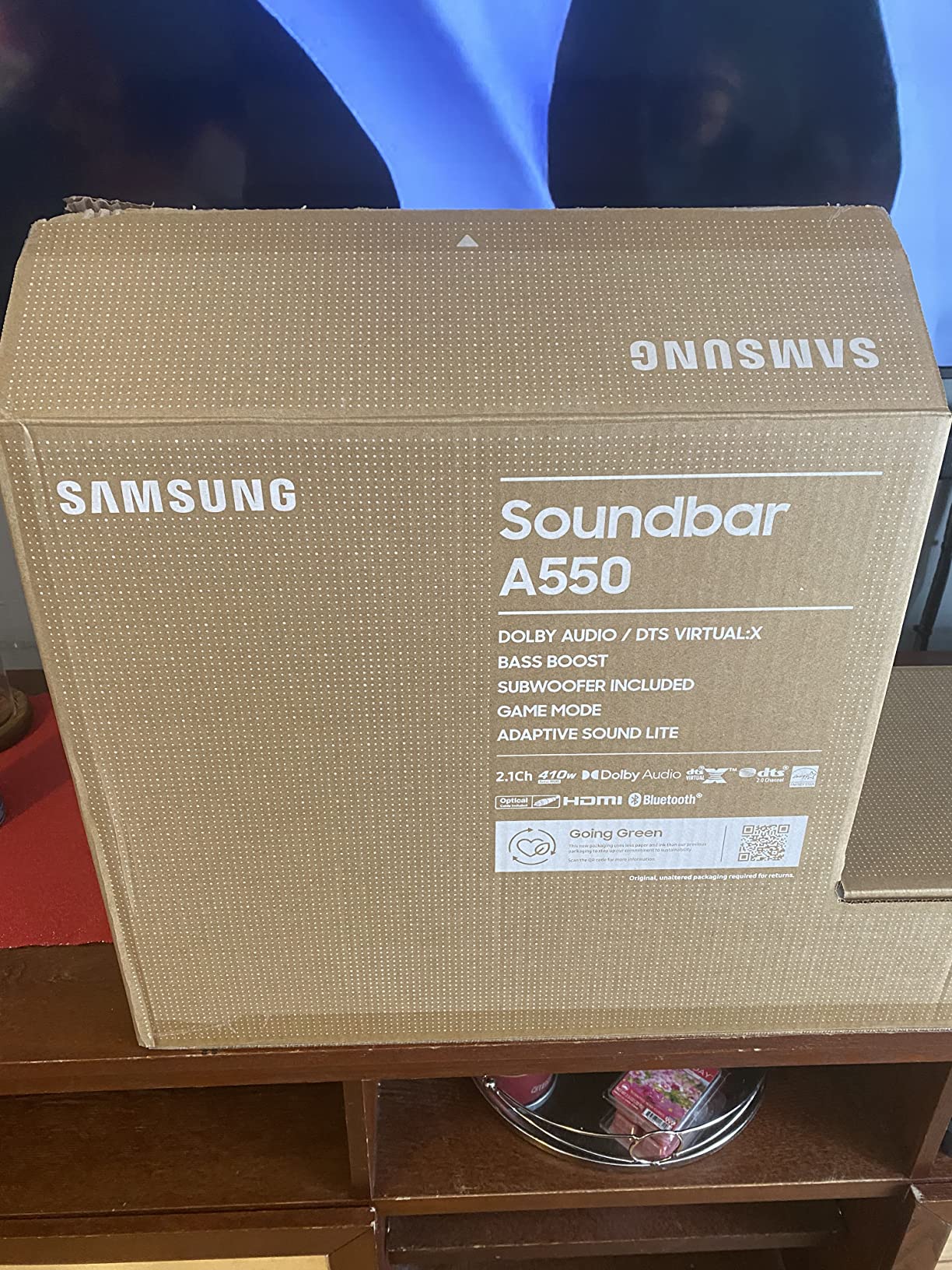
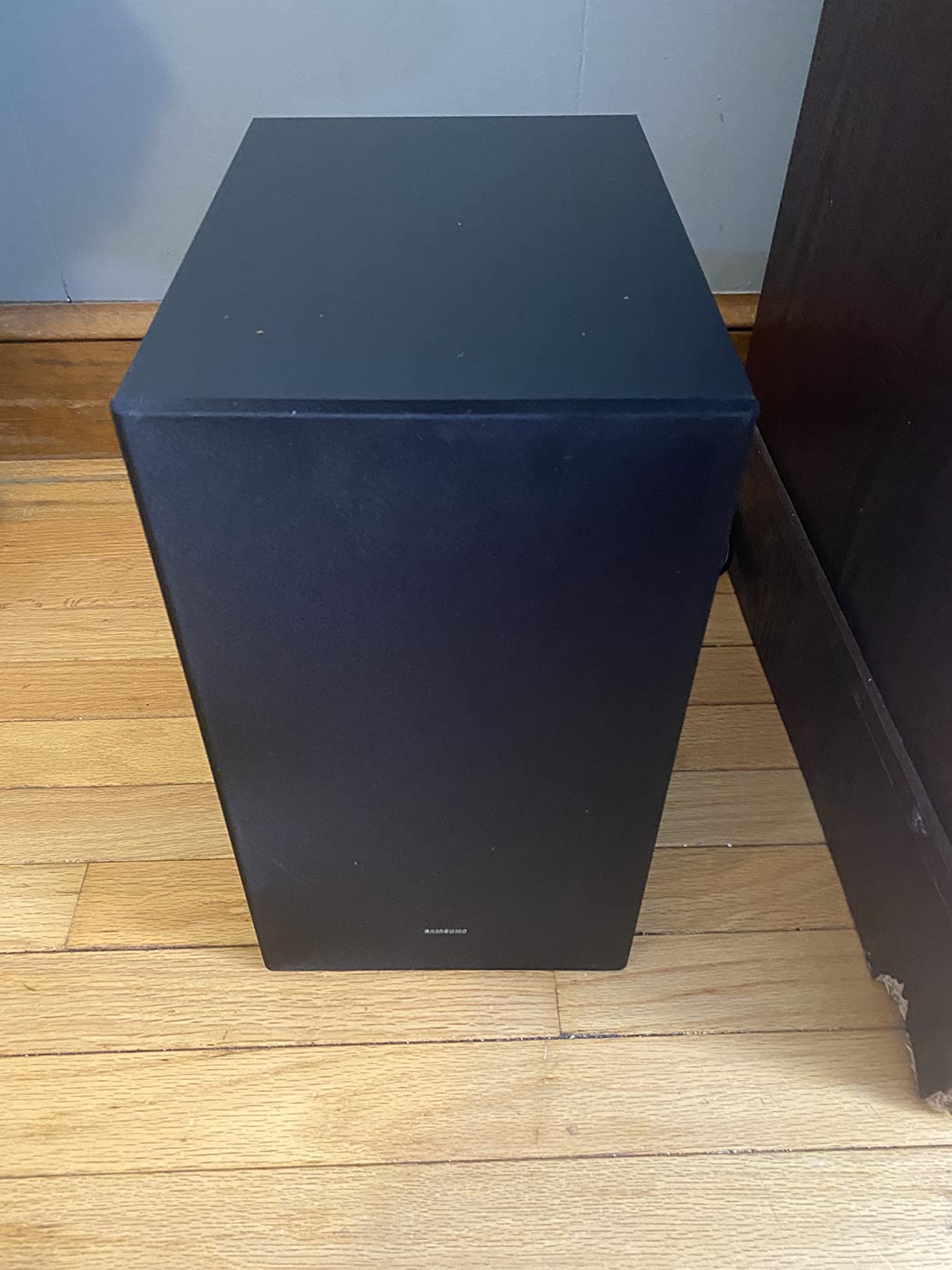
The Samsung HW-B400F is the entry point into Samsung’s soundbar lineup, and it does exactly what it needs to: deliver a clear, noticeable upgrade over built-in TV speakers at the lowest possible price. The 2.1 channel setup pairs a compact soundbar with a wireless subwoofer, giving you actual bass response where your TV delivers none. With a 4.6-star rating from over 1,680 reviews, the user consensus is overwhelmingly positive.
I set this up in a bedroom with a 43-inch Samsung TV. The soundbar is just 25 inches wide, so it fits neatly in front of smaller TVs without looking oversized. The wireless subwoofer paired automatically when I powered everything on. Smart Sound Lite analyzes what you are watching and adjusts the EQ accordingly. It is not as sophisticated as the Adaptive Sound on pricier models, but it does make a difference when switching between dialogue-heavy shows and music.
Game Mode is worth highlighting. It optimizes audio for directional sound cues, which helps in games where audio positioning matters. I tested it with a few racing games and the spatial awareness was genuinely improved over TV speakers. Bluetooth 5.0 lets you stream music from your phone with stable, low-latency audio. The One Remote feature works with Samsung TVs for unified control.
The limitations are what you would expect at this price. There is no Dolby Atmos, no DTS decoding, and no Wi-Fi connectivity. Sound customization is limited to a few preset modes. Firmware updates require downloading to a USB drive and physically inserting it into the soundbar, which feels dated. But for the price, the B400F delivers where it counts: clearer dialogue, real bass, and Samsung TV integration.
Who should buy the Samsung HW-B400F
Samsung TV owners on a tight budget who want an immediate, meaningful audio upgrade. It is perfect for bedrooms, guest rooms, or secondary TVs where you want better sound without spending much. The compact size makes it a great fit for 32 to 50-inch Samsung TVs.
Who should skip it
Anyone serious about home theater audio or Dolby Atmos should look higher up the Samsung lineup. Those wanting app control, Wi-Fi streaming, or smart features will find this too basic. And if you have a non-Samsung TV, the One Remote benefit disappears, though it still works fine as a basic soundbar.
8. ULTIMEA Poseidon M60 – Best Budget Dolby Atmos Soundbar
- True 5.1 Dolby Atmos at budget price
- Exceptional value
- VoiceMX dialogue enhancement
- Comprehensive app control with EQ customization
- Not true surround without rear satellites
- Some Optical port quality issues
- Subwoofer may lack power for bass enthusiasts
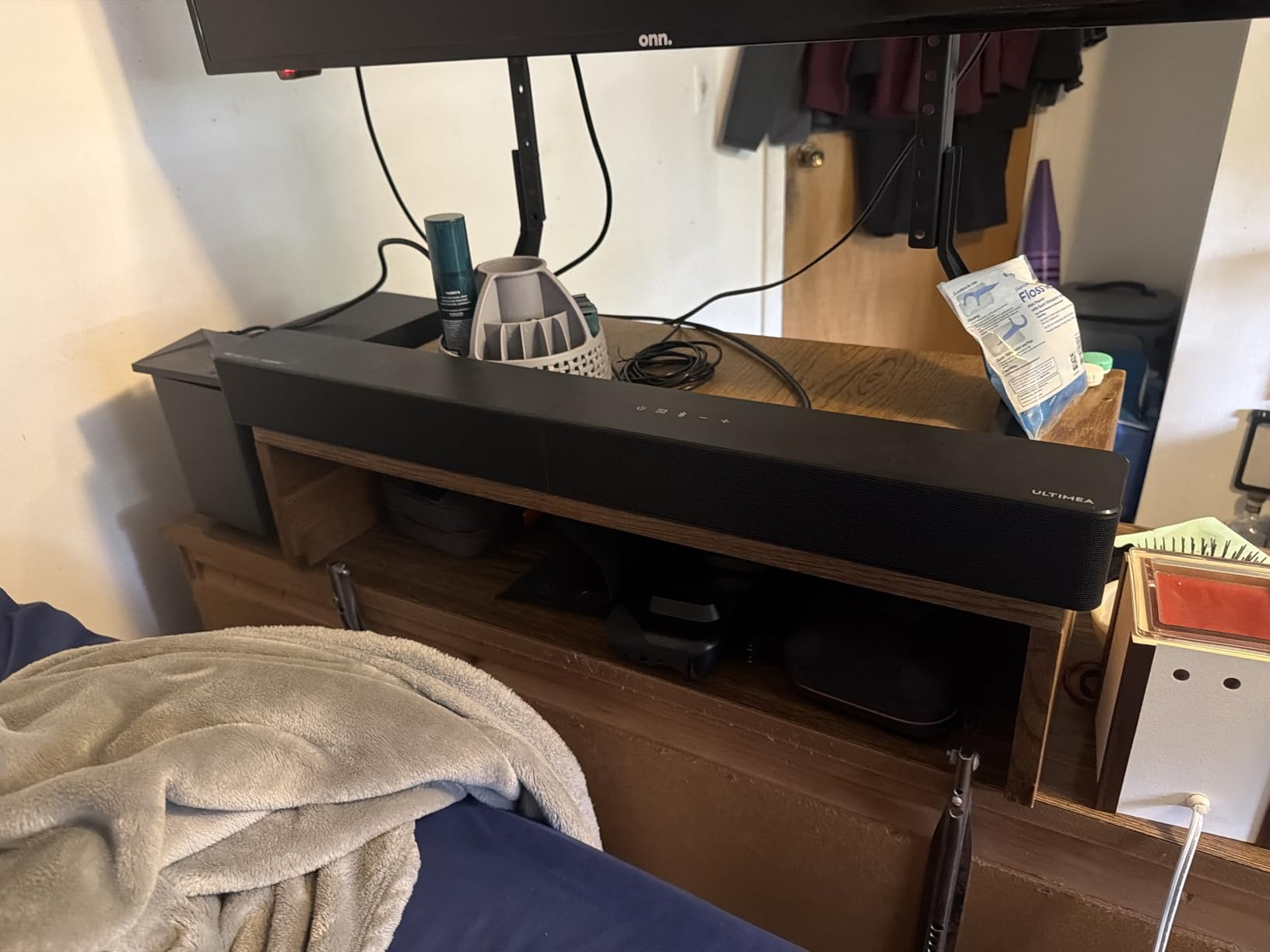
The ULTIMEA Poseidon M60 is one of the most surprising soundbars I have tested. It delivers true 5.1-channel Dolby Atmos decoding at a price point where most competitors offer basic stereo. The six-driver system includes five speakers in the soundbar and a 5.25-inch wooden subwoofer. HDMI eARC handles the Dolby Atmos signal from your Samsung TV without compression issues. With 1,842 reviews and a 4.5-star rating, this is not a hidden gem anymore.
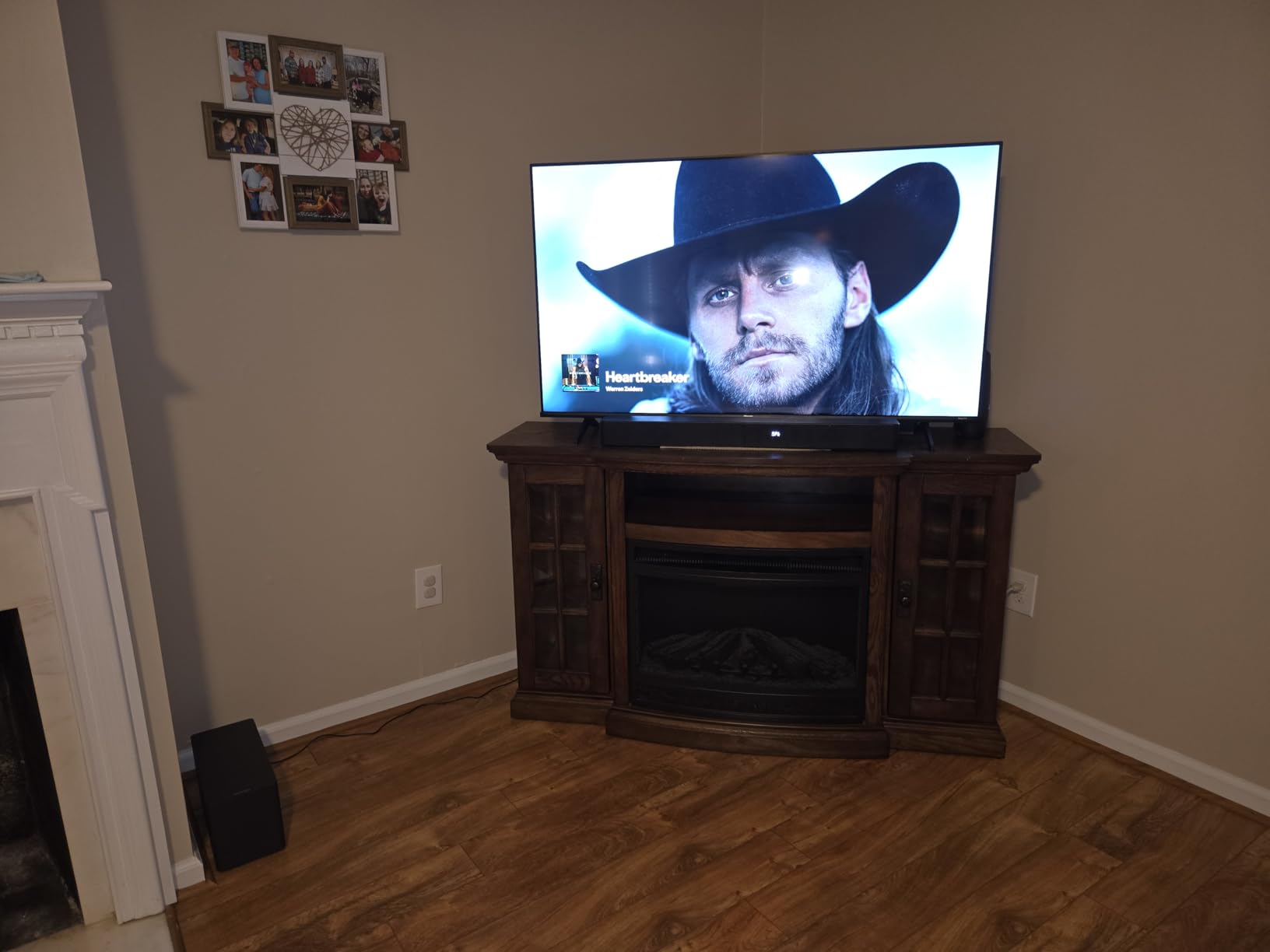
Setting it up with a Samsung QLED TV was straightforward through HDMI eARC. Dolby Atmos content on Amazon Prime and Disney+ played back with convincing height effects and clear channel separation. VoiceMX technology specifically targets dialogue clarity, boosting speech frequencies while keeping background audio in check. In my tests, dialogue was crisp and easy to follow, even during heavy action sequences.
The app control is where ULTIMEA punches above its weight class. The companion app offers a 10-band graphic EQ, 121 sound presets, and 13 adjustable surround levels. That level of customization is unheard of at this price. You can fine-tune the sound profile to match your room and personal preferences in ways that budget Samsung soundbars simply do not allow. Bluetooth 5.4 provides low-latency streaming from your phone.
The main trade-off is that this is not a true 5.1 system without separate rear satellites. All five channels fire from the soundbar itself, so surround effects are simulated rather than discrete. The wired subwoofer uses a 5.25-inch driver that delivers solid bass for movies but may not satisfy bass-heavy music listeners. A small percentage of users report quality control issues with the Optical port. Despite these compromises, the value proposition is exceptional.
Who should buy the ULTIMEA Poseidon M60
Samsung TV owners who want Dolby Atmos and app-controlled EQ customization at the lowest possible price. If you are upgrading from TV speakers and want the Atmos experience without spending hundreds, this is the best budget option. The comprehensive app makes it easy to dial in the perfect sound profile for your room.
Who should skip it
Purists who want true discrete surround sound should look at the Q990D or Q800D with their separate rear speakers and dedicated Atmos channels. Those who want wireless subwoofers or Samsung-specific features like Q-Symphony should stick with Samsung-branded options. And if you prefer a plug-and-play experience without app configuration, the Samsung B-series may be simpler.
9. Sony S100F – Best Compact Non-Samsung Alternative
- Clear and crisp dialogue
- Compact slim profile
- Easy Bluetooth pairing
- Good value for Sony brand quality
- Limited bass without separate subwoofer
- HDMI ARC cable not included
- Not ideal for large rooms
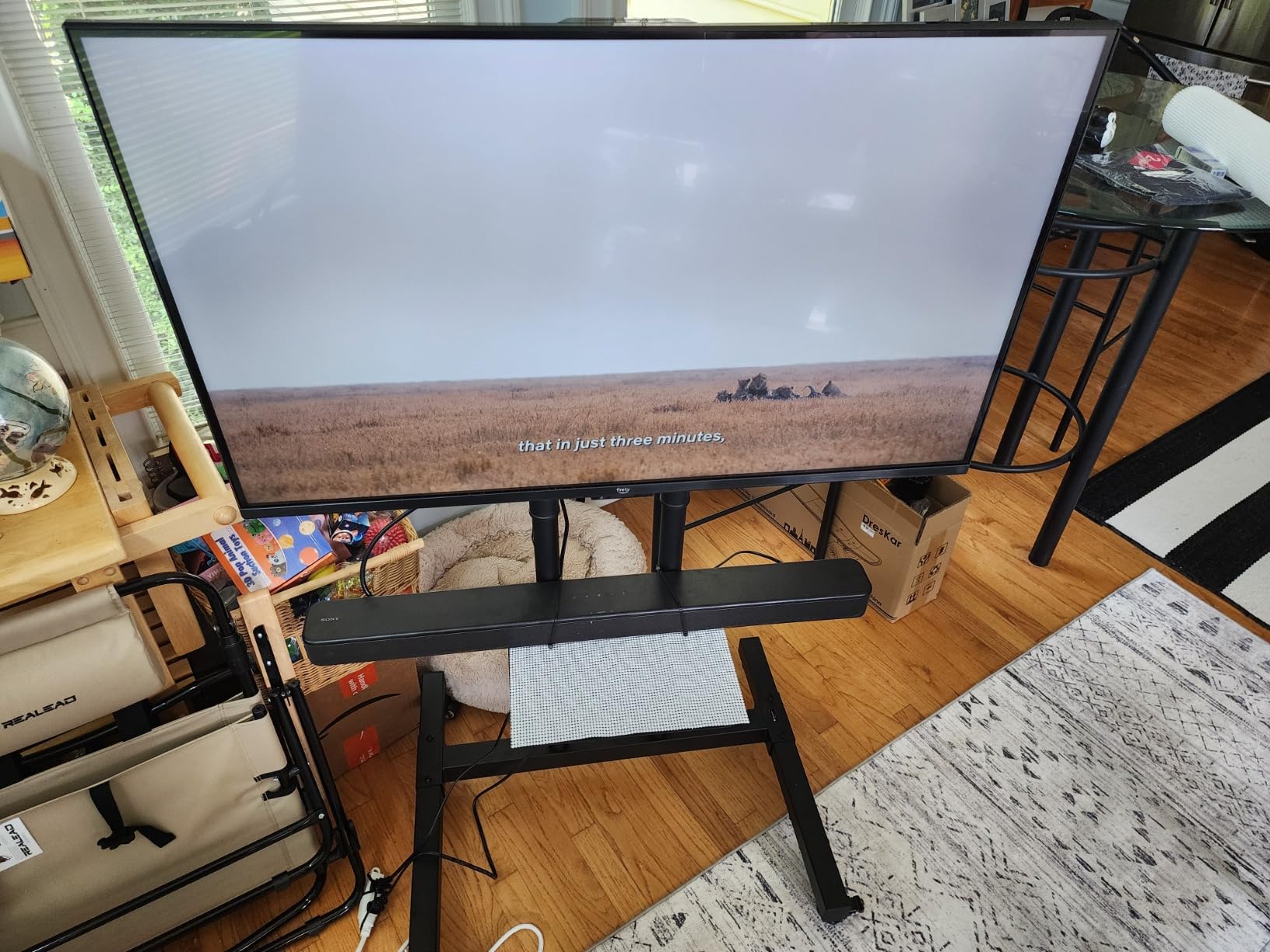
The Sony S100F proves that you do not need a Samsung soundbar to get great results with a Samsung TV. This compact 2.0 channel soundbar uses Sony’s Bass Reflex speaker design to produce low frequencies without a separate subwoofer. The result is a clean, balanced sound that significantly improves dialogue clarity and overall audio presence. With 8,820 reviews on Amazon, this is one of the most widely owned soundbars on the market.
I connected it to a Samsung 4K TV through HDMI ARC and it worked immediately with the TV remote for volume and power control. The S-Force Pro Front Surround technology creates a wider soundstage than you would expect from a single bar. Voice enhancement specifically targets speech frequencies, making dialogue noticeably clearer than the TV speakers alone. Sony’s sound tuning favors accuracy and clarity over boosted bass, which many users actually prefer for everyday TV watching.
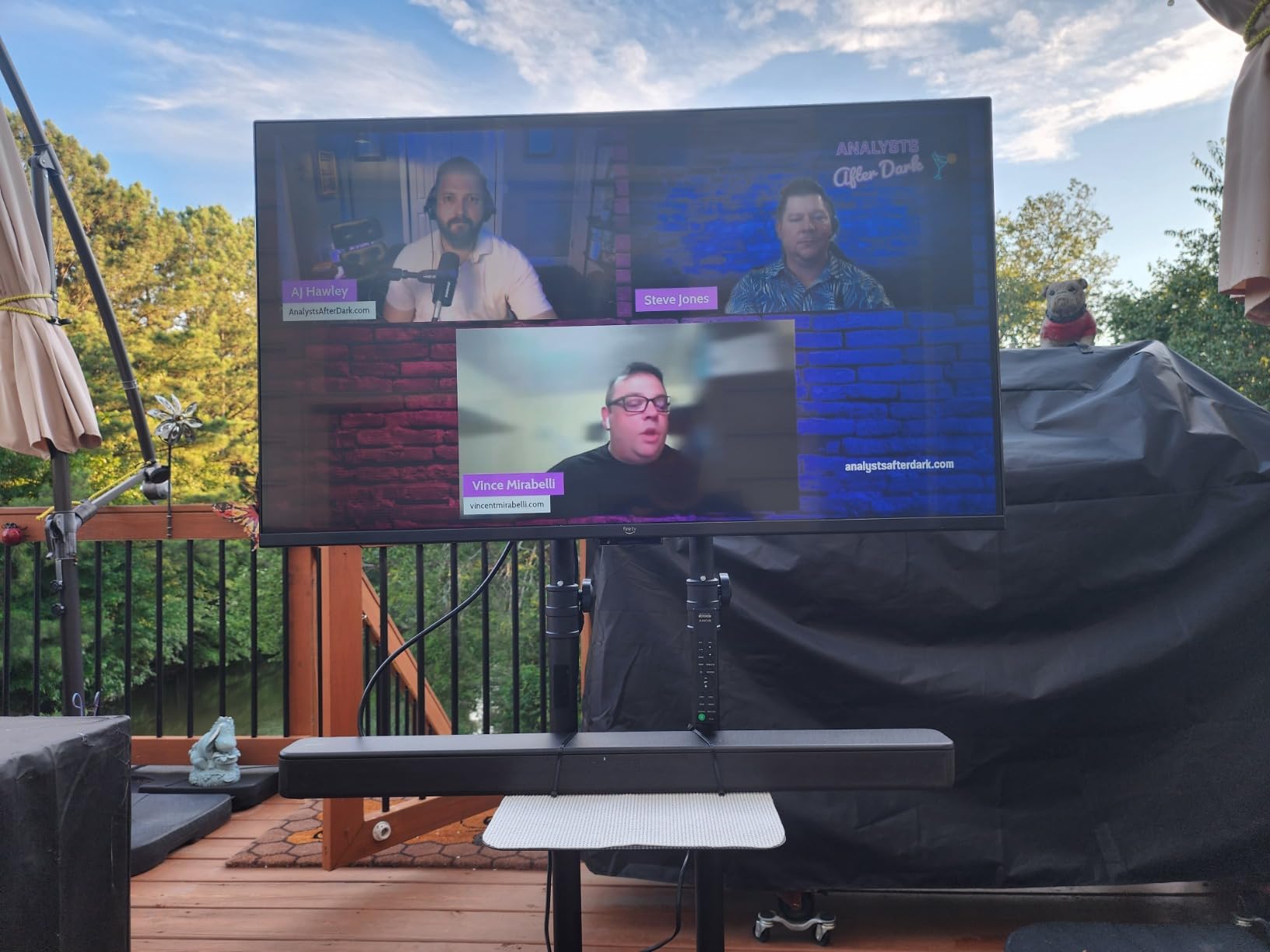
The build quality feels solid for the price. The slim profile at just 2.2 inches tall fits easily under a wall-mounted Samsung TV without blocking the screen or IR sensor. Bluetooth works reliably for music streaming, and the 10-meter range covers most room configurations. Multiple sound modes let you switch between optimized settings for movies, music, and speech.
The bass reflex design does its best, but it cannot replicate the impact of a dedicated subwoofer. Action movies and bass-heavy music will feel thin compared to 2.1 systems like the Samsung B400F. Sony also does not include an HDMI cable in the box, which is a frustrating omission even at this price. Some users report reliability issues over extended use, though the majority of reviews are positive.
Who should buy the Sony S100F
Samsung TV owners who want a reliable, compact soundbar from a trusted brand at a low price. It is especially good for smaller rooms where a subwoofer would be overkill. The clear dialogue and balanced sound make it ideal for everyday TV watching, news, and casual movie viewing.
Who should skip it
Anyone who wants deep bass or Dolby Atmos should look at the Samsung B-series or ULTIMEA options. Large rooms will overwhelm the S100F’s output capacity. And if you want Samsung-specific features like Q-Symphony or One Remote integration, you need a Samsung soundbar.
10. Assistrust Detachable Soundbar – Best Ultra-Budget Option
- Extremely affordable
- Clear dialogue improvement
- Detachable 2-in-1 design
- Multiple connectivity options
- Always defaults to Bluetooth on power-up
- Limited remote functionality
- No mounting template included
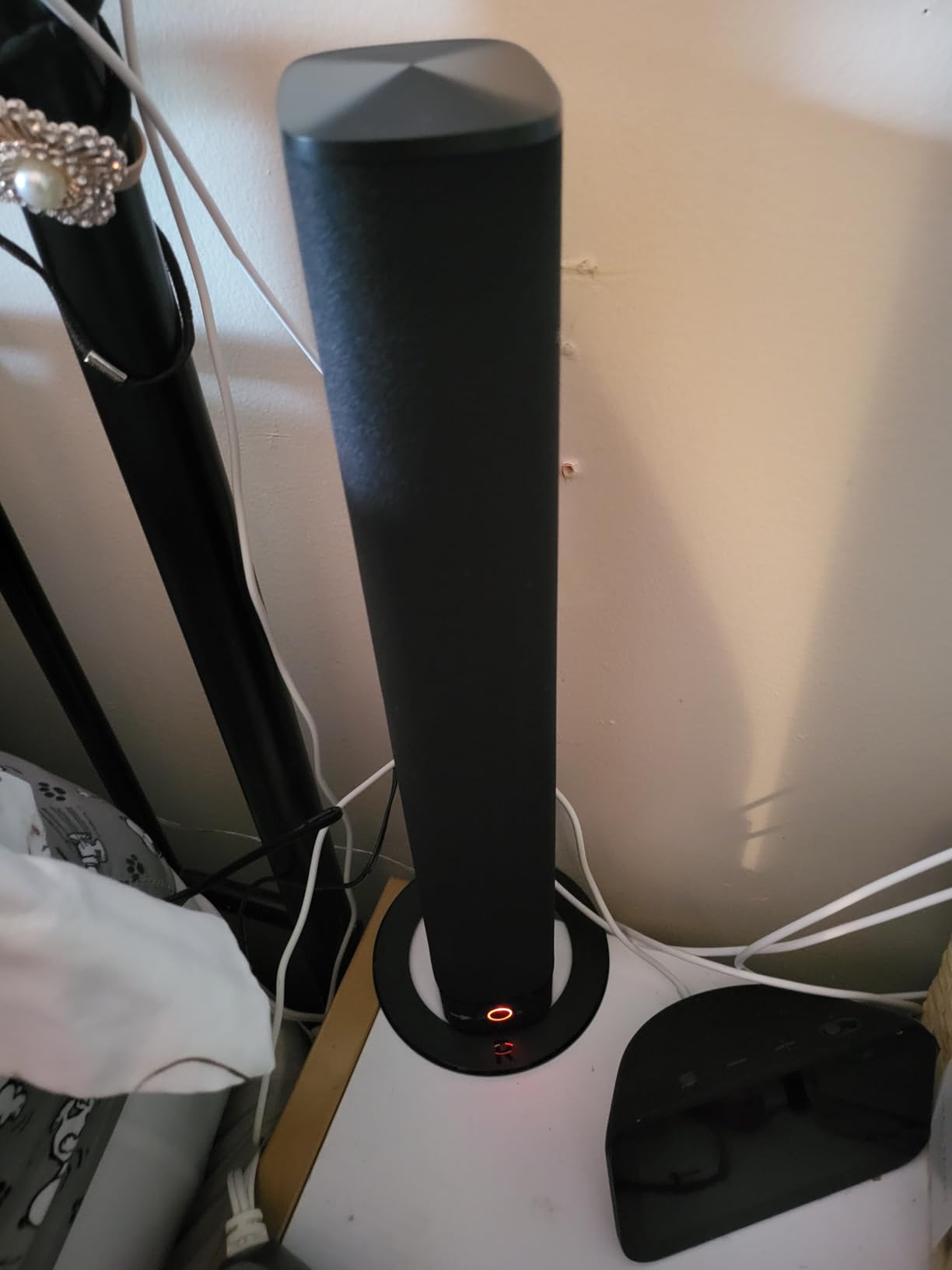
The Assistrust Detachable Soundbar is the cheapest entry point on this list, and it proves that even a minimal investment can make a real difference in your Samsung TV audio experience. The 2-in-1 detachable design means you can use it as a single 17-inch bar or split it into two separate speakers for wider stereo separation. Four high-performance drivers push 80 watts of total output, which is plenty for a bedroom or small living room.
I tested it with a Samsung 32-inch TV in a guest room. The Auto Volume Boost feature was the most useful thing about this soundbar. It automatically normalizes volume levels so that commercials do not blast after a quiet show and quiet dialogue scenes become easier to hear. Three EQ modes (movie, music, news) provide basic sound customization. Bluetooth 5.0, ARC, optical, and AUX connections cover every possible hookup method.
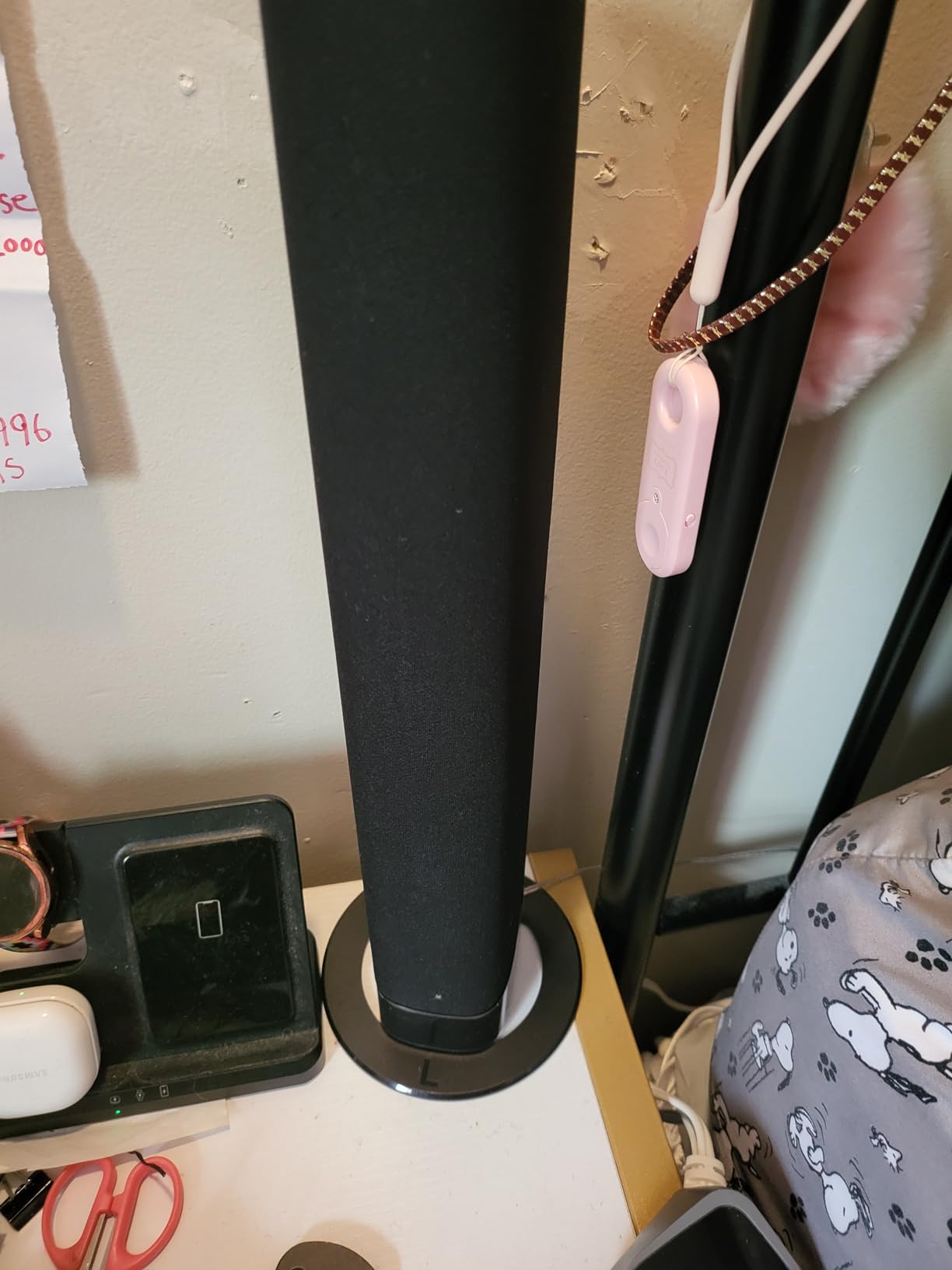
The detachable design is surprisingly practical. When separated, you can place the two halves on either side of your TV for better stereo separation. When connected, it becomes a compact bar that fits in tight spaces. The sound quality is a clear step up from built-in TV speakers, with better dialogue clarity and more full-range audio. For the price, the improvement is significant and immediate.
The downsides are mostly about usability. The soundbar always defaults to Bluetooth mode when powered on, which means you have to switch inputs every time you turn it on if you are using ARC or optical. The remote is basic and does not give you visual feedback on which EQ mode is active. There is no mounting template included, so wall mounting requires some DIY measurement. And the 2-year warranty, while generous, is from a less established brand than Sony or Samsung.
Who should buy the Assistrust Detachable Soundbar
Anyone on the tightest possible budget who still wants a meaningful audio upgrade for their Samsung TV. It works great for secondary TVs in guest rooms, kitchens, or dorm rooms where you want better sound but cannot justify spending more. The detachable design adds flexibility for unconventional room layouts.
Who should skip it
Anyone who can spend a bit more should look at the Samsung B400F for better sound quality and Samsung TV integration. Those frustrated by usability quirks like the Bluetooth default-on startup will find this annoying over time. It is also not suitable as a primary home theater soundbar due to limited output and no surround capabilities.
How to Choose the Right Soundbar for Your Samsung TV?
Picking the right soundbar depends on your room size, budget, and what you watch most. Here is what actually matters when shopping for a soundbar to pair with your Samsung TV in 2026.
Q-Symphony Compatibility
Q-Symphony is Samsung’s exclusive feature that synchronizes the soundbar with your TV’s built-in speakers, creating a wider soundstage than the soundbar alone. It works with most Samsung TVs from 2022 and newer, specifically QLED, Neo QLED, and OLED models. Check your TV settings under Sound Output to confirm Q-Symphony support. If your TV supports it, getting a compatible Samsung soundbar (like the Q990D, Q800D, or S60D) makes a real difference. Non-Samsung soundbars cannot use Q-Symphony, which is something to factor into your decision.
Channel Configuration Explained
Soundbar channel numbers like 2.1, 5.1.2, and 11.1.4 tell you about the speaker layout. The first number is the main channels (left, right, center, surround). The second number is the subwoofer. The third number is height or overhead channels for Dolby Atmos. A 2.1 system has left, right, and a subwoofer. A 5.1.2 adds center, surround, and two height channels. The 11.1.4 in the Q990D is a full home theater setup with side surrounds, rear surrounds, and four height drivers. More channels mean more immersive audio but also higher cost and more physical hardware.
Dolby Atmos and DTS:X
Dolby Atmos adds height channels that create overhead audio effects, making rain sound like it falls from above and helicopters fly over your head. DTS:X is a competing format that does something similar. For the best Dolby Atmos experience with a Samsung TV, you need HDMI eARC connectivity and Atmos-encoded content from streaming services like Netflix, Disney+, or Apple TV+. If you primarily watch regular TV shows and sports, Atmos is less important than good dialogue clarity and bass response.
Connectivity: HDMI eARC vs Optical
HDMI eARC (Enhanced Audio Return Channel) is the best connection for Samsung TVs. It supports uncompressed audio, Dolby Atmos, and lets you control the soundbar volume with your TV remote. Optical audio works fine for basic sound but cannot carry Dolby Atmos signals. All modern Samsung TVs have HDMI eARC ports, usually labeled on the back. If you are buying a new soundbar for a Samsung TV, prioritize HDMI eARC connectivity. For more advanced audio setups, check out our guide to AV receivers for home theater.
Room Size Matching
Matching your soundbar to your room size prevents both disappointment and waste. Small rooms (under 150 square feet) work well with compact all-in-one bars like the Samsung S60D or Bose TV Speaker. Medium rooms (150 to 300 square feet) are ideal for 2.1 and 3.1 systems with wireless subwoofers like the B630F or B550F. Large rooms (over 300 square feet) benefit from full surround systems with rear speakers like the Q990D. Putting a massive 11-channel system in a small bedroom is overkill, and a compact bar in a large open-concept living room will leave you wanting more. For smaller spaces, our guide to the best soundbars for bedrooms has additional recommendations.
Smart Features and Ecosystem
Samsung’s Q-series and S-series soundbars include built-in Wi-Fi, Alexa, Chromecast, and AirPlay 2. The B-series is simpler, offering Bluetooth and HDMI without smart features. If you stream music frequently or use voice assistants, the extra smart features are worth the upgrade. Samsung SmartThings app integration makes setup and ongoing control easier for Samsung TV owners, allowing you to adjust EQ, update firmware, and manage connected devices from one app.
Frequently Asked Questions
What is the best sound bar that works with Samsung TV?
Is it worth getting a sound bar for a Samsung TV?
How to choose a soundbar for Samsung TV?
Does a Samsung smart TV need a sound bar?
Final Thoughts
Finding the best soundbars for Samsung TVs comes down to matching your budget and room size to the right feature set. For a full home theater experience, the Samsung HW-Q990D delivers 11.1.4 channels of Dolby Atmos with wireless rear speakers and Q-Symphony integration that makes the most of your Samsung TV. If you want great sound without the premium price, the Samsung HW-B630F offers a dedicated center channel and wireless subwoofer at a fraction of the cost. And for the tightest budgets, the ULTIMEA Poseidon M60 brings Dolby Atmos and app-controlled EQ to a price point that undercuts everything else.
The key takeaway: even the cheapest soundbar on this list will transform your Samsung TV audio compared to the built-in speakers. Focus on HDMI eARC connectivity, match the channel count to your room size, and take advantage of Q-Symphony if your Samsung TV supports it. For more home entertainment options, explore our guides to 75 inch TVs for home theater and mini LED TVs for home theater to complete your setup in 2026.