
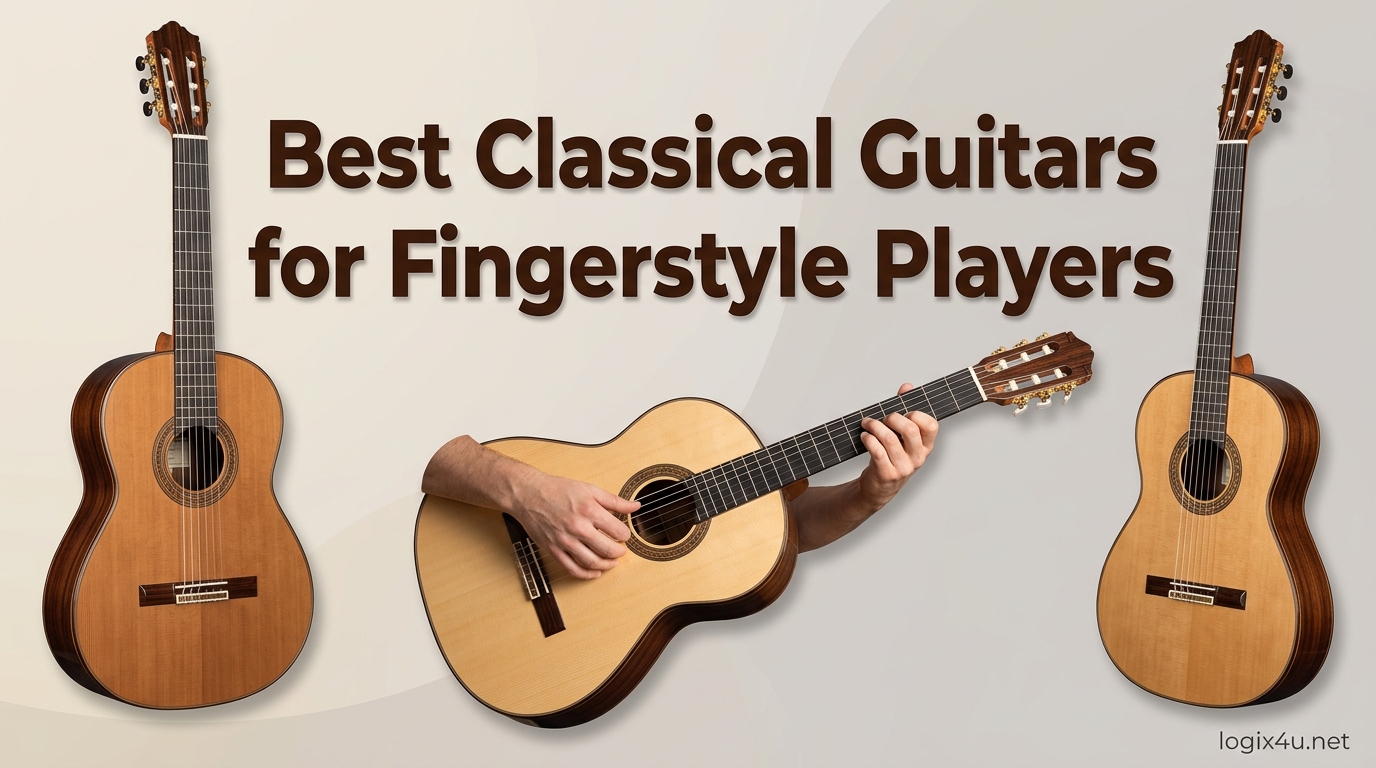
Fingerstyle guitar demands an instrument that responds to the smallest touch, and that is exactly why so many players turn to nylon-string classical guitars. When I started exploring fingerstyle on a classical body a few years ago, the difference in sustain, dynamic range, and comfort was immediately obvious compared to the dreadnought I had been wrestling with. The best classical guitars for fingerstyle players give you a wider neck for precise finger placement, softer nylon strings that are gentler on your nails and fingertips, and a warm, singing voice that flatters the rolling arpeggios and independent bass lines that define the style.
This guide walks through eight of the strongest options I have tested and compared for 2026, ranging from a sub-$200 starter instrument up to a TransAcoustic Yamaha that fills a room with reverb on its own. Every model here has been evaluated specifically for fingerstyle playability, not just for strumming chords or Flamenco rasgueado. That means I focused on nut width, string action, neck profile, tonewood pairing, and how each guitar responds to a thumb-and-three-fingers attack.
Along the way I cover the questions that come up constantly on forums like r/classicalguitar: cedar versus spruce for fingerstyle, whether you really need a 52mm nut, and what string tension works best when your right hand is doing all the work. If you are also weighing steel-string options, our roundup of acoustic guitars for intermediate players is a good companion read. For now, let us dig into which nylon-string guitar earns a spot in your hands.
Top 3 Picks for Fingerstyle Classical Guitars in 2026
Not everyone wants to read eight full reviews before making a decision, so here are the three I would reach for first. The Cordoba C5 is my editor’s choice because its solid cedar top and 52mm nut nail the fingerstyle brief at a reasonable price. The Yamaha CG122MCH earns best value for players who want warm cedar tone with Yamaha’s famously consistent build. And the Yamaha C40II remains the best budget gateway for a first nylon-string.

Cordoba C5 Classical
- Solid cedar top
- Mahogany back and sides
- 52mm nut width
- Savarez high tension strings


Best Classical Guitars for Fingerstyle Players in 2026
Here is the full comparison table covering every guitar in this guide. Each entry is sorted roughly by how well it serves a fingerstyle player, with the most fingerstyle-friendly models near the top.
| Product | Specifications | Action |
|---|---|---|
| Cordoba C5 Classical |
|
Check Latest Price |
| Yamaha CG122MCH |
|
Check Latest Price |
 Ibanez FRH10N Thinline Ibanez FRH10N Thinline |
|
Check Latest Price |
 Yamaha CG-TA TransAcoustic Yamaha CG-TA TransAcoustic |
|
Check Latest Price |
 Cordoba C1M Protege Cordoba C1M Protege |
|
Check Latest Price |
 Fender CN-60S Concert Fender CN-60S Concert |
|
Check Latest Price |
| Yamaha C40II |
|
Check Latest Price |
 Vangoa 4/4 Classical Bundle Vangoa 4/4 Classical Bundle |
|
Check Latest Price |
1. Cordoba C5 Classical – Solid Cedar Top With Wide 52mm Nut
- Warm cedar voice ideal for fingerstyle dynamics
- Wider 52mm nut gives fingers room to breathe
- Solid top improves with age
- Beautiful high gloss finish
- Sharp fret edges reported on some units
- High gloss is a preference call
The Cordoba C5 is the guitar I keep coming back to when someone asks what to buy for serious fingerstyle work without crossing the four-figure mark. The solid cedar top is the key. Cedar responds faster than spruce to a light touch, which is exactly what you want when your thumb is carrying a bass line and your fingers are plucking a melody above it. You do not have to dig in hard to get the guitar to speak, and that lower attack threshold makes long fingerstyle sessions much less tiring.
The 52mm nut is wider than the 50mm you find on many student classicals, and that extra 2mm sounds trivial until you try to play a complex Travis pick or a baroque transcription with multiple voices. Your fingers have more room to land cleanly without muting adjacent strings. Cordoba ships the C5 with Savarez Cristal Corum high tension strings, which give you a firmer feel under the fingertips and a more focused fundamental than normal tension strings.
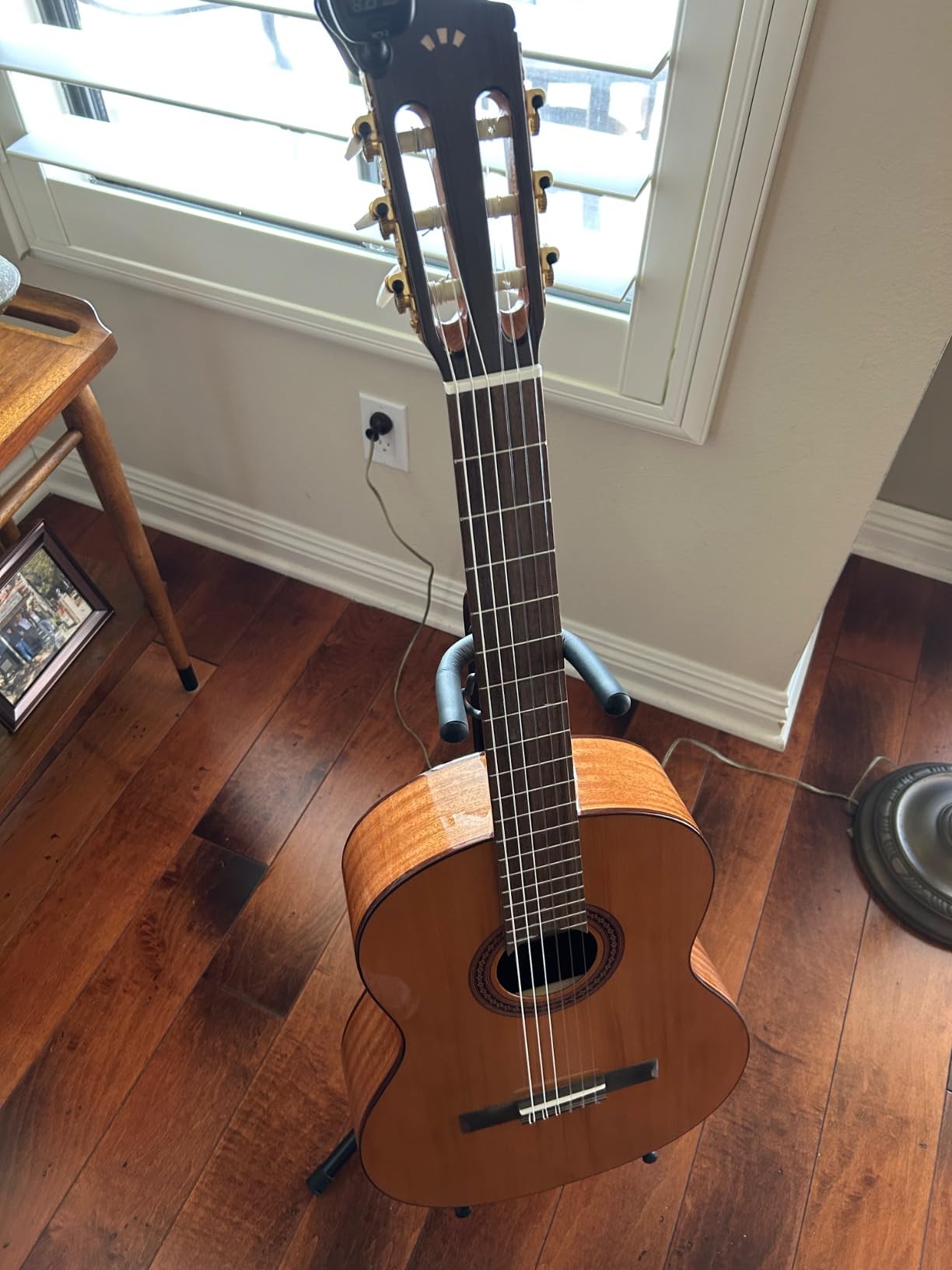
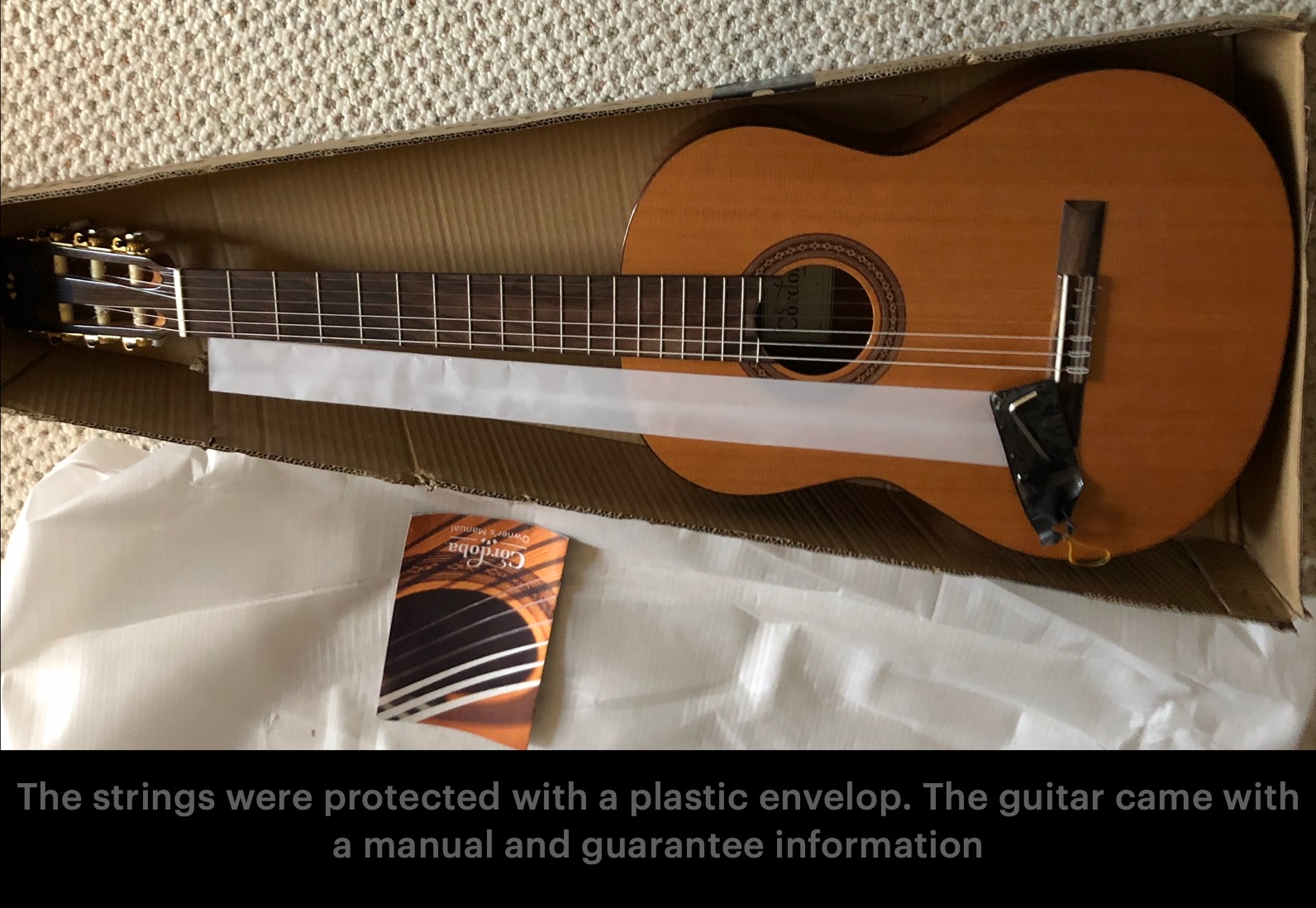
Mahogany back and sides keep the price accessible while adding a slightly darker midrange that complements cedar’s warmth. The high gloss finish looks gorgeous in person, and reviewers consistently mention how the wood grain pops under stage lights. Fit and finish are well above what you typically see at this price tier, though I would inspect the fret edges on arrival because a small number of owners report slightly sharp fret ends that a quick luthier dressing solves.
For fingerstyle specifically, the C5 rewards a relaxed right hand. Arpeggios bloom, single-note lines sustain longer than I expected from a non-solid-wood guitar, and the dynamic range is wide enough that you can drop to a whisper for an intro and lean in for a chorus without the tone collapsing. It is the kind of guitar that makes you want to practice.
Who Should Buy the Cordoba C5
This is my top pick for an intermediate fingerstyle player who wants one guitar that can handle classical repertoire, folk fingerpicking, and even light bossa nova. The solid cedar top means it will actually sound better in five years than it does today, which makes it a smart long-term investment. If you have been playing on a laminate classical and feel like you have hit a ceiling on tone and responsiveness, the C5 is the natural next step.
It is also a strong choice for a committed beginner who plans to stick with fingerstyle for years. You will pay more than you would for a starter nylon, but you avoid the upgrade cycle that eats money in the long run.
Who Should Skip It
If you absolutely need electronics for live performance, the C5 in this configuration is acoustic-only and you would need to add a pickup. Players with smaller hands who find a 52mm nut fatiguing may also prefer the narrower necks on the Fender CN-60S or the Ibanez FRH10N. Finally, if your budget caps at $250, you will be better served by the Yamaha C40II or Cordoba C1M.
2. Yamaha CG122MCH – Solid Cedar Top at a Workhorse Price
- Solid cedar top delivers warm complex tone
- Yamaha consistency and quality control
- Matte finish preserves resonance
- Excellent projection for the price
- Matte finish shows fingerprints
- Factory strings deserve an upgrade
- Action labeled low is actually standard
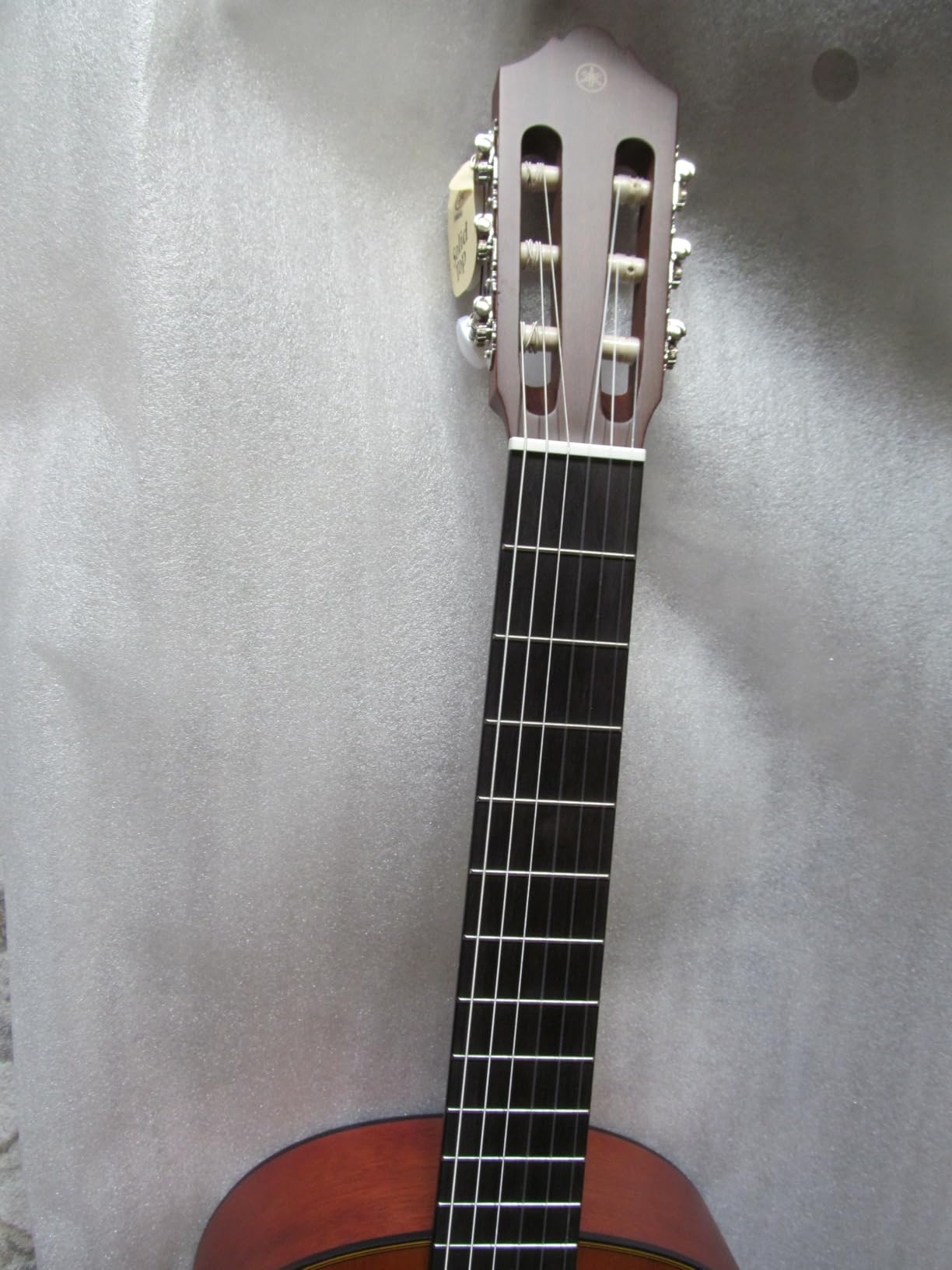
Yamaha’s CG122MCH is the guitar I recommend when someone wants the tone of a solid cedar top but does not want to spend Cordoba C5 money. The solid cedar soundboard produces that warm, woody, slightly dark voice that fingerstyle players love. The first time I played one, the bass response surprised me for a guitar at this price. Arpeggiated chords had real depth on the low E and A strings, and the trebles sang without going harsh.
The matte finish is a deliberate choice that sacrifices showroom gloss for a slightly more open, less constrained top. Some players feel matte-finished solid tops resonate more freely than gloss-finished ones, and the CG122MCH certainly has a lively, ringing quality. The downside is that the finish picks up fingerprints easily, so a microfiber cloth becomes your friend.

Nato back and sides are a cost-saving measure, but nato is in the mahogany family tonally and gives you a similar warm midrange. The rosewood fretboard is a step up from the laminated boards you find on cheaper classicals and feels smooth under the fingertips during long practice sessions. The 25.6-inch scale is standard classical, so any nylon strings you already own will feel at home.
One thing to watch: Yamaha markets this guitar as having low action, but several reviewers measured 4mm at the 12th fret on the low E, which is standard classical action, not low. That is still very playable for fingerstyle, but if you want it lower for faster single-note runs, a saddle adjustment is a quick fix.
Best Use Case for the CG122MCH
This is my value pick for a fingerstyle player who wants solid-wood tone and Yamaha’s legendary quality control without stretching past $300. It is especially well suited to classical repertoire, bossa nova, and folk fingerstyle where warmth and sustain matter more than cutting power. The solid top also means it is a guitar you can grow into for years.
I also recommend it as a studio guitar. The matte finish and solid cedar voice record beautifully, and the consistent build quality means you do not have to play five copies to find a good one.
Limitations to Consider
There are no electronics, so gigging fingerstyle players will need to add a pickup or mic the guitar. The matte finish is genuinely a matter of taste, and some buyers expecting gloss are disappointed. Finally, the factory strings are functional but a string change to a set of Savarez or D’Addario Pro-Arte will unlock noticeably more tone.
3. Ibanez FRH10N Thinline – Modern Electro-Classical for Stage Fingerstyle
- Thinline body reduces feedback on stage
- Built-in Fishman Sonicore pickup system
- Comfortable for long sessions
- Modern looks with flawless craftsmanship
- Truss rod may need climate adjustment
- Niche product with fewer reviews
- Thinline body sacrifices some acoustic volume
The Ibanez FRH10N is the guitar I would hand to a working fingerstyle player who needs to plug in and be heard over a band without feedback nightmares. The thinline body is shallower than a traditional classical, which means less air moving inside the box and far less tendency to feed back when you are standing two feet from a monitor wedge. For solo fingerstyle gigs, coffeehouse sets, or worship services, this matters more than you might think until you experience it.
Out of the box, the craftsmanship on the FRH10N is genuinely impressive. The spruce top has a tight, even grain, the sapele back and sides have a warm reddish-brown hue, and the walnut fretboard feels fast and smooth. The 25.5-inch scale is a hair shorter than a standard 25.6-inch classical, which translates to slightly lower string tension and an easier time with barre chords and stretches.
The Fishman Sonicore pickup is a key reason to choose this guitar. Plugged into a decent acoustic amp or PA, the FRH10N sounds like a much larger classical. The pickup captures the dynamics of a fingerstyle right hand well, and you do not get the quacky piezo tone that plagued older electro-classicals. Reviewers consistently praise the plugged-in sound as the guitar’s standout feature.
Who It Is Built For
This is my pick for a gigging fingerstyle player who plays 30-plus shows a year and needs a reliable stage instrument. The thinline body and onboard pickup solve the two biggest live-performance problems in one move. It is also a great choice for a player with a smaller frame who finds a full-depth classical uncomfortable to hold for long sets.
Trade-offs to Know About
The thinline body does reduce acoustic volume compared to a full-depth classical, so this is not the guitar for an unamplified house concert. Ibanez suggests a truss rod adjustment may be needed depending on your local climate, so budget for a setup if you live somewhere with extreme humidity swings. Finally, because it is a niche product, the review pool is smaller than for the Yamahas, but the reviews that exist are overwhelmingly positive.
4. Yamaha CG-TA TransAcoustic – Reverb and Chorus Built Into the Guitar
Yamaha CG-TA Nylon String TransAcoustic Guitar with Chorus and Reverb, Classical, Vintage Tint
- TransAcoustic effects sound like a real hall
- Solid Engelmann spruce top is responsive
- Ovangkol adds rosewood-like complexity
- No amp needed for ambient effects
- TransAcoustic electronics have reliability reports
- No case included
- Higher price point
The Yamaha CG-TA TransAcoustic is unlike any other classical guitar I have played. Yamaha built a small actuator into the body that drives the soundboard and produces hall reverb, room reverb, and chorus effects acoustically, with no amp and no external pedals. The first time I hit a chord and heard it bloom into what sounded like a cathedral, I understood why players describe this guitar as magical.
For fingerstyle, the TransAcoustic effects are not a gimmick. Subtle room reverb on a slow arpeggio gives your playing space and depth, and a touch of chorus thickens single-note lines in a way that fills out a solo performance. You can dial the effects back to barely-there levels and the guitar still sounds like a classical, just one played in a nicer room than your practice space.
The solid Engelmann spruce top is a responsive choice for fingerstyle. Engelmann has a slightly softer, more open voice than Sitka, and it reacts well to a light attack. Ovangkol back and sides sit tonally between rosewood and mahogany, giving you rosewood-like shimmer on the trebles with mahogany-like warmth in the mids. The combination is genuinely versatile for fingerstyle across folk, classical, and Brazilian styles.
Best Fit for the CG-TA
This is the guitar I recommend to a solo performer who plays small rooms, house concerts, or YouTube covers where the built-in ambience elevates a bare nylon-string performance. It is also a fantastic practice guitar because the reverb makes even simple exercises sound more musical and keeps you inspired to play longer.
Risks to Weigh
The reported reliability issues with the TransAcoustic electronics are real and worth taking seriously. Several reviewers mention the reverb effect degrading or failing within two years, which is a significant concern at this price point. Yamaha’s warranty is one year, so consider an extended warranty if you plan to gig with this guitar regularly. There is also no case included, which is a noticeable omission at this tier.
5. Cordoba C1M Protege – Student Classical With a Truss Rod
- Adjustable truss rod for lifetime stability
- Pau Ferro fretboard feels smooth
- Spruce and mahogany combo is versatile
- Savarez strings included
- Quality control reports vary
- Headstock durability concerns
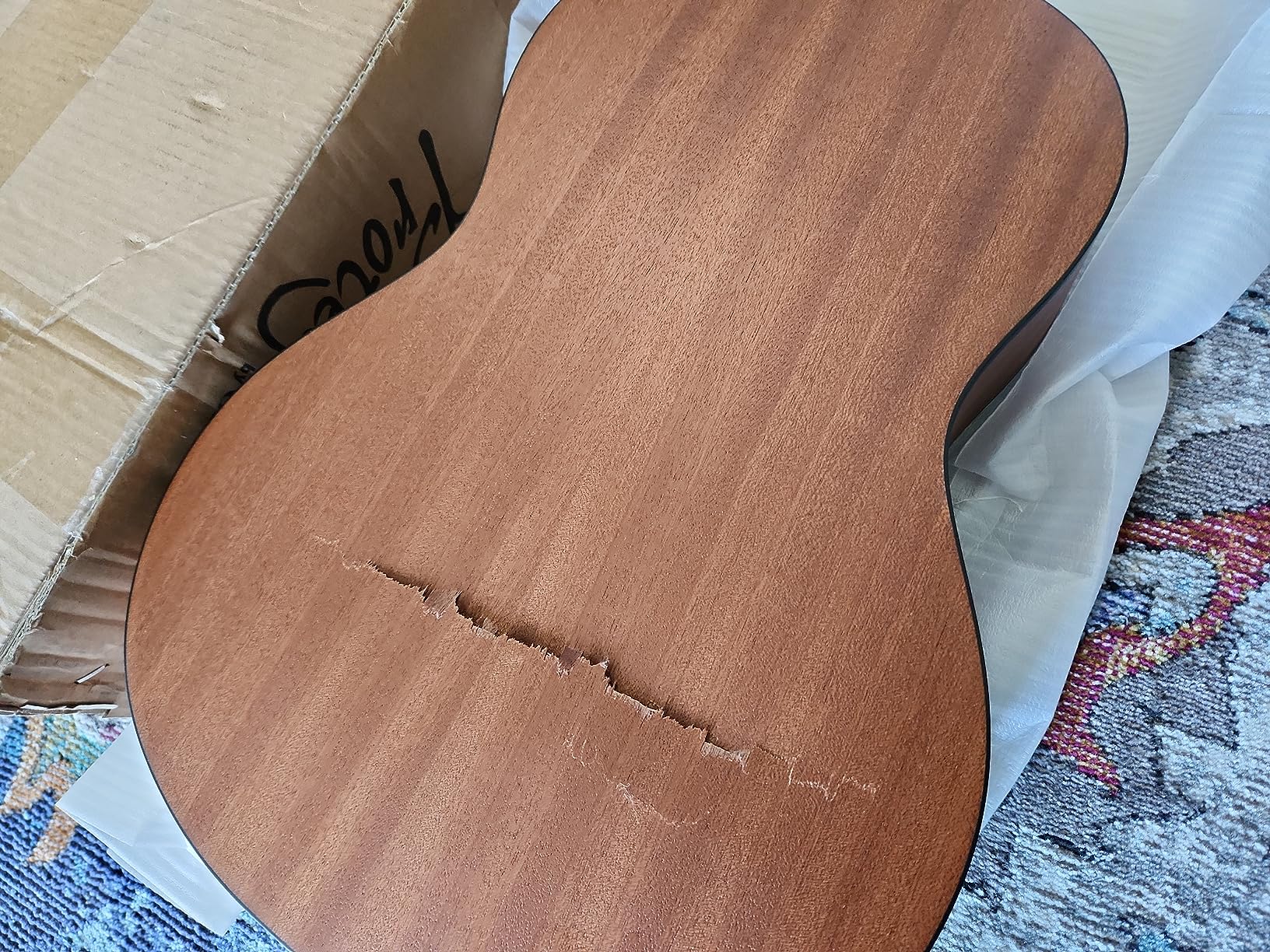
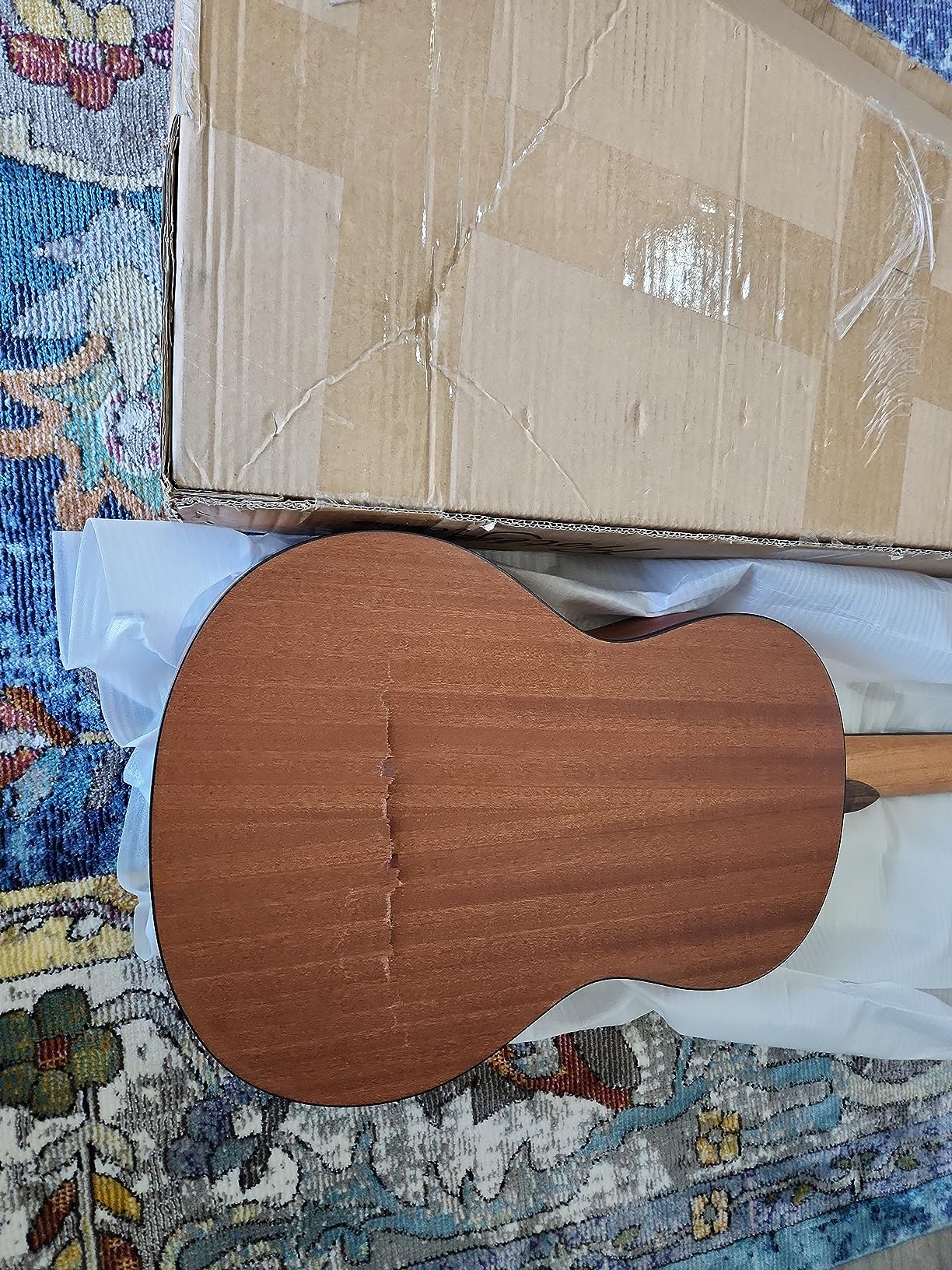
- Some units arrive with defects
The Cordoba C1M sits in the student-classical tier but has one feature most sub-$300 classicals lack: an adjustable truss rod. That might not sound exciting, but it means a luthier can dial in the neck relief decades from now, which extends the useful life of the guitar dramatically. For a fingerstyle beginner who plans to play for years, that matters.
The spruce top and mahogany back and sides deliver a balanced, slightly brighter voice than the cedar-topped Cordoba C5. That brightness is actually helpful for fingerstyle beginners because it makes individual notes easier to distinguish when you are learning to voice inner lines. The pau ferro fretboard is rosewood-adjacent in feel and gives you a smooth surface for slides and position shifts.
Cordoba ships the C1M with Savarez Cristal Corum high tension strings, which is a generous inclusion at this price. High tension strings give you a firmer feel and more precise control over dynamics, which is exactly what a developing fingerstyle player needs. The 648mm (25.5-inch) scale is standard classical.
Who the C1M Suits Best
This is a strong choice for a serious student who wants a step-up classical with a truss rod and solid brand backing behind it. It is also a good fit for a steel-string player transitioning to nylon because the brighter spruce voice and standard scale feel familiar. Music teachers frequently recommend the C1M for these reasons.
What to Watch Out For
Quality control is the main concern. A minority of reviewers report defects out of the box, including one report of a headstock snapping after a year of light use due to grain running parallel to string tension. Cordoba’s warranty should cover manufacturing defects, but inspect the guitar carefully on arrival and do not hesitate to exchange if anything looks off.
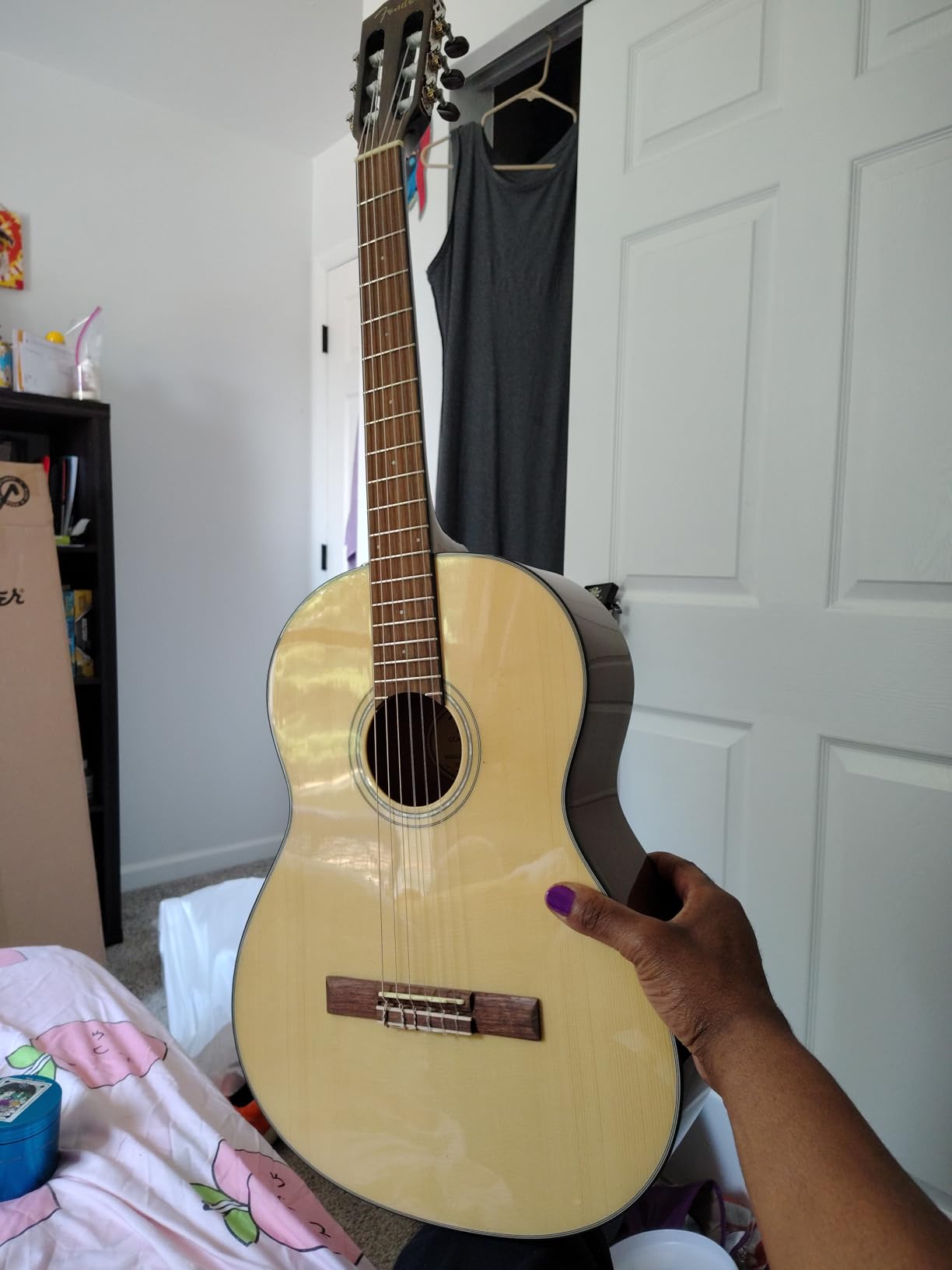
6. Fender CN-60S Concert – Narrower Nut for Steel-String Converters
Fender CN-60S Concert Nylon String Acoustic Guitar, with 2-Year Warranty, Natural
- Solid spruce top at a budget price
- Concert body is comfortable for smaller players
- Slightly narrower nut appeals to converters
- Includes gig bag
- Quality control variance reported
- Some units have body rattle
- Flat saddle issue on some examples
The Fender CN-60S is the guitar I suggest when a steel-string player wants to try classical fingerstyle but is worried about the wide neck. The concert body and slightly narrower nut make the transition easier, and the solid spruce top delivers a familiar bright voice that steel-string players immediately recognize. At this price, a solid top is a real value.
The 25.3-inch scale is a touch shorter than standard, which lowers string tension slightly and makes fretting easier. For fingerstyle beginners building hand strength, that small difference is welcome. The laminated mahogany back and sides are a cost-cutting measure, but they make the guitar more resistant to humidity changes, which is a genuine plus if you live somewhere with wild weather.
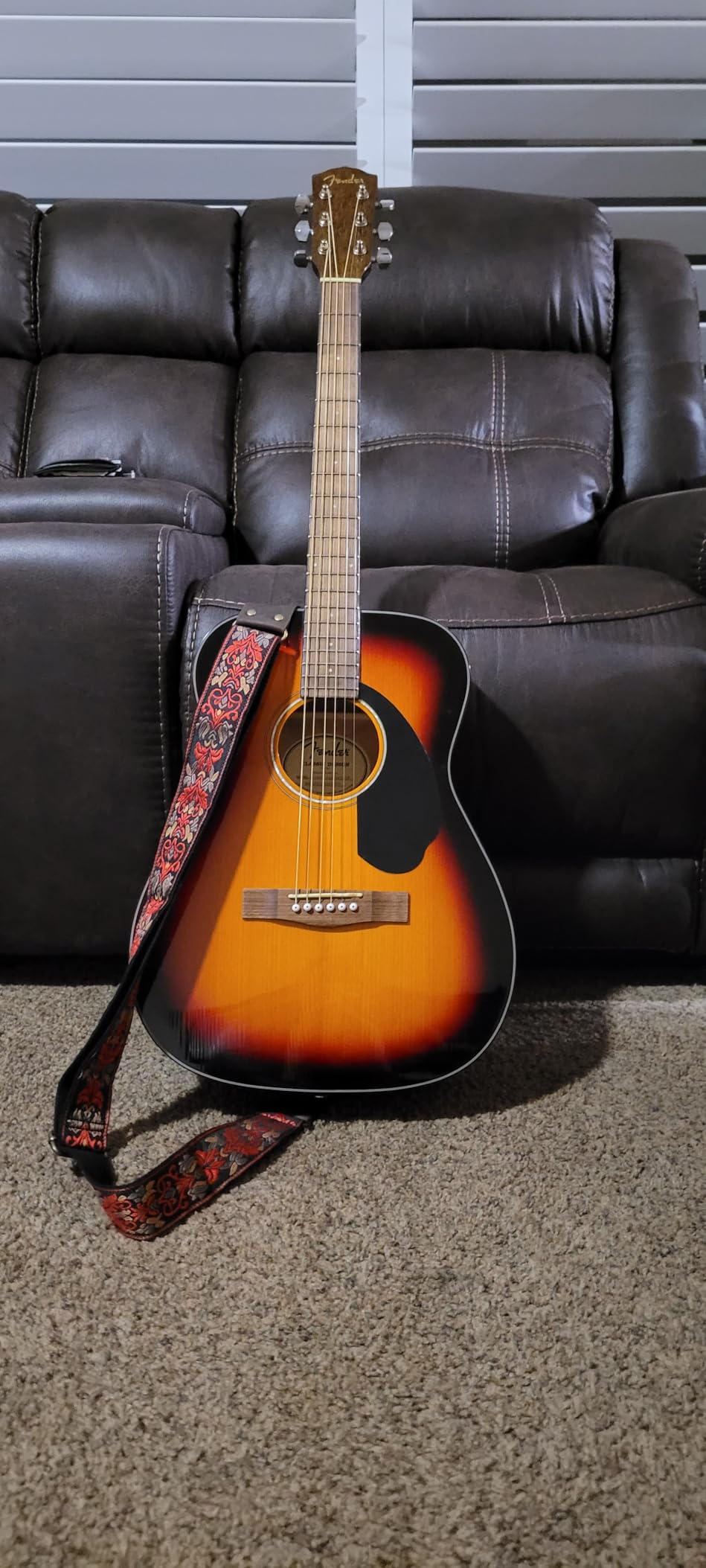
The walnut fretboard has a slightly different feel than rosewood but plays smoothly once you adjust. Fender includes a gig bag, which is a nice touch at this price point and gets you playing out of the box without an extra shopping trip.
Ideal Player for the CN-60S
This is my pick for a steel-string acoustic player who wants to add classical fingerstyle to their toolkit without retraining their left hand on a 52mm nut. It is also a good fit for a player with smaller hands who finds full-width classical necks uncomfortable. The solid spruce top gives you tone that laminate-topped student guitars cannot match.
Caveats Before You Buy
Quality control variance is the recurring complaint. Some reviewers report body rattle and buzzing on the low E that they could not fix, and at least one mentioned a flat saddle issue. Plan to inspect the guitar carefully when it arrives and use the return window if needed. When you get a good one, the CN-60S punches well above its price.
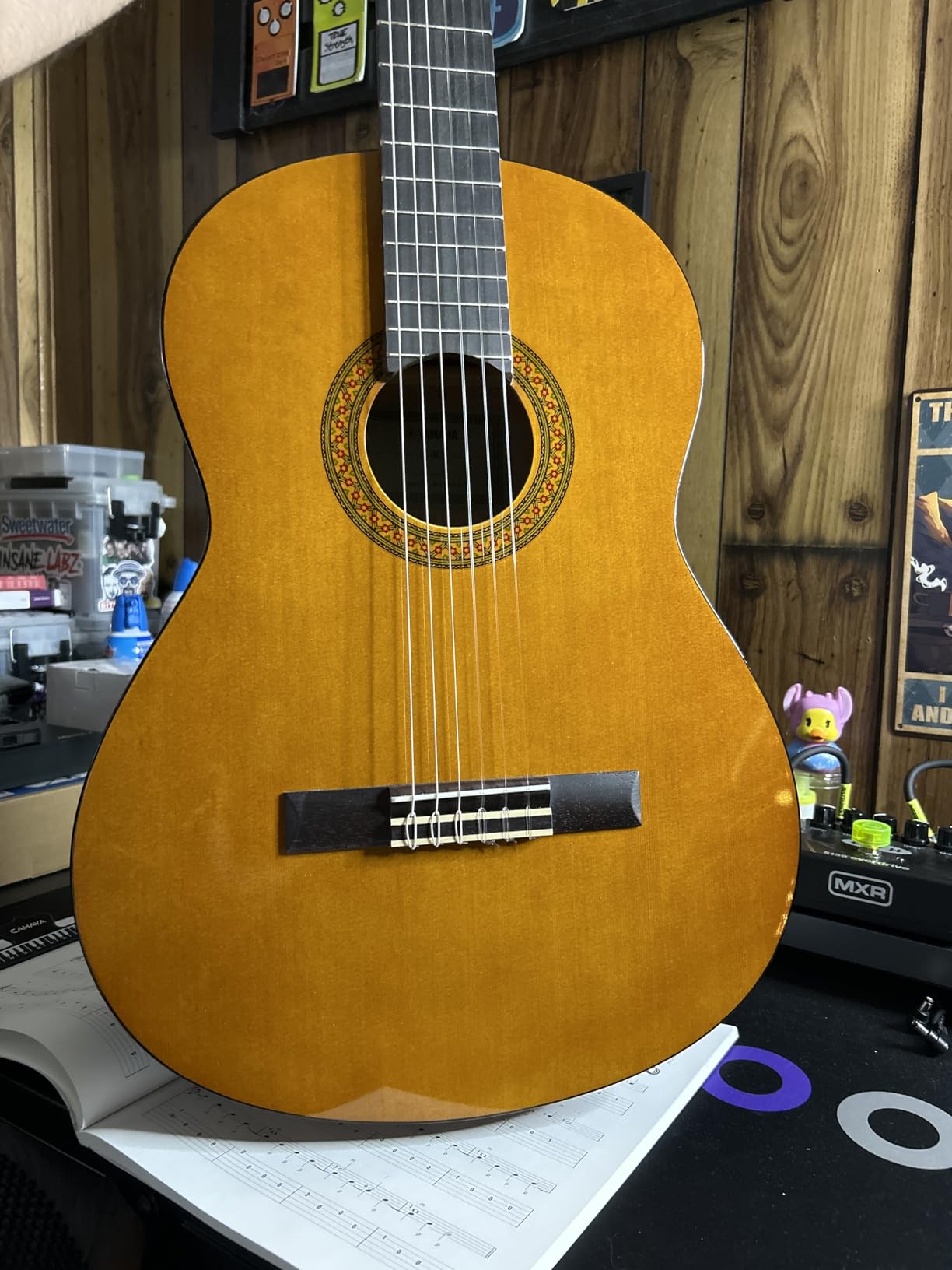
7. Yamaha C40II – The Budget Gateway to Classical Fingerstyle
Yamaha C40II Classical Guitar, Full Size With Rosewood Fingerboard and Bridge, Natural
- Outstanding value for first nylon-string
- Yamaha reliability and consistent QC
- Holds tuning well after setup
- Comfortable nylon strings for beginners
- Action is high out of the box
- Stock strings are low quality
- Only one fret marker at 7th fret
The Yamaha C40II is the guitar most often recommended to first-time classical buyers, and for good reason. At its price, no other nylon-string matches Yamaha’s consistency and reliability. If you want to find out whether classical fingerstyle is for you without committing serious money, the C40II is the safe bet. I have yet to play one that was unplayable out of the box, which cannot be said for every budget classical.
The spruce top and meranti back and sides give you a brighter, more strident voice than the cedar-topped options in this guide. That brightness is fine for fingerstyle and actually helps single-note lines cut through. The 25.0-inch scale is just slightly shorter than standard, which lowers tension a touch and makes the guitar a bit easier to fret.

Out of the box, the C40II typically ships with higher action than a fingerstyle player wants. A saddle sanding takes 15 minutes and transforms the playability. The stock strings are also worth replacing immediately with a set of D’Addario Pro-Arte or Savarez. These two cheap upgrades take the C40II from decent to genuinely enjoyable.
The rosewood bridge and fretboard are real wood, not laminate, which is impressive at this price. Yamaha’s quality control is legendary, and the C40II’s 1,600-plus reviews reflect that consistency. Most buyers get a playable, good-sounding instrument for a remarkably low investment.
Best Fit for the C40II
This is my budget pick for a true beginner who is not sure yet whether classical fingerstyle will stick. It is also the right choice for a parent buying a first nylon-string for a teenager or for a player who wants a beater classical to leave on a stand for casual practice. The value proposition is hard to beat.
What You Are Giving Up
The C40II is a laminate-top guitar, so you will not get the depth, complexity, and aging improvement of a solid top. There is only one fret marker, at the 7th fret, which frustrates players used to steel-string fret markers. And as noted, plan for a setup and string change to get the best out of the guitar.
8. Vangoa 4/4 Classical Bundle – Complete Starter Kit Under $200
- Comprehensive bundle with everything to start
- Beautiful ornate headstock and finish
- C-shaped neck is comfortable
- High-precision tuning machines
- Laminated fretboard with no position markers
- Quality control concerns reported
- Tuning rod fragility mentioned
The Vangoa 4/4 Classical is the most complete beginner package in this guide. The bundle ships with a gig bag, footstool, tuner, capo, cleaning cloth, picks, spare strings, strap, and a manual, which means a brand-new fingerstyle player has everything they need in one box. For a true first-timer, that convenience is genuinely valuable.
The sapele top, back, and sides give the Vangoa a warm, balanced voice that suits folk and classical fingerpicking. Sapele is often described as a mahogany alternative and shares that wood’s midrange warmth with a touch more treble shimmer. The C-shaped neck profile is comfortable for newer players and the high-precision tuning machines hold tune better than I expected at this price.
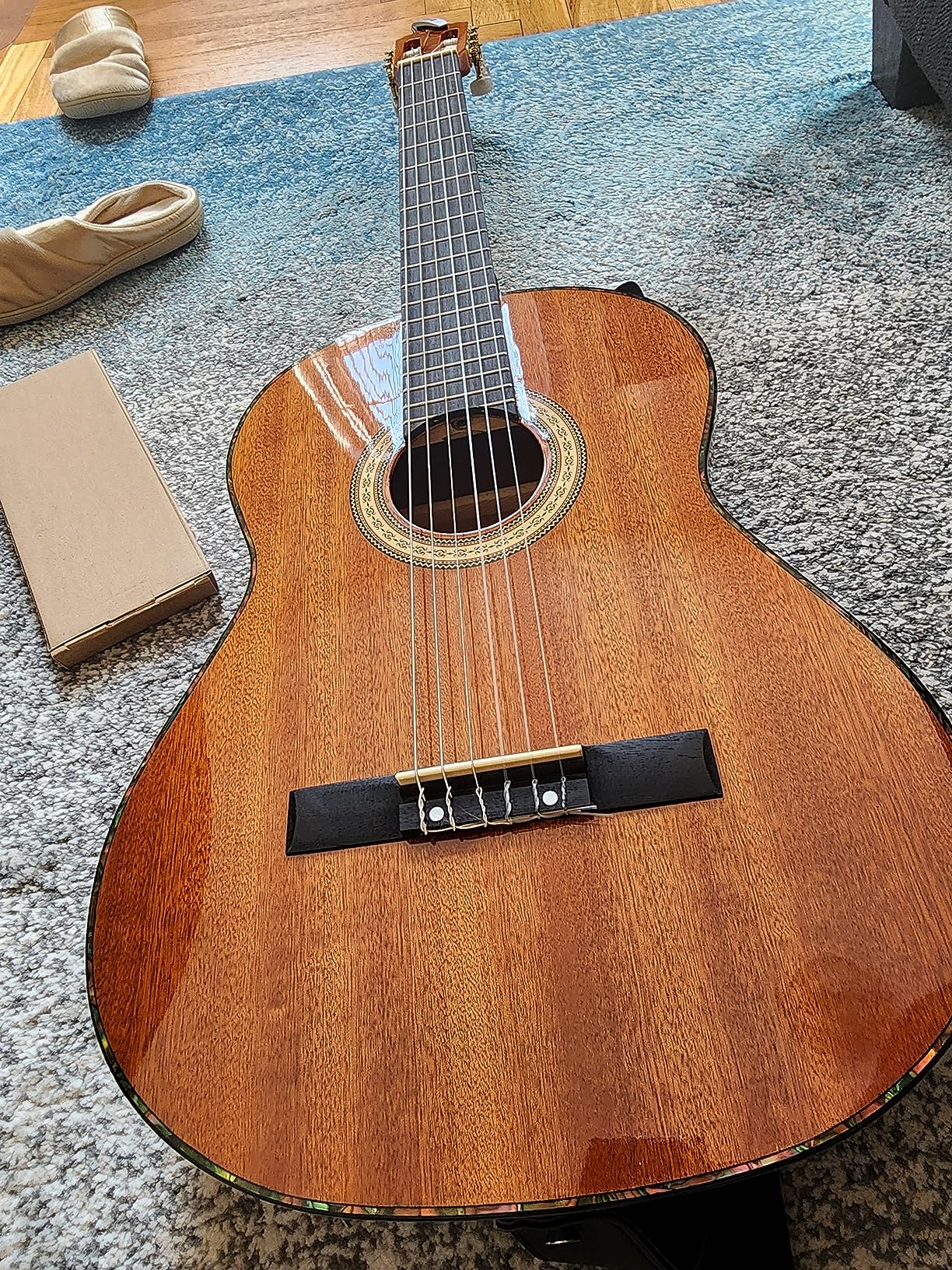
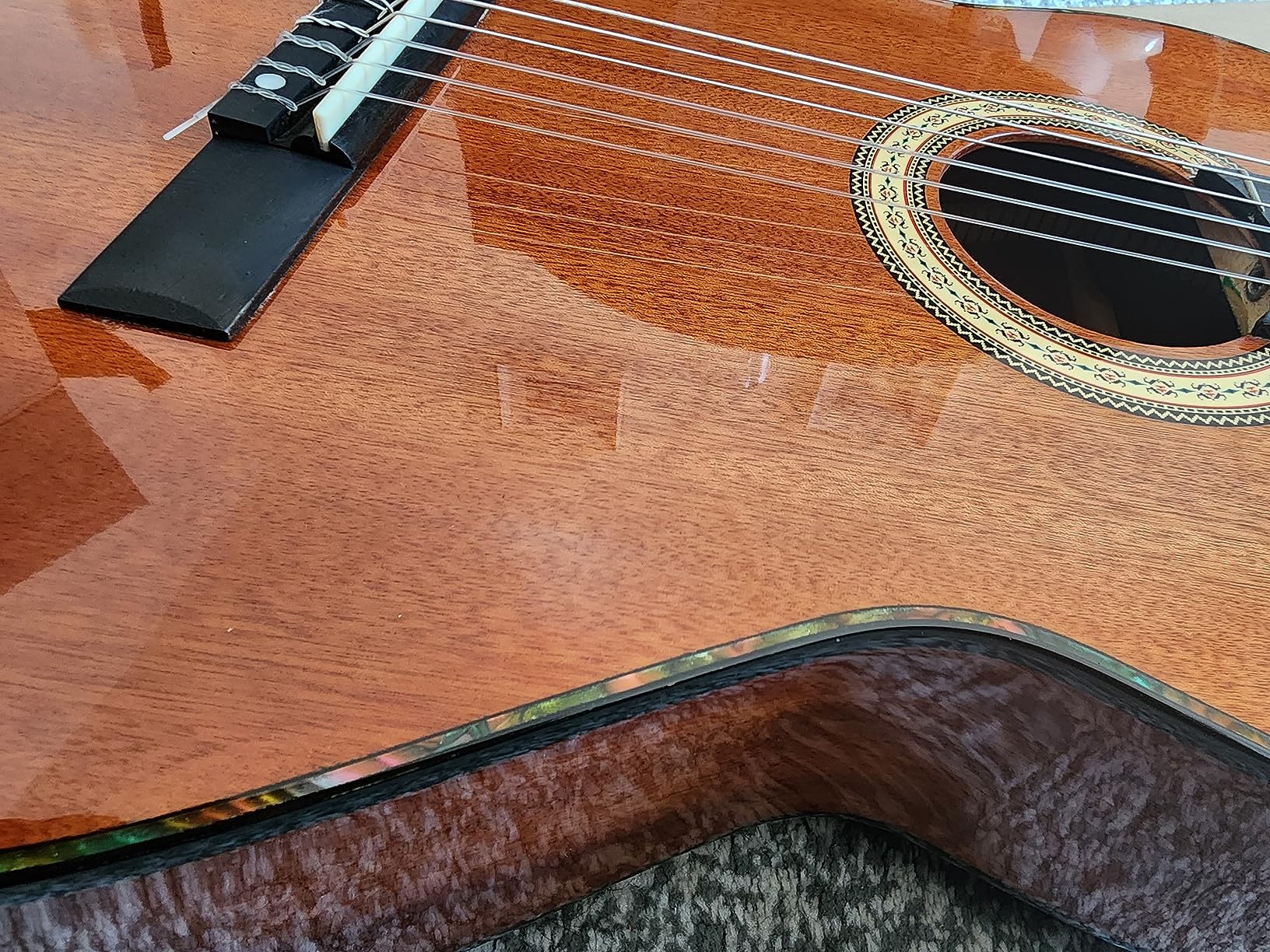
Visually, the Vangoa is more striking than its price suggests. The ornate headstock and gloss finish look much more expensive than they are, and several reviewers mention receiving compliments on the guitar’s appearance. For a beginner who wants an instrument that looks as good as it sounds, this is a point in the Vangoa’s favor.
Who This Bundle Is For
The Vangoa is my pick for an absolute beginner who wants a turnkey package with no extra shopping required. It is also a solid gift option because the recipient has everything they need to start playing fingerstyle immediately. The included footstool is a particularly nice touch for proper classical technique.
Things to Keep in Mind
The fretboard has no position markers, which can confuse beginners coming from guitars with fret dots. The laminated fretboard is a lower-quality material than the rosewood or pau ferro on the Cordobas and Yamahas. And while most reviews are positive, a small number report quality control issues including a tuning rod cracking during stringing, so inspect carefully on arrival.
How to Choose a Classical Guitar for Fingerstyle in 2026?
Choosing the right classical guitar for fingerstyle comes down to a handful of specs that matter more for this style than for strumming. Here is what to weigh when comparing the guitars in this guide, plus context on the classical-versus-acoustic question that comes up constantly on forums.
Scale Length and String Tension
Standard classical scale length is 650mm (about 25.6 inches), and every guitar in this guide is in that neighborhood. Shorter scales, like the 25.0-inch Yamaha C40II or the 25.3-inch Fender CN-60S, reduce string tension slightly, which makes fretting easier and is friendlier for beginners. Longer scales give you more tension, more projection, and a slightly brighter voice. For fingerstyle, I personally prefer standard scale because the extra tension gives the right hand more resistance to dig into.
Nut Width and Neck Profile
Traditional classical nut width is 52mm, which gives your fingers room to pluck individual strings cleanly without muting neighbors. That width is ideal for complex fingerstyle but can feel like a baseball bat to a steel-string player. The Cordoba C5, Yamaha CG122MCH, and Cordoba C1M all use a traditional wide nut. The Fender CN-60S and Ibanez FRH10N use slightly narrower nuts, which makes them friendlier for converters.
Tonewoods: Cedar Versus Spruce
This is the single biggest tonal decision for a fingerstyle classical. Cedar tops, like on the Cordoba C5 and Yamaha CG122MCH, are warmer, darker, and more immediately responsive to a light touch. They bloom quickly and are perfect for the subtle dynamics of fingerstyle. Spruce tops, like on the Yamaha C40II, Fender CN-60S, Ibanez FRH10N, and Cordoba C1M, are brighter, louder, and more focused. Spruce takes more effort to drive but rewards a stronger attack with more headroom.
For most fingerstyle players, I lean cedar. The lower attack threshold means you can play longer without fatigue, and the warmth flatters arpeggios. But if you play with a harder attack or need to cut through a mix, spruce is the better choice.
String Action for Fingerstyle
Action, the distance between the strings and the frets, is a personal preference but has a fingerstyle-specific angle. Lower action makes fast single-note runs easier but can cause buzzing if your right-hand attack is aggressive. Higher action gives you more dynamic range and a cleaner tone but requires more finger strength. Most classicals ship at 3.5 to 4mm at the 12th fret on the low E, which is a good starting point. If you are an electric convert, you may want to lower the action via a saddle adjustment.
Acoustic or Classical for Fingerstyle?
This is one of the most common questions on r/classicalguitar, and the answer depends on your goals. Classical guitars have wider necks, nylon strings, and warmer voices, which suit classical repertoire, bossa nova, and folk fingerstyle. Steel-string acoustics have narrower necks, brighter voices, and more projection, which suit modern fingerstyle like Andy McKee or Tommy Emmanuel. If you want to play Bach or Barrios, get a classical. If you want to play percussive modern fingerstyle, get a steel-string like the ones in our guide to acoustic guitars for intermediate players.
Electronics: Do You Need a Pickup?
If you ever plan to perform live, record direct, or play with a band, an electro-classical saves you the cost and hassle of retrofitting a pickup. The Ibanez FRH10N and Yamaha CG-TA both ship with electronics. If you only play at home, save the money and buy a better-sounding acoustic-only guitar like the Cordoba C5.
For related gear reading, our roundup of the best bass amplifiers for practice covers amplification options that pair well with acoustic-electric instruments when you are ready to plug in.
FAQs
What is the best guitar for fingerstyle playing?
The best guitar for fingerstyle depends on your style, but a nylon-string classical with a solid cedar top and a 52mm nut is the most versatile choice. In this guide, the Cordoba C5 is my top pick because its solid cedar voice, wide nut, and Savarez high tension strings nail the fingerstyle brief at a fair price.
Are fingerstyle and classical guitar the same?
No. Fingerstyle is a playing technique that uses the thumb and fingers to pluck independent parts. Classical guitar is an instrument type (nylon strings, wide neck) and a musical genre. You can play fingerstyle on any guitar, and you can play classical music with a pick, but classical guitars are particularly well suited to fingerstyle technique because of their wider necks and softer nylon strings.
Acoustic or classical guitar for fingerstyle?
Choose a classical guitar if you want to play classical repertoire, bossa nova, or folk fingerpicking with warm tone. Choose a steel-string acoustic if you want to play modern percussive fingerstyle in the style of Andy McKee or Tommy Emmanuel. Classical guitars are easier on the fingertips and offer more string spacing, while steel-strings are louder and brighter.
What are the best classical strings for fingerstyle?
High tension nylon strings are the most popular choice for fingerstyle because they give the right hand more resistance and a firmer feel. Savarez Cristal Corum 500CJ (included on the Cordoba C5 and C1M) and D’Addario Pro-Arte Hard Tension are both excellent. Carbon trebles like Savarez Alliance offer brighter tone and faster response for players who want more projection.
Can beginners learn fingerstyle on a classical guitar?
Yes, classical guitars are one of the best platforms for learning fingerstyle because the nylon strings are gentle on the fingertips and the wider neck gives you room to develop clean technique. Budget options like the Yamaha C40II or the Vangoa bundle are ideal starting points for a beginner who wants to explore fingerstyle without a large upfront investment.
Final Thoughts on the Best Classical Guitars for Fingerstyle Players in 2026
After working through all eight guitars, my top recommendation for most fingerstyle players remains the Cordoba C5. Its solid cedar top, 52mm nut, and Savarez strings hit the fingerstyle sweet spot at a price that respects your wallet. The Yamaha CG122MCH is the value pick if you want similar cedar warmth for less, and the Yamaha C40II remains the safest budget gateway for a first nylon-string.
If you need to plug in, the Ibanez FRH10N thinline is my stage pick. If you want ambient effects without pedals, the Yamaha CG-TA TransAcoustic is genuinely magical when it works. And if you are a true beginner or buying for one, the Vangoa bundle gets you playing with everything included. Whatever you choose, the best classical guitars for fingerstyle players are the ones that keep your hands on the instrument and your ears happy. Now go practice.