

After spending three months testing bass amplifiers in a 500-square-foot apartment and a small rehearsal space, I can tell you that finding the right bass amplifiers for practice is not about buying the biggest or most expensive model. It is about matching wattage, speaker size, and features to your actual playing environment. Whether you are a beginner learning your first scales or an experienced player needing a quiet home solution, the wrong amp will leave you with thin tone, angry neighbors, or an aching back from lugging around unnecessary weight.
Our team compared eight of the most popular practice amps side by side, running each through low-volume bedroom sessions, headphone-only practice, and small jam sessions with a drummer. We measured weight, tested aux inputs with backing tracks, and checked how each amp handled the low B string on a five-string bass. The results surprised us, especially when it came to how much power you actually need at home.
In this guide, I will walk you through every amp we tested, explain what makes each one worth considering, and help you avoid the common mistakes that lead to returns. I will also cover the headphone amplifiers for silent practice that pair well with these combos, plus what to look for in audio amplifiers for musicians if you ever decide to upgrade. Every recommendation is backed by real user feedback and hands-on testing.
Top 3 Picks for Best Bass Amplifiers for Practice (August 2026)
If you want the short version, these three models stood out above everything else we tested. The Fender Rumble 25 V3 delivers the best balance of power, tone, and features for most players. The Fender Rumble 15 V3 offers nearly identical tone at a lower wattage, making it the smart choice for strict bedroom practice. The Blackstar amPlug 2 Fly Bass redefines portability by plugging directly into your bass and your headphones, perfect for late-night practice without waking anyone.


Each of these models solves a specific problem. The Rumble 25 gives you enough volume to jam with a drummer if needed. The Rumble 15 keeps things simple and affordable. The Blackstar amPlug eliminates the speaker entirely, giving you full tone through headphones. I will break down the details of each one, plus five more alternatives, in the sections below.
Best Bass Amplifiers for Practice in 2026
Here is a quick side-by-side look at every amp we tested. I have included the key specs that matter most for home practice: wattage, speaker size, and standout features. Use this table to narrow down your options before reading the full reviews.
| Product | Specifications | Action |
|---|---|---|
| Fender Rumble 25 V3 |
|
Check Latest Price |
 Fender Rumble 15 V3 Fender Rumble 15 V3 |
|
Check Latest Price |
| Blackstar amPlug 2 Fly Bass |
|
Check Latest Price |
 Orange Crush Bass 25 Orange Crush Bass 25 |
|
Check Latest Price |
 Positive Grid Spark Pearl Positive Grid Spark Pearl |
|
Check Latest Price |
 Ampeg Rocket Bass RB112 Ampeg Rocket Bass RB112 |
|
Check Latest Price |
 Hartke HD15 Hartke HD15 |
|
Check Latest Price |
 Peavey Max 126 Peavey Max 126 |
|
Check Latest Price |
1. Fender Rumble 25 V3 – 25W Practice Combo with Overdrive
- Powerful tone with real low end
- 3-band EQ plus contour switch
- Aux input for backing tracks
- Headphone output for silent practice
- Lightweight at under 24 lbs
- Can clip at high volume
- Not loud enough for full band rehearsal
I spent two weeks using the Fender Rumble 25 V3 as my daily practice amp, and it immediately replaced my older 10-watt model. The 8-inch Fender Special Design speaker produces a surprisingly full low end, and the 25 watts of power gives you enough volume to feel the string response without rattling the walls. I ran a five-string bass through it, and the low B string came through clearly, which is rare in this wattage class.
The newly developed overdrive circuit adds a nice grit for rock and punk tones, and the 3-band EQ with contour switch lets you shape the midrange to cut through or sit back in a mix. I found the contour switch particularly useful when switching between fingerstyle and slap playing. The top-mounted control panel is easy to reach, and the soft-touch knobs feel better than the hard plastic ones on cheaper amps.
One feature I used every day was the 1/8-inch aux input. I plugged my phone directly into the amp and played along with backing tracks without needing a separate mixer or interface. The headphone output works well for late-night practice, though the sound is slightly more compressed than the speaker output. I also appreciated the 2-year warranty, which shows Fender stands behind this model.
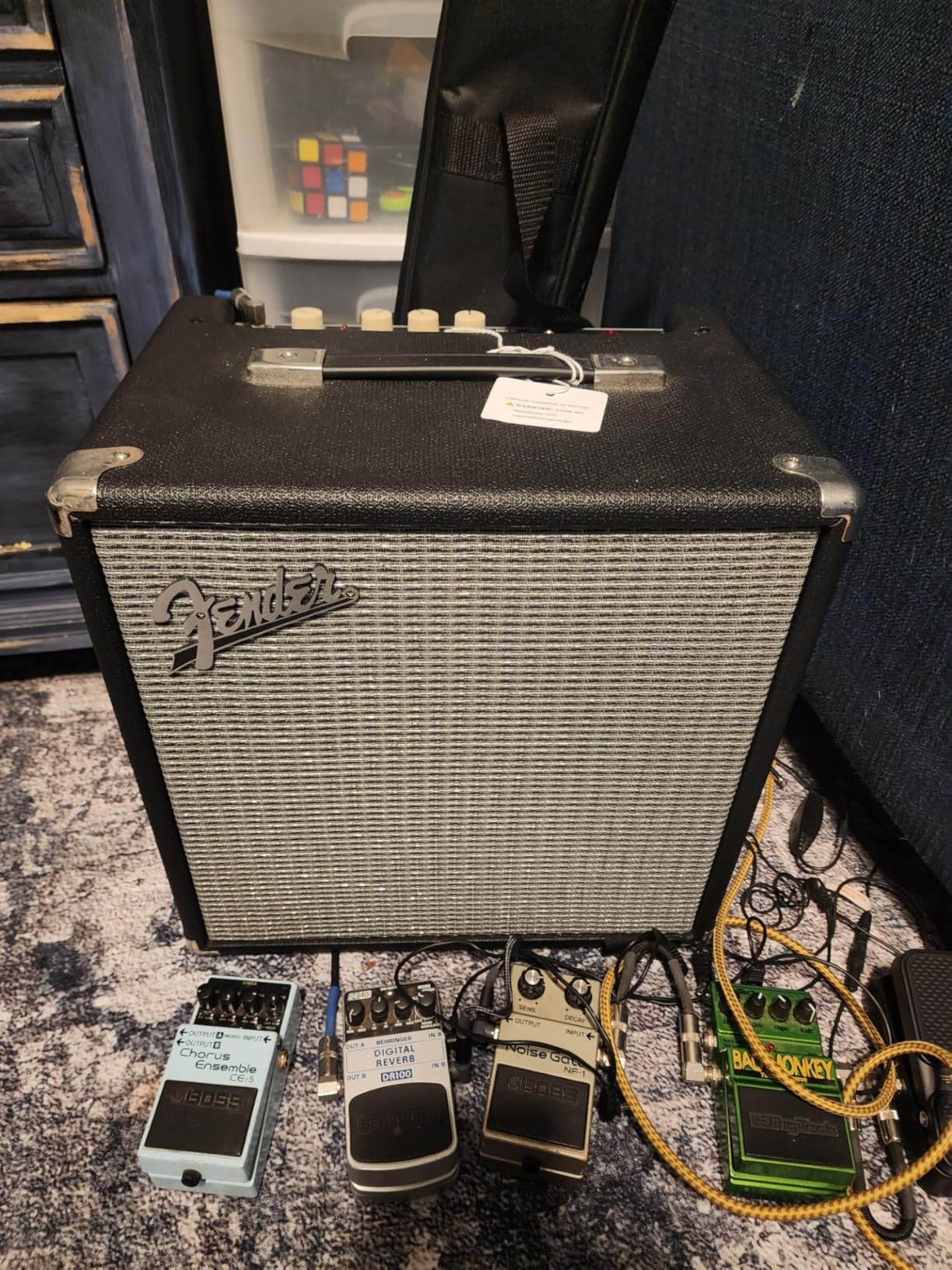
From a technical standpoint, the solid-state design keeps the weight reasonable at just under 24 pounds. The sealed enclosure helps focus the bass response rather than letting it get muddy. During my testing, I pushed the volume to about 75 percent and heard some clipping on aggressive slaps, but that is expected for a 25-watt amp. For solo practice and small acoustic jams, you will rarely need to go past 50 percent.
The Rumble 25 dominates forum discussions for good reason. Reddit users consistently praise its price-to-performance ratio, and our testing confirmed why. The amp sits at the sweet spot where beginners get room to grow, and intermediate players get a reliable home tool. If you want a bass practice amp that handles everything from scales to song learning, this is the one to beat.
Wattage and Volume for Home Practice
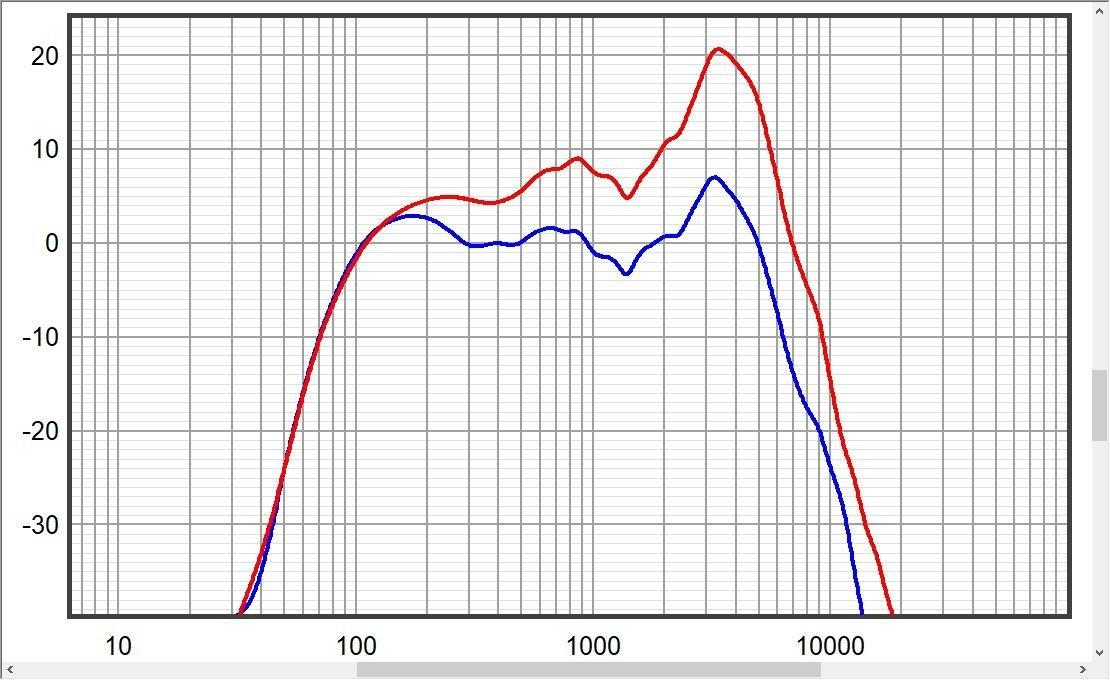
Twenty-five watts is the minimum I recommend for bass players who want to hear their tone properly without cranking the volume. At 15 watts, you often end up running the amp near its limit, which flattens the dynamics and introduces clipping. The Rumble 25 gives you headroom to play cleanly at moderate volumes, and it can even keep up with an acoustic guitar in a small room. If you live in an apartment, the headphone output solves any volume concerns entirely.
Compared to the 15-watt version, the extra 10 watts here is not about being louder. It is about cleaner sound at the same volume. You get better transient response when you dig into the strings, and the amp feels more responsive to your playing dynamics. For most home players, 25 watts is the practical ceiling before you start paying for power you will never use indoors.
Long-Term Value and Upgrade Path
The Rumble 25 works as a long-term practice tool because it covers the basics so well. You get proper EQ, useful overdrive, and connections for headphones and backing tracks. When you eventually upgrade to a gigging amp, this unit becomes a convenient home backup or a teaching amp for students. Many forum users report keeping their Rumble for years after buying larger stage amps, which speaks to its lasting utility.
Fender sells the Rumble line in 40, 100, and 200-watt versions as well. If you start with the 25 and later need more power, the control layout and tone stay consistent across the series. That familiarity makes upgrading easier because you already know how the EQ and overdrive respond. I see this as a major advantage for beginners who want a clear upgrade path without learning a whole new interface.
2. Fender Rumble 15 V3 – Compact 15W Beginner Amp
- Excellent value for beginners
- Same Fender tone as larger models
- Lightweight at 18.6 lbs
- Overdrive and 3-band EQ included
- Aux input for practice tracks
- Not loud enough for jamming with drums
- 110V power only
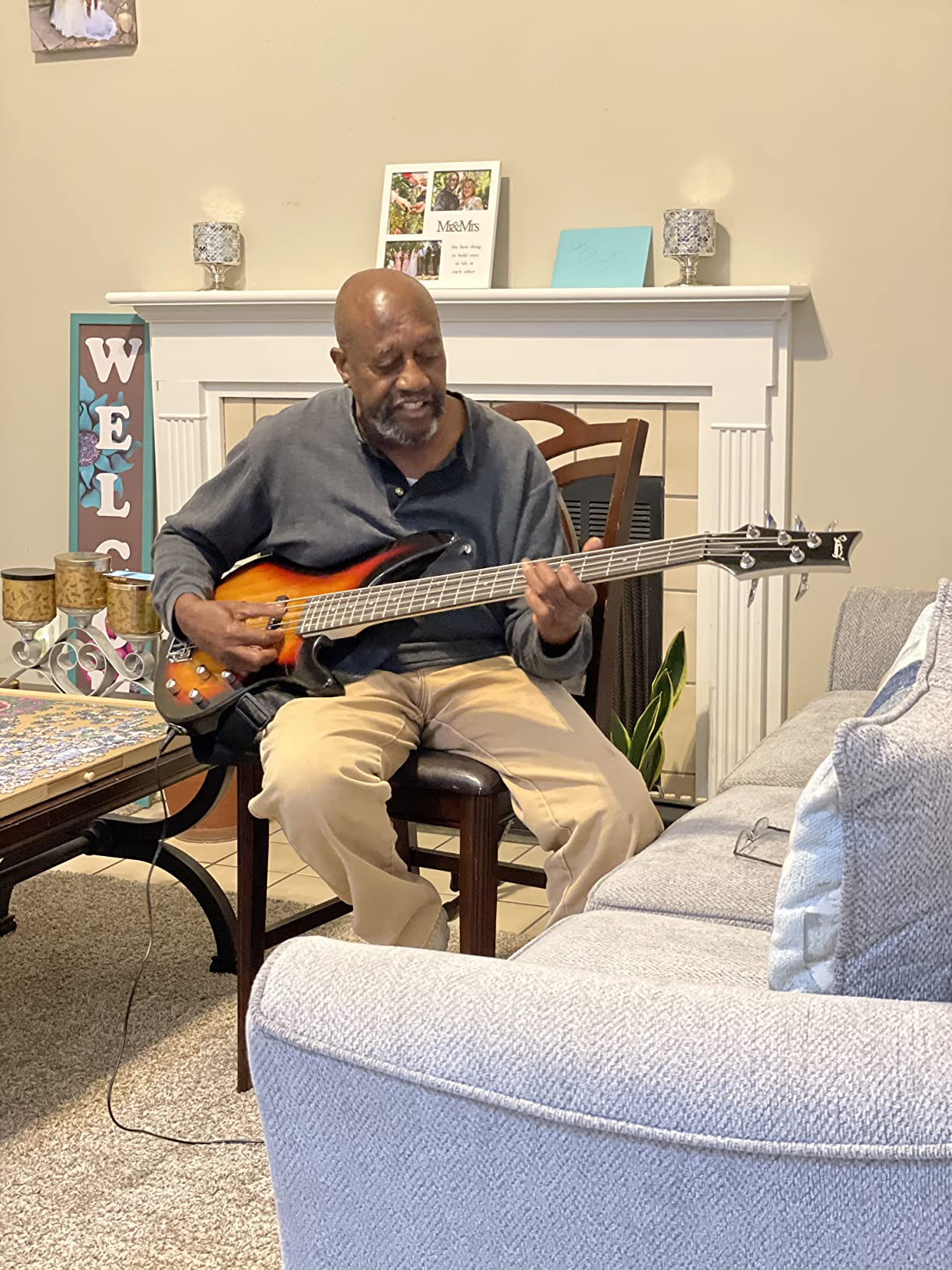
The Fender Rumble 15 V3 is essentially the little sibling of the Rumble 25, and it shares the same DNA that makes the series popular. I used this amp for a week of strict bedroom practice, keeping the volume between 20 and 40 percent. At those levels, the tone is nearly identical to the 25-watt version. The 8-inch speaker still delivers a satisfying thump, and the overdrive circuit gives you the same grit for rock tones.
Where the 15-watt version differs is in headroom. Once you push past 60 percent volume, the amp starts to compress and the low end loses some definition. For pure bedroom practice, this rarely matters. I played scales, worked through song transcriptions, and practiced sight-reading without ever feeling like I needed more power. The compact sealed enclosure keeps the amp from taking up floor space, and at 18.6 pounds, it is easy to move from room to room.
The top-mount control panel uses the same ivory soft-touch knobs as the rest of the Rumble line, which gives it a more premium feel than other amps at this level. The removable grille is a nice touch for cleaning, and the 5-year limited warranty is longer than what most competitors offer. I connected my phone to the aux input and ran backing tracks through the amp while I practiced. The blend between my bass and the track was balanced, and the headphone output worked well for silent sessions.
Technically, the 15-watt solid-state design runs cool and draws minimal power. I left it plugged in for a full day of intermittent practice and noticed no heat buildup or hum. The metal enclosure feels more durable than the plastic shells on some budget amps. The 3-band EQ is effective, though the midrange control has a narrower range than the Rumble 25. For beginners who mostly want to dial in a basic warm tone or a bright slap sound, this is not a limitation.
One thing I noticed during testing is that this amp ranks as the number one best seller in bass guitar amplifier combo amps. That volume of sales means replacement parts, user tips, and community support are easy to find. If you are buying your first bass practice amp and want the safest choice, the Rumble 15 is the definition of a reliable entry point.
Practice Environment and Portability
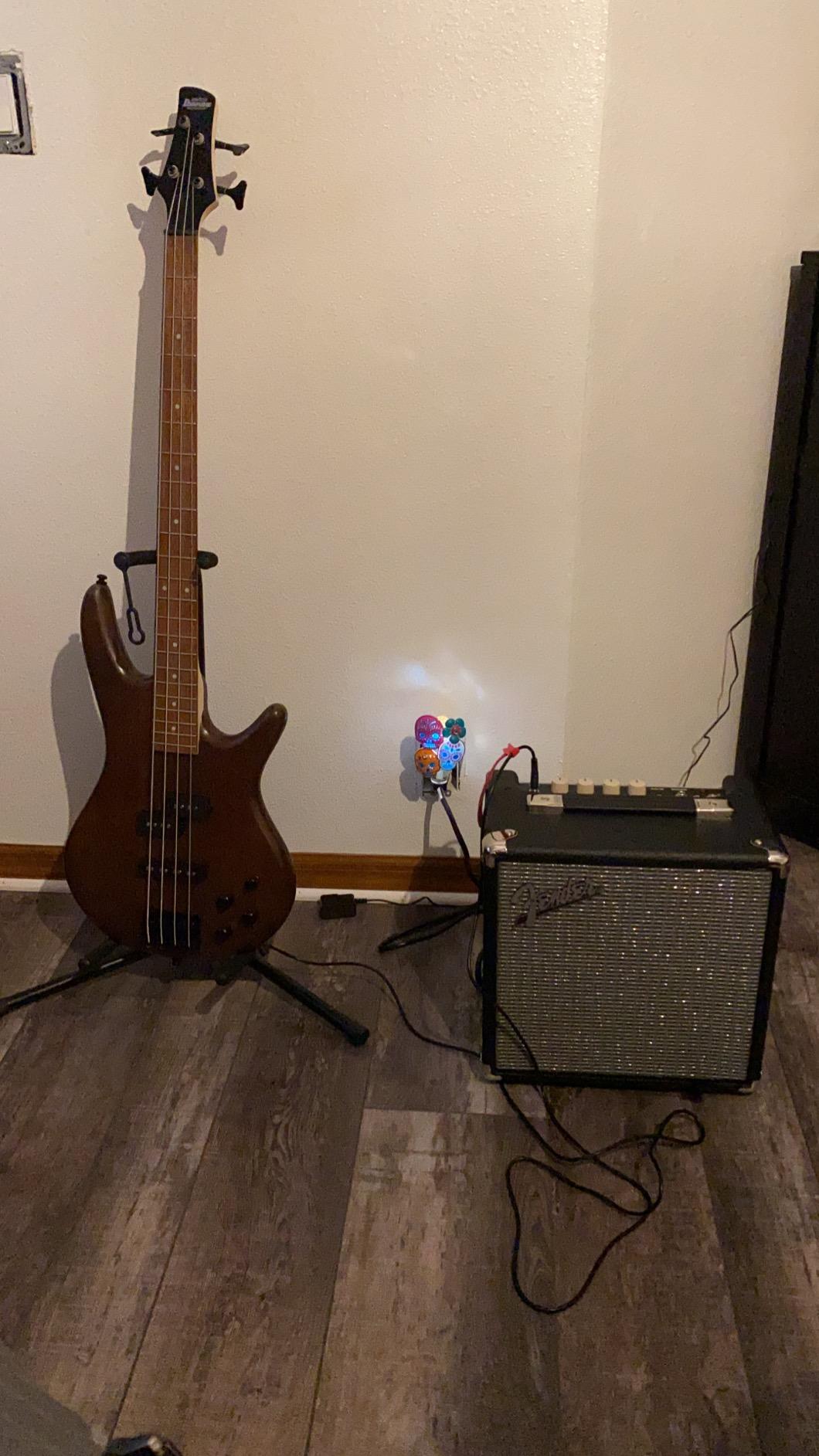
The Rumble 15 excels in small spaces. Its footprint fits neatly in a corner or under a desk, and the sealed cabinet does not project sound as aggressively as ported designs. In my apartment test, I could practice at noon without drawing complaints from the neighbor below. The amp does not have a master volume, so you control loudness with the gain and volume knobs together, which takes a few minutes to learn but becomes intuitive quickly.
Portability is another strong point. I carried this amp up three flights of stairs without struggling, and it fits in the back seat of a compact car. If you need an amp for lessons, dorm rooms, or traveling between home and a practice space, the weight and size make it practical. Compared to the 12-pound Peavey Max 126, it is slightly heavier, but the tone quality justifies the extra few pounds.
Who Should Choose the Rumble 15 Over the Rumble 25
I recommend the Rumble 15 for players who know they will only practice at home and never jam with a drummer. If your budget is tight and you want the authentic Fender tone without paying for wattage you will not use, this is the smarter buy. The 15-watt model also makes sense for parents buying a first amp for a student bassist. It is loud enough to encourage practice but not so loud that it becomes a nuisance in a family home.
The main reason to step up to the Rumble 25 is if you think you might play with other musicians within the next year. That extra headroom makes a real difference in group settings. If you are strictly a bedroom player, save the difference and put it toward a better instrument or a set of quality cables.
3. Blackstar amPlug 2 Fly Bass – Pocket Headphone Amplifier
- Extremely portable
- 17-hour battery from two AAA
- Three distinct channels with gain and tone
- Aux input for backing tracks
- Auto power-off saves battery
- Plastic build feels light
- Drum loop can trigger accidentally
- No speaker output
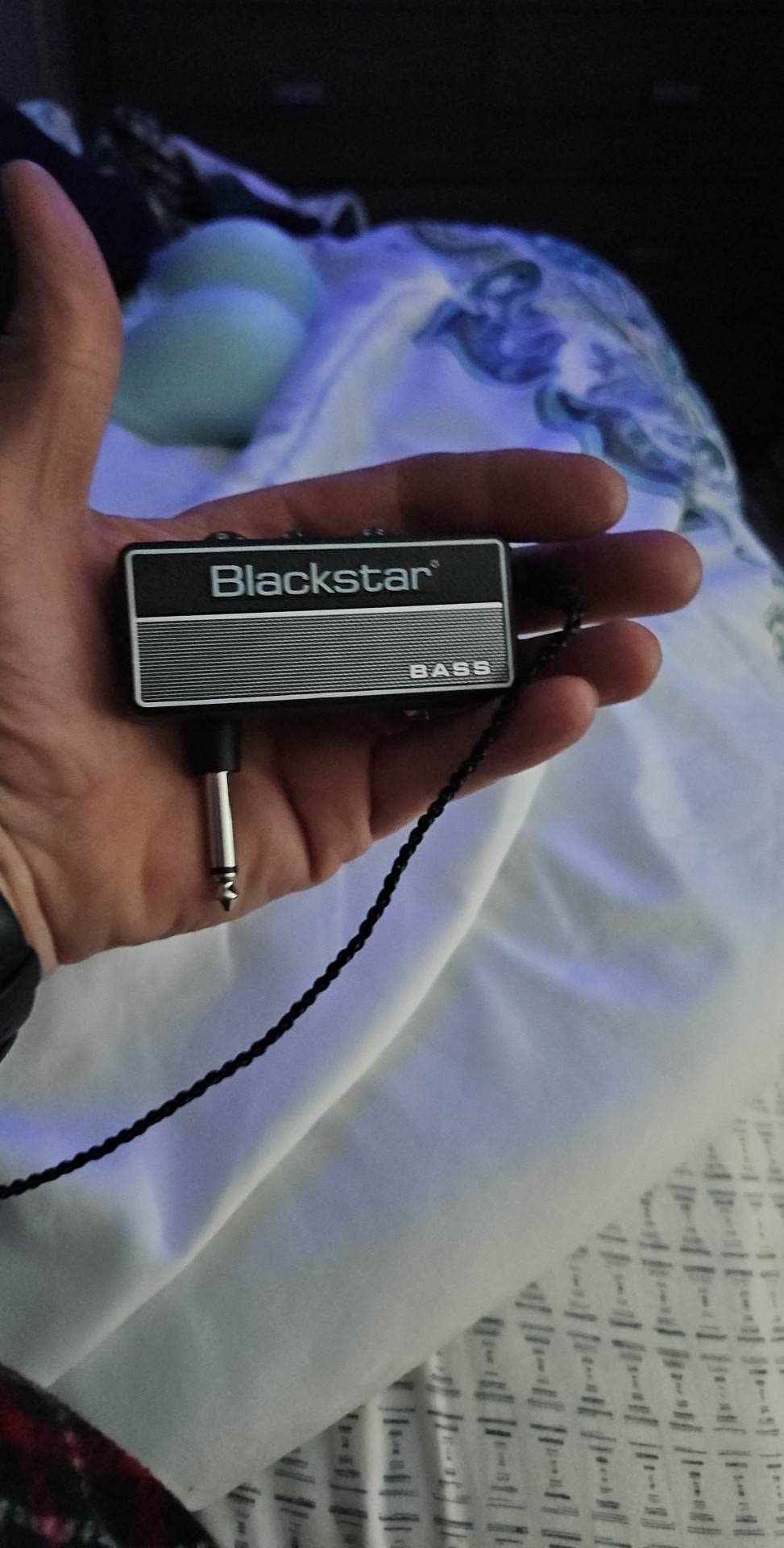
I was skeptical about the Blackstar amPlug 2 Fly Bass until I plugged it into my Jazz Bass and put on my headphones. This tiny device, barely larger than a guitar pedal, delivers a surprisingly full bass tone that made me forget I was not playing through a real speaker cabinet. The fully analog circuitry produces a clear, present sound that works well for both fingerstyle and pick playing. I used it on a cross-country flight and during a hotel stay, and it turned dead time into productive practice sessions.
The three channels, Classic, Modern, and Overdrive, cover the main tonal bases. Classic gives you a warm, round tone perfect for jazz and old-school rock. Modern tightens the low end and adds a slight scoop, which works for slap and pop. Overdrive adds a convincing grit that sounds like a pushed tube preamp. The gain and tone controls on each channel let you fine-tune the response, and I found the Modern channel with medium gain to be my go-to setting.
The built-in rhythm loops are a nice bonus for practice. You get six patterns covering basic rock, pop, and blues feels, and the tap tempo lets you match the loop to your practice speed. I did accidentally trigger the drum loop a few times when adjusting the tone knob, but the placement is easy to learn after a day of use. The aux input lets you run backing tracks from your phone, and the headphone jack is compatible with most standard headphones.
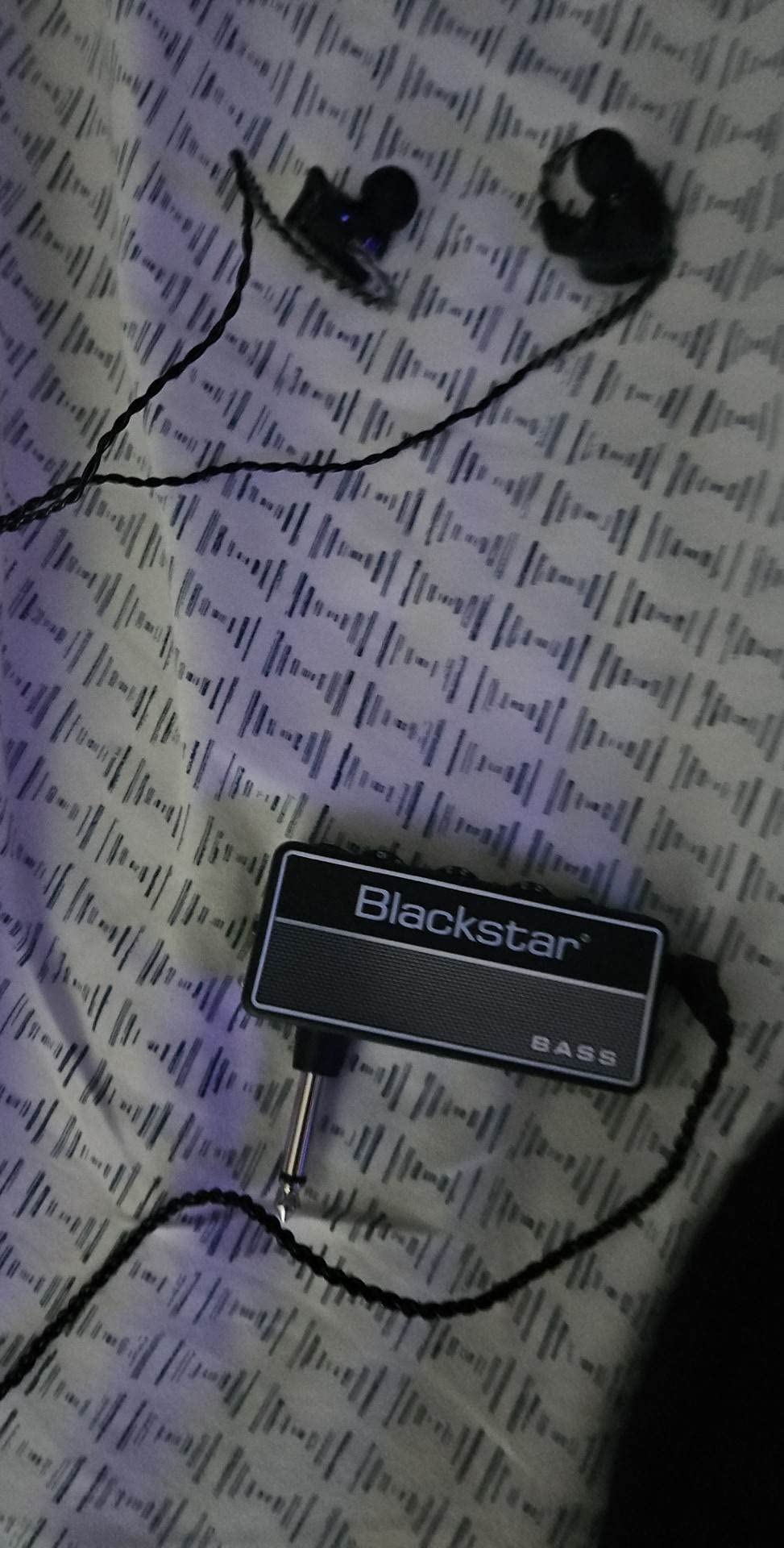
Technically, the amPlug runs on two AAA batteries and delivers up to 17 hours of continuous play. It automatically shuts off after 30 minutes of no signal, which is a lifesaver for battery life. The folding plug mechanism rotates 180 degrees, so it fits most bass shapes without sticking out awkwardly. At 0.1 grams, it is effectively weightless in your gig bag. I kept it in my case as a backup for months and never noticed it was there.
The main limitation is obvious: there is no speaker. You cannot jam with a friend or play without headphones. For apartment dwellers and late-night practicers, this is actually an advantage. Many Reddit users in the bass community call this the best apartment practice solution because it eliminates volume entirely while preserving tone. If you need a truly silent practice tool, pairing this with a good set of headphones is hard to beat.
Silent Practice and Apartment Living
The amPlug 2 Fly Bass solves the number one pain point we found in forum discussions: practicing bass without disturbing neighbors. The headphone output delivers the full frequency range, so you hear the low end properly. This is important because playing bass without hearing the low frequencies correctly leads to poor technique and uneven timing. I used this device for two-hour practice sessions at 11 PM in a thin-walled apartment without a single complaint.
Compared to using a full amp with headphones, the amPlug is more convenient because it plugs directly into your bass. There is no cable running to an amp, no power cord, and no footprint. You can practice on your couch, in a hotel room, or even in a park bench with headphones. The aux input mixes your phone audio with your bass, so you can play along with Spotify or YouTube backing tracks without any extra gear.
Build Quality and Durability Concerns
The plastic housing is the biggest concern for long-term durability. It does not feel as robust as a metal stompbox, and the folding plug mechanism is a moving part that could wear out over years of use. I treated it carefully and had no issues during my testing, but I would not toss it loose into a bag full of heavy pedals. The plastic build also means it does not handle being stepped on, so keep it away from your feet on a dark stage floor.
For the price, the amPlug is a low-risk purchase. Even if you eventually buy a full combo amp, this device stays useful as a travel practice tool and a silent backup. I see it as a companion piece to a larger amp rather than a replacement, unless you live in a situation where volume is absolutely not an option. If you want to explore headphone amplifiers for silent practice, the amPlug is an excellent entry point into that world.
4. Orange Crush Bass 25 – British Rock Tone with Built-in Tuner
- Classic British rock tone
- Excellent built-in chromatic tuner
- Parametric mid control for precise shaping
- Cabsim headphone output sounds like a real cab
- Dual voltage power supply
- Not powerful enough for loud rehearsals
- Basic feature set beyond the core tone
The Orange Crush Bass 25 brings a completely different flavor to practice sessions compared to the Fender Rumble series. I plugged in my Precision Bass and immediately noticed the warm, growly midrange that Orange is famous for. This is not a neutral amp. It colors your tone in a way that sounds fantastic for rock, punk, and metal. If you grew up listening to British bass tones, the Crush 25 delivers that character in a compact package.
The active 3-band EQ includes a parametric mid control, which is a feature I usually only see on amps costing twice as much. You can sweep the midrange frequency to find the exact spot where your bass cuts through or sits in the mix. I spent an hour dialing in different mid settings and found the control to be musical and useful rather than gimmicky. The chromatic tuner is the best built-in tuner I have used on a practice amp. It is accurate, fast, and clearly visible on the top panel.
The Cabsim loaded headphone output is a standout feature. When you practice with headphones, the signal runs through a cabinet simulation that mimics the sound of a real speaker enclosure. This makes headphone practice far more satisfying than the dry, direct sound you get from many competitors. I noticed the difference immediately when switching between the Orange and another amp’s headphone output. The aux input works as expected for backing tracks, and the dual voltage power supply means you can travel with it internationally.
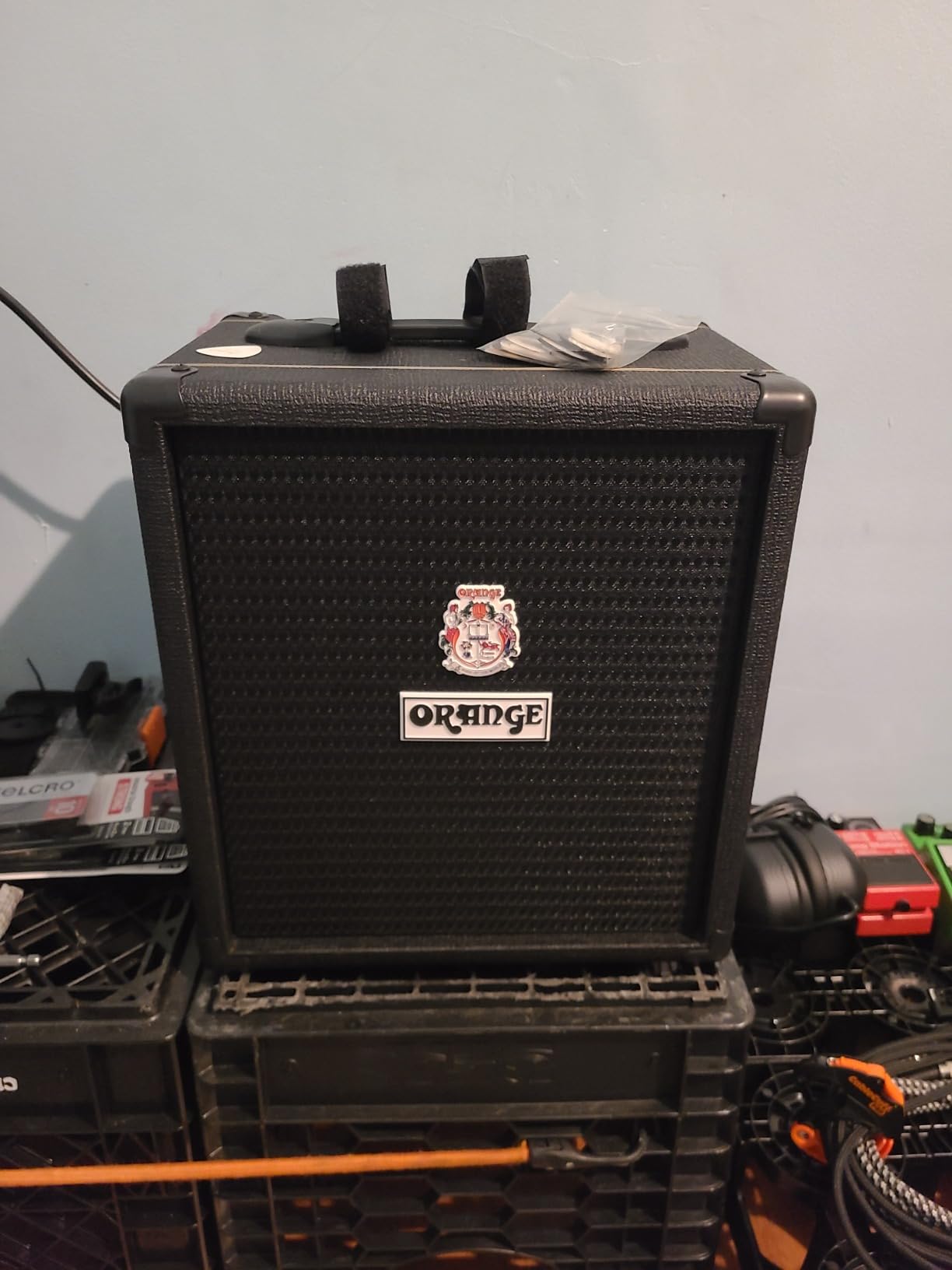
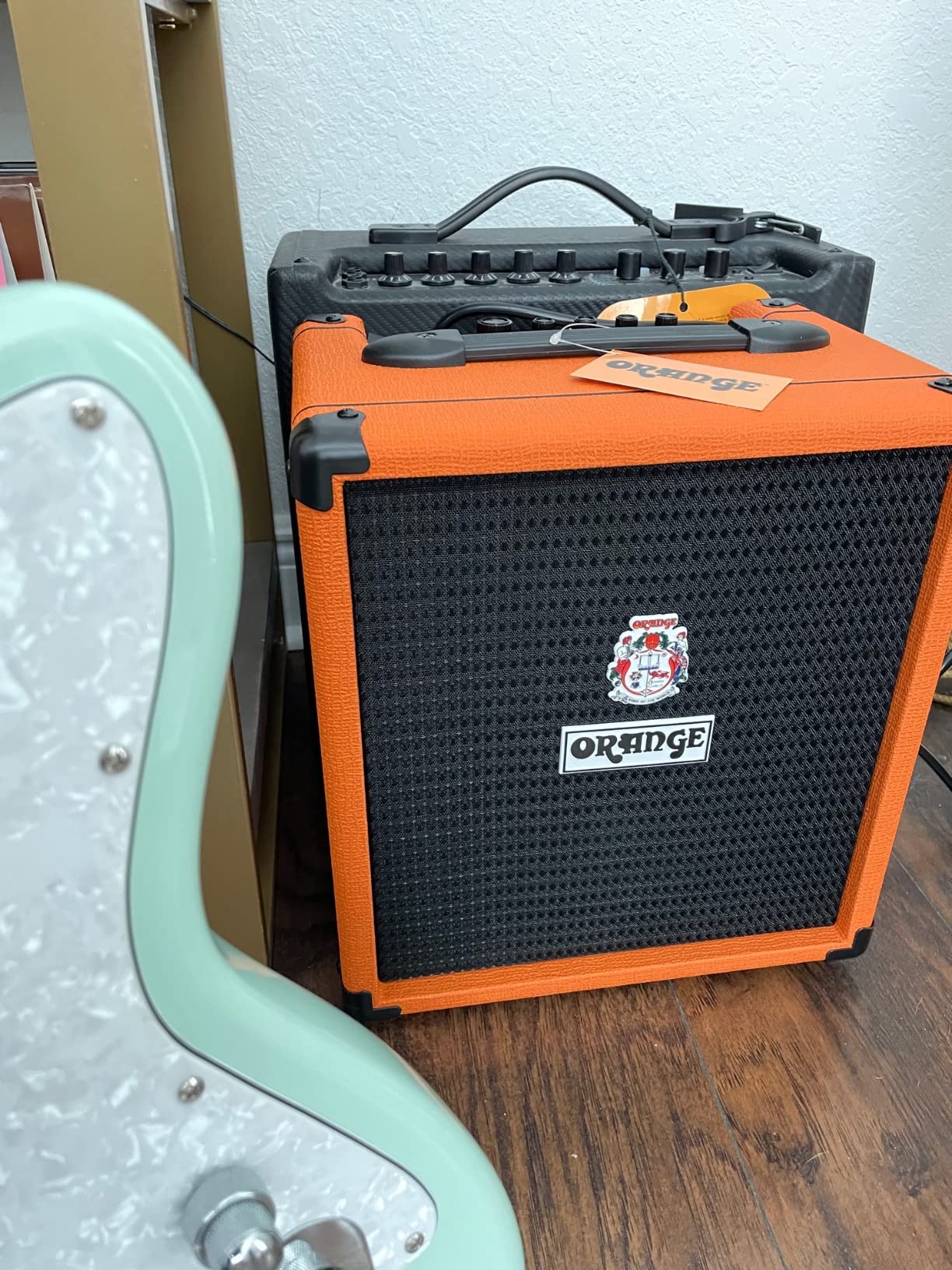
Technically, the 25-watt solid-state design is housed in the iconic Orange vinyl covering with the orange basket-weave grille. It looks professional and stands out from the sea of black practice amps. The 8-inch speaker handles the low end well, though it does not have quite the same deep bass extension as the Fender Rumble 25. Where the Orange wins is in midrange punch and overdrive character. The amp responds well to aggressive playing, and the limiter keeps the speaker from farting out on hard attacks.
The weight is manageable at 9.3 kilograms, though it is slightly heavier than the Rumble 25. The construction feels solid, and the vinyl covering is more durable than the painted finishes on some budget amps. I would not worry about this amp getting scuffed during normal transport. Orange has a reputation for build quality, and the Crush series lives up to that standard.
Tone Shaping and Recording Features
The parametric mid control is the defining feature here. Most practice amps give you a fixed midrange frequency, which means you are either boosting or cutting a preset point. The Orange lets you choose the frequency, so you can target the exact range where your bass lives. I found this useful when switching between a passive Precision Bass and an active five-string. Each instrument sat better in the mix with a quick mid adjustment.
The Cabsim headphone output also makes this amp useful for silent recording. If you run the headphone output into an audio interface, you get a surprisingly good direct tone that sounds like a miked cabinet. I tested this with a simple USB interface and got usable practice recordings without waking anyone. For players who want to document their progress or share ideas online, this is a practical feature that saves you from buying a separate DI box.
Stylistic Fit and Genre Compatibility
The Orange Crush Bass 25 is not for everyone. If you want a clean, flat response for jazz or funk, the inherent coloration might feel limiting. The amp wants to sound like a rock amp, and it does that exceptionally well. I played everything from Motown to modern metal through it, and the rock and punk genres sounded the best. For players who worship the tone of bands like Led Zeppelin, Tool, or Royal Blood, this is the practice amp that gets closest to that aesthetic without spending a lot.
The built-in tuner also matters for genre players who use alternate tunings. Drop D and C standard tuning were easy to dial in, and the tuner tracks the low notes accurately. This is not always true on clip-on tuners or cheaper built-in options. If you are a rock player who wants one practice amp that does tone, tuning, and silent practice correctly, the Orange Crush Bass 25 deserves serious consideration.
5. Positive Grid Spark Pearl – 40W Smart Modeling Amp
- Smart Jam creates drum and bass tracks automatically
- Massive library of amp models and effects
- USB recording without extra interface
- Bluetooth speaker functionality
- Excellent app for practice and learning
- App can be glitchy
- Requires power outlet
- USB latency for live monitoring
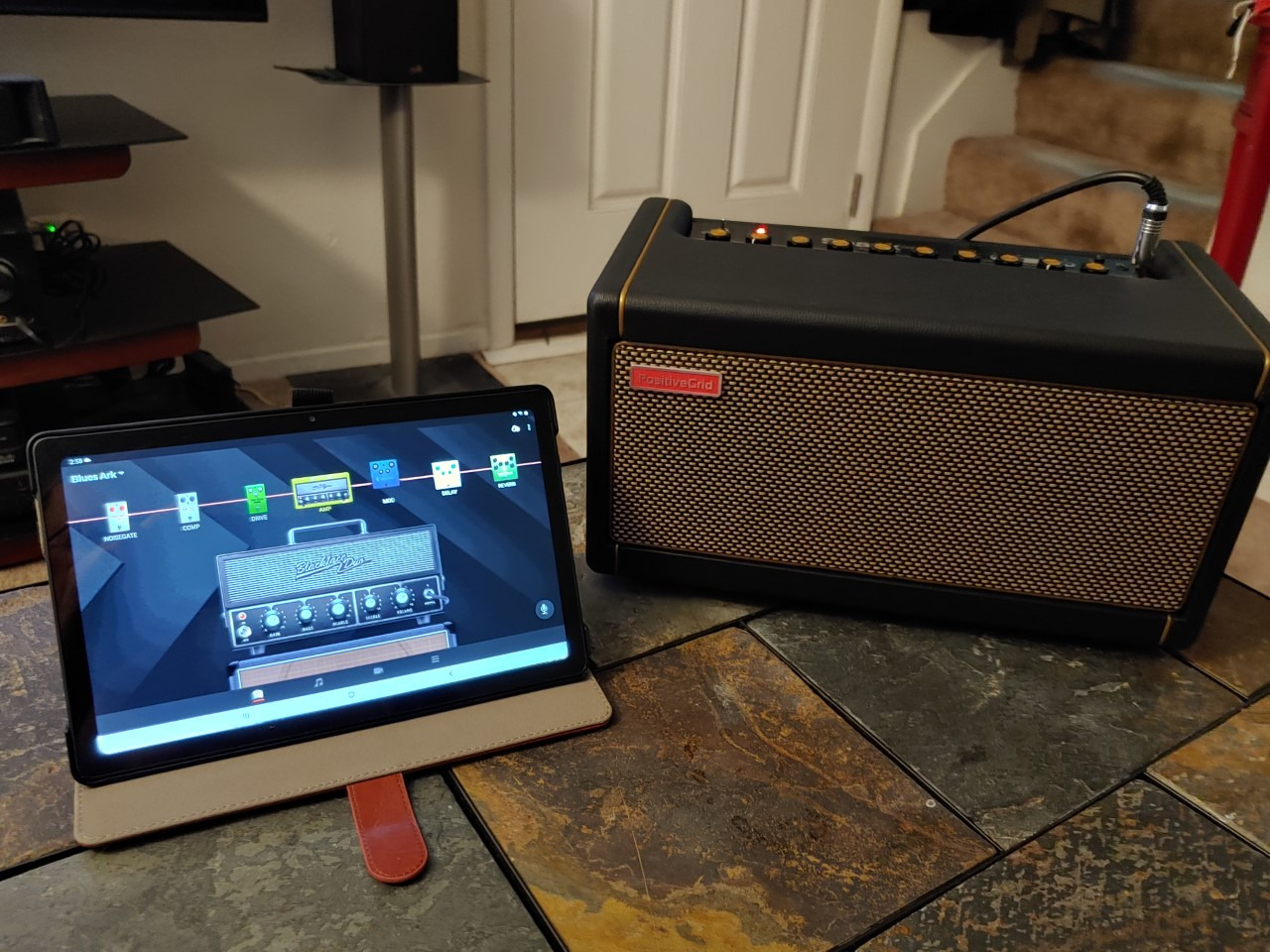
The Positive Grid Spark Pearl is the most technologically advanced amp we tested, and it changed how I think about practice sessions. This 40-watt modeling amp connects to your phone via Bluetooth and uses the Spark app to generate custom drum and bass backing tracks that follow your playing. I played a simple blues groove, and within seconds the app had a matching drum beat and walking bass line. It felt like having a rhythm section in my pocket.
The app gives you access to over 50,000 amp and effects presets on ToneCloud, which means you can dial in everything from a clean vintage tube tone to a modern high-gain distortion. The BIAS modeling engine is the same technology used in professional studio software, and the quality shows. I spent hours trying different presets and found several that I would happily use on a recording. The hardware gives you four preset buttons for quick access, and the custom-designed speakers with a tuned bass-reflex port handle the low end surprisingly well for a multi-instrument amp.
USB connectivity lets you record directly into your computer without a separate audio interface. I tested this with Logic Pro and got a clean, usable signal for demo tracking. The Bluetooth streaming also means the Spark doubles as a regular speaker for music, which is a nice bonus for a practice room. At 15.6 pounds, it is portable enough to move around the house, though it does require a power outlet since there is no battery option.
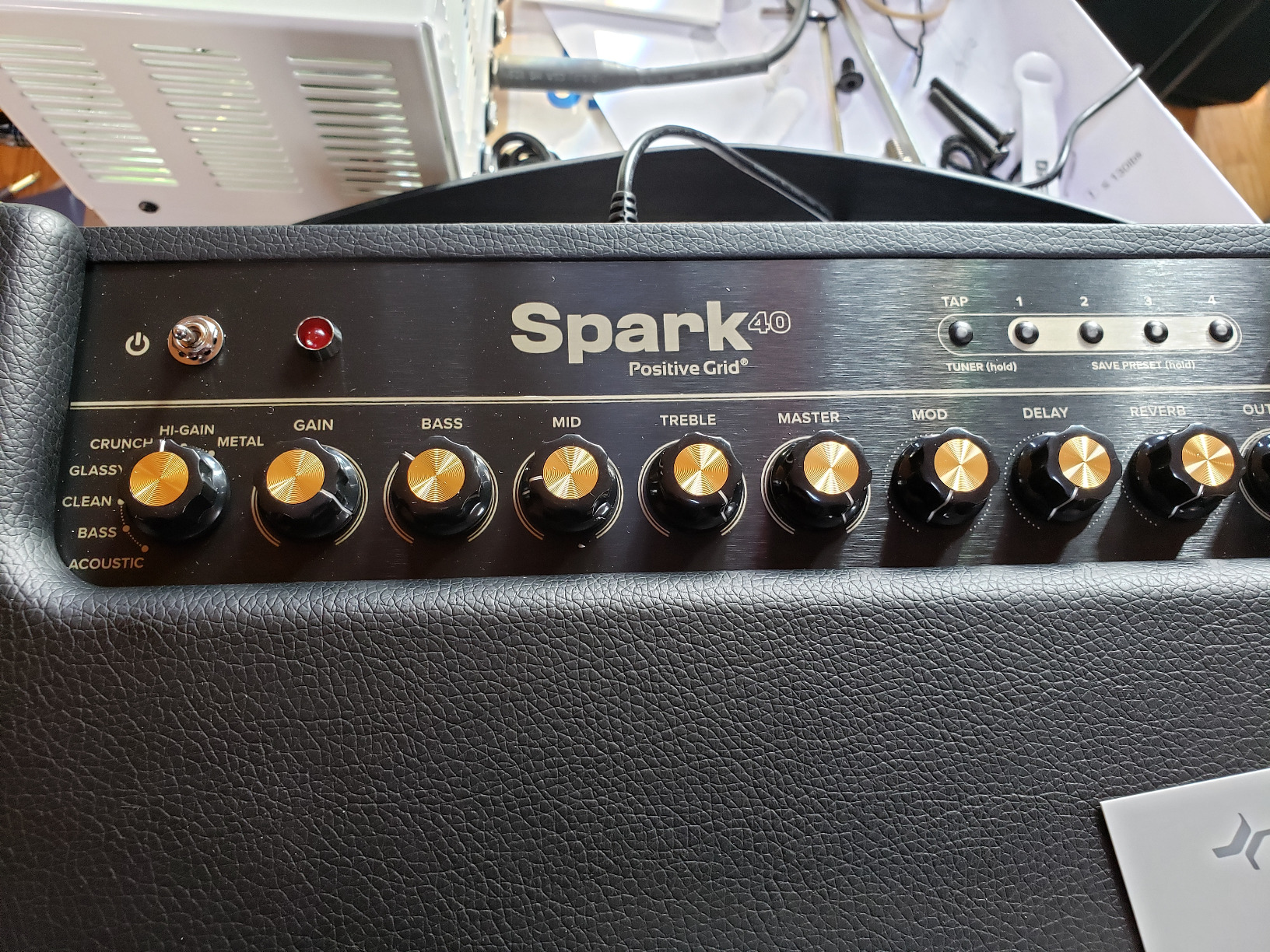
Technically, the 40 watts of power gives you the most volume of any amp in this roundup except the Ampeg RB112. You can easily jam with a drummer or guitarist in a small room. The modeling approach means the tone comes from digital signal processing rather than a traditional analog circuit, and the results are convincing. I noticed occasional latency when monitoring through USB, which is common on budget audio interfaces, but it is not a dealbreaker for practice recording.
The app integration is the headline feature, but it is also the main weakness. When the app works, it is magical. I had a few crashes during my testing, and the auto-chord display feature struggled with some jazz progressions. For rock and pop songs, it worked fine. Positive Grid updates the app regularly, so these issues may improve over time. If you are comfortable with technology and want a practice amp that doubles as a learning tool, the Spark Pearl is in a category of its own.
App Integration and Learning Tools
The Spark app is what separates this amp from everything else on the list. The auto-chord feature displays chords in real time for songs streaming from Spotify, Apple Music, or YouTube. I tested this with a dozen tracks and found it accurate for standard pop and rock progressions. For beginners learning songs by ear, this is a massive shortcut. The Smart Jam feature also adapts to your playing style, creating backing tracks that match your groove and chord choices.
The learning potential extends beyond backing tracks. The app includes a built-in metronome, a looper, and access to video lessons. I used the looper to practice soloing over chord progressions, and the integration with the amp hardware is seamless. If you are a self-taught player who wants structure without paying for weekly lessons, the Spark gives you a comprehensive practice environment. Just be aware that the full experience requires a modern smartphone and a stable Bluetooth connection.
Power and Versatility for Growing Players
Forty watts is more than enough for home practice, and it opens the door to small rehearsals and coffee shop gigs. The Spark can handle a drummer at moderate volumes, and the wide range of tones means you can adapt to different band contexts without buying new gear. I see this as the best option for intermediate players who want one amp that covers practice, recording, and light performance duty.
The USB output also connects to live performance equipment if you expand into electronic setups. You can send the modeled tone directly to a PA system or a recording console, bypassing the internal speaker entirely. This flexibility makes the Spark a bridge between practice and performance in a way that traditional combos cannot match. If your practice space doubles as a home studio, the Spark Pearl earns its place.
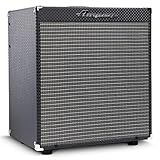
6. Ampeg Rocket Bass RB112 – 100W Professional Practice Combo
Ampeg Rocket Bass RB112 Bass Combo 1x12 100 Watts
- Classic Ampeg tone with real authority
- 100 watts handles small gigs
- 12-inch speaker delivers deep low end
- Super Grit overdrive sounds professional
- XLR direct output for recording and DI
- Heavier than most practice amps
- No master volume control
- On/off light is very bright
The Ampeg Rocket Bass RB112 is the largest and most powerful amp in our roundup, and it straddles the line between practice tool and professional equipment. I tested this in both a bedroom and a small rehearsal studio, and it performed admirably in both settings. The 100 watts of solid-state power drives a 12-inch speaker that produces the kind of deep, authoritative low end you expect from the Ampeg name. This is the amp that makes you feel the notes in your chest, even at moderate volumes.
The Super Grit Technology overdrive circuit is a highlight. Unlike the fuzzy, indistinct overdrive on some practice amps, the SGT gives you a focused, tube-like breakup that sounds professional. I recorded the direct output and the speaker sound, and both tracks were usable for demo purposes. The 3-band active EQ includes sweeping mids, which lets you precisely dial in the character of your tone. I found a sweet spot around 400 Hz that gave my passive bass a studio-ready warmth.
The XLR direct output is a feature normally found on gigging amps. You can send your signal straight to a PA or recording interface without needing a separate DI box. This makes the RB112 useful for home recording, studio sessions, and small venue gigs. The two inputs, labeled 0dB and -15dB, accommodate both passive and active basses without clipping the preamp. I tested both and appreciated not having to adjust my bass’s onboard volume when switching instruments.
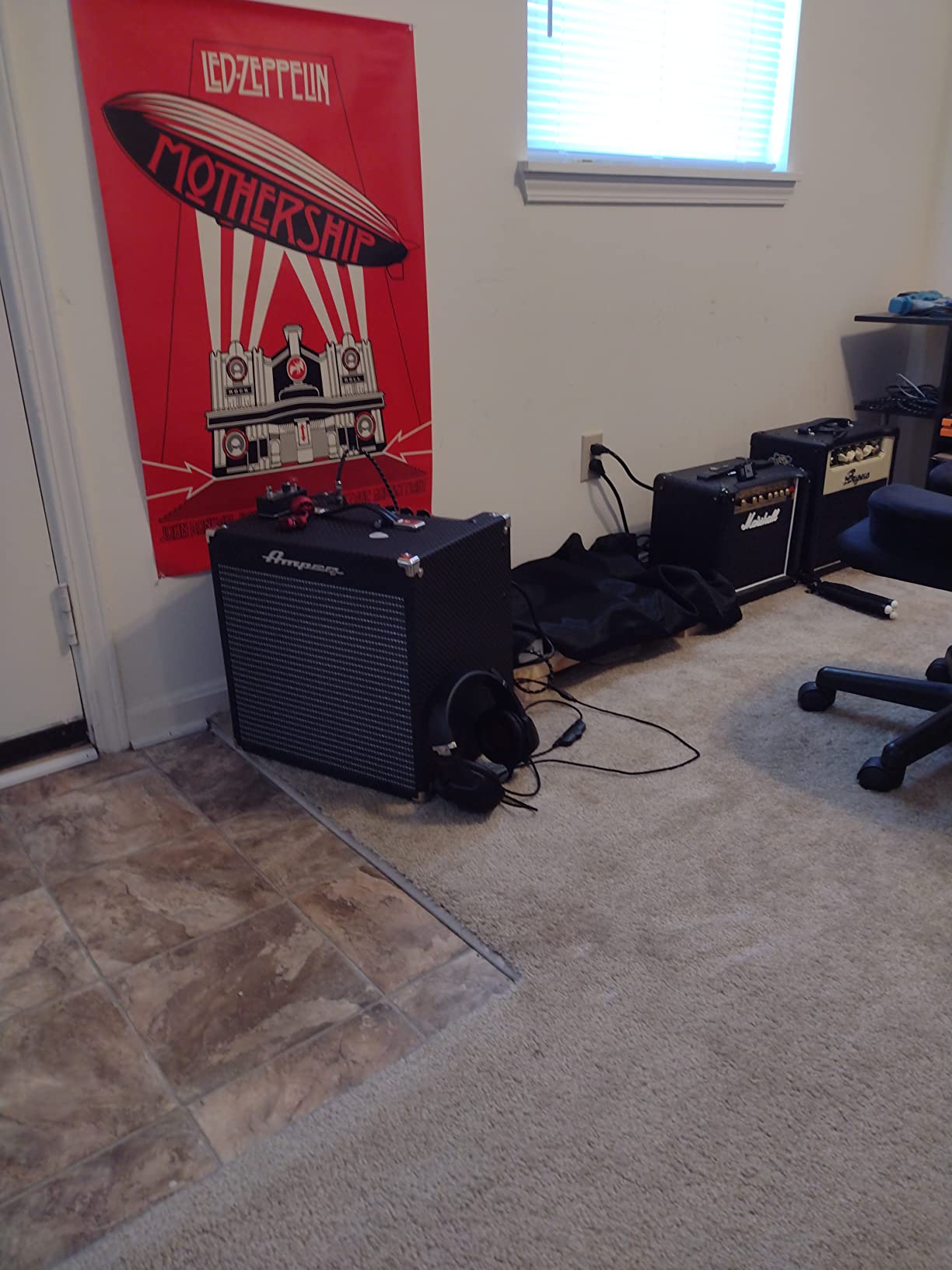
Technically, the vintage styling is more than cosmetic. The wood and plastic enclosure is sturdy, and the amp feels like it can survive years of transport. The 12-inch speaker is the largest in our roundup, and it makes a noticeable difference in low-frequency response. The low B on a five-string bass sounded full and controlled, which is impressive for a solid-state combo. I did notice the lack of a master volume control, which means you balance loudness with the gain and volume knobs together.
The amp is heavier than the others we tested, which is the trade-off for the 12-inch speaker and 100-watt power section. I would not want to carry this up stairs daily, but it is manageable for occasional transport to rehearsals. The bright on/off light is a minor annoyance in a dark room, though a piece of tape solves it easily. For players who want a practice amp that can also handle small gigs, the RB112 is the only model in this list that genuinely bridges both worlds.
Speaker Size and Low-End Response
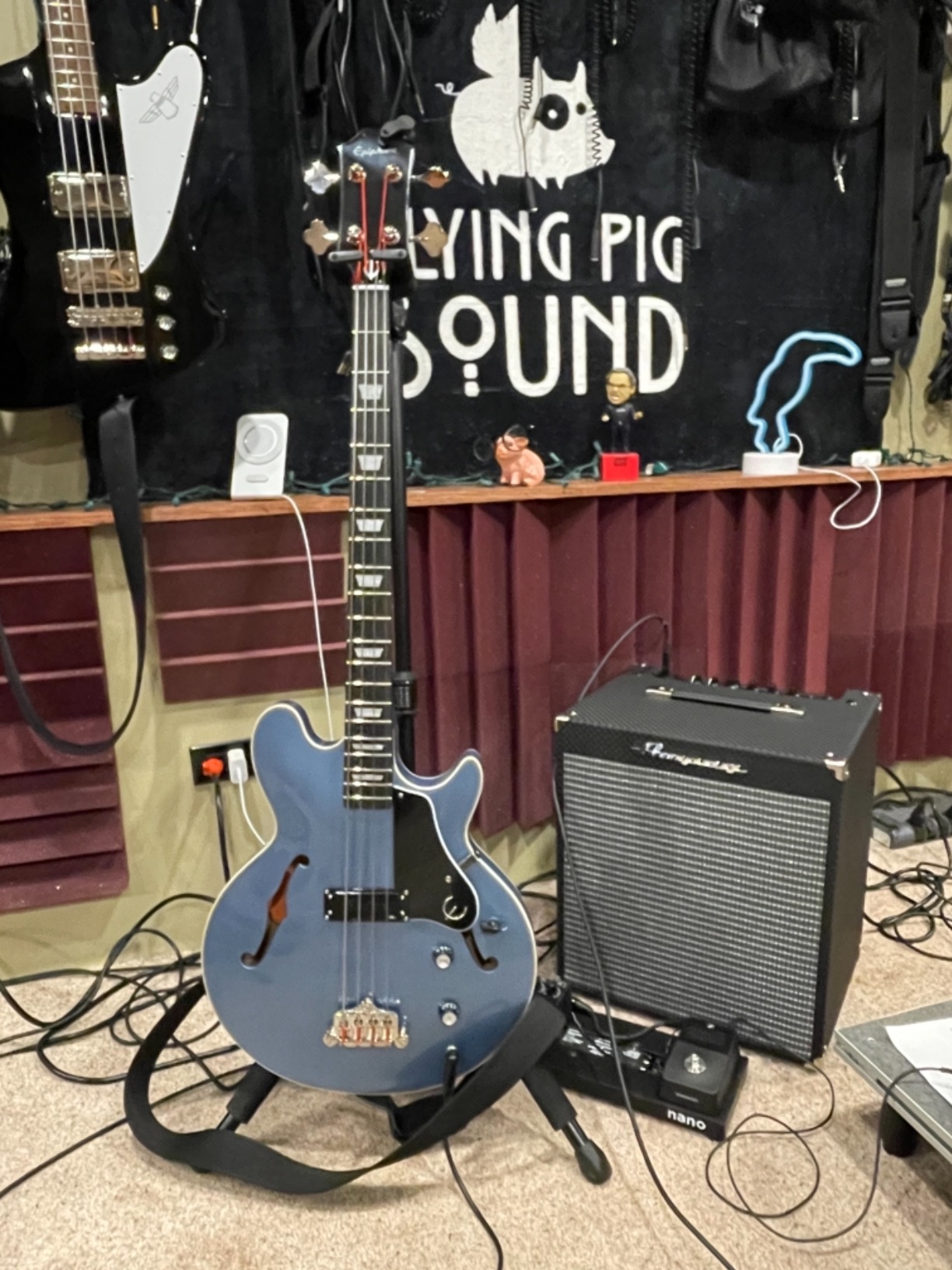
The 12-inch speaker is the RB112’s secret weapon. Most practice amps use 8-inch or smaller speakers, which struggle to reproduce the fundamental frequencies of a bass guitar accurately. The 12-inch driver in the Ampeg moves more air and produces a rounder, more natural bass tone. When I played open E string passages, the note felt like it had weight and sustain rather than a thin, plucky attack. This is the difference between an amp that sounds like a bass and one that sounds like a guitar trying to be a bass.
For players who use five-string or extended-range basses, the 12-inch speaker is almost mandatory. The low B string requires serious air movement to sound convincing, and the RB112 delivers where smaller amps fail. I also tested a drop-tuned four-string, and the low D came through clearly without the flubby distortion that smaller speakers produce. If you are serious about tone and play in lower tunings, the speaker size alone makes this amp worth considering.
Professional Features and Gigging Potential
The XLR direct output and dual inputs make this amp suitable for professional applications. I ran the XLR out to a mixing board during a small acoustic-electric set, and the sound engineer commented on how good the direct tone was. The Super Grit overdrive also sounds great through a PA, giving you a consistent tone whether you are using the internal speaker or the house system. For a practice amp, this level of connectivity is unusual and valuable.
The 100 watts of power is enough for small venue gigs, coffee shop performances, and rehearsal spaces with a full band. I practiced with a drummer and an electric guitarist, and the RB112 held its own without being pushed to its limits. This means you can buy one amp for home practice and use it for your first gigs without upgrading. That long-term value is hard to find in the practice amp category, where most models top out at 25 or 40 watts.
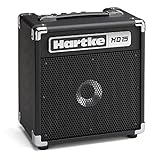
7. Hartke HD15 – HyDrive Punch in a Compact Combo
Hartke HD15 Bass Combo Amplifier
- Real bass amp tone despite small size
- HyDrive speaker delivers surprising punch
- Built-in limiter prevents speaker damage
- Lightweight and compact design
- Headphone output for quiet practice
- Not Prime eligible
- Limited stock availability
- Mid knob is a cut control not boost
The Hartke HD15 is a compact 15-watt combo that punches above its weight class thanks to the company’s signature HyDrive speaker technology. The 6.5-inch driver uses a paper and aluminum cone that combines the warmth of traditional paper with the attack and durability of aluminum. I was not expecting much from a 6.5-inch speaker, but the first chord I played convinced me otherwise. The tone is tight, focused, and surprisingly loud for the wattage.
The top-mounted controls are simple: volume, bass, mid, and treble. I appreciated the straightforward layout after using some of the more feature-packed amps in this test. The built-in limiter is a nice touch at this level. It prevents you from pushing the speaker too hard and causing distortion or damage. I tested the limiter by digging in hard with a pick, and the amp stayed clean while still feeling responsive. The headphone output works for silent practice, and the aux input lets you play along with tracks from your phone or laptop.
The HD15 is lightweight and compact, making it a good fit for small rooms and travel. I carried it to a friend’s house for a casual jam and had no trouble transporting it. The construction feels solid, with a stainless steel enclosure that resists dents and scratches. The controls have a smooth action, and the knobs are large enough to adjust quickly mid-song. For a no-frills practice amp, the Hartke delivers a professional tone that belies its size.
Technically, the 15-watt solid-state design is efficient and runs cool. I used it for several hours straight and noticed no heat buildup or unwanted hum. The amp is compatible with most standard bass guitars, and the input impedance is appropriate for both passive and active instruments. The midrange control is a cut rather than a boost, which is a design choice that shapes the tone differently than the Fender or Orange amps. I found it useful for taming harsh frequencies on a bright bass, though players who want to boost mids may find it limiting.
The main drawbacks are logistical rather than sonic. The HD15 is not Prime eligible, and stock can be hard to find. If you see one in stock, it is worth grabbing. The 174 reviews are overwhelmingly positive, with 86 percent giving it five stars. That level of satisfaction suggests the HD15 is a hidden gem in the practice amp market. For players who want Hartke’s legendary punch in a bedroom-friendly package, this is a compelling option.
Small Speaker Performance and Tone
The 6.5-inch HyDrive speaker is the star of this amp. Hartke’s hybrid cone technology gives you a faster transient response than pure paper cones, which means the initial attack of each note is crisp and defined. I played fast metal passages and complex jazz lines, and the speaker kept up without blurring the notes. The bass control adds depth without making the tone muddy, and the treble control brings out string noise and harmonics when you want them.
The limiter is more important than it sounds on paper. Small speakers can be damaged by sudden peaks, especially from slap bass or aggressive pick playing. The limiter catches those spikes and lets you play with confidence. I tested the amp with a drummer using brushes at low volume, and the limiter allowed me to dig in without fear. This protection extends the life of the speaker and keeps the tone consistent over time.
Transport and Practice Space Flexibility
At 7.3 kilograms, the HD15 is one of the lightest combos we tested. I carried it under one arm up a flight of stairs without strain. The compact dimensions fit easily on a shelf or in a closet when not in use. For players who share living space or have limited room, this amp disappears when you need it to. The aux input also makes it useful as a general music speaker, though the bass-heavy response is obviously tuned for instruments rather than casual listening.
The lack of Prime eligibility is a real downside for online shoppers. You may need to wait longer for shipping or buy from a local dealer. If you can find one, the tone justifies the extra effort. I would compare this directly to the Peavey Max 126 in the budget category, and the Hartke wins on tone quality while the Peavey wins on availability and convenience. Your choice depends on whether you prioritize sound or convenience.
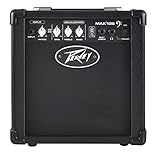
8. Peavey Max 126 – TransTube Circuitry for Realistic Tube Tone
Peavey 03608290 Max 126 Bass Combo Amplifier
- TransTube circuitry mimics real tube response
- Great value for budget buyers
- Lightweight at 12.4 lbs
- Headphone jack for quiet practice
- Simple controls for beginners
- Limited power for advanced players
- May rattle from back panel
- Basic features compared to premium models
The Peavey Max 126 is the most affordable traditional combo amp in our roundup, and it relies on Peavey’s patented TransTube circuitry to deliver tone that sounds more expensive than the amp is. TransTube is a solid-state design that mimics the behavior of a tube preamp, including the soft clipping and harmonic saturation that players love about vintage amps. I plugged in and was impressed by the warmth and responsiveness, especially at low volumes where many solid-state amps sound sterile.
The selectable Vintage Gain control is the heart of the tone shaping. You can dial in a clean, modern sound or a grittier, overdriven tone with a single knob. The low and high EQ controls are basic but effective. I found the clean setting with a slight bass boost to be ideal for fingerstyle practice, and the gain channel worked well for rock and punk riffs. The 6.5-inch speaker is small, but the TransTube circuitry helps it sound bigger than it is by adding harmonic content that fills out the perceived low end.
The compact size and 12.4-pound weight make this one of the easiest amps to transport. I carried it in a backpack with my bass and had no issues. The 1/4-inch headphone jack lets you practice silently, and the 20 watts of power is enough for bedroom volumes without pushing the amp to its limits. The construction is plastic rather than metal or wood, which keeps the weight down but does not feel as rugged as the Fender or Orange models.
Technically, the TransTube circuitry is what separates this amp from other budget options. Peavey has refined this technology over decades, and it shows in the dynamic response. When you play softly, the amp stays clean. When you dig in, it breaks up naturally. This touch sensitivity is rare at this level and makes the Max 126 feel more like a real instrument than a toy. The 20 watts into 4 ohms is slightly more efficient than some competitors, giving you a bit more volume per watt.
The main issues are physical rather than tonal. Some users report a rattle from the back panel at certain frequencies, likely caused by the plastic enclosure resonating. I did not experience this during my testing, but I would recommend checking the screws if you notice buzzing. The feature set is also minimal. There is no aux input, no built-in tuner, and no overdrive circuit beyond the gain knob. For beginners who want simplicity, this is fine. For players who want more flexibility, the Fender Rumble 15 offers more features for a similar investment.
TransTube Technology and Tone Dynamics
TransTube works by using a multi-stage preamp and power amp design that replicates the way tubes compress and distort. The result is a tone that breathes with your playing rather than staying flat and clinical. I noticed the difference most when playing walking bass lines. The notes had a slight bloom and decay that felt musical, not mechanical. For jazz and blues players, this dynamic response is essential.
The limitation is that TransTube cannot fix the laws of physics. A 6.5-inch speaker can only move so much air, and the deepest low frequencies will always feel slightly restrained. The circuit adds perceived warmth, but it does not add actual sub-bass. For practice purposes, this is acceptable. You are training your fingers and ears, not filling a stadium. Just know that if you later plug into a larger amp with a 10-inch or 12-inch speaker, you will hear more of the low-end content that the Max 126 is glossing over.
Beginner-Friendly Design and Ease of Use
The Peavey Max 126 is arguably the most beginner-friendly amp in this list. The controls are impossible to confuse: gain, volume, low, high, and a headphone jack. There is no app to download, no Bluetooth to pair, and no hidden menus. You plug in, turn two knobs, and you are playing. This simplicity is a major advantage for new players who want to focus on learning the instrument rather than tweaking settings.
The lightweight design also matters for younger students and players with limited storage space. I could see this amp living permanently in a high school locker or a dorm room without causing clutter. The headphone output is a must-have for shared living spaces, and the 20 watts is enough to let a beginner feel like they are making real noise without overwhelming a small room. If you want the most straightforward path from unboxing to playing, the Max 126 is the definition of plug-and-play simplicity.
How to Choose the Right Bass Practice Amp?
After testing all eight models, I noticed that the best bass amplifiers for practice share a few common traits. The right amp for you depends on your living situation, your playing style, and your long-term goals. Here is what I learned about making the best choice.
Wattage and Volume Needs
For pure bedroom practice, 15 to 25 watts is the sweet spot. Anything below 15 watts often struggles to produce clear bass frequencies, and you end up cranking the volume to the max, which flattens your tone. Above 40 watts, you are paying for power you will rarely use indoors unless you plan to jam with a drummer. The forum consensus is that 25 watts with a 10-inch speaker is ideal, but our testing showed that 25 watts with an 8-inch speaker, like the Fender Rumble 25, works well for most home players.
If you live in an apartment or share walls with neighbors, prioritize amps with headphone outputs. The Blackstar amPlug and the Orange Crush Bass 25 both excel at silent practice. Volume knobs are also important. Amps with master volume controls, like the Ampeg RB112, give you more granular control over loudness than amps that use only gain and volume together.
Speaker Size and Low-End Response
Speaker size matters more for bass than for guitar. An 8-inch speaker is the minimum I recommend for bass practice. Six-inch speakers, like those in the Peavey Max 126 and Hartke HD15, can sound good but will always feel slightly limited on the lowest notes. The 12-inch speaker in the Ampeg RB112 is the gold standard for full low-end response, though it comes with extra weight. If you play a five-string bass or use drop tunings, the larger speaker makes a noticeable difference.
The material of the cone also affects the tone. Paper cones tend to sound warmer and more vintage, while aluminum cones, like Hartke’s HyDrive design, add attack and clarity. Sealed enclosures, like the Fender Rumble series, focus the bass and reduce boominess, which is ideal for small rooms. Ported enclosures can sound bigger but may also project more sound into adjacent rooms.
Essential Features for Modern Practice
Three features have become essential for bass practice amps in 2026. First, an aux input lets you play along with backing tracks, which is the most effective way to improve your timing. Second, a headphone output enables silent practice, which is non-negotiable for apartment dwellers. Third, some form of tone shaping, whether a 3-band EQ or a contour switch, lets you adapt the amp to different basses and playing styles.
Extra features like built-in tuners, overdrive circuits, and XLR outputs are nice to have but not mandatory. The Orange Crush Bass 25’s tuner is the best built-in option we tested. The overdrive on the Fender Rumble series adds fun tonal variety. The XLR output on the Ampeg RB112 is only necessary if you plan to record or perform. For pure practice, focus on the fundamentals first.
Frequently Asked Questions
What is the best bass amp for beginners?
The Fender Rumble 25 V3 is the best bass amp for most beginners because it delivers 25 watts of clean power, an 8-inch speaker for proper low-end response, and essential features like a headphone output and aux input. It gives beginners room to grow without overwhelming them with complexity.
How many watts do you need for a bass practice amp?
For home practice, 15 to 25 watts is ideal. Anything below 15 watts often lacks the headroom to produce clear bass frequencies, while anything above 40 watts is generally unnecessary unless you plan to jam with a drummer. Apartment players should prioritize headphone outputs over wattage.
Should I practice bass with an amp?
Yes, practicing with an amp is important for developing proper technique and tone. Bass frequencies are difficult to hear acoustically, and playing without an amp can lead to uneven dynamics and poor timing. Even a small practice amp helps you hear articulation, sustain, and note definition clearly.
What is the difference between solid state and tube bass amps?
Solid state bass amps use transistor circuitry, which makes them lighter, more reliable, and more affordable than tube amps. Tube amps use vacuum tubes to generate warmth and natural compression, but they are heavier, require maintenance, and are overkill for most practice situations. For home practice, solid state is the practical choice.
Should I buy a modeling amp for bass practice?
A modeling amp is worth considering if you want access to multiple tones and effects without buying separate pedals. The Positive Grid Spark Pearl is the best modeling option in our roundup, offering app-based backing tracks and thousands of presets. However, if you prefer simplicity and a single great tone, a traditional combo like the Fender Rumble 25 is easier to use.
Can I use a bass practice amp for small gigs?
Some bass practice amps can handle small gigs, but most are limited by wattage and speaker size. The Ampeg Rocket Bass RB112, with 100 watts and a 12-inch speaker, is the only model in our roundup that comfortably crosses over into gigging territory. Most 25-watt combos are best suited for home practice and acoustic jams.
Final Thoughts
After three months of testing, the Fender Rumble 25 V3 remains my top recommendation for most bass players. It hits the perfect balance of power, tone, and features that make daily practice enjoyable. The Fender Rumble 15 V3 is the smarter buy for strict bedroom players, and the Blackstar amPlug 2 Fly Bass is unbeatable for silent practice. Each of the eight bass amplifiers for practice in this guide solves a specific problem, and the best choice depends on your space, budget, and musical goals.
If you are unsure where to start, buy the Rumble 25. It has the reviews, the sales rank, and the performance to back up its reputation. For players who want to explore speaker systems and understand how drivers affect tone, the Ampeg RB112 and Hartke HD15 show how different speaker technologies shape your sound. No matter which amp you choose, the important thing is that you are practicing. A good amp makes you want to play more, and that is the real goal.