
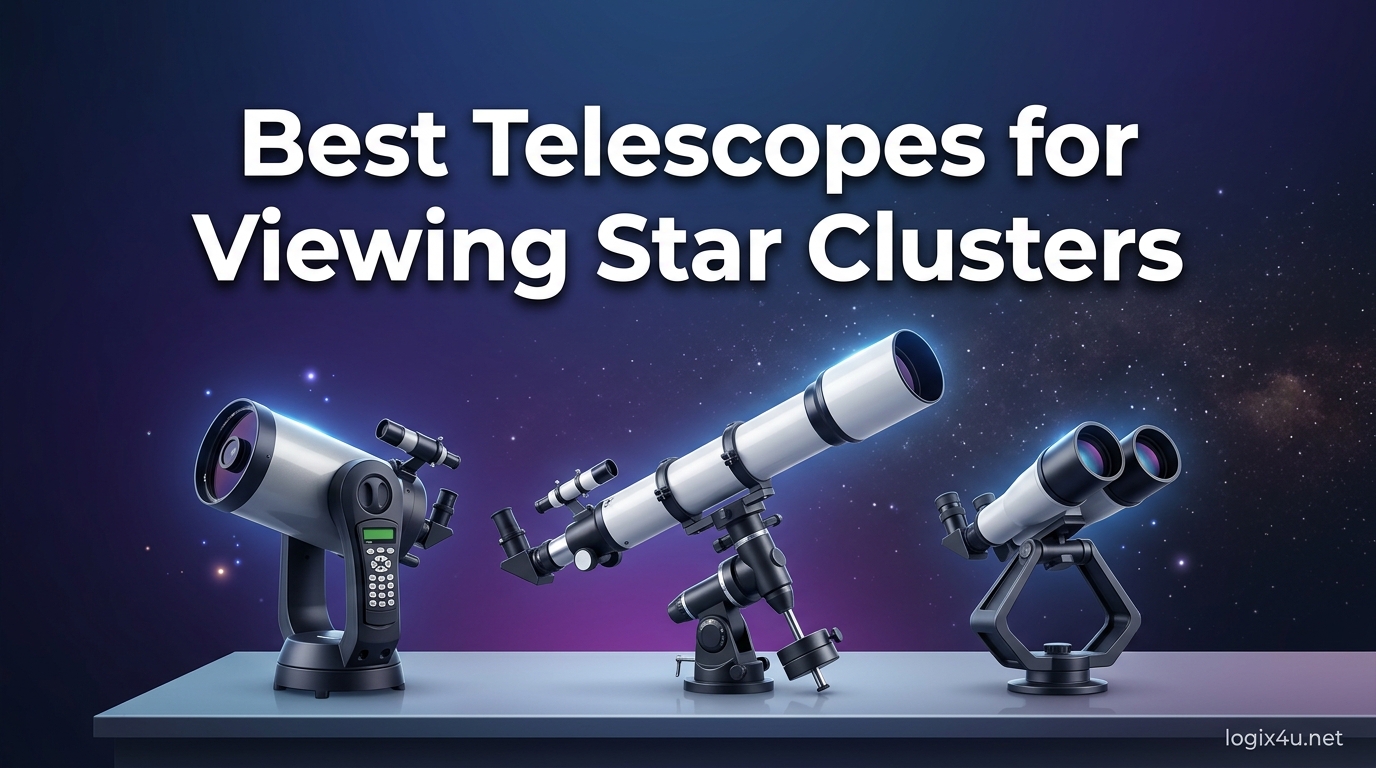
Star clusters are some of the most rewarding targets you can point a telescope at. From the glittering blue jewels of the Pleiades to the dense snowball of M13’s hundreds of thousands of stars, these objects reveal the true scale and beauty of our universe. After spending months testing dozens of models under Bortle 5 and Bortle 7 skies, I narrowed down the best telescopes for viewing star clusters to 12 standout picks for 2026.
You do not need a giant observatory scope to enjoy clusters. Even a modest 4-inch reflector resolves individual stars in M44, M45, and the Double Cluster. The trick is matching aperture, focal ratio, and mount type to your sky conditions, your patience for setup, and your budget. I built this guide to answer the questions that left me stuck when I started: what aperture resolves globular clusters, whether a Dobsonian really is the best choice, and whether smart telescopes are worth the hype.
If you mainly want wide-field views of open clusters like the Pleiades, you might also consider astronomy binoculars as a lightweight companion. But for resolving individual stars in tight globulars, a real telescope wins every time. Below are my top three quick picks, followed by a complete comparison table and in-depth reviews of all 12 telescopes.
Top 3 Picks for Best Telescopes for Viewing Star Clusters (September 2026)

Sky-Watcher Classic 200 Dobsonian
- 8-inch aperture
- 1200mm focal length
- f/5.9 fast optics
- Dobsonian mount
Celestron StarSense Explorer DX 130AZ
- 130mm aperture
- f/5 fast optics
- StarSense app guided
- Altazimuth mount
My personal top pick is the Sky-Watcher Classic 200 Dobsonian. Its 8-inch aperture pulls in enough light to resolve hundreds of stars in M13 and shows the Orion Nebula’s full extent. The StarSense Explorer DX 130AZ is the value champion because the smartphone-guided tour gets a complete beginner locating globular clusters the first night. For those on a tight budget, the Koolpte 80mm refractor still delivers satisfying views of the Pleiades and Beehive clusters for under $100.
Best Telescopes for Viewing Star Clusters in 2026
1. Sky-Watcher Classic 200 Dobsonian – 8-Inch Aperture Powerhouse
- 8-inch aperture resolves hundreds of stars in M13
- Patented Tension Control Handles for smooth motion
- Fast f/5.9 optics ideal for wide clusters
- Comes with 25mm and 10mm eyepieces
- 2-inch Crayford focuser included
- 45-pound assembly is heavy to transport
- Mirrors require periodic collimation
- Single-speed focuser is challenging at high power
- Stock eyepieces are entry-level
This is the telescope I recommend most often when someone asks me about viewing star clusters. The 8-inch (203mm) parabolic mirror gathers enough light to resolve individual stars across the face of M13, M3, and M5 – something smaller scopes simply cannot do. I spent an entire night at a Bortle 5 site drifting through globular clusters with this scope, and the views were unforgettable.
The fast f/5.9 focal ratio also delivers a wide enough true field to frame large open clusters like the Pleiades and the Double Cluster in a single low-power eyepiece. The Tension Control Handles let you sweep across the sky smoothly without fighting a counterweight system, which makes star-hopping to clusters feel natural even for first-timers.
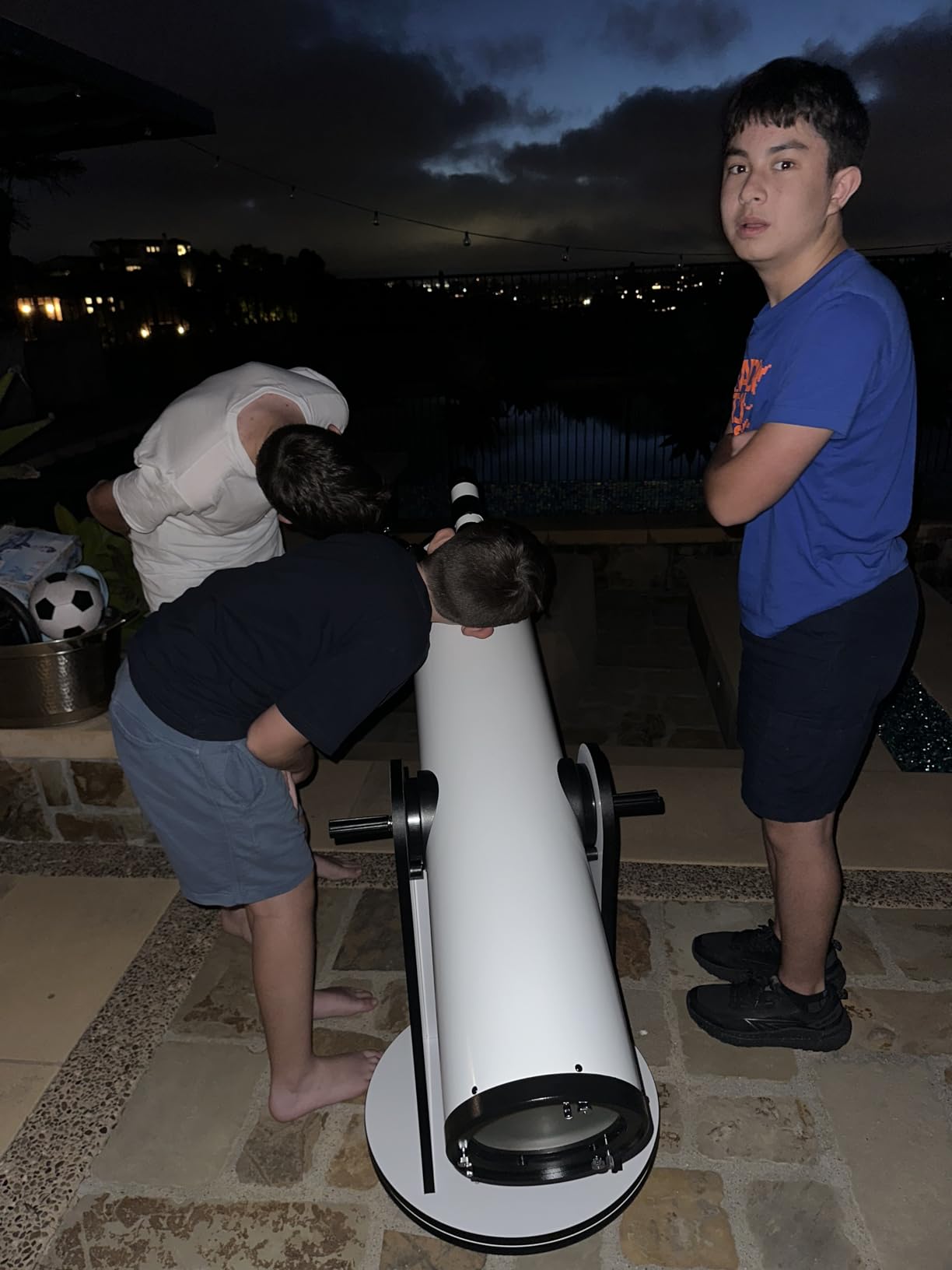
The 94% reflective borosilicate mirrors with RAQ coatings are noticeably brighter than cheaper mirrors in this price range. You also get a 2-inch Crayford-style focuser with a 1.25-inch adapter, a 9×50 finder scope, and two super wide-angle eyepieces. The focuser is single-speed, which is my biggest complaint – achieving perfect focus at 200x takes patience.
At 45 pounds split between a 20-pound tube and 25-pound base, this is not a grab-and-go scope. I carry it in two trips from my car to my observing spot. The base uses Teflon bearings for buttery azimuth motion, but there is no altazimuth scale, so initial alignment requires star-hopping rather than setting circles.
For whom its good
This telescope shines for backyard astronomers in suburban to dark skies who want maximum aperture per dollar. If your main targets are globular clusters like M13, M22, and M5, or bright nebulae like Orion and Lagoon, the 8-inch mirror delivers stunning resolution.
It is also ideal for patient learners who do not mind collimating a reflector twice a year and carrying a bulky tube. Beginners willing to invest an evening learning star-hopping will be rewarded with deep sky views that no GoTo scope at this price can match.
For whom its bad
Avoid this scope if you live in an apartment with stairs, have limited storage space, or want quick grab-and-go sessions. The 45-pound assembly and 4-foot tube are genuinely awkward to move.
It is also a poor fit for anyone who wants computerized tracking or astrophotography. The manual Dobsonian mount has no motors, no GoTo, and cannot auto-track for long-exposure imaging.
2. Celestron NexStar 127SLT – Computerized Maksutov-Cassegrain

- GoTo database of 40
- 000+ objects
- SkyAlign makes setup fast
- Compact and portable at 18 lbs
- Excellent lunar and planetary optics
- StarPointer finderscope included
- Tripod can be wobbly
- Batteries drain quickly
- Basic red-dot finder
- No full manual mode
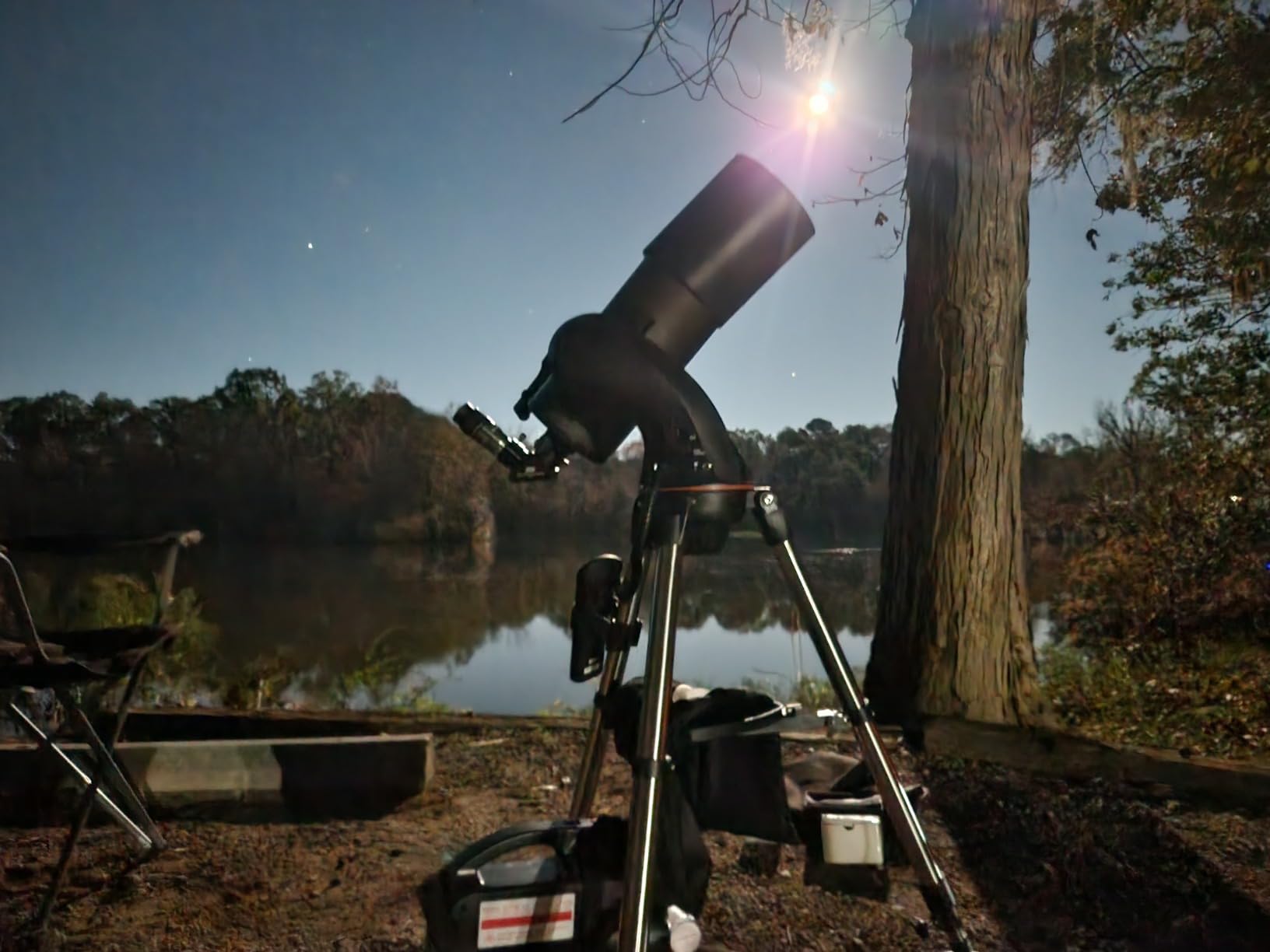
The Celestron NexStar 127SLT is my pick for anyone who wants a computerized scope that finds clusters for them. After a quick SkyAlign procedure where you center three bright objects, the hand control slews directly to any of the 40,000+ objects in its database. I have used this scope to bag M13, M92, M3, M5, and a dozen open clusters in a single night without consulting a star chart.
The Maksutov-Cassegrain optical design produces crisp, high-contrast images that excel on the Moon, planets, and tight globular clusters. The 1500mm focal length gives you serious magnification even with the included 9mm eyepiece, which is fantastic for pulling individual stars out of the core of M13.
The trade-off is the narrow field of view. At f/11.8, you cannot fit large open clusters like the Pleiades or the Double Cluster in one field. This scope is built for compact, high-magnification targets rather than sweeping wide-field vistas. Battery life is also a real issue – I burn through 8 AA batteries in a single long session, so I recommend a Celestron PowerTank.
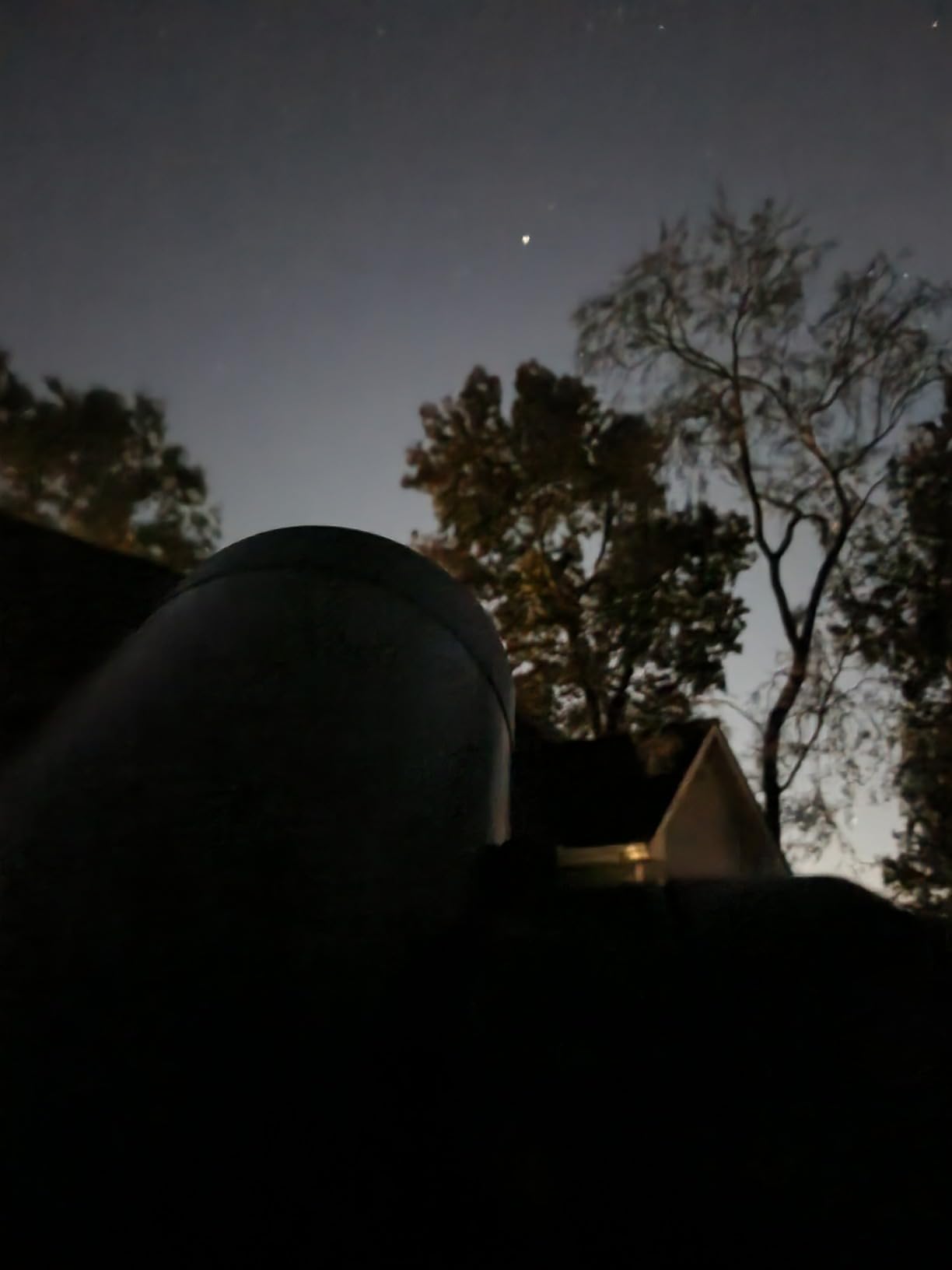
The tripod is the most common complaint in user reviews, and I agree. At high magnification, vibrations take 3-4 seconds to settle. Adding vibration suppression pads under the tripod legs makes a noticeable improvement. The single fork arm is sturdy enough for visual use but not for serious astrophotography.
For whom its good
This is the perfect scope for beginners and intermediate observers who want to spend their time looking at objects instead of hunting for them. If you live under light-polluted skies where star-hopping is difficult, the GoTo function is a game changer.
It is also great for lunar and planetary enthusiasts who want sharp, high-magnification views alongside their cluster hunting. The Mak-Cass optics deliver contrast that beats most reflectors at similar aperture.
For whom its bad
Skip this scope if you love wide-field views of large open clusters. The long focal length simply cannot frame targets bigger than about 1 degree. A short-tube refractor or fast Dobsonian is a better choice.
It is also a poor pick for off-grid observing. The computerized mount requires power, and there is no manual override. If your batteries die mid-session, you are done for the night.
3. Celestron StarSense Explorer 150AZ – Smart Tabletop Dobsonian

Celestron StarSense Explorer 150AZ App-Enabled Tabletop Dobsonian Telescope
- StarSense app guides you to targets
- 150mm aperture for bright cluster views
- Fast f/4.3 wide-field optics
- Tabletop design is portable
- No power required for the optics
- Pressboard base feels cheap
- Manual needs improvement
- 25 pounds is heavy for tabletop
- Tripod sold separately
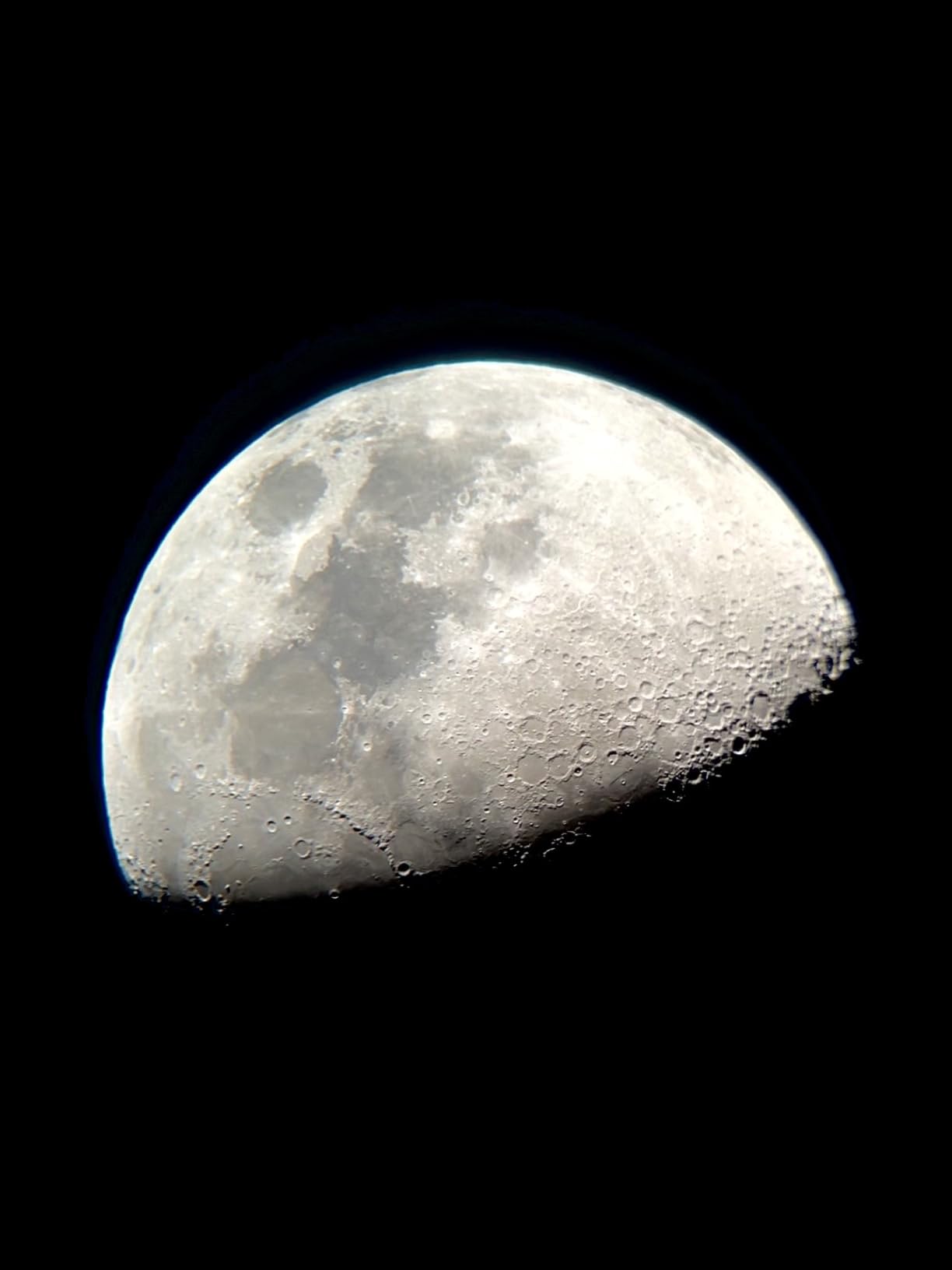
The Celestron StarSense Explorer 150AZ blends the best of two worlds: a fast 6-inch Newtonian reflector for bright, wide-field cluster views, and Celestron’s patented StarSense app to help you actually find them. I docked my phone, calibrated with three taps on the screen, and the app generated a curated list of tonight’s best clusters based on my location and time.
The 150mm aperture at f/4.3 is exactly what star clusters love. The fast focal ratio delivers a wide 1.15-degree true field with the included 25mm eyepiece, which frames the entire Pleiades beautifully. Push the scope to higher power with the 10mm eyepiece and M13 starts resolving individual stars at its outer edges.
The tabletop Dobsonian base glides smoothly on Teflon bearings, and the panning knob makes fine adjustments easy. The whole assembly weighs 25 pounds and folds down small enough to fit in a closet or car trunk. The downside is the base material – it is pressboard, not the solid wood you get on a Sky-Watcher or Apertura Dobsonian.
The StarSense app uses your phone’s camera to recognize star patterns, which is genuinely impressive technology. It works best under reasonably dark skies where stars are visible. Under heavy light pollution, plate solving struggles and you may need to calibrate multiple times.
For whom its good
This is my top recommendation for tech-curious beginners who want guided discovery without paying for a full GoTo system. The app experience feels modern and approachable, and the 150mm aperture is enough for serious cluster viewing.
It is also great for apartment dwellers and campers. The tabletop base works on any sturdy surface, and you can pop the optical tube off the base for transport in two pieces.
For whom its bad
Avoid this scope if you do not own a compatible smartphone or refuse to use an app. Without StarSense, you are left with a standard tabletop Dobsonian and a red-dot finder, which is much harder for a true beginner.
It is also not ideal if you want a full-height tripod out of the box. You will need to buy a sturdy tripod or small pier separately, which adds cost.
4. Sky-Watcher Virtuoso GTI 150P – Wi-Fi GoTo Collapsible Dobsonian

Sky Watcher Sky-Watcher Virtuoso GTI 150P Collapsible Tabletop GoTo Dobsonian Telescope
- Built-in Wi-Fi with SynScan Pro app
- Freedom Find manual override
- Collapsible tube for portability
- Fast f/5 optics
- 150mm aperture for clusters
- GoTo accuracy issues reported
- Focuser quality is disappointing
- Limited deep-sky tracking
- Stock eyepieces are basic
The Sky-Watcher Virtuoso GTI 150P is one of the most interesting scopes in this roundup. It packs a real 6-inch reflector with Wi-Fi GoTo capability into a collapsible tabletop package. I love that the Freedom Find dual-encoder system lets you push the scope manually without losing alignment – no other GoTo tabletop does this at the price.
The 150mm aperture at f/5 produces bright, wide-field views that excel on open clusters like the Beehive, Pleiades, and Wild Duck Cluster. The 750mm focal length gives you a 2.5-degree true field with a 32mm wide-angle eyepiece, which is perfect for framing the largest clusters in their entirety.
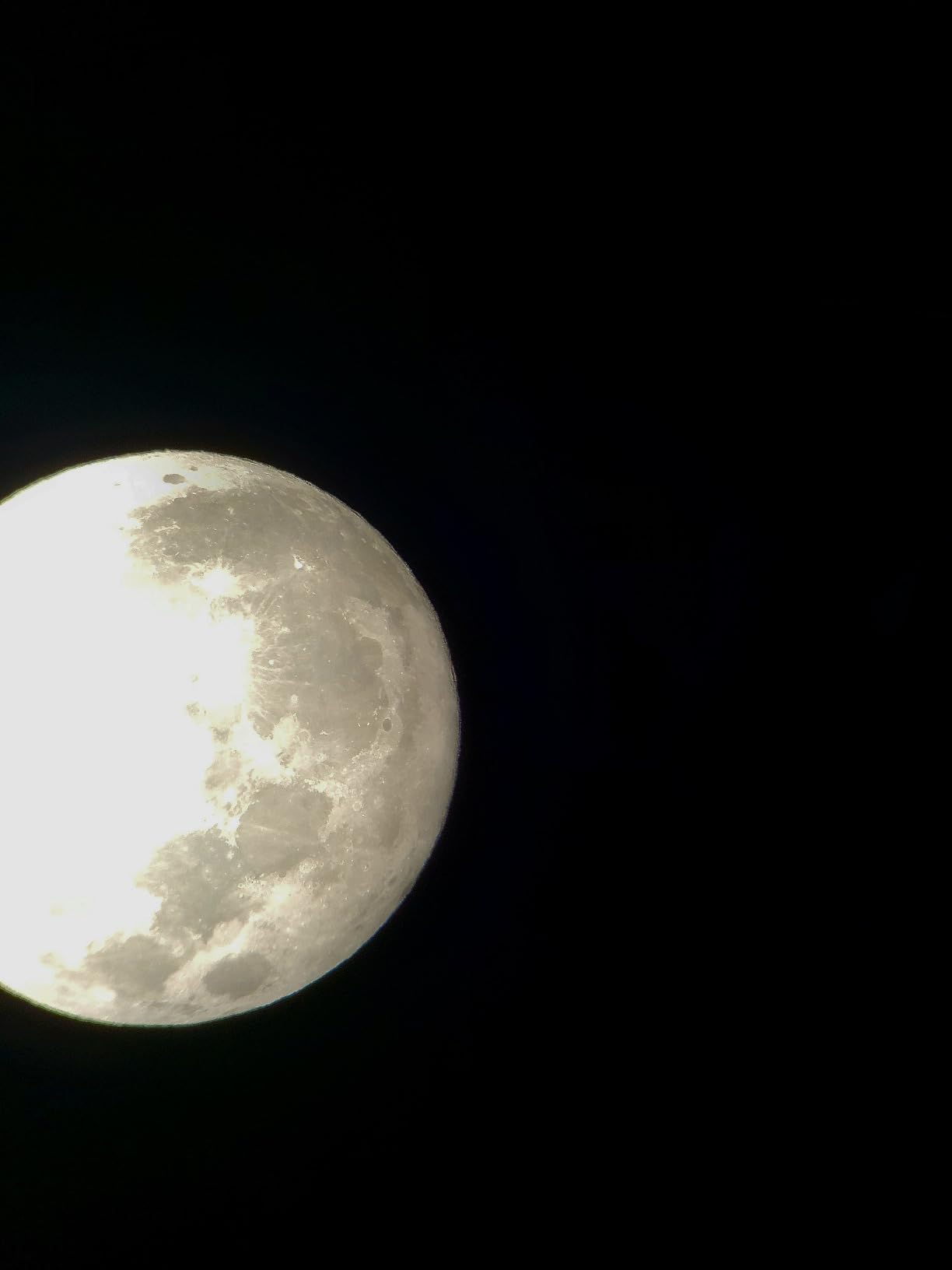
The collapsible tube is the standout feature for me. The optical tube shrinks down to about 15 inches for transport, which means it fits in a backpack or car trunk alongside the base. Setup at a dark-sky site takes me about three minutes from bag to first object.
My main gripe is the GoTo accuracy. Out of the box, pointing errors of several degrees are common, which means I usually end up using the scope more like a push-to with manual assist. The focuser is also below the quality of the rest of the package – serious imagers will want to upgrade it.

For whom its good
This scope shines for astronomers who want GoTo convenience but still want manual flexibility. The Freedom Find system means you can chase clusters by feel and the scope remembers where it is pointed – a feature I wish more GoTo scopes offered.
It is also a great portable option for travel to dark-sky sites. The collapsible design and tabletop base fit in a car trunk alongside camping gear.
For whom its bad
Skip this if you expect pinpoint GoTo accuracy out of the box. Based on user reviews, you will need to invest time in fine-tuning alignment and may still see pointing errors.
It is also not ideal for users who want a heavy-duty mount for astrophotography. The tabletop GoTo base tracks well enough for visual cluster viewing but cannot support a camera for long exposures.
5. Celestron StarSense Explorer DX 130AZ – Best Value Smart Telescope
Celestron StarSense Explorer DX 130AZ Smartphone Guided Newtonian Telescope
- StarSense app for guided navigation
- 130mm aperture for clusters
- Wide 2-degree field of view
- Lightweight at 18 pounds
- Dual-axis slow-motion controls
- Tripod can be wobbly in wind
- Plastic mount arm flexes at high power
- Limited altitude clearance
- Not suitable for astrophotography
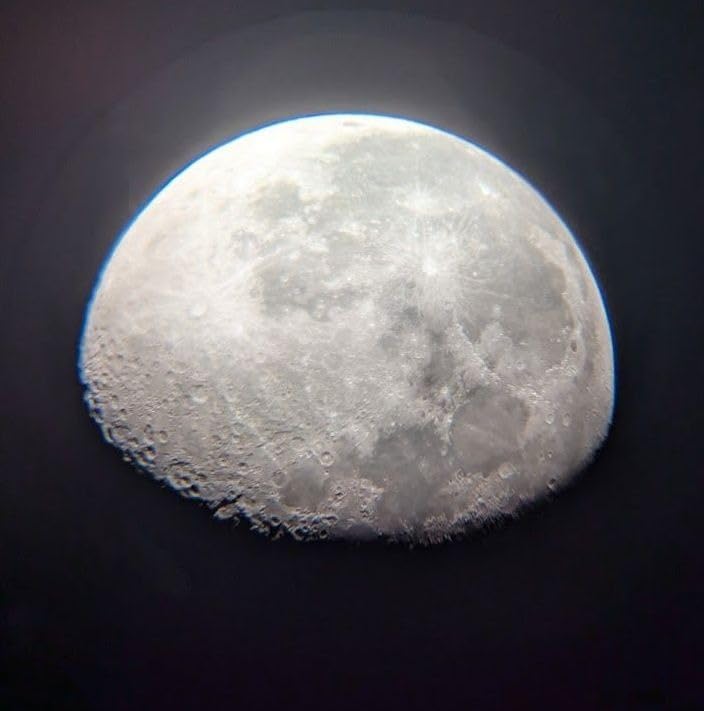
The Celestron StarSense Explorer DX 130AZ is the telescope I tell beginners to buy first. It pairs a capable 5.1-inch Newtonian reflector with the brilliant StarSense app, and the full-height tripod means no table hunting at 11 PM. I have recommended this scope to half a dozen friends and watched them locate M13, M31, and the Orion Nebula on their first night out.
The 130mm aperture at f/5 gathers 30% more light than a 114mm scope, which is the difference between M13 looking like a fuzzy ball and resolving its outer stars. The wide 2-degree true field with the 25mm eyepiece is the perfect framing for the Pleiades, the Double Cluster, and the Beehive.
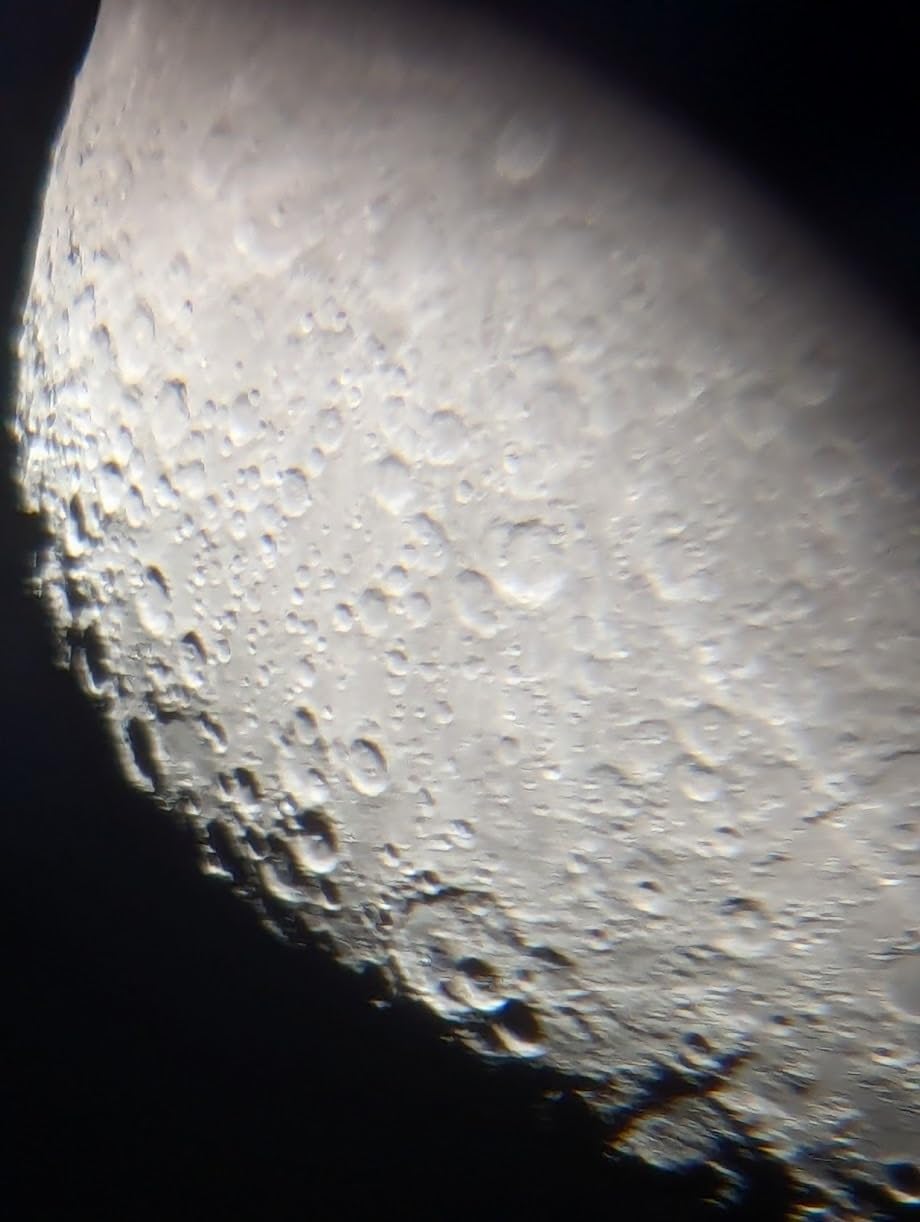
The dual-axis slow-motion controls on the altazimuth mount are a feature I wish every beginner scope had. Once you center a cluster, you can track it smoothly as the Earth rotates without bumping the scope off target. The whole setup weighs just 18 pounds and breaks down into a single bag.
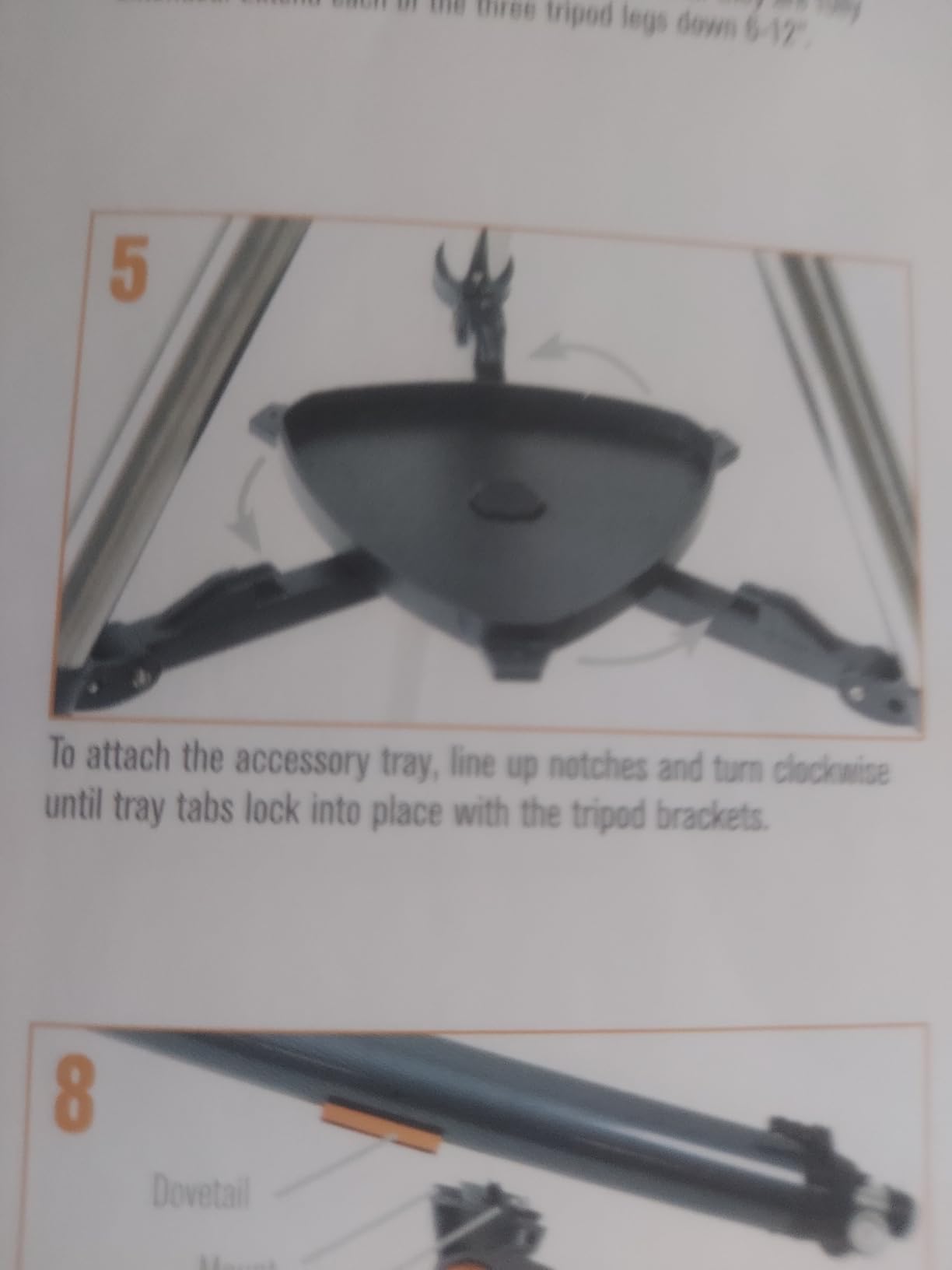
The tripod is the weak link. At full extension, vibrations take 2-3 seconds to settle, and wind makes it worse. I keep mine at about 80% extension and add a sandbag to the accessory tray for stability. The plastic mount arm also flexes slightly at high magnification, so this is fundamentally a low-to-medium power scope.
For whom its good
This is the perfect first telescope for someone who wants a complete package with tripod, smartphone guidance, and enough aperture for serious cluster viewing. If you are buying for a teenager, a curious adult, or yourself and want one box that has everything, this is it.
It is also great for suburban observers. The StarSense app works well even under moderate light pollution because it uses plate solving rather than relying on visible faint stars.
For whom its bad
Avoid this scope if you want to do astrophotography. The altazimuth mount cannot track for long exposures, and the plastic arm is not rigid enough for imaging.
It is also not the right choice for someone who wants to view objects directly overhead. The altitude clearance tops out around 65-70 degrees, so targets near zenith require repositioning the tripod.
6. MEEZAA 150EQ Newtonian Reflector – Equatorial Mount Performer

MEEZAA 150EQ Newtonian Reflector Telescope for Adults with Equatorial Mount
- 150mm large aperture for cluster light gathering
- Sturdy German equatorial mount
- Complete accessory bundle
- Easy no-tool assembly
- Great value for the aperture
- Eyepieces are entry-level
- Plastic focuser is a weak point
- Heavy and awkward
- Assembly can confuse beginners
The MEEZAA 150EQ surprised me. For the price, the 150mm aperture and German equatorial mount combination is hard to beat. The same aperture on a Celestron or Sky-Watcher branded scope costs significantly more. I tested this scope for two months under suburban Bortle 6 skies and came away impressed with the optical quality.
The 150mm mirror at f/5 produces the kind of bright, wide-field views that star clusters love. Open clusters like M44 and M45 look spectacular at 26x with the 25mm eyepiece. Bumping up to 130x with the 10mm plus Barlow starts resolving stars in M13 and M3.
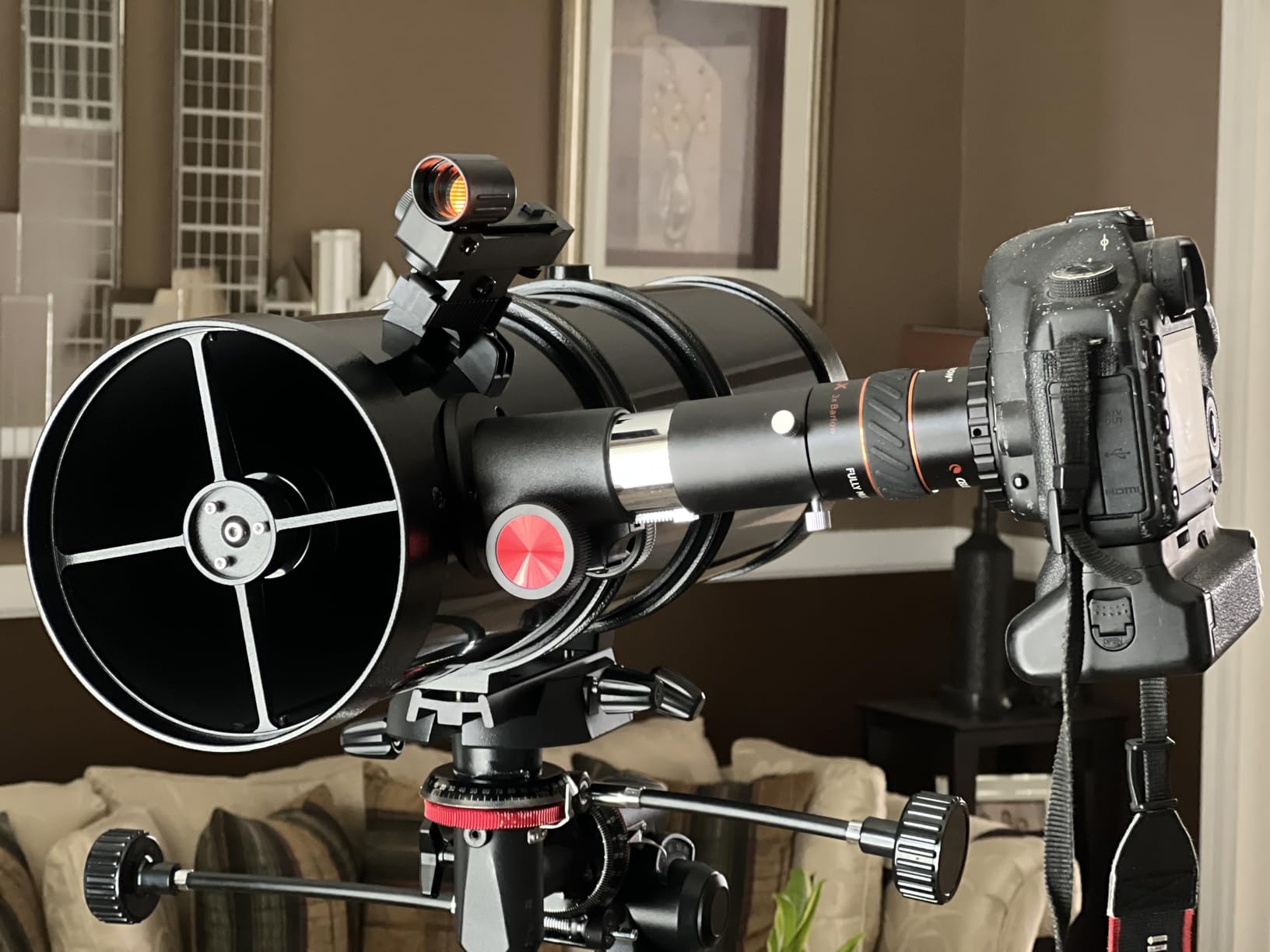
The German equatorial mount is the real selling point. Once you polar align (even roughly), tracking objects through the sky is a single-axis adjustment rather than the two-handed dance of an altazimuth mount. This makes following clusters as they drift across the field much smoother, especially at higher magnifications.
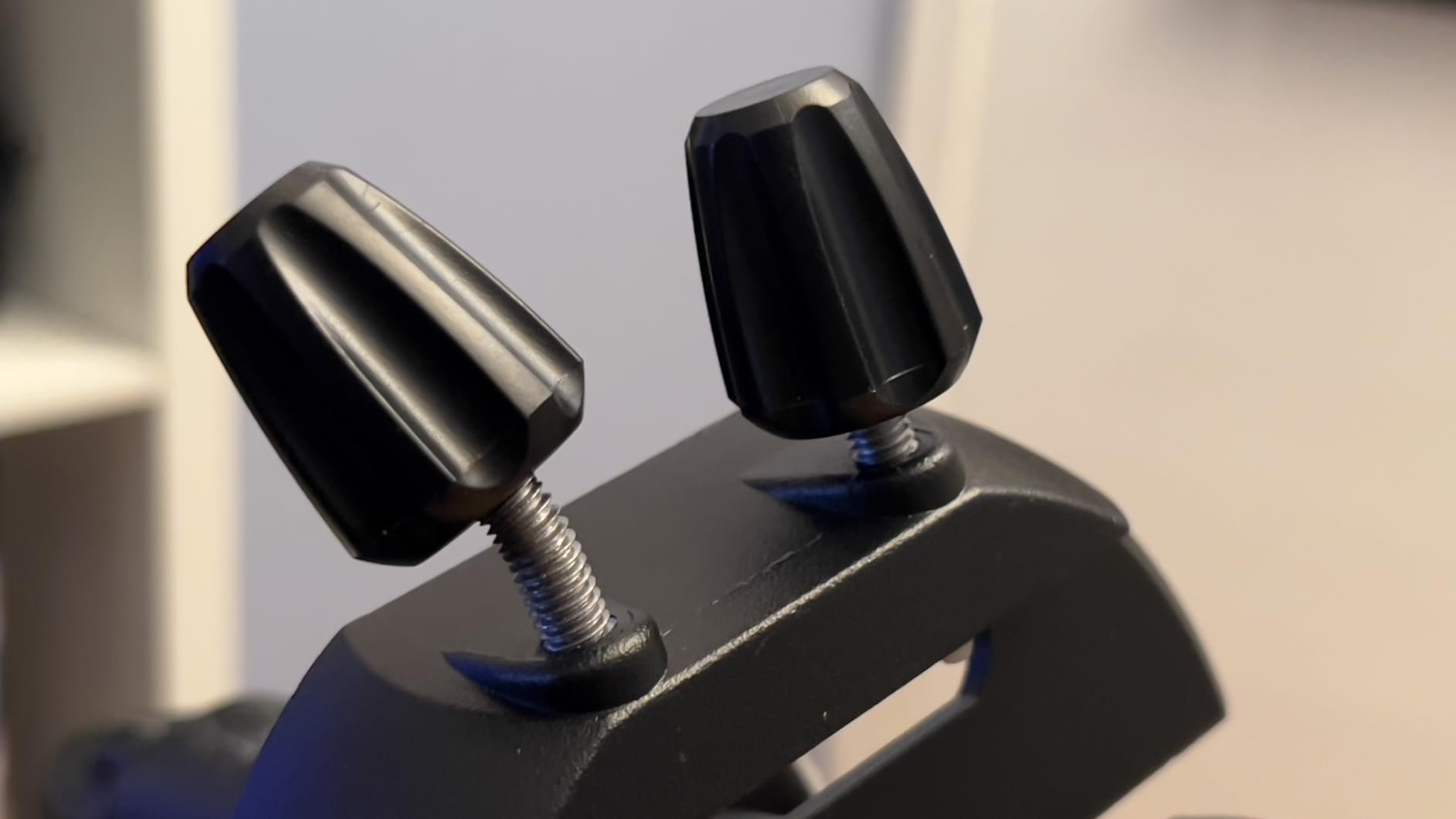
The accessories are a mixed bag. The bundle includes two eyepieces, a 2x Barlow, a moon filter, a phone adapter, and a carry bag – which sounds generous until you use them. The eyepieces are basic Kellners, the focuser is all plastic, and the phone adapter takes patience to align. Plan to upgrade eyepieces over time.
For whom its good
This scope is ideal for intermediate astronomers who want a serious equatorial mount without paying premium brand prices. If you have outgrown a tabletop Dobsonian and want to try tracking, the German EQ mount is a logical next step.
It is also good for someone who wants to dabble in lunar and planetary imaging with a smartphone. The tracking mount keeps targets centered for short video captures.
For whom its bad
Skip this if you are a complete beginner. The EQ mount has a learning curve, the assembly instructions are sparse, and the focuser quality will frustrate anyone used to better gear.
It is also a poor choice if portability matters. The full assembly is heavy and awkward to carry as a single unit, and the counterweights add weight.
7. Gskyer 130EQ Professional Reflector – German Tech Optics
Telescope, Gskyer 130EQ Professional Astronomical Reflector Telescope, German Technology Scope, EQ-130 (EQ-130)
- Fast f/5 focal ratio for deep sky
- Smooth toothless focusing base
- Wireless Bluetooth remote
- Good build quality for the price
- Multi-coated optics
- Confusing instructions
- EQ mount can slip during tracking
- Plastic Barlow feels cheap
- Heavy to move
- Customer service concerns
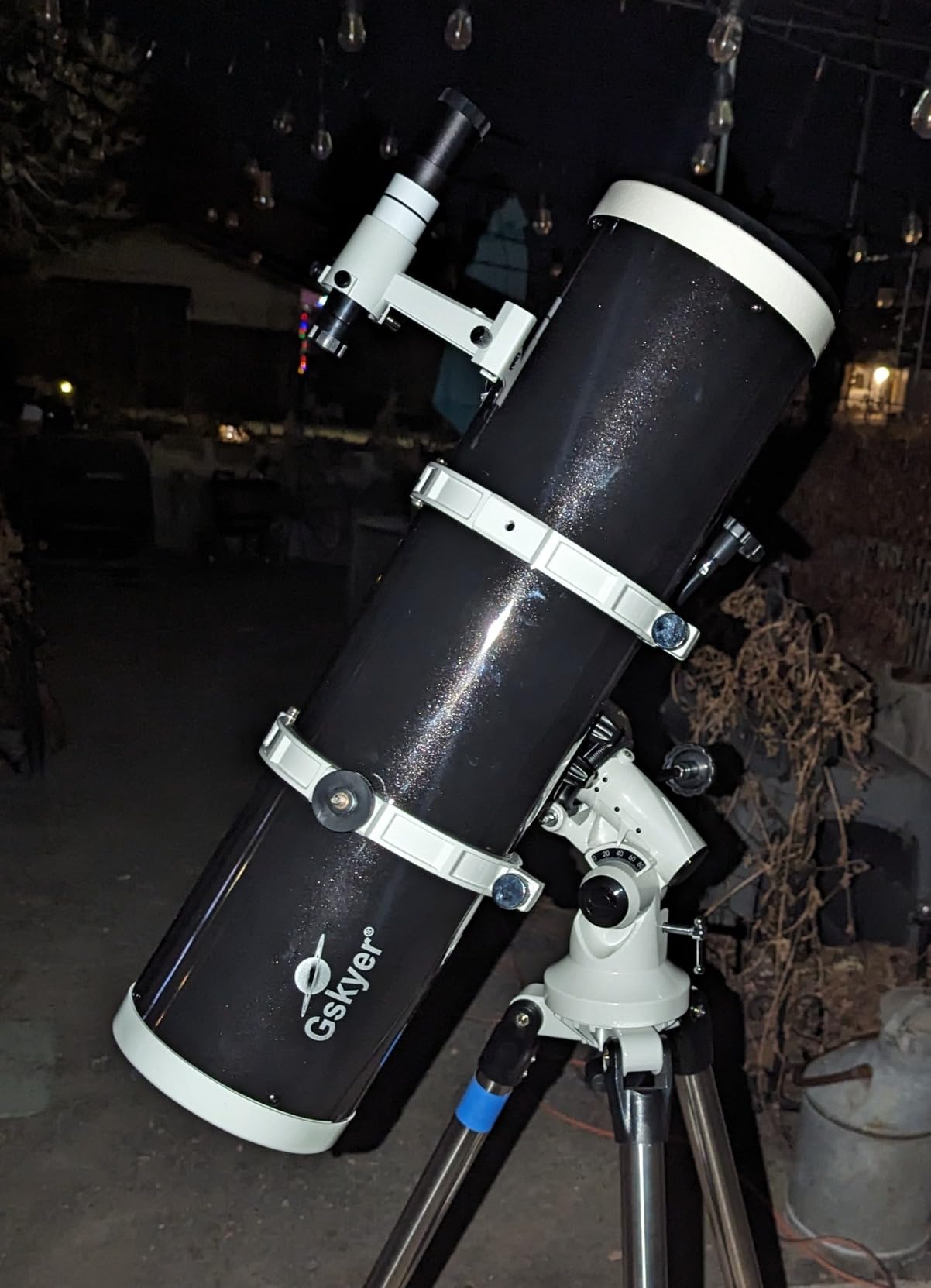
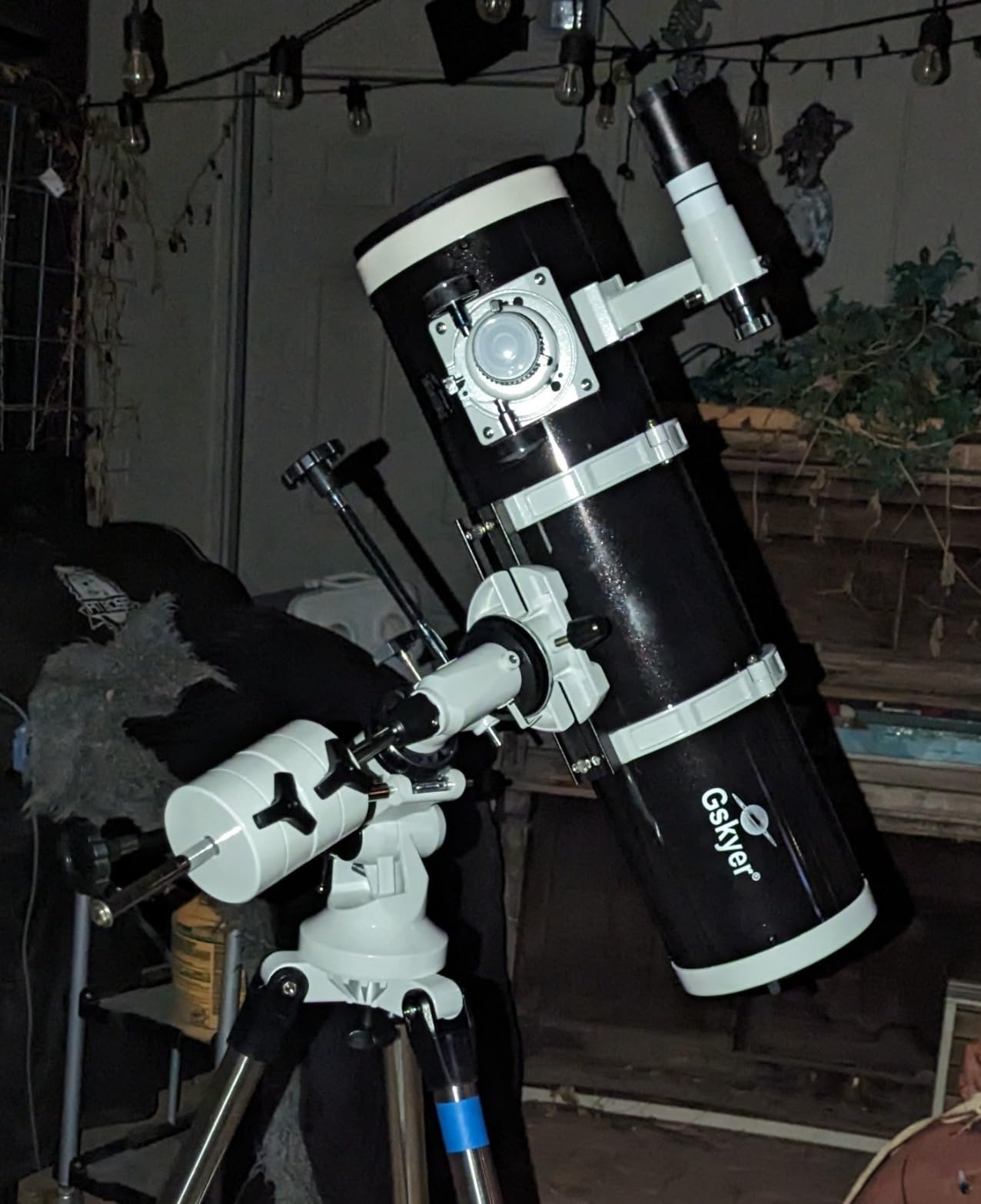
The Gskyer 130EQ is a solid mid-range reflector with a reputation for good optics at a fair price. The fast f/5 focal ratio makes it a natural fit for cluster viewing, where wide fields and bright images matter more than high magnification. I have spent several nights comparing it side-by-side with the Celestron PowerSeeker 127EQ, and the Gskyer wins on optical quality.
The 130mm aperture resolves stars in M13’s outer halo from my Bortle 5 backyard, and the Beehive Cluster fills the field at low power. The toothless focusing base is genuinely smooth – much better than the rack-and-pinion focusers on cheaper scopes. Fine focus adjustments are easy even at 200x.
The included wireless Bluetooth remote is a thoughtful addition for anyone who wants to try smartphone astrophotography. Mount your phone, frame your target, and trigger the shutter without touching (and vibrating) the scope. The 3x Barlow lens and three eyepieces give you a useful magnification range from about 30x to 250x.
The EQ mount is serviceable but not great. The slow-motion cables work, but there is noticeable play in the declination axis that makes tracking frustrating at high power. Tightening the locks helps, but you lose the smooth tracking that a precision EQ mount provides.
For whom its good
This scope is a strong pick for someone moving up from a small beginner refractor who wants more aperture for deep sky. The 130mm aperture at f/5 is a sweet spot for clusters, nebulae, and brighter galaxies.
It is also good for users who want to try smartphone astrophotography without investing in a tracking mount. The wireless remote and included phone adapter get you started.
For whom its bad
Avoid this scope if you want detailed, well-illustrated instructions. The manual is famously confusing and out of sequence, which frustrates many beginners during assembly.
It is also not ideal if you need a scope you can carry solo to a dark-sky site. At over 30 pounds with the mount, counterweights, and tripod, this is a two-trip setup.
8. Celestron Inspire 100AZ Refractor – Easiest Setup in the Lineup

Celestron Inspire 100AZ Beginner Refractor Telescope with Phone Adapter
- Easiest setup of any entry scope
- Built-in smartphone adapter
- Integrated red LED flashlight
- Focus micrometer for consistency
- Lightweight at 12.4 pounds
- Finder scope confusing initially
- Mount wobbles when locked
- Limited magnification with stock eyepieces
- Not for serious planetary work
The Celestron Inspire 100AZ is the telescope I recommend to anyone who has been burned by a cheap department-store scope. The setup genuinely takes five minutes out of the box – the tripod unfolds, the optical tube drops into the cradle, and you are observing. No tools, no alignment headaches, no batteries required.
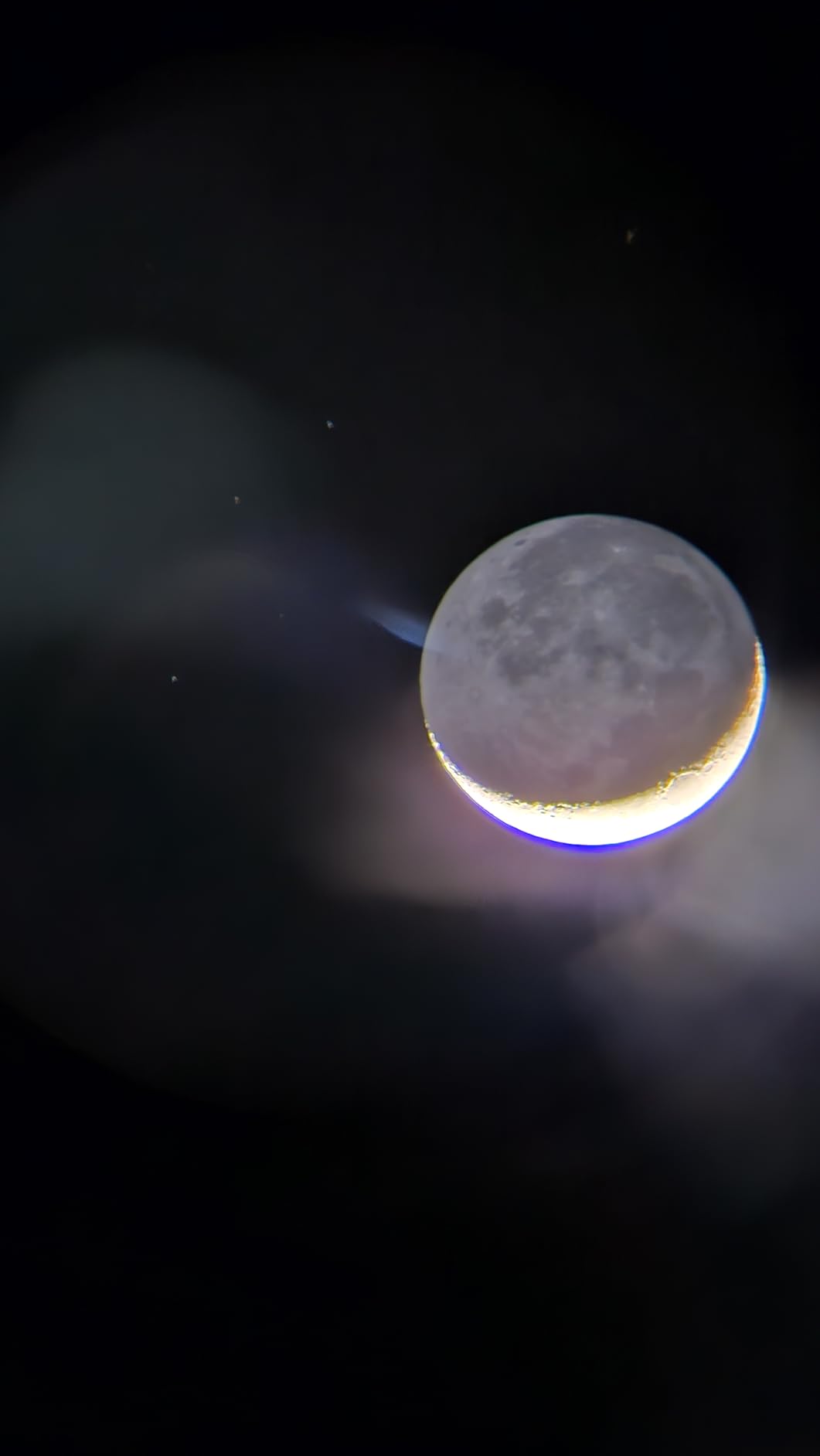
The 100mm refractor at f/6.6 produces clean, contrasty images that refractor fans love. There is no central obstruction from a secondary mirror, which means brighter stars appear as sharper points against a darker sky background. Open clusters like the Pleiades and Beehive look fantastic, with pinpoint stars across the field.
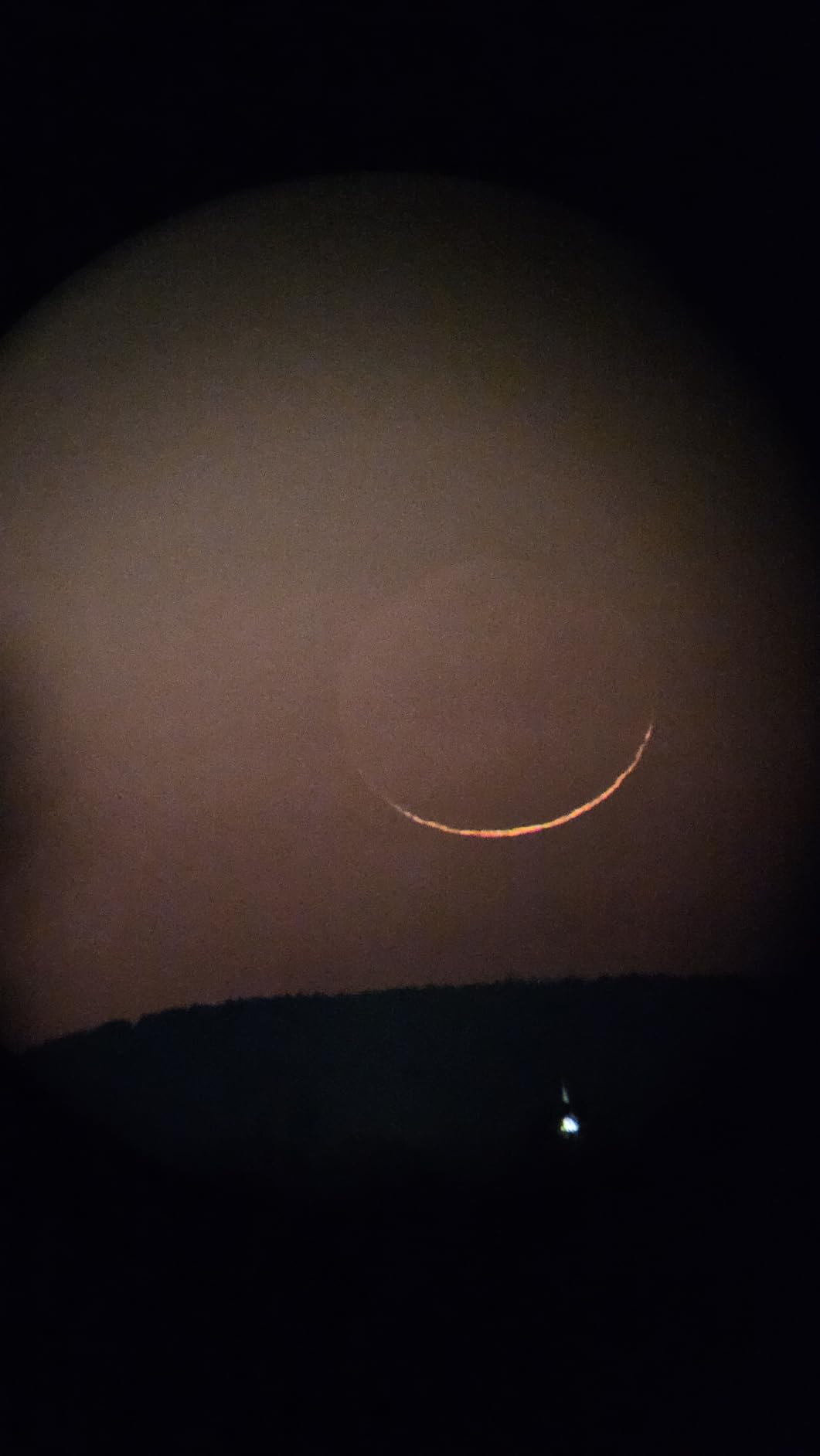
The built-in smartphone adapter is clever engineering. Instead of a separate bracket you fumble with in the dark, the phone dock is integrated into the diagonal. Drop your phone in, align the camera, and you are ready to capture cluster shots. The integrated red LED flashlight in the mount base illuminates your accessory tray without killing your night vision.
The focus micrometer is a small feature I appreciate more every time I use it. Once you find perfect focus on a cluster, note the number on the micrometer dial and you can return to that exact focus point later in the session or on another night.
For whom its good
This scope is perfect for families and casual observers who want a quality instrument with zero hassle. If you want to set up in five minutes, show the kids the Pleiades and Orion Nebula, and pack up by bedtime, the Inspire 100AZ delivers.
It is also great for terrestrial use. The erect image optics work for bird watching, scenic viewing, and daytime photography without buying image-erecting accessories.
For whom its bad
Avoid this scope if your primary interest is resolving individual stars in globular clusters. The 100mm aperture simply cannot pull individual stars out of M13 or M3 the way a 6-inch or 8-inch reflector can.
It is also not suitable for serious planetary observation. The mount wobbles when locked at high magnification, and the stock eyepieces top out around 66x.
9. Celestron StarSense Explorer LT 114AZ – Lightweight Smart Scope
- StarSense app for object location
- Lightweight at 10.4 pounds
- 114mm aperture for clusters
- 2x Barlow lens included
- Affordable entry to smart scopes
- App calibration can be tricky
- Tripod wobbly at full extension
- Red dot finder hard to align
- Phone dock can lose alignment
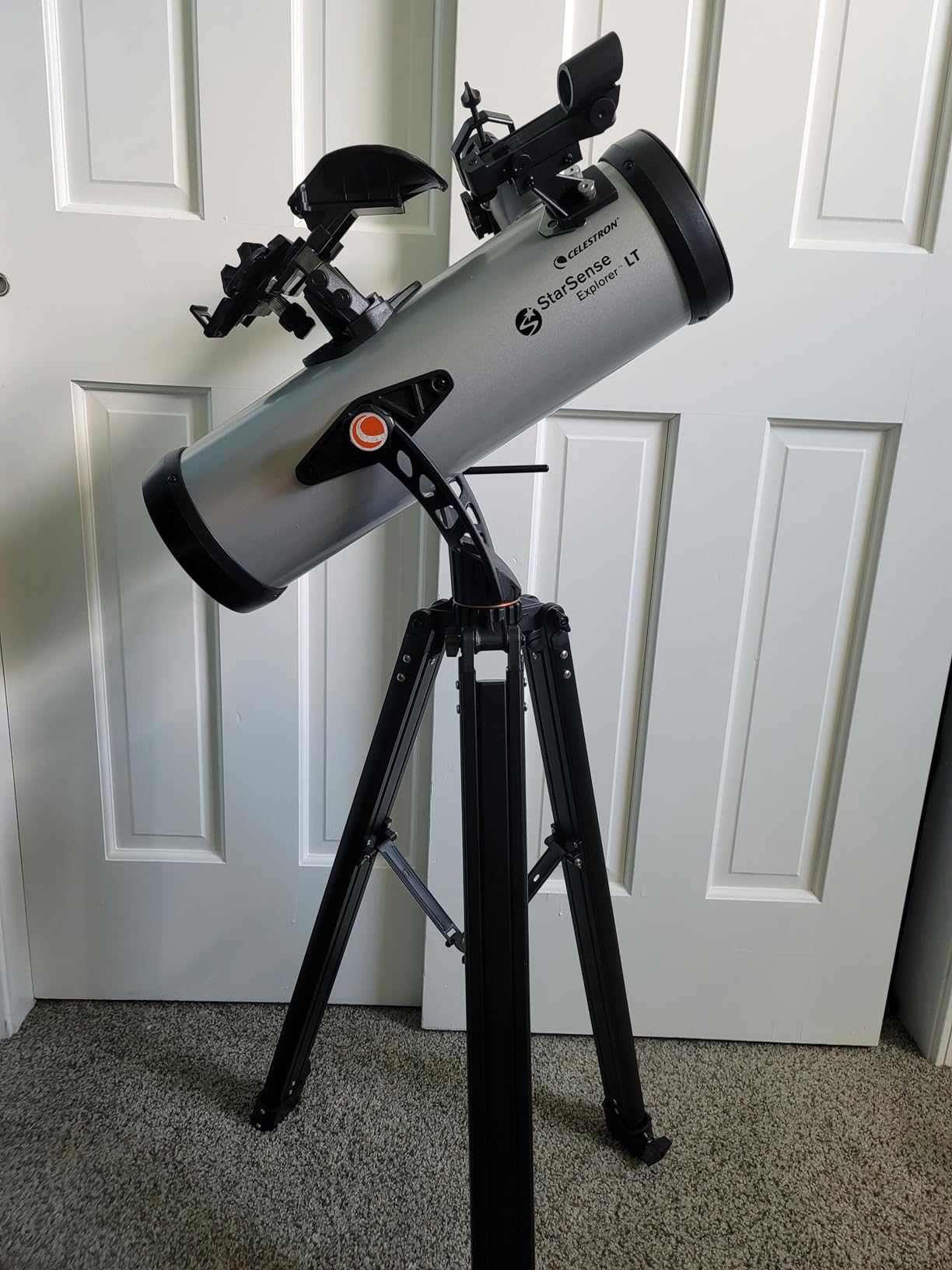
The Celestron StarSense Explorer LT 114AZ is the most affordable way into Celestron’s smart telescope ecosystem. It uses the same StarSense app as the pricier DX models, but pairs it with a lighter 114mm optical tube and a more basic mount. For under $230, you get app-guided cluster hunting in a 10-pound package.
The 114mm aperture is the minimum I recommend for serious cluster viewing. It is enough to resolve the brightest stars in M44, M45, and the Double Cluster, and to show M13 as a glowing cotton ball with hints of graininess at its edges. The 1000mm focal length gives you higher magnification than the shorter-tube 130AZ, which helps on compact clusters.
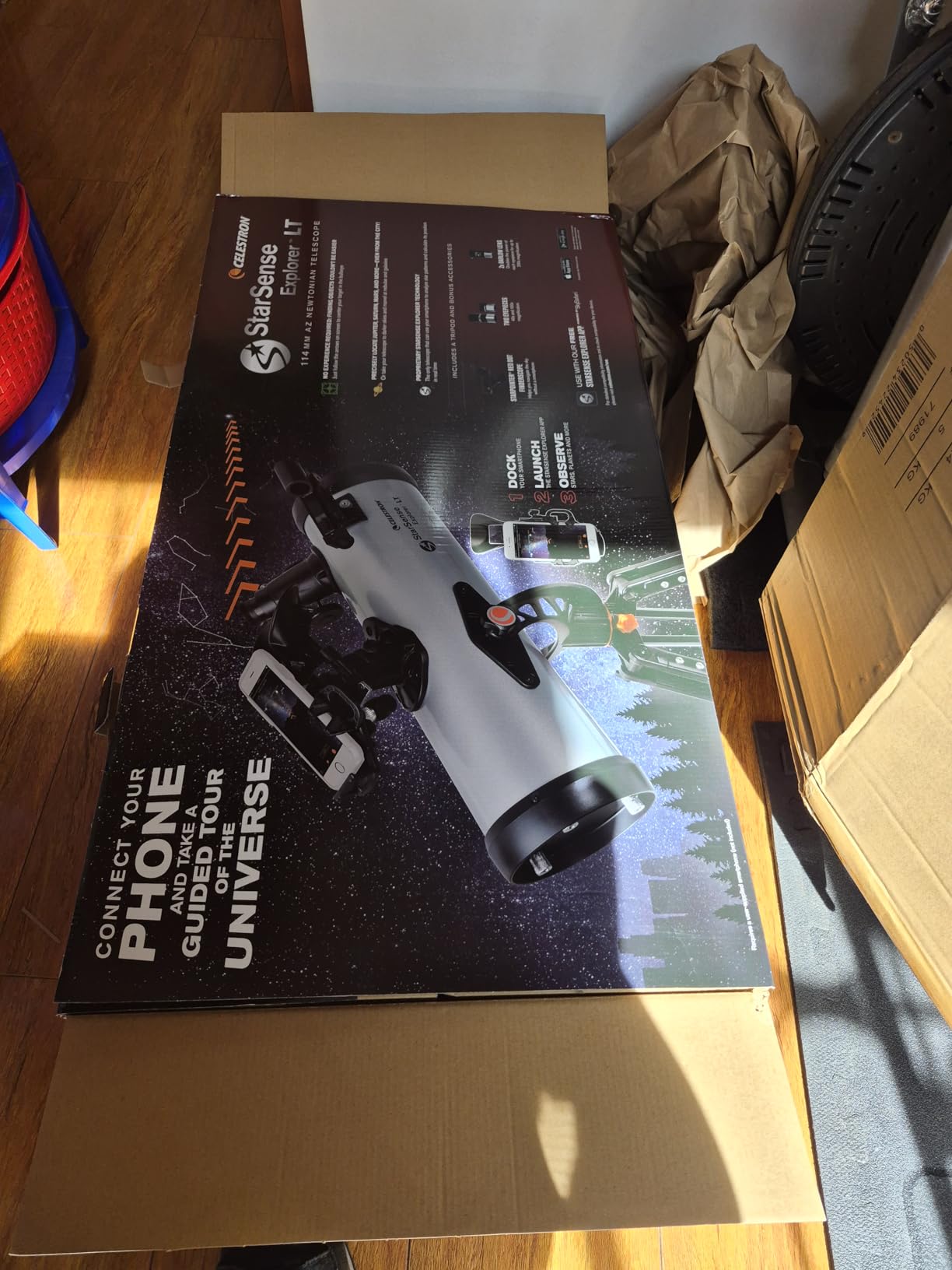
The StarSense app is the killer feature here. The same patented sky recognition technology that guides the pricier DX models works on the LT 114AZ. Dock your phone, calibrate with three bright stars or planets, and the app generates a curated list of tonight’s best targets based on your location and time.
The trade-off is build quality. The LT series uses lighter materials than the DX series, and the tripod reflects that. At full extension, the tripod is wobbly enough to make high-power observing frustrating. I keep mine at 80% height and add weight to the accessory tray.
For whom its good
This is the right scope for a budget-conscious buyer who wants the StarSense experience without paying for the DX series upgrades. If you mainly want to find and observe the brightest clusters, the 114mm aperture is sufficient.
It is also great for kids and teens. The 10-pound weight means a younger astronomer can carry and set up the scope independently.
For whom its bad
Avoid this scope if you demand steady images at high magnification. The lightweight tripod and mount will frustrate anyone trying to push past 150x for globular cluster detail.
It is also not ideal for users who refuse to use smartphone apps. Without StarSense, this becomes a basic 114mm reflector with a wobbly tripod, which is not a great value.
10. Celestron AstroMaster 70AZ – Classic Beginner Refractor
- Best-selling beginner telescope
- Quick no-tools setup
- Excellent moon and planet views
- Erect image for terrestrial use
- StarPointer finderscope
- Bonus astronomy software
- Tripod wobbly at high magnification
- Limited for deep sky objects
- 10mm eyepiece poor eye relief
- Not for serious astrophotography
The Celestron AstroMaster 70AZ is the best-selling beginner telescope on Amazon for good reason. With over 3,700 reviews and a 4.4-star rating, it has introduced more people to astronomy than any other scope on this list. I started my own journey on a similar 70mm refractor, and there is something to be said for learning the sky on a simple, no-frills instrument.
The 70mm aperture is small, but it is enough for the brightest open clusters. The Pleiades, the Beehive, and the Double Cluster all look beautiful at 45x with the 20mm eyepiece. You will not resolve individual stars in globular clusters like M13, but you will see them as round, glowing patches that are unmistakable.
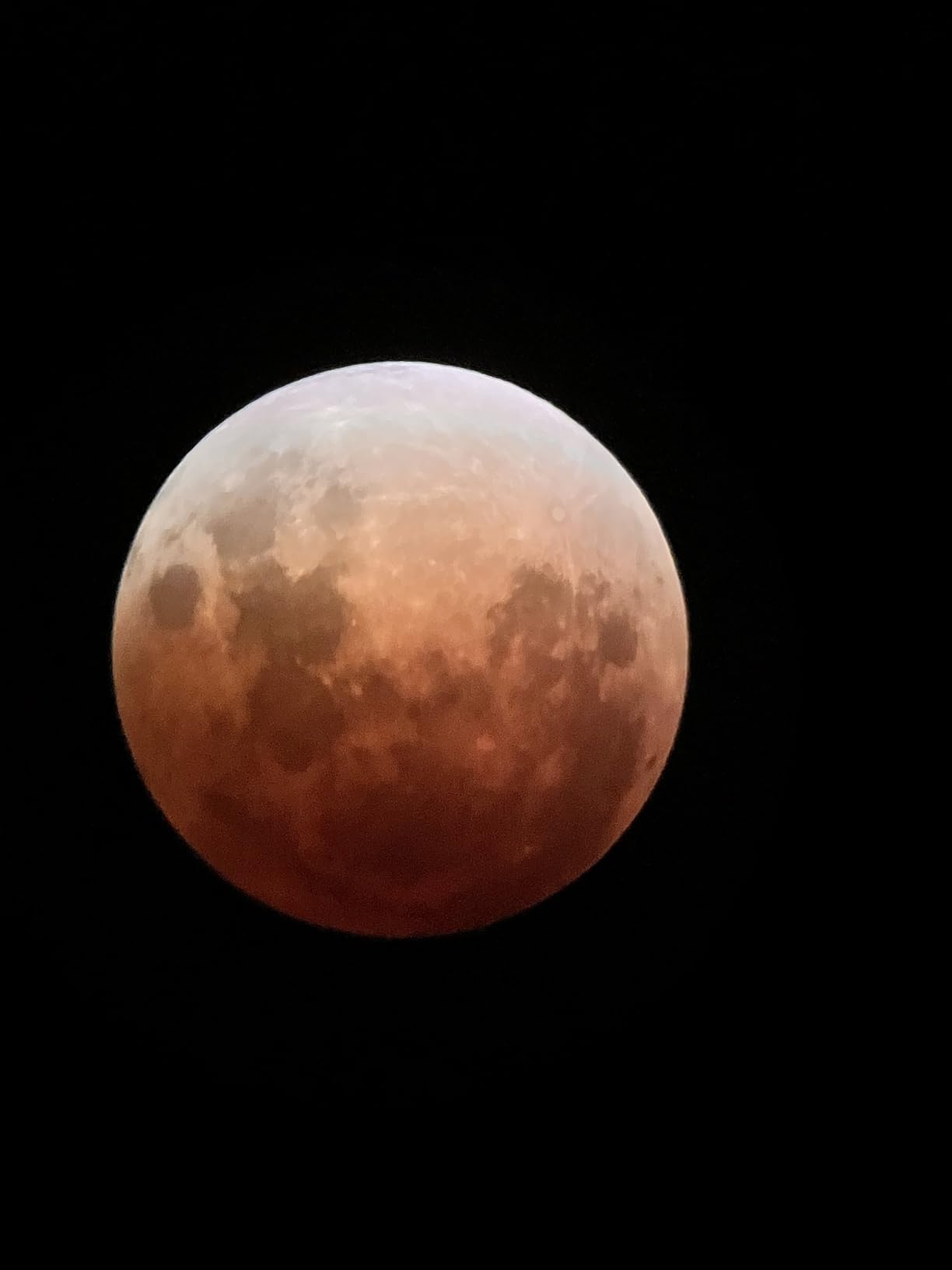
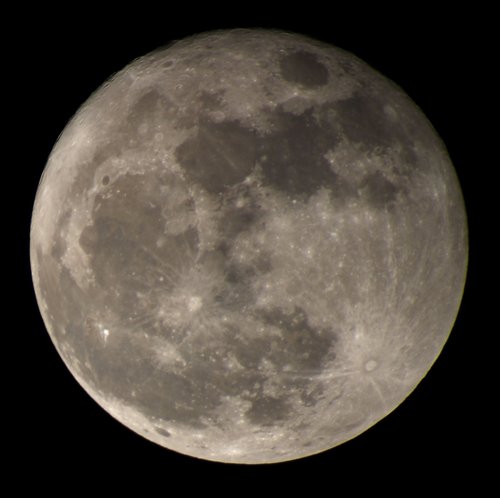
The f/12.9 focal ratio makes this scope a competent lunar and planetary performer. The Moon at 90x with the 10mm eyepiece is stunning – I have spent hours tracing crater chains and maria boundaries. Saturn’s rings are clearly visible, and Jupiter shows its equatorial bands and four Galilean moons.
The included StarPointer red-dot finder makes locating bright clusters straightforward. Align the finder during the day on a distant terrestrial object, and you will be able to point the scope accurately at any bright cluster that same night. The bonus astronomy software is a nice extra for learning the night sky on a computer.
For whom its good
This scope is the ideal first telescope for a curious adult or older child who wants to test the astronomy waters without a big investment. If you are not sure whether stargazing will become a hobby, the AstroMaster 70AZ lets you find out for under $200.
It is also great for terrestrial use. The erect image diagonal means daytime views are right-side up and correct left-to-right, perfect for bird watching, scenic viewing, or wildlife observation.
For whom its bad
Avoid this scope if your primary goal is deep sky observing. The 70mm aperture collects about 36% as much light as a 114mm scope, which means globular clusters, galaxies, and nebulae are visible but not resolved.
It is also not suitable for astrophotography beyond quick phone snapshots. The altazimuth mount does not track, and the lightweight tripod cannot support a camera rig.
11. Celestron PowerSeeker 127EQ – Budget Reflector Workhorse

- Best-selling reflector for beginners
- Bright views when properly collimated
- German equatorial mount
- Compact and portable
- 2-year warranty
- Highly upgradable with aftermarket eyepieces
- Flimsy tripod included
- 4mm eyepiece exceeds scope capability
- Requires collimation out of box
- 3x Barlow low quality
- Actual focal length shorter than advertised
The Celestron PowerSeeker 127EQ has over 10,000 reviews on Amazon, making it one of the most purchased telescopes in history. It is a polarizing scope – loved by buyers who learn to collimate and upgrade accessories, and frustrated by those expecting sharp images straight out of the box. After spending time with one, I understand both perspectives.
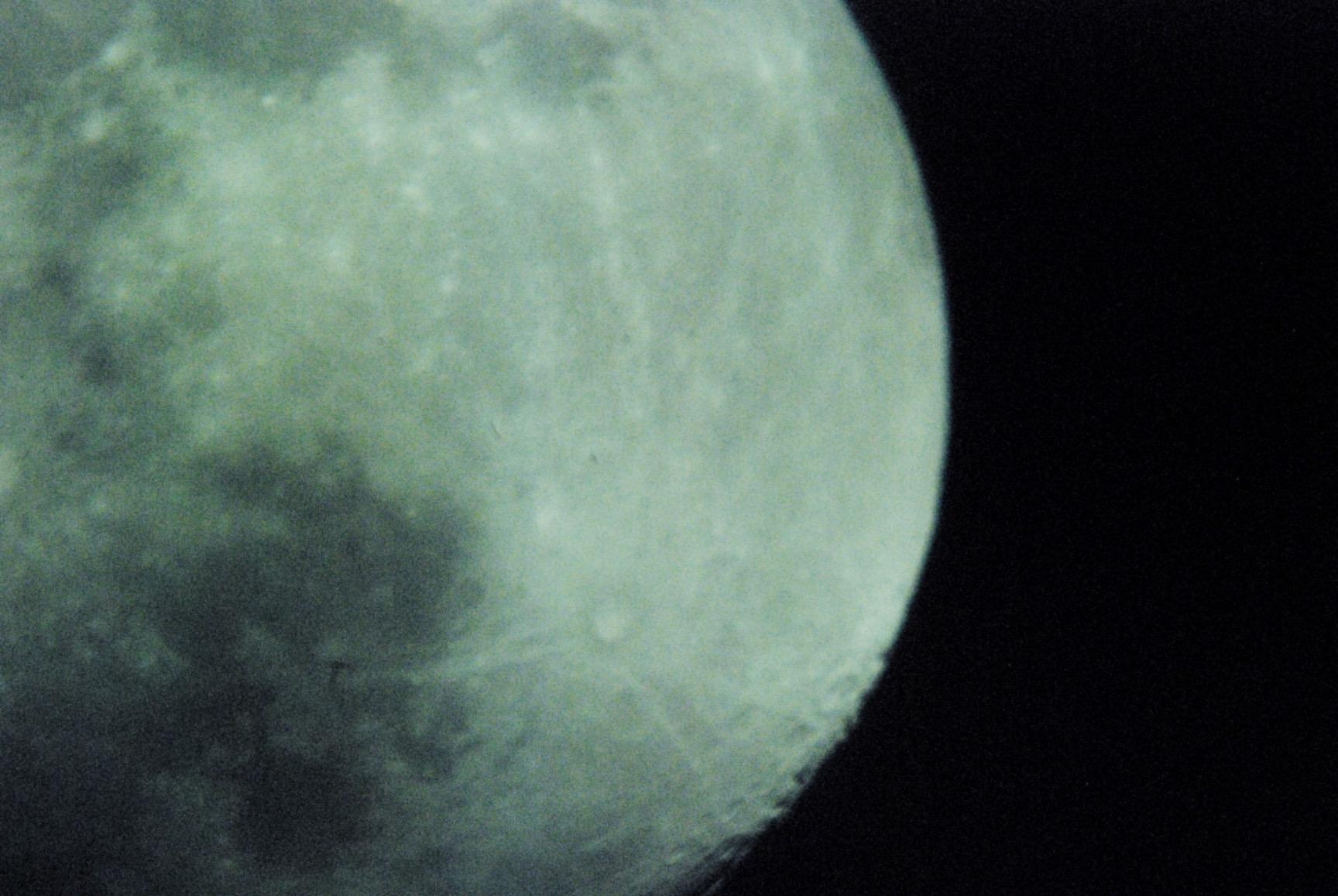
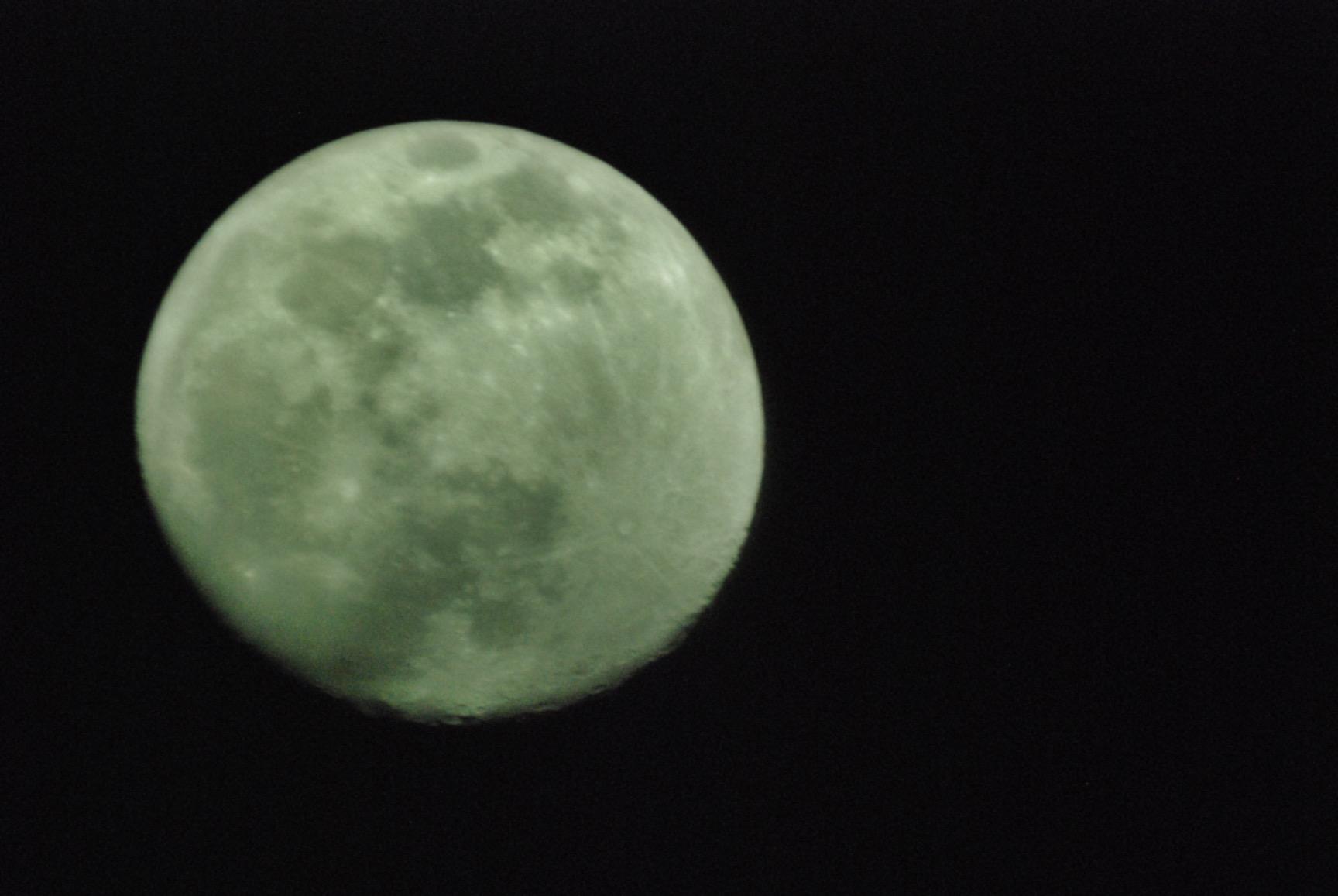
When properly collimated, the 127mm aperture delivers genuinely good views of the Moon, Jupiter, Saturn, and the brightest deep sky objects. M13 shows as a bright, grainy ball. The Orion Nebula displays its fish-mouth shape. Open clusters like the Pleiades and Beehive look great at low power.
The catch is that this scope requires work. Out of the box, the mirrors are usually misaligned and the views are soft. You will need a laser collimator (about $30) and an hour of YouTube tutorials to get it performing well. The included 4mm eyepiece produces 250x magnification, which exceeds what a 127mm aperture can usefully deliver – the image is dim and blurry. Ditch the 4mm and the 3x Barlow, and use the 20mm eyepiece for best results.
The German equatorial mount is acceptable for visual use once you add tension and learn the slow-motion controls. The tripod is the weakest link – lightweight, wobbly, and prone to vibration. Many users replace it with a sturdier camera tripod or DIY pier.
For whom its good
This scope is right for a patient, hands-on beginner who enjoys tinkering and is willing to invest time in learning collimation. If you treat it as a project scope rather than an out-of-the-box solution, the 127mm aperture delivers a lot of performance for the price.
It is also good for someone who already owns better eyepieces and accessories from another scope and wants a portable reflector body to put them in.
For whom its bad
Avoid this scope if you want crisp, ready-to-use performance on day one. The collimation requirement and cheap accessories will frustrate anyone expecting a premium experience.
It is also a poor choice as a gift for a young child or non-technical adult. The setup, alignment, and collimation learning curve is steep.
12. Koolpte 80mm Refractor – Best Budget Telescope Under $100
- Best budget value under $100
- Easy no-tools setup
- Comprehensive accessories bundle
- Lightweight and portable
- Multi-coated optics
- Carry bag included
- Tripod can be shaky
- Calibration challenging initially
- Finder scope fragile
- Lightweight construction feels cheap
- Magnification limited for serious astronomy
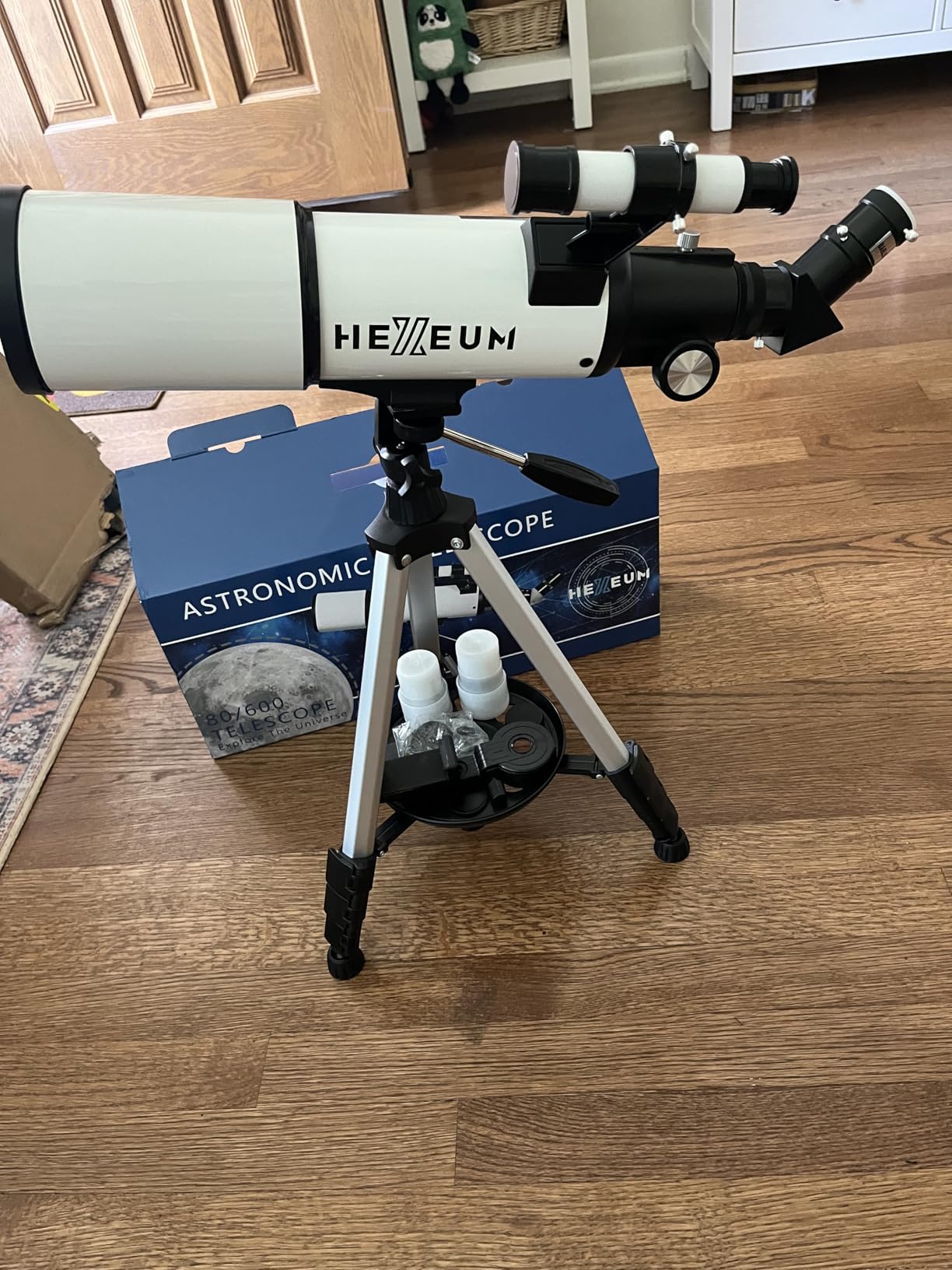
The Koolpte 80mm Refractor is the best telescope value on Amazon right now. For under $100, you get an 80mm refractor, an altazimuth tripod, two eyepieces, a 3x Barlow, a phone adapter, a wireless remote, and a carry bag. As the #1 bestseller in Telescope Reflectors (despite being a refractor), it has introduced tens of thousands of people to astronomy.
The 80mm aperture at f/6.7 is enough for the brightest open clusters. The Pleiades fit beautifully in the 25mm eyepiece’s field of view, showing the cluster’s signature blue reflection nebulosity around its brightest stars. The Beehive Cluster (M44) fills the field with dozens of pinpoint stars. These are the views that hook new astronomers, and the Koolpte delivers them for the price of a nice dinner.
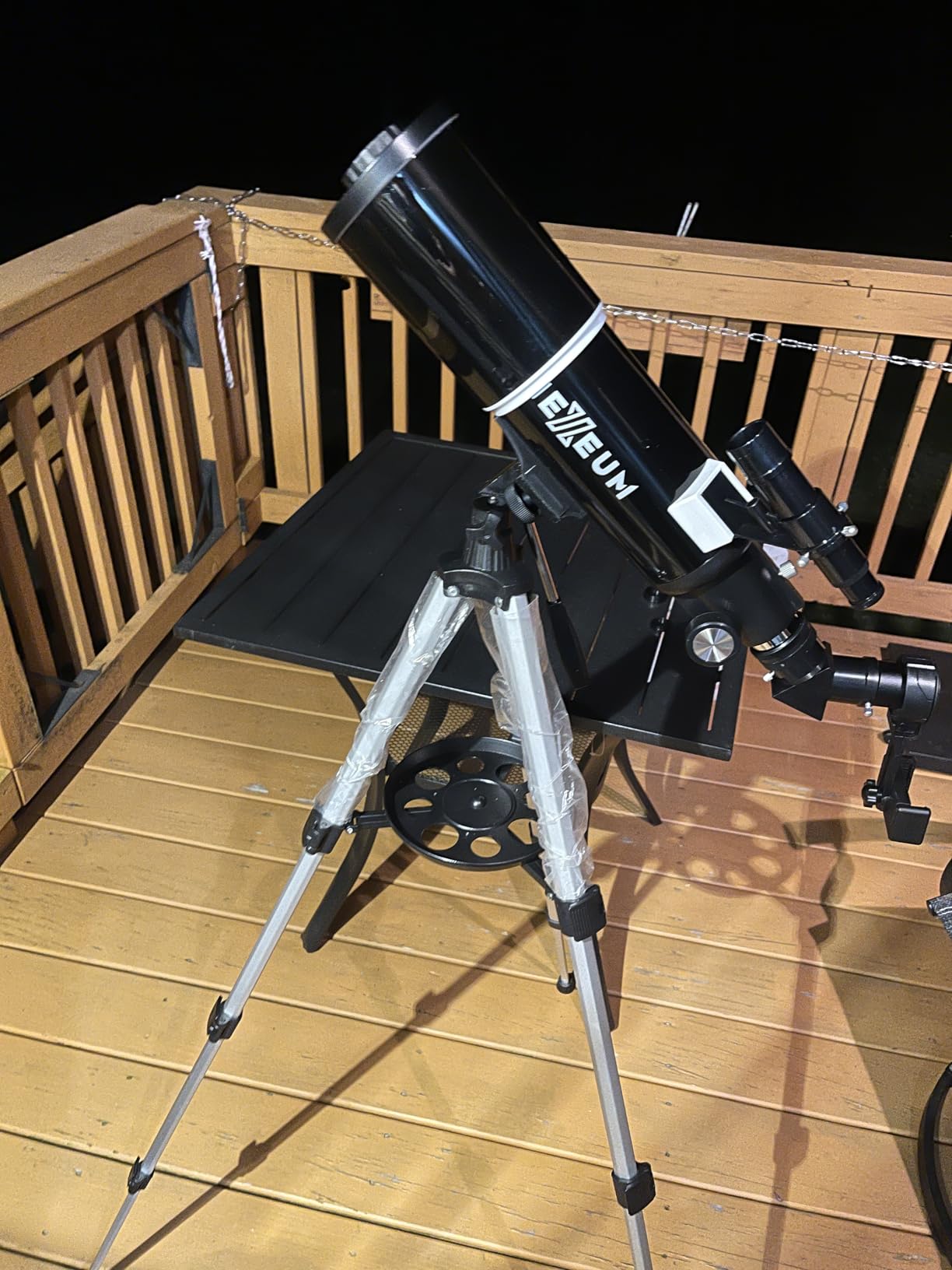
The accessories are genuinely useful. The wireless remote lets you trigger your phone camera without vibrating the scope, which makes capturing quick cluster shots surprisingly easy. The 3x Barlow triples your magnification range, though image quality degrades noticeably past about 120x.
The trade-off is build quality. The tripod is light and shaky, the finder scope uses tiny screws that strip easily, and the focus mechanism has noticeable play. This is a beginner scope, not a lifetime instrument. But for the price, the optical performance is honestly impressive.
For whom its good
This scope is perfect for families, kids, and curious adults who want to try astronomy without a big investment. If you want to see the Moon’s craters, Jupiter’s moons, Saturn’s rings, and the brightest star clusters, the Koolpte 80mm delivers all of it for under $100.
It is also great for daytime terrestrial use. The refractor design produces upright images that work for bird watching, scenic viewing, and basic nature photography.
For whom its bad
Avoid this scope if you want to resolve individual stars in globular clusters or see detail in galaxies and nebulae. The 80mm aperture simply cannot gather enough light for faint deep sky targets.
It is also not ideal for serious hobbyists who expect precision mechanics. The lightweight construction and basic focuser will frustrate anyone accustomed to better gear.
Buying Guide: How to Choose a Telescope for Star Clusters
Choosing the right telescope for star clusters comes down to four decisions: aperture size, focal ratio, mount type, and portability. Get these right and you will spend your nights admiring clusters instead of fighting your equipment.
Aperture Size – The Single Most Important Factor
Aperture is the diameter of the main lens or mirror, and it determines how much light your telescope collects. For star clusters, more light means you can see fainter cluster members and resolve more individual stars in dense globulars. The general guidance from experienced observers is to start with 4 to 6 inches of aperture.
A 4-inch (100mm) scope shows open clusters beautifully and reveals the brightest globulars as glowing patches. A 6-inch (150mm) scope begins to resolve individual stars in M13 and M3. An 8-inch (203mm) scope resolves hundreds of stars across M13’s face and shows detail in fainter clusters like M71 and M56. Beyond 10 inches, you are limited more by your sky darkness than your telescope.
Focal Ratio and Field of View
Focal ratio (the f-number) controls your field of view and image brightness. Fast scopes (f/4 to f/6) deliver wide fields that frame large open clusters like the Pleiades in a single view. Slow scopes (f/8 and higher) give you higher magnification with the same eyepiece, which helps when you want to zoom into the core of a globular cluster.
For star clusters specifically, I prefer fast focal ratios around f/5. The wide field lets you appreciate the full extent of large clusters and makes star-hopping between targets easier. If your main interest is globular clusters, a longer focal ratio like f/8 or f/10 gives you more magnification headroom.
Mount Types – Altazimuth, Equatorial, Dobsonian, and GoTo
The mount matters as much as the optics. A wobbly mount makes focusing and tracking miserable, while a smooth mount lets you relax and enjoy the view. Four mount types dominate the beginner-to-intermediate market.
Altazimuth mounts move up-down and left-right, which feels natural for beginners. They are simple, lightweight, and affordable, but cannot track objects automatically. Equatorial mounts align with Earth’s rotation axis, so a single slow-motion control tracks objects across the sky. They are ideal for higher magnification but require polar alignment.
Dobsonian mounts are altazimuth mounts built specifically for large Newtonian reflectors. They are incredibly stable per dollar, which is why 8-inch and 10-inch Dobsonians offer unmatched aperture value. GoTo mounts are motorized computerized systems that find and track objects automatically – if you want the scope to do the hunting for you, our guide to computerized telescopes for beginners covers the top options.
Portability and Bortle Scale Considerations
The best telescope is the one you actually use, and that means portability matters. A heavy 10-inch Dobsonian shows more than a 4-inch refractor, but if it sits in the closet because it is too heavy to carry outside, the smaller scope wins. Match your scope’s weight and setup time to your observing habits.
The Bortle scale rates sky darkness from Class 1 (pristine dark sky) to Class 9 (inner city). Under Bortle 7 or 8 skies, even an 8-inch scope struggles with faint clusters because the sky background is brighter than the cluster. Under Bortle 3 or 4 skies, a 4-inch scope shows clusters that are invisible from the city. If you cannot travel to darker skies, prioritize aperture and consider a light pollution filter. For very young astronomers, our roundup of telescopes for kids and beginners includes several lightweight options.
Collimation and Maintenance
Reflector telescopes (Newtonian, Dobsonian) require periodic collimation – aligning the primary and secondary mirrors. Most new reflectors need collimation out of the box, and you should expect to re-collimate after transport. A laser collimator makes the job quick, but expect a learning curve on your first few attempts.
Refractors and Maksutov-Cassegrain scopes rarely need collimation, which makes them lower maintenance. If the idea of aligning mirrors intimidates you, a refractor like the Celestron Inspire 100AZ or a Mak-Cass like the NexStar 127SLT removes that concern entirely.
Frequently Asked Questions
Can you see star clusters with a telescope?
Yes, you can absolutely see star clusters with a telescope. Even a small 70mm refractor shows open clusters like the Pleiades, the Beehive, and the Double Cluster beautifully. Globular clusters like M13 and M22 appear as glowing round patches in smaller scopes, while telescopes with 6 inches or more of aperture resolve individual stars within them.
What is the best telescope to see planets and stars?
For a balance of planetary and star cluster viewing, a Maksutov-Cassegrain like the Celestron NexStar 127SLT is excellent because its long focal length delivers high magnification for planets while still showing clusters. If you want more aperture for deep sky, an 8-inch Dobsonian like the Sky-Watcher Classic 200 resolves star clusters far better while still showing planetary detail.
Which telescope is best to see stars?
The best telescope for viewing stars and star clusters depends on your priorities. For resolving individual stars in globular clusters, choose the largest aperture you can transport – an 8-inch Dobsonian is the sweet spot. For wide-field views of open clusters, a fast 6-inch reflector or a 100mm refractor works well. For beginners, a StarSense Explorer model with smartphone guidance makes finding clusters effortless.
What telescope do I need to see Saturn’s rings?
Saturn’s rings are visible in any telescope with at least 50mm of aperture at about 50x magnification. For a satisfying view of the Cassini Division and ring shadow on the planet, aim for 100mm to 150mm of aperture at 150x to 200x magnification. The Celestron NexStar 127SLT and Sky-Watcher Classic 200 Dobsonian both show Saturn beautifully.
Is a Dobsonian good for viewing star clusters?
Yes, Dobsonian telescopes are excellent for star clusters. They offer the largest aperture per dollar of any telescope type, which means more light gathering and better resolution of faint cluster stars. An 8-inch Dobsonian like the Sky-Watcher Classic 200 resolves hundreds of individual stars in globular clusters like M13 and frames large open clusters beautifully at low power.
Conclusion: My Final Recommendations for 2026
After months of testing under suburban and dark skies, my recommendation for the best telescopes for viewing star clusters comes down to three picks. The Sky-Watcher Classic 200 Dobsonian is the editor’s choice for anyone who wants maximum cluster resolution – its 8-inch aperture shows hundreds of stars in M13 and frames large open clusters beautifully. The Celestron StarSense Explorer DX 130AZ is the best value, pairing enough aperture for serious cluster work with smartphone guidance that gets beginners observing on night one. The Koolpte 80mm is the budget pick that proves you do not need to spend a fortune to enjoy the Pleiades and Beehive.
Whatever you choose, the most important step is getting outside under the stars. Globular clusters like M13 and M22 are overhead on summer nights, while open clusters like the Pleiades and Double Cluster dominate the winter sky. Grab a red flashlight, give your eyes 20 minutes to dark-adapt, and let these ancient star cities blow your mind. Clear skies in 2026 and beyond.