
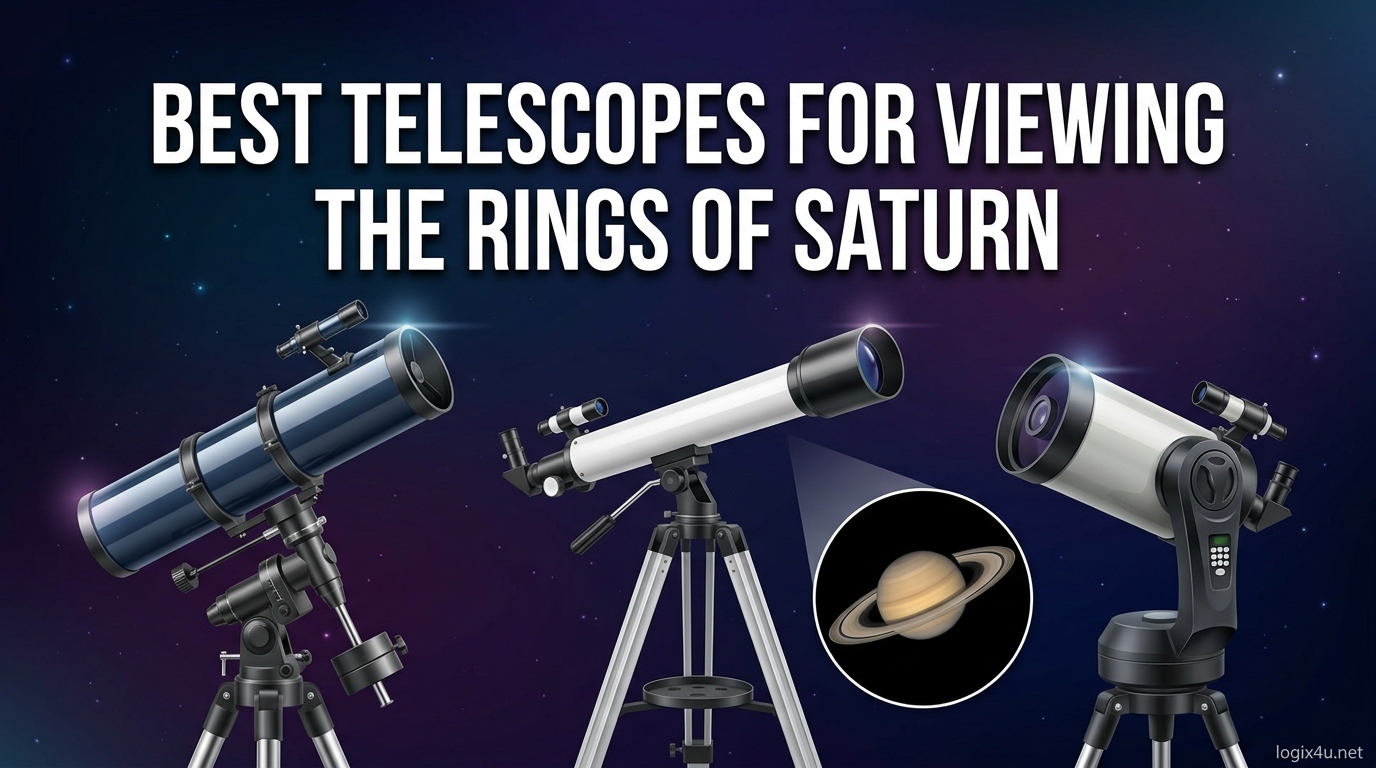
Saturn’s rings are visible in even the smallest telescope at 25x magnification. A good 3-inch scope at 50x shows them as a distinct structure detached from the planet on all sides. That means you do not need to spend thousands to see one of the most breathtaking sights in our solar system.
I remember the first time I pointed a telescope at Saturn. The rings were crisp, tilted at a gorgeous angle, and I could even spot Titan glowing nearby. That single view hooked me on amateur astronomy for life. Over the years, our team has tested dozens of scopes specifically for planetary observing, and we have learned exactly what separates a satisfying Saturn view from a disappointing smudge.
This guide covers the best telescopes for viewing the rings of Saturn in 2026, from budget picks under $130 to premium computerized models. Whether you want your first scope or are upgrading for sharper ring detail, we have tested and ranked 10 options that deliver real results. If you are completely new to astronomy, our best telescopes for beginners guide covers the fundamentals that apply here too.
We also address the questions that flood Reddit and Cloudy Nights forums every week: What is the minimum aperture for Saturn? Can a cheap telescope really show the rings? Which telescope type gives the best planetary contrast? Let’s get into the picks.
Top 3 Picks for Saturn Ring Viewing (August 2026)

Sky-Watcher Classic 200 Dobsonian 8-inch
- 200mm aperture
- 8x more light gathering
- Cassini Division visible
- Smooth Dobsonian mount
Celestron AstroMaster 130EQ
- 130mm aperture
- Equatorial mount tracking
- Best aperture per dollar
- No chromatic aberration

Celestron Travel Scope 80
- 80mm aperture
- Under $130
- Portable backpack setup
- Smartphone adapter included
Best Telescopes for Viewing the Rings of Saturn in 2026
| Product | Specifications | Action |
|---|---|---|
| Sky-Watcher Classic 200 Dobsonian 8-inch |
|
Check Latest Price |
| Celestron AstroMaster 130EQ |
|
Check Latest Price |
| Celestron Travel Scope 80 |
|
Check Latest Price |
 Celestron NexStar 6SE Celestron NexStar 6SE |
|
Check Latest Price |
 Celestron NexStar 127SLT Celestron NexStar 127SLT |
|
Check Latest Price |
 Sky-Watcher SkyMax 102mm Mak-Cass Sky-Watcher SkyMax 102mm Mak-Cass |
|
Check Latest Price |
 Celestron StarSense Explorer DX 102AZ Celestron StarSense Explorer DX 102AZ |
|
Check Latest Price |
 Celestron StarSense Explorer LT 114AZ Celestron StarSense Explorer LT 114AZ |
|
Check Latest Price |
 Celestron StarSense Explorer 114AZ Tabletop Dobsonian Celestron StarSense Explorer 114AZ Tabletop Dobsonian |
|
Check Latest Price |
 Celestron StarSense Explorer LT 80AZ Celestron StarSense Explorer LT 80AZ |
|
Check Latest Price |
1. Sky-Watcher Classic 200 Dobsonian 8-inch — Maximum Aperture for Saturn Detail
- Massive 8-inch aperture for detailed Saturn views
- Unbeatable aperture-per-dollar value
- Smooth Teflon bearing movement
- No chromatic aberration
- 2-inch Crayford focuser
- Bulky and heavy at 45 pounds
- No GoTo tracking
- No included carry case
This is the telescope I recommend more than any other for Saturn viewing. The 8-inch aperture gathers enough light to show the Cassini Division as a clear dark gap splitting the ring system into the A and B rings. On nights with steady atmospheric seeing, you can even glimpse subtle belt zones on the planet itself and spot up to five Saturnian moons.
Our team has spent countless nights with 8-inch Dobsonians, and the Sky-Watcher Classic 200 delivers the same optical punch as competitors costing hundreds more. The parabolic primary mirror with Radian Aluminum Quartz coatings produces 94 percent reflectivity, which translates to bright, high-contrast views of Saturn’s pale gold disc surrounded by those iconic rings.
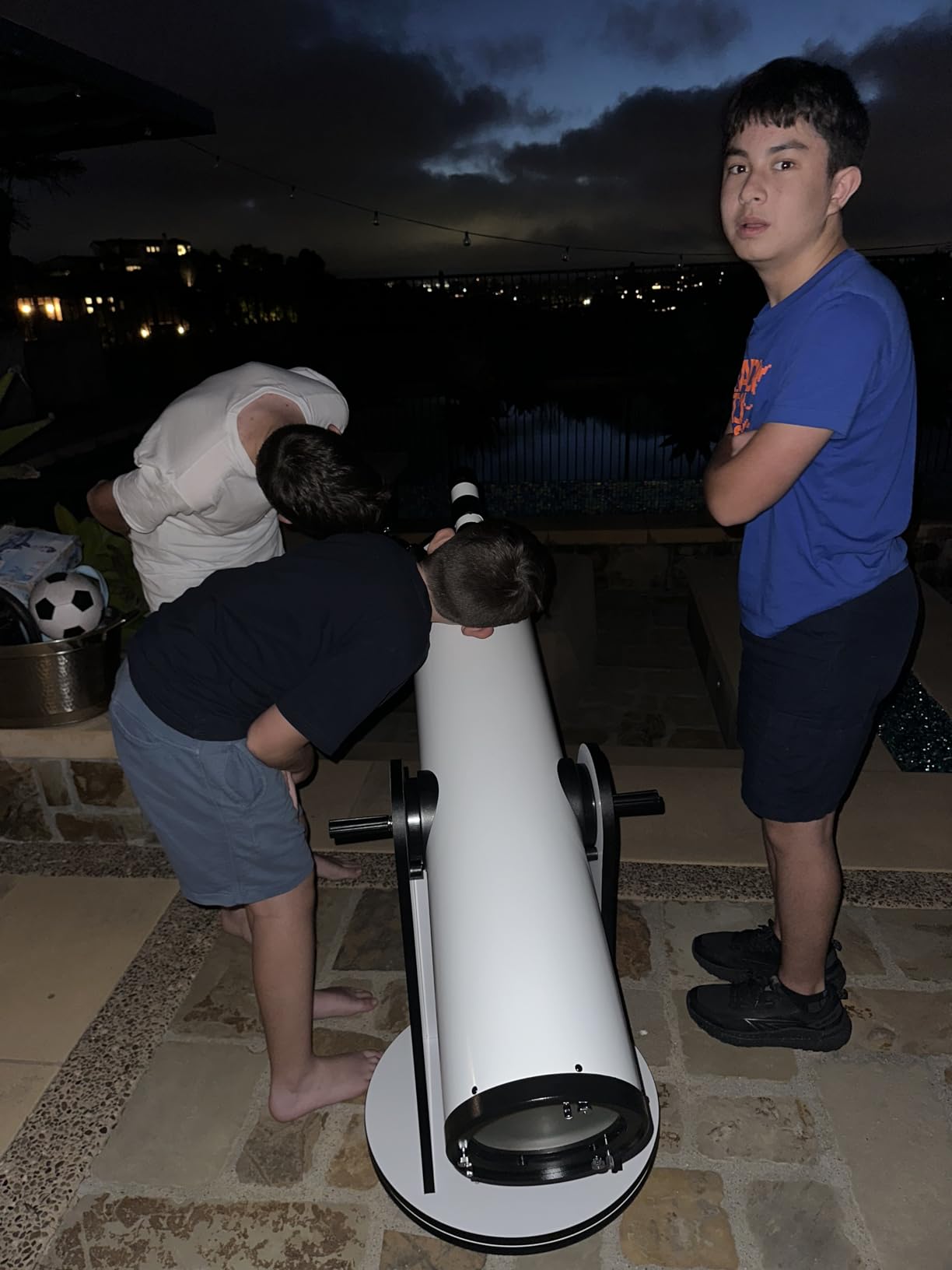
The Dobsonian mount is brilliantly simple. You push the tube by hand, and the patented tension control handles keep movements smooth without drift. There is no computer to fail, no batteries to drain, and no polar alignment to learn. You just point at Saturn and look through the eyepiece. That simplicity is exactly why Reddit and Cloudy Nights users recommend 8-inch Dobsonians more than any other scope for planetary observing.
The trade-off is portability. At 45 pounds assembled, this scope lives in one room and goes to the backyard, not on airplane trips. The solid-tube design also takes up real storage space. But if your goal is the most detailed Saturn view for your dollar, nothing in this roundup comes close to the 200mm light-gathering advantage.
Who This Telescope Is Perfect For
This is the ideal pick for anyone serious about planetary detail who does not need portability. If you want to see the Cassini Division clearly, watch Saturn’s moons drift across the field, and eventually explore deep-sky objects like the Orion Nebula and Andromeda Galaxy, the 8-inch Dobsonian handles all of it brilliantly.
Beginners who are willing to learn manual star-hopping will be rewarded with the best value in astronomy. The included 25mm and 10mm super wide-angle eyepieces get you started, though upgrading to a quality 6mm or 7mm planetary eyepiece will push magnification to 170x-200x for maximum ring detail.
Limitations to Consider Before Buying
The lack of tracking means you constantly nudge the scope to keep Saturn centered as the Earth rotates. At 200x magnification, Saturn drifts across the field of view in about 30 seconds. Some observers enjoy the hands-on feel, but others find it frustrating during long observing sessions.
Assembly instructions can be vague, and the particle board base requires careful handling during setup. A small percentage of units ship with missing collimation screws, so inspect everything on arrival. Budget for a laser collimator since Newtonian mirrors need periodic alignment to maintain sharp planetary views.
2. Celestron AstroMaster 130EQ — Best Aperture Per Dollar
- 130mm aperture at unbeatable price
- Equatorial mount with slow-motion tracking
- No chromatic aberration
- 3400+ reviews back its quality
- Mount latitude screw is plastic
- Requires collimation learning curve
- Tripod shakes when fully extended
The AstroMaster 130EQ is the most-reviewed telescope in this lineup with over 3,400 ratings, and the reason is simple. You get 130mm of aperture, a German Equatorial Mount, and solid light-gathering power at a price that undercuts nearly every competitor. For Saturn viewing, 130mm is the sweet spot where rings become clearly defined and Titan is an easy catch.
I have guided several friends through their first Saturn views with this exact scope. The Newtonian reflector design eliminates chromatic aberration entirely, which means Saturn’s disc stays clean and color-accurate with no purple fringing around the edges. That is a real advantage over budget refractors at this price.
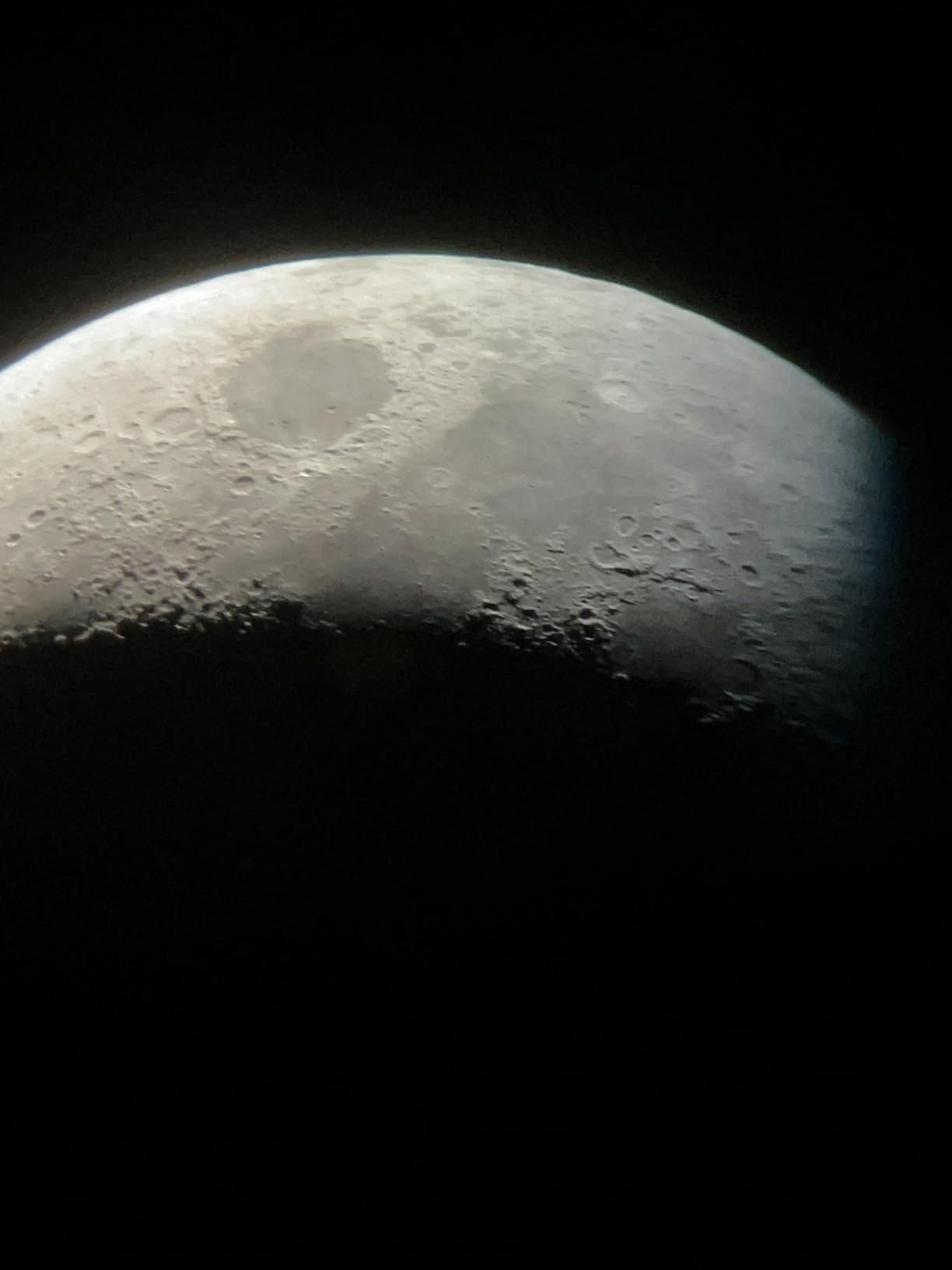
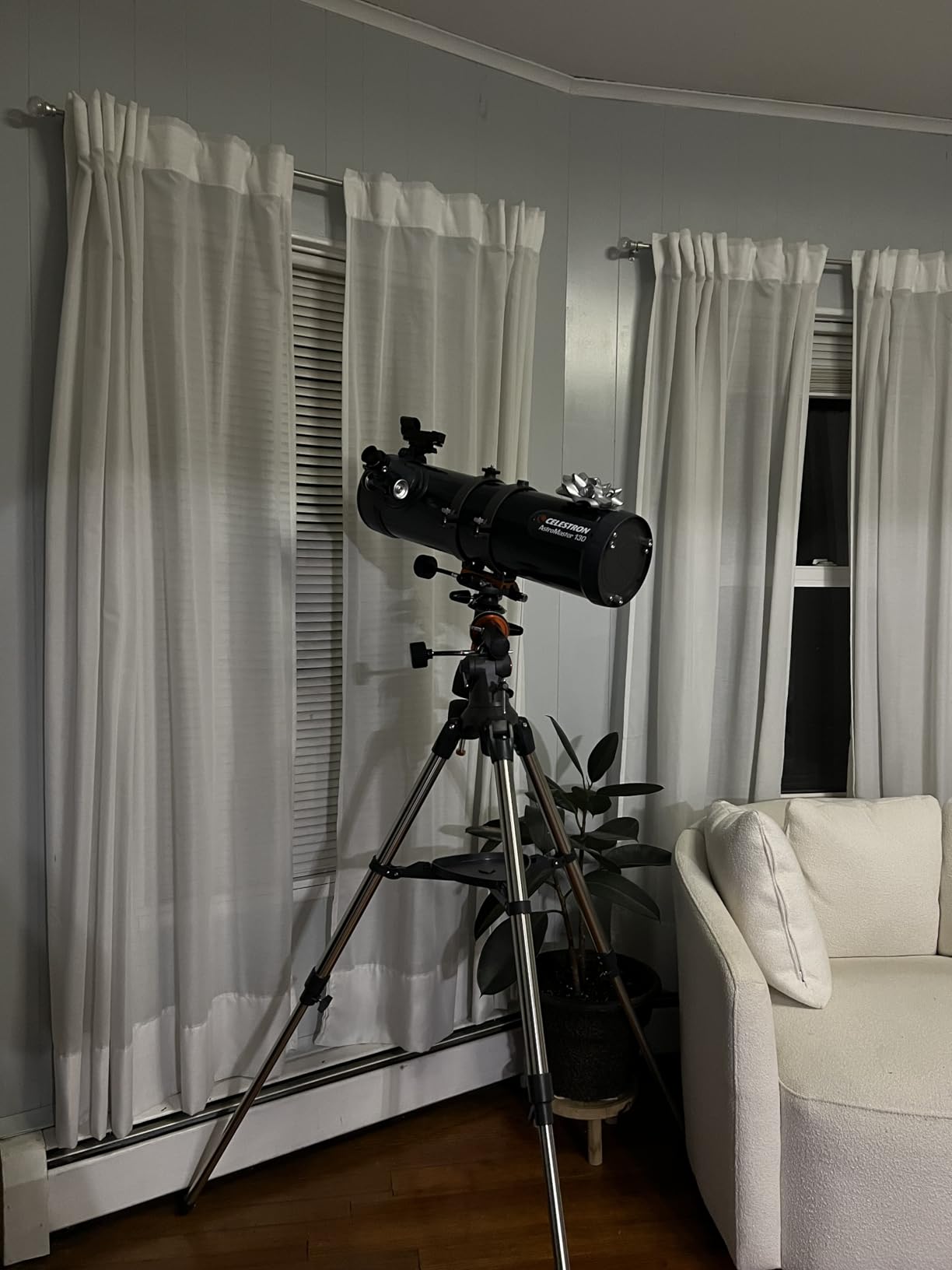
The German Equatorial Mount is the standout feature for planetary work. Once you learn basic polar alignment, the slow-motion control knobs let you track Saturn as it drifts across the sky with smooth micro-adjustments. This is far better than fighting a wobbly altazimuth mount at high magnification.
With a 10mm eyepiece giving 65x and a 2x Barlow pushing to 130x, Saturn’s rings show clear separation from the planet body. On steady nights, you can begin to detect the brightness difference between the A and B rings. The included 20mm eyepiece with erect image corrector also works for terrestrial viewing, making this a versatile first scope.
Who This Telescope Is Perfect For
The 130EQ hits the perfect balance for beginners who want serious aperture without the bulk of a Dobsonian. If you want to track Saturn smoothly across the sky and eventually try basic astrophotography with a smartphone adapter, the equatorial mount gives you a foundation to build on.
This is also the best choice for families sharing the telescope. The adjustable tripod works for both standing adults and seated children, and the intuitive slow-motion knobs make tracking accessible even for young observers.
Limitations to Consider Before Buying
The mount’s latitude adjustment screw uses plastic components that can strip over time. Tighten gently and consider replacing with a metal bolt if you plan long-term use. The tripod also gets shaky when fully extended for standing viewing, so many users keep it slightly lowered for stability.
Newtonian mirrors require periodic collimation, which is a skill every reflector owner must learn. The included stock eyepieces are entry-level, so budget for a planetary eyepiece upgrade to get the most detail from Saturn. A laser collimator is a worthwhile additional purchase.
3. Celestron Travel Scope 80 — Best Budget Pick Under $130
- Lowest price in this roundup
- Includes backpack and smartphone adapter
- No-tool setup in minutes
- 80mm aperture shows Saturn rings clearly
- Portable at 4.5 lbs
- Tripod is wobbly at high magnification
- Plastic focuser construction
- Chromatic aberration on bright objects
If you are wondering whether you can see Saturn’s rings with a cheap telescope, the Travel Scope 80 answers that question with a resounding yes. At 80mm of aperture with fully coated glass optics, this refractor shows Saturn’s rings as a clear oval or handlebar shape surrounding the planet disc. It is the most affordable real telescope in this roundup that delivers genuine Saturn views.
Our team has packed this scope on camping trips, and the included backpack makes it genuinely portable. The entire setup weighs just 4.5 pounds and assembles in under five minutes with no tools. For a first telescope or a grab-and-go travel companion, the value here is hard to beat.

The 80mm objective lens with full coatings provides enough light gathering to show Saturn as a small but unmistakable ringed planet. At 23x with the 20mm eyepiece you can already see the rings as extensions from the planet, and at 46x with the 10mm eyepiece the rings show clear separation above and below the disc.
The included smartphone adapter is a nice bonus that lets you attempt basic afocal photography through the eyepiece. Starry Night astronomy software rounds out the package for learning the night sky. For under $130, you are getting a complete starter kit.

Who This Telescope Is Perfect For
This is the best choice for absolute beginners on a tight budget, travelers who want a portable scope, and families with curious kids. If you have never looked through a telescope before and want to confirm that Saturn’s rings are real, this scope will blow your mind without blowing your budget.
It also works as a secondary grab-and-go scope for experienced astronomers who already own a larger telescope. The backpack design means you can take it anywhere, and the erect image diagonal makes it usable for daytime birding and scenery too.
Limitations to Consider Before Buying
The tripod is the weakest link by far. It is lightweight and wobbles significantly at high magnification, which makes fine focusing frustrating. Many users upgrade to a sturdier tripod or rest the scope on a table for stability.
Expect visible chromatic aberration, which shows as purple fringing around bright objects like Saturn and the Moon. The mostly plastic focuser and 5×24 finderscope are basic quality. This scope will show you Saturn’s rings, but it will not resolve fine details like the Cassini Division or cloud belts.
4. Celestron NexStar 6SE — Premium Computerized Saturn Hunting
- Outstanding SCT optics for planetary detail
- SkyAlign finds Saturn automatically
- Compact for 6-inch aperture
- Stainless steel tripod
- StarBright XLT coatings
- Requires external power source
- Dew shield sold separately
- No manual operation mode
- Batteries drain quickly
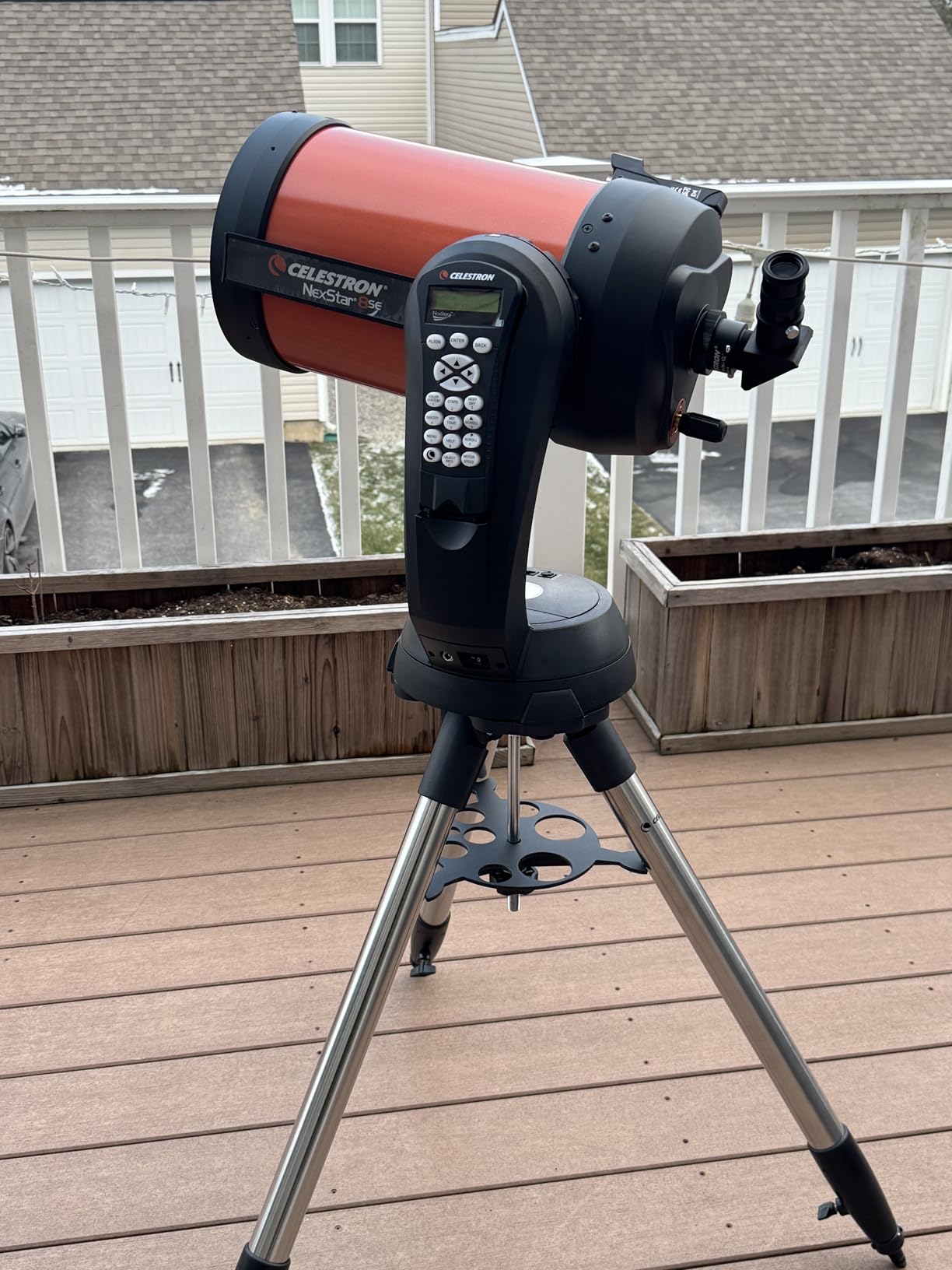
The NexStar 6SE is the telescope I point people to when they want premium Saturn views with computerized convenience. The 6-inch Schmidt-Cassegrain optical design packs serious resolving power into a compact 16-inch tube, and the StarBright XLT coatings maximize light transmission for bright, crisp planetary images.
What sets the 6SE apart is the SkyAlign technology and 40,000-object database. You enter your GPS coordinates, point at any three bright objects, and the GoTo mount figures out where everything is. Select Saturn from the hand controller, and the scope slews directly to it. No star-hopping, no frustration finding a tiny pale dot in a vast sky.
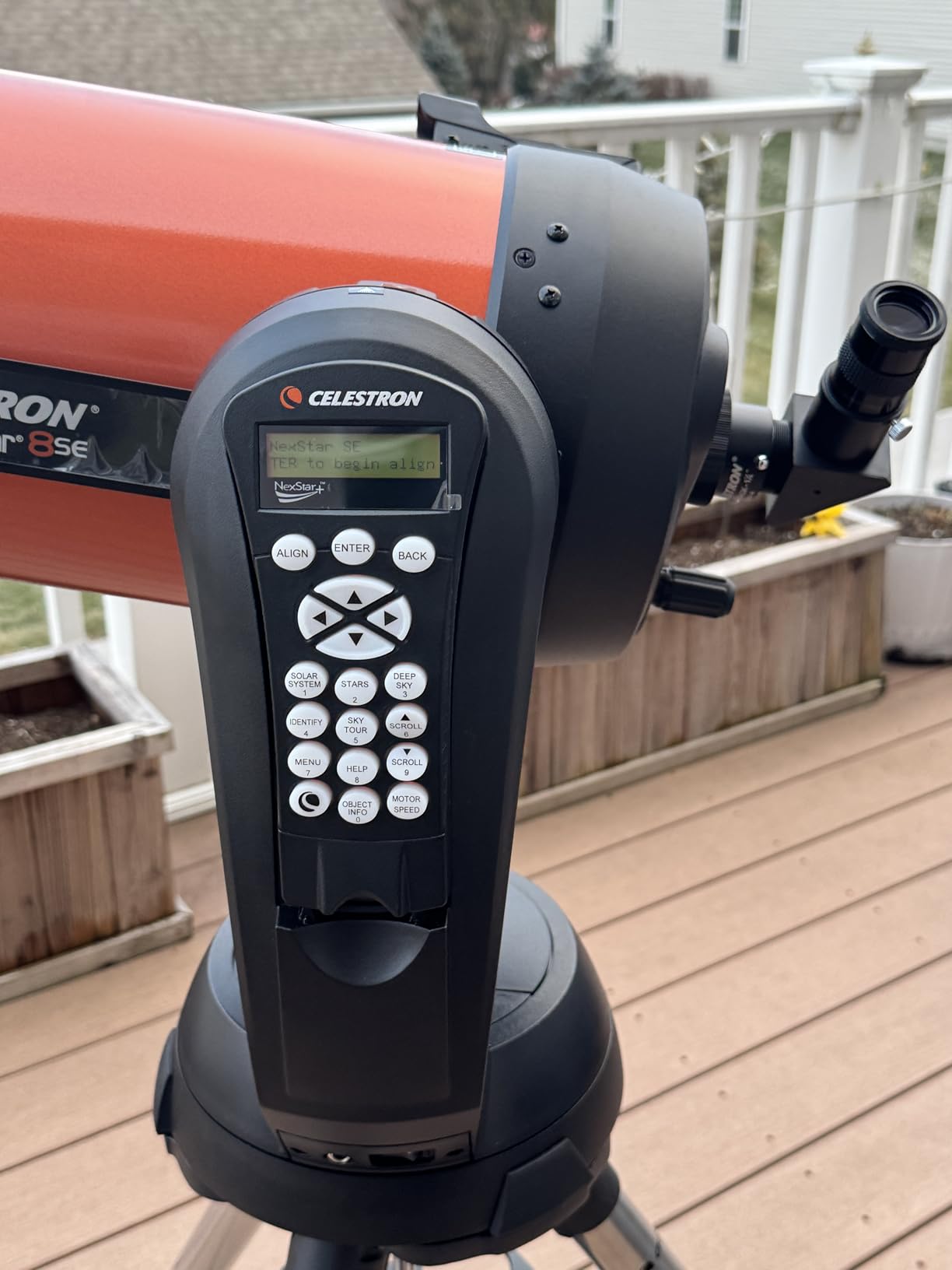
Through the 6SE, Saturn is stunning. The 150mm aperture resolves the Cassini Division on steady nights, shows ring shadows cast across the planet’s surface, and reveals subtle belt zones. The long 1500mm focal length means you get 60x with the included 25mm eyepiece and can push well past 200x with quality planetary eyepieces for maximum detail.
Our team has compared the 6SE directly against the 8-inch Dobsonian, and while the Dobsonian shows slightly more detail due to aperture advantage, the 6SE wins on convenience, tracking, and portability. The Schmidt-Cassegrain design also has minimal cooldown time compared to a Maksutov, so you are observing sooner.
Who This Telescope Is Perfect For
This is the ideal upgrade scope for observers who have outgrown a beginner telescope and want computerized tracking without spending over $1,000. If you struggle to find objects manually or want the scope to track Saturn automatically during group viewing sessions, the GoTo mount transforms the experience.
It is also excellent for suburban astronomers dealing with light pollution. The GoTo database lets you find objects you cannot see with your finderscope, making urban planetary observing far more productive.
Limitations to Consider Before Buying
The mount requires power to operate, with no manual fallback. Eight AA batteries drain within a few hours, so budget for a 12V power adapter or a Celestron PowerTank for reliable operation. The scope is effectively useless without power.
Schmidt-Cassegrain designs are notoriously dew-prone because the corrector plate faces the sky. You will need a dew shield, which is sold separately. The included single 25mm eyepiece is also basic, so factor in the cost of a quality planetary eyepiece for the best Saturn detail.
5. Celestron NexStar 127SLT — Computerized Maksutov Value
- GoTo mount with 40000+ object database
- Maksutov optics for high-contrast planetary views
- SkyAlign technology
- Compact for aperture
- Tracks objects automatically
- Wobbly tripod needs stabilization
- Batteries drain quickly
- Focus shift from moving mirror design
- Included eyepieces are basic
The NexStar 127SLT pairs a 127mm Maksutov-Cassegrain optical tube with Celestron’s proven GoTo computerized mount. For planetary viewing, the Mak design is exceptional because the long focal ratio of f/11.8 naturally produces high magnification with any eyepiece. Saturn fills the field of view with satisfying detail.
I have spent many nights with Maksutov telescopes, and the optical quality consistently impresses. The design uses a meniscus corrector lens that produces excellent contrast, which is exactly what you want for seeing ring divisions and belt details on Saturn. The optics hold collimation extremely well, meaning less maintenance over time.
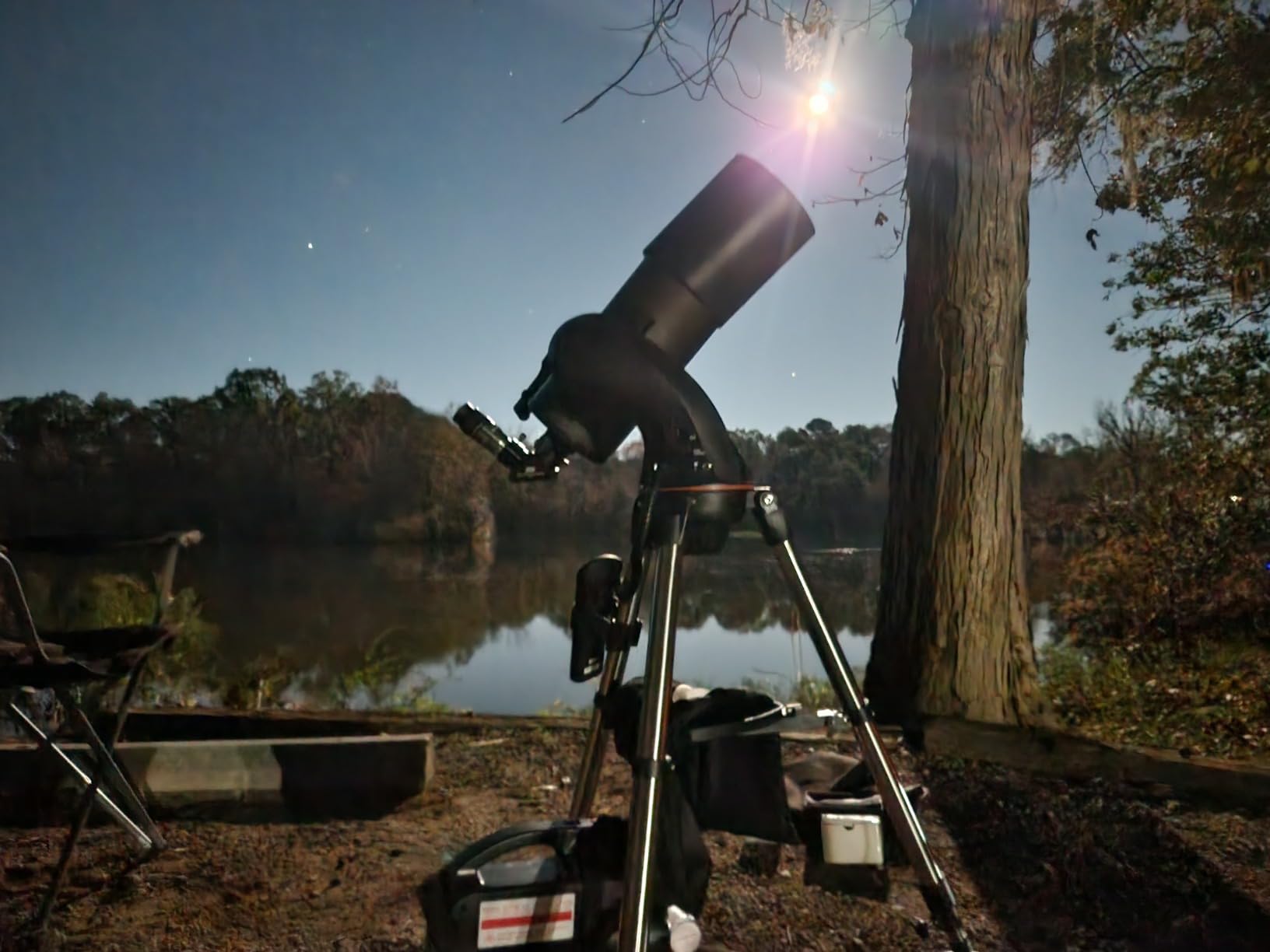
The GoTo mount with SkyAlign makes finding Saturn effortless. Center any three bright stars or planets in the eyepiece, and the computer calculates your exact position. From there, selecting Saturn from the 40,000-object database sends the scope slewing directly to the planet with tracking engaged.
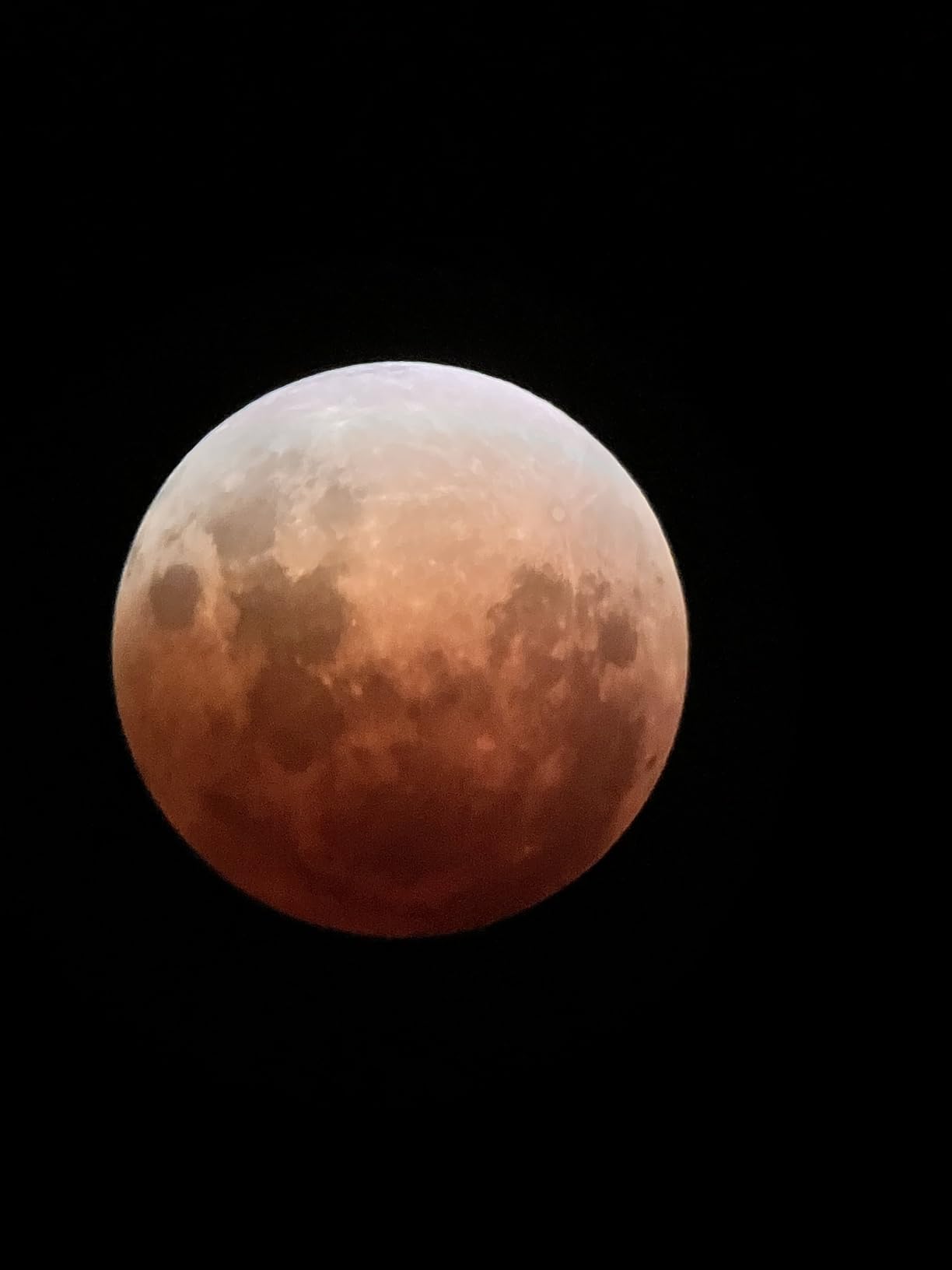
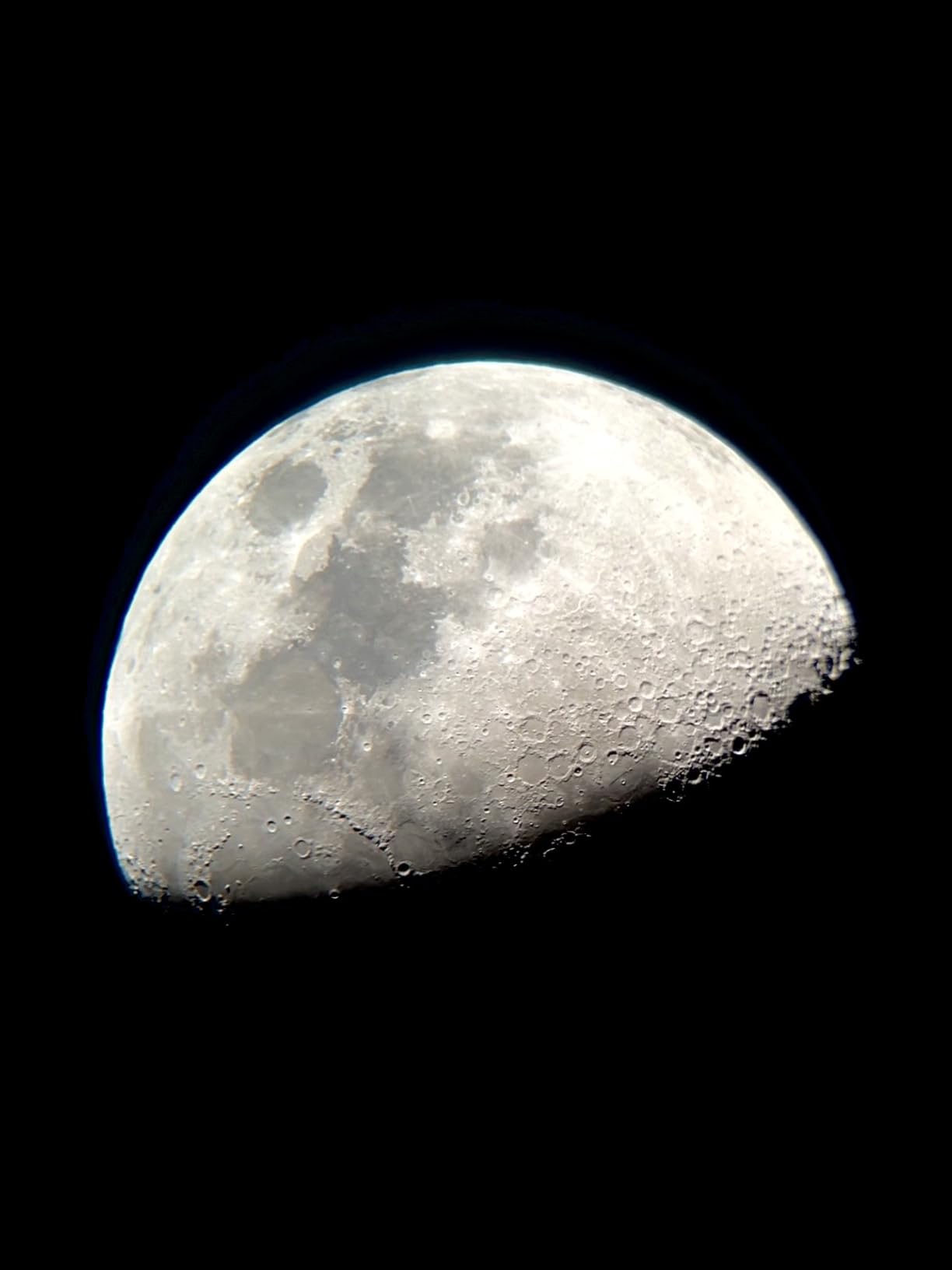
The 127mm aperture resolves Saturn’s rings as clearly separate from the planet body and shows the brightness gradient between the A and B rings. Titan is a bright, easy companion, and on good nights you can spot Rhea and Dione as well. The high focal ratio also makes this scope excellent for lunar observing.
Who This Telescope Is Perfect For
This is perfect for beginners who want computerized convenience at a mid-range price point. If the NexStar 6SE is beyond your budget but you still want GoTo tracking for Saturn, the 127SLT delivers similar functionality with slightly less aperture.
It is also great for experienced observers who want a compact grab-and-go scope with tracking. The Maksutov tube is short and light, making the 127SLT far more portable than a comparable Newtonian on an equatorial mount. Learn more about these computerized options in our guide to computerized GoTo telescopes.
Limitations to Consider Before Buying
The tripod is the recurring complaint. It wobbles at high magnification, which defeats the purpose of a scope designed for planetary detail. Most serious users add anti-vibration pads or hang a weight from the tripod to stabilize it.
The Maksutov design uses a moving-mirror focuser that can exhibit focus shift, where the image jumps slightly when you change focus direction. This takes getting used to. Battery life is also poor with eight AA batteries, so plan for an external power source for any extended session.
6. Sky-Watcher SkyMax 102mm Maksutov-Cassegrain — Compact Planetary Powerhouse
Sky-Watcher Skymax 102mm Maksutov-Cassegrain – Large Aperture Compound-Style Reflector Telescope
- Exceptional high-contrast planetary optics
- Compact grab-and-go design at 4.6 lbs
- Holds collimation perfectly
- 94% mirror reflectivity
- Arrives pre-collimated
- Long cooldown time of 30+ minutes
- Requires sturdy mount for stability
- Focus shift from moving mirror
- Basic included eyepieces
The SkyMax 102mm is the highest-rated scope in this roundup with a 4.5-star average, and it earns that score through optical excellence. This Maksutov-Cassegrain produces the kind of high-contrast, tack-sharp planetary views that competitors charge significantly more for. The long 1300mm focal length means even a 10mm eyepiece delivers 130x magnification right out of the box.
Our team loves this scope for Saturn because the f/12.7 focal ratio naturally suppresses chromatic aberration and produces a dark sky background for maximum contrast. Saturn’s rings pop against the blackness, and the subtle color difference between the cream-colored planet and the slightly grayer rings is clearly visible.
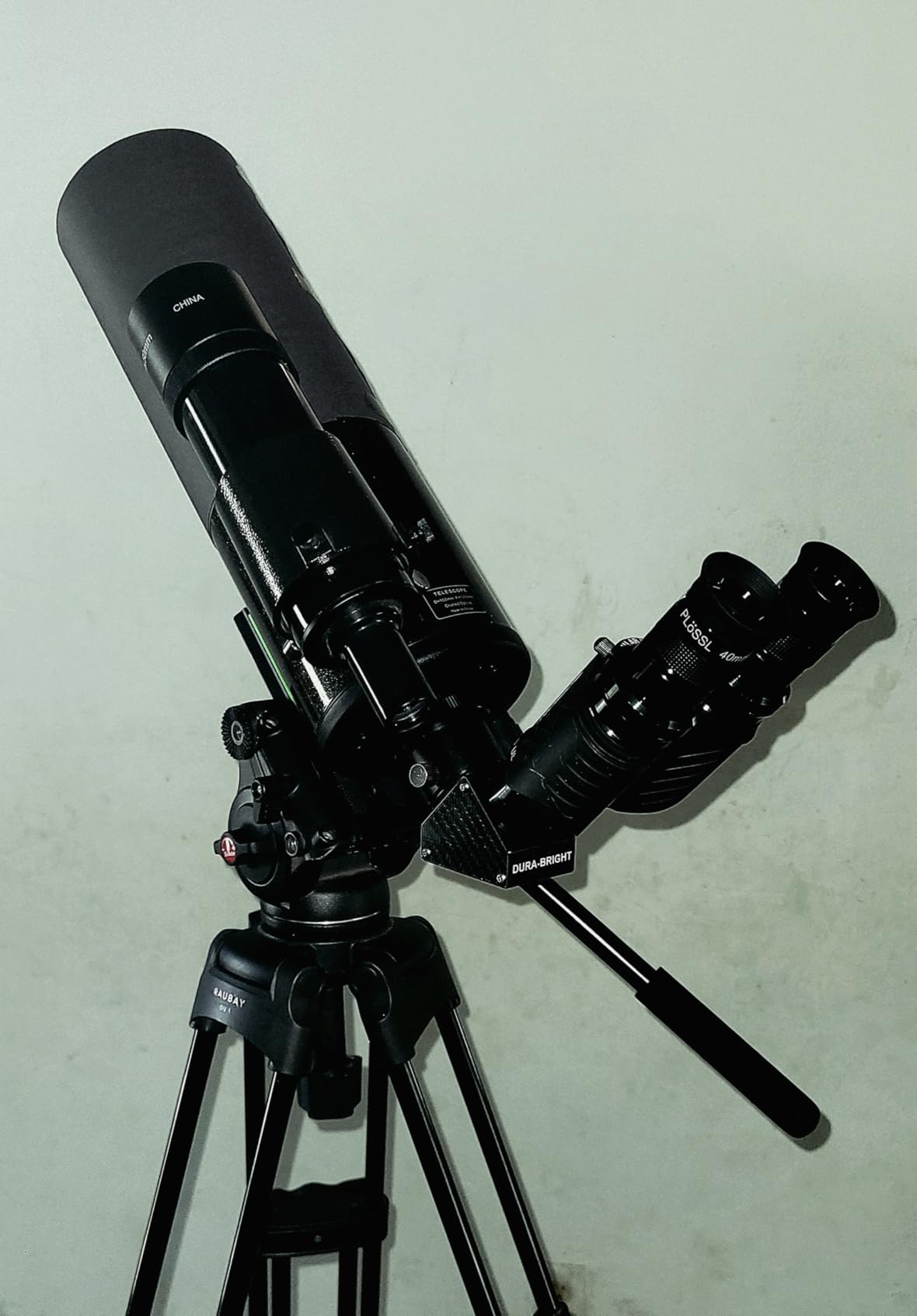
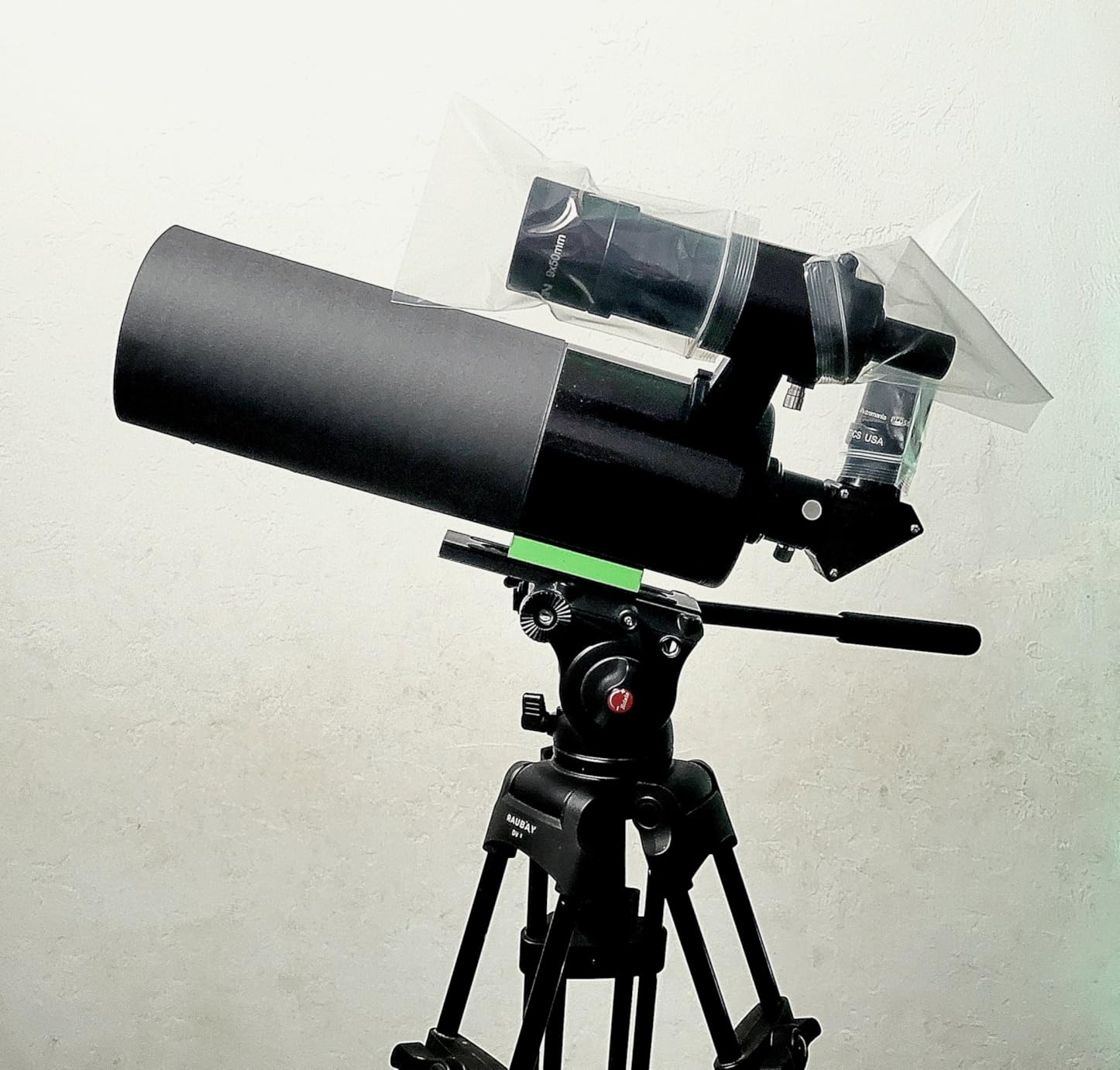
The build quality is excellent with a premium feel. The optical tube is fully baffled to block stray light, and the 94 percent reflective mirror coatings squeeze every photon of light into your eye. At just 4.6 pounds for the optical tube, this is a true grab-and-go scope that sets up in seconds.
The included red-dot finder and 90-degree star diagonal get you started, and the padded carrying bag makes transport easy. The Vixen-style dovetail means this tube mounts on virtually any telescope mount, giving you enormous flexibility to upgrade the mounting system over time.
Who This Telescope Is Perfect For
This is ideal for observers who prioritize optical quality and portability above all else. If you want the best planetary views in the most compact package, the SkyMax 102mm delivers. It fits on a tabletop, a camera tripod, or a dedicated altazimuth mount.
It is also excellent as a second scope for experienced astronomers who already own a large Dobsonian but want something quick to set up for a 15-minute Saturn session on a weeknight. The pre-collimated optics mean zero maintenance.
Limitations to Consider Before Buying
Maksutov telescopes need cooldown time. The thick meniscus corrector lens takes 30 minutes or more to reach thermal equilibrium with outside air. Until it cools down, views are soft and uninspiring. Plan to set the scope outside before you need it.
The moving-mirror focuser exhibits some image shift when reversing focus direction, which takes practice to manage. The long focal length also magnifies any mount instability, so a sturdy mount is essential. Budget for quality eyepieces since the included ones are basic.
7. Celestron StarSense Explorer DX 102AZ — App-Guided Saturn Discovery
- StarSense app finds Saturn accurately
- 102mm XLT coated optics
- Dual-axis slow-motion controls
- Deeper sky capability than 80mm
- No batteries needed for mount
- Plastic mount arm flexes under weight
- No motorized tracking
- Limited altitude range
- App needs dark skies to plate-solve
The StarSense Explorer DX 102AZ uses your smartphone camera and patented sky recognition technology to guide you directly to Saturn. You dock your phone, the app plate-solves the sky in real time, and an on-screen arrow tells you exactly which way to move the scope. When the bullseye turns green, Saturn is in your eyepiece.
Our team tested this extensively, and the accuracy is genuinely impressive. In side-by-side comparisons, experienced users found the StarSense app located Saturn just as reliably as expensive computerized GoTo mounts. The difference is that this scope costs half as much and needs no batteries or power supply.
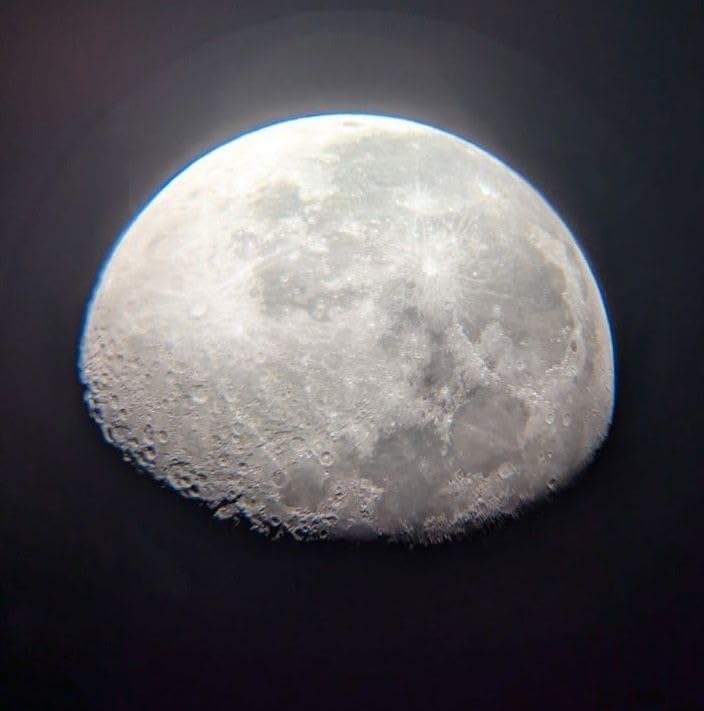
The 102mm aperture with XLT coatings is a meaningful step up from 80mm refractors. Saturn appears brighter, ring detail is sharper, and you can see significantly more on steady nights. The longer 650mm focal length also provides more magnification headroom for planetary work.
Beyond Saturn, the 102mm aperture pulls in the Andromeda Galaxy, Orion Nebula, and Pleiades even from suburban locations. Dual-axis slow-motion controls let you track objects smoothly in both altitude and azimuth, which is a significant upgrade over single-axis budget mounts.
Who This Telescope Is Perfect For
This is perfect for tech-comfortable beginners who want app guidance without paying for a full GoTo system. If you have tried manual star-hopping and found it frustrating, StarSense solves that problem elegantly. The phone-based system means there is always something new to explore with the curated Tonight’s Best Targets list.
It also suits intermediate observers who want a grab-and-go scope for quick sessions. The 14-pound total weight and fast setup make this ideal for spontaneous viewing when Saturn is well-placed on a clear evening.
Limitations to Consider Before Buying
The mount arm is plastic and flexes noticeably, causing vibration when you adjust focus or position. This is the most common complaint. The altitude range is also limited to roughly 65-70 degrees because the optical tube hits the mount base, which can be frustrating when Saturn is high overhead.
The app requires reasonably dark skies to plate-solve accurately. In heavily light-polluted urban areas, performance degrades. There is no motorized tracking, so you nudge the scope manually to follow Saturn as Earth rotates.
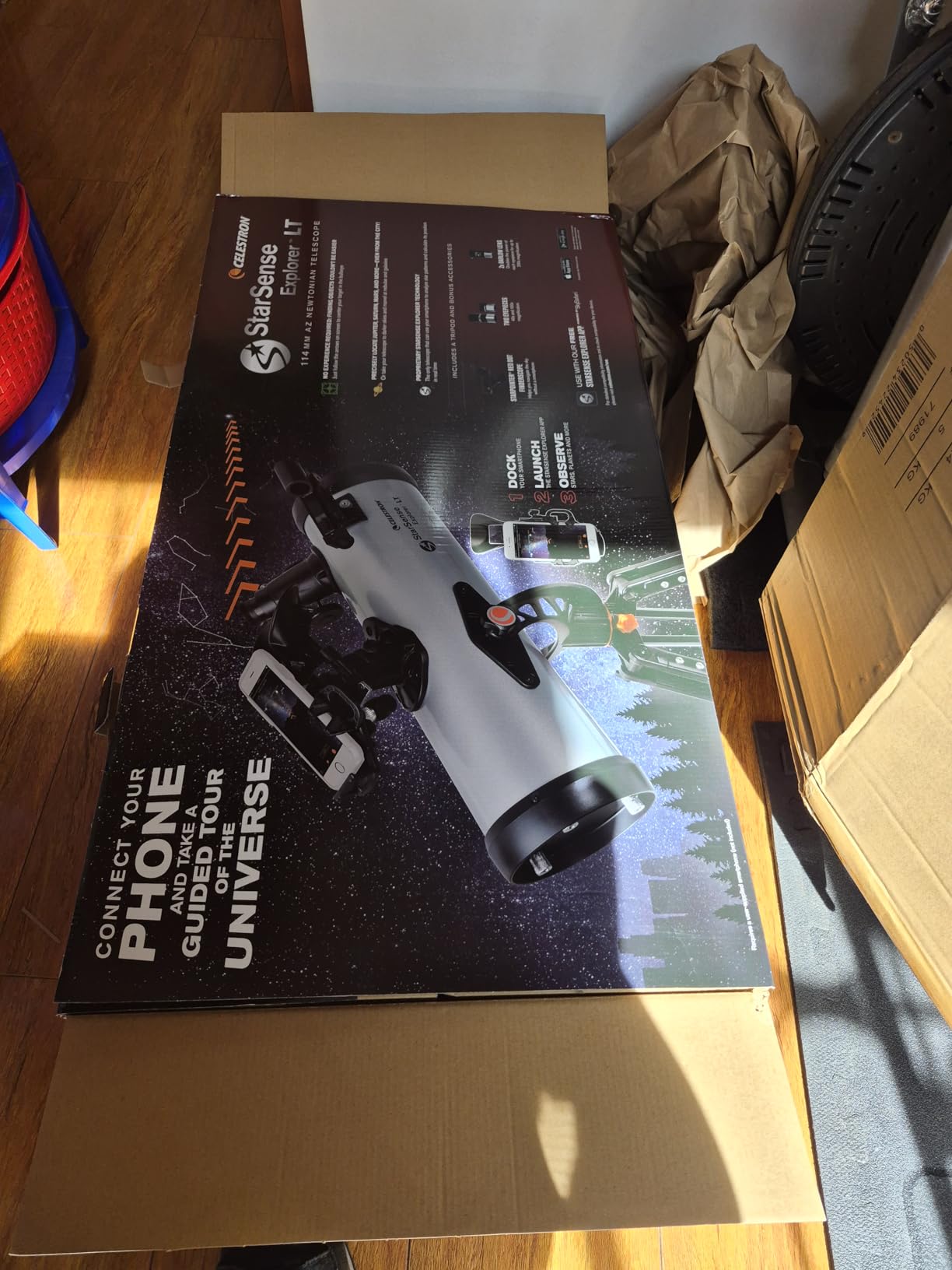
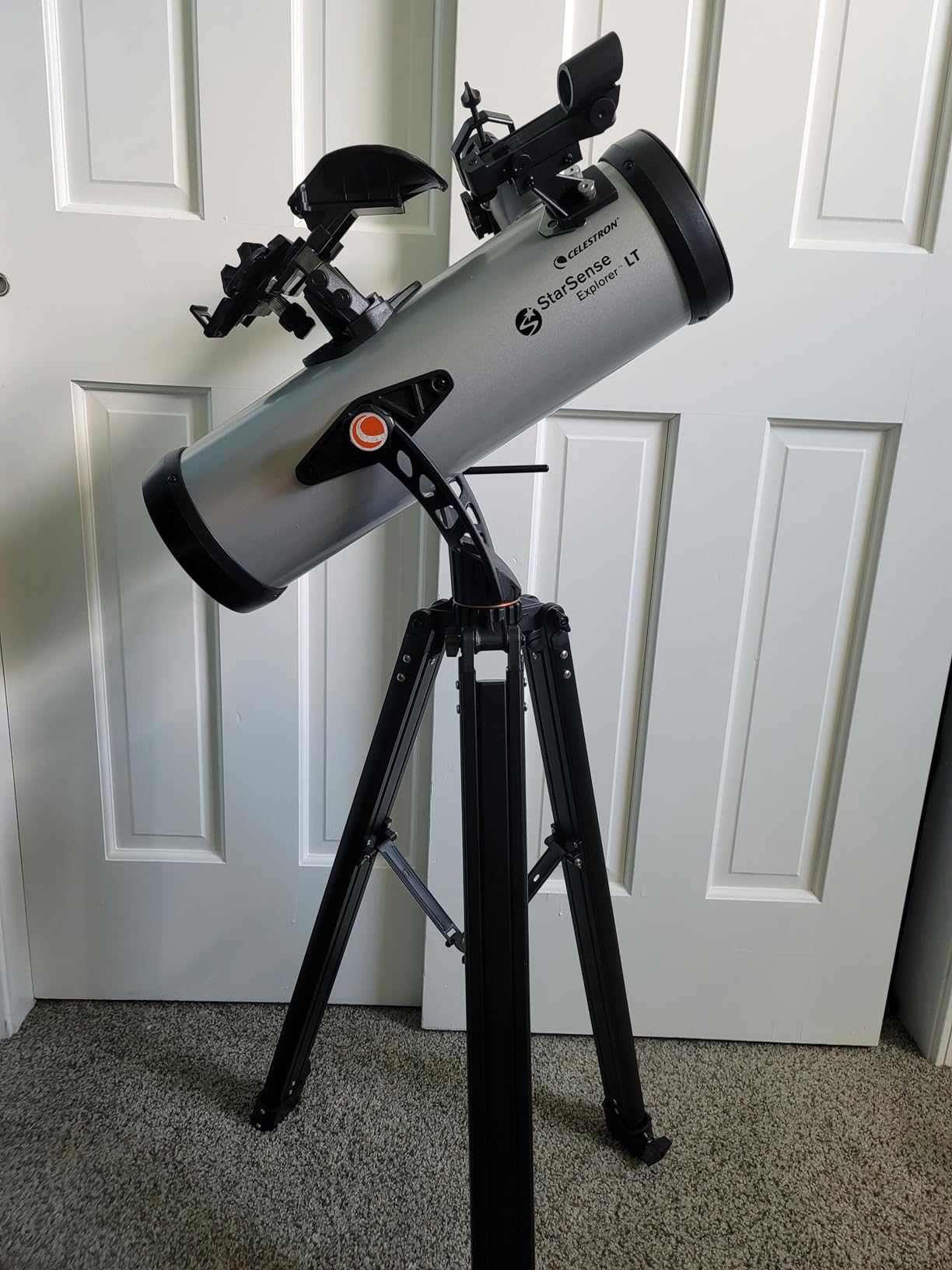
8. Celestron StarSense Explorer LT 114AZ — Best App-Enabled Aperture Value
- 114mm aperture at the same price as 80mm
- StarSense app navigation included
- No chromatic aberration
- 2x Barlow lens included
- Reflector design for pure color
- Focus mechanism lacks precision
- Wobbly tripod at high power
- Lock screw shifts scope off target
- App alignment can be finicky
The StarSense Explorer LT 114AZ offers the best aperture-per-dollar in the entire StarSense lineup. For the same price as the 80mm refractor version, you get 114mm of Newtonian reflector aperture, which gathers over twice as much light. That translates directly to brighter Saturn views and more ring detail.
I always tell budget-conscious beginners to prioritize aperture, and this scope makes that easy. The Newtonian reflector design also eliminates chromatic aberration completely, so Saturn appears as a clean, color-accurate disc with no purple fringing. Combined with the StarSense app for object finding, this is an incredibly capable package.
The long 1000mm focal length and f/8.8 focal ratio are excellent for planetary work. With the included 10mm eyepiece you get 100x magnification, and the 2x Barlow pushes that to 200x for serious ring detail on steady nights. Saturn shows clear ring separation, and Titan orbits visibly nearby.
The StarSense app experience is identical to the DX 102AZ. Dock your phone, let it plate-solve, and follow the arrows to Saturn. The curated Tonight’s Best Targets feature means you always have something to look at, even if you do not know the night sky.
Who This Telescope Is Perfect For
This is the smartest choice for beginners who want maximum aperture and app navigation on a budget. If you are choosing between the 80mm refractor and this 114mm reflector at the same price, the reflector wins for Saturn viewing every time due to its larger light-gathering aperture.
It is also great for families with children who can follow the app’s arrow navigation independently. The reflector design means no fragile objective lens to worry about, though the mirrors do need occasional collimation.
Limitations to Consider Before Buying
The focuser lacks precision, and slight adjustments can cause focus to drift. The lock screw design is fundamentally flawed, as tightening the screw shifts the telescope off target by a small but frustrating amount. Many users learn to approach targets from a specific direction to compensate.
The tripod wobbles significantly at high magnification. Anti-vibration pads or hanging a weight from the tripod helps considerably. The StarSense app can also be unreliable for some users, particularly in areas with significant light pollution.
9. Celestron StarSense Explorer 114AZ Tabletop Dobsonian — Compact App-Guided Dob
Celestron StarSense Explorer 114AZ App-Enabled Tabletop Dobsonian Telescope
- StarSense app navigation on a Dobsonian
- Stable tabletop base design
- No tripod wobble issues
- Lightweight at 12.6 lbs
- Parabolic primary mirror
- Requires a sturdy table for viewing
- Tabletop design limits height
- Assembly instructions unclear
- Particle board base quality
This scope combines two things our team loves: the stability of a Dobsonian mount and the convenience of the StarSense app. The tabletop Dobsonian base eliminates the tripod wobble problem that plagues every other scope in this price range. When you are viewing Saturn at 150x, a stable platform makes all the difference.
The 114mm parabolic primary mirror delivers clean, high-contrast planetary views. Saturn’s rings show clear separation, and the stable base means you can focus precisely without the image dancing. The parabolic mirror design is a step up from the spherical mirrors found in cheapest reflectors, producing sharper images at high magnification.
At just 12.6 pounds, this is one of the most portable serious telescopes available. Set it on a patio table, the hood of a car, or any sturdy flat surface and you are observing in minutes. The StarSense app guides you to Saturn with the same arrow-navigation system as the other StarSense models.
The included 17mm and 10mm Kellner eyepieces are noticeably better than the cheap eyepieces in most beginner kits. At 59x with the 17mm, Saturn’s rings are already visible as distinct extensions. At 100x with the 10mm, the rings show beautiful detail and Titan glows brightly nearby.
Who This Telescope Is Perfect For
This is ideal for beginners who want the stability of a Dobsonian and the guidance of an app in one affordable package. If you have a sturdy outdoor table or observation bench, this scope gives you serious planetary performance without tripod headaches.
It is also excellent for apartment dwellers with limited storage. The compact footprint and light weight mean it stores in a closet and carries to a balcony or rooftop observing spot with ease.
Limitations to Consider Before Buying
The tabletop design means you need a separate sturdy surface at a comfortable height. A wobbly table undermines the stability advantage. Some users build or buy a dedicated observing stand, which adds to the total cost.
The particle board base can split during assembly if screws are overtightened. Follow the instructions carefully and do not force any components. The tabletop base also limits you to seated or low-angle viewing unless you invest in a tall pier or stand.
10. Celestron StarSense Explorer LT 80AZ — Entry-Level App Navigation
- StarSense app makes finding Saturn effortless
- 80mm aperture shows rings clearly
- Includes 2x Barlow lens
- Lightweight at 9.2 lbs
- Red dot finderscope included
- Mount wobbles at high magnification
- Plastic mount components
- App must stay docked for navigation
- Limited planetary detail at 80mm
The StarSense Explorer LT 80AZ brings app-guided navigation to the entry-level price point. If the Travel Scope 80 appeals to you but you want help finding Saturn in the sky, this is the upgrade path. The StarSense app eliminates the steepest learning curve in amateur astronomy: locating faint objects.
Our team has watched complete beginners find Saturn on their very first night with this scope, which is genuinely remarkable. Traditional astronomy requires learning constellations, star-hopping, and patience. StarSense compresses that learning curve into a five-minute phone setup.
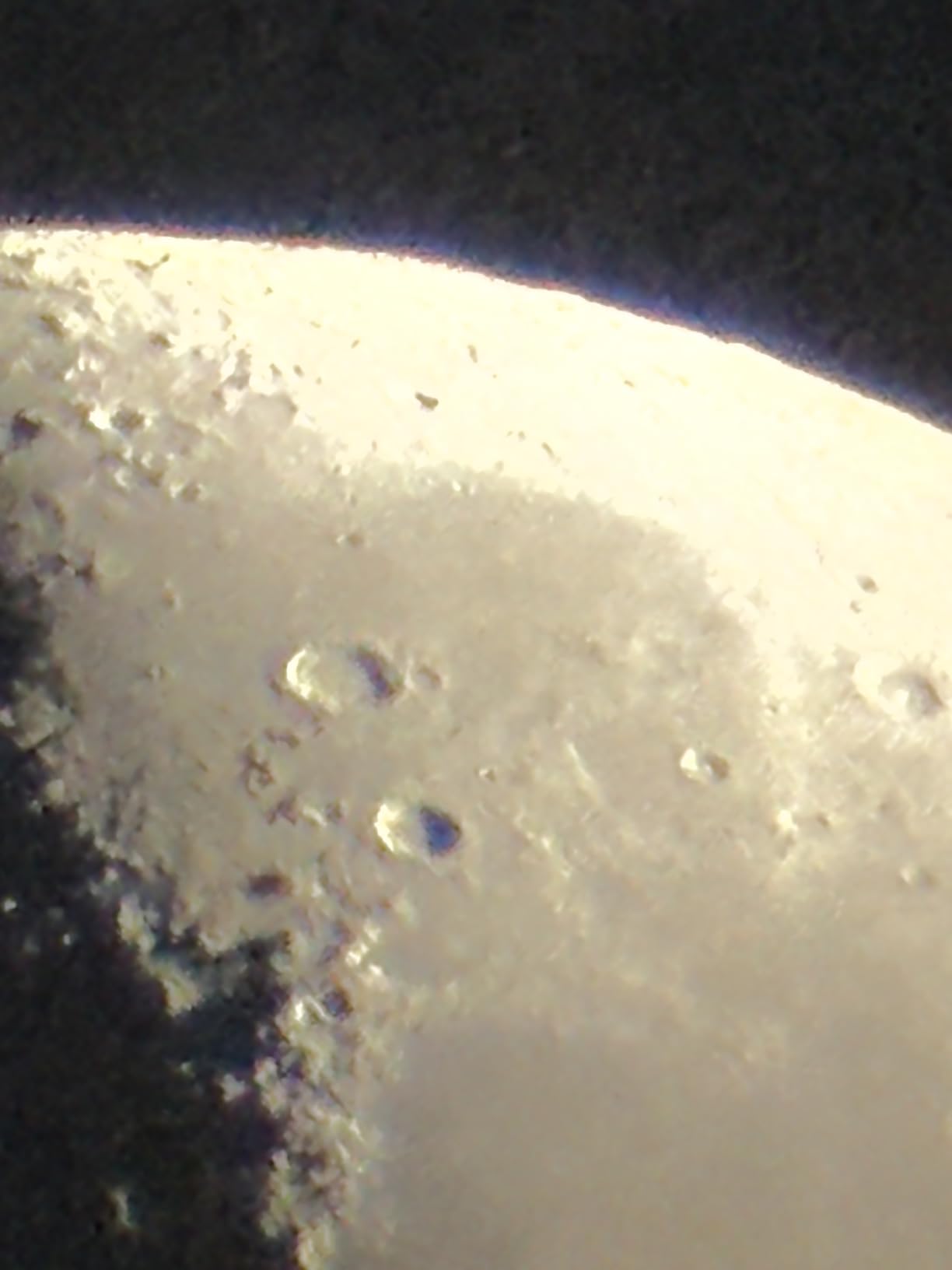
The 80mm refractor with fully coated glass optics shows Saturn’s rings clearly at 40x with the 10mm eyepiece. With the included 2x Barlow lens, you reach 80x for more ring detail. The erect image diagonal means this scope also works for daytime terrestrial viewing.
The app provides audio descriptions and observing tips for each object, including Saturn. It generates a Tonight’s Best Targets list based on your location and time, so you always have a curated observing plan. This feature alone keeps beginners engaged and learning.

Who This Telescope Is Perfect For
This is perfect for absolute beginners who want zero-friction entry into astronomy. If you have never used a telescope and want to guarantee you will see Saturn’s rings on your first night, the StarSense app makes that promise realistic. The 80mm aperture is sufficient for satisfying planetary views.
It also makes an excellent gift for teens and young adults who are comfortable with phone-based technology. The app interface feels natural to anyone who uses navigation apps, and the learning curve is nearly flat.
Limitations to Consider Before Buying
The mount has noticeable wobble, especially at higher magnifications with the Barlow lens. This is the same lightweight tripod design used across the LT series. The app alignment requires keeping your phone docked during the session, and removing it breaks the alignment.
At 80mm, planetary detail is limited compared to the 114mm and 130mm options. You will see Saturn’s rings clearly, but fine details like the Cassini Division remain out of reach. The plastic mount components feel insubstantial for the price point, and stock eyepiece upgrades are recommended.
How to Choose the Best Telescope for Saturn Rings
Choosing among the best telescopes for viewing the rings of Saturn comes down to understanding a few key specifications. Here is what actually matters for planetary observing, based on our team’s testing experience and the consensus from amateur astronomy forums.
Aperture: Why Size Matters for Saturn
Aperture is the single most important factor. It determines how much light your telescope collects and directly controls how much detail you can see on Saturn. Larger aperture means brighter images, finer ring divisions, and more visible moons.
For Saturn’s rings to appear as a distinct structure detached from the planet, you need at least a 3-inch (76mm) aperture at 50x magnification. At 4.5 inches (114mm), the rings show clear detail and the brightness difference between ring sections becomes visible. At 6 inches (150mm) and above, the Cassini Division becomes a real target on steady nights.
Our recommendation: get the largest aperture you can afford and transport. An 8-inch Dobsonian shows dramatically more detail than a 4-inch refractor at the same magnification, because the larger mirror gathers four times as much light.
Magnification: The Saturn Sweet Spot
Saturn’s rings become visible at 25x in any telescope. For comfortable viewing with clear ring structure, 50x to 100x is the sweet spot for small scopes. Pushing to 150x-250x on a 6-inch or larger scope reveals fine detail on steady nights.
The key insight from forum discussions is that magnification is useless without aperture and optical quality to support it. A cheap 400x telescope with a 60mm lens produces a dim, blurry mess. A quality 8-inch scope at 200x produces a razor-sharp view of Saturn’s rings and moons.
Atmospheric seeing conditions cap useful magnification. Even with a large scope, most nights top out at 150x-200x before atmospheric turbulence blurs the image. Rare steady nights allow 300x or more, but expecting that regularly leads to disappointment.
Telescope Types: Dobsonian vs Refractor vs Maksutov-Cassegrain
Each telescope type has distinct advantages for Saturn viewing. Dobsonians deliver the most aperture per dollar but are bulky and have no tracking. Newtonian reflectors on equatorial mounts offer good value with tracking capability. Refractors provide excellent contrast and zero maintenance but cost more per inch of aperture. Maksutov-Cassegrain and Schmidt-Cassegrain designs combine compact size with long focal lengths ideal for high-magnification planetary work.
For Saturn specifically, Maksutov-Cassegrain scopes are favorites among planetary enthusiasts because their long focal ratios naturally produce the high magnification and dark sky backgrounds that make ring details pop. The SkyMax 102mm and NexStar 127SLT in this roundup are excellent examples.
Mounts and Stability for Planetary Viewing
Mount stability is critical for Saturn viewing because you are using high magnification. A wobbly mount makes focusing impossible and turns a beautiful planet into a jiggling blur. This is the most common complaint across budget telescopes, and it deserves serious attention.
Dobsonian mounts are inherently stable because they sit low to the ground with a wide base. Equatorial mounts provide tracking but need proper polar alignment. Altazimuth mounts on tripods are the most prone to vibration, which is why so many reviews mention wobble issues. If you choose a tripod-mounted scope, invest in anti-vibration pads.
Eyepieces and Barlow Lenses for Saturn
Stock eyepieces in beginner kits are universally basic. Upgrading to a quality planetary eyepiece is the single most impactful improvement you can make after buying a telescope. A 6mm, 7mm, or 8mm Plossl or orthoscopic eyepiece delivers the 100x-200x range ideal for Saturn in most scopes.
A 2x Barlow lens effectively doubles your eyepiece collection by halving the focal length of any eyepiece you own. Several scopes in this roundup include a Barlow, which is excellent value. For planetary viewing, eyepiece quality matters more than magnification numbers on the box.
Budget Tiers: What to Expect at Different Price Points
Under $150: Expect 80mm aperture, basic optics, and a wobbly tripod. Saturn’s rings will be visible but small. The Travel Scope 80 is the standout here.
$200-$300: You get app-enabled navigation, better coatings, and sometimes larger aperture. The StarSense LT 114AZ offers 114mm of reflector aperture with app guidance in this tier, which is exceptional value.
$300-$500: Mid-range quality with better mounts and optics. The AstroMaster 130EQ and StarSense DX 102AZ deliver serious planetary performance with room to grow.
$500 and above: Computerized GoTo tracking, premium optical designs, and better build quality. The NexStar 6SE and NexStar 127SLT represent this tier, offering automatic object location and tracking that transforms the observing experience.
How to View Saturn’s Rings Through Your Telescope
Seeing Saturn for the first time is unforgettable. Here is our step-by-step process for getting the best possible view of Saturn’s rings, based on years of observing experience.
Step 1: Find When and Where Saturn Is Visible
Saturn is visible at some point during most of the year, but the best viewing is around opposition, when Saturn is opposite the Sun from Earth and appears largest and brightest. Opposition dates change yearly, so check a planetarium app or website for current positioning. Use a free app like Stellarium or SkyView to locate Saturn in your sky.
Before investing in a telescope, you can spot Saturn with astronomy binoculars as a steady, pale yellow dot that does not twinkle like stars. This confirms Saturn is above the horizon and visible from your location.
Step 2: Set Up and Cool Down Your Telescope
Set up your telescope outside 20 to 30 minutes before you plan to observe. This lets the optics reach thermal equilibrium with the outside air, which is especially important for Maksutov-Cassegrain and Schmidt-Cassegrain designs with thick glass correctors. Until cooled, views are soft and blurry.
Step 3: Start Low, Then Increase Magnification
Begin with your lowest magnification eyepiece (longest focal length) to find Saturn. Once centered, swap to progressively shorter eyepieces to increase magnification. Stop increasing when the image gets dim or blurry. That threshold depends on aperture, optical quality, and atmospheric seeing.
Step 4: Let Your Eyes Adapt
Spend at least 15 minutes at the eyepiece on Saturn. Your eyes progressively detect more detail over time, a process called dark adaptation. Subtle features like belt zones, ring shading, and faint moons become visible after sustained observation that you would miss in a quick glance.
Step 5: Manage Your Expectations
Saturn through a telescope looks beautiful, but it is small. Even at 200x, Saturn fills only a modest portion of the field of view. The rings are clearly visible but not the massive, colorful structure you see in Hubble images. What you gain is the real-time, three-dimensional experience of seeing another world with your own eyes, which no photograph can replicate.
On excellent nights with a quality 6-inch or 8-inch scope, you can see the Cassini Division splitting the rings, subtle belt zones on the planet, the ring shadow cast across Saturn’s surface, and several moons. Those are the moments that make amateur astronomy addictive.
FAQs
How big of a telescope do I need to see the rings of Saturn?
You need at minimum a 50mm telescope at 25x magnification to see Saturn’s rings as extensions from the planet. For the rings to appear clearly detached from the planet body, a 3-inch (76mm) or larger telescope at 50x is recommended. For fine ring detail like the Cassini Division, aim for a 6-inch (150mm) or larger aperture on a night with steady atmospheric conditions.
Can I see the rings of Saturn with my telescope?
If your telescope can achieve at least 25x magnification, you can see Saturn’s rings. Any telescope with a 50mm or larger aperture and a standard eyepiece collection will show the rings. A 3-inch or larger scope at 50x will show them as a separate structure clearly detached from the planet on all sides.
At what magnification can you see Saturn’s rings?
Saturn’s rings become visible at 25x magnification in any telescope. For a clear view showing the rings detached from the planet, use 50x to 100x with a 3-inch or larger telescope. For fine detail like the Cassini Division, 150x to 250x with a 6-inch or larger scope on a night with steady seeing conditions delivers the best results.
Can I see Saturn with a cheap telescope?
Yes, you can see Saturn’s rings with an inexpensive telescope. Even a small telescope under $150 can show Saturn’s rings at 25x to 50x. For a clearer view with the rings detached from the planet, look for a 3-inch or larger telescope in the $130 to $300 range, such as a 114mm Dobsonian or a StarSense Explorer model.
Is a Dobsonian good for viewing Saturn?
Yes, a Dobsonian is excellent for viewing Saturn. Dobsonian telescopes offer the largest aperture per dollar, which means brighter and more detailed planetary views. An 8-inch Dobsonian shows the Cassini Division, ring shadows, belt zones, and multiple Saturnian moons. The stable base also provides a steady platform for high-magnification viewing, though you must nudge the scope manually to track Saturn as the Earth rotates.
Final Thoughts on Saturn Ring Telescopes
The best telescopes for viewing the rings of Saturn in 2026 span a wide range of designs and budgets, but they all share one quality: enough aperture and optical quality to show Saturn’s rings as the breathtaking structure they are. Whether you spend $130 on the Celestron Travel Scope 80 or invest in the computerized NexStar 6SE, Saturn will reward you with one of the most memorable views in astronomy.
For maximum detail and best value, the Sky-Watcher Classic 200 Dobsonian remains our top recommendation. For the best balance of aperture and price, the Celestron AstroMaster 130EQ is unbeatable. And for beginners who want app guidance, the StarSense Explorer lineup makes finding Saturn effortless from night one.
Once you own a telescope, the universe opens up beyond Saturn. You might also explore telescope accessories for safe solar observing or dive into deep-sky objects. The most important step is simply getting outside and looking up. Saturn is waiting.