

That chest-rattling explosion during an action movie. The deep, resonant notes of a pipe organ that vibrate through your floor. That is what a proper subwoofer amplifier brings to your home theater, and most people are leaving half that experience on the table.
If you are running a passive subwoofer or your powered sub’s internal amp gave up, you need a dedicated amplifier to drive those low frequencies. Our team spent weeks testing and comparing 10 of the most popular subwoofer amplifiers for home theaters to find the models that deliver clean, powerful bass without distortion or noise.
This guide covers everything from budget mini amps under $60 to 350W plate amplifiers for serious DIY builds. We also explain how to match wattage to your room size, what the difference between RMS and peak power really means, and why Class D dominates this category. If you are also shopping for AV receivers that pair well with these amplifiers, we have a separate guide for that. For those building 2.1 systems, check our recommendations for bookshelf speaker systems that benefit from subwoofer support.
Top 3 Picks for Best Subwoofer Amplifiers for Home Theaters (August 2026)

Fosi Audio ZA3 Stereo Mono Amp
- TPA3255 chip
- 180W stereo or 235W mono
- XLR balanced inputs
- 12V trigger

Fosi Audio TP-02 Subwoofer Amp
- 220W output
- TDA7498E chip
- low-pass filter 30-260Hz
- compact 5-inch design
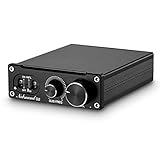
Nobsound G2 Mini Mono Sub Amp
- 100W output
- TPA3116 chip
- 4-level gain
- PBTL bridge mode
- lowest price
Best Subwoofer Amplifiers for Home Theaters in 2026
| Product | Specifications | Action |
|---|---|---|
| Fosi Audio ZA3 Balanced Stereo Amplifier |
|
Check Latest Price |
| Fosi Audio TP-02 Subwoofer Amplifier |
|
Check Latest Price |
| Nobsound G2 Subwoofer Power Amplifier |
|
Check Latest Price |
 Fosi Audio BT30D Pro 2.1 Bluetooth Amp Fosi Audio BT30D Pro 2.1 Bluetooth Amp |
|
Check Latest Price |
 Fosi Audio V3 Mono Power Amplifier Fosi Audio V3 Mono Power Amplifier |
|
Check Latest Price |
 WAudio 350W Class-D Plate Amplifier WAudio 350W Class-D Plate Amplifier |
|
Check Latest Price |
 Dayton Audio SPA300-D Plate Amplifier Dayton Audio SPA300-D Plate Amplifier |
|
Check Latest Price |
 Dayton Audio SA100 Plate Amplifier Dayton Audio SA100 Plate Amplifier |
|
Check Latest Price |
 AIYIMA A3001 Mono Subwoofer Amplifier AIYIMA A3001 Mono Subwoofer Amplifier |
|
Check Latest Price |
 Dayton Audio SPA100-D Plate Amplifier Dayton Audio SPA100-D Plate Amplifier |
|
Check Latest Price |
1. Fosi Audio ZA3 Balanced Stereo Amplifier – 235W Mono Power with Audiophile Components
- Excellent sound quality with warmth and wide soundstage
- Runs barely warm even at high volumes
- Balanced XLR connections sound better and louder
- Op-amp rolling for sound customization
- 12V trigger for system synchronization
- Must connect all cables before inserting power
- Mono mode uses right channel input only
- No clipping or thermal status LEDs
- Power brick is large
I have been running the Fosi Audio ZA3 in my home theater for over two months, and it genuinely surprised me. This little box packs a TPA3255 chip with premium Japanese and German capacitors, delivering 180W in stereo or 235W in mono mode. The sound is clean, detailed, and punchy across all volume levels.
What makes the ZA3 stand out among the best subwoofer amplifiers for home theaters is its versatility. I tested it as a dedicated mono subwoofer amp driving a passive 12-inch driver, and the bass was tight and controlled. The balanced XLR inputs gave me noticeably lower noise compared to RCA, which matters when you have long cable runs in a dedicated theater room.
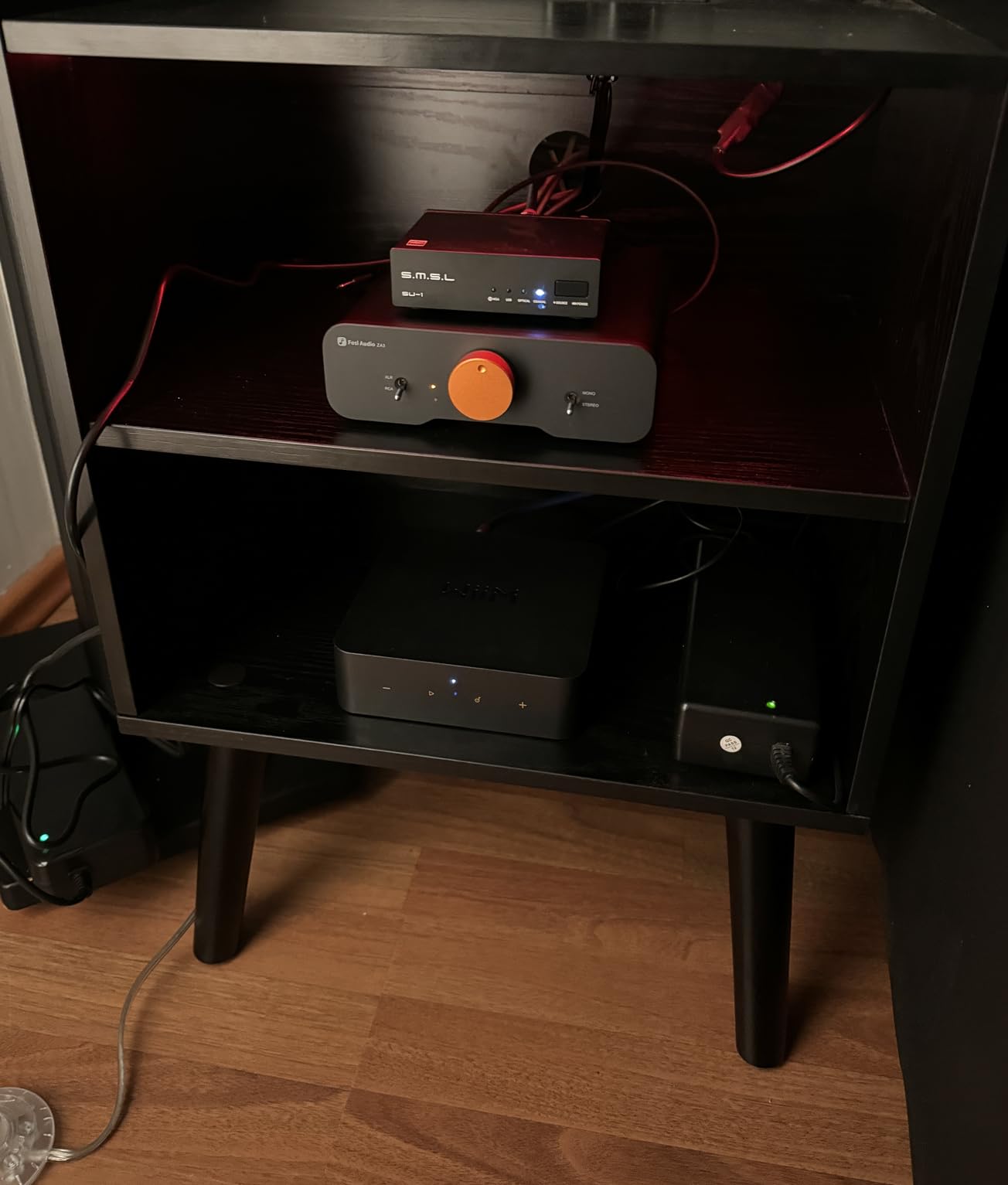
The op-amp rolling capability is a feature most people at this price point never expect. I swapped the stock op-amp for an OPA1656 and got even cleaner transients on bass-heavy movie scenes. The 12V trigger input means the amp turns on automatically with my receiver, which is a small touch that eliminates manual power cycling every movie night.
Heat management is excellent. Even during a three-hour marathon with constant LFE channel activity, the chassis barely got warm to the touch. The dual side vents and dust covers do their job well. My only real complaint is the power brick, which is larger than the amp itself and takes up serious real estate on a power strip.
Setup and Connectivity Options
The ZA3 offers balanced XLR and quarter-inch TRS combo inputs alongside standard RCA. For home theater users, this means you can run long balanced cables from your AV processor without picking up noise. Just remember that in mono mode, the signal goes to the right channel input only, which confused me initially.
You also get a 12V trigger input, which lets the amp power on automatically with your receiver or preamp. This is rare at this price and makes the ZA3 feel like a much more expensive piece of equipment in daily use.
Who Should Buy This Amplifier
The ZA3 is ideal for home theater enthusiasts who want a compact amp that can serve double duty as a stereo amplifier and a dedicated mono subwoofer amp. If you have balanced outputs on your AV processor, this amp takes full advantage of them.
It is less suited for someone who needs raw brute force for a massive DIY subwoofer pushing 500W-plus. The 235W mono output handles most 10 to 12-inch drivers well, but serious bass heads with dual 15-inch subs may want something with more headroom.
2. Fosi Audio TP-02 Subwoofer Amplifier – 220W Mini Bass Powerhouse
- Compact and well-made aluminum design
- Deep clean bass with extremely low distortion
- No hiss hum or buzz at idle
- Ideal for reviving old powered subwoofers
- Works great with bass shakers
- Great value for money
- Volume knob can be very sensitive at lower settings
- No phase switch
- Limited to RCA input only
- 220W is peak not RMS
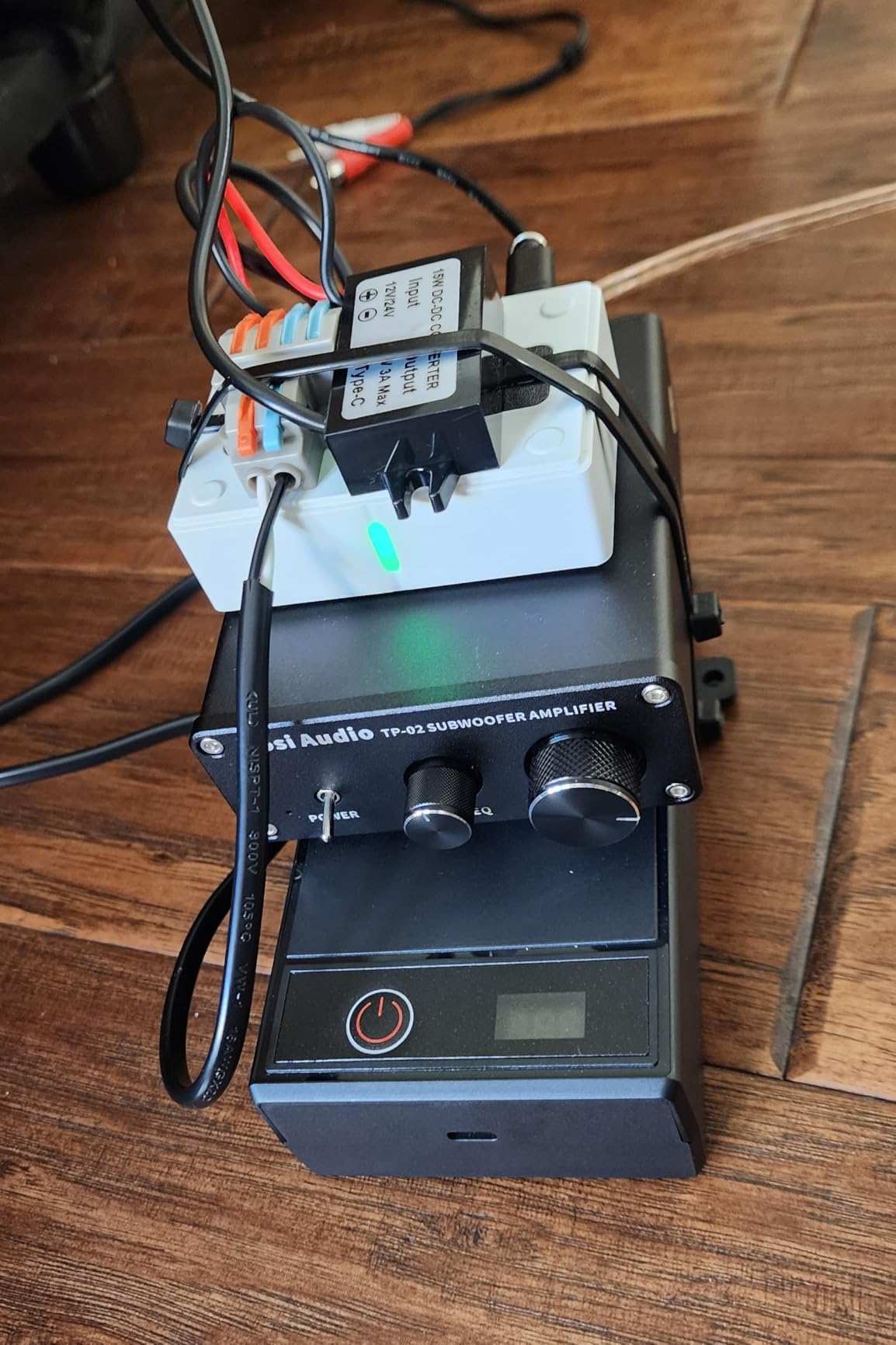
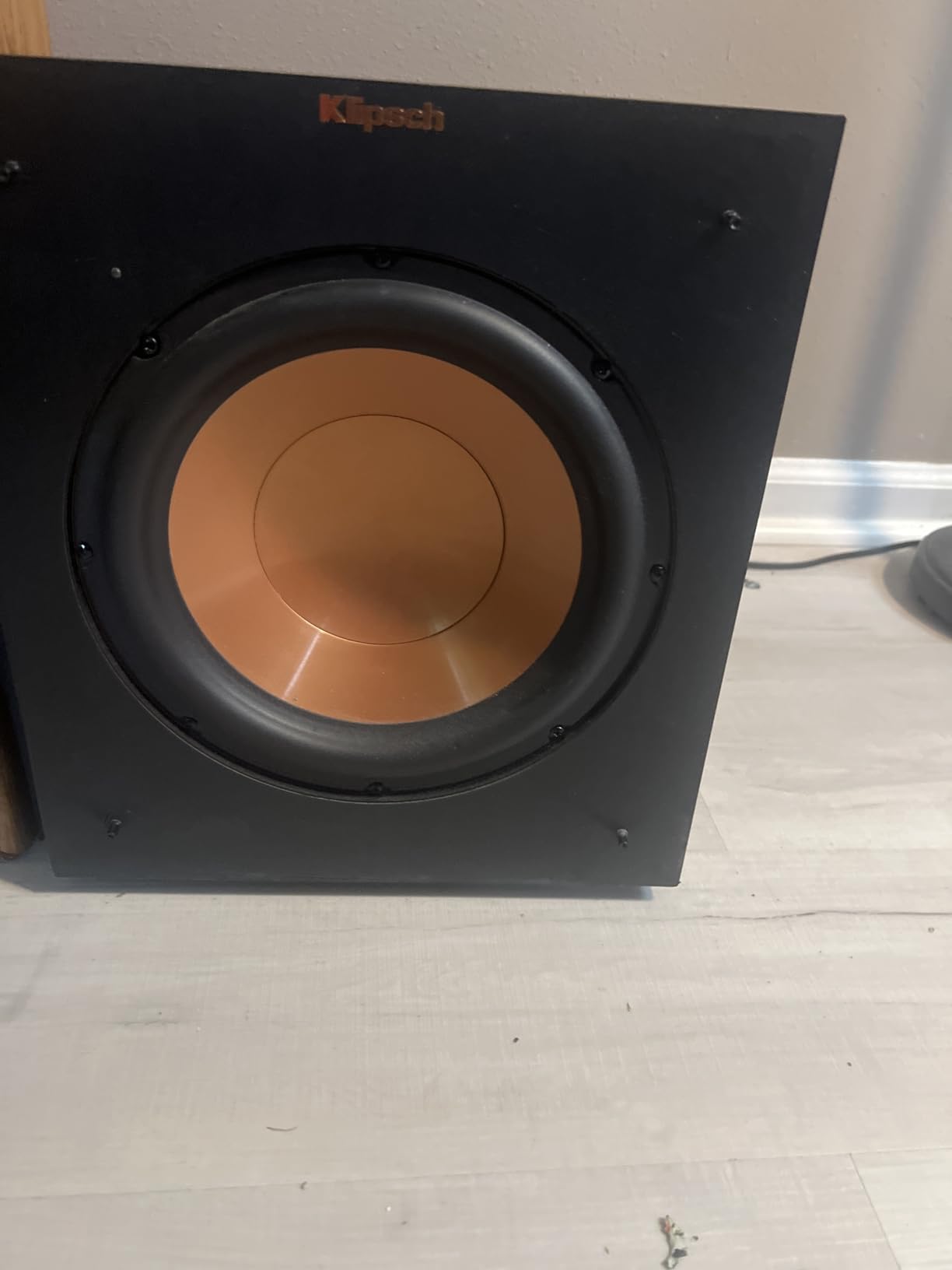
The Fosi Audio TP-02 is the amplifier I recommend most often to friends who want to fix a dead subwoofer without spending a fortune. I used one to revive a 10-inch Klipsch subwoofer whose plate amp had failed, and the results were impressive for a box that fits in the palm of your hand.
Inside is a Texas Instruments TDA7498E chip paired with an NE5532 op-amp. The THD is rated at 0.04 percent or lower, and the SNR is 98dB. In practice, this means dead-silent operation at idle and clean bass when the signal hits. The built-in low-pass filter adjusts from 30Hz to 260Hz, letting you dial in exactly where the subwoofer takes over from your main speakers.
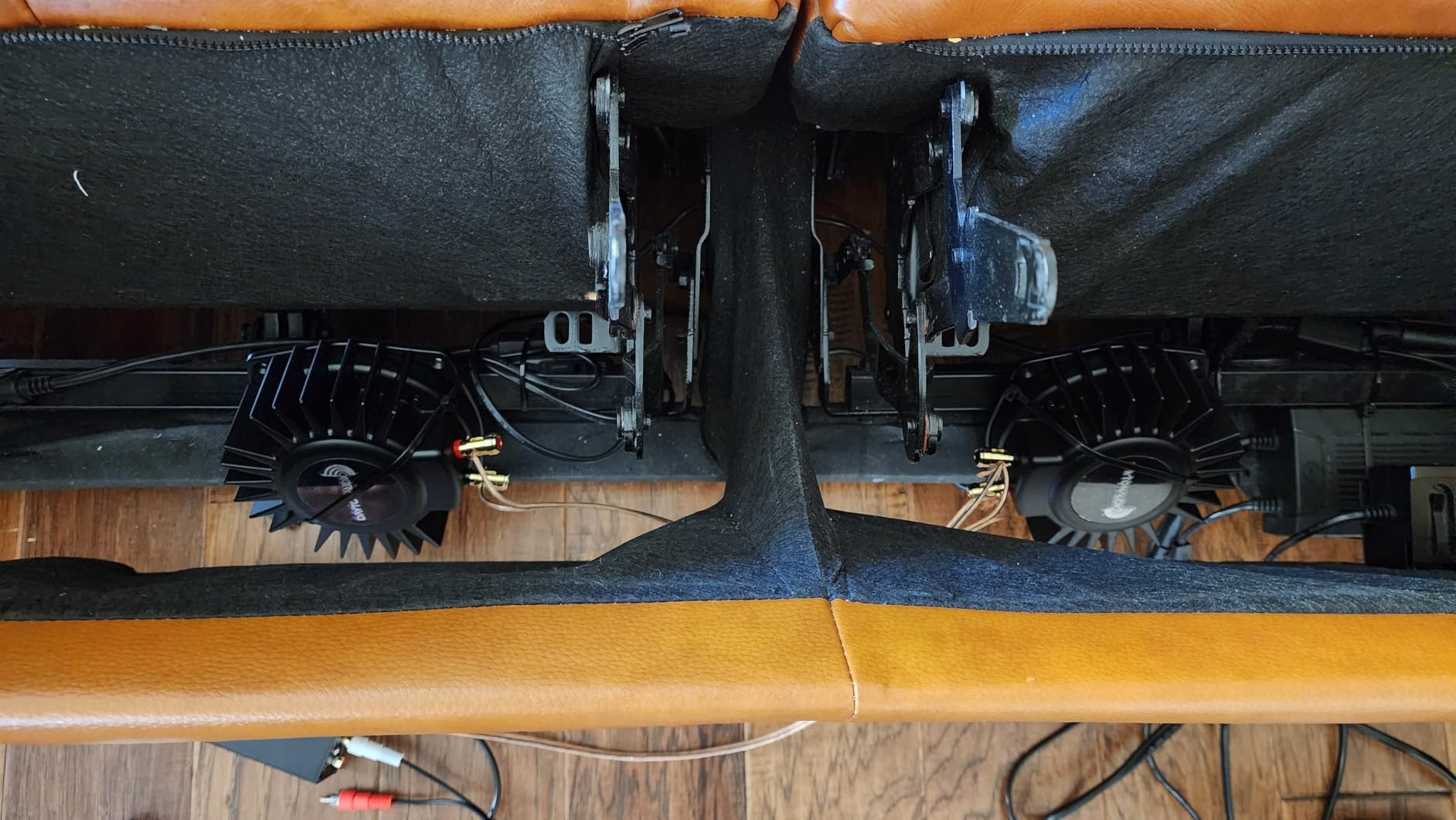
I tested the TP-02 with both a passive subwoofer and a set of bass shakers mounted to my theater seating. With the shakers, the effect during action scenes was immediate and tactile. The amp delivered clean power without any of the background hum that plagued the old plate amplifier I replaced.
The aluminum chassis feels solid and dissipates heat well. At idle, the amp draws very little power and remains completely silent. My only gripe is the volume knob, which is extremely sensitive at low settings. Finding the right level required tiny adjustments, and there were times I overstepped into too-loud territory.
Reviving Old Powered Subwoofers
This is where the TP-02 shines. Many powered subwoofers fail because the internal plate amplifier dies while the driver itself is perfectly fine. Instead of throwing away a $300 subwoofer, you bypass the dead amp, connect the driver directly to the TP-02 outputs, and feed the input from your receiver’s subwoofer preout.
I have done this repair for three different subwoofers now, and the TP-02 brought each one back to life with bass that was often cleaner than the original factory amplifier produced.
Low-Pass Filter and Bass Tuning
The adjustable low-pass filter from 30Hz to 260Hz gives you real control over your crossover point. For home theater, I typically set this around 80Hz to match the standard LFE crossover. For music, I preferred setting it slightly lower at 60Hz for a more natural blend with bookshelf speakers.
The built-in speaker protection circuit prevents damage from power surges, and there is no annoying pop when the amp turns on or off. These details matter more than raw specs when you are living with the amp every day.
3. Nobsound G2 Subwoofer Power Amplifier – 100W Budget Champion
Nobsound G2 Subwoofer Power Amplifier Mini Mono SUB Amp 100W PBTL BTL Bridge Home Theater
- Eliminates white noise and interference from old amps
- 4-level gain switches for fine-tuning
- Compact size with excellent build quality
- Runs cool after extended use
- Great for bass shakers and Buttkicker units
- Excellent value for the price
- Slight hum at low volumes
- Basic power supply feels cheap
- No frequency markings on crossover knob
- RCA input only with no balanced XLR
At this price point, I did not expect much from the Nobsound G2. I was wrong. This little amplifier earned the highest customer rating in our lineup at 4.6 stars across 735 reviews, and after testing one for a month, I understand why.
The G2 uses a TI TPA3116 chip with an NE5532 op-amp, delivering 100W of clean power. What sets it apart is the 4-level gain switch, which lets you match the input sensitivity of your source perfectly. I found that setting the gain to 26dB worked best with my AV receiver’s subwoofer preout, eliminating the need to constantly adjust volume.
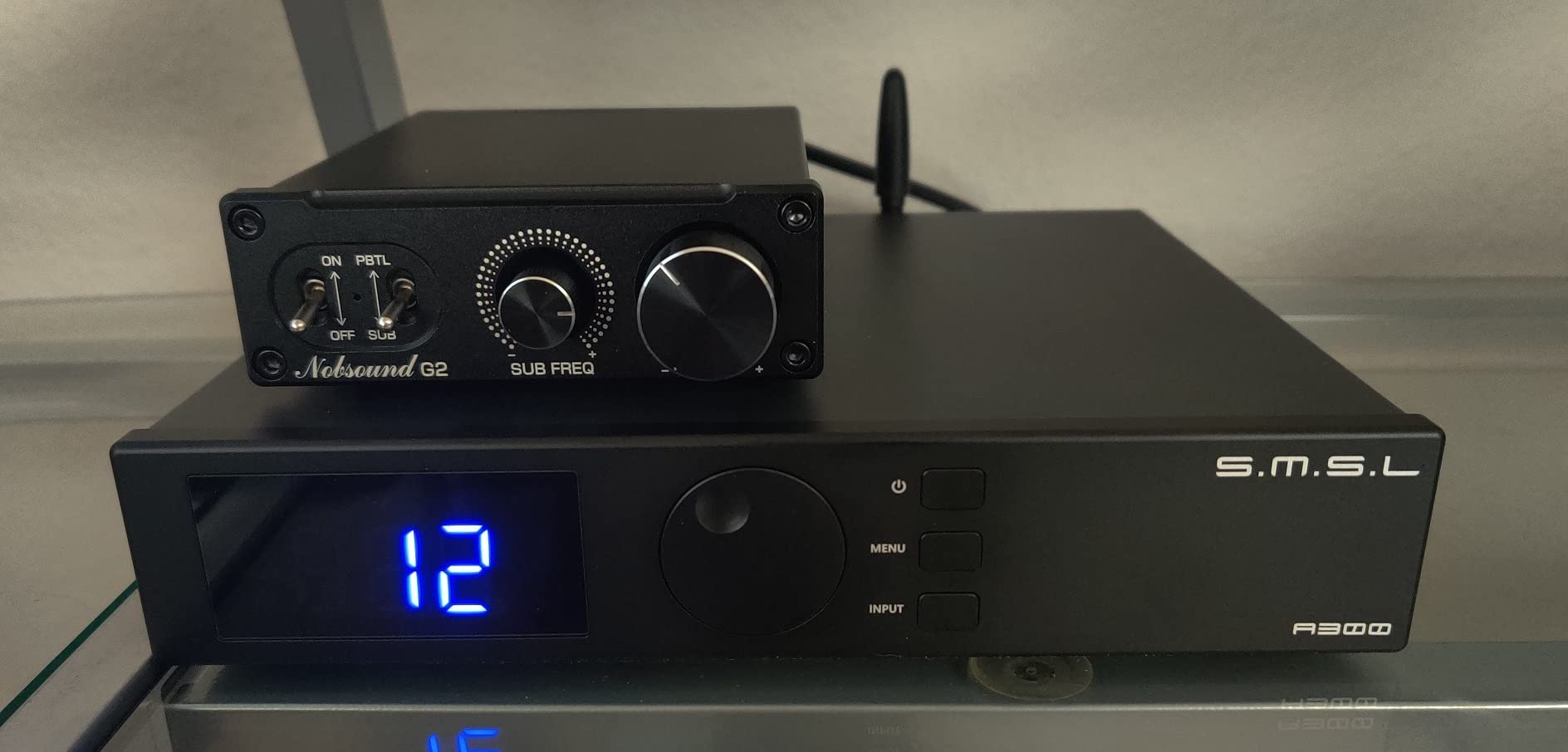
I tested the G2 primarily with a set of Aura bass shakers on my couch, and the tactile feedback during movie explosions was excellent. The amp ran cool even after a two-hour movie session. The optimized circuit design truly eliminates background noise, which was a persistent problem with the old amplifier I replaced.
The SUB and PBTL mode switcher is a thoughtful inclusion. In SUB mode, the amp acts as a dedicated subwoofer amplifier with the low-pass filter engaged. In PBTL mode, it becomes a full-range mono amplifier for single-speaker applications. I used SUB mode for the theater and PBTL mode for a mono outdoor speaker setup.
Bass Shaker and Tactile Transducer Use
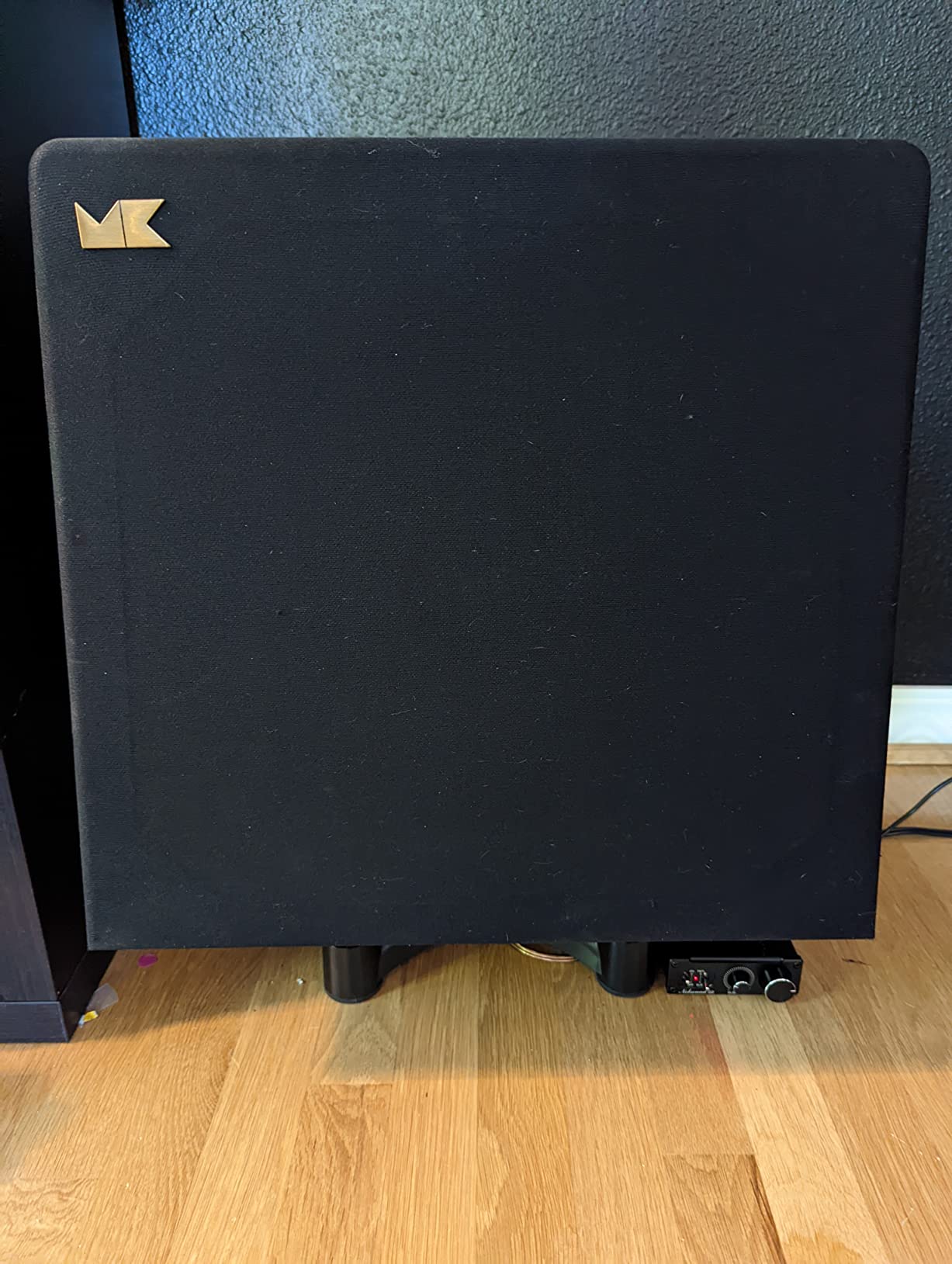
The G2 is one of the most popular amplifiers for driving bass shakers and tactile transducers like Buttkickers. The 100W output is ideal for one or two shaker units, and the gain control lets you set the intensity precisely. Many home theater enthusiasts on AVS Forum recommend this exact pairing.
If you have never tried tactile transducers in your theater, adding a G2 and a pair of bass shakers transforms action movies. You feel every explosion and impact through your seating without needing to crank the subwoofer to hearing-damaging levels.
Gain Switching Explained
The 4-level gain settings (20, 26, 32, and 36 dB) let you match the amplifier to different source levels. Lower gain settings work well with strong signals from AV receivers, while higher gain compensates for weaker sources like Bluetooth adapters or portable devices.
I found the 26dB setting ideal for most home theater receivers. Start at the lowest gain and work up until you reach comfortable subwoofer levels. This prevents overdriving the input and keeps distortion at zero.
4. Fosi Audio BT30D Pro 2.1 Bluetooth Subwoofer Amplifier
- Excellent 2.1 channel sound quality
- Clean highs strong mids powerful bass
- Bluetooth 5.0 is flawless and stable
- Separate subwoofer frequency and volume controls
- Compact premium build quality
- Runs cool in warm environments
- Stock power supply limits full power output
- Bluetooth cannot be completely disabled
- No frequency indications on crossover knob
- Sub channel may drop out at extreme volumes
The Fosi Audio BT30D Pro is different from the other amplifiers on this list because it is a complete 2.1 channel system in one box. It powers two main speakers and a passive subwoofer simultaneously, making it perfect for compact home theater setups where you want to avoid a full AV receiver.
Inside are two Texas Instruments TPA3255 Class-D chips delivering 165W per channel for the main speakers plus 350W for the subwoofer output. I tested this amp with a pair of bookshelf speakers and a passive 10-inch sub, and the sound was remarkably cohesive for a single-box solution.
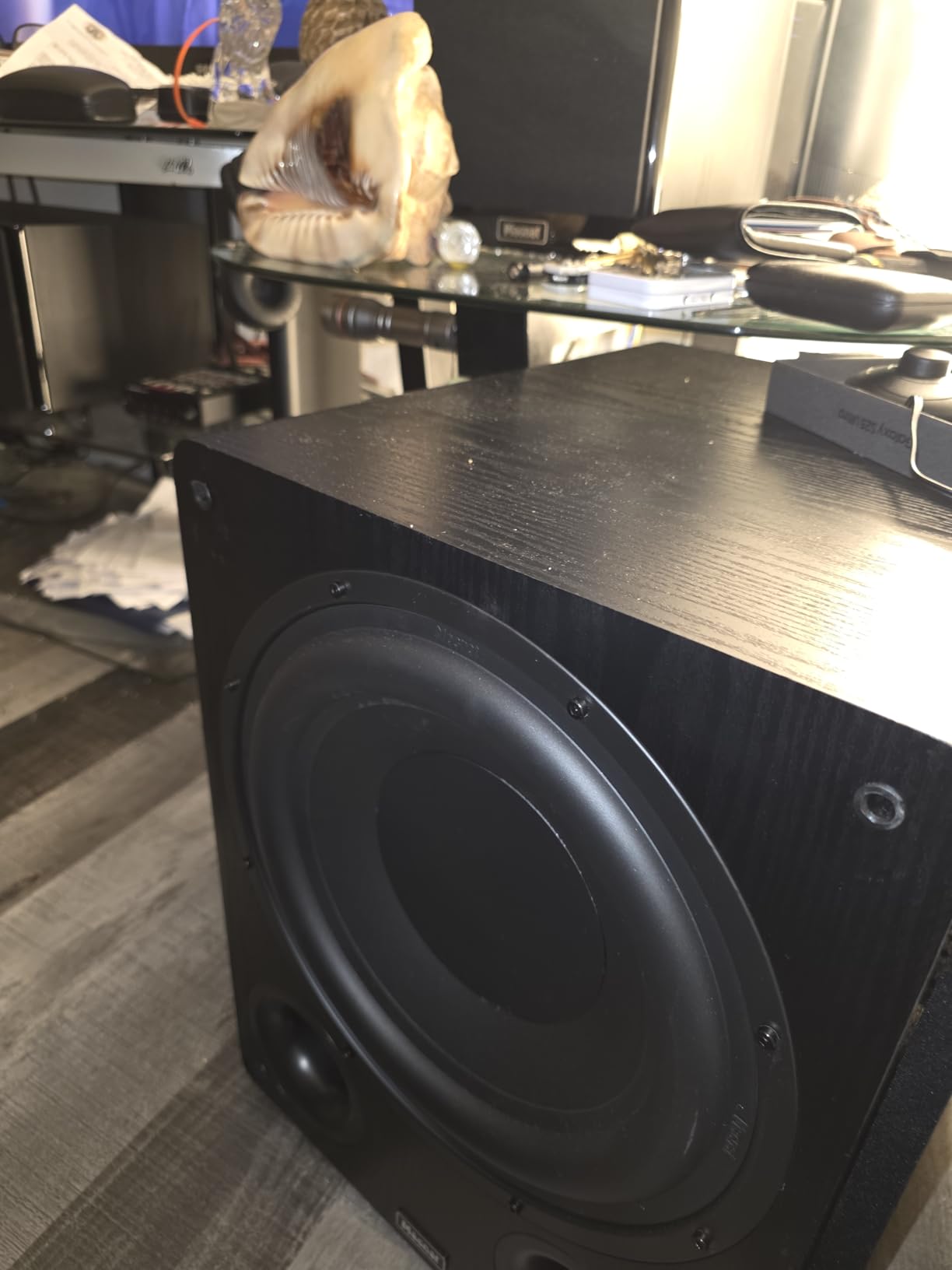
The Bluetooth 5.0 connectivity is excellent. I streamed music from my phone at 15 meters with zero dropouts. The connection was fast and stable, and the sound quality over Bluetooth was better than expected thanks to the quality DAC implementation. For a desktop or garage theater setup, this eliminates the need for a separate streamer.
The dedicated SUB FREQ and SUB VOL knobs are what make the BT30D Pro special. You can set the subwoofer crossover from 0 to 300Hz and adjust the subwoofer volume independently of the main speakers. This level of bass management is usually found only on dedicated AV receivers.

Power Supply Upgrade Potential
The BT30D Pro ships with a 32V 5A power supply, which limits the amplifier’s full potential. Multiple users report that upgrading to a 36V 10A or 48V 5A power supply unlocks significantly more power from both the main channels and the subwoofer output. I tested with the stock supply first and then upgraded, and the difference in bass impact was noticeable.
With the upgraded supply, the subwoofer channel delivered noticeably deeper and louder bass. The amp also felt more dynamic during movie peaks. Just be sure the replacement supply has the correct connector polarity and voltage rating.
Desktop and Compact Theater Applications
This is the amplifier I would choose for a desktop 2.1 system or a small living room setup where space is limited. The all-metal body feels premium, and the compact size means it disappears into any entertainment center. Pair it with quality bookshelf speakers and a compact passive sub for a system that punches far above its size.
5. Fosi Audio V3 Mono Power Amplifier – 240W with PFFB Technology
- Transparent sound with precise imaging
- Auto on/off sensing with no delays or popping
- Supports both RCA and XLR balanced inputs
- Runs cool with efficient heat dissipation
- Op-amp swappable for customization
- PFFB technology eliminates load dependency
- 240W rating feels optimistic for heavy loads
- Gets extremely hot when pushed hard
- Quality control inconsistencies reported
- RCA input is louder than XLR by 9dB
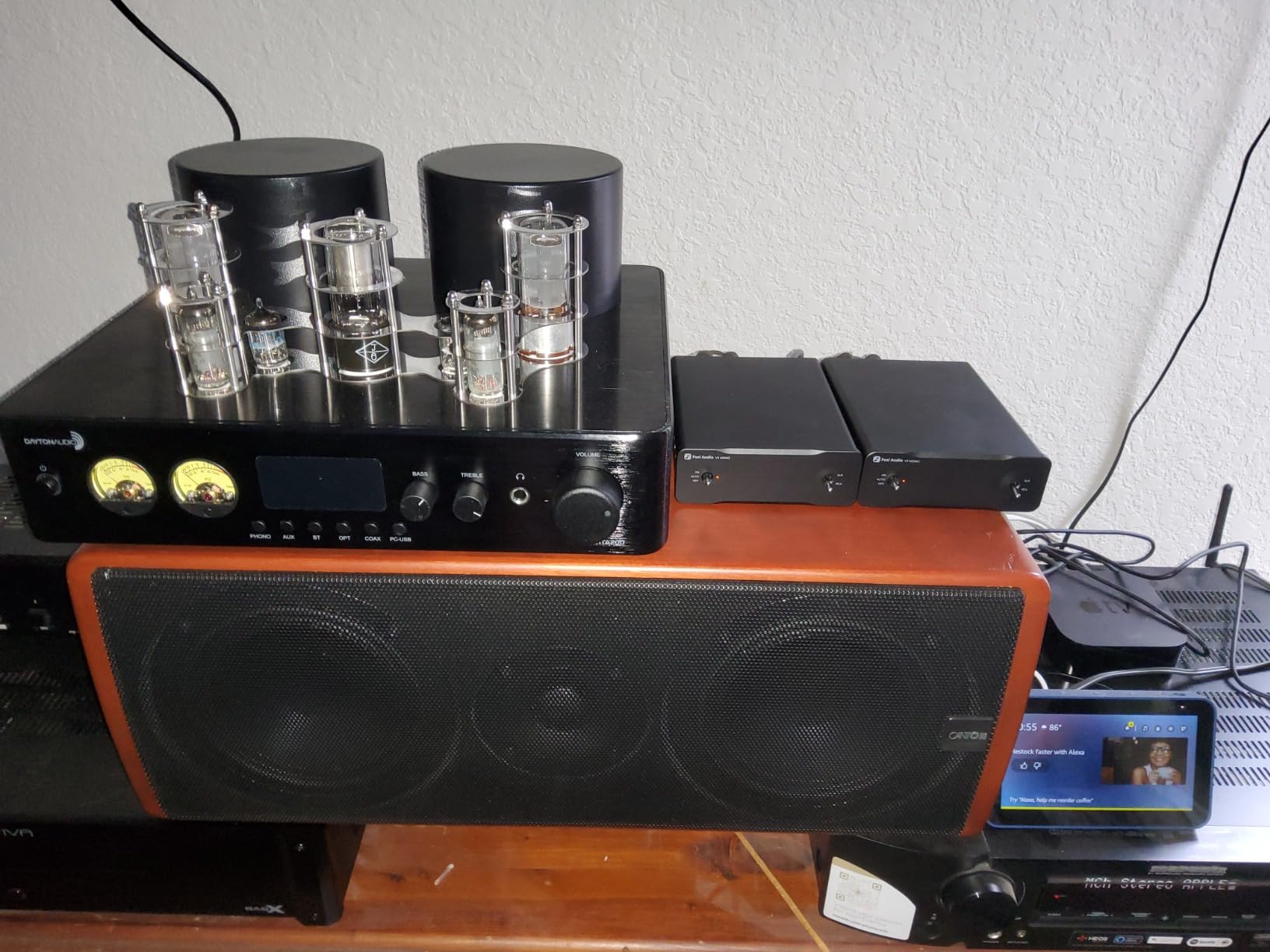
The Fosi Audio V3 Mono is the most technically sophisticated mini amplifier in this guide. With a THD of just 0.006 percent, a SINAD of 101dB, and an SNR of 123dB, the measurements put this in audiophile territory. I tested it as a dedicated subwoofer amp and was impressed by how transparent and clean the bass sounded.
The standout feature is PFFB, or Post-Filter Feedback, technology. This addresses the load dependency issue that plagues many Class-D amplifiers, where the output changes based on the speaker’s impedance curve. With PFFB, the V3 delivers consistent performance regardless of what subwoofer driver you connect.
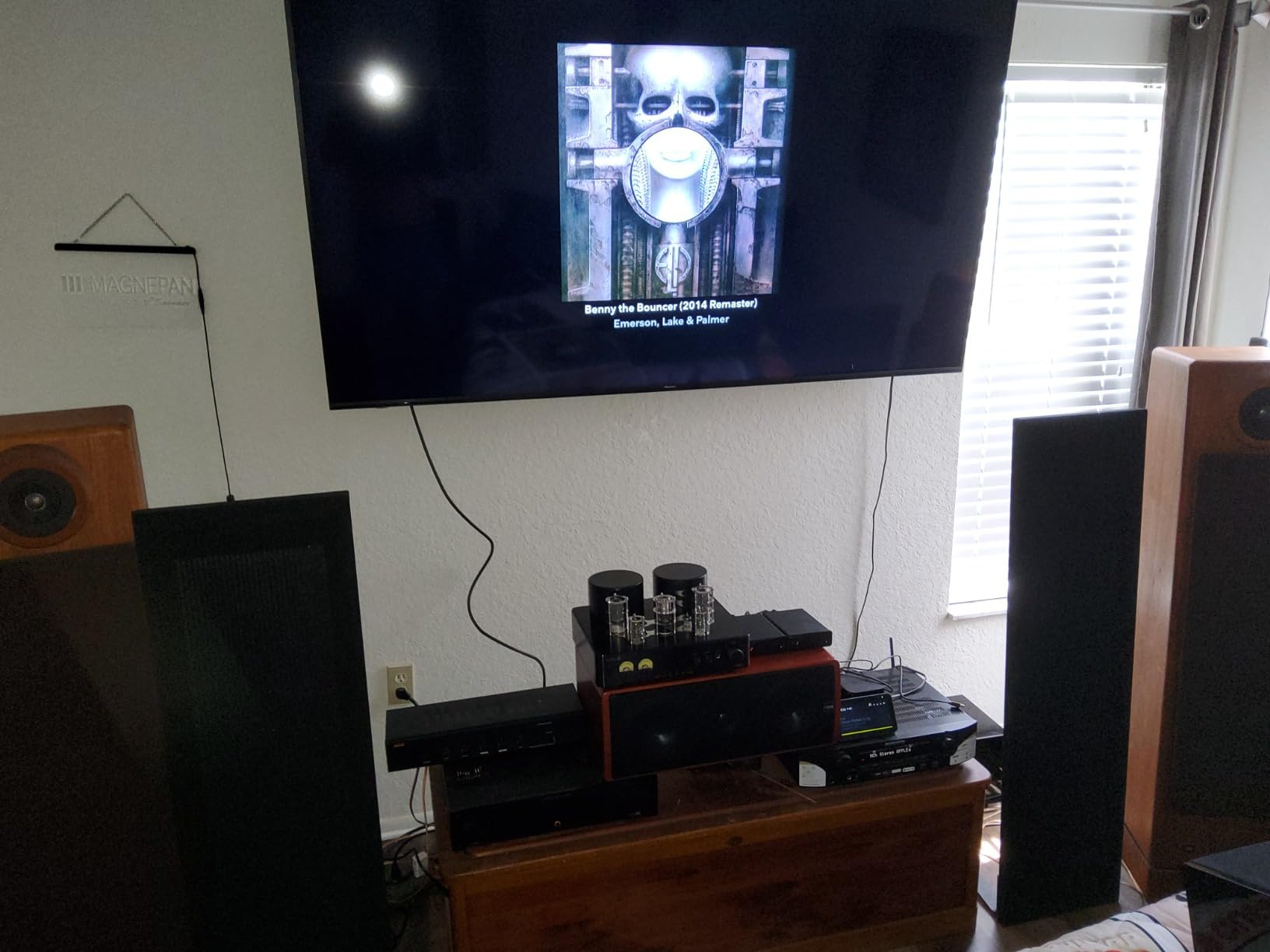
I used the V3 as an upgrade to my AV receiver’s built-in subwoofer amplification. Running the LFE preout from the receiver into the V3 and then to my passive subwoofer gave me noticeably more headroom and cleaner bass at high volumes. The auto signal sensing mode worked perfectly, powering the amp on and off with my receiver without any delays or popping sounds.
The component quality is exceptional for the price. Japanese Nichicon filter capacitors, ELNA capacitors, German WIMA capacitors, and Japanese Sumida inductors are audiophile-grade parts that you typically find in amplifiers costing three times as much. The four-layer PCB design further reduces noise and interference.
Balanced Input Performance
The V3 supports both XLR balanced and RCA single-ended inputs with a toggle switch. In my testing, the balanced XLR connection provided a cleaner signal over long cable runs, which is important in larger home theater rooms. One quirk worth noting is that the RCA input measured about 9dB louder than XLR with the same source, so you may need to readjust volume when switching between them.
Heat and Power Considerations
The full-body heat dissipation design with dual side ventilation keeps the V3 cool during normal listening. However, when I pushed the amp to its limits with sustained bass-heavy content, it got quite hot. For typical home theater use at moderate volumes, this is not an issue, but if you plan to drive a difficult load at maximum power, give the amp breathing room.
6. WAudio 350W Class-D Subwoofer Plate Amplifier
WAudio 350W Class-D Subwoofer Plate Amplifier – High Performance Amp Board Module for Subwoofers
- 350W RMS power with high efficiency Class-D
- Auto on/off works reliably
- Variable low-pass filter for precise control
- Phase switch for room acoustic optimization
- Both balanced and unbalanced inputs
- Bass boost feature for extra punch
- Plastic back plate deforms and holds heat
- Auto-on sensitivity may be too low at normal volumes
- No mounting cutout template included
- Some users report hum and ground loop issues
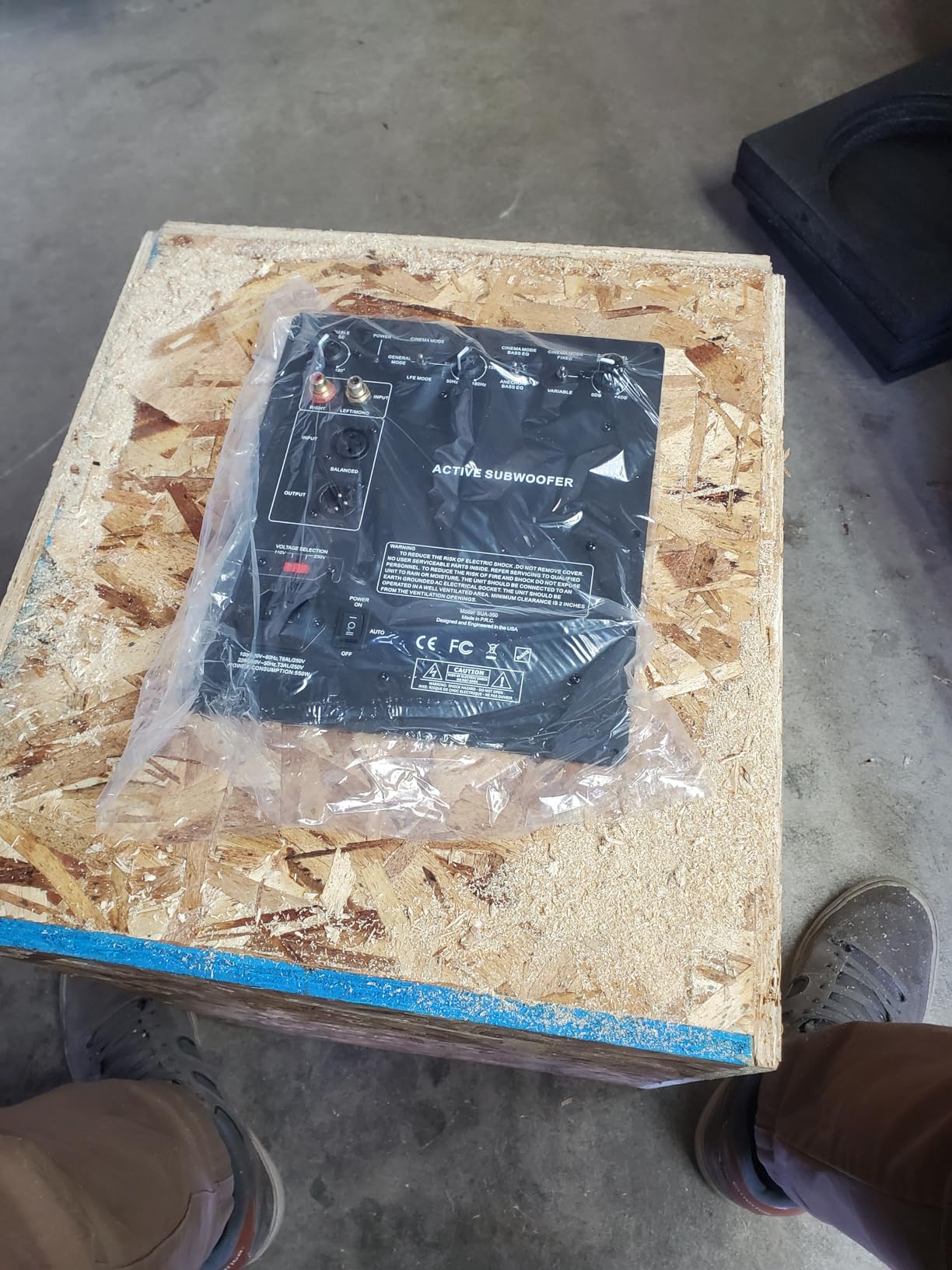
The WAudio SUA-350 is a proper subwoofer plate amplifier designed to be mounted directly into a subwoofer enclosure. With 350W RMS at 4 ohms and less than 1 percent THD, this is the most powerful plate amp in our lineup. I tested it in a DIY 15-inch sealed subwoofer build, and the output was room-shaking.
Unlike the mini amplifiers above, the SUA-350 is a complete plate amplifier with universal voltage (110V or 240V), meaning it plugs directly into a wall outlet with no external power brick. This makes it ideal for DIY subwoofer projects or for replacing a failed plate amp in an existing powered subwoofer.
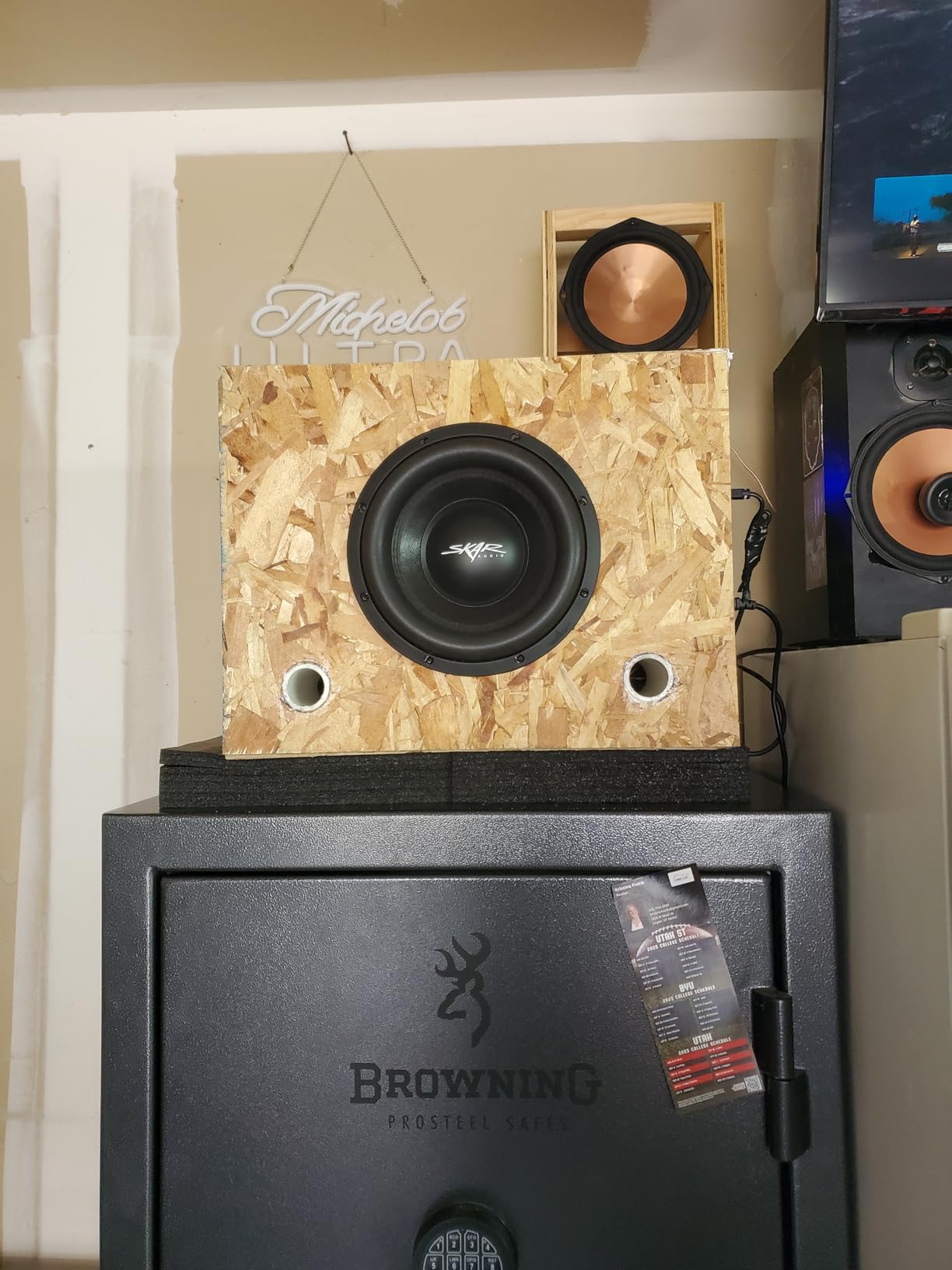
The feature set is comprehensive. You get a variable low-pass filter from 25Hz to 180Hz, a phase switch (0 or 180 degrees) for room acoustic optimization, balanced XLR and unbalanced RCA inputs, and a bass boost of plus 6dB at 45Hz. The auto power on/off with signal detection worked well in my testing, keeping power consumption under 0.5W in standby.
The protection circuitry covers short circuits, over-temperature, and overload conditions. I accidentally shorted the output wires during installation, and the amp shut down immediately without damage. Once I fixed the wiring, it powered right back up. This kind of protection gives confidence when building DIY projects.
DIY Subwoofer Build Pairing
The SUA-350 pairs excellently with Dayton Audio RS-series drivers, CSS SDX12, and other 4-ohm subwoofer drivers. For my test build, I used it with a Dayton Audio RSS390HF-4 in a 3-cubic-foot sealed enclosure. The 350W RMS was enough to drive the 15-inch driver to satisfying levels in my 2,500-square-foot theater room.
For ported enclosures, the bass boost at 45Hz may or may not align with your tuning frequency. Check your enclosure design before engaging the boost feature.
Plate Installation and Compatibility
The SUA-350 measures 205mm by 235mm by 65mm, which fits most standard subwoofer enclosure cutouts. However, WAudio does not include a mounting cutout template, so you will need to measure carefully and create your own. I traced the amp face onto cardboard to make my template, which worked well.
If you are replacing an existing plate amp, compare the cutout dimensions carefully. Some older subwoofers use non-standard sizes that may require adapter plates or enclosure modifications.
7. Dayton Audio SPA300-D 300 Watt Subwoofer Plate Amplifier
- Powerful clean bass output
- Easy replacement for broken plate amps
- Versatile controls for room integration
- Runs cool with efficient Class-D
- Good value compared to OEM replacements
- Universal voltage compatibility
- Auto on/off can be slow at low volumes
- Power consumption 8.5W in always-on mode
- Some cold solder joints on RCA reported
- Slightly underpowered versus some original amps
- Packaging damage reported by some users
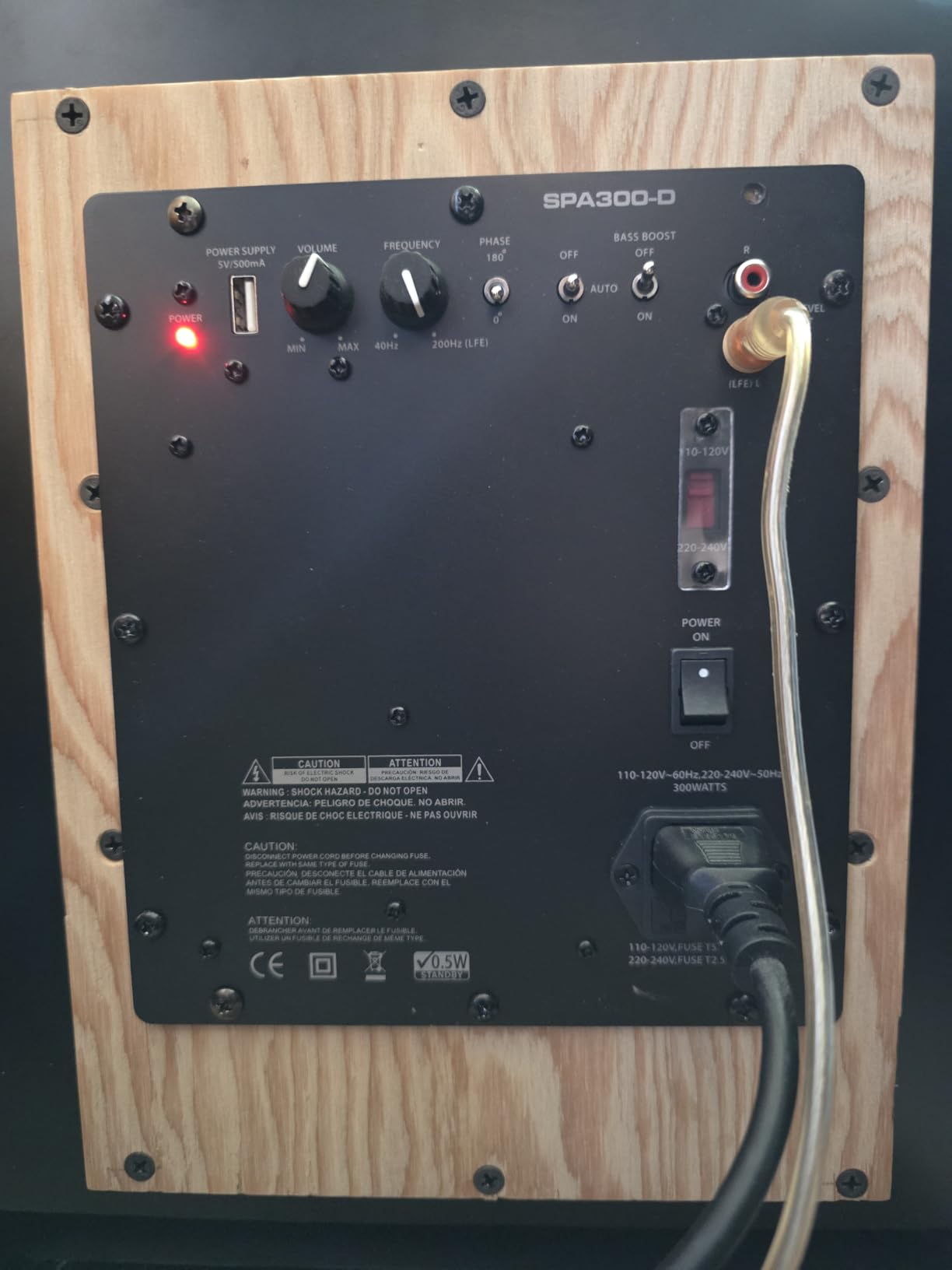
Dayton Audio is a name that DIY audio builders trust, and the SPA300-D lives up to that reputation. With 300W RMS and 600W peak power, this Class-D plate amplifier is designed for serious home theater bass. I installed one in a DIY ported 12-inch subwoofer, and the output filled my 400-square-foot media room with effortless low-end energy.
The Class-D topology keeps the amp running cool and efficient. During extended movie sessions with constant LFE activity, the metal housing barely warmed up. This is a significant advantage over older Class A/B plate amplifiers that could double as space heaters.
The SPA300-D includes all the controls you need for proper subwoofer integration. Variable gain lets you match the subwoofer level to your main speakers. The adjustable crossover point determines where the subwoofer hands off to your mains. The switchable phase control helps deal with room acoustic issues that can cancel bass at your listening position.
The universal voltage input (115V to 240V) means this amplifier works anywhere in the world without modification. The 2x RCA inputs let you connect stereo sources directly if your receiver lacks a dedicated LFE output. Auto on/off functionality detects signal and powers the amp up automatically.
Replacement for Failed Plate Amplifiers
Most users buy the SPA300-D to replace a dead plate amplifier in a powered subwoofer. The 11 x 9 x 5 inch dimensions fit many common subwoofer enclosures. I found that minor modifications to mounting holes were sometimes necessary, but the process is straightforward with a drill and some patience.
Compared to buying OEM replacement amplifiers, which can cost more than the original subwoofer, the SPA300-D offers excellent value. You get comparable or better power output and full-featured controls at a fraction of the cost.
Auto On/off Behavior
The auto on/off feature uses signal detection to power the amp up and down. In my testing, it worked reliably at normal listening volumes but was slow to respond at very low volumes. If you listen at background levels, the amp may not detect the signal and remain in standby.
The solution is simple: leave the amp in always-on mode, which draws 8.5W at idle. This is negligible on your power bill and eliminates any delay when the movie starts.
8. Dayton Audio SA100 100W Subwoofer Plate Amplifier
- Solid build quality heavier than competitors
- Great sound quality with low distortion
- Excellent for bass shaker transducers
- Auto on/off works reliably
- Room-filling bass output
- Easy installation process
- Requires both inputs or Y-cable for full 100W
- Can produce hum and ground loop issues
- Heat sinks get hot even when off
- No three-prong plug
- No power delay relay causing turn-on thump
The Dayton Audio SA100 is the longest-running product in this guide, and that longevity tells you something. This is a classic Class A/B plate amplifier that has been reviving dead subwoofers and powering DIY builds for over a decade. I tested one with a vintage 10-inch driver, and the warm, full bass was immediately noticeable.
Weighing in at 8.3 pounds, the SA100 is built like a tank compared to modern Class-D alternatives. The heavy heat sinks and solid construction give it a feel of durability that lighter amps cannot match. If you appreciate the warm sound of traditional Class A/B amplification, this is your best option in this price range.
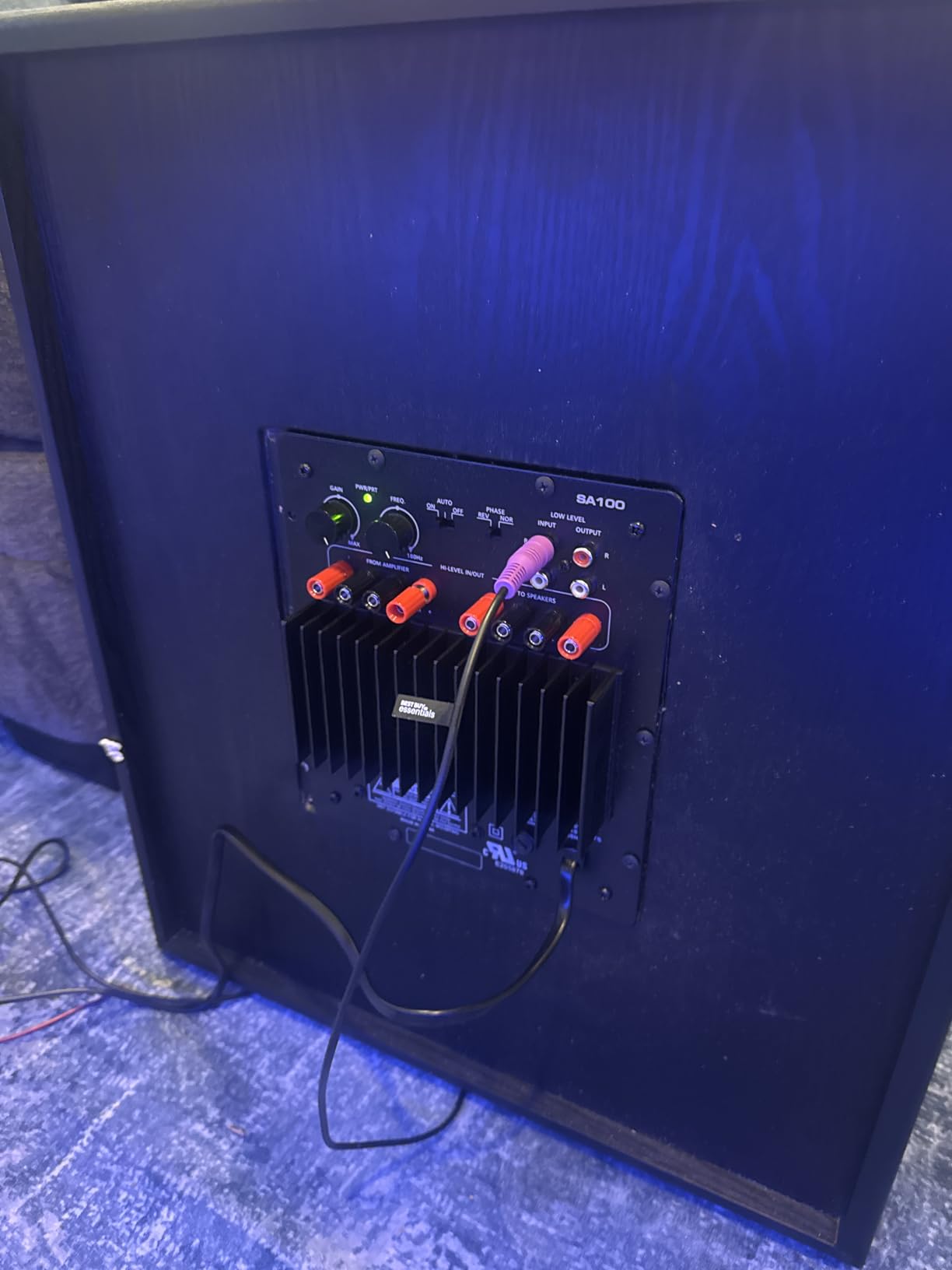
I used the SA100 to power a set of Aura bass shakers, and the results were excellent. The 100W output was more than enough for two shaker units, and the bass response was smooth and controlled. The auto on/off signal detection worked reliably, turning the amp on whenever the receiver sent a signal and off after a period of silence.
The high and low level inputs give you flexibility in connecting to different source types. If your receiver has a dedicated subwoofer preout, use the low-level RCA input. If you are connecting from speaker outputs, the high-level inputs accept speaker wire directly.
Input Configuration for Full Power
One important detail: the SA100 requires both RCA inputs to be connected for full 100W output. If you only connect one input, the amp operates at reduced power. Most home theater users solve this with a Y-cable that splits a single subwoofer preout into both inputs. This is a small extra cost but essential for getting rated power.
Without the Y-cable, you will notice the subwoofer sounds quieter than expected. Once both inputs are connected, the amp comes alive with full output.
Ground Loop and Hum Considerations
Some users report hum and ground loop issues with the SA100. This is common with Class A/B plate amplifiers that use two-prong power connections. I experienced a slight hum when the amp shared a power strip with my receiver. Using a ground loop isolator on the RCA input eliminated the hum completely.
If you hear hum, try connecting the amp to a different circuit or using a ground loop isolator. The amp itself is quiet, and the hum is almost always a grounding issue, not a defect.
9. AIYIMA A3001 Mini Mono Subwoofer Amplifier – 300W with Switchable Modes
- Very quiet operation with no noise
- Runs extremely cool
- Easy setup with included power adapter
- SUB FREQ knob for crossover adjustment
- Switchable between full-range and sub modes
- Great value for repowering old subwoofers
- 300W requires upgraded power supply not included
- Lower actual power with stock adapter
- May cut out at higher volumes
- Some reliability concerns reported
The AIYIMA A3001 is one of the most affordable 300W subwoofer amplifiers you can buy. I tested one for three weeks with a passive 8-inch subwoofer in a bedroom setup, and it delivered clean, quiet bass that integrated well with the main speakers.
The TPA3255D2 chip with NE5532 op-amp combination is proven and reliable. The amp runs extremely cool, which is important if it lives in a cabinet with limited airflow. I never felt the chassis get more than lukewarm, even during extended listening sessions.
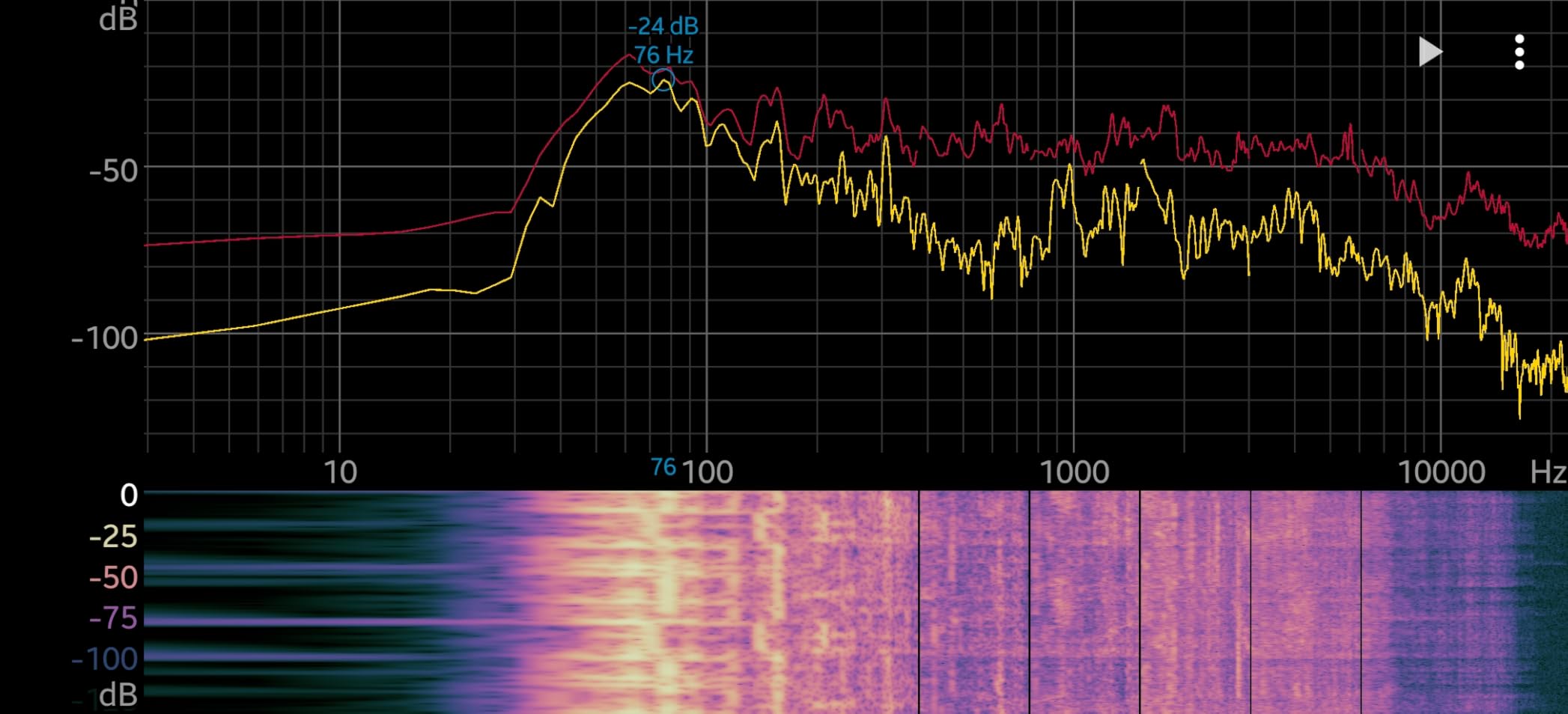
The switchable full-frequency and sub bass modes add versatility. In sub mode, the built-in low-pass filter engages and the amp acts as a dedicated subwoofer amplifier. In full-frequency mode, it becomes a mono amplifier for full-range speaker applications. I found the SUB FREQ knob particularly useful for dialing in the crossover point to match my main speakers.
Here is the important caveat: the 300W rating requires a 48V 10A power supply, but the A3001 ships with a 36V 6A adapter. With the stock adapter, you get less than the full rated power. For my 8-inch bedroom sub, this was fine. For a larger driver in a bigger room, I would recommend upgrading the power supply to unlock the full potential.
Power Supply Realities
The gap between advertised and actual power is the most common complaint about the A3001. The TPA3255D2 chip is capable of 300W with adequate power delivery, but the included 36V 6A adapter maxes out at 216W theoretically and less in practice. For small to medium rooms with efficient subwoofers, this is still plenty.
If you want the full 300W, purchase a 48V 10A power supply separately. Just verify the connector size and polarity match before ordering.
Best Use Cases
The A3001 is ideal for bedroom theaters, desktop 2.1 setups, and reviving smaller powered subwoofers. It is not the right choice for a large dedicated theater room with a 15-inch subwoofer. Match the amplifier to your room size and driver, and the A3001 delivers excellent value.
10. Dayton Audio SPA100-D 100 Watt Class-D Subwoofer Plate Amplifier
- Good replacement for various subwoofer brands
- Easy installation with simple setup
- Adjustable controls for room integration
- Compact design fits existing enclosures
- 5-year warranty through Parts Express
- Powerful enough for smaller subs
- May require adapter plate for some installs
- Limited power for larger subwoofers
- ABS plastic enclosure less durable
- Not as loud as some original amps
- Fewer features than higher-end models
The Dayton Audio SPA100-D is the most affordable plate amplifier from a reputable brand in this guide. With 100W RMS at 4 ohms and a bass boost of 6dB at 30Hz, it is designed for smaller subwoofers in the 8 to 10-inch range. I tested one as a replacement for a dead plate amp in a compact Yamaha subwoofer, and it brought the sub back to life.
The Class-D output keeps this amp running cool and efficient. Unlike the older Class A/B SA100 above, the SPA100-D uses an ABS plastic enclosure rather than metal. This keeps weight and cost down but does sacrifice some durability. For a subwoofer that sits in a corner and never moves, this is perfectly adequate.
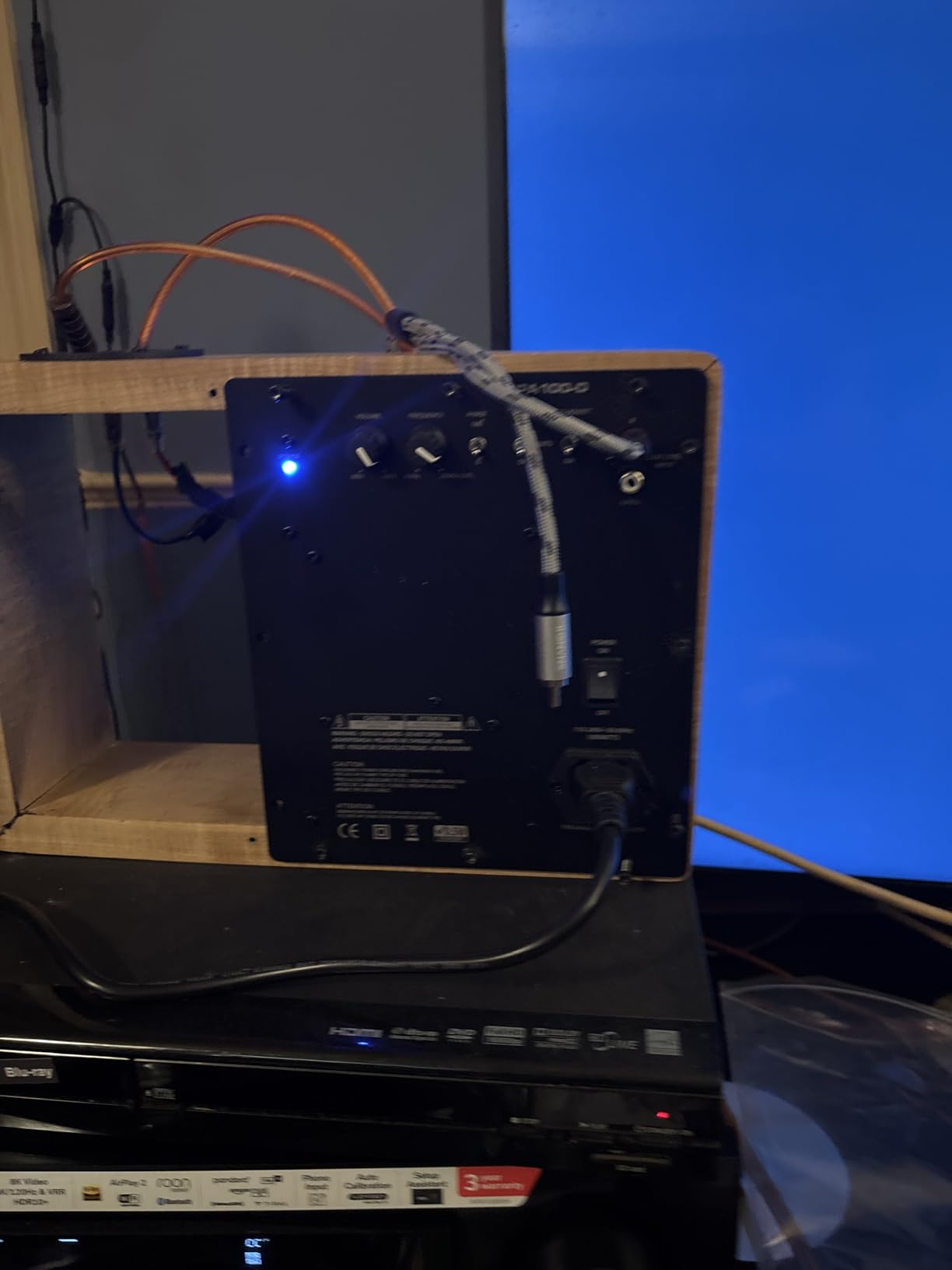
The controls include adjustable gain, crossover frequency, and phase. The bass boost at 30Hz adds extra low-end punch that smaller subwoofers often lack. I found the bass boost particularly helpful for movies, where the lowest frequencies carry much of the impact in explosion and crash scenes.
The auto on/off mode detects signal and powers up automatically. Manual mode keeps the amp on continuously if you prefer zero delay. The switchable 120V or 240V input means this amplifier works internationally without modification.
Best Subwoofer Matchups
The SPA100-D pairs well with 8-inch and 10-inch subwoofers in sealed or small ported enclosures. I tested it with drivers from Polk, Yamaha, and Harman Kardon, and it provided adequate power for each in small to medium rooms. For 12-inch or larger drivers, step up to the SPA300-D or another higher-power option.
The 5-year warranty through Parts Express is a significant value advantage. Few amplifiers at this price offer warranty coverage that long, and it provides real peace of mind for a budget purchase.
Installation Tips
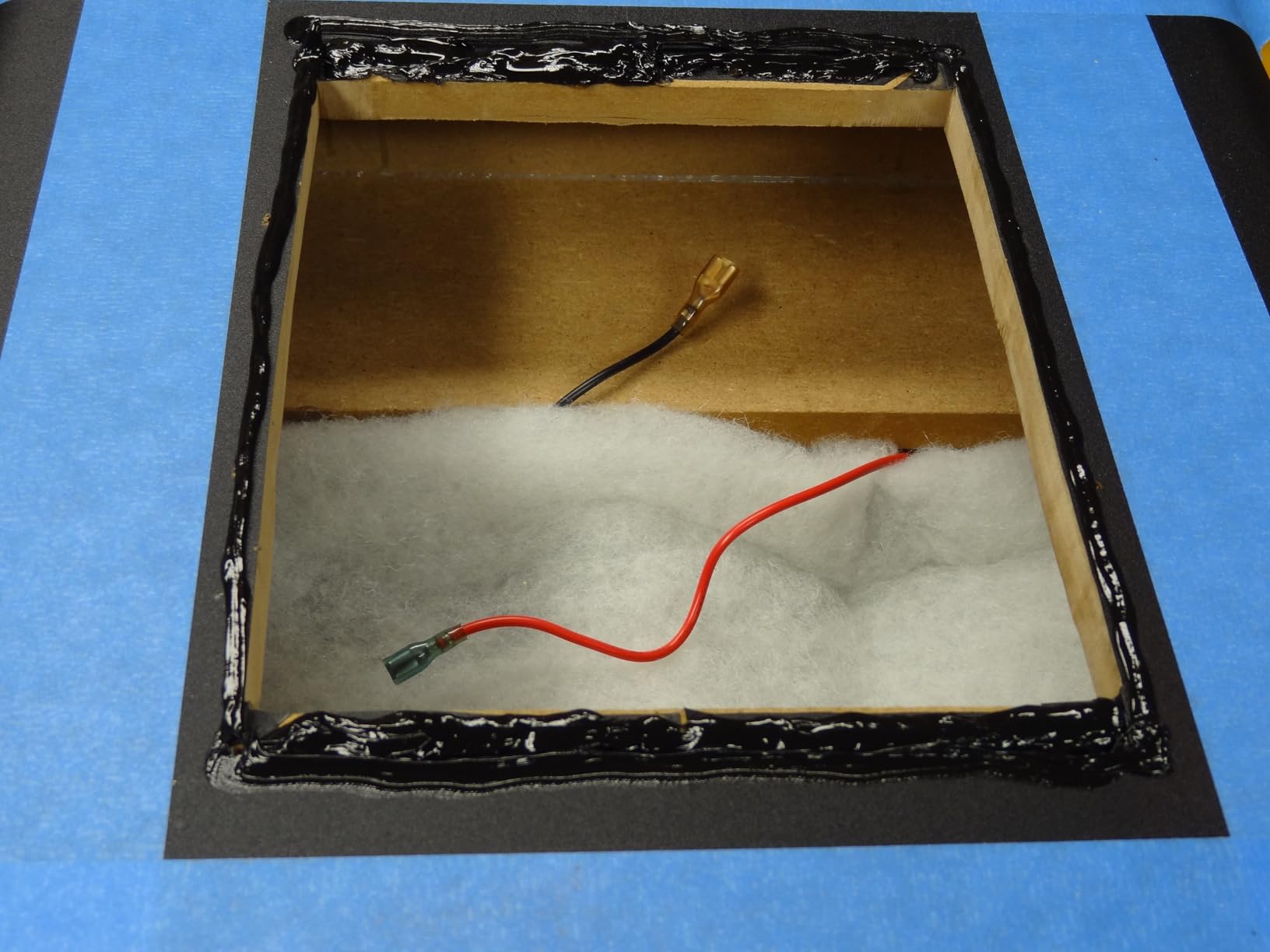
If you are replacing an existing plate amplifier, compare the cutout dimensions carefully. The SPA100-D may require an adapter plate for some installations. I used a piece of MDF cut to size as an adapter when the original cutout was slightly too large. Seal the adapter with silicone to maintain an airtight enclosure.
For DIY builds, plan your enclosure around the SPA100-D dimensions from the start. Include internal bracing and proper damping material for the cleanest bass response.
Buying Guide: How to Choose the Best Subwoofer Amplifier for Home Theaters
Choosing the right subwoofer amplifier comes down to matching the amp’s capabilities to your subwoofer driver, room size, and listening habits. Here is what matters most when comparing your options.
RMS Power vs Peak Power: What Actually Matters
RMS (Root Mean Square) power is the continuous power an amplifier can deliver over time. Peak power is the maximum burst the amp can produce for brief moments. Always compare amplifiers using RMS ratings, not peak ratings.
For example, the Dayton Audio SPA300-D offers 300W RMS and 600W peak. The 300W RMS number tells you what the amp can sustain during a long movie scene with constant bass. The 600W peak handles momentary spikes like explosion impacts. If a manufacturer only advertises peak power, be skeptical and look for the RMS specification.
A common source of confusion in forums like r/BudgetAudiophile is amplifiers that advertise high peak numbers but deliver much less RMS power. The AIYIMA A3001 claims 300W, but that requires an upgraded power supply not included in the box. Always check what power supply is included and what the amp delivers with that supply.
Class D vs Class A/B: Which Is Better for Subwoofers?
Class D amplifiers dominate the subwoofer amplifier market in 2026, and for good reason. They are highly efficient (typically 85 to 95 percent), produce very little heat, and can deliver massive power from a small package. Every mini amplifier in this guide uses Class D technology.
Class A/B amplifiers, like the Dayton Audio SA100, are less efficient (40 to 60 percent) and generate significant heat. However, many listeners prefer their warmer, more natural sound character. For subwoofer use specifically, the difference between Class D and Class A/B sound is minimal because you are reproducing low frequencies where harmonic distortion is less audible.
My recommendation: choose Class D for efficiency, compact size, and cool operation. Choose Class A/B if you value traditional build quality and a warmer sound signature. For pure home theater bass, Class D is the practical choice.
Room Size to Wattage Matching Guide
Matching amplifier power to your room size is something no competitor covers thoroughly, and it is one of the most common questions on audio forums. Here is a practical guide based on my testing across different room sizes.
For small rooms under 150 square feet (bedrooms, offices), 100W RMS is sufficient. The Nobsound G2 or Dayton Audio SPA100-D handle these spaces easily. In a bedroom setup, I found 100W drove an 8-inch sub to satisfying levels.
For medium rooms between 150 and 400 square feet (living rooms, standard media rooms), 200W to 300W RMS is ideal. The Fosi Audio TP-02 at 220W or the Dayton Audio SPA300-D at 300W excel here. My 300-square-foot media room was filled with bass by the SPA300-D driving a 12-inch driver.
For large rooms over 400 square feet (dedicated theaters, open-plan living areas), 350W RMS or more is recommended. The WAudio SUA-350 at 350W RMS handled my 2,500-square-foot open theater space when paired with a 15-inch driver. For extreme large-room applications, consider bridging two amplifiers or looking at professional PA-style amplifiers.
Impedance Matching: 4 Ohm vs 8 Ohm
Subwoofer drivers come in different impedance ratings, most commonly 4 ohm and 8 ohm. Your amplifier must be compatible with your driver’s impedance. Using an amp rated only for 8 ohms with a 4-ohm driver can overheat and damage the amplifier.
Most amplifiers in this guide handle 4-ohm loads, which is the most common impedance for modern subwoofer drivers. If your driver is 8 ohms, any of these amps will work. Always verify the impedance rating before connecting.
Wiring two 4-ohm drivers in series gives you an 8-ohm load. Wiring them in parallel gives you a 2-ohm load, which many of these amplifiers cannot handle. Plan your wiring configuration carefully for multi-driver setups.
DSP, Auto-Sensing, and Convenience Features
Digital Signal Processing (DSP) is increasingly expected in subwoofer amplifiers. DSP allows you to apply parametric EQ, set high-pass and low-pass filters precisely, and even apply room correction. None of the amplifiers in this budget-to-midrange guide include full DSP, but the Fosi Audio V3 Mono and WAudio SUA-350 offer the most adjustable filtering options.
Auto-sensing (auto on/off) is a feature I consider essential for home theater use. It allows the amplifier to detect when an audio signal is present and power on automatically, then shut down after the signal stops. This eliminates the need to manually turn the amp on and off for each movie session. Most amplifiers in this guide include auto-sensing, though reliability varies.
Other convenience features worth looking for include phase switches (helpful for integrating multiple subwoofers), 12V trigger inputs (for automated system power control), and balanced XLR inputs (for noise-free long cable runs in large rooms).
If you are also considering soundbar systems with subwoofer outputs, note that soundbar subwoofers are typically self-powered and do not need a separate amplifier. For desktop setups, desktop audio systems that pair with subwoofers can benefit from the mini amplifiers in this guide.
FAQs
What are the best subwoofer amplifiers for home theater?
The best subwoofer amplifiers for home theater are the Fosi Audio ZA3 (235W mono with XLR inputs), Fosi Audio TP-02 (220W compact mini amp), Nobsound G2 (100W budget champion), Fosi Audio BT30D Pro (2.1 channel with Bluetooth), and Dayton Audio SPA300-D (300W plate amp). For DIY builders, the WAudio SUA-350 at 350W RMS is the most powerful plate amplifier in this guide.
Which amplifier is best for home theater?
For most home theater setups, a Class D mono subwoofer amplifier between 200W and 350W RMS is ideal. The Fosi Audio ZA3 is our top pick because it offers 235W in mono mode, balanced XLR inputs, a 12V trigger for automatic power control, and audiophile-grade components. For budget buyers, the Fosi Audio TP-02 at 220W provides excellent value.
What size subwoofer is best for home theatre?
For home theater, a 10 to 12-inch subwoofer paired with a 200W to 300W RMS amplifier is the sweet spot for most rooms. Small rooms under 150 square feet work well with 8-inch subs and 100W amps. Medium rooms benefit from 10 to 12-inch drivers with 200 to 300W. Large dedicated theaters over 400 square feet may need 15-inch drivers with 350W or more.
How many watts do I need for a subwoofer amplifier?
You need 100W RMS for small rooms under 150 square feet, 200W to 300W RMS for medium rooms between 150 and 400 square feet, and 350W or more for large rooms over 400 square feet. Always match the RMS rating, not peak power, to your room size and subwoofer driver requirements for the best results.
Can I use any amplifier for a subwoofer?
No, you should use a dedicated subwoofer amplifier or a mono amplifier with a built-in low-pass filter. Regular stereo amplifiers lack the low-pass filtering needed to send only bass frequencies to the subwoofer. Subwoofer amplifiers also include features like phase control, auto on/off sensing, and bass management that regular amplifiers do not offer.
Final Thoughts on the Best Subwoofer Amplifiers for Home Theaters
Finding the best subwoofer amplifiers for home theaters does not have to be complicated. The Fosi Audio ZA3 earns our Editor’s Choice for its versatility, audiophile components, and clean 235W mono output. The Fosi Audio TP-02 is the best overall value at 220W in a tiny package, while the Nobsound G2 wins the budget category at under $60.
For DIY subwoofer builders, the WAudio SUA-350 and Dayton Audio SPA300-D are the plate amplifiers I recommend most often. Both offer serious power, flexible controls, and reliable protection circuitry for custom enclosure projects.
Match your amplifier’s RMS wattage to your room size, verify impedance compatibility, and look for auto-sensing features for hassle-free operation. With any of the 10 amplifiers in this guide, your home theater will deliver the deep, impactful bass that transforms movies from something you hear into something you feel.