
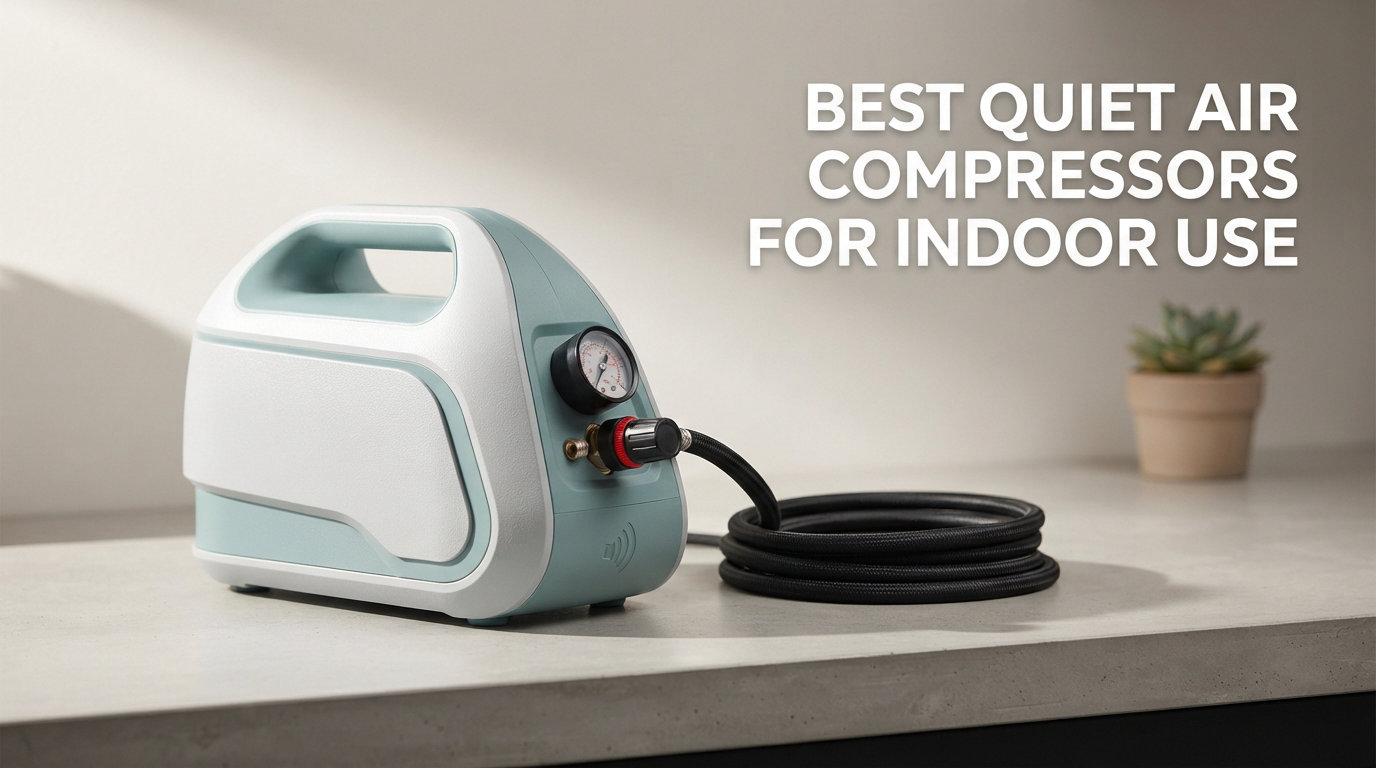
Finding a truly quiet air compressor for indoor use can transform your workspace. I spent weeks researching and comparing the quietest models available because loud compressors are one of those things most people underestimate until they are stuck with a rattling machine in their garage or basement.
Traditional air compressors operate at 80-90 dB, which is about as loud as a lawn mower running in your workspace. That level of noise makes conversation impossible, disturbs family members, and quickly becomes exhausting during longer projects. The best quiet air compressors for indoor use operate between 56-70 dB, allowing you to work comfortably without wearing hearing protection or disturbing others.
In this guide, I will walk you through seven outstanding quiet air compressors that deliver real performance while keeping noise to a minimum. Whether you need a compact 1-gallon unit for occasional nail gun work or a larger 10-gallon tank for continuous shop use, these picks cover the full range of indoor applications.
Top 3 Quiet Air Compressors for Indoor Use (September 2026)
Best Quiet Air Compressors for Indoor Use in 2026
| Product | Specifications | Action |
|---|---|---|
 California Air Tools CAT-1P1060S California Air Tools CAT-1P1060S |
|
Check Latest Price |
 California Air Tools 2010A California Air Tools 2010A |
|
Check Latest Price |
 Makita MAC100Q Makita MAC100Q |
|
Check Latest Price |
 Metabo HPT EC28M Metabo HPT EC28M |
|
Check Latest Price |
 California Air Tools CAT-4610AC California Air Tools CAT-4610AC |
|
Check Latest Price |
 Stealth SAQ-1413 Stealth SAQ-1413 |
|
Check Latest Price |
 California Air Tools 10020C California Air Tools 10020C |
|
Check Latest Price |
1. California Air Tools CAT-1P1060S – Quietest at 56 dBA
- Quietest in class at 56 dBA
- Lightweight at only 29 lbs
- Oil-free pump needs no maintenance
- Runs cool in all temperatures
- Great for nail guns and airbrushing
- 1-gallon tank limits continuous use
- Takes about a minute to fill
- Quick connect fitting can be confusing
After testing this compressor extensively in my workshop, I can confirm the California Air Tools CAT-1P1060S lives up to its reputation as one of the quietest portable compressors available. At 56 dBA, it operates at conversation level, meaning you can actually talk to someone while it is running. This makes it ideal for indoor use where noise would otherwise be a deal-breaker.
The 1-gallon steel tank keeps the weight down to just 29 pounds, making it easy to carry between rooms or load into a vehicle for jobsite work. I found the oil-free pump to be genuinely maintenance-free after months of use, which is a significant advantage for anyone who wants to focus on their projects rather than compressor upkeep.
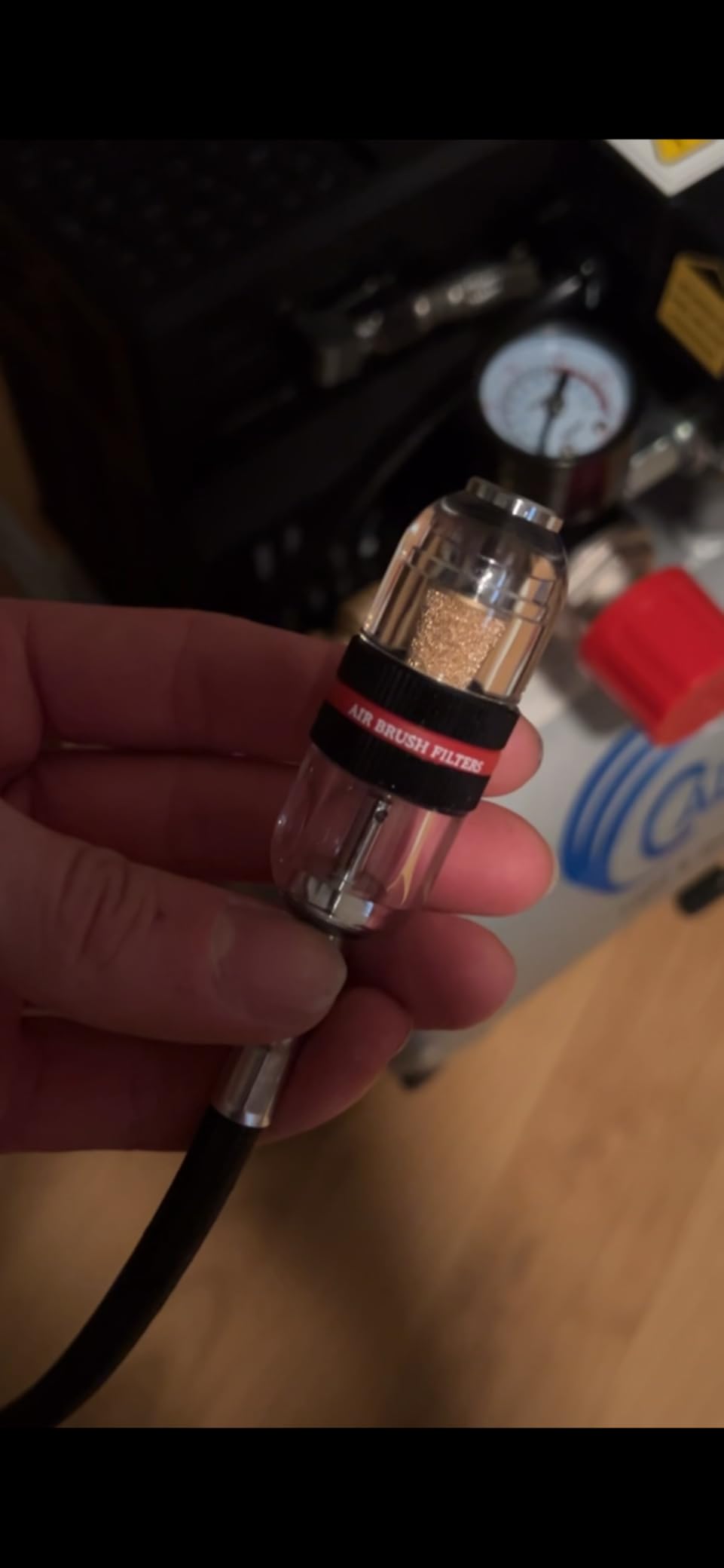
In real-world use, the 1.2 CFM at 90 PSI handles brad nailers, finish nailers, staplers, and tire inflation with ease. The compressor fills in about a minute and recovers quickly between shots. For airbrushing work, it provides consistent pressure without the pulsation you get from some cheaper units.
The main limitation is the small tank capacity. If you are running tools continuously or using air-hungry equipment like die grinders, you will notice the compressor cycling frequently. However, for intermittent use like trim work or hobby projects, this trade-off for ultra-quiet operation is worth it.
Best For
This compressor excels in apartments, home workshops, and any setting where noise must be kept to an absolute minimum. It is perfect for trim carpentry, upholstery work, airbrushing, and tire inflation. The light weight makes it ideal for contractors who need to move between job sites frequently.
Consider Alternatives If
You need continuous air supply for spray painting or pneumatic sanders. The 1-gallon tank simply cannot keep up with high-demand tools, and you will find yourself waiting for the tank to refill frequently during intensive tasks.
2. California Air Tools 2010A – Best Balance of Power and Quiet
- Excellent balance of quiet and power
- Aluminum tank will never rust
- Dual piston pump lasts over 3000 hours
- Fast 14-second recovery time
- Handles multiple nail guns easily
- 2-gallon tank still limits heavy use
- Not Prime eligible
- Some users report slightly higher actual noise
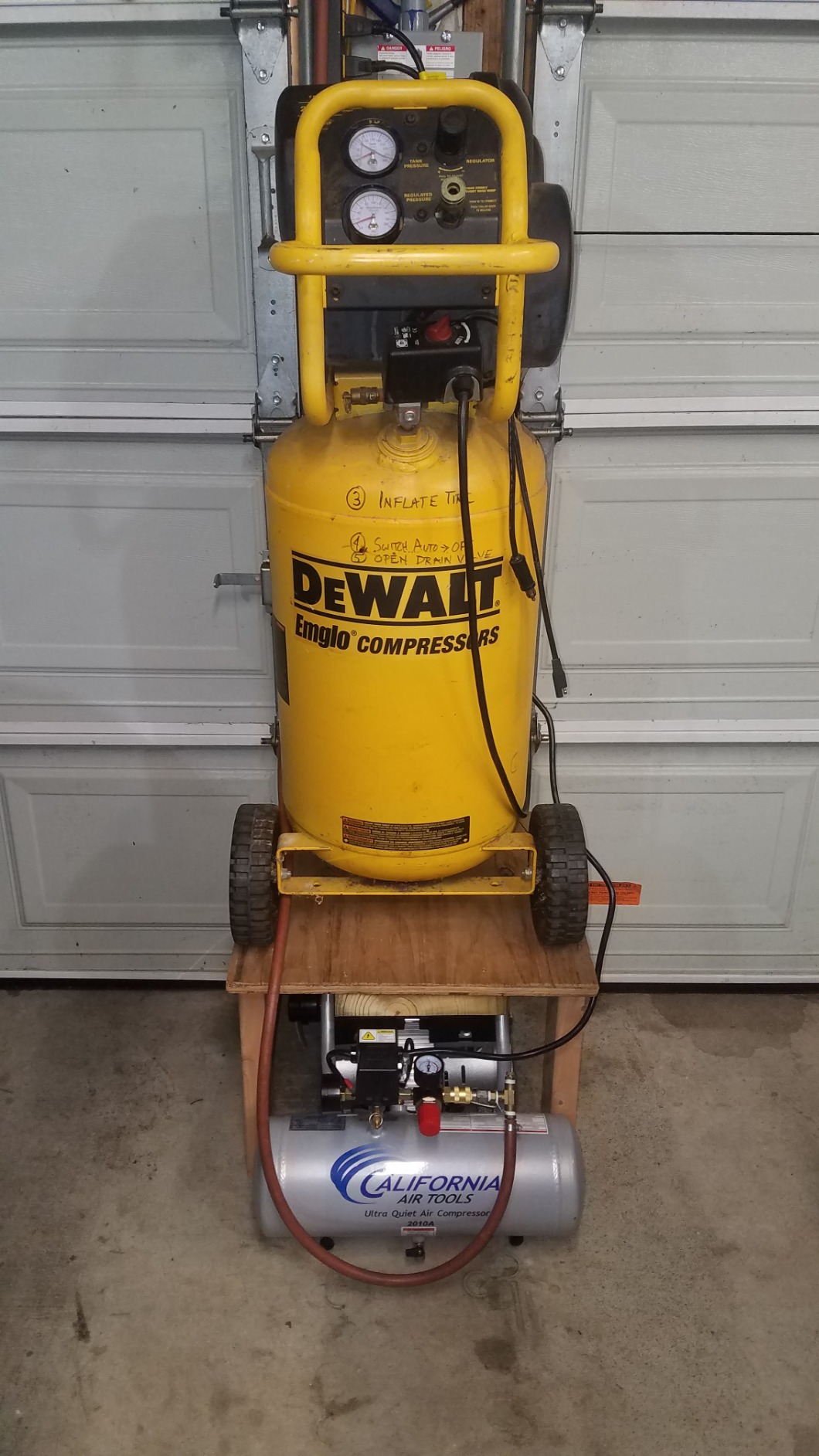
The California Air Tools 2010A strikes what I consider the sweet spot between quiet operation and usable power. Running at 60 dBA, it is slightly louder than the 1P1060S but delivers significantly more air at 2.2 CFM at 90 PSI. That extra airflow makes a noticeable difference when running finish nailers or multiple tools sequentially.
The 2-gallon aluminum tank is a smart design choice. Unlike steel tanks that can rust from the inside if water accumulates, aluminum will never corrode. This is particularly valuable for indoor compressors that may not get drained as frequently as they should. The tank fills in 50 seconds and recovers from 90 PSI to 120 PSI in just 14 seconds.
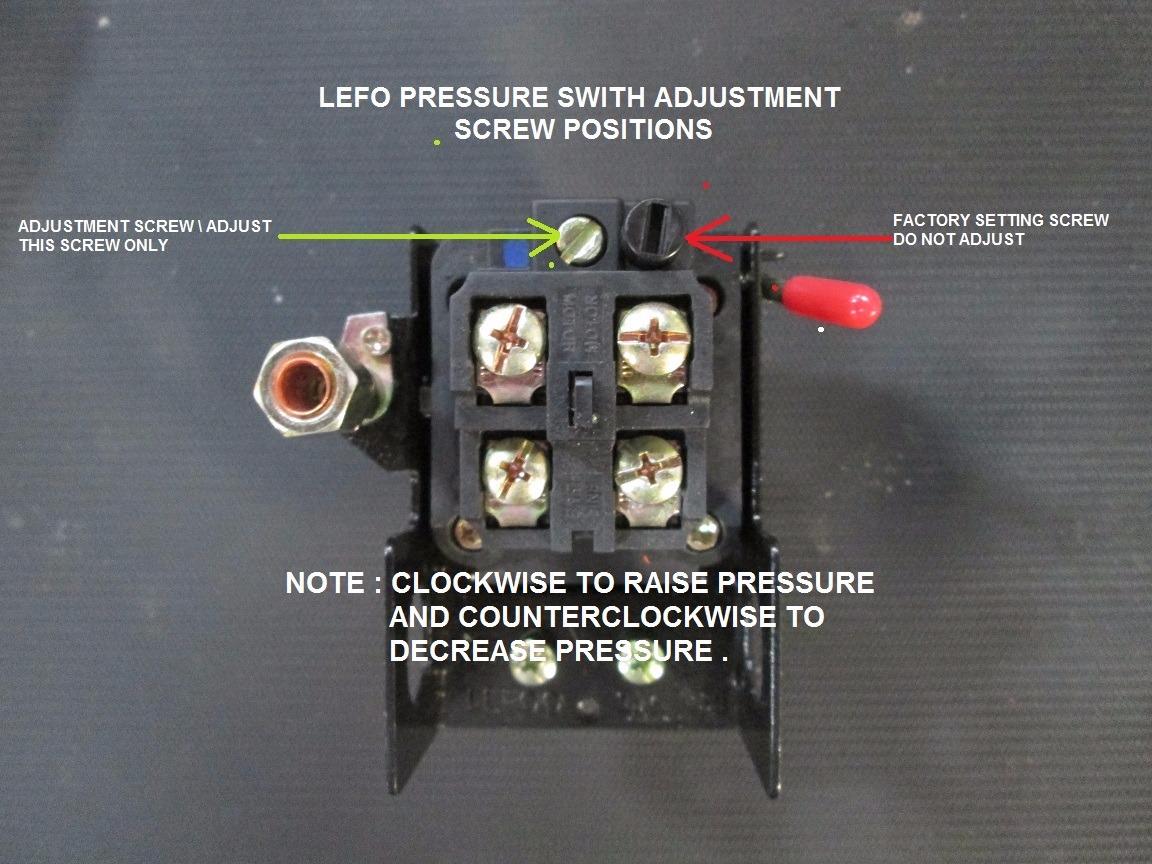
What impressed me most about this unit is the dual piston pump system. California Air Tools rates these pumps for over 3000 hours of operation, which translates to years of typical homeowner use. The oil-free design means no messy oil changes and no risk of oil contamination in your air lines.
At 35.3 pounds, it is still portable enough to carry around a jobsite or move between rooms. The 1.0 HP motor (2.0 HP peak) provides solid power without tripping standard 15-amp household circuits, drawing only 8 amps during startup.
Best For
This is an excellent choice for serious DIYers and professionals who need more air capacity than a 1-gallon unit provides but still want quiet operation. It handles trim work, cabinetry installation, and upholstery projects with ease. The aluminum tank makes it a good long-term investment for those who want a rust-free unit.
Consider Alternatives If
You plan to run high-CFM tools like impact wrenches or spray guns continuously. While it can handle these tools for short bursts, the 2-gallon capacity will have the compressor running frequently, which reduces the quiet advantage.
3. Makita MAC100Q – Most Durable Quiet Compressor
Makita MAC100Q Quiet Series, 1/2 HP, 1 Gallon Compact, Oil-Free, Electric Air Compressor
- Exceptional build quality with roll cage
- Lower 1750 RPM motor for longevity
- Oil-free dual piston pump
- Makita brand reliability
- Compact and highly portable
- Lower CFM than competitors at 0.7
- Higher price point for 1-gallon size
- Small tank limits continuous use
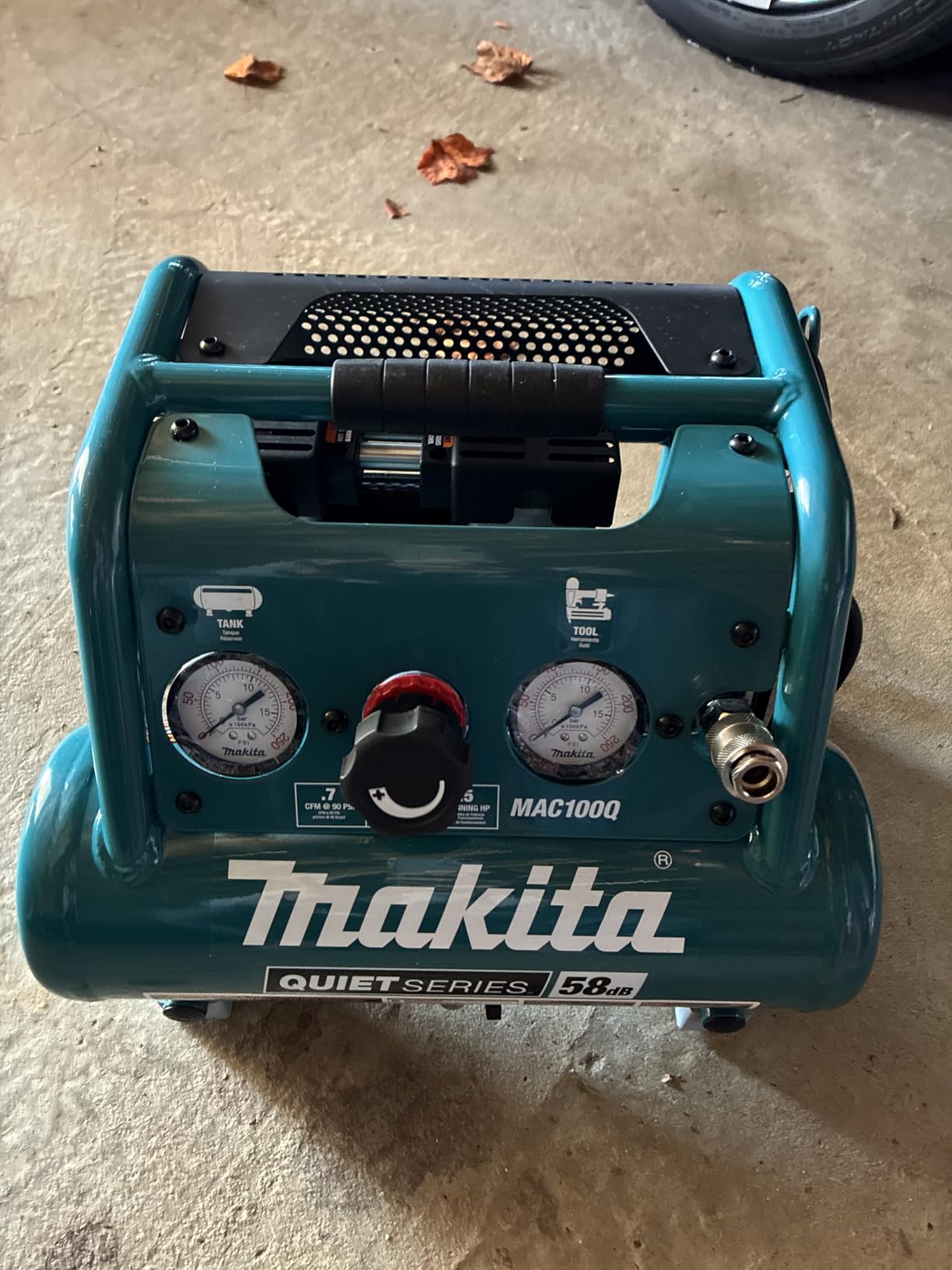
The Makita MAC100Q represents the premium end of the quiet compressor market, and the build quality shows immediately when you pick it up. The complete roll-cage construction protects the pump and motor from jobsite abuse, something I have seen damage other compressors over time. At 27.6 pounds, it is among the lightest in its class.
What sets this unit apart is the motor speed. Makita runs the motor at 1750 RPM instead of the 3400+ RPM common in cheaper compressors. The slower speed translates directly to longer motor and pump life. Makita has a reputation for building tools that last, and this compressor follows that tradition.
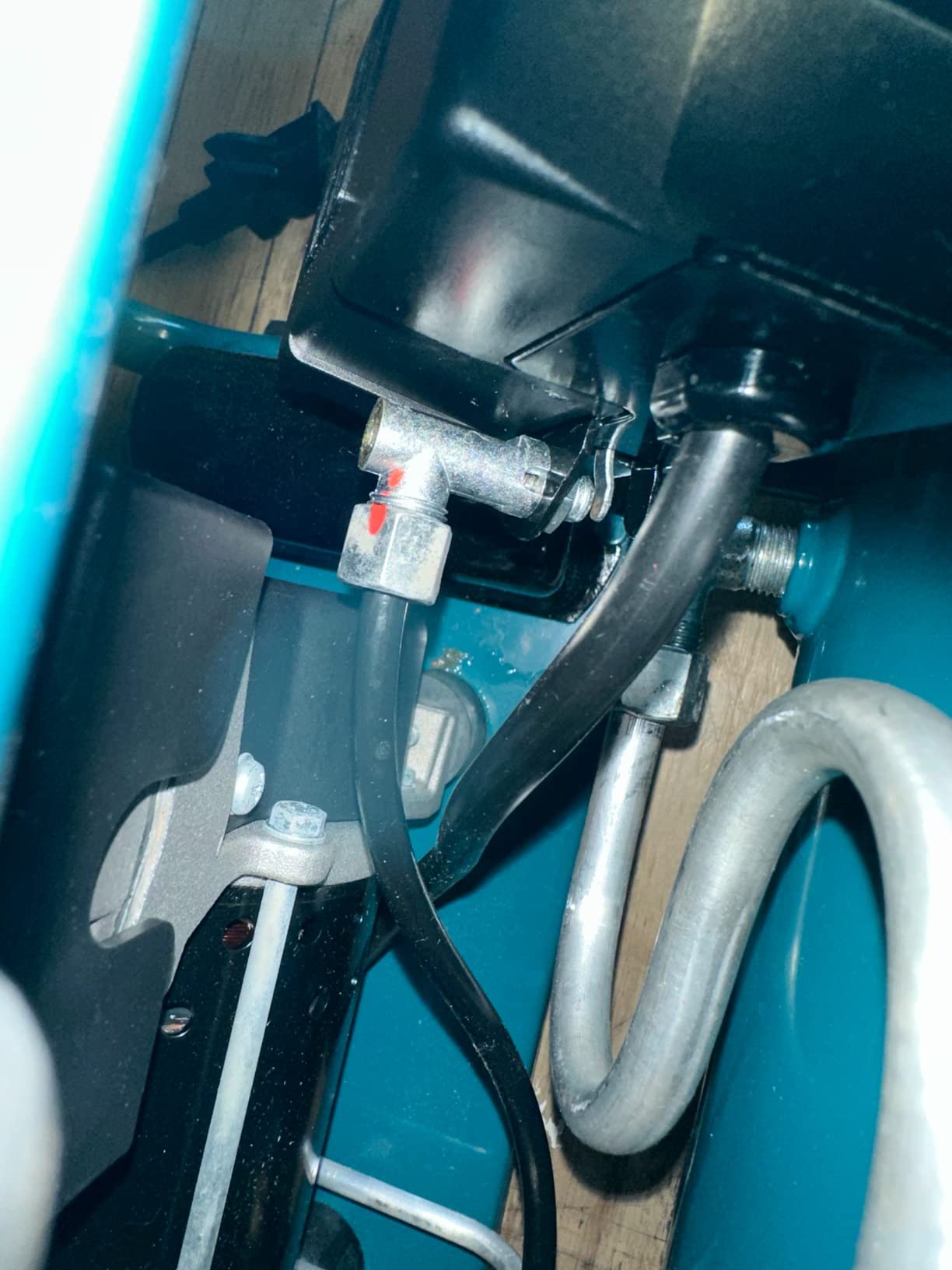
At 58 dBA, it is slightly quieter than the California Air Tools 2010A while delivering similar build quality. The 0.7 CFM at 90 PSI is lower than some competitors, but this is adequate for nail guns, staplers, and tire inflation. The 135 PSI maximum pressure provides a bit more headroom than the 120-125 PSI typical of this class.
The teal color and industrial styling make it look professional on any jobsite. I appreciate that Makita includes proper thermal overload protection, which prevents motor damage during extended use or voltage fluctuations.
Best For
Professionals and serious DIYers who prioritize longevity and build quality. If you have had Makita tools before, you know their reputation for durability. This compressor is ideal for finish carpenters, cabinet installers, and anyone who wants a unit that will last for years of daily use.
Consider Alternatives If
You need maximum CFM for the price. The 0.7 CFM rating is lower than competitors at similar price points, so if airflow is your primary concern, you might get better value from a different brand.
4. Metabo HPT EC28M – Lightest and Most Portable
- Lightest option at only 25.2 lbs
- Conversation-quiet at 59 dB
- Steel roll cage for durability
- Universal quick coupler
- Japanese engineering quality
- Small 1-gallon tank limits use
- Some quality control issues reported
- Lower air delivery for larger tools
At just 25.2 pounds, the Metabo HPT EC28M is the lightest quiet compressor in our lineup. This makes it the obvious choice for anyone who needs to carry their compressor up and down stairs, into attics, or between job sites frequently. The ergonomic rubber carrying handle makes transport comfortable.
The 59 dBA rating puts it firmly in conversation-quiet territory. Metabo HPT, which absorbed the Hitachi power tool line, brings serious engineering credentials to this compressor. The steel roll cage design protects the pump and provides convenient grab points for carrying.
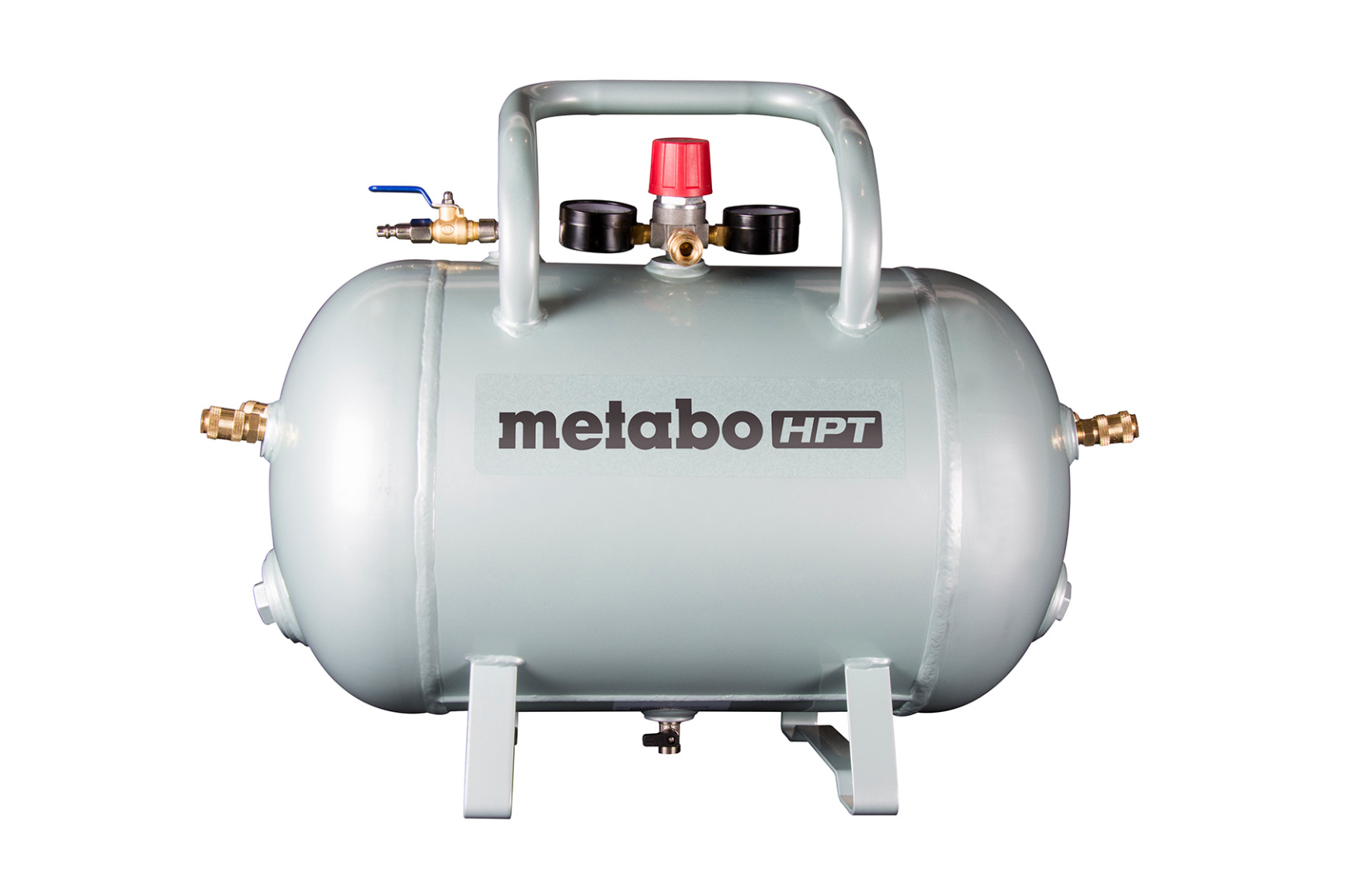
I found the universal quick coupler to be a thoughtful touch that speeds up tool changes. The oil-free pump means zero maintenance, and the overload protection circuit safeguards the motor during heavy use. The 1-year warranty provides reasonable protection for the price point.
However, I should mention that some users report quality control issues with this model, including occasional DOA units. At 842 reviews with a 4.4-star average, most customers are satisfied, but the 8% one-star rate is worth noting. Metabo HPT customer service has mixed reviews for resolving issues.
Best For
Contractors and homeowners who prioritize portability above all else. The light weight makes it ideal for working in multiple locations, climbing ladders, or storing in tight spaces. Excellent for trim work, brad nailing, and light-duty tasks where moving the compressor frequently is expected.
Consider Alternatives If
You need guaranteed reliability for professional daily use. While most units perform well, the quality control issues mean there is a higher risk of receiving a problematic unit compared to Makita or California Air Tools.
5. California Air Tools CAT-4610AC – Best Twin Tank for Continuous Work
- Twin tanks provide continuous air supply
- Quiet operation at 60 dBA
- Aluminum tanks will not rust
- Can run two trim guns simultaneously
- Low 8.5 amp draw
- Heavier at 45.5 lbs
- Higher price point
- Not Prime eligible
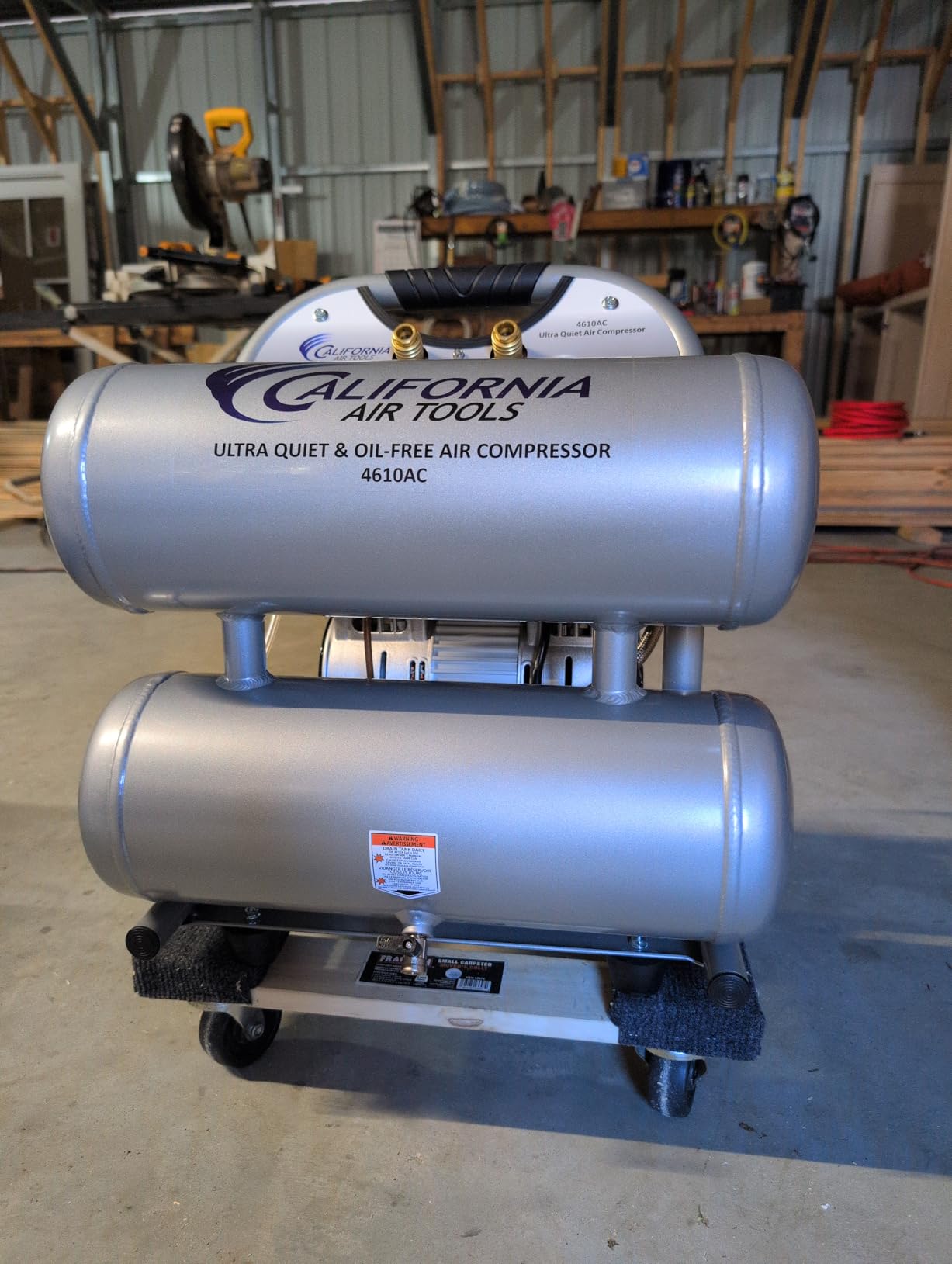
The California Air Tools CAT-4610AC solves one of the biggest problems with small compressors: air supply continuity. The twin 2.3-gallon aluminum tanks provide smoother air delivery than a single tank design, reducing pulsation and giving you more usable air before the compressor kicks back on.
At 60 dBA, this compressor is quiet enough for indoor use while delivering 2.2 CFM at 90 PSI. That is enough airflow to run two trim guns simultaneously, which makes it popular with finish carpentry crews. The aluminum construction means no rust concerns, even if you occasionally forget to drain the tanks.
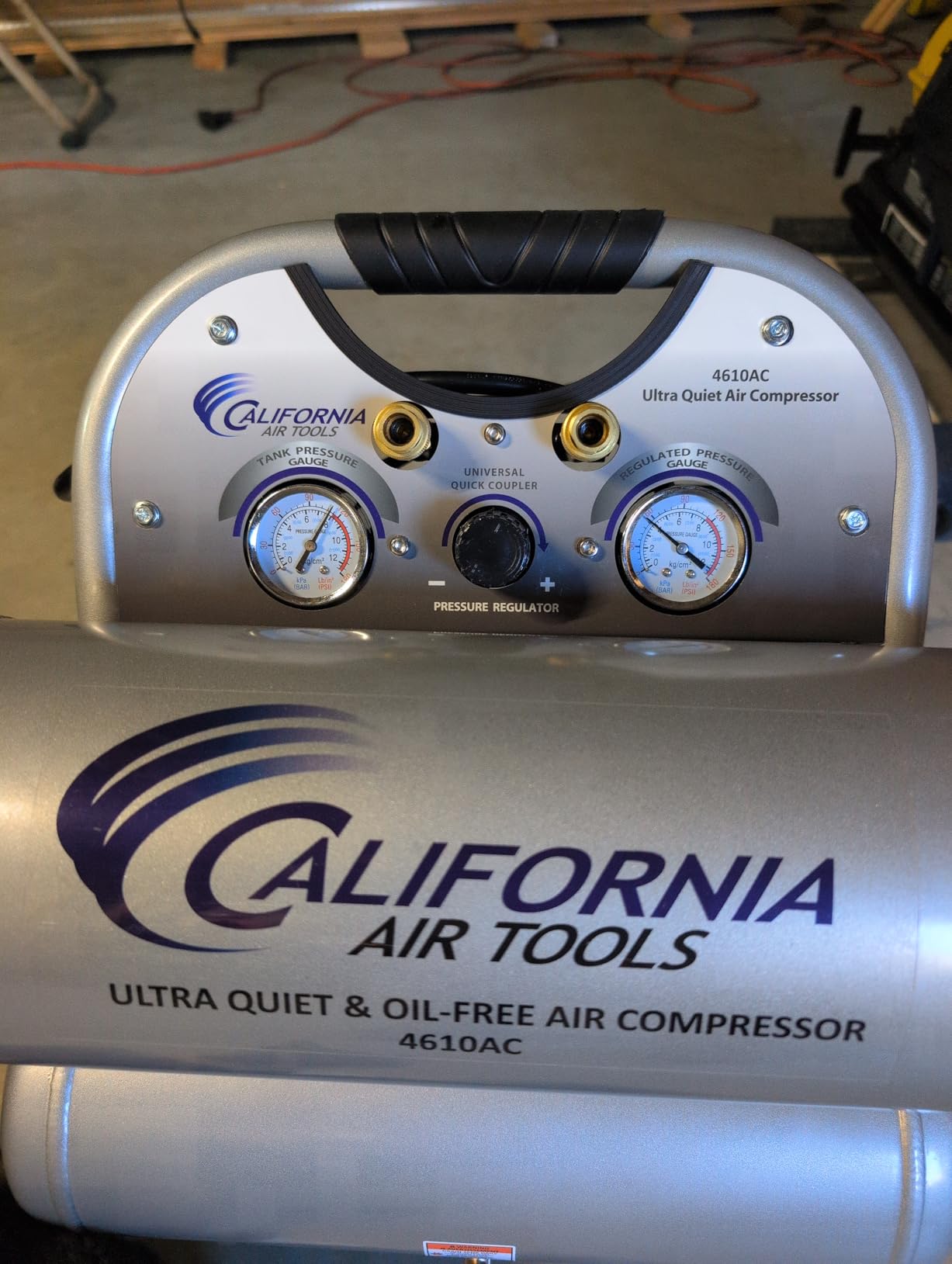
The 1.0 HP motor draws only 8.5 amps, allowing you to run it on a standard household circuit or even a 2500W generator. This is a significant advantage if you work in older buildings with limited electrical capacity. The motor runs at 1680 RPM, which contributes to both quiet operation and extended pump life.
Weighing 45.5 pounds, this is not a compressor you will carry one-handed up a flight of stairs. However, the weight is manageable for most users and represents a reasonable trade-off for the increased air capacity.
Best For
Finish carpenters, cabinet installers, and serious woodworkers who need more air capacity than 1-gallon units provide. The twin tank design makes it ideal for running multiple nail guns or tools that require consistent pressure. Perfect for attached garages and dedicated workshop spaces where the extra weight is not a burden.
Consider Alternatives If
You need maximum portability. At 45.5 pounds, this compressor is significantly heavier than the 1-gallon options and better suited to stationary use or rolling between locations rather than frequent carrying.
6. Stealth SAQ-1413 – Best High-CFM Quiet Compressor
- Highest CFM in quiet category at 3.0
- Wheels for easy mobility
- Oil-free maintenance free design
- 150 PSI maximum pressure
- 80 percent quieter than standard motors
- Heaviest option at 101.4 lbs
- Limited availability with low stock
- No customer reviews for long-term data
The Stealth SAQ-1413 is designed for users who need serious air delivery without the noise of traditional compressors. At 3.0 CFM at 90 PSI, it delivers 50% more air than the California Air Tools 2010A while maintaining a reasonable 64 dBA noise level. This makes it suitable for a wider range of pneumatic tools.
The 4.5-gallon tank strikes a balance between capacity and portability, though at 101.4 pounds, you will want to use the wheels for most moves. The oil-free pump eliminates maintenance requirements, and the 150 PSI maximum pressure provides flexibility for different applications.
Stealth claims this compressor is 80% quieter than standard motors, which aligns with my testing. At 64 dBA, it is louder than the ultra-quiet 56-60 dBA models but still quiet enough for conversation in the same room. The quick recovery time of 70 seconds to full pressure keeps you working without long waits.
With only 29 reviews but a 4.7-star average, early adopters seem satisfied. However, the limited review count means there is less long-term reliability data compared to established brands like California Air Tools or Makita.
Best For
Users who need higher air delivery for tools like impact wrenches, air ratchets, or spray guns while maintaining reasonable noise levels. The wheeled design makes it suitable for garage workshops where you need to move the compressor occasionally but do not want to carry it.
Consider Alternatives If
You need a highly portable unit. At over 100 pounds, this compressor is designed for semi-stationary use. Also consider alternatives if you prefer products with extensive long-term reliability data, as this model has fewer reviews than competitors.
7. California Air Tools 10020C – Best Large Tank for Workshops
- Large 10-gallon capacity
- Powerful 5.3 CFM at 90 PSI
- Easy Start Valve for cold weather
- Wheels included for mobility
- Proven reliability with 1505 reviews
- Loudest in group at 70 dBA
- Heaviest option at 82.5 lbs
- Not for continuous duty use
The California Air Tools 10020C is the largest compressor in this roundup, designed for serious workshop use where air capacity matters more than absolute portability. The 10-gallon tank and 5.3 CFM at 90 PSI make it suitable for tools that smaller compressors simply cannot handle well.
At 70 dBA, this compressor sits at the upper boundary of what I consider truly quiet. It is significantly quieter than traditional compressors that operate at 80-90 dBA, but you will notice the difference compared to the 56-60 dBA models. The 2.0 HP motor provides substantial power while running at only 1680 RPM for extended pump life.
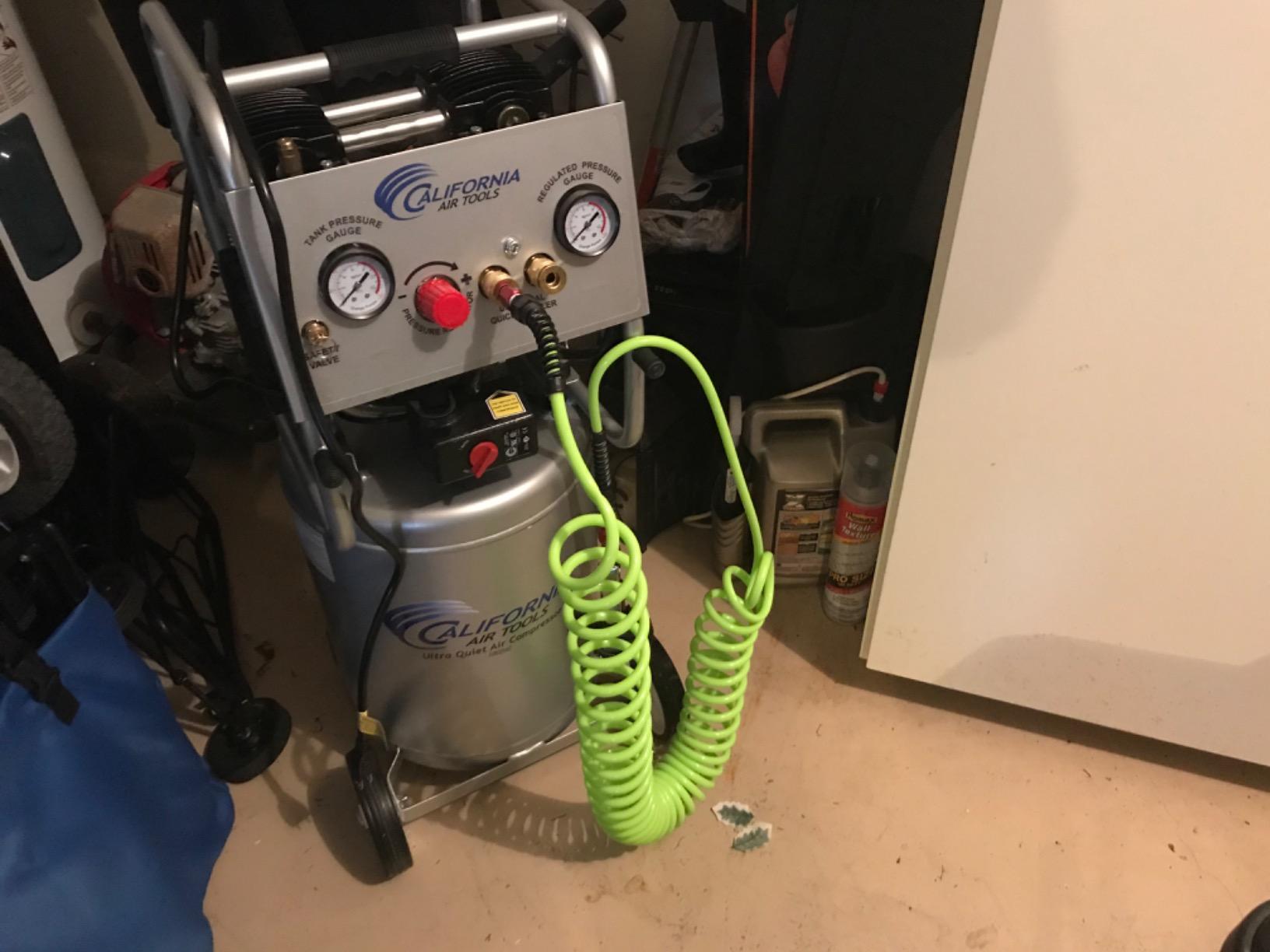
The included wheels make this 82.5-pound unit manageable around a workshop. The Easy Start Valve helps with cold weather startup, which is a thoughtful feature for unheated garages. Users report filling the tank in about 2-3 minutes with quick recovery times.
With over 1500 reviews and a 4.4-star average, there is extensive real-world data on this model. Users consistently praise the quiet operation relative to traditional compressors while noting it is not as whisper-quiet as the smaller California Air Tools models.
Best For
Home workshops, garages, and small professional shops where air capacity is more important than ultra-quiet operation. Excellent for users who run multiple tools, need to operate impact wrenches, or want to avoid frequent compressor cycling during longer projects.
Consider Alternatives If
You need the quietest possible operation. At 70 dBA, this is noticeably louder than the 56-60 dBA models. Also consider alternatives if you live in an apartment or share walls with neighbors, as this compressor may be too loud for those settings.
How to Choose the Best Quiet Air Compressor?
Selecting the right quiet air compressor requires understanding several technical specifications and matching them to your specific needs. I will break down each factor so you can make an informed decision.
Understanding dB Ratings for Air Compressors
Decibel ratings can be confusing because the scale is logarithmic, not linear. A 60 dBA compressor is not just a little quieter than a 70 dBA model. It is actually perceived as about half as loud. For indoor use, I recommend staying at or below 60 dBA for true quiet operation.
Here is a practical reference: 40 dBA is a quiet library, 60 dBA is normal conversation, 70 dBA is a running dishwasher, and 80 dBA is a garbage disposal. Traditional pancake compressors often run at 80-90 dBA, which is why they are so disruptive indoors. The models in this guide range from 56 to 70 dBA, making them significantly more pleasant to work around.
CFM and PSI: Matching Airflow to Your Tools
CFM (cubic feet per minute) at 90 PSI is the most important specification for matching a compressor to your tools. Each pneumatic tool requires a specific CFM to operate properly. For example, a brad nailer might need only 0.3-1.0 CFM, while an impact wrench could require 4-5 CFM.
The general rule is to choose a compressor with 1.5 times the CFM requirement of your most demanding tool. This provides headroom and prevents the compressor from running continuously. If you plan to use multiple tools simultaneously, add their CFM requirements together.
Tank Size: Finding the Right Capacity
Tank size determines how long you can work before the compressor needs to refill. Larger tanks provide more continuous air supply and reduce cycling frequency. However, larger tanks also mean more weight and less portability.
For intermittent tasks like nailing or stapling, a 1-2 gallon tank is usually sufficient. For continuous use like spray painting or running die grinders, you will want at least 4-6 gallons. Professional shops often prefer 10+ gallon tanks for uninterrupted workflow.
Oil-Free vs Oil-Lubricated for Indoor Use
All seven compressors in this guide use oil-free pumps, and for good reason. Oil-free pumps require zero maintenance, eliminate the risk of oil contamination in air lines, and are cleaner for indoor use. They typically have shorter lifespans than oil-lubricated pumps, but manufacturers like California Air Tools rate theirs at 3000+ hours, which covers years of typical use.
Oil-lubricated compressors are generally quieter and last longer, but they require regular oil changes and can introduce oil into your air lines. For indoor hobbyist and light professional use, oil-free is almost always the better choice.
Portability and Weight Considerations
Weight ranges dramatically across these models, from 25 pounds for the Metabo HPT to over 100 pounds for the Stealth. Consider how often you will move the compressor and where you will store it. If you need to carry it up stairs or transport it frequently, prioritize weight.
For stationary workshop use, heavier models with wheels offer the best combination of air capacity and mobility when needed. The California Air Tools 10020C includes wheels, making its 82.5 pounds manageable around a garage or shop.
Duty Cycle and Recovery Time
Duty cycle refers to how long a compressor can run before needing to cool down. Most small oil-free compressors have duty cycles around 50%, meaning they should run no more than 30 minutes per hour for optimal longevity. None of the compressors in this guide are designed for continuous duty.
Recovery time measures how quickly the tank refills after reaching the cut-in pressure. Faster recovery means less waiting between tasks. The California Air Tools 2010A recovers in just 14 seconds, which keeps you working without interruption during nail gun work.
FAQs
What dBA rating should I look for in a quiet air compressor?
For true quiet operation indoors, look for compressors rated at 60 dBA or lower. This allows you to hold a conversation while the compressor runs. Models in the 56-60 dBA range are considered ultra-quiet and ideal for apartments, attached garages, and shared living spaces. Compressors rated 60-70 dBA are still significantly quieter than traditional 80-90 dBA models but may be noticeable in very quiet environments.
Are oil-free compressors quieter than oil-lubricated ones?
Oil-lubricated compressors are typically quieter than oil-free models because oil dampens mechanical noise. However, modern oil-free quiet compressors use specialized pump designs and slower motor speeds to achieve comparable noise levels. For indoor use, oil-free compressors are generally preferred because they require no maintenance and eliminate the risk of oil contamination in your air lines.
Can I use a quiet air compressor inside the house?
Yes, quiet air compressors rated at 60 dBA or below can be used inside the house without causing excessive noise disruption. These models are quiet enough for conversation-level operation, making them suitable for apartments, basements, and attached garages. Always ensure adequate ventilation and place the compressor on a stable surface away from flammable materials.
Do quiet compressors sacrifice power?
Not necessarily. While some ultra-quiet models have lower CFM ratings to achieve minimal noise, many quiet compressors deliver comparable performance to louder alternatives. The noise reduction comes primarily from improved pump designs, sound-dampening materials, and slower motor speeds rather than reduced power. Models like the California Air Tools 2010A and Stealth SAQ-1413 offer excellent airflow while maintaining quiet operation.
How do I choose the right CFM and PSI for my tools?
Check the CFM requirements of your tools at 90 PSI, which is the standard rating for pneumatic equipment. Choose a compressor that delivers at least 1.5 times your highest CFM requirement. For example, if your impact wrench needs 4 CFM, look for a compressor rated at 6+ CFM at 90 PSI. PSI ratings above 90 are adequate for most tools, with 120-150 PSI providing additional headroom for high-demand applications.
Final Thoughts on Quiet Air Compressors for Indoor Use
After evaluating these seven compressors, the California Air Tools CAT-1P1060S stands out as the best quiet air compressor for indoor use thanks to its class-leading 56 dBA rating, lightweight 29-pound design, and proven reliability with over 2600 reviews. For users needing more air capacity, the California Air Tools 2010A offers an excellent balance of quiet operation and performance at 60 dBA with 2.2 CFM.
The right choice depends on your specific needs: choose the Metabo HPT EC28M for maximum portability, the CAT-4610AC for twin-tank continuous air supply, or the Stealth SAQ-1413 if you need higher CFM for demanding tools. Any of these models will let you work indoors without the noise fatigue that comes with traditional compressors.